Earlier today (28th September 2021), Xiaomi unveiled the NFC Mi Pay Straps that will be launching soon. The company revealed the new wearable band during the “Future Of Contactless Payments” event at the Global Fintech Festival.
As of right now, finer details regarding this product is currently unknown. Although, it is clear that it is a new contactless payment based product. The tech uses NFC and the related components are housed in the straps itself. While the Chinese tech giant has yet to reveal the launch date for this product, it has announced that it is working in collaboration with various finance based firms in India, including RuPay, RBL, and Zeta.
Today we announced our entry into the FUTURE OF CONTACTLESS PAYMENTS at the Global Fintech Festival.
Thrilled to announce that we will be launching the Xiaomi NFC Mi Pay straps soon.
Working with @RuPay_npci, RBL & Zeta to make this happen.
In other words, the NFC Mi Pay Straps is confirmed to arrive in India and would likely be a part of the Mi Credit or Mi Pay systems from Xiaomi. The news was shared by the brand’s Chief Business Officer, Raghu Reddy, on Twitter, with the tweet also teasing the upcoming straps’ design through an image poster. Unfortunately, we will have to wait for additional news from the company to know more about this product. So stay tuned, as we will be providing updates regarding this matter.
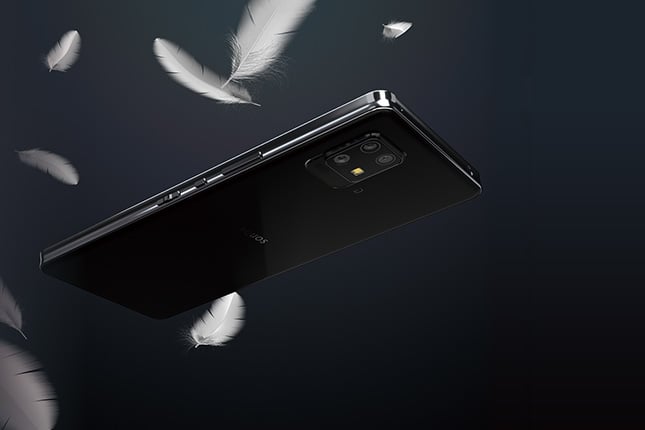
Sharp is known for many firsts. The Japanese tech giant is still striving to be first in many regards from time to time. Today, the company has launched SHARP AQUOS zero6 as the world’s lightest 5G smartphone with a large battery and display.
The newly announced SHARP AQUOS zero6 measures 158 x 73 x 7.9mm in dimensions and weighs approximately 146g. Despite that, it is backed by a 4,010mAh battery.
For comparison, the iPhone 12 mini only weighs 135g but it has a tiny 2,227mAh battery. Similarly, the newer iPhone 13 mini has a slightly larger 2,438mAh battery and weighs 141g.
As far as the screen is concerned, the SHARP AQUOS zero6 sports a 6.4-inch OLED display with a resolution of 2340 x 1080 pixels (FHD+), a 240Hz refresh rate, and Gorilla Glass Victus protection. On the other hand, the iPhone mini models flaunt a smaller 5.4-inch FHD+ (2340 x 1080 pixels) OLED display with a 60Hz refresh rate and Ceramic Shield protection.
Further, the zero6 is powered by a Qualcomm Snapdragon 750G chipset paired with 8GB LPDDR4x RAM and 128GB UFS 2.2 storage. It houses a quad-camera setup on the back consisting of a 48MP primary sensor, an 8MP ultra-wide unit, an 8MP 2x telephoto shooter, and a ToF sensor. On the front, there’s a 12.6MP snapper inside the dewdrop notch.
1 of 3
On the connectivity front, the handset supports 5G, dual-band WiFi, Bluetooth 5.1, dual-band GNSS, NFC with support for Osaifu-Keitai, and a USB Type-C port. Other features include Android 11, a MicroSD card slot (up to 1TB), an in-screen fingerprint sensor, and IP68 certification for dust and water resistance.
There’s no official word on the pricing yet but the phone is scheduled to go on for pre-order starting September 29 via Soft Bank in three color options – black, white, and purple.
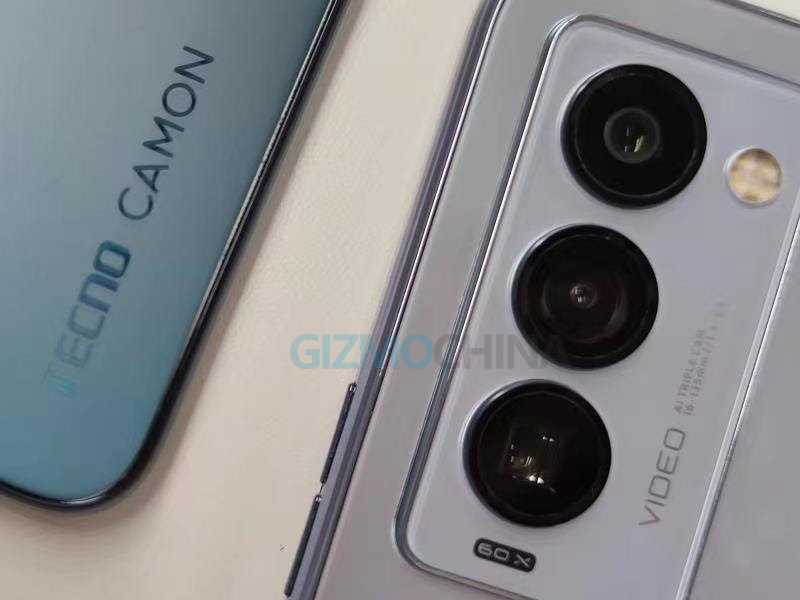
TECNO smartphones have gained popularity among the young generation in multiple countries across the world. Part of this growth is spurred on by the brand’s award-winning and widely respected TAIVOS™ Labs, which focuses on innovative and cutting-edge technological breakthroughs for mobile imaging technology. TECNO’s labs have been involved in numerous in-depth research and analysis that contributed to many new camera innovations that we see today. We’ll soon see the fruits of this lab via new features on its upcoming smartphones like the TECNO Camon 18 Premier.
We talked to Jiangtao Li, Senior Director of TECNO Imaging Product and Head of TECNO TAIVOS™ Labs to learn more about the lab and also to learn about how he reimagines the future of mobile camera technology.
Jiangtao Li, Head of TECNO TAIVOS Lab
When asked about how the lab came about, Jiangtao Li said: “With TAIVOS, our objective is to provide users with the best camera and video functions. Based on these grand objectives, our TAIVOS laboratory studies our devices extensively in order to make some deeper innovations that our users will enjoy and benefit from. We want to redefine how the mobile camera is perceived and what it can do for our users.”
TAIVOS™ Lab, which is short for TECNO AI Vision Optimization Solution Lab, was set up to enhance photography and videography through the latest technology. With this goal in mind, one of TECNO’s grand challenges it had to overcome– to cater to the many varying views of beauty over different regions and cultures, combining the best of the past and the present.
With this awareness that beauty can be subjective and very individualized, TAIVOS™ Lab has established various localized Research Centers across the world, in Africa, the Middle East, the Indian subcontinent and more. TECNO adds that their research team has successfully produced more than 6,120 Evaluation Scenarios that spanned across 115 countries. TECNO is putting in so much effort, according to Li, because it is not enough to advance technology, but also it is important to build it with diversity in mind, so that everyone can enjoy and utilize mobile imaging technology together.
TAIVOS™ Lab’s final products have continually exceeded the expectations of consumers, producing many successful commercialized features. Specifically, TECNO TAIVOS™ certified cameras can reach a remarkable 4,500 fine-tuning settings thanks to the 3A Algorithm and ISP (Image Signal Processor) module. Pictures that are inclusive of all demographics and all three primary skin types, particularly those with darker skin tones, are sharpened. A comprehensive Material Library covers nine skin types and 76 categories so that everyone, regardless of demographic, gets to enjoy these improved features. On TECNO’s upcoming camera flagship, the CAMON 18 Premier, these optimizations enable excellent visuals even in low-light situations.
Another major breakthrough of TECNO TAIVOS™ Lab is in the advancement of the Screen Inspection Process. TECNO screens and cameras are fine-tuned for up to a half-year apiece throughout this procedure to provide the most bright and effective colors for its users. This has brought about many learnings for TECNO, as lighting is one major issue for mobile camera users that inhibits them from creating professional-level photos and videos. Li wants to democratize the pleasures of taking a good photo, and technology can be a big aid to people looking to gain confidence in their photography skills.
TAIVOS™ Lab’s innovative deep technologies are also evident in its Image Algorithm Technology. Using AI algorithms for Image Super-Resolution, low-resolution images caused by digital zoom can be recovered. TAIVOS™ Lab’s intelligent AI can gather information through multiple frames, analyze individual pixels, and reduce noise. Even for those with close to no photography skills, images on TECNO’s upcoming flagship will turn out to be clearer, richer in detail, and more true-to-life than ever before.
TECNO Camon 18
TAIVOS™ Lab has also patented various technologies to support the innovative ideas churned out by the lab. For example, featured inside the upcoming CAMON 18 Premier, the new model will also feature a self-developed Galileo Algorithm Engine that includes the “Moon Lock Focus System”, “Lunar Revolution Elimination Algorithm”, “Lunar Fine Section Protection Algorithm”, and “AI Deep Learning Enhancement Algorithm”. Taken together, these algorithms developed by TAIVOS™ Lab’s enhance the details and effects of photos focused on the moon to produce ultra-clear telescopic images. Thanks to this new engine, TECNO says that users can enjoy ultra-long-distance shooting effects comparable to astronomical telescopes and pixel-level image segmentation accuracy all from the comfort of the smartphone in their pocket.
Li states: “In terms of algorithms, we actually have a natural advantage. TAIVOS started five years ago when we established a project department at that time, and then we began to accumulate our data at that time. We have a very large database to support our localized algorithm, and compared to the entire industry, the quality of this local-driven database is high, because firstly, it is very focused, and secondly, we are spending a lot of energy to label the data. That’s because we understand that data is useless if you don’t label it. After we accumulate and label the data, we can do so much more to improve on what we have so that our users will always have the best.”
That data becomes useful in applications such as a cutting-edge gender recognition feature that will come packed in the CAMON 18 Premier. With a full understanding that males and females have unique facial traits and have different desires when it comes to taking selfies, the gender recognition AI protects the details of your natural features – men with beards can enhance them, while women can enable the technology to deliver beautiful lashes.
Li concludes: “TAIVOS™ Lab has allowed us to enable our users to analyze and recombine photos on a pixel level, bringing out the best photos for our users. Now with the CAMON 18 Premier, we are extending this technology to video. Hardware is only half the battle. We work incessantly to improve our software to bring the best user experience to our customers. TAIVOS™ Lab is at the forefront of mobile imaging technology today and we will keep you excited for years and decades to come.”
The TECNO CAMON 18 Premier is slated to launch in October and we can expect it to feature some very interesting innovations developed by the TAIVOS lab at its highly-anticipated launch.
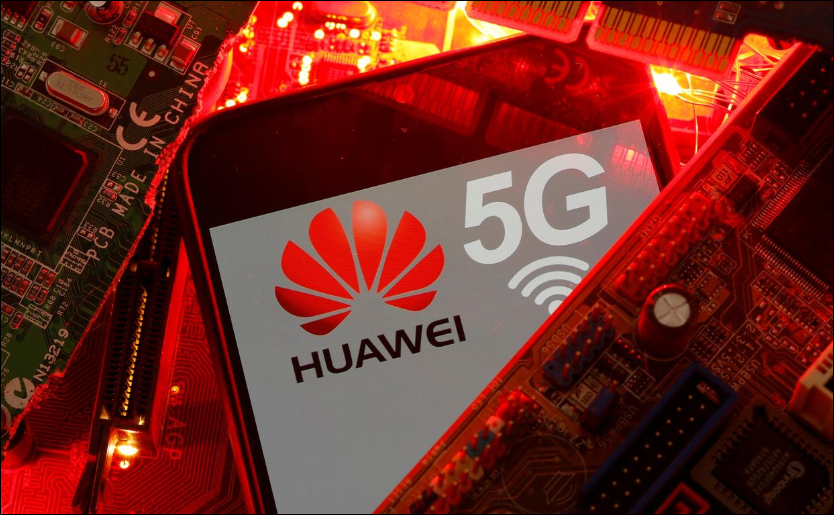
The US FCC (Federal Communications Commission) stated earlier this week that it would be launching a new program to help replace all the Huawei made equipment in the country’s networking infrastructure.
According to a Reutersreport, the US FCC will be opening a 1.9 billion US Dollars program that will reimburse US telecom carriers, specifically rural ones, in order to aid in the removal/replacement of networking gear from the Chinese tech giant. For those unaware, Huawei was labeled as a national security threat by the US Commerce Department, who also added the brand into its trade blacklist as well. Now, the government seeks to further remove its presence from its network entirely.
While it Huawei and ZTE were designated as national security threats to communications, an order of “rip and replace” isn’t so simple. This holds especially true for rural carriers that would potentially face high costs and difficulty finding works that can remove and replace the equipment made by the Chinese firms. Furthermore, the initial eligibility criteria were for companies that had fewer than 2 million or lesser customers, but that has since been raised to 10 million or lower customers.
Back in September 2020, the FCC had estimated that the cost of total removal and replacement would be around 1.837 billion US Dollars. And now, it seems that the US is accelerating its plans to ban approvals for equipment in the nation’s telecom networks that were made by entities designated as a national security threat.
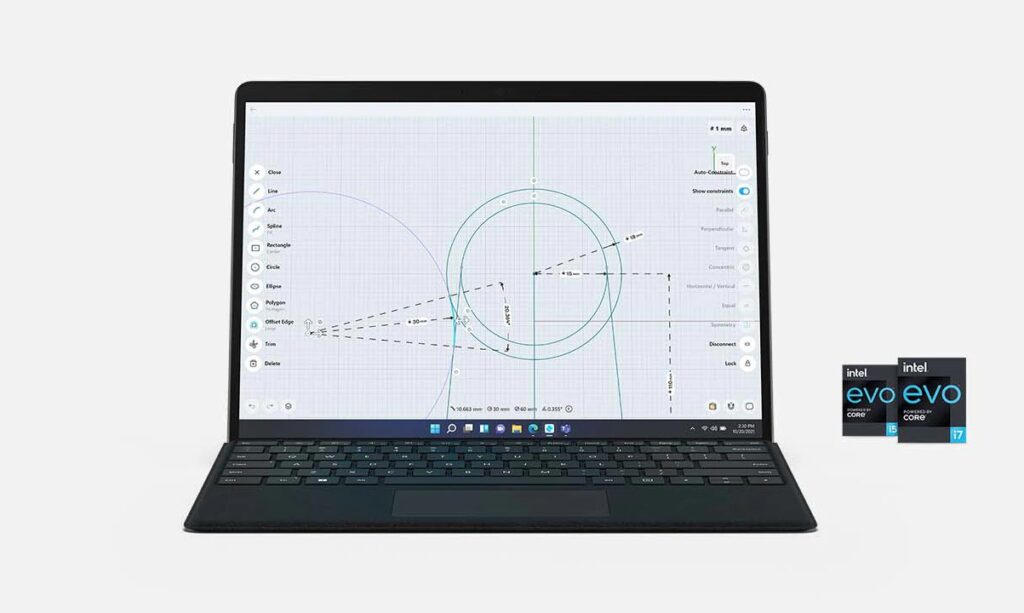
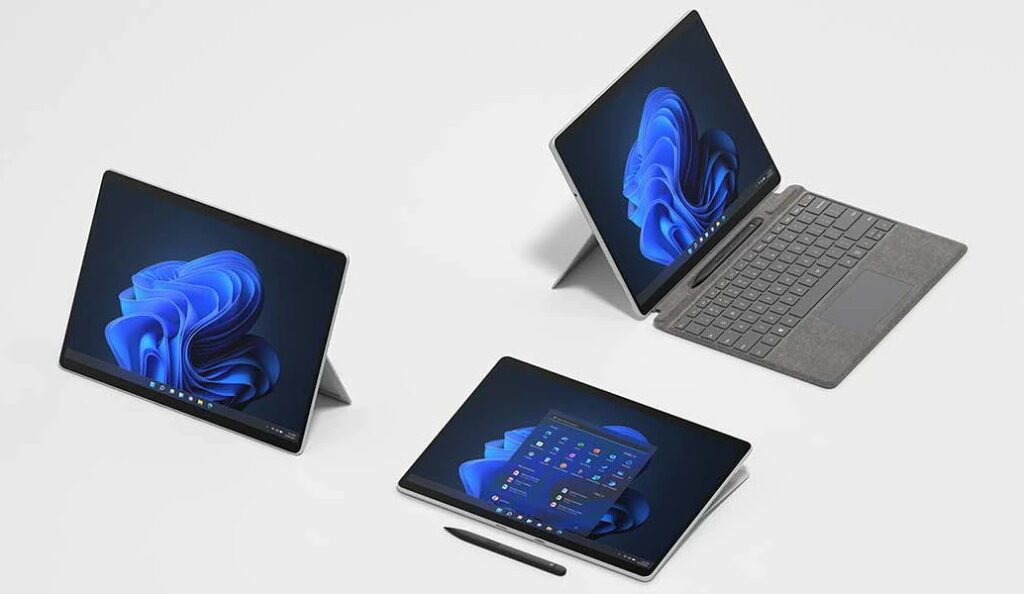
A bumper Microsoft event held on 22 September saw the unveiling of five Surface products, namely the Surface Pro 8, Duo 2, Laptop Studio, Go 3, and Pro X. And now, the Redmond-based company has given an official release date for the Microsoft Surface Pro 8 with LTE Advanced – it will be made available sometime in 2022.
The LTE variant comes with both removable SIM and eSIM support (via: MSPoweruser). The 4G is handled by the Qualcomm Snapdragon X20 LTE Modem, which supports an array of bands.
Microsoft has described the device as the most ‘the most significant leap forward since the Pro 3’. And from a design perspective, that does hold true. The display has seen the most significant upgrade with its size being increased from 12.3-inches to 13-inches. It has also gained 120Hz refresh rate support paired with a new resolution of 2880×1920, although the aspect ratio remains at 3:2.
However, the reduction in the size of the bezels means that the device has a size that is more or less the same as its predecessor, despite the increase in screen size.
Under the hood, the Surface Pro 8 is powered by Intel’s latest Tiger Lake processors – 11th Gen Intel Core i5 or 11th Gen Intel Core i7. An AMD variant was rumored as well, but that clearly hasn’t materialized yet.
The camera setup comprises a 5MP front-facing camera with support for 1080p full HD video recording and a 10MP rear-facing autofocus camera with 1080p HD and 4K video. The audio is handled by 2W stereo speakers with Dolby Atmos.
Microsoft is yet to provide precise battery numbers, but the Pro 8 will last up to 16 hours on a single charge, up from the Pro 7’s 10 hours. You can also charge from 0 to 80 percent in just over an hour.
The Microsoft Surface Pro 8 Wi-Fi model starts at $1099 and we expect the LTE Advanced model to be slightly pricier than that.
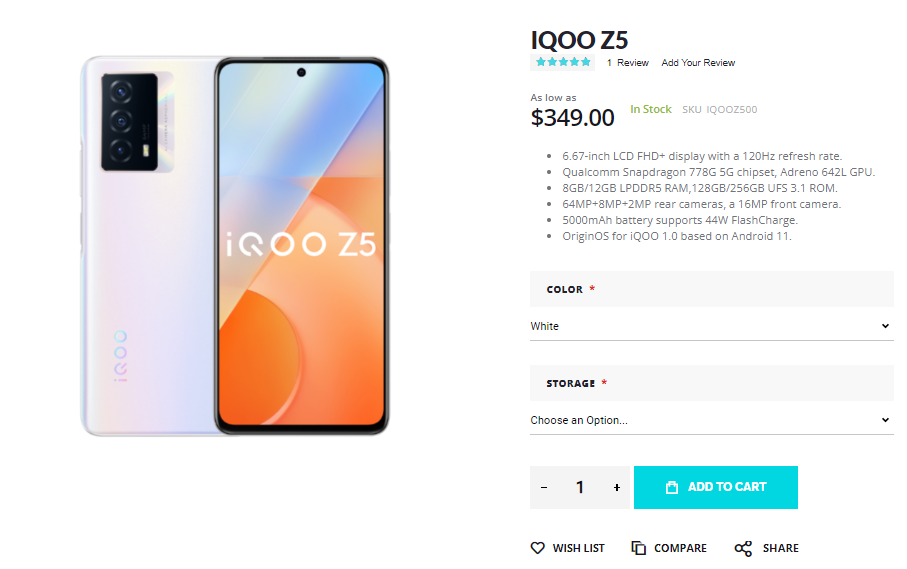
Vivo’s subbrand, iQOO recently unveiled the iQOO Z5 mid-range smartphone in some markets across the globe. The smartphone is now retailing from Giztop at the price of $349. It is available in two colour options of Mystic Space and Arctic Dawn. However, the buyers can choose between 8GB RAM + 128GB , 8GB RAM + 256GB or 12GB RAM + 256GB storage options.
It is the easiest way to get the iQOO Z5 in the countries where it is not yet available. The triple-rear camera clad smartphone is now up for grabs for $349 via Giztop.
iQOO Z5 Specifications
iQOO Z5 smartphone features a 6.67-inch Full HD+ display while having a 120Hz refresh rate and 240 Hz touch sampling rate. The display supports HDR10 and P3 colour gamut. It is powered with Qualcomm Snapdragon 778G 5G SOC coupled with an octa-core processor and Adreno 642L GPU. The smartphone is available in 8/12GB RAM and 128/256GB internal storage variants.
iQOO Z5 5G smartphone hosts a triple-rear camera sensor featuring a 64MP f/1.79 primary lens with OIS, an 8MP f/2.2 ultrawide sensor with 120-degree FOV and a 2MP f/2.4 macro sensor to capture the miniature world. There’s a 16MP sensor on the front for selfies and video calling.
The smartphone comes with a 5000 mAH battery while having 44W fast charging support. A 3.5mm audio jack is present along with other connectivity options like WiFi 6, Bluetooth 5.2, and USB Type-C.
You can get it at a great price of $349 via Giztop in both the colour options.
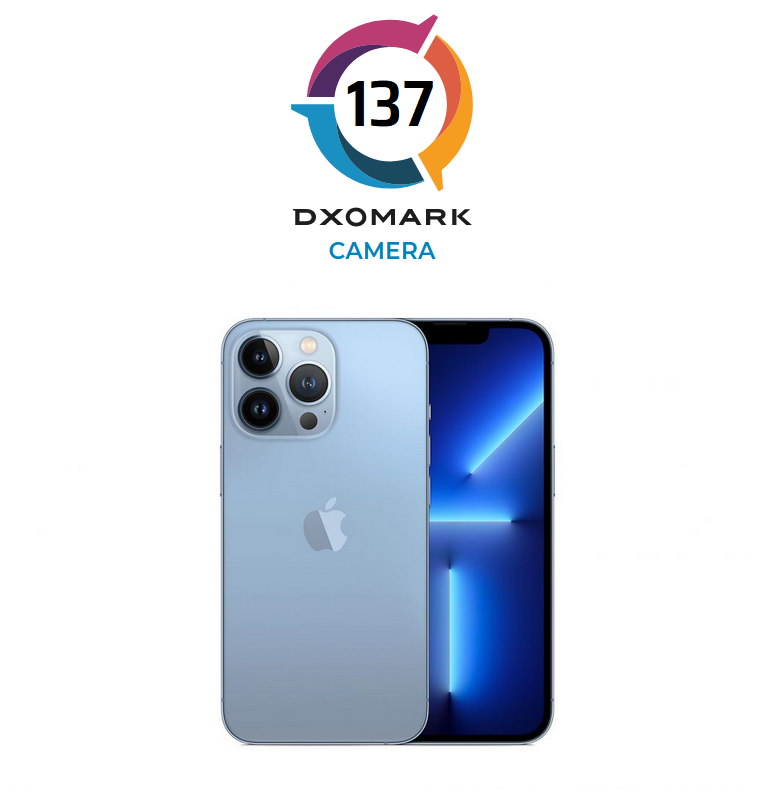
The iPhone 13 series was just recently unveiled by Apple. Now, the iPhone 13 Pro has just passed through DxOMark camera test and has scored 137 points, having it enter the top 5 rankings for the best smartphone camera.
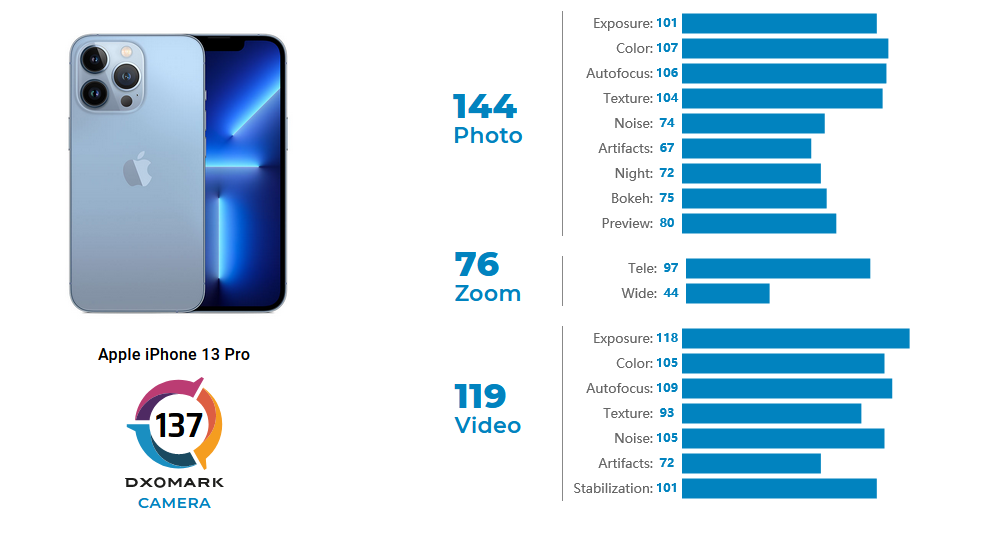
In the DxOMarkcamera test, the newly launched iPhone 13 Pro managed to achieve a notable score of 137 points. Its camera scored 144 points, while its zoom and video scores reached 76 and 119 points respectively. This had the device enter the top 5 rankings, arriving fourth in DxOMark’s top smartphone camera list. Looking at the tests, the handset received praise for its color tones and white balances, along with fast, accurate and repeatable autofocus.
Furthermore, the device handled target exposure well and managed to retain great detail in indoor and outdoor conditions. However, the tests also found that the iPhone 13 Pro suffered from limited dynamic range in high contrast scenes, along with other issues like lens flare and ghosting in low light videos. Most of the minor issues were found in the video tests, which included loss of sharpness and lack of textures in videos.
Despite these flaws, the iPhone 13 Pro achieved a notable score thanks to several improvements in various areas over its predecessor. DxOMark noted that the Cupertino based giant managed to squeeze out the most of its imaging hardware, which is reportedly custom sensors from Sony. With its score, the device managed to beat the Huawei Mate 40, but still lost to the Mate 40 Pro+. As of right now, the Huawei P50 Pro still tops the chart while the Xiaomi Mi 11 Ultra arrives second.
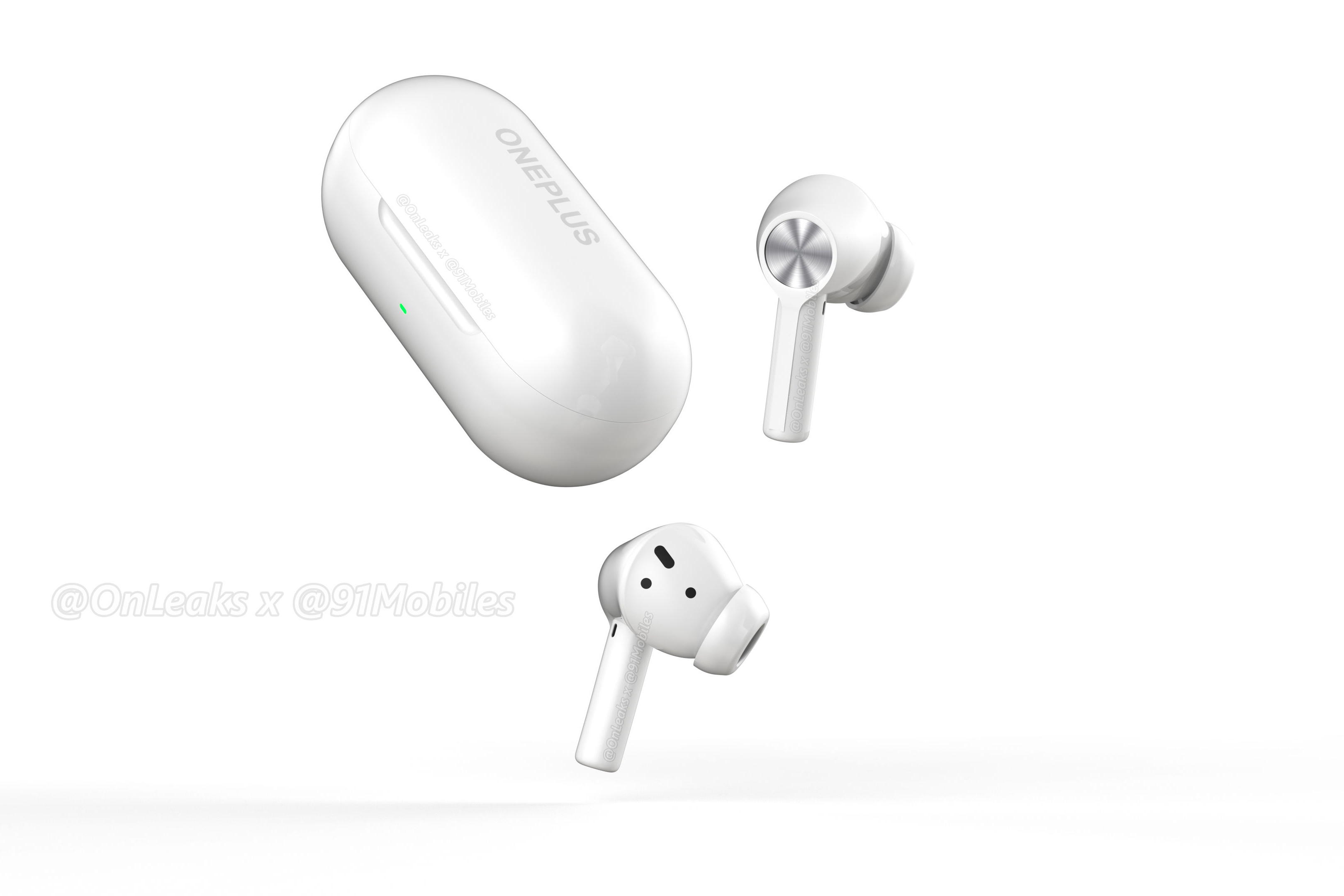
Earlier this month, the renders of the upcoming OnePlus Buds Z2 revealed the design of the product. A few days later, a tipster has now shared the key features of these truly wireless earphones. Let’s take a look at what this new audio accessory from OnePlus has to offer.
OnePlus Buds Z2 | Source: @OnLeaks x 91Mobiles
According to reliable tipster Max Jambor, the forthcoming OnePlus Buds Z2 will arrive with Bluetooth 5.2 connectivity. Despite being a budget model, these buds will offer ANC (Active Noise Cancellation).
Further, the earbuds are said to be IP55-certified for dust and water resistance. Interestingly, they will also have support for Dolby Atmos.
As far as endurance is concerned, the OnePlus Buds Z2 are tipped to provide a whopping 38-hour battery life with the charging case. Whereas, the buds themselves are said to last for 7 hours. That’s not all, just 10 minutes of charging could be enough for 5 hours of playback.
Although Max does not mention it, the above-mentioned numbers should be for without ANC. However, he does say that the product will be available in two color options – Black, White.
As per the renders leak, the OnePus Buds Z2 will be almost identical to the original OnePlus Buds Z in terms of design. The earphones are expected to go official alongside the OnePlus 9 RT in October.
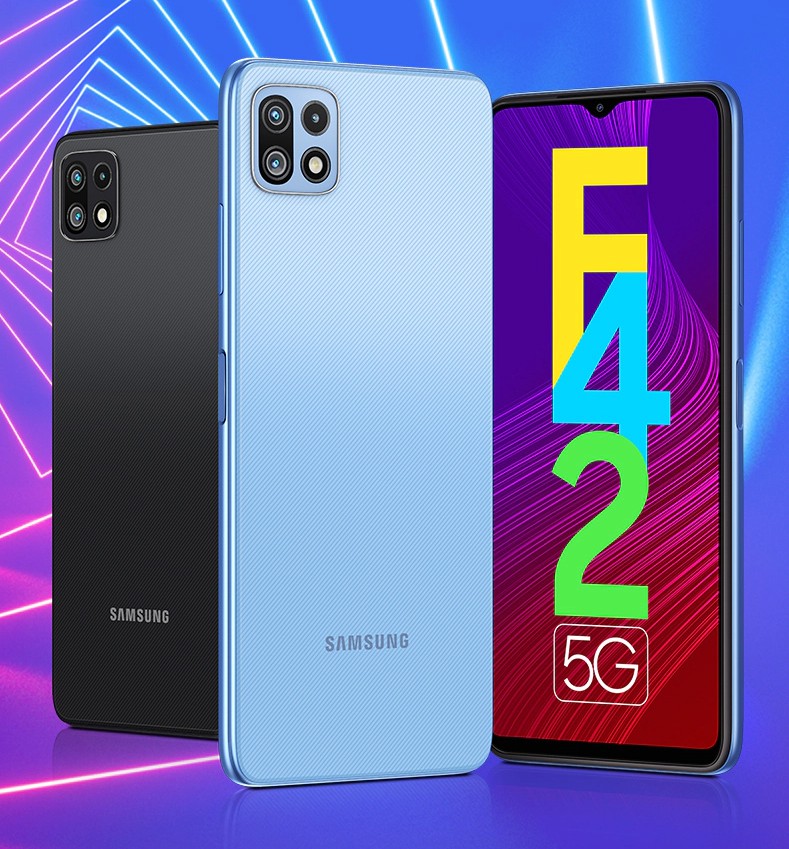
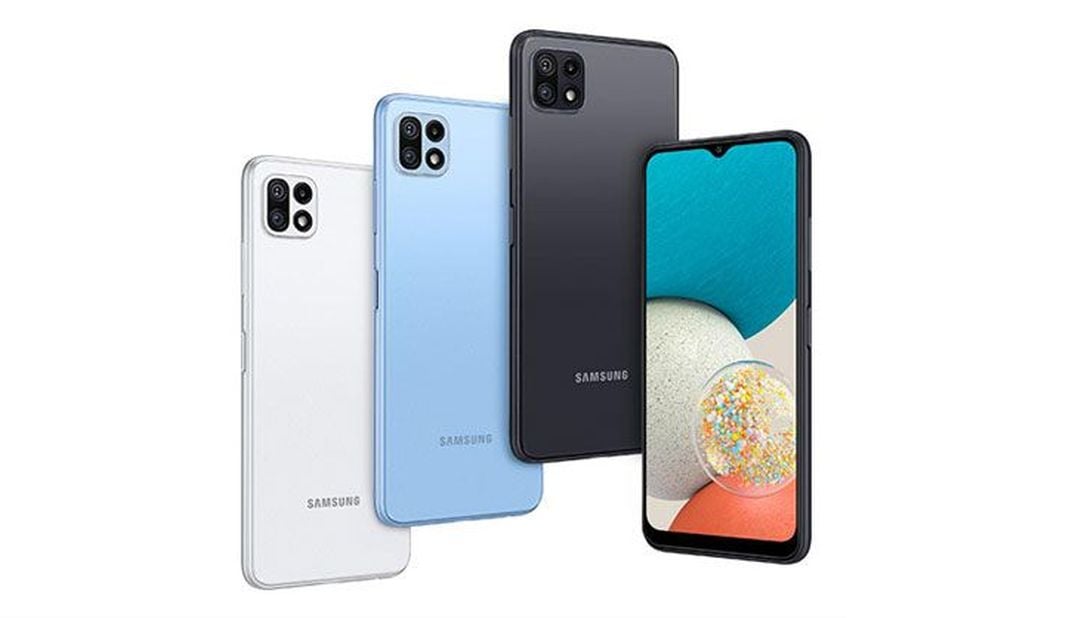
Samsung is gearing up to launch a new device in its Galaxy F series on September 29 in India. The Samsung Galaxy F42 5G was recently spotted on Google Play Console, which had revealed some key specs about it. The phone is essentially a rebranded version of the Galaxy Wide5 that had arrived in South Korea earlier this month. It may even be called Galaxy Buddy in some regions.
Design & Display
The Samsung Galaxy F42 5G sports a plastic frame and back but looks fairly premium from the rear thanks to a minimal design. The thing that stands out from the rear end is obviously its camera module, which looks kind of unique. It comes fitted with three camera sensors.
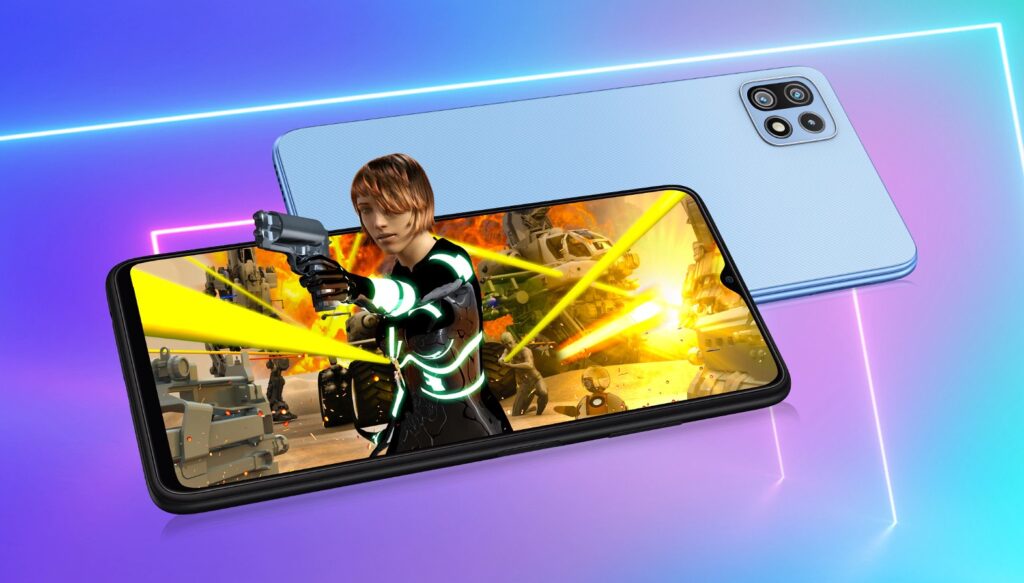
Upfront, there is a 6.6” LCD display with 1080p+ resolution and a V-shaped notch. It has a refresh rate of 90Hz and is surrounded by regular-sized bezels, although the one on the bottom is a tad large by today’s standards.
Cameras on the Samsung Galaxy F42 5G
The F42 5G comes with a triple camera array at the back. The primary sensor sports a resolution of 64 MP. The ultra-wide camera has a range of 115° and is capable of shooting images at a max resolution of 5 MP. There’s also a 2 MP depth sensor too. The selfie camera has a resolution of 8 MP and is capable of recording at 1080p@30fps.
Specifications
The Samsung Galaxy F42 5G is powered by the Mediatek Dimensity 700 5G processor, paired with the Mali-G57 MC2 GPU for graphical needs. The chipset has a 2.77 Gbps 5G modem (sub-6) with support for 12 bands, plus Wi-Fi 5 and Bluetooth 5.1 support.
The phone packs a large 5,000 mAh battery that can be filled up at 15W. The charging speed is unconfirmed at the moment though. It comes with a USB Type-C 2.0 port, a headphone jack, and an SD card slot.
Software
The device is expected to boot into Android 11 out of the box, which can be disappointing for some considering that Android 12 stable is just around the corner. The OS will be layered with One UI 3.1 atop.
Storage & Color Variants
Known variants for the device include 8 GB and 6 GB RAM variants coupled with 128 GB of storage. The colors offered will be three – Black, White, and Blue.
Pricing & Availability
The phone will be going on sale via Flipkart and Samsung’s own website on September 29. Some unnamed offline retailers have said that the Galaxy F42 with 6GB of RAM and 128GB storage will be priced at Rs 20,999, while the 8GB RAM version will retail for INR 22,999. However, the actual pricing may be lower than that.
During the month of August, electric vehicle sales reached 506,000 units. A new report shared the figure and found that our of the half a million figure, more than 50 percent of all sales for electric vehicles were in China.
Tesla Model 3
According to TheElec, the report arrives from EV Volumes who added that the overall figure is likely higher than 510,000 units when including the nations who’s data was unavailable. This also marked total sales doubling over the same month from a year ago. Notably, out of this total figure, 260,000 units or more than half of the EV sales in August were made in China. In Germany, around 52,000 units of EVs were sold, while the US market saw around 44,000 units being sold.
Similarly, France accounted for 17,000 units and Norway saw 14,000 EV units sold. In South Korea, electric vehicle sales reached 9,600 units, which marked a sizeable 172 percent growth year on year. EV Volumes further added that the launch of the Tesla Model Y and Hyundai Ioniq 5 boosted sales in August, while electric trucks from Hyundai and Kia were also quite popular.
Tesla Model Y
In terms of total units sold, the Tesla Model 3 was the most popular electric car, which sold around 282,000 units across the globe during this month. The Wuling Hongguang Mini EV was the second most popular EV that sold 245,000 units, followed by Tesla Model Y with 180,000 units sold. The model 3 was popular in Europe, while the Wuling Hongguang Mini EV was popular in China. EV Volumes projects total sales of electric vehicles to hit 6.41 million unit this year.
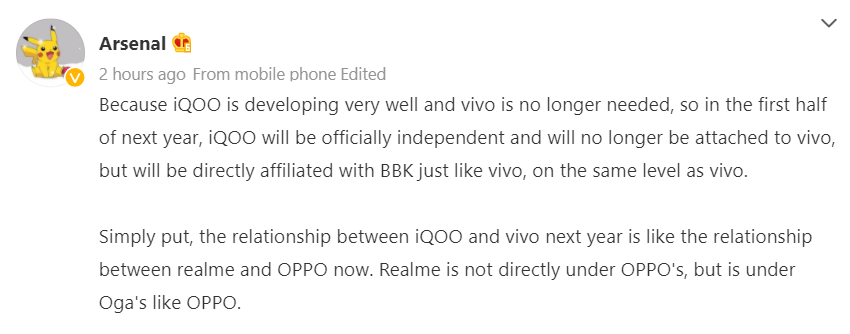
iQOO launched its first smartphone named iQOO with Snapdragon 855 back in March 2019. The Vivo sub-brand mainly focuses on releasing performance-driven smartphones across different price points. Fresh information shared by a Chinese tipster reveals that iQOO will become an independent brand in the first half of 2022.
The tipster claimed that the iQOO will be no longer attached to its parent brand Vivo in H1 2021. Hence, iQOO will be directly affiliated with China-based BBK Electronics like Vivo and OPPO. She added that in the coming year, the relationship between iQOO and Vivo will be similar to Realme and OPPO, which exist as separate brands.
1 of 2
Vivo phones available in China come preinstalled with OriginOS UI-based Android OS, whereas the iQOO phones are shipped with a modified version of the OriginOS UI for iQOO. Probably, the iQOO UI coming on iQOO phones next year will offer a different experience than the OriginOS UI available Vivo phones in China.
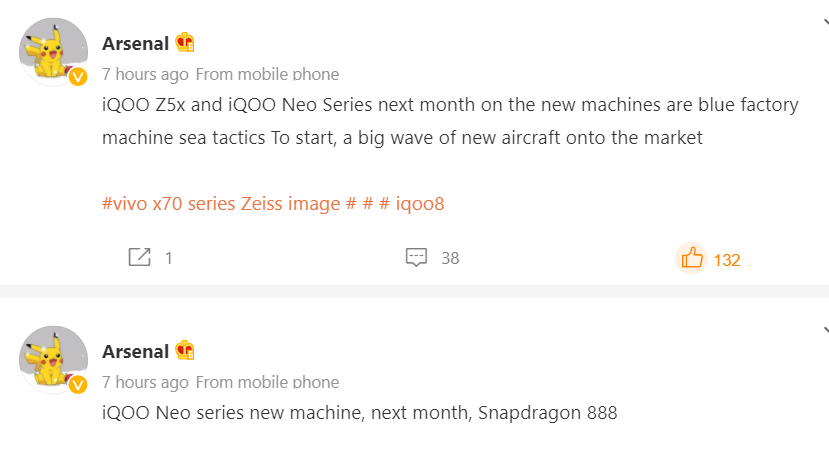
The tipster revealed through other Weibo posts that the iQOO is gearing to launch the iQOO Z5x and a Neo branded phone with Snapdragon 888 SoC in October in China. She also shared some information on Vivo’s upcoming smartphones.
Vivo’s T-series phones to launch in November
1 of 2
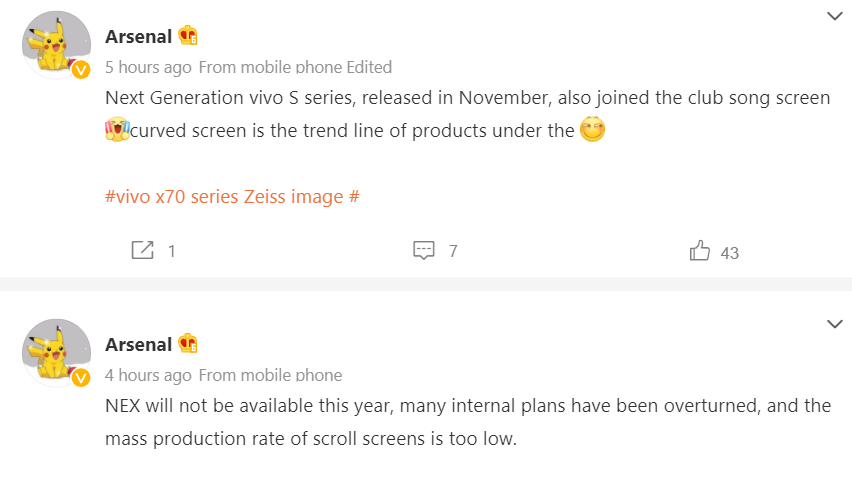
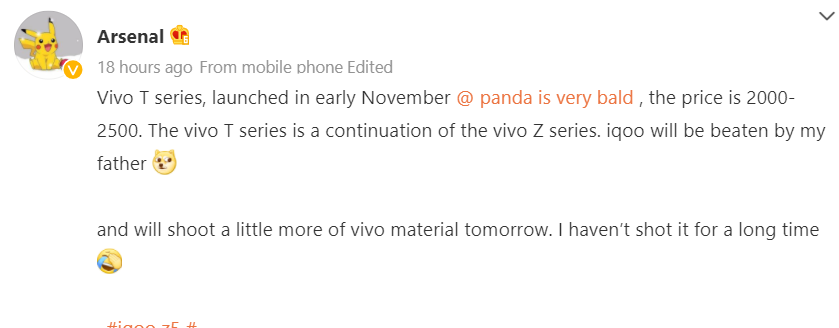
According to the tipster, Vivo’s first T-series phones priced around 2,000 Yuan (~$309) to 2,500 Yuan (~$387) will be launching in early November. The T-lineup will be a continuation of Vivo’s Z-series. In addition, November will also see the arrival of the next-generation S-series phones. The leaker also mentioned that Vivo will not be launching the NEX branded flagship as many internal plans of the company have been overturned.
India is in talks with Taiwan over a deal regarding chip production. The new discussions would have both countries enter into a semiconductor manufacturing agreement, bringing a new chip plant to India.
According to a Bloombergreport, the talks are related to chip plant and new trade deal between both nations. However, this move might spark new frictions with China. As per sources close to the matter, the officials from New Delhi and Taipei have met in recent weeks to discuss a possible agreement that would bring a chip plant to India. This chip manufacturing site would have an estimated worth of 7.5 billion US Dollars and would supply the nation with various components related to 5G to even electric cars.
As of right now, India is also surveying potential locations that can provide this site with sufficient water, land, and manpower. Furthermore, the country also seeks to provide financial support of 50 percent of the capital expenditure from 2023. This would also includes other benefits like tax breaks and other incentives as well. Notably, the officials from Taipei also wanted fast progress on a bilateral investment agreement that would include lowered tariffs for various products that are used to make semiconductors.
Unfortunately, the Office of Trade Negotiations in Taiwan declined to comment on the matter while India’s trade ministry has yet to provide a comment regarding this matter. The report added that Taiwan has long sought a trade deal with India, however, official in New Delhi have been reluctant due to rise of new frictions with China caused by this move. For those unaware, China considers the island nation as its territory.
After debuting the Redmi 9 Activ in India last week, Xiaomi has now launched two more budget Redmi smartphones. These devices are called Redmi 9A Sport and Redmi 9i Sport. They are exactly the same phones as the original Redmi 9A and Redmi 9i. The only difference is colors.
Redmi 9A Sport
The newly unveiled Redmi 9A Sport and Redmi 9i Sport do not bring anything new, except for slightly tweaked colors. In fact, the base hues remain the same and the only differences are shades as well as names.
In simpler words, the Redmi 9A Sport and Redmi 9i Sport still come in black, green, and blue colors. But these hues are now called Carbon Black, Coral Green, and Metallic Blue instead of Midnight Black, Nature Green, and Sea Blue. This is purely because the shades of these colors are slightly different.
Further, the phones still arrive in identical memory configurations, unlike the Redmi 9 Activ. They even cost the same. They retail for the following price tags.
Redmi 9A Sport Price
2GB + 32GB – ₹6,999
3GB + 32GB – ₹7,999
Redmi 9i Sport Price
4GB + 64GB – ₹8,799
4GB + 128GB – ₹9,299
Redmi 9i Sport
These two Xiaomi handsets are already up for sale on Mi.com. We are not sure if they will be sold via other channels in the future.
The Samsung Mobile division’s President and Head TH Roh has apparently made two visits to the US within this year. The executive made the trips to secure more chipsets/mobile application processors that is required for smartphone production.
According to TheElec, Roh met with major component makers in the US to secure a more chips and asked major partners to supply the South Korean tech giant. However, the official was reportedly denied, as per sources close to the matter. The first trip was made back in March while the last one was in July. The source further added that the President of Samsung Mobile division visited a global application processor maker in July and asked for more chips, but was refused outright.
The component maker had told the President that they wished to increase overall supply as well, but couldn’t increase the supply to Samsung along as of right now. Notably, Roh was also accompanied by the Vice President who remained in the US and returned to South Korea after staying for about three months. A company spokesperson stated that their trip was not without any results and they did result in the brand being able to secure some volume.
Although, the failure to secure more chips is indicative of the ongoing global shortage of semiconductors that has affected various industries across the globe. This includes the consumer electronics and even the automobile industry. At the moment, smartphone production has been negatively affected due to supply constraints in the third quarter of this year, which is also expected to continue in the fourth quarter as well.
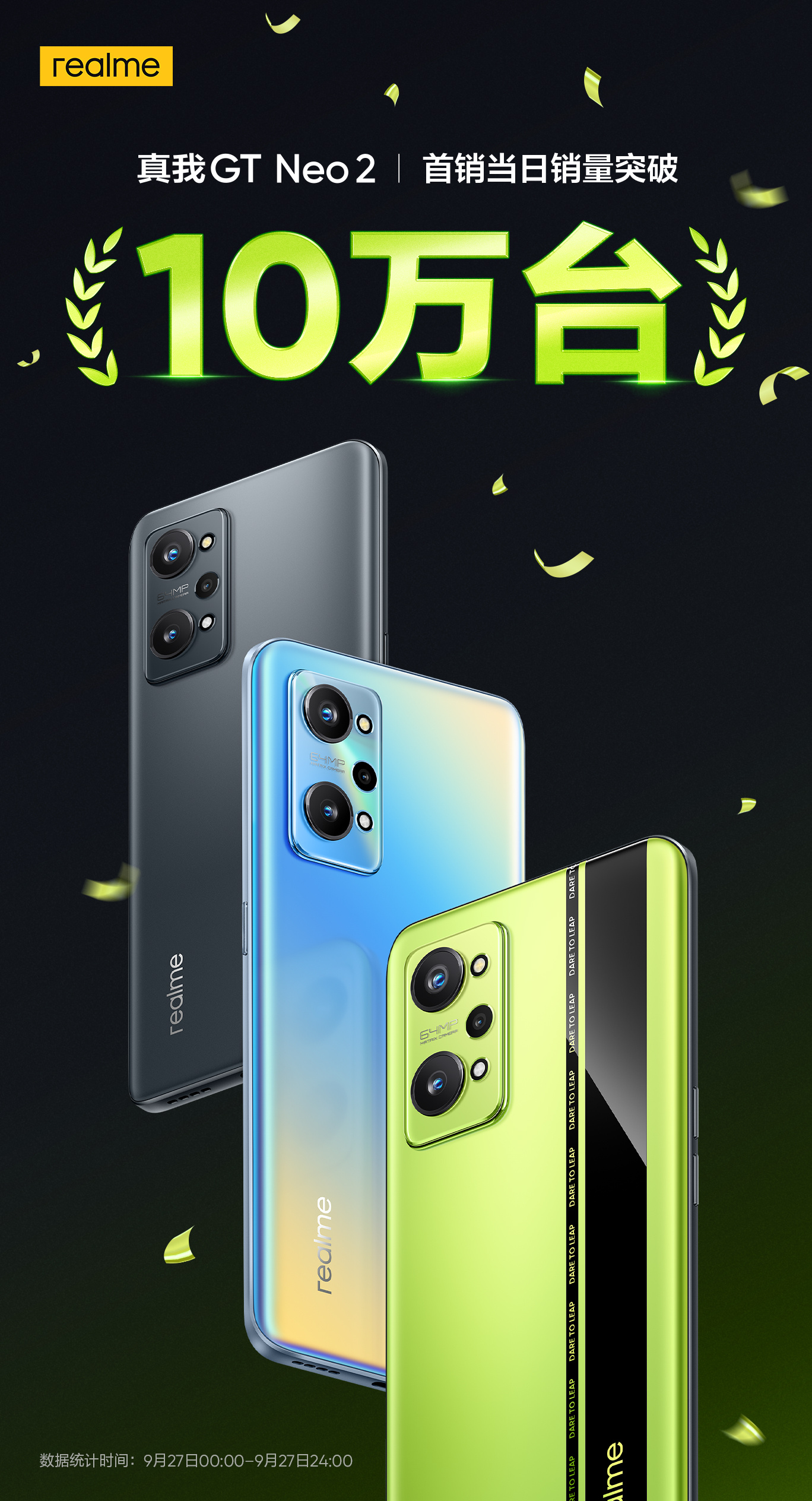
Last week, Realme announce the Realme GT Neo2 with Snapdragon 870 chip in China. As scheduled, it was made available for purchase for the first time in the home market on Sept. 27. Today, the company took to its Weibo handle to reveal that many customers in China purchase the smartphone in its first sale.
The GT Neo2 went on sale for the first time through Realme China’s online store, JD.com, Huantai Mall, Tmall, and Suning at 10:00 AM (local time) on Sept. 27. The poster released by the brand today reveals that its 100,000 units were sold in the first sale. Such is the popularity of this device.
The Realme GT Neo2 is available in three models such as 8 GB RAM + 128 GB storage, 8 GB RAM + 256 GB storage, and 12 GB RAM + 256 GB storage in China. They are priced at 2,499 Yuan (~$387), 2,699 Yuan (~$418), and 2,999 Yuan (~$464), respectively. It comes in three colors such as Shadow Black, Black Mint, and Blue.
Realme GT Neo2 specifications
The Realme GT Neo2 has a 6.62-inch AMOLED FHD+ 120Hz display. It is powered by Snapdragon 870 chipset, up to 12 GB of LPDDDR5 RAM, and a 5,000mAh battery that supports 65W fast charging. The handset comes with up to 256 GB of UFS 3.1 storage.
The handset possesses a 16-megapixel camera for selfies. It has rear camera setup has a 64-megapixel primary camera, an 8-megapixel ultrawide lens, and a 2-megapixel macro camera.
While Apple refrains from revealing finer technical details regarding its iPhones, interesting aspect regarding the parts used in its smartphones are usually revealed soon after they are launched. Now, a new report of its newly launched iPhone 13 Pro Max has revealed notable information regarding its cameras.
According to a Weiboblogger (a Chinese microblogging website), the Cupertino based giant uses a custom Sony image sensor for its triple camera setup on the rear. All three of the rear cameras are from the Sony IMX7 series, although, its ToF and front facing camera are the same as the iPhone 12 Pro Max. The primary 12 megapixel camera is an IMX703 sensor with 26mm focal length, F/1.5 aperture and 1.9 μm pixel size, which is larger than its predecessor.
Notably, there is now a sensor shift OIS and a 7P (seven element) lens in the front now. Its ultra wide angle lens is a Sony IMX772 sensor with a 12 megapixel resolution, a 13mm focal length and an F/1.8 aperture of its 6P lens. A major upgrade over last year’s ultra wide angle lens is the inclusion of autofocus on this image sensor. Lastly, the telephoto lens is an IMX713 sensor with 77mm focal length for 3x optical zoom. Furthermore, the 6P lens with OIS has a slower F/2.8 aperture.
Samsung is all set to launch the Galaxy F42 5G in India tomorrow (September 29). Ahead of that, the smartphone’s price in the country has leaked. Let’s take a look at how much it will cost in the region.
Samsung Galaxy Wide5
According to the retail sources of 91Mobiles, the upcoming Galaxy F42 5G will be available in 6GB + 128G and 8GB + 128GB storage configurations. These variants will retail at the following price tags across offline stores.
Galaxy F42 5G Offline Price Leak
6GB + 128GB – ₹20,999
8GB + 128GB – ₹22,999
Since phones are usually costlier offline, the Galaxy F42 5G could be cheaper than the above-listed price tags online. That being said, as we are only a few hours from the launch, we don’t have to wait much longer to know the exact price of the handset.
The forthcoming Samsung Galaxy F42 5G for India is expected to be a rebranded Galaxy Wide5. Hence, it is said to come with features like a 6.6-inch FHD+ LCD panel with a 90Hz refresh rate, a MediaTek Dimensity 700 chipset, 64MP (wide) + 5MP (ultra-wide) + 2MP (depth) triple rear camera setup, 8MP front-facing camera, a side-mounted fingerprint sensor, One UI Core 3.x based on Android 11, 5,000mAh battery, and 15W fast charging.
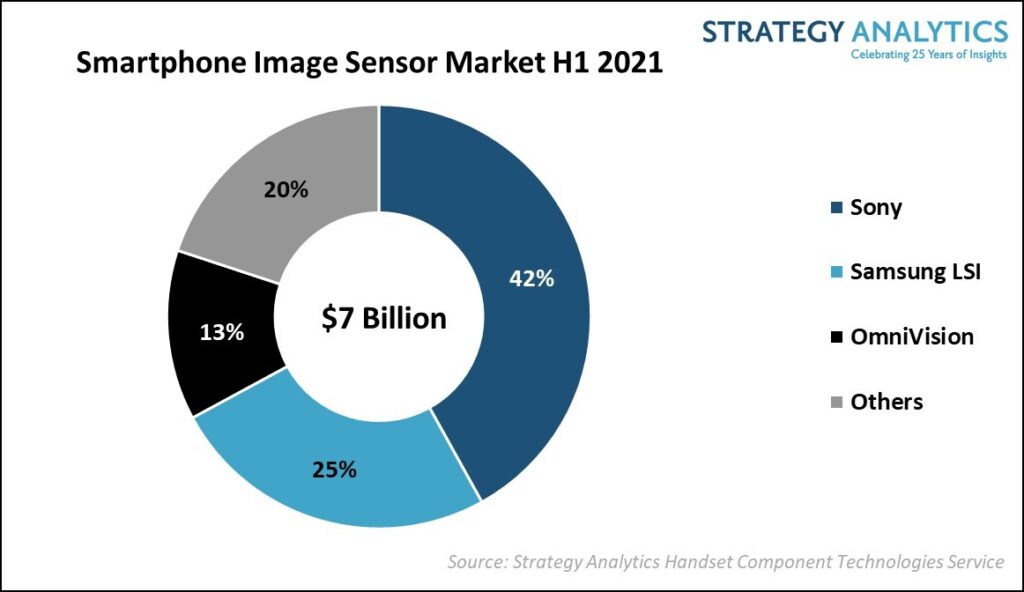
The global smartphone image sensor market bagged a total revenue of $7 billion in the first half of 2021, as per the Strategy Analytics Handset Component Technologies service report titled “Smartphone Image Sensor Market Share Q2 2021: Sony Captures 41 Percent Share”.
The report (via: Business Wire) reveals that the image sensor market managed to record revenue growth of more than 10 percent year-over-year in the first half of 2021.
Source: Strategy Analytics, Inc.
But it was Sony Semiconductor that managed to rank #1 and took the spot in the smartphone image sensor shipments in H1 2021 with an impressive revenue share of 42 percent. This was followed by Samsung System LSI and OmniVision Technologies.
According to the analysis, the top three vendors accounted for about 80% of revenue in the global smartphone image sensor market in H1 2021.
Jeffrey Mathews, Senior Analyst at Strategy Analytics says, “The image sensor vendors witnessed an accelerated momentum from smartphone OEMs, who actively adopted high-resolution CIS and low-pixel CIS products for multicamera applications, to secure inventory and cater to pent-up demand. Sony, Samsung, and OmniVision supplied key high-resolution CIS products to leading smartphone OEMs in H1 2021.”
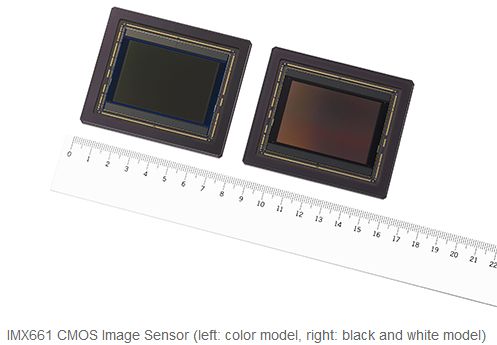
Sony IMX661 CMOS image sensor
Further, the introduction of new high-resolution and large format CIS products from the major vendors are expected to boost the revenue opportunities in the market, as per Stephen Entwistle, Vice President of the Strategic Technologies Practice at Strategy Analytics.
However, he added that the supply fluctuations of various high-pixel and low-pixel CIS products continue to challenge the shipments growth prospects of the smartphone image sensor market in 2021 and beyond.
A previous report revealed that Sony led the CMOS Image Sensor market share in 2020, but Samsung is narrowing the gap. The latter recently launched a 200MP ISOCELL HP1 sensor – a reflection of the company’s design policy of pushing the boundaries of existing technologies. The OEM also recently revealed plans to launch a 576MP camera sensor in four years. Sony has been busy as well though and recently unveiled its CMOS IMX661 image sensor with a 127.68MP pixel count.
WhatsApp is one of the world’s largest instant messaging platforms but the Facebook-owned platform doesn’t have a good monetization model, despite having billions of monthly active users globally.
However, the company has been bringing several new features that have the potential to become a revenue stream for the application. One of them is WhatsApp Pay which was officially launched in India last year after being stuck for a couple of years because of regulatory issues with the Indian government.
Despite WhatsApp being the most used mobile application in India, the payment service built into the app didn’t take off. Now, to encourage more people to use its payment service, the company is reportedly considering offering cashback rewards.
As per the report, the company could be offering a one-time cashback reward of ₹10 (~$0.14) which will be crediting into the account with 48 hours. Also, it could be available only to those who are transacting through WhatsApp Pay for the first time.
The reward suggested for using the payment service is quite low when compared to what other players in the Indian market offered during their initial launch. But there’s a possibility that the reward amount could get increased.
In India, the WhatsApp Pay feature is based on the Unified Payments Interface (UPI) standard — the same system that is used by other payment apps such as Walmart’s PhonePe, Google’s Google Pay, and PayTM, among others.
Do note that the feature is currently under work so whenever the company decides to release it for the users, it could get changed to something else. It’s just speculation from our side, but we expect the feature to get released in the coming weeks or months.
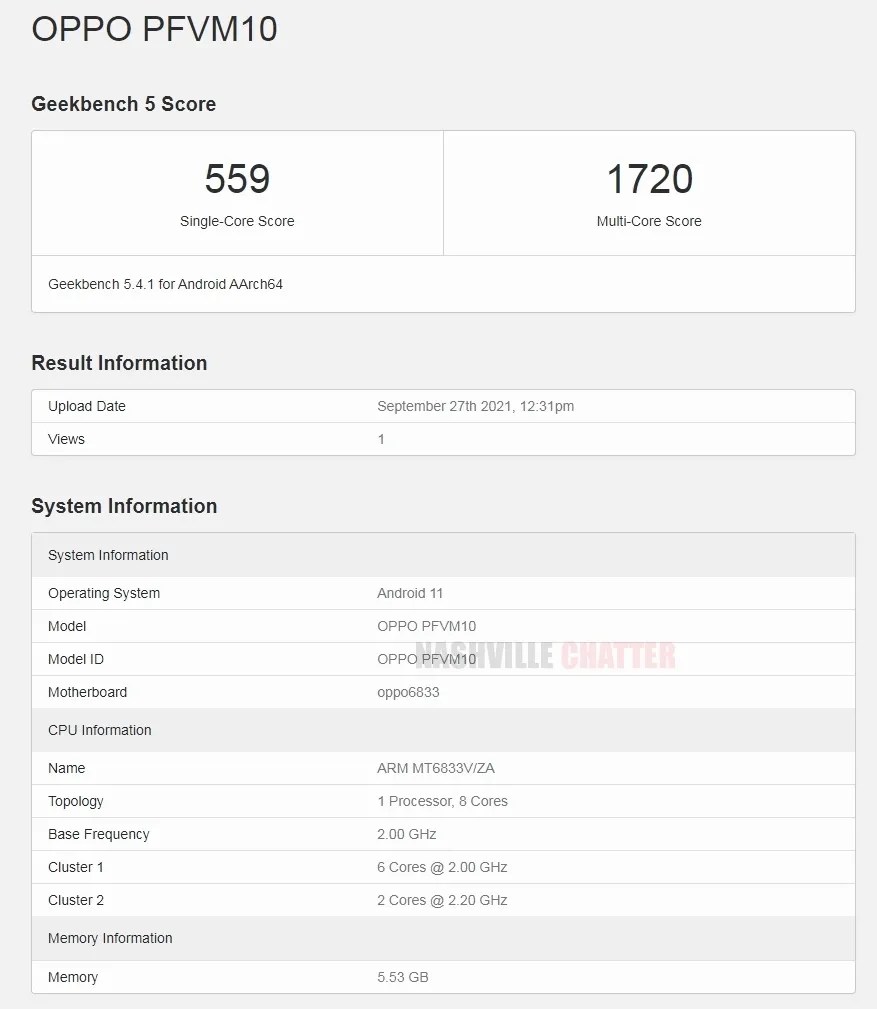
The mysterious OPPO phone with the PFVM10 model number was approved by the TENAA authority of China earlier this month. The listing revealed the entire specifications and images of the device, but its final marketing name remains a mystery. The PFVM10 smartphone has now emerged in the database of the Geekbench benchmarking site (via). The listing suggests that the company could be internally testing the performance of the device before its official announcement.
OPPO PFVM10 Geekbench listing
The Geekbench listing reveals that the OPPO PFVM10 will be powered by the MediaTek Dimensity 700 SoC. The chipset is mentioned with its MT6833 model number on the benchmarking site.
OPPO PVM1
The handset is equipped with 6 GB of RAM, and it boots to Android 11 OS. It scored 559 and 1720 points in the single-core and multi-core tests of Geekbench.
OPPO PFVM10 specifications
The TENAA listing of the OPPO PFVM10 has revealed that it has a 6.52-inch teardrop notch display that offers an HD+ resolution of 720 x 1600 pixels. The handset houses a 4,980mAh rated battery, which may come with support for at least 18W fast charging.
The PFVM10 will come with 4 GB / 6 GB of RAM and 128 GB of storage. It will come preloaded with Android 11 OS and ColorOS UI. It has a front camera of 8-megapixel and a 13-megapixel dual-camera system. The handset will also offer a side-facing fingerprint reader and a microSD card slot.
We use cookies on our website to give you the most relevant experience by remembering your preferences and repeat visits. By clicking “Accept”, you consent to the use of ALL the cookies.
This website uses cookies to improve your experience while you navigate through the website. Out of these, the cookies that are categorized as necessary are stored on your browser as they are essential for the working of basic functionalities of the website. We also use third-party cookies that help us analyze and understand how you use this website. These cookies will be stored in your browser only with your consent. You also have the option to opt-out of these cookies. But opting out of some of these cookies may affect your browsing experience.
Necessary cookies are absolutely essential for the website to function properly. This category only includes cookies that ensures basic functionalities and security features of the website. These cookies do not store any personal information.
Any cookies that may not be particularly necessary for the website to function and is used specifically to collect user personal data via analytics, ads, other embedded contents are termed as non-necessary cookies. It is mandatory to procure user consent prior to running these cookies on your website.