According to a new report by IC Insights, Samsung surpassed Intel to become the world’s largest semiconductor supplier in Q2 2022. The report also says that Mediatek and Nvidia witnessed significant growth, while Intel, TSMC, and Qualcomm did not grow much.
As per IC Insights, Samsung’s market share in the semiconductor market surged due to the rise in demand as well as prices for DRAM and flash memory. The company’s sales increased 19% in the second quarter of 2022 to $20.3 billion.
This helped the South Korean giant to beat Intel to lead the global semiconductor market. In fact, Samsung is forecasted to further widen its gap with its American rival by growing even more 10% to $22.3 billion in Q3 2021.
Samsung was ranked as the top semiconductor supplier through much of 2017 and 2018 when the memory market went through its last cyclical upturn. During that time, the company’s sales exceeded $20.0 billion during the peak of the memory upturn in 2018.
Talking about other good performances in Q2 2021, the sales of MediaTek and Nvidia increased 17% and 14% respectively. The former was benefited from the data centers and gaming industry. On the other hand, the latter grew due to the strong demand for 5G smartphones.
Memory suppliers like Sk Hynix and Micron also showcased the growth of 21% and 16% respectively. However, their position did not change in the top 10 list.
Whereas, big players like Intel, TSMC, Qualcomm only grew 3% in the same duration. Also, Broadcom only saw a 1% increase in its sales.
As a whole, the sales of the top 10 semiconductor suppliers rose 10% to $95.5 billion in the second quarter of 2022.
Huawei has just officially started selling second hand smartphones in China. These certified used handsets from the company are now available on the official online store in the region.
The new service from the Chinese tech giant offers a variety of smartphones that have previously been owned and are certified by the company itself to offer assurance regarding quality of the smartphone. This move from the consumer is beneficial for the brand as its customers now get more affordable deals, while the company also benefits as second hand devices would ensure stock amid smartphone supply shortages. Notably, we had previously reported on second hand 5G Huawei phones seeing a rise in price after the company launched the 4G only P50 series.
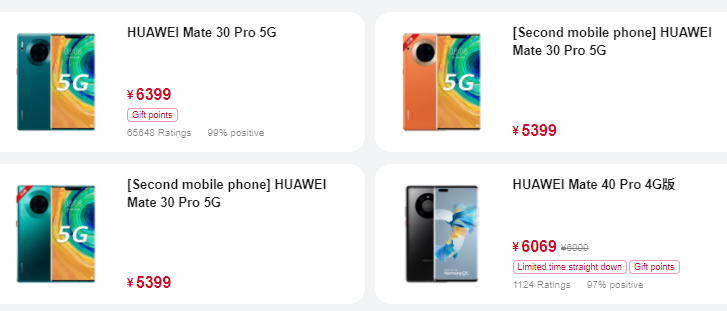
Talking about the used devices, the VMall app and official website in China (Via CNMO) sells second hand smartphones of various models. This includes six models, namely the Mate 30 Pro 5G, Mate 40 5G, P30, P30 Pro, Mate 30, and Mate 30 Pro. Out of these handsets, only the Mate 30 Pro 5G, in the 8GB+128GB and 8GB+256GB variants, are currently in stock while the rest have already been sold out. In other words, the second hand deals from the company were quite attractive and the move was successful in the Chinese market.
Mate 40 Pro 4G
Looking at the prices, one can see prices the used smartphones being around 500 or 600 Yuan (roughly 77 to 92 US Dollars) cheaper than their new counterparts. So, the second hand models are clearly more cost effective as well. Huawei also assures that the used phones it certifies undergo a strict quality check, while the company also equips these devices models with new original batteries before listing them for sale and arrives with one year of warranty.
If you have been following the smartphone market over the years, you will know how shocking it was when Xiaomi released its first generation of MIX. After launching the Mix 3 slider phone, the company announced the MIX Alpha, but it wasn’t on sale to the public, and then came the MIX Fold, which isn’t a phone for most people. And today we’ve got the Xiaomi MIX 4, which is the official successor to the MIX series. Since we got the phone not long ago, we’ll start with the most relevant aspects in this hands-on.
Xiaomi MIX 4 Hands-on: Unboxing & Design
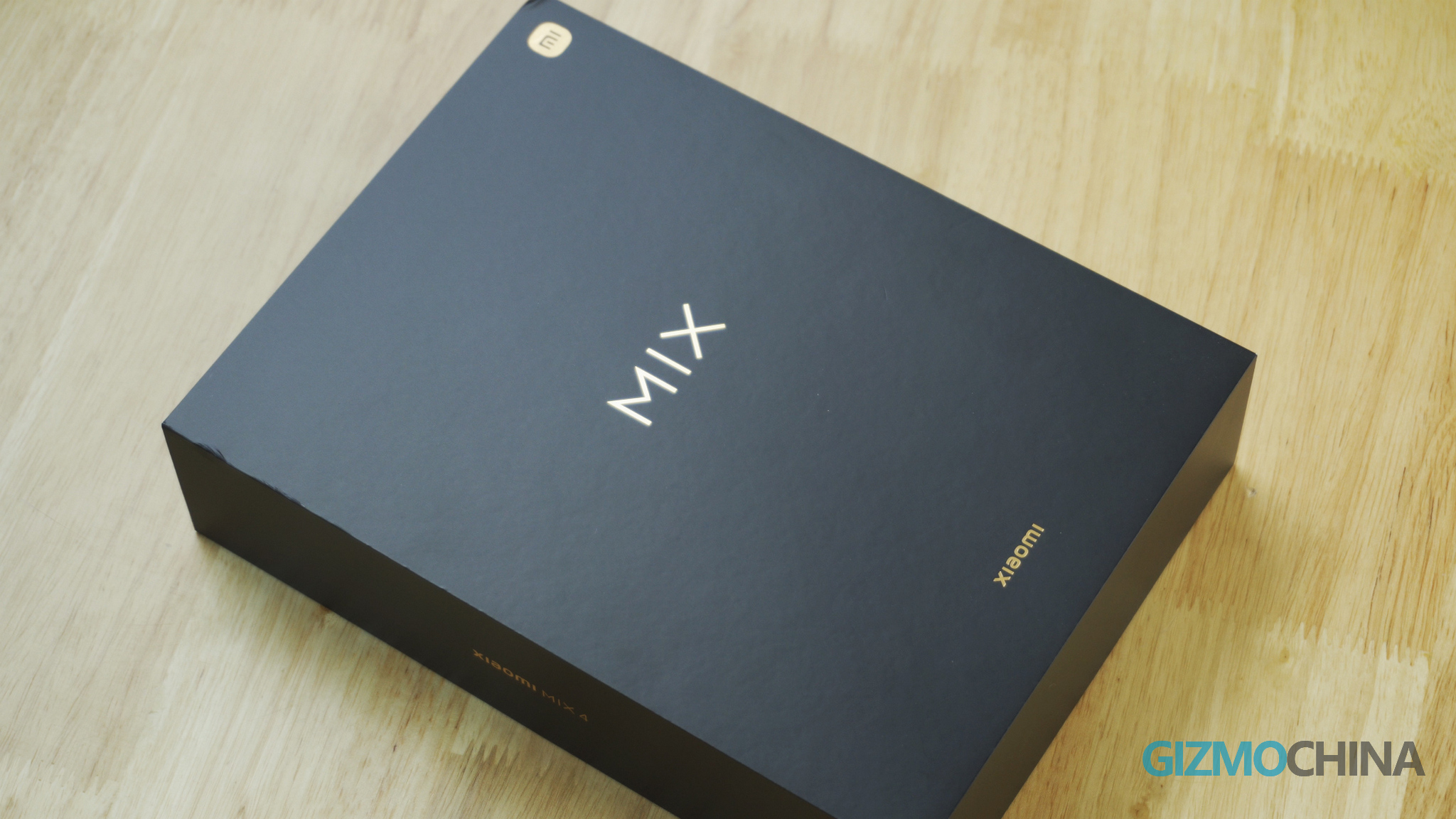
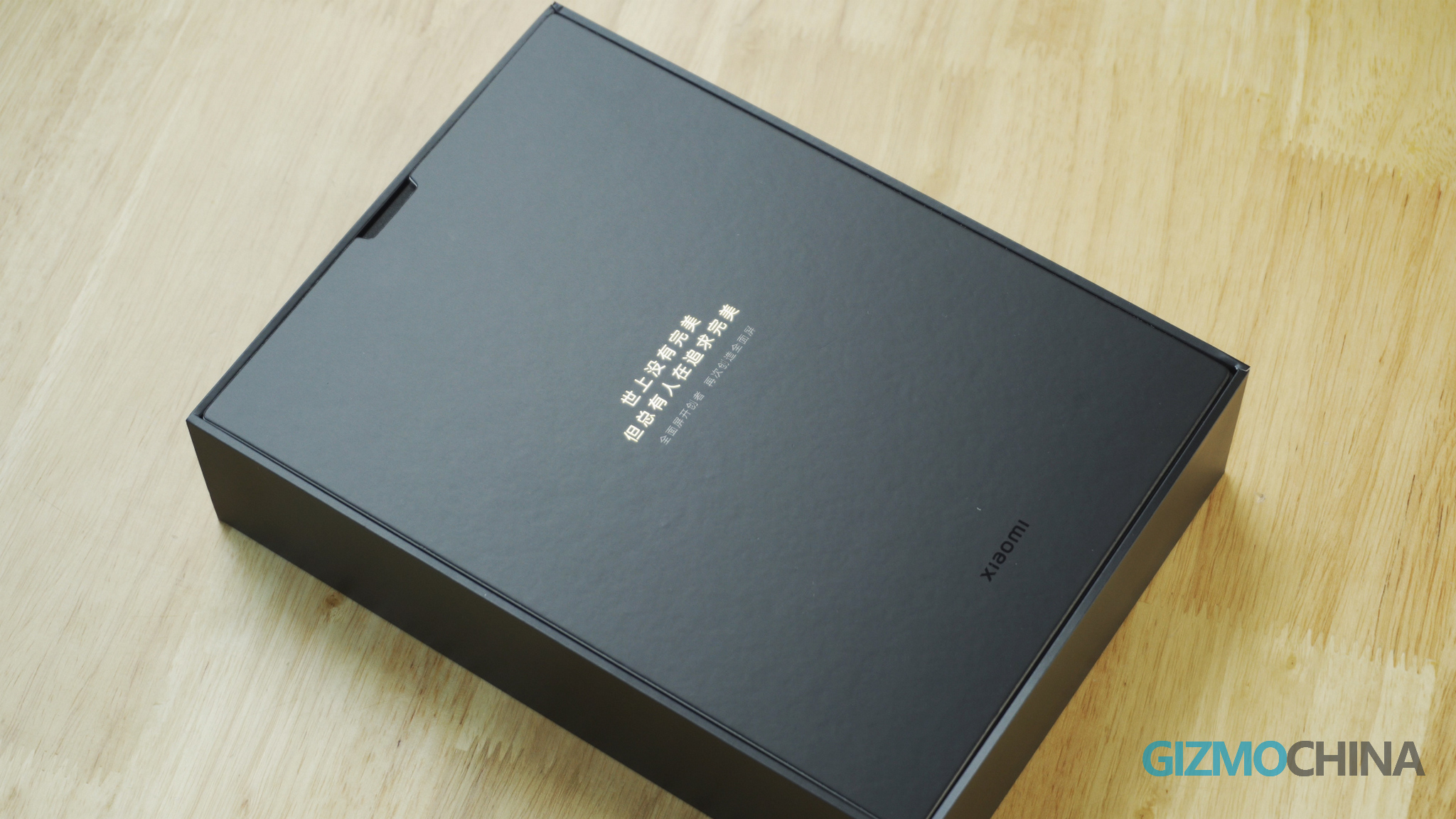
The box is not as small as the Mi 11 series, as you can see, the Mi Mix 4 box is pretty large. When you open the package, the new slogan of MIX comes into view. Translated into English, it means “There is no perfection in the world, but there is always someone in pursuit of perfection”.
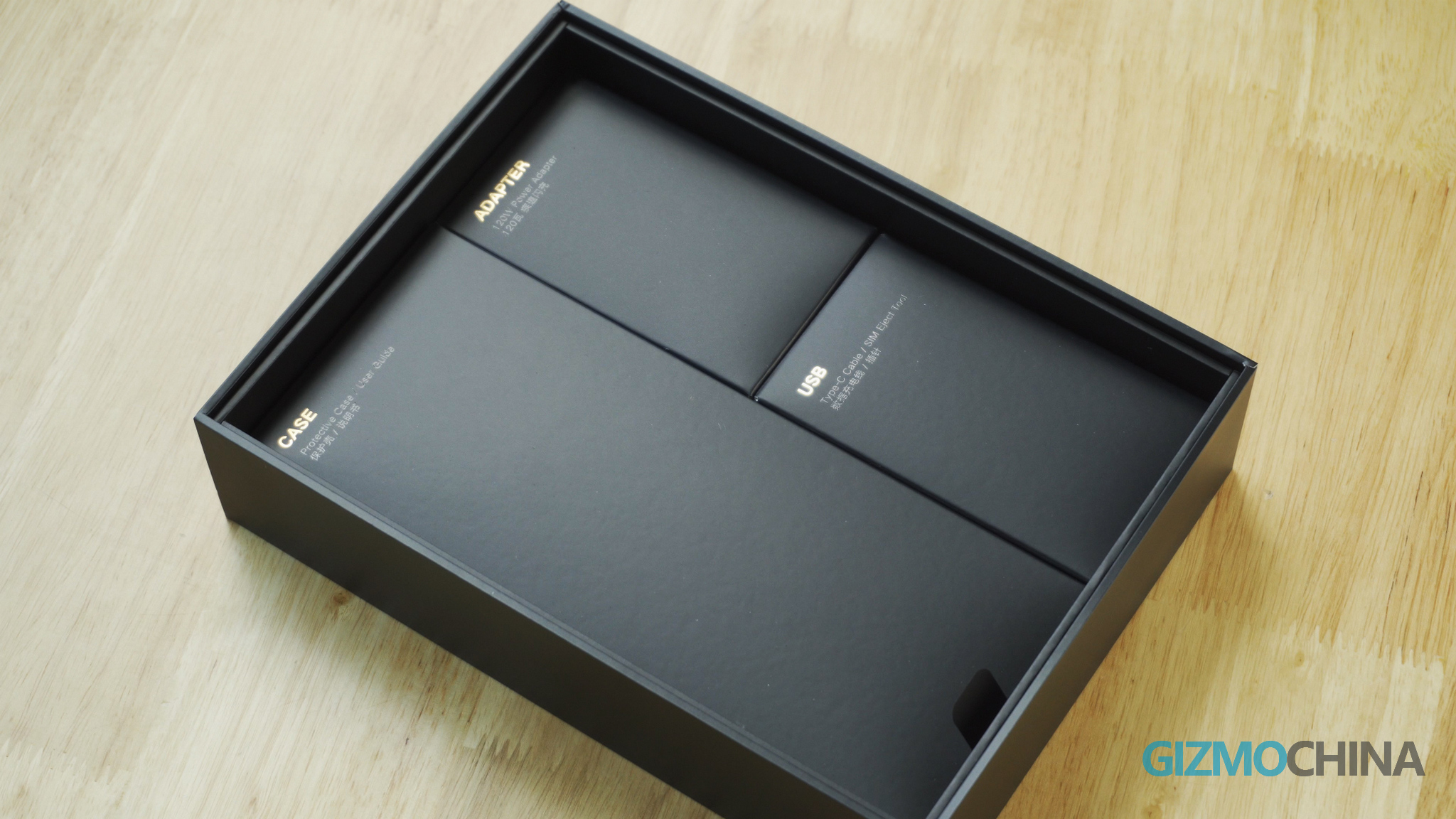
Next you see the Xiaomi MIX 4 itself, let’s put it aside for now and see what accessories come with it. A phone case, a headphone adapter, a data cable, and of course the most important accessory, a 120w charger.
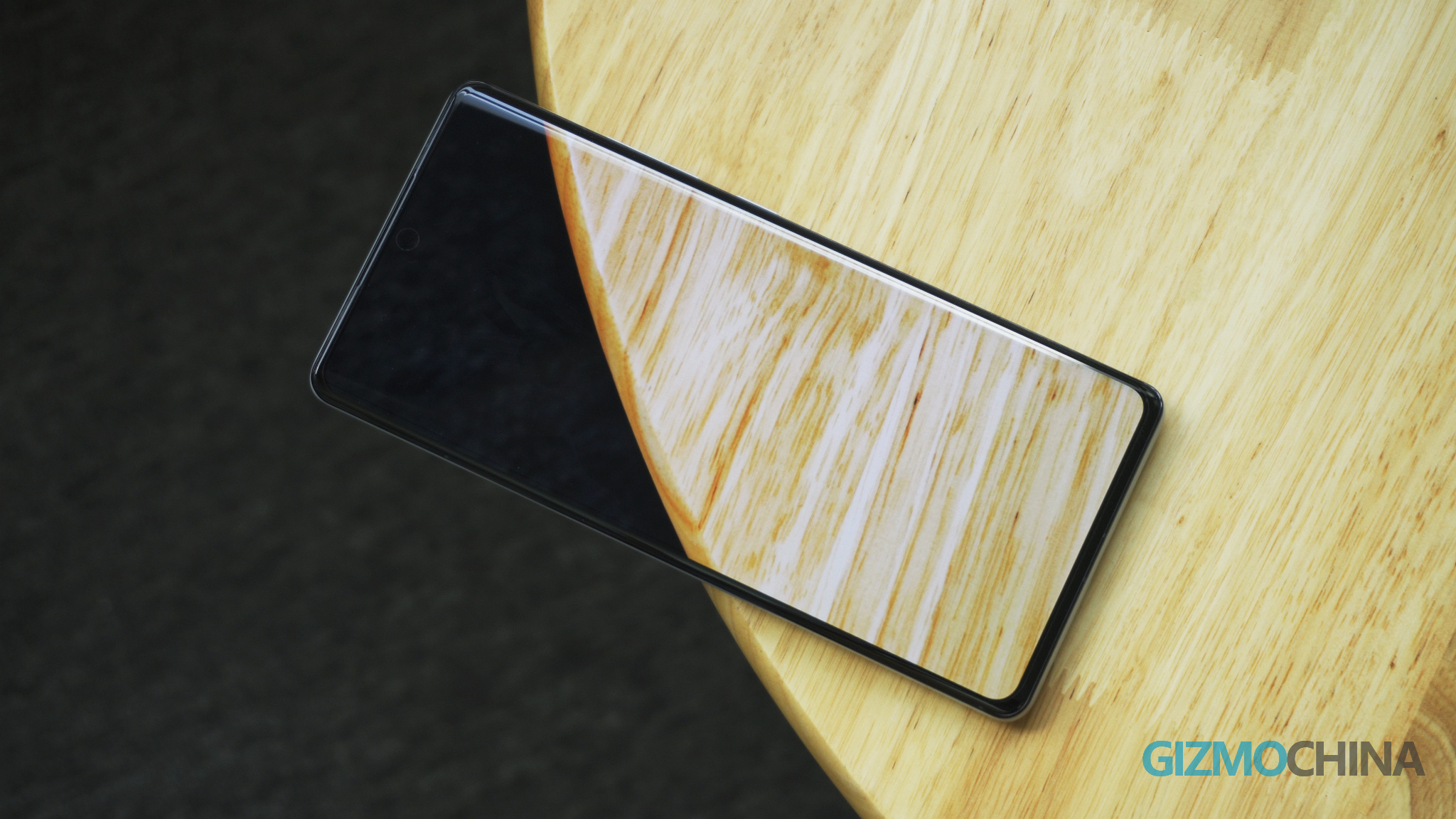
The MIX series has pursued a full-screen design right from its inception, and although the MIX 4 is not the first phone to use the under-display camera technology, it has done a very good job with the full-screen effect.
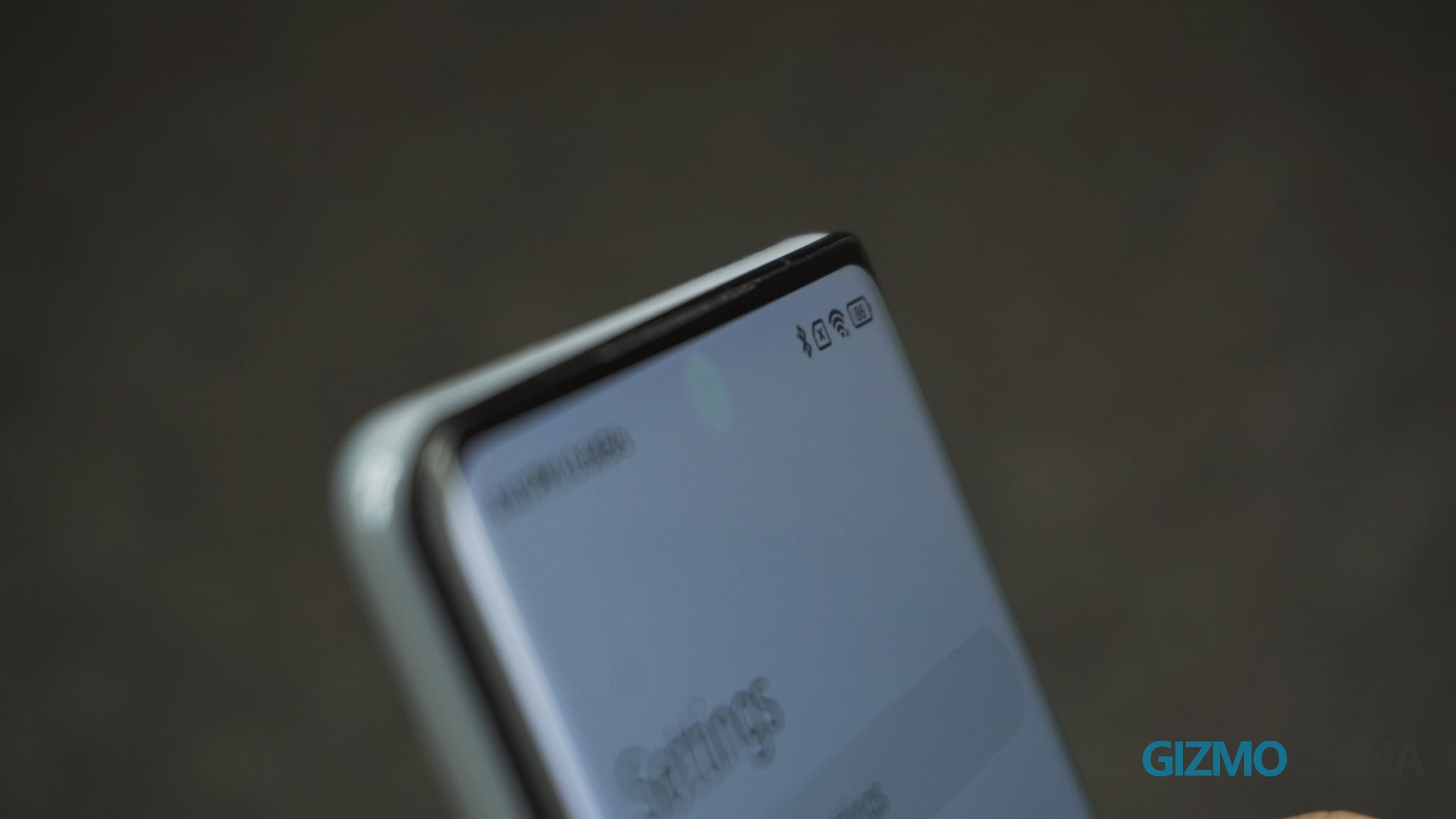
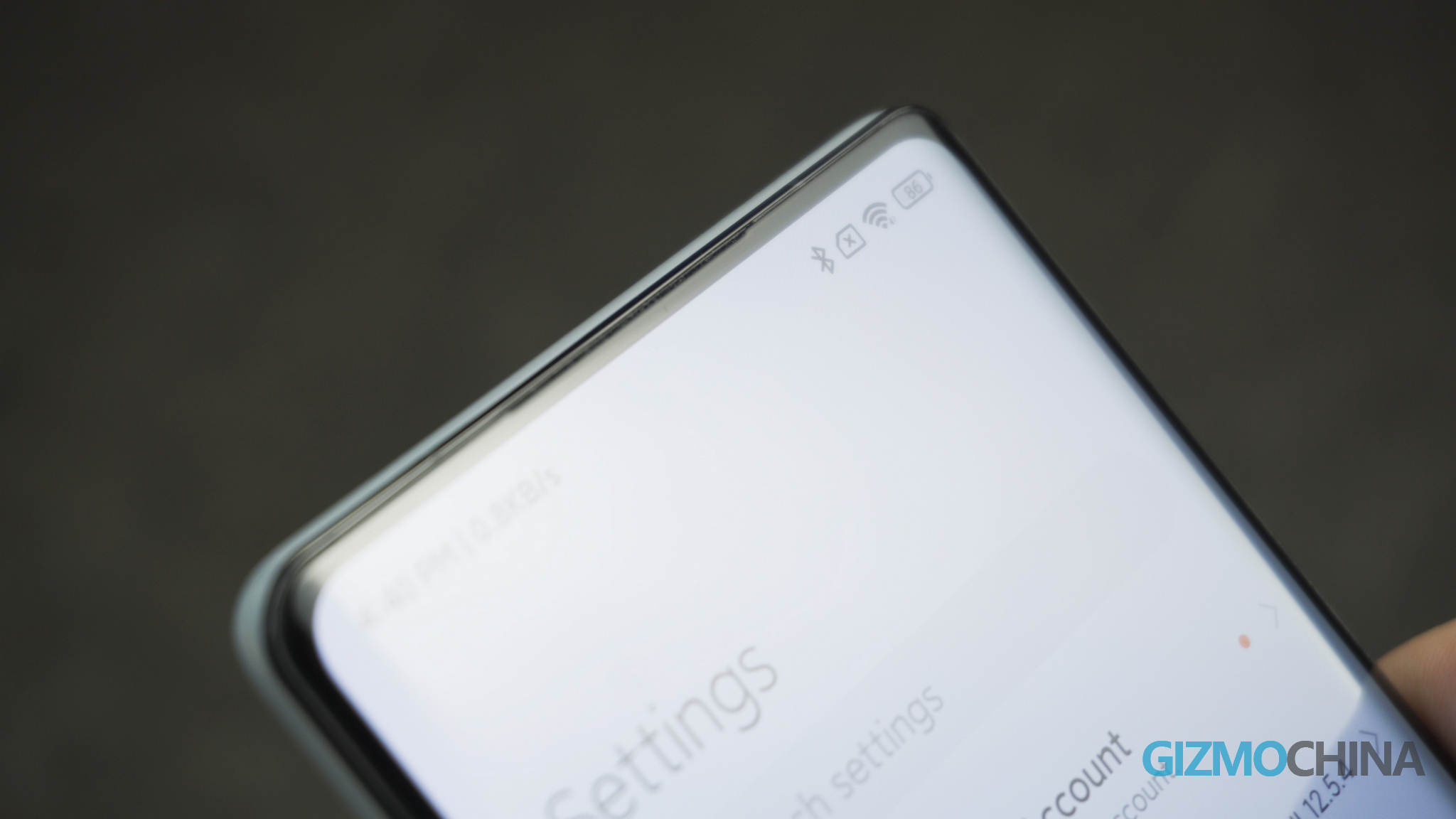
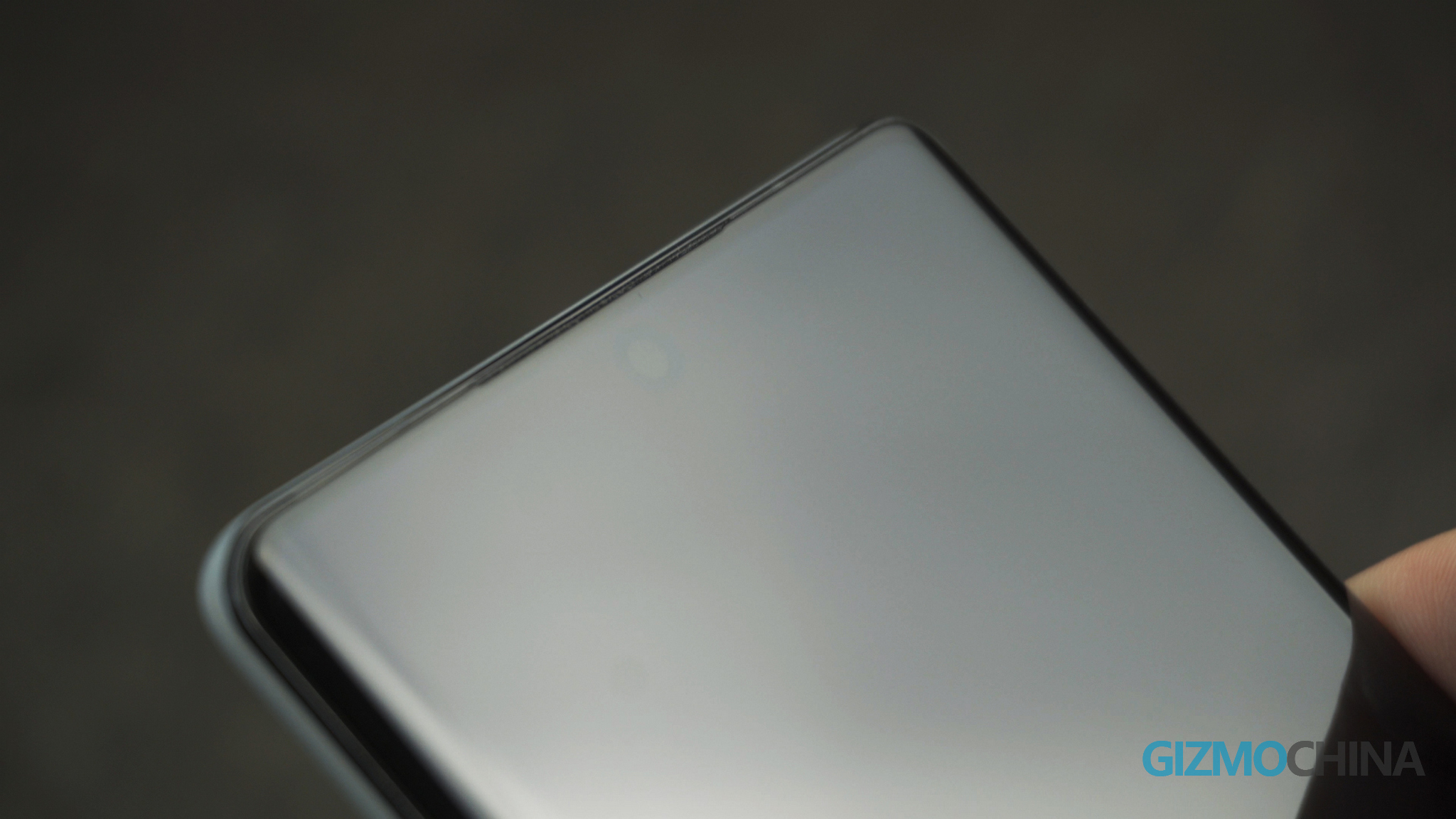
In everyday use, even if you look carefully, you won’t easily spot the camera area. Just from the display effect, it has reached a highly usable state. Of course, it is not perfect, as from the side view, you can still see the position of the front camera. In bright light, there will also be a sun logo to protect the front camera area of the screen. And Xiaomi has made a hole in the display panel for better front camera quality. However, I hope future versions won’t have a hole in the screen because only then it will have a better full-screen effect.
The UD Camera is faintly visible from the side view
The UD Camera is faintly visible from the side view
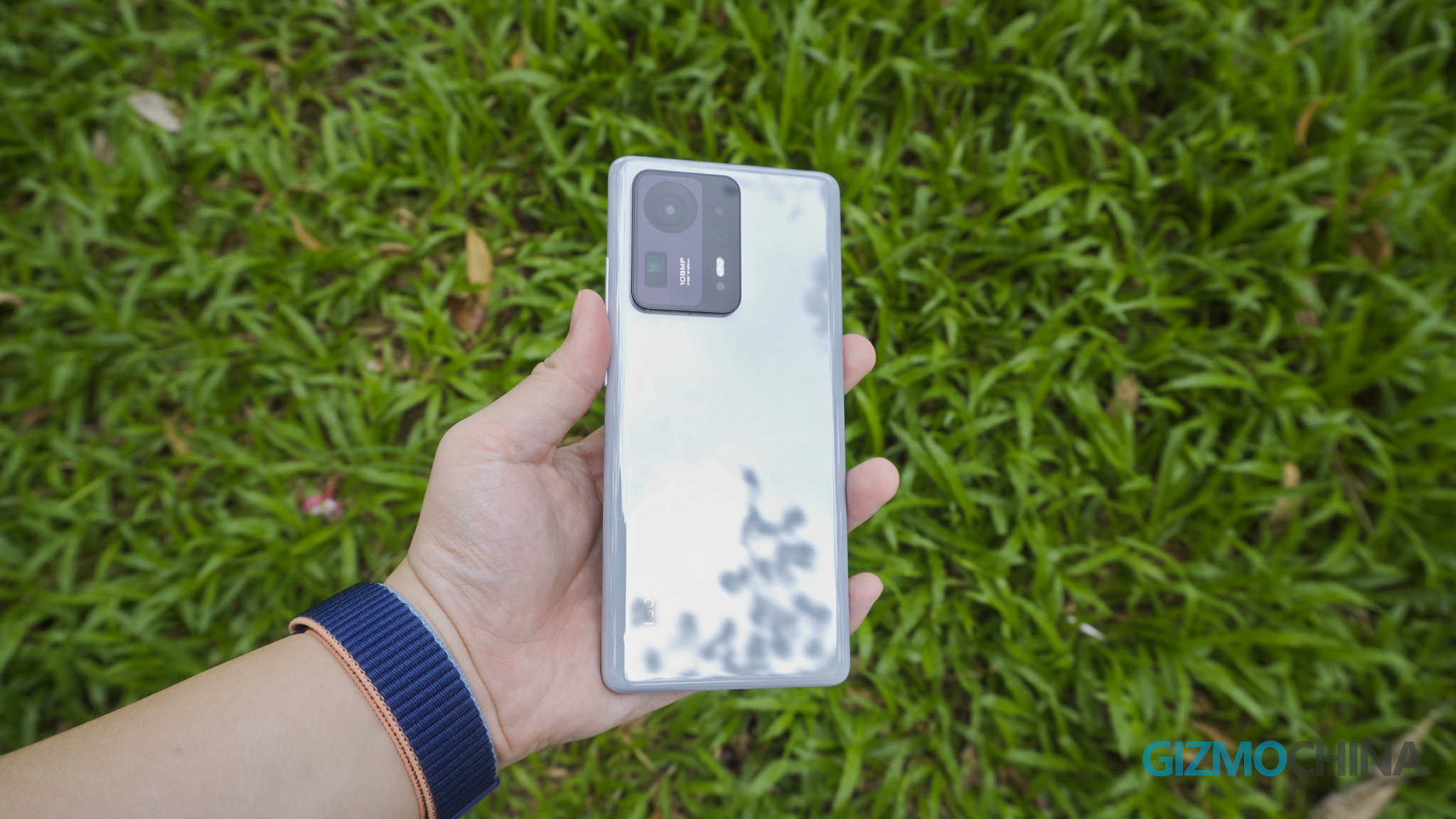
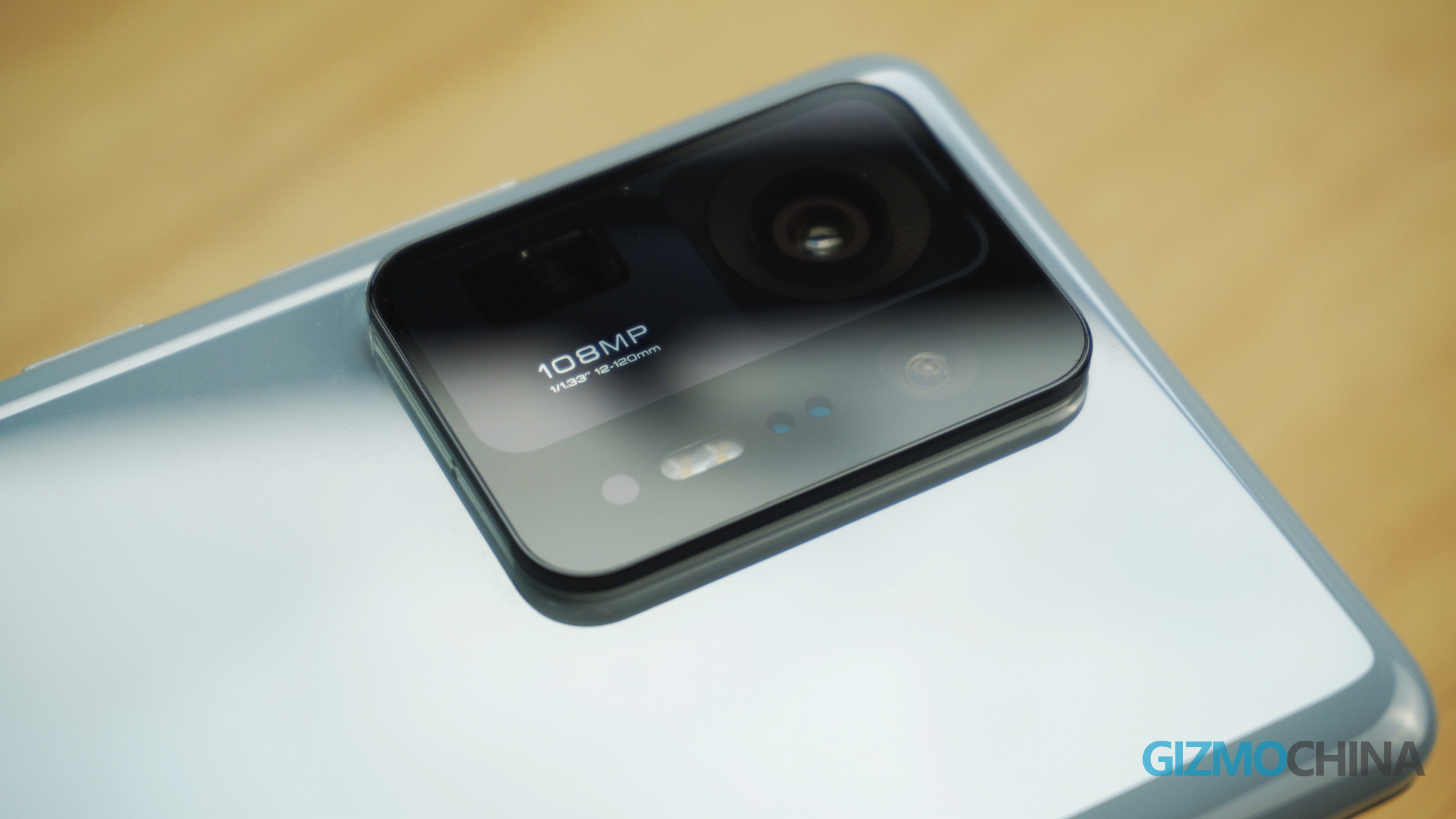
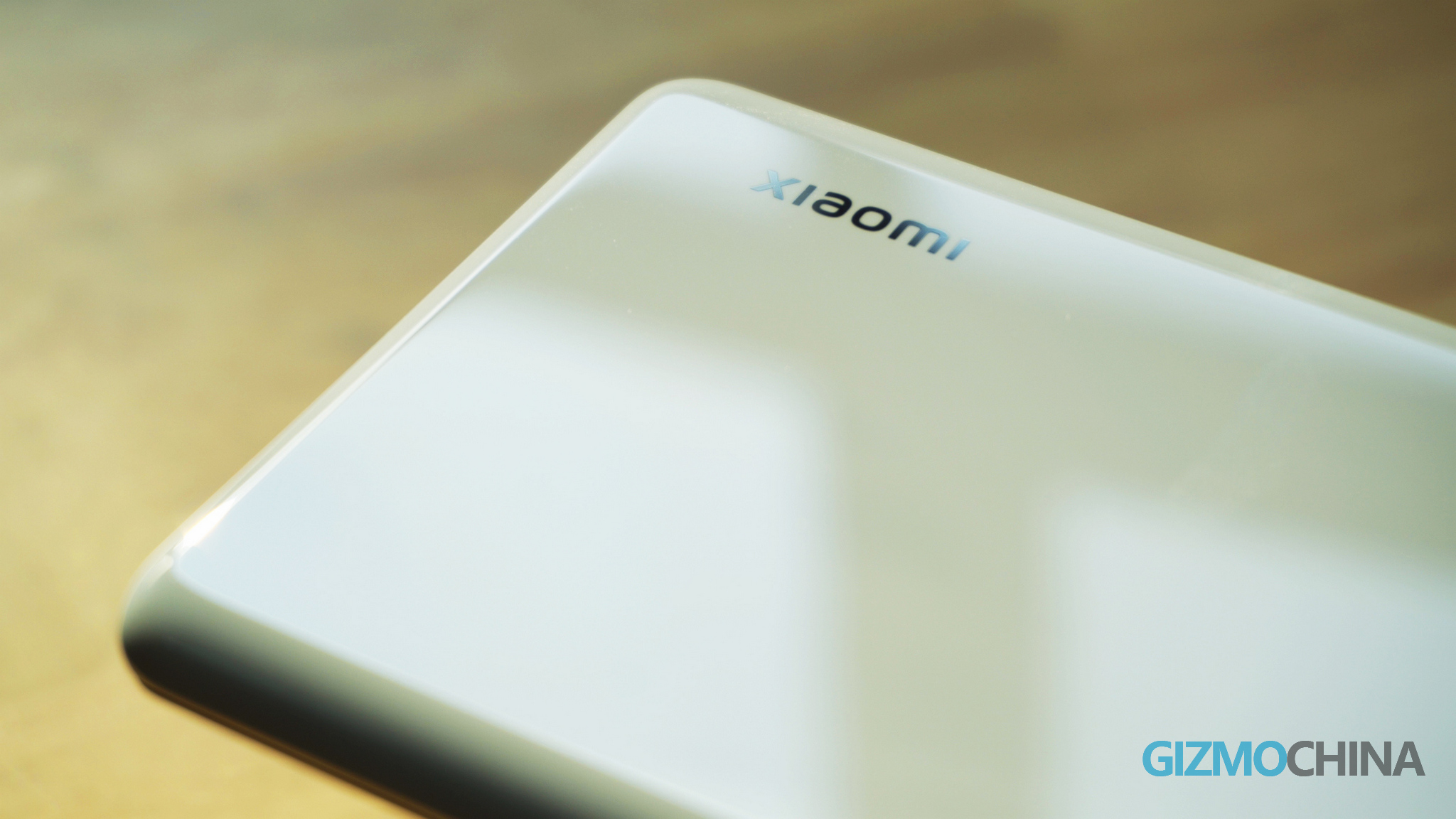
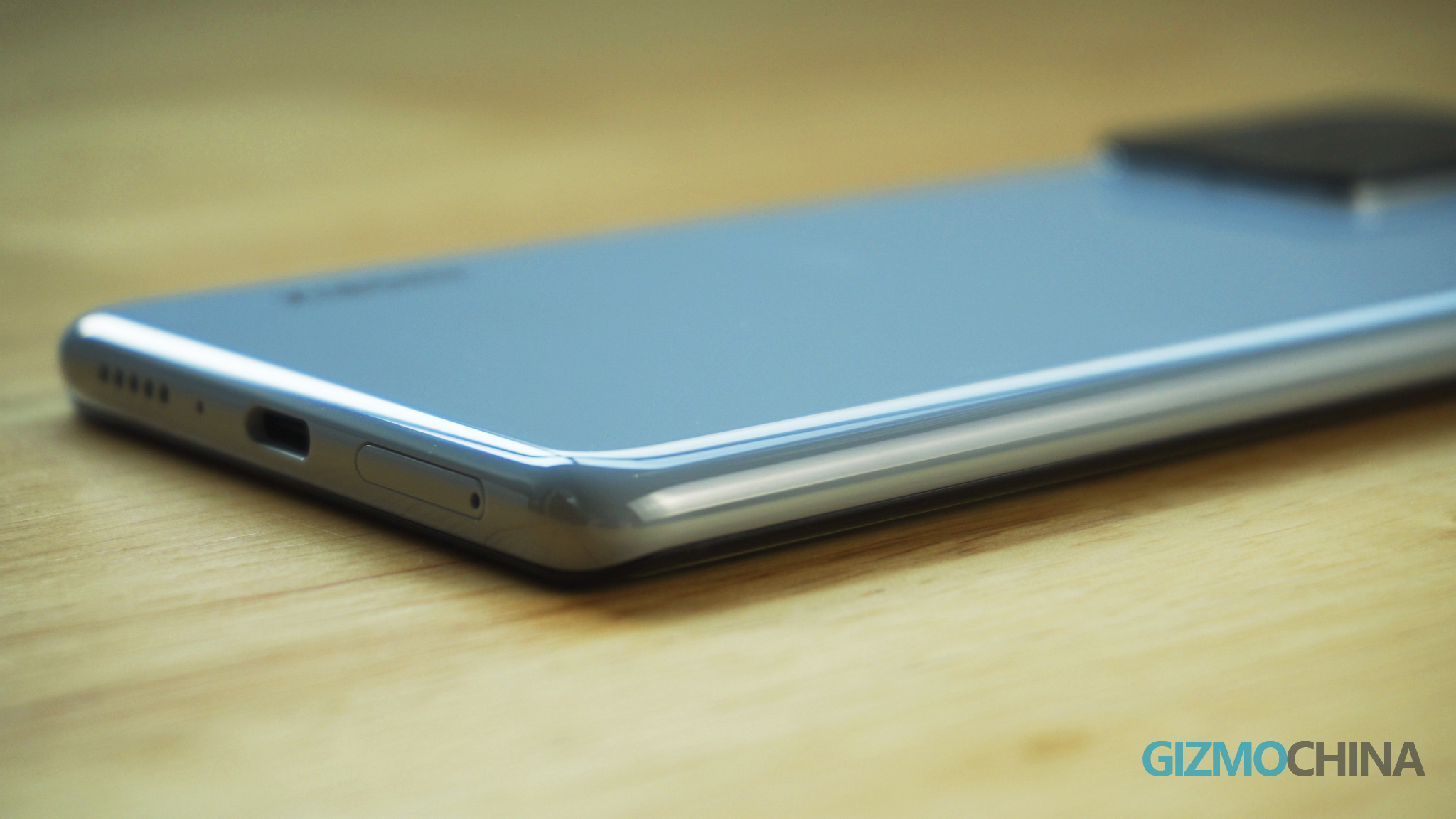
Compared to the first generation, the MIX 4’s design is kind of less impressive. Like many other phones, there is a matrix rear camera in the upper left corner.The new gray color scheme is very elegant, and the blue tint in gray looks very premium. Although the MIX 4 is relatively average in terms of the back cover design, the production quality is nevertheless superb. The Unibody ceramic body was well received by the public when it first debuted on the MIX 2, and the Unibody process is polished even further on the MIX 4.
With the new technology, the ceramic body is 30% lighter, which is one of the reasons why the MIX 4 is lighter than the Mi 11 Ultra. The back cover and frame are unibody, so it won’t pinch your hand, and it naturally feels much better than other phones. And since ceramic has a greater thermal conductivity than glass, you get the feeling that the MIX 4 will get warmer more easily than other phones with glass back covers. Honestly, the feel of the MIX 4 is really very good, and it’s hard to describe it in words. So If you get the chance, you must go and experience it yourself.
Xiaomi MIX 4 Hands-on: Under Screen Camera Quality
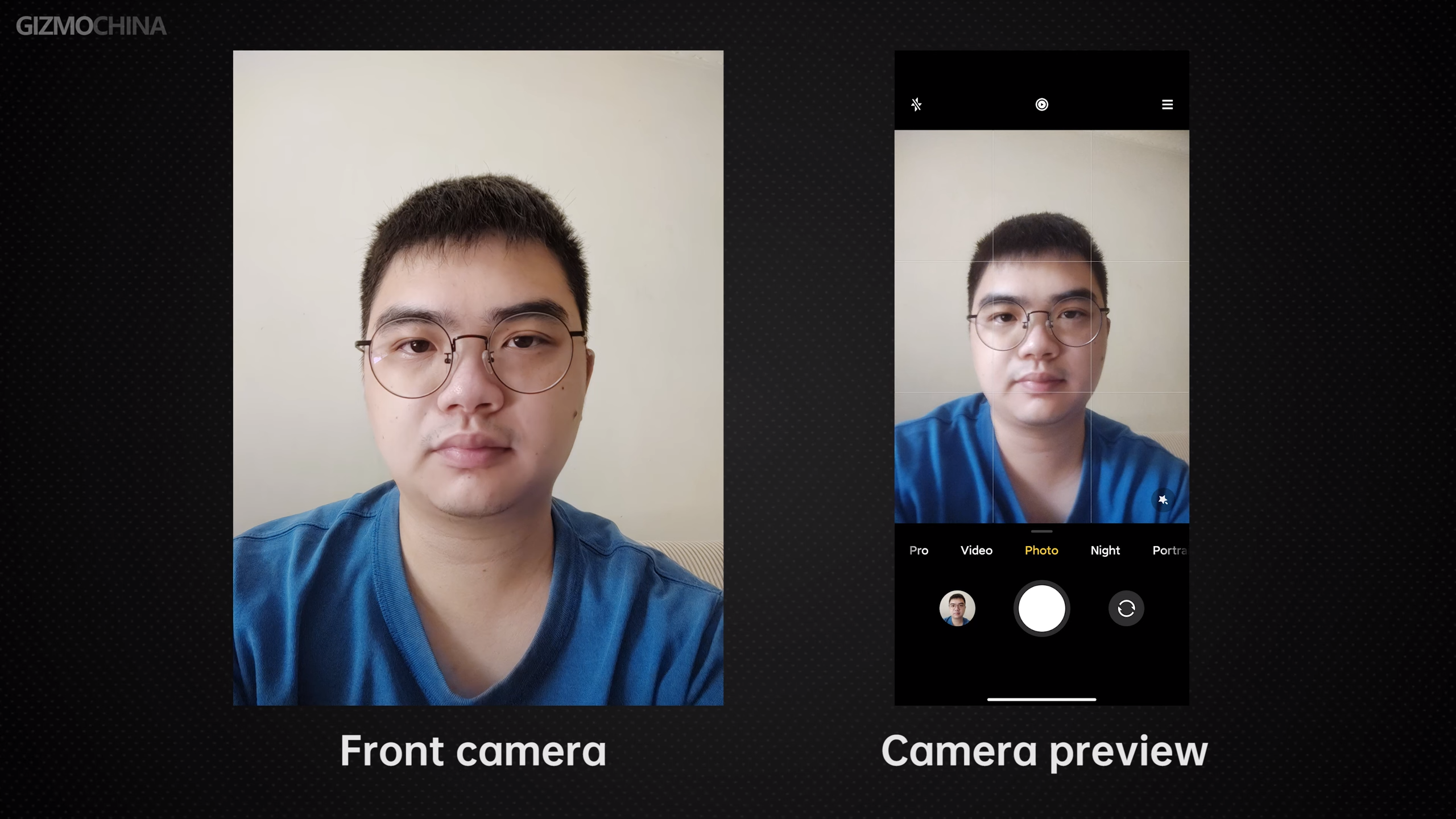
You must also be very curious about the quality of the front camera, right? We were curious too and tried to take a couple of selfies.
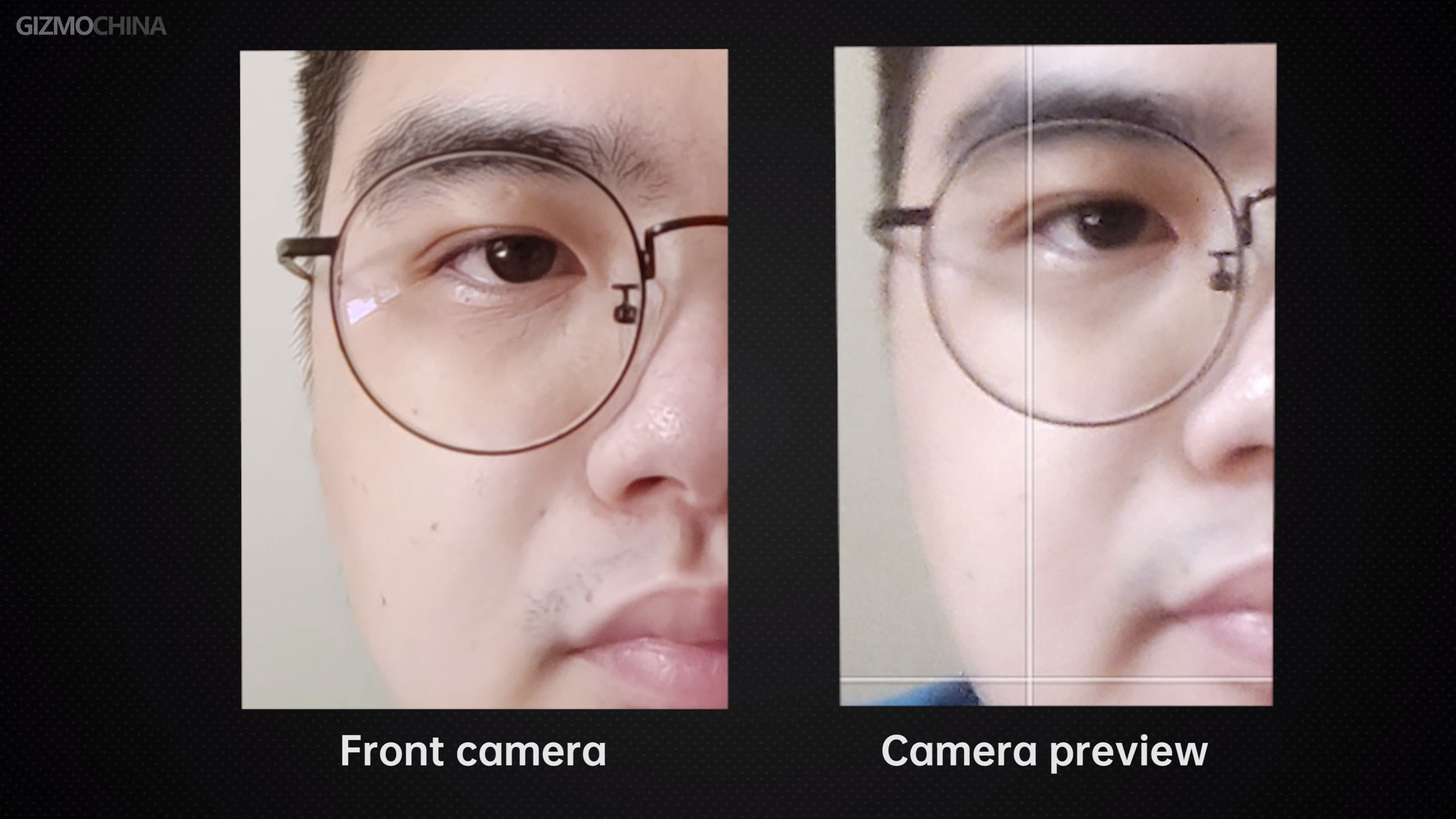
Are you happy with its quality? Personally, I’m satisfied with the front camera quality, especially considering there is a screen covering the camera. But if you zoom in, even though the AI processing has optimized the image much more than what we saw in the preview, many details of the image are not visible anymore. So, despite using a new under-screen camera solution, MIX 4 is not recommended for people who want high quality selfies.
But if you want basic selfies or just want to talk to your family and friends on video calls like I do, this front camera can handle such simple scenarios.
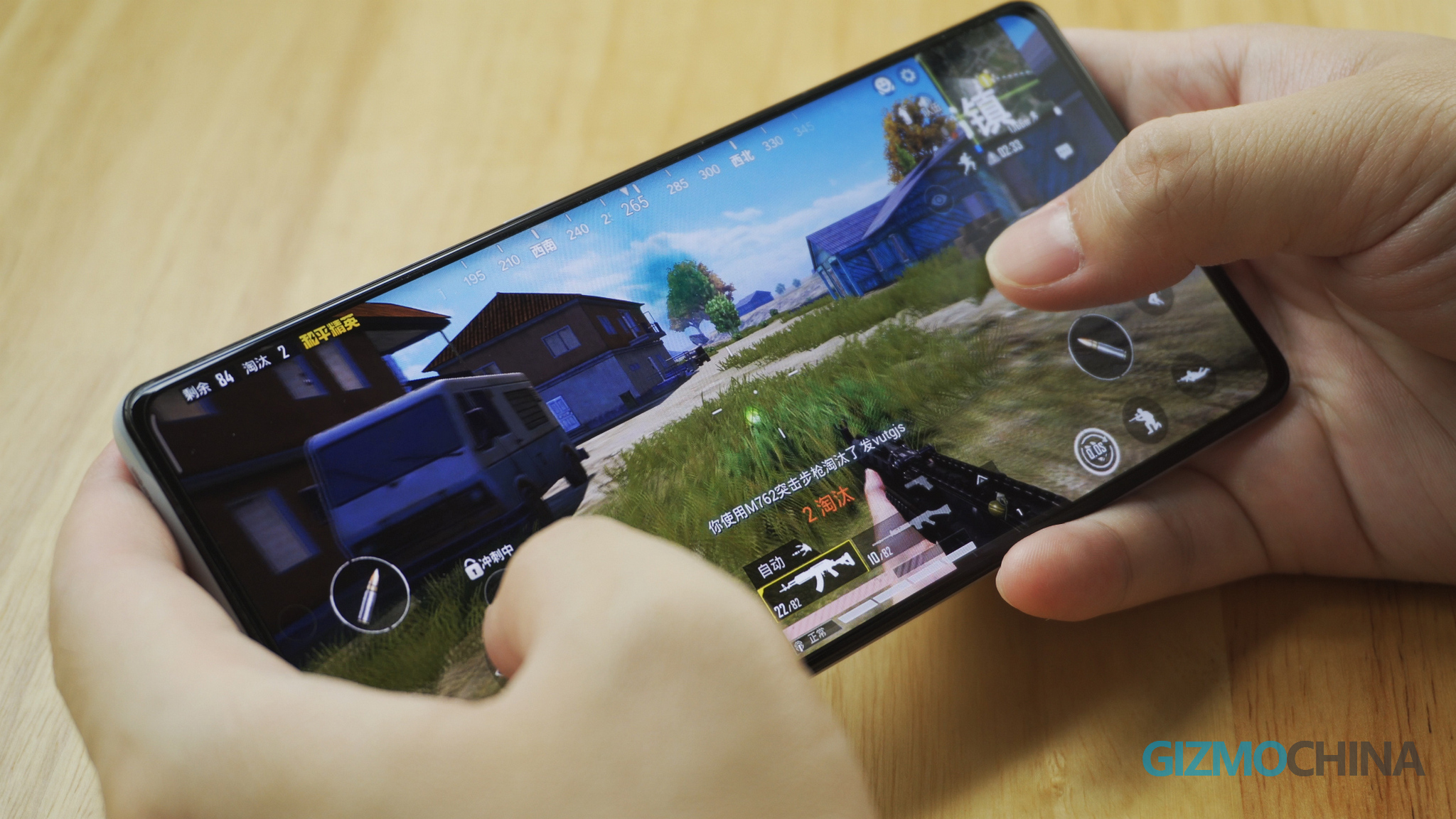
MIX 4 is also equipped with the Snapdragon 888+ SOC for the first time. With 780,000 points on AnTuTu and 5700 points in 3D Mark, this chip doesn’t feel much different from Snapdragon 888. Because of time constraints, we could only test PUBG on the phone, and with the performance mode on with the HDR Graphics Extreme frame rate mode, it still limits the frame rate. With an average frame rate of 53 FPS, it seems that the MIX 4 is very conservatively tuned for performance.
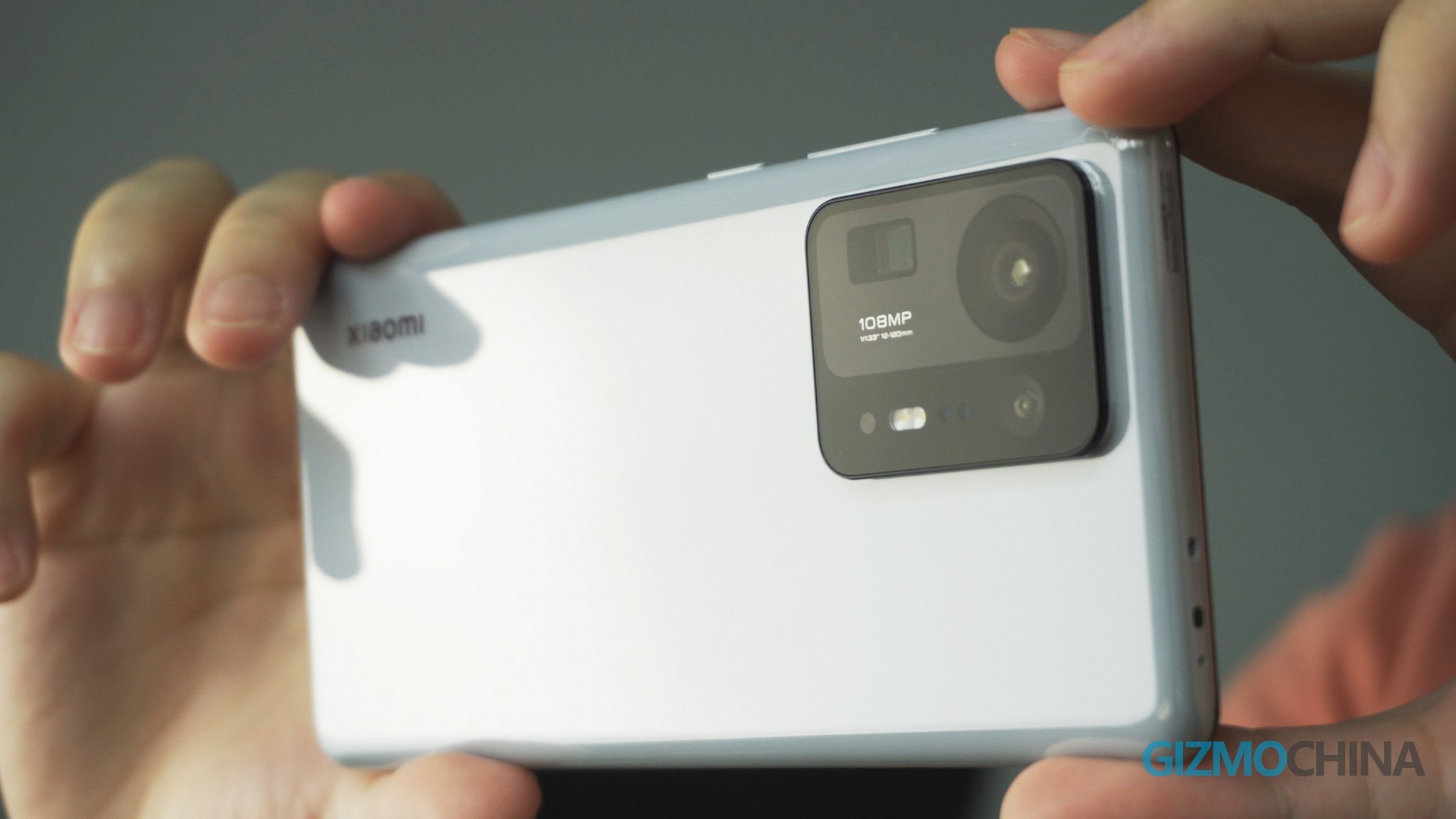
The MIX 4’s rear camera also takes very good pictures, and performs very well in most cases during the day. But the ultra-wide lens and telephoto lens low light photo quality is more towards average, and the dynamic range is relatively low. The main camera does not have this problem when the night mode is turned on, and the performance in low light is also very good.
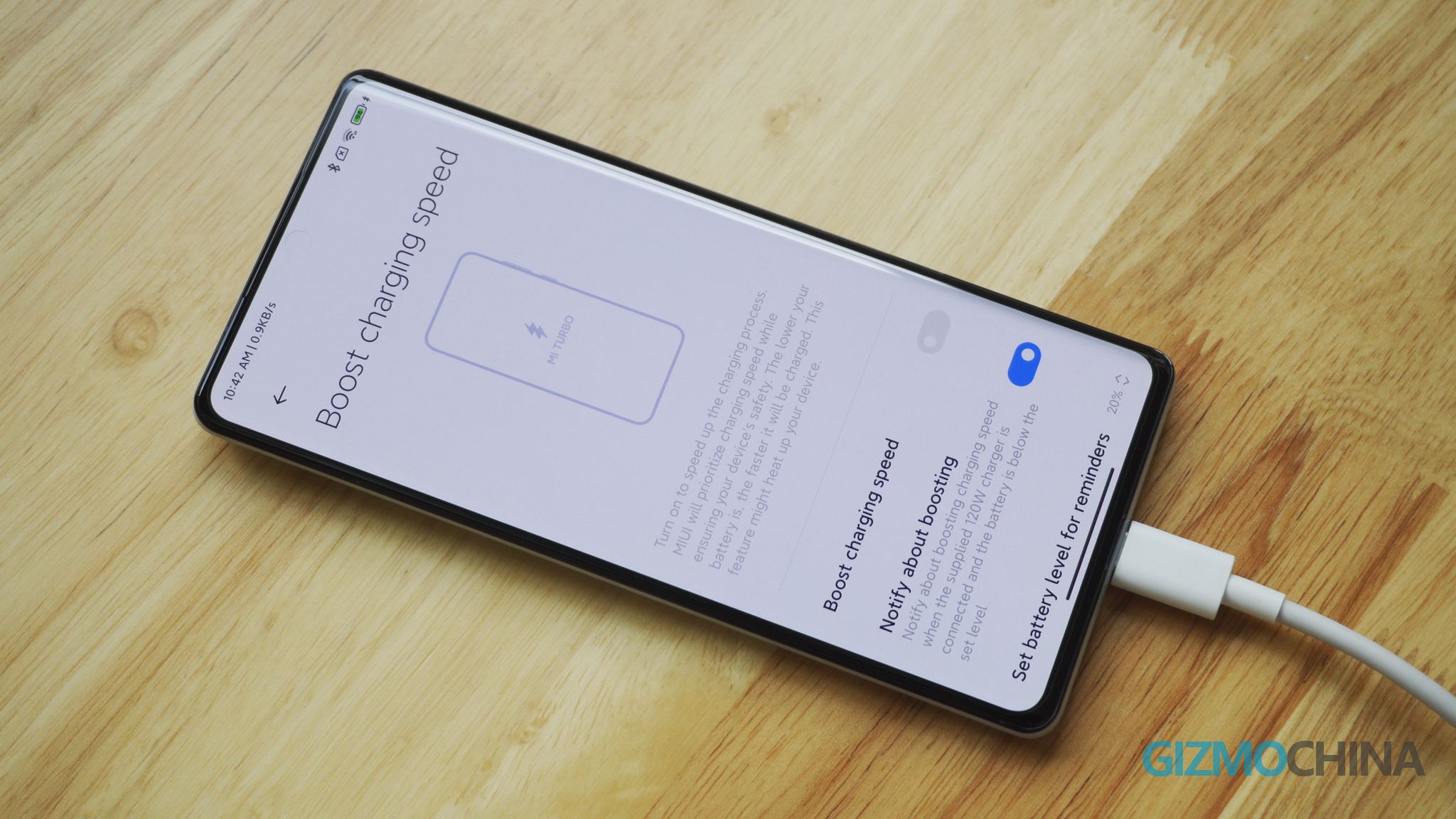
MIX 4 also brings the fastest charging combination for cell phones right now, i.e. a 120w wired charging + 50w wireless charging. After turning on Boost charging speed, the wired charging got the battery to full in just 16 minutes, and when using wireless charging, it took 37 minutes for a full charge.
Some people may wonder how its 50w wireless charging solution can charge the phone in just 37 minutes. This is because, recently, China added a policy stating the power output of wireless charging should not exceed 50w. This policy was officially implemented sometime before the launch, so Xiaomi did not dare to advertise a faster wireless charging solution, even if it technically achieved an output higher than 50w. In fact, the wireless charging power of MIX 4 is much greater than 50w. If you turn off the Boost charging speed function, wireless charging can only be charged at a maximum of 50w, and it will take 50 minutes to fill up.
I know you are waiting to see more of the phone! Don’t worry, a full review of the MIX 4 is coming soon.
Intel has just launched its 12th generation of CPUs during its virtual Architecture Day conference. In this event, the company had also announced several new products for both consumers and businesses.
The American chip maker’s latest generation of processors arrive with the codename “Alder Lake,” which is expected to launch within the next few months. It is also expected to first arrive for desktop PCs before being made available in mobile platforms like laptops. A notably change with the new Intel 12th Gen Core processors is the inclusion of both high performance and low performance cores, which is common on mobile processors like smartphone SoCs. During the event, the company also talked about its highly anticipated gaming GPUs, with the first generation being codenamed “Alchemist” that will launch in early 2022 and will be manufactured by TSMC.
Furthermore, the 12th Gen chipsets arrives after the Lakefield CPUs that saw a limited release. The high powered cores will be called Performance Cores while the low powered ones are dubbed as Efficiency Cores (P Cores and E Cores in short). The E Cores are based on the tech giant’s “Gracemont” architecture and the P Cores are based on the “Golden Clove.” Notably, the former aims to offer efficiency and will target multi threaded performance across a large number of individual cores. On the other hand, the latter are built for speed and low latency.
Intel claims that the P Cores are its highest performance cores that it has ever made while this new generation also supports Advanced Matrix Extensions for accelerating deep learning training and inference. The company adds that both P and E Cores are highly scalable and that the new CPUs will be able to handle 100GBps of compute fabric bandwidth per P core or per cluster of four E cores. The Alder Lake CPUs will be manufactured on the new Intel 7 process, which is a rebranded version of its 10nm Enhanced SuperFIN Process that will supports DDR5 4800, LPDDR5 5200, DDR4 3200 and LPDDR4X 4266 RAMs, along with PCIe storage, Thunderbolt 4 ports, and Wi-Fi 6E.
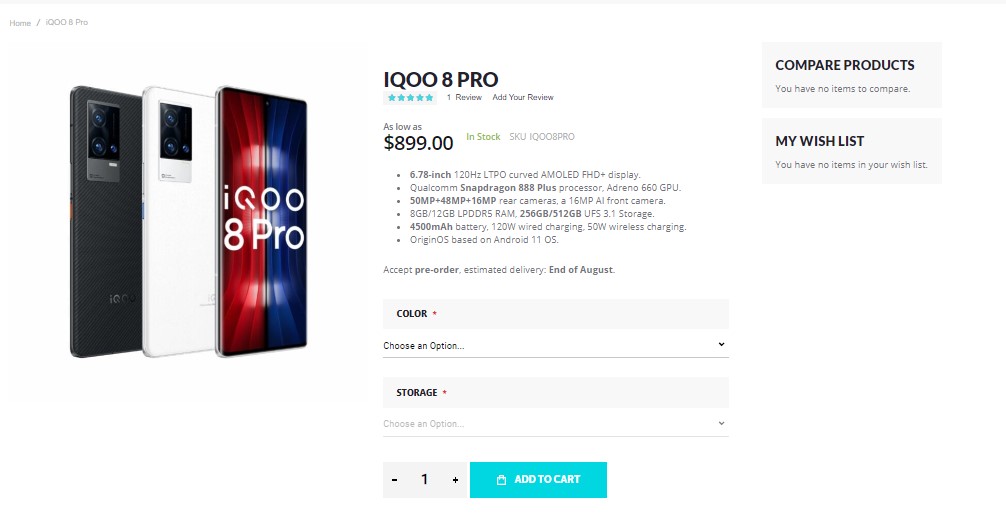
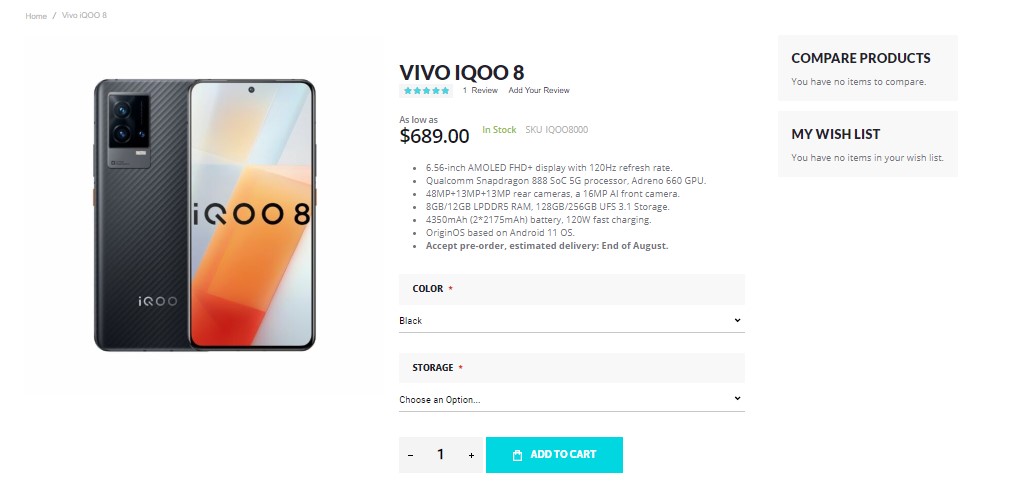
A couple of new flagship smartphones – iQOO 8 and iQOO 8 Pro were introduced by iQOO a few days ago. Both the devices pack high-end specifications at a competitive price but are currently announced in China and will go on sale from 26 August. These are currently up for pre-orders via Giztop with support for international shipping.
The interested users can grab both the devices in Black and White colour options. iQOO 8 is currently available in 8GB RAM + 128GB and 12GB RAM + 256GB internal storage variants, while the iQOO 8 Pro is available in8GB RAM + 256GB, 12GB RAM + 256GB and 12GB RAM + 512GB internal storage variant. The company will start shipping the pre-orders by the end of this month.
Both the flagship devices from Vivo’s sub-brand iQOO were launched to impress the users in the high-end smartphone market. Successor to the iQOO7 series, the new smartphone comes with several upgrades and additions.
Particularly, iQOO 8 houses a 6.56-inch AMOLED display with a 1080 x 2376 pixels resolution and 120 Hz refresh rate. It is powered with Snapdragon 888 SoC coupled with an octa-core processor and Adreno 660 GPU. There’s a triple-rear camera featuring a 50MP primary sensor, a 13MP telephoto lens and a 13MP ultrawide sensor. A 4350 mAh battery is present with 120W fast charging support.
The iQOO 8 Pro houses a 6.78-inch LTPO AMOLED display having 1500 nits of maximum brightness. The display sports a 1440 x 3200 pixels resolution with a 20:9 aspect ratio. It runs on Android 11-based Origin OS. Qualcomm Snapdragon 888+ is present on the board to provide the powerful performance along with the Adreno 660.
It adds a triple-rear camera featuring a 50MP primary sensor with gimbal stabilization, a 16MP telephoto lens with OIS, and a 48MP ultrawide camera. There’s a 4500 mAh battery on board with 120W fast charging and 10W reverse wireless charging.
There’s no information yet regarding the global availability of both devices. However, here’s a better way to get the iQOO 8 and iQOO 8 Pro across any country without paying any hefty fees from Giztop.
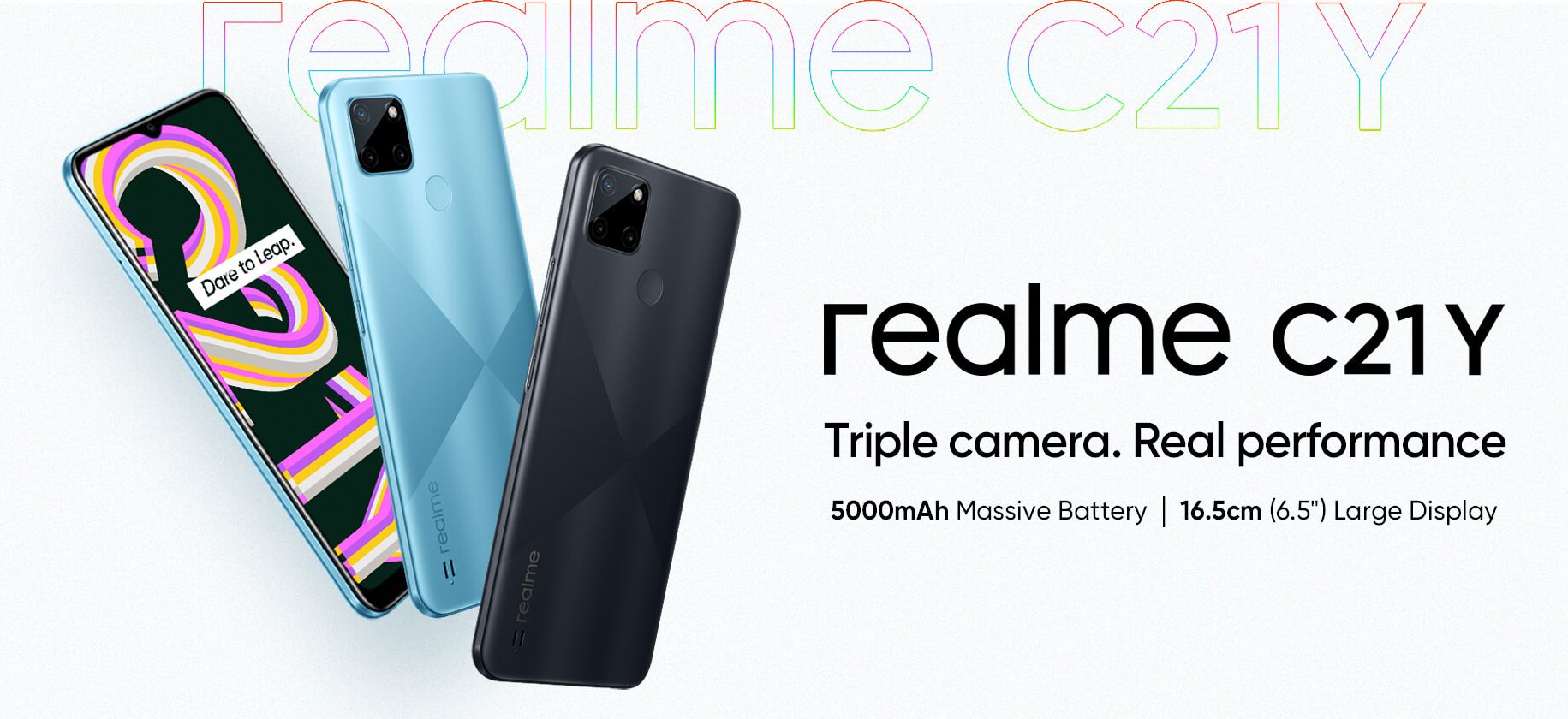
Realme C21Y entry-level smartphone was announced in Vietnam last month. Today, the Indian wing of the brand confirmed that it will be announcing the C21Y at 12:30 PM on Aug. 23 in India. The entire specs of the smartphone have been revealed through its microsite that has gone live on Realme India.
Realme C21Y specifications and features
The Realme C21Y has a 6.5-inch HD+ display that offers a 20:9 aspect ratio and an 85 percent screen-to-bod ratio. The device is powered by the Unisoc T610 chipset.
It is backed by a massive 5,000mAh battery that carries support for reverse charging. With 5 percent battery power, it can offer 2.33 days of standby time, 2.37 hours of calling, and1.45 hours video playback on YouTube.
Realme C21Y
The rear side of the phone features a fingerprint scanner and a 13-megapixel + 2-megapixel + 2-megapixel triple camera unit. It offers photography features like super nightscape, Chroma Boost, slow-motion video recording, and 1080p video recording. The landing page further reveals it will arrive in Cross Blue and Cross Black colors.
The Realme C21Y is expected to offer other features such as a 5-megapixel front camera, 4 GB of LPDDR4x RAM, 64 GB of internal storage, and Realme UI-based Android 11 OS. At present, there is no information available on the pricing of the Realme C21Y. Probably, it will arrive with a sub-Rs 10,000 pricing in the Indian market.
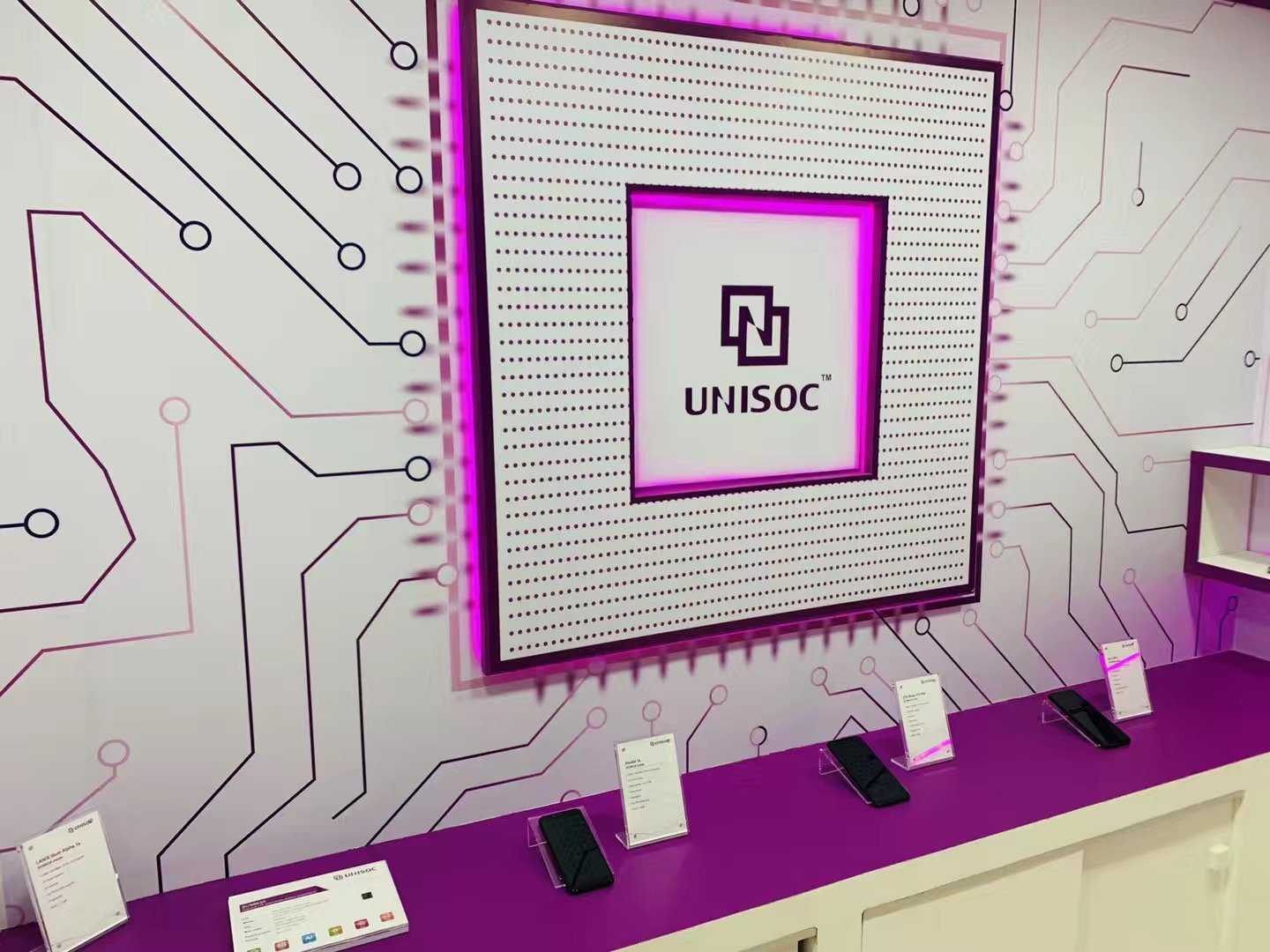
The shipments for smartphone application processor shipments from UNISOC has more than doubled in the first half of this year. A new report has revealed that shipments were up by 122 percent over the same period back in 2020.
According to a Counterpoint Research report, Chinese chip designed saw a significant year on year rise in shipments for smartphone APs in H1 2021. This has the company rank fourth in the market with a total share of 8.4 percent and ranked third in the open market. Furthermore, the firm has also been a key partner for operators and local brands in growing markets like LATAM (Latin America) and MEA (Middle East and Africa).
Research Analyst Parv Sharma stated that “UNISOC’s smartphone AP chipset shipments more than doubled in the first half of 2021 compared to the first half of 2020. This year, the company has succeeded in expanding its customer base, securing a series of design wins with major OEMs like HONOR, realme and Motorola. In its home market, the UNISOC T610 and T740 have been successfully adopted by ZTE, Hisense and HONOR. This improved acceptance of UNISOC-powered smartphones by Chinese consumers is a positive signal for its growth in the second half of 2021.”
Recently, a new rumor has been going around that the original trilogy of GTA (Grand Theft Auto) games from the early 2000s might be getting a remaster. While there was no word on when the remasters would be released, a tipster believes that the games might launch sometime in next year.
Tom Henderson stated on Twitter (Via GamesRadar) that he wasn’t planning to reveal any information as most leaks in recent times have covered every details. But he did add that the release window for the remastered trilogy will not be set in this year, but would launch “sometime in 2022.” Kotakuhad recently reported that the three classic GTA titles will be relaunching later this year. This includes remasters for GTA III, GTA Vice City, and GTA San Andreas, which will be developed by Rockstar Dundee (the ones behind Halo: The Master Chief Collection).
Reportedly, the trilogy was initially planned to be released bundled with the GTA V ‘Expanded & Enhanced Edition’ but this has apparently shifted to a standalone release that was expected to launch earlier this year. However, internal delays had caused the launch window to shift between late October or early November, as per the Kotaku report. But now, Henderson has revealed that there might be a few more months till we see the trilogy in new gen graphics.
Keep in mind that this is still an unconfirmed report so take it with a pinch of salt. Furthermore, Rockstar has yet to officially confirm the actual existence of the remastered trilogy. Although going by the various rumors and the upcoming 20th anniversary of GTA III, it won’t be surprising when the announcement does eventually arrive. So stay tuned for more updates.
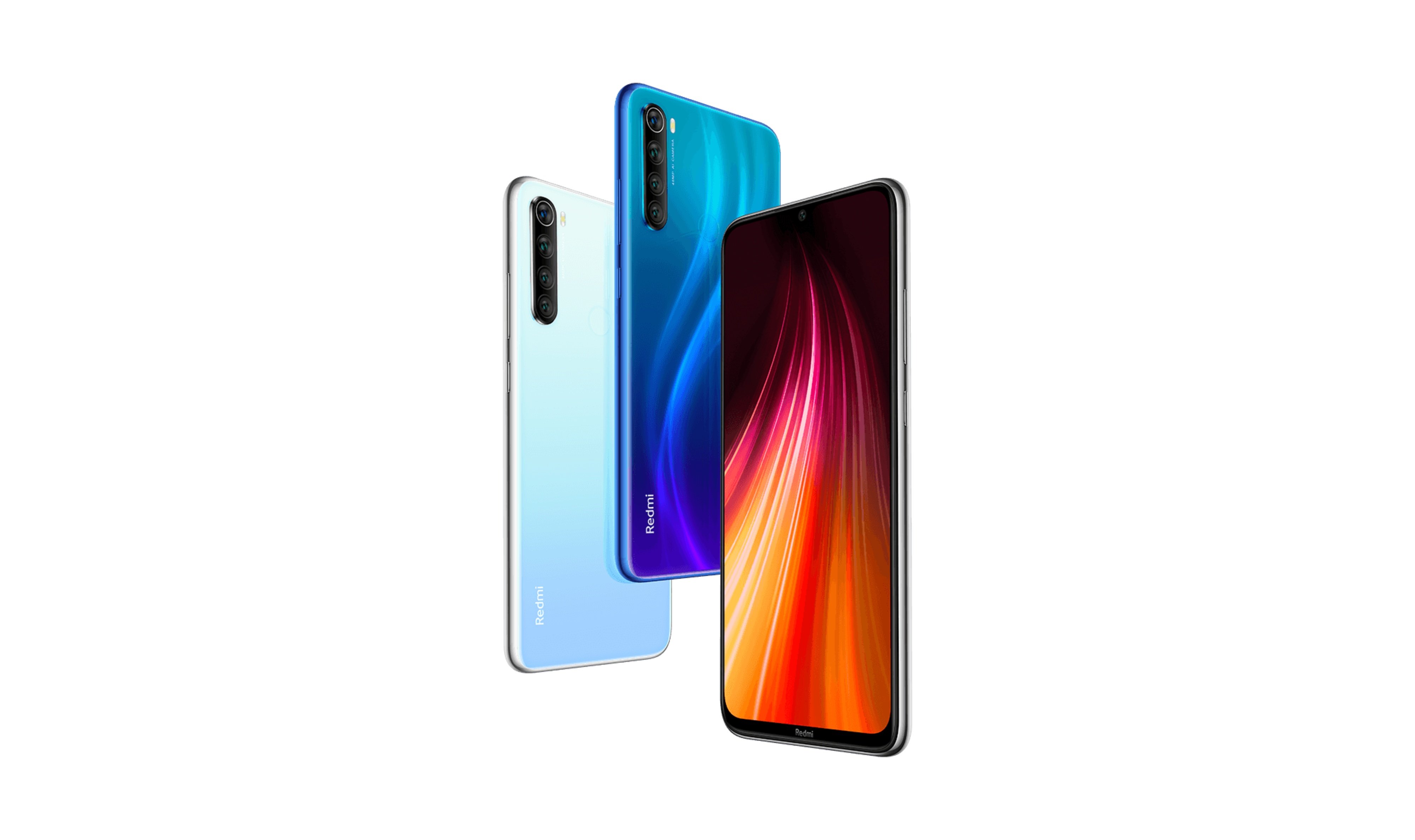
The Redmi Note 8 was probably the best smartphone in its segment when it launched. It was Xiaomi’s one of the top best-sellers throughout its lifetime. The handset has now started receiving the MIUI 12.5 update.
Xiaomi is rolling out the MIUI 12.5 update for the Redmi Note 8. The update is currently live in China with build number V12.5.1.0.RCOCNXM. The software build is in the ‘Stable Beta’ phase. This means it is being pushed in batches and is only available for a select few users at the moment. However, it should reach all users in China in the coming days.
On the other hand, Xiaomi is yet to deliver Android 11 for all the international variants of the Redmi Note 8. More precisely, the Indian version still runs Android 10 and got its last system update way back in late January. Looks like this variant will get both MIUI 12.5 and Android 11 together.
Only the EEA variant of Redmi Note 8 is currently on Android 11, other than the Chinese version. Hence, the remaining international models will also likely receive a combined update for MIUI 12.5 and Android 11.
Unfortunately, we cannot tell when Xiaomi will be delivering the new software update for Redmi Note 8 in other regions. All we can say is that the update could start rolling out in a few days or maybe even weeks from now.
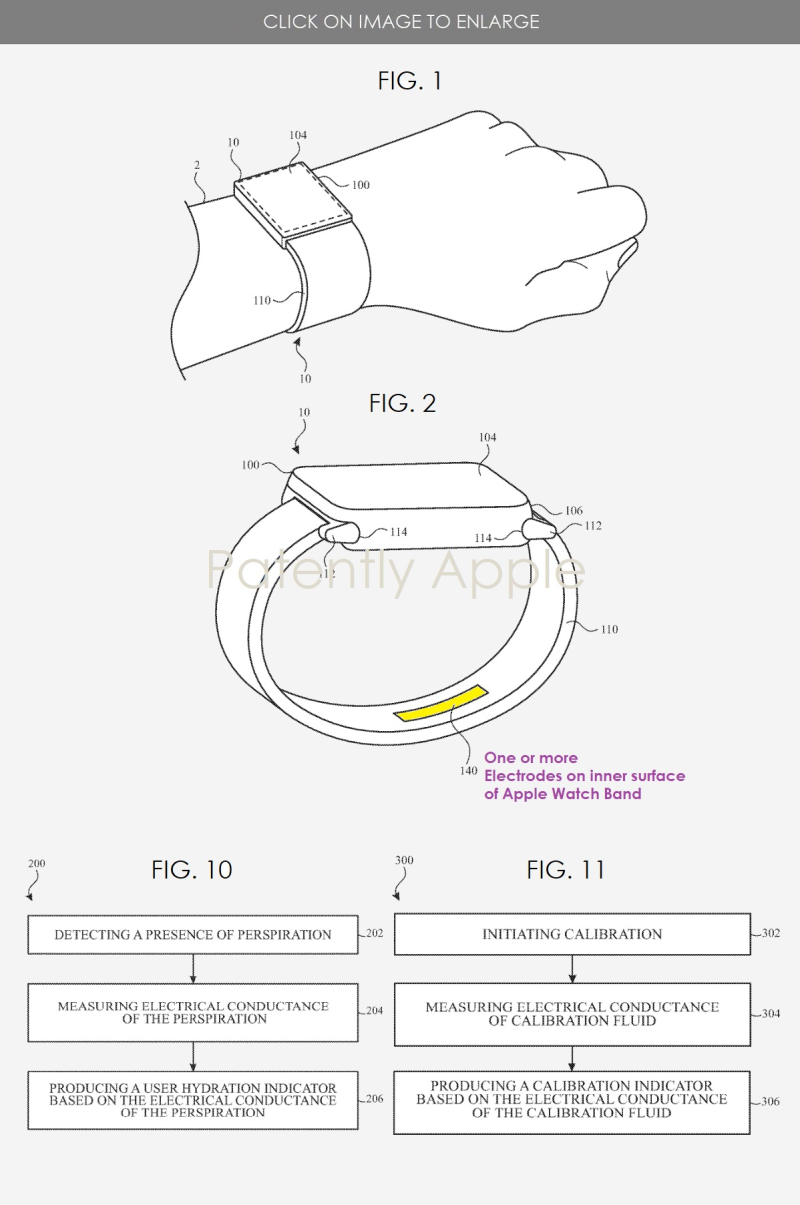
Apple is apparently working on a new and innovative hydration sensor, which will be used on its wearable products. A new patent has revealed the new technology that is the first of its kind for its Apple Watch.
The patent was first spotted by PatentlyAppleon the USPTOand was titled as “Hydration measurement with a watch.” In this patent, the Cupertino based tech giant added that “Traditional techniques for tracking hydration are generally invasive, expensive, or unreliable.” This refers to all the existing methods that determine hydration through methods such as a single test fluid sample. So, in other words, the company is working on a new technology that would not require such a process.
The patent describes a hydration sensor that uses non invasive electrodes that are placed against the skin. Apple describes this method as a “reliable and elegant” solution that would work by measuring the electrical properties of the Apple Watch user’s sweat. The patent adds that “a high level of electrical conductance of the perspiration can indicate a high concentration of electrolytes and a low level of hydration. By further example, a low level of electrical conductance of the perspiration can indicate a low concentration of electrolytes and a high level of hydration.”
Notably, the patent description also describes the sensor’s function in detail. The iPhone maker adds that its hydration tracking system will function “non invasively, repeatedly, accurately, automatically, and with minimal user intervention.” The patent also states that users’ hydration levels are an integral and important aspect of their health. It is especially important to provide this data after the user performs physical activities like working out since it offers a structured water intake management system that also encourages the user.
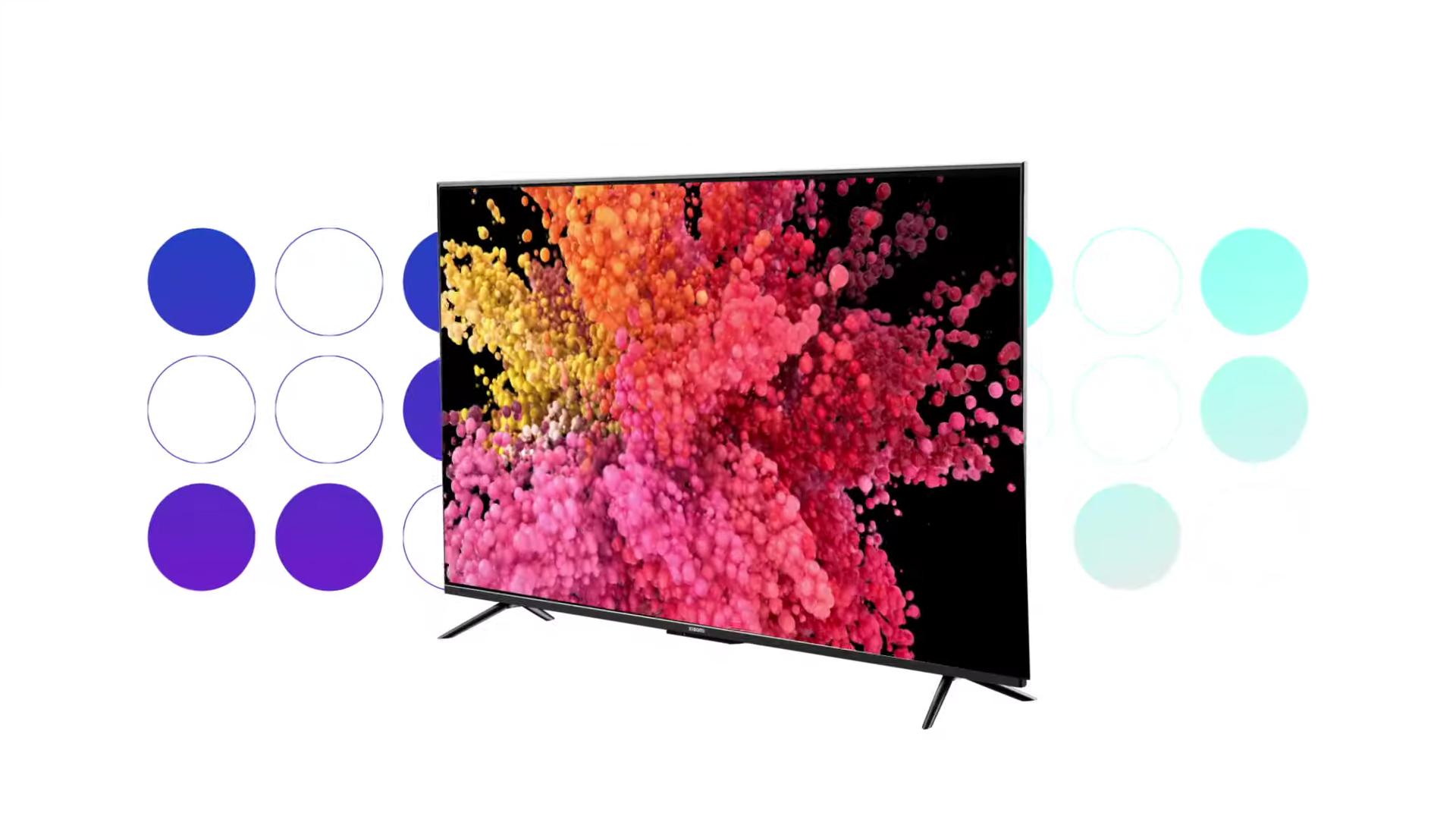
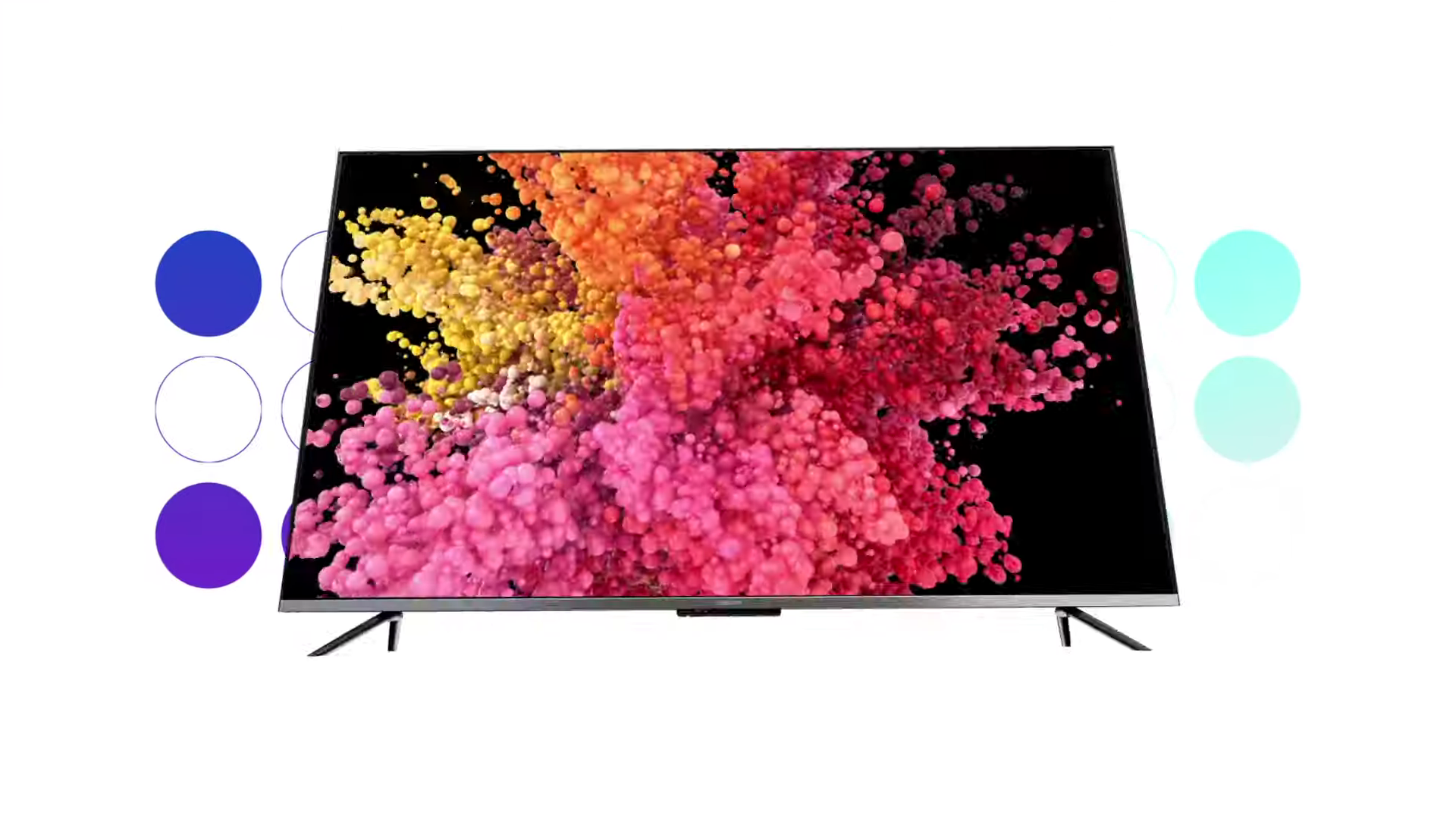
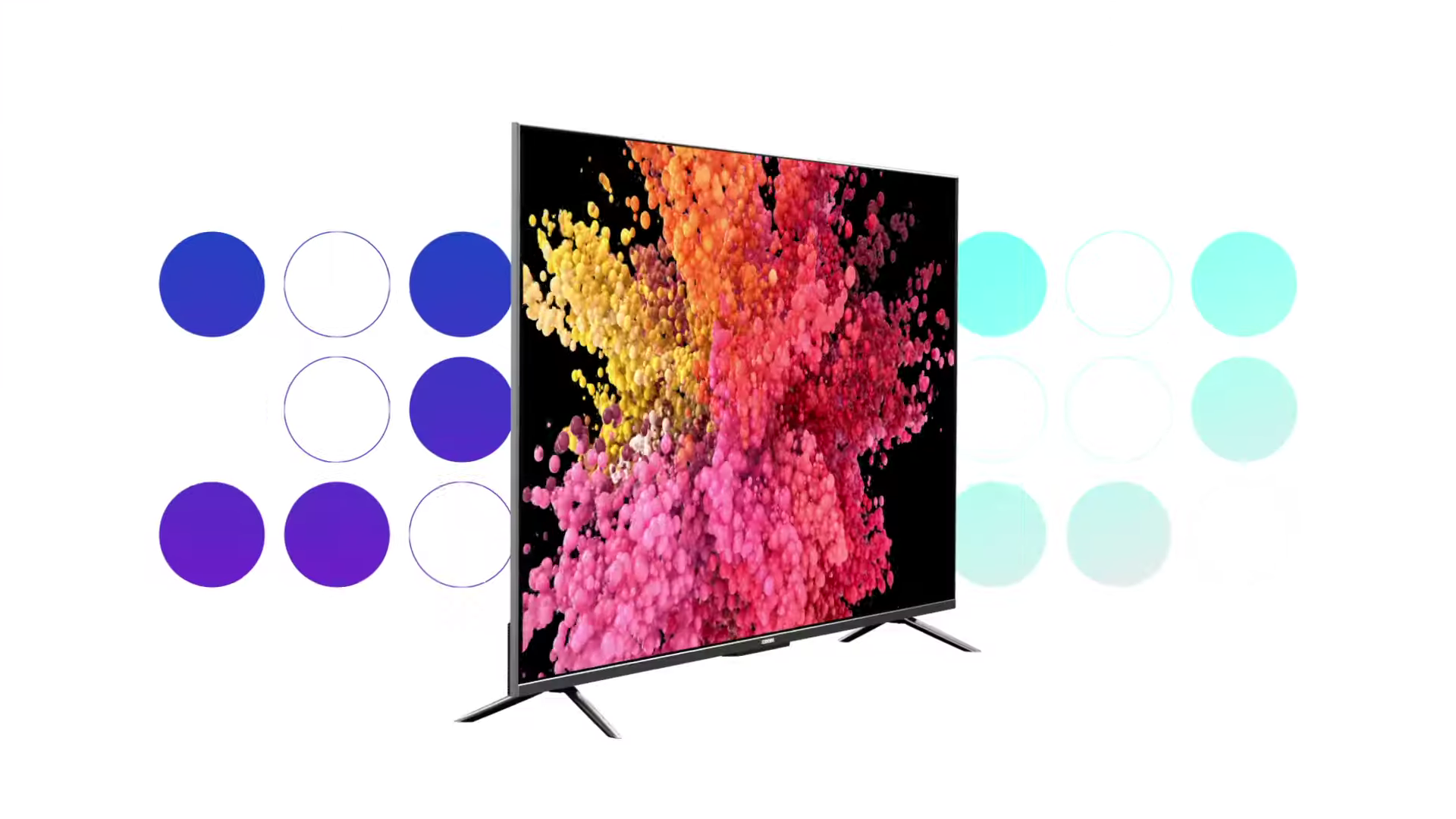
Xiaomi will be holding its ‘Smarter Living 2022’ event in India on August 26. The company is expected to announce a number of ecosystem products at this conference. The firm has been teasing these devices for the past few days. As per new teasers, one of these products will be Mi TV 5X.
Xiaomi introduced the Mi TV series in India in early 2018. Since then, the company has been releasing new models with Mi TV 4 branding. Thankfully, that’s going to finally change with the launch of Mi TV 5X on August 26.
As per the landing page on Mi.com, the Mi TV 5X will feature metal frames with a bezel-less design. The television will come with Dolby sound and picture preset that’s responsive to the environment. That latter feature suggests that the TV might sport an ambient light sensor.
Further, the new Mi TV is said to arrive with ‘future-ready’ chipset and memory along with far-field microphones. Last but not least, the latest Xiaomi television is also teased to debut a new version of PatchWall.
Unfortunately, nothing else is known about the upcoming Xiaomi Mi TV 5X, apart from the above-mentioned features and design renders shared by the company officially on its website and social media handles.
Other than Mi TV 5X, Xiaomi has also confirmed to launch the Mi Band 6, a Mi Notebook, a new WiFi router, a security camera, and more in India at the Smarter Living 2022 event, which has been scheduled for August 26.
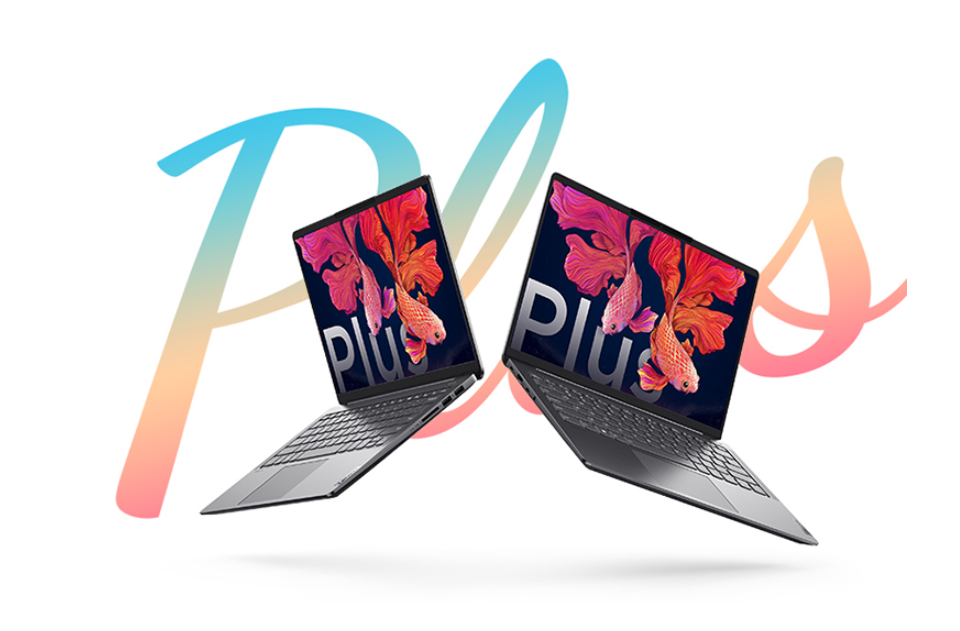
Earlier today (20th August 2021), Lenovo has just announced a new laptop in China. This is a part of its Xiaoxin lineup of notebooks and is named the Xiaoxin Air 14 Plus 2021 Core Edition, which features Intel’s 11th Gen Core processors and NVIDIA graphics.
Previously, the company had launched the Xiaoxin Air 14 Plus Ryzen Edition that sported AMD’s latest mobile processors, namely Ryzen 5 5600U. Now, the Xiaoxin Air 14 Plus Core 2021 Edition features the Intel i5-1155G7 processor that arrives along with NVIDIA’s MX450 graphics. For memory, the laptop houses 16GB of RAM and 512GB of SSD storage similar to the Ryzen variant of the laptop. The Chinese tech giant’s Xiaoxin Air 14 Plus arrives with a 14 inch 2.2K LCD display that has an aspect ratio of 16:10.
This screen has a maximum brightness of 300 nits and offers 100 percent sRGB color gamut, along with DC dimming and the German Rheinland Low Blue Light certification for user’s eye protection. For ports, the laptop sports two USB Type C ports that support 100W PD charging and data transmission alongside an HDMI interface, two USB Type A ports, and more. The new Lenovo Xiaoxin Air 14 Plus Core 2021 Edition will be available for a price of 5,499 Yuan in China (roughly 845 US Dollars).
Tesla, the US-based company known for making electric vehicles, is also in the business of solar roofs and solar panels. Now, the company is expanding its business and is set to launch a humanoid robot called Tesla Bot.
While making this announcement at AI Day, an actor in a bodysuit appeared on stage and Elon Musk pointed out that the Tesla Bot will look similar to it. The announcement also gives a peek at the future of Tesla as the company works on exciting new products that are scheduled to launch in the future.
Elon Musk, CEO of Tesla, has revealed that the company will build a humanoid robot and a prototype of the same could be unveiled next year. However, we would advise you to take this with a pinch of salt as such developments rarely happen on a given timeline and Tesla has a history of not sticking to the predicted timeframe.
There’s also a possibility that the product may not even see the light of day. For instance, a couple of years ago, in April 2019, Elon Musk said that Tesla would have one million autonomous “robotaxis” on the road in 2020. It’s 2021 and those robotaxis are nowhere to be seen.
Tesla Bot is codenamed “Optimus” and is powered by the same chips and sensors that the company is using for self-driving features on its cars. The robot is about five feet and eight inches tall, featuring a screen where the head is for useful information. It will be able to carry 45 pounds, lift 150 pounds, and can run 5 miles per hour.
Musk says that the company has a chance to transform the world economy by driving labor costs down if the humanoid robot works and can perform repetitive tasks that only humans can do today. But he has warned that the robot probably won’t work at first.
The popularity of robots has been on rising and thanks to the advancement in technology, many companies are now working on making robots. Recently, Chinese smartphone maker Xiaomi launched CyberDog, a bio-inspired quadruped robot that is powered by NVIDIA’s Jetson Xavier NX AI Supercomputer, paired with 128GB of near-industrial grade SSD.
It can be controlled using the mobile app, voice control, and remote control. It has a wide range of movements including running, jumping, turning left or right, and leaning forward. The robot can also do a backflip, roll around, and stand on its hind legs. It has a maximum walking speed of 3.2m/s and a maximum payload of 3kg. It is priced at 9,999 yuan which roughly converts to $1,541.
With the new Android 12 update, the operating system is moving more towards offering functionality similar to that of a desktop PC. The new version of Google Chrome on the mobile platform would now allow users to open multiple windows of the browser just like on desktop.
On a Windows PC, one can put Chrome tabs in groups within one of two windows that can even rearranged using Windows Manager. Similarly on an Android, one can also put tabs into groups, but you can’t have multiple instances of the browser, which is possible on desktop. But now, the latest version of Android will bring multi instance support and windows manager to Chrome browser for Android.
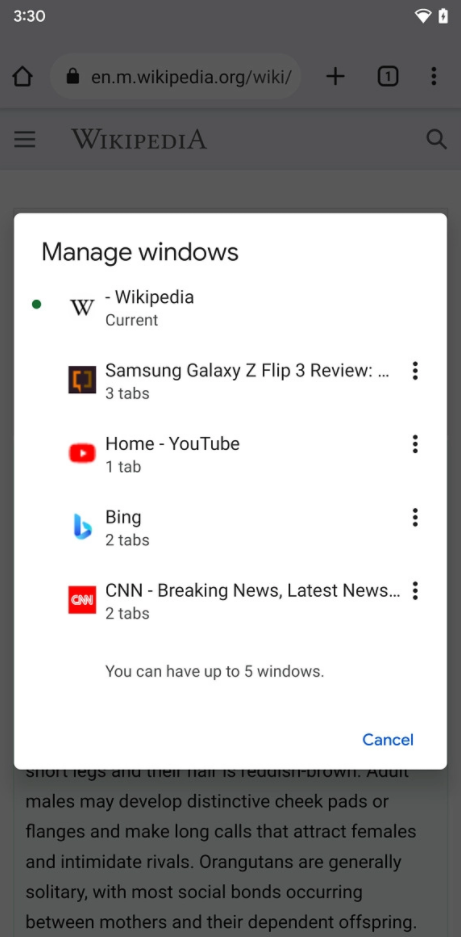
According to an XDADevelopersreport, multiple code changes have surfaced that are tagged as “multi instance” that were submitted to the Chromium Gerrit. These new changes add a “new window” button to the context menu of Google Chrome whenever the device enters into a split screen mode. This “new window” prompt allows users to launch a new instance of the browser in the other half of the screen. The second Chrome instance also opens the context menu which is updated with a “manage windows” button that lists all active windows.
Users can open up to 5 windows in total, although, there is no limit to how many tabs can be opened within each window. Notably, each Google Chrome window also appears as a different tab on the recent apps overview as well. Back in the days of Android 5.0 Lollipop, different Chrome used to appear as separate apps in the recent apps menu.
Google recently launched its latest Pixel series smartphone — Google Pixel 5a. The phone comes as a successor to the Pixel 4a launched last year with an upgraded specs sheet but a bit higher pricing than its processor.
The device is decently powerful, packing in Qualcomm Snapdragon 765G SoC, 6GB of RAM, and 128GB of internal storage. Even with such powerful specifications, the phone isn’t able to handle 4K video recording.
As per the latest reports, when recording 4K videos at 60 frames per second, the Google Pixel 5a smartphone gets overheated. While shooting, the phone asks users to close the camera until temperatures return to a more reasonable level.
Image Credit: @AdamJMatlock
In a tweet, reviewer TechOdyssey complained that his Pixel 5a took just a few minutes to overheat while recording video at the highest possible settings, before displaying this message on the screen: “Device is too hot. Close Camera until device cools off.”
He also adds that he is also facing the same issue with 4K fps30 and 1080P 30fps. Another Twitter user with handle @LadyRedsTekRvw said that their Pixel 5a did the same thing after about 2 minutes of recording at 4K 60fps.
Apparently, Pixel 5a isn’t the only recent Google smartphone to face this issue and some users are pointing out that the Pixel 5 is also having the same issue, as confirmed by Android Police. So far, Google has not acknowledged the issue and it remains to be seen if and when the company plans to fix this.
The Google Pixel 5a features a 6.34-inch OLED screen with FHD+ resolution and a 60Hz refresh rate. It comes with a dual-camera setup on the back consisting of a 12.2-megapixel main shooter and a 16-megapixel ultrawide rear camera. For selfies, there is an 8-megapixel front camera tucked under a punch-hole cutout.
The smartphone runs the Android 11 operating system and is guaranteed three years of OS upgrades and security patch support. It is powered by a 4,680mAh battery and ships with an 18W charger in the box. It is likely to be the last Google smartphone to come with a power adaptor in the retail box for the Pixel smartphones.
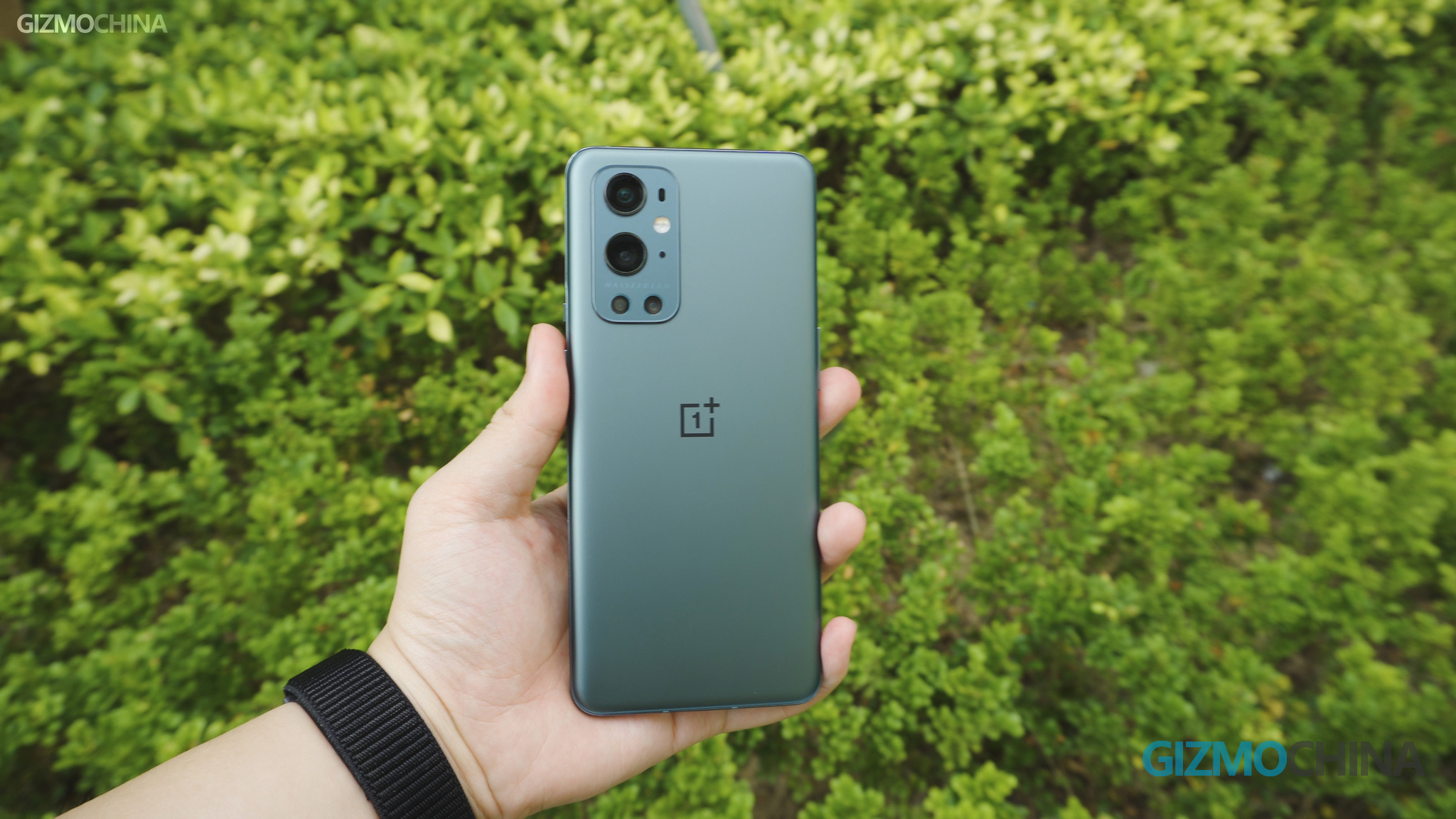
OnePlus has announced that the company is looking for technically savvy volunteers who own a OnePlus 9 or OnePlus 9 Pro smartphone to join its Closed Beta Test program to help testing new OxygenOS features.
In the OnePlus forum, a moderator added that the participant will be a part of a secret “elite crew of OnePlus community members” as they test “builds and features weeks or even months before they are released to the public.”
The requirement to be eligible for participating in the program states that apart from owning the latest premium smartphone from the brand, you also need to be an active OnePlus Community member, provide feedback directly to the OnePlus team via Telegram, and also sign an NDA (Non-Disclosure Agreement) with the company.
While the company has not confined this, the announcement is likely for testing features of the upcoming OxygenOS 12 based on the Android 12 operating system announced by Google a couple of months ago.
If you are interested in participating in this unpaid closed beta testing program, then you need to apply fast given that it is limited to just 200 people. Even if you don’t, then you will likely be able to join the OxygenOS Open Beta program to test upcoming features on the OnePlus 9 and 9 Pro smartphones. You can apply to be a part of the Closed Beta Test program by filling up this form.
It won’t be surprising if the new version of OxygenOS comes with features similar to the ColorOS as OnePlus recently merged its OxygenOS codebase with the ColorOS after both the companies announced a merger.
Earlier this year, in the month of March, Xiaomi officially announced the commencement of its smart electric vehicle business. It was also confirmed that the new division will be led by the company’s founder and CEO Lei Jun.
Since the official announcement, the Chinese smartphone maker has been in talks with several car manufacturers for a partnership but nothing has been materialized so far. But in the recent development, it was reported that Xiaomi is looking to acquire a stake in China Evergrande’s Electric Vehicle unit.
Now, the latest report coming from Science Innovation Board Dailyclaims that Xiaomi will be building its own car from scratch, and details about the same will be officially revealed by the Chinese company next week.
A well-known tipster Digital Chat Station has also revealed that the company has been in contact with a world-renowned auto parts and emission technology supplier and is also working on a design plan.
Xiaomi has put out a statement denying rumors of negotiating with the China Evergrande Group to buy a 65 percent stake. The spokesperson adds that the company has talked with several carmakers but has not made any decision regarding any partnership for its electric vehicles business.
While Xiaomi is refuting rumors, China Evergrande Group says that talks with Xiaomi to sell its EV unit are at a very early stage. Earlier, the company had announced that the group was in talks with potential investors to sell part of its stakes, including its EV and property management units.
Last month, Lei Jun, founder, CEO, and chairman of the Xioami Group visited the SAIC headquarters, adding it to the list of other car-making companies that he visited, including BYD, Great Wall, Wuling, and some other well-known automakers.
At the time, it was revealed that in the past 75 days, Xiaomi’s management has had 85 industry visits, in-depth exchanges with more than 200 automotive industry veterans, four internal management discussions, and two formal board meetings.
Xiaomi aims to offer high-quality smart electric vehicles to allow users globally to enjoy ubiquitous smart life, says Lei Jun. For this new wholly-owned subsidiary to work on the electric vehicles and related business, the company plans to invest around 10 billion yuan (~$1.5 billion) over a period of 10 years.
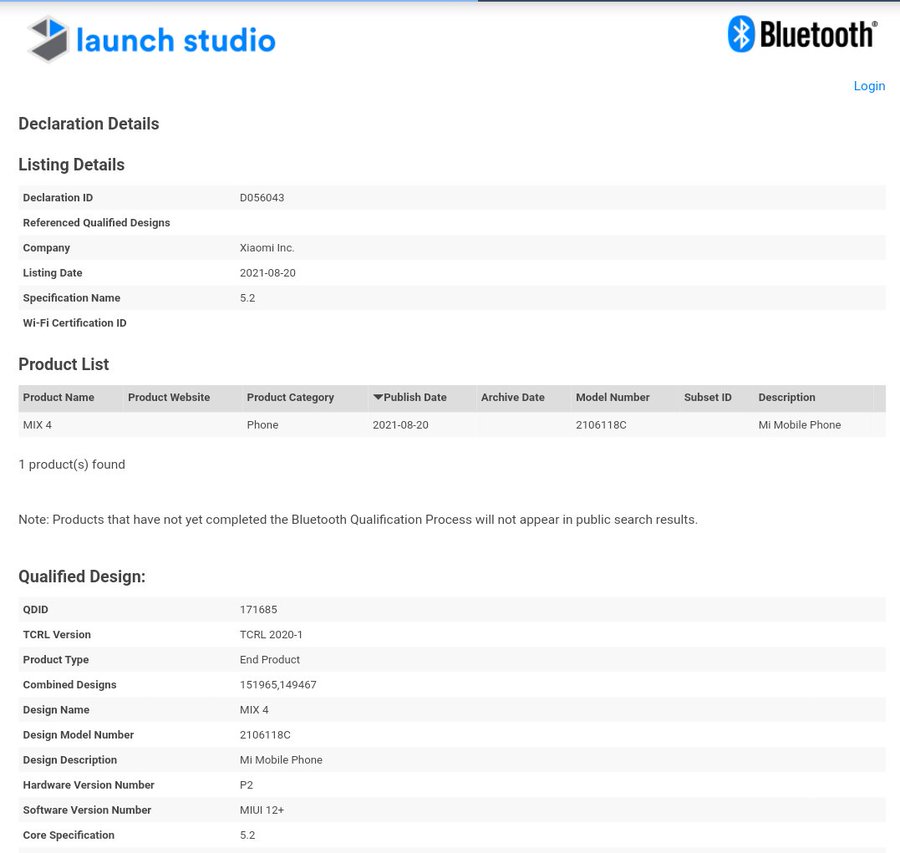
Xiaomi Mi MIX 4 debuted earlier this month as the company’s first flagship phone with an under-display camera. It was reported before its launch that the company may not release in global markets. However, soon after its launch, the handset was spotted at the Google Play Console. Now, it has received approval from the Bluetooth SIG (via). These listings suggest that the company could be planning to launch it in the global market.
The 2106118C, which is the model number of the Chinese variant of the Mi MIX 4 has been approved by the Bluetooth SIG authority. The listing mentions it runs on MIUI and supports Bluetooth 5.2 connectivity. The Bluetooth certification does not necessarily mean that the device is heading to global markets, but the possibility cannot be ruled out.
The Mi MIX 4 that debuted in China does not feature Google Mobile Services (GMS) since it is banned in the country. Therefore, the company does not need to acquire Google Play Console certification to release its devices in China. Now that it has been spotted at Play Console, it does hint that it may arrive in global markets. Hopefully, newer reports will confirm whether the company has any plans to release the Mi MIX 4 outside China.
Xiaomi Mi MIX 4 specifications
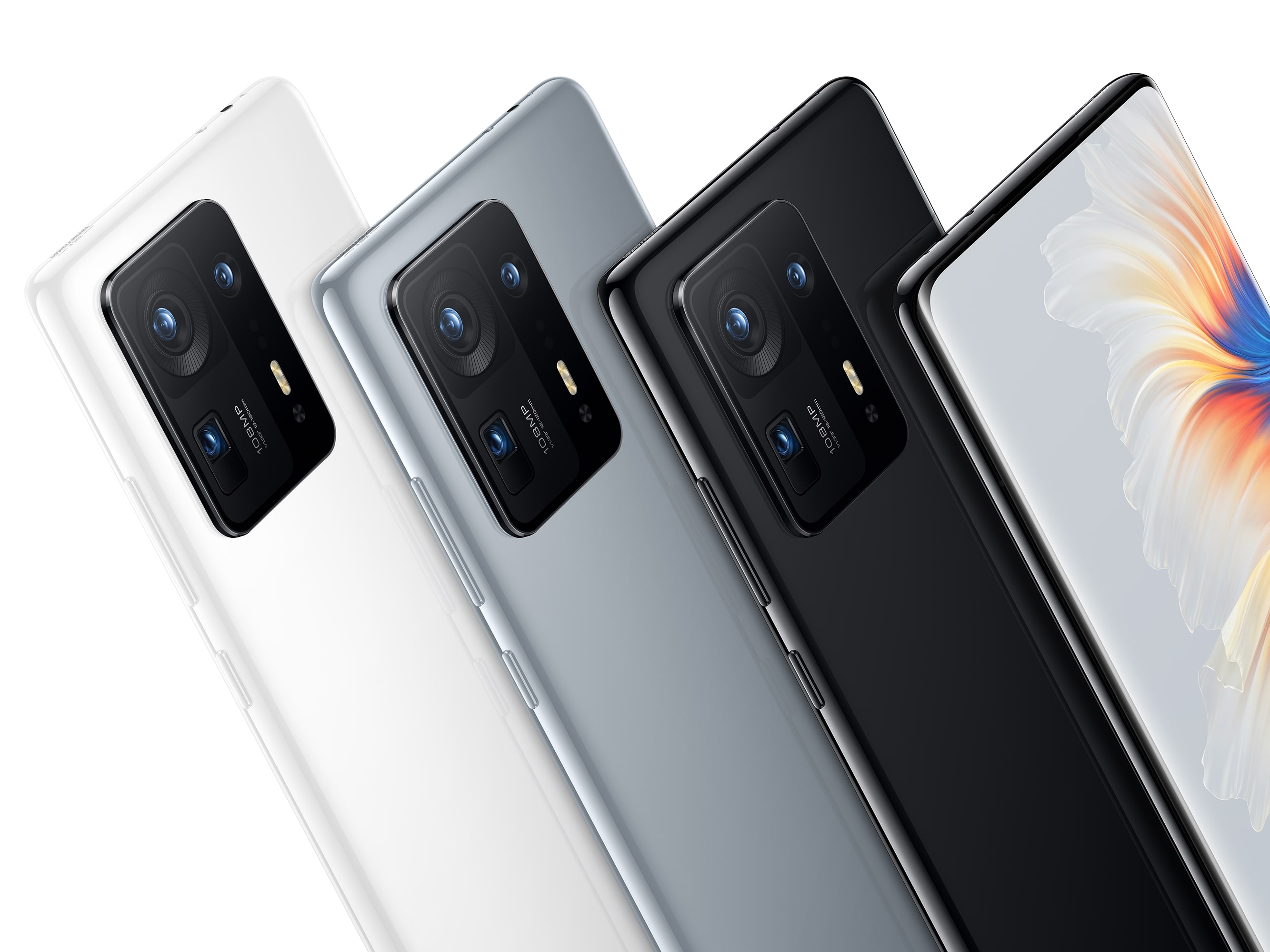
The Xiaomi Mi MIX 4 has a 6.7-inch OLED AMOLED FHD+ 120Hz screen with a 20-megapixel under-display camera and an in-screen fingerprint sensor. The Snapdragon 888 Plus powers the smartphone with 12 GB of LPPDR5 RAM and up to 512 GB of UFS 3.1 storage. It runs on MIUI 12.5 based Android 11.
Xiaomi Mi MIX 4
The smartphone features a 108-megapixel main camera with OIS support. It is assisted by a 13-megapixel ultrawide lens and an 8-megapixel periscope telephoto camera. It has a 4,500mAh battery that supports 120W fast charging and 50W wireless charging.
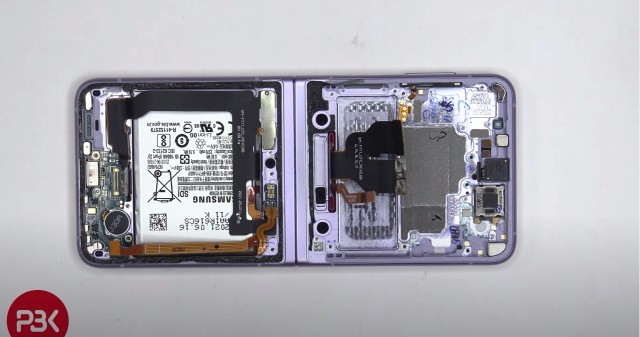
Samsung announced the Galaxy Z Flip3 alongside the Galaxy Z Fold3 and Galaxy Watch 4 series recently. A teardown video by PBK Reviews has provided some great views about the internal workings and make-up of the Z Flip3. The comprehensive and exclusive teardown has provided never-before-seen illumination of the Galaxy Z Flip3, not too long after the Galaxy Z Fold3 got a similar teardown treatment.The Galaxy Z Flip3 sports a foldable design and is one of the very few phones that have the foldable feature. The teardown begins with the heat gun applied to the open glass covering of the screen. The elaborate video which extended up to 9 minutes provides the clearest glimpse yet of the Galaxy ZFlip3. Among the features highlighted in the video are the cover screen (1.9 inches wide), a 930mAh battery (there is a second batter one on the inside of the device), and several other components that are visible from the back opening.
The display of the Galaxy Z Flip3 is foldable, and this is shown clearly in the teardown video. The flexible display of the Galaxy Z Flip 3 sits at the top of the new and revamped folding hinge. The delicate internals framework means that the Galaxy Z Flip3 is not a smartphone to be disassembled by just any person. You must have the necessary tools as well as the expertise. The repairability score is put at 4/10.
The Samsung Galaxy Z Flip3 internals also include a 2370mAh battery, a sizeable graphite pad for optimal heat management, the speaker assembly, and the ports.
Xiaomi has launched several smartphone models under its flagship Mi 11 lineup this year and now the Chinese tech giant is preparing to launch yet another model — Mi 11T Pro.
There have been a few leaks related to the upcoming smartphone from Xiaomi and now, in the latest development, a Vietnamese Youtube channel has shed more light on what we can expect from the upcoming Mi 11T Pro flagship smartphone.
In terms of build, the report says that the phone will come with a glass back panel but the frame will have a metal build to make the phone sturdy. As for housing the front-facing camera, there will be a punch-hole cutout on the display.
Talking about the display, Digital Chat Stationrecently claimed that compared to its predecessor, Xiaomi will be reducing the screen refresh rate from 144Hz to 120Hz but will offer an AMOLED screen instead of the LCD panel on the Mi 11T series.
Underneath, the smartphone will come powered by the Qualcomm Snapdragon 888 or the Snapdragon 888+ chipset. Recently, a Xiaomi smartphone with model number 2108111RG, powered by MediaTek Dimensity processor was certified and is believed to be the upcoming Mi 11T and the chipset is likely to be the Dimensity 1200 SoC.
Xiaomi Mi 10T Pro
There’s nothing much known about the camera configuration for the Mi 11T Pro. However, for the standard Mi 11T, the company is expected to continue offering the same camera configuration as the Mi 11 Lite. This means that the phone could have a triple-camera setup consisting of a 64-megapixel primary sensor, an 8-megapixel ultra-wide sensor, and a 5-megapixel tele-macro lens. On the front side, the device could have a 16-megapixel snapper for taking selfies and video calling.
The smartphone is expected to be running the Android 11 operating system with the company’s own MIUI 12.5 custom user interface. The device is said to be powered by a 5,000mAh battery and has support for 120W fast charging technology. As for the launch date, we exclusively reported that the Mi 11T series could go official on 23rd September.
Note: The article has been updated to reflect that information related to display and camera configuration mentioned in the video is more of a wishlist. Instead of relying only on this video, we have cited other reports about those claims.
We use cookies on our website to give you the most relevant experience by remembering your preferences and repeat visits. By clicking “Accept”, you consent to the use of ALL the cookies.
This website uses cookies to improve your experience while you navigate through the website. Out of these, the cookies that are categorized as necessary are stored on your browser as they are essential for the working of basic functionalities of the website. We also use third-party cookies that help us analyze and understand how you use this website. These cookies will be stored in your browser only with your consent. You also have the option to opt-out of these cookies. But opting out of some of these cookies may affect your browsing experience.
Necessary cookies are absolutely essential for the website to function properly. This category only includes cookies that ensures basic functionalities and security features of the website. These cookies do not store any personal information.
Any cookies that may not be particularly necessary for the website to function and is used specifically to collect user personal data via analytics, ads, other embedded contents are termed as non-necessary cookies. It is mandatory to procure user consent prior to running these cookies on your website.


 The new service from the Chinese tech giant offers a variety of smartphones that have previously been owned and are certified by the company itself to offer assurance regarding quality of the smartphone. This move from the consumer is beneficial for the brand as its customers now get more affordable deals, while the company also benefits as second hand devices would ensure stock amid smartphone supply shortages. Notably, we had previously reported on