Advertisement

Smart wearable brand KUMI to expand its AIOT ecosystem globally with new products

KUMI, a smart wearable brand known for its smartphones and earbuds, will expand its AIOT product portfolio in the coming weeks with new wearables, wireless earphones, GaN chargers, and more.

Must See: Nokia C30 entry-level smartphone running Android 11 Go Edition officially launched

The company already sells a few of its smartwatches and earbuds globally. But if you have never heard of the brand, here’s a quick background.

The name “KUMI” is derived from two different Chinese words, “KU” which means innovative technology, and “MI” which stands for a better life. The brand aims to bring better life with the utilization of new innovative technology. The company already has a portfolio of smartwatches, smart bands, and earbuds that are sold via platforms like Aliexpress.

Nos brand is expanding its wings across the globe to offer products powered by the latest technologies, after a successful regional start.


KUMI Smartwatches

KUMI’s smartwatch lineup includes the 7 series, KU series, K series, GT series, GW series, U series, M series, and I series catering to a wide variety of users. Recently, the brand announced a number of new watches, KUMI U2 Plus, KUMI GW16T and KUMI U3, further expanding its portfolio.

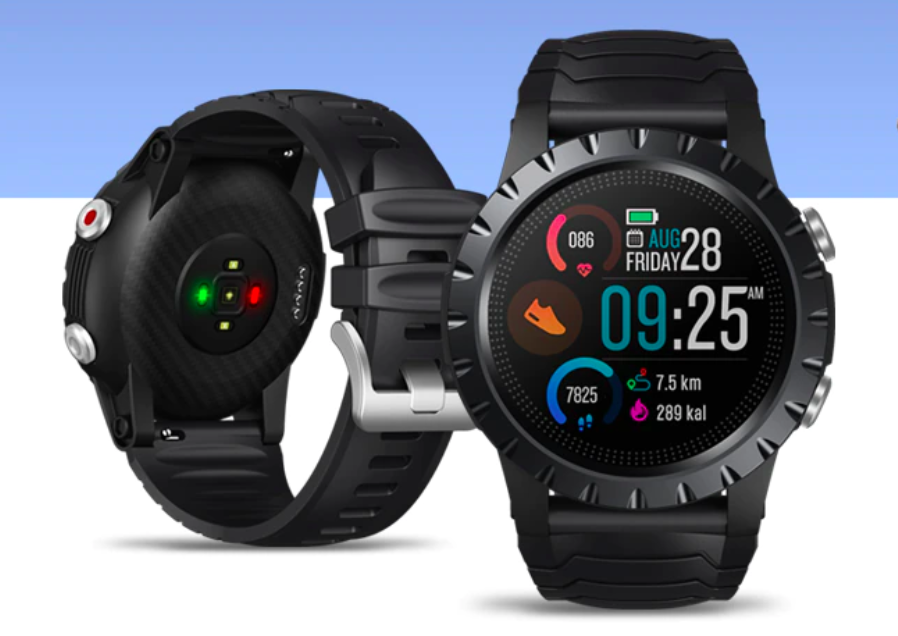
The KUMI U2 Plus comes with a 1.69-inch curved display, 24 sports modes, and a real-time blood oxygen monitor. KUMI GWT16 and KUMI U3 also feature similar specifications with some minor changes. Notably, the KUMI GW16T is quite popular in China due to its premium quality design.


Wireless Earphones

Wireless earphones have become a trend these days due to their advanced usability. KUMI has plenty of certified earphone models like the KUMI T1, KUMI T9S Pro, KUMI K5, and KUMI T1 in its portfolio. These products are on sale via popular online retailers like Amazon and AliExpress.


Smart Fitness Bands

KUMI Smartband

The Chinese manufacturer offers several options in the fitness bands section. KUMI Band 6 is the latest offering which carries a dual-curved display. It is set for the global launch this August.

There’s another interesting KUMI fitness band – KUMI SmartBand N8 that is listed on AliExpress. It bundles two wireless earphones which get inserted into the smart band itself. Other features include a 0.95-inch AMOLED colorful display and Bluetooth 5.0 for connectivity.

GaN Quick Charger

KUMI manufactures two different types of chargers – GaN Fast Charger and normal fast charger. Moreover, you can choose GaN chargers between different capacities like 30W, 65W, and 100W to quickly charge your Android and Apple products.

All the KUMI products are on sale via AliExpress. You can know more about Kumi and its products via their official website.


RELATED:


Xiaomi FlipBuds Pro is the world’s first to feature Qualcomm Snapdragon Sound

Earlier today (28th July 2021), Xiaomi shared a new announcement regarding the latest firmware update for its FlipBuds Pro. With the new update, the TWS earbuds are now the first in the world to feature Qualcomm’s high end audio technology, Snapdragon Sound.

In a social media post, the Chinese tech giant revealed the new update and some of the key changes arriving to the earbuds as well. The firmware build is version 7.6.2.9 and officially brings Qualcomm Snapdragon Sound audio technology to the FlipBuds Pro. Through this, the earbuds will now receive three major features, which include a high definition audio transmission that can reach 48kHz to up to 96kHz. Furthermore, the calling capabilities have also been improved with ultra clear calls through 16kHz to 32kHz.

XiaomiThe final major upgrade is to the latency, with the device now offering an ultra low latency of just 89ms. This would prove great for people that use these wireless earphones while gaming on their smartphones. For those unaware, Qualcomm had launched the Snapdragon Sound audio technology back in March 2021. It arrives as an upgrade to the chipmaker’s existing aptX adaptive codec and offers a stronger anti interference and lower delays that is consistent with LDAC and LHDC. This technology even helps boost active noise cancellation performance and calling as well.

RELATED:


Xiaomi is hiring autonomous driving tech experts for its auto department

Lei Jun, founder of Xiaomi, has just shared a new recruitment advertisement on his official Weibo account, a Chinese microblogging website. In this ad, the official has basically revealed that the company is hiring experts in the autonomous driving field for its own automobile unit.

Back in March, the Chinese tech giant had announced that it would enter into the Smart Electric Vehicle business, with an initial investment of around 10 billion Yuan (roughly 1.5 billion US Dollars). Now, the executive has officially shared a recruitment add calling for 500 technical experts to join the “Xiaomi Autonomous Driving Department.” The social media post states that it is looking for 500 experts to create its own proprietary self driving technology for its smart cars.

Xiaomi

Furthermore, the company has increased its recruitment efforts and openings for its Auto department in various fields as well. This includes data platforms, millimeter wave algorithms, a control system for the vehicle and its internal components, development tools, front end platform development, embedded software, imaging/perception, high accuracy map, among many others. Unfortunately, this is all the information we have to go on as of right now, so stay tuned for more as we will be providing updates when additional information is available regarding this matter.

RELATED:


Redmi’s new phones with Snapdragon 8-series, Dimensity 1100 could be in works

In the first half of the year, Redmi announced a couple of Redmi K40 series smartphones such as Redmi K40, Redmi K40 Pro, Redmi K40 Pro+, and Redmi K40 Gaming Edition in China. It also announced a couple of Redmi Note 10 series of smartphones in the home market. Fresh information shared by a Chinese tipster reveals that the brand could be working on two new phones powered by a Snapdragon 8-series chip and Dimensity 1100 SoC.

As per the new leak, the Snapdragon 8-series chip-powered Redmi phone will be equipped with a 120Hz OLED panel, a 5,000mAhbattery, a telephoto camera with 3x optical zoom, and 30x zoom. On the other side, the Dimensity 1100 chipset-powered handset will offer a 120Hz display, a 64-megapixel camera, and a 5,000mAh battery with 67W fast charging support.

Redmi k40 Pro Review 01
Redmi k40 Pro

The identities of the above-mentioned Redmi phones are under wraps. The specs of the first phone suggest that it could be yet another K40 series phone from the brand. Probably, it could be arriving in the market as the Redmi K40 Ultra.

The tipster further mentioned that the Redmi will be also launching phones with advanced features such as curved display, under-display camera, and 100W fast charging technology in 2022. Recent leaks have revealed that the company may launch the Redmi K50, K50 Pro, and K50 Pro+ in the beginning months of the coming year.

The K50 trio could be equipped with the upcoming Snapdragon 895 SoC and 67W fast charging. The series may offer users a Samsung’s AMOLED E5 luminescent display that offers a 2K resolution and a 120Hz refresh rate.

RELATED:

Nokia launches several earbuds under Clarity, Comfort, Micro, Go series

HMD Global, the company that holds the license for the Nokia brand, has announced a dozen new audio products under the Clarity, Comfort, Micro, and Go lineup. All these products were launched along with the Nokia XR20, Nokia 6310, and Nokia C30 phones.

Nokia Clarity Earbuds

There are two earbuds in this lineup — Nokia Clarity and Nokia Clarity Pro. The major difference between the two is that the Pro variant comes with Active Noise Cancellation while the standard variant does not.

Nokia Clarity Earbuds Pro

Both the earphones feature 10mm drivers and use Qualcomm cVc technology for lowering background noise during phone calls. There’s also a unique light ring that functions as an indicator when on call. They connect to devices via Bluetooth v5.2 to multiple devices and have IPX5 ratings.

The company says that the Nokia Clarity Earbuds Pro offers seven hours of playtime and 28 hours more with the charging case when ANC is turned on. The non-Pro model comes with nine hours of battery life and 36 hours more with the charging case.

Nokia Comfort Earbuds

The Comfort range of earbuds also features 10mm drivers, Bluetooth 5, and IPX5 rating. However, they come with a more ergonomic design and comfort ring for a more secure and comfortable fit.

Nokia Comfort Earbuds

There are three models — Comfort Earbuds, Comfort Earbuds+, and Comfort Earbuds Pro. The Plus variant comes with wireless charging support while the Pro variant packs some additional features like low-latency, Environmental Noise Cancellation, and Active Noise Cancellation.

The standard model offers 29 hours of total playtime while the Plus model offers up to 9.5 hours of playback, adding 14 hours more via charging case. The top-end model in the lineup, Comfort Earbuds Pro, offers seven hours of playback and adds up another 16 hours through the charging case.

Nokia Micro Earbuds

The Nokia Micro Earbuds come with a unique charge-through technology that allows earphones in this range to be miniaturized whilst still holding over 9 hours of battery life from a single charge. The charging case extends the battery life to a total of 28 hours.

Nokia Micro Earbuds Pro

The Pro model comes with an angled design and dual-mic setup that adds support for noise reduction technology. The devices pack 6mm drivers and come with IPX5 ratings. The earphones also have automatic switching between one or both for phone calls.

Nokia Go Earbuds+ 

It comes with 13mm drivers that offer powerful bass performance, enclosed within a body that has a slim and comfortable fit. The earphones are IPX4 rated and come with auto-switching technology to switch between one or both earbuds. There’s also touch controls, Bluetooth v5, and wired USB Type-C charging for the case.

Nokia Go+ Earbuds

As for the battery life, the Go Earbuds+ are claimed to offer up to 6.5 hours of usage on a single charge, and the charging case increases it to a total battery life of 26 hours.

Nokia Solo Earphones and Nokia Wired

There are four models in the Solo lineup which are aimed at professionals — Nokia Solo Bud, Nokia Solo Bud+, Nokia Clarity Solo Bud, and Nokia Clarity Solo Bud+.

Nokia Solo Bud

The Solo Bud has a soft rubber fin for a secure and comfortable fit. It offers 6.5 hours of talk-time. On the other hand, the Solo Buds+ comes with the added benefit of IPX4 rating for sweat and splash resistance.

The Clarity Solo Bud and Clarity Solo Bud+ feature dual-mic noise reduction with Qualcomm cVc technology, along with Elevoc AI to elevate the user’s voice frequencies.  As for the battery life, it is rated at 6 hours of talk time.

Nokia Wired Buds

The company has also announced Nokia Wired earbuds that come with 10 mm drivers enclosed in an ergonomic form factor with angled acoustic tubes. The earphones, as the name indicates, are a wired one and features an in-line mic for voice calls.

Pricing Details

  • Nokia Go Earbuds+ (TWS-201) – $34
  • Nokia Micro Earbuds (TWS-311) – $64
  • Nokia Micro Earbuds Pro (TWS-521) – $69
  • Nokia Comfort Earbuds (TWS-411) – $54
  • Nokia Comfort Earbuds+ (TWS-411W) – $59
  • Nokia Comfort Earbuds Pro (TWS-631W) – $99
  • Nokia Clarity Earbuds (TWS-821W) – $89
  • Nokia Clarity Earbuds Pro (TWS-841W) – $99
  • Nokia Solo Bud (SB-101) – $29
  • Nokia Solo Bud+ (SB-201) – $39
  • Nokia Clarity Solo Bud (SB-401) – $59
  • Nokia Clarity Solo Bud+ (SB-501) – $59
  • Nokia Wired Buds (WB-101) – $6

RELATED: 

Honor Tablet V7 Pro confirmed to pack MediaTek Kompanio 1300T SoC; launching on August 12

Honor has scheduled a launch event on 12th August where the company will be launching its new flagship smartphone — Honor Magic 3. Along with that, the brand is also expected to announce its new tablet device, dubbed Honor Tablet V7 Pro.

Now, Honor Smart Life account of Weibo has officially confirmed that the upcoming tablet from the brand will come powered by the MediaTek Kompanio 1300T processor which was announced by the company yesterday.

Honor Tablet V7 Pro MediaTek Kompanio 1300T SoC

The MediaTek Kompanio 1300T features a flagship architecture similar to the Dimensity 1200 chipset. It is built on TSMC’s 6nm node and utilizes an octa-core processor that consists of four Cortex-A78 cores and four Cortex-A55 cores. It bundles a nano-core Mali-G77 MC9 GPU which is superior to the Mali G57 MC5 utilized by its predecessor.

It is integrated with a sub-6 GHz bands 5G modem which supports dual-SIM and dual-channel carrier aggregation. The company had said that the Kompanio 1300T will be powering tablets launching from the third quarter of this year.

Recently, Honor shared a teaser video for the upcoming tablet which revealed that it will come in a blue leather finish. It also shows a camera module that looks similar to the Honor 50 series. There’s also a SIM card slot on the left side, along with a volume rocker, and a microphone. There’s also an Honor branding at the center of the tablet.

Currently, not much information is available about the upcoming Honor Tablet V7 Pro but given that it is scheduled to get launched in a couple of weeks, we expect to know more about it via teasers and leaks in the coming days.

RELATED: 

MSI GP Leopard, MSI Pulse GL, and MSI Katana GF Gaming laptops launched with up to 11th Gen Intel i7 Chips and RTX 3070 GPU

MSI has launched a wide range of gaming laptops in the Indian market. These laptops include more than 10 models from three series’. The three laptop series – MSI GP Leopard, MSI Pulse GL, and MSI Katana GF come in different segments. The Leopard series is the most premium one with 11th generation Intel Core H-series CPUs, followed by the Pulse GL series, and then the Katana GF series that comes powered by i5 and i7 Intel processors.

MSI GP Leopard Series, MSI Pulse GL Series, MSI Katana GF Series Specifications 

MSI GP Leopard Series

The GP Leopard series includes two models MSI GP76 Leopard 11UG and MSI GP66 Leopard 11UG. Both the models have the same internals with major differences in the display sizes. The former model has a 17.3-inch FHD display with a whopping 240Hz refresh rate, whereas, the latter features a 15.6-inch FHD display with the same 240Hz refresh rate.

The series comes powered by an 11th generation Intel i7 processor and 8GB of GDDR6 RTX 3070 GPU. The laptops have up to 64GB expandable RAM and NVMe M.2 PCIe Gen4 x4 SSD. The laptops have stereo speakers powered by Nahimic 3 Audio Enhance technology. As for connectivity, there’s an HDMI port, a Gigabit Ethernet port, a mini DisplayPort, USB 3.2 Gen1 Type-A ports, and Wi-Fi 6E support.

MSI Pulse GL Series 

Next up we have the Pulse GL series that stands below the Leopard series. The Pulse GL series also includes two models – MSI Pulse GL76 and MSI Pulse GL66. Just like the Leopard series, these two models also have different screen sizes. The Pulse GL76 has a 17.3-inch FHD display, whereas, the Pulse GL66 has a 15.6-inch FHD display.

The major difference between the Leopard series and the Pulse series is the screen refresh rate, connectivity, and PCIe storage option. The Pulse GL series laptops feature a 144Hz refresh rate, it misses on Gigabit Ethernet port but has other USB ports including Gen1 Type-C, Gen1 Type-A, and USB 2.0 Type-A port. The pulse also misses on a PCIe Gen4 storage.

Other internal specs are the same as the Leopard series.

MSI Katana GF Series

The MSI Katana GF series comes in the starting range. Again, it has two models MSI Katana GF76 and MSI Katana GF66 with 17.3-inch and 15.6-inch screen sizes respectively. The screens have a 144Hz refresh rate and FHD resolution.

The Katana GF series has 11th generation Intel Core i7 and i5 processors with 6GB/4GB of GDDR6 RTX 3060/RTX 3050 GPUs. Apart from the processors and GPUs, the Katana series doesn’t differ much in other parts of the specs sheet.

MSI GP Leopard, MSI Pulse GL, and MSI Katana GF Pricing and Availability 

The MSI GP76 Leopard 11UG(17.3-inch) with Intel Core i7 and RTX 3070 GPU is priced starting at ₹2,01,990(~$2711) and the MSI GP66 Leopard 11UG(15.6-inch) with the same internals is priced at ₹1,95,990(~$2631).

On the other hand, the MSI Pulse GL76(17.3-inch) with Intel Core i7 and RTX 3060 is priced starting at ₹1,45,990(~$1960) and MSI Pulse GL66(15.6-inch) with the same internals is priced at ₹1,39,990(~$1879).

The MSI Katana GF76(17.3-inch) and Katana GF66(15.6-inch) start at ₹1,11,990(~$1504) and ₹95,990(~$1289) respectively.

All three laptop series’ will be available for purchase from MSI stores and other online and offline authorized stores in India.

RELATED:

China sees 78.1 million smartphone shipments in Q2 2021; Vivo becomes the leading smartphone brand

International Data Corporation (IDC) has today released a new report revealing data for the smartphone shipments in the second quarter of this year for the Chinese market. It claims that about 78.1 million units were shipped in China in Q2 2021, which represents a decrease of 11 percent year-on-year.

China Smartphone Shipments Q2 2021

However, the overall shipments in the Chinese market first half of this year stand at 164 million units, which indicates an increase of 6.5 percent year-on-year. Interestingly, Honor has made its entry into the top five smartphone brands in China. This is the first listing of Honor in the report after it split from its parent company Huawei earlier this year to become an independent brand.

Vivo is leading the Chinese smartphone market in the second quarter of this year with shipments of 18.6 million units, capturing about 23.8 percent of the market. OPPO follows closely in the second spot with 16.5 million units and a 21.1 percent market share.

The third brand on the list is Xiaomi that managed to ship 13.4 million units in China in the second quarter of the year, covering 17.2 percent market. Xiaomi was recently ranked as the second-largest smartphone brand globally, overtaking Apple and just behind Samsung.

Apple has managed to ship 8.6 million iPhones in Q2 2021 in China and has covered about 10.9 percent of the market. Honor, making its debut in the list, capturing about 8.9 percent of the market with shipments of 6.9 million units.

Among all these brands, Xiaomi registered the highest growth of 47 percent year-on-year, followed by Vivo at 23.6 percent. OPPO grew by 17.3 percent while Apple registered a growth of 17 percent in China.

RELATED: 

Nubia Z30 Pro Black Gold Legend Limited Edition goes on sale in China

A couple of months ago, in May this year, ZTE-backed Nubia had launched its Nubia Z30 Pro flagship smartphone in its home market China. It was announced in three color options, namely Vast Black, Interstellar Silver, and Black Gold Legend.

The Nubia Z30 Pro Black Gold Legend is a Limited Edition model and was made available for pre-orders in China just a couple of days ago. Now, the device is up for purchase in the company’s home market from today.

Nubia Z30 Pro Black and Gold Legend Limited Edition

This variant of the smartphone comes in just a single memory configuration that packs 16GB of RAM and 512GB of internal storage. The device is priced at 5,999 yuan which roughly converts to $922.

Coming to the specifications, the Nubia Z30 Pro features a 6.67-inch flexible AMOLED display with a Full-HD+ screen resolution of 2400 x 1080 pixels, 10-bit color depth (1.07 billion colors), 144Hz refresh rate, 20:9 aspect ratio, and 93.45% screen-to-body ratio.

It also comes with an in-display fingerprint sensor for added security. Under the hood, the device is powered by Qualcomm Snapdragon 888 chipset and supports LPDDR5 RAM and UFS 3.1 internal storage. To keep the temperature in check, there’s also five-layer micron graphene and VC liquid-cooled soaking plate.

nubia Z30 Pro Black Gold Legend Featured A

As for the photography department, the phone features a quad-camera setup on the back that consists of a 64-megapixel primary sensor, a 64-megapixel secondary sensor with a 120-degree ultra-wide-angle lens, a 64-megapixel ‘humanistic’ camera, and an 8-megapixel sensor with a 5x periscope lens. On the front side, there’s a 16-megapixel snapper for taking selfies and video calling.

The smartphone runs the Android 11 operating system out-of-the-box with the company’s own Nubia UI 9.0 on top. It is powered by a 4,200mAh battery which comes with support for 120W fast charging. The company is also shipping the device with a 120W power adapter in the box, along with a USB Type-C to Type-C cable, a USB Type-C to 3.5mm headphone jack adapter, and a protective case.

RELATED: 

Huawei removes its Autonomous Driving unit head for damaging remarks about Tesla

The World Artificial Intelligence Conference 2021 (WAIC 2021) was recently ended with a focus on the growing autonomous driving technology industry. However, the event didn’t end without a bit of drama. Huawei announced the removal of the head of its autonomous driving unit Su Jing. The tech giant later issued a statement that the former head was removed for inappropriate comments made about Tesla’s autonomous self-driving technology at the event. Su had claimed Tesla vehicles are killing people, apparently referring to the autopilot issue that has been reported severally in recent times. Huawei

Su Jing has been with Huawei for many years with outstanding ability in autonomous technology and a good staff rating. He has previously served as the chief architect of Huawei Terminal Company and later as the head of Huawei’s intelligent driving product department. In particular, he took the lead in creating the autonomous driving system solution ADS, which was first showcased on the BAIC Arcfox Alpha S. The car is the first smart electric car equipped with Huawei’s lidar solution and the first model equipped with Huawei Harmony OS car system.

Thus, there are speculations in some quarters that his removal might be due to other reasons other than the Tesla comments. Before now, there were rumors that Weilai (NIO) and other car manufacturers had approached Su Jing and were looking to poach him from Huawei. However, both Mr. Su and NIO denied the rumor. Although Huawei still retains him in its employment, the autonomous driving expert may soon pitch his tent somewhere else.

RELATED:


(via)


SAIC-GM-Wuling is selling more EVs than Tesla thanks to the Wuling Hongguang MINIEV

On Monday, electric vehicle manufacturer Tesla posted its 2021 half-year results, which indicated that the US company sold about 200,000 EVs in the second quarter of the year, yielding $12 billion, up by $6 billion from last year. In an update to investors, the company stated that Q2 profits soared to $1.1 billion, up from the $104 million from last year. The very impressive numbers by Tesla seem to be replicated by Chinese EV maker SAIC-GM.Wuling's Hongguang MINIEV

SAIC-GM-Wuling Automobile recently reported its mid-year performance with the overall sale of its vehicles above 884,000 within the first six months of 2021. The result also indicated that there was a 39.5% surge in sales year-on-year. The company also had positive growth for the fifteenth consecutive month. SAIC-GM produces the Wuling and Baojun brands, and the two account for the massive sales.

Wuling's Hongguang MINIEV
SAIC-GM-Wuling overall H1 2021 sales

Last year, the global EV market experienced reduced sales due to the coronavirus pandemic and the global chip shortage. The global EV market has shown a rebound from last year’s decline, as more persons embrace the sustainable environmental solutions posed by electric vehicles. The bulk of the EV sales for SAIC-GM came from the Wuling brand, which accounted for 693,351 units, while the Baojun brand ramped 123,057 units within the first half of 2021. The company also reported a total export of 74,225 cars and recorded positive growth for the six consecutive months of the year.

Wuling's Hongguang MINIEV
Wuling’s Hongguang MINIEV sales

SAIC-GM-Wuling is riding on the tide of a solid performance in China, the world’s largest and fastest-growing EV market. It is squaring up against Tesla with its impressive EV models, as its cars are significantly cheaper than Tesla’s. The data shows that Wuling’s Hongguang MINIEV is still a hot-sellling model as the brand sold 182,767 units in the first half of the year, an average of 1,000 vehicles per day.Wuling's Hongguang MINIEV

The outlook remains bright for the company as it continues to evolve strategies to expand the coverage for its budget electric vehicles. However, in terms of revenue, it will have to sell a lot more to equal Tesla’s declared financial turnover.

RELATED: 

(via)


Some OnePlus 8T and OnePlus 9R units have LPDDR5 RAM

The official spec sheets for the OnePlus 8T and OnePlus 9R says both phones ship with LPDDR4X RAM. While that may have been true for the several thousand units sold, that appears to no longer be the case.

A new report says some users have discovered that their OnePlus 8T and OnePlus 9R phones ship with the faster LPDDR5 RAM. The info comes from XDA Developers who have been able to confirm the info.

OnePlus 8T and OnePlus 9R

The change in RAM type was discovered by some users who tried to unbrick their phones using the MSMDownloadTool which doesn’t work with LPDDR5 RAM. While there is now a solution available for those with the faster RAM variant, the fact is that OnePlus is now selling both phones with a faster RAM than their spec sheet says.

You definitely won’t be able to tell before purchase if you will be getting the OnePlus 8T or OnePlus 9R with LPDDR4X RAM or LPDDR5 RAM. However, if you own one already, there is an easy way to find out the type of RAM the device has. XDA Developers says you have to run the command below if you have ADB installed on your PC:

adb shell getprop ro.boot.ddr_type

If it returns a “0”, you have the LPDDR4X RAM variant while “1” means you have LPDDR5 RAM.

The OnePlus 9R and OnePlus 8T are very closely related. The two major differences between them are the design and processor. So on both devices, you get a 6.55-inch FHD+ 120Hz AMOLED screen, 48MP+16MP+5MP+2MP quad rear cameras, a 16MP front-facing camera, a 4500mAh battery capacity, and support for 65W fast charging. The OnePlus 8T has a Snapdragon 865 processor while the OnePlus 9R is powered by the more powerful Snapdragon 870.


RELATED:

Huawei Nova 8 SE Vitality Edition launched in China for CNY 1,899(~$292)

Last year, Huawei unveiled the Nova 8 SE smartphone with a Dimensity processor and quad-rear cameras. Today, after almost nine months, the company has launched a 2021 edition of the phone dubbed Huawei Nova 8 SE Vitality Edition. The smartphone’s major highlight is the in-house Kirin 710A SoC, triple rear cameras, and 40W fast charging.

The Huawei Nova 8 SE Vitality Edition is priced at CNY 1,899(~$292) for the only variant with 8GB of RAM and 128GB of storage. It comes in two colors – Frost Silver and Magic Night Black. It will go up for sale on Huawei’s official website, Vmall, Jingdong, and other shopping portals in China.

Huawei Nova 8 SE Vitality Edition Specifications 

The smartphone sports a new design as compared to the original Nova SE. The phone flaunts a triple rear camera system placed vertically. This is a significant change over the quad-camera system seen on the Nova 8 SE.

It has a 6.6-inch LCD display with Full-HD+(1080 x 2400 pixels). It is a punch-hole panel with a narrow-bezel design. The display has 16.7 million colors and a 94% screen-to-body ratio.


As said above, it has three cameras with a 48MP main sensor that comes with an f/1.8 aperture. It is accompanied by two 2MP lenses for macro and depth shots. The rear camera supports 6x digital zoom and has a 1080p video recording. On the front lies a 16MP selfie camera with an aperture of f/2.0.

Under the hood, it is powered by the old in-house Kirin 710A octa-core chipset paired with 8GB of RAM and 128GB of internal storage. It is backed by a 4,000mAh battery with support for 40W fast charging technology.

It is a 4G handset that comes with Bluetooth v5.1 and Wi-Fi 802.11 a/b/g/n/ac support. It has a 3.5mm headphone jack and the speaker grille at the top, and a USB Type-C port at the bottom. The smartphone boots on EMUI 10.1 UI based on Android OS.

RELATED:


LG is the world’s biggest battery maker driven by EVs, Panasonic & Samsung in tow – Report

Samsung is a global business powerhouse, and indeed, it is one of the largest enterprises globally due to the sheer width of its business concerns. Its businesses include consumer electronics, chips, panels, smartphones, TVs, and several others. However, Samsung is also into manufacturing batteries for smartphones, wearables, and increasingly, electric vehicles.

The latest results from SNE Research have placed Samsung’s battery-making arm, SDI as the third biggest battery maker based on market share. According to the research, Samsung has a market share of 10.1%, with strong batteries for electric vehicles like Ford’s Kuga, Audi’s E-Tron, and Fiat 500. Korean tech brands LG Energy and Panasonic are the two global leaders in battery making, with a combined market share of 63.3% as of May 2021. The SNE Research report covered five months from January to May 2021.

The leading battery makers are reaping from a very productive half year in the EV market, which has seen Tesla and BAIC-GM presenting impressive and record-breaking sales numbers. Of course, there is a perfect correlation between EV sales and the sales of EV batteries, which forms a bulk of the overall sales output of the battery makers.Panasonic Logo

The SNE Research report also showed a rapid increase in global battery usage within the first five months. The more than two-fold rise in battery usage is also indicative of the rapid shift towards EV technology in the automobile industry. EV manufacturers continue to tinker with the range and mileage per KWh of energy that EVs could offer.

Samsung is also looking at expanding its capability in battery production with recent plans to build battery factories in the United States. The move is aimed at consolidating its quest for lucrative EV battery contracts from Tesla. Samsung recently shared a prototype Tesla 4680 battery cell in pursuit of the Tesla supply contract.

RELATED:

(via)


Doogee S35 entry-level rugged smartphone goes live on AliExpress for $89.99

Doogee S35 has finally hit the shelves via a limited-time sale on AliExpress at an affordable price of $89.99. The smartphone will make its debut on the retailer’s website along with the Doogee N40 Pro. The entry-level rugged phone is specifically designed for the affordable segment having decent specifications.

Must See: Doogee N40 Pro up for grabs on AliExpress with a massive 24% discount

The smartphone houses a 5.0-inch display protected with Corning Gorilla Glass against the usual scratches. Doogee S35 smartphone packs a 4350mAh battery which comes with a 10W fast charging. The battery is sufficient enough for a couple of days of normal use with a single full charge.

Doogee S35 is powered with MT6737V/WA chipset, 2GB RAM and 16GB internal storage. The interested users can even expand the storage using a MicroSD card. 

It is a fully durable smartphone with sides built with rubber to protect against shock and usual falls. Doogee S35 smartphone is engineered to resist water and dust, even IP68 and IP69K rating confirms the same.

In the camera department, the smartphone offers a triple-rear camera module consisting of a 13MP primary sensor and a single 5MP front camera.

Furthermore, it is MIL-STD-810G rated smartphone that confirms protection against the drops. It is available in three different colour options of flame red, fire orange and mineral black. For a limited time, it is available on AliExpress at a massive discount.

Related: Doogee N40 Pro announced with 6380 mAh battery, 6.52-inch display and 6GB RAM


ZTE Buds and ZTE LiveBuds Pro announced, starts at ¥169 (~$26)

Alongside the Axon 30 smartphone, ZTE also announced a handful of other products, and among them are the ZTE Buds and ZTE LiveBuds Pro. The two pairs of earbuds are quite different, not only in terms of their design but also the features they offer.

ZTE Buds

ZTE Buds

The ZTE Buds has an open-fit design with elongated stems. The earbuds are sweat-resistant and are pretty light, weighing just 3.4 grams each. ZTE says that the earbuds will provide 4 hours of talk time and 5 hours of playback time. The carrying case has a 500mAh battery but ZTE doesn’t state how many charges you can get or the total battery life. The ZTE Buds has a price tag of ¥169 (~$26) and can be purchased in white or black.


ZTE LiveBuds Pro

ZTE LiveBuds Pro

The LiveBuds Pro is more expensive at ¥349 (~$54). It also has a different design but comes in white and black colorways too. The pair of earbuds has hybrid active noise cancellation and six-mic call noise reduction. They are also resistant to sweat. The total battery life is put at 24 hours (with the case).


RELATED:

Poco X3 GT rumor roundup: Specs, Price, Colors & More – What to Expect!

After launching the Poco F3 GT premium gaming smartphone in India, the company is all set to unveil a budget gaming phone dubbed the Poco X3 GT in Malaysia. While the phone is scheduled to go on floors tomorrow, i.e. July 28, some details of the handset are already available on the internet. Today, in this piece, we are rounding up all the rumors surfaced so far about the Poco X3 GT, giving you a clear idea of what to expect.

Poco X3 GT Rumor Roundup: What to Expect? 

Moniker, Design, and Display 

Back in May, the initial rumors about the Poco X3 GT arrived in leaks. A popular Mi tipster named Kacper Skrzypek revealed that a Poco gaming phone with the moniker ‘Poco X3 GT’ could be in the works.

Later, the tipster revealed that the Poco X3 GT is nothing but a rebranded Redmi Note 10 Pro (Chinese model) for the Malaysian market. Soon after this confirmation, leaks started to get some pace and the device bagged multiple certifications.

Poco X3 GT
Image Courtesy – 91Mobiles

Recently, renders of the X3 GT appeared online, which reaffirmed that it will be indeed a rebadged Redmi phone. Adding to it, an unboxing video from popular Indian YouTuber Technical Guruji took wraps off its design and box contents.

The smartphone will sport a 6.67-inch punch-hole display with a Full-HD+ resolution. It is expected to be an IPS LCD panel with a 120Hz high screen refresh rate and a 240Hz touch sampling rate. The display will have Corning Gorilla Glass Victus protection.

Cameras on the Poco X3 GT

In terms of cameras, the smartphone will flaunt a unique rear camera island. It will be a rectangular island placed vertically holding three camera lenses. It will be led by a 64MP primary lens, an 8MP ultra-wide-angle sensor, and lastly a 2MP macro unit.

poco x3 gt camera

At the front, it will boast a single selfie camera placed at the top center. It will be a 16MP camera unit.

Hardware and Software 

The most interesting thing from the specs sheet of the X3 GT has to be its hardware. After bagging various certifications, it was confirmed that the device will be powered by the MediaTek Dimensity 1100 SoC. For those who are unaware, the Dimensity 1100 is a premium chipset from MediaTek that stands below the Dimensity 1200 that powered its recently-launched sibling, the Poco F3 GT.

It is expected to launch with up to 8GB of RAM and 256GB of UFS 3.1 onboard storage. It will also have a microSD card slot for additional storage. As for the battery, it was spotted with a 5,000mAh battery cell and is expected to have a 67W fast charging support.

The device will feature a side-facing fingerprint scanner for security. According to a recent leak, the phone will run on MIUI 12.5 UI based on Android 11 OS out of the box.

Color variants of the smartphone 

Renders confirmed that the phone will arrive in three color variants – Green, Black, and White. Two of these colors, the Green and White variants, will have a textured back.

Pricing and Availability

Since the Poco X3 GT will be a rebranded Redmi Note 10 Pro 5G, it is expected to come at a similar price range to that of the Note 10 Pro 5G. The Note 10 Pro 5G arrived at CNY 1,499(~$230) for the base variant and was priced at CNY 1,799(~$276) for the top variant.


RELATED:


boAt Airdopes 501 ANC TWS Earbuds with Hybrid ANC, 28hrs Playback launched in India

boAt is making bold statements with its recent accessories unveiled for the Indian market. These products embody the philosophy and ideals of the Indian audio company, as it continues to grow its market share with innovative and budget-friendly devices.boAt Airdopes 501 ANC TWS Earbuds

boAt has just announced the launch in India of its latest Airdopes 501 ANC TWS Earbuds for Rs. 2499 ($34). The new earbuds are affordable and also feature some of boAt’s proprietary technologies like the Bionic Engine and Sonic Technology (BEAST) and the Hybrid Active Noise Cancellation technology. The new boAt Airdopes 501 are truly wireless earbuds with Bluetooth 5.2 support.

Several other features for the device yield a very impressive sound output and comfortable use for extended periods. The earbuds themselves can offer 5 hours of listening time on a full charge, but this is massively increased with the USB-C charging case, which guarantees 28 hours of playback. Five minutes of charging the wireless earbuds will give up to one hour of playback.

The Hybrid Active Noise Cancellation technology uses dual microphones on both earbuds, in combination with the internal setup, to reduce surrounding noise up to 30dB for a more compelling listening experience. The BEAST technology is used to put both audio and video in sync without any overlapping. The Airdopes 501 ANC TWS earbuds are IPX4-rated and also have touch controls. It also features Insta Wake ‘N’ Pair technology and an Ambient mode.boAt Airdopes 501 ANC TWS Earbuds

The new boAt Airdopes 501 ANC TWS Earbuds are available via Amazon India and boAt’s official website. The TWS earbuds are compact, ergonomically designed, stylish, and budget-friendly. The company will expect a decent reception in the market for its new earbuds.

RELATED:


OnePlus 8, 8 Pro, 8T receive their final OxygenOS 11 Open Beta update

OnePlus is rolling out the final OxygenOS 11 Open Beta builds for the OnePlus 8, OnePlus 8 Pro, and the OnePlus 8T. The update arrives as OxygenOS 11 Open Beta 12 for the OnePlus 8 series and OxygenOS 11 Open Beta 7 for the OnePlus 8T. Let’s take a look at what these software builds have to offer.

OnePlus 8

The last-ever OxygenOS 11 Open Beta update for the OnePlus 8/8 Pro and the OnePlus 8T bumps up the security patch level to July 2021. It brings fixes for face unlock issue in QR scanning on WhatsApp and improves system stability.

Further, Work-life balance gets a fix for modifying life and work mode. The new update also comes with support for adding Work WiFi to Life WiFi.

Last but not least, the latest public beta update for these handsets also brings along the OnePlus Store app, which is uninstallable.

As usual, these software builds are rolling out via OTA to users who are currently on the previous public beta build. After experiencing the new beta builds, users can roll back to the stable channel by installing the appropriate rollback package.

OnePlus 8, 8 Pro, 8T OxygenOS 11 Open Beta 12/7 Official Changelog

  • System
    • Improved system stability
    • Fixed the issue that the face unlock failed in the QR scanning on WhatsApp
    • Upgrade Android Security Patch to 2021.07
  • Work-life balance
    • Now work Wi-Fi can support added to life Wi-Fi
    • Fixed the issue of failure to modify life and work mode
  • OnePlus Store
    • An intuitive and convenient way to manage your OnePlus account, get easy-to-access support, discover exciting members-only benefits, and shop for OnePlus products. (Please note that it can be uninstalled)


RELATED:


The Nokia XR20 is a €499 rugged 5G smartphone with a Snapdragon 480 chip

The Nokia XR20 is the latest smartphone from HMD Global but this new device is different from the other models from the Finnish company. The XR20 is a rugged Android smartphone, a first for the brand.

Nokia XR20 featured main

Nokia XR20 Design

For a rugged phone, the design is pretty clean. The case around the phone is military-grade MIL-STD-810H and can take a beating. You can also clean it with soap and water when it gets dirty.

The Nokia XR20 does stand out from the other Nokia smartphones released in the past year and in a good way. It will be available in Graphite and Ultra Blue.


Nokia XR20 specifications

The phone has a 6.67-inch FHD+ (2400 x 1080) screen with a centered punch hole, a 20:9 aspect ratio, and a brightness level of 550 nits. Covering it is a sheet of Gorilla Glass Victus, just like we have on the Motorola Defy and the Redmi Note 10 Pro 5G. The spec sheet says that users can operate the display with wet hands or with a glove on.

There is a Snapdragon 480 5G processor powering the phone. Buyers will be able to pick it up in two configurations – 4GB RAM + 64GB and 6GB RAM + 128GB. There is a MicroSD card slot for up to an extra 512GB of storage.

Nokia XR20 camera

The Nokia XR20 has two rear cameras – a 48MP main sensor and a 12MP ultrawide angle camera. The two sensors are housed in a squircle along with two LEDs for flash. Nokia packs the phone with several camera features including a new one called SpeedWarp mode that offers super stabilization and allows users to fast-forward to crucial moments. Spatial OZO audio recording is also available and it suppresses the noise of the wind when recording. The front-facing camera is an 8MP sensor.

There is a fingerprint scanner buried in the power button. You also get a Google Assistant button and a programmable red button for quick access to important functions. The phone has an accessory loop at the bottom left corner for a lanyard.

Nokia XR20 design

The Nokia XR20 has stereo speakers, NFC, an audio jack, and a USB-C (USB 3.0 port). It packs a 4630mAh battery and has support for 18W fast charging, 15W wireless fast charging, and Quick Charge 4.0. Unfortunately, Nokia says that a charger won’t come with it in the box as part of its effort to reduce e-waste. The phone will be available in single and dual SIM variants.

Nokia is promising three years of OS upgrades which means the phone which ships with Android 11 will be updated to Android 12, Android 13, and Android 14. It will also receive four years of security updates. The manufacturer clearly states that it wants you to hold on to the device up until 2025.


Nokia XR20 Price and Availability

€499 (4+64GB) sure is a lot for a mid-range phone but Nokia tries to justify the price with features such as Gorilla Glass Victus, wireless charging, a durable design, a 3-year warranty, and long software support. It is also offering a free screen replacement for the first year. It remains to be seen if these features are enough to convince folks to shell out that amount of money.

Nokia XR20 screen replacement

The phone is already available for pre-order in Europe on Nokia’s website and it will begin shipping on August 3. Nokia will also plant 50 trees on your behalf when you purchase the phone.


RELATED: