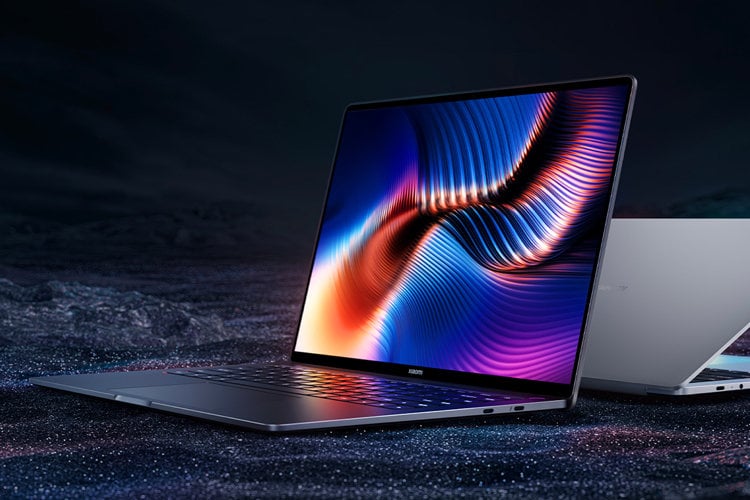
Xiaomi has been expanding its portfolio of products in the Indian market. The company has already launched a few models of the Mi Notebook laptops in the country and is now gearing up to launch new models in India.
According to a new leak, the China-based smartphone giant will bring in more Mi-branded Notebooks in the Indian market later this month. Xiaomi sub-brand Redmi is also working on launching a new laptop in India in the coming weeks.
The company could bring the Mi Laptop Pro that was unveiled earlier this year and is expected to launch in India later this month. However, there’s no information available about the exact launch timeline or the models coming to India.
The Mi Laptop Pro 14 features a 2.5K 120Hz refresh rate 14-inch display with a 16:10 aspect ratio. It packs Intel 11th Generation Core processor, clubbed with a GeForce MX450 graphic card. The laptop supports 100W fast charging support for the 65Whr battery.
On the other hand, the 15-inch model has a better 3.5K OLED display with a 100 percent DCI-P3 color gamut. Its display comes with features like DC dimming, 10.7 billion colors, 600 nits peak brightness, and a 1,000,000:1 contrast ratio.
It is powered by an Intel 11th-Gen Intel Core processor, paired with an NVIDIA GeForce MX450 graphics card. The device packs a 66Whr battery with 100W fast charging support. There’s a possibility that Xiaomi could launch its new gaming laptop. To know for sure which models are coming to India, we will have to wait for a few more days.
The South Korean technology giant Samsung Electronics likely saw a surge of 38 percent for the second quarter of this year, i.e. Q2 2021, thanks to the increased and strong pricing for the chipsets in the market.
Demand for consumer electronics spurred, leading to the high demand for chips, creating a global shortage, leading to price hikes. This, along with recovering investment in data centers has resulted in good operating profit for the firm.
The report coming from Reuters adds that the operating profit for the world’s biggest memory chip and smartphone maker likely jumped to 11.3 trillion won ($10 billion), according to a Refinitiv SmartEstimate drawn from 20 analysts.
Prices of DRAM chips, widely used in servers, mobile phones, and other computing devices, jumped 27 percent compared to the March quarter, while those of NAND flash chips that serve the data storage market rose 8.6 percent, according to research provider Trendforce.
Profit also improved at Samsung’s chip-contract manufacturing and logic chip design business, partly because operations at its storm-hit Texas factory returned to normal. The estimated chip division’s operating profit in April-June rose about 22% from the year-earlier period to about 6.6 trillion won.
However, Samsung’s smartphone shipments dropped to about 59 million in April-June from about 76 million in the first quarter, according to Shinyoung Investment & Securities. Reduced demand from India, hard hit by the pandemic during the quarter, as well as tight supply for some mobile processor chips may also have affected shipments.
The strong performance of Samsung is coming despite the company shipping fewer smartphones than in January-March. This underscores the stratospheric demand for chips that have depleted stockpiles and filled production capacity.
It is said that the result would be up 20 percent from the first quarter and mark Samsung’s highest operating income in the second quarter since 2018 as the revenue is likely to rise by 15.4 percent. Samsung is scheduled to announce preliminary second-quarter results on Wednesday, i.e. 7th July.
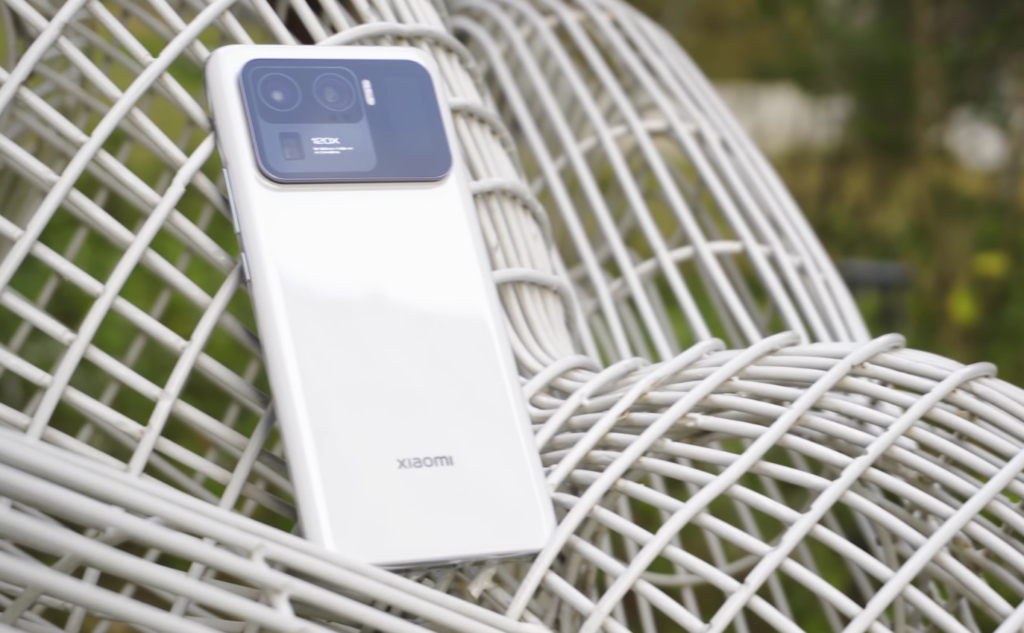
Launched in April, the SuperPhone from Xiaomi dubbed the Mi 11 Ultra was yet to go on sale in India. The primary reason for the delayed sale was the availability. Xiaomi has confirmed that the phone is limited in stock, hence, the company has started registrations for the phone. Today, Xiaomi officially confirmed that the first sale is scheduled for this month.
The Xiaomi Mi 11 Ultra will on its first sale on July 7 in the Indian market. The sale will commence at 12 PM on the official Xiaomi website. The phone is still up for registrations and there are a few offers bundled for those who register for the device. Those with SBI credit cards will get ₹5,000 instant discounts.
Xiaomi Mi 11 Ultra Specifications
The smartphone comes with a mammoth 6.81-inch E4 AMOLED display with a Quad-HD+ resolution. The device boasts a 120Hz screen refresh rate and a DCI-P3 color gamut.
It is powered by the Qualcomm Snapdragon 888 processor paired with 12GB of LPDDR 5 RAM. It also has a 5,000mAh battery with 67W wired and wireless charging support. The phone has an oversized camera island holding a 50MP Samsung GN2 primary sensor, a 48MP ultra-wide lens, and a 48-megapixel periscope camera. It has a 20-megapixel front camera for selfies.
The device has IP68 water and dust resistance rating. It comes with Dolby Vision audio powered by Harman Kardon. It has an under-display fingerprint scanner and face unlock support for security. The phone runs on Android 11 out of the box with MIUI on top of it.
Xiaomi-backed Redmi has established itself as a lifestyle brand and is not limited to smartphones. The company has launched several devices in the market in recent times and is now gearing up to launch a new smartphone.
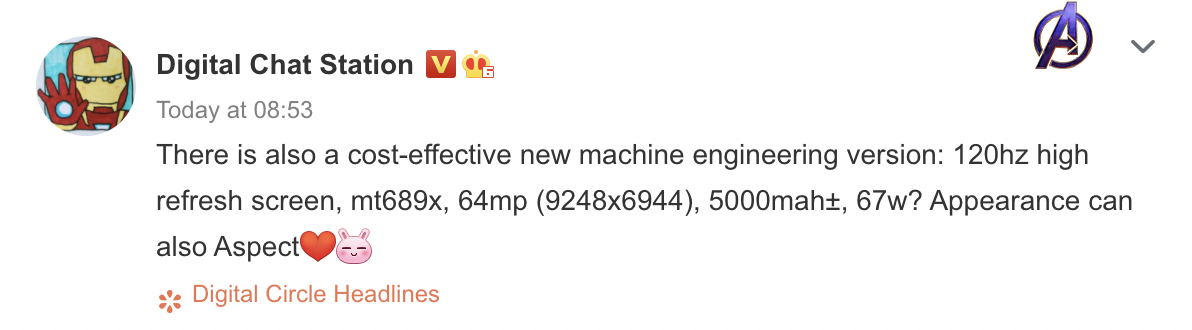
A new report coming from ‘Digital Chat Station’ reveals that the upcoming Redmi smartphone will feature a 120Hz refresh rate for a smoother experience and a 67W fast charging technology support.
Further, it is revealed that the phone will be powered by a 5,000mAh battery and will feature a 64-megapixel primary camera sensor. As for the processor, the device is likely to come packed with MediaTek MT689X chipset.
The MediaTek MT689X processor is based on the 6nm process and features Mali-G77 GPU which is close to Qualcomm‘s Snapdragon 865 and Snapdragon 865 Plus in terms of performance. We expect to get more details about the smartphone in the coming days or weeks, well in advance of its official launch.
The most recent smartphone from the brand is the Redmi Note 10 5G which was released in the month of May. The phone is powered by MediaTek Dimensity 700 SoC, features a 90Hz LCD screen, and packs a 5,000mAh battery, costing 1,099 yuan (~$170).
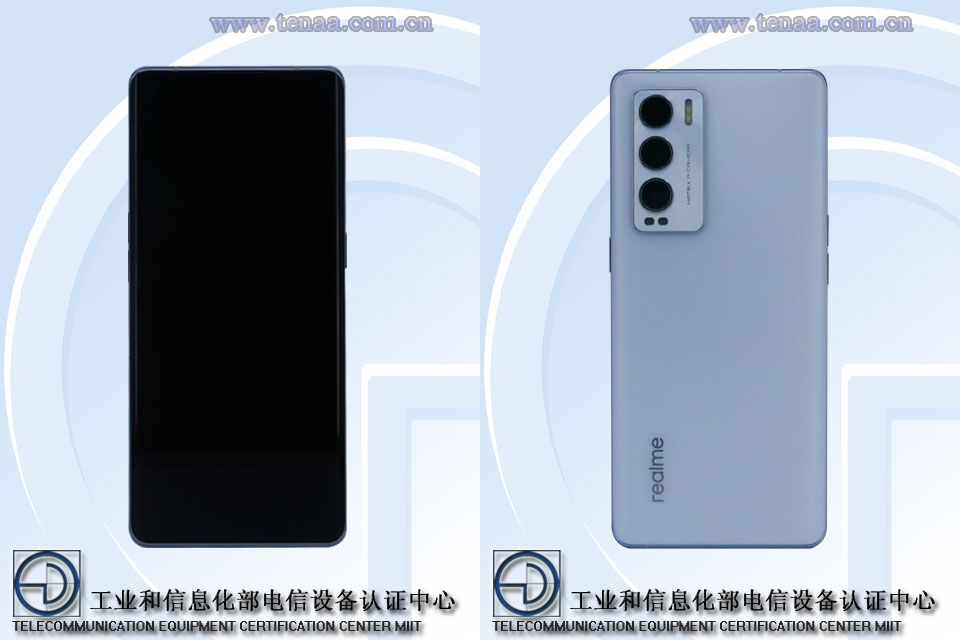
The upcoming Realme GT Master Edition is a very confusing device. In June, a mysterious Realme phone with RMX3366 had appeared in the database of China’s TENAA certification site with images and full specifications. Chinese tipsters have been claiming that this device will be launching in China as the Realme GT Master Edition, and it will be powered by the Snapdragon 870. However, leaked information shared by reliable tipster Steve Hemmerstoffer yesterday claimed that the Realme GT Master Edition will be coming with Snapdragon 778G to Europe. Now, the alleged GT Master Edition has appeared on Geekbench with Snapdragon 870 chip (via).
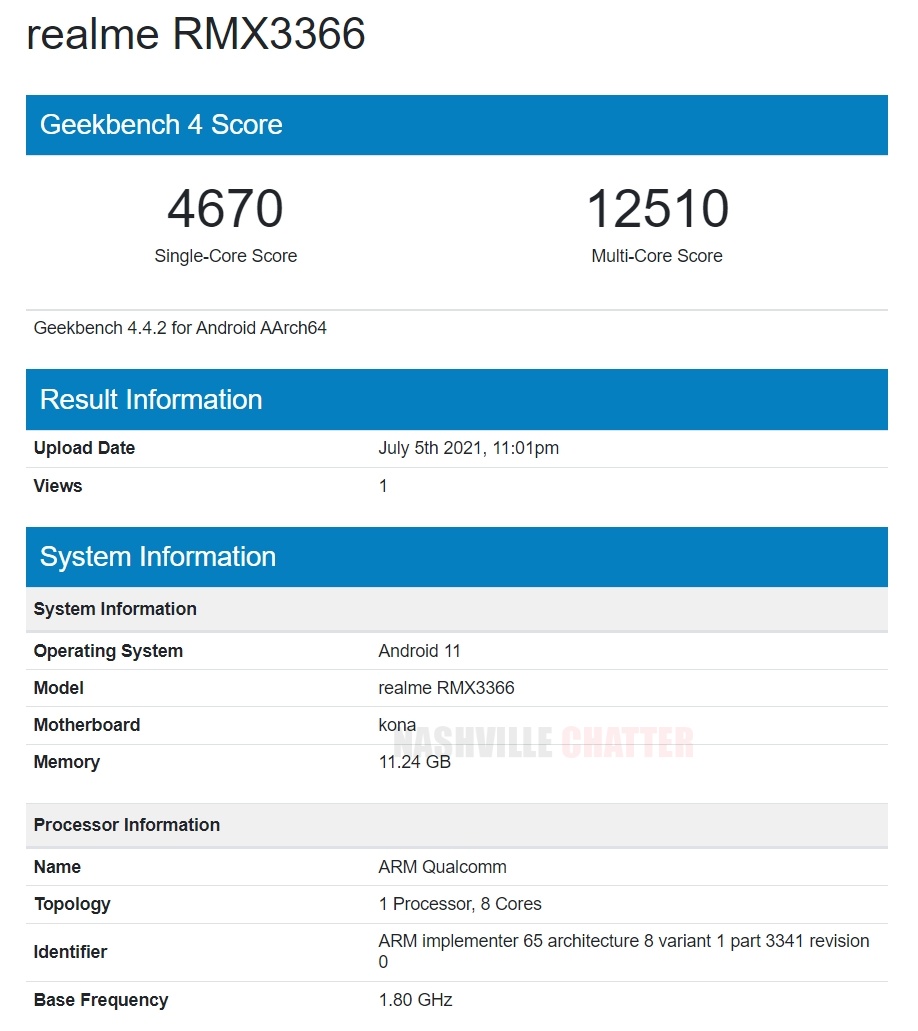
The RMX3366 handset has been with Qualcomm’s octa-core processor that offers a base frequency of 1.80GHz. The TENAA listing of the phone had revealed that its processor offers maximum clocking speeds of 3.2GHz. The speeds suggest that the smartphone is fueled by the Snapdragon 870, and not Snapdragon 778G.
TENAA images of the Realme RMX3366
The SoC is coupled with 12 GB of RAM, and it boots to Android 11 OS. It scored 4670 points in the single-core test of Geekbench 4, and it salvaged 12,510 points in the multi-core test. Here is what a Chinese tipster said about the GT Master Edition leak that claims that it has SD778G SoC.
So, are there are two variants of the Realme GT Master Edition, one featuring the Snapdragon 870 for the Chinese market, and a European variant with Snapdragon 778G? Hemmerstoffer’s leak did not mention whether the Realme GT Master Edition heading to Europe has RMX3366 or a different model number. Hopefully, forthcoming reports will clear out the doubts surrounding the GT Master Edition.
The Samsung Galaxy A03s (SM-A037F) has appeared on the Geekbench benchmarking site (via) with some of the key details of the smartphone. The listing suggests that the company could be internally testing its performance before its official announcement. Speculations are rife that it may go official later this month.
In May, well-known tipster Steve Hemmerstoffer shared the CAD renders of the Galaxy A03s. Earlier this week, the handset was spotted at certification platforms like Bluetooth SIG and the Bureau of Indian Standards (BIS). The Bluetooth certification confirmed that the SM-A037F will be arriving in the market as the Galaxy A03s. And now, the SM-A037F has appeared at Geekbench.
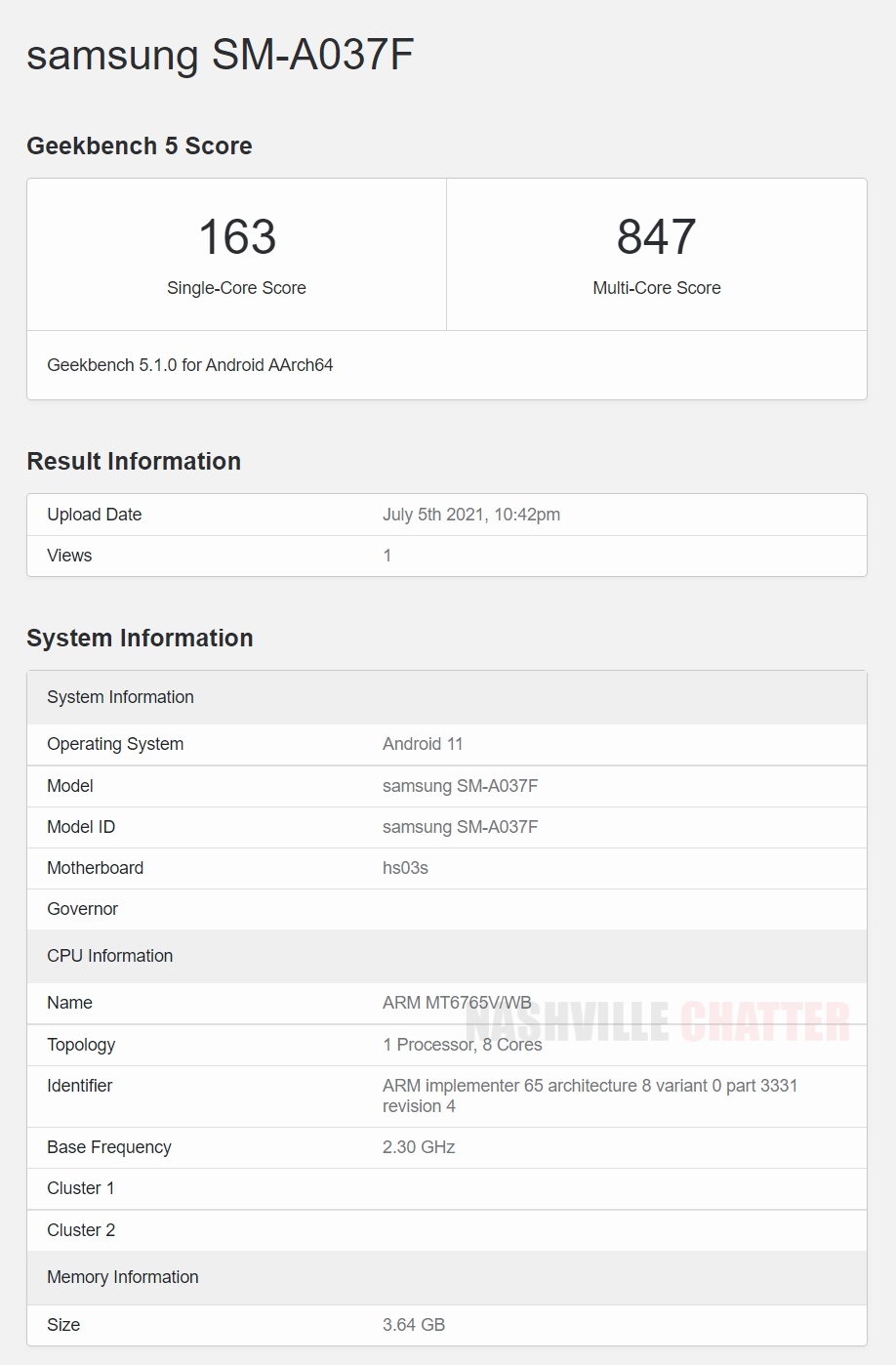
The Geekbench listing reveals that the Galaxy A03s is powered by a MediaTek MT6765V/WB octa-core chip that has a base frequency of 2.30GHz. The model number of the chip makes it clear that the phone is powered by the Helio G35 chip.
The listing further states that the Galaxy A03s has 4 GB of RAM and runs on Android 11 OS. In the single-core and multi-core tests of Geekbench, the handset scored 163 and 847 points, respectively.
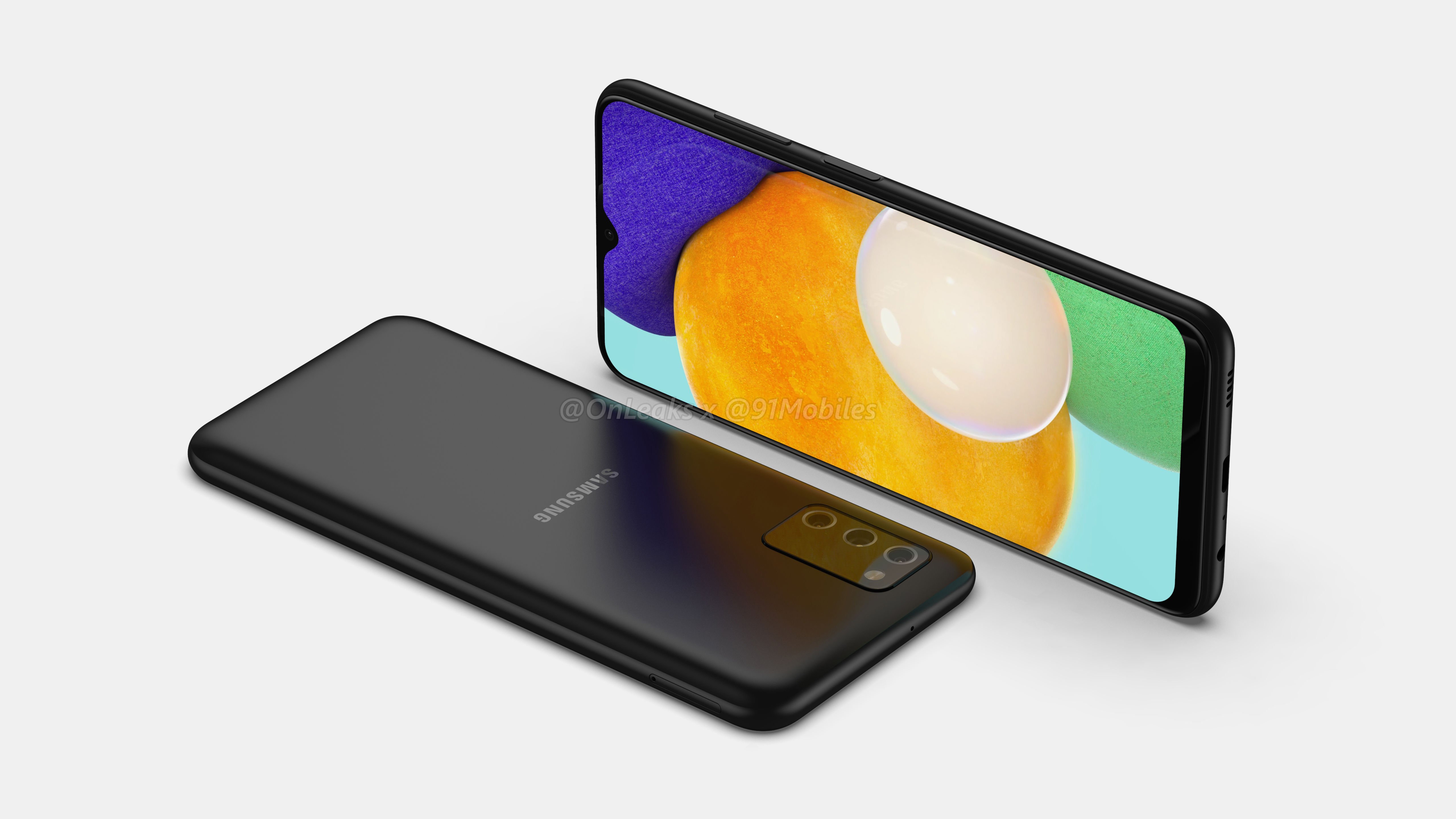
Past reports have revealed that the Galaxy A03ss will be sporting a 6.5-inch IPS LCD panel with a teardrop notch. The display is likely to carry support for an HD+ resolution. For snapping selfies, it likely to feature a 5-megapixel front camera.
Samsung Galaxy A03s CAD renders by OnLeaks/91mobiles
The smartphone may arrive with a triple camera system featuring a 13-megapixel main camera, a 2-megapixel depth sensor, and a 2-megapixel macro lens. There is no word on the battery capacity of the A03s. Probably, it will retain the 5,000mAh battery, which was made available on the predecessor Galaxy A02s. The renders of the phone revealed that it will feature a side-mounted fingerprint scanner. To recollect, the predecessor model lacked a fingerprint sensor.
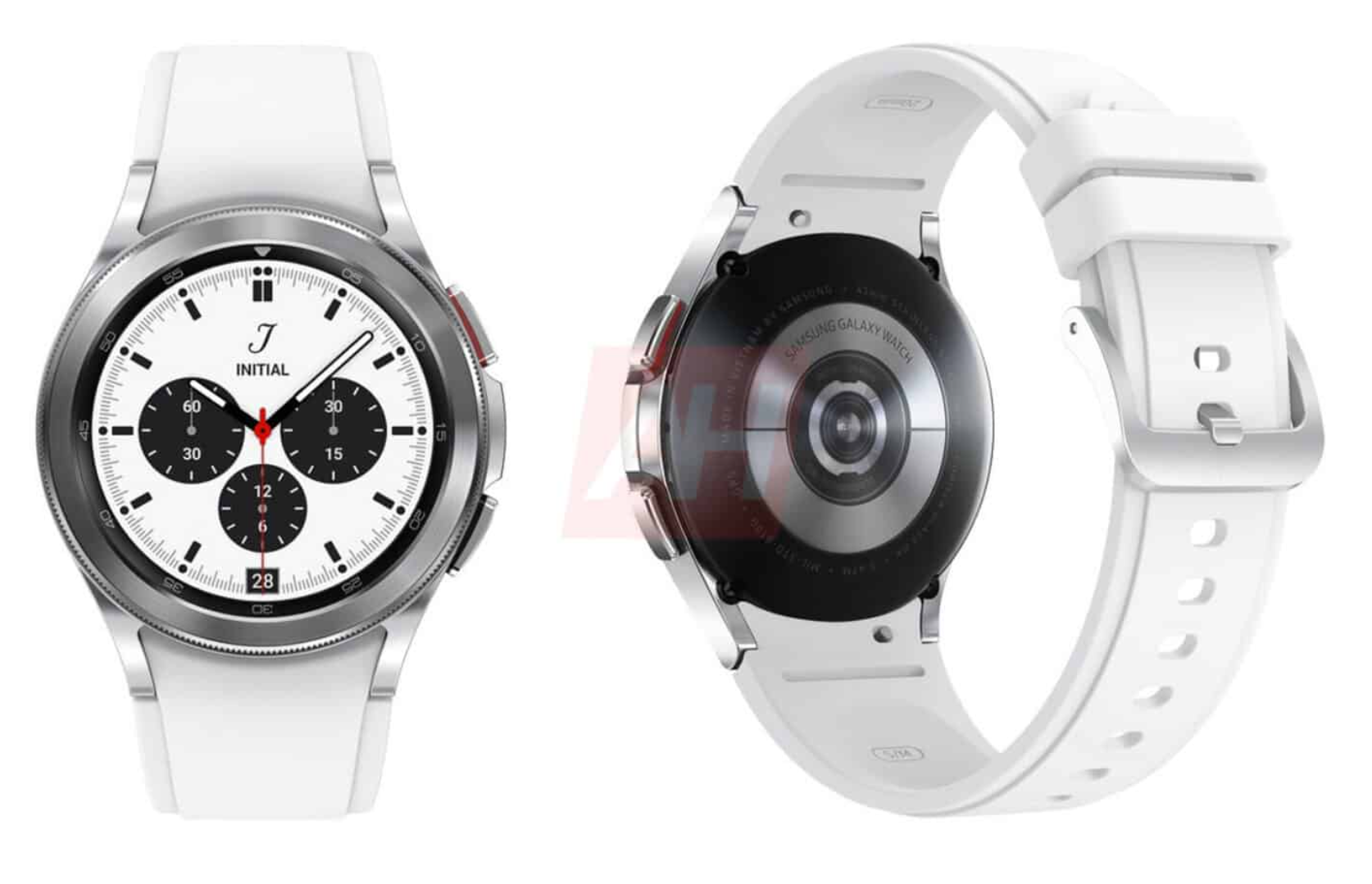
Popular tipster, Evan Blass (@evleaks), has provided a very illuminating video of the Samsung Galaxy Watch 4 Classic, billed for release in August. The 360-degree video confirms much of the predicted specifications of the set of new Samsung smartwatches using the Android-based Wear OS instead of Samsung’s Tizen OS.
Thanks to a combination of leakers and other sources, much of the design, features, and pricing information about the lineup of new Samsung Galaxy smartwatches are already available. The brief video by Evan Blass further highlighted some of these specs while revealing a few more details. The Galaxy Watch 4 Classic video shows a circular super AMOLED display, a rotating bezel, removable silicone straps, and the likely inclusion of an LTE variant of the model. Three color options are available for the Watch 4 Classic are black, silver and white, while two color options are available for the watch cover.
The Galaxy Watch 4 Classic has many functionalities and sensors that make it a health and fitness gem. It has an accelerometer, barometer, gyro,, GPS, heart rate monitor, sleep tracker, and an array of other features. The Venu 3 a 247 mAh battery. The Galaxy Watch 4 Classic also has IP68 dust and water resistance, which is a great feature, especially outdoors. Support for Bluetooth 5.0, Wi-Fi, Qi wireless charging will also be available.
As said earlier, the new Samsung Galaxy Watch 4 lineup will be using Wear OS 3.0, which provides greater functionality and access to apps, In addition, users will have access to more watch faces and an optimized battery performance for the device.
OPPO is known to invest a lot in R&D and a significant percentage is budgeted towards improving its camera technology. These investments have paid off with the Find X3 Pro as proof, as it boasts incredible camera features. Now, a new report has revealed that OPPO’s camera game is about to get even better.
Chinese leaker, Digital Chat Station, revealed via a Weibo post that OPPO is developing its own image signal processor (ISP) in a bid to improve the camera performance of its phones.
This move follows in the footsteps of Xiaomi who unveiled its own ISP, the Surge C1, this year. The Surge C1 made its debut in the company’s first foldable phone, the Mi MIX Fold.
There isn’t a lot of information about OPPO’s ISP including when we should expect to see it. While it may appear first in the Find X4 series (or Find X5), we won’t be surprised to see it also make its way into a OnePlus phone. Both companies have merged, and OnePlus, which will now operate as a sub-brand going forward will have access to OPPO’s resources and technologies.
An unconfirmed report from a few days ago revealed that OnePlus will now be one of OPPO’s flagship lines. It will be positioned in a similar fashion to Huawei’s P series and will also focus on offering high-end camera performance. Considering that 10 is the next number in OnePlus’s naming scheme, we can expect significant upgrades when the OnePlus 10 series arrives next year.
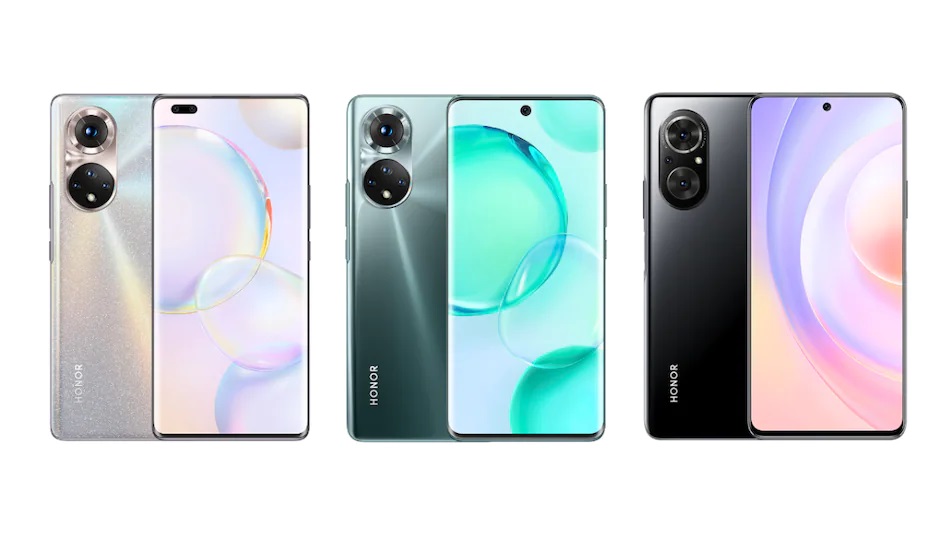
Honor recently launched the first phones after the separation from Huawei. The Honor 50 series is currently composed of three models: Honor 50, Honor 50 Pro, and Honor 50 SE. They are the first after the ban which will come in the global market with Google Mobile Services and Play Store out of the box since Honor is no longer under Huawei. Despite there is a Pro version in the trio, all of these devices are mid-rangers. That is why there is a lot of confusion around their specifications. This comparison between the new devices will hopefully make things clear.
Honor 50 vs Honor 50 SE vs Honor 50 Pro
Honor 50
Honor 50 SE
Honor 50 Pro
DIMENSIONS AND WEIGHT
160 x 73.8 x 7.7 mm, 175 grams
164.7 x 75.6 x 8 mm, 191 grams
163.5 x 74.7 x 8 mm, 187 grams
DISPLAY
6.57 inches, 1080 x 2340p (Full HD+), OLED
6.78 inches, 1080 x 2388p (Full HD+), LTPS IPS LCD
The Honor 50 Pro (on the left) is the handset with the highest screen-to-body ratio and the most beautiful one. It has an amazing finish for the rear side which you can rarely find on midrange phones. The pill-shaped dual punch hole is not the max in terms of beauty, but for the rest, the Pro variant is definitely more attractive. With the vanilla Honor 50, you can get a more compact design, as well as a thinner and lighter body. That is why it remains very interesting.
Display
The best displays belong to the vanilla Honor 50 and its Pro variant. We are talking about OLED panels which can show up to one billion colors with a 120 Hz refresh rate and a Full HD+ resolution. The only important difference between these two panels is the diagonal: the vanilla version is 6.57 inches, while the Pro version is 6.72 inches. The Honor 50 SE has an even wider 6.78-inch display, but it is an IPS panel that is way inferior compared to its two internal rivals.
Hardware/Software
The Honor 50 and the Honor 50 Pro come with the same hardware department including a Snapdragon 778G mobile platform, up to 256 GB of internal storage, and up to 8 GB of RAM. It is an upper-midrange hardware department which is great for every scenario, but it is still far from flagships. Honor 50 SE is an upper-midrange phone too, but its Dimensity 900 chipset is slightly inferior to the Snapdragon 778G. The memory configurations are the same. The phones run Android 11 customized by Magic UI with Google Mobile Services out of the box for the global market.
Camera
Honor 50, 50 Pro, and 50 SE all come with a 108 MP main camera paired with an 8 MP ultrawide sensor and a 2 MP macro camera. With the Honor 50 and 50 Pro, you also get an additional 2 MP depth sensor which is not present on the SE variant. They are midrange camera phones. The Honor 50 Pro has a better front camera department including a 32 MP main camera and an ultrawide sensor with a 12 MP resolution: the front department is the reason why it wins the camera comparison.
Battery
With the vanilla Honor 50, you can get a bigger battery with a 4300 mAh capacity and a longer battery life, while Honor 50 Pro supports faster charging with a power of 100W.
Honor 50 vs Honor 50 SE vs Honor 50 Pro: Price
For now, the Honor 50 series is only available in Asia. The vanilla version starts at about $555/€470, Honor 50 SE begins at $369/€310, and Honor 50 Pro costs $689/€580 in its base variant. There are only marginal differences between Honor 50 and 50 Pro: despite the latter has faster charging and better front cameras, I would go for the vanilla version due to its bigger battery. Which one would you pick?
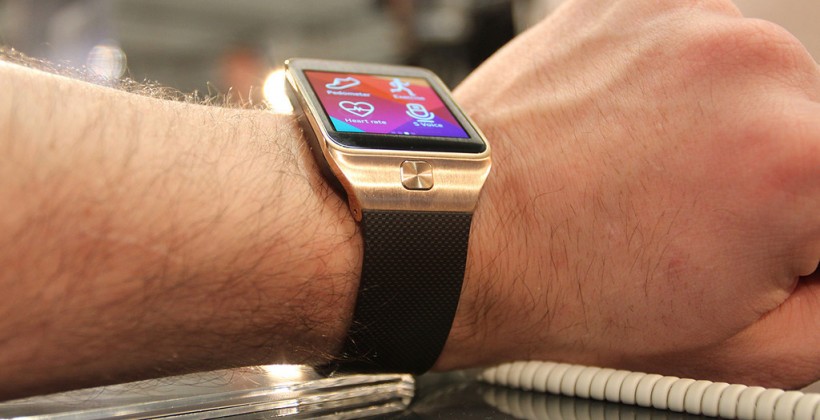
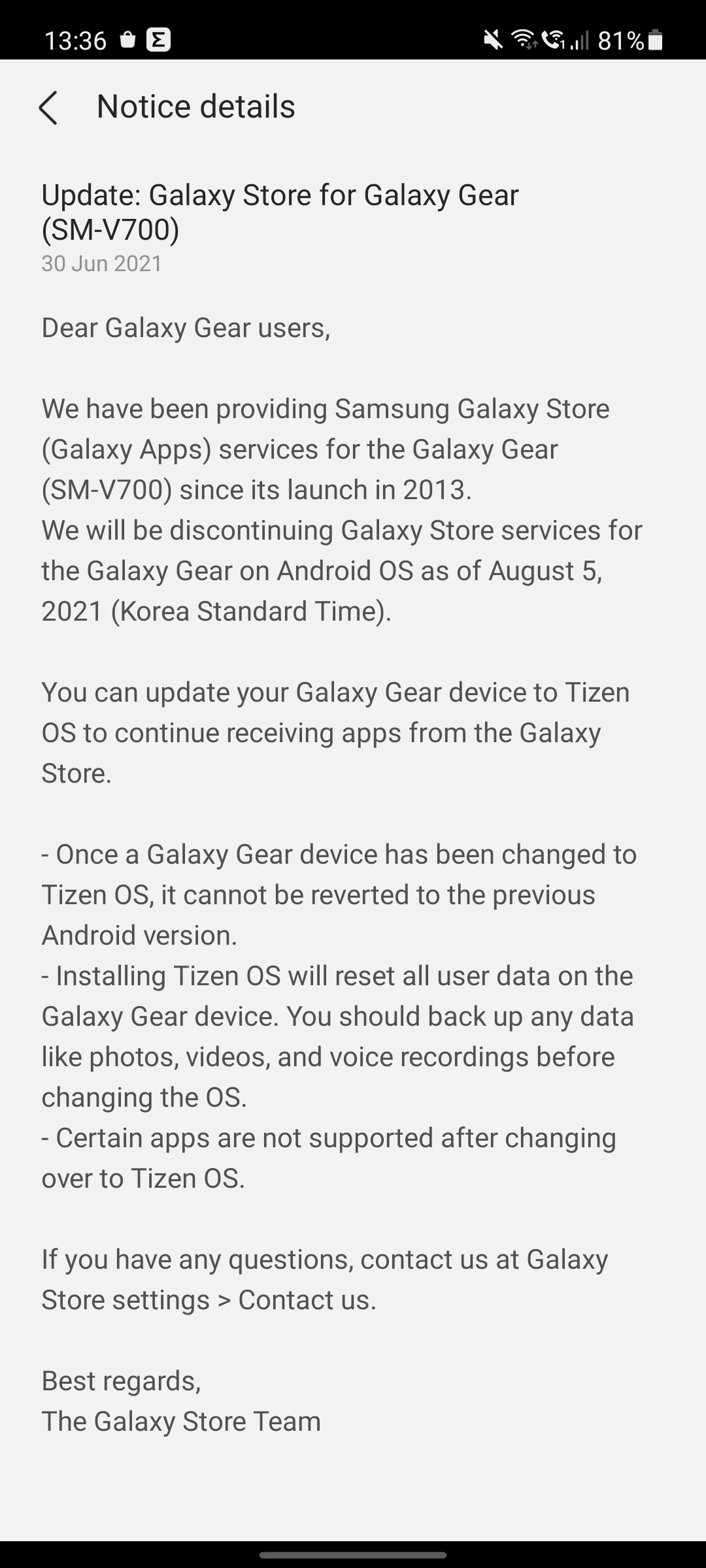
Samsung unveiled the Galaxy Gear smartwatch in 2013 as an Android-based smartwatch. The Korean tech giant later switched to its own Tizen OS but still retained the Galaxy Gear on Android. As the company prepares to switch back to Android with the Wear OS, it has advised Galaxy Gear owners to upgrade to Tizen OS by August 5 to continue having access to the Galaxy Store.
Samsung will switch to the Android operating system for its smartwatches later this year. The Wear OS will power the Galaxy Watch 4 and the Galaxy Watch 4 Active instead of Tizen OS. The Android-based Wear OS means that the devices will have wider access to apps via the Galaxy Store, unlike Tizen OS. Samsung is also saying that there will be no switch from Tizen to Wear OS for smartwatches that the Tizen OS currently powers.
Although there are likely only a few Gear watch owners, the fact that Samsung is making the announcement indicates their presence. Existing Galaxy Gear watch owners can only continue to enjoy support from Samsung if they upgrade to Tizen OS by the August 5 date (Korean Standard Time). In order not to encounter a total loss of saved data in the form of videos, images, and other content, Gear watch owners are encouraged to back up their data before upgrading to Tizen OS. The Gear watch device will be reset upon completion of the upgrade, and all pre-upgrade data will be wiped off.
However, it seems counter-intuitive that the Gear watch OS is being upgraded from Android to Tizen, while Samsung is already switching back to Android via the Wear OS. The upgraded Samsung Galaxy Watch will only have access to a limited number of apps compared with the Android-based smartwatches.
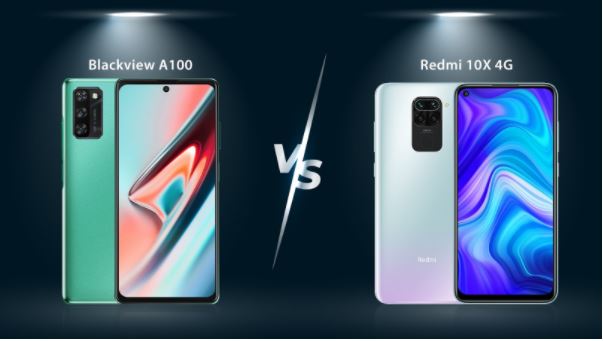
If we’re told to pick the best budget devices out there, two of the devices stand out particularly due to their competitive specs. They’re nothing but, the Blackview and Redmi 10X 4G. Perhaps the two close rivals share similar specs and are equally eligible for the best affordable device crown. Nonetheless, let’s have a deeper look and see if one has an edge over the other or not.
As said, the Redmi 10X 4G and Blackview A100 share similar features. For instance, both of them come with 6GB RAM, 128GB ROM, slim profile, lightweight and priced roughly $200 or less. But what about their difference?
Blackview A100 vs Redmi 10X 4G
Camera
Autofocus: Dual Pixel vs PDAF
We found a notable difference between Blackview A100 and Redmi 10X 4G in the autofocus ability. Blackview A100 boasts Dual Pixel AF, and Redmi 10X 4G features PDAF (Phase Detection Autofocus). For the unversed, Dual Pixel AF is an advanced technology over PDAF, delivering a greater ability to maintain focus on fast-moving objects. Therefore, in most cases, whether the subject is moving or you’re moving, Dual Pixel AF allows you to capture every split second while maintaining uncompromising quality.
Dual Pixel technology is employed mostly in flagship smartphones. Blackview being a budget phone and having the advanced autofocus is indeed a leg up. Not only the Dual Pixel, but the presence of VCM ((Voice Coil Motor) system in the Blackview makes it more stable. Due to the closed-loop VCM, the stills taken with A100 should deliver a much faster focusing speed and shake compensation.
Megapixel Count and Pixel Size Comparison
A higher megapixel doesn’t guarantee better picture quality. The case is similar higher. Although the Redmi 10X 4G features a higher 48MP rear camera with the Samsung GM1 sensor, the 12 MP Sony IMX362 sensor on Blackview A100 is proven to output better picture quality.
According to the expert opinion, the GM1 in the Redmi phone is a 48MP image sensor but with 12M output, and its pixel size is just 0.8µm. The GM1 with Tetrapixel technology mimics big pixels to take brighter pictures by adopting Quad Bayer pixel arrangement, which can combine four 0.8μm pixels into one by four-in-one pixel technology.
Meanwhile, Blackview A100 with Sony IMX362 sensor features actual 1.4µm large pixels, which absorb more light and information about that light than smaller pixels to deliver pictures with more accuracy and fine details.
Besides, in order to bring more clarity to your photos and videos, Blackview A100 supports HDR. It is not a simple task for a phone to perform well in both photography and videography. Blackview A100’s HDR works not only with photos but also works with videos. This is a great feature that most affordable phones do not support.
Display
The Blackview A100 has a larger 6.67″ 1080*2400 FHD+ display compared to the Redmi phone’s 6.53″ 2340 x 1080 FHD+ display. And according to the internal testing, Blackview A100 outputs maximum peak brightness than the Redmi contender.
On top of that, the Blackview adopts a more modern punch-hole display technology, providing an immersive experience. So, in the display department, again the A100 scores.
Build Quality, Design and Appearance
The Blackview has a side-mounted fingerprint, making the rear side clean and professional. Blackview A100’s back cover adopts similar technology to that of OPPO’s crystal diamond processing, making it shine in different angles as the light interferes.
Unlike Redmi 10X 4G, Blackview A100’s back cover is smooth and not at all a fingerprint magnet. Nowadays, there is no point in discussing the front display appearance of the devices as they’re identical with the display extending to the edges.
In terms of overall design and aesthetics, the Blackview puts the Redmi in the back row.
To Conclude
In the comparison we did, clearly, you can infer that the Blackview A100 outperforms the Redmi counterpart and even other popular budget phones in multiple aspects. It feels a generation ahead by combining powerful cameras with attractive and practical design. Significantly, Blackview A100 is now available at just $139.99, making it way affordable and the best choice than the competition.
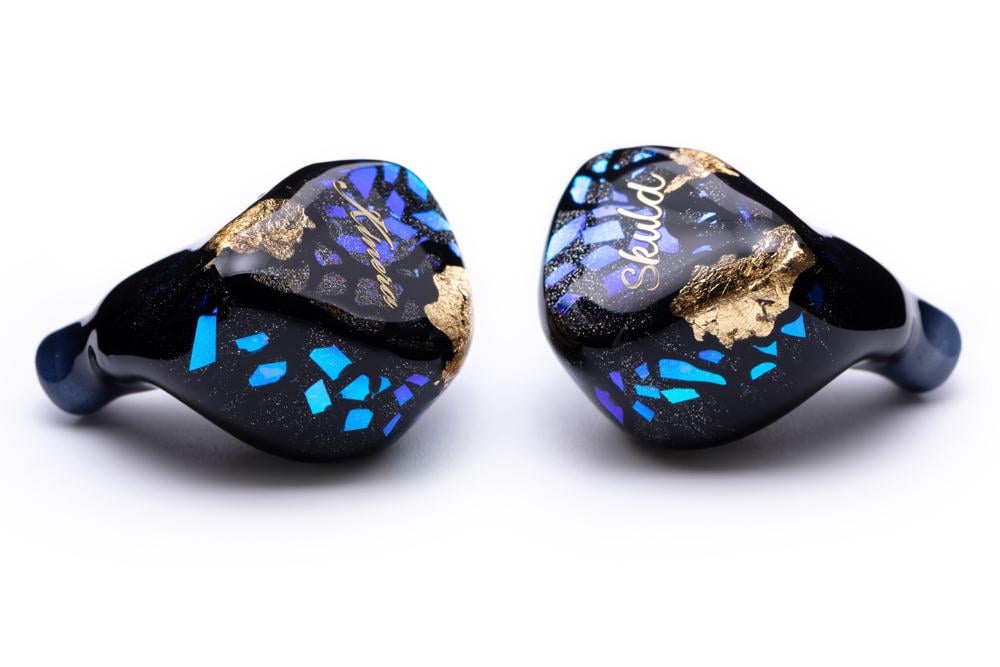
If you’re looking for some hand-designed IEM, then you should look after Kinera Skuld In-ear Monitors with a beautifully designed outer shell. The company introduced handcrafted IEM with some thrilling features. The whole lineup has different IEM sets including the Baldr, Freya, Norn, etc with similar good-looking designs. Kinera follows the Norse Mythology characters while naming their IEMs.
The latest Kinera Skuld houses five BA drivers per side including 3x Knowles BA Drivers and two Kinera’s customized BA Units to offer premium and rich acoustics. The ergonomic cavity design enhances the comfort while the 0.78mm 2-pin Silver-Plated Copper balanced 4.4mm cable removes any disturbance. It offers smooth and natural sound tuning.
Kinera Skuld offers 23 ohms impedance with sensitivity 120+/-2dB. Its rated power usage is around 2mW and frequency response ranges between 5Hz-50kHz.
Design Inspiration
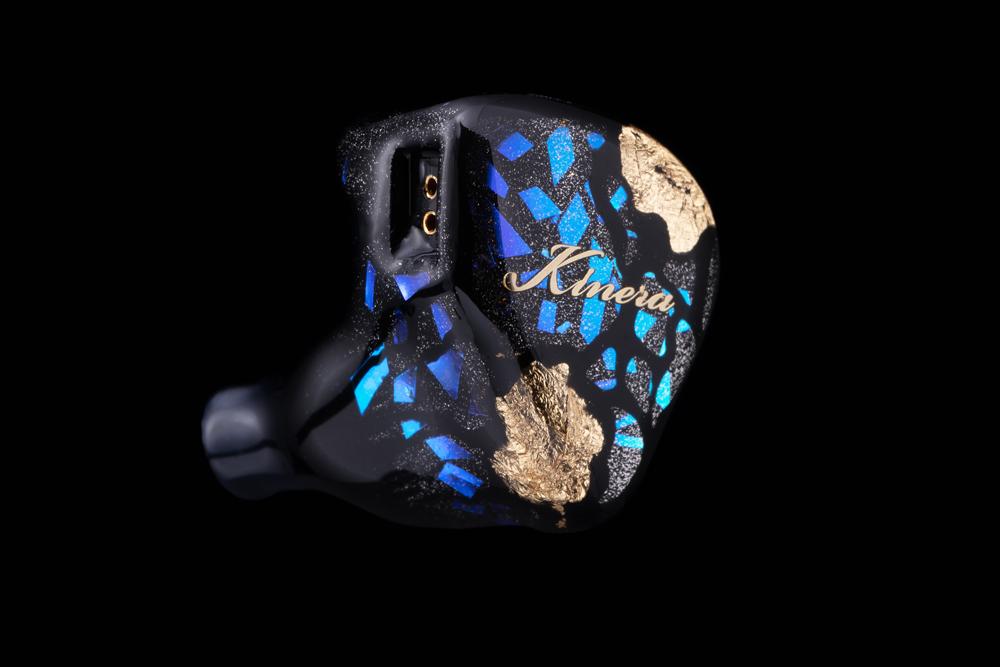
Apart from the notable hardware specification, the Kinera Skuld’s roots point to Norse Mythology. However, the Skuld resembles Norn – youngest among the three sisters of fate also resembles the Goddess of the future. However, the designer has effectively depicted the futuristic color theme and design on the IEM cavities.
The exceptional hand-painted cavities enrich the IEMs overall design. The primary black is well minted along with blue and green colors having the polarising effect. The shining silver optical particles offer a lustrous look on the cavities. It is the most beautiful Kinera IEM in the whole lineup.
Ergonomic Shape
Kinera Skuld follows an ergonomic shape for a natural and comfortable grip that fits in every ear. Better noise cancellations are further enhanced by their natural shape. The lightweight Kinera Skuld is a perfect choice to intensity the music experience.
Cooper balanced Cable Silver-Plated Cable.
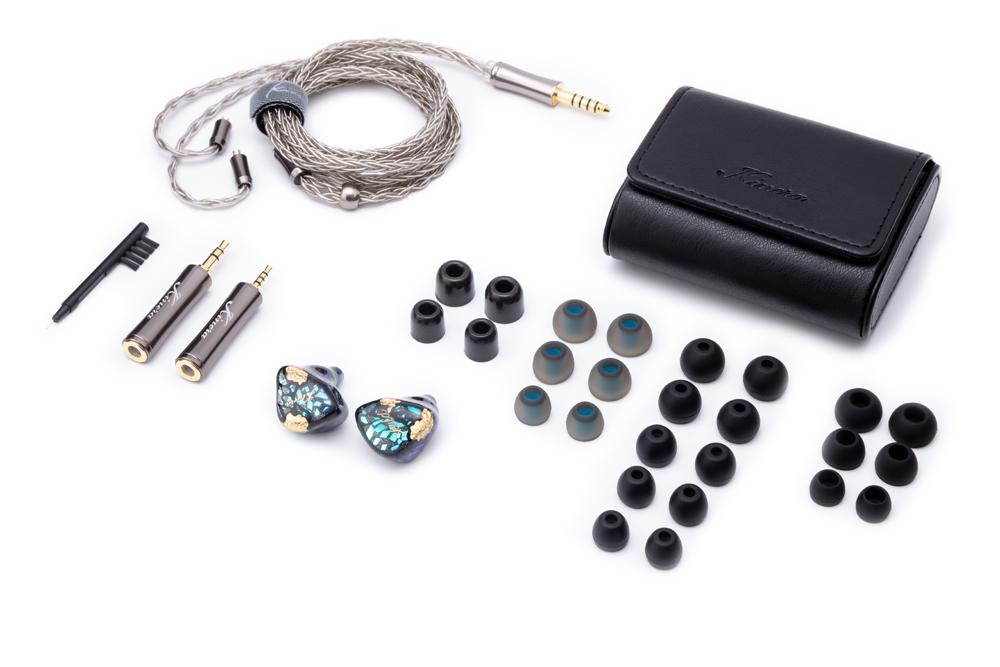
The IEMs ship with high-quality silver-plated copper cable coupled with a 4.4mm plug. There are around 24 strands per wire, 8 manual braided cores and 192 strands per cable along with outstanding PVC insulation to reduce chance of wear and tear. It high-quality cable aids in better sound, deeper bass, and better mid and high-frequency response.
Premium Accessories
Kinera Skuld bundles a premium set of accessories consisting of 4.4mm-3.5mm and 4.4mm-2.5mm adapters. It also houses Type-E ear tips including silicone and foam ear tips.
Pricing
Kinera Skuld is retailing for the price of $550 from the HiFiGo store.
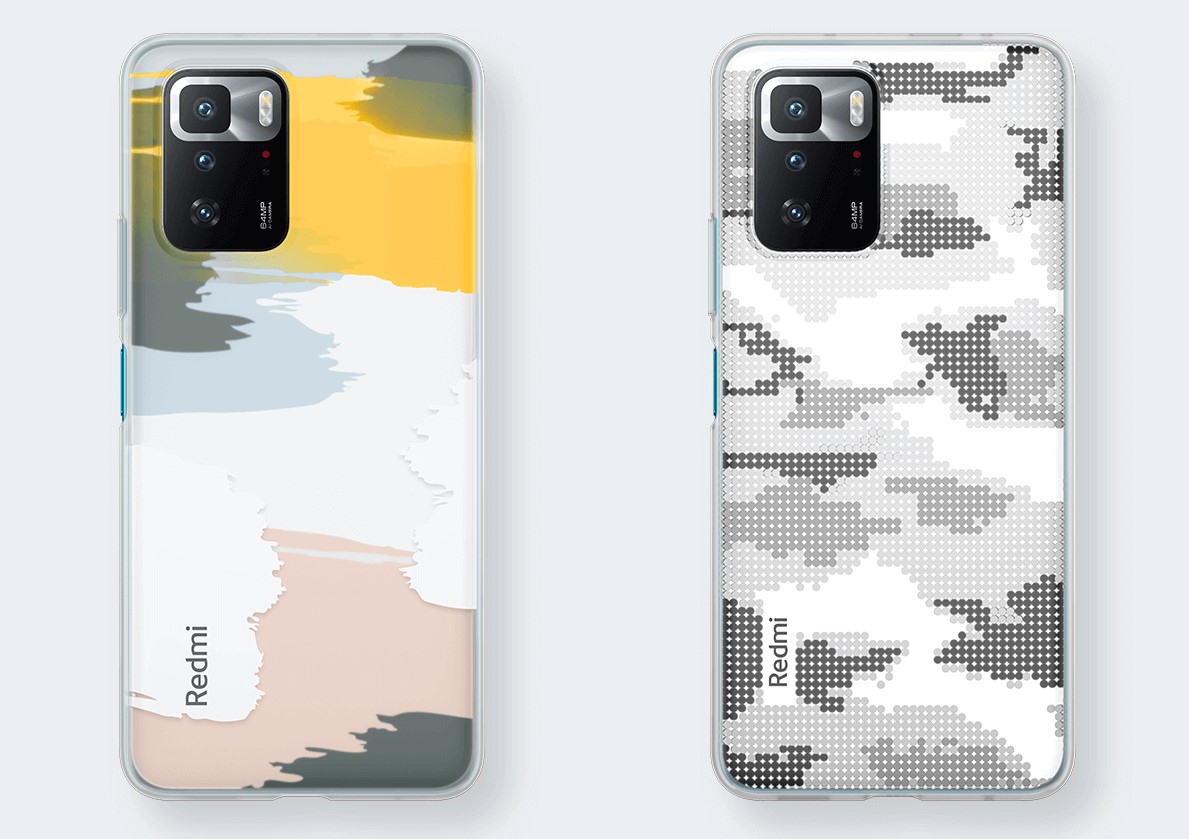
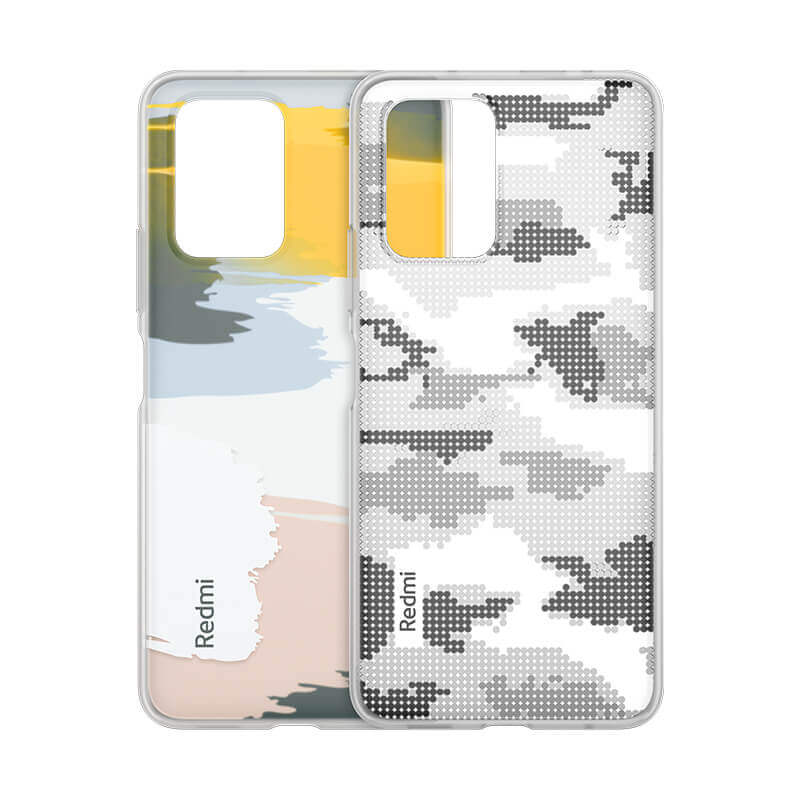
The Redmi Note 10 Pro 5G was announced in China in May and the phone packs some pretty impressive features, some of which are found on flagship phones. If you have picked up a unit and want to style up your device, Xiaomi has announced two new cases that are not only functional but aesthetically pleasing too.
The Redmi Note 10 Pro 5G Creative Case as it is officially called comes in two options. One is inspired by impressionist art while the other takes its inspiration from 8-bit retro games. They both feature a double-texture finish and are made from TPU and PET.
The cases are priced at ¥69 (~$11) per piece and are available on Xiaomi’s official website.
1 of 2
The Redmi Note 10 Pro 5G has a 6.6-inch FHD+ LCD screen with a centered punch hole, a 120Hz refresh rate, and Gorilla Glass Victus protection. It has a Dimensity 1100 processor under its hood and it is paired with up to 8GB of RAM and 256GB of non-expandable storage.
On the back is a 64MP triple camera setup that includes an 8MP ultrawide angle camera and a 2MP macro camera. A 16MP camera sits in front. The Redmi Note 10 Pro 5G has a side-mounted fingerprint scanner, Bluetooth 5.2, NFC, and JBL stereo speakers with Dolby Atmos. It is powered by a 5000mAh battery, supports 67W fast charging, and runs Android 11 out of the box.
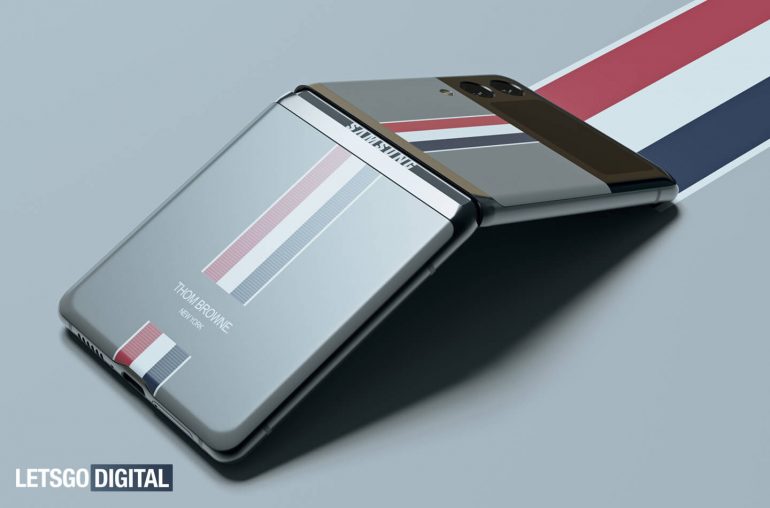
Ahead of Samsung’s Galaxy Unpacked event slated for August 2021, speculations have trailed the possible lineup of devices to be unveiled at the event. Much of the hype has been around some of Samsung’s impending foldable display models like the Galaxy Z Flip 3.
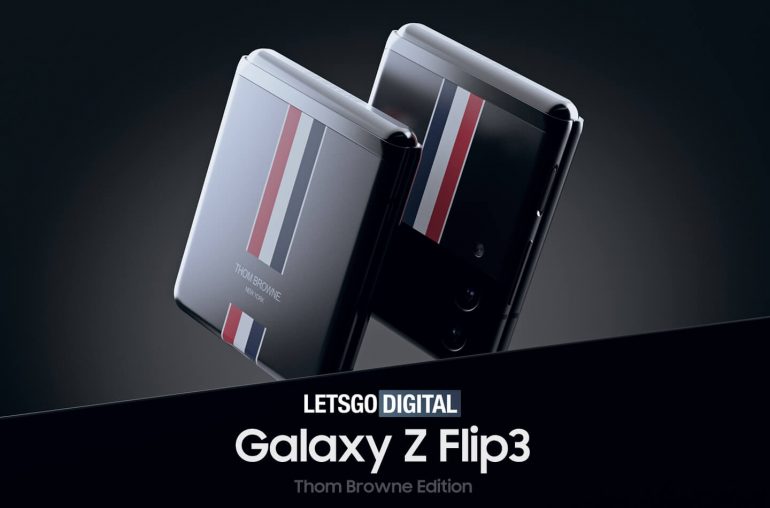
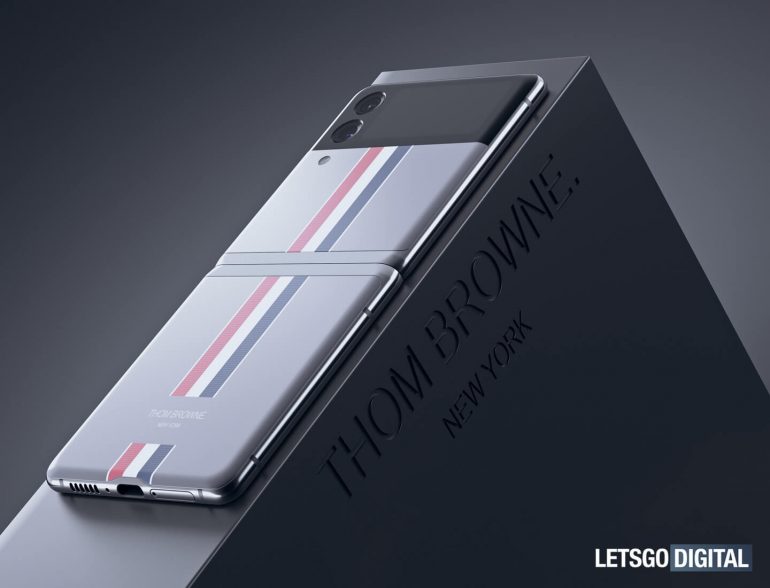
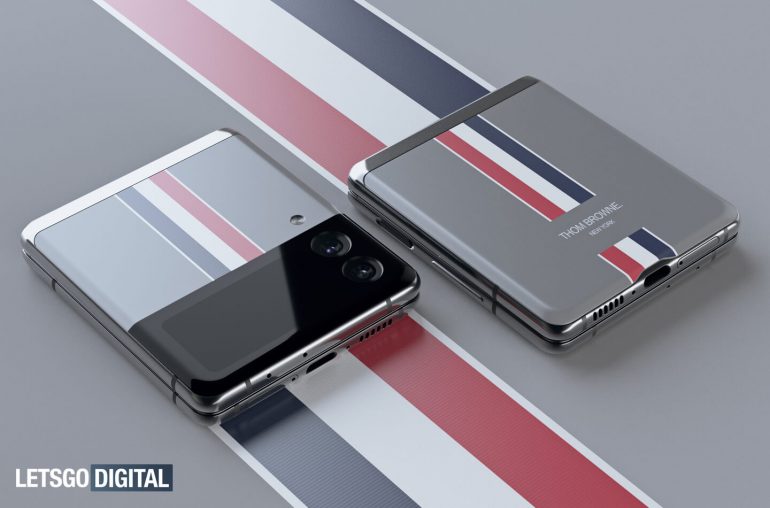
Some very impressive renders of the Samsung Galaxy Z Flip 3 have now surfaced, and they are indeed very enchanting. American designer Thom Browne has had a strong relationship with Samsung. Both the Galaxy Z Flip and Z Fold 2 from last year had customized Thom Browne editions. It seems that it will extend to the Galaxy Z Flip 3, which sports a foldable display setup. LetsGoDigital reported the stunning renders, and the Z Flip 3 was adorned with a tri-color stripe on both the front and rear of the smartphone.
The Thom Browne concept images of the Samsung Galaxy Fold 3 provided sufficient confirmation of much of the rumored specifications of the device. The renders reflect a visible dual-camera setup, a larger OLED display, LED flash, a side-mounted fingerprint module, and its USB-C port, among other visual features. As per earlier specs of the Galaxy Z Flip 3, it runs on Qualcomm’s Snapdragon 888 chipset, with 8GB of RAM and 256GB of internal storage.
The Z Flip 3 will come with Android 11 and One User Interface (UI 3.1.1), a 10MP selfie camera, and a 12MP dual-camera, together with a foldable super AMOLED Infinity-O display. The Samsung Galaxy Z Flip 3 will also feature all the basic wireless and connectivity components like Wi-Fi 6, Bluetooth version 5.0, NFC, as well as a 3,300 mAh battery with wired 15W charging support, and possibly IPX7 rating for dust and water resistance.
We do not have a definitive price for the Samsung Galaxy Z Flip 3 yet, but industry watchers predict that it could be cheaper than its predecessor. While we await the August Galaxy Unpacked event, more details, including specifics about the pricing and possible rollout plans, could surface in the coming days and weeks.
Sony announced last week that it will unveil a new camera on Wednesday, July 7. Unfortunately, that will no longer be happening.
The Sony Camera official YouTube channel uploaded a short video today announcing that the announcement has been postponed. No reason was given for the decision, though they did say that a new date will be announced soon.
The original poster for the launch had a caption that read “capture more of your world”. The new camera is expected to launch under the Alpha series and there are rumors it will be the Alpha 7 IV, a successor to the Alpha 7 III released back in 2018.
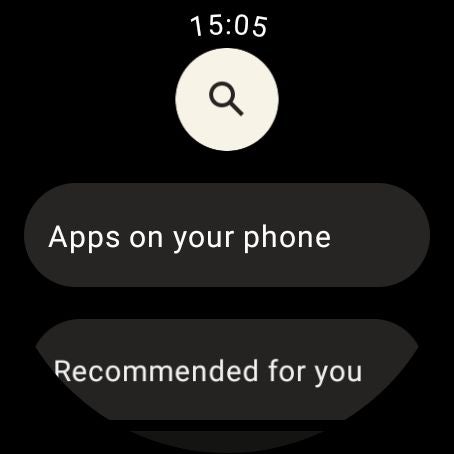
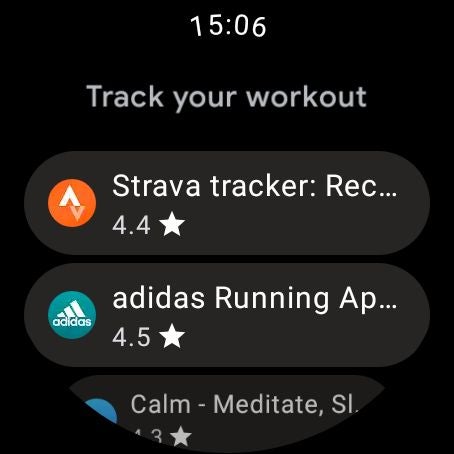
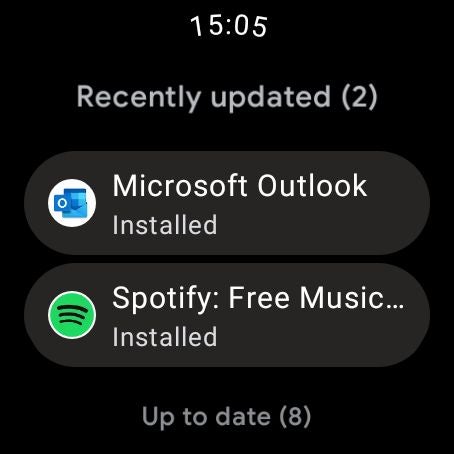
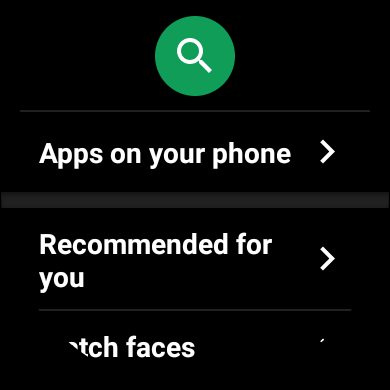
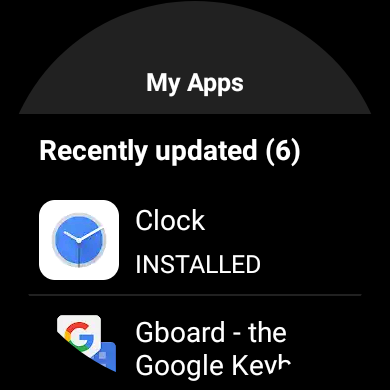
Google has partnered with Samsung to develop a new operating system borne from the fusion of Wear OS and Tizen. While we still don’t know the official name of the new wearable operating system, it is expected to make its debut when the Galaxy Watch 4 series launches. Ahead of their arrival, Google has begun rolling out a design update to the Play Store app for smartwatches.
Info about the new interface was first shared by a user on Reddit and reported first by 9to5Google. The Reddit user who goes by Suunto 7 shared screenshots showing the differences between the old and new interface.
Google has ditched the rectangular blocks for a pill-shaped one that looks nicer. The app icons have also been redesigned. Not only are they smaller but they have ditched the squircle shape for a circle. The font size has also been reduced and the search icon has also been changed from green to white. These changes make the UI look more cleaner and suited for small displays.
At the moment, this seems to be the only report of an update. Google is most likely doing a test rollout, and once there are no critical bugs, we should see a wider rollout.
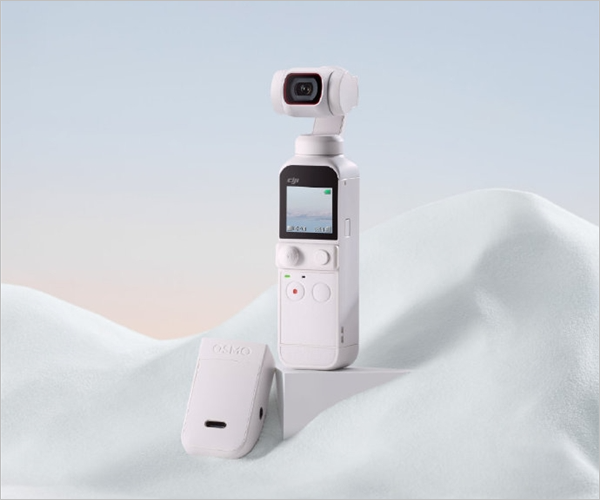
In November last year, DJI Innovations unveiled its smallest handheld camera gimbal – the DJI Pocket 2. The company is now set to release another version of this portable gimbal. The upcoming version will sport a white paint job and will be unveiled in China at 9:30 a.m. on July 8.
An official poster of the Pocket 2 White version has been shared by the company. The picture shows clearly that the white version is way more attractive than its black counterpart despite the two having entirely the same design. The product will likely be very popular with female folks.
Apart from the new white coating, this version is similar in all aspects to the black-colored Pocket 2. t retains the compact and portable design of the black version. As a reminder, the Pocket 2 has an overall dimension of 124.7X38.1X30mm and weighs only 117g. It has a built-in 875mAh lithium-ion battery. Under 1080P video shooting, the battery can last up to 140 minutes which is super impressive.
The device adopts DJI’s advanced gimbal stabilization technology. This allows users to hold it with one hand without fear of shaking and with a guarantee of a stable video shoot. At the same time, the hybrid focus 2.0 technology is fully upgraded to support 8x zoom, and you can shoot details without being close to the subject.
The Pocket 2 is equipped with the Sony IMX686 sensor that is found on flagship phones. The camera has a 64MP sensor with 1/1.7 inches pixel size, and supports 4K/60fps video.
We expect the company to retain the pricing of the Black variant on this White version. The pricing starts at $349 white the Pocket 2 Creator Combo with more accessories is priced at $499.
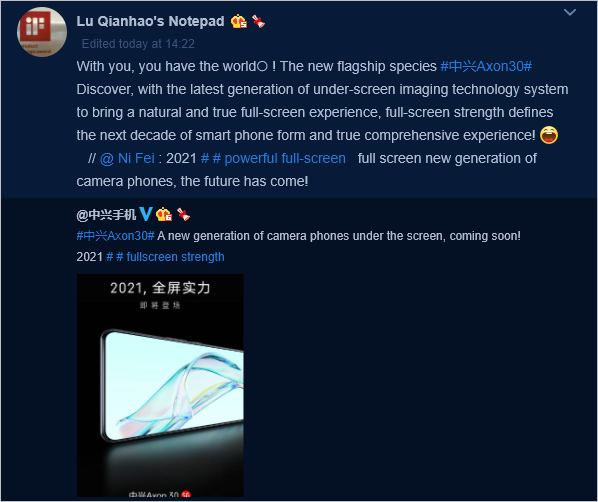
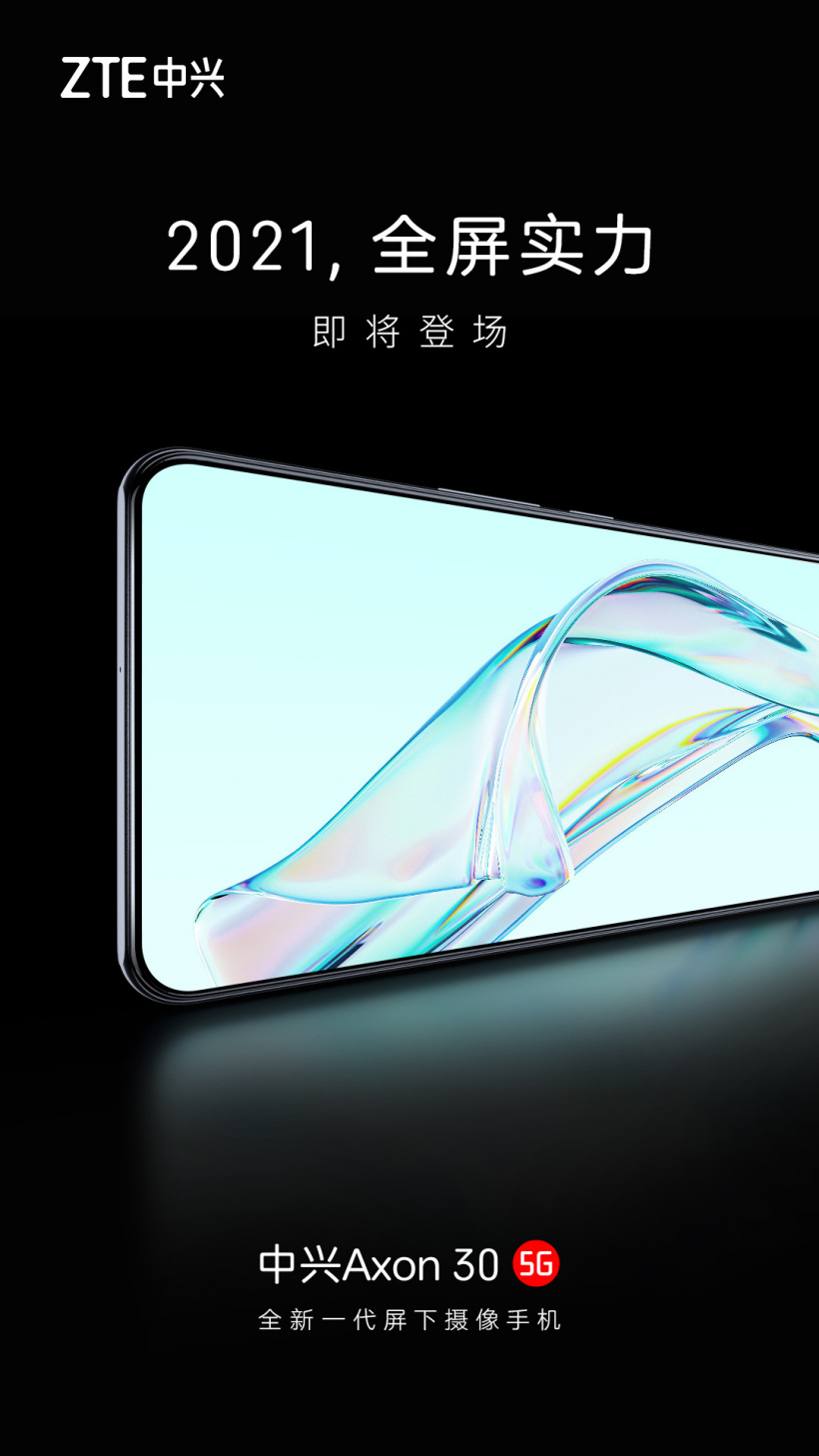
ZTE first launched the under-screen camera technology last year onboard the Axon 20 5G Extreme Edition. The Chinese company is expected to launch its second-generation under-screen camera technology this year stuffed inside the Axon 30 series. There have been several rumors surrounding the Axon 30 series but ZTE has now released an official teaser poster that suggests the launch is imminent.
Apart from the imminent launch that the poster suggests, it also contains a render of the device, giving us a clue of what to expect. The teaser poster confirms that the Axon 30 series will feature a full-screen design without any notch or hole punch. In other words, the device will indeed feature ZTE’s next-gen under-screen camera technology. The selfie camera is under the display, giving the device an almost 100% screen-to-body ratio.
Judging from the pictures released by ZTE, the appearance of the lower version of Axon 30 is indeed very high. Without a notch or cut-out, the visual effect of the display is topnotch. Phone enthusiasts who are fans of a completely symmetrical design will find this very appealing. This should be the closest we’ve seen to a bezel-less smartphone.
In addition to the under-screen camera technology, the Axon 30 may also be the world’s first device to get a 20GB RAM version. ZTE executive, Lu Qianhao recently hinted at a 20GB RAM phone from the Chinese brand. However, we can’t say for sure if this will be onboard the Axon 30.
In addition, a new ZTE model with model number ZTE A2322 received network certification recently. The listing showed that the device will come with a standard 55W fast charging charger. This is also expected to be on the Axon 30.
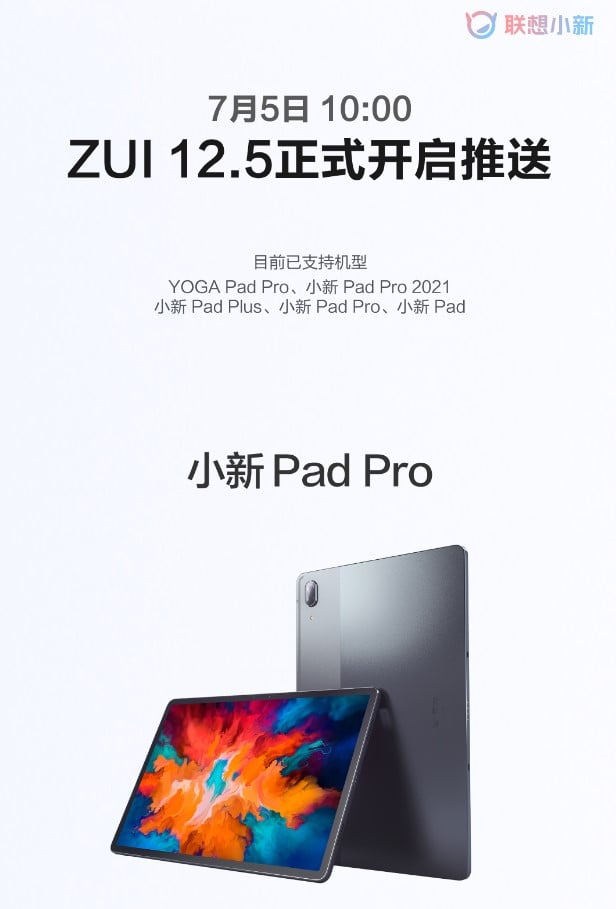
The Xiaoxin Pad Pro was one of two tablets Lenovo announced in its home country last year. The tablet which is sold as the Lenovo Tab P11 Pro outside China is now receiving a new update that brings Android 11 along with new features.
Lenovo is rolling out the ZUI 12.5 update and it comes with Android 11 for the Xiaoxin Pad. Below are some of the new features the update brings:
Android 11
Added universal horizontal app function that allows vertical apps to work in horizontal mode
Added a recycle bin to the Gallery app
Optimized Lenovo One and reduced latency
Added support for online wallpapers and online themes
The Lenovo Xiaoxin Pad Pro has a 2K 11.5-inch OLED display with a 2560 x 1600 resolution. The bezels are slim and the display supports Dolby Vision, DC Dimming, and works with the Xiaoxin Stylus.
There is a Snapdragon 730G processor under the hood along with 6GB of RAM and 128GB of expandable storage. The Xiaoxin Pad Pro has a 13MP main camera on the back and it is paired with a 5MP ultrawide angle camera. Up in front are two 8MP sensors of which one is an RGB camera and the other is an IR TOF 3D camera for face unlock. There is also a side-mounted fingerprint scanner.
The tablet packs JBL quad speakers, a 3.5mm audio jack, and has support for Dolby Atmos. The battery capacity is 8600mAh and there is support for 20W fast charging via a USB-C port. The Xiaoxin Pad Pro also has pogo pins for connecting to a keyboard.
South Korea is one of the few nations that have widely adopted 5G networking. But apart from just being one of the first, it is also the nation that is capable of offering the true capabilities of the newer and faster telecommunication generation.
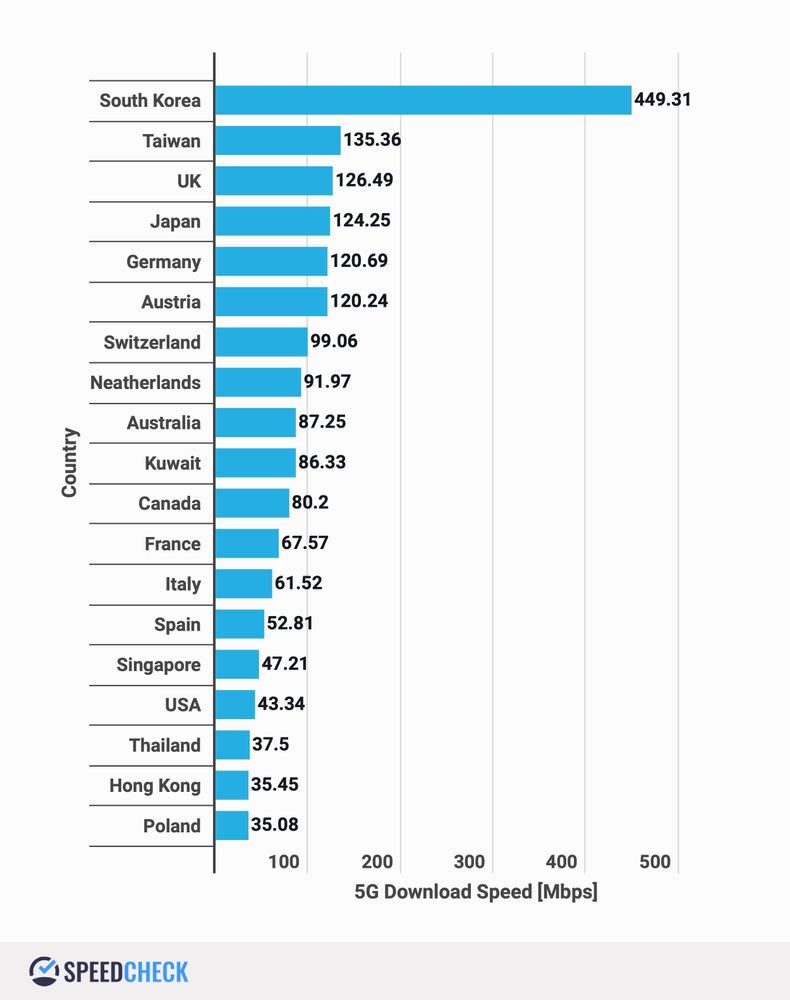
According to a SpeedCheckreport, the country is the number 1 in the world in terms of download speeds. The report added that the speeds in the region can reach up to 449 Mbps (5G median download speeds). This result was found as per tests conducted during the period of February and March 2021. On the other hand, the median 5G download speeds in the US only amounts to 43.4 Mbps, which is about ten times slower than their Korean carrier counterparts. Additionally, the US also has much lower 5G penetration at only 10 percent compared to South Korea’s 20 percent.
The high speeds, in turn, implies that people in South Korea are likely to have a better 5G experience with download times of big files, a more immersive VR/AR experience, and even while playing online video games. Notably, the runner up in the list for the region with the fastest 5G download speeds was Taiwan, which only managed to achieve a median speed of 135.36 Mbps. This is still significantly behind the speeds offered by telecom carriers in South Korea.
The report also did a price comparison between networks of the US and South Korea. Data found that people in the US paid around 1.5 US Dollars per gigabyte, while South Koreans paid 2.3 US Dollars per gigabyte. While the number is higher, the networking speed difference between the two seems makes up for the price value overall. SpeedCheck also believes that price is not a constraint for US citizens if they can avail much faster networking speeds.
We use cookies on our website to give you the most relevant experience by remembering your preferences and repeat visits. By clicking “Accept”, you consent to the use of ALL the cookies.
This website uses cookies to improve your experience while you navigate through the website. Out of these, the cookies that are categorized as necessary are stored on your browser as they are essential for the working of basic functionalities of the website. We also use third-party cookies that help us analyze and understand how you use this website. These cookies will be stored in your browser only with your consent. You also have the option to opt-out of these cookies. But opting out of some of these cookies may affect your browsing experience.
Necessary cookies are absolutely essential for the website to function properly. This category only includes cookies that ensures basic functionalities and security features of the website. These cookies do not store any personal information.
Any cookies that may not be particularly necessary for the website to function and is used specifically to collect user personal data via analytics, ads, other embedded contents are termed as non-necessary cookies. It is mandatory to procure user consent prior to running these cookies on your website.