Advertisement

iPhone Air sales disappoint, Apple scales back production by one million units

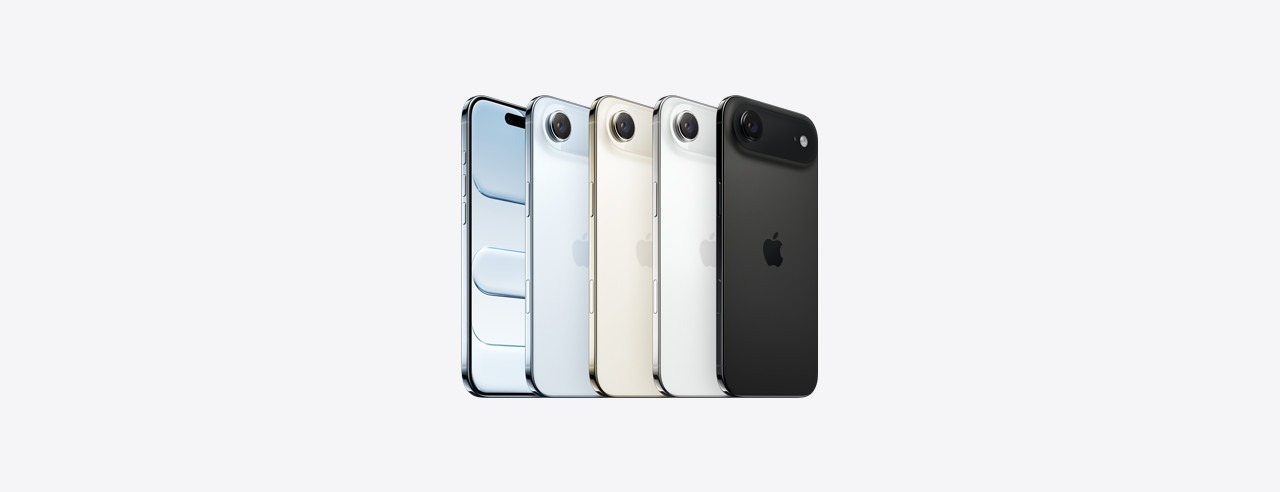
A recent report revealed that Samsung’s Galaxy S25 Edge, known for its ultra-thin design and smaller battery compared to other S25 models, has reportedly struggled with sales. As a result, the company is said to have cancelled the Galaxy S26 Edge from next year’s lineup, replacing it with the Galaxy S26 Plus, which was previously thought to be discontinued. Now, a similar situation seems to be unfolding for Apple, as a new report claims that the iPhone Air, despite its sleek, ultra-thin form factor and flagship-level specifications, is also facing slower-than-expected sales.

iPhone Air demand falls behind other iPhone 17 models

iPhone Air
iPhone Air

According to The Elec, which cites Japan’s Mizuho Securities, Apple is expected to scale back production of the iPhone Air by around one million units this year due to lower-than-projected demand.

Interestingly, this move contrasts with Apple’s broader iPhone strategy, as the company plans to increase production for the iPhone 17, iPhone 17 Pro, and iPhone 17 Pro Max by a combined total of two million units. The overall production forecast for the iPhone 17 lineup has been revised upward from 88 million to 94 million units for early 2026, reflecting confidence in the series’ performance overall.

While the iPhone Air reportedly sold out quickly in China during its launch phase, its reception in Western markets has been more muted. Analysts suggest that its pricing and specifications may have limited its appeal, as consumers seem to favour the iPhone 17 for its value or the iPhone 17 Pro models for their enhanced camera systems and premium features.

The underwhelming performance of the iPhone Air mirrors trends seen across the smartphone market, where ultra-thin designs are often met with mixed responses due to reduced battery capacity and fewer camera options.

Market watchers believe Apple’s adjustments indicate a strategic response rather than a setback, as the company continues to refine its approach to balance innovation with market expectations. Despite the cutback, Apple’s overall iPhone 17 series remain one of its strongest performers in recent years, maintaining high demand globally.

For more daily updates, please visit our News Section.

Stay ahead in tech! Join our Telegram community and sign up for our daily newsletter of top stories.

Realme GT 8 Pro battery size, charging capabilities officially confirmed

Realme will announce the Realme GT 8 and GT 8 Pro on Oct. 21 in China. Before launch, the company has been busy teasing key details about both smartphones. The following poster released by the brand today confirms the GT 8 Pro’s battery size and charging capabilities.

Realme GT 8 Pro packs a 7,000mAh battery

Realme GT 8 Pro battery size, charging
Realme GT 8 Pro battery size and charging details

To recall, the Realme GT 7 Pro from last year came with a 6,500mAh battery with 120W fast charging support. However, it lacked support for wireless charging.

In comparison, the Realme GT 8 Pro has a larger 7,000mAh battery inside. Apart from 120W wired charging, the device will also support 50W wireless charging. The handset also supports bypass charging.

Realme claims that the GT 8 Pro can go from 0 to 50 percent in just 15 minutes using the 120W charger. Despite packing a larger battery, the GT 8 Pro, which measures only 8.20mm, is slimmer than its previous generation, which measured 8.5mm.

As per recent reports, the Realme GT 8 Pro will feature a 6.78-inch flat OLED panel that offers a 2K resolution, a 144Hz refresh rate, and an under-display ultrasonic fingerprint sensor. The device will run on Realme UI 7-based Android 16.

The Realme GT 8 Pro will have a Ricoh-certified 1/1.56-inch 50-megapixel main camera with OIS support. It will be joined by a 50-megapixel ultra-wide lens and a 200-megapixel camera, which may feature the Samsung HP5 sensor. The brand has also confirmed that the device is capable of shooting 4K 120fps videos with Dolby Vision support. It will also feature a swappable camera module, allowing users to choose from square, round, and robot layout options.

Apart from the Snapdragon 8 Elite Gen 5 chipset, the GT 8 Pro will feature the R1 chip for enhanced graphics. It is expected to come with up to 16GB of RAM and up to 1TB of storage. It is said to weigh between 209 and 214 grams.

For more daily updates, please visit our News Section.

Stay ahead in tech! Join our Telegram community and sign up for our daily newsletter of top stories.

Realme GT 8 Pro to launch with Realme UI 7.0, sporting a new glass-inspired design

Realme has officially confirmed that the upcoming Realme GT 8 Pro will be the first smartphone to launch with Realme UI 7.0. Realme executive Derek shared key highlights of the latest interface upgrade through Weibo, revealing several user experience improvements in design, animation, and multitasking. Continue reading to discover the main features coming with Realme UI 7.0.

Realme UI 7.0: Key features confirmed

Realme UI 7.0
Realme UI 7.0

Realme UI 7.0 introduces a new light and shadow glass design that delivers a transparent, soft-blur aesthetic resembling refined glass. The interface features updated dynamic wallpapers that adapt to the colour of the GT 8 series device, creating a cohesive visual identity.

The icons have also been redesigned with a floating ice light effect, while the control centre has been reimagined with a frosted glass appearance, offering a refreshed and layered visual experience. Additionally, the breathing status bar adds subtle movement to enhance depth and fluidity throughout the interface.

The update includes Realme’s new Flow Light Engine, an animation framework built on the company’s seamless architecture. It promises consistently smooth and interruptible animations across system interactions, improving fluidity over version 6.0. The dynamic frame-tracking system ensures stable performance even under heavy workloads and gaming sessions, while the Flow Accelerator enhances responsiveness across six key usage scenarios.

Realme UI 7.0-
Realme UI 7.0-

Realme has also introduced a redesigned inspiration desktop, allowing users to freely resize app icons in 1×2, 2×1, or 2×2 layouts. Another major highlight is the Smart Window feature, enabling up to twelve floating app windows to run simultaneously in the background. Users can preview, respond to messages, or watch videos while gaming without interruption, ensuring maximum productivity and convenience.

The Realme GT 8 Pro will be the first to ship with Realme UI 7.0, based on Android 16, and older models in China are expected to receive the UI 7 update from November onwards.

For more daily updates, please visit our News Section.

Stay ahead in tech! Join our Telegram community and sign up for our daily newsletter of top stories.

Final ZE300 TWS Earphones Offer Secure, Pressure-Free Fit for Sleep and Daily Use

Final will release its new ZE300 wireless earphones on Friday, October 17, 2025. These compact earbuds are designed for everyday use, whether for listening to music, watching videos, or sleeping.

Final ZE300 ANC TWS earbuds

Final ZE300 Earphones features

Each earbud weighs only 4 grams and uses the same ultra-compact design as the brand’s popular COTSUBU series, which has shipped over 500,000 units. The ZE300 is 20% smaller than the ZE3000 SV, making it Final’s smallest and lightest noise-canceling model. The internal mechanism has been completely redesigned to improve both sound quality and comfort, making them suitable for small ears and long wear.

The ZE300 uses a unique algorithm to balance noise-canceling performance with sound quality and isolation. It also includes an ambient mode that enhances outside sounds. A single touch on the left earbud switches between modes, allowing users to stay aware of their surroundings, such as hearing train announcements.

An Airflow Port evenly distributes pressure when the earphones are compressed, reducing strain on the eardrum and internal drivers. This design helps maintain comfort and durability, even while lying down, making the ZE300 suitable for sleeping.

The ZE300 supports touch controls for playback and calls. A new Touch Disable Function, activated with five quick taps, disables all touch operations and turns off LED lights and voice prompts. This prevents accidental touches and makes the earphones ideal for extended listening or nighttime use.

The internal structure delivers Final’s signature sound with a balance of clarity and softness. The case and earbuds have a powder-coated finish that resists fingerprints and improves grip. They come in three colors: Sky Gray, Greige, and Black.

Pricing & availability

The Final ZE300 wireless earphones are priced at 5,980 yen (around $40) and is be available from Final’s official store, authorized dealers, and on Amazon Japan starting October 17.

For more daily updates, please visit our News Section.

Stay ahead in tech! Join our Telegram community and sign up for our daily newsletter of top stories!

(Source)

Redmi K90 Pro Max features IP68/69 rating, 2.1-channel audio with Bose rear speaker

Ahead of its official launch on Oct. 23 in China, Redmi Product Manager Sun Cun has revealed key insights about the Redmi K90 Pro Max’s unique speaker setup. His latest Weibo post explains the design, functionality, and acoustic improvements that set this flagship apart from typical smartphones. Continue reading to learn what the Redmi exec. shared about this upcoming device.

Redmi K90 Pro Max has a 2.1 speaker system

Redmi K90 Pro Max - 2.1 speaker
Redmi K90 Pro Max – 2.1 speaker

According to Sun Cun, the circular module placed beside the camera lens on the Redmi K90 Pro Max is not a decorative element but an actual speaker. He clarified that this rear speaker does not compromise the phone’s IP68-rated water and dust resistance, as the design has been engineered to maintain complete protection.

In addition, Redmi has added an audio-vibration dust removal feature through software that helps clear the speaker openings for optimal sound quality.

Sun Cun further mentioned that the denim colour variant of the K90 Pro Max uses a tech denim material process, which accurately reproduces the texture and feel of real denim while offering improved resistance to dirt, wear, and scratches. He assured users that the cooling performance of this variant is on par with the black and white models.

According to a well-known tipster Digital Chat Station, the Redmi K90 series will include a 2.1-channel speaker system, combining top, bottom, and rear speakers to enhance immersion during gaming, video playback, and music. The K90 Pro Max will also feature the Snapdragon 8 Gen 5 Elite processor, a 6.59-inch 2K flat display with ultrasonic fingerprint recognition, and a 50-megapixel 1/1.3-inch main camera with OIS, paired with a periscope telephoto lens.

For more daily updates, please visit our News Section.

Stay ahead in tech! Join our Telegram community and sign up for our daily newsletter of top stories.

(source 1, 2)

iQOO 15 full specifications leaked before launch event

The iQOO 15’s launch event is scheduled for October 20 in China. Before the launch, tipster Digital Chat Station has released a new Weibo post revealing the entire specifications of the iQOO 15. Here’s a look at what’s packed inside iQOO’s upcoming flagship.

iQOO 15 specifications (rumored)

iQOO 15 front
iQOO 15

The iQOO 15 is officially confirmed to feature the Samsung M14 LEAD AMOLED 8T LTPO display that supports a 2K+ (3168 x 1440p) resolution and a 144Hz refresh rate. The tipster reveals that it will be a 6.85-inch panel with a flat design and rounded corners. He added that the screen will support manual full-screen brightness of 1000 nits. It will have an AR (anti-reflection) film and come integrated with an ultrasonic in-screen fingerprint sensor.

Under the hood, the iQOO 15 will feature the Snapdragon 8 Elite Gen 5 chipset, a Q3 chip for enhanced graphics while gaming, and a massive 7,000mAh battery. The phone will support 100W wired and 40W wireless charging. While it is mentioned in the leak, the device is expected to ship with.

Coming to the camera sensors, the iQOO 15 will have a 32-megapixel selfie snapper on the front, and its back panel will feature a 50-megapixel main camera backed by a 1/1.56-inch sensor. The primary camera will be joined by a 50-megapixel ultra-wide lens and a 50-megapixel Sony IMX882 periscope telephoto camera with 3x optical zoom.

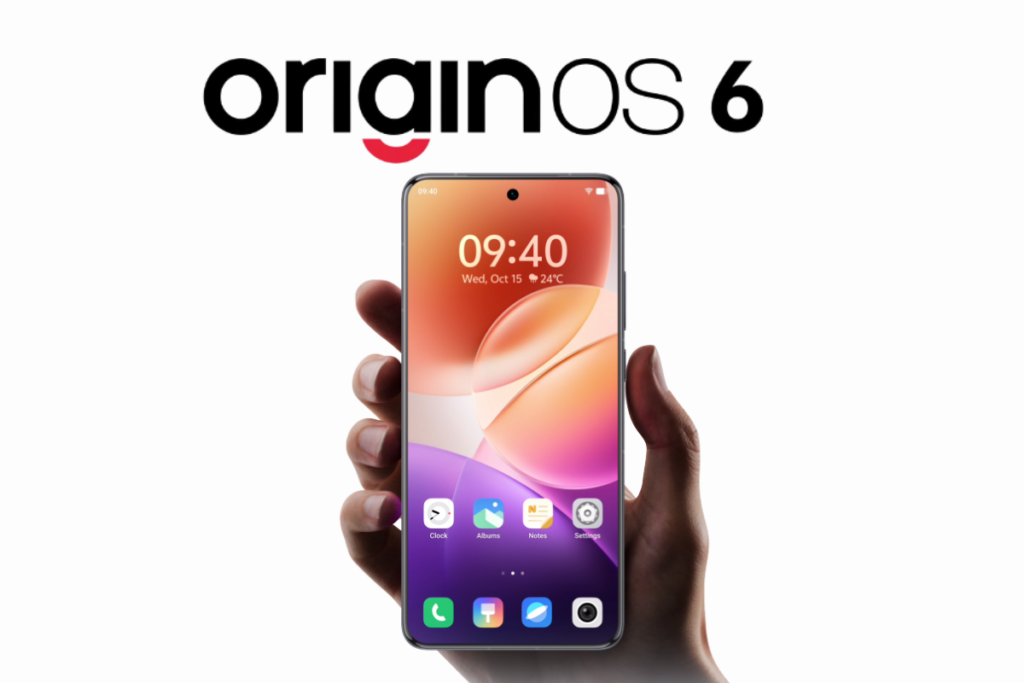
The leak concludes by stating that the iQOO 15 will also have other features like a 091640 large-sized x-axis linear motor for haptic feedback, symmetrical dual speakers, a USB-C (Gen 3.2) port, an 8K VC heat sink, and an IP68/69 rating. It will come preloaded with OriginOS 6-based Android 16.

For more daily updates, please visit our News Section.

Stay ahead in tech! Join our Telegram community and sign up for our daily newsletter of top stories.

(source)

ASUS ROG Strix XG27AQWMG to Launch in November with 280Hz OLED Display for $599

ASUS has confirmed the launch window and pricing for its new ROG Strix XG27AQWMG gaming monitor. It will arrive between November and December 2025, priced at $599 (via TFTCentral), though the final cost may vary depending on tariffs and regional factors.

The ROG Strix XG27AQWMG features a 27-inch 1440p display with a 280Hz refresh rate and a 0.03ms response time. It uses LG’s new Primary RGB Tandem WOLED panel, which delivers up to 1500 nits of peak brightness, 15 percent higher than standard OLED screens. The Tandem design uses two light-emitting layers that work together for better brightness, lower power use, and a longer lifespan. ASUS says it lasts 60 percent longer than regular OLEDs while reducing burn-in risk.

Asus ROG Strix XG27AQWMG

The monitor covers 99.5 percent of the DCI-P3 color gamut and supports true 10-bit color for accurate and vibrant visuals. It is factory-calibrated with an average Delta E value below two, giving professional-grade color accuracy for gaming, photo editing, and video work. The TrueBlack Glossy coating keeps blacks deep and glare low, maintaining clear visibility in different lighting conditions.

ASUS has also included its OLED Care Pro features. A built-in Neo Proximity Sensor automatically turns the screen off when you step away to prevent image retention.

The XG27AQWMG offers a range of connectivity options, including HDMI 2.1, DisplayPort 1.4 with DSC, and a USB hub. It also includes a tripod socket for easy camera mounting. The stand is 30 percent smaller than previous 27-inch models, freeing up more desk space.

In related news, MSI has also launched the MAG 272UP QD-OLED X24 gaming monitor in the U.S. for $799.99, following its earlier release in China. It features a 26.5-inch 4K UHD (3840×2160) fourth-gen Samsung QD-OLED panel with a 240Hz refresh rate, 0.03ms response time, DisplayHDR True Black 400 certification, and a 1,500,000:1 contrast ratio.

For more daily updates, please visit our News Section.

Stay ahead in tech! Join our Telegram community and sign up for our daily newsletter of top stories!

(Source)

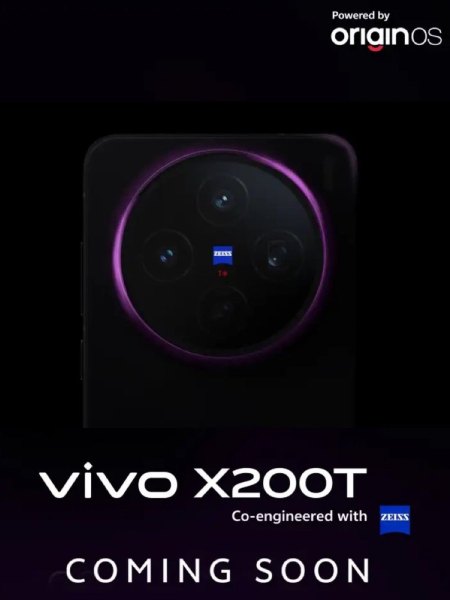
Vivo X300 series’ Europe launch scheduled for October 30

Recently, Oppo confirmed that the Find X9 series will debut on Oct. 28 globally. In a new development, Vivo has confirmed that the Vivo X300 series will be announced at 5 pm (local time) on Oct. 30 in Europe. This indicates that the series will be hitting the Asian markets in November and December.

Vivo X300 series’ landing pages go live

Vivo X300 series launch date

Social media handles of Vivo Austria and the Czech Republic have confirmed that the Vivo X300 series will debut by the end of this month. The official landing pages are also live on the regional websites for Vivo Austria and the Czech Republic. It appears that the X300 will be available in two shades, such as Dune Brown and Phantom Black editions. Likely, the X300 Pro will also come in the same color options.

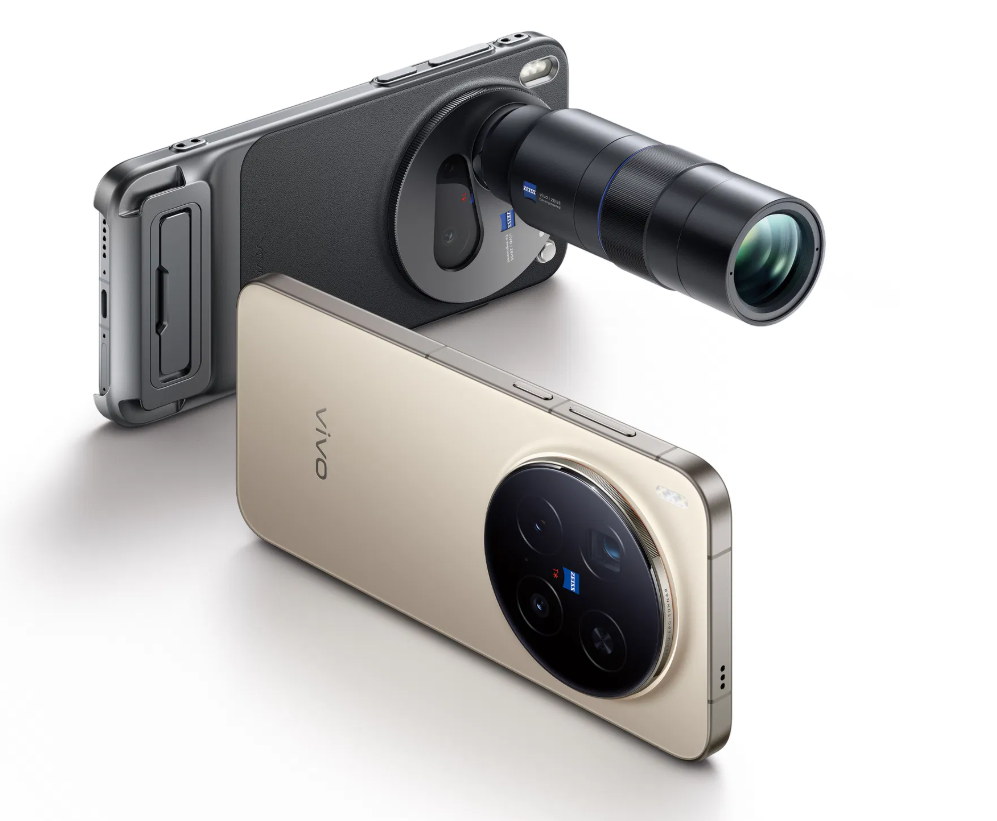
The official poster also confirms that the Vivo X300 series will come with support for a 2.35x teleconverter accessory, co-developed with Zeiss. It is designed to extend the camera’s focal length by 2.35 times, allowing for closer shots of distant subjects without compromising image quality. It easily attaches to the lens, making it ideal for wildlife, sports, or landscape photography where extra zoom reach is needed.

The official pages also confirm that the Vivo X300 series will be powered by the Dimensity 9500 chipset. Both phones will also feature a 200-megapixel camera. While the X300 will have it as a primary sensor, the X300 Pro will feature it as a telephoto camera.

The major highlight is that the X300 and X300 Pro will be Vivo’s first phones to launch with OriginOS in the global market. As it is known, Vivo phones have always been available with Funtouch OS before.

For more daily updates, please visit our News Section.

Stay ahead in tech! Join our Telegram community and sign up for our daily newsletter of top stories.

MSI MAG 272UP QD-OLED X24: 4K 240Hz Gaming Monitor Now Available in the U.S.

MSI has released the MAG 272UP QD-OLED X24 gaming monitor in the United States, more than six months after its debut in China.

MSI MAG 272UP QD-OLED X24

Display and Performance

The MAG 272UP QD-OLED X24 comes with a 26.5-inch fourth-generation Samsung QD-OLED panel. It delivers a 4K UHD resolution of 3840 x 2160 pixels and a 240Hz refresh rate. The display offers a pixel density of 166 PPI, a peak brightness of 1000 nits at 3% APL, and a typical brightness of 450 nits. It holds a DisplayHDR True Black 400 certification and a 1,500,000:1 contrast ratio for deep blacks and bright highlights.

 MSI MAG 272UP QD-OLED X24

The monitor has a 0.03ms gray-to-gray response time and supports Adaptive Sync along with G-Sync Compatibility for smoother, tear-free visuals during gameplay.

Color and Calibration

It supports 10-bit color depth and covers 99% of DCI-P3, 98% of Adobe RGB, and 138% of the sRGB color spaces. Each unit is factory-calibrated with a Delta E value of 2 or less and comes with a color calibration report for users who need accuracy for content creation.

MSI includes its OLED Care 2.0 technology to help prevent burn-in. This system uses pixel shift, pixel refresh, automatic brightness adjustment, and ambient light detection. The monitor also features gaming tools such as dynamic crosshairs, dark scene enhancement, and digital magnification for better targeting and visibility.

Design and Connectivity

The monitor has a 4.7mm ultra-thin profile with a dragon-etched rear panel. Its stand supports height adjustment up to 110mm, tilt from -5° to 20°, swivel from -30° to 30°, and pivot up to 90°. It also supports 100 x 100 VESA mounting.

For connectivity, it includes two HDMI 2.1 ports (4K at 240Hz), one DisplayPort 1.4a, a USB-C port with DisplayPort Alt Mode and 15W charging, and a headphone jack. The monitor is TÜV Rheinland-certified for low blue light and flicker-free viewing, featuring hardware-level blue light filtering and DC dimming for better eye comfort.

Price and Availability

The MSI MAG 272UP QD-OLED X24 is now available in the U.S. for $799.99 through MSI’s online store and Amazon.

For more daily updates, please visit our News Section.

Stay ahead in tech! Join our Telegram community and sign up for our daily newsletter of top stories!

Shanling Introduces EC Zero AKM Portable CD Player with Dual Amplifiers and Bluetooth 5.3

Shanling has launched the new EC Zero AKM, a portable CD player designed for users who want premium sound and build quality in a compact form. It features a metal chassis and a tempered glass lid, giving it a sturdy and refined look.

The player uses a custom CD mechanism for accurate disc reading and an active magnetic clamp that stabilizes the disc during playback, reducing vibration and mechanical noise. It also supports gapless CD playback for uninterrupted listening.

Shanling EC Zero AKM features

At its core, the EC Zero AKM uses an AKM AK4493S DAC for clean, natural audio output and dual SGM8262 amplifiers that provide balanced amplifier power. The headphone section delivers up to 836mW at 32Ω in balanced mode and 213mW at 32Ω in single-ended mode when powered externally. Its low output impedance ensures compatibility with both sensitive earphones and larger headphones.

Shanling EC Zero AKM features

The player runs on a 5500mAh battery, offering up to 10 hours of playback through wired outputs and up to 18 hours in Bluetooth mode. It supports USB DAC playback up to 768kHz/32bit and DSD512, along with multiple connectivity options including 3.5mm and 4.4mm headphone and line outputs, 3.5mm coaxial/optical digital output, and Bluetooth 5.3 with aptX Adaptive, aptX, and SBC codecs.

Additional features include a tactile volume slider, intuitive user interface, and CD ripping to FAT32 USB drives at 1x speed in WAV format. A PU leather carrying case is also available for added protection and style.

Pricing & availability

The Shanling EC Zero AKM is priced at 319 USD, while the optional leather case retails for 39 USD.

For more daily updates, please visit our News Section.

Stay ahead in tech! Join our Telegram community and sign up for our daily newsletter of top stories!

Realme GT 8 Pro camera specs confirmed: 4K 120fps Dolby Vision, Ricoh GR branding, 200MP periscope

Realme is preparing to launch its flagship Realme GT 8 series on October 21. Most of the key details about the GT 8 Pro have already been revealed through leaks and official teasers, and the company has now confirmed nearly all of its main camera specifications.

Realme-GT-8-Pro-camera-specs

Realme GT 8 Pro Camera Specifications

The Realme GT 8 Pro will feature a triple-camera system led by a 50MP Ricoh GR-certified main sensor. This lens uses a 7P aspherical high-transmission element, a five-layer ultra-low reflection coating, and a dual-layer AR coating. It also includes a custom 1/1.56-inch sensor with an f/1.8 aperture and optical image stabilization (OIS).

The secondary 200MP periscope telephoto lens comes with the same 1/1.56-inch sensor and OIS, supporting 3x optical zoom, 6x-12x lossless zoom, and a 25cm minimum focusing distance for close-up shots. The third camera is a 50MP ultra-wide sensor with a 116° field of view and an f/2.0 aperture.

According to Realme, the GT 8 Pro is capable of cinematic-level video recording, supporting 4K at 120fps with Dolby Vision, 8K at 30fps, and 10-bit Log 4K 120fps recording for professional creators.

The phone also adopts a new modular design that allows users to detach and swap the camera deco module, with customizable styles including square, round, and robot layouts.

Realme GT 8 Pro Key Specifications

Based on earlier leaks and teasers, the GT 8 Pro will feature a 2K 144Hz display with 7000 nits of peak brightness, DC dimming, and advanced eye protection. It will be powered by the Snapdragon 8 Elite Gen 5 chipset, paired with the R1 display processor and up to 16GB of RAM.

The device will run Realme UI 7.0 based on Android 16 and pack a 7000mAh battery supporting 120W wired and 50W wireless charging. It will also come with a 3D ultrasonic fingerprint sensor and an eco-leather back design.

For more daily updates, please visit our News Section.

Stay ahead in tech! Join our Telegram community and sign up for our daily newsletter of top stories! 💡

Kospet TANK T4 Smartwatch Released: Built Tough with 1,000 Nits Bright AMOLED Display Offline Maps and Walkie-Talkie

Kospet has introduced the TANK T4, a tough and feature-packed smartwatch built for fitness and outdoor use. It is now available on Amazon for $185, after a $25 discount.

Kospet Tank M4 features

The watch features a 1.43-inch AMOLED display with a 466×466 resolution, 1,000 nits brightness, and a 60Hz refresh rate. An ambient light sensor automatically adjusts brightness for better visibility in different lighting conditions.

Accurate Tracking and Navigation

The TANK T4 includes dual-band GNSS with support for six satellite systems for precise tracking. It uses the OPDR algorithm to maintain location accuracy even in weak GPS areas. The watch supports offline maps and allows route import for hiking or running. A built-in walkie-talkie works within a 40-meter range, useful for quick communication during outdoor activities.

Tough Build and Water Resistance

KOSPET TANK T4 Smartwatch

The T4 is built with an Inox 360 stainless steel body and Corning Gorilla Glass 3 protection. It has passed 20 MIL-STD-810H military-grade tests certified by SGS for durability against dust, shock, vibration, and extreme temperatures from -50°C to 70°C. It is rated 10 ATM and IP69K, withstanding water pressure up to 45 meters, making it suitable for swimming and diving.

Health and Fitness Features

The smartwatch offers 23 ApexMotion sports modes and 160 freestyle training modes. It tracks running, cycling, mountaineering, and other workouts with detailed data like pace, elevation gain, stride, and VO₂ max. A 4PD optical sensor monitors heart rate, blood oxygen, stress, sleep, and menstrual cycles. The watch supports one-tap health checks and gives alerts for abnormal readings.

Storage, Battery, and OS

The T4 has 32GB storage, enough for about 5,000 songs and 100 offline maps. It runs on Apexmove OS, offering customization, training insights, and compatibility with Android 7.0+ and iOS 14.0+ devices through the Apexmove App. The 500mAh cobalt battery lasts 14–15 days in normal use, 9–10 days in heavy use, and up to 22 hours in GPS mode. Charging takes around 2 hours using the magnetic dock.

For more daily updates, please visit our News Section.

Stay ahead in tech! Join our Telegram community and sign up for our daily newsletter of top stories!

(via: Notebookcheck)

KTC launches G27P6M 26.5-inch 2K 280Hz OLED gaming monitor

KTC has launched a new 26.5-inch OLED gaming monitor under the model name G27P6M. The monitor is now listed on JD.com with a price tag of 2,999 yuan ($420420) in China.

KTC G27P6M Monitor Specifications

The G27P6M features a 2560×1440 resolution OLED panel that supports a refresh rate of 280Hz. It uses a WOLED self-emissive panel sourced from LG and delivers up to 1000 nits of peak HDR brightness (APL 1%) and a 1,500,000:1 contrast ratio. For SDR content, the panel offers a typical brightness of 335 nits. The monitor achieves a response time of 0.03ms GtG, allowing for clear visuals during fast-paced gaming.

KTC has factory-calibrated each unit with Delta E < 2 color accuracy. The display covers 99% of the sRGB color space, 95% Adobe RGB, and 99% DCI-P3. It supports true 10-bit color and displays up to 1.07 billion colors. The monitor also includes Apple Display P3 mode and allows users to adjust color output via a six-axis color tuning feature.

KTC G27P6M Monitor

The G27P6M uses an anti-glare coating to reduce reflections and includes hardware-level low blue light and flicker-free features to protect the eyes during extended use. The stand supports height adjustment up to 120mm, tilt from -5° to 20°, and 90-degree rotation. The monitor is also compatible with VESA 100×100mm wall mounts.

In terms of ports, the monitor includes two HDMI 2.1 ports and one DisplayPort 1.4, all capable of delivering 1440p at 280Hz. It also features a USB-C port, one USB-B upstream port, two USB-A 3.0 ports, a 3.5mm headphone jack, and a power input. KTC has included dual 5W built-in speakers powered by a digital amplifier.

In related monitor news, Asus is preparing to release its 32-inch ProArt Mini LED 8K monitor later this month. Meanwhile, BenQ has launched the PD2770U in India, a 27-inch 4K display featuring the company’s AQCOLOR technology and light-adaptive calibration for enhanced color accuracy.

For more daily updates, please visit our News Section.

Stay ahead in tech! Join our Telegram community and sign up for our daily newsletter of top stories! 💡

(KTC JD)

iPhone Air Vanishes in Minutes: Sells Out Instantly in China

iPhone Air, the thinnest iPhone ever made, sold out within minutes of its official launch in China on Friday. The strong demand highlights the enduring popularity of Apple in one of its most important markets, even as competition from local smartphone brands grows.

Record-Breaking Launch Day

Pre-sales for the iPhone Air began at 9 a.m. local time after receiving Chinese regulatory approval. The model supports only e-SIM and was launched in China more than a month after most other countries. Online pre-orders opened at 8 p.m. on Apple’s Chinese website and major e-commerce platforms like JD.com and Tmall. All available units were gone by 8:05 p.m.

Physical Apple Stores in major cities such as Beijing, Shanghai, and Tianjin also saw long lines. Shipping for online orders has already been delayed by one to two weeks. Analysts estimate hundreds of thousands of units may have been sold during the first wave, though Apple has not released official figures.

Tim Cook’s High-Profile Visit

The successful launch followed a strategic visit to China by Apple CEO Tim Cook. During his trip, Cook met Vice-Premier He Lifeng and Commerce Minister Wang Wentao to discuss trade ties, Apple’s growth plans, and cooperation with local partners.

Cook also visited developers, suppliers, and universities, including Tsinghua University School of Economics and Management, where he announced a donation to support environmental leadership programs. His visit drew millions of views on Chinese social media, generating buzz ahead of the launch.

Product Features and Pricing

The iPhone Air is just 5.1 mm thick, making it the slimmest iPhone ever. It comes with the upgraded A18 chip, enhanced camera features, and improved battery life. It is priced at 5,999 yuan (around $845 USD), targeting consumers who prefer premium and lightweight smartphones.

Competitive Market Landscape

Apple currently holds a 15% market share in China, behind Vivo at 18% and Huawei at 16%. The overall smartphone market declined 3% year-on-year in Q3. Yet Apple’s strong launch performance signals loyal demand despite tough competition from Huawei’s foldable phones and Xiaomi’s AI-focused devices.

Strengthening Local Ties

Apple has also expanded investments in Chinese supply chains and announced new R&D centers, including a research lab in Shenzhen. It is working with Beijing Anzhen Hospital to use Apple Watch for heart health monitoring. These steps highlight Apple’s commitment to innovation and long-term growth in China.

The iPhone Air’s rapid sell-out proves Apple’s strong brand appeal in China. Backed by Tim Cook’s well-timed visit and growing local partnerships, Apple has managed to generate massive excitement and reinforce its position in a challenging, competitive market.

Read More:

NVIDIA’s Market Share in China Drops from 95% to Zero Amid US Export Restrictions

NVIDIA has lost its entire share of the advanced chip market in China after once holding a 95% dominance. This sharp decline follows strict US export restrictions that prevent the company from selling its most advanced chips to Chinese companies. “At the moment, we’re 100 percent out of China,” confirmed NVIDIA CEO Jensen Huang during a recent event.

Sudden Market Collapse

The US government has banned the export of NVIDIA’s high-end AI chips to China since 2022. This includes the NVIDIA A100, NVIDIA H100, and NVIDIA H200. Although NVIDIA was allowed to sell a downgraded chip, the NVIDIA H20, the Chinese cyberspace regulator launched a security investigation, discouraging local companies from buying it. As a result, the company has been forced out of the Chinese market entirely.

Huang’s Warning

Jensen Huang criticized the export restrictions, calling them a “mistake.” He warned that cutting off China would push the market toward domestic competitors like Huawei Technologies. “What harms China could oftentimes also harm America, and even worse,” he said. Huang emphasized the importance of rethinking policies to maintain global leadership in technology.

China’s Rapid Self-Sufficiency Drive

China is moving fast to reduce its dependence on foreign chips. Domestic companies are investing heavily to develop their own AI chips and manufacturing technologies. Huawei has already introduced an advanced AI chip roadmap and new clustering methods to replace NVIDIA’s products. Other tech giants like Alibaba Group Holding, Tencent Holdings, ByteDance, and Baidu are also pouring resources into semiconductor research and development.

A Powerful AI Talent Base

Huang highlighted that China has nearly 50% of the world’s AI researchers. He warned that excluding the country from US technology could slow down global AI progress. He also noted China’s strong work culture, provincial competition, and deep talent pool that enable it to close the gap with the US quickly. According to Huang, China is only “nanoseconds behind” in chipmaking.

Strategic Impact on the US

Analysts warn that the restrictions may hurt US companies more than expected. By pushing NVIDIA out of the Chinese market, the US may be allowing Chinese firms to strengthen their supply chains and become more independent. This could reduce American companies’ global competitiveness and limit their access to one of the world’s largest chip markets.

Event and Industry Reaction

Huang made these remarks on October 6 at a Citadel Securities event in New York, where he spoke with Konstantine Buhler of Sequoia Capital. A video of the interview was released the following week and widely reported by the South China Morning Post. His comments reflect growing concern in the tech industry about the long-term consequences of the US-China tech war.

The collapse of NVIDIA’s market share in China highlights the impact of geopolitical tensions on the global semiconductor industry. While the US aims to protect its national security, the strategy may also be boosting China’s technological independence. As the chip race accelerates, the world is watching closely to see whether policy shifts will ease tensions or deepen the divide between the world’s two largest economies.

Read More:

Rogbid launches Apex K GPS smartwatch with dual-band satellite tracking & 2.13″ AMOLED display

Rogbid has officially launched the Apex K GPS smartwatch ahead of the Double 11 shopping festival. The new model targets outdoor users with key upgrades in tracking accuracy, durability, and display size. It is now available at a launch price of $59.99 through the official Rogbid store.

Rogbid Apex K

Rogbid Apex K Specifications

The Apex K features a 2.13-inch AMOLED square display with a resolution of 410×502. The screen sits inside a rugged, military-grade casing that meets 5ATM water resistance standards. Rogbid has added an LED flashlight to support outdoor visibility in low-light conditions.

The smartwatch offers dual-band positioning and supports six global satellite systems: GPS, GLONASS, Galileo, Beidou, QZSS, and India’s NavIC. It provides GPS Path Orbit tracking for accurate route recording and a Trackback function that guides users back to their origin. It also integrates a digital compass and barometric altimeter to improve navigation accuracy in outdoor environments.

Rogbid has updated the physical layout of the watch. The right side includes two buttons, one for waking the display and accessing the main menu, and another for going back. On the left, there’s a dedicated GPS shortcut button that lets users start positioning instantly with a single press.

The Apex K supports multiple sports modes and can automatically detect five activities: walking, running, cycling, elliptical, and rowing. It now includes a swimming mode as well, powered by a multi-axis motion sensor that improves data accuracy. The company claims up to 40 days of standby time on a single charge.

In addition to fitness and location features, the watch also supports Bluetooth calling, message notifications, and health tracking tools such as heart rate and sleep monitoring. The Apex K comes in two color options: Starmist Silver and Deepwood Black.

In related news, Rogbid has recently launched the Rowatch 11S, an entry-level smartwatch featuring ECG monitoring, multiple health sensors, and built-in AI GPT capabilities. The company has also introduced the Rowatch D2, which offers clinical-grade blood pressure tracking and advanced ECG functionality within a smartwatch form factor.

For more daily updates, please visit our News Section.

Stay ahead in tech! Join our Telegram community and sign up for our daily newsletter of top stories! 💡

Redmi Watch 6 colors and key specs teased, launching on Oct 23

Redmi has officially announced the Redmi Watch 6. The new smartwatch will debut in China on October 23, alongside the Redmi K90 Pro Max smartphone. The Watch 6 will feature significant upgrades in design, display, and battery life, while retaining a focus on affordability.

Redmi Watch 6

Redmi Watch 6 Specifications (Teased)

The Redmi Watch 6 is equipped with a 2.07-inch AMOLED display with ultra-narrow 2mm symmetrical bezels, providing a near edge-to-edge viewing experience. Xiaomi has used a high-strength aluminum alloy middle frame for the chassis, giving the smartwatch a more premium look and feel compared to previous models. The device uses a unibody design to keep the overall profile slim and lightweight.

Redmi has also confirmed that the Watch 6 will be available in Misty Blue, Classic Black, and Moonlight Silver. While all three share the same aluminum frame, each finish gives the smartwatch a distinct character. The Misty Blue version pairs a matte silver frame with a light blue strap, creating a clean and coordinated look.

In contrast, the Classic Black model uses a matching black frame and strap, making it suitable for both casual and formal settings. Completing the lineup, the Moonlight Silver variant combines a silver-white frame with a white strap, a combination that Xiaomi says may appeal more to female users.

The Watch 6 runs on Xiaomi’s HyperOS 3, which is expected to include various smart features such as notification management, smart home control, and potentially support for third-party apps. The company claims that the smartwatch can deliver up to 24 days of battery life, although real-world performance may vary depending on usage.

Xiaomi has not yet confirmed pricing for the Watch 6. For comparison, the previous generation Redmi Watch 5 launched last year at a starting price of 599 yuan ($84).

For more daily updates, please visit our News Section.

Stay ahead in tech! Join our Telegram community and sign up for our daily newsletter of top stories! 💡

Apple’s Big Move: Vietnam Replaces China for New Smart Home Devices

Apple Inc. is expanding its manufacturing in Vietnam as part of a major shift to strengthen its smart home business and reduce reliance on Chinese supply chains. The company already builds several products in Vietnam, but this marks the first time the country will serve as the main production base for an entirely new product line.

Apple’s move comes amid growing geopolitical tensions and tariff risks. By shifting more production to Vietnam, Apple aims to secure a more flexible supply chain and expand its smart home ecosystem.

Partnering with China’s BYD

To drive this plan, Apple is working with BYD Company, which will handle assembly, testing, and packaging of the new products in Vietnam. BYD will also help expand iPad manufacturing in the country, deepening Apple’s regional presence.

Home Hub Display Launch

The first new product will be a 7-inch smart home display that works as a central hub for appliances, music, and communication. It will feature FaceTime, adaptive software, and enhanced AI through an upgraded Siri. Originally set for 2025, its launch is now expected in Spring 2026. The device will compete with Amazon Echo Show and Google Nest Hub.

Security Camera and Tabletop Robot

Apple will also release an indoor security camera by late 2026, integrating it into its growing smart home ecosystem. In 2027, the company plans to launch a tabletop robot with a 9-inch display on a motorized arm. It will use advanced AI to follow users and offer more interactive experiences, though the complex design could make it costly.

AI-Powered Siri Upgrade

A new version of Siri, arriving in March 2026, will power these devices. It will offer smarter web responses, better app control, and adaptive interfaces that personalize the user experience.

Strategic Supply Chain Shift

This expansion highlights Apple’s broader supply chain diversification. Along with Vietnam, production is growing in India, Malaysia, and Thailand. However, a 20 percent tariff on goods imported from Vietnam remains a hurdle.

Apple’s partnership with BYD and its upcoming product launches mark a key moment in its manufacturing strategy. With the Home Hub Display, security camera, and tabletop robot, Apple is preparing to push deeper into the smart home market while reducing its dependence on China.

Read More:

(via)

Baseus PicoGo AE11 and AN13 Review: Travel‑Ready, Socket‑Friendly & Surprisingly Powerful

I’ve been carrying the Baseus PicoGo AE11 fast charger in my backpack for a week now, and it’s already replaced all the chunky, heat-prone adapters I used to rotate through. I’m not exaggerating when I say this little 67W brick might be the best travel companion I’ve had.

At just over two inches long and roughly the size of a box of mints, the PicoGo AE11 delivers impressive fast-charging performance across three ports, supports wide compatibility, and still manages to stay cool under pressure.

If you’ve been juggling multiple chargers for your laptop, phone, and accessories, the PicoGo AE11 feels like a cheat code.

Baseus PicoGo AE11 and AN13 Review

What’s in the Box?

Baseus includes the basics. You get the charger itself, a compact and subtly textured unit that looks and feels premium, and a small quick-start guide with warranty details and charging breakdowns.

Build Quality

Baseus PicoGo AE11 and AN13 Review

On the surface, the PicoGo AE11 doesn’t look like much. It’s small, understated, and even a bit cute. But once you hold it, there’s a satisfying density to it, like something that’s been precision-engineered rather than mass-produced. The finish strikes a balance between matte and glossy, and while that hybrid texture feels great in the hand, it’s also slightly prone to surface scratches if you aren’t careful tossing it into bags alongside keys or cables.

Baseus PicoGo AE11 and AN13 Review

There are subtle grooves on the sides that make it easier to grip when plugging or unplugging, and the foldable prongs are another thoughtful touch. They tuck in flush, meaning it won’t scratch other devices or snag in your bag. Even the tolerances on the hinge feel tight, which isn’t something you usually notice on chargers if they’re poorly made.

Features

Despite its size, the PicoGo AE11 is packed with tech that goes beyond the basics. You get two USB-C ports (C1 and C2) and one USB-A port, and the charger supports a maximum of 67W output from a single port. If you’re charging multiple devices, Baseus’ BPS 2.0 smart power allocation system dynamically adjusts the output. For example, if you plug in a MacBook Air and a phone, it might split the power as 45W and 20W, respectively.

Baseus PicoGo AE11 and AN13 Review

The chipset inside is based on Navitas’ GaNFast tech. It enables better heat dissipation and energy conversion. Baseus claims up to 92% efficiency. There’s also a layer of graphene in the internal design, helping dissipate heat even when the charger is operating under full load.

Beyond just raw speed, it supports a bunch of fast-charging protocols like PD3.0, QC4.0, and PPS, which means it’s good for everything from a MacBook Pro 14 to the Galaxy S25 Ultra to the Nintendo Switch. It’s even TÜV Rheinland certified, which adds an extra layer of peace of mind if you’re worried about safety.

Performance

Baseus PicoGo AE11 and AN13 Review

In real-world use, this thing performs just as advertised, and then some.

I tested it with my iPhone 15 Pro, going from 20% to 90% in about 60 minutes using a USB-C to Lightning cable. It did a great job, but what surprised me more was how it handled charging two devices simultaneously. I plugged in the Realme GT 6 and my iPhone 13. The GT 6 charged at a stable 45W while the iPhone 13 got about 18W. There were no hiccups, no thermal throttling, and the charger itself stayed warm but never super hot.

Baseus PicoGo AE11 and AN13 Review

Even in triple-port mode, where output is split between USB-C1, USB-C2, and USB-A1 (45W + 18W + 4W max), it continued to charge everything without issue. Of course, don’t expect full 67W performance when all three ports are active. That’s not how power distribution works, but for practical multitasking, it does the job perfectly.

Another thoughtful touch is that it doesn’t block adjacent sockets on a power strip or wall outlet. The vertical, square profile and fold-in prongs make it one of the most socket-friendly chargers I’ve ever tested.

Baseus PicoGo AN13 Performance

There’s one more product I’ve tested recently that looks and feels strikingly similar to the PicoGo AE11, and that’s the Baseus PicoGo AN13 fast charger. It’s a smaller sibling of sorts, featuring two USB-C ports with a 45W max output. The design language is identical, from the foldable pins to the subtle matte-gloss texture and compact body.

Baseus PicoGo AE11 and AN13 Review

In use, it performed just as reliably, charging my iPhone 13 from 20% to 80% in 46 minutes without any major signs of overheating. Like the AE11, it uses GaN technology with graphene cooling and supports multiple protocols, including PD 3.0 and PPS. It’s perfect if you don’t need the full 67W output but still want something premium and travel-friendly.

Verdict

After using both the Baseus PicoGo AE11 and the AN13 across a variety of real-world scenarios, I can confidently say they both deliver on what matters: compactness, capability, and consistency.

The AE11, with its 67W tri-port design, gave me the flexibility to charge multiple devices at once, while the AN13, with its dual USB-C output and 45W max, proved just as reliable for more streamlined setups. Both feature smart power allocation, excellent thermal control with graphene-assisted cooling, and a compact build that tucks into any bag or socket without fuss.

If I had to point out a minor flaw, it’s the shared slightly scratch-prone finish. But when you factor in pricing, $25.98 for the AE11 (down from $39.99) and $39.99 for the AN13, you’re still getting excellent value on both ends. These aren’t generic GaN bricks. They’re thoughtfully engineered, aesthetically clean, and built to slot into daily life without drawing attention, just doing their job, reliably.

For more daily updates, please visit our News Section.

Stay ahead in tech! Join our Telegram community and sign up for our daily newsletter of top stories! 💡

iPhone 17 Pro owners say their Cosmic Orange phones are turning pink

Turns out, scratches aren’t the only issue plaguing the iPhone 17 Pro lineup. Multiple users are now posting photos of their new devices showing sudden discoloration.

Photos shared on Reddit show the Cosmic Orange iPhone 17 Pro Max turning into shades of pink or rose gold. The discoloration is affecting the aluminum case, while the matte glass in the middle remains its original shade.

The worst part is that the problem doesn’t seem limited to the orange model. A user on MacRumors Forums has also shared his Deep Blue iPhone 17 Pro with discoloration on the camera bar. 

It’s unclear what’s causing the issue or how widespread it is, but reports are appearing across multiple social media platforms, including Reddit, Facebook, and TikTok. So it may have affected a notable number of users.

One Reddit user suggested the discoloration could be caused by UV light exposure, though it’s hard to believe this theory. Apple obviously knows the phones will be used outdoors.

Nevertheless, if you are one of those affected by this, it’s best to contact Apple Support. Since the devices are all under warranty, they could either repair it or replace the unit altogether. 

Apple made some bold changes with the iPhone 17 Pro’s design this year. The new camera plateau, two-part back design, and switch to good ol’ aluminum after using titanium on iPhone 15 Pro and 16 Pro. It’s also the first time the Pro models haven’t been offered in a neutral dark or black color.

But these changes may have been affecting users in more ways than one. Hopefully, Apple identifies the cause soon and provides a fix for affected users.

Don’t miss a thing! Join our Telegram community for instant updates and grab our free daily newsletter for the best tech stories!

For more daily updates, please visit our News Section.
(Via | Source 1, 2, 3, 4)