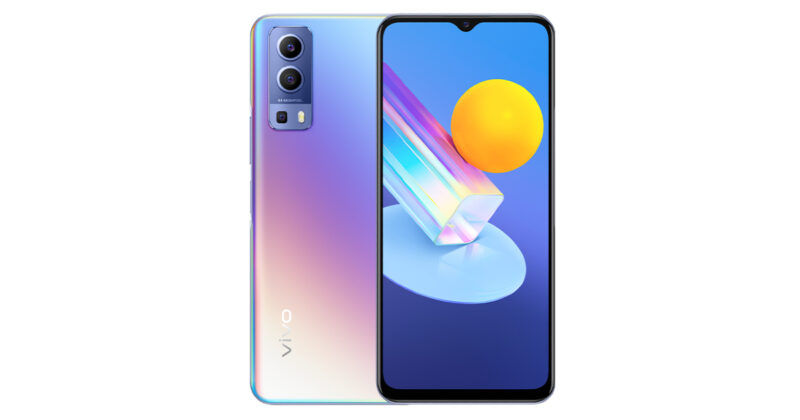
Vivo unveiled the V21 earlier this year with specs like a 90Hz display, Dimensity 800U SoC, and triple rear cameras. Now, Vivo seems to expand its V series with the launch of new V21 siblings, dubbed Vivo V21 Pro and V21 SE. While the Vivo V21 SE has already appeared on the benchmark tests, the details for the Pro variant were missing. Now, the pricing details of the Vivo V21 Pro have leaked, thanks to 91Mobiles.
According to the publication, the Vivo V21 Pro will cost ₹32,990 for the base variant and will launch by the end of this month. Just like the vanilla variant, the Pro is expected to come in the gradient finish.
Regarding its specs, the smartphone is expected to come with a large AMOLED panel. It will likely be a notch display, just like the sibling Vivo V21. It is said to feature a 64MP quad-camera system at the rear and a single-camera system at the front. The smartphone is also expected to come powered by a mid-range chipset and 8GB of RAM.
Additionally, the Vivo Y72 phone’s pricing has also been revealed. The Y72 will be a cheaper phone as compared to the leaked Vivo V21 Pro. The smartphone will arrive for ₹22,990 for the 8GB RAM model. It is expected to have a 5,000mAh battery with support for faster charging. The phone will draw power from the MediaTek Dimensity 700 chipset.
The publication has revealed that the Vivo Y72 5G is touted to launch in two color variants, Graphite Black and Dream Glow.
In related news, a Vivo smartwatch is said to be in the works. Vivo is touted to carry a survey about its upcoming smartwatch among the partners. Once the survey and smartwatch market is analyzed, we can expect a launch.
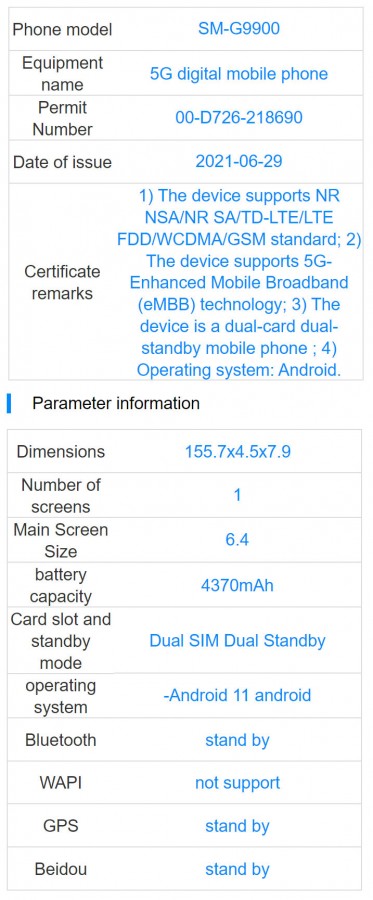
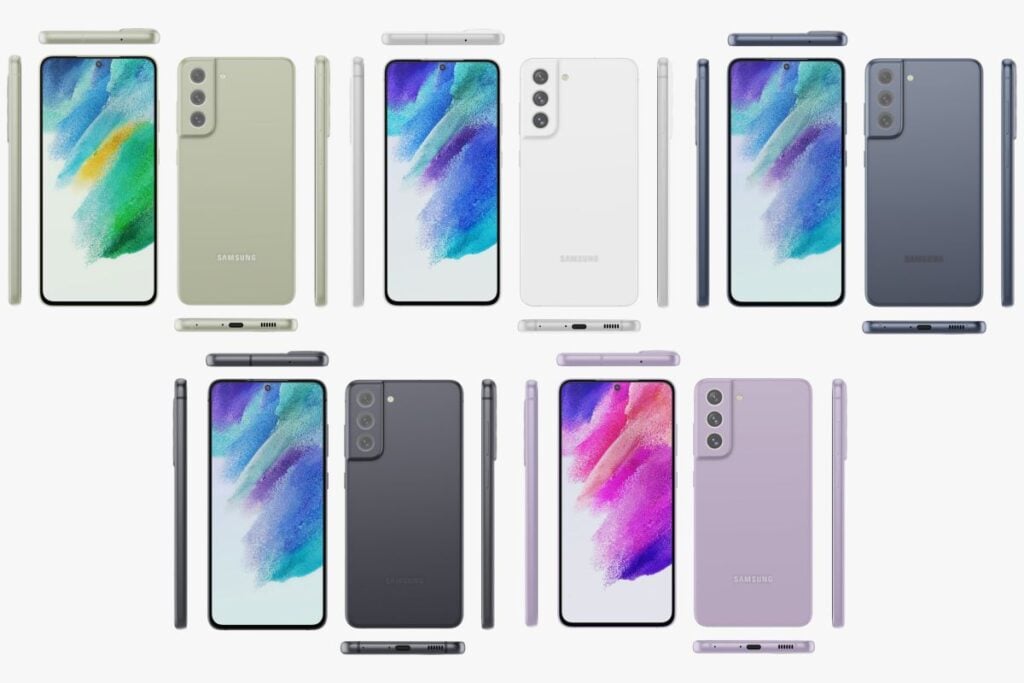
Recently, the Samsung Galaxy S21 FE 5G renders appeared on the internet, and then, the phone emerged on FCC listing, and now, the device has made to the TENAA documentation revealing key specs.
According to the certification, the Samsung Galaxy S21 FE 5G will feature a 6.4-inch AMOLED display with a high 120Hz refresh rate. It will be a 5G phone with the following dimensions – 155.7 x 74.5 x 7.9 mm. Interestingly, this is smaller and thinner than the predecessor Galaxy S20 FE which has the dimensions – 159.8 x 74.5 x 8.4 mm.
The Galaxy S21 FE 5G with model number SM-G9900 will be backed up by a 4,370mAh battery with 45W fast charging support. Previous leaks revealed that the phone will come in two versions – the US/CHINA version and the global version. The former version is touted to be powered by the Qualcomm Snapdragon 888 chipset, whereas, the latter will be powered by Samsung’s Exynos 2100 SoC.
It is expected to come with 8GB of RAM and 256GB of internal storage. In terms of optics, the phone will boast a triple rear camera setup and a single selfie camera system. The phone is expected to run on OneUI 3 based on Android 11 out of the box.
The phone’s color variants also emerged earlier, revealing it will arrive in White, Mint, Red, Orange, Navy, and Lavender colors.
Vivo is reportedly working on the Vivo X70 series. The company is likely to announce it first in China before releasing it in other markets. Tipster Digital Chat Station has shared a few details on the display and camera capabilities of the X70.
The Vivo X60 that debuted earlier this year features a 6.56-inch AMOLED display that carries support for a Full HD+ resolution of 1,080 x 2,376 pixels and a 120Hz refresh rate. The new leak suggests that the Vivo X70 will feature the same display.
The translated text of the leak states that the Vivo X70’s processor that the same architecture as the previous generation. He further said that the X70’s prototype was able to achieve a higher benchmarking score after overclocking, but he is unsure whether there will be a drop in the score after its mass production. The Vivo X60 model that debuted in China featured the Exynos 1080, while its global edition was powered by the Snapdragon 870. It is still unclear as to which processor will be fueling the X70.
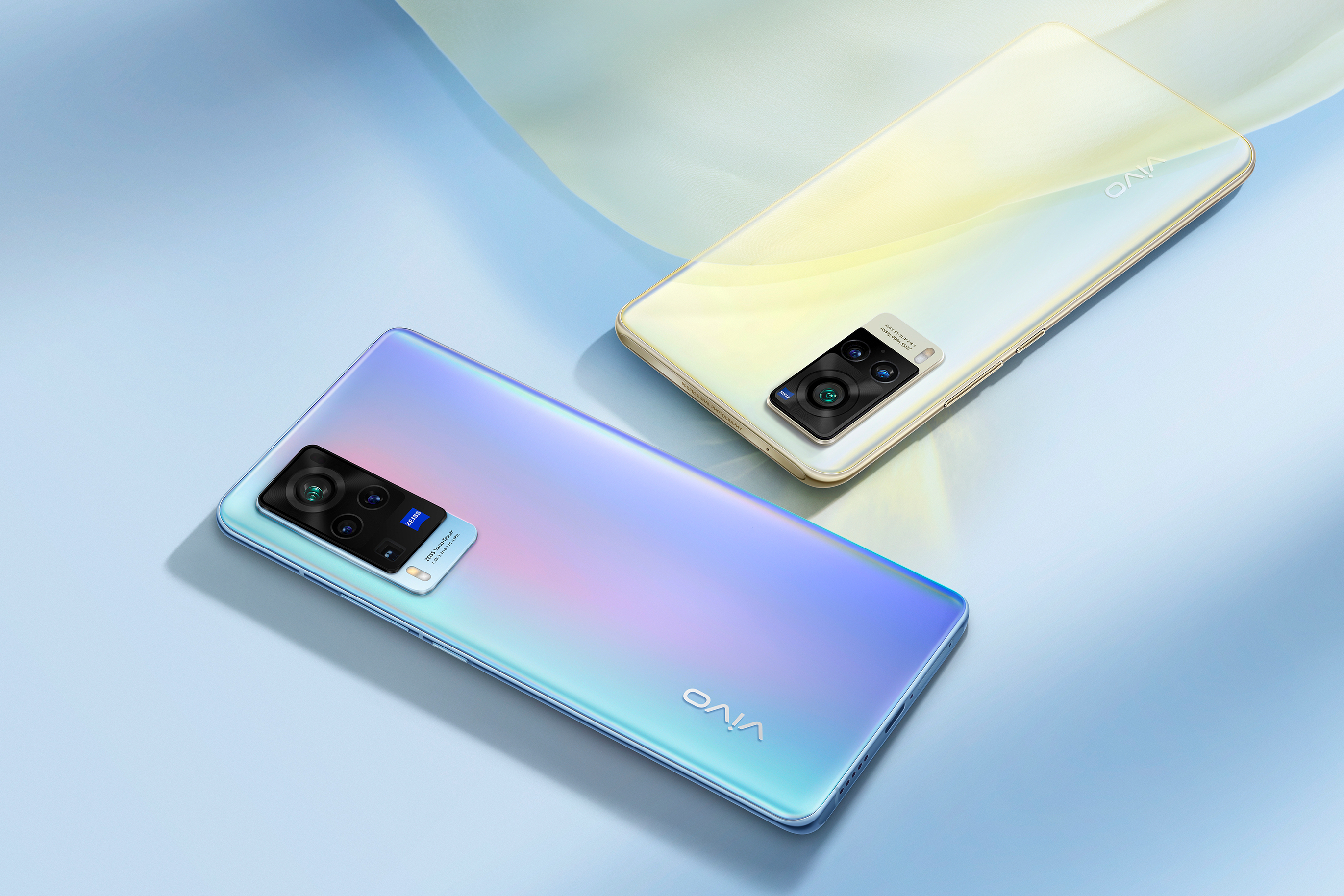
vivo X60 and vivo X60 Pro
It goes without saying that Vivo X-series phones are known for offering redefined photography experience. The leak states that the rear camera setup of the X70’s main camera has a large aperture of f1/1.5, which indicates that it will be able to intake more light for capturing brighter shots in low-light conditions. The leak also states that the X70 will offer 5-axis image stabilization and it is also expected to come with built-in gimbal stabilization.
The Vivo X60 family includes three phones such as Vivo X60, X60 Pro, and X60 Pro+. As of this writing, it is unclear how many phones belong to the X70 lineup. The tipster has claimed that the X70 series will debut in September, and it is also speculated to land in India in the same month or October.
Multiple reports have claimed that Vivo will be unleashing the S10 series of smartphones in China this month. Now, the company has confirmed that the Vivo S10 will break on July 15 in the home market.
Blackpink group’s Lisa who endorsed the predecessor models such as Vivo S7 and S9 will be promoting the Vivo S10 series. The Chinese text at the bottom right of the poster states that the handset shown in the poster is the Vivo S10 Pro. The S9 lineup included two phones such as Vivo S9e and Vivo S9 that were powered by the Dimensity 820 and Dimensity 1100 chipsets, respectively. It is likely that the S10 lineup may comprise of the Vivo S10 and S10 Pro handsets.
In the poster, the Vivo S10 Pro can be seen flaunting a marvelous gradient blue finish like the predecessor S9 series. Leaks have claimed that the S10 Pro will be the company’s first smartphone to feature a 108-megapixel camera. The poster confirms that the triple camera system of the Vivo S10 Pro is led by a 108-megapixel camera.
Vivo S10 Pro specifications (Rumored)
The Vivo S10 Pro is likely to house a 6.44-inch FHD+ 90Hz AMOLED display with a bigger notch for its 44-megapixel dual front-facing cameras. The Dimensity 1100 is likely to fuel the S10 Pro with 8 GB / 12 GB of LPDDR4x RAM.
The S10 Pro is expected to offer 128 GB / 256 GB of UFS 3.1 storage. While there is no word on its battery capacity, it is speculated to support 44W rapid charging. There is no information on the auxiliary cameras of the S10 Pro. It may offer users other features like an in-screen fingerprint sensor, Android 11 OS with OriginOS 1.0 UI, and NFC support.
It has been officially confirmed that the OnePlus Nord 2 will be powered by a MediaTek processor. The chipset is the Dimensity 1200-AI, a custom version of the Dimensity 1200 built by MediaTek and OnePlus, thanks to the former’s Dimensity Open Resource Architecture initiative that allows customers to enhance features of the chip.
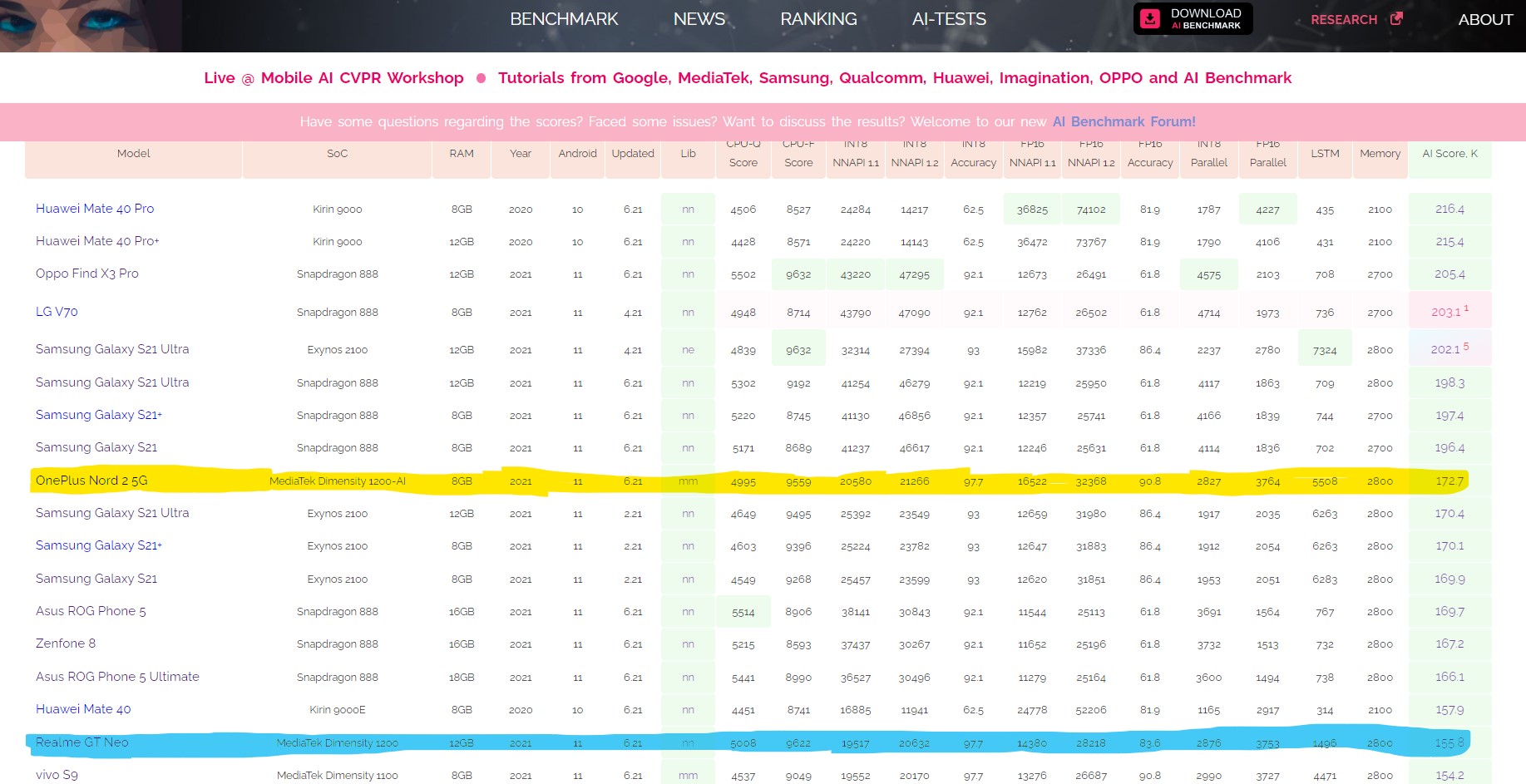
Now, the OnePlus Nord 2 has appeared on benchmarking site, AI Benchmark, showing us how well it performs against other devices. It also gives us a chance to compare the score of the Dimensity 1200-AI to that of the regular Dimensity 1200.
The variant of the OnePlus Nord 2 benchmarked on the platform has 8GB of RAM and runs Android 11. The benchmark site confirms that it is indeed powered by the MediaTek Dimensity 1200-AI and it has an AI score of 172.7K (172666) points. When compared to the Realme GT Neo which has the standard Dimensity 1200 chipset and a score of 155.8K (155803) points, one can see there is a significant improvement.
However, the score of the Dimensity 1200-AI still lags behind those of other devices on the list such as the Snapdragon 888-powered LG V70 (yes, you read that right) which has an AI score of 203.1K, the Huawei Mate 40 Pro+ with a Kirin 9000 chipset and an AI score of 215.4K, and the Exynos 2100-powered Samsung Galaxy S21 Ultra with an AI score of 202.1K.
Since AI is the focus here, the benchmark result does show that the OnePlus Nord 2 does have a more powerful chipset AI-wise than the Realme GT Neo. OnePlus says we will see these AI enhancements in the performance of the camera (photo and video) as well as the display departments.
The Dimensity 1200-AI is the first chipset to make use of MediaTek’s Dimensity 1200 Open Resource Architecture initiative and seeing how impressive it is, we can’t wait to see what other manufacturers come up with.
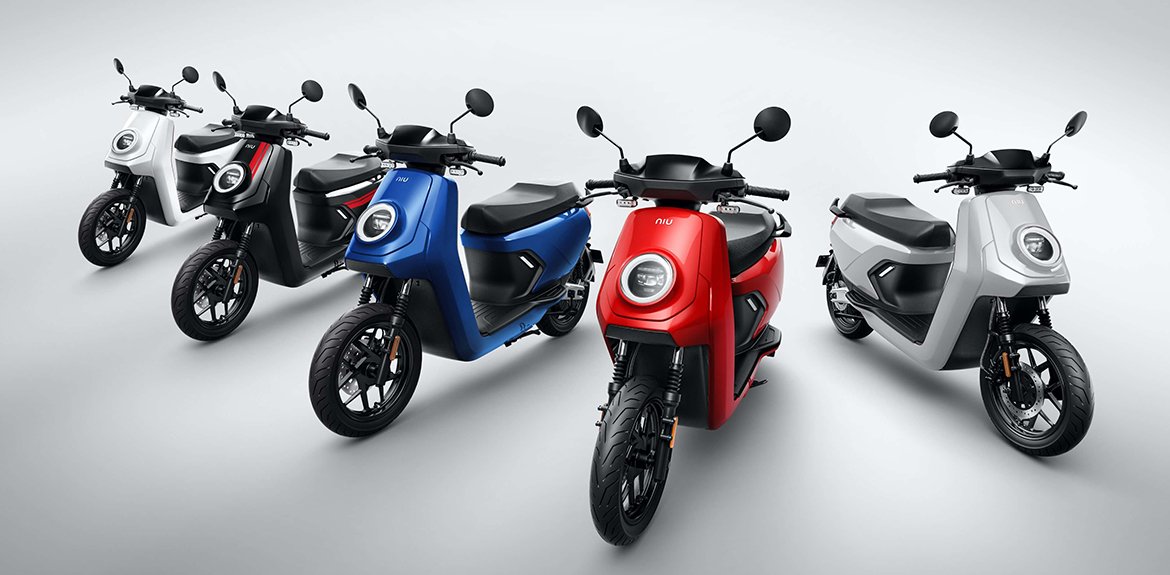
Chinese electric scooter manufacturer NIU is fast carving a niche for itself in its dominance of the electric scooter market. It has now drawn comparisons with Tesla, the leader of the global EV market. The Beijing-based company has continued to post impressive results both in its home market and internationally.
The recently released NIU sales statistics for Q2 2021 and the H1 2021 figures show an impressive performance year on year for the company. With 252,998 new electric scooters sold in Q2 2021, this was a 58% growth from Q2 2021. Similarly, the first-half results for 2021 also showed that NIU sold 402,647 scooters, representing a massive 101% increase year on year. The tremendous half-year growth rate was due mainly to the coronavirus pandemic, leading to a lockdown across several countries in 2020. At the same time, the home market of China accounts for a chunk of the customers.
To put the impressive performance of NIU in proper perspective, the company has sold as many e-scooters as Tesla sells cars globally. The energy requirements of e-scooters are significantly lower than that of electric vehicles, and NIU could post significantly higher numbers by the year’s end, going by its solid trajectory for several years thus far.
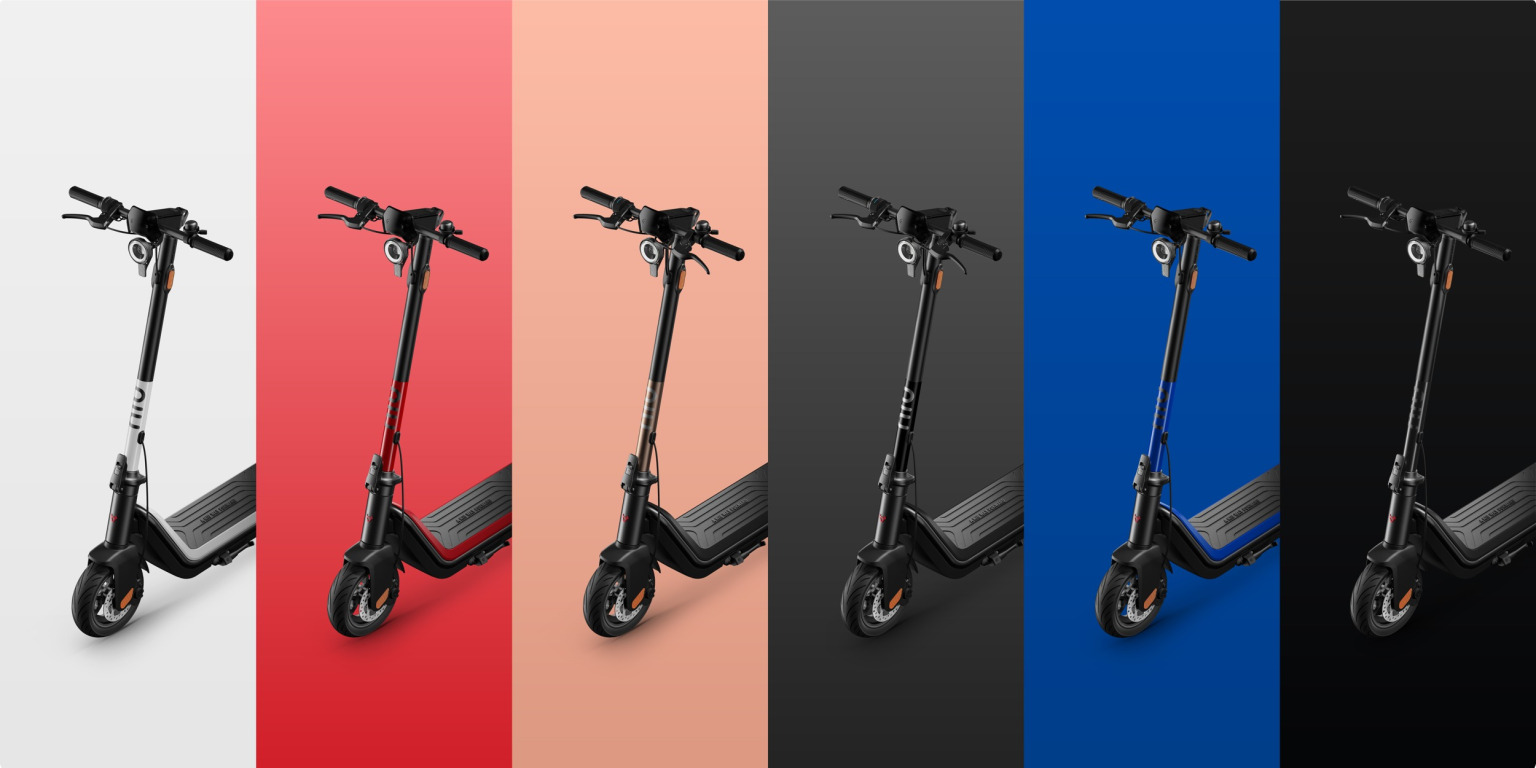
NIU is growing its repertoire of electric mobility solutions with an expanded focus from its initial plans, which targeted mid- and high-speed electric scooters for premium users. An electric motorcycle could be released by NIU later this year. The NIU electric standing scooter, released earlier in the year, has decent reception in China.
NIU will hope to cement its dominance of the electric scooter market for entry-level, mid-, and high-end products. The international market is still very open for a massive expansion by the Chinese brand.
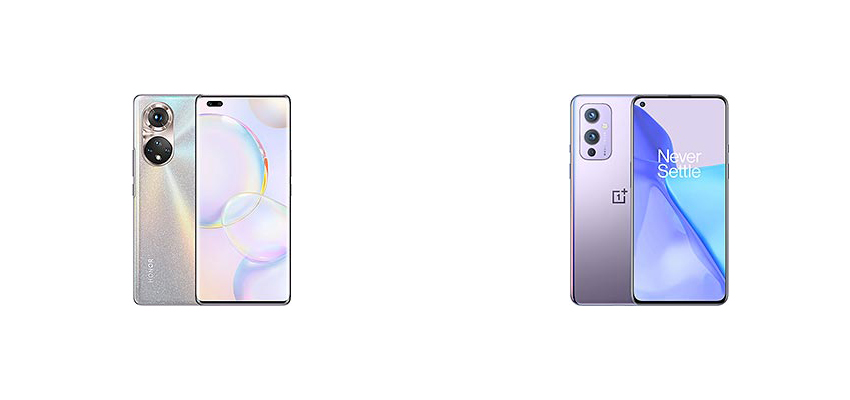
Honor is finally back and it is back with a premium smartphone series. The most advanced variant of the new lineup is the Honor 50 Pro, even though it does not have flagship-class specifications. It is a premium phone, but with a very interesting price tag. That is what led us to compare it with the vanilla OnePlus 9, a flagship killer with a very advantageous price (and even better street prices) offering everything a typical user would expect. Let’s discover together the differences between their specifications.
Honor 50 Pro vs OnePlus 9
Honor 50 Pro
OnePlus 9
DIMENSIONS AND WEIGHT
163.5 x 74.7 x 8 mm, 187 grams
160 x 74.2 x 8.7 mm, 192 grams
DISPLAY
6.72 inches, 1236 x 2676p (Full HD+), 439 ppi, OLED
Quad 108 + 8 + 2 + 2 MP f/1.9, f/2.2, f/2.4 and f/2.4
Dual 12 + 32 MP f/2.4 + f/2.2 front camera
Triple 48 + 50 + 2 MP f/1.8, f/2.2 and f/2.4
16 MP f/2.4 front camera
BATTERY
4000 mAh, fast charging 100W
4500 mAh, fast charging 65W, wireless charging 15W
ADDITIONAL FEATURES
Dual SIM slot, 5G
Dual SIM slot, 5G
Design
The most stunning design belongs to the Honor 50 Pro. Its matte and brilliant finish at the same time makes it unique, as well as its circular camera modules. It also comes with a curved edge-to-edge display making it even more elegant. The OnePlus 9 still remains a phone with a very interesting design which includes a glass back and a more compact body. With the OnePlus 9, you also get the IP68 certification making it waterproof and dustproof, but only in the variant sold by the T-Mobile carrier in the U.S.
Display
The Honor 50 Pro has a superior display to the OnePlus 9. Both the phones come with OLED panels, but the Honor 50 Pro is able to show up to one billion colors, while the OnePlus 9 is not. The handsets also have a refresh rate of 120 Hz and the Full HD+ resolution, as well as an in-display fingerprint reader. The Honor 50 Pro has a wider panel with a diagonal of 6.72 inches, so it is better for those who seek productivity and gamers. The OnePlus 9 is more compact with its 6.55-inch screen. Not everyone may like the dual punch hole of the Honor 50 Pro, but it is not a big compromise.
Specs & Software
The OnePlus 9 wins the hardware comparison first of all because it is powered by a stronger chipset. We are talking about the Snapdragon 888 mobile platform, which is Qualcomm’s best chipset seen on a phone as of now. The SoC is paired with up to 12 GB of RAM and up to 256 GB of internal storage. Unfortunately, the Honor 50 Pro is fueled by a midrange-class mobile platform: the Snapdragon 778G paired with just 8 GB of RAM and 256 GB of native storage. The phones run Android 11 out of the box and the Honor 50 Pro is the first device after the separation from Huawei to include the Google Mobile Services for the global market.
Camera
Do you need the best rear camera? Then you should go for the OnePlus 9 without thinking twice. It has a triple camera setup composed of a 48 MP main sensor with omnidirectional autofocus (it supports 8K video recording), a great 50 MP ultrawide sensor, and a 2 MP monochromatic camera. Honor 50 Pro has a very nice 108 MP main camera, but it can not compete with the OnePlus 9. On the other hand, it offers a better front camera department which consists of a dual camera with 12 and 32 MP resolutions, including an ultrawide sensor.
Battery
Thanks to its bigger 4500 mAh battery, the OnePlus 9 is able to provide a longer battery life. It also comes with a smaller display and a chipset built with a better production process, so it consumes less energy. Last but not least, besides wired fast charging, it features wireless charging. The Honor 50 Pro has a way smaller battery and it is definitely not a battery phone due to just 4000 mAh. It lacks wireless charging, but it has a faster charging technology with a high power of 100W.
Price
Honor 50 Pro is priced at less than €595/$700 in Asia but it is still not available in the global market, so we do not know how much it will cost there. You can actually find the OnePlus 9 for less than €700/$825 globally. The OnePlus 9 wins the comparison due to a bigger battery, better chipset, and rear camera, but the Honor 50 Pro has a more beautiful design, a better display, faster charging, and better front cameras. We can not give a verdict regarding the value for money for global customers as we still do not know the global price of the Honor 50 Pro.
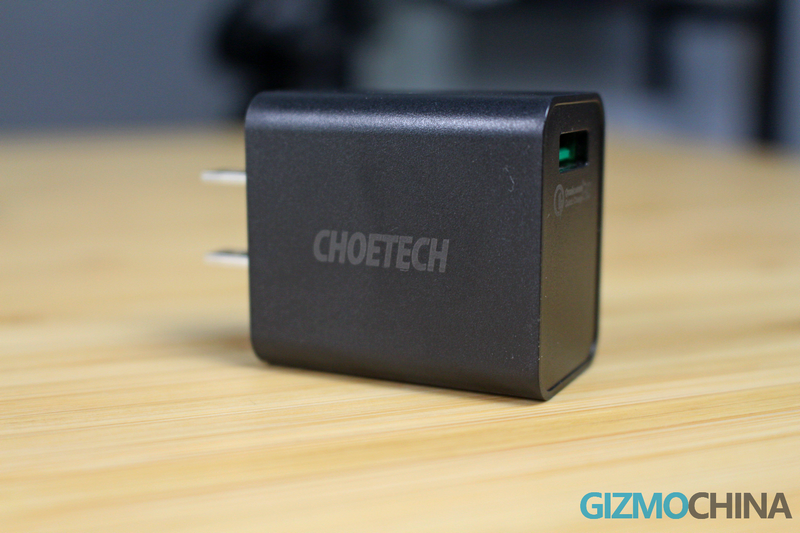
Amazon has been on a cleaning spree lately. The e-commerce giant has been pulling off brands that have paid people for reviews or posted fake ones. Among the brands that have been found guilty are Aukey, Mpow, and RavPower. Now another popular Chinese brand, Choetech, has been found guilty.
Choetech is known for its mobile accessories such as charging cables, USB hubs, and wall adapters. Now, its products are missing from Amazon’s store, a likely result of it being delisted. A search for Choetech on Amazon brings up related products by other brands but not the manufacturer’s own products.
Amazon has not released an official statement about the matter according to XDA Developers, and neither has Choetech. The former maintains a strict policy with respect to the guidelines it has set for sellers on its platform.
Those brands found wanting have either offered people money or a form of compensation for positive reviews, bought reviews, or posted their own reviews.
Choetech was established in 2013 and sells its products in over 80 countries. While its product are no longer available on Amazon, folks can still purchase them on its official website.
Large batteries are becoming prominent on smartphones, especially on the rugged phones. The rugged smartphone market king, Ulefone is again gearing up for a launch of splendid smartphone carrying a massive 13200mAh battery. It would be the world’s largest battery smartphone once launched.
There are only few countable smartphones that supports battery above 10000mAh in capacity. The new Ulefone Armor 13 will be a new addition to that list. Apart from the massive battery, it will come with impressive specifications. The will be powered by MediaTek Helio G95 chipset, 8GB RAM and 256GB internal storage.
Furthermore, there will be a 6.81-inch display carrying a Full HD+ resolution. The smartphone comes with a 48MP quad-rear camera for capturing stunning photos. It is going to carry additional infrared sensor to measure distance. Ulefone Armor 13 will sport IP68/IP69K and MIL-STD-810G certified against dust, drop and water. The smartphone will feature a 33W fast charging, 15W wireless charging and 5W reverse wireless charging.
The massive will be quite useful during outdoor adventures. It is even more helpful if you’are stuck somewhere in the no man’s land.
Howveer, the launch and pricing details are yet unknown. But, the interested users can head over to the Ulefone official website to get the latest insights about the Ulefone Armor 13 smartphone.
In a bid to expand its portfolio of 5G devices, Madhav Sheth, the CEO of Realme India and Europe, has announced that all its future phones priced above ₹15,000 (~$200) will have support for 5G.
Realme is one of the manufacturers that has focused on releasing affordable 5G phones, and by setting a limit for devices that have 4G connectivity, it can turn its focus to 5G smartphones. The above statement was revealed in a tweet by the top executive earlier today but we do not know if it has any such price limit for other markets.
I promise #realmeFans that going forward all the new realme products above 15K will be 5G only! 👉Flagbearer of realme’s 5G plans, #realmeGT will launch in this quarter with multiple GT products 👉We will also expand narzo series since it is truly the #DemocratizerOf5Gpic.twitter.com/k5BNXkP5jY
With the new price benchmark, it is safe to say that the Realme C series, which is its most affordable line, will stick to 4G. We should also see some models of the Narzo line as well as its number series continue to offer 4G connectivity. The Realme X series and higher-specced models of the number and Narzo series will be the ones with 5G.
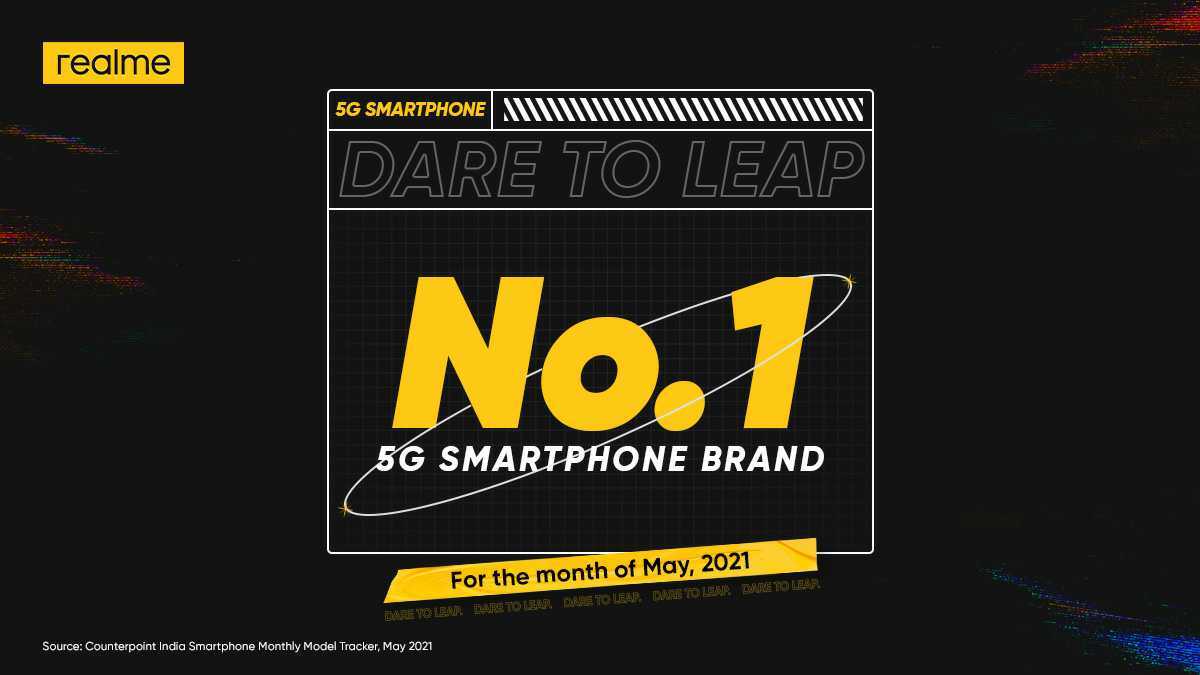
It is no surprise that Realme is focusing on 5G smartphones. Counterpoint Research, ranked it as the No.1 5G smartphone brand in India for the month of May. It will want to retain the title by providing more models for buyers. The CEO revealed that it has converted 90% of its R&D resources to the development of 5G technology and products. It also plans to invest $300 million globally in 5G research and product development.
Mr. Sheth has also confirmed that the Realme GT will launch in India this quarter and it will come alongside “multiple GT products”. The brand also plans to announce more 5G Narzo phones.
Most persons usually visit the salon to remove blackheads where they pay huge sums for the procedure. Apart from that, the instrument used on them is ofter reused. The DOCO Pore Vacuum Suction has been launched on Xiaomi‘s Youpin website. The product will be up for crowdfunding on July 10 and is priced at 99 yuan (~$15). The device comes with a 200ml bottle of customized small bubble care solution.
The DOCO Small Bubble Pore Remover utilizes a blackhead suction technology derived from medical aesthetics. This is different from the traditional blackhead meter. The product adopts a small bubble and air pump design. While sucking blackheads, the small bubble care solution can soften and moisturize deeply and nourish pores.
The device performs six different functions. It softens cutin, dissolves skin oil, removes blackheads, deeply moisturizes and improves pores, and enhances skin tone. When the product is used for the first time, it can remove up to 50% of the acne on the face. After one week of use, the problem of large pores is significantly improved. After four weeks of use, dull keratin is reduced and the complexion is brightened. Finally, after six weeks of use, it is said to leave the entire skin youthful and elastic.
In terms of the build, the device is equipped with three types of soft silicone nozzles: flat tip, medium round tip, and large round hole tip, which are suitable for different parts of the body. The device also offers three levels of suction that can be adjusted freely. There is a low level that is suitable for girls/sensitive muscles, a medium level that is suitable for mixed muscles, and a high-end level that is suitable for male/oily muscles.
The built-in battery only needs to be charged for 6 minutes and it can last for up to a month.
Xiaomi has a couple of streaming devices powered by Android TV. Among them are the 2016 Mi Box and the more recent Mi TV Stick that was announced last year. Both devices connect to a TV or monitor via an HDMI port and allow you to stream shows and movies and even play games. If you have always wondered how to take a screenshot on either of these devices, this guide should come in handy.
You would expect that since both devices run Android TV, the process is the same. Surprisingly, that is not the case. I own both devices and while they both run Android 9 with the March 2021 security patch, there are two ways to do it on the Mi Box and just one way to do it on the Mi TV Stick.
How to take a screenshot on the Mi Box and Mi TV Stick
Taking a screenshot on the Mi Box is done in two ways. There is a simple method that requires only one hand and there is a second method that might require the use of two hands. This second method also works on the Mi TV Stick
Method 1 (Mi Box only)
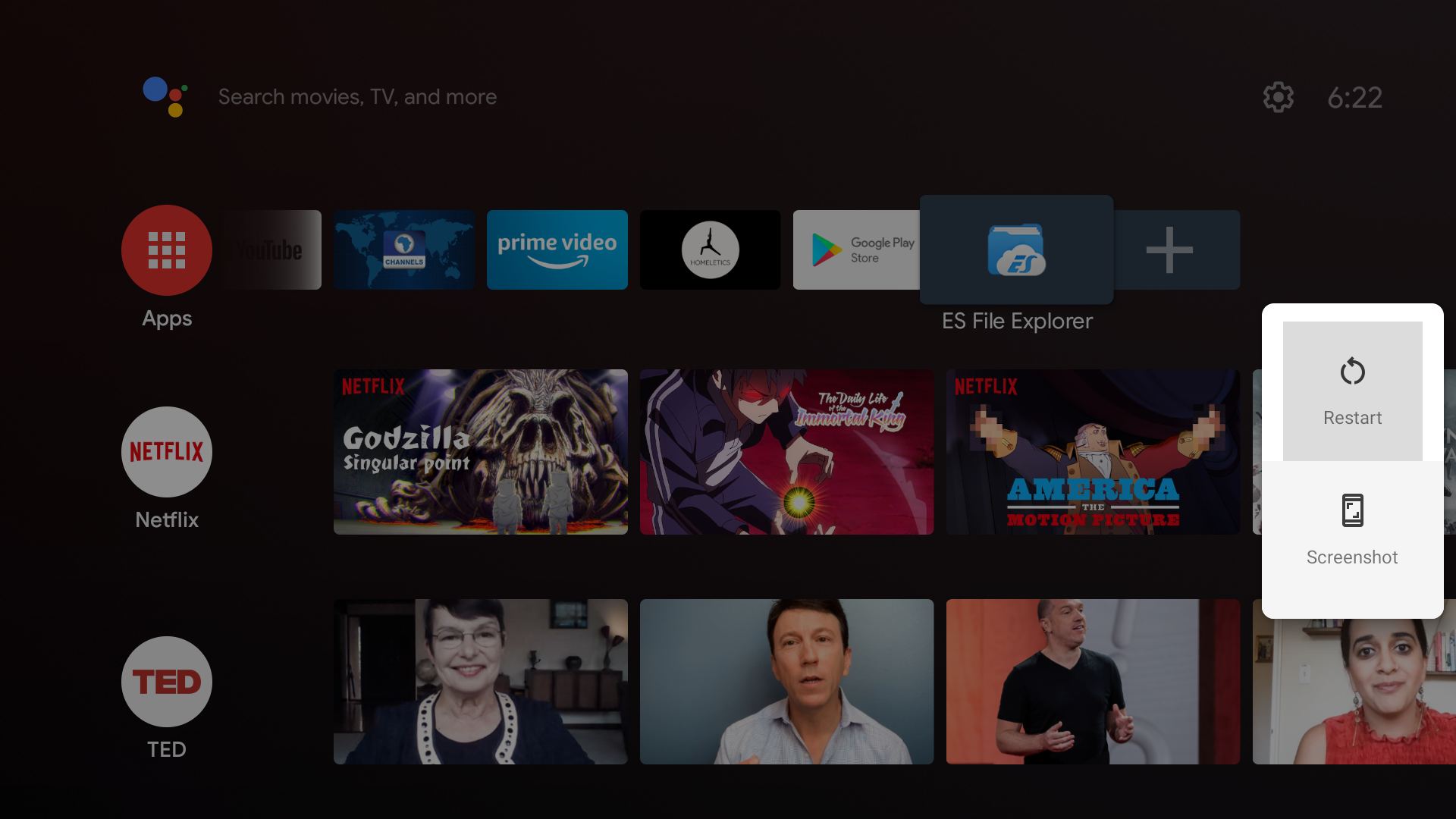
Hold down the power button for two seconds. A dialog box should pop up on the right side of the screen with two options – Restart and Screenshot.
Scroll down to Screenshot and select it. The Mi Box will take a screenshot of what is currently on your screen.
The above method doesn’t work on the Mi TV Stick. This is because when you press the power button for the same duration, the dialog box only presents you with the restart option.
Method 2 (Mi Box and Mi TV Stick)
This method is a familiar one as it is the same process that works on Android phones and tablets.
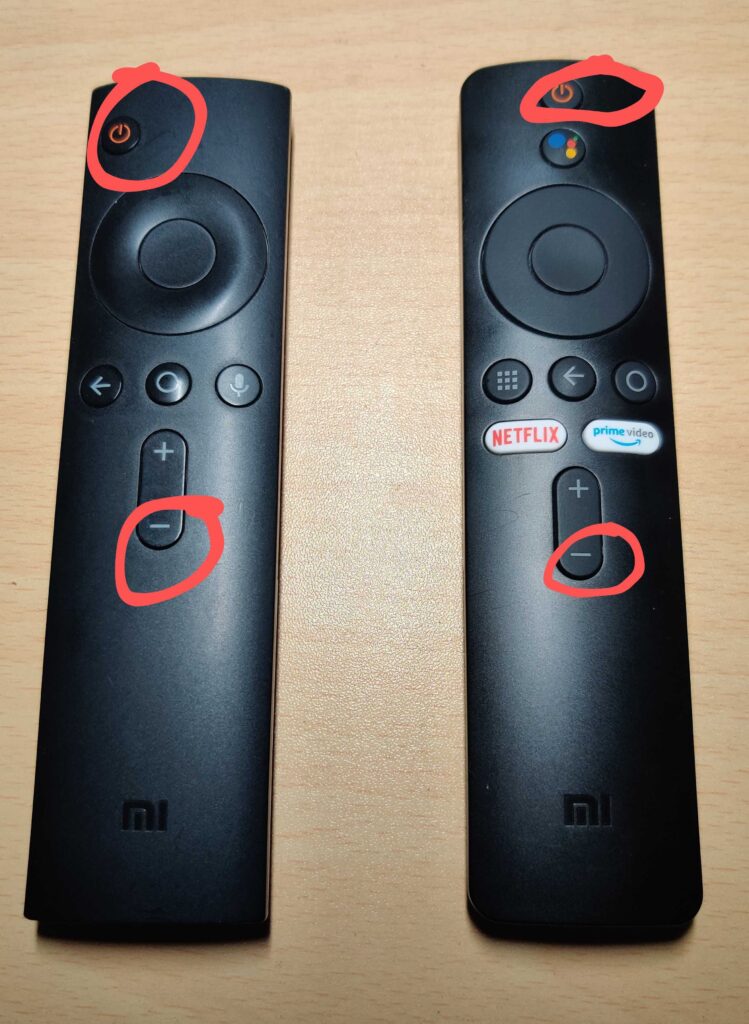
To take a screenshot on either the Mi TV Box or Mi TV Stick all you have to do is press the power button and volume down button at the same time on their respective remotes. A screenshot will be taken and saved on the device.
To view the saved screenshots, you will have to use a File Manager app or install a gallery app. The file manager app can also be used to copy the images to a storage device in the case of the Mi Box which has a USB-A port.
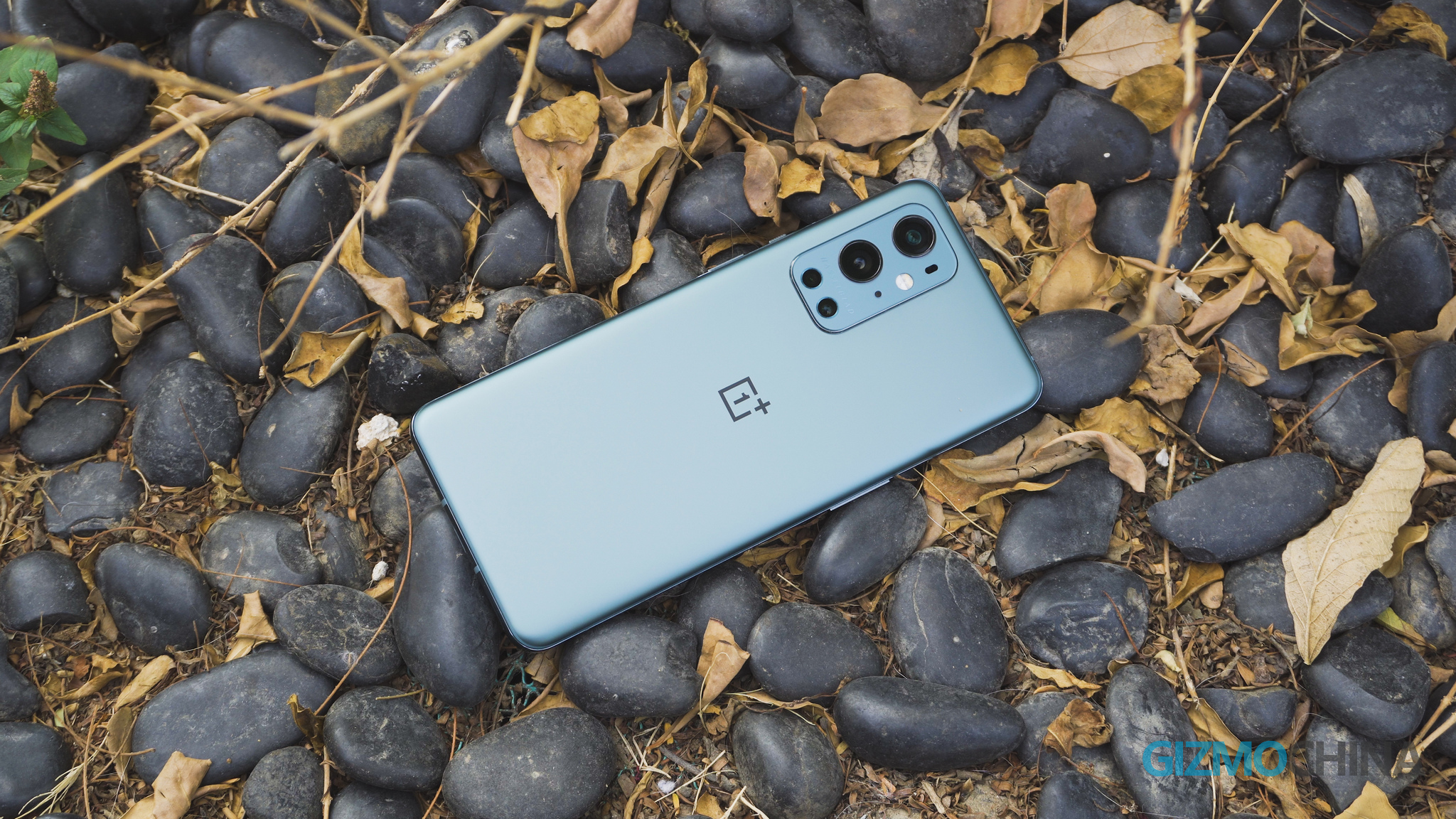
The OnePlus 8 Pro and the OnePlus 9 Pro are two of OnePlus flagships with an official IP rating. However, OnePlus doesn’t market this feature, at least it didn’t do so for the OnePlus 9 Pro. If you are wondering why then you will be interested in the CEO’s explanation.
Pete Lau (Liu Zuohu) took to Weibo to reaffirm that the OnePlus 9 Pro has an IP68 waterproof and dustproof rating which he says is evidence of the phone’s durability and higher quality. However, they do not market the feature just like a lot of other brands because the testing to receive the rating is done under specific laboratory conditions.
Since usage and operating conditions will vary from person to person, it is impossible to meet the laboratory conditions that earned the device its IP rating. This is why even if the device meets the IP rating requirement, it is not recommended to market the feature.
Save for rugged phones, most manufacturers don’t advertise the IP rating of their phones. Not only don’t they advertise it but damages caused by liquids are not covered under warranty. OnePlus even says on the OnePlus 9 Pro’s product page that water and dust resistance may reduce as the device ages.
The OnePlus 8 Pro, OnePlus 9 Pro, and OnePlus 9 (T-Mobile version) are the OnePlus phones with an official IP68 rating. These phones will survive an accidental drop in water or a spill but we will advise users to not intentionally immerse their phones in water just for the fun of it.
Speaking of smart wearables, the smart band is definitely the most popular category in terms of its rich fitness-tracking features and great value for money.
For years, HUAWEI wasn’t probably the first brand name that came into your mind for smart wearables. However, this year, you must seriously consider its latest fitness tracker first, the HUAWEI Band 6.
Huawei Band 6 Review: Design
In the past few years, we have stopped expecting fancy designs on a smart band product. A simple display with smart features was often enough.
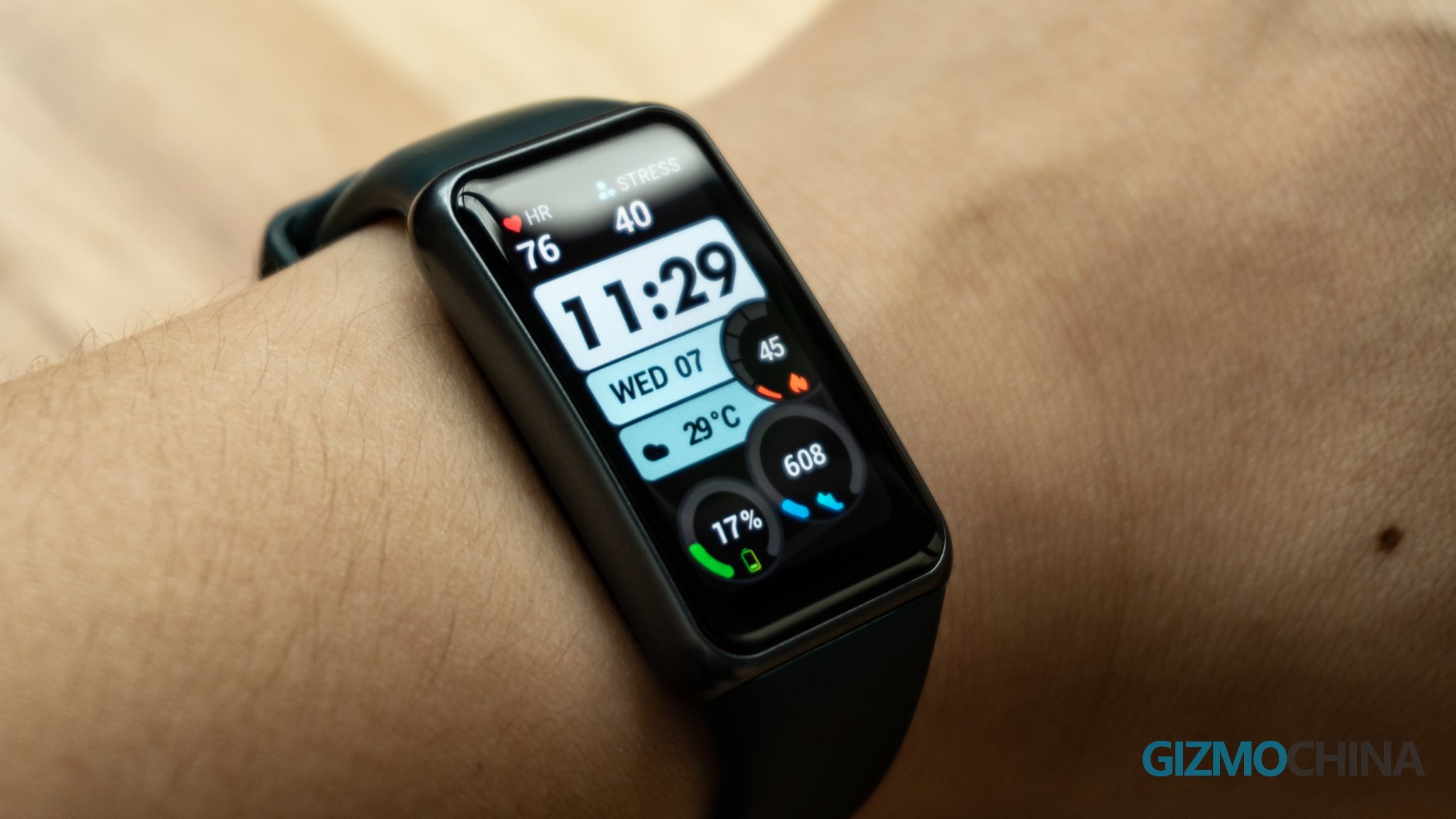
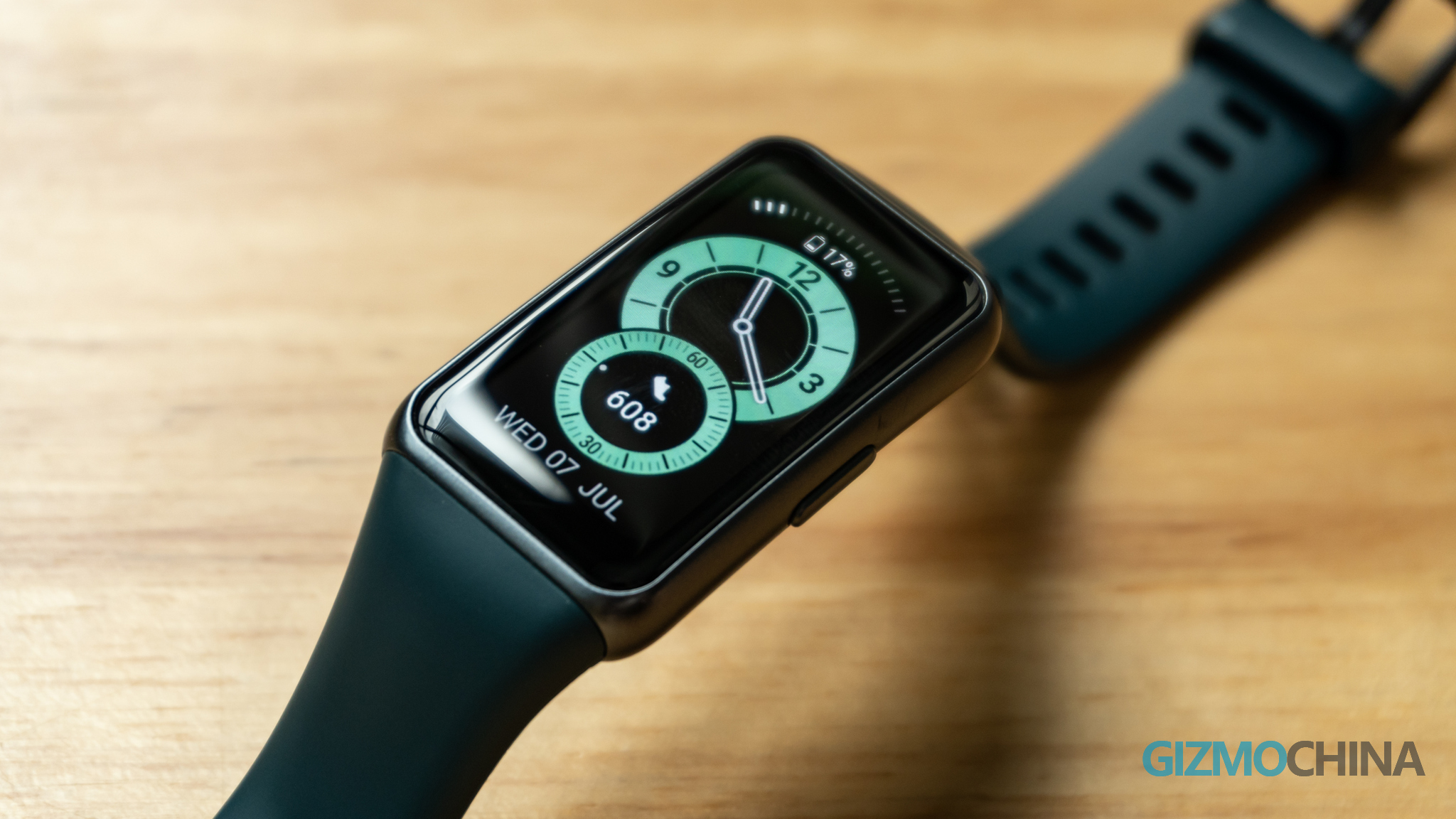
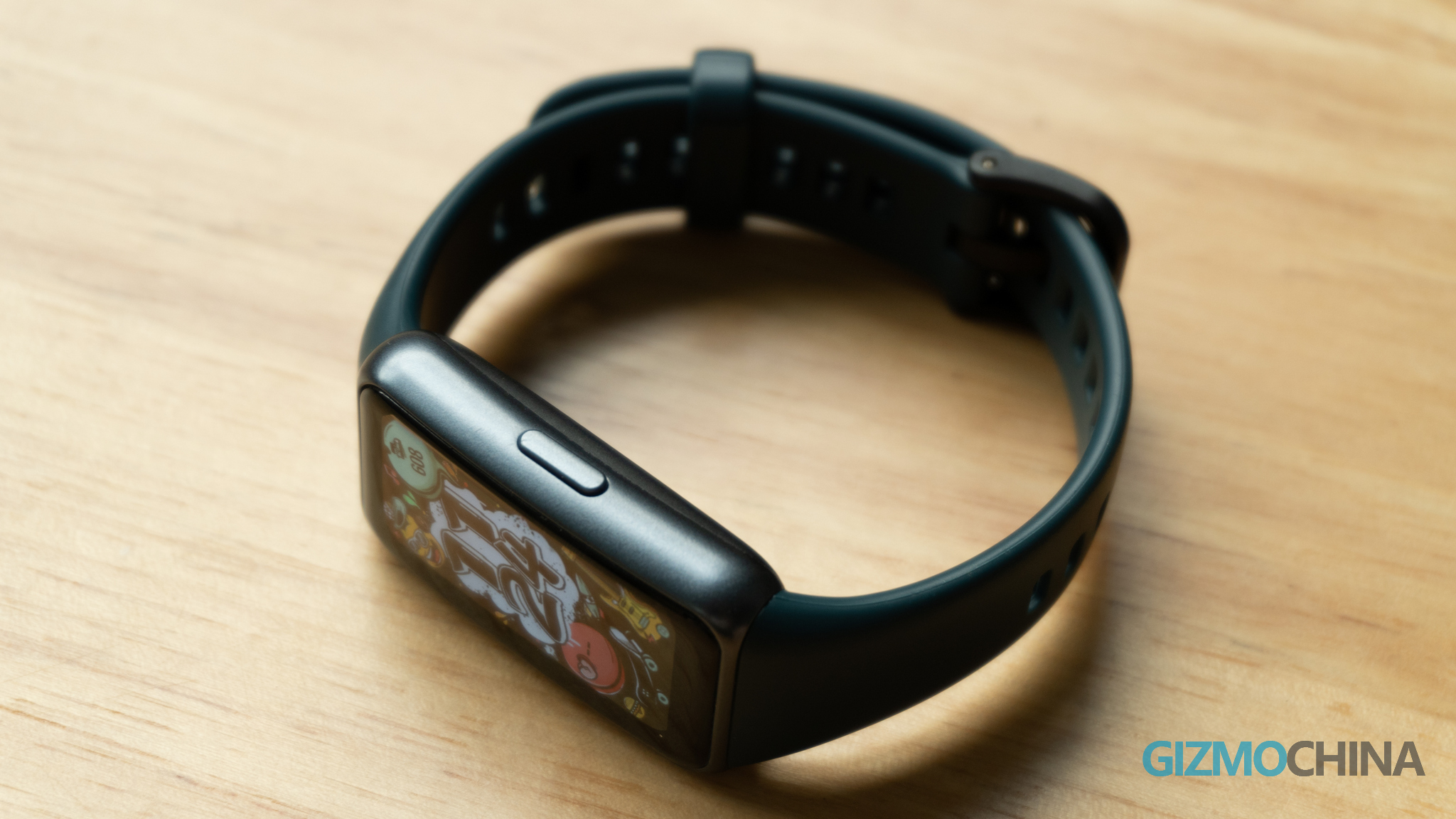
But take a look at the HUAWEI Band 6. It’s interesting that Huawei has revamped the design of the Band 6. Its 1.47-inch AMOLED rectangular display makes it stand out from the competition. This display can almost catch up to the display on the Huawei Watch Fit.
Compared to another hot smart band, the Mi Band 6, this display form factor is better to show content with reasonable interface layouts. And more importantly, the thinner dial (10.99mm) allows the band to fit to my wrist skin better, which greatly reduces the discomfort I feel when wearing bands for a long time and even sleeping with it.
The skin-friendly silicone strap is removable. Huawei officially offers the changeable straps in 4 colors (Black, Orange, Green, and Pink).
Huawei Band 6 Review: Fitness & Health features
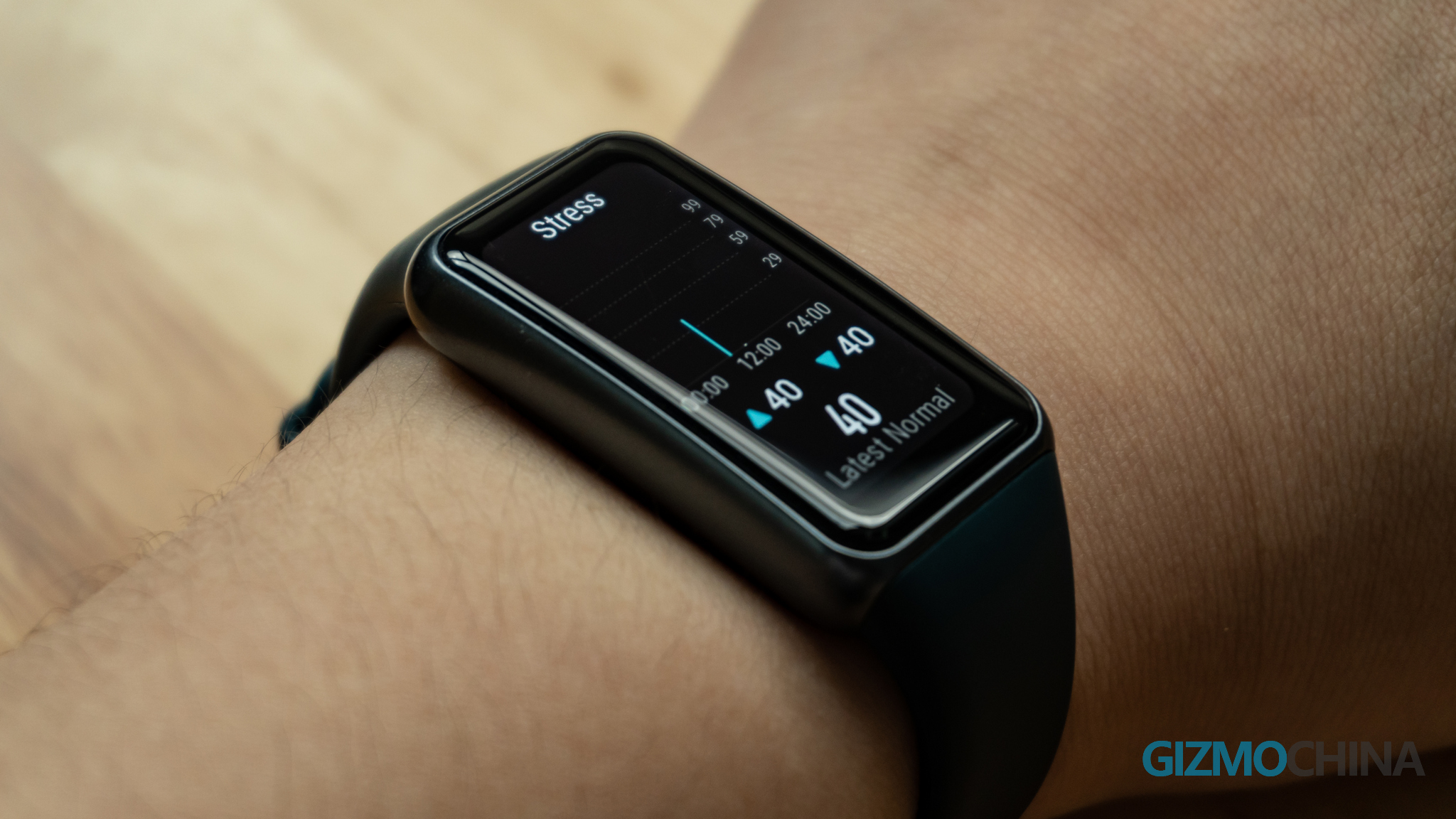
It’s obvious that HUAWEI has made great efforts to improve its health-centric products this year. As HUAWEI’s entry-level fitness tracker, the HUAWEI Band 6 is able to track all the basic health data that you can have on a basic wrist wearable, including step count, all-day heart rate, all-day SpO², caloric burn, all-day stress, sleep, and so on. It also supports 96 workout modes, which is quite rare in this price range, although out of the 96, only 85 modes support basic tracking. With the support of Huawei’s professional sports algorithms, the other 11 modes are much detailed and professional in fitness tracking. Under the 11 modes, in addition to basic activity tracking, users can check their maximum oxygen uptake, recovery time, and training stress.
For example, when tracking a run the band will give you accurate route, pace frequency and length, training stress, recovery time, and more. And all these data will immediately be sync to the connected smartphone, which is even more detailed, and the app can accordingly generate a short video of the dynamic route on the map.
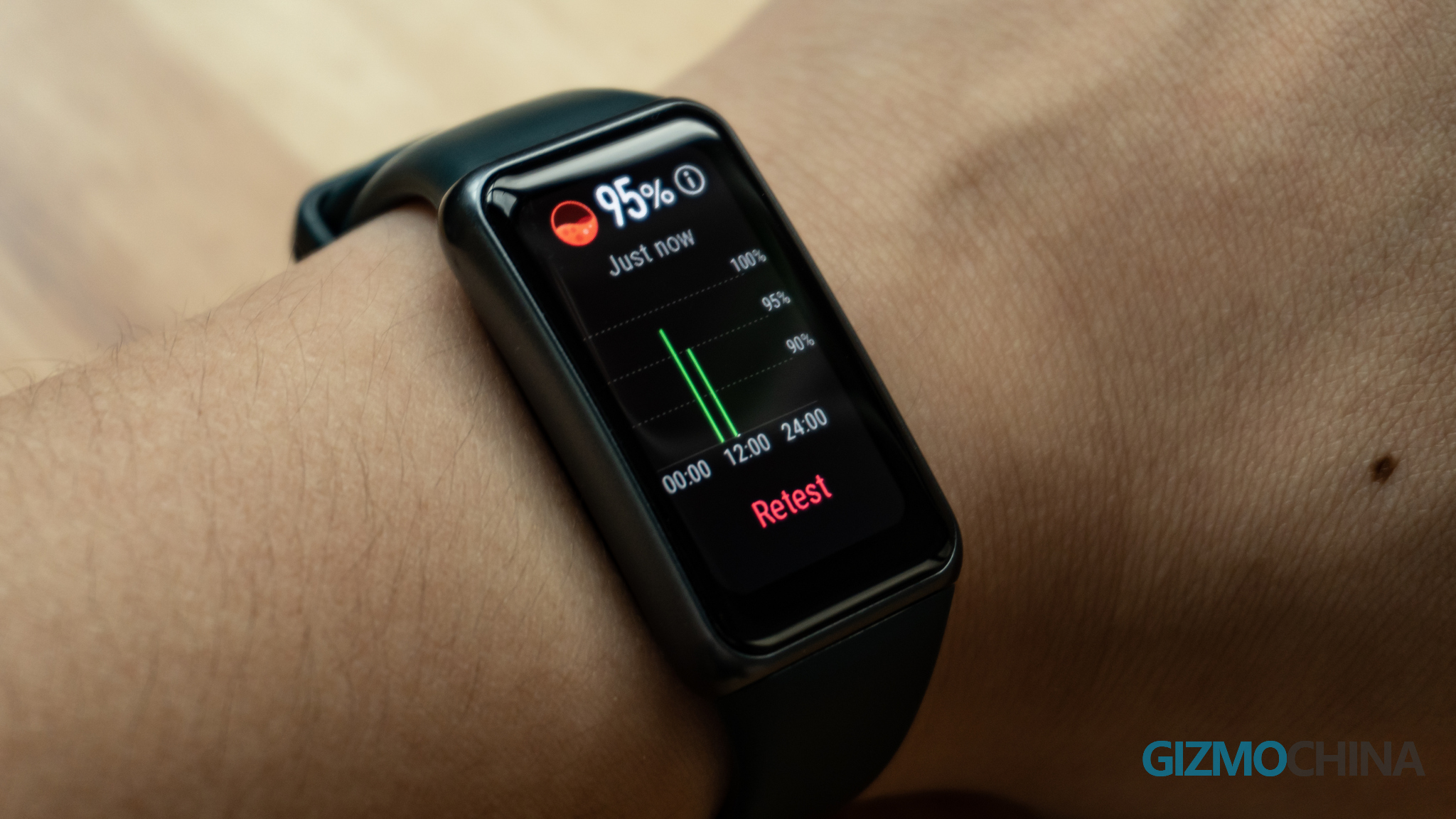
Besides all-day heart rate tracking, the Huawei Band 6 supports all-day blood oxygen monitoring too, which is not available even on the Mi Band 6. And the all-day blood oxygen monitoring can work well with its professional sleep monitoring, and give users more accurate records and advice for improving sleep quality. In our experience, Huawei’s TruSleep™ technology was more accurate and detailed in sleep tracking, and the results seem to be better than the Mi Band’s. Actually, it’s rare that a budget tracker can track blood oxygen all day.
Huawei Band 6 Review: Software
About the band’s software support, the Huawei Health app is one of the most detailed and functional fitness tracking APPs that we’ve seen on the Android platform. But the app in iOS is not as well-optimized as on Android. For example, camera remote control is not available on iOS, and neither is the music control feature. But if you are using an Android phone, especially a Huawei phone, the software support is quite satisfying. Or you can also connect Huawei Health to Google Fit and check all the health data in the Google app. But it seems that the HUAWEI Band 6 doesn’t support the connection with other health Apps.
Most notably, the software of the band itself is quite simple, which means it doesn’t support the installation of third-party apps. But on the other hand, the lightweight software also leads to a smooth touch response. During oue 10-day use, the band rarely lagged or confused me with its software.
The Band supports 5ATM waterproof rating, which means that it can be used for shallow-water activities such as normal swimming. But it is not suitable for underwater activities like diving.
Huawei Band 6 Review: Battery Life
As for its battery life, considering that we turned on almost all tracking features, I have no complaints about it since I charged it once around 10 days ago. And it still has 13% of power left. As estimated, it’s quite safe to wear it for around 10 days in a heavy use routine without charging it.
Considering the HUAWEI Band 6 is a well-functional, inexpensive fitness tracker, by far it is at the top of our recommended list. If you are simply looking for a reliable budget health tracker with good software experience, the Huawei Band 6 is really a safe option for you in 2021.
Compatible Operating System: Android 4.4 and above, iOS 9.0 and above
8 Sports mode
Heart Rate Monitor
Blood Pressure Monitor
Sleep Tracker
Pedometer
Calorie counter
Sedentary reminder
Weather Forecast
Music Control
Waterproof
Interchangeable Straps
Battery life: 5 days on normal mode and 30 days on standby mode
Charging time: 2 hours
Colors: Black, Silver
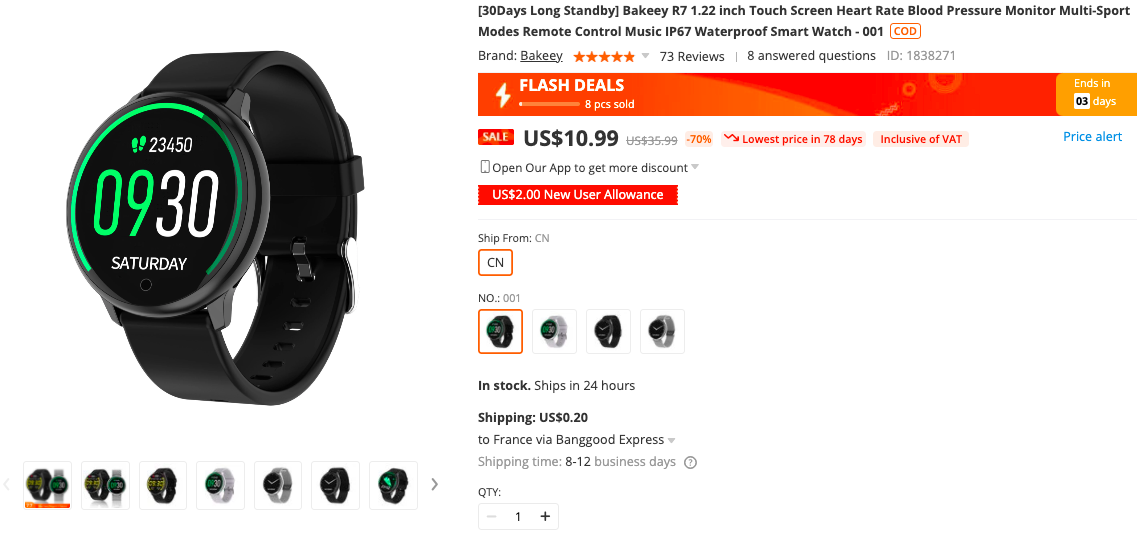
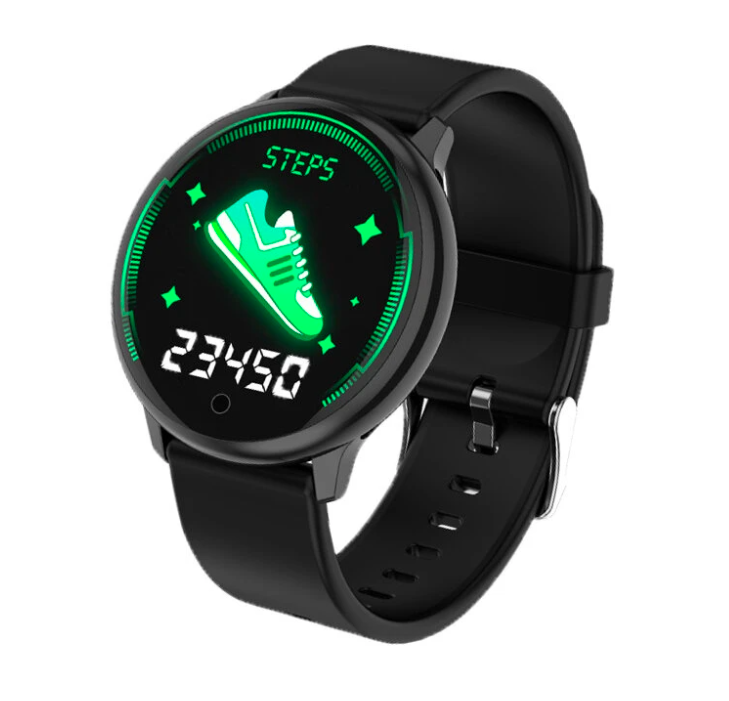
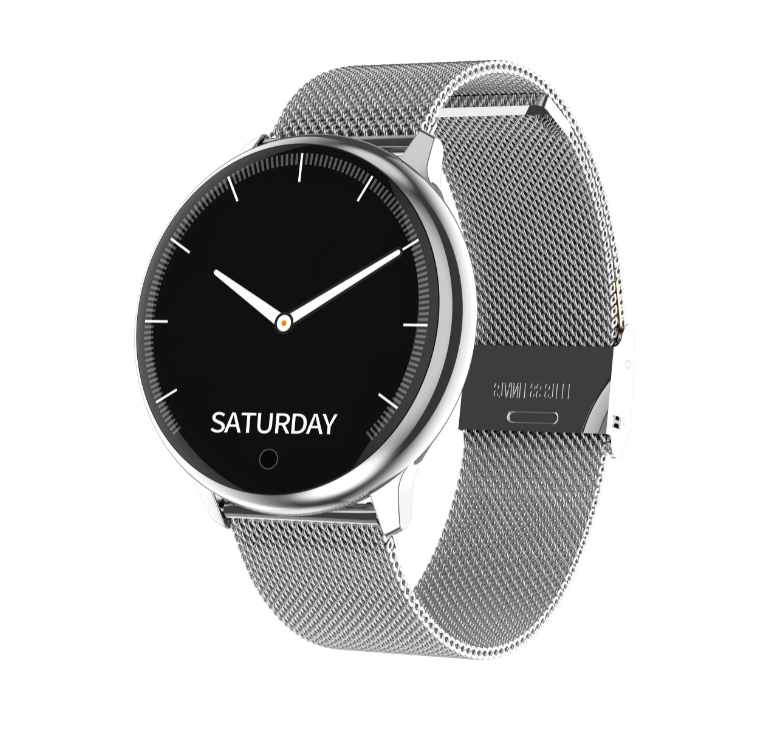
The retail price for this Sports Smart Watch is $20. But for the next 3 days, you can buy Bakeey R7 Smart Watch for a discounted price of $10.99 only at Banggood. Please note that this price is applicable only to the silicone strap version. However, you can buy the metal strap version for $11.99 only. This flash deal ends in the next 3 days. So place your order asap.
For more information on such exciting deals and offers check out ourdeals hub.
* Please Note: When you buy something using the links in our articles, we may earn a small commission at no cost to you.
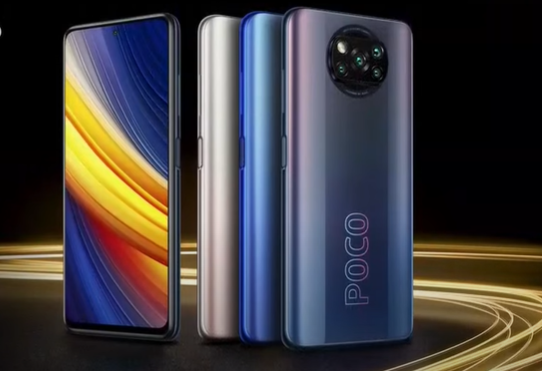
Poco has provided an update for limited owners of its Poco X3 Pro already sold in India. The MIUI 12.5 software update is being pushed to a limited number of devices in India and monitored for a seamless update and improved performance of the X3 Pro. If this first stage of the rollout goes smoothly, it will be expanded to cover all Poco X3 Pro units already sold in the subcontinent.
The MIUI update is covered by an 830MB download that encompasses all the essential aspects of the user interface for all-round improved performance. The June 2021 current security patches are available with the download, and this will bring the Poco X3 Pro up to speed on that aspect. The operational aspects of the latest update will mean that we could see a faster operation of the device across several fronts. The update will also mean that there will be custom adjustments on the device, a more responsive effect of hand gestures, and greater rendering power. Poco says on the whole that the latest MIUI 12.5 update will bring an overall lighter and faster interface, which will also be durable.
Some observed bugs have also been fixed with the latest update, thus enhancing notifications and notification badges. A gesture shortcut has been added to the Notes app on the Poco X3 Pro, with the latest MIUI 12.5 update. The Notes app seems to have undergone a complete revamp, with dynamic layouts, mind maps with complex structures, and more significant sketching and doodling.
It is not clear at this time when a full rollout will commence, but we expect the assessment of the update on the limited units will be rapid so that all users of the Poco X3 Pro in India will subsequently enjoy better performances of their devices.
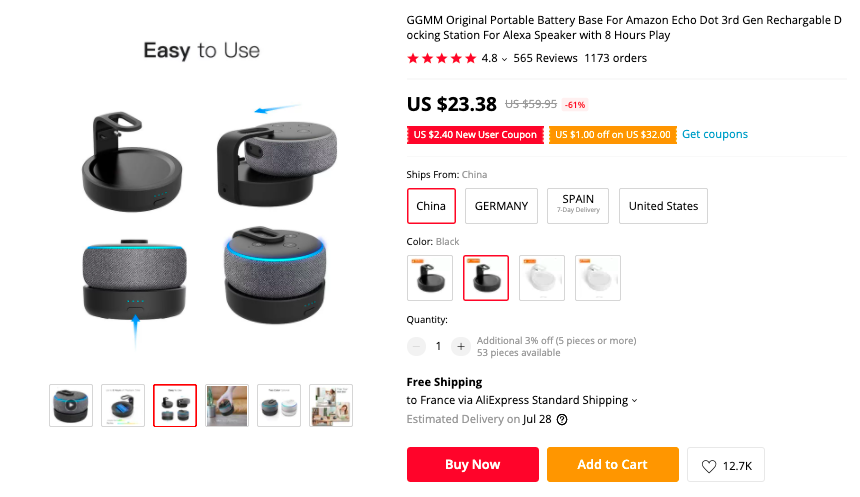
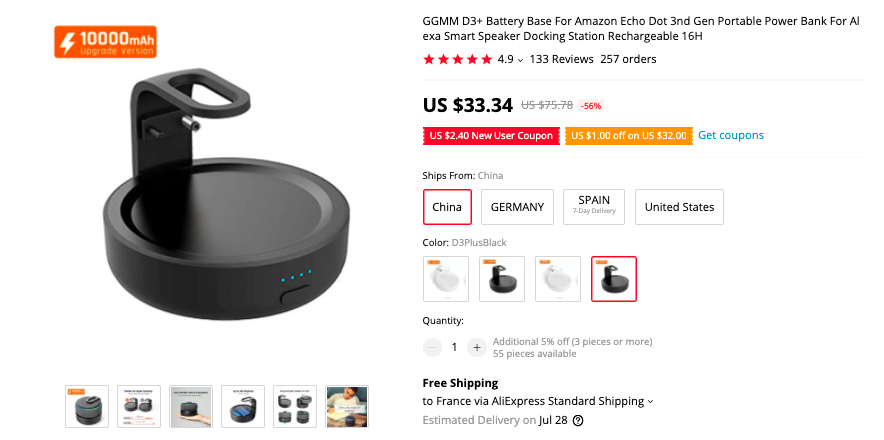
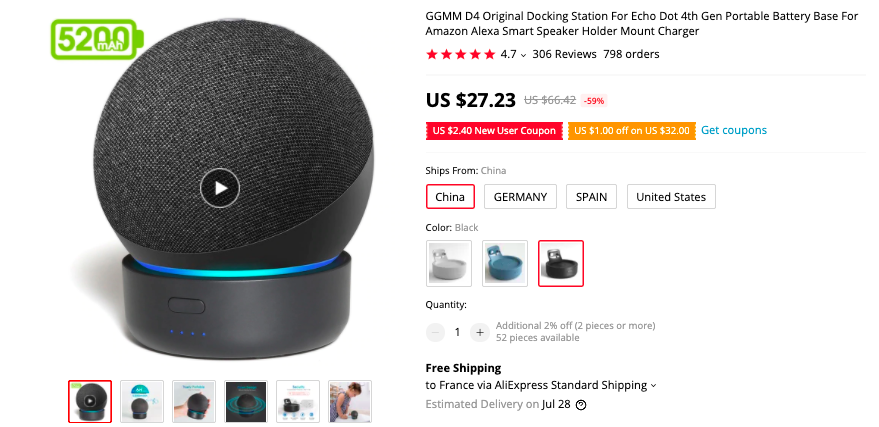
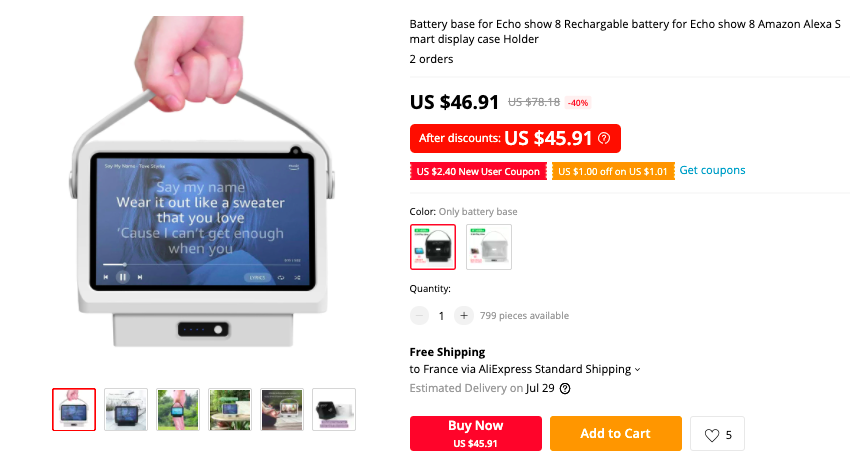
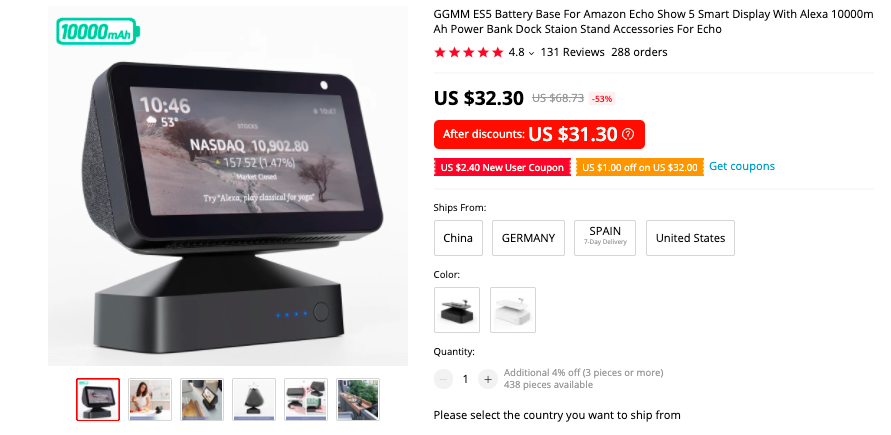
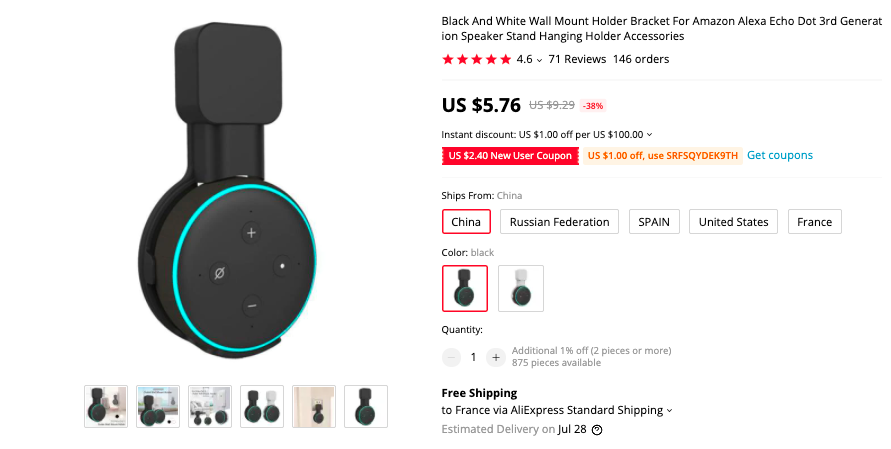
Smart Speakers are not only popular amongst tech enthusiasts but also regular consumers. If you are a proud owner of Amazon Alexa or are planning to buy one in the future then check out this list of smart battery bases which will make your speaker truly wire-free and portable.
Performance evaluation platform Geekbench has removed the OnePlus 9 Pro smartphone from its database amidst claims that OnePlus seemingly faked the device’s performance, using its touted OxygenOS Android overlay to throttle the processor performance of the device.
OnePlus has continued to tout top-notch device optimization for its products during marketing campaigns. The claims also extend to top performance scores for OnePlus devices across several evaluation platforms, including Geekbench. In an obvious deeper look into the famed performance metrics attributed to the OnePlus 9 Pro, Anandtech has found out that the OxygenOS was throttling the phone’s processor severely when using some popular apps and OnePlus own in-built applications. The OxygenOS could be providing some seemingly sabotaging effect on the Snapdragon 888 processor that powers the OnePlus 9 Pro.
Obviously, the throttling effect was not used to prolong battery life or prevent overheating, which are valid optimization moves. However, the throttling was seen as a move to have an improved performance rating in evaluation platforms like Geekbench and a few other issues.
Geekbench thus decided to delist the OnePlus 9 Pro from its database due to the observed dissonance relating to the processor benchmarks of the device. The move by Geekbench is a temporary one until all grey areas relating to the performance rating of the OnePlus 9 Pro are fully ascertained an as well as further clarification from the manufacturer. Geekbench has further expanded its scrutiny of the OnePlus lineup, as it will be examining several OnePlus smartphones whether there are issues on the processor benchmarks attached to these devices. And if these OnePlus devices fail the benchmark scrutiny, Geekbench will also delist them from its database.
The Geekbench move could spell a massive blow to OnePlus, which has always pointed to its excellent performance over the years. There had been no official reaction by OnePlus yet on the matter.
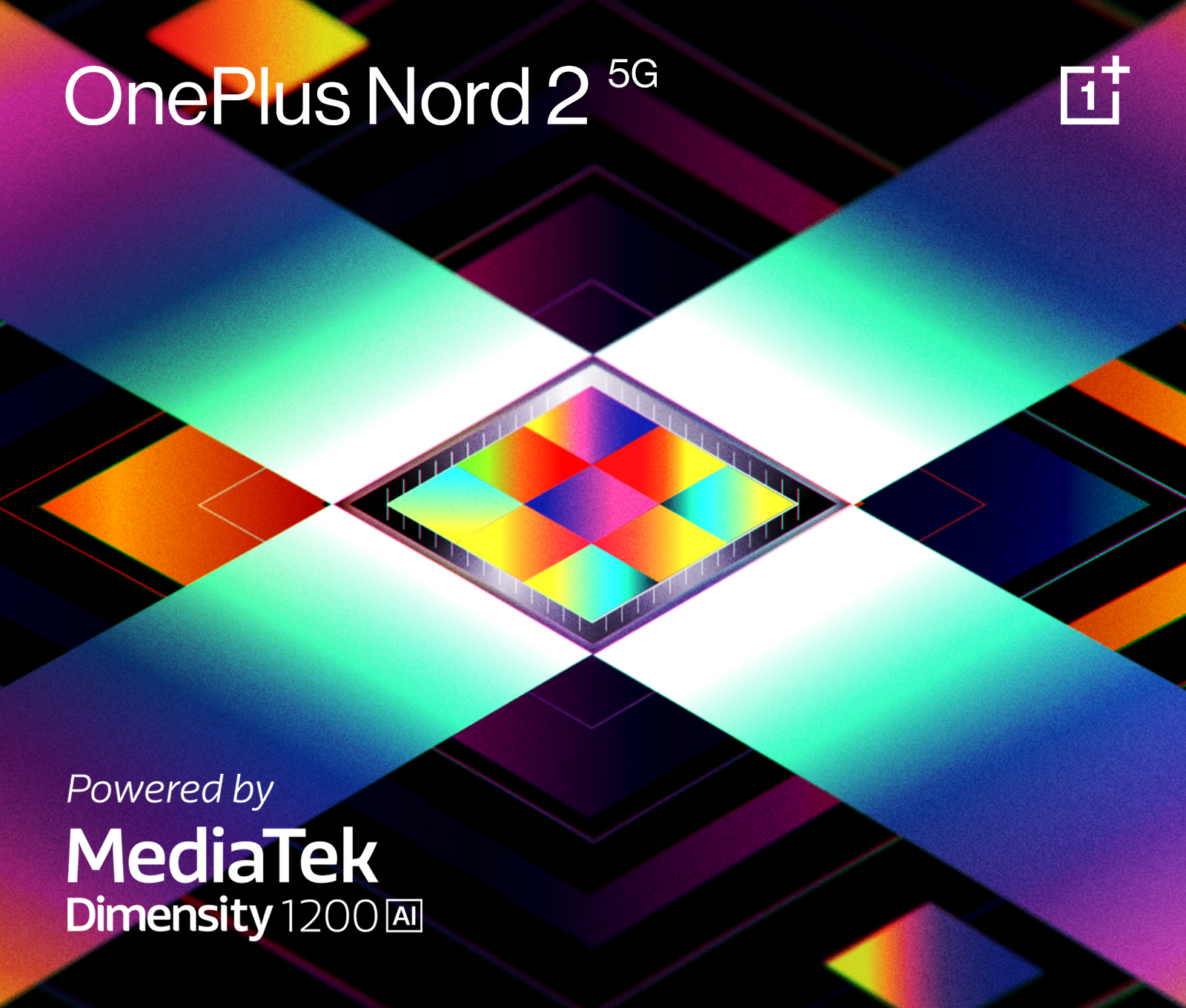
OnePlus has officially confirmed its upcoming Nord device, the OnePlus Nord 2 5G. The company also revealed that the phone will be powered by the flagship-grade Dimensity 1200-AI processor.
Yes, the brand is officially calling it the Dimensity 1200-AI. The company says that it has worked closely with MediaTek to ‘enhance AI-based features’. So this is essentially a customized chip from MediaTek in collaboration with OnePlus as a part of its Dimensity 5G Open Resource Architecture.
“The Dimensity 1200-AI is the first example of MediaTek’s Dimensity Open Resource Architecture initiative, optimizing the powerful Dimensity 1200 5G chipset to deliver a customized experience for OnePlus users,” said Dr. JC Hsu, Corporate VP and GM of MediaTek’s Wireless Communications Business Unit. “As AI is reshaping the future of chipset technology, this initiative gives brands like OnePlus access to the latest AI-powered capabilities with the flexibility to innovate in new and exciting ways.”
This customized Dimensity 1200-AI chip will integrate several AI-based enhancements, especially in the camera and display departments. For example, OnePlus reveals that thanks to the AI Photo Enhancement, the Nord 2 5G can recognize up to 22 different photography scenarios and can even automatically adjust color tones and contrast in the photos taken in low-light situations. The phone’s AI Video Enhancement feature can enable live HDR effects in real-time at the time of recording. With the help of DOL-HDR tech, the phone can adjust tuning and image quality during live recording and even enhance the color range and accuracy of the videos, thereby increasing dynamic range and improving the highlight retention. In the display department, the phone will feature AI Color Boost technology which automatically converts standard content to HDR while AI Resolution Boost tech can automatically upscale video resolution to HD.
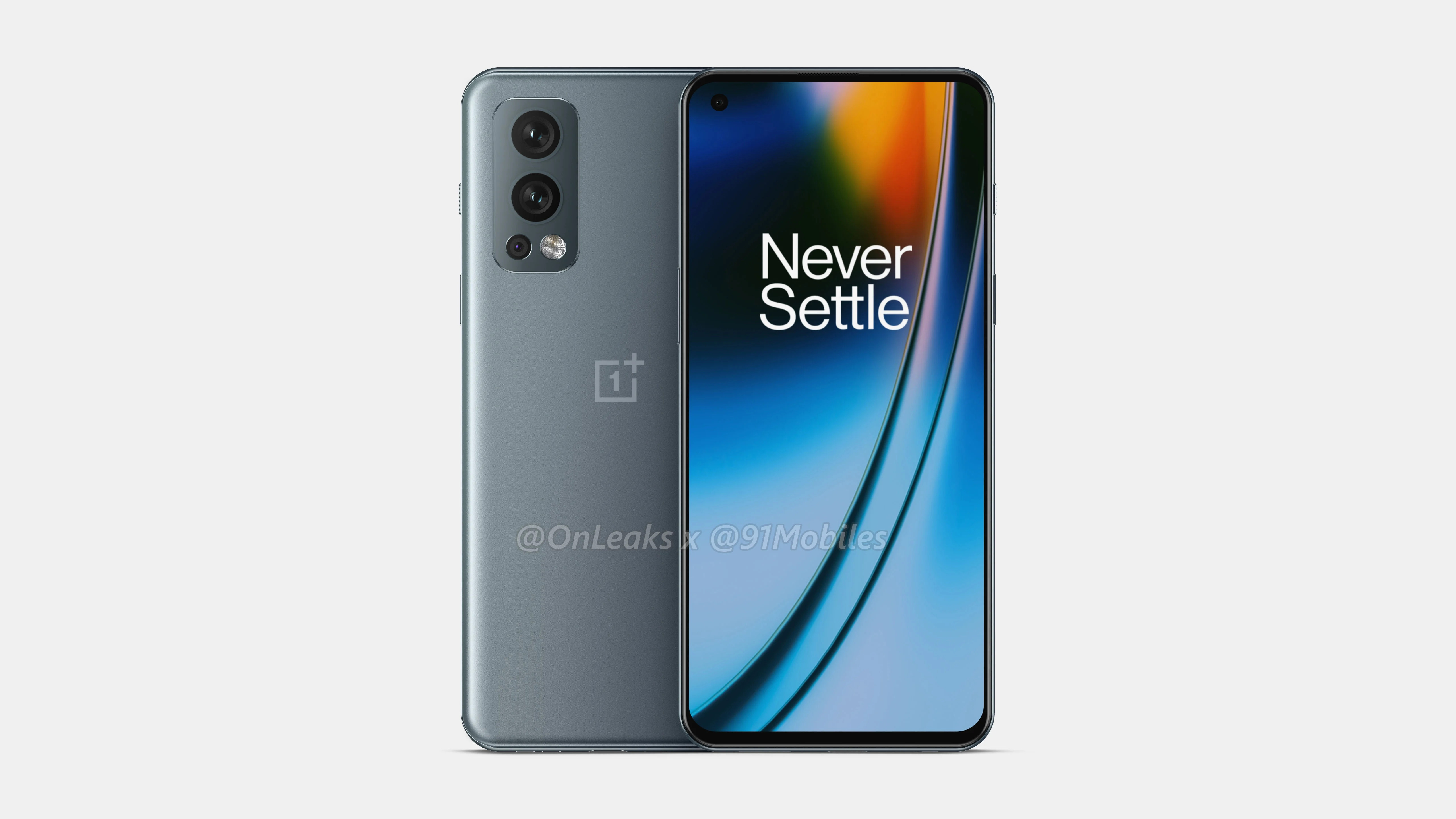
OnePlus Nord 2 render by Onleaks
While OnePlus has confirmed the chip, it is yet to announce an official launch date for the Nord 2 5G. However, given that official teasers have started to emerge, it could be announced soon, possibly by the end of July, as revealed in a previous leak.
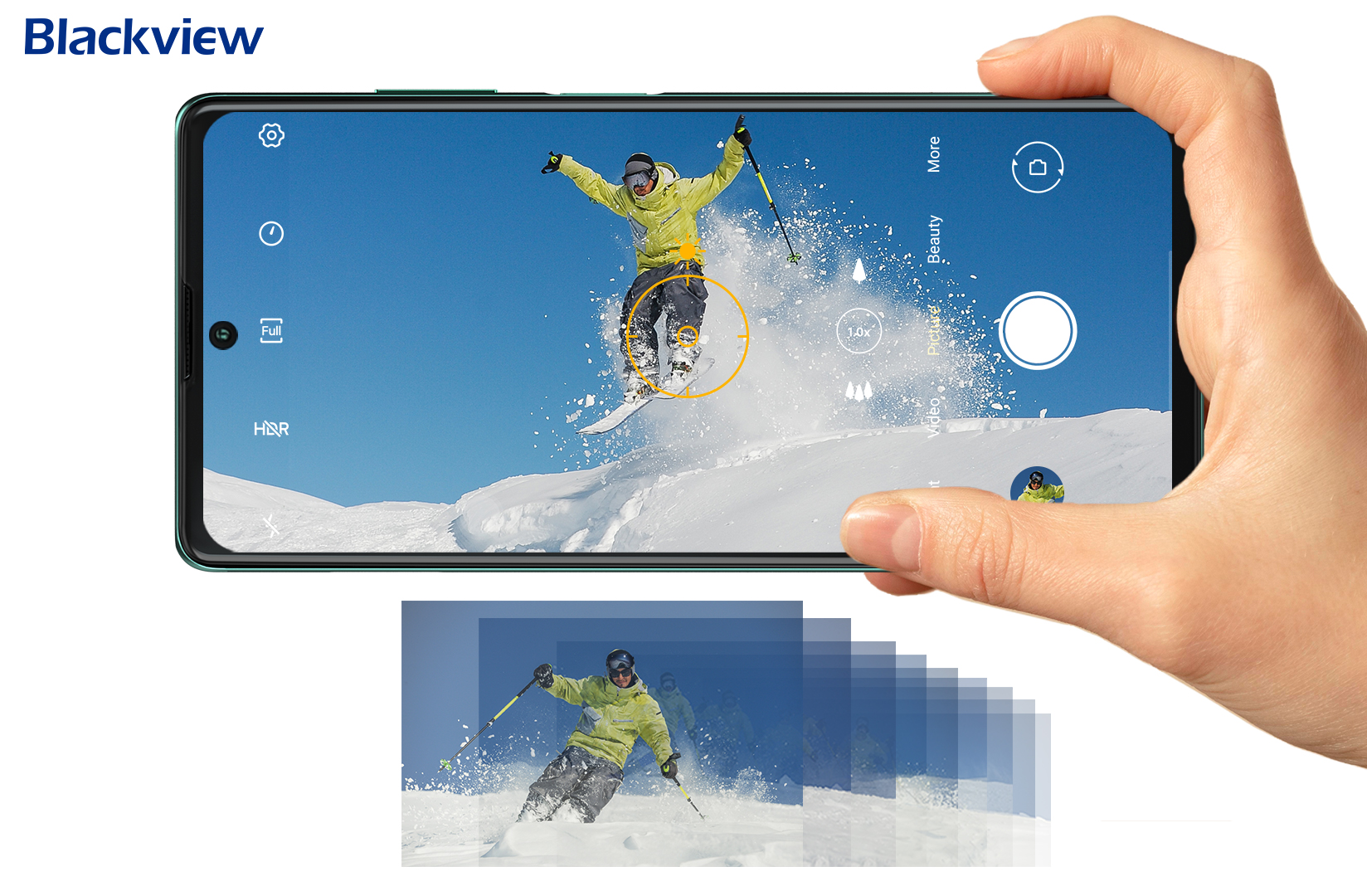
Blackview A100 was recently unveiled for the camera enthusiasts while offering commendable hardware. Considering the value-for-money aspect, the smartphone fared interestingly better than the Redmi 10X in our recent comparison. There are several other aspects that prove the mettle of Blackview A100 including its advanced camera. The smartphone can flawlessly capture detailed photos of the objects in motion.
Blackview A100 camera can quickly capture those impromptu moments without any blur in the photo. The super-advanced camera sensor can effectively auto-focus the fast-moving object within 0.03 seconds. Moreover, the burst shot can capture 10 shots in a second which is quite fast in comparison with other smartphone cameras.
Blackview uses a 12MP Sony camera having a large 1.4μm pixel size which enables it to capture maximum detail even in a low-light environment. The 12MP Sony IMX362 camera produces images that are easy to process due to pixel condensation. It takes less time to process the images and enables the smartphone to capture photos of fast-moving objects.
The smartphone uses a Dual Pixel Autofocus (DPAF) technology found in premium smartphones helps to produce a consistent and smooth focus for a wide range of photo and video applications. The DPAF technology is quite useful both in the video and still modes. It helps to keep the focus on the point.
Unlike Open-loop VCM, the Closed-loop VCM on Blackview A100 further reduces the shake and helps in efficient focusing. Furthermore, the HDR feature enhances the video recording especially in the night mode or while capturing the Portrait color.
The pixel binding technology is present in the Blackview 12MP primary sensor, which enables it to process high-quality and in-depth photos within a small processing time. Blackview has focused on pixel quality than pixel quantity as Apple did in iPhone 12.
Other Features and Pricing
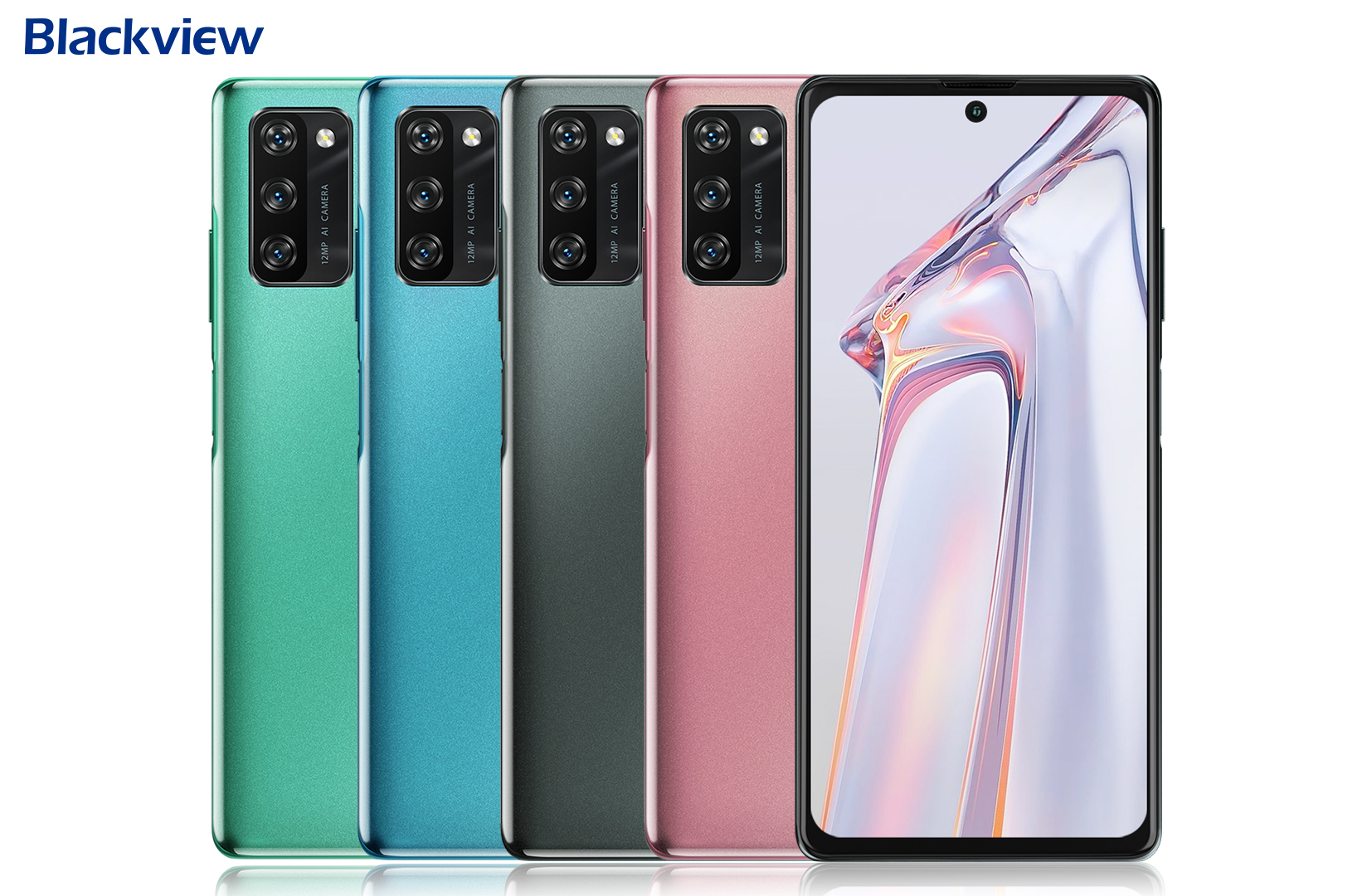
Blackview A100 comes with an expressive design and features a shining back designed with advanced vacuum plating. The smartphone is available for the price of $249.99.
Other primary specifications including a MediaTek Helio P70 SoC, 6GB RAM, 128GB internal storage, a 6.67-inch FHD+ display, and a 4680 mAh battery. The smartphone comes with a fingerprint sensor and a power button for easy accessibility. Over the top, it houses a multi-function NFC for touchless payments. It runs on DokeOS 2.0 based on Android 11. You can buy the Blackview A100 for $249 by heading over to the official website.
We use cookies on our website to give you the most relevant experience by remembering your preferences and repeat visits. By clicking “Accept”, you consent to the use of ALL the cookies.
This website uses cookies to improve your experience while you navigate through the website. Out of these, the cookies that are categorized as necessary are stored on your browser as they are essential for the working of basic functionalities of the website. We also use third-party cookies that help us analyze and understand how you use this website. These cookies will be stored in your browser only with your consent. You also have the option to opt-out of these cookies. But opting out of some of these cookies may affect your browsing experience.
Necessary cookies are absolutely essential for the website to function properly. This category only includes cookies that ensures basic functionalities and security features of the website. These cookies do not store any personal information.
Any cookies that may not be particularly necessary for the website to function and is used specifically to collect user personal data via analytics, ads, other embedded contents are termed as non-necessary cookies. It is mandatory to procure user consent prior to running these cookies on your website.