Advertisement

Moto G20 specifications, renders emerge before launch

Recent reports have revealed that Motorola is working on at least three new G-series smartphones such as Moto G20, Moto G40 Fusion, and Moto G60. A lot of information on the specs of the G40 Fusion and Moto G60 has appeared in recent reports. Now, 91mobiles has collaborated with reliable tipster Sudhanshu Ambhore to reveal the leaked specifications and renders of the Moto G20.

Moto G20 specifications (Rumored)

The Moto G20 measures 165.22 x 75.73 x 9.19mm and weighs 200 grams. It houses a 6.5-inch LCD panel that offers an HD+ resolution of 720 x 1600 pixels, a 20:9 aspect ratio, a 269ppi pixel density, and it also supports a 90Hz refresh rate.

Motorola Moto G20 render

Firing up the Moto G20 is the new Unisoc T700 octa-core processor that includes 2 x ARM Cortex-A75 processor clocking at 1.8GHz and 6 x ARM Cortex-A55 processor working at 1.8GHz. The SoC also includes Mali-G52 3EE 2-core graphics that clocks at 850MHz. The handset will offer users 4 GB of RAM. For storage, it will have a built-in capacity of 64 GB and a dedicated microSD card slot for additional storage.

The Moto G20 is powered by a 5,000mAh battery, but there is no confirmation on whether it will come with support for rapid charging. The device was recently spotted at the Geekbench benchmarking site with Android 11 OS.

Motorola Moto G20 render

The rectangle-shaped camera island available on the backside of the Moto G20 features a 48-megapixel primary camera with f/1.7 aperture, an 8-megapixel ultrawide camera with f/2.2 aperture, a 2-megapixel macro camera with f/2.4 aperture, and a 2-megapixel depth helper with f/2.4 aperture. The G20 will come with other features like a fingerprint reader, a 3.5mm audio jack, a USB-C port, a dedicated Google Assistant key, NFC, and dual-SIM support. A previous leak claimed that it could be priced around 150 euros in Spain. There is no word on the launch date of the Moto G20.

RELATED:

ZTE reveals Axon 30 Pro and Axon 30 Ultra color variants

ZTE will announce the Axon 30 series on Thursday, April 15. Three phones are expected to be announced, and ahead of the launch, the manufacturer has released the color variants the Axon 30 Pro and Axon 30 Ultra will be available in.

The Axon 30 will come in two color variants – Obsidian Black and “Misty Rain Blue”. The former is said to be inspired by the dark clouds formed by a volcano while the latter is inspired by the misty rain of the south of the Yangtze River. The two colors are shown in the image below.

ZTE Axon 30 color options
The ZTE Axon 30 will be available in two colors

For the Axon 30 Ultra, ZTE is doubling the color variants. The top-end model will come in black, blue, white, and coffee. Two of them (white and coffee) have Axon written on the back in a large font and ZTE says the coffee version is covered in plain leather.

The Axon 30 Pro and Axon 30 Ultra will be powered by the Snapdragon 888 processor. Both phones will have four rear cameras but of different configurations. The Aon 30 Pro will have a flat display with a centered punch hole while the Axon 30 Ultra will have a curved display with a centered punch hole and a 144Hz refresh rate.

ZTE has also revealed that the Axon 30 Ultra uses a non-stacked design, unlike other phones that use a stacked design for the internals. The manufacturer says that the advantages this design brings include better heat dissipation, stronger network signals, and a thinner body. It claims the phone is just 8.0mm thick (the frame measures 1.7mm in thickness) while the weight is given as 180 grams.

ZTE has also released two teaser videos for the Axon 30 Pro and Axon 30 Ultra that you can feast your eyes on before the launch on Thursday.


RELATED:

Nokia C10 vs Nokia C20: Specs Comparison

HMD Global just launched six phones in the global market. They belong to three series: C, G, and X. The C series always included the most affordable Nokia phones and it is the same for the new handsets launched: Nokia C10 and Nokia C20. This is a comparison between the Nokia C10 and the Nokia C20, but it won’t be like the other comparison we usually publish. We will describe the phones instead of focusing on their differences because there are only two important differences between the phones. We are talking about the processor and the memory configurations: for all the rest, they are pretty much the same.

Nokia C10 vs Nokia C20

Nokia C10 Nokia C20
DIMENSIONS AND WEIGHT 169.9 x 77.9 x 8.8 mm, 191 g 169.9 x 77.9 x 8.8 mm, 191 grams
DISPLAY  6.52 inches, 720 x 1600p (HD+), IPS LCD  6.52 inches, 720 x 1600p (HD+), IPS LCD
PROCESSOR Unisoc SC7331E, octa-core 1.3 GHz Unisoc SC9863A, octa-core 1.6 GHz
MEMORY 1 GB RAM, 16 GB – 2 GB RAM, 16 GB –  2 GB RAM, 32 GB – micro SD dedicated slot 1 GB RAM, 16 GB – 2 GB RAM, 32 GB – micro SD  dedicated Slot
SOFTWARE  Android 11 Go  Android 11 Go
CONNECTIVITY  Wi-Fi 802.11 b/g/n, Bluetooth 4.2, GPS Wi-Fi 802.11 b/g/n, Bluetooth 4.2, GPS
CAMERA 5 MP f/2.2
5 MP f/2.2 front camera
5 MP f/2.2
5 MP front camera
BATTERY  3000 mAh 3000 mAh
ADDITIONAL FEATURES Dual SIM slot Dual SIM slot

Design

Nokia C10 and Nokia C20 come with a pretty modern design for an entry-level phone. They have a display with narrow bezels and a waterdrop notch including the front camera. Unfortunately, you do not get a fingerprint reader with these devices. The body is made of cheap polycarbonate and there is a circular camera module in the middle of the rear side. The volume rocker and the power key are placed on the right side of the phone. The upper border houses a 3.5 mm audio jack allowing you to connect your headphones, while the inferior border includes the speaker, the microphone, and a micro USB 2.0 port for charging the battery.


Display

The display of the Nokia C10 and the Nokia C20 has a diagonal of 6.52 inches and shows images with an HD+ resolution (720 x 1600 pixels). It has a 20:9 aspect ratio and it is an IPS LCD panel. Do not expect a high image quality from this panel: it is a low-end display with a sufficient but not exciting resolution, and not so accurate colors. The display covers more than 75 percent of the front panel and comes with a waterdrop notch for the front camera.


Specs & Software

The Nokia C10 and the Nokia C20 come with entry-level processors manufactured by Unisoc. The Nokia C10 has a Unisoc SC7331E, while the Nokia C20 has a Unisoc SC9863A. The latter is more powerful than the former: it is an octa-core processor (and not quad-core like the SC7331E) and it provides a higher clock frequency. Nokia C10 debuted in three memory configurations: the most affordable one has 1 GB of RAM and 16 GB of internal storage, then you get a 2/16 GB version and a 2/32 GB configuration if you need more internal storage. The native storage is expandable with a micro SD. The Nokia C20 comes in two memory options: 1/16 GB and 2/32 GB. If it was not for the presence of Android 11 Go as the operating system, these hardware departments would not be sufficient to guarantee decent performance with daily usage. But Android 11 Go Edition is an enlightened version of the operating system made for devices with outdated and low-end hardware departments. Nokia C10 and C20 will get 2 years of major Android updates and two years of security updates.


Camera

Nokia C10 and Nokia C20 sport entry-level cameras: unfortunately, they do not provide high-end camera performance and they are disappointing for those who are searching for a decent camera phone. They have just one camera on the rear side: a 5 MP sensor. The same 5 MP sensor is placed on the waterdrop notch above the display, but the interesting thing is that it is paired with a front-facing LED flash allowing to shoot selfies even in the dark.


Battery

Nokia C10 and Nokia C20 are equipped with a 3000 mAh battery. It is not a big battery and it is below-average if compared to other phones, but given that these devices come with entry-level specifications (such as the HD+ display and the low-end Unisoc chipset), it is more than sufficient to guarantee a good battery life.


Price

The starting price tag of the Nokia C10 in the global market is €80/$95, while the Nokia C20 starts from €90/$108. If you were wondering which one to go for, given the narrow price difference, we strongly recommend opting for the Nokia C20 in order to get a better mobile platform. For an entry-level phone like these, it is important to have at least an octa-core processor in order to get decent performance.


Nokia C10 vs Nokia C20: PRO and CONS

Nokia C10

PRO

  • More affordable
  • Android 11 Go
  • Front-facing LED flash
  • Long software support

CONS

  • Entry-level hardware


Nokia C20

PRO

  • Android 11 Go
  • Front-facing LED flash
  • Better chipset
  • Long software support

CONS

  • Higher price


RELATED

Chuwi CoreBook Xe with Intel DG1 up for Pre-Orders

Chuwi has released a handful of affordable laptops in the past, including the HeroBook Plus. Now, as promised in the last month, the company has launched CoreBook Xe and its pre-order has been opened now.

Must See: Chuwi CoreBook Xe launching soon, features Intel’s DG1 discrete GPU

The CoreBook Xe features Intel’s first DG1 graphics chip and a 10th-gen Core i5 processor. As mentioned, the laptop is now up for pre-order. Most importantly you can subscribe with your email address and get a $100 coupon, laptop bag and other exclusive gifts as early bird goodies.

If you missed it, the CoreBook XE is powered by Intel’s Iris XE Max, a discrete graphics card based on the XE-LP graphics architecture with 96 execution units, 1.65GHz core frequency, and 4GB LPDDR4X graphics memory. Certain reports point to the XE Max being better than the NVIDIA MX350 and even better than the current high-performance MX450. With the Integrated Graphics unit, the laptop can easily render video clips and play graphics-intense games with a great experience.

As mentioned earlier, the CoreBook XE is equipped with a 10-generation Core, i5-10210U with four cores and eight threads. It boasts a 15.6-inch IPS full screen, 8GB DDR4 memory, 512G PCIe SSD storage, 90Wh long battery life. In the paper, it’s a decent laptop for business/official purpose. Coming to the build quality, the laptop adopts a metal ultra-thin body design suitable for office work culture. Thereby “The Efficient Business Laptop” tagline used by Chuwi for marketing.

The CoreBook Xe is all set to release in the market on April 20, 2021, for just $599 with the $100 coupon applied. Reiterating, subscribe by entering your email address at the event’s website, to get the $100 discount and a free laptop bag!

Related: Chuwi CoreBook Hands-On: A Beautiful $500 Fingerprint Equipped Convertible With Stylus

These LG phones will get Android 11, Android 12, Android 13 updates

Last week, LG officially announced that it’s shutting down its mobile phone business. At around the same time, the South Korean electronics giant confirmed that it will provide three years of Android updates (including Android 13) for its premium smartphones and up to either Android 11 or Android 12 for some handsets. Now, the company has officially revealed the devices that are eligible for these updates.

LG Logo Basic Featured

According to a support page on the LG Korea website, the following LG phones will be updated to Android 13.

LG Android 13 Eligible / Supported Devices

  • LG VELVET
  • LG VELVET LTE
  • LG WING

Similarly, the following LG smartphones will get the Android 12 update.

LG Android 12 Eligible / Supported Devices

  • LG WING
  • LG VELVET
  • LG VELVET LTE
  • LG V50S
  • LG V50
  • LG G8
  • LG Q31
  • LG Q52
  • LG Q92

Last but not least, as per both LG Korea and LG Germany, the below-listed handsets have either received or will get the Android 11 update.

LG Android 11 Eligible / Supported Devices

  • LG Wing
  • LG VELVET
  • LG VELVET LTE
  • LG V50S
  • LG V50
  • LG G8
  • LG G8X
  • LG G8S
  • LG K52
  • LG K42
  • LG Q31
  • LG Q51
  • LG Q52
  • LG Q61
  • LG Q70
  • LG Q92
  • LG Q9 One

That said, although LG has confirmed future Android updates for the above-mentioned smartphones, the availability may vary across regions and will also depend on Google’s policy.


RELATED:


(Via)

This Apple AirPods Max Clone looks like the Original despite selling for just $10

Clones of Apple products are common in every part of the world and China is a place where we would find products that are so close to the original ones, at least in appearance. In fact, we recently saw a clone of the upcoming AirPods 3 as well. Amidst such craze for Apple products, we have managed to get a clone version of the Apple AirPods Max selling at as low as $10. So, let’s take a look and see how well it tries to replicate the original version.

Right off the bat, this clone of the Apple AirPods Max comes in a box with an image of the headphones in the Grey version. The model is mentioned as P9 and it is ‘Made in China’. Opening it up, and we see a design that is very close to the AirPods Max. In case you don’t know, Apple launched its first-ever over-the-ear wireless headphones back in December.

Apple’s AirPods Max is officially selling for 4,399 yuan in China and $549 in the USA. However, you can get this clone version for as low as 65 yuan (around $10) in China. Talking about the design, we managed to get hold of these cheap knock-offs in Grey and Blue colors.

Taking a closer look at the body, we immediately find that it is built entirely on plastic but it has a silver finish to the handles to make it look like stainless steel. This is a no-brainer considering you are getting a knock-off for such a lower price.

Further, the ear cup cushions and the headrest aren’t knit mesh like the original version but they are typical soft pads.

There are four buttons on the side for media controls. It’s also worth noting that it doesn’t have a Digital crown like the original AirPods Max.

We do see features like 50mm HiFi Dynamic driver coil, high-fidelity Audio, SBC, and AAC audio codec support written on the box, but honestly, don’t expect much in terms of audio quality or connectivity.

If you want to specifically know about its audio quality, we can say that it obviously isn’t good. It’s okay for the price though but for a product that’s compared to the original AirPods Max in terms of audio quality., it’s in no way comparable. After all, it’s just a clone version and sells for just around $10.

To sum up, the clone version of the AirPods Max definitely impresses us in terms of looks. But we would have liked to see that beautiful digital crown on the top of the earcup.

What do you think about this clone version? What are other interesting Apple clones that you have come across? Do let us know in the comments below.

RELATED:

Nokia 2.2 starts receiving Android 11 update

HMD Global, the company behind Nokia smartphones was once known for updating its portfolio faster than most other companies. However, that’s not the case anymore. The firm has missed on delivering the Android 11 update to some phones, which were supposed to get it in the last quarter. One of those handsets is Nokia 2.2 and it is now finally receiving the promised system update.

Nokia 2.2 Steel Featured

The Nokia 2.2 Android 11 update comes a few days after the company rolled this update for Nokia 4.1. A few days before that, this very same system update was also made available for Nokia 2.3, Nokia 8.1, and Nokia 3.2.

According to the official announcement post on Nokia Phones Community, the Android 11 update for the Nokia 2.2 is currently live in the following regions.

  • Cambodia
  • Czech Republic (T-Mobile Czech Republic)
  • Greece (Cosmote) 
  • Hungary (Magyar Telekom)
  • Indonesia
  • Laos
  • Macedonia (Monet, T-Mobile)
  • Malaysia
  • Montenegro (Crnogorski Telekom)
  • Myanmar
  • Philippines
  • Poland (T-Mobile Polska/Heyah)
  • Romania (Telekom Romania)
  • Slovakia (Slovak Telekom) 
  • Thailand
  • Vietnam
  • Finland
  • Sweden
  • Denmark
  • Norway
  • Iceland
  • Estonia
  • Latvia
  • Lithuania

Around 10% of users in the above-listed regions would have received the OTA system update now. As per the official statement, 50% of users will get it by April 15, followed by 100% of users on April 17. The update will be rolled out in more regions in the coming days.

For those unaware, HMD Global launched the Nokia 2.2 with Android 9.0 Pie in mid-2019. The budget smartphone was updated to Android 10 in March 2020. A year later, the handset is now receiving its second and last major system update of Android 11. The device is still eligible for one more year of monthly security patches.


RELATED:


(Via)

TicWatch GTH brings its skin temperature monitoring to global markets for $95.99

Mobvoi has finally brought its TicWatch GTH to the global market. The square-faced smartwatch, a first for the company, has a sensor for 24-hour skin temperature monitoring. Surprisingly, the global version sells for more than double the price in China.

TicWatch GTH featured

The unique selling point of the TicWatch GTH is its 24-hour skin temperature measurement. There are very few smartwatches that can measure temperature. The other two that come to mind are the Amazfit GTS 2e and the Amazfit GTR 2e.

Mobvoi says that the temperature feature is not intended to diagnose or treat any medical condition but will provide additional information about your overall health. The sensor has an accuracy of ± 0.1°C and also provides on-demand readings that take a few seconds. Mobvoi also adds 24-hour blood oxygen level detection and respiration rate (number of breaths taken per minute). There is also an integrated breathing exercise coach that helps you to relax.

The TicWatch GTH has a 1.55-inch TFT touch display and uses 20mm interchangeable TPU straps. It runs RTOS, connects via Bluetooth 5.1, and is water-resistant up to 50 meters. There is a 260mAh battery inside the device that charges in 2 hours. The battery life is said to go up to ten days.

The smartwatch supports 14 workout modes and workout detection (TicMotion). It also has support for sleep tracking, app notifications, music playback control, sedentary reminder, and a find-your-phone feature.

Mobvoi is asking for $95.99 (rest of the world) for the TicWatch GTH which is more than double the ¥299 (~$46) price tag in China. It is priced at $79.99 in the US, €79.99 in Europe, and £69.99 in the UK. The smartwatch is already available for purchase on Mobvoi’s website.


RELATED:

Xiaomi Mi 11 Pro Review: Are the Issues from the Mi 11 fixed?

In the Mi 11 video released in January, we introduced the powerful Mi 11 flagship to you guys and told you why you should wait for a couple of months for the Mi 11 Pro and the Ultra. Now they have finally arrived. 

So was it worth the wait? Let’s find out the answer.

Xiaomi Mi 11 Pro Review 1

In the last video, we reviewed the Mi 11 Ultra and today let’s turn to the Mi 11 Pro. 

Xiaomi Mi 11 Pro Review: Design

First of all, when compared to the appearance and design of the Mi 11, the Mi 11 Pro doesn’t really bring improvements. On the contrary, the body of the Pro feels a bit bulkier with a thickness of 8.53mm and a weight of 208 grams. So if you are really concerned about the weight, the Pro may disappoint you because the two phones feel very different when holding in the hand. 

Xiaomi Mi 11 Pro Review 16

Another thing that you have to think about is the higher price. By far the Pro version is only available in China market and only comes with Chinese versions, which generally will a bit cheaper than its global version. The Pro’s starting price is 1000 RMB more expensive than the Mi 11, while the global version’s price is estimated to be at least 100USD higher than the global Mi 11.

Xiaomi Mi 11 Pro Review 12

But other than the pricing and design changes, let’s take a look at what’s upgraded on the Pro model.

Xiaomi Mi 11 Pro Review: Display & Hardware

But first, I want to remind you what’s reserved on the Pro model from the standard version. For example, the excellent display shared by both the Pro and standard models is still one of the best phone displays, so it seems like a reasonable decision.

Xiaomi Mi 11 Pro Review 13And the performance-related hardware is shared by both the phones, like the Snapdragon 888 chipset, accompanied with UFS 3.1 storage and LPDDR5 memory, which is also one of the best combinations that you can find among Android smartphones in 2021. And the excellent dual speakers with Harman Kardon Tuning are still delightful to listen to. 

Xiaomi Mi 11 Pro Review: Cameras

But the most significant upgrade in the Pro model is the rear camera setup. The main camera is upgraded to a top one featuring the Samsung GN2 sensor, which is the biggest camera sensor that you can find on a smartphone right now. The Mi 11 Ultra, the best and the most expensive model among the Mi 11 series, is also equipped with this camera sensor for its main camera. 

Xiaomi Mi 11 Pro Camera Review 17

The 11’s useless 5MP tele-macro camera does not make it to the Mi 11 Pro, and Xiaomi replaces it with an 8MP telephoto camera which supports 5-time optical zoom and up to 50-time digital zoom. 

As for the wide-angle lens, Xiaomi didn’t do any changes with this 13MP one. 

Main Camera

So let’s check out what exactly we got and start with its main camera. Thanks to the larger sensor, generally the Pro’s samples were more excellent at delivering a higher-contrast image, and at the same time, have better noise control over the dark areas. And if we look closely at their colors, it’s not difficult to find that the Pro model presents richer colors with natural transition, but sometimes we may argue whether the images were a bit over-processed. Another advantage of the large sensor is the natural aperture bokeh effect. Compared to the Mi 11, the out-of-focus bokeh blurring is closer to a truly optical effect that we usually see on mirrorless cameras. And the fringing issue also got fixed well on the Pro model. 

50MP vs 108MP

But the Pro model didn’t get a complete victory in the main camera department due to the 50MP resolution. The 108MP resolution of the Mi 11’s main camera brought higher image clarity with sharper edges detail, no matter for the normal mode with the 24MP resolution or the original 108MP mode. 

Night Camera Performance

From the samples shot during the day, it’s pretty easy to estimate their night performance. No doubt the Pro model’s larger sensor improves the overall night creation. It’s much easier to get a brighter image with better noise control and richer detail on the Pro model. And more importantly, the shooting experience is much smoother and faster than the standard Mi 11. Especially for extremely low-light conditions, the Pro still maintained excellent performance. And on the Pro model, now it’s really not necessary to turn on the night mode in most night scenes. Instead, sometimes you even can have better images in the normal mode with AI adjustment on.   

Ultra-Wide Camera

As for their ultra-wide cameras, there is no significant image quality gap between their samples. Both of them are good and the samples didn’t really surprise us with the 13MP resolution. It is worth mentioning that as flagship models, there are already flagships with better wide-angle cameras. Even with Xiaomi, there is already one phone offering you a better wide-angle camera, which is the Ultra version. 

Although there is no hardware upgrade on the Pro model, we still want to point out a tiny difference in the samples. The image distortion seems more serious and hasn’t got optimized well on the Pro model. And probably you may also notice the difference in their color preferences. Look at the images here, we feel it doesn’t really make the images look better.

So let’s not talk more about the night shots. Just check the samples here. 

Ultra-Wide – Night

Another significant upgrade is the optical 5-times zoom capacity. The exclusive telephoto camera of the Pro model works well. Although it only features 8MP resolution, the image is still much sharper and clearer than the digital zoom of the Mi 11. And the night mode also works well on the 5-times-zoom shooting, which greatly improved the overall brightness and stability.

Xiaomi Mi 11 Pro Review: Gaming & Performance

As for the performance, there is no obvious improvement when compared to the Mi 11 as the Pro shares the same setup. On the contrary, the Mi 11 seems to perform better after getting continuously optimized in the last couple of months. In the benchmarks we tested, the results of the Mi11 are slightly better than the Mi 11 Pro. For example, it gets a slightly higher score in Geekbench 5’s multi-core test; and takes a small lead in the new Antutu benchmark; and is slightly better in 3DMark’s GPU test. And our gaming-test results also support the fact that by far the Mi 11 Pro didn’t have a ‘Pro’ performance, although Xiaomi claims it has an upgraded cooling solution. 

Xiaomi Mi 11 Pro Review 10

In the PUBG Mobile China version, the 11 Pro is allowed to run at 90fps under smooth graphics, while in the global version, it’s only allowed to run up to 60fps. So to access a higher framerate, our PUBG test was done with the China version. The Pro finished the test easily with a stable framerate at around 90fps.

Xiaomi Mi 11 Pro Review 8

In Genshin Impact, actually, the Pro performed pretty well and achieved an average framerate at 52.16fps. But we also found that it had frequent performance throttling down from the 9th minute, probably because of the old thermal issue of the snapdragon 888 chipset. And then let’s look at the Mi 11’s performance. The Mi 11 was able to run at a higher framerate at 55.12fps and maintain a high-performance output for a longer time. CPU throttling down still happened but it was less frequent. And if we look at their CPU temperature, it’s not difficult to find that the Mi 11 was running at a higher temperature. The fact is that the Pro probably got slightly better at cooling but it’s not so significant to reflect in its gaming performance at this moment.

Xiaomi Mi 11 Pro Heating Review 6Actually, the surfaces of these two models were really hot during the 30-min gaming test. We are not kidding, if not for the gaming test, I would never play the game on these two models for over 10 mins under the highest graphic settings. 

Xiaomi Mi 11 Pro Review 5

In Nimian Legend, the situation was quite similar. The Mi 11 Pro’s framerate is still a bit lower than the standard model. The heating issue still existed on the Pro model, and the temperature of their surface also raised up to around 50℃ during the gaming test. So here we really suggest those who wanna play heavy games on the Mi 11 series, it’s better to use an external cooling fan for a better gaming experience. 

Xiaomi Mi 11 Pro Review: Battery Life & Charging

Xiaomi Mi 11 Pro Charging Review 3

The solution of battery and charging is also upgraded on the Mi 11 Pro. The full-charge test only took us 37mins with the included 67W charger. And the wireless charging also got amazingly improved, which can provide up to 67W fast-wireless-charging efficiency. In the actual test, it took a few minutes longer to fully charge back the battery.  

About its 5000mAh battery life, the improvement is not so obvious. Just check our results here. 

Xiaomi Mi 11 Pro Battery Life Review 2

So that’s all about the Mi 11 Pro. The Pro models come with a bulkier body and a similar design,  offering a compromise between the Mi 11 and the Mi 11 Ultra. When compared to the Mi 11, indeed it’s upgraded with better camera setups and better charging solution, but at the same time, it’s priced higher too. 

Xiaomi Mi 11 Pro featured Review 14

So what do think of the Pro model? Does it live up to its Pro title?

Let us know your thoughts down below. 

RELATED: 


Super Deal: Preorder Zeblaze GTS Pro Smartwatch for $24.99

Banggood is giving out this unbelievable deal on Zeblaze GTS Pro. The smartwatch is now available for preorders for just $24.99.

WHERE TO BUY
Zeblaze GTS Pro at $24.99 @Banggood


zeblaze gts pro deal

The stylish Zeblaze GTS Pro is created with a refined metal body enclosure that features a curved 2.5D glass and 1.65” HD touch display which gives you clear and sharp details. With a fashionable silicone strap found in three distinct colors viz: Black, Gold, and Silver, Zeblaze GTS Pro is a simple yet stylish smartwatch with complete health and activity monitoring functions and an interactive touchscreen.

zeblaze gts pro deal1

The smartwatch helps you to track your health and fitness with functions like 24X7 Heart Rate Monitor, SpO2 Measurement, Blood pressure Monitor, Sleep Measurement, 20 plus  Goal-based Exercise Tracking, Sleep Tracking, etc. The smartwatch comes with 7 days of battery life on daily use mode and 15 days on basic watch mode with the Bluetooth turned off. 

zeblaze gts pro deal4

Zeblaze GTS Pro Smartwatch also helps you to remotely control your music and notifications without taking out your phone. The smartwatch which is available in Black, Gold, and Silver color variants is available for preorder for $24.99 only. So grab this amazing deal asap.  


For more information on such exciting deals and offers check out our deals hub.

* Please Note: When you buy something using the links in our articles, we may earn a small commission at no cost to you.


Microsoft’s new Modern hardware for PCs include headphones, speaker, and a webcam

Microsoft has announced a couple of new accessories for PCs. The new products were launched under its Modern line and include headphones, a USB-C speaker, and a webcam.


Microsoft Modern Headset

Microsoft Modern USB Headset and Modern Wireless Headset

Microsoft has two new headphones – the Modern USB Headset and the Modern Wireless Headset. As the name says, one is wired and the other is wireless. Both come in black, have beamforming microphones, and 28mm moving-coil speakers.

The wired one has a USB-A connector and an in-line remote with buttons for volume adjustment, a microphone mute button, and a Microsoft Teams button for easy setup and management.

The wireless version has similar buttons on the earcups but the volume control is via an adjustable right earcup. It also has a status light that shows if your microphone is muted. Microsoft says that battery life is up to 50 hours (30 hours with voice calling on Microsoft Teams).

The wired version works with Windows and macOS devices and is priced at $49.99 while the wireless version adds support for Android and iOS, and will sell for $99.99.


Microsoft Modern USB-C Speaker

Microsoft Modern USB-C Speaker

The Microsoft Modern USB-C Speaker is designed for meeting rooms or use case scenarios where more than one person is on a Teams call. It connects via USB-C and has the same buttons as the in-line remote of the wired headset.

The speaker has a 50mm full-range driver and two omnidirectional microphones. It is covered in black fabric and has a 68 centimeter-long cable. The Modern USB-C speaker is compatible with Windows and macOS devices. It is priced at $99.99.


Microsoft Modern Webcam

Microsoft Modern Webcam

The Modern Webcam comes in black too. It features high-quality videos with HDR and True Look and also has autofocus. The camera can record in 1080p and has a 78° field of view. There is also a privacy shutter that you can slide over the lens when not in use. It can be attached to your monitor, laptop, or tripod. It connects to your device via a USB-A cord.

Microsoft has put a price tag of $69.99 on the webcam and just like the other accessories, it will be available in June.


RELATED:

Samsung Galaxy Book Pro, Galaxy Book Pro 360 live images appear on SafetyKorea certification

Samsung is expected to launch the Galaxy Book Pro and Galaxy Book Pro 360 soon. Today, 91Mobiles have spotted the live images of the upcoming laptops on SafetyKorea certification.

Galaxy Book Pro 360 render, Credit : Evan Blass/Voice

As the report says, two Samsung laptops with the model numbers NT950XDB and NT950QDB appear on the SafetyKorea database. These laptops have already appeared on the Bluetooth SIG before and correspond to Galaxy Book Pro and Galaxy Book Pro 360 respectively.

The images of the Windows laptops reveal that both will feature full-sized keyboards on them. However, the Galaxy Book Pro 360, as the name suggests will have 360-degree hinges that can rotate it more than the Galaxy Book Pro. The former appears in Silver color while the latter will likely get a White color variant.

That said, these images look a lot like the renders shared by leaker Evan Blass. However, the Galaxy Book Pro 360 seems to have a Silver accent to it on live images unlike the Navy and Gold colors that Evan revealed. You can take a look at the images below:

The Galaxy Book Pro version and its 360 version are said to get 13.3-inch and 15.6-inch display variants. Speaking of which, the display is said to be an OLED panel this time.

The Galaxy Book Pro will likely have the conventional form factor of a traditional laptop while the 360 version will attract more of convertible lovers. The former will have Wi-Fi and LTE variants while the users of Galaxy Book Pro 360 will have options to choose either Wi-Fi-only / 5G variant.

In terms of specs, both of them are said to come with Intel 11th-gen i3/i5/i7 processors with Intel Iris Xe GPU, LPDDR4X RAM, and SSD storage.

Other expected specs include dedicated Nvidia MX 450 GPU(only on Galaxy Book Pro, 15.6-inch variant),  S-Pen support, Thunderbolt 4 port, Live wallpapers, and access to Samsung exclusives like Samsung Notes, Smart Switch, SmartThings, Samsung DeX, Second Screen.

RELATED:

Moto G60, G40 Fusion to feature 120Hz display and 6,000mAh battery

Motorola is reportedly planning to launch the Moto G40 Fusion and Moto G60 smartphones. Previous reports had claimed that India will be only receiving the G40 Fusion smartphone. However, a recent leak by tipster Mukul Sharma revealed that both Moto G60 and G40 Fusion handsets will be releasing in India. The tipster revealed today that both phones will sport a high refresh rate display and they will offer a long-lasting battery performance.

As per the new leak, the Moto G60 and G40 Fusion will flaunt a 120Hz refresh rate display. Past reports have claimed that these phones will be sporting a massive 6.78-inch display with a teardrop notch. There is no confirmation on whether these phones have AMOLED or LCD panel.

The Moto G60 and G40 Fusion will draw power from a behemoth battery of 6,000mAh battery. Motorola is expected to offer at least 20W fast charging on these devices, but there is no confirmation on it yet. The leakster had recently claimed that the Snapdragon 732G mobile platform will be present under the hood of the Moto G60 and G40 Fusion.

Moto G60 render
Moto G60 render

Rumors have it that the Moto G60 will have a 32-megapixel front-facing camera and its rear will feature a 108-megapixel + 8-megapixel + 2-megapixel triple camera system. On the other side, the Moto G40 Fusion may sport a 16-megapixel selfie camera and a 64-megapixel + 8-megapixel + 2-megapixel triple camera setup.
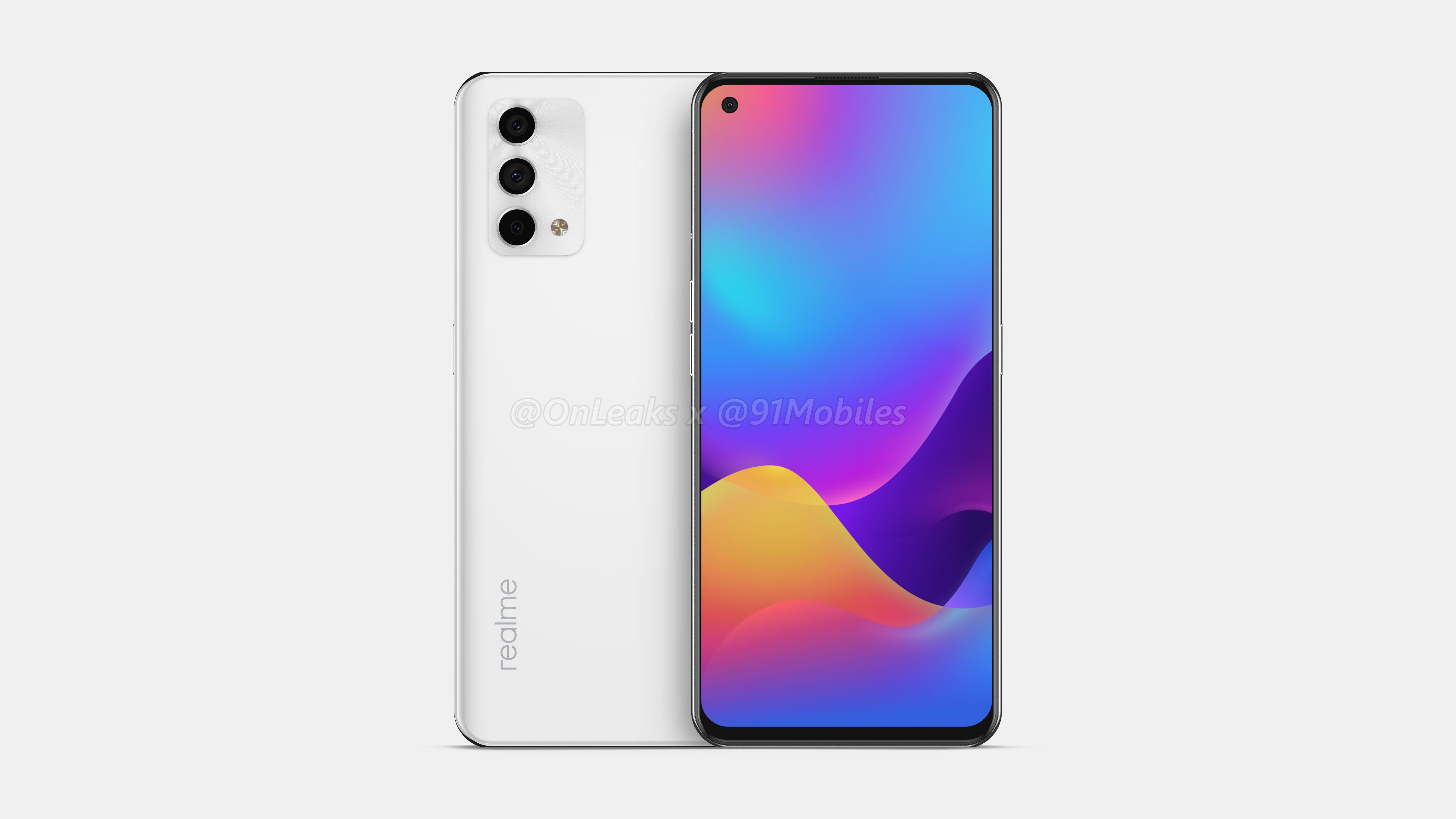
The Moto G40 and G60 are expected to offer users up to 6 Gb of RAM and up to 128 GB of UFS 2.1 storage. These phones will run on Android 11 OS and will feature a dedicated button for accessing the Google Assistant.

RELATED:

OPPO PEXM00 Geekbench listing appears, reveals Snapdragon 765G/768G chip and 8GB RAM

A mysterious OPPO phone with model number OPPO PEXM00 was approved by the TENAA regulatory body of China recently. The listing revealed some of the specifications of the smartphone. Today, the smartphone paid a visit to the Geekbench benchmarking platform to reveal that it will be an upper mid-range phone.

At Geekbench, the OPPO PEXM00 smartphone can be seen powered by a Qualcomm chip that has a “lito” codename. The base frequency of the chipset is mentioned as 1.80GHz.  It has been found through the source code of the Geekbench listing that the SoC feature Adreno 620 GPU. Hence, it can be said based on these details that the OPPO PEXM00 smartphone could be powered by the Snapdragon 765G or by its overlocked version called the Snapdragon 768G.

OPPO PEXM00 GeekbenchThe OPPO PEXM00 smartphone has 8 GB of RAM and it is equipped with Android 11 OS. In the single-core and multi-core tests of Geekbench, the handset scored 2681 and 7542 points, respectively.

Past reports have revealed that the OPPO PEXM00 is a 5G phone that features an AMOLED screen of 6.43 inches. The waterdrop notch has a 32-megapixel selfie camera. The back panel of the phone has a triple camera system led by a 64-megapixel camera. The handset could be coming with a 2,100mAh dual-cell battery and it measures 159.1 x 73.4 x 7.9mm. The other details of the smartphone are under wraps.

OPPO PEXM00
OPPO PEXM00 phone’s images at TENAA

It is unclear whether the PEXM00 belongs to the upcoming Reno6 series of smartphones for China. The OPPO A35 is an upcoming 4G phone powered by the Helio P35 chipset. The Dimensity 800U SoC powered OPPO A95 5G smartphone is also expected to launch in the home market.

RELATED:

Nintendo Switch Lite gets a new blue colorway and it is the prettiest

The Nintendo Switch Lite was originally announced in three colors – Gray, Turquoise, and Yellow. Last year, Nintendo released a fourth color variant – Coral. It has now followed it up with a fifth colorway which is Blue, and excuse my bias, but this is the prettiest of them all.

Nintendo Switch Lite Blue featured

Just like the other four colors, the new blue Switch Lite will have a suggested retail price of $199.99. The color difference is the chassis, so you still get white buttons like on the others.

Nintendo says that new color will be available next month, starting May 21. You will be able to purchase it on the Nintendo online store as well as at partner stores such as Amazon, Best Buy, GameStop, and Target.

The Japanese manufacturer has also announced that its upcoming game, Miitopia, will also be announced on May 21, the same day the new colorway goes on sale. It is an adventure game that you can play with family and friends.

Before Miitopia drops, Nintendo will release the New Pokémon Snap game for the Nintendo Switch devices on April 30. This game allows you to visit different islands and photograph different Pokémon in their natural habitat.


RELATED:

Apple iPhone 13 3D renders show the probable design of the iPhone 12 successor

We are probably several months away from the next iPhone launch but the leaks are already flowing in frequently. Tentatively called the iPhone 13, the series is said to get a big upgrade in display in the ‘Pro’ version. Amidst this, MySmartPrice has come up with the CAD 3D renders of the iPhone 13.

As per the report, the Apple iPhone 13 will measure around 146.7×71.5×7.6mm. This, if true, will be a slight change in thickness from 7.4mm on the iPhone 12. However, the design is said to be boxy and almost similar to the predecessor.

Moving on, the renders show that the rear camera layout has a slight change in placement. The two big cut-outs, as well as two smaller ones, are placed diagonally to each other. The bigger ones are probably the camera lens while the latter is likely the LED flash and a microphone.

Also, at the front, we see three cutouts on the notch. And speaking of which, the notch looks smaller this time as seen in previous leaks. This is because the speaker unit is moved above the cameras this time. There isn’t clear info regarding the cutouts but it would most likely be an IR camera, a Dot projector, and a front-facing selfie camera.

The Apple iPhone 13 series of devices are said to get upgrades in 2021 like the Apple A15 chipset, improved ultrawide cameraQualcomm X60 5G modem, storage up to 1TB, and support for Wi-Fi 6E.

As mentioned above, the biggest change would be the  LTPO display panel with a 120Hz refresh rate support on the ‘Pro’ variants.

RELATED:

Deal: Buy Xiaomi AX9000 Gaming Router for $212.44 (Original Price $250)

AliExpress is giving a fantastic deal on the Xiaomi AX9000 gaming router. The enhanced gaming router which generally retails at around $250 is now available for $212.44 only

WHERE TO BUY
Xiaomi AX9000 Gaming Router at $212.44 @AliExpress

xiaomi ax9000 router

Xiaomi AX9000 gaming router comes with enhanced WiFi 6 technology and a three-channel concurrent, non-interfering exclusive gaming channel that allows e-sports devices to enjoy an ultra-high-speed bandwidth and not be interfered by other devices.

xiaomi ax9000 router1

With a WI-Fi 6 enhanced version and a 9000 megabit super bandwidth, you get double the speed and accuracy as compared to a traditional dual-band router. Xiaomi AX9000 is powered by a Qualcomm 6 core flagship chip and comes with 12 independent signal amplifiers. With a 4K QAM High-speed transmission, the wi-fi accelerates by almost 20%, and with a special E-sports level flagship configuration you get an invincible surging performance and extraordinary gaming experience. 

xiaomi ax9000 router2

With Xiaomi AX9000 wireless router you may be able to connect up to 1000 devices with one single transmission without any lag or delay. Moreover, with the Mesh networking technology, you can cover your whole house with a strong signal and automatically roam and switch between multiple routers without actual delay or lag in usage. 

Xiaomi AX9000 gaming router generally retails for $250. But for a limited period, AliExpress is giving out this device for $212.44 only. With new user coupons and free shipping, this is a bargain deal. So grab your Xiaomi router asap.  

For more information on such exciting deals and offers check out our deals hub.

* Please Note: When you buy something using the links in our articles, we may earn a small commission at no cost to you.

Vivo V21, V21e to launch soon in Malaysia, 44MP selfie camera and 64MP rear camera with OIS confirmed

Vivo has started teasing the Vivo V21 series of smartphones in Malaysia. The Chinese firm has confirmed that the lineup has two models named Vivo V21 and Vivo 21e. The microsite of the V21 series has confirmed some of its key features.

Vivo V21 series
Vivo V21 series

The Vivo V21 series will be sporting an AMOLED display with a teardrop notch that houses an OIS-assisted 44-megapixel selfie camera. The top bezel of the V21 series features a dual front-facing soft LED flash that can assist in producing brighter selfies in low-light conditions.

Vivo V21 series front flash

A triple camera setup with an LED flash is available on the backside of the V21 models. The setup is headlined by a 64-megapixel primary camera, which carries support for OIS. The details of the other two cameras are not known yet.

Vivo V21 series rear

The Vivo V21 series promises smooth performance as it features 8 GB of RAM and extended RAM of 3 GB. The back panel of the phone features a glass back with a matte finish. According to Vivo, it will the V21 series will be arriving as its thinnest 5G phone. Vivo Malaysia is yet to confirm the launch date of the Vivo V21 series.

In related news, tipster Abhishek Yadav has shared posters of the V21 series for India. It appears that India will be receiving Vivo V21 4G and Vivo V21 5G smartphones. Both phones will carry support for OIS and dual front-firing flash. Vivo is yet to confirm the arrival of V21 models in India.

RELATED:

Meet Camello, a delivery robot that delivers groceries to homes in Singapore

In a clear indication of the transformation going on across the world in the use of robots, a Singapore-based tech firm has begun a pilot program to deploy robots for home delivery of groceries in a part of the city. OTSAW Digital manufactured two robots dubbed Camello delivery robots and deployed them for the pilot run with their combined coverage of grocery supplies put at 700 households. The one-year pilot run was conceptualized as a possible solution to meeting a surge in demands of fundamental essentials at specific periods, which may mean that several households may be starved of vital supplies.Delivery Robot

The robots were fitted with several gadgets and technology that enable them to remain thoroughly disinfected during their delivery sessions to users who would have pre-ordered their groceries via an app. The user is notified when the robots, both named Camello, are approaching their vicinity, and the goods are collected from a predefined collection point.robot

The robots can carry loads up to 20kg, work on weekdays and Saturdays, and it has become a spectacle for residents. In a statement by OTSAW Digital’s CEO, Ling Ting Ming, the robots use ultraviolet light to disinfect themselves after every trip.Camello Delivery Robot

The robots are currently being accompanied by the tech firm staff but are capable of autonomous activities. The residents of the part of the city serviced by the robots expressed varied feelings on their new “grocery delivery guys”. While some residents are thrilled by the delivery robots, others feel it may be too much for the elderly to cope with the technology.Camello

The coronavirus pandemic has further revealed more applications of robots to carry out several conventional jobs of humans. Recently in Japan, robots were deployed to deliver COVID-19 test kits and collect samples of persons who wanted to test for the virus. A Swiss company also deployed a UV spraying robot to disinfect the interior of a passenger aircraft.

RELATED:


(source)


Xiaomi tablet leak reveals support for keyboard, stylus, and VR headset

Xiaomi, the China-based company known for making smartphones, has also launched other computing devices, including laptops and tablets. However, it’s been a long time since the company updated its tablet lineup.

Now, there are reports from some time about Xiaomi gearing up to launch its new tablets in the market. A new leak related to an unnamed upcoming tablet from the company reveals some key details.

It is said that the new Xiaomi tablet will come with a screen resolution of 2560 x 1600 pixels. It will come with support for the keyboard as well as a stylus pen. It is also said to have support for VR headsets.

The report also adds that the company will be using “Dual C-PHY” technology with side-by-side dual screens, making it better suitable for VR quality content. Further, the screen will have an aspect ratio of 16:10.

We recently reported about Xiaomi’s plan of launching three new tablets in the market as the company aims to grab Huawei’s market share. It is said that three new tablets will be powered by Qualcomm’s Snapdragon 800 series chipsets.

The three upcoming models are codenamed “Enuma”, “Elish”, and “Nabu” with model numbers K81, K81A, and K82 respectively. The devices are expected to run MIUI based on the Android operating system. All these tablet devices will be launched under the company’s Mi Pad lineup and will first be made official in China ahead of other regions.

RELATED: