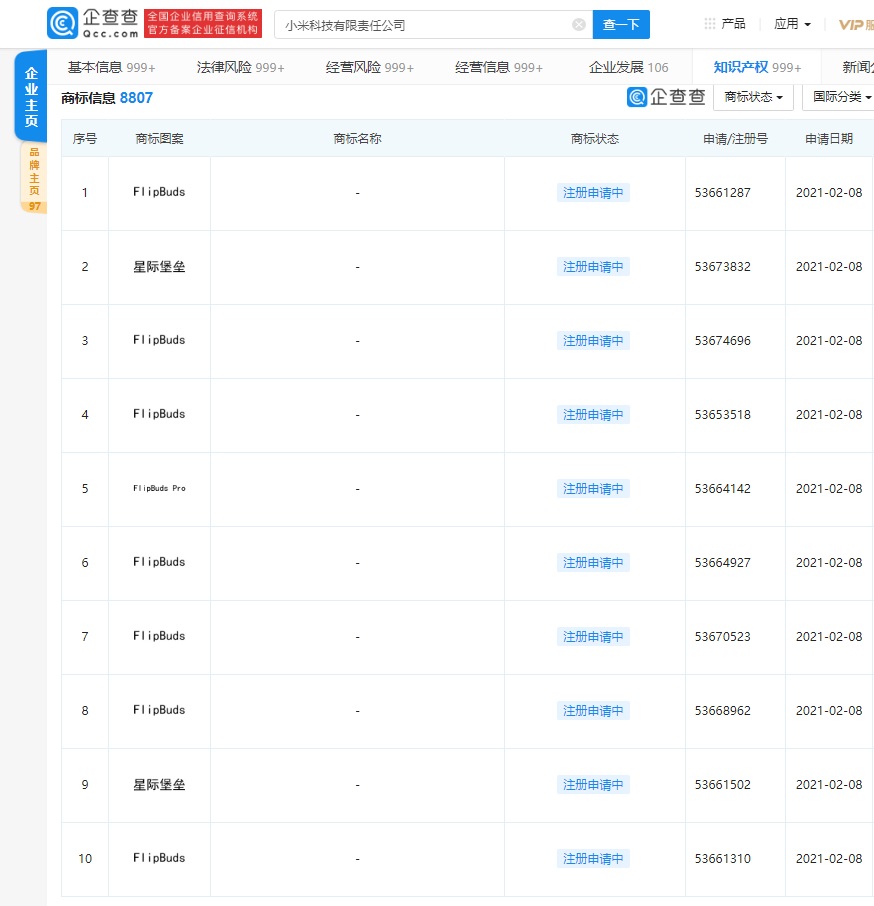
Earlier today (18th February 2021), a new trademark application from Xiaomi had surfaced online. This new applications was for the company’s FlipBuds and FlipBuds Pro, which are likely an upcoming hearables product.
According to an ITHomereport, the trademark application from the Chinese tech giant was found in the Qicha app, which carried the registration for FlipBuds and FlipBuds Pro. This application arrived with international classification that included 9 types of scientific instruments, 7 types of mechanical equipment, 42 types of design research. These are likely the components and internal hardware that will be found in the company’s upcoming audio product.
At the moment, Xiaomi has launched various hearables products, with many of the offerings being wireless and connect via Bluetooth. Unfortunately, apart from the trademark application for the name of the product, no other finer details are available regarding the upcoming headphones. Although, we can make a few educated guesses. Looking at its name, the FlipBuds are also likely to be a truly wireless earbuds, which have recently grown in popularity.
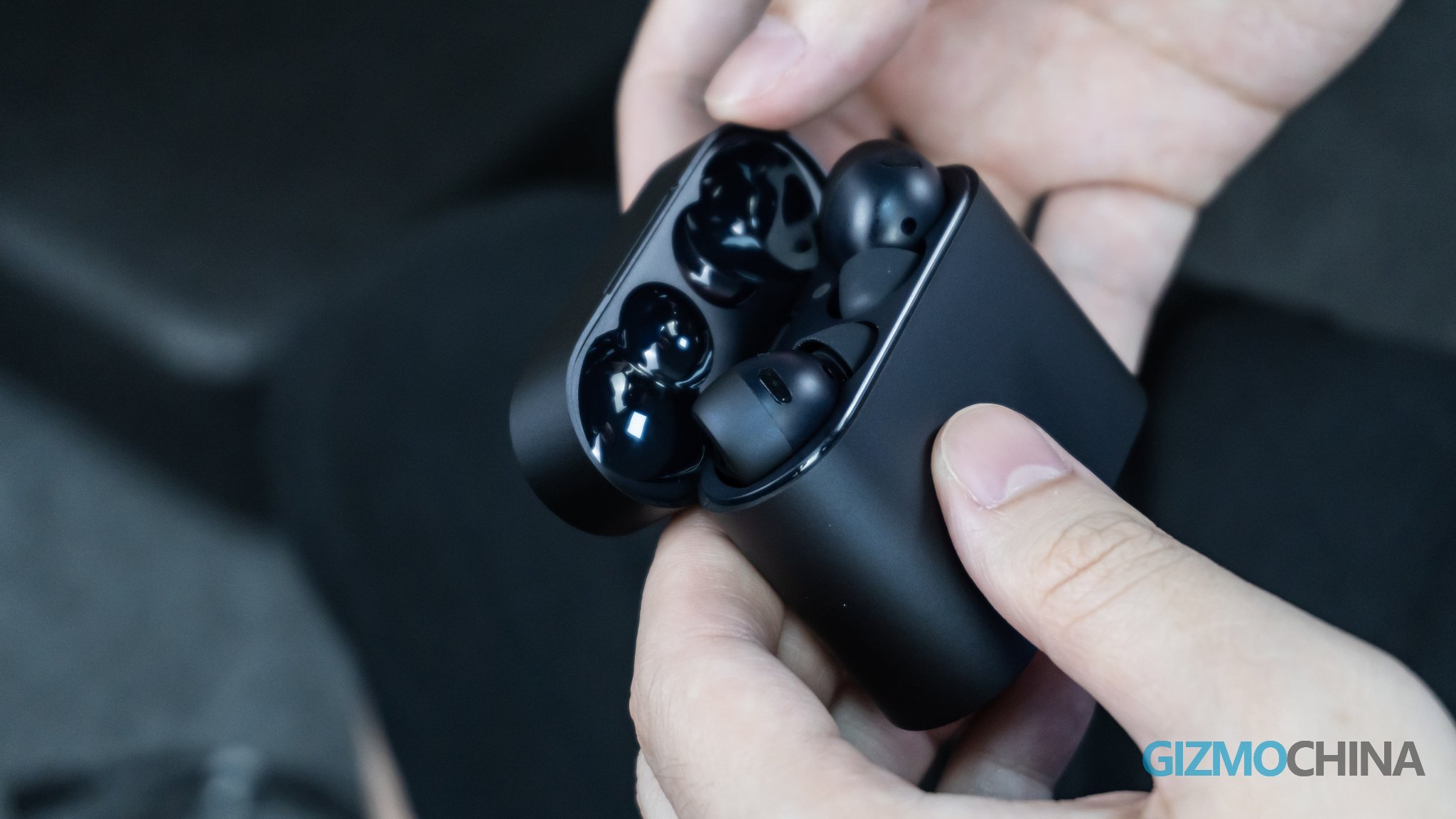
The Mi Air 2 Pro
The ‘Buds’ in the name is suggestive of its individual earpieces, which will arrive in two variants. Furthermore, the higher end Pro variant could arrive with features like active noise cancellation that might not be available in the base model. Unfortunately, this is just a speculation at this point so take this with a pinch of salt for now and stay tuned for more, as we will be providing updates when additional information is available.
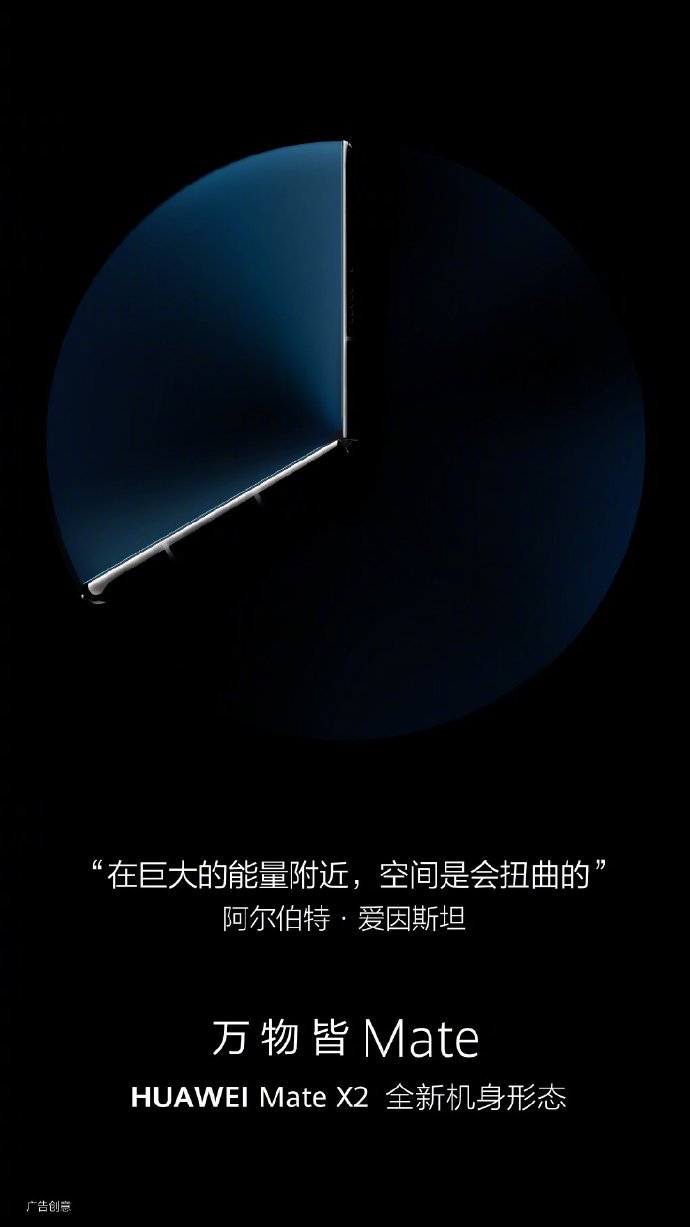
Huawei has released a new poster to tease the design of the upcoming Huawei Mate X2. The poster suggests that the company has adopted an in-folding design for its upcoming foldable smartphone.
The Huawei Mate X from 2019 and its refreshed version called the Mate Xs from 2020 came with almost identical designs. Both devices sported a large-sized single display that could be folded in half. When folded, the display remained on the outside of the device.
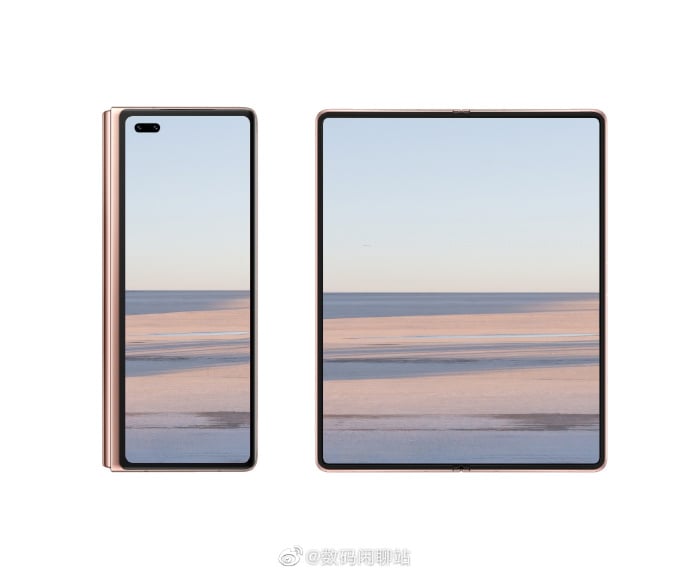
Samsung’s Galaxy Fold devices are all equipped with an in-folding design. It appears that the Mate X2, which is scheduled to go official on Feb. 22 will sport a similar design. The announcement of the Mate X2 will coincide with the Mobile World Congress Shanghai 2021 event that will take place next week. The final device is likely to look like the render below.
As it can be seen, the Mate X2 may offer a full-screen viewing experience through its internal display. The outer display may feature a pill-shaped cutout. It is speculated that the Mate X2 has an 8.01-inch foldable display made by China’s BOE company. It is expected to support 2480 x 2220 pixels resolution. It may feature a 6.45-inch display on the front that will offer a resolution of 2270 x 1160 pixels.
Huawei Mate X2 render by Digital Chat Station
The Kirin 9000 chipset and a 4,400mAh battery may power the Mate X2. It may come loaded with Android 10 OS and carry support for 66W rapid charging. For photography, it may possess a 16-megapixel main camera on the front and its rear-facing camera module may include a 50-megapixel main camera, a 16-megapixel camera, 12-megapixel lens, and an 8-megapixel sensor.
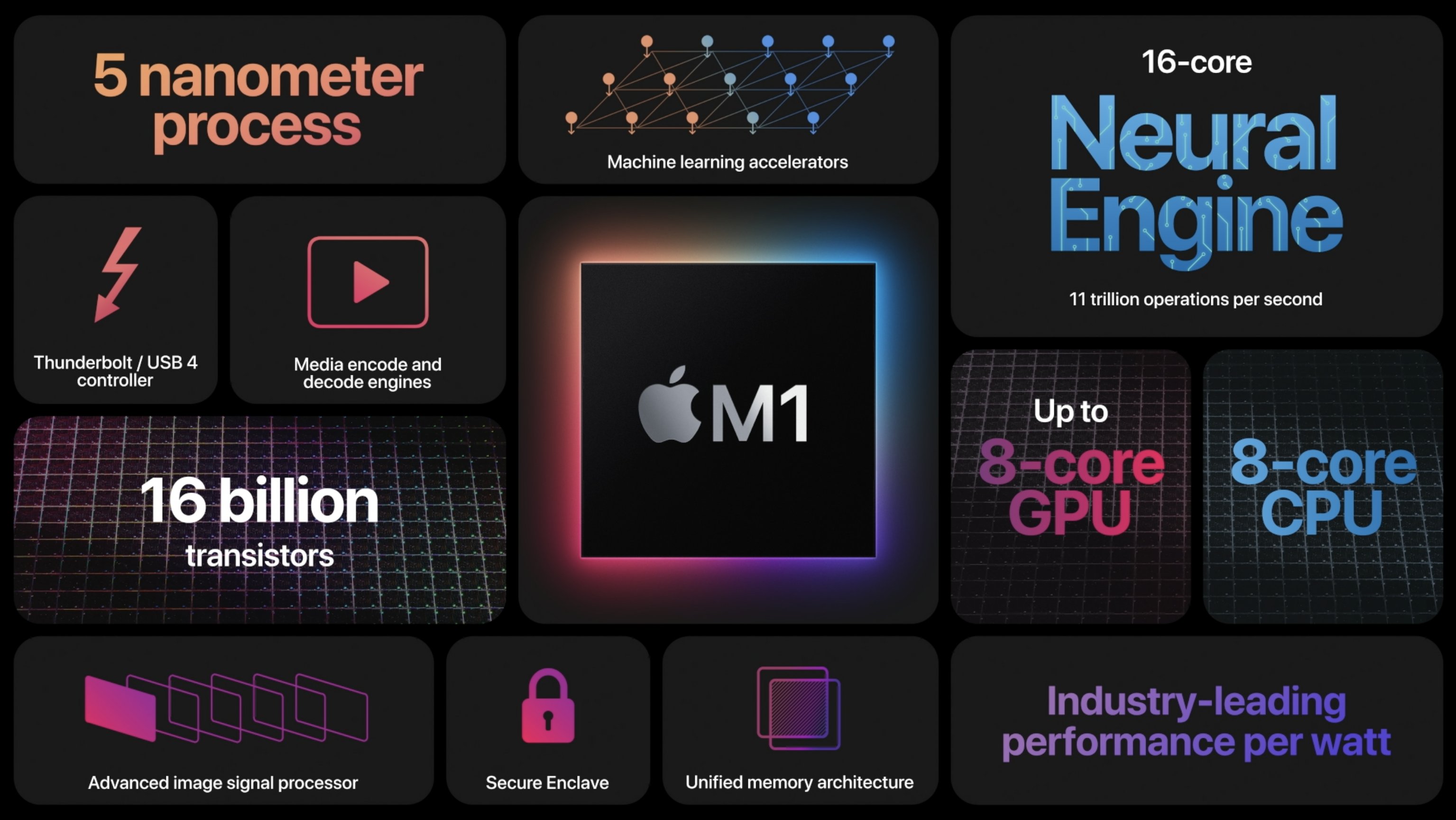
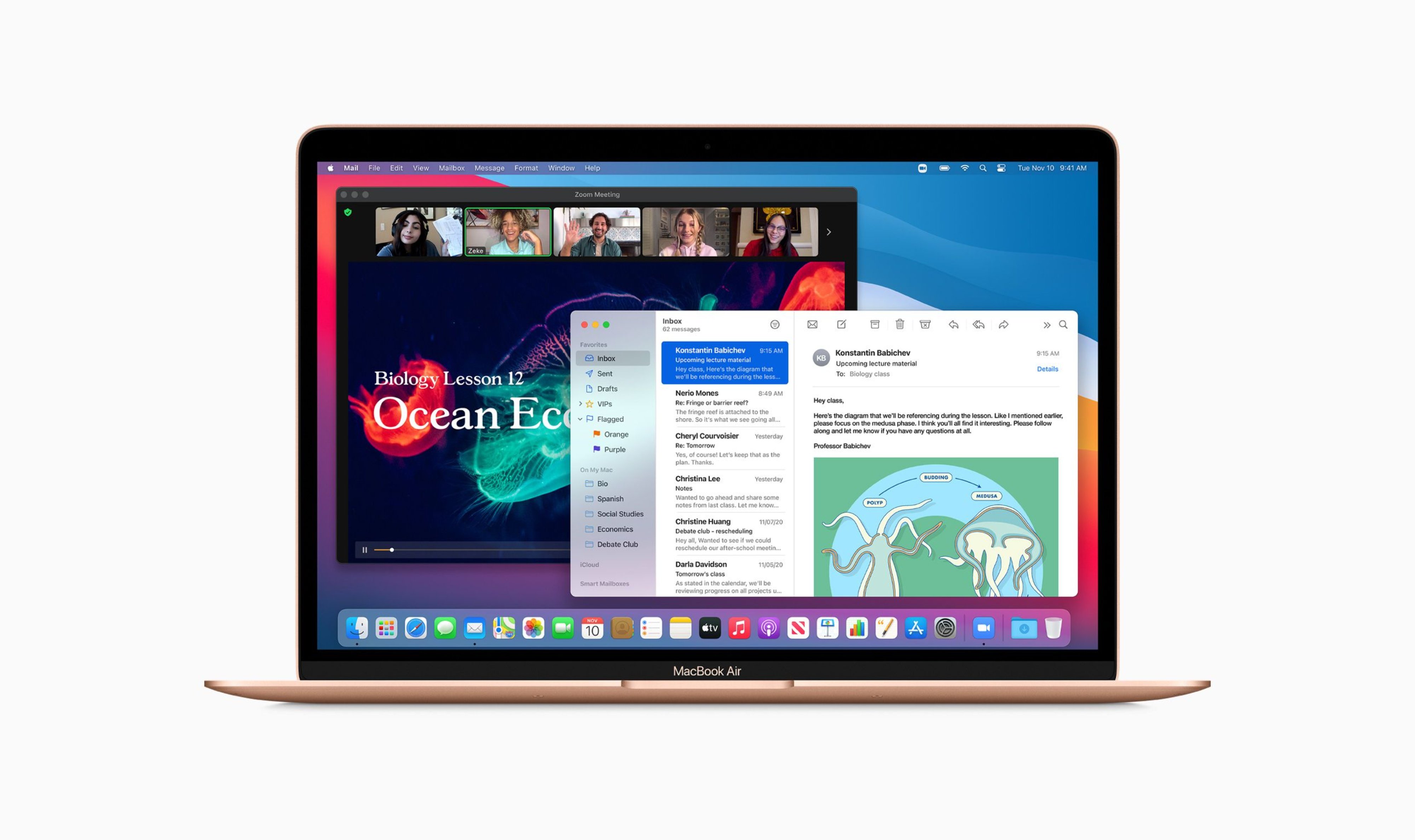
The first malware that has been specifically designed for the new M1 chip from Apple has just been discovered. This indicates that malware creators are now beginning to adapt their malicious software for the company’s new generator of ARM based Macs.
According to a report published by Mac security researcher Patrick Wardle (Via MacRumors), the new malware has been tailored and recompiled to run natively on the M1 chip. Wardle discovered that the first known native M1 malware in the form of a Safari adware extension. This was originally made to run on the Intel x86 based chips from the Cupertino based giant. The malicious extension is dubbed “GoSearch22” and is a known member of the “Pirrit” Mac adware family.
This extension was also first spotted at the end of December last year. For those unaware, Pirrit is one of the oldest and most active Mac adware families that have been found on the platform, which has constantly been adapting to avoid detection. So, it was only a matter of time before the malware to make it to the new Macs. The GoSearch22 adware appears as a legitimate Safari browser extension, which tracks and harvests users’ data and serves a large number of ads like banners and popups.
Some of these popups are linked to other malicious websites that spread more malware. As per Wardle, the adware was signed with an Apple Developer ID in November 2020, but that has since been revoked. He further added that as malware for the M1 is still at its early stages, antivirus softwares are not detecting it as easily as the ones on the x86 versions. In other words, this is just the beginning and we can expect more such malwares to surface soon.
In December, Samsung trademarked the “Book Go” moniker with European Union Intellectual Property Office (EUIPO). At that time, it was speculated that the company may launch a new device with the Galaxy Book Go moniker in the near future. A tipster has shared the key specifications of the Galaxy Book Pro as well as Galaxy Book Go devices. The leakster said that these devices will debut in May.
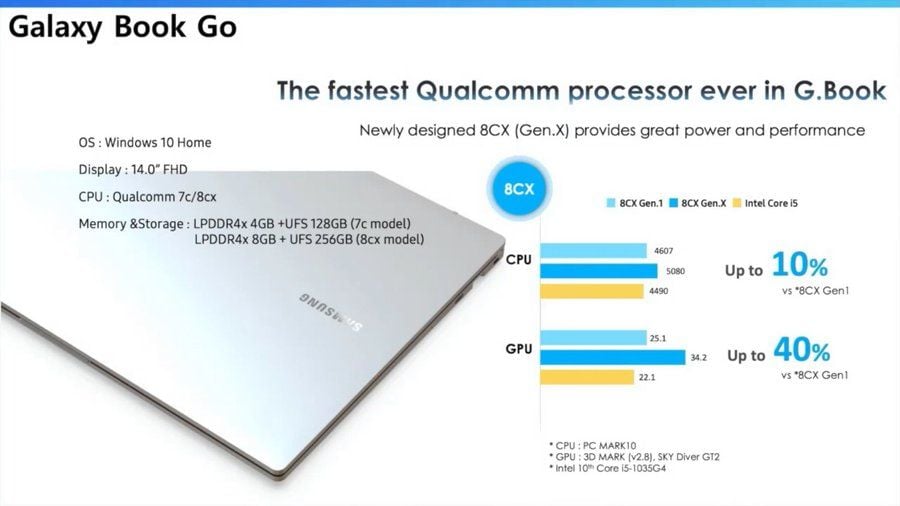
According to a poster shared by a tipster, the Galaxy Book Go will feature the fast Qualcomm processor ever seen in a Galaxy Book model. It will feature a 14-inch display that supports a Full HD resolution, and it will run on Windows 10 Home.
The Galaxy Book Go will arrive in two processor options. The Snapdragon 7c powered model will have 4 GB of LPDDR4x RAM and 128 GB of UFS storage. The higher model will have a newer version of the Snapdragon 8CX chipset which is dubbed as Gen. X. As compared to the Gen. 1 Snapdragon 8cx, the new Gen. X processor will offer up to 10 precent CPU performance and up to 40 percent enhanced GPU performance This model will have 8 GB of LPPDD4x RAM and 256 GB of UFS storage.
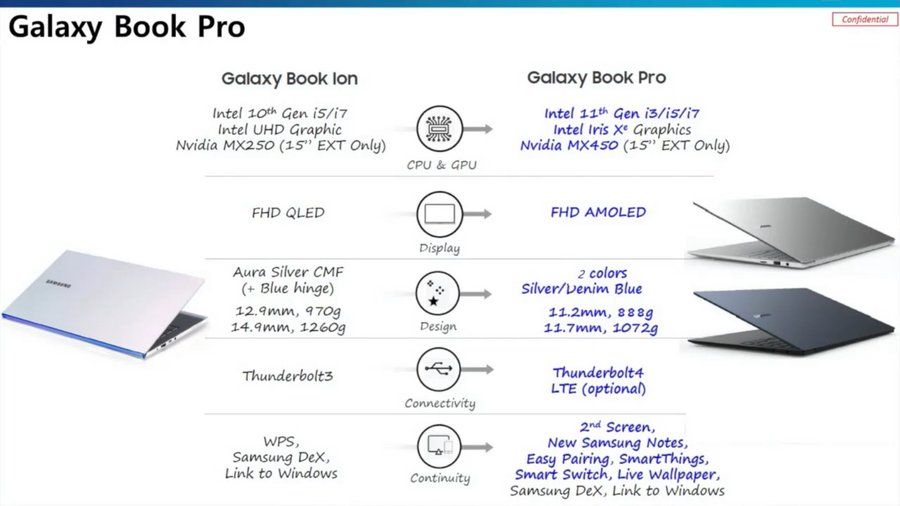
Sammobilehad recently leaked the key specifications of the upcoming Galaxy Book Pro and Galaxy Book Pro 360. These models are expected to arrive with 13.3-inch and 15.6-inch displays. The above-mentioned tipster also shared another poster to reveal the specs of the Galaxy Book Pro.
The leak states that the device a Full HD AMOLED screen and it come in Intel 11th Gen CPU versions such as i3, i5, and i7. The processor will tag along with Intel Iris X graphics and Nvidia 450 graphics. It will include features like S-Pen support, Thunderbolt 4, LTE (optional), secondary screen, Samsung DeX, Link to Windows, and more.
The Galaxy Book Pro will come in two colors like Silver and Denim Blue. It will measure up to 11.7mm in thickness and weigh up to 1,072 grams.
A new report has suggested that Apple might be receiving help from LG Display for the development of its upcoming foldable iPhone. Apparently, the South Korean tech giant will supply the former with flexible OLED panels.
According to a DigiTimesreport (Via WCCFTech), LG might be the supplier for the OLED panels that will be found in the foldable iPhone. While not confirmed, previous reports had hinted at Samsung being the sole supplier for these foldable panels for the Cupertino based giant. Meaning, both companies might supply the display for the upcoming foldable iPhone, while LG is even rumored to be helping in the display’s development as well. Recently, we had reported on the iPhone 13 series also featuring LTPS screens, so LG might play a role in this too.
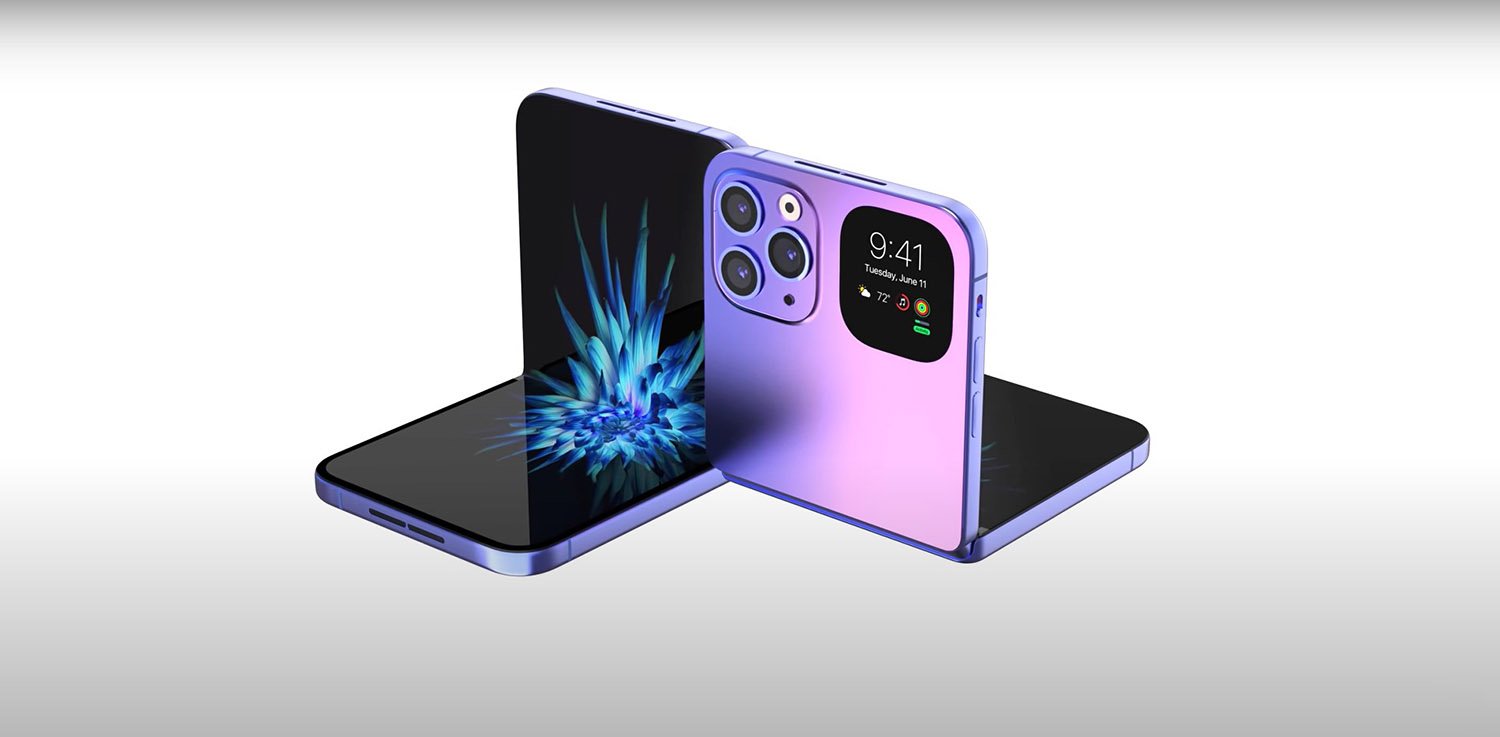
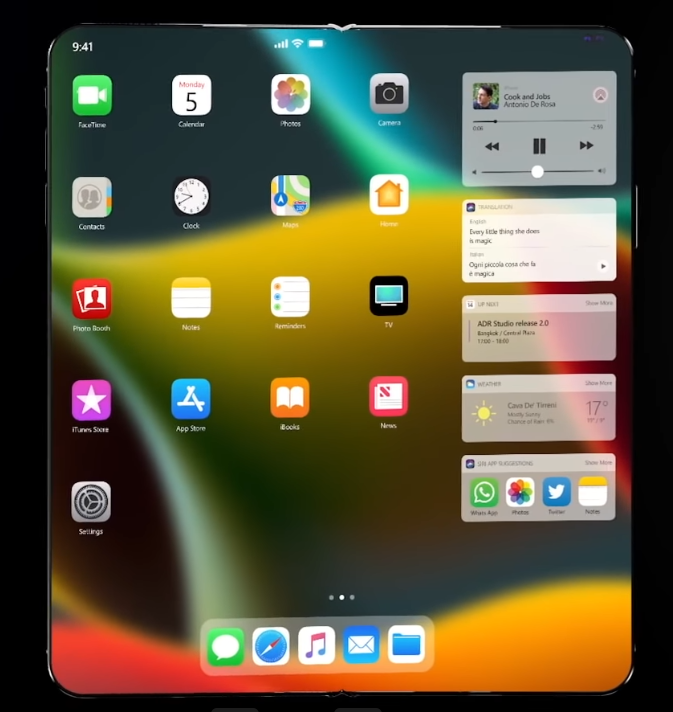
Unfortunately, the report does not mention any details regarding when this foldable iPhone might launch or gave out any other finer details either. Although, we had previously reported that the company might have the device arrive in a clamshell like design, similar to the Galaxy Z Flip. This report had also mentioned a launch of sometime within 2023, if the company doesn’t face any major hurdles during development.
Furthermore, another report had pointed at Apple possible working on two prototypes of foldable iPhones, with the one launching first featuring the clamshell design. This decision is due to the few points of failure in this form factor. Reportedly, the company is also taking great care to refine the technology behind this device to avoid the various structural issues that plagued the original Samsung Galaxy Fold. Keep in mind, this is still an unconfirmed report, so take it with a pinch of salt for now and stay tuned for more updates.
Today, a Chinese tipster shared the key specifications of an upcoming Snapdragon 870 SoC-powered handset from Vivo. It seems that the tipster could be talking about the iQOO Neo5 which is expected to debut by mid-March.
According to the tipster, a forthcoming Snapdragon 870 driven phone from Vivo features an OLED panel that produces a refresh rate of 120Hz. The screen features a top-centered selfie camera cutout on the display. A 4,400mAh battery backs the device, and it supports around 65W fast charging. The rapid charging capabilities of the phone are said to be almost the same as the OPPO Reno5 Pro+ handset.
He added that Vivo has several models featuring the Sony IMX598 lens. The mysterious Vivo phone that he is talking about has an OIS-assisted IMX598 sensor.
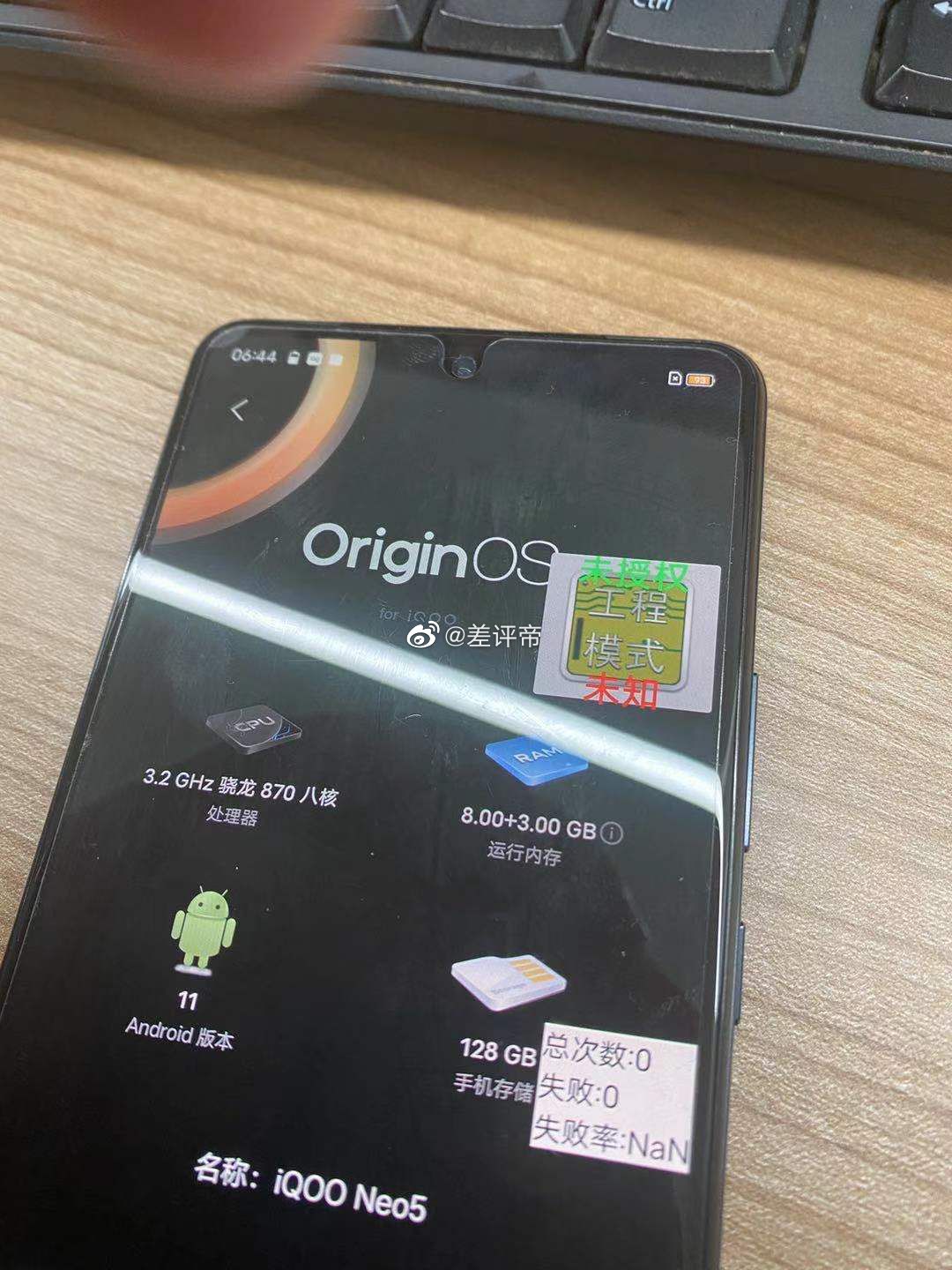
The specs shared by the tipster seem to match the details of the iQOO Neo5 that was recently revealed by another leakster. Shown above is the alleged leaked shot of the smartphone.
Interestingly, two Snapdragon 870 powered handsets by Vivo have appeared in recent reports. The V2045A smartphone was spotted last month at Geekbench with a Snapdragon 870 chip, 12 GB of RAM, and Android 11 OS. The device also received approval from the Bluetooth SIG authority, which revealed support for Bluetooth 5.1.
The V2055A was spotted at the Google Play Console earlier this month. The listing revealed support for Full HD+ resolution of 1080 x 2400 pixels resolution, Snapdragon 870 chipset, 12 GB of RAM, and Android 11 OS. Its image at the Google Play Console revealed that it has a selfie camera placed at the top-center position. Either the V2045A or V2055A is likely to end up as the iQOO Neo5. The identity of the other SD870 phone from Vivo is not known yet.
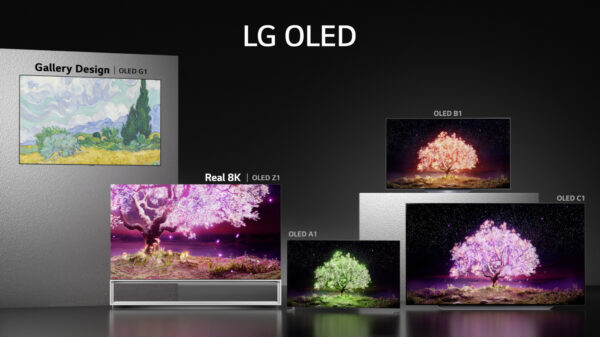
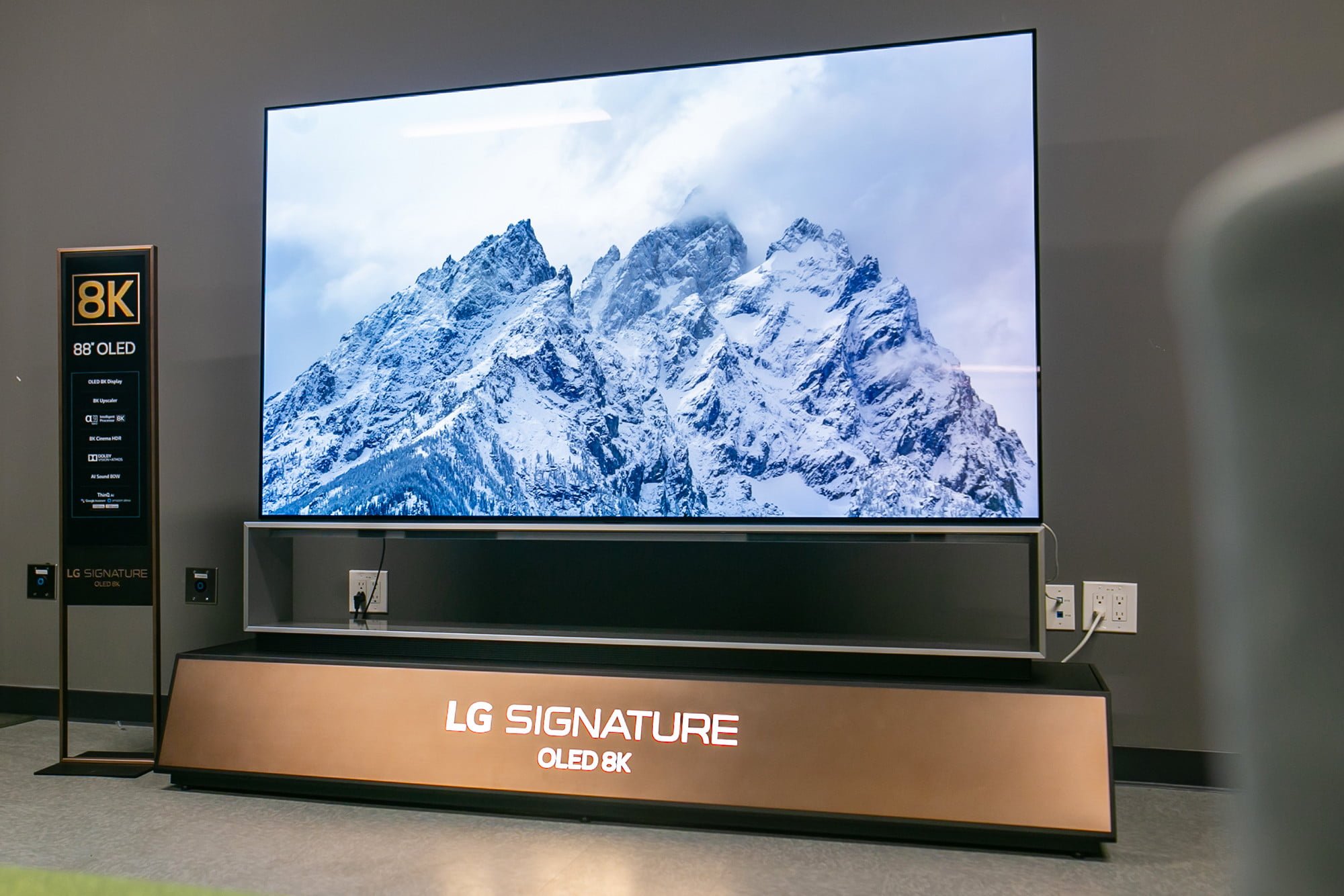
South Korean tech giant LG Electronics has had a mixed bag of fortunes over the past year. Plans are even underfoot to reorient some underperforming units as a cost-cutting measure to shore up the profits of the group. The plans also include outsourcing some non-core aspects of the company’s production architecture for greater efficiency.It would seem that the new approach has gotten a new boost as LG has unveiled a very strong and impressive lineup of TVs due for release this year. The range of models is wide and would certainly accommodate the various segments of its customers. The range includes various screen sizes and technologies including OLED, QNED Mini LED, and NanoCell TVs. All these will certainly combine to give its customers significant improvements in their viewing experience using LG’s signature passion for excellent designs.
According to a press release from LG Newsroom, the sizes range between 43 inches and 88 inches and reflect models that are tailored for different spaces, whether it is your living room or a large open hall.
As should be expected, all the models are guaranteed to provide excellent picture quality, together with compatibility with industry trends and standards to give the viewer great entertainment of the highest standards. Movies and other content come to life with these premium offerings by the Korean company.
The OLED TVs feature illuminated panels, a very slim design, and feature the new OLED evo technology to massively enhance the picture out of the OLEDs generally. The QNED Mini LED TVs are also on offer in the 2021 lineup, with several models available. These TVs also feature LG’s Quantum Dot NanoCell technology and Mini LED backlighting to yield greater picture output, generally.
The lineup also has the NanoCell 8K and 4K TVs in several variants and sizes. All the models feature LG NanoCell display technology to produce impressive, lifelike images when viewing content.
The Game Optimizer is a new feature that will certainly attract gaming enthusiasts. It automatically applies the best picture settings appropriate for the specific game being played, which further enhances the overall gaming experience.
The LG TVs can connect via Bluetooth to multiple Bluetooth speakers for an enhanced sound experience akin to a sports fan being in the venue live.
There are other impressive features in the LG 2021 lineup like the HDMI 2.1 feature, featured in all the models, and several other innovative additions that will certainly excite the teeming customers of the company, going forward.
Amidst the increasing actions of several governments in banning the trading of Bitcoin and other cryptocurrencies within their financial systems, there are indications that these currencies will still remain with us for some time. As a matter of fact, the use of cryptocurrency as means of payment continues to proliferate. Recently, Twitter announced that it was considering the use of bitcoin. Now, Samsung Pay and Google Pay may join the fray soon.
Cryptocurrencies remain a popular mode of international transactions with the potential for greater stability. And now, it has been reported that very soon, Google Pay and Samsung Pay will accept payments made with Bitcoins and other cryptocurrencies. This information emanated from BitPay, a foremost cryptocurrency provider and payment platform.
If the plans scale through, then Google and Samsung will be joining Apple as platforms that now have the functionality and capacity to process cryptocurrency payments of users on the platform for goods and services. BitPay also hinted that it hopes to bring Google Pay and Samsung Pay support as early as March 2021 if all things go according to the plans.
Users on both platforms would be able to link their BitPay cryptocurrency card to Google Pay and Samsung Pay, thereby making it possible to make seamless payments on the platforms using cryptocurrencies. Supported cryptocurrencies on the service include Bitcoin, Bitcoin Cash, BUSD, Ether, PAX, USDC, and GUSD.
While the specifics and exact timelines for these activities have not been provided by BitPay, it is expected to follow a similar trajectory like what occurred with Apple Pay. At this time, neither Google nor Samsung had released a statement affirming or denying the news.
We keep our fingers crossed as further developments evolve.
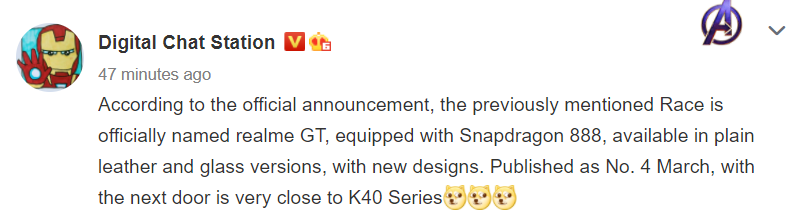
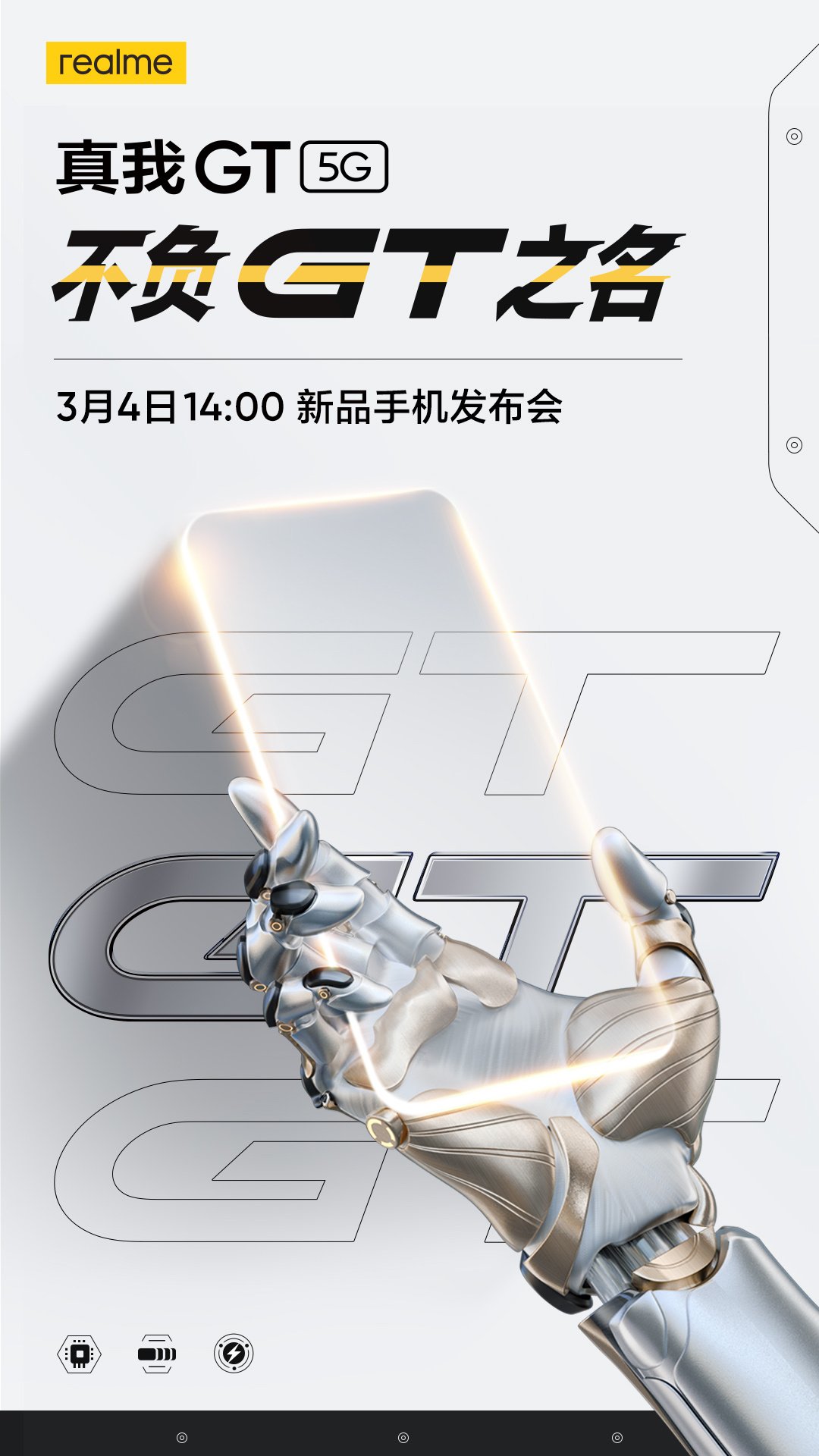
Earlier this month, Realme executives revealed that its upcoming flagship phone, which is codenamed will break cover after the Chinese New Year. Since December last year, the company has been using the ‘Race’ codename to tease its features. However, a couple of hints released by Realme CMO Xu Qi have suggested that the device may launch in China as the Realme GT. Today, the executive confirmed that the Realme GT 5G will go official at 2 PM (local time) on March 4.
The icons placed at the bottom-left corner of the poster seem to suggest that chipset, refresh rate, and fast charging could be the key features of the Realme GT 5G smartphone. It is already known that the Realme GT 5G will be fueled by Snapdragon 888 mobile platform.
The Realme GT 5G is expected to sport an OLED panel with up to 120Hz refresh rate support. There are speculations that there could be an advanced version featuring a 6.81-inch OLED display. It is speculated to produce 3K resolution and up to 160Hz refresh rate. As far as charging is concerned, the Realme GT 5G could be arriving in the market as the company’s first phone with 125W UltraDart fast charging technology.
A reliable tipster from China has claimed that the Realme GT 5G will be available in plain leather and glass back editions. The Realme GT 5G phone seems to be the RMX2202 smartphone that was recently spotted at the TENAA certification platform recently.
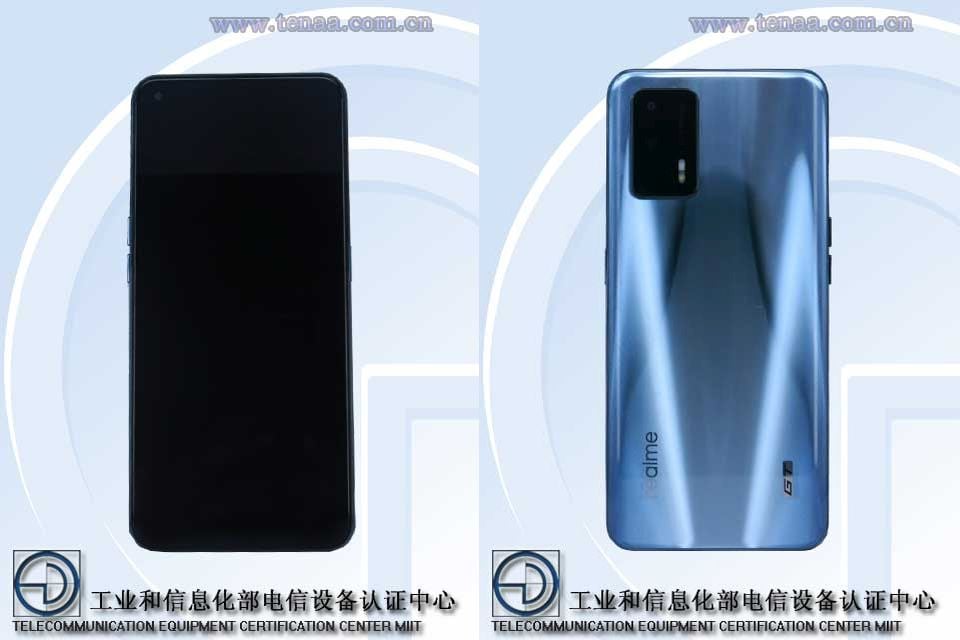
Its images at TENAA revealed that it has a punch-hole display, and it has a rectangle-shaped camera housing on the back. Rumors are rife that it may sport a 64-megapixel main camera. The bottom-right of the phone’s back features a ‘GT’ logo. The specifications of the Realme RMX2202 haven’t yet appeared in its TENAA listing.
Realme Race’s TENAA images
Leaked information of the Realme RMX2202 phone that appeared in December revealed that it has 12 GB of RAM, 256 GB of built-in storage, and Realme UI 2.0 based Android 11 OS. The Realme GT is also expected to arrive in India as it received approval from the BIS authority of the country. The handset is also heading to Europe since it has also received EEC certification.
This year’s edition of CES was an all-digital event. The annual pilgrimage by tech enthusiasts to Las Vegas, Nevada didn’t happen as folks had to follow the multiple-day event from their homes, as a result of the on-going COVID-19 pandemic. You would think the GSMA will go the same route for this year’s edition of MWC Barcelona but that will not be the case.
MWC Barcelona is scheduled for June this year (no longer the first quarter of the year) and the organizers are preparing for an in-person event rather than an all-digital one. To manage the event and minimize the risk of attendees getting sick, the organizers are cutting back on the number of attendees from 100,000 to 50,000. Those who attend will also be required to have taken a COVID-19 test 72 hours before their arrival.
Other measures include requiring attendees to wear masks; social distancing via control of crowd density, stand capacity, and traffic flow; touchless registration and information points; and regular disinfection of stands, product samples, and audio-visual equipment. There is a special page on safety standards for the event that you should check out if you plan to attend.
Prior to the adjustment of the date, MWC Barcelona is usually held between late February and early March. Last year, the event had to be canceled after several manufacturers withdrew due to the pandemic. It remains to be seen if manufacturers will be willing to take the risk this year even with the strict measures the organizers plan to put in place.
MWC Barcelona 2021 is scheduled to begin on June 28 and run till July 1. While it is still months away, MWC Shanghai will kick off next week, beginning on February 23 and running till February 25. This too will be an in-person event.
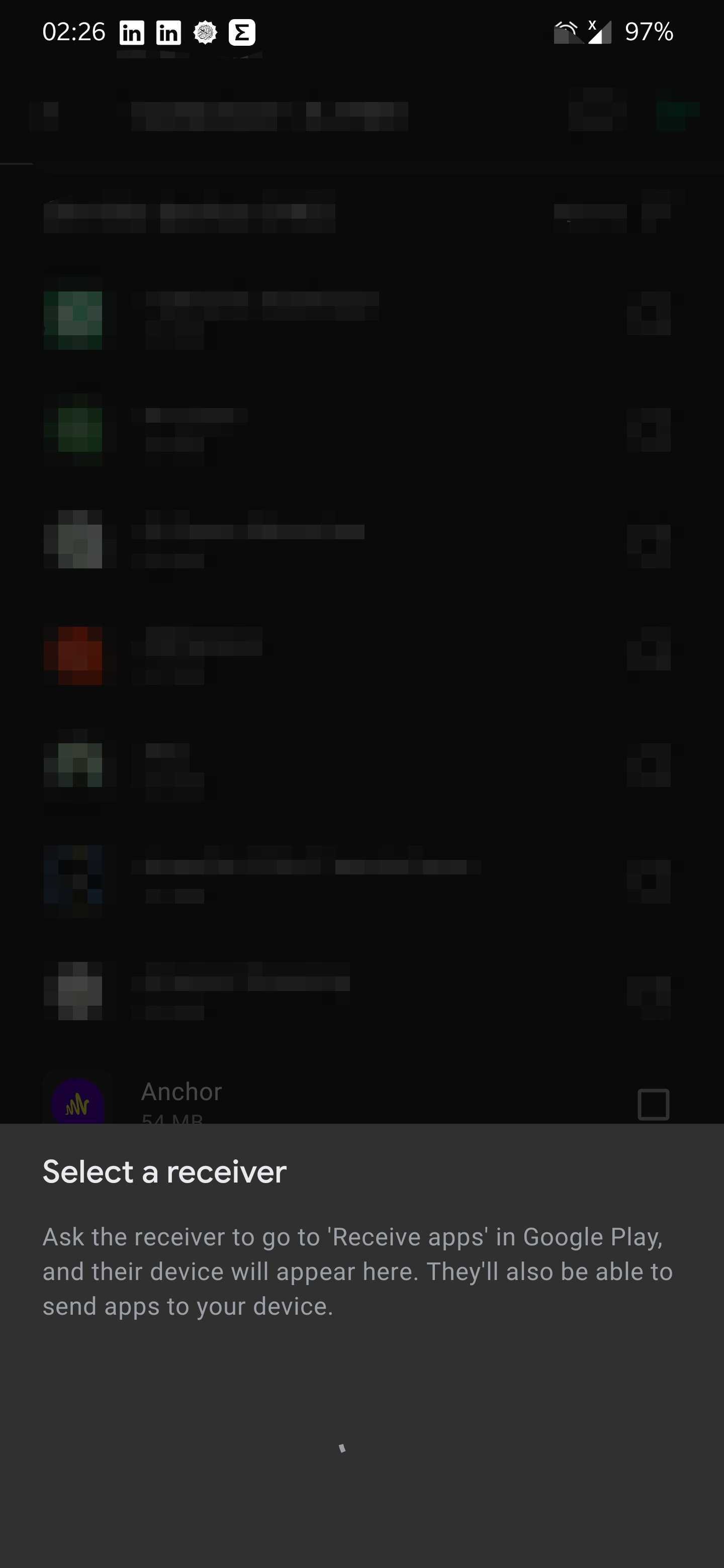
There are multiple ways to share apps with other phones if you are an Android user, some of which include downloading specific apps. Google has decided to make things easier with the addition of app sharing to Nearby Share.
Nearby Share is a feature that allows users to easily share files without the need for a special app. The feature, which was announced last August, is Android’s equivalent of AirDrop for Apple devices and is available on devices running Android 6.0 Marshmallow and above.
Nearby Share allows you to share different types of files including photos as well as links to devices near you. With the new addition of app sharing, you will now be able to send apps to devices near you.
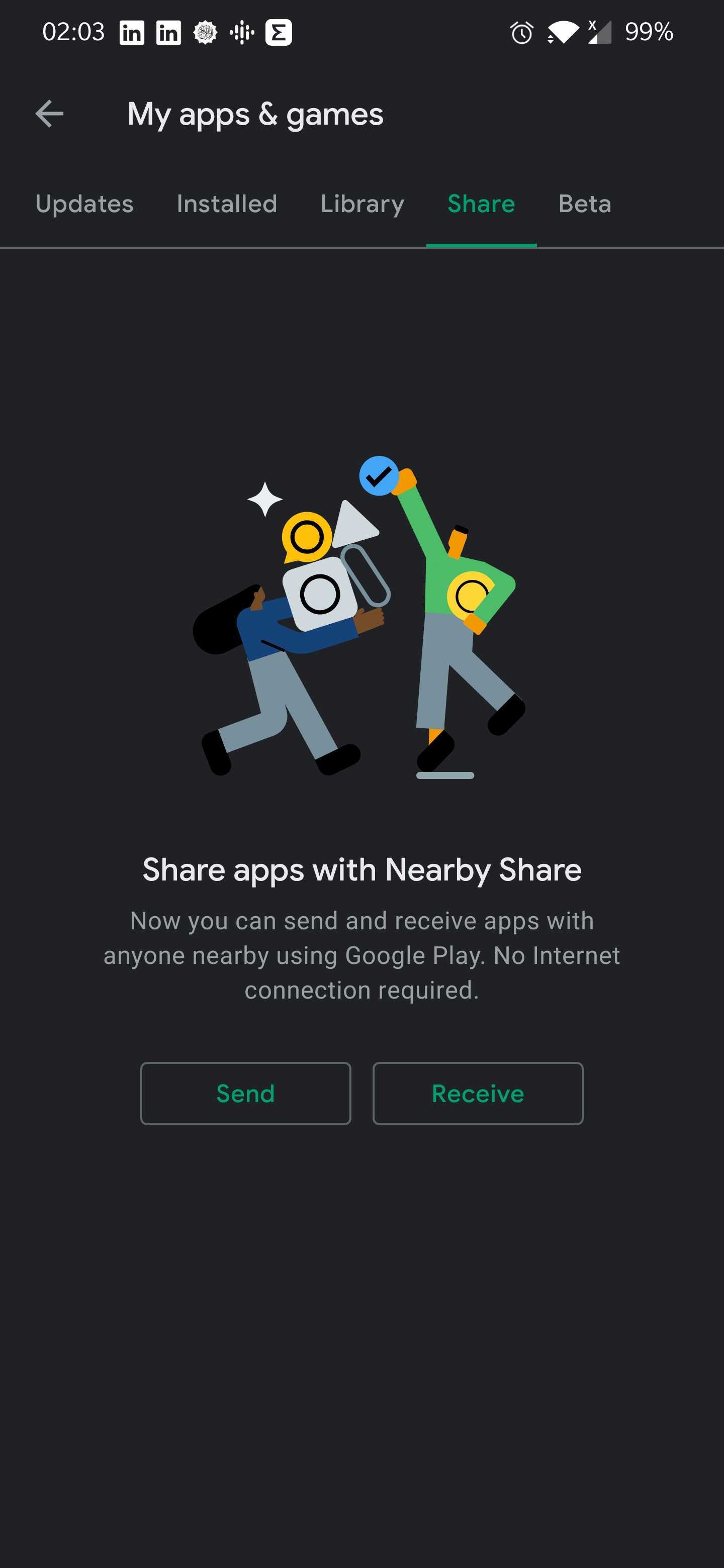
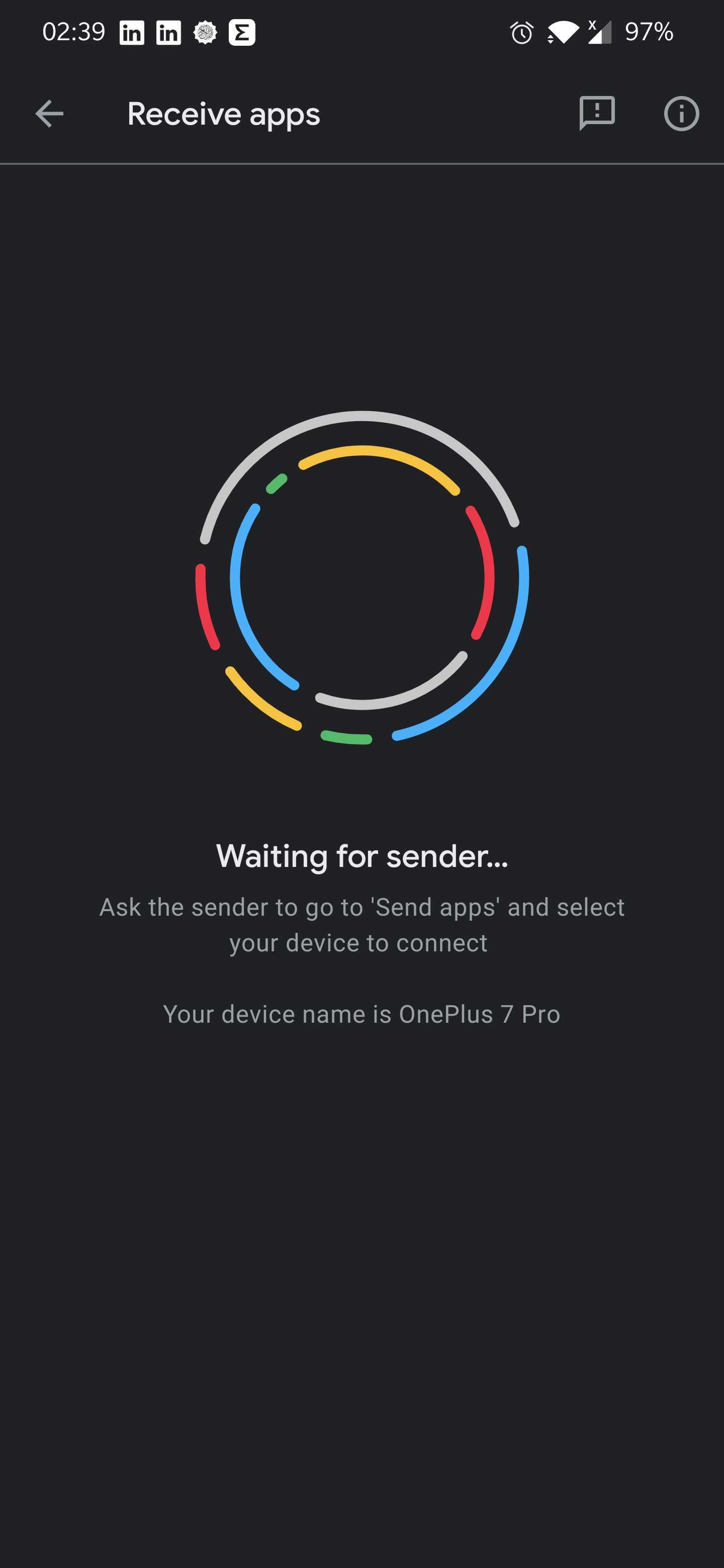
To get the feature working, all you have to do is launch the Play Store app and go to My Apps. There should be a new tab called Share next to Library if the feature has already been made available to you. Select the tab and you are provided with the option to choose if you want to send or receive apps.
Share apps with Nearby Share
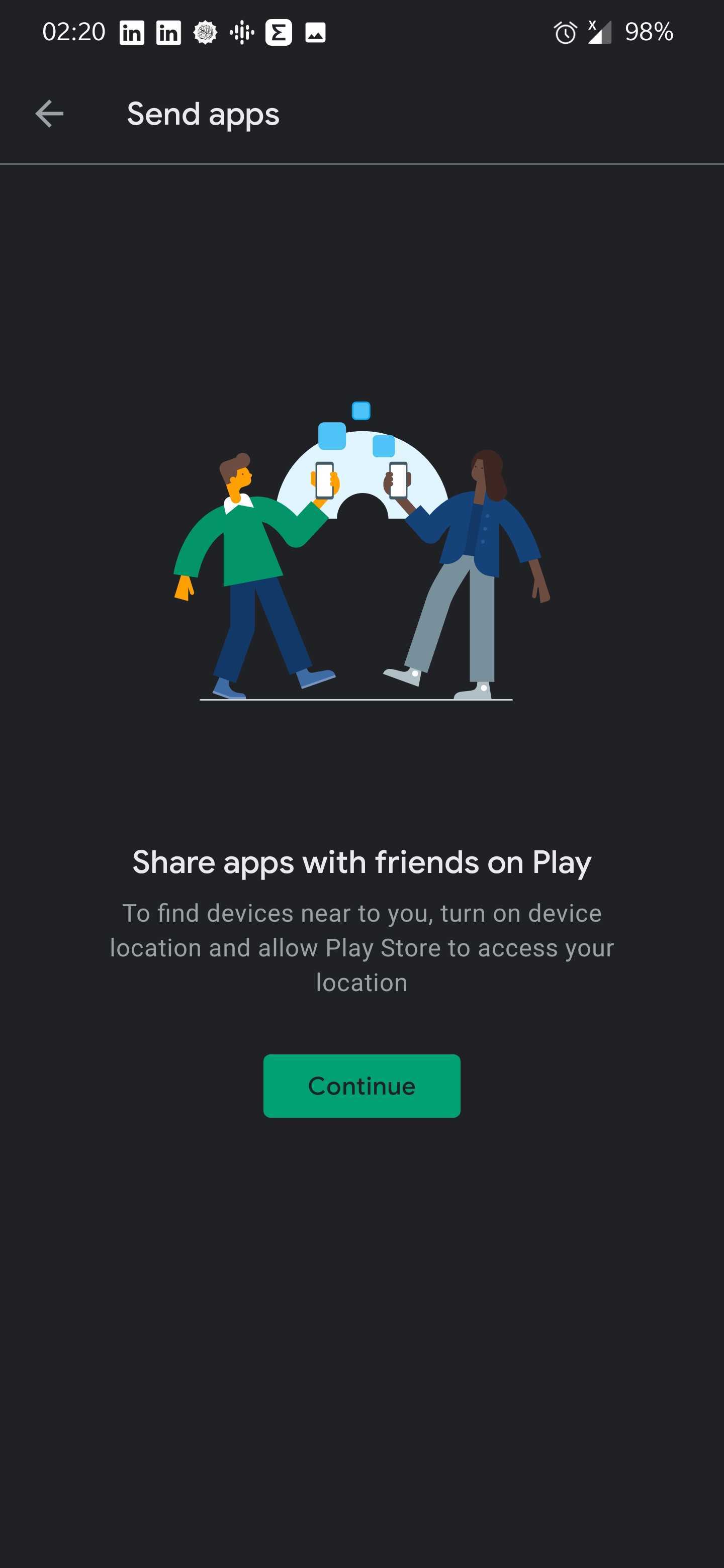
Regardless of which you choose, you will be asked to turn on location services. If you choose to send, you are taken to a screen that lists all your installed apps. Select which app(s) you want to send and press the green button at the top right corner. Your phone will begin to search for nearby devices. If you choose to receive, you get an interface similar to the last image above.
The feature appears to be a server-side switch as it is available already on my OnePlus 7 Pro but not on my Redmi Go. So if you have not gotten it, it should arrive later.
While select Android TV devices are waiting to get a new user interface (UI) via Google TV, Amazon is already rolling out a new user interface to its Fire TV devices.
The new user interface, which is more personalized, was announced in September and began rolling out in December 2020 to some of its streaming devices (Fire TV Stick Lite and 3rd Gen Fire TV Stick) but will just be arriving for the Fire TV Stick 4K and Fire TV Cube next month.
Some of the changes that the new UI brings include a profile selection screen. This is a feature that Android TV users have been demanding for years. Fire TV users will be able to create up to six different profiles, four of which can be kids’ profiles.
Another feature is the addition of a Find tab that opens up a card-based interface for categories and genres. By clicking on a genre, content related to that genre from multiple sources is presented to the user. This is not only faster but better than having to go through individual apps to find what to watch. The Find Tab sits inside the Nav Bar at the top which has other tabs such as Library, Home, and Live, as well as your favorite apps.
Alexa is still an essential part of the experience and using it (voice) to find shows is faster than having to manually search for a show or movie. Of course, you can still use it to control compatible devices too.
There is no specific date for when the update will arrive on these two devices but if you own either of them, you should get a notification once the update lands on your device. The source also adds that the new user interface will be made available for TVs running Fire TV OS and older streaming devices in the coming months.
For a long while now, rumors have been rife concerning an advanced noise-canceling headset that Sonos is said to be developing. The headset will potentially be integrated into the company’s well-known speaker/multi-room audio ecosystem.
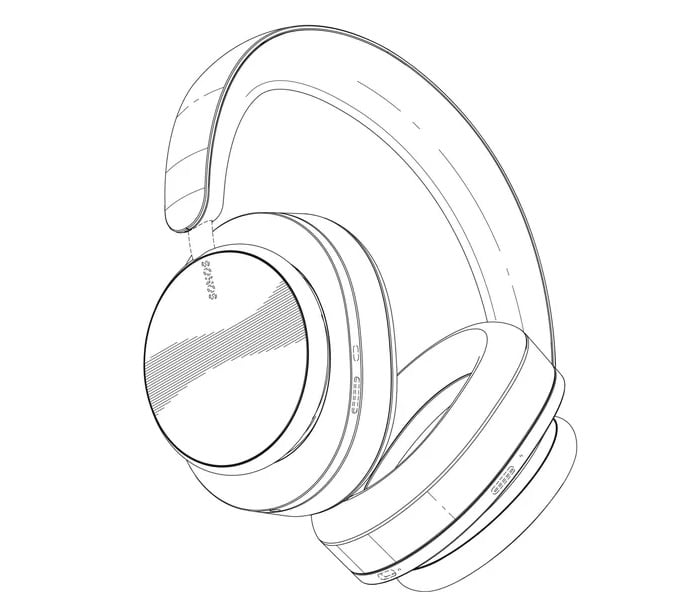
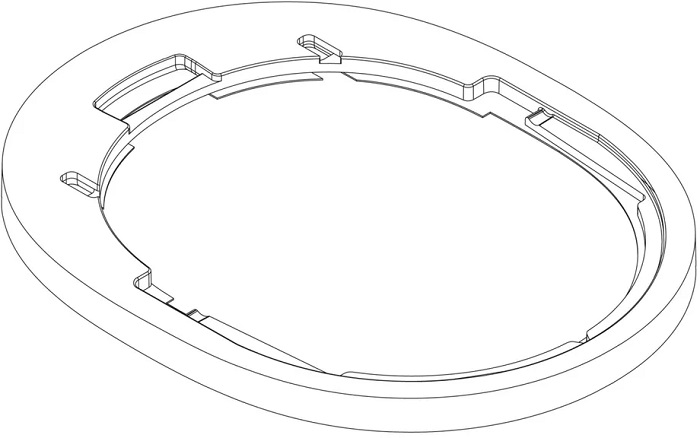
Last September, we saw a patent displayed by the United States Patent and Trademark Office (USPTO). Right now, the headset has appeared on the German Patent and Trademark Office revealing the design which is believed to be close to the schematics of the final product.
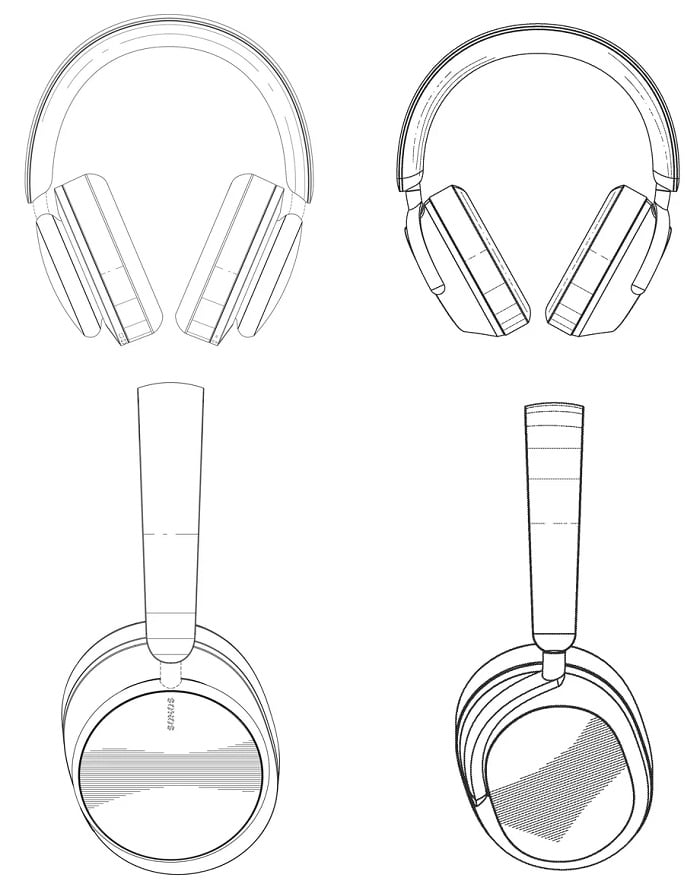
The patent application was reportedly submitted by Sonos in December 2020 but was only published in late January 2021. Compared with the earlier illustrations, the Sonos brand is clearly visible in the new schematics. Also, we can see from the patent sketch that the support rods extending from the headband now go straight down into the slightly adjusted earmuff body without any other part wrapped around the back of each ear cup as was seen earlier on.
We don’t know much about the Sonos headphones but it is expected to come with a high-end price tag similar to those from Sony and Bose. One of the expected features that are tipped to stand out is a seamless exchange of music between the headphones and the Sonos audio system. We expect more features to be on the headphones to make it more appealing to users.
Sonos filings at the German Patent and Trademark Office include an adapter for earphones. The adapter’s function is not known but it could be for replaceable ear cushions. Also included in the sketch is a USB-C port, several buttons, and a 3.5-mm audio jack.
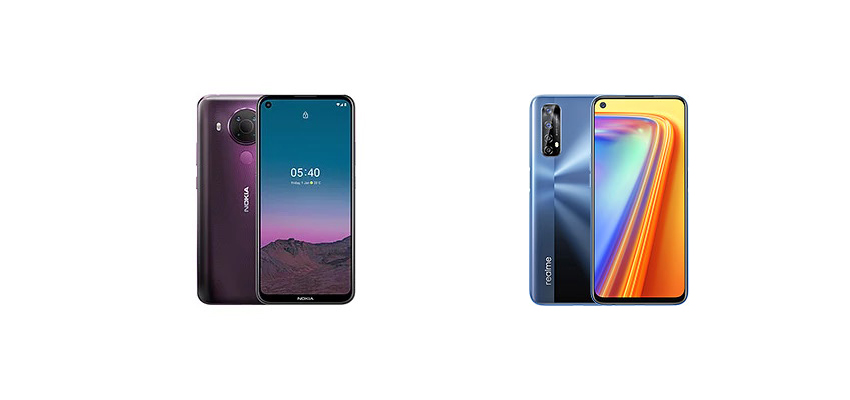
Nokia 5.4 was launched months ago for the first time, but now, HMD Global launched it in several other regions including India and European countries. The price is still very competitive, but the concurrency is fierce. Is the European brand able to compete with the most competitive phones released by Chinese handsets? There is no better way to understand it than comparing the Nokia 5.4 with the best Chinese devices in the same price range. If you are from India or Europe, you will find a very interesting phone in the same price segment: the Realme 7.
Unfortunately, the Nokia 5.4 and the Realme 7 do not offer a premium design. Both are made with a plastic body and they do not feature a glass back, neither an aluminum frame. But they still have a pretty nice look. The advantage of the Nokia 5.4 is its compact size with a slimmer and thinner body. Realme 7 has a better look since it comes with a cleaner back, reflective color variants, and a punch-hole display with a higher screen-to-body ratio. But it is bigger, thicker and heavier due to its bigger display and battery.
Display
Do you need the best display? Then you should definitely go for the Realme 7. First of all, it features a higher resolution than Nokia 5.4: Full HD+, with 1080 x 2340 pixels. Further, it has a higher 90 Hz refresh rate. Last but not least, even the brightness is higher. The Nokia 5.4 has a smaller display which is actually easier to use with one hand, but it has a lower HD+ resolution and a standard refresh rate. For authentication, Realme 7 relies on a side-mounted fingerprint reader, while Nokia 5.4 has a rear-mounted fingerprint reader.
Specs & Software
If you want the highest performance, then Realme 7 is the correct choice for you. It boasts a powerful Helio G95 chipset by MediaTek paired with up to 8 GB of RAM and up to 128 GB of UFS 2.1 internal storage. The Nokia 5.4 has a weaker Snapdragon 662, just 4 GB of RAM, and up to 128 GB of internal storage. What makes the Nokia 5.4 great is the software: it is close to stock Android and it will be supported in the long term, just like other Nokia phones. Both the phones are based on Android 10 and feature a micro SD dedicated slot to expand the internal storage.
Camera
The camera departments of the Realme 7 and the Nokia 5.4 are very close. On the rear side, they are almost identical with the exception of the ultrawide sensor: you get a 5 MP ultrawide lens on the Nokia 5.4 and an 8 MP ultrawide camera on the Realme 7. On the front side, both feature a 16 MP selfie snapper, but the Nokia 5.4 has a brighter focal aperture. What really makes the difference is the camera algorithm.
Realme 7 is the battery champion and it wins the battery comparison thanks to its huge 5000 mAh battery, no matter that it features less efficient hardware components. The Realme 7 also features 30W fast charging bringing the battery from 0 to 100 percent in just 65 minutes, while the Nokia 5.4 has no fast charging at all.
Price
If we consider the Indian market, the starting price of the Nokia 5.4 is Rs. 13,999 for the configuration with 4 GB of RAM and 64 GB of native storage. You can actually get the Realme 7 for Rs. 14,999 in India, in its base variant with 4 GB RAM and 64 GB of storage. In Europe, the Nokia 5.4 is costlier with its €199 price, while Realme 7 starts from €179. Overall, Realme 7 wins the comparison due to the higher refresh rate of its display, higher performance thanks to the Helio G95 chipset, bigger battery, and 30W fast charging. The Nokia 5.4 will most likely have a constantly-updated software department, but the specifications are inferior to the Realme 7.
Drones usually utilise waypoint GPS to orient themselves which helps keep them stable while in flight, allowing pilots to hover and to make sure they don’t fly above the 400-foot ceiling required by regulators in countries like the US. Also unmanned droneds rely on GPS network for navigation. But GPS network may experience some down time for several reasons. Thus, in areas where there is no GPS, Israeli startup Sightec has come out with a technology which could help in navigation.
The company disclosed (via) today that it has been able to deploy the technology to fly a civilian drone to its destination in an area without GPS. The feat, a “worldwide first”, was carried out in a flight to an area beyond the experimenters’ line of sight, using computer vision and artificial intelligence technologies.
Sightec CEO roy Samuel sees the success of the test as an important milestone towards the approval of drone delivery operations in Israel. The test flight was actually a demonstration meant for the drone delivery pilot program operated by Israel’s Ministry of Transport (MOT), Ayalon Highways, the Civil Aviation Authority of Israel (CAAI), and Israel Innovation Authority, for testing and demonstrating drone technologies in managed airspace.
Sightec developed a software, dubbed NavSight, that can be deployed on any off-the shelf drone that has a camera onboard. The software utilses the cameras as smart affordable sensors that enable the drone to “see and understand its surroundings” like the human pilot by using video processing technology to help the drone identify its location in real-time.
How it works is that the route is pre-programmed into the drone before the flight with the intent to use GPS. But if GPS fails, the camera turns on automatically and acts as a sensor. In this way, the drone is able to visualize its surroundings in real-time, matching what it sees with a map and pinpoint its own location, both in day and night missions. The technology is able to detect and classify ground and aerial objects, as well as perform 3D mapping, to fully understand its environment. The unmanned aerial vehicle (UAV) is then able either to land safely in emergency mode or get to its final location without the use of the GPS or a human pilot.
Smart Speaker is a market that is slowly booming in countries like India. Even as the market declines in bigger nations like China, a report by techARC shows that the shipments exceeded 1 million units for the first time in India.
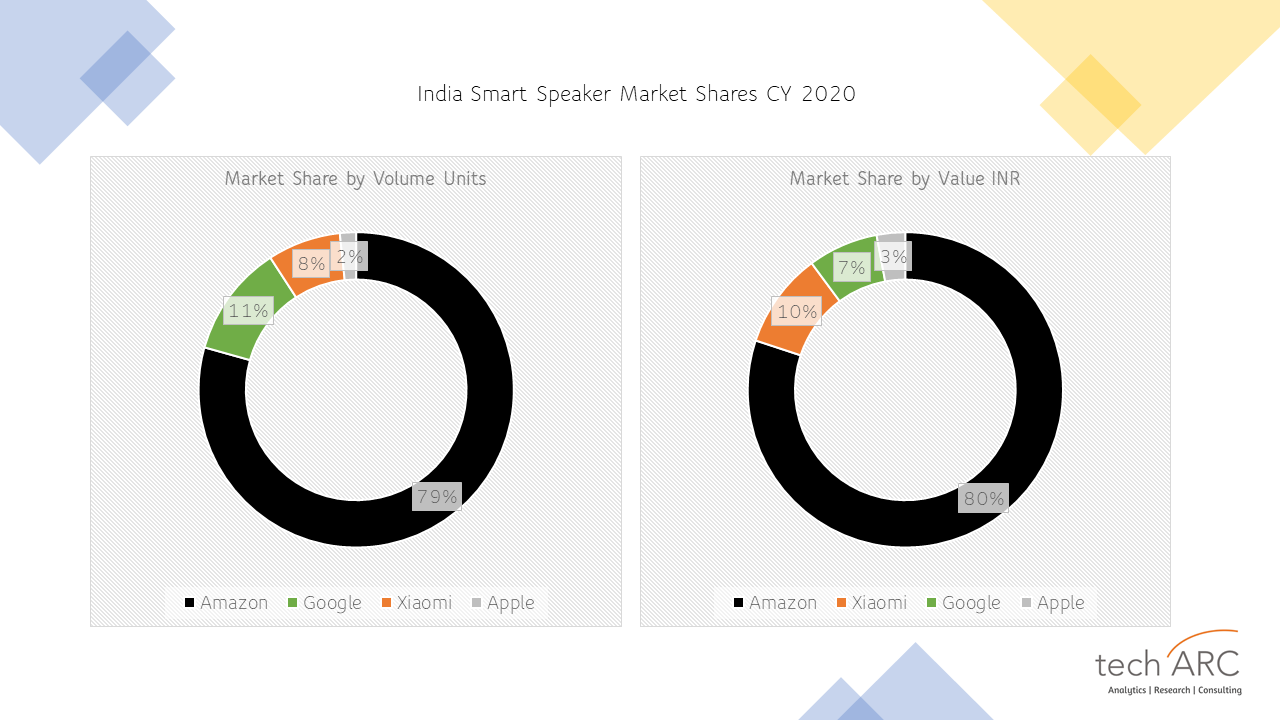
According to the report, Q4 2020 is said to have contributed to 40% of the Smart Speaker shipments. Overall, it is occupied by giants like Amazon, Xiaomi, Google, and Apple. Among these, Amazon leads the market with a whopping 79% Market Share(by Vol. of Units).
You can take a look at the Top-5 Best-selling Smart Speakers(Descending Order – Units of Sales) below:
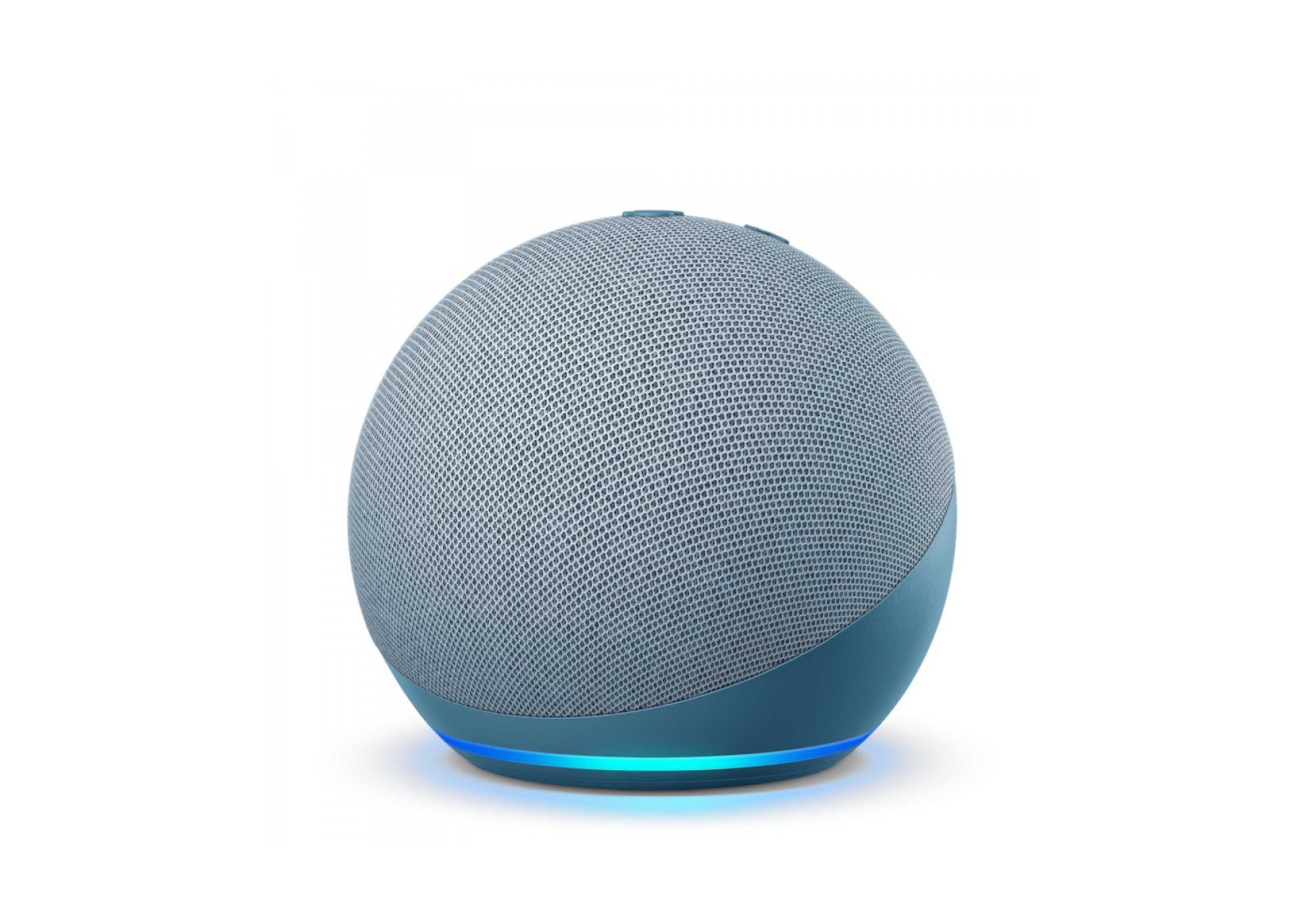
Amazon Echo Dot(3rd Gen)
Amazon Echo Dot(4th Gen)
Google Home Mini
Xiaomi Mi Smart Speaker L09G
Amazon Echo Dot(3rd Gen with Clock)
Amazon launched the Echo Dot(4th Gen) last year in September. It is currently retailing for ₹3,999 in India. Combined with Alexa, Echo Dot performs a variety of functions that is useful for consumers.
Report says that the US Giant will cement its position further in the under ₹5,000 segment despite competition from Chinese brands.
Speaking of which, Although Google is third on the list, Xiaomi has managed to outsell it and occupy second place in the overall market share by Value. If we recall, 2020 was the first year for Xiaomi to enter into the Smart Speaker category in India. It launched the Mi Smart Speaker for ₹3,499($48) in the country.
This price was well balanced compared to the Google Home Mini‘s launch price. Accordingly, the report says that Xiaomi manages to ship 75,000 units in the first year and captures 8% of the market share. Google, on the other hand, gets an 11% share in unit shipments but drops down to 7% in value.
Credit: techARC
Apple also had a share of its shipments with HomePod Mini dominating 84% of Apple’s 2% overall smart speaker shipments in 2020.
Looking forward, the smart speaker segment is said to grow further with a 35% YoY growth in the next 2-3 years. Watch out for the category below ₹5,000 as the competition is said to reach the next level by the arrival of other brands.
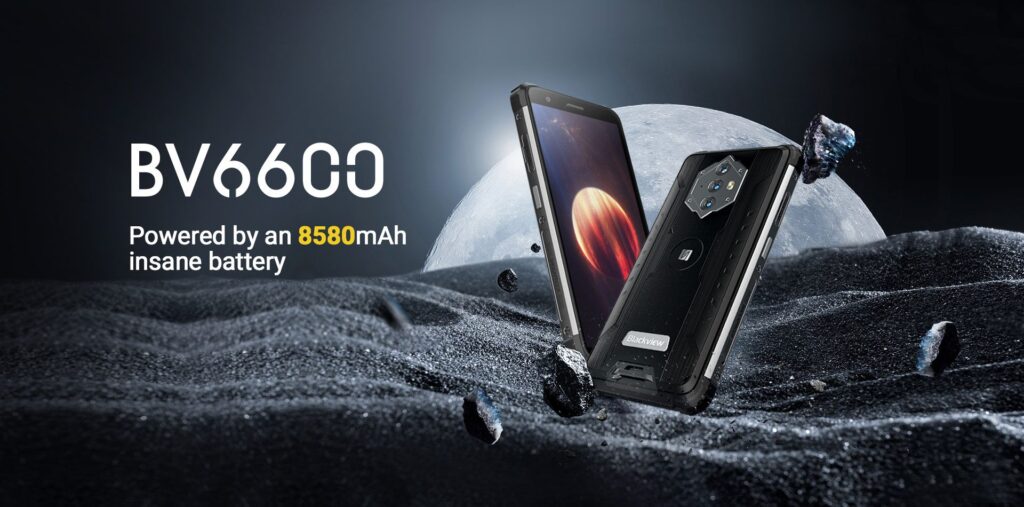
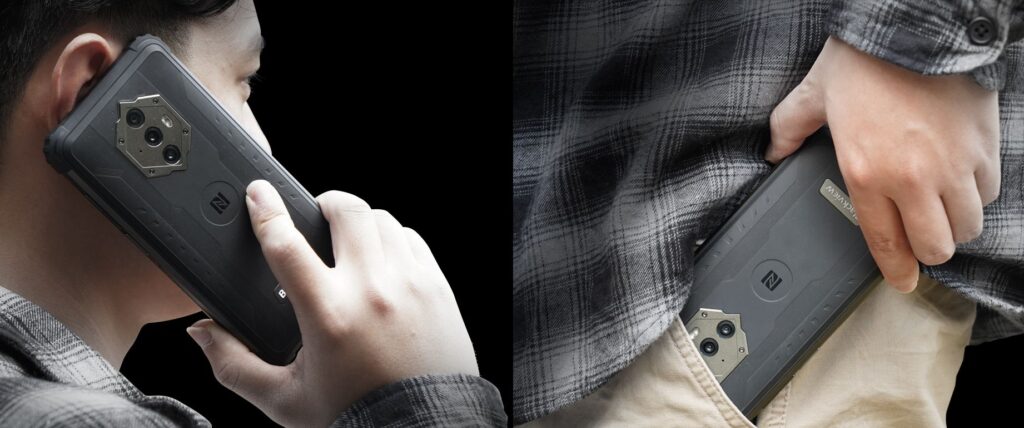
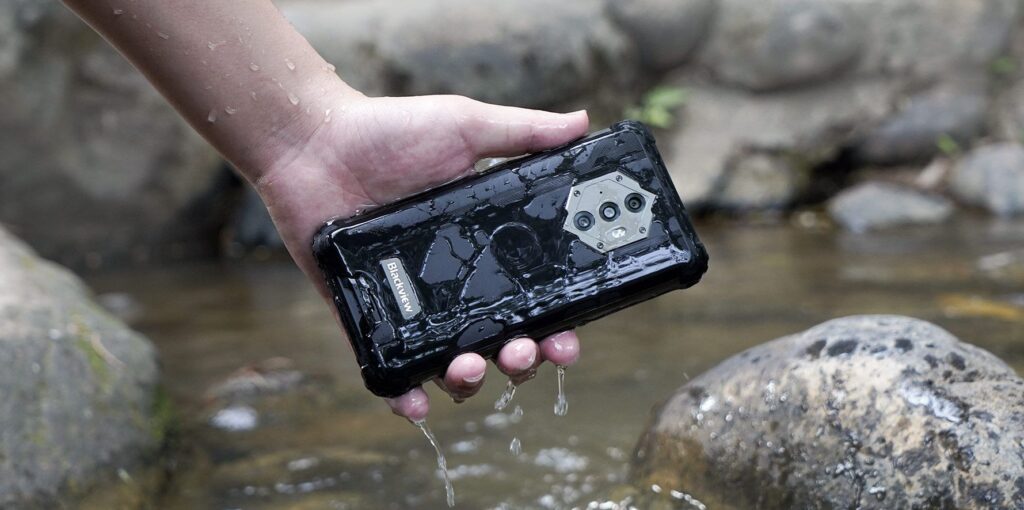
If you’re an ardent outdoor adventure lover, then Blackview BV66000 rugged smartphone can be your perfect companion. The smartphone hosts a massive battery of 8580 mAh which is enough to provide 2-5 days of standby time upon extensive usage. The smartphone aimed to provide excellent value-for-money while providing performance, better camera quality and tough design.
The smartphone also supports “reverse charge” feature to charge other portable devices including iPhone 12 and other smartphones. Its large battery can act as saviour in case if you’re stuck in some inadvertent situation.
Apart from providing rugged smartphone build and a large battery, the company has not compensated on other specifications of the device. It packs a beautiful 5.7-inch HD+ display. The display is neither big and neither too small and will facilitate in easy handling. The smartphone houses a power-efficient MediaTek Helio A25 octa-core chipset, 4GB RAM, 64GB ROM and 128GB expandable storage. Blackview BV66000 supports Dual 4G VoLTE and NFC for wireless payments.
In the camera department, the device comes with a triple-rear sensor module featuring a 16MP Samsung S5K3P9SX camera, and two other sensors for quality photos. There’s an 8MP Sony IMX219 sensor on the front for selfies and video calling.
Blackview BV6600 isn’t just rugged and sturdy from outside, it even carries several software-based refinements to more productive. The location accuracy improves with the help of GPS, GLONASS, Beidou, Galileo 4 positioning systems. It can be a perfect companion for the hikers, trekkers, sportsman and other people who often work in harsh weather conditions.
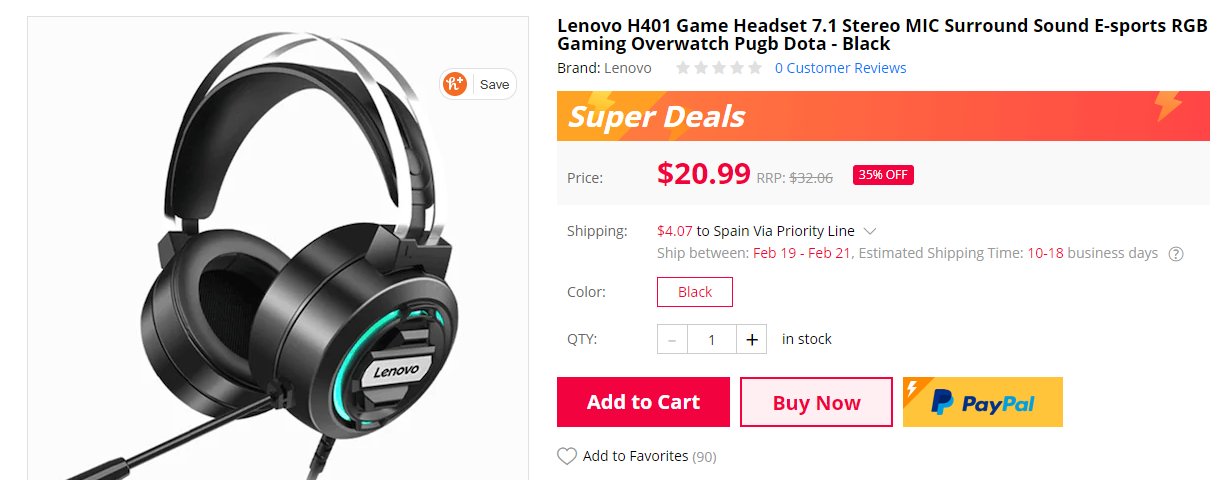
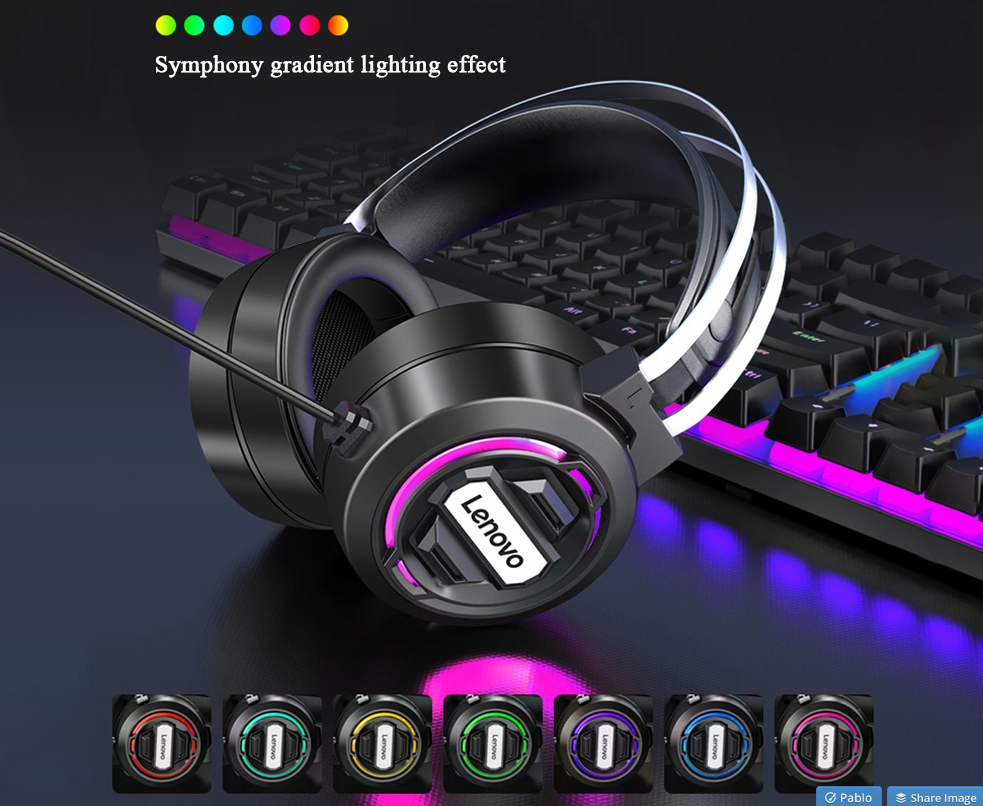
If you are out in the market to buy good quality budget gaming headphones then try Lenovo H401 Black Gaming headphone. It is a smart choice for a budgeted headset and in the next 7 hours, Gearbest is selling this product which usually retails at $25 for $20.99 only.
Lenovo H401 Gaming headphone is an over-the-head wired headset made for long-lasting comfort. It is ergonomically designed to give you a good fit and listening position. The noise-canceling microphone gives you a distraction-free gaming environment and the skin-friendly and soft leather earmuffs provide a painless and comfortable fit on your ears. The device comes with a double alloy steel adjustable head beam and stereo surround sound, enabled with the song switching function. Additionally, the symphony gradient 7 color lighting effect transforms your gaming space into a real-time battle zone, thereby heightening your gaming experience.
Lenovo H401 Black Gaming Headset generally retails at $25. But just for today, Gearbest.com is selling this headphone at $20.99 only. This means you can avail a discount of almost 16%. In the given price range Lenovo H401 Gaming Headphone is a great choice. So without wasting any more time grab this deal at Gearbest.com
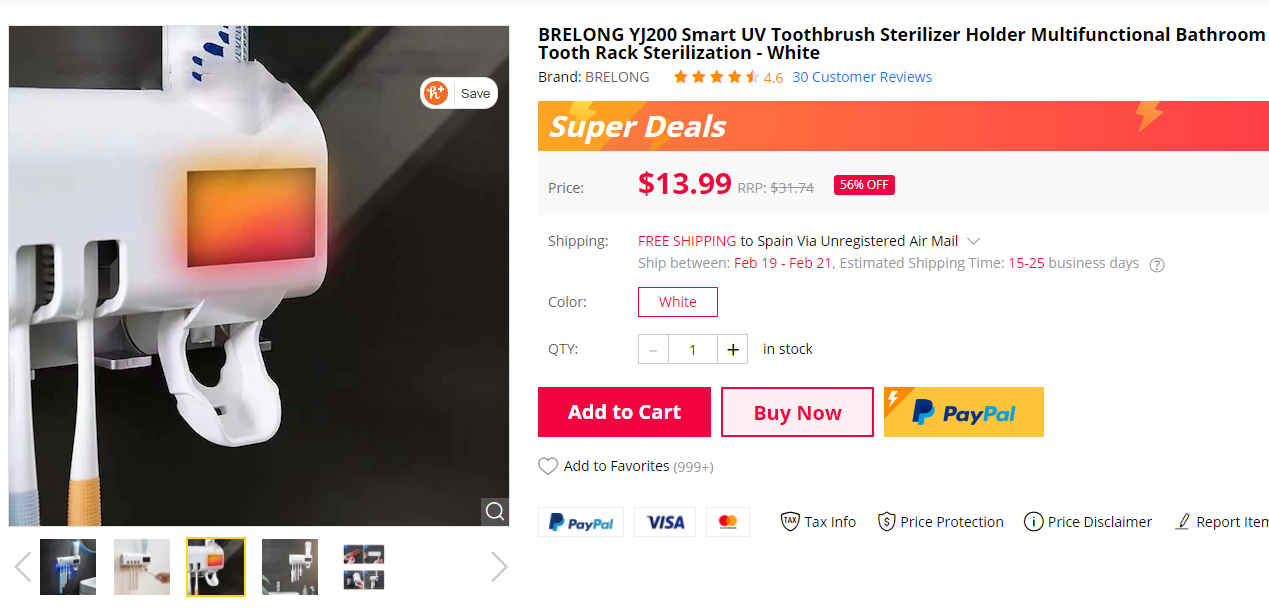
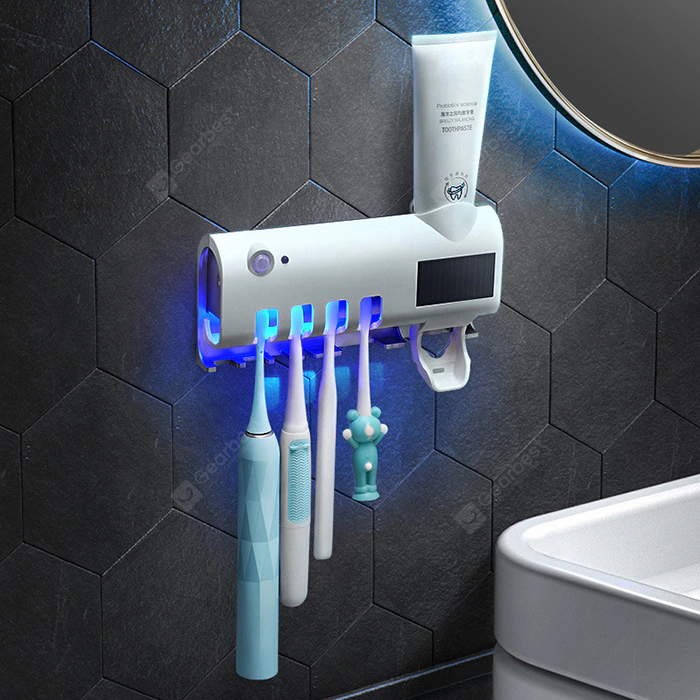
Brushing twice a day is vital for our dental health and hygiene. But how do we keep our toothbrushes clean and disinfected? To avoid contamination we can keep our toothbrush completely covered but then mold, bacteria, and other invasive and potentially harmful germs may start to accumulate on the brush. To solve this issue we have found the perfect device viz: BRELONG YJ200 Smart UV Toothbrush sterilizer holder. And just for today, this multifunctional device which usually retails at around $30 is available at a discounted price of $13.99 at Gearbest.com
BRELONG Smart UV toothbrush sterilizer holder comes with smart disinfection and double sterilization technology. The device uses both Ultra Violet and Photocatalyst technology resulting in a 99.99% sterilization rate. The holder comes with a USB as well as a solar charging option. The solar panels come with gold wires that can transform bright light into power which means it will work with indoor light, natural light, and sunlight. The highlight of the holder lies in its Infrared Intelligent Chip which senses the presence of the human body within a 2m radius. This means as you get close to the device it will automatically shut -off, thereby protecting you from any harmful UV radiation and as soon as you leave its vicinity the device starts the disinfection process. Additionally, it comes with a self squeezing toothpaste function and an easy-to-install adhesive mount. Therefore you don’t need to punch holes or nails on your bathroom wall.
BRELONG Smart UV Toothbrush Holder would generally cost you up to $30. But for the next 7 hours, Gearbest is selling the device for more than 50% discount costing you only $13.99. So without wasting any more time grab this super deal right away.
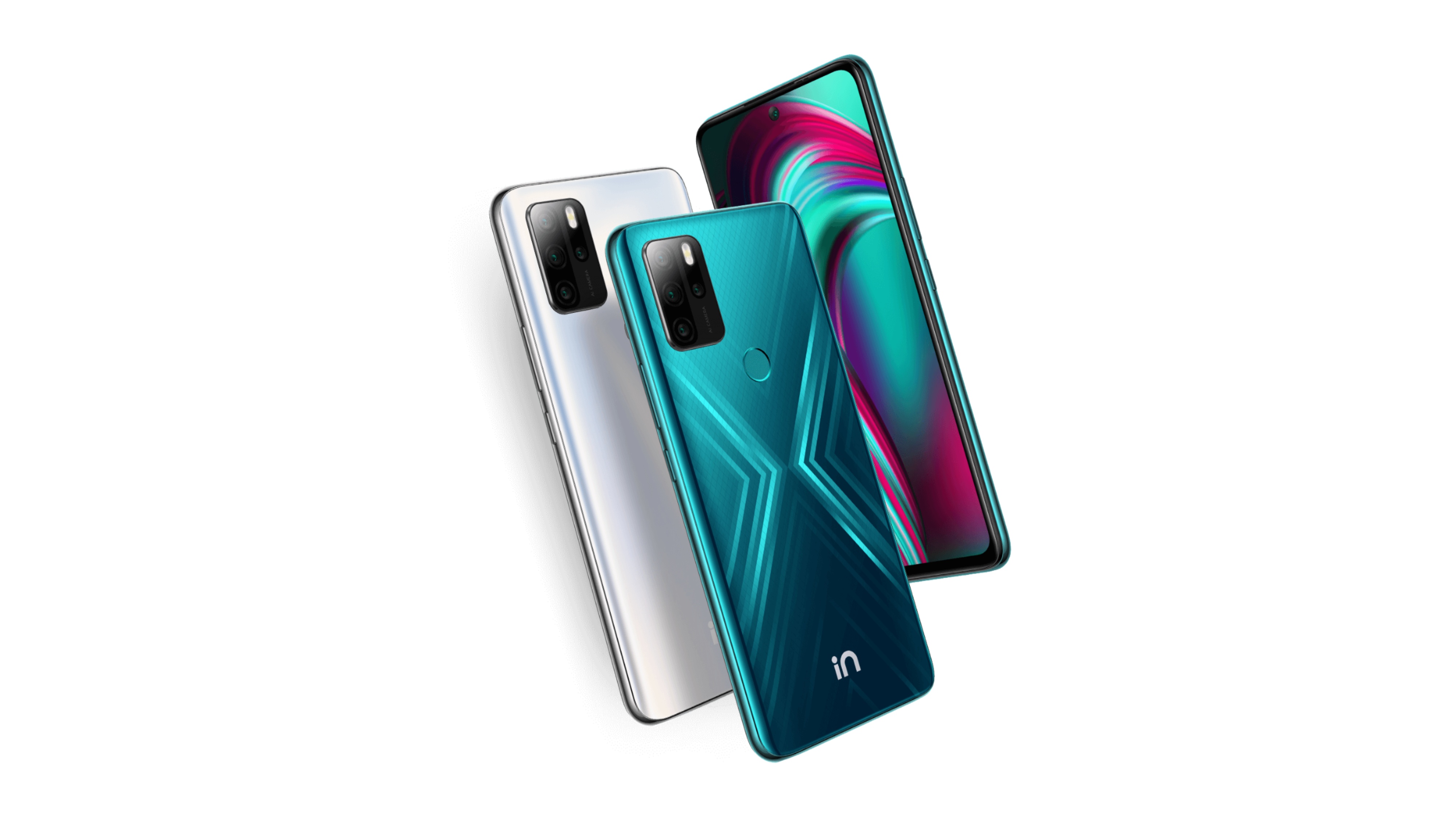
Back in November 2020, Indian smartphone maker Micromax made a comeback with the launch of two new models called IN Note 1 and IN 1b. So far, these handsets have been only made available via the company’s website and its official online partner Flipkart. But recently, the firm has started selling them offline in select states in the country.
Micromax IN Note 1
Although Indian smartphone customers preferred online channels in the last quarter, offline has always been larger than the former. Hence, all the online-only brands always turn towards offline channels a few quarters from their entry into the market.
Therefore, it is essential for Micromax to bring its IN Note 1 and IN 1b to offline retailers so that more customers can experience these handsets. Fortunately, the company has already started working on this matter.
It began selling its new smartphones offline in six states, namely Maharashtra, Gujarat, Goa, Assam, Nagaland, and Tripura a few weeks back. Earlier today, the company revealed that its latest offerings are now available in Karnataka as well. The firm has partnered with Simtel mobile planet, Roshini mobiles, and Vinod Enterprises for this cause.
Micromax IN 1b
That means if you live in any of these seven states in India, you can grab the new Micromax phones from any local retailer if they have them in stock.
For those unware, the Micromax IN Note 1 is priced at ₹10,999 for the 4GB + 64GB variant and ₹12,499 for the 4GB + 128GB version. On the other hand, the Micromax IN 1b costs ₹6,999 and ₹7,999 for 2GB + 32GB and 4GB + 64GB respectively.
However, it is worth noting that the offline price could be slightly higher than online though the firm has not mentioned it.
We use cookies on our website to give you the most relevant experience by remembering your preferences and repeat visits. By clicking “Accept”, you consent to the use of ALL the cookies.
This website uses cookies to improve your experience while you navigate through the website. Out of these, the cookies that are categorized as necessary are stored on your browser as they are essential for the working of basic functionalities of the website. We also use third-party cookies that help us analyze and understand how you use this website. These cookies will be stored in your browser only with your consent. You also have the option to opt-out of these cookies. But opting out of some of these cookies may affect your browsing experience.
Necessary cookies are absolutely essential for the website to function properly. This category only includes cookies that ensures basic functionalities and security features of the website. These cookies do not store any personal information.
Any cookies that may not be particularly necessary for the website to function and is used specifically to collect user personal data via analytics, ads, other embedded contents are termed as non-necessary cookies. It is mandatory to procure user consent prior to running these cookies on your website.


 The Realme GT 5G is expected to sport an OLED panel with up to 120Hz refresh rate support. There are speculations that there could be