Samsung is already expected to unveil its Tile-like Galaxy SmartTag Bluetooth Tracker at the Galaxy Unpacked event on January 14. Now, a fresh report by 91Mobiles says that a SmartTag+ will accompany the regular variant.
Once again, Ishan Agarwal, through his reliable tip, says that there will be a ‘+’ edition of Galaxy SmartTag. Accordingly, the SmartTag+ will have a model number EI-T7300. If you recall, the EI-T5300 belongs to the regular SmartTag courtesy of NCC, EUIPO trademark, Indonesia Telecom, and more.
While the report doesn’t delve much into the SmartTag+’s features, it does say that both of them will have Black, Oatmeal, Denim Blue, and Mint color variants. As for the regular SmartTag, the measurement will be around 4cmx4cmx1cm and weight 13g.
In addition to locating your objects via Bluetooth 5.1, you can expect it to have end-end encryption and ‘Privacy ID’ features. If you recall, an earlier EUIPO trademark for the SmartTag shows that it could also support UWB(Ultra Wide Band), interfacing with NFC, and RFID.
If that isn’t enough Ishan says that it will auto-connect to Galaxy devices, ring the phone on pressing a button twice, and share location with your kith and kin. Coming back, our guess is that the Galaxy SmartTag+, as the name suggests, might have a bit of exclusive features to position itself higher.
The Galaxy SmartTag series will add to the tally of trackers like SmartThings Tracker in 2018. It will have a ubiquitous design of a typical Bluetooth Tracker found in the market. That is, a square shape with rounded corners and a lanyard hole for strap/thread. Early reports also state that the SmartTag will be priced at around ₹1,350($18.44).
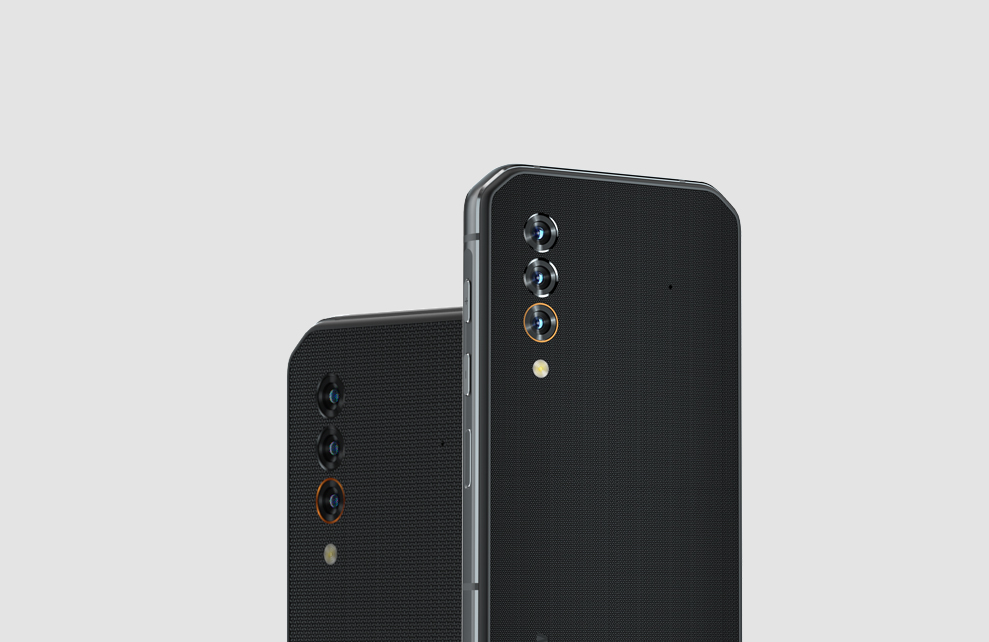
Blackview recently unveiled the BL6000 Pro 5G rugged smartphone carrying some exciting specifications and a compact design. The smartphone’s thin design made a difference over the other thick rugged smartphones which are available in the market, Blackview BL6000 Pro can easily fit inside your pocket without compromising the rugged aesthetics and functionality. It didn’t fall-back on the specifications and on any other aspect of being a rugged smartphone.
Ending the era of thick-rubber and rough screws, the Blackview BL6000 Pro 5G has changed the perception of the rugged smartphones by introducing a clean and compact look. The device is fully water, dust and drop proof, and even complies with IP68, IP69K and MIL-STD-810G standards. The device is powered with Dimensity 800 SOC, 8GB RAM, 256GB storage. A powerful 48MP triple-rear camera is present on the rear featuring 5280 mAh battery.
The 5G support even enhances the rugged experience. The smartphone is at your service in any adverse situation, including these three circumstances.
While Surfing
Do you love surfing? Then the Blackview BL6000 Pro can be your companion as it is fully waterproof which uses Nano moulding technology and waterproof membrane. The user can record quality videos using its 48MP primary camera. Moreover, the user can live stream using its 5G supported SoC with over 1.25Gbp/s upload speed.
Cycling
Blackview BL6000 Pro 5G houses GPS support for real-time positioning. It can further enable to efficiently track the activity. Moreover, the user need not worry about any damage due to falling from the vehicle. It enables the users to vlog and upload instantaneously along with cycling.
Working in Extreme Conditions
The smartphone comes with MIL-STD-810G grade certification which can withstand drops and bumps. Moreover, the user can video call with family while working in those conditions.
In other words, Blackview BL6000 Pro 5G is a device which is produced as an outcome of several breathtaking innovations over the past few years. The interested users can further head over to the official website for more information.
Blackview is launching a new budget rugged smartphone – Blackview A70 in the coming days. It will feature 5380 mAh battery at the price of around $80. It will compete against the Xiaomi Mi 11 Lite. Black A70 giveaway will kick off from January 9. The users can know more about the device by heading to the Blackview website.
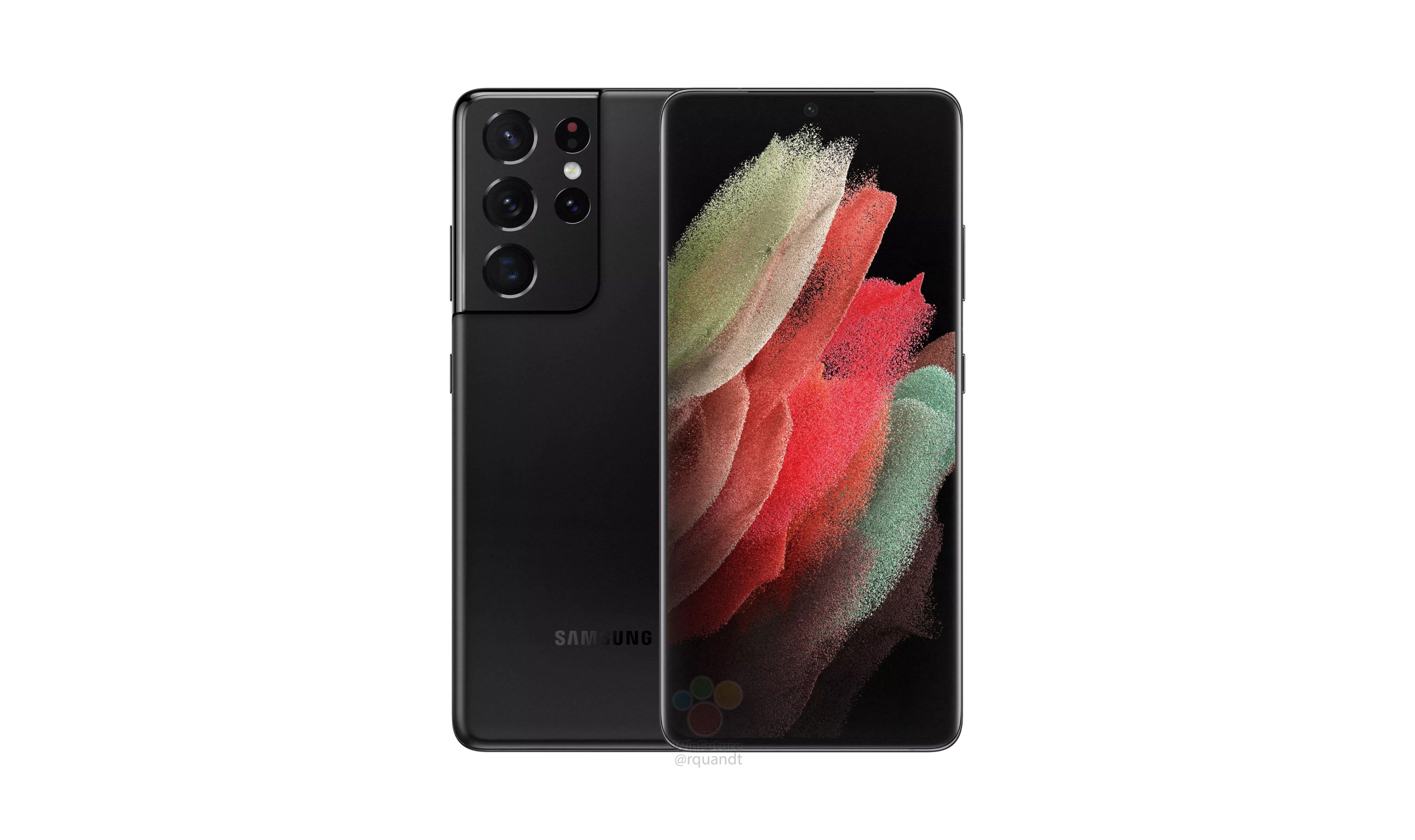
We are just two days away from the 2021 Galaxy Unpacked event of Samsung. The company will be announcing Galaxy S21, S21+, and S21 Ultra 5G smartphones as per various reports. Amidst a bucket load of leaks, a new report by WinFuture.de shows how the retail packaging would look like.
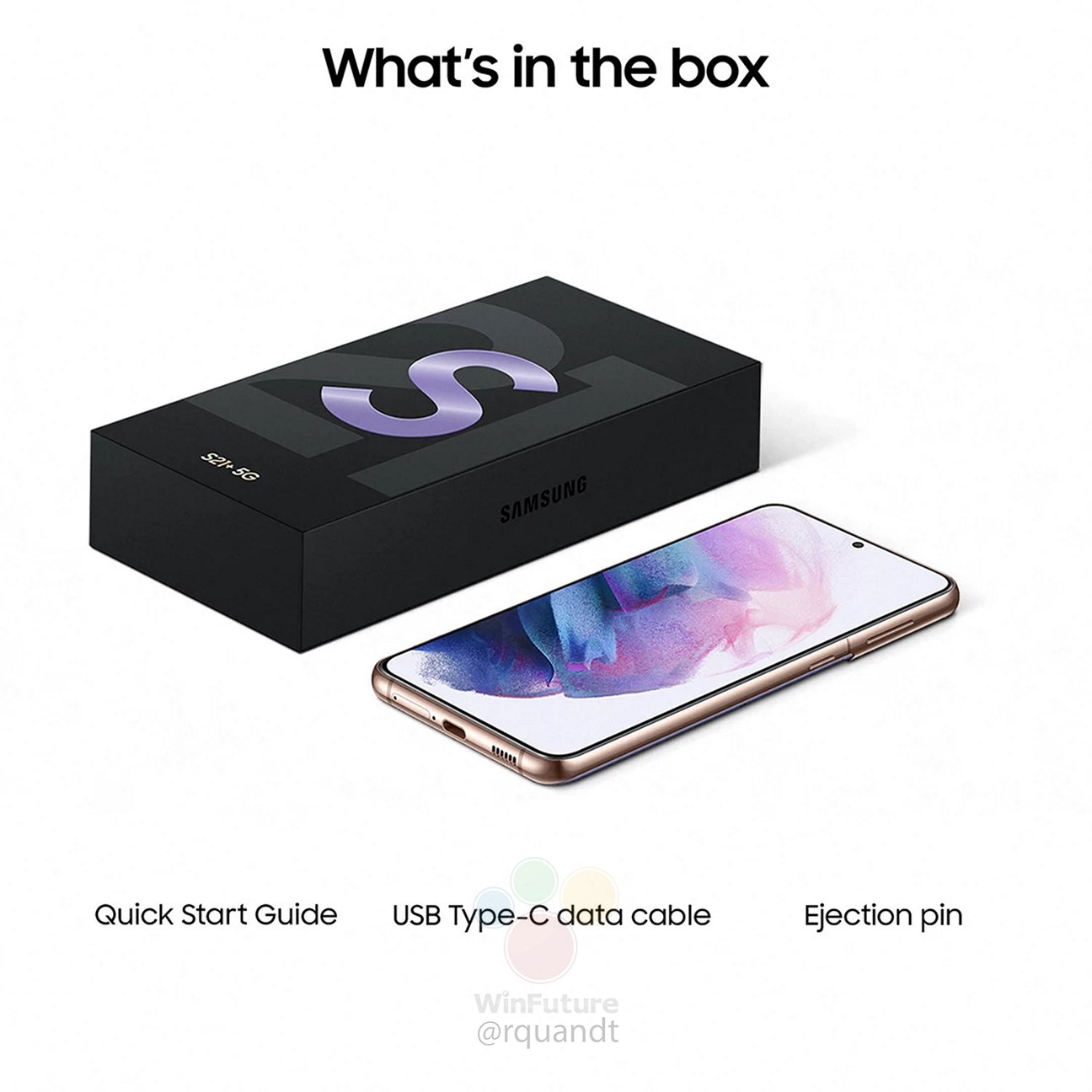
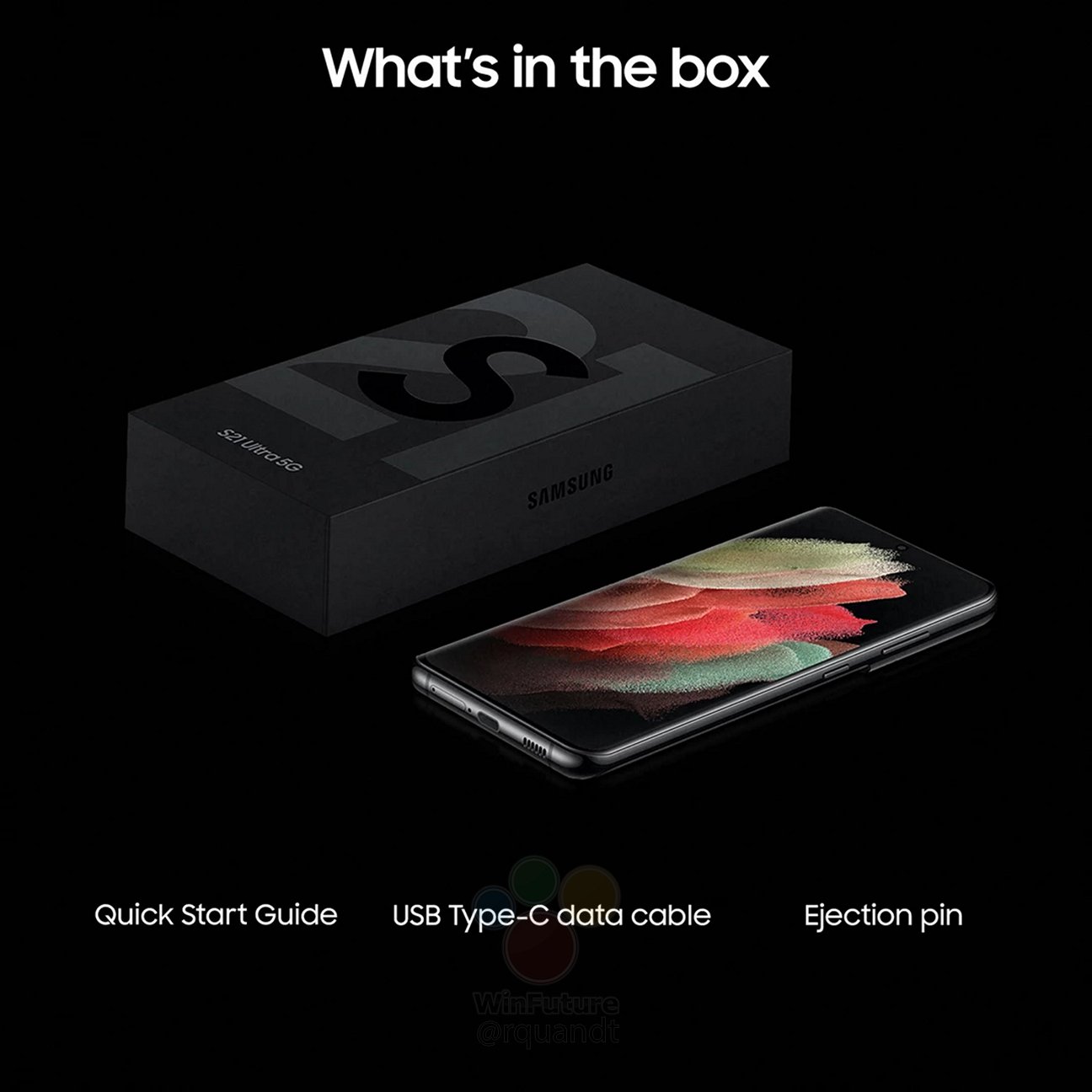
As per the report given by Roland Quandt(@rquandt), we see two images of what is claimed to be the retail packaging of Galaxy S21+ 5G, and S21 Ultra 5G. Both the boxes are Black in color. Additionally, the supposed marketing poster for the in-box contents shows what we can expect inside the box. Apparently, it will include a Quick Start Guide, USB-C cable, and a SIM-ejector.
Just like the report says, the poster doesn’t include the Charging Adapter and earphones as an in-box content. Previously, reports have said that Samsung will exclude chargers and earphones in regions like the UK. While we would have expected Samsung to at least include the AKG earphones, sadly looks like that isn’t going to happen either.
1 of 2
Galaxy S21+ Box
S21 Ultra Box
Apple began all this with the iPhone 12 series launch. It said that not including Chargers will reduce logistics, transportation cost, saves space, and reduces the overall Carbon footprint. This according to the company would be a headstart for a sustainable environment.
Although Samsung hasn’t quite revealed anything about the Galaxy S21 series officially yet, we expect it to give similar reasons for the omission. To corroborate this, it has already removed posts mocking Apple back in October. On the flip side, it can also garner more revenue by selling the proprietary charger separately just like Apple.
1 of 5
Night Mode
64MP camera
512GB Internal
5G
IP rating
Anyway, let’s wait and see if Samsung gives any bundle offers initially. That said, Roland has also shared additional images of the marketing posters showing features like a 64MP camera, internal storage(256GB, 512GB), 5G, Night Mode, and Water Resistance(IP). The poster almost confirms that Samsung will ditch the microSD slot finally to popularize higher internal storage for faster load times.
Videos have always been an important part of our lives and as smartphones are getting faster and smarter, these handheld all-purpose devices can potentially replace your dedicated DSLRs, point and shoot cameras, and even action cameras for your videography needs.
As much as we have advanced in the smartphone imaging department, videos have often been a neglected feature on Android smartphones, even on flagships. However, in recent years, brands have eventually figured out the importance of smartphones as video cameras and are focusing on improving the overall videography experience.
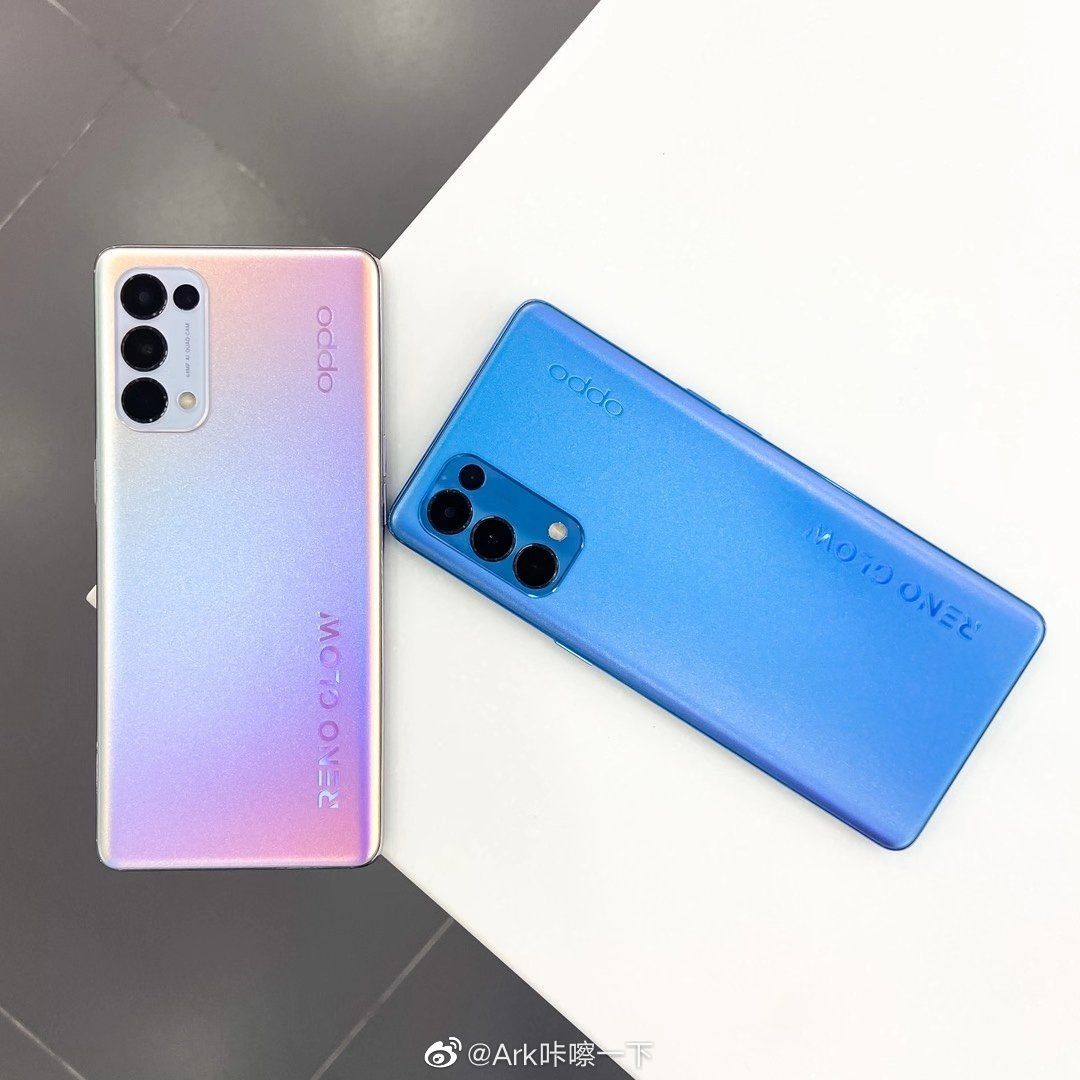
Reno5 Pro 5G
OPPO has been at the forefront of optimizing smartphone cameras and we have already seen some interesting technologies from the brand like the RFB-ERSGAN neural network which upscales original low-resolution images into high-resolution ones without losing details or even the Hybrid Zoom technology with a stacked periscope zoom lens structure.
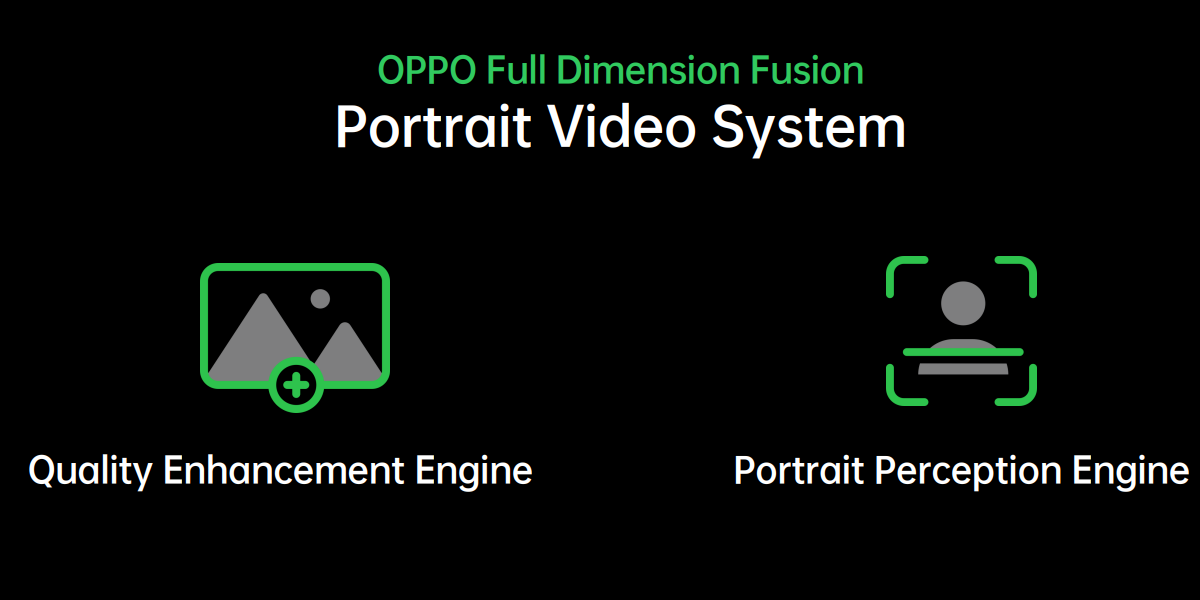
In the upcoming Reno5Pro 5G, OPPO will be using its brand new Full Dimension Fusion (FDF) Portrait Video System. This is a set of imaging algorithms that work behind the scenes to optimize the video on the new device. And in a recent briefing, OPPO explained how the system works and how it optimizes the videos according to a number of parameters for the best possible output.
So here’s a quick look at how OPPO’s FDF Portrait Video System on the OPPO Reno5Pro 5G works. This article isn’t meant to be a deep dive into the system. Instead, it’s a quick overview of what happens behind the scenes when you take a video using the phone.
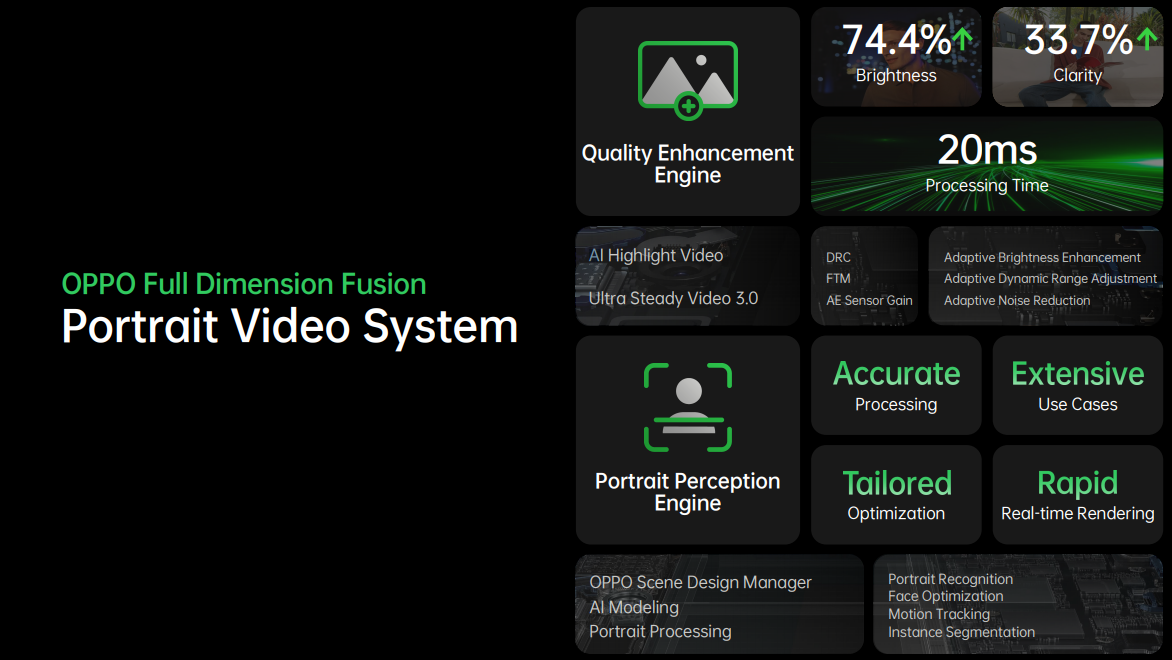
As mentioned above, OPPO’s camera system is a collection of different algorithms that work in tandem to optimize the videos recorded on the OPPO Reno5Pro 5G. The system is comprised of two main engines:
1. Quality Enhancement Engine
As the name suggests, the Quality Enhancement Engine improves the quality of the video in a number of different parameters like brightness, dynamic range, and noise reduction. This engine works in the background to improve the overall quality of the video being recorded.
2. Portrait Perception Engine
The Portrait Perception Engine on the other hand focuses on scene recognition. It works in the background to identify human figures in the scene and effectively optimize them with respect to its environment. This particular engine is also responsible for enabling creative filters inside the video like the AI Color Portrait mode.
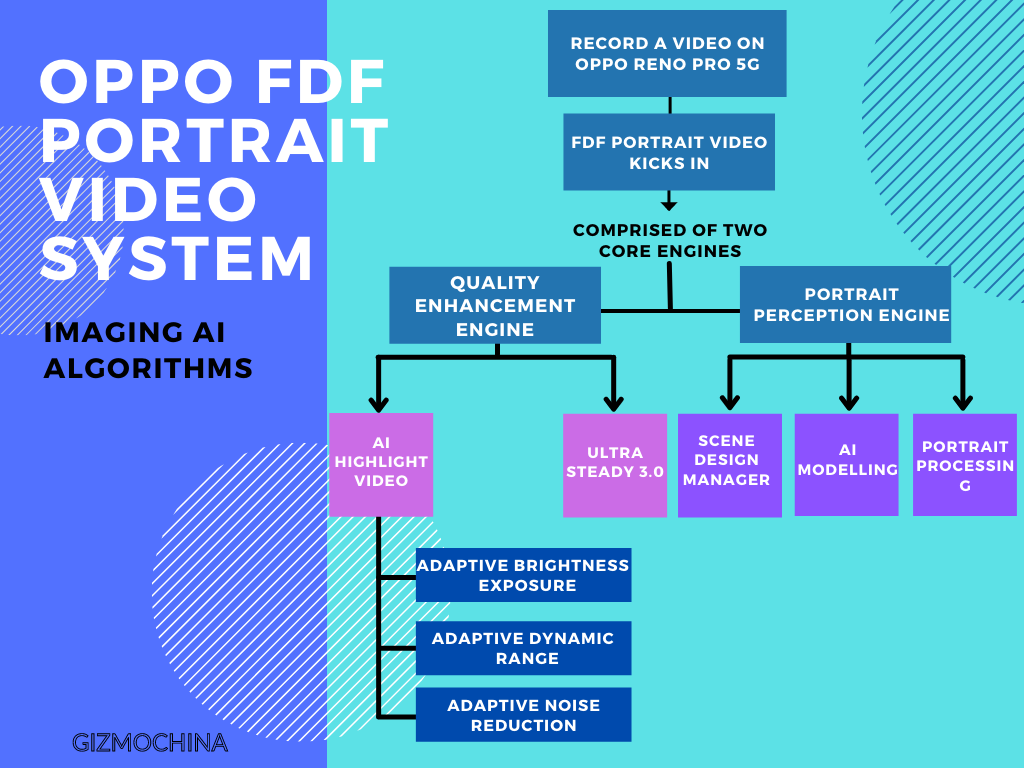
To understand it better, this flowchart will give you a quick overview of how the system works.
OPPO FDF Portrait Video System
HOW THE SYSTEM WORKS
The two engines work together to optimize the video on the Reno5Pro 5G. Each engine has its own set of optimizations being processed in the background. Now let’s take a quick look at these processes.
Quality Enhancement Engine
The Quality Enhancement Engine is comprised of two AI algorithm architectures – AI Highlight Video and Ultra Steady 3.0.
OPPO AI Highlight video
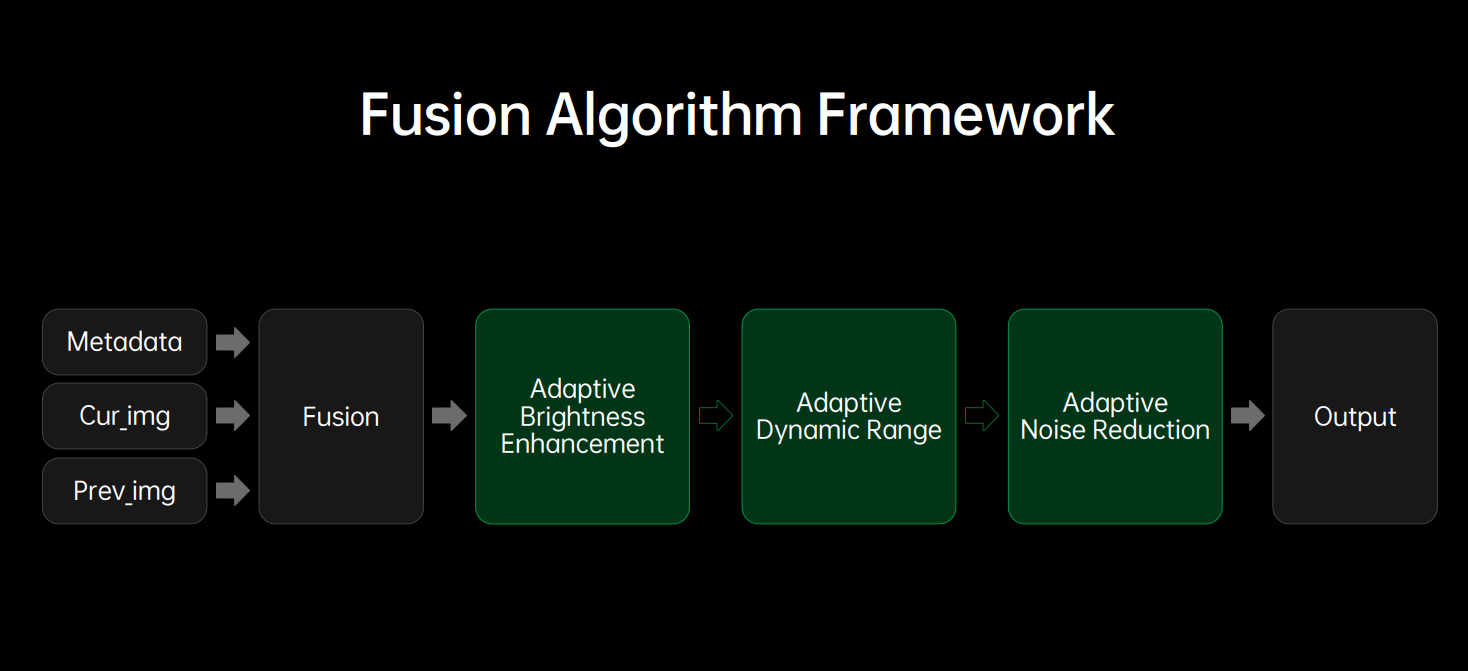
AI Highlight Video
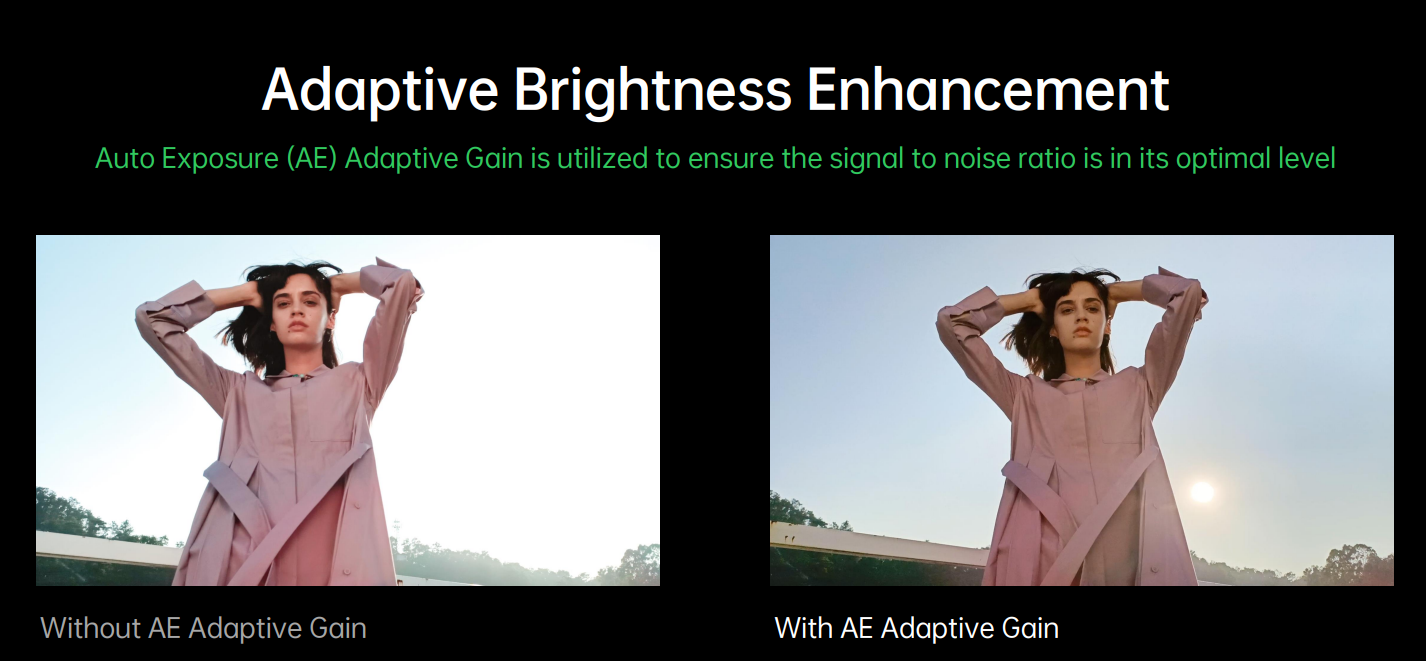
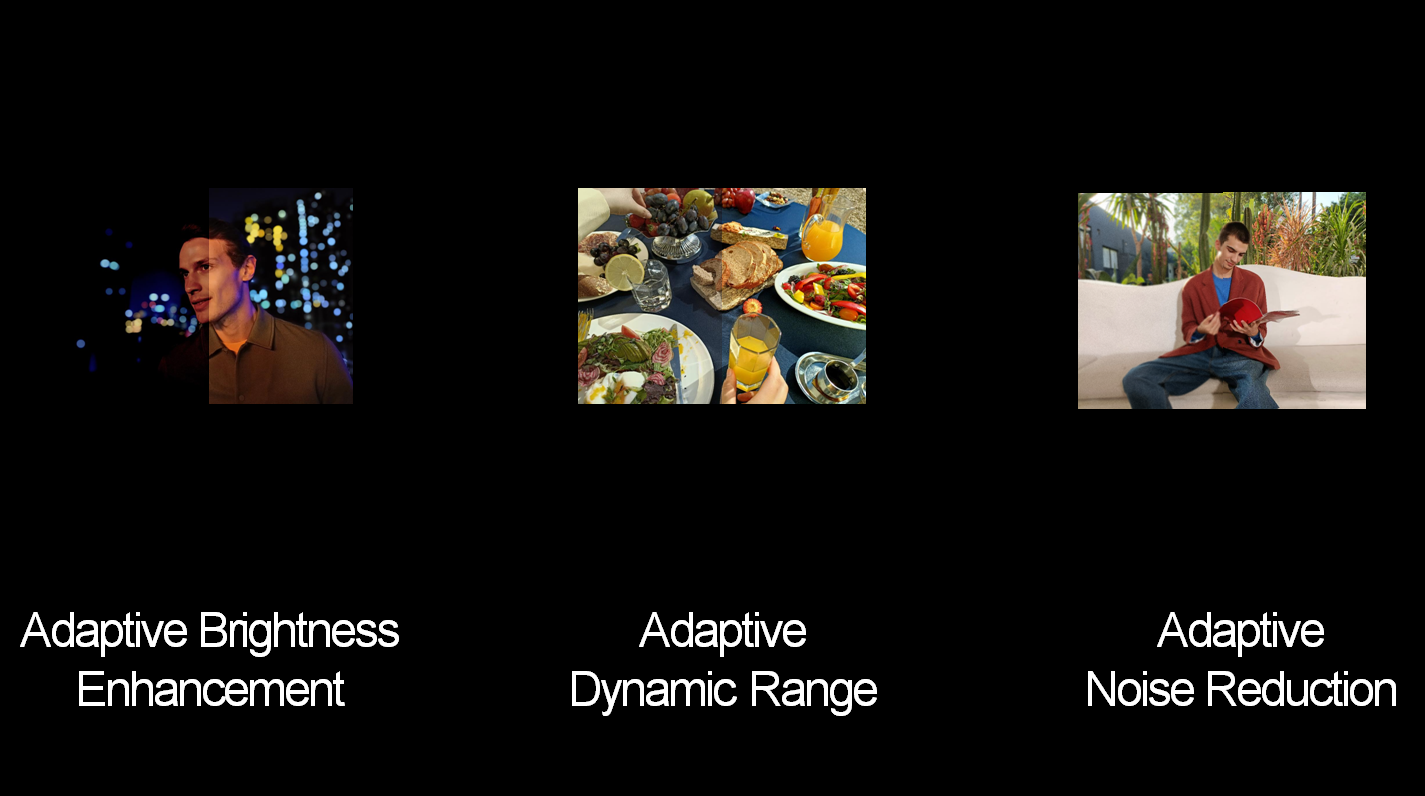
OPPO reveals that AI Highlight Video is its proprietary algorithm architecture that combines Ultra Night Video Algorithms and Live HDR Algorithms to optimize the brightness, color, and clarity in videos, irrespective of its light levels. OPPO also notes that this is the first time that they have been able to use both its Night and Live HDR algorithms simultaneously. This means that AI Highlight Video works in daylight as well as low-light situations and it’s available on both front and rear cameras. You just have to press a button in the camera UI to turn on this feature. AI Highlight Video optimizes the video in three different parameters.
AI Adaptive Brightness Enhancement: The algorithm uses adaptive gain to control the exposure time to ensure the images in the video are bright yet not overexposed.
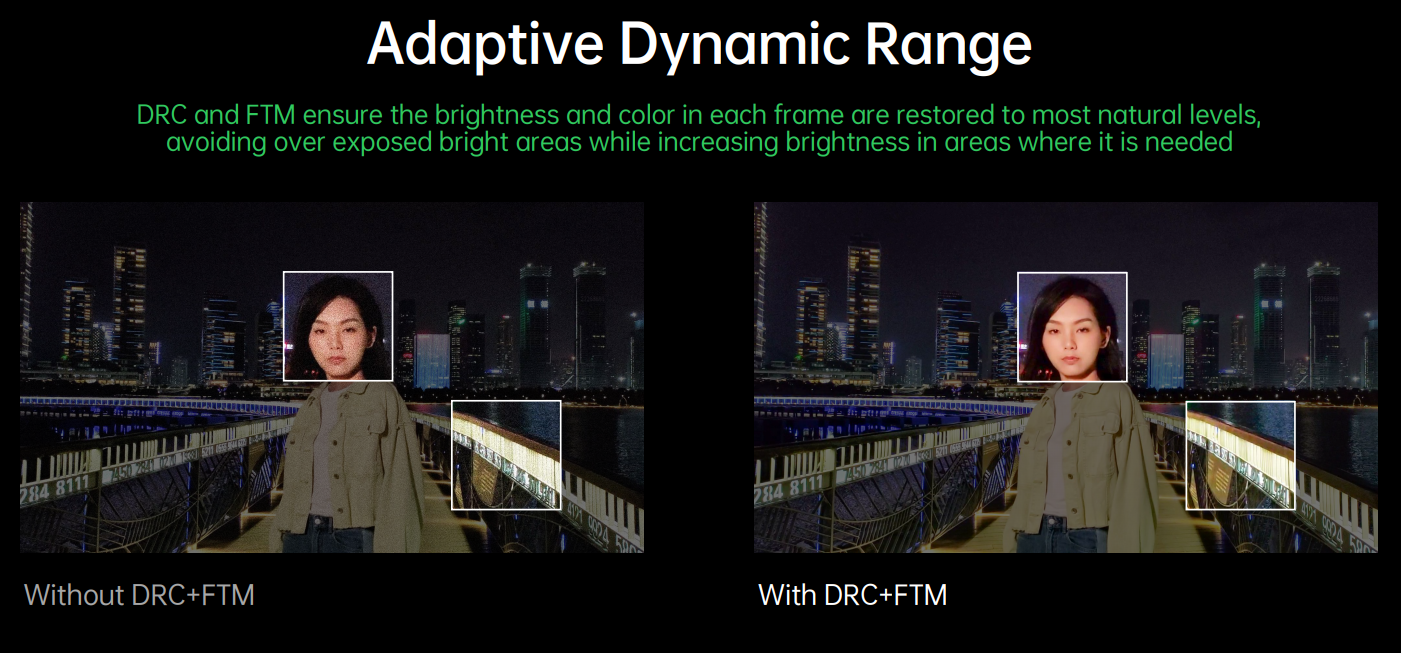
AI Adaptive Dynamic Range: The Adaptive Dynamic Range adjusts the dynamic range to each frame in a video using Dynamic Range Conversion and Filmic Tone Mapping (FTM) technologies. OPPO claims that this process restores lost colors, brightness, and darkness to the image’s natural levels. This process also includes Multi-Frame HDR for better dynamic range across the entire video.
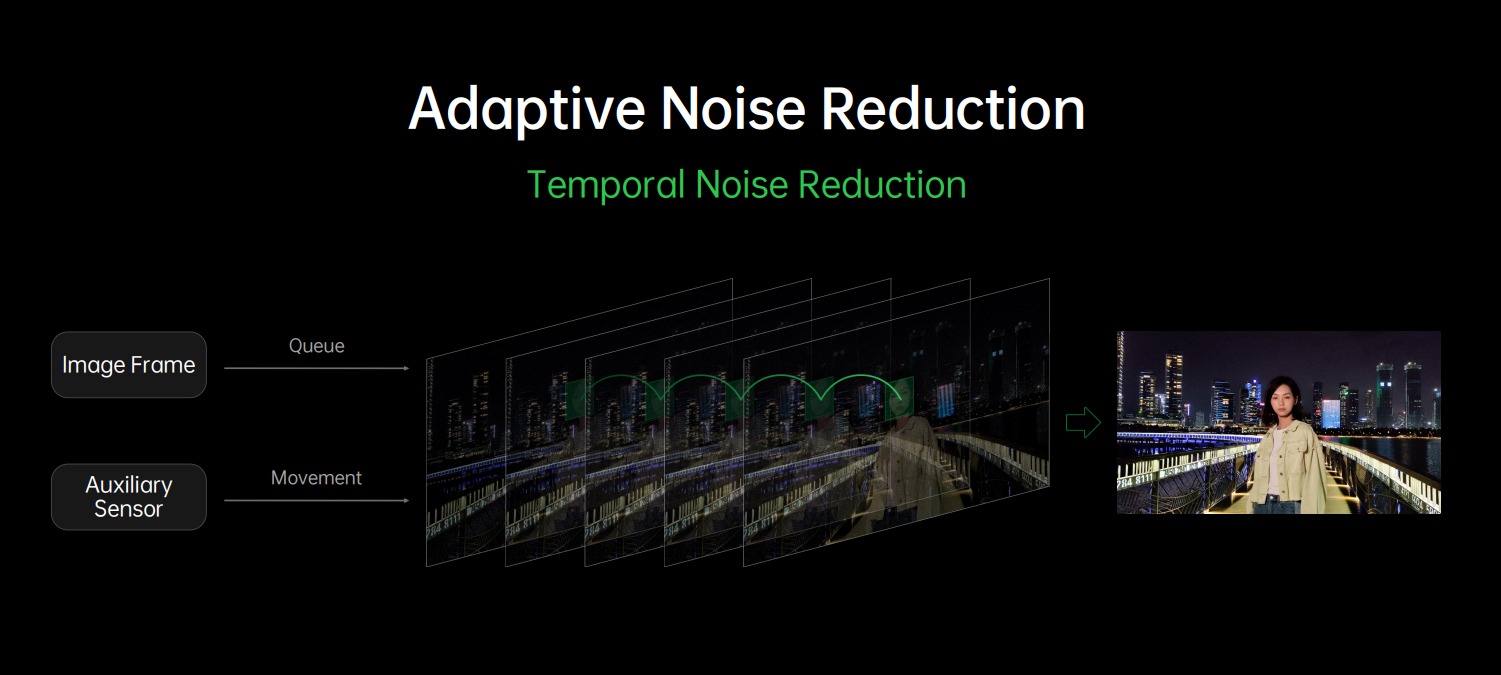
AI Adaptive Noise Reduction: This process adds inter-frame fusion for temporal noise reduction (between two frames) and intra-frame fusion (inside the frame) for spatial noise reduction. OPPO claims that this process removes an image’s noise without removing essential details, unlike other regular de-noising algorithms.
It’s clear that OPPO is giving a lot of importance to its AI Highlight Video algorithm. In fact, the company shared a few key stats on how it improves the overall quality and performance of videography on smartphones.
OPPO reveals that AI Highlight video enhances the brightness of night-time videos by 74.4% with 33.7% clarity as compared to the regular video mode. It takes just 20ms to complete the entire process on the Reno5Pro 5G while the power consumption also drops by 40% as compared to its predecessor.
Ultra Steady 3.0 OPPO’s Quality Enhancement Engine also depends upon its new generation of Ultra Steady 3.0 technology which provides stabilization technology to a broader range of scenarios like running, jumping, and even extreme sports.
Next up is the portrait perception engine. A lot of you might already be familiar with this engine. This set of algorithms is responsible for enabling portrait centric features like the cool AI Color Portrait videos, irrespective of the background or the state of the person.
Portrait Perception Engine
Portrait Perception Engine undergoes three typical processes when you shoot a video.
Scene Design Manager: The first stage is defining the portrait scene and processing the requirements needed for the same. Using OPPO’s own database with over 10 million data, the Scene Design manager can analyze real-life portrait scenes in different scenarios and provide required adjustments to the video against a set of fixed parameters. This is the first stage where the engine prepares the video for further processing.
AI Modelling: Once the scene is assessed, AI models and deep neural networks kick into action, essentially separating out the portrait from the background. This is a very important part of OPPO’s portrait video processing. To increase the speed and accuracy of its AI model that identifies portraits, the company is using its own database to train the SOTA AI model. It helps to further compress these models making them suitable for smaller devices like smartphones. OPPO claims that the entire portrait recognition process can be performed in less than a millisecond, which is extremely important for a seamless and instantaneous videography experience.
Portrait Processing: When you look at its real-life applications, the Portrait Perception Engine forms the base of OPPO’s FDF Portrait Video System. The final portrait processing algorithm optimizes the video in three aspects:
1. Face Optimization
2. Motion Tracking
3. Instance Segmentation
portrait video system summary
Thanks to the Portrait Perception Engine which includes portrait identification and portrait processing, OPPO’s smartphones with the FDF Portrait Video system can:
Accurately identify features of every person and their faces even if the subjects are side-on to the camera or are partially obscured.
Apply AI Highlight Video optimizations like color, brightness, or contrast adjustments to portraits.
Add personalized optimization to each subject in the image (instance segmentation)
Add special features to portraits like AI Color Portrait
It’s clear that OPPO believes that videos are going to be a very important part of smartphones in the coming years. The company’s FDF Portrait Video System is just another effort to deliver more to its users on the video front.
portrait video system summary
The company has revealed that as of September 2020, it had applied for 7,300 imaging-related patents worldwide, out of which 2,350 have already been granted.
The OPPO Reno5 Pro 5G is the latest model to feature its new FDF Portrait Video System. The phone launches in India on January 18, so we’ll know soon how much of a difference this new Engine brings to the video experience.
At the Consumer Electronics Show (CES) 2021, TCL showcased a wide range of devices such as TCL 20 SE and TCL 20 SE smartphones, NXTPAPER and Tab 10s tablets, and Movaudio S600 TWS. The Chinese firm also unveiled two innovative products such as a 6.7-inch rollable AMOLED screen and a 17-inch printed OLED scrollable screen.
The 6.7-inch rollable AMOLED display can be seen in a small smartphone form factor. The screen can stretch from 6.7 inches to 7.8 inches just with a simple tap. This will allow the smartphone to turn into a tablet. The TCL device featuring the rollable AMOLED display will come equipped with an easily adaptable user interface.
Here's a real-life peek at the TCL AMOLED Rollable Display (it'll make you feel like you're at a CES booth again!): #CES2021pic.twitter.com/RRVM5QAqwc
The thickness of the device is under 10mm, which makes it slimmer than a foldable smartphone. The company claims that the curling and sliding radius of the flexible screen can be as small as R3mm along with the special mechanism design. Just with a swipe of a button, the display that is originally curled and hidden inside the case can be pulled out. According to TCL, the device offers a sliding life of up to 100,000 times.
The 17-inch printed OLED display that has a thickness of 0.18mm was presented in a unique design of a scroll painting. In the video above, the screen can be seen fitted with two rods at the two ends and it can be seamlessly opened or closed like a scroll painting.
The flexible screen is equipped with TCL CSOT’s cutting-edge inkjet printing technology, with a 100% color gamut, it significantly enhances the quality of the display. It can be widely applied across flexible TVs, curved and foldable displays, and transparent commercial displays.
1 of 2
Its OLED RGB self-luminous devices are manufactured with high-precision inkjet printing technology, without the need for fine metal masks. As a result, the cost is 20% lower than traditional display technologies and is more applicable for large-sized displays and mass production.
Samsung will be announcing the Galaxy S21 series on January 14. Ahead of it, the South Korean tech giant has dropped the prices of its predecessor, Galaxy S20 series (Galaxy S20, Galaxy S20+, Galaxy S20 Ultra), as well as, Galaxy Note10 Lite in India. Let us take a look at how much price cut these four handsets have received in the country.
The information regarding the Galaxy S20 series price drop in India comes from the retail sources of 91Mobiles. According to the publication, the series has got up to around ₹16,000 in price cut.
As you can notice from the table above, the Galaxy S21+ gets the highest price drop. Anyway, it is worth noting that Flipkart had been selling this smartphone for only ₹49,999 in the past few months. But now, the device is listed for ₹54,999, which is still ₹2,000 cheaper than the offline price.
On the other hand, the two variants of Galaxy Note10 Lite also get a ₹3,000 price cut each in India. Here are their new prices in the country.
Model
Old Price
Price Drop
New Price
Galaxy Note10 Lite (6GB + 128GB)
₹37,999
₹3,000
₹34,999
Galaxy Note10 Lite (8GB + 128GB)
₹39,999
₹3,000
₹36,999
Similarly, a few days back, Samsung also dropped the prices of its best-selling mid-rangers (Galaxy A51, Galaxy A71) in India.
Earlier today, we saw an exclusive report about the vivo Y12s launching in India soon. The company has finally made it available in India for a price tag of ₹9,990($136). This is a mild upgrade over the yesteryear vivo Y12.
1 of 2
vivo Y12s Glacier Blue
vivo Y12s Phantom Black
vivo Y12s: Price, Availability
vivo Y12s comes in Glacier Blue and Phantom Black color options in India just like it did for the Southeast Asian markets. Similarly, it has a single 3GB RAM and 32GB storage variant that will sell for ₹9,990($136).
As usual, you can buy the Y12s on vivo shop India in addition to Amazon, Flipkart, Paytm, Tata Cliq online. The device will also be available across all major retail partners offline in the country.
The Indian variant of the vivo Y12s also measures 164.41×76.32×8.41mm and weighs 191 grams. It features a 6.51-inch HD+ IPS LCD display with a resolution of 1600×720 pixels and a 20:9 aspect ratio. Under the hood, you get a MediaTek Helio P35 SoC paired with 3GB RAM and 32GB Storage. You can also expand this via a microSD slot.
For the optics, we have a dual-camera setup with a 13MP f/2.2 main and a 2MP f/2.4 auxiliary sensor. Upfront, there is an 8MP f/1.8 sensor for selfies. The device gets camera features like Portrait, Photo, Video, Pano, Live Photo, Slo-Mo, Time-Lapse, Pro, DOC.
Other specs include Wi-Fi, Bluetooth 5.0, FM-Radio, GPS, GPS, BeiDou, GLONASS, Galileo, 4G LTE, side-mounted fingerprint sensor, face unlock, micro-USB port, 3.5mm audio jack, 5,000mAh with 10W charging, and Funtouch OS 11 out of the box.
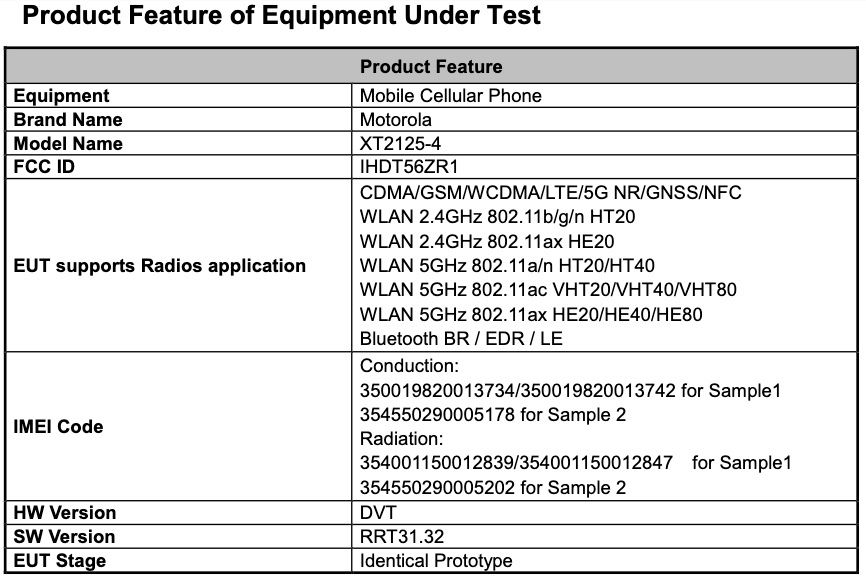
Recent reports have revealed that Motorola will be launching a new Snapdragon 865 powered smartphone in Q1. The device is being referred to with its “Nio” codename since its final product name is yet to be confirmed. The arrival of the phone could be close at hand as it has received certification from the Federal Communications Commission (FCC) in the U.S.
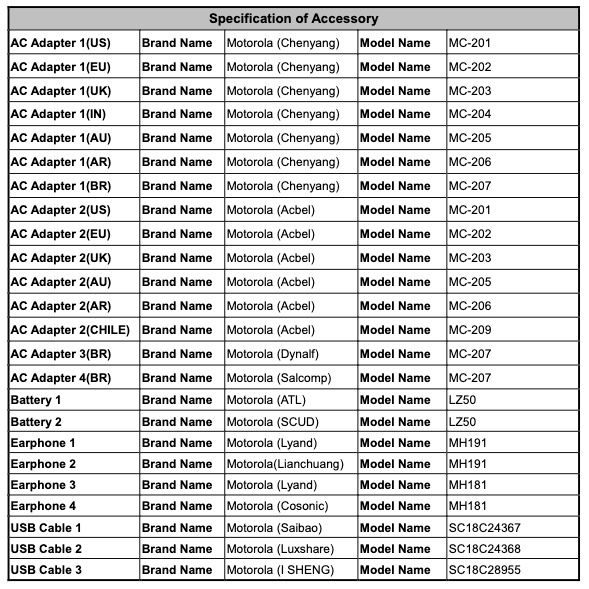
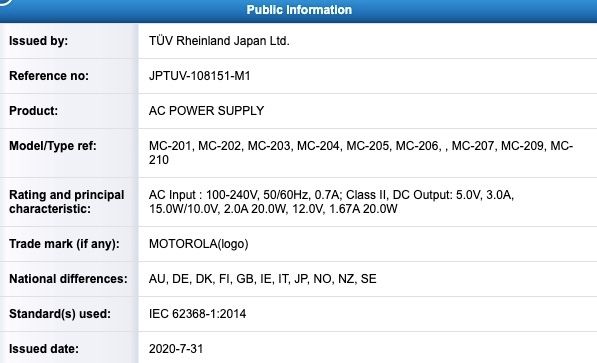
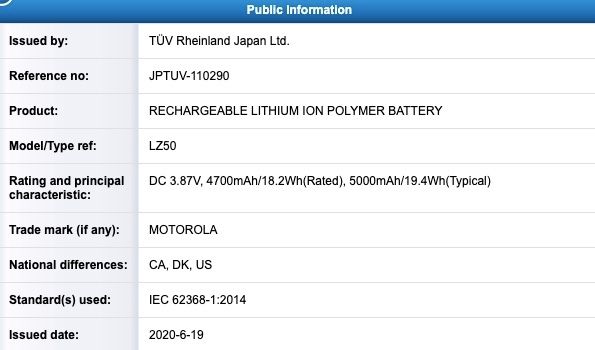
The Motorola Nio has appeared with its XT2125-4 model number at FCC. The listing mentions that the device carries support for 5G, Wi-Fi 6, Bluetooth, NFC, and GNSS. It is also found that the model number of Nio’s battery LZ50. The TUV certification has revealed that the smartphone has a 5,000mAh battery and it may arrive with support for 20W charging.
The Motorola Nio phone was recently spotted at the Geekbench benchmarking platform in the recent past. The listing revealed that the Snapdragon 865 SoC powered phone has 8 GB of RAM and it runs on Android 11 OS.
Past reports have revealed that the Motorola Nio will be sporting an FHD+ display that offers a 90Hz refresh rate. It has a 16-megapixel + 8-megapixel dual selfie camera system. The rear side of the phone has a triple camera system housing a 64-megapixel main camera, a 16-megapixel superwide lens, and a 2-megapixel depth sensor. The device is expected to arrive with 8 GB of RAM and 256 GB of built-in storage. It may come in a higher version featuring 12 GB of RAM and 256 GB of internal storage.
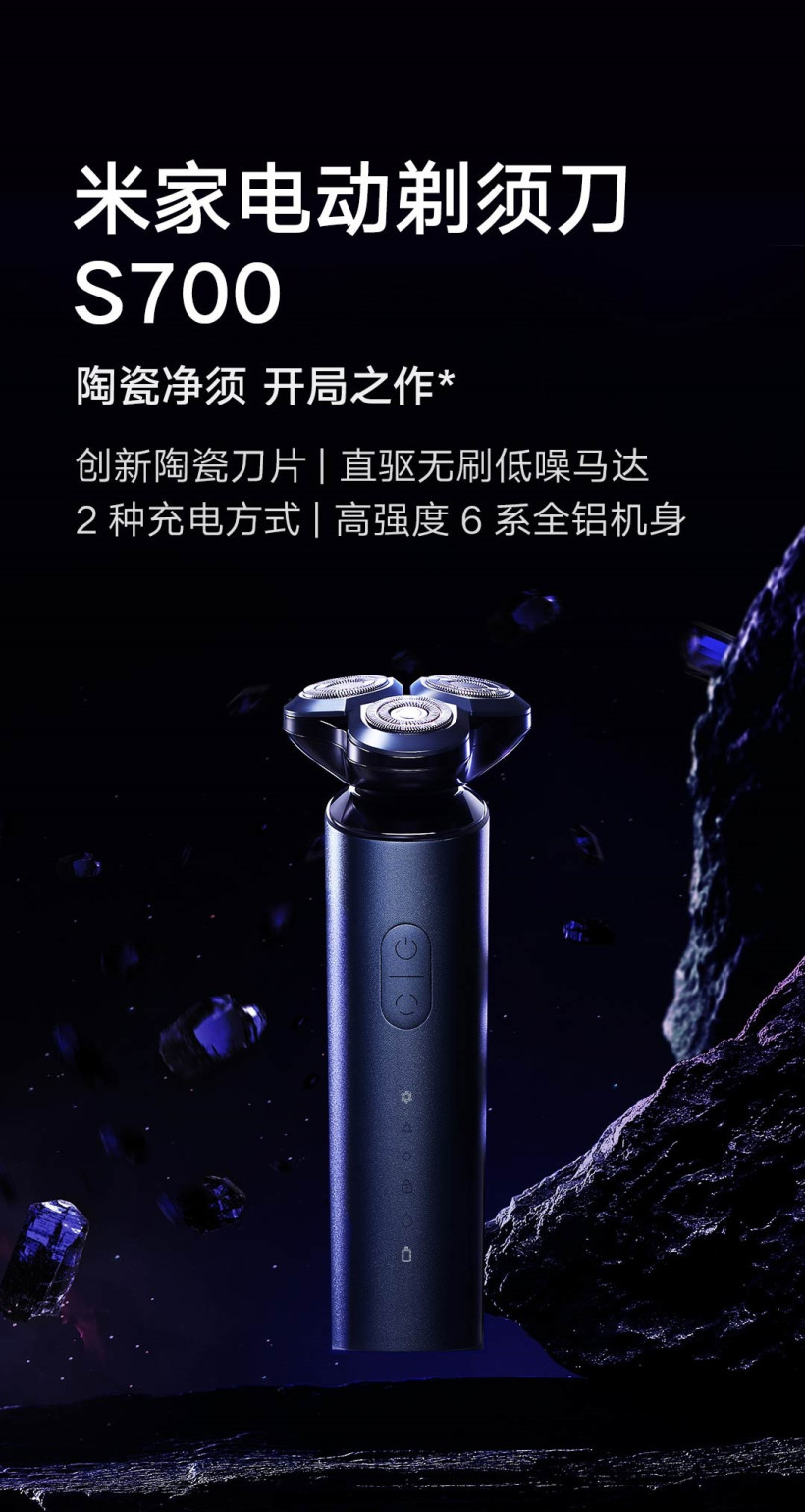
Earlier today (12th January 2021), Xiaomi Youpin launched a new MIJIA product. It is the new MIJIA Electric Shaver S700, which features ceramic blades and is priced at 499 Yuan (roughly 77 US Dollars).
As per the official notes, the MIJIA Electric Shaver S700’s ceramic blades were placed in strong acid and alkali for 360 minutes or 6 hours, with the structural body of the blades only showing slight changes. In other words, the blades are highly durable and are built to last. In ordinary use, elements like water, shaving foam, or even detergent will not corrode the blade, which also offers a high degree of skin care. The company claims that the MIJIA Electric Shaver S700 can last for up to 19 years if the user uses it for just 2 minutes every day.
Furthermore, the S700 also offers specific head molds that attach on the top of the blade, which are designed to offers users complete control of the length at which they want to shave or trim. The blades are also built with high durability and can withstand high impacts and even offers high wear resistance as well, which far exceeds any regular ceramic blades in the market, as per the company.
The MIJIA Electric Shaver S700 is the Chinese brands first shaver that features a high end direct drive brushless motor. This technology helps in increasing the service life of the product and also offers a smoother and more efficient shaving experience to the user. Additionally, the brushless motor also inherently output less noise in comparison to traditional motors. The electric shaver is available on the official Xiaomi Youpin website and is priced at 499 Yuan.
TCL is likely to face delays in its plans to shift its liquid crystal display (LCD) factory, which the company is buying from Samsung Display, from TV panels to IT panels as per a new report.
The Suzhou LCD Plant
According to TheElecreport, the company is expected to face the delay due to the shortages of LCD TV panels in the market, with customers requesting TCL to extend LCD TV panel production at the Suzhou factory, as per sources close to the matter. Furthermore, the display maker is also facing delays in its acquisition of the factory itself as the South Korean government has yet to offers its approval on this deal at the moment.
Currently, TCL aims at further narrowing the gap in large sized panels with the current world leader, BOE. In the TV panel market, the firm has a market share within the early 10 percent, while BOE has a market share in the late 10 percent as well. However, when it comes to IT panels that are used in notebooks and tablets, TCL only has a market share of 2 to 3 percent, in comparison to BOE’s notable 30 percent. Thus, through the Suzhou plant, the company aims on raising its market share in IT Panel.
Notably, in the current market, IT panels are much more profitable in comparison to TV panels. IT panel prices are expected to continue to rise in the first half of this year, while TV panel prices are estimated to stagnate during the same period. Although, with Samsung and LG downscaling their LCD production, a shortage of LCD panels has affected various industries. For those unaware, TCL is buying Samsung Display’s Suzhou LCD plant for 1.08 billion US Dollars.
A new report has revealed that about 223 million TVs are expected to be shipped this year. This marks a slight increase from the total TV shipments over the previous year, which faced a decline in due to the Coronavirus pandemic.
According to a TrendForce report (Via TheElec), 2021 will see a 2.8 percent high TV shipments in comparison to last year. The major reasons for the growth of the market are being attributed to the continuation of the COVID-19 pandemic and major sporting events like the Tokyo Olympics. For those unaware, TV shipments faced a notable decline early on in the previous year due to the initial outbreak. Although, the industry made a slight recovery in the latter half of the same year.
In 2020, about 217 million TVs were shipped across the globe, marking a decline of 0.3 percent from back in 2019. Furthermore, a few TV makers also had to push back the shipments of their offerings due to the shortages of chip supply in the fourth and final quarter of last year. However, TV shipments are expected to grow in 2021, with large sized TVs expected to grow even high this year.
Due to panel prices increasing and profitability per TV declining, TV manufacturers would turn towards large sized TVs, which would offer higher margins and better profits as well. The decrease in profitability affects TVs between the 32 inch and 55 inch models. Notably, shipments for 65 inch TVs grew by 23.4 percent year on year in the second half of 2020, while TVs over 70 inch saw a significant growth of 47.8 percent during the same period. TrendForce predicts that 65 inch or larger TVs will again see a rise of about 30 percent this year as well.
Update: Folks at GSMArena were able to spot a third variant of the Xiaomi Mi 11 for global markets. This model has 6 GB of RAM and 128 GB of storage.
Original story continues…
After launching the Xiaomi Mi 11 5G in China by December end, the company teased its global arrival last week. It seems the global launch of the Mi 11 may not be far away as it has bagged certification from the Federal Communications Commissions (FCC) in the U.S. The FCC appearance has revealed the RAM and storage editions of the Mi 11 for the global markets.
As it can be seen, the Xiaomi Mi 11 (review) is mentioned with its model number M2011K2G in the FCC documents. Before appearing at FCC, the handset was previously spotted at other certification platforms like Singapore’s IMDA and Russia’s EEC. A screengrab of one of the FCC documents has revealed that the smartphone will run on MIUI 12 and it will come with support for connectivity features such as 5G, Wi-Fi 6, Bluetooth, NFC, wireless charging, and GNSS.
The listing further reveals that the Xiaomi Mi 11 5G will arrive in at least two models in global markets such as 8 GB RAM + 128 GB storage and 8 GB RAM + 256 GB storage. In China, the company is also selling a third variant that features 12 GB of RAM and 256 GB of storage.
The Xiaomi Mi 11 5G has a 6.81-inch QHD+ AMOLED display that offers a 120Hz refresh rate and a 480Hz touch sampling rate. The Snapdragon 888 SoC powered handset has enhanced LPPDR5 RAM and improved UFS 3.1 storage.
The Mi 11 has a triple camera system that includes a 108-megapixel main camera, a 13-megapixel superwide lens, and a 5-megapixel telephoto macro camera. It has a front camera of 20-megapixel. It is backed by a 4,600mAh battery with 55W fast charging technology, 50W fast wireless charging, and 10W reverse wireless charging.
Apple is reportedly going to lead the market in terms of 5nm chips in this year, while its competitor Samsung will only reach the third position. The former will account for nearly half of all 5nm chips in the market in 2021.
A14 Chipset
According to a Counterpoint Research report (Via 9to5Mac), Apple will be the leader in terms of 5nm chip in the current year. Furthermore, it is also one of the major reasons why Qualcomm will arrive second in the market for the same. Although, the chipmaker would only account for a quarter of the total 5nm chip shipments. The report also adds that 2020 was a good year for chipmakers, with 2021 likely being the same as well. Meanwhile, the South Korean tech giant is said to be 6 to 9 months behind TSMC, Apple’s primary chip supplier.
As per the report, 7nm and 5nm chips saw a surge in demand, especially with the growth of the 5G enabled smartphone market, new gaming console launch, and AI/GPU in cloud servers. The year also marked a growth of 23 percent year on year for the foundry industry, which reached about 82 billion US Dollars. Similarly, even 2021 is expected to witness growth as well, although, it would not be as large in comparison to 2020, growing by 12 percent year on year to reach 92 billion US Dollars in total.
The report also estimates that Apple will be the largest customer for the 5nm processes. These processes would be used for the Cupertino based giant’s upcoming 5nm+ process based chips for 2021, as its current gen A14 chips are already built on the existing 5nm process. One of the reasons why Qualcomm is expected to arrive second, beating Samsung, is due to the fact that it would be supplying Apple with modem chips. However, this might not benefit the chipmaker for too long as the company is expected to soon launch its own modems as well.
The Apple iPad Pro lineup is probably the best tablet series in the world. Apple advertises it as a replacement for laptops. Like any other product, it also gets updated with new hardware and design every now and then.
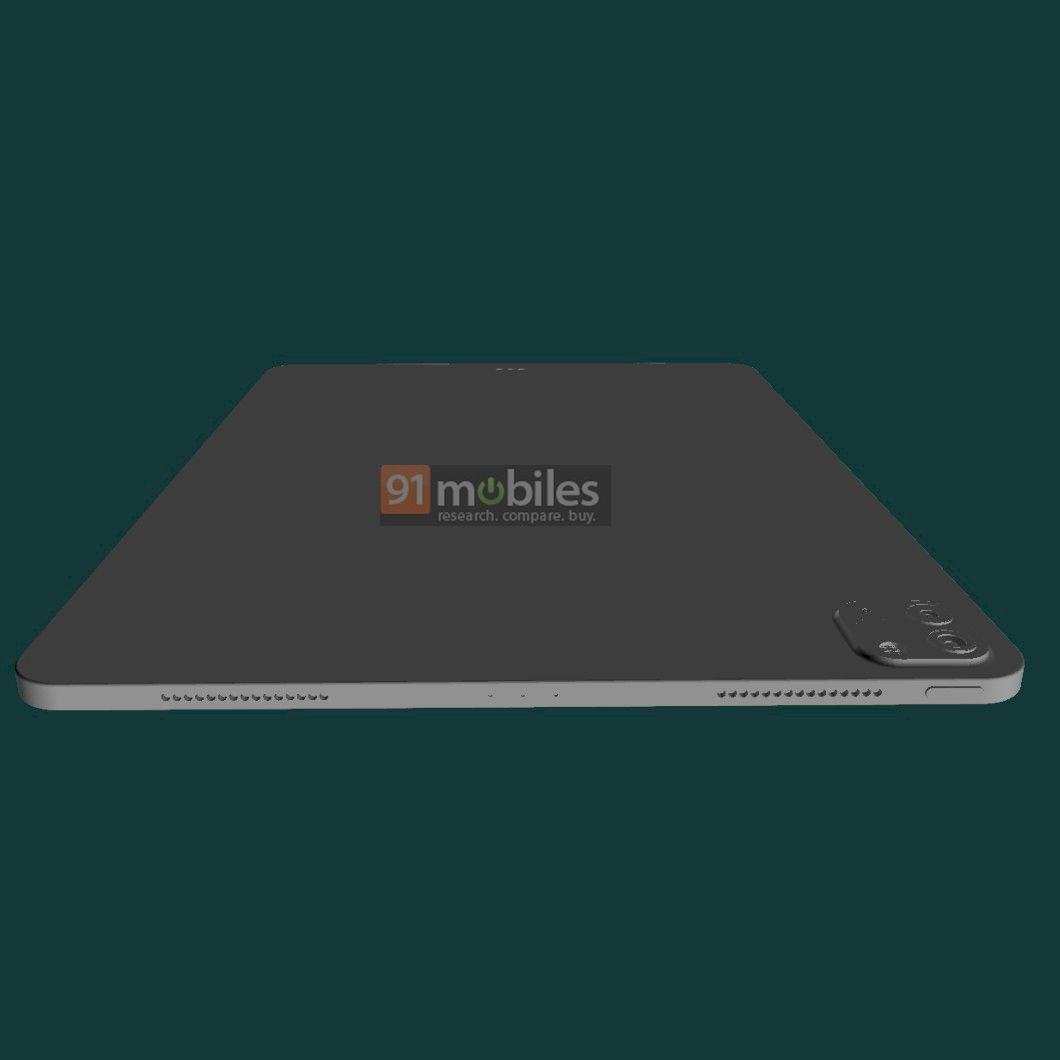
The latest iPad Pro models were released in the first half of 2020. Apple is reported to announce a newer model at around the same time this year. Ahead of its official announcement, this tablet’s design has now leaked via 3D CAD renders.
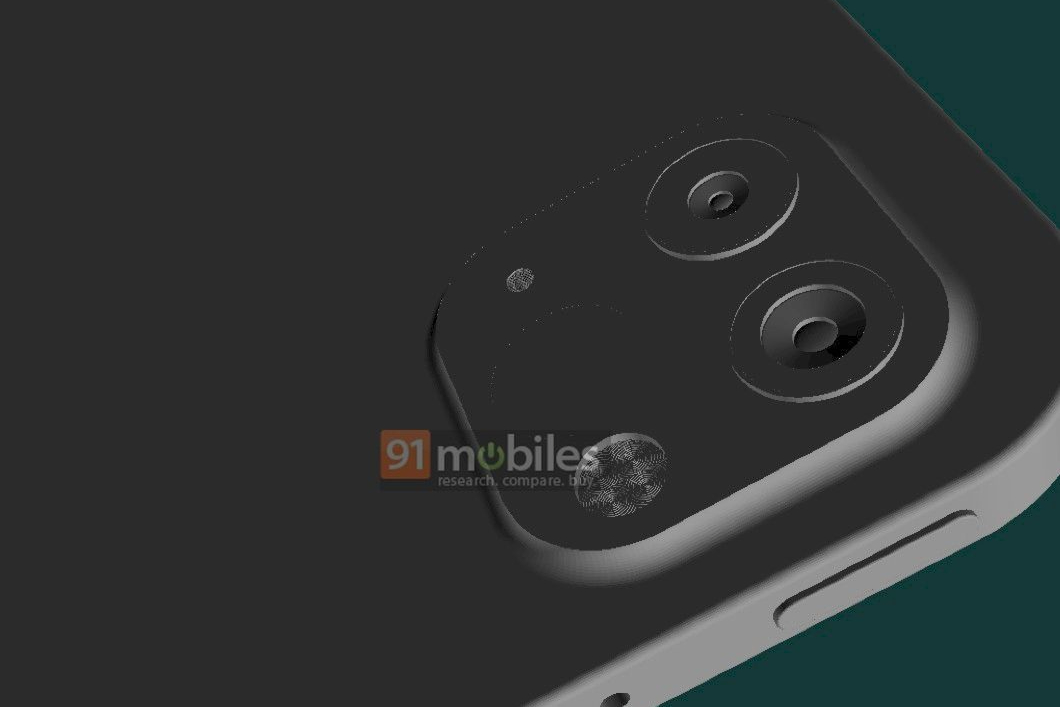
The 3D CAD renders of iPad Pro 2021 come from the source of 91Mobiles. Sadly, the publication did not get access to the specs of this premium Apple tablet except for its display, which is said to be 12.9-inch. Hence, let us only take a look at the design in this article.
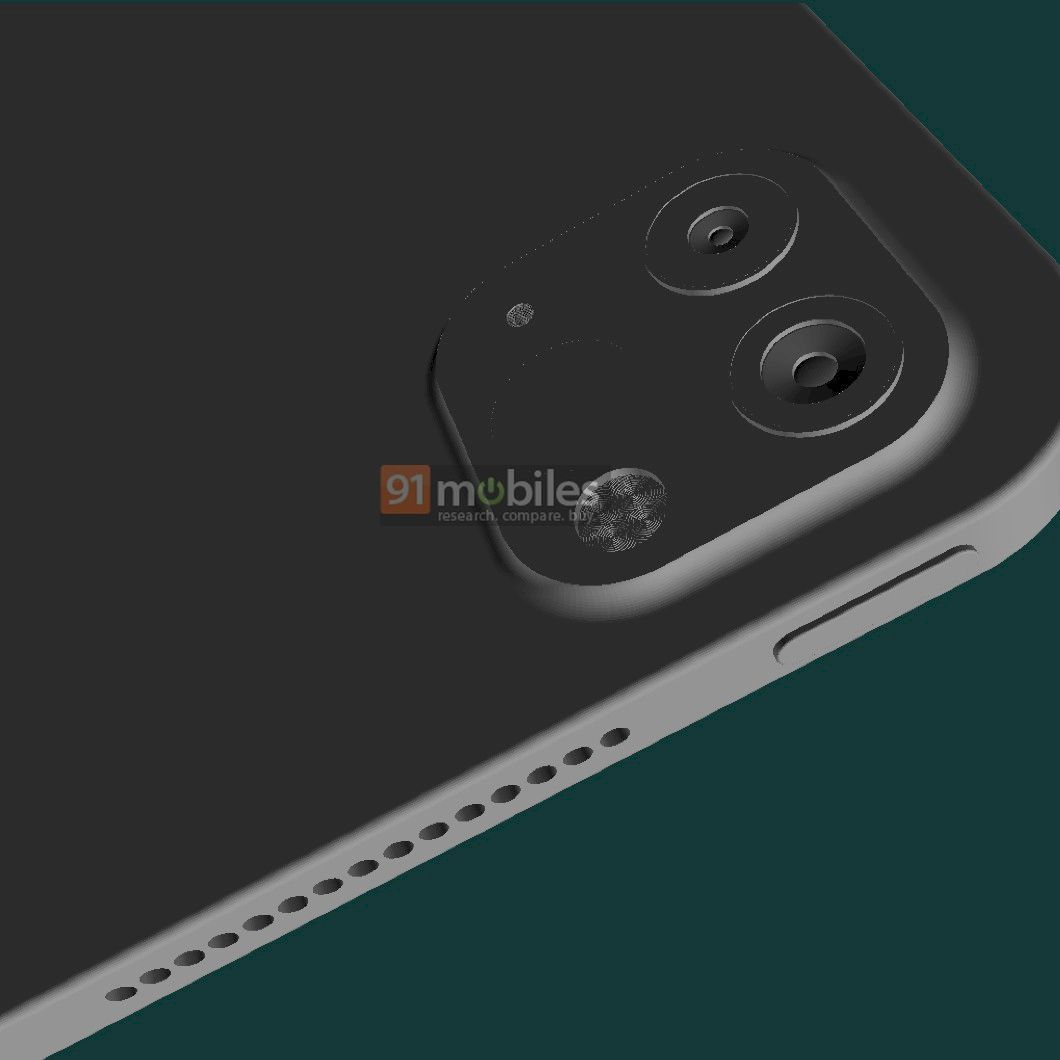
Going by the renders, the upcoming iPad Pro 12.9-inch 2021 will come with the same design as its predecessor. Hence, it will arrive with squared-off edges and a dual-camera setup along with a LiDAR sensor and LED flash.
The top side of the tablet will include the power key and dual-speaker grille. Whereas, the bottom position will consist of another dual-speaker speaker grille and USB Type-C port. Further, the right side will sport volume keys and a magnetic connector to charge Apple Pencil. Lastly, apart from the cameras, the rear side of the new iPad Pro will also house Smart Connector pins for keyboard accessories.
1 of 10
As far as specifications are concerned, the upcoming iPad Pro 12.9-inch 2021 could be the first in the series to feature a mini-LED panel, according to multiple reports. Also, we can expect it to be powered by a beefed-up version of the 5nm A14 Bionic chipset. Unfortunately, that’s all we can speculate for now but we do expect more leaks to follow soon revealing more about this high-end tablet.
Despite Huawei struggling with its smartphone business due to pressures from US sanctions, the company is apparently still working on innovative smartphone designs that might be seen in the future.
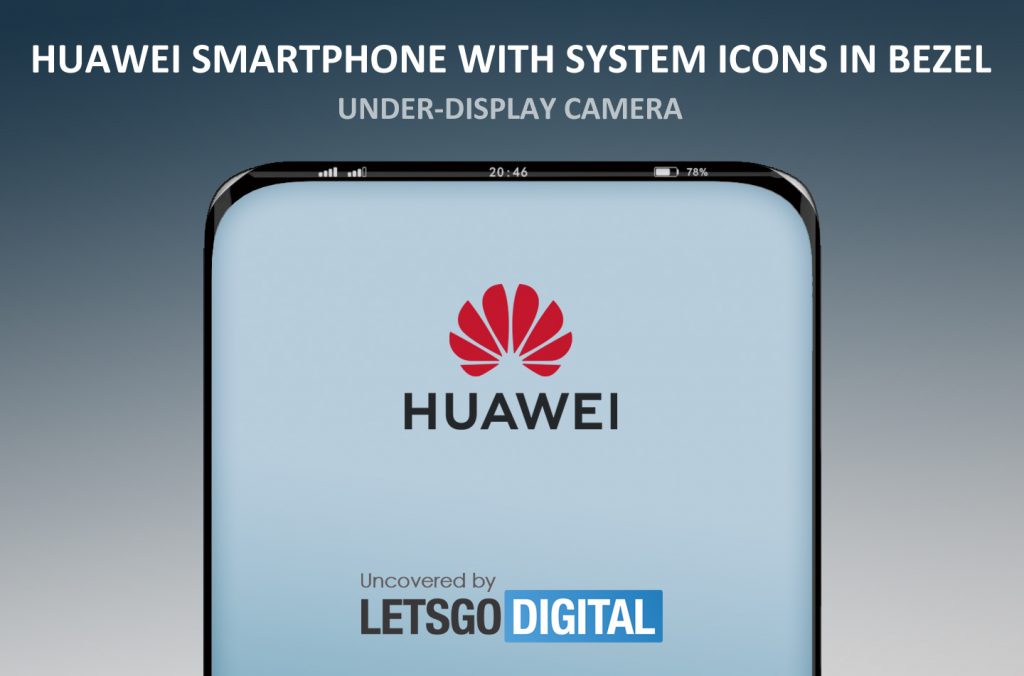
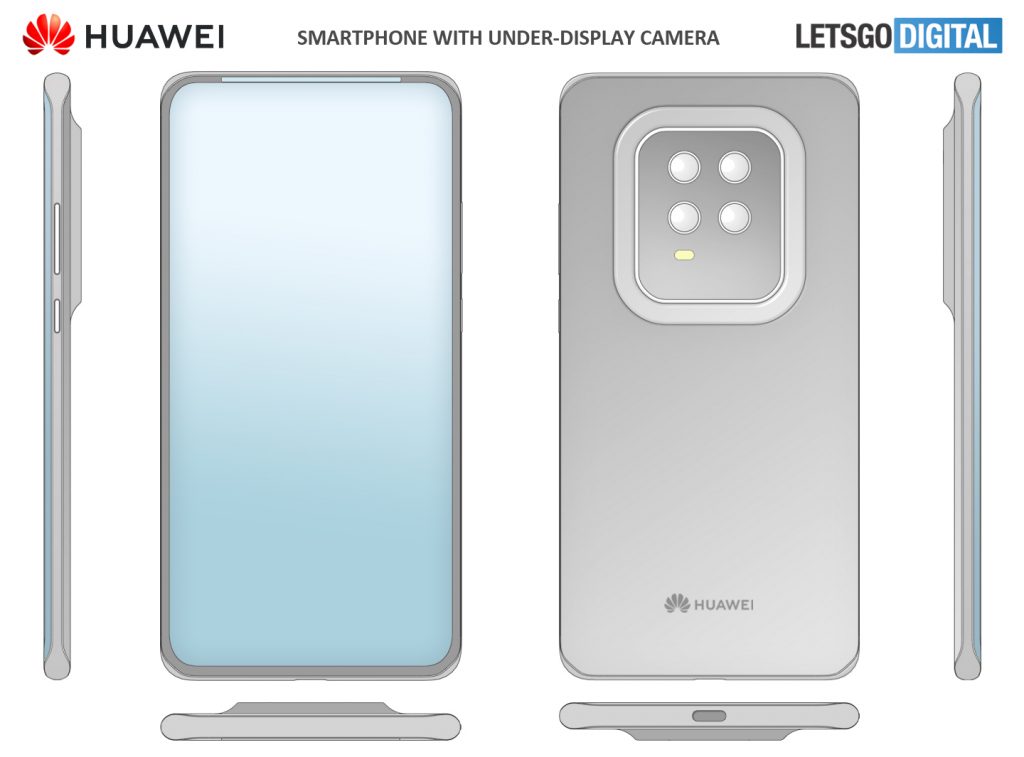
According to a LetsGoDigitalreport, the Chinese tech giant applied for a new patent for a smartphone that features an under screen selfie camera along with a bezel display. The company filed for the design patent with the CNIPA (China National Intellectual Property Administration), with the documentation arriving with 7 product sketches and 2 color renders as well. This patent was published earlier today (12th January 2021) and details an interesting device.
Looking at the patent sketches, Huawei managed to house a thin strip display on the top bezel of the screen. The purpose of this tiny screen is to display basic information like the time, network status and signals, and all the other basic details that a conventional status bar houses. Placing all of this essential information on the top offers more screen real estate to be used for the display. In other words, playing media like videos or movies would not have this information disappear and the user can always check the time without pausing or swiping down.
Another interesting detail in the Huawei patent is the lack of a front facing shooter. Furthermore, no pop up camera mechanism can be observed on the top. So, it is highly likely that the company aims to house the selfie shooter under the screen itself. Unfortunately, finer details regarding this device are currently unknown, but the sketches also reveal the large quad camera module on the rear. At the moment, it is unknown if the company is actually working on such a device, so stay tuned for more updates.
Earlier today (12th January 2021), Xiaomi India made the announcement that its newly launched Mi 10i 5G achieved a record breaking sales worth 200 crores INR (roughly 27 million US Dollars) during its first open sale in India, across multiple platforms.
The Mi 10i from the Chinese tech giant is the first smartphone from the company to offer a 108 megapixel camera along with Qualcomm’s 5G enabled Snapdragon 750G processor. The Mi 10i went on sale for the first time exclusively for Prime members on Amazon India on 7th January 2021 and across all Mi India retail channels, including its official website, Mi Homes, and Mi Studios starting from 8th January 2021. As per the company’s official press release, over 1.5 million users chose to keep notified of the sale.
The Xiaomi Mi 10i launched in two variants, including two iterations of the 6GB RAM and 128GB storage and three versions of 8GB RAM and 128GB storage configurations. Collectively, this meant that all five models were the top 5 selling products across all categories on Amazon India after the launch. Manu Jain, Managing Director of Xiaomi India stated that “We are truly overwhelmed with the love and response received from our Mi fans and consumers for Mi 10i. INR 200 Crore worth of sales within 1st sale is a major milestone and we are happy to announce that. Mi brand aims to bring the latest and the best technology to our Mi Fans.”
Xioami Mi 10i 5G
Talking about the device itself, the Mi 10i features the ISOCELL HM2 108MP camera, paired with the Qualcomm Snapdragon 750G SoC. This means the device is 5G ready and even offers a high refresh rate of 120Hz on its Intelligent AdaptiveSync Display. Furthermore, the handset even supports ISRO’s (Indian Space Research Organization) indigenous navigation system, NavIC integration, and houses a 4,820mAh battery that supports up to 33W fast charging.
OPPO is gearing up for the launch of new truly wireless earphones in India. The company will launch the new Enco X TWS Noise Cancelling earbuds in the region on 18th January 2021.
The new hearables from the Chinese tech giant will launch along with the new OPPO Reno5 Pro 5G in India. OPPO Enco X arrives with a custom acoustic design and advanced software to offer a better audio experience and also feature Hybrid Active Noise Cancelling as well. The TWS earbuds achieve this through its dual microphone design, which provides active noise cancelling through multiple modes that the user can customize and choose between.
In other words, the user can control the strength of the noise cancelling to fit their requirements and choose between four different modes, namely, Max Noise Cancellation, Noise Cancellation, Transparency Mode, and Noise Cancellation Off. The OPPO Enco X is powered by the company’s DBEE 3.0 Sound System and LHDC™ (low latency and high-definition audio codec) wireless transmission. This enables it to output “distinct and detailed levels of sound in any given scenario.”
Furthermore, the new TWS earbuds have been developed with the help of a leading Danish HiFi brand, Dynaudio. The latter’s experience in the field brought on research, testing, and tuning with OPPO’s in house acoustics team in Europe’s largest acoustic laboratory. Talking about its design, it follows a simple monotone color scheme, for both the body and the charging case. The earbuds feature a silicon tip and have a small stem as well.
Xiaomi India surprised everyone in August 2020 by bringing back the Prime branding with the launch of Redmi 9 Prime. This handset is nothing but a rebadged original Redmi 9. It debuted with MIUI 11 based on Android 10. Now, five months after its release, the device has finally begun to receive the MIUI 12 update.
Chinese tech giant, Xiaomi, started rolling out MIUI 12 update to Redmi 9 in late September. The update was initially made available for the Chinese variant. At that time, we said that it should be soon making its way to the Indian variant – Redmi 9 Prime.
Unfortunately, all the other regional variants of this smartphone began to get the update but the Indian model did not receive it up until now. Even now, the build (V12.0.1.0.QJCINXM) is in the Stable Beta phase, and hence, it is being only seeded out to select users in the country.
Interestingly, POCO M2, which is basically the same device with more RAM and a different rear design started receiving the MIUI 12 update at the end of December itself. That said, these phones’ (Redmi 9/Redmi 9 Prime, POCO M2) next major update will be Android 11. They may also get the incremental MIUI 12.5 update.
Sony is getting into the drone business and the company had first revealed its Airpeak drone a couple of months ago but now, during CES 2021, the company showcased it.
The Sony Airpeak drone is touted to be the smallest drone capable of carrying an Alpha-series camera. The company reveals that it is specially designed for video content creation and professional photography.
The drone has four rotors, two landing arms that lift up with takeoff. While not many details are known at this point in time, the Japanese company says that it has been exploring using drones to film landscape and city shots.
The company has shared video footage of the Airpeak drone in action in which it is filming the road test of the Vision-S smart car from the company. Sony Airpeak drone will be launched in Spring this year but the company has not yet revealed any specific timeline or the pricing details for the same.
Sony has been a leading player when it comes to cameras for photography and videography. Given that its first drone is focusing on the company’s strong points, it will be interesting to see the product performance in real life. It will be competing against the likes of DJI and Parrot, among others.
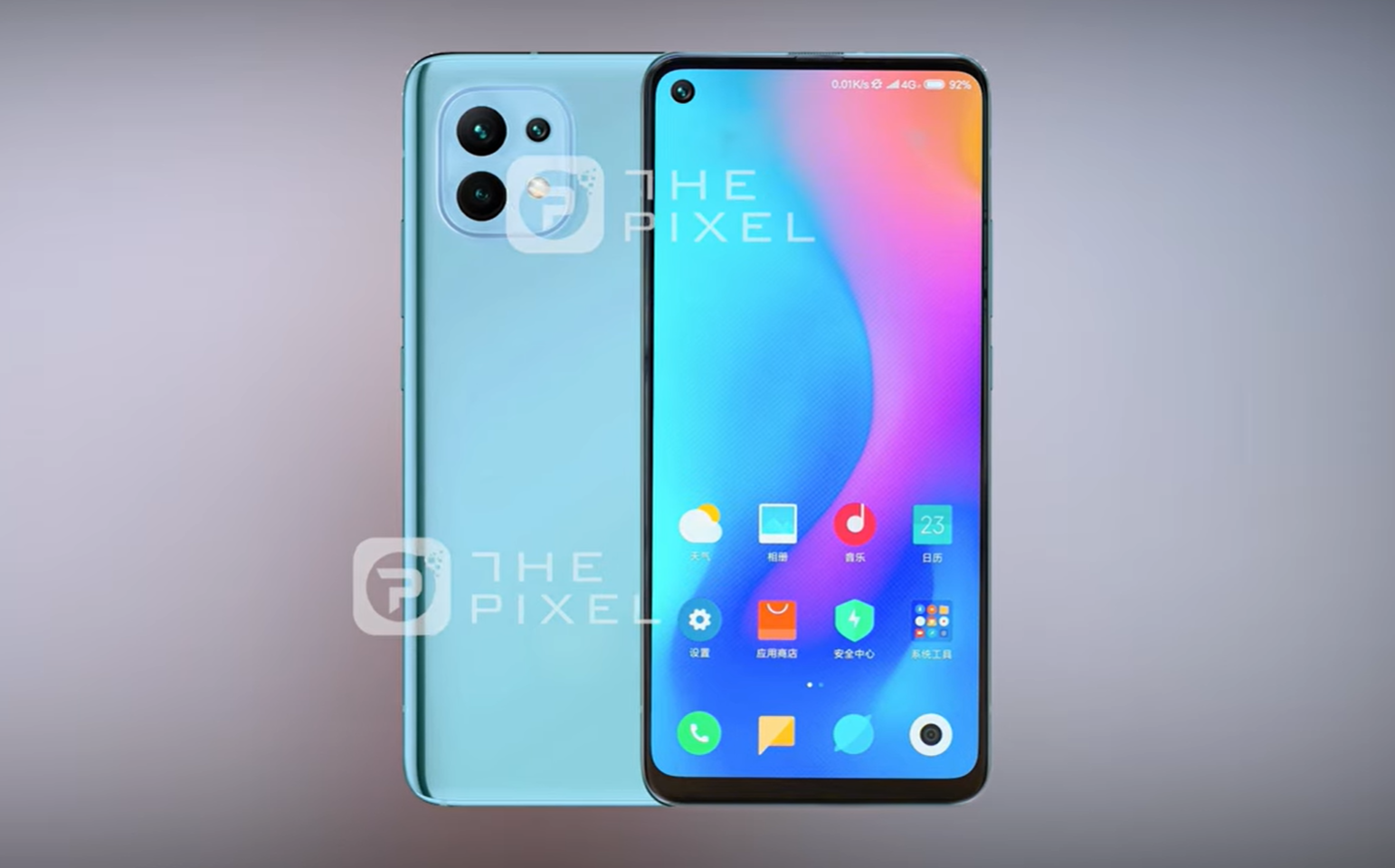
At the end of 2020, Xiaomi announced the power-packed Xiaomi Mi 11 flagship phone in China. It debuted as the world’s first smartphone driven by the Snapdragon 888 mobile platform. Within a week of making it official in the home market, Xiaomi teased the global launch of the Mi 11. Recent reports have revealed the existence of the Xiaomi Mi 11 Lite mid-range phone. Our source has revealed that the Xiaomi Mi 11 Lite will debut globally at the Mi 11 global launch event.
Unfortunately, there is no information available on the launch timeframe of the Xiaomi Mi 11 and Mi 11 Lite. Considering that the company has already teased Mi 11’s global launch, it appears that the next major unveil event for global markets may not be far away. Recently, a tipster claimed that the Mi 11 Lite is one of the nine Xiaomi phones that the company is expected to launch in Q1 2021.
Xiaomi MI 11 Lite render that appeared in The Pixel’s YouTube video
The Xiaomi Mi 11 Lite moniker was confirmed when it appeared at the Federal Communications Commissions (FCC) certification platform. The listing revealed that its model number is M2101K9AG. The phone was found to be equipped with specs like a 4,150mAh rated battery, 33W fast charging, MIUI 12, dual-band, and Bluetooth 5.1. The FCC appearance also revealed that the device could be coming in two variants such as 6 GB RAM + 64 GB storage and 6 GB RAM + 128 GB storage.
The Bureau of Indian Standards (BIS) recently approved a Xiaomi phone with an M2101K9AI model number. It appears to be the Indian variant of the Mi 11 Lite. A Vietnamese YouTuber claimed earlier this month that it has a 120Hz display, Snapdragon 732G SoC, and 64-megapixel + 8-megapixel + 5-megapixel triple camera system. In terms of appearance, the handset may look like a stripped-down version of the Mi 11. The YouTuber had claimed that the phone will be sold in Vietnam by the end of March.
We use cookies on our website to give you the most relevant experience by remembering your preferences and repeat visits. By clicking “Accept”, you consent to the use of ALL the cookies.
This website uses cookies to improve your experience while you navigate through the website. Out of these, the cookies that are categorized as necessary are stored on your browser as they are essential for the working of basic functionalities of the website. We also use third-party cookies that help us analyze and understand how you use this website. These cookies will be stored in your browser only with your consent. You also have the option to opt-out of these cookies. But opting out of some of these cookies may affect your browsing experience.
Necessary cookies are absolutely essential for the website to function properly. This category only includes cookies that ensures basic functionalities and security features of the website. These cookies do not store any personal information.
Any cookies that may not be particularly necessary for the website to function and is used specifically to collect user personal data via analytics, ads, other embedded contents are termed as non-necessary cookies. It is mandatory to procure user consent prior to running these cookies on your website.









 AI Highlight Video optimizes the video in three different parameters.