Advertisement

LG Rollable phone listed on South Korea’s carrier Intranet database

The year 2020 lived up to expectations as the year of 5G with 5G phones proliferating beyond flagship models into the affordable mid-range segment. Also, most of the processors released this year by the major chip makers were integrated with a 5G modem. However foldable phones did not experience the same level of proliferation, mainly due to the fact that it is still an expensive venture and the durability is still not awesome. However, OEMs seem to be progressing to another foldable form factor – Rollable displays.LG rollable phone

Recently, OPPO unveiled the X 2021, its first and indeed the world’s first concept phone with a rollable display. The company even released a demo video of the device while in use and it looks amazing. It was later revealed that the display was manufactured by Chinese display maker BOE and that it was able to withstand 100,000 rigorous curls when tested.

Looks like we’ll be seeing more rollable display packing phones in 2021 even though we can’t say if they will progress beyond concept phones. An LG rollable phone has reportedly been listed on the database of South Korea’s carrier Intranet. According to the Twitter leaker @Cozyplanes, the device is currently registered in the Korean operator’s internal database. The model of the device is LM-RN910N, while the unlocked model carries the model number OMD-LM-R910N.

Earlier rumors reveal that the specifications of LG’s rollable phone include a 7.4-inch expandable screen with a resolution of 2428×1080 pixels (20:9), a video mode of 2428×1366 pixels (16:9), and a productivity mode of 2428×1600 pixels (3: 2).

Further, the LG Rollable is rumored to pack a 4200mAh battery and will be powered by Qualcomm’s latest Snapdragon 888 processor paired with 16GB of RAM. So don’t expect it to be a cheap phone.

The Twitter tipster @Cozyplanes also revealed details about how the device works. The device will expand on both sides, increasing the screen size by up to 100%. However, the top frame will not expand with the device. According to reports, LG will add a flexible frame that can be expanded to cover the exposed edge of the screen, and then retracted when the phone is closed. The phone will also have a locking device to prevent accidental deployment and prevent the screen from scrolling too fast, which can cause wrinkles on the screen.Oppo X 2021
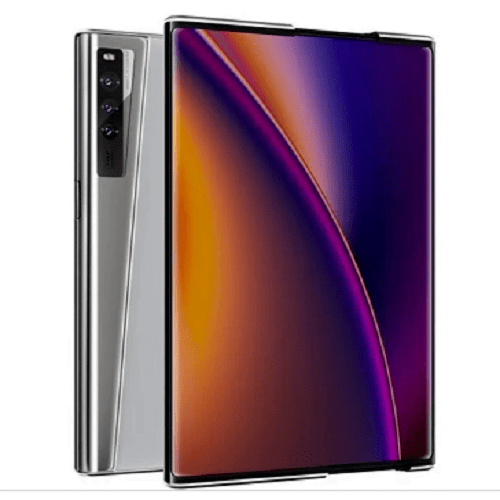
LG is not the only company that is developing a mobile phone with a scrollable display. Samsung and TCL join OPPO on the list of OEMs that have applied for patents for smartphones with a scrolling display. Thus, we may certainly see a few more designs from others soon.

UP NEXT: JD.com becomes the first online retailer to accept China’s digital currency

 

Nokia BH-405 TWS earbuds to launch in China on December 7

Nokia Mobile China has a launch event on Monday, December 7. Posters on its Weibo page show that the product launching on that day is the Nokia BH-405 earbuds. We know that name doesn’t sound familiar but it is actually the same earbuds as the Nokia Power Earbuds Lite. We are as surprised as you are as to why it is going by its model number in China and not its global product name.

Nokia BH-405

The TWS earbuds were announced back in September alongside the Nokia 2.4 and Nokia 3.4 as a more affordable version of the 2019 Nokia Power Earbuds. They come in three color variants as seen in the poster above.

Each earbud of the Nokia BH-405 has a 6mm graphene driver. Combined with the case, they weigh 48.4 grams. They connect via Bluetooth 5.0, have an IPX7 rating – water-resistant for up to 30 minutes in 1m of water.

Nokia BH-405

The Nokia BH-405 will last up to 5 hours on a single charge, but with the charging case, you get an additional 30 hours of battery life. This is a budget pair of TWS earbuds, so there is no wireless charging. Nevertheless, you get a USB-C port for charging

The earbuds support touch controls, so you can tap, long press, or double-tap to control playback, answer/reject calls, or call up the assistant on your phone. The earbuds will ship with three different sizes of ear tips.

The Nokia Power Earbuds have a price tag of €60 but we expect it to sell for less in China.


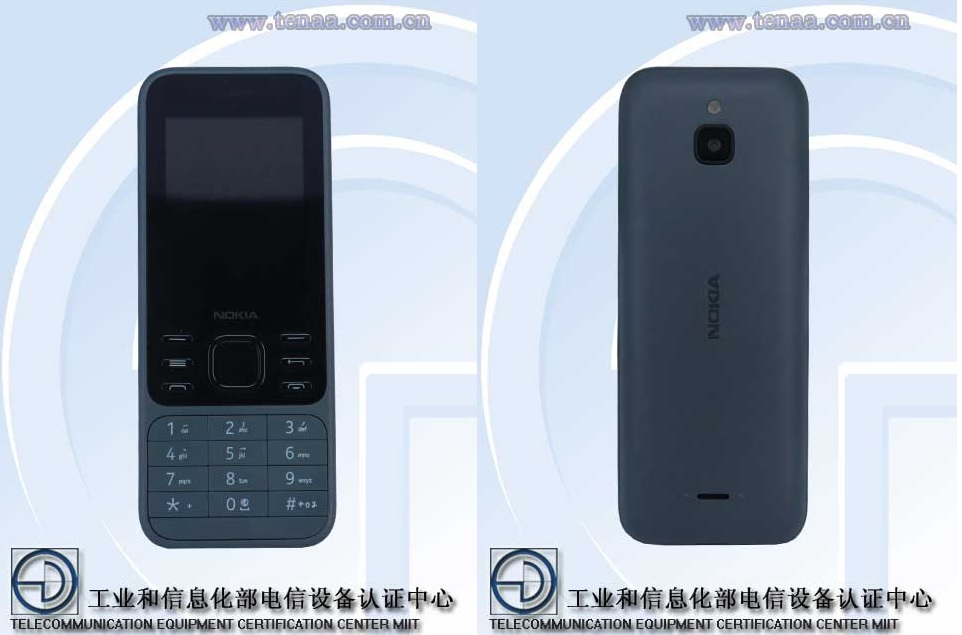
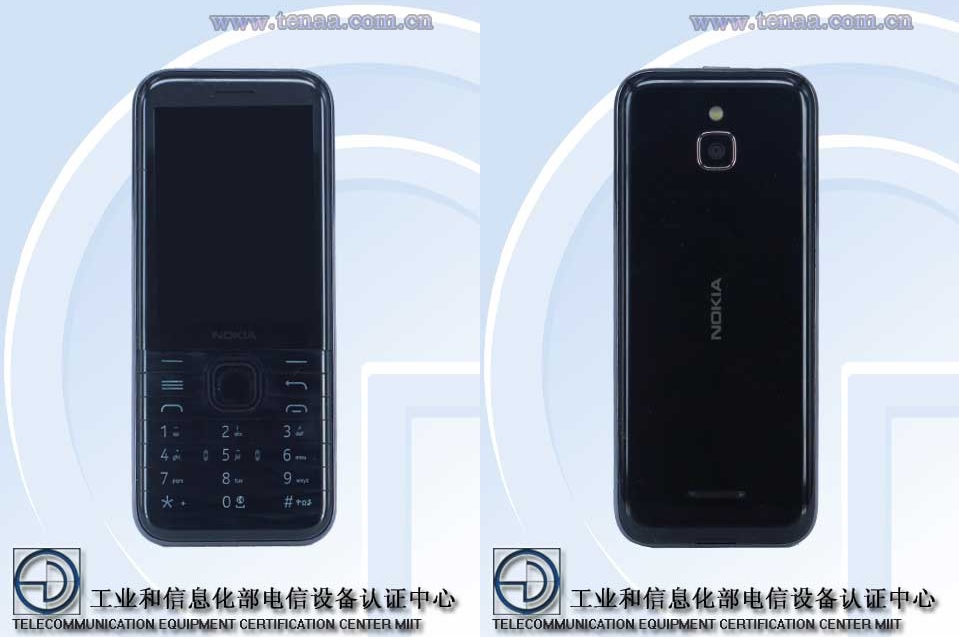
Nokia 6300 4G and Nokia 8000 4G get TENAA certification ahead of launch in China

The Nokia 6300 4G and Nokia 8000 4G launched last month as HMD Global’s latest feature phones. The former is a remake of an old classic while the latter is a new model of a series from the old Nokia days. Now both devices are about to launch in China.

Nokia TA-1287 (Nokia 6300 \4G)TENAA

HMD Global is yet to announce a launch date for the two phones but it should not be far off seeing as they have both been spotted on the database of China’s TENAA. The phones are listed on TENAA as the Nokia TA-1311 and Nokia TA-1287 and they both run KaiOS (version 2.5.4.1, the operating system Nokia ships with its feature phones.

The Nokia 6300 4G has a 2.4-inch display that is powered by a 1500mAh removable battery. It has a Snapdragon 210 processor under the polycarbonate body, 512MB RAM, and 4GB of storage that can be expanded via a microSD card slot. The phone also has a VGA camera and a rear flashlight that doubles as the LED for the camera. Other features include FM radio, GPS, Bluetooth, dual SIM support, and an audio jack. The global version has Google Assistant on-board but we don’t expect the Chinese version to have that.

Nokia TA-1311 (Nokia 8000 4G) TENAA

The Nokia 8000 4G, on the other hand, has a 2.8-inch 240 x 320 screen but the same Snapdragon 210 processor, 512MB of RAM, and 4GB of storage. It has a 2MP rear camera and a flash. Its battery capacity is also 1500mAh and it is removable too. The TENAA listing says the phone will be available in China in Black, Blue, Gold, and White, the same colors the global version comes in.


POCO M3 vs OPPO F17 vs Realme 7i: Specs Comparison

The lower mid-range segment is actually one of the most interesting ones for those who want to get an excellent smartphone for daily use at a very affordable price. And since Xiaomi launched the POCO M3, the lower-midrange segment is even more interesting. As we always do, we found the best competitors of the POCO M3 in order to give you a specs comparison which could let you choose the best handset for your needs. And we believe the best rivals of the POCO M3 for most of the users are the OPPO F17 and the Realme 7i. Note that OPPO F17 is known as the OPPO A73 in select markets. Here is a comparison between their specifications.

Xiaomi POCO M3 vs OPPO F17 vs Realme 7i

Xiaomi POCO M3 OPPO F17 Realme 7i
DIMENSIONS AND WEIGHT 162.3 x 77.3 x 9.6 mm, 198 g 159.8 x 72.8 x 7.5 mm, 163 g 164.1 x 75.5 x 8.9 mm, 188 g
DISPLAY  6.53 inches, 1080 x 2340p (Full HD+), IPS LCD 6.44 inches, 1080 x 2400p (Full HD+), Super AMOLED  6.5 inches, 720 x 1600p (HD+), IPS LCD
PROCESSOR Qualcomm Snapdragon 662, octa-core 2.0 GHz Qualcomm Snapdragon 662, octa-core 2 GHz Qualcomm Snapdragon 662, octa-core 2 GHz
MEMORY  4 GB RAM, 64 GB – 4 GB RAM, 128 GB –  micro SD dedicated slot 4 GB RAM, 64 GB – 4 GB RAM, 128 GB – 6 GB RAM, 64 GB – 6 GB RAM, 128 GB – micro SD dedicated slot  4 GB RAM, 64 GB – 4 GB RAM, 128 GB – 8 GB RAM, 128 GB – micro SD dedicated slot
SOFTWARE  Android 10, MIUI Android 10, ColorOS Android 10, Realme UI
CONNECTIVITY  Wi-Fi 802.11 a/b/g/n/ac, Bluetooth 5, GPS  Wi-Fi 802.11 a/b/g/n/ac, Bluetooth 5.1, GPS  Wi-Fi 802.11 a/b/g/n/ac, Bluetooth 5, GPS
CAMERA  Triple 48 + 8 + 2  MP, f/1.8 + f/2.4 + f/2.4
8 MP f/2.1 front camera
Quad 16 + 8 + 2 + 2 MP, f/2.2 + f/2.2 + f/2.4 + f/2.4
16 MP f/2.0 front camera
Quad 64 + 8 + 2 + 2 MP, f/1.8 + f/2.3 + f/2.4 + f/2.4
16 MP f/2.1 front camera
BATTERY  6000 mAh, fast charging 18W 4015 mAh, fast charging 30W  5000 mAh, fast charging 18W
ADDITIONAL FEATURES Dual SIM slot Dual SIM slot Dual SIM slot

Design

Each of these devices comes with a cheap design consisting of a polycarbonate body instead of the glass back and aluminum frames you can get on premium phones. The winner of the design comparison is the OPPO F17 not exactly for its look, but for its dimensions. It is very thin, very lightweight, and compact. It is one of the thinnest devices out there and it is easier to use with one hand and to keep in a pocket. That is why I prefer it when it comes to aesthetics. Unlike its rivals, it has an in-display fingerprint reader making its design cleaner.


Display

Besides the best design, with the OPPO F17, you also get the best display. In case you do not know, the OPPO F17 alias A73 is one of the most affordable smartphones equipped with an AMOLED display. It shows brilliant colors, deep blacks, it supports the Always On mode and it has an in-display fingerprint scanner. If you just do not like the OPPO F17, you could go for the Realme 7i as it features a 90 Hz refresh rate, but you would get a lower HD+ resolution. The POCO M3 lacks a high refresh rate and it has an IPS display just like the Realme 7i, but its resolution is Full HD+.


Hardware/Software

The most powerful hardware departments belong to the OPPO F17 and Realme 7i offering the same components. All the phones are fueled by the Snapdragon 662 mobile platform, but the POCO M3 has just 4 GB of RAM. With the most expensive configurations of the Realme 7i and the OPPO F17, you get 8 GB of RAM. These phones run Android 10 out of the box and all of them will be updated to Android 11 as they hitten the shelves in the second half of 2020.


Camera

The camera is the strongest point of the Realme 7i. The handset packs a quad camera including a 64 MP main sensor like more expensive mid-rangers, an 8 MP ultrawide camera, and a pair of 2 MP sensors for macro and depth. The second place goes to the POCO M3 packing a 48 MP triple camera, but it has an inferior front camera to OPPO F17 and Realme 7i. The main sensor of OPPO F17 is not that good, but you get the best front camera.


Battery

The best battery phone of this trio is the POCO M3 because it packs a huge 6000 mAh battery. It is able to last up to three days with moderate usage. Right after, we got the Realme 7i with a 5000 mAh battery. Unfortunately, the battery of the OPPO F17 has a capacity of just 4015 mAh, but it is still a good battery phone due to its efficient components. Further, OPPO F17 supports the faster 30W charging technology.


Price

The price of the POCO M3 starts from less than €124/$150 (still not released in India), while Realme 7i begins at 150€/$182. You need about €190/$230 for the OPPO F17. I cannot pick a definitive winner of this comparison. OPPO F17 is the most interesting due to its thinner and lighter design, AMOLED display, faster charging, but not necessarily the best. POCO M3 has a way longer battery life, while Realme 7i has a way better camera and 90 Hz, but the display is HD+.


Xiaomi POCO M3 vs OPPO F17 vs Realme 7i: PRO and CONS

Realme 7i

PROS

  • Best cameras
  • 90 Hz display
  • Punch-hole display

CONS

  • Limited availability


Xiaomi POCO M3

PROS

  • Huge battery
  • Worldwide availability
  • Stereo speakers
  • Reverse charging

CONS

  • Dimensions


OPPO F17

PROS

  • AMOLED display
  • Faster charging
  • Thinner and lighter
  • Compact

CONS

  • Limited availability
  • Smaller battery

These Samsung wearables won’t work with the Galaxy S21 and other 2021 phones

if the rumors are true, then the Galaxy S21 series should arrive next month. While folks are excited, their arrival may bring bad news for owners of certain Samsung wearables, as they won’t be compatible with the new phones.

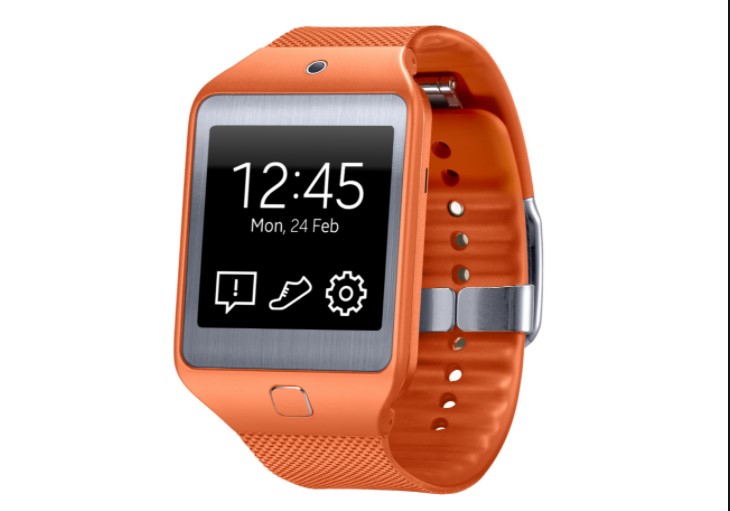
Samsung Gear 2
Samsung Gear 2

The news which was first reported by GalaxyClub, says the info came via a notification in the Samsung Members app which said that older Gear wearables will not work with phones released in 2021. Below is the list of the wearables:

  • Gear1
  • Gear2
  • Gear2 Neo
  • Gear S
  • Gear Fit

The above-listed devices were launched between 2013 and 2014, which makes them at least 6 years old, so it is understandable why Samsung is ending their support next year.

These wearables will not only work with the Galaxy S21 series but other Samsung phones launching next year including the upcoming Galaxy Z Fold and Z Flip foldable as well as more affordable phones such as the Galaxy A32 and Galaxy A52.

However, they will continue to work with older devices including those that were announced this year.

Samsung no longer uses the Gear brand name for its wearables including earbuds. It switched to Galaxy a few years ago which is why we have the Galaxy Watch, Galaxy Fit, and Galaxy Buds line of wearables.


Retail sources reveal the Nokia 3.4 will launch in India in mid-December

HMD Global first unveiled the Nokia 3.4 alongside the Nokia 2.4 in India a few months back, precisely in September. The tech giant was expected to unveil the two smartphones in India on November 26 but only the Nokia 2.4 went official.Nokia 3.4

A report by Nokiapoweruser, quoting retail sources, claims that the Nokia 3.4 will arrive in India in mid-December. The report also reveals that the 3.4 will feature a base variant having 3GB of RAM and it will adopt a decent retail price of around INR12,000 (~$160). This variant will go on sale by December end.

To recall, the Nokia 3.4 is the first in the series to have a punch-hole display. The hole-punch is located at the top left corner of the display. The device features a 6.39-inch HD+ panel with an 8MP camera housed in the punch-hole located in the top left corner.

The phone is powered by a Qualcomm Snapdragon 460 processor paired with 3GB of RAM. There is 64GB of internal storage that can be expanded via a microSD card slot. The phone also comes in a 4GB RAM variant as well as 32GB and 128GB storage options. At the rear aspect, there is a triple camera setup arranged in a cookie-shaped housing. The setup includes a 13MP primary sensor, a 5MP ultrawide angle camera, and a 2MP depth sensor. There is a fingerprint scanner under the cameras just like on the Nokia 2.4 and it also has a dedicated Google Assistant button.

The Nokia 3.4 packs a 4000mAh battery under the hood which should last up to 2 days according to the manufacturer. Thankfully, it charges via a USB-C port up to 10W. It also has an audio jack, an FM radio, and NFC.

UP NEXT: Moshi Otto Q Wireless Charger Review: A Stylish 10W Charger for your Smartphone


DxoMark: Updated iPhone 11 camera review gives it an additional 10 points

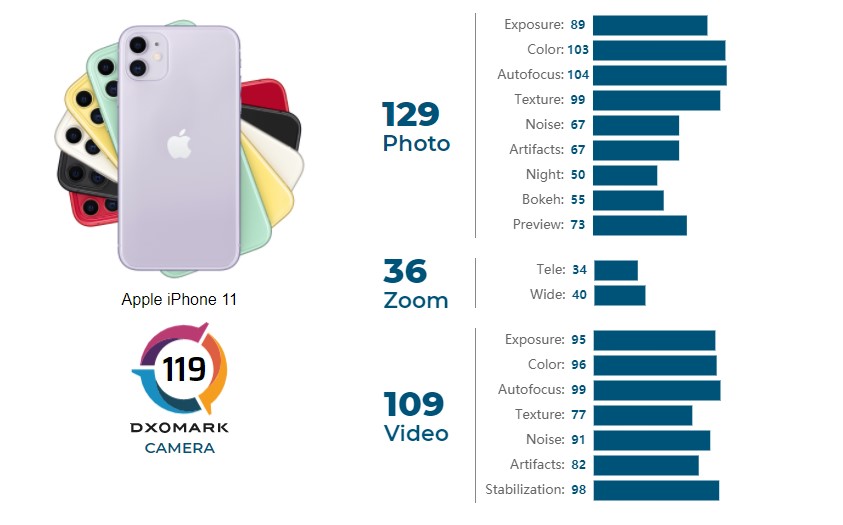
At the beginning of the year, DxOMark reviewed the camera performance of the iPhone 11, giving it an overall score of 109 points. Fast forward to October when DxOMark announced it had made significant changes to its camera test protocol. The iPhone 11 has now had its review redone based on this updated test protocol and it has got a new overall score that is 10 points higher than the first one.

The overall score of 119 points is broken down into 129 points for photo, thus tying with the Pixel 5; 36 points for zoom; and 109 points for video.

DxOMark updated iPhone 11 camera review

The review says the iPhone 11 takes accurate photos with a wide dynamic range in most tested conditions. Color rendering is also one of its strengths as most of the images come out “vivid and pleasant”. However, the white balance is said to have a warm cast under low artificial lighting. Autofocus is another strong area where the iPhone 11 excels; DxOMark says it is “fast, accurate, and reliable”.

The phone falls short when it comes to zoom which is no surprise considering it doesn’t have a telephoto camera like the iPhone 11 Pro Max. Details drop when you take medium and long-range shots and the lack of that telephoto camera also means that portrait photos are not as good. The review says that night portraits also sometimes come out overexposed.

When it comes to videos, the iPhone 11 gets a huge compliment – “one of the best devices we’ve tested for moving images” says DxOMark. It nails exposure most of the time though there is slight white balance instability that can be noticed in indoor videos. Its autofocus is fast and stabilization does a good job too.

DxOMark recommends the iPhone 11 for anyone whose focus is on photos and videos. And now that it starts at $599, it is a more affordable option to the $829 iPhone 12.


JD.com becomes the first online retailer to accept China’s digital currency

Chinese e-commerce company Jingdong (JD.com) has become the country’s first virtual platform to accept China’s own virtual currency called Digital yuan as a payment option. This was contained in a statement released by the company today.Jingdong Robot Delivery

The company’s fintech unit, called JD Digits will now accept the digital yuan as payment for some products on its online mall, as part of a pilot experimental giveaway of digital yuan to citizens of Suzhou, near Shanghai, as monitored on the company’s official WeChat account today.

The development of China’s digital currency is seen in some quarters as a move to break the US dollar’s stranglehold on the global financial system and gain a greater foothold on consumers spending patterns.
China began the rollout of the digital yuan earlier this year. Pilot schemes have been undertaken in four Chinese cities, where transactions totaling more than 2 billion yuan ($300 million) have already taken place. If the program is expanded nationwide, as expected, China would become the most powerful economy to have a national digital currency.

It is believed that the Digital yuan has the potential to make transactions more convenient and secure. It could also help those who don’t have access to bank accounts and other traditional financial services to buy needed items.

China’s digital yuan is not a cryptocurrency like bitcoin. Instead, it is issued and controlled by the People’s Bank of China, the country’s central bank. The homegrown digital currency is among the most advanced “central bank digital currency” in the world, as proactive governments continually muster initiatives to globally respond to threats from private digital currencies like bitcoin and Facebook’s Libra.
Under the current pilot program, the municipal government in collaboration with the People’s Bank of China (PBOC) will issue 200 digital yuan so-called “red envelopes” to 100,000 consumers to be selected via a transparent random selection scheme.

The Suzhou lottery initiative is coming on the heels of the second digital lottery undertaken by the PBOC after it issued a cumulative total of 10 million digital yuan to 50,000 randomly selected consumers in the southern Chinese city of Shenzhen.

UP NEXT: Moshi Otto Q Wireless Charger Review: A Stylish 10W Charger for your Smartphone


(source)


Huawei Mate 40 Pro heads to Singapore in limited quantities and with a free gift

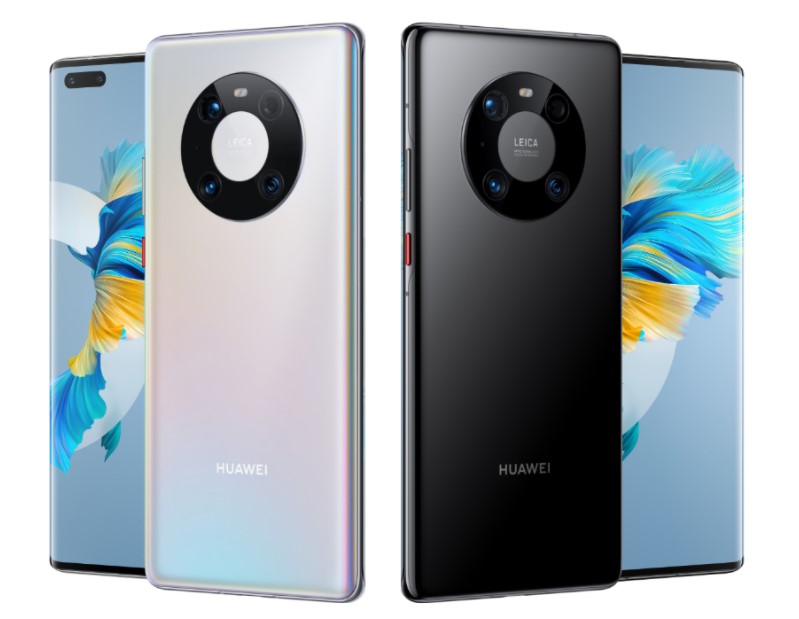
The Huawei Mate 40 Pro will go on sale in Singapore starting next week. The new flagship will be available in limited quantities but buyers will get a free gift with every purchase.

Huawei Mate 40 Pro featured

The Huawei flagship will go on sale starting December 12 and will be available in a single configuration – 8GB RAM + 256GB storage. However, buyers will be able to choose from either Mystic Silber or Black color variants.

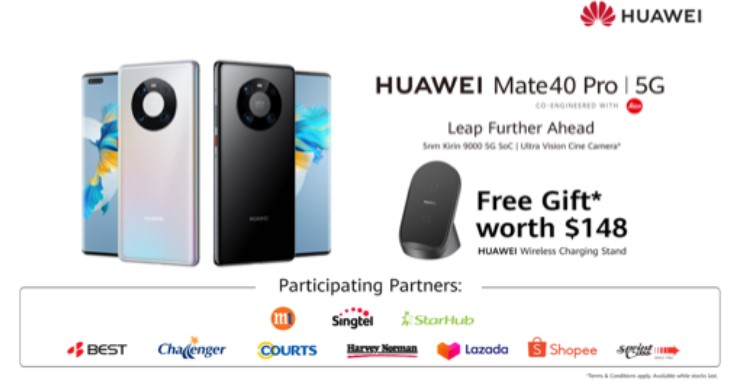
With a price tag of S$1598 (~$1197), the Mate 40 Pro will be bundled with a free Huawei SuperCharge Wireless Stand that allows you to wirelessly charge the phone at up to 40W. The wireless charger costs S$148 (~$110)  when bought separately. Huawei says buyers will receive the free gift while stock lasts. Other benefits included with the purchase are a 2-year warranty and a 1-year door-to-door repair pick-up and delivery service.

Huawei Mate 40 Pro Singapore

The phone will be available for purchase at all Huawei Concept Stores, at major network operators (M1, Singtel, and Starhub), online stores such as Best Dinkiand Courts, and at Huawei’s official stores on Lazada and Shopee.

The Huawei Mate 40 Pro has a 6.76-inch FHD+ curved OLED display with a 90Hz refresh rate and a pill-shaped punch hole for two cameras at the top left corner. It is powered by the Kirin 9000, Huawei’s most powerful mobile chipset to date.

On the back of the phone are three rear cameras – a 50MP ultra vision Camera, a 20MP ultrawide angle cine camera, and a 12MP telephoto camera. The front cameras are a 13MP ultra vision camera and a 3D depth-sensing camera for face unlock.

The Mate 40 Pro has stereo speakers, Bluetooth 5.2, NFC, and an in-display fingerprint scanner.  It packs a 4400mAh battery with support for 66W wired fast charging and 50W wireless fast charging. It also supports 5W reverse wireless charging. Huawei ships the phone with EMUI 11 based on Android 10 out of the box.


Unlike Vivo V20, V20 Pro 5G is getting the Android 11 via OTA update in India

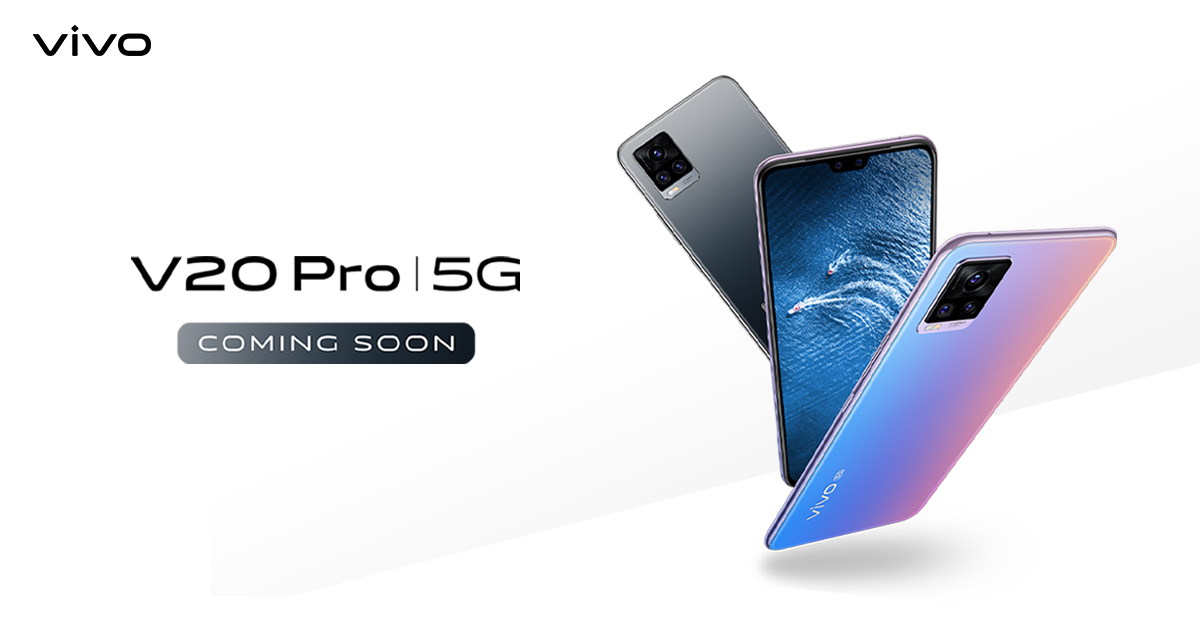
Vivo launched the Vivo V20 Pro 5G in India a few days back. The device is priced at ₹29,990($407). If you recall, Vivo announced that the non-Pro Vivo V20 will be the first device to have Android 11 pre-installed. Hence, one would naturally think that the Pro version should have it too. However, it launched with Android 10 and now is getting the Android 11 via an OTA update.

Vivo V20 Pro 5G India launch soon

As reported by GSMArena, Vivo V20 Pro 5G is getting the Android 11 OTA update weighing 3.6GB in India. Titled Vivo rev 6.70.8, the build number is PD2020F_EX_A_6.70.8 and bundles November 1, 2020 security patch. Considering it’s an OS upgrade, you can expect the latest Android 11’s features on the new UI. Anyway, you can take a look at the entire changelog below:

  • Added Notification History so users can view previously received notifications.
  • The newly added Priority chat function will pin corresponding notifications at the top of the notification bar.
  • Chat bubble functions for chat with an enable/disable option.

That said, the update is Over-The-Air(OTA) and hence, it should take a few days to reach everyone. Besides, the update seems to be rolling out in India and there is no info on other countries. Interestingly enough, the report mentions that the ROM changes from Funtouch OS 11 to vos OS_2.0 after the update. It could be a mistake and we will have to wait for Vivo’s clarification here as the Vivo V20 has Funtouch OS 11 instead of this.

Also, to correct our error, we had reported in our launch article that Vivo V20 Pro 5G comes with Android 11 pre-installed. However, unlike the Vivo V20, it actually comes with Funtouch OS 11 based on Android 10 out of the box. And as mentioned on the official website, the company is now rolling out the Android 11 update to the device.

Apple announces free Display Module replacement program for certain iPhone 11 users

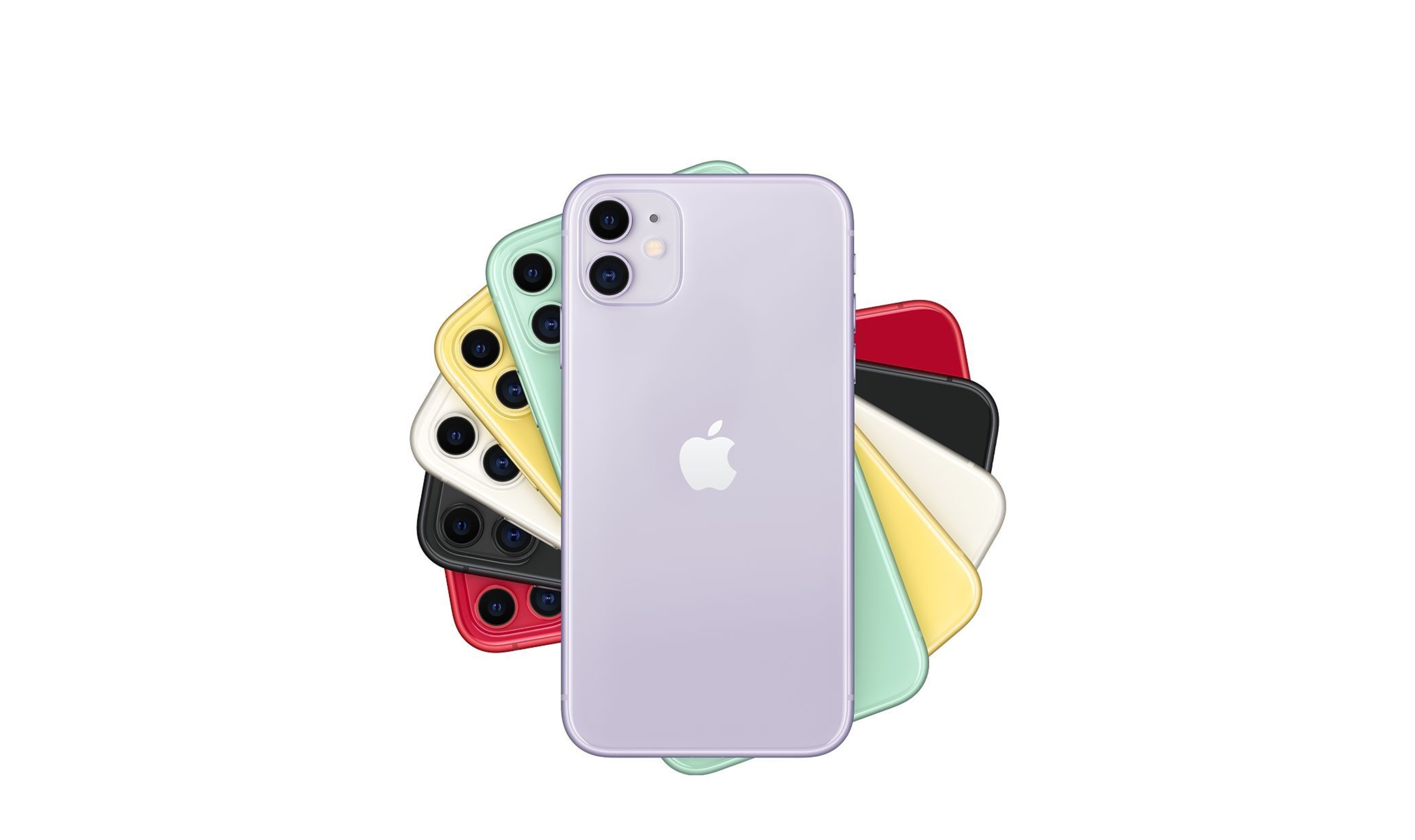
Apple has launched a new display module replacement program for the iPhone 11. According to the company, a certain number of units’ displays have vulnerability where the displays might stop responding to touch.

Apple iPhone 11 All Colors Featured

Apple’s new support page for the iPhone 11 Display Module Replacement Program is live from yesterday(December 4). In that, it says(via Fonearena) that a small percentage of iPhone 11 manufactured from November 2019 to May 2020 might have display issues. Precisely, Apple says that displays might stop responding to the touch due to a faulty display module.

To mitigate this, the company is offering a free replacement of the display. This is another good gesture from the company. Previously, it offered a similar replacement for the affected AirPods Pro units. The last time Apple faced any troubles because of a faulty display was a class-action lawsuit regarding the “flexgate” backlight issue of MacBook Pro displays made between 2016-2017.

Coming back, do note that this new program is only for iPhone 11 and not any other iPhones. Anyway, if you are one of those unlucky users, You can follow the steps below to get your faulty display unit fixed:

  • Head over to the iPhone 11 Display Module Replacement Program for Touch issues page.
  • Select your country and enter the serial number of your device to check eligibility.
  • Next, head over to an Apple Authorized Service Center/ Apple Store and get your iPhone 11 checked.
  • If the device’s display is faulty and meets the eligibility of the program, Apple will fix it free of charge.

Besides, Apple also has a few disclaimers for the program. According to the company, if your device has additional damage that hampers the repair, it might cost you some amount. For instance, if you crack your screen glass, Apple says it might need to repair it first before addressing the display touch issue.

As always, it’s a worldwide program but Apple says it might restrict your unit to the country of purchase. This means, if you are in the US and are planning to repair it elsewhere, chances are that you can’t. Plus, this program won’t extend the standard warranty of your iPhone 11 as well.

Nevertheless, the program’s validity is for two years from the date of the first retail sale(purchase) of the unit.

Vivo X60 series reportedly gets China’s 3C certification; launch imminent

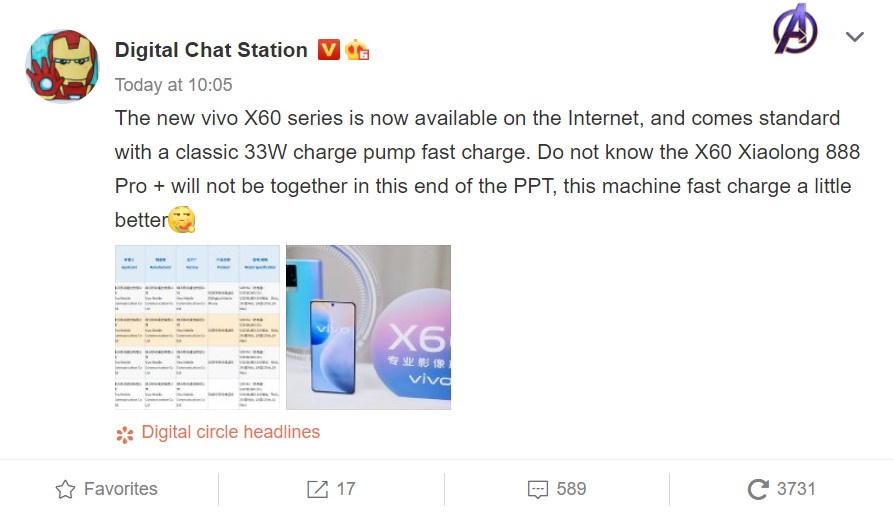
Vivo launched the X50 series in China back in June. Both the devices in the series support 33W Flash Charging. And now, the next iteration, dubbed the Vivo X60 series is likely to sport the same charging tech.

Vivo X60 Hands-on Leak

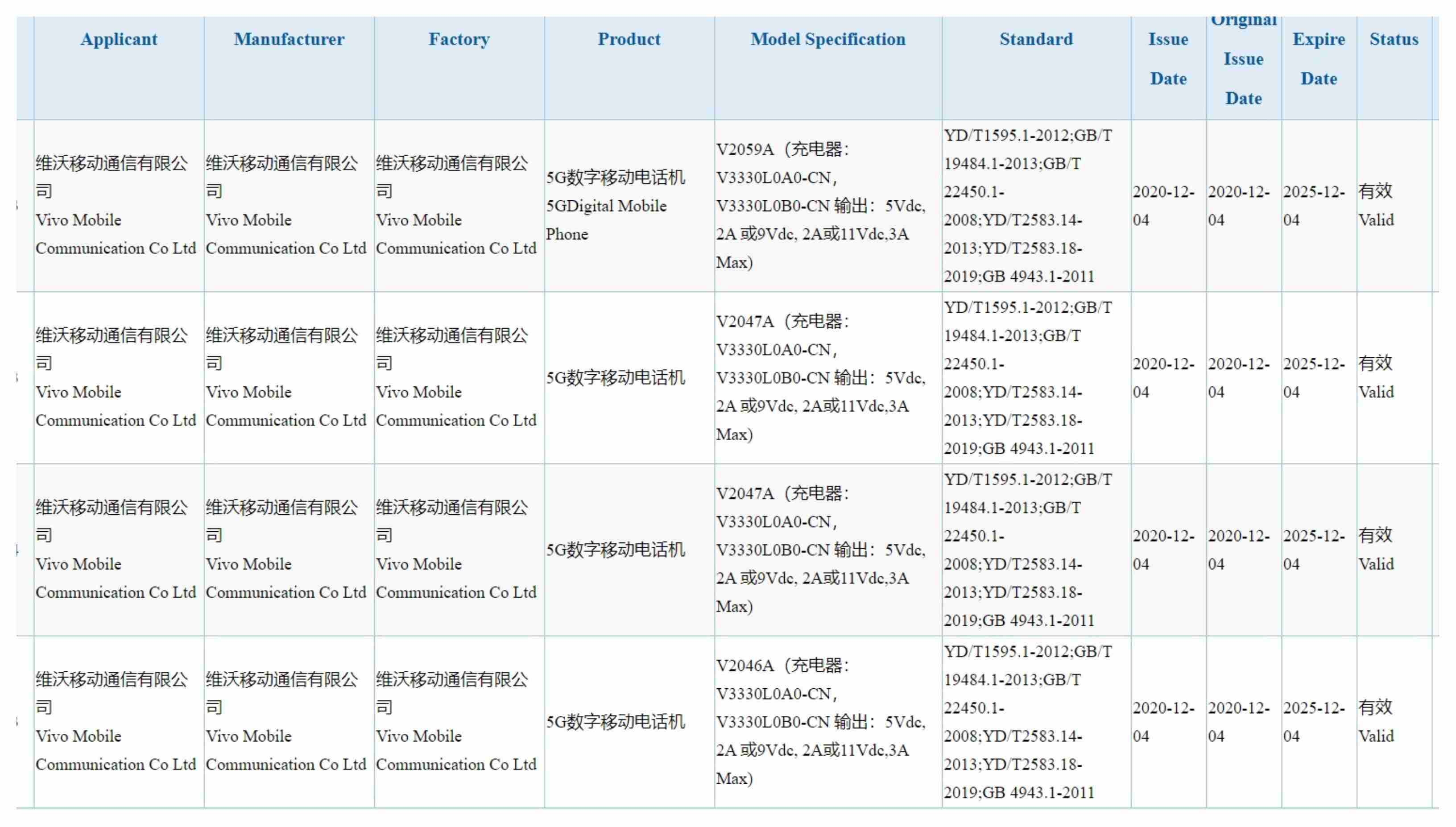
Tipster Digital Chat Station, on Weibo, shares a screenshot of China’s 3C certification authority website containing three models of Vivo smartphones. Besides, on checking the 3C listing, we found the models V2059A, V2047A, V2046A belong to 5G smartphones. Also, all of them together support charging up to 33W(11V dc at 3A Max). If he’s true, the devices belong to the Vivo X60 series of Smartphones.

To compare, the models seem to have the same 33W flash charging as the predecessor. If you recall, two Vivo devices V2005A, V2001A with 11V, 3A(33W) designation got certified ahead of the Vivo X50 series launch. It was believed to be the X50 series of smartphones. Now we know that both the Vivo X50, X50 Pro have the same 33W charging.

Coming back, as per rumors, the Vivo X60 series will have three models- Vivo X60, X60 Pro, X60 Pro+. However, we couldn’t independently verify if the models on 3C indeed belong to the X60 series. And hence, we suggest you take this info with a grain of salt. What we do know, is that the Vivo X60 series is going back to the Exynos way like the Vivo X30 series from 2019. The devices will probably feature the recently launched Samsung Exynos 1080 SoC.

That said, the Vivo X60 will be a bit different from the X50 series in looks as well. They will have a display with a punch-hole at the center courtesy of recent leaks. Out of this, the Pro versions are likely to darn a curved display. Additionally, it looks like the X60 will retain the rectangular camera layout at the back as the X50.

The upcoming Vivo X60 is expected to lock horns with its sister’s upcoming Reno5 Pro. It is also rumored to launch at a price of 3,500 yuan(~$535). Anyway, let’s wait for Vivo to announce them officially.

UP NEXT: Vivo Y52s with Dimensity 720, 48MP dual cameras, 5,000mAh battery may debut next week

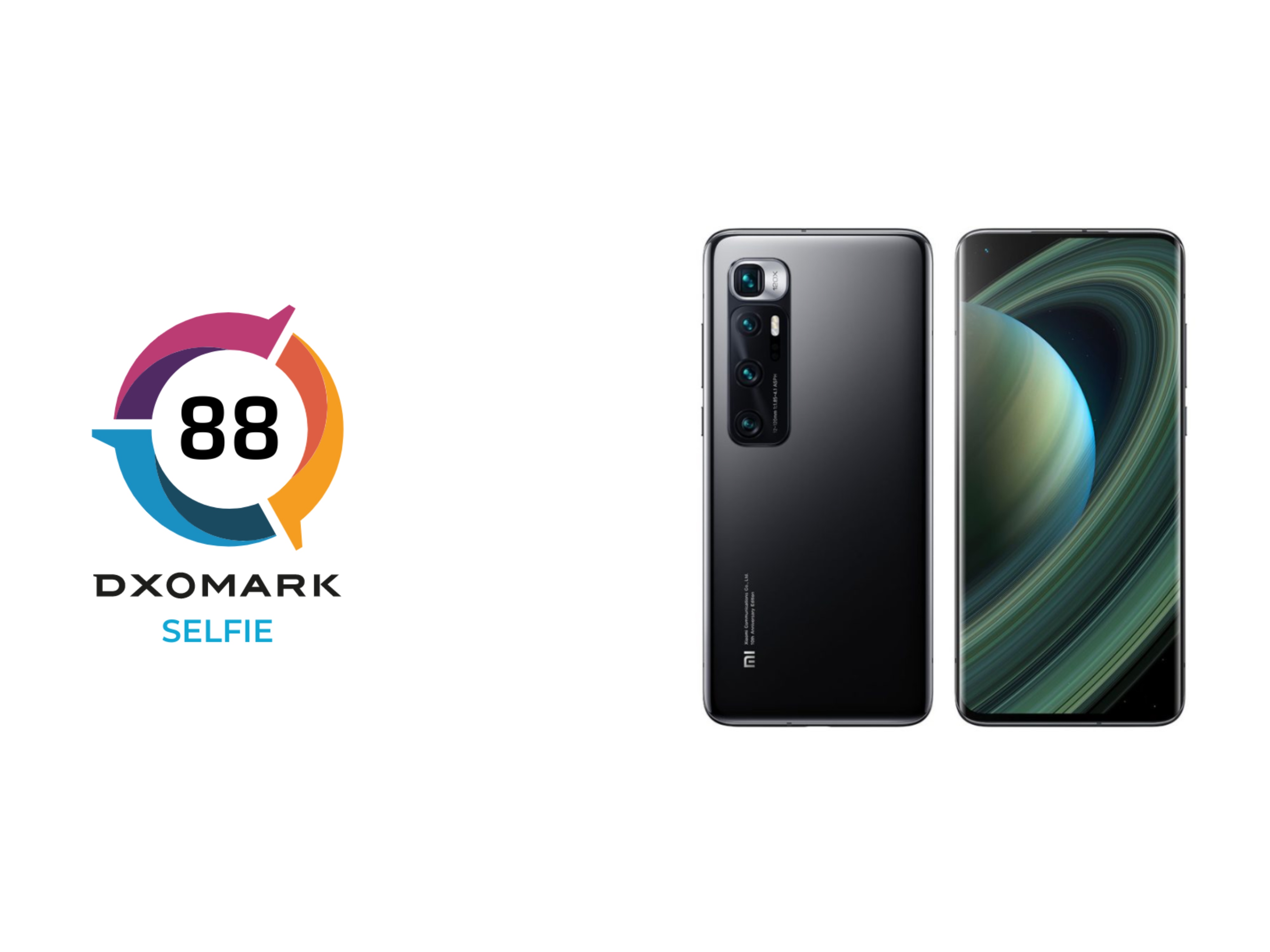
Mi 10 Ultra ranks distant 22nd in DXOMARK Selfie by scoring only 88 points

The Mi 10 Ultra is Xiaomi’s 10th-anniversary flagship smartphone. This handset was unveiled in August 2020 and is exclusive to China. The phone’s DXOMARK Camera review was also released on the day of its announcement as it beat the then champion HUAWEI P40 Pro. Anyway, it lost to HUAWEI Mate40 two months later in October. Now, the device loses big time on DXOMARK Selfie by scoring only 88 points.

Xiaomi Mi 10 Ultra DXOMARK Selfie

The DXOMARK team has finally published the selfie review of the Xiaomi Mi 10 Ultra. According to it, the smartphone ranks distant 22nd by bagging 88 points. In other words, the front-facing camera on this phone is simply mediocre, as per the review.

The Mi 10 Ultra comes equipped with a single punch-hole selfie camera located at the top left side of the handset’s curved OLED display supplied by TCL CSOT. It is a 20MP 1/3.4-inch fixed-focus sensor with an f/2.3 lens capable of capturing images of up to 20 megapixels and recording videos up to a resolution of 1920 x 1080 pixels (FHD) at 30 fps.


Talking about performance, the device scores 86 points for photos and 91 points for videos respectively. The camera outputs pictures with accurate exposure (generally) on faces, and neutral white balance under most conditions.

But due to limited dynamic range, highlights are clipped in both photos and videos. Moreover, the images also suffer from noise (especially in low light), hue shit, flare, color quantization, inconsistent flash exposure, and unnatural blur effect in portrait mode.

As for videos, they have effective stabilization, well-controlled noise, accurate exposure, nice skin tones in both outdoor as well as indoor conditions, and good detail under bright light.

However, just like with the stills, the phone’s selfie camera also has several cons in video recording such as facial detail loss (especially in low light), occasional unnatural colors as well as skin tones, jello effect, and unnatural skin tones in low light.

All in all, the Mi 10 Ultra’s front-facing camera is no match for the competitors. But the smartphone’s rear camera setup makes up for it. 


OPPO Reno5 Pro 5G global edition to arrive with Snapdragon 765G

OPPO Reno5 5G series is scheduled to launch in China on Dec. 10. Leakster Chun had revealed last month that the global edition of the Reno5 5G series will also debut in December. He has reiterated that the Reno5 Pro 5G’s global version will be driven by the Snapdragon 765G.

In China, the Snapdragon 765G will be powering the Reno5 5G and the Dimensity 1000+ will be present under the hood of the Rneo5 Pro 5G. The leakster has claimed that the global version of the Reno5 Pro 5G will not be featuring the Dimensity chip.

He had previously claimed that while the Reno5 Pro 5G global edition will have the Snapdragon 765G and 2nd generation SuperVOOC 65W charging support, the Reno5 5G global version will be equipped with the Snapdragon 720 SoC and 1st generation SuperVOOC 50W charging tech.

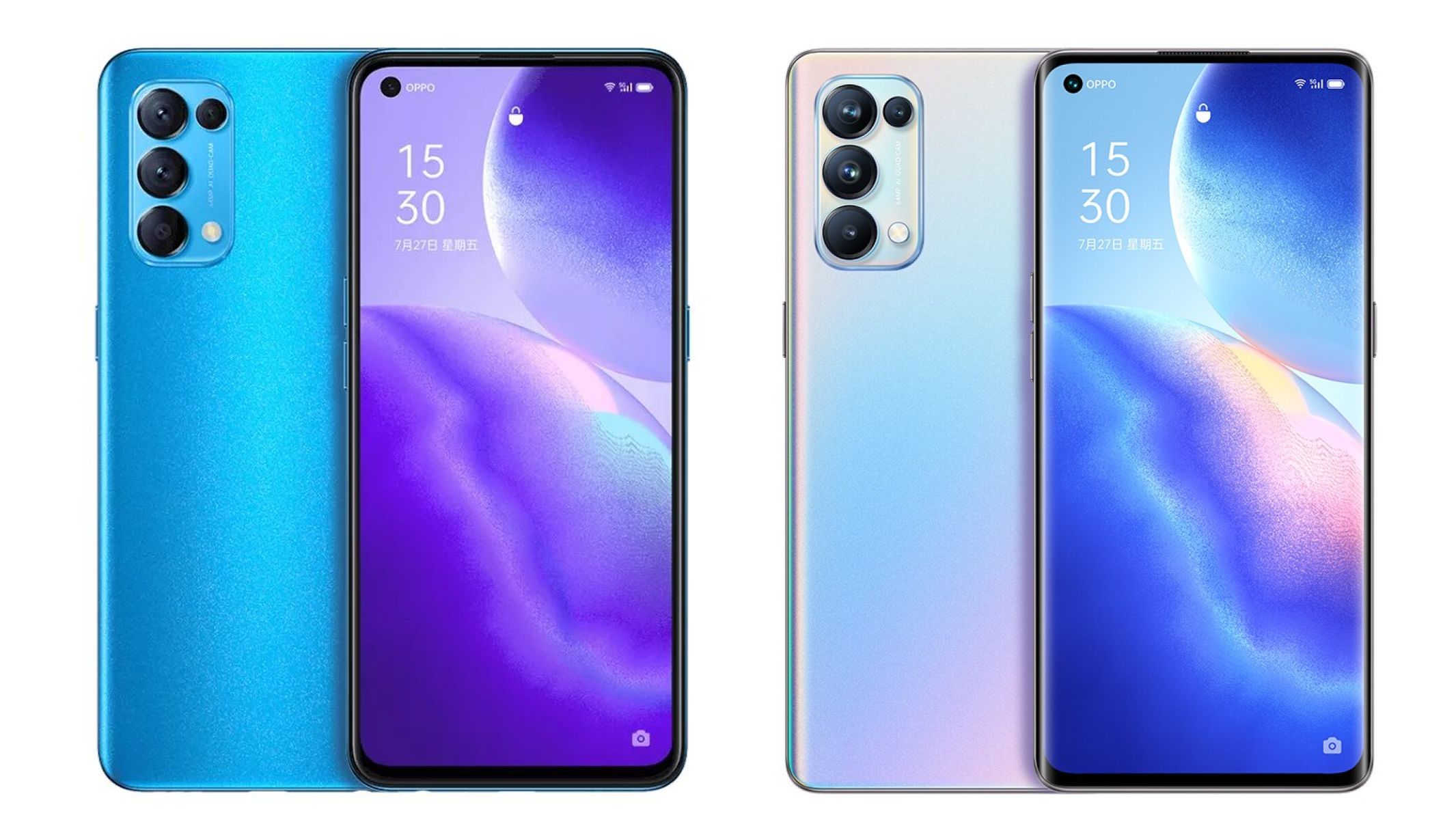
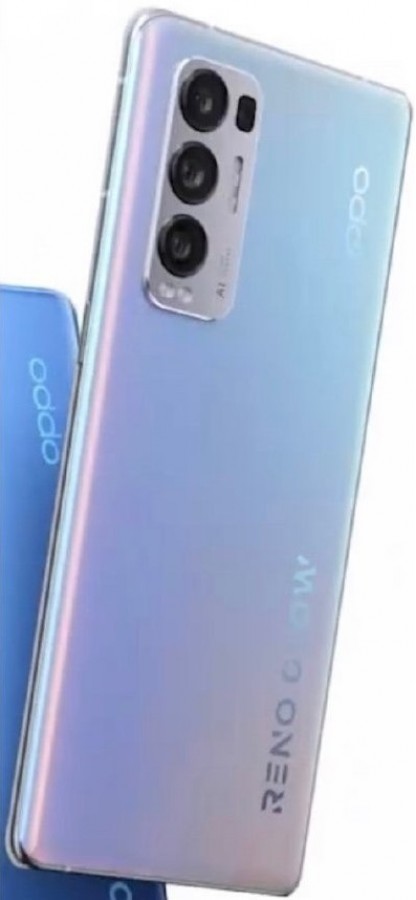
OPPO Reno5 and Reno5 Pro-
OPPO Reno.5 5G and Reno5 Pro 5G

The Chinese market will also receive the Snapdragon 865 powered Reno5 Pro+ 5G. The device is expected to arrive with a different camera setup as compared to the Reno5 5G and Reno5 Pro 5G. The Reno5 Pro+ 5G may not launch in the international markets.

As far as the other specs of the Reno5 Pro 5G are concerned, it is expected to borrow most of its specs from its Chinese variant.  In China, the Reno5 5G and Reno5 Pro 5G are expected to arrive with 6.43-inch and 6.55-inch 90Hz FHD+ OLED panels with punch-hole design. They are expected to arrive with 32-megapixel front-facing cameras, 64-megapixel (Sony IMX686) quad rear cameras, and 4,300mAh batteries with 65W fast charging support. The Reno5 5G and Reno5 Pro 5G may carry respective price tags of 3,299 Yuan (~$505) and 3,899 Yuan (~$597) in China.


Huawei Nova 8 and Nova 8 Plus pricing and release date leaked

Last month, Huawei announced the Nova 8 SE smartphone. Speculations are rife that this month will see the arrival of other Nova 8 series smartphones. A tipster known for Huawei leaks has shared the pricing and release date of the Nova 8 and Nova 8 Plus.

According to the leakster (via), the Huawei Nova 8 and Nova 8 Plus will break cover on Dec. 23 in China and it will go on sale on the same date. The new leak has no information on the specs of the Nova 8 and 8 Plus phones.

Huawei Nova 8 and Nova 8 Plus pricing leak

The Nova 8 SE arrived last month in Dimensity 720 and Dimensity 800U SoC versions. It is speculated that the Nova 8 and Nova 8 Plus could also be equipped with MediaTek chipsets. It is unclear whether Nova 8 phones will feature a Kirin SoC.

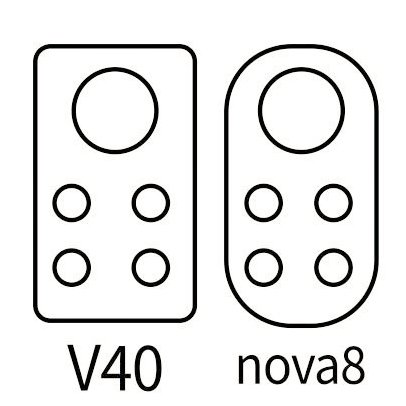
Honor V40 and Nova 8 series camera design

A leak from last month had revealed the camera layout of the Nova 8. The camera housing of the Nova 8 / 8 Plus is expected to house four cameras and an LED flash. The Nova 8 duo is expected to sport a dual punch-hole display. The screen of the Plus variant may have curved edges. Both phones are also expected to support high refresh rates.

The leak reveals that the Nova 8 be priced around 3,000 Yuan (~$459). On the other hand, the Nova 8 Plus could be costing around 4,000 Yuan (~$459).

The Dimensity 720 edition of the Huawei Nova 8 SE s priced at 2,599 Yuan (~$398) and its Dimensity 800U variant costs 2,699 Yuan (~$413). Except for differing chipsets, both variants of the Nova 8 SE have identical specs such as a 6.53-inch FHD+ OLED display, a 16-megapixel front camera, a 64-megapixel quad-camera setup, and a 3,800mAh battery with 66W fast charging.


OPPO Reno5 Pro+ 5G camera details leaked, Could be first phone with electrochromic rear to arrive in market

Recent reports have spilled a lot of information about the OPPO Reno5 5G and Reno5 Pro 5G smartphones. The Chinese manufacturer is also expected to announce the Reno5 Pro+ 5G flagship phones alongside the aforementioned models. OPPO is yet to reveal official details of the Reno5 Pro+ 5G. A fresh leak on Weibo (via) has revealed the rear design of the smartphone and some of its specs.

As it can be seen in the leaked render, the Reno5 Pro+ 5G sports a quad-camera like the other Reno5 models. However, the main difference with the Reno5 Pro+ 5G is that it has a distinctive rectangle-shaped snapper in the camera housing.

OPPO Reno5 Pro+ 5G leaked render

It is speculated that the Reno5 Pro+ 5G will have a 50-megapixel Sony IMX7xx primary shooter, a 16-megapixel ultrawide lens, and an unknown third sensor. The rectangle-shaped camera could a 12-megapixel telephoto lens with a 2x optical zoom.

The Reno5 5G is powered by the Snapdragon 765G and the Reno5 Pro 5G has the Dimensity 1000+. The Reno5 Pro+ 5G is rumored to be fuelled by the Snapdragon 865 mobile platform. There could be a version of the Reno5 Pro+ 5G with a leather rear. It is said to be the first mass-produced smartphone to come with an electrochromic rear. This reminds of the OnePlus Concept One phone with electrochromic technology that was announced in January.

The leak has no information on the other specs of the Reno5 Pro+ 5G The Chinese manufacturer will be announcing the Reno5 series on Dec. 10 in the home market. The Reno5 5G and Reno5 Pro 5G is already up for reservations through Chinese retailer sites. Unconfirmed information reveals that the Reno5 5G and Reno5 Pro 5G will be priced at 3,299 Yuan (~$505) and 3,899 Yuan (~$597), respectively.


Nokia TA-1335 specs and design leak via TENAA

HMD Global, the company behind the Nokia-branded smartphones and feature phones is no longer turning heads. Because the firm’s recent offerings have been mediocre for a while now. But the company keeps on trying to win customers. Hence, it is all set to launch another budget handset in China with model number TA-1335.

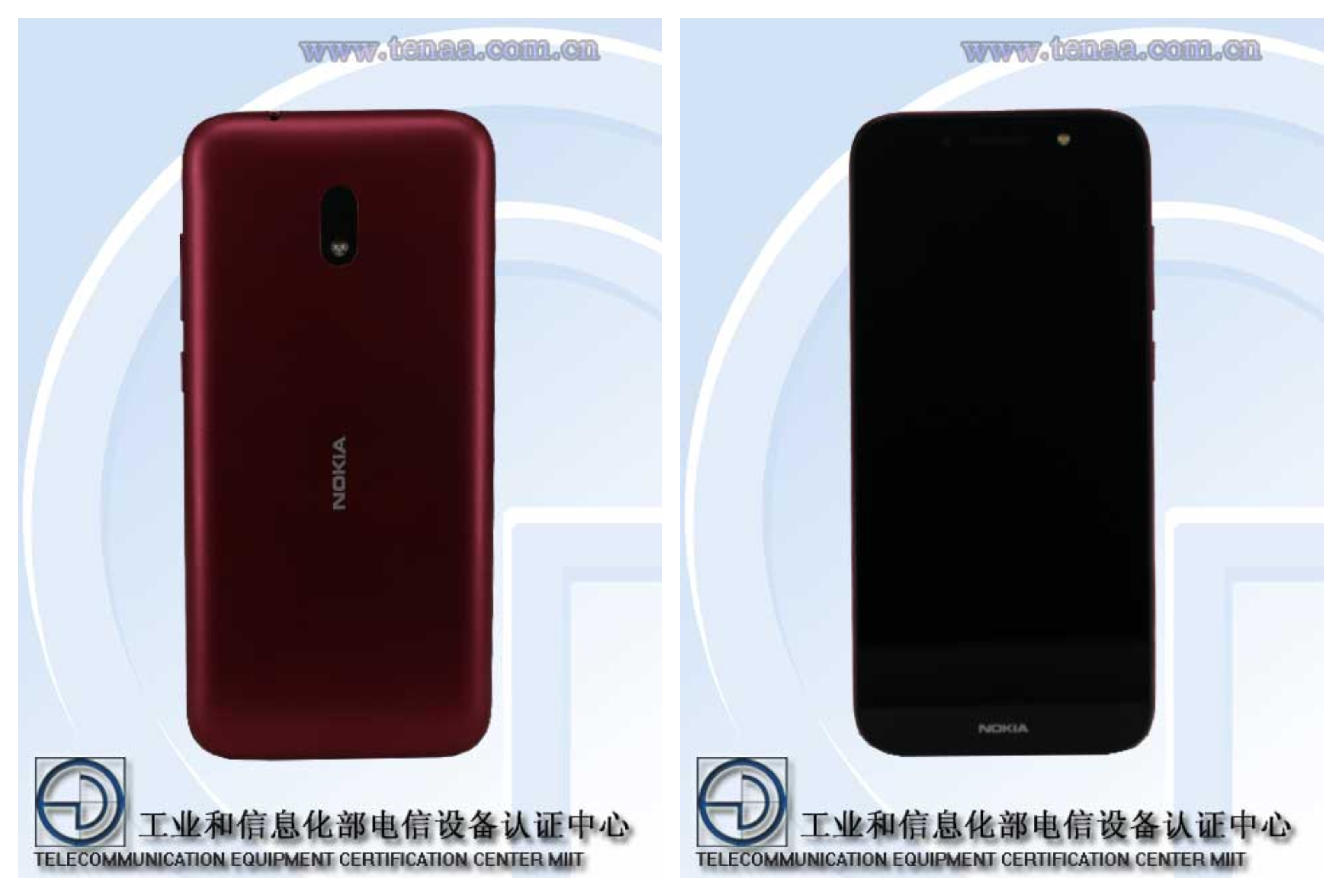
Nokia TA-1335 TENAA 01

For those unaware, the hottest segment of the Chinese smartphone market is the ¥1,000-¥2,000 price bracket. This segment is filled with value for money 5G devices from the likes of Redmi, realme, HONOR, and iQOO to name a few.

Since HMD Global does not have similar spec’d handsets, it has been targeting the audience below the ¥1,000 price segment. The Nokia C3 is the firm’s latest attempt, which it debuted in August


Now, it seems like this device will be soon joined by another model called Nokia TA-1335. This smartphone has been now listed on TENAA revealing its specifications and design.

According to the listing, the upcoming Nokia TA-1335 will feature a similar design as the Nokia C3 but it will come with an additional front-facing LED flash. This phone will measure 81 × 44.5 × 22mm in dimensions, weigh only 122g, and will be available in two colors – Navy Blue and Champagne.

Further, it will come with 2GB RAM, 64GB internal storage, and will run the Android 10 operating system. Interestingly, the TENAA listing has no information regarding this handset’s chipset and display. But it does say that it will be powered by a quad-core processor.

Nokia TA-1335 TENAA 02

Other features of this unknown Nokia phone will include an 8MP primary camera, an 8MP selfie camera, 4G with VoLTE, a microSD card slot, a 3.5mm headphone jack, and a built-in 2,500mAh battery. Lastly, the listing also mentions the presence of a fingerprint sensor but we couldn’t see it in the pictures.

Having said that, the official name/branding of Nokia TA-1335 is a mystery just like its launch date.


SMIC commences small-scale trial production of its second-gen N+1 process

At an interactive platform recently, the Shanghai-based Semiconductor Manufacturing International Corp (SMIC) hinted that it has started small-scale trial production of its second-generation N+1 FinFET process. This was disclosed in response to an investor’s question about the progress the company has made in the R&D and production of 7-nanometer products.SMIC Logo

SMIC first announced that it has achieved mass production of the most advanced 14nm process in China in 2019. The process is the company’s first-generation FinFET process and it started mass production in the fourth quarter of 2019. The company deployed the process to manufacture the Hisilicon Kirin 710A chipset which was utilized first on the Honor Play 4T and then a couple of other Huawei products.

In September this year, when asked by investors to verify internal news about the mass production of its next-generation chips, SMIC responded that its second-generation FinFET N+1 process has indeed entered the customer introduction stage. The company equally hinted that it is expected to start small-scale production (trial production) by the end of 2020.

Later in October, China’s one-stop IP and custom chip company INNOSILICON announced that it has completed the world’s first chip tape-out and testing based on SMIC’s FinFET N+1 advanced process. All IPs are made in-house, with one-time functions.SMIC

Regarding the N+1 process, SMIC CEO Liang Mengsong revealed earlier this year that the process is very similar to the 7nm process in terms of power and stability, and does not require EUV lithography. The new N+1 process nodes are being called 8nm or an early stage 7nm process. The process is geared towards low-power applications. Compared to the 14nm process, SMIC’s N+1 process has a 20% increase in performance and a 57% reduction in power consumption, while the 7nm market benchmark performance increase should be 35%.

Although this arrives as positive news, SMIC is still years behind TSMC which has moved on to the 5nm process and is presently working on its next-gen 3nm node.

UP NEXT: Oppo X 2021 unveiled as the world’s first smartphone concept with an extending display


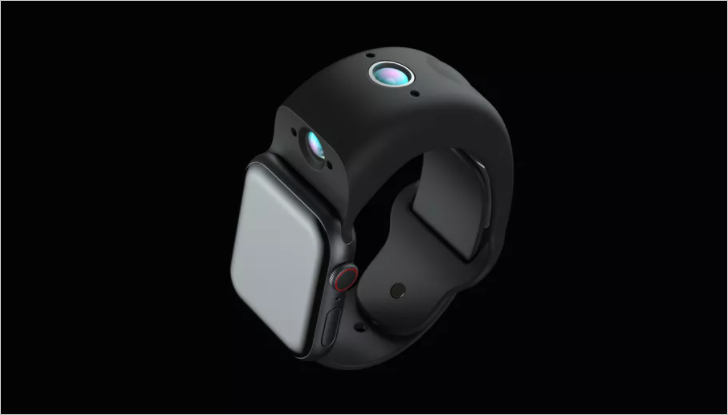
Wristcam, a strap with front & rear cameras for Apple Watches unveiled

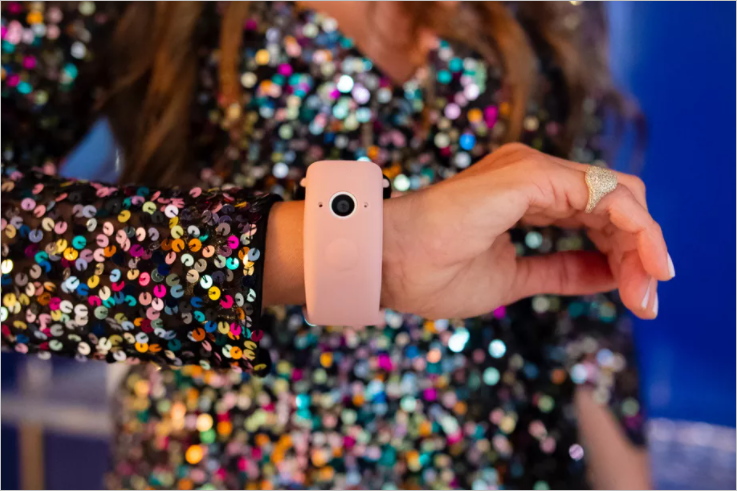
Apple is set to finally unveil the Wristcam, a strap equipped with front- and rear-facing cameras to be used for Apple watches. The launch is coming after about four years when a crowdfunding campaign was initiated for its development.Wristcam

The Wristcam comes with an 8-megapixel camera that can shoot 1080p video and take still photos in 4K resolution and a 2-megapixel front camera for selfies. The device can also function as a video walkie-talkie with real-time live-streaming capabilities.

Of course, both cameras are nowhere close to the powerful cameras in the iPhone. Some visuals shot by the Wristcam, displayed by the company are quite decent.Wristcam

The display of Wristcam is the Watch screen although the camera has a separate battery, which can last up to 24 hours. You can take images and video by pressing its multifunctional button, and this is synced to your iPhone automatically when you drop it on its magnetically attached charging cable.

The device comes with 8GB of memory and connects with the Watch via Bluetooth Low Energy (BLE) and with the iPhone via Bluetooth 4.2, 5.0, and Wi-Fi.Wristcam

The band weighs about 23 grams and comes in interchangeable colors, including noir, blanc, gray, rose, and sage. Both cameras have LEDs that light up when a photo or video is being shot, so it’s clear when the device is in photo-taking mode.

According to CEO Ari Roisman, the Wristcam can take up to 20 seconds to share a photo directly from the Watch over Bluetooth but will sync directly with a connected iPhone. The ability to share photos directly from the Watch won’t be available when the device is officially launched but would be incorporated in the future.

Wristcam
Wristcam camera sample

Roisman said the company is focused on shipping units to customers who supported the original crowdfunding campaign, which pre-sold 10,000 units. The lengthy delay stemmed from design challenges.

Wristcam
Wristcam camera sample

Interested customers can make reservations for the Wristcam from the company’s website for $299. The first direct-to-customer units are expected by March 2021.

UP NEXT: Oppo X 2021 unveiled as the world’s first smartphone concept with an extending display


New WMG AI algorithms raises hope for human-like Robot hands

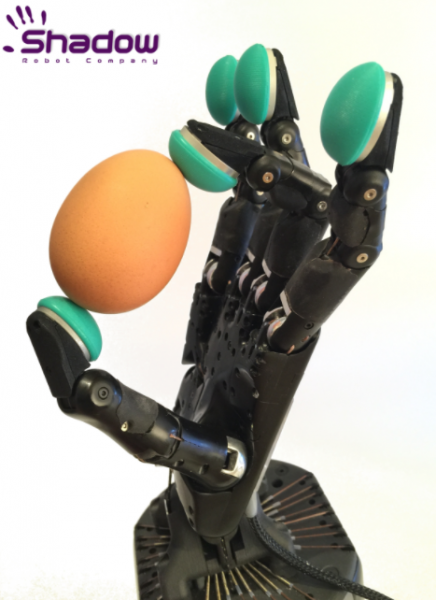
Researchers at WMG, University of Warwick, have produced groundbreaking artificial intelligence algorithms that enable a robot to perform dexterous manipulation of objects just like humans. While dexterous manipulation of objects is a basic and perfunctory task for humans, it is still very difficult for autonomous robotic hands to master before this seeming breakthrough.Shadow Robot Dexterous Hand

The Shadow Robot Dexterous Hand compares well with a human hand and is capable of reproducing all of its functionalities. Simulations showed that the robotic hands learn on their own how to coordinate movements and execute tasks of varying difficulty.
Robot hands can be used in many important applications needing precision and versatility in manufacturing, surgery, and activities involving radioactive materials. The utilization of robotic hands in assembly lines has yielded higher productivity and reduced risks exposure from work risk situations to human workers.

In a paper titled ‘Solving Challenging Dexterous Manipulation Tasks With Trajectory Optimisation and Reinforcement Learning’, Professor Giovanni Montana and Dr. Henry Charlesworth, both from WMG, the University of Warwick proposed new AI algorithms (also called the “brain”) to enable robots to learn how to coordinate the fingers’ movements and manipulate objects.Shadow Robot Dexterous Hand

The versatility of the algorithms is that the robots can learn any task so far it can be simulated. The 3D simulations were developed using MuJoCo (Multi-Joint Dynamics with Contact), a physics engine developed by the University of Washington.

The researchers’ approach uses two algorithms – an initial planning algorithm and then a reinforcement learning algorithm. By taking this approach, the researchers were able to produce significantly better movements compared to current methodologies.

The research team is expected to continue working with Shadow Robot and deploy the algorithms on real robotic hardware, which could see the hand advance one step closer to use in real day to day life.Shadow Robot Dexterous Hand

In another paper, ‘PlanGAN: Model-based Planning With Sparse Rewards and Multiple Goals’, to be presented at the 2021 NeurIPS conference, the WMG researchers have also developed a general AI approach that enables robots to learn various tasks in order to improve their hand manipulation capabilities.

Rich Walker, Managing Director of the Shadow Robot Company, based in London, stated that the company has come a long way in, stressing that the research group is now delivering the promise of the hardware by creating algorithms clever enough to control the robot hand – soon perhaps we will see a super-human performance. (via)

UP NEXT: Oppo X 2021 unveiled as the world’s first smartphone concept with an extending display