The smart health fitness market may be ruled by wearables but there are other smart health products too such as smart scales. Brands such as Xiaomi, Honor, and Huawei all have smart scales that you can purchase and it appears Huawei has a new one coming soon.
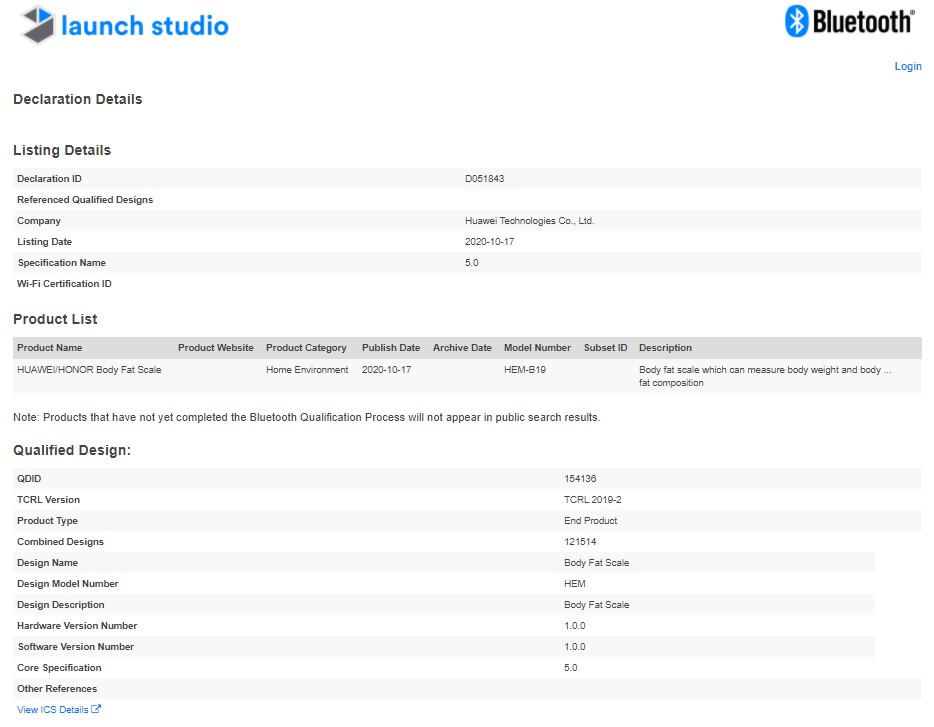
The Bluetooth SIG website has certified a new Huawei/Honor Body Fat Scale. The scale has model number HEM-B19 and connects via Bluetooth 5.0. While it is already evident from the name, this scale not only measures body weight but also body fat composition.
This is not Huawei’s first body fat scale. It announced one a few years ago that can measure weight, BMI, body fat percentage, muscle mass, bone mass, protein, visceral fat, body water percentage, and BMR (basal metabolic rate).
This new scale should be able to measure all of the aforementioned and more accurately. We expect it to launch first in China but Huawei may decide to announce it first in a different market.
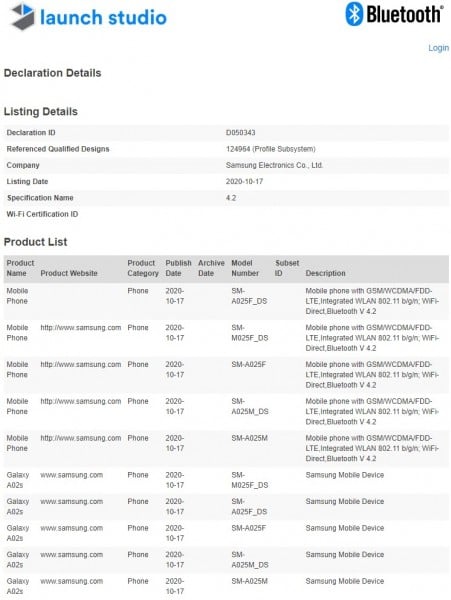
Two Samsung devices last week appeared on Norwegian NEMKO’s website. The two models bear the model numbers SM-A025F and SM-M025F and are believed to be the Galaxy A02 and Galaxy M02. The models have now been certified by Bluetooth SIG which is an indication that the models will soon be launched.
Interestingly, both certifications are contained in the same certification document which is an indication that both models may be the same phones but will launch in different markets under either of the two names.
Unfortunately, the specifications of the smartphones are not contained in the Bluetooth SIG listing. However, the SM-A025F had earlier appeared on Geekbench database revealing the presence of a Qualcomm chipset, Android 10, and 2GB RAM.
Geekbench listings are usually scanty on the specifications but rumours have it that the Galaxy A02 will pack a 5.7-inch HD+ display and will be powered by a Qualcomm Snapdragon 450 processor. The device equally packs two cameras at the rear which consists of a 13MP main sensor and a 2MP depth sensor. At the front., there will be an 8MP selfie shooter. The phone crams a decent 3,500 mAh battery under the hood.
Samsung is yet to release any word concerning the Galaxy A02 and M02 but we expect more information about the models to emerge in the coming weeks.
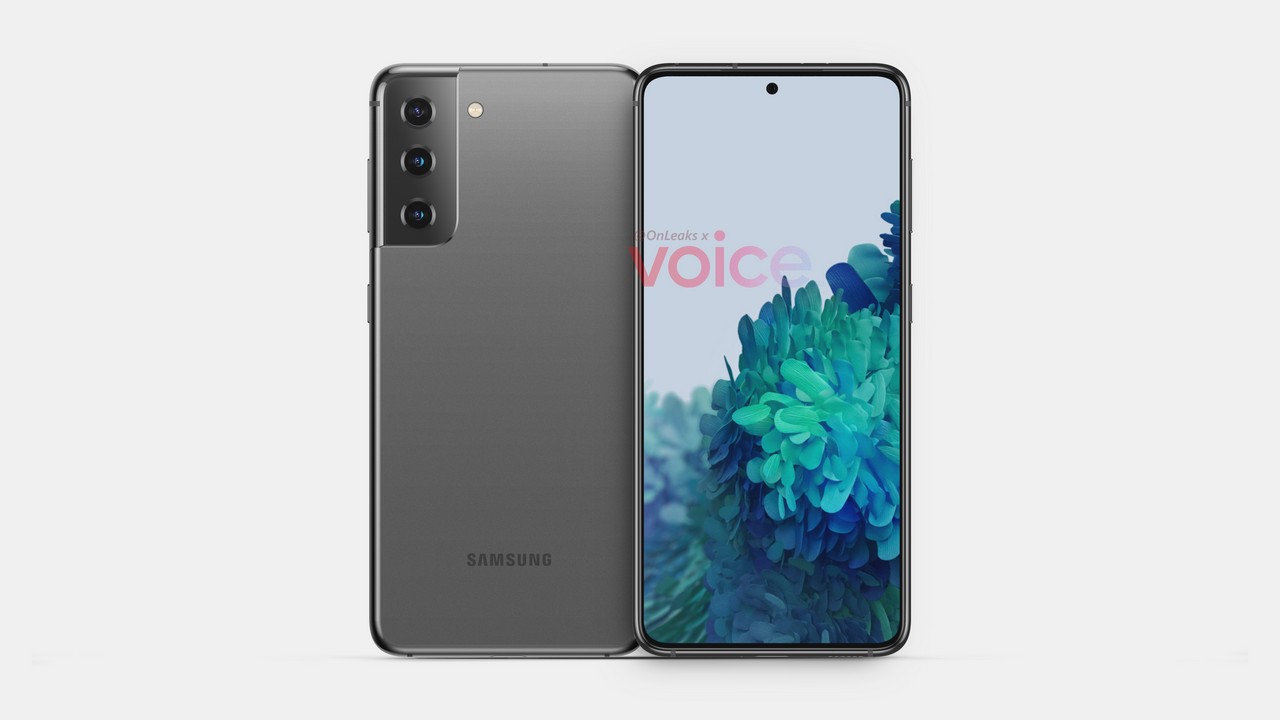
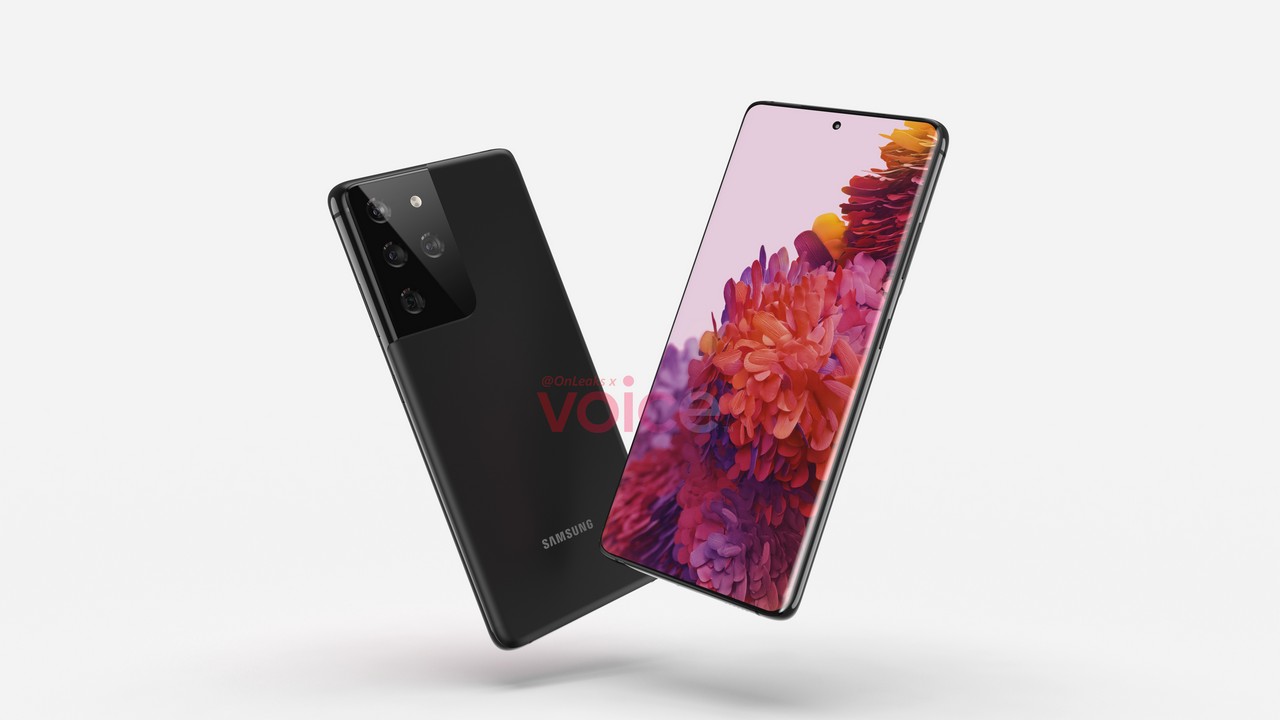
The Galaxy S21 or Galaxy S30 series have been reported to arrive earlier than their predecessors, and now we have our very first look at the Galaxy S21 and the Galaxy S21 Ultra.
The renders of the two phones are from Steve Hemmerstoffer a.k.a. OnLeaks, and unlike previous leaks which have been released in collaboration with tech sites, the renders of the Galaxy S21 and Galaxy S21 Ultra were posted on Voice.
Galaxy S21
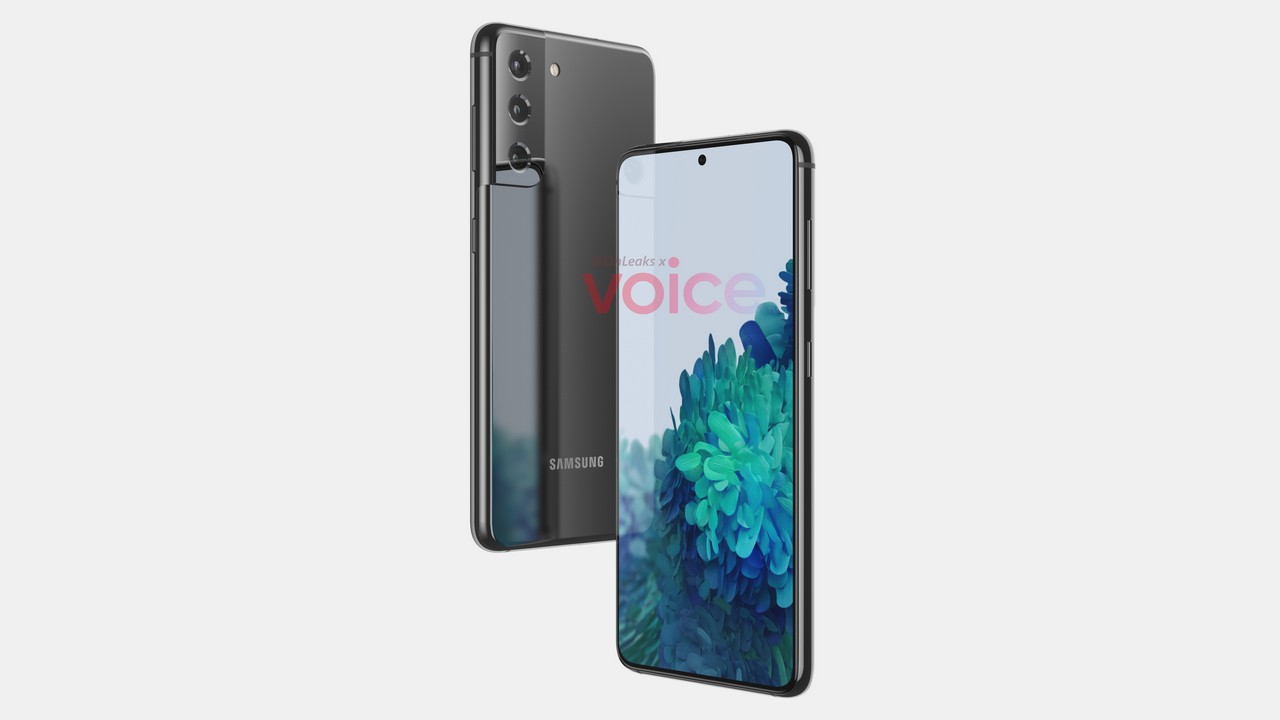
Starting with the Galaxy S21, Samsung has completely ditched the curve on the screen which means the display is completely flat just like that of the Galaxy S20 FE. What has remain unchanged is the hole punch which remains in the center. The screen is said to be about 6.2-inches in size.
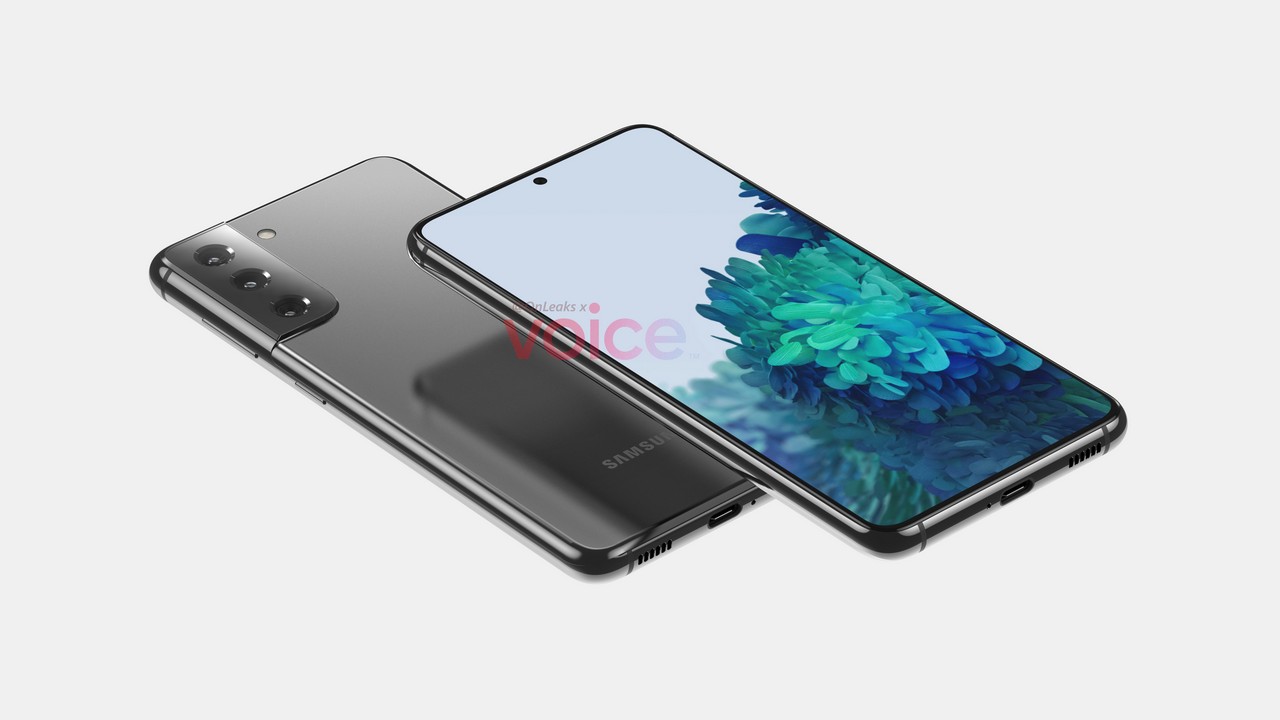
The back of the Galaxy S21 is where the significant change is. While it still sports a triple camera setup, the camera housing takes on a new design. Unlike that of its predecessor which is “floating”, the camera housing for the S21 begins from the edge, making it look like it is fused to the frame.
1 of 2
Galaxy S21
Samsung has gone with a different finish for the glass covering the housing which makes it stand out from the rest of the back panel. Another change is the LED flash which is no longer inside the camera housing but now outside. Personally, I think it sticks out like a sore thumb and would be better if housed together with the cameras. An elongated pill-shaped LED flash like that of the OPPO F17 Pro will also look better.
The Galaxy S21 still has its power button and volume rocker on the left while the bottom of the phone is home to a USB-C port, microphone, and speaker grille. The SIM tray remains at the top.
The upcoming flagship’s dimensions are given as 151.7 x 71.2 x 7.9 millimeters. The thickness increases to 9.0 millimeters when you add the camera bump.
Galaxy S21 Ultra
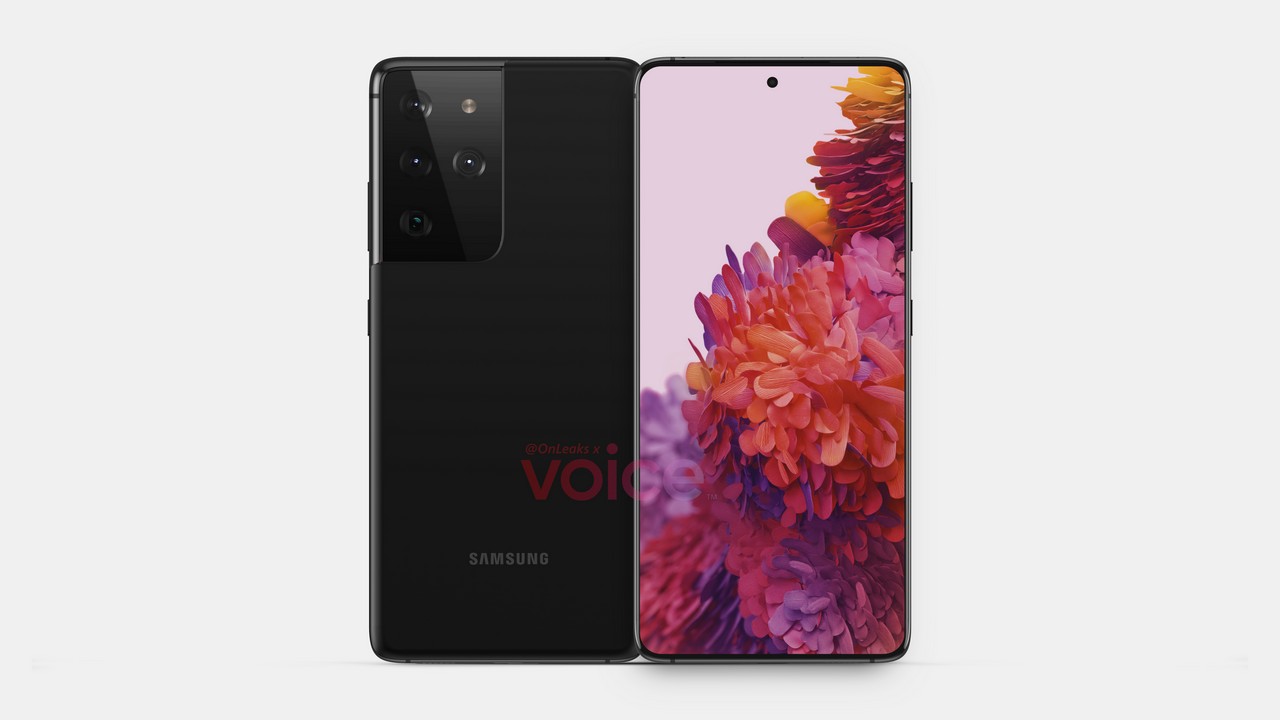
Shortly after posting the renders of the Galaxy S21, OnLeaks also posted those of the Galaxy S21 Ultra which will be the highest model in the series.
The Galaxy S21 Ultra sports a slightly curved display with a centered punch hole for the selfie camera. The screen size has been revealed to be between 6.7 and 6.9 inches.
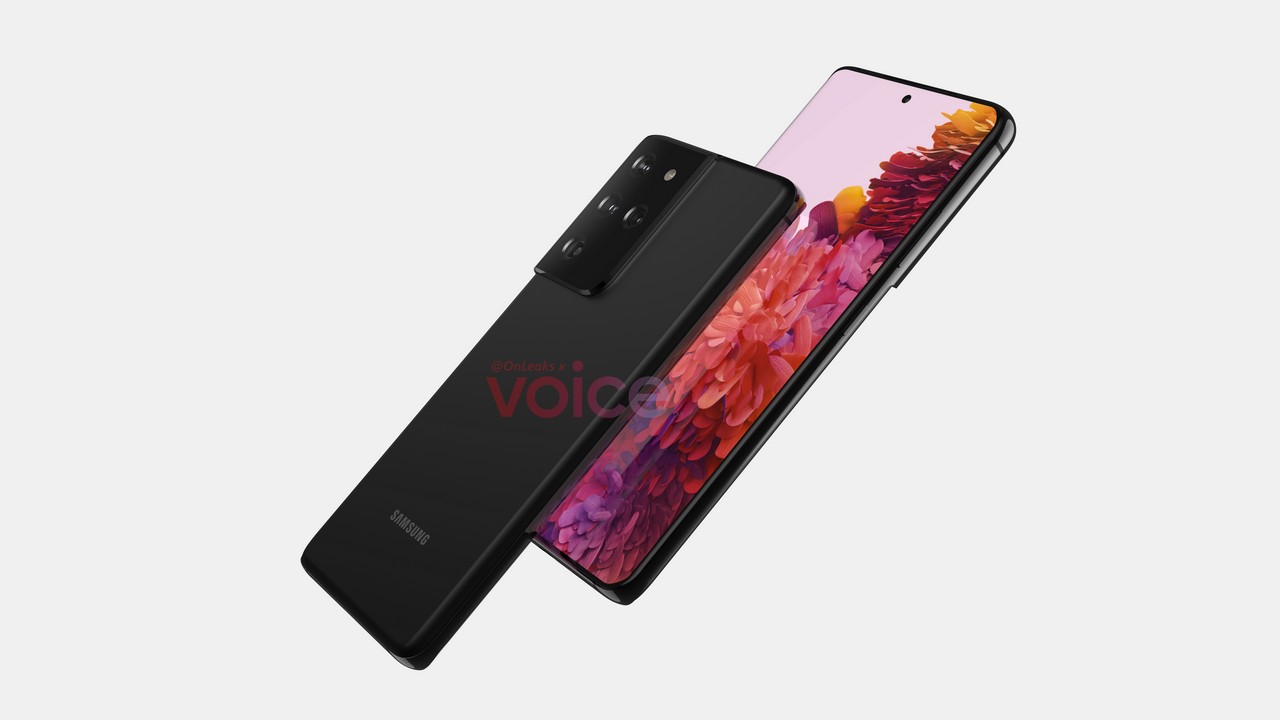
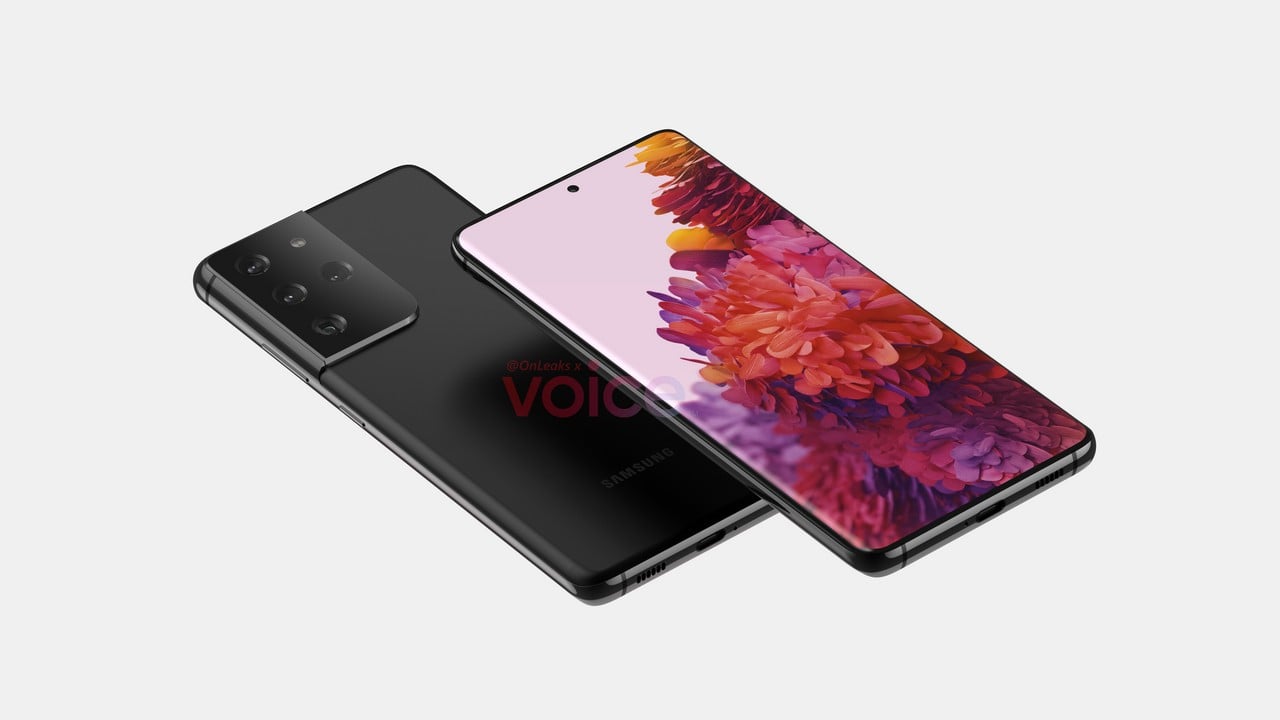
Just like the Galaxy S21, the Galaxy S21 Ultra features a redesigned camera housing, one that can be described as gigantic at best. This camera housing is quite big as it occupies more than a third of the length of the phone.
The glass covering the cameras extends to the edges of the top and left side of the frame too. Inside the housing are four cameras, one of which is a periscope lens, and an LED flash.
Galaxy S21 Ultra render
The Galaxy S21 Ultra has its buttons and port in the same place as the Galaxy S21. However, while rumors say it will have support for the S Pen, there is no slot for it created on the device. Notwithstanding, this doesn’t mean it won’t support the S Pen.
The phone measures 165.1 x 75.6 x 8.9 millimeters (10.8 millimeters with the camera bump).
OnLeaks corroborates that the Galaxy S21 series will indeed launch in January 2021, arriving earlier than the Galaxy S20 series.
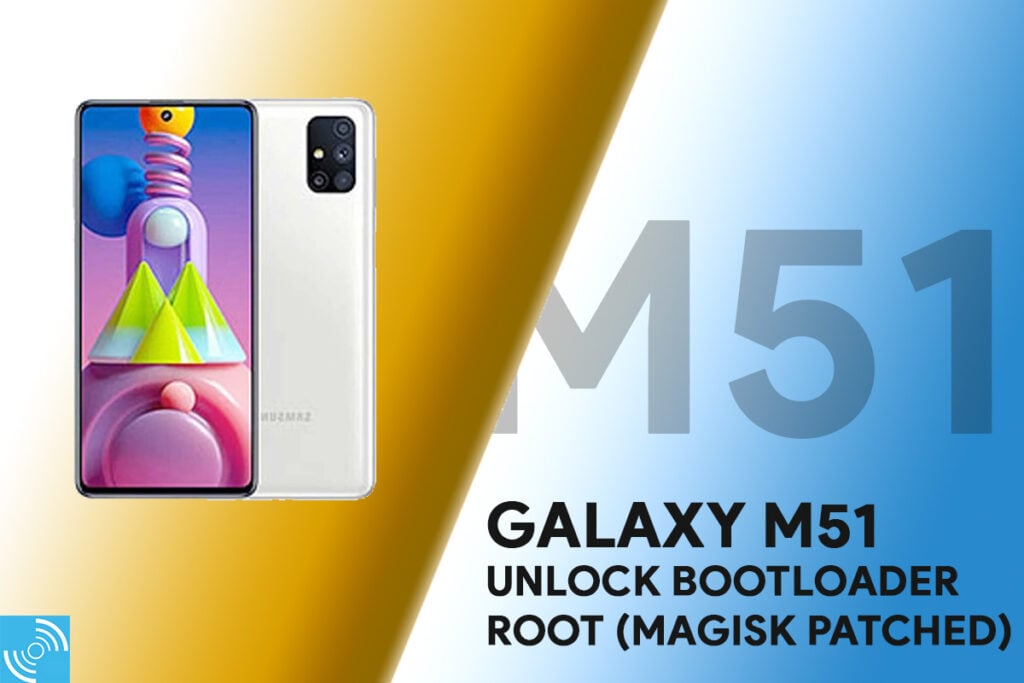
The Korean giant always brings a plethora of devices to entertain the mid-range segment throughout the globe. One such device among the flock is Galaxy M51 which was recently launched carrying value-for-money specifications. The users of Galaxy M51 can now root their devices to bring more customization to the smartphone. We will guide you to unlock the bootloader, install TWRP, and root Galaxy M51.
Rooting is a process through which the Android smartphone users gain the root (administrator) access to the phone. After rooting the device, the user has the access to remove bloatware and all unnecessary stuff from the device. Moreover, it enables us to extend the features and customize the device more vividly.
There are many advantages and some disadvantages of rooting the device.
Benefits of Rooting:
Ability to install custom ROMs and custom firmware.
Extends battery standby time.
Improve the performance of the smartphone by removing unnecessary bloatware.
Allows installing custom Kernels.
Improves the usability of the device.
Disadvantages of Rooting:
Voids Warranty
Loss Data if backup not taken
Bricking device
Samsung Galaxy M51 Specifications
The smartphone houses a Qualcomm Snapdragon 730G chipset coupled with an octa-core chipset and Adreno 618 GPU. THere’s a 6.7-inch Super AMOLED Plus display with 1080 x 2400 pixels resolution and 20:9 aspect ratio. It is available in 128GB + 6GB RAM and 128GB + 8 GB RAM variants.
A quad-rear camera module is present at the rear side featuring a 64MP + 12MP + 5MP + 5MP cameras. There’s a 32MP selfie camera on the front for quality selfies. A side-mounted fingerprint sensor for easy authentication. Moreover, the device comes with a 7000 mAh Li-Po non-removable battery with 25W fast charging.
It is available in two color options of Celestial Black and Electric Blue colors.
Note: Gizmochina.com is not responsible in any way for the loss of data and devices. You’re proceeding at your own risk as in some cases it will even void your warranty.
Unlock Bootloader of Galaxy M51
It is necessary to follow each step carefully, otherwise, your device will get bricked. Make sure to download the below-mentioned tools:
Enable Developer Mode by tapping the OneUI version 7 times after heading to the Settings > About Phone.
Enable USB Debugging by heading to the Settings>Developer Option and toggle USB Debugging.
Now, Boot into the download mode by pressing Volume Up + Volume down and connect your phone to your PC.
Press the volume up button until the bootloader unlock menu appears.
Again press the Volume up button to confirm the bootloader unlock process.
The device will reboot!
You’ve successfully unlocked the bootloader of the Galaxy M51. Now we can easily root the device.
Steps to root the Galaxy M51 1using Patched Boot Image
It is quite easy to root the device using the steps mentioned below.
Step 1: Create a Patched boot image
Download the firmware file for your smartphone and extract it into a folder.
Download the Magisk Manager app on your smartphone
Now, Connect your smartphone with the PC using the USB cable.
You need to transfer the boot.img file from the extracted folder to your phone.
Open, the Magisk Manager application and select Install > Install > Patch from the image file.
Select the boot.img file that you copied in the step above.
Magisk will start patching the image.
Now, replace the boot.img file in the extracted folder with the newly created “patched_boot.img” file via Magisk Manager App.
Step 2: Flash patched boot image
Download 7zip software to archive the new patched_boot.img into .tar format. (Odin accepts .tar format)
Download Latest Odin Tool on your PC.
Download ADB and Fastboot drivers on your computer and extract it to the folder.
Copy the .tar file or patched boot image into the extracted ADB and Fastboot directory.
Boot into download mode – Turn off the phone, and hold the Volume Up + Volume down buttons, and connect with the PC at the same time.
Now, open the Odin.exe file as administrator.
A blue column will be visible under ID:COM field one you are connected.
Browse for patch boot.tar image in the AP section.
Now, head over to Options and select Auto Reboot and F.Reset options. Unselect all other options
Click on the Start button to root your device.
After completion, your device will reboot.
That’s it!
You’ve successfully gained root access, now you can install any custom ROM, install MOD, and extend the functionality of your device. Make sure to unlock the bootloader of Galaxy M51 prior to rooting the device. However, if you get any problem while following the guide, do let us know via the comments below.
Nokia has been awarded a contract to establish a 4G network on the moon. The contract is one of several that NASA is awarding to companies as it plans a return to the moon.
The $14.1 million contract was given to Nokia’s US subsidiary and is a small part of the $370 million total awarded to companies such as SpaceX. The cellular service will allow astronauts, rovers, lunar landers, and habitats to communicate with one another according to Jim Reuter, the Associate Administrator for NASA’s Space.
The 4G network that Nokia will build will be miles superior to the form of communication that was used during the early missions to the moon.
This is not Nokia’s first attempt to launch an LTE network on the moon. It planned to do so in 2018 in collaboration with PTScientists, a German space firm, and Vodafone UK to launch an LTE network at the site of the Apollo 17 landing but the plan never came to fruition.
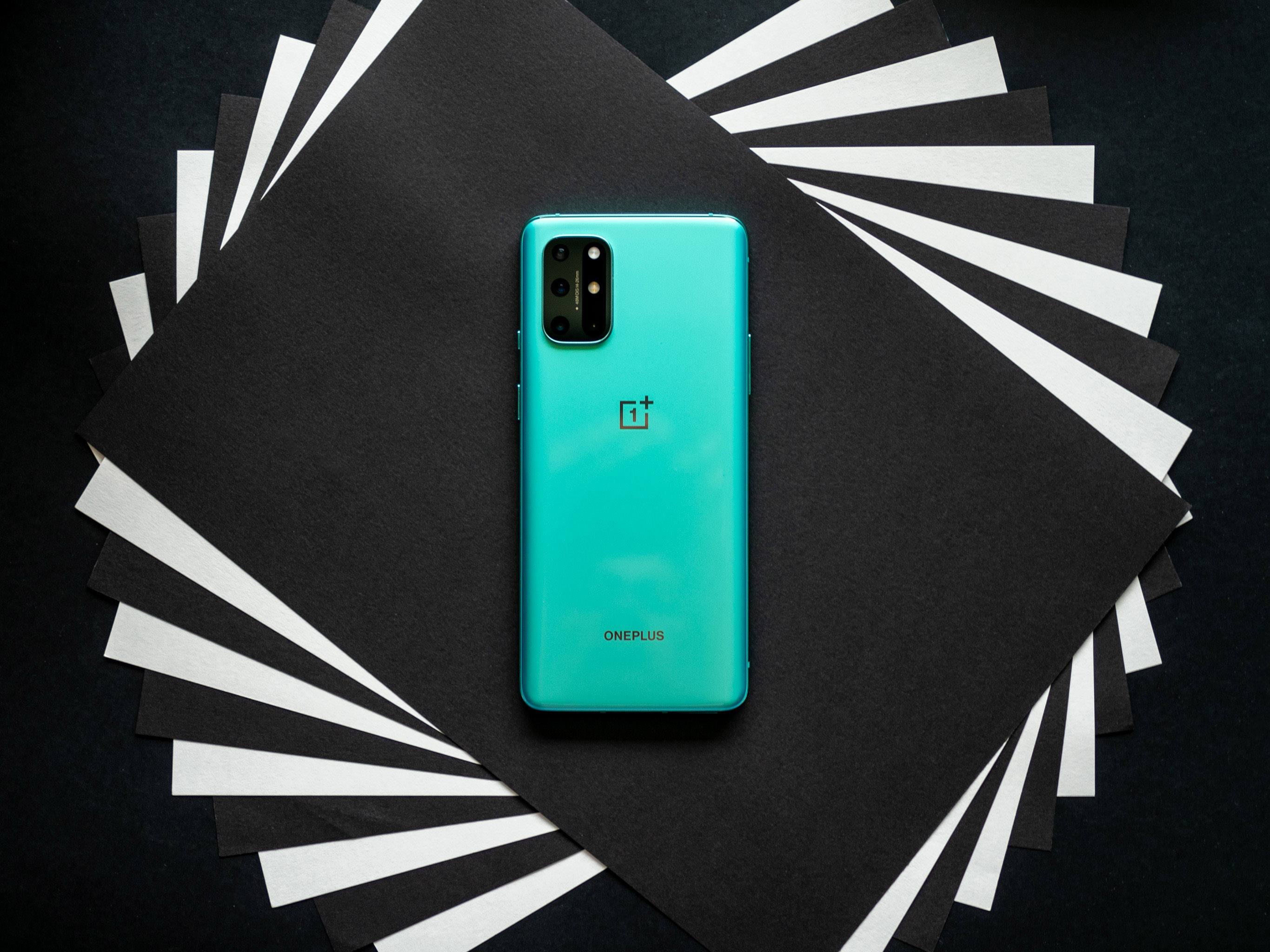
A couple of days back, Zack(YT: JerryRigEverything) tested the durability of the new OnePlus 8T. Unlike the OnePlus 7T whose rear glass cracked, it survived the test. And now, a teardown video of him reveals the dual-batteries that are in the limelight lately.
As Zack opens the rear panel, we see an NFC coil at the top of the interior. After unscrewing the 16 Philips head screws, we see a speaker below without a water-proof seal. That’s because the mesh is attached to the frame. Now, removing the center ribbon cables reveals the elephant in the room, the dual-batteries.
From the looks, it doesn’t really seem like two separate physical batteries but has a crease at the center. This means there are two batteries packed as a single unit with a center joint. Spec-wise, OnePlus has kept each of them at 2,250mAh capacity. And, the total capacity works out to be 4,500mAh. Having said that, the dual-cell design once again rings a bell in us that batteries can’t withstand charging speeds greater than 30W.
Many companies have adopted the dual-cell design to increase the charging capacity of the smartphone to 65W, and more. Some of them include Oppo, Vivo, Realme, and now OnePlus.
Moving on, the speaker frame, charging port, few internal cables, SIM slot, all seem to have a rubber ring around them to protect water. The device, however, doesn’t have an official IP rating except for the OnePlus 8T+ with T-Mobile. In the past, most of the OnePlus phones have had water-proof seals inside but didn’t come with an IP rating. This is probably to skip extra cash for getting the certification which is most likely why the OnePlus 8T is priced fairly.
Cooling system
As for cooling, the motherboard has graphite tapes and copper that cover the silver shield. Scrapping it off reveals a thermal paste on the top which is probably to keep the CPU cool. OnePlus has gone on to apply it to the backside as well. Additionally, the inside of the frame has a copper chamber running through to the battery with copper pipes. Interestingly, the camera layout also a sheet of graphite and copper to keep it cool.
Nevertheless, OnePlus has kept it a tradition of making structurally sound devices and the OnePlus 8T carries the momentum, with double the fun(pun intended!).
It appears Xiaomi has not only secured the Snapdragon 875 processor ahead of other Chinese manufacturers for its Mi 11 flagship phone but will also get limited-time exclusivity.
The info comes from Digital Chat Station, the Chinese leaker, who revealed the info in a Weibo post earlier today. While the Mi 11 or whatever it will be called will be the first Chinese smartphone to be powered by the Snapdragon 875 processor, Samsung’s Galaxy S21 series will be the first to feature the chipset globally.
We are not too surprised at the news as processor exclusivity has become a thing that also occurs at the mid-range level. However, there is no info on how long the exclusive period will last but our guess is a month at most. Lest we forget, the Redmi K30 5G Racing announced back in May is still the only phone powered by the Snapdragon 768G Mobile Platform.
The Snapdragon 875 will be officially unveiled in December. The processor will have 8 cores in a 1+3+4 arrangement. It will be a 5nm chipset and will also come along with the Snapdragon X60 5G modem.
A few days ago, Huami announced the Amazfit Bip U in India. The new Bip smartwatch brings significant improvements to the Bip S series in addition to new features. However, the Bip U won’t just be one smartwatch but a series just like the Amazfit Bip S. We did some digging and found out that one of the smartwatches in the series is the Bip U Pro. We also found some of the features of the coming smartwatch.
Huami already revealed the Amazfit Bip U is a series
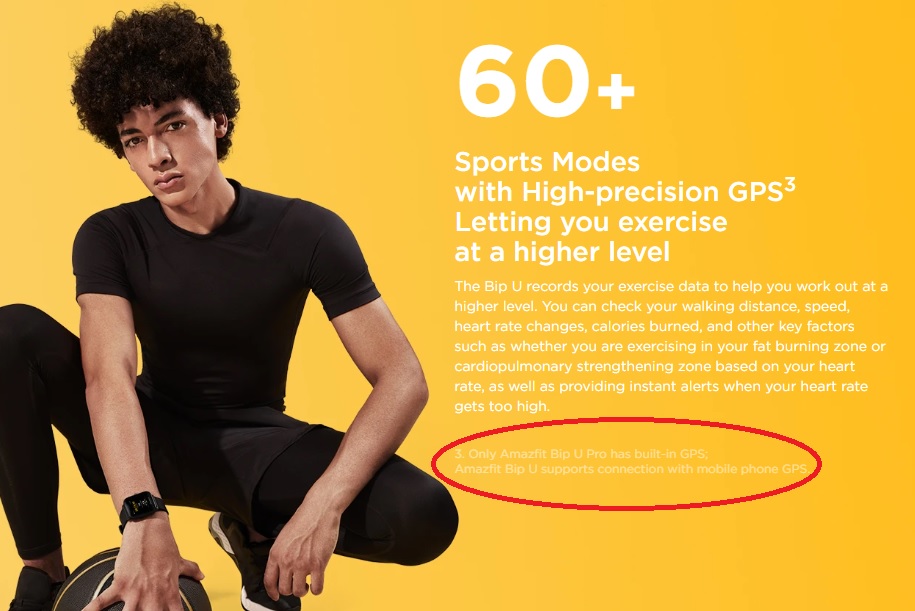
The Amazfit Bip U Pro will share not only a similar design as the Amazfit Bip U but also have practically all its specs and more. So it should have a 1.43-inch 320 x 302 display, 50 watch faces that include customizable ones, 60+ sports modes, SPO2 monitoring, stress monitoring, BioTrackerTM 2 PPG heart rate sensor, and 50 meters water-resistance among others. So what are the distinguishing features?
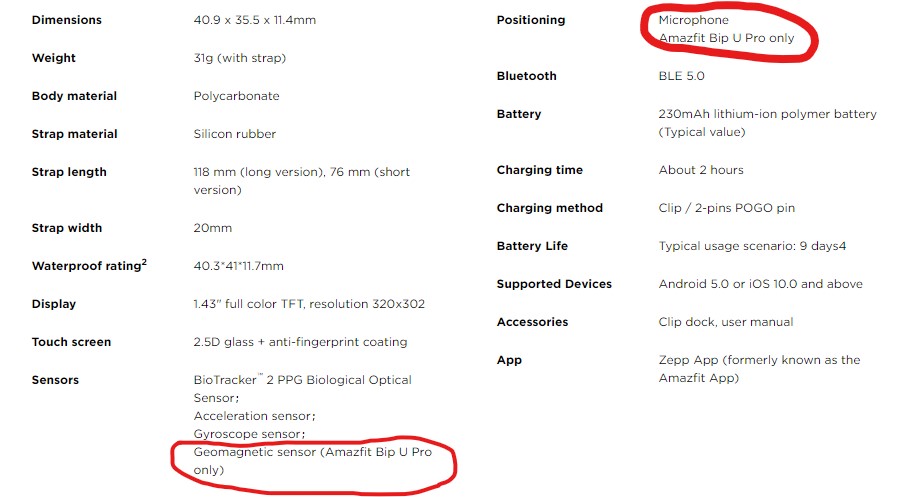
Built-in GPS – The Amazfit Bip U Pro will have built-in GPS which is a feature the standard version doesn’t have. This means if you are going for an outdoor run or a bike ride, you don’t need to take your phone along for GPS.
Geomagnetic Sensor – The Amazfit Bip U Pro will also have a geomagnetic sensor which means it will have a compass. This is also great for those who exercise outdoors.
Microphone (and probably speaker) – The pro version will come with a microphone. This should mean users will be able to use it to answer calls or call up an assistant (probably Amazon Alexa) to set alarms and timers and the likes.
NFC* – we are not sure about this but this is a possibility. The Amazfit Bip U will launch in China as the Amazfit Pop and from a product video released by the company, the Pop has support for NFC which the standard Bip U doesn’t have. Huami may decide to add NFC support to the Amazfit Bip U Pro too.
1 of 2
Huami has not yet revealed when the Amazfit Bip U Pro will launch but if the above features are necessary for you, then you will have to wait till it is announced. Of course, it will cost more than the standard version when it launches.
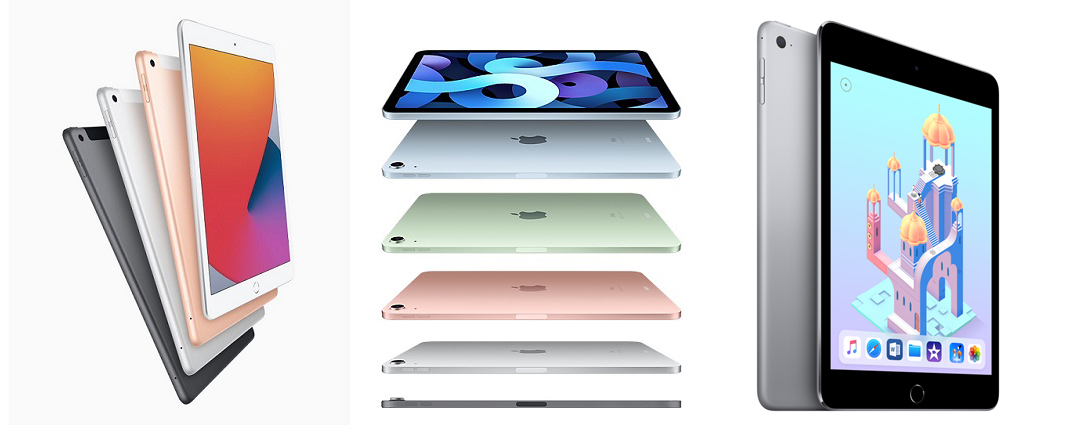
Instead of the iPhone 12 lineup, during its first event held in September, Apple launched the new iPad Air 4 and iPad 10.2 8th gen. The iPad Air 4 just went on pre-orders and, according to benchmarks, it has even higher performance than the iPhone 12. But, if we exclude the iPad Pro targeted at professional users, the iPad Air 4 is the most expensive Apple tablet. Is it worth spending more on such a device or cheaper tablets like iPad 10.2 8th gen and iPad Mini 5 make more sense for your needs? This is a specs comparison between iPad Air 4 and other affordable Apple iPads which should let you find out.
Apple iPad Air 4 vs Apple iPad 10.2 8th gen vs Apple iPad Mini 5
10.2 inches, 1620 x 2160p (Quad HD+), Retina IPS LCD
7.9 inches, 1536 x 2048p (Quad HD+), IPS LCD
PROCESSOR
Apple A14 Bionic, hexa-core 2.5 GHz
Apple A12 Bionic, hexa-core 2.5 GHz
Apple A12 Bionic, octa-core 2.5 GHz
MEMORY
64 GB – 256 GB
3 GB RAM, 32 GB – 3 GB RAM, 128 GB
3 GB RAM, 64 GB – 3 GB RAM, 256 GB
SOFTWARE
iPadOS 14
iPadOS 14
iOS 12 (upgradable to iPadOS)
CONNECTIVITY
Wi-Fi 802.11 a/b/g/n/ac/ax, Bluetooth 5.0, GPS
Wi-Fi 802.11 a/b/g/n/ac, Bluetooth 4.2, GPS
Wi-Fi 802.11 a/b/g/n/ac, Bluetooth 5.0, GPS
CAMERA
Single 12 MP f/1.8
7 MP f/2.0 front camera
Single 8 MP f/2.4
1.2 MP f/2.2 front camera
8 MP f/2.4
7 MP f/2.2 front camera
BATTERY
28.6 Wh
32.4 Wh
19.1 Wh
ADDITIONAL FEATURES
Optional LTE, Pen support, keyboard support
Optional LTE, Pen support
Optional LTE, Pen support
Design
You can see it even at first glance: the iPad Air 4 is the tablet with the most stunning design. Thanks to its very narrow bezels around the display, it is very elegant and futuristic. So, if you want the iPad with the best look, you know what to choose. Instead, if you need the most compact and lightweight tablet, go for the iPad Mini 5: thanks to its smaller display, it comes with smaller dimensions. Note that the iPad Air 4 also supports the keyboard and it turns into a mini-laptop. Despite its wider display, it has similar dimensions to the iPad 10.2 8th gen.
Display
The most advanced display is on board of the iPad Air 2020: it is a Liquid Retina IPS LCD panel with a 500 nit brightness and very high resolution (1640 x 2360 pixels). It is a wider display and it has the widest color gamut, as well as the True Tone technology and full lamination. Right after, we got the iPad 10.2 8th gen: unfortunately, you do not get full lamination, but it is still a pretty nice panel. Even the iPad Mini 5 is nice, but if you want the best multimedia tablet, the iPad Air 2020 has no rivals but the iPad Pro.
Hardware/Software
The iPad Air 4 has the most powerful chipset ever seen on a tablet launched by Apple to date. We are talking about the Apple A14 Bionic: the first SoC built at 5 nm and the same chipset as the iPhone 12. But the iPad Air 2020 actually provides even better performance than iPhone 12 because the Apple A14 clock is limited on the iPhone 12. In order to get a device that can beat the iPad Air 4, you have to consider the iPhone 12 Pro or the iPhone 12 Pro Max. Both the iPad Mini 5 and the iPad 10.2 8th gen are fueled by the Apple A12 Bionic chipset, but there is a difference: iPad 10.2 8th gen ships with iPadOS 14 out of the box, while the iPad Mini 5 ships with iOS 12. So, expect longer software support with the iPad 10.2 8th gen.
Camera
The Apple iPad Air 4 has a way better rear camera than iPad 10.2 8th gen and iPad Mini 5. We are talking about a 12 MP rear camera which is actually the same sensor as the latest iPhones, but it is not supported by any secondary sensor and it does not come with OIS. The camera is able to record 4K videos at 60 fps and 1080p videos up to 240 fps. The iPad Mini 5 and the iPad 10.2 8th gen sport the same 8 MP rear camera, but the front camera is better on the iPad Mini 5 (7 MP vs 1.2 MP).
Battery
Unfortunately, we did not test the battery life of the iPad Air 4. iPad Mini 5 has a smaller battery than its siblings. It will be a hard fight between iPad Air 4 and iPad 10.2 8th gen. According to Apple, they both last up to 10 hours (multimedia).
Price
Apple iPad Mini 5 is actually priced less than €400/$350, iPad 10.2 8th gen costs €370/$329, and iPad Air 4 has a €640/$599 starting price. Unless you need a very compact tablet, it does not make too many sense to go for an iPad Mini 5 with the iPad 10.2 8th gen around. The iPad Air 4 wins the comparison under every point of view, but it is way more expensive.
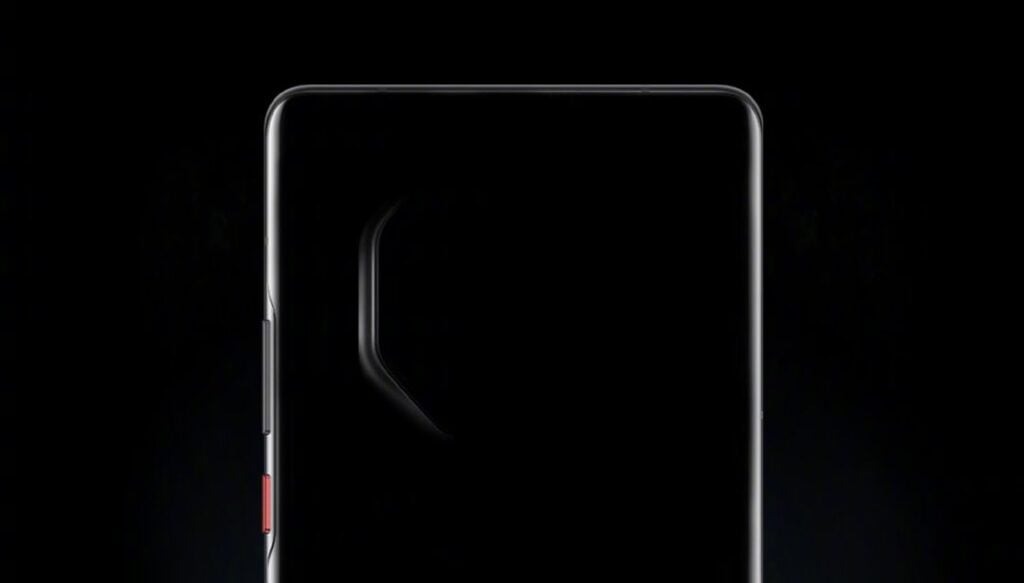
Just as we got a Mate 30 RS Porsche Design last year, Huawei will also be launching a Mate 40 RS Porsche Design RS this year. If you are wondering what the phone looks like, then you are in luck as a photo of the back panel has been posted on the internet.
The photo was posted on Twitter by Teme (@RODENT950) and it shows the phone’s octagonal camera housing which is filled with holes. The panel has a sort of blue-ish paint job with a mix of gloss and matte finish.
The middle of the case is a thick band of several lines that runs from the top of the camera housing down to the bottom. Unlike the Mate 30 RS Porsche Design, the Mate 40 RS Porsche Design doesn’t have the luxury band’s logo but Porsche Design is written in full on the back. The design is unusual but personally, I prefer this to that of last year’s model.
In a reply to the original tweet, the leaker revealed the Mate 40 RS Porsche Design will sell for €2000. This is slightly less than the €2095 launch price of last year’s model. He also revealed that the back is made of ceramic and there will be a white variant too.
Just like the Mate 40 Pro, the Porsche Design edition should also be powered by the Kirin 9000 processor, come with an OLED display, and have support for fast wired and fast wireless charging.
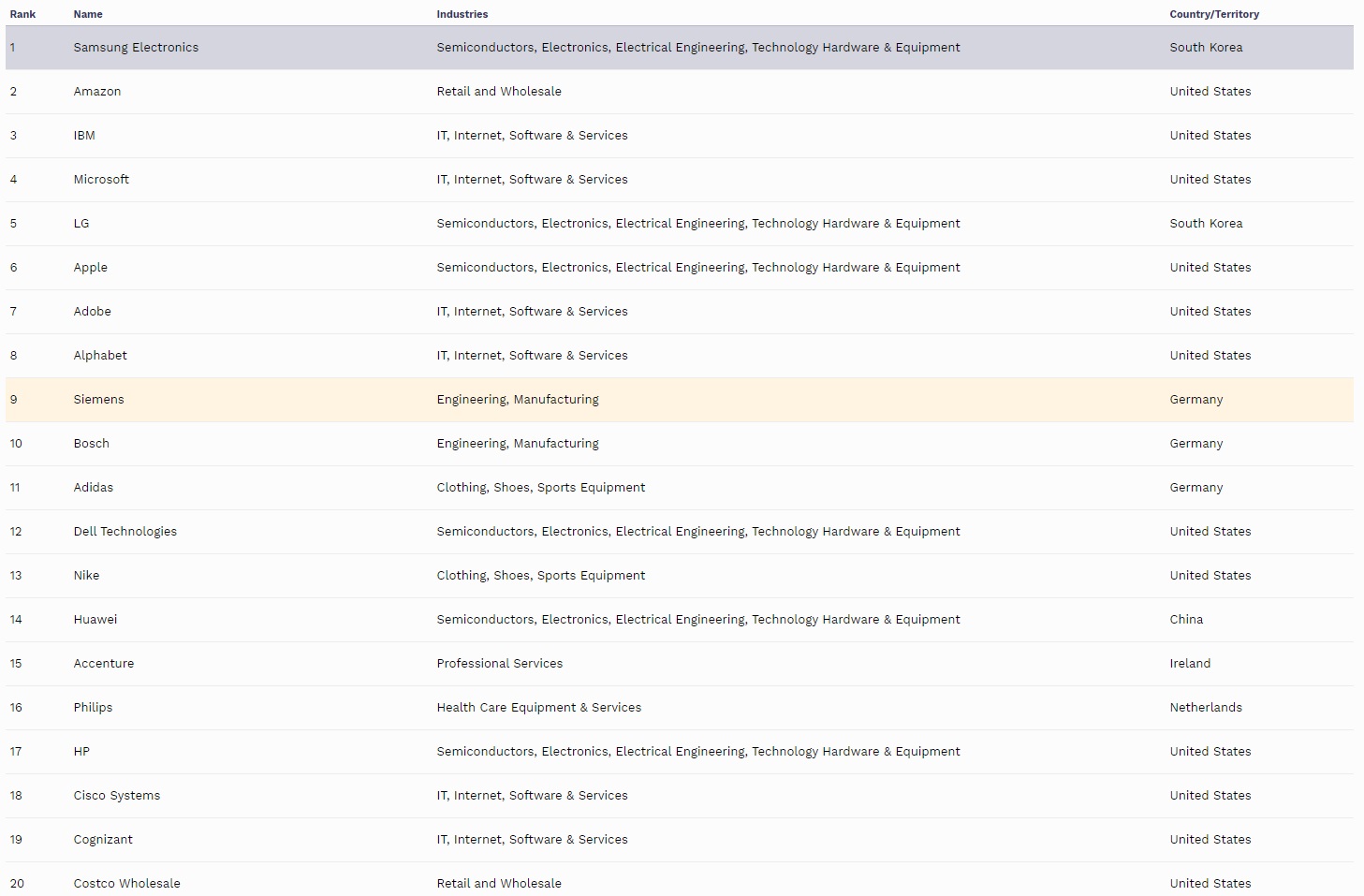
Samsung Electronics has topped the world’s best employer ranking in a recent study by Forbes. The study reportedly asked the participants’ willingness to recommend employers based on covid-19 response, talent acquisition, gender equality, and more.
The said Forbes study is done(via Sammobile) in partnership with market research firm Statistica. Accordingly, more than 160,000 participants from 58 countries took the survey anonymously. They are reportedly full-time and part-time workers. The report says the survey went on a rolling basis from June-July.
Samsung Electronics has topped the list of 750 MNCs(Multi-National Corporations) headquartered in over 45 countries. To be precise, Samsung Electronicsranks No.1 overall, and it is categorized under Semiconductor, Electronics, Electrical Engg., Technology Hardware & Equipment. Surprisingly LG is trailing behind Samsung at 5th Place outsmarting Apple, and Huawei.
Credits: Forbes/Statistica
If we take Samsung, it has had a lot of ups and downs as a company in 2020. However, every time, it woke up from the dust and improved. When the world got hit by Coronavirus, it quickly shut down its factories in South Korea after confirmed cases but soon scaled it back. As a Consumer Electronics company, it didn’t stop there. It opened a UV sanitizing service for its Galaxy series of Smartphones.
Showing concerns for both consumers and employees
Similarly, in the semiconductor business, it was quick enough to shift the production from Korea to Vietnam to tackle the situation. Later, it smartly reduced the component orders by 50% when the scenario was a near-death sentence back then. Also, it contributed to countries like India by pledging nearly ₹20 crores($2.7 million) to the PM CARES fund and other state govt to combat the virus.
And now, it is ready to expand the market even more but also ensure the safety of its future Smart home products with UV-LED technology. All these shows how much commitment Samsung is showing to its consumers, and employees. That said, 2020 is almost over and companies like Samsung are gearing up for a varied strategy in 2021 with well sorted out plans for TV business, smartphones, semiconductors, auxiliary components, and more.
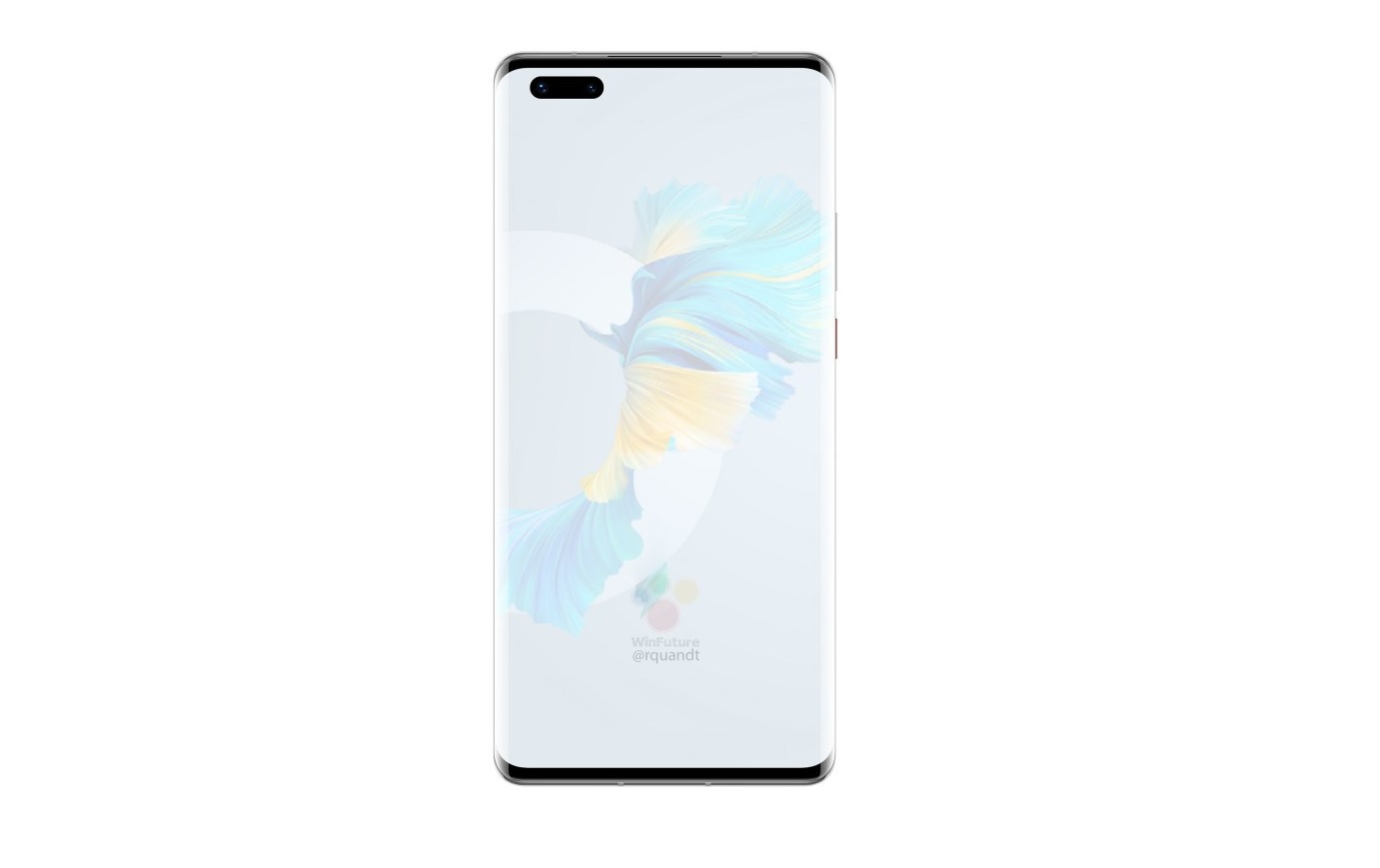
Huawei will unveil its Mate 40 series in a few days but the leaks have not stopped pouring in. Today, a new leak has been published on the web that reveals not only the key specs of the Mate 40 Pro but also press renders.
The Mate 40 Pro is a bigger device than its predecessor. Its screen size is 6.76-inches, an increase from the 6.53-inch screen of the Mate 30 Pro. The greatly curved display is an OLED panel with a resolution of 2722 x 1344 and a 456 PPI as reported by Winfuture. It also ditches the notch for a pill-shaped punch hole on the left side of the screen.
Powering the phone is the new HiSilicon Kirin 9000 processor, a 5nm octa-core chipset with a prime Cortex-A77 core clocked at 3.13GHz, three high-end A77 cores clocked at 2.54GHz, and four efficiency Cortex-A55 cores clocked at 2.04GHz. The chipset also has a Mali-G78 GPU and an integrated 5G modem.
In Europe, the phone will come in a single configuration that has 8GB of RAM and 256GB of UFS 3.1 storage. Other markets such as China will be able to pick up a 12GB RAM variant. There is an NM (nano-memory) card slot that allows for storage expansion.
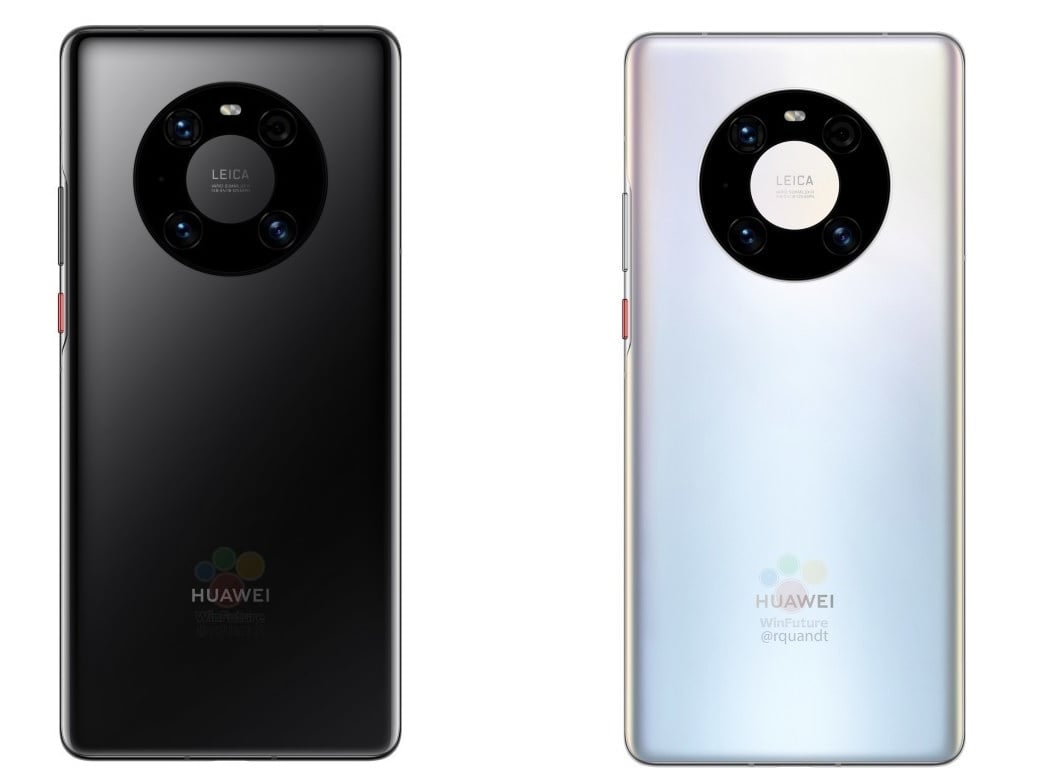
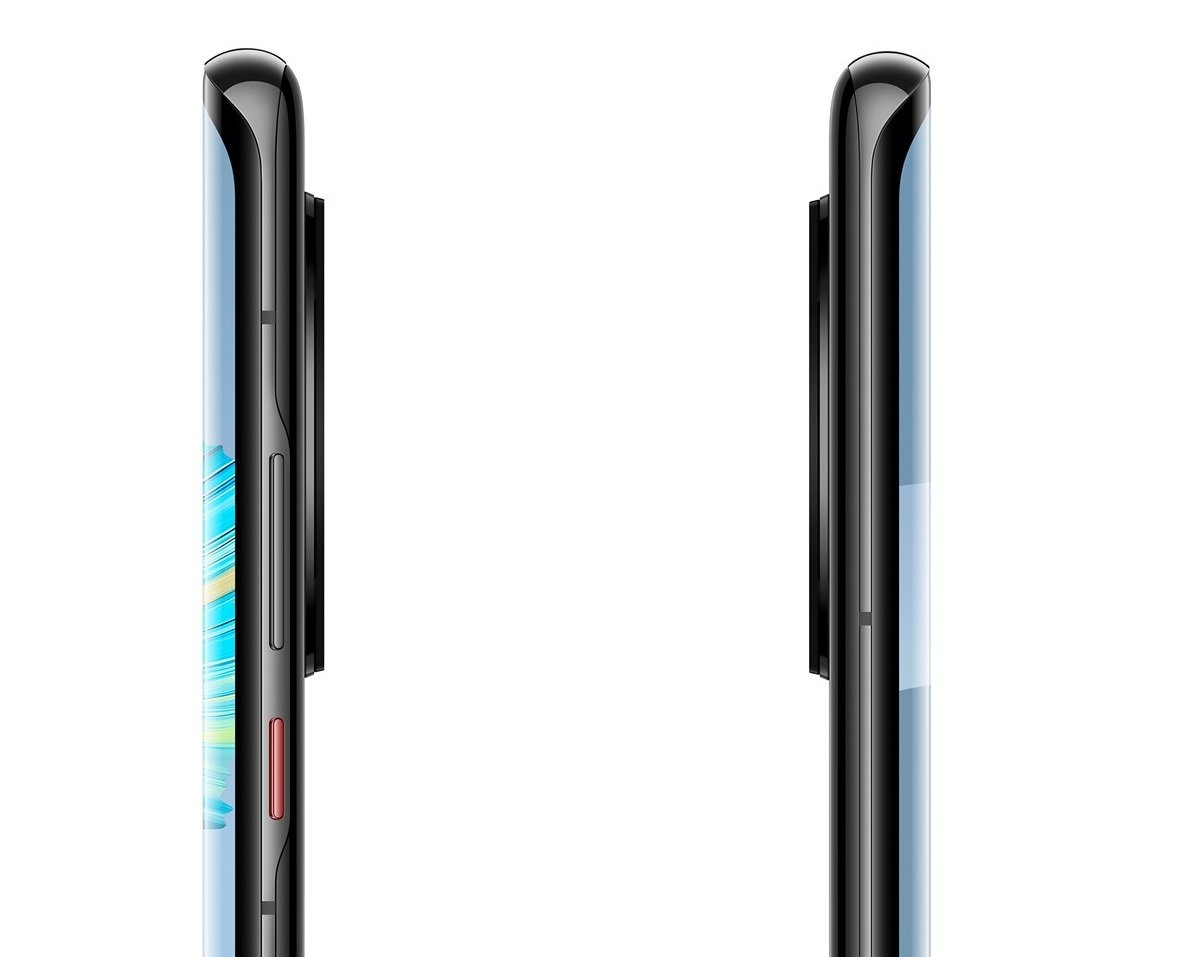
For its cameras, the Mate 40 Pro has a 50MP triple camera system on the back arranged on a circle with Leica’s branding in the middle. As you can see in the image below, the camera housing protrudes a bit
The main sensor has an f/1.9 aperture and it comes along with a 20MP f/1.8 ultrawide angle camera and a 12MP f/3.4 telephoto zoom camera. There is 5x optical zoom and support for 8K video recording. There is also a dual-tone LED flash at the top while the sensor on the upper right is said to be a color temperature sensor that should help it capture true colors.
The pill-shaped cutout houses a 13MP f/2.4 primary sensor and a 3D sensor. Just like last year’s mode, the Mate 40 Pro will support gesture controls.
The phone packs a 4400mAh battery that has support for 65W fast wired charging via a USB 3.1 Gen 1 port. Users will be able to fully charge the phone from empty in under 1 hour. The Mate 40 Pro also has Bluetooth 5.2, NFC, and Wi-Fi 6. Unfortunately, it runs Android 10 with EMUI 11 and Huawei Mobile Services rather than the new Android 11.
The Huawei Mate 40 Pro will be available in black and silver in Europe but may be available in more colorways in other regions. There is no info on the price of the smartphone.
Huawei has confirmed to launch Mate40 series on October 22. The series is reported to include a total of four devices. A standard model and three Pro models including a limited edition. Now, as we are only days away front heir official announcement, all the colors and storage configurations of the Pro variants have leaked.
The HUAWEI Mate40 series will consist of the following four models.
HUAWEI Mate40
HUAWEI Mate40 Pro
HUAWEI Mate40 Pro+
PORSCHE DESIGN HUAWEI Mate40 RS
All four of them are said to be powered by 5nm HiSiliccon Kirin 9000 chipset. The only major difference between them will be their cameras.
Now, according to a user called @RODENT950 on Twitter, who is known for Huawei-related leaks, the Mate40 Pro and PORSCHE DESIGN model will come in two storage configurations, whereas the Mate40 Pro+ will be only available in a single storage version.
As for colors, the Mate40 Pro will be available in five colors while the Mate40 Pro+ and PORSHE Design variant will only come in two colors.
HUAWEI Mate40 Pro Storage Variants & Colors
Storage Variants
8GB + 256GB
8GB + 512GB
Colors (Translated)
Bright Black (Black)
Cosmic Silver (Silver/Gray)
Autumn Populus Euphratica (Yellowish Orange)
Populus Euphratica (Green)
Glazed/Pearl White (White)
HUAWEI Mate40 Pro+ Storge Variants & Colors
Storage Variants
12GB + 256GB
Colors (Translated)
Ceramic White (White)
Ceramic Black (Black)
PORSCHE DESIGN HUAWEI Mate40 RS Storage Variants and Colors
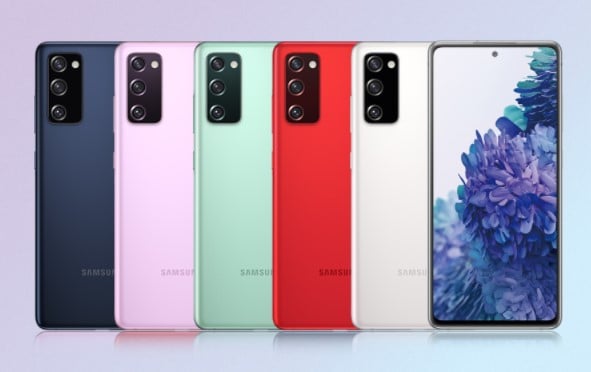
In September, Samsung globally announced the Galaxy S20 Fan Edition budget-friendly flagship phone. Earlier this month, the company unveiled the Galaxy S20 FE 4G in India. Yesterday, the 5G edition of the phone was made official in China with a starting price of 4,999 Yuan (~$746).
The Samsung Galaxy S20 Fan Edition 5G has arrived in China in two variants such as 8 GB RAM + 128 GB storage and 8 GB RAM + 256 GB storage. They are priced at 4,999 Yuan and 5,399 Yuan, respectively. The handset comes in colors like Whimsical Blue, Fantasy Purple, Photosynthetic Green, Inspiration Red, and Kora White in China. Customers who pre-order the device will get Galaxy Buds earbuds and six interest-free installments.
The Galaxy S20 FE smartphone that comes with an IP68 certified chassis comes with a 6.5-inch FHD+ S-AMOLED display with a punch-hole design. The display offers a 120Hz refresh rate and it is integrated with a fingerprint scanner. It has a front camera of 32-megapixel.
The Snapdragon 865 mobile platform powers the Chinese variant. It houses a 4,500mAh battery that supports 25W fast charging. The triple camera system of the phone has an OIS assisted 12-megapixel primary shooter, a 123-degree 12-megapixel ultrawide lens, and an OIS-ready 8-megapixel telephoto lens with 3x optical zoom support.
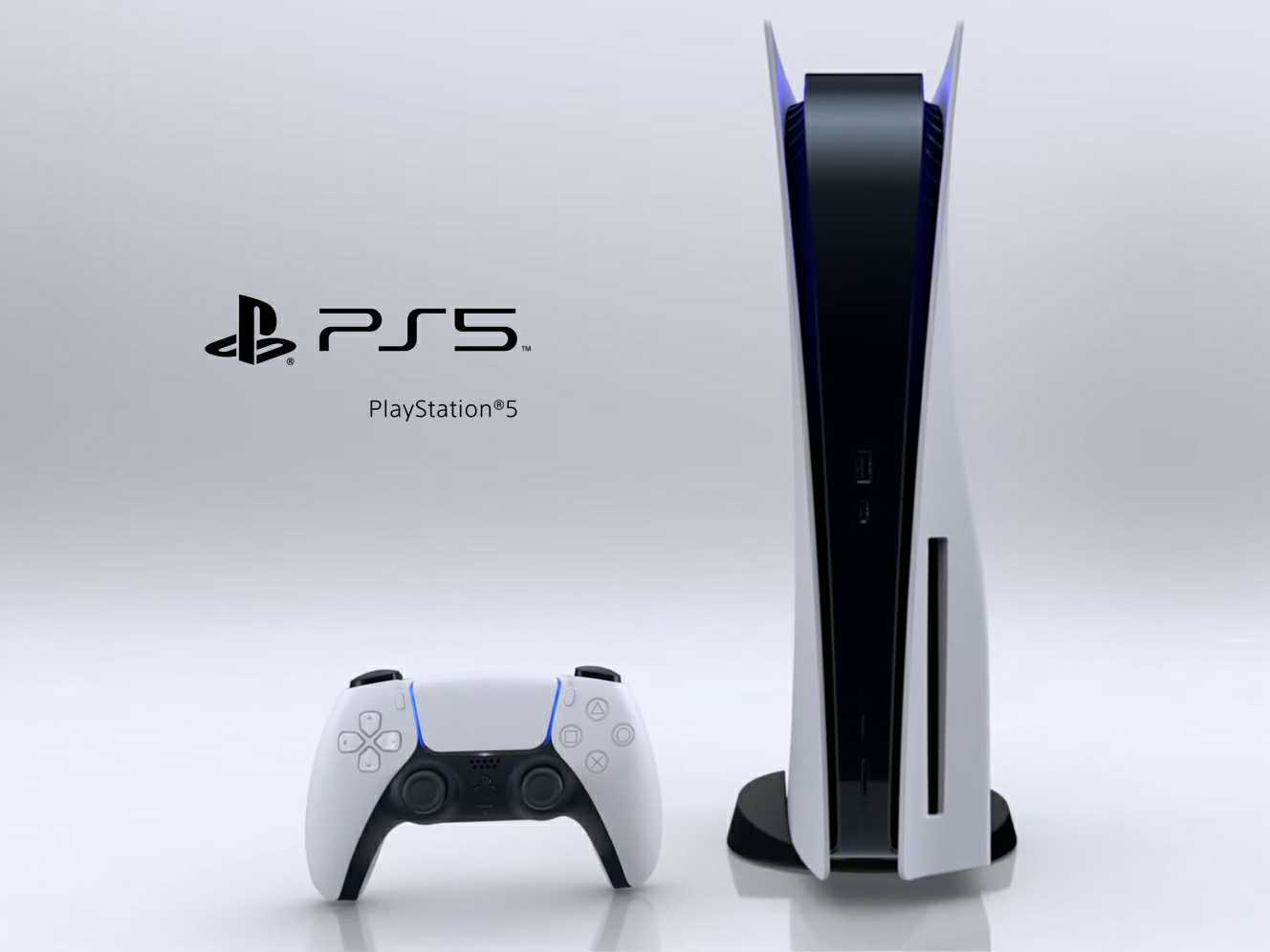
Sony has finally revealed the Price of the PlayStation 5(PS5) series for India. The Digital Edition of PS5 is also coming to India. And this time, the Digital Edition price is close to the Microsoft’s Xbox Series S despite sharing the same specs as the PS5.
Sony PlayStation 5 India Price details
So to clear your mind, both the PlayStation 5 versions are coming to India. The Standard PS5 variant with 4K Blue-ray disc drive will retail(via Android Central) for ₹49,990($680). And the Digital Edition of the PS5 is priced at ₹39,990($544). That said, the pricing is good compared to Microsoft‘s Xbox series X. The Xbox Series S and X don’t share the same internals and the Series S is priced at ₹34,990($475) whereas the Series X is at ₹49,990($680).
To conclude, you get a PS5 digital edition that has comparable internals to the Series X in India by paying just ₹5,000 more than Xbox series S. And, the standard PS5 with disc-drive is priced the same as the Series X. Also, you can compare the price difference of PS5 Digital Edition and Standard edition of different countries below:
Countries
PS5 Price
PS5 Digital Edition Price
India(in ₹)
49,990
39,990
USA(in $)
499.99
399.99
Europe(in €)
499.99
399.99
UK(in £)
449.99
359.99
JAPAN(in ¥)
49,980
39,980
Other Hardware accessories Pricing
Additionally, Sony has also revealed the price details of other hardware accessories that are compatible with PS5. This includes DualSense Wireless Controller, HD Camera, PULSE 3D Wireless Headset, Media Remote, and a DualSense Charging station. You can take a look at the prices below:
At the live stream event, Sony said that the PS5 will get quite a few new titles. And showcased gameplays of them that included Marvel’s Spider-Man: Miles Morales. Now, the Indian Prices of the games are revealed. Titles like Demon’s Souls, Destruction Allstars, Marvel’s Spider-Man: Miles Morales Ultimate Edition are priced at ₹4,999. However, Sackboy: A Big Adventure and Marvels Spider-man: Miles Morales standard edition is priced at ₹3,999.
PlayStation 5 Availability
At the launch, Sony initially revealed that PS5 will be available for pre-orders in select retailers last month. As of now, the PS5 and PS5 Digital Edition will be available in Australia, Canada, Japan, Korea Mexico, New Zealand, and the US starting November 15. For India though, the availability is still a mystery.
However, Sony reportedly set November 19 as the launch date for India before amending it later. The reason for the delay could be due to the trademark issue as the company doesn’t own the PS5 trademark in India. That said, Xbox Series S, and X will launch in India on November 10.
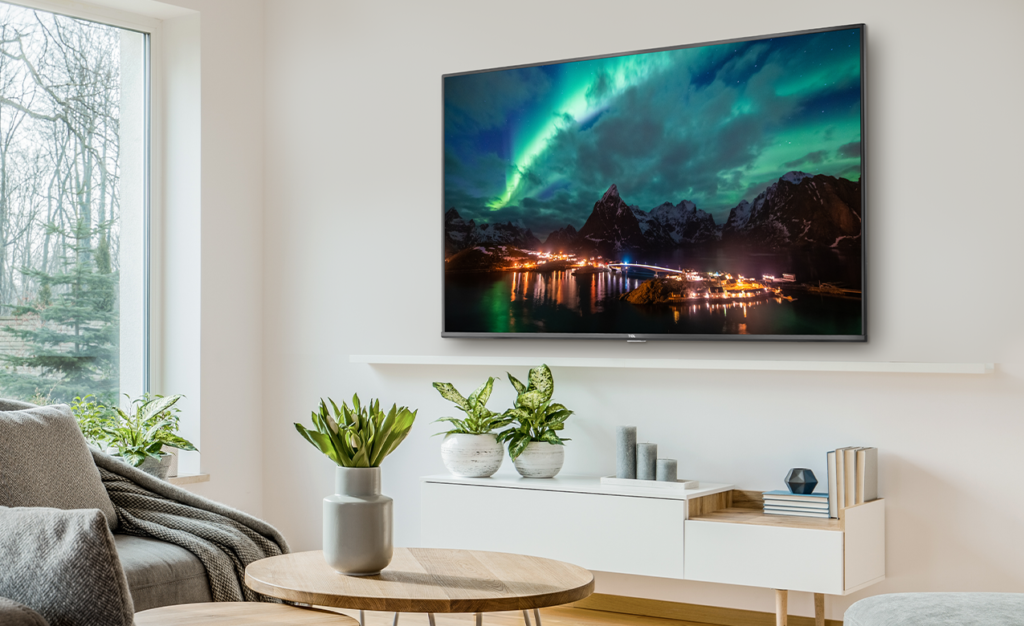
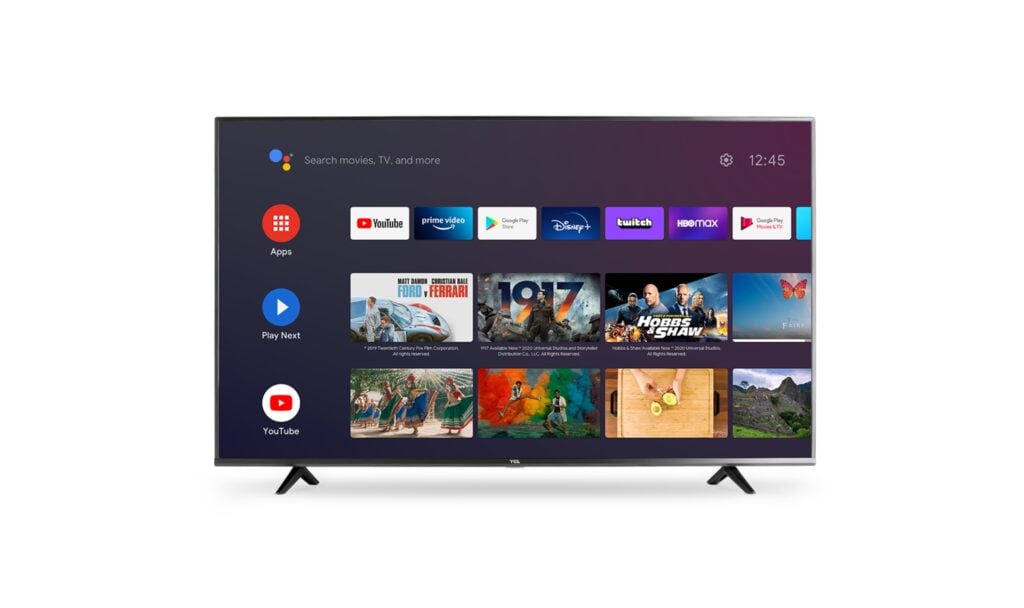
TCL is one of the world’s largest television makers. It is also one of the largest TV brands in the US. The company became popular in the country due to its budget Roku-powered TVs. Now, for the first time, the firm has launched a wide-range of 4K TVs under its well-known Class 4-Series powered by Google Android TV platform in the US.
TCL Class 4-Series 4K Android TV Specifications
TCL is known for its Class 4-Series range of smart televisions powered by Roku in the US. Now, the company has expanded its portfolio by introducing new 43-inch, 50-inch, 55-inch, 65-inch, and 75-inch versions of these 4K TVs with Google Android TV.
All of these television models feature similar specifications and features. They only differ in screen sizes. That means all the 5 models sport LCD panel with LED backlight, 3840 x 2160 resolution (4K) and 1.07 billion colors. These panels also support HDR10 and HLG HDR video standards.
Further, these TVs feature dual-band WiFi, Bluetooth, 3 X HDMI (one of them is ARC compatible), 1 x AV composite, 1 x digital optical audio output, 1 x USB 2.0, 3.5mm headphone jack, and RF Antenna.
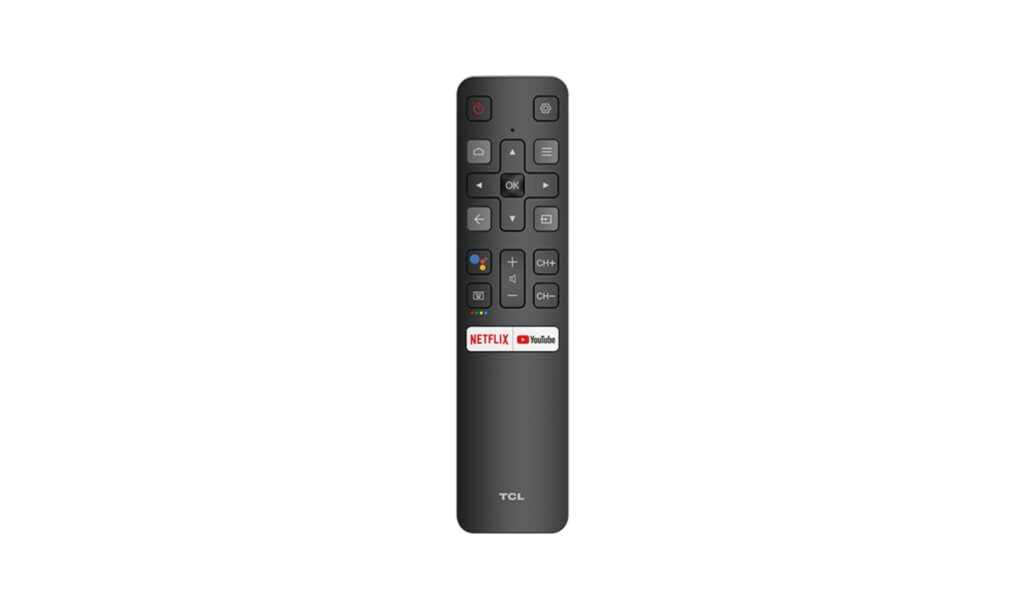
As mentioned in the beginning, they run Android TV Pie with Chromecast Built-in, Play Store, Google Assistant, and leading streaming apps like Netflix, Disney+, HBO Max, Amazon Prime Video, YouTube, and more.
Last but not least, the only major con of these televisions is that they come with 16W speakers (2 x 8W), however, with Dolby Audio.
TCL Class 4-Series 4K Android TV Pricing and Availability
The smallest 43-inch model is priced at $199.99 and is exclusive to Target. On the other hand, the 50-inch, 55-inch, and 75-inch models are exclusive to Best Buy priced at $349.99, $399.99, and $799.99 respectively. Lastly, the 65-inch version is priced at $469.99 but it is yet to go on sale.
Having said that, for a limited period of time, as part of Best Buy’s Black Friday Sales event, the retailer is currently selling the 50-inch and 50-inch variants of these TVs for only $279.99 ($70 off) and $249.99 ($150 off) respectively.
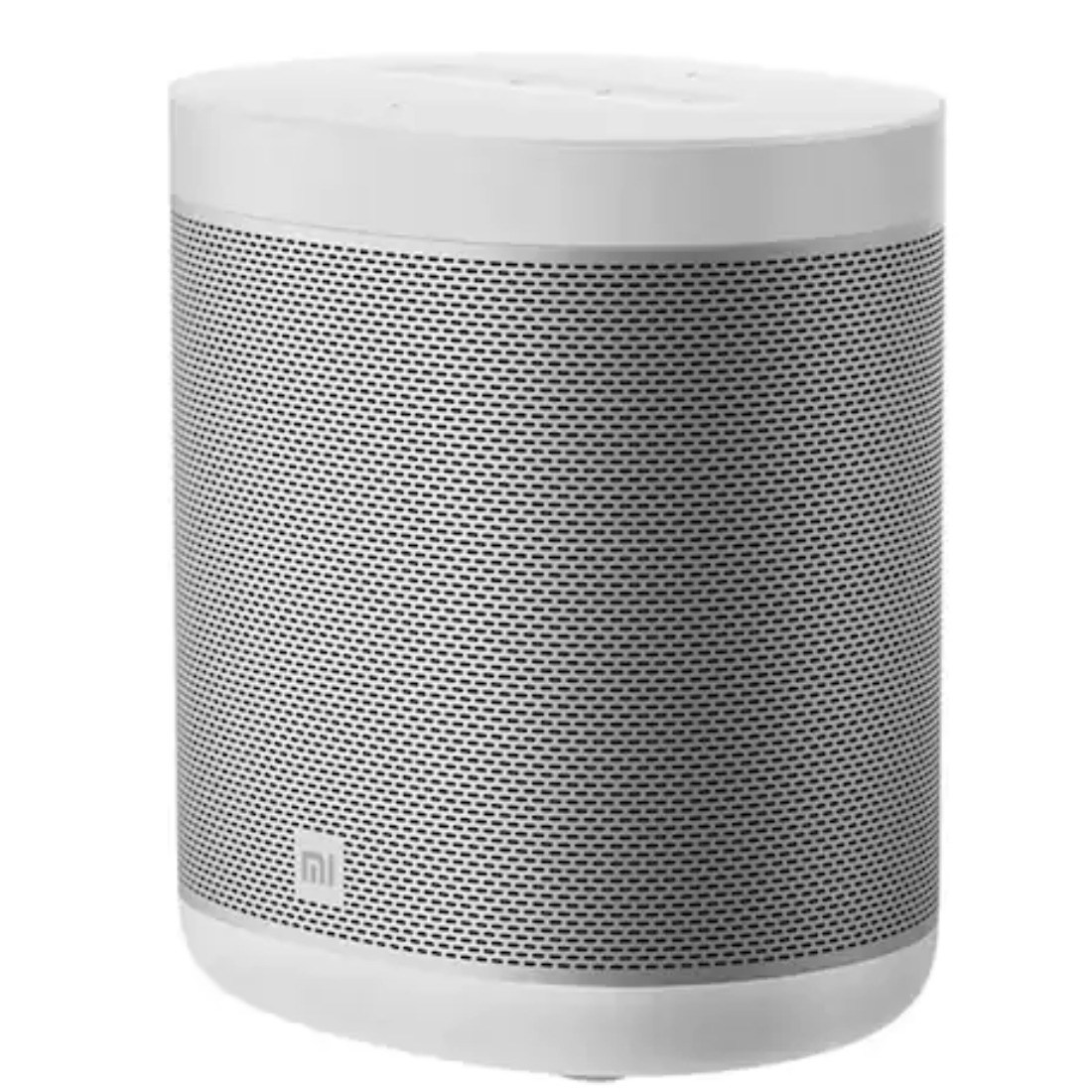
Xiaomi has launched a new Mi Smart speaker in Spain. This is the one that the company launched in its home market back in May and a few weeks back in India. The new Smart speaker is a bit pricier than the Indian model but definitely costs lesser than Google’s Nest Audio.
Xiaomi Mi Smart Speaker Spain Price, Availability, and Offers
The new Mi Smart Speaker starts at €49.99 in Spain. This is a bit more compared to €34.86(₹2,999) in India. It will be available for purchase on Mi.com, Mi Stores, and Media Markt. And Xiaomi Spain says if you buy the Mi Smart speaker from October 16 to 18(tomorrow), you get a Mi LED Smart Bulb Essential as a gift. Also, Xiaomi says the offer will be live until the stocks last.
Xiaomi Mi Smart Speaker Specifications
The new Xiaomi Mi Smart Speaker has metal construction. Xiaomi says the speaker has a warm matte-stone finish. It has a thin 0.7mm metal mesh wrapped around the cylindrical body that acts as the speaker area. There are about 10531 holes around the speaker for richer and thrilling sound. The top edge of the speaker has a ring strip that lights up and Xiaomi says it comes with 16 million lights. The top surface has touch-sensitive buttons. There are four buttons- volume up, volume down, play/pause, and microphone.
For sound, the Mi Smart Speaker has a 2.5-inch 12W speaker with a 63.5mm massive driver. There is a professional DTS tuning and Texas Instruments’ TAS5805M Hi-Fi Audio Processor for a 360° surround sound experience. Additionally, there are two far-field microphones for voice recognition.
The new Mi Smart Speaker also supports voice recognition through Google Assistant. Users can control music, set alarms, and control other smart devices. It can also be set up via the “Google Home” app to control light, security cameras, and more. It supports English and Hindi. Just Say “Hey Google” to get started.
Other features include Wi-Fi ac, Bluetooth 4.2 for connectivity. It also has a Chromecast built-in. This can easily be used to connect TV, Smartphones for streaming audio, and video. Also, you can pair two Mi smart speakers for a stereo experience.
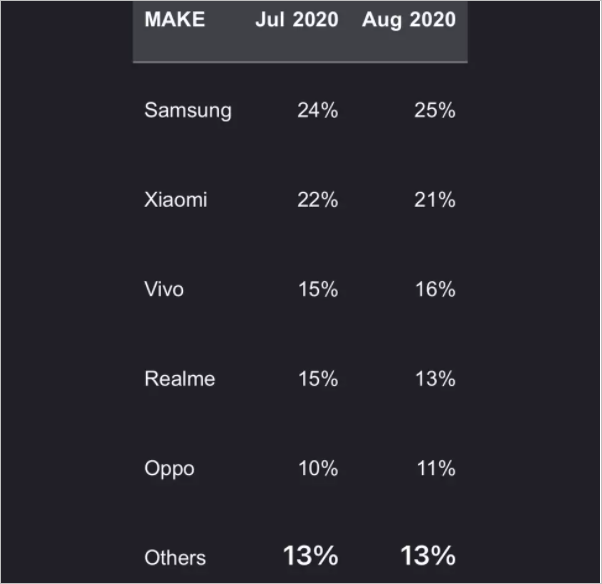
For close to three years running, Xiaomi has continuously beaten Samsung to the top of the Indian smartphone market. This has now changed as the latest market research report by Counterpoint Research shows that Samsung emerged as the number one brand in India for the months of July and August 2020.
Korean handset maker Samsung’s resurgence to capture the lucrative market it once controlled unchallenged could be traced to an aggressive online sales push, riding on the back of an anti-China sentiment that has rocked the Asian country in recent times, no thanks to the border dispute between New Delhi and Beijing.
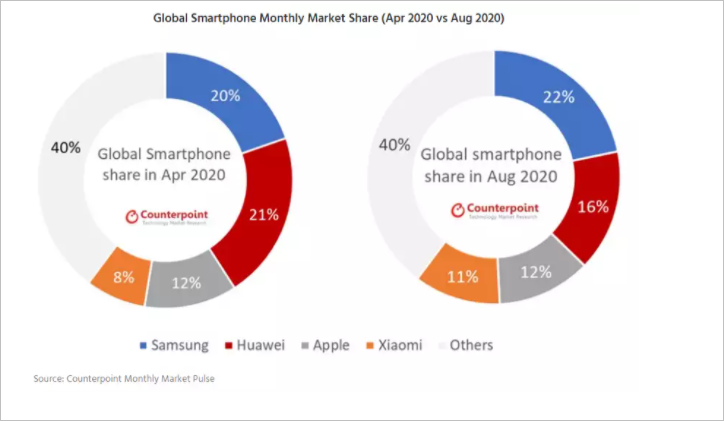
Counterpoint Research data shows that in July, Samsung controlled a 24% share of the smartphone market and that figure was boosted to 25% in the month of August. On the other hand, Xiaomi’s share declined from 22% in July to 21% in August.
We must point out that this is the first time Samsung is edging out Xiaomi from the top spot since the Chinese innovative phone manufacturer took over the rein in 2018 as India’s top smartphone brand.
According to Prachir Singh, an analyst at Counterpoint (via), “Samsung has been quite aggressive on the online channel’s front. To compete with the increasing share of Chinese players like Xiaomi and Vivo in the mid-budget segment, Samsung came up with M-series which was launched as an online exclusive series”. “The series is doing quite well and helped Samsung in continuously gaining share in online channels,” he added.
We doubt if Samsung can hold on to this lead for long as the anti-China sentiments seem to have started waning as both countries try to douse tension through dialogue. However, Counterpoint predicts that Samsung will likely be among the Top 2 brand for the rest of the year.
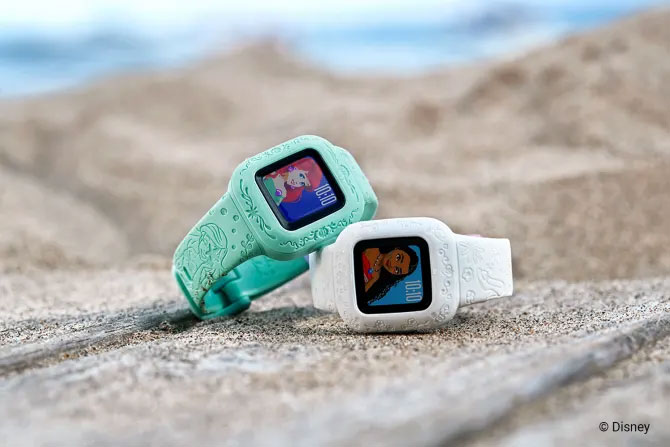
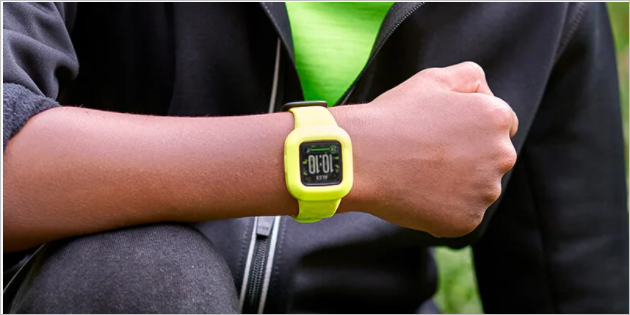
Renowned watch manufacturer Garmin has launched a new smartwatch under its kid-centric vívofit jr. range. The Garmin Vivofit jr.3, as it is called, is the third generation model in the Vivofit jr. series.
Although the smartwatch features a design that resembles a smartwatch, it lacks most of the features you will find in a regular smartwatch. However, it packs several important features that will be useful to the kids and will assist the parents to keep track of their children.
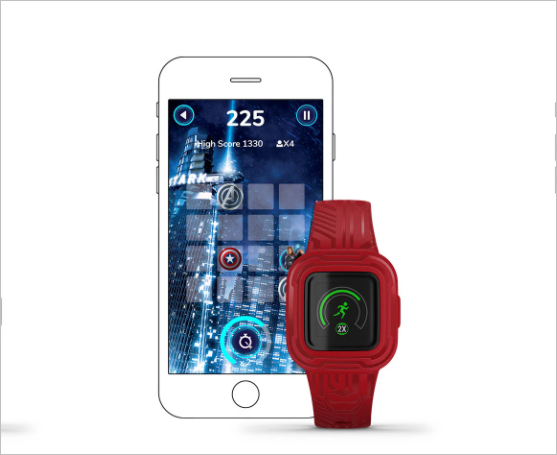
One of the important features onboard the smartwatch is named ICE, an acronym which stands for “in case of emergency”. It is a widget that allows emergency contact information to be accessed promptly. The sleek wearable also comes with timed activity modes as well as games to keep the kids occupied. However, we don’t know if there is a sort of lock to prevent the kids from accessing the games when they are supposed to be studying.
Furthermore, the Vívofit jr. 3 comes with some fitness tracking features such as daily activity tracking, sleep and steps counter, just like most other smartwatches. The phone also gets a chores and rewards mode, which can be monitored by parents.
The Garmin vívofit jr. 3 is available in multiple bold colours which are stylized as Digi Camo, Lilac Floral and Blue Stars. The smartwatch also comes with several themes such as Marvel Iron Man, Marvel Black Panther, Disney Princess and Disney The Little Mermaid. There are wallpapers reflecting these cartoon characters. All colour options adopt a retail price of US$79.99.
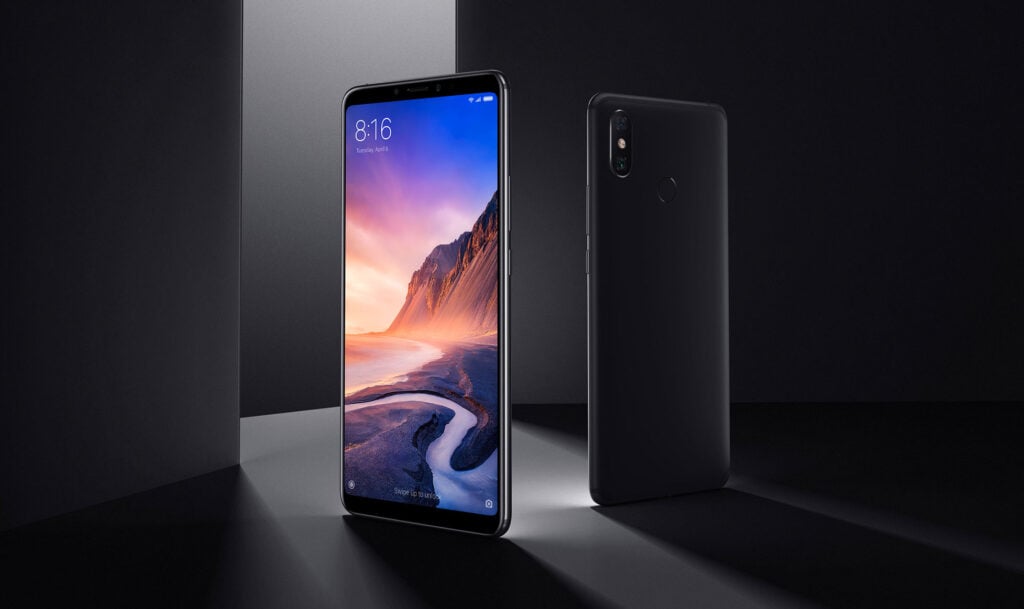
Back in August, Xiaomi rolled out MIUI 12 update to Mi Max 3 in China along with devices like Mi 8 Pro and Mi 8 Explorer Edition. Now, two months later, this smartphone has begun to receive the same update in global markets.
MIUI 12 marks the 10th anniversary of Xiaomi’s existence. The latest version of the company’s Android skin brings new animations, Dark Mode 2.0, Animated Always-on Display (AOD+), Super Wallpapers, and more. The company unveiled it in late April and since then, it has been rolling it out to eligible devices worldwide.
The Mi Max 3 is the last Mi Max series smartphone. It was launched in 2018 with MIUI 9 based on Android Oreo out of the box. It was later updated to MIUI 10 and MIUI 11 as well as received Android 9 and Android 10 update.
Now, Xiaomi has started seeding out MIUI 12 to this phone as its last major update. As we mentioned in the beginning, the Chinese variant got the update in August itself. Now, the update is being pushed to global and Russian versions of the handset.
The builds for these variants of Mi Max 3 are currently in Stable Beta, which means they are only available for a limited set of users. The build numbers for the global and Russian version of the phones are V12.0.1.0.QEDMIXM and V12.0.1.0.QEDRUXM respectively.
If there are no major bugs, we expect the company to seed ou the update sooner to all the units.
We use cookies on our website to give you the most relevant experience by remembering your preferences and repeat visits. By clicking “Accept”, you consent to the use of ALL the cookies.
This website uses cookies to improve your experience while you navigate through the website. Out of these, the cookies that are categorized as necessary are stored on your browser as they are essential for the working of basic functionalities of the website. We also use third-party cookies that help us analyze and understand how you use this website. These cookies will be stored in your browser only with your consent. You also have the option to opt-out of these cookies. But opting out of some of these cookies may affect your browsing experience.
Necessary cookies are absolutely essential for the website to function properly. This category only includes cookies that ensures basic functionalities and security features of the website. These cookies do not store any personal information.
Any cookies that may not be particularly necessary for the website to function and is used specifically to collect user personal data via analytics, ads, other embedded contents are termed as non-necessary cookies. It is mandatory to procure user consent prior to running these cookies on your website.