Huawei is currently the world’s largest smartphone manufacturer in terms of shipments. The company finally managed to surpass Samsung after years of being ranked second or third in the list of top smartphone makers.
However, the company won’t be able to retain its rank. In fact, it seems difficult to see the brand among the top smartphone companies list. Now, a report from The Elec claims to have Huawei’s plan for phone manufacturing, which seems to fit our speculations.
As per the report, Huawei is planning to produce around 50 million smartphones in 2021. This represents a massive 74 percent drop compared to what the Chinese giant is expected to ship this year.
Just to give you an idea, the company had shipped around 240 million units of its smartphones last year. For the current year, the company is expected to ship around 190 million units of its phones.
The primary reason behind cutting down smartphone production is because of the sanctions imposed by the United States which has made it almost impossible for the company to continue making phones. Thanks to this, Samsung is now expected to ship more than 300 million units of smartphones in 2021.
It all started last year in May when the U.S. government banned Huawei, restricting it from using Google‘s Android or any of its services and apps on Huawei or Honor smartphones, among a few other restrictions.
Most recently, the U.S. government tightened restrictions and added new sanctions on Huawei and dozens of its subsidiaries, banning it from procuring chipsets from Qualcomm or MediaTek. TSMC, which manufactures Huawei’s Kirin chipset, has also been restricted to provide its service.
Currently, the company is relying on SMIC to produce budget Kirin chipsets that can be used in budget and mid-range smartphones. However, the U.S. government is also planning to ban SMIC. if it goes through, then Huawei will practically have no access to chipsets for its smartphones.
Update: The Indian variant of the POCO X3 that has the M2007J20CI model number has received approval from the TUV Rheinland certification platform. The same model number has also appeared on Geekbench benchmarks to reveal specs like SD732G chip, 8 GB of RAM, and Android 10 OS.
Original story continues…
Yesterday, POCO held a global unveil event to announce the POCO X3 mid-range smartphone. The handset is now up for purchase in various markets starting from today. The handset is now up with a starting price of 199 euros in Europe. Soon after the launch event, POCO India General Manager C Manmohan hinted at the arrival of the POCO X3 in India. He also gave out a clue on the pricing of the smartphone.
Manmohan’s tweet states the POCO X3 would be priced at Rs 20,000 (~$272) + taxes in India. The predecessor POCO X2’s variants such as 6 GB RAM + 64 GB storage, 6 GB RAM+ 128 GB storage, and 8 GB RAM + 256 GB storage. These models are priced at Rs. 17,499 (~$238), Rs. 18,499 (~$251), and Rs. 21,499 (~$292), respectively.
Great job done @POCOGlobal team. #POCOX3 is an amazing product! 🤩#POCO India fans! Do you want us to launch it in India? Regular price will be €229 = ₹20,000 + taxes.
The POCO X3 NFC debuted yesterday in two variants such as 6 GB RAM + 64 GB storage for 229 euros (~$270; Rs 19,900) and 8 GB RAM + 128 GB storage for 269 euros (~$318; ~Rs 23,350). Until Sept. 11, both models will be available with reduced pricings of 199 euros (~$235; ~Rs 17,275) and 249 euros (~$294; ~Rs 21,615).
Today, POCO India will be announcing the POCO M2 entry-level phone in India. Hence, it appears that the company may start teasing on the India launch of the POCO X3 at some point later this month.
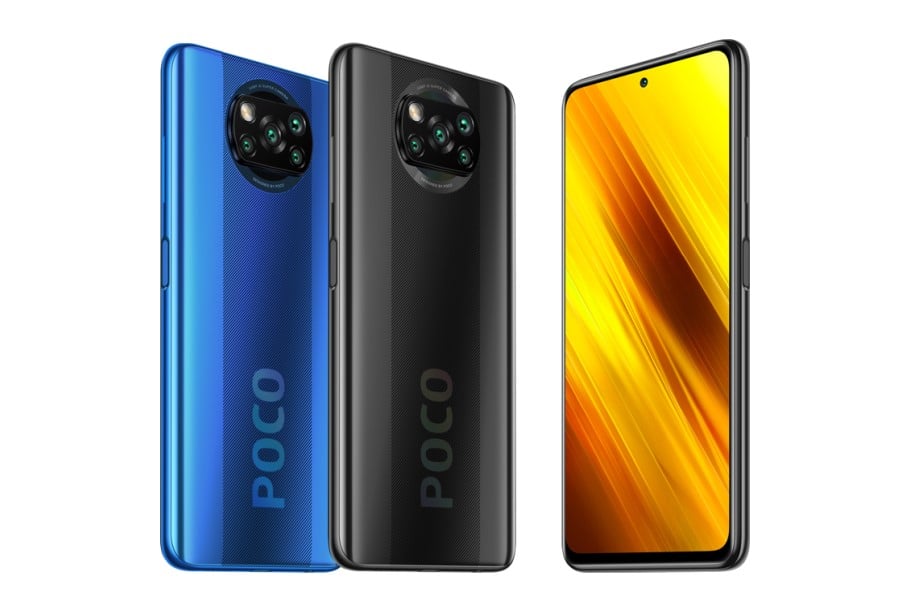
The POCO X3 has a 6.67-inch IPS LCD FHD+ display with 120Hz refresh rate support. The handset is powered by the Snapdragon 732G chipset, LPDDR4x RAM, UFS 2.1 storage, and 5,160mAh battery with 33W fast charging. It has a 20-megapixel front camera, and a 64-megapixel (Sony IMX682) + 13-megapixel (ultrawide) + 2-megapixel (macro) + 2-megapixel (depth) quad-camera system. It has a side-facing fingerprint reader. The phone comes in two colors such as Shadow Gray and Cobalt Blue.
According to a report by DigiTimes, industry insiders have revealed that brain drain has become the biggest trouble for Huawei and Hisilicon. After the severe trade sanctions by the United States, whether Huawei can stage a counterattack will depend on whether it can Retain R&D talents.
The source said that when the sentiment of de-Americanization and de-Sinicization in the global technology supply chain becomes more and more intense, how to strengthen local technological prowess and research and development power has become the most important task of the semiconductor industry. The source emphasized that talent has become a scarce strategic resource as the semiconductor players in China, the US and Taiwan are all fighting for more talents to support this task.
Sources say that Huawei and Hisilicon were forced to suspend new chip R&D projects due to a series of US trade sanctions and let their engineers take long unpaid leaves. Although R&D engineers in Taiwan were not immediately fired, many of them have resigned.
The sources pointed out that the brain drain is expected to continue. As a result, Huawei’s efforts to expand its R&D talent base over the past 10 years may eventually come to no avail. This may be the most fatal for the Chinese company, the source noted.
Huawei’s founder Rhen Zhengfei recently disclosed that the company’s 90,000 members-strong R&D team wouldn’t need to be so large if the company had access to “high-quality resources like Western companies.” Things have since gotten worse as the US government completely cut off access to parts containing US technology. TSMC has until September 15 to fulfil all chip orders Huawei made for the 5nm Kirin 9000. There are doubts that the company will be able to meet the deadline.
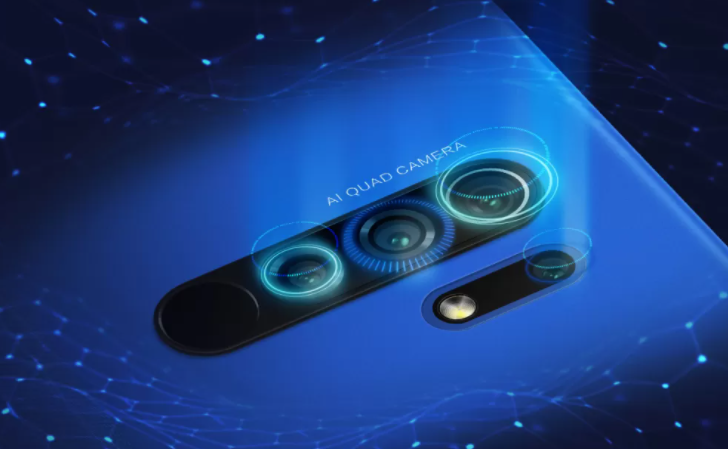
The Lazada listing states that Realme 7i will be debuting in two colors such as the Polar Blue and Aurora Green. The handset can be seen sporting a punch-hole display and its gradient rear has a fingerprint scanner and a triple camera system housed inside a rectangle-shaped module. The Lazada listing also mentions that the Realme 7i is equipped with key features like a 64-megapixel AI quad-camera, 5,000mAh battery, and 90Hz Ultra Smooth display.
The Realme 7i is speculated to be equipped with a 6.5-inch IPS LCD display that offers an HD+ resolution of 720 x 1600 pixels. The display is expected to carry support for the 90Hz refresh rate.
The handset may feature a front-facing camera of 16-megapixel. The quad-camera system on its back is likely to include a 64-megapixel main lens, an ultrawide lens of 8-megapixel, a macro shooter of 2-megapixel, and a 2-megapixel depth assist lens.
The Snapdragon 662 mobile platform could be present under the hood of the device. It may come with 8 G of RAM and 128 GB of storage. It is unclear whether the device will be available in lower RAM and storage combinations.
The Realme 7i could be drawing power from a 5,000mAh battery. The smartphone is expected to arrive with support for 18W rapid charging. The Realme UI based Android 10 OS will come preinstalled on the phone. At present, there is no word on the pricing of the phone.
The Indian government on September 3 announced the ban on 118 Chinese apps, including the mobile game ” PlayerUnknown’s Battleground (PUBG Mobile). Among the recently banned apps, PUBG Mobile is very popular in India. Thus, the ban was seen as a disappointment by tens of millions of local players.
There has been an outpour of outrage by fans of the game. However, an extreme and tragic incident occurred when a 21-year-old student chose to hang himself because he could not continue playing games. Domestic media reports that the police in the Nadia district of West Bengal, India, announced on September 6 that a 21-year-old student, Pritam Halder, was found to hanged himself at home due to his inability to continue playing “PUBG Mobile” due to the government’s ban.
This tragedy reportedly happened on the morning of September 4. According to his mother, Halder returned to his room after breakfast and when he called him for lunch, he found that his room was locked from the inside. With the help of neighbours, the door was broken and unfortunately found the deceased hanging from the ceiling fan.
Halder’s mother said that he was obviously frustrated because he couldn’t play games: “He used to play games at night. I think he committed suicide because he couldn’t continue playing PlayerUnknown’s Battlegrounds.”
After talking with Halder’s family, the police also believed that he committed suicide because he could not play this mobile game.
In another case, a 16-year-old boy from a village in Anand district in Ahmedabad committed suicide after he was scolded by his father who also seized his mobile phone for playing PUBG Mobile all the time, News18 reports. The local Police say that the boy was the son of a school teacher and allegedly consumed pesticide kept at his house on August 31. After rushing the boy to Anand Civil Hospital for immediate treatment, doctors declared him dead the next day.
In addition to PlayerUnknown’s Battleground, the 118 apps that India announced to be banned include WeChat Work, WeChat reading, Sina news, mobile Taobao, Youku, Alipay, CamCard, Baidu, Cut Cut, VooV, Tencent Weiyun, Rise of Kingdoms, Zakzak and others.
Huawei is scheduled to announce yet another pair of wireless earbuds this week. The product will arrive as the FreeBuds Pro, and while we already know what the earbuds will look like thanks to leaked renders, live photos have now also been posted on the web.
The images were posted on Twitter by the account DuanRui (@duanrui1205) and they show the earbuds in two colors – gray/black and white. The earbuds have quite unusual stems which are like rectangular blocks and also pretty thick. There are silver bands at the bottom and the manufacturer’s name is printed on the stem.
The FreeBuds Pro will have noise cancellation but are shown to also feature silicone tips to keep the sound in. There are large black circles on each earbud which we believe are IR sensors for wear detection. Personally, I wish they were much smaller as they really do stick out in a not-so-appealing way on the white variant.
The earbuds will come in a pebble-like case with a flat base and a flat top. The case should be able to stand on a flat surface unlike that of the FreeBuds 3 which has a rounded base.
The Huawei FreeBuds Pro will have the Kirin A1 chip, Bluetooth 5.2, three microphones on each earbud, and active noise cancelation. It has been reported to have a price tag of €150 and is expected to go on sale in early October.
Near Field Communication or NFC as it is popularly called is a technology that allows for the exchange of data between two devices with just a touch gesture between the two. There are many use cases for NFC such as for payments or for connecting to other devices such as wireless speakers and headphones. You can even purchase NFC tags and program them for your own use.
While the technology has been available for years now, not every phone has it. Sometimes, manufacturers remove the feature from models sold in select markets while adding it to models sold in other regions.
For this week’s poll, we want to know how frequently you use the NFC feature and it doesn’t matter if it is your phone that has the feature baked in or a wearable. Also, do drop a comment telling us the most frequent usage scenarios.
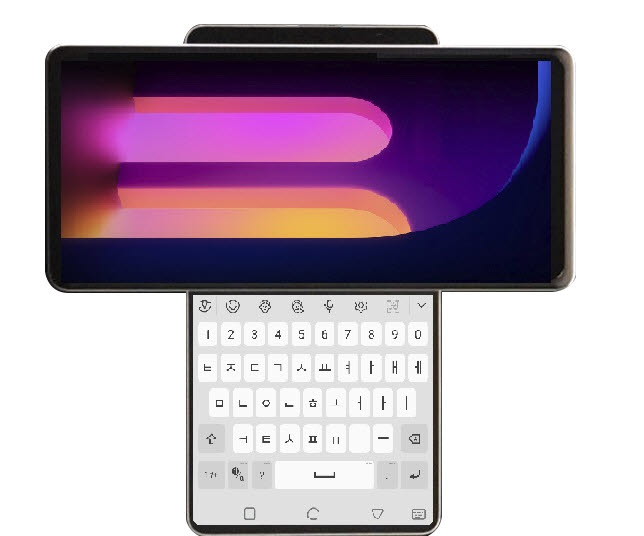
The LG Wing is a really interesting phone that is scheduled to launch on September 14. It is the first product from LG’s Explorer Project which we will learn more about next week. Ahead of the launch, a new hands-on video from Korea has surfaced on this gives us a closer look at the phone.
The LG Wing looks like a regular phone albeit a thick one but then the main display rotates on a hinge to reveal a smaller display behind the main one. This smaller display is about half the size of the larger one and is surrounded by thick bezels.
The video also shows the sides of the phone. There is a USB Type-C port at the bottom of the phone and it is flanked by a speaker grille on one side. While the video doesn’t focus on the back, we get a glimpse and can see the rear cameras are arranged vertically. It has been reported that the LG Wing will have three rear cameras.
The LG Wing is expected to be powered by Qualcomm’s Snapdragon 765G processor and will command a price tag of about $1000. That price tag should not be surprising seeing as this is an unusual device and LG must have factored in the cost of having two displays on the same phone.
Apple Watch is the most popular smartwatch worldwide. It has been a little over 5 years since the first model launched. But now, after all these years, a prototype of first-generation Apple Watch disguised as third-generation iPod nano leaks in pictures.
Prototype Apple Watch (Original) with matching Security Case and box. The Security Case was used to conceal the design before release durning transportation; and makes the Watch look similar to an iPod Nano. #appleinternalpic.twitter.com/2q0y8l6oso
In case you do not know, Steve Jobs once said that an Apple board member planned to wear his iPod nano as a watch. Since then, many people began to use their iPod nano as a watch with an increase in a variety of bands for Apple’s music player in the market.
Looks like the Cupertino-based tech giant used this fashion trend for their own good to conceal the prototypes of the first-generation Apple Watch while being tested in public. The images shared by @AppleDemoYT (via MacRumors) are proof of this.
These images showcase a prototype original Apple Watch with a rubber case on it mimicking an iPod nano. Hence, when it was tested by the engineers in public, no one would have thought it to be a smartwatch.
Even now, companies use bulky cases to conceal their unreleased products when they are tested in the public. But still, they somehow manage to leak in certain cases.
Anyway, it was a clever idea by Apple nonetheless. That said, the iPhone maker is reported to launch new smartwatches in the coming weeks to replace last year’s Series 5 and a budget model to replace the older Series 3.
There is no better month than September for smartphone-addicted people. In September a lot of important handsets go official every year, including the new iPhones by Apple. And while the launch date of the new Apple devices is still unconfirmed, a lot of other phones are already scheduled to launch this month. Here you will find a list of all the most important upcoming smartphones in September 2020 from mainstream smartphone manufacturers.
Top Upcoming Smartphones in September 2020
Huawei Mate 40 series
The Huawei Mate 40 series will be officially announced at the Huawei Developer Conference which will be held on September 10. During the conference, Huawei will also announce the EMUI 11 customization based on Android 11. The Huawei Mate 40 will be the last series of smartphones equipped with a Kirin chipset: Huawei can not produce its chipsets anymore due to the U.S. ban. The SoC powering the new lineup will be the Kirin 9000 which may be available in limited quantities because the partnership between Huawei and TSMC (the company producing Kirin chipsets) will end on September 15. The Huawei Mate 40 series is expected to include phones with 90 Hz display, resolutions up to Quad HD+, and display diagonals up to 6.78 inches.
Apple still did not announce the exact launch date of the iPhone 12 lineup which contains the most awaited upcoming smartphones of September 2020, but according to the latest rumors, it will launch this month despite the Covid-related issues. The series will include at least four models with different display diagonals, including 5.4, 6.1, and 6.7 inches. The high-end models are expected to come with a 120 Hz refresh rate and the same LiDAR scanner found on the latest iPad Pro. They will be the first 5G iPhones and they will be powered by the Apple A14 mobile platform manufactured by TSMC.
After launching the Pixel 4a, Google is preparing the launch of the Google Pixel 4a 5G and Pixel 5. Unlike the previous years, this year we will get only mid-range Pixel phones. Indeed, the Pixel 5 will be most likely fueled by the Snapdragon 765G platform, just like the Pixel 4a 5G. Both the handset should feature the same camera department including a Sony IMX363 main sensor with a 12.2 MP resolution and a 16 MP ultrawide camera. On the front side, we expect a Sony IMX355 with an 8 MP resolution, while the battery should have a capacity of 4000 mAh on the Google Pixel 5 and 3800 mAh on the Pixel 4a 5G. The Snapdragon 765G will be paired with 8 or 6 GB of RAM depending on the variant.
LG Wing will be official on September 14 and it will be a very innovative phone. It will feature a unique design including a dual display mechanism. There will be the main display on a top swivel to a 90-degree angle, and also another display behind it. It is something we have already seen years ago with flip phone where a few devices could have their screens rotate up to reveal a keypad. But this time, the keypad will be replaced by a secondary display.
Realme 7i is the third phone from the Realme 7 series and it will be an entry-level device launching on September 17 alongside the vanilla Realme 7 in Indonesia. The handset has a punch-hole LCD display with an HD+ resolution of 720 x 1600 pixels. Just like the Realme 7, it supports a 90 Hz refresh rate. But instead of the Helio G95 chipset, users will get a Snapdragon 662 SoC paired with 8 GB of RAM and 128 GB of internal storage. The rear camera setup will feature a 64 MP main camera, an 8 MP ultrawide sensor, and a pair of 2 MP lenses, while the front panel will house a 16 MP selfie snapper in the punch-hole display. Another great feature is the 5000 mAh battery with 18W fast charging.
POCO M2 is set to debut in India tomorrow, on September 8. The company already confirmed a few specifications of the new mid-ranger. The POCO M2 will feature a Full HD+ display with a dew-drop notch, 6 GB of RAM and a quad camera setup. It is expected to be built around the MediaTek Helio G80 processor. It should come with a polycarbonate body, a 5020 mAh battery, and different colors to differentiate it from the Redmi 9 Prime, since it will have very similar specifications.
Today Xiaomi launched the POCO X3 NFC in the global market. It is definitely one of the best value for money devices of 2020. Its specifications include an IPS display with a whopping 120 Hz refresh rate and a huge 5160 mAh battery. The phone is powered by the new Snapdragon 732G chipset which is an upgrade of the Snapdragon 730G, paired with LPDDR4x RAM and UFS 2.1 internal storage. It supports NFC and it has a quad rear camera including a 64 MP Sony IMX682 main sensor, a 13 MP ultrawide sensor, and a pair of 2 MP lenses. The prices start from €199 (early bird price) for the 6/128 GB configuration.
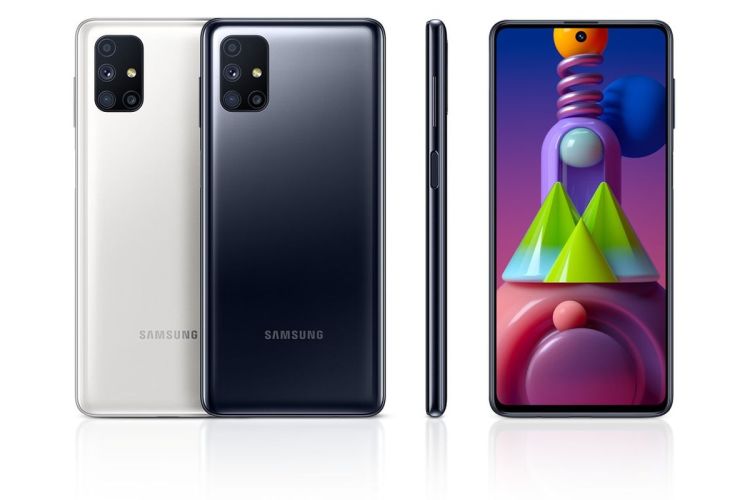
On September 10, Samsung will launch the Galaxy M51 in India. This device already went official a few days ago with a price tag of €360 for the German market. Its key feature is a huge 7000 mAh battery, the biggest ever seen on a Samsung phone. The Galaxy M51 sports a 64 MP quad-camera, a Super AMOLED display, and a Snapdragon 730 chipset paired with 6 GB of RAM and 128 GB of expandable storage.
Sony confirmed that the compact Xperia 5 II will be official on September 17 and made a promo video to highlight its features. It will feature a 120 Hz screen refresh rate as well as a 240 Hz touch sampling rate and dual front-facing stereo speakers. It will also be able to record slow-motion 4K videos in 120 fps.
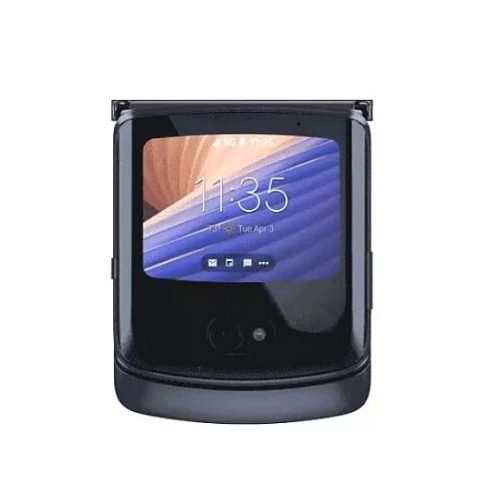
The second Motorola foldable phone will go official on September 10 in China. Its real name is still unknown but it will surely belong to the Razr series. It is expected to be powered by the Snapdragon 765G mobile platform offering 5G support, along with 8 Gb of RAM and 256 GB of native storage. It will be powered by a 2633 mAh battery and it will pack an internal foldable display and an external mini display for selfies, notifications, and more.
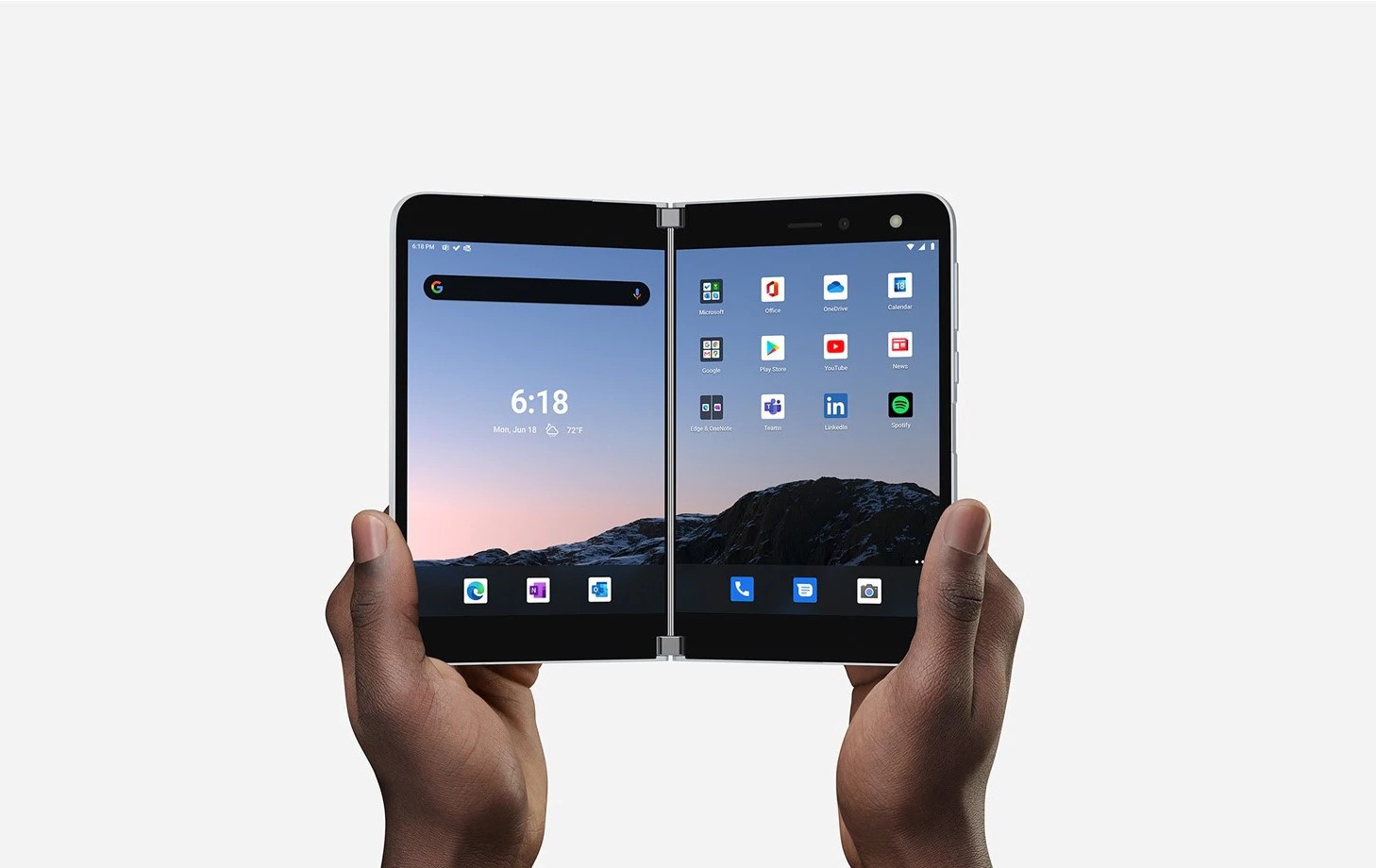
The innovative foldable phone by Microsoft will hit the U.S. shelves on September 10 and it is already on pre-orders. The handset features a dual display and a version of Android 10 optimized for its form factor. It is powered by the Snapdragon 855 chipset.
OnePlus Nord is arguably the most hyped smartphone of 2020. But it is not without problems. The company has been seeding system updates to this handset ever since it released to fix issues. Currently, the phone has begun to get its seventh update in the form of OxygenOS 10.5.7. This update is said to bring a number of improvements.
The OnePlus Nord is sold in almost all regions where the brand has its presence except for the US and China. Therefore, the new update for the device comes only with three different build numbers.
India (IN) – 10.5.7.AC01DA
Europe (EU) – 10.5.7.AC01BA
Global – 10.5.7.AC01AA
According to the official changelog, the latest system update for OnPlus Nord brings improvements for general power consumption, 4K 60fps video recording from the front camera, macro camera image quality, general display calibration, Bluetooth connection stability (the company claimed to have fixed it in the last update), and voice call stability.
The changelog of this update sounds similar to that of the previous update. Nevertheless, make sure to download and install in on your device.
OnePlus Nord OxygenOS 10.5.7 Official Changelog
Power
Improved general power consumption
Camera
Improved 4k 60 FPS video stabilization of front camera
The display details about an upcoming Redmi smartphone come from 数码闲聊站 (Digital Chat Station) on Weibo. According to him, this device will sport a 6.67-inch LCD panel with FHD+ (2400 x 1080 pixels) resolution, 120Hz refresh rate, 240Hz touch sampling rate, and a punch-hole.
If you are experiencing déjà vu, then you aren’t alone. Because these display specs sound exactly the same as that of the newly launched POCO X3. That means, for the first time, a POCO device could be rebranded as a Redmi handset.
Unfortunately, the marketing name of this mysterious smartphone is unknown at the moment. It should be mostly Redmi K40 or maybe a high-end model in the rumored Redmi Note 10 series.
Also, it is worth noting that China is phasing out 4G phones and therefore, even if this device turns out to be identical to POCO X3, it may launch with a 5G chipset instead of 4G Qualcomm Snapdragon 732G.
Samsung has announced “The Premiere” Ultra-short throw 4K Laser Projector as one of its Lifestyle line of products. The new device utilises updated technology and several hardware that will provide both image clarity and access to some of the same features regularly used with modern television sets.
Samsung’s new The Premiere is an “ultra-short throw laser projector” intended for projection at a range between 0-4 feet and delivering its picture at 4K. The Premiere is expected to supply a memorable cinematic experience as the flagship item of its Lifestyle product lineup. The projector is available in two models – the LSP9T and LSP7T. The LSP9T displays a vast 130 inches and the LSP7T 120 inches.
The LSP9T laser-powered projector comes as a forerunner in cutting-edge technology, becoming the first certified in a new display technology.
The high dynamic range format HDR10+ changes the way lighting is displayed. When watching a film, set values on brightness can leave some scenes appearing fine, while others are too dark to experience properly. What HDR10+ does is enable variability in lighting so that bright scenes show as intended and dark scenes sill create an immersive experience for the viewer. This triple-laser projector is the first in the world to be certified in this HDR format and is rated to support 2,800 ANSI lumens. The Premiere comes with ‘Filmmaker Mode’ as well, which will apparently help to present a movie the way the director intended.
The projector runs Samsung’s smart TV platform which means viewers at home can stream videos from Samsung partners, and also enjoy support screen mirroring. In terms of audio, it packs built-in woofers and also uses Acoustic Beam sound direction as a component of its surround sound setup.
Samsung stated The Premiere projectors will begin rolling out later this year in the United States, Europe, Korea, and elsewhere.
Just a few months ago, OPPO announced the Ace2, a flagship phone that is dubbed as the successor to the Reno Ace that launched last October under the Reno series. With the launch of the Ace2, it was reported that OPPO was creating another smartphone line. A new leak has now revealed that the new line has been killed off just as quickly as it was created.
The source of the info is the Chinese leaker Digital Chat Station, and it was revealed on Weibo. He stated that there will be a sort of replacement for the Ace line but this time, it will launch under Realme with the same flagship specs of the Ace series and also support for 125W fast charging.
Rumor: OPPO kills Ace line; Realme will have a “replacement” next year
At the moment, Realme has three product lines for China. There is the Q series which has just one phone – the Realme Q; there is also the Realme V series, and then there is the Realme X series.
The Realme X series is the only Realme series that is not exclusive to China but it is too early to know if the series that will serve as the replacement for the Ace series will be exclusive to China or will also be announced in other markets.
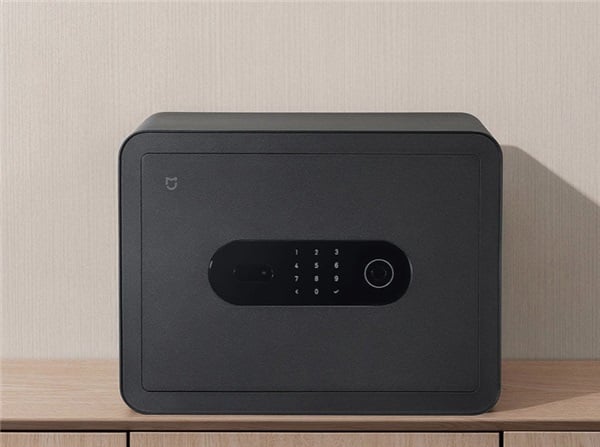
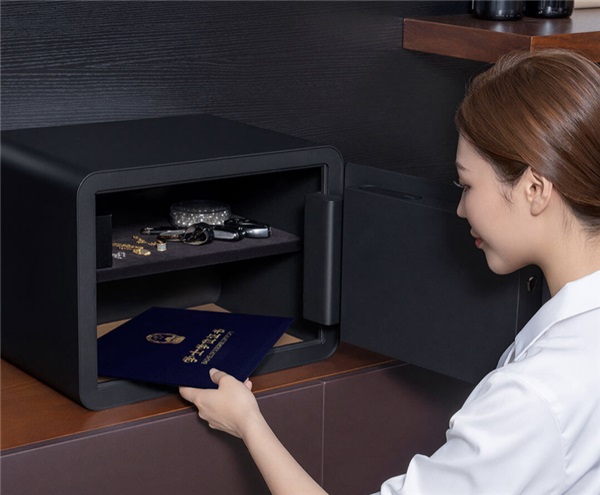
Xiaomi has launched the MIJIA Smart Safe Deposit Box under crowdfunding on Xiaomi Mall. The device carries a crowdfunding price of 599 yuan ($87) while the retail price is 649 yuan ($95). The exercise will officially kick off on September 9.
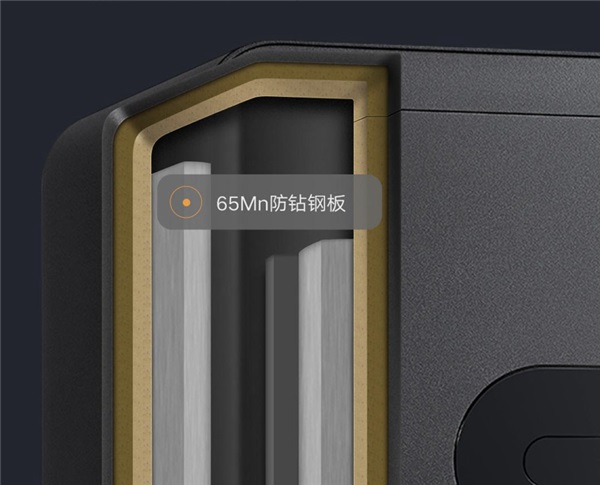
According to the official introduction, the MIJIA Smart Safe Deposit Box can be used to store valuables. The safe deposit box is made of high-strength material. The lock installation part and the lock bolt part are built-in 65Mn anti-drilling steel plates. This material is often used in high-strength structures such as large ships and bridges. It has an excellent anti-drilling ability and can effectively enhance the anti-destructive performance of the box.
The safe deposit box has 6 unlocking methods. It supports fingerprint unlocking, password unlocking, one-time password, Bluetooth unlocking, key unlocking and double verification unlocking. The fingerprint recognition rate is as high as 97.44%.
The MIJIA Smart Safe Deposit Box uses a straight plug-in lock cylinder to penetrate the lock body. Even if the panel is violently damaged, the inner lock cylinder can still ensure the safety of items. The lock cylinder is grade C which is the current high standard in the industry and has a stronger ability to prevent technical opening.
The MIJIA Smart Safe Deposit Box supports 20-digit virtual passwords. You can enter virtual garbled codes before and after the real password to prevent peeping and effectively protect the real password. You can remotely issue a one-time password through the MIJIA app without a gateway.
It is worth mentioning that if the user unlocks under duress, he can also use the preset “anti-duress fingerprint” to unlock the lock. After the fingerprint is identified, the emergency contact will be notified by phone to alarm. Further, users can conduct one-stop management of the MIJIA Smart Safe Deposit Box through the MIJIA app and view the remote unlocking records and various alarm reminders at any time. In terms of battery life, the deposit box is powered by four AA batteries which can be used normally for one year and support Type-C emergency charging.
For the past few years, the entire Samsung Group has been shifting its manufacturing facilities from China to other countries. Now, the company announces to shutter its only TV factory located in the city of Tianjin by the end of November. This news comes after Samsung Display’s sale of Suzhou LCD plant to TCL Technology Group Corp’s Star Optoelectronics Technology.
The TV factory in Tianjin is Samsung Electronics’ only TV manufacturing plant in China, according to the company spokesperson, reports Yonhap News Agency. This plant has about 300 workers. According to Reuters, some of these workers and equipment will be retained.
As per a Samsung spokesperson, this decision is part of the company’s ongoing efforts to enhance efficiency in its production facilities. Once this factory shutters by November end, the South Korean tech giant will be only left with a home appliance factory in Suzhou and chip production facilities in Suzhou and Xian of China.
It is worth noting that Samsung had already announced its plans to stop making LCD panels by the end of 2020. The company is now focussing more on QLED technology. As a result of this, it is reported to buy LCD panels from other suppliers for its budget televisions.
Chinese LCD manufacturing companies are said to be the beneficiaries of Samsung exiting the business.
The upcoming Huawei Mate 40 series is expected to be the first set of phones to feature the yet-to-be-announced Kirin 9000 chipset. Up until now, we have thought there will be just one processor but a new leak says that there will be two versions of the Kirin 9000.
As revealed in a tweet by the leaker Teme (@RODENT950), the Kirin 9000 series will include two processors – the Kirin 9000 and the Kirin 9000E.
The Kirin 9000E appears to be the less-powerful version of the series as seen in the tweet above while the Kirin 9000 is the high-end version. However, since he isn’t sure, we will advise you to take it with a pinch of salt until more details surface.
Last year, Huawei announced two flagship chipsets too – the Kirin 990 and the more powerful Kirin 990 5G. While the main difference between the two chipsets was the addition of a built-in 5G modem in the latter, the Kirin 990 5G also offered better performance thanks to its higher-clocked CPU cores.
It has been reported that the Mate 40 series may be the last set of flagship phones to be powered by a Kirin processor. There is no news yet as to when Huawei will unveil the new processors but with the Mate 40 series expected to launch in October, Huawei should unveil the new processor in the coming weeks.
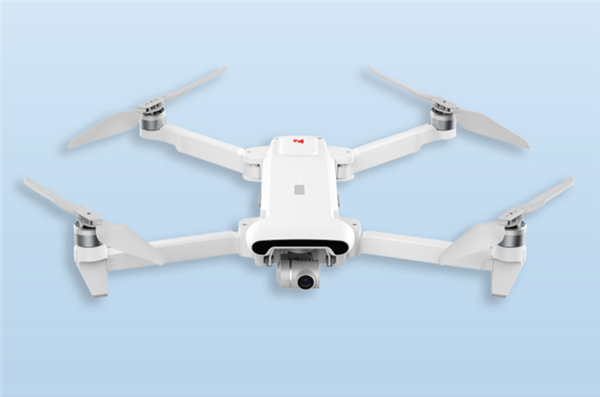
Xiaomi launched its first drone in May 2016. The Mi Drone came in two variants, a 1080p version priced at 2499 yuan and a 4k version that had a retail price of 2,999 yuan. At the time of the launch, Xiaomi’s CEO Lei Jun stated that Xiaomi drones have once again set the price limit in the industry, as the prices of 4K drones of the same grade on the market were around 6,000 yuan or even higher. The Mi Drones were produced by Fimi Technology, a Xiaomi ecological chain company and right now, the brand has launched its own product, the Fimi X8 SE 2020.
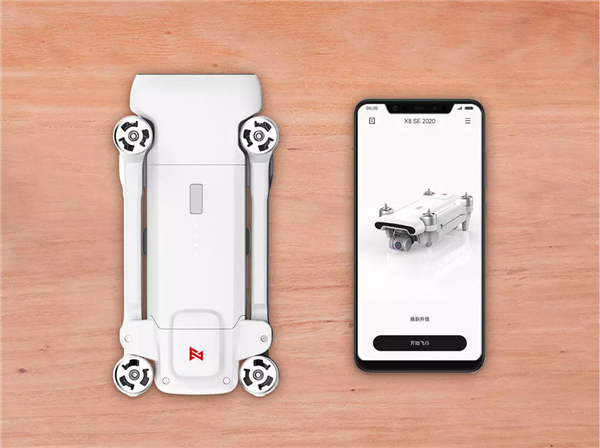
The Fimi X8 SE 2020 Unmanned Aerial Vehicle (UAV) comes with a foldable design similar to DJI Mavic. Its performance is more powerful than that of the Mavic Mini even though they are in the same price category. However, its volume is larger than that of Mavic Mini. After folding, it measures 204x106x72.6mm and weighs about 765g.
In terms of the aerial photography performance, the Fimi X8 SE 2020 achieves 4K video recording, 8 km image transmission, wind resistance level 5, and battery life reaching an astonishing 35 minutes. Thanks to the latest generation of HiSilicon’s ISP engine, Fiimi X8 SE 2020 can shoot 4K video with a large stream of up to 100Mbps, retaining more screen details. The new F-log video colour mode and DNG RAW photo format bring greater space for post-production.
The drone is also equipped with a light three-axis mechanical stabilization gimbal, fitted with Fimi’s latest generation of professional control algorithms, with a control accuracy of 0.005%. Its newly upgraded second-generation TDMA image transmission system has increased sensitivity by 5dbm, supports 8km image transmission, and can fly farther.
In terms of functions, it supports one-click blockbusters, intelligent follow-up, route planning shooting, panoramic shooting, time-lapse photography, night scene mode, etc.
The maximum horizontal flight speed can reach 18m/s, the maximum ascent speed is 5m/s, and the maximum descent speed is 4m/s.
It should be noted that the copywriting stated that its flying altitude is limited to 120m, and I wonder if it can be unlocked.
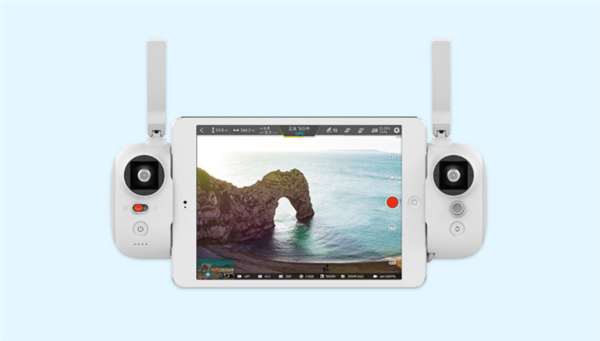
The Fimi X8 SE 2020 remote control adopts a slideway telescopic design and a detachable joystick. When it is not opened, it is only the palm length. It is compatible with most mobile phones on the market and can even accommodate an iPad mini.
The drone is presently on sale at Xiaomi Youpin and is priced at 2,999 yuan (~439).
Yesterday, a tipster from China took to Weibo to reveal the Vivo Watch smartwatch either by this month or in October. He also revealed a few key information on the specs and features of the Vivo Watch. Today, he took to Weibo again to share additional details of the smartwatch.
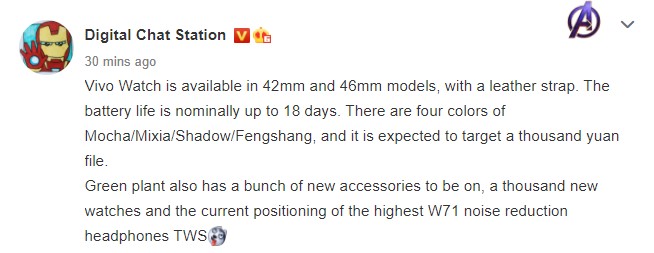
Today’s Weibo post by the tipster reveals that the Vivo Watch will be available in two variants such as 42mm and 46mm. The device will sport a leather strap.
He did not reveal the size of the Vivo Watch’s battery but claimed that it will be offering up to 18 days of battery life. The machine-translated text of his Weibo post states that it will be available in four colors like Mocha, Mixia, Shadow, and Fengshang. It may arrive with a pricing of around 1,000 Yuan.
Yesterday, the tipster had claimed that the male version of the Vivo Watch will have a 46mm dial. It has a color OLED display, a heart rate sensor, a blood oxygen tracker, and other conventional features. The presence of NFC will possibly bring support for contactless payments.
It is unclear which operating system will be available on the Vivo Watch. Sibling brand’s OPPO Watch arrived with ColorOS in China and WearOS in the global markets. Probably, Vivo may also adopt the same strategy.
Starting with the OnePlus 3 series and up until 2018, OnePlus technically released only two phones in a year – the main flagship in the first half and a T-variant with upgraded features in the second half of the year. Last year, OnePlus decided to announce Pro variants too. It did the same this year with the OnePlus 8 series, but new info says OnePlus will be dropping the tradition for the OnePlus 8T. In a nutshell, there won’t be a OnePlus 8T Pro.
An alleged render of the OnePlus 8T
The source of the info is the leaker Max J (@MaxJmb) and according to him, there is no “Kebab2”. If you are confused as to what that means, we will explain. Kebab is the codename for the OnePlus 8T. If there is another variant of a phone, OnePlus usually adds another b to the codename. For example, in the case of the OnePlus 7T and OnePlus 7T Pro, the two devices went by the codenames “hotdog” and “hotdogb” respectively.
In the case of the OnePlus 8T series, that means the OnePlus 8T Pro should have the codename “kebabb”. However, the leaker has gone with “kebab2” to make it less confusing. Though he does confirm that what he means is that there isn’t going to be a OnePlus 8T Pro in a reply which we have added below.
While some may be disappointed at the lack of a Pro variant, I am of the opinion it is a good decision.
OnePlus has made significant changes to its product lineup. It has a new line of mid-range smartphones which is expected to add at least three new models before the end of the year. Add those to the already released OnePlus 8, OnePlus 8 Pro, and OnePlus Nord, and the upcoming OnePlus 8T, you get a total of seven devices.
That is a lot of phones for OnePlus which means a lot of the company’s resources will be spread across these devices and those from previous years that are still getting support. The bottom line is that there is no need for two flagships anymore.
If OnePlus keeps churning out phones, I believe it will find it difficult to maintain all of them and we may see software issues not get resolved as quickly as before. We have already even seen this playing out with the manufacturer backtracking on promised features for select models.
What do you think about OnePlus not launching a OnePlus 8T Pro? Let us know in the comment box
We use cookies on our website to give you the most relevant experience by remembering your preferences and repeat visits. By clicking “Accept”, you consent to the use of ALL the cookies.
This website uses cookies to improve your experience while you navigate through the website. Out of these, the cookies that are categorized as necessary are stored on your browser as they are essential for the working of basic functionalities of the website. We also use third-party cookies that help us analyze and understand how you use this website. These cookies will be stored in your browser only with your consent. You also have the option to opt-out of these cookies. But opting out of some of these cookies may affect your browsing experience.
Necessary cookies are absolutely essential for the website to function properly. This category only includes cookies that ensures basic functionalities and security features of the website. These cookies do not store any personal information.
Any cookies that may not be particularly necessary for the website to function and is used specifically to collect user personal data via analytics, ads, other embedded contents are termed as non-necessary cookies. It is mandatory to procure user consent prior to running these cookies on your website.