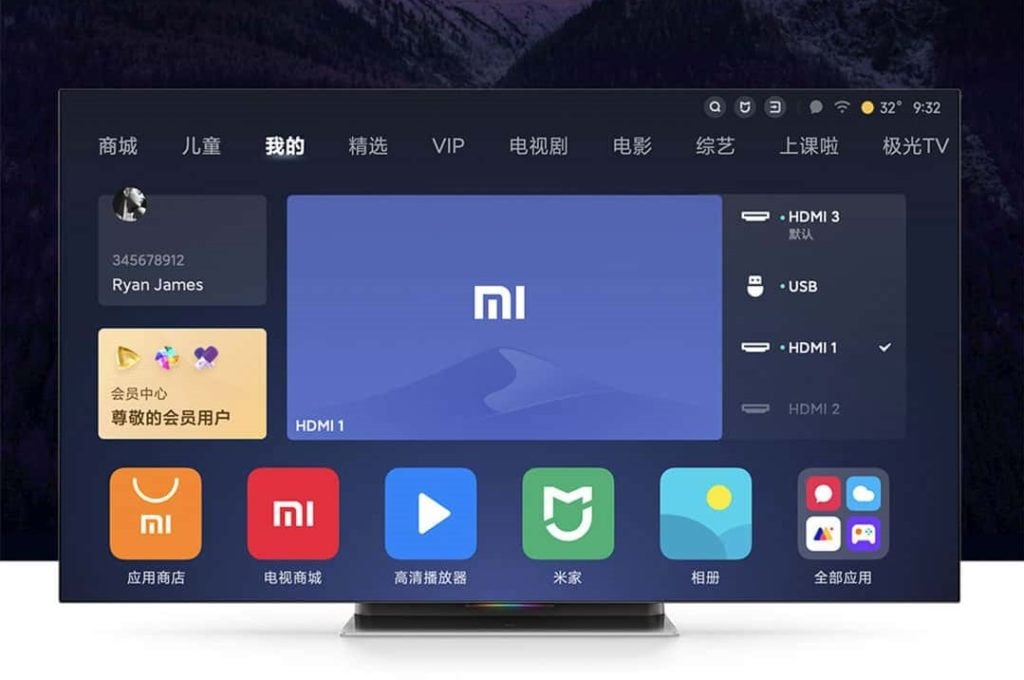
MIUI is the core of Xiaomi’s business. In fact, the company started with its Android skin rather than smartphones. Even the firm’s smart TVs run the same software, which is also known as Patchwall. Do note that Patchwall found on Mi TVs in international markets is merely a launcher but in China, it is the whole system. Having said that, Xiaomi recently announced MIUI for TV 3.0 in its home country with new visuals and features.
MIUI for TV 3.0 Supported Models
Xiaomi unveiled MIUI 12 for its smartphones in late April and since then, the company has been updating the eligible devices. Similarly, it now announces MIUI for TV 3.0 but the information regarding supported TV models is bleak. Anyway, we can surely expect the company roll out this new update to the recently launched Mi TV Master Series 65-inch OLED and Redmi TV X series.
MIUI for TV 3.0 Features
First and foremost, the new version of MIUI for TV brings changes to animations. Following the footsteps of content-first strategy, the system will continue to recommend movies and series by learning user habits like before with new improved AI algorithm. What’s new is the playback can be now resumed quickly as it slowly converts into the background when stopped instead of exiting the player altogether.
Further, the iteration of the software brings profile page for different members of the family. The content recommendation will be unique for different profiles based on watching habits. Even, the Kids Mode is now upgraded to support app controls so that parents can supervise what their children watch directly from their smartphones.

Lastly but not least, the Mi Remote app is now more capable than before. Users can download and install apps directly from their smartphones. Also, they can mirror the TV screen to their handset to navigate to control their smart TV with touch inputs. The remote app also includes a gamepad to play games on TV without investing in a separate controller.
Unfortunately, this OS will mostly not make its way to the international markets as Mi TVs sold in these regions come with Android TV, which is must for Google services like Chromecast, Play Store, and Google Assistant.
As we speculated the other day, Xiaomi is indeed rebranding the Redmi 9 as Redmi 9 Prime for India. Here’s a teaser video posted by the company on YouTube confirming the handset’s name.
Original Story
India was the debut country for Redmi Note 9 Pro and Redmi Note 9 Pro Max earlier this year. But it will be one of the last regions to get Redmi 9 as Xiaomi India has finally announced its launch date to be August 4. The handset will be exclusive to Amazon and will be available during the annual Prime Day sale (August 6-7).
Xiaomi or rather Redmi India is teasing the Redmi 9 with “Prime” word for every feature. Also, the company is using #BackToPrime, which suggests the handset to retail as Redmi 9 Prime in the country.
For those unaware, the last Xiaomi phone with such branding was Redmi 4 Prime from 2016 but it did not launch in India. Anyway, this is just a speculation and the “Prime” word used in the teaser could mostly mean “Amazon Prime Day” sale and nothing else.
Having said that, the company recently launched Redmi Note 9 in India starting at ₹11,999. Therefore, we expect the upcoming Redmi 9 to retail at a lower price than that. For context, the 4GB + 64GB variant costs CNY 799 ($114) in China and RM 599 ($141) in Malaysia.
The highlights of the handset include MediaTek Helio G80, quad-camera setup, FHD+ display, and 5,020 mAh battery with support for 18W fast charging.
After more than a year’s absence from the smartphone market, Poco made a comeback earlier in 2020 with its Poco X2. While the X2 wasn’t a direct successor to the incredibly popular Poco F1, it still had big shoes to fill. Poco fans have always been extraordinarily demanding, and even with competent specs, it was always going to be tough to meet their expectations.
Poco’s answer was to take help from its big brother – Redmi. So Poco X2 launched in India as a rebranded Redmi K30 4G model from China. This made sense since the K30 was an extremely value for money deal, and it would allow Poco to price it aggressively in India without building a phone from scratch.
Poco has been releasing rebadged models ever since, with the two models after the X2, namely the Poco F2 Pro and Poco M2 Pro being the rebranded Redmi K30 Pro 5G and Redmi Note 9 (EU) models respectively. But today, I won’t go into the ethics of rebadging models. Instead, my focus is to review the Poco X2 and judge it as an independent model.
I have been using the X2 for the past few weeks as my daily driver, and here’s my review of the device.
POCO X2 Overview
165.3 x 76.6 x 8.8mm
208 grams
Snapdragon 720G
8GB RAM + 256GB storage
6.67-inch FHD+ 120Hz IPS LCD
4500mAh battery 27W
MIUI 11 based on Android 10
What’s In The Poco X2 Box?
Phone
Silicone Case
SIM Ejector Pin
2-pin 27W Charger
USB A to C cable
User Manual
You might have already noticed above that the phone doesn’t come with a screen protector installed, so you’ll have to buy it separately. Here are some good ones if you are interested.
POCO X2 Design
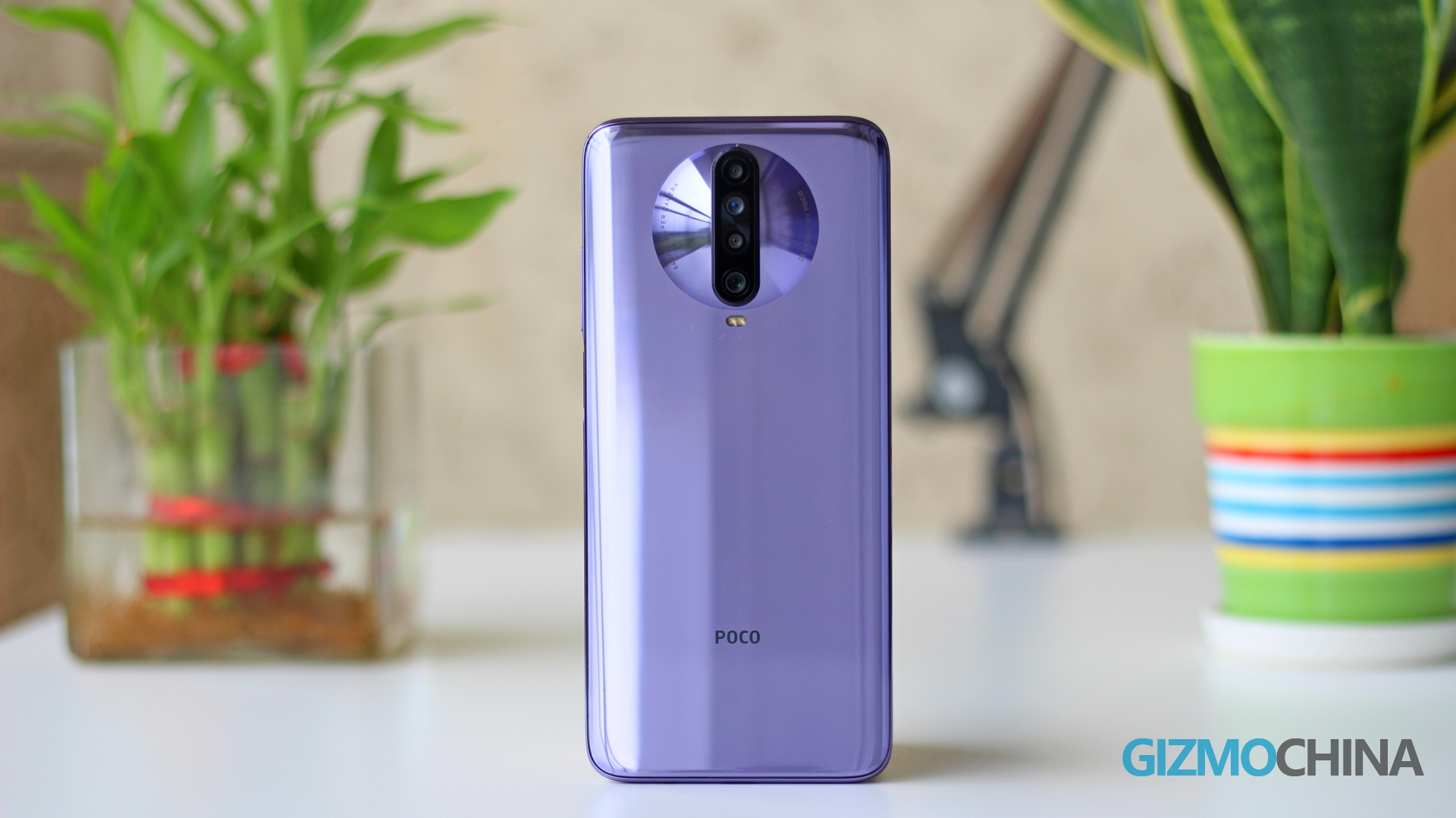
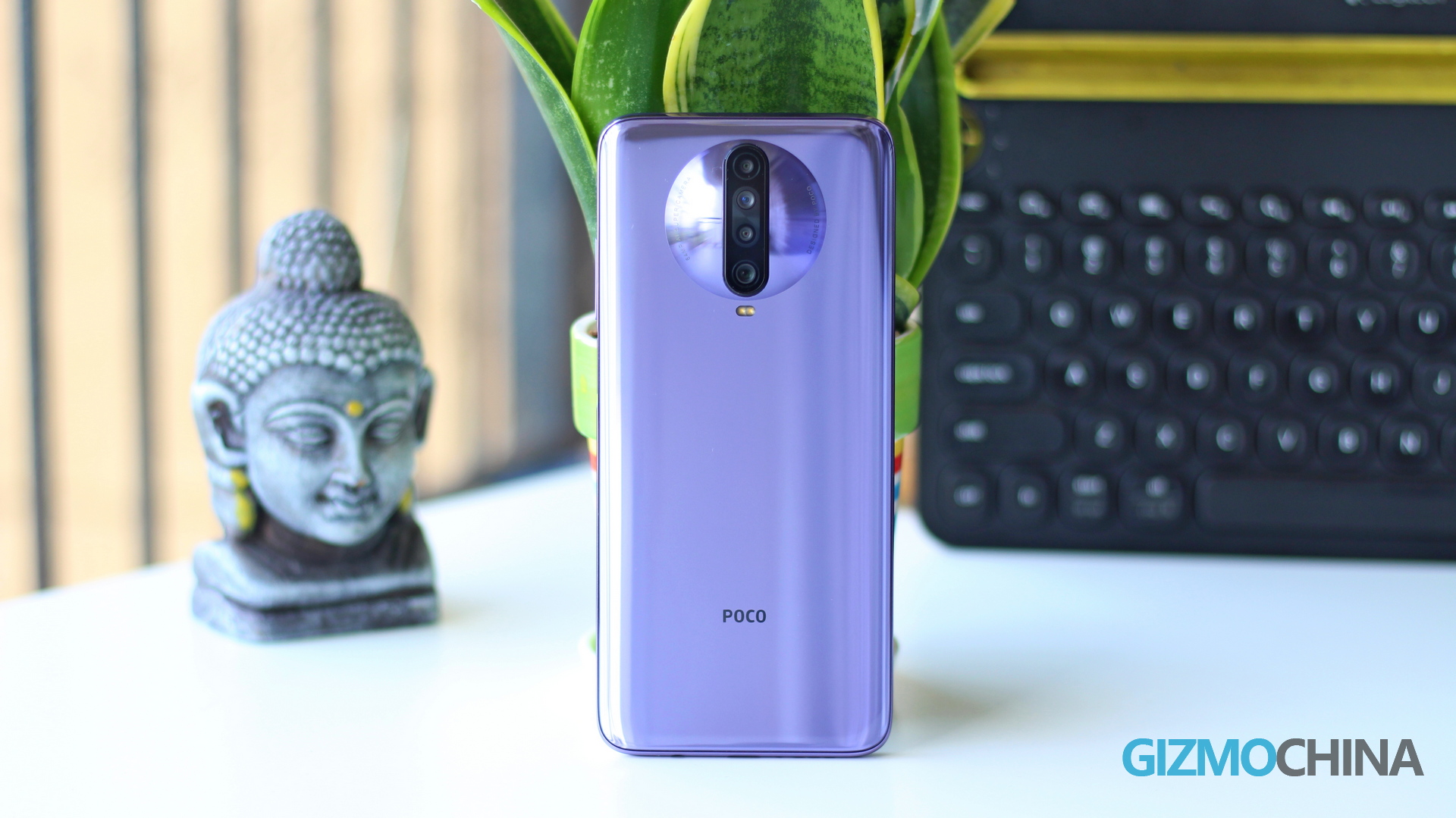
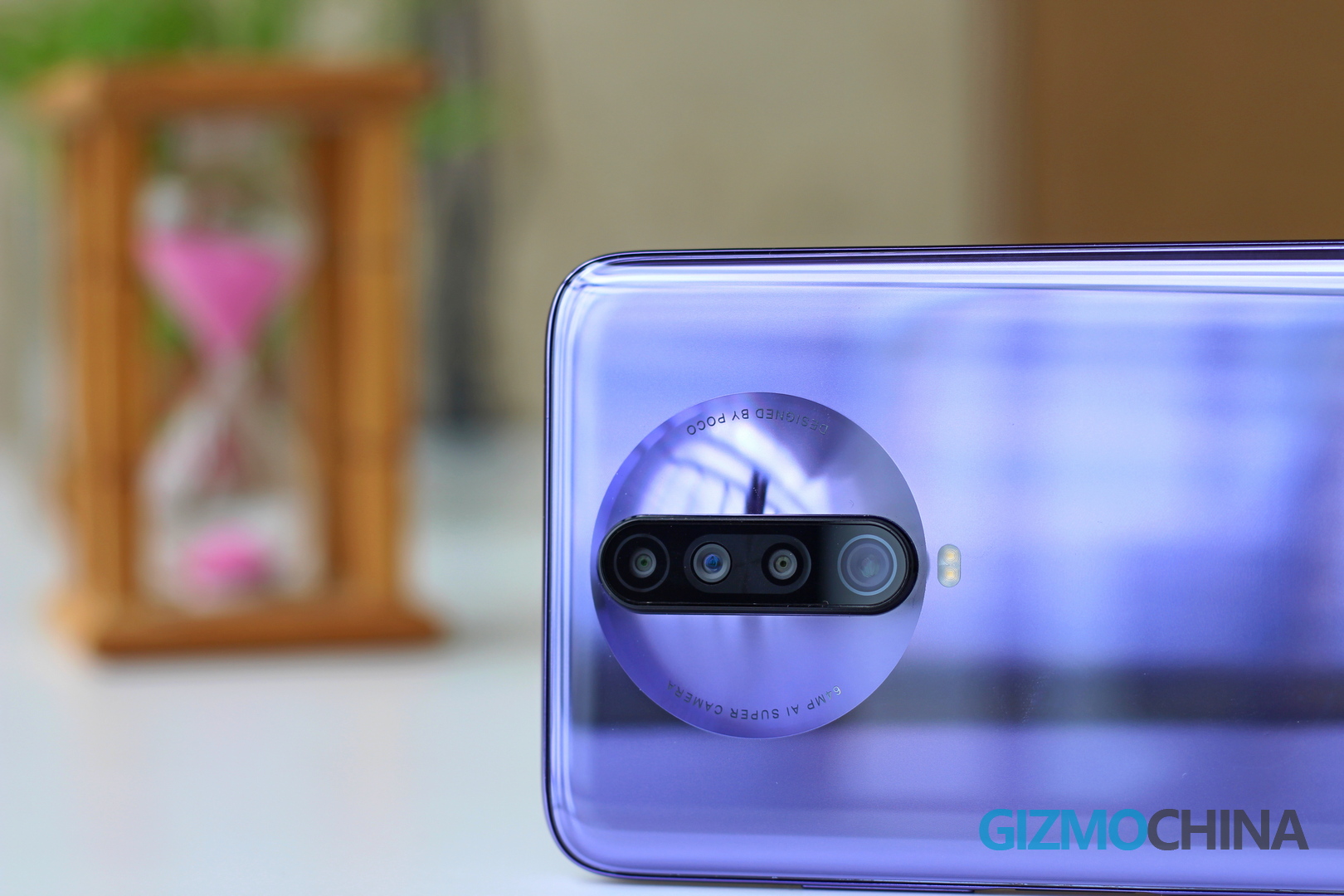
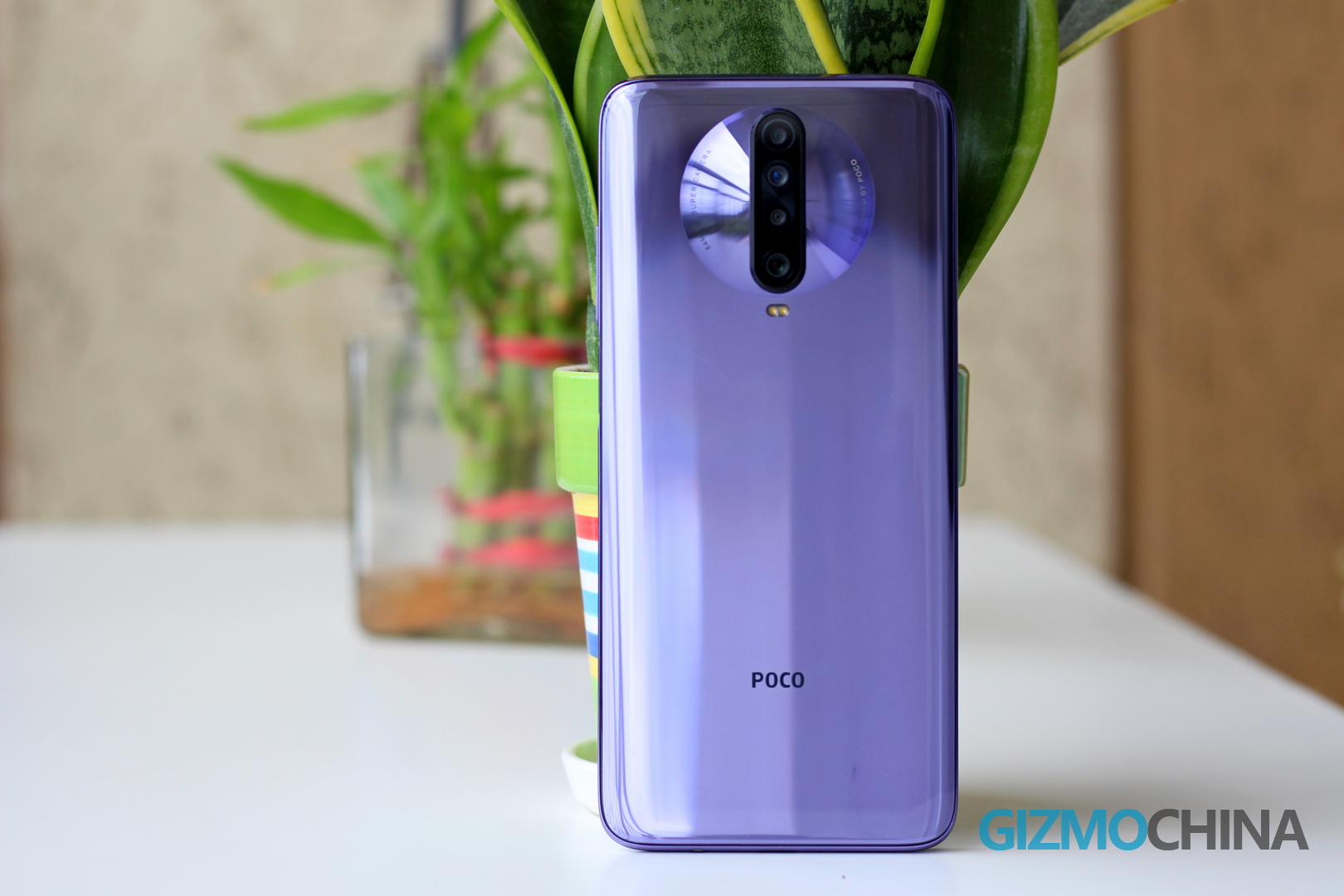
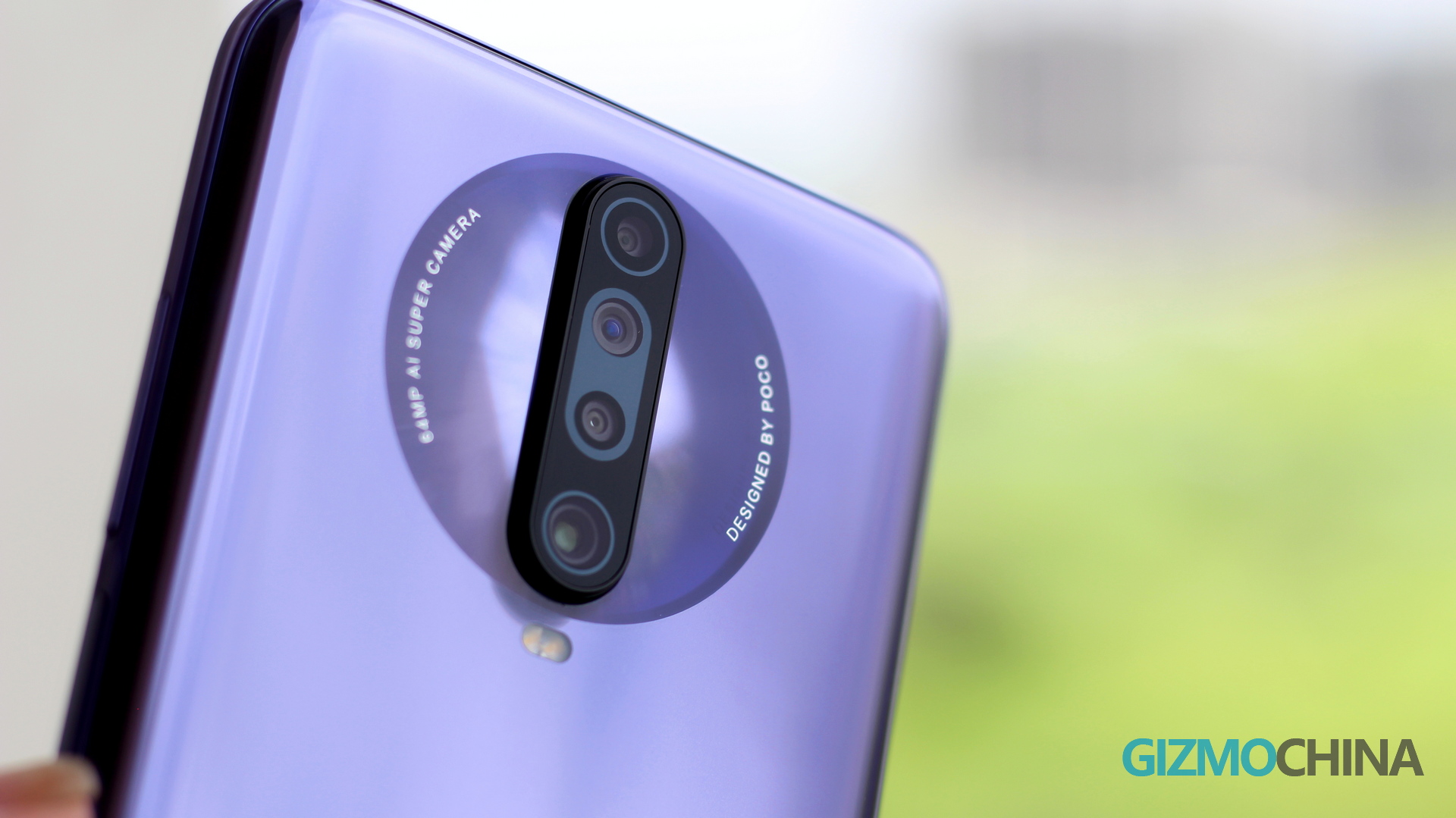
The Poco X2 comes with a familiar design, mainly because it’s a rebranded Redmi K30. So you have a glossy glass back with a pill-shaped camera setup and dual-selfie shooters upfront.
The Glass sandwich design features Gorilla Glass 5 on the front as well as the back, with a plastic frame for support. There’s no denying that the Poco X2 is a heavy smartphone. It weighs 208 grams, making it heavier than some of the top flagships in the market like the OnePlus 8 and the Huawei P40. But you get a large 4500mAh large battery and a premium glass sandwich design to justify this weight. And in its defense, most of its direct rivals such as the Realme 6 Pro and the Redmi Note 9 Pro Max are heavy phones.
The smooth glass at the back and its weight can increase the chances of accidental drops. So I would highly recommend you to protect the phone with a case – the one provided in the box should be good enough for most people. Honestly, having a case on this phone gives me the confidence to be carefree. Even with Gorilla Glass 5 on top, a typical glass sandwich design doesn’t take drops very well – unlike say plastic or a metal phone (my Pixel 2 XL has a few dents here and there but they are hardly visible).
The glass back picks up a few fingerprints, but it’s pretty easy to clean. Also, despite the protruding camera bump, its centered placement ensures the phone doesn’t wobble when placed on the table.
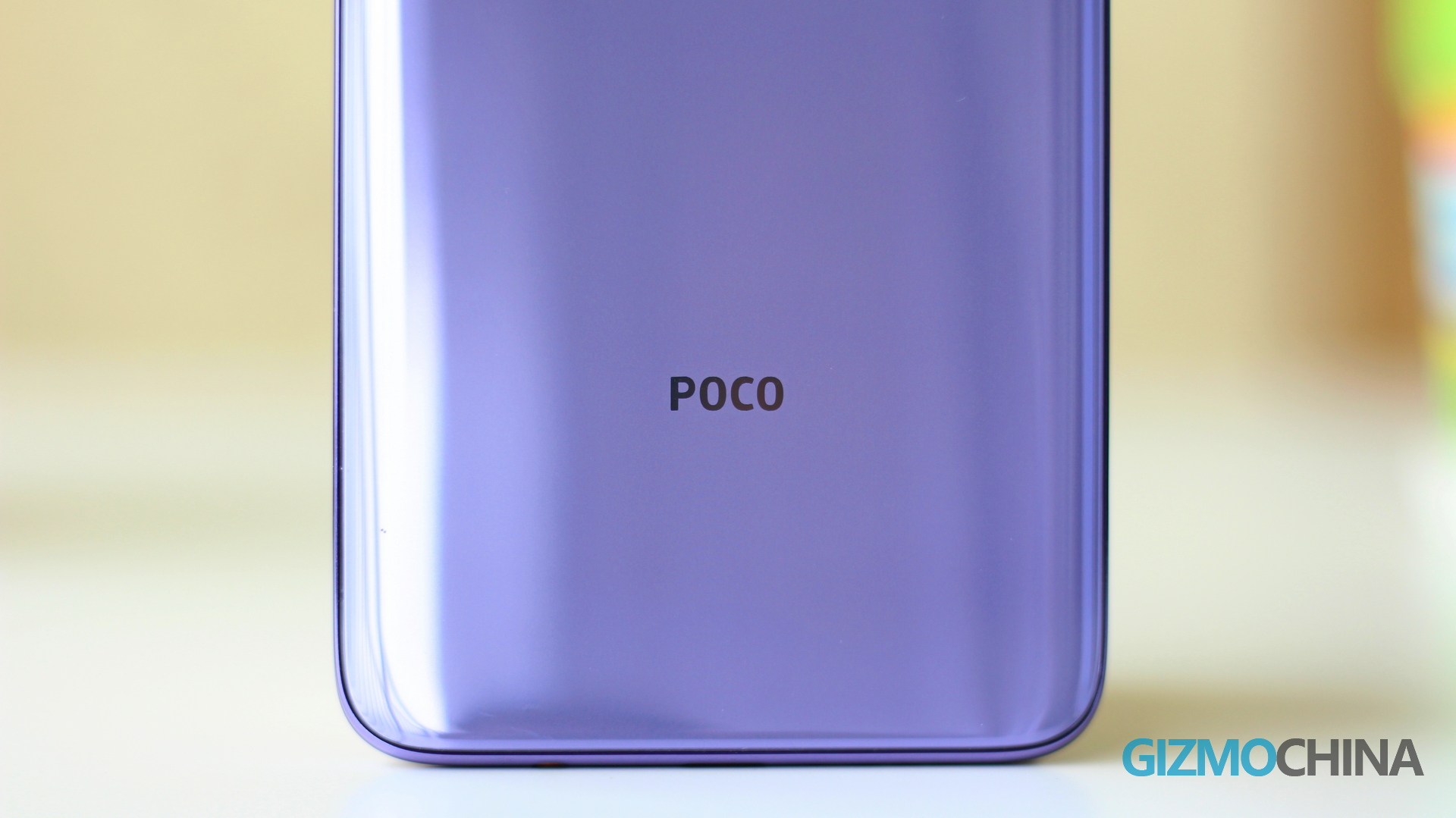
I’ve got the Matrix Purple color variant and it looks pretty unique. But personally I’m not a fan of this purple as it can look quite dull at times. If I had to choose, I would go for its Atlantis Blue color.
1 of 8
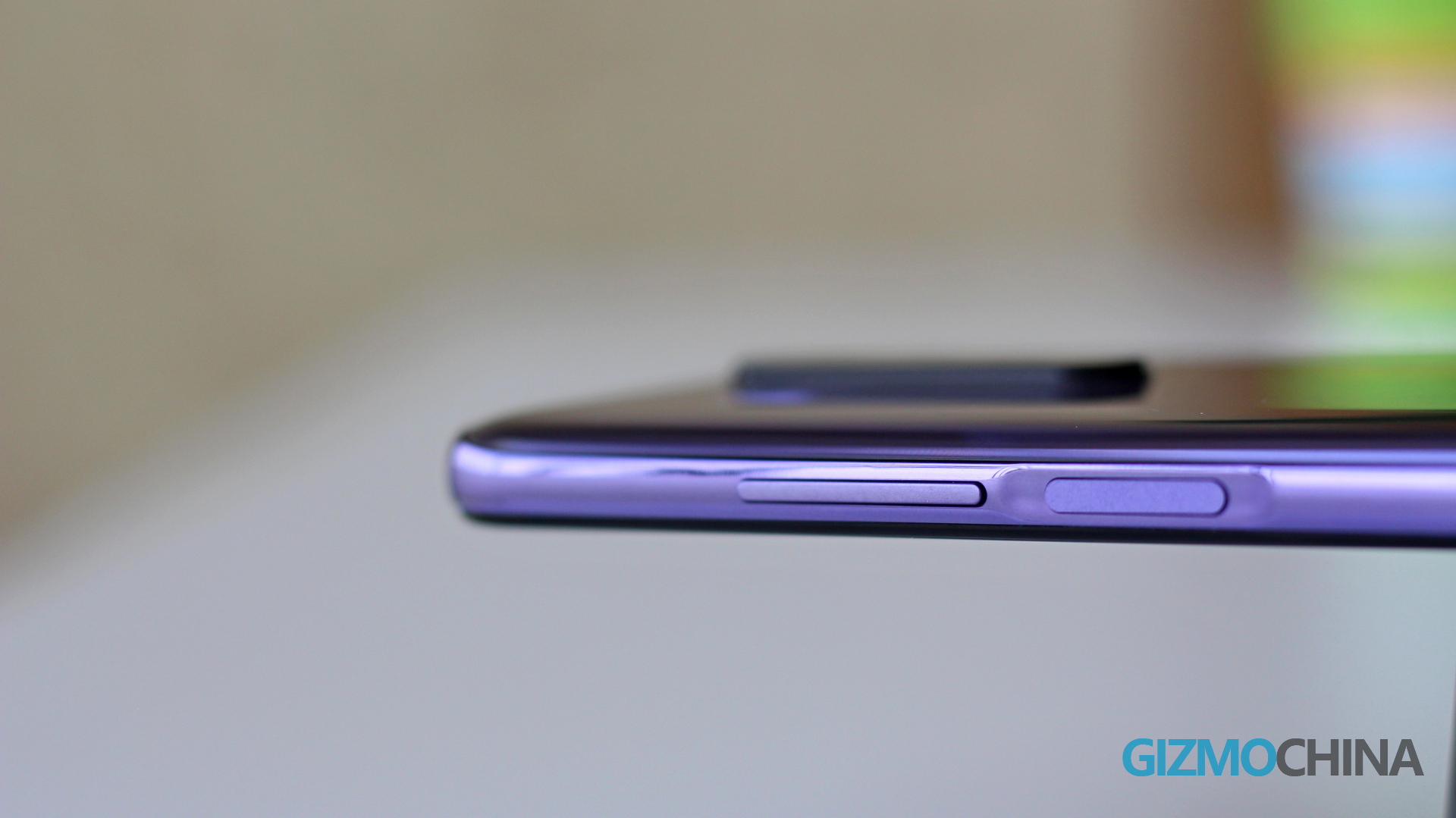
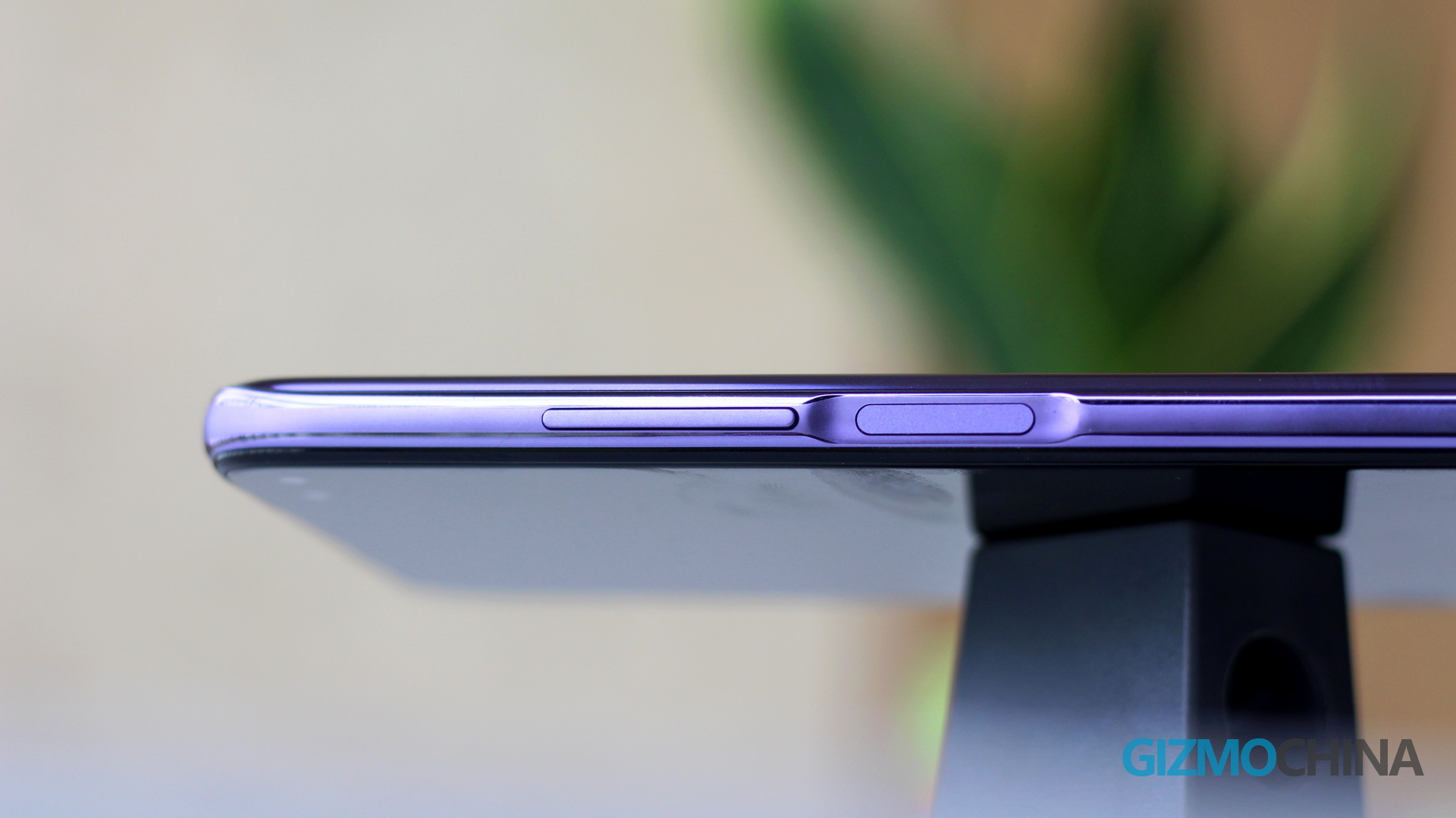
The Poco X2 comes with a side-mounted fingerprint sensor (that’s also its power button) on its right side. The fingerprint recognition is quick and accurate, and I find this sensor placement more convenient than other solutions. The volume buttons are on the same side.
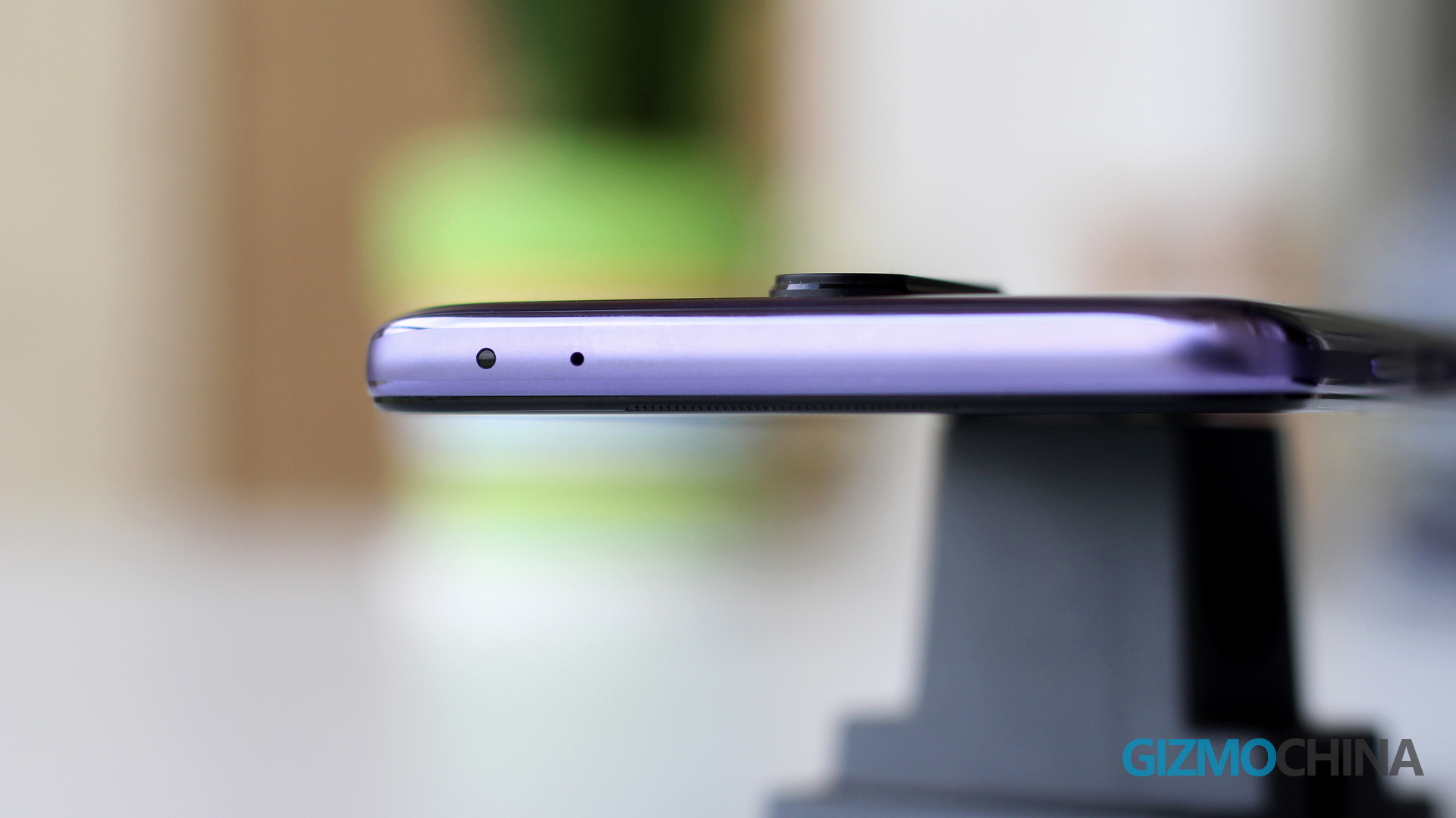
The left side of the phone houses the hybrid dual SIM card slot. At the bottom, you get a single speaker, USB-C, 3.5mm headphone jack, and a microphone opening. On top, you have an IR sensor with a microphone hole.
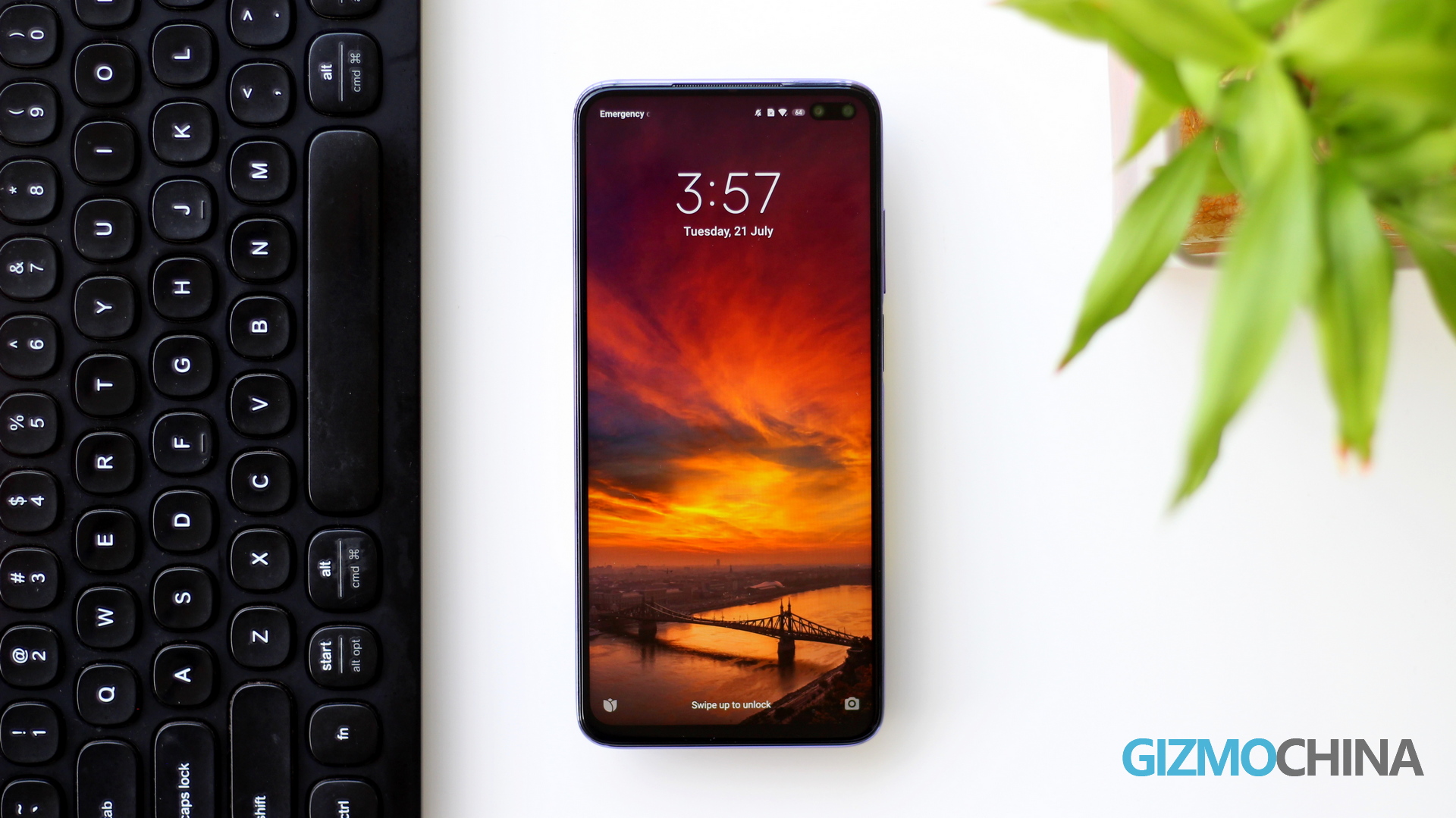
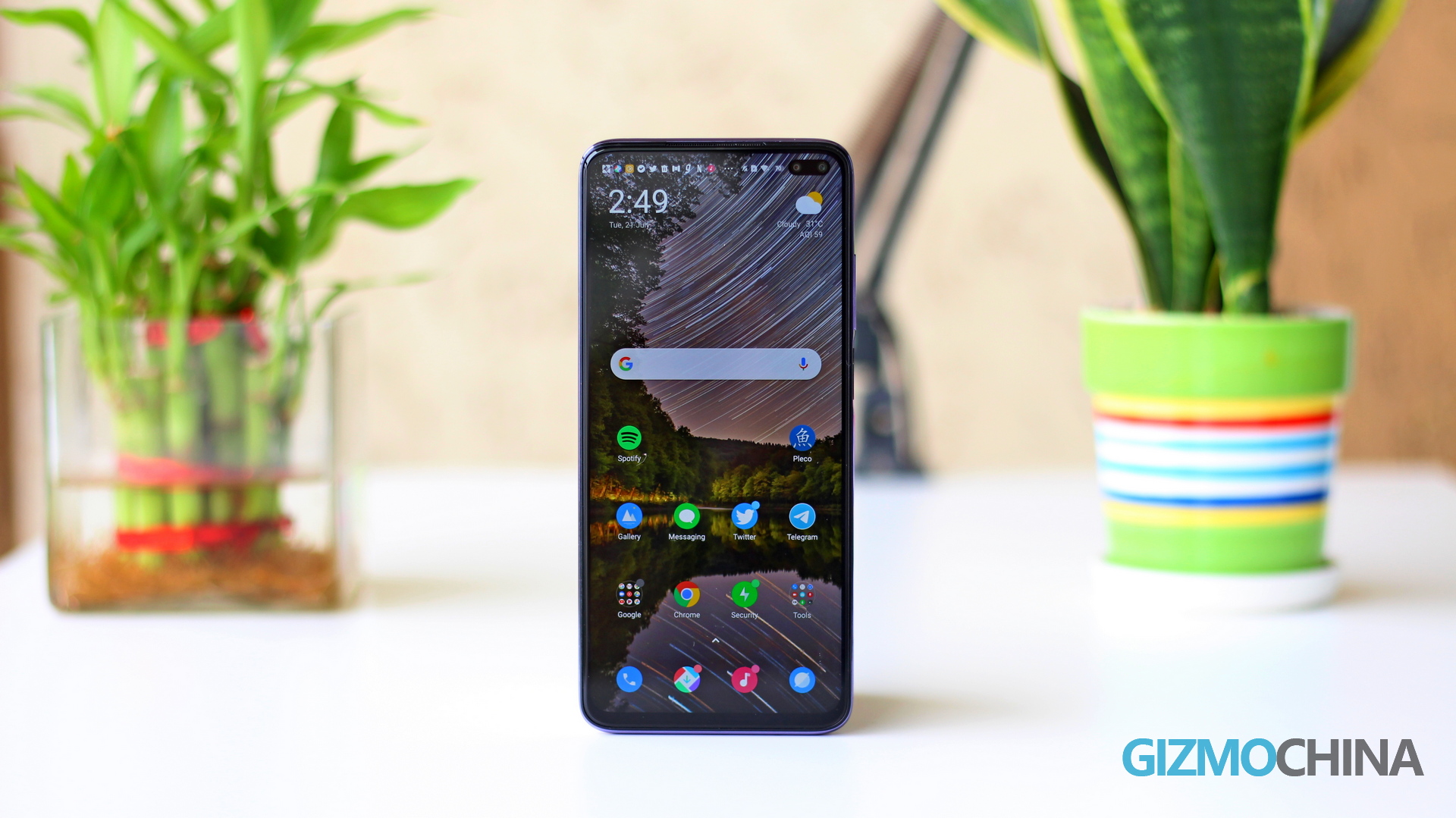
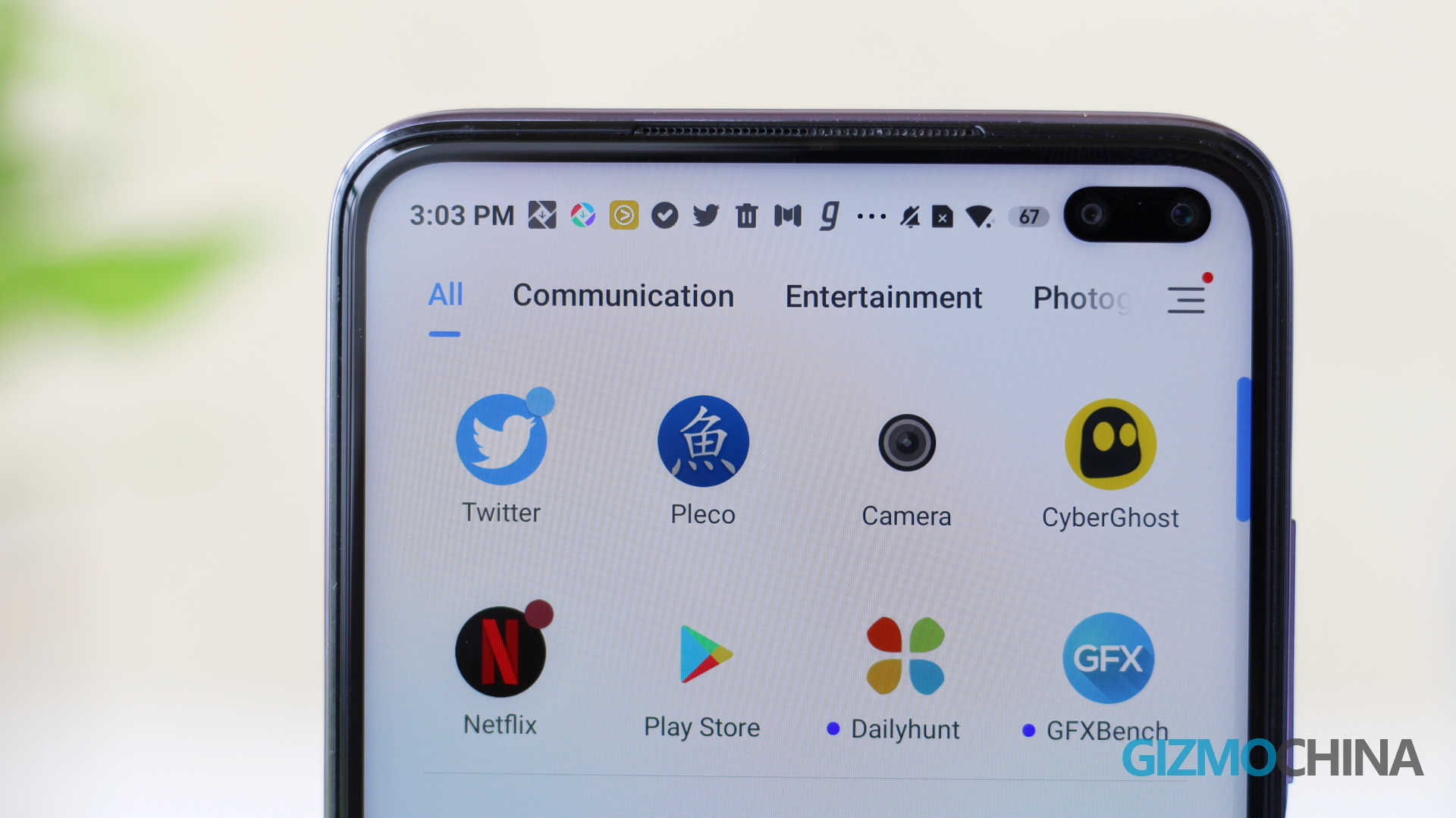
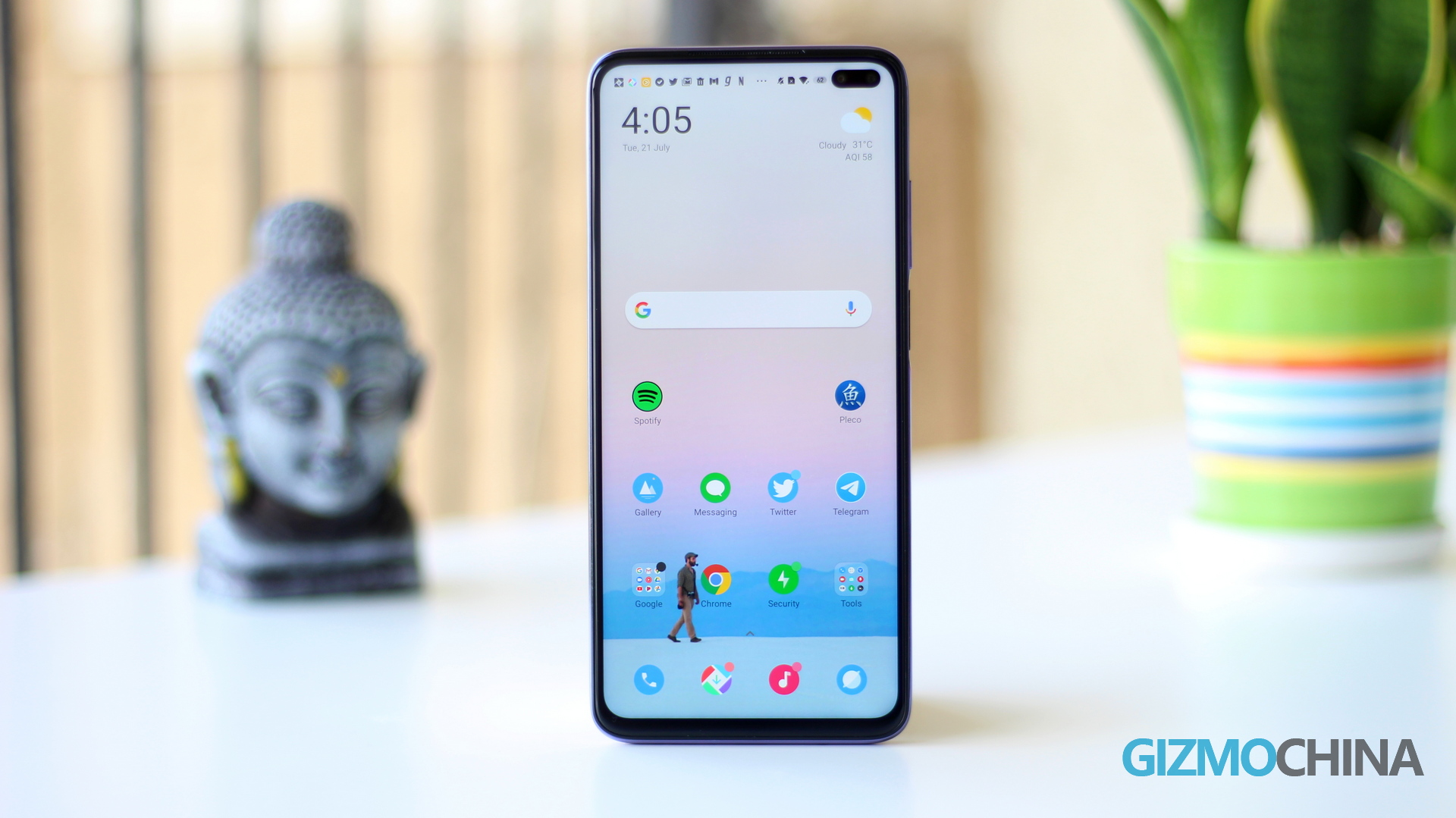
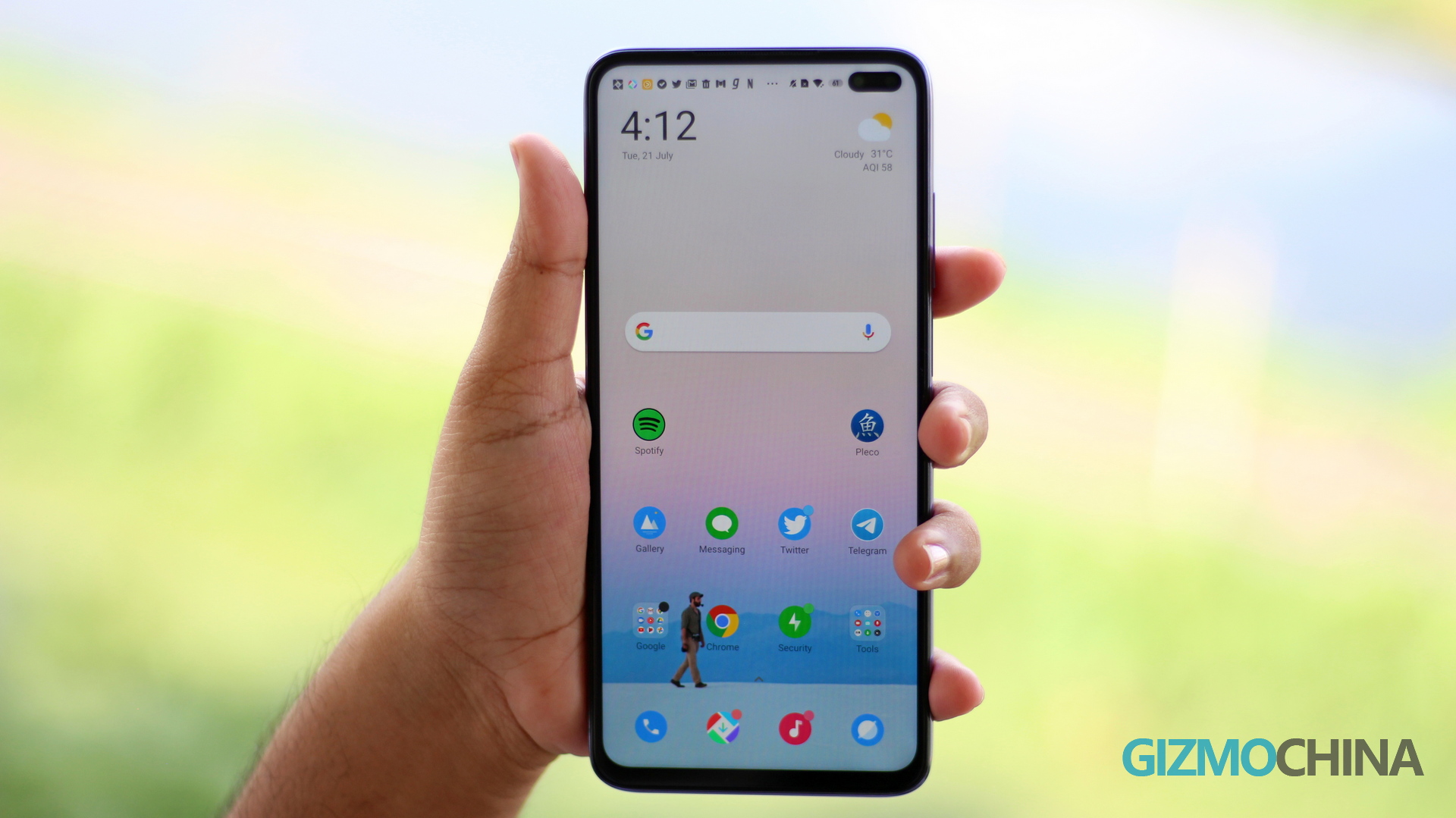
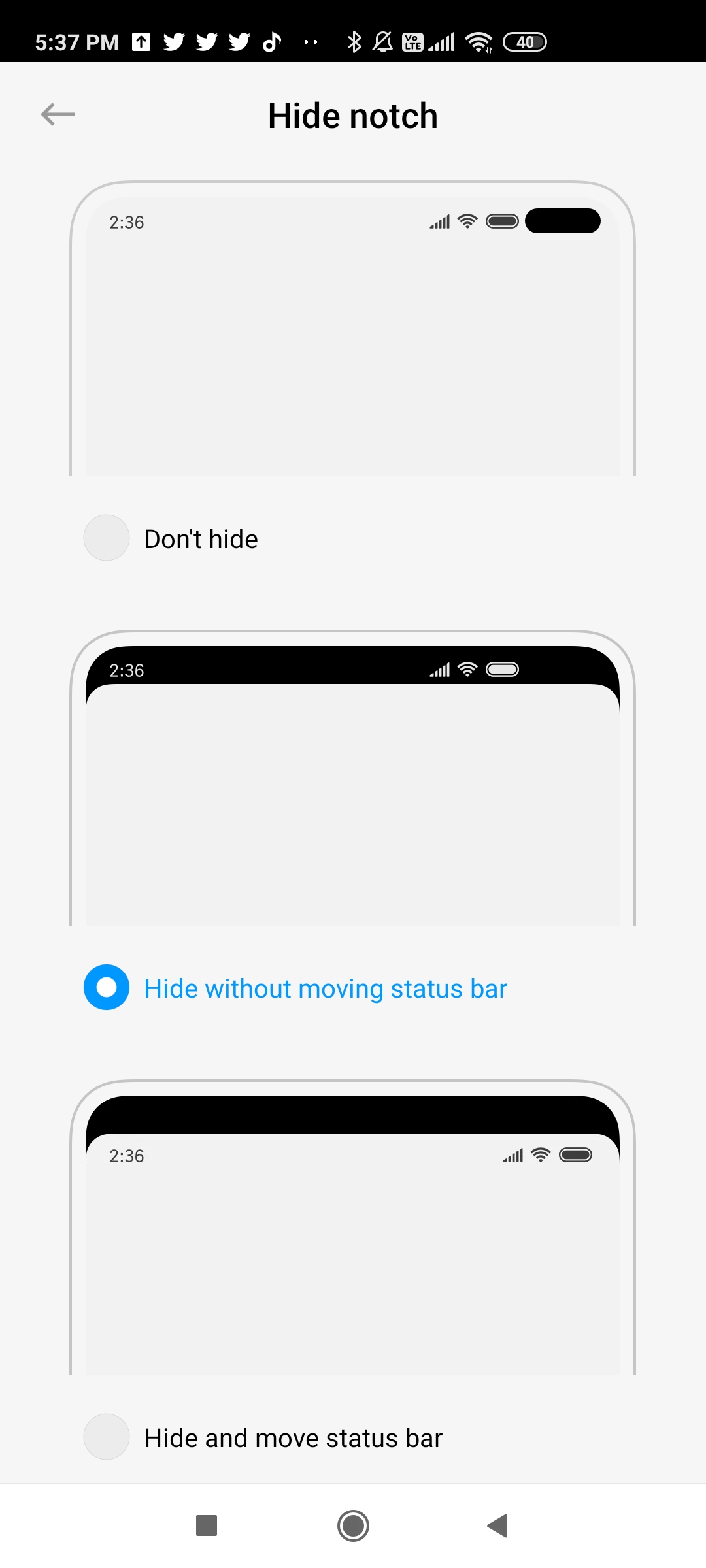
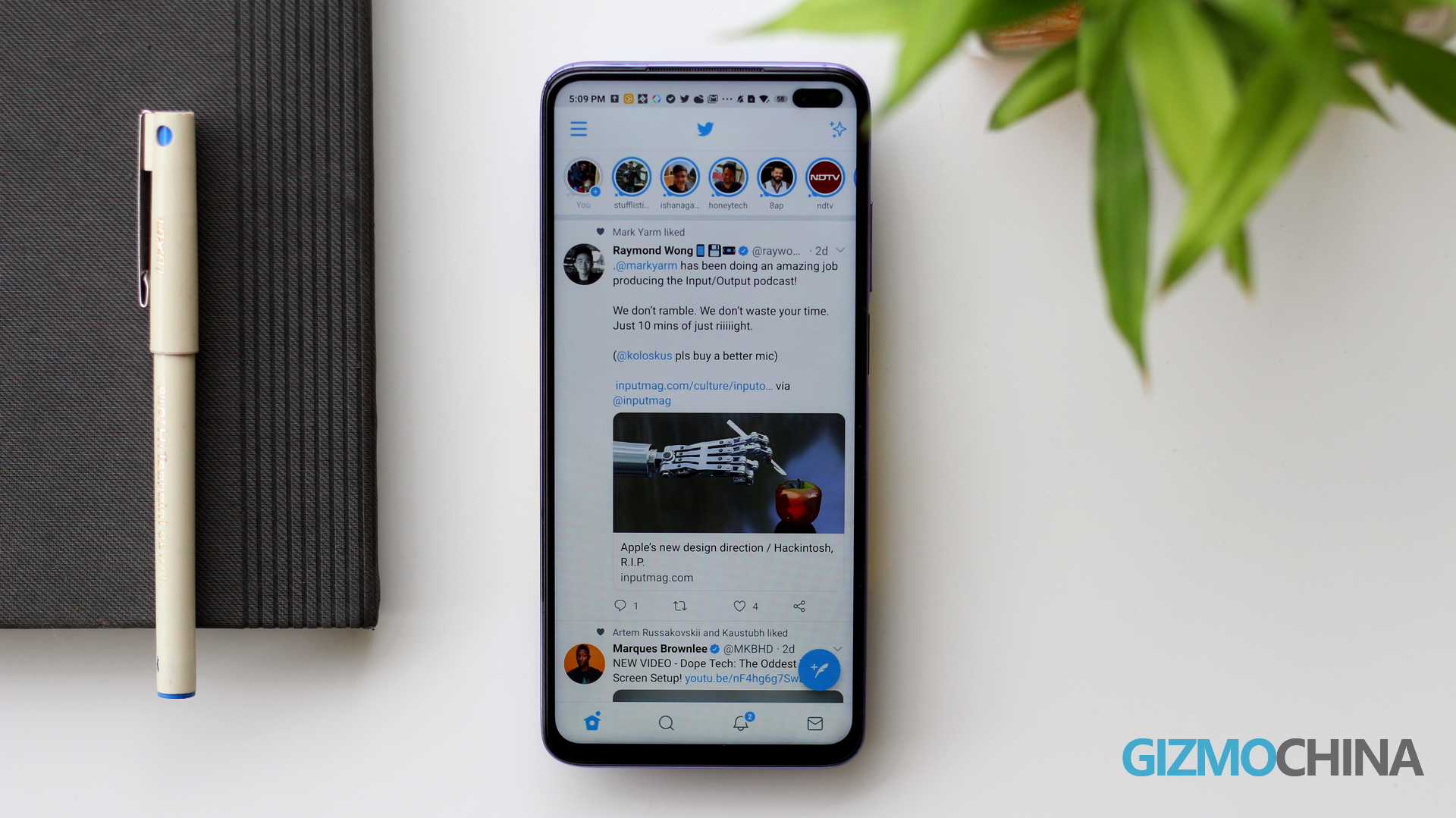
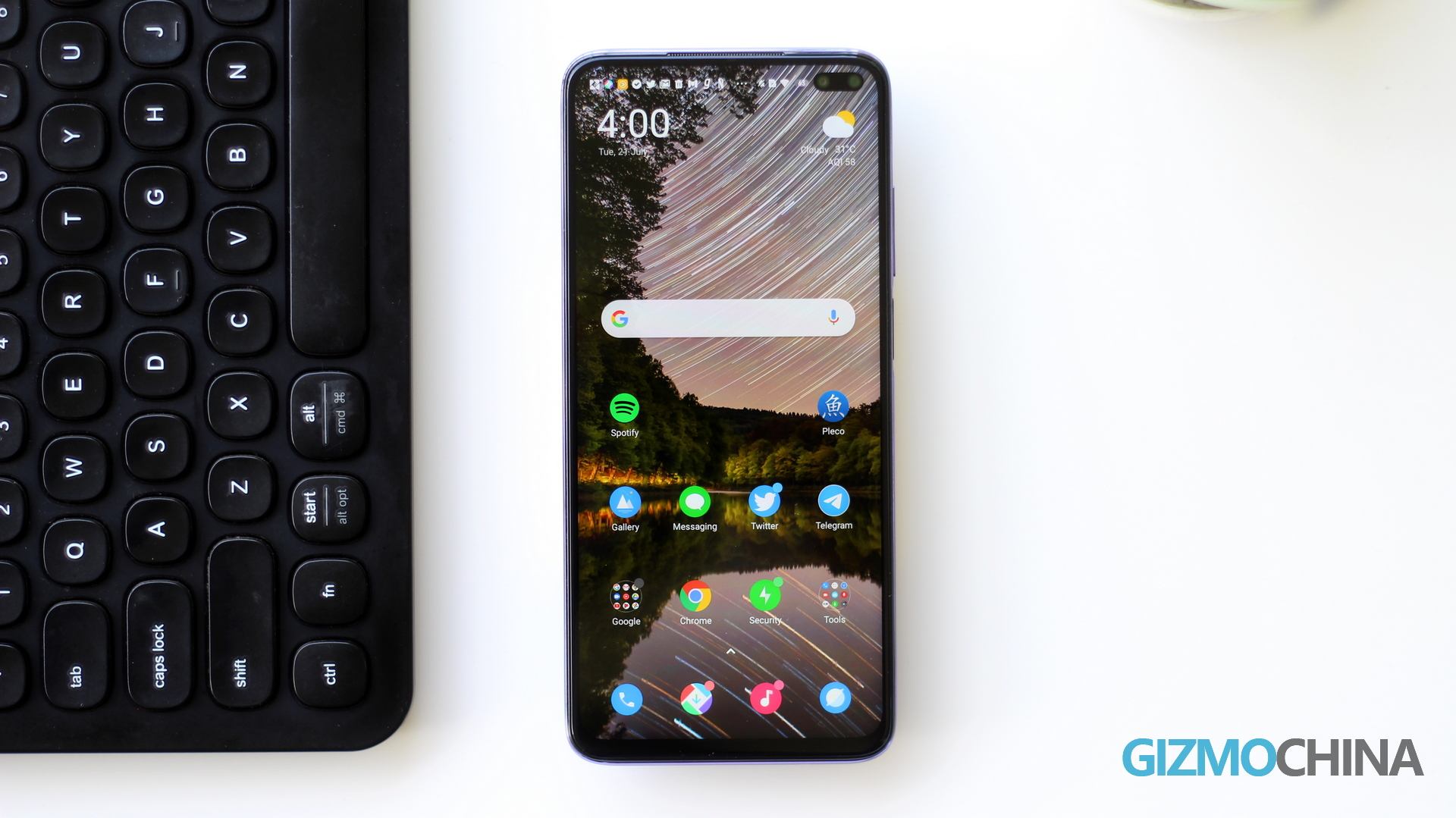
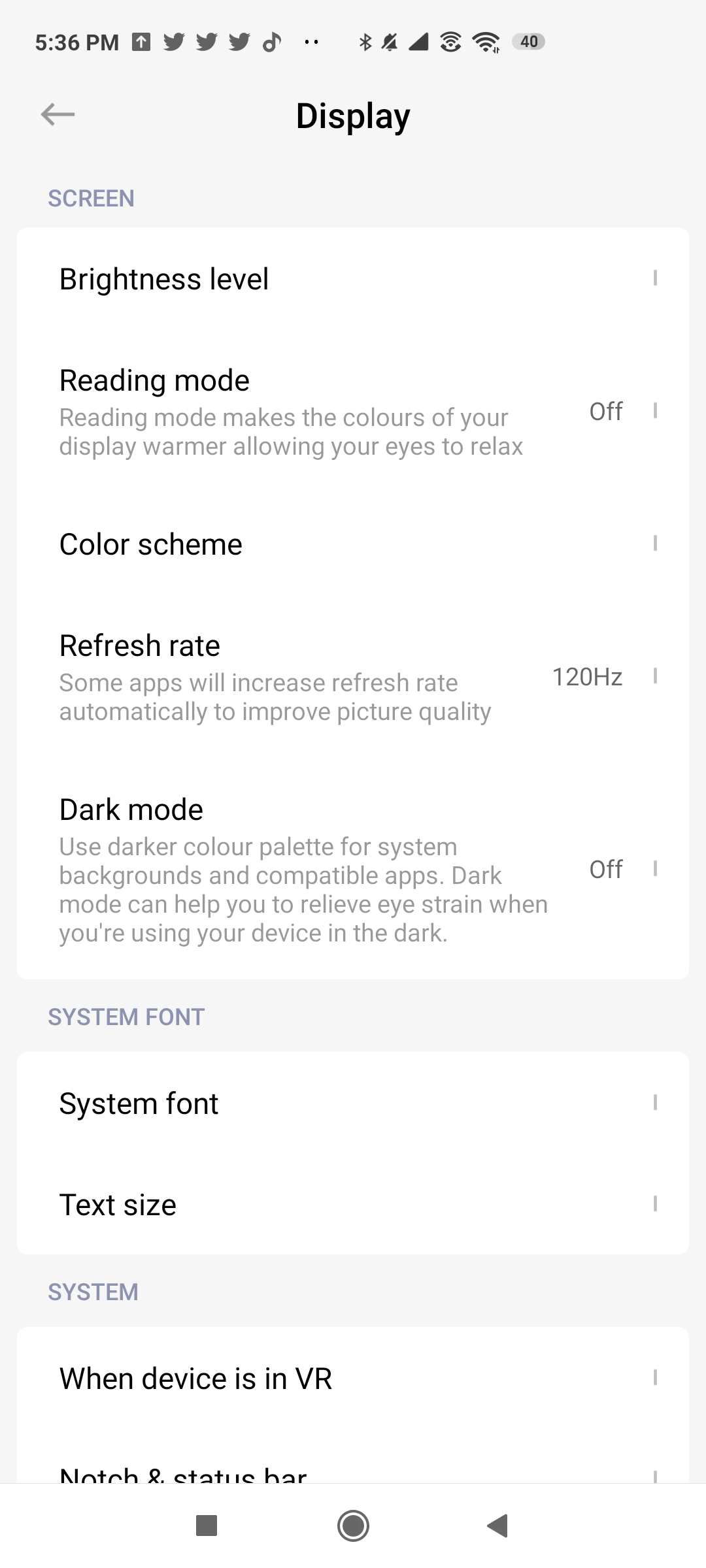
As for the front, the Poco X2 features a 6.67-inch LCD flat display with dual punch-hole cameras on the top right corner. The screen is good for its price (I will talk more about in the next section), but the dual selfie cameras on the top can be a bit bothersome as it stands out quite significantly. However, MIUI has a couple of solutions to fix this issue – including an option to darken the status bar, thereby hiding the cameras.
To conclude, I’m not a fan of Poco X2’s design or the Matrix Purple color. However, the phone looks polished and has a comfortable grip. So even if the design isn’t its strong point, you shouldn’t have any significant complaints.
Poco X2 Display
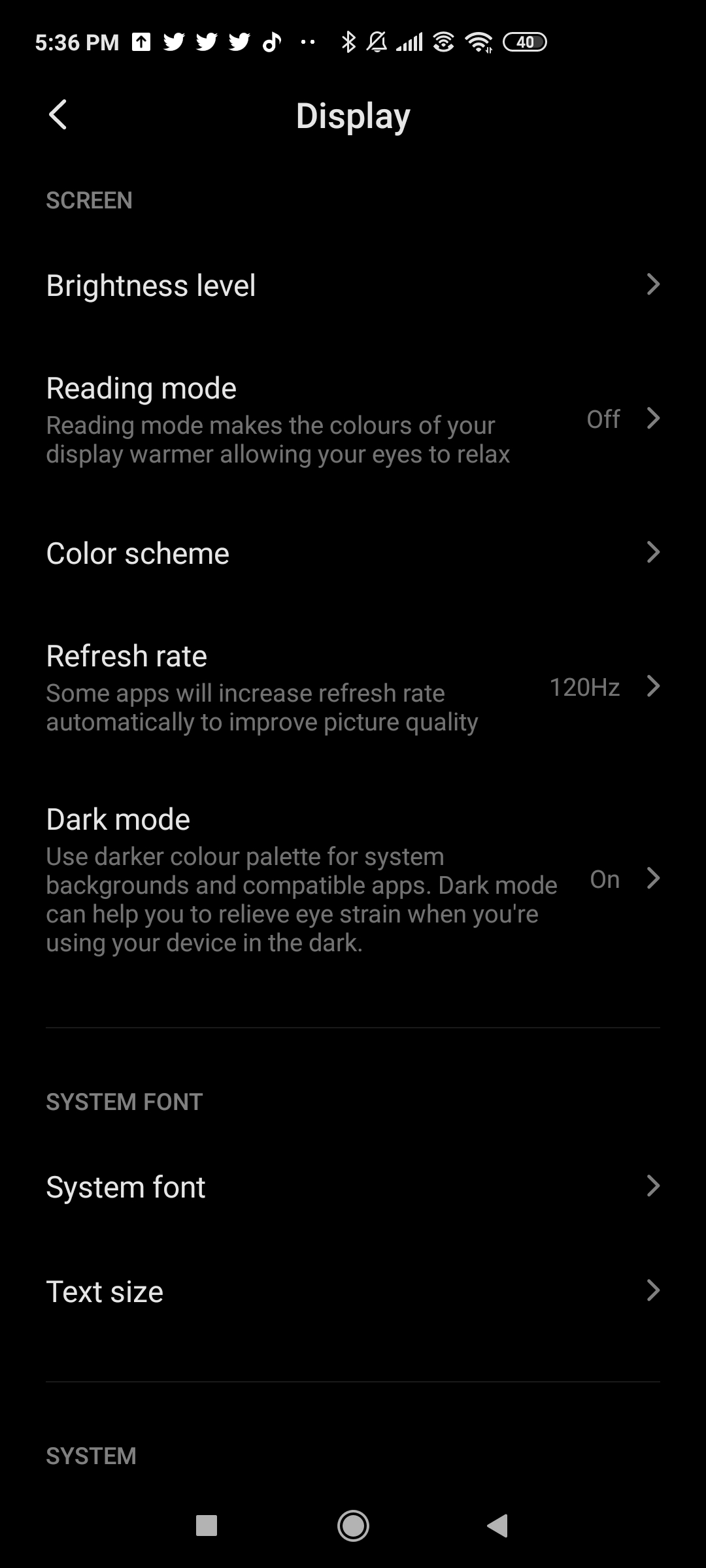
The Poco X2’s biggest highlight is its display. The 6.67-inch RealityFlow FHD+ LCD panel on the device supports up to 120Hz refresh rate. This display is snappier than most other 60Hz and 90Hz LCD smartphones in its price segment.
The saturation levels on the LCD panel are good, and support for HDR10 ensures you get punchy colors while streaming. At 500 nits, the Poco X2’s display is bright too, even under direct sunlight. The auto-brightness feature also worked pretty well, so I rarely had to adjust it manually.
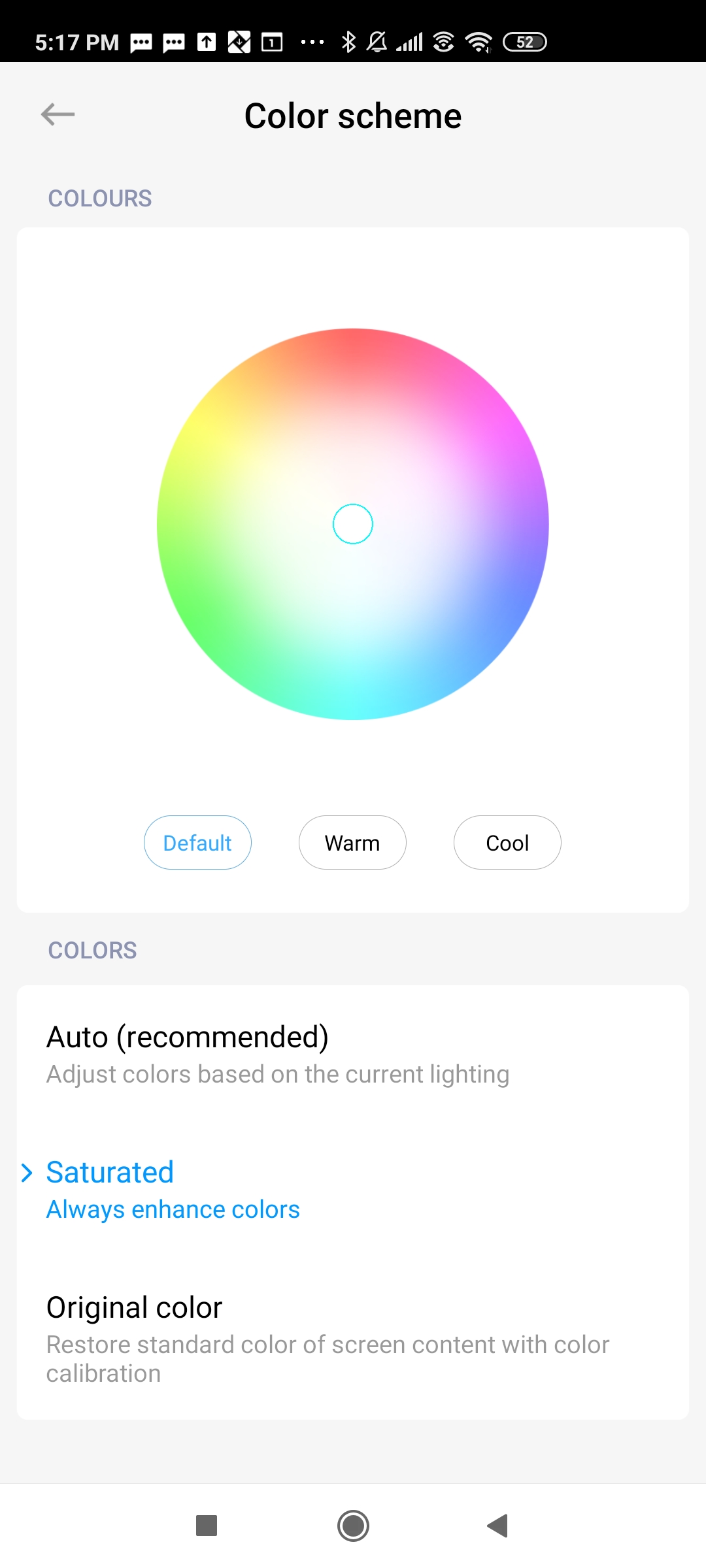
You also get a couple of color calibration options for the display, but since this is an LCD screen, the colors won’t pop out as well as an AMOLED panel. There’s an auto mode that chooses the best color profile for the screen, and I’ve been using that mode for the past few weeks without any real complaints.
That said, I did notice the occasional jitters while scrolling through in the UI. So the software needs a few more tweaks to perfect the high refresh rate screen.
Also, the dual punch-hole camera setup on the top right corner feels a bit invasive. If you look closely, you’ll see that these are two separate cameras in a pill-shaped enclosure. The phone adds a black background to manifest its integrated look.
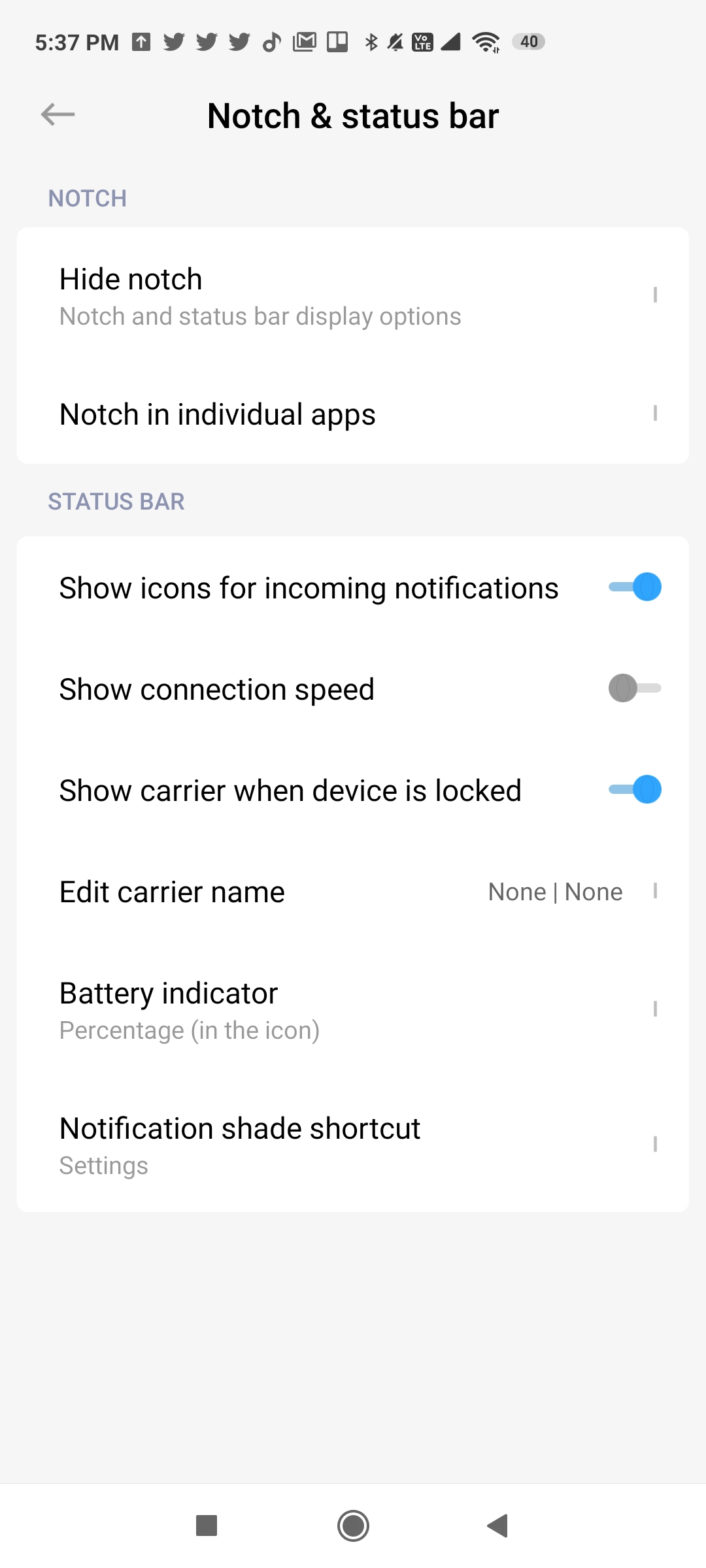
There are some workarounds for this though. You can hide the punch-hole cameras using software (from the notch & status bar option inside the display settings), which darkens the status bar, thereby hiding the cameras.
Even with the hide notch setting enabled, the Poco X2 offers a satisfying viewing experience, all thanks to the minimal bezels around the display. Plus, with full-Screen gestures enabled, you get additional screen real estate at the bottom.
Poco X2 Performance
The Poco X2 is powered by the 8nm Snapdragon 730G processor with up to 8GB of RAM and 256GB of storage. The review unit with me is the top-end version, and in this age of streaming, you’ll find it hard to fill up this storage. But if you do end up using up all the available memory, you can use a MicroSD card for storage expansion. The phone comes with a hybrid memory SIM card slot, so you can always add a MicroSD card in one of the hybrid nanoSIM card slots.
The UI performance is also pretty fluid. 120Hz refresh rate translates into smoother animations and scrolling, but you do see occasional jitters. It looks like the UI struggles to handle the high refresh rate sometimes. However, it’s not significant, and further software optimizations could likely eliminate them.
I’ll also try to address the big old question about whether you can spot the difference between a 120Hz and 60Hz display. The short answer is yes! Scrolling is visibly smoother, and you will also notice that the animations are fluid.
However, once your eyes get used to the refresh rate, be it 60Hz or 120Hz, you won’t comprehend the difference. Also, I feel a 90Hz refresh rate option in the settings would have been the sweet spot between fluid performance and battery life. But unfortunately, Poco only offers a standard 60Hz and a high 120Hz refresh rate option in the display settings.
Benchmarks
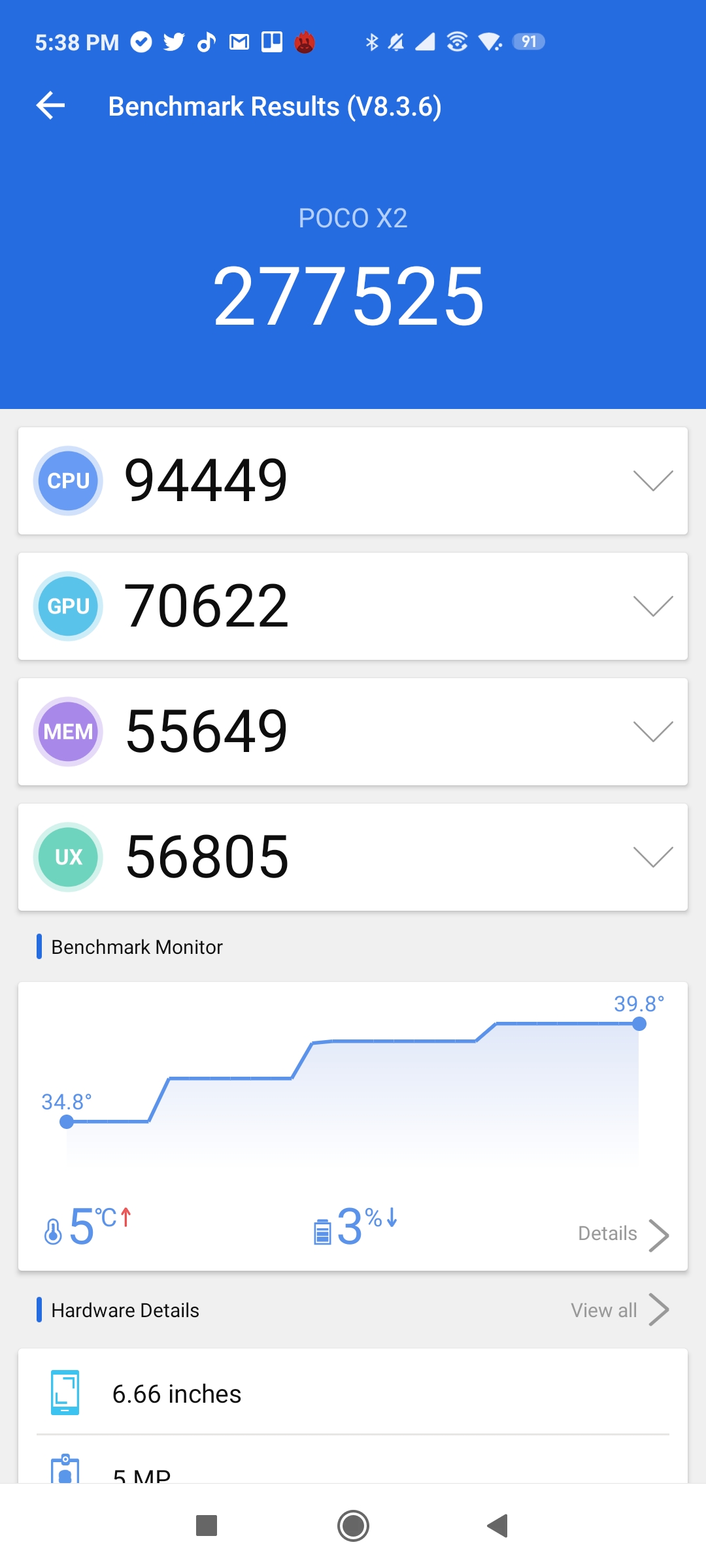
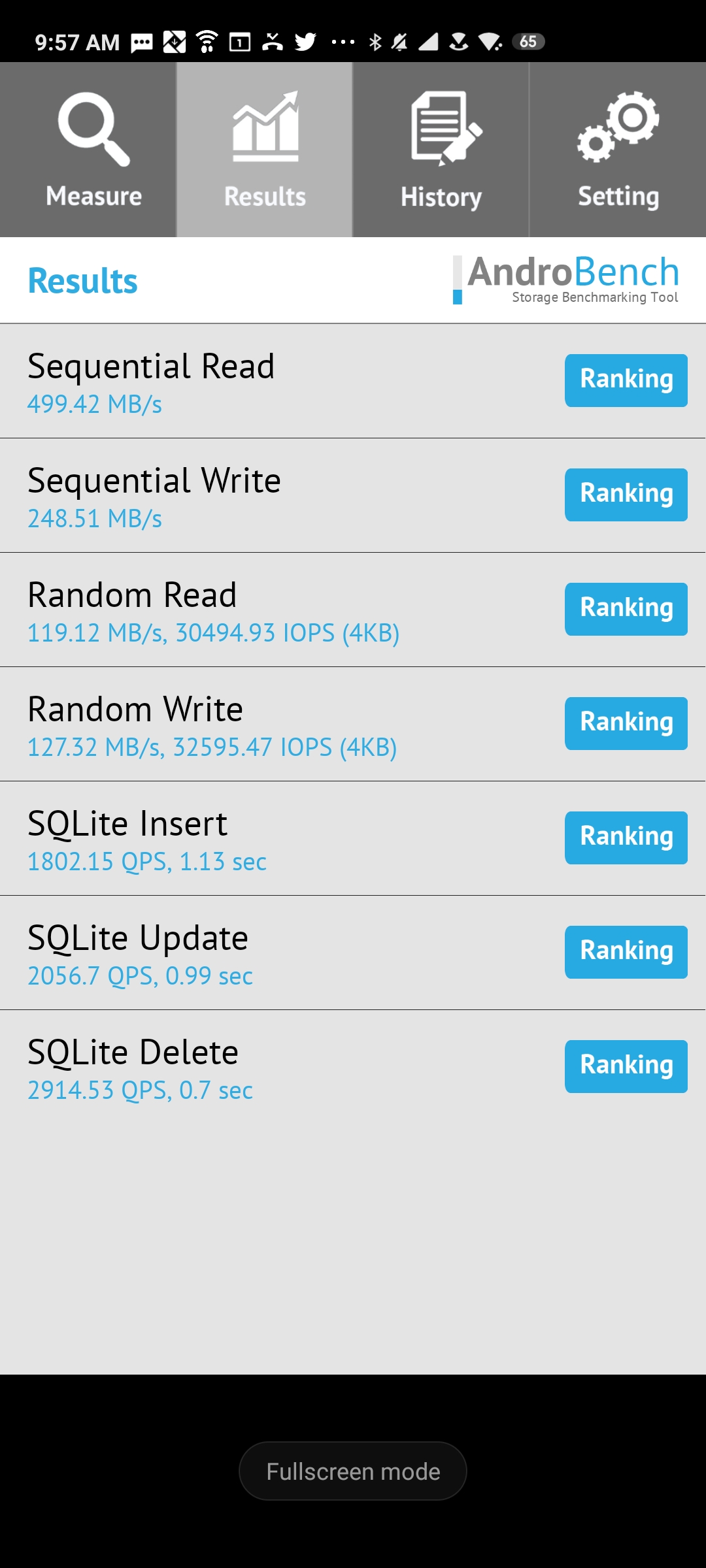
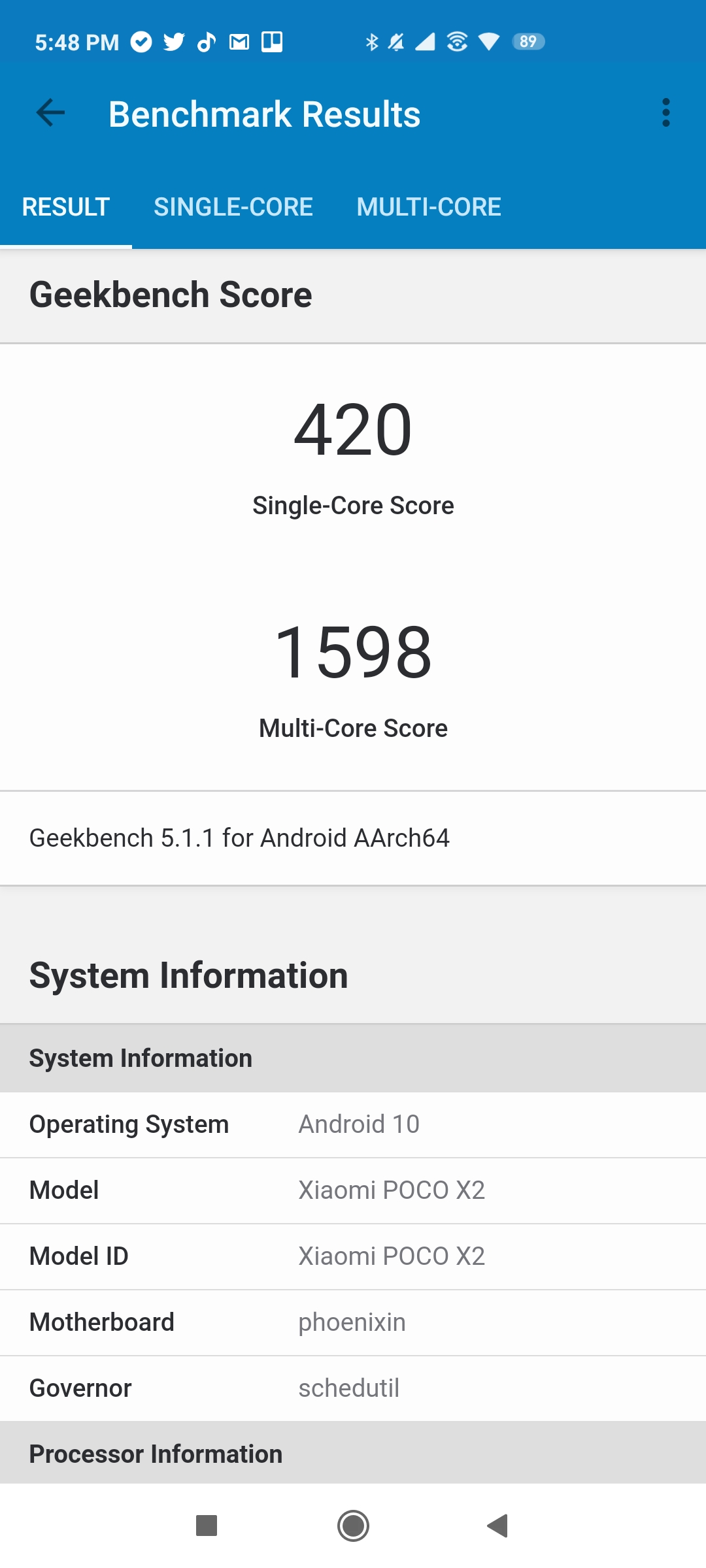
The benchmark scores are pretty much what you’d expect from a Snapdragon 730G phone.
Antutu (v8.3.6) – 277,525
Geekbench – SINGLE-CORE – 420 | MULTI-CORE – 1598
1 of 3
Antutu
AndroBench
Geekbench 5
For some reason, graphic centric benchmarks like GFXBench and 3DMark failed to run on the device.
Note that the Snapdragon 730G inside the phone is a gaming chipset. So the phone performs pretty well even in graphic intensive scenarios like gaming.
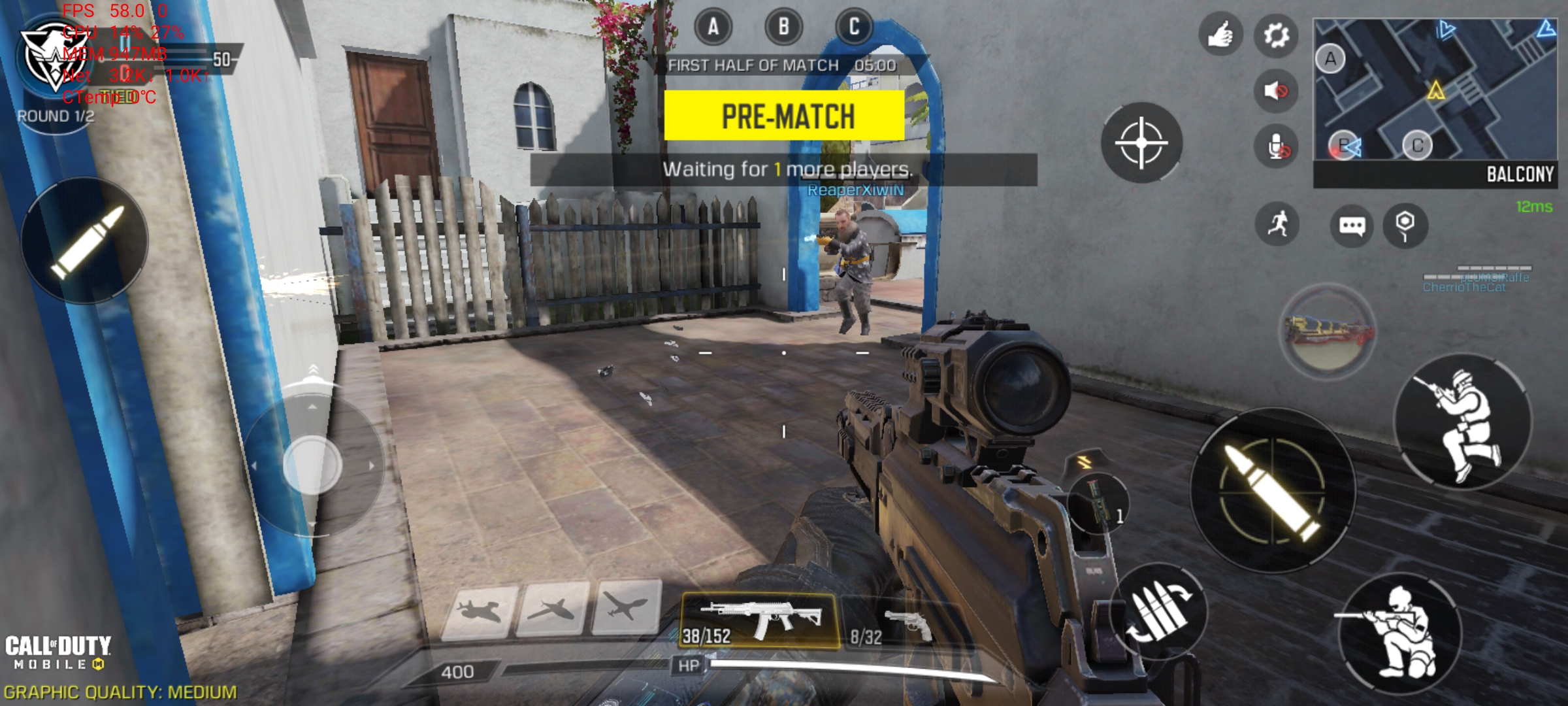
COD Mobile hits 60fps on Poco X2 consistently
The phone handles COD Mobile, PUBG, and games like Mario Kart without any significant hiccups. You can hit 90 fps on COD and PUBG, and the gameplay is smooth in the medium graphics settings.
POCO X2 Battery
The Poco X2 is equipped with a 4500mAh battery that charges at a maximum wattage of 27W. While on paper, this might feel slower than the likes of the 40W Huawei SuperCharge or the 125W OPPO SuperVOOC, but in reality, it still translates into a hassle-free, fast charging experience.
The Poco X2 charges up to 25% from 0% (dead battery) in 15 minutes. In half an hour, the phone is topped up to 50%, and it takes slightly over an hour to charge up to 100%. Again, I ‘ll reiterate that on paper, this might not look fast, but for a phone that can last an entire day on a single charge, you won’t likely be ever worried about its charging speed.
In my test, an hour of Netflix drained slightly less than 10% of the battery on Wi-Fi and around 10% on mobile data. And with moderate usage, you’ll easily get 6 hours of screen on time on 120Hz. Bring that down to 60Hz and the Poco X2 will be your companion for another day.
Simply put, the Poco X2 has an all-day battery. So even though it’s a bit heavy, you know that the weight is being put to good use.
Poco X2 Software
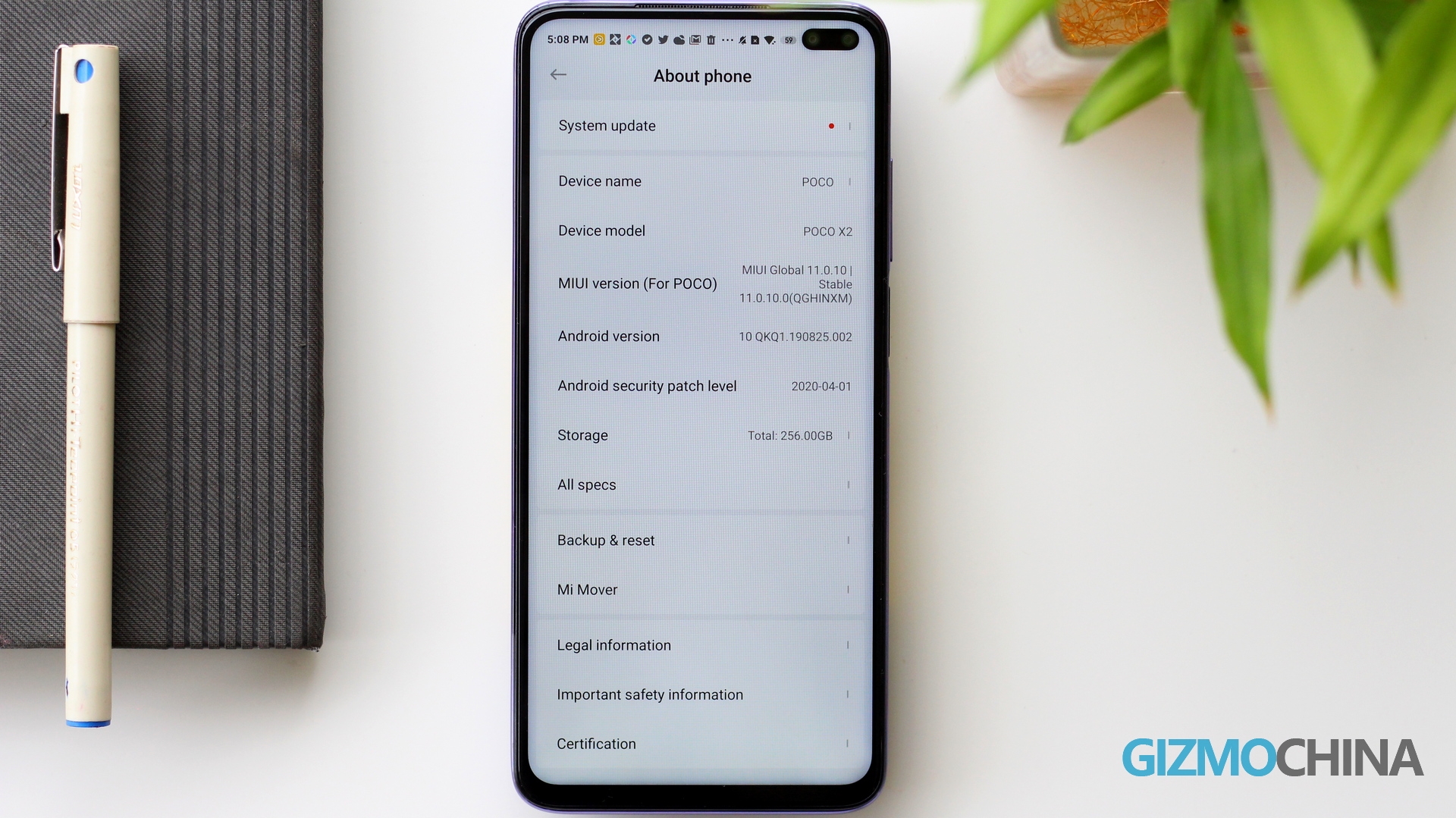
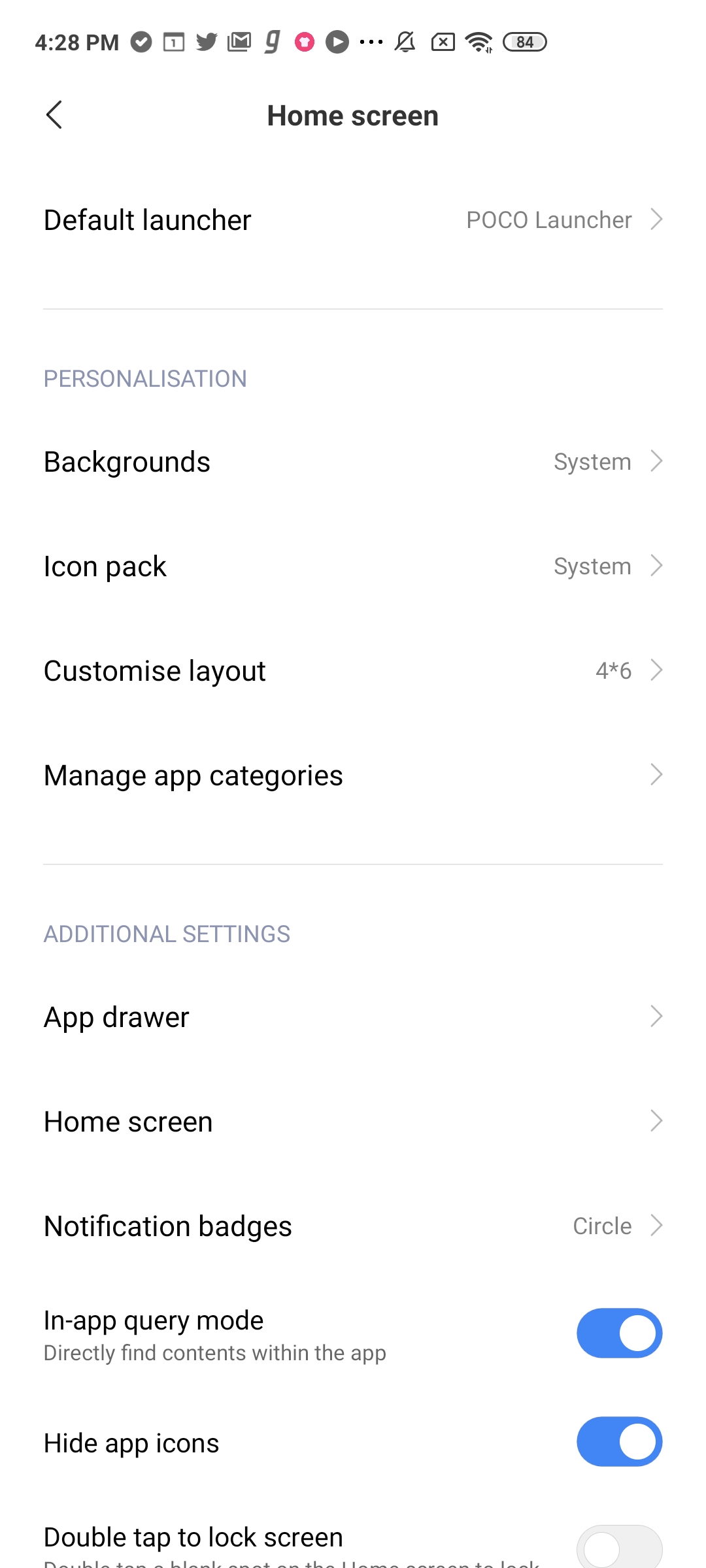
The Poco X2 came with stable Android 10 out of the box with the Poco launcher on top. The phone has received several updates since I started using it. It was initially running MIUI 11.0.4 based on Android 10 with the January security patch. But currently, it’s got the MIUI 11.0.10 stable update with the Android 10 and April 2020 security patch.
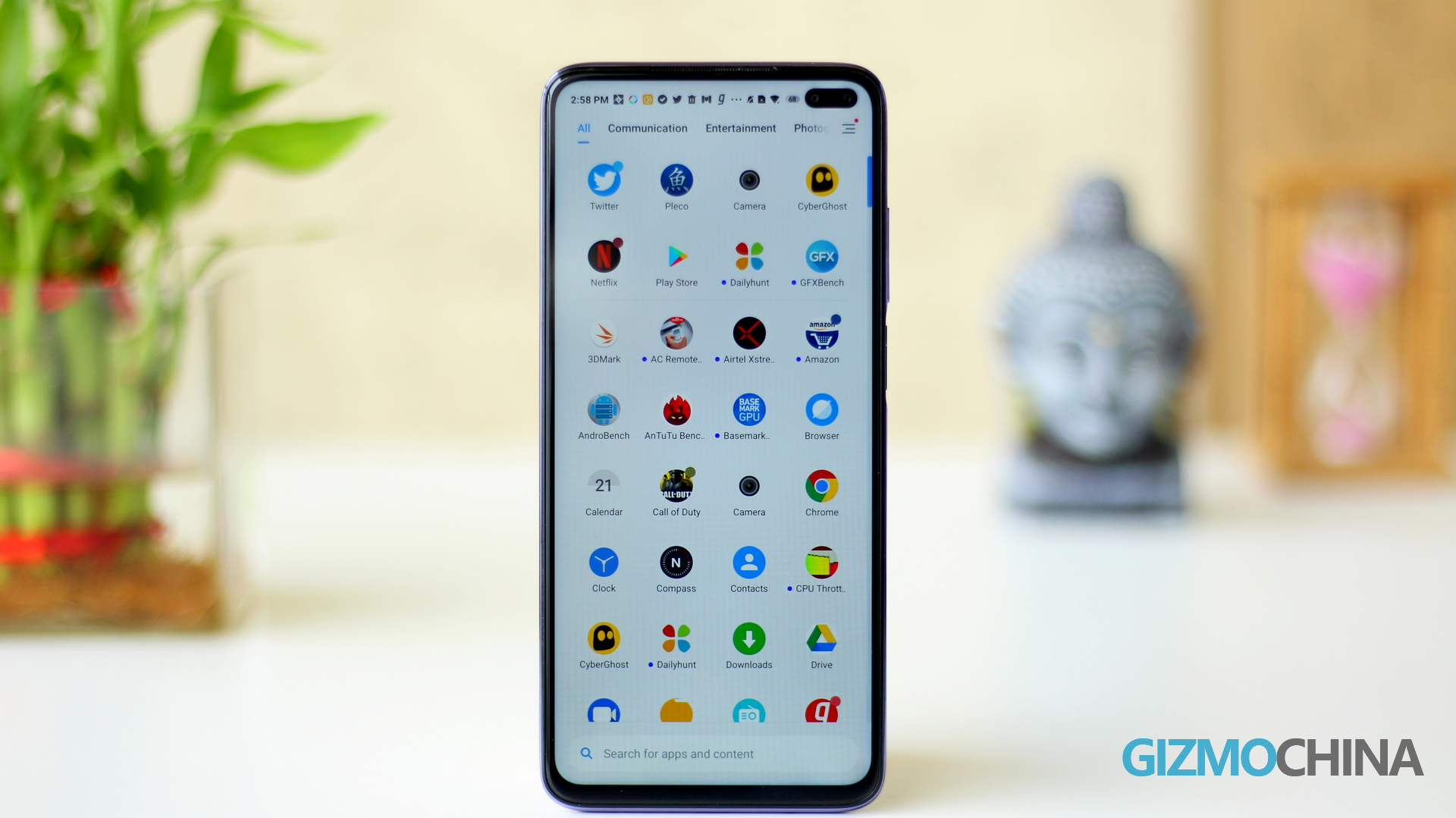
As mentioned above, apart from the occasional jitters while scrolling, the UI is responsive and useful. You do get a bunch of pre-installed software on the device – just like any other MIUI smartphone. But you can easily uninstall third-party apps like Facebook and Messenger. Note that Xiaomi’s apps like Mi Pay, Mi Video, etc. cannot be uninstalled from the device.
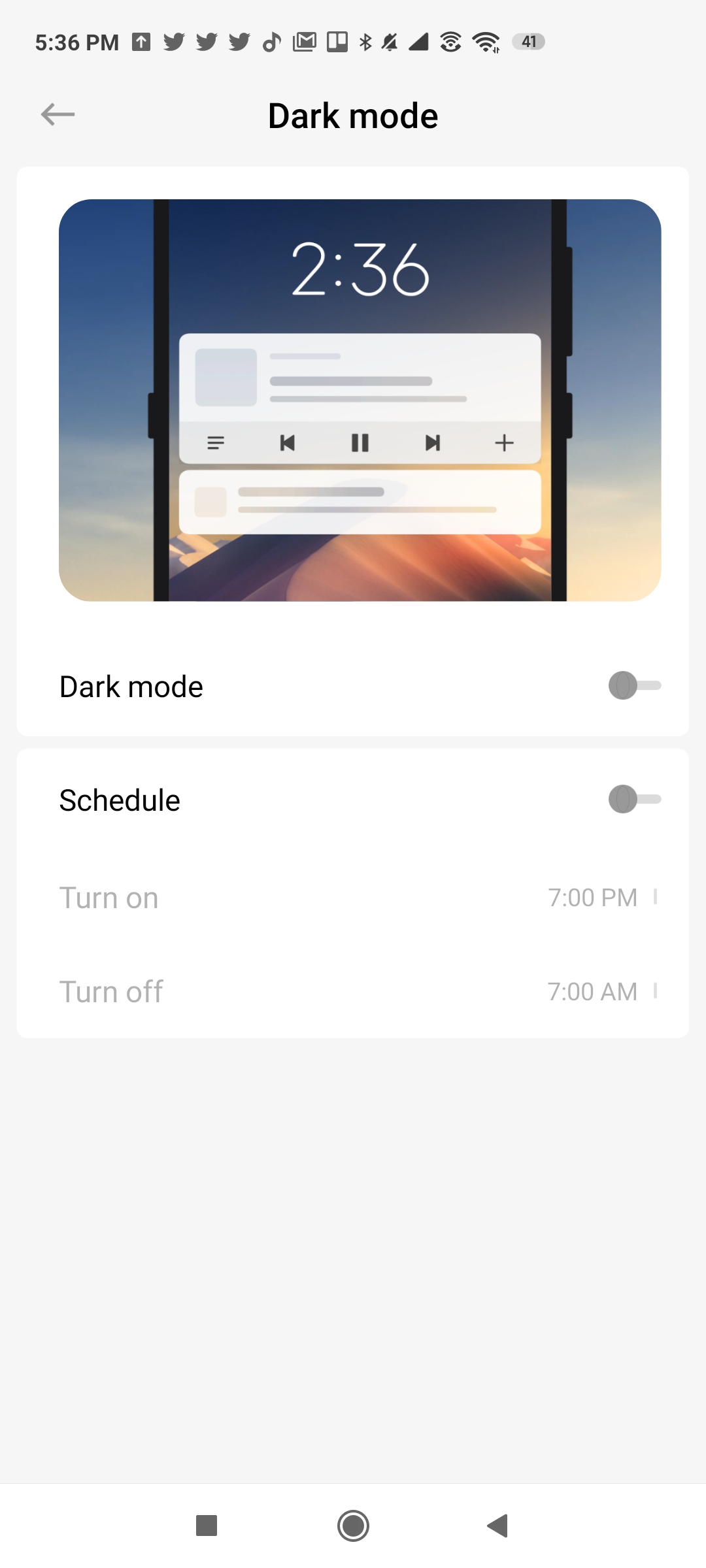
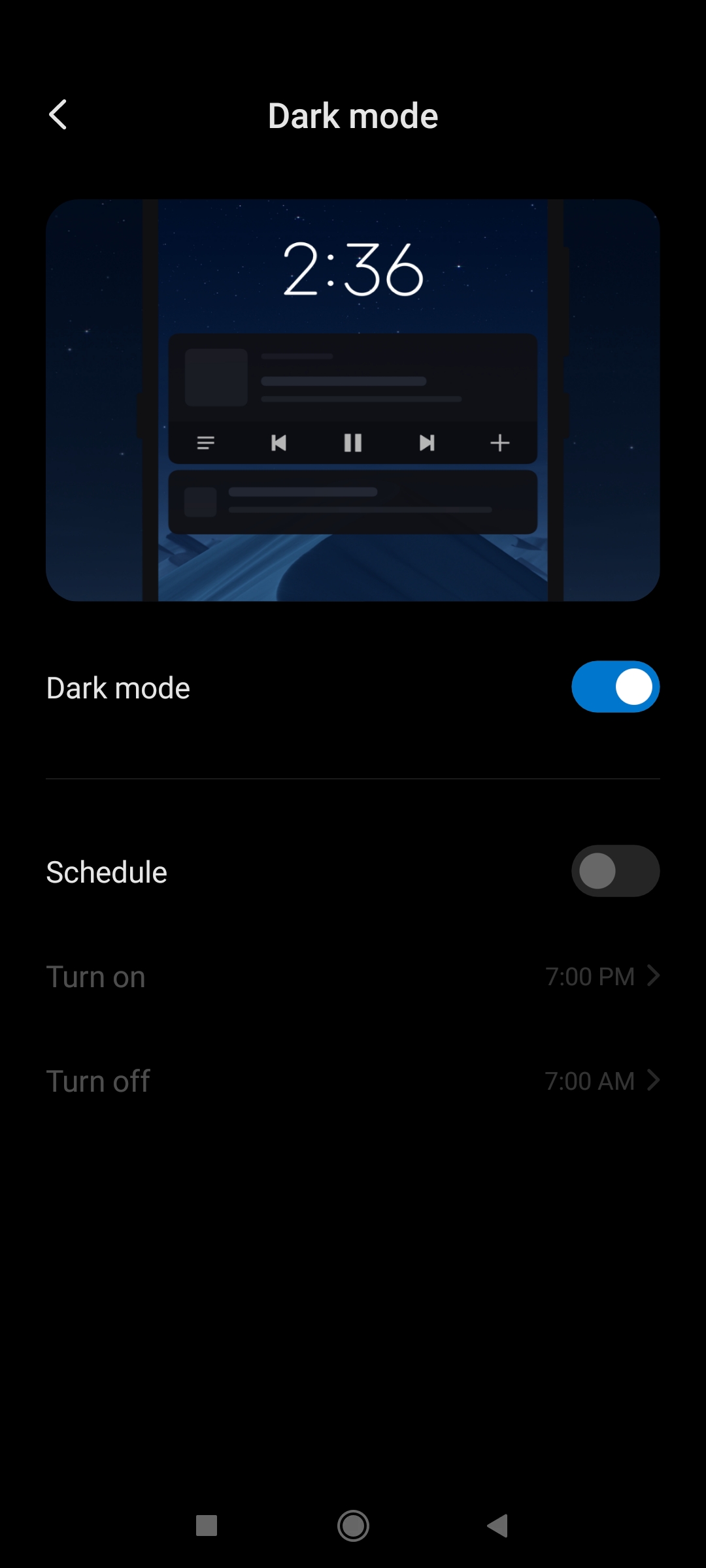
You also get a system-wide dark mode which I personally like.
1 of 6
While MIUI is not one of my favorite UIs, it still has a lot of customization options to tweak the phone according to your liking. So if you don’t like something, you can easily customize it.
Poco X2 Camera
The Poco X2 features a versatile camera setup led by a 64MP Sony IMX686 sensor with 0.8μm pixels, PDAF, and f/1.89 aperture. There are three more camera sensors with different functions. The 8MP Ultrawide camera comes with f/2.2 aperture and 120-degree FoV, the 2MP f/2.4 macro camera is ideal for close up shots (2-10cm), and there’s a 2MP portrait camera too. Note that the phone doesn’t have OIS, so it relies on software-based stabilization.
Main Camera 64MP – 16MP binned
In the regular mode, you get 16MP binned photos, which are pretty sharp and colorful. The Poco X2 doesn’t try to oversaturate the images and gives you colors that are pretty close to real life. If you are used to saturated photos, X2’s samples might come off as a bit dull, but note that you’d be getting life-like colors in them.
Poco X2’s 64MP camera can capture rich colors
The dynamic range is good and the phone manages the dark as well as shadow areas pretty well. When there’s ample light, the Poco X2 delivers crisp photos with good colors.
But in some cases – like that of landscapes, you might feel the 16MP binned photos don’t have enough details. In such situations, you can simply switch to the 64MP ultra HD mode for landscapes.
64MP mode
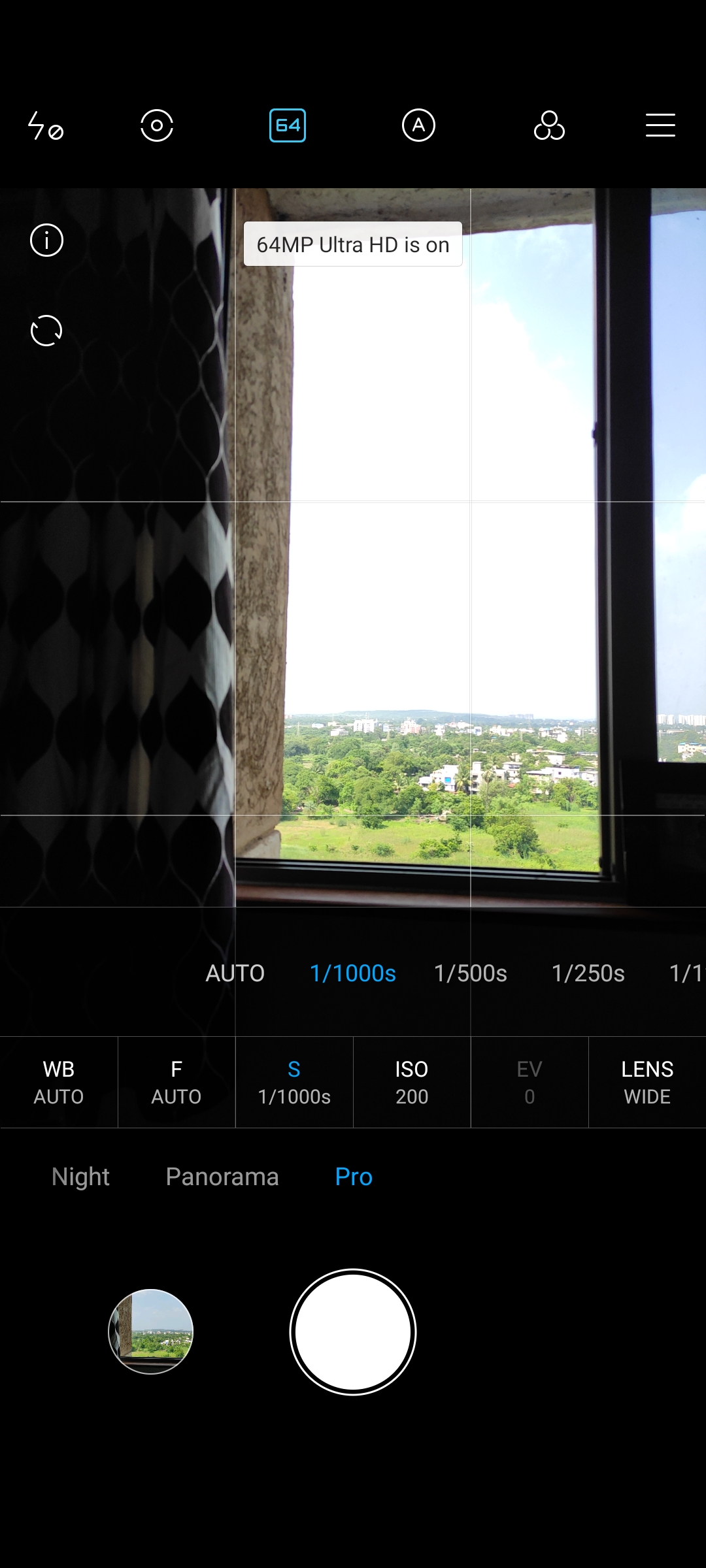
The 64MP mode captures significantly more details than the regular photo mode. This is especially true when the image has a lot of data, like in the case of landscapes. You can clearly see the difference in the image quality between the two modes, and I would recommend switching to 64MP whenever you are taking a landscape shot.
Poco X2 64MP
Didn’t I say this mode took significantly more details? So it’s not surprising that the resulting images are considerably larger too. So expect the 64MP samples to be around 40-50Mb for landscapes while the regular 16MP binned samples are only around 10Mb for the same image.
Also, note that in most scenarios, the dynamic range was better on the 16MP camera samples than the 64MP ones.
Ultra-Wide Camera
The 120-degree Ultra Wide Angle camera is also pretty useful on the Poco X2. Under ample sunlight, you get a decent amount of details. So you can take really wide samples that bring in more objects into your frame, which wouldn’t have been possible with the regular lens.
Poco X2 Wide Angle
However, the 8MP ultrawide camera is not as sharp as the 64MP shooter. The samples taken from the UW camera had fewer details. Even the colors were a bit muted.
To better understand the difference between the quality of the three photo modes, check out the samples below.
1 of 3
Poco X2 Regular Mode
Poco X2 64MP
Poco X2 Wide Angle
Macro Camera
The macro camera is often a gimmick on some phones, but on the Poco X2, it turned out to be a fun feature. You can go really close to the object (as close as 2cm) to take snaps of objects. It might take a few tries to master the macro mode, but once you figure out the basics, the Poco X2’s macro camera can output detailed and saturated shots. Note that as with other macro cameras, you have to be very steady to capture clear shots of your object.
Poco X2 can take some really good Macro shots!
Portrait
Poco X2 Portrait camera
The portrait mode on the Poco X2 is pretty decent with relatively accurate edge detection. It may not be the best in the market, but it’s good enough for your bokeh shots on social media. You can also adjust the level of blur in real-time – giving you more control over your shots.
Poco X2 Portrait
You also get a well equipped Pro mode on the device for enthusiasts who would like to tinker the camera settings for the perfect shot.
1 of 3
Poco X2 Portrait camera
Poco X2 potrait Camera 2
Poco X2 Pro mode 64MP
Night
The quality of the images becomes considerably lower when the lighting goes down. This isn’t surprising given most cheap mid-range phone cameras struggle with low lighting conditions. However, you’ll find the 16MP binned as well as the 64MP mode to be usable. The night mode does an excellent job of brightening the image but still struggles with details. The ultra-wide-angle mode, unsurprisingly, performs the worst among the other three modes with visibly less detail and sharpness.
1 of 7
Poco X2 Decent Light Regular Photo Mode 01
Poco X2 Low Light Regular Photo Mode
Poco X2 Decent Light 64MP mode
Poco X2 Low Light Wide Angle
You can check out all full-size samples from the Poco X2 from the Flickr album below.
Video
The Poco X2 can shoot videos up to 4K 30 fps. So you get crisp and saturated videos which are well stabilized too, thanks to EIS. However, note that EIS is disabled for 60fps 1080p video shooting. So the resulting video in this resolution can be quite shaky. But in all other modes, including 4K 30fps (there’s no 60fps mode in 4K on the X2), the EIS kicks in and does a fine job at producing shake-free videos.
Poco X2 Final Verdict: Should you buy it?
The Poco X2 is a well-balanced smartphone in the mid-range segment in India. The phone doesn’t try to overdo in any particular segment and hits all the right spots. It has got a good screen, a capable camera, and a long-lasting battery.
Even after the recent price hike, the Poco X2 offers incredible value for your money. Sure, there are other competent smartphones in this price segment (like the Realme 6 Pro or the Redmi Note 9 Pro), but the phone’s incredible aftermarket support from developers and the backing of India’s top smartphone maker for service makes it easy for me to recommend the device to anyone looking for a quality mid-range smartphone around Rs. 18,000.
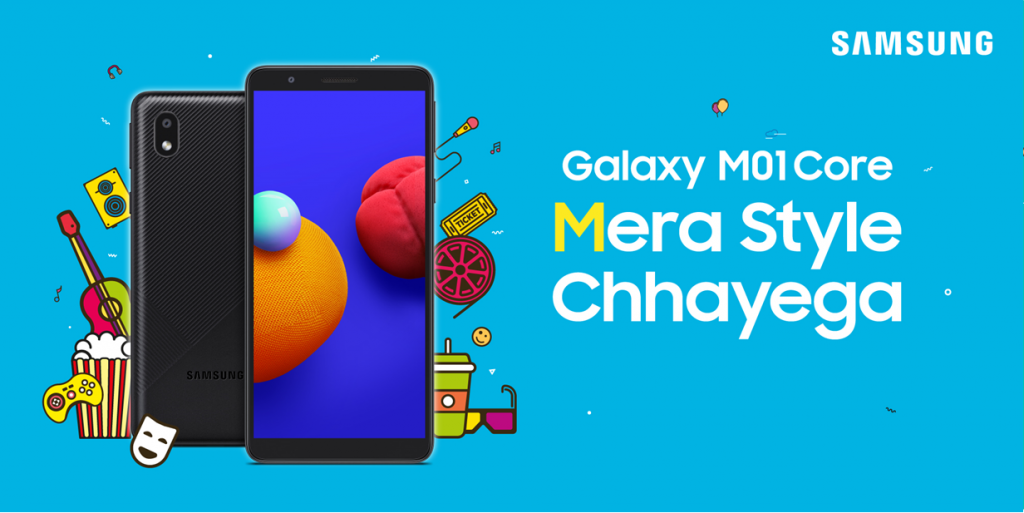
Samsung launches Galaxy M01 Core in India as its cheapest 2020 smartphone in the country. Unlike the company’s regular handsets, this phone runs Android 10 Go edition with One UI on top of it. It is priced at ₹5,499 ($73) and ₹6,499 ($87) for 1GB + 16GB and 2GB + 32G storage variants respectively.
As the OS and price suggest, the Galaxy M01 Core aka Galaxy A01 Core is an entry-level Samsung smartphone powered by MediaTek MT6739 quad-core processor with a maximum clock speed of 1.5GHz. This chipset features 4 x ARM Cortex-A53 cores for CPU and PowerVR GE8100 GPU.
The chip is further paired with 1GB/2GB LPDDR3 RAM and 16GB/32GB eMMC 5.1 storage with support for microSD card. On the front, the phone sports a 5.3-inch HD+ TFT LCD panel with 18:9 aspect ratio and a 5MP selfie camera above it.
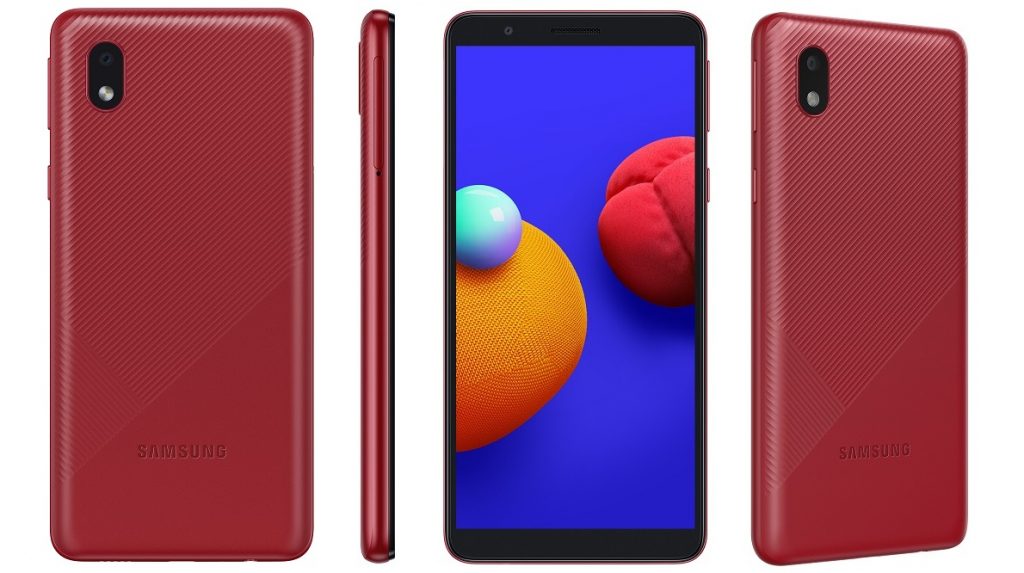
Whereas, the back of the handset features an 8MP primary camera paired accompanied by an LED flash. The device is entirely made of plastic with patterns on the rear panel for better grip.
1 of 3
Samsung Galaxy M01 Core Red
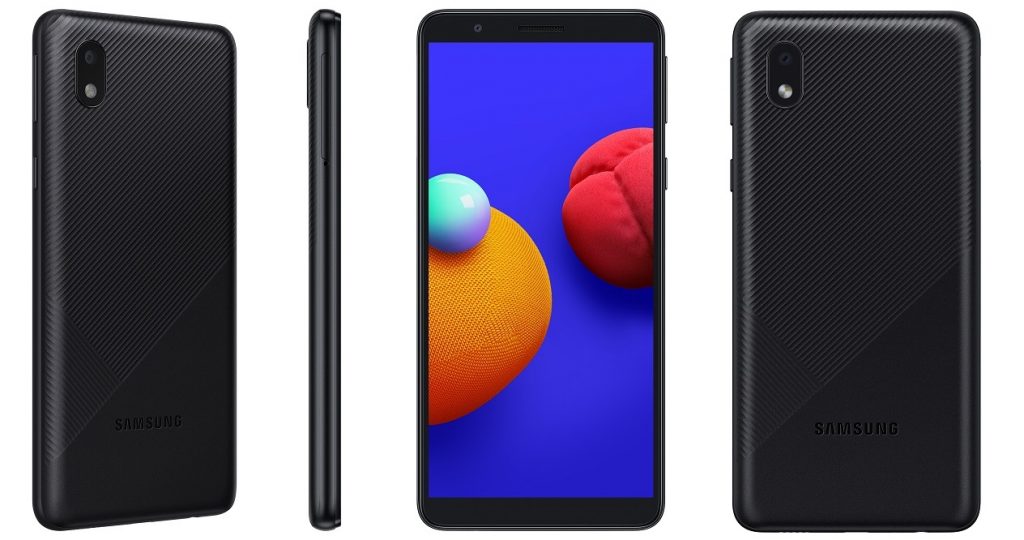
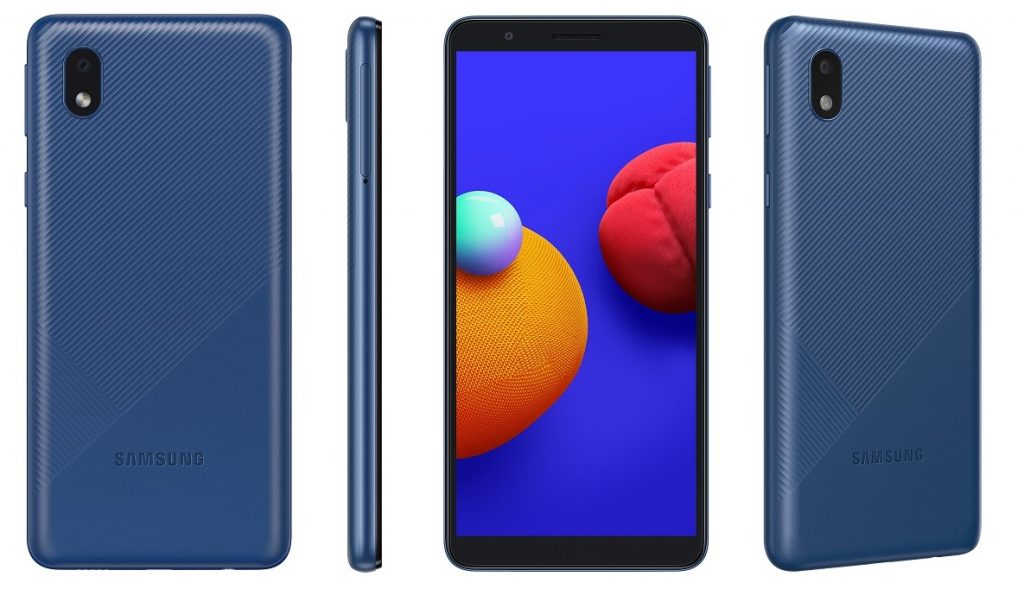
Other features of the phone include 4G, VoLTE, 2.4GHz WiFi, Bluetooth 4.2, 3.5mm headphone jack, MicroUSB port, and a 3,000 mAh battery. Lastly, the device comes in three color options namely Red, Black, and Blue.
The Galaxy M01 Core will be available to purchase across India starting July 29 from Samsung Opera House, Samsung online store, offline retailers, and leading online portals.
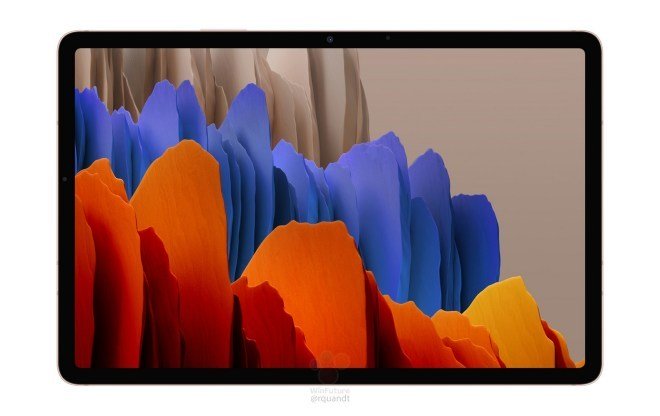
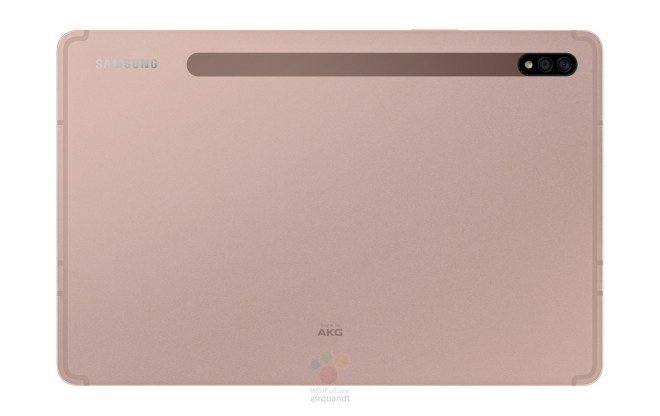
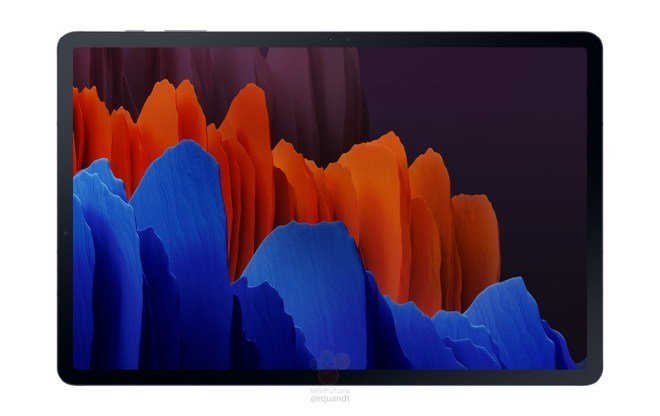
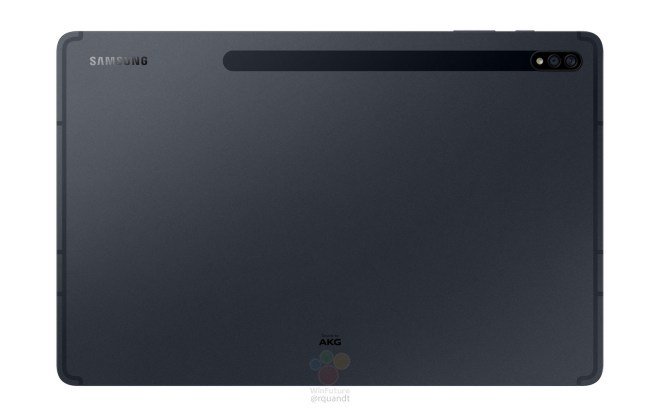
Samsung is soon going to announce the Galaxy Tab S7 and Galaxy Tab S7+ flagship tablets. Ahead of the launch, Winfuture.de has shared leaked renders and specifications of the Tab S7 and Tab S7 Plus tablets. The Galaxy Tab S7 series will rival with the powerful tablets form Apple and Microsoft.
Samsung Galaxy Tab S7 and Tab S7+ specifications
The Galaxy Tab S7 has an 11-inch LTPS IPS LCD screen that offers 1600 x 2560 pixels resolution, 274ppi pixel density, 500nits brightness, and 120Hz refresh rate. It has a side-mounted fingerprint scanner.
Samsung Galaxy Tab S7Samsung Galaxy Tab S7
The advanced Galaxy Tab S7 Plus has a 12.4-inch S-AMOLED display that produces 1752 x 2800 pixels resolution, 287ppi pixel density, 420nits brightness, and 120Hz refresh rate. The AMOLED screen is embedded with a fingerprint sensor. Both tablets come with the improved S Pen stylus with 9 milliseconds latency that promises real pen-like experience.
The Galaxy Tab S7 and Tab S7 Plus feature the 3.09GHz Snapdragon 865 Plus flagship chipset. The presence of Snapdragon X55 modem brings support for 5G connectivity. Both devices have LPDDR5X RAM, at least 128 GB of storage, and a microSD card slot. The Tab S7 has a 7,040mAh battery whereas the Galaxy Tab S7+ edition has a larger 10,900mAh battery. These tablets ship with 15W charger. However, they can support up to 45W fast charging.
Samsung Galaxy Tab S7+Samsung Galaxy Tab S7+
The rear side of the Galaxy Tab S7 features a dual-camera setup that includes a 13-megapixel main lens with f/2.0 aperture and an f/2.2 aperture 5-megapixel ultrawide shooter. Both tablets support 4K video shooting at 30fps. There is an f/2.0 aperture 8-megapixel camera on the front side of the Tab S7 and S7 Plus.
The Galaxy Tab S7 series will be available with a new keyboard cover with a built-in trackpad. The other features of the Tab S7 and Tab S7+ include Wireless DeX for desktop experience, AKG-tuned quad speakers with Dolby Atmos support, 5G, Wi-Fi 802.11ax, Bluetooth, GPS, ANT and USB-C. The Tab S7 measures 6.34mm in thickness and it weighs 495 grams whereas the Galaxy Tab S7 Plus measures 57mm in thickness and weighs 590 grams. Both models are expected to come in color editions such as Mystic Black, Mystic Bronze, and Mystic Silver. The Galaxy Tab S7 and Tab S7+ are expected to debut on Aug. 5 along with Galaxy Note20 series, Galaxy Z Fold 2, and Galaxy Buds Live.
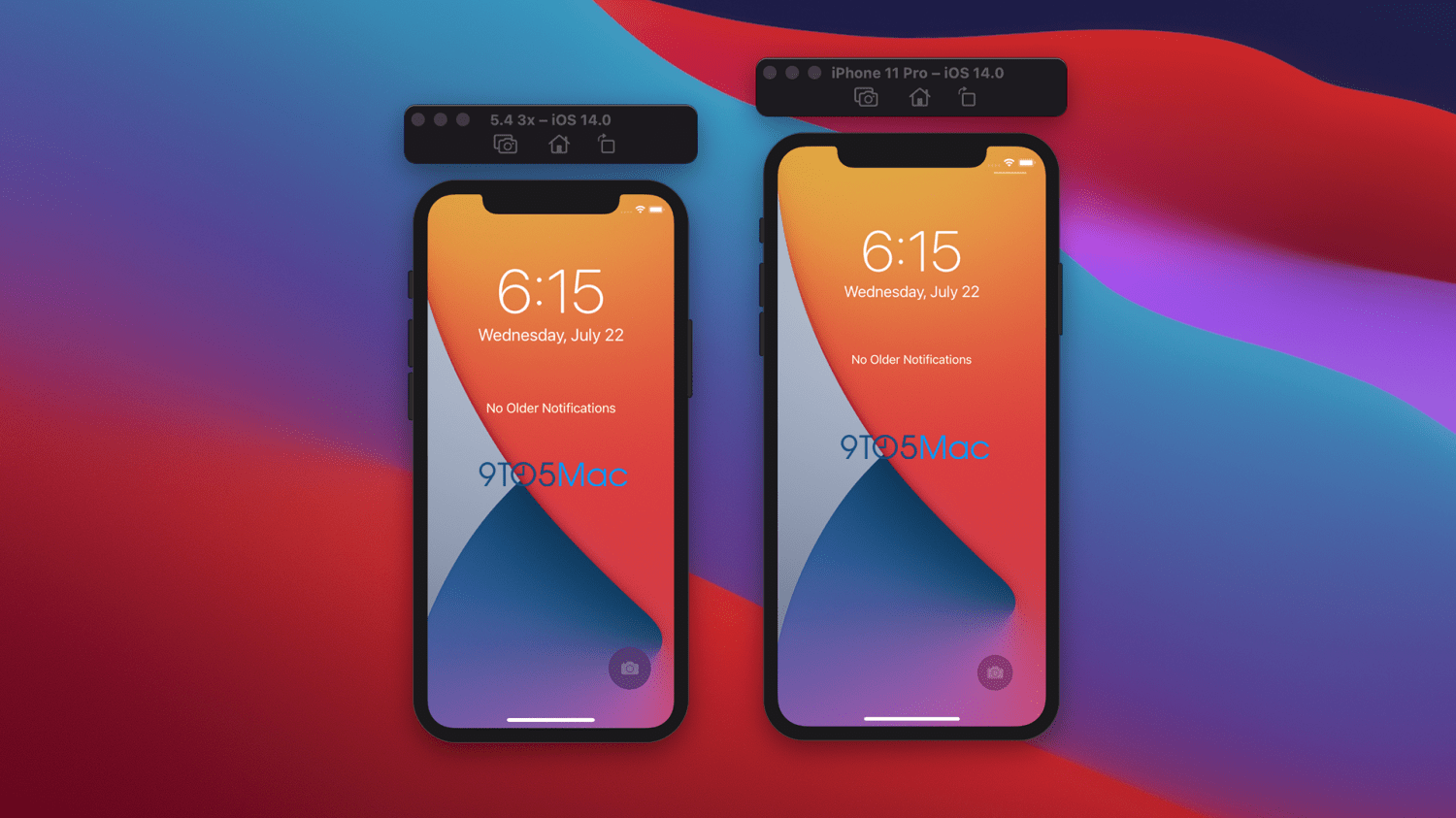
Apple has released its new iOS 14 Developer Beta 3 and along with the newer update, the company has also revealed the upcoming 5.4-inch iPhone 12 model. It showcases the newly launched iOS 14 is ready to work on devices with smaller screens.
Folks at 9to5Mac forced the iOS Simulator to run at a screen resolution of 960 x 2079 pixels and the interface worked correctly. This confirms that iOS 14 is now ready to power 5.4-inch iPhones. The report adds that running the iOS simulator on even smaller resolutions crashed it.
The iPhone in question is the upcoming iPhone 12 which is expected to come with a 5.4-inch display. At the above-mentioned screen resolution, the newer iPhone models could offer more pixel density than current-generation models.
Recently, it was revealed that all the iPhone 12 models launching this year will come with an OLED display panel, completely ditching the LCD panels. There could be four variants this time, including iPhone 12, iPhone 12 Max, iPhone 12 Pro, and iPhone 12 Pro Max.
The standard iPhone 12 will have a 5.4-inch display while the Max and Pro models will have a 6.1-inch screen. The top-end model in the form of the iPhone 12 Pro Max will reportedly have a 6.7-inch display.
Despite not including the power adapter and Earpods in the box, the pricing is expected to go up, mainly because of 5G. Reports indicate that the pricing for the base model in the iPhone 12 series is expected to be $50 more, starting at $749.
As per the reports, the launch of next-generation iPhone could take place in September, possibly on 8th September but all the models may not be available for sale the same month. Apple could start selling one model in September and delay the sales for other models by a month or so.
The Huawei Maimang 9 5G has gone official today in China. The 5G-enabled handset has arrived as the successor for the Kirin 710 powered Maimang 8 that debuted last year in June. The Maimang 9 has arrived with a humungous punch-hole display, a large-sized battery, and a 64-megapixel triple camera system.
Huawei Maimang 9 5G specifications
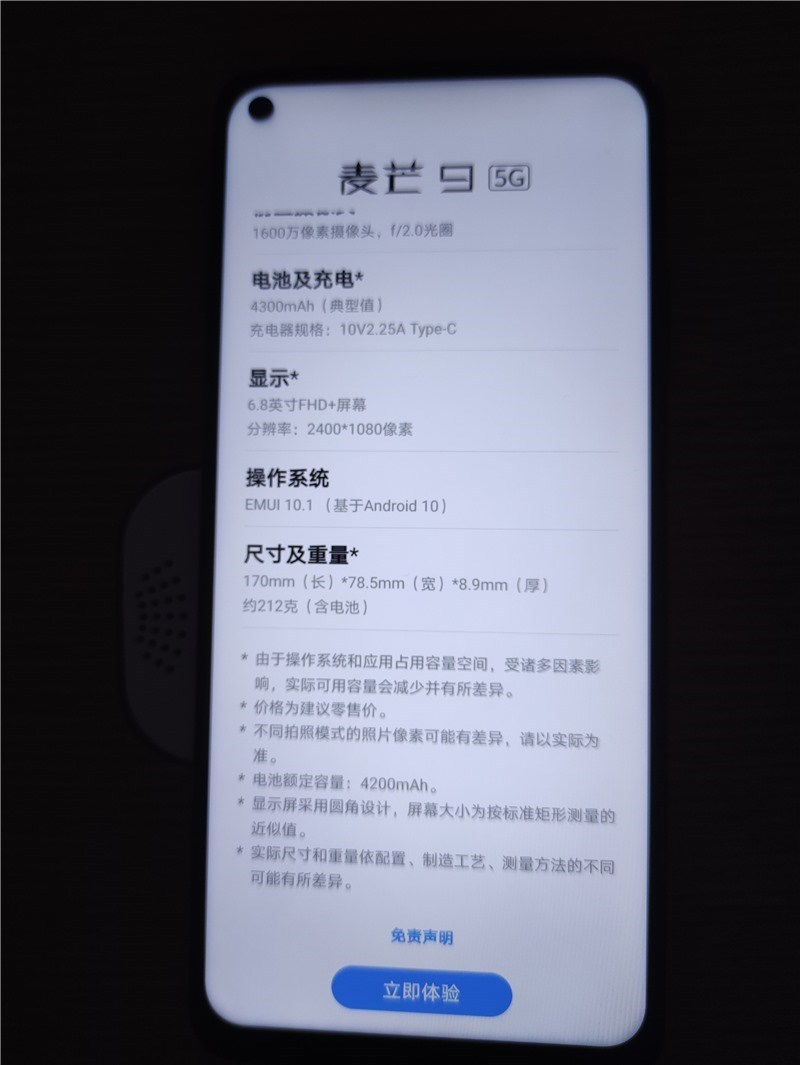
The Huawei Maimang 9 5G features an ergonomically designed 3D curved back. It has a thickness of around 8.9mm and it weighs 212 grams. The Maimang 9 comes with a 20:9 aspect ratio supporting display of 6.8 inches. The screen delivers 1080 x 2400 pixels Full HD+ resolution and the upper-left positioned punch-hole houses an f/2.0 aperture 16-megapixel selfie snapper. According to Huawei, the phone offers a screen space of 90.3 percent.
Photography is one of the major strengths of the Maimang 9 5G. It features an AI-powered triple camera setup on its back. The f/1.79 aperture 64-megapixel primary lens is assisted by an f/2.2 aperture 8-megapixel lens with 120-degree FOV, and a2-megapixel depth sensor with f/2.4 aperture. The triple cameras offer features like EIS, super night scene mode, and 4K video recording.
The Huawei Maimang 9 5G has Dimensity 800 5G chipset by MediaTek onboard. It brings support for dual-mode SA/NSA 5G networks. The device houses a 4,300mAh battery that supports 22.5W fast charging. The EMUI 10.1 based Android 10 OS comes preloaded on the smartphone. For additional, it has a microSD card slot and it also features a side-facing fingerprint scanner.
Huawei Maimang 9 pricing and availability
Huawei Maimang 9 5G will go on sale in China on Aug. 7. Qijing Forest (gradient green), Sakura Snow Clear Sky (gradient white), and Magic Night Black are the three color editions of the smartphone. The 6 GB RAM + 128 GB storage of the Maimang 9 is priced at 2,199 Yuan (~$314) and the higher 8 GB RAM + 128 GB storage model costs 2,399 Yuan (~$343).
Huawei had announced its Enjoy Tablet in November 2018 and now the company is hearing up to launch its successor in its home market China, which is likely to be called Huawei Enjoy Tablet 2.
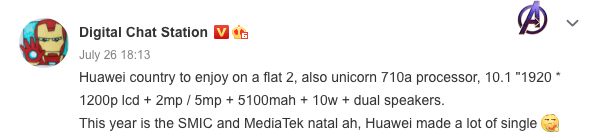
Ahead of its official announcement, the upcoming tablet’s key specifications have leaked online. The leak reveals that the device will come with a 10.1-inch LCD display, offering 1920 x 1200 pixels screen resolution.
The display size is the same as the previous-generation model but there’s a slight increase in the screen resolution. The Huawei Enjoy tablet featured a 10.1-inch display with 1920 x 1080 pixels resolution.
It is also revealed that the device will be powered by the company’s own Huawei HiSilicon Kirin 710A chipset. This is the same chipset that powers the recently launched Honor Tab 6 and Tab X6. This is an upgrade compared to the Kirin 659 chipset on its predecessor.
As for the camera department, the tablet could feature a 5-megapixel camera sensor on the back and a 2-megapixel front-facing snapper. It is reportedly powered by a 5,100mAh battery with 10W charging support — same as the original Enjoy tablet.
For those who are unaware, Kirin 710A is the first chipset from Huawei which is being mass-produced locally by SMIC in China. The chipset is almost similar to the Kirin 710 but is manufactured using the 14nm FinFET process instead of 12nm node.
While the company has not yet revealed the official launch date for the Huawei Enjoy Tablet 2, we expect the launch to take place pretty soon, in the coming weeks, given that the specs have already surfaced online.
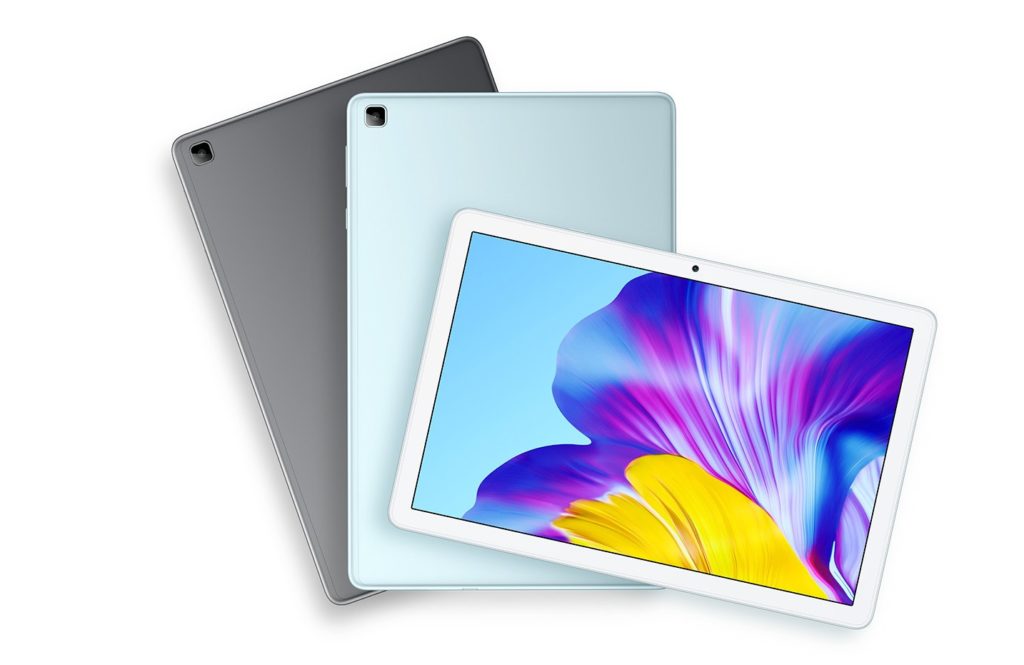
A few days back, Honor launched 2020 Ryzen Editions of MagicBook Pro and MagicBook 14/15 in China. At the same event, the brand also unveiled two new tablets and one of them was Honor Pad 6. This tablet was scheduled to go on sale on July 28. But due to harsh weather conditions and flood, the company has officially delayed the sale.
Honor Pad 6, which we called Honor Tab 6 during its launch is powered by HiSilicon Kirin 710A manufactured by SMIC. It comes in a number of storage options and is also available in both only WiFi as well as 4G variants.
The tablet went on sale for the first time on the launch day (July 16) itself for a limited quantity. However, the first official sale was scheduled for July 28, which happens to be tomorrow. But last night, the brand officially announced on Weibo regarding the pushing of sale date to August 14 on account of the weather.
Also, the post notes that customers who pre-ordered can cancel to avail refund if they don’t want to wait that long. But if they can cope up with the delay, the brand will offer 50 yuan ($7) discount coupon as an apology.
Having said that, here’s the pricing of the new Honor Pad 6 in China.
Huawei, which has been facing a lot of heat from the Western market, especially the United States, is now facing a similar situation with one of the largest markets in the world and Asia’s third-largest economy — India.
According to the report from The Economic Times, Huawei Technologies has cut down its India revenue target for the on-going year by up to 50 percent. On top of it, the Chinese giant is also laying off more than half of its staff in the country.
The development comes amid growing anti-Chinese sentiments in the Indian market following the India-China border dispute about a month ago. Further, the government has also asked telecom firms to use locally-made equipment for 4G instead of Chinese.
As per the report adds that Huawei is now targeting $350-500 million in revenue from the Indian market for the year 2020. Previously, the company was aiming for around $700-800 million in revenue from India.
The Chinese telecom equipment giant is also cutting around 60 to 70 percent of the staff in India. However, the report adds that people employed in Research & Development as well as Global Service Centre won’t be affected by this move.
Amid growing tensions with China, the Indian government has banned 59 Chinese applications in the country, including popular short-video social media platform TikTok. In response, China has alleged that the move is a violation of WTO policies.
Samsung had been dominating the Indian smartphone market for many years, but the was outperformed by Xiaomi, which has been holding the lead position in the Indian smartphone market for several quarters now.
In the last quarter ending in March, i.e. Q1 2020, the South Korean giant had slipped to the third position in India, after Xiaomi and Vivo. But the company has managed to come back to the second position. Not only that, but the company has also made substantial growth and is closing the gap to again become the leading brand.
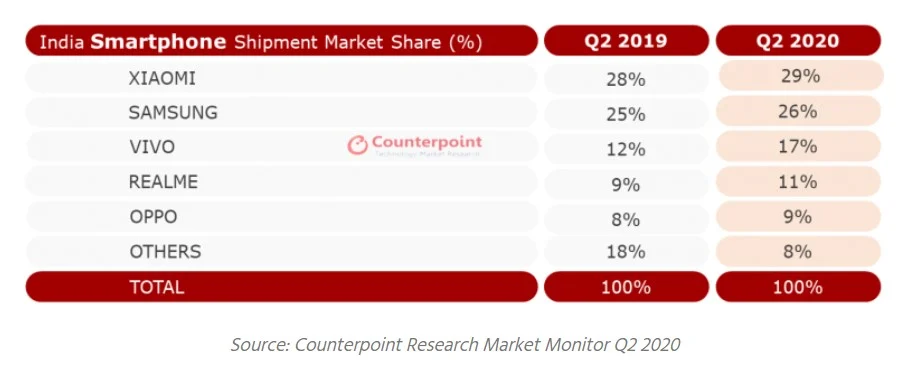
According to the data released by Counterpoint Research, Samsung grabbed 26 percent of the Indian smartphone maker share in Q2 2020, just three percent short of Xiaomi, which holds a 29 percent market share.
The numbers show major improvements for Samsung, which, according to IDC, had a 15.6 percent market share in Q1 2020. Samsung had almost half the market share of Xiaomi, which led the market with a 31.2 percent share.
In Q2 2020, Vivo, Realme, and OPPO stood at third, fourth, and fifth position with 17 percent, 11 percent, and 9 percent market share, respectively. In the top five smartphone brands, Samsung is the only non-Chinese company.
However, the report notes that the shipments for Samsung in Q2 2020 halved to just 18 million units, mainly because of the nation-wide lockdown for over two months as an effort to curb the spread of COVID-19. To compare, the company had shipped over 31 million units in Q1 2020.
In the premium and ultra-premium smartphone segments, OnePlus and Apple grabs the lead position respectively. However, none of them made it to the top five smartphone brands in the market in the second quarter.
Samsung is at an advantage in the Indian market and it won’t be surprising if the company again becomes the leading smartphone brand in this quarter because of the anti-Chinese sentiments in India.
Samsung is known for its massive portfolio of smartphones. The company offers handsets in every price segment. As 5G is being deployed around the world, the South Korean tech giant is readying cheap affordable 5G smartphones. The chaebol has already launched devices like Galaxy A51 5G and Galaxy A71G but it is not going to stop with them. The Galaxy A42 5G, which came into light last month has been now spotted at China’s 3C certification bureau.
The upcoming Galaxy A42 5G is expected to be the cheapest 5G smartphone from the house of Samsung. Its is said to release sometime in 2021 according to a report by SamMobile. The handset is reported to arrive with 128GB internal storage in three color options namely Gray, Black, and White.
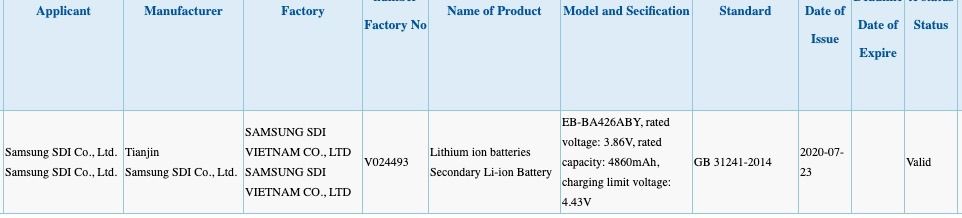
Now, the 3C listing of the handset spotted by 91Mobilesreveals it to feature a 4,860 mAh (rated capacity) battery with model number EB-BA426ABY. That means the typical value will be 5,000 mAh and the company will advertise the same, which is lesser than the battery present in the forthcoming Galaxy M31s
As per the previous report, the Galaxy A42 will come in both 4G and 5G (SM-A426B ) variants. Since it has been certified well before its launch schedule of 2021, we can expect Samsung to debut the 4G variant earlier in countries without 5G infrastructure.
Lei Jun, founder and CEO of Xiaomi had recently teased the arrival of a new flagship smartphone — Mi 10 Pro Plus. As the name itself indicates, the phone is an upgraded variant of the existing flagship — Xiaomi Mi 10 Pro.
Today, he has shared a new post on Weibo related to the launch of Mi 10 Pro Plus. From the post, it seems that the company is planning to host an in-person launch event in China. Further, it appears that Lei Jun himself will host the launch event.
Lei Jun, Founder and CEO of Xiaomi
This is an exciting development given that the in-person launch events have not been taking place for more than four months now due to the COVID-19 pandemic. But as most countries are opening up, there’s a possibility of physical launch events.
However, do note that this is not yet confirmed and it’s speculation at this point in time, based on the post by the company’s CEO on Weibo. We expect more information regarding this in the coming days.
As for the smartphone, Lei Jun has hinted about several features that could be a part of the upcoming Mi 10 Pro Plus smartphone. The features include Dual Speakers, high refresh rate display, 3.5mm headphone jack, NFC, Infrared sensor, 30x and more zoom support, Front and rear optical sensors, VC heat sink, 4500mAh battery, and wireless charging.
It’s likely that the Mi 10 Pro Plus will come with a 120Hz AMOLED display and pack Snapdragon 865 chipset or the newly announced Qualcomm Snapdragon 865 Plus SoC. It will have a quad-camera setup on the back with 100 MP primary sensor, optimized for better zoom capabilities.
It will be running the Android 10 operating system out-of-the-box with MIUI 12 on top. The phone, powered by a 4,500mAh or bigger battery, will likely have support for 120W Mi Turbo fast charging technology.
We expect Xiaomi to share more details about this smartphone as well as shed some more light on the phone’s launch event. To know more, we will have to wait for a few more days.
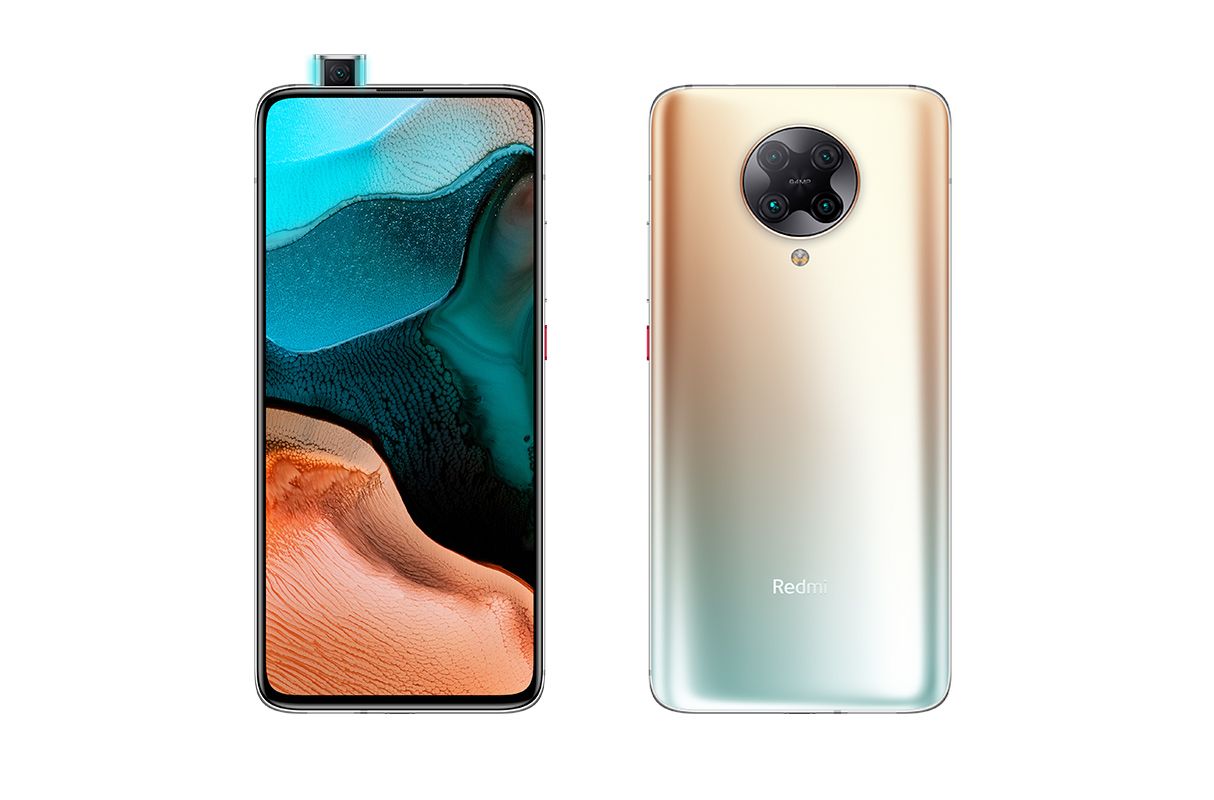
Yesterday, Redmi had confirmed that it will be introducing a new color variant called the Aqua Skylight for the Redmi K30 Pro 5G smartphone. The handset is already in four other colors such as Moon White, Sky Blue, Space Grey, and Star Ring Purple. The newly unveiled Aqua Skylight color edition is now up for purchase in the home market.
The Redmi K30 Pro Aqua Skylight has a captivating gradient appeal that appears blue at the button and light orange at the top. A red-colored power key is available on its right spine. The Aqua Skylight color variant is available in options such as 8 GB RAM + 128 GB storage for 2,699 Yuan (~$385), 12 GB RAM + 128 GB storage for 2,999 Yuan, and 8 GB RAM + 256 GB storage for 2,999 Yuan (~$428).
The Redmi K30 Pro 5G is a Snapdragon 865 SoC powered flagship smartphone with 5G support. The handset is equipped with a notch-less display of 6.67 inches. It offers a 20:9 aspect ratio and 1080 x 2400 pixels Full HD+ resolution. The screen is integrated with a fingerprint reader.
The K30 Pro 5G has LPPDR5 RAM and UFS 3.0 / 3.1 storage. There is no microSD card slot on the device The MIUI 11 based Android 10 OS runs on the device. It is backed by a 4,700mAh battery that supports 30W fast charging.
The Redmi flagship phone has a pop-up selfie camera of 20-megapixel. Its rear has a quad-camera system that includes a Sony IMX686 64-megapixel main camera, a 5-megapixel telephoto macro lens, a 13-megapixel ultrawide sensor, and a 2-megapixel depth sensor.
Vivo announced the Vivo S6 5G selfie-focused phone in March in China. It received a good reception in the home market as its sales surpassed 1 million mark in just 2 months. Recent reports have revealed that Vivo may launch the Vivo S7 5G as its successor in August. Today, the Chinese smartphone manufacturer confirmed through Weibo that it will be launching the Vivo S7 5G phone on Aug. 3 at 7:30 PM (local time) in China. A Chinese tipster had recently revealed the key specs of the device. Today, the same tipster shared two leaked images to reveal the design of the smartphone.
The above-shown video released by Vivo confirms the Aug. 3 launch date for the Vivo S7 5G. It also reveals that the smartphone has an ultra-thin design. The front and rear design of the phone is not shown in the video. However, a tipster has revealed some vital information about its appearance.
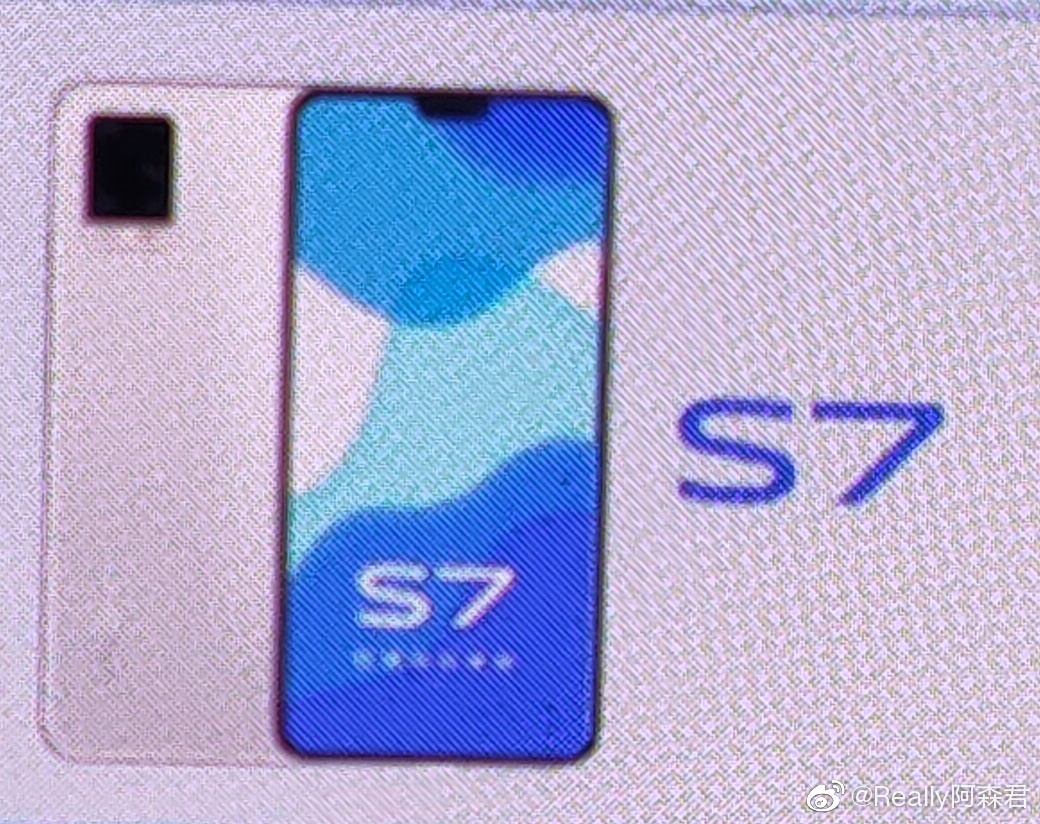
The leaked images shown below show that the Vivo S7 5G will have a wide notch like older phones like the Vivo X21. The rectangle-shaped camera setup placed on the backside of the device looks similar to Vivo X30’s rear camera unit. The handset can be seen sporting an attractive gradient color on its back.
Coming to the front side of the Vivo S7 5G, its display notch houses a 44-megapixel selfie camera with autofocus support. The Chinese text also reveals that the phone is equipped with two front-mounted cameras.
It was revealed last week that the dual selfie camera setup of the Vivo S7 5G has a 44-megapixel main shooter and an 8-megapixel ultrawide sensor. The rear camera system is expected to house three cameras such as a 64-megapixel primary camera, an 8-megapixel ultrawide sensor, and a 13-megapixel portrait lens.
The Vivo S7 5G could be housing a 6.43-inch S-AMOLED display with Full HD+ resolution support and in-screen fingerprint reader. The Snapdragon 765G could be powering the device.
The Vivo S7 5G is now for pre-orders until Aug. 3 through Suning.com in China. There is no word on whether it will be launching outside of China.
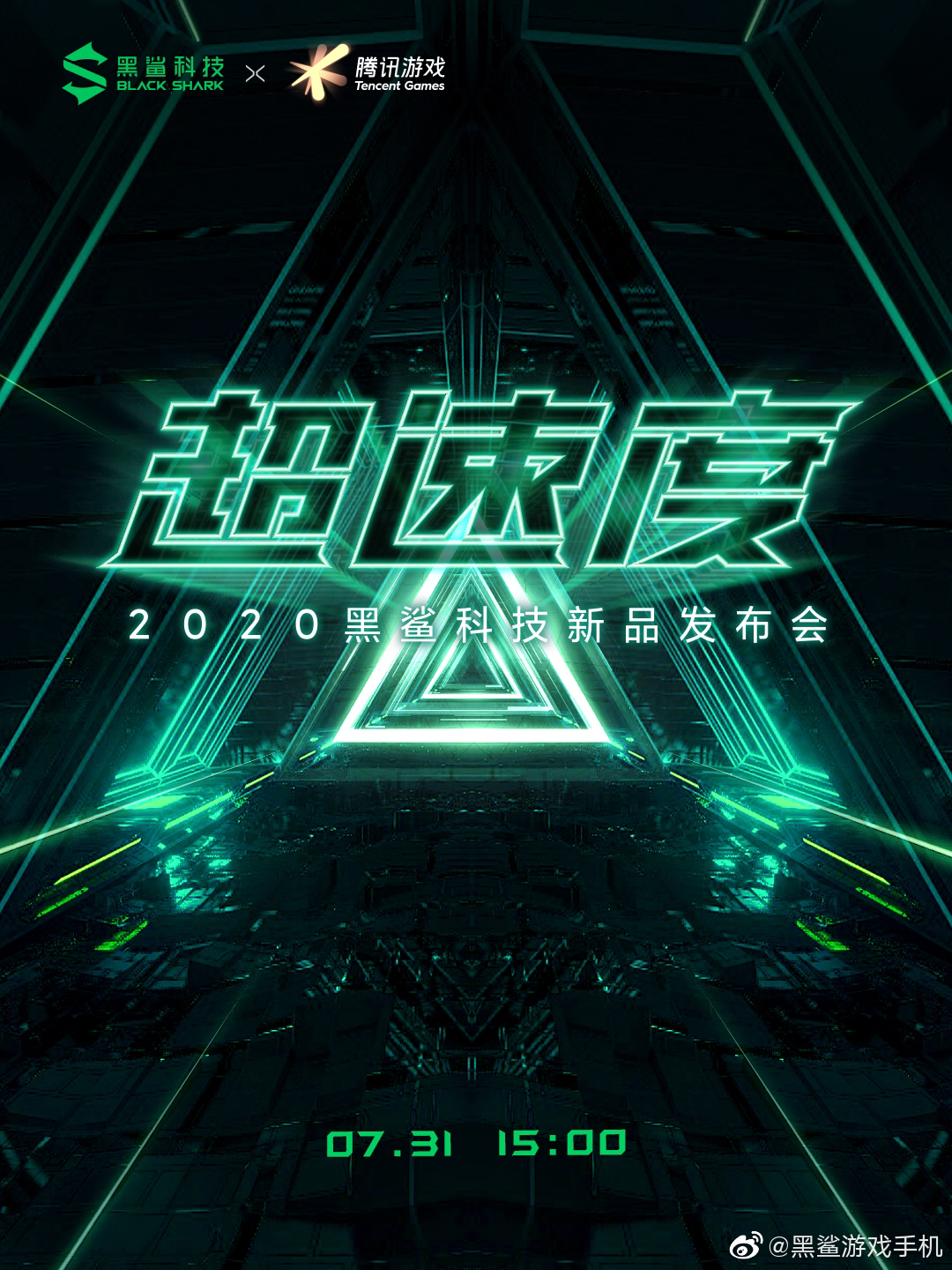
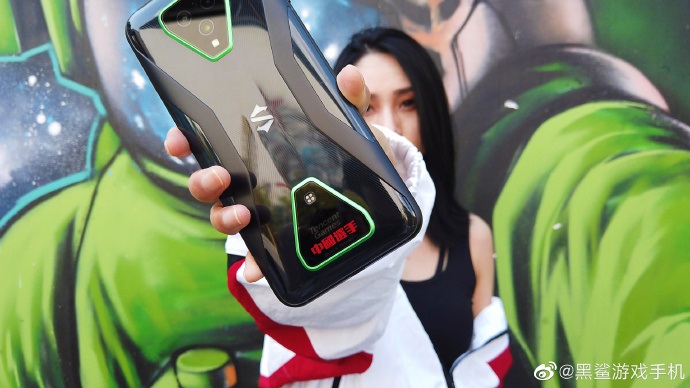
In March, Black Shark unveiled the Snapdragon 865 powered Black Shark 3 and Black Shark 3 Pro gaming smartphones. Earlier this month, Qualcomm unveiled the enhanced Snapdragon 865 Plus chipset. Hence, it was speculated that an updated Black Shark 3 model with SD865+ onboard may go official soon. Last week, Black Shark CEO Luo Yuzhou teased the arrival of the new Black Shark 3S gaming smartphone. Today, the Chinese firm officially confirmed that it will be launching the Black Shark 3S phone in China on July 31.
The poster reveals that the launch event for the Black Shark 3S will be held at 3:00 PM (local time) on July 31. It has no information on the specs of the device.
A recent leak revealed that the company will not be launching an updated version of the Black Shark 3 Pro. The Black Shark 3S will be arriving as an updated edition of the Black Shark 3. Hence, it is unlikely to carry any change in the design. The inclusion of the Snapdragon 865 Plus mobile platform could be the only major change on the Black Shark 3S. Its S-AMOLED screen may support a higher refresh rate.
The Black Shark 3 has a 6.67-inch AMOLED display that offers a 90Hz refresh rate and Full HD+ resolution. The Joy UI based Android 10 OS runs on the Black Shark 3. The SD865 phone has up to 12 GB of RAM and up to 256 GB of internal storage.
It has a front camera of 20-megapixel and a 64-megapixel + 13-megapixel (ultrawide) + 5-megapixel (depth) rear-facing triple camera system. The device is backed by a 4,720mAh battery that supports 65W rapid charging. It has an under-display fingerprint sensor.
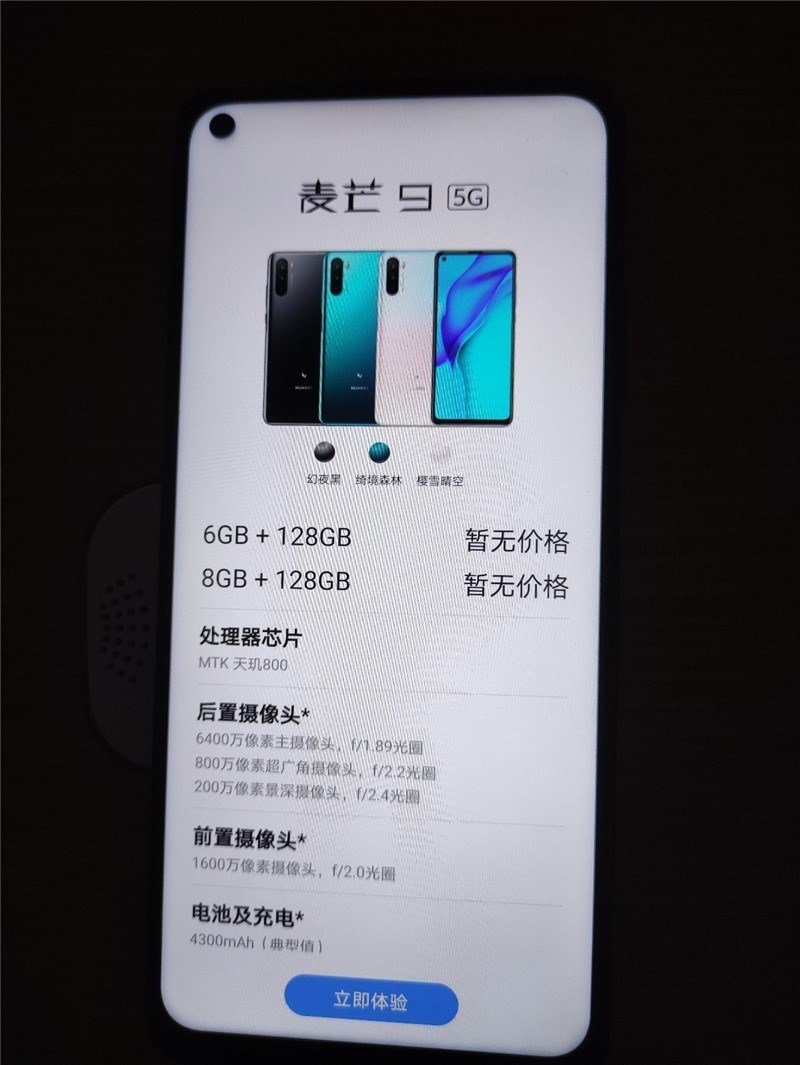
Later today at 3:30 PM (local time) in China, Huawei will be announcing the Huawei Maimang 9 smartphone. Recent reports have revealed the entire specs of the handset. A pair of live shots of the Maimang 9 are now doing rounds on Weibo. The new images have once again revealed the specs of the smartphone.
Huawei Maimang 9 5G specifications
The real images of the Huawei Maimang 9 5G shows that it has a punch-hole screen. The size of the display is 6.8 inches and it supports a Full HD+ resolution of 1080 x 2400 pixels. The device weighs 212 grams and its dimensions are 170 x 78.5 x 8.9mm.
The MediaTek Dimensity 800 5G chipset fuels the device. The leak reveals that the phone will be available in China in two variants such as 6 GB RAM + 128 GB storage and 8 GB RAM + 128 GB storage. The new leak has no information on the pricing of the Maimang 9 variants. It is speculated that it could end up as the cheapest 5G phone from the brand.
The rear-positioned triple camera system of the Huawei Maimang 9 5G has an f/1.89 aperture 64-megapixel main shooter, an f/2.2 aperture 8-megapixel ultrawide lens, and an f/2.4 aperture 2-megapixel depth sensor. The display punch-hole houses an f/2.4 aperture 16-megapixel selfie camera. Its already known that the Maimang 95 has a side-facing fingerprint reader.
The Maimang 9 5G has a 4,3200mAh battery that supports 22.5W fast charging. The phone is loaded with Android 10 OS and EMUI 10.1 UI. The phone will be available in three colors like black, white, and green. Reports have claimed that the other name for the Maimang 9 5G is Enjoy 20s.
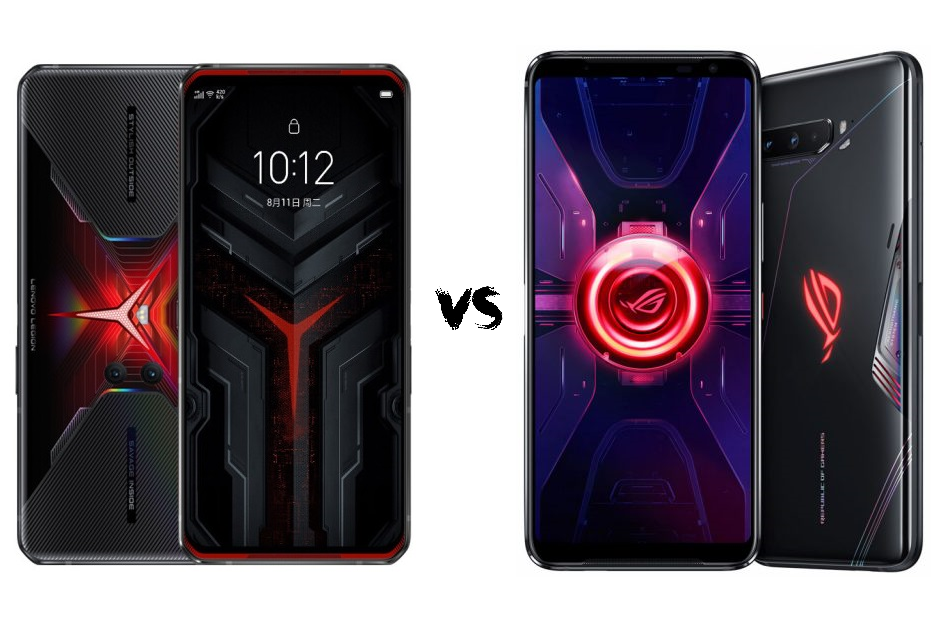
Last week, two flagship gaming smartphones were announced. The first is the Lenovo Legion Phone Duel which is the manufacturer’s first gaming phone, and the other is the ROG Phone 3, ASUS‘ third gaming phone.
Both phones are powerful devices: featuring Qualcomm’s flagship chipset – the Snapdragon 865 Plus processor and packing up to 16GB of LPDDR5 RAM, and up to 512GB UFS 3.1 storage. They also have pretty cool features to make mobile gaming more enjoyable such as 144Hz refresh rates, stereo speakers, and trigger buttons.
For this week’s poll, we want to know which of the two phones you prefer.
Just as the title says – Choose your fighter. Is it the new player in the gaming smartphone scene, the Lenovo Legion Phone Duel? Or is it the ASUS ROG Phone 3, the successor to the former champion? Please take the poll below and let us know. Also, do share in the comment box below why you prefer one over the other.
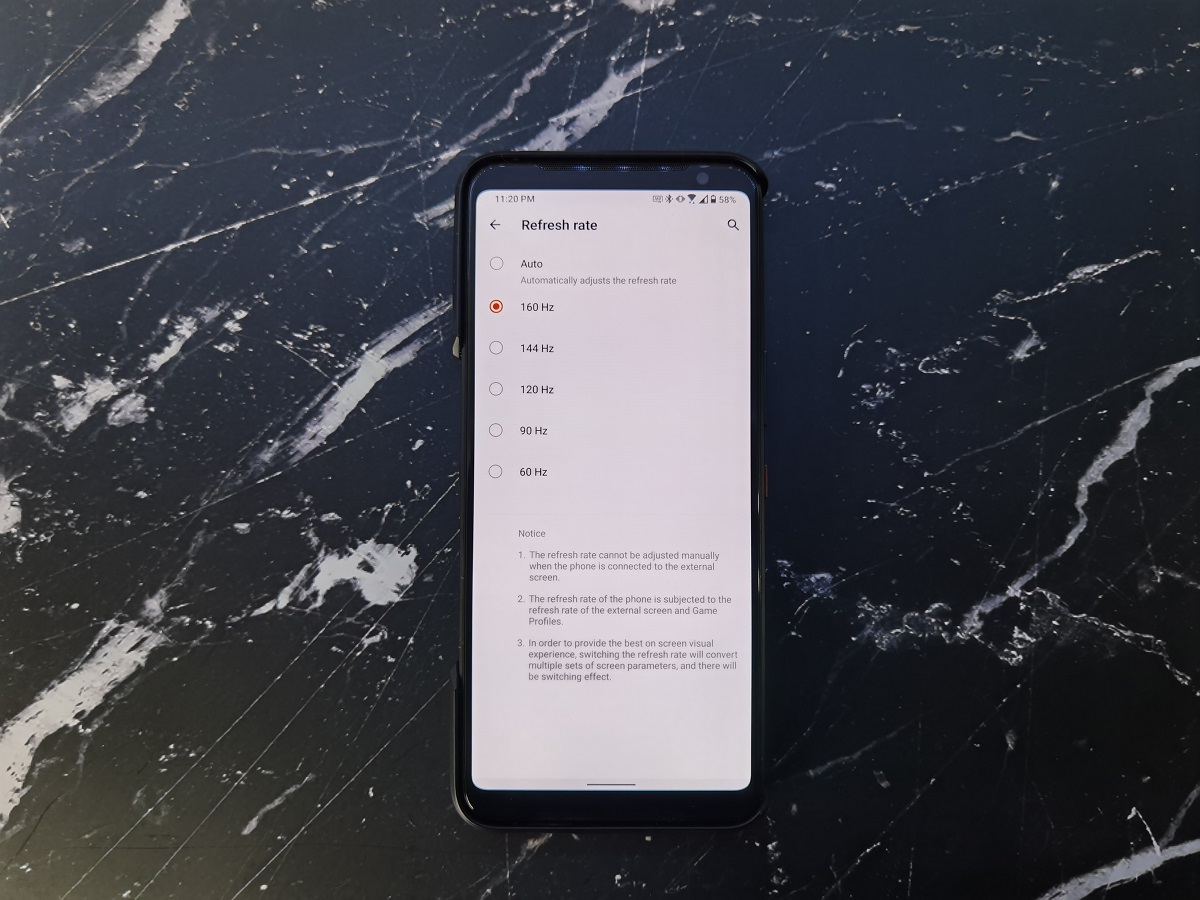
The ROG Phone 3 launched a few days ago as one of the most powerful Android smartphones ever released. Early reviews of the phone have called it insanely fast, thanks to its Snapdragon 865 Plus processor and its 144Hz refresh rate. It has now been revealed that the ROG Phone 3 has a hidden 160Hz refresh rate mode.
Image Source: XDA-Developers
The discovery was made by XDA-Developers Editor-in-Chief, Mishaal Rahman, and he also found a way to activate it. According to a published post on the discovered feature, he found references to the high refresh rate mode in the settings app when trying to find out how the phone switches between refresh rates.
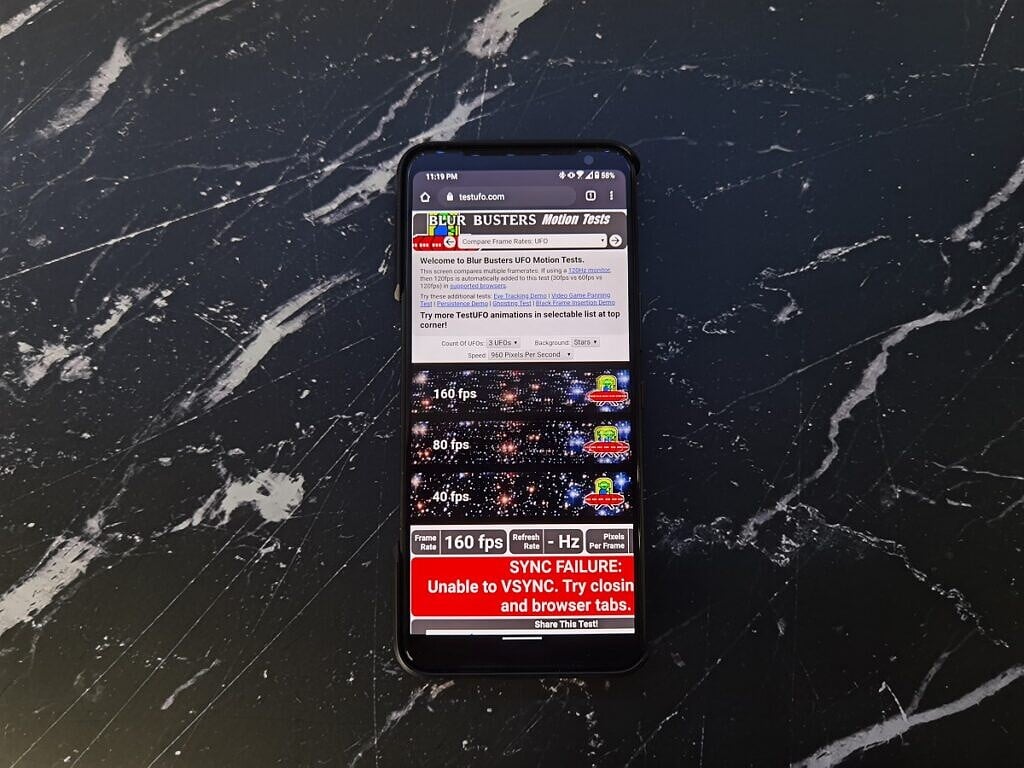
He eventually found a debug command that allows the option to set the refresh rate to 160Hz appear in the settings menu. You can check the source article for the procedure which involves setting up ADB on your PC. When done, the 160Hz refresh rate option should be available for you to choose under display settings.
Image Source: XDA-Developers
To find out if it worked, you can test the refresh rate by downloading the Fluid Simulation app and proceed to set the refresh rate inside the app’s settings to 160Hz.
It appears that ASUS probably wasn’t done testing the feature which is why it was hidden. Hopefully, a future update will unlock the feature for all users without the need to go through the ADB process.
The fingerprint scanner has occupied several positions on phones. From sitting on the rear to moving to the side or to the bottom of the screen and even under the display, we have practically seen it all. However, this new device puts it in an unusual position, one that is actually not as impractical as you might think.
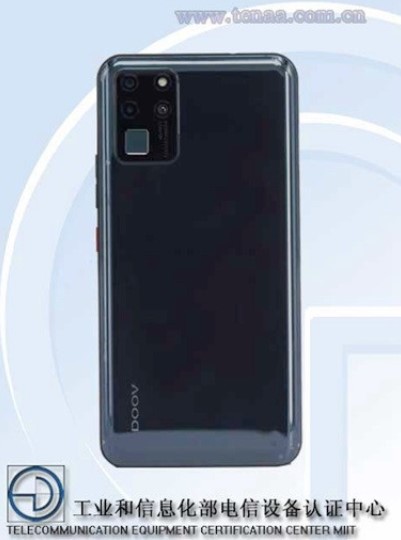
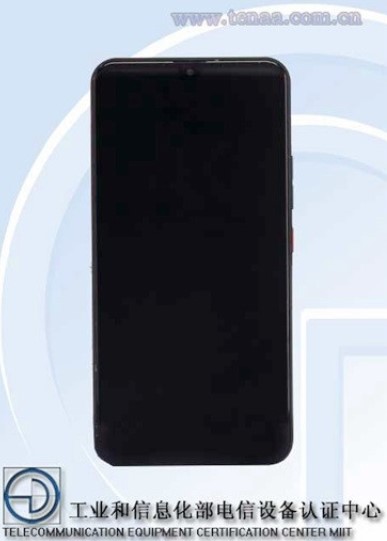
The phone is manufactured by DOOV, a Chinese phone manufacturer, and it has the model number 20200519. According to images included in its TENAA listing, the phone has its fingerprint scanner housed alongside the rear cameras.
That doesn’t sound unusual until you see that its cameras are actually not positioned in the middle but are on the left side of the device in a very similar arrangement to that of Samsung’s Galaxy S20 Ultra. So along with the triple rear cameras, the rectangular housing is also home to the fingerprint scanner.
While the position is definitely unusual, users with large hands should not find it too difficult to use as the index finger can actually reach the sensor For those with smaller hands, it is going to need a bit of stretching. This is because the DOOV 20200519 is pretty tall. It measures 179 x 87.3 x 9.6 millimeters no thanks to its 7.12-inch display.
Coming to the specs, the device has a resolution of 1080 x 2244 and the display appears to have a waterdrop notch for the selfie camera. There is a 2.3GHz octa-core processor under the hood and it is paired with up to 8GB of RAM and 256GB of expandable storage.
While the attached image shows that the phone has three rear cameras, TENAA mentions only two (16MP + 2MP or 21MP + 2MP). It also says the total number of cameras are three, counting the selfie camera too. Another weird thing about the phone is that it runs Android 7.1.1 Nougat which is pretty strange for a device that is launching in 2020.
DOOV rounds it off with a 6000mAh battery which should last pretty more than a day with minimum usage.
We use cookies on our website to give you the most relevant experience by remembering your preferences and repeat visits. By clicking “Accept”, you consent to the use of ALL the cookies.
This website uses cookies to improve your experience while you navigate through the website. Out of these, the cookies that are categorized as necessary are stored on your browser as they are essential for the working of basic functionalities of the website. We also use third-party cookies that help us analyze and understand how you use this website. These cookies will be stored in your browser only with your consent. You also have the option to opt-out of these cookies. But opting out of some of these cookies may affect your browsing experience.
Necessary cookies are absolutely essential for the website to function properly. This category only includes cookies that ensures basic functionalities and security features of the website. These cookies do not store any personal information.
Any cookies that may not be particularly necessary for the website to function and is used specifically to collect user personal data via analytics, ads, other embedded contents are termed as non-necessary cookies. It is mandatory to procure user consent prior to running these cookies on your website.