Advertisement

Apple and its suppliers to become Carbon Neutral by 2030

Apple has apparently vowed to become carbon neutral entirely by 2030. The Cupertino based giant has announced its plans for the move, which will be universal across its entire business to achieve the goal in the next 10 years.

According to Apple, “zero climate impact” is the end goal. The company will work with suppliers to reach complete carbon neutrality by 2030. In other words, the company’s operations will have no impact on Earth’s climate. The 10 year long roadmap is based on a series of innovations that Apple is going adopt across its product design, supplier operations, and materials processing.

Apple

Meaning, it will also have its supply chain commit to a certain standard of eco friendliness. The company made the announcement in the 2020 Environmental Progress Report earlier today (22nd July 2020). Apple plans on reducing its emissions by 75 percent in the next 10 years, while also developing new carbon removal techniques for the remaining 25 percent of its carbon footprint.

At the moment, the company reduces its carbon impact primarily by recycling. Apple said that its latest recycling innovation came with “Dave,” a robot that disassembles iPhones to collect rare earth materials. Dave is the newer generation, which arrives after the company previously introduced “Daisy” for the same task.

Furthermore, Apple also announced that it will be investing 100 million US Dollars into its supply chain, which includes its new US-China Green Fund partnership. This sizeable sum of funds will go towards strengthening the energy efficiency efforts for its suppliers. Apple claims that over 70 suppliers have pledged to use 100 percent renewable energy for the production of Apple product’s components.

Apple

Apple CEO, Tim Cook, stated that “the innovations powering our environmental journey are not only good for the planet — they’ve helped us make our products more energy efficient and bring new sources of clean energy online around the world. Climate action can be the foundation for a new era of innovative potential, job creation, and durable economic growth. With our commitment to carbon neutrality, we hope to be a ripple in the pond that creates a much larger change.”


Oukitel C21 leaks with stylish matrix quad-rear camera design

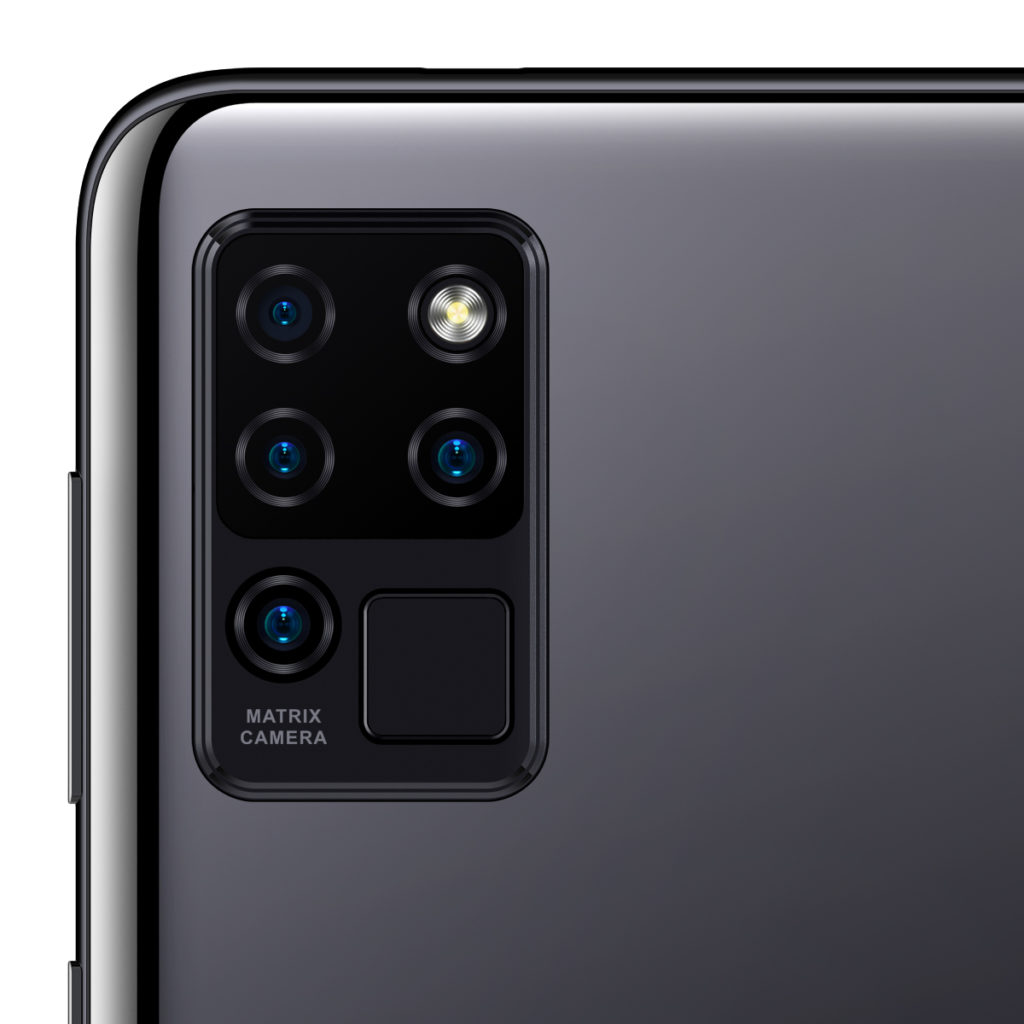
After bringing a super-affordable Oukitel C19 last month, the Chinese smartphone maker is set to unveil another useful smartphone – Oukitel C21 very soon. A new leak related to the Oukitel C21 has surfaced revealing the rear design featuring a matrix quad-rear camera. However, there’s no information about the camera hardware specifications yet.

We can see the quad-rear camera module along with an LED light and a fingerprint sensor. The design looks intuitive and minimalist which tends to appeal to the youngsters. It features similarities with several prominent devices from Huawei and Xiaomi. The square Matrix camera design is quite prevalent and gives the smartphone a premium yet unique look.

Oukitel C21 rear design looks simple in the black and grey gradient colour scheme. The device’s premium look confirms the presence of mid to high-end hardware on board.

The details of the internal hardware are unknown at the moment, but we expect more details to surface before the official launch.

Oukitel recently launched C19 a few weeks ago with 6.49-inch display, 4000 mAh battery and Android 10 Go on board for $59. There’s a 13-megapixel Sony IMX214 rear sensor coupled with two other sensors. It houses MediaTek MT6737 chipset, 2GB RAM and 16GB internal storage.

Foxconn to invest over $8 Billion for new chip plant in China

Foxconn Electronics is working on a new project which will have it build a new advanced semiconductor assembly and test plant in Qingdao, northeast China. The project will have the company invest 60 billion Yuan (roughly 8.6 billion US Dollars).

Foxconn

The known Apple supplier is building a new chip plant in China, which is also being co-funded by a state backed Rongkong Group. According to the DigiTimes report, sources close to the matter have revealed the multi billion dollar project investment that the Foxconn is making to build a new pant dedicated to provide advanced packaging technologies. This includes fan out and wafer level bonding and stacking for chip solutions

The applications of these chips will be used in 5G networking and various AI related device applications as well. The source added that the upcoming Foxconn Qingdao plant will be ready for production in 2021 and is already planning on scaling up its output to commercial capacities by 2025. This new site is designed for a capacity of 30,000 12 inch wafers every month.

Foxconn

Furthermore, the move for a new plant from Foxconn is indicative of its efforts to grow its semiconductor business. It will also boost the company’s deployment that will have it make an impact on the semiconductor industry. Interestingly, Foxconn has also recently struck deals with China’s local governments for its participation in local chipmaking sectors.


LG GX Soundbar with super-slim design and advanced audio technology now available for purchase
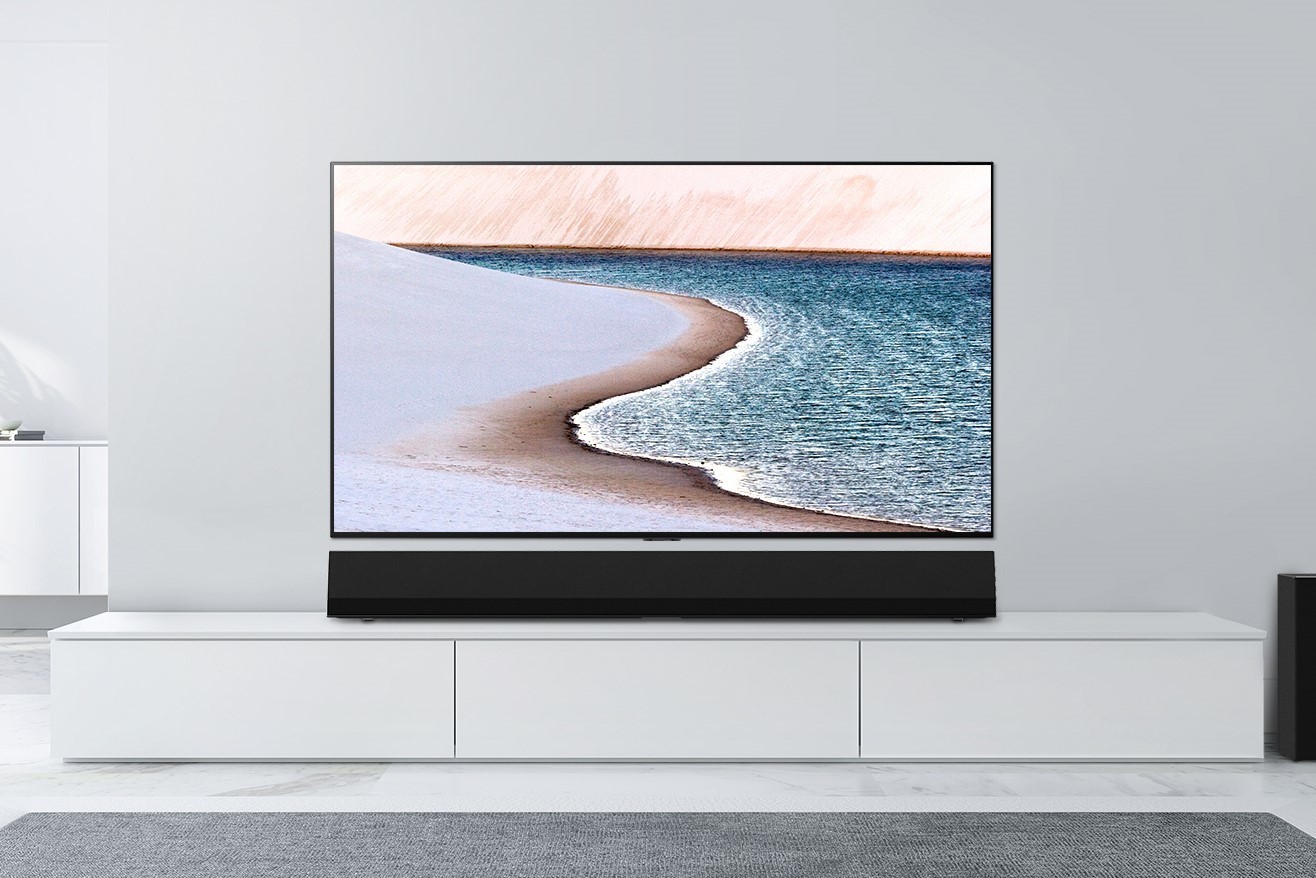
South Korea-based LG recently announced a new soundbar — LG GX Soundbar which the company says is designed to deliver an exceptional home entertainment experience. It also offers a new level of stylistic integration with the company’s premium TVs.

Now, the LG GX Soundbar is available for purchase in the United States for $899 that includes a discount of $100 over its retail price of $999. It will soon be available for purchase in Europe and Asian markets.
LG GX Soundbar

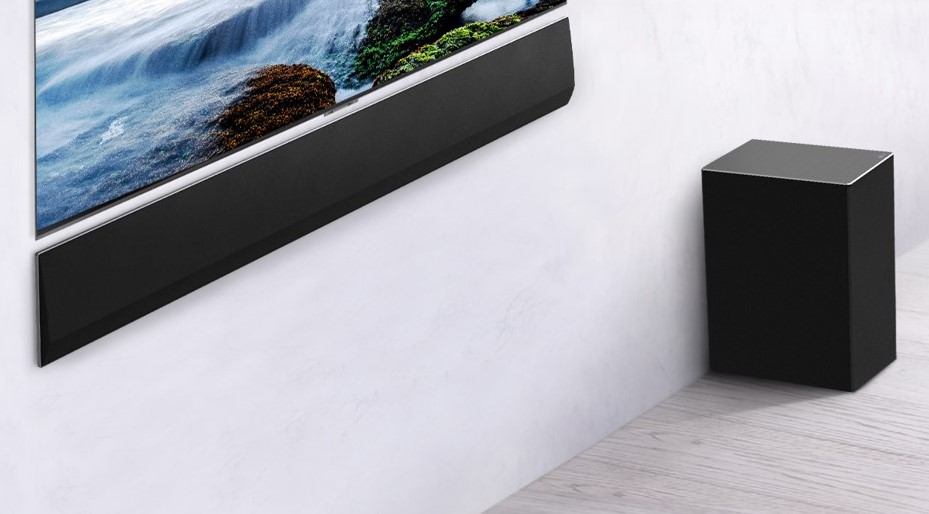
The soundbar is designed to complement LG’s super-thin GX Gallery OLED series TVs, which are also known as Wallpaper TVs. Apart from putting it up on the stand, the soundbar can also be mounted on the wall directly under the TV.

It also comes with a dedicated subwoofer and to have proper surround sound functionality, you can also purchase the LG SPK8 wireless rear speaker kit, which is compatible with the newly announced LG GX Soundbar.

EDITOR’S PICK: World’s First 120W fast charging unveiled by iQOO; the First phone with this tech could be announced in August

LG GX Soundbar

The 3.1-channel soundbar uses HDMI eARC and Bluetooth for wired and wireless connectivity and is also Hi-Res Audio certified for 24-bit/96kHz playback. It supports object-based Dolby Atmos and DTS:X audio formats.

It also features 4K HDR passthrough with Dolby Vision support for those who wish to connect video source directly to the soundbar’s HDMI input. It also supports eARC for lossless Dolby TrueHD and DTS-HD Master Audio soundtracks.

The LG GX Soundbar also comes packed with the company’s own AI Sound Pro mode which automatically analyzes the audio and “applies the best sound settings” for whatever is currently playing, says the company.


Xiaomi Mi Mix Alpha variant patent spotted with Dual Displays and AI Zoom camera

While the Xiaomi Mi Mix Alpha was unveiled back in 2019, the device had never seen a commercial launch. It was a concept device from the company which featured many innovative designs and technology for the time. Now, a new patent has revealed a possible commercial variant of the concept smartphone, which also features dual displays and an AI zoom camera.

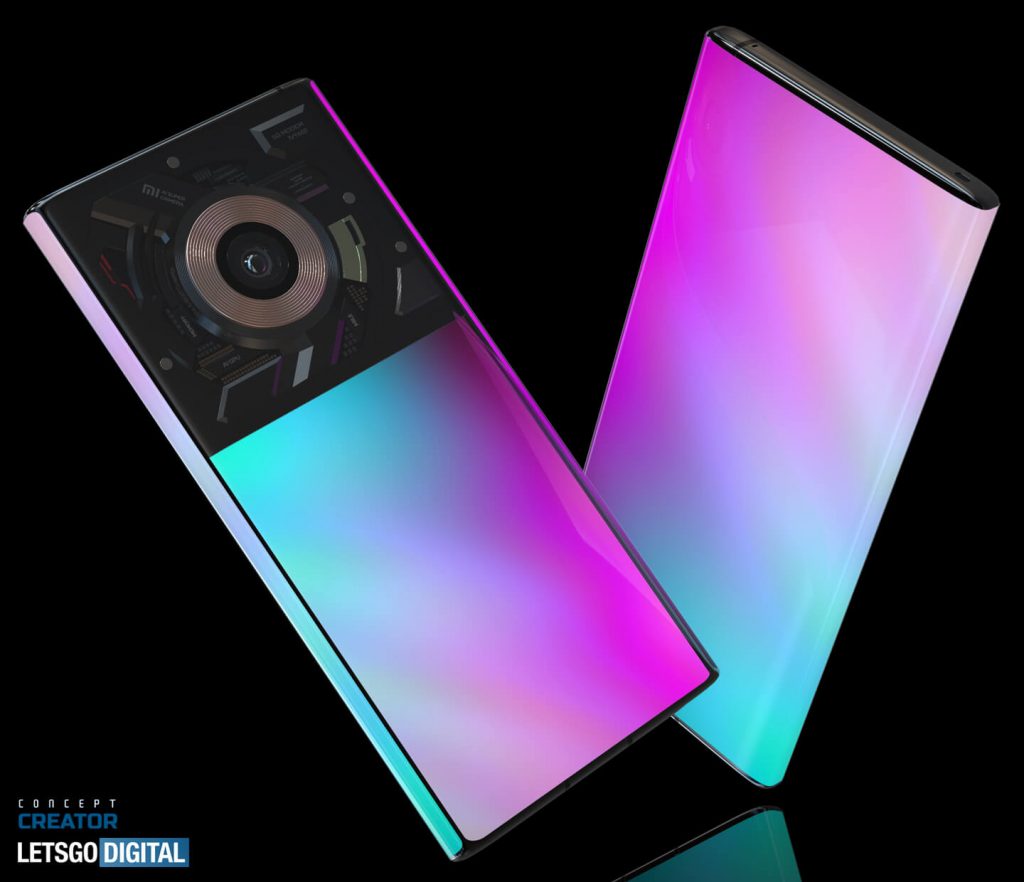
In the past, multiple supposed variants of the Xiaomi Mi Mix Alpha had been patented by the Chinese tech giant. Hence, this could also be just another attempt at covering all possible bases. Although, the things that set this patent apart were its unique design and its camera technology. While the previous patents generally had a single display that wrapped around the body, like in the case of the original Mi Mix Alpha, this features two separate displays.

Xiaomi

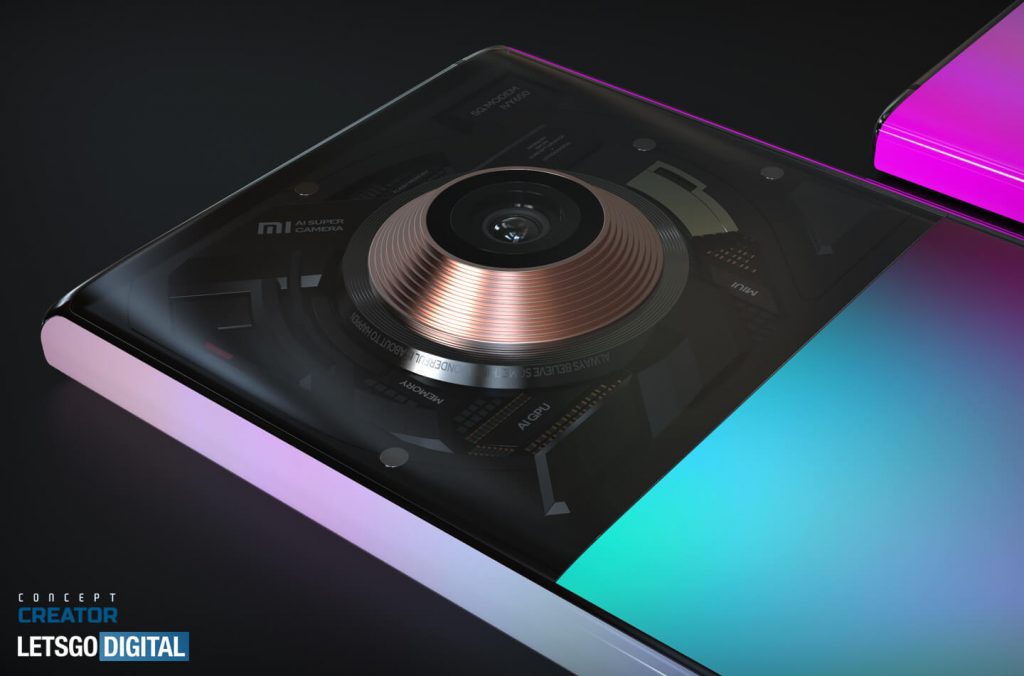
The primary display is large and covers almost the entirety of the front side, with negligible notch and chin. It also wraps around and covers the side as well. Moving to the back, a smaller secondary display covers a bit more than half of the rear panel from the lower half. On top of this display, is the smartphone’s unique camera system.

This camera is labeled as an AI zoom lens, which, according to LetsGoDigital, may feature a 108 megapixel sensor that is also capable of an unknown degree of magnification. Furthermore, Xiaomi is apparently planning two variants of this device, with one having a transparent camera module panel and the other having an opaque black one. This points at the possibility of a base and Pro variant, although, it is still too soon to tell. A YouTube Channel named Concept Creator also collaborated with LetsGoDigital for a concept video and you can check it out above.


Tianma develops multi-point in-display fingerprint recognition technology for LCD screens

The fingerprint recognition technology has rapidly advanced in the past few years and now we are getting smartphones with a fingerprint sensor embedded under the phone’s display.

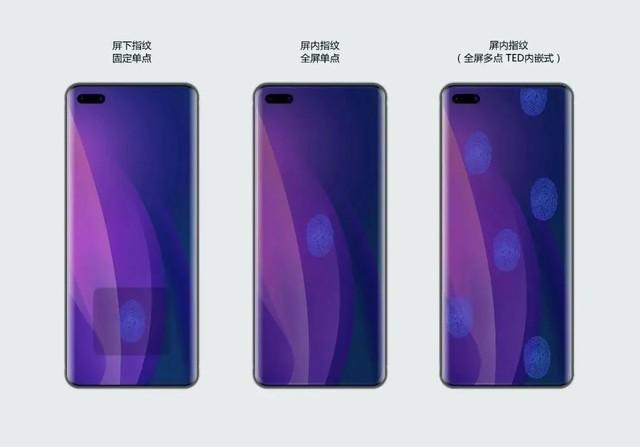
One of the limitations with the in-display fingerprint sensor is that it works at a specific point on the display, although the technology has advanced and the fingerprint recognition area also keeps on increasing with a newer version of the technology.

Tianma Multi-Point In-Display Fingerprint Sensor

Now, China-based Tianma Microelectronics has developed a multi-point in-display fingerprint recognition solution that can be used to unlock the full-screen smartphone through multiple points over the display.

The company says that it is an in-house technology where the image processing component of this new in-display sensing solution is embedded in a TFT display substrate, enabling the functionalities of touch, display, and fingerprint sensing simultaneously.

Further, Tianma claims to have used optical path design for this in-display technology which reduces the thickness of the module by about 50 percent compared to other types of optical fingerprint solutions.

EDITOR’S PICK: OPPO unveils World’s Fastest 125W Flash Wired Charging and 65W AirVOOC Wireless Charging

It’s noteworthy that the multi-point fingerprint recognition solution is for the LCD screens, which is a welcome move. So far, the technology of the under-display fingerprint sensor has been limited to OLED panels as their thinness allows light to pass through easier.

Recently, TCL’s China Star Optoelectronics Technology Co., Ltd (CSOT) also announced its new in-display fingerprint technology for LCD screens called “Full-Screen Single-Point In-Display Fingerprint Technology.” It is claimed to cover around 92% area of the screen, which practically means that you can put your finger anywhere on the display to unlock.

So far, there’s no commercially available smartphone that comes with an in-display fingerprint sensor on an LCD display. However, with the technology from the likes of Tianma and CSOT planned to go into mass production this year, that could change soon.


OPPO Reno4 Pro press render leak reveals curved display and quad rear cameras

OPPO announced the Reno4 5G and Reno4 Pro 5G phones intin China at beginning of the previous month. OPPO has recently confirmed that it will be launching the Reno4 Pro in more markets outside of China. In India, the smartphone is scheduled to go official on July 31. Ahead of the launch, Playfuldroid shared the press renders of the Reno4 Pro’s global version. As it is known, the global edition will arrive with some differences in terms of design and specifications compared to its Chinese variant.

The OPPO Reno4 Pro for China supports 5G connectivity as it features Snapdragon 765G SoC. It has an LED and laser autofocus triple camera setup on its back. The setup comprises of an OIS enabled primary 48-megapixel Sony IMX586 camera, a second 12-megapixel Sony IMX708 120-degree ultra-wide-angle shooter, and a 13-megapixel telephoto sensor with 5x optical zoom and 20x digital zoom support. It lacks a 3.5mm audio jack.

Rumors have revealed that the Reno4 Pro’s international edition is a 4G LTE phone fueled by Snapdragon 720G. The leaked press renders of the global edition of the Reno 4 Pro shows it in black and white color editions.

[envira-gallery id=”333277″]

A look at the rear-facing camera setup of the phone suggests that it is packed with four cameras. While the LED flash can be seen, it does not seem to feature a laser autofocus sensor. The Reno4 Pro global edition features a 3.5mm audio jack alongside a USB-C port, a microphone, and an external speaker on its bottom edge.

The handset features a curved AMOLED display with a punch-hole design. It has a power key on its right spine and buttons for controlling on the left edge. The topside of the phone has a SIM slot and a microphone.

Past reports have revealed that the smartphone has a 90Hz 6.55-inch display. It is equipped with 65W SuperVOOC 2.0 that can charge it completely in just 36 minutes. The size of the battery is not known yet.


Samsung could soon start selling smaller electronic products by acquiring Philips’ appliances unit

South Korean tech giants, Samsung and LG are possible candidates that could acquire Royal Philips‘ domestic appliance unit. This might have either of the two companies soon offering small home products in the near future.

Samsung M-series

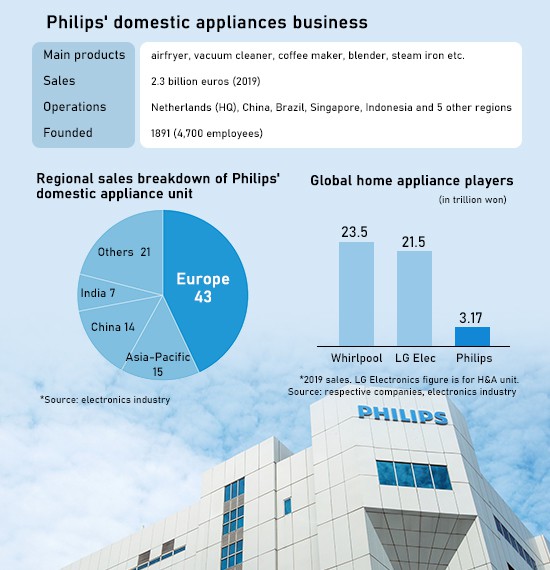
While nor Samsung or LG have confirmed anything or given an official announcement, the Dutch conglomerate Philips has already revealed its plans of selling its domestic appliance business in 2021. According to a Pulse report, market insiders have speculated that Samsung might be planning on acquiring the appliances division from Philips.

However, that is still uncertain, especially considering, Samsung’s focus being more towards higher end products and white goods. Notably, the decision from Philips to sell its appliance business arrives after the company’s efforts to begin focusing on the healthcare sector. This path led Philips to sell off its audio and video business and lighting unit.

Samsung
Image Via Pulse

Similar to Samsung, LG Electronics is also a potential candidate for the buyout. At the moment, Samsung is selling large home appliances like refrigerators, ovens, washing machines, and more. So, acquiring the Philips appliance unit could have it soon start selling smaller products across the globe. Philips has factories set up in Austria, Brazil, and China, with R&D centers employing about 4,700 personnel in India, Hong Kong, Singapore, and Italy.


Jelly 2, World’s smallest 4G Android 10 smartphone achieves crowdfunding goal

At a time when smartphone screen sizes have been increasing, there still exists a market for those who prefer compact smartphones. Thus, companies like Samsung and Apple have devices such as Galaxy S10e and Apple iPhone SE 2020.

Now, a Chinese company named Unihertz has announced Jelly 2 as the world’s smallest 4G smartphone running Android 10 operating system. The device is up for crowdfunding on Kickstarter and has already surpassed its goal of raising $50,000.

Jelly 2, World's Smallest 4G Smartphone

The smartphone comes with a 3-inch display 480 x 384 pixels screen resolution in a “credit card-sized” design. Under the hood, the device is powered by the MediaTek Helio P60 processor, which gets the job done. As for the memory configuration, it packs 6GB of RAM and 128GB internal storage.

The company says that the device comes with GPS + GLONASS + Beidou system and five types of sensors for better position accuracy and navigation routing. There’s also a rear-mounted fingerprint sensor, which might be very difficult to use in such a small form factor.

EDITOR’S PICK: World’s First 120W fast charging unveiled by iQOO; the First phone with this tech could be announced in August

Jelly 2, World's Smallest 4G Smartphone

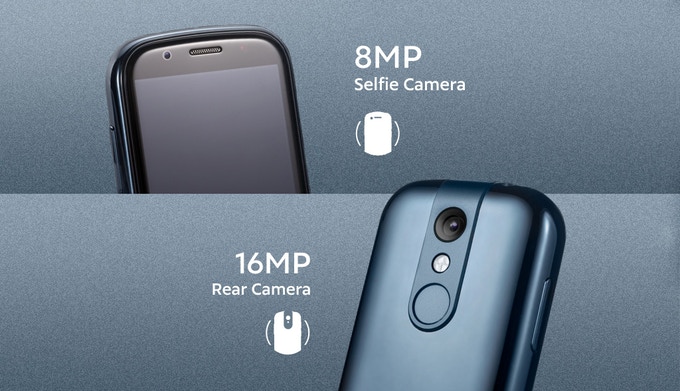
In the camera department, the phone has a 16-megapixel sensor on the back and an 8-megapixel snapper up for taking selfies. The phone is running Android 10 operating system and is powered by a 2,000mAh battery.

The Super Early Bird price of $129 for the Jelly 2 smartphone is no longer available but you can grab the smartphone for $159, which is still $40 less than its retail price. It seems like an interesting device to have but it will certainly not be your primary smartphone.

Jelly 2 is the fifth smartphone from the company. Prior to this, it had launched Jelly, Atom, Titan, and Atom XL. It claims to have shipped over 30,000 units of its smartphones so far to customers in over 70 countries.


Samsung Life Unstoppable event for innovative products scheduled on 2nd September

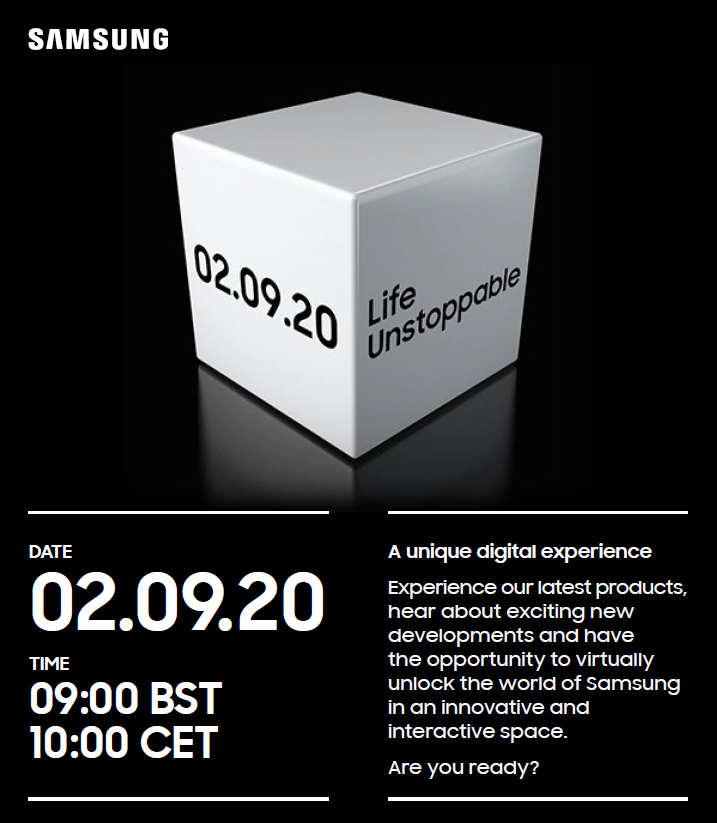
South Korean giant Samsung has already scheduled its Galaxy Unpacked event for 5th August. Now, the company has officially announced yet another launch event — Samsung Life Unstoppable, scheduled for 2nd September.

The event will start at 9 a.m. BST or 10 a.m. CET and will be open to media, retail, and industry partners. The recorded stream will be available on its own website.

Samsung Life Unstoppable Event

At this event, the company will showcase technology for “maximizing in-home entertainment and connected gaming experiences.” Samsung is confirmed to showcase its smart digital appliances at this 45-minute event. Similar to the Galaxy Unpacked event, the Life Unstoppable event will also be held online because of the COVID-19 pandemic.

EDITOR’S PICK: India smartphone market declined by 48% in Q2 2020, Realme slipped to the fifth position

The company has pulled out of the upcoming IFA Berlin which usually happens in the month of September. Despite the ongoing pandemic, IFA is going ahead with the in-person event in what it is calling a “Special Edition” event.

It seems that instead of attending IFA this year, Samsung has chosen to host its own digital event to unveil products related to TV, audio, and home appliances. The company is also expected to unveil some mid-range smartphones at the same event.

Meanwhile, the company has confirmed that at the Galaxy Unpacked event, it will be launching five new products. It will be launching the new Galaxy Note20 series, Galaxy Z Fold 2, Galaxy Buds, and more.


Redmi AirDots 2 crowdfunding goes live; raises 32.7 million yuan within hours

Xiaomi recently announced its next-generation Redmi AirDots 2 which went up for crowdfunding today in China. Just within two hours of crowdfunding campaign going live, 34,000 people participated, raising around 32.7 million yuan (~$4.68 million).

For the campaign, the Redmi AirDots 2 is priced at 79 yuan, which roughly converts to $11. Based on the number of participants and the amount raised in just two hours, it comes down to around 12 products per person on average.

Redmi AirDots 2 Crowdfunding Goal

Once the crowdfunding campaign is completed, the regular retail price of the Redmi AirDots 2 will be 99 yuan (~$14). It is not surprising that the company managed to achieve its campaign goal for the Redmi AirDots 2 within hours. The first-generation Redmi AirDots was also a huge success with the brand being able to sell 3 million units within months of them getting officially launched.

Coming to the specifications, the Redmi AirDots 2 comes with a 7.2mm sound driver which is claimed by the company to offer powerful low-frequency output as well as soft and delicate high-frequency and mid-frequency sound. The earphones also support Environment Noise Reduction technology so whenever you are on a call, it removes the unnecessary surrounding noises for better clarity of sound.

EDITOR’S PICK: Samsung announces its plans for 6G; Launch Expected By the End of this Decade

Redmi AirDots 2 TWS Earphones

It comes with an upgraded Bluetooth chip — Bluetooth 5.0 and thus the connection speed is now faster and more stable as well as the data transmission rate is doubled compared to Bluetooth 4.2 found in its predecessor.

Double-tapping the earphones triggers XiaoAI Voice Assistant which supports several different functions, including Find My Phone, Navigation, WeChat Messaging, Taking Photo, among others.

Each earbud in the Redmi AirDots 2 weighs just 4.1 grams. The company is offering three earplugs — Small, Medium, and Large to ensure a better fit for every user. It offers 4 hours of continuous playback but with the charging case, it offers up to 12 hours of usage.


ZTE Blade A7s 2020 bags Bluetooth SIG certification

ZTE is known for launching Blade series of mid-range phones in the starting months of the year. However, this year it has only launched Axon branded phones so far. A new Blade series phone called the ZTE Blade A7s 2020 has bagged approval from Bluetooth SIG authority. Hence, it appears that its launch could be drawing near.

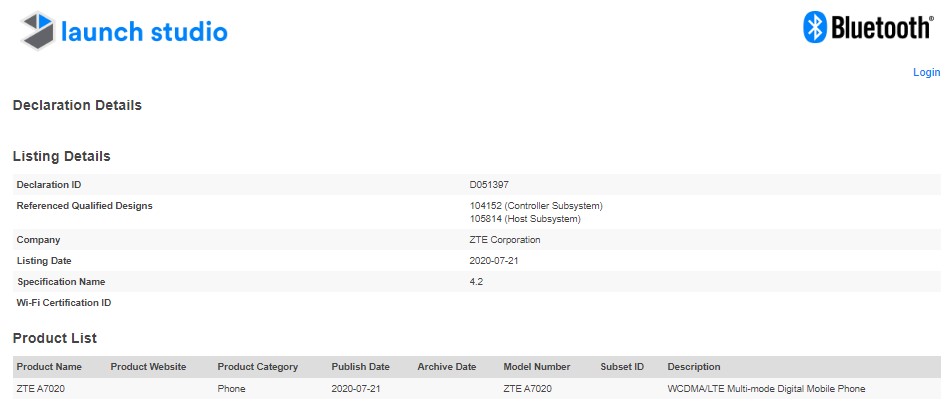
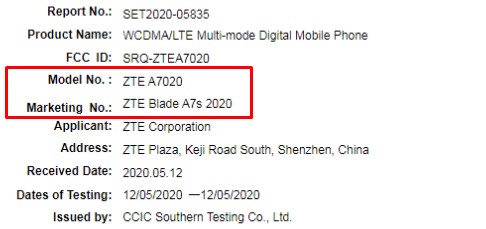
The Bluetooth SIG regulatory body has approved the ZTE A7020 phone. The listing only reveals that the device supports Bluetooth 4.2 connectivity.

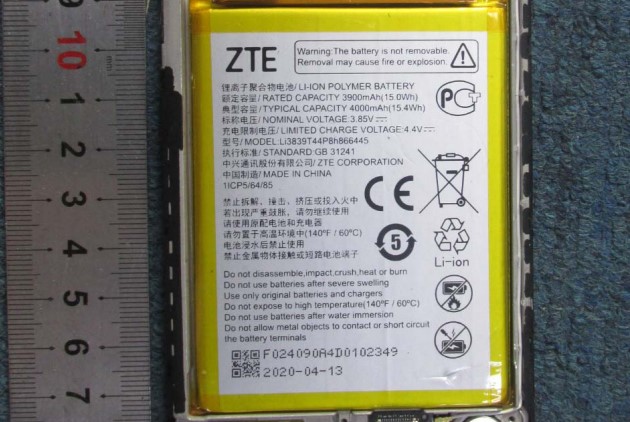
The ZTE A7020 was approved by the Federal Communications Commission (FCC) by the end of June. The listing had revealed that it will be arriving in the market as ZTE Blade A7s 2020. As far as specs are concerned, the FCC listing only revealed that it has 64 GB of native storage, and a 4,000mAh battery.

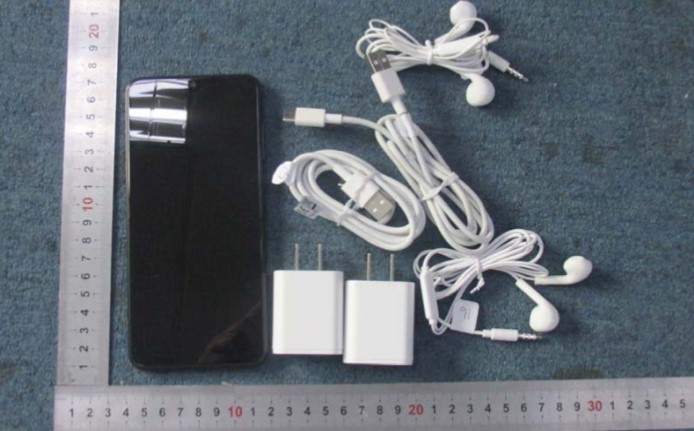
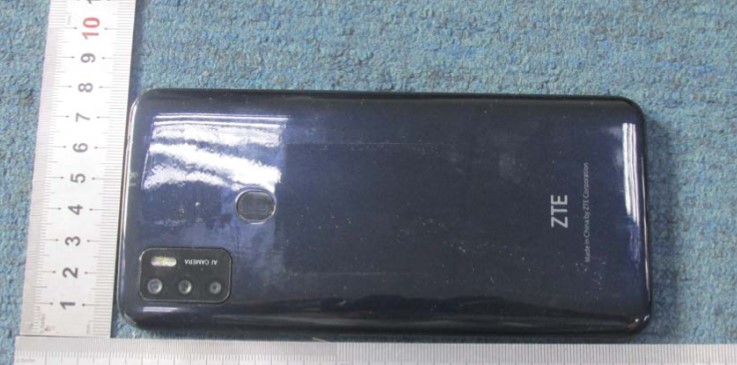
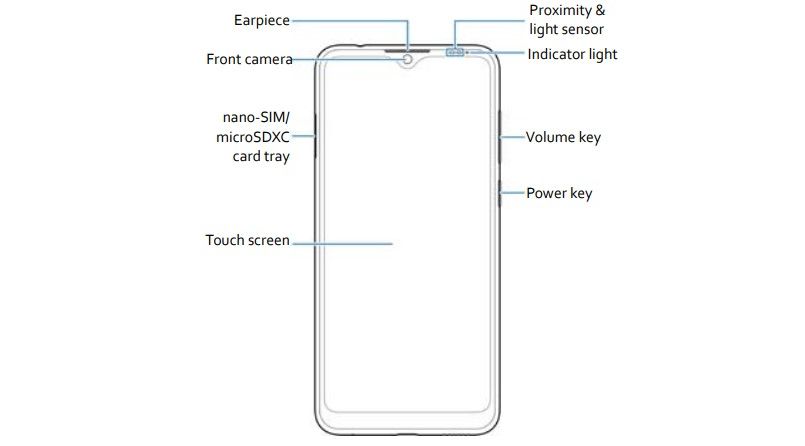
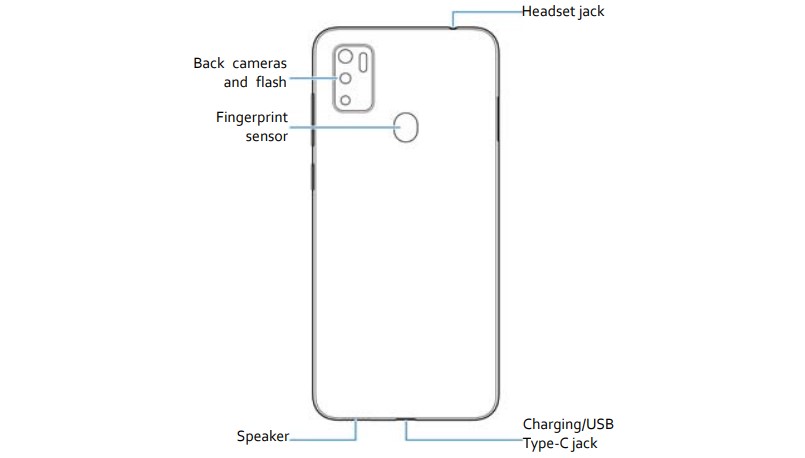
The design of the phone is already known since its live shots and user manual are available in the FCC listing. The images of the phone have revealed that it has a waterdrop notch display. The glossy polycarbonate rear of the phone has an LED flash assisted triple camera setup and a fingerprint scanner.

The Blade A7s 2020 has a volume rocker and a power key on the right spine and its left edge has a SIM card tray slot. The handset also features a 3.5mm audio jack and a USB-C port. There is no word on the launch date of the smartphone.


Realme C11 first sale at 12PM today in India; Price and specifications

The Realme C11 went official in India on July 14. It arrived as the successor for the Realme C3 phone that debuted last year. As scheduled, the first sale of the Realme C11 will be carried out today at 12PM IST in India today.

Realme C11 price in India

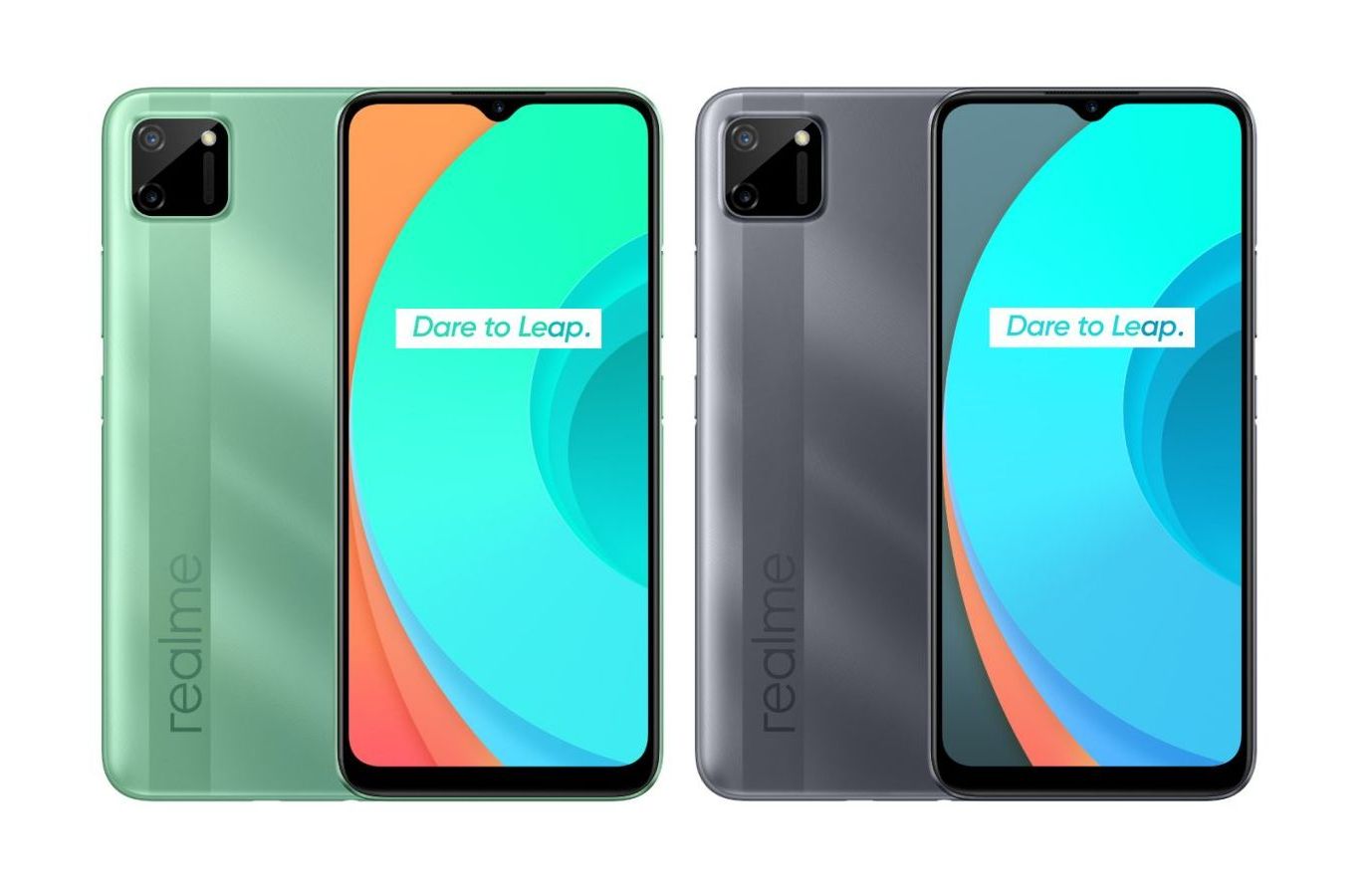
The Realme C11 can be bought for Rs. 7,499 (~$100) and in color editions such as Rich Green and Rich Grey. The first sale will begin at 12PM on Flipkart and the official website of Realme India. Some of the offers available for the buyers of Realme C11 on Flipkart include 5 percent unlimited cashback on Flipkart Axis Bank credit card and a five percent discount on Axis Bank Buzz credit card. Buyers can also take advantage of no-cost EMI plans of up to 9 months.

Realme C11
Realme C11

Realme C11 specifications

The Realme C11 has a 6.5-inch mini-drop notch display that offers 20:9 aspect ratio and 720 x 1600 pixels HD+ resolution. It is the world’s first phone to feature the Helio G35 chipset. The SoC is coupled with 2 GB of LPDDR4x RAM. The phone offers users with 32 GB of native storage and a microSD card slot for more storage. The phone boots to Realme UI based Android 10 OS.

There is a 13-megapixel + 2-megapixel dual camera system on the backside of the Realme C11. It has a front camera of 5-megapixel. The handset comes with 10W charging support for its 5,000mAh battery.

In related news, Realme is planning in introduce the more advanced Realme C15 phone in Indonesia on July 28. So far, it has been revealed that the Realme C15 has a waterdrop notch screen, quad-camera setup, up to 4 GB of RAM, 64 GB of storage and 6,000mAh battery with 18W fast charging support.


Realme’s new flagship has quad rear cameras with rectangle housing

Realme will soon launch a new series of smartphones in China. The first phone in the series appears to be a flagship phone. The Chinese firm has recently revealed that it will be sporting a punch-hole display. Today, it released a poster to show that it will be featuring a rectangle-shaped camera module for its quad rear cameras.

Realme has never used a rectangle camera housing on its smartphones before. The setup includes three vertical positioned cameras. The fourth lens is placed alongside the first lens whereas an LED flash unit is positioned next to the third lens. In between, there is an ‘AI camera’ text.

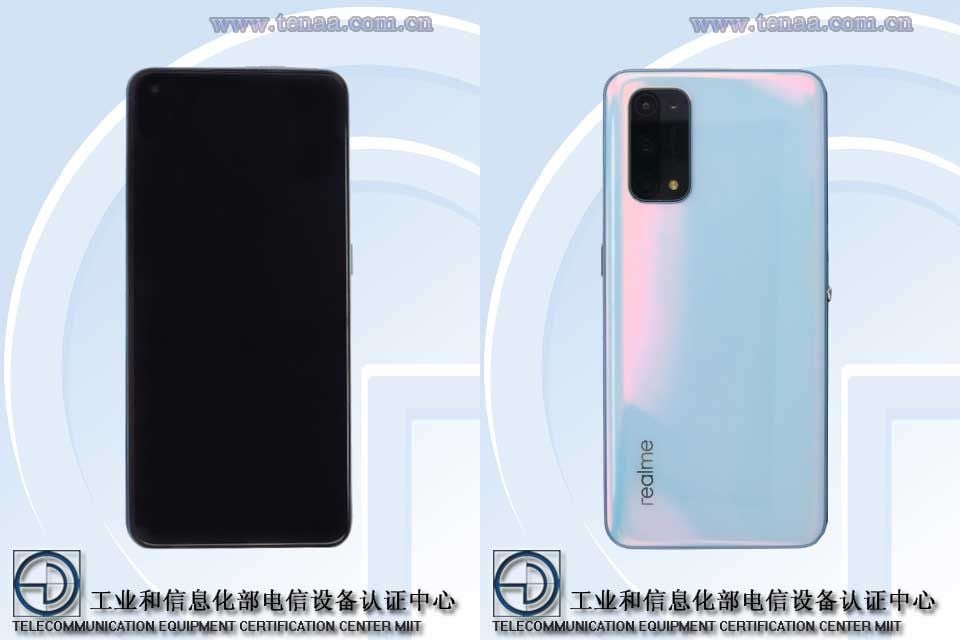
The above-shown design resembles the Realme RMX2121 phone’s rear shot that appeared in TENAA’s database last month. Hence, it seems that the RMX2121 could indeed be the model number of the upcoming flagship phone from the brand.

The Realme RMX2121 has a curved AMOLED display with a punch-hole at the top-left corner. The size of the screen is 6.55 inches. The handset has 160.8 x 75.2 x 8.5mm dimensions.

Realme RMX2121 front

The device has a dual-part battery. The rated value of one of its batteries is 2,200mAh. Leaked information has revealed that the total typical value of the battery could be 4,500mAh. The 3C listing of the phone has revealed that the RMX2121 phone could be shipping with a 65W fast charger.

The product name of the RMX2121 phone is currently under wraps. The handset may go official by the end of this month or in early August. Hopefully, the TENAA listing of the device will get updated with all its specs in the coming days.


POCO C3 Bluetooth SIG certified; India launch nearing?

POCO C3 seems to be the name of the next POCO phone for India. The handset’s name has been revealed along with its model number through its Bluetooth SIG certification. With Bluetooth certification in tow, the POCO C3 may go official as early as next month.

POCO India may have planned to launch smartphones across different price segments in India. The POCO X2 that debuted earlier this year has a starting price of Rs. 17,499 (~$234) in the country. The recently unveiled POCO M2 Pro begins at Rs. 13,999 (~$187)1. The upcoming POCO C3 could be priced under Rs. 10,000 (~$134). At present, POCO India is yet to reveal anything about the existence of the POCO C3.

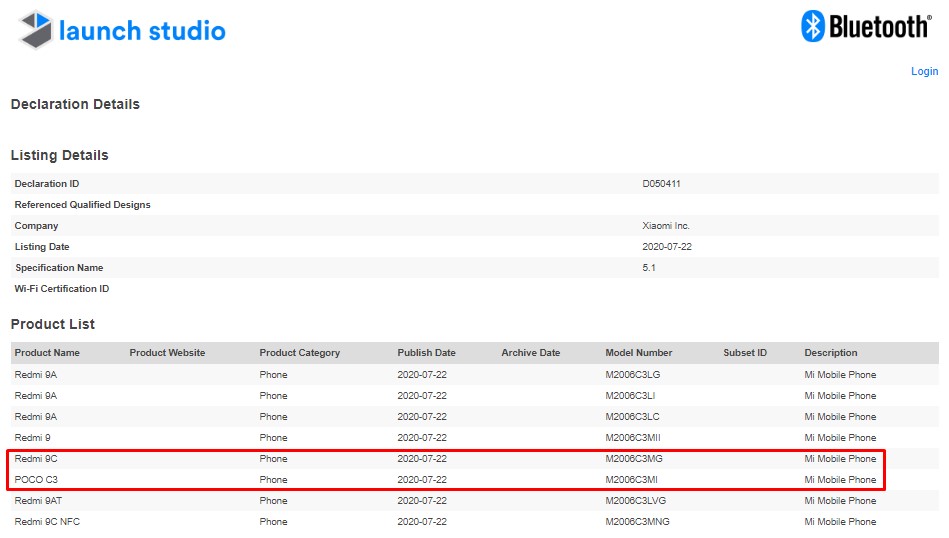
The POCO C3 moniker can be seen in the Bluetooth certification that emerged today. It reveals that the POCO C3 has a model number of M2006C3MI. This model has already received approval from the Bureau of Indian Standards (BIS).

POCO C3 Bluetooth SIG certified

The M2006C3MI model number appears to be a variant of the M2006C3MG model number that belongs to the global edition of the Redmi 9C. Hence, the POCO C3 is most likely to end up as a rebadged version of the Redmi 9C. The BIS certification is a good hint that the device is heading to India and its Bluetooth certifications suggest that its launch may not be far away.

Redmi 9C specifications

The Redmi 9C has a large IPS LCD panel of 6.53 inches. The waterdrop notch screen offers an HD+ resolution of 720 x 1600 pixels. The Helio G35 chipset powers the smartphone’s 2 GB and 3 GB RAM editions. It comes in storage editions such as 32 GB and 64 GB. The MIUI 12 based Android 10 OS runs on the device.

The Redmi 9C has a front camera of 5-megapixel. Its rear is fitted with a 13-megapixel + 5-megapixel + 2-megapixel triple camera system. The phone is backed by a 5,000mAh battery that comes with 10W charging support.


Vivo S7 5G may sport 44MP + 8MP dual selfie cameras and 64MP triple rear cameras

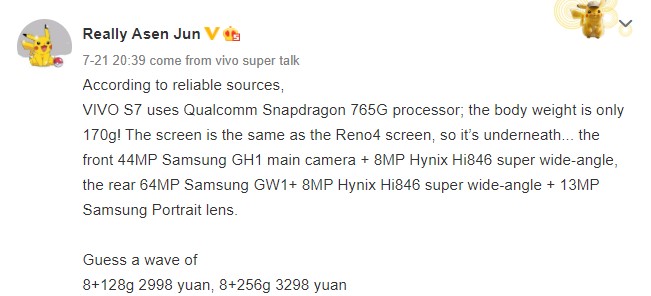
Vivo is reportedly planning to launch a successor for the Vivo S6 5G that went official in March in China. The selfie-centric S-series of smartphones from quite popular from the Chinese brand is quite popular in the homeland because of its selfie-shooting capabilities and attractive design. Reports have revealed that Vivo is gearing up to launch the Vivo S7 5G as lightweight selfie flagship in China. A recent leak revealed that it will be equipped with the thinnest front camera module and it will have the largest aperture compared to other selfie-centric phones. A tipster took to Weibo to reveal that the Vivo S7 5G will be arriving with a 44-megapixel dual camera setup and a rear-facing 64-megapixel triple camera system.

Vivo S7 5G specs leak

Vivo S7 5G specifications (Unconfirmed)

According to the tipster, the Vivo S7 5G will be featuring the same display that is available on the OPPO Reno4. The latter flaunts an AMOLED display of 6.43 inches. The screen is embedded with a fingerprint sensor and it has a pill-shaped cutout for two selfie cameras at the top-left corner. Hence, the Vivo S7 5G is expected to come with two front-facing cameras and an in-screen fingerprint reader. Many of the mid-range 5G phones weigh around 200 grams, but the Vivo S7 5G will weigh only 170 grams.

The Vivo S7 5G’s dual selfie camera setup will be led by a 44-megapixel Samsung GH1 lens. It will be assisted by a superwide 8-megapixel Hi846 lens from Hynix. The back panel of the phone will feature a triple camera system featuring the Samsung GW1 64-mgeapixel lens as the primary shooter. It will be coupled with an 8-megapixel Hynix Hi846 superwide lens and a 13-megapixel portrait lens from Samsung.

OPPO Reno4
OPPO Reno4

The other details of the Vivo S7 5G are under wraps. The Vivo S6 5G came with a 4,500mAh battery with 33W fast charging. Hence, it is likely the successor edition will also house a big battery with fast charging capabilities. There is a possibility that Vivo V2020A 5G phone that was recently certified by 3C authority of China along with a 33W fast charger could be the upcoming Vivo S7 5G phone.

The tipster has speculated that the Vivo S7 5G will land in China in two variants such as 8 GB RAM + 128 GB storage and 8 GB RAM + 256 GB storage. He also guessed that the former could be priced at 2,998 Yuan (~$430) and the latter may cost 3,298 Yuan (~$473).


Dimensity 820-powered Redmi Note 10 appears on AI benchmark ranking

The Redmi Note 9 series is still fresh from the oven but the Redmi Note 10 has just made an appearance. The device has been spotted on the benchmark site, AI Benchmark.

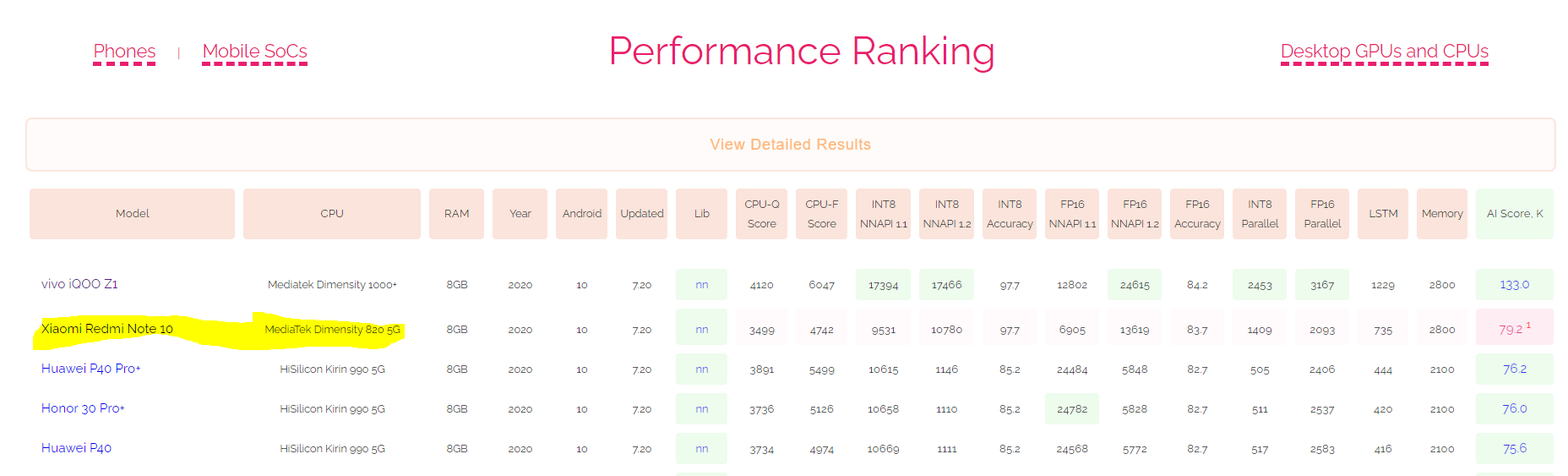
The Redmi Note 10 doesn’t just appear on the list but even makes a grand entrance by grabbing the second position, outperformed only by the Vivo iQOO Z1 which has a Dimensity 1000+ processor. The listing was first spotted by the Chinese leaker, Digital Chat Station.

Redmi Note 10 AI Benchmark

According to AI Benchmark, the Redmi Note 10 is powered by MediaTek’s Dimensity 820 processor which is the same chipset inside the China-exclusive Redmi 10X 5G and Redmi 10X Pro 5G. It is also shown that the phone has 8GB of RAM and runs Android 10, and the listing shows that it was benchmarked on Monday, July 20.

It sure is pretty early for the Redmi Note 10 to launch seeing as the Redmi Note 9 series is barely three months old. However, there is a chance the Redmi Note 10 may be a China-exclusive device since the Redmi Note 9 didn’t launch in the country. We might also get a global version that will arrive much later. This global version may not have support for 5G and it may come with a Snapdragon chipset.

What do you want to see in Redmi Note 10? Do you think it is too early for the Redmi Note 9 to get a successor? Do let us know what you think in the comment box below.


LG Velvet lands in the US for $599 with no free gifts

We didn’t get an LG G9 this year but the Korean giant announced a new smartphone line with a new design language. The first model of the series is the pretty LG Velvet, and it has made its way to the US two months after it launched in South Korea.

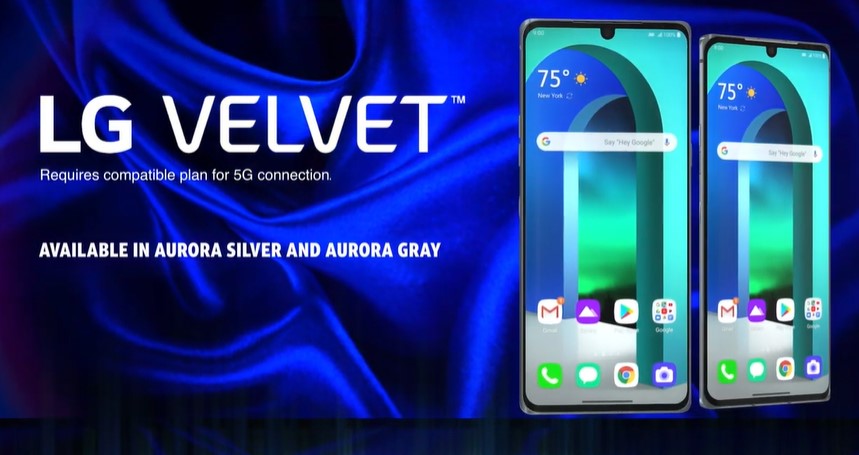
The LG Velvet will sell for $599 for the 6GB+128GB version and will be available first on AT&T starting today July 22. Verizon and T-Mobile will be getting it later this summer. The phone which launched in four colors and later got three extra colors will be available on AT&T in Aurora Gray and Aurora Silver.

LG Velvet AT&T

The official press release by AT&T says the LG Dual Screen Accessory will be available later this month for $199.99. Unlike when it launched in Europe, there are no free gifts when you purchase the phone.
The LG Velvet is not a flagship phone but a premium mid-range device. It has a 6.8-inch P-OLED display with a waterdrop notch and a 2460 x 1080 resolution. Powered by the Snapdragon 765G 5G processor and packing 6GB or 8GB of RAM and 128GB of expandable storage, the phone should be able to handle anything you throw at it.

On the back are triple rear cameras arranged in the shape of a falling water droplet. The primary camera is a 48MP sensor and it brings along an 8MP ultrawide angle camera and a 5MP depth sensor. You get a 16MP camera in front for selfies and video calling.

The LG Velvet has stereo speakers, an IP68 rating and MIL-STD-810G rating, NFC, FM radio, and an audio jack. It packs a 4300mAh battery with support for 25W fast wired charging and 9W fast wireless charging. LG ships it with LG UX 9 based on Android 10.


Google: Devices with 2GB RAM or less must launch as Android Go phones starting in Q4

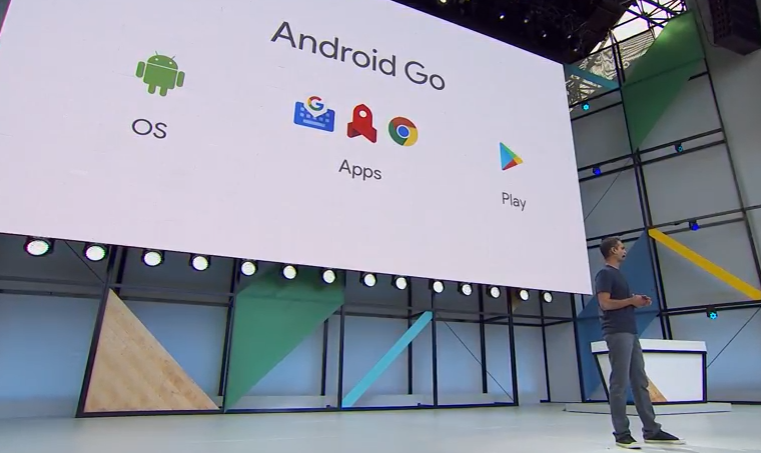
Google’s Android Go operating system is designed for phones with 1GB of RAM or less. However, there are a few phones with 2GB of RAM that also run Android Go such as the Wiko Y80. Beginning next quarter, Google says all phones with 2GB RAM or less must launch as Android Go devices.

android go

The info comes from a leaked copy of Google’s Android 11 Go Edition Device Configuration Guide that has an April 24, 2020 date according to XDA Developers. The memo reveals that Google is making Android Go a requirement for new devices with 2GB RAM or less launching as from next quarter. Below are the requirements as stated by the memo:

  • Beginning with Android 11, devices with 512MB RAM (including upgrades) are not qualified for preloading GMS.
  • All new PRODUCTS launching with Android 11, if they have 2GB RAM or less, MUST return true for ActivityManager.isLowRamDevice() API, and launch as an Android Go device.
  • Starting in Q4 2020, all new PRODUCTS launching with Android 10, if they have 2GB RAM or less, MUST return true for ActivityManager.isLowRamDevice() API, and launch as an Android Go device.
  • Previously launched 2GB RAM devices in standard GMS configuration SHOULD NOT convert to Android Go configuration via MRs or letter upgrades. They will remain standard Android.

As stated above, Google is saying that it will now be a requirement for devices that will launch with Android 10 or Android 11 with 2GB RAM or less to launch as Android Go.

EDITOR’S PICK: Redmi’s product director hints the company is considering small-screen phones

Based on this new development, we should see Android Go phones with better performance since the limit has now been raised to 2GB RAM. However, manufacturers may decide not to launch phones with RAM lower than 3GB rather than adopt Android Go so that they can keep their custom UI.

Take for example Xiaomi whose only Android Go phone is the Redmi Go. If it were to adhere to this requirement, it will mean the successors to its entry-level devices such as Redmi 9A and the Redmi 9C will have to run Android Go and not standard Android with MIUI on top. That seems unlikely seeing as the Redmi Go didn’t get a successor and Xiaomi won’t ship one of its best selling series without MIUI.

Another question that this new requirement brings up is “What happens in cases where a phone has other RAM variants?”. Manufacturers will surely not announce a 2GB RAM version of the phone running Android Go while the 3GB RAM version runs standard Android. Time will surely tell if manufacturers adhere to these new rules or find a way to circumvent them.


New Netflix plan for India allows for HD streaming on phones, tablets or PCs

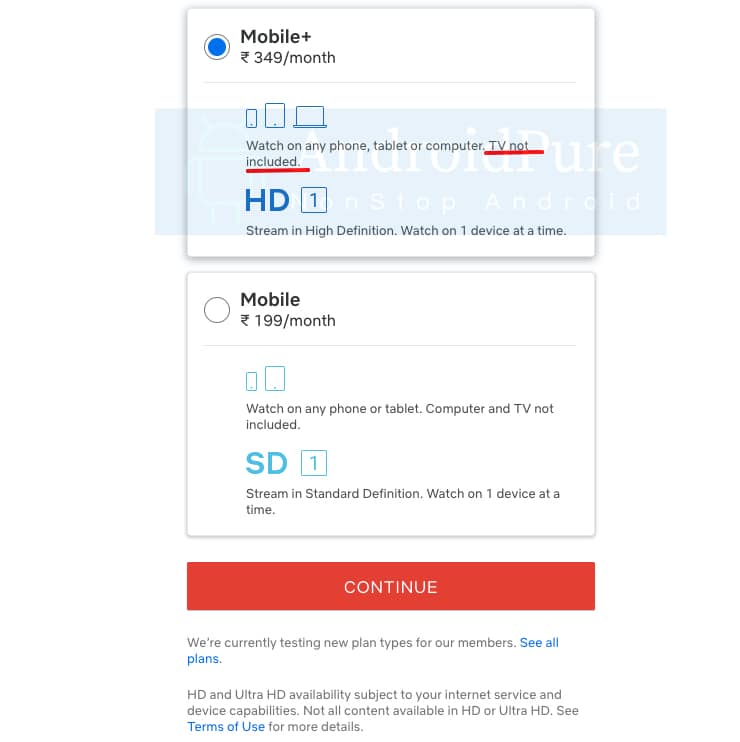
Netflix has various subscription plans in different markets. India, for example, has a Mobile-only plan that allows subscribers to stream shows and movies in Standard Definition on only one device which can be either a phone or tablet. No, it doesn’t support TVs or computers. Now, the streaming giant is testing a new plan called Mobile+.

The news which was first reported by AndroidPure, reveals the new Mobile+ plan allows subscribers to stream in High Definition on only one device which can either be a phone, tablet, or computer. Yes, the new plan now includes computers but still doesn’t include TVs. It is called Mobile for a reason. It makes sense why computers are included now seeing as SD wouldn’t look too good on devices with displays larger than 13-inches.

Netflix India Mobile+ Plan

The Mobile+ plan is priced at INR 349 (~$4.68) which is pretty affordable but almost double the price of the Mobile plan. The new plan should be great for students as well as those who are usually on the go and may want to kick back and watch a show while in transit.

At the moment, it is currently in testing, and a Netflix spokesman has confirmed to Techcrunch that it will be rolled-out long term if subscribers like it. We expect the plan will be made available in other markets too seeing as Netlfix did roll out the Mobile plan in some other countries after its debut in India last year.