Multiple reports have claimed that Vivo will announce the Vivo X300 series of smartphones in October in China. The lineup is expected to include two models, the Vivo X300 and X300 Pro. The latter is also expected to have a Satellite Communication Edition variant. The said device has emerged in the database of China’s 3C certification platform, revealing its fast-charging capabilities.
Vivo X300 Pro Satellite Communication Edition 3C certified
As can be seen above, the forthcoming Vivo V2502DA has received approval from China’s 3C authority. The listing confirms that the device may ship with a 90W fast charger.
As per the previously seen MIIT certification, the V2502DA will have support for short messaging via Beidou satellite. It is speculated that this device will be marketed as the Vivo X300 Pro Satellite Communication Edition.
As per reports, the Vivo X300 Pro will be powered by the Dimensity 9500 chipset. As far as the Satellite Communication Edition is concerned, it is expected to ship with 16GB of RAM and 1TB of storage. The rest of its specs could be identical to the regular X300 Pro.
The X300 Pro is expected to feature a 6.8-inch flat OLED screen that supports a 1.5K resolution and a 120Hz refresh rate. It could be equipped with a 6,500mAh battery with 90W wired and 30W wireless charging. Its rear camera setup is expected to include an OIS-assisted 50-megapixel Sony LYT-828 main camera, a 50-megapixel ultra-wide lens, and an OIS-enabled 200-megapixel Samsung HPB periscope telephoto camera. For an enhanced photography experience, the device will also be equipped with the V3 and VS1 image processing chips.
For more daily updates, please visit our News Section.
Oppo‘s next flagship, the Find X9, has been at the center of fresh leaks — but not all of them are real. The company’s Find series product manager, Zhou Yibao, stepped in this week to clarify that a recently circulated render of the standard Find X9 isn’t genuine, while also dropping a few official details about the phone.
Oppo Find X9 leaked render
According to Zhou, the Find X9 will use a “cold-sculpting” process that gives it a refined, textured finish and stronger durability compared to the Find X8. However, he confirmed that the phone will come in a titanium color option — the same one that appeared in the leaked render.
Another key change is that both the standard and Pro models will move to completely flat displays, unlike last year’s lineup, where the Pro carried a micro-quad curved screen. As expected, bezels are getting slimmer, with the Pro model keeping an edge here. Zhou didn’t share specific numbers.
Inside, the Find X9 features what he called a “uniquely large Glacier battery.” He didn’t go into detail, but for reference, the Find X8 carried a 5,630mAh unit, and recent leaks suggest the X9 may jump to 7,025mAh. Zhou added that “the body thickness and lens protrusion are perfectly controlled” (translated from Chinese), hinting that while the numbers may be higher, the size and weight aren’t dramatically affected. Oppo seems to be aiming for a better balance between endurance and design.
Leaks also point to upgrades such as ultrasonic fingerprint recognition, wireless fast charging, and IP66/68/69 dust- and water-resistance ratings. If true, the Find X9 could be the most capable standard edition Oppo has ever made.
While Zhou dismissed the misleading render, his comments have only added to the anticipation ahead of the official launch later this year. With a titanium finish, slimmer bezels, and improved durability, the Find X9 looks set to push Oppo’s flagship line in a more premium direction.
Kingbull has launched its latest electric bike, the Rover 2.0. According to the company, the new model is designed for riders who want a single solution for daily use and off-road trails. It comes with enhanced range, power, and comfort, supported by components from leading suppliers like Bafang, Samsung, Shimano, and ZOOM.
Kingbull Rover 2.0 specifications and features
Kingbull Rover 2.0
The Rover 2.0 is powered by a 750W Bafang rear hub motor producing 80Nm torque, enabling top speeds of 45 km/h in Class 3 mode, or 32 km/h when limited to Class 2. A 720Wh Samsung battery delivers up to 60 miles (around 96 km) on a full charge, with typical use closer to 40 miles (64 km). Charging takes about 5 hours with the supplied smart charger.
Kingbull Rover 2.0
The torque-based pedal-assist system ensures smooth power delivery while conserving energy. Riders benefit from a full suspension setup with a 100 mm front fork and a 45 mm rear shock, complemented by 26 × 4.0 inch CST puncture-resistant tires. Stopping power comes from dual-piston hydraulic brakes with 180 mm rotors, while a Shimano 7-speed drivetrain handles gear shifts.
Kingbull Rover 2.0 in Sand Blue
Additional highlights include a KB35H color display, an aluminium frame with integrated cabling, 48V LED lighting, and a package of practical accessories such as a phone mount, lock, and air pump.
Kingbull Rover 2.0 price and availability
The Kingbull Rover 2.0 is priced at $1,399, with shipping included. Buyers purchasing more than one bike will get an additional $200 off. The Rover 2.0 is available in Sand Blue and Black colour options. For more details, visit Kingbull’s official page.
For more daily updates, please visit our News Section.
A leaked photo of the DJI Mini 5 Pro Fly More Combo box has surfaced online, giving the clearest look yet at the specs of DJI’s next compact drone. The packaging confirms several long-rumored upgrades, including a larger camera sensor, improved safety features, and a surprising jump in flight time.
According to the box, the Mini 5 Pro will feature a 1-inch CMOS sensor — the first in DJI’s Mini lineup. It supports 4K video at up to 120fps for slow-motion capture and offers a 48mm telephoto mode through crop zoom. The gimbal now rotates 225 degrees, enabling vertical shots aimed at social media creators.
The leak also points to new front-facing LiDAR sensors, allowing for 360-degree obstacle detection, even in low light. This should make flying safer in tight areas such as forests or city streets. DJI’s ActiveTrack is included as well, helping keep subjects in frame during activities like running or cycling.
Much longer battery life
One of the bigger surprises is battery life. The box lists a maximum 52-minute flight time, far beyond the 36 minutes suggested by earlier leaks. That figure comes from the “Fly More Combo Plus,” which includes three higher-capacity “Flight Battery Plus” units. However, these batteries may push the drone’s weight over the 250g limit, meaning pilots in some regions could lose C0 certification benefits.
The bundle also features the DJI RC2 controller with a built-in screen and an ND filter set for video work. With standard batteries, the drone still stays under 250g. Availability of the Plus version outside China is still unknown. A tweet from @KietN7650 on X also shows the main contents of the package, including the Mini 5 Pro itself and the DJI RC2 controller powered on.
The DJI Mini 5 Pro is rumored to launch in September 2025, marking the most significant update yet in DJI’s lightweight drone series.
New flagship phones are expected to launch soon, starting with Apple introducing the iPhone 17 series on Sept. 9, followed by the Xiaomi 16 series towards the end of the month. A slew of new flagship phones from brands such as Vivo, Oppo, Honor, iQOO, Realme, OnePlus, and Redmi are also anticipated in October. Alongside the flagship war, this period will also mark the battle of new chipsets that will power these phones.
Chipset war to begin soon
Chip war to begin soon
According to reliable tipster Digital Chat Station, the smartphone industry is heading into a major “chip war” before the big wave of flagship phone launches. Apple is leading with the A19 and A19 Pro, followed by MediaTek with the Dimensity 9500, and then vwith two Snapdragon 8 series platforms, the SM8850 and SM8845. These Qualcomm chips are likely to hit the market with respective names such as the Snapdragon 8 Elite Gen 5 (aka. Snapdragon 8 Elite 2) and Snapdragon 8 Gen 5.
All of these are based on TSMC’s N3P process and are positioned as powerful “performance beasts.” The tipster also mentions that Apple and Qualcomm have already shifted to a dual-chip strategy. With chipset makers expected to adopt the 2nm process next year, which will bring higher costs, it remains to be seen whether MediaTek will also follow a dual-chip strategy.
As per reports, the cost of TSMC’s 2nm wafers is estimated at around $30,000 per wafer, higher than the price of 3nm wafers. This surge in cost is expected to affect the pricing of Android flagship phones in 2026.
Snapdragon 8 Gen 5 to power next-generation foldable phones
DCS said that the Snapdragon 8 Gen 5 is currently being tested by manufacturers such as Honor, Oppo, and Vivo, and he plans to share his own hands-on results soon. He added that some brands are considering using the Snapdragon 8 Gen 5 for foldable phones.
For more daily updates, please visit our News Section.
Huawei is expanding its smartwatch portfolio rapidly in 2025. The lineup now spans flagship health devices, rugged outdoor models, and affordable fitness watches. The company has been steadily refreshing its range across Europe and other markets, showing a clear focus on health innovation and outdoor performance.
With the Huawei Watch GT 6 scheduled to debut later in September, these are the best Huawei smartwatches you can buy right now.
Huawei set the tone for 2025 with the Watch 5, unveiled at its Innovative Product Launch in Berlin. On paper, it looks like a mild refresh of the Watch 4, but the details tell a different story. The Watch 5 introduces Huawei’s Multi-sensing X-TAP module, a fingertip-based sensor system that layers ECG, SpO2, heart rate variability, and even tactile feedback into a single side-mounted touch zone. Instead of waiting through long readings on your wrist, you just hold a finger on the sensor for a snapshot of your cardiovascular health in under a minute.
Huawei also fitted the Watch 5 with an NPU, a first for its wearables, unlocking gesture shortcuts. Double tap your thumb and finger to silence an alarm, skip a track, or snap a photo, no screen swipes needed. The LTPO AMOLED display peaks at 3,000 nits, which is overkill indoors but exactly what you want for summer runs. The watch comes in 42mm and 46mm sizes, supports eSIM calling, and typically lasts four to five days on a charge, or longer if you toggle into battery saver.
Why it matters: Huawei has finally bridged the gap between clinical-grade readouts and smartwatch convenience. If health monitoring is your priority, this is the most advanced sensor package the company has ever shipped.
2. Huawei Watch Fit 4 Pro
The Watch Fit 4 Pro takes the “Fit” line into serious athlete territory. It sports a rectangular 1.82-inch AMOLED with a blinding 3,000-nit brightness, housed under sapphire glass and a titanium bezel. The case is built from 550 MPa aluminum, which is tougher than anything Huawei has used in past Fit models. On the feature side, you get dual-band GPS, offline contour maps, a barometer, and a dive-grade 40-meter water resistance rating.
Fitness tracking goes far beyond step counts. There are tailored modes for trail running, hiking, golf, kayaking, and free diving, all with turn-by-turn guidance and Huawei’s TruSense sensors for ECG and pulse wave analysis. Battery life stretches up to 10 days, though heavy outdoor GPS use brings that closer to four. At launch, it retailed around €279, putting it in direct competition with Garmin’s smaller models.
Who it’s for: runners, hikers, and outdoor enthusiasts who want Huawei’s most rugged square watch, without moving up to the heavier GT or Ultimate series.
3. Huawei Watch Fit 4
The standard Watch Fit 4 keeps the same bright AMOLED display and overall design as the Pro, but trims some of the outdoor extras. You lose the dive-grade waterproofing and advanced sensors, but you still get Bluetooth calling, everyday sports tracking, and long battery life in a lightweight body. At around €169, it’s a straightforward way to get into Huawei’s ecosystem if you don’t need pro-level tools.
Why it’s appealing: it offers most of the Pro’s software features, like Huawei Health Insights, at nearly half the price.
4. Huawei Watch GT 5 Pro
The GT 5 Pro, launched in late 2024 and carried into 2025, remains Huawei’s most balanced round smartwatch. The titanium and ceramic build gives it a sculpted, premium look, while sports tracking covers everything from golf to free diving. Unlike the Fit series, the GT line is all about endurance: the 46mm model promises up to 14 days of battery life, even with mixed GPS use.

Huawei also packed in ECG monitoring, pulse wave analysis, and TruSense accuracy upgrades, making it more than just a fitness watch. Pricing has ranged from £329.99 to £499.99, depending on strap and finish, with the white ceramic 42mm variant pitched at a fashion-first audience.
Why it stands out: it’s the sweet spot between the futuristic Watch 5 and the ultra-durable Watch Ultimate.

5. Huawei Watch GT 5
The standard GT 5, launched just before the Pro, introduced Huawei’s TruSense health system to the mid-range tier. It was one of the first Huawei watches to be certified by SGS Switzerland for its health accuracy, lending credibility to its heart rate and sleep monitoring. Battery life still stretches past a week, and pricing started near £229.99, making it one of the strongest value plays in Huawei’s lineup.
Who should buy: anyone who wants long-lasting tracking without paying for titanium or ceramic finishes.
6. Huawei Watch D2
Finally, the Watch D2 stands out as Huawei’s most specialized watch. Instead of relying on optical sensors alone, it uses a physical inflatable airbag inside the strap to deliver clinical-grade blood pressure readings. This tech is rare in consumer wearables and makes the D2 a genuine tool for hypertension management. Beyond blood pressure, it supports ECG, SpO2, stress tracking, and daily fitness features.
With its IP68 rating and six-day battery life, it balances medical monitoring with everyday usability. It launched in Europe at €399 and continues into 2025 as the only smartwatch on the market with this kind of medically approved blood pressure monitoring.
Why it stands out: it is the only Huawei smartwatch with a strap-integrated airbag for clinically approved blood pressure tracking, making it unique in the lineup.
For more daily updates, please visit our News Section.
Tomorrow (Sept. 4), Huawei will introduce the Mate XTs in China as its second tri-foldable phone. The device is expected to bring incremental upgrades over its predecessor, including features such as stylus support and satellite connectivity. Meanwhile, Samsung is also preparing to step into the tri-foldable segment. A fresh report from ET News indicates that the company may not wait until the end of the year for its debut. According to the Korean publication, Samsung could unveil its first tri-folding smartphone at a special Unpacked event in October 2025, with sales starting the following month.
Samsung Galaxy Z TriFold: Limited production and availability
Samsung Galaxy Z TriFold design image by Android Authority
Samsung has reportedly finalized a conservative production figure of around 50,000 units for the Galaxy Z TriFold. The limited run will allow the brand to assess market response to the fresh design and mitigate risks if early issues appear.
Another reason is to avoid eating into the sales momentum of the Galaxy Z Fold 7, which launched in July and has been performing well. For now, the tri-fold is expected to be sold only in South Korea and China.
The Galaxy Z TriFold is said to feature a 9.96-inch tri-folding display supported by two inward-folding hinges, along with a 6.49-inch cover display. This setup is considered more durable than Huawei’s Mate XT Ultimate, where part of the screen folds outward.
Powered by the Snapdragon 8 Elite for Galaxy, the device is tipped to support wireless charging, reverse wireless charging and NFC connectivity. While details on the processor, camera setup, RAM, storage and battery capacity remain unclear, reports highlight that Samsung has already started mass production. The tri-fold form factor will be a first-generation trial for the company, shaping its future foldable strategy depending on consumer adoption.
For more daily updates, please visit our News Section.
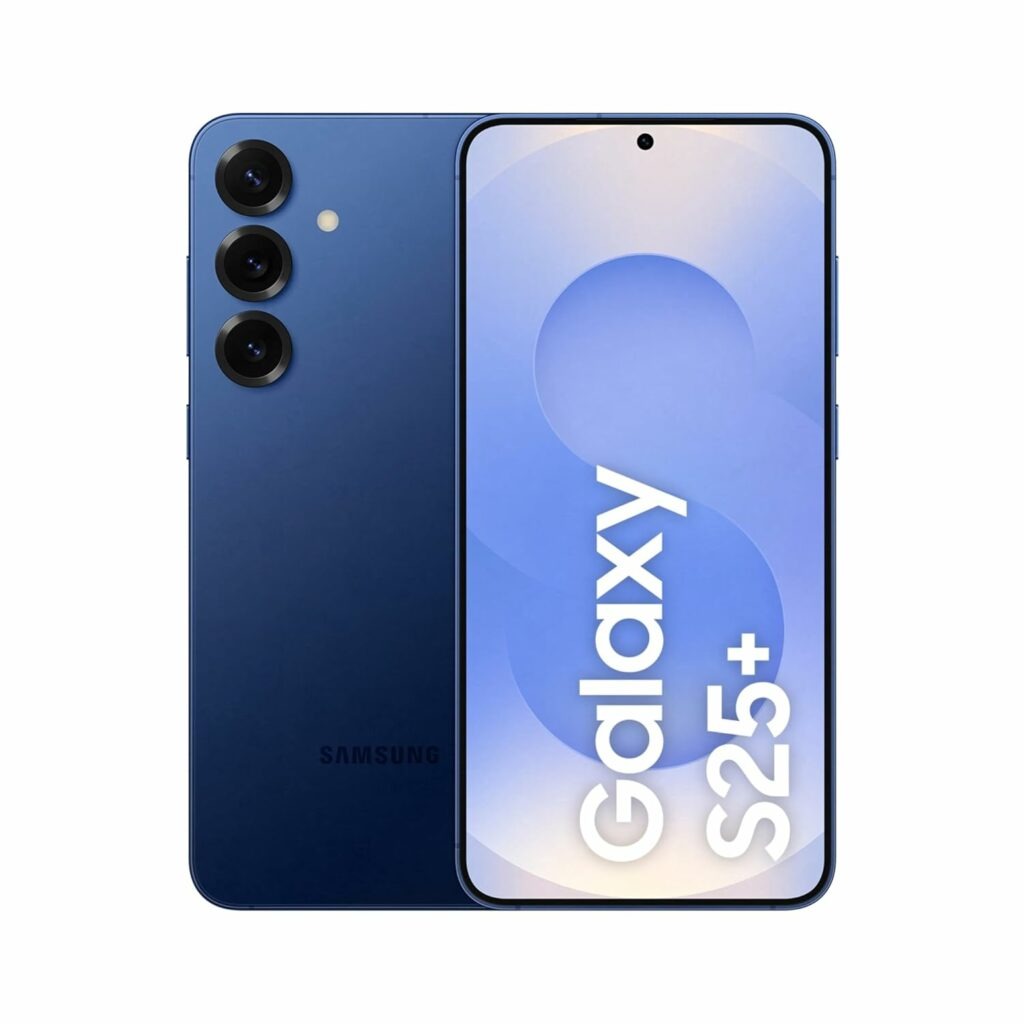
Every year, Samsung drops not just one, but a trio of Galaxy S flagships. The regular Galaxy S25 is the entry point, the Ultra is the all-in luxury beast, and sitting right in the middle is the Galaxy S25 Plus.
The Plus has always been the “middle child” of the lineup. It often feels like it exists just to be a bigger version of the regular model, without bringing anything truly new to the table. That might explain why last year’s S24 Plus was the least popular of the bunch.
So if you’re stuck choosing between the Galaxy S25 and the S25 Plus, here’s how they stack up and whether the “middle child” makes sense for you for this year.
The Galaxy S25 is Samsung’s smallest flagship this year. At 6.2 inches, it’s slim, light (162g), and easy to use one-handed.
The S25 Plus, on the other hand, stretches that to 6.7 inches with a noticeably larger body and weight (190g). If you’ve ever felt cramped typing on a smaller display or squinting at videos, the Plus fixes that immediately.
Both phones share the same premium build: Gorilla Glass Victus 2 on the front and back, Armor Aluminum 2 frame, and IP68 water resistance. Basically, durability is identical; it really comes down to how big you want your phone to feel in the hand.
2. Display
The difference in screens isn’t just size. The Galaxy S25 Plus bumps resolution to 1440p, giving you sharper visuals compared to the S25’s 1080p. Both are Samsung’s best AMOLED tech: LTPO 120Hz refresh rate, HDR10+, and up to 2600 nits peak brightness. Whether you’re doomscrolling outdoors or streaming HDR content, both look fantastic.
But if you’re the type who notices pixel density, the Plus is clearly the sharper option.
3. Performance
Under the hood, there’s no difference. Both the S25 and S25 Plus run on Qualcomm’s new Snapdragon 8 Elite chip, paired with 12GB RAM and fast UFS 4.0 storage. The only catch is that the S25 starts at 128GB, while the Plus skips that and begins at 256GB.
4. Cameras
Samsung kept things simple here. Both phones pack the same triple-camera system:
50MP wide
10MP 3x telephoto
12MP ultrawide
You also get the same 12MP selfie camera, with 4K video up front and up to 8K video recording on the rear. In other words, whether you go small or Plus, your photos and videos will look identical.
5. Battery and charging
Here’s where the S25 Plus finally pulls ahead. The smaller S25 has a 4000 mAh battery with 25W charging, while the Plus packs a 4900 mAh cell and supports 45W wired charging.
And that’s a notable difference. The Plus won’t just last longer, it also charges faster, hitting 65% in 30 minutes, compared to the S25’s 50% in the same time.
6. Extra perks
There’s one more bonus on the S25 Plus: Ultra Wideband (UWB) support. It’s not a must-have for everyone, but if you use Samsung’s SmartTags or plan to use your phone as a digital car key in the future, UWB could be a nice future-proof feature
7. Which one should you choose?
If you like compact phones, the Galaxy S25 is honestly one of the best small Android flagships you can buy. It’s powerful, pocketable, and doesn’t cut corners where it matters.
But if you don’t mind a bigger phone, and especially if you want better battery life, faster charging, and a sharper display, the Galaxy S25 Plus could be a better pick for you.
Apple’s iPhone 16e was announced some months after the flagship iPhone 16 lineup as the most affordable model. To achieve a more approachable pricing, the company cut some features found on the more expensive options. But the base iPhone 16 and the iPhone 16e are only two options for those looking to buy the newest iPhones without spending a lot. While the iPhone 16e has its own appeal, history shows that waiting a little longer could land you the more powerful iPhone 16 at a better value.
The iPhone 16e was designed to lower the barrier for Apple fans who want the newest generation without paying flagship prices. It keeps the familiar iPhone 16 design language while making cuts in areas like display, cameras, and advanced features. For someone who just wants the basics of iOS 18, smooth performance, and Apple’s long-term software support, the iPhone 16e is a practical option.
However, it’s important to understand that the 16e is built to be a step down, and not a flagship killer/replacement. It lacks some of the standout features that make the iPhone 16 appealing, like a more advanced dual camera setup and better display with Dynamic Island functionality.
Please Note: When you buy something using the links in our articles, we may earn a small commission at no cost to you.
2. Why the iPhone 16 Could Soon Get Cheaper
Apple iPhone 16
Apple has a fairly predictable pricing strategy. Over time, as new models arrive to the market, the older base iPhone model gets a permanent price slash, while the more expensive Pro models get officially discontinued. So with the iPhone 17 series being right around the corner, the iPhone 16 is set to become more affordable, just like the iPhone 15 when the iPhone 16 was announced. This, paired with the upcoming sales period, buyers can expect third party discounts as well.
3. Does Buying the iPhone 16e Even Make Sense?
Apple iPhone 15
Of course, not everyone wants to wait. If you need a new phone immediately or if your budget is strictly limited, the iPhone 16e is still a solid option. But even then, the 2023 iPhone 15 should be around the same price as the iPhone 16e (depending on the region) and still offers better value overall.
4. Verdict: Waiting Might Be the Smarter Move
If you’re debating between the iPhone 16e and a potential price drop on the iPhone 16, the smarter move for most buyers is to wait. The standard iPhone 16 not only offers better hardware and features but also provides longer-term value. With price cuts on the horizon, waiting could mean owning a true flagship experience without stretching your budget much further.
JBL finally announced a new portable Bluetooth speaker last month, which wasn’t a refresh or an update of an existing Bluetooth speaker. Now, the JBL Grip is finally coming out of China and entering the global market. It brings a rugged design for outdoor use and RGB lighting, so let’s check it out.
Meet JBL Grip: Rugged Bluetooth Speaker with IP68 & Ambient Lighting
The company’s latest portable audio product was announced with a 16W full-range “track-style” driver. JBL promises strong bass and a clear sound signature with a 70Hz to 20kHz frequency response span. Like some of the other JBL portable speakers, this model can also be used outdoors thanks to its rugged design (that can survive a drop from 1 meter) and IP68 rating. In other words, it has a dustproof body and 1.5 meters of water resistance for around 30 minutes.
JBL Grip
The JBL Grip features Bluetooth 5.4 with support for low latency and fast pairing. One can even connect multiple JBL Grip speakers for a wider soundstage. On a single full charge, the new Bluetooth speakers can last for up to 12 hours while taking 3 hours to get fully charged. Another notable feature is the dynamic ambient lighting. It houses a four color lighting system that can offer multiple modes, like breathing and rhythm based. Users can even customize the color temperatures and brightness via the JBL Portable app.
JBL is also bringing AI Sound Boost technology that can analyze music in real time to optimized output for “bigger sound with less distortion.” The Grip is arriving in the US for 99.95 US Dollars on 28th September 2025 and will be available in multiple colors, like the Chinese variant.
For more daily updates, please visit our News Section.
Samsung has launched the 8TB version of its 9100 Pro PCIe 5.0 solid-state drive in both global and Chinese markets. The SSD is now up for pre-order on JD.com at 6,399 yuan, while the global version with heatsink is priced at $1,019.99. The 9100 Pro series was already available worldwide in configurations up to 4TB, and the 8TB model now extends the lineup.
Samsung 9100 Pro Specifications
The Samsung 9100 Pro comes in 1TB, 2TB, 4TB, and 8TB models. It delivers sequential read speeds of up to 14,800 MB/s and sequential write speeds of up to 13,400 MB/s. The 1TB and 2TB drives reach 14,700 MB/s reads, while the 4TB and 8TB versions hit the peak 14,800 MB/s. On writes, the 1TB version reaches 13,300 MB/s, and the rest of the lineup achieves 13,400 MB/s. Samsung says performance has improved by nearly 99 percent compared to the 990 Pro.
Random performance is equally strong. The 1TB and 2TB models support random reads of up to 1,850K IOPS, while the 4TB and 8TB models go up to 2,200K IOPS. All capacities deliver random writes of up to 2,600K IOPS, making the drives suitable for heavy workloads such as AI processing, video editing, and large-scale gaming.
The 9100 Pro uses the standard M.2 2280 form factor and supports PCIe 5.0 x4 with NVMe 2.0. It measures 80.15 × 22.15 × 2.38mm and weighs under 10 grams. Samsung equips the SSD with V-NAND TLC flash memory and DRAM cache that scales with storage size: 1GB on the 1TB model, 2GB on 2TB, 4GB on 4TB, and 8GB on the 8TB flagship.
Samsung rates the 9100 Pro SSD lineup for durability at 600 TBW for the 1TB model, 1200 TBW for 2TB, 2400 TBW for 4TB, and 4800 TBW for the 8TB version. Each drive comes with a five-year limited warranty. The SSDs support Samsung’s Magician software, which provides firmware updates, health monitoring, and secure data migration.
For thermal control, Samsung equips nickel-coated controllers and heat spreader labels. The new 5nm controller design also improves power efficiency by up to 49 percent compared to the previous 990 Pro.
Just a few days ago, the Xiaomi 15T Pro surfaced on Geekbench with MediaTek’s Dimensity 9400+ chipset. Now, the regular Xiaomi 15T has also shown up on the benchmarking platform, this time with a different MediaTek processor.
The Xiaomi 15T, listed under model number 25069PTEBG, appeared on Geekbench AI, where it posted 1,336 and 1,356 points in single-precision and half-precision tests, along with 1,974 points in the quantized benchmark.
Xiaomi 15T will be powered by Dimensity 8400
More telling is the confirmation of its chipset. Geekbench reveals that the chip has a prime core (3.25GHz), three performance cores (3.00GHz), and four efficiency cores (2.10GHz), which matches the specifications of the Dimensity 8400 exactly.
The listing also confirms that the Xiaomi 15T will run Android 15 and come equipped with 12GB of RAM. Beyond the benchmark details, rumors suggest the Xiaomi 15T will pack a 5500mAh cell and support for 67W wired fast charging.
Its rear camera setup is expected to include a 50MP main, 13MP ultrawide, and a 50MP telephoto unit. Whereas we might get a 32MP shooter for selfies. Moreover, the phone could have a plastic frame and an IP69 rating for protection against dust and water.
The Xiaomi 15T is expected to start at EUR 649 (around Rs. 66,000) for a single 12GB + 256GB configuration. The 15T Pro, meanwhile, may cost EUR 799 (roughly Rs. 81,000) for the 12GB + 256GB version and EUR 899 (around Rs. 92,000) for the 16GB + 512GB option. Both models are likely to launch in black, grey, and gold finishes.
For more daily updates, please visit our News Section.
MediaTek’s next flagship processor, the Dimensity 9500, is expected to launch later this month, and a new leak has laid out most of its key specifications. The information comes from tipster Digital Chat Station, who has a track record of detailing smartphone hardware ahead of release.
At the heart of the Dimensity 9500 is a CPU built on TSMC’s advanced N3P process. The setup follows an all-large-core layout that MediaTek has been using for the past few generations. The configuration includes one Cortex-X930 core running at 4.21GHz, three Cortex-X930 cores at 3.5GHz, and four Cortex-A730 cores at 2.7GHz.
On the graphics side, the processor integrates a Mali-G1 Ultra MC12 GPU, running at around 1MHz. The leak notes that the GPU has a new microarchitecture that improves ray tracing performance while reducing power draw.
Beyond cores and graphics, the Dimensity 9500 has a 16MB L3 cache, 10MB system-level cache, and support for the SME instruction set, plus a next-gen NPU 9.0 said to hit 100 TOPS (trillion operations per second). For memory and storage, the chip supports LPDDR5X RAM at 10667Mbps and UFS 4.1 storage over a 4-lane setup.
Digital Chat Station also pointed out that the imaging stack may include a version of Vivo’s V3+ ISP, though this will likely be exclusive to Vivo devices.
Mali-G1 Ultra MC12 (new microarchitecture) improved ray tracing, lower power draw
Cache
16MB L3 + 10MB system-level cache (SLC)
Instruction Set
SME instruction set support
NPU
NPU 9.0, ~100 TOPS
Memory
4× LPDDR5X @ 10667Mbps
Storage
4-lane UFS 4.1
Imaging
Compatible with vivo V3+ ISP (exclusive to vivo devices)
According to earlier leaks, the Dimensity 9500 will debut on September 22nd, slightly ahead of Qualcomm’s next-gen Snapdragon. The processor is expected to launch first in the vivo X300 series, with Oppo’s Find X9 lineup following in October.
For more daily updates, please visit our News Section.
While Google’s Pixel 10 series brought several upgrades like the PixelSnap, TSMC-made Tensor G5, and new AI features, there were largely incremental changes over last year’s Pixel 9 lineup (Similar to other major brands like Samsung and Apple). However, the budget Pixel 10a might not even meet these basic upgrades, with a recent leak revealing some disappointing info about the next Pixel a series model.
Pixel 10a Rumored Specs Look Too Familiar: Same Chip, Same Cameras, No Big AI Boost
The Pixel 10a was rumored not to receive the upgraded Tensor G5 chip earlier this year, with the initial report claiming a Tensor G4. And now, a new report from Mystic Leaks also makes the same claim. Google is bringing back the Samsung manufactured Tensor G4, so there’s no performance upgrades over the Pixel 9a. This also leads to another disappointment, which is with the big new AI features.
Google Pixel 9a
To recall, the Pixel 10 lineup leverages the 60% improved NPU of the Tensor G5 to run features like the Magic Cue, which uses Google’s on device AI tool for real time assistant during calls and chats. While the base Google Pixel 10 did get an upgrade with a third camera (bringing a telephoto shooter to the base Pixel for the first time), the Pixel 10a won’t be so lucky. The Pixel 10 already got a massive downgrade with the main and ultra wide camera sensors.
It borrowed the Pixel 9a’s cameras rather than improving on the Pixel 9. So these two cameras won’t be better than a higher end model. This leak also adds that there is no telephoto camera, meaning, even the camera sensor remains unchanged. The leak claims that the Pixel 10a will arrive with UFS 3.1 storage, unlike the UFS 4.0 storage on the other Pixel 10 models. You might be wondering if the Pixel 10a has any upgrades over the Pixel 9a. There are likely some minor upgrades with the report only revealing a slightly brighter display that reaches 2,200 nits (200 nits higher than last gen).
For more daily updates, please visit our News Section.
At IFA 2025, DOOGEE is presenting its latest vision under the theme “Tech For The Wild.” Known for 16 years of rugged technology innovation, the company is now moving beyond durability to focus on outdoor exploration, sustainability, and eco-friendly design. The exhibition takes place in Berlin at Hall 6.2, Booth 207, from September 5 to 9.
A New Brand Vision
DOOGEE’s theme combines four ideas: protection, performance, eco-materials, and renewable energy. With these principles, the company is introducing a new product ecosystem that connects rugged devices with a planet-conscious approach. The outdoor-focused lineup is divided into four series: Tech Wild, Tech Life, Tech Enjoy, and Wild Partner. Each one serves a unique role in building a connected and sustainable technology lifestyle for adventurers and everyday users alike.
Tech Wild – Technology for Explorers
The Tech Wild series is designed for explorers, field professionals, and outdoor enthusiasts who need technology that performs in extreme conditions. The V Max Series delivers ultra-long battery life and multipurpose outdoor features, with the V Max Play standing out through its 200MP ultra-clear main camera, a built-in projector for turning walls into theaters or briefing screens, and dual camping lights for night use.
The Shield Series pushes durability further with the S200 Ultra, a flagship phone built with a precision aluminum-titanium alloy frame and an aluminum cover. This device also features a rear display for instant information and reinforced side elements for maximum impact resistance.
The Fire Series brings practicality to remote environments with the Fire 7 Ultra, a rugged phone that integrates a Bluetooth walkie-talkie, eliminating the need for bulky standalone radios. This model is particularly suited for hikers, field researchers, and rescue teams.
Tech Life – Sustainable and Stylish
The Tech Life range blends rugged durability with sustainable design for users who move between outdoor adventures and urban lifestyles. The highlight of this lineup is the Note 59 Pro+, a slim 8.6mm smartphone that is thinner than most rugged phones. It is crafted from a composite material made of rice husk and coffee grounds, demonstrating DOOGEE’s commitment to eco-conscious innovation. The Note 59 Pro+ also features a UV-responsive back panel that shifts colors under sunlight, giving it a stylish and modern appearance without compromising on strength and resilience.
Tech Enjoy – Tablets for Work and Leisure
DOOGEE is also bringing rugged tablets to IFA 2025 under the Tech Enjoy series. This collection focuses on large-screen mobility for digital nomads, students, professionals, and adventurers. The Tab E Series, also known as the Entertainment and Cinema Edition, is made for immersive audiovisual use.
The flagship Tab E3 Max comes with a 14-inch 2.1K ultra-clear display, a quad-speaker surround system, and a 13,500mAh battery capable of running eight hours of offline video playback. It can serve both as a mobile cinema and an expedition command hub.
The U Series, on the other hand, strikes a balance between productivity and entertainment. The U13 tablet, featuring a 13-inch screen, Android 16, four powerful speakers, and an 11,000mAh battery, is ideal for educators, researchers, and field professionals who need a reliable and versatile device even when off-grid.
Wild Partner – Wearables and Audio for the Outdoors
Expanding beyond phones and tablets, DOOGEE is introducing outdoor-ready wearables and audio devices in the Wild Partner series. The Anywise W1 Pro smartwatch offers 5ATM waterproofing, dual-band GPS, and offline maps, enabling accurate navigation without the need for a smartphone.
The BoneAir Swim headphones use bone-conduction technology with an IPX8 waterproof rating, allowing users to listen to music underwater while staying aware of their surroundings.
For group activities, the SnapBeat outdoor speaker delivers stereo sound in a lightweight, magnetic design inspired by camera aesthetics. With an IP66 waterproof rating, it is built for campfires, hiking trips, and outdoor gatherings.
Building a Connected Outdoor Ecosystem
Through its new product ecosystem, DOOGEE is positioning “Tech For The Wild” as more than just a theme. The company aims to connect smartphones, tablets, and wearables into a seamless outdoor technology network. At the same time, its focus on low-impact materials and sustainable production practices reflects a commitment to environmental responsibility. By combining rugged durability with sensory-enhancing features, DOOGEE seeks to expand human capability while maintaining respect for nature.
Outdoor Experience Zone at IFA
To bring this vision to life, DOOGEE has set up an Outdoor Tech Camp experience zone at IFA 2025. Here, visitors can put the devices to the test in simulated field scenarios, exploring their rugged build, long-lasting power, and eco-friendly designs. This hands-on showcase highlights how DOOGEE is redefining rugged technology for a new era of outdoor exploration.
ALLDOCUBE has officially announced the launch of its first 13-inch flagship tablet, the Ultra Pad, set to debut on September 10, 2025. The company will prioritize the Japanese market with availability on Rakuten Japan, while global customers will be able to purchase the device through AliExpress on the same day.
With this launch, ALLDOCUBE is stepping into the large-screen premium tablet category, marking a significant milestone in its product portfolio.
Market Context
Large-screen tablets are currently one of the fastest-growing segments in the smart device industry. The demand is largely driven by hybrid work, remote education, and entertainment needs. Bigger screens are increasingly valued for better productivity, immersive viewing, and advanced multitasking. Recognizing this trend, ALLDOCUBE has invested over a year in research and development for the Ultra Pad to ensure it delivers strong performance and a superior user experience.
ALLDOCUBE’s Track Record
The company has already built a solid reputation in the tablet market, particularly in the mini and mid-sized segments. Its iPlay series, including the popular iPlay 20 and iPlay 40, has been well received, while the iPlay 70 mini Ultra with Snapdragon 7+ Gen 3, launched earlier in April 2025, sold out immediately. With over one million units sold in the mini tablet category and consistent top rankings on Rakuten and Amazon Japan, ALLDOCUBE has proven its ability to deliver affordable yet powerful devices.
Key Features of the Ultra Pad
The 13-inch Ultra Pad represents ALLDOCUBE’s first attempt at a large-screen flagship model. Unlike many competitors that use mid-range or entry-level processors for bigger tablets, ALLDOCUBE is breaking convention by offering premium performance without compromise. The tablet promises smooth performance, immersive viewing, and cost-effective pricing, aiming to become one of the most affordable premium tablets in its category.
Strategic Importance
The Ultra Pad fills a critical gap in ALLDOCUBE’s product range, expanding the lineup from compact 8-inch tablets to large 13-inch entertainment-focused models. By prioritizing the Japanese market for launch and simultaneously making the device available worldwide, the company shows its commitment to both local and global fans.
Company Outlook
ALLDOCUBE has positioned itself as a trusted global brand specializing in mini and affordable tablets. With the Ultra Pad, the company is now extending its vision to premium devices while staying true to its mission of providing high-quality, innovative, and accessible technology.
Samsung has expanded its Odyssey lineup with the launch of the new Odyssey G60F gaming monitor in China. Designed for competitive gamers, the G60F stands out with its 350Hz refresh rate, offering one of the smoothest displays on the market. What makes it even more appealing is its pricing, bringing high-end responsiveness without a premium price tag.
Samsung New Odyssey G60F Monitor Delivers 350Hz Gaming for Under $350
The South Korean tech giant’s just announced the Odyssey G60F with a 27-inch IPS LCD panel that has a QHD resolution, 1ms response time, AMD FreeSync Premium and Nvidia G-Sync support, 99 percent sRGB color, and HDR400 certification. But what makes it stand out is undoubtedly its super smooth 350Hz refresh rate, making it a great pick for competitive gamers and aspiring esports athletes.
Samsung Odyssey G60F Gaming Monitor
You might be thinking that there have been gaming monitors with faster refresh rates, and you’re right. However, Samsung managed to offer these specs for just 2,299 Yuan (roughly 322 US Dollars). A couple of years ago, a typical 144Hz gaming monitor with 1440p resolution cost that much in certain regions. Notably, this is the Chinese pricing, so it will likely be more expensive in the global market, but this is still quite a deal for under 350 US Dollars.
Samsung also designed the Odyssey G60F with a slim base, especially for FPS gaming enthusiasts. This base offers more desk space for shooter game fans to keep their keyboards. As of right now, the Samsung Odyssey G60F was announced only in the Chinese market, and there is no official word on a global debut. However, we can expect this model to launch in more regions soon. In related news, the Odyssey G60F arrives mere days after the company unveiled the Odyssey G7 (2025).
For more daily updates, please visit our News Section.
TCL has launched the Thunderbird Q9 34-inch QD-Mini LED gaming monitor in China. The display is listed on JD.com at 3,999 yuan ($560), and the company is including a mechanical arm for early buyers.
TCL Thunderbird Q9 Specifications
The Thunderbird Q9 features a 3440 × 1440 WQHD resolution on a 21:9 curved panel with a 1500R curvature. The screen uses CSOT’s Apex Fast HVA panel, which supports a 240Hz refresh rate and a 1ms GTG response time. It also features AMD FreeSync Premium and Nvidia G-Sync technologies to eliminate screen tearing.
The monitor uses a Mini LED backlight with 2,304 local dimming zones, delivering a 4000:1 static contrast ratio and a 1,000,000:1 dynamic contrast ratio. It reaches 1,600 nits peak brightness with VESA DisplayHDR 1400 certification, while covering 98% of DCI-P3 and 100% of sRGB with factory-calibrated ΔE<2 accuracy.
The Q9 also focuses on eye comfort. It holds TÜV Rheinland certifications for low blue light and flicker-free operation. On the connectivity side, the monitor includes two HDMI 2.1 ports, one DisplayPort 1.4, one USB-C with 90W reverse charging, two USB-A ports, a USB-B uplink, and a headphone jack.
It supports Display Stream Compression (DSC) for efficient transmission and includes KVM functionality for controlling two PCs with one keyboard and mouse.
Thunderbird has added dual 3W speakers and its “Dancing Light” RGB lighting system on the back panel. The ergonomic stand supports tilt, swivel, height adjustment, and rotation. The monitor also supports VESA wall mounting and includes a hidden headphone hook.
The package ships with HDMI, DisplayPort, USB-C, and USB-B to USB-A cables. The Q9 weighs 10.3kg with the stand and measures 806.6mm in width and 360mm in height without it.
Ulefone has announced the launch of its latest rugged device, the Armor 29 Pro Thermal Version, which comes with professional-grade thermal imaging capabilities. Building on the success of the Armor 28 Ultra Thermal, this new model introduces improved clarity and smoother imaging, making it highly suitable for industrial, emergency, and outdoor use cases.
Powerful Thermal Imaging Technology
The Armor 29 Pro Thermal Version is equipped with the ThermoVue T2 thermal sensor, the same high-performance component used in the previous generation. It delivers a resolution of 640 × 512, ensuring industry-leading clarity for identifying heat signatures in different environments. With a 25Hz refresh rate, the camera offers real-time smooth thermal imaging.
The system is enhanced by SharpenAI, which improves image details, and FusionAI, which boosts precision. These technologies work together to provide clear, reliable results, whether for professional inspections or outdoor adventures. The built-in thermal camera is capable of supporting multiple applications, including detecting overheating equipment, identifying leaks, and even tracking wildlife.
Real-World Applications
Industrial & Commercial Use
For businesses and professionals, the thermal camera can help detect hot spots in electrical and mechanical systems, preventing failures before they happen. It can also spot gas or fluid leaks through temperature variations and assess pipelines, tanks, and structural weaknesses with ease.
Emergency Response
In critical rescue situations, the Armor 29 Pro can assist firefighters in identifying fire sources through smoke and give rescuers the ability to see clearly in total darkness. This makes it a valuable tool for search and rescue missions.
Outdoor Exploration
Adventure seekers can use the device to observe wildlife without disturbing them, navigate in the dark using thermal signatures, and even monitor campsite safety by tracking heat from campfires or nearby activity.
Building Inspections
The thermal sensor helps professionals identify energy loss from poor insulation, hidden water damage, and thermal inefficiencies in walls and ceilings. This makes it useful for construction and real estate industries.
Privacy, Security & Electronics
Another unique use case is detecting hidden surveillance devices, such as cameras or recorders, by spotting their heat output. For technicians, the device aids in electronics repair, pinpointing overheating components and identifying faulty circuits in gadgets like laptops and smartphones.
Hardware and Design
Beyond its thermal imaging power, the Armor 29 Pro Thermal Version packs robust hardware. It comes with a massive 21,200mAh battery and supports 120W ultra-fast charging, ensuring long-lasting use even during fieldwork. The device features a 6.67-inch AMOLED display with a 120Hz refresh rate for smooth visuals, along with a 1.04-inch rear sub-display for quick notifications and controls.
Product Variants and Availability
Ulefone is releasing two versions: the Armor 29 Pro Thermal Version with the built-in thermal camera, and the standard Armor 29 Pro without thermal imaging. Both models retain rugged durability, but the Thermal Version stands out as a professional-grade tool.
The smartphones will be available from mid-September through AliExpress, Amazon, and Ulefone’s official online store. Pricing details will be revealed closer to the launch, with a special introductory offer expected for early buyers.
With the Armor 29 Pro Thermal Version, Ulefone has brought thermal imaging from specialized tools into everyday rugged smartphones. Its combination of advanced sensor technology, AI enhancements, and practical use cases makes it more than just a phone, it is a versatile professional tool for industries, rescuers, and explorers alike.
Global AI-driven technology brand TECNO, in partnership with DXOMARK, the internationally recognized authority in imaging testing, today announced the official opening of their joint imaging laboratory in Chongqing. This state-of-the-art facility is the world’s first fully automated imaging lab built entirely around DXOMARK’s sixth-generation Smartphone Camera Evaluation Protocol, designed to drive innovation, precision, and inclusivity in smartphone photography.
The inauguration ceremony brought together key executives from both companies and media representatives to witness a new chapter in imaging technology collaboration. The lab represents a significant milestone in TECNO’s commitment to delivering exceptional image quality tailored to diverse global users.
Inside the Lab: A Fully Automated Imaging Wonderland
During the media tour following the ceremony, journalists were granted exclusive access to the revolutionary testing facility. The laboratory represents a leap forward in imaging evaluation technology:
Complete Robotic Automation
The lab operates with zero human intervention in the testing process. Precision robotic arms smoothly handle device positioning and angle adjustment, while motorized sliders and gimbals simulate every possible shooting scenario—from handheld motion to tripod-stable conditions. This eliminates human variability and ensures perfectly consistent test conditions.
Advanced Lighting Systems
Flanking both sides of the testing area are professional-grade lighting arrays capable of replicating everything from bright sunlight to subtle indoor illumination. These systems can simulate the full spectrum of natural lighting conditions, from the harsh midday sun to the golden hour glow, allowing TECNO to optimize camera performance for any lighting environment users might encounter.
Comprehensive Testing Scenarios
The lab features an extensive collection of test charts and human models that cover every aspect of image quality evaluation. Dozens of specialized color charts, texture plates, and multi-tone calibration targets enable precise measurement of color accuracy, detail preservation, and noise performance. The collection of realistic human head models spanning the full range of global skin tones ensures that TECNO devices deliver natural and flattering results for all users.
Video Stabilization Simulation
Beyond photography, videography is a crucial part of a mobile camera system. Behind the robotic arm in the lab is a platform that provides sustained vibration, capable of shaking every phone with the same amplitude. Compared to manual testing, this approach saves significant time and, more importantly, ensures perfect consistency and repeatability across all tests.
Three Breakthroughs: Automation, Inclusion, and Customization
1. Full Automation for Unmatched Precision
The lab eliminates human error and variability through fully automated workflows. Robotic systems handle device positioning, lighting control, scene switching, and image capture with micron-level precision. This allows TECNO to execute thousands of test cases consistently and rapidly, significantly accelerating R&D cycles.
2. Inclusive Testing for Global Users
To address the diverse skin tones and cultural preferences of users across over 70 markets, the lab features six realistic human head models spanning a wide range of skin tones, complemented by multi-tone calibration charts. This ensures that TECNO devices deliver accurate, flattering, and natural-looking skin tones for everyone.
3. Region-Specific Customization
The lab enables hyper-localized tuning based on regional preferences. For example:
In African markets, users prefer authentic skin tone reproduction.
In Southeast Asia, clarity and bright exposure are prioritized.
TECNO can now generate customized evaluation reports per region, ensuring each device meets local expectations.
Q&A Highlights: Addressing Key Industry Questions
Q: What are the main advantages of a fully automated lab compared to manual testing?
A: Beyond efficiency gains, automation ensures perfect consistency and repeatability over time. Complex test setups that previously took hours to configure manually can now be completed in minutes with robotic precision. This eliminates technician dependency and ensures testing standards remain unchanged for years.
Q: Why did TECNO choose to partner with DXOMARK instead of local studios?
A: While we work with local studios for regional style preferences, DXOMARK provides scientific fundamentals, global standards, and transparent evaluation systems that help us build truly world-class products. Their scoring systems and software tools bring tangible benefits to our product development process.
Q: How will end-users perceive these technical improvements?
A: Users will experience more stable performance across all lighting conditions, more accurate skin tones, faster autofocus, and better HDR processing. Our testing methodology is based on real user preferences—for example, color scoring is calibrated through global user surveys to ensure we deliver what people actually want to see.
Q: Which test scenarios received the most investment?
A: The “All in One Portrait” setup is our most complex and important configuration, simulating real-world person photography. It uses AI-trained models based on millions of images to evaluate facial detail preservation, exposure, HDR, noise, and timing. Additionally, the DMC chart setup with realistic objects allows us to measure texture noise and color accuracy in unprecedented ways.
Q: Does TECNO aim to top DXOMARK rankings?
A: While we’re proud that our TECNO CAMON 40 Pro previously achieved top scores under $600 and received the DXOMARK 2025 Smart Choice Label Award, our focus remains on delivering stable, reliable camera experiences that exceed user expectations in daily life. We’re committed to breaking technical limitations rather than chasing scores.
DXOMARK’s Role: Science-Driven Innovation
DXOMARK brings over 25 years of imaging expertise, scientific rigor, and global benchmarking standards to the partnership. The Camera V6 protocol—a comprehensive revision focused on real-world usage—forms the foundation of the lab’s testing methodology. “We are not just measuring performance; we are defining what excellence looks like,” said the Scientific Director of DXOMARK. “Our tools and metrics are designed to reflect how people actually use their cameras—in portraits, low light, zoom, video, and HDR scenarios.” The lab also fully supports HDR photo and video evaluation, a first in the industry, ensuring TECNO devices are future-ready for next-generation imaging formats.
Looking Ahead: Collaboration and Future Roadmap
The joint lab is just the beginning of a long-term partnership between TECNO and DXOMARK. Both companies plan to:
Explore AI-enhanced image quality algorithms.
Develop next-generation evaluation methods.
Introduce real-world perceptual metrics beyond traditional lab tests.
Promote transparency and open standards in the imaging industry.
About TECNO
TECNO is an AI-driven, innovative technology brand with a presence in over 70 markets across five continents. Committed to transforming the digital experience in global emerging markets, TECNO relentlessly pursues the perfect integration of contemporary aesthetic design with the latest technologies and artificial intelligence.
About DXOMARK
DXOMARK is a French independent engineering company that has been a global leader in objective and scientific testing of cameras, displays, and audio systems for over two decades. Its benchmarks are trusted by manufacturers and consumers worldwide.
We use cookies on our website to give you the most relevant experience by remembering your preferences and repeat visits. By clicking “Accept”, you consent to the use of ALL the cookies.
This website uses cookies to improve your experience while you navigate through the website. Out of these, the cookies that are categorized as necessary are stored on your browser as they are essential for the working of basic functionalities of the website. We also use third-party cookies that help us analyze and understand how you use this website. These cookies will be stored in your browser only with your consent. You also have the option to opt-out of these cookies. But opting out of some of these cookies may affect your browsing experience.
Necessary cookies are absolutely essential for the website to function properly. This category only includes cookies that ensures basic functionalities and security features of the website. These cookies do not store any personal information.
Any cookies that may not be particularly necessary for the website to function and is used specifically to collect user personal data via analytics, ads, other embedded contents are termed as non-necessary cookies. It is mandatory to procure user consent prior to running these cookies on your website.