Xiaomi launched its first laptops in India last month in the form of Mi Notebook 14 and Mi Notebook 14 Horizon Edition. These laptops have been sold via the company’s crazy flash sales since then. Thankfully, the Chinese tech company has now removed this barrier as they are now available 24×7 on Mi Online Store (Mi.com) and Amazon India.
India is the second-largest market for Xiaomi after its home country China. The company has been launching a number of tailored products in this region for years. Some of the devices even first debut in India.
Hence, the company’s laptops have first launched in India outside China. That said, like any new Xiaomi product, they were only available via flash sales up until recently. But now, interested customers can buy them anytime from either Mi.com or Amazon India.
The Mi Notebook 14 and Mi Notebook 14 Horizon Edition are powered by Intel 10th Gen processors. The former model comes only in Core i5 option with option NVIDIA MX250 GPU. On the other hand, the latter model comes in both Core i5 and Core i7 versions with NVIDIA MX350 GPU.
Here’s the pricing of all the variants of Xiaomi Mi Notebook 14 and Mi Notebook 14 Horizon Edition in India.
The POCO M2 Pro went on sale on Tuesday, July 14, for the first time in India. The mid-range phone ships with Android 10 out of the box with MIUI on top. Prior to going on sale, reviews revealed the device ships with some of the apps banned by the Indian Government. An official statement released by the manufacturer explained that the software version was already finished before the ban which is why it can be seen on the phones. Today, POCO has announced that they will remove the apps.
According to an official statement released by the company’s General Manager, C. Manmohan, POCO is working on the next factory image for the POCO M2 Pro which will not have any of the blocked apps pre-installed. This means that newer units of the device will not have them. However, for the current units in stock, POCO says they have enabled the uninstallation of the apps in a single simple step.
The statement also revealed that they are looking into the Cleaner app (Clean Master) issue. Clean Master is one of the apps owned by Cheetah Mobile, a developer whose apps are notorious for sending private data to its servers.
Here's an answer to all those who asked "When is the next POCOM2Pro sale?".
It is a known fact that Samsung’s budget and mid-range smartphones sell more in quantity than its flagship Galaxy S and Galaxy Note series. Last year, the South Korean tech-giant restructured its budget handset offerings with new Galaxy M and revamped Galaxy A series. Now, according to a new report, some devices in the latter series will feature OIS starting 2021.
OIS (Optical Image Stabilization) is normally found on high-end premium smartphones. It does not make sense for manufacturers to include them in their budget models as it increases their retail price.
But now, as Samsung has to compete with a slew of Chinese competitors with better spec’d handsets and Apple’s iPhone SE 2020 in the budget department, it seems to have decided to include OIS in some of its Galaxy A series as per a report by The Elec (via Gadgets360).
According to the report, the first Galaxy A series of smartphones to come with OIS will be the successors to Galaxy A71, Galaxy A81 (Galaxy Note 10 Lite), and Galaxy A91 (Galaxy S10 Lite). All three of them are expected to launch next year.
Samsung is reported to turn towards Galaxy A series for profits as the sales of Galaxy S20 series has been sluggish this year as a result of the pandemic. The same effect is forecasted for upcoming premium devices and the only solution to keep its smartphone business profitable is by launching attractive mid-range devices with select features from flagships.
Apart from this, Samsung is also expected to launch Galaxy S20 FE/Lite in October, months earlier than its predecessor Galaxy S10 Lite.
Back in March 2020, YouTube had limited the streaming quality of the videos on its platform to a lower quality to deal with the sudden increase in internet traffic. And finally, now, the company has decided to remove this restriction albeit to a certain degree.
While earlier this year, one could only watch videos on YouTube at 480p resolution, YouTube has finally brought back the option for 1080p after three whole months. The YouTube application on Android and iOS devices will now allow users to switch between 1080p and 480p, however, this is only possible if the device is connected to a Wi-Fi network.
In other words, the streaming quality is still limited to 480p on mobile data. The update arrives in the form of a server switch, hence, you wouldn’t have to update your YouTube app. This move will likely be quite welcomed in the Southeast Asian nation since people with devices that have a larger display could notice the visible differences between a 480p and 1080p, especially on gaming videos that also offered content at 60fps, but only on 720p or 1080p.
The US Government is planning on enforcing a visa restriction on employees of Huawei and other Chinese companies that are based around technology. This move arrives just a while after the UK banned Huawei from its 5G infrastructure and adds to the pressure the Chinese tech giant is facing from the west.
Mike Pompeo, US Secretary of State, said that his department will target the employed of Huawei and other Chinese firms that the official claims are responsible for human rights abuses in its home country and abroad. The allegations are quite serious and are likely influenced by its negative stance against the Chinese government.
The Secretary of State told reporters that “The UK joins the United States and now many other democracies becoming nations free of untrusted 5G vendors. The United States has a Huawei announcement of our own today. The State Department will impose visa restrictions on certain employees of Chinese technology companies like Huawei that provide material support to regimes engaging in human rights violations and abuses globally.”
Notably, this statement arrives just a day after US President Donald Trump signed the Hong Kong Autonomy Act and an executive order, which removes the preferential trade status of the city. This follows after what Pompeo considers to be an undermining of Hong Kong’s autonomy by China, which warranted this policy response.
Samsung is expected to launch the lite variant of 2020 Galaxy S20 series earlier than its predecessor. The handset, which is said to retail as Galaxy S20 FE (Fan Edition), commonly known as Galaxy S20 Lite has been in the news for a while now. The latest leak about this phone reveals more of its features.
Galaxy Fan Edition Snap865、120Hz、3.3mm Hole IP68、Price nice 、Q4
The new tip about the upcoming Galaxy S20 FE/Lite comes from Ice Universe, a well-known Chinese leakster on Twitter. According to him, the device will sport a 120Hz refresh rate display similar to other already available and upcoming premium Samsung smartphones such as Galaxy S20, Galaxy S20 Plus, Galaxy S20 Ultra, Galaxy Note 20, and Galaxy Z Fold 2.
He also says that the punch-hole on this phone will be only 3.3mm in size. Above all, it will be also IP68-certified for dust and water resistance. As per him, the handset will launch in Q4 at an attractive price, which goes in line with a report that revealed Samsung to ship it in October.
Apart from this new leak, the Galaxy S20 FE/Lite was also spotted on Geekbench earlier this week powered by Qualcomm Snapdragon 865, the processor that Ice Universe also notes in his tweet. It is also expected to feature the new 50MP Samsung ISOCELL GN1 camera sensor.
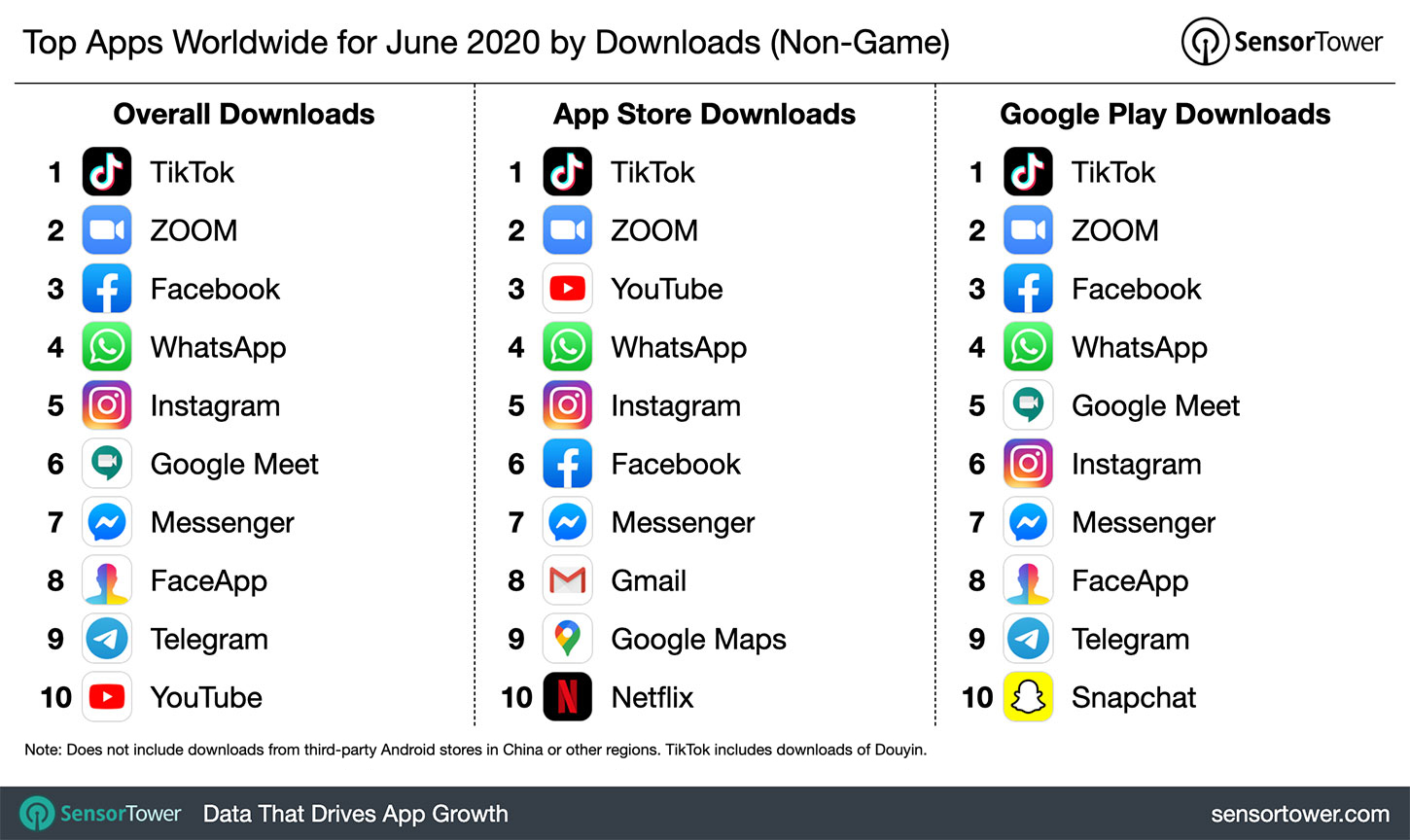
Sensor Tower, a known analytics based firm, has recently revealed the ranking for the world’s top mobile application publishers along with the most downloaded applications from across the globe.
Top Mobile Apps Publishers
According to Sensor Tower, the top publisher for mobile applications in June 2020 (for both iOS and Android combined) was Google with more than 317.6 million downloads, which is a year on year increase of a whopping 68.5 percent. Other notable brands include Facebook coming in at second place and Voodoo at the third spot. Bytedance and Outfit7 rounded up the fourth and fifth positions respectively.
Google held the top spot in both the Play Store and App Store rankings. Tencent came in second while Facebook arrived third in the iOS ranking, while Android had Facebook come in second and Outfit7 arrive third. While many publishers shared the list, there were a few names that were found only in one listing, like Alibaba for iOS.
Most Downloaded Apps
The most downloaded apps for June 2020 was dominated by TikTok globally in both the App Store and Google Play rankings. The second spot was common in both categories as well with ZOOM seeing a high number of downloads in the month. Facebook won the third position in the overall rankings, although, YouTube won the third position in the App Store listing. The fourth position was dominated by WhatsApp in both categories, making it the 4th overall as well, meanwhile, Instagram came in fifth overall and in the App Store rankings despite Google Meet being fifth in the Google Play ranking.
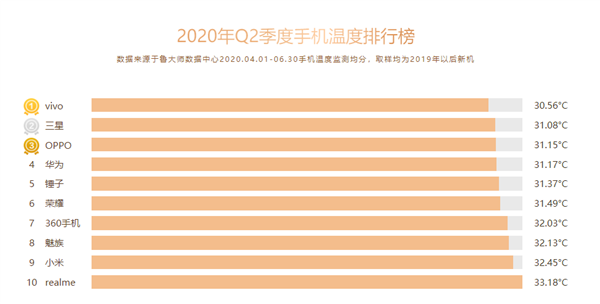
Master Lu has recently revealed the rankings of smartphones that run at the lowest temperature for the second quarter of 2020. The scoring featured the overall score of a brand and its average handset temperature.
Vivo U3x
In the list, Vivo topped the charts with its overall average temperature of just 30.56 degrees Celsius. In other words, Vivo was ranked as the “coolest” smartphone brand and was praised for its heat dissipation and temperature control. South Korea’s Samsung arrived second with an average of 31.08 degrees Celsius while Oppo came in third with an average temperature of its handsets being 31.15 degrees Celsius.
In terms of a single handset ranking, the Vivo U3x took the top spot, with the average temperature being just 27.96 degrees Celsius. Other notable performers in this category included the Samsung Galaxy M30s, Redmi 8, and iQOO Neo 855.
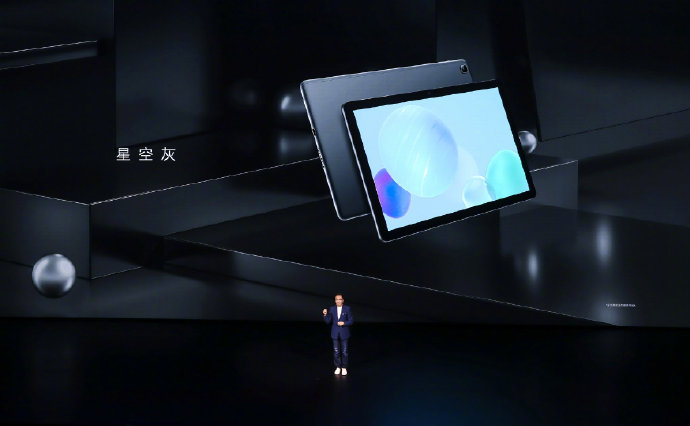
Earlier today (15th July 2020), The Honor Tab 6 and Honor Tab X6 were officially unveiled. The Tab 6 features the Kirin 710A processor, which was manufactured by SMIC.
Honor Tab 6
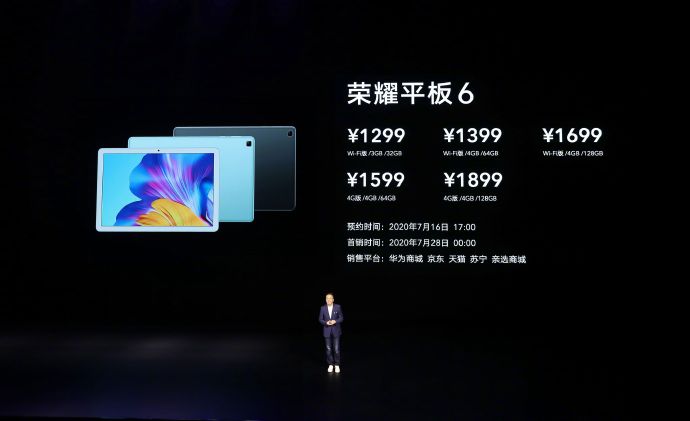
The Honor Tab 6 sports a 10.1 inch FHD display with a resolution of 1920 x 1200px and a contrast ratio of 1000:1. It has a thickness of just 7.55mm and weighs 460 grams. One of its highlighting features is its sound system (Histen 6.1) which has large speakers with a 2.2cc large sound cavity for better low frequency output and thicker sound quality. The Tab 6 runs on the new MagicUI 3.1 custom skin and arrives with Honor Magic pen as well. Under the hood, it is equipped with the Kirin 710A SoC along with either 3GB or 4GB of RAM and 32GB, 64GB and 128GB of internal storage.
Honor Tab X6
The Tab X6 is the more affordable tablet of the two launches. Its display has a resolution of 1200 x 800px, which is lower than the Tab 6’s FHD screen. In terms of memory, it arrives with either 3GB or 4GB of RAM alongside 32GB or 64GB of internal storage. However, the Tab X6 does not support a touch sensitive stylus. Further details regarding the Tab X6 will be added when more information is available.
The Honor Tab 6 will start its first sale on 16th July 2020 from 5 pm in China and will be available in two color variants, followed by another sale on 28th July 2020 at 12 am.
Notably, the company also announced the launch of a new color variant for the Honor Tab V6. It is the Sky Silver color and is priced at 2499 yuan (roughly 357 US Dollars) and will also be released on 16th July 2020.
Apart from launching MagicBook Pro 2020 Ryzen Edition, Tab 6, and Tab X6, Honor also unveiled standard MagicBook 14/15 2020 Ryzen Editon in China. There are four models in total starting from 3,599 yuan ($514).
As their names suggest, the new MagicBook 2020 Ryzen Edtion come in two sizes, 14-inch and 15-inch respectively powered by both AMD Ryen 5 4500U and Ryzen 7 4700U processors. Hence, four models as we mentioned in the beginning.
The MagicBook 15 2020 Ryzen Editon comes in three variants. The first two are powered by Ryzen 5 and are available in a couple of storage versions – 8GB + 256GB and 16GB + 512GB. The third variant features Ryzen 7 paired with 16GB RAM and 512GB ROM.
On the other hand, the MagicBook 14 2020 Ryen Edition only comes in two variants – Ryzen 5 and Ryzen 7. Both of them feature the same 16GB + 512GB storage configuration.
It is worth noting that all the above-mentioned Honor notebooks use DDR4 RAM and PCIe NVMe SSD.
Further, the smaller model sports a 14-inch LCD panel compared to 15.6-inch on the larger model. The screen-to-body ratio on both of them is 84% and 87% respectively. The resolution of these panels is FHD (1080p) and they are even TÜV Rheinland-certified for low blue light emission.
Other features on these laptops include 1 x USB Type-C (supports 65W fast charging), 1 x USB 3.2 Gen 1, 1 x USB 2.0, HDMI, 3.5mm headphone jack, fingerprint sensor, keyboard pop-up selfie camera, single cooling fan, and Huawei Mult-Screen Collaboration.
At the beginning of the previous month, Samsung unveiled the Galaxy M01 budget-friendly smartphone with a price tag of Rs. 8,999 (~$119). Today, the company unveiled the Galaxy M01s phone in India. Compared to the M01 phone, the Galaxy M01s offers user with some upgraded features such as a larger display, a better processor, a better selfie camera and a fingerprint reader.
Samsung Galaxy M01s price in India
The Galaxy M01s has arrived in India in a single variant that 3 GB of RAM and 32 GB storage and it cost Rs. 9,999 (~$133). The handset can be bought in colors like light blue and gray.
The M01s can be bought through Samsung’s online and offline stores and Amazon India. The Galaxy M01 that costs Rs. 8,999 also comes in a sole 3 GB RAM + 32 GB storage model.
The Samsung Galaxy M01s has a 6.2-inch IPS LCD display with Infinity-V notch design. It is powered by MediaTek Helio P22. In comparison, the Galaxy M01 has a 5.71-inch display and Snapdragon 439 SoC. The One UI Core based Android 9 Pie OS comes preinstalled on the Galaxy M01s.
The Galaxy M01s has a 13-megapixel (main) + 2-megapixel (depth) dual-camera system on its back. It has a front camera of 8-megapixel. The M01 has a 5-megapixel selfie snapper. Like the Galaxy M01, the M01s houses a 4,000mAh battery with 10W charging support.
The Galaxy M01s has a rear-positioned fingerprint scanner, while the biometric recognition feature is unavailable on the M01. Its other features include Dolby Atmos support, dual SIM slot, microSD card slot, microUSB, 3.5mm audio jack, GPS, Bluetooth, Wi-Fi, and 4G VoLTE.
Twitter has just witnessed one of the biggest attacks on its platform in recent times which affected big names like Barack Obama, Elon Musk, Bill Gates, Kanye West among others. These hacked accounts were also used for a major scamming operation that used verified accounts of known celebrities to steal other Twitter users’ money.
We are aware of a security incident impacting accounts on Twitter. We are investigating and taking steps to fix it. We will update everyone shortly.
At the moment, it is still uncertain how the massive hack was achieved. Although, it might be possible that a new vulnerability has been discovered within Twitter’s own systems and has been exploited. The hack affected known individuals like Joe Biden, Michael Bloomberg, Elon Musk, and even Apple as well. In a desperate move, Twitter has blocked all new tweets from every verified user, regardless of the account being compromised or not.
Twitter Support’s official Tweet read, “We have locked accounts that were compromised and will restore access to the original account owner only when we are certain we can do so securely.” Notably, the company’s investigation into the matter had also revealed that its own internal employee tools were compromised and were used in the hack. This may be how the scammers circumvented the two factor authentication method.
The hack first began with Tesla CEO Elon Musk’s Twitter accounted tweeted out a bitcoin scam, where the money is promised to be doubled if sent to a certain account. Other verified figures like Bill Gates soon joined in with a similar tweet. Although, each of these scam tweets were deleted just as quickly as they were being sent out. We will provide more updates as the situation develops further, so stay tuned.
Honor launches MagicBook Pro 2020 Ryzen Edition in China as a successor to last year’s model with the same name. It is priced at 4,699 yuan ($671) and 5,199 yuan ($743) for the Ryzen 5 and Ryzen 7 variants respectively. The la
The all-new Honor MagicBook Pro 2020 Ryzen Edition is powered by 7nm AMD Ryzen 5 4600H and Ryzen 7 48000H processors. Unfortunately, both the variants do not feature any dedicated GPU.
To keep the thermals down, the notebook comes with SharkFin Dual Fan 2.0, which spin at a rate of 5,800 rpm. They are paired with dual heat tube to dissipate heat when the device runs resource-hungry applications.
It comes only in a single storage variant with 16GB dual-channel DDR4 RAM and 512GB PCIe NVMe SSD. Talking about the screen, the laptop features a 16.1-inch FHD (1080p) LCD panel with 100% sRGB color gamut, 90% screen-to-body ratio, 4.9mm thinner bezels at top and sides, and a relatively large 14.6mm bottom bezel.
The notebook measures 369 x 234 x 16.9mm in size and weighs 1.7kg. Other features include pop-up selfie camera built into the keyboard, surround sound, TÜV Rheinland certification for low blue light emission, 1 x USB Type-C (supports 65W fast charging), 3 x USB 3.2 Gen 1, HDMI 2.0, 3.5mm headphone jack, fingerprint sensor, and Huawei Multi-Screen Collaboration.
The Vivo X50, Vivo X50 Pro, and Vivo X50 Pro+ smartphones were made official in China last month. Today, the company held an online unveil event in India to unleash the Vivo X50 series. The lineup for India does not include the Snapdragon 865 powered Vivo X50 Pro+ smartphone. The Vivo X50 and X50 Pro upper mid-range phones that have landed in India offer flagship-grade photography experience. These phones are equipped with the most powerful Snapdragon 7-series chipset and are fitted with high refresh rate displays. The Vivo X50 series has landed in India with a starting price of Rs. 34,990 (~$465).
Vivo X50 series
Vivo X50 and Vivo X50 Pro price in India
The Vivo X50’s 8 GB RAM + 128 GB storage and 8 GB RAM + 256 storage variants are priced at Rs. 34,990 (~$465) and Rs. 37,990 (~$505), respectively. Frost Blue and Glaze Black are its two color editions.
The Vivo X50 Pro comes in a single color of Alpha Grey. Also, it comes in a single variant of 8 GB RAM + 256 GB storage which is priced at Rs. 49,990 (~$665). The pre-booking of the Vivo X50 and X50 Pro phones begins today, and the first sale will be carried out on July 24 on Amazon India, Flipkart and other partnered stores. Here is the snapshot of the sales offers for customers who wish to Vivo X50 duo.
Vivo India also announced the Vivo TWS Neo earbuds at the Vivo X50 launch with a price tag of Rs. 5,990 (~$80). It comes in colors like Starry Blue and Moonlight Silver. There is no word on its availability.
The Vivo X50 and X50 Pro are glass-bodied smartphones with aluminum frames. The X50 has 159.5 x 75.4 x 7.5mm dimensions and 173 grams weight and the X50 Pro measures 158.5 x 72.8 x 8mm and it weighs 181.5 grams. Both smartphones have 6.56-inch AMOLED screens with punch-hole design. The X50 has a flat-screen, while the Pro model’s display has curved edges. Both displays support Full HD+ resolution, DCI-P3 color gamut, 90Hz refresh rate, and 180Hz touch sampling rate. The Vivo X50 and X50 Pro are equipped with in-screen fingerprint readers.
The Snapdragon 765G SoC drives the X50 Pro smartphone whereas the vanilla model features Snapdragon 730. Both phones have LPDDR4x RAM and UFS 2.1 storage. The Android 10 OS along with FunTouchOS 10.5 runs on both devices. The Vivo X50 has a 4,200mAh battery whereas the Vivo X50 Pro is equipped with a slightly large 4,315mAh battery. Both phones support 33W fast charging technology.
The Vivo X50 and X50 Pro have 32-megapixel Samsung GD1 front-facing cameras. The Vivo X50 and X50 Pro have quad cameras on its back. Both phones have Sony IMX598 48-megapixel primary lens. The Vivo X50 Pro has a gimbal-like OIS for topnotch stabilization, whereas the X50’s main sensor has 4-axis OIS support.
The X50 has other lenses such as a 13-megapixel portrait lens with 2x optical zoom, a 120-degree 8-mgeapixel ultrawide sensor, and a 5-megapixel macro lens. The X50 Pro has other cameras such as an OIS assisted 8-megapixel periscope telephoto sensor with 5x optical zoom, a 13-megapixel portrait sensor with 2x optical zoom, and a 120-degree superwide 8-megapixel lens. The X50 Pro is capable at capturing images with up to 60x digital zoom. The vanilla model supports 20x digital zoom.
The Vivo X50 and X50 Pro are equipped with other features like dual-SIM support, Wi-Fi 6, Bluetooth 5.1, GPS, NFC, and USB-C. The X50 duo lack 3.5mm audio jacks. Both phones come with Hi-Res audio certification, but the AK43772 sound chip is exclusively available on the Pro model.
Vivo has just inaugurated its new smart manufacturing plant in China earlier today (15th July 2020). The plant is located in Changan Town, China, and will be capable of producing 70 million units every year.
The center is located adjacent to Vivo’s global headquarters and has a total area of 216,000 square meters, a construction area of 345,000 square meters, and had Vivo invest about 2 billion yuan (roughly 285 million US Dollars). The site will focus on production with quality high quality development. When making the new manufacturing plant, the Chinese tech giant didn’t simply fix the shortcomings of its previous production line but rather rebuilt it from the ground up as a smart manufacturing plant.
The new center is composed of individual buildings which include factory buildings, office, employee dormitories, and power centers as well. Vivo has achieved a high production capacity and efficiency with the new factory, being able to produce 6 million units every month. This translates to more than 70 million units within a year. Adding this with its four other smart manufacturing plants, Vivo now has a total production capacity of over 200 million units of various smart products.
Vivo’s new smart manufacturing plant plays a big part in the company’s efforts to be a completely “self-developed and self-produced” smartphone vendor. The company’s investment in research and development has been continuously increasing, with the new site also placing an emphasis on more efficiency, less wastage through recycling warehouses, and intelligent management of spaces and resources.
OnePlus has already confirmed that the company will be launching its first true wireless earbuds — OnePlus along with the OnePlus Nord smartphone on 21st July. Now, as the launch date nears, more details about the device are surfacing online.
Recently, it was revealed that the OnePlus Buds will come with a battery life of seven hours on a single charge and up to 30 hours of audio playback with the charging case. Now it has been revealed that it will also support fast charging technology.
In a recent interview by Jay Liu, OnePlus Buds’ Project Manager, he has confirmed that the upcoming TWS earphones will use the company’s own Warp Charge technology which will charge the device for up to 10 hours of usage in just 10 minutes.
So, comparing this with the charging speed of the Apple AirPods, the OnePlus Buds appears to be faster, at least from the information available right now. Apple AirPods offer five hours of playback time when charged for 15 minutes.
The earphones are powered by a 430mAh Lithium-Ion battery and the charging speed will be capped at 5v 1.5A to avoid damage to the battery. It is also being reported that fast charging will not need any special cables.
Previously, OnePlus CEO Pete Lau has revealed that the OnePlus Buds will come with a “half-in-ear design” which is aimed at increasing comfort level for the users by reducing the pressure inside the ear.
It seems that the OnePlus Buds won’t come with support for wireless charging support. Thus, pricing is expected to be affordable. To know for sure what features the earphones packs and how it is priced, we’ll have to wait for the launch event on 21st July.
A new Xiaomi phone with model number M2007J1SC was recently approved by the 3C and MIIT certification platforms of China. It revealed that it could be Xiaomi’s first phone to arrive with a 120W fast charger. A new report on XDA-Developers has revealed some of the key specifications of the handset.
The publication reported that multiple code snippers in MIUI 12 has revealed that the M2007J1SC phone is codenamed as CAS. It is likely to feature Snapdragon 865 Plus or Snapdragon 865 SoC. The handset was previously speculated to sport a 108-megapixel camera. However, it is now expected to a 48-megapixel main camera with a larger sensor.
The CAS is believed to be equipped with at least three cameras on its rear. It will have an ultrawide lens that will be capable of capturing macro shots. It will also have an optical zoom camera which suggests that it could be equipped with a periscope zoom lens. The smartphone is expected to offer users a “supermoon” mode photography function.
The publication also mentioned that the CAS handset appears to be meant for the Chinese market. It could not be ascertained whether the phone will be made available in markets outside of China as the publication could not find any evidence of its global edition.
Popular leakster with Digital Chat Station account name on Weibo has claimed in the past that the M2007J1S phone is codenamed as Apollo. He had revealed that the phone will be sporting a 120Hz punch-hole display with curved edges. He had also revealed that the phone will support high-definition zoom and it will break cover in August.
Qualcomm recently unveiled its latest flagship chipset — Snapdragon 865 Plus, which as the name indicates, is an upgraded variant of the Snapdragon 865 SoC that was launched by the company last year.
Now, the company is gearing up to launch its next-generation flagship chipset, which is likely to be named Snapdragon 875. While the company is yet to officially acknowledge this, the leaked future chips roadmap has revealed some information.
A Weibo user has shared an image showcasing Qualcomm‘s product planning for the upcoming chipsets. It reveals that the Snapdragon 662 and Snapdragon 460 SoC will be launched in this fourth quarter of this year.
Further, the Snapdragon 875G and Snapdragon 435G will be unveiled in Q1 2021. Apart from these, the Snapdragon 735G is expected to get launched in Q1 or Q2 next year.
Interestingly, the standard Qualcomm Snapdragon 875 SoC is missing from the list. If the company plans to launch it, we expect it to get announced in December this year, similar to the previous flagship chipset launch from the company.
The leak reveals that the SD875G and SD735G are the flagship and mid-range chipsets from Qualcomm, set to launch in 2021. Both of them are manufactured using Samsung’s 5nm EUV process which increases performance by 10 percent and reduces power consumption by 20 percent.
Qualcomm is expected to use the combination of Cortex X1 Super Core + Cortex A78 Large Core for the upcoming Snapdragon 875G chipset. With such architecture, the chipset could break the performance records when it comes to chipsets powering Android smartphones.
The leak also reveals that Qualcomm’s rival MediaTek is set to launch Dimensity 600 chipset in the third quarter of this year, i.e. in Q3 2020. It has been reported that the Taiwan-based company has received a large number of orders for the upcoming chipset.
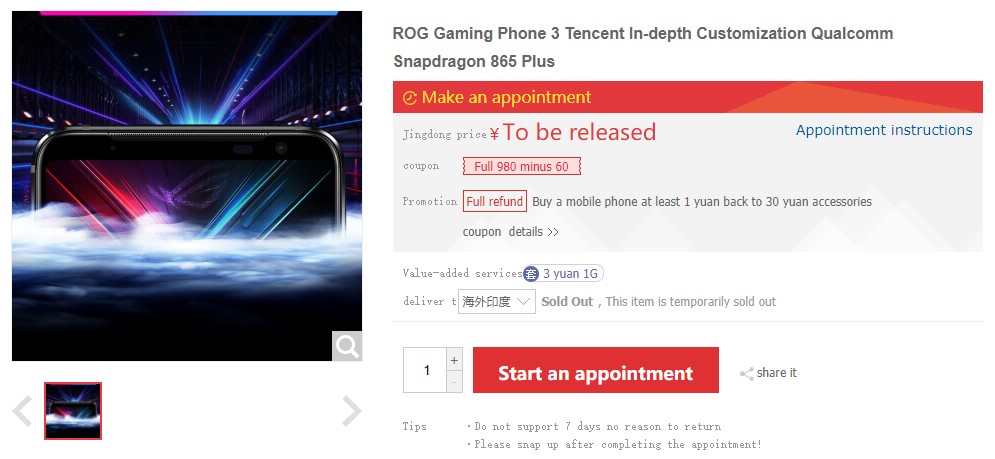
The global launch of the ASUS ROG Phone 3 will be held on July 22. It was recently revealed that the smartphone will go official in China on July 23. Ahead of the China launch, the handset is now listed on JD.com for reservations.
The JD listing of the phone allows customers who are interested in the phone to register for it. The phone will go official at 7:30 PM (local time) in China on July 23. It will be debuting as one of the first smartphones fueled by the Snapdragon 865 mobile platform.
The ASUS ROG Phone 3 will be arriving with a 6.59-inch AMOLED display that will offer Full HD+ resolution, 19.5:9 aspect ratio, and a refresh rate of up to 144Hz. The 3.09GHz Snapdragon 865 Plus SoC on the ROG Phone 3 will be coupled by up to 16 GB of LPDDR5 RAM.
ASUS ROG Phone 3 leaked render
The ROG Phone 3 gaming smartphone is expected to offer users with up to 512 GB of UFS 3.1 storage. The ROG UI based Android 10 OS will run on the ROG Phone 3. Shown above is a leaked render showcases its design. The image reveals that the device has an additional side-facing USB-C port for attaching accessories and conveniently charging the phone while gaming.
The ROG Phone 3 has a front camera of 13-megapixel. The backside of the ASUS gaming phone has a triple camera unit that includes a 64-megapixel main camera. It houses a 6,000mAh battery that supports 30W fast charging. It will also have an in-screen fingerprint reader. At present, there is no word on its pricing.
Just a day after OPPO announced its 125W Flash Wired Charging technology and 65W AirVOOC Wireless Charging technology, Realme has also launched its own 125W fast charging technology, dubbed as Realme 125W UltraDart Fast Charging.
This is not surprising at all given that the Realme was founded as a sub-brand of OPPO. Despite being spun off as an independent brand, the company still relies on OPPO for most of the things. The company had even recently teased about the arrival of this new fast-changing technology.
The company claims that the Realme 125W UltraDart Fast Charging technology can charge a 4,000mAh battery up to 33 percent in just 3 minutes. To achieve such fast charging speed, it is said that Realme is using a three-way charging solution.
The three-way charge simultaneously pumps step-down voltage to maximize the charging power and effectively reduce heat dissipation. This three-way solution and the entire charging process has been optimized for cooling, says the company, which results in an ultra-high conversion rate of 98 percent.
The new charging system adopts a flip-chip structure that shortens the current path between the Type-C port and reduces the heat source. It also adopts an ultra-thin VC soaking plate with high heat conduction efficiency to quickly absorb and disperse the heat energy during the process.
As per the company, combining the system with thermal conductive gel and multi-layer large-area graphite sheet, the average temperature during the charging process will not exceed 40-degree celsius.
Further, to support this Realme 125W UltraDart Fast Charging technology, a dual Type-C charging cable is used. Also, fast charging is not limited to smartphones and also supports high-power devices such as notebooks. It is also backward-compatible with VOOC, Dart, Warp, SuperVOOC, SuperVOOC 2.0, and SuperDart charging protocols.
It supports up to 125W PPS protocol fast charging, 65W PD protocol fast charging, and 36W QC protocol fast charging. Additionally, it is also compatible with the 100-240V ultra-wide voltage input universally used worldwide.
We use cookies on our website to give you the most relevant experience by remembering your preferences and repeat visits. By clicking “Accept”, you consent to the use of ALL the cookies.
This website uses cookies to improve your experience while you navigate through the website. Out of these, the cookies that are categorized as necessary are stored on your browser as they are essential for the working of basic functionalities of the website. We also use third-party cookies that help us analyze and understand how you use this website. These cookies will be stored in your browser only with your consent. You also have the option to opt-out of these cookies. But opting out of some of these cookies may affect your browsing experience.
Necessary cookies are absolutely essential for the website to function properly. This category only includes cookies that ensures basic functionalities and security features of the website. These cookies do not store any personal information.
Any cookies that may not be particularly necessary for the website to function and is used specifically to collect user personal data via analytics, ads, other embedded contents are termed as non-necessary cookies. It is mandatory to procure user consent prior to running these cookies on your website.
















 Vivo India also announced the Vivo TWS Neo earbuds at the Vivo X50 launch with a price tag of Rs. 5,990 (~$80). It comes in colors like Starry Blue and Moonlight Silver. There is no word on its availability.