Lava Z61 Pro launches in India as the brand’s latest entry-level budget smartphone. Priced at ₹5,774, it will retail in the region lesser than the standard Z6 (₹7,000). It will be available to purchase on online retailers like Flipkart and Amazon, in addition to offline channels.
The newly unveiled Lava Z61 Pro is powered by an unknown 1.6GHz octa-core processor paired with 2GB RAM and 16GB ROM. If needed, the storage can be further expanded up to 128GB via microSD card.
The handset sports a 5.45-inch HD+ LCD panel with 18:9 aspect ratio and comparatively more bezels than products from Chinese brands like Xiaomi and Realme. In the optics departments, it features a single 8MP primary camera accompanied by an LED flash and a 5MP selfie camera at the front.
Talking about connectivity, the phone supports dual SIM, WiFi, Bluetooth 4.2, and USB OTG via MicroUSB port. Since there’s no mention of Android version, it should either run Android Pie or maybe even Android Oreo.
As for biometrics, the handset does not have a fingerprint sensor and hence, it comes with face unlock method. Lastly, the phone gets its juice from a 3,100 mAh battery.
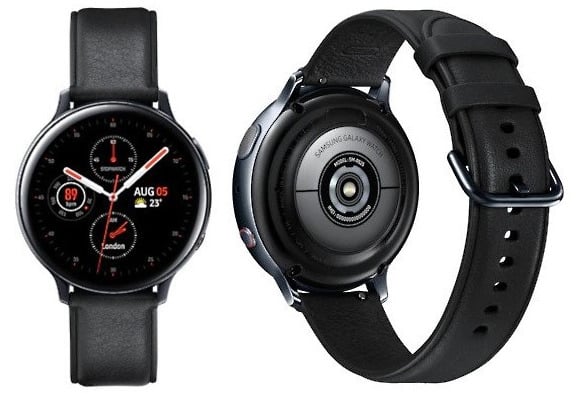
Samsung has just launched its Galaxy Watch Active 2 4G in India. The wearables arrive from the company’s Made in India initiative which had it make a significant investment within the country.
Earlier today (9th July 2020), Samsung launched its aluminum Galaxy Watch Active 2 4G in India. It is the first smartwatch that the company has manufactured in its facility in the region. So, we can expect smartwatches to be sold in India from this facility for the foreseeable future. Notably, the smartwatch had already been launched about 7 months ago.
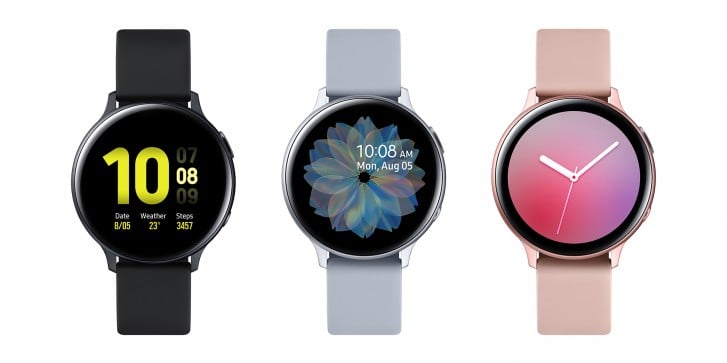
Under the hood, it has an eSIM that supports local telecom operators like Airtel and Ji. The LTE variant is only available in 44mm and will be sold in Cloud Silver, Aqua Black, and Pink Gold color variants. For those interested, you can pick up the smartwatch in its aluminum finish from 11th July 2020. It will be available through Samsung’s retail network, Samsung Opera House, Samsung.com, and other online retailers for 28,490 INR (roughly 380 US Dollars).
Samsung Galaxy Watch Active 2 – 40mm Aluminum
Although, it remains to be seen just how well the smartwatch performs in the market, especially during this time of crisis. Furthermore, with Samsung gearing up for the Galaxy Watch 3‘s launch arriving next month, that might also cut into its own product’s customer base.
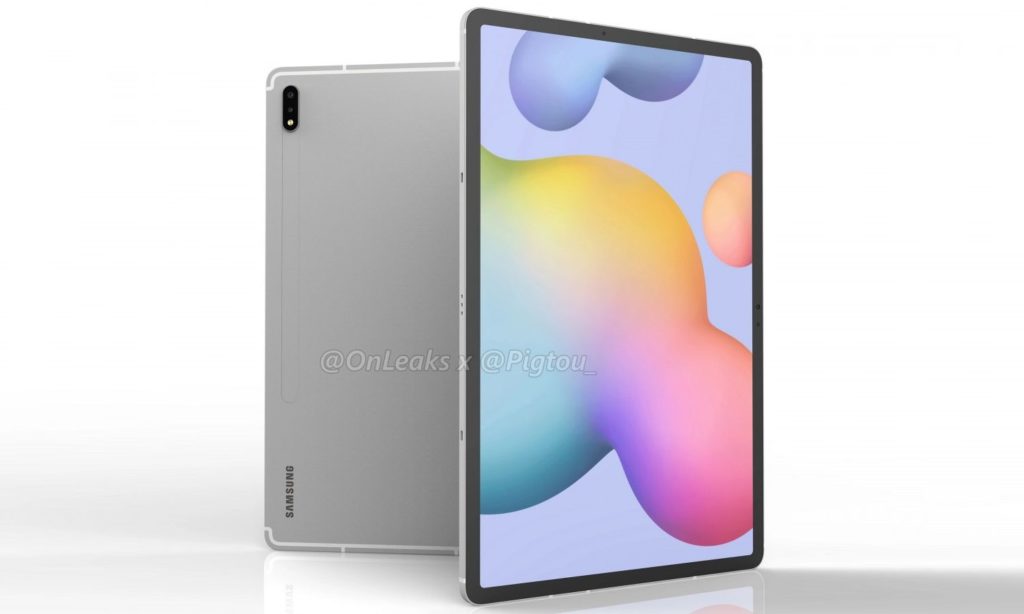
The upcoming Galaxy Tab S7 and Tab T7 Plus will be Samsung’s flagship tablets of 2020. The duo is expected to be announced on August 5 Unpacked event alongside the Galaxy Note 20 series. Ahead of it, almost complete specs of the Plus variant have leaked.
Accordion to an exclusive leak by SamMobile, the forthcoming Galaxy Tab S7 Plus will be powered by Qualcomm Snapdragon 865 Plus SoC, which was announced yesterday. It will sport a 12.4-inch AMOLED display with a resolution of 2800 by 1752 pixels and 267 ppi.
The fingerprint sensor will reside underneath the screen but it’s not known whether it will be optical or ultrasonic. Further, the display will have support for Bluetooth S-Pen, however, it is not sure if the stylus included with this tablet will support Galaxy Note 10 series gestures or the new pointer functionality like the Galaxy Note 20.
Then, it will come with either 6GB or 8GB of RAM paired with 128GB and 256GB internal storage respectively. It may also include a microSD card slot like its predecessors. Also, it will be available in both LTE and 5G (sub-6 GHz) variants. There could be a mmWave variant for Verizon and if it does, it may debut later.
As for optics, the Galaxy Tab S7 Plus will feature a 13MP + 5MP dual-camera setup and an 8MP front camera. Last but not least, it will be backed by a 10,090 mAh battery with support for 45W fast charging (maybe) and will run One UI 2.5 based on Android 10.
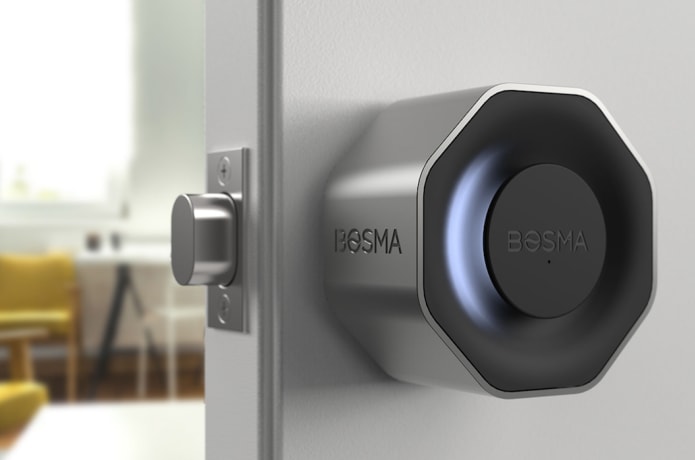
Bosma is once again here with a new smart connected device – Aegis Smart door lock. After initial Aegis listing on Indiegogo last month, the company today decreased the price to celebrate 1500 backers just within 11 days. The smart lock has hit 860% of its initial goal with funds of over $170,000. Aegis smart lock houses highly anticipated features including Break-in Detection, Auto-lock and unlock, AES128 Encryption, Alexa and Google Integration and much more.
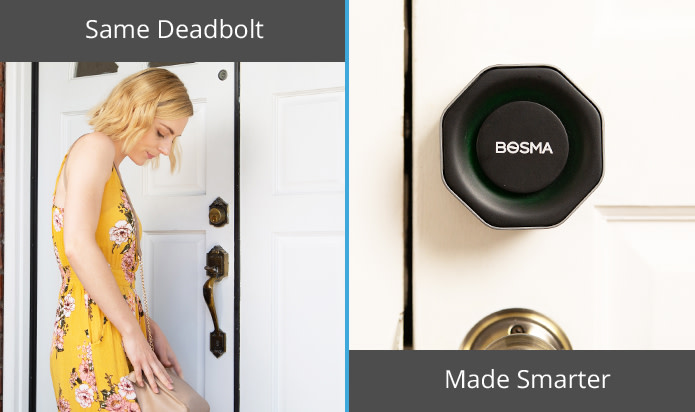
Bosma Aegis Smart Door is quite helpful in making your house more secure and smart. It aids in auto-locking and unlocking using smart algorithms. It pops a notification on your phone if Door is slightly open, open someone tried breaking the door. The advanced door lock even supports Alexa and Google Assitant voice for voice and smarter user experience.
Aegis Smart Door lock allows the user to create a guest list, which will automatically open the door upon their arrival. For safety and security, the smart door lock houses an AES128 Encryption to provide maximum protection.
Unlock Methods
Aegis Smart door lock offers two ways to unlock – Fingerprint and Facial Recognition method. Moreover, you will get a notification when a new delivery package arrives or someone attempts to steal the package.
Better Control with Phone App
A dedicated app for Aegis smart lock offers extensive features and enhances usability. It keeps track of lock activity, easily manage users, app-less guest keys are also created. It is a window to the smart lock functionality.
Easy to Install
Aegis Smart Door lock can be installed quickly using a screwdriver. It hardly takes 5 minutes to install the smart lock.
Fully Secure
It powers Bank-Grade AES-128bit Advanced encryption to provide flawless security from any hack or manipulation. Moreover, the app provides all the lock and unlock log which facilitates the security.
Technical Specifications
Size: 2.59 in. x 3.46 in. x 3.46 in
Weight: 255g
Material: Aluminium ALloy + ABS
Battery Life: 6 MOnths
Assitant Support: Alexa and Google Assitant
Color: Black and Gray
Offer Details
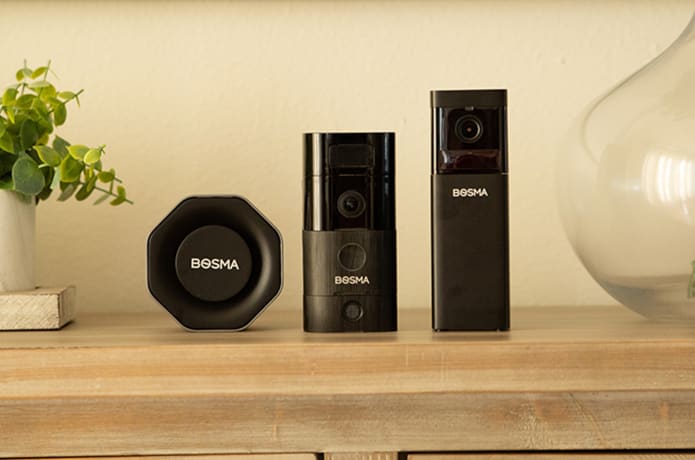
For a limited time, Bosma is offering Aegis and Sentry Advanced Security Combo for $159. However, you can even grab Aegis Smart door lock only for $69. You will get a Bosma Aegis and WiFi Connector in the box.
You can get 2x Aegis Smart door lock bundle for $199 with a saving of upto $50. Aegis + Sentry is available for $159, while the 2X Aegis + Sentry bundle is available for $249. YOu can grab the Bosma Aegis from its Indiegogo listing page.
The LG Velvet will begin mass production for the US market next month, according to industry sources; while six older have been confirmed to receive the Velvet UI update as well.
LG Velvet Mass Production
The South Korean tech giant is apparently aiming at shipping 300,000 units for the US market. This would make the device the flagship handset for the second half of this year. Traditionally, the year started off with a G series LG flagship followed by a V series in the second half, but this has since shifted to the launch of Velvet. The production of the new device will begin in August 2020.
Notably, LG will be adding a millimeter (mm) wave antenna made by Qualcomm, which wasn’t included in the South Korean variant. This also caused certain design changes, with the US version of the Velvet having a thinner frame on the sides to support better signal transfer in mmWave networking. At the moment, the US is the only country that has a commercialized mmWave spectrum, thus, the device will take advantage of it.
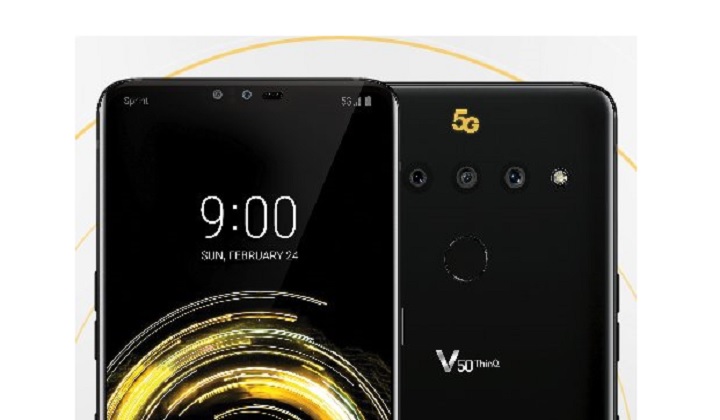
LG is also planning on updating its older generation of flagship models to the new Velvet UI. The company has been criticized in the past for neglecting older launches, but it seems that LG is mending its ways. It seems that the smartphone maker is dropping the UX naming in favor of the Velvet UI. The devices set to receive the update includes the V50 ThinQ, V50S ThinQ, V40 ThinQ, V35 ThinQ, G8 ThinQ, and G7 ThinQ.
LG V50 ThinQ
Unfortunately, this update is only available for the company’s home country of South Korea. So we have no idea when or whether or not LG would roll out the update for the global market. We will keep you posted regarding any developments on the matter, so stay tuned for more.
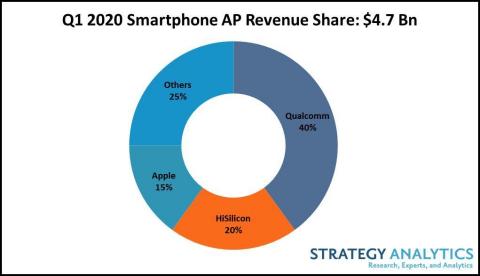
A new report from Strategy Analytics has revealed that the Global smartphone Applications Processor (AP) market has grown by 6 percent in terms of revenue in the first quarter of 2020 despite the Coronavirus pandemic.
According to the report from Strategy Analytics’ Handset Component Technologies (HCT), the global smartphone Applications Processor market now sits at 4.7 billion US Dollars. In the market, Qualcomm maintained a dominating lead with a market share of 40 percent. Huawei’s HiSilicon came in second with 20 percent, while Apple made accounted for 15 percent.
“Qualcomm’s 5G-centric flagship smartphone AP Snapdragon 865 and its 5G SoCs Snapdragon 765/G were off to a great start and featured in multiple high volume smartphones from top smartphone manufacturers,” said Sravan Kundojjala, Associate Director at Strategy Analytics. In other words, 5G had a big role in help growing the market revenue for this quarter.
Image Via Strategy Analytics
Samsung LSI and MediaTek came in third and fourth places respectively, rounding up the top 5 market revenue holders. For Qualcomm, its 5G enabled APs accounted for over 20 percent of the company’s total smartphone AP shipments in Q1 2020. Meaning, the newer and faster bandwidth saw notable growth during this period which is reflected in the overall market as well.
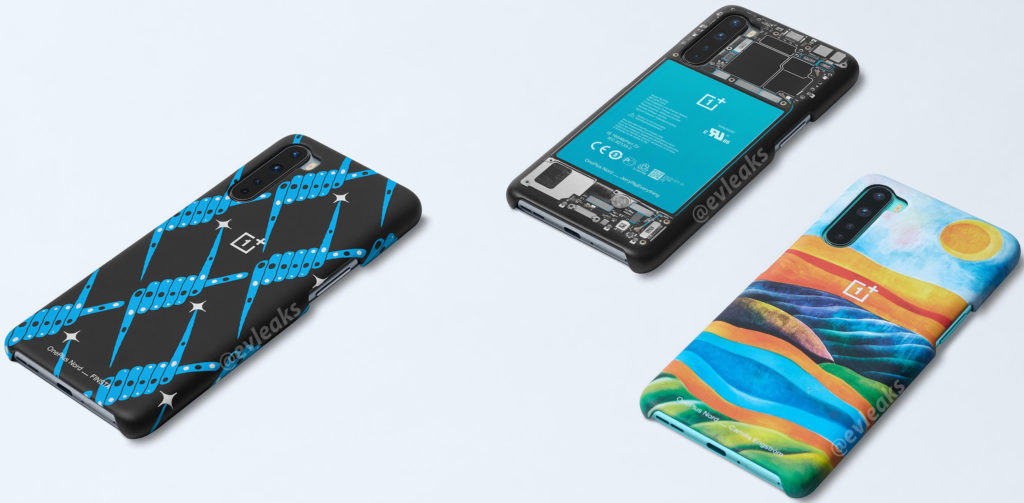
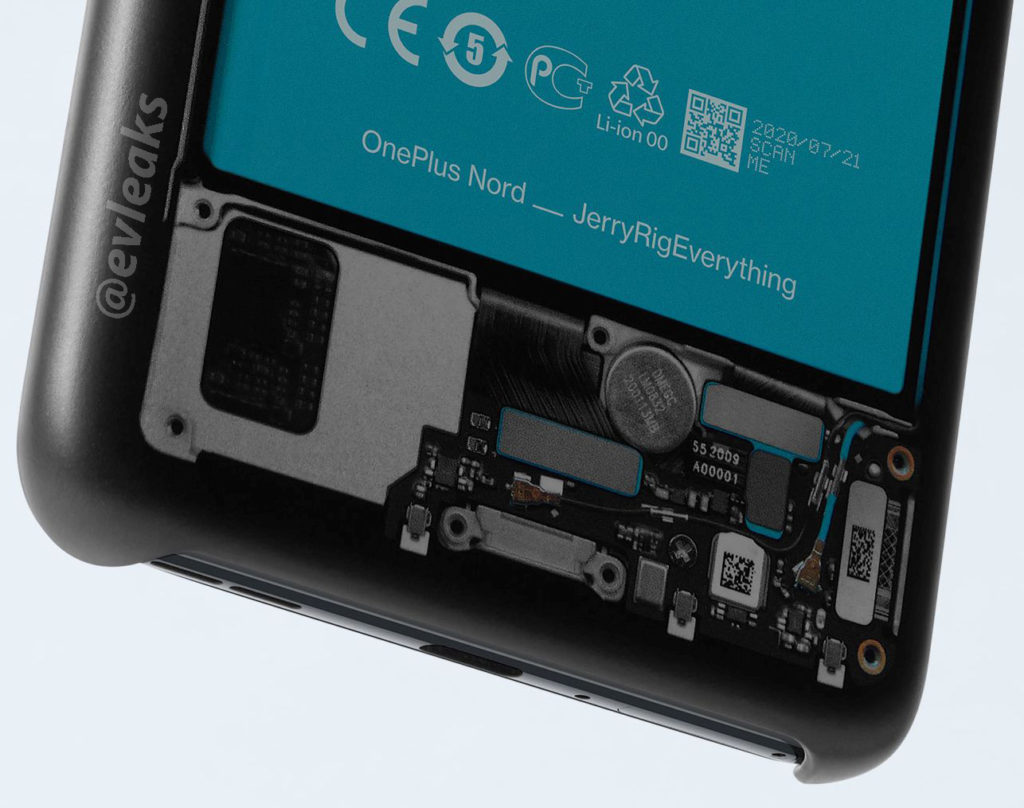
Evan Blass also shares a picture of three “OnePlus Nord Creator Cases” by Camilla Engstrom, Finsta, and Zack Nelson of JerryRigEveryThing YouTube channel.
Original Story
OnePlus Nord is scheduled to launch on July 21. Ahead of it, the brand has been revealing the features of the handset via promoted interviews and its very own 4-part series documentary on IGTV. Now, it seems to have partnered with Evan Blass aka @eveleaks to reveal the design of the phone in the form of render leak.
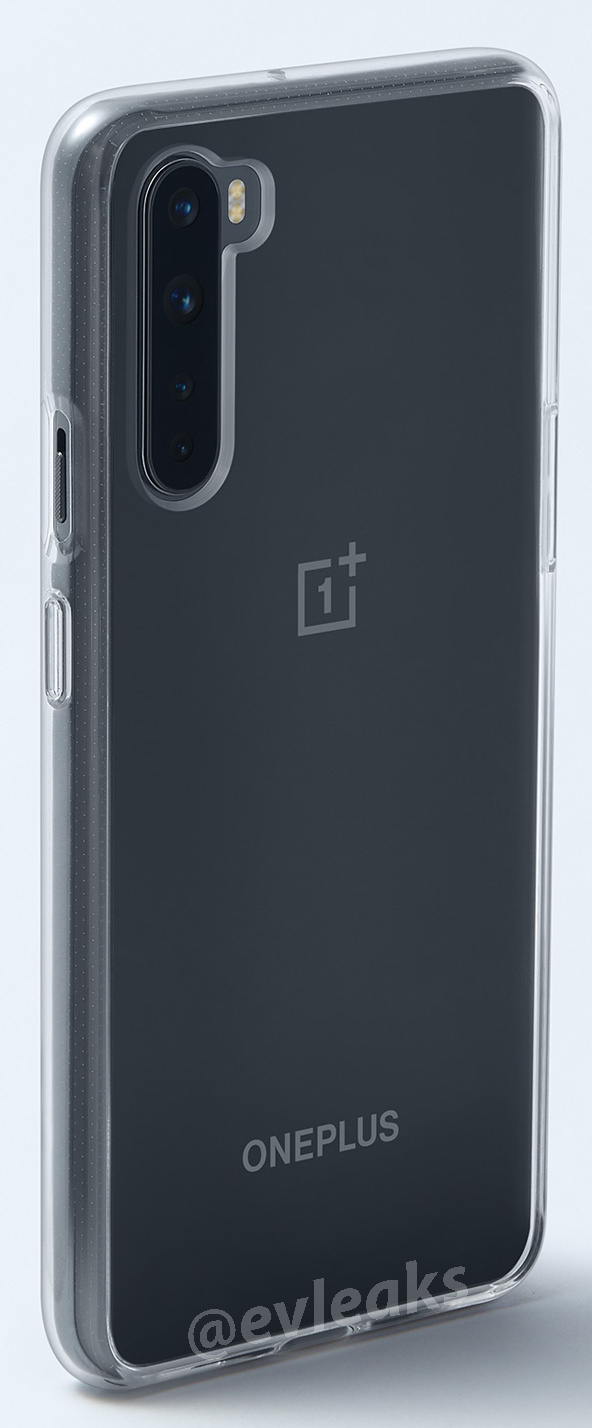
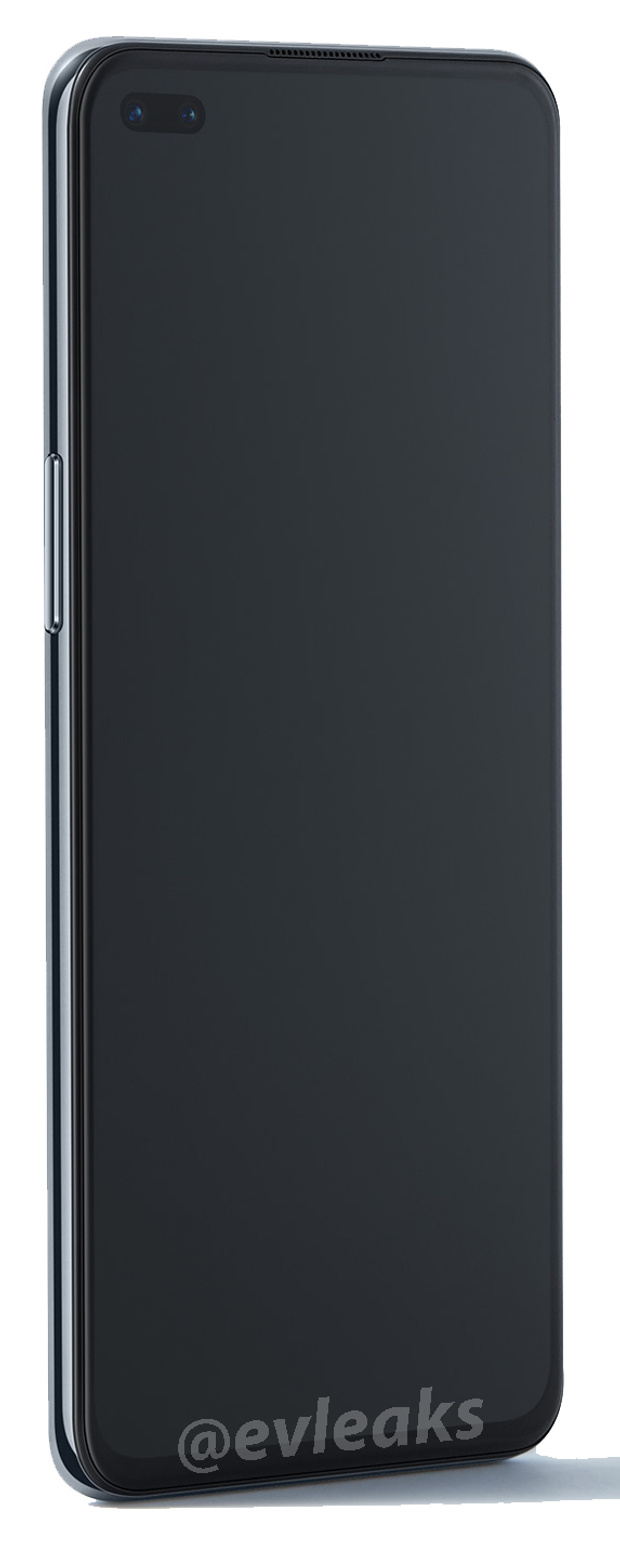
The quad-camera setup, which the brand revealed to include a 48MP primary sensor with OIS, an 8MP ultra-wide shooter, a 5MP macro snapper, and a 2MP depth sensor are placed in a vertical manner on the top left corner on the handset’s back. This design mimics Realme smartphones and so does the front dual punch-hole AMOLED display (Realme X50 Pro).
It makes sense as Realme is a sister brand of OnePlus and both of them share resources from Oppo, which is another sister brand under BBK Electronics.
According to one of the renders, which shows JerryRigEveryhting text on the battery, the phone’s bottom will house speaker, USB Type-C port, the primary mic, and SIM tray. Whereas, the front render reveals there’s only a secondary mic on the top and no 3.5mm headphone jack.
As for hardware keys, the power key sits on the right side below the alert slider while the volume rockers are located on the left side. Having said that, since there’s no visible fingerprint sensor either on rear or side, we expect it to be placed under the display.
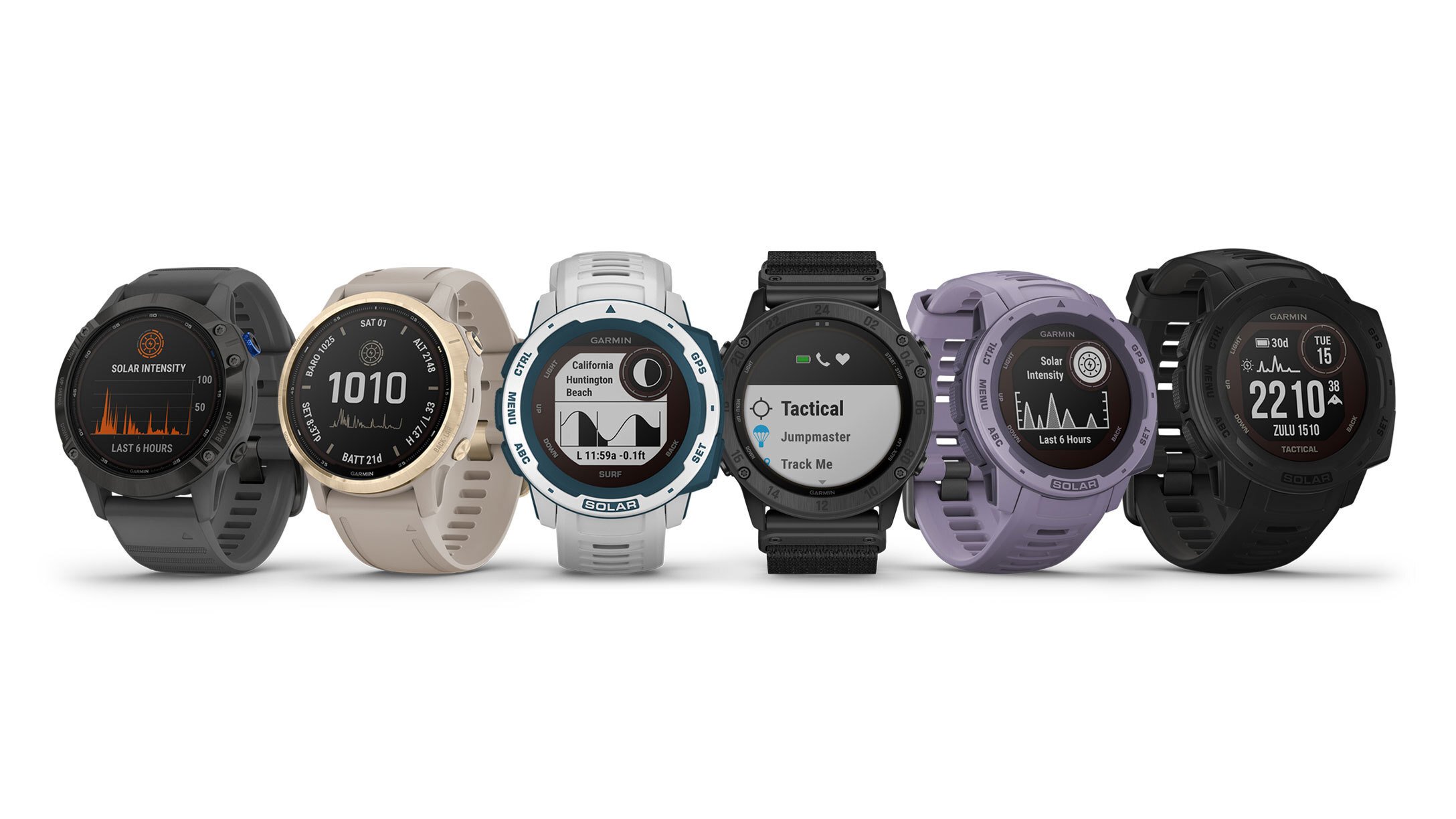
Garmin has just launched new refreshed versions of its existing smartwatch lineup. The new variants arrive with one major feature, which is solar technology, to its premium smartwatches.
The new Garmin refreshes are for 4 existing models. These iconic smartwatches include the Instinct, Fenix 6, Fenix 6s, and Tactix Delta. Notably, Garmin has launched solar powered smartwatches in the past, but the refresh does breathe a new life into the previously launched wearables that were quite popular. The new launch promises increased battery life and a few new features like support for surfing, mountain biking, and climbing activities.
Under the hood, the new refreshes do not arrive with any major changes in their specs except for the inclusion of solar technology. The Fenix 6s now offers an extra day and a half of battery life, if it is supplied with ample sunlight, while the 6 Pro Solar has received up to two extra days of battery life thanks to the newly added technology.
Garmin Instinct, on the other hand, arrives in three new solar models, Instinct Solar, Instinct Solar Surf Edition, and Instinct Soar Tactical Edition. The entire lineup offers up to 50 days of battery life in smartwatch mode if provided with ample amounts of sunlight exposure. Although, they should last for far longer if used in the Battery Saver mode.
Lastly, Tactix Delta, the military grade smartwatch, can use solar charging to extend endurance and Power Manager mode to offer up to 21 days of indoor and 24 days with sufficient sunlight exposure. For the pricing, the new refreshes are expensive and start from $400 for the Instinct Solar and going up to $850 for Fenix 6 Series Solar Editions and $1,100 for the Tactix Delta Solar Edition.
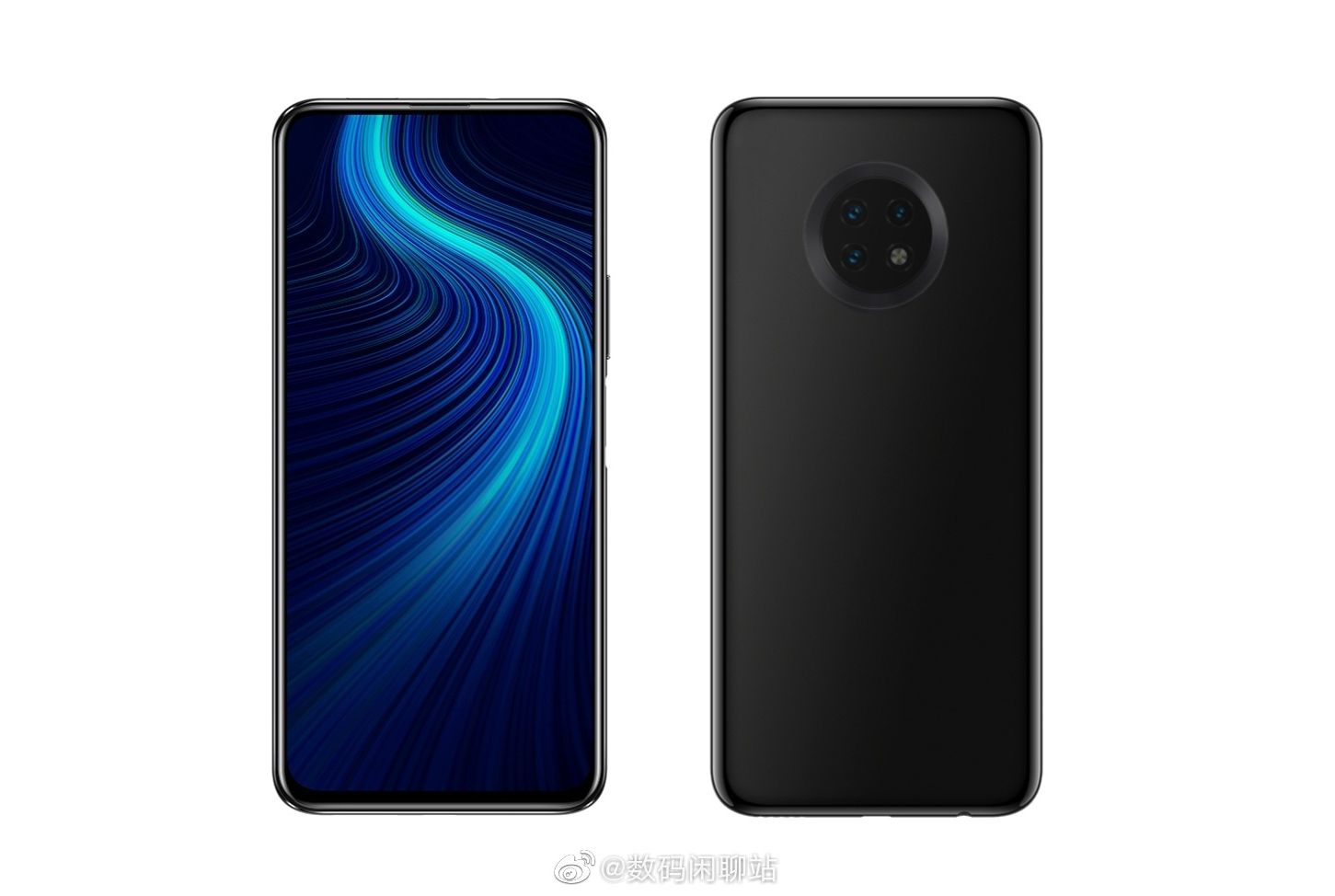
It is speculated that Huawei will be launching the Maimang 9 smartphone in China on July 26. The other name for the smartphone is Huawei Enjoy 20. It will be positioned lower than the Huawei Enjoy 20 Pro 5G that debuted last month in China with a price tag of 1,999 Yuan (~$286). Since the Enjoy 20 will also support 5G connectivity, it is expected to debut in China as the cheapest 5G-ready Huawei phone. Ahead of the rumored July 26 launch date, a Chinese tipster has shared a render to reveal its front and rear design.
The leaked render of the Huawei Enjoy 20 shows off its full-screen display. It is said to be equipped with a 6.63-inch notch-less IPS LCD panel that supports Full HD+ resolution. The device is equipped with a side-facing fingerprint reader.
There is a round-shaped camera module on the rear side of the Enjoy 20. It comprises of an LED flash and three cameras. It is speculated that the phone has a primary lens of 48-megapixel. The bottom edge of the phone seems to feature a speaker grille, a USB-C port, and a 3.5mm audio jack.
The Enjoy 20 Pro is fueled by Dimensity 800 SoC by MediaTek. Rumors have it that the upcoming Enjoy 20 could be fueled by Kirin 820 5G SoC. The device is expected to offer users with up to 8 GB of RAM and up to 128 GB of built-in storage.
The Enjoy 20 will run on EMUI based Android 10 OS. It has a pop-up selfie camera. Huawei is expected to offer 22.5W fast charging support for Enjoy 20’s 4,300mAh battery. The model numbers FRL-AN001a, FRL-AN00, and FRL-TN00 belong to its network variants heading to Chinese markets.
With the market demand for 5G handset soaring, the need for chips that support the newer and faster bandwidth has also increased. MediaTek is one such supplier of 5G chips with a new report suggesting its budget Dimensity 600 SoC which may launch within this quarter.
At the moment, finer details regarding the Dimensity 600 processor is still unavailable. However, industry sources close to the matter have said that it will be very competitive. This aggressiveness might be in relation to its pricing as it is expected to be placed below the Dimensity 800 series, which was already targetted towards mid range handsets.
According to the report, the known chipmaker is expecting the new chips to see the most number of 5G related shipments in the fourth quarter of 2020, with the first smartphones with the latest chips launching sometime in the third quarter. Unfortunately, this is still unconfirmed so take it with a pinch of salt and we will be providing more updates as more information is available. So stay tuned.
While 8K television has been available in China for a while now, there is actually no 8K content readily available in the country. Owners of 8K TVs had to look for content upscaled to 8K since no true native 8K resolution shows were available. But now, a new show in China has apparently finished filming and is the first to have been recorded in 8K resolutions.
The new TV series is called “Love In Shanghai,” which is based on a novel by Yifei. It is directed Meng Ji and stars actors Guo Jingfei and Wang Luodan. Notably, the series theater adaptation has already received honors back in 2011 for its script, so there are quite a number of people looking forward to it. Thanks to 8K technology, the production has been shot in ultra high resolutions with vivid colors.
For those unaware, 8K has a resolution of 7680 x 4320px, with a total of 33 million pixels. In other words, its pixels count is 4 times higher than 4K resolution and 16 time higher than the current mainstream resolution of 1080p. At the moment, there are only a few TVs that support such ultra high resolutions in China. A great example being Samsung with its new QLED 8K TV Q950TS, which is the new flagship TV that launched back in May 2020. So for those that have such a high end TV, you can enjoy the story based in Shanghai in ultra high quality.
WhatsApp is the world’s most used instant messaging app. Nonetheless, it is always late to introduce new features that are found on competitors like Telegram. That said, the Facebook-owned messaging platform is finally rolling out support for animated stickers for users on all the platforms.
Animated stickers on WhatsApp was recently spotted in Beta v2.20.194.7, however, it was soon removed in the next version v2.20.194.9. But now, they are back again for all the users instead of certain users on the beta builds. The company announced the official rollout on Twitter.
The new animated stickers feature on WhatsApp is available on all the platforms including desktop (Windows & macOS). Users need to update the app to v2.20194.16 on Android and v2.20.70 on iOS.
To use them, tap on emoji icon to access sticker pane and then select plus (+) icon to open sticker store. On that screen, animated sticker packs will be denoted by a play icon. Download the desired pack and start using them in your conversations.
Since the sticker store cannot be accessed on desktops, users need to download the animated sticker pack on their phone to use them on their computers.
Having said that, third-party support is yet to arrive as per by Gadgets360. Also, they don’t loop like on Telegram or Facebook Messenger. One needs to either scroll up or down to trigger the animation.
According to a new report, MediaTek has postponed the plan to launch 5G chips with the mmWave bands and will only start mass production of these chips in the second half of 2021. These new processors are likely to belong to the company’s current lineup of Dimensity chip, and would probably be a high end chipset. Furthermore, we can also expect improvements in performance as well, in terms of CPU and GPU, and not just networking.
The new chips may be based on the 5nm process and feature the ARM Cortec A78/X1 architecture with Mali G78 GPU. Thus, MediaTek might offer a refresh of the Dimensity 1000+ chips or a brand new name altogether. Unfortunately, these are just speculations and the report is also through industry sources and not official as of yet. So take it with a pinch of salt and stay tuned for more updates.
In March, Xiaomi announced the Redmi Note 9 Pro Max and Redmi Note 9 Pro in India. However, the vanilla Redmi Note 9 was missing from the scene. A recent leak had revealed that the Chinese firm is planning to launch the smartphone in the third week of this month. Today, Redmi India released a new tweet which hints that it will be launching a new smartphone soon in the country. The company could be hinting at the arrival of the Redmi Note 9.
The below tweet does not directly reveal the Redmi Note 9 name. The teaser image showcases a square-shaped camera setup with four lenses inside it. Xiaomi has already launched the Redmi Note 9 phone in Europe in April. The same device could be heading to India as early as next week.
Fasten your seatbelts and get set for an all new BEAST from the #Redmi family 🙌
Undisputed speed, undisputed performance- the #UndisputedChampion is coming soon! ⚡
The Redmi Note 9 that landed in Europe has a 6.53-inch IPS LCD panel with a waterdrop notch. It supports Full HD+ resolution of 1080 x 2340 pixels. The MIUI 11 based Android 10 OS runs on the smartphone.
The Helio G85 chipset by MediaTek powers the Redmi Note 9 along with 3 GB / 4 GB of RAM. It comes with 64 GB / 128 GB storage and a dedicated microSD card slot. It has a front camera of 13-megapixel. Its quad-camera setup has a 48-megapixel main camera, a 13-megapixel ultrawide lens, a 2-megapixel macro lens, and a 2-megapixel depth sensor. The 5,020mAh battery of the Redmi Note 9 supports 18W fast charging and 9W reverse charging.
At present, the Redmi Note 9 Pro Max starts at Rs. 16,999 (~$226)in India whereas the Redmi Note 9 Pro begins at Rs. 13,999 (~$187). The upcoming Redmi Note 9 could be coming with a starting price of Rs. 9,999 (~$133).
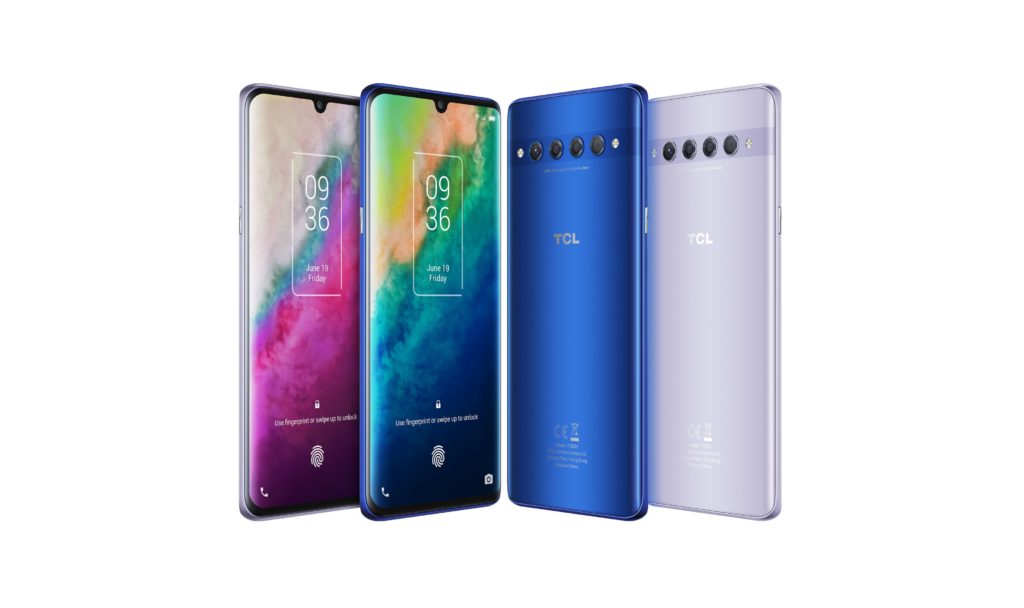
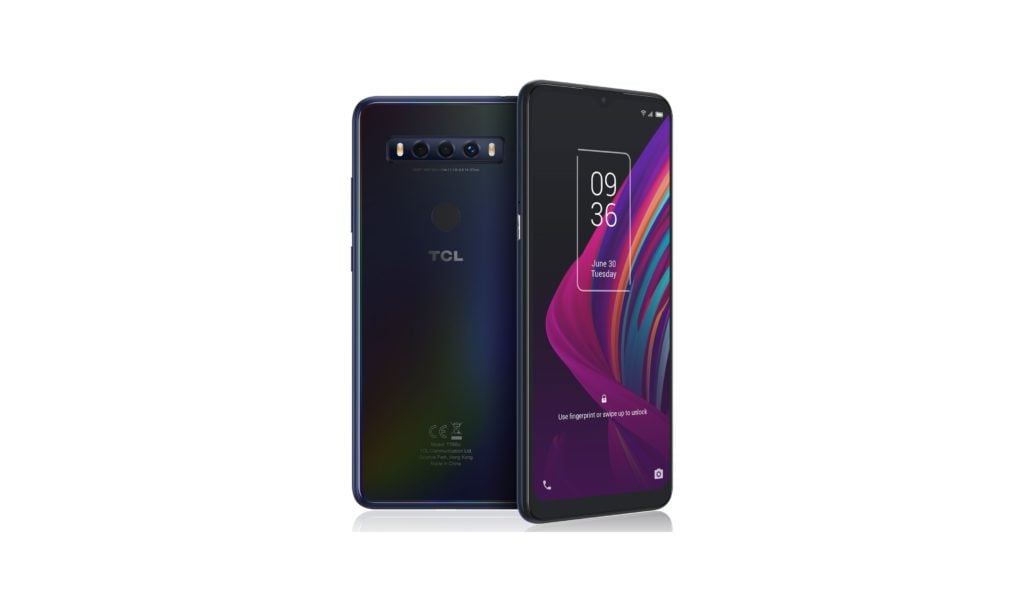
Last year, TCL began to launch smartphones with its own branding. Earlier this year at CES 2020, the company unveiled three new smartphones. These phones were later made available for purchase starting April. Now, in July, the brand announced two new handsets in Russia namely TCL 10 Plus and TCL 10 SE.
TCL 10 Plus Specifications
The newly launched TCL 10 Plus has identical specifications as TCL 10L. The only major difference is that instead of LTPS LCD panel, it comes with a 6.47-inch FHD+ notched curved AMOLED display with support for HDR10+ and the company’s NXTVISION visual technology.
It is powered by Qualcomm Snapdragon 665 SoC paired with up to 8GB RAM and 128GB internal storage, which can be further expanded via microSD card. The phone sports a quad-camera setup consisting of a 48MP primary sensor, an 8MP ultra-wide unit, a 2MP macro shooter, and a 2MP depth sensor.
Last but not least, the phone gets its power from a 4,500 mAh battery with support for fast charging and runs Android 10 operating system with support for contactless payments via NFC.
TCL 10 SE Specifications
Talking about TCL 10 SE, it is more of a budget smartphone than a mid-ranger. It is powered by MediaTek Helio P22 SoC coupled with 4GB RAM and 128GB internal storage. If needed, users can use microSD card as well.
On the front, it comes equipped with a 6.52-inch HD LCD panel touting the company’s NXTVISION imaging technology and a dew-drop notch. Other features include a 48MP triple camera setup and NFC for contactless payments.
This device also runs Android 10 and is backed by a 4,000 mAh battery with support for fast charging.
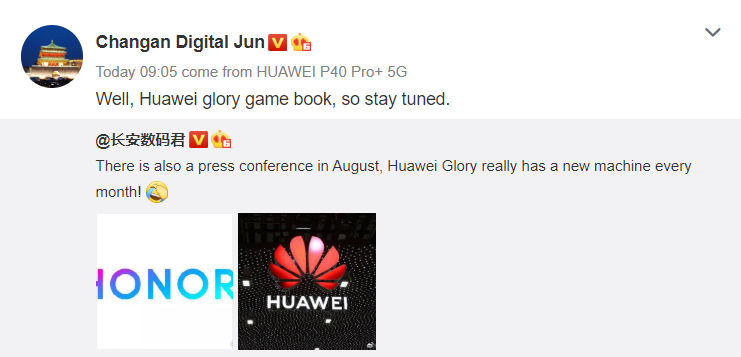
In June, Honor announced that it will be launching a gaming notebook. A Chinese leakster with a good track record on Huawei / Honor leaks had claimed that the device may launch as early as this month. The tipster has released a fresh tweet that claims that the Honor gaming notebook will be launching in August.
Yesterday, AMD and Honor released teasers on Weibo which suggested that the upcoming Honor gaming notebook will be equipped with AMD’s latest processor. Now that the August launch for the notebook is tipped, it is likely that Honor will roll out some teasers on it before announcing it.
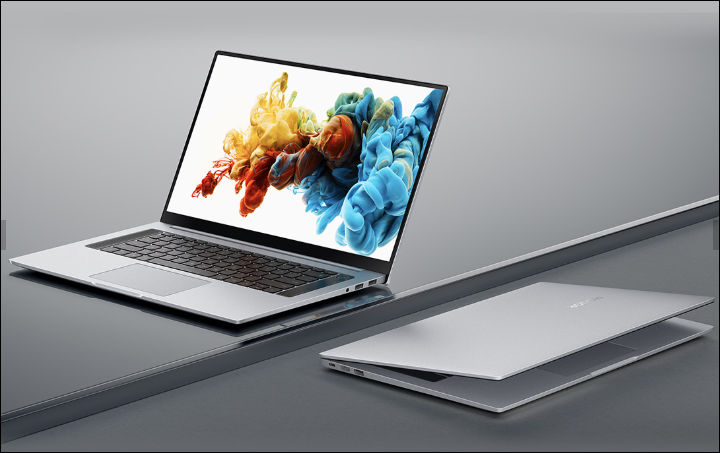
The company may launch multiple AMD powered laptops in August. The Honor MagicBook Pro 2020 variants that debuted in June came with 10th generation Intel processors. At its launch, the company revealed that it plans to launch the AMD version of the Honor MagicBook Pro 2020. Hence, the Chinese firm may launch it along with a gaming laptop in the coming month.
Honor President George Zhao had previously said that the company has been planning for a long time to launch a gaming laptop. Finally, the arrival of the notebook seems to be drawing near. It is being said that Huawei too will be launching its gaming notebook after Honor announces its AMD powered laptops.
The Honor MagicBook Pro 2020 comes in 10th gen Intel Core i7 and Core i5 processor editions. The notebook that is equipped with a 16-inch display, has up to 16 GB of DDR4 RAM and PCIe SSD of up to 512 GB storage. Its upcoming AMD edition could be powered by the new Ryzen 4000 series processors.
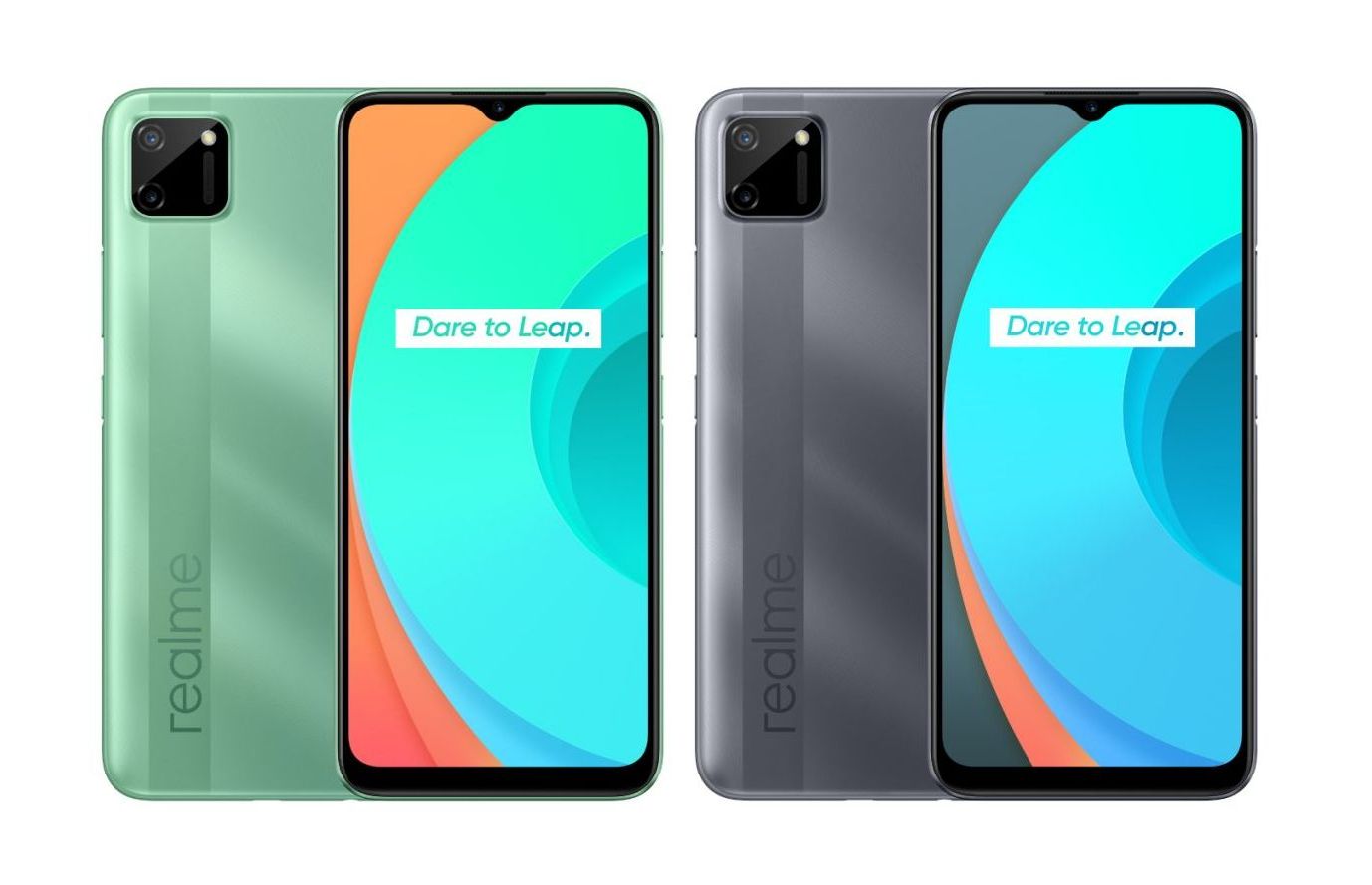
At the end of the previous month, Realme announced the Realme C11 mid-range phone in markets like Malaysia and Indonesia. The handset was recently found listed at India’s Bureau of Indian Standards (BIS) which suggested that it could be soon arriving in India. Today, the Chinese firm made an official announcement that the Realme C11 will be debuting in India on July 14.
As can be seen in the above tweet, Realme is highlighting features like bigger battery and large-size display of the Realme C11. The handset is set to break cover at 1 PM IST on July 14. The specifications of the phone are known since it has already debuted in other markets.
The Realme C11 is fitted with an IPS LCD display of 6.5 inches. The waterdrop notch display offers an HD+ resolution of 720 x 1600 pixels. The 20:9 aspect ratio display promises a screen-to-body ratio of 88.7 percent.
The Realme C11 boots to Realme UI 1.0 based Android 10 OS. The MediaTek Helio G35 chipset that clocks at 2.3GHz powers the device with 2 GB of RAM. It comes with an internal storage of 32 GB. A dedicated microSD card slot is available on the smartphone for expanding its storage.
It has an LED flash assisted dual camera setup on its rear. It comprises of a 13-megapixel main lens and a 2-megapixel depth sensor. The handset has a front camera of 5-megapixel. There is a 5,000mAh battery packed inside the Realme C11. The device only supports 10W charging.
Realme C11 pricing
The Realme C11 debuted with a pricing of RM 429 (~$100; ~Rs. 7,600) in Malaysia. It comes in colors like Mint Green and Pepper Grey. There is no word on the price tag of C11 for India.
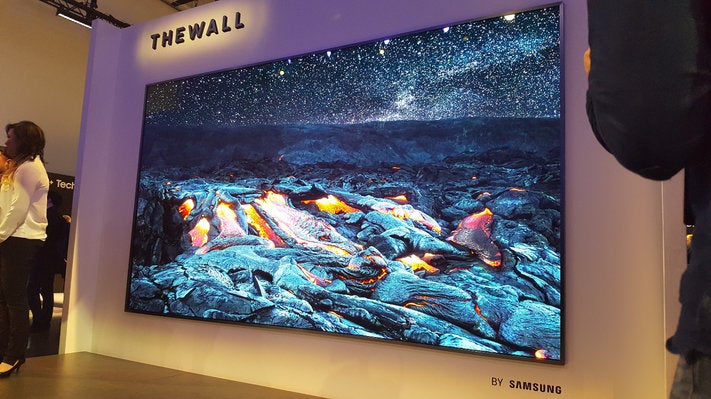
Earlier this year, during Consumer Electronics Show (CES), Samsung showcased its four new MicroLED TVs aimed at household usage, which comes in 75-inch, 88-inch, 93-inch, and 110-inch screen sizes. The company had also showcased two commercial sizes — 150-inch and 292-inch.
However, it seems that the MicroLED TVs from Samsung may not be available for purchase this year. As per the reports, Samsung had planned to complete the production process of necessary components in the first half of this year and then commercially launch the TVs in the second half of the year. But it is now being reported that the company has not yet started production of components.
The company seems to be facing issues with the transfer process as well as pricing. Micrometer-sized LED modules need to be transferred from their temporary substrate to the flexible circuit board.
While Samsung claims that its MicroLED uses micrometer-sized LED, it is not smaller than 100 micrometers which are required for the designation. Instead, they are between 100 micrometers and 200 micrometers in size, which is technically a MiniLED. But they also require a similar transfer process.
Also, the yield rate for Samsung‘s MicroLED is quite low, which is impacting the pricing for the product. The current costing for the company is quite high — ranging between ten thousand dollars to up to a hundred thousand dollars, claims the report.
Even though the MicroLED TVs from Samsung are more advanced in terms of technology compared to the company’s QLED premium TVs, the pricing still remains an important factor to make the Samsung MicroLED TVs commercially viable.
MicroLED sets are similar to OLEDs in terms of self-emissive properties. However, instead of using organic light-emitting diodes, they use tiny, non-organic LEDs – three per pixel. That means that each pixel can be turned on or off individually, or can display a completely different color to the one next to it — offering almost perfect contrast and color control.
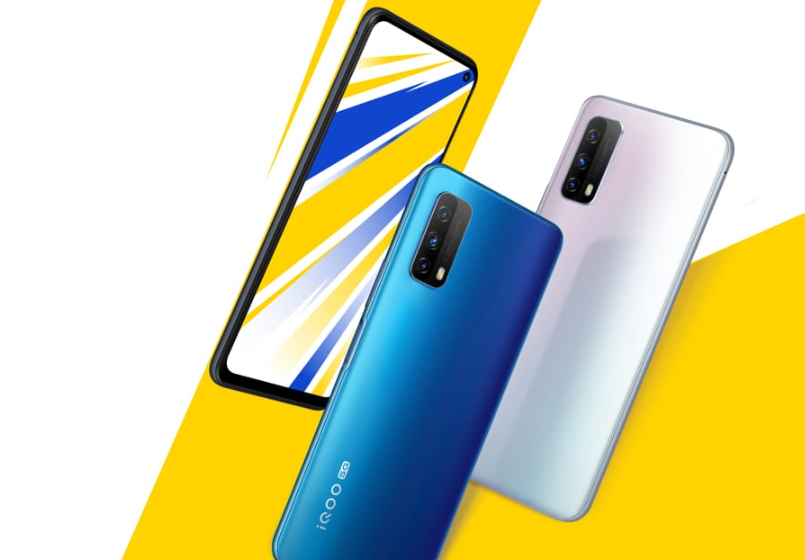
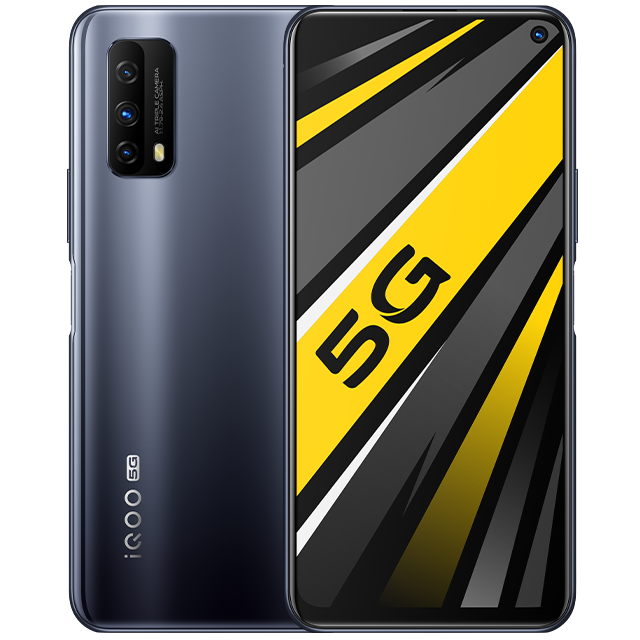
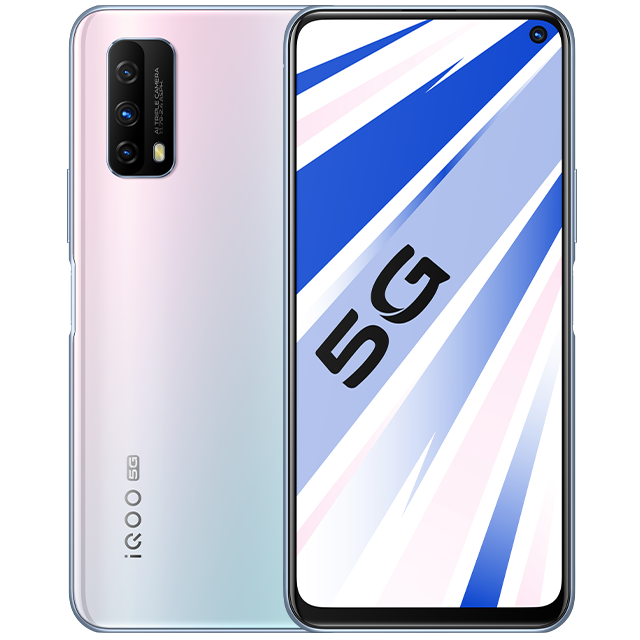
The iQOO Z1x 5G has gone official in China. With a starting price of 1,598 Yuan (~$228), it is one of the cheapest 5G-ready smartphones available in the country. The phone manages to impress iQOO fans with features like a Snapdragon 765G processor, 120Hz high refresh supporting display, a massive battery with 33W fast charging technology, and 48-megapixel triple rear shooters.
IQOO Z1x 5G
iQOO Z1x 5G specifications
The glass-bodied iQOO Z1x 5G has 164.20 x 76.5 x 9.06mm and it weighs 199.5 grams. The phone possesses a 6.57-inch IPS LCD panel that offers a tall aspect ratio of 20:9. The HDR10 compliant screen supports P3 color gamut and a Full HD+ resolution of 1080 x 2400 pixels. The screen supports up to 120Hz refresh rate. The phone can intelligently adapt the refresh rate depending on what is running on the screen to reduce battery consumption. The top-left corner positioned punch-hole on the screen is the home for its f/2.0 aperture 16-megapixel selfie camera.
The rectangle-shaped camera housing on the backside of the iQOO Z1x 5G has an f/1.79 aperture 48-megapixel main shooter, an f/2.4 aperture 2-megapixel macro lens, and an f/2.4 aperture 2-megapixel. The triple camera offer features such as portrait mode, night view, panorama, time-lapse, up to 1080p slow-motion video shooting, and up to 4K video recording.
The iQOO UI based Android 10 runs on the iQOO Z1x 5G smartphone which tags along with Jovi AI assistant. The Snapdragon 765G that brings support for dual-mode 5G (SA/NSA) drives the smartphone. Apart from the iQOO Z1 that debuted with Dimensity 1000+ 5G in May, all the other iQOO phones have featured Qualcomm’s Snapdragon 8XX SoC. The iQOO Z1x 5G is the company’s first Snapdragon 7XX series SoC powered handset. The chipset is coupled with LPDDR4x RAM and UFS 2.1 storage. iQOO has not included a microSD card slot in the device.
There is a 5,000mAh battery tucked inside the iQOO Z1x 5G’s chassis. It comes with 33W fast charging support. It takes around 1 hour to completely charge the massive battery, claims the brand. For smoother experience during gaming, it offers users with PC grade liquid cooling technology. For optimized performance, while gaming, the handset ships with Multi-Turbo 3.5 acceleration engine. Other gaming related features available on the iQOO Z1x 5G are iQOO gaming mode, Game Space 3.4, High Frame Rate Game Zone, and 4D Game Shock 2.0.
The iQOO Z1x 5G has a side-facing fingerprint reader. The other features that are available on the device are face unlock, dual-SIM support, Wi-Fi 6, Bluetooth 5.1, GPS, USB-C, and 3.5mm audio jack.
iQOO Z1x 5G price and availability
Here are the pricings of the four variants of the iQOO Z1x 5G:
6 GB RAM + 64 GB storage – 1,598 Yuan (~$228)
6 GB RAM + 128 GB storage – 1,798 Yuan (~$257)
8 GB RAM + 128 GB storage – 1,998 Yuan (~$286)
8 GB RAM + 256 GB storage – 2,298 Yuan (~$329)
The color variants of the iQOO Z1x 5G are Sea Azure, Sharp Cool Black, and Water White. iQOO is also offering custom-made cases worth 39 Yuan (~$5.5) for the buyers of iQOO Z1x 5G in the homeland. There is no word on the availability of the smartphone outside of China.
What is your opinion on the pricing and specifications of the iQOO Z1x 5G? Share your thoughts by posting your comments below.
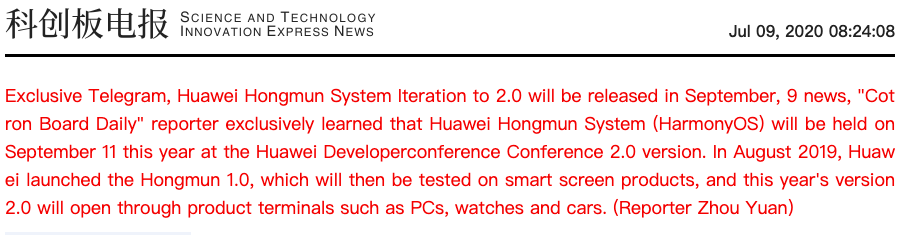
After getting banned by the United States government last year, Huawei took a major step towards reducing its reliance on other companies and launched its own operating system, dubbed as HarmonyOS.
Now, as per the report from Science and Technology Innovation Express News, the Chinese giant is all set to launch a second-generation version of the operating system in September this year — HarmonyOS 2.0.
When launched, the HarmonyOS (aka HongMeng OS) was aimed at several different types of devices but we haven’t seen many devices powered by the same. But the upcoming version aims to take it a step forward and will be running on computers, smartwatches, and even cars — in line with the roadmap previously shared by the company.
A couple of months ago, it was reported that Huawei is all set to enter the PC market with products powered by the company’s own HiSilicon Kunpeng processors. It was also reported that PCs from Huawei will be running the HarmonyOS 2.0.
Recently, Huawei filed a number of trademark applications for the names like HarmonyOS, HarmonyOS Connected, HarmonyOS Linked, and more. This further indicates that the company is expanding its capability and device compatibility.
The Chinese giant has promoted its HarmonyOS as “a single OS that covers everything, and works with all product types.” It is engineered to communicate openly regardless of the device, and by using a microkernel system, Huawei says HarmonyOS is secure. It is also intelligently adaptive and will display correctly on various screen sizes, just like adaptive mobile websites.
Although the report claims that HarmonyOS 2.0 could get announced in September this year, there is no timeline about the products powered by this operating system to be available in the market.
HarmonyOS was expected to replace the Android operating system on Huawei and Honor-branded smartphones. It’s been almost a year since Huawei launched its own operating system and we are yet to see a smartphone powered by this OS. Given the development so far, we don’t expect HarmonyOS-powered phones anytime soon.
We use cookies on our website to give you the most relevant experience by remembering your preferences and repeat visits. By clicking “Accept”, you consent to the use of ALL the cookies.
This website uses cookies to improve your experience while you navigate through the website. Out of these, the cookies that are categorized as necessary are stored on your browser as they are essential for the working of basic functionalities of the website. We also use third-party cookies that help us analyze and understand how you use this website. These cookies will be stored in your browser only with your consent. You also have the option to opt-out of these cookies. But opting out of some of these cookies may affect your browsing experience.
Necessary cookies are absolutely essential for the website to function properly. This category only includes cookies that ensures basic functionalities and security features of the website. These cookies do not store any personal information.
Any cookies that may not be particularly necessary for the website to function and is used specifically to collect user personal data via analytics, ads, other embedded contents are termed as non-necessary cookies. It is mandatory to procure user consent prior to running these cookies on your website.





 \
\