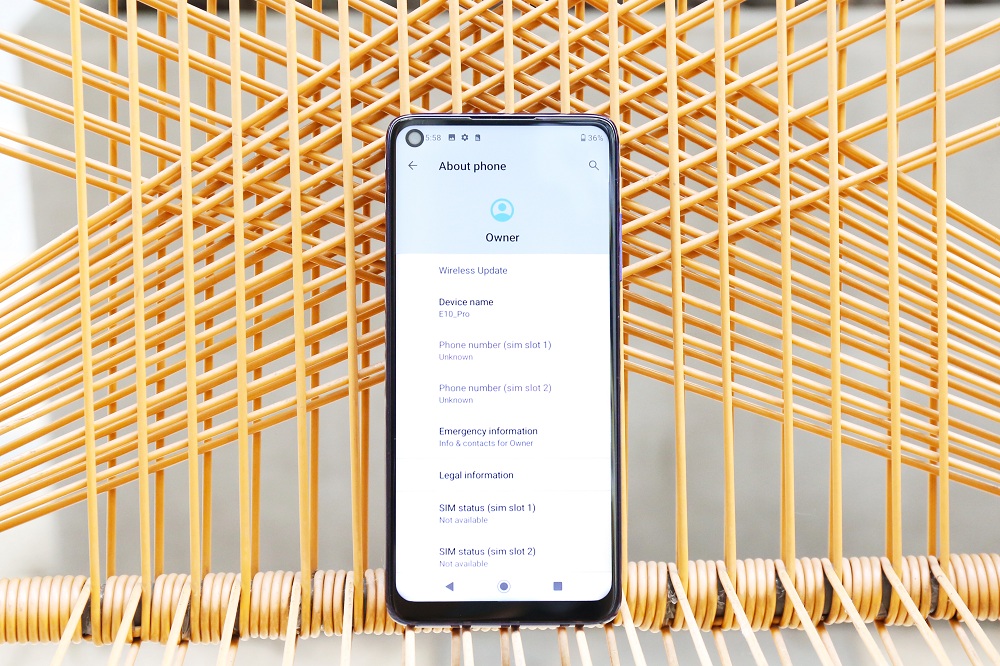
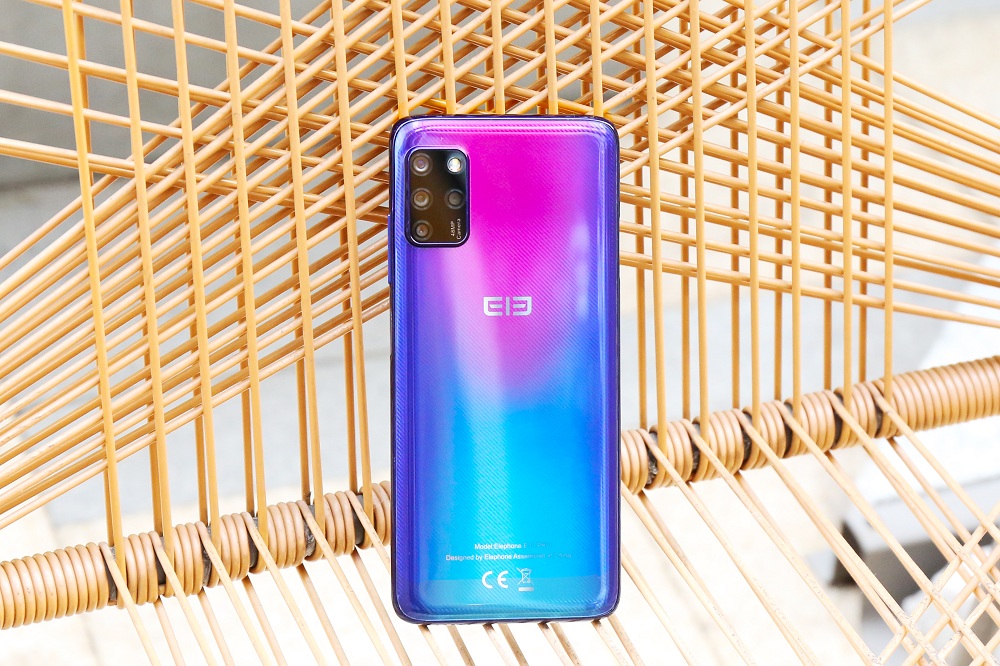
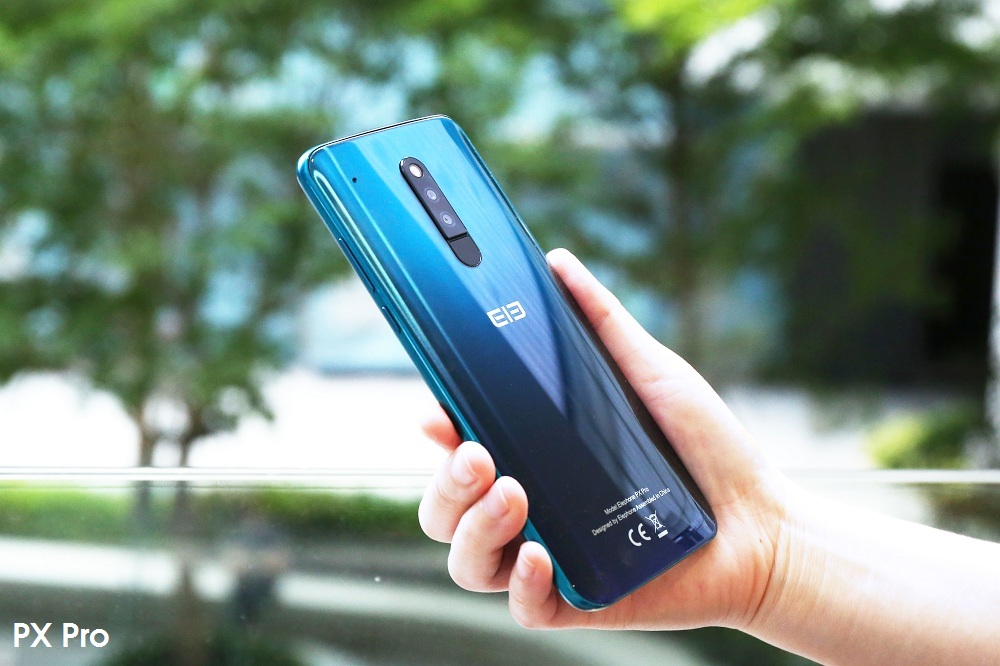
Elephone is a popular Chinese smartphone maker with a list of high-end yet affordable devices. The company recently introduced two new smartphones – Elephone E10 Pro and Elephone PX Pro sporting competitive specifications at legitimate prices. Both the smartphones are available at huge discounts at the official Elephone Store. But, these discounts won’t be any more as the Elephone promotion and giveaway activities are ending within the next 3 days.
Elephone is currently hosting three primary activities to bring an overall better deal. We are listing all three activities so you can easily know details and participate in the activity.
Elephone E10 Pro + Protective Film + Flip Case (Save $60) – Elephone E10 Pro was recently launched with a quad-rear camera featuring a 48-megapixel primary camera. It houses a 6.55-inch HD+ screen with a 19.5:9 aspect ratio and waterdrop design. The display even brings a better viewing experience as punch-hole camera cutout resides on the side.
In the Camera department, the smartphone features a 48-megapixel primary lens + 12-megapixel Ultra Wide-angle + 2-megapixel depth sensor and a 5-megapixel macro camera. It even supports side fingerprint and NFC for wireless payments. A 4000 mAh battery sits on the board for better backup.
It is available in different Combos, but the best is to get Device + Protective Film + Flip Case for $129.99 from Elephone Store.
Elephone PX Pro + ElepPods (Save $40) – It is another powerful mid-range device featuring a 6.53-inch Full HD+ Display. It is powered with Helio P70 Octa-Core chipset coupled with 4GB RAM + 128GB internal storage. There’s a dual rear 48-megapixel camera to take quality photos. A 16-megapixel front camera is present on the front. You will get a 3300 mAh battery with 10W fast charging technology.
It runs on Android 10 and houses a rear fingerprint lock.
Giveaway – Elephone E10 Pro – It is for the users who want to grab Elephone E10 Pro for free. You can enter the giveaway by participating in different tasks. More tasks you accomplish better will be the chances to win it.
Nintendo is one of the biggest game companies in the world. The Japanese company has shaped the lives of quite a number of folks with its popular consoles: the latest being the Nintendo Switch and Switch Lite; as well as its decades-old games such as Super Mario and Legend of Zelda.
A few years ago, Nintendo began making games for mobile phones too. However, the company has not recorded as much success as it has on its consoles. The latest news says Nintendo may finally stop making games for mobile phones.
Bloomberg reports that the president of Nintendo, Shuntaro Furukawa, said back in May that “We are not necessarily looking to continue releasing many new applications for the mobile market.”. That statement should not be a big surprise seeing as the company didn’t see a boost in sales as competitors did during the February to May COVID-19 lockdown period.
Over the last couple of years, Nintendo has released games such as Super Mario Run, Mario Kart Tour, Dr. Mario World. Unfortunately, none of these games have been a big hit compared to other mobile games like PUBG.
Nintendo uses different pricing systems for its games which include subscriptions for Mario Kart Tour and a one-time purchase for Super Mario Run. This is different from the approach other games use which is a freemium model with upgrades for characters and weapons that cost money. Nintendo also believes that its games work better with controllers it designed rather than touchscreen-only devices.
It is reported that Nintendo will turn its focus to already released games rather than release new ones for the current fiscal year.
A popular Chinese smartphone maker recently launched a new Oppo Enco W51 True Wireless earbuds in China. These new beautiful earbuds are available on sale in China. It is slated for launch in some other countries including India, Malaysia, and others very soon. But, if you’re looking it to grab now and that too it for a $30 discount, then you need to head over to Giztop. It is available in white color on the retailer’s website.
Oppo Enco W51 is on sale in China, but yet to launch in other countries. It comes with Bluetooth v5.0 and IP54 water and dust resistance rating. It features some powerful features including a 7mm driver with a response range from 20Hz-20kHz. There is an excellent 4-hour battery life with a 25mAh earpod battery extends upto 24 hours with a 480 mAh case battery. These Wireless earbuds pack active noise cancellation feature for a true acoustic experience by limiting the outside noise. It even aids clear voice calls with its 3 noise cancellation earbuds.
Oppo Enco W51 Features
Refined Design
The Wireless Earbuds are lightweight, small, and is designed for comfortable wear. Its structure facilitates in noise reduction with tailored G3 in-ear curves for the ear canal structure. There’s a soft silicone ear cap for excellent softness and cushioning for the ultimate experience.
Seamless Connectivity
Oppo Enco W51 earbuds pack Bluetooth 5.0 hardware for low latency dual transmission. The dual-core chip helps to improve the connection speed and enhances Bluetooth anti-interference ability significantly. It can be useful for high-end performance while gaming and video consumption.
Noise reduction up to 35db
The wireless earbuds pack a dual-core digital noise reduction chip which can reach the maximum depth of noise reduction up to 35db. It carries a three-microphone to reduce aid the noise reduction technology.
Qi Wireless Charging
the Oppo Enco W51 supports Qi wireless charging which also enables wireless reverse charging from any compatible mobile device.
Oppo W51 Enco earbuds measure 4.6 grams in weight, and the case weighs 55.5 grams.
Oppo Enco W51 Earbuds supports touch gestures to make calls, change track, and control volume. It is available for the price of $99, but you can add a coupon code W5130 to get $30 off from Giztop.
If you own the Find X2 or Find X2 Pro and don’t mind giving Android 11 a spin, you can now download the beta. OPPO has made the builds available with ColorOS 7.2 on top.
OPPO has highlighted some of the features that Android 11 brings to the Find X2 series such as Scheduled Dark Mode which automatically switches your device between light and dark modes; a special bedtime mode that can be configured to your liking; ability to pin conversations in the notification menu; dedicated menu for smart home devices without the need for installing third-party applications; and stricter privacy settings.
OPPO warns that the build is only available to developers and not for end-users. They also warn that the build has bugs and is unstable. So if this is your primary device and you are not a developer, you may want to steer clear of the beta build.
You can download the Android 11 Beta build from the source link below. XDA-Developers have also written a step-by-step guide on how to flash it and how to rollback if you need to.
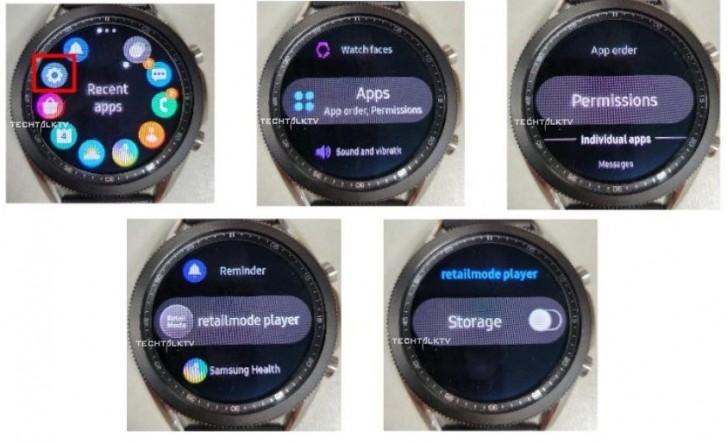
Samsung was recently rumoured to be planning to return to utilising the rotating physical bezel after swapping it out for a capacitive version on the Watch Active models. New photos of the upcoming Galaxy Watch 3 have now emerged online. The leaked images show the model while it is powered on.
The photos don’t really show a major change in the UI and the watch will rely on the rotating bezels in order for users to navigate around the available features. The design looks like the Galaxy Watch 2 except for the two physical buttons at the right side. The watch is expected to run Samsung’s own Tizen 5.5 OS.
The Galaxy Watch 3 will come in two sizes. The 45mm model measures 45 x 46.2 x 11.1 and it houses a 1.4-inch display. It will house a 340mAh battery. On the other side, the 41mm edition of the smartwatch will have 41 x 42.5 x 11.3mm dimensions and it will sport a 1.2-inch screen. This model will draw power from a 247mAh battery.
On the connectivity front, the Galaxy Watch 3 will support LTE and GPS. When it comes to health sensors, it will offer users a heart rate sensor, blood pressure monitoring, and electrocardiogram (ECG). It is unclear whether ECG will be available globally at launch. It will offer users with 8 GB of native storage. Its processor will be coupled with 1 GB of RAM.
The Galaxy Watch 3 will be coming with a MIL-STD-810G rated and IP68 certified chassis. It will be available in stainless steel and titanium editions. The screen will be safeguarded by Gorilla Glass DX.
Samsung is expected to unveil the Galaxy Watch 3 next month together with the Galaxy Buds Live TWS.
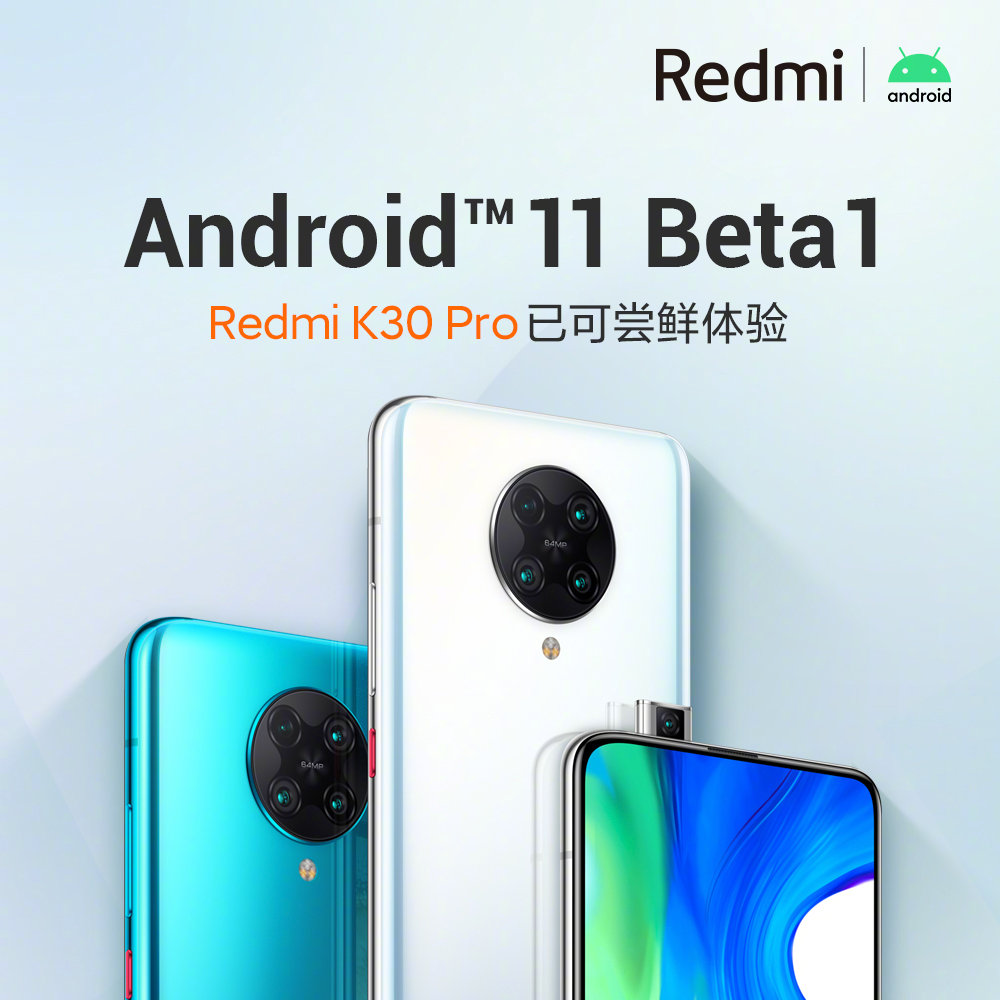
Xiaomi has officially released Android 11 Beta 1 build for Redmi K30 Pro/POCO F2 Pro as promised a few days back. Surprisingly, it is an AOSP build and not MIUI. Even iQOO has provided a similar build but Oppo Find X2 series gets a ColorOS 7.2 build.
The Android 11 Beta 1 for Redmi K30 Pro and POCO F2 Pro is available as a single common build as they are basically the same phone with different branding. It can be installed by anyone with an unlocked bootloader. But it is advisable to stay away if you are not a developer.
The installation process is similar to installing MIUI Fastboot ROM. So interested users will need the ROM file whose download link has been provided at the end of the post, Xiaomi MiFlash Tool, and device drivers.
Once all the above-mentioned things are sorted out, first extract the downloaded .tgz ROM file. Then, reboot the handset into Fastboot mode and open MiFlash tool on Windows PC/laptop. Now, connect the phone with the system and load the extracted ROM folder in the tool.
Lastly, click on ‘refresh’ to detect the device and select ‘clean all’ before hitting ‘flash’ to install the ROM. After the completion of the installation, the handset will automatically boot into Android 11 Beta 1 software.
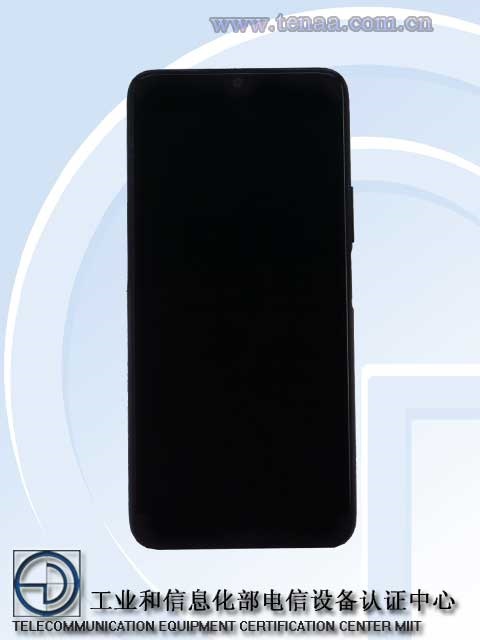
Recent information hints at the launch of the Honor X10 Max along with the Honor 30 Youth Edition on July 2 in China. Ahead of the launch, the Honor 30 Youth Edition has been certified by China’s telecoms regulatory agency TENAA. The images of the device are all we got from the source.
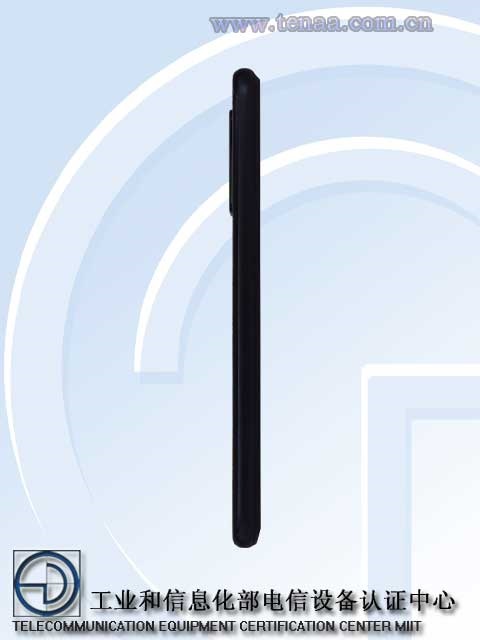
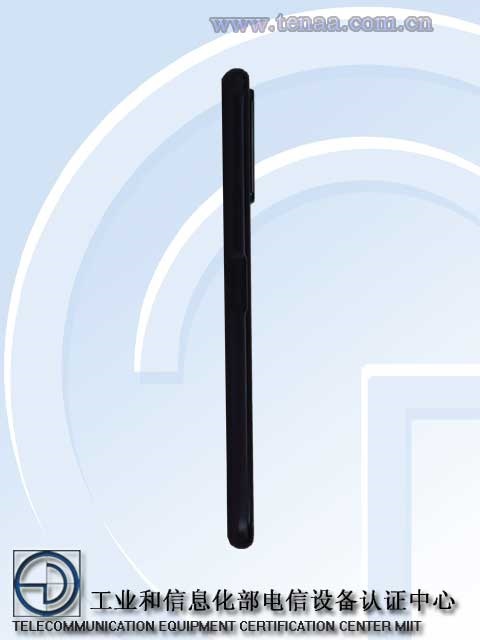
An image of the Honor 30 Youth Edition (Lite) had earlier leaked revealing the rear design of the 5G model. This time around, we get to see the font design of the mid-range model as well as what lies on the sides. From the image, we can understand that the model will feature a waterdrop notch for the selfie camera. At the rear, there will be a triple camera setup mounted on a rectangular module at the top left corner of the back panel.
The Honor 30 Lite 5G is expected to feature a 6.5-inch display with Full HD+ resolution of 1080 x 2400 pixels. The display will also have a tall aspect ratio of 20:9, and a refresh rate of 90Hz.
Under the hood, the device will be powered by a MediaTek Dimensity 800 chipset and will get its juice from a decent 4,000mAh battery that supports 22.5W fast charging. The phone is expected to run on Android 10-based EMUI 10.1 skin. For photography, there will be a 16MP selfie camera. The rear camera setup is made up of a 48MP main sensor teaming up with an 8MP and 2MP sensor. The phone also seems to have a side-mounted fingerprint sensor.
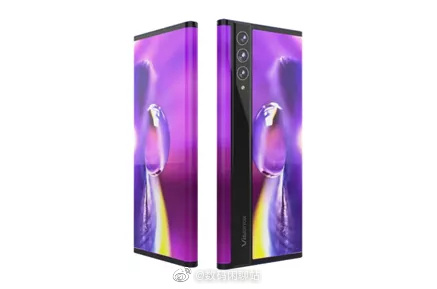
Xiaomi’s Mi MIX Alpha is a device like no other. The “concept” phone features a display that practically wraps around it. The display was made by Visionox, a China-based company, that has now made a second-gen version of the screen.
According to a Weibo post by Digital Chat Station, Visionox has made an improved version of the display which has an optimized structure, a better fit, and an improved yield rate for mass production.
The post also said Visionox has made a 7.92-inches flexible AMOLED screen for foldable devices that allows the screen to be folded both inward and outward.
The image below shows a prototype device with the new flexible display. The device can be unfolded into a tablet and can be folded inwards to protect the display from scratches when in your bag or pocket. It can also be folded outwards if the user decides to use just one half of the screen like a regular phone.
Visionox says the display has an inward folding radius of 2.85 mm and an outward folding radius of 8mm. The folding mechanism is said to be quite complex but even at that, the display is ready for mass production.
Just because there is a better version of the wraparound display doesn’t mean the Mi MIX Alpha will enter mass production. Xiaomi may decide to leave the phone has a concept. However, we won’t rule out the possibility of another manufacturer working with Visionox to launch a commercially-available phone with a wraparound display.
After comparing the Realme X3 SuperZoom to Realme X2 Pro and X50 Pro Player, we are here for another flagship killers comparison. This time, we choose three devices from three different brands owned by BBK Electronics. All of them carry very interesting price tags while still offering flagship-class specifications. We are talking about the Oppo Ace2, the vanilla OnePlus 8, and the Vivo X50 Pro+. Which flagship should you buy and which offers the highest value for money? We will try to answer these questions through an in-depth specs comparison.
Oppo Ace2 vs OnePlus 8 vs Vivo X50 Pro+
Oppo Ace2
OnePlus 8
Vivo X50 Pro+
DIMENSIONS AND WEIGHT
160 x 75.4 x 8.6 mm, 186 g
160.2 x 72.9 x 8 mm, 180 g
158.5 x 72.8 x 8 mm, 182 g
DISPLAY
6.55 inches, 1080 x 2400p (Full HD+), AMOLED
6.55 inches, 1080 x 2400p (Full HD+), Fluid AMOLED
4000 mAh, fast charging 65W, Fast wireless charging 40W
4300 mAh, fast charging 30W
4315 mAh, fast charging 44W
ADDITIONAL FEATURES
Dual SIM slot, reverse wireless charging 10W, 5G
Dual SIM slot, 5G, IP68 waterproof
Dual SIM slot, 5G
Design
At first glance, since it features a less invasive camera module, OnePlus 8 looks more elegant than its rivals. But the Vivo X50 Pro+ comes in a stunning color variant including a leather body which, in my honest opinion, would win almost every design comparison. I also like the Vivo X50 Pro+ for its curved screen and its incredibly high screen-to-body ratio. Sure, its camera module is huge and it is not the most elegant solution, but it remains one of the most stylish phones out there.
Display
With OnePlus 8, Oppo Ace2 and Vivo X50 Pro+ you do not get so many differences when it comes to display specifications. We give the first place to the Vivo X50 Pro+ because it has a higher refresh rate: 120 Hz instead of the 90 Hz found on the OnePlus 8 and the Oppo Ace2. With 120 Hz, you get a smoother viewing experience. In each case, you get an AMOLED panel with rich colors and the HDR10+ certification, as well as the same display diagonal.
Hardware/Software
The strongest point of OnePlus 8, Oppo Ace 2 and Vivo X50 Pro+ is undoubtedly the hardware side. They all feature the Snapdragon 865 mobile platform which is actually the best Qualcomm SoC released in 2020 for mobile devices. You even get up to 12 GB of RAM and up to 256 GB of UFS 3.0 native storage. These devices are able to provide blazing speeds, high stability, and very high performances in every scenario, including the most demanding games and multi-tasking. The most interesting software side is the one found on the OnePlus 8 as it runs the Oxygen OS which is close to stock Android and well-optimized, but ColorOS is getting very close with a lot of improvements in the last period.
Camera
Vivo X50 Pro+ is definitely the best camera phone of this trio with a 50 MP main camera, dual OIS, 5x optical zoom and gimbal-like stabilization technology which is actually a lot better than normal OIS systems. Right after (but it does not stand a chance against the Vivo X50 Pro+), we got the OnePlus 8 with a 48 MP triple camera. Oppo Ace2 is definitely not a high-end camera phone.
Battery
Oppo Ace2 has the fastest charging technology and even the fastest wireless charging technology ever brought to the market. It needs just 30 minutes for a full charge and 56 minutes with wireless charging. But the OnePlus 8 can provide the longest battery life thanks to a bigger battery.
Price
OnePlus 8 sells in China with a starting price of €502/$565, Oppo Ace2 is priced $565 too, and Vivo X50 Pro+ sells for $709/€630. If we consider all the specifications, Vivo X50 Pro+ is the most convincing one as it offers a higher refresh rate and much better cameras. If you do not care about cameras, you can save some money with the Oppo Ace2 without facing important compromises. OnePlus 8 carries the same starting price as the Oppo Ace2 but it offers better cameras and slower charging speeds, as well as a great software department with the Oxygen OS.
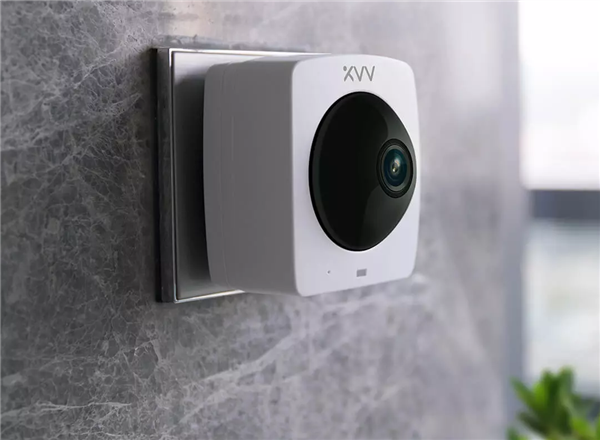
Most surveillance cameras for homes need a pan-tilt to achieve wide-angle field-of-view surveillance. Xiaomi has today launched one of such cameras dubbed XVV Smart Panoramic Camera. The camera features a fisheye lens enabling it to achieve a 360° panoramic VR angle + 180° ultra-wide-angle view. The camera is priced at 169 yuan (~$24).
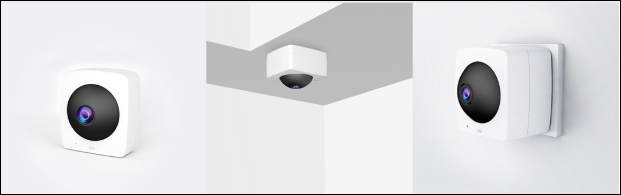
The XVV Smart Panoramic Camera comes with accessories to mount it on the ceiling allowing for 360-degree panoramic shooting. This ensures that there is no dead angle and thus, provides all-round security protection. The camera can also be mounted on the wall, providing a 180° field of view.
The camera features a 2MP sensor and can record 1080p HD quality videos. The camera supports infrared night vision function as there are 3 dot matrix infrared lights inside. The red lights are not seen on the outside and don’t affect the visuals.
As a panoramic camera, the XVV Intelligent panoramic camera supports several modular combinations such as panoramic mode/wide-angle mode/panorama decomposition/two-split screen/three-split screen and horizontal single-turn mode.
In addition, the camera supports voice intercom. There are built-in high-power speakers and a high-sensitivity microphone inside so you can communicate at any time without barriers. The camera can also be connected to the MIJIA app and supports real-time preview on mobile phones, Xiaomi TV and XiaoAI touch screen speakers.
The camera supports the H.265video encoding, 2.4GHz WiFi and has a 128GB microSD card slot.
Last year, Huawei released HMS aka Huawei Mobile Services to fill the void left by GMS (Google Mobile Services) on its Android smartphones and tablets. The HMS Core app is similar to Google Play Services and it has been now updated to v5.0 in China with new features.
HMS Core is responsible for all the things that Google Play Services carries out on Android devices. In other words, it is the heart of EMUI/Magic UI as well as Huawei apps and services like payment, health, and cloud to name a few.
But just like Google Play services, HMS Core can be also used by third-party app developers. In fact, it is necessary for them to use it in order to make use of the complete hardware and software suite provided by Huawei.
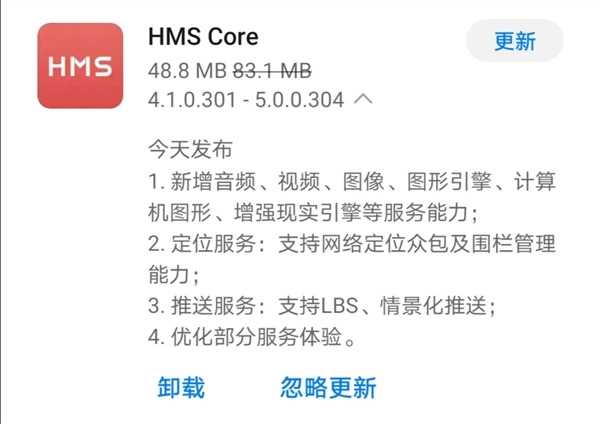
Now, the company has updated this app to v5.0 in China. Users can update to the latest version v5.0.0.304 from the last version v4.1.0.301 via Huawei AppGallery. It is a major update as it adds support for various media engines, location services, and also optimizes the old features.
HMS Core v5.0.0.304 Official Changelog
Adds audio, video, images, graphics engine, computer graphics, augmented reality engine, and other services.
Location Services: Adds support for network location crowdsourcing and fence management capabilities.
Push Service: Adds support for LBS (location-based service) and contextual push.
Optimizes some service experiences.
As you can see from the changelog, Huawei is introducing its version of Google Play Services for AR, Geofencing API, now defunct Nearby Notifications, and more. Anyway, we will have to wait and see how these services perform in real life compared to the ones offered by Google.
Having said that, we expect this update to be soon made available for devices running global EMUI/Magic UI ROM in the coming days.
The first set of official teasers of OnePlus’s first mid-range phone has now been released. The phone which was originally called the OnePlus 8 Lite then later dubbed OnePlus Z and is now referred to as the OnePlus Nord has been anticipated for months now.
The teasers were posted on Twitter by OnePlus’ co-founders Pete Lau and Carl Pei. The tweet by Pete Lau says “Who’s ready for something new from OnePlus? while Carl Pei’s tweet reads “It’s time to rock the boat again”. Both tweets use the hashtag NewBeginnings which points at a new direction for the company.
Pete Lau’s tweet includes a photo of the famous OnePlus logo but in blue/cyan. This may be the color of the OnePlus logo on the retail box of the phone and probably the color OnePlus will use for its mid-range line going forward. There are also speculations that this may be one of the color variants the phone will come in.
The OnePlus Nord is expected to come with a Snapdragon 765 5G processor, up to 8GB of RAM, and 128GB of storage. It has also been reported to have a 6.4-inch OLED display with a 90Hz refresh rate, quad rear cameras, and support for 30W Warp Charge.
Will you be getting the OnePlus Nord when it launches? Let us know in the comment box below.
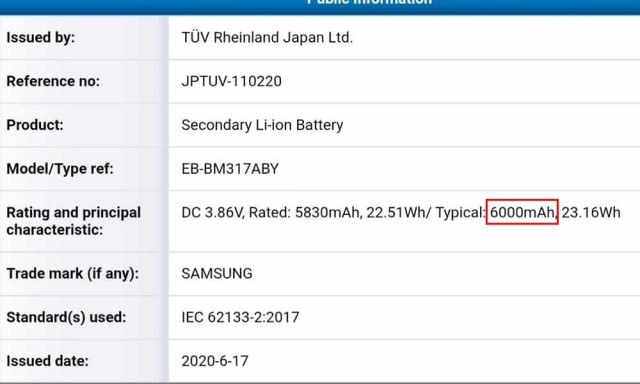
Samsung has got a replacement for the Galaxy M31 in the works and the model goes by the moniker Galaxy M31s. The smartphone made an appearance on GeekBench database earlier this month. The phone has now been certified by TUV Rheinland. The certification means a sampling of the product has been tested for safety and found to meet the minimum requirements of the German Equipment and Product Safety Act.
The TUV Rheinland certification for the Galaxy M31s shows the device will pack a monstrous 6,000 mAh battery. That’s all that is revealed on the listing but the earlier GeekBench appearance shows the device will be powered by an Exynos 9611 chipset paired with 6GB of RAM. The Galaxy M31s is also expected to run on the latest Android 10 OS with an overlay of Samsung’s One UI.
For now, no other details of the M31s is known. Going by previous M30 series models, the M31s may likely come with an upgraded camera system. The Galaxy M31 was launched in February 2020 so the upgrade won’t likely be a major one. Instead, this may likely be a trimmed down version with lesser pricing.
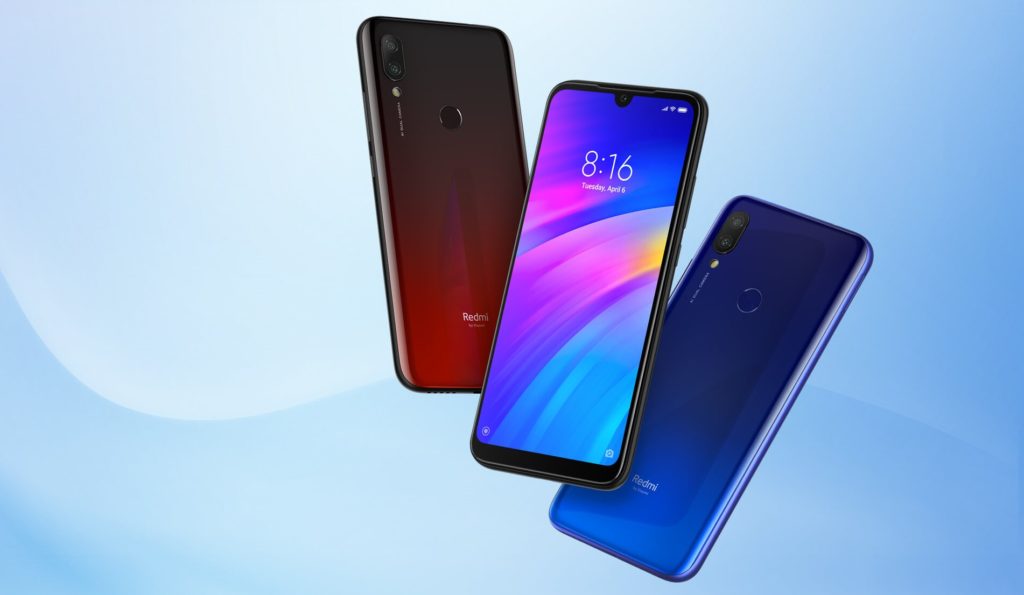
Earlier this month, Redmi 7A received Android 10 update in China. The same update was rolled out in Europe last week. Now, its bigger sibling Redmi 7 has started receiving similar treatment in the brand’s home country.
The Android 10 update for Redmi 7 comes with MIUI 11 as MIUI 12 is slated to arrive for this handset sometime later in July. The update comes with build number 11.0.1.0.QFLCNXM and weighs 2GB in size. It brings June 2020 security patch to the device unlike May patch on the Redmi 7A.
Anyway, as mentioned earlier, the OTA update is currently limited to Redmi 7 units running MIUI China ROM. But you can still install the update on your global phone if you have unlocked bootloader and TWRP recovery. But sadly, we don’t have access to the Recovery ROM download link yet. However, we will make sure to update the story once it is available.
On the other hand, the global units running MIUI Europe, Russia, and India ROMs are receiving the same June security patch sans Android 10. But we hope them to receive the latest stable Android in the coming weeks just like the cheaper Redmi 7A.
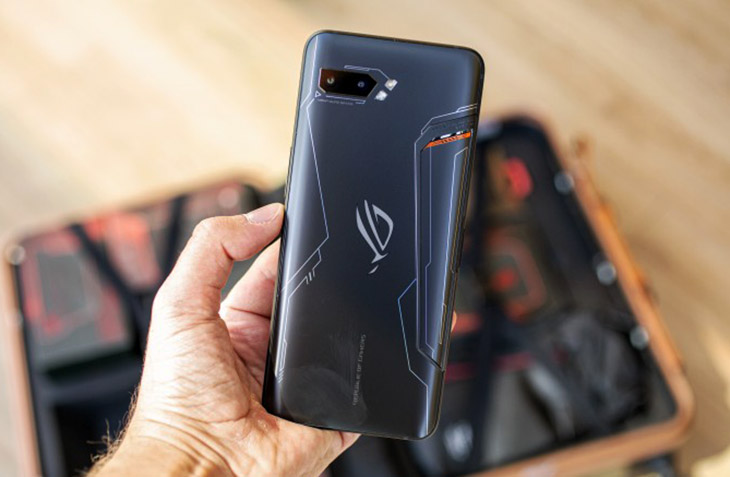
Asus launched the ROG Phone 2 gaming smartphone in India in September 2019. Ever since its launch, the handset has been rarely in stock on its official online retailer Flipkart. When COVID-19 became intense, it went out of stock for months. But now, the device is coming back in stock with new price as part of Flipkart’s Big Saving Days sale starting June 23.
The ROG Phone 2 debuted with aggressive pricing in India compared to its predecessor. The base 8GB + 128GB variant launched in the country for ₹37,999, however, the high-end 12GB + 512GB version released for ₹59,999.
Sadly, the Taiwanese computer giant has hiked the price of its phone due to new 18% GST (Goods & Services Tax) on mobile phones and depreciation of the Indian rupee against the US dollar.
Therefore, the Asus ROG Phone 2 now costs ₹39,999 for the 8GB + 128GB variant and ₹62,999 for the 12GB + 512GB variant in India. Which translates to increase of ₹2,000 and ₹3,000 for the two storage configurations respectively.
Although ROG Phone 2 is a good gaming smartphone, its successor ROG Phone 3 is just around the corner. So it’s worth waiting for the next device if you can.
On the other hand, we don’t think the price of this handset will ever go down in the near future and given its availability is scarce, do not miss the deal if you are looking to buy a gaming smartphone in India.
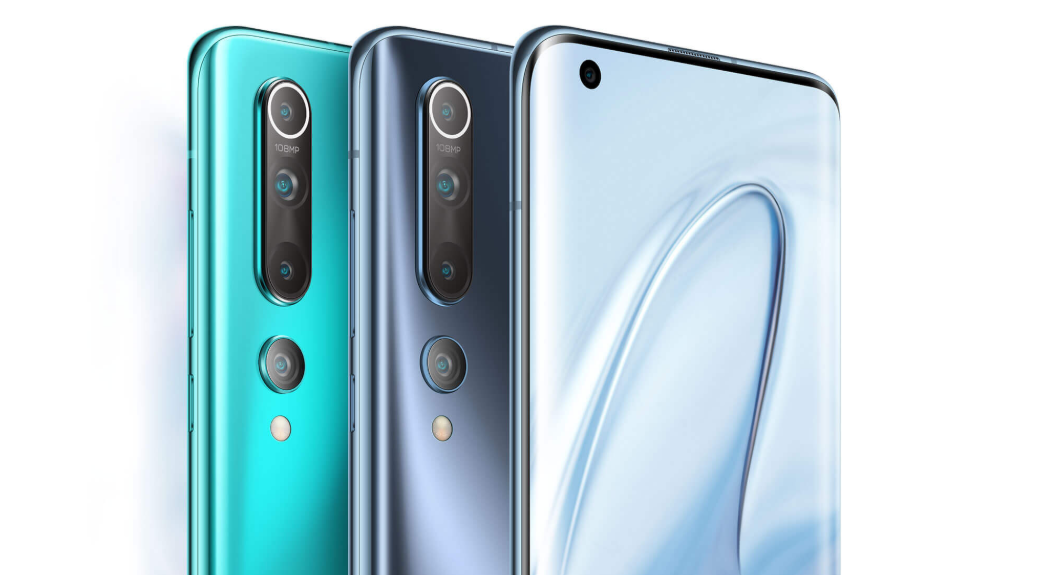
Xiaomi Mi 10 units in India have started receiving the MIUI 11 update in India. The software version V11.0.5.0.QJBINXM is the stable build for the latest ROM version and is currently being rolled out. The new update brings the latest Android 10 based MIUI 11 custom skin, which features some notable aspects.
The Chinese tech giant shared the news on Twitter through its official MIUI India handle. MIUI 11 is being rolled out progressively, which means that all Mi 10 users in India should be receiving the update. So for those that have yet to get the notification, can check for the update manually through the Updater app. Furthermore, Xiaomi has also made the ROM packages for the update available online, with a download size of 2.5GB and step by step instruction as well.
Apart from the latest variant of the custom skin from the company, the MIUI 11 brings NavIC support to the Mi 10. NavIC stands for Navigation Satellite System and is India’s native navigation system, similar to the United States’ GPS. Thus, smartphones with the latest Qualcomm chipsets are compatible with NavIC, which is now available on the Mi 10.
Xiaomi Mi 10
The update also brings changes to the status bar, notification shade, optimizes Wi-Fi 6 icon, and even brings in the April 2020 security patch. Recently, Mi 10 users are also eligible for the Android 11 Beta 1 update, which is mainly to test the latest generation of Android on the device. Keep in mind that this is without the MIUI custom skin and only features vanilla Android.
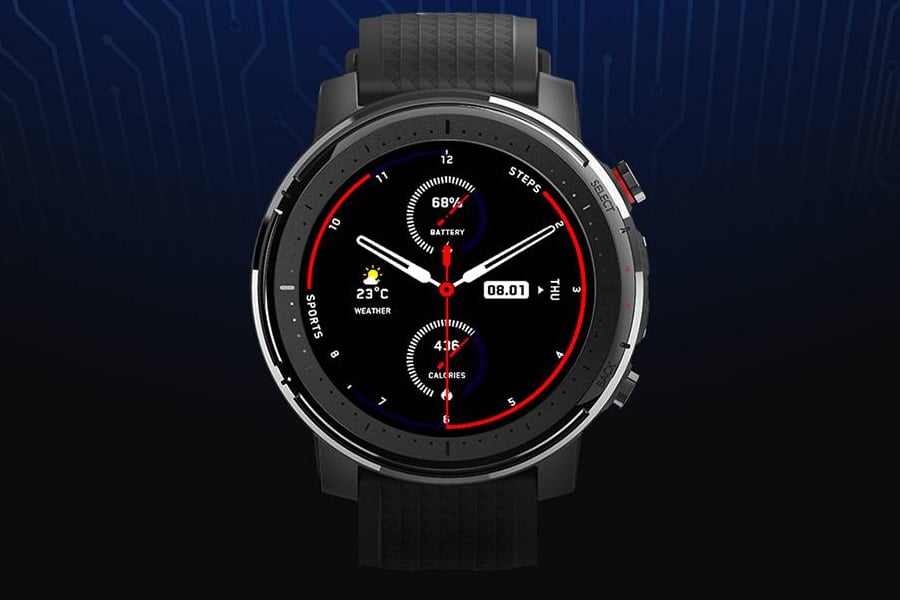
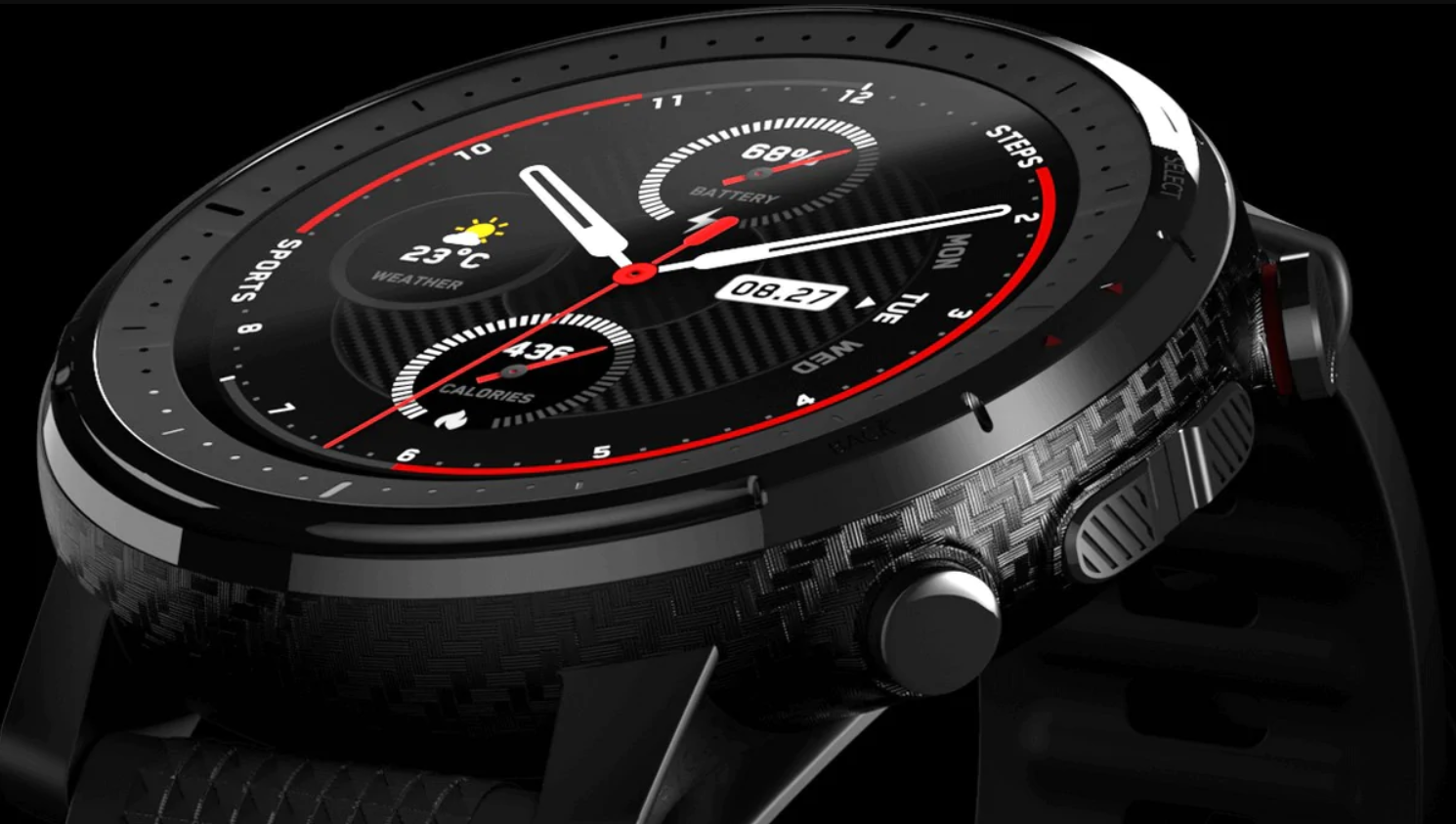
Amazfit Stratos 3 smartwatch has just been launched in India. The smart wearable features support for 80 different activity/sports modes and have a battery life of up to 14 days.
Amazfit had previously teased the gadget’s launch for the region. While it had originally been launched back in 2019, it has now finally arrived in India as well. The Amazfit Stratos 3 features a circular dial with a 1.34 inch transflective display with Corning Gorilla Glass 3 protection. The dial has four physicial buttons on a stainless steel body with a silicone strap.
The device is powered by a 1.2 GHz dual core processor and packs 512MB RAM and 2GB of internal storage. Its battery is claimed to last up to 14 days on a single full charge when used in Ultra Endurance Mode and 7 days in the Smart Mode. If GPS is used continuously, then the smartwatch lasts just 35 hours in the Accurate mode, 45 hours in Balanced mode, and 70 hours in Power Saving Mode.
The Amazfit Stratos 3 supports 80 different sports modes like snowboarding, skiing, outdoor skating, fencing, karate, and more. Furthermore, it houses a Biotracker PPG bio-tracking optical sensor, a 6 axis accelerometer, a 3-axis geomagnetic sensor, and even an ambient light sensor. In terms of connectivity, it offers NFC, GPS/ Glonass, Bluetooth v5.0, and Wi-Fi 802.11 b/g/n. The smartwatch can even survive up to 50 meters underwater thanks to its 5ATM waterproof rating.
For those interested, you can purchase the Amazfit Stratos 3 through the popular online retailer, Flipkart, and Amazfit’s official Indian website. It is priced at 13,999 INR (roughly 184 US Dollars) and will begin sales later today (22nd June 2020) starting from 8 pm IST for its single Black strap variant.
Redmi number series is one of the best-selling smartphone series worldwide. The Redmi 8 series first debuted in September 2019 with the launch of Redmi 8A, which was later followed by Redmi 8, Redmi 8A Dual, and Redmi 8A Pro. Now, as the brand is set to lunch Redmi 9 in China on June 24, it reveals that it has shipped over 19 million units of Redmi 8 series devices globally.
Since its inception, Xiaomi’s Redmi series of smartphones have been popular because of their affordable pricing as well as better specifications compared to devices from other companies.
But that begun to change as competitors began to launch identical phones and sometimes even better models. On the other hand, the Redmi series of smartphones had become large enough that it was spun-off into an individual brand.
Despite the competition, Redmi managed to ship over 19 million units of Redmi 8 series phones globally, which is truly an achievement. But the same cannot be said for the Redmi 9 series which is launching during the pandemic.
Anyway, it is possible for the brand to sell more units as customers around the world are expected to prefer cheaper phones in the current situation.
Redmi 9, the successor to Redmi 8 was recently launched in South East Asia and Europe. Now, it is making its way to China and may also soon debut in India.
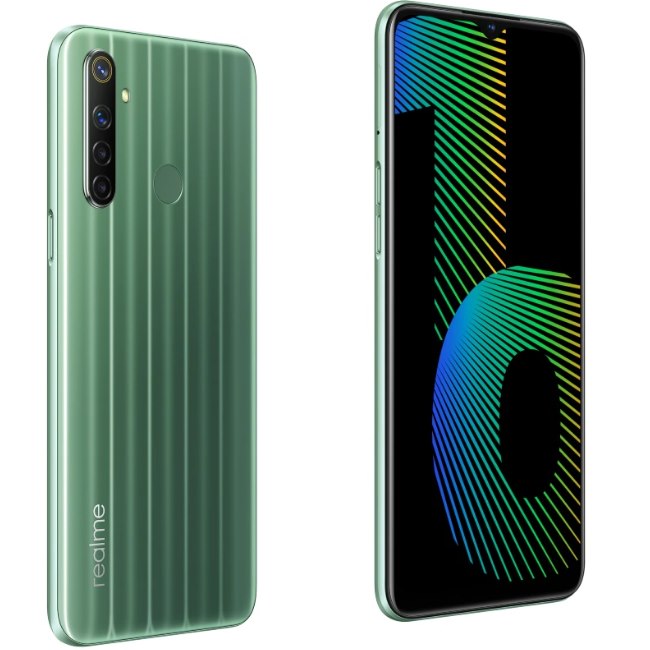
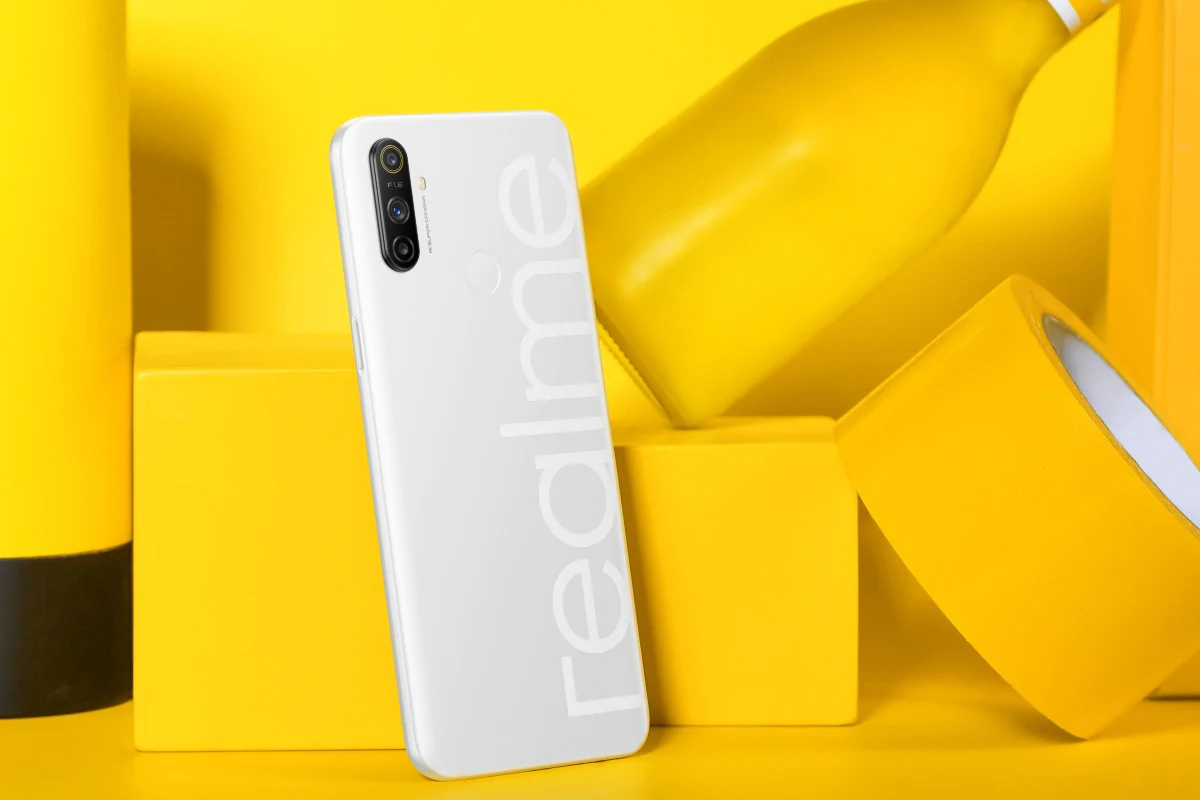
Realme has just launched the higher end version of the Narzo 10A in India. This version houses 4GB of RAM and 64GB of internal storage and will sit right above the 3GB RAM model that was launched last month.
Under the hood, the Realme Narzo 10A features MediaTek G70 SoC. It sports a triple camera setup on the back and is powered by a large 5,000mAh battery pack. The display is a 6.5 inch HD+ panel which has an aspect ratio of 20:9 and Corning Gorilla Glass 3 protection. Along with 64GB of storage, the memory can be expanded via a microSD card slot.
The Realme Narzo 10A 4GB RAM + 64GB storage variant is priced at 9,999 INR (roughly 131 US Dollars). It will be available through online retailers like Flipkart and the official Realme website and will go on sale tomorrow (23rd June 2020). The device will also be available in So White and So Blue variants and will also be sold through offline stores in select states in India.
Certain offers are also applicable to its launch, including 500 INR MobiKwik cashback. Furthermore, Flipkart is offering 30 INR discount on their first prepaid transaction using RuPay debit card, 5 percent unlimited cash back on Flipkart Axis Bank credit card, and an extra 5 percent off with Axis Bank Buzz credit card. Customers will also have the option of no cost EMIs as well.
Pete Lau departed from OPPO to form another smartphone company — OnePlus, which is also backed by BBK Electronics. As a founder and CEO of OnePlus, Pete Lau made the company into one of the most recognized smartphone brands in a short time.
Now, Pete Lau is said to be returning to OPPO but will keep his current role as OnePlus as well. While continuing to the Chief Executive Officer of OnePlus, Pete Lau will likely be joining OPPO as the Chief Product Experience Officer.
Pete Lau, Co-founder & CEO of OnePlus (Image Source: OnePlus)
In this new role at OPPO, Pete Lau is said to be responsible for product planning as well as development. The news comes just months after it was announced that OPPO VP Shen Yiren announced his departure from the company, who was responsible for marketing.
It will be interesting to see how this senior leadership reshuffle will shape the company given that both OnePlus and OPPO have very different strategies. While OnePlus is heavily focused on online retail, OPPO gaining its prominence through offline sales.
The reshuffle of the leadership also comes as the performance of OPPO is declining even though the brand is still among the leading smartphone companies globally. For instance, in Q1 2020, OPPO’s market share dipped 1% compared to the previous quarter and it declined by 3% compared to the same period last year.
Currently, OPPO is the fifth largest smartphone brand globally with a market share of 8%. In Q1 2020, the company managed to ship 22.3 million units of its smartphones, which is quite lower compared to 31.4 million units in Q4 2019.
We use cookies on our website to give you the most relevant experience by remembering your preferences and repeat visits. By clicking “Accept”, you consent to the use of ALL the cookies.
This website uses cookies to improve your experience while you navigate through the website. Out of these, the cookies that are categorized as necessary are stored on your browser as they are essential for the working of basic functionalities of the website. We also use third-party cookies that help us analyze and understand how you use this website. These cookies will be stored in your browser only with your consent. You also have the option to opt-out of these cookies. But opting out of some of these cookies may affect your browsing experience.
Necessary cookies are absolutely essential for the website to function properly. This category only includes cookies that ensures basic functionalities and security features of the website. These cookies do not store any personal information.
Any cookies that may not be particularly necessary for the website to function and is used specifically to collect user personal data via analytics, ads, other embedded contents are termed as non-necessary cookies. It is mandatory to procure user consent prior to running these cookies on your website.