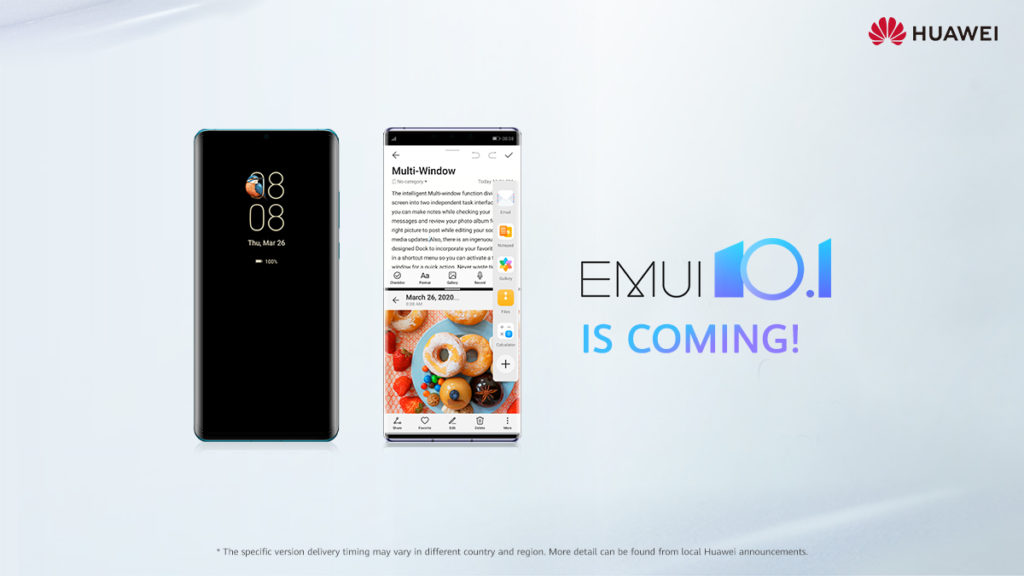
Huawei debuted EMUI 10.1 with the P40 series in late March. The same mobile software is known as Magic UI 3.1 for Honor devices withs some tweaks. The company has been continuously rolling out this update to all the eligible devices in China. Now, after almost three months, it has finally announced the list of eligible/supported devices in global markets.
The EMUI 10.1/Magic UI 3.1 is a minor update to the previous iteration (EMUI 10) of the software first announced in late 2019 alongside Huawei Mate 30 series. The highlights of the new update are as listed below.
The Motorola RAZR is one of the two commercially-available vertically folding phones you can buy. The other is the Samsung Galaxy Z Flip. Motorola’s phone has a price tag of $1499.99, but for a limited time, you can get it for $999 (or $42/month)!
Motorola is running a promo until June 21 which allows folks to pick up the phone in the US for one-third off the price. That is a pretty good deal if you have your eyes set on this mid-range foldable phone.
The Motorola RZR has a 6.2-inch 2142 x 876 P-OLED display that folds in half. There is a smaller G-OLED display on the back that measures 2.7-inches in size and has a 600 x 800 resolution.
Inside the phone is a Snapdragon 710 processor with 6GB of RAM and 128GB of non-expandable storage. There is a 16MP camera on the back of the phone while a 5MP camera sits in front for taking selfies. You also get a front-mounted fingerprint scanner, NFC, an eSIM, and a 2510mAh battery with support for 15W fast charging.
Back in late February, UNISOC announced the Tiger T7520 mobile processor as the world’s first 6nm EUV processor. The 5G chipset is the successor to the Tiger T7510 that was announced last year and that powers the Hisense F50 5G.
Almost four months after the announcement, the chipset is yet to appear in any mobile device. The latest news from China says the Tiger T7520 will be mass-produced this year. The source also said the chipset should appear in devices in early 2021; practically a year after launch.
That seems like a long time for a chipset to enter the market and it remains to be seen which manufacturers will launch products powered by it.
The Tiger T7520 is an octa-core chipset with 4x Cortex-A76 cores and 4x Cortex-A55 cores. It packs a Mali-G57 GPU whose clockspeed, like that of the CPU, is unknown. UNISOC says that the built-in modem supports coverage enhancement and also supports dual-SIM dual-5G.
Other features of the processor include support for displays with a 120Hz refresh rate, 4K resolutions, and HDR10+. It also has an integrated financial-level Secure Element that provides higher security than embedded SE.
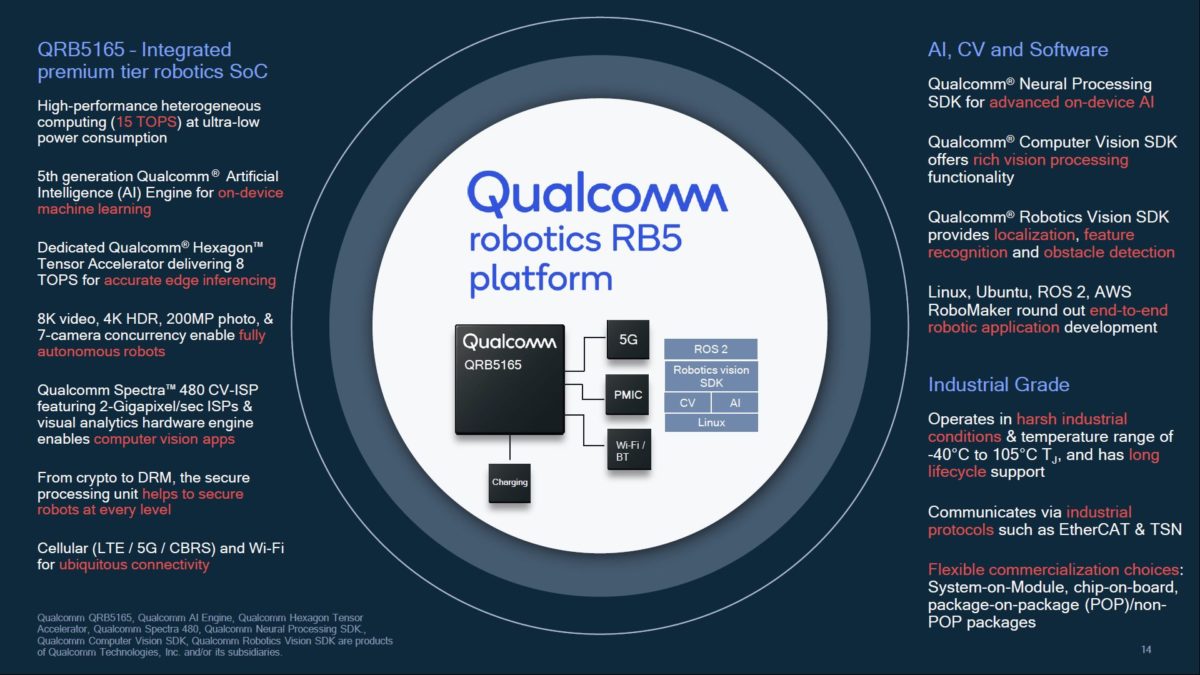
Qualcomm is mostly known for its wide range of smartphone SoCs but that isn’t all it manufactures. Qualcomm also manufactures chipsets for smartwatches, laptops, smart TVs and even robotics. The US fabless chip maker has unveiled a new robotics platform dubbed Robotics RB5.
The new platform is based around a variant of its Snapdragon 865 processor. The RB5 uses the QRB5165 processor with the same CPU, GPU, ISP, and DSP as the Snapdragon 865. This time around, the platform features support for industrial-grade temperate ranges from -40°C to 105°C. It also brings some nice enhancements to computer vision.
The new QRB5165 processor at the heart of the RB5 includes the Kryo 585 CPU (4x Cortex-A77 CPU cores in the 1+3 configuration, plus 4x Cortex-A55 cores). The processor also teams up with the Adreno 650 GPU, the Spectra 480 ISP plus the Hexagon DSP. The processor can be used for heavy compute tasks, advanced AI tasks (using the DSP and the GPU together), and for computer vision.
The Spectra 480 ISP onboard is said to be capable of processing 2 Gigapixels per second. On the RB5165, that means developers can connect up to seven cameras (great for fully autonomous robotics) as well as process 8K video and 4K HDR video. The Spectra 480 also includes the Engine for Video Analytics (EVA) to handle all Computer Vision and Robot Vision tasks.
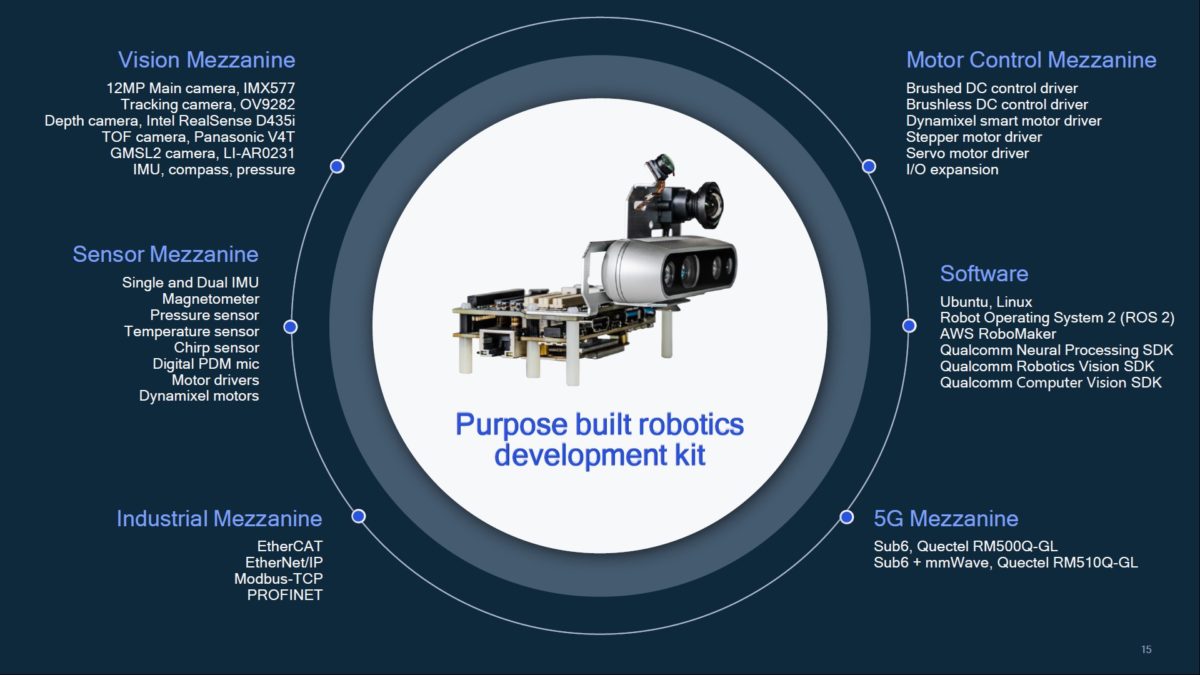
For software options, the RB5 will run on Ubuntu Linux, Yocto, and Robot Operating System (ROS) 2.0. It even features support for AWS RoboMaker. Qualcomm also provides a Neural Processing SDK for advanced on-device AI, Computer Vision SDK for vision processing and the Robotics Vision SDK for feature recognition, obstacle detection, etc.
Poco is expected to launch a new smartphone within the next 20-25 days. The handset in question is thought to be Poco M2 Pro, which has leaked multiple times. Now, it has been even spotted on BIS certification listing.
The upcoming Poco M2 Pro has M2003J6CI model number. It was first found on Xiaomi India’s RF exposure page. Then, a day later, its codename ‘gram’ was confirmed by its firmware and the same was also discovered in the kernel source code of Redmi Note 9 Pro.
Hence, it is suggested to be a variant of Redmi Note 9 Pro powered by Snapdragon 720G chipset. Later, once again, the phone was spotted on WiFi and Bluetooth listings along with Redmi Note 9 Pro models.
Now, almost a month later, POCO M2 Pro marks its entry on India’s BIS certification portal as spotted by Mukul Sharma aka @stufflistings on Twitter.
This further confirms the imminent launch of the device as a teaser was recently dropped by Poco India Twitter account. Unfortunately, neither the teaser nor the leaks reveal anything about this upcoming handset.
Anyway, we can expect Poco M2 Pro to be priced under ₹20,000 ($262) as it is related to the Redmi Note 9 series because of its model number and its mentions in the kernel code.
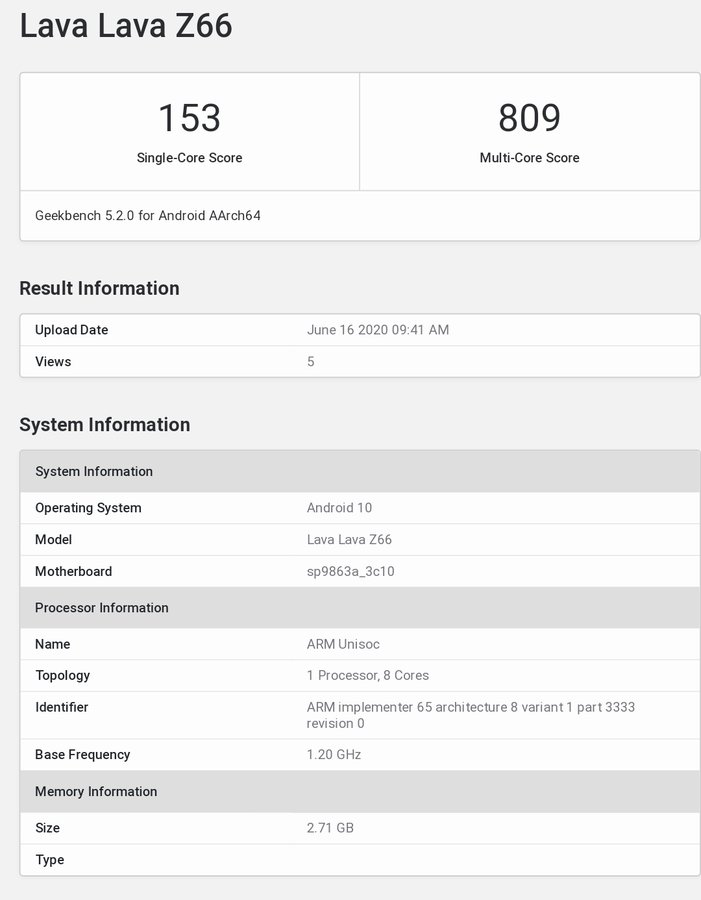
Indian smartphone manufacturer Lava is a known name in the mobile handset industry, especially in India. The brand which was founded in 2009 has a penchant for budget smartphones with decent specs offering and affordable prices. A new Lava model could be in the works dubbed Lava Z66. The model was recently spotted on the database of benchmarking outfit GeekBench.
The GeekBench listing shows the model will be powered by a UNISOC chipset which from the single-core and multi-core tests looks like a entry-level SoC. The device scores 153 on the single-core test and 809 on the multicore. This places the SoC in the same range as the Snapdragon 625 and Helio P10. This should be the first Lava phone that would feature Unisoc chipset. So, we may likely see more high-end models as time goes on.
The device is listed with 3GB of RAM and will run on Android 10 OS out of the box which is pretty impressive. There are no other details about the Z66 but we expect more details to emerge from Lava soon.
Oppo has been teasing the launch of Find X2 series in India for the last few days. It was thought that all three models in the series including Find X2 Pro and Find X2 Pro Automobili Lamborghini Edition will be unveiled in the country. Unfortunately, that did not happen as the company only launched the regular Find X2 in 12GB + 256GB storage configuration for ₹64,990 ($853).
The price of Oppo Find X2 was already tipped a few days back. It was suggested that India could be the cheapest country to get the device. Fortunately, that happens to be true and it will be available to purchase from June 27.
The handset features a 6.7-inch QHD+ curved AMOLED display with 90Hz refresh rate and a punch hole for the 32MP selfie camera. It is powered by Qualcomm Snapdragon 865 SoC paired with LPDDR5 RAM and UFS 3.0 ROM.
The triple camera setup on the phone includes a 48MP Sony IMX586 primary sensor with OIS, 12MP Sony IMX708 ultra-wide unit, and a 13MP telephoto shooter with OIS.
It runs ColorOS 7.1 based on Android 10 and has features like 5G connectivity, WiFi 6, Bluetooth 5.1, NFC as well as USB Type-C. Sadly, the phone neither has wireless charing nor a 3.5mm headphone jack. But it comes in two colors – Ceramic Black and Ocean Glass.
Last but not least, the device is backed by a 4,200 mAh battery with support for 65W SuperVOOC 2.0 Flash Charge fast charging technology.
The smartphone manufacturers are making significant progress in evolving the new technologies to improve smartphone experience. In the last few years, smartphones’ cameras have got a considerable upgrade on both the hardware and software front. The single-camera on smartphones is now replaced with a quad or Penta camera modules which enables the smartphone to capture detailed, macro, and portrait photos. Apart from the hardware, there are many AI-based changes in the camera software among smartphones these days. Pixel devices are among the finest examples featuring optimized camera-software.
Google Camera on Pixel devices is termed as the best camera app on the Android ecosystem. It features various software-based optimizations which enable to capture the finest photos even with limited hardware. The Google Camera app is officially limited to Pixel devices and is ported to other devices by third-party developers. GCam MODs are quite popular from the past few years, and plenty of third-party developers are working hard to make them compatible with other Android smartphones.
There are uncountable custom ports available for popular Android smartphones. Most of the ports are limited or compatible with the respective smartphone. Interestingly, a new custom MOD has popped up, which is compatible with several popular smartphones.
Whats is GCAM Ultra CVM Mod?
Recently, CVM Developers have developed a GCam Mod which is compatible with almost every popular Android smartphone. Gcam Ultra CVM MOD v4.0 is available for download with built-in support for features like Tone Curve, Lib Patcher, Exposure compression, HAL Mode, AUX Lenses. It also supports much-talked-about features like HDR+ and Astrophotography.
Features of Gcam Ultra CVM Mod
Beautiful UI – Gcam offers intuitive yet straightforward User Interface with added features like shutter control, Focus settings, exposure controls and others. It is quite easy to snap a photo in the Gcam CVM MOD.
Manual Settings – As like the other Gcam Mods, the new Ultra CVM Mod is available with the manual setting for shutter speed, exposure, ISO, and Focus.
Support for RAW – The new MOD supports lossless RAW format to capture and preserve all the details.
Xiaomi API2 Camera and AI Key support – It will be quite useful for Xiaomi devices to harness manual controls of the Camera via other third-party apps.
Astrophotography Night Sight – It is quite a popular feature that enables the cameras to capture the celestial objects (stars) Under dark light conditions.
Automatic DND – It adds the ability to automatically toggle DND mode while the user is video-recording. It is quite a useful feature for users.
Other Features – Many small features are part of the Gcam Ultra CVM Mod. Some noticeable changes include better picture quality, less noise, the addition of spatial denoise, new shutter control, AWB per AUX, TOne and Gamma Graph UI, etc. It also added support for different noisemodeller like S5KHMX, IMX686, IMX582, S5KGM1, and IMX363 and others.
Download Gcam CVM Mod 4 APK
Grab the latest Gcam CVM Mod APK from the link below. It is based on Gcam Mod 7.3 code and even ports most of its features.
Gcam Ultra CVM Mod 4 is compatible with only the devices which are listed below. Moreover, if your device has root access, then you can fix some bugs using a specific set of configs for your smartphone. Other smartphone users can also try, but don’t expect every feature of the Mod to work.
Samsung Galaxy S10e
Galaxy S10 and Galaxy S10+
Galaxy Note 10 e Note 10+
Samsung Galaxy S20, S20+, and S20 Ultra
Galaxy S8 and S8 Plus
Galaxy S9 and S9+
Samsung Galaxy Note 9
OnePlus 8 and 8 Pro
OnePlus 7 and 7 Pro
OnePlus 7T and 7T Pro
Poco F2 Pro (K30 Pro)
Poco X2 (K30)
Pocophone F1
Redmi Note 8
Redmi Note 7 and 7 Pro
Mi 9T and Mi 9T Pro aka Redmi K20 and K20 Pro)
Moto X4
Moto G7 Series
Moto G6 Series
LG V20, LG V30
LG G8, LG G7, LG G6
Steps to Install GCam Ultra CVM Mod on your Android device
Make sure your smartphone features camera2API support before proceeding to download the Gcam Ultra CVM MOd.
Download and install the APK.
Open the camera app after installation and look for any errors.
If found, you can install respective fixes by installing the configuration files from the source.
You can now easily use the Mod and flaunt extraordinary features of the Gcam APK.
Make sure that you installed the correct APK as provided in the Download section above. Some features of the APK might not work on all smartphones.
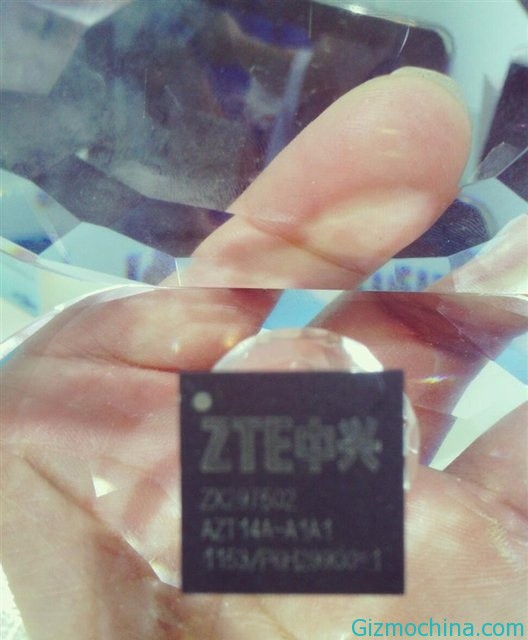
ZTE has clarified that while it will design the 5nm chips, it will still rely on its supply chain sources to produce and manufacture these chipsets.
Earlier today (17th June 2020), ZTE stated that it has achieved chip design and development capabilities. It already has the 7nm processors being mass produced, and being utilized in global 5G infrastructures, while it has also begun importing 5nm process technology as well.
Keep in mind, these chips are not 5G SoC (system on chip) but rather a core part for 5G equipment and infrastructure. Currently, the number of companies capable of developing chips built on 5nm processes aren’t high in China. Huawei is another example of this case, with its rumored Kirin 1020 chip being built on a 5nm process as well.
The new 5nm chip technology being imported will also bring ZTE to the latest standards in the semiconductor field. This also implies that the company would no longer have to rely on US based companies or suppliers. Furthermore, it also marks a notable shift in the semiconductor market as China is stepping up in the industry.
The breakthrough arrives by ZTE heavily investing in its research and development department in recent times, especially for its chip development. According to the company’s vice president, ZTE has spent over 12.1 billion Yuan (roughly 1.7 billion US Dollars). With the recent US sanctions cutting off chip supply from TSMC to Huawei, the Chinese smartphone vendor is looking for alternatives and heavily investing in local semiconductor firms as well. Thus, ZTE being a chip foundry may also be a reliable candidate in the near future.
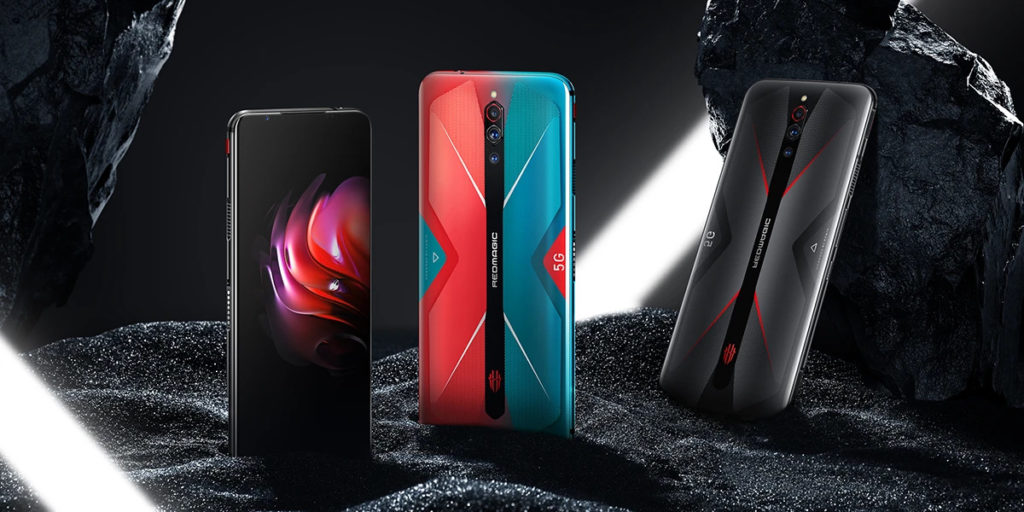
Nubia Red Magic 5G makes its way to the US for a starting price of $579. It is up for purchase on the brand’s official website with shipping commencing from June 22. It is currently the cheapest 2020 5G flagship smartphone in North America.
The Nubia Red Magic 5G is a gaming smartphone with 6.65-inch 144Hz AMOLED display. The handset is powered by Qualcomm Snapdragon 865 SoC paired with up to 12GB LPDDR5 RAM and 256GB UFS 3.0 storage.
As the name suggests, the phone also supports 5G connectivity just like any other flagship smartphone released this year. Being a gaming phone, it features a striking design along with RGB light. It comes in three colorways namely Eclipse Black, Hot Rod Red, and Pulse.
Additional features of the phone include liquid cooling with an internal fan, shoulder buttons, and WiFi 6. As for optics, it sports a triple camera setup consisting of a 64MP Sony IMX686 primary sensor, an 8MP ultra-wide shooter, and a 2MP macro snapper. Whereas, the selfie camera is of 8 megapixels.
Last but not least, the handset runs Android 10 and gets its power from a 4,500 mAh battery with support for 55W fast charging.
Samsung Display is developing its own low powered display technology that will be featured on future smart devices. The new tech is dubbed as HOP, which is short for hybrid oxide and polycrystalline silicon.
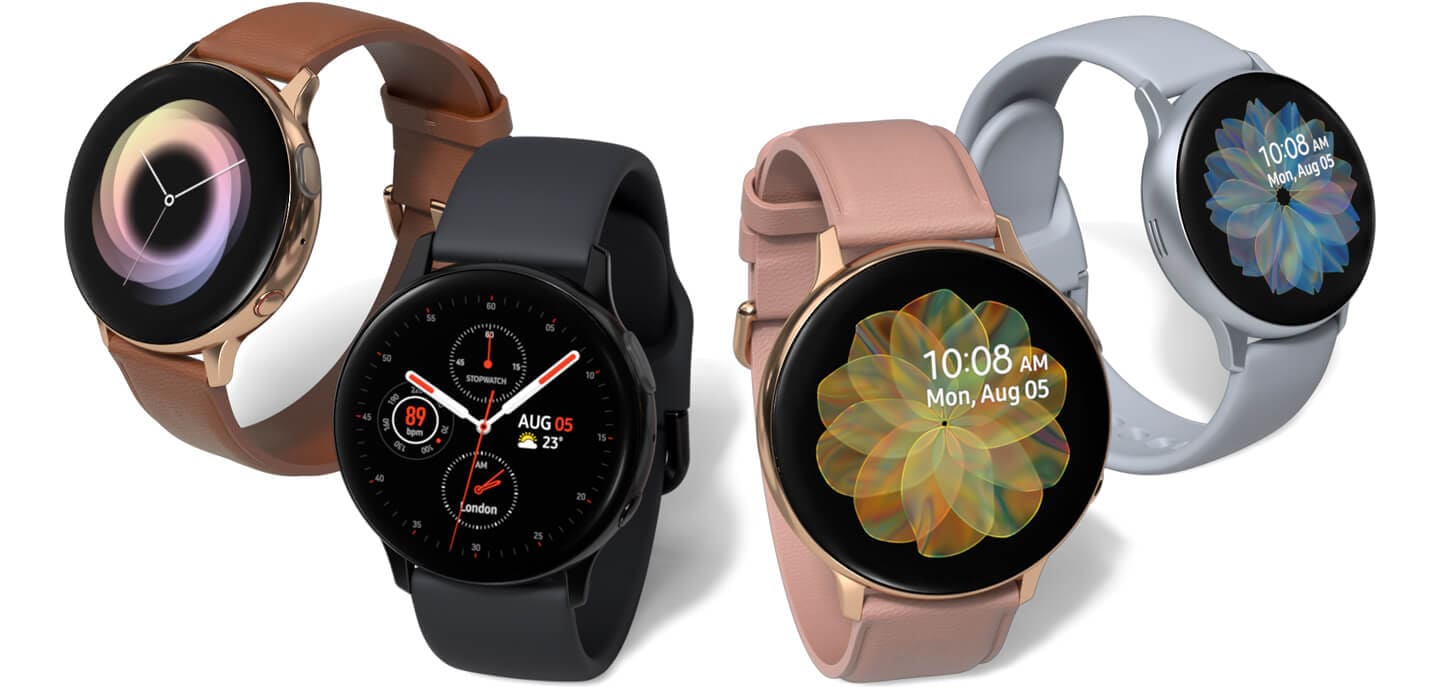
Samsung Galaxy Watch 2
Samsung is working on its own proprietary low-temperature polycrystalline oxide (LTPO) thin-film transistor (TFT) display technology. In layman’s terms, it’s a hybrid technology developed by the South Korean tech giant. HOP combines positive aspects from low-temperature polycrystalline silicon (LTPS) TFT and oxide TFT. For those unaware, LTPS TFT is generally found on smartphone panels, while oxide TFT is found in display panels for notebooks and tablets.
With the new LTPO TFT panel, OEMs can save up to 15 percent to 20 percent on power consumption on smartphone’ OLED displays. This is a notable improvement that can raise a handset’s battery life. Furthermore, the new LTPO display technology is expected to be featured on the upcoming Galaxy Note 20 series, which will be launching later this year.
Apple Watch Series 4
So far, this form of display technology was restricted to smartwatches, namely Apple Watch Series 4 and even the Samsung Galaxy Watch Active 2. While the technology has existed in the past, the core parts of the technology were reportedly owned by Apple. Thus, OEMs would have to either pay royalties to Apple or develop a workaround technology, which is likely why Samsung Display made its own iteration of the technology that was first seen in 2015.
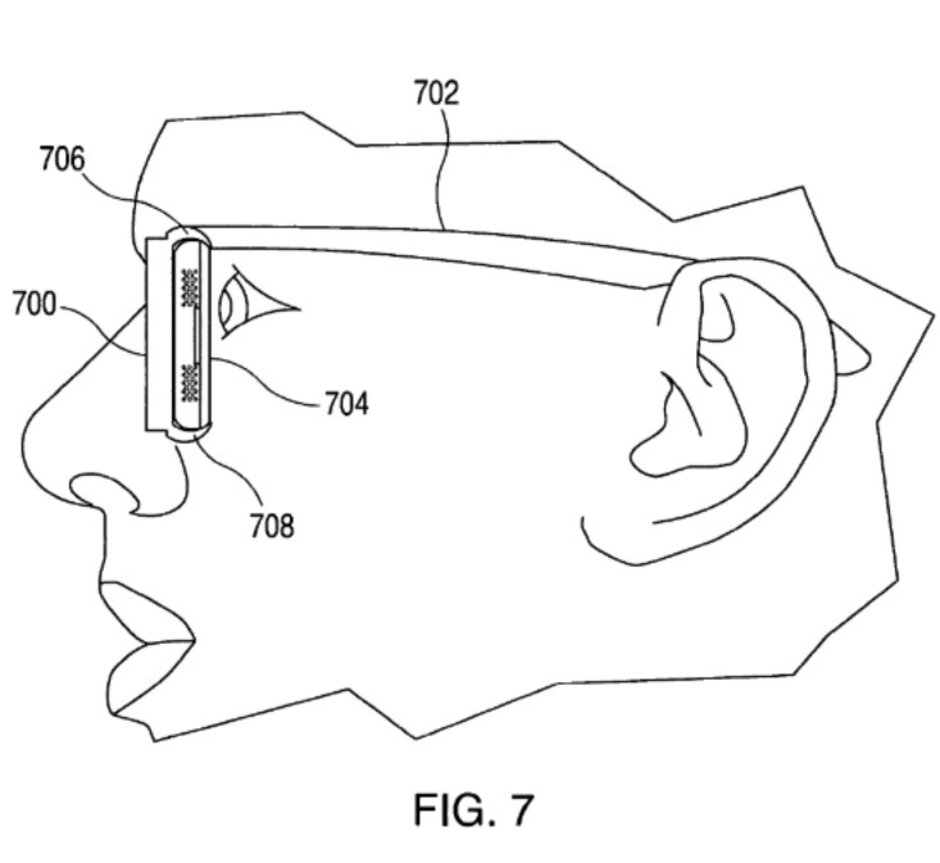
A new patent from Apple has revealed a pair of glasses that automatically adjust to users’ eyes and make up for any deficiencies. The patent was published earlier today (17th June 2020) with the US Patent and Trademark Office (USPTO).
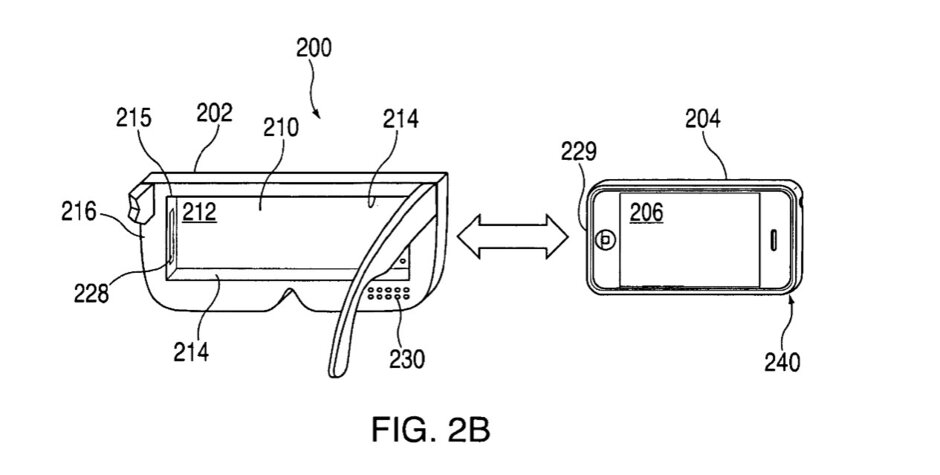
In the patent, the technology behind a self correcting lenses is described that may be used on the rumored Apple Glass. This product is said to be an AR eyewear and will work along with a smartphone (resembles an iPhone in the patented images). The smartphone will slide into the frame and will connect to internal connectors, after which, it will act as the display.
Apple has labeled this patent as “Head-mounted display apparatus for retaining a portable electronic device with display,” on multiple occasions. But the latest iteration of the patent depicts a new system that can change positions and configurations of the gadget’s optical components. In other words, Apple Glass would be able to adjust according to the users’ prescription.
Furthermore, the screen can be adjusted to make the image being displayed clearer. This is achieved by changing the position of images on the lens and resizing the content. Looking at the patented images, the processing power behind this method will be done through an iPhone. This system is similar to the early iterations of the Apple Watch, which also required an iPhone to run many of its features. Unfortunately, we don’t have much to go on over just a patent, but the Apple Glass is expected to arrive sometime next year.
During the lockdowns, Xiaomi India launched a service called Mi Commerce. This enables customers to order products online from nearby authorized Xiaomi stores. Now, the company has confirmed that it will continue this venture even post COVID-19 pandemic.
Anuj Sharma, the Marketing Head of Xiaomi India was recently interviewed by Mashable India. In which he mentioned the benefits of Mi Commerce to both customers and retail partners.
According to him, this service allows fewer people to queue up outside retails stores as only limited customers are allowed inside to maintain social distancing. Also, this helps those people who need to get a phone or power bank immediately but could not visit a store due to kids or senior citizens at home.
Further, customers also get to experience the benefits of both worlds. On ordering the product online through Mi Commerce (local.mi.com), it gets delivered within a few hours following safety norms. On delivery, customers can either pay via UPI, credit/debit card or cash.
The service was launched out of necessity to keep the company’s business running during lockdowns. But due to its benefits for partner retailers and customers, Xiaomi will continue to operate Mi Commerce even after lockdowns in India.
Ex-Samsung exec Chang Won-ki (Left) said he joined Eswin out of friendship with its chairman Wang Dongsheng (Right) (Image Via TheElec)
According to a new report, the former Samsung China president has quit Eswin due to the controversy surrounding him. Chang had declined any such possibilities and even stated that the only time he was a part of Samsung’s semiconductor department was for the memory branch when the South Korean tech giant made 1MB DRAMs. Furthermore, the reason for the shift to Eswin also involved a personal friendship with Wang Dongsheng, who currently heads Eswin.
Notably, Wang was also the Chairman of display technology maker BOE, which is a known rival of Samsung. This also ended up adding fuel to the debate. Reportedly, Chang left Esin as he didn’t want any unnecessary misunderstandings and that he didn’t want to unintentionally hurt Samsung or his successors. The former Samsung senior executive had joined the company back in 1981 and had worked there till 2017.
According to sources, Huawei has told its suppliers to delay production of the upcoming flagship models as the company weighs potential supply chain disruption following the new restrictions from the US. Reportedly, Huawei has asked for production halts for some of the components for the upcoming Huawei Mate 40 series. Furthermore, the company has also trimmed orders for certain parts in the next quarter.
Huawei’s Kirin chipsets are manufactured by TSMC
At the moment, the Chinese smartphone vendor is assessing the impacts on its smartphone business after the new regulations were put in place. Following its annual schedule, Huawei usually launches the latest Mate series of premium grade handsets in the second half of the year. This period is generally packed with notable launches, such as Apple’s latest iPhone series and more.
For those unaware, Huawei smartphones mostly feature the company’s proprietary Kirin processor from its subsidiary chip designer, HiSilicon. However, while Huawei designs its own chips, these are produced by TSMC. Thus, with the loss of its primary chip supplier, the company is reassessing the situation, looking into alternatives, and even investing in local semiconductor firms, with plans in the longer run.
According to a source, “We now see the postponement of the mass production of Mate series will be for at least one to two months.” In other words, Huawei is still finalizing and resolving issues within its supply chain, and also reviewings its stock of existing chips. An executive of a Huawei supplier stated that, “One of the reasons to pause is that Huawei is reviewing the inventory level of its HiSilicon mobile chips and is busy verifying other mobile platforms by MediaTek and Qualcomm. But verifying other mobile platforms could lead to redesigns of the mechanical parts of the smartphones, which will take time.”
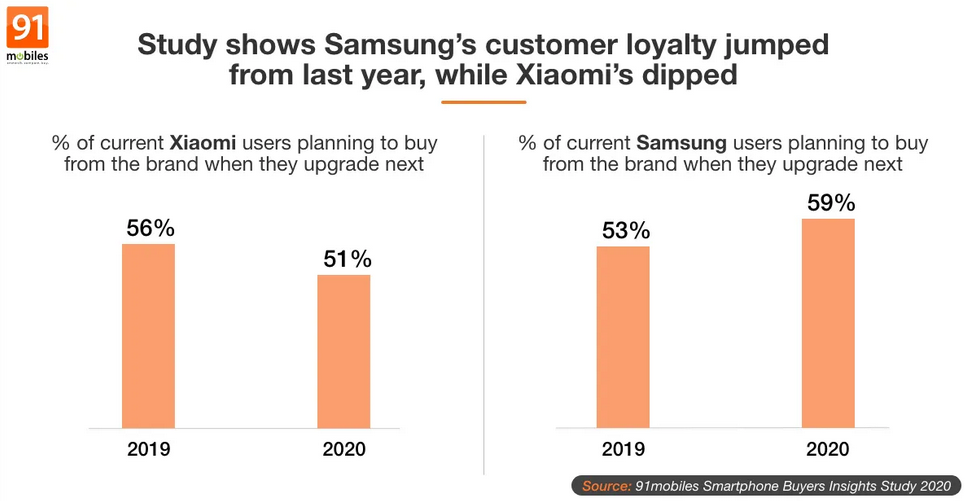
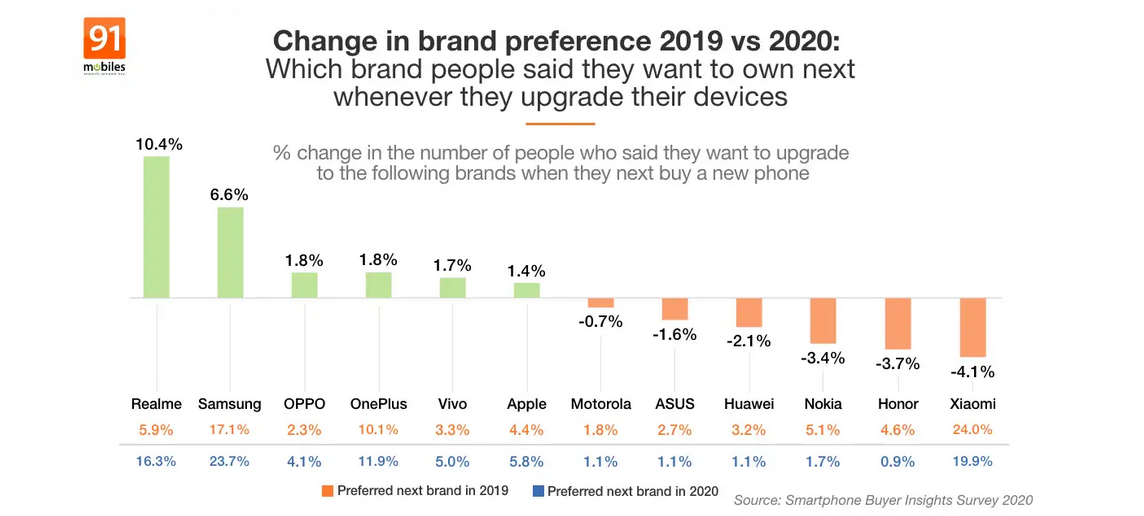
A new survey undertaken by 91Mobiles has just revealed a few interesting points regarding the future of the Indian smartphone market. According to the Buyer Insights Survey 2020, Samsung is expected to see more growth in the coming months, which will likely affect its rival brands like Xiaomi.
In the survey, it was found that the South Korean tech giant will overtake Xiaomi as the smartphone brands customers are likely to choose for their next handset upgrade in the next 1 or 2 years. In other words, Samsung might be the more popular choice for a new smartphone a person would want to move over to. Looking at the statistics provided, the graph shows the percentage of people that would like to buy either Samsung or Xiaomi as their next device in both 2019 and 2020.
Samsung saw an increase from 17 percent in 2019 to 24 percent in 2020, while Xiaomi saw a decrease from 24 percent in 2019 to 20 percent in 2020. Thus, the trend is indicative of a complete switch in positions in the market. Similarly, the survey also included the criteria of brand loyalty or sticking by your favorite brand with your next upgrade. Here again, Xiaomi saw a decrease, down from 56 percent in 2019 to 51 percent in 2020. On the other hand, Samsung saw a rise from 53 percent in 2019 to 59 percent in 2020.
The survey also talked about the overall preference of the customer, which has Samsung see a rise of 6.6 percent from 2019 over 2020, while Xiaomi saw a decline of 4.4 percent during the same period. Notably, Realme has seen impressive growth of 10.4 percent in this time with various factors weighing in. Analyzing the graph, Xiaomi’s slow adoption of features like punch hole display and higher fast charging rates in their mid range offerings might have been the reason for the decline.
Brands like Realme have become a notable figure in the Indian smartphone market, thanks to its lucrative pricing and up to date specs and features. Despite these figures being highly detailed, one must keep in mind other important aspects as well. Firstly, the survey is done not to include the entire market, so they might not be completely accurate. And secondly, the smartphone market is highly volatile and dynamic, with changes in position and popularity seemingly shifting in mere days. So while the data depicts a certain image now, the same might not hold true in the months that follow. Although, the trend that shows an increase in competition in the market will only benefit the consumer at the end of the day.
The Galaxy A21s is yet another Galaxy A-series phone to go official in India. The Samsung handset has arrived with a tall aspect ratio supporting screen. It is driven by a new Exynos chipset and it features a 48-megapixel quad-camera system. Also, it houses a big battery.
Samsung Galaxy A21s price in India
India has received the Samsung Galaxy A21s in two versions. The 4 GB RAM + 64 GB storage edition of the phone is priced at Rs. 16,499 (~$216). The higher 6 GB RAM + 128 GB storage costs Rs. 18,499 (~$243).
Starting from today, the Galaxy A21s can be purchased through Samsung India’s online shop, Samsung Opera House, offline retail stores, and online retailer sites like Flipkart. Black, white and blue are the three color variants of the Galaxy A21s.
The Samsung Galaxy A21s comes with a holographic 3D Glastic polycarbonate body with glossy appeal. It has a 6.5-inch Infinity-O display that offers HD+ resolution of 720 x 1600 pixels and a 20:9 aspect ratio.
The Exynos 850 chipset powers the Galaxy A21s with up to 6 GB of RAM. The handset is equipped with up to 128 GB of storage and there is a dedicated slot onboard for additional storage. The Galaxy A21s receives power to perform from a 5,000mAh that can be fueled using a 15W fast charger.
For capturing selfies, the Galaxy A21s possess a 13-megapixel front camera with f/2.0 aperture. The quad-camera setup residing on the backside of the A21s is equipped with a 48-megapixel main lens with f/2.0 aperture, an 8-megapixel ultra-wide lens with f/2.2 aperture, a 2-megapixel depth sensor with f/2.4 aperture and a 2-megapixel macro lens with f/2.4 aperture. The phone comes with a rear-facing fingerprint reader and it carries support for facial recognition.
Counterpoint Research recently released a report on the performance of global premium smartphone segment (wholesale price >US$ 400) in Q1 2020. According to it, the market for high-end handsets declined 13% YoY as part of the overall market slowdown due to the pandemic. However, this segment remained strong at 22% like the previous year. Also, it accounted for 57% of total global smartphone revenue in the last quarter.
As usual, Apple led the global premium smartphone segment with a 57% market share. It was followed by Samsung and Huawei at 19% and 12% respectively. These three companies themselves occupied 88% of the high-end segment in Q1 2020.
An interesting thing to notice is the rise of Oppo and Xiaomi in this segment, which captured 4th and 5th positions respectively. The former grew 67% YoY with the help of Reno 3 series, whereas the latter showed an increase of 10% on account of Mi 10 and Mi Note 10 series.
Talking about regions, Apple and Samsung captured the top 2 positions in all the countries except China where Huawei contributed to 90% of the overall premium segment. Also, OnePlus slid into the top 5 spots in all regions except China and Latin America.
As for models, the top 4 were by Apple with iPhone 11 accounting for 30% followed by iPhone 11 Pro Max (9%), iPhone 11 Pro (7%), and iPhone XR (6%). Surprisingly, the 5th position was occupied by Huawei Mate 30 Pro 5G.
The price range between $600 to $799 grew 47% YoY capturing 42% of the total premium smartphone segment, thanks to iPhone 11. On the other hand, 5G handsets only accounted for one-fifth of the segment with Huawei leading it at 42%.
However, 5G devices in the $400 to $600 price segment did increase to 39% from 35% in Q4 2019. Lastly, China led the premium 5G handset segment with 63%.
Huawei‘s sub-brand Honor is reportedly gearing up to launch two new smartphones in its home market of China. As per the reports, the company could launch Honor X10 Max and the Honor 30 Youth Edition next month.
While the exact launch date for these two upcoming devices has not been revealed yet, they will reportedly get launched in early July. If that’s the case, then we expect the company to start hinting or make an announcement in the coming days.
Previous leaks have indicated that the Honor X10 Max features a 7.09-inch display with support for DCI-P3 wide color gamut. Since there’s no punch-hole cutout visible, it’s safe to assume that the phone will have a pop-up mechanism for the front camera.
When the phone gets launched, it could become the biggest 5G smartphone of the year with a massive 7-inch screen. The device is expected to come powered by the MediaTek Dimensity 800 5G processor.
As for the Honor 30 Youth Edition (or Honor 30 Lite), nothing is known about the phone at this point in time. But from the name, it seems that it could be the entry-level offering in the Honor 30 lineup which was launched a couple of months ago.
Although it is said that the Honor 30 Youth Edition and the Honor X10 Max will get launched next month, there’s currently no launch date information about the Honor X10 Pro 5G smartphone. We expect the company to share more information about the phone and reveal the launch date in the coming days.
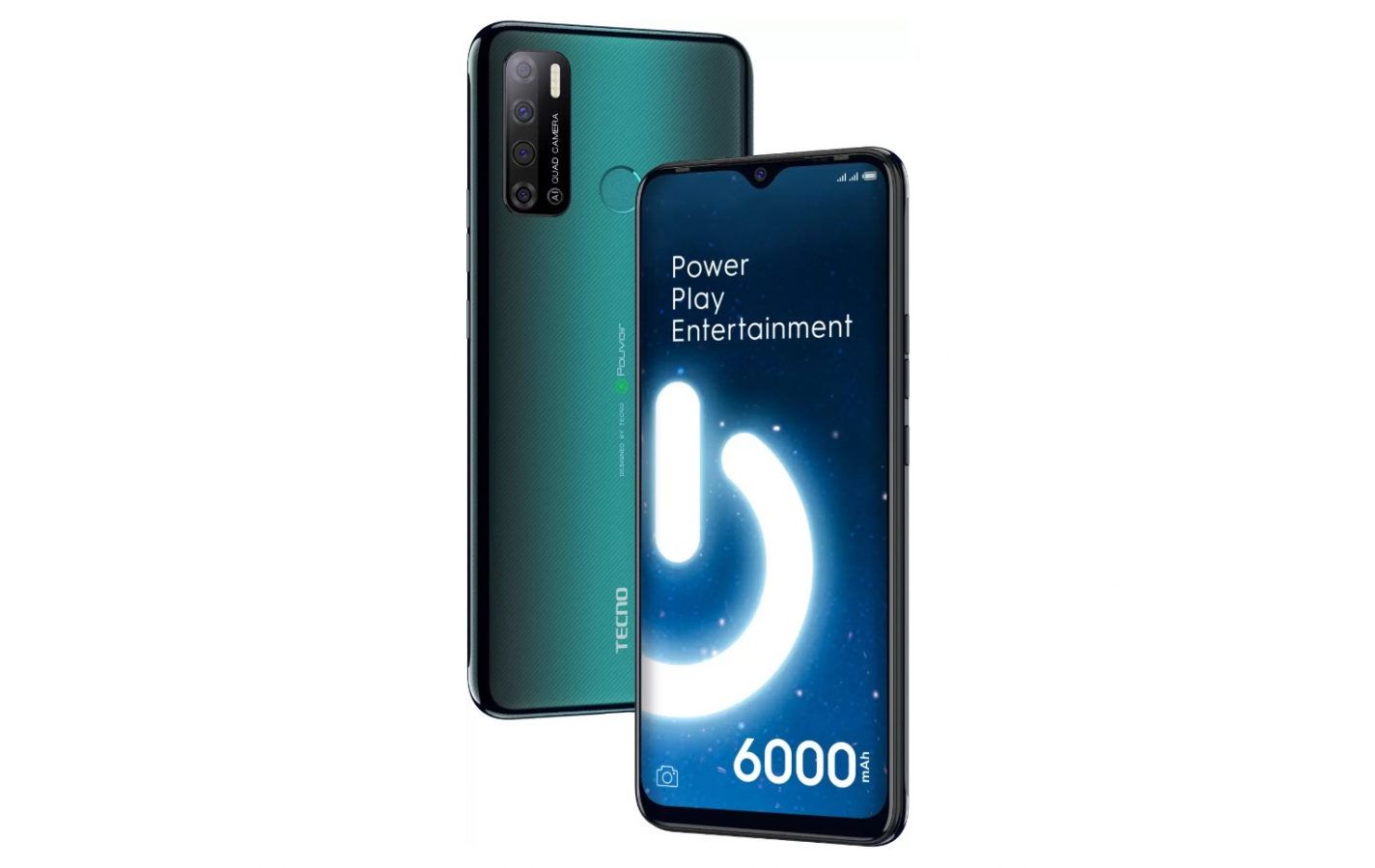
Tecno has unleashed the Tecno Spark Power 2 smartphone in India today. Like the predecessor Tecno Spark Power from last year, the new model impresses with a massive display and a gargantuan battery. The handset has landed in the country with an enticing starting price of Rs. 9,999 (~$131).
Tecno Spark Power 2 specifications
The Tecno Spark Power 2 features a mammoth display of 7 inches. The dot notch screen supports HD+ resolution. The company claims that the Spark Power 2 delivers a screen space of 90.6 percent.
The modest Helio P22 chipset is present at the helm of Spark Power 2 along with 4 GB of RAM. The phone offers a built-in storage of 64 GB and it also features a microSD card slot for more storage. The HiOS based Android 10 OS comes preinstalled on the Spark Power 2.
The backside of the Spark Power 2 features a camera setup that includes a main camera of 16-megapixel, a wide-angle lens of 5-megapixel, a 2-megapixel macro lens with 2.5cm focal length and an AI lens. The quad cameras are assisted by quad-LED flash. The front side of the phone features an LED flash assisted 16-megapixel selfie camera.
The Tecno Spark Power 2 is blessed with dual speakers that are powered by Dirac’s stereo sound system. It has a rear-facing fingerprint reader and supports face unlock. The Spark Power 2 is fueled by a 6,000mAh capacity battery that supports 18W fast charging through microUSB. It can gain 50 percent battery power by charging it for one hour, claims the company.
Tecno Spark Power 2 pricing
The Tecno Spark Power 2 costs Rs. 9,999 (~$131) and it can be availed in Ice Jadeite and Misty Grey colors. The first sale of the phone will be carried out on June 23 on Flipkart.
We use cookies on our website to give you the most relevant experience by remembering your preferences and repeat visits. By clicking “Accept”, you consent to the use of ALL the cookies.
This website uses cookies to improve your experience while you navigate through the website. Out of these, the cookies that are categorized as necessary are stored on your browser as they are essential for the working of basic functionalities of the website. We also use third-party cookies that help us analyze and understand how you use this website. These cookies will be stored in your browser only with your consent. You also have the option to opt-out of these cookies. But opting out of some of these cookies may affect your browsing experience.
Necessary cookies are absolutely essential for the website to function properly. This category only includes cookies that ensures basic functionalities and security features of the website. These cookies do not store any personal information.
Any cookies that may not be particularly necessary for the website to function and is used specifically to collect user personal data via analytics, ads, other embedded contents are termed as non-necessary cookies. It is mandatory to procure user consent prior to running these cookies on your website.