IKEA, one of the leading furniture brands, has now started selling its products through Alibaba‘s e-commerce platform Tmall in China. This marks the first time the 77-year old company is selling its products through a third party.
The move seems to be aimed by the company to reach a wider set of audience. IKEA says that the its virtual store on Tmall, which is initially a six-month test across the east coast provinces of Jiangsu, Zhejiang and Anhui, and the city of Shanghai, is a complement to its own stores, online store and app.
If the test proves successful, the company aims to roll the Tmall store out to more parts of China. However, it has been clarified that the company currently has no plans to sell through third parties in other markets.
The IKEA store on Tmall will offer around 3,800 of products, along with services available in its own sales channels, such as delivery and assembly. This looks like an attempt by IKEA to adapt rapidly changing shopping patterns, which until a decade ago almost solely relied on its giant out-of-town warehouse stores.
In recent years, the company has invested heavily to expand online and in new sales channels. IKEA currently has around 30 stores in China, around half of which have been closed since January due to the coronavirus outbreak.
Huawei has confirmed that the P40 series will officially launch via a global online press conference on March 26. The company’s camera-centric lineup was earlier slated to release in Paris on the same day. But today’s update confirms that it will be an online event.
Huawei isn’t new to virtual press conferences. The company recently presented an online event in Europe for the new Huawei Mate XS and Matebook laptops. We can expect a similar virtual press conference for the Huawei P40 lineup as well. The teaser video doesn’t reveal much about the upcoming device, except for the raised camera housing. But there are a lot of rumors going around about the new lineup which includes a new PRISM periscope camera setup with up to 10X optical zoom!
Recent rumors suggest that the Huawei P40 Pro will feature a custom 52MP IMX700 (1/1.33-inch) CMOS sensor. It is said to come with 16-pixel binning, essentially churning out 3.25MP 4.48μm superpixel photos, making for excellent low light performance. There are rumors that the Pro variant will be able to zoom between a much wider range of 18mm-240mm instead of P30 Pro’s 24mm-125mm.
With OPPO Find X2 finally taking the top spot on DxOMark’s camera list, all eyes are focused on the Huawei P40 Pro now, to see if it can beat the Mi 10 Pro and the Find X2 Pro, to become to best smartphone camera on the list. You can read more about the Huawei P40 series from our rumor roundup here.
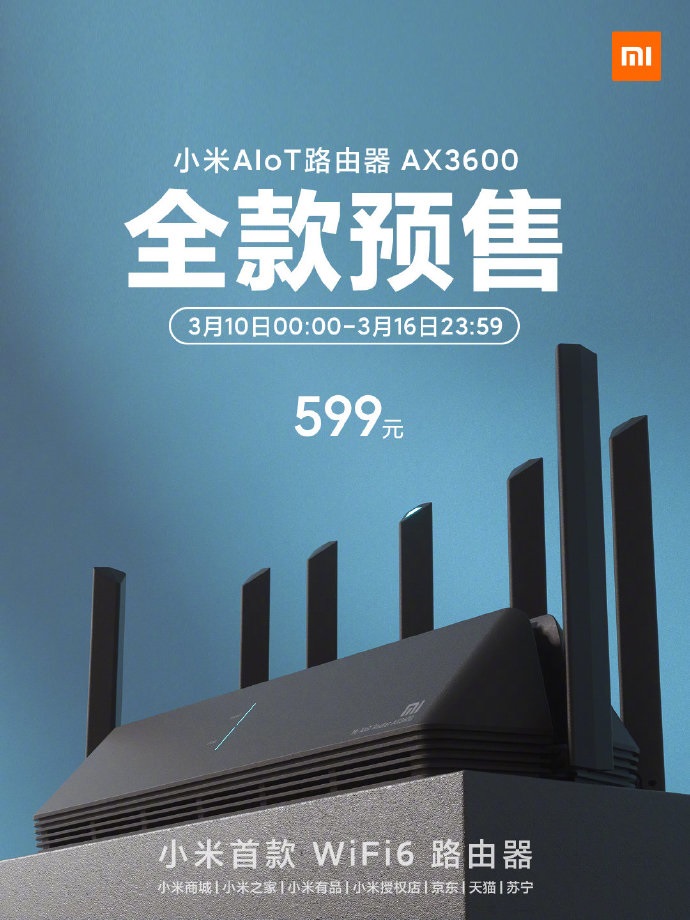
With the next-generation 5G communication technology, a new generation of Wi-Fi technology has also been launched — Wi-Fi 6. Recently, along with the Mi 10 and Mi 10 Pro smartphones, Chinese company Xiaomi launched its first Wi-Fi 6 router in the market, called Mi AIoT Router AX3600.
Now, after almost a month of its announcement, the company has finally started taking pre-orders for the Mi AIoT Router AX3600 in China. The device will be up for pre-order from 10th March till 16th March. It carries a price tag of 599 yuan, which is roughly $86 and comes in just one color — Black.
As for the router, having support for the latest Wi-Fi 6 technology, the Mi AIoT Router AX3600 is a flagship product in its category from Xiaomi. It is powered by Qualcomm’s IPQ8071A chipset that has four Cortex-A53 cores and is clocked at 1.0GHz.
It also has a 1.7GHz dual-core NPU for network acceleration which is why it is marketed as a 6-core chip. The chipset on the device is paired with 512MB of RAM and 256MB of internal storage. As per Xiaomi, up to 248 devices can be connected to the router.
The router comes with 7 high-gain antennas where one of the antennas is an IoT device antenna, two are 2.4GHz antennas and the remaining five are 5GHz antennas. Devices can connect via either 2.4GHz or 5GHz networks.
The router also supports OFDMA technology (Orthogonal Frequency-Division Multiple Access) which allows it to send data to multiple terminal devices using only one transmission. Other routers that don’t support OFDMA have to send data via multiple transmissions, which is less efficient.
The company adds that the AIoT antenna also supports dual-frequency and provide speeds of up to 150Mbps for Internet of Things (IoT) devices. When compared to the Mi Router AC1200, this new router is claimed to be 155 percent faster.
The Mi AIoT Router AX3600 works with the Mijia app and it automatically detects IoT devices from the surroundings, allowing users to set up via one-click configuration. It can also be controlled through a dedicated WiFi App which has now been updated to version 5.0 with new features such as real-time notification when a device connects or disconnects from the network.
After the delay caused by the Coronavirus outbreak, Oppo launched its new lineup of flagship smartphones, and just like the flagship lineup launched in 2020 by Samsung and Xiaomi, it includes more than a phone. The “affordable” variant is the Oppo Find X2. After comparing the Find X2 Pro with the most advanced flagship launched by Samsung and Xiaomi, in this article, we decided to compare their affordable variants. Here is a specs comparison between Oppo Find X2, Samsung Galaxy S20+ and the vanilla Xiaomi Mi 10.
Oppo Find X2 vs Samsung Galaxy S20+ vs Xiaomi Mi 10
Xiaomi Mi 10
Samsung Galaxy S20+
Oppo Find X2
DIMENSIONS AND WEIGHT
162.6 x 74.8 x 9 mm, 208 g
161.9 x 73.7 x 7.8 mm, 188 g
164.9 x 74.5 x 8 mm, 196 g
DISPLAY
6.67 inches, 1080 x 2340p (Full HD+), Super AMOLED
6.7 inches, 1440 x 3200p (Quad HD+), Dynamic AMOLED 2X
Independently from the device, you always get a premium design with a glass back and an aluminum frame. Samsung Galaxy S20+ is more interesting in terms of build quality because, besides providing the Gorilla Glass 6 protection front and back, it is also a waterproof phone with the IP68 certification. In my personal opinion, Oppo Find X2 is definitely more attractive with its smaller camera module and its ceramic body (only in the Ceramic Black color variant), but it is just splash resistant. Xiaomi Mi 10 does not provide any certification against dust and water, but it has a very minimalistic and beautiful design.
Display
Due to the presence of a high 120 Hz refresh rate, a high 240 Hz touch sampling rate, an amazing color accuracy, and a very high resolution, our favorite display panel is the one found on the Oppo Find X2. It is likely one of the best panels ever made and on the paper, it looks more convincing than the still amazing display of the Samsung Galaxy S20+. The Galaxy S20+ takes second place, while Xiaomi Mi 10 loses the comparison again due to a lower resolution and a lower refresh rate.
Hardware/Software
Each of these devices is fueled by the same processor, with the exception of the European version of the Samsung Galaxy S20+ coming with an Exynos 990 chipset. Even the RAM is the same in the top-end configuration, while Samsung Galaxy S20+ doubles the internal storage to 512 GB in its most advanced variant, compared to its rivals. Further, it is the only with expandable internal storage (you can expand the storage through a micro SD slot). In each case, you can find Android 10 out of the box.
Camera
At least until we test each of these devices thoroughly, it will be hard to establish which one provides the best photo quality. Despite the presence of a 108 MP main sensor on the Xiaomi Mi 10, Oppo Find X2 and Samsung Galaxy S20+ look more convincing due to better secondary sensors. On the paper, Samsung Galaxy S20+ is more interesting with a quad camera including a 64 MP telephoto lens with 3x optical zoom and a 12 MP main sensor with OIS. But you should not underestimate the 48 MP triple camera of the Oppo Find X2.
Battery
Xiaomi Mi 10 has a bigger battery and, given that it also comes with a lower display resolution and a lower refresh rate, we believe it will last more on a single charge. Oppo Find X2 features the fastest charging technology, but unlike the Xiaomi Mi 10 and the Samsung Galaxy S20+, it does not support wireless charging and reverse wireless charging.
Price
Xiaomi Mi 10 launched in China with a €530/$606 starting price, Samsung Galaxy S20+ costs €999/$999 globally, and Oppo Find X2 will sell for €999 globally as well. It will surely have a higher value for money, but Xiaomi Mi 10 is an inferior device to Samsung Galaxy S20+ and Oppo Find X2. For some kinds of users, on the paper, the Samsung Galaxy S20+ may look more complete than Oppo Find X2 since it has some special features such as IP68 certification and wireless charging which you do not get on the Oppo Find X2. On the other hand, the Find X2 offers faster charging speeds and an awesome display, so we can not say that it is inferior to the Samsung Galaxy S20+. Which one would you pick?
AnTuTu has grown to become one of the top-rated benchmarking apps for Android devices, including phones and tablets. The app has been downloaded millions of times from the Play Store where three different categories of apps are available. Well, that is in the past now as the three apps are no longer available on the Play Store. Google has removed all three apps in a crackdown that is targeted at infamous developer Cheetah Mobile.
The three AnTuTu that were hit by the clampdown includes Antutu 3DBench, Antutu Benchmark, and Antutu Benchmark. We can’t say for sure when the apps were removed but it was between the end of February and early March as the AnTuTu benchmark app was available on February 22. A search of the Antutu keyword on the Play Store right now shows you other benchmark apps in the search result.
As stated earlier, AnTuTu appears to have been affected by Google’s clampdown on all Cheetah Mobile apps. The benchmark outfit appears to be owned by Cheetah Mobile hence Google’s sledgehammer.
CHRONICLE OF GOOGLE’S ISSUE WITH CHEETAH MOBILE
One of Cheetah Mobile’s most popular apps is the Clean Master Android App. But despite its popularity, it was reported in 2014 that ads promoting Clean Master manipulate Android users with deceptive tactics when browsing websites within the app’s advertising framework. In April 2014, Ferenc László Nagy from Sophos Labs captured some pop-up ads that led to Clean Master, warning the device had been infected with a virus.
In July 2014, Cheetah Mobile encouraged users to uninstall Google Chrome and replace it with Cheetah Mobile’s own browser during Clean Master’s clean up and optimization process. This practice allowed Cheetah Mobile to gain an unfair position in the marketplace and led to a Google crackdown.
In December 2018, Cheetah Mobile was implicated in a massive click fraud scheme, leading Google to remove two of its apps from its Play Store. In February 2020, Google banned nearly 600 apps on the Play Store including all Cheetah Mobile’s apps “for violating our disruptive ads policy and disallowed interstitial policy. Cheetah Mobile has denied the charges.
AnTuTu has issued a statement responding to the ban and in order to make the apps available still, the outfit replaced some of the Play Store download links on its website with simple APK links.
In a statement issued as a response to an inquiry by Android Police, AnTuTu’s CEO Zhao Chen stated;
“We received a notification email from Google on March 7th informing us that AnTuTu was one of the related publisher accounts of Cheetah Mobile, all AnTuTu apps were removed from the Play Store. But in fact, We think there is some misunderstanding about it. Antutu is NOT the related account of Cheetah Mobile!!
AnTuTu was founded in 2011, even before Cheetah Mobile, and is one of the earliest Google Play developers. Cheetah Mobile invested in us in around 2014 and became one of our shareholders since then. However, we still retain a considerable account of shares and Independent operation of the company as well as our own independent Google Play account. Cheetah Mobile has never touched our Google Play account, and AnTuTu has NOT done any promotion of Cheetah Mobile’s software.
We believe that the reason for Google’s misjudgment is that we purchased and used the legal services from Cheetah Mobile, so our privacy policy link used the address of cmcm.com. This is what we are working on, including changing legal supplier.
Regarding Fu Sheng being the chairman / manager of Beijing AnTuTu Technology Co., Ltd., this is because of the requirements of the investors. In fact, many Chinese companies have such requirements when investing. When the shares reach a certain percentage, investors will require changes in government registration documents. The company is actually operated by Beijing AnTuTu Technology Co., Ltd. Henan Branch. (https://www.tianyancha.com/company/3222572910), and Fu Sheng does not actually participate in the operation or the management of AnTuTu. Anyway, we have informed the investor Cheetah Mobile asking them to solve these problems caused by them.
We hope that Google can examine AnTuTu’s account carefully and finally resolve this misunderstanding as soon as possible.”
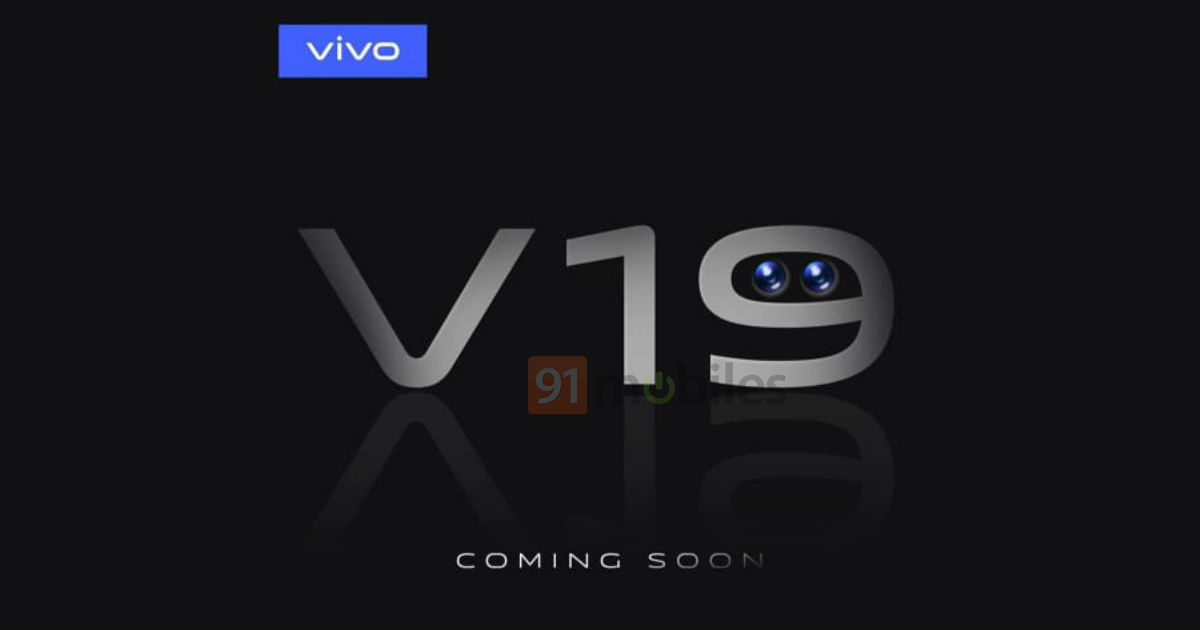
The Vivo V19 is an upcoming smartphone from Vivo scheduled for launch tomorrow in Indonesia. Last month, a promotional video revealed the design of the phone, confirming that it will have a punch hole for a single selfie camera and four rear cameras. However, a new poster has surfaced and it appears there might be a version with two selfie cameras.
The source of the image is 91Mobiles and the said poster is actually a text that reads “V19” with two cameras visible inside the “9”. It is believed this is a hint that the phone has dual selfie cameras.
That sure must be confusing since the official video advert (below) for the Vivo V19 below shows the phone has a single selfie camera. The plausible explanations we came up with are – this might be the Vivo V19 Pro with two selfie cameras or this is a variant of the V19 for another market, possibly India.
Vivo has not said anything yet about a V19 Pro, so there is a chance it will not launch tomorrow in Indonesia. Nevertheless, we expect a pro version since the V15 and V17 both have pro versions.
The Vivo V19 is expected to come with a Snapdragon 730G processor, 8GB of RAM, and 128GB of storage. Its rear cameras are listed as a 48MP primary camera + 8MP ultrawide camera + two 2MP sensors. It is reported to pack a 4500mAh battery capacity and should run Android 10 out of the box.
The Korean giant has revamped the OneUI 2.0 with whole new design elements improving the look and feel of the Samsung smartphones. There are a lot many new features, enhancements, and changes that made OneUI popular among the folks. The users are finding new ways to implement the OneUI on their respective Android smartphones. However, we have concluded a guide to get the Samsung OneUI Notification Panel on any Android device.
OneUI 2.0 has received a lot of new features including new gestures, compatibility with foldable and punch hole displays. It features all the luxuries of Android 10. There are various advantages of OneUI 2.0 including its ability to multitask efficiently. Different navigation gestures and buttons are also available for smooth operations.
OneUI 2.0 Features
Improved Navigation Gestures
Native screen recorder
Enhanced Dark Mode
Improved camera UI
Enhanced Notification Panel
Docus Mode Night Mode and Dark Mode
One-hand mode
New Animations including Edge Lightning Effects
There are a lot more functionality upgrades that enhance the overall smartphone experience. All the proprietary apps from Samsung have received significant updates to boost the smartphone’s performance.
Samsung OneUI 2.0 notification panel appears to be quite minimalist and refined. It gives a clean and clear look to the device with brightness control and settings panel attached to it. The Quick Settings in One UI allow assisting most of the operations. Samsung moved a lot of functions from top to bottom on the One UI 2.0 Notification Panel. However, a clock is placed in the center on the top portion of the notification panel.
These benefits are now not limited to Samsung smartphone users, the other Android devices can also now use the OneUI 2.0 Notification panel. Thanks to Treydev developer who crafted app to mimic as OneUI Notification panel on any Android smartphone. One Shade offers various customization options along with seamless compatibility with every Android device.
Get Samsung OneUI Notification Panel
Follow the below instructions carefully to install the OneShade app and enjoy the OneUI 2.0 Notification Panel on your smartphone.
Download and install the One Shade app on your Android smartphone.
Grant the requested permission to the app so that it can redraw the notification panel elements.
Customize the Layout by choosing the favorite icon shape, clock positions, corners, etc.
Set different colors, background images, etc under the Colors option.
Also, set up the Heads-up option to use it in the notification area.
Once done, just pull down the notification bar to see the new OneUI notification panel.
Enjoy!!
It is a quick way to get the popular OneUI notification panel on any Android device. If you get any problem while installing the app, then do let us know via the comments below.
Xiaomi has launched a new product under the Youpin platform. The product is the Daewoo F9 Bladeless fan. A bladeless fan is also called an air multiplier and is a fan which blows air from a ring with no external blades. Its vanes are hidden in its base and direct the collected airflow through a hollow tube or toroid, blowing a thin high-velocity smooth airflow from holes or a continuous slot across the surface of the tube or toroid.
Due to the absence of physical blades, the fan will not generate dust or hurt children’s fingers. What is even more amazing is that it has a strange shape and a streamlined appearance. Daewoo’s F9 Bladeless Fan adopts a working mechanism similar to other known brands like Dyson. The air is drawn in by a compressor in the base and then directed up into a ring. It comes out of a slit around the ring and passes over a shape like that of an aircraft wing (Coanda effect).
The device provides 9 speeds level of natural wind. This consists of 1-3 speed levels described as grassland wind spews soft air and works quietly. Speed levels 4-6 named mountain forest wind is cool and comfortable. Levels 7-9 is called ocean wind and is refreshing and dry.
The design ensures that the air from the fan is distributed indoors via convection current. It also has two HEPA filters which helps in air purification. With 30 air changes per hour, the removal rate of formaldehyde reaches 95.2%, the removal rate of TVOC volatile organic compounds is 89.7%.
Daewoo F9 Bladeless fan supports 60 ° left and right head tilt, 20 ° tilt up and down to achieve multi-angle wide area air supply. In addition to having physical control buttons on the body, the device comes with a long-range remote control.
The bladeless fan carries a price tag of 969 yuan (~$139).
Data released by the Chinese government shows that US smartphone maker Apple sold less than 500,000 iPhones in China last month. The slump in shipment equally affected other smartphone manufacturers and is attributed to the Coronavirus outbreak in the country. China placed restrictions on travels and also banned residents from congregating in public places jut before the Lunar New Year Festival. The restrictions were not lifted even after the extended holidays in most of the days in February as the epidemic rages on.
Altogether, smartphone brands sold 6.34 million phones in February in China, down 54.7% from 14 million around the same time a year ago, information from the China Academy of Information and Communications Technology (CAICT) shows. This figure is also noted to be the lowest monthly sales level since 2012 when CAICT began releasing regular sales data.
Shipments of Apple products dropped to 494,000, from 1.27 million in February 2019. In January, its shipments had held consistent at a little more than 2 million.
This abysmal performance is in line with the projections of research firms IDC and Canalys which predicted that the overall phone shipments would drop by about 40% in the first quarter due to the Coronavirus outbreak that has led to a disruption in distribution channels.
Apple’s product stores in China were closed for over two weeks in February as fears over the pandemic mounted. The organization’s CEO, Tim Cook, composed a letter to financial specialists that month cautioning it would not meet its underlying income direction for the present quarter because of feeble interest. Analysts believe the demand in the first quarter is a shock event that won’t last for long. However, with falling oil prices and escalation o the epidemic, the near future looks bleak.
Android brands, which include devices made by Huawei and Xiaomi accounted for most of the drop, as they collectively saw shipments decline from 12.72 million units in February 2019 to 5.85 million, the data showed.
The Mi A2 Lite was the second Android One phone released by Xiaomi in 2018 alongside the Mi A2. The phone is actually sold in China and India as the Redmi 6 Pro. Just like its sibling, it launched with Android 8.1 Oreo out of the box and was later updated to Android 9 Pie. In January 2020, Xiaomi confirmed the phone will get updated to Android 10.
The Mi A2 Lite’s Android 10 update arrives with build number QDLMIXM and is 1.1GB in size. XDA Developers has a download link for the update but we advise you to wait for the OTA as comments from those who have installed it ranges from their device not booting to it being very sluggish.
If you own a Mi A2, do check your phone for the update. If it is not yet available, you may have to wait a few days. Even at that, we advise you to confirm there are no issues yet before updating.
Android 10 brings system-wide dark mode, smart replies, more customization for notifications, and new features for Digital Wellbeing.
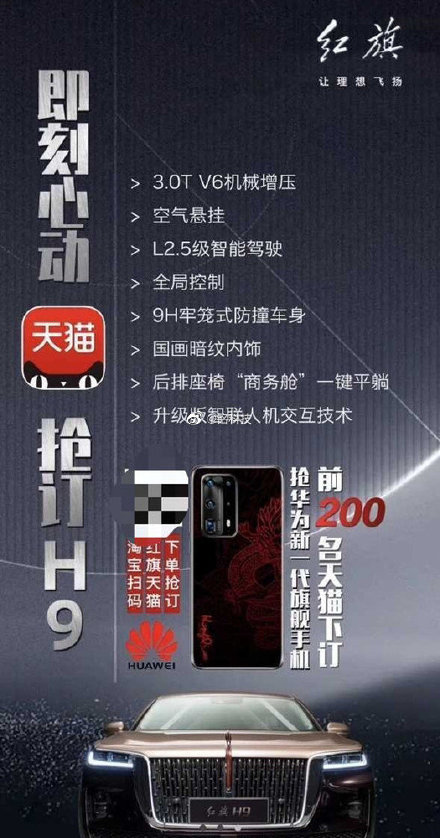
For a couple of years now, Huawei has partnered with Porsche Design to release special editions of its phones. This year, the tech giant will partner with another automobile company, but this time, a local luxury car brand Hongqi, which is owned by FAW Group. Ahead of the launch of the phone, a poster showing the Huawei P40 Pro Hongqi Limited Edition has surfaced on the web.
Based on the image, the Huawei P40 Pro Hongqi Limited Edition will have a black finish with a red dragon engraving that covers a large percentage of the back. The image is not the sharpest but the design does look good. It is also said to be covered in ceramic and not glass.
This limited edition P40 Pro will be exclusive to China and according to a tweet by @RODENT950, a leaker known for Huawei-related leaks, there will only be 200 units of the phone made. And to purchase one, you will have to buy the new Hongqi H9 luxury sedan.
The Huawei P40 series is scheduled to launch in Paris on March 26. The event will most likely be online-only and will be live-streamed on YouTube. Huawei is expected to announce the Huawei P40, the Huawei P40 Pro, and the Huawei P40 Pro Premium Edition. The phones will run Huawei Mobile Services out of the box and not Google’s Mobile Services.
Xiaomi‘s independent Redmi brand is expected to officially unveil the Redmi Note 9 series on March 12. As usual, the rumour mill will keep buzzing until the device will be officially launched. Recent rumour point to the existence of a minimum of two models – Redmi Note 9 Pro and Redmi Note 9 Pro Max but there is likely a Redmi Note 9 model as well while uncertainty trails the existence of a Redmi Note 9 Pro Max variant.
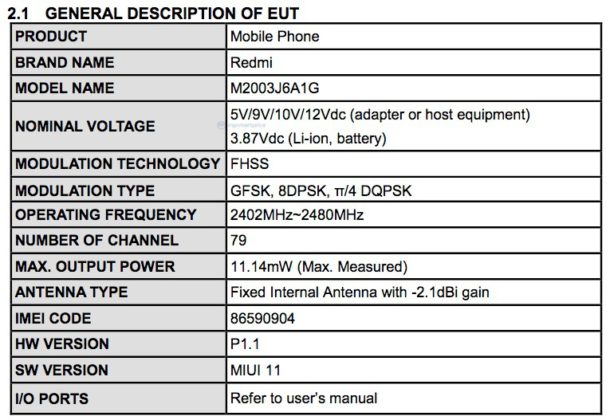
Ahead of the launch, a Redmi phone suspected to be the Redmi Note 9 Pro has appeared on FCC’s website. The listing gives us an idea of some of the key specifications of the device including the battery power.
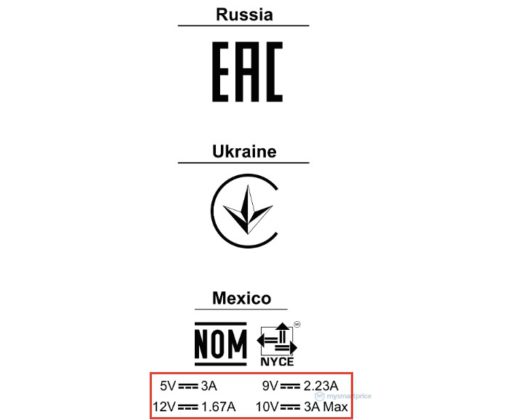
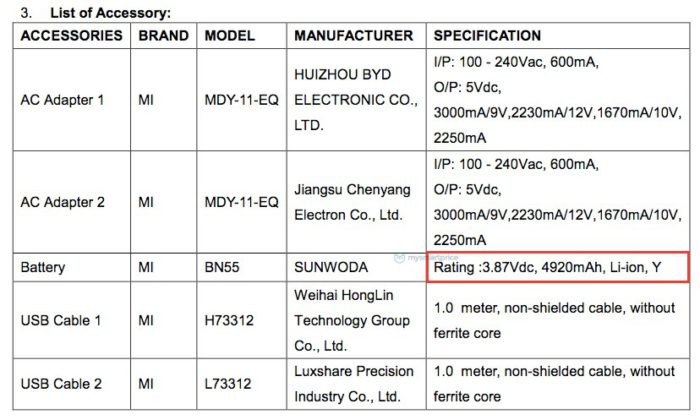
The device appears with the model number M2003J6A1G and is listed to pack a massive 4,920mAh battery. The device is also tipped to bring along fast charging support that maxes out at 30W. The device will run on the latest MIUI 11 ROM based on Android 10. The FCC listing didn’t reveal further details but previous GeekBench appearance revealed the Redmi Note 9 Pro will feature a Qualcomm Snapdragon 720G chipset, paired with 6GB of RAM. The device will definitely have other RAM variants.
We expect to get more details of the device as the days roll by.
UPDATE: More details of the Redmi Note 9 Pro has emerged via Twitter from Akshay Aggarwal. The leak shows the Redmi Note 9 Pro will feature a 6.67-inch FHD+ display having a 20:9 aspect ratio and 60Hz refresh rate. The display will adopt a hole-punch selfie camera design with a Samsung GG5 sensor onboard. The camera supports 960fps Slo-mo shoot. The Note 9 Pro will be fired up by a Snapdragon 720G processor paired with a base memory setup of 4GB RAM and 64GB storage.
In addition, the device is said to pack a bigger 5,020mAH battery with 18W fast charge support as against 27W scooped from the FCC listing. For photography, the Redmi Note 9 Pro is expected to feature a Quad camera setup that has a Samsung GM2 main sensor. There is equally an 8MP Wide-angle sensor, a 5MP macro camera and a 2MP depth sensor.
The Motorola Edge+ is shaping up to be an interesting flagship phone from Motorola. The phone is its first flagship to take on a design different from the Z series’ modular design. Renders of the phone that leaked last week revealed the phone will have triple rear cameras and a selfie camera nestled in a punch-hole display. Ahead of the launch, which is unknown but should be close, the camera specs of the phone have leaked and it reveals Motorola is joining the 108MP club.
The specs were posted on Twitter by TechDroider, and since they are unconfirmed, they should be taken with a grain of salt. The source says the primary rear camera is a 108MP sensor. This means the Motorola Edge+ will join the Mi Note 10, Mi 10, Mi 10 Pro, and Galaxy S20 Ultra‘s 108MP club.
There is also a 16MP sensor and an 8MP camera. The 16MP camera is expected to be an ultrawide camera while the latter should be a telephoto camera. TechDroider also revealed that the phone has a 25MP selfie camera but adds that the punch-hole is not as small as the render portrays it to be.
Motorola will ship the phone with a Snapdragon 865 processor, up to 12GB of RAM, Android 10, a waterfall display with a high refresh rate, an audio jack, and a battery capacity that is over 5000mAh. When it launches, it will be available via Verizon in the US and also unlocked in other markets.
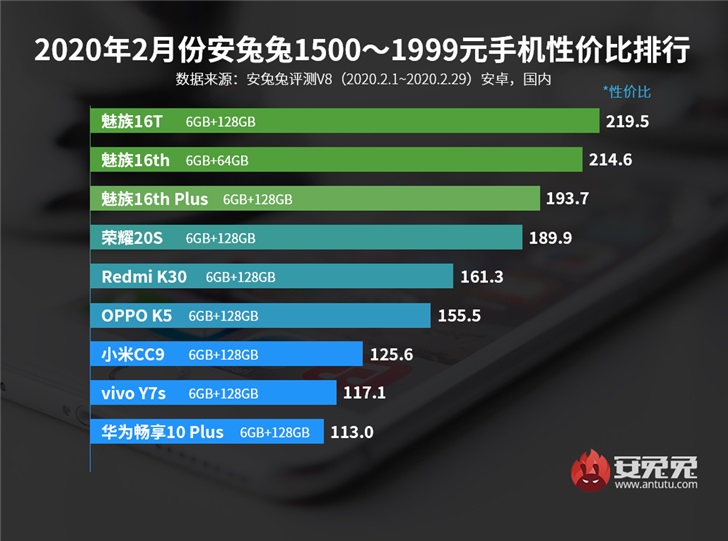
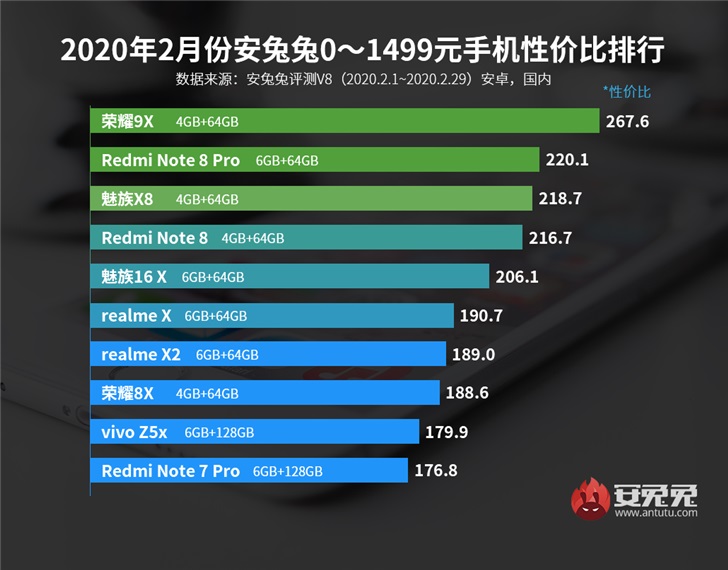
AnTuTu is best known for its benchmark app which is a good reference point for the performance of smartphones especially based on their processor power. The outfit equally evaluates the price points of the top-selling phones based on their prices and AnTuTu score to give a ranking of the most value for money models in the various pricing categories. Here is the ranking for February 2020 and the price used in the ranking is that with which the models are sold in China.
The ranking contains some surprise inclusion such as the Meizu 16T, Meizu 16s Pro and a couple of other models. The calculation is based on the running score of the AnTuTu V8 version and the score is calculated based on the AnTuTu performance score divided by the current selling price.
Going by the calculations, the Meizu 16T (6GB + 128GB version) is ranked in the first position in the 1500 yuan (~$215) – 1999 yuan (~$287) price segment. In the same segment, the Meizu 16th (6GB + 64GB) and Meizu 16th Plus (6GB + 128GB) are ranked second and third respectively. The Honor 20s, Redmi K30, OPPO K5, Mi CC9, Vivo Y7s and Huawei Enjoy 10 Plus also found their way into the ranking with their pocket-friendly prices and decent hardware.
In the 0-1499 yuan ($215) segment, the Honor 9X 4GB+64GB) version is ranked first. The Redmi Note 8 Pro 6GB+64GB is the second most cost-effective mid-ranger while the Honor 8X 4GB+64GB version is at the third spot. Redmi Note 8 4GB+64GB is at the fourth spot while the Meizu 16X completes the top 5. Other models among the top 10 include the Realme X (6GB+64), Realme X2 (6GB+64GB)i Honor 8X 4GB+64GB, Vivo Z5x (6GB+128GB version) and finally, the Redmi Note 7 Pro *6GB+128).
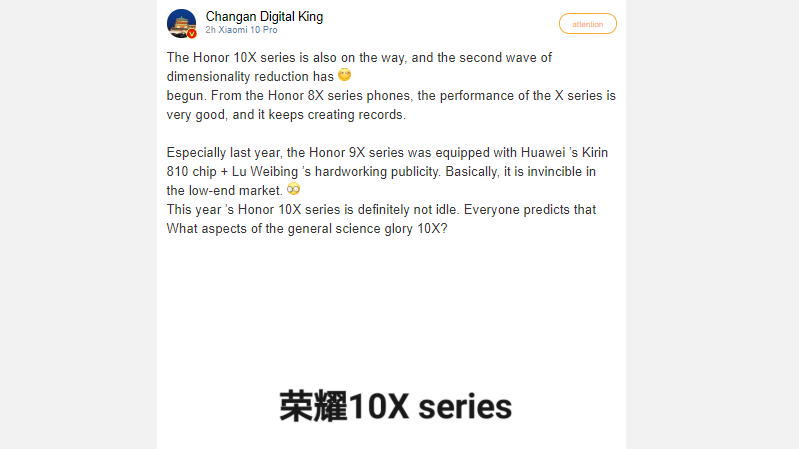
A new report has suggested that Honor, a subsidiary of the Chinese tech giant Huawei, may launch the successor of its popular Honor 9X soon. The Honor 10X will reportedly be announced soon and will feature Huawei’s Kirin 820 5G SoC.
Historically, the Honor X series of smartphones targetted the highly competitive mid range segment in the market. So an Honor 10X is very likely to be in the works and should target the same segment as well. The report regarding its eventual launch arrived from a Weibo post, a Chinese microblogging website. It was shared by the official Weibo account of @长安数码君, which also revealed one of its key specs.
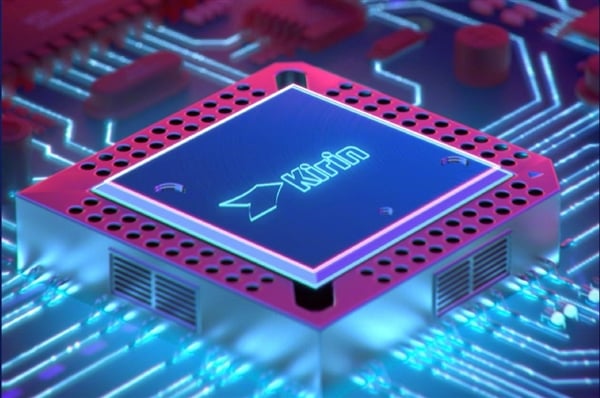
Unfortunately, the post doesn’t share finer details regarding the smartphone but does share an image and shares a crucial component it will house. While the Honor 9X feature Kirin 810 SoC, the Honor 10X will receive 5G support through the upcoming Kirin 820 processor. For those unaware, the Kirin is a proprietary chipset from Huawei and is manufactured by TSMC.
If it is indeed the successor to the Kirin 810, we can expected decent performance for the similar price range it may arrive in. Although, 5G networking is undoubtedly one of the most important inclusions in the series. If the leak is true, then the Honor 10X will be the first 5G smartphone in the lineup. The 9X was released back in 23rd July 2019, so the Honor 10X should also be expected to arrive around the same time frame.
Huawei, the Chinese electronics giant, has recently announced a new collaboration. The company will be working with Sberbank, which is Russia’s largest bank, to develop cloud services in the country for business endeavors.
For those unaware, Huawei is a lot more than just a consumer electronics brand and is well known in the telecommunications industry as well, being a leading figure in 5G networking. Through the collaboration with Sberbank, Huawei plans on building a cloud computing service for Russian businesses.
The service is called SberCloud.Advanced and will target clients that are small to medium sized enterprises (SMEs) and even start ups. In other words, the cloud services are not directly targetted towards customers but through clients that might use their services in the country. These clients will have access to 37 new cloud services servers which will be integrated into a single streamlined system.
According to Wang Wei, Huawei’s Director General in Russia, the partnership with Sberbank is likely to notably advance Russia’s digital prospects. In other words, boost its e-commerce presence in a global sense. He also stated that “this partnership truly represents a landmark for the Russian cloud services market.” In recent years, the Sberbank has been steadily transforming itself into an online service provider alongside its banking services. Thus, it marks a bold shift, especially from a state run organization.
SberCloud’s Director General Evgeny Kolbin mentioned that “this is an exclusive offer for the market, consisting of interconnected cloud services complementing each other, which gives the client a single convenient approach to using these services, a variety of the most modern IT platforms, as well as built-in tools for monitoring and controlling the cloud infrastructure.”
In simpler terms, the interconnectivity and platform being provided is a major focus of the newly developing cloud service. Its implications are said to be broad and the infrastructure being provided will match modern IT platforms, with top notch technology and assistance from Huawei.
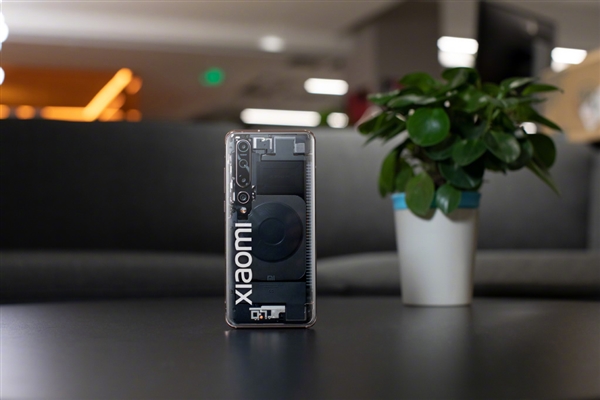
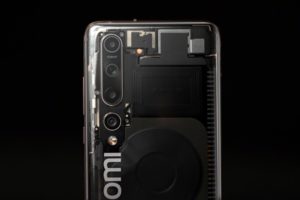
In a surprise development, pictures of a Mi 10 model with a transparent rear panel has been shared by Xiaomi’s Marketing department. The design was achieved by swapping the back cover with a transparent glass panel. Thus, you get to see the actual internals of the Mi 10 unlike the Mi 9 and Mi 8 Explorer editions that had dummy internals on display. The Mi 10 internals look quite neat and beautiful such that you won’t distinguish it from the previous iterations. The transparent panel shows the camera, flash, battery, wireless charging coil, and a large area of double-layer thermally conductive graphite covering the entire motherboard area is clearly shown.
The development has prompted some fans to request that the company launch such back covers and provide after-sales replacements for fans who’d want to have it on their phones. That isn’t likely to happen but we may see third-party transparent glass panels soon.
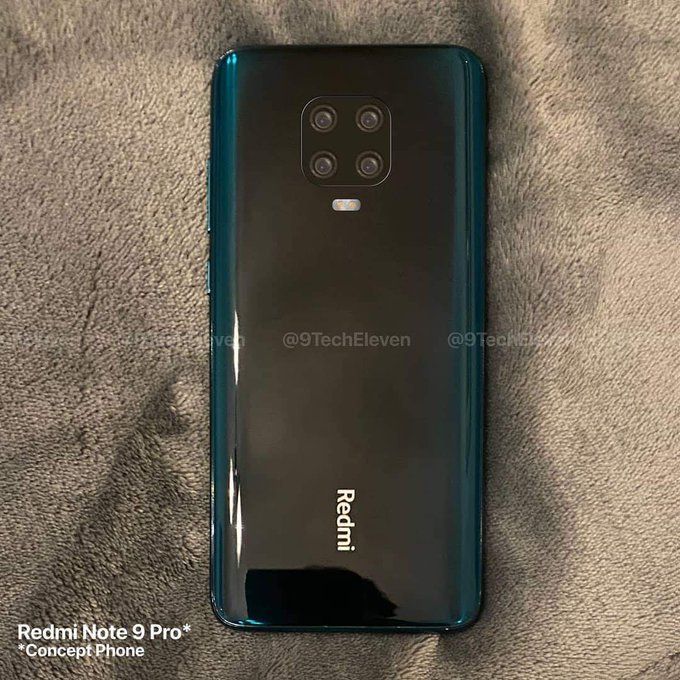
The Redmi Note 9 series is all set to launch on March 12 in India. Traditionally, the Note series comprises of a standard variant, which should be the Redmi Note 9 this year and a Pro variant, namely the Redmi Note 9 Pro. However, it looks like there could be some changes in the lineup in 2020. According to the latest rumors, Redmi could launch the Redmi Note 9 Pro Max in India alongside the Redmi Note 9 in India this week.
Redmi Note 9 Pro concept by 9TechEleven
Before we talk more about this Max model, let’s first agree that the Redmi Note 9 Pro Max name is a mouthful. Clearly, Apple has been a bad influence on Xiaomi this year. We honestly hope that the model gets a simpler name at launch, but that seems unlikely given how there are traces of Redmi preparing to market #RedmiNote9ProMax on twitter.
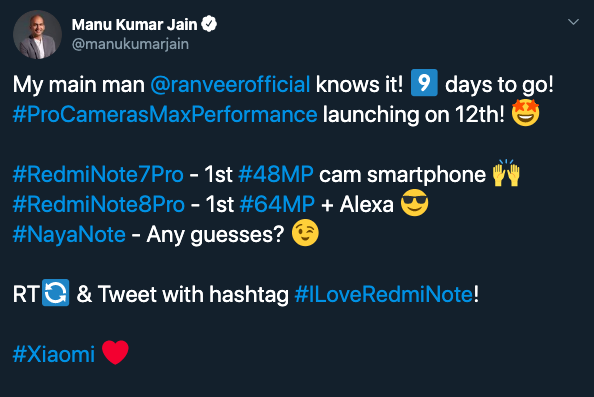
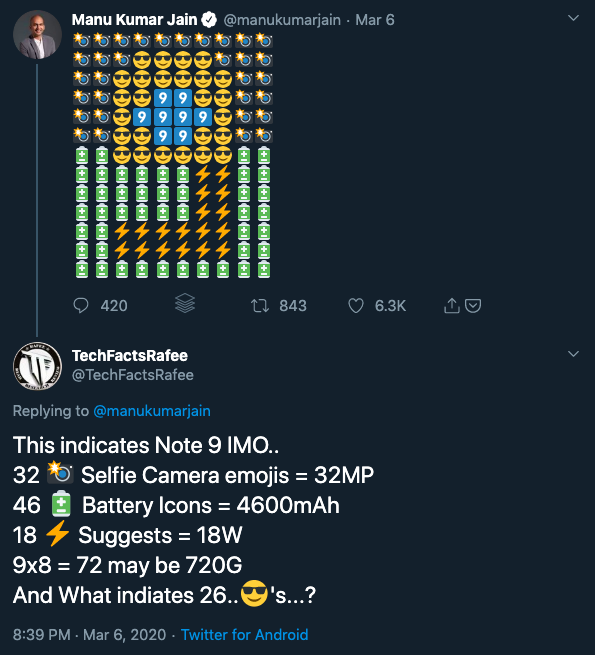
There are multiple reasons why we think the brand could launch a Redmi Note 9 Pro Max model on March 12. First, the hash flag revealing four cameras with the #RedmiNote9ProMax was spotted on Twitter earlier this month. Then, Manu Kumar Jain sent out a tweet that further hinted at the possibility of three Redmi Note 9 series models. His tweet contains three nines, which many consider as a hint for three new models this year. Even twitter leakster Mukul Sharma believes that there’s a Redmi Note 9 Pro Max model coming in this week.
Given all the hype about the Redmi Note 9 Pro Max, there’s a good chance that there’ll be a total of three models in the Redmi Note series this year: Redmi Note 9, Redmi Note 9 Pro, and Redmi Note 9 Pro Max. Another possibility is that Redmi releases only Redmi Note 9 Pro and Pro Max model and skips the basic Redmi Note 9 model. But that would be quite unusual.
Redmi Note 9 Pro Max will come with Max Performance
We don’t have any official information on the Redmi Note 9 Pro Max model. But if it does launch this week, expect it to be the most powerful Redmi Note series smartphone to date. And according to a teaser from Manu Kumar Jain, the best model in the Redmi Note 9 lineup, most likely this Pro Max variant could get a camera upgrade as compared to last year’s model. The Redmi Note 8 Pro had a 64MP camera, and if you are looking at something better than that, is it possible that the Redmi Note 9 Pro Max features a 108MP camera sensor? Well, Xiaomi exec confirms 108MP camera is out of the question. So 64MP is a possible choice for the Max.
We have no word on the phone’s processor but there are rumors floating around that the Redmi Note 9 Pro Max could feature the MediaTek Dimensity 800 chip. This would bring a significant upgrade to the performance of the Redmi Note 9 series. While we are yet to see a Dimensity 800 powered phone in the market, on paper, the four Cortex-A76 powered performance cores should outperform the Snapdragon 765G (2x Cortex-A76). The rumor aligns with what Digital Chat Station said last week about Redmi being the first brand to use this new MediaTek chipset.
Xiaomi India head has also sent out other teasers hinting at the specs of the Redmi Note 9 lineup. And Mi fans, as usual, are quite quick at deciphering the coded message. For example, as you can see below, Manu Kumar Jain’s tweet seems to have revealed some of the specs of the Redmi Note 9 model. According to this tweet, the Redmi Note 9 could feature a 32MP selfie shooter, a 4600mAh battery, and even Snapdragon 720G (if we are to consider 8 x 9 as the hint for its chipset).
Of course, there are other teasers too. The latest one says that the Redmi Note 9 will have the best battery life ever.
Manu Kumar Jain’s earlier tweet hinted at a 4600mAh battery but that’s only slightly larger than the 4500mAh battery on the Redmi Note 8 Pro. So if Redmi is teasing “BEST BATTERY LIFE EVER ON A REDMI NOTE”, could it be possible that the Redmi Note 9 Pro Max takes inspiration from the axed Mi Max lineup and comes with a 5000mAh+ battery? The Redmi 8 has a 5000mAh battery and the company could add an even larger one inside its Max model. But this is just speculation for now.
In recent times, Huawei has been facing troubles in the west. The tech giant had faced a ban in the US back in 2019, and its aftershocks can still be observed. The company has faced various accusations around this time as well, and while the US is actively working on hampering its operations in the west, Huawei is reportedly trying to reduce its reliance on US based technologies themselves.
As it stands right now, the various allegations of espionage, links to the Chinese government, risk of security, is but a few of the accusations Huawei has faced from the US. The same can even be said to certain European regions as well, where the US is also applying pressure. However, the company is standing on its resolve of becoming completely self sufficient as it is further trying to reduce the US based technological aspects it currently applies to its offerings.
To become completely independent, the company has focused its efforts on developing its own core technologies. These include it’s in house chip manufacturing processes, design and more. The move will make Huawei completely self dependent but would affect the various Taiwanese companies that Huawei often works with.
Huawei’s Kirin chipsets are manufactured by TSMC
Various suppliers will lose out deals or contracts that be valued for a very high sum. However, the supply of technologies like display driver chips, sensors, wireless transmission chips, and analog chips will still be contracted to suppliers, considering that the company is focusing on Core areas only, for now. Currently, Huawei is working on making its own processors and AI chips while simultaneously working on wired and wireless connectivity chips as well, which should roll out by Q2 of 2020.
According to a new report, the third quarter is going to be a launch period for Asus. In Q3 of 2020, the ROG Gaming Phone 3 is expected to launch, which has also been speculated to feature Qualcomm’s latest Snapdragon 865 SoC series.
As it stands right now, mobile gaming is cemented as one of the fastest growing industries within the smartphone world. OEMs have started offering special gaming lineups. One of the most recognizable if the ROG (Republic of Gaming) sub brand by Asus. Although the gaming smartphone lineup from Asus is seeing impressive growth and popularity, its overall smartphone operations have been taking a hit.
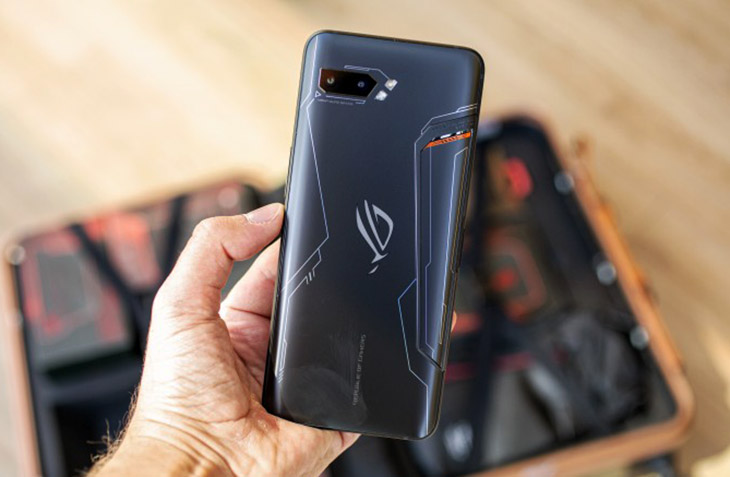
ASUS ROG Phone 2 Gaming Phone
Previous reports have estimated that the company’s smartphone business has lost about a $10 billion NT or roughly 333 million US Dollars. The losses have caused the company to go through internal restructuring. This has led to a particular press conference being held, in which the company announced two new products like the ZenPhone 7 and ROG Phone 3.
This arrives just prior to Qualcomm’s 5G conference, but both smartphones are likely to feature the chipmaker giant’s Snapdragon 865 5G SoC. However, due to the ongoing Coronavirus epidemic, the launch of these handsets have been postponed to the third quarter of 2020.
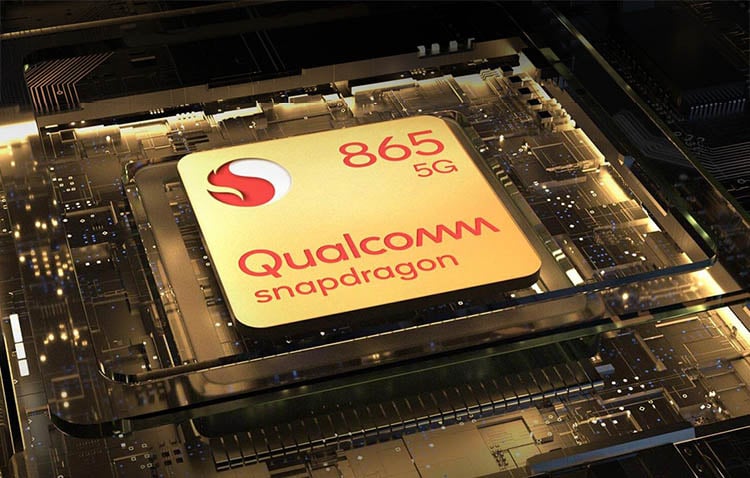
Qualcomm Snapdragon 865 SoC
Notably, this is the same time frame in which the Snapdragon 865 Plus will be launched. For those unaware, the Plus variants are merely a slightly better performing and overclocked version of the base. Hence, making it better suited for gaming. Thus, the Snapdragon 865 Plus may be the right choice for Asus ROG Phone 3.
The device will also be one of the first devices to feature the new flagship processor if it does ship with the higher clocked variant. It is still speculation on our end, but since the ROG Phone 2 feature the Snapdragon 855 Plus, the possibility is still there. So stay tuned for more updates.
We use cookies on our website to give you the most relevant experience by remembering your preferences and repeat visits. By clicking “Accept”, you consent to the use of ALL the cookies.
This website uses cookies to improve your experience while you navigate through the website. Out of these, the cookies that are categorized as necessary are stored on your browser as they are essential for the working of basic functionalities of the website. We also use third-party cookies that help us analyze and understand how you use this website. These cookies will be stored in your browser only with your consent. You also have the option to opt-out of these cookies. But opting out of some of these cookies may affect your browsing experience.
Necessary cookies are absolutely essential for the website to function properly. This category only includes cookies that ensures basic functionalities and security features of the website. These cookies do not store any personal information.
Any cookies that may not be particularly necessary for the website to function and is used specifically to collect user personal data via analytics, ads, other embedded contents are termed as non-necessary cookies. It is mandatory to procure user consent prior to running these cookies on your website.