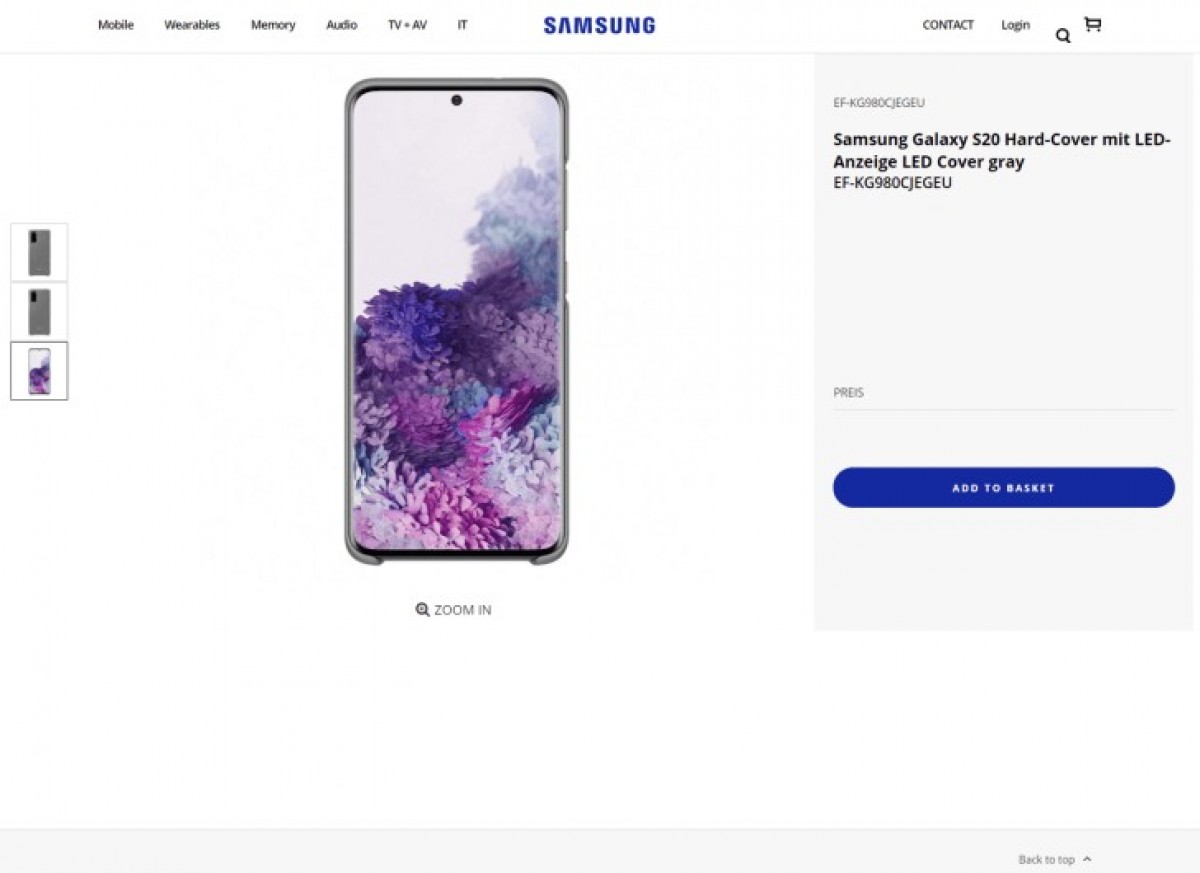
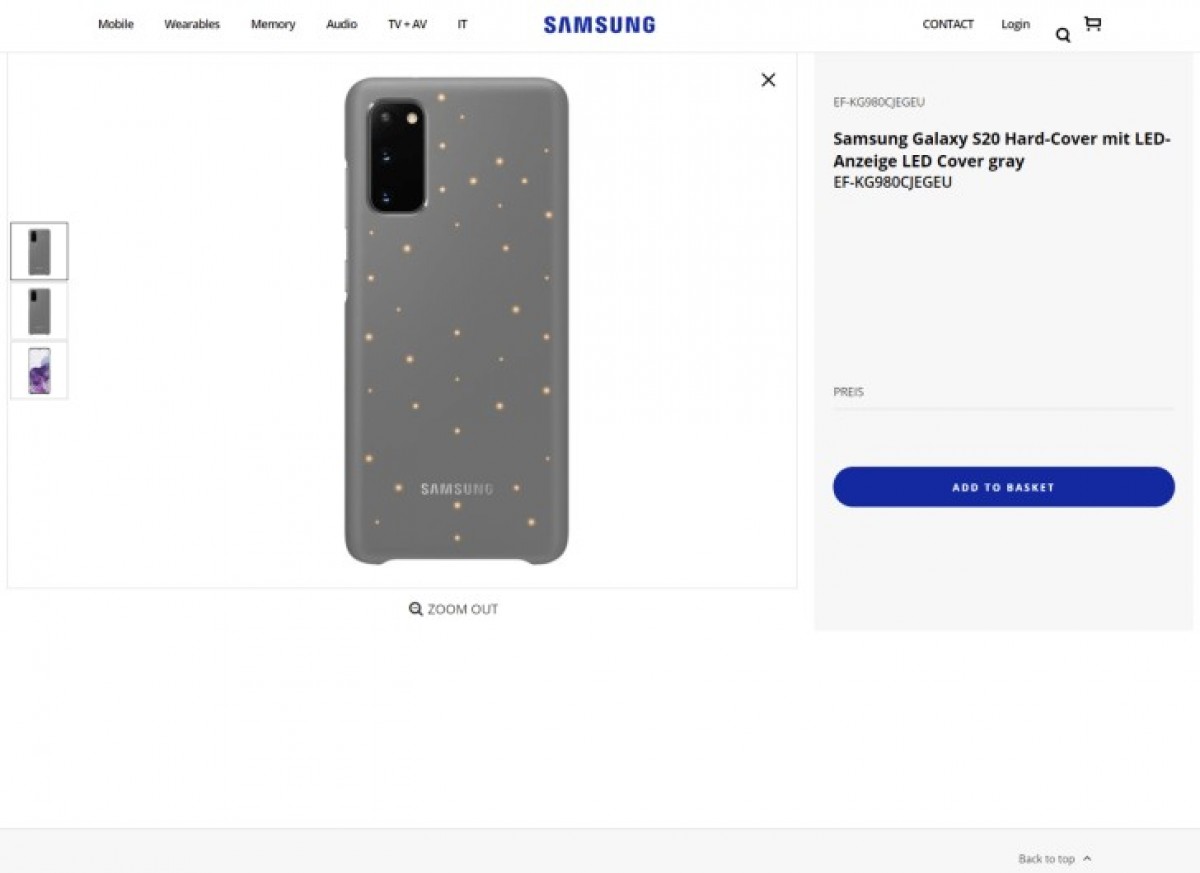
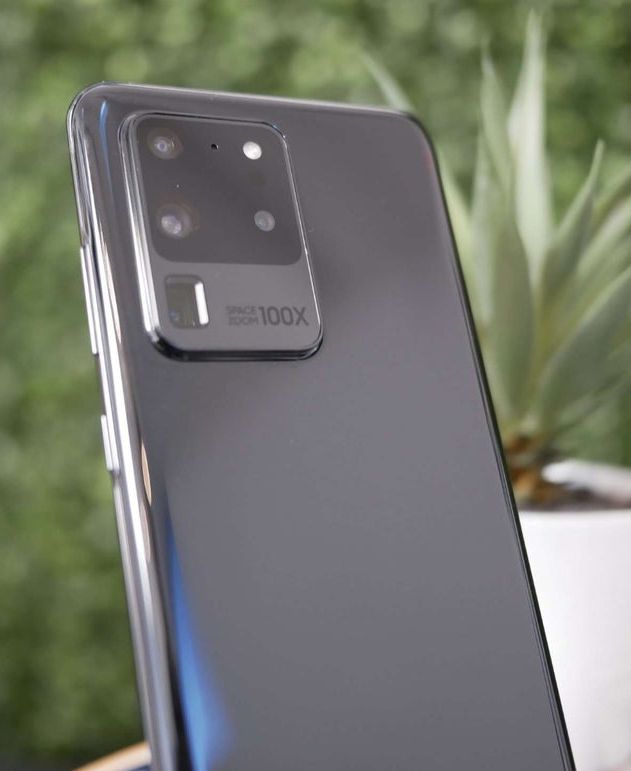
Samsung will be announcing the Galaxy S20 series on Tuesday in the coming week. Early leaks had claimed that the successors of the Galaxy S10 series will be arriving as Galaxy S11e, Galaxy S11 and Galaxy S11+. While multiple reports have confirmed that these devices will be respectively arriving as Galaxy S20, Galaxy S20+ and Galaxy S20 Ultra, Samsung did not confirm these monikers. Winfuture.de has reported that an LED case for the Galaxy S20 was found listed on Samsung’s website in Europe. The listing that has been taken down revealed the Galaxy S20 moniker and its design. Moreover, in another leak, the Galaxy S20 Ultra 5G has appeared in a live shot.
Marketing images of the LED case for Galaxy S20 was available on Samsung’s online shop for Europe for some time. The images on the listing revealed corroborate on the leaked images that have appeared in the recent reports. The Galaxy S20 was seen with an Infinity-O punch-hole display and its rear shell was seen sporting a gray colored cover that has randomly placed LEDs. The case is similar to the LED case that was made available for the Galaxy S10.
1 of 2
The Galaxy S20’s rear shell has a rectangle shaped camera module. As recent reports revealed, it houses three cameras and an LED flash. The Galaxy S20+ will be sporting four rear cameras and the Galaxy S20 Ultra will be arriving with an advanced quad camera setup on its back. These three phones will come with 120Hz refresh rate displays. The S20, S20+ and S20 Ultra are rumored to respectively feature 6.2-inch, 6.7-inch and 6.9-inch displays.
Speaking of Galaxy S20 Ultra 5G, a leaked live shot of the device has appeared. As it can be seen, the device is equipped with a large and protruding camera module. It consists of three cameras and an LED flash at the top and a separately placed squarish periscope lens. The “Space Zoom 100X” text can be seen alongside the fourth lens. The S20 Ultra 5G will be the first phone to arrive with up 100x digital zoom function which is dubbed as Space Zoom by the company. Rumors have it that the Galaxy S20 will support 10x optical zoom. The device includes a primary sensor of 108-megapixel.
Apart from launching the Galaxy S20 series on Feb. 11, Samsung is also expected to announce the clamshell Galaxy Z Flip smartphone with foldable screen. In the U.S., the Galaxy S20 series will have a starting price of $999. The Z Flip may cost $1,399.
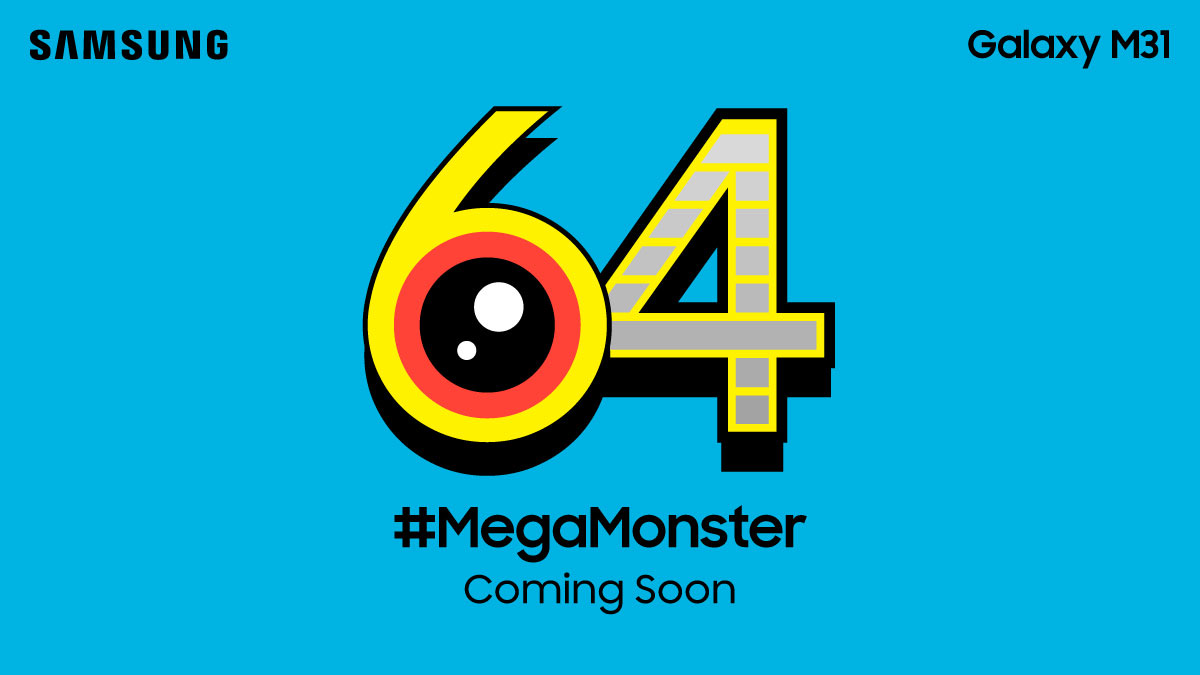
Last year, Samsung revamped its budget and mid-range offering with the new Galaxy A-series as well as Galaxy M-series smartphones. The company recently launched the Galaxy A51 and Galaxy A71 devices and now the company has teased the launch of yet another A-series smartphone — Samsung Galaxy M31.
As per the new teaser shared by two YouTubers, the Samsung Galaxy M31 will come with a 64-megapixel primary camera sensor. As the name itself suggests, the device will be a successor to the Galaxy M30s launched in India last year.
The teaser reveals the phone’s name and proclaims a 64MP camera with the tagline “Mega Monster”. The tagline suggests that the phone could come packed with a 6,000mAh battery as its predecessor, beating all of its competitors.
Apart from this, nothing much about the upcoming smartphone is known at this point in time. However, reports indicate that the 64MP sensor on the phone could be the company’s own 64MP ISOCELL GW1 sensor.
However, the smartphone recently passed through Bluetooth SIG and Wi-Fi certification process, which revealed that it will come running Android 10 operating system out-of-the-box and will feature dual-band Wi-Fi support as well as Bluetooth 5.0.
As per the rumors, the device will feature a quad-camera setup on the back. Along with the 64MP primary sensor, it will come with an ultra-wide-angle sensor, a depth sensor, and a macro sensor.
It is said to come powered by the same Samsung Exynos 9611 SoC that powers its predecessor. The device is also expected to pack 6GB of RAM and up to 128GB of expandable storage.
We expect more details about the smartphone to surface online in the coming days and with that, the device is expected to be launched in a couple of weeks. Since the Galaxy M30s has also received a price cut, the device could get launched soon in India.
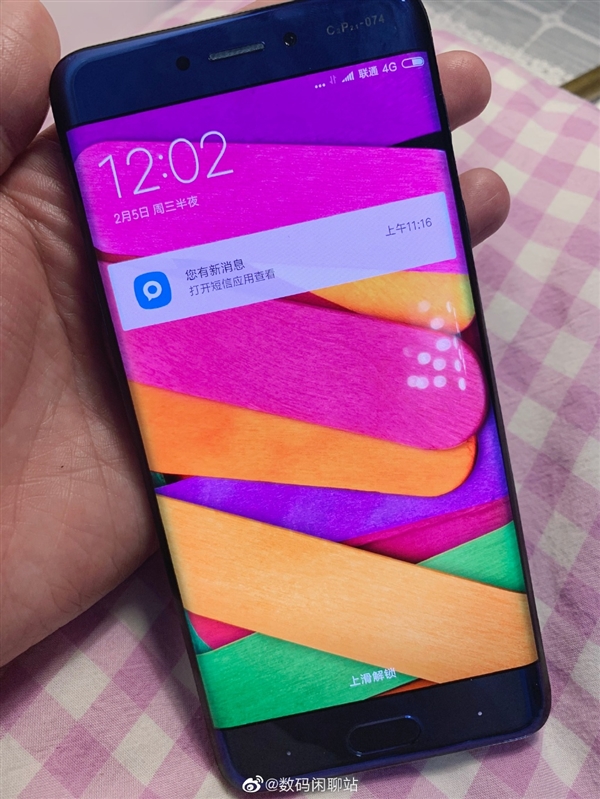
In April 2017, Xiaomi had launched the Xiaomi Mi 6 flagship smartphone. Few months after its launch, some reports had revealed that the Chinese firm will be launching as an advanced version of the Mi 6 called Xiaomi Mi 6 Plus. Probably, the company decided on cancelling the device. Today, a popular tipster from China shared some live shots of the unreleased Xiaomi Mi 6 Pro smartphone. The images show that the phone would have arrived with pressure-sensitive buttons.
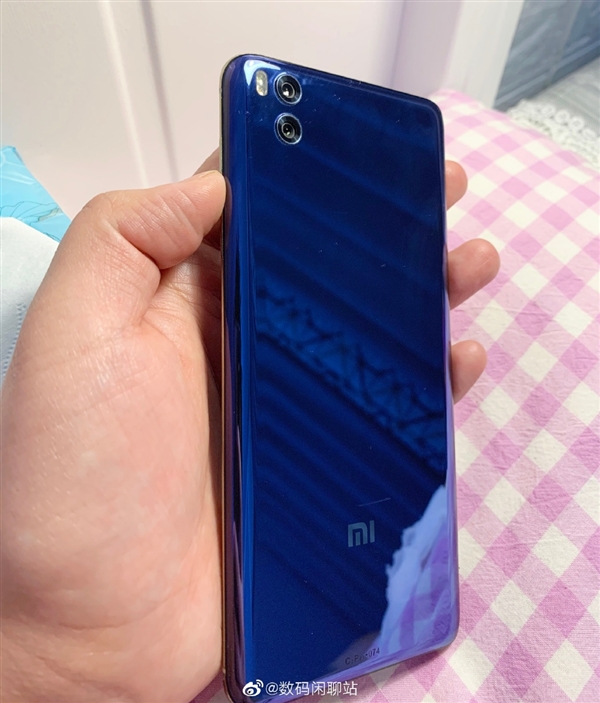
In the images below, the cancelled Xiaomi Mi 6 Pro can be seen sporting a quad curved screen by LG Display. The thick forehead of the device has a selfie camera and an earpiece. The large chin of the device has a fingerprint sensor integrated capacitive home button.
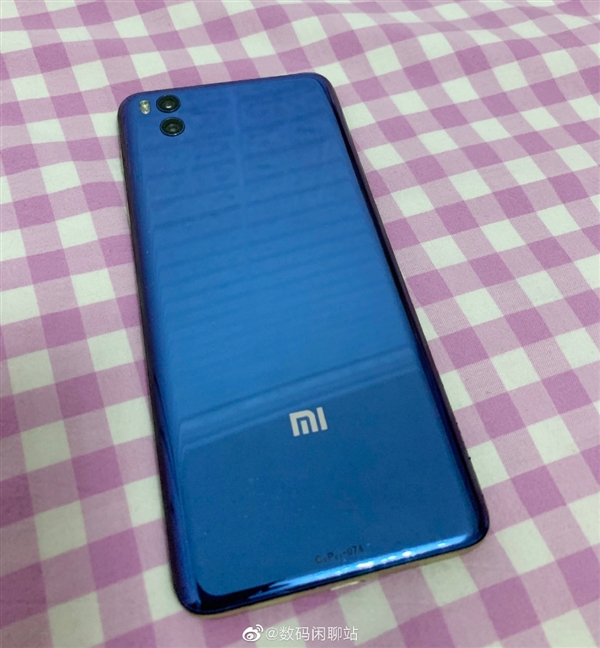
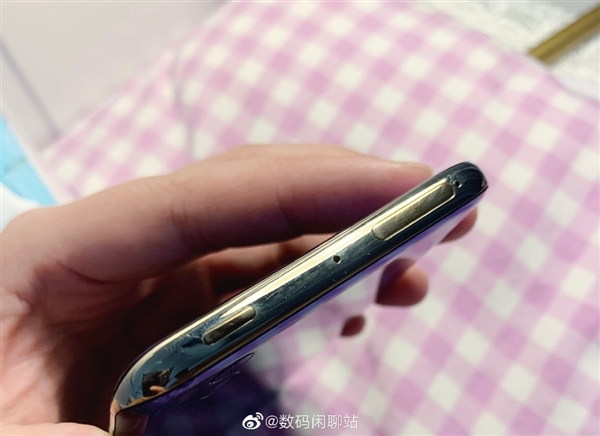
The back side of the Xiaomi Mi 6 Pro seems to be made out of glass. The Xiaomi Mi 6 had a horizontal dual camera setup whereas the cancelled Mi 6 Pro had an LED flash assisted vertical dual camera system. The USB-C port can be seen at the bottom of the phone. It is not clearly visible whether the phone had a 3.5mm audio jack in its bottom edge. In terms of appearance, the unreleased Xiaomi Mi 6 Pro also appears like the Xiaomi Mi Note 3 that was introduced in September.
An interesting thing about the Xiaomi Mi 6 Pro is that it does not feature any physical buttons on the right and left edges. The leakster claims that the phone had virtual pressure-sensitive buttons. The top edge of the Mi 6 Pro has a physical restart button. Also, it is a water-resistant device. Like the Xiaomi Mi 6, the Pro version was expected to arrive with Snapdragon 835 mobile platform.
Xiaomi never confirmed on the existence of Xiaomi Mi 6 Pro / Plus smartphone. Hence, it is not known why the company decided to cancel it. It could be because the year 2017 marked the arrival of phones with full screen displays. The Xiaomi Mi MIX 2 that came in September 2017 sport a tri-bezeless display design. From 2018, the company started launching smartphones with notched screens like the Xiaomi Mi 8 series.
Xiaomi is now working on the arrival of the Xiaomi Mi 10 series. The Xiaomi Mi 10 and Mi Pro 5G phones will be debuting with punch-hole displays. The launch date of the Mi 10 series will be confirmed soon. Instead of an offline event, the company has reportedly planned to hold an online live conference because of Coronavirus outbreak in China.
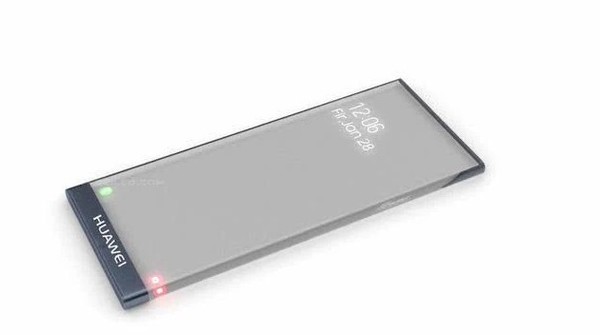
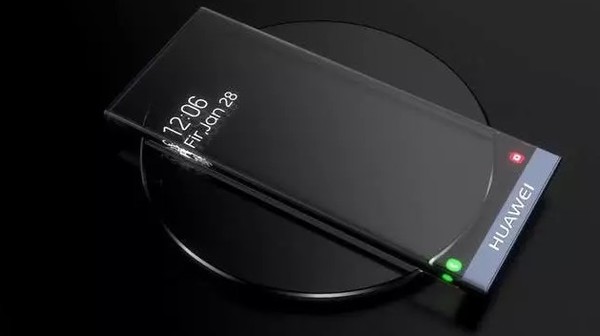
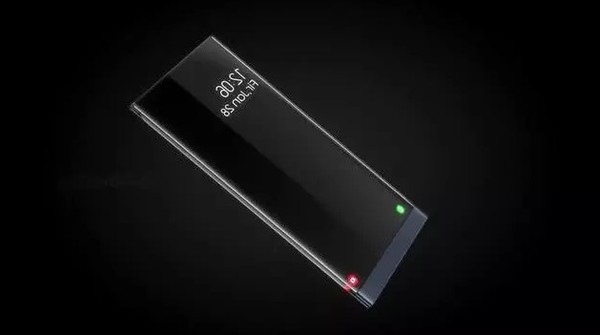
Huawei is set to release the P40 series any moment from now and the designs of the models are almost confirmed. After the P40, the next major flagship model that Huawei will unveil in the course of the year is the Mate 40 series. A set of concept renders for the Huawei Mate 40 have now emerged. The renders envision a design that looks futuristic even more than the Xiaomi Alpha.
The concept creator envisions a Mate 40 model with a transparent glass build but we doubt if such a design will be used in the near future. The Mi 8 Explorer Edition came with a transparent back panel and it turned out to be very popular even though we got to know the panel on display isn’t the phone’s actual panel. The Xperia Pureness and Lenovo S800 were two Candybar phones with a physical keyboard that adopted the transparent design. So, a transparent design may end up being very popular whenever OEM finds a way to implement it in this smartphone era. But for now, this design is just an unrealistic concept.
Furthermore, the concept shows the device will have an under-display camera design and that may extend to the rear cameras. The phone may equally ditch a wired charging for wireless charging technology.
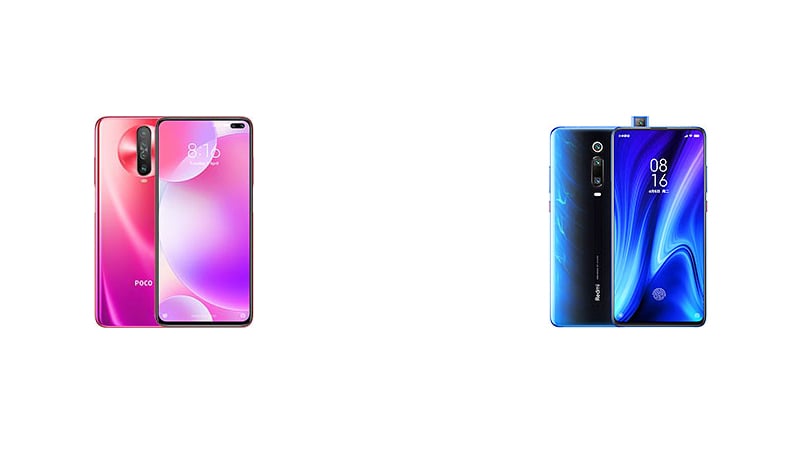
Xiaomi’s sub-brand which recently became independent from the company just announced the Poco X2 in India: its second smartphone alias the successor of the famous affordable flagship known as Pocophone F1 in the global market. The new model is essentially a rebranded version of the Redmi K30 with no difference. And we think it is worth comparing it with its predecessor which is currently sold in the Indian market at a similar price: Redmi K20. Unlike what you might think, this comparison is all but obvious. Although the Poco X2 is the successor of the Redmi K20, it does not necessarily mean it is a better deal for everyone.
Thanks to this specs comparison, you will understand why.
Despite being a 2019 mid-ranger, the design of the Redmi K20 still looks amazing. Unlike the Poco X2 that comes with a dual punch-hole display, the Redmi K20 has a holeless display, no notch, and no punch-hole, thanks to a motorized pop-up camera. That is why I personally prefer its aesthetics over the Poco X2.
The presence of a pop-up camera hasn’t increased its thickness. The Redmi K20 has exactly the same thickness as the Poco X2 and it even weighs less. On both devices, you get a glass back protected by Gorilla Glass 5 and an aluminum frame. But only the Poco X2 is splash resistant, while Redmi K20 does not offer any kind of protection against water.
Display
The display of the Poco X2 is very innovative thanks to its high 120 Hz refresh rate, but it is an IPS panel and some might not prefer it over AMOLED. On the other hand, Redmi K20 lacks a high refresh rate, but it offers an AMOLED display (with HDR support just like the Poco X2) as well as an under-display fingerprint scanner (on the Poco X2, there is a side-mounted fingerprint reader).
The 120Hz refresh rate is definitely a big leap over the 60Hz AMOLED screen on the K20. But end of the day, it’s going to be a personal choice. You have to choose between a high-refresh-rate LCD screen over a regular refresh rate AMOLED display with better colors.
Both displays are protected by Gorilla Glass 5, but Poco X2 has dual punch-hole cameras, while Redmi K20 is notch-less and holeless thanks to a pop-up camera.
Specs & Software
Poco X2 and Redmi K20 are powered by the Snapdragon 730G and the Snapdragon 730 chipsets, respectively. The Snapdragon 730G offers higher graphics performance than Snapdragon 730, while for the rest they are essentially the same chipset. So if you are a gamer and you care about GPU, Poco X2 is way better. Further, Poco X2 features expandable storage, while Redmi K20 does not have a memory card slot. Last but not the least, Poco X2 has Android 10 out of the box, while Redmi K20 ships with Android 9 Pie since it was released in June 2019.
Camera
Poco X2 offers more cameras on the rear side, but Redmi K20 has a more interesting setup, thanks to the presence of a telephoto sensor. The telephoto lens is way harder to find on a mid-range smartphone compared to the kind of sensors found on the Poco X2. But the Poco X2 wins when it comes to front cameras, thanks to a dual 20 + 2 MP setup including a depth sensor.
Anyways, both are midrange camera phones, so do not expect anything special from them. However, lately, mid-range smartphone cameras are capable enough to give you excellent captures, comparable to more expensive devices. So both the devices will offer good quality samples, especially in bright daylight.
Poco X2 has a bigger 4500 mAh battery and it should last a lot more on a single charge, despite featuring a less efficient display. Further, it has a faster-charging technology with 27W power, while Redmi K20 features a 4000 mAh battery with 18W fast charging.
So, on the battery side, X2 wins the comparison.
Price
Despite being the successor of the Redmi K20, The Pocophone X2 starts from a more affordable price tag than Redmi K20 in India. The handset just debuted in the Indian market with a starting price tag of just Rs. 15,999 for the base variant (6/64 GB), which roughly translates into about $225 at the current exchange change. The intermediate configuration with 6 GB of RAM and 128 GB of internal storage costs Rs. 16,999 which roughly translates into $239, while the most powerful version with 8 GB of RAM and 256 GB native storage costs Rs. 19,999 that is equivalent to about $281.
For Rs. 19,999, you can currently get just the base variant of the Redmi K20 which offers 6 GB of RAM and 64 GB of internal storage (and we are talking about the street price). I would personally prefer the Poco X2 aka Redmi K30 not only for its higher value for money but also because of its splash-resistant design, high refresh rate, better chipset, wider display, micro SD support and a bigger battery with faster charging.
Note that the Redmi K20 actually offers a more interesting AMOLED panel and cameras, as well as an in-display fingerprint reader, so you should not underestimate it. In both cases, you get an amazing mid-ranger.
What would be your choice with the current pricing?
Most laptops come in gray, silver, and black, but lately, PC manufacturers have begun experimenting with new colors and materials. The latest to do so is MSI and they have announced a stunningly beautiful Rose Pink version of their Prestige 14 laptop.
The Rose Pink MSI Prestige 14 (A10SC) doesn’t just have a pink shell but also has a pink keyboard, trackpad, and bezels. While this color is regarded as feminine by a lot of people, you don’t have to be a girl or a woman to purchase this beauty.
The MSI Prestige 14 retains the same specs as the Pure White and Carbon Grey color variants. It has a 14-inch FHD IPS display, an Intel Core i7-10710U processor with an NVIDIA GeForce GTX1650 4GB GDDR5 graphics card, 16GB LPDDR3 RAM, and 512GB NVMe SSD.
[envira-gallery id=”303794″]
It also has a backlit keyboard, Bluetooth 5.0, and WiFi 6. For connectivity, there are 2 x Thunderbolt 3 ports, 2 x USB 2.0 ports, an audio port, and an SD card slot. The MSI Prestige 14 has a 50Whr battery and charges with a 90W AC adapter. It ships with Windows 10 Pro out of the box.
The Rose Pink Prestige 14 is priced at $1399 on Amazon and $1400 on NewEgg. The laptop ships with a pink mouse, pink laptop carrying case, and a pink keychain.
MSI’s computer isn’t the first pink-colored PC. Last year, Razer announced a pink Blade Stealth laptop alongside pink variants of several of its gaming products.
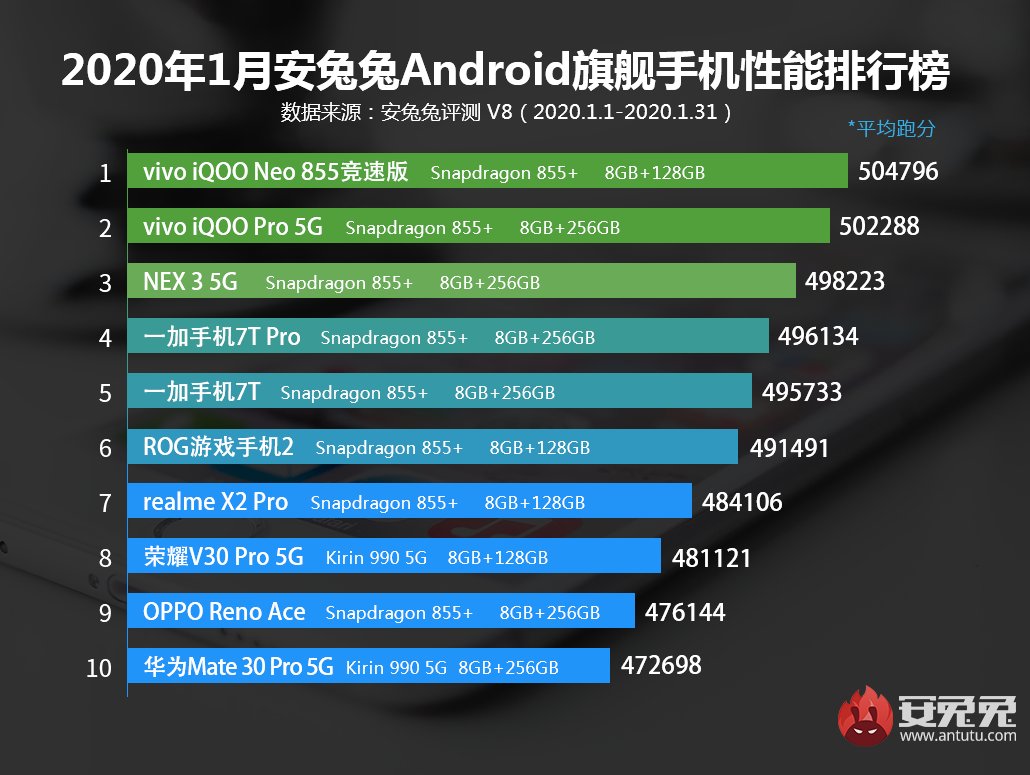
Chinese benchmark outfit AnTuTu has released the popular ranking of the top 10 flagship smartphones that ran through the app in the month of January 2020. The ranking is based on data collected between January 1 and January 31. 2020. Also, it is based on the average score of over 1000 and not just the highest score.
The list, as usual, is dominated by models running Qualcomm’s chipset and this time around eight out of the top 10 models are powered by the Snapdragon 855+ chipset. At the top of the list is the Vivo iQOO Neo with an average score of 504796 points. It is closely followed by the Vivo iQOO Pro 5G with a score of 502,288. The Vivo NEX 3 5G comes in at the third spot with an average score of 498223 points.
The OnePlus 7T Pro and OnePlus 7T occupy the 4th and 5th spots respectively with an average score of 496123 points and 495733 points. The two models are equally powered by a Snapdragon 855+ chipset.
At the number 6 – 10 positions are the ASUS ROG gaming phones 2 8+128GB version (491491 points), Realme X2 Pro 8GB+128GB version (484106 points), Honor V30 Pro 5G 8 + 256GB version (481121 points), OPPO Reno Ace 8 + 256GB version (476144 points) and Huawei Mate 30 Pro 5G 8 + 256GB (472698 points). We must note that the Honor V30 Pro and Mate 30 Pro are the only non-Qualcomm powered models on the list. Both models are powered by an Hisilicon Kirin 990 chipset.
With the expected launch of the Snapdragon 865-powered models this February, we may likely have to wait until March before we’ll start seeing changes to the top 10 most-powerful flagship list.
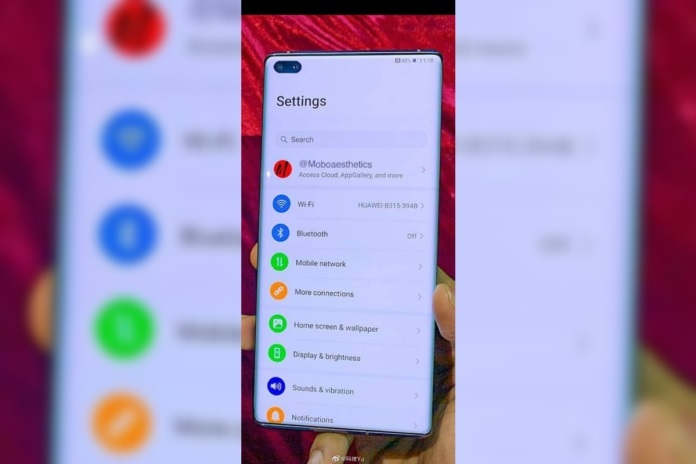
The Samsung Galaxy S20 series will be launching soon but its not the only high profile launch we are expecting this quarter. There is Huawei’s P40 series too but which has no launch date yet. Today, a live photo alleged to be that of the Huawei P40 Pro has leaked and it shows the device with practically no bezels.
The alleged Huawei P40 Pro has a pill-shaped punch hole at the top left corner with two cameras inside it. The display is curved at the sides just like that of the Mate 30 Pro but leaked renders of the P40 Pro have shown the device has physical volume buttons, unlike the Mate 30 Pro that has virtual buttons.
Also, compared to last year’s Mate flagship, the bezels on the P40 Pro are significantly thinner. They are actually there but they are really thin compared to that of several other devices.
Huawei will announce the P40 Pro alongside the standard P40, as well as a P40 Premium Edition. There should also be a mid-range P40 Lite.
The Huawei P40 series (save for the P40 Lite) will come with the Kirin 990/Kirin 990 5G processor. The Pro version is expected to have a QHD+ OLED display with an in-display fingerprint scanner. It will also have four rear cameras including a periscope lens for optical zoom.
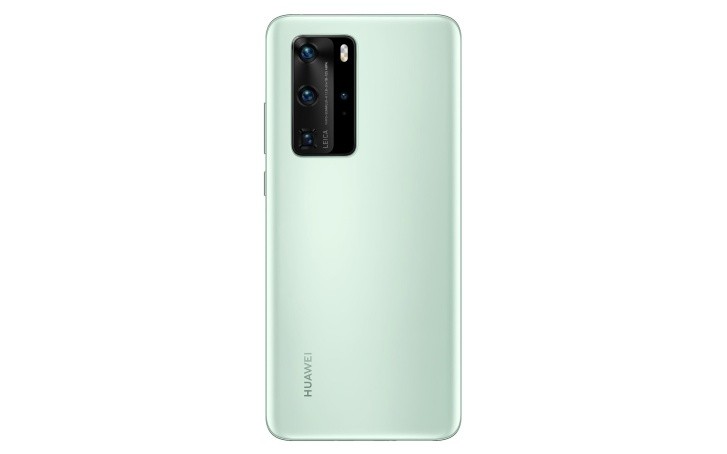
Huawei P40 Pro in Mint Green
The P40 Pro is also rumored to have a 5500mAh battery with support for fast wired and fast wireless charging. A leaked press render revealed the phone will be available in Mint Green.
There is no confirmation the above device is the Huawei P40 Pro, so we advise you to take it with a pinch of salt. While it does have a pill-shaped punch hole, the curved display doesn’t match what we have seen in leaked renders. This device may actually be the Huawei P40 Premium Edition and not the P40 Pro.
Huawei and ZTE are urging the FCC not to label them as a ‘National Security Risk’. The agency had initially voted to designate the two tech giants as security risks for the US back in November 2019. But the final decision rests with the agency’s Public Safety and Homeland Security Bureau. And both companies are hoping that this risk designation won’t be finalized by the Bureau.
In a 200-page filing by Huawei, the telecommunications giant said that FCC’s efforts to designate it as a national security risk was, “designed to implement a campaign by certain government officials, including members of Congress, to single out Huawei for burdensome and stigmatizing restrictions, put it out of business in the United States, and impugn its reputation here and around the world.” In a similar move, ZTE’s filings asked FCC to assess the company’s efforts in “enhancements in the area of U.S. export controls and economic sanction compliance and security controls in ZTE products”.
Huawei has long argued that the US ban doesn’t provide any proof to support its claims of “backdoor access” or “national security threat”. It also adds that competitors like Nokia and Ericsson make some of their telecommunications equipment in China, exposing them to similar risks. In fact, back in December 2019, Huawei filed a lawsuit against the US government over FCC’s branding of the company as a ‘National Security Risk’.
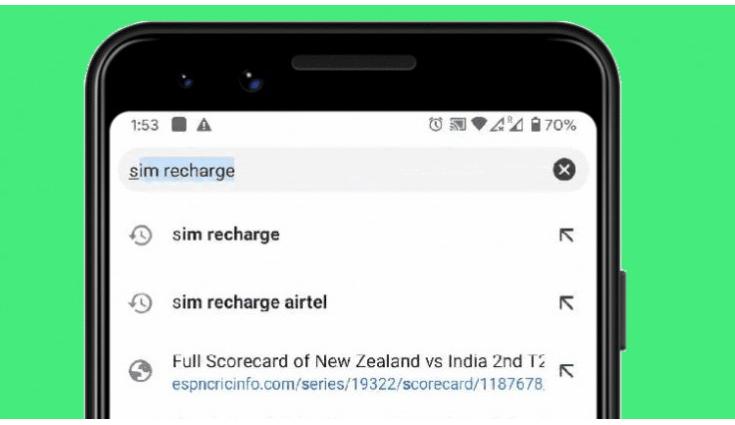
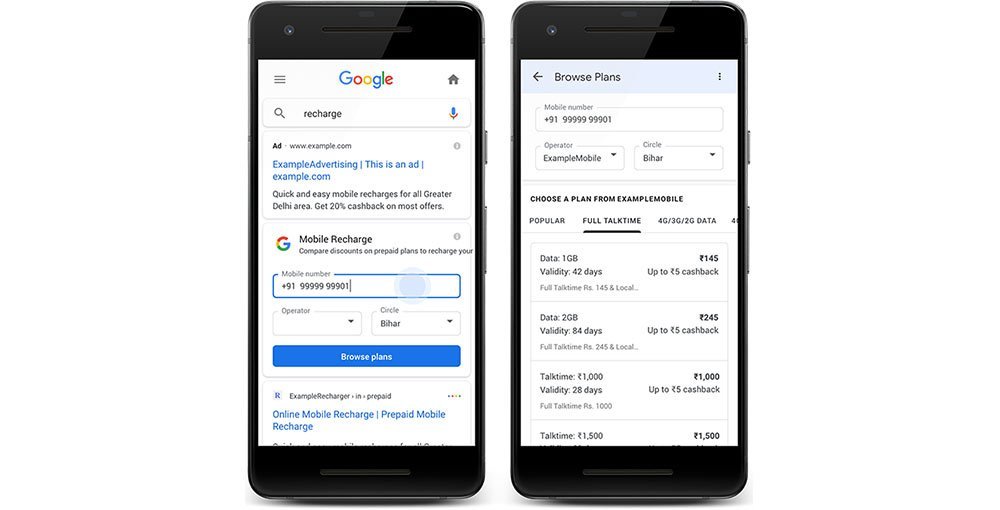
Google Search has become an intuitive window to services such as flight bookings, SOS alerts, conversions and much more. In addition to these services, Google today announced an impressive prepaid mobile recharge feature for its users in India. It will help the users to recharge the prepaid mobile number simply and rapidly by simply typing ‘prepaid mobile recharge’.
The new feature will allow users to search, compare and recharge their prepaid mobile phones directly from the search page itself. Moreover, the user can compare discounts from retailers including Paytm, Freecharge, Google Pay and MobiKwik.
After confirming the number and carrier details, the user can compare recharge plans, and then can select a third-party recharge platform to complete the transaction. Upon a successful transaction, the app redirects the user back to Google Search with relevant customer support information.
Google Search Prepaid Recharge feature currently supports Airtel, Vodafone-Idea, Jio, and BSNL. Surprisingly, the new feature is limited for Android users until now.
“Prepaid cellular subscribers use a variety of ways to recharge their mobile phone. Today, we make it easier for people in India to recharge prepaid SIMs with a new Google Search experience,” Google said in a blog while announcing the new feature.
Google is planning to add a few more payment providers and a couple more carriers to the list in the coming weeks.
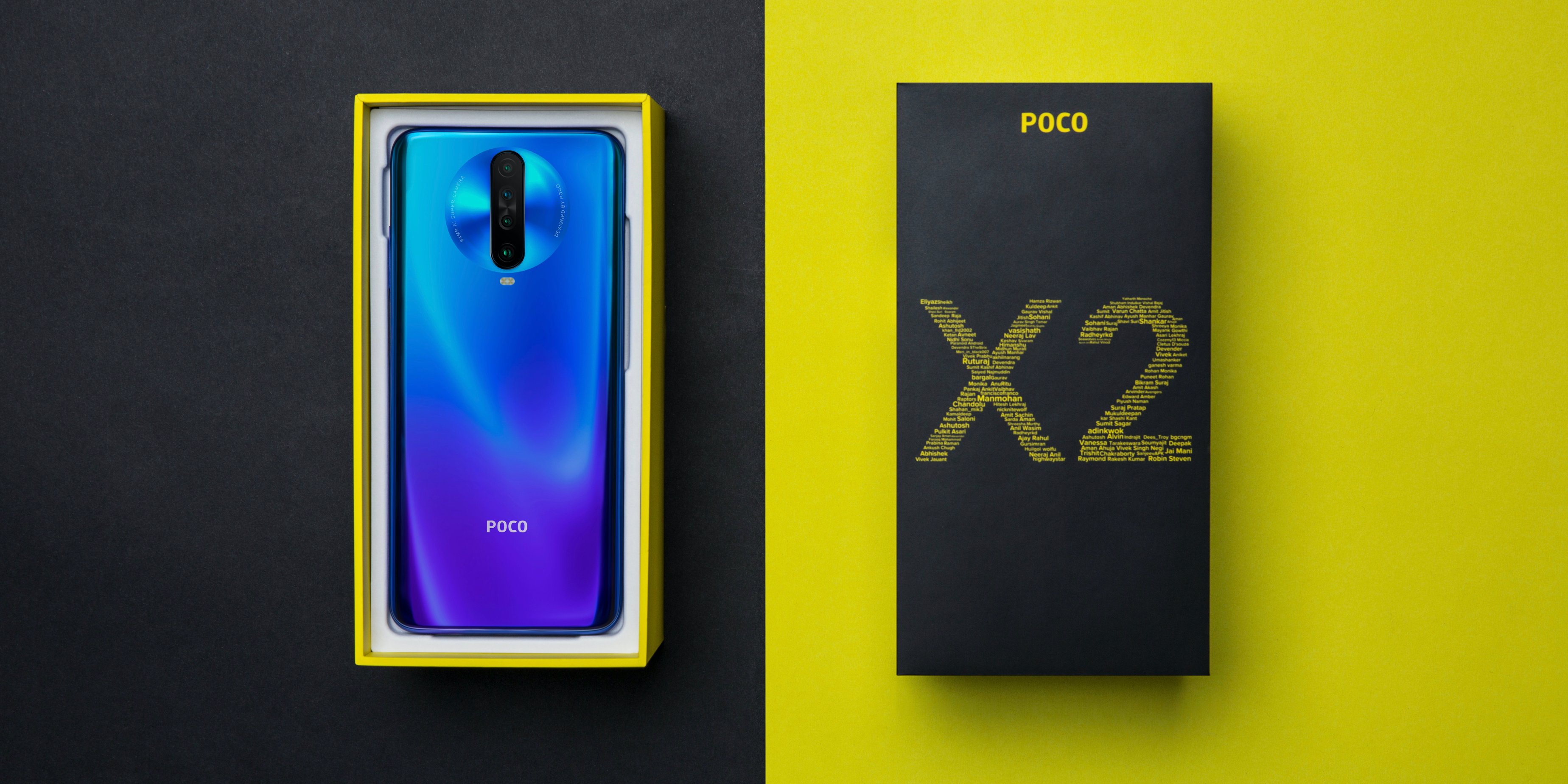
After almost 18 months, POCO has announced its second smartphone, the POCO X2. You can read about the device which is actually a rebranded Redmi K30 4G.
The POCO X2 is not only the brand’s second smartphone since it launched in 2018 but this is its first smartphone as an independent brand. If you have not been following the news, it will interest you to know that POCO is no longer a sub-brand under Xiaomi but is now an “independent” company.
With the launch of the new phone comes some new developments. The first is that production has stopped for the POCO F1. This info was revealed by C. Manmohan, the general manager of POCO India, in a chat with India Today Tech.
When asked what the reason behind the decision was, he hinted that Qualcomm was halting the production of the Snapdragon 845 chipset that powers the POCO F1. Asides that, it has been 18 months already since the launch and very few manufacturers keep producing old devices. This can also be a marketing decision to get people to purchase their new phone.
As at the time of writing, the only place you can pick up a brand new POCO F1 (in India) is at Mi Home stores and on Flipkart and Amazon India. No, it is no longer available on Mi.com. We don’t know how much stock is available but once available stock is finished, don’t expect it to be available anymore. For those who want to pick up the POCO X2, they can only do so on Flipkart (it is not sold on Mi.com).
We are not surprised the new phone is not listed on Xiaomi’s online store since POCO India has its own website but we expected it would be available on Poco.in. We presume POCO is not ready to have its own online store yet and may not even do so for a while since it technically only has one product.
There is no news yet on when POCO’s flagship phone, expected to launch as the POCO F2, will launch, but we will let you know once we do.
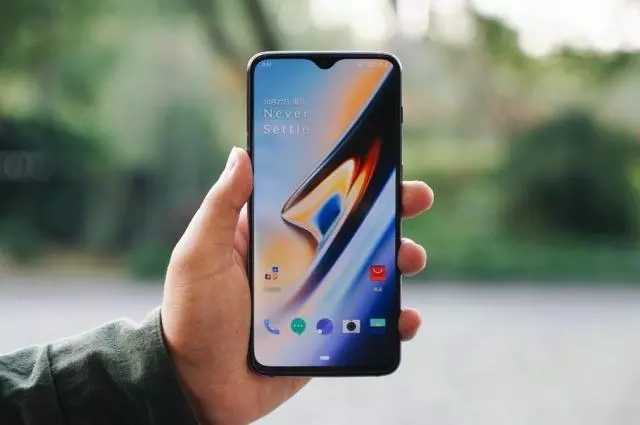
It is happening for the first time that OnePlus resumed a single update for the fourth time. OnePlus started Android 10 rollout for OnePlus 6/6T a few months ago, but some issues kept arising and the company has to put it on hold multiple times. Precisely, the company has stopped rollout thrice due to several problems. Moving forward, the company has resumed the update for the fourth time.
The users are a bit reluctant to install the update and are waiting for some insights before proceeding. We also recommend waiting for some days before pulling the final plugs to install the Android 10 on OnePlus 6/6T.
The new Android 10 update build should be more stable than the previous ones. OnePlus should have tweaked with various fixes and improvements for a bug-free experience. The changelog is as follows:
System
Fixed the issue with a black screen appearing after unlocking the device using fingerprint
Fixed the issue with the animation logo while rebooting the device
Fixed the issue with device heating up while charging
Fixed the random disconnection issue with 5Ghz Hotspot
Improved system stability and fixed general bugs
Updated Android security patch to 2019.12
Camera
Optimized the image preview time in the Pro mode
Fixed the camera crash issue
Gallery
Fixed the issue with videos and images not displaying in Gallery
We hope the recent build would sail-through all the obstacles that are being faced by OnePlus 6/6T.
The Samsung Galaxy S20 series will be announced exactly one week from today. The series consists of the Galaxy S20, the Galaxy S20+, and the Galaxy S20 Ultra. Ahead of the launch next week, details of the phone’s US pricing from the top carriers have surfaced. As expected, these devices are not cheap.
The source of the price leaks is YouTuber, Jon Prosser, and he said he got the info from sources at the carriers. Starting with T-Mobile, the magenta network will sell the Galaxy S20 for $999 while the Galaxy S20+ will get a $1199 price tag. The Galaxy S20 Ultra will even sell for much higher at $1399.
At AT&T, the price tags are surprisingly cheaper by $100. The Galaxy S20 will sell for $899, the Galaxy S20+ will be sold for $1099 while the Galaxy S20 Ultra will have a $1299 price tag.
Head over to Verizon and the prices go back up to $999 for the Galaxy S20, $1199 for the Galaxy S20+, and $1399 for the Galaxy S20 Ultra. By the way, all the aforementioned prices irrespective of the carrier are for the 5G models. However, RAM and storage were not disclosed.
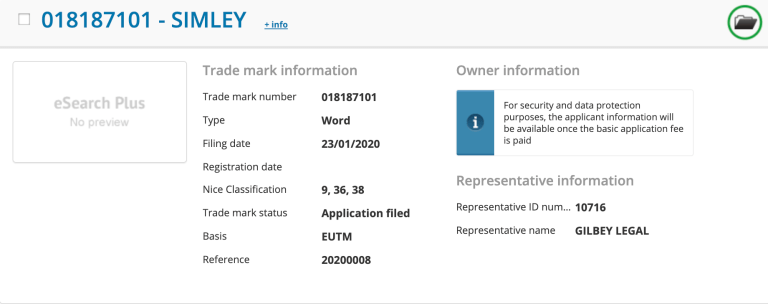
HMD Global which presently controls the Nokia brand name may have filed a new trademark application for an e-SIM feature known as SIMLEY. The application was filed at the European Union Office for Intellectual Property (EUOIP) and was first spotted by LetsGoDigital.
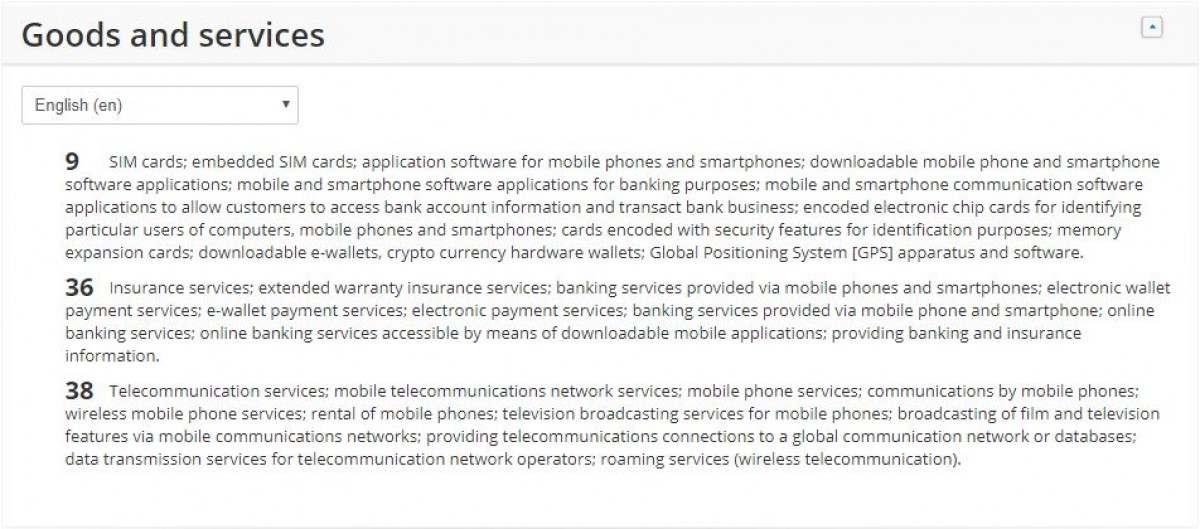
The application was submitted by intermediary Gilbey Legal from Paris, France and is categorized as Class 9/36/38. The description shows the tech will serve a multitude of functions ranging from telecommunication services to an e-wallet and banking service tool as well as an extended warranty service.
What we can draw from the application is that HMD Global is working towards the introduction of eSIM compatible Nokia phones in the near future. It won’t be the first to do so as Apple and Google already offered this type of service on their devices for a while now. The service is still not very common but is rather catching steam on smartwatches. Xiaomi’s latest model came with e-SIM features.
Apart from its function as a SIM card for mobile service, HMD’s SIMLEY is also described to work as an electronic mobile payment service with added protection for user data but the details of how this will pan out are still sketchy.
Xiaomi‘s smartphone is again caught up in a messy controversy. This time, it is the Redmi Note 6 Pro which was reported to have exploded at a service center in India. The video of the incident was published by 91Mobiles on its Facebook page. From the video, we could grab that the device was apparently brought in for repairs by the owner. While the repairman was trying to open up the smartphone, it suddenly went up flames.
We can’t verify if the service centre located at Gujarat is a Xiaomi certified service centre but the report carried by regional publication Khabar Gujarat, states that Kishan – a technician at Dhriti Mobiles – was repairing the Redmi Note 6 Pro when smoke started coming out of the handset’s back panel. The unit then caught fire, and the technician had to throw it off the counter to prevent the fire from engulfing other flammable items around. Thankfully, no one was hurt by the incident but the Redmi Note 6 Pro was completely damaged. We doubt if the device is covered by any warranty since the Note 6 Pro was released in 2018 as a successor to the Redmi Note 5. However, we expect Xiaomi to investigate the cause of the fire incident.
As at the time of filing this report, there has been no response from Xiaomi. We’ll keep you updated if Xiaomi responds. Meanwhile, you can check out the video of the incident from the source link below.
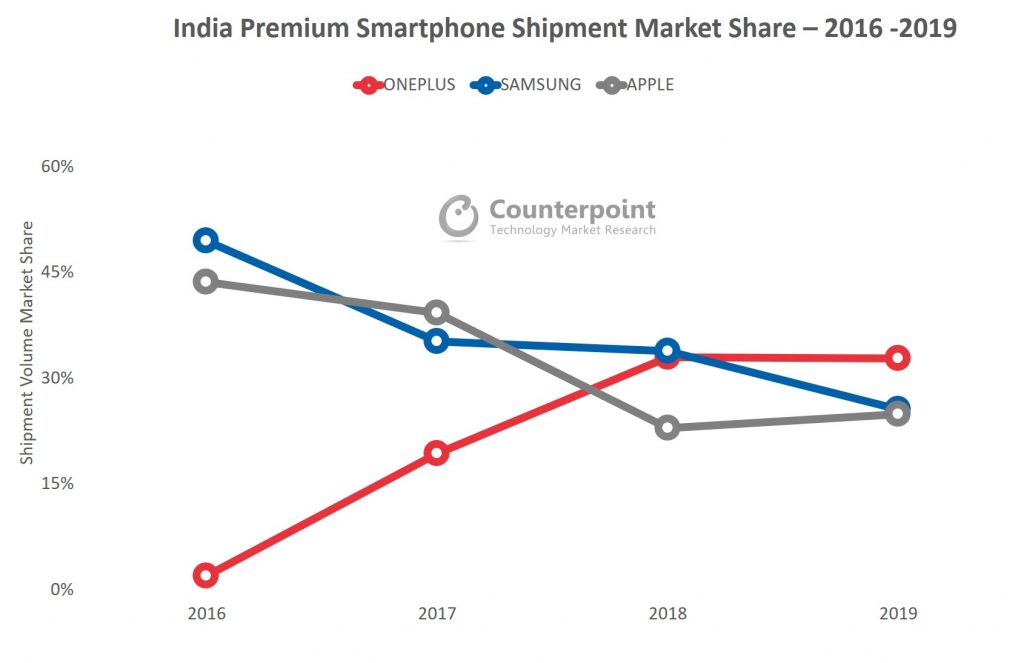
A new Counterpoint report has revealed that OnePlus, a Chinese smartphone manufacturer, has grabbed the top spot in the Indian smartphone market in the premium segments.
In recent years, OnePlus has grown significantly to become one of the most recognized smartphone brands in the Indian subcontinent. According to the Counterpoint report, the company led the premium smartphone segment with a 33 percent market share. This marks the first time the company took the top spot while also surpassing 2 million smartphone shipments in India, within 2019.
Red represents OnePlus while Blue and Gray represent Samsung and Apple respectively (Image via Counterpoint)
On the other hand, the previous market leader, Samsung, arrives second with a market share of just 26 percent in the same market segment. Apple follows close behind the South Korean tech giant with a 25 percent market share and was touted to be the fastest growing premium smartphone brand in 2019; marking a 41 percent year on year bump over 2019. The success of the Cupertino based giant has been accredited to its popular and relatively affordable offering, the iPhone XR.
The premium segment in India includes smartphones sold above which are priced at 30,000 INR (or roughly 421 US Dollars) or above. Notably, this segment also saw remarkable growth with an overall market rise of 29 percent over 2018, reaching record breaking smartphone shipments as well.
Pete Lau, Founder and CEO of OnePlus, stated that “2019 has been a remarkable year for us at OnePlus. Every milestone we have achieved strengthened our pursuit for excellence in technology. We will remain dedicated towards creating burden-less and best-in-class user experience.”
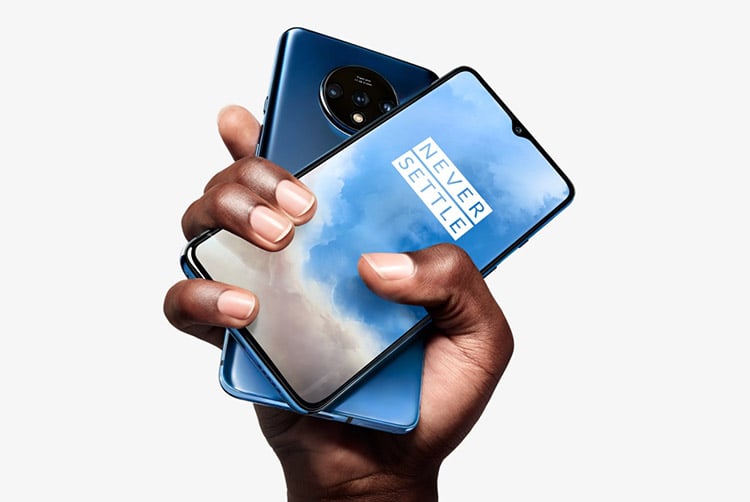
OnePlus 7T
Notably, the company’s OnePlus 7 series of smartphones has emerged as the most popular premium segment smartphone in the Southeast Asian country in 2019. The device’s popularity is said to have been boosted. Furthermore, even the ultra-premium segment which includes devices over 45,000 INR also saw impressive growth of 63 percent over 2018, with OnePlus also offerings more handsets in this segment as well.
The coronavirus outbreak in China is serious. And the Chinese government is desperately trying to control its spread in the country. A lot of retail stores and offices are closed throughout China and those who are open are taking precautionary measures to ensure the safety of their employees and customers. After we reported how Xiaomi had employed temperature checks and compulsory masks for its offices in the country, Asus announced today that it’s launching contact-less after sales service to its customers in the market.
Asus Store Source: Wiki
Asus sells a wide variety of computer peripherals, PCs, laptops, and even smartphones like the ROG Phone 2 in China. The brand operates a number of service centers across the country and recently it launched a special contact-less service facility to its customers. In addition to disinfecting its service center locations and ensuring its engineers wear masks and disposable gloves, the brand is offering contact-less service to both on-site repairs and products sent in for repairs from customers.
Asus has said that it will disinfect all products after repair, before sending it back to the customers. As for on-site repairs, instead of going to the customer’s location for fixing the device, the company’s engineers will contact them for a pre-determined time and location. After the product is picked up for repairs, it will be delivered to the customer at a place and time of their choosing. This way, repairs can be availed without any contact, ensuring the customer as well as the engineer’s safety. Asus is also encouraging customers to use its remote assistance feature for support, whenever possible.
Asus service center in China Source: CnBeta
Finally, Asus announced that if a device warranty is ending between January 20 and February 9, 2020, it will get extended due to the extraordinary circumstances created by the coronavirus outbreak.
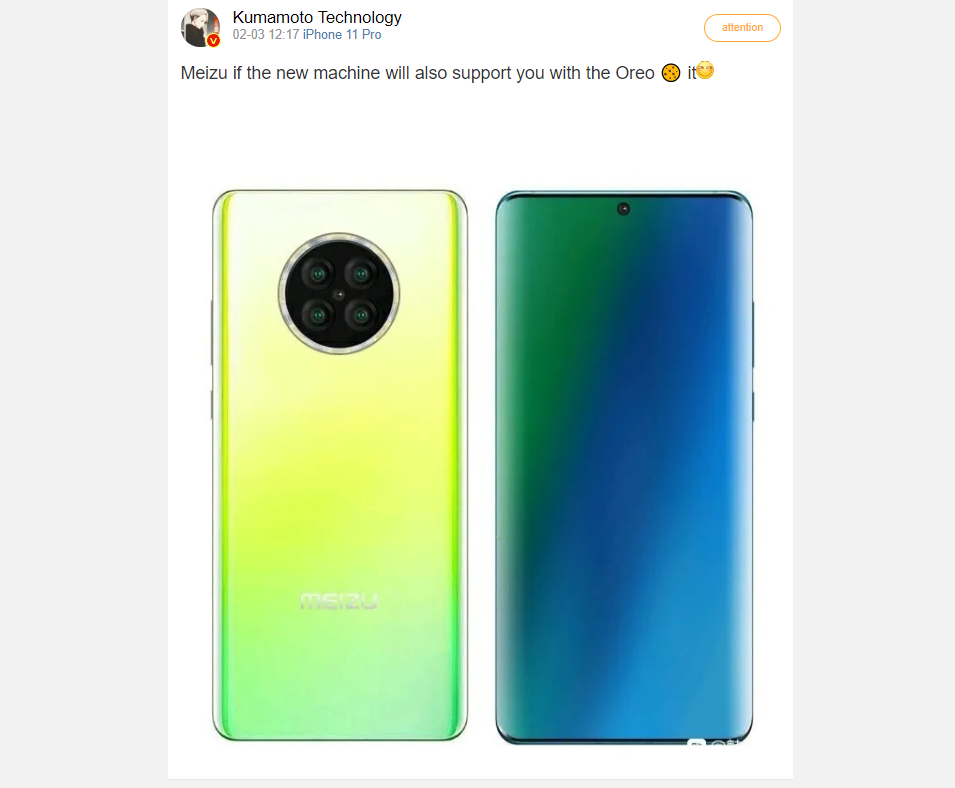
A new leak has revealed the renders of the upcoming Meizu 17, offering us a first look at the handset. The device is a flagship smartphone from the known Chinese smartphone company.
Meizu has recently been keeping a low level of public appearance and activities and has seemingly been preparing for new launches. The new render shared from a known leakster on Weibo reveals the design of the company’s upcoming Meizu 17. The images shared revealed both the front and rear of the smartphone.
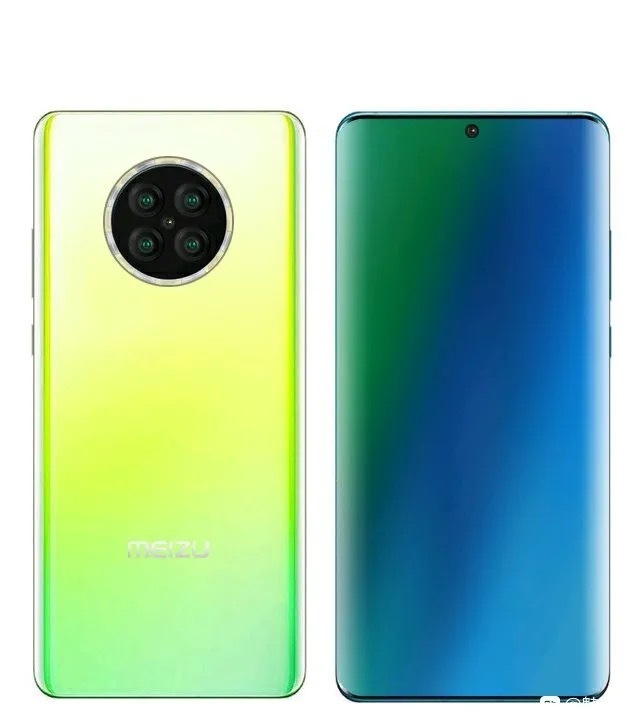
According to the images, the smartphone arrives with a bezel-less screen which almost completely covers the front area. However, a notable inclusion on the front is the presence of a punch hole selfie camera. Notably, it can also be observed that the sides of the Meizu 17 curves into the back panel.
Meizu 17 Renders (Reported)
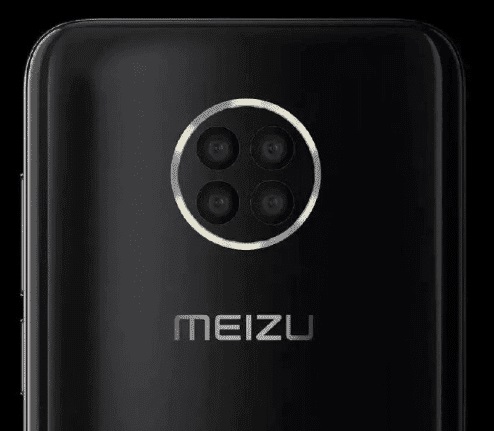
Moving on to the rear, the upcoming flagship smartphone has a circular camera module positioned in the top center of the back panel. From the images, a quad camera setup is seen which is surrounded by a ring, which presumably also acts as an LED flash since no separate LED flash port is present.
Under the hood, the Meizu 17 series is speculated to be equipped with Qualcomm’s Snapdragon 865 5G SoC, which would also allow for a dual mode 5G capabilities. Unfortunately, other finer details are still at large and we would have to wait for an official company announcement before providing any concrete statements.
Meizu 17 rear reveals a quad camera setup with a ring flash module
It is also worth noting that the company recently opened a 5G research and development center in China and screenshots of its networking capabilities with the newer and faster bandwidth have already been making round on the internet. The images also reveal possible color variants with a basic black Meizu 17 model or one with a lemon-yellow sort of tint at the rear.
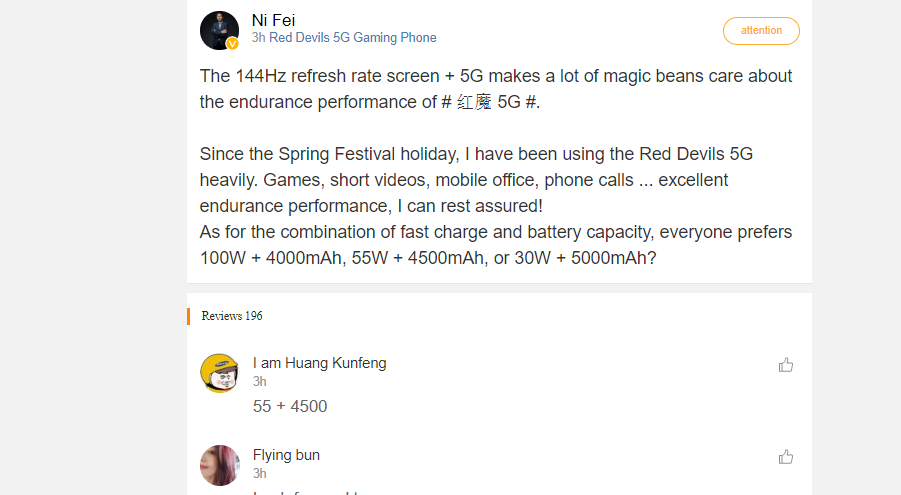
Ni Fei, the President of Nubia, went on Weibo to share his thoughts on the upcoming Red Magic 5G smartphone. The senior executive took to the popular Chinese microblogging website to comment on the smartphone’s capabilities.
Ni Fei, President of Nubia, shared this post on his official Weibo account (Translated)
Currently, there are plenty of smartphones that are slated to receive the Qualcomm Snapdragon 865 5G SoC. However, many are skeptical about the battery life of a 5G smartphone which also features a display with a 144Hz refresh rate. Thus, Ni Fei took to the social media platform to put such worries to rest by stating that the upcoming Red Magic 5G smartphone will have an excellent battery performance.
From what we know so far, the Nubia Red Magic 5G smartphone will feature a 144Hz display and will arrive with the Snapdragon 865 SoC. Unfortunately, other finer details of the device are yet to be revealed, but previously the President had also suggested that the smartphone could possibly feature 80W fast charging capabilities. Although, further down the Weibo post, Ni Fei shared three different battery and charging rates configurations: 100W + 4000mAh, 55W + 4500mAh, 30W + 5000mAh.
Nubia’s President had previously revealed specifications that imply of a smartphone with upwards of 80W fast charging
The 55W + 4500mAh configuration seems the most likely, as it one is within the range of the previous reveal from the President and a recent leak which also stated that a 55W fast charging can be expected. Unfortunately, we can not offer any concrete statements and these are just educated guesses for now. So stay tuned for more updates regarding the upcoming Red Magic 5G smartphone.
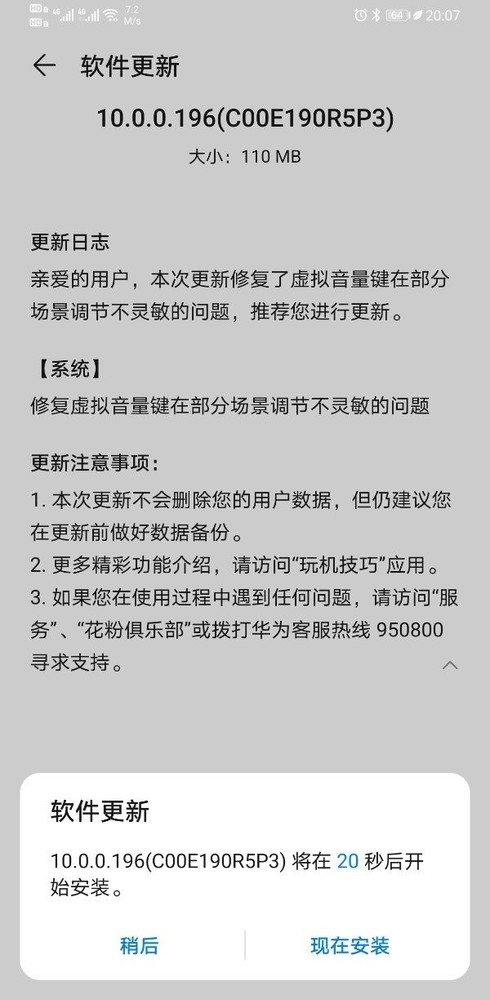
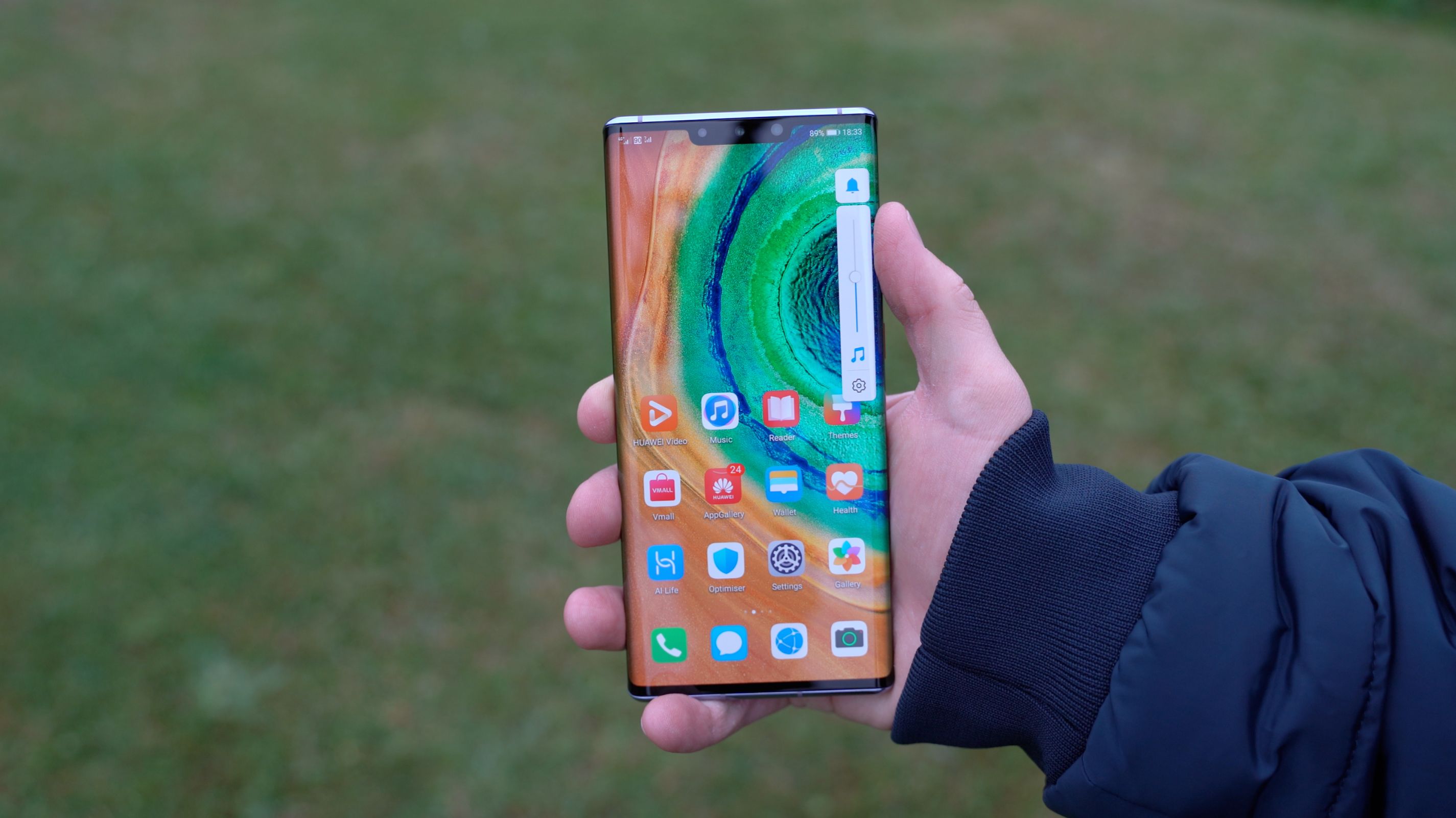
The Huawei Mate 30 Pro 5G launched last year with a pretty curved display called Horizon Display. As part of the design changes made because of the screen, Huawei let go of the physical volume buttons and replaced them with a virtual volume rocker that can be controlled from any side of the screen. However, some users have reported issues when using this virtual volume buttons. Huawei has now begun rolling out an update that improves the functionality.
The update is rolling out to users in China and comes as version 10.0.0.196 (C00E190R5P3). It weighs in at 110MB and a rough translation of the changelog says it fixes the issue of the virtual volume control not working in some scenarios.
There is no info on when the fix will be available for models outside China as well as the 4G model, but if you own a unit and you have gotten the update, do let us know.
The Mate 30 Pro 5G has a 6.53-inch OLED display with a 2400 x 1176 resolution and a wide notch at the top. It is powered by the Kirin 990 5G processor and comes with 8GB of RAM and 128GB or 256GB of expandable storage. It has a 32MP selfie camera paired with a 3D ToF camera. On the back are two 40MP sensors (main and ultrawide) paired with an 8MP telephoto camera and a 3D ToF camera for a quad camera setup.
The phone has Face ID and also has an in-display fingerprint scanner. There is NFC, IR blaster, and Bluetooth 5.1. Unfortunately, it doesn’t have an audio jack. There is a 4500mAh battery inside with support for 40W wired charging, 27W wireless charging, and also reverse wired and wireless charging. The phone ships with EMUI 10 based on Android 10 out of the box.
We use cookies on our website to give you the most relevant experience by remembering your preferences and repeat visits. By clicking “Accept”, you consent to the use of ALL the cookies.
This website uses cookies to improve your experience while you navigate through the website. Out of these, the cookies that are categorized as necessary are stored on your browser as they are essential for the working of basic functionalities of the website. We also use third-party cookies that help us analyze and understand how you use this website. These cookies will be stored in your browser only with your consent. You also have the option to opt-out of these cookies. But opting out of some of these cookies may affect your browsing experience.
Necessary cookies are absolutely essential for the website to function properly. This category only includes cookies that ensures basic functionalities and security features of the website. These cookies do not store any personal information.
Any cookies that may not be particularly necessary for the website to function and is used specifically to collect user personal data via analytics, ads, other embedded contents are termed as non-necessary cookies. It is mandatory to procure user consent prior to running these cookies on your website.