After disembarking from the Xiaomi, Poco is soon going to launch its much-awaited new smartphone – Poco X2 on February 4. However, it’s predecessor, Poco F2 set a new benchmark for the affordable premium smartphone segment in 2018. Due to immense sales and popularity of Poco F1, various third-party developers are aggressively developing support for custom ROMs, Kernels, MODs, and frameworks.
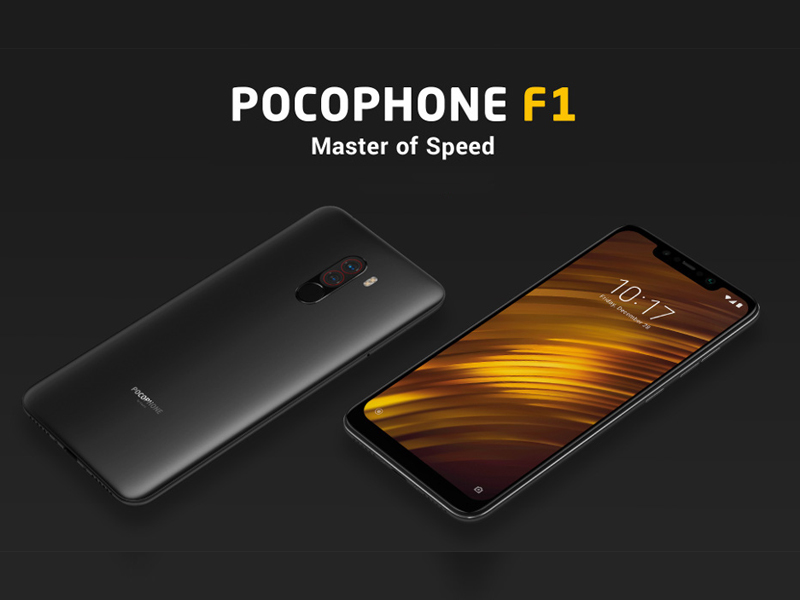
POCO’s first model F1 was a hit in India
Meanwhile, Poco is rolling out MIUI 11 for Poco F1 in some parts around the globe. The update is scarcely limited to few regions, and most of the users are still using the Android 9 based MIUI skin on their Poco F1 units. We have created a guide that will allow the Poco F1 owners to flash the Android 10 based MIUI 11 easily.
The user can flash the Android 10 on Poco F1 without wasting any time. The process won’t affect the root status of your device, and you will keep receiving future updates without any issue. There won’t be any warranty void after sideloading the official OTA update zip by following the guide below.
Features of MIUI 11:
Refined Design – The user interface of the MIUI has become more minimalist and intuitive. The company has removed the unnecessary UI elements from the system.
Always-on-display – The MIUI 11 has enabled customization options for Ambient display. The user can easily choose from different animated clocks, colorful backgrounds, and the ability to type.
Mi Share – A nifty sharing tool from Xiaomi is also a part of the MIUI 11. The Mi Share allows the seamless transfer between Xiaomi, Oppo, Realme, and Vivo smartphones.
Efficient Battery Saver – The MIUI 11 brings improved battery Saver moe. It disables all the background services, and other resource-intensive tasks to save battery.
Dark Mode – As like the Vanilla Android 10, the MIUI 11 also offers a global dark mode for all the apps, settings and other menus.
Improved File Manager – Xiaomi has tweaked the file manager with inbuilt support for PDF, DOCX, and other Office files.
Better Sound Effects, Digital Wellbeing, notification enhancements, blur app previews, new keyboard, activity tracker, dynamic video wallpapers and a lot of other features are part of MIUI 11.
Poco F1 Specifications:
The Poco F1 comes with a 6.18-inch bezel-less display featuring a small notch. The display sports the resolution of 1080 x 2246 pixels, an aspect ratio of 18.7:9 and 403-pixel density. The display is protected with Corning Gorilla Glass. It is powered with Qualcomm Snapdragon 845 coupled with an Octa-Core processor and Adreno 630 GPU.
Poco F1 is available in 64GB + 6GB, 128GB + 6GB, 256GB + 8 GB storage variants.
THe smartphone offers a dual rear camera module with a 12-megapixel primary and a 5-megapixel depth sensor. On the front, there is a 20-megapixel camera for selfie and video calling. There is a dual-LED flash, HDR and panorama features packed intact with the camera module.
In connectivity, Poco F1 offers a Wifi, Bluetooth 5.0, GPS, Radio, USB 2.0 Type-C, and OTG connector. There is Infrared face recognition, fingerprint sensor on the rear, an accelerometer, gyro, proximity and compass sensors.
The beautiful yet powerful device comes packed with a 4000 mAg non-removable Li-Po battery that sports 18W fast charging. Poco F1 features a Graphite Black, Steel Blue, Rosso Red, Armored Edition and Kevlar.
Install Android 10 based MIUI 11 on Poco F1
Xiaomi has kept its promise of rolling out Android 10 for Poco F1. The company is rolling out Android update with the new firmware build number MIUI 11.0.4.0.QEJMIXM. The same update is currently limited to only a few users.
The new build includes all the luxuries of Android 10 and packs additional features from the Xiaomi side. There are some xiaomi exclusive features like swipe gestures, new navigation gestures and much more.
Make sure you have the latest stable update installed.
Download the MIUI 11 Android 10 OTA update.zip from the section above.
Move the update.zip file from PC to the root directory of the smartphone.
Steps to install Android 10 MIUI 11 on Poco F1
While installing, don’t stop the update by forcing a shutdown or rebooting. It may brick your device permanently.
On your smartphone, open updater app on Poco F1 by heading to Settings > About Phone > System Updates.
Tap three dots on the top right corner and choose the ROM package.
Select the Android OTA zip and wait for the installation to complete. (Note: Your phone will automatically reboot.)
That’s it! Enjoy the Android 11 on Poco F1.
It is the most precise and straightforward procedure to install the Android 11 on Poco F1. If you have any issues while installing, then do let us know via the comments below.
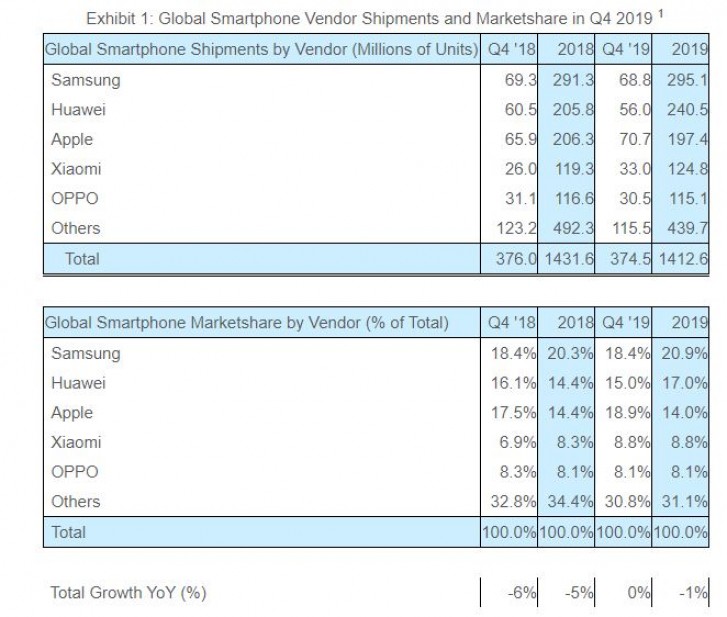
A report by Strategy Analytics (SA) has shown that Apple was the market leader in the fourth quarter of 2019. The Cupertino-based company edged out both Samsung and Huawei to clinch this title.
According to the report, Apple shipped an estimated 70.7 million iPhones in Q4 2019. This figure represents a Year-on-Year increase of 7%. For clarity, Apple shipped 65.9 million smartphones in Q4 2018.
Thus, this is an impressive feat given that the global market remained flat. According to Neil Mawston, Executive Director at Strategy Analytics, this was Apple’s best growth performance since 2015. Apple’s global smartphone market share increased from 18 percent to 19 percent in the past year. The feat is also a clear indication that the brand’s new market strategy that saw more models get launched with cheaper pricing on the iPhone 11 worked. The company also received a healthier demand in Asia and North America.
In total, Apple shipped an estimated 197.4 million iPhones in 2019 to rank among the top 3 vendors in terms of market share.
Huawei is announcing price cuts for its 2019 flagship phones seeing as the P40 series is expected to launch soon. A few days ago, it cut the price of the P30 Pro. Today, it has cut the price of the Mate 30 Pro.
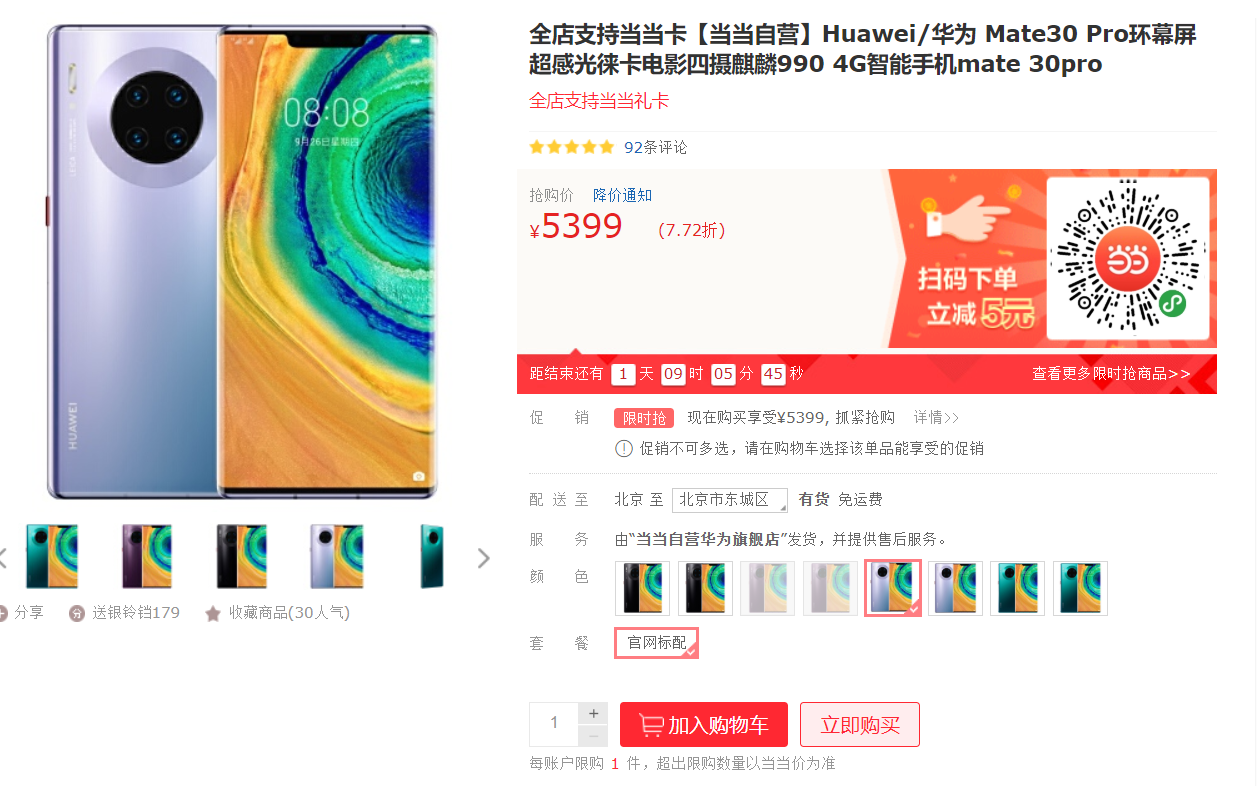
The Chinese giant has reduced the price of the 8GB + 128GB version of the Mate 30 Pro on its official store listed on Dangdang, a Chinese e-commerce platform. The phone which sold for ¥5799 (~$836) when it launched in late September is now available for ¥5399 (~$778) on the platform. Surprisingly, the price is unchanged on Vmall.com.
The Mate 30 Pro has a 6.53-inch 2400 x 1176 display with a wide notch at the top. It has a Kirin 990 processor under the hood. There is also an 8GB + 256GB version along with the 8GB RAM + 128GB version above.
There are four cameras on the back of the phone – a 40MP primary sensor, an 8MP telephoto camera, a 40MP ultrawide camera, and a 3D ToF camera, It also has two cameras in front; one is a 32MP sensor and the other is a 3D ToF camera which is no surprise since the phone has support for Face ID. It also has an in-display fingerprint scanner.
There is a 4500mAh battery inside the Mate 30 Pro and it supports 40W wired charging, 27W wireless charging, and reverse wireless and wired charging. Other features include NFC, IR blaster, Bluetooth 5.1, and support for storage expansion via a nano memory slot.
5G is the new wireless technology for cellular networks. It brings faster internet speeds and lower latencies compared to its predecessor, 4G. Network operators have begun rolling out 5G networks in major markets, and phone manufacturers have been announcing 5G devices even before the network began rolling out.
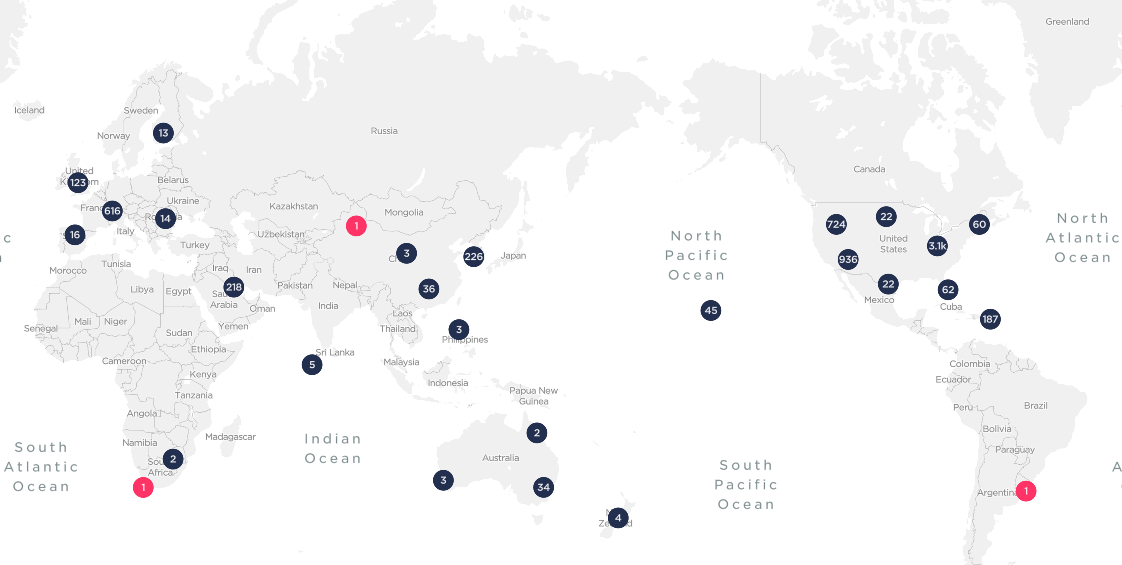
According to Ookla’s 5G Map, commercial 5G has been deployed in 6490 locations across the globe, with the bulk of it in North America, and by a total of 106 operators.
Image source: Ookla
Apart from having a 5G device and a 5G network to connect to, another important requirement is a 5G plan. Mobile network operators in markets that have already rolled out 5G service have followed it with the launch of various 5G plans that their subscribers can choose from. The price of these mobile plans varies from network operators to countries much like our existing 4G mobile plans.
This article will be comparing China’s 5G mobile plans to that of major markets (read the US and Europe).
China – Affordable has a limit
China is at the forefront of 5G not only with respect to the network coverage but also with devices. Manufacturers such as Xiaomi, Huawei, OPPO, Vivo, Honor, and Realme have all announced 5G smartphones and they are selling pretty quickly. Huawei revealed it sold 6.9 million 5G devices and the amazing thing about that figure is none of these phones are priced below $300, which is where a significant percentage of 5G mobile phones sold lies.
To sell more 5G phones, Xiaomi announced affordable 5G plans exclusive to owners of the Redmi K30 5G phone, the cheapest 5G phone you can buy right now. The pricing for these mobile plans even beat some 4G plans. You may be wondering how Xiaomi is able to offer its own mobile plans – the reason is that Xiaomi also has a Mobile Virtual Network Operator (MVNO) or virtual carrier/subcarrier that is based on China Unicom, one of the three main network operators in China.
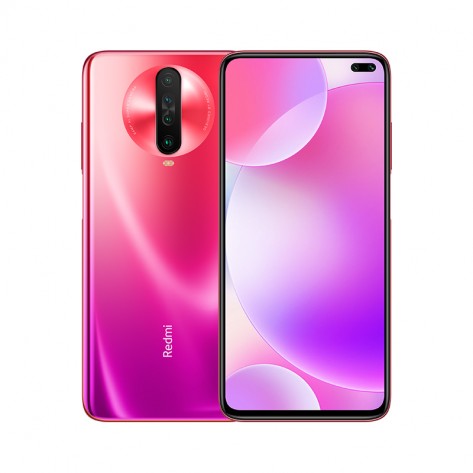
Redmi K30 5G
Virtual carriers are popular in several countries, especially in the US. They use the infrastructure (base stations, switching centers, etc.) of an already established network operator and provide services to subscribers on their network. Google Fi is an example of an MVNO.
Listed below are Xiaomi’s 5G mobile plans:
¥49 (~$7.10) which gives you 20GB of data and 50 minutes of talk time
¥69 (~$10) which gives you 30GB of data and 100 minutes of talk time
¥99 (~$14.35) which gives you 40GB of data and 200 minutes of talk time
Just to compare, I pay ₦8,000 (~$26) for 20GB of LTE data (5GB bonus when you renew before it expires) here in Nigeria with no talk time included.
At the moment, no other smartphone manufacturer offers 5G mobile plans. Xiaomi’s data plans should help it drive more sales and give it an edge over its competitors. And since the Redmi K30 5G has dual-SIM support, you can have a different network in the second SIM slot which you use for calls and SMS. We do not know if Xiaomi will make the service available to its other 5G devices (Mi 9 Pro 5G, Mi MIX 3 5G).
Now, let us compare Xiaomi’s own mobile plans to that of the other three operators.
China Mobile
China Mobile (Home Package)
China Unicom
China Telecom
¥ 128 (~$18.5) – 30GB of data and 200 minutes of talk time
¥ 169 (~$24.5) – 30GB of data and 500 minutes of talk time
¥ 129 (~$18.7) – 30GB of data and 500 minutes of talk time
¥ 129 (~$18.7) – 30GB of data and 500 minutes of talk time
¥198 (~$28.7) – 60GB of data and 500 minutes of talk time
¥ 269 (~$38.9) – 60GB of data and 1000 minutes of talk time
¥ 159 (~$23) – 40GB of data and 200 minutes of talk time
¥ 169 (~$24.5) – 40GB of data and 800 minutes of talk time
¥ 298 (~$43) – 100GB of data and 800 minutes of talk time
¥ 369 (~$53.4) – 100GB of data and 1500 minutes of talk time
¥ 199 (~$28.8) for 60GB of data and 1000 minutes of talk time
¥ 199 (~$28.8) – 60GB of data and 1000 minutes of talk time
¥ 398 (~$57.6)- 150GB of dataand 1200 minutes of talk time
¥ 569 (~$82.3) – 150GB of data and 2000 minutes of talk time
¥ 299 (~$43.3) – 100GB of data and 1500 minutes of talk time
¥ 239 (~$34.6) – 80GB of data and 1000 minutes of talk time
¥ 598 (~$86.6) – 300GB of dataand 3000 minutes of talk time
¥ 869 (~$125.8) – 300GB of data and 3000 minutes of talk time
¥ 399 (~$57.8) – 150GB of data and 2000 minutes of talk time
¥ 299 (~$43.3) – 100GB of data and 1500 minutes of talk time
¥ 599 (~$86.7) – 300GB of data and 3000 minutes of talk time
¥ 399 (~$57.8) – 150GB of data and 2000 minutes of talk time
¥ 599 (~$86.7) for 300GB of data and 3000 minutes of talk time
It is easy to see that Xiaomi’s mobile data plans are much cheaper but since it is only exclusive to the Redmi K30 5G, owners of other 5G phones will have to settle for any of the above.
While all three operators offer similar basic plans, China Unicom and China Telecom take the win by offering more than double the talk time China Mobile offers. The ¥198/¥199 plan of the three networks follow the same pattern with China Telecom and China Unicom, again offering more talk time compared to China Mobile.
However, all three operators provide the same amount of data and talk time for their most expensive plans.
China’s data plans are cheap when compared to that of other countries mentioned below and in comparison to 4G data plans with respect to the price per GB. The low price is expected to encourage subscribers that spend a similar amount on 4G data plans to make the switch to 5G which offers faster speeds.
However, as we shall see, some of the operators in these countries throw in some really nice perks such as free access to video and music streaming platforms as well as game streaming services too.
United States – more expensive but with perks
In the US, T-Mobile, Verizon, AT&T, and Sprint have begun rolling out 5G across the country, though the service is only available in some areas and not statewide. The plans vary with each network operator and pack multiple additional features which makes it impossible to have a table comparing the networks side-by-side.
Verizon
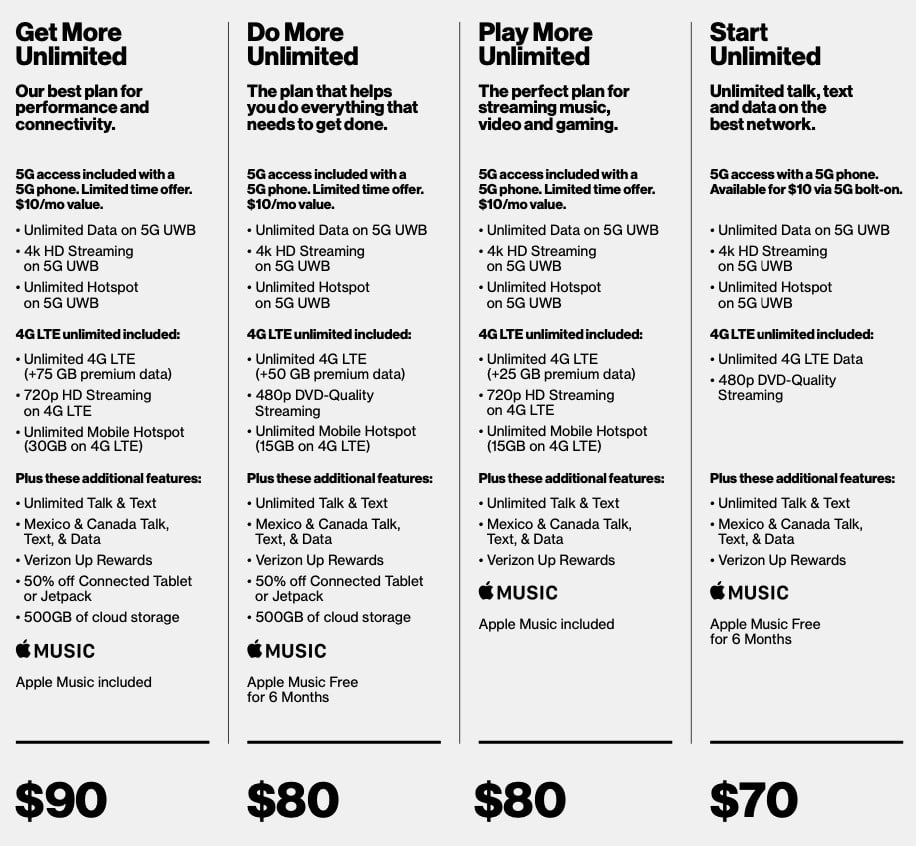
Starting with Verizon, the carrier is sticking to nearly the same price as its LTE plans. If you have a 5G device and are subscribed to any of its LTE plans, all you have to do is pay an extra $10/month to access 5G. However, that access fee is currently waived for all plans except the Start Unlimited plan. Verizon says it is for a limited time and has not yet announced when it will begin charging for it. There is also no mention of throttling when you reach a certain data mark but expect that to happen.
Below are the 5G data plans for the network operator.
Verizon’s 5G Data Plans
Verizon also has a 5G Mobile Hotspot called the Inseego MiFi M1000 that sells for $649 ($27.8/Month) or $499 (2-year contract). If you add the MiFi to your Verizon account, you will be charged $30 per month for 50GB of 5G data and 15GB of LTE data.
T-Mobile
If you are on T-Mobile, you do not pay extra for 5G. The magenta network says users will pay the same amount they currently pay for its 4G unlimited plans which starts at $70per month per line.
AT&T
AT&T doesn’t have special 5G data plans. The network operator is including 5G coverage with its Unlimited Elite and Unlimited Extra plans which cost $85 and $75 respectively. Below are the differences between the plans:
AT&T Unlimited Elite
AT&T Unlimited Extra
$85
$75
Unlimited talk, text, and data in the US, Mexico, and Canada
Unlimited talk, text, and data in the US, Mexico, and Canada
High-Definition Streaming
Standard-Definition Streaming
30GB Mobile Hotspot (slowed down to 128Kbps after crossing 30GB)
15GB Mobile Hotspot (slowed down to 128Kbps after crossing 15GB)
100GB of premium data. After crossing the 100GB mark, data speeds may temporarily slow down if the network is busy
50GB of premium data. After crossing the 50GB mark, data speeds may temporarily slow down if the network is busy
HBO included
No HBO
Sprint
Sprint users can access 5G by subscribing to the Unlimited Premium Plan which costs $80 per month and offers unlimited data, unlimited calls, and unlimited SMS. The plan also includes 100GB of data to use as an LTE mobile hotspot and includes access to Amazon Prime, Twitch Prime, and Tidal HiFi.
In the UK, EE, Vodafone, and Three have rolled out 5G service. EE was the first to launch its 5G network in the UK, ahead of Vodafone and Three. Things are not so straightforward in the UK but one unifying feature is support for roaming in multiple countries.
EE
The operator has only one 5G SIM-only data plan but several other plans that are tied to the purchase of a 5G device from them. Their range of 5G devices includes the OnePlus 7 Pro 5G, Samsung Galaxy Fold, Galaxy Note10+ 5G, OPPO Reno 5G, and the LG V50 ThinQ, etc.
The amount you pay for a particular plan varies from device to device with the Galaxy Fold having the most expensive plan since it is the most expensive device available.
Pricing starts at £49/month for 10GB of 5G data and up to £69/month for unlimited data for a phone like the Reno 5G. While a phone like the Galaxy Fold starts at £99/month for 10GB of data and goes up to £109/month for unlimited data.
Unlimited Data Plan (monthly SIM only plan)
£44/month
Unlimited data, unlimited texts, and unlimited minutes
Three Swappable Benefits – BT Sport, Amazon Prime Video, and Roaming
Vodafone UK
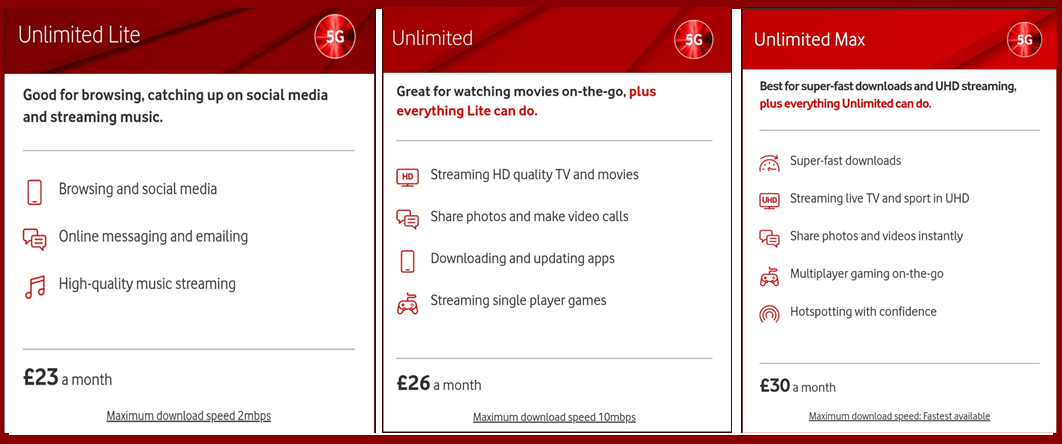
Vodafone on the other hand also offers three unlimited 5G plans – Unlimited Lite, Unlimited, and Unlimited Max. The image below shows the three plans and what they offer:
Vodafone’s UK data plans
Although not stated above, the data speeds are capped at 2Mbps for Unlimited Lite, 10Mbps for Unlimited, while Unlimited Max will be able to access speeds as fast as the device and network supports. Those data speed caps are pretty ridiculous for 5G and you are better off sticking to a 4G plan.
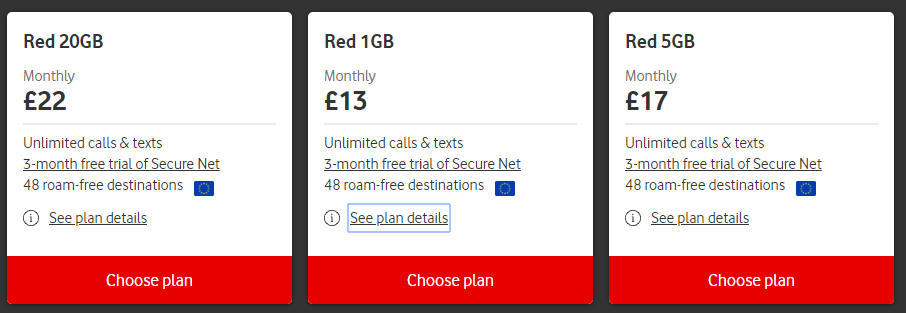
Vodafone's Red Plans
There are also three mobile plans that do not offer unlimited data but you get unlimited calls and texts. There is no mention of a speed cap for these plans, so you should get the maximum speed of your device and the network supports.
Three UK
Three rolled out its 5G service in the UK last but claims its own 5G is “true 5G”. There are several plans available depending on if you want a monthly contract, a 12-month contract, or a 24-months contract. For this post, we will stick to the monthly contract.
There are four plans available for the monthly contract and only one of them offers unlimited data:
Unlimited
30GB
12GB
4GB
£25 (~$33)
£24 (~$31)
£19 (~$25)
£16 (~$21)
Unlimited Data, Unlimited Texts, and Unlimited Calls
Unlimited Texts and Unlimited Calls
Unlimited Texts and Unlimited Calls
Unlimited Texts and Unlimited Calls
Roaming in 71 countries
Roaming in 71 countries
Roaming in 71 countries
Roaming in 71 countries
Personal Hotspot
Personal Hotspot
Personal Hotspot
Personal Hotspot
Go Binge: streaming from Snapchat, Netflix, Apple Music, and more doesn’t count on your data
Go Binge: streaming from Snapchat, Netflix, Apple Music, and more doesn’t count on your data
Go Binge: streaming from Snapchat, Netflix, Apple Music, and more doesn’t count on your data
Go Binge not available
You get unlimited data if you pay £1 extra! Deciding which plan to choose between the Unlimited and the 30GB data plan is definitely a no-brainer.
SWITZERLAND – Swiss Watches, Swiss Chocolates, and Swiss 5G
Switzerland is one of the leading markets with respect to 5G in Europe. Swisscom, one of the country’s leading network operators already has 5G coverage in 90% of the country. That should not be a big surprise since Switzerland is a very small country with respect to the land area. It also has a small population that is under 10 million. The other major network operators in Switzerland are Sunrise and Salt but the latter is yet to roll out its 5G service.
Swisscom
Swisscom says it does not have a special 5G mobile plan but all subscribers have to do to enjoy 5G internet speeds at up to 2Gbps is to pay for Premium Speed option on top of their current plan. This speed option costs CHF 10 (~$10/~ ¥71) and is available for their “inOne mobile go”, “inOne mobile basic”, and “Swiss mobile flat” tariffs. There is a top tier plan, the “inOne Mobile premium” that costs CFA 200 (~$206) and already has the Premium Speed option included.
Swisscom has a variety of mobile plans including special ones for everyone under the age of 26. Some of these plans have a certain amount of allocated data while others have unlimited surfing.
Sunrise
Sunrise has also rolled out 5G to several cities and towns across Switzerland. The operator has a variety of mobile plans which include 5G access. Sunrise has a mix of plans with 5G included and others where you have to pay CHF 10 per month to get 5G access. Below are the plans with 5G access included.
There is a 7 days mobile prepaid plan that costs CHF 19.90 (~$20.5) and you get unlimited calls, unlimited SMS/MMS, and unlimited 5G data.
7 Days Mobile Prepaid Plan
Monthly Mobile Internet Unlimited 5G
Freedom Europe and US
Freedom Young Europe and US
CHF 19.90 (~$20.5)
CHF 59/month
(~$61)
CHF 130/month
(~$132)
CHF 120/month
(~$123)
Unlimited calls, unlimited SMS, and unlimited 5G surfing
Unlimited 5G surfing at up to 2Gbps
Unlimited calls, unlimited SMS, and unlimited 5G surfing
Unlimited calls and SMS in Switzerland, EU, and the US. Unlimited 5G internet in Switzerland. Unlimited 4G+ internet in Switzerland, EU, and US.
New subscribers for the Freedom Europe & US and Freedom Young Europe & US plans will get a brand new HP Probook 440 G6 computer that is worth CHF 929 (~$957).
Other than these plans, Sunrise has a special cloud gaming service for 5G devices called Sunrise Game Cloud Option. For CHF 9.90 (~$10) per month, you get access to a library of over 50 games that includes high-end games such as Tomb Raider, DiRT Rally, and Deus Ex Human Revolution. You will be able to play these games in resolutions up to 4K over 5G on your 5G phone or 5G tablet, or on a PC connected to a good WLAN connection that meets the minimum system requirements. If you buy their HTC 5G Hub, you can even play on your TV by connecting the hub to the TV via HDMI.
At the moment, Sunrise is offering free 3 months of service to anyone who subscribes.
Spain – One step at a time
In Spain, Vodafone is still the only operator that has rolled out 5G service in at least 15 major cities in collaboration with Huawei. The network operator has two 5G plans for individuals.
Unlimited Mobile
Vodafone One unlimited Super
€40.99/month.
€41.99/month(after 3 months, it becomes €84.99/month).
5G unlimited data for social networks and online music at 2Mbps.
5G unlimited data for videos and downloads at 10Mbps on your phone and 600Mbps via Symmetric fiber.
Unlimited calls to landline and mobiles.
Free Seriefans Pack with HBO Spain. Free 3 months subscription to premium Hatch which has up to 160 premium streaming games.
Roaming supported in Europe and the USA.
Roaming supported in Europe and USA
Conclusion
Looking at the data plans of these key markets, prices are expected to drop in the future, especially for those that are charging extra for 5G access. We foresee the extra charge will be removed but the base prices will remain the same. However, subscribers may even get more features bundled with these plans such as free access to game streaming services.
We also expect 5G hardware such as phones, modems, and CPE to get cheaper in the coming months and years. Not only will they get cheaper but network operators will bundle them with free data plans and other perks just to gain more subscribers. However, what will remain unchanged is the difference in pricing with respect to regions. Network operators can only lower prices to beat their competitors in the same market as there is no sense in lowering prices to rival other countries, though the regulatory bodies in each country can step in to see that prices are fair for the subscribers.
China will continue to be at the forefront with respect to hardware (cheaper and more options for 5G mobile phones), 5G coverage, and certain 5G services (smart cities, gaming) as long as it remains the manufacturing hub for mobile electronics and Huawei and ZTE remain in the network business.
When it comes to other applications of 5G such as with self-driving cars, China may also take the lead this decade with key players such as Baidu, Tencent, and even Huawei pumping resources into autonomous driving. That is not to say other countries like the USA will be left behind but the Chinese government has shown more resolve with 5G development compared to other countries.
Apple just revealed the prices of its HomePod in India earlier today without divulging the official release date. However, according to a post on IANS, Apple is expected to launch the product in India within the next couple of months. IANS’ report mentions ‘Trade sources’ as its informant.
According to IANS, Apple’s trade sources in India suggest that the company should launch the device by the first week of March with a pricing of Rs. 19,990 (~$279) which is much cheaper than its international pricing. The smart speaker is currently available in quite a few global markets at a stiffer price tag compared to India. Since inception, the Apple HomePod has been available in the UK, America, and Australia in the first phase.
The device was introduced in Canada, Germany, and France later in June 2018. It arrived in Mexico and Spain next in October of the same year. The Apple HomePod was launched in the US at $399, which was revised to $299 in April 2019.
The home speaker weighs 2.5kg and features a built-in high-excursion woofer, seven horn-loaded tweeters, along with a custom amplifier. Every tweeter comes with its own amplifier, while the device contains six microphone arrays for better voice reception aiding Siri’s voice recognition capabilities.
The basic hardware and functionalities of the smart speaker remain unchanged for India. Apple added support for Indian English in its last iOS and iPadOS update. The HomePod works only within Apple’s ecosystem. Hence, users will need an iPhone 6S at the bare minimum to operate the device.
The Apple HomePod works with the iPhone SE and all newer smartphones from the company. The basic iPad requirements start with the iPad Pro and move all the way to the iPad Mini 4. The list also includes devices like the 5th generation iPad, and iPad Air 2 or newer. All devices need to be paired on a single Wi-Fi network and mandate an active subscription to Apple Music.
Advanced features on the HomePod include automatic bass correction, ambient audio beamforming, along with transparent studio-level dynamic processing. Users can also pair two HomePod’s creating a stereo setup. The device supports every major audio format, while users can also AirPlay their playlist directly from their Apple devices.
The Apple HomePod can be authorized to take voice commands through Siri and control smart home features via Apple HomeKit. While users can control the HomePod using their iPhone or iPad, the device has a touch-sensitive surface on the top for audio playback and volume control.
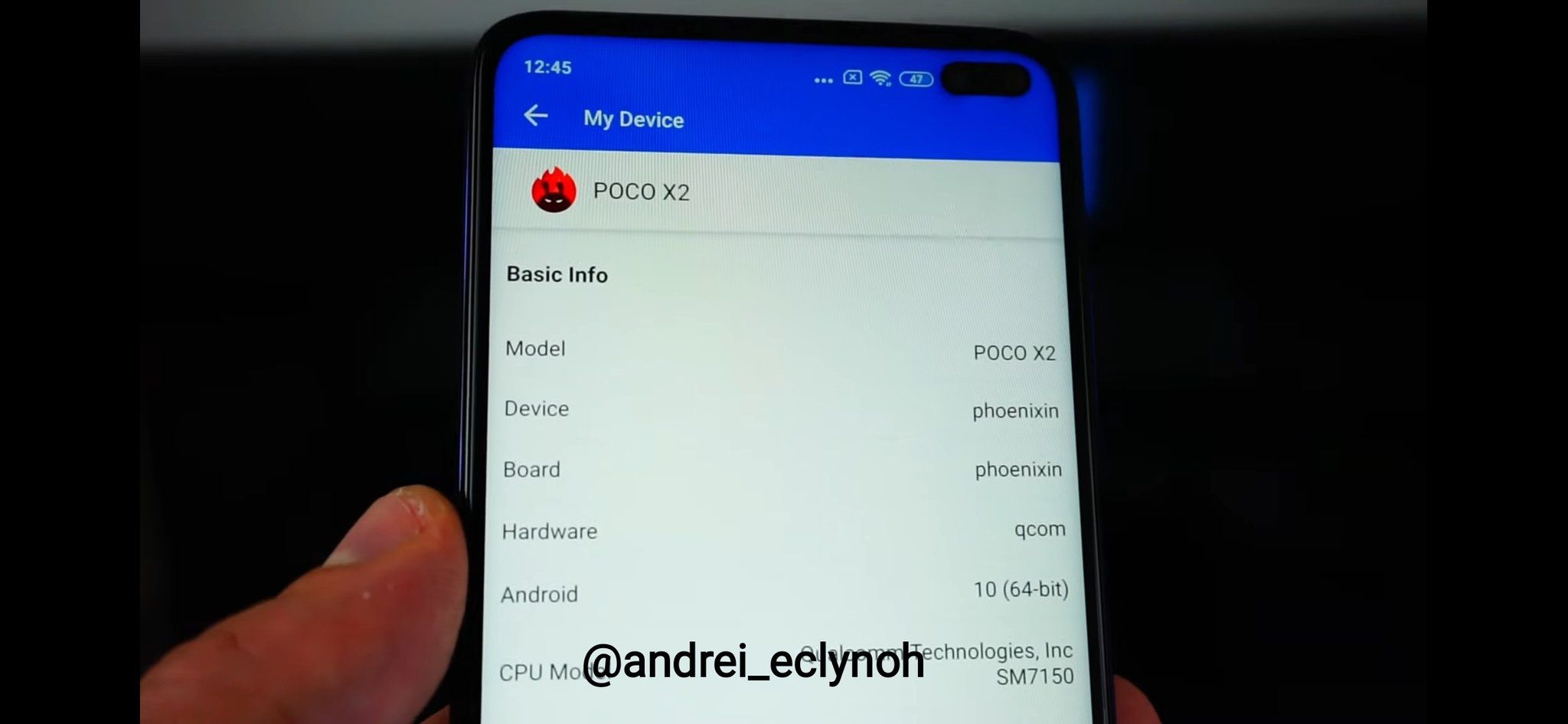
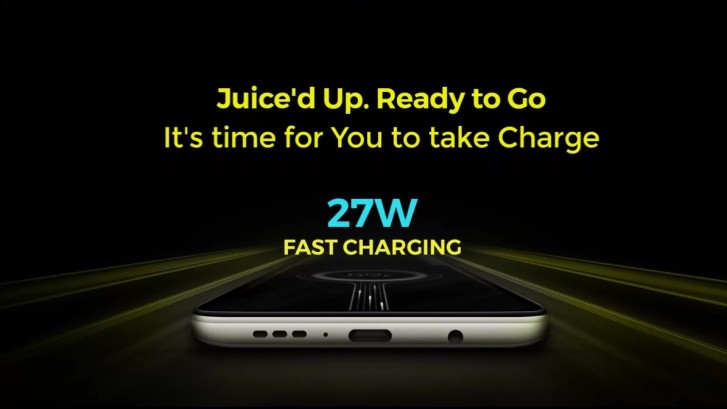
After rolling out a landing page for the Poco X2 on its website, e-retailer Flipkart has released a couple of teasers one of which confirmed the presence of 120Hz refresh rate on the device. The website has played host to yet another teaser showing the Poco X2 will come with support for 27W fast charging.
POCO X2 live shot
The Poco X2 is said to be a rebadged Redmi K30. Even leaked renders and posters have also shown that both phones will share the same design. The specs are also aligning with each other. First, the Redmi K30 comes with the 120Hz refresh rate which ill effectively prevent lagging. The Redmi K30 4G version equally comes with 27W fast charge support while the 5G version has a 30W fast charger.
The Poco X2 is almost confirmed to be a rebranded Redmi K30 4G. That will be a disappointing first outing for the Poco brand which announced its independence from Xiaomi recently. Fans have been waiting for a new model from the brand since the Poco F1 was launched in 2018. The company have got the Poco F2 in the works with a flagship lineup. Who knows how long we’ll have to wait for that one?
For several years running, the US government has been mounting pressure on tech Apple to create a so-called “backdoor” on its smartphone so that law enforcement agencies can readily get access to encrypted data when there is need for such. This has often been rebuffed by Apple. That is why there have been lots of headlines recently about the US government trying to convince companies such as Apple to hand over “backdoor” access to smartphone data of persons on trial for criminal offences.
It has now emerged that the government doesn’t need Apple’s help anymore, after all. A recent report carried by Vice as revealed that the government has been successfully cracking smartphone encryption especially on iPhones without Apple’s help. Interestingly, Android smartphones that were thought to have less secure encryption have been getting increasingly more difficult to crack.
According to Texas detective Rex Kiser, who conducts digital forensic examinations for the Fort Worth Police Department; “A year ago we couldn’t get into iPhones, but we could get into all the Androids. Now we can’t get into a lot of the Androids.”
Vice’s report also contains a claim that a US company called Cellebrite, which is usually hired by government agencies to crack smartphones, already has a tool that can crack iPhone encryption all the way up to the iPhone X. The report claims the tool can successfully give investigators access to data such as GPS records, messages, call logs, contacts, or even data from specific apps like Instagram, Twitter, LinkedIn, and more, which can be used to prosecute criminals.
However, the tool used by Cellebrite has reportedly not been very successful with Android encryption on a variety of handsets. For instance, the tool wasn’t able to extract any social media, internet browsing, or GPS data from devices like the Google Pixel 2, which features a tamper-resistant hardware security module, and the Samsung Galaxy S9. The report says the Huawei P20 Pro didn’t give access to any data at all which is pretty impressive. This may well support Huawei’s insistence that its phones don’t have a backdoor that can be accessed by the Chinese government.
However, do note that this report doesn’t mean your Android device is uncrackable despite the Cellebrite tool not working on some Android devices. Investigators can still extract needed data even on new phones like the iPhone 11 Pro Max but the process is a bit more labour-intensive and takes more time. However, if security and privacy are major concerns to you, then do note that there are better alternatives than the Apple iPhone.
In October, Infinix had launched the Infinix S5 smartphone and it unveiled the Infinix S5 Lite in November. The Infinix S5 series speculated to receive one more member i.e. the Infinix S5 Pro. A recently seen leaked photo had revealed that it will be arriving with a pop-up selfie camera and a notch-less display. The leak had claimed that it will be launching in February. A fresh leak courtesy of 91mobiles state that the Infinix S5 Pro smartphone on Feb. 18. The publication has also revealed some more information on the device.
The tip-off that the publication has revealed states that the Infinix S5 Pro will be equipped with a 4,000mAh battery along with AI smart power management feature. The phone could be fueled by MediaTek SoC and it may house a rear-facing fingerprint reader. The S5 Pro is also expected to feature a 3.5mm audio jack.
The Infinix S5 Pro leaked photo that had appeared recently showcased that it has a notch-less screen. The right side of the top edge of the phone. The volume rocker and power buttons of the phone are placed on right spine of the phone. It could be arriving in two color choices like green and violet. It is speculated that the phone could be priced around Rs. 10,000. By this, it may arrive as the cheapest phone with pop-up selfie snapper in India.
The Infinix S5 has a 6.6-inch full HD+ punch-hole display whereas the Infinix S5 Lite sports a same-sized HD+ screen with punch-hole design. Both phones are powered by Helio P22 chipset and 4 GB of RAM. Both come with 64 GB of native storage. The Android 9 Pie OS comes preloaded on both devices along with XOS UI. The Infinix S5 and S5 Lite are packed with 4,000mAh batteries.
The Infinix S5 has a 32-megapixel selfie camera with f/2.0 aperture. The S5 Lite has a 16-megapixel selfie shooter with f/2.0 aperture. It comes with a 16-mgeapixel + 2-mgeapixel dual camera setup. The Infinix S5 has a triple camera setup that it has a 16-megapixel main lens, a 5-megapixel wide-angle lens, a depth sensor and a depth macro lens. Both phones come with rear-mounted fingerprint scanners. The S5 and S5 Lite are priced at Rs. 7,999 (~$111) and Rs. 8,999 (~$125), respectively.
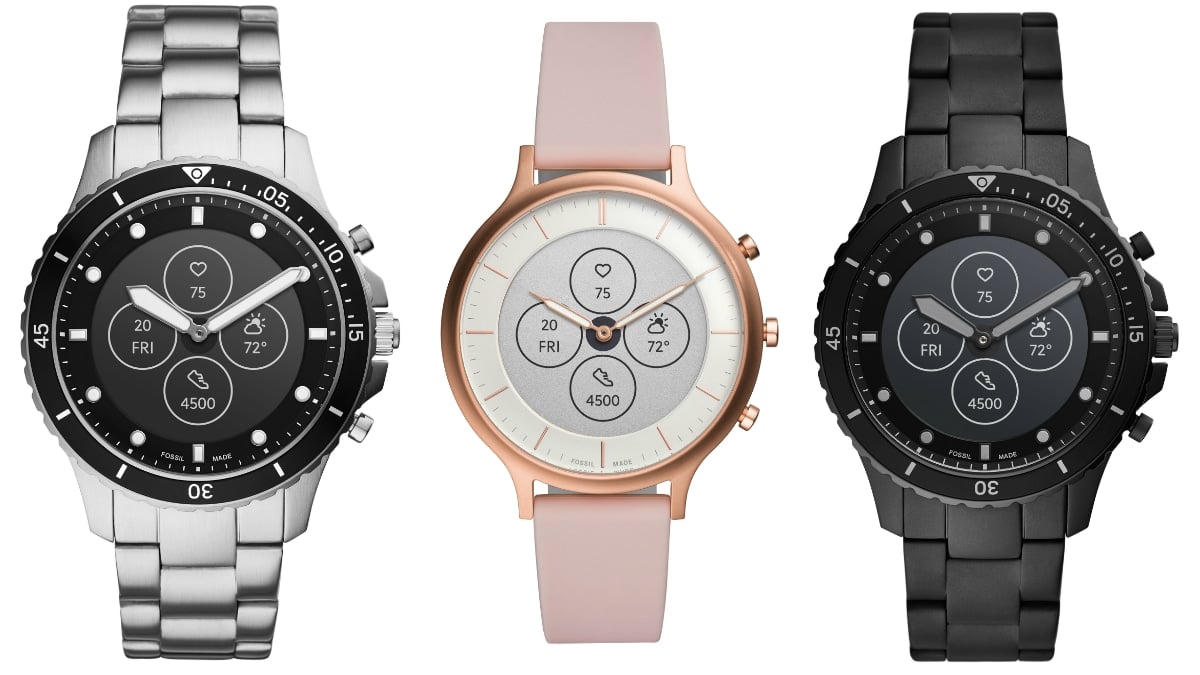
American fashion goliath Fossil has just introduced the Hybrid HR smartwatch in India. Details regarding its specifications, pricing, availability, and variants were just made official during launch. The company calls it a hybrid smartwatch, further adding that it has made every necessary optimization to improve user experience.
The Fossil Hybrid HR sports the right balance between form, functionality, and technology and is priced right below the Rs. 15,000 (~$210) mark. Some of its key features include an always-on display, a second-time zone, heart-rate monitor, notifications preview, and sleep and activity tracking.
Fossil Hybrid HR Smartwatch Features, Specifications and Price
The Fossil Hybrid HR sports mechanical clock hands despite featuring advanced technology to give it the classic look. The device has a 27mm round dial with a small display highlighting the ‘smart features’ of the device. The device highlights notifications like call and missed call alert, unread messages, upcoming alarm and alerts, and more. Some of its other major features include work out details and live weather forecast.
Fossil claims the battery on the Hybrid HR lasts for up to two weeks on a single charge. The device sports rapid charging, which boosts battery power from 0 to 100% within 50 minutes. The smartwatch is water-resistant up to 3 ATM, gets Bluetooth connectivity, accelerometer, front light, timer, and stopwatch. The device can control music when paired with the smartphone and keeps track of the wearer’s daily activity.
The Fossil Hybrid HR is compatible with devices running Android 5.0 or higher, and iOS 10 or higher. The device needs to be paired with the Fossil Smartwatches application to customize the dial and view in-depth data. The Fossil Hybrid HR is available at Rs. 14,995 (~$210) on Amazon India with no-cost EMI and a host of bank offers.
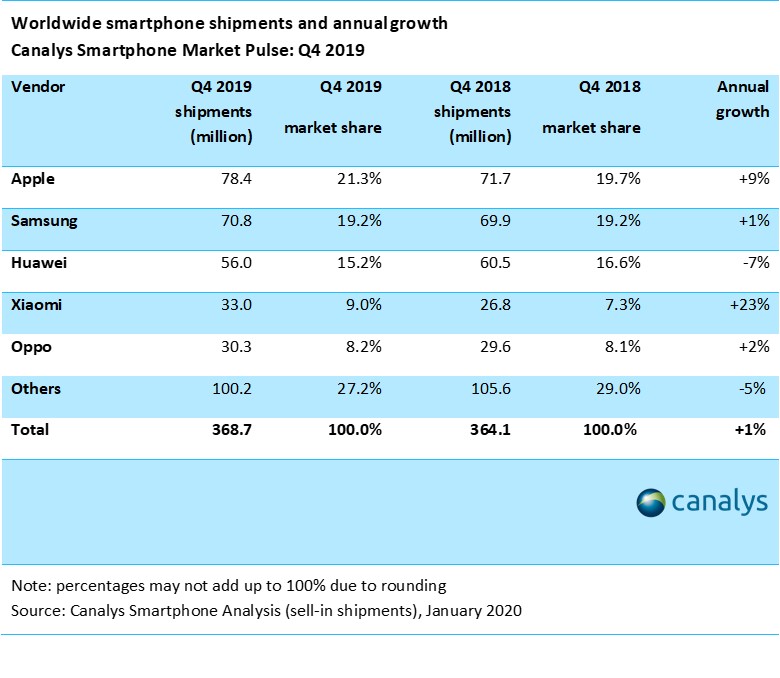
Earlier today (30th January 2020), Canalys, an analytical reporting firm, published its report on the global smartphone market for Q4 in 2019. In the figures shared, it was observed that Xiaomi stood out by achieving the highest growth percentage in comparison to other major brands like Samsung, Apple, Huawei and more.
According to the analysis, the Chinese tech giant shipped 33 million smartphone units in Q4 of 2019, a notable jump over just 26.8 million from 2018. The figures also accounted for Xiaomi having a 9 percent market share over 7.3 percent back in 2018. This marks an overall annual growth of 23 percent, which also made Xiaomi the only company with a double digit growth rate in the list with other major OEMs.
Global Smartphone Market Growth Rate for Q4 2019 (Image Via Canalys)
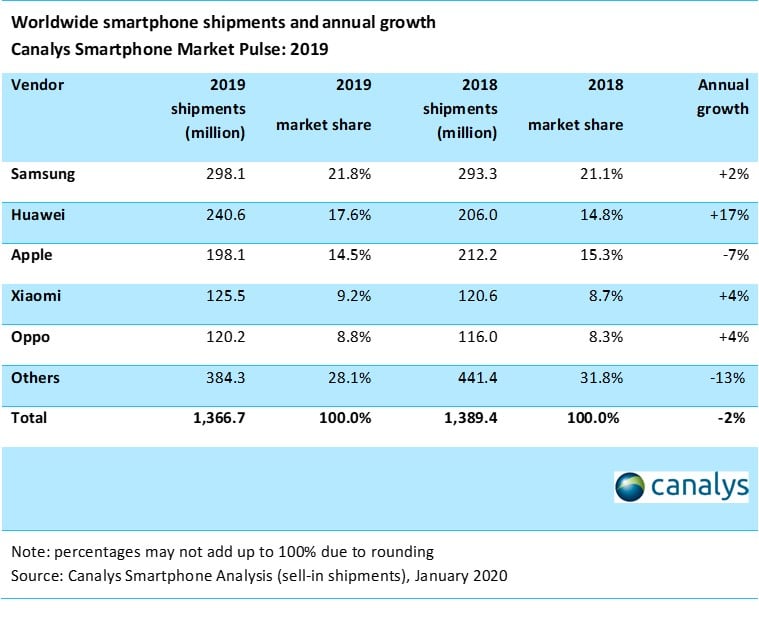
Furthermore, the report also revealed the overall annual market share which had Samsung come out in the lead with a market share of 21.8 percent in 2019. Huawei arrived at a close second with 17.6 percent while Apple and Xiaomi took third and fourth positions with 14.5 percent and 9.2 percent respectively. Oppo falls just behind Xiaomi and has a market share of 8.8 percent, according to Canalys’ 2019 market share report.
As seen in the report, Apple outperformed expectations after its iPhone 11 series weer successful beyond analysts’ expectations. This caused the Cupertino-based giant to have the highest market share with 21.3 percent in Q4 2019. But unlike Xiaomi with its sizeable 23 percent annual growth rate over 2018, other OEMs barely came close.
Global Smartphone Market Share and Annual Growth for 2019
Apple saw a healthy 9 percent growth but Samsung and Oppo saw a meagre 1 percent and 2 percent growth respectively. On the other hand, Huawei’s growth saw a decline rather than growth of negative 7 percent. This is likely due to its increasing fiction with the US Government and rising difficulties in other European regions for 5G development.
Huawei has confirmed through a press release that it will be launching the Huawei Nova 7i smartphone in Malaysia on Feb. 14. While it will be arriving as the first phone in the Nova 7 series, it won’t be an entirely new device. Huawei is good at rebranding and it has done the same with Nova 7i. It will be arriving in Malaysia as a rebadged edition of the Huawei Nova 6 SE that was unveiled along with the Nova 6 smartphone in December 2019. There is a possibility that other global markets may also receive it as Huawei Nova 7i.
According to the Chinese manufacturer, Huawei Nova 7i is a mid-range device that flaunts a 48-megapixel main camera in its quad-camera system. The setup includes an ultrawide shooter and a dedicated lens for capturing macro shots.
One of the key features of the Nova 7i is “MeeTime” which ensures impressive audio and video quality through the front even in dim light conditions. It also claims to be one of the best when it comes to using it as a selfie video camera phone.
Due to the current US trade ban, the Huawei Nova 7i won’t be arriving with Google Mobile Services (GMS). Hence, users will arrive with Huawei AppGallery and users will have to rely on loading APK files.
Being a rebranded version of the Huawei Nova 6 SE, the Nova 7i will be arriving with a 6.4-inch IPS LCD punch-hole display that carries support for full HD+ resolution. The device is fitted with a side-mounted fingerprint reader.
The Android 10 OS comes preloaded on the Nova 6 SE. The Kirin 810 chipset is present under its hood with 8 GB of RAM. It comes with 128 GB of storage. There is a shared SIM slot for additional storage. The device is fitted with a quad camera setup that includes a 48-megapixel main lens, an 8-megapixel ultrawide sensor, a 2-megapixel macro lens, and a 2-megapixel depth sensor. It has a front-facing camera of 16-megapixel. The phone ships with 4,200mAh battery that carries support for 40W fast charging.
The Huawei Nova 6 SE is selling in China for 2,199 Yuan (~$317). There is no word on the pricing of the Huawei Nova 7i in Malaysia.
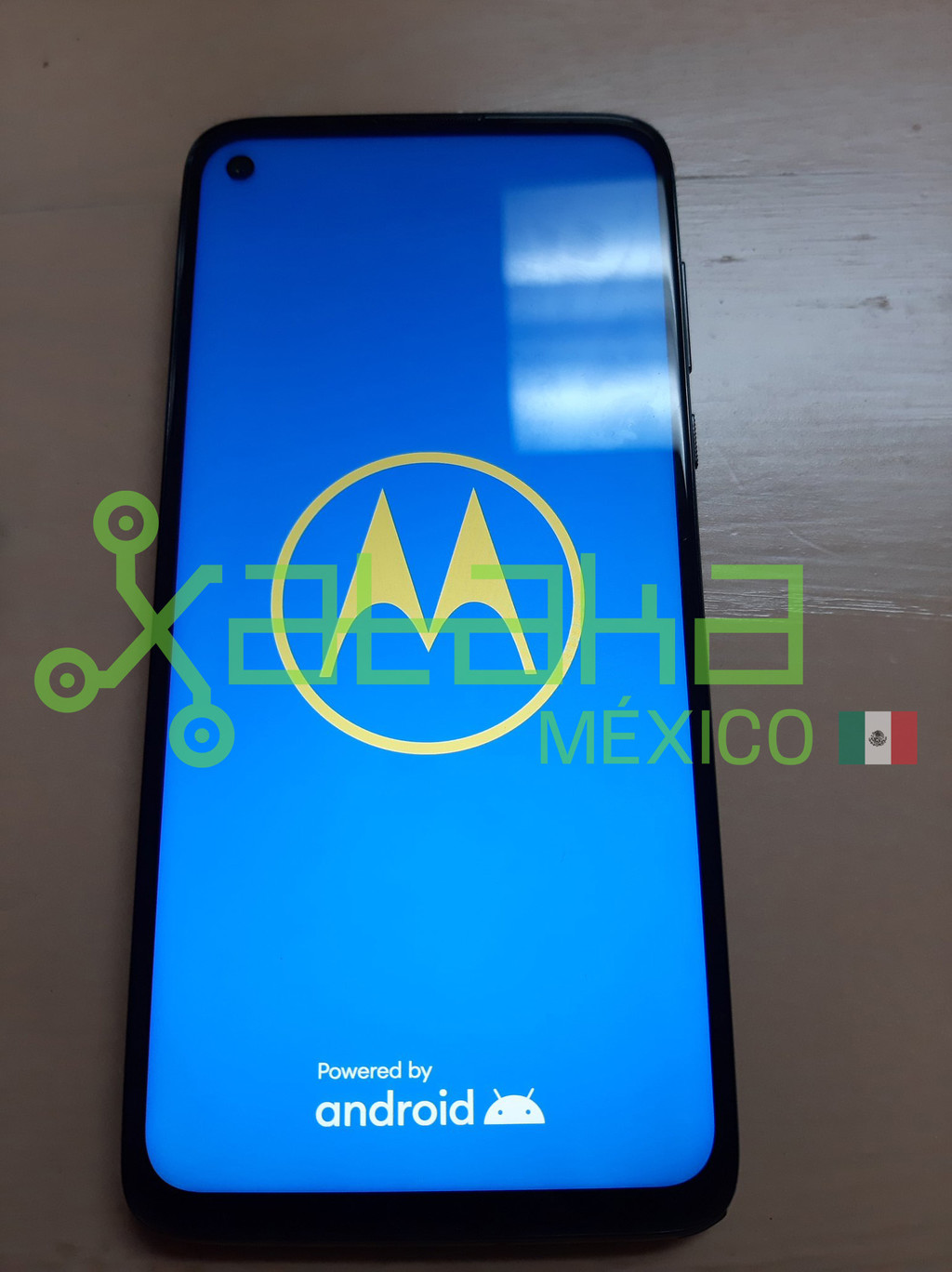
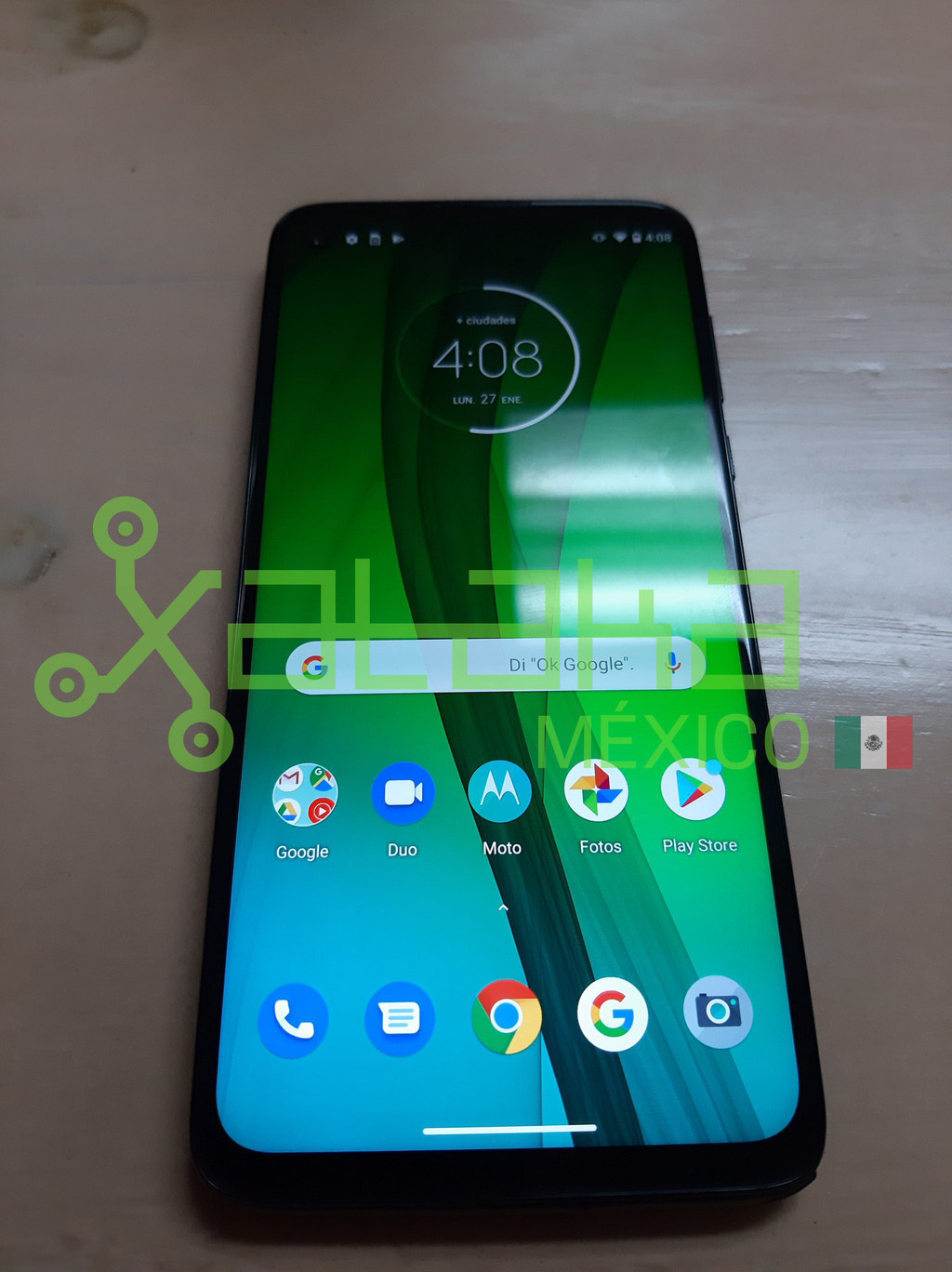
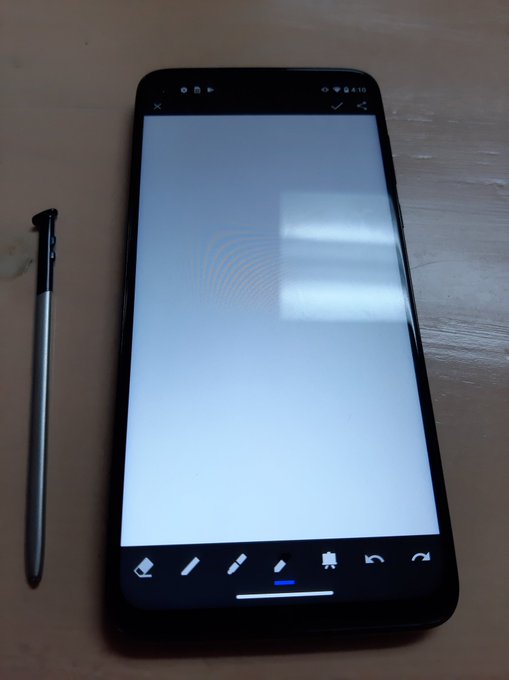
The Moto G Stylus is the name of Motorola’s upcoming mid-range phone with a stylus. Reports say the phone is based on the Moto G8 Power, and now live photos of the phone have surfaced on the web.
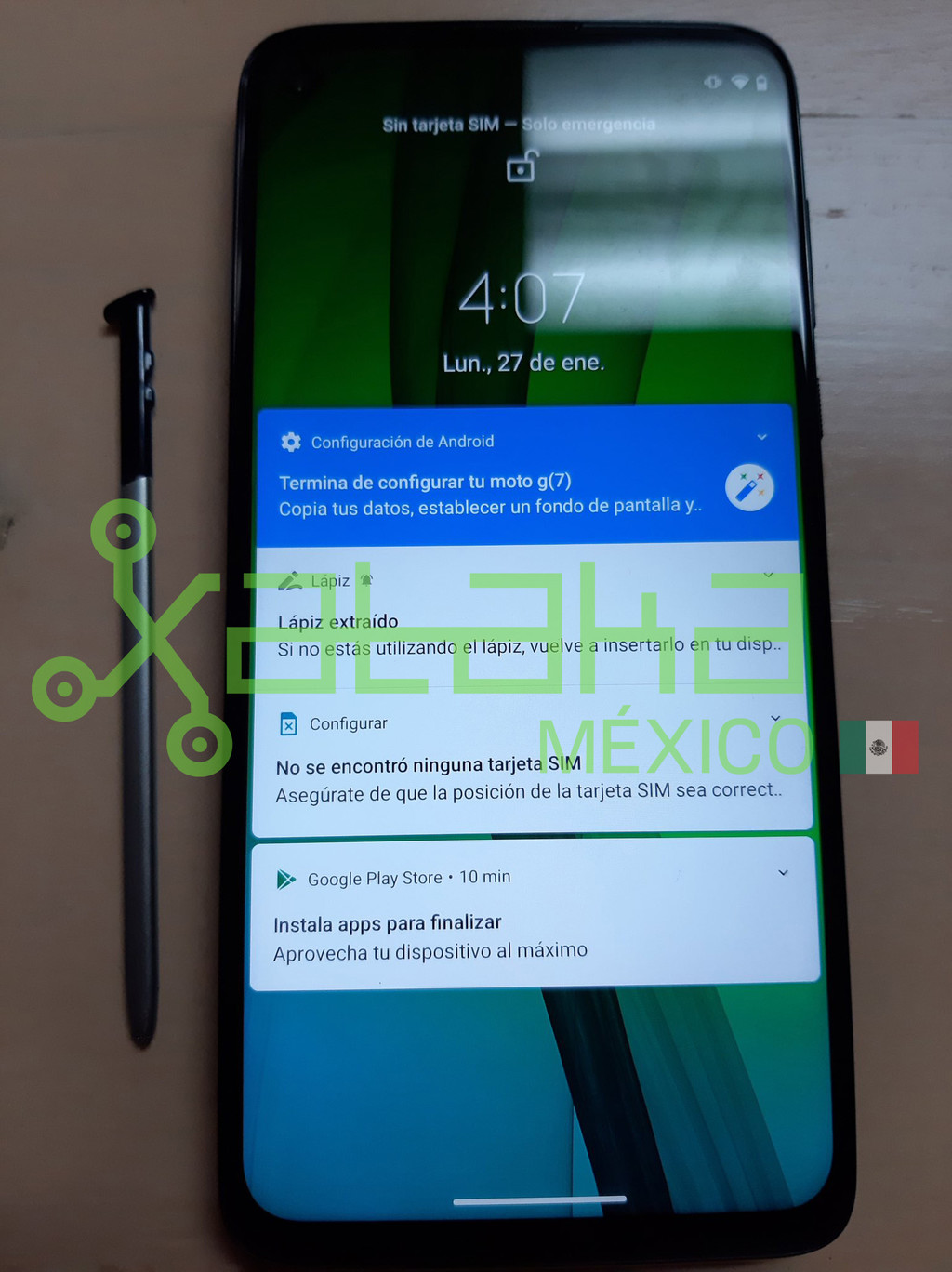
The images were posted on Twitter by a user that goes by Gustavo Gonzalez who seems to have gotten his hands on a production unit. The images confirm the Moto G Stylus indeed has a punch hole at the top left corner of the screen for the selfie camera.
We also get a look at the stylus, which as expected is just basic and doesn’t have any special features. One of the images shows the phone’s lockscreen with multiple notifications in Spanish. But the striking ones are the first and second which translate into “Finish setting up your moto g (7)” and “If you are not using the pencil, insert it back into your device” respectively.
The first one says the phone is the Moto G7 which is surprising but since this is a prototype unit, we presume it is running unfinished software. The second message confirms that the phone has a slot for the stylus, though not visible in any of the images, and will notify you when it is not inserted and not in use.
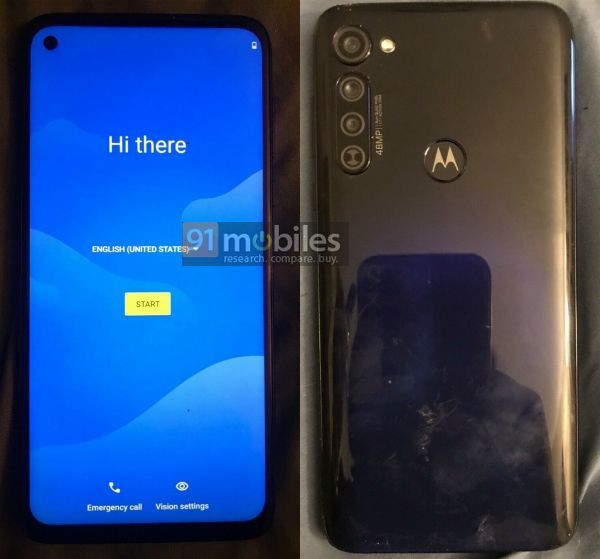
In another set of live photos, this time from 91 Mobiles, the rear of the Moto G Stylus is visible and we can see it has four rear cameras, one of which is a 48MP sensor. The image also shows it has a rear-mounted fingerprint scanner.
The Indian tech blog also includes some specifications of the phone, reported to have been gotten from their sources. It says the Moto G Stylus will have a screen size of 6.3 or 6.4 inches with a 1080p resolution. It will be powered by a Snapdragon 600 series processor with 4GB of RAM and 128GB of storage. It is also stated that it likely has a 4000mAh battery capacity and support for fast charge.
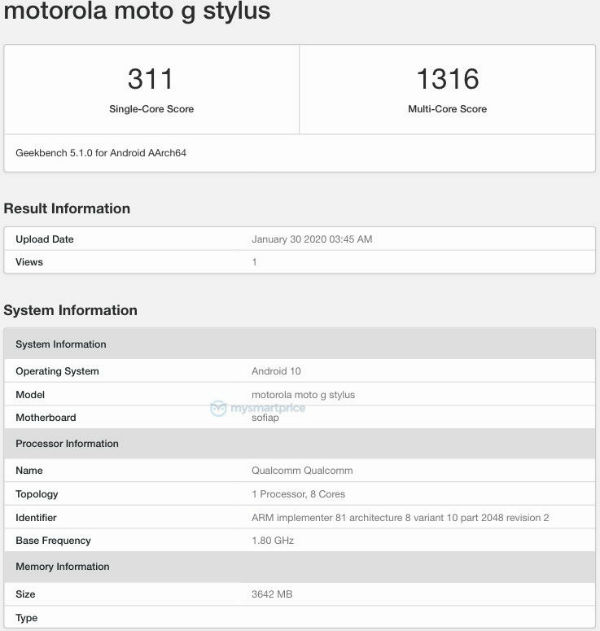
The Moto G Stylus has also been seen on Geekbench today and the benchmark result confirms it has 4GB of RAM, a Qualcomm chipset, and runs Android 10.
Xiaomi has launched a new foldable treadmill under its Youpin crowdfunding platform. The product dubbed Kingsmith Smart Foldable Treadmill and features a design that won the German Red Dot design award. It adopts a price of 2499 yuan ($360).
Just as the name implies, the Kingsmith Smart Foldable Treadmill adopts a foldable design. Xiaomi has always put portability at the foe in the design of its product mostly due to the need for portable products in China where space availability is a challenge. The company had earlier launched the WalkingPad foldable treadmill with a higher version – WalkingPad R1 Pro – getting launched on Kickstarter and later Indiegogo crowdfunding The design is such that you don’t need a professional to install or dismantle. The device also comes with a suspended elastic running board. The elastic board uses the physical properties of a solid wood running board. it can efficiently absorb the impact and noise generated during running and thus provide a comfortable running experience. The treadmill also comes with app support as it can be paired with the MIJIA app.
The treadmill has a maximum load capacity of 110kg and maximum running speed of 15km/h. The treadmill has a running space of 1200x480mm. When it is folded, it can be kept against the wall, taking up a space of less than 0.6 square metres. It crams a powerful motor with 1.25HP power rating.
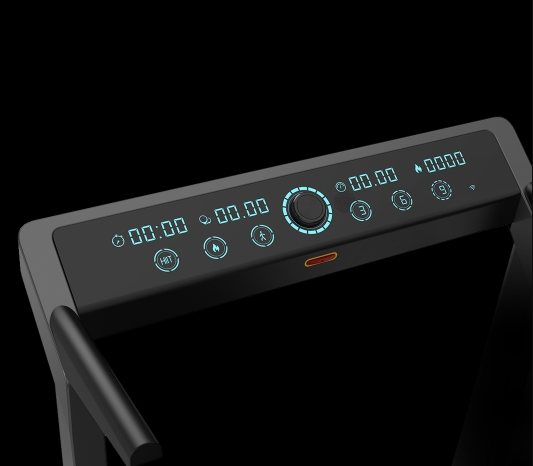
The Kingsmith Smart Foldable Treadmill equally features a 4% static slope, which restores the body’s tilt angle when running. There is equally a hidden LED display which is integrated with the body when it is switched off and becomes clearly visible when switched on. There is a rotatable operation button at the centre of the panel for one-handed operation.
Madhav Sheth, Realme India CEO, stated in his latest Youtube video in the #AskMadhav series, that all smartphone models will receive one major Android OS update alongside two years of security patch updates. This led to confusion as users took to Twitter to confirm whether the Realme X series and Realme Pro series would receive Android 11, which Francis Wang, the company’s CMO, confirmed.
Haha. Ok ok. Agree. Confirmed for Pro series. We try our best not to miss any.
Realme X series and the Realme Pro series will receive two major Android OS updates as they have now been confirmed to support Android 11. According to Wang, Realme X series which includes Realme X2 Pro, Realme X2, Realme XT, and Realme X will receive two major Android patches. Currently, Realme XT has already started receiving the Android 10 update while Realme X will get the update next month followed by the X2 and X2 Pro as well. All of these are confirmed to receive Android 11 update.
Realme XT Star Wars Edition
Similarly, Realme Pro series which includes Realme 3 Pro and 5 Pro has also been confirmed for the Android 11 update. Wang stated on Twitter that the company will “try our best not to miss any,” which vaguely confirms the major OS update. This confirmation arrived after a Twitter user pointed out that Realme 2 Pro had previously received two major updates.
As of right now, Realme 3 Pro has just started receiving the Android 10 update while Realme 5 Pro is expected to get the update in February 2020. On the other hand, other models like Realme 3 and 3i will receive the update in April while the Realme 5 and 5s are expected to be included by May as well. The last to support Android 10 update is Realme 2 Pro in June.
Realme U1
The confusion regarding the number of major OS update began when Madhav stated that only one OS update will be provided. However, he failed to mention that this criterion is only applicable on devices such as the Realme 1, Realme C1 and Realme U1 and not the Realme X or Pro series.
Scientists have developed a new form of bandage which is capable of diagnosing bacterial infections by changing color. It also administers early medication that can potentially help combat antibiotic resistance in cases of infection and save thousands of lives.
The new ‘smart’ bandage can detect which bacteria are present in the body and releases early medication to prevent further symptoms. According to researchers in China, this development could lead to the ‘rational use’ of antibiotics. To elaborate on this, antibiotics are generally prescribed as a precaution until an infection is cured. However, this leads to bacteria becoming immune or resistant to certain antibiotics, which in turn makes it hard to cure an ailing patient.
Thus, the smaller dosage at an appropriate time frame can reduce needless overdose of antibiotics and make the phenomenon less frequent, as drugs nowadays are accelerating the process of immunity for bacterias. Currently, 700,000 deaths worldwide have been attributed to antibiotic resistance, making it one of the largest threats to global health, according to the World Health Organization (WHO).
Hence, tools like the new bandage which reduces the need for precaution and helps in the early determination of the infection may lead to more lives being saved in the future. Early testing of the bandage was done of mice that were infected with either drug-sensitive or drug-resistant Escherichia coli (E.coli) bacteria. The researchers then administered a material that can assess microenvironments, i.e, detect the bacteria on their wounds.
If the tests were on the drug sensitive E.coli, then the bandage turned green to yellow and released an antibiotic that killed the bacteria. On the other hand, if the drug-resistant bacteria were tested, the bandage turned red after coming into contact with an enzyme specifically produced by the drug resistant Escherichia coli. After this, the researchers exposed the bandages to light to release a chemical that weakened the bacteria to make them more vulnerable to medicine.
Timing is key when sensing and treating the bacterial infection, as a quick diagnosis can speed patient’s recovery and reduce the risk of spreading antibiotic resistant microbes. Notably, the new bandage is supposedly a low cost alternative to traditional methods of diagnosing and can rival even the more expensive and time consuming instruments used today.
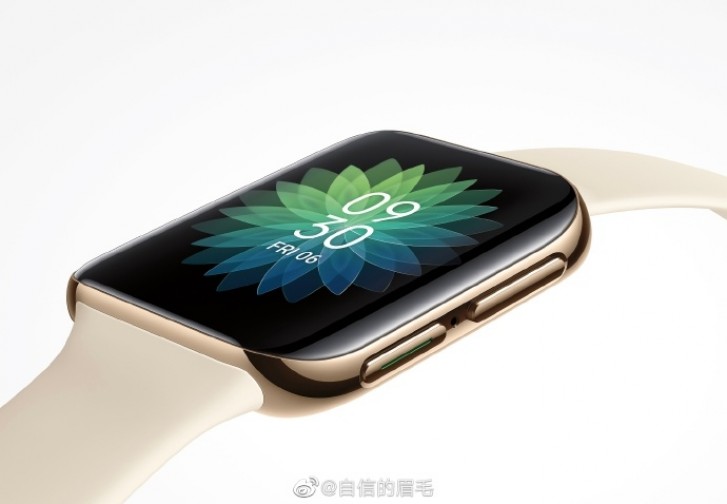
OPPO teased its upcoming smartwatch alongside the truly wireless earbuds at the annual Inno Day event back in December 2019. A new Weibo post from the OPPO Vice President Biran Shen reveals that the upcoming OPPO smartwatch features a square display with curved edges and two physical buttons on the right edge.
The OPPO smartwatch resembles the Apple Watch to some extent. But, unlike Apple’s flagship smartwatch that has a crown along with a single button, OPPO’s design gets two buttons with a hole separating the two. The next name of the device is not known yet. Early rumors suggest that this might be for the microphone input, meaning users will be able to attend calls without fetching the smartphone.
What is yet to be seen is whether OPPO provides a SIM card slot directly on the device or stick to Bluetooth connectivity to keep overall costs down. It is quite certain that the smartwatch will be unveiled within the first quarter of 2020. With the company promising to make its presence felt at Mobile World Congress (MWC) 2020, the chances of witnessing OPPO launch the smartwatch in Barcelona in February are high.
Early rumors of OPPO launching a smartwatch surfaced way back in 2015 on Chinese micro-blogging site Weibo. Although details were scarce at the moment, it was perceived that the device would inevitably run on the Android Wear platform. More recent reports from last week state the smartwatch will feature a heart rate monitor with ECG/EKG to detect abnormalities in the user’s heart rate.
This is a major upgrade from current devices equipped with a heart rate monitor. Only a handful of devices today feature the technology. The list includes Apple’s iWatch, Amazfit Verge, Samsung Galaxy Active 2, and Withings Move ECG. OPPO will likely introduce complimenting hardware to its future smartphone lineup to optimize the smartwatch’s capabilities. More information on the topic is expected over the course of the next few weeks.
Earlier this week, Samsung Electronics announced that its operating profits for Q4 of 2019 fell by 34 percent, which is within its expectations. The South Korean tech giant faces the sizeable slump in profits due to the chip market suffering from a slump and hopes 2020 proves different through 5G network advancements.
Samsung is the world’s largest smartphone manufacturer and memory chip maker and reportedly has an operating profit of 7.16 trillion won or roughly $6.13 billion. Notably, its net profit also saw a fall of 5.2 trillion won or about 38 percent and its revenue fell by 1 percent that is about 59.9 trillion won, which is again within the company’s expectations.
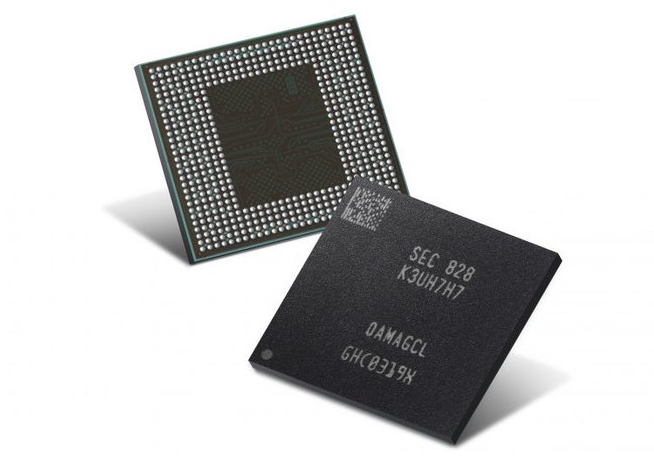
Samsung Memory Chips
The reason for Samsung’s year long decline was due to the falling memory chip market. In 2018, memory chips saw a sudden decline after two booming years after demand went short. Furthermore, the US-China trade disputes also impacted the company with import tariffs and more which eventually led to a massive oversupply of chips that had no market. Thus, the electronics brand is still recovering from the bow while the memory market is also slowly recovering at the same time.
Regardless of this, Samsung saw a rise in its smartphone division, which saw improved sales and “healthy” profits with the Galaxy A series of handsets. Additionally, the company is hoping that the wider adoption of 5G networking will further improve said numbers as Samsung’s offerings are widely adopting 5G variants.
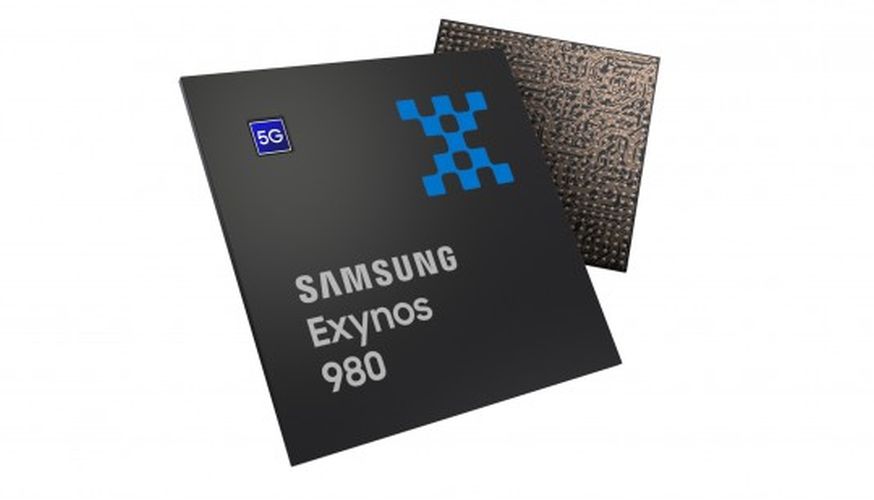
Samsung Exynos 980 5G chipset
The year 2020 is expected to see 5G make a bigger impact than last year and will also slightly bump the smartphone industry as a whole. Samsung already has plans to develop integrated 5G chips and also expects its OLED displays to have higher demand alongside its new high resolution camera sensors. Although it remains to be seen, the exact pace at which the newer and faster bandwidth expands.
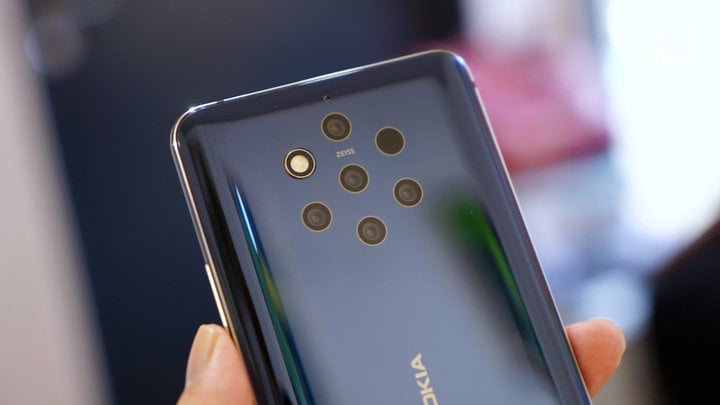
Last year, the Nokia 9 PureView had debuted as the first smartphone with five rear mounted cameras. While the Snapdragon 845 is a really good chipset, fans expected the phone to arrive with Snapdragon 855 mobile platform. The company was rumored to launch Snapdragon 855 edition of the phone later in 2019, but a recent report claimed that the Finnish firm has shunned the plans to unveil it. Instead, it could be launching the Nokia 9.2 PureView handset with the latest Snapdragon 865 could be coming few months later. While the phone is expected to arrive with improved rear cameras, a fresh tweet from Nokia_anew suggests that it could be arriving with under display camera.
The aforementioned Twitter account is known for sharing latest news on the Nokia camp. It had recently revealed that the company is gearing up to launch Nokia 8.2 5G, Nokia 5.2, Nokia 1.3 and a feature phone (Nokia 400 4G?) at the upcoming Mobile World Congress (MWC) 2020 event in February.
Leading smartphone OEMs like Samsung, OPPO, Vivo, Honor and Xiaomi are working on under-display camera technology. However, it is said that the technology is not yet ready for mass production. The latest tweet reveals that HMD Global is currently testing under-display front camera technology in Nokia 9.2 PureView. None of the upcoming flagship phones from Samsung, OPPO, Huawei, Vivo and Xiaomi are expected to arrive with under display camera tech. Hence, the Nokia 9.2 PureView arriving few months later could end up as the first phone with under display camera feature. It is advisable to wait for further reports to know whether the next Nokia flagship phone will be equipped with the said feature.
Recent reports have revealed that the HMD Global may ditch its partnership with Light technology for the rear cameras of Nokia 9.2 PureView. The company may team up with Toshiba for improved photography experience on the next flagship phone.
The Nokia 9.2 PureView could be coming with bezel-less display. It may arrive with a 32-megapixel or a 48-megapixel selfie camera. The smartphone could be equipped with wireless charging. It may lack support for 3.5mm audio jack. The handset may break cover within the first half of 2020. The Finnish firm is also speculated to be working on a foldable phone. It may debut by late 2020 or early 2021.
With the new year, most of the smartphone makers are now gearing up to launch their flagship smartphones. Chinese smartphone maker Xiaomi is now gearing up to launch its Xiaomi Mi 10 in China.
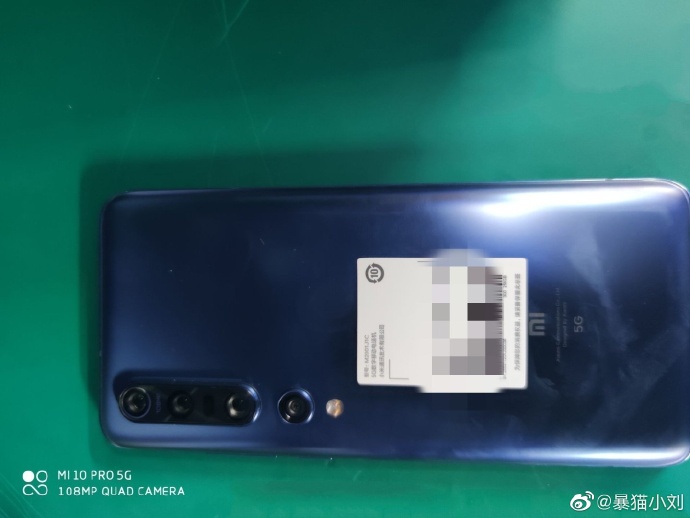
Now, Wang Teng, Xiaomi’s Product Director has shared a new photo on Chinese microblogging platform Weibo which seems to have exposed the upcoming Mi 10 smartphone. The post reveals a screenshot of a smartphone with full-screen display and the IMEI number seems to be of a prototype model.
It also shows that the smartphone will carry 2340 x 1080 Full HD+ screen resolution. Further, it reveals the phone will come with a punch-hole at the upper left corner. This seems to be in line with the leaks suggesting that the Mi 10 and Mi 10 Pro will have a punch-hole cut-out in the upper left corner of the display.
As per the leaks, the smartphone will feature curved OLED panel sources from Samsung and will be offering 90Hz refresh rate. On the back side, the device will be equipped with a quad-camera setup, consisting of 108-megapixel primary sensor. The camera sensors will be arranged vertically in the top-left position.
According to the info in the image recently leaked, the Mi 10 Pro will come with a 6.4-inch display and will be powered by the latest Qualcomm Snapdragon 865 processor along with 16GB of RAM and 512GB of storage.
It also reveals that the Pro model of the smartphone will be powered by a 5,250mAh battery. The Mi 10 not only has a big battery but it has been confirmed that it will support 66W fast wired charging, along with fast wireless charging support.
Xiaomi has already confirmed that the Mi 10 series smartphones will get launched in this quarter but its exact date remains unknown. However, some leaks indicate that the phone could get launched on 11th February.
Samsung is rolling out the new One UI 2.0 Beta update based on Android 10 to all its flagship and mid-range devices. Recently the same beta update is rolling out for the Galaxy S9 and Galaxy S9+. The beta update is limited to the testers in some countries including the US, UK, India, South Korea and more. However, non-beta testers can also install the One UI 2.0 beta on their respective Galaxy S9 units by following the guide below.
The stable Android 10 based One UI 2.0 update has started gradually rolling in some areas around the globe. The Korean giant has fared well this year while rolling out Android 10 updates in comparison with the Android 9.0 Pie rollout. The stable update for Galaxy Note 10 and S10 series is already rolling out.
Features of Android 10 based One UI 2.0
New Gestures – A set of new gestures from Samsung are part of the latest upgrade.
Refined App Permissions – Android 10 brings the option to switch on permission when using the app.
Smoothness and other UI Tweaks – The One UI 2.0 improves on various UI elements including navigation bar, status bar, and others.
Better Notifications – Enhanced Notifications, including automatic reply options in the notification itself is purely a new concept.
New Animations and Better front camera – Samsung has optimized the front camera software to capture more detailed pictures.
Digital Well Being, Focus Mode, Night Mode – The new version of Samsung’s popular One UI brings improved Digital Wellbeing. The new update also brings focus mode and new parental controls to track your kid’s smartphone usage. Night Mode or Dark Mode is another well-received feature after continuous demand from the users over the past few years.
Enroll One UI 2.0 Beta Program
The One UI 2.0 based beta update is now rolling out for Galaxy S9/S9+. The interested users can enroll in the Beta Program to get the latest update first.
Steps to Enroll:
Open Samsung Members App on the Galaxy S9 device. If the app is not present, then install it from the Play Store.
Log in with the respective Samsung account.
Tap bell icon to open the “Notices” section.
Now, select “Registrations for One UI Beta Program (S9/S9+).”
Tap the image to open the registration page.
Select ‘Enroll’ after scrolling down to the bottom of the page.
You have successfully enrolled in the beta program.
The user can head over to the device Settings>Software Update>Check for OTA update.
You may now download and install the One UI 2.0 beta update.
However, if you didn’t receive the update due to unavailability in your region, then download it manually from the link below.
Install One UI 2.0 Beta OTA zip on Galaxy S9/S9+
If you didn’t receive the One UI 2.0 update automatically after enrolling in the Beta program. Then, follow the steps below to manually install Ine UI 2.0 OTA Zip.
Note: One UI 2.0 beta is currently in beta testing phase for Galaxy S9 and S9+. It might contain bugs and can be unstable for daily use.
The stable update will automatically come to the enrolled beta devices. However, others have to install the beta-to-stable OTA just like we are installing Beta OTA zip.
Prerequisites:
In order to update, the user should have the latest stable firmware or Android Pie CSK1 firmware. If you don’t have it, then make sure to either install it by downloading from the OTA depositories or wait for the stable update.
The process is compatible only with Galaxy S9/S9+ multi-CSC OXM. You can check by entering the *#1234# in the dialer and confirm “OXM” is shown in the CSC version.
Download the respective One UI 2.0 Beta for your Galaxy S9/S9+ variant.
Now, rename the “example.bin” file to “update.zip”.
Use USB cable to connect your smartphone with PC.
Move the downloaded update.zip file to the root directory of your phone.
Shutdown your smartphone and hold Volume Up + Bixby + Power buttons together to boot into the Stock Recovery Mode.
Now select “Apply update from SD card” by using the volume and Power button.
Browse for the file in the SD card by using volume keys.
Finally, select the file by pressing the Power button on Galaxy S9/S9+.
That’s it! Enjoy One UI 2.0 Beta on Galaxy S9.
There’s another method to install the update on Galaxy S9.
Install One UI 2.0 Beta update using ADB Sideload
This method needs a computer and some external files as mentioned below.
Prerequisites:
Download and install the Android SDK platform-tools package from here and install it on your PC.(Note: Extract the ADB and Fastboot drivers in a folder.)
Download the latest Samsung USB drivers for Galaxy S9 and install them on PC.
Steps to Install:
Download One UI 2.0 Beta OTA package for Galaxy S9/S9+ from the Download section above.
Now, move the downloaded file to the extracted ADB and Fastboot tools.
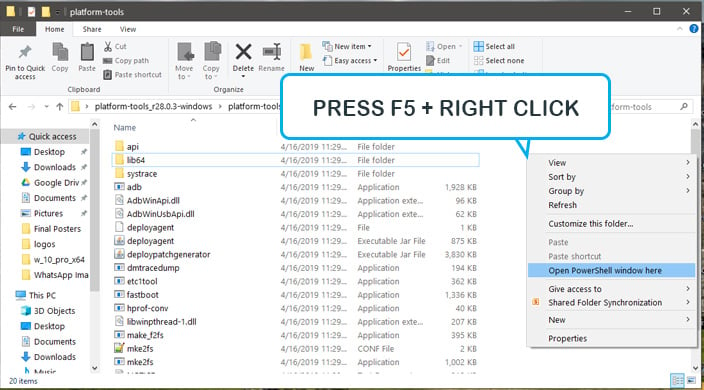
Open CMD or Power Shell Window by pressing Shift + Right Click. Then, click the “Open PowerShell window here.”
Power-off your device.
Now, Hold Volume Up + Bixby + Power buttons together to boot Galaxy S9 into the Stock Recovery Mode.
Connect Galaxy S9/S9+ to PC via a USB cable after booting into the Stock recovery.
Select “Apply update from ADB” by using volume buttons.
After connecting with PC, execute the following command to sideload the OTA package:
adb sideload update.zip
The update will start installing and users can see the progress at the bottom of the phone’s screen.
Now, Enjoy the One UI 2.0 on your Samsung phone.
We hope you’ve successfully installed the OneUI 2.0 Beta for Galaxy S9/S9+. If any error or any problem arises, then do let us know below via the comments.
We use cookies on our website to give you the most relevant experience by remembering your preferences and repeat visits. By clicking “Accept”, you consent to the use of ALL the cookies.
This website uses cookies to improve your experience while you navigate through the website. Out of these, the cookies that are categorized as necessary are stored on your browser as they are essential for the working of basic functionalities of the website. We also use third-party cookies that help us analyze and understand how you use this website. These cookies will be stored in your browser only with your consent. You also have the option to opt-out of these cookies. But opting out of some of these cookies may affect your browsing experience.
Necessary cookies are absolutely essential for the website to function properly. This category only includes cookies that ensures basic functionalities and security features of the website. These cookies do not store any personal information.
Any cookies that may not be particularly necessary for the website to function and is used specifically to collect user personal data via analytics, ads, other embedded contents are termed as non-necessary cookies. It is mandatory to procure user consent prior to running these cookies on your website.