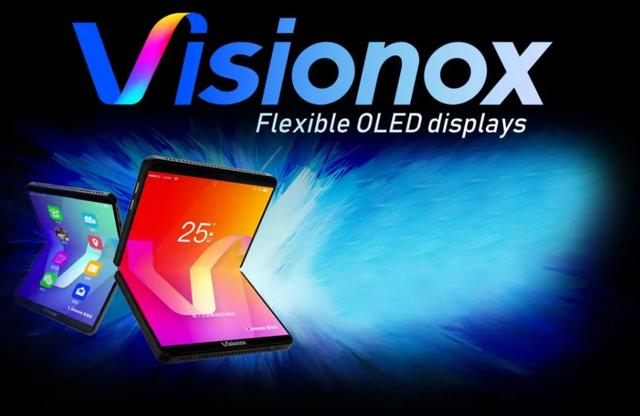
Outside China, Visionox Co Ltd may not be a popular brand but the firm is a leading Chinese manufacturer of organic light-emitting diode screens popularly known as OLED screens. Some of the popular products you know have OLED panels supplied by Visionox onboard like the Xiaomi Mix Alpha, Mi CC9 Pro, ZTE’s first 5G mobile phone Axon10 Pro, Nubia Red Devils 3, China Mobile 5G mobile phone pioneer X1, LG mobile phones, etc. Sources close to the company have disclosed that Visionox has entered into a partnership with Huawei to supply display panels for some of the tech giant’s product lines.
The sources hinted that Visionox has already received Huawei’s official supplier code and will provide samples for Huawei from February 2020. They also disclosed that the mass production of the screens will commence a month later in March. The company will reportedly supply Huawei with display panels for the Honor and Nova series.
However, there are concerns that Visionox current production capacity may not be able to meet up with Huawei’s demand. Huawei is expected to order 5-10 million mobile phone screens from Visionox in 2020. This may likely include punch-hole OLED displays which have been elusive from Huawei’s product line.
Vivo announced the Vivo X30 series smartphones on December 16 in China. The new lineup is important for the Chinese smartphone maker for two main reasons. First, the Vivo X30 and the X30 Pro expands the company’s 5G product portfolio in China. Second, it is the world’s first pair of smartphones to be powered by the 5G integrated Exynos 980 chipset. This is a newfound relationship between Vivo & Samsung with the company revealing that it even contributed in the development of the chip.
Vivo X30 vs Vivo X30 Pro: Design
When you look at Vivo X30 vs Vivo X30 Pro, there are hardly any differences. They have an almost identical design, which includes a vertical camera setup at the back and a punch-hole display with a small 2.98mm diameter hole for the selfie camera on the top right corner.
However, the only difference between the two devices, in terms of both specifications as well as design is its camera setup. While the X30 gets a triple camera setup at the back, there’s an additional periscope shooter on the Pro variant, making it a quad-camera setup. Both phones come in a glass back and have the same color variants.
Vivo X30 vs Vivo X30 Pro: Specifications
Once again, there are hardly any differences between the two devices in terms of core specifications. Both smartphones are powered by the 5G-integrated Exynos 980 chipset that features 2 x Cortex A77 cores and 6 x Cortex A55 cores. The 5G modem inside the Exynos 980 chip supports SA and NSA networks (n41 and n78 bands). Both phones come with 2.4GHz, 5GHz, 5.8GHz WiFi; Bluetooth 5.0, NFC, and an audio jack. Yes, both the devices have a dedicated 3.5mm headphone jack, unlike competitors like the Reno3 series.
There’s 8GB of RAM onboard with two storage variants; 128GB and 256GB. Note that the storages are UFS 2.1 and not UFS 3.0 like the OnePlus 7T. You get the exact same 6.44-inch Super AMOLED HDR display on both the devices with an in-display fingerprint sensor. A 4350mAh battery powers both the devices with 30W fast charging.
Vivo X30 vs Vivo X30 Pro: Camera
So far, the Vivo X30 and the X30 Pro have been identical. But there’s a $100 difference between the two devices! And Vivo justifies that with the fourth additional camera on the Vivo X30 Pro.
The standard X30 comes with a 64MP f/1.8 primary camera (OIS), a 32MP f/2.0 telephoto shooter with 2x optical zoom, 20x digital zoom, and 50mm focal length, and an 8MP f/2.2 ultra-wide shooter. The setup on the Vivo X30 Pro is exactly the same as the basic X30 model. But the fourth camera on the side is the real game-changer. It’s a special periscope 13MP camera with f/3.0 aperture shooter featuring 5x optical zoom and a whopping 60x digital zoom. It’s no surprise that the X30 Pro gets its own special moon mode as well. It’s also worth adding that each of the three cameras (except for the ultrawide lens) have OIS on board.
Upfront, a 32MP f/2.4 shooter takes care of your selfie needs on both the devices.
Vivo X30 vs Vivo X30 Pro: Price
With the additional periscope camera being the only addition on the X30 Pro, a $100 price difference seems a bit too much. The standard Vivo X30 is priced at ¥3298 (~$472) for the 128GB version and ¥3598 (~$515) for the 256GB version. On the other hand, the Vivo X30 Pro starts at ¥3998 (~$573) for the 128GB version and goes up to ¥4298 (~$616) for the 256GB version. Both the phones are on sale in China right now, but no word on an international release date yet.
Do you think the $100 price difference between the two models is justified?
The year 2019 was an eventful year in the tech industry resplendent with several defining moments like when Xiaomi launched the Mi 9 as the first Snapdragon 855 model. The Huawei P30 also made its entrance, taking mobile photography to another level. In terms of cost-effective pricing, Redmi continued to blaze the trail but Vivo‘s iQOO join the trail. Realme also delivered some cost-effective smartphones this year.
Of all the features that made the headlines, 5G dominated. The new technology is expected to usher in a new vista in the mobile phone industry. It also played a key role in all the Systems-on-Chip we saw this year as OEMs strive not to be left behind. Here’s AnTuTu’s review of all the major mobile phone SoCs released in 2019. Their ratings are based on several criteria such as flagship performance, technology innovation, cost-effectiveness and others. Do not tat this rating is restricted to Android phone SoCs and doesn’t include Apple’s.
The major Android mobile phone SoCs include Qualcomm’s Snapdragon, Huawei’s Kirin, MediaTek’s, and Samsung’s Exynos. The SoCs from these fabless chipmakers comes with several improvements such as high performance, high refresh rates, high pixels, and 5G. technology.
AnTuTu 2019 SoC Awards: Strongest performance – Snapdragon 855 Plus
Unlike previous years when only one flagship was launched, this year’s Qualcomm also launched the Snapdragon 855 Plus with stronger GPU performance, which quickly became the flagship standard in the second half of 2019. With an average score of 480,000 (Antutu Evaluation V8), the Snapdragon 855 Plus emerged as the SoC with the best performance.
The Snapdragon 855 Plus is built using a 7nm process. The CPU and Snapdragon 855 are also based on the Kryo 485 architecture modified from the Cortex-A76 magic, but the main frequency has been increased from 2.84GHz to 2.96GHz. The GPU uses Adreno 640, the frequency has been increased from 585MHz of Snapdragon 855 to 675MHz, and supports a series of technologies such as Vulkan 1.1 API, 10bit HDR, 4K HDR display (support external), H.265 specification and VP9 decoding.
Although the Snapdragon 855 Plus does not have a built-in 5G baseband, its performance is obvious to all.
Technology Innovation Award: Huawei Kirin 990 5G
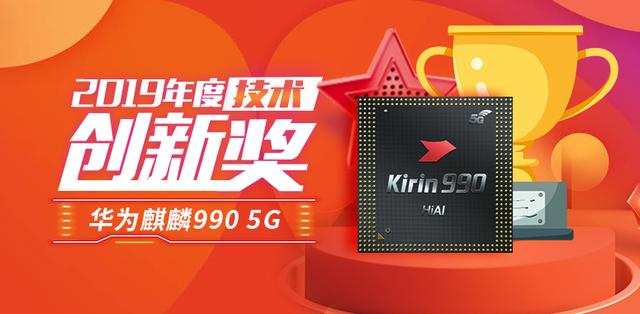
This year’s Huawei Kirin SoC is undoubtedly the most spectacular. The latest Kirin 990 5G is the industry’s first integrated 5G baseband SoC, which in a sense surpasses the world’s top manufacturers.
The Kirin 990 5G is manufactured using TSMC’s 7nm + EUV extreme ultraviolet lithography process, integrating up to 10.3 billion transistors. It is the industry’s first mobile SoC to break the 10 billion mark in terms of transistors. The CPU part integrates two 2.86GHz Cortex-A76 cores, two 2.36GHz Cortex-A76 cores and four 1.95GHz Cortex-A55 cores. The GPU has been upgraded to a 16-core Mali-G76 MP16, which has 6 cores more than the Kirin 980. Baseband supports 2/3/4 / 5G networks, NSA / SA dual-mode, TDD / FDD full frequency bands, and full Netcom 5G.
Technology Innovation Award: Samsung Exynos 980
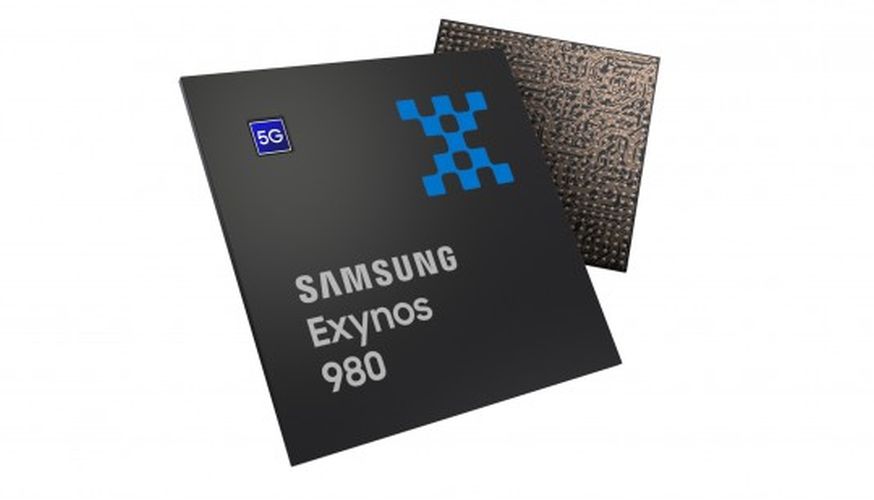
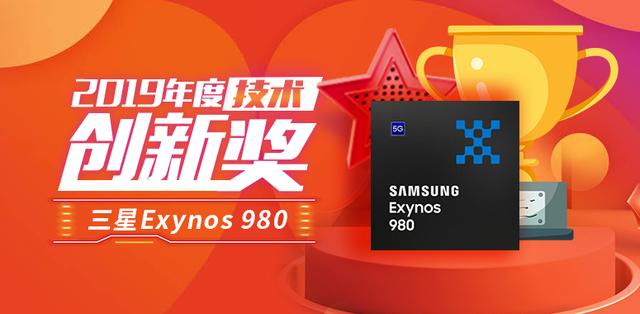
There is no doubt that the integration of 5G baseband is a recognized development trend of future manufacturers. Samsung Exynos 980 is a mid-end SoC with built-in 5G baseband and supporting dual-mode 5G.
The Exynos 980 is built on an 8nm process. It has two 2.2GHz Cortex-A77 cores and six 1.8GHz A55 cores. The GPU is Mali-G76 MP5. In terms of communication performance, the Exynos 980 can be the fastest in the sub-6GHz band with 5G network speed of up to 2.55Gbps, 4G speed of up to 1Gbps, and dual-mode parallel speed of up to 3.55Gbps.
Although Samsung Electronics disbanded the self-developed CPU team this year, this is not necessarily bad news, because this means that Samsung Exynos is returning to the arms of ARM again, which may further improve the power consumption of the SoC.
At the Snapdragon Technology Summit in December, Qualcomm released the annual flagship Snapdragon 865, along with the Snapdragon 765 / 765G, and if you look closely at their characteristics, you will find that the two SoCs are integrated in process and baseband. It is excellent in many aspects and even surpasses the flagship Snapdragon 865.
As the Snapdragon 765 is not yet on the market but the Snapdragon 765G has already been utilised on a commercial smartphone – OPPO Reno 3 Pro. The SoC uses a 7nm EUV process, built-in eight-core Kryo 475 CPU, and a three-cluster architecture of 1 + 1 + 6, including a 2.4GHz super Large core, a 2.2GHz performance core, six 1.8GHz efficiency cores, GPU is Adreno 620, and the same architecture as the new flagship Snapdragon 865.
In terms of paper parameters, the Snapdragon 765G is the largest upgrade since the release of the Snapdragon 7 series. The GPU performance has increased significantly by 40% and the AI computing power has increased by 100%. It is straightforward to say that its performance is basically close to Qualcomm ’s Snapdragon 845.
Since this SoC is listed on the last day of this year, we are also included in this list. From its comprehensive performance, we can see that the Snapdragon 765G is likely to become the hottest match for mid-range 5G mobile phones next year.
Technological Innovation Award: Dimensity 1000L
MediaTek, which has been quiet for a while, came up with a brand new Dimensity series this year including its first 5G SoC – Dimensity 1000. OPPO first launched Dimensity 1000L at the end of the year onboard the Reno3 series. The Dimensity 1000L may be viewed as a lower version of the Dimensity 1000 but is equally an impressive SoC.
The Dimensity 1000L is built with a 7nm process, has built-in eight cores, and uses the Cortex-A77 architecture, while the GPU uses the G77 architecture. The SoC also comes with built-in 5G baseband, and supports NSA / SA dual-mode 5G.
Most cost-effective award: Huawei Kirin 810
In June this year, Huawei released the Kirin 810. The biggest change is that it no longer uses the Cambrian NPU instead, it adopts Huawei’s self-developed DaVinci architecture. At the same time, it uses a 7nm process, making Kirin the world’s first to have two 7nm SoCs.
The Kirin 810-powered Honor 9X si presently sold for as low as 1,199 yuan which makes it one of the most cost-effective SoC around.
The Kirin 810 is built using a 7nm process, built with two 2.27GHz Cortex-A76 cores and six 1.88GHz A55s. The GPU is upgraded to Mali-G52 for customization and supports Kirin Gaming + technology.
Most cost-effective award: Helio G90T
MediaTek changed its trend this year and successively launched Helio G90T, Dimensity 1000 and other mid-to-high-end SoCs. Among them, Helio G90T is positioned at the mid-range in the same league with Qualcomm’s Snapdragon 730 series.
The chipset was first launched onboard the Redmi Note 8 Pro and that remains the only model with the SoC. In terms of pricing, the Redmi Note 8 Pro also sells for around 1,199 yuan as at press time. That is yet another dope offer as the device equally comes with a 64MP Sony camera sensor.
The Helio G90T is built with a 12nm process. The CPU uses the same Cortex-A76 architecture as the Kirin 810. It has two ARM Cortex-A76 cores and six Cortex-A55 small cores. The frequency is up to 2.05GHz. The GPU is equipped with ARM Mali-G76. 3EEMC4, clocked at 800MHz, and built-in dual-core APU, combined with CPU and GPU can provide 1TMACs AI computing power.
For 2020, we see 5G playing a more prominent role in the calibre of the flagship to midrange and budget SoCs that would be released.
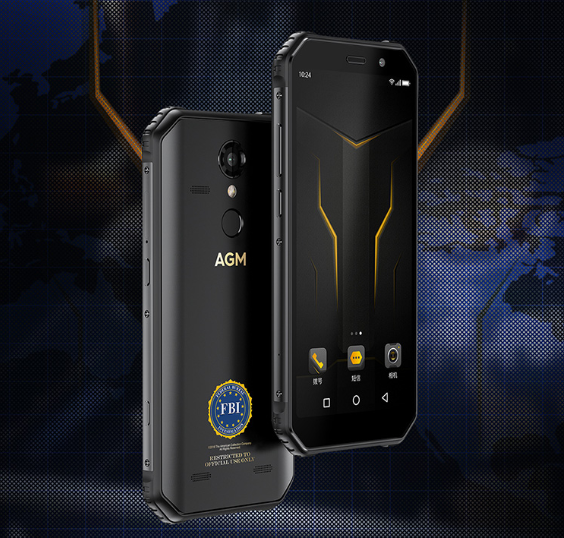
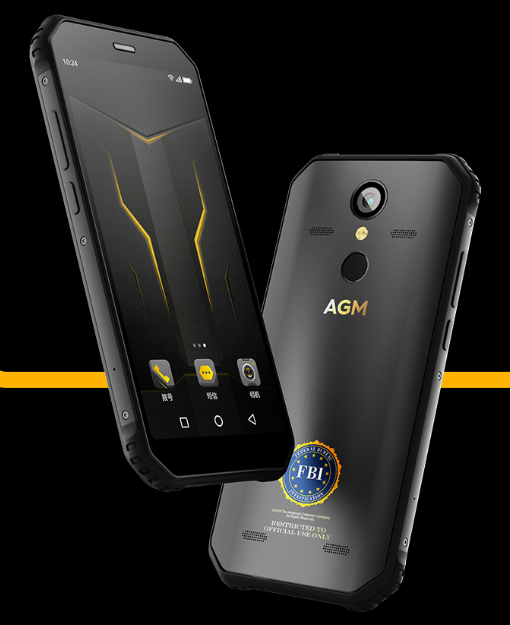
We have seen manufacturers release limited edition models of their phones based on movies, sports teams, and even festivals, but never have we seen a limited edition phone that is based on a government intelligence agency until today. Chinese rugged phone manufacturer, AGM, today announced the AGM H1 FBI Edition, a mid-range smartphone with the FBI’s logo on the back.
AGM H1 FBI Edition Specs
The phone has a 5.99-inch FHD+ (2160 x 1080) display. It is powered by Qualcomm’s Snapdragon 450 processor and has 4GB of RAM and 64GB of storage. There is a 12MP camera on the back along with a dual-tone LED flash and a fingerprint scanner while a 16MP camera is in front for video calls and selfies.
The AGM H1 FBI Edition has support for dual SIM and packs a 5400mAh battery with support for Quick Charge 3.0. The phone also has quad speakers on the back but no audio jack. Even without an audio jack, the phone has an FM radio. There is a USB Type-C port at the bottom for charging and a dedicated AI assistant button on the left.
AGM says the phone runs X OS 3.0 which is based on Android 8.1 Oreo. The operating system is said to be secure and private and boast features such as dual-apps and full-screen gesture navigation.
The AGM H1 is a rugged phone like AGM’s other devices. It has an IP68-rating and is MIL-STD-810G certified. The manufacturer claims it will also survive drops from heights up to 1.5 meters.
Price and Availability
AGM says only 199 units of the phone are available and it will go on sale on the 8th of January, 2020 at midnight. Interested buyers can purchase the AGM H1 FBI Edition on JD.com.
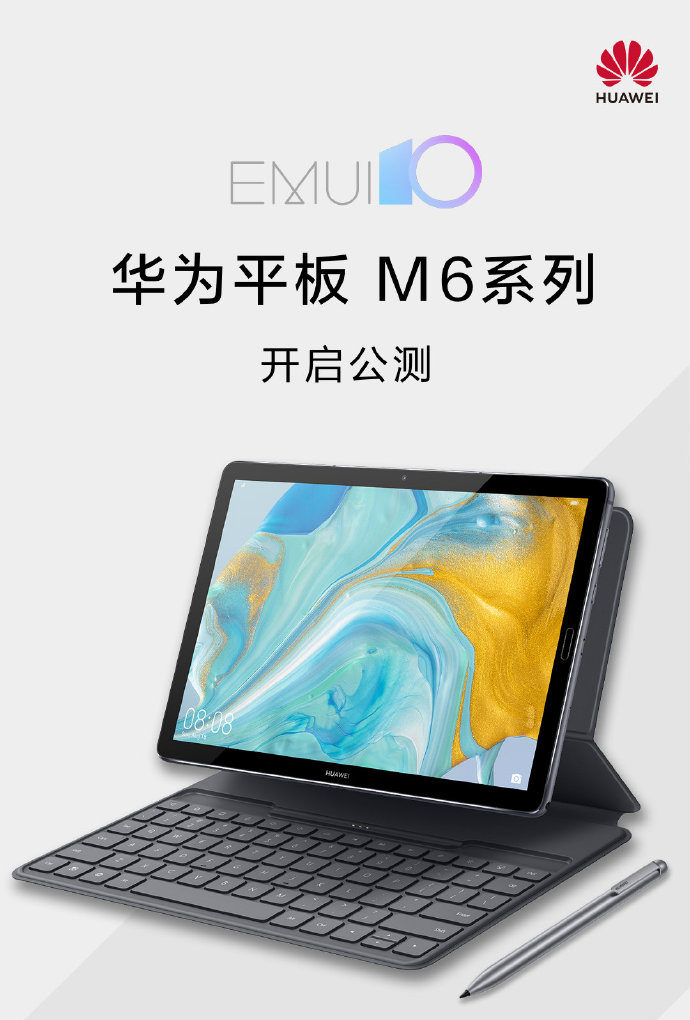
When they launched, all three tablets ran EMUI 9.1 based on Android Pie out of the box. Yesterday, Huawei announced that an open beta version of EMUI 10 is now available for the three tablets. This version of EMUI is based on Android 10.
Huawei says the open beta update brings an improvement in system performance and an improved AI assistant. You should also get a new user interface and a system-wide dark mode.
To get the beta update, you will have to go to the Huawei Club app and select EMUI Zone at the top right corner. There should be an option to select “Beta Upgrade”.
The MediaPad M6 series all have IPS LCD displays, the same 13MP rear camera, and 8MP front-facing camera. While the 8.4-inch and 10.8-inch versions are available in 4GB + 64GB, and 4GB + 128GB, the Turbo Edition comes in only one configuration – 6GB + 128GB.
The 10.8-inch model is also the only model with a fingerprint scanner and an audio jack. It also packs a larger battery capacity of 7500mAh against the 8.4-inch models 6100mAh battery capacity.
India has joined the list of countries that have given embattled Chinese tech company Huawei the green light to participate in 5G trials. This decision will see the Chinese giant help the world’s second-largest internet market build its 5G network.
This was disclosed by Ravi Shankar Prasad, the country’s minister for technology at an event in New Delhi. “We have taken a decision to give 5G [bandwidth] for trial to all the players,” he said.
This news comes as a welcome reprieve for Huawei who is facing severe sanctions from the US government. The US has urged allies to shun Huawei’s 5G infrastructure citing security concern. The US government says China could use Huawei products to spy on other nations. Huawei is presently the world’s largest telecommunications equipment maker and a leading smartphone brand and was in a good position to clinch a majority of the world’s 5G equipment contract before the US debacle began. The leading smartphone maker has consistently insisted that it has no link with Beijing and that its products don’t pose a national security risk.
This is coming just days after Britain’s security chiefs reportedly gave Prime Minister Boris Johnson the nod to allow Huawei provide non-core 5G equipment. Earlier this month, one of Germany’s biggest mobile carriers announced that it would use the Chinese company’s equipment in its 5G networks. India’s 5G trials are expected to begin in January 2020.
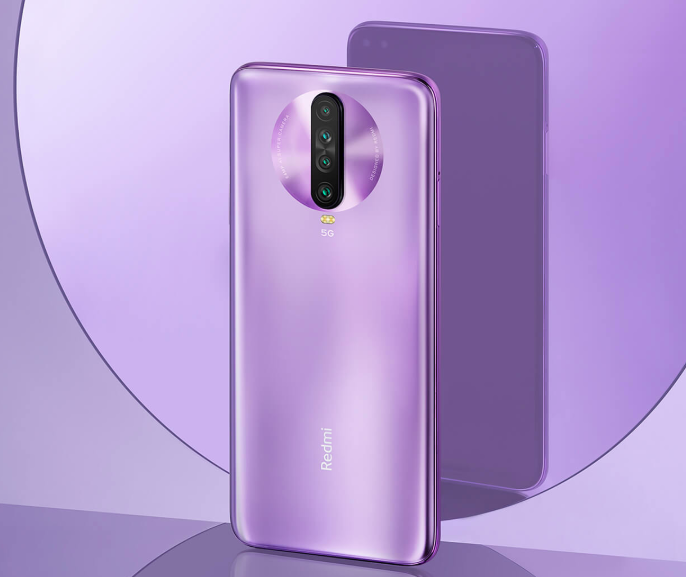
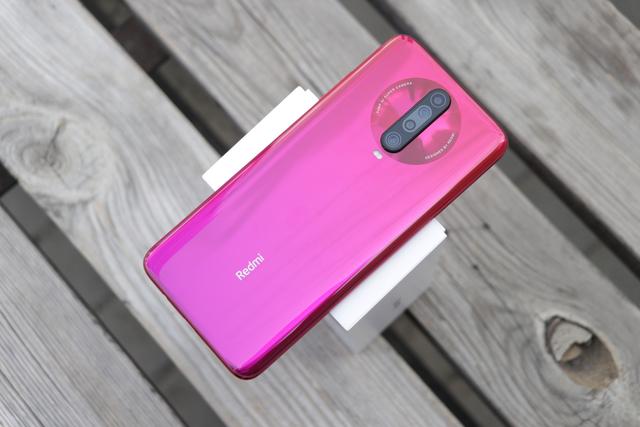
The Redmi K30 5G will go on sale on January 7, 2020. The phone which was announced earlier this month is the first in the world to be powered by the Snapdragon 765G.
When it goes on sale, it will be available in four configurations with the base model having 6GB of RAM and 64GB of storage while the highest configuration will have 8GB of RAM and 256GB of storage.
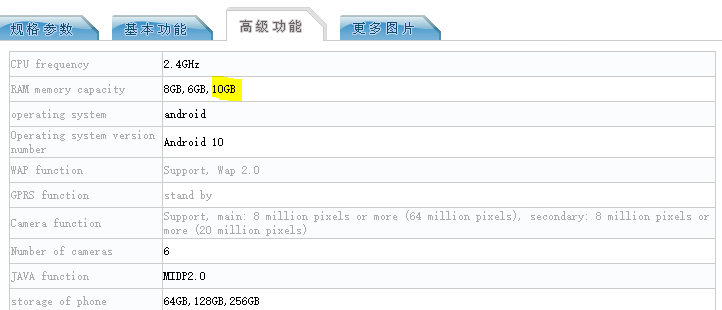
Shortly after the launch, the device appeared on TENAA’s database, and the listing revealed there is a 12GB RAM + 512GB version that wasn’t announced at the event. Now another TENAA listing has been published and this mentions a 10GB RAM version.
This new listing has a slightly different model number which is M2001G7AC, unlike the first listing whose model number is M2001G7AE. The spec sheet lists three RAM variants – 6GB, 8GB, and the new 10GB while the available storage variants are 64GB, 128GB, and 256GB. This means the 10GB RAM version should have 256GB of storage.
Of course, the Redmi K30 5G is not the first phone with 10GB of RAM, however, very few manufacturers have actually announced a phone with 10GB of RAM this year. Most of them actually skip 10 and jump to 12GB.
We do not know when this model will be announced and if it will be announced before, alongside, or after the 12GB RAM version. Nevertheless, it is good to know that there will probably be more variants available for purchase in the future.
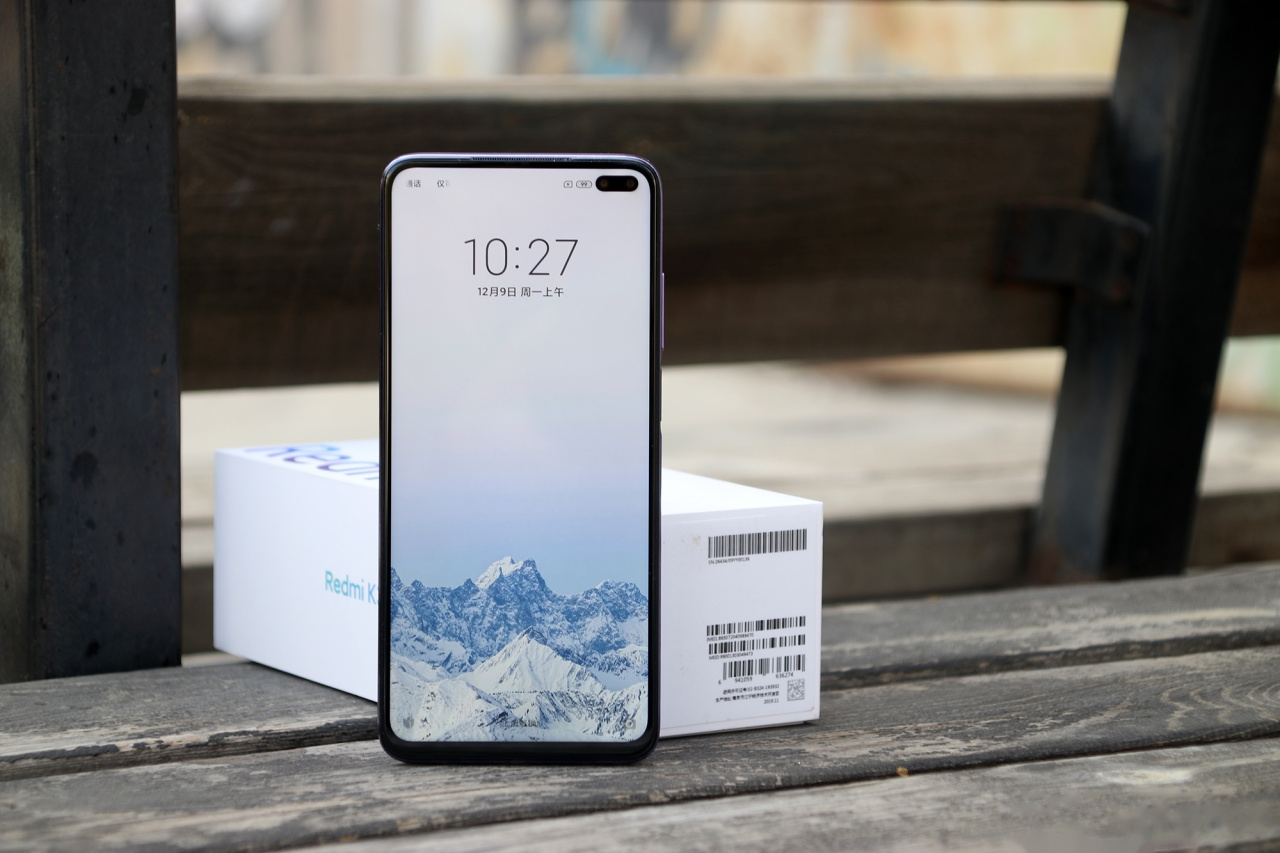
The Redmi K30 5G has a 6.67-inch FHD+ LCD display with two punch holes at the top right corner for the two front-facing cameras. It has a 120Hz refresh rate and supports HDR10. There is Gorilla Glass 5 on the screen as well as on the back of the device.
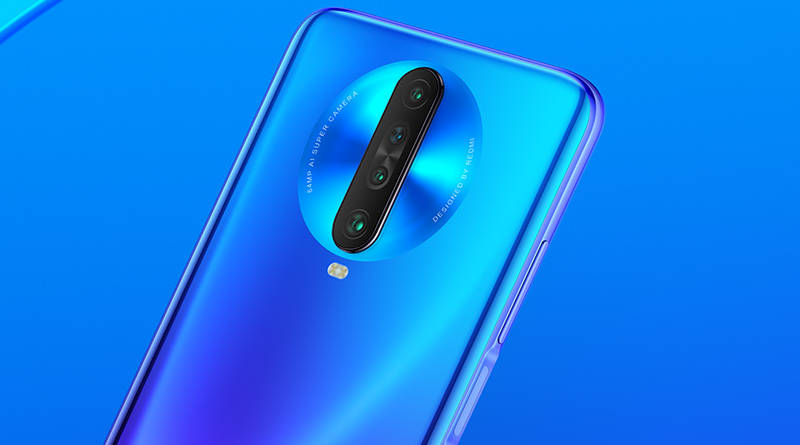
There are four cameras on the back of the phone. The primary sensor is a 64MP camera and it is paired with an 8MP 120° ultrawide angle camera, a 2CM 5MP macro camera, and a 2MP depth sensor. The phone can record in 4K at 30fps, slow-motion at 960fps, and also has 10x digital zoom. The front-facing cameras are a 20MP primary sensor and a 2MP depth sensor.
The Redmi K30 5G packs a 4500mAh battery with support for 30W fast flash charge. There is a side-mounted fingerprint scanner on the right. The phone also has NFC, Dual SIM support, and Bluetooth 5.1. It will run MIUI 11 based on Android 10 out of the box.
The Redmi K30 series has some pretty big shoes to fill this year. Redmi K20 and the K20 Pro offered extremely good value for its price and even made it to our Best Mid-Range and Best Flagship Killer Smartphones of 2019 lists. And in most ways, the Redmi K30 upholds the reputation of its predecessor, bringing in powerful specifications at an extremely affordable price tag. Unlike the OPPO Reno3 series and the Vivo X30 series that doesn’t feature a 4G variant, the Redmi K30 comes with a 5G as well as a 4G model. But is that the only difference between the two models? That’s what we check in this Redmi K30 vs Redmi K30 5G comparison.
Redmi K30 vs Redmi K30 5G: Design
The Redmi K30 duo share the exact same design with the exact same dimensions: 165.3 x 76.6 x 8.8 mm and weight: 208 grams too! The only minute difference between the two models is the 5G logo on the back of the K30 5G model.
4G variant doesn’t have any logo on its back
5G model
Both the models come in a gradient back in Blue, Red, and Purple color options. There’s a single pill-shaped vertical camera strip on the top half of the device featuring four sensors. At the lower half of the back, you’ll find the Redmi logo. The front of the device is a lot more interesting. Both the 4G & 5G models feature dual punch-hole cameras on the top right corner. It’s actually two separate cameras joined together with a black background. While the K30 isn’t the first Xiaomi smartphone to feature dual front-facing shooters, it’s the first Mi / Redmi device to feature a punch-hole camera setup.
Note that both the devices feature a dedicated 3.5mm headphone jack.
While the design of the Redmi K30 duo was identical, they differ slightly in terms of specifications. The Redmi K30 comes with the good old Snapdragon 730G octa-core processor from Qualcomm, while the Redmi K30 5G features the Snapdragon 765G chip. It is Qualcomm’s first 5G-integrated SoC in the market and the K30 5G was the first phone to feature it. The K30 5G features both SA and NSA 5G networks and supports a maximum download speed of up to 3.7Gbps. So in terms of network speeds, the K30 5G model is way ahead of its 4G variant.
Redmi K30
Other specs, including the camera setup on both the models are identical. The two models start off at 6GB RAM + 64GB storage and take it all the way up to 8GB RAM and 256GB of internal storage. Note that they feature a hybrid MicroSD card slot (SIM2). One of the highlights of the Redmi K30 duo is its screen. Despite being a 6.67-inch 1080 x 2400 pixels IPS LCD panel, the two models ensure you get a good viewing experience with the help of HDR10 support and a high 120Hz screen refresh rate. It is also the first Xiaomi smartphone to feature such a high refresh rate.
The quad-camera setup on both the models feature a 64MP f/1.9 primary shooter paired with an 8MP f/2.2 ultrawide sensor, a 2MP f/2.4 macro camera, and a 2MP f/2.4 depth sensor. Up front, the dual punch-hole camera setup houses 20MP primary selfie shooter with a 2MP depth sensor. One big change as compared to the older Redmi K20 series is the presence of a physical fingerprint sensor. The company decided to use a less-traditional side-mounted fingerprint sensor on the K30 duo instead of an in-display fingerprint shooter. Well, the presence of an IPS LCD display was a giveaway that it couldn’t have an in-display sensor, but hopefully, by 2020, this in-screen fingerprint tech won’t just be exclusive to AMOLEDs.
While the battery capacity on both the models are identical: 4500mAh, the K30 maxes out at 27W fast charging while the K30 5G gets a slightly faster 30W charging technology.
Color variants: Time Monologue, Purple Jade Fantasy, Deep Sea Glow and Flower Shadow
In terms of specifications, the K30 and the K30 5G models are very similar. They even have the exact same camera setup unlike the Vivo X30 duo (Pro model had an additional periscope camera).
Personally, the Redmi K30 4G makes for an excellent purchase in a non-5G dominated market. And even if you need 5G, you just have to shell out around $60 more to enjoy extremely fast Gbps speeds on your smartphone. No wonder the K30 5G is the cheapest 5G smartphone in the world right now!
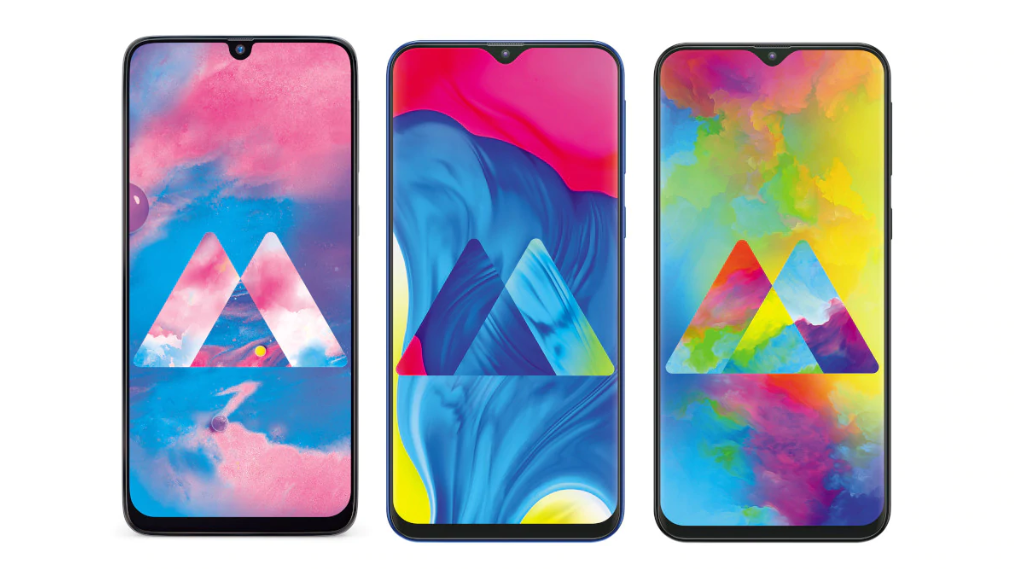
Earlier this month, a report had revealed that Samsung has started working on Galaxy M11 and Galaxy M31 smartphones. A fresh report on Sammobile has claimed that the company has also started developing the Galaxy M21. As the moniker suggests, the phone will be arriving as the successor for the Galaxy M20 / Galaxy M20s smartphones that were unveiled earlier this year.
According to the report, the Samsung Galaxy M21 has a model number of SM-M215F. The handset is expected to come in storage editions such as 64 GB and 128 GB. Since he Galaxy M20 comes in 32 GB and 64 GB storage options, it appears that the one of the major improvements on the Galaxy M21 is that it will be arriving with a larger internal storage space. It will come preloaded with Android 10 OS. The phone could be fueled by Exynos 9609 or Exynos 9611 chipset. Also, the smartphone is expected to flaunt with triple rear cameras.
Galaxy M30, Galaxy M20 and Galaxy M10
The report further claims that the upcoming Galaxy M-series phones such as Galaxy M11, Galaxy M21 and Galaxy M31 will be available in common colors such as black and blue. However, each of these devices will be available in different third color. The Galaxy M11 is expected to come in a third color of violet whereas the Galaxy M21 and M31 may come in respectively additional colors like green and red.
A report from yesterday had revealed Samsung is also working on Galaxy M51 smartphone. The handset has a model number of SM-M515F. There is no information available on the specs or color variants of the Galaxy M51. There is no word on the Galaxy M41 that may replace the Galaxy M40 smartphone from this year. The M40 had featured a punch-hole display. It is likely some of the other M-lineup phones arriving in 2020 will be also equipped with punch-hole screen.
The Galaxy M10 and Galaxy M20 smartphones were made official in January in India. Hence, it appears that the new Galaxy M-series smartphones may break cover in the first quarter of the coming year. Hopefully, more details on the new Galaxy M-series will appear in the beginning of the coming year.
The MIJIA brand is home to several products including smart products and non-smart gadgets. The brand has played host to the MIJIA Natural Latex Neck Support Pillow which uses Thai natural latex and three-curve neck protection design. The neck pillow comes with a price tag of 199 yuan ($28) and is currently on sale in Xiaomi Mall.
Compared with other pillow materials, latex has superior resilience performance, which can provide soft but powerful support to your head and help sleep decompression. The MIJIA Natural Latex Neck Pillow uses a 10-12cm high, middle and low arc neck support design. At the same time, the latex particles are partitioned according to different posture needs during sleep. No matter how the sleeping position changes, it can help you fit the head scientifically unit.
Compared with latex particles, the long block-shaped latex has a larger contact area with the face when sleeping on the side, making it less likely to produce a sense of pressure. The slightly inset edge design is more adapted to the shoulder curve when sleeping on the side, and you can find a relaxing posture no matter you are lying on your back.
Mijia Natural Latex Neck Pillow is made of natural latex from Thailand, with a weight of 1.2kg. The solid high-dose and high-purity formula makes full use of the latex’s soft and elastic properties.
The outer pillowcase is made of DuPont Sorona fiber and cotton Blum color composite textile. Sorona fiber’s natural 3D curl structure characteristic gives the outer pillowcase a more delicate and skin-friendly touch. Even if it is washed many times, it won’t deform or fluff easily.
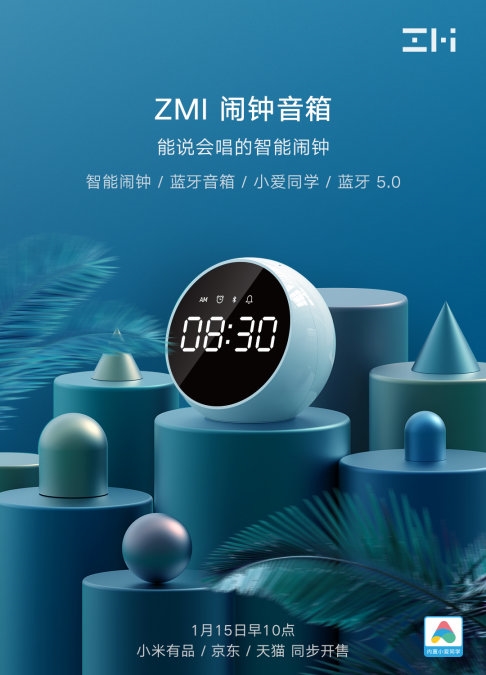
Xiaomi’s Ecological chain company Zimi has just announced the ZMI alarm clock speaker earlier today (31st December 2019). It is the company’s latest product and supports a variety of functions and Xiaomi support.
Design
The ZMI alarm clock speaker features a round hemispherical design philosophy with a flat front panel for its display. The front is a pure black display that displays information in plain white texts. The main body is seen in white in the pictures but will also be available in other colors as well.
According to official notes, the ZMI alarm clock speaker features Bluetooth 5.0 technology for connectivity. It is equipped with a built-in NdFeB internal magnetic horns and has a battery life rated to last for up to 72 hours in a single full charge. The ZMI smart alarm clock is capable of being a program with up to 30 different alarm clocks and can be woken up with one click. Notably, it also supports Xiao AI to enhance the user experience via the speakers.
ZMI Smart Alarm Clock Speaker will be available for purchase on Xiaomi’s official Ecological chain website
Price and Availability
The ZMI Smart Alarm Clock Speaker is currently will soon be available with a sale date set on January 15th at sometime around 10 o clock at the official online platform. Unfortunately, pricing details regarding the upcoming smart alarm clock speaker is still at large and have yet to be officially announced. Although, it is expected that the new product will be priced somewhere around 100 Yuan or roughly 15 US Dollars.
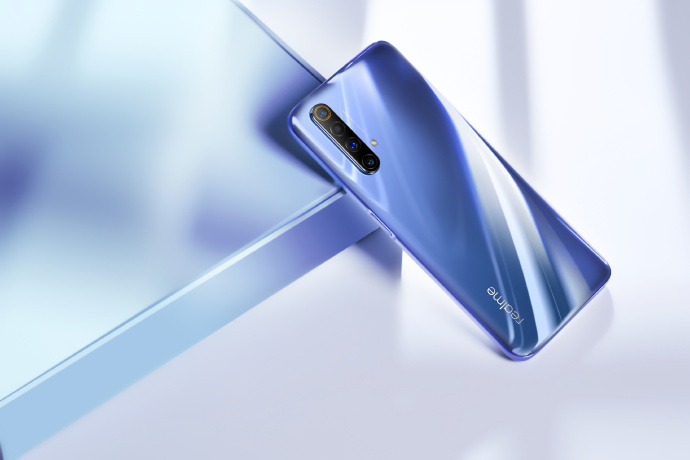
Realme will be launching the Realme X50 5G smartphone on Jan. 7. The company has already revealed some of the key information of the smartphone. Recent reports have revealed that the Realme X50 5G has a model number of RMX2051. Now the key details of the phone have surfaced through their Geekbench listing.
On Geekbench, the Realme RMX2051 has scored 2907 points in the single-core test. It recorded a score of 7017 in the multi-core test. The smartphone is loaded with Android 10 OS. The device is expected to come with the latest ColorOS 7 UI.
The name of the processor is not mentioned in the Geekbench listing. However, the company has already confirmed that the Realme X50 5G is powered by Snapdragon 765G chipset. The SoC is coupled with 8 GB of RAM. The smartphone has been also spotted at CMIIT in the recent past which revealed that it is a 5G-ready device. The 3C certification of the device had revealed that it will be arriving with a 30W fast charger.
Realme X50 5G Specifications (Rumored)
A recent leak had revealed the entire specifications of the Realme X50 5G smartphone. It may sport a JDI-made 6.67-inch IPS LCD display with dual punch-hole design. The phone is expected to arrive with 32-megapixel + 8-megapixel dual front-facing cameras. The rear side of the phone has a quad camera setup. It is expected to include a 64-megapixel main lens, an 8-megapixel ultrawide lens, a 13-megapixel telephoto lens and a 2-megapixel macro lens.
The Snapdragon 765G powered Realme X50 5G may come in 6 GB / 8 GB RAM variants and UFS 2.1 storage options like 128 GB and 256 GB. The device could be housing a 4,500mAh battery that will be equipped with enhanced version of VOOC 4.0 Flash Charge technology. The new charging technology will let the phone reach 70 percent capacity by charging for only 30 minutes. The device is fitted with a side-mounted fingerprint reader.
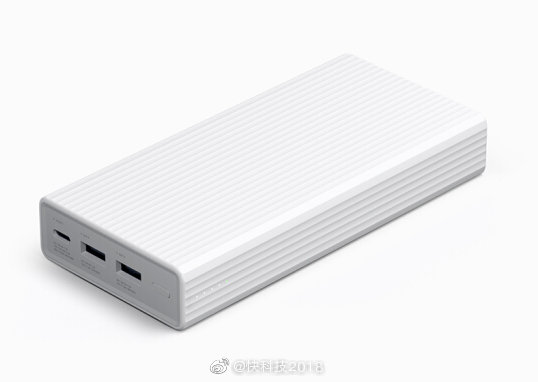
Most smartphones today come with pretty impressive performance and aesthetic build. But one problem has consistently persisted is the issue of battery life. With increased performance comes an increased strain on the battery regardless of power-saving and low energy consuming features the modern SoC and latest OS bring. Thus, mobile power pack have remained important accessories for most phone users. Smartisan has released a new power bank that brings fast charging.
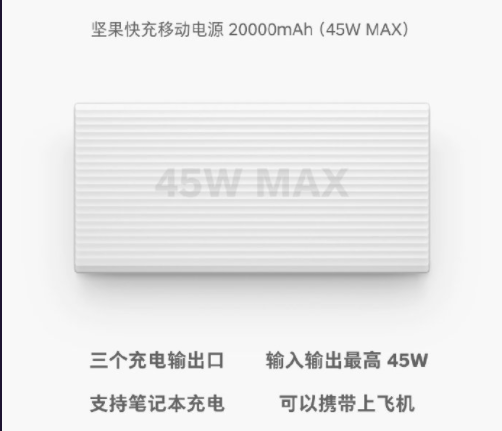
The Nuts Power bank has a large 20000mAh battery capacity with a maximum charging power of 45W. The outer casing is manufactured from a fire-resistant and flame-retardant PC+ABS material which to a large extent ensures it is safe for use.
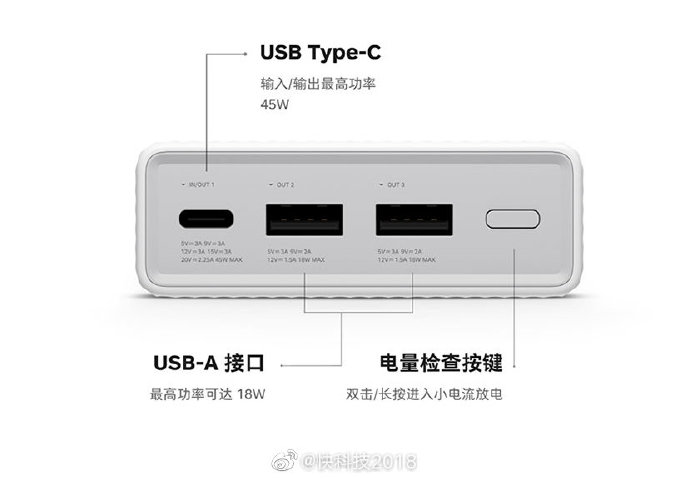
The power bank presents with two USB-A ports and one USB-C interface which has a maximum power output of 45W. The USB-A interfaces have 18W output each bt when all three ports are in use simultaneously, the USB-A outputs 30W max and the USB-A delivers 15W output respectively.
The Nuts Fast charge power bank comes with a price tag of 249 yuan ($35). It is currently available for pre-sale in Jingdong Mall with a deposit of 1 yuan.
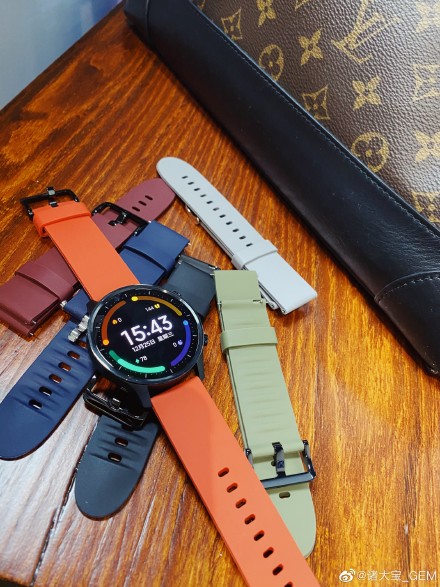
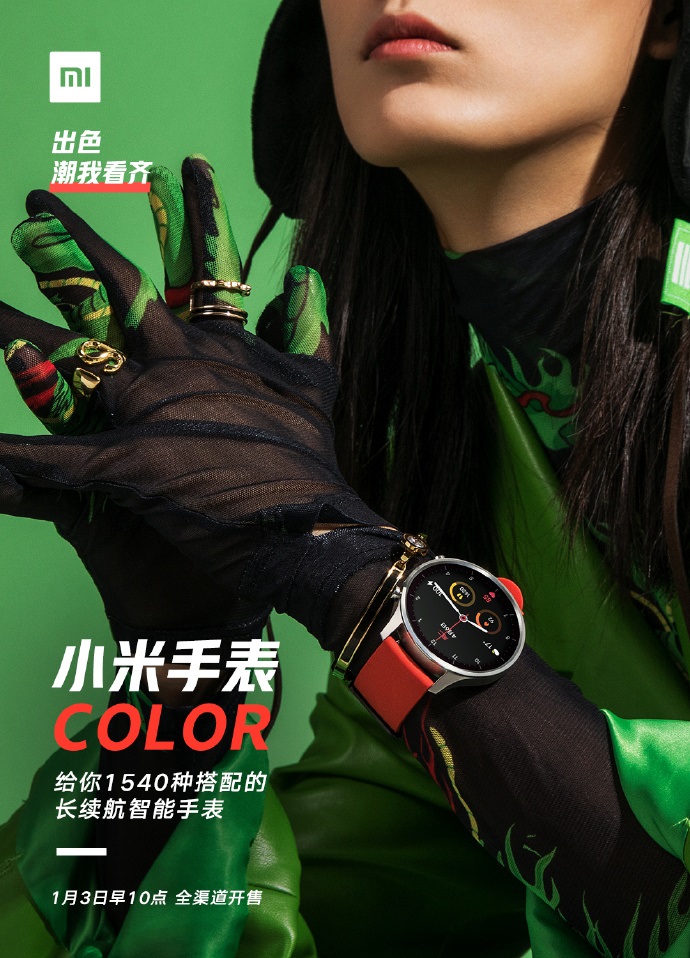
Xiaomi had just recently unveiled its latest smart wearables product dubbed the Xiaomi Watch Color which is known for its impressively long battery life. And today (31st December 2019), the General Manager of Xiaomi’s Ecological Chain, Qu Heng, explained the strategy behind the Xiaomi Color Watch and the wearables/IoT devices as a whole through Weibo.
According to Qu Heng, many people did not expect a New Year release of a new wearable product. Furthermore, the Xiaomi Watch Color is a new start for the company which is now focusing on a new category that intends to deliver smart bands with a long-lasting battery life that is useful at work, exercising and even when relaxing.
True Smartwatches and Long lasting Smartwatches
One of the core ideas the General Manager wanted to get across is that he hopes the industry distinguishes between a “true smartwatch” and a “long battery life smartwatch.” He states that the difference between the two categories should be clear, offering the user more knowledge and the right to choose between both of them. Hu Qeng mentions that a true smartwatch should use eSIMs and have the ability to make calls and download apps, and function independently from a smartphone to some degree.
Customizability
Going forward, Xiaomi with the Watch Color also wanted to make the wearables a more sought after and attractive product; One that a person might wear fashionably as well as for utility. It needed to be trendy and yet maintain strong cultural attributes as well. The Chinese smartphone manufacturer apparently took cues from the Mi Band 4 and brought all the popular functions, themes, and UI functions to the Watch Color.
Additionally, the company added a larger screen, more color options and also offered multiple dials themes to choose from (options for leather bands for formal wear is a welcomed option too). All of this translates to a freely customizable experience so the user is never bound to a particular look that an OEM dictates.
Making wearables more essential
Xiaomi had intended to make the Watch Color a more accessible and go to product from the company. It was meant to be more supplementary to a user’s life and not just a luxury tech product offered alongside its smartphones. In other words, it is not just an accessory but aims to be a part of one’s life. With the launch of the Xiaomi Watch Color, the company plans to target the individualistic needs of a user that may require a true smartwatch or a long-lasting smartwatch.
The Xiaomi Watch Color also fills in the gap between Mi Band 4 and Xiaomi Watch. The release was from a core strategic point of view and the new Xiaomi wearable product only seeks to boost its AIoT lineup. Lastly, this entry from the company might also end up encouraging other OEMs to offer long lasting smartwatches as well.
Historically, Turkey has been largely dependent on foreign automobile manufacturers. However, recently the country has made a step away from reliance and to independence in the industry. TOGG which is a collaboration of various Turkish companies has just unveiled an electric crossover SUV that is the country’s first completely indigenous car.
Notably, the only foreign impact on the vehicle is the Italian design firm Pininfarina so it is safe to still call it homegrown. The vehicle isn’t simply an electric vehicle as its base versions arrives with a singe 200 horsepower rear-axle moto. This means that the car is capable of 0-60MPH in about 7.6 seconds, which is commendable. On the other hand, its most beefed up version goe up to a 400 horsepower dual motor setup that can achieve o-62MPH in 4.8 seconds flat.
TOGG EV Crossover SUV
The operational range of the TOGG EV SUV’s battery is about 300 miles (482 kilometres) that is capable of reaching an 80 percent charge in just 30 minutes. It achieves this with a (rough estimate) 150kW charger. The car features a bunch of useful functions and follows a futuristic and tech-savvy design philosophy. It offers a “Sow Traffic Pilot” that will offer Level 2 semi-autonomous that could go with Level 3 autonomy and higher.
The Turkish EV SUV’s interior controls are primarily digital carry a Porsche style passenger display. It is also claimed to have a holographic assistant that will utilize eye-tracking to better provide information so the driver need not take his eyes off the road. The vehicle is also connected to the internet so it will link the SUV to the grid and deliver OTA updates periodically.
Although the crossover is clearly directed and marketed with nationalistic ideals, it also draws attention to Turkey’s inequality. According to a report from TurkStat, the average yearly income within the country is under 5000 US Dollars (roughly 34,812 Yuan) while people in Istanbul make a bit over 6000 US Dollars (roughly 41,775 Yuan). So, even if TOGG prices the EV SUV reasonably or affordably, it won’t be as easily accessible considering the features the car offers. Thus, it might be a good start for the country, but one that might not hit it off with the masses.
Over the past couple of years, smartphone companies have made a habit of releasing two variants of its devices in a lineup. Almost all major devices this year, got a higher-end ‘Pro’ variant including the OPPO Reno3 series. OPPO announced the new series last week featuring two devices, the OPPO Reno3 and the OPPO Reno3 Pro. We are not specifically adding 5G to their names because they both support 5G, unlike the Redmi K30 which has got a 4G as well as a 5G variant.
These two devices have a lot of similarities as well as differences. But are they like the OnePlus 7T and the 7T Pro with just a couple of major changes?
Or is it like the Redmi K20 and the K20 Pro where things are a lot more different? Let’s find it out in this OPPO Reno3 vs Reno3 Pro comparison.
OPPO Reno3 vs Reno3 Pro: DESIGN
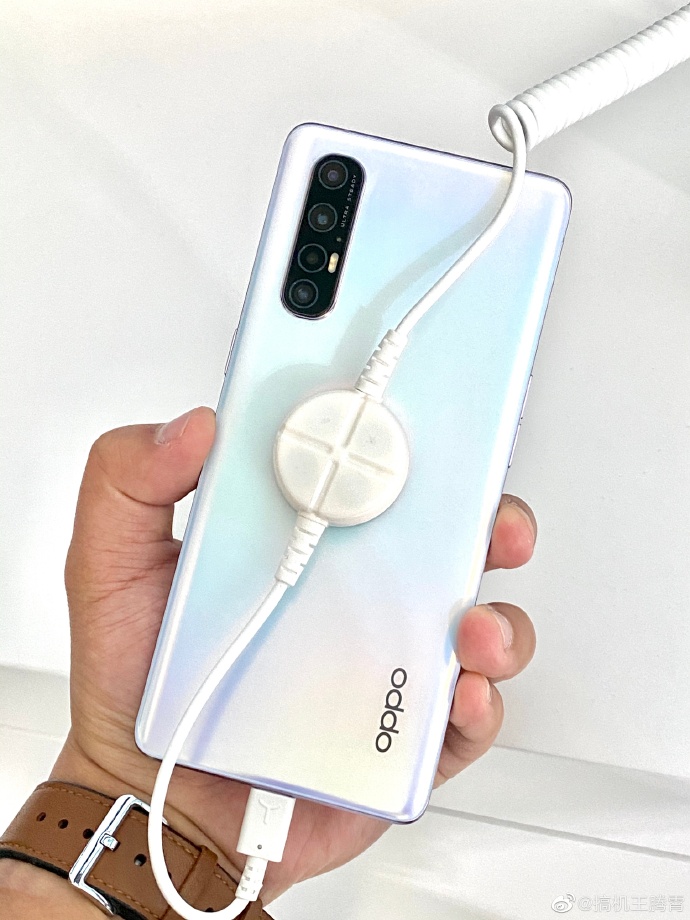
The Reno3 duo share a basic design which includes a gradient back finish and a vertically arranged quad-camera setup. At first glance, the rear setup looks identical, but on closer inspection, we can see that the two lower cameras on the Reno3 get their own sub-housing. On the other hand, the OPPO Reno3 Pro has a single housing featuring all four cameras one below the other.
OPPO Reno3
OPPO Reno3 Pro
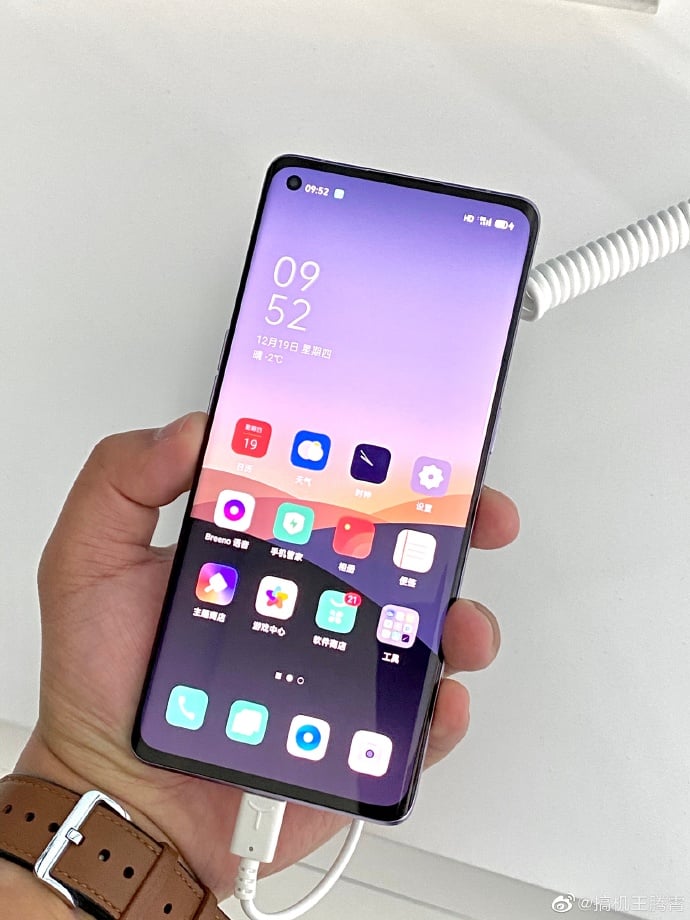
Things are a lot different when you compare OPPO Reno3 vs Reno3 Pro upfront. The cheaper Reno3 uses a more traditional waterdrop flat display. On the other hand, the Reno3 Pro comes with a curved AMOLED panel with a single punch-hole camera on the top-left corner. It’s evident from the front that the Reno3 Pro is the more premium device in the series.
From the curved display and the more premium appearance, you would have assumed that the Reno3 Pro would be heavier and bulkier than the Reno3, right? But its the exact opposite. The Reno3 Pro features a slim 7.7mm form factor, weighing just 171 grams. On the other hand, the Reno3 features an 8mm body and is heavier at 181 grams. Note that both the phones have the same 4025mAh battery on board.
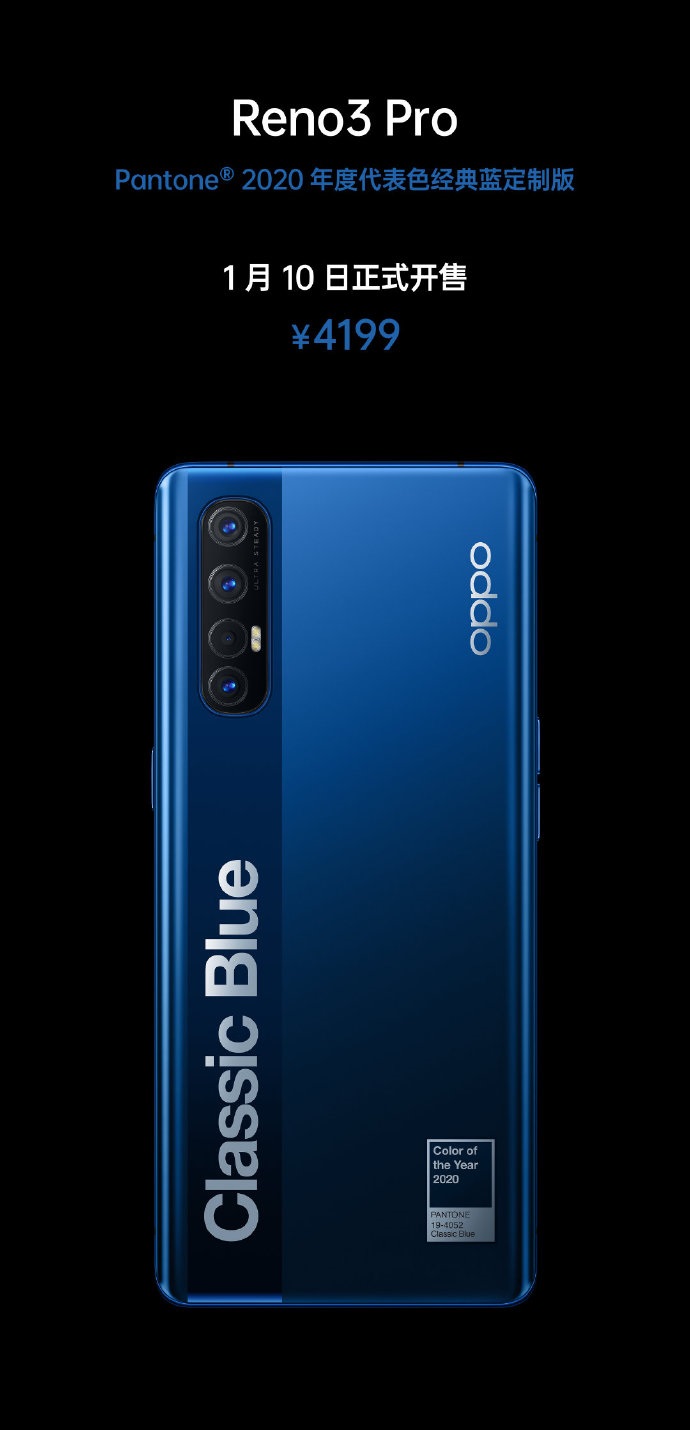
It is also worth adding that the OPPO Reno3 Pro gets a special Pantone Color of the Year edition called Reno3 Pro Classic Blue.
OPPO Reno3 vs Reno3 Pro 5G: Specs
Things get a lot more interesting when you take a look at their hardware. The OPPO Reno3 vs Reno3 Pro differences are quite stark, justifying its pricing difference. The Reno3 is powered by the MediaTek Dimensity 1000L octa-core 5G integrated chipset while the Reno3 Pro is powered by the new Snapdragon 765G chipset. The 6.4-inch AMOLED display on the Reno3 is flat while the Reno3 Pro has a curved AMOLED panel with a high 90Hz refresh rate. You get up to 12GB of RAM and 128G GB of storage on the Reno3 while the Pro version takes the storage up to 256GB along with 12GB of RAM.
Their cameras are quite different as well.
The OPPO Reno3 comes with a 64MP primary shooter with an 8MP wide-angle lens, 2MP monochrome camera, and a 2MP depth sensor. On the other hand, the Reno3 Pro comes with a more flagship-like camera setup which includes a 13MP telephoto lens with 2x optical zoom along with a 48MP primary shooter, 8MP ultra-wide shooter, and a 2MP monochrome sensor. So, it skips on the depth sensor in favor of a powerful telephoto lens. For selfies, both the phone have the same 32MP f/2.4 shooter up front.
As mentioned above, the OPPO Reno3 and REno3 Pro have the exact same battery capacity: a 4025mAh battery with 30W VOOC 4.0 fast charging technology.
Both support 5G networks and come with USB-C ports at the bottom.
China’s OPPO Reno3 Pro
OPPO Reno3 vs Reno3 Pro 5G: Pricing
The OPPO Reno3 Pro 5G starts at 3999 yuan ($571) for the 8GB +128GB variant and goes up to 4499 yuan ($643) for the 12GB + 256GB variant. The 8GB RAM model goes on sale on December 31 while the 12GB model goes on sale on January 10, 2020. The special Class Blue edition costs 4199 yuan ($600) (8GB+128GB) and goes on sale on January 10.
The OPPO Reno3 5G starts at 3399 yuan ($486) for the 8GB RAM and 128GB ROM variant and goes up to 3699 yuan ($528) for the 12GB RAM and 128GB variant.
The Reno3 Pro clearly has an advantage when it comes to its specs and design. But is it worth shelling out $100 more for the Pro version? Personally, I think it makes sense to go for the Pro version despite Dimensity 1000L having a slight advantage over SD765G in terms of performance.
Earlier today (31st December 2019), Xiaomi Group’s co-founder and Vice-Chairman, Lin Bin, had arrived with a big announcement. He announced that after more than a year of hard work, Xiaomi’s very own research and development production line is finally ready.
According to the Senior Executive, the R&D line is ready to start production and that he is currently in possession of the first Mi 9 Pro 5G variant that was made within the facility. Lin Bin also stated that the newly readied facility will pave the way for intelligent manufacturing and will be used in future collaborations as well.
Lin Bin from Xiaomi Group inaugurating the event in the new R&D facility
Reportedly, the facility being in charge of research and development for the Xiaomi’s flagship smartphones is just one of its diverse roles. It will also house the Chinese tech giant’s partners that will help develop both software and hardware for the large automation equipment. In other words, a truly smart factory that does not require human intervention or input for a majority of the cases.
In the last couple of years, Xiaomi has seen an increase in investments of its research and development department. At a business conference on 24th December 2019, Lei Jun, Co Founder and Chairman of Xiaomi Group, stated that the company has invested heavily in research and development alone. According to him, the company had invested 5.8 billion Yuan last year while this years investment is expected to surpass the 7 billion Yuan. For the next year, Lei Jun predicts the number will exceed even 10 billion Yuan.
Xiaomi’s latest R&D Facility that is ready for production and has started making Mi 9 Pro 5G
He believes that the company needs to heavily invest in R&D as it is where the future is uncovered. Innovation is what keeps the company ahead of the curve and with talent and innovation will it lead to success, according to Lei Jun.
In this era of smart devices, consumers are always looking for gadgets that are convenient and easy to use. And as we lean towards a sedentary lifestyle, we have to actively take care of our health.
Treadmills are an excellent option for staying fit, but they need a dedicated space as well as a significant upfront investment. This is where the Xiaomi Youpin backed WalkingPad R1 Pro comes to your rescue. It solves two major issues associated with traditional treadmills: bulky and heavy form factor and expensive price tag.
WalkingPad R1 Pro Hands-on: Design
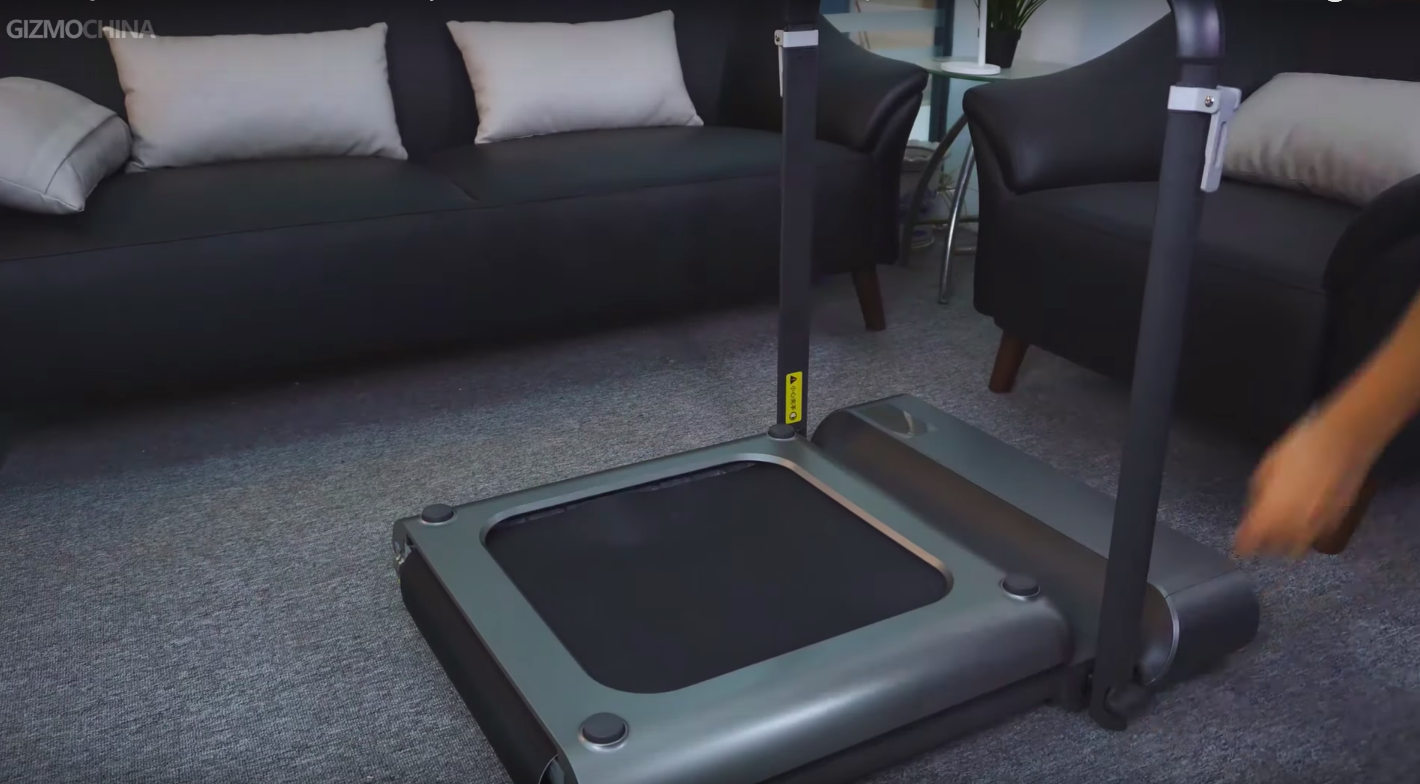
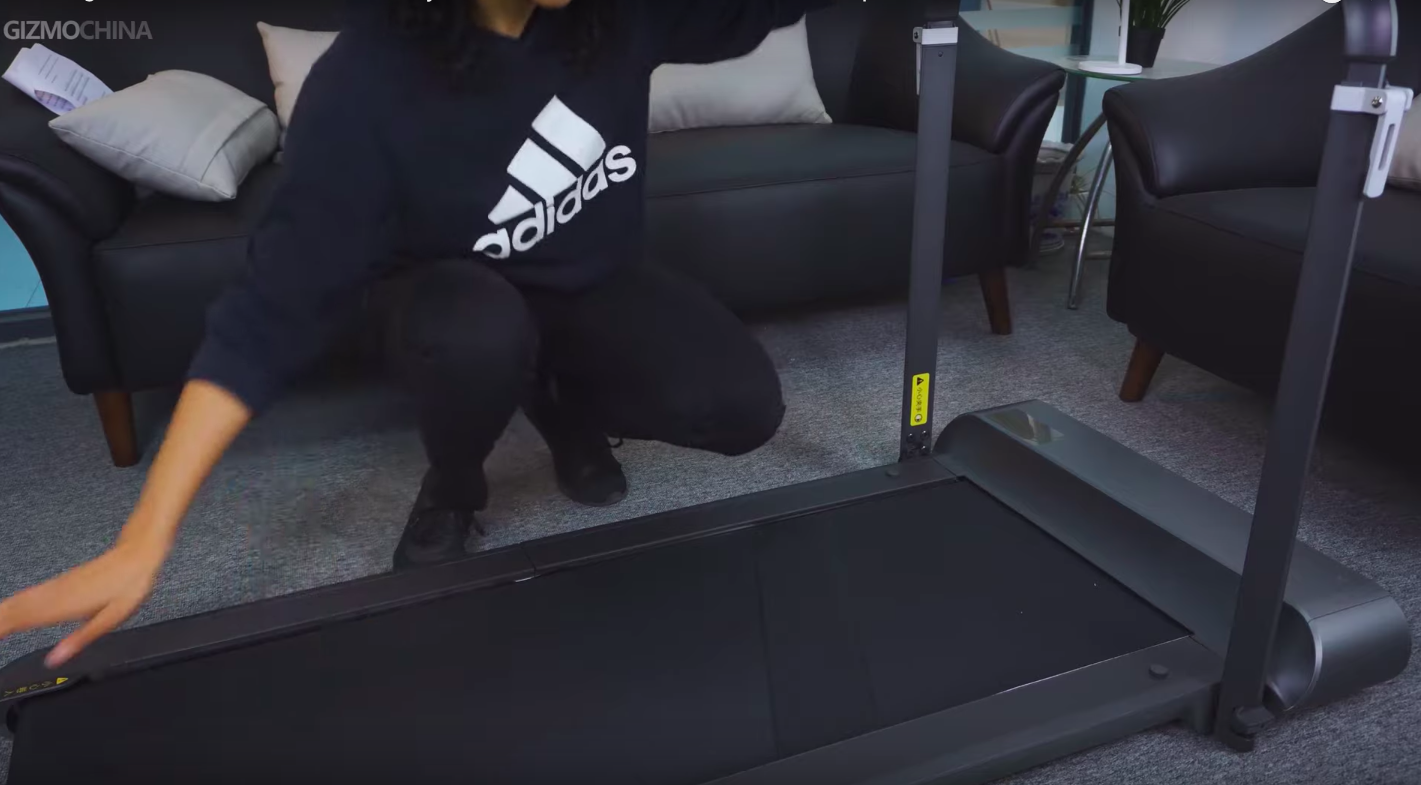
The WalkingPad R1 Pro is a foldable new-age treadmill that’s super-portable too. Yes, I said portable, because the R1 Pro folds in two stages to convert itself into the size of a long but extremely thin suitcase. It’s so thin that storing it under your sofa or beside your cupboard is a cakewalk. It will even fit inside your car boot, which can be extremely handy if you travel often.
The WalkingPad R1 Pro features an aluminum alloy frame with EVA cushioning that softens the impact on your knees while walking/ running. The treadmill is comprised of two major parts: Deck & Handle. The deck is the heart of the treadmill which features the anti-slip running belt and the motor. The handle is added for balance and safety. You can fold the deck in half in the middle and lift it up to line up with the handle. The handle is further retractable and the treadmill folds down into a suitcase-sized device. WalkingPad team claims that this design saves space by nearly 90 percent! Plus, the treadmill comes with rolling wheels which makes it very easy to move it around the house.
Thanks to this design, the WalkingPad Pro R1 can be used practically anywhere right from your small bedroom, office, balcony, or even a yard. You should have no trouble using it outdoors provided you have a power outlet nearby.
Despite its super-compact form factor, the WalkingPad Pro doesn’t compromise on traditional treadmill features. The treadmill has two modes: Walking & Running and the company offers several ways to control it.
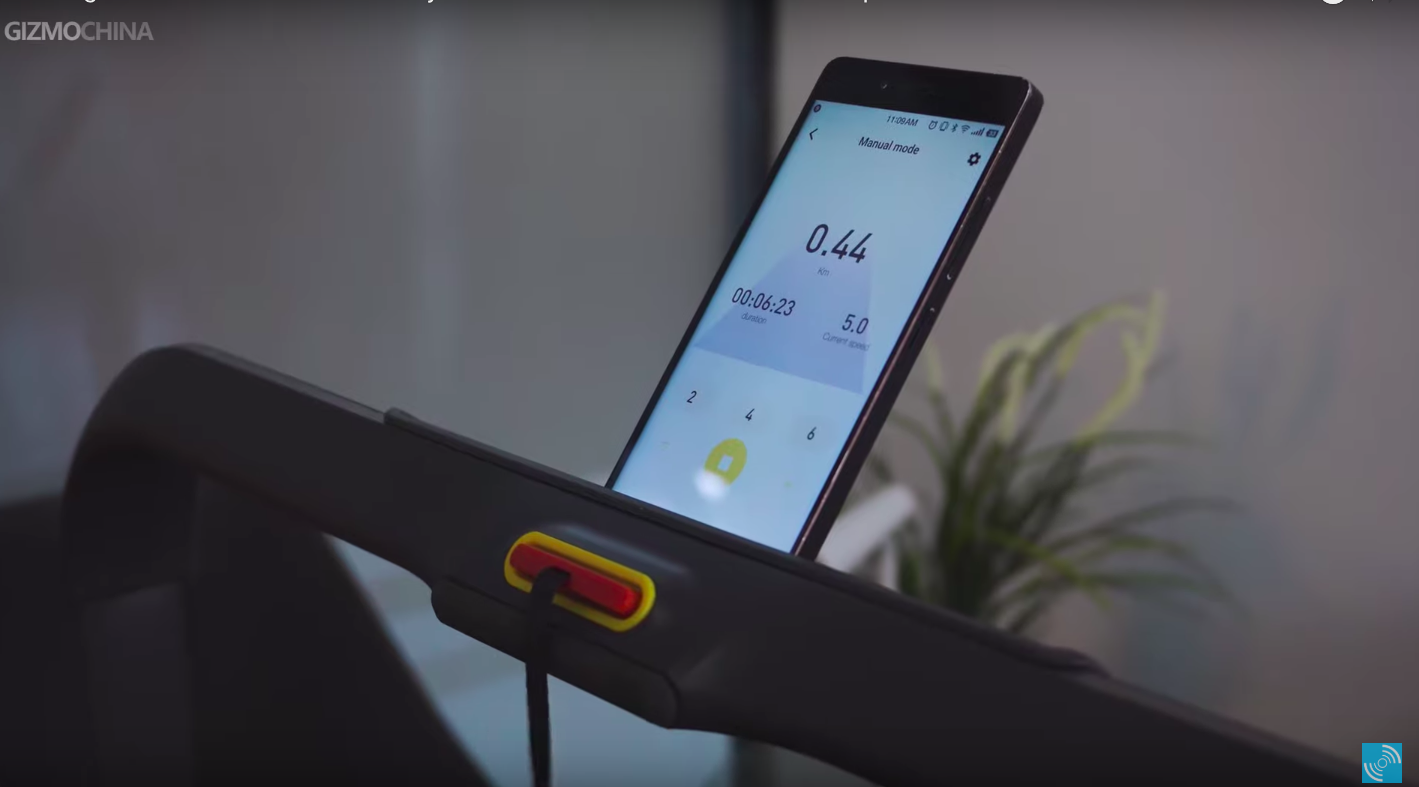
For example, you can connect your smartphone (via KS Fit app) to the treadmill to use it as a control panel. This would make for a solid setup especially when you place the phone or the tablet in the holder provided on the handle. Or you can use the provided remote button to control the speed. Finally, the WalkingPad Pro also comes with feet control, wherein you can simply change the position of your feet on the belt to increase, decrease, or maintain your speed.
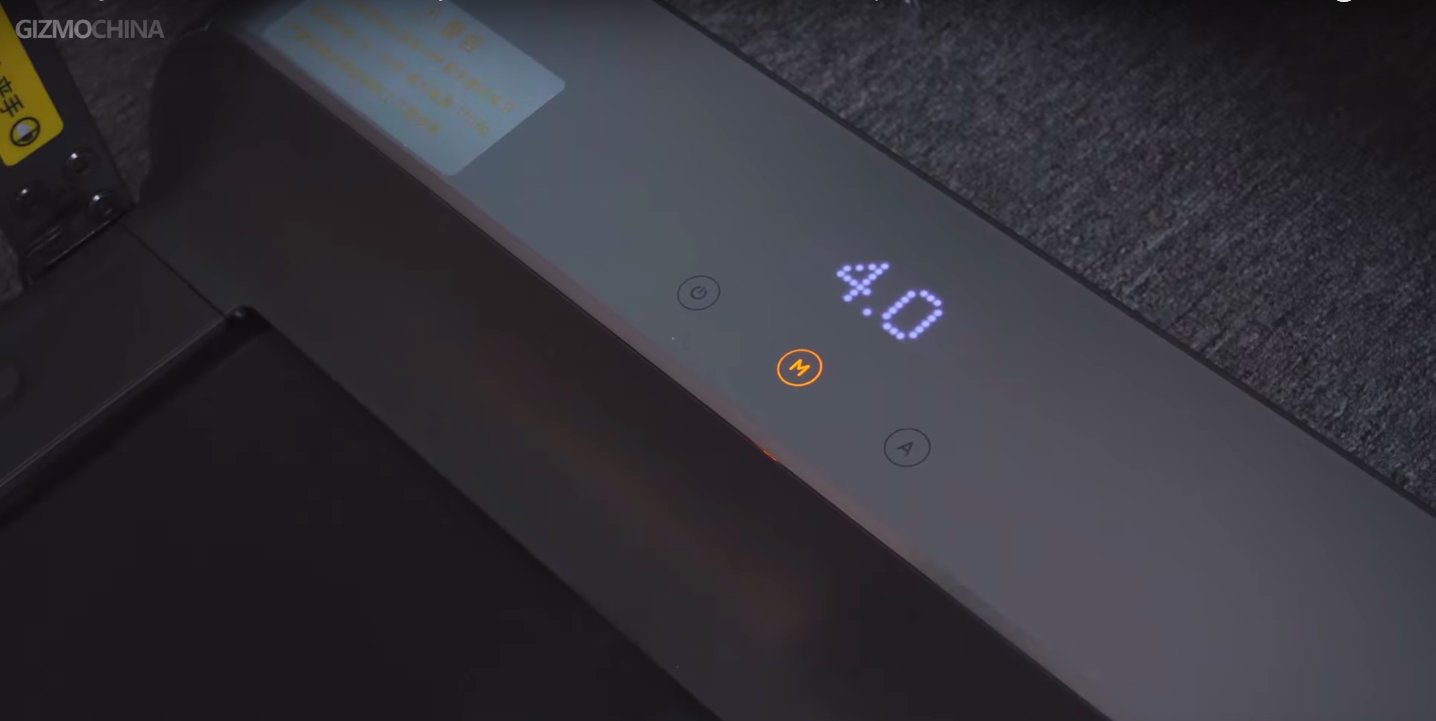
The treadmill also comes with an LED display on the front will show you essential features such as running speed, distance covered, and workout time. It’s nothing fancy but gets the job done. The maximum speed in the running mode is 6.2 miles per hour (10kmph) and in the walking mode, it is 3.75mph (6kmph). The handle helps you keep your balance and there’s a safety clip too (just like a regular treadmill) that acts as an emergency stop in case you lose your balance.
WalkingPad R1 Pro Hands-on: Price
The WalkingPad R1 Pro is currently available on IndieGoGo for $429 with worldwide free shipping. The project has already crossed 6743% of its initial goal with a few hours left. That’s an extremely competitive price, so make sure to check out their project for more details.
Meanwhile, would you like to see us check out more such smart gadgets from China? We would love to hear your opinion.
As the Chinese telecom giant Huawei is battling restrictions from the United States, the company has now warned about the slower growth and management cutbacks ahead in the year 2020.
Eric Xu, the rotating chairman of Huawei, said in an year-end letter that “it’s going to be a difficult year for us.” The message comes ahead of a new year that will test how well the company can compete for global 5G business and smartphone customers under pressure from the U.S.
Given that the company is still under the U.S. trade blacklist and the issue resolution isn’t in sight, he said that “we won’t grow as rapidly as we did in the first half of 2019” and added that the U.S. will create a challenging environment to survive and thrive.
To ensure the company’s growth, Huawei will toughen its stance on lagging units and managers. In the memo, Eric Xu talked about the need to weed out as many as 10% of the company’s worst-performing managers in 2020. Some support or even operational units will be merged or downsized, and employees could get re-assigned to other divisions.
Xu also said that the company will prioritize supply chain security and go “all out” to build its own mobile software system — Huawei Mobile Services — designed to replace many popular applications such as Google Maps, YouTube and Gmail.
Huawei has shown resilience amid the crackdown that began in May earlier this year. The company’s revenue grew 18 percent to 850 billion yuan (~$121 billion) in 2019, although the company missed its initial goal of $125 billion to $130 billion.
The smartphone business became the company’s biggest revenue contributor in the first half of this year. Shipments reached 240 million units for all of 2019, up 16.5 percent from 206 million last year. The company is expected to remain ahead of Apple and behind South Korea’s Samsung Electronics.
So far, we have all been calling Samsung’s upcoming 2020 flagship Galaxy series as Galaxy S11. However, according to a new report, the newest smartphone lineup from the smartphone manufacturer is skipping ahead in years to arrive at the Galaxy S20 series. This has yet to be announced officially but jumps in numeric naming are not unheard of in the industry.
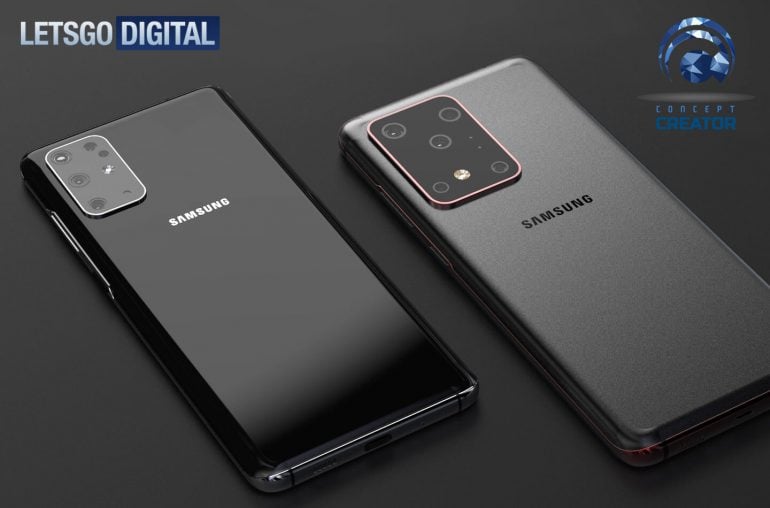
Render of Samsung Galaxy S11 (Image via LetsGoDigital)
The report has yet to be confirmed but also offers some interesting insight about Samsung’s latest premium grade smartphone lineup. Reportedly, the South Korean tech giant will launch 3 variants with there not being a Galaxy S20e but rather a Galaxy S20; followed by Galaxy S20 Plus and Galaxy S20 Ultra. This is quite similar to Apple’s decision on not launching an iPhone 11R but having the entry level start with iPhone 11 and offered a Pro and Max Pro variant.
Furthermore, the information gathered from a Twitter leak also arrived with a few minor details alongside it. Samsung Galaxy S20 will feature a 6.2 inch display while the Galaxy S20+ will arrive with a 6.7 inch display. The Galaxy S20 Ultra, on the other hand, arrives with a large 6.9 inch display. This makes it clear that the three smartphones are large in size and are likely to feature minimal bezels on every side.
Samsung’s Galaxy S10 series arrived in 4 variants with the S10e, S10, S10+ and a 5G variant; not including the speculated upcoming Galaxy S10 Lite. However, 5G is going to be an integral part of Qualcomm’s Snapdragon 865 SoC, so each model will arrive with the faster bandwidth compatibility.
We use cookies on our website to give you the most relevant experience by remembering your preferences and repeat visits. By clicking “Accept”, you consent to the use of ALL the cookies.
This website uses cookies to improve your experience while you navigate through the website. Out of these, the cookies that are categorized as necessary are stored on your browser as they are essential for the working of basic functionalities of the website. We also use third-party cookies that help us analyze and understand how you use this website. These cookies will be stored in your browser only with your consent. You also have the option to opt-out of these cookies. But opting out of some of these cookies may affect your browsing experience.
Necessary cookies are absolutely essential for the website to function properly. This category only includes cookies that ensures basic functionalities and security features of the website. These cookies do not store any personal information.
Any cookies that may not be particularly necessary for the website to function and is used specifically to collect user personal data via analytics, ads, other embedded contents are termed as non-necessary cookies. It is mandatory to procure user consent prior to running these cookies on your website.






















UP NEXT: Samsung to showcase SelfieType, a new way of typing with front cameras at CES 2020