Back in 2016, Apple launched its iPhone 7 series flagship smartphone. While many were excited about the upgrades and new features, one particular function went under most headlines. With iOS 7 the Cupertino-based company shipped smartphones with Activation Lock which made iPhone a lot more secure than before. This small function was a welcomed feature that discouraged thievery against Apple smartphones. Unfortunately, it is also why thousands of iPhones end up in junk and being scrapped for parts.
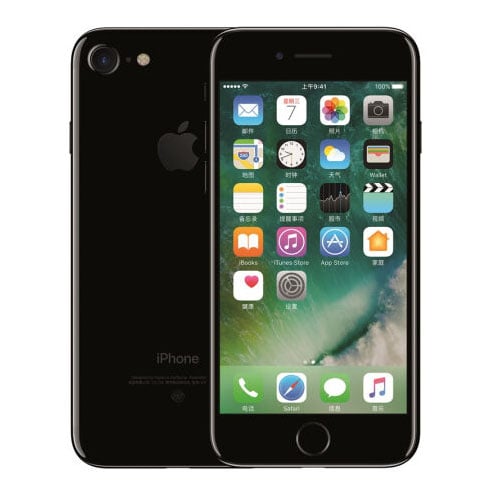
Apple’s iPhone 7
Although the new feature functions as a great way to secure one’s iPhone it is also the primary reason why a lot of iPhones end up being useless and in the junkyard. Ideally, the function works best when owners use the Find My app which immediately locks the iPhone. The lock can only be disabled once the Apple ID and password of the owner has been input; failing this, the device is nothing more than a fancy paperweight.
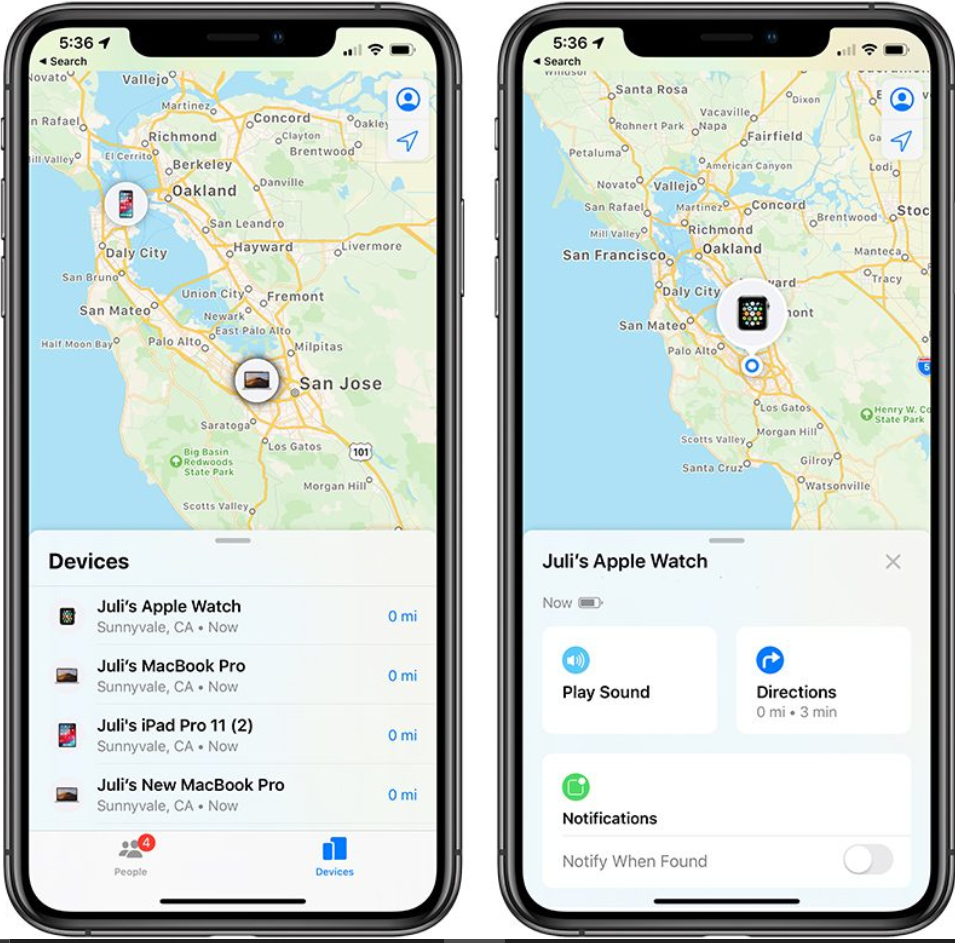
Apple’s Find My iPhone App
According to the renowned hardware repair specialist iFixit, thousands of perfectly functioning iPhones have to be shredded and scrapped for parts every month instead of being refurbished. Many iPhone users are unaware of disabling the Activation Lock and properly wiping their Find My app details on their handsets. So when they upgrade to a new smartphone or just getting rid of their older iPhone, the device becomes useless as it is inaccessible since Find My app is a permanent lock if the iPhone is not wiped clean and reset.
Peter Schindler, founder and owner of the Wireless Alliance, a Colarado based electronics recycler and refurbisher, stated that he receives anywhere 4000 to 6000 locked iPhones every month. These devices can still be easily refurbished and put back into circulation but “have to get parted out or scrapped” due to the anti-theft feature.
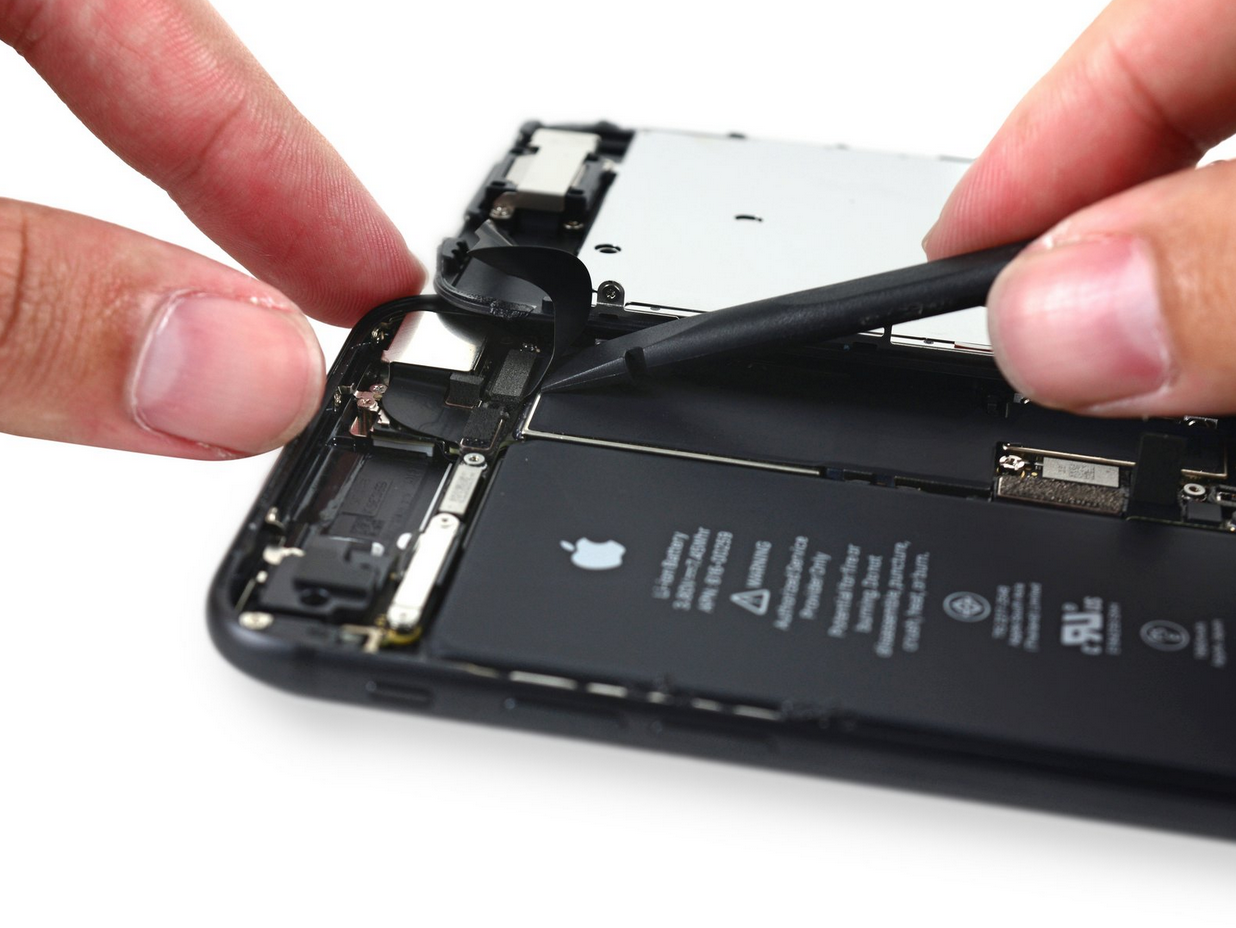
iFixit iPhone 7 Breakdown
Notably, Schindler stated to iFixit that Apple should implement a bypass that “would allow certified recyclers and refurbishers to unlock donated devices if they’re not reported lost or stolen.” This would be great for many reasons, the foremost being environmental impacts since Apple is the third most popular smartphone brand currently in the market.
OnePlus took the covers off its OnePlus 7T series comprising the OnePlus 7T and the OnePlus 7T Pro earlier this year. As expected, both devices were well-received by OnePlus’ huge fanbase.
Taking the popularity into consideration, the Chinese smartphone maker is now offering the OnePlus 7T Pro for a lowered price through Gearbest. The 8GB RAM+256GB ROM 7T Pro variant would normally set you back $1008.40, but you can now get it for a lowered price of only $655.99 from Gearbest.
Moreover, you can extend this 35 percent discount by applying coupon code GBOP7TPRODEC at check out. The coupon enables you to get an extra $12 off by reducing the original asking price of the OnePlus 7T Pro to just $643.99 even before you place your order.
An absolute steal at this price, the OnePlus 7T Pro phablet sports a 6.67 inch AMOLED display with 3120 x 1440 pixels resolution. It is powered by Qualcomm’s Snapdragon 855 Plus processor and packs an Adreno 640 GPU under the hood.
In the photography department, the OnePlus 7T Pro houses a quad-camera setup comprising 48.0MP+8.0MP+16.0MP sensors at the back. Upfront, there’s a 16.0MP selfie shooter. Furthermore, the phablet runs OxygenOS and is backed by a 4085mAh battery.
You can follow this link to check out more details about the OnePlus 7T Pro and grab the discount, which is valid for the blue color option. With over a whopping 1000 pieces sold at the time of writing, the promo is slated to end ten days.
Besides launching the OPPO A91 phone, OPPO has also unveiled the OPPO A8 smartphone in China. The OPPO A8 is a budget-friendly phone that comes with a tall aspect ratio screen, a big-sized battery and a large native storage. The smartphone has arrived in China with an attractive price tag of 1,199 Yuan (~$171).
OPPO A8 Specifications and Features
The polycarbonate bodied OPPO A8 phone comes with a 6.5-inch IPS LCD display with waterdrop notch. The phone delivers an HD+ resolution of 720 x 1600 pixels. There is an eye protection mode that filter the harmful blue light. According to OPPO, the A8 offers a screen-to-body ratio of 89 percent.
The Helio P35 chipset is present under the hood of the OPPO A8. The SoC is assisted by 4 GB of RAM. The budget phone offers a massive native storage of 128 GB. For more storage, the phone features a microSD card slot. The smartphone boots to ColorOS 6.1 based Android 9 Pie OS. It tags along the Breeno smart assistant. It is backed by a 4,230mAh battery that promises 14 hours of online video watching and 7 hours of online gaming.
The display notch is fitted with an 8-megapixel selfie shooter. The rear side of the smartphone has a LED flash enabled triple camera setup that includes a main lens of 12-megapixel. It is coupled with a 2-megapixel macro lens and a 2-megapixel depth lens. The phone comes with connectivity features like dual-SIM support, 4G VoLTE, Wi-Fi 802.11ac, Bluetooth 4.2, GPS, microUSB 2.0 and 3.5mm audio jack. Lastly, it features a rear-facing fingerprint reader.
OPPO A8 Price and Release Date
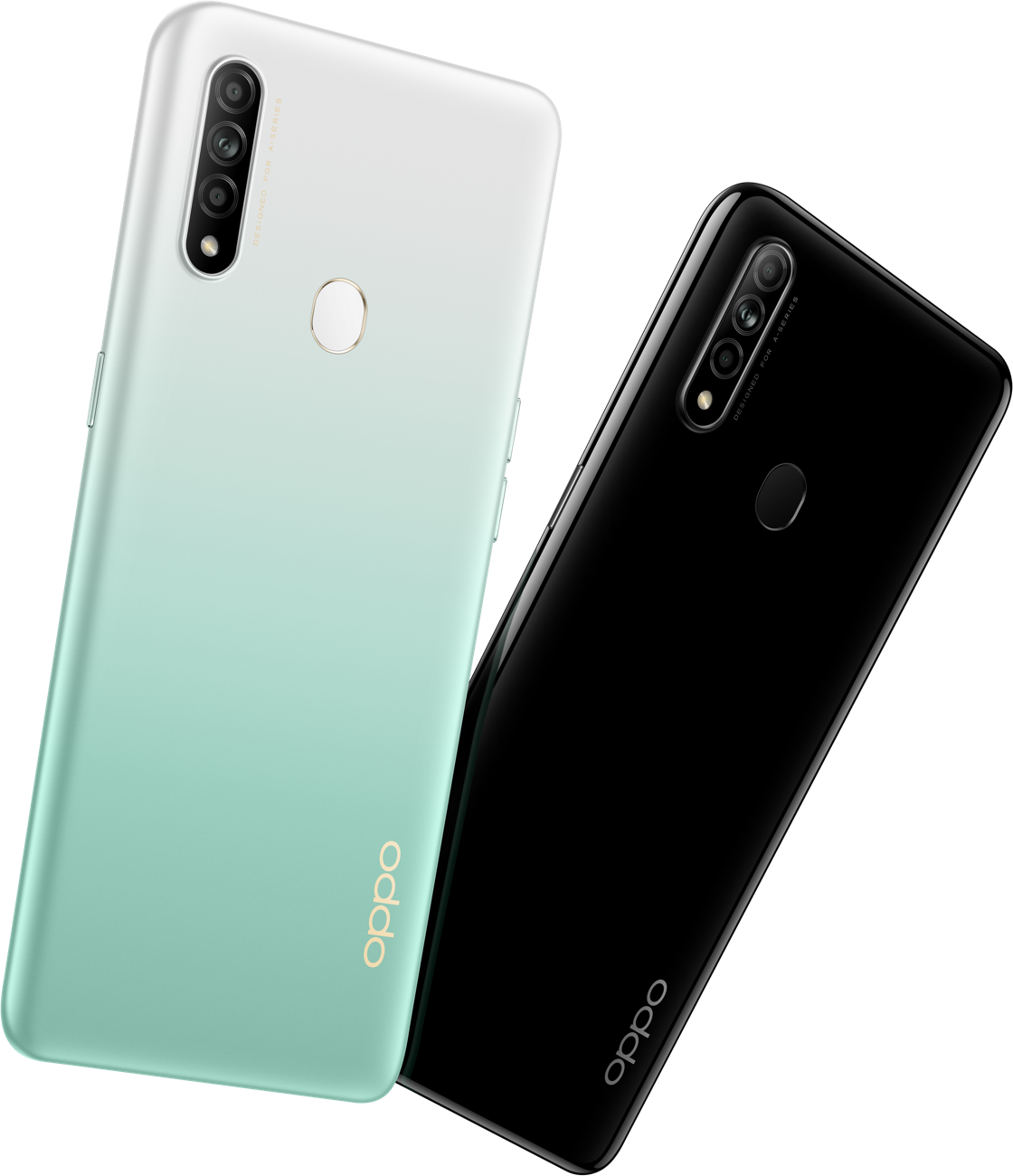
The OPPO A8 has been introduced in China with a price tag of 1,199 Yuan (~$171). Azure and Secret Night Black are the two color options available for OPPO A8 buyers in China. Buyers can now register for the smartphone through the OPPOShop.cn and other Chinese retailer sites. The smartphone is scheduled to go on sale on Dec. 26. There is no word on the availability of the OPPO A8 phone outside of the home market.
OPPO has discreetly launched the OPPO A91 and OPPO A8 smartphones in China. Both phones are listed for reservations on the official OPPOShop.cn and other retailer sites in China. Compared to OPPO A8, the A91 is an advanced phone as it comes with a full HD+ display, an in-screen fingerprint reader, quad rear cameras and fast charging technology.
OPPO A91 Specifications and Features
The OPPO A91 is a 7.9mm thick device that weighs 172 grams despite housing a 4,025mAh battery. The phone is fitted with a 6.4-inch AMOLED display that offers full HD+ resolution of 1080 x 2400 pixels and 20:9 aspect ratio. The display offers features like eye protection mode, DC dimming 2.0 and 3rd generation in-screen fingerprint sensor. It delivers a screen space of 90.7 percent.
The MediaTek Helio P70 chipset along with 8 GB of RAM powers the phone. The device offers users with an internal space of 128 GB. For more storage, users can add a microSD card to the phone.
The 4,025mAh battery of the OPPO A91 is coupled with VOOC 4.0 fast charging. The company claims it takes only 30 minutes for the phone to gain 50 percent battery power through 30W charging tech. The ColorOS 6.1 based Android 9 Pie OS runs on the OPPO A91 smartphone. For enhanced gaming experience, the phone comes with Game Boost 2.0.
The display notch is the home for the OPPO A91’s 16-megapixel selfie camera. The back panel of the phone features a quad camera system that has a 48-megapixel main lens, a 119-degree ultrawide lens of 8-megapixel, a 2-megapixel macro lens and a 2-megapixel. The quad cameras can capture stabilized vides, better portrait shots at night and it comes with AI video repair feature that enhances the video while recording. For better portrait shots, the OPPO A91 offers users with Portrait HDR that enhances the backlight while shooting selfies. The usual connectivity features like dual-SIM support, 4G VoLTE, Wi-Fi 802.11ac, Bluetooth 5.0, GPS, USB-C and 3.5mm audio jack are also available on the OPPO A91.
OPPO A91 Price and Release Date
The OPPO A91 reservations have started in China. It is priced at 1,999 Yuan (~$285) and it comes in Red, Black and Blue color options. The phone will be available for purchase for the first time from Dec. 26 in China. There is no word on its availability outside of China.
What’s your opinion on the mid-range OPPO A91? Share us your views by posting your comments below.
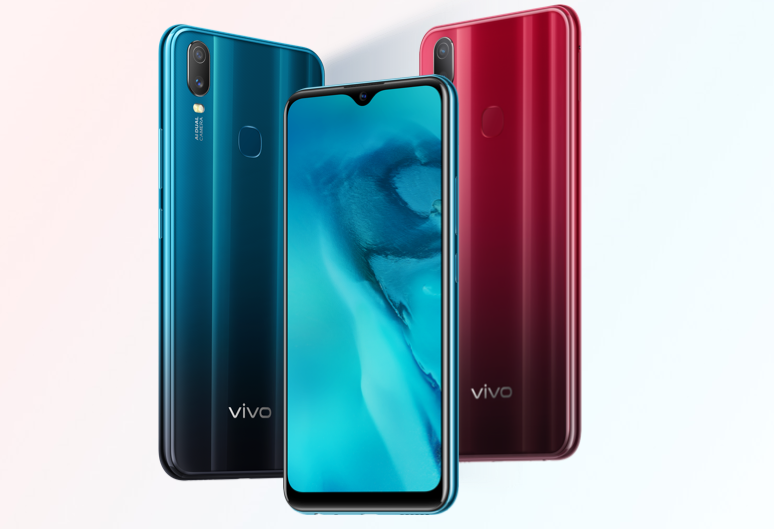
Vivo has discreetly launched the Vivo Y11 budget smartphone in India. It is the same Vivo Y11 phone that the company had launched in Vietnam a couple of months earlier. The highlights of the Y11 include a tall aspect ratio display, a dual-camera setup and a massive battery. Also, it carries an budget-friendly price tag.
Vivo Y11 Specifications and Features
The Vivo Y11 flaunts a 6.35-inch HD+ display with a resolution of 1544 x 720 pixels. The device draws power from an octa-core Qualcomm Snapdragon 439 SoC with Adreno 505 GPU and flaunts 3 GB of RAM and 32 GB of internal storage. The storage is further expandable via a microSD card.
The Vivo Y11 smartphone draws power from a mammoth 5,000mAh battery. In terms of optics, the Vivo Y11 features a 12-megapixel primary sensor at the rear with an aperture ratio of f/2.2, along with a 2-megapixel sensor with an aperture ratio of f/2.4. The setup is coupled with an LED flash. The smartphone flaunts an 8-megapixel lens at the front, with an aperture ratio of f/1.8. The phone is loaded with FunTouch OS based Android 9 Pie OS.
Connectivity options include dual SIM, 4G VoLTE, Wi-Fi 802.11 b/g/n, Bluetooth v4.0, GPS, GLONASS, OTG, and micro USB. A fingerprint scanner is available on the rear shell of the device. The smartphone measures 159.43 x 76.77 x 8.92 mm and weighs 190.5 grams.
Vivo Y11 Price and Availability
Vivo launched the Vivo Y11 in India at a price point of Rs. 8,990 (~$126). The device will go on sale starting Dec. 21 and will be available across all Vivo dealerships in India. The Y11 will come in two color schemes, including Jade Green and Coral Red.
OnePlus, the smartphone manufacturer, had publicly announced the second data breach in two years back in November 2019. Since then, the company has promised to launch a new bug bounty program by the end of the year 2019. The move was made to bump up security measures and prevent future breaches. Now, the company has finally announced that its bug bounty program is live.
For users that find any bug or vulnerabilities in the systems, they can submit it on OnePlus’s official website that features a new bug report section. Users must login first and apparently, the company will be creating and updating a leaderboard of top contributors. The company will even feature the top three contributors on the bug bounty’s main page as well.
The first breach in OnePlus that caused credit card information being leaked for a number of users
In the about section of the bug bounty program, OnePlus promises to reward users that submit reports according to certain tiers.
The exact definition of the tiers are still uncertain, however, OnePlus states that the reward you may receive is, “determined based on vulnerabilities severity and actual business impact.” The company had previously announced that it would partner up with a world renowned security platform in December 2019. That is now confirmed to be the startup HackerOne.
The collaboration with HackerOne is starting as a pilot program which would see numerous select security researchers being invited to test against OnePlus’ systems. The company also mentioned that a public version of the same will be launched in 2020.
According to Richard Yu, the CEO of Consumer Business of Huawei, the global shipments for smartphones from Huawei will reach around 230 million by the end of 2019. The statement was made by the Senior Executive at an internal conference.
Back in 2018, the Chinese tech giant had its smartphone sales surpass the 200 million mark, reaching about 206 million units shipped in total. By the time 2018 ended, the President of Huawei, He Gang, mentioned that the global smartphone market was not in an optimal state, pointing at the company’s own figures. Thus, the President mentioned that Richard Yu’s expectations are high and estimated that the target for 2019 would be between 230 million to 250 million shipments.
Huawei’s Richard Yu
Earlier this year, Huawei faced complications with the US Government when its Commerce Department put the company under the Entity List which limited its operations in the country. This marked the smartphone maker as a national security threat with data security in mind and has since also faced similar accusations in European regions as well. Undoubtedly, all of these had a major hand to play in its overall global smartphone shipments.
Huawei had many obstacles on its way to achieving its yearly goals. Many key companies like Google, ARM, and more had to end their business ties with the Chinese company due to the US Government’s actions. So the fact that the company is still set on the preconceived speculations is a testament of its own efforts.
US-China Trade Disputes (with Huawei being caught in th crossfires)
Previously, Huawei announced that it had reached its goal 64 days in advance by selling more than 200 million smartphones by just 22nd October 2019. Thus, it is highly likely that the large 230 million shipments will be met by the end of this year. Notably, the shipments are also very likely to exceed Apple’s full year sales in 2019.
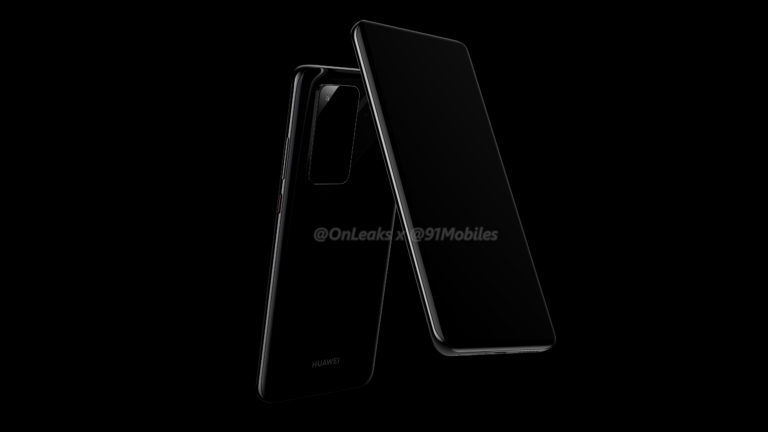
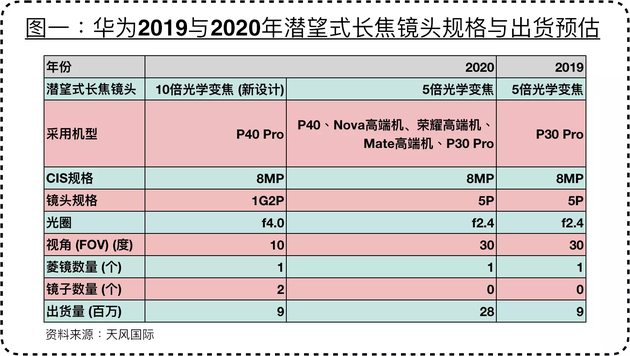
Huawei‘s cameras have been always been a highlight of their smartphones, and they’re always packed with fancy new features and technology. This time however, Tianfeng International analyst Ming Chi Guo has predicted that the upcoming Huawei P40 Pro will have a newly designed periscope telephoto lens, giving it 10x optical zoom.
This is a huge improvement over the Huawei P30 Pro’s periscope telephoto lens, which only managed 5x optical zoom, only managing 10x hybrid zoom.The report predicts that new Huawei models will mostly use these new periscope telephoto lenses, including the Huawei P40, high-end Nova devices, high-end Honor devices and the next Huawei Mate flagship.
Ming Chi Guo also states in the report that Huawei‘s high-end Huawei P40 Pro is expected to sell for 4,000 to 5,000 yuan ($570 – $713). He also estimates that the device will sell at least 9 million units shipped in 2020. Considering the Huawei P40 Pro leaks we’ve seen recently, we’re eager to find out just how much more impressive these cameras can get.
The Huawei P40 is confirmed to release in late March 2020. The news arrived after Richard Yu, CEO of the company’s consumer products division, stated the upcoming smartphones release date in an interview with the French press in Shenzhen, China. In the interview, Richard Yu stated that the device will run Huawei’s Mobile Services, which is speculated to be ready by the time the Huawei P40 is released.
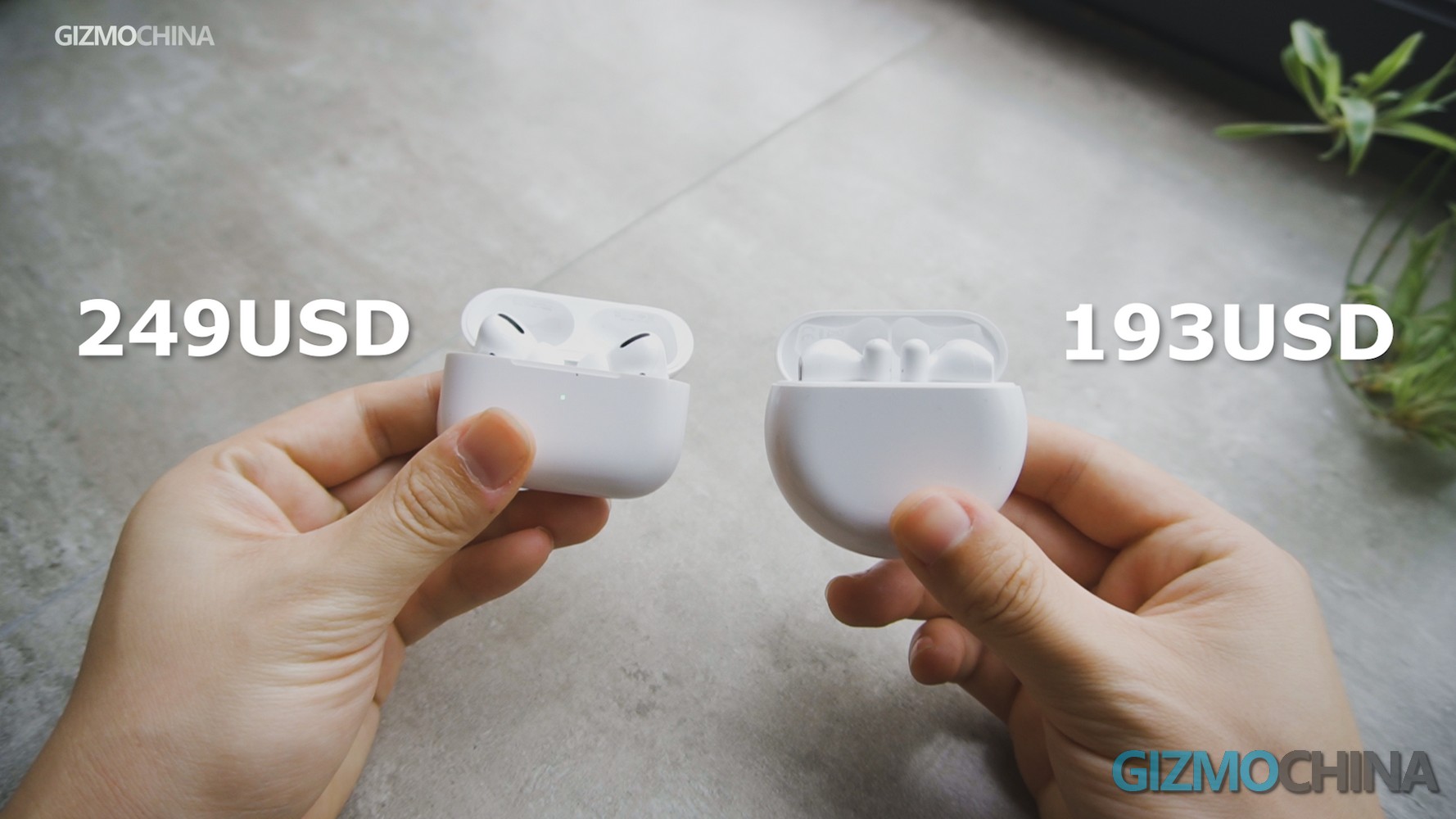
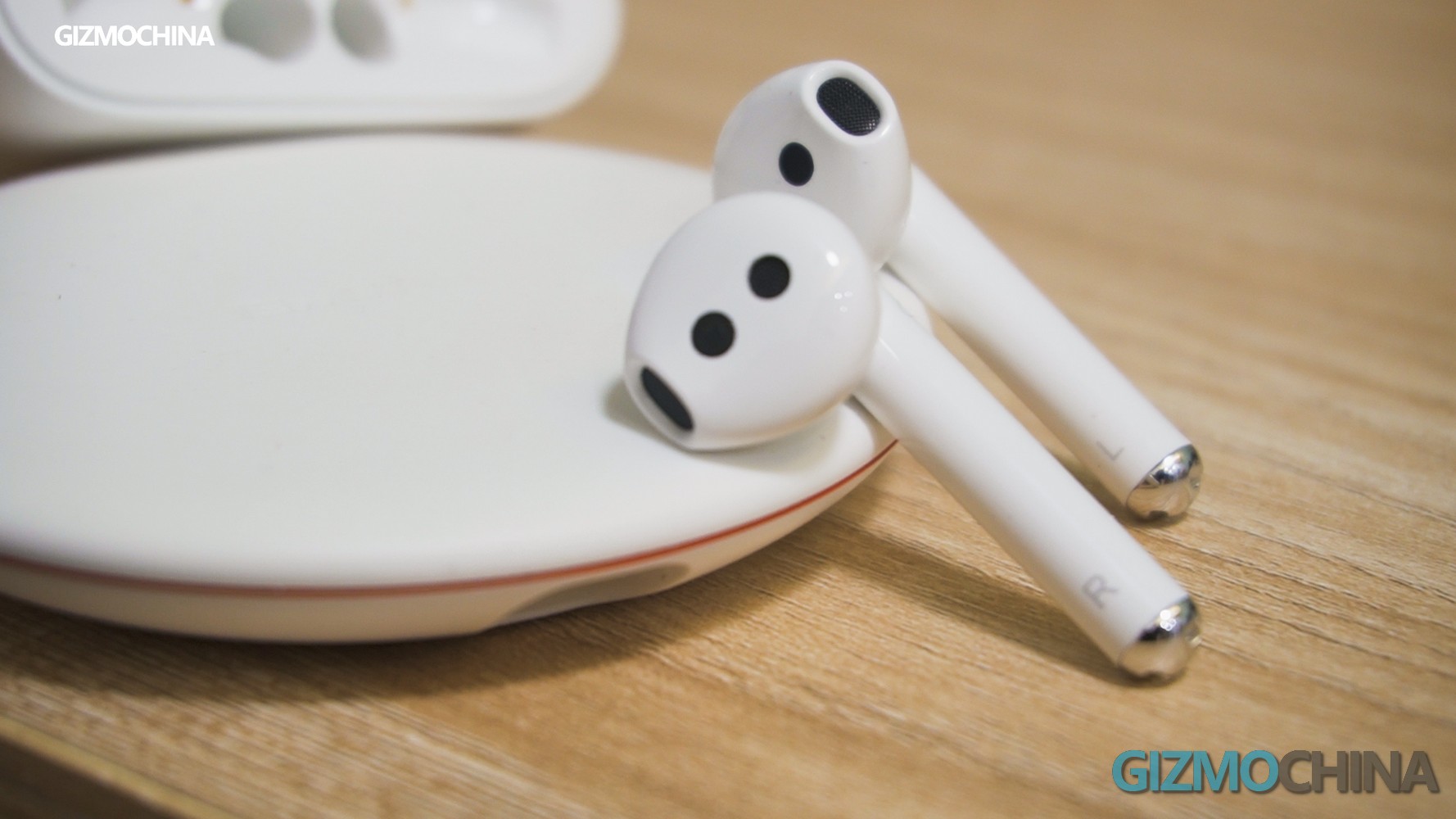
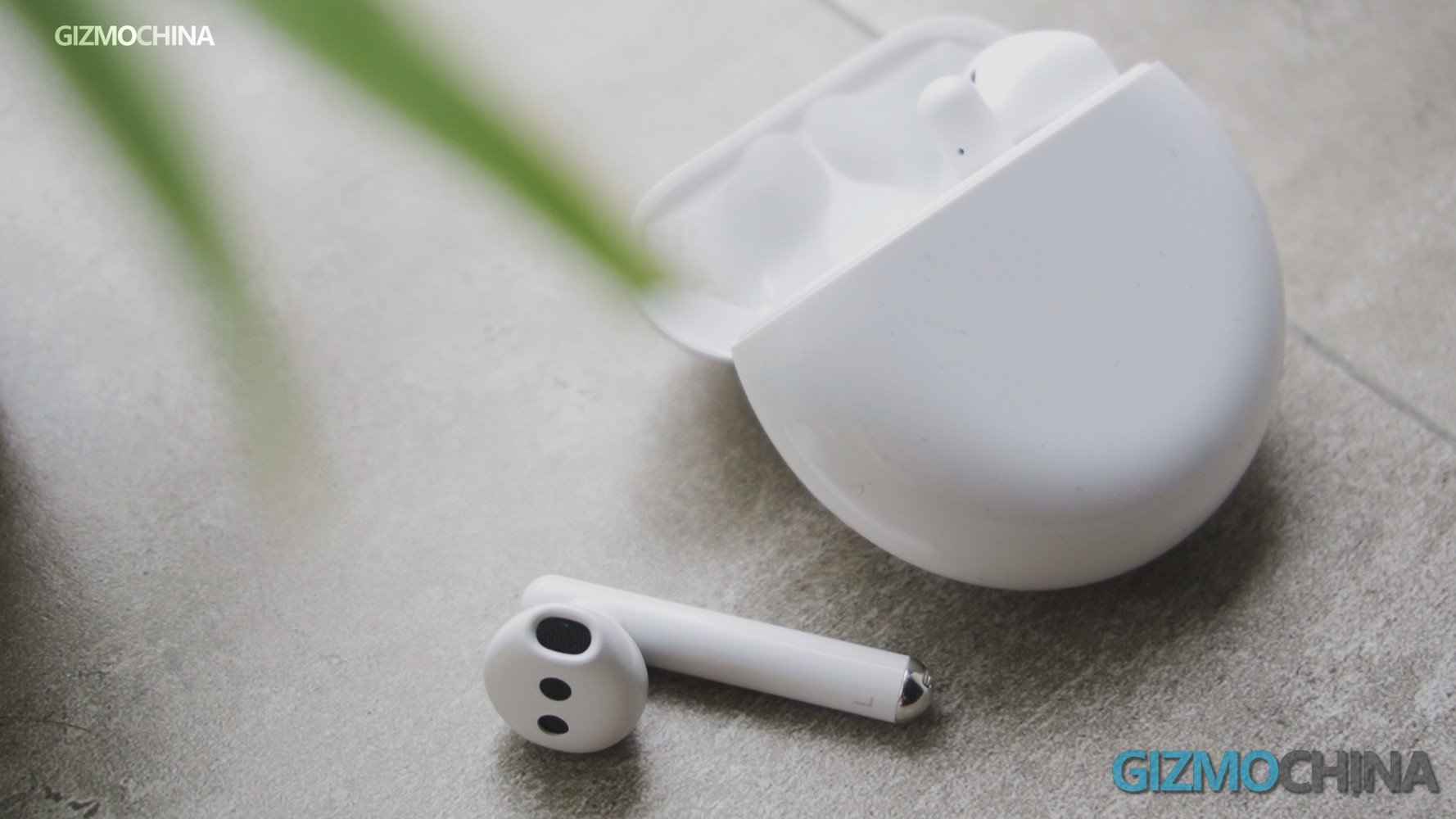
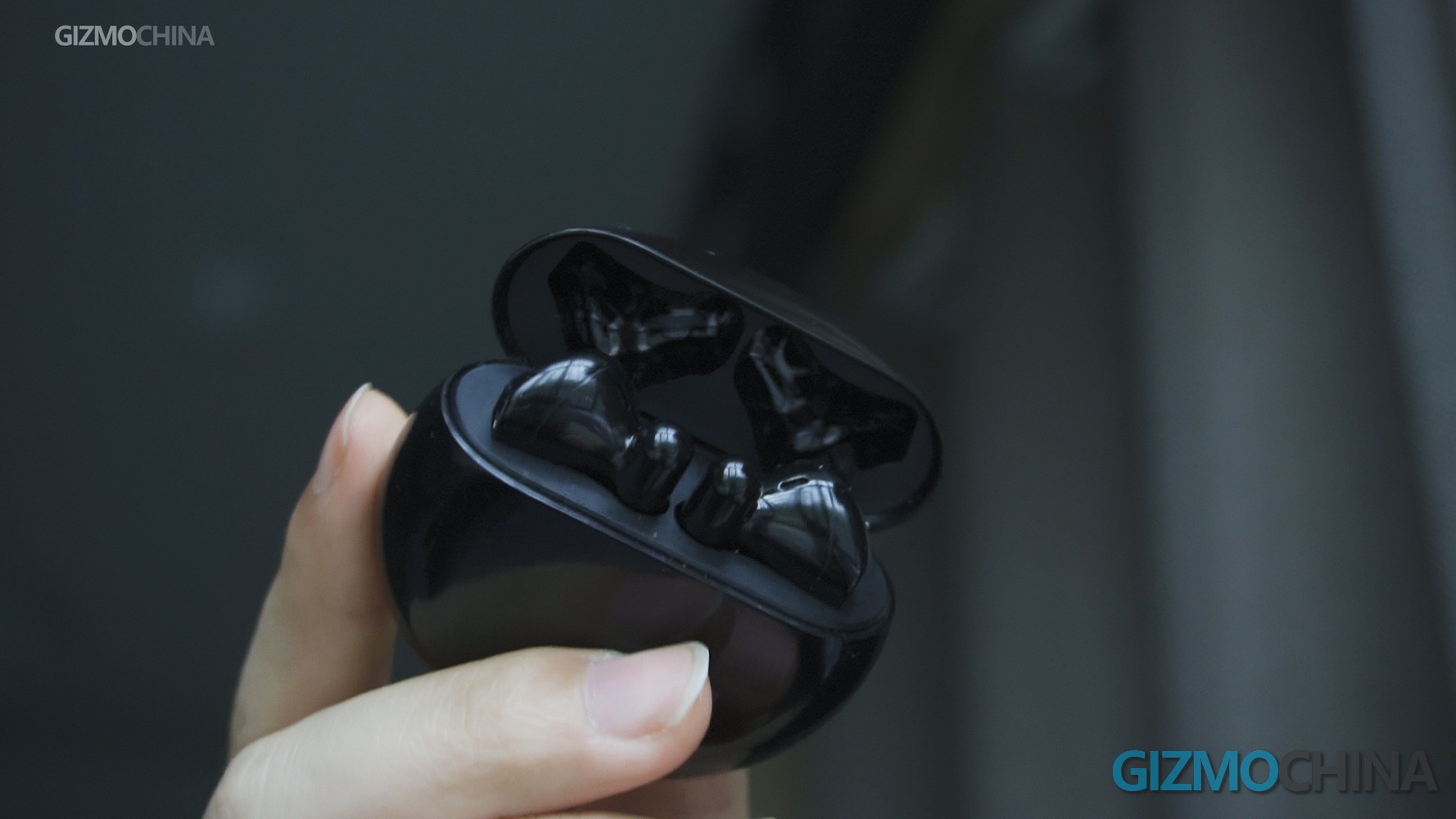
Huawei finally brought out their new wireless earbuds, the Freebuds 3. It seems that Huawei is in good company as Apple released the AirPods Pro earlier. Both of them were targeting the feature of active noise reduction. Compared to the Apple AirPods series, the Huawei Freebuds series usually have a more competitive price. The new Freebuds 3 is no exception. Compared to the price of 249 USD, the Freebuds 3 costs around 197 USD, almost having the same price as AirPods 2, which surprisingly includes the new feature of active noise cancellation. Today we will bring a simple comparison between the Huawei Freebuds 3 and the Apple AirPods Pro.
Huawei Freebuds 3 vs Airpods Pro
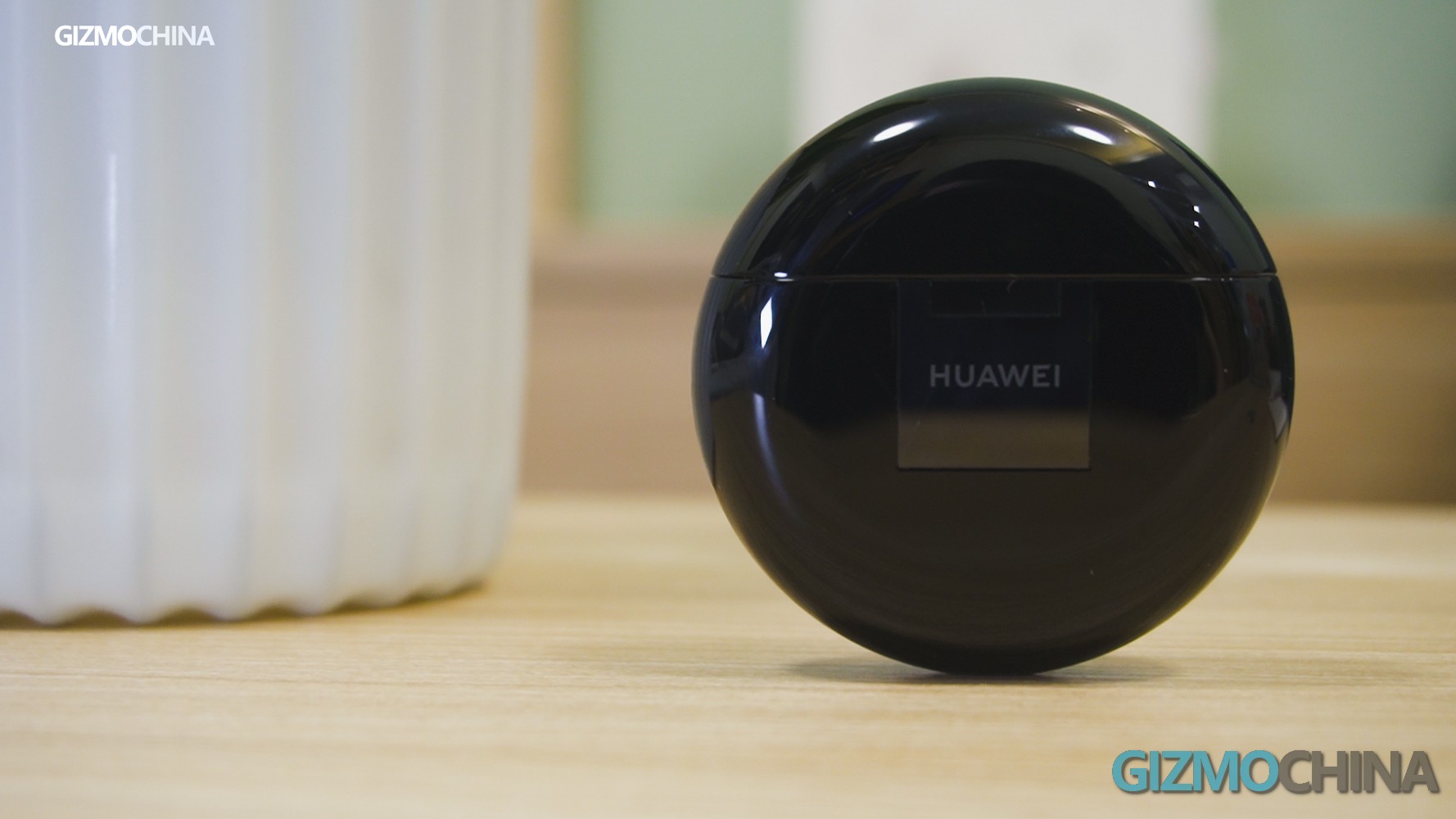
Huawei Freebuds 3
Design
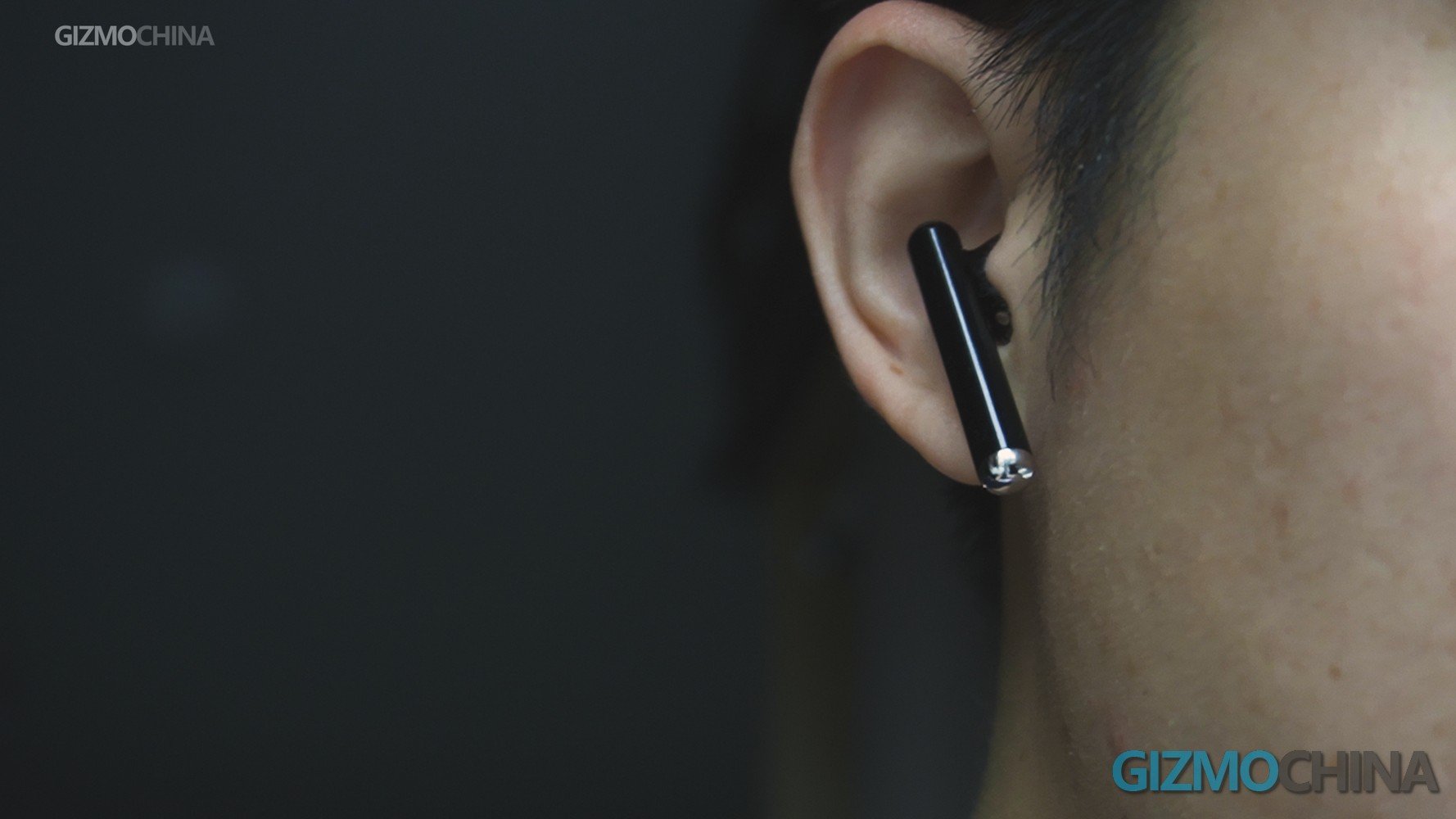
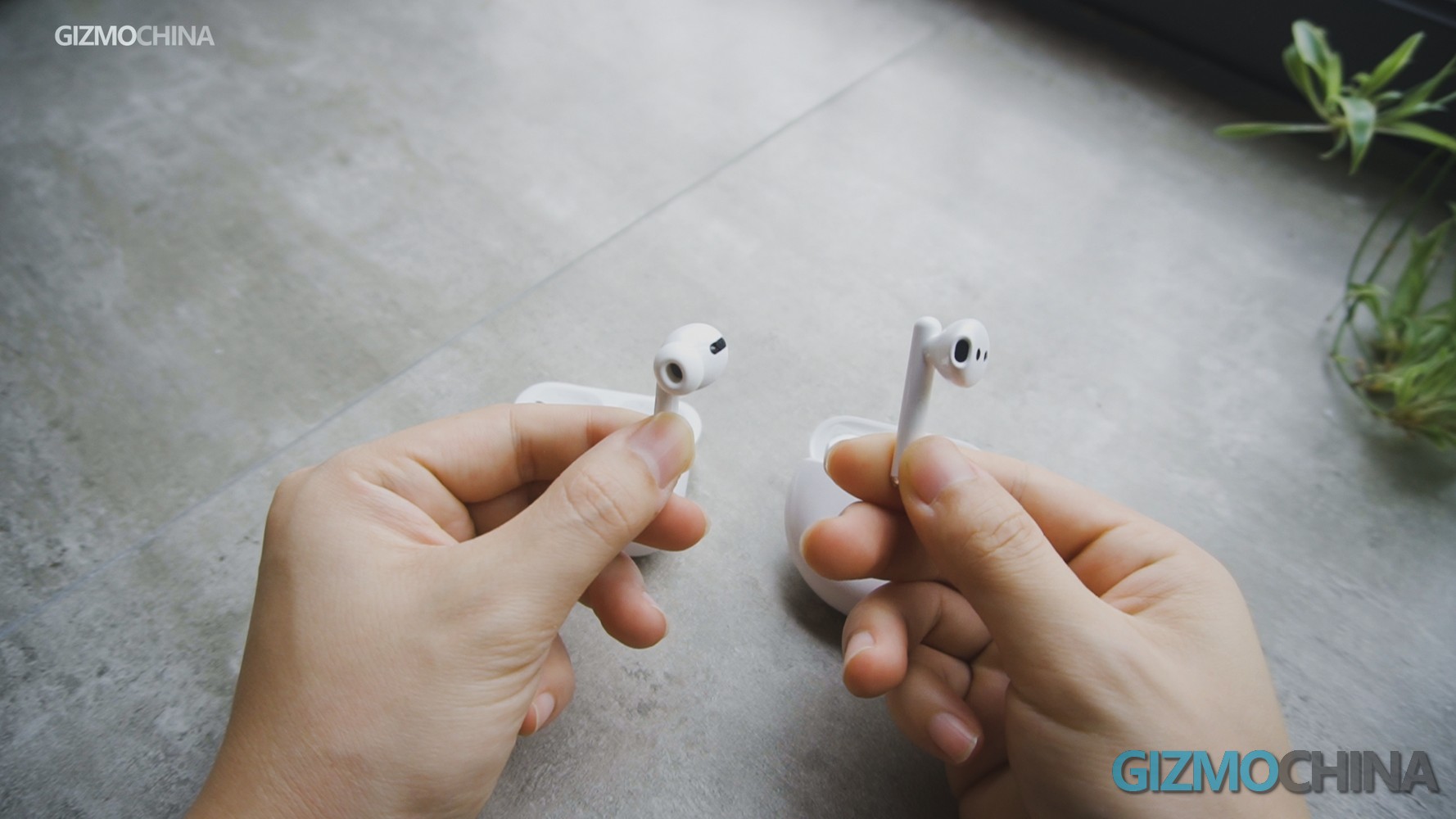
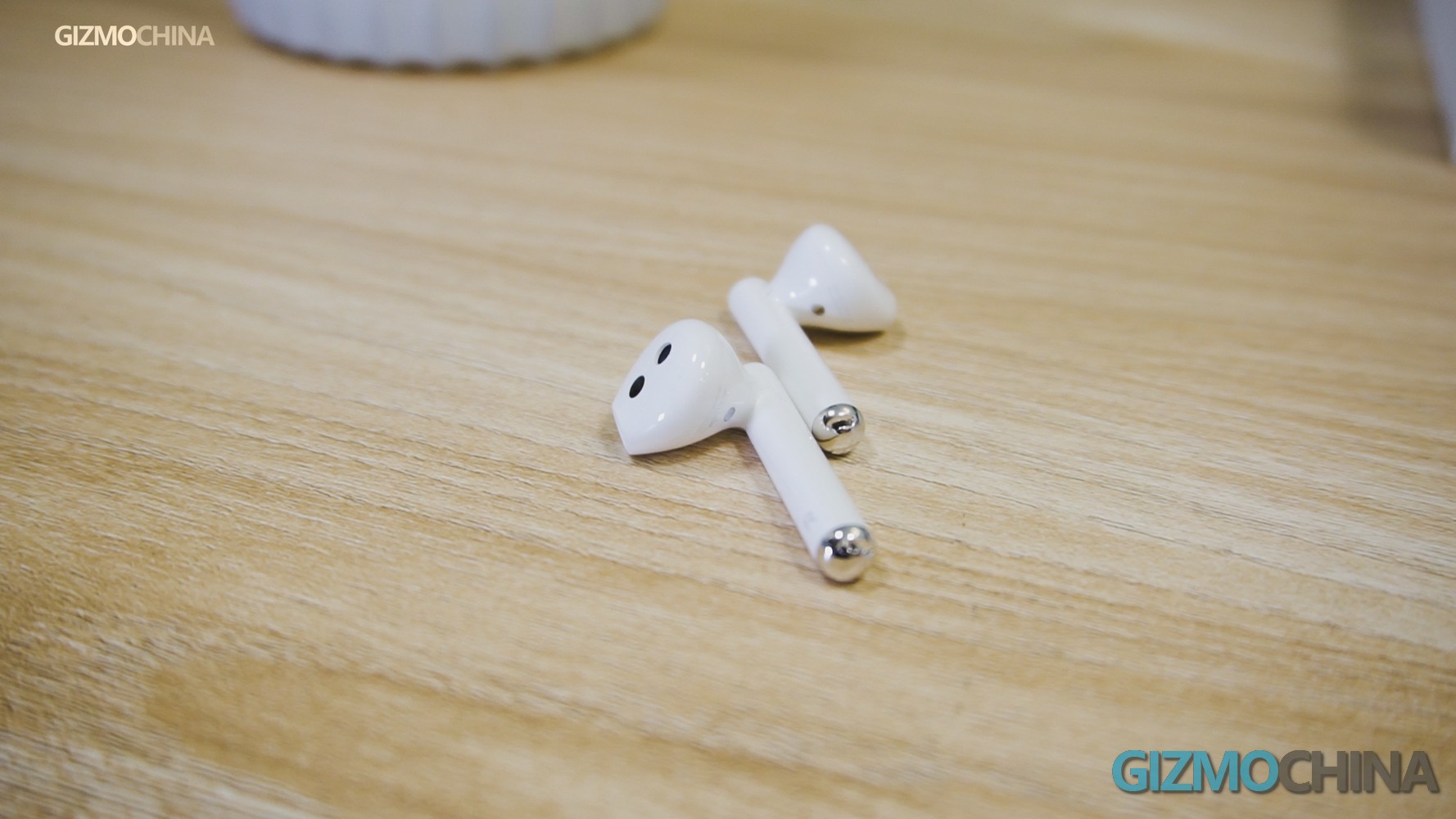
Both of them developed their appearance style with strong identification, which probably will become diverse references for the design of following wireless earbuds. It’s pretty hard to tell you which design is better. But out of my experience and use, compared to the ear-in design, the open-fit design of Huawei Freebuds 3 fits most people’s ears without causing any discomfort. Especially if you are looking for a pair of earbuds for extended wearing, it’s no doubt that the Huawei Freebuds 3 can provide you better wearing experience.
Considering the competitive price of the Freebuds 3, actually, it’s fair to compare it with the Apple AirPods 2. They both have great fit and share a similar wearing experience. But after thinking about the fact of active noise reduction, it’s not difficult to tell you that the Freebuds 3 looks like a more attractive option.
Sound
Besides the ear fit, there are several important dimensions like sound, noise reduction, conversation, and audio delay that needs to be considered when choosing the earbuds. Then you can match them with your personal usage case scenario. So how do they sound?
As wireless open-fit earbuds, the Freebuds 3 sound great. Or we would say it’s surprisingly good as we did not expect it too much. The good bass provides a better underlying depth to the sound, and the pleasant and rich mid-range reserves great detail of both instruments and vocals. Well, the high-pitch sounds a bit more piercing than the Apple AirPods Pro. Especially when you get closer to 100% volume, the sound would lose part of the bass and make highs distort slightly. So, we suggest you don’t listen on full volume on the Freebuds 3.
But the open-fit design here is really a mixed blessing. It does bring you great comfort, but meanwhile, has a great impact on the sound, especially when fitting into the different shapes of ears. We brought the Freebuds 3 to several testers and asked them about its fit. Most of them had pretty similar comments as us, but we still received complains about the bass performance. We think the reason here is that the open-fit design is not able to provide a perfect fit and different ear shapes will also contribute other variables to the actual listening experience. But as we open the noise reduction, it gets much better. Even so, Freebuds 3 is still one of the wireless earbuds with the best sound.
But please don’t overestimate them, after all, its one of the best sounding WIRELESS earbuds. If you are a hardcore audiophile, you probably would not think of the wireless earbuds anyway. To be honest, I feel the Freebuds 3 sound slightly better than the AirPods Pro.
Noise-canceling
You probably had a hard time imaging how the open-ear design of the Freebuds 3 brought active noise reduction. But given how good the isolation was on the AirPods Pro, we know now that tight-fit tips and a good noise canceling solution can do wonders even for the earbuds with an open ear design. On the Freebuds 3, there’s almost zero physical isolation. But after we test it, we found it’s better than what we had imagined. The Freebuds 3 offer up to 15dB of active noise cancellation. Through the detection of the microphones on each earbud, the Freebuds 3 create a counter, phase-inverted waveform to cancel out the noise. Although it’s not as effective as the AirPods Pro, you can definitely feel the difference with the noise-canceling turned on. Generally, it works well with constant low-frequency noise such as the hum of surrounding machines or drone of an engine. The testers reported that sometimes the consistent effect would be randomly interrupted by sudden noises, but it rarely occurred in our own daily tests.
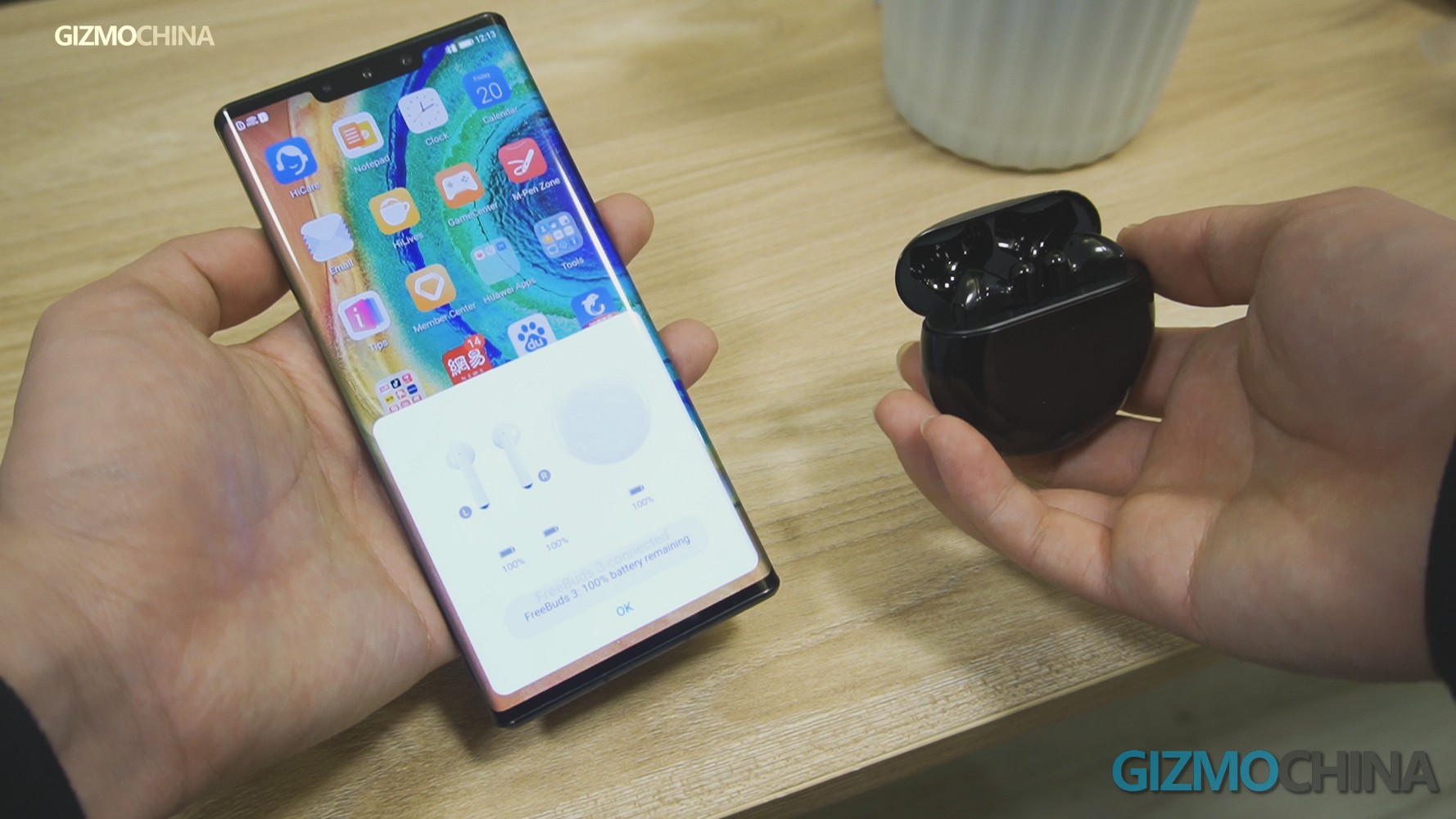
But if you match the Freebuds 3 with Android phones, the latest AI life App could provide an adjustable strength of the noise canceling. And if you’re a Huawei device user, the Freebuds 3 can provides quite a wonderful experience with their latest official software supports, such as faster and more stable connections.
For the noise canceling, the open-fit design is not good for nothing. The benefit of the open-fit design here is that it can reduce the in-ear pressure that occurs to most noise-canceling earphones, though it does sacrifice the perfect noise canceling function. However, it does provide another decent noise-canceling option for those who cannot tolerate those big headsets or ear-in rivals.
Connection & water-proofing
The new Kirin A1 chip supporting Bluetooth 5.1 enables a short connection time at around 2 seconds on most phones. The isochronous dual-channel connection works well for the audio synchronizing of both earbuds. And it ensures 190ms maximum latency, which is pretty hard to detect during video play or gaming. In daily use, our testers were more likely to give it a high score. The Freebuds 3 are IPX4-certificated, which means that there is no need to worry about sweat or rain, but just make sure not to wash them or take them into the pool.
Battery & operation
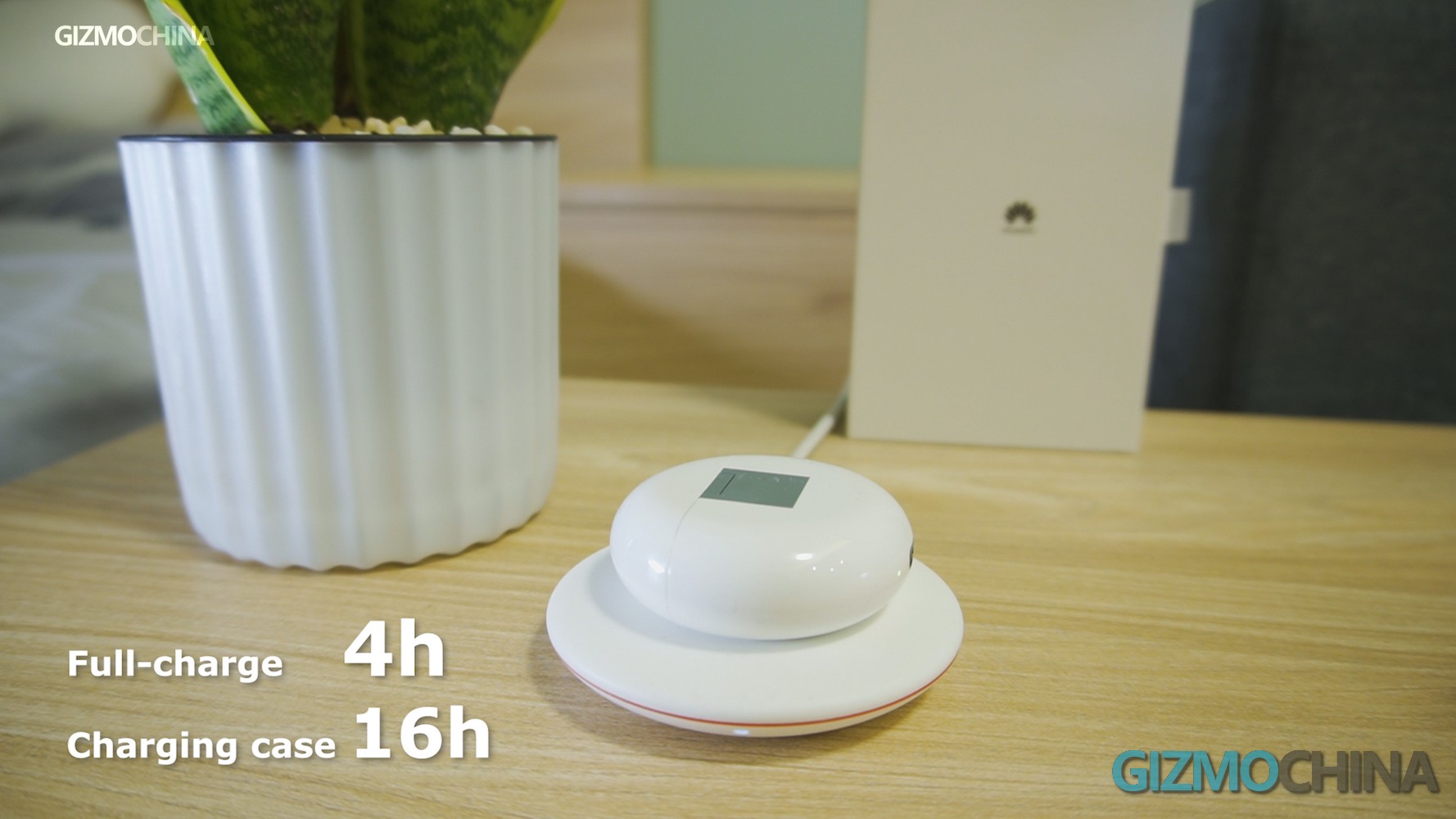
As for the battery, the Huawei FreeBuds 3 offers 4 hours of endurance for a full-charge, and the charging case can provide another 16 hours of battery for the earbuds.
About its operation, a double tap on the left earbud switches the active noise canceling. A double-tap on the right one skips to the next track. And you can adjust what the double-tap gestures do from the AI-life APP. you can set them to play or pause media, or just to wake the voice assistant.
Conclusion
It’s no doubt that Freebuds 3 is a great choice for users who want a pair of full-function earbuds at a cheaper price tag. Before the release of the Freebuds 3, we were pretty sure that no one can challenge the dominant position of the AirPods Pro. But now, the Freebuds 3, like a brave and skillful warrior, is holding a sword and challenging the throne.
2019 has been a tough year for Huawei, but it successfully brought out several great product series, like the Huawei P30 series, Mate30 series, Matebook laptops and so on.
We believe in the near 5G future, Huawei has something strong planned for the coming years. And it’ll be a win for the customers who’ll have another great option to choose in multiple product categories in the market.
At the end of November, MediaTek had unveiled the 7nm Dimensity 1000 chipset that arrived with support for dual-mode 5G. A recent report on Digitimes had revealed that the Taiwanese chip maker will be launching another 5G chip on Dec. 25. A fresh report on the same publication states that MediaTek is aiming to unveil mmWave 5G SoC solutions in the second half of 2020.
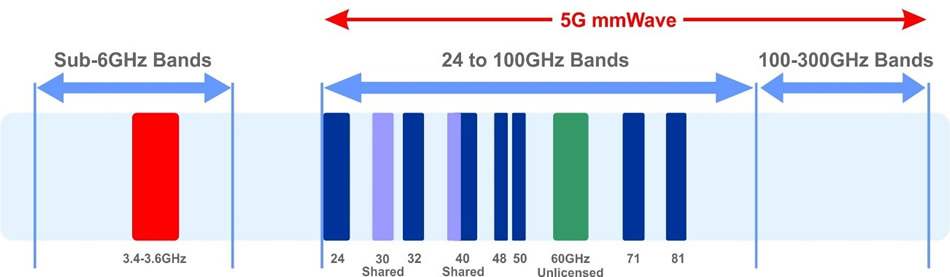
There is an incredible demand for wireless data bandwidth because of which cellular operators are aiming to capitalize on other frequency bands for deploying new 5G wireless technologies. To be specific, the frequency spectrum between 24 GHz and 300GHz that offer large bandwidths and faster data rates are dubbed as mmWave (millimeter wave technology). While mmWave bands up extend up to 300 GHz, the bands ranging between 24 GHz and 1000 GHz that can support up to 2 GHz bandwidths will be used for 5G. The below shown image by Accton.com shows the allocation of frequency bands for sub-6 GHz and mmWave.
At present, the industry uses 26 GHz, 28 GHz and 39 GHz frequency bands for mmWave. The 28 GHz and 39 GHz bands being used and tested. The 26GHz spectrum will be supported in Africa and Asia. The recently announced Snapdragon 865 and Snapdragon 765/765G chipsets support sub-6 GHz and mmWave. The SD865 is equipped with X55 5G modem that can use of 200Mz of sub-6 and 800MHz of mmWave. On the other side, the SD765G/765 has the slower X52 5G modem that supports 100MHz of sub-6 and 400MHz of mmWave.
MediaTek will be announcing another sub-6 GHz 5G chip on Dec. 25. It will most likely be the Dimensity 1000L that has a model number of MT6885. The Dimensity 1000 and the upcoming 1000L lack support for mmWave.
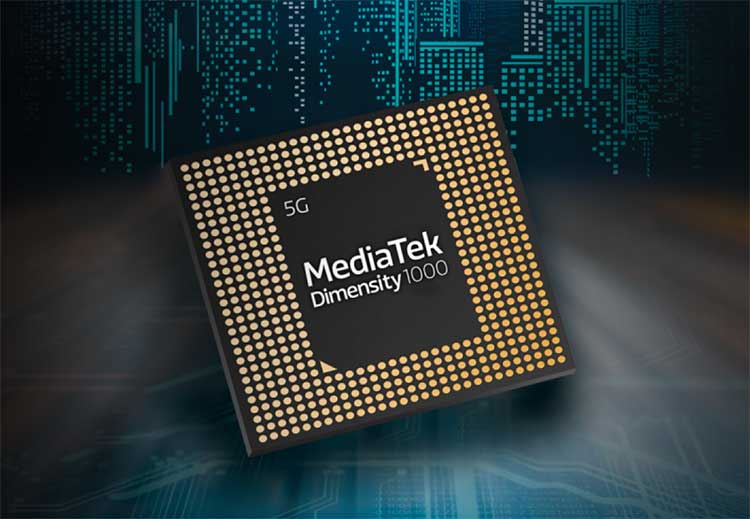
MediaTek Dimensity 1000
The OPPO Reno3 that is scheduled to go official on Dec. 26 will be the first phone to feature it. The performance prowess of the Dimensity 1000L seems to be on par with the Snapdragon 765G that fuels the Reno3 Pro 5G. This has been revealed through Master Lu and Geekbench listings of both phones. Some of the upcoming Samsung Galaxy phones are rumored to feature the new 5G chipsets from MediaTek.
Social media giant Facebook, in an attempt to free itself from being dependent on other tech giants like Google, has reportedly started development of its own operating system. The development was first reported by The Information.
This means that in the future, hardware products from Facebook, which includes the likes of Oculus and Portal, could come running the company home-developed operating system, the report says citing Facebook executive Ficus Kirkpatrick.
According to the report, the operating system from Facebook, the name of which remains unknown, will be built from scratch. The project is being led by Mark Lucovsky, a former Microsoft engineer who co-authored the Windows NT operating system.
Its noteworthy that social media giant Facebook has not indicated when the said operating system (OS) might arrive or which products would use it first. This isn’t the first time Facebook has considered developing its own OS. Facebook once developed prototypes of a custom OS for Home, but ultimately decided to go ahead with Android.
It seems that the current version of the operating system that Facebook is working on is a part of the company’s larger effort to make itself self sufficient and reduce reliance on other companies.
Andrew Bosworth, Facebook’s head of augmented and virtual reality, told The Information: “We really want to make sure the next generation has space for us,” “We don’t think we can trust the marketplace or competitors to ensure that’s the case. And so we’re gonna do it ourselves.”
Along with its own operating system, Facebook is also developing a voice assistant similar to Apple‘s Siri and Amazon’s Alexa. The company even approached Microsoft to license data from its Bing search engine to train the assistant.
The development of all these software products to power its hardwares will take place in Facebook’s new 770,000-square-foot campus being built in Burlingame, California, where the company is also developing other products, including AR Glasses.
Earlier this week, Realme had announced the Realme X2 smartphone in India. As scheduled, the handset will go on sale for the first time in the country at 12 PM (IST). The phone comes in three variants and it has a starting price of Rs. 16,999 (~$239). Here is all the information on its pricing, launch offers and specifications.
Realme X2 price and launch offers
The Realme X2’sv base model with 4 GB RAM + 64 GB storage is priced at Rs. 16,999 (~$239). The 6 GB RAM + 128 GB storage is the second variant and it costs Rs. 18,999 (~$267). The highest model with 8 GB RAM + 128 GB storage is priced at Rs. 19,999 (~$281). Pearl White, Pearl Blue and Pearl Green are the three color variants of the Realme X2. cApart from Realme India’s online store, the phone can be purchased exclusively through Flipkart.
On Flipkart, ICICI credit or debit card users can avail Rs. 1,500 discount on the pricing on Realme X2. This offer is not available on Realme’s website. Up to 6 months of no cost EMI offer is available for all credit and debit card from other banks. During the first sale, 100 lucky customers will have a chance to win the smartphone for free.
On Realme’s website, Realme X2 buyers can avail 10 percent Supercash (up to Rs. 1,000), cashback of up to Rs. 500 from MobiKwik, Cashify Exchange offer and up to 6 months of no cost EMI from Bajaj FinServe. Jio benefits worth Rs. 11,500 is available for buyers of Realme X2 on Realme.com and Flipkart. Other offers that are available for Realme X2 buyers include 30 percent flat discount at Crocs (up to Rs. 500), flat Rs. 2000 or 20 percent discount at Zoomcar and Rs. 3,000 benefits on Cleartrip.
Realme X2 Specifications
Realme X2 has a 6.4-inch S-AMOLED display with full HD+ resolution support. The waterdrop notch screen that is embedded with an in-screen fingerprint reader produces full HD+ resolution. The notch houses a 32-megapixel selfie camera. On its rear, there is a 64-megapixel + 8-megapixel (ultrawide) + 2-megapixel (macro) + 2-megapixel (depth) quad camera system.
The Snapdragon 730G octa-core processor fuels the smartphone. It is loaded with ColorOS 6 based Android 9 Pie OS. The phone houses a 4,000mAh battery that is coupled with 30W VOOC 4.0 fast charging.
True wireless earbuds are now mainstream and along with smartphone and audio products maker, wearable devices maker are also entering this space. Today, Xiaomi-backed Huami has announced its plan to launch a TWS earbuds.
The company has confirmed that Amazfit TWS Earbuds will get launched next month during Consumer Electronics Show (CES) 2020 in Las Vegas at the CES 2020 Amazfit Global New Product Launch Conference.
Huang Wang, CEO of Huami Technology, has revealed that along with the TWS Earbuds, the company will also bring a new category of products at the same launch event. He said: “Our vision is to build a global healthy ecology, so from this perspective I have made a lot of interesting explorations on the headset, such as equipped with a heart rate sensor, everyone can look forward to it. There are no shoes, but there will be products related to shoes.”
This confirms that the Amazfit TWS Earbuds will come equipped with heart rate sensor. The feature could come in handy for users who are into sports or similar high-energy activities. Further, it has been revealed that the device will also have sound insulation and noise reduction features.
As said, the company has also teased a new product category for the event which is said to have been designed for “sports and fitness enthusiasts, bringing a new kind of sports and lifestyle, helping users challenge themselves and push the limits.”
Huami Technology is among the world’s leading smart wearable devices maker and the company says that it is committed to offer health-related products with technology connection. In December this year, Huami announced that the company’s “end + core + cloud” strategy has been fully implemented.
The company has launched six different series of smartwatches under its Amazfit brand and has also launched “Huangshan No. 1” chipset which has now been mass-produced and comes equipped with many Amazfit Watches and fitness bands. Further, the company has also launched Midong Health VIP service.
Huami Technology has announced its Amazfit Global New Product Launch Conference with the theme of “Leap over Limits” at CES 2020. The event will take place on 7th January 2020 and more details about these products will be revealed there.
Samsung Galaxy Fold went on sale earlier this year as the company’s first foldable smartphone. Last month, the South Korean giant introduced Samsung W20 5G smartphone, which is the 5G variant of the Galaxy Fold.
Now, the Samsung W20 5G smartphone will go on sale in China from today. The phone will be available in both variants — Standard and Extreme. While the Standard variant costs 19,999 yuan (~$2,854), the Extreme variant is priced at 29,999 yuan (~$4,280).
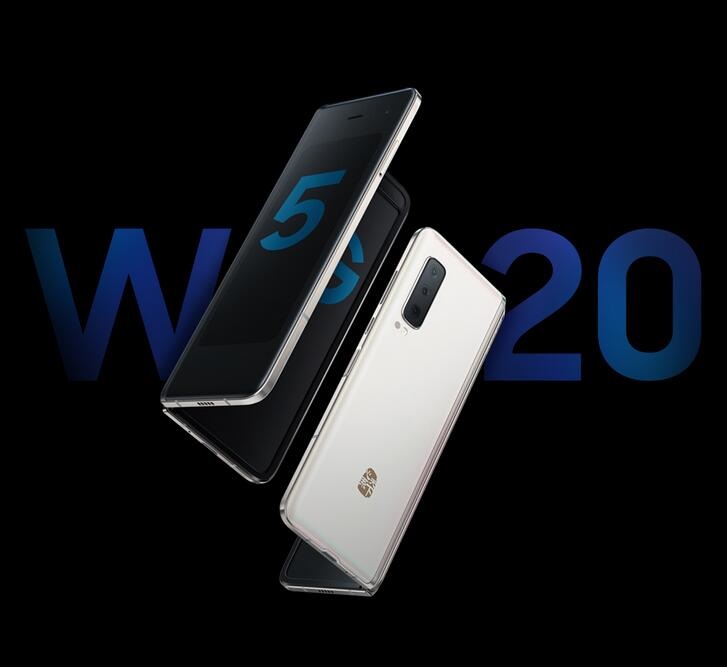
Samsung W20 5G
While the Standard Edition ships with a free pair of Galaxy Buds worth 999 Yuan (~$142), the Premium Edition or the Extreme Edition includes a free pair of Galaxy Buds and VIP service from the company.
Do note that the W-series smartphones from Samsung are exclusively sold in China and thus, the W20 5G will not make its way to other regions. However, for the international market, the company has launched Galaxy Fold 5G.
Coming to the specifications, the Samsung W20 5G has an outer AMOLED display of 4.6 inches that produces HD+ resolution. Opening the device reveals its 7.3-inch flexible AMOLED display that offers full HD+ resolution.
Under the hood, the device is powered by the Qualcomm Snapdragon 855+ mobile platform, coupled with 12GB of RAM and 512GB of internal storage. The smartphone is running Android 9 Pie operating system out-of-the-box with the company’s own One UI 2.0 custom interface on top.
As for the cameras, the device features 16-megapixel (ultrawide) + 12-megapixel (wide-angle) + 12-megapixel (telephoto) triple camera on its rear. Above the cover display, there is a front-facing camera of 10-megapixel with autofocus. There is a 10-megapixel + 8-megapixel dual camera system placed at the upper-right corner of the inner display.
The smartphone, which has a side-mounted fingerprint sensor, is powered by a 4,235mAh battery that supports 15W fast charging and 15W wireless charging. The device is also equipped with support for 9W reverse wireless charging.
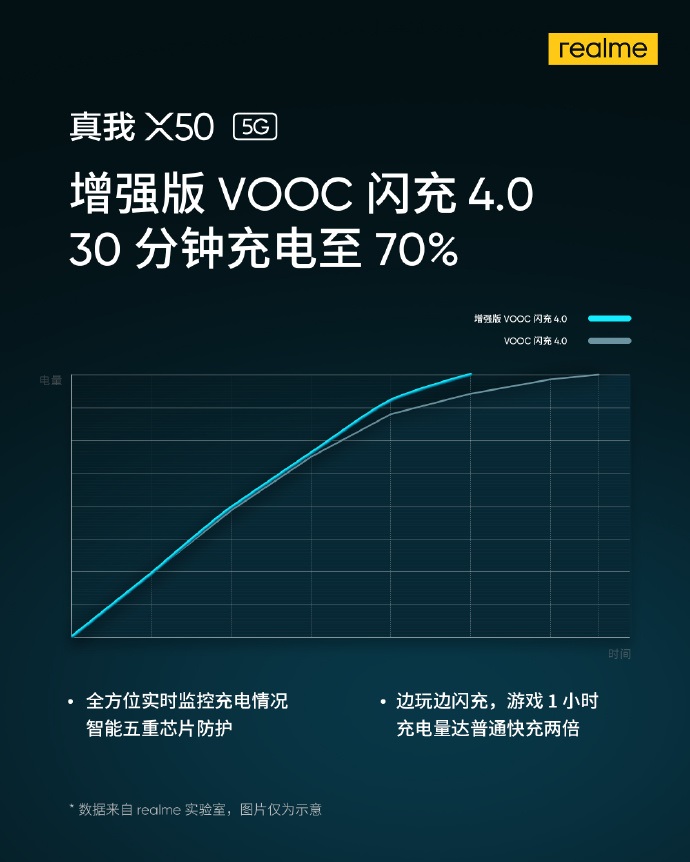
Ahead of the launch of Realme X50 5G smartphone in China, the company has been teasing some of the key features of the device. Today, Realme has teased about the charging capabilities of the upcoming device.
The company has shared a teaser poster that reveals that the Realme X50 5G smartphone will come with support for Enhanced VOOC 4.0 Flash Charge technology that can charge the device up to 70 percent in just 30 minutes.
Further, the company claims that that the phone also comes with support for full range of charging monitoring which perfectly balances speed and safety. This comes just a day after the company revealed the cooling solution embedded into the device.
Realme had revealed that the phone uses 8mm ultra-large diameter liquid-cooled copper tube, 410 cubic millimeters of ultra-large volume and with the liquid-cooled copper tube heat dissipation 3.0, it offers five-dimensional ice-cooled heat dissipation which covers 100 percent of the core heat source.
It has also been confirmed that the Realme X50 5G will support dual-channel Wi-Fi and 5G for online connectivity at the same time, which can smartly increase the network speed under all scenarios. It further adds that the phone can be network accelerated and can make use of both 2.4GHz and 5GHz for Wi-Fi.
The company has also revealed that the smartphone will cover all the mainstream frequency bands for 5G connectivity, including n1, n41, n78, n79 and will support both SA and NSA dual-mode networking with 5G.
The Chinese company has confirmed that the Realme X50 will come powered by the newly launched Qualcomm Snapdragon 765G chipset. This is the same SoC that powers the Redmi K30 5G smartphone and will power the upcoming Oppo Reno3 Pro.
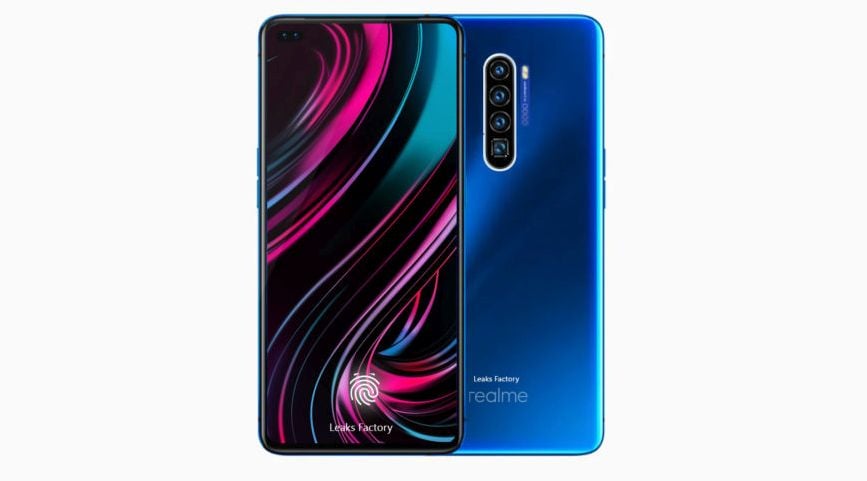
Rumors indicate that the phone will be equipped with a 6.44-inch AMOLED display. It could be coming with Sony IMX686 60-megapixel + 8-megapixel + 2-megapixel + 2-megapixel quad rear cameras and 32-megapixel + 8-megapixel dual front facing cameras.
Realme X50 5G render
The device could be backed by a 4,500mAh battery with VOOC 4.0 Flash Charge technology. The handset may come with up of 12GB of RAM and 256GB of internal storage. We expect Android 10-based custom ColorOS 7 running the smartphone.
As the phone is powered by a mid-range processor that it is integrated with a 5G modem, the handset is expected to arrive in China with an attractive price tag. The company is also set to launch the Realme X50 Lite (Youth Edition) along with the standard model. While the launch date is not yet known, a recent teaser hints at 5th January as the launch date but yesterday’s hint from Realme CMO Xu Qi indicates launch by the end of this year.
Xiaomi Youpin has teamed up with Shangxin Forbidden City to launch a portable water heater with a retro design, retractable spout. The product comes under crowdfunding having a price of 299 yuan ($42). After the crowdfunding exercise, the price will jerk up to 399 yuan ($56).
This portable instant hot water design is themed after the artefacts found in the Palace Museum in Beijing, also known as the Forbidden City. This 598-year-old former Chinese imperial palace complex is a landmark which received almost 16.7 million visits in 2017. Numerous TV programs-documentaries and dramas-have showcased the place in recent years.
The variety show, Shang Xin Le Gu Gong (“There’s something new in the Palace Museum”), broadcast its pilot episode on Beijing TV and online streaming media site, iQiyi.com, on November 9. That first episode won wide acceptance from audiences and was rated 8.3 out of a total 10 points on Douban.com, China’s major film and TV critic website.
In the show, the actors are joined by designers who will create products based on what they see. The most popular ones, based on an online vote, are to be turned into souvenirs for sale. This water heater seems to be one of such popular designs.
Compared with the compression kettles commonly available on the market, this Imperial Palace hot water machine is much more convenient to use. In terms of heating time, this instant hot water machine only needs 3 seconds to heat water to 100 ° C. Tea, noodles, etc. basically do not need to wait. Its three-stage intelligent water temperature adjustment uses a microcrystalline touch panel design, which can provide hot water at 45 ° C, 75 ° C, and 100 ° C according to different needs. It also has an automatic cleaning feature which can drain old water and clean it with one click.
The device comes with a retractable spout making it convenient to carry around. This is perhaps, the biggest feature onboard the device. The plastic body is made of ABS material with a matte finish. The weight of the water heater is said to be about the same as that of a 500ml water bottle but with a wider body. As such, it does not occupy much space in the bag.
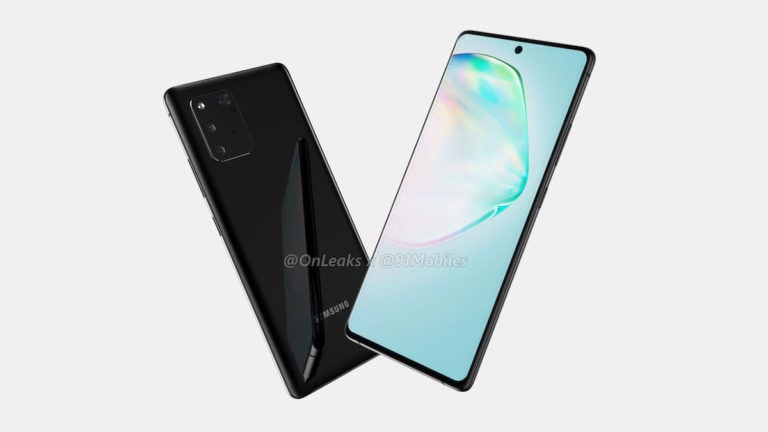
The Galaxy S10 Lite is a new member of the Galaxy S10 series Samsung is expected to announce very soon. The key specs for the European version of the phone have leaked and they place it above the Galaxy S10e.
The Galaxy S10 Lite will look like the Galaxy A91 above but with a different camera arrangement
The source of the news is Winfuture.de and they said the phone will be announced in a few days.
According to the spec sheet, the Galaxy S10 Lite will have a 6.7-inch Super AMOLED display with a 2400 x 1080 resolution. The display has a punch hole in the middle for the front-facing camera and has a 19.5:9 aspect ratio.
Winfuture reports that unlike the other Galaxy S10 models sold in Europe that are powered by the Exynos 9820, the S10 Lite has a Snapdragon 855 processor. The SoC is clocked at 2.84GHz and paired with 8GB of RAM and 128GB of built-in storage. There is support for storage expansion, so owners can add up to 1TB of additional storage.
The Galaxy S10 Lite will come with more cameras than the Galaxy S10e. There is a 48MP primary sensor on the rear with an f/2.0 aperture and tilt-optical image stabilization (tOIS). This is different from regular OIS as the lens of the camera can be tilted a few degrees in different directions to counteract shakes when taking a photo.
Along with the 48MP sensor is a 12MP f/2.2 ultrawide angle camera, and a 5MP macro camera with an f/2.4 aperture. The camera in front is a 32MP f/2.2 sensor.
Samsung will include a 4500mAh battery with support for 45W Super Fast Charging 2.0. The phone will run Android 10 with One UI 2.0 on top and will be available in black, blue, and white. Its thickness is put at 8.1 millimeters.
With respect to price, the Galaxy S10 Lite will sell for €679 (~$756) in Southern Europe. There should be a difference of about €10 in different countries.
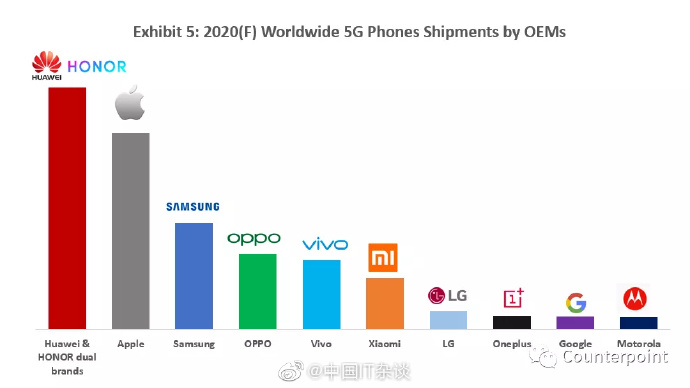
The smartphone industry has already been confirmed to be heading to an era driven by 5G. As a matter of fact, 2020 is predicted to be the year of 5G smartphones with almost all OEMs expected to release at least a 5G phone. A recent chart attributed to being from Counterpoint Research has predicted how the various OEMs are expected to rank in terms of 5G phone shipments.
The chart projects that Huawei and its Honor brand with combine to give Huawei the lead in the 5G smartphone sales. Huawei is expected to be followed by Apple which is expected to release its first 5G phone next year. Samsung is expected to come in at the third place with more 5G phones expected from the Korean tech giant this year. Samsung is also expected to release 5G mid-range models aside from its flagship lineup.
BBK subsidiaries OPPO and Vivo complete the top 5 rankings while Xiaomi is expected to come in at number 6 position. LG, OnePlus, Google and Motorola are expected to grab a substantial share of the 5G market to complete the top 10 rankings.
Counterpoint projects that the global 5G smartphone shipments in 2020 will exceed 270 million units. The research firm also says the penetration rate of 5G mobile phones will increase from about 1% in 2019 to more than 15% in 2020.
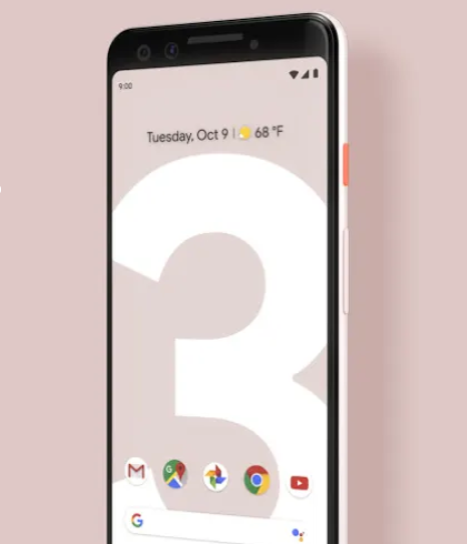
The Pixel 4 and Pixel 4 XL are the first Pixel smartphones to have a refresh rate greater than 60Hz. However, it turns out the feature should have been available on last year’s Pixel 3.
The info was released in the most recent episode of Android Developers Backstage podcast by Andrew Wright, a member of the Android Framework team. According to him, the smaller Pixel 3 was not supposed to have an OLED display for a number of reasons he didn’t disclose. As an alternative to the OLED screen, Google considered using a Sharp LCD display with a 120Hz refresh rate.
As we all know, that never happened and the smaller Pixel 3 which thankfully doesn’t have the ugly notch of its bigger sibling launched with an OLED display. Unfortunately, Wright didn’t state the reasons why they eventually went with an OLED display.
Since both the Pixel 4 and Pixel 4 XL have 90Hz refresh rates, we shouldn’t expect any less from the future Pixels. If we are being too optimistic, we may even see the Pixel 4a and Pixel 4a XL come with displays with a high refresh rate too.
Next year, more phones will launch with a high refresh rate. Samsung’s S11 series will join the bandwagon with 120Hz displays and the OnePlus 8 and OnePlus 8 Pro will either keep the 90Hz refresh rate of their predecessors or jump to 120Hz. The Xiaomi Mi 10 is also expected to have a display with a high refresh rate.
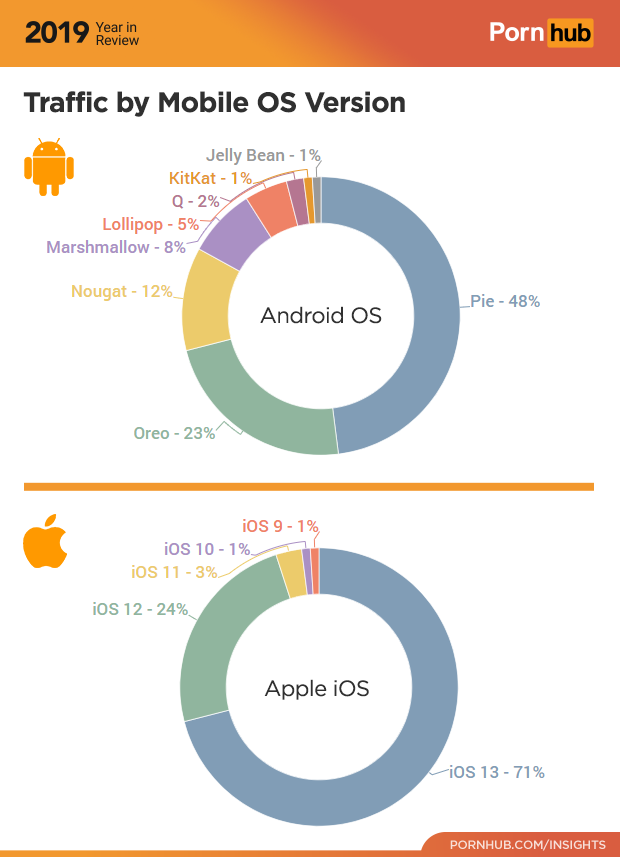
PornHub has done an annual ‘Year in Review’ blog post for several years at this point, and the 2019 version was just published. Considering the sheer popularity of a website like Pornhub, this is probably going to be the closest we get to accurate Android distribution statistics, unless a site like Facebook or Wikipedia decides to share their analytics.
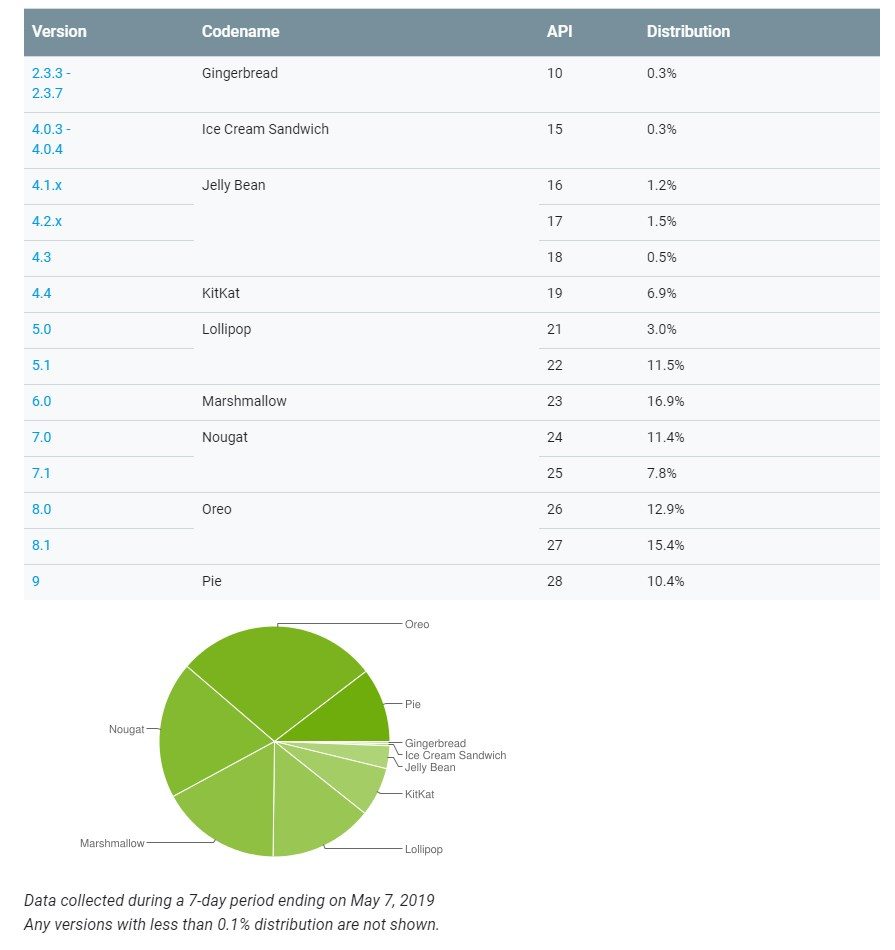
The data is interesting because Google hasn’t updated its own dashboard of how many devices are on each version of Android since May, so for months we haven’t had any Android OS adoption figures. And with Pornhub being a top 50 site in the global Alexa rankings, it’s somewhat plausible that its data is in the ballpark of 2019 Android OS usage.
Pornhub has taken up the mantle of delivering an Android distribution chart. You’ll note that the stats shown on Pornhub’s chart look nothing like those seen in Google’s official version. The difference is that the official distribution dashboard shows all “active” Android devices, which including things like kiosks. Pornhub’s chart, as you would expect, only measures those devices that have browsed their site.
Because of this, we can’t directly compare data between the two sources. But Pornhub’s data can at least give us an idea of general Android OS adoption trends. Android Pie takes the largest piece of the pie chart, running on 48% of the measured devices. Oreo followed with 23%, Nougat at 12%, Marshmallow at 8%, Lollipop at 5%, and older versions sharing the last 4%.
Google official distribution numbers – May 2019
Android 10/Android Q only managed 2 percent of traffic, but seeing as the figures are for the whole year and it was only launched in September that low number is to be expected, especially as it only reached Galaxy phones over the last month.
It’s also interesting that by comparison to Pornhub’s stats for 2018, Android Pie has seen significantly higher adoption one year post-release than Android Oreo did (48% vs 41%). This further demonstrates the success of Project Treble, Google’s effort, beginning with Oreo, to make Android updates much easier for OEMs to develop and deliver.
We use cookies on our website to give you the most relevant experience by remembering your preferences and repeat visits. By clicking “Accept”, you consent to the use of ALL the cookies.
This website uses cookies to improve your experience while you navigate through the website. Out of these, the cookies that are categorized as necessary are stored on your browser as they are essential for the working of basic functionalities of the website. We also use third-party cookies that help us analyze and understand how you use this website. These cookies will be stored in your browser only with your consent. You also have the option to opt-out of these cookies. But opting out of some of these cookies may affect your browsing experience.
Necessary cookies are absolutely essential for the website to function properly. This category only includes cookies that ensures basic functionalities and security features of the website. These cookies do not store any personal information.
Any cookies that may not be particularly necessary for the website to function and is used specifically to collect user personal data via analytics, ads, other embedded contents are termed as non-necessary cookies. It is mandatory to procure user consent prior to running these cookies on your website.
















UP NEXT: Realme Buds Air to launch in China alongside Realme X50 5G in China next month