Advertisement

Moto G8 Power spotted in US FCC documents; Launch could be nearing

The upcoming Moto G8 Power has been spotted with its ‘Sofia’ codename on the database of Federal Communications Commission (FCC) in the U.S for the first time, revealing a few of its key features. The G8 Power (model number XT2041-4) was mentioned alongside a second undisclosed device (model number XT2045-2). The FCC appearance of the G8 Power suggests that its arrival could de drawing near. 

Motorola had launched Moto G8 Plus and G8 Play phones few months. Soon after the launch, XDA Developers Editor-in-Chief Mishaal Rahman had revealed about the existence o Moto G8 Power. According to the FCC’s documents, the forthcoming Moto G8 Power (XT2041-4) is mentioned to feature a 5,000mAh battery. The smartphone measures 157.9 x 75.8 mm, while its thickness is not yet known. The device likely flaunts a 6.2-inch or 6.3-inch display. 

In the recent past, the Moto G8 Power was spotted during the Wi-Fi Alliance certification. The device runs on Android 10 and supports 5G Wi-Fi and dual-band 2.4G. The Moto G8 Power is likely to feature Snapdragon 665 under the hood. The Moto G8 Plus which launched earlier this year is also equipped with the same chipset.

Moto G8 Plus
Moto G8 Plus

In related news, the Moto XT2045-2 was also spotted at the Eurasian Economic Commission (EEC) this year, hinting that the device might launch in 2020. With the advent of the 5G spectrum, numerous smartphone manufacturers were eagerly waiting for Qualcomm to launch its 5G-compliant range of SoCs. With the SD765/765G and SD865 now ready for production, most major players have started announcing their plans for the next year. This list includes Motorola, with its arsenal of 5G smartphones.

Lenovo-owned Motorola is yet to launch a flagship smartphone since 2017. The company is expected to launch an SD865-fueled flagship in 2020, followed by a couple of SD765/765G-powered devices.

Earlier this month, Motorola launched the One Hyper which is an SD675-powered budget device running on Android One edition of Android 10. The One Hyper flaunts a 6.5-inch notch-less IPS LCD display and features 4GB of RAM and 128GB internal storage. The device features a 64-megapixel + 8-megapixel rear-mounted dual camera setup, along with a 32-megapixel pop-up selfie camera. It draws power from a 4,000 mAh battery with 45W fast charge support.


(via)

Samsung Galaxy Fold 2 to feature an UTG display thinner than human hair

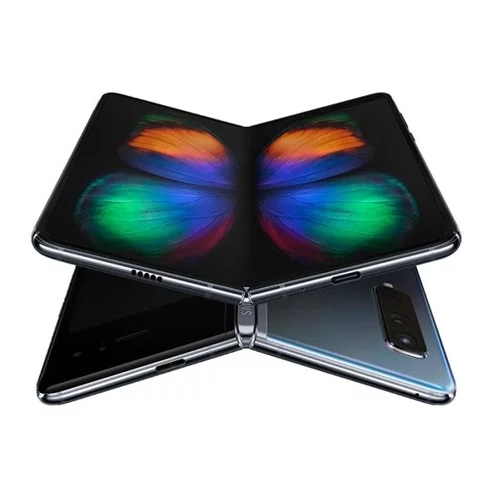
Samsung was one of the first smartphone manufacturers to launch a foldable device commercially in the market. Although the Galaxy Fold was off to a rough start, the company managed to pull through and eventually make the product a success. Now, the South Korean tech giant is reportedly gearing for the launch of the successor, Galaxy Fold 2, which will arrive with an Ultra Thin Glass display unlike the bendable polymer display used on the predecessor.

Previously, it was reported that Samsung signed a deal with another South Korean company that would supply the former with the UTG displays. However, now it has been confirmed to be the case as the company has submitted a trademark for the name “Ultra Thin Glass.”

Galaxy Fold 4G
Samsung Galaxy Fold

This move arrives after the disaster that had initially plagued Galaxy Fold devices when their polyamide film over its flexible display panel was accidentally removed by people. The removal process damaged the screen; thus, making glass a better alternative altogether.

The UTG is expected to be found in Samsung Galaxy Fold 2 handset is said to be thinner than 100 microns or even 30 microns. In other words, it is going to be super thin with a width similar to that of human hair. It also makes the smartphone considerably more scratch resistant. However, the one downside is that it is difficult to produce and is even more expensive than the previous display.

Samsung Galaxy Fold Display Issue

Samsung reportedly wants to bump up the production of foldable smartphones this year, to produce in the ranges of 5 to 6 million units for the market; most of these are expected to be the Galaxy Fold 2 with the new UTG display. Dowoo Insys is the South Korean supplier for the new display and Samsung has already invested KRW 12 Billion (roughly 10 million USD) for the expansion of its manufacturing capacity which currently stands at 500,000 units.


(Source)

Google Chrome v79 brings better password protection and other security enhancements

Google is rolling out a new version upgrade for the Google Chrome Browser. The new Google Chrome v79 includes several new security and privacy enhancements. The features like Password Protection, Real-Time Phishing Protection and some new gestures are part and parcel of the latest iteration.

Despite all the improtant features, the Password Protection is the significant addition to the new Chrome browser. It allows the users to get notifications of when your password gets stolen as part of data theft or some other security issue. The feature even alerts users when they are using the exposed password in some data breach.

Password Protection feature uses Google’s recently launched Password Checkup Tool to crosscheck the passwords. Google is using hashing and encryption algorithms to secure passwords while matching them using different encryption layers. The whole process is also called private set intersection with blinding. The feature can be enabled by heading to the Settings > Sync and Google Services. Moreover, it is limited to the users who have signed in the Chrome browser.

Real-time phishing protection is another feature enhancing protection against specific security issues. It iss a step forward by the search giant to make the web more secure. Google further said in a blog post, “Now we’ll be protecting your Google Account password when you sign in to Chrome, even if Sync is not enabled. In addition, this feature will now work for all the passwords you store in Chrome’s password manager. Hundreds of millions of more users will now benefit from the new warnings.” The interested users can enable this advanced security feature by enabling the “Make searches and browsing better” option in Chrome settings.

Switching profiles on Google Chrome has become an essential feature for advanced users. The search giant has added new gestures to switch between multiple profiles. Users can find the profile switching option on the top right corner.

(via)

Realme X2 Pro Master Edition Brick Red model available for purchase in China

The Realme X2 Pro smartphone was made official in China in October. At the unveil event, the Chinese firm had also debuted Realme X2 Pro Master Edition. The latter was introduced two unique colors such as Concrete and Brick Red. On Nov. 11, the Concrete color variant of the Realme X2 Pro Master Edition had gone on sale in the home market. Today, the company has made available the Red Brick version of the Realme X2 Pro Master Edition available for purchase.

The Realme X2 Pro Master Edition was designed by partnering with Naoto Fukasawa, a known designer from Japan. The company has imprinted his signature on the back panel of the phone using PicoSure laser technology that can be used for 0.09mm thin line. The glass rear of the phone has a matte finish.

Realme X2 Pro Master Edition Price and Specifications

The Realme X2 Pro Master Edition Brick Red is priced at 3,199 Yuan (~$455). The device ships with 12 GB of RAM and an internal storage of 256 GB. The remaining specs of the Master Edition are identical with its regular version.

The Realme X2 Pro Master Edition has a 6.5-inch AMOLED display with waterdrop notch. It offers full HD+ resolution of 1080 x 2340 pixels and an aspect ratio of 19.5:9. The display supports a refresh rate of 90Hz and its integrated with a fingerprint scanner.

Realme X2 Pro Master Edition Red Brick

The X2 Pro Master Edition has Snapdragon 855 mobile platform onboard. The phone comes with LPDDR4x RAM and UFS 3.0 storage. There is no microSD card slot on the device. The Android 9 Pie OS runs on the X2 Pro Master Edition along with ColorOS 6 UI.

There is a quad camera system on the rear side of Realme X2 Pro Master Edition. It has a 64-megapixel with f/1.8 aperture, an ultrawide lens of 8-megapixel, a macro lens of 2-megapixel and a depth assist sensor of 2-megapixel.  For shooting selfies, the smartphone possesses a front-facing camera of 32-megapixel.

The Realme X2 Pro Master Edition draws power from a 4,000mAh battery. The phone is equipped with support for 50W SuperVOOC Flash Charge technology that promises full charging in 35 minutes through USB-C. The other features of the X2 Pro Master Edition include dual SIM support, 4G VoLTE, dual-band GPS, USB-C and 3.5mm audio jack.


(source)

Xiaomi Youpin launches the feature filled BeeBest Smart Walkie-talkie


Xiaomi crowdfunding has successfully launched a lot of devices, and it seems like today’s will be no exception. The latest product from Xiaomi Youpin is the Gigabee BeeBest Smart Walkie-talkie. It’s a modern walkie-talkie with a slew of features that could come in handy at any time, all for the price of 399 yuan which comes up to about $57.

So, what features can we expect from the BeeBest Smart Walkie-talkie? For starters, the device features 4G and WiFi networking. Every purchase of the device will come with a free 4G sim card, as well as free 4G for a year. It also has a very far-reaching signal, with devices still being able to communicate with each other from 5000 kilometers away.

As you’d expect from a 4G enabled device like this, the BeeBest Smart Walkie-talkie also features phone calls. It comes with Beidou’s GPS hybrid positioning system for real time location checking even without internet. It even features Xiaomi’s AI assistant built into it. Nothing here is too insane, but it’s very solid set of features for a walkie-talkie.

In terms of battery life, the BeeBest walkie talkie has a 60 hour standby time and 40 hours of actual usage. The device is charged via USB-C, so your pre-existing cables should work with it just fine. Overall, it’s a pretty decent walkie-talkie for the price. It’s nothing crazy, but it’s nice to see Xiaomi releasing these niche products for through Youpin.

(Source)
German carrier picks Huawei to build its 5G network

Telefonica Deutschland, which is Germany’s one of the leading mobile carriers, has picked Huawei and Nokia to build out its 5G network. 5G is said to be the next-big-thing and the next-generation mobile network that promise super-fast data speeds and low latency.

This move is being seen by many as a potential snub to the U.S. government which has been campaigning for its allies to keep the China-based telecoms equipment giant out of their 5G networks.

huawei

The United States is suggesting that the usage of Huawei represents national security risk because its equipment could be used for espionage by China. While U.S. has not provided any evidence to support its claim, Huawei has repeatedly denied this allegation.

Getting picked up by Telefonica Deutschland seems like a major relief for Huawei which has been facing scrutiny amid boycott campaign led by the United States. Countries like Japan and Australia have effectively banned the company from their 5G networks while the United Kingdom has yet to make a final decision.

However, the decision isn’t surprising given that the German government decided in October that it would not exclude Huawei from its 5G networks. Instead, the country introduced a draft proposal for security guidelines when it comes to 5G equipment in which the equipment from vendors need to be certified.

Telefonica Deutschland said has said that the company was waiting for government approval. Now, Huawei and Nokia will help the company build its so-called Radio Access Network or RAN. This is the part of the network that hooks up devices with the actual 5G signal. In terms of security, the RAN is often seen as less sensitive than the core.

The company has also announced that it would cut its 2019 dividend by 37 percent in order to prioritize network investments. This comes on the heels of similar cuts in the payout by its competitors Deutsche Telekom and Vodafone.

Telefonica said that work should start in early 2020 and said it expected to have 5G up and running in Berlin, Hamburg, Munich, Cologne and Frankfurt by the end of 2021. A year later, 30 cities with a population of 16 million would be covered. Both of the company’s competitors are existing customers of Huawei but have yet to publicly confirm whether they will stick with the Chinese networks leader for 5G.

(Via)

Sony invents 2×2 On-Chip Lens Solution (OCL) for less blurry photos

Image sensors, especially ones with small pixels like in smartphones, feature an on-chip micro lens array to help guide all the arriving light to the sensor’s photo diode. Right now, each pixel gets its own lens, but Sony has developed a way for four adjacent pixels to share a lens. Compared to past tech, cameras will be twice as accurate when seeking focus. This system is enabled with the just-revealed Sony 2×2 On-Chip Lens Solution (OCL) for future mobile image sensors.

Sony first revealed their 2×2 OCL mobile camera tech two days ago and was described as follows: “The 2×2 On-Chip Lens (OCL) solution is a new image sensor technology for achieving high-speed focus, high-resolution, high-sensitivity, and high dynamic range.” Where the best Sony Quad Bayer sensors had an on-chip lens for each individual pixel, this new solution uses one on-chip lens for each four adjacent pixel set.

The main advantage of this design setup will be improved autofocus performance, especially in the dark. PDAF (Phase detection autofocus) relies on focus pixels whose output is not part of the final image – which means they have to be spaced out, reducing the coverage. With 2×2 OCL, all pixels can be used as part of the focus detection system. This also solves a related issue where low horizontal detail negatively affects the AF system’s performance.

As for when it’s coming to consumers, don’t expect it too soon. The 2×2 On-Chip Lens Solution (OCL) was only revealed days ago. Sony did not specify where this newly-revealed tech would be released first. It’s not likely we’ll see this in early 2020 – but it wouldn’t be a bad bet to see it in smartphones in the latter half of the year.

(Source)
Oppo Reno3 series smartphones to come with 360-degree antenna design

Oppo has already confirmed that it will be hosting a launch event on 26th December in China where the company will officially launched the upcoming Oppo Reno3 series smartphones with 5G connectivity support.

The company has already revealed some of the key features and specifications of the smartphone. It is already known that both the Reno3 and Reno3 Pro will be the first devices from Oppo to have dual-mode SA/NSA 5G support.

Oppo Reno3 Antenna

Now, Oppo’s Vice President Shen Yiren has shed light on the phone’s antenna design. He has revealed that the smartphones will come with a 360-degree surround antenna design which will help keep the signal stable even when playing games or doing other things.

With the use-case of the smartphones changing, mobile manufacturers are coming up with new designs for antenna to make sure that the phone-holding pattern of the user doesn’t mess with the signal reception, a phenomenon known as “death grip”. And this offering from Oppo is in line with that.

It is also said that the phone will intelligently switch between 4G and 5G connections, depending on what you’re doing, the internal temperature and battery consumption. For example, launching a video will put the modem in 5G mode so that it can pre-load the video and start playback as quickly as possible.

Recently launched Redmi K30 smartphone also comes with an unusual 12 antennas, which is about 2.4 times the number that is found in 4G smartphones. The company also mentioned that it is now using a new structural design and complex RF solution to make 5G signals stronger and much more stable.

Oppo Reno3 is expected to come powered by MediaTek Dimensity 1000 SoC while the Pro model is expected to pack Qualcomm Snapdragon 765G chipset, the same processor that powers the Redmi K30 5G smartphone.

Since the company has revealed almost every major feature for the upcoming smartphones, only the variants and pricing details remain to be seen, which will be revealed during the launch event in the coming days. Oppo will also launch its Enco Free TWS earbuds at the same event.


Huawei and Honor online market share exceeds Xiaomi, Vivo, Apple and OPPO in Q3 in China: Counterpoint report

Counterpoint has released the report for the online smartphones sales in the third quarter of 2019 in China. The list is led by Huawei and its sub-brand Honor. The combined sales of Huawei and Honor have exceeded the total market share of Apple, Xiaomi, OPPO and Vivo.

According to Counterpoint’s survey, Huawei held a market share of 26 percent in Q3 and Honor had a market share 20 percent. The dual brand strategy allowed Huawei to account for 46 percent of the online market share. Xiaomi, Vivo, Apple and OPPO held 14 percent, 10 percent, 9 percent and 5 percent market shares respectively in Q3 2019. These four brands together constitute for 38 percent online market share.

Counterpoint claimed that Huawei has continuously aimed the high-end smartphone market with its P and Mate series of smartphones. The sales of its high-end phones have been consistently increasing year after year. The Huawei P30 and P30 Pro was found to be the only hot-selling Android phones in the high-end smartphone in Q3 2019 in China. Apart from its flagship products, the Nova 5 series, Enjoy 9 and Enjoy 9 Plus have also met with good reception in the online market.

Huawei-Honor

Honor has been mainly targeting the youth and online market. The Honor 9X is one of the bestselling phones in the online market. The Honor 20 and Honor 20i phones are also selling well in China.

At the beginning of the year, Xiaomi had an online market share of 20 percent. Hence, its current standing of 13 percent is a significant decline. Vivo ranked with fourth with 10 percent market share. In Q1 2019, Apple had held 9 percent online market share. In Q3, it has ranked fifth with the same market share. OPPO’s market share of 5 percent in online sales is quite low compared to the major brands.

Counterpoint is of the view that Huawei, Honor and Apple will be the main winners in the online market share of China in Q4 2019. The Huawei-Honor dual brand strategy may allow them to account for half of China’s online market. The arrival of 5G phones in the Chinese market at the end of 2019 will certainly help in driving more smartphone sales in the Chinese market.


Xiaomi leads Smart TV market in India with 33 percent market share

Xiaomi not only brings new smartphones in the Indian market but also keeps pushing new models of its smart TV as well. The company is using the same strategy for TVs in India as of smartphones, offering new technology at cheaper prices.

These efforts from the Chinese company have proved fruitful and this time again, Xiaomi is leading the Indian Smart TV market. As per the report from IDC, Xiaomi’s Mi TV holds about 33 percent of the market share when it comes to Smart TVs in India.

Mi TV Pro

Following Mi TV range in India in the second spot is Samsung India with a market share of 14 percent. LG sits at third with a share of 13 percent whereas Sony gets a share of 10 percent in the smart TV space. TCL sat last in the top five with a share of 9 percent.

The report also reveals that the Xiaomi Mi TV range has seen Quarter-on-Quarter growth of 46 percent and a Year-on-Year growth of 69 percent. In addition, the report shows that the Mi TV market share is 19 percent greater than Samsung, 20 percent higher than LG and Sony, and 24 percent higher than TCL.

Xiaomi is offering a massive range of Mi TV models in the Indian market, pretty much at every price point. The base models of the Mi TV 32-inches start from as low as ₹13,000 (approx. $184) and the entry-level 4K smart TVs starts from ₹24,999 (~$354). The most premium model, which is the 65-inch Mi TV 4X, is currently selling for ₹65,999 (~$934) in India, which is also the cheapest 65-inch smart TV you can buy in India.

Apart from the pricing, another major selling point for the Mi TVs in India is that all the models run on Google Certified Android TV operating system. It comes pre-installed with the company’s own Patchwall 2.0 custom user interface, which is a modified interface bringing content from various OTT platforms.

Recently, the Mi TV models have also gained support from Netflix and Amazon Prime Video. The latest launch in the Mi TV series is the Mi TV 4X 55-inch 2020 edition that comes with a 4K HDR display and native support for Netflix as well as Amazon Prime Video. The company has said that Mi TVs are available for purchase across 70+ Mi Homes, 20+ Mi Studios, 2,500+ Mi Stores, and several Mi Preferred Partner outlets in India.


Best features of XIDU Tour Pro 12.5 Laptop explained

The ever increasing competition is making it difficult for users to choose between the different laptops based on features. Like the smartphone market, laptops from the Chinese companies are excelling in the industry due to their cost-effectiveness and powerful hardware. XIDU is also coming with a new XIDU Tour Pro laptop featuring high-end specifications at low-cost. We have got a detailed spec sheet for the new laptop, and it is as follows.

Design

First things first, the Xidu Tour Pro features a Magnalium body giving a metallic texture and well-proportioned color coating. It brings out the best look matching the premium Apple laptops. The well-defined chassis of the Xidu Tour Pro is carved using micro-arc cutting technology. The laptop’s well-proportioned design best fit for the businessmen and other users who found it fascinating.

The sublime surface provides exquisite and extravagant experience without any extra cost. The excellent process behind the polishing is making it compete against Apple’s laptop segment.

The lightweight Xidu laptop resembles the proper feeling of carrying Mackbook Pro. It envelopes the quality of attracting consumers.

The body size measured at 290 x 210 x 15.2 mm that corresponds to A4 page size. The company has made significant attempts to make room for hardware in such a small-sized laptop. The ethos and the craftmanship spirit of the company enable the company to accomplish an intricate design.

xidu tour pro

The XIDU Tour Pro stands out against the laptops priced under $500.

Keyboard

The beautifully crafted keyboard carries quite soft keys for comfortable typing. The full keyboard design enhances the exquisite surface control while maximizing the spacious feeling. The backlit keyboard will help you type quickly in the dark environment.

Rear 

The rear tray is efficiently designed to disperse the accumulated heat without any additional accessory requirement. It is recommended to keep the processor and other hardware cool. Otherwise, it may lead to performance degradation or can sometimes even damage the hardware components. The XIDU Tour Pro laptop hosts adhesive tapes to dissipate heat generated from CPU.

The speaker engraving are perfectly placed for a beautiful and ecstatic sound. Moreover, the user can easily upgrade RAM, SSD, and spindle all the hardware equipment by just opening the base tray from the rear. The SSD SATAM.2 2280 can be expanded upto 1TB.

Ports

It supports all the necessary Input devices, and the new laptop has an abundance of ports. The laptop features all the essential input/output ports for convenient usage.

  • 1 USB3.0 port, 1 Type-C port, and 1 microSD card interface
  • Charging interface: DC 3.5mm
  • USB and Type-C, support extended video output
  • Connect the RJ-45 to the local broadband line and extended USB or Type-C.

Display

The XIDU Tour Pro laptop features a 12.5-inch finger touch display supporting 16:9 aspect ratio with the display resolution of 2560×1440 pixels. It offers a 280-degree viewing angle for vivid and broader viewing experience.

The minimal bezels of 4.2mm give it a better look and at the same time, protects the touch display from edges. It even enhances the overall design with a sturdy look.

XIDU Tour Pro Specifications

CPU The 8th-gene 3867 Kaby Lake R Dual Core Dual Thread 15W 14nm 1.8GHz Sensor 3-axis G-sensor
GPU Graphics 610   300-900MHZ Battery 5000mAh  7.6V 4-6h duration
RAM 8GB LPDDR3 Input Power DC3.5 port   19V/2.1A
ROM 128G M.2 SATA 2280 TF Card Interface 1*micro SD card up to 128G
Expandable SSD 1T SSD M.2 SATA 2280
Camera 1M Flip Angle 180°
Speaker Dual Speaker: 8R/1W*2 Microphone Built-in microphone
WIFI WIFI 802.11 a/b/g/n/ac
2.4G/5G
Port DC3.5 TYPE-C*1,USB3.0*1,audio 3.5mm
Bluetooth BT 4.2 Heat 1 fan + 1 copper pipe
Ethernet No ports, support USB to Ethernet Power Consumption TDP 15W
Screen Size 12.5-inch   16:9 Keyboard Backlit Keyboard
Screen Resolution Ratio 2560*1440 Fingerprint Identification Yes
Screen Touch Technology GFF, 10-finger Touch The Overall Laptop Size 290mm*210mm*15mm


XIDU Tour Pro Vs. the Rest 

NameXIDU Tour ProASUS C302CA-DHM4 Chromebook Flip Google Pixelbook 12.3Lenovo Yoga 720 12.5"HP 2-in-1 12.3"Samsung XE510C25-K01US 12.3Apple MacBook 12"
Price$427.27$ 420$ 949$ 599$ 460$439$ 1,199.00
Dimensions290mm*210mm*15.2mm
304.8*210.8*13.7mm289.56*220*11.2mm292*203*15.2mm292*210*7.62mm 280.5*196.5*(3.5-13.1)mm
KeyboardBacklit Keyboard

No Backlit KeyboardNo Backlit KeyboardNo Backlit KeyboardNo Backlit KeyboardBacklit KeyboardBacklit Keyboard
DesignNarrow Border
Thick border causes that the length exceeds 14mmThick BorderThick Screen BorderThick Border
Display/RAM + Storage2560*1440 8+1281920*1080 4+642400*1600 8+1281920*1080 4+1282400*1600 4+32emmc2400x1600 4+32emmc2304*1440 8+512

XIDU Tour Pro is a perfect fit as a laptop under $500. It can be purchased from Amazon US, UK, FR, IT, ES stores at nail-biting prices. Lastly, it’s also available on Aliexpress while you can get coupons for more XIDU devices here. You can also cross-check the official Xidu Store for the best prices on XIDU laptops and other services.

Related: XIDU launches the Year-End Shopping Festival on their Official Store, and deals are better than 11.11 promotion!


Redmi K30 5G vs Redmi K20 Pro vs Xiaomi Mi CC9 Pro: Specs Comparison

Xiaomi just came up with the Redmi K30 series: the first smartphones line-up from its sub-brand to include a 5G device. We are talking about the Redmi K30 5G, which is also the world’s first smartphone with Snapdragon 765G. Unlike other 5G devices, it is not a flagship. Just like the Xiaomi Mi CC9 Pro, which does not come with 5G but features the most impressive camera department. For this new comparison, we chose the Redmi K30 5G, the Mi CC9 Pro,  and the latest flagship from Redmi since now it carries a very affordable price: Redmi K20 Pro, also known in the global market as the Mi 9T Pro.

Xiaomi Redmi K30 5G vs Xiaomi Redmi K20 Pro vs Xiaomi Mi CC9 Pro

Xiaomi Redmi K20 Pro Xiaomi Redmi K30 5G Xiaomi Mi CC9 Pro
DIMENSIONS AND WEIGHT 156.7 x 74.3 x 8.8 mm, 191 g 165.3 x 76.6 x 8.8 mm, 208 grams 157.8 x 74.2 x 9.7 mm, 208 g
DISPLAY  6.39 inches, 1080 x 2340p (Full HD+), Super AMOLED 6.67 inches, 1080 x 2400p (Full HD+), IPS LCD 6.47 inches, 1080 x 2340p (Full HD+), AMOLED
PROCESSOR Qualcomm Snapdragon 855, octa-core 2.84 GHz Qualcomm Snapdragon 765G, octa-core 2.4 GHz Qualcomm Snapdragon 730G, octa-core 2.2 GHz
MEMORY 6 GB RAM, 64 GB – 6 GB RAM, 128 GB – 6 GB RAM, 128 GB – 8 GB RAM, 256 GB 6 GB RAM, 64 GB – 6 GB RAM, 128 GB – 8 GB RAM, 128 GB – 8 GB RAM, 256 GB – micro SD slot 6 GB RAM, 128 GB – 8 GB RAM, 128 GB – 8 GB RAM, 256 GB
SOFTWARE  Android 9 Pie, MIUI Android 10, MIUI Android 10, MIUI
CONNECTIVITY  Wi-Fi 802.11 a/b/g/n/ac, Bluetooth 5.0, GPS Wi-Fi 802.11 a/b/g/n/ac, Bluetooth 5.0, GPS  Wi-Fi 802.11 a/b/g/n/ac, Bluetooth 5.0, GPS
CAMERA  Triple 48 + 13 + 8 MP, f/1.8, f/2.4 and f/2.4 Quad 64 + 8 + 2 + 2 MP, f/1.9, f/2.2, f/2.4 and f/2.4
Dual 20 + 2 MP f/2.2 and f/2.4 front camera
Penta 108 + 12 + 5 + 20 + 2 MP, f/1.7, f/2.0, f/2.0, f/2.2 and f/2.4
32 MP f/2.0 front camera
BATTERY  4000 mAh, fast charging 27W with Quick Charge 4.0 4500 mAh, fast charging 30W 5260 mAh, fast charging 30W
ADDITIONAL FEATURES  Dual SIM slot Hybrid Dual SIM slot Dual SIM slot

Design

Each of these devices adopts an innovative design solution and comes with at least one distinctive aesthetical feature. Redmi K30 5G is the first Redmi device with a punch-hole display, which minimizes the bezels without the need for a notch. Redmi K20 Pro sports a pop-up front camera, so it has a full borderless display with no notch nor holes. Xiaomi Mi CC9 Pro comes with a notch, but it has an elegantly curved display. In each case, you get a high build quality, so it is all a question of tastes. Which one would you pick?


Display

While these smartphones differ for the size and the form factor of their displays, they all feature very nice panels. If you desire the best color reproduction, then you would better go for the Redmi K20 Pro since it offers full DCI P3 coverage and HDR10. Even Xiaomi Mi CC9 Pro has an amazing display with high DCI-P3 coverage and HDR10, but Redmi K20 Pro looks slightly better. On the other hand, Redmi K30 5G offers a 120 Hz refresh rate for smoother user experience, but it packs a classic IPS display that may not satisfy everyone (the fingerprint reader is side-mounted).


Hardware/Software

Redmi K20 Pro is the most valid smartphone since it is the only one with a flagship-class hardware side. Indeed, it packs a Snapdragon 855 chipset paired with up to 8 GB of RAM and UFS 2.1 internal storage for faster performance. Both Redmi K30 5G and Xiaomi Mi CC9 Pro feature upper-midrange processors, but they are still very performing for multi-tasking, heavy apps, and even gaming. Note that Redmi K30 5G is the only to support the 5G connectivity and it packs a Snapdragon 765G SoC which is better than the Snapdragon 730G found on the Xiaomi Mi CC9 Pro. Redmi K30 5G is also the only one to run Android 10 out of the box.


Camera

Xiaomi Mi CC9 Pro offers the best camera quality thanks to its penta-camera including a 108 MP main sensor, 5x optical zoom, and OIS. It is not only the winner of this comparison, but it is also one of the best camera phones in the market. It is one of the best devices to shoot photos in low light conditions, for zoom, and more. It even comes with an excellent front camera. Redmi K30 5G takes second place with its 64 MP quad camera and a dual front camera including a depth sensor.


Battery

Xiaomi Mi CC9 Pro packs a bigger 5260 mAh and it offers a longer battery life. Despite its huge capacity, it charges very quickly thanks to its 30W fast charging technology. The silver medal goes to Redmi K30 5G packing a 4500 mAh battery and still the same 30W fast charging technology. Redmi K20 Pro has a smaller 4000 mAh battery, but it still lasts long on a single charge.


Price

The Redmi K30 5G just debuted in China with a €260/$289 starting price. Xiaomi Mi CC9 Pro starts from €370/$410, while Redmi K20 Pro has a €320/$355 starting price. There is not a definitive winner here: if you want the 5G connectivity you should obviously choose the Redmi K30 5G which is the only affordable Android phone with a 120 Hz refresh ratio. Redmi K20 Pro wins only when it comes to performance, while Xiaomi Mi CC9 Pro is the best at camera quality and battery life.


Xiaomi Redmi K30 5G vs Xiaomi Redmi K20 Pro vs Xiaomi Mi CC9 Pro: PRO and CONS

Redmi K30 5G

PROS

  • 5G integrated modem
  • Dual front camera
  • Punch-hole design
  • 120 Hz display

CONS

  • Nothing particular


Redmi K20 Pro

PROS

  • Very affordable
  • Innovative design
  • Compact
  • Better performance

CONS

  • Average cameras


Xiaomi Mi CC9 Pro

PROS

  • Amazing cameras
  • Bigger battery
  • Good design and build quality

CONS

  • Notch
  • Lower-end chipset


Huawei Mate 30 Pro pre-orders will ship with a free MediaPad M6 in Spain

The Huawei Mate 30 Pro is set to go on sale in Spain on Friday, December 13. Pre-orders are already live on the major retail sites and there is a pretty nice free gift for those who pre-order.

If you pre-order the Mate 30 Pro from Amazon Spain, MediaMarkt Spain, or PcComponentes, your phone will ship with a free MediaPad M6 10.8-inches. Yes, you read that right.

Huawei Mate 30 Pro + MediaPad M6 Spain

The Mate 30 Pro sold in Spain is the 8GB RAM + 256GB version and it is priced at €1099. The MediaPad M6 10.8-inch shipping with the phone is the Titanium Gray 64GB version with 4GB of RAM. PCComponentes says if you order today, you can get your order tomorrow while MediaMarkt says the available stock is limited. So we advise you to hurry if you don’t want to miss out on this deal.

Do note that both devices do not ship with Google Mobile Services but there are ways to get it installed. If you do not use GMS, the better for you. The Mate 30 Pro and MediaPad M6 ship with the Huawei App Gallery where you can download some of the apps you need. You can also download apps from other trusted sources.

The MediaPad M6 actually sells for €349, which means you are practically paying €750 for the Mate 30 Pro.

The MediaPad M6 has a 10.8-inch 2560 x 1600 display. It is powered by the Kirin 980 processor and comes with 4GB of RAM and 64GB or 128GB of expandable storage. It also has a 13MP rear camera, an 8MP selfie camera, quad speakers tuned by Harman Kardon, and packs a 7500mAh battery.

The Mate 30 Pro, on the other hand, has a 6.53-inch 1176 x 2400 display with a notch at the top. It is powered by the Kirin 990 processor with 8GB of RAM and 128GB or 256GB of expandable storage. The flagship phone has 40MP + 40MP +8MP + 3D ToF quad rear cameras, 32MP + ToF dual front-facing cameras, face ID, NFC, and an in-display fingerprint scanner. Its battery capacity is 4500mAh and it has support for 40W fast charging, 27W wireless fast charging, and reverse wireless charging.


Xiaomi launches the Qingping Bluetooth Alarm Clock with Temperature and Humidity sensor

Xiaomi‘s Youpin crowdfunding platform has played host to a new product. The product is the Qingping Bluetooth alarm clock and it hits with an amazing 59 yuan ($8) price tag. The gadget is expected to start shipping in China starting from January 14, 2020.Qingping Bluetooth alarm clock

The Qingping Bluetooth alarm clock adopts a simple, yet elegant design with no physical button on sight. Instead, when the body is pressed, the part around the soft rubber base goes inside. The Snooze function can be activated in this way and it lasts for 10 minutes. Pressing the body twice turns off the alarm.

The alarm clock is equipped with Bluetooth connectivity with which it can be paired with a smartphone. When it is paired, the alarm clock automatically synchronises the time with that of the clock. As an alarm clock, it gives users the leverage to set up to 16 different alarms. There are 8 different ringtones and the volume of the alarm speaker is adjustable.

Apart from the alarm function, the clock also features temperature and humidity detection. For the temperature, there is a Swiss Sensirion sensor with a measuring accuracy of ± 0.2 ℃. The humidity measurement accuracy is ± 2% RH. At these levels, the gadget can detect temperature and humidity changes efficiently.

The Alarm clock also comes with a back-lit display with adjustable intensity. The brightness is adjusted automatically. For instance, the brightness is automatically reduced to 50% from 10 pm to 7 am. The backlight time is also adjustable from completely off to 30 seconds. With this option, it is not dazzling at night and can be seen clearly during the day.

Further, the Qingping Bluetooth alarm clock can be paired with other MIJIA smart home gadgets via the MIJIA app. With such interconnectivity, the electric heater can be automatically turned on when the temperature is lower than 20 ℃ for instance. This will help maintain the indoor temperature and humidity.


Leaked Huawei P40 Lite shows it is just a rebranded Nova 6 SE

Huawei is known to launch its phones under different names in different markets. There are multiple examples we have mentioned in the past, so we won’t list them again. A new leak from a source known for Huawei-related news has revealed the upcoming Huawei P40 Lite is a familiar device that has already launched.

The leakster who goes by @RODENT950 on Twitter posted a tweet today that said the Nova 6 SE which launched last week, is the same device as the Huawei P40 Lite.

He also includes a press render of the phone which shows the phone in black. This one of the color variants the Nova 6 SE is available in.

Huawei will most definitely announce the phone in other colors but we hope that the other colorways are different from that of the Nova 6 SE.

The Nova 6 SE has a 6.4-inch FHD+ LCD display with a punch hole at the top left corner. It is powered by the Kirin 810 processor and is paired with 8GB of RAM and 128GB of storage.

The primary rear camera is a 48MP sensor and it is paired with an 8MP ultrawide angle camera, a 2M macro camera and a 2MP depth sensor. There is a 16MP sensor inside the hole in the display.

The Nova 6 SE also packs a 4200mAh battery with support for 40W fast charging. It has a side-mounted fingerprint scanner, an audio jack, a USB Type-C port, and Dual-SIM support. Huawei ships the phone with EMUI 10 based on Android 10.

The above should be the same specs of the Huawei P40 Lite but there is a chance we may get more RAM and storage variants.

The Huawei P40 Lite is expected to launch before its siblings. However, the phone may ship without Google Services in markets outside China if Huawei is still banned by the time it launches.


OxygenOS 10.0.3 brings November’s security patch to the OnePlus 7 and OnePlus 7 Pro

OnePlus is rolling out a new update to the OnePlus 7 and OnePlus 7 Pro. The changelog for the new update says it brings November 2019’s security patch.

The new update which arrives as OxygenOS 10.0.3 also improves system stability and fixes some bugs. OnePlus says it is a staged roll-out, so not everyone gets it at the same time. It is also stated that using a VPN may not work since the roll-out is not based on regions but is random.

oneplus 7 pro
Oneplus 7 pro

A staged roll-out is done so that the manufacturer can confirm if there are no critical bugs. Once that has been done, then a wider roll-out is carried out. However, quite a number of folks do not like to wait which prompts them to find ways to get the update immediately.

The OnePlus 7 and OnePlus 7 Pro were announced in May 2019. Both phones are powered by the Snapdragon 855 processor. However, their similarities do not go beyond that.

The OnePlus 7 Pro has a larger and sharper display with a 90Hz refresh rate and also has a pop-up selfie camera which means there is no notch or punch-hole. It also has triple rear cameras, a bigger battery, and a faster fast charge technology.

The OnePlus 7 has a display with a notch and a standard 60Hz refresh rate, dual rear cameras, a 3700mAh battery and support for 20W fast charge.

(Source)
Xiaomi’s Aqara Smart Home Starter Kit launching on Amazon US on December 17

Xiaomi‘s ecological chain company Aqara has finally reveal when it would make its maiden entrance into the lucrative US market. The company has shared a couple of teasers on its official Twitter handle which shows the US launch is scheduled to hold on December 17. There won’t be any special event but the product will get an official listing on Amazon US on that day.Aqara

The teaser poster shows that the Aqara Smart Home Starter Kit will be among the first batch of gadgets to hit Amazon’s online store shelves. The starter kit is a bundle made up of the Aqara Hub, Aqara Smart Plug, Door and Window Sensor, Motion Sensor and Wireless Mini Switch. The company will also sell the Aqara Vibration Sensor, Flood/ Water leak sensor and Aqara Temperature and Humidity Sensor.

One interesting part of these products is that they are compatible with Apple HomeKit, while the Smart Plug and Aqara Hub are compatible with Google Assistant. In addition, the Aqara Hub, Motion Sensor, Humidity and Temperature Sensor, Door and Windows Sensor and Smart Plug are compatible with Alexa.

Aqara has got a whole lot of smart home gadgets as well as IoT kits and gateway hub. The products are mostly very popular as a result of their build quality, vital functionality and extremely affordable pricing.


Redmi’s Lu Weibing says LPDDR5 RAM is coming in 2020 Q1 – on Redmi K30 5G?

Since the launch of the Redmi K30 yesterday, Redmi‘s GM Lu Weibing has been responding to inquiries by fans on some of the features they expected to be onboard the Redmi flagship. One of such inquiry seems to be on the lack of an LPDDR5 RAM on the flagship.Redmi

Responding, Lu Weibing stated that we’ll have to wait until the first quarter of 2020 to get a DDR5 RAM. He further stated that using the present generation of LPDDR4X memory in the 5G era was no longer feasible. This statement seems to suggest the K30 5G version will come with an LPDDR5 memory since it is billed to be released in Q1 2019. However, the Redmi K30 was announced with 6GB/8GB LPDDR4X1866MHz dual-channel memory. It also packs UFS 2.1 64GB/128GB/256GB flash memory.

Samsung Electronics announced the mass production of the industry’s first 12Gb (Gigabit) LPDDR5 mobile DRAM targeted at 5G and AI-powered flagships in July this year. The new 12Gb LPDDR5 DRAMs have an increased data rate of 5,500 megabits per second (Mb/s), which is 1.3 times LPDDR4X’s 4266 Mb/s data rate. This also means that a 12GB RAM package is able to transfer 44GB of data in a second. Samsung adds that the new chip consumes up to 30 percent less power than its predecessor, thanks to new circuit design.

The Galaxy Note 10 was expected to be the first model to feature the LPDDR5 DRAM but that did not happen. The Galaxy S11 may take that honour. n the same vein, we expect the Mi 10 flagship to be Xiaomi’s first LPDDR5 model if the Redmi K30 5G misses out on the technology.


Apple rolls out iPadOS 13.3, tvOS 13.3 and watchOS 6.1.1 Updates

Apple has started a wave of update rollouts for its iOS, iPadOS, tvOS, and watchOS software platforms. These updates bring a lot of new updates and fixes across the Cupertino-based company’s product ecosystem. For the iPhone, iOS 13.3 has been rolled out while the iPad receives iPadOS 13.3. Alongside this, even the watchOS for Apple Watch and tvOS for its Apple TV received an update as well.

The New iOS 13.3 & iPadOS 13.3

Apple has rolled out updates for two of its most popular platforms, namely the iPhone and iPad, in just under a month. Previously, the company had freshly introduced iOS 13.2.3 and iPadOS 13.2.3. The new update also brings many bug fixes and performance optimizations but also adds new features to the devices as well.

iOS 13.3 & iPadOS 13.3
iOS 13.3 & iPadOS 13.3 Screen Time feature for the iPhone and iPad

One of these is the new Parental control which provides additional communication limits to parents. This lets parents choose who their children can call, message or FaceTime. The new additions are an extension of the Screen Time feature which was introduced back in iOS 12 last year and lets parents directly manage contacts from their children’s devices. For those looking for this feature, it can be found through the Communication Limits section from the Screen Time settings.

Additionally, iOS 13.3 and iPadOS 13.3 brings support for NFC, USB, and Lightning FIDO2-compliant security keys. This can be used for securely browsing websites on Safari and other platforms like Dropbox, Facebook, Gmail, and Twitter. In other words, the update adds a physical security key to your iPhone and iPad which allows for better account privacy and protection across social media and emails.

Those seeking to update their iPhones and iPads can check if their devices have any pending updates by going to Settings>General>Software Update.
Note: Make sure to have your device connected to a Wi-Fi and that it has an ample supply of battery life remaining.

iOS 13.3 & iPadOS 13.3
iOS 13.3 Changelog for the iPhone

The New tvOS 13.3 and watchOS 6.1.1

Alongside the iPhone and iPad update, Apple also rolled out software upgrades for its Apple TVs and its Apple Watches. tvOS 13.3 brings new settings that allow users to bring back the “Up Next” queue to your Apple TV home screen which was removed in tvOS 13. Now, users can switch between showing “What to Watch” and “Up Next” section.

Lastly, Apple launched watchOS 6.1.1 for every compatible Apple Watch models. The new update claims to provide “important security updates” but apart from this, it doesn’t bring any notable changes.

To download tvOS 13.3, users have to open Settings>System>Software Updates. For watchOS 6.1.1, users must look for My Watch Tab on the Watch app which is available in the iPhone and then visit General>Software Updates.
Note: Your Apple Watch should have at least 50 percent battery life remaining or charge it when updating.


(Via)


2020 LG Gram series laptops with 10th Gen Intel Core CPU introduced

LG announced its latest Gram series laptops today that are touted to set a new standard for portable computing. According to the South Korean tech giants, these laptops adhere to the company’s winning formula of combining portability and performance with extended battery life. LG announced four variants of the device, including the Gram 14, Gram 15, Gram 17, and Gram 2-in-1. Powering the Gram series is a 10th generation Intel Core processor.

2020 LG Gram Specifications and Features

The LG Gram 14 (model number 14Z90N) and the Gram 2-in-1 (14T90N) flaunt 15-inch full-HD+ displays. With the only difference being the Corning Gorilla Glass 6 certified touch-sensitive screen on the 2-in-1. The Gram 15 (15Z90N) flaunts a 15.6-inch display with a resolution of 1920 x 1080 pixels. While the Gram 17 (17Z90N) features a quad-HD display with a resolution of 2560 x 1600 pixels. The Gram 17’s display is the only one in the lineup to flaunt an aspect ratio of 16:10. The other three displays feature an aspect ratio of 16:9.

LG_gram-model-17Z90N_1-1280x720

At the heart of the Gram series is a 10th Generation Intel Core processor with up to 16GB of DDR4 RAM, and dual SSD M.2 slots. While the users can choose between UHD and Intel Iris Plus graphics on the Gram 14, 15 and 17. The Gram 2-in-1 is only available with Intel UHD graphics. The Iris Plus graphics promise a smoother gaming experience. LG claims users will be able to edit 4K videos on-the-go with the new Gram series laptops.

While the Gram 14 and Gram 2-in-1 feature 72Wh batteries, the other twolaptops draw power from an 80Wh unit. LG has fitted the 2020 Gram series with a Mega Cooling System that helps maintain core temperature even under heavy load. The 2020 LG Gram series sports a backlit keyboard, while connectivity options include USB Type-C, a couple of USB Type 3.1 ports, Wi-Fi 6, microSD and UFS slots, HDMI port, and 3.5mm headphone/mic combo port. Additional features include DTS X Ultra audio enhancement and a fingerprint scanner. LG Gram laptops are MIL-STD-810G compliant, making them highly resistant to harsh climatic conditions.

LG plans to launch the Gram series alongside its other products at CES 2020, which is scheduled between Jan. 7 and 10. Additional information including pricing is expected to be confirmed at the event.