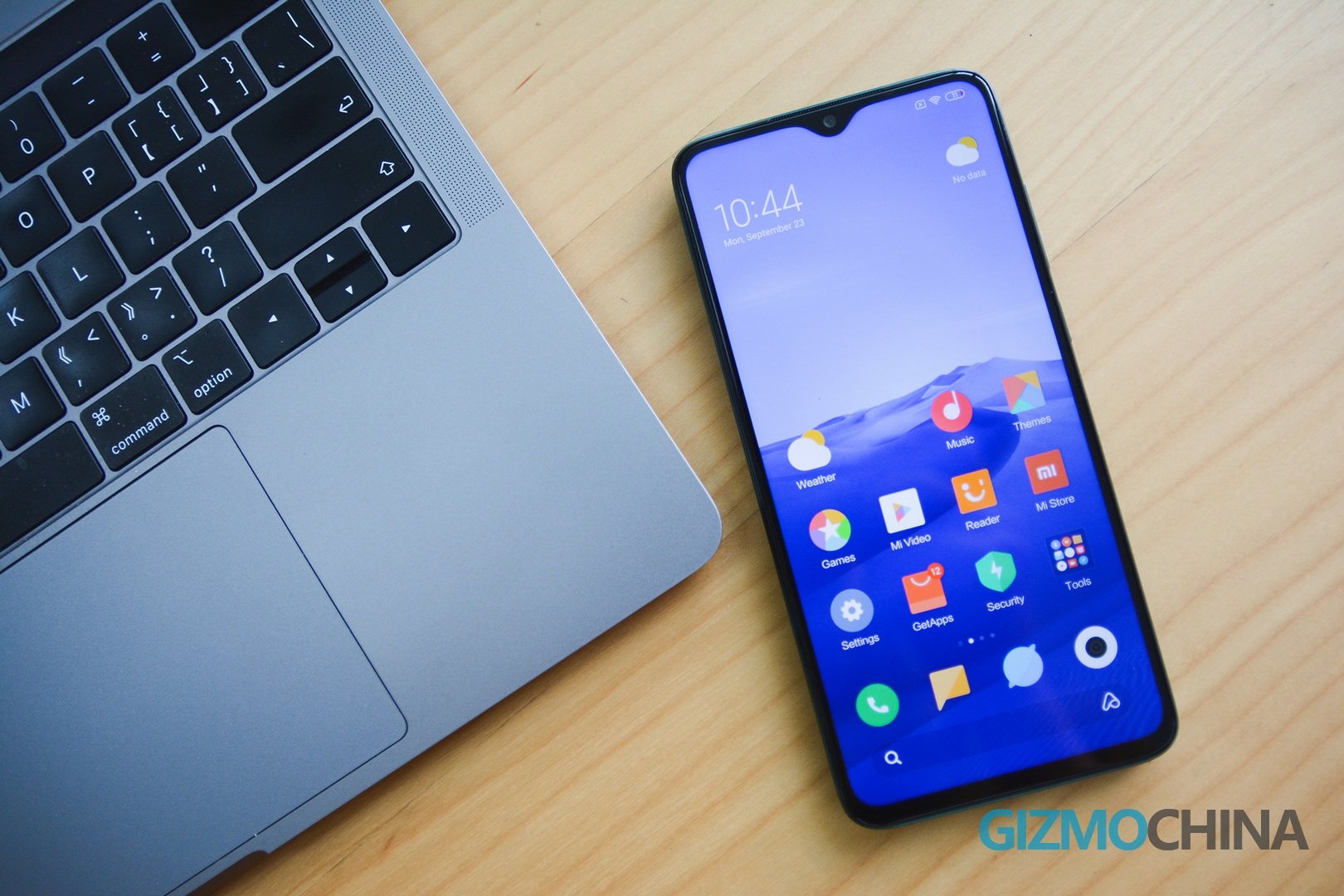
The last time Xiaomi launched a Redmi Note phone with two different processors was the Redmi Note 4. It originally launched with an Helio X20 processor and about 5 months later, a Snapdragon 625-powered version was announced. The same thing may happen again with the Redmi Note 8 Pro.
The Redmi Note 8 Pro is powered by a MediaTek Helio G90T processor. When it launched, there were skepticisms about the processor due to it being from MediaTek but reviews have shown it is a more than capable processor. However, new info has surfaced and it reveals there will be a Snapdragon 730G version of the phone.
The info comes from Twitter user Xiaomishka (@xiaomishka) via a tweet he posted. According to him, the new Xiaomi phones with model numbers M1912G7BE and M1912G7BC that appeared on the database of China Communications Commission (3C) belong to the Redmi Note 8 Pro powered by Qualcomm’s Snapdragon 730G processor.
#Xiaomi Ok, guys I see new model numbers: M1912G7BE M1912G7BC, that appeared at 3C database, and what can I say. New #Redmi phone is coming! It's #RedmiNote8Pro upgrade version with SD730G.
P.S. #RedmiK30 (M1911U2E) #5G#MTK The launch should take place in December. 😎
Earlier, we had reported that the model number might be for the POCO F2 but this new info says otherwise. There is no confirmation yet, so we advise you to take it with a grain of salt. Nevertheless, it is not an unusual development.
Xiaomishka adds in his tweet that the Redmi K30 with model number M1911U2E, 5G and MediaTek processor should launch in December. The phone will support both standalone and non-standalone 5G networks. With respect to design, the Redmi K30 will have a display with a punch hole for dual cameras similar to the Galaxy S10+.
The Redmi Note 8 Pro was announced in September. It has a 6.53-inch IPS LCD display with a waterdrop notch that houses a 20MP selfie camera. The Helio G90T processor is paired with 6GB or 8GB of RAM and up to 128GB of UFS 2.1 storage. A 64MP camera sits on the back of the phone along with an 8MP ultrawide camera, a 2MP macro camera, and a 2MP depth sensor. It also has a rear-mounted fingerprint scanner, IR blaster, audio jack, NFC, and a 4500mAh battery with support for 18W fast charge.
Designed exclusively for carrying out basic tasks such as audio/video playback, web browsing, running web-based applications, documenting processing, etc, a miniature PC (mini PC) is a compact, low-power, legacy-free desktop computer.
If you are in the market for a high-end mini PC, you are likely to stumble upon a wide range of choices usually carrying steep price tags. If you settle for a low-priced alternative, you might not get the expected performance, which means if you aren’t willing to spend a lot of money, you’d need to go for a low-grade mini PC. GeekBuying is bent on changing that.
The popular Chinese online store is currently doling out noteworthy discounts on two of the most popular mini PCs, much to the delight of its loyal users. Aside from shedding light on the discounts, we will show how you can save more money at checkout.
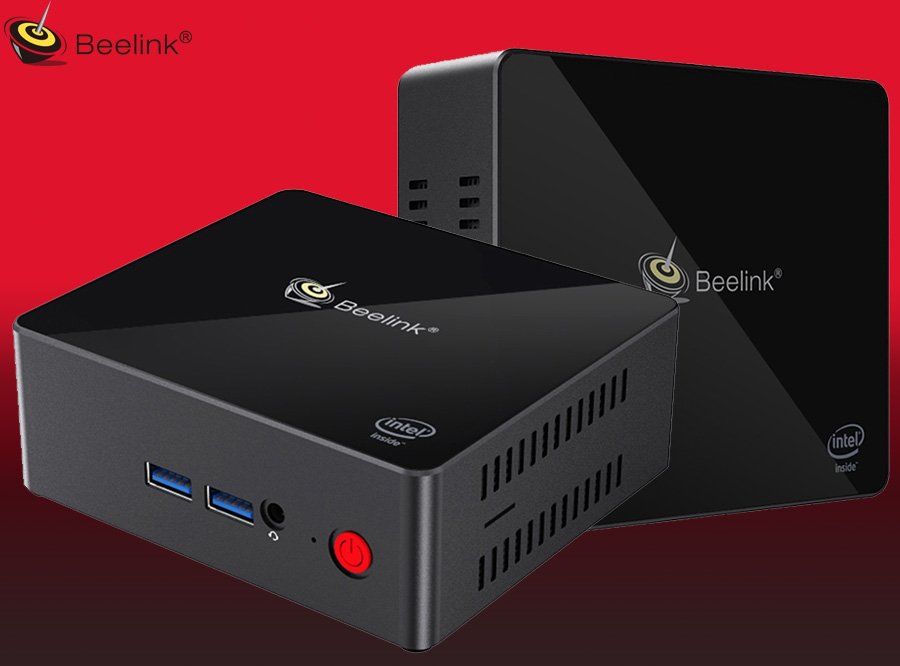
A part of the Beelink Gemini X line, the Gemini Lake Mini PCs are powered by Gemini Lake desktop processors of the J series. These processors pack relatively more power than the N series and are exclusively designed for portable systems that consume less power.
Beelink Gemini X55 Ultimate Mini PC
The Gemini X55 Ultimate is powered by the Intel GEMINI LAKE Pentium Silver Processor J5005 and runs Windows 10 (64bit) OS. It ships with 8GB of LPDDR4 RAM and offers a hearty 128GB of mSATA SSD storage space. Furthermore, it comes with a highly competent UHD Graphics 605.
The original asking price of the Beelink Gemini X55 Mini PC is $377.99, but you can now order it through GeekBuying at a lowered price of only $ 329.99. While new users can take advantage of a 2% OFF Coupon, the rest of the users can extend this 13 percent discount with the help of coupon code 40H1FF3R.
The aforesaid coupon enables you to get an extra $30 off by reducing the retail price of the Beelink Gemini X55 Ultimate Mini PC to just $299.99. You can follow this link to avail of the discount and use the coupon before it expires.
Powered by the Celeron J4105 Quad processor, the Beelink Gemini X45 Premium has 8GB of LPDDR4 RAM, coupled with 512GB of mSATA SSD storage space. Furthermore, it features Intel’s UHD Graphics 600, up to 750MHz GPU for superior user experience.
The Gemini X45 Premium Mini PC runs Windows 10 (64Bit) operating system and would normally set you back $339.99. Thanks to a 19 percent discount, you can now get this amazing mini PC from Beelink for a lowered price of only $275.99.
If this is your first order with GeekBuying, don’t forget to take advantage of an extra 2% off before checking out. The rest of the users can apply coupon code 40H16DZA for an extra $16 discount at the time of checking out. In other words, you can bring the original asking price of the mini PC down to only $259.99 simply by applying the aforesaid coupon.
To ensure you do not end up missing this opportunity to buy the Beelink Gemini X45 Premium Mini PC for a heavily discounted price, simply follow this link without wasting time.
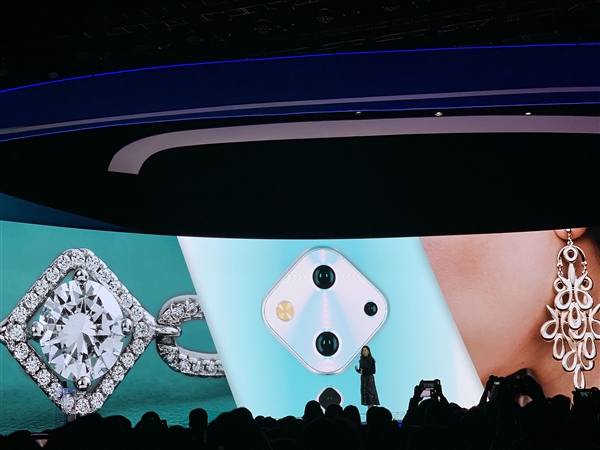
When you talk of innovation in the smartphone industry, Vivo is one name that would definitely pop up. The tech giant has been firing on all cylinders, giving us classics such as the Vivo NEX and others. Little wonder the company has consistently retained its spot as one of the top 5 smartphone companies globally. Vivo is again blazing the trail with another innovative smartphone. The Vivo S5 has just been announced at a launch event held in Beijing, China.
The device has been the subject of several leaks and teasers before now. The principal reason is that the device drops as the first non-Samsung phone to pack an OLED punch-hole display. The punch-hole has a miniature diameter of 2.98mm and is located at the top right corner of the screen.
Vivo S5 Specifications and Features
The S5 pack a 6.44-inch OLED display with FullHD+ resolution of 1080 pixels. The device equally has a screen-to-body ratio of 91.38%. The screen also comes with a maximum brightness level of 1200 nits. It is also TUV Rhineland certified meaning it is safe for the eyes. Also onboard is DC dimming which is achieved using Dim layer mask algorithm onboard. Vivo also equipped the S5 with an on-screen fingerprint sensor with a dynamic range increase of up to 30%.
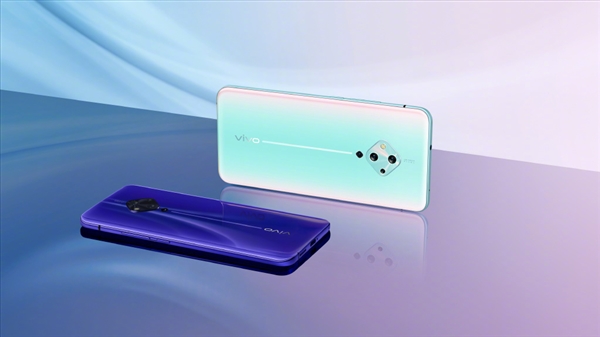
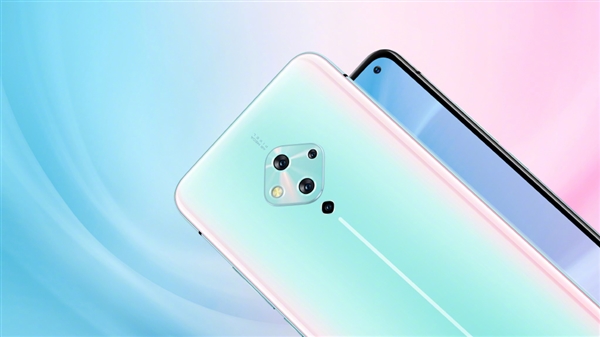
The Vivo S5 also presents with a quad-camera setup at the rear designed with a diamond-shaped module. Three of the sensors and an LED flash are inside the module while the fourth sensor is located at the bottom. The rear camera sensors consist of a 48MP main sensor teaming up with an 8MP Super Wide-angle camera, a 2MP macro sensor and a 5MP depth-of-field sensor. At the front, a 32MP camera is crammed inside the 2.98mm punch-hole. The selfie camera deploys algorithm to capture clearer selfies.
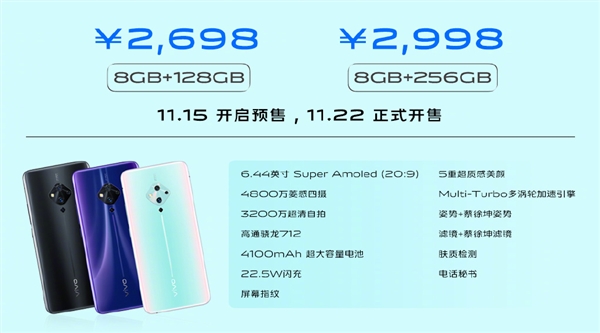
The Vivo S5 is powered by a Qualcomm Snapdragon 712 chipset which has some improvements over the Snapdragon 710 SoC. It must be noted that Xiaomi Mi 9 SE launched in February was the first phone to be powered by this chipset. The new chipset sure is a powerful one with an AnTuTu benchmark score of 187,626 points. The device comes in 8GB RAM + 128GB storage and 8GB RAM + 256 GB storage options. With this configuration, the device no doubt does not have storage expansion option.
The Vivo S5 comes with a 157.9 × 73.92 × 8.64mm, weighing in at 188g. The phone has a 4100mAH battery crammed under its hood. The device comes with a 22.5W flash charge support for super-fast charging. It also comes with a new and more powerful version of Vivo’s custom Jovi smart assistant. Also bundled along are several turbo features such as Centre Turbo, AI Turbo, Cooling Turbo, Net Turbo, Game Turbo as well as a new ART++ Turbo to enable users to experience optimum performance.
Vivo S5 Price and Availability
As for the pricing, the 8GB+128GB memory option has a recommended retail price of 2698 yuan ($384) while the top-end 8GB + 256GB variant is priced at 2998 yuan ($427). The phone will open for pre-orders November 15 but the official sales will commence on November 22.
The Motorola Razr flip phone is back and it adds a very modern twist to the design. The phone which launched in the early hours of today has a flexible display that folds vertically, thus allowing it to keep its old design. While the new Razr is the first foldable phone with a vertically folding design, it may not hold that title for long.
Samsung teased a phone with a vertically folding design last month. Initially thought to be a teaser for the Samsung W20 5G phone, it turned out not to be. There is still no info about the official name of this vertically foldable design but at least we know Samsung is working on one. But Samsung isn’t the only big-name manufacturer that has plans for a vertically folding phone.
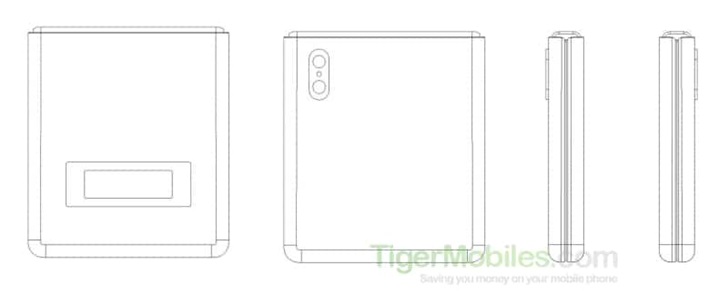
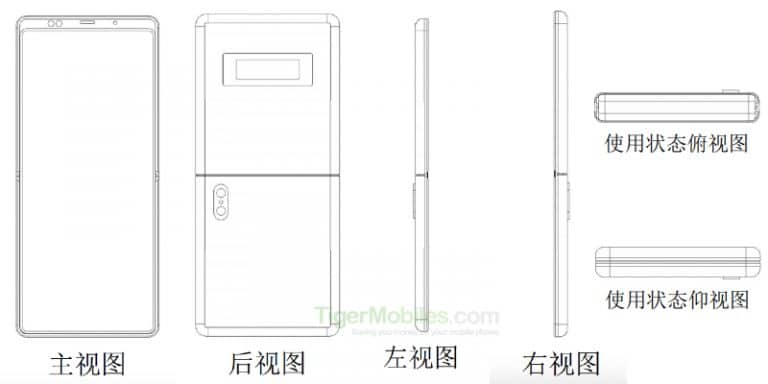
Xiaomi has been granted a patent for a vertically folding phone. The patent was filed back in August 2018 before it was granted and published last month. Sketches of the device show the phone has a small display at the top when folded. This display will likely show info such as time, caller ID, and notifications.
At the bottom half of the phone are dual rear cameras arranged vertically. That does seem like a wrong place to put the cameras seeing as that is where your fingers will naturally rest when holding the phone. However, when held in landscape, you should be able to take photos without covering the lens.
When flipped open, the main display is revealed and it looks like a regular candybar phone. There are no bezels on the sides save for the top, and it is home to what appears to be dual cameras, the earpiece, and a sensor.
This is just a patent and not a confirmation that we will be getting a vertically-folding device from Xiaomi soon. Earlier this year, the Chinese manufacturer showed a working prototype of a dual-folding phone but it is yet to launch.
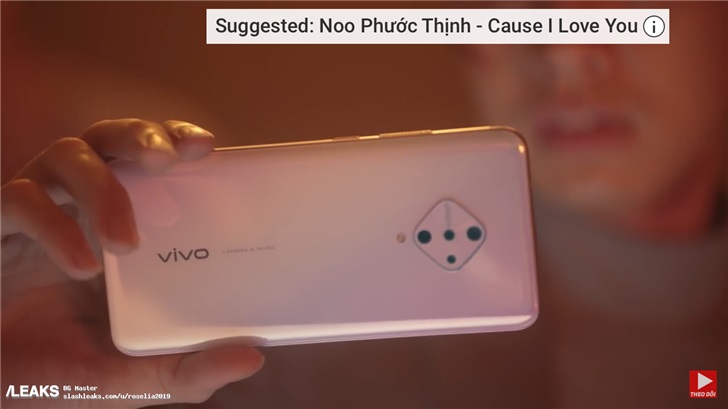
The upcoming Vivo V17 smartphone has been spotted in a Vietnamese music video, confirming the presence of a rhombic quad-camera setup with an LED flash unit placed vertically below the camera module. The smartphone also has a teardrop notch housing the selfie camera. The Vivo V17 is expected to debut in various markets like Russia, India and Thailand by the end of this month.
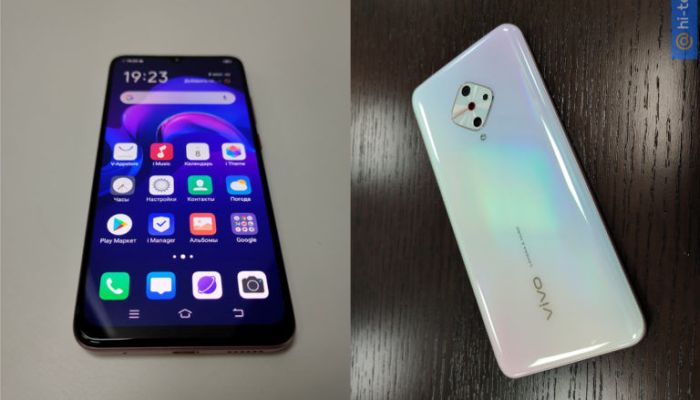
The phone that has surfaced in the Vietnamese music video resembles with the spy shots of the Vivo V17 that was recently revealed by a Russian tech blog. The smartphone seems to feature an in-display fingerprint scanner. While the volume rocker and power button are placed on the right edge. The USB Type-C port, microphone port and external speakers are present on the bottom edge. The iridescent glass rear panel houses the quad camera setup, which features a similar design to the upcoming Vivo S5.
The Russian site had revealed that the Vivo V17 will break cover by November end in Russia. Rumors have it that Vivo may launch the V17 in India by the end of this month and make it available for buying in the first week of December It is speculated that Vivo plans to gradually phase out the Vivo V17 Pro after the launch of the V17 in the country. The smartphone has bagged approval from Bureau of Indian Standards (BIS) which suggests that its India launch could be nearing.
VIvo V17 live shots
The Vivo V17 received the necessary certification from the National Broadcasting and Telecommunications Commission (NBTC) Thailand recently. This points to Vivo’s intentions of launching the smartphone in Thailand soon. Vietnam could be also another market that will be treated with Vivo V17.
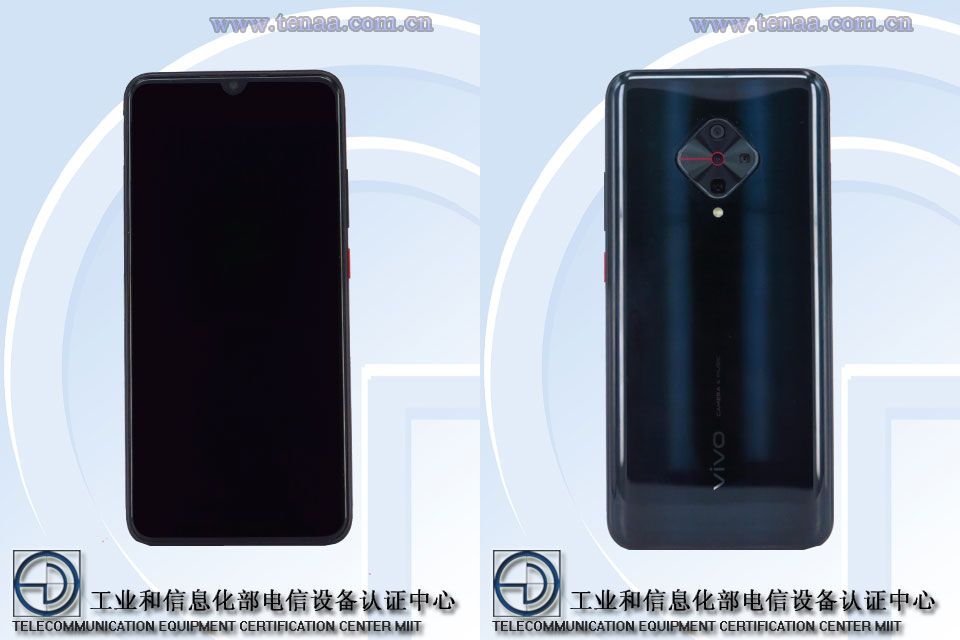
The device with model numbers V1945A/T was recently spotted during TENAA listings. The images of the Vivo V1945A/T are exact match with Vivo V17. According to the listing, the handset flaunts a 6.38-inch AMOLED display with a resolution of 2340 x 1080 pixels. The device is powered by a 2GHz undisclosed CPU with 6 GB / 8 GB of RAM and up to 256 GB of native storage. The smartphone apparently draws power from a 4,390mAh battery with support for fast charge and runs on Android 9.0 Pie. The four cameras on the rear panel use 48-megapixel, an 8-megapixel, and two 2-megapixel sensors. The front camera reportedly uses a 32-megapixel sensor. Connectivity options include USB and Bluetooth. The V1945A/T could be heading to China with a different moniker.
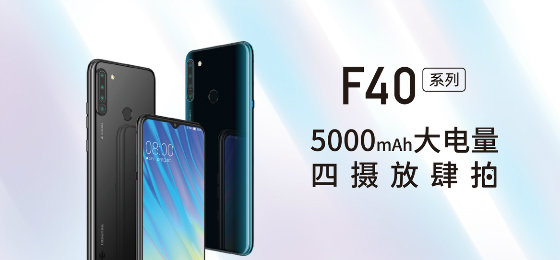
Chinese electronics giant Hisense recently unveiled the next-gen KingKong 6 with a mammoth 10010mAh battery. What no one told you is that the company also launched a second smartphone with its own unique feature. The smartphone is the Hisense F40 and the tech giant says it is equipped with the ability to detect any infrared camera even if it is hidden. Apart from that and pictures of the device, no other details were announced.
The Hisense F40 has now reportedly been certified by TENAA, giving us an idea of what it packs. As for the specs, the F40 sports a 6.617-inch display with a resolution of 1600×720 pixels. The phone adopts a dimension of 166.3×76.5×9.19mm and weighs just 170g.
The device packs a huge 5000mAh battery (4850mAh according to TENAA) which should definitely ensure you never run out of power. The device powered by an unnamed CPU clocked at 2.0GHz. You get up to 8GB of RAM and 256GB of internal storage. There are likely going to be other memory variants.
What should stand out is the ability of the camera to detect any infrared camera closeby. Thus, when you enter a hotel room, if there is a hidden camera somewhere it can be detected with the F40. The phone presents with a quad-camera setup at the rear. The camera setup consists of a 13MP+8MP+2MP+2MP combo, all stacked at the top left corner in a vertical orientation. While three of the sensors are in a single module, the fourth sensor is located under and is believed to be the infrared detector. At the front, there is an 8MP sensor for cool selfies housed inside the notch. The device also packs a rear-mounted fingerprints sensor.
The Hisense F40 comes in Polar Night Black and Star Blue colours. Hisense is yet to officially announce the pricing and availability details.
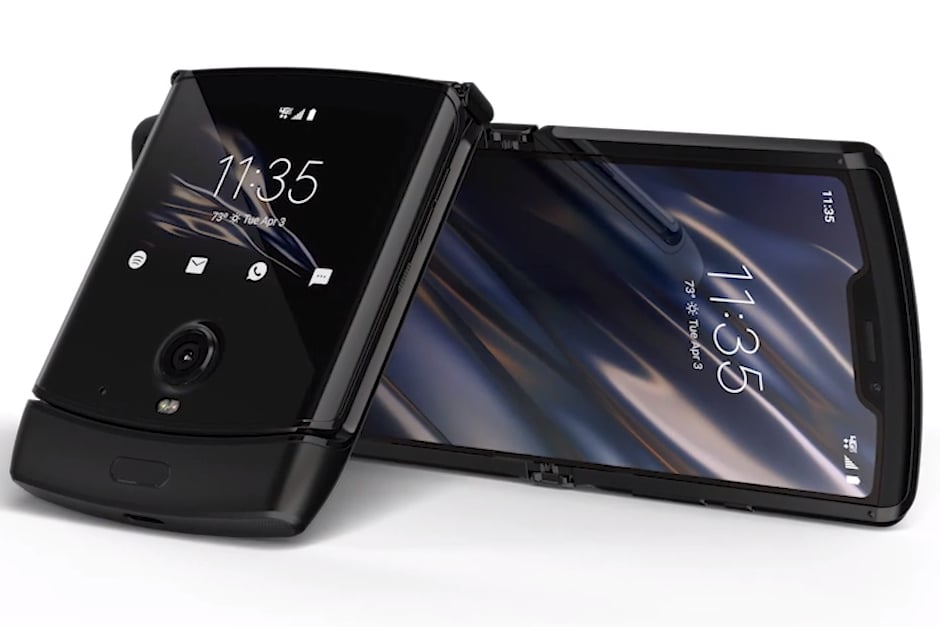
After seeing multiple foldable designs that transformed a smartphone into a tablet, Motorola has brought a unique flip phone foldable, the Motorola Razr, to the market. The Razr gets its design inspiration from the best-selling Moto Razr v3, which sold millions of units worldwide all thanks to its iconic flip form factor.
Motorola Razr
In the company’s latest video commercial, Motorola shows us how the original Moto Razr has transformed into the new Razr foldable. The video pays special attention to the cool new hinge design that allows the flexible screen to open up to 180 degrees without any visible creases or marks.
Just like other foldables, the Motorola Razr comes with two screens, a primary Flex view P-OLED display of 6.2-inches and a secondary OLED screen upfront of 2.7-inches. Given its super small 2510mAh battery, it’s probably a good idea to use the OLED screen on the front for most features.
The phone is powered by the Snapdragon 710 mid-range processor with 6GB of RAM and 128GB of internal storage. The phone runs on a near-stock version of Android 9 Pie. Below the secondary screen on the front, the Razr features a 16MP f/1.7 aperture camera, while there’s a 5MP shooter on top of the flexible screen.
The Motorola Razr will ship next year in January 2020.
Android smartphones already pack a lot of customization options for the users to apply their design to the home screen, navigation, and status bar. There’s a huge presence of third-party MODs which sometimes need root access to change the native look of your device. However, the same can be attained by using the Android Theme Apps also. These apps have opened various spheres of customizations on an Android device. The users can easily convert the whole User Interface of the device with just a few taps.
The Android launchers are also a part of customizations, but they have certain limitations sometimes. The launcher apps are limited home screen customization, but the theming apps can fully change the way how your Android smartphone looks. The users can easily apply skins or widgets to get a beautiful and desired look on your smartphones.
The Android Theme apps bring the ability to customize every element, including home screens, keyboards, navigation bar, status bar, etc.
Advantages of Theme Apps:
The customizability of every UI element
Interactive design
Easy to use interface
Live Editor for intuitive designs
Native Music, Weather, and other utilities
Animations and lot more
Various theming apps are available in the Play Store. We have created a list of best Android theming apps that can be used for seamless customization across the whole device. Some launchers with the ability to deep customize the Android smartphones are also present in the list below.
List of Android Theme Apps
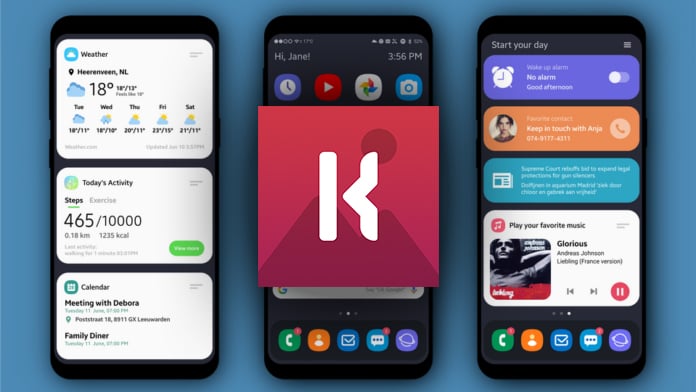
KLWP Live Wallpaper Maker
It’s a popular customization app available for Android devices. It is the most powerful Live Wallpaper creator that uses the WYSIWYG editor to create designs. It also supports various parameters, triggers, and actions to support the skin. The users can create their skin or can download from the Play Store or any other third-party website.
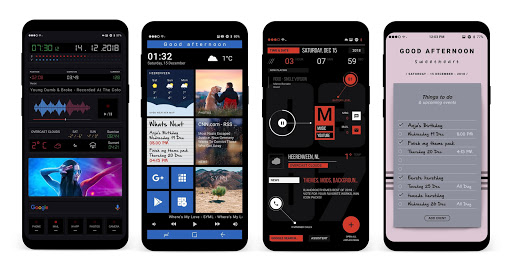
The Kustom allows users to create customized digital watches, weather widgets, clocks, live map backgrounds, music controls, system monitors, wallpapers, etc. All the features can be used to create intuitive and creative skins for smartphones.
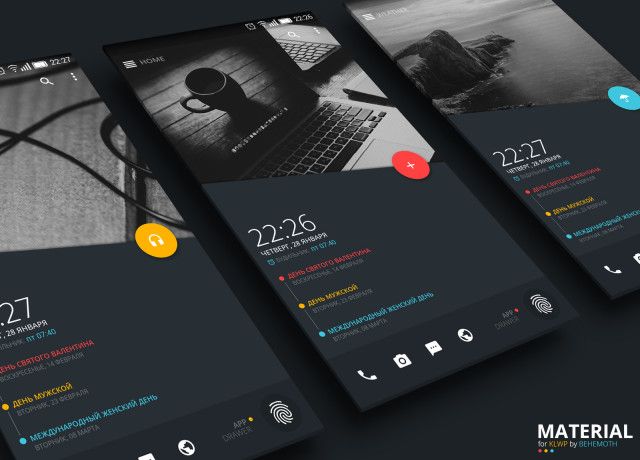
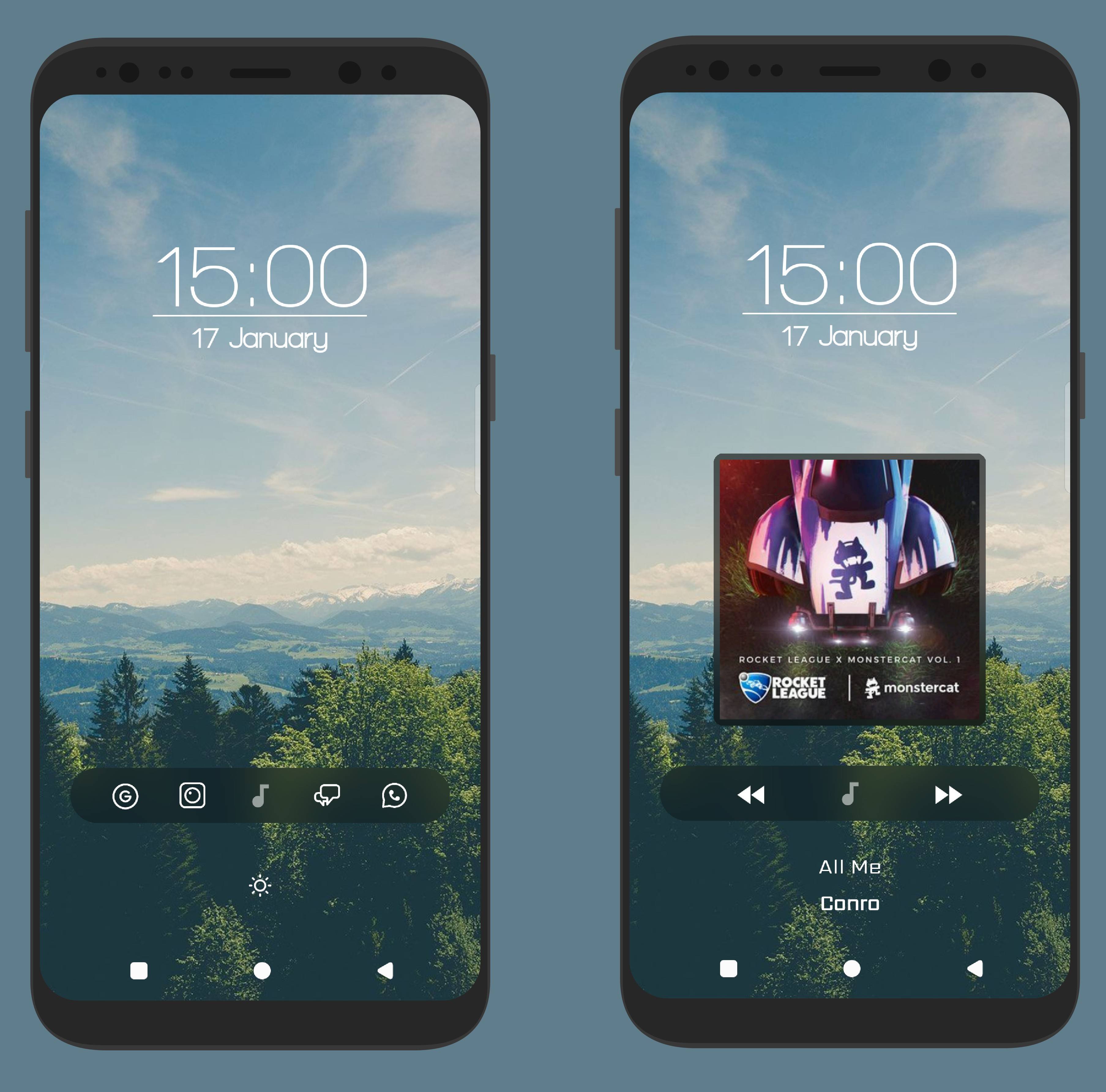
In order to use the KLWP Live Wallpaper Maker, the user need to install an Android standard launcher such as Nova Launcher and others. Apart from customization, there are some free presets available in the featured section with custom fonts, colors, sizes and effects. Animation such as 3D flip transformations, curved and skewed text are also part of the KLWP. It even supports complex programming language with functions and conditions. Here are some third-party KLWP themes:
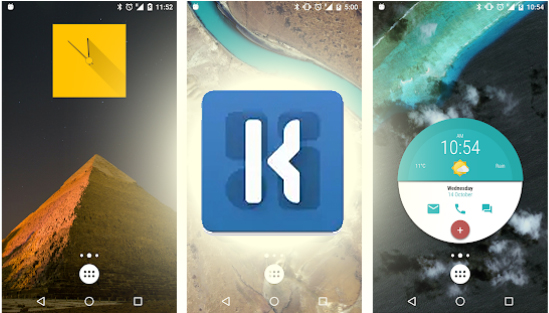
As like KWLP, the KWGT – Kustom Widget app is also developed by Kustom Industries. However, the KWGT is specially built to create new widgets. These widgets which are known as komponents can be used in a KWGT widget or a KLWP Live Wallpaper. Unlike the KWLP, the KWGT allows drag and drop of widgets from the widget manager of the launcher.
KWGT uses a WYSIWYG editor to create new designs and display the needed data without affecting battery life. It is a small part of Kustom Live Wallpaper. The app supports all the tools, including custom fonts, colors, shapes, 3D flip transformations, gradients, progress bards, and a lot more.
It even supports Google Fitness, native music utilities, Weather, and Tasker. The availability of complex mathematical function conditions and global variables makes it uncompetitive to any other widget maker.
It is a popular Android theming app with the ability to create widgets. Apart from the easy customizability, the users can even install many skins from the Google Play Store. It is a WYSIWYG (What-you-see-is-what-you-get) editor for widgets.
The user can customize the widgets using different objects, fonts, images, shapes, battery meters, weather, and more. Any widget can be created using these elements as the sky is the limit for creativity. Custom hotspots, aka clickable action support, are also present on the UCCW.
Skin sharing is also possible as the app offers export and import of skins. It even allows apk creation of the skins from within the app.
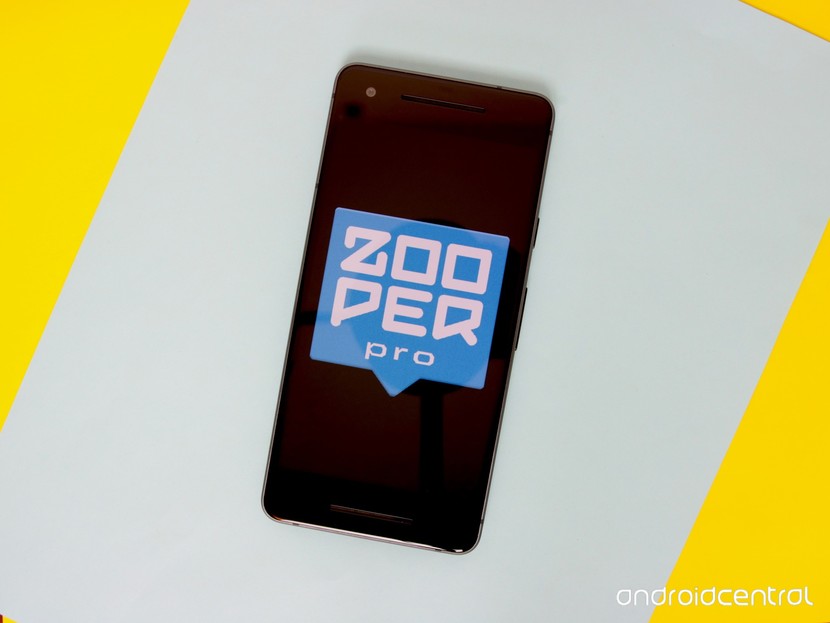
It is another heavy customization app to create your widget. The user can use different triggers, animations, actions, and elements to design the widget. However, a lot of customized themes are available from the Play Store, which the user can use with just a few taps. It even includes several templates, including clocks, weather, and date widgets. The app supports minimal, classy, extremely customizable, and battery-friendly widgets.
It supports full maths expressive with completely dynamic and customizable progress bard and icon sets. The ability to save, import, and export are among some significant features of the Zooper Widget app.
A free version of the app is limited to some features, but you can purchase the pro version for $2.99 to unlock unlimited possibilities. In February 2019, the Zooper Widget Pro was removed from Play Store. However, the users can still use it by downloading the apk from third party websites.
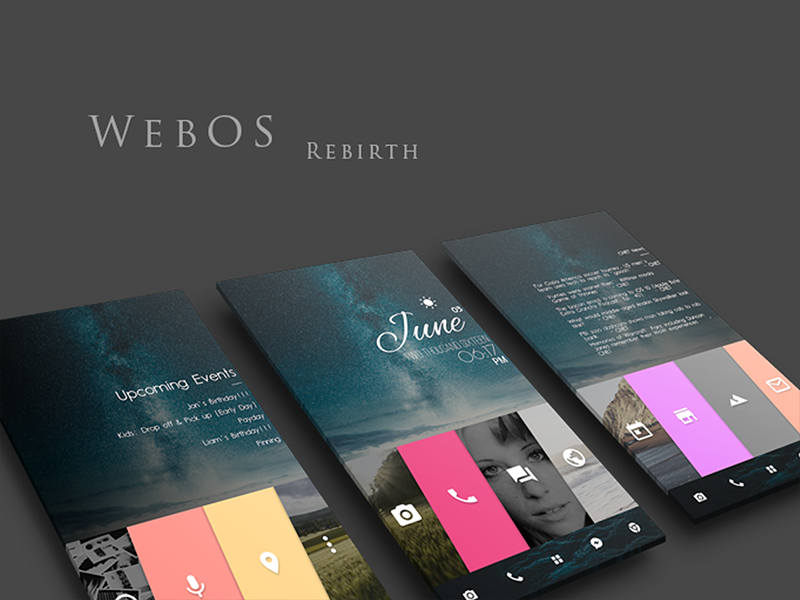
How can we forget about the Substratum Theme Engine? It is the best and the most exceptional theme engine for Android. It needs root access to personalize the System UI and renovate the whole Android experience on your smartphone. However, the users can even use it without root on Android Oreo using Andromeda, but some features won’t work.
It works perfectly with AOSP (Android Open Source Project) based custom ROMs, LineageOS, and stock Android. It is an advanced theming mod that can be used to customize the UI at a deep root level. It offers a catalog of different themes depicting different visuals and stories.
Navbar Apps is a customization app for navigation bar on Android. It features a dynamic color changing module which changes the navigation bar color matching the App. The user can even customize the navigation bar using images, battery gauge, and other elements. It also supports navigation gestures to ease accessibility. Unfortunately, the app does not work on Huawei smartphones.
To use all the features, the user needs to grab the paid version for $1.99 from the Play Store.
It is an award-winning wallpaper generator. It automatically generates high-quality backgrounds using different shapes and designs. It can randomly create wallpaper, daily or hourly. The app does not download any wallpaper from the internet, and all the designs are self-created by the app itself. Every new version brings exciting new patterns to surprise you with distinguished wallpapers.
The images are automatically generated to fit precisely into the viewport of your device. Many users love these rapidly generated wallpapers.
These are some best Android theming apps available for Android devices. There are many other apps, but most of them carry the same features as the apps mentioned above. If you still have some useful apps that can be the part of this list, then do let us know via the comments below.
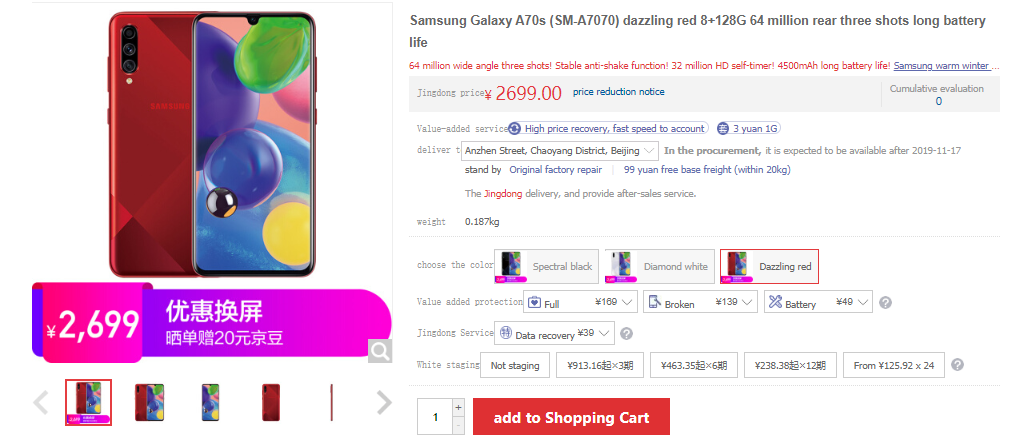
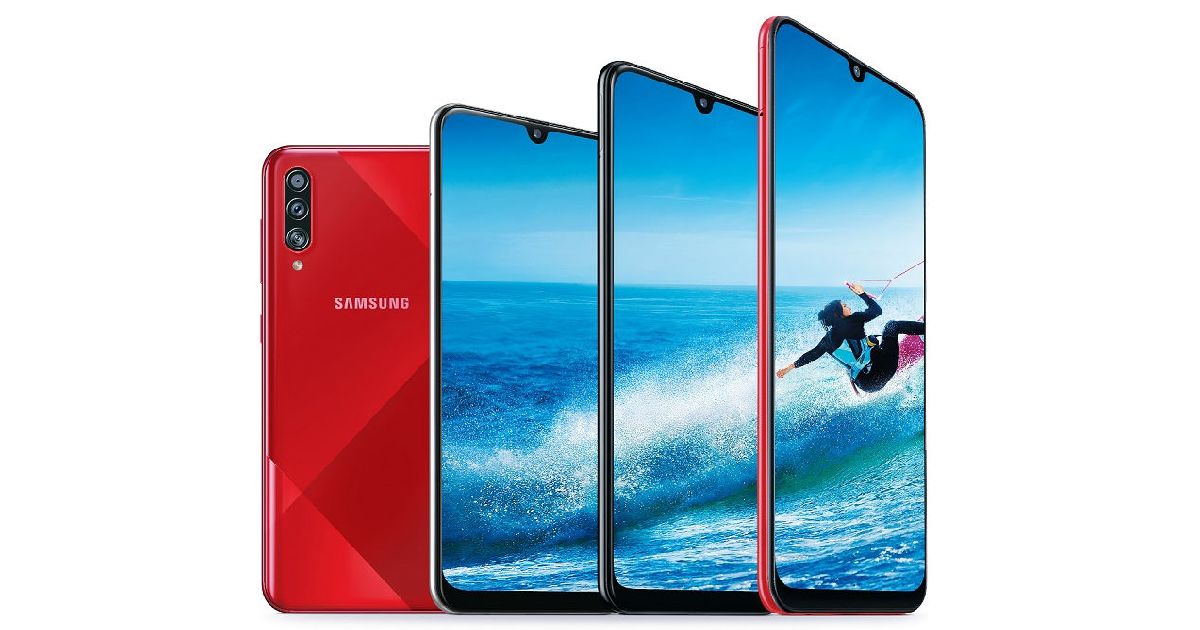
Samsung launched the Galaxy A70s in India back in September 2019. It is the first smartphone from the South Korean tech giant to feature a 64-megapixel primary camera. With the Galaxy A70s, Samsung plans to take on the Realme XT and the Redmi Note 8 Pro, both of which flaunt 64-megapixel primary cameras. The Galaxy A70s was recently seen listed on the Chinese eCommerce platform Jingdong Mall for 2,699 Yuan (~$384).
Samsung Galaxy A70s Price and Availability in China
The Samsung Galaxy A70s is available in three color variants, namely Dazzling Red, Diamond White and Spectral Black in China The smartphone is priced at 2,699 Yuan (~$384) for the 8GB + 128GB variant. No other variants are currently listed on JD.com.
Samsung offers two variants of the Galaxy A70s in India. While the base variant with 6 GB of RAM and 128 GB of native storage is priced at Rs. 28,999 (~$403). The higher-spec 8 GB + 128 GB variant is priced at Rs. 30,999 (~$431).
The Samsung Galaxy A70s flaunts a 6.7-inch FHD+ Super AMOLED display Infinity-U display with a resolution of 2400 x 1080 pixels and aspect ratio of 20:9. The device is powered by a 2GHz octa-core Snapdragon 675 SoC with 8GB of RAM and 128GB of native storage, expandable up to 512GB with a microSD card. The A70s flaunts a triple-camera setup at the rear. The primary camera uses a 64-megapixel unit that is paired with an 8-megapixel sensor and a 5-megapixel lens. The front camera uses a 32-megapixel unit.
The Galaxy A70s draws power from a 4,500 mAh battery that supports 25W Superfast charge and runs on Android 9.0 Pie-based OneUI. The smartphone features an in-display fingerprint scanner and supports Face Unlock. Connectivity options include dual-SIM 4G VoLTE, Wi-Fi 802.11 a/b/g/n/ac, Bluetooth v5.0, NFC, GPS/A-GPS, GLONASS, USB Type-C and a 3.5mm headphone port. The A70s measures 164.3 x 76.6 x 7.9 mm and weighs 187 grams.
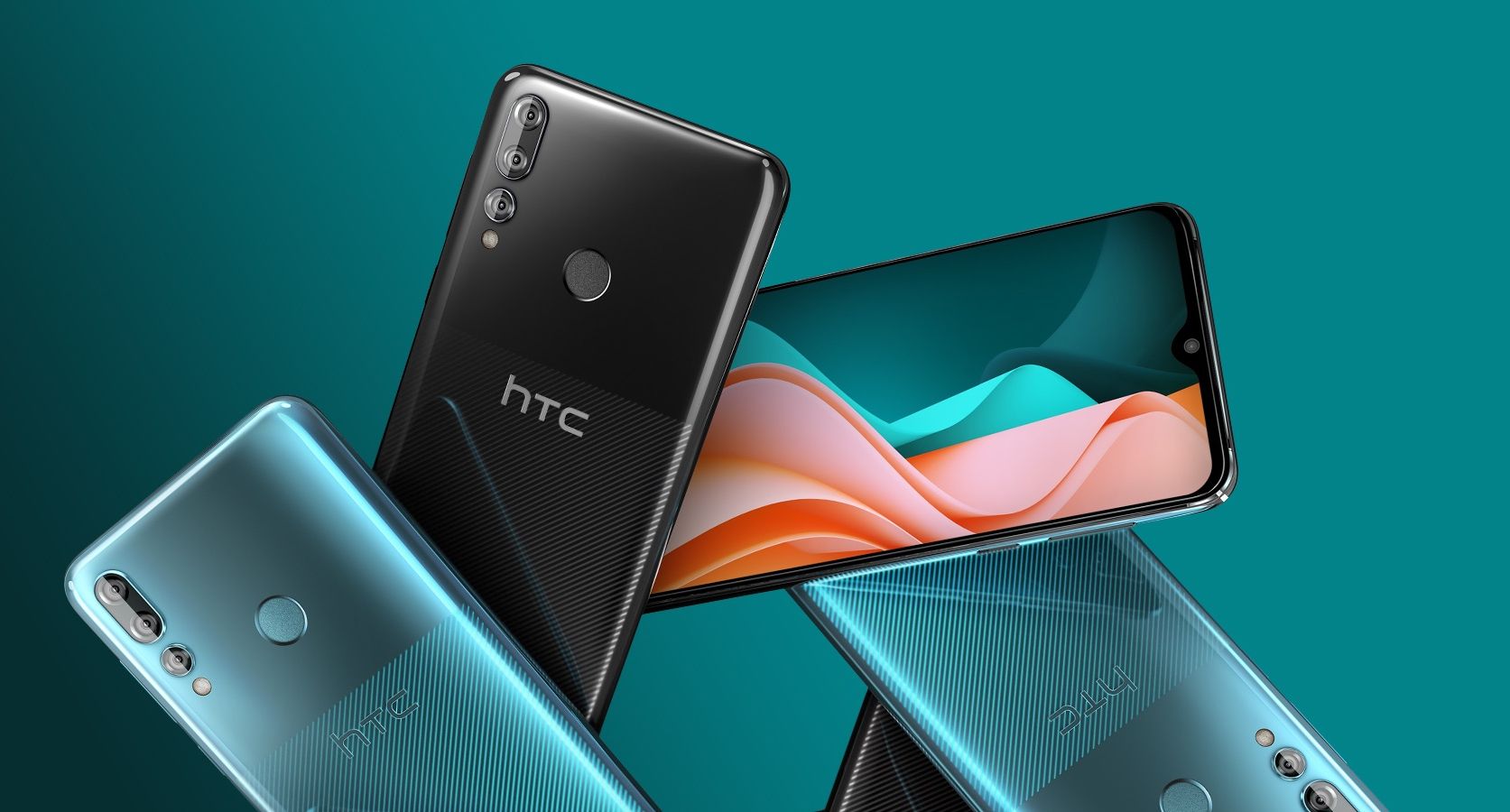
Last month, HTC CEO Yvew Maitres claimed that the reason behind the company’s downfall in smartphone business was that it stopped innovating on smartphones. Even though is now concentrating on its virtual reality business, it hasn’t completely given up on its smartphone division yet. In June, it had debut the HTC Desire U19e and Desire 19+ in Taiwan. In August, it launched the Wildfire X smartphone in India with a budget-friendly pricing. Today, the company has unveiled a lighter version of the Desire 19+. The handset appears like Wildfire X and also borrows some of its specs.
HTC Desire 19s Specifications and Features
The Desire 19s has a two-tone design on its rear. The top portion has a glossy touch while the remaining part has a textured appeal. The handset features a 6.2-inch IPS LCD display with the trendy waterdrop notch. The 19:9 display produces HD+ resolution of 720 x 1520 pixels.
The Helio P22 chipset assisted by 3 GB of RAM fuels the Desire 19s. The native storage of the smartphone is 32 GB and it has a shared SIM slot for adding a microSD card. The Sense UI based Android 9 Pie OS runs on the device.
The rear shell of the phone has a dual-LED flash assisted triple camera setup. It includes an f/1.85 aperture 13-megapixel main shooter, an f/2.2 aperture 118-degree 5-megapixel ultrawide lens and an f/2.2 aperture depth assist lens of 5-megapixel. The smartphone features a front-facing camera of 16-megapixel with f/2.0 aperture. The photography features that are available on the smartphone are AI beauty mode, enhanced low-light photography, HDR, face detection, portrait mode, capability to record video and shoot photos at the same time and 1080p video shooting.
The HTC Desire 19s has a large-size battery of 3,850mAh capacity. However, it supports only 10W charging. The other features that are available on the smartphone are dual 4G VoLTE, Wi-Fi, GPS, Bluetooth, NFC, USB and 3.5mm audio jack. A fingerprint scanner is available on the backside of the Desire 19s.
HTC Desire 19s Price
HTC Desire 19s has debuted in Taiwan with a pricing of TWD 5,990 (~$196). Free Blue and Yashi Black are the color variants of the phone. There is no word on the international availability of the Desire 19s.
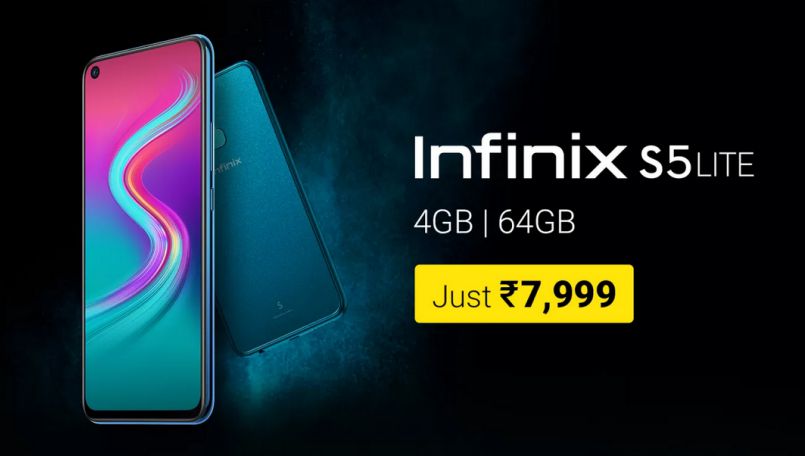
Budget smartphone manufacturer Infinix teased a new device for the Indian market on Nov. 12. The Infinix S5 Lite is scheduled to launch at 12:00 PM on Nov. 15, on the e-commerce platform Flipkart. The official teaser page of the S5 Lite on Walmart-owned Flipkart shares a few highlights of the device like a punch-hole display, triple-camera setup at the rear and a price tag below Rs. 10,000. Detailed specifications of the device are currently unknown, but that will change post the launch event tomorrow.
Infinix S5 Lite Specifications and Features (Rumored)
According to previous reports, the Infinix S5 Lite flaunts a 6.6-inch HD+ display with a punch-hole design. It carries support for a display resolution of 1600 x 720 pixels. The device is powered by an octa-core MediaTek Helio P22 chipset with 4GB of RAM and up to 64GB of internal storage. The memory is expandable up to 128GB via a microSD card.
In terms of optics the S5 Lite sports a triple-camera setup. The primary lens uses a 16-megapixel sensor with an aperture rating of f/2.0. it is mated to a 2-megapixel camera and a 5-megapixel QVGA sensor. The front camera uses a 16-megapixel sensor that sits within the punch-hole. Camera aids include 4-in-1 super pixel technology for greater clarity, Bokeh Mode, AR Emoji and AI Scene Detection.
The Infinix S5 Lite smartphone is powered by a 4,000 mAh battery with Xcharge fast charging and runs on Android 9.0 Pie with XOS 5.5 on top. Connectivity options include dual-SIM connectivity, Wi-Fi, Bluetooth, MicroUSB, and 3.5mm AUX port.
Infinix S5 Lite Price and Availability
The Infinix S5 Lite has been teased on Flipkart at Rs. 7,999 (~$111). There is no information on when the device will hit the showrooms. Additional information on color options and variants is currently unavailable.
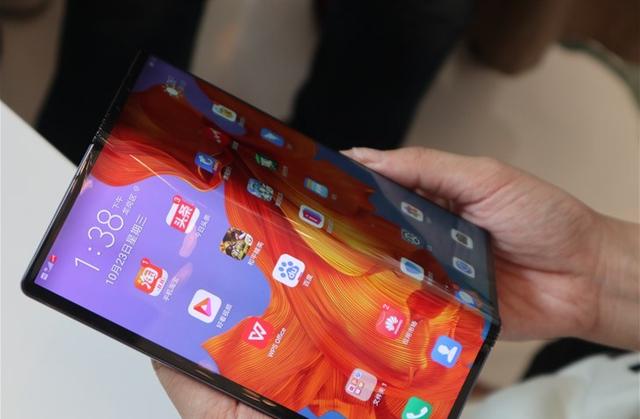
Huawei Mate X was officially revealed at MWC Barcelona earlier this year. However, the foldable was officially launched only last month, with availability slated for November. While there were reports yesterday that said the Huawei Mate X sale was postponed, the company confirmed earlier today that the foldable will go on sale on November 15, as originally planned.
The Huawei Mate X will take on the Galaxy Fold that recently went on sale in China. In fact, the Mate X could get another competitor in the coming months, as the Motorola Razr will hit a few markets in Asia in 2020 (China launch isn’t confirmed though).
Note that Mate X will only be available in limited quantities tomorrow. There will be just one variant available for purchase featuring 8GB RAM and 512GB of storage. The sale will begin at 10:08 AM on November 15 via VMALL (Huawei’s official store in China). The Mate X supports 5G unlike the recently announced Motorola Razr and the Galaxy Fold models sold in the U.S. and China.
The Huawei Mate X foldable is priced at 16,999 yuan (~$2403). The company will also launch another foldable phone dubbed Mate Xs powered by Kirin 990 5G next year.
So between the Mate X, Galaxy Fold, and the Motorola Razr, which design do you like the most?
A new Xiaomi device with model number M1912G7BE / M1912G7BC has received approval from the 3C authority of China. The exact identity of the phone is not known yet. However, it is speculated that it could be the much-awaited Poco F2 smartphone.
The 3C certification of the M1912G7BE / BC smartphone has revealed that it could be shipped with a 27W rapid charger. In October, the same model was certified by the National Radio Agency of China.
There is no direct way to confirm that the M1912G7BE/ BC phone is the upcoming Poco F2. The smartphone has not support for 5G connectivity and it appears to be a flagship phone with 27W fast charging. Xiaomi is expected to unveil couple of flagship phones before the end of 2019 such as Xiaomi Mi MIX 4 which will be a 5G device, the Redmi K30 series with 5G support and the Poco F2. Hopefully, the M1912G7BE/ BC smartphone will appear on other platforms like TENAA in the coming days if it is heading for a December launch.
Recently, the cases for the upcoming Poco F2 was spotted on the website of Spigen. The images suggested that the Poco F2 may come equipped with a notch-less display, a pop-up selfie camera and triple rear cameras. It may sport a polycarbonate body like the original Poco F1. Readers are advised to wait for newer reports to know concrete information on Poco F2 specifications.
Yesterday, the purported Redmi K30 smartphone that has a model number of M1911U2E was spotted at China’s NRA certification database. The listing did not reveal any details on the specs of the phone. However, it is only because of the fact that it supports 5G connectivity, the device is being considered as Redmi K30.
So far, past reports have reports have suggested that the Redmi K30 series will be equipped with MediaTek 5G chipset. The Taiwanese chip maker will be announcing new 5G SoCs on Nov. 26. Probably, the forthcoming MediaTek 5G chipsets could be powering the Redmi K30 and K30 Pro smartphones. The Redmi K30 series will be also equipped with dual selfie snappers planted inside a pill-shaped cutout on the screen.
Indian retailer site Flipkart has a dedicated landing page for the upcoming Realme 5s phone that will be made official on Nov. 20 along with the Realme X2 Pro flagship phone. Like the Realme 5 and Realme 5 Pro, the Realme 5 also features quad rear cameras. The landing page on Flipkart has been updated now to reveal new details on the phone.
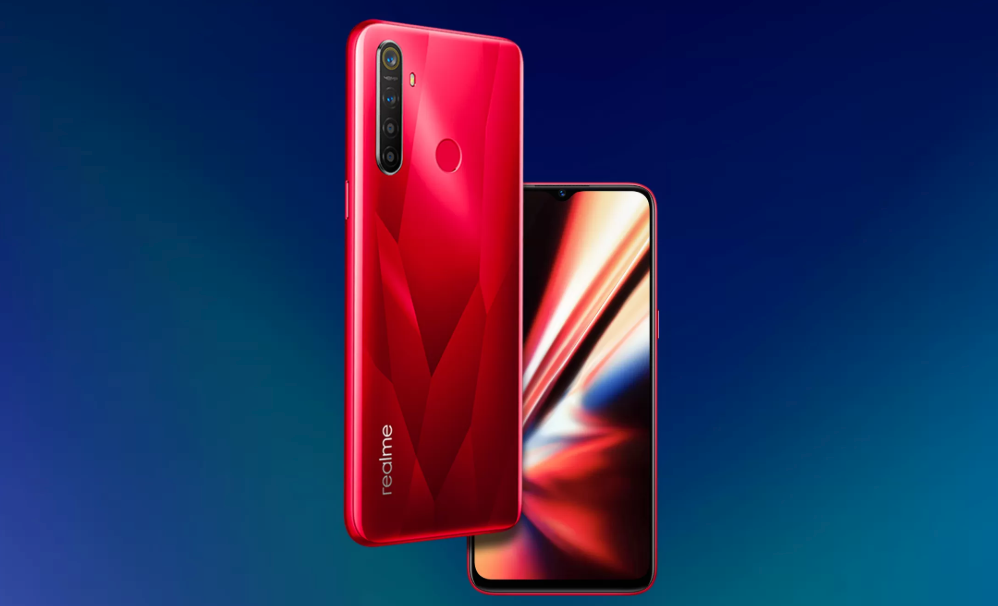
The Realme 5s image on the retailer site reveals that it has a diamond-pattern red colored back panel. A fingerprint scanner is available apart from the quad camera system on the rear shell of the Realme 5s. The right edge of the phone has a power button whereas the volume rocker seems to be positioned on its left edge.
Like the Realme 5 and 5 Pro handsets, the Realme 5s is also equipped with a waterdrop-style notch screen. its side bezels are slim, but the chin is a bit thick. The 48-megapixel quad cameras of the Realme 5s are designed to capture ultra-detailed picture that remain sharp even when after zooming in. There is no confirmation on whether it feature Sony IMX586 48-megapixel lens like the Realme 5 Pro or it features a Samsung made ISOCELL Bright GM1 sensor. The Realme 5s is backed by a 5,000mAh battery.
A report on BGR India had revealed yesterday that the Realme 5s has identical specs as the Realme 5 phone and the only major difference is the presence of a 48-megapixel instead of the 12-megapixel primary lens. Hence, the Realme 5s is expected to be driven by Snapdragon 665 and 4 GB of RAM. It may arrive with 64 GB of native storage and support for external storage.
The Realme 5s may possess a front-facing camera of 13-megapixel. Its rear panel could be fitted with 48-megapixel + 8-megapixel + 2-megapixel + 2-megapixel quad camera system. The smartphone is like to boot to Android 9 Pie OS flavored with ColorOS 6.
The Realme 5s could be positioned between the Realme 5 and 5 Pro phones. There is no information available on the pricing of the Realme 5s.
According to the latest statistics from International Data Corporation (IDC), the Chinese smartphone market recorded a year-on-year decline of 3.6% in the third quarter of 2019. Although the market is still in decline, it is starting to show signs of recovery. This is in part due to Huawei’s strong performance in the third quarter.
Huawei currently holds a massive 42% of the Chinese smartphone market, up from 24.6% last year, recording a mammoth 64.6% increase in shipments year-on-year. The company managed to attain this feat with stronger channel partnerships and increased brand appeal. While the Nova and Changxiang series accounted for the maximum sales volume, the high-margin P-series and Mate devices compensated the channel partners financially. According to IDC, this was Huawei’s winning strategy in China.
Coming in second place with a market share of 18.3%, Vivo continues to focus on the middle-weight contenders, priced between $150 to $400, with its Y and Z series. The 5G-ready iQOO devices were quite popular with the tech-savvy youth, helping Vivo gain traction in the market. The company’s year-on-year shipments were still down by 19% to 18.1 million units.
Sister-concern OPPO was still struggling to establish the Reno brand in Q3, making the A-series the vendor’s primary sales driver in the low-price range. Although OPPO remained primarily focused on selling 4G devices, the company implemented inventory control keeping in mind the highly-anticipated 5G boom of 2020. OPPO’s year-on-year shipments were down by 22% to 16.4 million units while the market share reduced to 16.6% from 20.5% in 2018.
Xiaomi’s shipments dropped by 30.5% to 9.7 million units while its market share dropped to 9.8%. The company currently struggles with internal organizational changes, brand differentiation between Redmi and Mi, and offline channel management.
Apple painted a positive picture by recording a 5.6% year-on-year growth in Q3 2019. Competitive pricing and improvements to the battery life and camera hardware on the iPhone 11 series seem to have worked in the Cupertino-based tech giant’s favor. Apple’s new entry-level iPhone also shipped a quarter ahead of schedule, supporting the year-on-year growth. As a result, the company’s market share increased to 8.2% from a measly 7.5% back in 2018.
According to the IDC, the upcoming upgrade to the 5G-spectrum will further boost the Chinese smartphone market in the upcoming quarters. As most smartphone manufacturers are gearing up to launch their full weight behind mid-range smartphones running on the 5G spectrum.
After months of leaks, Motorola has finally unveiled the Motorola Razr flip phone. The renewed edition of the original Razr phone from the yesteryear now comes with a foldable display. Unlike the Samsung Galaxy Fold and Huawei Mate X foldable phones, the Razr is a smaller device that is packed with mid-range specs and it is priced at $1,499.
Motorola Razr Specifications and Features
The Motorola Razr features a main Flex View p-OLED display of 6.2 inches. It carries support for 2142 x 876 pixels and a tall aspect ratio of 21:9. It can be accessed by unfolding the device. When unfolded, the Razr flip phone measures 171.5 x 71.95 x 7.06mm. Like the older device, there is a big chin on the new Razr. There is a capacitive fingerprint sensor on the chin.
Motorola Razr
While the Galaxy Fold and Mate X can be unfolded horizontally to use them like a tablet, the Razr can be unfolded vertically to use it as a regular phone. There are two stainless steel hinges placed underneath the flexible display that enables users to seamlessly fold and unfold the Razr flip phone. The device comes with nano-coating for splash resistance and it weighs 205 grams.
When the device is closed, users can make use of the Quick View secondary display of 2.69 inches that offers a resolution of 800 x 600 pixels. When folded, it becomes a pocketable device as it measures 94.5 x 71.95 x 14.06mm. The second screen can be used for viewing notifications and basic tasks like responding to messages. The Quick View is integrated with Google Assistant which enables quick responses. Content can seamlessly transition between the Quick View and Flex View screens.
The Snapdragon 710 is the driving force of the Motorola Razr. The SoC is assisted with 6 GB of RAM. It has a native storage of 128 GB. The device includes a 2,510mAh battery that carries support for 15W TurboPower charging through USB-C. The phone runs on near stock version of Android 9 Pie OS.
There is a notch on the foldable display of the Motorola Razr. It comprises of a speaker and a 5-megapixel camera with f/2.0a aperture and screen flash feature. Below the Quick View display is its rear-mounted 16-megapixel f/1.7 aperture camera with features like dual-LED flash, laser autofocus, Dual Pixel autofocus, Night Vision mode and EIS.
There are four microphones on the 2019 Motorola Razr flip phone and a bottom-positioned speaker. The Razr does not feature a 3.5mm audio jack and it also lacks support for microSD card slot. Lastly, the device is equipped with connectivity features like e-SIM, Wi-Fi 802.11ac, Bluetooth 5.0, NFC, GPS and USB-C.
Motorola Razr Price and Availability
Priced at $1,499, the Motorola Razr will be up for pre-orders through Verizon Wireless from Dec. 26. It comes in a single color called Noir Black. The shipments of the phone will begin in the US on Jan. 9. The retail package of the device will include Razr earbuds and Denon Audio tuned USB-C headsets. Specially designed cases for the foldable phone will be available through Otterbox, Kate Spade and other brands.
The Motorola Razr comes with a standard warranty of one year which also covers screen replacements. Outside the warranty, users will have to spend $299 to get the screen replaced. At the unveil event, the Lenovo-owned company did not share any details on the international availability of the Razr. India is one of the markets that will be receiving as Motorola India has already started teasing on its arrival.
What’s your opinion on the Motorola Razr flip phone? Does it impress you? Will you consider buying it? Share us your thoughts by posting your comments below.
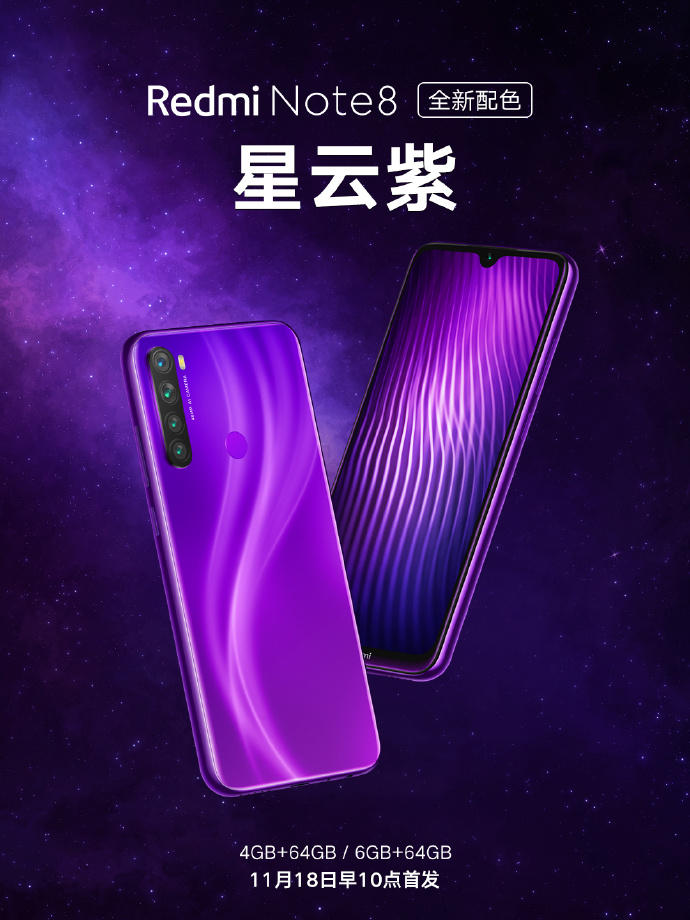
The Redmi Note 8 smartphone was introduced in China alongside its advanced version called Redmi Note 8 Pro. The Note 8 has been available in China in color editions such as Black, Blue and White. Yesterday, Redmi had hinted that it will be adding a new color variant for Redmi Note 8 in the home market. Today, the Chinese manufacturer has introduced the ‘Star Cloud Purple’ edition for the smartphone.
Last month, Xiaomi had launched the Redmi Note 8 series in India. The Note 8 was made official in four colors like space, Neptune Blue, Moonlight White and Cosmic Purple. The same purple edition has now debuted in China. Redmi will begin with the sales of purple Redmi Note 8 at 10 AM (local time) on Nov. 18. Only the 4 GB RAM + 64 GB storage and 6 GB RAM + 64 GB storage variants will be available in the newly introduced color. These RAM variants are respectively priced at 999 Yuan (~$142) and 1,099 Yuan (~$156).
The Redmi Note 8 has a 6.3-inch display with waterdrop notch. The IPS LCD screen supports full HD+ resolution of 1080 x 2340 pixels and 19.5:9 aspect ratio. The front and rear sides of the Redmi Note 8 are reinforced with Gorilla Glass 5.
The Note 8 is driven by Snapdragon 665 mobile platform. Its highest variant comes with 6 GB of RAM and 128 GB of storage. It has a microSD card slot for more storage. A 4,000mAh battery present inside the device that it is equipped with support for 18W fast charging through USB-C.
Redmi Note 8 Cosmic Purple for India
Placed on the frontside of the Redmi Note 8 is a 13-megapixel selfie camera with f/2.0 aperture. The rear side of the Note 8 features a quad camera system with a 48-megapixel primary lens with f/1.79 aperture, a 120-degree 8-megapixel superwide lens, a 2-megapixel super macro lens and a 2-megapixel depth sensor. The phone features a rear-mounted fingerprint reader and carries support for face unlock. The MIUI 10 based Android 9 Pie OS runs on the smartphone.
In related news, Xiaomi has recently introduced Redmi Note 8T phone in European markets. It is essentially the same Note 8 phone, but it comes with support for NFC connectivity.
The Honor 20S has launched in Russia and it greatly differs from the one sold in China. First, there is no LCD display with a punch-hole rather you get one with a waterdrop notch. The fingerprint scanner which is mounted on the side on the China model is placed on the back on the European version. However, the biggest difference is in the processor which is not the new and more powerful Kirin 810 but the Kirin 710.
The Honor 20S (MAR-LX1H) has a 6.15-inch FHD+ screen with a certified eye comfort mode by TÜV Rheinland. The Kirin 710 processor is paired with 6GB of RAM and 128GB of storage. A MicroSD card slot will let you add up to an additional 512GB of storage space.
Just like the Chinese model, there are three rear cameras on the back of the phone. The primary sensor is a 48MP f/1.8 camera and it is paired with an 8MP f/2.4 ultrawide wide-angle and a 2MP f/2.4 Macro camera. The cameras are housed together, and right underneath the sensors is an LED flash.
The Honor 20S comes with a 24MP f/2.0 selfie camera which has its own Night Mode for brighter selfies in low-light. The phone boasts several camera features including up to 22 different scene recognition categories and an AI beauty mode.
[envira-gallery id=”289302″]
The phone packs a 3340mAh battery with support for Honor SuperCharge 18W fast charge. There is a USB 2.0 Type-C port at the bottom and it is flanked by the audio jack on the left and the speaker grille on the right.
Honor ships the phone with Magic UI 2.1.0 based on Android 9 Pie. It comes with features such as GPU Turbo 3.0 and the ability to set a video as your ringtone. Owners will be able to choose a specific video of their choice for each of their contacts. The Honor 20S also has dual SIM support (nano-only), Bluetooth 4.2, NFC, FM radio, and support for LTE Band 20.
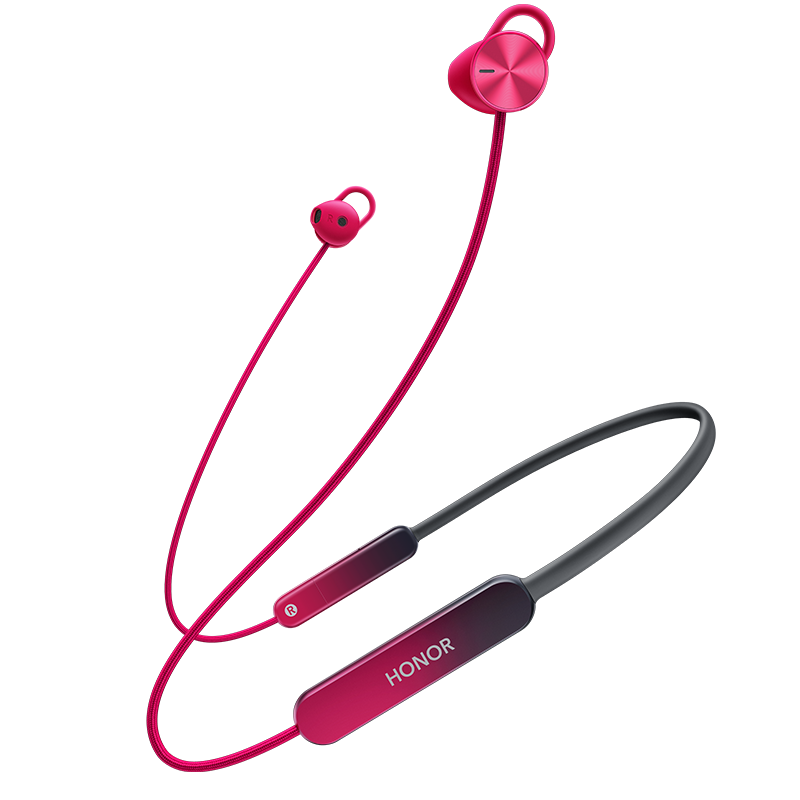
Honor 20S will ship with a free pair of the Honor Sport PRO Headphones
The phone is available in Midnight Black, Ice White, and Blue-Violet. It has a price tag of 21,990 Rubles (~$342) and will go on sale on November 15 save for the Ice White variant which will be available on November 22. All orders will ship with a free pair of Honor Sports Pro AM66 Wireless Bluetooth Headphones which costs 4,990 Rubles (~$77).
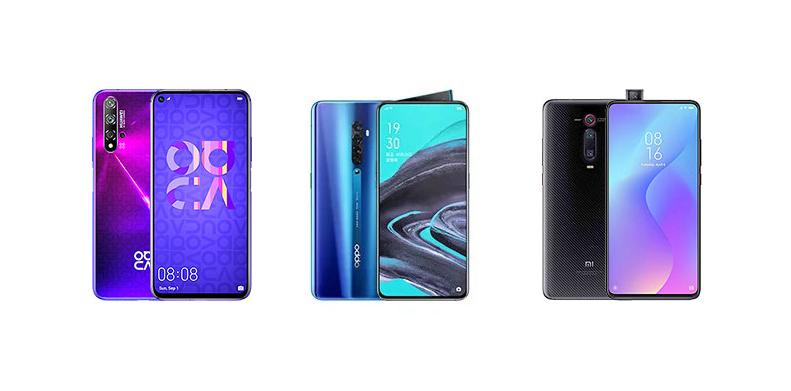
Despite the U.S. ban, Huawei keeps releasing smartphones in the global market. The latest released is the Nova 5T, a high-end device that recently hitten Europe with a very interesting price tag. But it has a lot of rivals there. Among the most interesting ones, there are Oppo Reno2 and Xiaomi Mi 9T Pro: the first is a camera phone, while the second comes with flagship-class hardware. In this specs comparison, we will explain all the main differences between these devices and try to tell you which one is the best for your needs.
Huawei Nova 5T vs Oppo Reno2 vs Xiaomi Mi 9T Pro
Huawei Nova 5T
Xiaomi Mi 9T Pro
Oppo Reno 2
DIMENSIONS AND WEIGHT
154.3 x 74 x 7.8 mm, 174 g
156.7 x 74.3 x 8.8 mm, 191 grams
160 x 74.3 x 9.5 mm, 189 g
DISPLAY
6.26 inches, 1080 x 2340p (Full HD+), IPS LCD
6.39 inches, 1080 x 2340p (Full HD+), Super AMOLED
Triple 48 + 8 + 13 MP, f/1.8, f/2.4 and f/2.4
20 MP f/2.0 front camera
Quad 48 + 13 + 8 + 2 MP, f/1.7, f/2.4 and f/2.2
16 MP f/2.0 front camera
BATTERY
3750 mAh, fast charging 22.5W
4000 mAh, fast charging 27W
4000 mAh, fast charging 20W with VOOC Flash Charge 3.0
ADDITIONAL FEATURES
Dual SIM slot
Dual SIM slot
Hybrid Dual SIM slot
Design
In each case, you get an innovative and original design. The Huawei Nova 5T comes with a punch-hole design, so it does not feature any notch but it has a hole in-display for the front camera. Thanks to this solution and its small display diagonal, the handset is even the most compact one of this trio. And it has a very attractive reflective glass back available in gradient colors. Oppo Reno2 has the mos original design thanks to the shark fin pop-up camera and its amazing design scheme on the back. I like the Oppo Reno2 and the Huawei Nova 5T more than the Xiaomi Mi 9T Pro, but we are just talking about personal tastes. Choose depending on what you like more.
Display
If you want the best display, exclude the Huawei Nova 5T. It has a midrange-class IPS display and, if you were searching for a wide panel for multimedia and productivity, also note that it is a very compact display with its 6.26 diagonal. You would better go for the Xiaomi Mi 9T Pro which comes with a more advanced AMOLED panel. Indeed, it is the only to support the HDR standard for richer image quality in multimedia. Oppo Reno2 sits in the middle, it does not support HDR but still has an awesome AMOLED display. Oppo Reno2 and Xiaomi Mi 9T Pro also feature an in-display fingerprint reader.
Hardware/Software
In terms of hardware, Xiaomi Mi 9T Pro is way superior to Huawei Nova 5T and Oppo Reno2. That is because of the Snapdragon 855 chipset offering better CPU and GPU performance. The second place goes to Huawei Nova 5T which features an inferior Kirin 980, but still a flagship-class chipset. Oppo Reno2 is the only with expandable storage, but it is fueled by a midrange Snapdragon 730G SoC. All the phones have Android 9 Pie out of the box: despite the U.S. ban, Huawei managed to install Google apps on the phone, so you should not worry about them.
Camera
The real camera phone here is the Oppo Reno2. It is the only with OIS, and it has a brighter f/1.7 focal aperture. It is able to record better videos and shoot better photos in the dark. While Oppo Reno2 has the best rear camera department, Huawei Nova 5T is the most interesting when it comes to selfies, thanks to its 32 MP front camera. But the Oppo Reno2 still comes with an excellent front camera for the price range, and it even features a front-facing LED flash, unlike the Huawei Nova 5T. So if you really want the best camera phone, go for the Oppo Reno2 without thinking twice.
Battery
Oppo Reno2 and Xiaomi Mi 9T Pro have a bigger 4000 mAh battery than Huawei Nova 5T, and the difference is evident. They have a longer battery life, with the Xiaomi Mi 9T Pro boasting a faster charging technology. Which one lasts more between Xiaomi Mi 9T Pro and Oppo Reno2? It mostly depends on the scenario, but they have very similar battery life.
Price
Huawei Nova 5T hitten Europe with a €430/$473 price tag, Xiaomi Mi 9T Pro actually costs less than €400/$440 in the 6/64 GB configuration, and Oppo Reno2 starts from €499/$548 in the 8/128 GB configuration. There is not a clear winner of this comparison: if you prefer to have better performance and a rich software, go for the Xiaomi Mi 9T Pro. But if you need a better camera phone and a more interesting design, choose the Oppo Reno2.
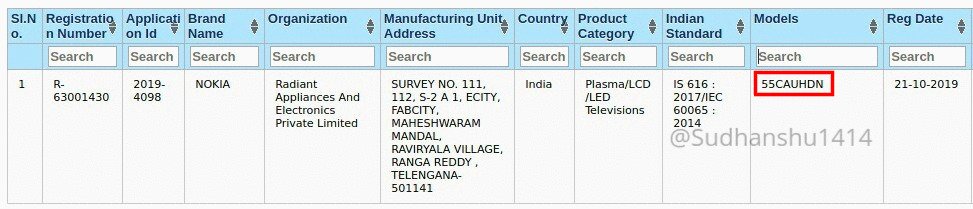
Earlier this month, we brought you a report that Nokia was collaborating with Flipkart to launch a Nokia-branded smart TV in India. The TV has now reportedly been certified by the Bureau of Indian Standard (BIS). The screenshot of the certification page shared by tipster Sandhust Amborhe didn’t reveal any significant detail other than that the device will be manufactured in India and will bear the Nokia brand name.
Apart from announcing its partnership with Flipkart to manufacture smart TVs, Nokia is yet to reveal any details of the TV. However, sources familiar with the matter hints that the Nokia-branded TV will come with a 4K ultra-HD panel and will run on Android 9.0 OS. The TV is also expected to come with an Intelligent Dimming technology and JBL sound system.
Nokia will be following the path of the likes of Samsung, LG Electronics, Xiaomi, Motorola, Huawei, Honor, and OnePlus which have all launched smart TVs. Samsung used to hold sway as the biggest TV brand but in recent times, Xiaomi has repeatedly dominated the market with its range of Mi TV models. Nokia is obviously trying to ride on the back of its popularity in the domestic market to sell its smart TV brand. Since the Nokia-branded smart TVs seem to be manufactured in an ODM arrangement, Nokia has nothing to lose but lots to gain if the product goes viral when it is launched.
We use cookies on our website to give you the most relevant experience by remembering your preferences and repeat visits. By clicking “Accept”, you consent to the use of ALL the cookies.
This website uses cookies to improve your experience while you navigate through the website. Out of these, the cookies that are categorized as necessary are stored on your browser as they are essential for the working of basic functionalities of the website. We also use third-party cookies that help us analyze and understand how you use this website. These cookies will be stored in your browser only with your consent. You also have the option to opt-out of these cookies. But opting out of some of these cookies may affect your browsing experience.
Necessary cookies are absolutely essential for the website to function properly. This category only includes cookies that ensures basic functionalities and security features of the website. These cookies do not store any personal information.
Any cookies that may not be particularly necessary for the website to function and is used specifically to collect user personal data via analytics, ads, other embedded contents are termed as non-necessary cookies. It is mandatory to procure user consent prior to running these cookies on your website.