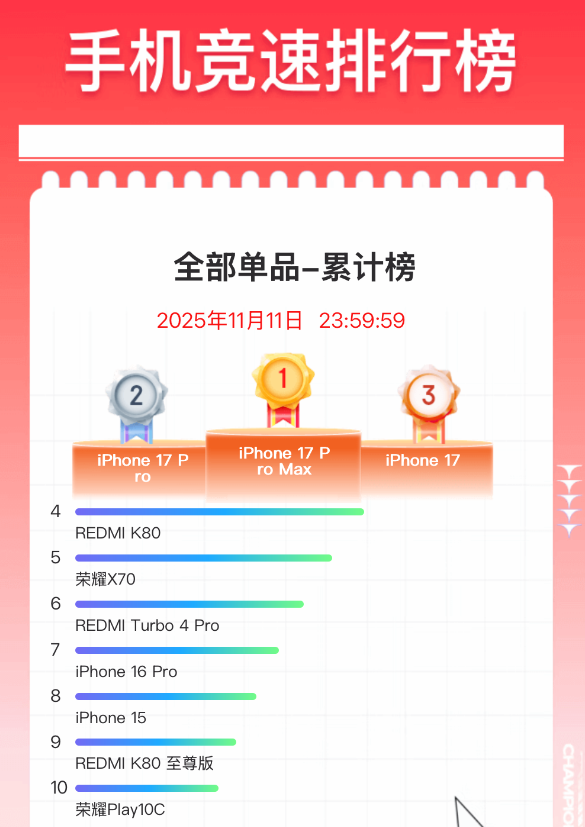
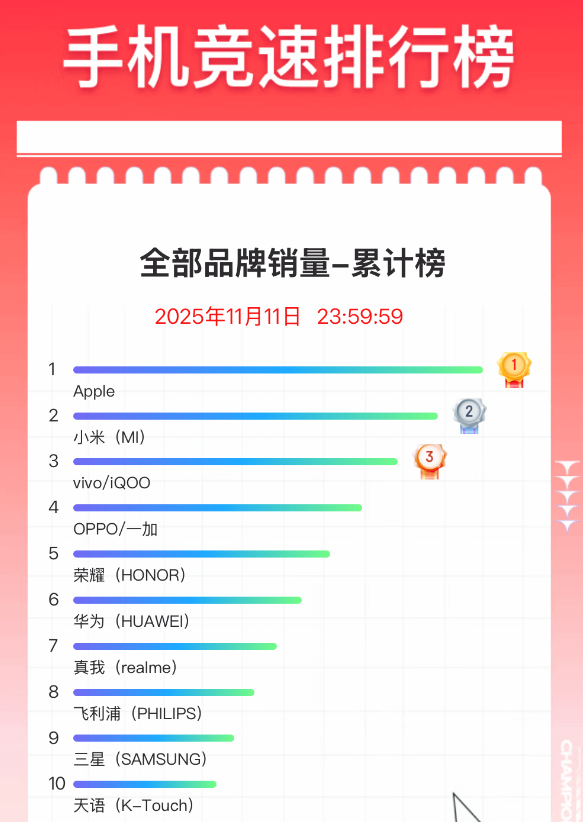
China’s Double 11 shopping festival has concluded, and JD.com has confirmed the final smartphone sales rankings. Apple, Xiaomi, and Vivo secured the top three spots in total unit sales as of 11:59:59 PM on November 11. The rankings shows Apple’s continued dominance and the strong performance of major Chinese smartphone makers.
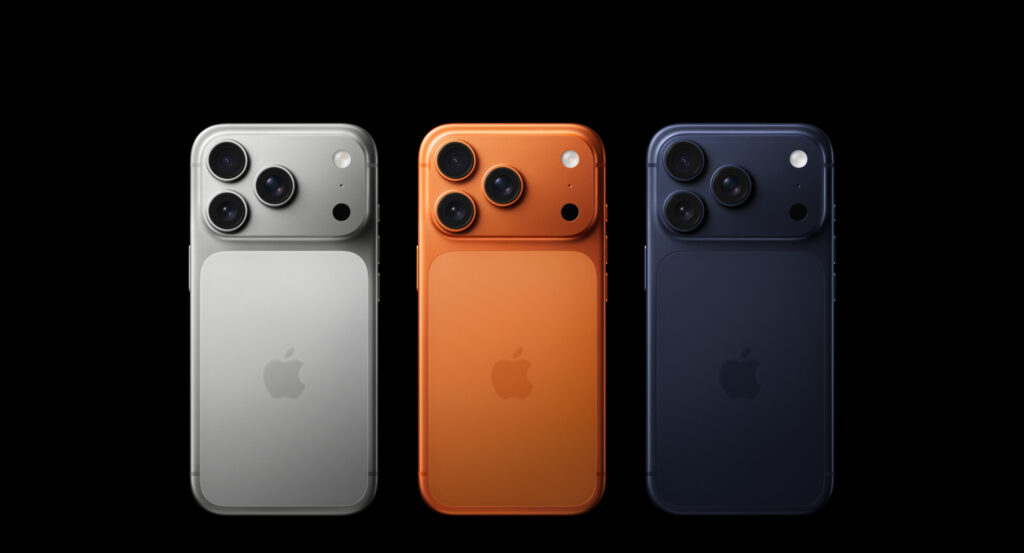
iPhone 17 Pro
Apple ranked first in both brand revenue and unit sales. The iPhone 17 Pro Max, iPhone 17 Pro, and iPhone 17 occupied the top three positions in the individual model rankings. The iPhone 17 series continued to attract strong demand across all price segments, especially in the premium category.
Xiaomi claimed the second position overall and remained the top-selling Chinese brand. Its broad product portfolio helped secure this result. The Redmi K80 ranked fourth in overall unit sales, making it the most popular Chinese smartphone during the event. The Redmi Turbo 4 Pro and K80 Ultra also appeared in the top ten, contributing to Xiaomi’s lead among domestic brands.
Vivo and its sub-brand iQOO took third place, maintaining solid sales across both midrange and flagship segments. Oppo and OnePlus combined for the fourth position in brand sales, supported by a diverse lineup. Honor followed closely, with strong momentum driven by the X70 series.
Huawei ranked sixth in unit sales but climbed to fourth in brand revenue. The company saw strong demand for its premium smartphones, including the Mate 70 Pro+ and Mate X6. These models also performed well in the high-end segment priced above 6,000 yuan ($842).
The data also showed that Philips and K-Touch returned to the top ten in sales volume. These brands showed niche appeal in specific categories. Samsung, Realme, Nubia, and Motorola rounded out the top ten, maintaining steady sales during the shopping festival.
In the premium category, Apple held the top three spots, but Xiaomi achieved a significant result. The Xiaomi 17 Pro Max ranked fourth in the 6,000-yuan-and-above segment, ahead of the Huawei Mate 70 Pro+. It became the best-performing Chinese flagship model in the premium class this year.
The 2025 Double 11 results reflected a familiar pattern of Apple’s dominance, but also showed growing competition from Chinese brands in both value and flagship segments.
For more daily updates, please visit our News Section.
Vivo has officially begun teasing the arrival of its highly anticipated X300 series in India. The Vivo X300 and Vivo X300 Pro are the brand’s latest generation of flagship smartphones, and the teasers confirm that both models are arriving in the region soon.
Vivo X300 Series Teased Ahead of India Launch
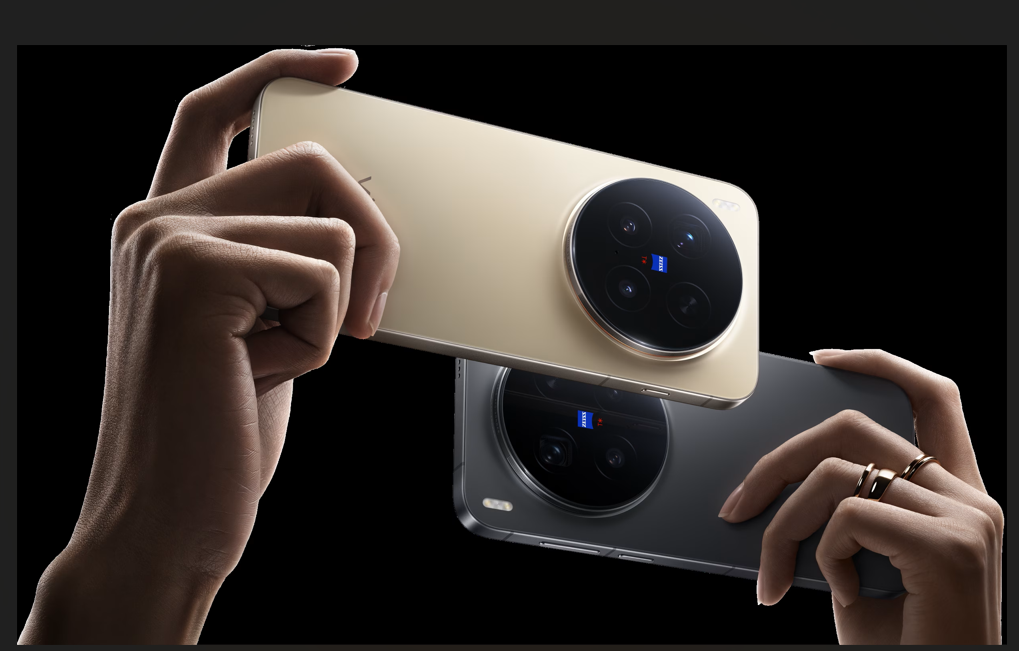
In the latest teaser posters shared online, the Chinese tech giant highlighted some of the key features of its upcoming premium phones, which mainly include their advanced camera systems. To recall, the base Vivo X300 gets a new 200MP 1/1.4-inch Samsung HPB sensor for its camera that is paired with a 50MP ultra wide angle lens, and a 50MP 1/1.95-inch Sony LYT602 periscope telephoto shooter that doubles as a macro camera.
Vivo X300 Pro
On the other hand, the Vivo X300 Pro uses the same 200MP Samsung HPB sensor for its telephoto shooter, while the main camera is a larger 50MP 1/1.28-inch Sony LYT828 sensor along with a 50MP ultra wide angle lens. For selfies and video calls, both models get a 50MP camera on the front. The higher end Pro was teased in the gold variant, and the base version can be seen in red.
Apart from this, a notable aspect teased in the image posters was the Photographer Kit and case for the Vivo X300 Pro. This basically brings a Zeiss 2.35x telephoto extender for the flagship phone. Just like in China, this kit will be sold separately. Based on the earlier release, the Vivo X300 series is powered by MediaTek’s Dimensity 9500 SoC, houses massive battery packs, and runs on Vivo’s latest OriginOS 6 custom skin that is based on Android 16.
For more daily updates, please visit our News Section.
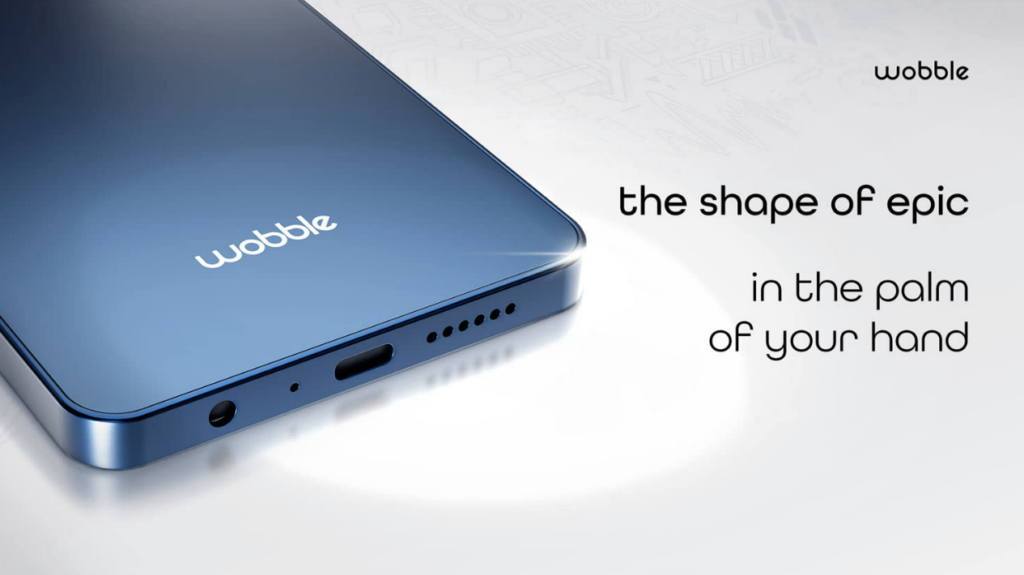
India-based Indkal Technologies is preparing to launch its first smartphone under the Wobble brand on November 19. Ahead of the official debut, the device’s teaser page has gone live on Amazon India, offering a first look at its design and confirming a few hardware details. This marks Wobble’s entry into the smartphone space, expanding beyond its existing lineup of TVs and audio products.
Early details and key specs revealed
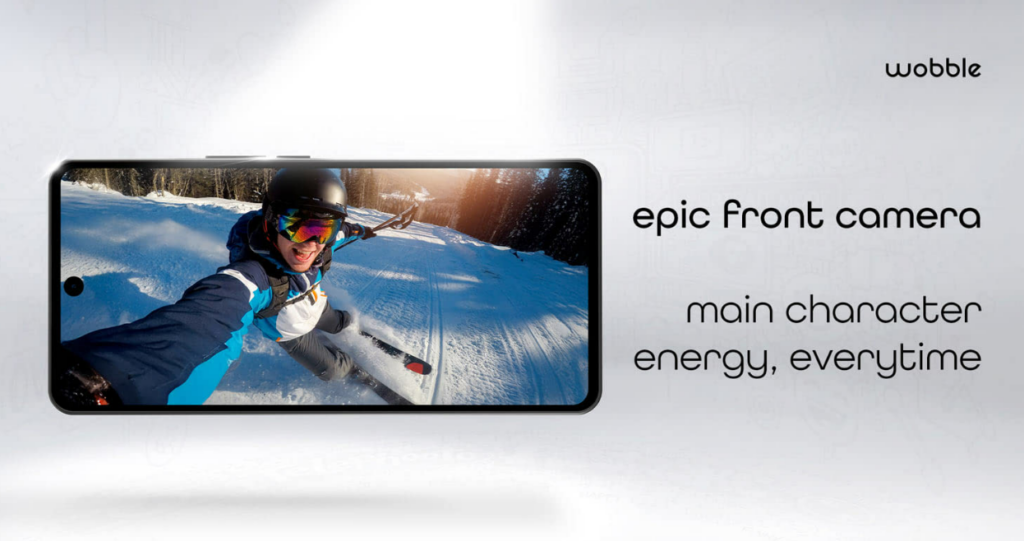
The teaser image reveals the bottom edge of the upcoming phone, showing a 3.5mm headphone jack, microphone, USB-C port, and speaker grille, suggesting a design catering to practicality. The front design features a punch-hole display, aligning with modern smartphone trends. While the company has not yet confirmed the device’s name, reports suggest it may launch as the Wobble 1.
A few Geekbench AI listings that have been available for quite some time indicate that the phone will be powered by the MediaTek Dimensity 7400 chipset, paired with 8GB of RAM, and will run on Android 15 out of the box. These details point to a capable mid-range performance setup aimed at content creators and young users.
Wobble is known for its large-format TVs, including the recently launched a massive 116.5-inch Google TV, and a range of affordable earbuds. With its upcoming smartphone, Indkal Technologies aims to build on Wobble’s reputation for design innovation. CEO Anand Dubey describes the phone as a device built for expressive, creative individuals, a bold step that blends performance with style.
As the November 19 launch date approaches, more details about the Wobble phone’s features, pricing, and availability are expected to emerge, setting the stage for the brand’s next big move in India’s competitive smartphone market.
For more daily updates, please visit our News Section.
The upcoming OnePlus 15 has made headlines ahead of its official debut tomorrow (Nov. 13), with its Indian pricing reportedly surfacing online. According to multiple sources, including Beebom and Reddit users, a now-deleted listing on Reliance Digital’s website briefly revealed key details about the device’s price, storage configurations and colour options. The flagship is set to launch globally and in India on November 13, powered by Qualcomm’s latest Snapdragon 8 Elite Gen 5 chipset.
OnePlus 15: India Pricing and variants revealed
The OnePlus 15 price has leaked before launch, and it could be ₹72,999.
The leaked listing mentioned that the OnePlus 15 will arrive in two configurations: a 16GB RAM and 512GB storage model priced at Rs 79,999, and a lower 12GB RAM and 256GB version priced at Rs 72,999. The latter appeared in an Ultra Violet colour option, while the higher-end variant was shown in Infinite Black. Although the listing has since been taken down, cached search results on Google still display traces of the information.
If the pricing holds true, the OnePlus 15 would become the brand’s most expensive non-foldable smartphone to date. For comparison, the OnePlus 13 launched at Rs 69,999 for the base variant and Rs 76,999 for the top-tier model.
OnePlus 15 specifications
Official teasers have already confirmed several hardware details. The OnePlus 15 features a 6.78-inch display with 1.5K resolution and 165Hz refresh rate, a Snapdragon 8 Elite Gen 5 processor, and up to 1TB storage.
It includes a triple 50-megapixel rear camera setup, a 32-megapixel front sensor, and a 7,300mAh battery with 120W wired and 50W wireless charging. With its launch just a day away, all eyes are now on how the official prices compare with this early leak.
For more daily updates, please visit our News Section.
Sony just made a new PlayStation announcement that seemingly came out of nowhere. It unveiled the new Pulse Elevate Wireless Speakers as PlayStation branded speakers back in October. Now, the brand has launched a PlayStation Gaming Monitor, marking a new first for Sony.
Sony Quietly Introduces Its First PlayStation Gaming Monitor
The latest hardware announcement from Sony is a new gaming monitor for PlayStation. This new model arrives with a 27-inch IPS LCD panel that has a QHD resolution (1440p) and up to 240Hz refresh rate. Although, the high refresh rate is only available for PC and Mac with VRR support. Meanwhile, the PlayStation 5 and PlayStation 5 Pro only get a 120Hz refresh rate when paired with the monitor.
Sony’s 27-inch PlayStation Gaming Monitor
This makes sense considering how the popular gaming consoles barely hit the triple digit frame rate in most titles. Finer details regarding the display itself, like support for HDR content, are still unclear. However, Sony has confirmed that the PlayStation branded gaming monitor features two HDMI 2.1 ports, one DP 1.4 port, two USB Type A ports, and a single USB Type-C port for PlayStation Link devices. This basically allows the monitor to link with other PS Link enabled products like the brand’s speakers, headphones, and TWS earbuds.
Other notable features include built-in stereo speakers, a 3.5mm audio output, VESA mount compatibility, and the DualSense Charging Hook. This is basically an integrated charging dock that is also retractable. Sony plans to sell this separately from the new gaming monitor, which is set to release in just the US and Japan (for now). Unfortunately, pricing details are still at large but the PlayStation monitor will roll out sometime next year.
For more daily updates, please visit our News Section.
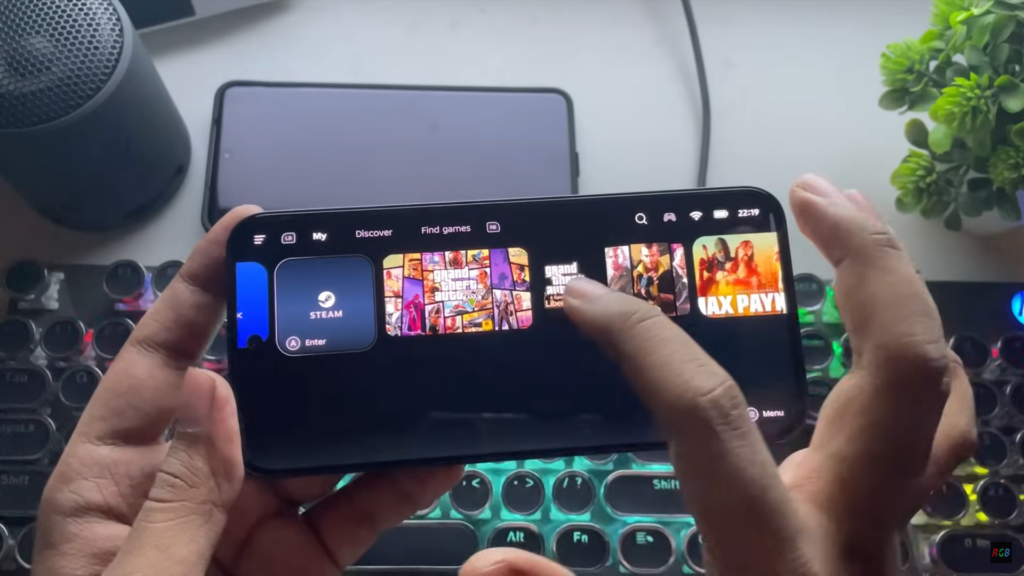
Playing your Steam library on an Android phone just got a bit simpler — and safer. GameHub, the Windows emulator made by GameSir, is now officially available on the Google Play Store. That means no more sideloading.
Until now, installing GameHub meant downloading the APK directly from GameSir’s website. Moving to Google Play makes things a lot cleaner, with automatic updates, verified installs, and Google’s permission handling built in.
GameHub originally launched under the name GameFusion, but GameSir later rebranded it to focus squarely on one thing: Windows PC emulation on Android. Over the past year, steady updates and community tweaks have turned it into a favorite for PC gaming fans looking to take their Steam library mobile.
The biggest draw remains native Steam support. Once logged in, you can:
Download your Steam games directly inside the app
Launch and play without extra setup
Use cloud saves to pick up where you left off
Recent updates have tightened up performance, making some titles feel surprisingly close to native Android ports, given the phone runs a flagship chip — though don’t expect miracles just yet. Some titles may still need manual tweaks or compatibility workarounds — that’s just the nature of emulation.
There is one tradeoff:
The Play Store version is limited to Steam titles only. If you want to emulate non-Steam PC games, you’ll still need to grab the full version from GameHub’s website.
Overall, GameHub’s Play Store debut is a big step forward. It opens the door for more Android gamers to explore PC titles safely. And with most smartphone brands now chasing top-tier performance and battery life even in mid-range models, it’s a great way for gamers to make the most of their phones on the go.
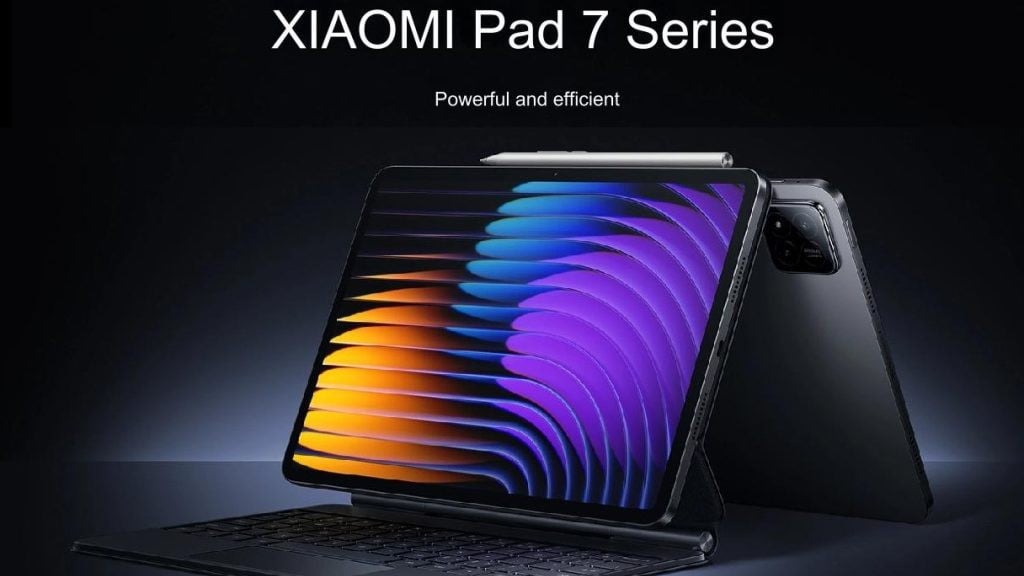
Xiaomi’s HyperOS 3 rollout is officially shifting into high gear. The Xiaomi Pad 7 has started receiving its stable Android 16-based update, bringing along a bunch of visual tweaks and AI-powered tools. And this is just the start — Xiaomi has confirmed that at least ten more global devices will get the same update before the month ends.
The global Pad 7 is now getting build OS3.0.2.0.WOZMIXM, following the China release a few weeks ago. The update includes:
Hyperland, Xiaomi’s version of Apple’s Dynamic Island
An iOS 16-style customizable lockscreen
Performance and graphics optimizations for smoother multitasking
New AI writing and translation features
You can check for it by heading to Settings → About tablet → Check for updates, though the rollout is happening in stages.
Later this month, HyperOS 3 stable is also coming to:
Xiaomi MIX Flip
POCO F7 Pro
POCO F7
POCO X7 Pro
POCO X7 Pro Iron Man Edition
POCO X7
Redmi Note 14 Pro+
Redmi Note 14 Pro 5G
Redmi Note 14 Pro
Redmi Note 14
The update follows the Xiaomi 15 series, 15T lineup, POCO F7 Ultra, and Pad 7 Pro, which already received HyperOS 3 globally earlier this quarter.
With Hyperland, an overhauled lockscreen, and several AI-driven upgrades, this feels like a proper OS refresh. The company’s clearly borrowing a few tricks from Apple — but mixing them with its own flair and speed optimizations.
The Pad 7 is just the first wave. By the end of November, most of Xiaomi’s 2025 lineup should be running on what might be the smoothest version of HyperOS yet.
There have been reports that the Oppo Reno 15 series will include as many as three smartphones. However, the company has only confirmed the existence of the Reno 15 and Reno 15 Pro, which are set to launch on Nov. 17 in China. New developments reveal that the third model in the series is called the Oppo Reno 15c. At the same time, some reports have revealed the key details about the Reno 15 Pro.
Oppo Reno 15c: What’s known so far
Oppo Reno 15 Pro
Reliable Chinese tech bloggers like Digital Chat Station and Experience have revealed the existence of the Oppo Reno 15c, but they haven’t revealed any of its technical details. It appears that the Reno 15c may be launched separately after the standard and Pro models.
The Reno series is said to have three models with screen size options such as 6.32-inch, 6.59-inch, and 6.78-inch. The names of the 6.32-inch and 6.78-inch models were revealed as Reno 15 and Reno 15 Pro through the recently spotted China Telecom listings.
So, the device that remains nameless so far is the 6.59-inch model. It would be a bit odd for this device to sport the Oppo Reno 15c moniker. Therefore, it is advisable to wait for further reports for clarity about the Reno 15 devices’ names and their display sizes.
Oppo Reno 15 Pro full specs leak
There has been some confusion about the Reno 15 Pro’s battery size and its front camera. A previous report claimed a 6,300mAh battery size and a 32-megapixel front camera. But this rumour has been debunked, with the above-mentioned tipster claiming a battery size of 6,500mAh. For selfies, it will feature a 50-megapixel front-facing camera.
The rest of its specs include a 6.78-inch flat OLED 1.5K 120Hz screen, a 200-megapixel (main, OIS)+ 50-megapixel (ultra-wide) + 50-megapixel (periscope) triple camera unit, and the Dimensity 8450 chipset. It is expected to come with other features like up to 16GB of RAM, up to 1TB of storage, 80W wired and 50W wireless charging.
For more daily updates, please visit our News Section.
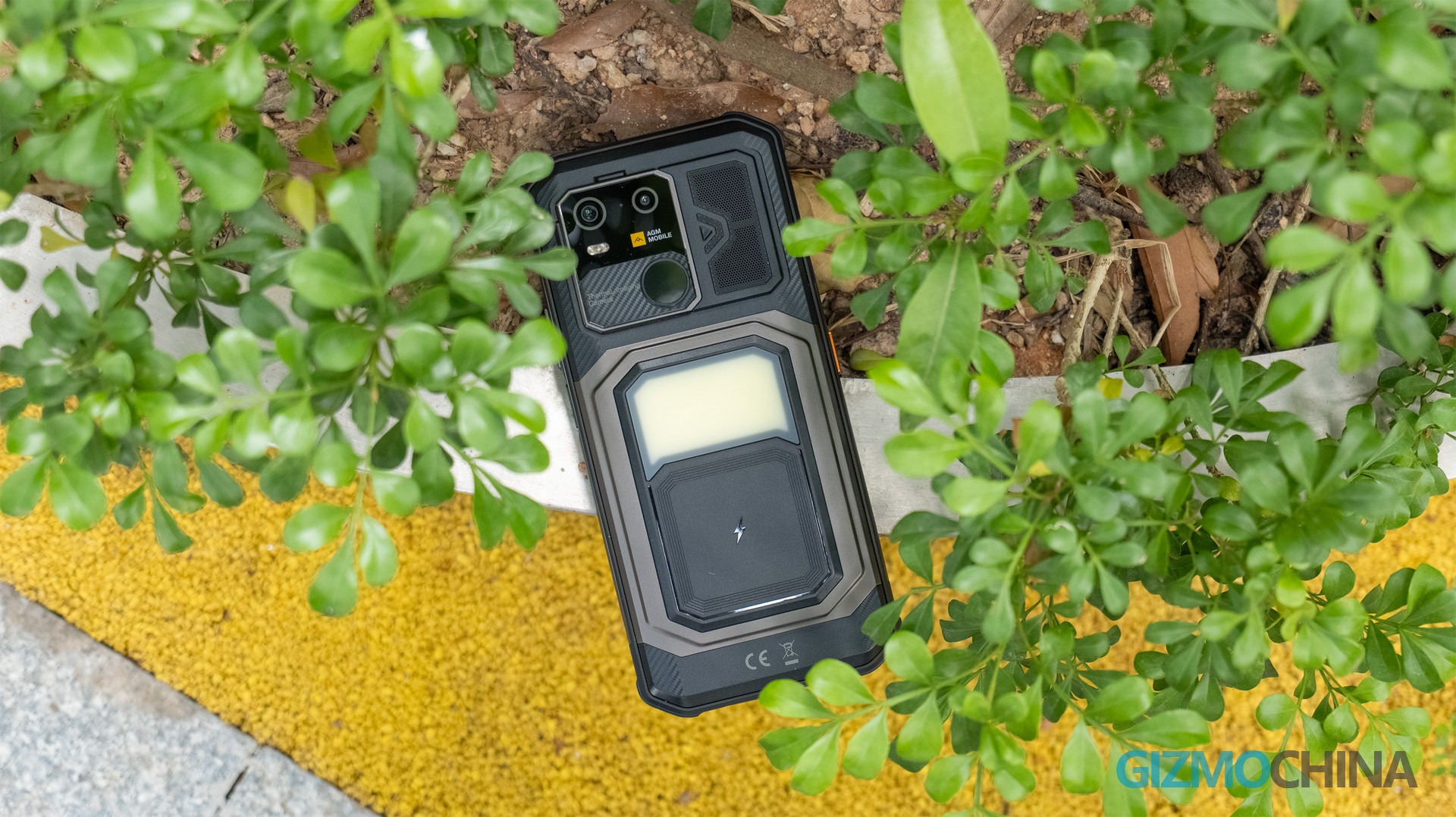
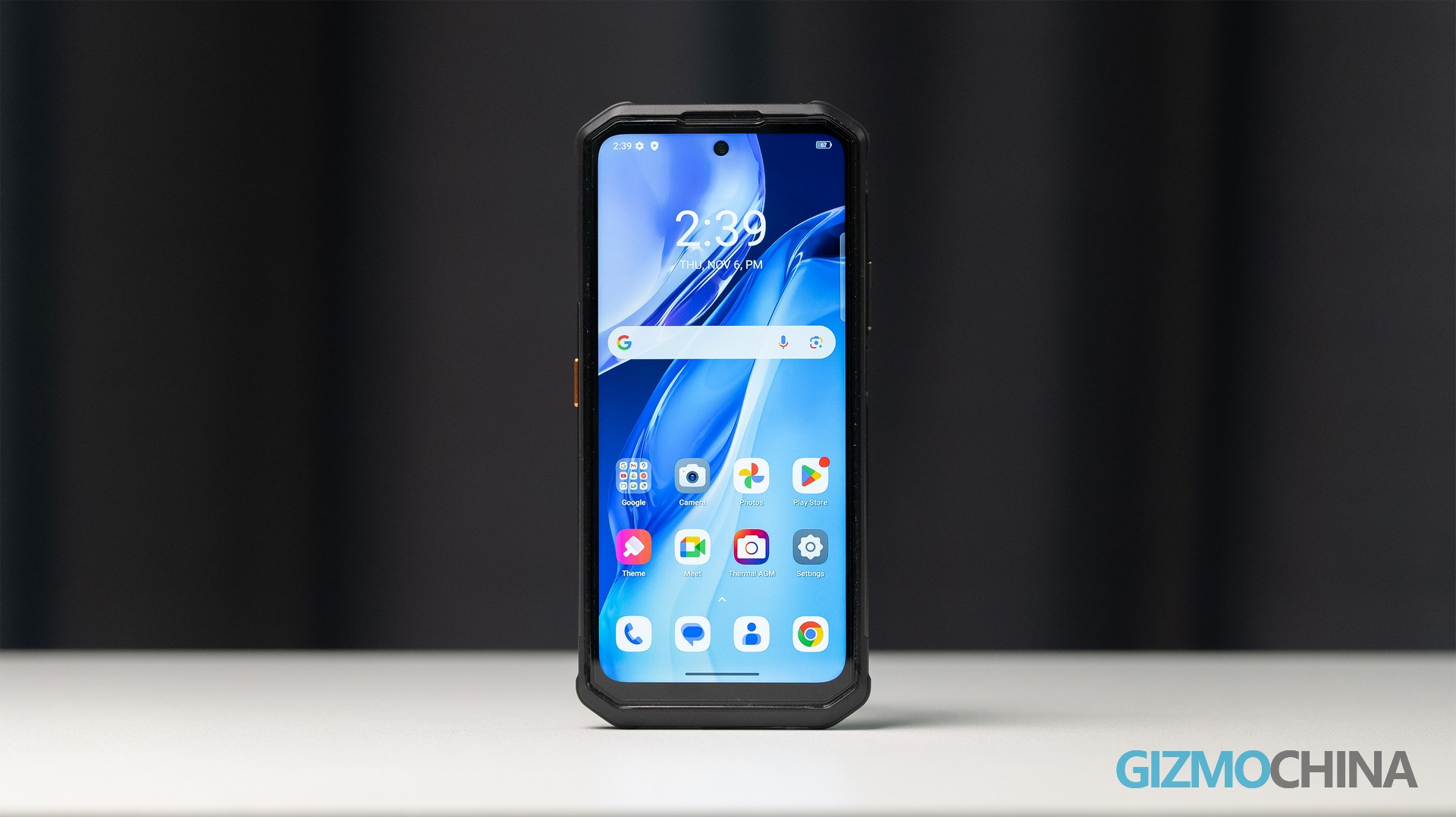
For users who spend their time in challenging environments—whether outdoors, on construction sites, or on field expeditions—a regular smartphone is often not enough. The AGM G3 Prois built to excel precisely where traditional phones struggle. With durable construction, a large battery, thermal imaging capabilities, and dependable hardware, it is a device designed to keep working regardless of the situation.
Design and Build Quality
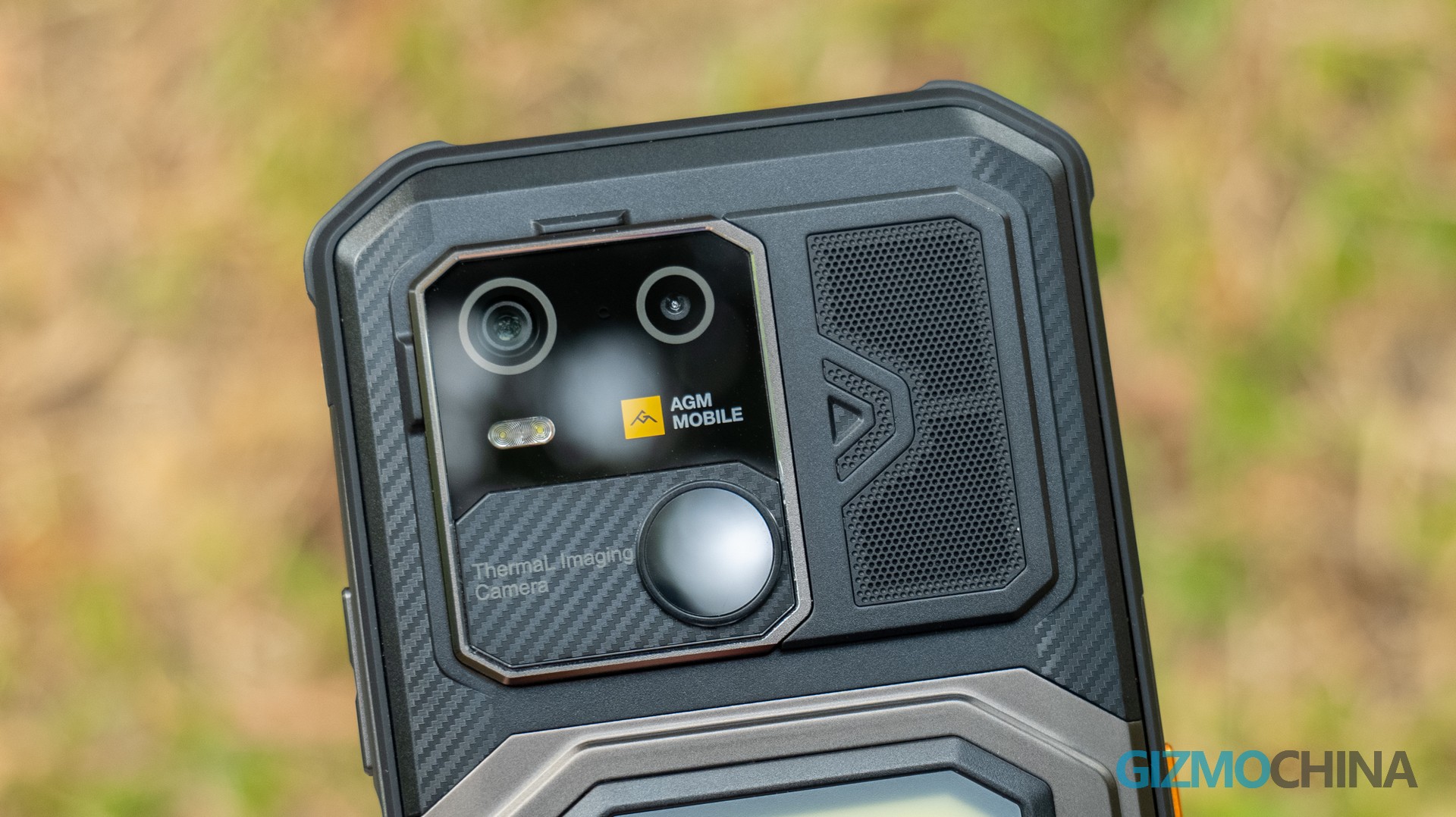
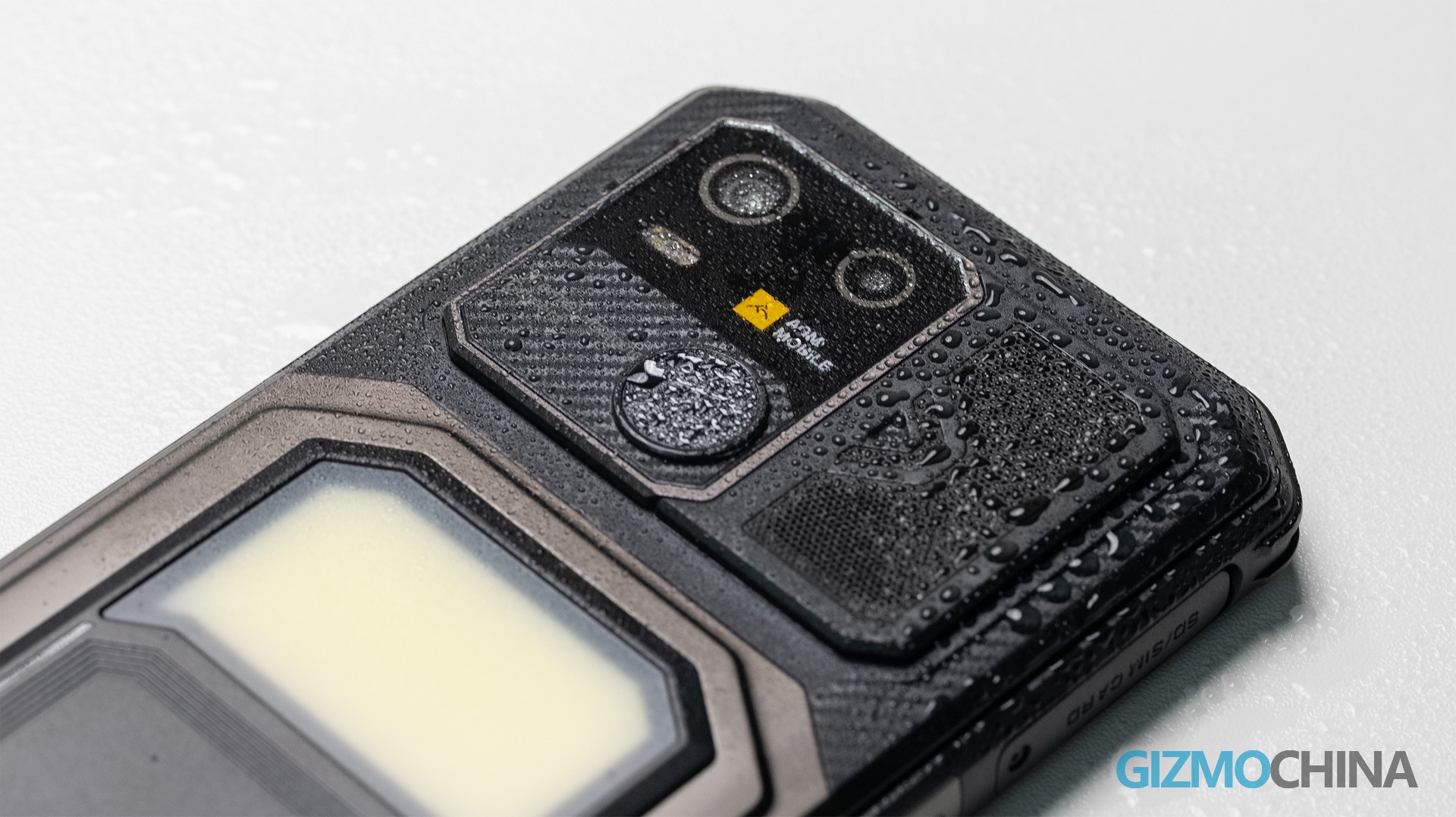
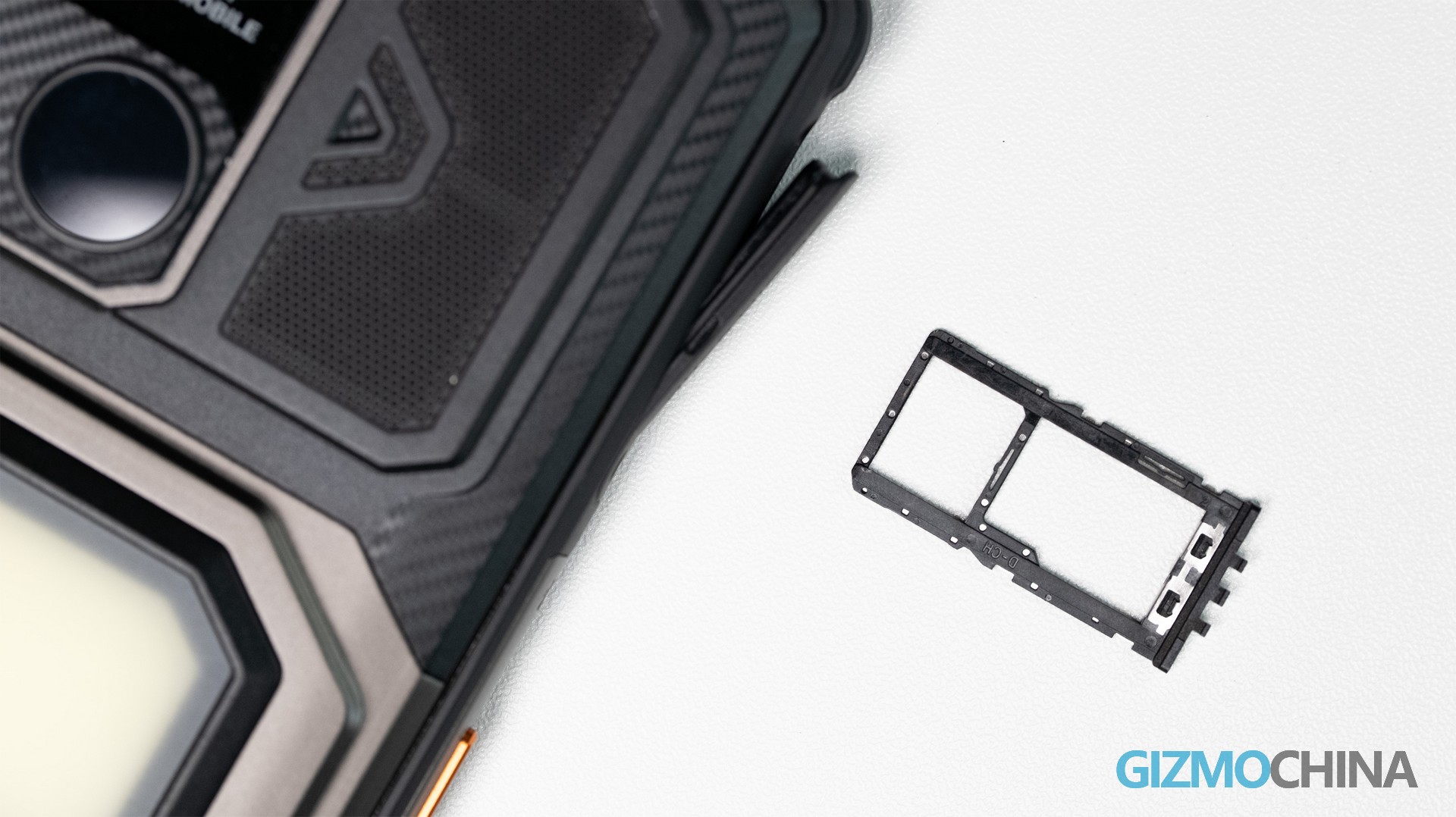
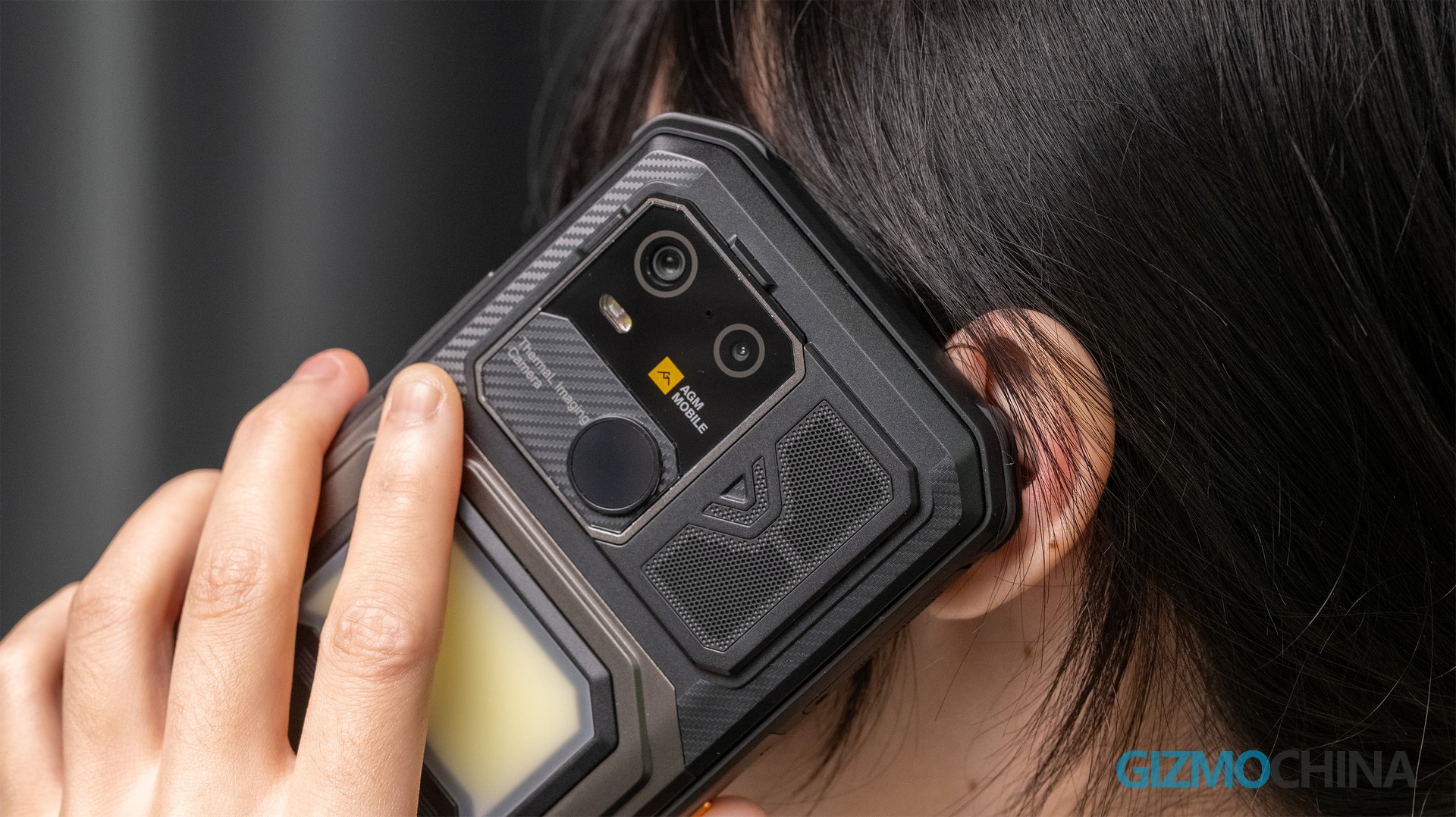
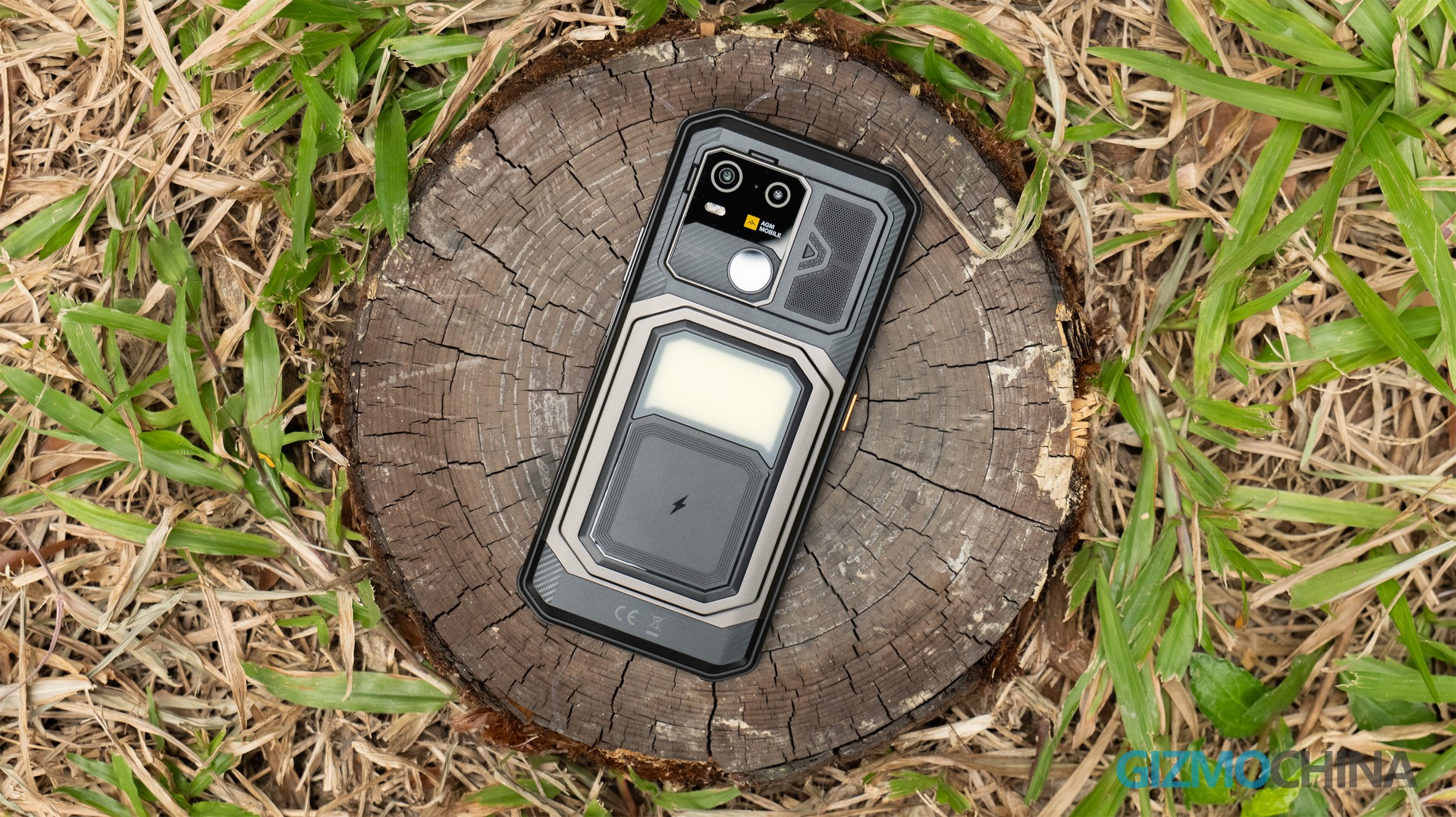
The AGM G3 Pro features an industrial-grade exterior, tailored for users who value reliability and endurance. The camera module adopts the currently popular large rectangular design. There is even a speaker placed on the right side of the camera module, which is somewhat similar to a phone we reviewed recently. It uses a 5W driver that can deliver up to 116dB of sound output. So hosting an outdoor party with it is definitely not a problem.
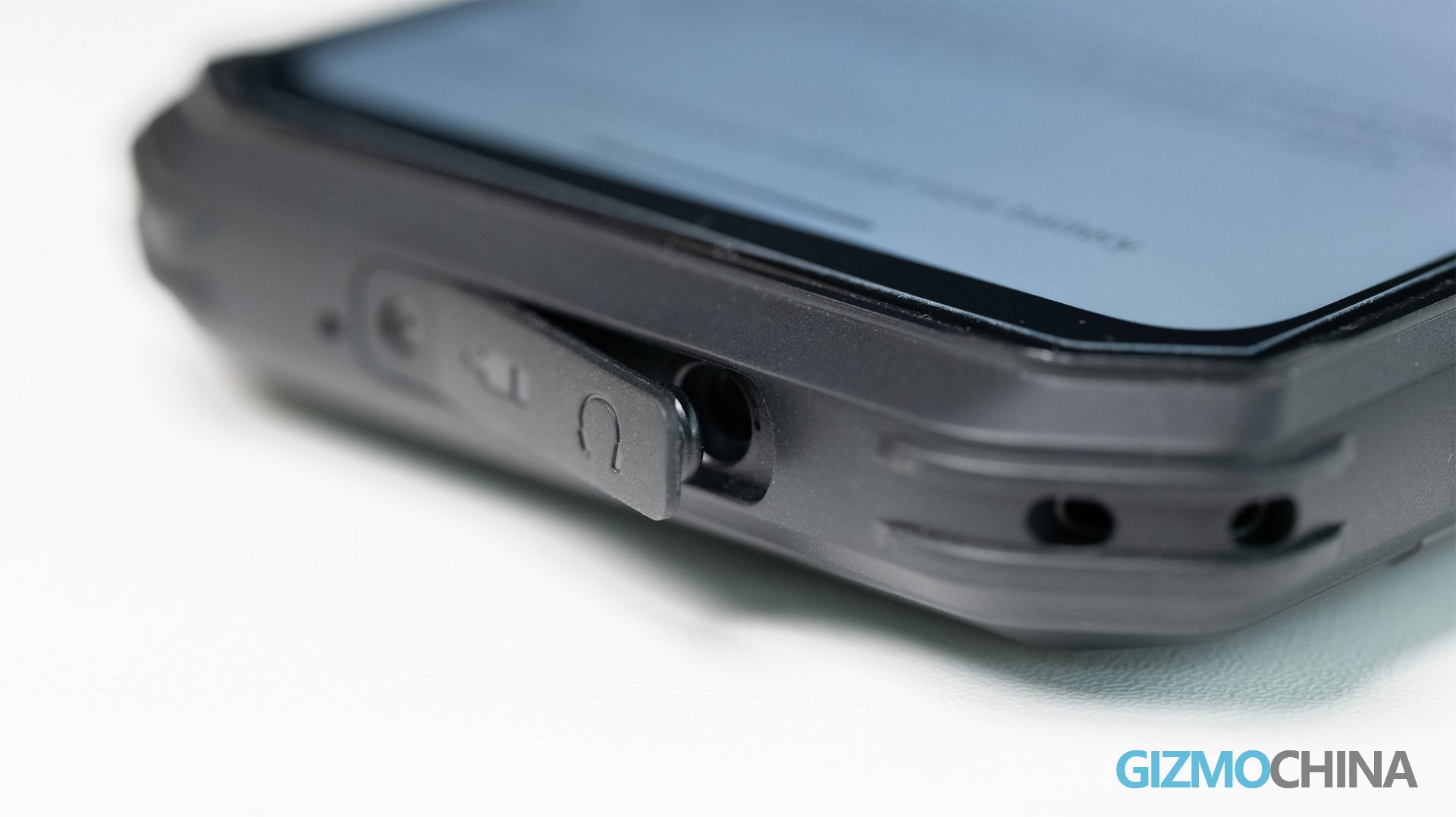
Don’t want to disturb others? It also comes with a 3.5mm headphone jack, so you can just plug in your own headphones and enjoy your music privately. There is a camping LED light in the center of the back of the phone, which also provides a bright atmosphere for your party.
Its dimensions are 177.5 × 82.8 × 16.0 mm (with a maximum thickness of 18.1 mm) and it weighs about 375g. This gives the phone a solid and reassuring feel in the hand. The chassis is rugged and purpose-driven, allowing it to maintain stability even in physically demanding environments.
The device carries IP68 and IP69K protection, along with MIL-STD-810H certification. This means it is resistant to dust, immersion in water, and high-pressure water jets, and has been tested against environmental stressors such as shocks and temperature fluctuations. Whether in rain, snow, desert heat, or cold mountain conditions, the G3 Pro is built to remain dependable.
An AIButton is integrated into the body, allowing quick access to apps or functions. This is highly useful in real-life operations, where efficiency and speed matter.
Display and Visual Experience
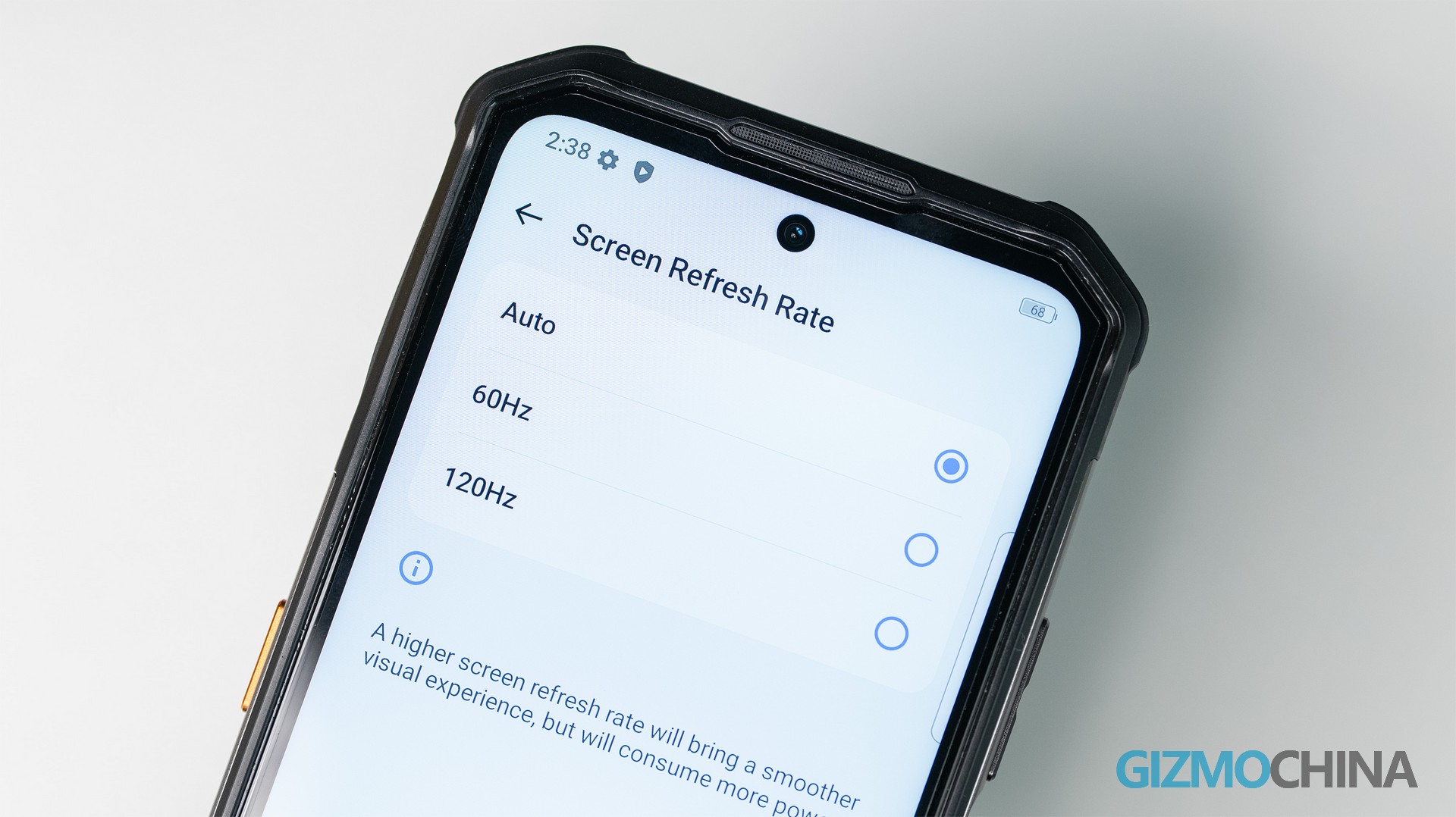
The AGM G3 Pro is equipped with a 6.72-inch FHD+ display with a resolution of 1080 × 2400. The display supports a 120Hz refresh rate, delivering a smooth visual experience for scrolling, navigation, and app usage. The screen also features a centered punch-hole front camera design for a more modern look.
The phone uses Panda glass with 2.5D curvature and surface hardness ≥7H, allowing the display to withstand daily wear and minor impacts. This is an essential characteristic for anyone working outdoors or in active conditions.
Performance and System
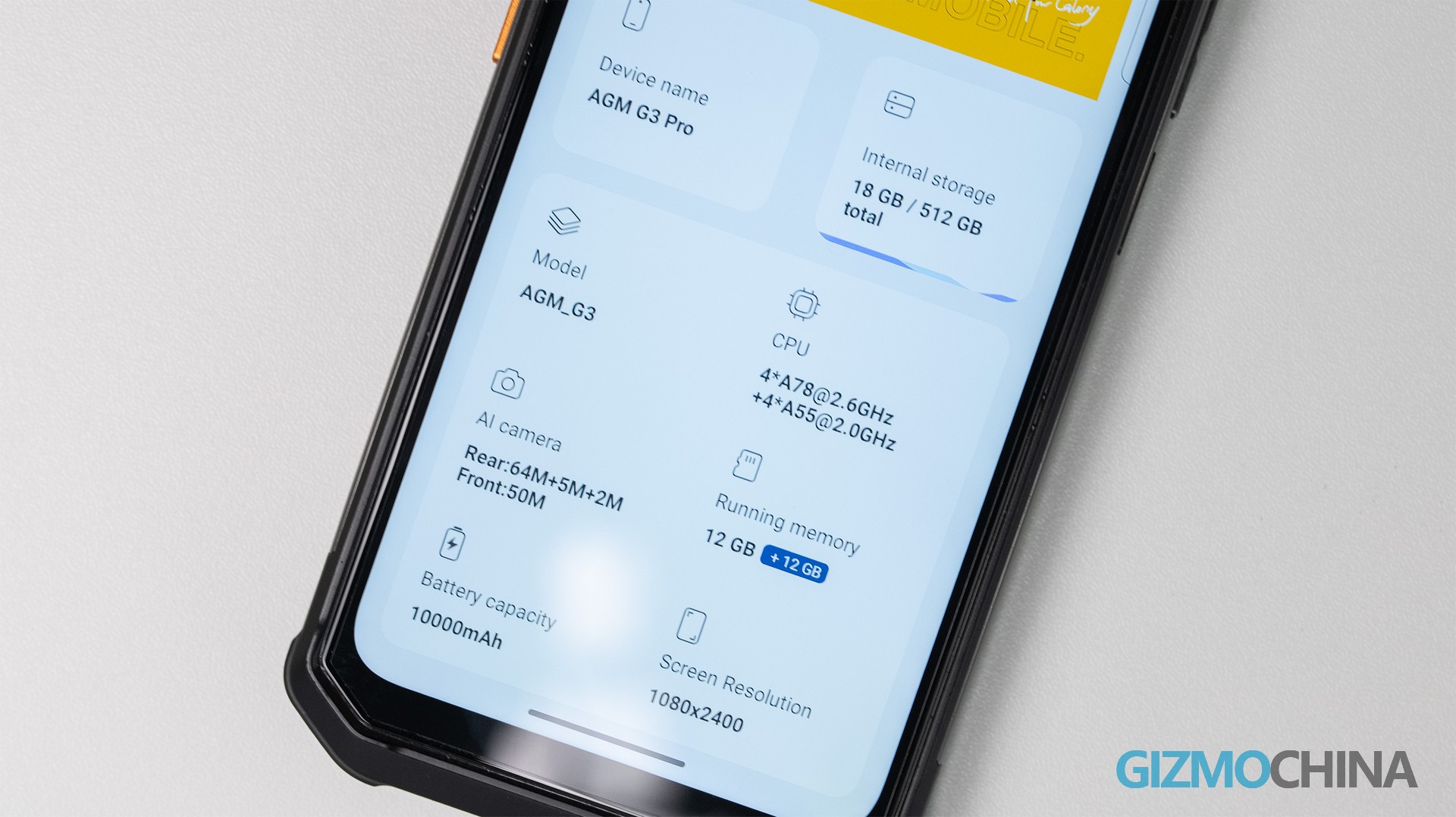
Powered by the MTK Dimensity 7300 platform with a CPU configuration of 4 Cortex-A78 cores at 2.5GHz + 4 Cortex-A55 cores at 2.0GHz, the G3 Pro ensures stable and responsive performance. Whether running professional field apps, handling high-resolution media, or multitasking, the system maintains fluidity.
It supports Android 15, allowing access to the latest system optimizations, improved security features, and efficient software behavior. With 12GB of LPDDR4X RAM and 512GB of internal storage, the device provides enough space and speed for work-related data, navigation software, large media files, and documentation. Storage is further expandable via MicroSD, offering additional flexibility for users.
Camera and Imaging Capabilities
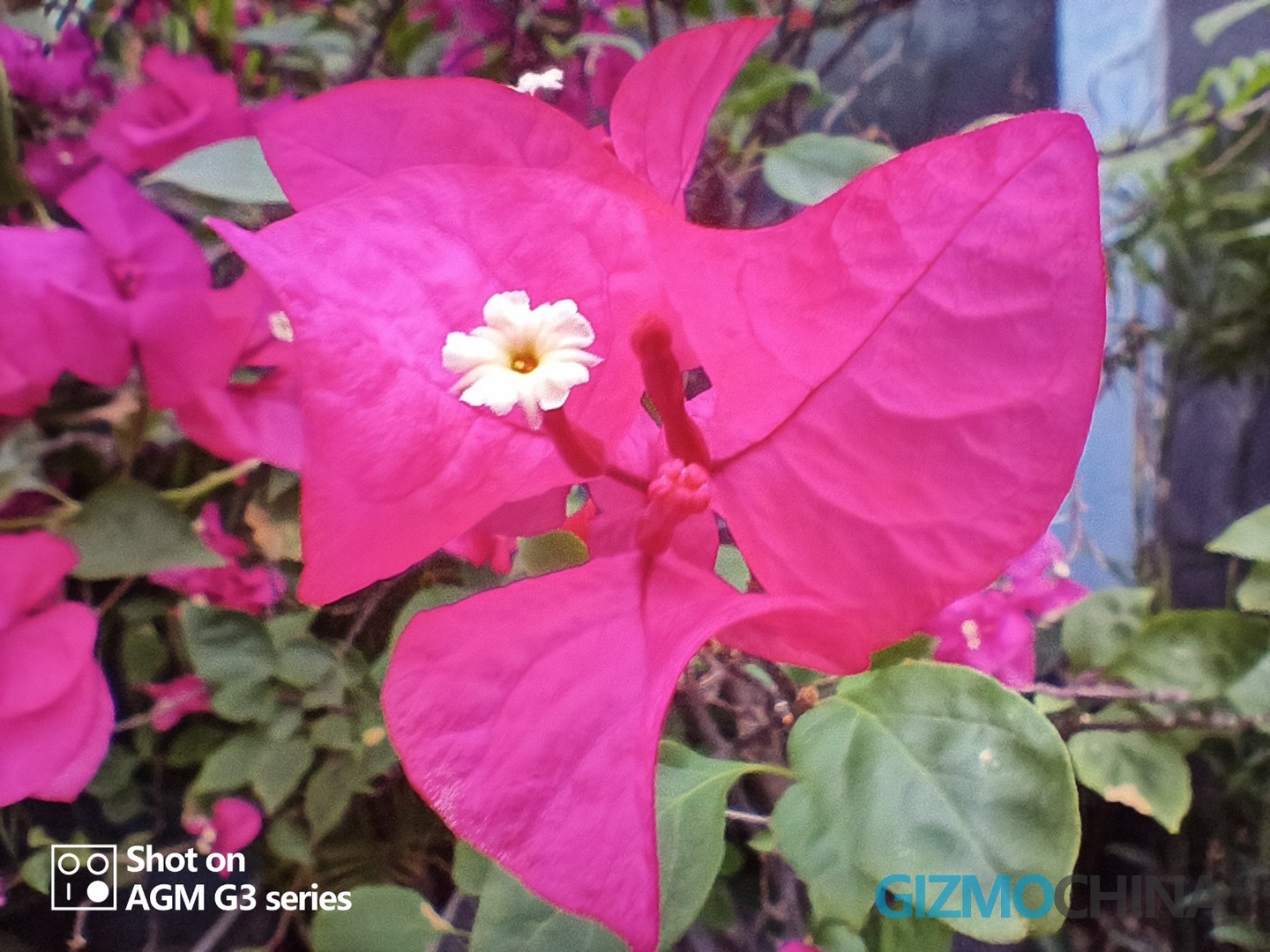
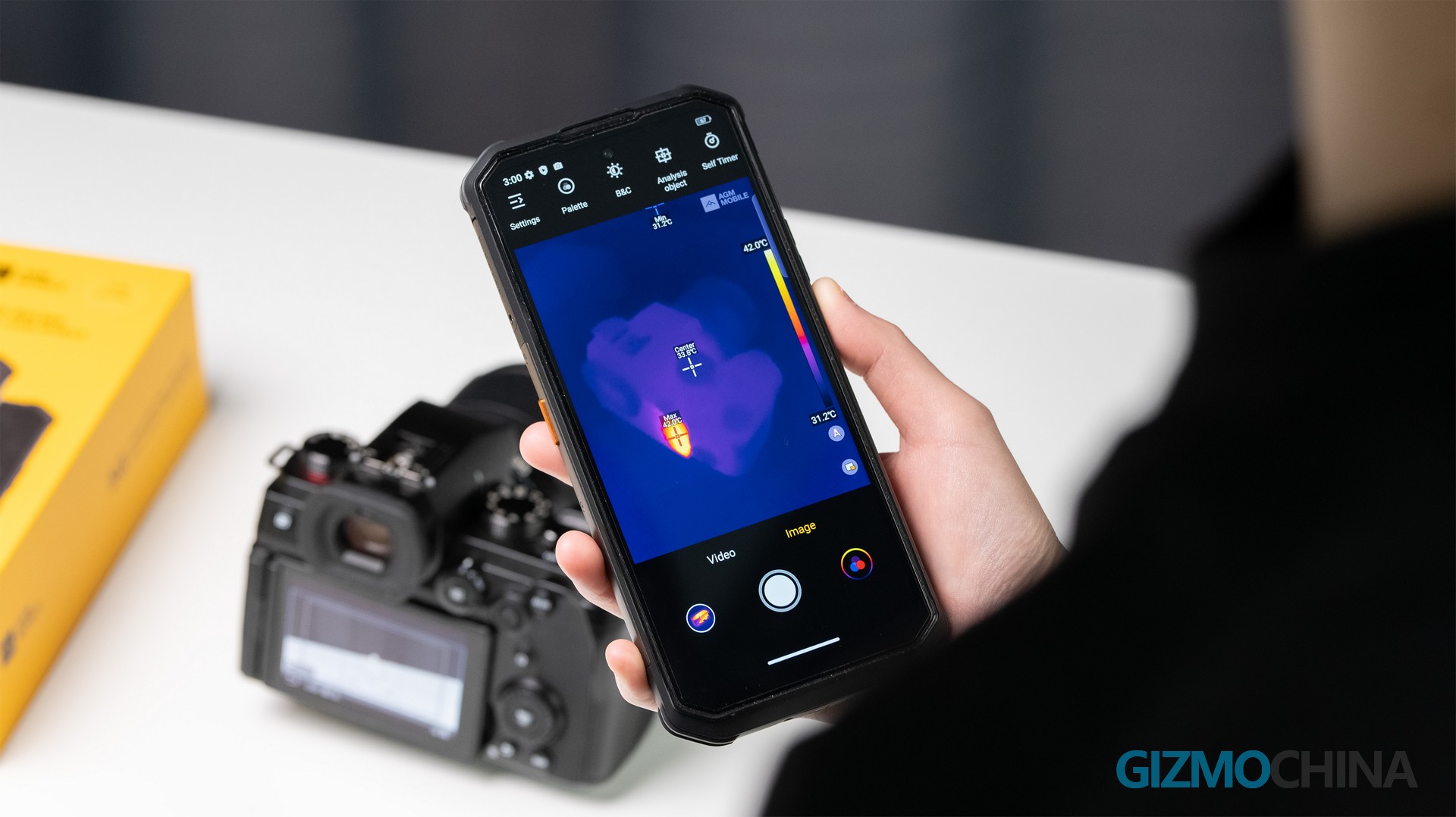
The AGM G3 Pro comes with a 64MP main camera (Sony IMX682) and a 2MP macro camera, enabling users to capture clear, detailed images of environments, machinery, wildlife, or documentation during work. However, one of the standout features of the G3 Pro is not just the standard photography system—it is the integrated thermal imaging camera.
The thermal imaging module supports super-resolution output of 512 × 384, with 12μm pixel size and a 3.2mm focal length. This allows users to detect temperature differences in real time. Such a feature is exceptionally valuable for:
Electrical maintenance and diagnostics
Outdoor exploration and wildlife observation
Safety inspection and energy efficiency checks
Emergency response scenarios
With thermal imaging, the AGM G3 Pro extends beyond being a smartphone and becomes a practical field tool.
NFC, enabling mobile payments and contactless verification
These features ensure stable communication and navigation in field environments, remote areas, or professional settings.
Battery and Charging
One of the core strengths of the G3 Pro is its 10000mAh battery. This ensures exceptionally long usage time, suitable for multi-day outdoor trips, extended fieldwork, or emergency response assignments. Charging is supported up to 33W fast charging and 18W wireless charging, offering flexibility in different scenarios.
Conclusion
The AGM G3 Pro stands out as a rugged smartphone that provides more than physical durability. Its large battery, thermal imaging capabilities, reliable hardware platform, and protective construction make it a highly capable companion for users who work in demanding conditions. Whether for professional fieldwork or adventurous exploration, the G3 Pro is designed to deliver continuous performance wherever you go.
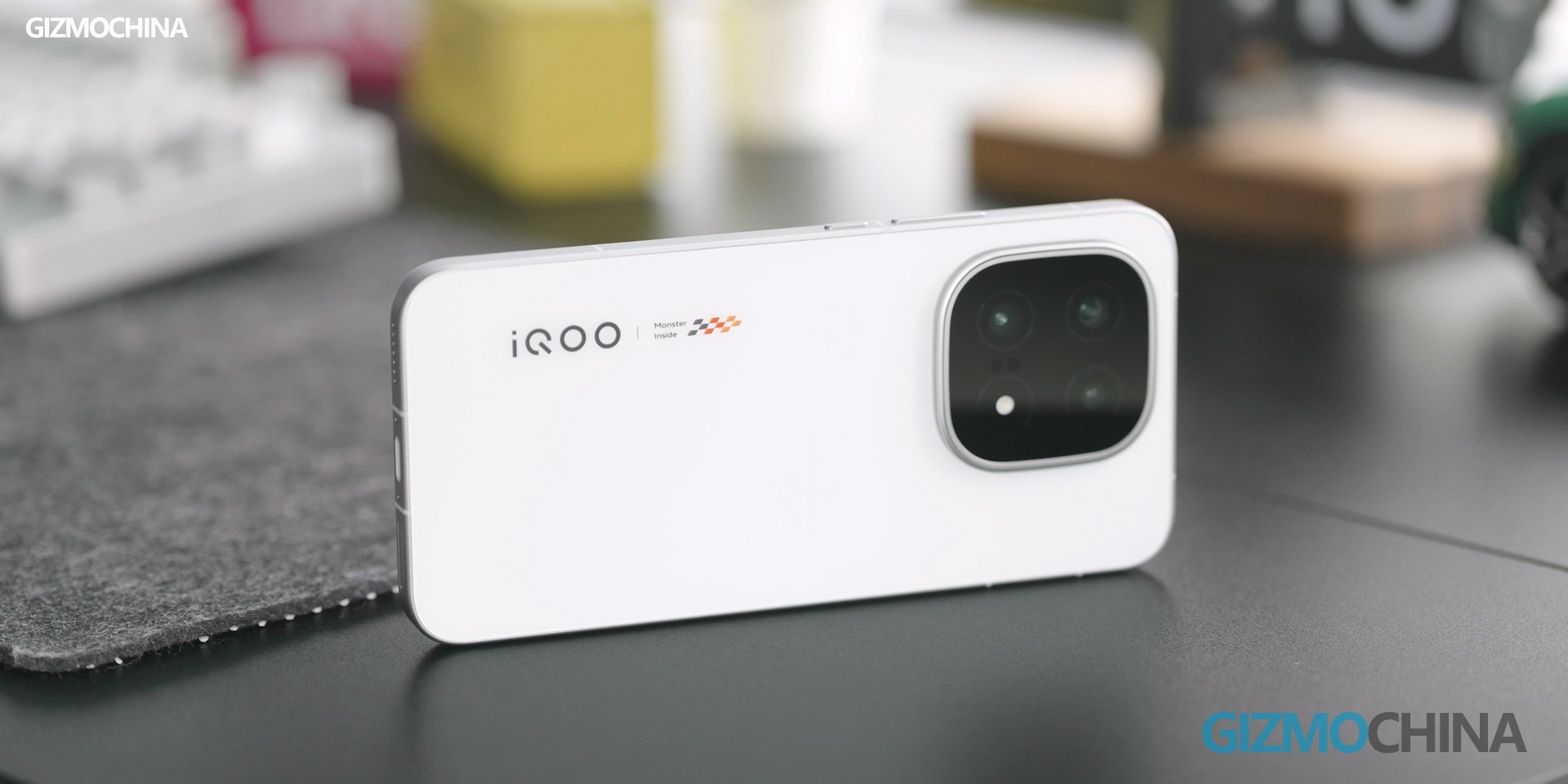
There’s one thing I’ve always admired about iQOO: they consistently stick to what they believe is right, and they don’t change just to follow trends. You can see this clearly with the iQOO 15. It’s not called the 15 Pro, it’s not called Pro Max, and even the design hasn’t really changed much over the past few years.
This year, because many of its competitors are copying the iPhone, the originally unremarkable iQOO 15 has instead become something rare. And on top of that, iQOO’s long-time weakness — the camera — has also been improved. So overall, it makes perfect sense that the iQOO 15 is selling extremely well this year.
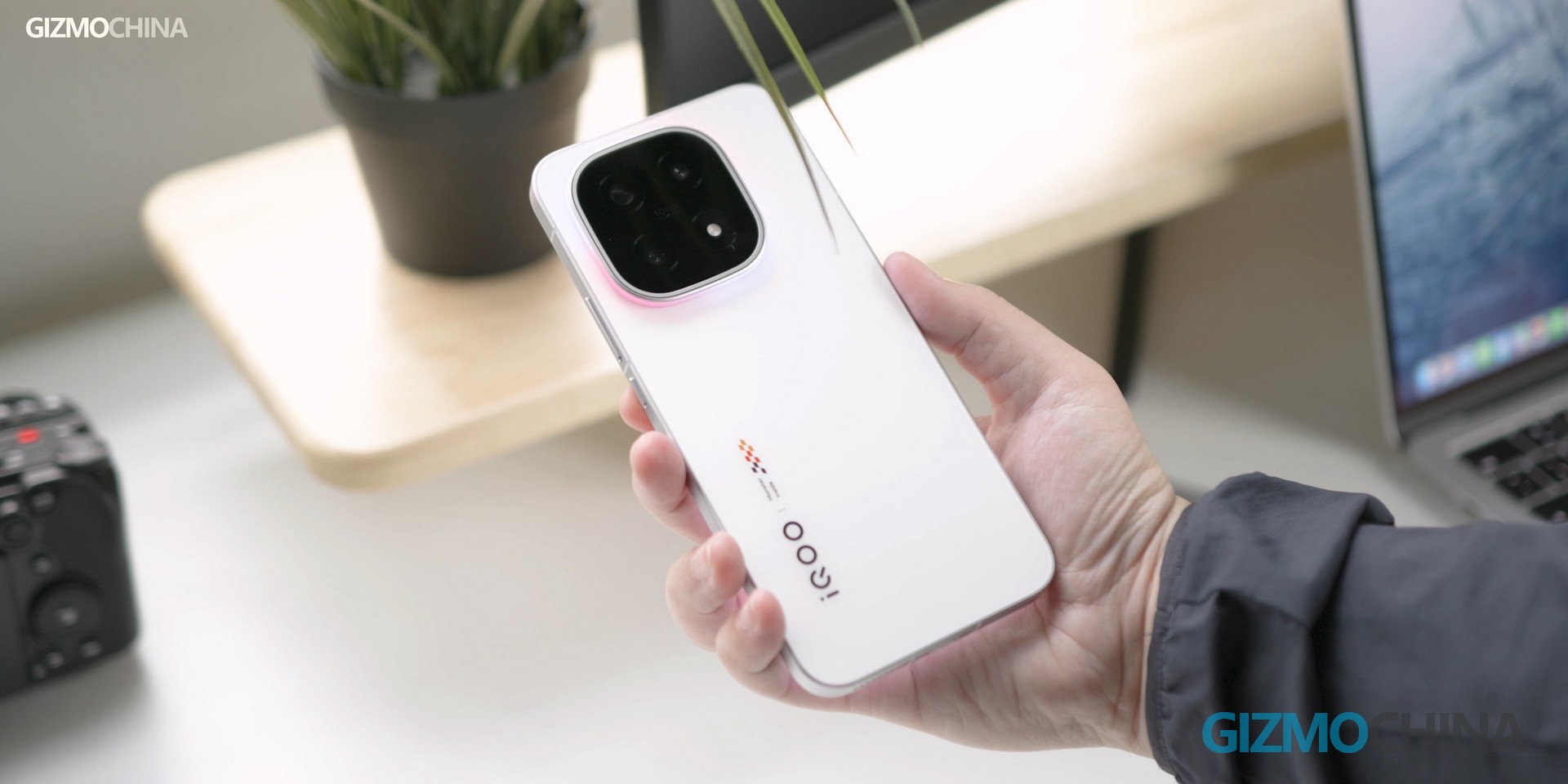
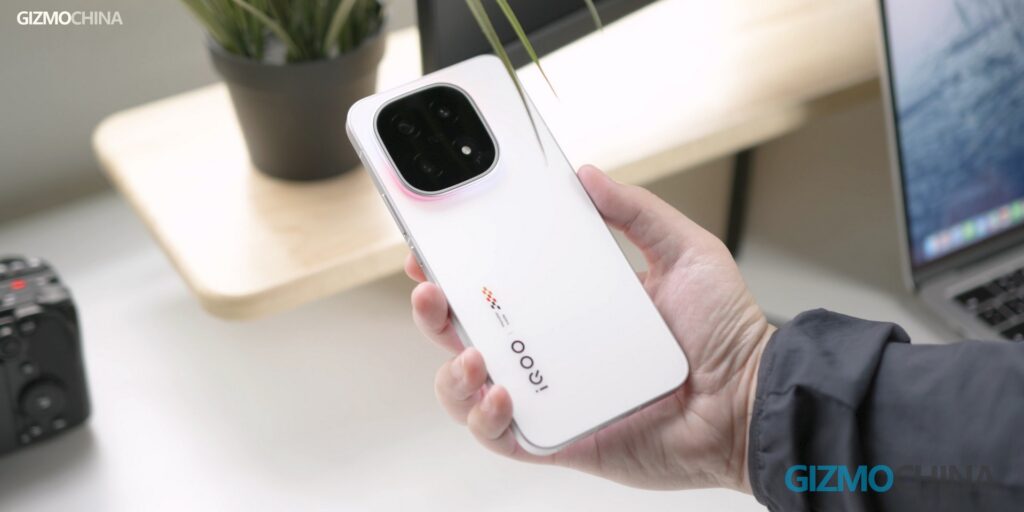
The iQOO 15 we have here is the Legend White version, but this is not the best-looking one. The main featured color this year is called “Lingyun”, and depending on the viewing angle, you’ll see red ink-like patterns appear on the back. If you want a lighter phone, you can choose the black version instead. Its fiberglass back makes it thinner and lighter.
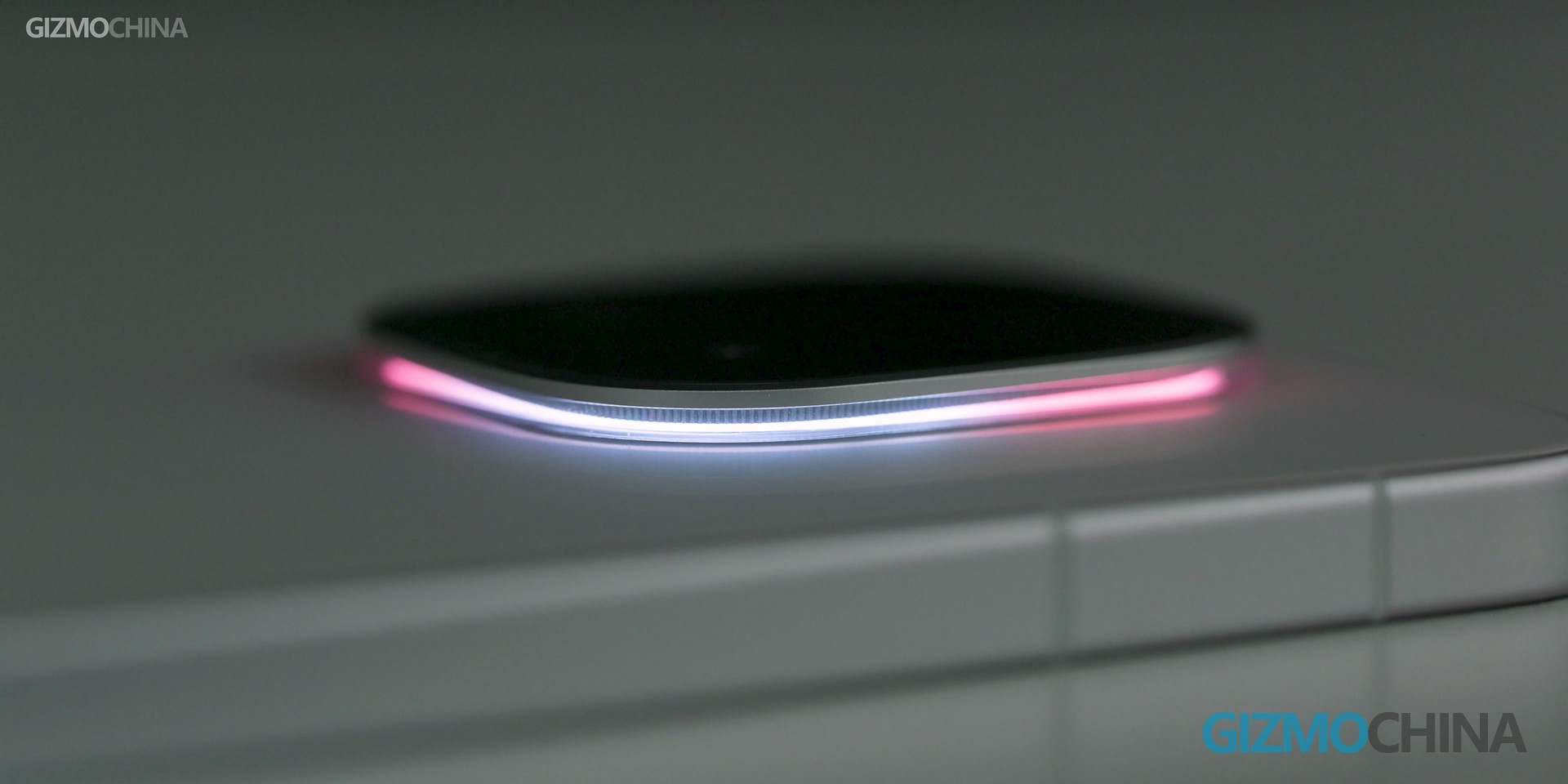
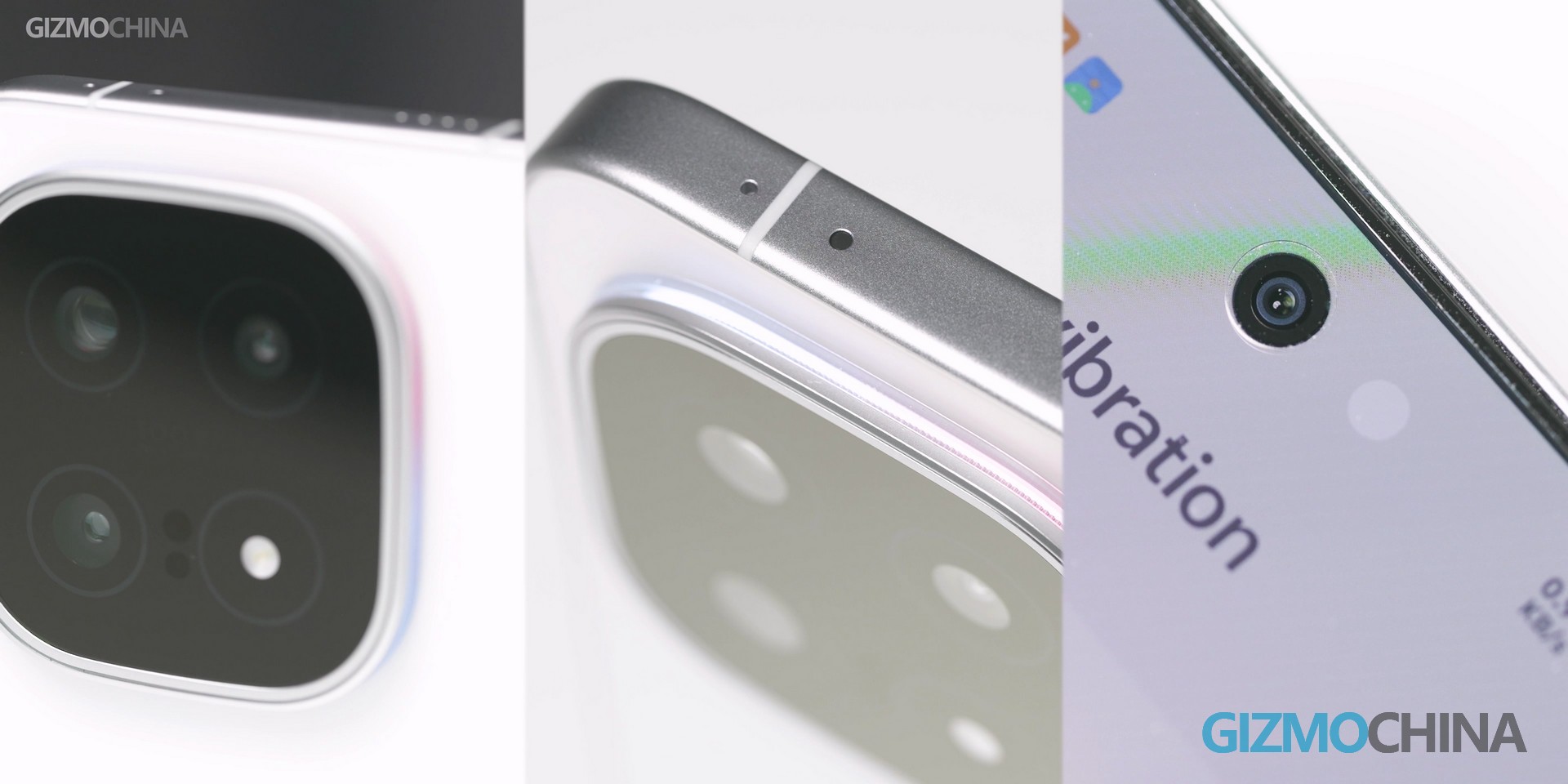
Regardless of which color you go for, the camera module still keeps the RGB light strip. However, the lighting is only faintly visible from the side, and during the day, it’s easy to miss that it’s even on. So if you rely on it as a notification indicator, you may end up missing important messages.
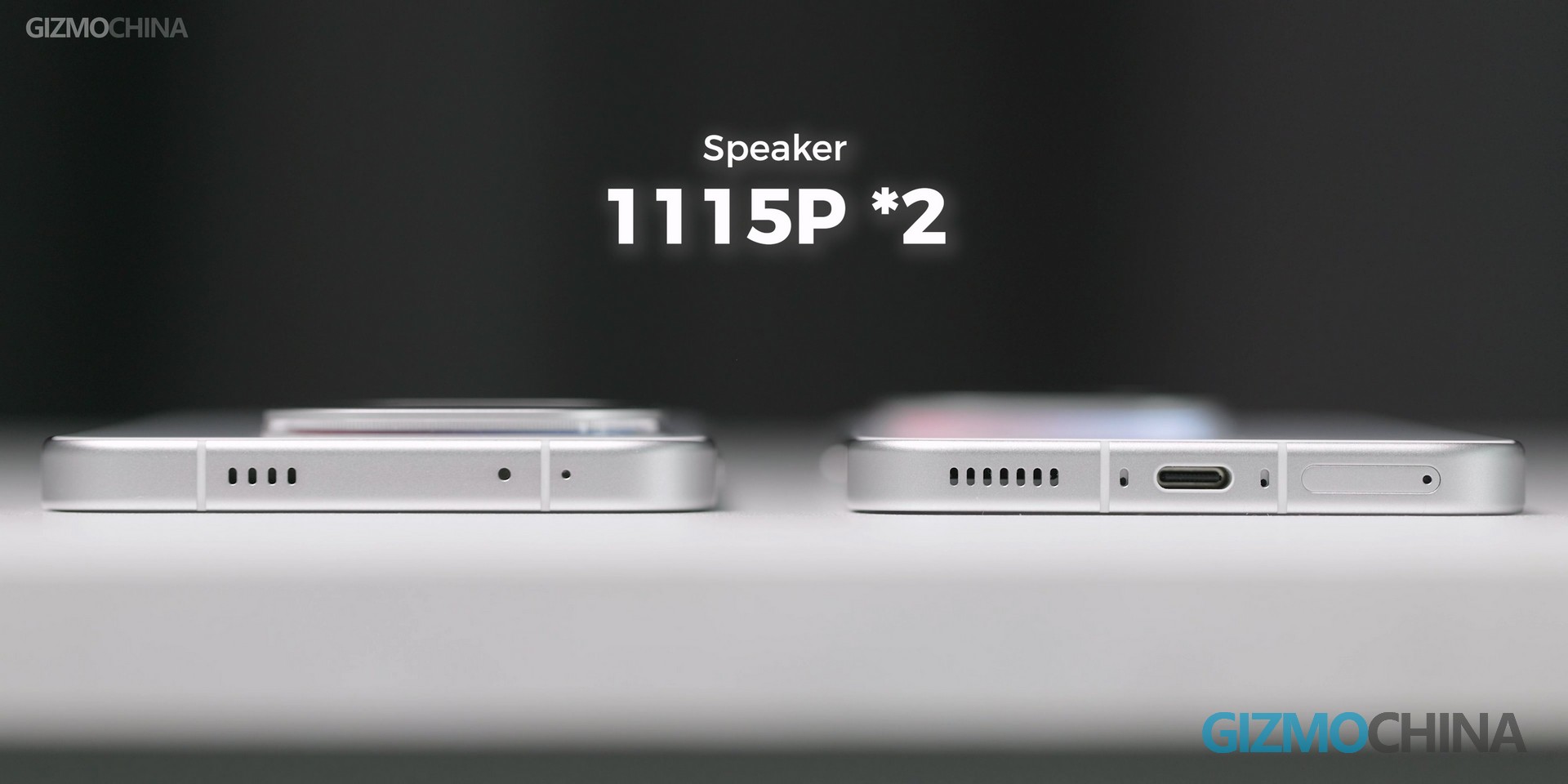
The vibration motor in the iQOO 15 is the 0916 type that can move along both the X and Y axes. The vibration strength is noticeably stronger than competing phones. And both the top and bottom speakers use 1115P drivers, giving you balanced stereo output. I’ll include a speaker test in the video, so you can listen for yourself.
Display
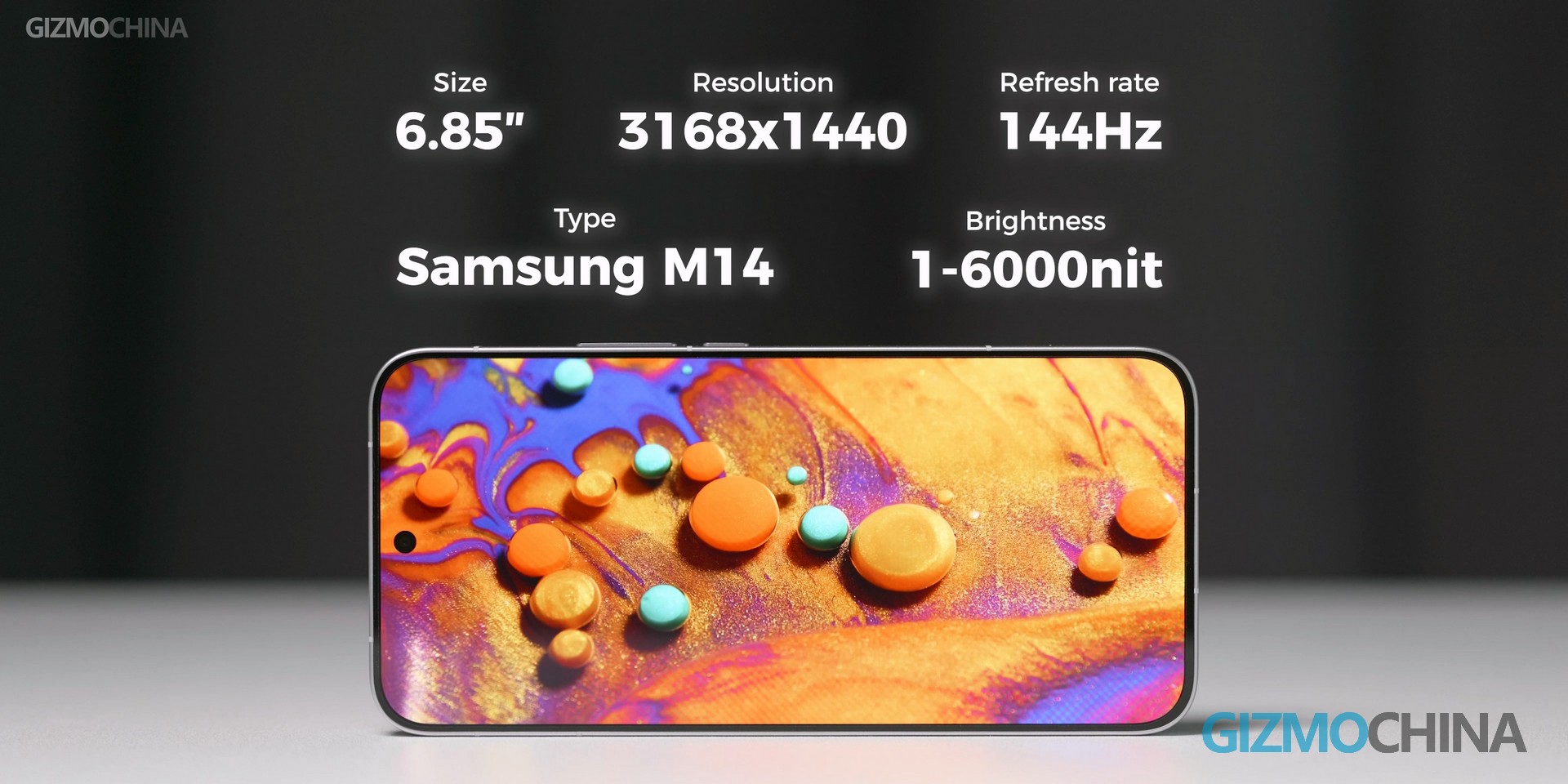
If you really like the display on the Samsung Galaxy S25 Ultra, then you should also like the one on the iQOO 15. It uses Samsung’s latest M14 panel, the same one used in the iPhone 17 series. The iQOO 15 even removes the polarizer layer, which increases brightness.
That small hole at the top of the frame isn’t an IR emitter — the IR emitter has been moved next to the flash. That hole is actually an additional ambient light sensor. So in total, the iQOO 15 has three ambient light sensors. This allows the phone to adjust screen brightness faster and more accurately in different environments.
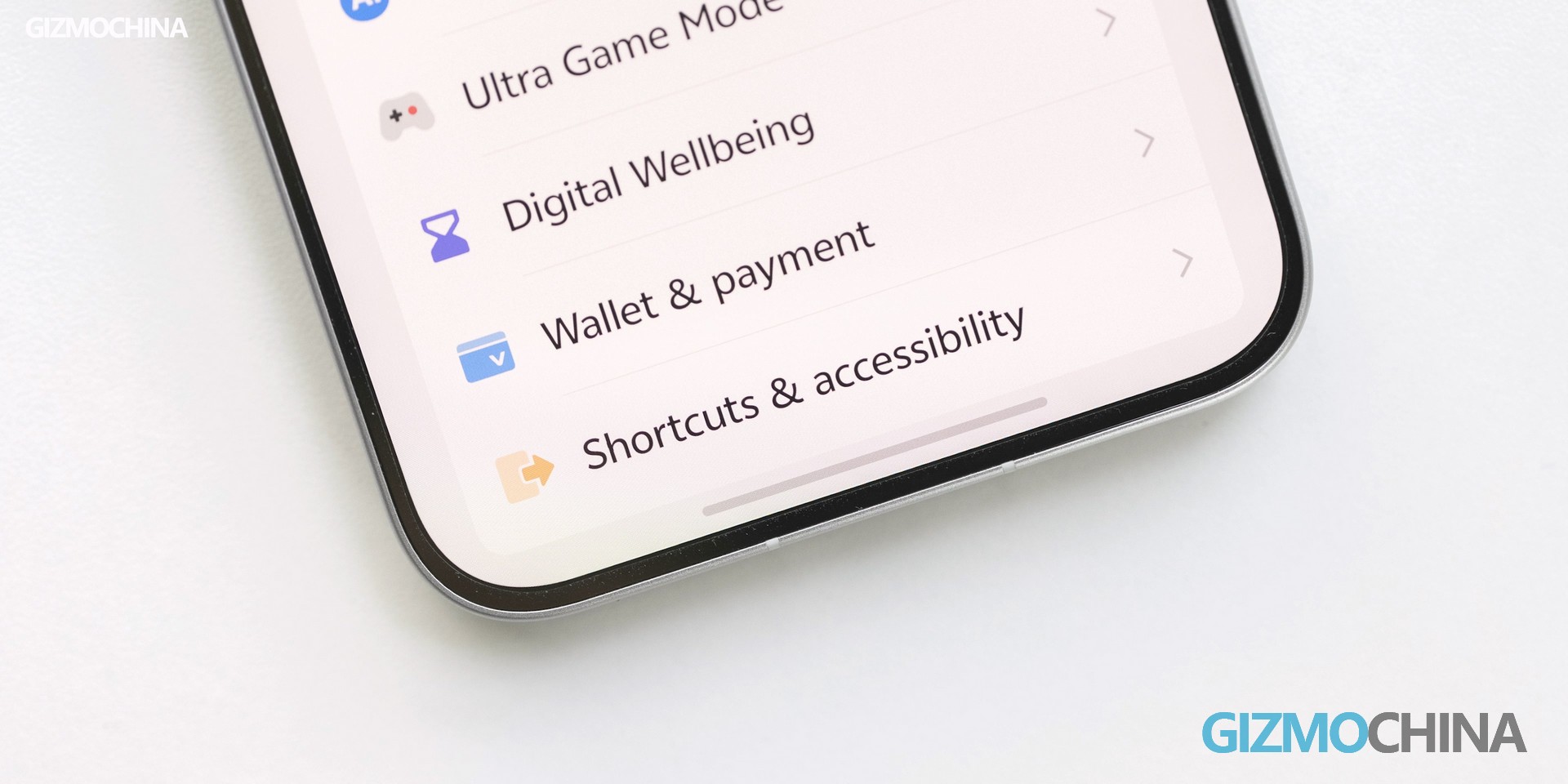
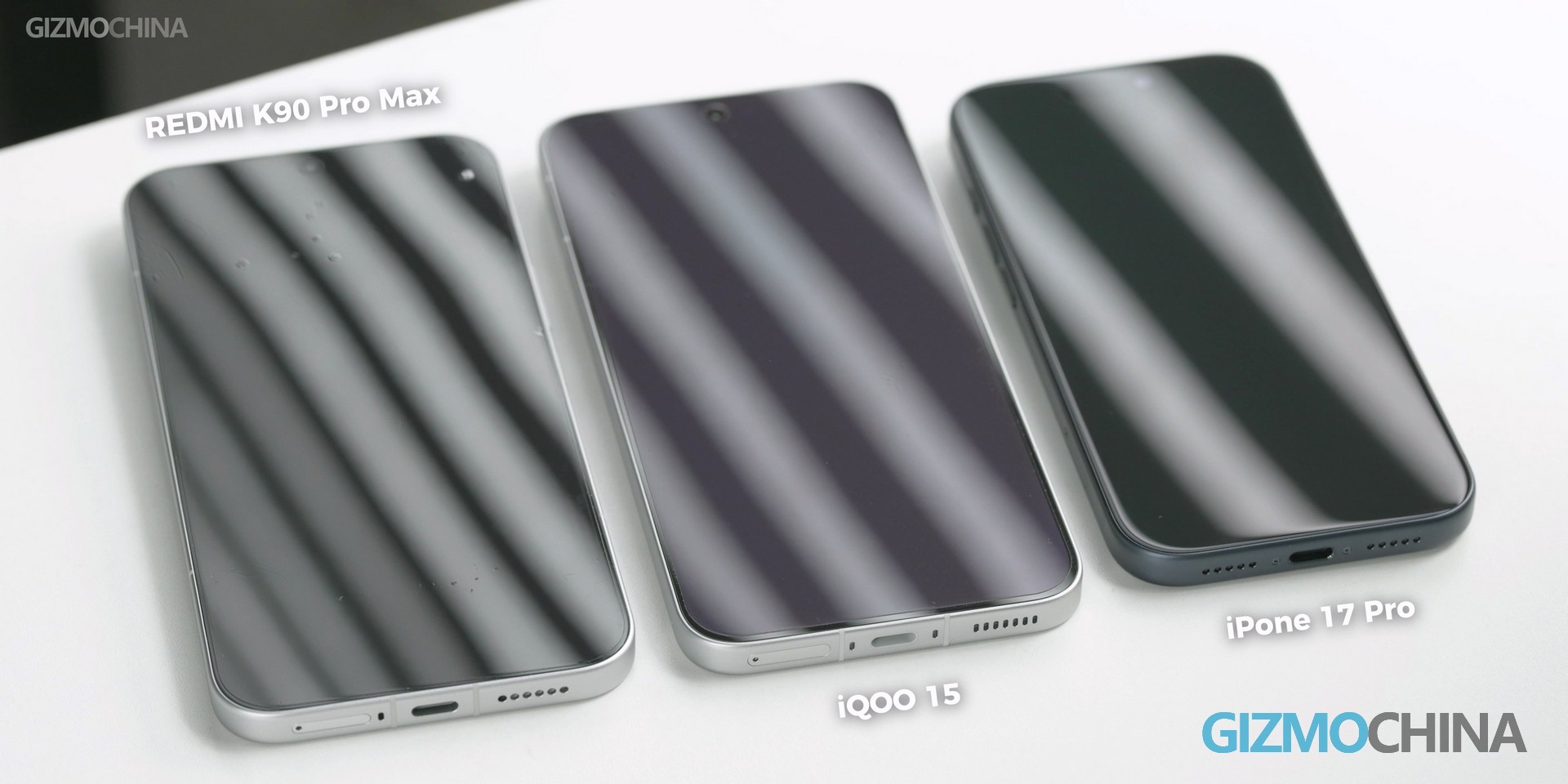
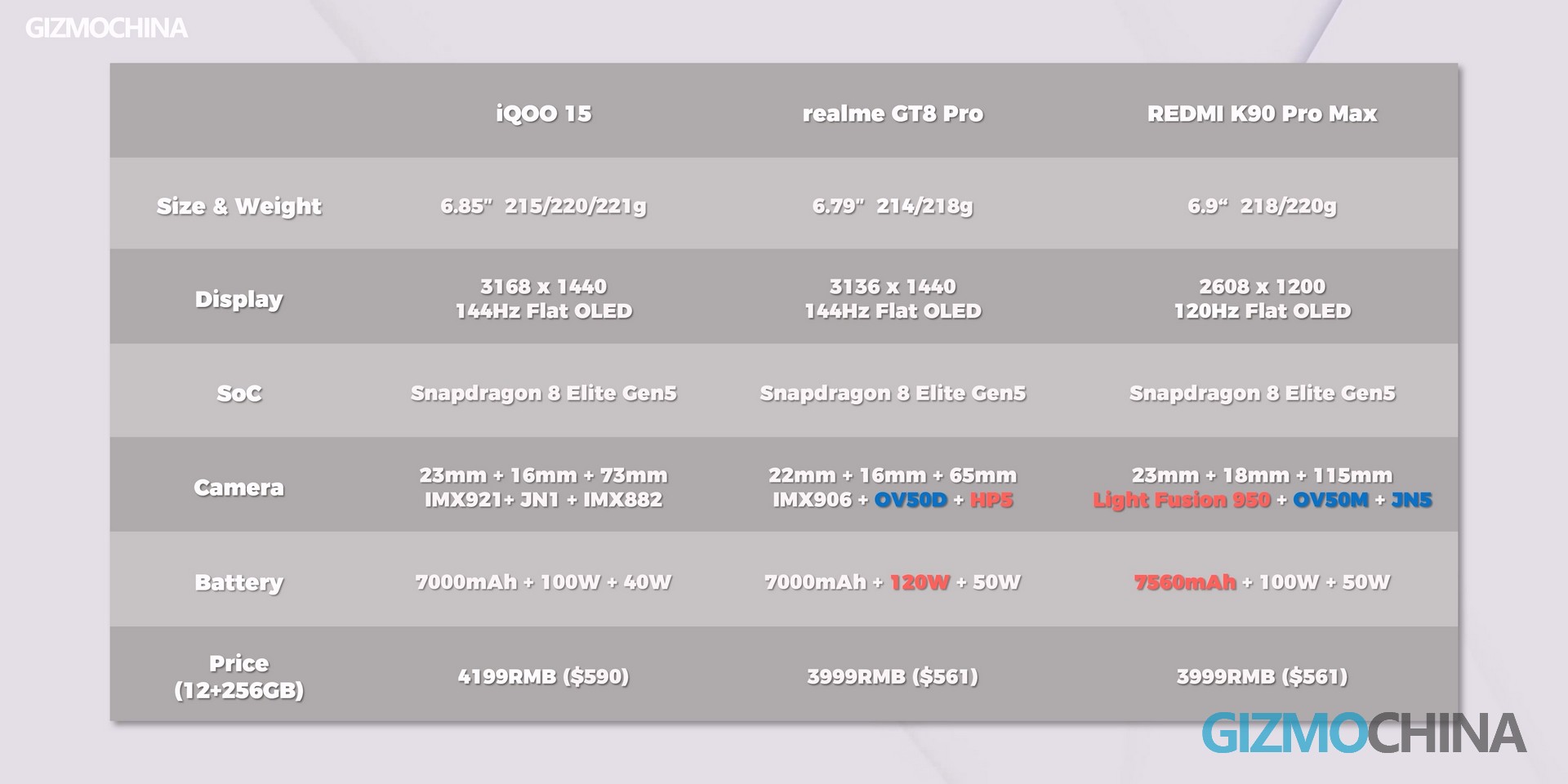
Of course, there are drawbacks. A $590 phone will always have some compromises, like the slightly thicker bottom bezel, similar to the K90 Pro Max.
And because there’s no polarizer layer, the black levels aren’t as deep. However, iQOO solved this with a simple approach: the pre-installed screen protector has an AR coating. And visually, it works very similarly to the AR coating on the iPhone 17 series, significantly reducing contrast loss caused by reflections.
Performance
Although iQOO has never called itself a “gaming phone,” aside from not having trigger bottoms, it is basically a gaming phone. To differentiate itself from the vivo X300 series, the iQOO 15 uses the Snapdragon 8 Elite Gen5 processor, and the performance tuning is very aggressive.
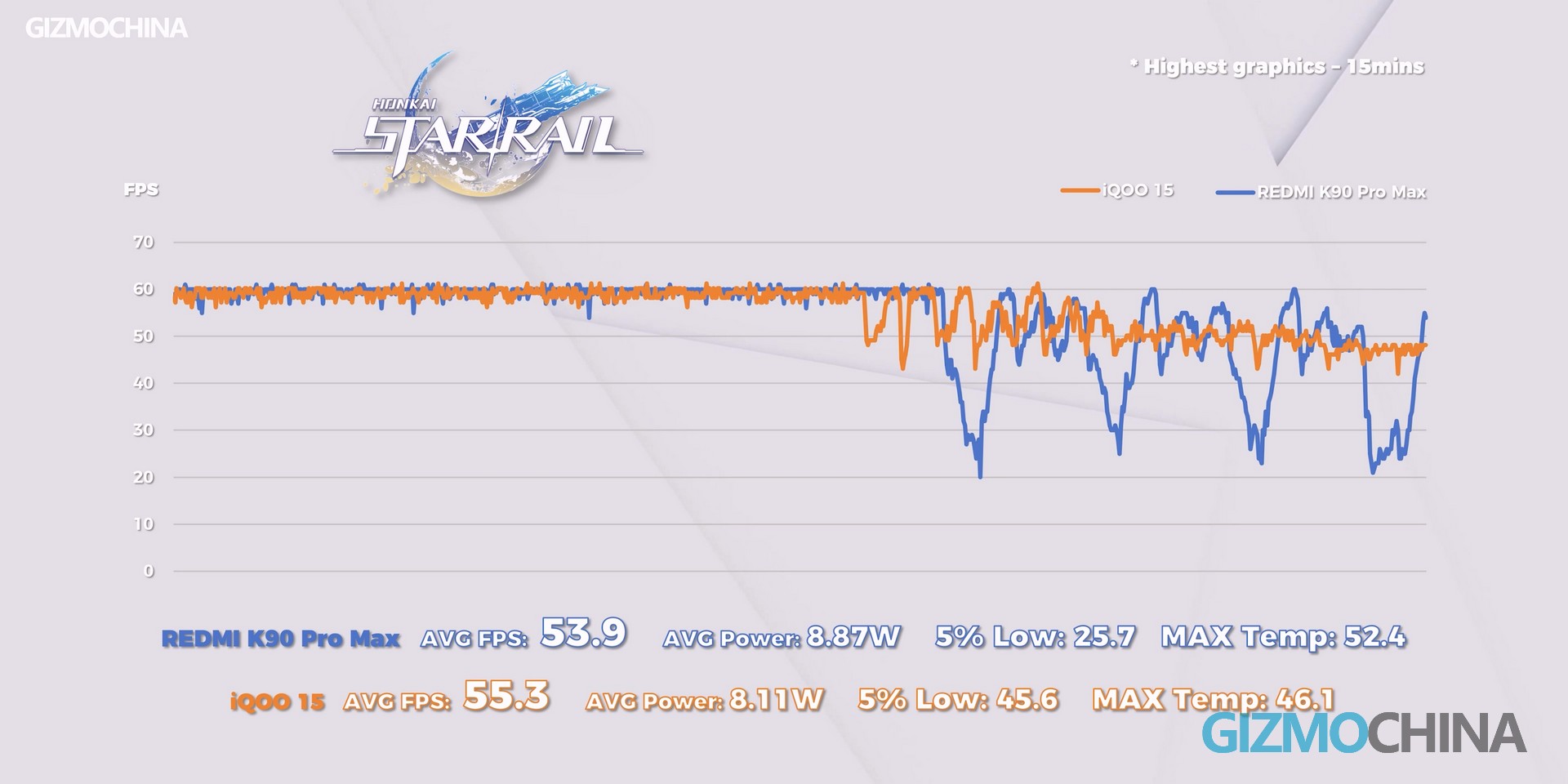
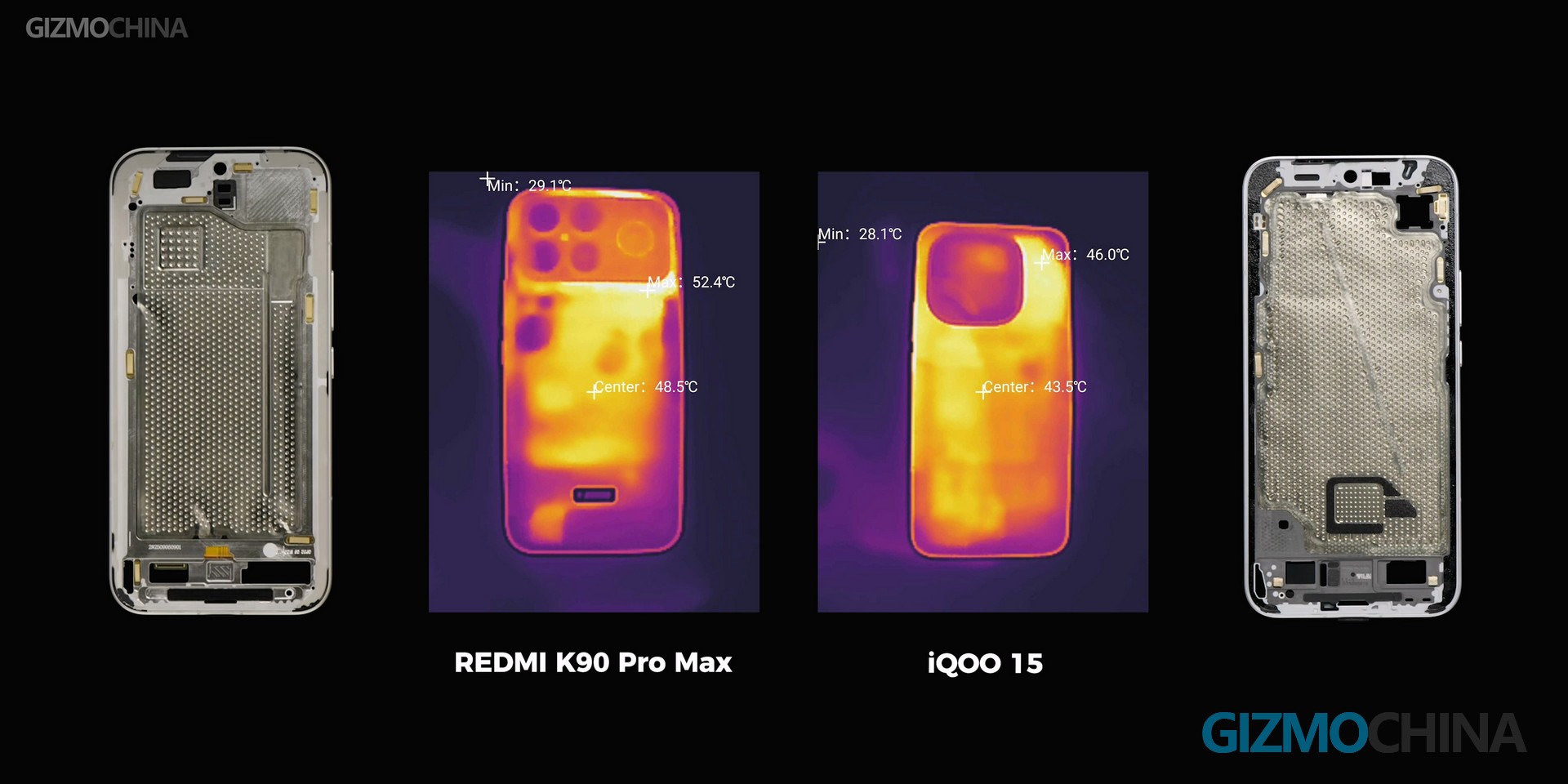
But unlike the also-aggressive Redmi K90 Pro Max, the iQOO 15 maintains a bit of restraint. Both phones begin thermal throttling around the 10-minute mark, but the iQOO 15 brings down performance gradually, with the framerate eventually stabilizing around 45 FPS. Thanks to the single-layer motherboard design and the extremely large vapor chamber, the iQOO 15 keeps temperature and power consumption at reasonable levels.
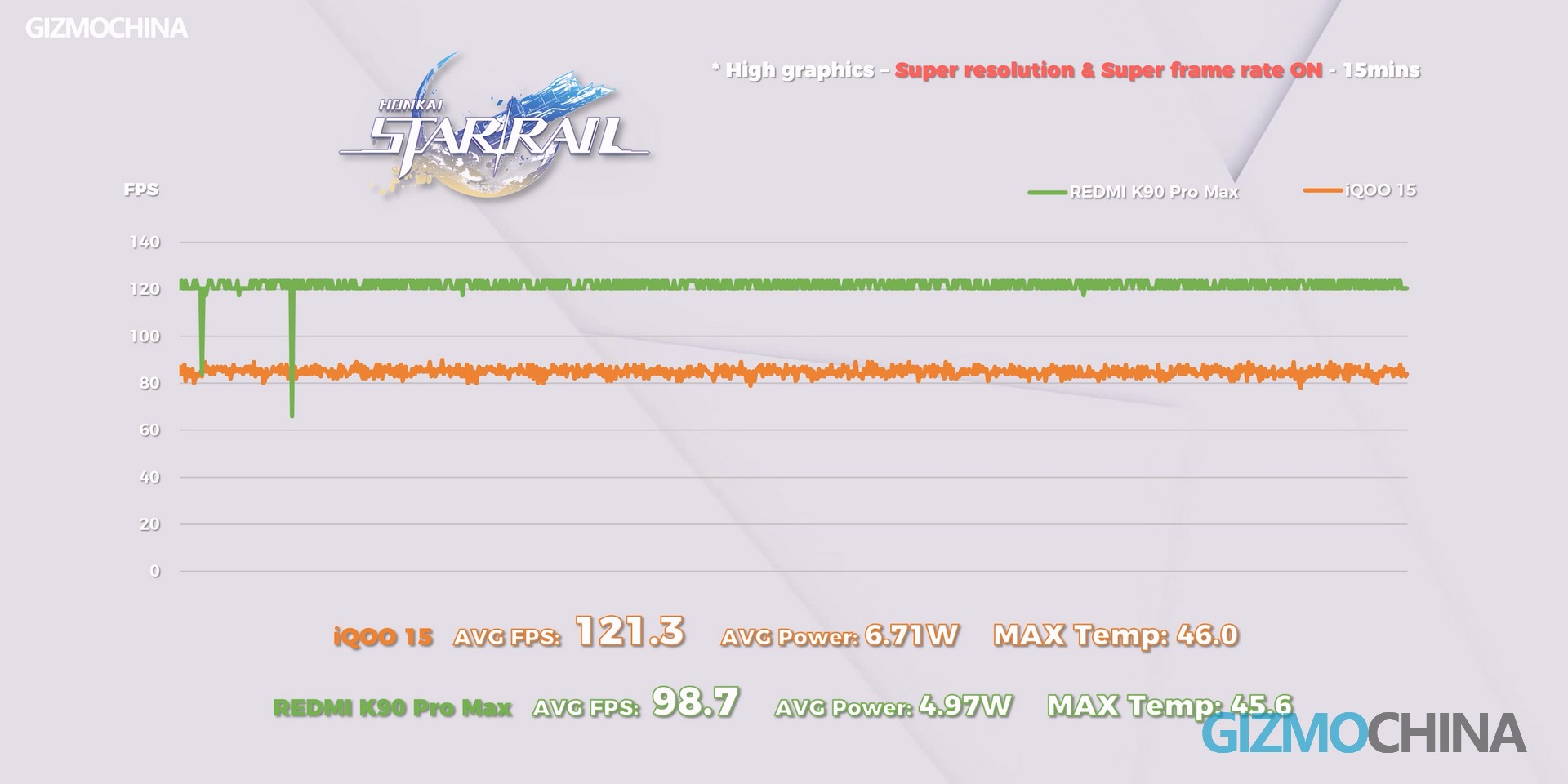
So, does the Q3 gaming chip actually help? Yes. While frame interpolation can’t be enabled at the highest resolution in Honkai: Star Rail, super-resolution can be turned on at high graphics settings, and the clarity is enough for my needs. With the Q3 assisting, the gaming experience is smoother and more power-efficient.
However, since the Redmi K90 Pro Max recently improved the performance of its D2 chip, its power efficiency has become incredibly good. So unfortunately, the Q3 is only the second-strongest display chip we’ve tested.
But the Q3 has one advantage the D2 doesn’t: ray tracing. With ray tracing on, the most noticeable difference is that reflections on surfaces like floors become more realistic. Only two games currently support this, but having it is still better than nothing.
Camera
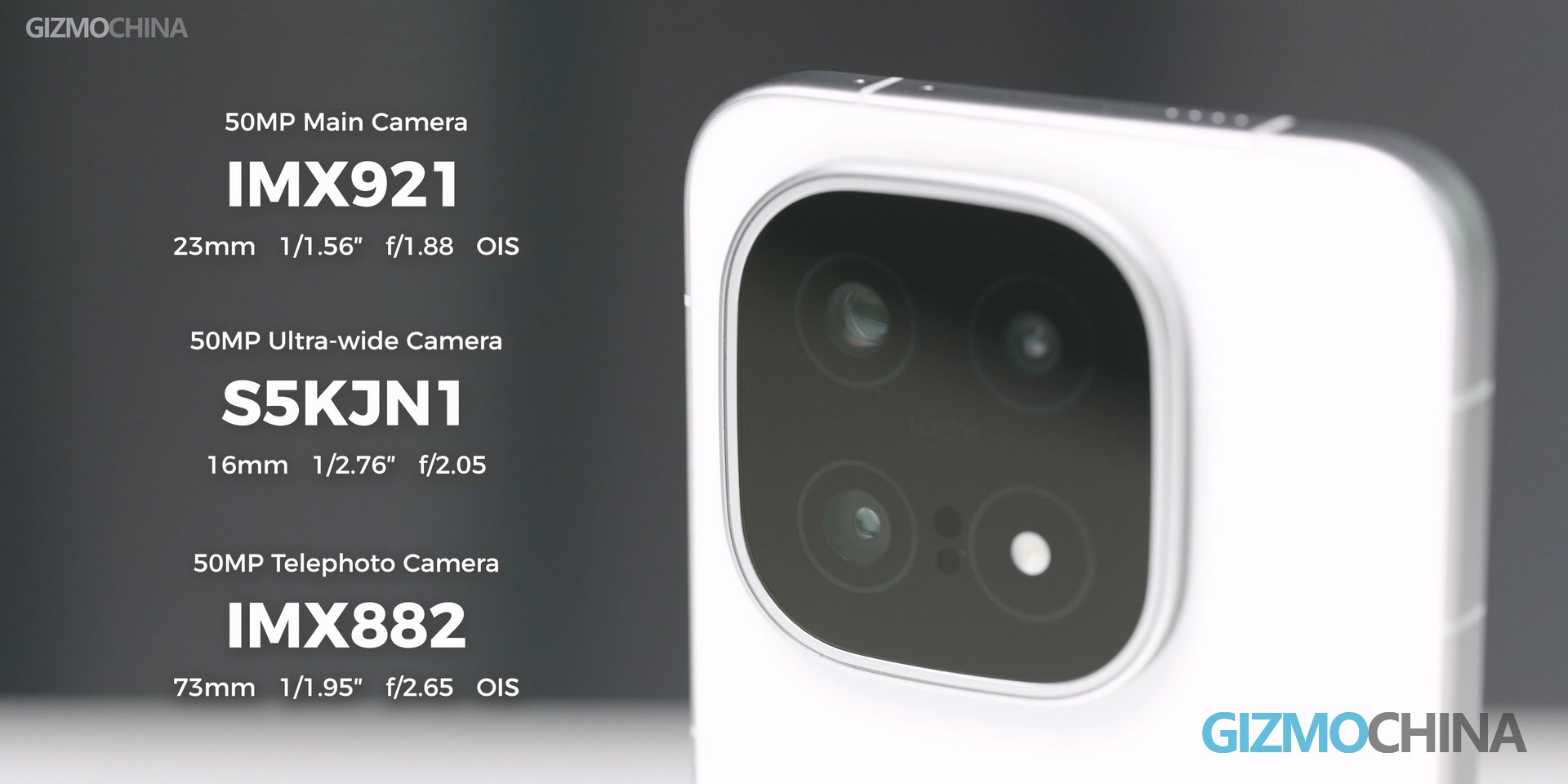
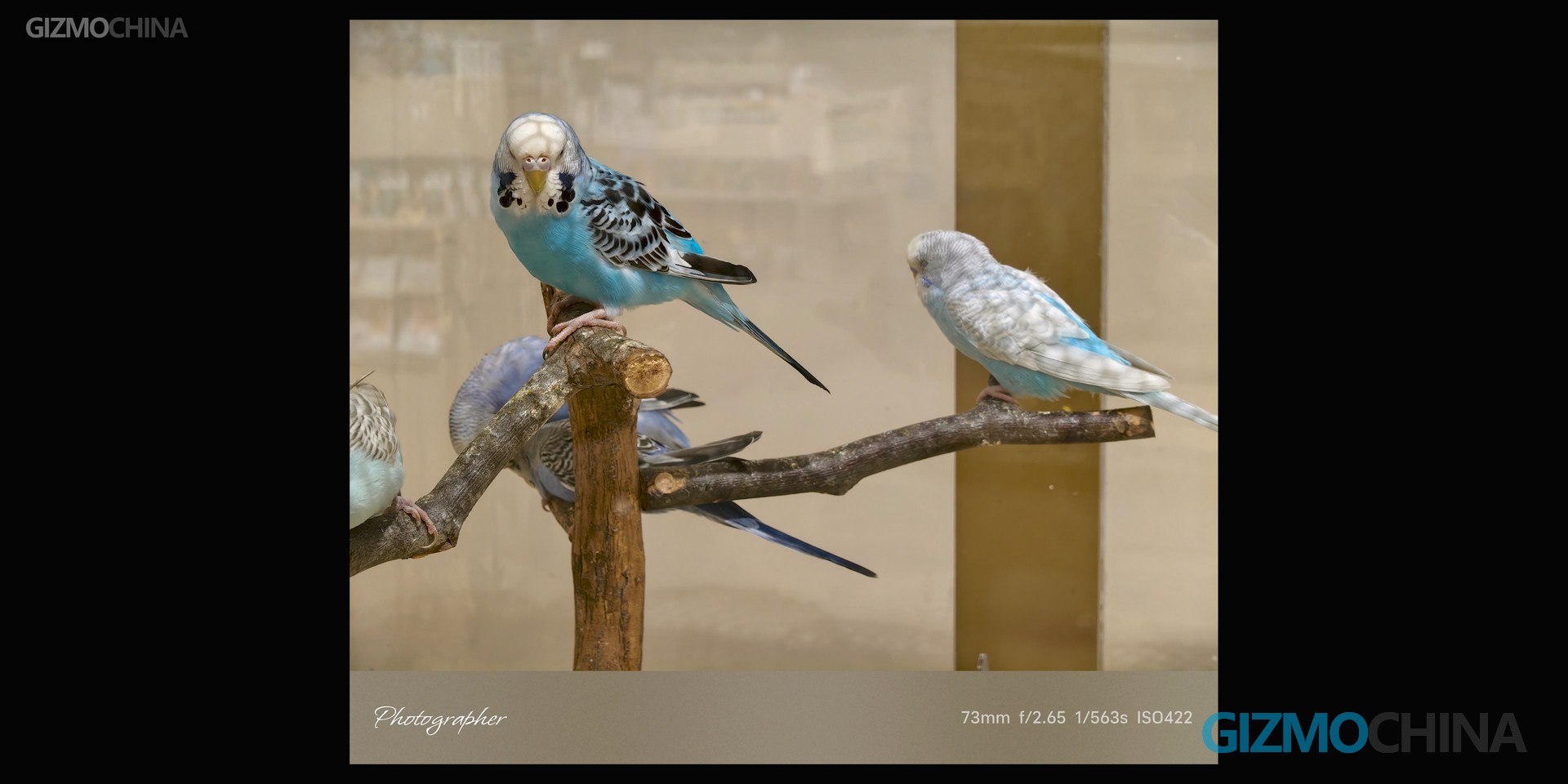
The main camera upgrade this time is in the telephoto lens. The IMX882 is an excellent telephoto sensor — not only better than the telephoto camera in another phone also named “15”, but even better than the telephoto systems on some Pro Max models.
The clarity is great: every hair is captured clearly. Overall, I would rate this telephoto camera highly, but the minimum focusing distance is a bit long. If your subject is within one meter, the phone will switch to shooting with a crop from the main camera instead.
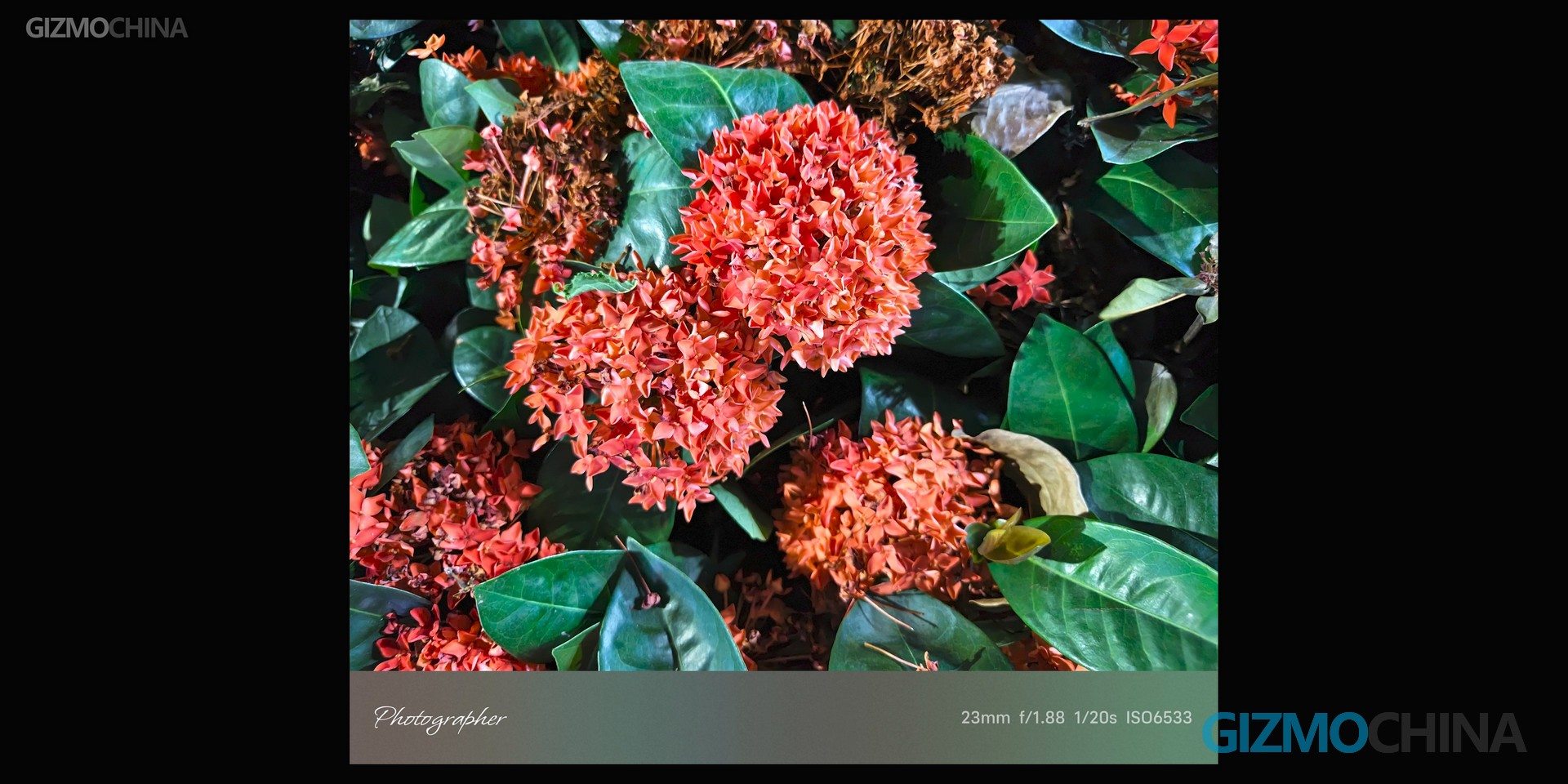
The main and ultra-wide cameras are the same as on the iQOO 13. The only thing I think needs adjustment is that the default Vivid mode tends to overexpose the image. I understand why—more exposure makes the image look more eye-catching—but sometimes it becomes too bright.
If you switch to the “Texture” mode, this issue is solved, and the photos look more cinematic. I recommend using that mode for everyday photography.
The front camera supports 4K 60fps recording, but the sensor is quite small, so even here indoors, you can already see a drop in image quality. The rear video recording performance is average. Compared to more expensive flagships, yes, it’s slightly weaker, but it’s still acceptable.
Battery
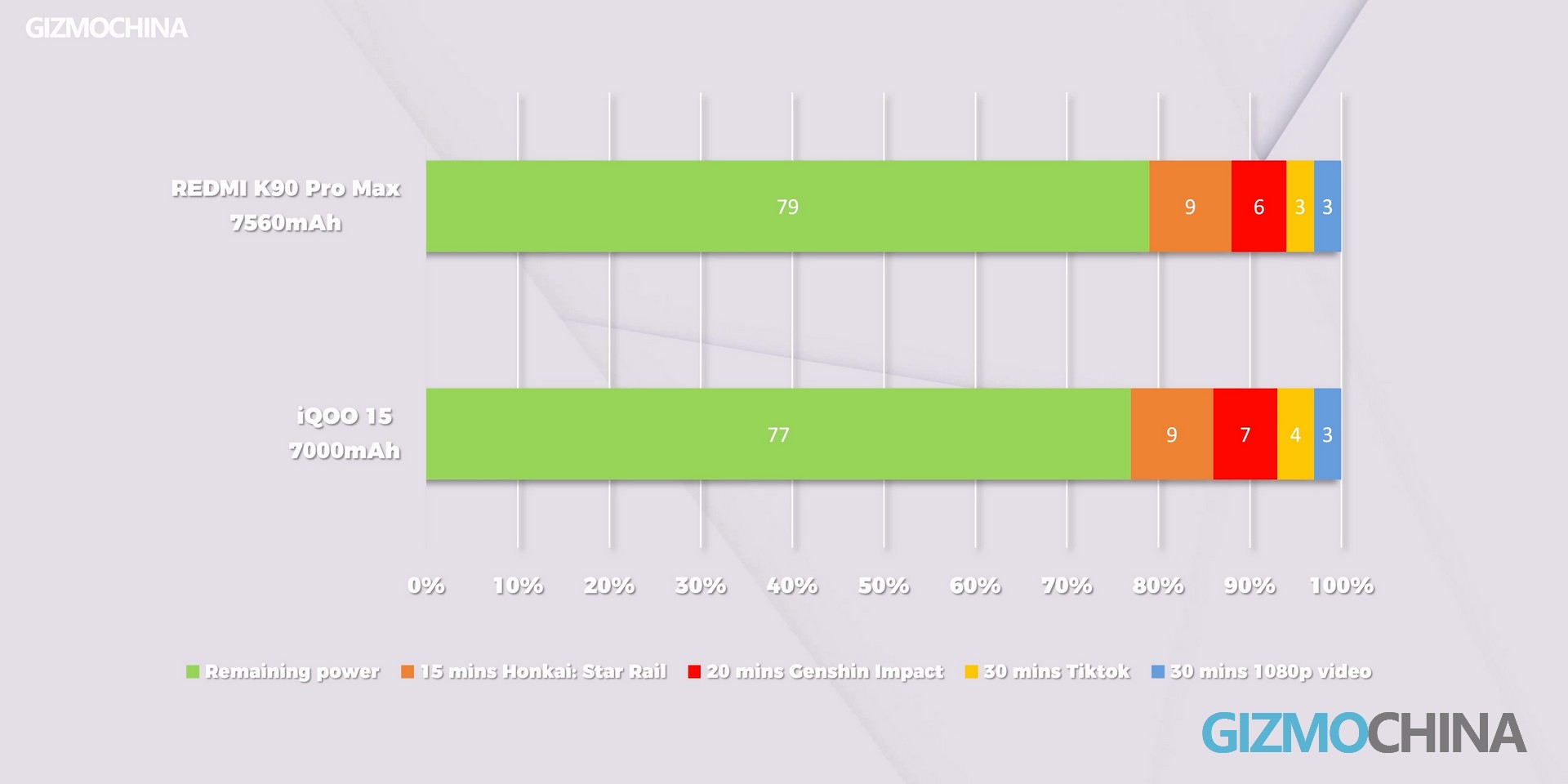
The iQOO 15 has a 7000mAh battery. Although that’s large, it’s not necessarily an advantage against competitors. However, despite the higher resolution display, the battery life is still competitive, and I’m satisfied.
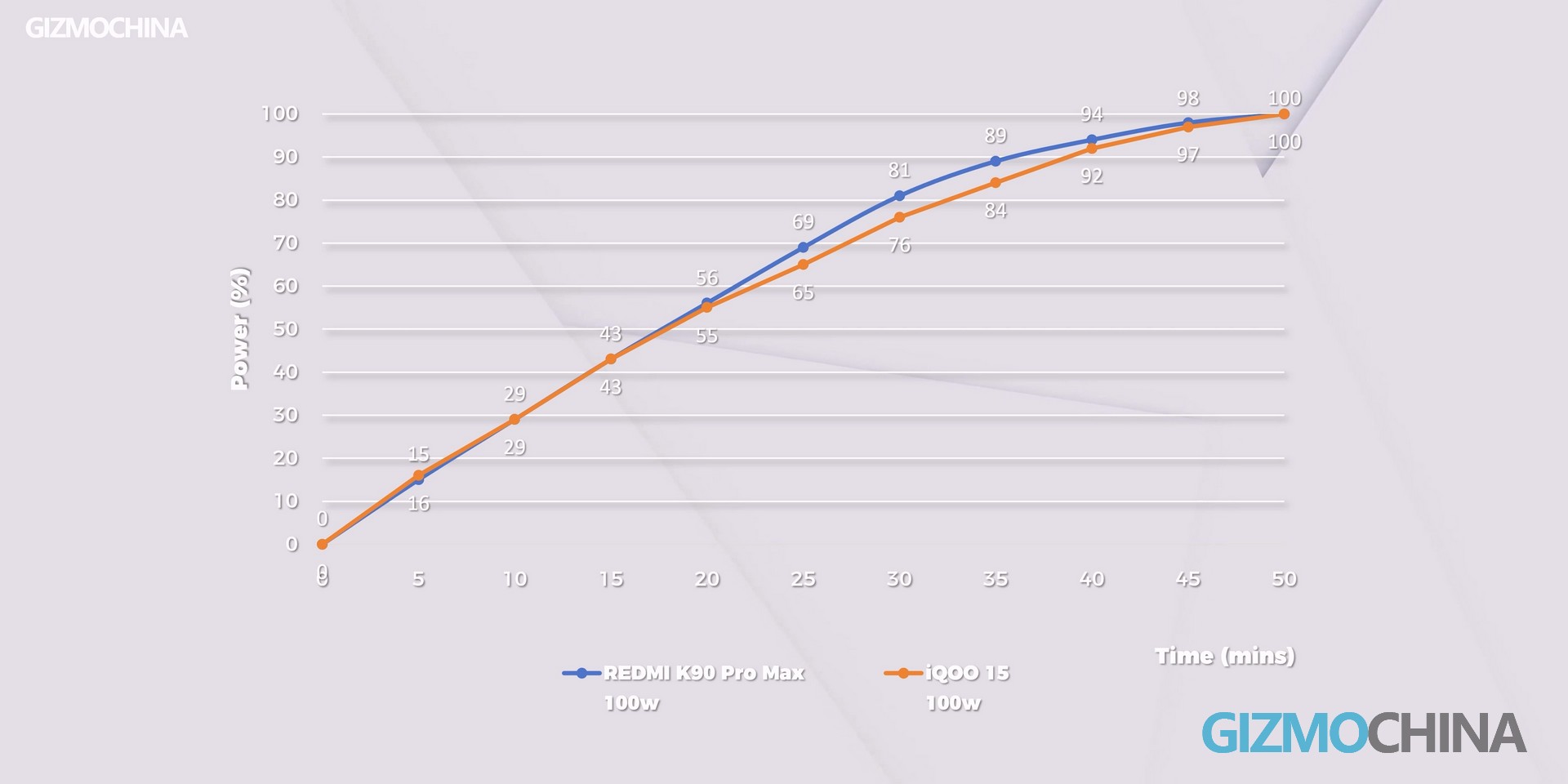
The wired charging is 100W. Whether in the first 20 minutes or the final charging phase, it performs almost exactly the same as the K90 Pro Max. But the wireless charging is only 40W, and third-party PPS chargers can only trigger 45W. The iQOO 15 is powerful enough, but in the charging category, Redmi and Xiaomi are still unbeatable.
The iQOO 15 is very similar to OPPO’s Find X9 series. I’m not talking about the appearance, but about their overall design philosophy: to make a phone with as few weaknesses as possible. After finishing this review, I feel that the most balanced phone this year is the iQOO 15. Compared to the more expensive Find X9 series, even the pricing is balanced. And with a 2K 144Hz Samsung M14 display, it’s already more than enough.
YouTuber TechDroider ran all three phones through a 13-hour real-world test: three hours of PUBG Mobile, three hours of YouTube streaming, an hour and a half of browsing and Instagram, and nonstop 4K 60fps recording until they dropped.
All started at 100%, and here’s how things ended up:
Xiaomi 17 Pro Max: 12h 50m
iPhone 17 Pro Max: 13h 02m
OnePlus 15: 13h 40m
Pretty close race, but OnePlus managed to hold on for nearly 40 minutes longer than Apple’s flagship.
The iPhone (physical SIM variant) deserves some credit, too — its 4,832 mAh battery kept up surprisingly well against the 7,300 mAh cell in the OnePlus 13 and 7,500 mAh pack inside Xiaomi 17 Pro Max (our review). That’s pure software efficiency from iOS and the A19 Pro chip doing the heavy lifting.
Still, OnePlus takes the win. Its mix of Snapdragon 8 Elite Gen 5, a silicon-carbon battery, and software optimizations seems to strike the right balance between performance and efficiency. OnePlus had talked up its performance tuning in ColorOS, and it’s good to see the OnePlus 15 living up to that promise.
And even though the iPhone 17 Pro Max runs on a much smaller battery, it’s neither slimmer nor lighter than its Android rivals:
OnePlus 15: 8.1 mm, 215 g
Xiaomi 17 Pro Max: 8 mm, 219 g
iPhone 17 Pro Max: 8.8 mm, 233 g
It also charges slower and packs a technically inferior heat dissipation system. So, for anyone without a specific preference for iOS, neither performance nor in-hand comfort should be a dealbreaker when picking the OnePlus 15.
iQOO is gearing up to launch its next flagship smartphone, the iQOO 15, in India on Nov. 26. Ahead of the launch, the company has already confirmed plenty of details about the device. Now, according to a new report by NDTV Gadgets 360, the publication has revealed the expected pricing of the iQOO 15 in India ahead of the official announcement.
iQOO 15: Expected price and Priority Pass details
iQOO 15
According to the report, the iQOO 15 is expected to be priced around Rs 60,000 in India, with launch offers included. This strategy could position it as the most affordable smartphone featuring the Snapdragon 8 Elite Gen 5 SoC. However, the original price without launch offers is expected to exceed Rs 60,000. The device could arrive in a single 16GB RAM and 512GB storage configuration.
Ahead of the launch, iQOO has introduced a limited-time Priority Pass for interested customers. Buyers can pre-book the phone by paying a refundable Rs 1,000 and receive exclusive benefits.
Those purchasing the Priority Pass will get complimentary iQOO TWS 1e earbuds along with a 12-month extended warranty. The pass will be available from November 20 on a first-come, first-served basis.
The phone will pack a large 7,000mAh battery with fast charging support, aimed at delivering exceptional endurance. For gamers, iQOO is including its in-house Game Livestreaming Assistant and what it calls the largest single-layer cooling system for improved performance stability.
In terms of cameras, the iQOO 15 will feature a triple 50-megapixel setup on the rear, promising flagship-grade photography. With its aggressive pricing and cutting-edge specifications, the iQOO 15 could become a major challenger to upcoming flagships like the OnePlus 15 and Realme GT 8 Pro.
For more daily updates, please visit our News Section.
Multiple reports have claimed that Huawei will announce the Mate 80 series and the Mate X7 foldable phone this month (November) in China. It is also being said that the brand may unveil the Nova 15 series in December in the country. However, a new update suggests that the company will not launch the Nova 15 lineup this year.
Huawei Nova 15 series said to be delayed
Huawei Nova 15 series dealyed, claims tipster
According to a Chinese tech blogger, Huawei’s upcoming Mate lineup, which includes the Mate 80 series and the Mate X7 foldable, is ready for launch. He also mentioned that the Nova 15 series is unlikely to launch in December.
This revised timeline suggests the company is prioritizing resources toward ensuring sufficient production capacity and promotional support for the Mate range, which remains its core premium line. The Nova delay could also be influenced by adjustments within the supply chain and overall product scheduling optimization.
As per reports, the Nova 15 lineup will include multiple models, including the top-of-the-line Nova 15 Ultra. Reports have revealed that the device will feature a 50-megapixel main camera backed by a 1/1.3-inch large sensor, a 13-megapixel ultra-wide lens, a 50-megapixel periscope telephoto camera, and a dedicated multispectral sensor.
Huawei Nova 14 Ultra
The Nova 15 Ultra is expected to feature a Kirin chipset and run on HarmonyOS 6. It could be equipped with a 6,500mAh battery that supports 100W charging. It is also expected to come with other features such as satellite connectivity, a metal middle frame, and an IP68/69-rated dust and water-resistant chassis.
Apart from the Ultra model, the lineup is also expected to include the Huawei Nova 15 and Nova 15 Pro.
For more daily updates, please visit our News Section.
Tianma has officially announced a new breakthrough in display technology. The China-based display maker revealed a screen panel that integrates NFC functionality directly within the display itself, marking a significant step toward compact and efficient device design. The announcement highlights how this innovation could influence the next generation of smartphones and smart terminals.
4.6-inch screen with 3cm air response
Tianma announces NFC-integrated display
According to the company, the newly unveiled 4.6-inch panel features an advanced pixel-level coil structure that enables NFC communication at a sensing distance of up to 3cm. This allows users to interact with NFC systems through the front display without direct contact. The panel employs shared driving circuits, low-resistance materials, and a time-division algorithm that allows the touch and NFC functions to operate simultaneously without interference.
This design enables smooth multitasking, allowing users to continue using their devices while performing NFC-based actions such as payments or authentication. It also supports Tianma’s TED touch technology, ensuring responsive and accurate touch performance even with the added NFC integration.
Tianma unveils world’s first NFC integrated display
Tianma’s new display adopts a highly integrated internal structure that reduces component layering, helping manufacturers save internal space and achieve thinner product designs. The screen itself acts as the NFC sensing area, enhancing visual uniformity and delivering an edge-to-edge viewing experience.
This innovation is expected to find applications across smartphones, industrial handheld devices, access systems, and smart home interfaces, offering a more seamless and compact human–machine interaction experience.
For more daily updates, please visit our News Section.
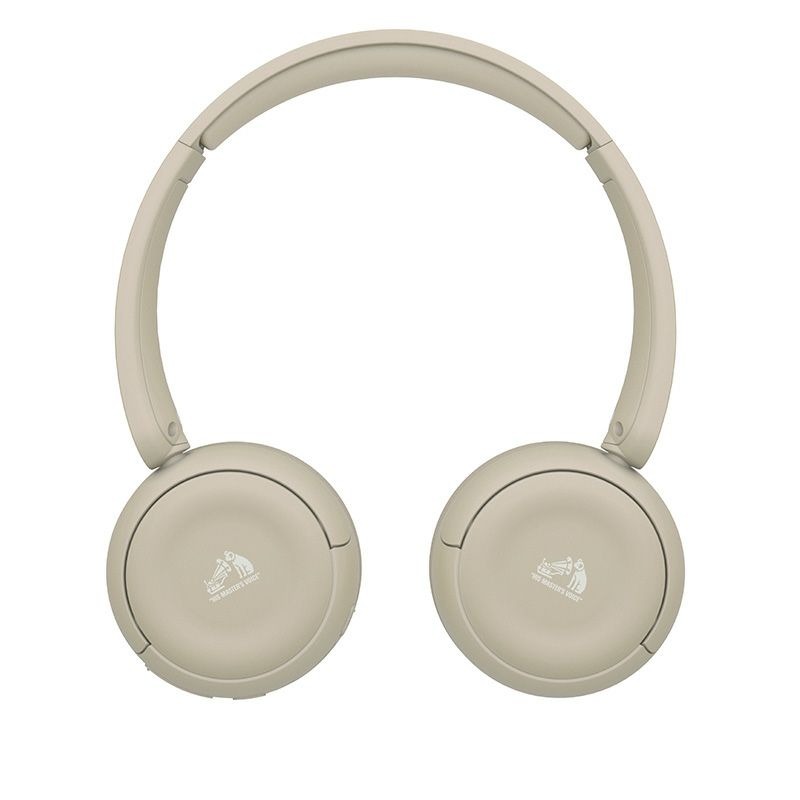
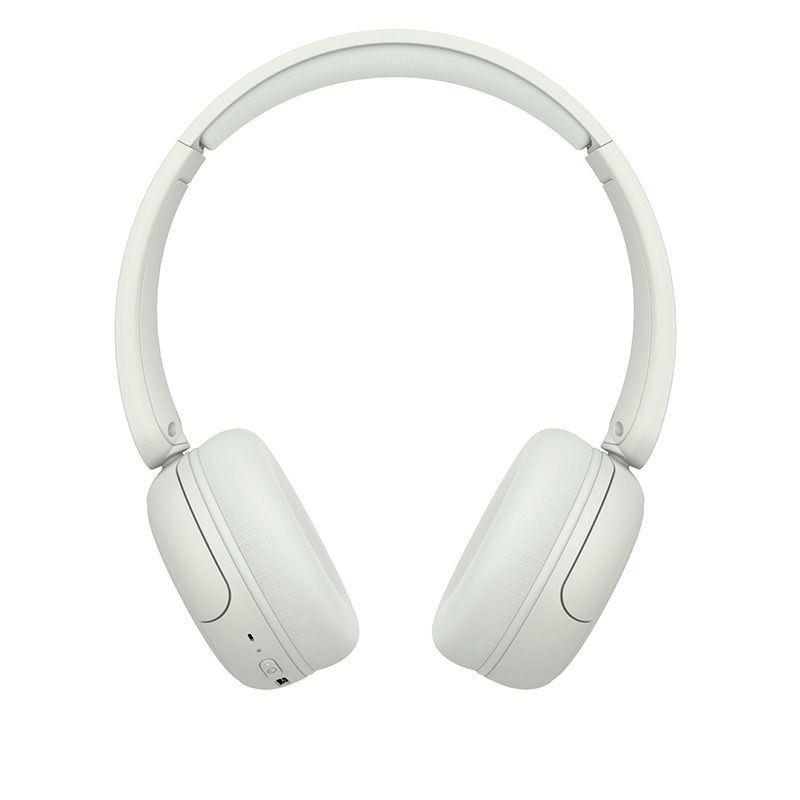
JVC Kenwood has launched the Victor HA-S60W on-ear wireless headphones in Japan. The model will go on sale in late November 2025 and will be available in four matte colors: beige, khaki, white, and black. It is priced at around ¥6,930, which is roughly $50.
The HA-S60W has a simple, lightweight design that weighs just 149 grams. The earcups swivel and fold flat, making the headphones easy to wear and carry. The color palette and compact build are meant to match different clothing styles, making the headset suitable for daily use.
Comfort has been given special attention. The ear pads are made of urethane foam that softens with body heat for a better fit, while the headband is designed to reduce pressure on the sides of the head.
Sound comes from 30 mm neodymium drivers tuned for clear and balanced audio. Users can choose from five sound modes: Flat, Bass, Clear, Dynamic, and Vocal, depending on what they are listening to. The headphones also include a detachable 3.5 mm cable for wired use.
The battery lasts up to 50 hours on a full charge, which takes about 2.5 hours through USB. The HA-S60W supports Bluetooth 5.4 for stable wireless connection and allows multipoint pairing so two devices can be connected at the same time. It supports SBC and AAC audio codecs along with SCMS-T protection for streaming.
The Victor HA-S60W is compatible with the Victor Headphones app on iOS and Android. Through the app, users can customize button functions, create a custom sound mode, and manage updates directly from their phone.
For more daily updates, please visit our News Section.
In 2025, USB flash drives are far from obsolete. With SSD speeds, USB-C support, and capacities reaching up to 2TB, they serve as fast, reliable tools for content creators, professionals, students, and everyday users.
Whether you’re transferring 4K video, backing up a phone, or archiving large files offline, these flash drives deliver. Here are the best options currently available.
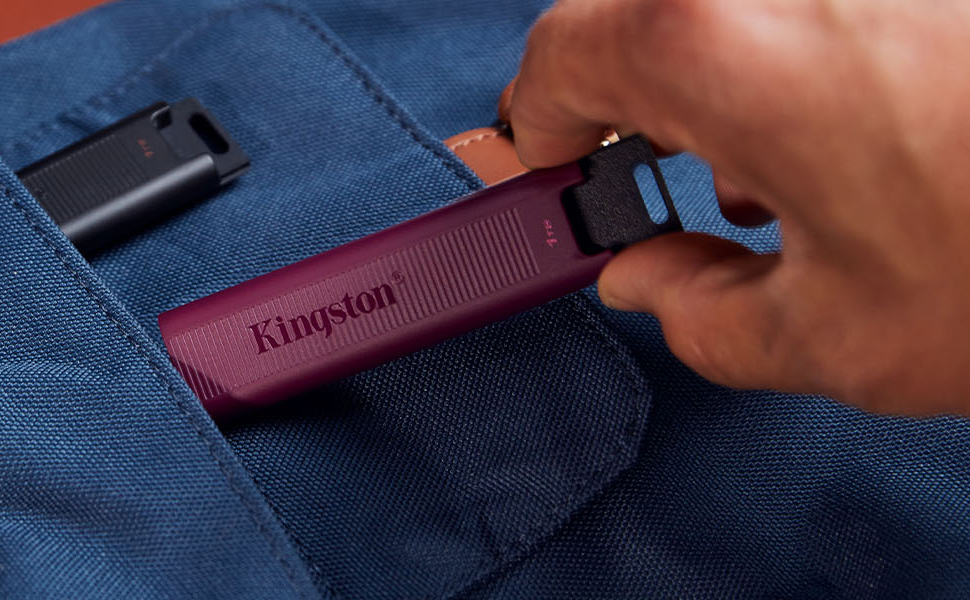
Kingston’s DataTraveler Max delivers excellent speed for a flash drive. It uses USB 3.2 Gen 2 and reaches up to 1,000MB/s read and 900MB/s write speeds. It comes in USB-C and USB-A models and is available in 256GB, 512GB, and 1TB capacities.
The plastic casing features a ridged texture and a keyring loop for portability. It works across Windows, macOS, Linux, and Chrome OS without any additional drivers. This model is ideal for fast transfers of 4K video or large photo libraries.
Price: Starts at $36 for 256GB
2. Adata UE800 (USB 3.2 Gen 2, USB-C)
The Adata UE800 supports read and write speeds up to 1,000MB/s and is available in capacities ranging from 128GB to 2TB. It uses a USB-C connector with a capless sliding mechanism, which helps prevent lost covers.
The drive supports both Android and iPhones, as well as desktops and laptops across major operating systems. Adata includes its Backup ToGo software for automated local and cloud backups. This drive suits users looking for speed, capacity, and seamless Type-C connectivity.
Price: Starts at $27 for 128GB
3. SanDisk Extreme PRO Dual Drive (USB-A + USB-C)
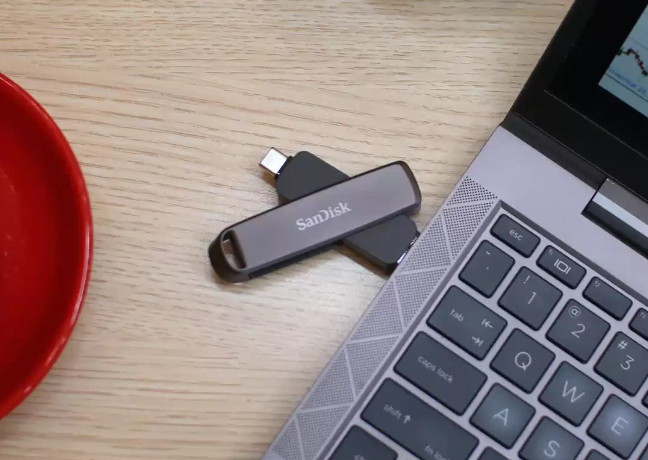
The SanDisk Extreme PRO Dual Drive combines high performance with dual-port versatility. It features both USB-C and USB-A connectors and delivers up to 1,000MB/s read and 900MB/s write speeds.
The metal enclosure adds durability, and the drive is compatible with Android phones, tablets, laptops, and desktops. SanDisk also includes 128-bit encryption and support for its Memory Zone app, enabling easy file backup and management.
Price: Starts at $54.99 for 256GB
4. Transcend ESD310 (USB-A + USB-C)
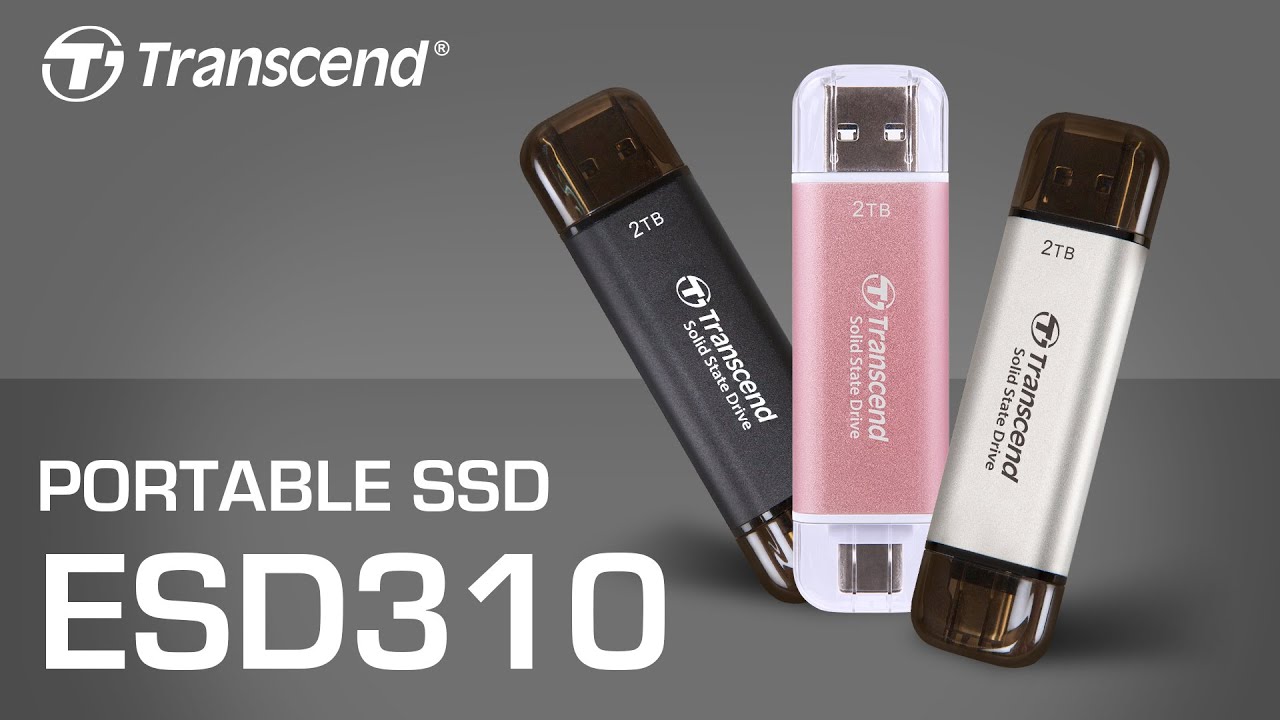
The Transcend ESD310 doubles as both a flash drive and a portable SSD. It delivers up to 1,050MB/s read and 950MB/s write speeds and includes both USB-A and USB-C connectors in one body.
Capacities go up to 2TB, and it supports all major platforms, including Android, Windows, macOS, iOS, and ChromeOS. Transcend includes security features like disk lock and AES encryption, with backup tools available via its Elite software.
Price: Starts at $27 for 128GB
5. SanDisk Extreme Fit USB-C
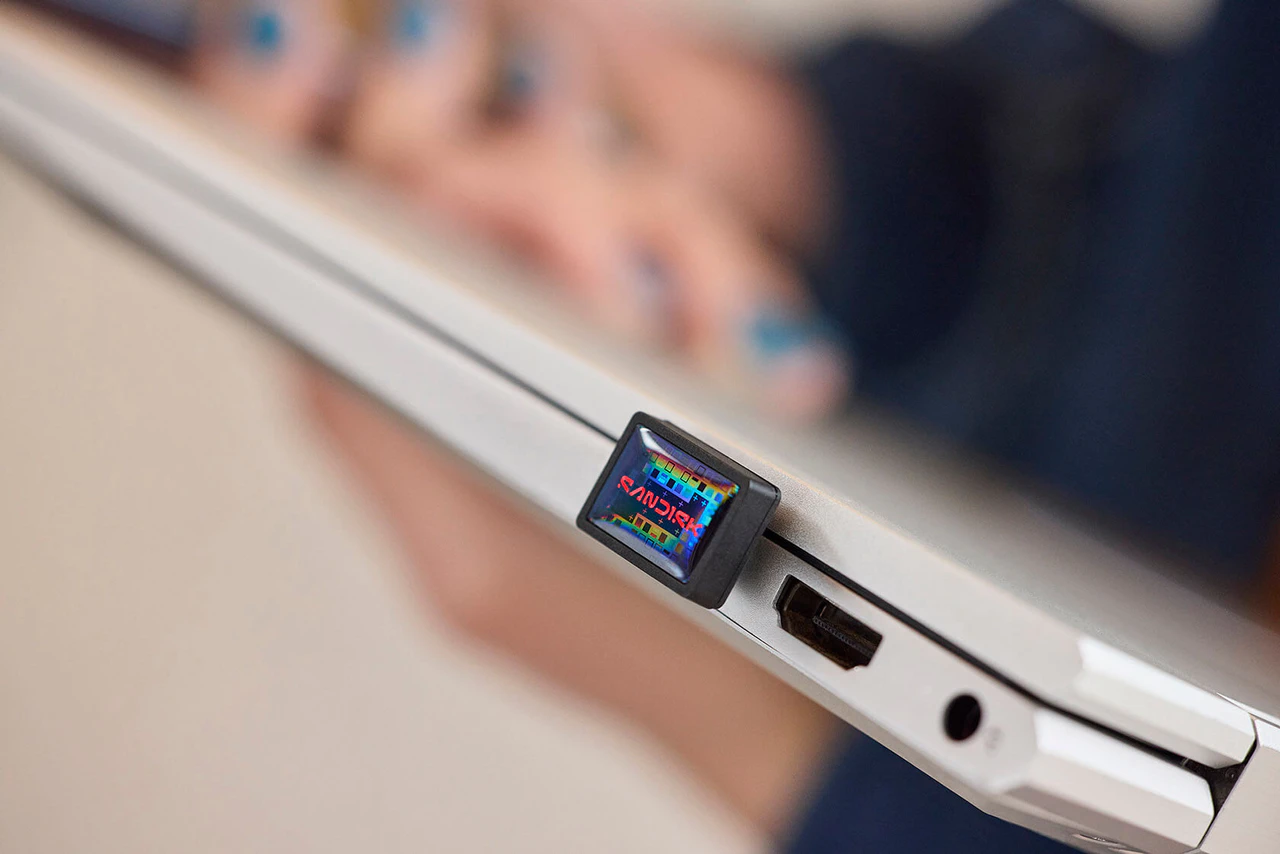
The SanDisk Extreme Fit USB-C is built for those who want compact storage that stays plugged in. It uses USB 3.2 Gen 1 and reaches read speeds up to 400MB/s. Capacities range from 64GB to 1TB.
The tiny form factor is ideal for use with laptops, tablets, and other Type-C devices. The drive also supports the SanDisk Memory Zone app for backup and file management. It works best as a set-it-and-forget-it storage expansion for devices with limited onboard space.
Price: Starts at $14.99 for 64GB
For more daily updates, please visit our News Section.
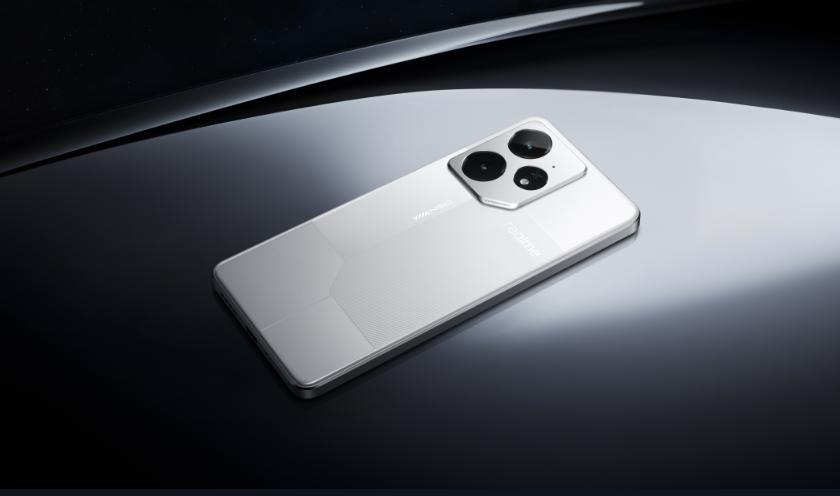
Several Snapdragon 8 Gen 5 phones are expected to launch in the coming days. The rumored devices include the OnePlus Ace 6T, Vivo S50 Pro Mini, Moto X70 Ultra, Oppo K13 Turbo Pro, and a Meizu phone. Now, a new leak suggests that the Realme Neo 8 could also be equipped with the said chipset.
Realme Neo 8 key specifications tipped
Alleged Realme Neo 8 specs leak
As seen, reliable tipster Digital Chat Station has revealed key specifications of an upcoming Realme phone without mentioning its name. However, it is widely speculated that it could be the Realme Neo 8.
The leak reveals that the alleged Realme Neo 8 will feature a 6.78-inch OLED panel with a flat design. The LTPS screen will offer a 1.5K resolution and an ultrasonic in-screen fingerprint sensor.
The Neo 8 is said to be equipped with the Snapdragon 8 Gen 5 chipset and a massive silicon-based battery of around 8,000mAh. Since it packs a large battery, this performance-focused phone is expected to offer exceptional battery life.
For photography, it will feature a 50-megapixel main camera backed by a large sensor. While it is not mentioned in the leak, it is expected to ship with Realme UI 7-based Android 16.
The Realme Neo 8 is expected to succeed the Dimensity 9300 Plus-powered Realme Neo 7, which debuted in December 2024. Therefore, the Neo 8 may break cover next month (December).
Realme Neo 7
The Neo 8 series is also expected to include a Dimensity 8500-powered phone. This device may debut as the Realme Neo 8 SE in the first quarter of 2026.
In related news, Realme is gearing up to launch the Realme GT 8 Pro in the global market. While it is set to debut on Nov. 20 in India, it will hit the European markets on Nov. 24.
For more daily updates, please visit our News Section.
Honor has officially teased its upcoming 500 series smartphones through its Weibo handle. The lineup, which includes the Honor 500 and the Honor 500 Pro, is said to feature “all-round flagship-level configurations.” The brand has not disclosed launch details or specifications, but early leaks and official teasers give a fair idea of what to expect.
Honor 500 series’ design teased
Honor 500 series teaser
According to Honor’s teaser images, both models will feature an ultra-slim body, confirming earlier leaks that suggested a sleek and lightweight design. Another poster (shown below) that is being circulated in Chinese social media platforms show that the series will introduce a new horizontal racetrack-style rear camera layout that bears resemblance to the iPhone Air’s design language.
The Honor 500 will feature a dual-camera setup, while the Honor 500 Pro model will include three cameras arranged horizontally. Notably, the Pro version seems to feature a dedicated camera button, enabling quick capture and zoom controls.
Honor’s engineer mentioned that the entire lineup will run on Snapdragon 8 series chipsets and come with enhanced gaming performance powered by the brand’s Phantom Engine 3.0 technology.
Honor 500, 500 Pro specifications (rumored)
Honor 500 series teaser
As per early reports, the Honor 500 series will feature a 6.55-inch OLED display with 1.5K resolution, 120Hz refresh rate, and 4,320Hz PWM dimming. The phones are expected to ship with MagicOS 10 based on Android 16.
Camera specifications include a 50-megapixel front shooter, a 200-megapixel OIS-enabled main sensor, and a 50-megapixel ultra-wide lens, while the Pro model could add a 64-megapixel periscope telephoto lens.
Powering the devices are expected to be Snapdragon 8s Gen 4 and Snapdragon 8 Elite chips, supported by an 8,000mAh battery with 80W fast charging and 50W wireless charging for the Pro. Additional features may include dual speakers, infrared, NFC, and IP68/69 dust and water resistance.
The Honor 500 series is speculated to launch in China on Nov. 24.
For more daily updates, please visit our News Section.
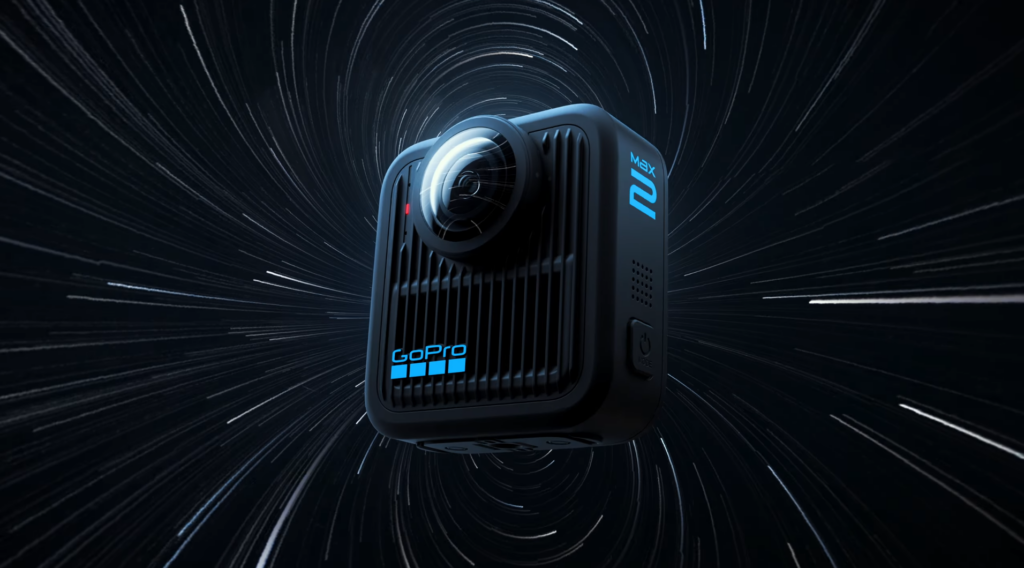
GoPro has launched three new products in India: the MAX2, LIT HERO, and Fluid Pro AI. These devices are designed for 360-degree video, lifestyle recording, and AI-based stabilization. The lineup was first introduced globally in September 2025 and is now officially available in the Indian market.
MAX2: Professional 8K 360 Camera
The GoPro MAX2 is designed for creators who want high-quality 360-degree footage. It records in True 8K and also supports 5.6K at 60fps and 4K at 100fps. The camera includes Max HyperSmooth 360 stabilization, AI-assisted editing, and cloud-based storage support for subscribers. It is also the only 360 camera in its segment to feature built-in GPS.
The MAX2 has a rugged body that is waterproof up to 5 meters. It features twist-and-go replaceable lenses, invisible mounting options, folding fingers, and 16 mounting points. The 1960mAh Enduro battery is built to perform well even in low temperatures. The camera measures 64 × 69.7 × 48.7 millimeters and weighs 195 grams.
It uses a 1/2.3-inch sensor paired with an F1.8 lens offering a 14–26 millimeter equivalent focal length. Video recording options include 8K30, 5.6K60, and 4K100 in 360 mode, as well as 4K60 and 1080p60 in single-lens mode. It supports GP-Log, 8-bit and 10-bit color, and up to 120 Mbps bitrate. Photo capture goes up to 29MP for 360 images and 12MP in single-lens mode, with burst, night, and time-lapse modes. RAW photos are supported in a 4:3 aspect ratio.
For audio, the MAX2 includes six microphones that capture 360, stereo, and directional sound while minimizing wind noise. It also supports wireless audio accessories. Connectivity options include Wi-Fi 6, Bluetooth 5.3, GPS, and USB-C 3.0. The camera supports 13 voice commands, automatic cloud uploads, and operates between -10°C and 35°C.
LIT HERO: Lifestyle Camera with Built-in Light
The LIT HERO is a compact lifestyle camera made for everyday use. It weighs only 93 grams and comes with a built-in light for flexible shooting in different environments. It records 4K video at 60fps, supports 2x slow motion, and attaches magnetically for easy mounting. The device is waterproof up to 5 meters and powered by a 1255mAh Enduro battery that provides more than 100 minutes of continuous 4K recording.
The camera measures 56.6 × 48.4 × 29.45 millimeters and features a 1/2.8-inch CMOS sensor with 12MP resolution, an F2.3 aperture, and a 15mm equivalent focal length. It records 4K 16:9 video at 60, 50, 30, and 25fps, 4K 4:3 at 30 and 25fps, and 1080p 16:9 up to 60fps. It supports 8-bit color, a 60 Mbps bitrate, and H.265 or H.264 encoding. Photos are captured in 12MP JPG format, and users can extract 11MP stills from 4K footage.
It features two microphones, Wi-Fi 5, Bluetooth 5.2, and USB-C connectivity. The LIT HERO includes QuickCapture, voice control with 8 commands in 11 languages, and automatic cloud uploads. It operates between -10°C and 35°C.
Fluid Pro AI: Multi-Camera Gimbal
The Fluid Pro AI is a 3-axis gimbal made for GoPro cameras, smartphones, and compact point-and-shoot models weighing up to 400 grams. It features AI-based tracking that automatically follows faces or bodies in the frame, along with a built-in fill light for even lighting.
The gimbal allows 335-degree tilt and roll, unlimited 360-degree pan rotation, and offers up to 18 hours of battery life. It can also serve as a power bank while recording. It connects to the GoPro Fluid app, allowing users to control shutter, zoom, and focus remotely.
The device supports multiple cameras, comes with a limited lifetime warranty, and includes a tripod base, AI module, mounting brackets, USB-C cables, and a zippered case.
Pricing and Availability
The GoPro MAX2 is priced at ₹54,999 and comes with a 64GB SD card in the launch bundle. The LIT HERO will be priced at ₹28,500 and available in the first week of December 2025. The Fluid Pro AI gimbal will cost ₹23,000 and go on sale in early January 2026.
All three products will be available through Amazon India, Flipkart, Croma, Reliance Digital, and authorized GoPro retailers across the country.
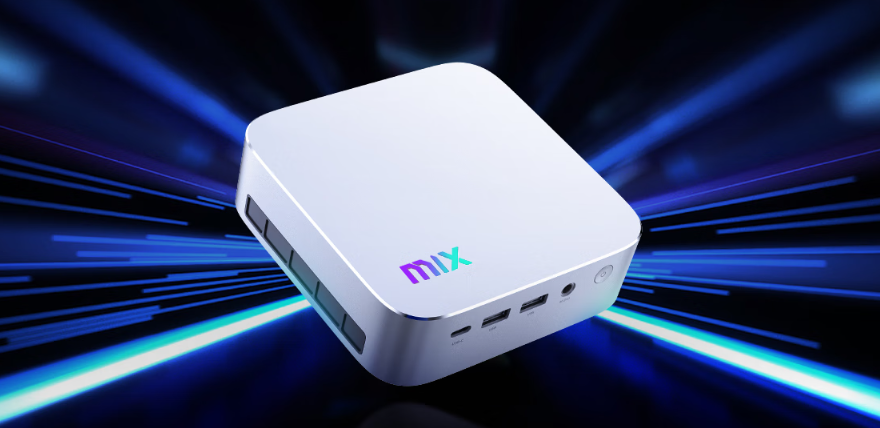
Thunderobot has launched two new variants of its ultra-compact Mix NUC mini PC, featuring AMD‘s latest Ryzen AI 9 HX 370 and Ryzen 7 H 255 processors. Both configurations come with 32GB of DDR5 RAM and a 1TB NVMe SSD. The Ryzen 7 H 255 version is priced at 3,999 yuan ($562), while the high-end Ryzen AI 9 HX 370 variant is available for 6,999 yuan ($982).
Thunderobot Mix NUC Mini PC Specifications
The Mix NUC mini PC features a precision-machined metal body. The chassis measures 128 × 128 × 42mm, including foot pads, and has a total volume of 0.68 liters.
The higher-end model uses AMD’s Ryzen AI 9 HX 370 chip with Zen 5 architecture, featuring 12 cores, 24 threads, and a 5.1GHz boost clock. It integrates Radeon 890M graphics based on RDNA 3.5 and an XDNA 2 NPU delivering up to 50 TOPS of AI power, supported by 24MB cache for smooth multitasking. The other variant uses the AMD Ryzen 7 H 255 processor, which comes with 8 cores and 16 threads.
Both variants come with dual SO-DIMM DDR5 slots and dual M.2 PCIe 4.0 SSD slots, with one slot preinstalled with a 1TB SSD. The mini PC supports Wi-Fi 6 and Bluetooth 5.3 for wireless connectivity. It includes one USB-C (40Gbps), two USB 3.2 Gen 2, four USB 3.2 Gen 1 ports, one HDMI 2.0, one DisplayPort 1.4, and a 2.5G Ethernet port.
Thunderobot has equipped the system with a new Y+U heat pipe cooling solution. The setup features dual heat pipes, a large 72,284 mm² fin area, and a 20% increase in cooling coverage.
The Mix NUC ships with Windows 11 pre-installed. Thunderobot has tested the system across over 50 factory procedures, including drop tests, thermal stress, and EMI tests.
In related news, Thunderobot also released the Mix G2 Mini Gaming PC earlier today, featuring up to an RTX 5090 GPU and an Intel Core Ultra 9 275HX processor.
For more daily updates, please visit our News Section.
We use cookies on our website to give you the most relevant experience by remembering your preferences and repeat visits. By clicking “Accept”, you consent to the use of ALL the cookies.
This website uses cookies to improve your experience while you navigate through the website. Out of these, the cookies that are categorized as necessary are stored on your browser as they are essential for the working of basic functionalities of the website. We also use third-party cookies that help us analyze and understand how you use this website. These cookies will be stored in your browser only with your consent. You also have the option to opt-out of these cookies. But opting out of some of these cookies may affect your browsing experience.
Necessary cookies are absolutely essential for the website to function properly. This category only includes cookies that ensures basic functionalities and security features of the website. These cookies do not store any personal information.
Any cookies that may not be particularly necessary for the website to function and is used specifically to collect user personal data via analytics, ads, other embedded contents are termed as non-necessary cookies. It is mandatory to procure user consent prior to running these cookies on your website.