Apple CEO, Tim Cook is on a visit to Germany and after attending the Oktoberfest, he stopped by the office of Blinkist which is a Berlin-based startup. While at Blinkist office, he sat with German publication Stern to talk about the new iPhones (1, 2, 3) and the Apple TV+ service.
The senior Apple official highlighted that his company always tries to ‘keep the price of their offerings as low as possible’. Due to this strategy only, Apple was able to price the iPhone 11 for € 800 which is €50 less than last year’s iPhone XR.
Speaking about Apple TV+, he said that the subscription costs €5 a month which is about 40 per cent more affordable than its key competitor, Netflix’s base plan that costs €8 and does not even include HD streaming. With that being said, his company believes that Netflix is not afraid of Apple’s new service, as most customers tend to subscribe to multiple video streaming services rather than just one, in order to gain access to the wide variety of content that is available out there.
Tim also talked about a potential issue that his company might face in the future. He pointed out that Elizabeth Warren, who is a candidate for the US presidency, wants to break up large tech companies, due to which his company could face some serious implications.
While Apple is facing pressure from the US Supreme Court based upon claims that the company has monopolized the iOS App Store, Tim defended his company and said that about 86 percent of all the applications on the App Store are free to download and the 30 percent fees are justifiable as this allows the come to ensure that only applications matching its standard reach the customer.
Even though consumers seem to have a positive opinion about Apple’s latest hardware, software and service offerings; it might have a rocky road ahead due to fierce competition, issues like the splitting of large companies and criticism from the US supreme court which was previously mentioned.
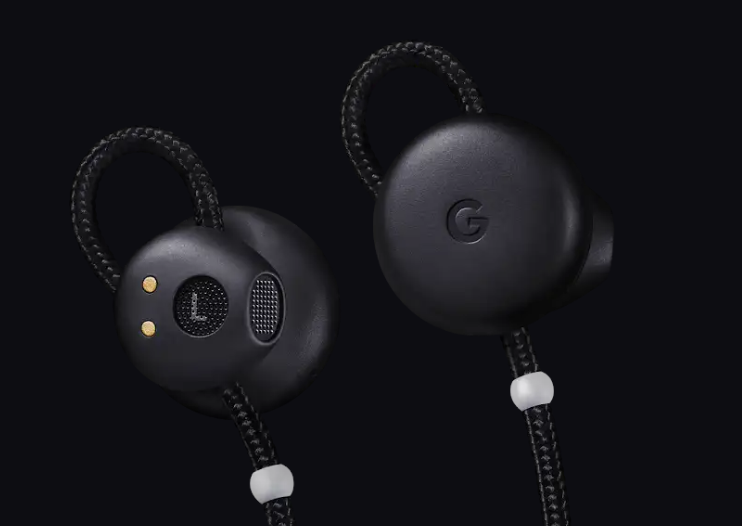
The Pixel Buds launched alongside the second-gen Pixel back in 2017. The Bluetooth headphones with Google Assistant and real-time translation got lukewarm reviews and wasn’t a hit. It has now been reported that the Pixel Buds 2 may arrive this year on October 15.
There are no details about Google’s new earphones. Of course, it should still have Google Assistant built-in, but its design is a mystery. Will it keep the design of its predecessor i.e. with a cable connecting both earbuds or will it be true wireless earbuds?
We sure do expect some big changes when Google unveils the Pixel Buds 2 later this month. With those changes may come an increase in price too but they will probably keep it under the $200 mark.
Another audio product we expect Google to announce at the Made by Google event is a new Google Home Mini smart speaker, though it is reported it will arrive as the Nest Mini since Google’s smart home products are now under the Nest brand.
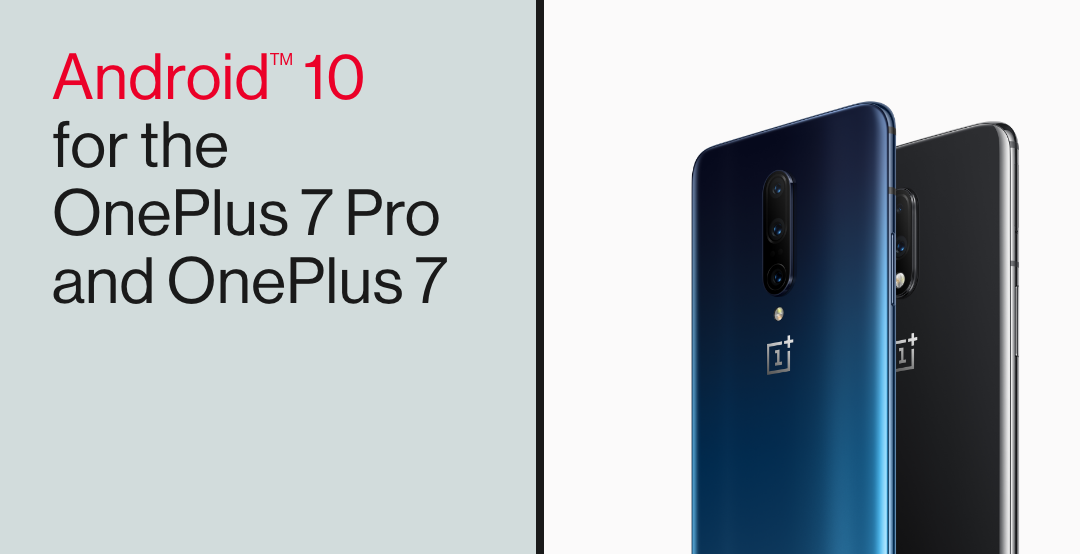
OnePlus has been fast in rolling out update for its flagship smartphones and the company did the same with the OnePlus 7 series. It has been almost two weeks since OnePlus started rolling out Android 10 update for the OnePlus 7 and 7 Pro smartphones.
However, many users of those devices have reported on Reddit and official OnePlus forums that they haven’t received the new Android 10 update. While the rollout was said to be a phased manner, which should take only a few days.
Now, it’s been around 12 days since OnePlus announced the rollout for the 7 and 7 Pro smartphones and still not everyone has received the update. This could mean that the update has been halted or delayed by the company but the company has not yet announced anything related to this.
The Chinese company started rolling out the stable build of Android 10 after two Open Beta builds for the OnePlus 7 and 7 Pro. The stable update brings a host of new Android 10 features alongside OxygenOS 10 features such as notifications segregation, Wi-Fi sharing, a new game space, and a smarter ambient display.
The complete change log of the OxygenOS 10 includes following:
System
Upgraded to Android 10
Brand new UI design
Enhanced location permissions for privacy
New customization feature in Settings allowing you to choose icon shapes to be displayed in the Quick Settings
Full Screen Gestures
Added inward swipes from the left or right edge of the screen to go back
Added a bottom navigation bar to allow switching left or right for recent apps
Game Space
New Game Space feature now joins all your favorite games in one place for easier access and better gaming experience
Smart display
Intelligent info based on specific times, locations and events for Ambient Display (Settings – Display – Ambient Display – Smart Display)
Message
Now possible to block spam by keywords for Message (Messages – Spam – Settings -Blocking settings)
The company has already confirmed that the Android 10 public beta for OnePlus 6 and OnePlus 6T users in China will be made available in late October while the stable version will be arriving in late November.
Further, it has also confirmed that the update for OnePlus 5 and OnePlus 5T will be available by second quarter of 2020 in China. OxygenOS builds are known for arriving shortly after the release of HydrogenOS builds. However, there is no official confirmation yet on the OxygenOS based Android 10 updates for OnePlus 6 and OnePlus 5 series smartphones.
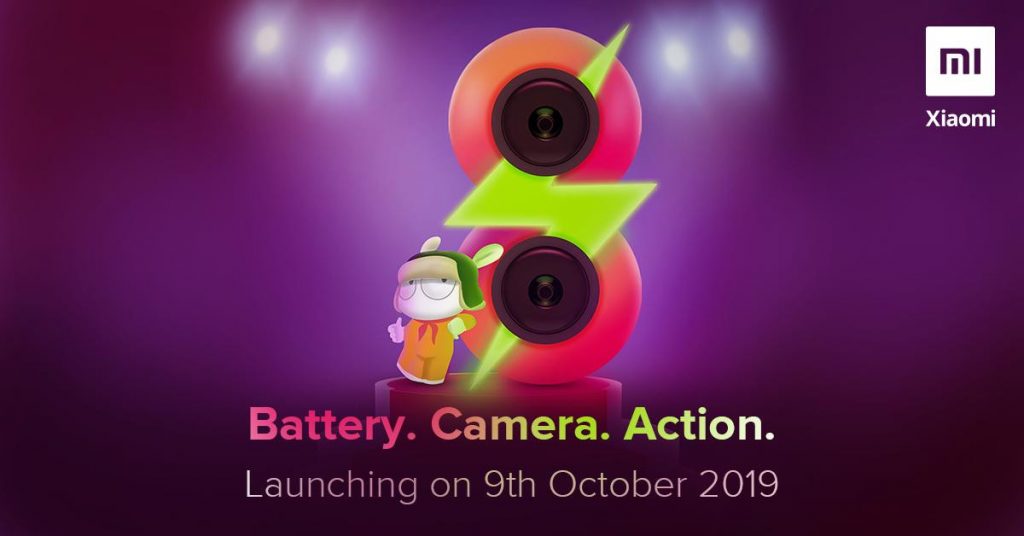
Xiaomi launched the Redmi 8A smartphone in the Indian market a couple of weeks ago. Now, the company has confirmed that the Redmi 8 smartphone will make its debut in India on 9th October.
In the teaser image shared by the company for announcing the launch date, Xiaomi seems to be focusing on two aspects for promoting the device — battery and camera. Manu Kumar Jain, Xiaomi India MD has teased the smartphone as “battery champion” and says that you can “play more”, “click more”, “watch more”, and “store more”.
While the company has not revealed the specifications of the Redmi 8, the phone was recently listed on TENAA and was also spotted on Google Play Console, revealing almost everything when it comes to specifications.
As per the leaks, the Redmi 8, which carries model number M1908C3IC, will come with 6.21-inch HD+ display offering 1520 x 720 pixels screen resolution at 320PPI pixel density. Under the hood, the device will be powered by the Qualcomm Snapdragon 439 mobile platform, along with 3GB of RAM.
The listing also reveals that the smartphone will come running Android 9 Pie operating system out-of-the-box with the company’s own MIUI 10. In the camera department, the smartphone will have a dual-camera setup on the back consisting of a 12MP primary Sony IMX363 sensor and a 5MP depth sensor.
On the front side, the device will come equipped with an 8MP snapper for taking selfies and video calling. Earlier, it was revealed that the phone will pack a massive 5,000mAh battery and the device is also expected to have a rear-mounted fingerprint sensor. The phone is also speculated to have USB Type-C port at the bottom.
Tipster Ishan Agarwal had earlier revealed that the Redmi 8 will be made official in variants such as 3GB RAM with 32GB storage and 4GB RAM with 64GB storage in China. The device is expected to come in four colors — Phantom Red, Fairy Green, Carbon Ash, and Sapphire Blue. Since the Redmi 7 was launched in India for ₹7,999, we expect similar pricing for this Redmi 8 smartphone.
Huawei‘s US ban is now a storied saga in smartphone history. For those not in the know, the US has banned the company and threatened sanctions against anybody doing selling or buying technology from the Chinese company. They’ve also banned the sale of US products or technology to any company that might use Huawei technology. This has also apparently extended to other countries, as India is currently under pressure from the US as well.
In an interview with Economic Times, sources within India claimed that the US delegation urged that New Delhi and Washington should “work together only with trusted sources” when deploying 5G. The implication, they said, was that Chinese telecom gear makers such as Huawei should be kept out of partnering in next generation telecom technology.
Huawei has on its part made public statements made earlier in India on security. “Huawei is part of the positive initiatives to improve India’s network security and capability which goes beyond just 5G,” its India CEO Jay Chen had said. As of right now, then company is still actively doing business in India, even launching some new products there.
Huawei is a world leader in 5G technology along with South Korean Samsung and offers a definite price advantage when compared to European players like Ericsson and Nokia. Some Indian officials had earlier doubted if the country would be able to attain the goal of 5G coverage across the rural landscape if it summarily kept out a major player like Huawei.
In other news, Huawei recently launched the Mate 30 and Mate 30 Pro flagship in another country for the first time earlier today, that being in Malaysia. The launch of the Mate 30 series devices outside China comes at a time when there’s uncertainty over access to Google apps and services through Huawei’s phones, so it’ll be interesting to see how it performs.
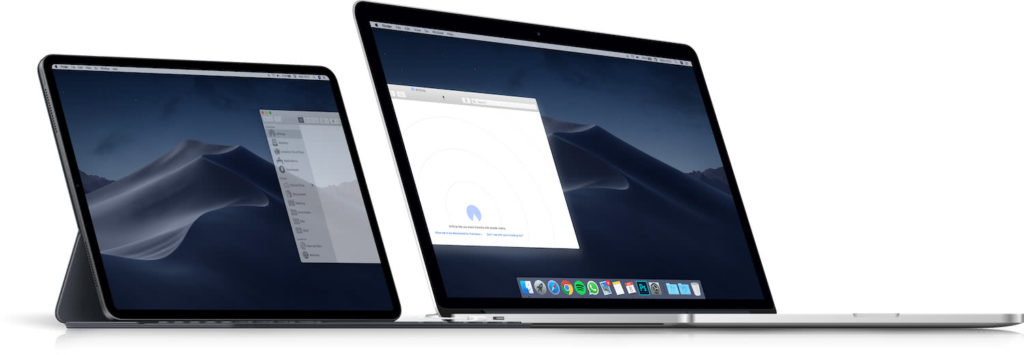
With the latest macOS Catalina and iPadOS, Apple introduced an all new productivity focused feature called ‘sidecar’. It allows device owners to utilise their iPad as a secondary display to their Mac computers. However, long before Apple baked this feature into its devices, an app called ‘Duet Display’ has been providing users with a similar experience which is also available for PCs running Windows 7 or higher.
To take things a step further and expand their customer base, the developers have now launched Android and Chromebook versions of the same. Therefore, users can now use their Android smartphone or tablet as a secondary display for both Mac and PC.
Due to the touchscreen present on tablets and smartphones, Duet Display opens a whole new dimension of interaction with desktop centric operating systems, especially MacOS that natively does not support touch input.
The application makes perfect sense for users who travel with a laptop and tablet, as they can now increase their productivity several folds due to the addition screen real estate. In terms of features, ‘Duet Display’ supports gesture controls, customizable shortcuts and a user friendly ‘Touch Bar’.
The Android version of the application is currently offered at a discounted price of $ 9.99 which is significantly less than the standard $19.99 asking price.
Click here to visit Duet Display website and navigate to the downloads section.
OnePlus recently launched the brand new OnePlus 7T in Inda, with many believing we’d also see the OnePlus 7T Pro during the launch event. Unfortunately, nothing much was said about the device at the event, leaving many questioning when we’d see it. Thankfully, it seems the company is gearing up for a mid-October launch.
HDFC Bank’s SmartBuy offer page has revealed the availability of the upcoming smartphone on both online and offline channels. As per the offer page, the OnePlus 7T Pro will go on sale on Amazon starting from October 15. However, the page reveals that the launch date is tentative instead of confirmed.
On top of this, the smartphone will be available for purchase from OnePlus official online store along with OnePlus exclusive stores starting from October 10, 2019 which seems rather unlikely. The OnePlus 7T Pro will be available on major retail stores including Croma, RelianceDigital, Vijay Sales, Bajaj Electronics, Poojara Telecom, and Top 10 Mobiles.
The OnePlus 7T Pro will have a 6.65-inch Fluid AMOLED display with notch-less design. The Snapdragon 855+ will be powering the smartphone and it will be housing a large battery of 4,085mAh with Warp Charge 30T support. Its triple camera system will include a 48-megapixel primary lens, an 8-megapixel telephoto lens and a 16-megapixel ultrawide lens.
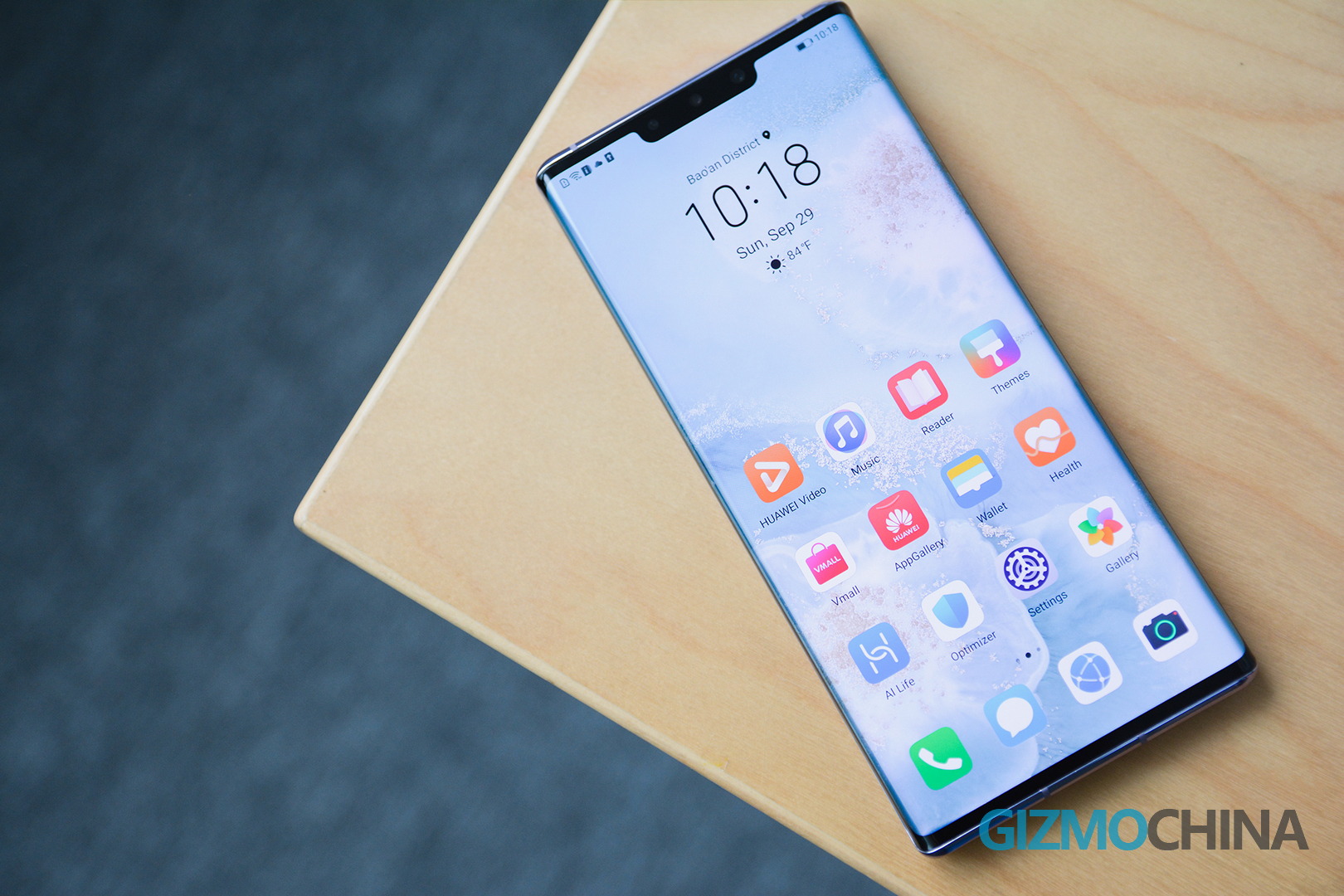
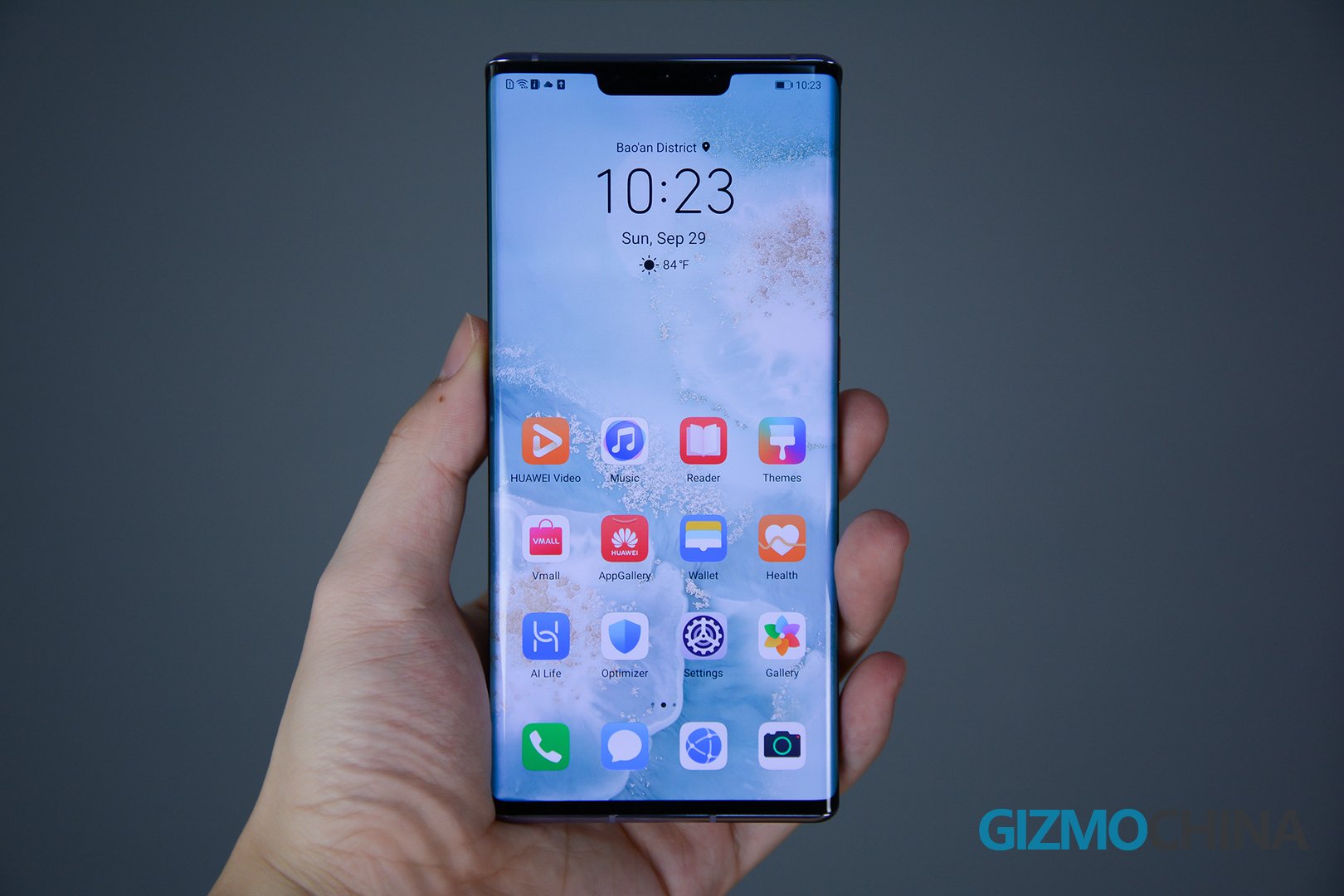
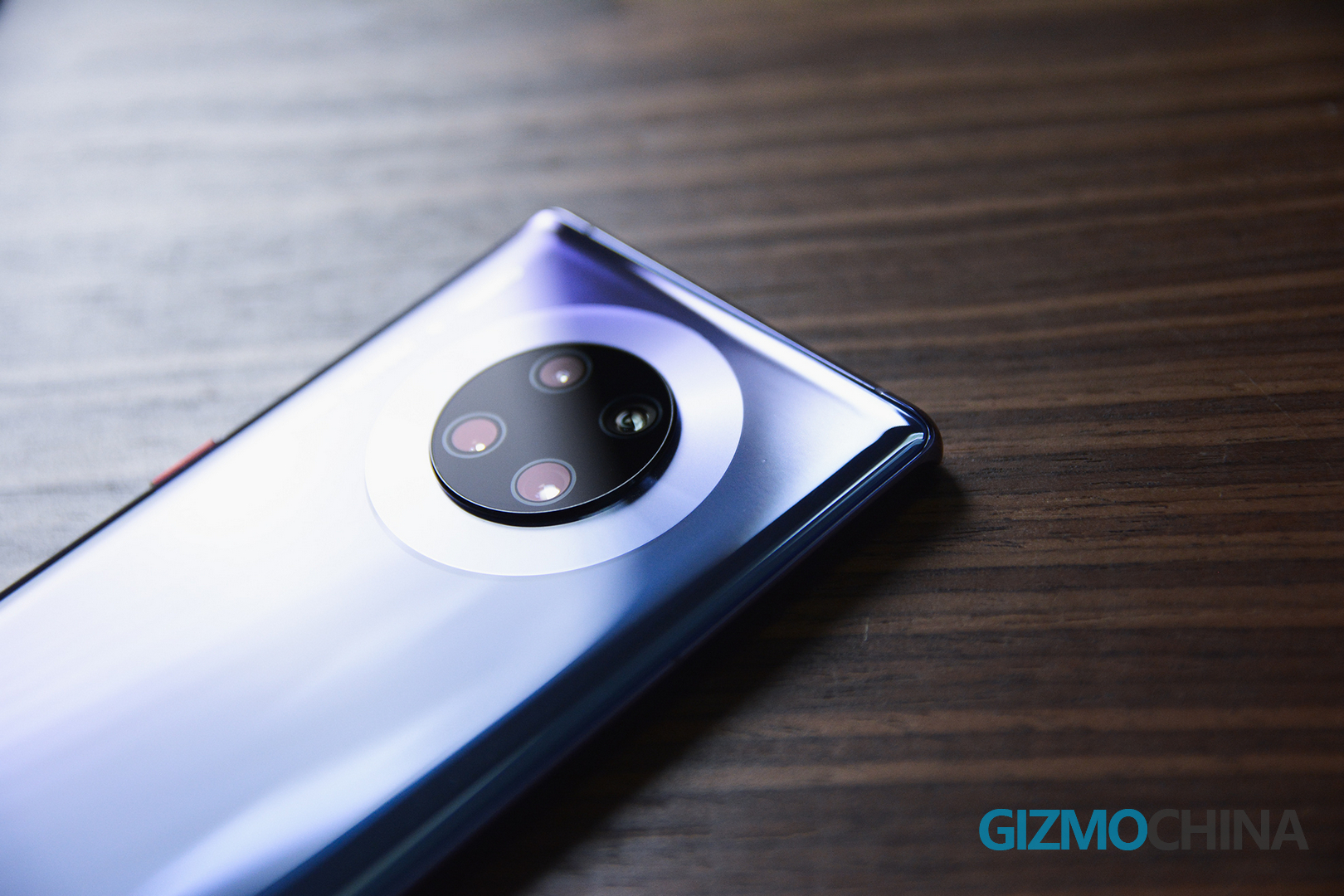
Huawei recently launched the Mate 30 and Mate 30 Pro flagship smartphones which are now available for purchase in its home market China. Today, the Chinese giant has launched the Mate 30 series smartphones in Malaysia.
The launch of the Mate 30 series devices outside China comes at a time when there’s uncertainty over access to Google apps and services through Huawei’s phones. It’s noteworthy that the Mate 30 series is the first from Huawei to come without access to Google’s services and apps after ban from the United States.
In Malaysia, both the smartphones come in two color options — Space Silver and Black. While the Mate 30 is priced at RM2,799, the Pro variant costs RM3,899. The company will soon reveal more details about its availability.
The company is also offering gifts worth RM1,115 with the purchase of the Mate 30 series in Malaysia, which includes a wireless in-car SuperCharge charger, a DJI Osmo Mobile 3 gimbal, a back case, and Huawei Care with extended one year warranty and six months screen crack warranty.
The launch of the Huawei Mate 30 series in Malaysia is a major move from the Chinese giant. Till now, the phones were limited to the Chinese market only, making Malaysia the first international market to get the Mate 30 series smartphones.
The Mate 30 series’ international launch comes just a day after it was reported that the workaround for the Google apps and services is no longer working. The workaround, which relied on LZ Play app, has been shut down after reported about the security concerns started making rounds online.
Lack of Google apps and services has virtually no impact as long as the phones are limited to the Chinese market. However, access to Google’s service is crucial when the phone comes to the international markets. While the company is pushing developers to work for its own app store named App Gallery and is willing to spend around $1 billion, it remains to be seen how it turns out.
Coming to the specifications, the Huawei Mate 30 features a 6.62-inch Full-HD+ Rigid OLED FullView display with a resolution of 1080 x 2340 pixels and an aspect ratio of 19.5:9. It is powered by the 5G-ready Kirin 990 chipset with up to 8GB of RAM and 128GB of native storage. It runs EMUI 10 based on Android 10 OS and is powered by a 4,200 mAh battery.
As for the cameras, the primary camera on the Mate 30 is a 40-megapixel sensor with an aperture rating of f/1.8. This works along with a 16-megapixel ultra-wide sensor with an aperture rating of f/2.2 and an 8-megapixel telephoto lens with an aperture rating of f/2.4.
On the other hand, the Mate 30 Pro features a 6.53-inch Full-HD+ Flex OLED Horizon Display with a resolution of 1176 x 2400 pixels and an aspect ratio of 18.4:9. The device is powered by the same octa-core Kirin 990 SoC as the Mate 30 and is available with up to 8GB of RAM and 256GB of internal storage.
It comes with a quad camera setup at the rear which consists of a 40-megapixel sensor, a 40-megapixel ultrawide lens, an 8-megapixel depth sensor and a 3D ToF sensors. The smartphone draws power from a 4,500 mAh battery with 27W wireless charging and 40W Huawei Super Charge technology.
Xiaomi has put up another product on its crowdfunding platform — Yunmi Travel Electric Cup, which is basically a combination of kettle and thermos. It is made up of 304 stainless steel material and has 400ml capacity and is up for crowdfunding for a price fo 99 Yuan, which roughly converts to $14.
It follows Xiaomi’s white colored minimal design language and weighs at around 500 grams, making it easier to carry around when travelling. The company says that it does not occupy much space in the bag or suitcase and can be stuffed into a backpack as well, making it an idea choice when travelling.
There’s a power cord hidden at the bottom of the device which is a clever move as it cannot be spotted easily, making is look clean and sleek with that minimal design. It is made up of SUS304 stainless steel which the company claims meets the requirements of GB4806 food contact grade.
Thanks to the stainless steel material, you don’t have to worry about rust and anti-fouling as well as the there’s no plastic odor. The company has used hollow design between the cup body and the inner liner to provide insulation and anti-scalding.
As per Xiaomi, the device can keep the water warm for over 3 hours after it has been unplugged from the power source. The device comes with a single high-sensitivity touch switch. When the button is clicked once, it will boil the water for about 6-8 minutes and when it’s pressed twice, it will turn on the “insulation” and keep the heating at a constant 50-degree C. It can keep the constant temperature for about 12 hours.
As we mentioned, this new Yunmi Travel Electric Cup is priced at 99 Yuan (~$14) and is currently up for crowdfunding. At the time of writing this, it has already reached 218 percent of its initial funding goal, with 13 days still remaining before the campaign closes.
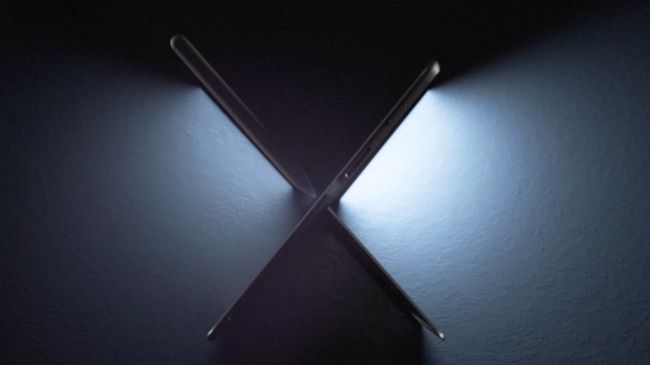
The highlight of today’s Microsoft New York event was the announcement of the Surface Neo – a dual-screen laptop with 360° hinges that allows you to use it in various forms.
Surface Neo
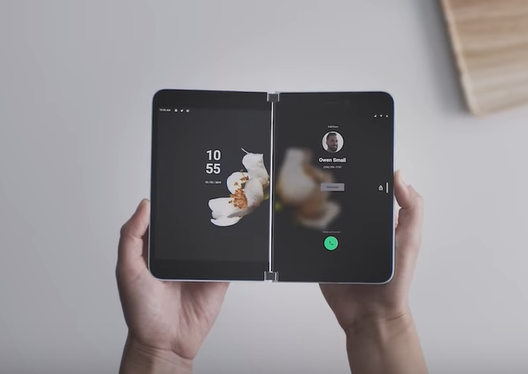
While we already had an idea about a dual-screen device from Microsoft, the company went ahead to shock us with yet another dual-screen device but this time around, a “phone” called the Surface Duo.
The Surface Neo and the Surface Duo look alike but the latter is much smaller. However, their internals is different. The biggest difference other than their sizes obviously is that the Neo runs a specially-designed version of Windows 10 called Windows 10X while the Duo runs Android.
Yes, Microsoft is working with Google on the Duo and when it arrives next year (holidays), it will mark Microsoft’s re-entry into the mobile phone business.
Surface Neo
The Surface Neo is still in development but what we saw today shows that Microsoft has gone a long way. The push till next year will allow the company to work with developers that will create programs and apps that will be able to take advantage of the device’s dual-screen.
Microsoft did show us some features and tricks. Like we mentioned above, the Surface Neo runs Windows 10X which is a stripped-down version of Windows 10 but unlike Microsoft’s previous attempts at a lite-version of its operating system, Windows 10X can run legacy programs and not just Windows apps. So all your favorite software should work on Neo but we are not sure all will be able to take advantage of its dual-screen.
Some of the features that got demoed include one called “Spanning” which will allow you to drag an already opened app from one screen to another and have it fill up both screens. Spanning was really smooth even on this prototype. No lags, no jitters.
Surface Neo also has a magnetic keyboard that attaches to the back of the device. In laptop mode, you can decide to use this keyboard or the on-screen one. If you opt for the former, which is smaller than the screen, the remaining visible display at the top becomes what is called a WonderBar. You can call this Microsoft’s version of the MacBook’s TouchBar but significantly bigger. The WonderBar can hold multiple apps including holding a minimized window of Netflix or a YouTube video or displaying gifs/emojis for a chat app. Microsoft says it is working with Netflix and Spotify to make better use of the area.
If you decide to let the gap be at the bottom, the software automatically recognizes the shift of the keyboard and turns the bottom gap into a trackpad. Since the trackpad on a lot of PCs now is made of glass, then you should get used to it pretty easily though there will be no clicking.
There are multiple ways you can use Surface Neo some of which are new such as a reading mode in which you hold it like a book with each screen showing a separate page of the book you are reading. You can also stand it vertically while using a connected keyboard, mimicking using dual monitors. You can also decide to use just one screen with the other folded backward, and with the new Surface Slim Pen, you can take down notes.
The Surface Neo has two 9-inch displays, is powered by Intel’s Lakefield processor, and will arrive in time for next year’s holidays.
Surface Duo
The Surface Duo has two 5.6-inch displays connected by 360° hinges allowing it to transform into an 8.3-inch tablet when opened. It runs Android and if you remember, Google already developed Android to work with dual-screen devices. You can run two apps on each of the screens for true multi-tasking. You can also have one display act as a virtual controller for games or a virtual keyboard for typing.
There is a Snapdragon 855 processor inside but we doubt this will be the SoC powering it when it launches by the end of 2020.
There are no cameras on the back just like the Duo and there is no mention of a camera(s) above the displays. We also do not think the final product will have a camera on the back since this is a dual-display device and the front-facing cameras can double as the rear cameras when folded backward.
We are pretty excited about the Surface Duo and Surface Neo and can’t wait for them to arrive.
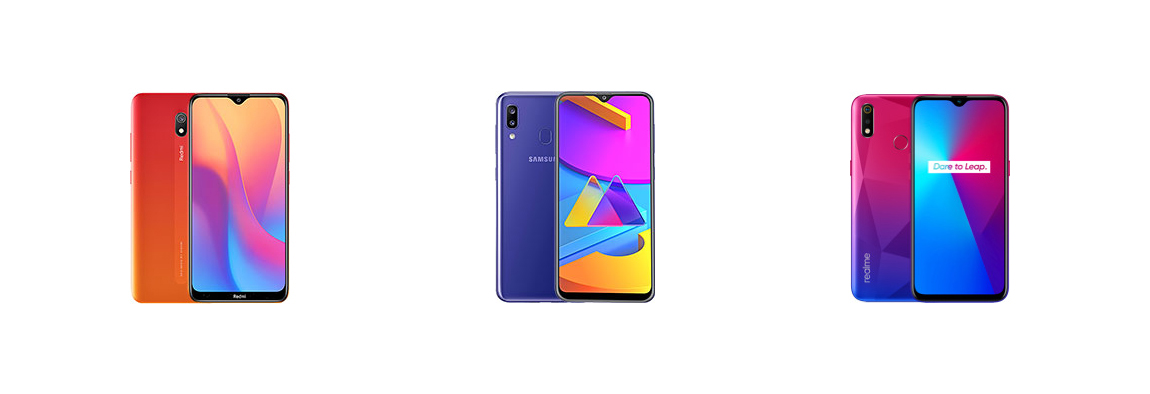
This year it is very hard for other smartphone manufacturers to beat Xiaomi in the affordable segment. The Chinese giant released a lot of affordable mid-rangers and entry-level phones which are currently among the best sellers of 2019. The latest cheap phone launched is Redmi 8A and it belongs from the most affordable Xiaomi line-up if we exclude the Redmi Go. Its value for money is huge thanks to its great camera, big battery, and high performance, that is why it is a very hot device and it is hard to find a rival. After comparing it with Realme C2 and Honor 8A, here is another comparison with entry-level smartphones from the concurrence: the new Samsung Galaxy M10s and Realme 3i.
Xiaomi Redmi 8A vs Samsung Galaxy M10s vs Oppo Realme 3i
Xiaomi Redmi 8A
Samsung Galaxy M10s
Oppo Realme 3i
DIMENSIONS AND WEIGHT
156.5 x 75.4 x 9.4 mm, 188 grams
158.4 x 74.7 x 7.8 mm, 169 grams
156.1 x 75.6 x 8.3 mm, 175 grams
DISPLAY
6.2 inches, 720 x 1520p (HD+), 271 ppi, IPS LCD
6.4 inches, 720 x 1560p (HD+), 268 ppi, Super AMOLED
Dual 13 + 5 MP f/1.9 and f/2.2
8 MP f/2.0 front camera
Dual 13 + 2 MP f/1.8
13 MP f/2.0 front camera
BATTERY
5000 mAh
4000 mAh
4230 mAh
ADDITIONAL FEATURES
Dual SIM slot
Dual SIM slot
Dual SIM slot
Design
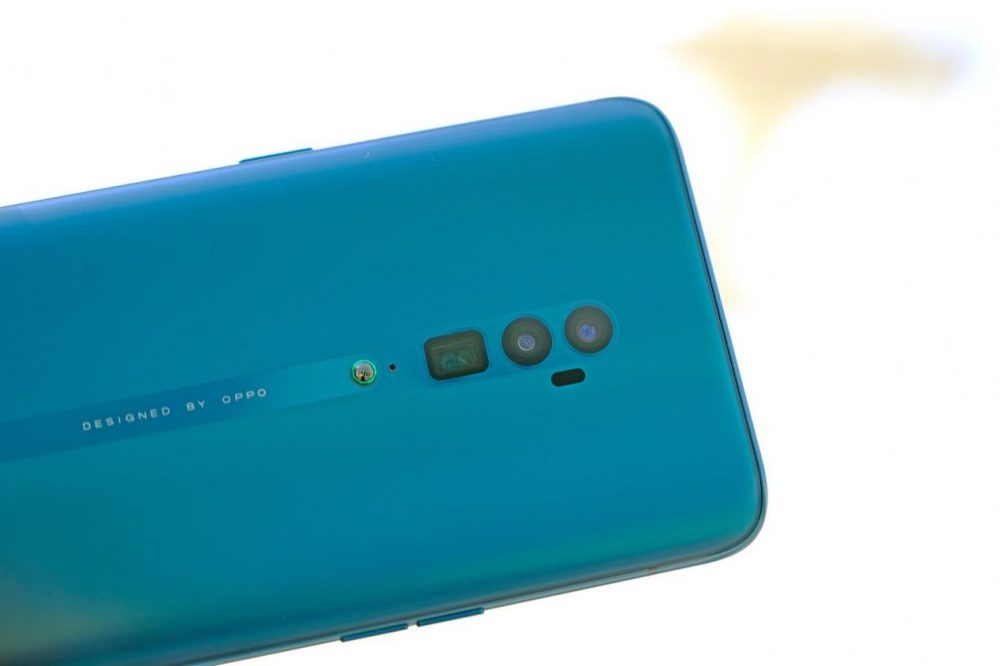
Redmi 8A adopts a brand new ergonomic design with gradient colors and a stripe in the middle of the rear cover which reminds of Oppo Reno smartphones. It is definitely too elegant and it almost does not look like an entry-level phone. It does not have a fingerprint scanner and it relies on face unlock, but this solution makes the rear side cleaner and even more elegant. Realme 3i is another beautiful phone with its diamond-like rear pattern which is available in gradient hues as well. Samsung Galaxy M10s has a traditional plastic body with a single color, so it offers nothing special in terms of design.
Display
Samsung Galaxy M10s wins the display comparison as it is the only to sport a Super AMOLED panel, despite its resolution is only HD+. Besides providing better colors thanks to the AMOLED technology, Samsung Galaxy M10s also offers a wider 6.4-inch panel which is more comfortable for advanced users. Both Realme 3i and Redmi 8A have an IPS panel with the same diagonal and the same HD+ resolution, as well as a waterdrop notch.
Specs & Software
The presence of the Helio P60 chipset and a higher-end memory configuration makes the Realme 3i more powerful and smoother than Samsung Galaxy M10s and Redmi 8A. It is the only to sport up to 4 GB of RAM and up to 64 GB of internal storage. The silver medal goes to Redmi 8A because it has a Snapdragon 439 chipset which delivers better and more stable performance than the Exynos chipset found on the Galaxy M10s. But you should not notice big differences between their performance, while Realme 3i is definitely superior with all the usage patterns. Samsung Galaxy M10s, Redmi 8A, and Realme 3i are all shipped with Android 9 Pie out of the box, customized by the custom user interfaces One UI, MIUI, and Color OS, respectively.
Camera
If we consider both the rear and the front camera departments, Realme 3i offers a more complete and improved camera experience. Its dual rear camera with bright focal aperture and an additional depth sensor is more suitable for most of the scenarios, while the higher resolution of the front camera allows capturing more detailed selfies. But photo quality is not everything: Samsung Galaxy M10s has an ultrawide sensor which is considered much more useful than depth sensors. So if you need it, go for the Galaxy M10s as the photo quality does not differ so much.
Battery
With its mammoth 5000 mAh battery, Redmi 8A is able to deliver three days of battery life with moderate usage, and it is the longest-lasting phone not only in this comparison since it lasts more than most of the smartphones out there. It even supports a nice fast charging technology with a max power of 18W, so it does not take a lot of hours to fully charge it despite its huge capacity.
Price
Realme 3i is available at about €100/$110 in India, Samsung Galaxy M10s starts from about €110/$120, and Redmi 8A costs €100/$110 in its base variant with 2 GB of RAM. Despite Redmi 8A rocks a way bigger battery, Realme 3i is a more convincing device due to its higher performance, good cameras, fingerprint reader and more. Even Samsung Galaxy M10s is a very nice device, especially for its ultrawide sensor and its AMOLED display, but overall I would personally choose the Realme 3i for the above-mentioned specifications.
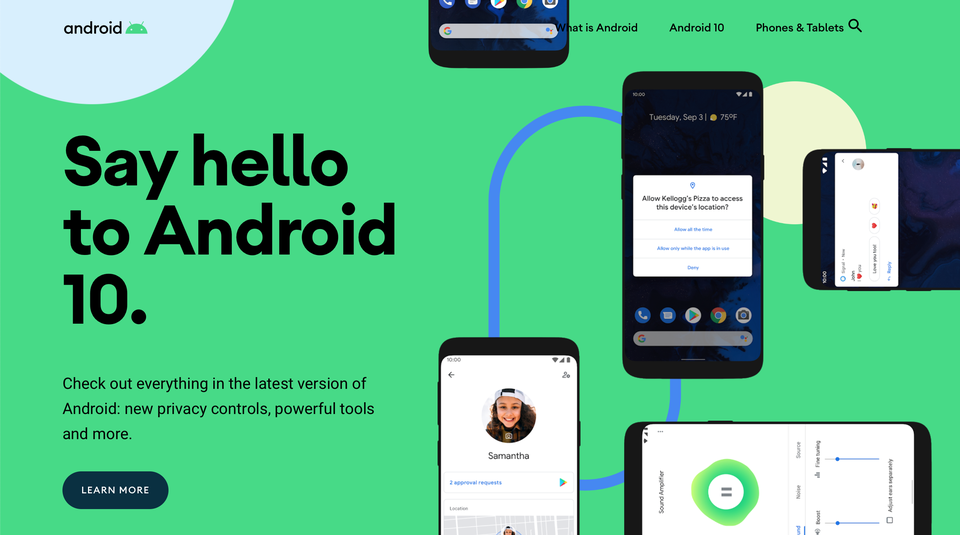
Google has finally released the stable build of Android 10 after 6 beta updates earlier this year. The search giant has started rolling the final version of Android 10 to Pixel, Pixel XL, Pixel 2, Pixel 2 XL, Pixel 3, Pixel 3 XL, Pixel 3a and Pixel 3a XL. The new update will gradually roll out on other devices later this year as Google is “working with a number of partners to launch or upgrade devices to Android 10.” However, OnePlus has started rolling Android 10 based OxygenOS Beta for OnePlus 7 and OnePlus 7 Pro devices.
There are many new features that are present in the Android 10 stable build including new Full-Gesture navigation, “Focus Mode”, efficient notification control, better family integrity, and the new system-wode dark theme support. Google aims to bring “greater protection, transparency, and control over your data” with Android 10. It is built for the people of all abilities.
Android 10 will ease the smartphone use and will bring control over the data shared among third-party apps. In today’s write-up, we have compiled a list of the most anticipated Android 10 features.
List of Best Android 10 Features
This year’s release carries some features which are primarily based on the user feedback. The several demand-based features are part of the latest and greatest Android 10.
Dark Mode
After numerous requests from Android users, Google has finally introduced system-wide Dark Mode support for Android devices. Google is working since last year to make Dark Mode compatible across its several apps. Every major App developer is paying heed to the demand by rolling out support for Dark Mode in their respective apps. However, Google is still working to bring Dark Theme mode compatibility on its app.
It is a boon for Android users, especially the owners of OLED display devices. The dark color schema has a significant impact on battery life for OLED smartphones. Unfortunately, Google missed on the option to automatically toggle Dark Mode at sunset in Android.
Do you miss some iPhone-like navigational gestures on the Android ecosystem? Well, now the users can use new gestures to efficiently browse the Android device. The new navigational gestures are fully optimized for edge-to-edge displays.
A user can quickly switch between apps by swiping left on an element present at the bottom. Swiping left to right on the same bottom area allows the users to go back and forth between apps. Similarly, a small swipe up gesture on the home screen can bring forth the App drawer. We are listening to some best gestures on Android 10:
Home Screen + Swipe Up = App Drawer
Swipe From Right or Left Edge = To Go Back
Swipe across the bottom = Switch Apps
Swipe diagonally from bottom corners = Google Assistant
Swipe Down = Notifications
Swipe from Bottom = To go home
The new gestures are more fluidic and intuitive than any other Android version.
Smart Reply from Notification
Advancing the reply from the notification feature, Google added a smart reply feature for quickly replying to the message. Google introduced the ability to display suggested replies using TextClassifier API. The Android 10 is capable to generate the suggestions automatically.
Live Captions
Android 10 has brought Live Caption feature while playing videos, podcasts, and audio messages. The Live Caption feature is compatible with every inbuilt and third-party app. Moreover, it can show captions of the stuff you record on your smartphone. It is an effective feature based on Artifical Intelligence.
Parental Controls – Family Link
Advanced parental controls integrated with Digital Wellbeing settings app is part of Android 10. The parents can easily set up their child’s phone and can limit the on-screen time, track phone usage and set a bedtime for automatic phones shut down. It is a boon for the parents whose children are prone to excessive smartphone usage.
Security Updates via Google Play
Since a couple of years, Google regularly rolls security updates every month. However, these upgrades reach Pixel and other high-end devices but they fail to roll on the majority of the mid-range and low-budget devices. Google has added a new provision to roll out security updates straight from Google Play. In Android 10, manufacturers can easily roll out critical security updates via Google Play. The manufacturer’s need not to release full system updates for security patches, they can now simply rollout the important security enhancements via Play Store.
Focus Mode
Like the Zen Mode, it allows users to concentrate on other activities but with added customization features. It temporarily turns off specific distracting apps for some time. However, the feature is not fully stable and there might be some bugs on different phones. Google is aiming to launch stable Focus mode feature somewhere by the end of this year.
New Emojis
Android 10 has added a large collection of new gender-inclusive designs. The users can easily enjoy the new emojis after upgrading to Android 10.
Improved WiFi Performance and low-latency modes
Get ready to enjoy real-time games with low-latency on Android 10. It is tweaked to minimize the latency between networks. The support for high-performance mode and low latency mode is extended via WiFi lock API.
Call Quality Improvements
The Android 10 will considerably improve the call quality as it has gained the ability to collect information about the quality of ongoing IMS calls.
Enhanced Camera Capabilities
Android 10 has added several enhancements including monochrome camera support. Using the new Android version, the device cameras can save depth data of the image in a separate file for better image post-processing. Other improvements include support for HEIC – High-Efficiency Image File Format and improved multi-camera support.
Improved Security
The new build also carries various security enhancements.
Improved Biometric
A lot of improvements have been made to the biometric authentication capability. There are some modalities that have been added to the Biometric unlock to make it secure and robust.
TLS 1.3 Support
Like never before, TLS 1.3 official support is rolled out along with Android 10. TLS 1.3 is improved security protocol over the TLS 1.2 with performance benefits and enhanced security. It is 40% faster than the predecessor in establishing a secure connection.
Other enhancements include the ability to run embedded DEX code directly from APK tp prevent attack via locally tempered code.
Android 10 is a full package to enhance device performance, security, efficiency, and accessibility.
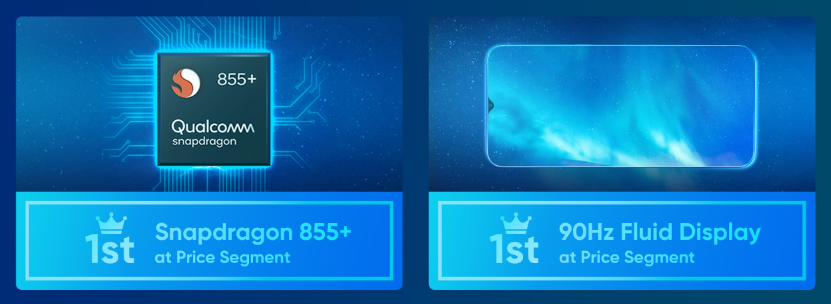
Realme Europe has started teasing on the features of the upcoming Realme X2 Pro flagship phone. The smartphone is expected to go official at some point in this month. The features of the smartphone that the company has confirmed so far suggests that it will be a premium flagship device. Hence, it may not carry a cheap price tag. Apart from Snapdragon 855+ chipset and 90Hz fresh rate display, the Realme X2 Pro is now confirmed to come with 65W world’s fastest charging technology.
The OPPO Reno Ace flagship phone that will be announced in China will be the first phone to feature the 65W SuperVOOC 2.0 charging technology that was made official last month. With 65W charging, a 4,000mAh battery can reach 100 percent in just 30 minutes. The same technology will be available with the Realme X2 Pro.
The smartphone will be powered by Snapdragon 855+ mobile platform that works at 2.96GHz. Currently, it is the most powerful chipset for smartphones. The 90Hz refresh rate display will offer fluid viewing experience while scrolling through apps, images or webpages. It also brings sleeker gaming experience. The handset is expected offer a tall aspect ratio of 20:9. It remains to be seen whether the Realme X2 Pro features a notch-less display or a screen with waterdrop notch. It is very likely to come equipped with an in-display fingerprint reader.
The Realme X2 Pro is also blessed with 64-megpaixel quad cameras system which is better the quad cameras of the Realme X2 smartphone. The main 64-megapixel sensor of the Realme X2 Pro will be coupled with 115-degree ultrawide lens that has capabilities to shoot macro shots, a telephoto lens and a depth sensor. The X2 Pro will offer users with 20x hybrid zoom support. On the connectivity front, the smartphone will only come with 4G support and it will also feature NFC.
Even though the company claims that Realme X2 Pro will be the first phone in its price segment to come with SD855+ and 90Hz display, it may carry an expensive as it comes with some advanced features such as enhanced 64-megapixel quad cameras and 65W fast charging. It appears to be a better smartphone than the Xiaomi Redmi K20 Pro and a worthy rival for OnePlus 7T that has a starting price of Rs. 37,999 (~$533) in India. Wang Wei Derek who is the Product Director of Realme China had hinted that the Realme X2 Pro could be priced around 4,000 Yuan (~$559).
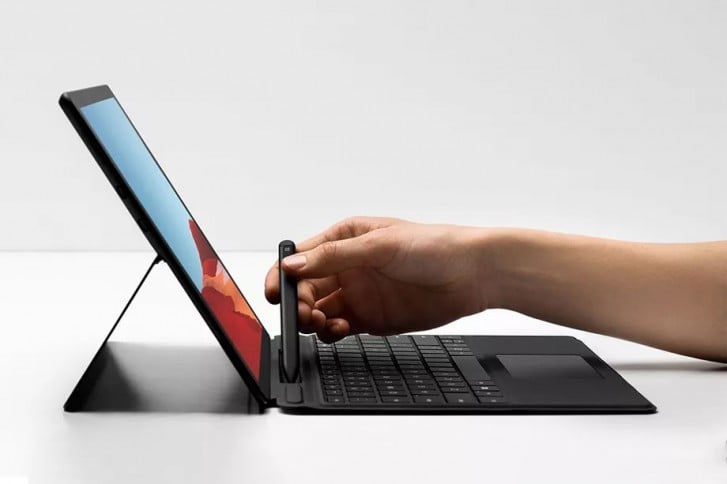
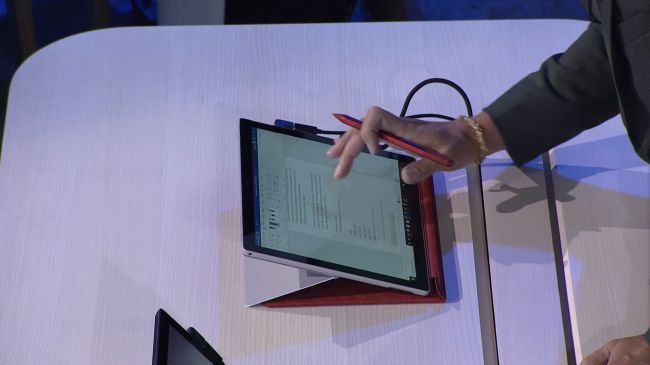
It’s been hard for Windows devices to break free of the Intel grasp, but Microsoft‘s giving it another shot with the new 13-inch Surface Pro X, a new tablet running Windows on an ARM-based Microsoft-custom version of a Qualcomm Snapdragon processor, the SQ1. Next to the also just released Surface Pro 7, you could argue that this is the true new flagship.
The Surface Pro X offers key features of the Surface Pro 7 alongside other extras that make it one of the most interesting 2-in-1s to come to the market in 2019. Design-wise, the Surface Pro X is the thinnest of the newly announced Surface range at 5.3mm and weighs only 762g, which is impressive when you consider some of the advanced features on offer.
The screen has been expanded from a 12-inch panel on the old Surface Pro to a 13-inch display, which the company says offers the thinnest bezels on any 2-in-1 laptop. It boasts a resolution of 2880×1920 resolution, giving it 267ppi. There’s a new Surface Slim Pen nestled in the keyboard, and there’s even wireless charging onboard. The big kicker is that the Surface Pro X features two USB-C ports over the Surface Pro 7’s single port.
The big new thing however has to be the aforementioned Surface SQ1 processor. Co-designed by Microsoft and Qualcomm, it’s a 7W chipset – compared to 2W of most ARM processors – and offers 2 teraflops of power. Microsoft claims that the Surface Pro X provides 3x more power per watt than the Surface Pro 6.
Alongside the SQ1 is an AI accelerator that brings impressive levels of computational power to the hybrid. While it’s hard to say exactly what it’ll be used for, Microsoft gave the example of being able to correct eye contact during video calls. It’s a rather impressive feat, especially considering that it uses 50x less power than a standard GPU.
The biggest question remains whether the SQ1 will be able to offer comparable power to a traditional x86 processor, though. The answer to that question is what will eventually determine how well the Surface Pro X does on the market. Excitingly, the device is already available for preorder today, with a launch date of November 5 for the price of $999.
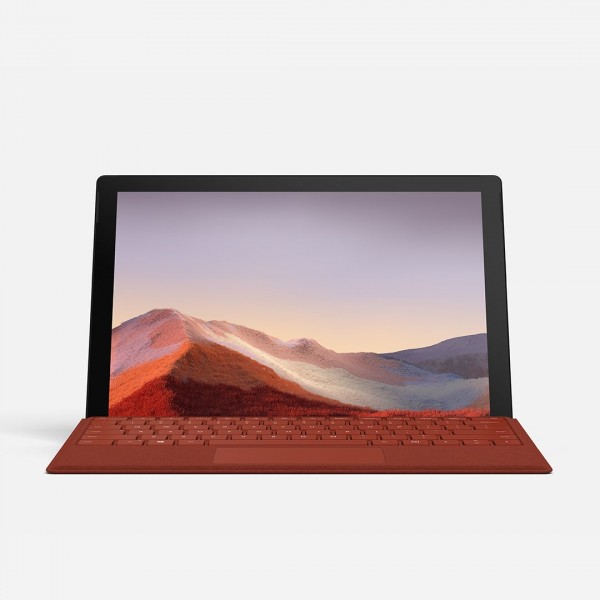
Today at its special hardware event, Microsoft unveiled the new Surface Pro 7. The new Surface Pro finally brings USB-C to the convertible laptop category of Microsoft hardware, which will be a welcome addition for fans who’ve been waiting for the company to adopt this now-prevalent connection technology.
Like its predecessors, the Surface Pro 7 consists of a 12-inch tablet with a folding kickstand for adjustable viewing angles. There’s also a detachable keyboard cover accessory, and a Surface Pen stylus that allows for writing, drawing, note-taking and more. This new product is also the only one to have what can be called a full-sized Surface Pen. The Pen can also be used to update cell data in real time, and can even erase it with a gesture.
Buyers will have the option of tenth-generation Intel Core i3, i5 and i7 chips that boast of far better power and performance than its predecessors. Storage-wise, you’ll get the pick of a 128GB SSD or a larger 1TB SSD, as well as the choice of 4GB, 8GB or 16GB RAM. Up front, you’ll be staring into a 12.3-inch, 2736x1824p 267ppi PixelSense display with a 3:2 ratio, much like the Surface Pro 6.
The Surface Pro 7 is available for pre-order in the near future, with prices starting at $749 and delivery commencing on October 22nd. But it’s clear that much of the Surface Pro’s thunder has been stolen by the ARM-running Surface Pro X, which the company has announced on the same day.
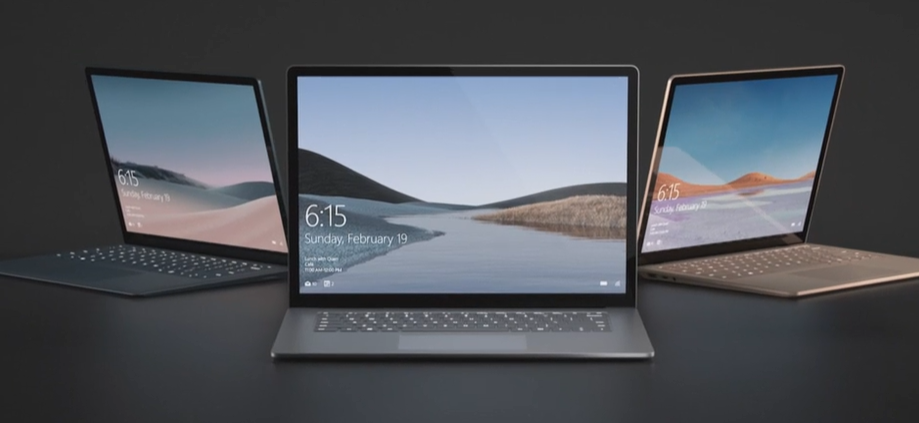
Microsoft had an event today in New York where it announced a bunch of new products. First on the list is the Surface Laptop 3.
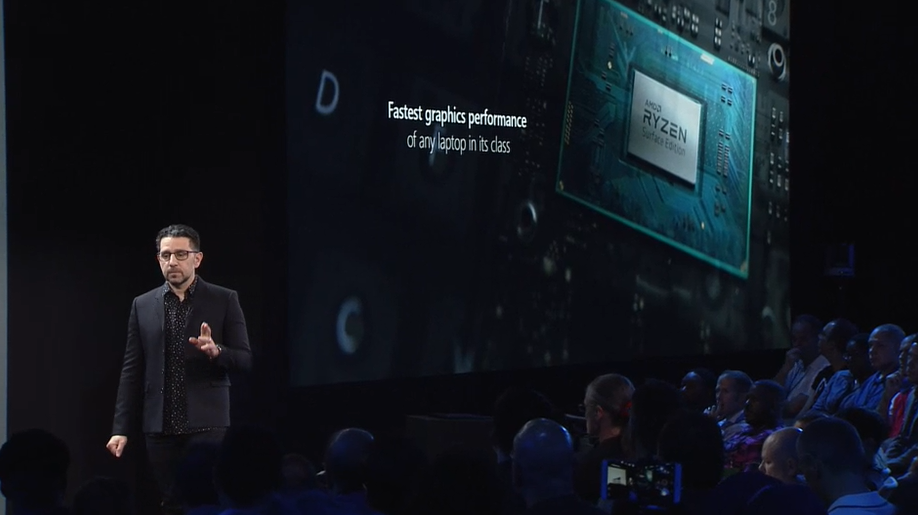
The Surface Laptop 3 brings a number of new features including a new 15” size that is powered by a “Ryzen Surface Edition” processor and not an Intel processor like the 13” version.
The changes are not only on the inside but also on the outside. There is a USB Type-C port now which can be used for charging in addition to Microsoft’s proprietary Surface Connector. Oh! The display port is gone. Talking about charging, the Surface Laptop 3 supports fast charging (confirmed for the Surface Connector), allowing you to charge the PC to up to 80% in 1 hour!
The trackpad is also 20% larger than that of its predecessor and the whole computer has been designed in such a way to make it easy for users to replace components such as storage. Another design change is the availability of two finishes – Alcantara and Aluminum.
Surface Laptop 3 13”
13” 3:2 display
10th-Gen Intel processor – with Core i5 or Core i7 configurations
Up to 16GB of RAM
Up to 512GB of storage
Starts at $999
Surface Laptop 3 15”
15” Display
AMD Ryzen Microsoft Surface Edition
Up to 16GB of RAM
Up to 512GB of storage
Starts at $1199
Both versions are available for pre-order starting today and will be available for purchase on October 22.
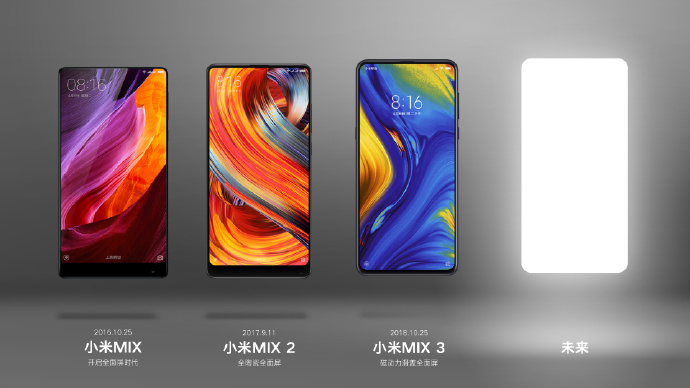
Xiaomi has been quite frisky with the naming pattern for the Mi Mix series right after the first-gen Mix smartphone. The company launched the Mi Mix 2 and when we expected a Mix 3, the company took the wraps off the Mi Mix 2s and did also launch the Mix 3 a couple of months later. This year, attention was focused on getting the Mi Mix 4 but the Chinese innovative company added a twist by announcing the Mix Alpha with an entirely new design outlook.
Xiaomi Mi MIX 4 teaser
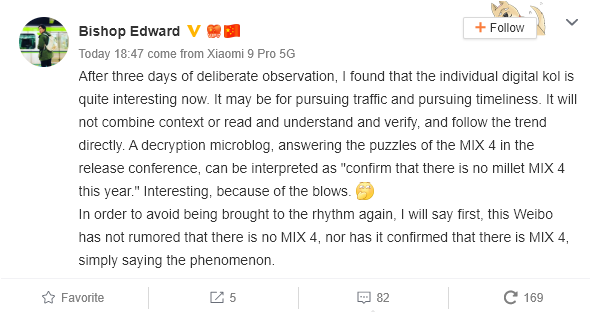
To complete the twist, Xiaomi China’s brand promotion manager, Edward Bishop was reported to have disclosed that there won’t be a Mix 4 this year. Well, that was the message his statement on Weibo a few days back was interpreted to mean. However, the Xiaomi exec has released a fresh statement, three days after, to clarify that he never confirmed there won’t be a Mi Mix 4 this year. He was quick to add that he isn’t also confirming if there is a Mi Mix 4 smartphone coming this year.
This again opens up a ray of hope of a more affordable Mix series smartphone coming this year. When we talk of affordability, it is relative to the Mi Mix Alpha’s staggering above $2k price tag. Earlier on, popular leakster Ice Universe had hinted that there will be a Mix 4 soon, as the 108MP sensor won’t be for the Mix Alpha alone. The Mix Alpha’s price means it won’t be within the grasp of most Xiaomi fans. Well, except you are willing to trade off some of your body organs to be able to afford the concept phone. Alternatively, we may have to wait a few more years when a Mix Alpha 3 or higher must have been released in order to get the current Mix Alpha at a lower price.
But then, with this news, Xiaomi may still have a huge surprise in store for us. We’ll be on the lookout for more details.
A week ago, Oppo opened the initial trials for Android 10 beta version on the standard Oppo Reno handset in China. Tagging along ColorOS 6 beta, the update also introduced features like dark mode, focus mode, two-sided gestures, and so on. Initially, the update was scheduled for the end of October, so it’s a bit earlier than expected.
Now today, the update is rolling out as a public beta version to the Oppo Reno in China. The ColorOS 6 beta update has software version PCAM00_11_W.02_Beta and, as expected, brings lots of Android 10 goodies into the mix. This includes things like an improved visual core, the already mentioned system-wide dark mode and new themes.
For some reason, the Reno 10x Zoom variant isn’t getting this update for now. For those of you who don’t remember, the Oppo Reno 10x Zoom was scheduled to get the update at the same time, but it seems it’s gotten the shaft. We can still probably expect it to stick to the planned schedule, so it’ll hopefully be here by the end of October.
WhatsApp might soon offer a feature that lets you post a message that vanishes after a while. Messages that self-destruct, of course, have been staple fare in espionage, but this is a logical extension of the platform’s current option of deleting a message within a time limit. The downside is that it’s apparently not all that subtle.
In a chat, it still appears as a notification, with a note informing the other chat members that “This message was deleted”. Now it looks like the app is testing a self-destruct feature that would allow you to set a timer for messages in a specific chat and they will disappear after an allotted amount of time.
As far as the implementation of the feature is concerned, the disappearing messages feature is available only in the group chats as of now. Users can tap on Disappearing Messages option in the Group Settings to enable this feature. There are currently two countdown options — 5 seconds and 1 hour – to users. There is no time frame in between.
Disappearing messages could be useful to anyone who needs to send a sensitive piece of information that they don’t want to be permanently available. We’ve previously seen the feature used by the messaging app Telegram, which lets you send self-destructing messages using the app’s Secret Chats feature.
We’re still not sure when exactly WhatsApp plans to roll out this feature, or even if they’ll push it out at all. Separately, the blog site also confirmed that WhatsApp is working to bring dark mode to its iOS based app. It’s about time these features arrived on the WhatsApp client and we hope it’ll be pushed out soon.
A new report from South Korea indicates that Samsung will be shutting down its last smartphone manufacturing plant in China at the end of the month. The plant located in the Guangdong province of China first started producing phones on December 1992. It is presently the only functional Samsung production plant in China and around June this year, the company scaled down production at the plant with reports of workers getting laid off.
Samsung Galaxy A9s and Galaxy A6s
The steady rise to prominence of local phone manufacturers in China signalled the decline of Samsung phones in what was one of its strongholds. Samsung controlled more than 20% share of the market in the hay days but as Chinese brands continue to surge in growth, the Korean company continued to lose market share. The local OEMs like OPPO, Vivo, Xiaomi and others were able to gain ground against the global market leader by offering premium models at affordable prices. Samsung’s market share in China was below 1% as at the end of 2018.
In recent times, Samsung has made efforts to reclaim its lost glory in the Chinese market and other markets like India where Chinese OEMs have grabbed a chunk of the market share for her hands. The company recently shifted its focus to the midrange segment with the Galaxy A series and other premium but affordable models. The Korean tech giant is also exploiting the use of ODM to manufacture its phones for the local market in a bid to cut the cost of production and thus bring down the retail price. The Galaxy A6s and A9s were the first devices to be manufactured by an ODM.
Samsung still continues production of smartphones in its plants in Thailand and Vietnam, though. However, it remains to be seen if there would be any chance of a return to China in the future. Time will tell.
We use cookies on our website to give you the most relevant experience by remembering your preferences and repeat visits. By clicking “Accept”, you consent to the use of ALL the cookies.
This website uses cookies to improve your experience while you navigate through the website. Out of these, the cookies that are categorized as necessary are stored on your browser as they are essential for the working of basic functionalities of the website. We also use third-party cookies that help us analyze and understand how you use this website. These cookies will be stored in your browser only with your consent. You also have the option to opt-out of these cookies. But opting out of some of these cookies may affect your browsing experience.
Necessary cookies are absolutely essential for the website to function properly. This category only includes cookies that ensures basic functionalities and security features of the website. These cookies do not store any personal information.
Any cookies that may not be particularly necessary for the website to function and is used specifically to collect user personal data via analytics, ads, other embedded contents are termed as non-necessary cookies. It is mandatory to procure user consent prior to running these cookies on your website.




 To take things a step further and expand their customer base, the developers have now launched Android and Chromebook versions of the same. Therefore, users can now use their Android smartphone or tablet as a secondary display for both Mac and PC.
 The Android version of the application is currently offered at a discounted price of $ 9.99 which is significantly less than the standard $19.99 asking price.