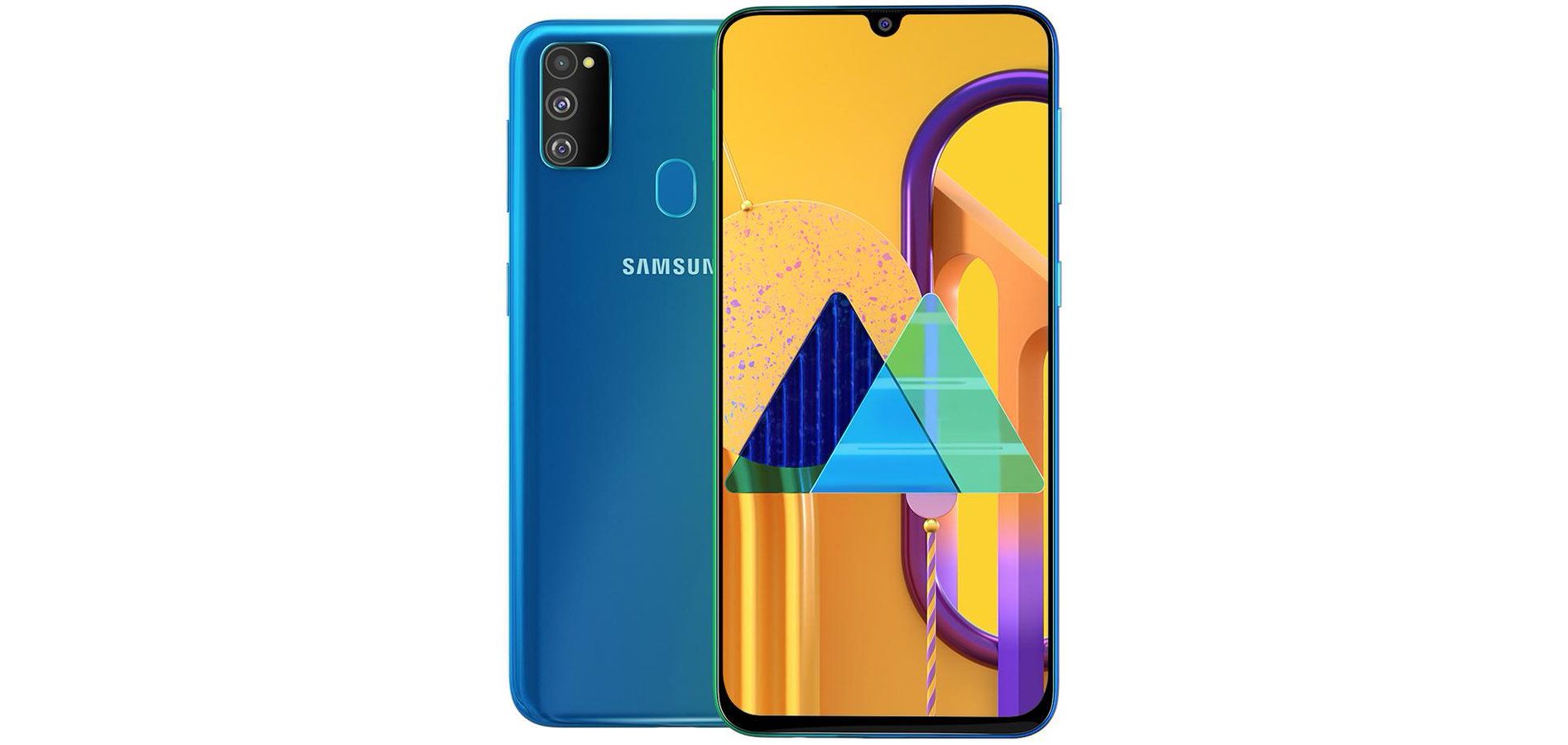
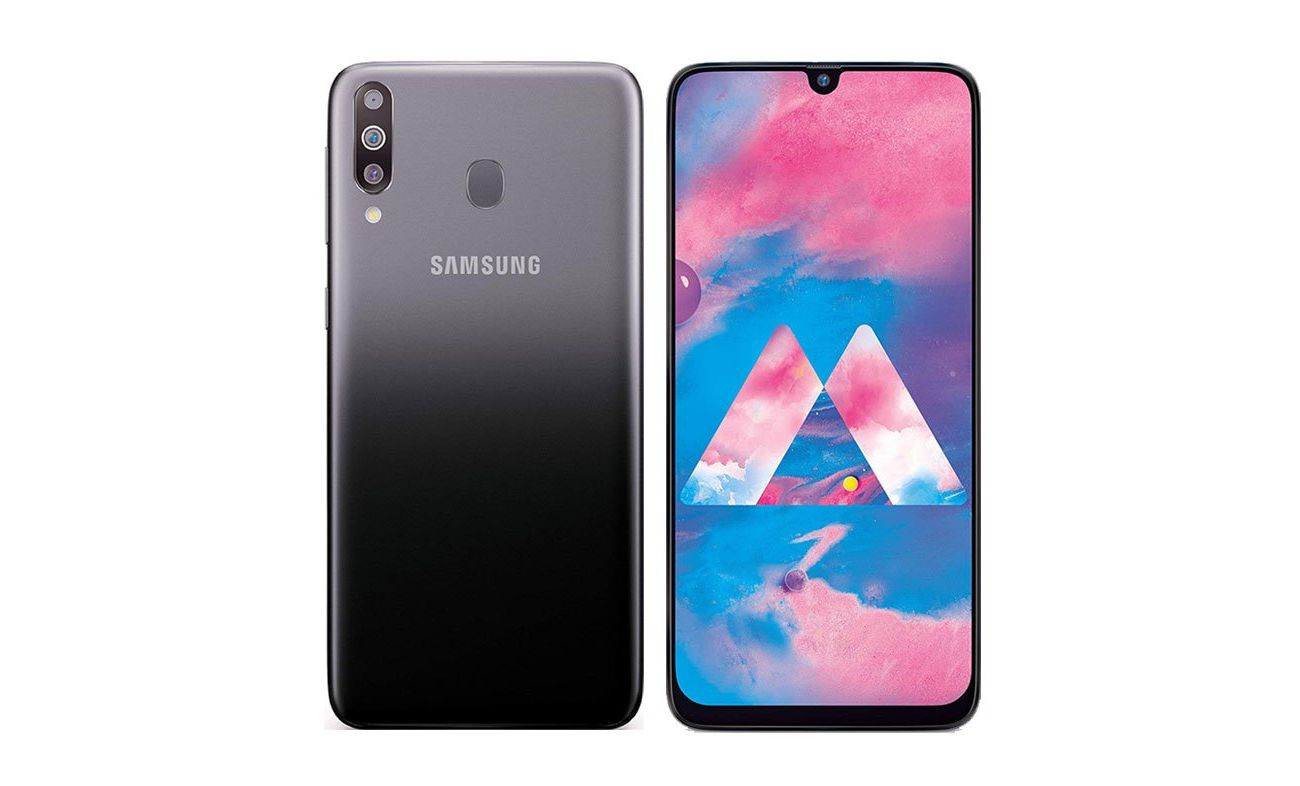
It’s already an open secret that Samsung is planning to launch the Galaxy M30s as a successor to the Galaxy M30. The device will be launched in India on September 18. After that, Samsung is also reportedly planning to launch the model in several European countries including Belgium, France, Germany, Italy, the Netherlands, Spain, and the UK.
The Galaxy M30s model for Europe comes with the model number SM-M307FN and is expected to present with the same hardware configuration as the India version. However, the exact date when the product will be launched in Europe.
As for the specifications, the Galaxy M30s will feature a 6.4-inch Super AMOLED display with an Infinity-U notch. The rear side of the phone has a vertical triple camera setup that includes a 48-megapixel primary lens with f/2.0 aperture, an 8-megapixel superwide lens and a 5-megapixel lens for adding depth effects. The Infinity-U notch has a 24-megapixel selfie camera with AR Emoji. The Android 9 Pie 9 OS is preloaded on the device.
The smartphone will be powered by an Exynos 9611 chipset and may come in 4 GB and 6 GB of RAM variants. Its storage choices are 64 GB and 128 GB. Finally, there will be a huge 6,000mAh battery with a USB-C port. If this happens, the Galaxy M30s will become the first Samsung model with such large capacity battery.
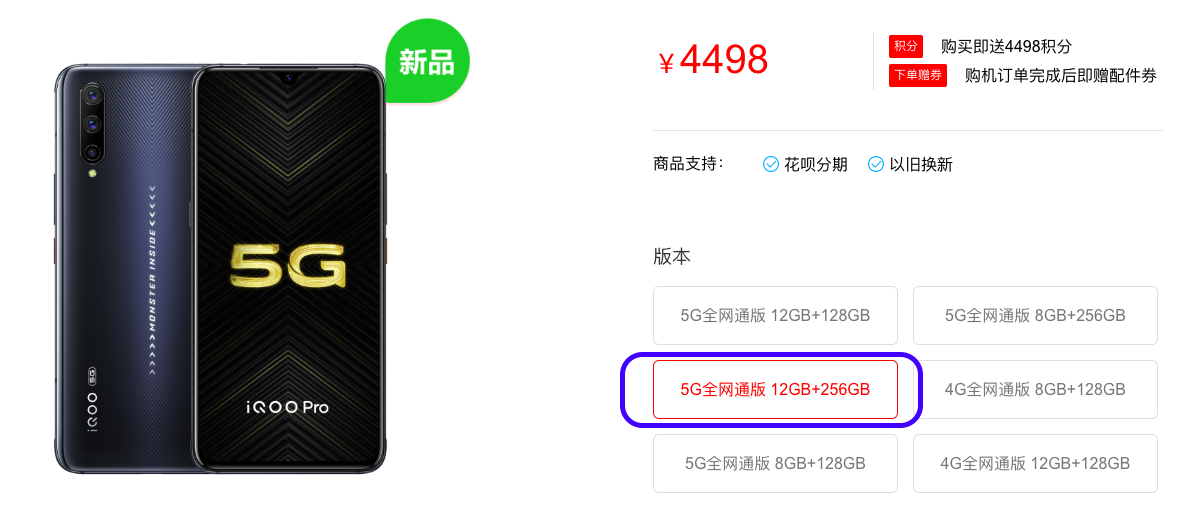
Vivo iQOO Pro 5G is currently the cheapest 5G flagship in China. The phone is unsurprisingly selling pretty and taking advantage of this high demand, Vivo has decided to give consumers another storage option. The company announced today that it is adding a 12GB RAM + 256GB storage variant for the iQOO Pro 5G in China for 4498 Yuan (~$636).
This new top-end variant with 12GB RAM + 256GB ROM is 400 Yuan (~$57) more expensive than the previous best version that featured 12GB RAM and 128GB storage (4098 Yuan). Also, this top-end storage model is available in just one color option for now: Racing Black. The other variants have an additional Le Mans Blue color option.
Vivo iQOO Pro 5G 12+256GB
Vivo’s iQOO series has always offered tremendous value for money. And considering how this top-end variant with 5G support retails for under $650, it’s clearly one of the cheapest high-end 5G flagships in China right now. Along with 5G, the phone comes with premium features such as Snapdragon 855+, screen fingerprint, a large 4500mAh battery with 44W fast charging and a 48MP triple camera setup.
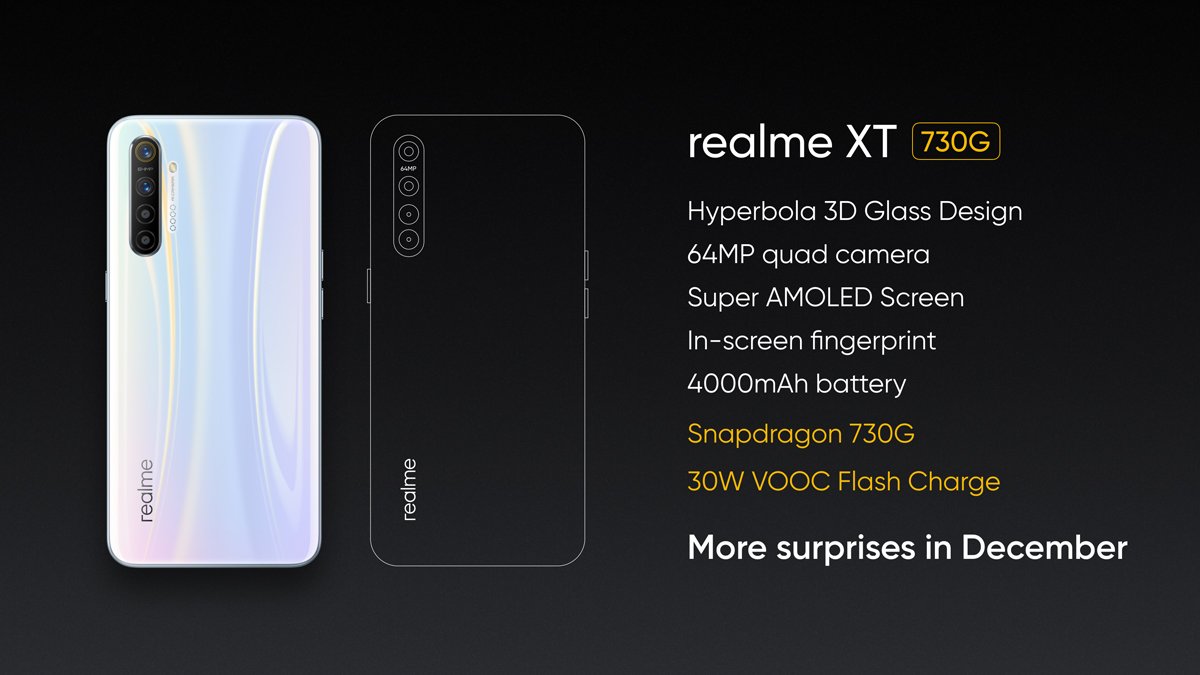
During the Realme XT launch event in India, Realme’s CEO Madhav Sheth teased the upcoming smartphone from the company — Realme XT 730G which is an upgraded variant of the smartphone launched today.
As the name suggests, the Realme XT 730G will come powered by the Qualcomm Snapdragon 730G octa-core processor which was recently launched by the company and is aimed towards gaming-centric smartphones.
Further, the company has also confirmed that the smartphone will come be powered by a 4,000mAh battery and will come with 30W VOOC Flash Charge fast charing technology. For comparison, the XT comes with 20W fast charging support.
While the company has not revealed this, the TENAA listing of this upcoming smartphone has confirmed that it will be featuring a 32MP front-facing snapper for taking selfies and video calling. It’s not yet clear if the phone will have a pop-up mechanism for front camera.
Apart from these changes, rest of the phone’s specifications will remain the same as the Realme XT. The smartphone will come with a 6.4-inch Full HD+ AMOLED display with Corning Corning Gorilla Glass 5 protection.
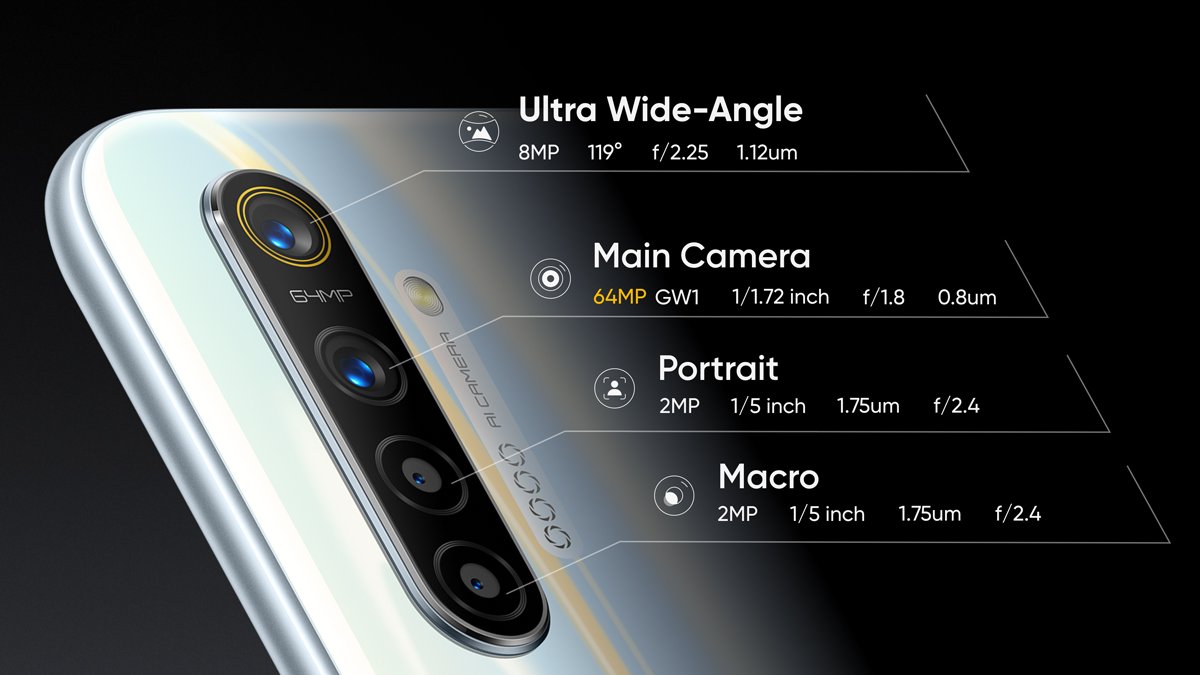
It will have up to 8GB of RAM and 128GB of internal storage. In the camera department, it’ll come with the same setup as the XT — 64-megapixel Samsung ISOCELL Bright GW1 primary sensor, an 8-megapixel 119 degree ultra-wide-angle lens, a 2-megapixel depth sensor, and a 2 MP macro sensor.
Since the operating system is not listed in the teaser, the company could launch the smartphone running the company’s much-awaited RealmeOS powered by Android 10. However, this is just a speculation and nothing of such sort has been confirmed yet.
Along with revealing some details about this upcoming Realme XT 730G smartphone, the company teased that “more surprises in December”. To know more about this, we’ll have to wait for a couple of months.
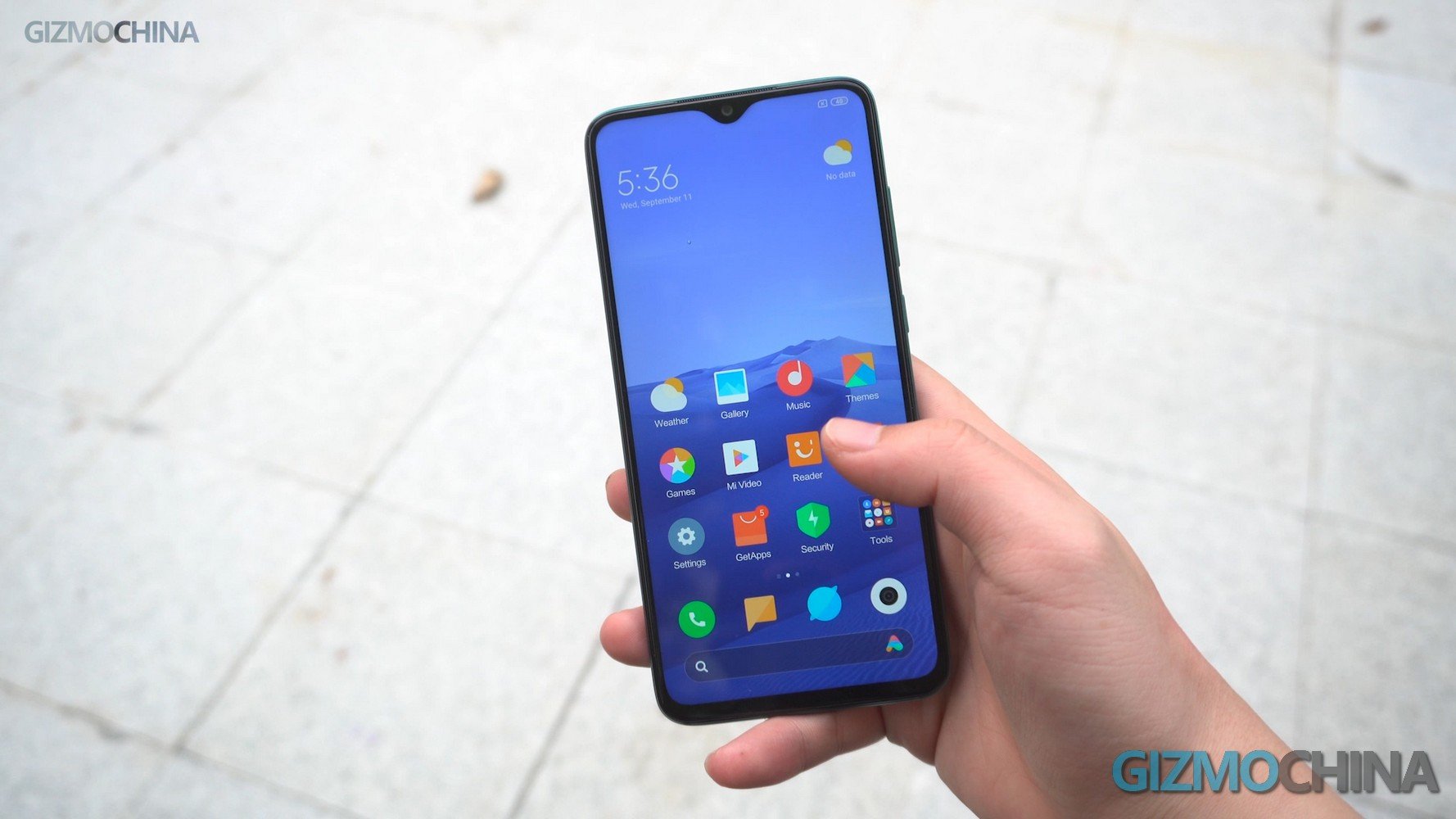
We are used to seeing new technologies featured on mainstream flagships. But recently, Redmi changed our imagination with the newly released Redmi Note 8 Pro: a true mid-range phone with an outstanding camera setup. A few months ago, Samsung released its latest phone camera sensor, the GW1 sensor, with a 64MP resolution. After its release, a competition started among smartphone makers, especially between Xiaomi and Realme to release the first phone with this sensor. And now, the winner is in our hands, the Redmi Note 8 Pro, the first smartphone with a 64MP-resolution camera.
Redmi Note 8 Pro
The camera is not the only highlight of the Redmi Note 8 Pro. The phone is also the first phone to come with the MTK Helio G90T CPU. This new chip is a high-performance CPU targeted at the gaming market.
For convenience, we will divide the full review into two parts. We first bring the Redmi Note 8 Pro vs. Realme 5 Pro vs. Huawei P30 Pro camera comparison in this review, and in the next one, we will show you our test results on its gaming performance.
Redmi Note 8 Pro: Camera
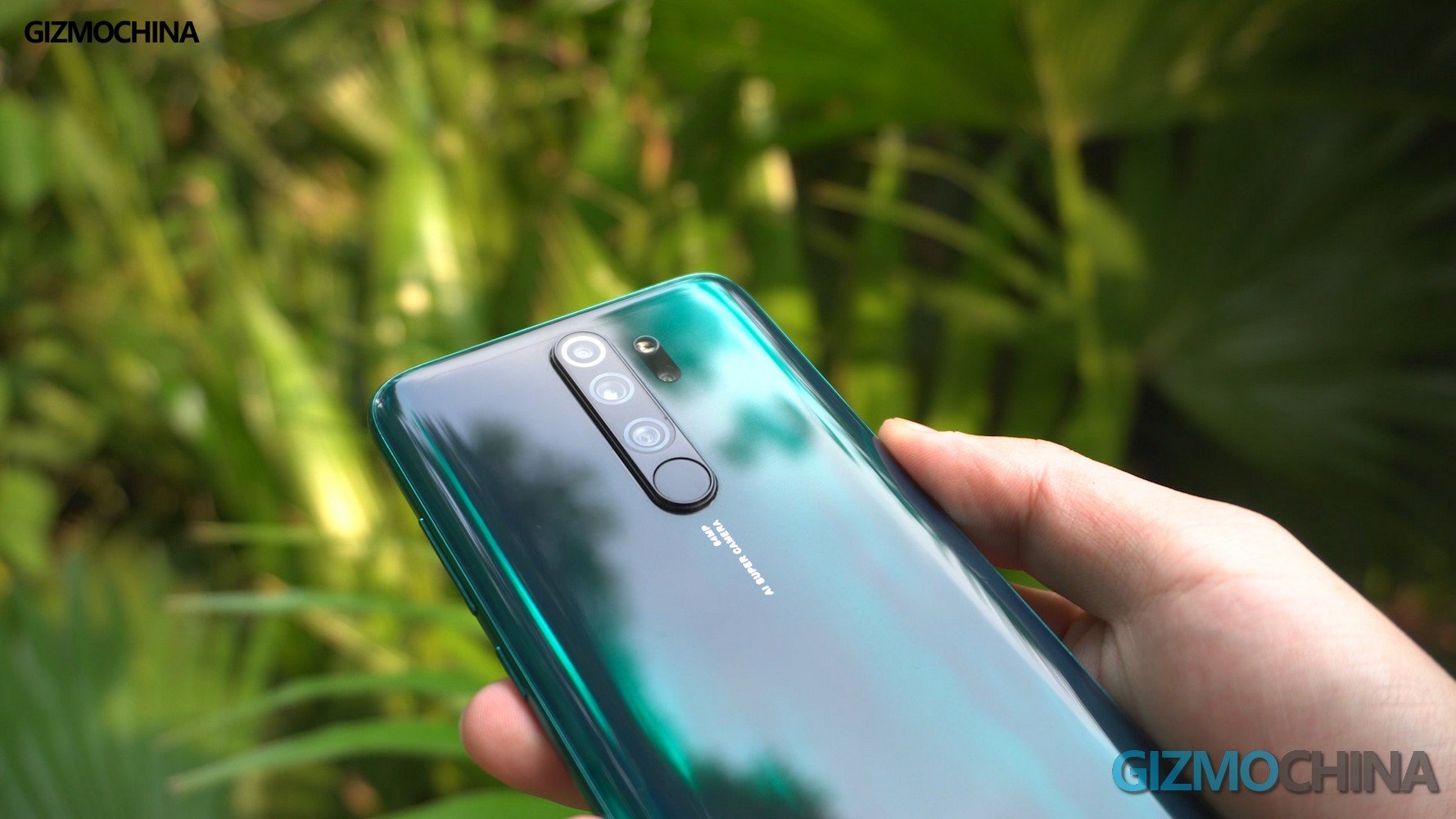
The vertical arrangement of the cameras on the RN8Pro is similar to the symmetrical setup on the Redmi K20 series. And it’s pretty smart that the fingerprint reader is right at the bottom of this vertical arrangement. The fingerprint reader is smaller in size but offers a superfast unlocking experience.
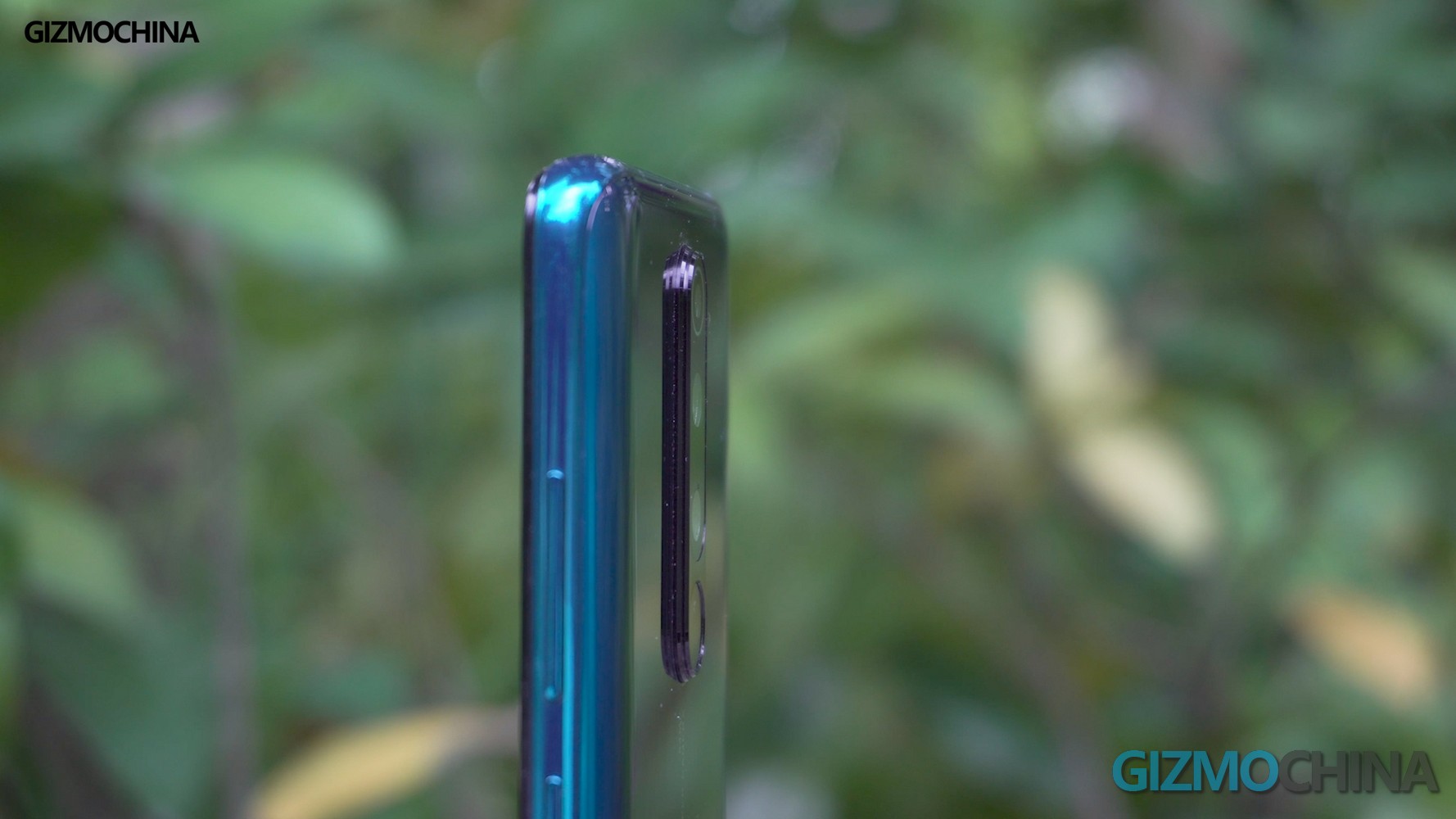
An issue is that the camera housing protrudes quite a bit. But it has a similar hands-on feeling to the design of the OnePlus 7. Though the housing is centered at the back, the phone still wobbles a bit when it’s on the table.
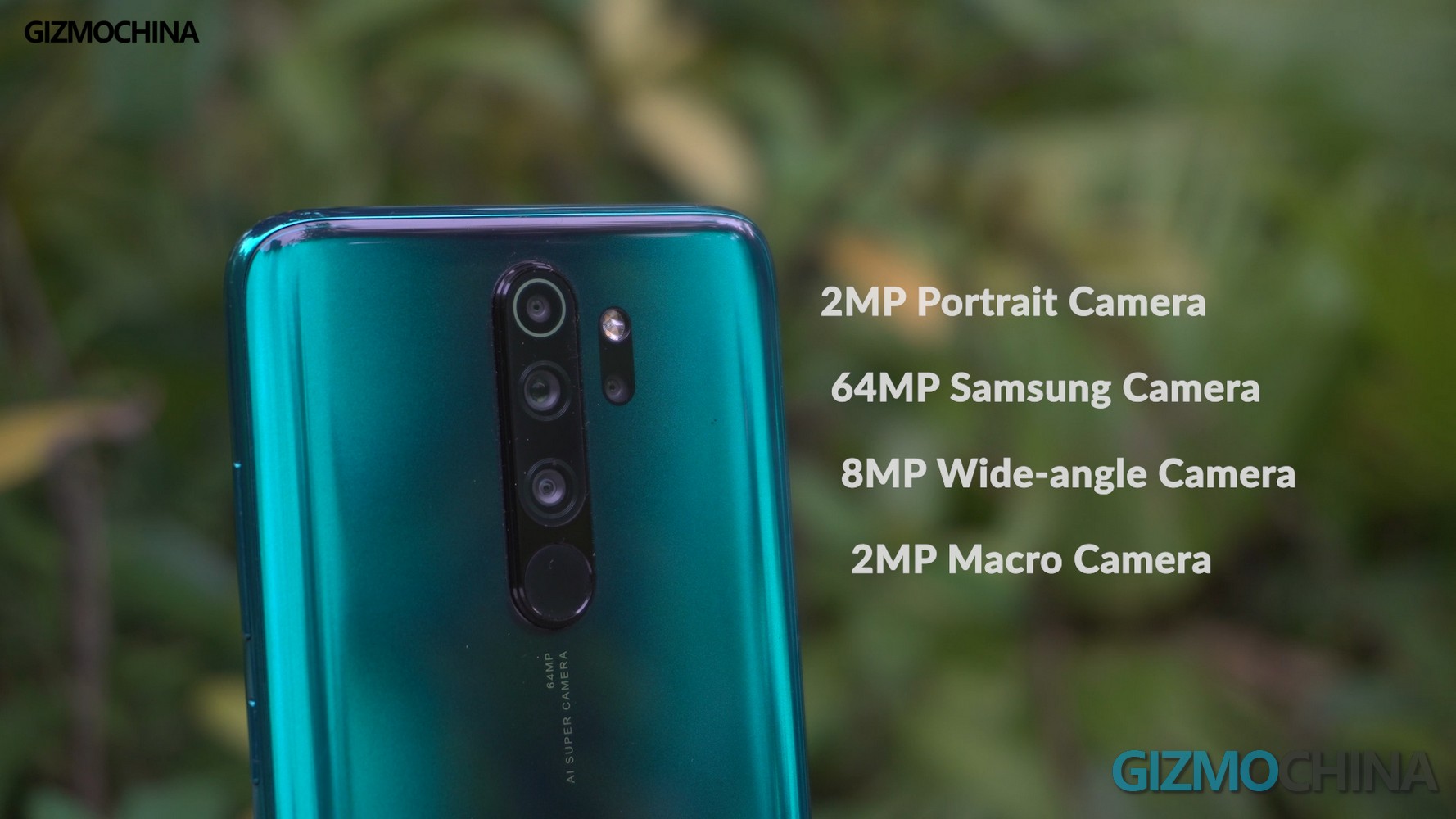
From top to bottom, there is a 2MP portrait camera, followed by a primary 64MP Samsung camera with f/1.89 aperture, an 8MP wide-angle camera, and finally a 2MP macro camera.
We have already seen the first qual-camera combination on the Realme 5 Pro. As a result, to understand how powerful the 64MP resolution can be, we will do a full comparison of the Redmi Note 8 Pro with the Realme 5 Pro (its strongest competitor) and theHuawei P30 Pro (the industrial benchmark). At no point, the RN8Pro is expected to surpass the P30 Pro, but this will show you how its camera fares as compared to the best in the industry.
Redmi Note 8 Pro Camera: Outdoors
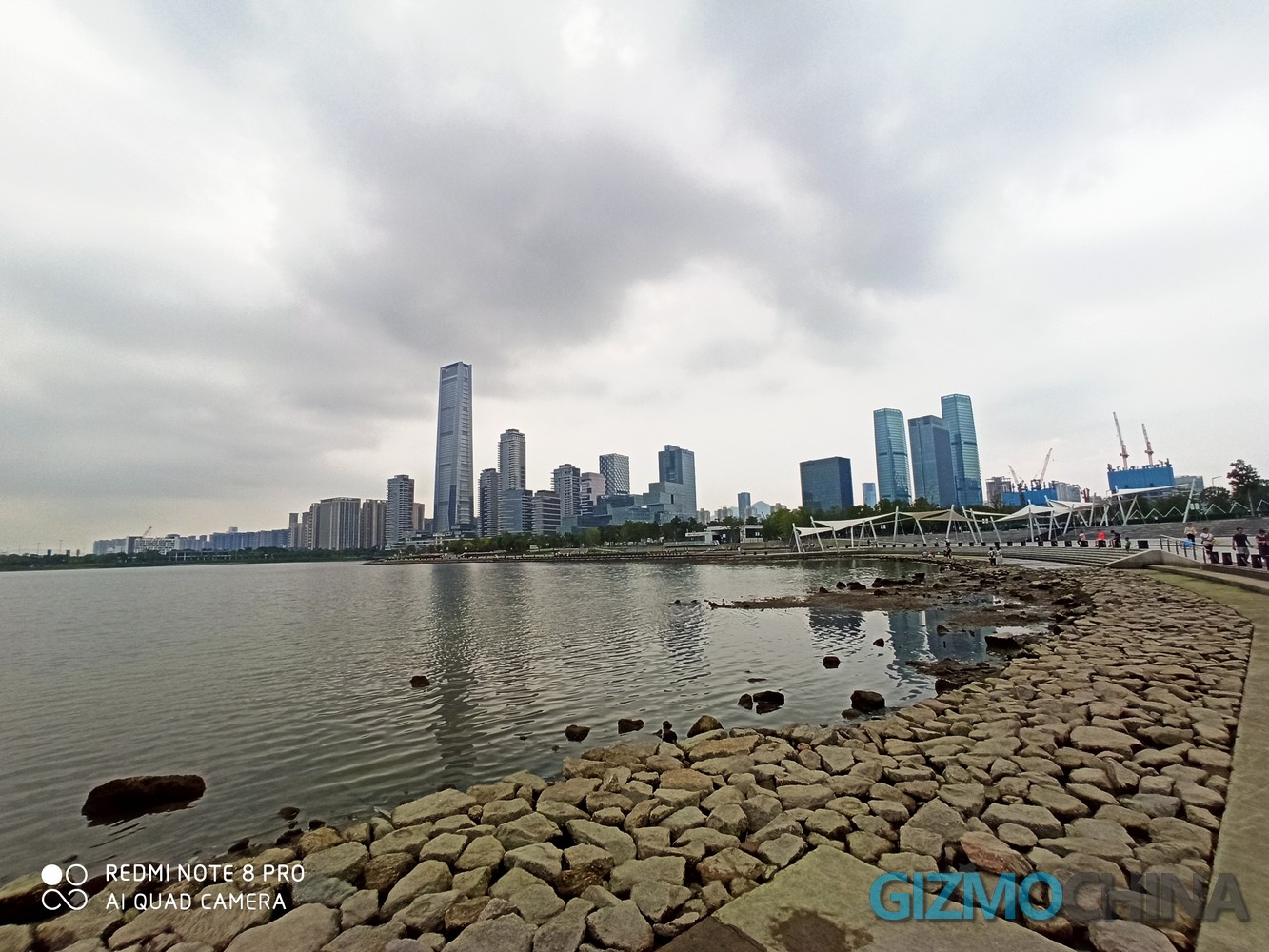
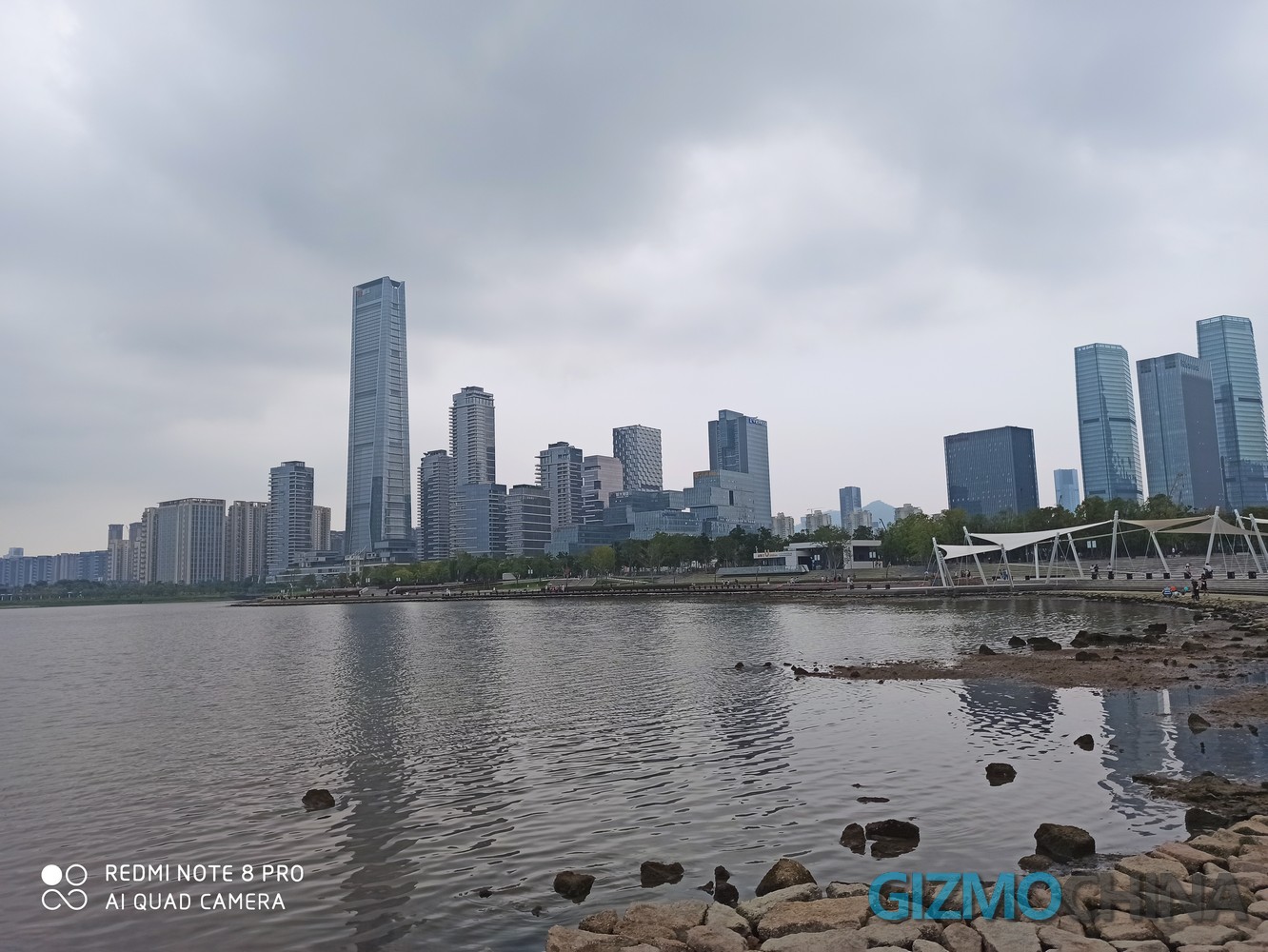
Under good light conditions, the samples shot by the Redmi Note 8 Pro generally have great color reproduction as compared to the other two. It reproduces a natural color tone but uses AI recognition at the same time to make the samples slightly dramatic. Details are much better preserved as well.
In this group of samples, we turn off the color filter of the P30 Pro’s camera APP and add a chroma boost effect on the Realme 5 Pro. Actually, the P30 Pro shows better color reproduction no matter the details or the contrast exposure, while on the Realme 5 Pro, with boosted effects, images show a greater dramatic effect, while being rich details and featuring high-saturated colors in the bright parts. But it suffers from noise when the lights go down.
Huawei P30 Pro
Redmi Note 8 Pro
Realme 5 Pro
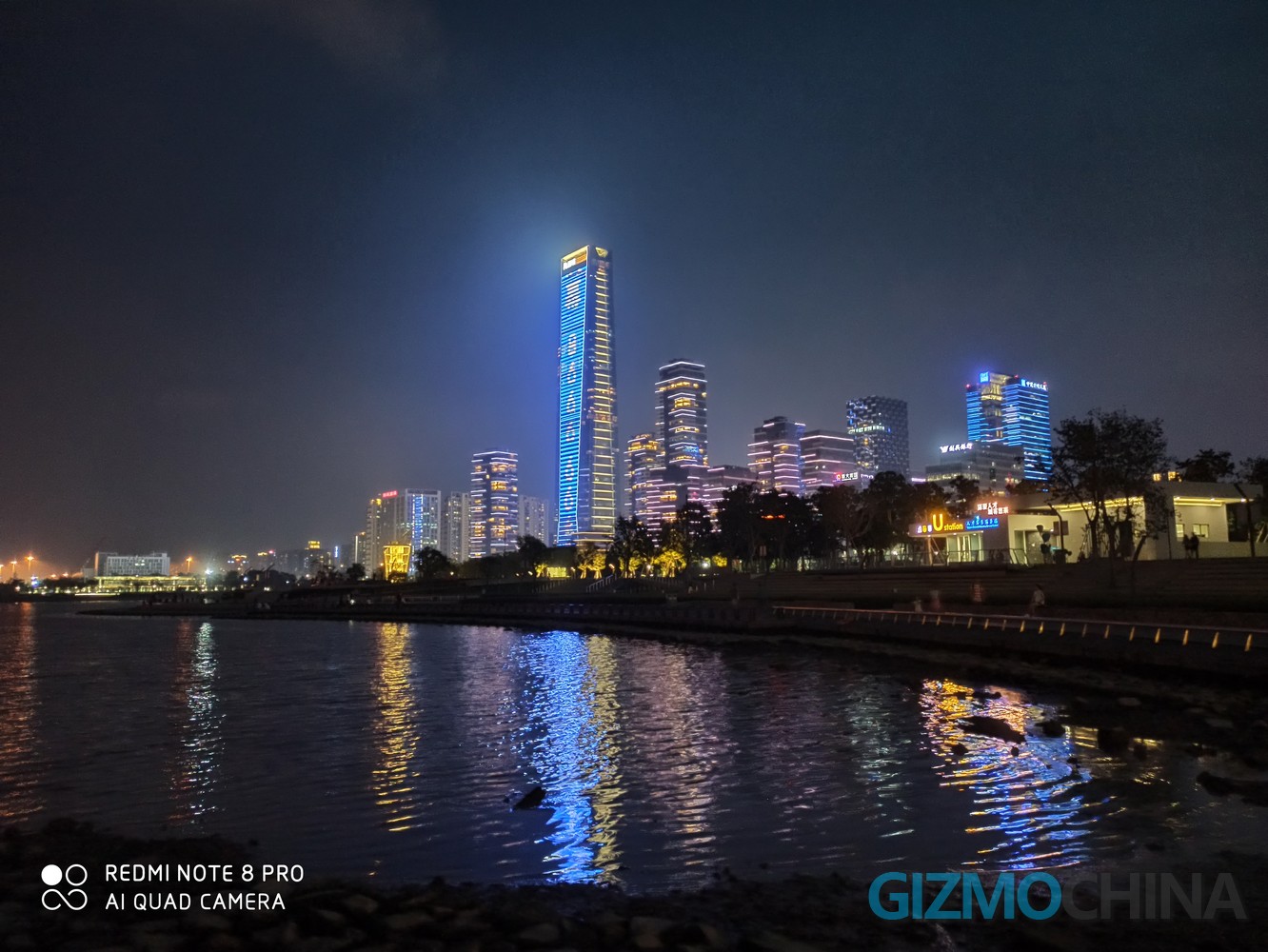
In low-light conditions, the P30 Pro shows its advantage in exposure balance. Both the bright lamps and dark areas have the right exposure and clear details. The Redmi Note 8 Pro is not bad considering its the first machine featuring the latest flagship Samsung camera sensor. However you do find some noise, despite not being very evident.
The Realme 5 Pro still maintains its dramatic boost style with vivid colors and bright exposure but brings in more noise as a result.
1 of 3
Huawei P30 Pro
Redmi Note 8 Pro
Realme 5 Pro
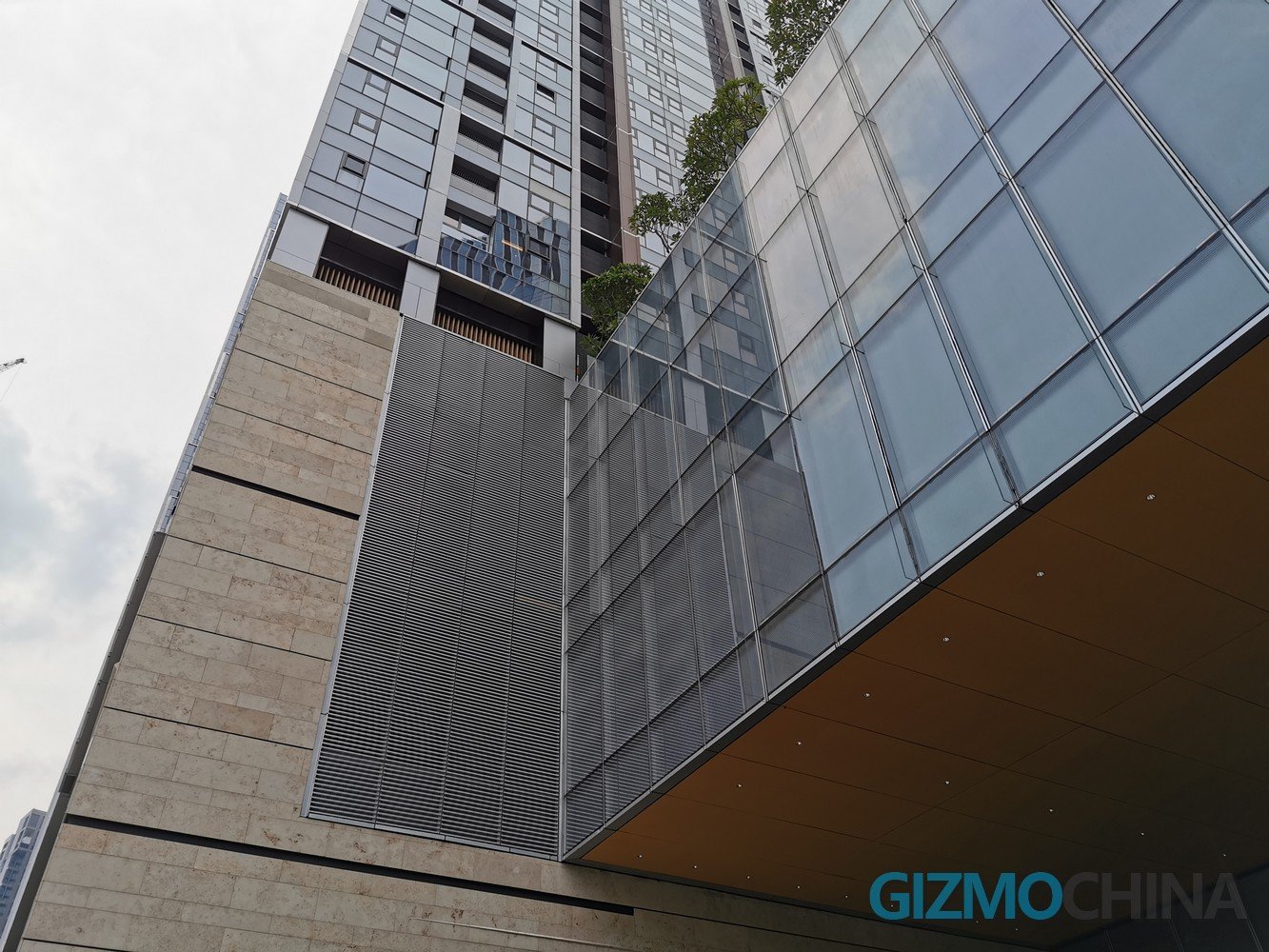
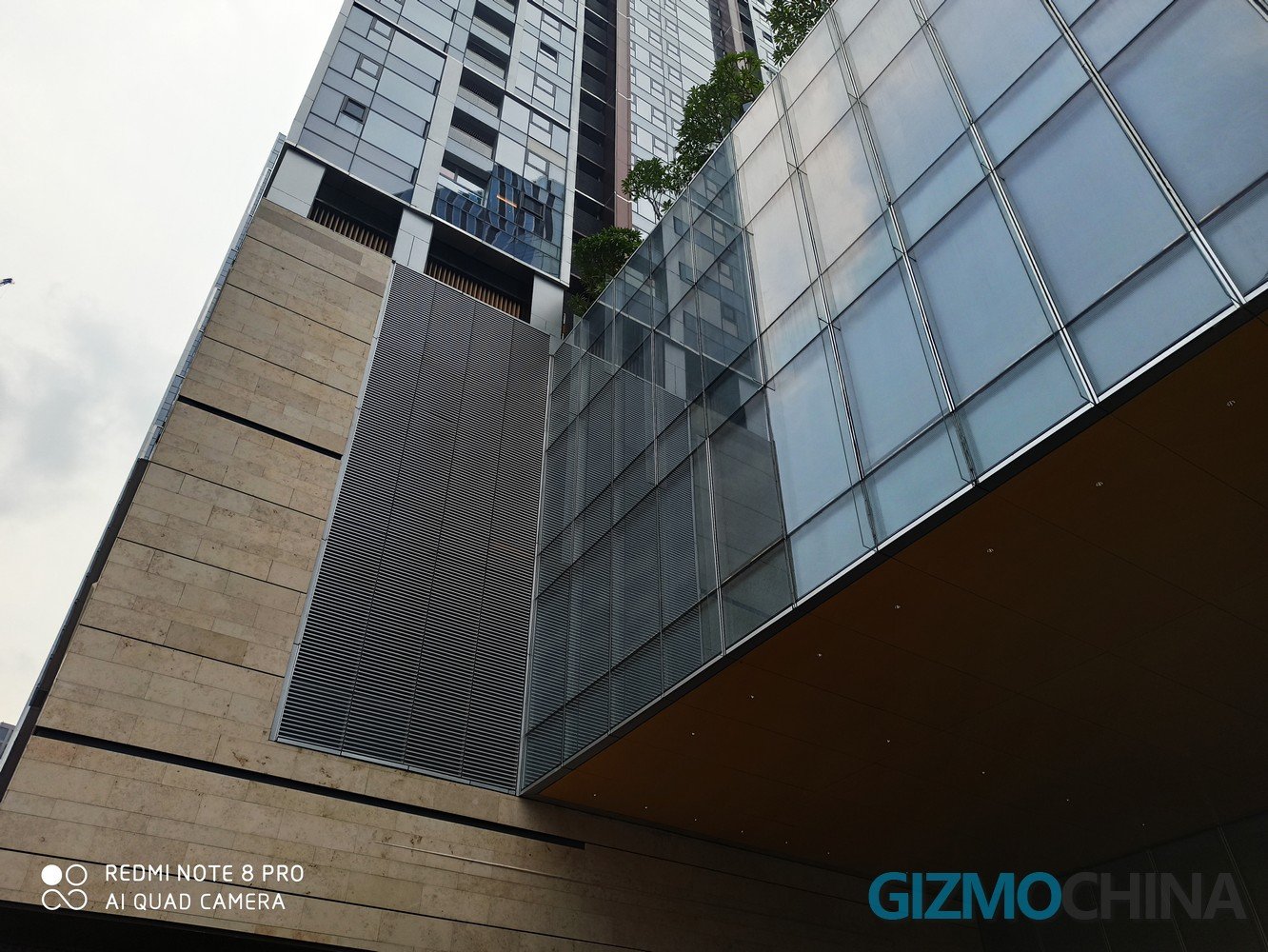
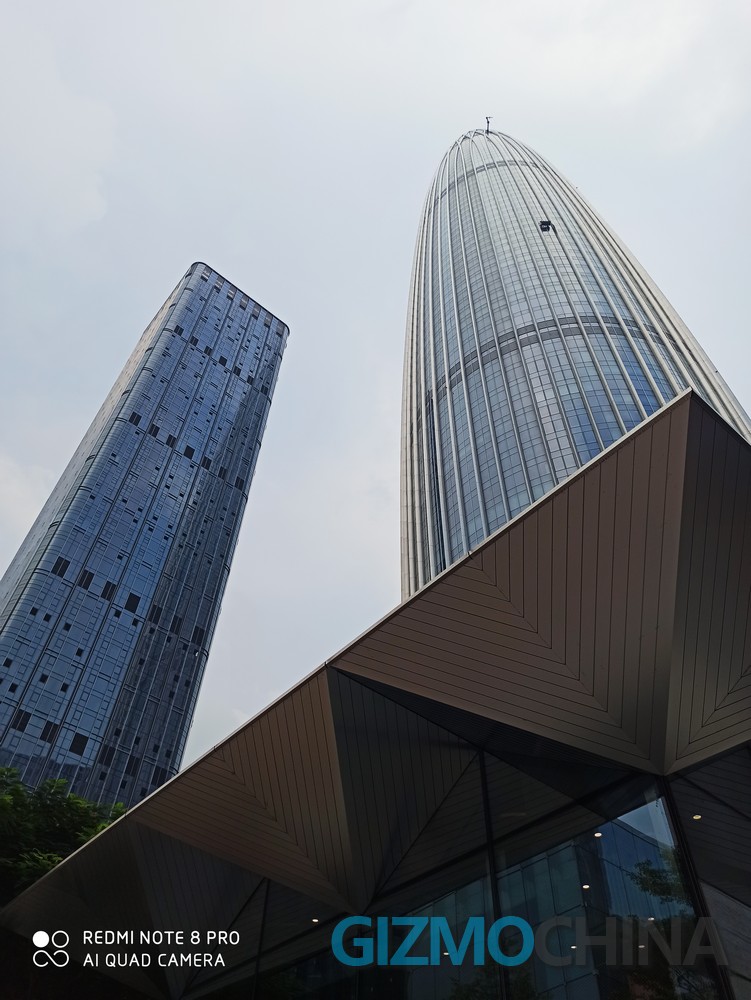
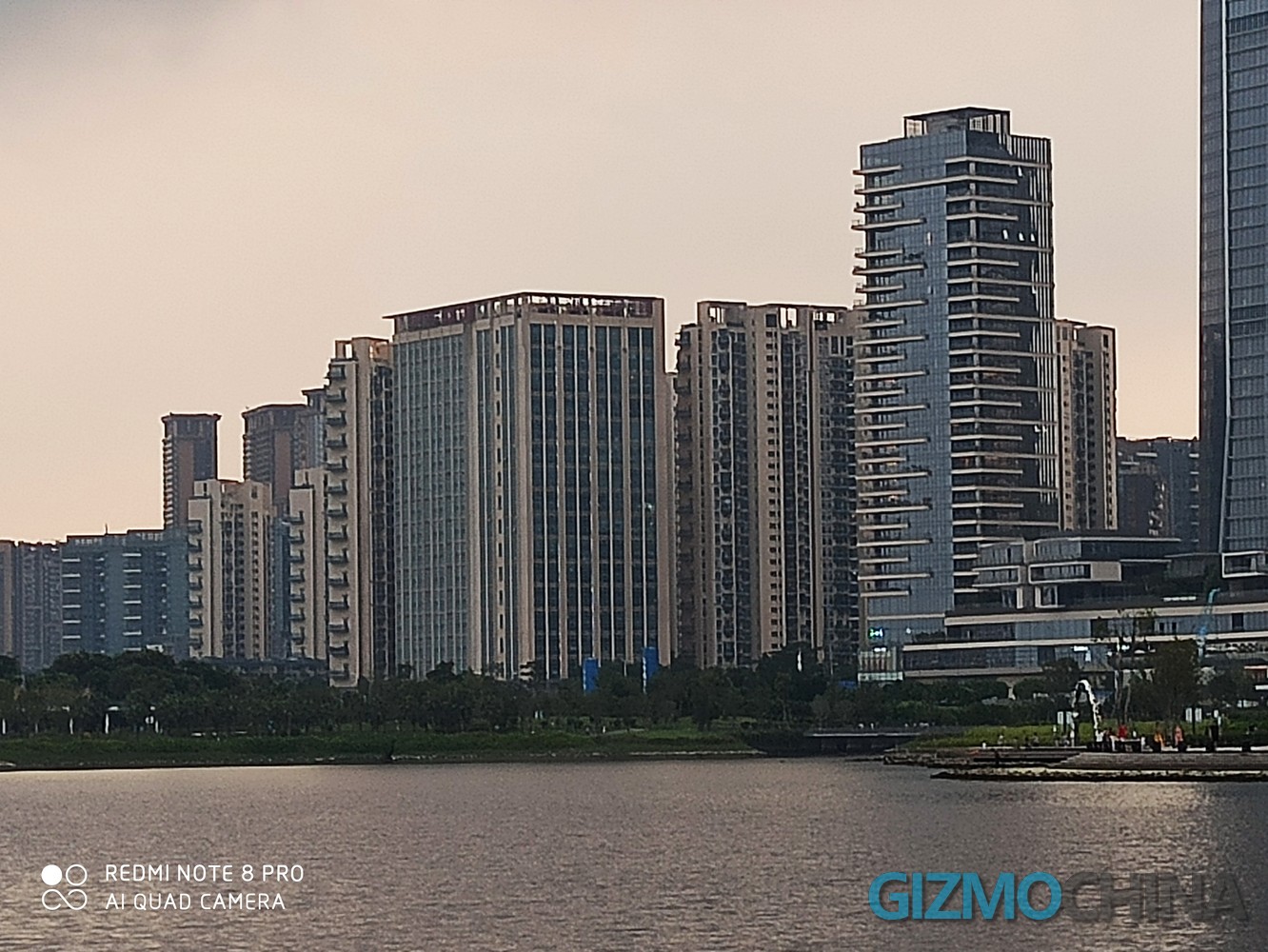
In another group of photos of outdoor buildings, the Realme 5 Pro shows its delightful color reproduction with the perfect use of its chroma boost mode. For those who wanna simplify their post-editing work, I would say that the samples shot by the Realme 5 Pro are ready for social media right out of the gallery. The other two phones still maintain their good performance under such good lighting conditions.
An obvious difference here is that the images shot by the Huawei P30 Pro showcased relatively warmer tones while it’s much cooler on the Redmi Note 8 Pro. So generally, we prefer the P30 Pro for close portrait or still-life photography while we love the Note 8 Pro for landscape shots. This is because warm colors typically come out well in paintings or even in photos while cold colors recede. This was especially evident in the group of high buildings photos, where the samples of Redmi Note 8 Pro were much cooler.
1 of 6
Huawei P30 Pro
Redmi Note 8 Pro
Realme 5 Pro
Huawei P30 Pro
Redmi Note 8 Pro
Realme 5 Pro
Redmi Note 8 Pro vs. Realme 5 Pro: High-resolution comparison
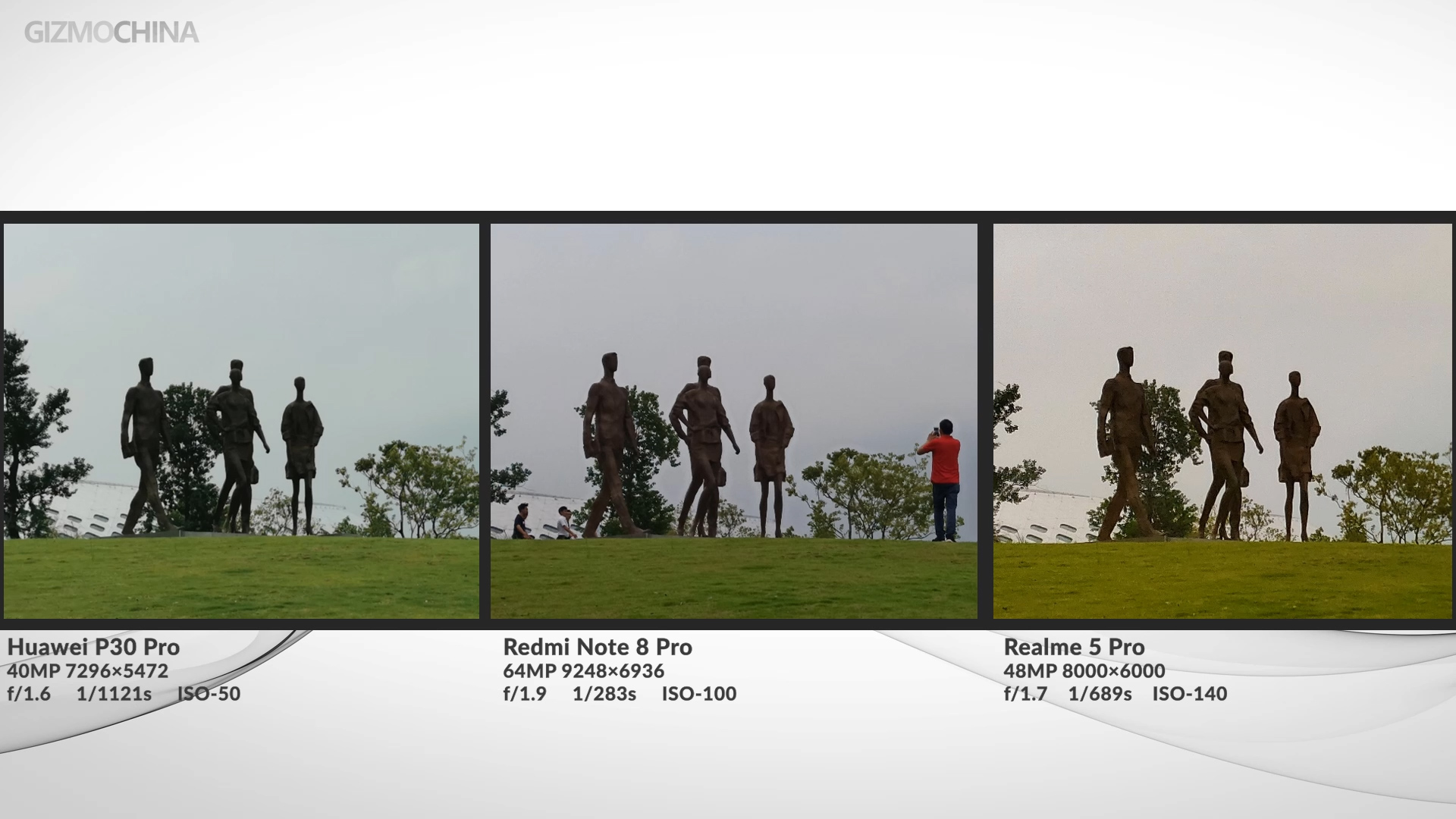
All these three phones have a high-resolution camera. The Huawei P30 Pro can output 40MP photos, and the Realme 5 Pro has the mainstream sony IMX586 with 48MP resolution, while amazingly, the Redmi Note 8 Pro can generate 64MP photos. The higher resolution also means you need more storage space.
A 40MP photo of the P30 Pro takes up around 8MB. The figure for the Realme 5 Pro is around 15MB, and for a 64MP photo shot by the Redmi Note 8 Pro you’ll need around 27MB of space. Fortunately, most users won’t have to resort to high-resolution photography all the time.
But there’s no doubt that the 64MP resolution sensor demonstrated some powerful advantages. The pictures shot by the Redmi Note 8 Pro retained more details and had less blur on photos (take the sculptures’ surface in the samples down below for example). Look at the zoomed-in images below and you’ll see that the 64MP photo caught better details of the sculptures even though we zoomed-in quite a lot.
1 of 4
Detail
Huawei P30 Pro (Compressed)
Redmi Note 8 Pro (Compressed)
Realme 5 Pro (Compressed)
Close shot
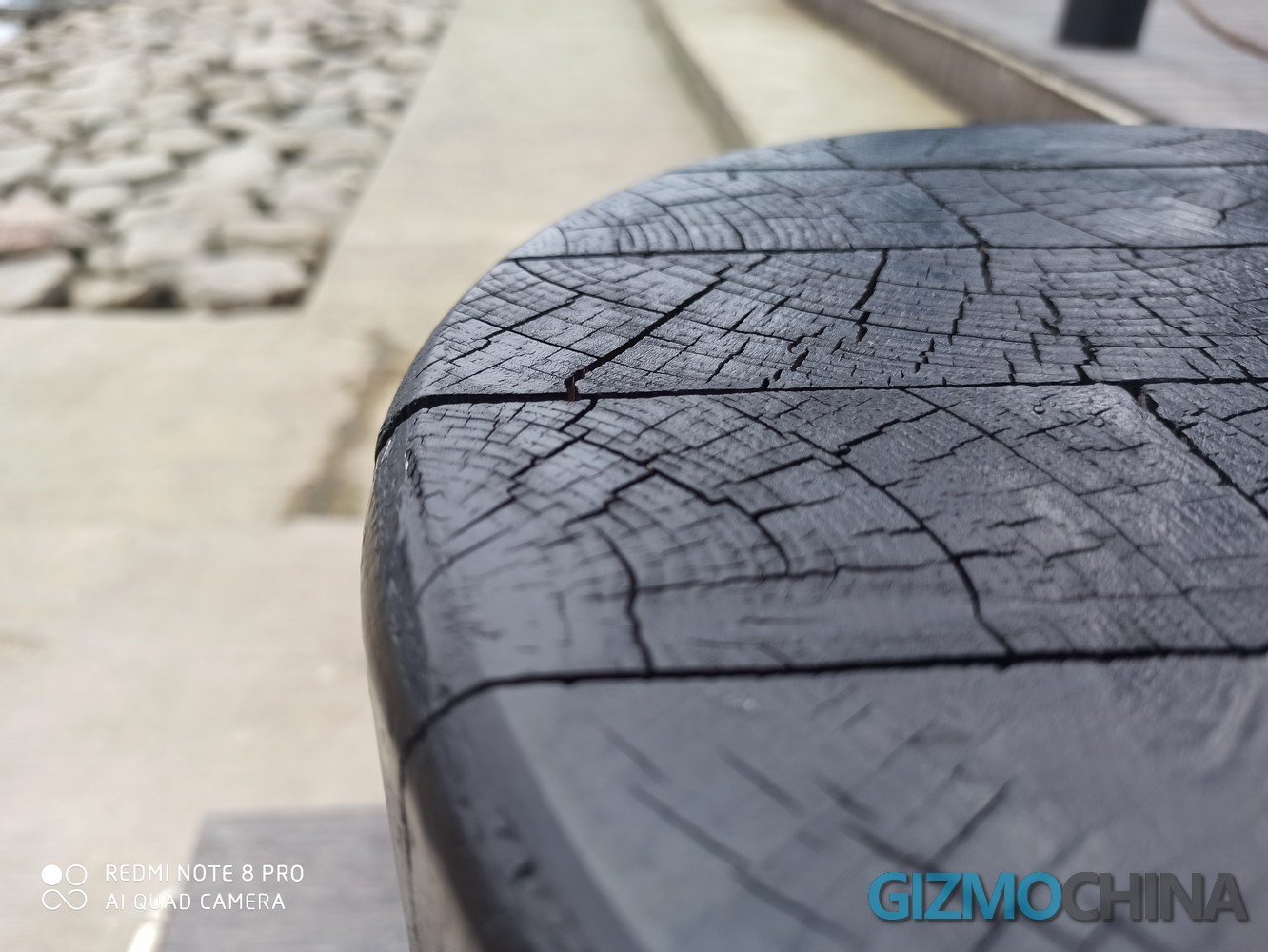
The Realme 5 Pro and the Redmi Note 8 Pro both feature a macro camera. But unfortunately, our tests show that it may not be very practical. Although it’s probably good for shooting extremely close subjects, under most conditions, their primary cameras can do a much better job due to better resolution and a more natural bokeh effect.
1 of 3
Huawei P30 Pro
Redmi Note 8 Pro
Realme 5 Pro
Ultra-wide angle
Huawei has a wide-angle camera with higher resolution, which made it take the lead in this round. From the samples of the other two phones, we actually can find the color deviation to some extent. The Redmi Note 8 Pro samples seem to come with a yellow-based high-contrast filter, while the Realme 5 Pro samples have more of a green filter.
1 of 3
Huawei P30 Pro (wide)
Redmi Note 8 Pro (wide)
Realme 5 Pro (wide)
1 of 3
Huawei P30 Pro (1x)
Redmi Note 8 Pro (1x)
Realme 5 Pro (1x)
Redmi Note 8 Pro vs. Realme 5 Pro: Tele zoom
As for their zoom capacity, Huawei P30 Pro has one of the best telephoto cameras that you can find on a phone. So here we just want to show you the difference between the other two models as compared to the industrial benchmark. In the 5x zoom-in samples, the two mid-range models suffered from too much AI adjustment as the sky colors all turned out to be reddish. However, in the case of the Huawei P30 Pro, the detail retention was really remarkable especially when we saw the fountain in the sample. But in all fairness, please note that both the Realme and Redmi models do not feature a telephoto camera. So when it came to the 2x zoom-in competition, things got way better. Noticeably, the Realme 5 Pro still maintains high saturation.
1 of 3
Huawei P30 Pro (5x)
Redmi Note 8 Pro (5x)
Realme 5 Pro (5x)
In these samples of the water surface, it seems that Redmi applied a radical AI solution when facing a low-light situation, so the sky was reflected remarkably compared to the other two samples.
1 of 3
Huawei P30 Pro
Redmi Note 8 Pro
Realme 5 Pro
Redmi Note 8 Pro vs. Realme 5 Pro: Night performance
As for the night shooting, all the three phones were pretty capable so as to make it their selling point. From the shooting experience, the Huawei P30 Pro forced you to hold the phone for more than 3 seconds, while the other two require just around a 2-second hold for shooting multi-photos with different exposures. But judging from the overall brightness and exposure balance, all the three candidates did a really great job.
However, their optimization strategies are quite different. The realme 5 Pro retained a natural image with limited noise at the center. Redmi Note 8 Pro’s sample featured more details due to a reduction of highlight exposure. While for the Huawei P30 Pro, it achieved the brightest night sample. Some people may even complain that Huawei has gone too far with its night mode.
After comparing hundreds of samples shot by the three machines, we have to admit that the Huawei P30 Pro is still one of the best camera smartphones. The phone consistently produced strong colors, good details, and accurate exposure in all situations.
As for the Redmi Note 8 Pro, thanks to its high-resolution primary camera, it reserved the richest details. As the first phone featuring a 64MP camera, we are looking forward to its continuous software adaptation and development of more interesting applications. For the Realme 5 Pro, the Sony IMX586 provided the most mature experience. Matching the wonderful Realme camera algorithm, the images would surprise you at first glance with saturated tones and accurate exposure control. But for some, Realme’s camera could be a bit too saturated at times.
As for the Redmi Note 8 Pro, we saw its potentials as well as shortages in this comparison. The phone managed to capture natural tones with good details in all samples. Even the night mode turned out to be impressive despite the samples coming out a little overexposed at times.
One thing’s sure, with phones like the Redmi Note 8 Pro hitting the markets, cameras on mid-range smartphones will never be the same. You no longer have to buy a flagship smartphone for remarkable camera performance.
Along with the Realme XT smartphone featuring 64MP quad-camera setup, the company has also launched a couple of accessories in the Indian market, which includes Realme Power Bank and Realme Buds Wireless.
Realme Power Bank
The Realme Power Bank, which first made its debut earlier this month in China along with the Realme Q, has now made its way to the Indian market. Priced at ₹1,299 (~$18), it will be available for purchase in India by the end of this month via Flipkart, Amazon, and the company’s own online store in three colors — Yellow, Red, and Grey.
It comes with a 10,000mAh lithium-polymer high-density battery and two ports for power output — USB Type-A and USB Type-C. The power bank measures 12.5mm in thickness and weighs around 230 grams. It can be charged in 3.28 hours with the 18W charger and it takes around 5.36 hours to get fully charged using 10W charger.
The company says that the device comes with 12 layers of protection including current, over-power, short circuit, over charger or discharge, fluctuations, electrostatic, electromagnetic field, chip thermal shutdown, among others.
Realme Buds Wireless
After the success of Realme Buds 2 launched recently, the company has today launched the wireless variant of the same, named Realme Buds Wireless. It comes with 11.2mm Bass Boost driver with professional composite DBB bass improvement solution for an immersive audio experience.
The headphones have been professionally tuned by popular DJ Alan Walker, claims Realme. Further, the Realme Buds Wireless comes with support for Bluetooth 5.0 as well as Bestechnic BES2300 audio chip. The company has also included a 3-button remote control.
Realme says that the earphones are made using skin-friendly silicon gel which should offer a comfortable and premium feel. It has a magnetic design that lets you turn them off just by attaching the earbuds together.
The Realme Buds Wireless are IPX4 rated to ensure splash resistance. Coming to the battery life, the company is promising up to 12 hours of battery life and has fast charging support that can offer 100 minutes of playback with just 10 minutes of charging.
Huawei is all set to launch the Mate 30 and Mate 30 Pro smartphones next week. The event will take place in Munich, Germany on September 19. Ahead of the official launch, we have come across a number of leaks giving us a rough idea on what to expect. Now, the latest Huawei Mate 30 Pro leak shows off the waterfall (dual-edge curve) display.
An alleged picture of the Mate 30 Pro was posted to the China-based microblogging website, Sina Weibo. The image gives us a look at the waterfall display that contours around the edge of the smartphone. The waterfall screen’s curved bezels are far more exaggerated than what’s available on the OnePlus 7 Pro and the Huawei P30 Pro.
The wide notch seen at the top of the display is absolutely huge this time around, and it appears to house a total of three camera sensors. That’s not necessarily accurate though. It may look like a triple camera, but it may actually be a Time of Flight (ToF) system with a light emitter and sensor. The selfie camera resolution is unknown for now.
Huawei’s Mate 30 series is set to be unveiled at an event in Munich, Germany on September 19. According to rumors, the Mate 30 Pro will feature a 6.6-inch AMOLED display with Quad HD+ resolution and a 90Hz refresh rate. On the back of the phone will be two 40MP cameras, an 8MP telephoto lens, and a 3D ToF sensor.
Gionee has launched its new Smart ‘Life’ Watch in the GBuddy portfolio of wearables and accessories in India. The trendy smartwatch targeted towards millennials and Gen Z only comes at Rs 2,999 ($42) on Flipkart. It is touted to offer many activity-based features that include 24 hours real-time monitoring of heart rate, calorie meter, fitness, health and multi-sport activity tracking.
The company claims it to be the first Smartwatch in its segment to sport stainless steel (Grade 316L) dial case with a trendy and stylish design. The watch combines a 3.3 cm (1.3) IPS Full Touch Colour Display with 2.5 D Corning Gorilla Glass and is waterproof with 5 ATM that is up-to 50 meters depth.
The Smart Life Watch comes with many activity-based features that include 24 hours real-time monitoring of heart rate, calorie meter, fitness, health and multi-sport activity tracking. The Watch supports fitness and workout regimes that track walking, running, cycling, trekking, playing indoor or outdoor sports.
The wearable enables you to add and track your fitness schedule and daily regime on a real time basis using the G Buddy Application. G Buddy App allows user data to be synchronized to other third party Apps like Google Fit and Strava. Some other features of the smartwatch include sedentary alert, memory full alert, alarm clock, goal completion alert, low battery alert, women health features, power saving mode, music control and flashlight.
The G Buddy application runs on both iOS 8.0 or above and Android 4.4 or above and is supported by a powerful 210mAh battery that gives it up-to 15 days battery life, and a standby time of 30 days.
Xiaomi-backed Redmi recently launched the Redmi Note 8 series smartphones, which includes Redmi Note 8 Pro having a 64MP primary camera sensor. Today, after weeks of teasing, Realme has finally launched the Realme XT smartphone in India, making it the first 64MP smartphone in the Indian market.
The Realme XT features a 6.4-inch Full HD+ AMOLED display with 2340 x 1080 pixels screen resolution and Corning Gorilla Glass 5 protection on top. The device also comes with an in-display fingerprint sensor. Under the hood, the device is powered by the Qualcomm Snapdragon 712 AIE octa-core processor manufactured using 10nm process.
It comes in three variants based on the memory configuration — 4GB RAM with 64GB onboard storage, 6GB RAM with 64GB internal storage, and 8GB RAM with 128GB internal storage. There’s also a microSD card slot allowing users to further expand the storage capacity up to 256GB.
The highlight of the smartphone is the camera department. On the back side, the phone features a quad-camera setup having a 64-megapixel Samsung ISOCELL Bright GW1 primary sensor with 0.8μm pixel size and f/1.8 aperture. The primary lens is accompanied by an 8-megapixel 119 degree ultra-wide-angle lens with f/2.25 aperture and 1.12μm pixel size, a 2-megapixel depth sensor with f/2.4 aperture, 1.75μm pixel size, and lastly a 2-megapixel macro sensor with f/2.4 aperture and 1.75μm pixel size.
On the front side, the smartphone features a 16-megapixel Sony IMX471 sensor with f/2.0 aperture for taking selfies and video calling. It also comes with support for Dolby Atmos audio along with Super Linear Speaker and Super Power Amplifier.
The smartphone is running Android 9 Pie operating system out-of-the-box with a customised version of ColorOS 6 that now comes with features like Dark Mode, Font Customisation, Digital Wellbeing, App Clone, among a few others.
Connectivity options on the device include Dual 4G VoLTE, Wi-Fi 802.11 b/g/n/ac, Bluetooth 5, GPS + GLONASS, and USB Type-C port. The device is powered by a 4,000mAh battery which comes with 20W fast charging support.
The Realme XT smartphone is being offered in two color options in India — Pearl White and Pearl Blue. The 4GB + 64GB model is priced at ₹15,999 (~$225) and the 6GB + 64GB model costs ₹16,999 (~$239). The top-end model of 8GB + 128GB is priced at ₹18,999 (~$268). The device will be available for purchase in India from 16th September via Flipkart and soon be available through offline stores across the country.
It looks like brand-conscious buyers are in for a treat. While a top-branded electronic product would normally set you back a pretty penny, Banggood is bent on changing that.
As part of its 13th-anniversary sale, Banggood has come up with brands new releases deals, offering a wide range of amazing products from popular for lowered prices. Dubbed as Brands New Arrival Launch, the promo features 1/2 price flash sale and a slew of heavily-discounted items.
The products have carefully been added to specific categories to expedite the search process. The first section called Daily Brands Recommend includes the Roborock S50 robot vacuum cleaner, Xiaomi Mi9T smartphone, the recently unveiled Mi Band 4, and FrSky ACCST Taranis Q X7 Transmitter.
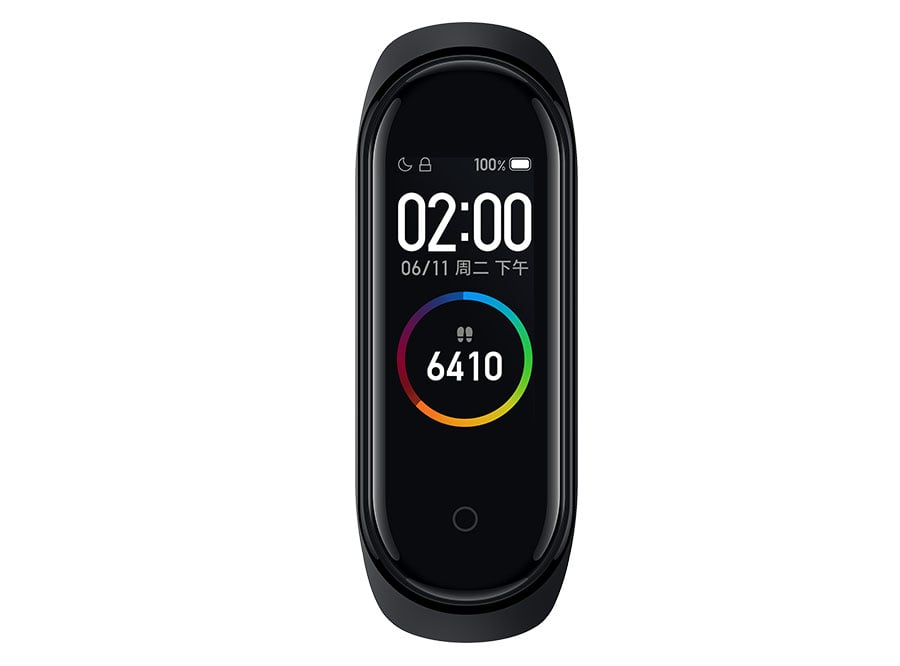
More importantly, you can get your tech greedy hands on these products without emptying your pockets. For instance, the Mi Band 4 normally retails for $99.99, but you can now buy it for only $63.99 from the promo page.
Moreover, you can extend this 36 percent discount with the help of coupon code BGM428. The coupon helps you bring the retail price of the smartwatch to just $32.49 even before you place your order.
As if that weren’t enough, you get the Bakeey Replacement Silicone Sports Soft Wrist Strap Bracelet Wristband for XIAOMI Mi Band 3/4 worth $12.99 free with your order. You also get free shipping on orders over $19.99.
The following category called New Arrival includes the Eachine EV800DM Varifocal 5.8G 40CH Diversity FPV Goggles, 2019 Newest Mustool G1200 Digital Microscope, and with various other equally well-received products from popular brands like BlitzWolf, and DIGOO.
Tech buffs might want to check out the next section called Brands Champion Product, wherein you can buy Top 6 products for considerably reduced prices. Moreover, each item under the aforesaid section has been assigned a coupon code that you can use to save more money at checkout.
The rest of the activity page has been split into dedicated sections for products from BlitzWolf, Eachine, Xiaomi, Danie, and Geekcreit. You can grab great discounts on your favorite brands, and even get a chance to save more money on select products using dedicated coupon codes.
For the sake of an instance, the BlitzWolf section offers a whopping 76 percent off on a myriad of music accessories, and other devices. Likewise, you can avail 68 percent off on select Eachine-branded product under the next category.
There’s 72 percent off on Xiaomi products, 73 percent off on Daniu products, and 69 percent discount on various items from Geekcreit.
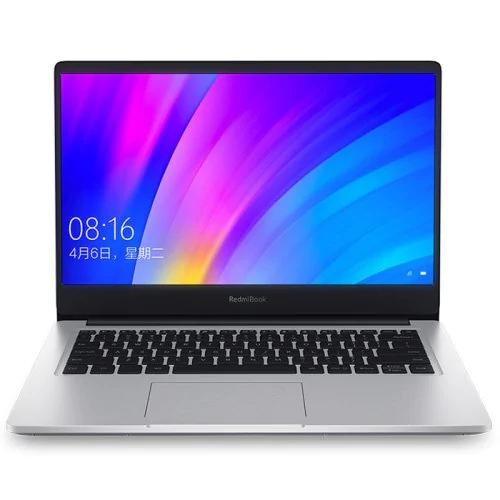
The concluding section on the promo page is called Maybe U Like and it includes popular products such as the Xiaomi RedmiBook laptop, Xiaomi Mibox S, etc. You can check them all out and take advantage of the discounts available on them by following this link before the activity ends.
At an event on 10th September, Apple launched iPhone 11 series, a new iPad (2019) and announced a couple of services. While many were expecting the Cupertino-giant to announce a refresh for the AirPods 2, that didn’t happen.
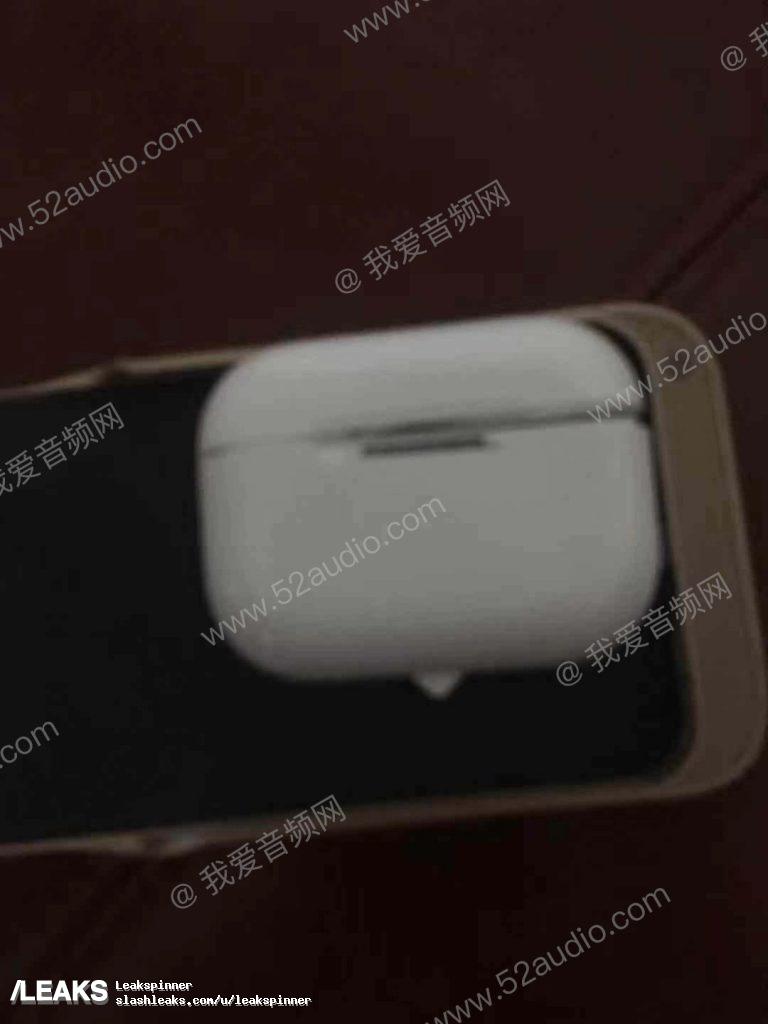
Given that the Apple AirPods 2 were launched in March this year, it makes sense for the company to not launch its successor this early. But, it seems that the company has started working on the AirPods 3 as a prototype of the same has surfaced online.
The leaked prototype of the Apple AirPods 3 shows an even smaller charging case for the earphones. However, take this with a pinch of salt as we haven’t independently confirmed that what we see in the picture is actually the prototype of the upcoming AirPods.
There are reports out there which suggests that Apple could launch two variants of the next-generation AirPods. Given that the new AirPods were not announced during the iPhone 11 launch event, they could go official next year. Do note that the company has not confirmed or said anything related to AirPods 3.
Current generation AirPods, i.e. Apple AirPods 2, comes with an updated H1 chip, replacing the Q1 chip to offer improved connectivity. It now connects more quickly to your devices and switching between devices while listening to music is now two times faster.
There’s also hands-free “Hey Siri” functionality, allowing you to control volume and swap songs through voice commands. Thus, you no longer need to tap on the AirPods with a finger to activate Siri.
Apple is also offering an optional Wireless Charging Case that enables Qi-based wireless charging. The Apple AirPods 2 without the charging case is priced at $159, while it costs $199 with the Charging Case.
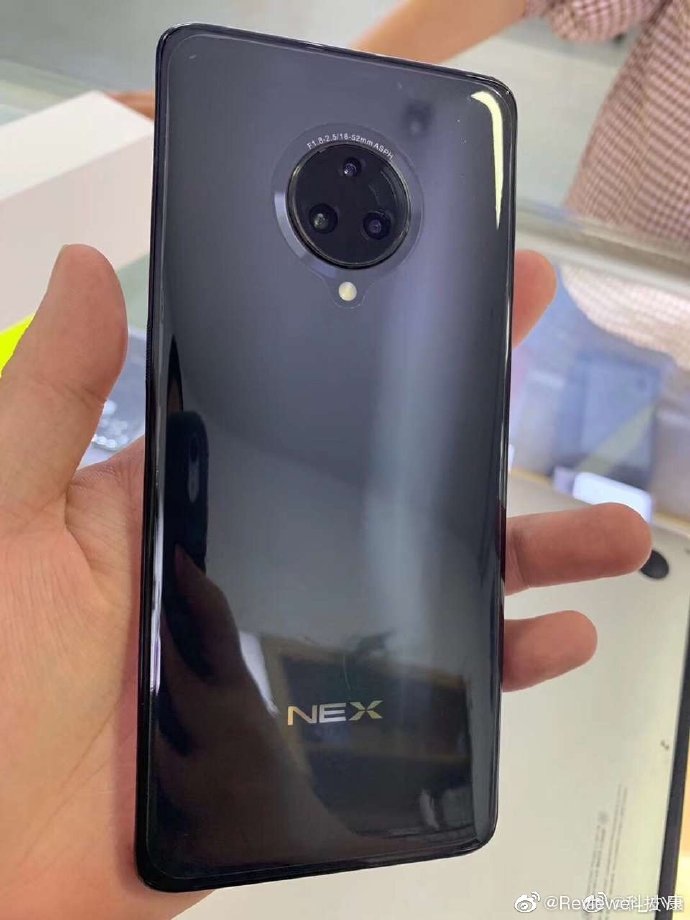
Vivo will be announcing the Vivo NEX 3 flagship phone along with its 5G edition on Sept. 16. The most striking feature of the phone is its marvelously curved notch-less display. Vivo NEX Product Manager Li Xiang has confirmed that the phone will be boasting a pathbreaking screen-to-body ratio of 99.6 percent. Leaked hands-on photos of the phone has surfaced today on Weibo. It showcases the phone form all angles.
The newly leaked images belong to the 4G-only version of the Vivo NEX 3 that has a model number of V1923A. The front view of the Vivo NEX 3 shows that the upper and below are symmetrical. The black-colored glass rear of the smartphone has a round-shaped camera module with three shooters placed inside it. An LED flash is placed below the camera module.
1 of 6
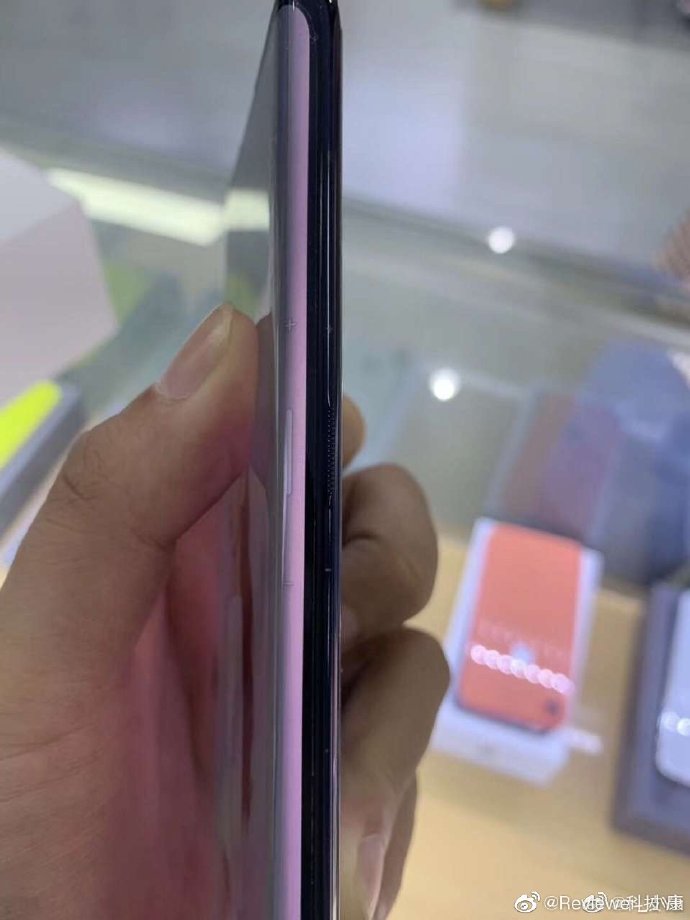
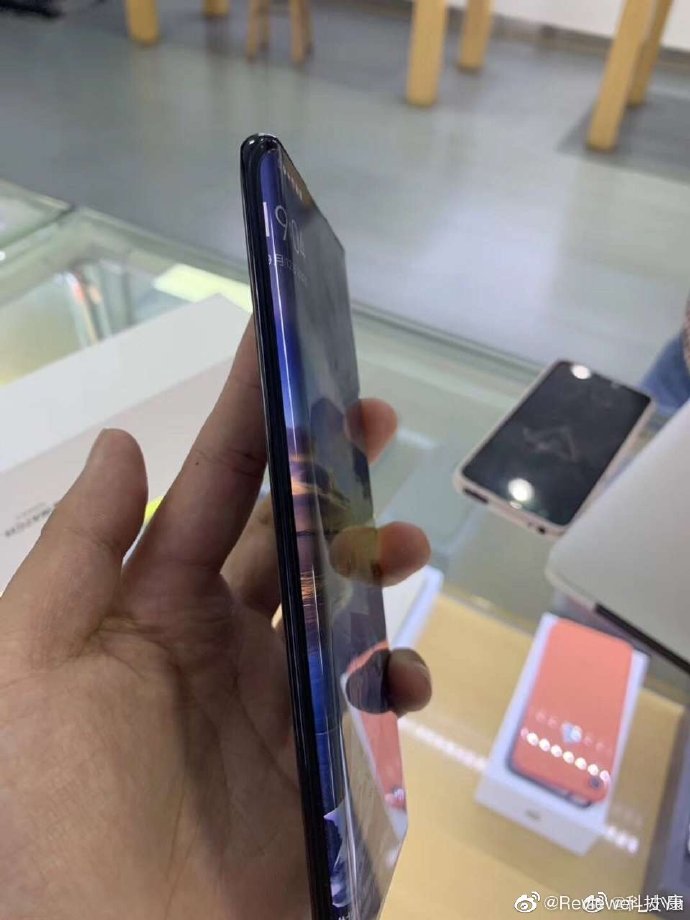
The NEX 3 is equipped with an in-display fingerprint reader. The About Phone page of the device shows that the phone is fueled by 2.96GHz Snapdragon 855+ mobile platform and it is loaded with Android 9 Pie OS. The side view of the phone shows that it does not feature physical buttons. Reports have revealed that it will be offering pressure-sensitive virtual buttons for power and volume. One of the images also shows the dual pop-up camera module of the phone in action. Previous reports have revealed that the Vivo NEX 3 has an additional power button on its top edge and it is also equipped with a 3.5mm audio jack.
Vivo NEX 3 Specifications and Features
The Vivo NEX 3 has a 6.89-inch AMOLED display and it is expected to arrive with 512 GB of native storage. It may release in 8 GB and 12 GB RAM editions. For photography, it will flaunt a 16-megapixel pop-up dual camera system and a 64-megapixel + 13-megapixel + 13-megapixel triple camera system. The 4,500mAh battery of the NEX 3 can be powered with 44W fast charging technology.
The Vivo NEX 3 measures 167.44 x 76.14 x 9.4mm and it weighs 218.5 grams. The handset is expected to release in two color editions as shown in the image above. There is no information available on the pricing of the NEX 3 and NEX 3 5G phones.
Earlier this year, during the launch of the Oppo Reno series, the Chinese smartphone maker confirmed that it is discontinuing its Oppo R lineup for the flagship devices and will now continue with the Oppo Reno and Oppo Find series. The company has also filed a patent for Oppo Find Y, which is rumoured to come with under-display camera.
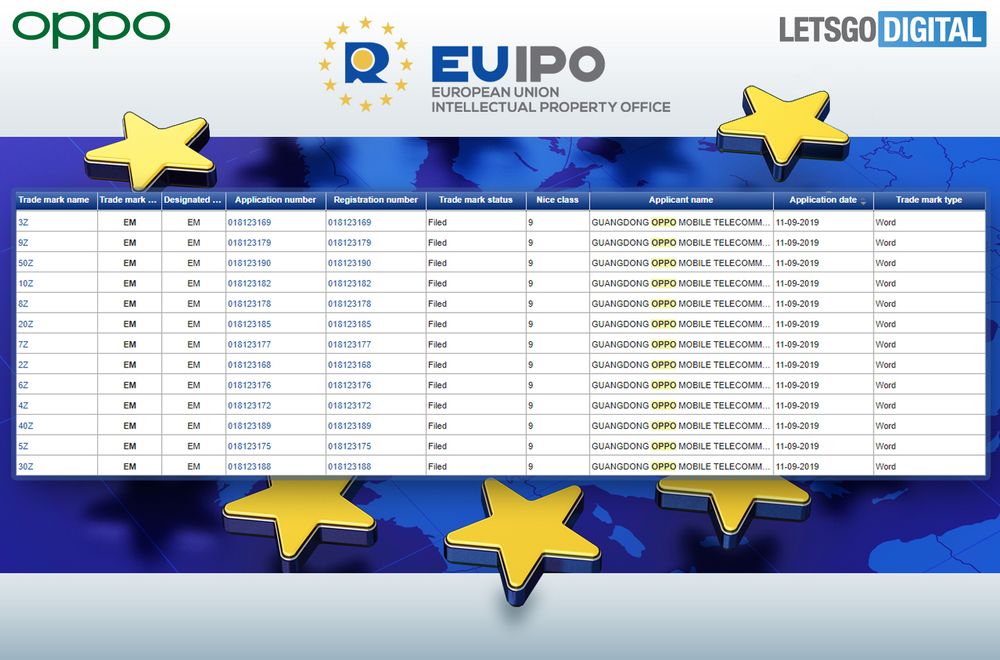
Now, the company seems to be working on the Oppo Z-series and the latest report reveals that Chinese smartphone manufacturer has trademarked 13 new smartphones which will get released under this new Z lineup.
The 13 smartphone names trademarked by Oppo includes 2Z, 3Z, 4Z, 5Z, 6Z, 7Z, 8Z, 9Z, 10Z, 20Z, 30Z, 40Z, and 50Z. All the trademarks are under Category 9, which is described as “mobile phones; smartphones; smartphone software; headsets; battery chargers.”
The company has not yet launched Oppo Z-series smartphones in the market. Although there’s the recently announced Oppo Reno2 Z, it’s a part of Reno lineup and not the new Z-series. It remains to be seen when the company plans to launch this new lineup for smartphone and how it is positioned in the market.
Meanwhile, the company has confirmed that it will be launching the Oppo Reno Ace smartphone in China next month, which will come with 90Hz refresh rate display. Along with that, it’s also confirmed by Oppo Vice President Brian Shen that the device will come with support for 65W Super Flash charging.
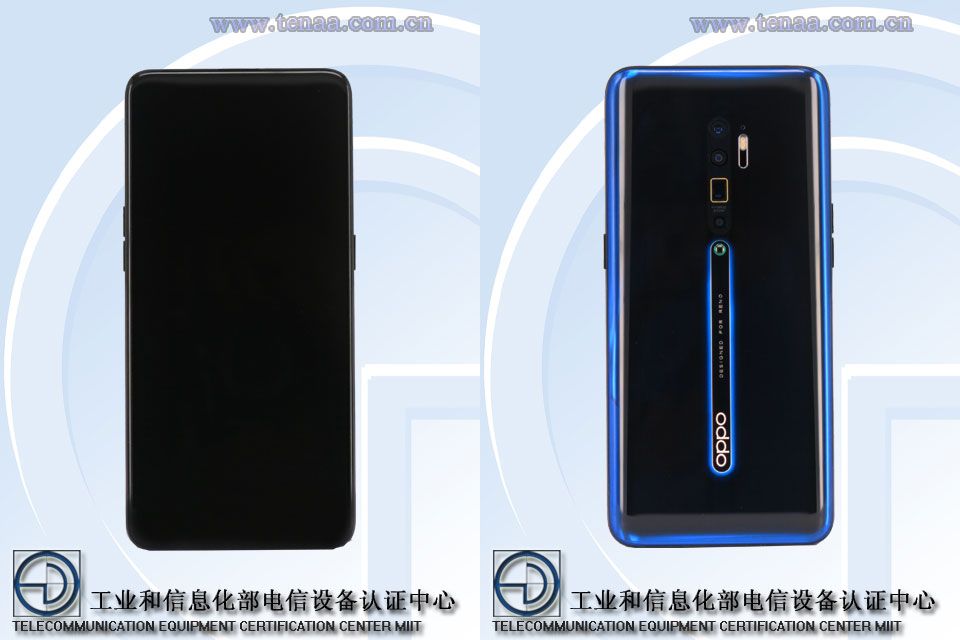
Being a flagship phone, we expect the Oppo Reno Ace to come powered by Qualcomm Snapdragon 855+ mobile platform. Oppo PCKM70 appeared on TENAA which lists 6.6-inch Full HD+ notch-less display, 4,000mAh battery with fast charging support, Snapdragon 855+ processor, 12GB of RAM, 256GB of internal storage.
It is also revealed to come with a 16-megapixel selfie camera and a quad camera setup on the back consisting of a 48-megapixel primary lens. The handset is equipped with support for 5G connectivity. There’s a possibility that this phone could be the Oppo Reno Ace but we’ll have to wait for the official announcement to know for sure.
While unveiling the Huawei P30 and P30 Pro flagship smartphones in China earlier this year, tech giant Huawei had announced its first smart glasses in collaboration with well-known South Korean eyewear firm Gentle Monster.
At that time, the company had only revealed the features of the smart glasses and were expected to be available for purchase in June or July. A bit later than expected, the Gentle Monster Huawei Smart Glasses are now available for purchase in China.
The product comes in five models — Smart East Moon 01, Smart Jack Blue 01, Smart South Side 01, Smart Alio 01, and Smart Alio C1. While the South Side 01 model is priced at 1,999 Yuan, roughly $282, the other four models are priced at 2,499 Yuan which roughly converts to $353.
The company says that the Gentle Monster Huawei Smart Glasses are designed with the concept of minimal design and there are no physical buttons. The antenna, charging module, dual microphone, chipset, speaker and battery are integrated in the temple, and the frame and lens can be replaced by the user.
It features stereo speakers that are positioned above the ears and tapping on the temple activates the voice assistant. To answer a phone call, users need to simply tap on the temple of the eyewear. For improved call quality, the eyewear has built-in AI Bluetooth noise reduction technology.
The smart glasses comes with an IP67 certified dust-proof and water-resistant body. The eyewear can be charged through its USB-C port and can also be charged wirelessly by placing the glasses inside its leather case. With 2,200mAh battery, the company is promising 20 hours of stand-by time.
The Vivo NEX 3 is scheduled to break cover on Sept. 16. The Chinese manufacturer has been consistently teasing on the features of the phone. The USP of the smartphone is that it will be coming a display that will be equipped with extremely curved edges. Past reports have claimed that the NEX 3 will offer a screen space of 99.6 percent. Now the official confirmation has come from Vivo NEX product manager Li Xiang. He has confirmed that the NEX 3 will offer a screen-to-body ratio of 99.6 percent.
According to Li Xiang, the 99.6 percent screen-to-body ratio of the Vivo NEX 3 has been determined using the industry standard calculation method. He added the NEX 3 will offer highest screen space even with different methods. Xiang also stated no other phone will be able to offer such a high screen space in the next six months.
The Vivo NEX 3 images have revealed that the left and right edges of its display have extreme curvature. The side bezels of the phone are not visible in the newly shared image of the phone. The upper and lower bezels of the phone are also quite thin. Such a marvelous design allows the NEX 3 to offer huge screen space.
Vivo NEX 3 Specifications and Features
The Vivo NEX 3 will be debuting in 4G-only and 5G-ready models in China. The smartphone has a massive 6.89-inch AMOLED display that produces full HD+ resolution. The screen ins integrated with an in-display fingerprint sensor. The 2.96GHz Snapdragon 855+ mobile platform is present under the hood of the Vivo NEX 3. The smartphone is expected to release in 8 GB RAM and 12 GB RAM versions in China.
The NEX 3 has a 4,500mAh battery that is equipped with 44W rapid charging. The Android 9 Pie OS coupled with the latest version of FunTouch OS will be available on the device. The top edge of the phone houses a 16-megapixel dual pop-up camera system and its rear is fitted with 64-megapixel + 13-megapixel + 13-megapixel triple cameras housed inside a round-shaped module. There is no information available on the pricing of the smartphone. Vivo will be also announcing the TWS earphones alongside the Vivo NEX 3.
Amid the US-China trade war, Huawei is the company that’s caught in the middle. While both the countries and trying out to work a deal, Huawei’s Chief Security Officer recently said that the United States needs to talk to Huawei for the China trade deal.
Now, Zhengfei Ren, CEO and founder of Huawei has offered an olive branch to the Trump administration to resolve the issue between Washington and Huawei. In an interview with New York Times, he said that the company is open to license its 5G technology to American companies. The proposed offer would essentially allow the U.S. to finally get in the race for 5G supremacy.
Zhengfei Ren, founder and CEO of Huawei
Ren said: “Huawei is open to sharing our 5G technologies and techniques with U.S. companies, so that they can build up their own 5G industry. That would create a balanced situation between China, the U.S. and Europe.”
He also added that the U.S. companies would be allowed to modify the software code used to run any of Huawei’s 5G equipment or even change it and use their own as they see fit. With such deal, the American licensees will be able to sell their 5G equipment based on Huawei’s intellectual property anywhere in the world, except in China, said Ren.
The 5G market is currently being dominated by four companies — Huawei and ZTE from China, Ericsson of Sweden, and Nokia from Finland. Currently, the use of Huawei equipment is banned from U.S. networks over concerns that it could be used by the Chinese government as a method to spy or disrupt telecom systems. At present, there’s no American 5G equipment maker.
However, the Chinese government would have to approve the deal to make this happen. It remains to be seen if the Chinese government is on-board to see the most valuable assets of its most valuable tech company land in hands of the United States.
A mysterious Huawei phone with NLE-AL00 model number has been benchmarked on Geekbench. While the benchmarking platform does not mention it clearly, it appears to be fueled by Kirin 990 chipset that was recently announced by Huawei at the IFA 2019 tech trade show.
The Huawei NLE-AL00 is powered by a HiSilicon processor that has a base frequency of 1.96 GHz. At IFA 2019, Huawei had announced Kirin 990 and Kirin 990 5G chipsets. The 5G edition has two Cortex-A76 cores that work at 2.86GHz, two Cortex-A76 cores at 2.36GHz and four Cortex-A55 cores at 1.95GHz. On the other side, the regular version of the Kirin 990 has two Cortex-A76 cores that clock at 2.86GHz, two Cortex-A76 cores at 2.09GHz and four Cortex-A55 cores at 1.86GHz. Hence, it is being speculated that the Huawei NLE-AL00 could be fueled by the non-5G version of the Kirin 990.
The Huawei NLE-AL00 could be an upcoming flagship phone since it is running on the recently announced Android 10 OS. The purported Kirin 990 chipset is assisted by 8 GB of RAM. In the single-core of Geekbench, the NLE-AL00 has scored 3842 points and it has recorded 11644 points in the multi-core test. It is yet to be determined whether the NLE-AL00 is a Huawei or Honor branded smartphone.
A reliable tipster from China has claimed that NLE-AL00 is not the model number of the Mate 30 and Mate 30 Pro smartphones that are scheduled to go official on Sept. 19. Last year, Mate 20 X gaming-centric phone had debuted as one of the first phones with Kirin 980 chipset. So, there is a possibility that the NLE-AL00 could be Mate 30 X or the Honor Vera30 flagship phone. The Honor Vera30 is expected to go official towards the end of the year.
The Kirin 990 is a second generation 7nm chipset and the successor of 7nm Kirin 980 chipset from last year. Built with 7nm+ EUV process, the regular version of the Kirin 990 5G has dual Big Core and a Tiny Core NPU unit whereas the non-5G edition has single Big Core and a Tiny Core NPU unit. Both come with 16-core Mali-G76 GPU, UFS 3.0 and UFS 2.1.
OPPO announced the OPPO Reno2 through a dedicated launch event in China on Monday. The smartphone is now available for purchase in China. At the unveil event of the Reno2, the Chinese manufacturer had confirmed that it will be debuting a flagship phone called OPPO Reno Ace in October. The smartphone is expected to premium flagship features powered with blazing fast charging capabilities. Today, OPPO Vice President Brian Shen confirmed that the Reno Ace will be sporting 65W SuperVOOC fast charging technology.
The latest Weibo post by Shen reads that the company will be mass producing the world’s fastest 65W SuperVOOC fast charging technology for the upcoming OPPO Reno Ace phone in October. This technology is faster than 50W SuperVOOC fast charging technology that was made available on the OPPO R17 Pro smartphone last year. It allowed the phone to gain to 40 percent power by charging for only 10 minutes.
The OPPO Reno Ace smartphone is rumored to be equipped with a 90Hz refresh rate display. Probably, the Reno Ace could be the mysterious phone with extremely curved edges that was teased in July this year.
The images that were shared by Shen at that time had revealed that the phone has ultra slim upper and lower bezels and the sides bezels are almost non-existent. This allows the phone to offer nearly 100 percent screen space. It remains to be seen whether the notch-less display of the phone is coupled with an under-screen camera technology or it will feature a pop-up camera module.
No other details of the OPPO Reno Ace smartphone are available yet. Being a flagship phone, it could be featuring the Snapdragon 855+ mobile platform. Probably, Shen will be spilling more information on the specs of the smartphone in the coming days. The exact launch date of the phone is currently under the wraps.
The TENAA database has OPPO PCKM70 smartphone waiting to go official. It has 6.6-inch full HD+ notch-less display, 3,930mAh minimum capacity battery with fast charging support, Snapdragon 855+ processor, 12 GB of RAM, 256 GB of storage, 16-megapixel selfie camera and a quad camera setup with a 48-megapixel lens, 13-megapixel lens and an 8-megapixel sensor. The handset is equipped with support for 5G connectivity.
On Sept. 6, Vivo India had launched the Vivo Z1X smartphone. The Chinese firm will be carrying out its first sales in the country today at 12 PM. There are couple of offers available for the buyers of the Vivo Z1X smartphone.
Vivo Z1X Price and Launch Offers
Customers will be able to avail the Vivo Z1X in two models such as 6 GB RAM + 64 GB storage for Rs. 16,990 (~$239) and 6 GB RAM + 128 GB storage for Rs. 18,990 (~$267). Fusion Blue and Phantom Purple are the two color variants of the smartphone. The first sale of the phone will begin at 12 PM through Vivo India’s online store and Flipkart today.
Vivo Z1X Phantom Purple
The Vivo Z1X can be availed through no-cost EMI plans for up to 12 months. HDFC bank card users with EMI transactions can get Rs. 1,250 discount. Flipkart Axis Bank credit card and Axis Bank Buzz credit card users can take advantage of 5 percent cashback. Lastly, Jio users can get up to Rs. 6,000 benefits.
Vivo Z1X Specifications and Features
The Vivo Z1X has a 6.38-inch Super AMOLED display with waterdrop notch. It produces full HD+ resolution of 1080 x 2340 pixels. The display of the phone is embedded with a fingerpint sensor. The Snapdragon 712 mobile platform powers the smartphone with 6 GB of RAM. It has up to 128 GB of native storage. The Android 9 Pie OS on the device is skinned with FunTouch OS 9.
The front notch of the Vivo Z1X is the home for its f/2.0 aperture 32-megapixel selfie camera. The rear side of the phone is fitted with a triple camera setup that has a 48-megapixel main lens with f/1.79 aperture, a 120-degree 8-megapixel wide-angle lens and an f/2.4 aperture 2-megapixel portrait sensor. The 4,500mAh battery of the Vivo Z1X supports 22.5W fast charging through USB-C.
Vivo Z1X Fusion Blue
The Vivo Z1X will be selling alongside the other Z-series named Vivo Z1 Pro that was made official in July. The 4 GB RAM + 64 GB storage, 6 GB RAM + 64 GB storage and 6 GB RAM + 128 GB storage of the Z1 Pro are respectively priced at Rs. 14,990 (~$211), Rs. 16,990 (~$239) and Rs. 17,990 (~$253). Mirror Black, Sonic Blue and Sonic Black are the three color options of the Z1 Pro. It features a 6.53-inch IPS LCD full HD+ display, Snapdragon 712 chipset, 32-megapixel selfie camera, 16-megapixel + 8-megapixel + 2-megapixel triple camera and a 5,000mAh battery with 18W dual-engine fast charging.
Vivo India has recently confirmed that it will be launching the Vivo V17 Pro smartphone in India on Sept. 20. The smartphone will be debuting as the first phone in India with dual pop-up selfie camera system. The pre-orders of the phone will begin on Sept. 19 followed by a market release on Sept. 28.
In select states of India, Vivo is expected to run Super Day sale on Sept. 27. It will be also carrying out Scratch and Win offer in the country and customers will have to purchase a new Vivo device at the retail outlets to participate in it. Customers will stand a chance to win up to Rs. 5,000 in cashback. The ‘Bumper Offer’ will let winners receive Vivo Y90 or Vivo V17 Pro smartphone.
There is no information on the pricing of the Vivo V17 Pro. However, it is speculated to be priced around Rs. 30,000. The handset is expected to release in two color editions as shown in the below image.
Vivo V17 Pro Specifications and Features
Rumors surrounding the Vivo V17 Pro has revealed that it will be sporting a 6.59-inch notch-less Super AMOLED display that will produce 1080 x 2440 pixels resolution. The FunTouch OS flavored Android 9 Pie OS will run on the device. The dual selfie camera setup of Vivo V17 Pro will include a 32-megapixel primary lens and a 2-megapixel depth sensor. The rear shell of the phone will be fitted with a vertical quad camera system that will comprise of a 48-megapixel main lens, an 8-megapixel ultrawide lens and a pair of 2-megapixel sensors.
The Snapdragon 675 mobile platform is expected to fuel the phone with 6 GB and 8 GB of RAM. The handset will have an internal storage of 128 GB. The smartphone will be backed by a 4,100mAh that will probably come with support for fast charging. It will be also equipped with an in-screen fingerprint reader. Apart from India, the Vivo V17 Pro is also expected to break cover in markets such as Europe, Indonesia and Thailand.
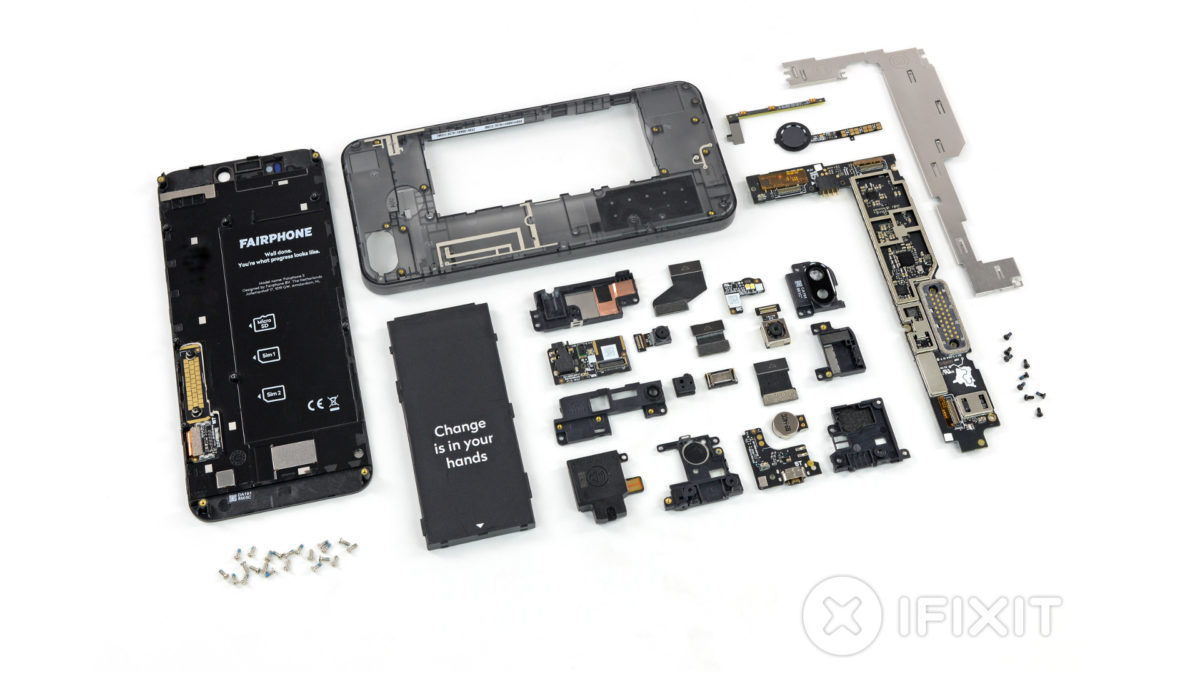
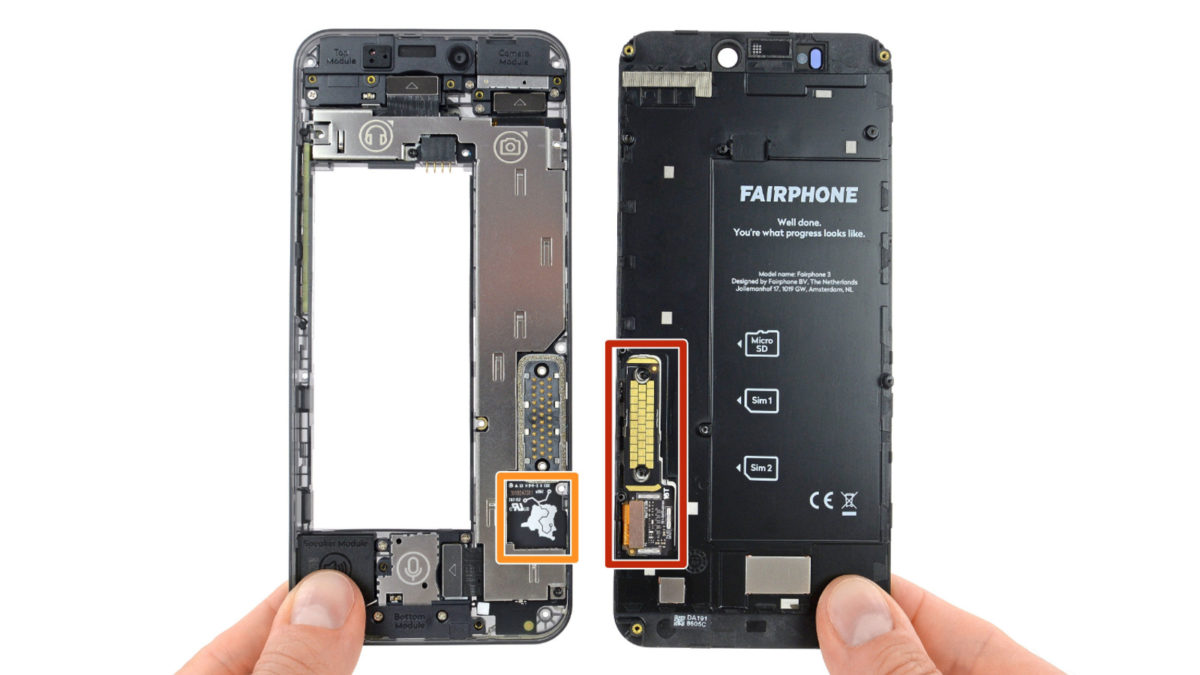
Fairphone 2 was unveiled last year and it became the only smartphone to achieve a 10-out-of-10 score on gadget repair website iFixit. This is as a result of the ease of repairability as a result of the modular design it adopts. The company followed up with the Fairphone 3 which was announced recently. The phone has now been scored by iFixit, bearing the same 10/10 repairability score. This makes it the second phone after the first iteration to get a 10/10 iFixit score.
The Fairphone 3 adopts the same modular design as its predecessor, packing several modules that can easily be swapped out. The device also features a removable battery that can be swapped out by the user.
iFixit adduced several reasons for the 10/10 score given to the Fairphone 3. The reasons include that key components like the battery and screen can be accessed either without tools or with a standard Phillips screwdriver or a Torx screwdriver. The parts can then be replaced very easily once there is access. The panel also has pictorial guides to recognise several of the modules and components. However, some of the components are soldered and may not be easy to replace.
In case you are just meeting the phone for the first time, the Fairphone 3 sports a 5.7-inch full HD+ LCD screen. It is powered by a Snapdragon 632 processor paired with 4GB of RAM, and there is 64GB of expandable storage. The phone packs a 12MP rear camera while at the front there is an 8MP selfie camera. It gets its juice from a 3,000mAh battery. The Fairphone 3 adopts a 450 euros retail price which isn’t cheap considering the hardware lineup but then, there may still be a market for it.
We use cookies on our website to give you the most relevant experience by remembering your preferences and repeat visits. By clicking “Accept”, you consent to the use of ALL the cookies.
This website uses cookies to improve your experience while you navigate through the website. Out of these, the cookies that are categorized as necessary are stored on your browser as they are essential for the working of basic functionalities of the website. We also use third-party cookies that help us analyze and understand how you use this website. These cookies will be stored in your browser only with your consent. You also have the option to opt-out of these cookies. But opting out of some of these cookies may affect your browsing experience.
Necessary cookies are absolutely essential for the website to function properly. This category only includes cookies that ensures basic functionalities and security features of the website. These cookies do not store any personal information.
Any cookies that may not be particularly necessary for the website to function and is used specifically to collect user personal data via analytics, ads, other embedded contents are termed as non-necessary cookies. It is mandatory to procure user consent prior to running these cookies on your website.


































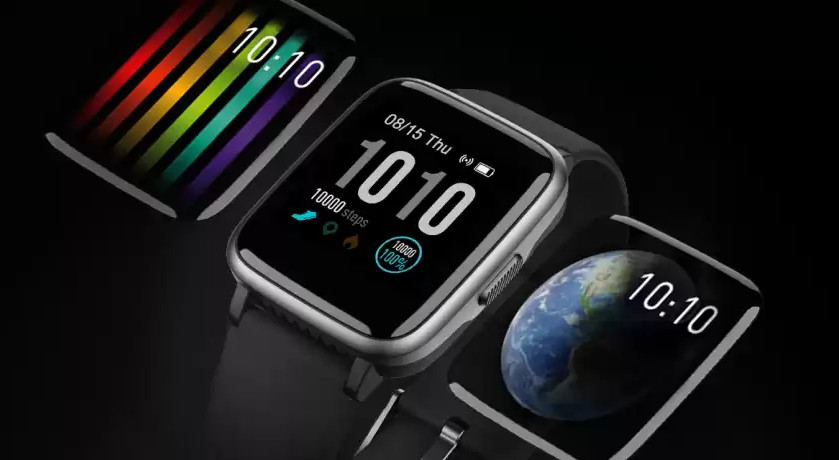 The Smart Life Watch comes with many activity-based features that include 24 hours real-time monitoring of heart rate, calorie meter, fitness, health and multi-sport activity tracking. The Watch supports fitness and workout regimes that track walking, running, cycling, trekking, playing indoor or outdoor sports.