Apple and Qualcomm ended an intense years-long battle patent dispute earlier this April, which led to many people questioning whether there’s any bad blood between the two companies. According to Qualcomm CEO Steve Mollenkopf however, the two companies don’t really have any bad blood going on between them.
Yahoo Finance Editor-in-Chief Andy Serwer asked Mollenkopf “It seemed like there was a lot of bad blood between [Apple and Qualcomm],” Serwer said. “I mean, were you guys bitter enemies and now you toss that aside?” on an episode of his weekly interview series, and it prompted a rather interesting answer from the Qualcomm CEO.
“Effectively, yes,” said Mollenkopf. “I mean, and I would say not the bitter enemies part. Look, there’s a lot of money that goes back and forth. And I think we both were able to resolve that. And now the focus is really on products.” This is an especially important point, as Apple needs to work with Qualcomm if they want to join in on the on-going 5G race.
Qualcomm’s been one of the heavy hitters when it comes to 5G development, and it only makes sense that Apple would want to work with them when it comes to pushing out 5G technology. They definitely don’t want to lag behind other players. Losing out to big competitors like Samsung is one thing, but even smaller companies are hopping on the bandwagon, and Apple doesn’t want to be left behind.
“I’m very happy that that’s now 100% of the discussion between the companies, which is, how do we get these two great engineering teams together and create products?” Mollenkopf told Serwer. “That’s a much more natural discussion between the two companies and something I enjoy much more than the other part. But we got through it. It’s just business. And now we’re into the product part.”
In addition to settling its dispute with Qualcomm, Apple also recently acquired Intel’s smartphone modem chip business for around $1 billion. So, it is plausible that the tech giant could begin to develop its own 5G chips. For now, though, the partnership between Qualcomm and Apple appears productive.
“Clearly, the companies have turned the page, and I applaud that,” said Mollenkopf. “I think it’s great.”
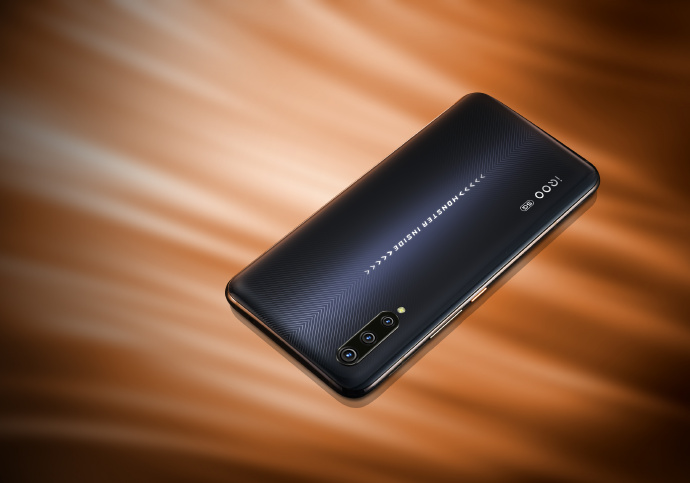
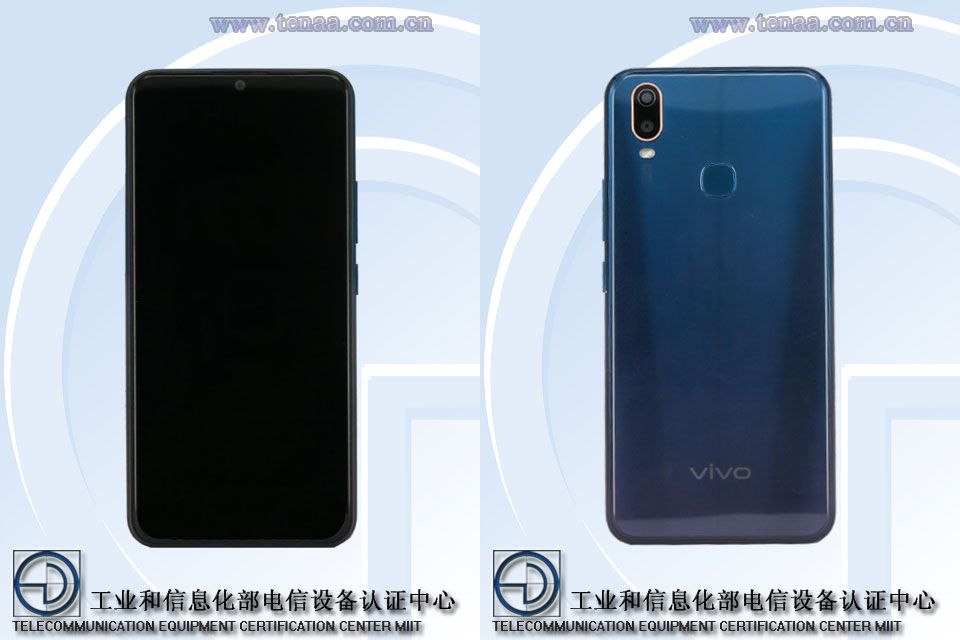
Last month, an unidentified Vivo V1922A had appeared on the database of China’s 3C authority. The same phone has now appeared on TENAA with full specifications. Based on the specifications of the smartphone, it can be safely concluded that it is the non-5G version of the upcoming iQOO Pro smartphone.
The Vivo V1922A/T TENAA appearance reveals that its dimensions are 158.77 x 75.73 x 9.325mm. Weighing 9.325mm, the Vivo V1922A/T features a 6.41-inch AMOLED display that produces 1080 x 2340 pixels full HD+ resolution and offers an aspect ratio of 19.5:9. The AMOLED display of the phone is integrated with an in-display fingerprint reader.
The Snapdragon 855+ gaming-centric mobile platform that comprises of 2.96GHz octa-core processor powers the Vivo V1922A/T smartphone. The SD855+ will be fueling the 8 GB RAM and 128 GB RAM editions of the smartphone. In China, the phone will be releasing in three storage variants like 128 GB, 256 GB and 512 GB. The handset lacks support for external storage.
The Android 9 Pie OS runs on the device. It features a minimum rated battery of 4,410mAh capacity. Its typical capacity will be 4,500mAh. The 3C listing of the phone had revealed that it will be shipping with V3030A-CN that supports 44W fast charging. The rear shell of the phone has a triple camera system with a primary lens of 48-megapixel that is coupled with a 13-megapixel lens and a 12-megapixel sensor. For capturing selfies, it has a selfie shooter of 12-megapixel.
The TENAA listing of Vivo V1922A/T does include any of its images. Being a 4G LTE version of the iQOO Pro 5G, both handsets will be sporting the same design. The iQOO Pro 5G is expected to arrive in the market as the cheapest 5G smartphone. It may carry a price tag of 4,498 Yuan (~$638) for its base variant featuring 8 GB of RAM and 128 GB of storage. Vivo will be holding a launch event for the iQOO Pro and iQOO Pro 5G on Aug. 22. The handset will be arriving as an improved version of the original Vivo iQOO gaming smartphone that was made official in China in April this year.
Aside from making top-notch smartphones that boast an impressive array of features, Xiaomi manufacturers a wide range of other equally-impressive products including home cleaning devices, under its smart home ecosystem.
The Chinese electronics giant has teamed-up with GeekBuying to offer the Xiaomi Dreame V9 Pro and the Xiaomi JIMMY JV53 Handheld Cordless vacuum cleaners at lowered prices. Aside from shedding light on the discounts, we will show how you can save more money at checkout.
Xiaomi Dreame V9 Pro Cordless Stick Vacuum Cleaner
The Dreame V9P is powered by Space 3.0 brushless digital motor that spins up to 100,000rpm per minute, delivering an impressive suction of 20,000 Pa. When charged for 3.5 hours, the vacuum cleaner runs for about 50 to 60 minutes.
Moreover, the Dream V9 Pro draws its juices from a non-removable 2500mAh Samsung lithium-ion battery that can effectively clean 380 square meters area. Featuring a wall-mounted charging dock, the cleaner has an electric anti-mite brush that eliminates the mites, bacteria, and hair on cotton fabric surface at high speed.
Equipped with five stages HEPA filtration, the Xiaomi Dreame V9 Pro normally retails for $309.99, but GeekBuying is giving its loyal users a chance to buy this cordless stick vacuum cleaner for a lowered price of $234.99.
You can extend this noteworthy 24 percent discount with the help of coupon code 3KMCKCGM. The aforesaid coupon helps you save $10 more by reducing the retail price of the Xiaomi Dreame V9 Pro to just $224.99 before you click the ‘Place your Order’ button.
You can follow this link to avail the discount and use the coupon before it expires. Note that the promo is slated to end in just six days.
Xiaomi JIMMY JV53 Handheld Cordless Vacuum Cleaner
Backed by the third generation of 100,000-rpm brushless digital motors, the JIMMY JV53 produces 425W of power, with 55 percent of motor efficiency and 125AW suction. Despite delivering higher suction, this durable vacuum cleaner lasts longer.
It uses a powerful brushless digital motor to keep your surrounding dust and mite free. Moreover, it sucks up the bacterium, allergen, and other harmful elements to offer a cleaner environment to your family.
The super lightweight JIMMY JV53 uses a big capacity lithium battery to run up to 45 minutes. It offers an impressive 99 percent filtration separation efficiency for keeping your home and office free from dust and secondary pollution.
The Xiaomi JIMMY JV53 would normally set you back $269.99, but you can now buy it for a lowered price of just $229.99 from GeekBuying. This is a 15 percent reduction in the vacuum cleaner’s original asking price.
On top of that, you can use coupon code 3KPDT2BX to grab an extra $20 off. In other words, you can bring the already lowered asking price of the JIMMY JV53 further down to just $209.99 by applying the above-mentioned coupon at the time of checking out.
The discount is available on the purple-tinted Xiaomi JIMMY JV53 Handheld Cordless Vacuum Cleaner for a limited period. You can click here to visit the promotion and page and avail the discount before the promo ends.
There have been rumors that the Redmi M1908C3IC which recently received its TENAA certification is the Redmi 8. However, a new leak says it is the Redmi 8A.
The leak is a set of live photos of a prototype posted on the web. The images not only give us a new look at the device but also reveal some key specs.
According to the source, the device is the Redmi 8A, and its model number – M1908C3IH, which is shown in one of the images is a variant of the one that is on TENAA’s database (M1908C3IC).
[envira-gallery id=”270843″]
The about page of the device also reveals the phone’s codename is “Olive”, runs MIUI 9.7 based on Android 9 Pie, is powered by the Snapdragon 439 just like the Redmi 7A, and has 4GB of RAM and 64GB of storage. Another of the images which is actually a screenshot confirms the phone’s 5000mAh battery capacity
With respect to design, the phone has a waterdrop notch at the top of the display. The back is covered in glossy plastic with a red finish. In the middle is a black strip which is home to dual cameras, a fingerprint scanner, and the Redmi logo.
Although the source says this is the Redmi 8A, we still are not sold seeing as the Redmi 7A launched in May and didn’t go on sale until June which means it is still under three months old. Only time will tell if this is truly the Redmi 8A.
Nevertheless, we are quite impressed with the specs even if the processor remains unchanged. This is not the first time Redmi is releasing a successor with the same chipset as the predecessor. The Redmi Note 6 Pro and Redmi Note 5 Pro both released last year use the same Snapdragon 636 processor but differ in other areas.
Are you ready for your new school year? During the back to school period, students and their parents end up spending a lot of money on all sorts of school supplies and apparel for the upcoming school year.
If you are looking to do your back to school shopping without emptying your pocket, GearVita’s got your back. Known for offering the best electronic gadgets at unbeatable great prices, GearVita has launched the Back to School Sale, Deals, Supplies in 2019 promotion.
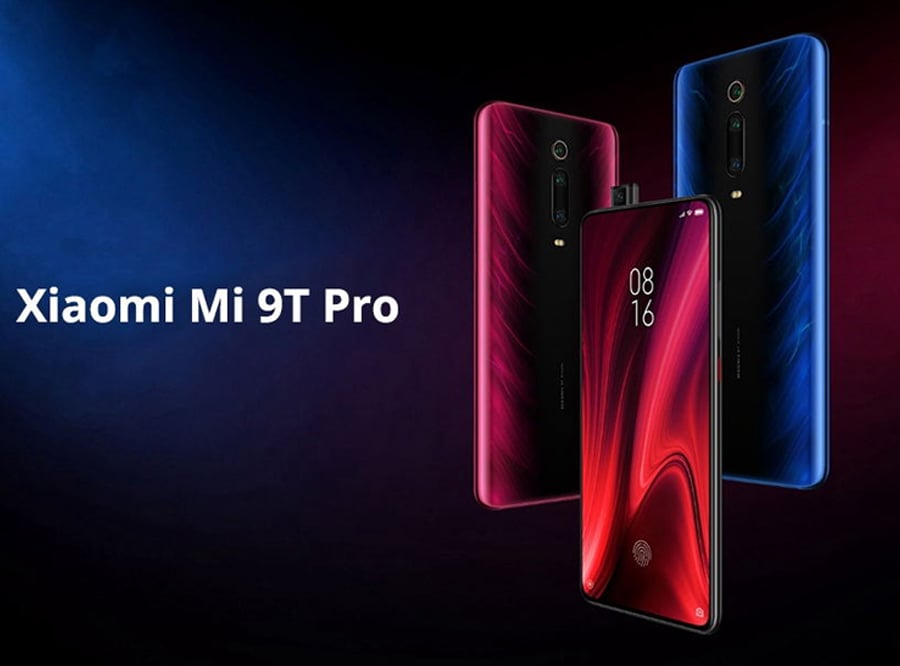
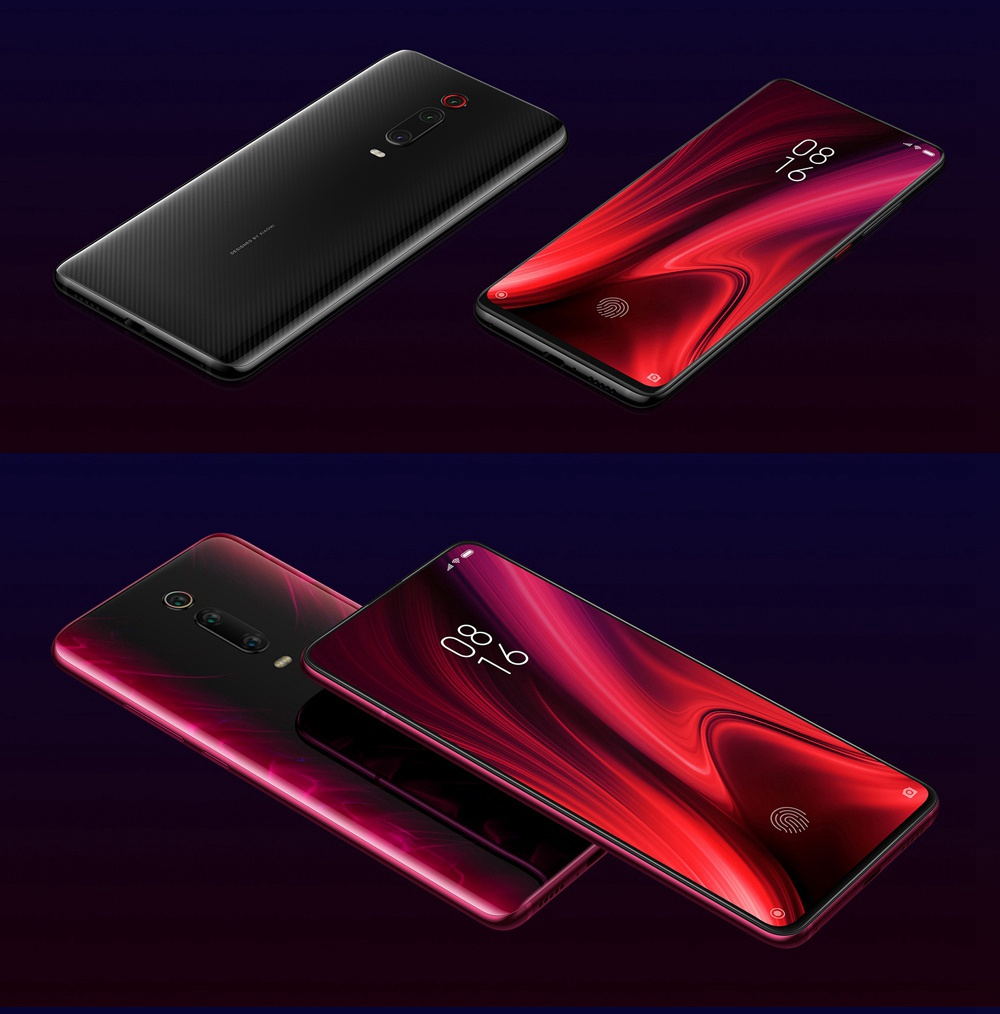
As part of this recently kicked off promo, the popular online retailer is offering a wide selection of products at considerably lowered prices. Among a slew of other well-received products, the Xiaomi Mi 9T Pro smartphone has gone up for pre-order on GearVita.
You can choose between the 6GB RAM+64GB ROM and 6GB RAM+128GB ROM variants. We will show how you can save a considerable amount of money during the checkout process.
Xiaomi Mi 9T Pro 4G Smartphone (6GB RAM+64GB ROM)
This Xiaomi Mi 9T Pro model ships with 6GB of RAM and offers 64GB of internal storage capacity for you to save your favorite multimedia content. Available for pre-order in black, blue, and red color options, this handset will set you back $639.99.
You can use coupon code ROMi9TPro64 to save $220 before placing the order. In other words, you can bring the original asking price of the phone down to just $419.99 simply by applying the aforesaid coupon at checkout.
You can follow this link to use the coupon before it expires.
Xiaomi Mi 9T Pro 4G Smartphone (6GB RAM+128GB ROM)
If you fancy having more storage space on your phone, you can go for the slightly larger 6GB RAM+128GB ROM Mi 9T Pro variant, which retails for $679.99 on GearVita. This variant comes in three appealing color options including black, blue, and red.
You can get $240 off by applying coupon code ROMi9TPro128 at the time of checking out. As a result, the original selling price of the phone reduces to only $439.99 even before you click the ‘Place Order’ button.
You can follow this link to take advantage of the coupon, which is likely to expire soon.
Slated to hit the European market on August 20th, the Mi 9T Pro smartphone offers the following features:
6.39 inch AMOLED Capacitive screen with 2340×1080 pixels resolution
In a surprising move, Xiaomi, OPPO, and Vivo have officially announced a new cross-brand direct file transfer alliance today. According to this alliance, smartphones from all three brands would soon be able to transfer files at up to 20 MBps without any third-party app ensuring a seamless media transfer experience.
OPPO, Vivo, Xiaomi announced file transfer alliance today
Apple’s AirDrop is extremely popular among iPhone users mainly because of its ease of use. However, implementing a similar feature on Android was virtually impossible. Each manufacturer uses its own flavor of Android on its smartphones. So, only an alliance such as this would have made seamless cross-brand file transfer possible.
The alliance enables one-click file transfer between smartphones from Xiaomi, OPPO, and Vivo. The transfer supports multiple file formats such as photos, videos, songs, documents, etc and is fast (up to 20 MBps), stable, and power-efficient. There’s no need for any third-party apps.
At present, these three smartphone manufacturers have almost 50% market share in China. So, a majority of smartphone users in China will benefit from this alliance. We may also see more manufacturers join the alliance in the future. For example, if Huawei and its Honor brand join this alliance, it would be a big win for everyone!
Huawei has its own media transfer feature called Huawei Share OneHop for its smartphone and Matebook lineup. Imagine if a similar feature is implemented across all major Android smartphone brands? That’s what this alliance hopes to achieve in the near future.
The cross-brand file transfer feature is expected to go into public beta by the end of August 2019.
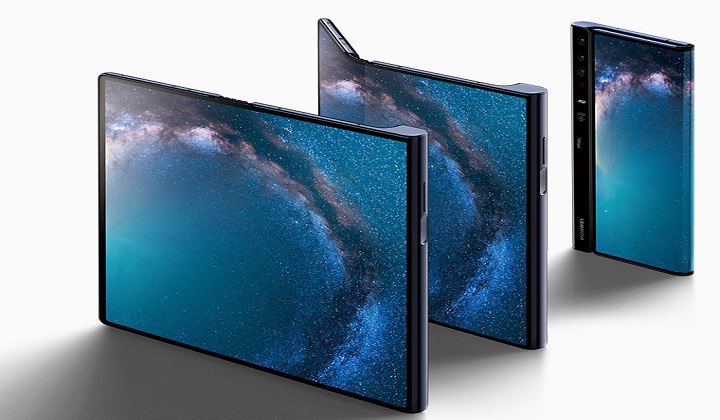
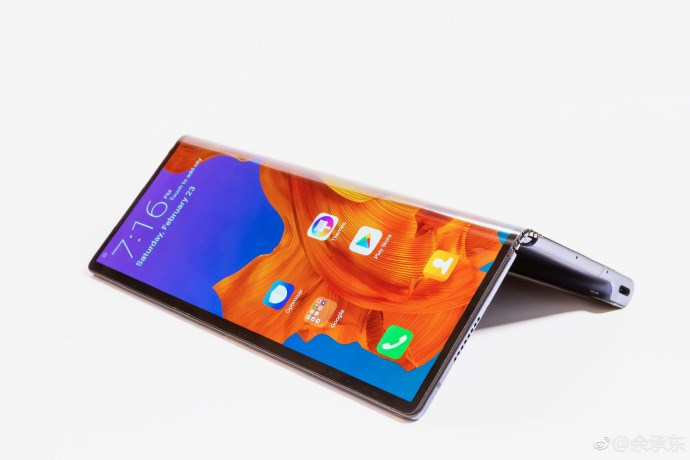
Huawei announced its first foldable smartphone named Huawei Mate X at the Mobile World Congress 2019 in Barcelona, Spain earlier this year. However, the phone’s launch has been delayed for a couple of times and is yet to go on sale.
The phone’s launch was delayed from May to June and then again from June to September. Recently, it was reported that the launch of Mate X has been delayed again and will now be available for purchase from November.
Now, new reports claim that the final version of the Huawei Mate X that will launch by the end of this year will come with a different set of specifications. The phone is now claimed to be powered by the upcoming Kirin 990 flagship chipset.
Further, the smartphone will come with triple rear cameras, having the same setup that we saw on the Huawei P30-series smartphones. This is an upgrade over the sensors similar to the Mate 20-series. The new sensor uses RYYB instead of RGB, which should be offering incredible low-light performance.
The Huawei Mate X has also visited TENAA again, which shows that the smartphone now weighs 300 grams compared to 287 grams in the previous listing. However, the phone’s dimensions of 161.3 x 146.2 x 11mm have remained unchanged.
The smartphone comes with what the company calls is “Falcon Wing Design”. Unlike the Samsung Galaxy Fold, it folds completely flat with no visible gap. The company says that the hinge system used in the phone is patented and has over 100 components.
The Huawei Mate X features a large 8-inch screen with a 2480 x 2200 pixels screen resolution and an 8:7.1 aspect ratio when unfolded with pretty thin bezels. When folded, it transforms into a dual-display phone – one side is a 6.6-inch (2480 x 1148 pixels) 19.5:9 display while the other is a 6.38-inch (2480 x 892 pixels) 25:9 display.
It comes with 8GB of RAM and 512GB of storage. It has dual SIM support (nano only) but only SIM 1 supports 5G. You can also swap out the second SIM card for Huawei’s NM card up to 256GB. The device also comes with the 7nm Balong 5000 modem which brings 5G support to the device.
The phone runs the EMUI 9.1.1 custom interface, which is based on Android 9 Pie operating system out-of-the-box. As for the connectivity options, the device supports NFC, dual-frequency GPS, Bluetooth 5.0, Wi-Fi 802.11 b/g/n/ac, and USB Type-C port.
The device has two built-in batteries, which offers a total capacity of 4,500mAh. Huawei has also debuted its new SupercCharge fast charging technology which supports up to 55W. The company claims that the new SuperCharge allows users to charge the device from empty to 85 percent in just 30 minutes.
Huawei flagship smartphones under the company’s P20 series and the most recent P30 series have been appreciated for its camera innovations. The company has managed to offer an incredible camera experience but falls short in the video department.
The major reason behind that is that the company’s Kirin 970 and Kirin 980 chipsets, which powers the P20-series and P30-series smartphones respectively, lacks support for 4K video recording at 60fps. But that is about the change with its upcoming flagship mobile chipset.
Huawei has confirmed that the company’s upcoming mobile processor — HiSilicon Kirin 990, will come with support for 4K 60fps video recording. Since the upcoming Mate 30-series will be powered by the Kirin 990 SoC, you won’t need to choose between a high resolution and a high frame rate with Mate 30 lineup.
Although Huawei’s flagship smartphones lack support for 4K 60fps recording, most of its competitors have been offering this feature for a couple of years now. Apple was the first to add this feature with iPhone 8, 8 Plus, and iPhone X. Later, Qualcomm also added the support with Snapdragon 845 chipset that powers the Samsung Galaxy S9 lineup.
As said, the Huawei HiSilicon Kirin 990 chipset is expected to power the upcoming Huawei Mate 30 and Mate 30 Pro smartphones and are rumored to get launched on 19th September. Further, the company has also confirmed that its foldable smartphone Huawei Mate X and the next year’s P40-series will also be powered by this very same chipset. We expect the premium Honor-branded phones to be powered by Kirin 990 SoC as well.
The Kirin 990 SoC is said to have been manufactured using the 7nm processing node and will come with Balong 5000 5G modem that will offer support for 5G connectivity. Compared to Kirin 980, its successor is expected to consume 10 percent less power and its overall performance may increase by 10 percent. Currently, there’s no information available on the other specs of the Kirin 990 SoC.
Xiaomi has today announced through its official Weibo account that the company has appointed Gulinaza as a brand ambassador for its Mi CC series smartphones. Gulinaza, who is also known as Nazha, is a Chinese actress and model.
Making this announcement, the company also shared an image of Gulinaza holding a Mi CC series smartphone. The image has been captured with the Mi CC9 smartphone. The company had recently teased that it will be making an announcement introducing a “new friend” of Mi CC series on 19th August.
The Mi CC series of smartphones was introduced last month and currently, there are two smartphones in this lineup — Mi CC9 and Mi CC9e. The Mi CC9e has made it to the international markets as the Android One-powered Mi A3.
Coming to the specifications, the Xiaomi Mi CC9 and CC9e come with gradient colored curved 3D glass panels. The CC9 features a 6.39-inch Full HD+ resolution AMOLED display with dot notch, while the CC9e comes with a 6.08-inch screen AMOLED display that supports HD+ resolution of 720 x 1560 pixels.
Both the phones offer 19.5:9 aspect ratio, Always-On Display, and comes with the latest 7th-generation in-display fingerprint sensors. Under the hood, the CC9 is powered by the Snapdragon 710 SoC with up to 6GB of RAM and 128GB of internal storage. On the other hand, the CC9e is powered by Snapdragon 665 SoC with Adreno 610 GPU, making it the first device to be powered by SD665 chipset.
In terms of optics, both the smartphones feature triple-camera setup on the back, consisting of a 48-megapixel Sony lens with f/1.79 aperture, an 8-megapixel ultrawide lens with 120-degree field-of-view and a 2-megapixel depth sensor. It supports features like handheld super night mode, portrait mode bokeh, panorama, professional, HDR, AI beauty, AI scene recognition and 960fps slow-motion video recording.
On the front side, the devices come equipped with a 32 MP snapper which are claimed to shoot better selfie shots in low-light conditions as it can combine four pixels in one large-sized pixel. The CC9 and CC9e run on MIUI 10 based Android 9 Pie OS and comes with Game Turbo 2.0 for accelerated graphics performance.
Connectivity features on the devices include dual-SIM support, 4G VoLTE, Wi-Fi 802.11ac, v5.0 Bluetooth, GPS, NFC (not available on CC9e), IR blaster, USB-C and 3.5mm headphone jack. Both the phones are powered by 4,030mAh batteries and come with support for 18W fast charging.
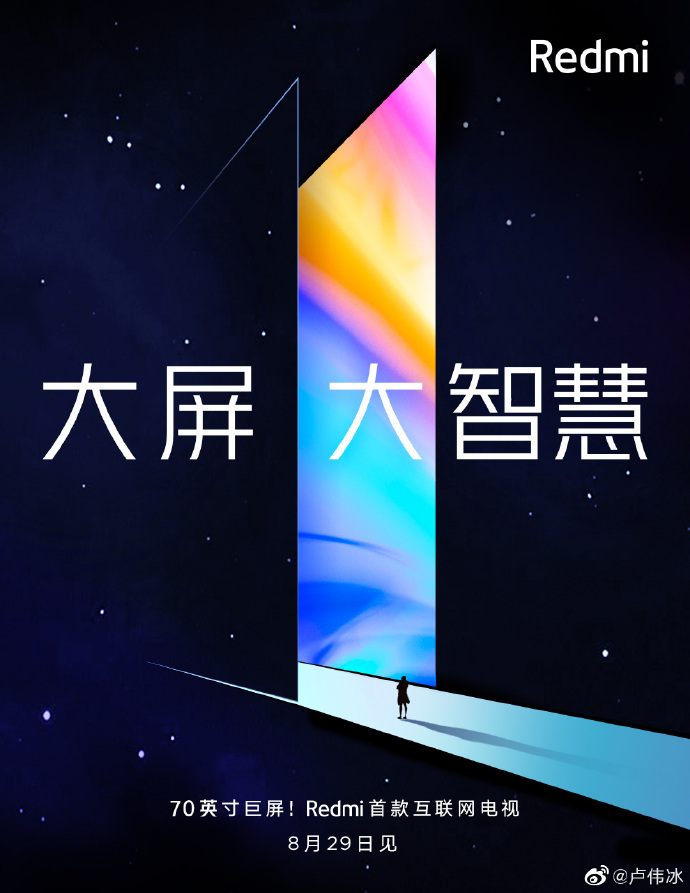
Redmi has an event on August 29. While it has been confirmed that the event is for its first TV, the Redmi TV which will have a massive 70-inch screen, we will be getting more than just a TV. To be specific, the much anticipated Redmi Note 8 will also be launching on the same day.
Just as the Redmi GM had done, Xiaomi’s CEO, Lei Jun, also shared the poster for the Redmi TV launch on his Weibo page. However, in the comment section, someone had asked if the Redmi Note 8 will also be unveiled on the same day and he replied with a thumbs-up emoji. This confirms that the Redmi Note 7’s successor will also arrive this month.
We expect there will be a proper announcement soon including a poster that teases the phone.
The specs are still unknown and so also is the design. However, there is a possibility the Redmi Note 8 might launch with a 64MP sensor. It may also be powered by MediaTek’s new Helio G90T processor.
The Redmi Note 8 should also come along with its siblings, the Redmi 8 or the Redmi 8A. One of the two phones is believed to be the M19808C3IC which has been certified by TENAA.
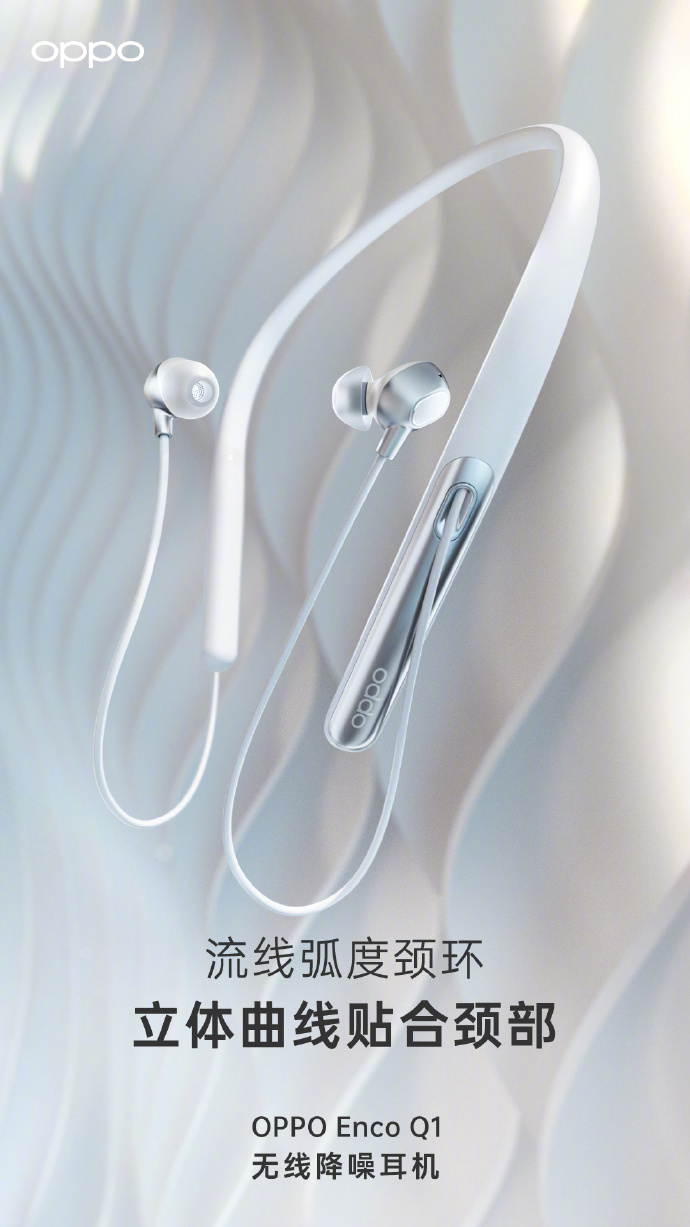
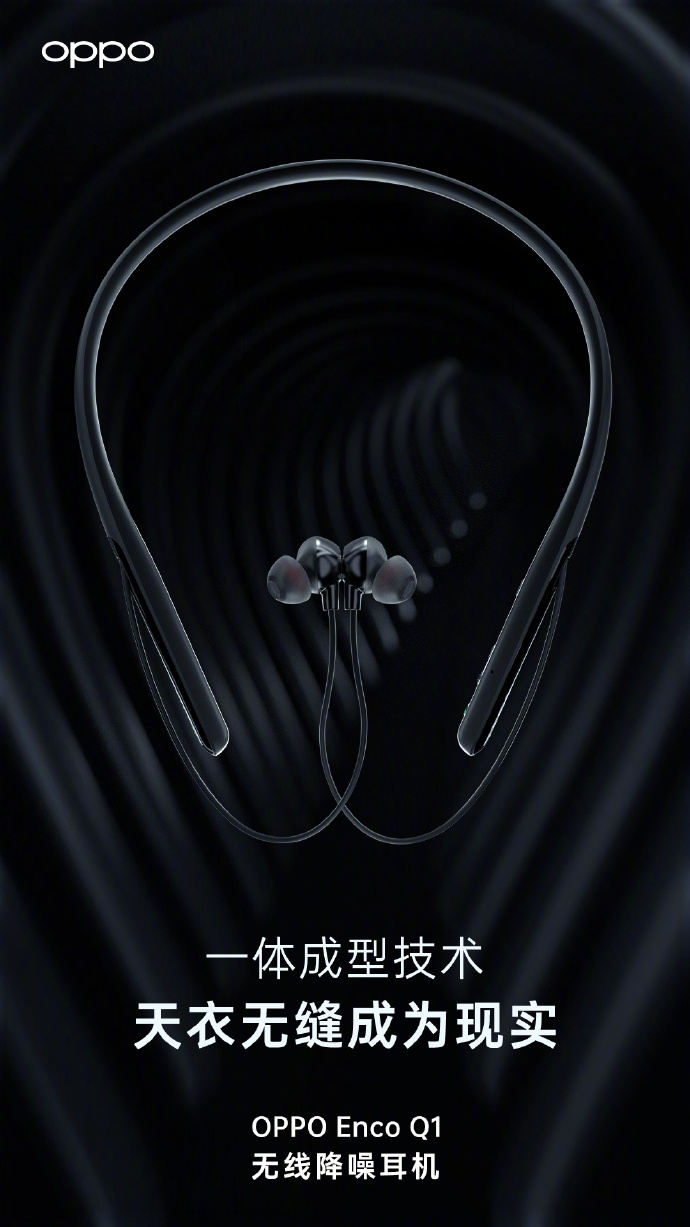
OPPO had trademarked the OPPO ENCO series last month. We were expecting it to be a new smartphone lineup from the company. However, earlier today, OPPO officially confirmed that the ENCO series is its new noise-canceling headphone lineup and the first model in the series is the OPPO ENCO Q1.
The OPPO ENCO Q1 headphone uses a 3D neckband design that’s thick at the end and thin at the center. It uses a one-piece design without any cuts or splits. The Q1 headphones will feature dual Active Noise Cancellation with 4 Mics. In simple terms it means that OPPO is using a hybrid noise cancellation technology on its new model, featuring both a feedforward and feedback ANC. There are three colors available: Black, White, and Orange.
Unfortunately, that’s all we know about the OPPO ENCO Q1 ANC headphones. Today was more of a reveal than an actual launch but we could see an official announcement alongside the OPPO Reno2 launch.
The OPPO ENCO Q1 won’t likely be cheap as dual ANC technology is pretty expensive. Also, OPPO was once popular for its high-end headphones and amplifiers (which they have stopped making now), so we expect it to be a premium offering.
It is no longer news that Redmi is not just a phone company. The Xiaomi-owned business which was originally a line of smartphone became a separate entity this year and has included products such as a computer and a washing machine to its portfolio. Now, it is set to add yet another product category this month.
Today, Redmi announced that it will launch its first smart TV on August 29. This doesn’t come as a surprise as back in July, a Redmi TV was certified by the Chinese Communications Commission. Also, the company recently created a social media page for its TV business further confirming that it will be entering into the TV business soon.
The first Redmi TV will have a massive 70-inch screen just as the model number on the 3C certificate hinted. This will put it behind Xiaomi’s own 75-inch Mi TV 4 and 75-inch Mi TV 4S smart TVs. There were rumors of a 40-inch model but we are not sure that will be launching on the same day.
The 75-inch Mi TV 4 is priced at ¥8999 (~$1277) while the 75-inch Mi TV 4S has a price tag of ¥5199 (~$738). We believe the Redmi TV will have a price tag closer to that of the Mi TV 4S.
The Redmi TV should have a 4K display and also come with Xiaomi’s PatchWall system. Other features we expect include DTS and Dolby Audio and a Bluetooth voice remote.
Xiaomi has become a prominent player in the smartphone market. They are globally on top of the smartphone market. Precisely, the company commands over 28.3% of the Indian smartphone market reports IDC in the recent listing. Amid the global fallout of smartphone sales, these numbers are boosting the internal environment of the Chinese smartphone maker. Xiaomi’s idea to provide affordable smartphones with consistent quality and support is doing magic for the company.
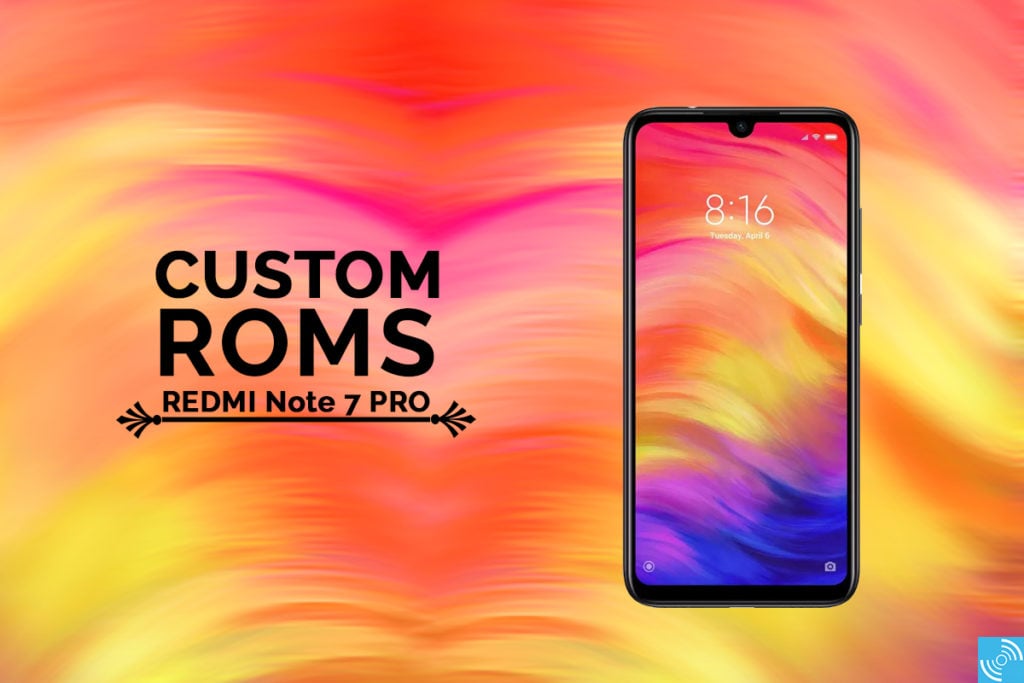
On the same lines, Xiaomi launched the Redmi Note 7 Pro at quite an attractive price featuring Qualcomm Snapdragon 675 processor. To make it a performance beast, the company added a 4GB RAM with 64GB Internal Storage. There’s a dual-camera module with a 48-megapixel primary and a 5-megapixel secondary camera on the rear side. Another 13-megapixel front camera is also present on the front side for beautiful selfies and video calling. A 4000 mAh battery with Quick Charge 4.0 support is kith and kin for the extensive usage anytime throughout the day. It runs on MIUI 10 with Android 9.0 Pie over the top. In connectivity, the user will get 4G VoLTE, WiFi, GPS, Bluetooth 5.0, etc.
The exceeded expectations and overwhelming response led the Xiaomi to ship 15 million units of the Redmi Note 7 series in the first six months. After remaining on the flash sale for some months, finally, the Redmi Note 7 Pro is now available on open sale from Mi Online/Offline stores and other partner stores.
Xiaomi devices are also known for their massive third party development. Xiaomi is among Android OEMs, which supports third-party development by releasing the source code of the smartphones. Similarly, there’s a massive Xiaomi Redmi Note 7 Pro support for custom ROMs, Kernels and other Mods. We have compiled a list of some best custom ROMs for Xiaomi Redmi Note 7 Pro.
Custom ROMs are custom firmware which allows users to customize every feature. These ROMs support various MODs, Kernels and there are multiple advantages of using custom ROMs. Primarily, it helps to eliminate unnecessary apps from the device. The user can tweak the system by customizing the settings menu an every other UI element. Other advantages:
Brings the ability to overclock the system.
Enable root settings with a built-in toggle.
New Features via new Android versions.
Note: Gizmochina.com is not responsible for any damage to data and device. It will also void your warranty. You may proceed at your own risk.
Steps to install custom ROM for Redmi Note 7 Pro
Please follow the steps below to install the custom ROM for Redmi Note 7 Pro.
Charge your device up to 60% for smooth installation.
Backup important data on any external media.
List of Best Custom ROMs for Redmi Note 7 Pro
There are various custom ROMs available for the Xiaomi Redmi Note 7 Pro. We have listed some best of those custom ROMs.
Pixel Experience
Are you looking for Pixel experience on your Xiaomi Redmi Note 7 Pro? Then you can enjoy the Pixel look with the Pixel Experience custom ROM. It is based on the Android Open Source Project with all Google Apps installed. The Custom ROM carries improved launcher, wallpapers, icons, fonts, and boot animations. It is based on Android 9.0 Pie and is the most stable ROM for Redmi Note 7 Pro.
A popular custom ROM with support for almost every popular Android device. After the demise of CyanogenMOD, the LineageOS was forked out with the same source code. It is the most widely used custom ROM for Android devices.
LineageOS 16 for Redmi Note 7 Pro is stable and is built on the top of Android 9.0 Pie. All the new luxuries of Android 9.0 Pie like New Quick Settings UI, Advanced Battery Optimisation, AI Support, Notch Support, and various other things are available on the LineageOS 16. Interested users can download the LineageOS from the Download link below.
It is a custom ROM built on the stock Android with improved performance and reliability. It carries several features which will aid customizability on the Redmi Note 7 Pro. It is fully stable ROM based on Android 9.0 Pie. It is a blend of best features from AOSPA, SlimROM, SlimROM, and others.
It is another iteration of teh Google Pie software with refined Material design 2. Havoc OS binds features which are not available on any other ROM. The list of features includes several Pixel devices UIs, Substratum support, OTA support, Micro-G support, Lockscreen, and charging animation. Full-Proof customization is available for notification bar. Interested users can change clock settings, battery bar, network traffic indicator, and other functions
It carries beautiful Hyperion Launcher along with one-handed mode. Navigation gestures, Quick settings, Expanded desktop, etc. Unlike the Pixel Experience ROM, the user needs to flash GApps separately. Make sure to wipe System, Vendor, Data and Dalvik Cache before flashing the Firmware & ORM on redmi Note 7 Pro.
The Resurrection Remix P also derivers the source code from LineageOS, SlimROMs, Omni and original Remix ROM build. It is a combination of all the significant features, customizability from different ROMs. The developer has developed a lot from the users’ demands. Resurrection has purely integrated most of the new features which were once tweaked with the mod.
GApps package needs to be flashed separately after installing the Resurrection Remix ROM. It is a stable ROM based on Android 9.0 Pie and requires MIUI Stable Firmware before flashing.
As the name suggests, it is based on the Android Open Source Project (AOSP) providing stock UI/UX experience. The users can enjoy the smooth stock experience with various outstanding features. It features extra features over the AOSP. The ROM aims to provide all the common features in a single ROM.
The developers are open for any suggestions on their Telegram community. It features DU Font Engine, Live Display, One-Handed UI, Expanded Desktop, Notification Intervals, QS Quick Pulldown, Immersive Mode message, toast Icon, etc. There are uncountable features present on the AOSP Extended ROM. It also needs GApps flashing after the installation.
It is an aftermarket firmware with code derived from AOSP and LineageOS. The aim is to bring the most useful apps under the same umbrella. It a stable ROM packed with custom Wallpapers, ringtones, fonts, and themes. It comes with inbuilt battery LED, QS Rows and Columns, different recent styles, etc. It’s another choice to install the Android 9.0 Pie on your device.
The Bootleggers ROM needs Peter’s TWRP. Also, keep in mind to wipe system, data, vendor cache, and Dalvik cache before proceeding.
The Candy9 is based on Android 9.0 Pie with customizability, regular updates, and security patches. The developers are reluctant to provide fixes for any problem with regular updates. The abundance of features on the Candy ROM makes it a better choice for users who love to enjoy new customizations. Rootless Substratum support makes it even better. It also comes with features such as night light, prevents accidental wake up, Candy Sweetener Device, SystemUI Tuner, etc.
Before flashing the new firmware, wipe clean and format data. Make sure to flash GApps after flashing the firmware.
These are some best custom ROMs for Redmi Note 7 Pro. Most of the Custom ROMs are stable and are based on Android 9.0 Pie. Please keep in mind to check the installation steps carefully by heading to the respective download links in the article. Any mistake can land you in trouble, so make sure to backup before flashing any custom ROM. Any suggestions are welcome via the comments section below.
Famous leaker, Evan Blass (@evleaks) has shared photos of Galaxy Friends Marvel smart covers for the Galaxy Note10 and the Galaxy Note10+.
Galaxy Note10 Marvel Smart Cover
Both phones will get Iron Man, Deadpool, Captain America, and Spider-Man cases. The images also show the available content made available for each case such as a custom theme which will be automatically downloaded when the case is attached.
[envira-gallery id=”270766″]
The cases are yet to go on sale but they should sell for a similar price as that of the Galaxy S10 series which is priced at £35.
The Redmi Note 7 has been a huge success since it launched. Now, a successor which will arrive as the Redmi Note 8 is coming soon and it promises big upgrades.
General Manager of the Redmi brand, Lu Weibing, took to Weibo today to share some details about the Redmi Note 8. Apparently, he already has a unit with him which he has been testing.
He said in the post that the new phone is better at taking photos, has a longer battery life and a higher-screen-to-body ratio with a more comfortable feel.
Weibo even confirms he is indeed using the phone as the site shows the device used in making the post is the Redmi Note 8.
It is still unconfirmed that the Redmi Note 8 is the same 64MP smartphone Redmi plans to launch but there is a chance they are one and the same. A few days ago, it was officially revealed that the 64MP phone is already in mass production. Seeing as the Redmi Note 8 is set to launch soon, then it might as well be the same phone.
Redmi will also likely announce the Redmi 8 alongside it. The Redmi 8 is believed to be the Redmi M1908C3IC which showed up on TENAA yesterday. It has a 6.2 HD+ display with a Dot Drop notch, a 2.0GHz octa-core processor, up to 4GB of RAM and 64GB of expandable storage. There are dual cameras and a fingerprint scanner on the rear and a massive 5000mAh battery under the hood too.
A new mid-range phone from Vivo with model number Vivo V1930A/T has received approval from TENAA. The entire specifications of the phone are now known hanks to its TENAA appearance. Unfortunately, the exact identity of the smartphone is currently under the wraps.
Vivo V1930A/T Specifications
The Vivo V1930A/T measures 159.43 x 76.77 x 8.92mm and it weighs 176 grams. The smartphone is fitted with a display of 6.358 inches. The waterdrop-style notch enabled display offers HD+ resolution of 720 x 1544 pixels. The TENAA images shows the handset in blue color, but listing reveals that it will come in gold color too.
The mid-range Vivo V1930A/T is fueled by 1.95GHz octa-core processor. The SoC of the smartphone is assisted by 3 GB of RAM. The TENAA listing states that it will arrive with an inbuilt storage of 64 GB. For more storage, it has a microSD card slot. The Android 9 Pie OS comes preloaded on the device. It goes without saying the device will include company’s FunTouch OS UI. The handset includes a minimum rated battery of 4,880mAh. Its typical capacity could be nearly 5,000mAh. There is no support for fast charging on the device.
At the top-left corner of the device is a dual camera setup followed by an LED flash. It includes a main lens of 13-megapixel that is coupled with a 2-megapixel sensor. It seems to feature a front-facing camera of 8-megapixel. The backside of the phone features a fingerprint scanner. The right edge of the smartphone features a volume rocker and a power key.
The Vivo V1930A/T appears like a stripped-down edition of the announced Vivo V1928A/T smartphone that was recently spotted on TENAA with full specifications. The Vivo V1928A also features the same-sized HD+ display of 6.358 inches and houses a 4,880mAh minimum rated battery. It features 2.0GHz octa-core processor. It may arrive in variants such as 3 GB RAM + 32 GB storage and 4 GB RAM + 64 GB storage. It has a 13-megapixel + 8-megapixel + 2-megapixel triple camera setup on its rear and a front-facing camera of 8-megapixel.
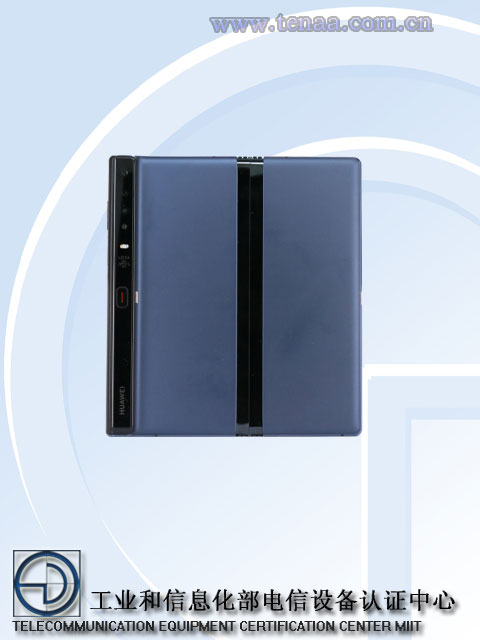
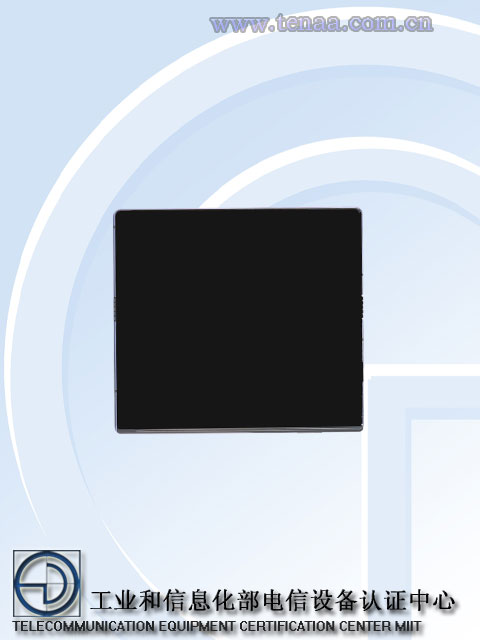
The Huawei Mate X foldable smartphone was first expected to release in China on June. Its market release was then pushed to September. A Huawei spokesperson has recently told Tech Radar that the company has delayed the market release of Huawei Mate X foldable phone in China. He has claimed that the company’s first foldable phone will be releasing between September and November in China. The TENAA listing of the Mate X had appeared in the previous month. The listing of the phone was updated with appearance and component changes earlier this month.
The previous listing had stated the phone had stated that it weighed 287 grams. The updated listing shows that the smartphone now weighs 300 grams. Its dimensions of 161.3 x 146.2 x 11mm has remain unchanged. The TENAA listing of Huawei Mate X that had appeared last month lacked its images. The updated listing also features its photos. The images reveal that the power button is appears flat and wide along with an indication mark. While it cannot be seen in the images, Huawei has reportedly improved the hinge of the device. Also, there seems to be no change in its specifications.
The inner OLED display of the Huawei Mate X measures 8-inch and it supports 2480 x 2200 pixels resolution. The smartphone houses a 4,500mAh battery. The 3C listing of the phone has already revealed that it could be shipped with a 55W fast charger.
The Kirin 980 chipset along with Balong 5000 5G modem will be powering the Mate X. Its RAM variants are 6 GB, 8 GB and 12 GB and its storage options are 128 GB, 256 GB and 512 GB. For additional storage, it supports 256 GB of nanoSD card on its external storage slot. The Android 9 Pie OS runs on the device. The Lecia engineered quad camera setup of the Mate X includes a 40-megapixel lens, a 16-megapixel lens, an 8-megapixel lens and a ToF sensor. It is equipped with a side-mounted fingerprint scanner.
The updated TENAA listing suggests that the Huawei Mate X will debut in China soon. Probably, it may hit the Chinese markets in the coming month. Eventually, the foldable phone may arrive in the global markets by November.
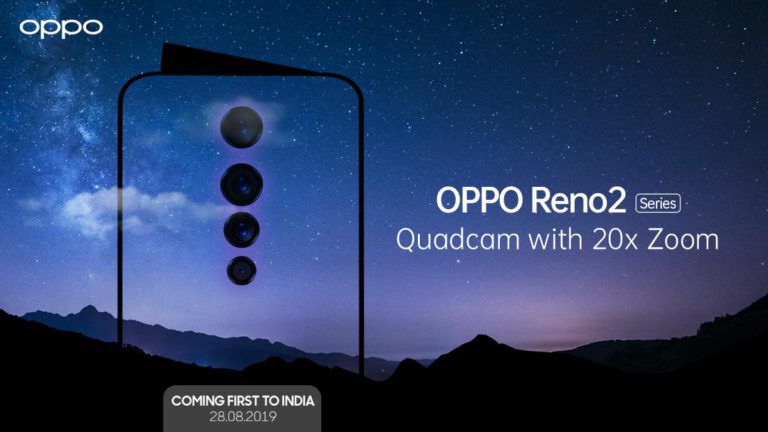
At May end, OPPO had launched the OPPO Reno and Reno 10x Zoom Edition smartphones in India. Recently, it confirmed that it will be holding an unveil event on Aug. 28 in India to unleash the OPPO Reno 2 series of smartphones. A fresh report by My Smart Price reveals that the new series will include smartphones such as OPPO Reno 2, Reno 2Z and Reno ZF. The leak states that these phones will be arriving with quad rear cameras and these phones will be positioned below the Reno 10x Zoom. The publication has also leaked the specifications and pricing of these upcoming OPPO smartphones.
OPPO Reno 2 Specifications and Price (Rumored)
The Reno 2 will be featuring a 6.5-inch AMOLED display that will support full HD+ resolution and 20:9 aspect ratio. The display will be equipped with an in-screen fingerprint reader. The smartphone will deliver a screen-to-body ratio of 93.1 percent. The display of the phone is protected by Gorilla Glass 6. The rear side of the phone has Gorilla Glass 5 panel. The Snapdragon 730G processor along with 8 GB of RAM fuels the OPPO Reno 2. It will have an internal storage of 256 GB.
The quad camera setup of the phone will include a 48-mgeapixel Sony IMX586 primary lens with f/1.7 aperture, a 116-degree ultrawide angle 8-megapixel lens, a 13-megapixel sensor with support for 2x optical zoom and a depth sensor of 2-megapixel with special portrait modes. For shooting selfies, it will have a 16-megapixel Sharkfin pop-up camera with LED flash. The 4,000mAh battery of the smartphone will support VOOC 3.0 flash charging. It will be priced under Rs. 35,000.
OPPO Reno 2Z Specifications and Price (Rumored)
The Reno 2Z features a full HD+ 6.53-inch AMOLED display that is protected by Gorilla Glass 5. It is embedded with an in-screen fingerprint reader. The MediaTek Helio P90 processor will be powering the smartphone. The SoC is supported by 8 GB of RAM and it has an inbuilt storage of 256 GB.
The rear-mounted quad camera setup of the Reno 2Z has Sony IMX586 48-meapixel primary lens, a 119-degre ultrawide 8-megapixel lens and a pair of 2-megapixel lenses that enables special portrait mode while snapping photos and videos. A 16-megapixel pop-up selfie camera is available on the device. Its 4,000mah battery will arrive VOOC 3.0 flash charging support. The Reno 2Z will be priced under Rs. 25,000.
The publication did not share the entire specifications of the OPPO Reno 2F smartphone. However, it claimed that its quad camera setup will include Samsung ISOCELL Bright GM1 48-megapixel lens and it will be priced under Rs. 20,000.
The Android 9 Pie OS along with ColorOS 6.1 will be available on OPPO Reno 2, Reno 2Z and Reno 2F. Also, these phones are also expected to receive the upcoming Android 10 Q update. The Chinese manufacturer is expected to release as many as 5 smartphone by October in India.
Motorola took the wraps off the Motorola One Action on Friday. The device has as its mos spectacular feature which will also be its strongest selling point the Action Cam. The tech giant has released a slew of promotional videos flaunting the action camera and other features in real-life action.
The Motorola On Action utilises a 21:9 aspect ratio and has a rotating camera so the camera automatically shoots stills and videos in landscape even when held in portrait mode. The action camera equally features a 117° ultra-wide-angle lens.
Since it an action camera that will be used even while on the move, the phone was expected to have Optical Image Stabilization (OIS) but that is missing. Instead, Motorola added digital stabilization on the camera. One of the promo videos shows how effective that is.
The company also hypes the low-light performance of the One Action’s Action Camera in one of the promo videos. As a reminder, the Action Cam is a 16MP sensor, which uses 4-in-1 pixel binning to improve low-light performance (this gives it effectively 2.0µm pixels).
Here’s a video demonstrating how the camera still shoots in 21:9 aspect ratio even when held in portrait mode. It doesn’t give that immersive fullscreen view while shooting its all good in the end.
Other features of the One Action which Motorola is promoting is the timelapse and cinemagraph modes. heck them out from below.
Infinix is one of the brands owned by Transsion Holdings, with the other two being iTel and Tecno. Infinix is set to announce a new phone called the Hot 8 soon and a photo of the phone’s retail box has leaked. The photo reveals the phone’s design and some specs.
The Inifnix Hot 8 will come in an Aqua Green box. The phone has a waterdrop notch, a significantly smaller one than that of its predecessor, the Hot 7. The phone also has a pretty slim chin and has its volume control and power button on the right. The design of the rear is not shown.
The box reveals the Infinix Hot 8 has 4G LTE. It will also come with 4GB of RAM and 64GB of storage.
The rest of the specs are still unknown. However, we look forward to it coming with a more powerful processor than the 28nm Mediatek MT6580 processor that is inside the Hot 7.
91mobiles reports that the phone is reported to launch in India later this month with a price tag under INR 10,000 (~$140).
We use cookies on our website to give you the most relevant experience by remembering your preferences and repeat visits. By clicking “Accept”, you consent to the use of ALL the cookies.
This website uses cookies to improve your experience while you navigate through the website. Out of these, the cookies that are categorized as necessary are stored on your browser as they are essential for the working of basic functionalities of the website. We also use third-party cookies that help us analyze and understand how you use this website. These cookies will be stored in your browser only with your consent. You also have the option to opt-out of these cookies. But opting out of some of these cookies may affect your browsing experience.
Necessary cookies are absolutely essential for the website to function properly. This category only includes cookies that ensures basic functionalities and security features of the website. These cookies do not store any personal information.
Any cookies that may not be particularly necessary for the website to function and is used specifically to collect user personal data via analytics, ads, other embedded contents are termed as non-necessary cookies. It is mandatory to procure user consent prior to running these cookies on your website.