Advertisement

Nothing OS V3.2 Update Rolls Out for Phone (3a) with Key Bug Fixes and August Patch

Nothing has started rolling out a new software update for the Phone (3a) series. The update, labeled Nothing OS V3.2-250717-1803, includes several bug fixes, system improvements, and the August security patch. The rollout is happening in stages, so some users may get it later than others.

Nothing Phone (3a) Series - Nothing OS V3.2-250717-1803
Nothing Phone (3a) Series – Nothing OS V3.2-250717-1803 Changelog

The update changes the VoNR icon design in the status bar. It also fixes display issues with the Inter font in certain third-party apps. Video playback problems in the Gallery app have been resolved.

Nothing has addressed two Glyph-related issues. One caused the lights to turn on when they shouldn’t. The other made the Flip to Glyph feature stop working in some cases.

The update fixes a system freeze that could happen when plugging in USB headphones. It also solves an issue where certain third-party chargers caused electrical noise while charging.

System stability has been improved overall. The update also includes the latest Android security patch for August.

Nothing Phone (3a) Series – Nothing OS V3.2-250717-1803 Changelog

Nothing warns that the phone may heat up or use more power during the update. This is normal and should go back to usual once the update finishes.

To check for the update or give feedback, go to Settings > System > Feedback on your device.

For more daily updates, please visit our News Section.

Stay ahead in tech! Join our Telegram community and sign up for our daily newsletter of top stories.

(Source)

BenQ B7100 Game Projector Launches in China with 20 Built-in Interactive Games

BenQ has launched the B7100 Interactive Game Projector in China. It is designed for commercial use in places like retail stores, restaurants, and waiting areas to keep children engaged while adults shop or relax.

BenQ B7100 Interactive Game Projector

The B7100 has a WXGA resolution of 1280 x 800 pixels and a contrast ratio of 12,000:1. It delivers up to 4,000 ISO lumens of brightness, which makes it suitable for use in well-lit spaces. The projector has a short throw ratio of 1.55 to 1.7 and can project a 100-inch image from a distance of 2.4 meters.

It runs on Android and comes with 20 built-in games. These include both fun and educational activities such as a whack-a-mole game. The projector uses an infrared camera to make the games interactive. Players can tap or swipe directly on a regular wall to control the games, without needing a special screen.

BenQ B7100 Interactive Game Projector

BenQ says the projector can be installed on a wall or placed on the floor. The exact size and weight of the unit have not been shared.

The B7100 is now available in China for CNY 7,699, which is around 1,075 US dollars. There is no word yet on when or if it will be released in other regions like North America or Europe.

In other news, BenQ has launched the Zowie XL2586X+ gaming monitor in India for Rs. 94,990 ($1,099). Designed for competitive FPS gamers, it features a 24.1-inch Full HD Fast TN panel with a 600Hz refresh rate (PC) and 120Hz for consoles.

Please Note: When you buy something using the links in our articles, we may earn a small commission at no cost to you.

For more daily updates, please visit our News Section.

Stay ahead in tech! Join our Telegram community and sign up for our daily newsletter of top stories!

Vivo Y400 Specs Confirmed: AMOLED Screen, IP69 Rating, and 6,000mAh Battery

Vivo has listed the Y400 on its Indonesian website, confirming that the official launch is near. This 4G phone features a flat 6.67-inch AMOLED screen with FHD+ resolution, a 120Hz refresh rate, 100% DCI-P3 color coverage, and up to 1,800 nits of peak brightness.

Vivo Y400

The rear camera setup includes a 50MP Sony IMX852 main sensor (1/2.96-inch) and a 2MP depth sensor. It also features Vivo’s Dynamic Light, which works as a notification LED. The phone is under 8mm thick and weighs either 196 or 198 grams, depending on the color. It packs a 6,000mAh battery, and Vivo says it can keep at least 80 percent of its original capacity after 1,600 charging cycles.

Vivo Y400

The Y400 comes with IP68 and IP69 ratings for water and dust resistance. Vivo says the phone has survived underwater for 30 minutes at a depth of 6 meters, which is beyond the usual test limits.

It will be available in two colors: Purple Dusk and Tropical Green. Pricing, release date, and details about availability outside Indonesia are not yet confirmed.

In other news, In other news, Vivo has confirmed that the Vivo T4R will launch in India on July 31 via Flipkart. The device features a 6.77-inch quad-curved FHD+ AMOLED display with a 120Hz refresh rate. It will be powered by the 4nm Dimensity 7400 chipset, offering up to 12GB RAM and 256GB storage. It sports a 50MP OIS-enabled Sony IMX882 rear camera and a 32MP front camera, both supporting 4K video recording.

Please Note: When you buy something using the links in our articles, we may earn a small commission at no cost to you.

Tech enthusiast? Get the latest news first! Follow our Telegram channel and subscribe to our free newsletter for your daily tech fix!

For more daily updates, please visit our News Section.

(Source)

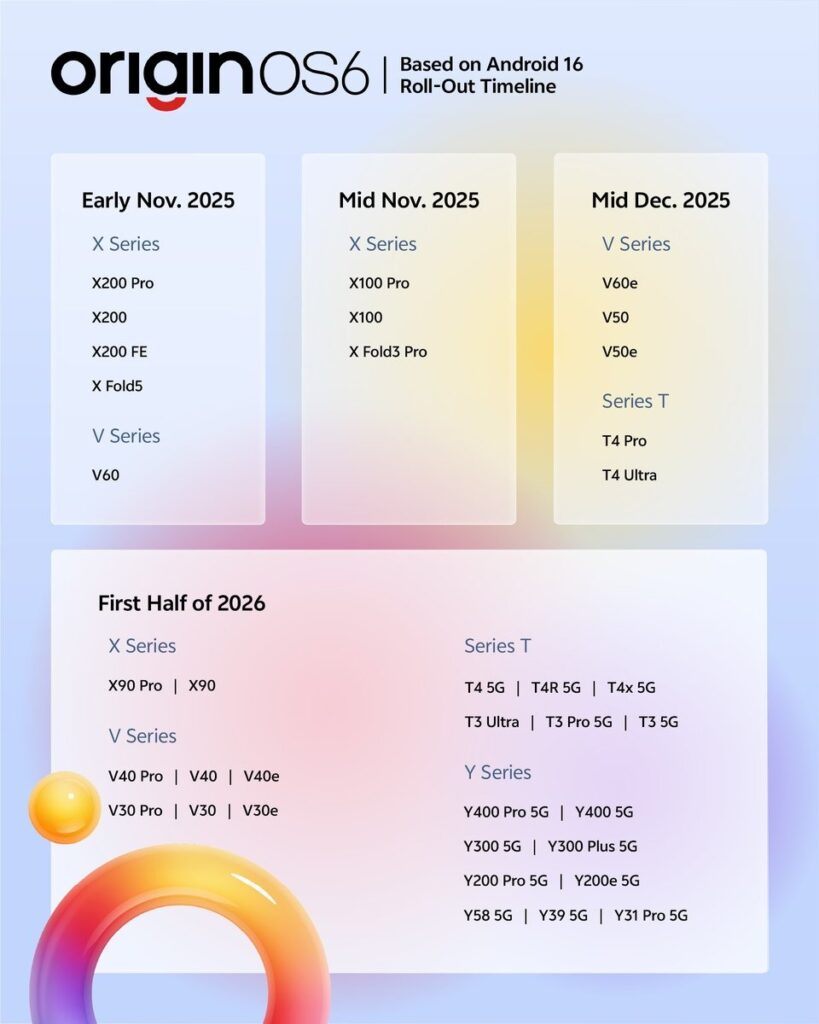
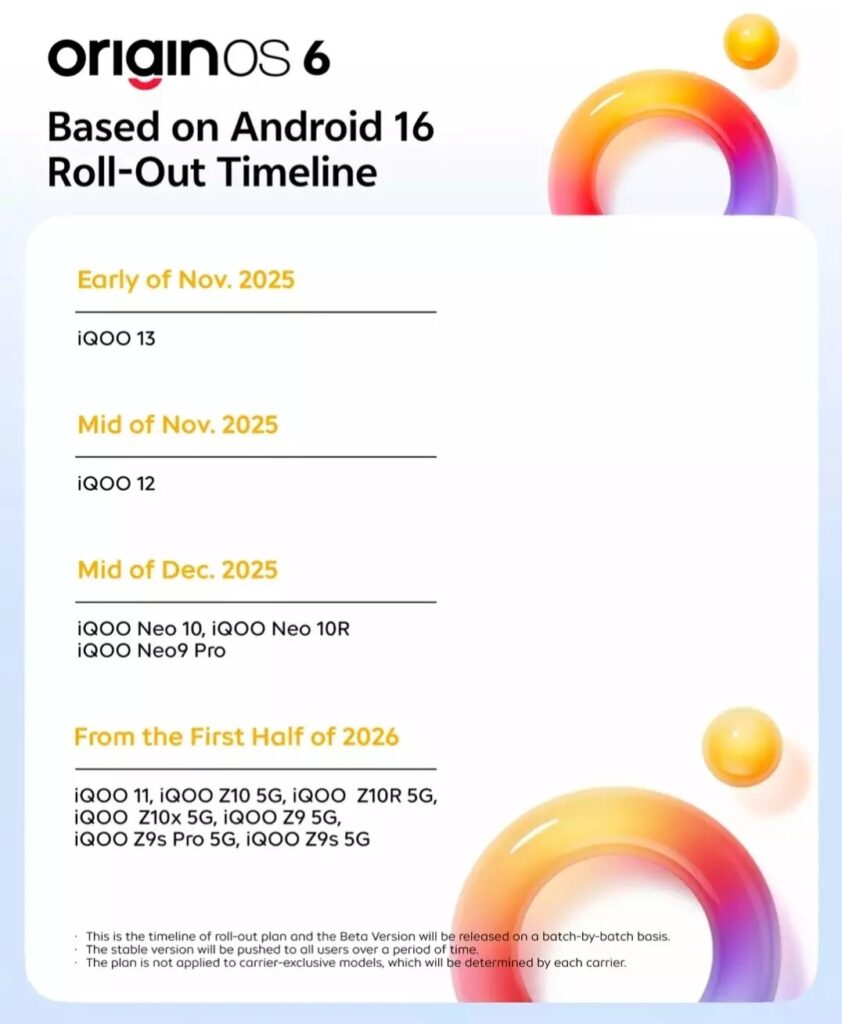
Vivo Android 16 (Funtouch OS 16) update: release date, eligible devices, and new features

Vivo Android 16 update

Google usually releases a new version of Android around October, but this year, Android 16 has arrived a lot earlier in June. That’s an early treat for Google Pixel users, and this also means your Vivo phone should receive Android 16 faster than usual.

Vivo has been working on Android 16 for months now. It was also part of the Android 16 beta partners list and started offering early access to the software in May. It should be preparing for a stable release very soon. Here, we have compiled every bit of information about the Android 16 upgrade for your Vivo device.

Vivo Android 16 (Funtouch OS 16) release date

Vivo hasn’t announced a release date or rollout timeline for Funtouch OS 16, which will be based on Android 16. However, if past releases are anything to go by, it shouldn’t be more than a few weeks down the line.

Last year, Vivo was the quickest brand to release the Android 16 update to its devices. What’s more surprising was that it released the update even before Google. The Android maker regained its spot this year, but Vivo shouldn’t be a lot behind.

The Chinese brand has already released Android 16 beta for some devices, including the Vivo X200 Pro and iQOO 13. There’ll also be a Funtouch OS 16 beta program before the stable rollout, which will give us a better look at the new features and upgrades.

While we don’t the official roadmap yet, the Android 16 rollout will likely begin with recent high-end phones from Vivo’s X and iQOO’s number series, followed by mid-range lineups, such as Vivo’s V series, T series, and iQOO’s Neo series, and then gradually making its way to the more affordable phones.

Which Vivo devices will get Android 16 and Funtouch OS 16 update?

Vivo hasn’t announced which devices will be upgraded to Android 16-based Funtouch OS 16. So, we had to rely on the software update policy and a little bit of guesswork to prepare the following list.

Vivo devices

Vivo X series

  • Vivo X Fold 5
  • Vivo X Fold 3 Pro
  • Vivo X200, X200 Pro, X200 Ultra, X200 FE, X200 Pro mini, X200s
  • Vivo X100, X100 Pro, X100 Ultra, X100s, X100s Pro
  • Vivo X90, X90 Pro, X90 Pro+, X90s

Vivo V series

  • Vivo V50, V50e, V50 Lite (LTE/5G)
  • Vivo V40, V40 Lite, V40 Pro, V40e, V40 SE
  • Vivo V30, V30 Lite 4G, V30 Pro, V30e, V30 SE

Vivo T series

  • Vivo T4, T4 Lite, T4 Ultra, T4x
  • Vivo T3, T3 Lite, T3 Pro, T3 Ultra, T3x

Vivo Y series

  • Vivo Y400 Pro
  • Vivo Y300, Y300 Plus, Y300 Pro, Y300 Pro+, Y300 GT, Y300t, Y300i
  • Vivo Y200 4G, Y200+, Y200 Pro, Y200e, Y200 GT, Y200i, Y200t
  • Vivo Y39
  • Vivo Y29 4G, Y29s
  • Vivo Y19, Y19s Pro

Vivo Pad series

  • Vivo Pad 5, Pad 5 Pro
  • Vivo Pad SE
  • Vivo Pad 3, Pad 3 Pro

iQOO devices

iQOO number series

  • iQOO 13
  • iQOO 12, 12 Pro
  • iQOO 11, 11 Pro, 11s

iQOO Z series

  • iQOO Z10, Z10x, Z10R, Z10 Lite, Z10 Turbo, Z10 Turbo Pro
  • iQOO Z9, Z9 Lite, Z9x, Z9s, Z9s Pro, Z9 Turbo, Z9 Turbo+, Z9 Turbo Endurance

iQOO Neo series

  • iQOO Neo 10, Neo 10 Pro, Neo 10 Pro+, Neo 10R
  • iQOO Neo 9, Neo 9 Pro, Neo 9S Pro, Neo 9S Pro+

iQOO Pad series

  • iQOO Pad 5, Pad 5 Pro
  • iQOO Pad 2, Pad 2 Pro

Please note that this isn’t the final list. We still recommend checking out the official list for the final confirmation. We’ll also update this list as soon as an official announcement is made.

What to expect from Android 16 and Funtouch OS 16?

Google has added numerous features and enhancements to Android 16. Oppo will likely integrate most of them with its own custom touches. One of the standout additions is Android Protection, an array of security features that’s designed to protect users from online attacks, harmful apps, unsafe websites, scam calls, and other online threats.

The Android 16 upgrade could also bring Live Updates, which is nothing but Google’s version of iPhone’s Live Activities. This feature supports ride-sharing and food delivery apps. It shows the information on the lock screen and in the notification panel. A deeper integration with support for always-on display and floating window could come as a part of the next release.

Additionally, the update could bring the Notification Cooldown feature that lowers the volume and minimizes alerts when you receive multiple notifications from the same app in quick succession. For tablets and large-screen devices, there will be a new Desktop Windowing feature that offers a desktop-like multitasking experience, allowing users to open, group, and resize multiple app windows.

We’re also expecting new AI tools and upgrades to the existing AI features. On top of that, Funtouch OS 16 could offer new features, visual tweaks, more customizations, new widgets, and new clock styles. We’ll have a better look at the upcoming features and upgrades once the Funtouch OS 16 beta goes live.

You can bookmark this page or save the link somewhere to revisit later for fresh updates. You can also visit our Android 16 section regularly for the latest developments.

Why Green Lines Occur on Smartphones?

In recent years, a strange and frustrating issue has swept through the smartphone world: a single vertical green line appearing out of nowhere on high-end phones, especially those with OLED screens.

It all seemed to begin around 2020, with reports surfacing from users of devices like the Samsung Galaxy S20 series, OnePlus 8 and 9 Pros, and even the iPhone X. Over time, the issue snowballed.

By the time we reached the Galaxy S21 Ultra era, vertical neon lines, especially green ones, had become a widespread headache. Today, even as we step into the age of the Galaxy S25 and OnePlus 13, these bright, thin stripes haven’t gone away.

Green is the most common, but pink, white, and even purple lines have joined the party, leaving many users asking the same thing: what’s going on with our screens?

Samsung-Galaxy-S21-FE-Green-Line-Issue

1. Anatomy of an OLED Failure

To grasp the root cause, it helps to understand how OLED displays work. Unlike LCDs, which rely on a backlight, OLED panels use millions of tiny self-emissive pixels, each controlled by thin-film transistors (TFTs) and delicate circuitry. When even one transistor fails, the results can be dramatic. For instance, if a green sub-pixel column locks itself in the “on” state, it can light up a perfect vertical stripe of green across your display. This isn’t a software glitch; it’s a physical defect.

Most experts agree that these lines are the symptom of a hardware-level failure. In many cases, it’s due to a bad solder joint, a weak display connector, or a flaw in the panel itself that only surfaces after months of use. In other cases, heat plays a role; literal thermal stress from charging, gaming, or even installing a software update can push an already vulnerable component over the edge.

Ironically, one of the biggest triggers for green lines appears to be software updates. Countless users have reported their displays failing right after an OTA update. However, the correlation is likely circumstantial. Updates stress the system, require reboots, recalibrate display drivers, and can briefly spike internal temperatures. If your OLED panel is on the brink, this may be enough to cause visible damage. The issue is not the update itself but the stress test it represents.

2. Which Phones Are Affected?

The list is long. Samsung’s Galaxy S20, S21, and S22 series are some of the most widely affected. The S20+ and Note 20 Ultra became poster children for the issue, with Reddit threads and Samsung forums flooded by users posting their glowing green stripes.

OnePlus phones, particularly the 8T, 9R, and 9 Pro, also saw widespread failures, enough for the company to launch a lifetime display warranty in India. Even Apple wasn’t immune: some early iPhone X units suffered from a “green line of death,” although Apple quickly treated it as a hardware defect and offered replacements under warranty.

The issue isn’t exclusive to a single brand or region. Pixel 6 users, Oppo and Vivo users, and even some Xiaomi owners have spotted similar problems. What they all share is the same core ingredient: an OLED screen.

3. Manufacturing Defects

Another possible culprit is inconsistency in manufacturing. Some batches of OLED panels may be more prone to failure than others, especially as companies push for thinner displays, tighter bezels, and higher refresh rates.

Any small defect during production, whether it’s a hairline crack in the circuitry or a slightly misaligned flex cable, can manifest months later as a bright, unwelcome line.

There’s also some evidence that climate plays a role. Reports tend to spike in regions with high heat and humidity, such as India and Southeast Asia. OLED panels are sensitive to both moisture and thermal cycling, so extended exposure to harsh environments could accelerate wear and tear.

4. What Can You Do About It?

Here’s the tough part: there’s no software fix. If your phone develops a green line, it’s almost always permanent, and the only real solution is a full screen replacement.

Some manufacturers have stepped up. Samsung has offered free display replacements for affected Galaxy models in India, and OnePlus’s lifetime warranty program in some regions covers the issue regardless of warranty status. But these remedies aren’t universal, and many users are left navigating support channels on their own.

The green line epidemic has become a wake-up call for the industry. As OLED continues to define the visual experience on smartphones, manufacturers are now under pressure to ensure long-term reliability, not just vibrant colors on day one.

Some reports suggest that newer AMOLED panels being produced from 2024 onward include design changes to minimize this type of failure. Still, that’s cold comfort for users already stuck with a bright green stripe running through their screen.

At this point, all you can really do is hope your display stays intact.

For more daily updates, please visit our News Section.

Stay ahead in tech! Join our Telegram community and sign up for our daily newsletter of top stories! 💡

Two months later, does Galaxy S25 Edge still stand apart?

It’s been over two months since Samsung launched the Galaxy S25 Edge, its boldest take on a flagship in years, and arguably its most polarizing. While the S25 Ultra remains the no-compromise choice for power users, the Edge variant dares to ask: what if a high-end phone didn’t have to be bulky? What if design came first?

The S25 Edge isn’t trying to be a ‘Lite’ version of the S25. Instead, it’s carving out a lane that doesn’t really exist in the modern flagship market, ultra-thin, ultra-light, yet not afraid to carry the same 200MP camera and premium build credentials as its chunkier siblings. After two months in the wild, it’s becoming clearer where this phone shines and where it doesn’t.

Galaxy S25 Edge

1. Design Over Everything

At just 5.8mm thick and 163 grams, the Galaxy S25 Edge feels like the antithesis of what most 2025 flagships have become: heavy, camera-heavy slabs. Samsung’s use of a titanium frame and Gorilla Glass Ceramic 2 brings durability without adding heft, and the result is a phone that feels… almost too light.

That extreme slimness, however, isn’t just a cosmetic flourish; it defines the entire experience. Whether you’re binge-watching videos or scrolling for hours, fatigue is virtually non-existent. But this pursuit of sleekness comes with some unavoidable trade-offs.

2. Thinner Profile, Thinner Battery

Here’s the reality: you can’t have a 5.8mm phone with a 5,000mAh battery. The S25 Edge makes do with a 3,900mAh cell, and while software optimizations in One UI 7 help stretch it through a day for moderate users, it’s far from endurance-class. Most reviews agree: if you’re a heavy user, you’ll need to top up before day’s end.

Worse still, charging speeds haven’t kept up with rivals. At 25W wired and 15W wireless, the Edge’s charging profile feels dated compared to phones like the Xiaomi 15 or OnePlus 13, which offer much faster refills. In 2025, that’s starting to matter more.

3. Flagship Performance, Not for Power Users

Under the hood, the S25 Edge shares the same Snapdragon 8 Elite for Galaxy as its siblings, and in short bursts, it flies. General usage, multitasking, and even gaming all run without a hitch, until they don’t. Thermal throttling sets in relatively quickly under sustained load. The broader (but thinner) vapor chamber helps, but it can’t work miracles in a chassis this slim.

This is not the phone you want for hour-long gaming sessions or recording lengthy 8K videos. But for most users who aren’t pushing their phones to the edge, performance remains excellent.

4. Flagship Camera Without the Zoom

Let’s talk cameras. The S25 Edge sports the same 200MP main sensor as the S25 Ultra, and in good light, it’s phenomenal. Low-light performance has improved meaningfully over last-gen flagships, and video quality holds its own against the iPhone 16 Pro.

The 12MP ultra-wide sensor also pulls double duty as a macro shooter and is… fine. But the real elephant in the room is the lack of a telephoto lens. There’s no periscope, no dedicated zoom optics. You get a clean 2x crop from the main sensor and some digital interpolation beyond that. For most casual users, that might be enough. But for flagship buyers who care about zoom, this will likely be a dealbreaker.

5. Software and AI

Running Android 15 with One UI 7, the Galaxy S25 Edge benefits from Samsung’s latest generative AI efforts. Features like Sketch to Image and Audio Eraser aren’t just gimmicks; they work well and are actually useful. The Galaxy AI suite feels more integrated than it did at launch, and with Samsung committing to seven years of OS and security updates, this phone’s longevity is locked in.

6. So Who Is the S25 Edge Really For?

It’s not a question of performance, display, or software. It’s a question of priorities. The S25 Edge doesn’t aim to be the most powerful phone, nor the best camera phone, nor the longest-lasting. It aims to be something most flagships have forgotten how to be: elegant.

And in doing that, it becomes niche by design. For users who are tired of oversized phones and don’t need insane zoom or gaming-grade thermals, the Galaxy S25 Edge feels almost luxurious. But for power users, camera nerds, or anyone who lives on their phone, the compromises might be too steep.

After two months, the verdict is clearer: the Galaxy S25 Edge isn’t the best phone you can buy. But it just might be the best phone for someone who’s tired of what “flagship” has come to mean.

Please Note: When you buy something using the links in our articles, we may earn a small commission at no cost to you.

For more daily updates, please visit our News Section.

Stay ahead in tech! Join our Telegram community and sign up for our daily newsletter of top stories! 💡

Haier F9 washing machine launched in India with AI Colour Touch panel

Haier has announced the launch of its premium F9 front-loading washing machine series in India. The new series features India’s first AI Colour Touch Panel, AI One Touch technology, and a large 525 mm Super Drum designed for better fabric care and deeper cleaning. Aimed at addressing the unique needs of modern Indian households, the F9 series blends advanced functionality with intuitive design.

Haier F9 key features

Haier F9 washing machine

Manufactured at Haier’s Greater Noida facility, the Haier F9 series introduces India’s first AI colour touch panel. This touchscreen interface makes it easier to select wash programs, offering a more intuitive experience. With AI One Touch Technology at its core, the machine automatically senses load size, fabric type, and dirt level to optimize the wash cycle, ensuring efficiency and convenience with a single tap.

Key components include the Direct Motion Motor, engineered for quieter and more durable operation. The AI Direct Motion Pro mode offers stronger performance for larger loads with minimal noise. The 525 mm Super Drum with a pillow-shaped design allows for better fabric care and deeper cleaning, especially suitable for heavier Indian garments.

Additional hygiene-focused features include PuriStream water purification, dual spray cleaning, anti-bacterial treatment inside the drum, and high-speed 1400 RPM spin for faster drying. The AI Dynamic Balance System (AI-DBS) keeps vibrations low by correcting load imbalances during the cycle, maintaining stability even at high speeds.

Haier F9 prrice and availability

the F9 series supports the ‘Make in India’ initiative. The model HW120-DM14F9BKU1 comes with a 12 kg load capacity and includes a 5-year comprehensive warranty and a 20-year warranty on the motor. Priced at Rs 59,990, it is now available at major retail stores and online platforms across India.

For more daily updates, please visit our News Section.

Stay ahead in tech! Join our Telegram community and sign up for our daily newsletter of top stories.

Canon celebrates as EOS 5 camera series completes 20 years of innovation

Canon marks a key milestone this year as its iconic EOS 5 interchangeable-lens digital camera series turns 20. According to Canon, the series has consistently pushed boundaries with advancements tailored to both professionals and serious hobbyists. Here’s a look at the journey and milestones of this long-standing camera line.

20 years of the EOS 5 camera series

Canon celebrates 20 years of the EOS 5 camera series

Canon introduced the EOS 5D in September 2005, a DSLR aimed at advanced users. It was Canon’s first non-professional camera to feature a full-frame CMOS sensor, a move that made full-frame photography more accessible. Over the years, the company rolled out eight models under the EOS 5 series until June 2025. These models brought noticeable improvements in image quality, sensitivity, and shooting versatility.

A major shift came in 2008 with the EOS 5D Mark II, which allowed users to shoot full-HD videos—a capability that helped define DSLR videography. Then came the EOS 5D Mark III in 2012, offering better autofocus and shooting speed. In 2015, Canon raised the bar with the EOS 5Ds and 5Ds R, packing an impressive 50.6-megapixel resolution—then the highest among full-frame DSLRs.

In July 2020, Canon carried the “5” branding into its mirrorless EOS R lineup with the EOS R5. It featured 8K video recording and a high-performance image processor, redefining mirrorless camera standards. Its successor, the EOS R5 Mark II, launched in August 2024, further improved both video and still photography through a newly developed image system and deep learning integration.

Please Note: When you buy something using the links in our articles, we may earn a small commission at no cost to you.

For more daily updates, please visit our News Section.

Stay ahead in tech! Join our Telegram community and sign up for our daily newsletter of top stories.

Galaxy S flagships will no longer be the first Samsung phones to receive the latest Android

Samsung is changing how it rolls out software updates for its flagship smartphones, with a new strategy that separates major One UI versions from feature-packed updates—depending on whether you use a Galaxy S or a Galaxy Z device.

After a delayed One UI 7 rollout earlier this year, the company has reportedly decided to streamline its update timeline. Instead of bringing major Android and One UI updates to its S series first, Samsung will now time its biggest software launches with its mid-year foldables. Meanwhile, the Galaxy S lineup—typically launched in January—will continue to receive substantial updates, but through the x.5 versions of One UI.

Samsung One UI 8.5 update eligible devices

Going forward, Samsung plans to align its foldable launches with Google’s major Android releases—meaning the Z Fold8 will debut with Android 17 next July, just as the Z Fold7 launched with Android 16.

The Galaxy S series, on the other hand, will stick to launching in January or February with an Android version from the previous year, but will get a much more refined and feature-rich One UI x.5 build in return.

So, what does that mean for users?

If you’re picking up the next Galaxy S phone—like the upcoming S26—you may not get the newest Android version on a Galaxy, but you will see meaningful upgrades through One UI x.5 build. These updates are expected to pack powerful AI features and various performance and design optimizations. Foldables, in contrast, will focus more on changes tailored for large inner displays and the FlexHinge experience.

Despite the shift in update timing, Samsung’s seven-year software commitment still stands. Both the Galaxy S and Z series will continue to receive Android upgrades through 2032, ensuring long-term support for users no matter which device they choose.

Don’t miss a thing! Join our Telegram community for instant updates and grab our free daily newsletter for the best tech stories!

For more daily updates, please visit our News Section.

(Source)

Samsung blocks bootloader access in One UI 8 — here’s why it matters

Samsung’s latest software, One UI 8, rolled out with the Galaxy Z Fold7 and Z Flip7, brings the polish of Android 16—but also a concerning change for power users. It appears Samsung may be quietly locking down bootloader access, raising questions about the future of customization on Galaxy devices.

One UI 8 update Galaxy A series

Early testers have noticed that the “OEM Unlocking” option, which allows users to unlock the bootloader, is missing on both the Galaxy S25 Ultra beta build and pre-installed software on the Z Fold7 and Z Flip7. One user from East Africa confirmed the toggle was nowhere to be found on their retail Fold7.

Digging deeper, XDA Developers discovered a line in the firmware—androidboot.other.locked=1—which suggests that Samsung could be hiding the unlock option by default, even in regions where it was previously allowed. This marks a shift from earlier practices, where bootloader unlocking was only restricted in the US.

For most Galaxy users, this change may go unnoticed. But for the enthusiast community—those who root their phones, flash custom ROMs, or tweak kernels—it’s a big deal. Custom ROMs have long been a lifeline for older Galaxy devices, breathing new life into aging hardware and extending usability without compromising on security. You’ve probably seen a Galaxy S7 or S8 running Android 15-based One UI 7 in the wild. Unfortunately, that kind of opportunity seems to be coming to an end with this latest One UI version.

It’s unclear whether older devices, such as the Galaxy S23 series, will be affected when they receive One UI 8. So far, they remain unaffected, but concern is growing that Samsung could extend the restriction to more phones in future updates.

Samsung hasn’t officially commented yet. But the move mirrors similar restrictions seen from other manufacturers and may signal a broader industry trend. While developers and modders may still find ways around the block through custom kernels or firmware patches, for now, Galaxy fans who value deep customization have reason to be uneasy.

Whether this is a permanent policy or just part of the beta stage remains to be seen—but one thing is clear: Samsung’s One UI 8 has stirred the pot in the Android modding scene.

Don’t miss a thing! Join our Telegram community for instant updates and grab our free daily newsletter for the best tech stories!

For more daily updates, please visit our News Section.

Semiconductor breakthrough could make smartphones faster, much more efficient

UCLA scientists may have just cracked the code for the next big leap in smartphone technology. In a discovery that could reshape how chips are made, researchers have figured out a way to build semiconductors that use electron spin—not just charge—to run faster and cooler. The result? Future phones and laptops could be thinner, run cooler, and last longer on a single charge.

Samsung Foundry
Samsung Foundry (Image: Samsung)

This breakthrough focuses on “spintronics,” a next-gen approach to electronics that taps into the natural magnetic properties of electrons. Traditional chips rely on electric current, which creates heat and wastes energy. But spintronics flips the script by using the direction of electron spin to process information with far less energy loss.

Until now, one of the biggest challenges was how to make semiconductors that were magnetic enough to be useful. UCLA’s research team solved that by stacking atom-thin layers of semiconductors with magnetic atoms, boosting magnetic concentration to an unprecedented 50%—ten times higher than what was possible before. According to the university, this method has already produced over 20 new materials and is currently being patented.

Beyond powering consumer electronics more efficiently, this breakthrough could also help reduce the massive energy and water consumption of AI data centers, which are increasingly criticized for their environmental impact.

With better magnetic semiconductors, quantum computers may no longer need extreme cold to operate—bringing them one step closer to real-world use. And because the chips themselves could be made smaller, laptops and devices could shrink in size while gaining even more power under the hood.

It’ll be a few years before we see this tech inside consumer gadgets, but the promise is clear: smaller, greener, and far more capable devices—all thanks to a clever twist on how electrons behave.

To learn more about the research, head to UCLA Newsroom.

Don’t miss a thing! Join our Telegram community for instant updates and grab our free daily newsletter for the best tech stories!

For more daily updates, please visit our News Section.

iPhone 17 Pro spotted in public for the first time, shows off rumored horizontal camera bar

As usual, Apple is expected to unveil the all-new iPhone 17 series this September. But this time, the Pro models might bring some of the biggest changes we’ve seen in years, including a redesigned body, support for 8x optical zoom, and two dedicated camera control buttons.

Now, someone might’ve just spotted the iPhone 17 Pro out in the real world. A user on X (formerly Twitter) shared a couple of photos of a man holding a pair of iPhones. And the one wrapped in a black case is believed to be the alleged iPhone 17 Pro.

iPhone 17 Pro poses for the camera wrapped in a case

Interestingly, while the original poster isn’t known for leaking Apple hardware, Bloomberg’s Mark Gurman reposted the tweet, saying, “This looks legit.” And honestly, there are a few reasons to believe it might be.

Alleged iPhone 17 Pro in the wild matches what we have heard

For starters, the device in question appears to have a wide, horizontal camera bar that stretches across the back, something we’ve heard in multiple leaks already. The left side of the bar is expected to house the three camera lenses, while the right side may include the LED flash, LiDAR scanner, and a rear microphone, all vertically aligned.

Alleged iPhone 17 Pro from the front (right)

The black case on the supposed iPhone 17 Pro also shows cutouts that match this layout, lending more weight to the leak.

MacRumors points out another interesting detail. The second phone in the man’s hand seems to be an iPhone 16 Pro with a sticker on the back. That sticker likely hides a data matrix code that Apple uses to track development units used internally. If true, this could mean the person in the image is actually an Apple employee testing unreleased hardware.

Still, the original source isn’t a regular leaker, so it’s best to take all of this with a grain of salt. 

For more daily updates, please visit our News Section.

Stay ahead in tech! Join our Telegram community and sign up for our daily newsletter of top stories.

Motorola Moto G06 to come in Pantone-certified colors, price leaks

Motorola’s next budget phone might be just around the corner. A leak from tech publication XpertPick has revealed the upcoming Moto G06 ahead of its official debut, thanks to a listing spotted on a European retailer’s website.

According to the listing from Italian retailer Epto, the Moto G06 will come in two configurations: 4GB of RAM paired with either 64GB or 256GB of storage. The base model is priced at €122.90, while the higher-capacity version will retail for €169.90. 

Moto G06 brings Pantone-certified colors

As for the color options, Motorola is teaming up with Pantone again to offer some striking design options. The phone will reportedly be available in Arabesque (a soft lavender), Tapestry (a warm rose hue), and Tendril (a fresh green tone) shades. For a phone at this price point, Pantone-certified colorways are a rare design flex.

While the listing doesn’t reveal other specs, we can look to last year’s Moto G05 for some clues. That model featured a 6.67-inch HD+ IPS LCD panel with a 90Hz refresh rate, the Helio G81 Extreme chipset, and a 5,200mAh battery with 18W charging. 

motorola-g05-vegan-leather-back-3

It also packed a 50MP main camera, an 8MP front camera, and staples like a side-mounted fingerprint reader, microSD card slot, and a 3.5mm headphone jack.

Whether the G06 sticks with a similar formula or brings upgrades is still unclear, but the early leak suggests Motorola is sticking to its budget-friendly strategy, with a focus on storage and aesthetics.

We’ll have to wait for an official announcement to see what else the Moto G06 has in store.

For more daily updates, please visit our News Section.

Stay ahead in tech! Join our Telegram community and sign up for our daily newsletter of top stories.

(Source)

Redmi Note 15 Pro+ becomes first Redmi phone with satellite connectivity

Redmi is about to do what only a handful of phone makers have tried, and none in its price bracket. The upcoming Redmi Note 15 Pro+ has received official certification from the Ministry of Industry and Information Technology (MIIT) in China, confirming support for satellite messaging via the BeiDou system.

That’s a first not only for the Note series but for Redmi as a whole. Even the premium K and K Ultra series have not yet received satellite support. 

According to insider sources like Digital Chat Station, only the Note 15 Pro+ will get this feature, at least for now. And it won’t be available on every variant either. Xiaomi reportedly plans to offer satellite messaging only in a special version of the phone, likely to manage costs and appeal to those who genuinely need it. 

Redmi Note 15 Pro Plus exclusive satellite communication

Still, this is a pretty big deal. Satellite messaging allows you to send and receive messages even when you’re far from any cell tower. The feature has so far been reserved for flagship phones only. However, Redmi seems to be bringing this to a wider audience with its upcoming Note series. 

Beyond this

The Note 15 Pro+ itself seems solid all around. According to a previous report, it is expected to be powered by a Snapdragon 7s series chipset and a 7000mAh battery.

Redmi Note 14 Pro+
Redmi Note 14 Pro+

The Redmi Note 15 Pro+ will feature a quad-curved OLED screen with slim, uniform bezels and a 1.5K resolution. Its camera setup will include a high-quality 50-megapixel main sensor with a large sensor size, paired with a 50-megapixel telephoto lens.

Additionally, it will come with symmetrical dual speakers for enhanced audio. The device is set to launch this August as part of Xiaomi’s usual summer rollout.

For more daily updates, please visit our News Section.

Stay ahead in tech! Join our Telegram community and sign up for our daily newsletter of top stories.

Nothing Phone (3) vs iQOO 13: Design Icon or Power Beast, What Will You Choose?

The Nothing Phone (3) and iQOO 13 represent two bold takes on the modern flagship, offering distinct priorities, design innovation versus raw performance. While the Nothing Phone (3) focuses on aesthetic appeal and a unique user experience, the iQOO 13 aims to dominate with specs and speed at a lower price. This comparison is important for buyers torn between a visually standout phone and a performance-first powerhouse, especially in a market where features increasingly overlap.

1. Design and Display

Nothing Phone 3
Nothing Phone 3

Build and Feel:
Both phones feature premium materials, but the Nothing Phone (3) emphasizes aesthetic uniqueness with its transparent back and 489-LED Glyph interface. It uses Gorilla Glass 7i on the front and Victus on the back for protection, paired with an aluminum frame and full IP68 certification. Meanwhile, the iQOO 13 also offers top-tier durability with an IP68/IP69 rating and a combination of glass and aluminum alloy or fiber back, but lacks the design distinctiveness of the Glyph system.

Verdict: The Nothing Phone (3) wins in terms of uniqueness and flair, while theiQOO 13 is built for ruggedness with IP69 protection.

Display Quality:
The iQOO 13 delivers a superior visual experience with a larger 6.82″ LTPO AMOLED panel, sharper 1440p resolution, 144Hz refresh rate, and impressive 2592Hz PWM for eye comfort. The Nothing Phone (3) also offers an excellent OLED panel with a 120Hz refresh rate, 1B colors, HDR10+, and 4500 nits peak brightness, but its resolution and PWM rate are slightly lower.

Verdict: iQOO 13 has a better display overall with its sharper resolution, smoother 144Hz refresh rate, and higher PWM dimming.

Please Note: When you buy something using the links in our articles, we may earn a small commission at no cost to you.

Please Note: When you buy something using the links in our articles, we may earn a small commission at no cost to you.

2. Specifications 

iQOO 13 Ace Green Edition
iQOO 13

Performance:
The iQOO 13 is equipped with the newer Snapdragon 8 Elite chipset (4.32GHz Oryon cores) paired with Adreno 830 GPU, offering a significant leap in raw CPU and GPU performance. The Nothing Phone (3) uses the Snapdragon 8s Gen 4, which is efficient and capable but falls behind in power and thermal headroom.

Verdict: iQOO 13 is the more powerful device for gaming and heavy multitasking due to its flagship Snapdragon 8 Elite chipset.

Battery and Charging:
iQOO 13 packs a massive 6150mAh (global) or 6000mAh (India) battery and supports blazing-fast 120W charging, achieving a full charge in 30 minutes. In contrast, the Nothing Phone (3) offers 5150/5500mAh batteries with 65W wired charging, 15W wireless, and reverse wireless capabilities. While the iQOO wins on capacity and speed, the Nothing Phone offers more versatility.

Verdict: iQOO 13 leads in battery size and wired charging speed, but Nothing Phone (3) offers more flexible charging features, including wireless and reverse wireless.

3. Camera

Nothing Phone 3
Nothing Phone 3

Main and Secondary Lenses:
Both phones feature triple 50MP setups, but their tuning is different. The iQOO 13 includes a 50MP wide, 50MP 2x telephoto, and 50MP ultrawide, capturing sharper details and offering high-speed video up to 8K. It also includes a color spectrum sensor for better color reproduction. The Nothing Phone (3) has a similar triple layout with 3x periscope telephoto and a wider ultrawide angle, but lacks 8K and a color sensor.

Verdict: iQOO 13 edges ahead with 8K video, superior color handling, and more professional tuning, making it the better choice for enthusiasts.

Selfie Camera:
The Nothing Phone (3) boasts a 50MP front camera with 4K@60fps video support, ideal for vloggers and high-res selfies. The iQOO 13 offers a 32MP selfie sensor, still solid but limited to 4K@30/60fps. The higher megapixel count gives Nothing an edge for detail-rich self-portraits.

Verdict: Nothing Phone (3) wins the selfie game with its higher resolution and full 4K60 support.

4. Pricing

The iQOO 13 is priced around $600, while the Nothing Phone (3) comes in at $799. For $200 less, iQOO 13 offers a stronger chipset, a larger and sharper display, better thermal efficiency, and faster charging. Nothing Phone (3), however, justifies the premium with its unique design, wireless charging, and higher-res front camera.

Verdict: iQOO 13 offers significantly better value for money, delivering top-tier specs at a more accessible price.

5. Conclusion

iQOO 13
iQOO 13

The Nothing Phone (3) stands out with its Glyph interface, wireless charging, and highly capable selfie camera. It also promises 5 years of major Android updates. On the other hand, iQOO 13 offers a top-end Snapdragon 8 Elite chip, ultra-fast 120W charging, 8K video, better PWM, and a larger 2K 144Hz display, all for less money. The inclusion of an IR blaster, 24-bit audio, and Hi-Res features enhances its utility.

Verdict: Choose the Nothing Phone (3) for standout design, software longevity, and content creation. Go for the iQOO 13 if you want flagship-level performance, a superior display, and better value under $600.

Read More:

G-Shock’s Compact and Colorful GMA-P2100PC Watches Hit Europe in August

Casio is bringing its G-Shock GMA-P2100PC series to Europe, expanding availability beyond the US and Japan. The series includes three hybrid analog-digital models: GMA-P2100PC-1A, GMA-P2100PC-4A, and GMA-P2100PC-7A, all designed with a compact form factor and vibrant dial finishes.

From top: GMA-P2100PC-7A, GMA-P2100PC-1A, GMA-P2100PC-4A

Each model features a 46 × 40.2 × 11.2 mm case and a strap length suited for smaller wrists (145–190 mm). At just 40g, the watches maintain G-Shock’s signature shock resistance and 20-bar water resistance, while using bio-sourced resins in the case, bezel, and strap to reduce environmental impact.

The standout feature is the polarized color vapor deposition on the dial, which changes tone depending on the angle of light. Glossy indices add visual contrast against the matte-textured bezels and bands.

Key functions include dual LED lighting (Super Illuminator), world time across 48 cities, a 1/100-second stopwatch, a 24-hour countdown timer, and five daily alarms. The models also support full auto-calendar (until 2099), hand shift function, and a mute option for button tones. Power is supplied by a CR1025 battery rated for approximately three years.

The display combines analog hour and minute hands with a digital section showing time, date, and day. Mineral glass and Neobrite-treated hands ensure legibility in various lighting conditions.

The three versions are differentiated by color:

  • GMA-P2100PC-1A: Black case with purple dial
  • GMA-P2100PC-4A: Pink case with white dial
  • GMA-P2100PC-7A: White case with pink dial

Pricing & availability

Casio has set the retail price at €109 for each model. All three watches will be available in European markets starting August 2025.

Tech enthusiast? Get the latest news first! Follow our Telegram channel and subscribe to our free newsletter for your daily tech fix!

For more daily updates, please visit our News Section.

OnePlus Nord 5 vs OPPO Reno 14: Which Is The Best All-Rounder?

With the OnePlus Nord 5 and OPPO Reno 14 both stepping into the upper mid-range segment with flagship-grade features, choosing between them isn’t easy. This comparison matters because both phones bring powerful chipsets, high-end displays, and 50MP cameras, yet they take very different approaches in design, performance, and value. If you’re torn between speed and style or camera and battery, this face-off will help clarify which suits your priorities better.

1. Design and Display

OnePlus Nord 5
OnePlus Nord 5

Build and Feel:
The OPPO Reno 14 comes with a more premium aluminum alloy frame compared to the Nord 5’s plastic frame, despite both offering glass on the front and back. Additionally, the Reno 14 features IP68/IP69 certification, making it resistant to high-pressure water jets and submersion, superior to the Nord 5’s IP65 protection. While both look sleek, Reno 14’s slimmer body and lighter weight add to its ergonomic advantage. The build quality on the Reno 14 feels more flagship-grade, whereas the Nord 5 leans more toward durability over finesse.

Display Quality:
The Nord 5 has a larger 6.83-inch Swift AMOLED panel with a 144Hz refresh rate and peak brightness of 1800 nits. In contrast, the Reno 14 opts for a smaller 6.59-inch AMOLED screen at 120Hz and 1200 nits peak brightness. Both support HDR10+ and 1B colors, but Nord 5’s display is more immersive, smoother for scrolling, and brighter in harsh lighting. Its higher refresh rate and ultra-narrow bezels give it an edge in multimedia and gaming.

Verdict:
The Reno 14 wins on premium build quality and ruggedness, but the Nord 5 pulls ahead with a brighter, larger, and smoother 144Hz display. For users prioritizing feel and durability, Reno 14 is ideal; for display performance, Nord 5 is better.

Please Note: When you buy something using the links in our articles, we may earn a small commission at no cost to you.

2. Specifications 

OPPO Reno 14
OPPO Reno 14

Performance:
The Nord 5 is powered by the Snapdragon 8s Gen 3, a flagship-grade 4nm chip featuring Cortex-X4 cores and Adreno 735 GPU. It outpaces the Reno 14’s Dimensity 8350, which is also a 4nm chip but lacks the raw power and graphics performance of the Snapdragon counterpart. Gamers and power users will notice smoother frame rates and better app handling on the Nord 5, especially during intensive multitasking or gaming. Both run Android 15, but Nord 5’s OxygenOS 15 is lighter and faster than ColorOS 15.

Battery and Charging:
Nord 5 offers two battery variants, 5200mAh globally and a larger 6800mAh cell in India, with 80W fast wired charging. The Reno 14 houses a single 6000mAh battery with 80W wired charging and slightly lower PD support at 13.5W. While both offer fast top-ups and reverse wired charging, Nord 5’s bypass charging and region-specific larger battery give it a longer and cooler gaming experience.

Verdict:
Nord 5 outperforms Reno 14 in processing power and thermal efficiency, while also offering better battery flexibility with a massive 6800mAh Indian variant. Reno 14 is no slouch, but Nord 5 is the better pick for power users.

3. Camera

OPPO Reno 14
OPPO Reno 14

Main and Secondary Lenses:
The Reno 14 boasts a more versatile triple-lens setup with a 50MP main camera, a 50MP telephoto lens with 3.5x optical zoom, and an 8MP ultrawide. In contrast, the Nord 5 carries a dual setup with a 50MP main and 8MP ultrawide, lacking any zoom lens. OPPO also includes a color spectrum sensor for better color accuracy. For those into portrait and telephoto photography, Reno 14 offers a significant upgrade in flexibility and image depth.

Selfie Camera:
Both phones sport 50MP selfie shooters with autofocus and 4K video at 60fps. However, the Reno 14 adds HDR support in front-facing video, giving it slightly better dynamic range in bright or backlit conditions. That said, image quality between the two remains neck-and-neck with minimal real-world difference for casual selfies.

Verdict:
Reno 14 wins clearly in the rear camera department due to its telephoto zoom and triple-lens versatility. Selfie performance is close, but Reno 14’s added HDR gives it a minor advantage. It’s a better choice for photography enthusiasts.

4. Pricing

OnePlus Nord 5
OnePlus Nord 5

The OnePlus Nord 5 is priced at approximately $550, while the OPPO Reno 14 comes in at around $600. Given the $50 difference, the Reno 14 justifies its slightly higher cost through a better camera array, a more premium build, and higher water resistance. 

However, the Nord 5 delivers a stronger chipset, larger display, and a larger battery (especially in India), making it an excellent value for performance-focused buyers.

Disclaimer:
Prices are approximate and may vary based on country, region, and applicable taxes.

5. Conclusion

OnePlus Nord 5
OnePlus Nord 5

The Nord 5 stands out with its Snapdragon 8s Gen 3, ultra-bright 144Hz AMOLED, and bypass charging with up to 6800mAh battery in India. It also introduces Circle to Search, which enhances user interaction. On the other hand, the Reno 14 impresses with its IP69 ruggedness, telephoto lens, 1TB storage option, and aluminum frame, offering more of a flagship-grade design and camera experience.

Verdict:
Buy the OnePlus Nord 5 if performance, display quality, and battery endurance matter most. Choose the OPPO Reno 14 if photography, premium build, and durability are higher on your list. Both are strong mid-premium options, but they appeal to different user priorities.

Read More:

AOC just launched a 27-inch 2K 260Hz curved gaming monitor for under $250

AOC has quietly introduced a new curved gaming monitor in China, expanding its lineup of budget-friendly high-performance displays. The new model, CQ27G3ZE, is now listed on JD.com at a price of 1,699 yuan ($237), targeting gamers who want smooth visuals and immersive design without spending a fortune.

AOC CQ27G3ZE Monitor

AOC CQ27G3ZE Monitor Specifications

The monitor features a 27-inch Fast VA panel with a resolution of 2560×1440 (2K). It supports an overclocked refresh rate of 260Hz and a 1ms GtG response time, making it suitable for fast-paced gaming. The panel has a 1000R curvature, offering a more engaging experience in racing, FPS, and open-world games.

It equips Adaptive-Sync technology (compatible with FreeSync) to eliminate screen tearing and stuttering, syncing the refresh rate with your GPU for smoother gameplay.

For color performance, the monitor supports 99% sRGB and 92% DCI-P3 color gamut coverage, with factory calibration that ensures Delta E<2 for professional color accuracy out of the box. It has a peak brightness of 400 nits and also supports HDR, enhancing dynamic range and detail in both bright and dark scenes.

AOC includes software support via its G-Menu, enabling users to tweak game modes, color and brightness profiles, and set macros. It also offers gaming features like an on-screen crosshair, FPS counter, Motion Blur Reduction (MBR), and a black level equalizer to enhance visibility in dark scenes.

Connectivity options include two HDMI 2.0 ports, two DisplayPorts, and a 3.5mm audio out. For eye comfort, it features a flicker-free DC dimming backlight and low blue light mode with four preset filters tailored for reading, office, multimedia, and internet usage.

The design includes a sleek “Night Black” body with red accents and a narrow 1.2mm bezel, giving it a stylish, gamer-centric aesthetic. It sports an ergonomic stand that supports 130mm height adjustment, -5° to 23° tilt, and ±30° swivel for comfortable viewing across different setups. The stand is also detachable and supports VESA 100x100mm wall mounting.

In related news, HKC recently launched a 2K 220Hz gaming monitor priced at just $110, while MSI has unveiled a 34-inch ultrawide curved monitor featuring a 240Hz refresh rate, HDR400 certification, 4000:1 contrast ratio, and USB-C support.

For more daily updates, please visit our News Section.

Stay ahead in tech! Join our Telegram community and sign up for our daily newsletter of top stories! 💡

(Source)

Galaxy A17 First Look: Samsung’s New Budget Phone Keeps It Sleek and Simple

Samsung’s next affordable smartphone, the Galaxy A17, has just surfaced in new leaked renders, giving us a solid first look at its design. This is an upcoming budget Galaxy phone with a plain yet sleek look. So let’s check it out.

Samsung Galaxy A17: A Minimalist Budget Phone?

The official looking renders were shared in the latest AndroidHeadlines report. Samsung’s new Galaxy A17 will likely be positioned as the brand’s most affordable smartphone that targets the budget segment. Despite being positioned in the budget segment, the A17 features a sleek and minimalist aesthetic with flat edges, a subtle camera layout, and a modern build that echoes Samsung’s more expensive models.

Samsung Galaxy A17 Render Leak

Meanwhile, the front appears to sport a water drop styled notch for the selfie camera and visible bezels on all four sides (especially the chin). Based on what we know so far, Samsung is working on two versions of the Galaxy A17, which include a 4G and 5G variant. Back in May 2025, the Galaxy A17 4G surfaced on the GeekBench platform carrying the MediaTek Helio G99 SoC, 4GB of RAM, and Android 15.

A previous sighting of the Galaxy A17 5G listed it with the Exynos 1330 SoC and 8GB of RAM, however, the latest report claims that Samsung is bumping the processor to a more powerful Exynos 1380 chipset. It adds that the rear will features a 50MP triple camera setup (5MP ultra wide + 2MP macro), while the front sports a 6.7-inch AMOLED display. A sizeable 5,000mAh battery pack is expected to power this budget phone, with support for 25W wired fast charging. Samsung will likely announce this model for under 200 US Dollars, so stick around for more, as we can expect official teasers to surface soon.

For more daily updates, please visit our News Section.

Don’t miss a thing! Join our Telegram community for instant updates and grab our free daily newsletter for the best tech stories!

CMF Phone 2 Pro Gets Nothing OS V3.2 Update with Bug Fixes and Camera Improvements

Nothing has released the OS V3.2-250715-1813 update for the CMF Phone 2 Pro. The rollout is happening in phases, so users may receive the update at different times. This staged rollout helps the company monitor for any issues and maintain a stable experience.

The update addresses several general issues. It fixes delayed notifications in some apps, resolves rare display errors during screenshots, and corrects occasional failures in NFC reading. A font-related bug affecting the heart icon display in Instagram using the Inter font has also been fixed. System stability has been improved across the board.

Camera performance sees multiple adjustments in this update. The edge purple tint that appeared during backlit portrait shots has been fixed. Color accuracy for indoor portrait shots has been improved by correcting a cyan bias. A display issue with dark blue tones in some outdoor portrait scenes has been resolved. Brightness and contrast have been adjusted for outdoor shots to improve overall clarity.

CMF Phone 2 Pro – Nothing OS V3.2-250715-1813 Changelog

Nothing notes that users may experience temporary overheating or higher power consumption during the update process. This is normal and will return to usual levels after installation.

To check for the update or provide feedback, users can go to Settings > System > Feedback on their device. It is recommended to install the update over Wi-Fi and ensure the phone has enough charge.

Tech enthusiast? Get the latest news first! Follow our Telegram channel and subscribe to our free newsletter for your daily tech fix!

For more daily updates, please visit our News Section.

(Source)