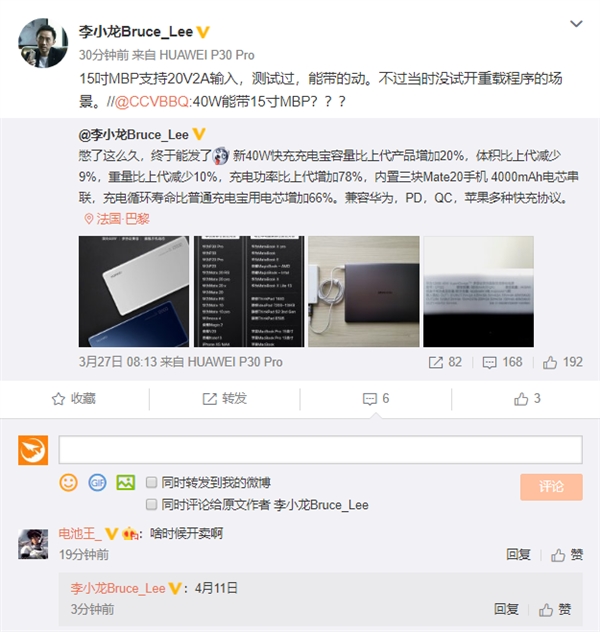
At the P30 series launch event, Huawei also unveiled 12000 mAh 40W SuperCharge power bank featuring two-way fast charging and few other amenities. On the day of launch, Huawei didn’t confirm the availability details of the power bank. Though, Bruce Lee, the Vice President of Handset Business at Huawei Consumer Business Group now confirms the commencement of 40W power Bank sales next week.
The new Power Bank is compatible with various other devices, including accessories and some Apple products. In a recent Weibo post, Bruce Lee exposed it charging the Huawei Matebook with a data cable.
The power bank will charge the Huawei Mate 20 Pro, Honor Magic 2 and P30 series at 40W. It can SuperCharge 70% of Huawei P30 Pro’s 4200 mAh battery within 30 minutes. Inversely, the power bank itself supports 40W charging and can fully charge in 2 hours and 14 minutes. On standard 10W charge, you would have to wait for at least five hours.
It has two USB ports – USB-A for 40W charging and USB-C for Quick Charging the non-Huawei devices. Users can plug in MacBooks and other Laptops to charge using USB Type-C PD charging.
Moreover, the device has four LED charge indicators and a button to check charge status. It measures 135.4 mm x 69 mm x 15.5 mm and weighs 227 grams.
The device will retail in White and Blue colors for the price of 99 Euros (US$ 111 / 749 Yuan approx.). Huawei 40W SuperCharge device will start retailing from April 11th.
Samsung launched the Galaxy S10 flagship series in February featuring first-ever Ultrasonic in-display fingerprint sensor. At the launch, Samsung advertised various benefits of the Ultrasonic fingerprint sensor including its accuracy and efficiency. Unfortunately, the so-called advanced in-display fingerprint sensor is fooled by an Imgur user dark shark.
The user easily fooled the Galaxy S10 ultrasonic fingerprint sensor by a 3D printed fingerprint. It is quite difficult to believe that a user can go upto such an extent to get into someone’s phone. The fact is the new on-screen fingerprint sensor carries some advancements over optical and capacitive fingerprint sensors, but still, it carries some loopholes.
According to darshark, a fingerprint photograph he took using his smartphone from a wine glass tricked the ultrasonic fingerprint. He used some photoshop skills to optimise photo and added height and depth details in 3DS Max for a 3D print. After doing necessary changes, he printed a 3D images of his fingerprint using AnyCubic Photon LCD resin printer.
Although after some changes involving three times reprinting, the 3D print unlocked the device as like of his actual finger. He believes using a DSLR camera would trick the sensor in a maiden attempt. Improved photography equipment can aid such type of hacks more efficiently and effectively.
This new way to trick fingerprint in-screen fingerprint is raising security questions against the endless safety and security claims from smartphone manufacturers. It pulled the wraps off the next level of security that Samsung has been advertising from past sometime.
However, Samsung Galaxy S10 was launched at Unpacked Event in February. It carries Exynos 9820 Octa-core processor through the world, except for the US where it retails with Qualcomm Snapdragon 855 SoC. It features a triple rear camera module featuring a 12 MP primary shooter + 12MP telephoto lens and a 16 MP ultrawide camera.
Xiaomi was officially founded on April 6, 2010. This means that the Chinese giant turned 9 today, and during this time, Xiaomi has become one of the best smartphones manufacturers in the world. Considering how the company started from scratch, this is indeed a tremendous achievement.
Currently, the company is in the top 4 smartphones manufacturers in the world and it is registering a huge and constant growth year-over-year. In just a few years, Xiaomi passed from being a Chinese-based company to a global giant, and now it ships millions of devices per month.
Here, you can find our selection of the best and most innovative Xiaomi phones released in the last two years.
1Xiaomi Mi Mix 3 5G
Xiaomi Mi Mix 3 5G deserves the first spot in this selection as it is the world’s first 5G-enabled smartphone ever announced. It is not the first one which hit the market as Samsung Galaxy S10 5G debuted in South Korea on April 5, but it will be available in the global market starting from next month. The handset is powered by a Snapdragon 855 chipset which is paired with a Snapdragon X50 5G modem. It is a single-mode modem (it needs an additional modem to support 4G, 3G, and 2G networks, that is the Snapdragon X24 in this case) which can reach peak download speeds up to 5 Gbps with the mmWave technology.
2Xiaomi Mi 9
The Xiaomi Mi 9 is the first Xiaomi phone to support fast wireless charging with a power of 20W. So, besides being able to fully charge with blazing speeds through Quick Charge 4+ and a USB-C cable, it even charges in a very quick way wirelessly. The Mi 9 is also one of the most affordable devices to come with the best Qualcomm’s chipset: the Snapdragon 855. It is not a 5G phone unlike the Mi Mix 3 5G, but it costs just €450 in the global market. Despite its incredibly affordable price, it has one of the best camera departments out there: a triple setup with a 48 MP main sensor, a 16 MP ultrawide lens and a 12 MP telephoto lens. It was ranked in the top 5 inside DxOMark’s camera phones chart.
3Xiaomi Mi Mix 2S
Xiaomi Mi Mix 2S deserves a mention for being the first Xiaomi flagship phone to really feature a flagship-grade camera. Until its release, lots of people were complaining about the scarce camera potentialities of the company’s flagships and every expert who wanted to shoot great photos with an Android handset opted for other manufacturers such as Samsung and Huawei. But with the Mi Mix 2S things totally changed. Finally, it was possible to get a flagship-killer with an affordable price without sacrificing on amazing photos. And through the updates over time, the phone has got even better! In case you forgot, the Mi Mix 2S is equipped with a 12 MP dual camera with OIS and 2x optical zoom.
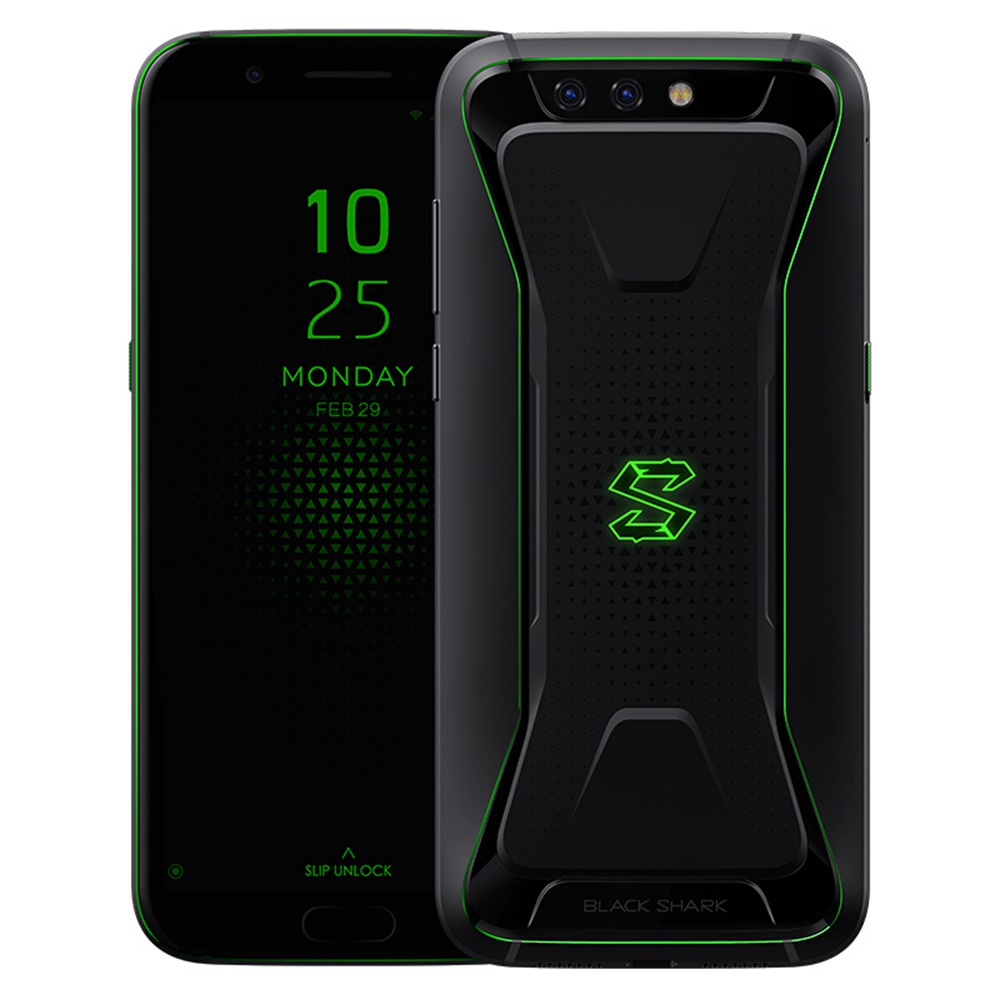
4Xiaomi Black Shark
With Black Shark, Xiaomi officially debuted in the gaming phones sector. The Black Shark, made in cooperation with a third-party company supported by Xiaomi, was essentially the affordable alternative to the Razer Phone, alias the world’s first gaming smartphone. Despite being an affordable device, it came with a flagship-class Snapdragon 845 SoC and amazing performance, as well as a very advanced cooling system. It even supports a dedicated external controller. And the listing price is just €400 ($450).
5Xiaomi Redmi Note 7
A few months ago, Xiaomi decided to split its core smartphone business and its whole Redmi line-up by transforming Redmi in a sub-brand, just like Huawei did with Honor (and Oppo with Realme). Redmi Note 7 was the first smartphone released after Redmi became independent from the main company. And the Redmi Note 7 hit the shelves with one of the most interesting price tags of 2019. Just €179 (globally) for the base version for a phone that is powered by a Snapdragon 660 chipset and sports a 48 MP dual camera, as well as a huge 4000 mAh battery! Do you know any device with a better value for money at the same price? Let us know in the comment box below.
6Xiaomi Mi A1
With the Mi A1, Xiaomi embraced the Android One program for the first time. This device belongs to the only Xiaomi midrange line-up containing smartphones without MIUI installed. It comes with Android One out of the box: a stock Android version supported directly by Google with constant and fast updates. Thanks to this device, customers were able to break free from all MIUI’s customizations, bloatware, and preinstalled apps. The phone was also released in a version with MIUI for the Chinese market: the Mi 5X. But the Mi A1 turned out to be one of the company’s best-sellers in that year.
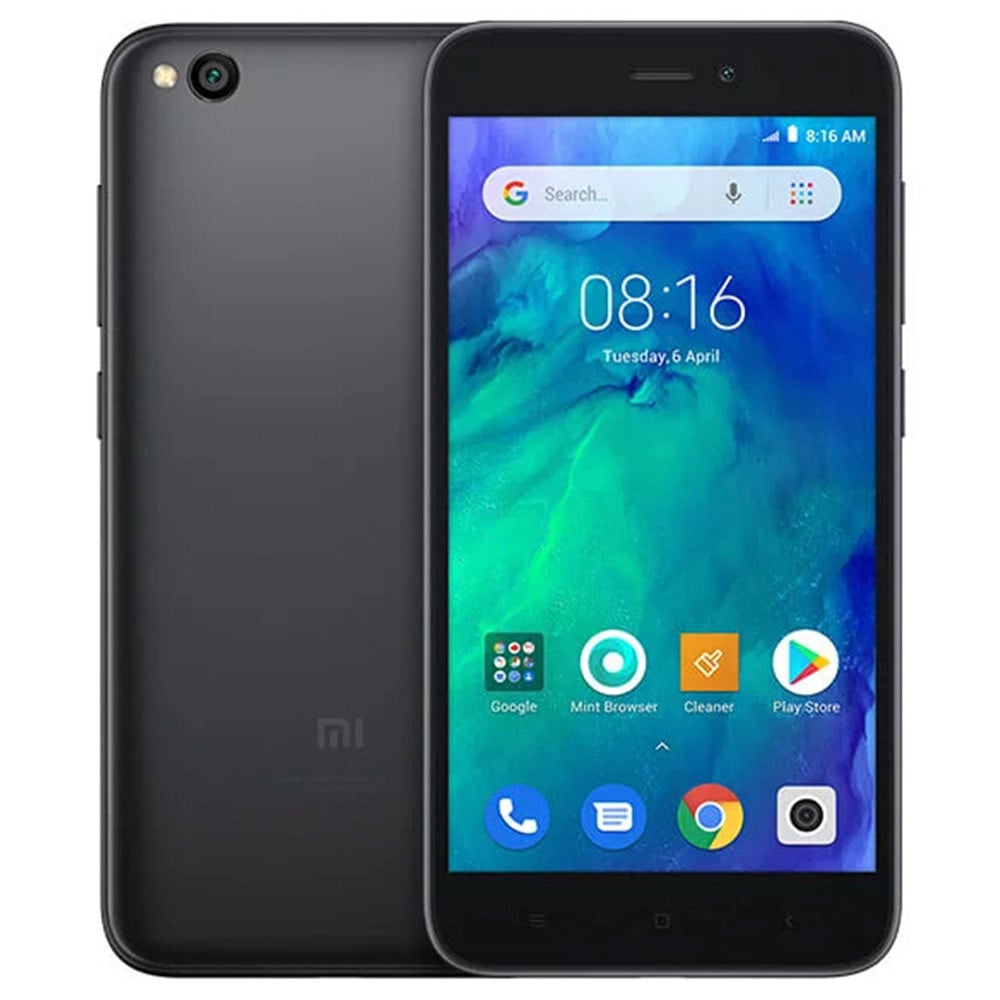
While Xiaomi Mi A1 is the first company’s phone with Android One, the Redmi Go is the first with Android Go. In case you don’t know, it is an enlightened version of Google’s operating system with toned down apps which takes less storage and fewer system resources, so it is able to run smoothly even on devices with low-end or outdated hardware (it can be used with only 512 MB of RAM!). So, the Redmi Go allows people to get a smooth and performing device while spending less than 100 bucks. And it still comes with an HD display and a long-lasting battery.
If you’re in the market for cost-effective AirPods alternative, you might want to give the Apods i10 and Apods i12 a test drive.
Here are the top online stores where music lovers can buy these amazing earbuds without emptying your pocket.
i12 TWS Bluetooth 5.0 Earbuds on GeekBuying (Standard Edition)
Equipped with the latest Bluetooth 5.0 technology, the i12 offers fast sound transmission, coupled with a stable connection. The standard edition of the i12 earbuds usually retails for $29.99, but you can now buy it for only $19.99 on GeekBuying.
Moreover, you can extend this 33 percent discount by applying coupon code TLTEOTGH. The coupon helps you save $7.30 and bring the already reduced selling price of the i12 further down to only $18.69 at checkout.
You can follow this link to avail the discount, which is valid for the white color version of the i12 TWS Bluetooth 5.0 Earbuds. Note that the promo was on the verge of wrapping up at the time of writing.
Apods i12 Bluetooth 5.0 TWS Earbuds (Upgraded Edition)
Alternatively, you can go for the upgraded edition of the i12, which usually sells for $39.99 on both online as well as offline stores. Much to the delight of those who aren’t willing to shell out that kind of money on Bluetooth earbuds, GeekBuying is now offering it for just $28.99. Not only can you take advantage of this 28 percent discount, but also use coupon code ZFVQXUFD to save $6 more. In other words, you can reduce the retail price of the device to just $26.99 before placing your order.
In order to avail the discount, all you need to do is to follow this link. Note that the promo is slated to end soon.
The i10 adopts the Bluetooth 5.0 technology that warrants reliability in terms of connectivity and faster sound transmission. As a result, you get a superior calling and game playing experience.
The i10 usually carries a steep $29.99, much to the chagrin of cost-conscious music lovers. In a bid to make the i10 available to those living on a tight budget, GeekBuying is now doling out a 33 percent off on these amazing Bluetooth earbuds.
While the above-mentioned discount allows you to buy the i10 for a reduced price of just $19.99, there’s more for you to cheer about. Aside from getting the discount, you can save $7 more simply by applying coupon code XUFDWYTK during the checkout process.
This reduces the original asking price of the Apods i10 to only $18.99. You can click here to visit the promotion page and grab the discount, which will be valid for the white color version of the earbuds for a short period of time.
Do you fancy remotely controlling electronics in your house? Xiaomi’s got your back! The Chinese electronics giant, known for making top-end smartphones also manufactures a slew of other electronic items including a remote control that enables you to control appliances without breaking a sweat. Here are leading online stores that offer this amazing device at reasonable prices.
Xiaomi Universal Convenient Remote Control on Gearbest
Staying true to its reputation for offering China’s best electronic items at unbeatable prices, Gearbest is giving its users a chance to buy the Xiaomi Universal Convenient Remote Control for a lowered price of only $27.99.
It is worth mentioning here that the feature-laden remote control would normally set you back $29.99 without the aforesaid 7 percent discount, which is valid for the black color version of Universal Convenient Remote Control.
On the downside, there are only 297 pieces left for this promo, which is slated to end in just six days. You can visit this link to grab the discount without wasting time.
Xiaomi Mijia Universal Remote Controller on Banggood
Banggood has been offering the best bang for your buck for quite some time now. Keeping in line with that, the Chinese online store is now doling out a noteworthy 51 percent off on the Mijia Universal Remote Controller that supports Mi AI Speaker Voice Control.
While the Xiaomi Mijia Universal Remote Controller usually retails for $39.96, you can now buy it for just $19.80 thanks to the aforesaid discount. In order to take advantage of the discount, all you need to do is to follow this link before the promo ends on April 9th.
Xiaomi Mijia Universal IR Infrared Remote Control on GeekBuying
You can control the Mijia universal remote controller using your phone after downloading and installing the Mi Home APP. The device enables you to turn appliances on and off using just your voice. The Mijia Universal IR Infrared Remote Control usually retails for $44.99 but is currently up for grabs bearing a lowered price of $20.99 on GeekBuying. This is a 53 percent reduction in the device’s original selling price.
You can follow this link in order to avail the discount. Regrettably, the promo was on the verge of wrapping up at the time of writing.
Xiaomi Mi Universal Intelligent Smart Remote Controller on AliExpress
The device works with Xiaomi’s Al Speaker and Al Speaker Mini via Xiaoai tongxue voice control. You can also download the Mi Home App in order to use the Mijia universal remote controller and turn your appliances on or off. The black-tinted Xiaomi Mi Universal Intelligent Smart Remote Controller has gone up for sale bearing a price tag of $17.90 on AliExpress. New users can avail $3 off simply by applying the New User Coupon before placing their orders.
You can visit this link to get your hands on the highly-efficient remote controller.
Vivo made the Y95 4G phablet available to the public back in November last year. Even months after hitting the store shelves, the device continues to garner huge popularity among those who fancy using big-screen mobile devices. If you’ve been waiting for the Vivo Y95 price to drop, we got good news for you. Leading online stores Gearbest and Flipkart are now offering the well-received phablet at a considerably lowered price.
Vivo Y95 4G Phablet on Gearbest
The global version of the Y95 with 4GB of RAM and 64GB of internal storage capacity usually retails for $135.49, but you can now buy it for only $119.99 on the Chinese online store. This is an 11 percent reduction in the device’s original asking price. While the aforesaid discount is valid for both red and black color versions of the Vivo Y95, there were 88 pieces of the red and only 74 pieces of the black color version left at the time of writing.
You can follow this link to avail the discount. Note that the promo is slated to end in only two days.
Flipkart is offering its users an unmissable chance to buy the Vivo Y95 at a considerably reduced price of just 14,990 INR. This is a 21 percent drop in the 4GB RAM, 64GB ROM variant of the phone, which normally sells for 18,990 INR. Moreover, the Indian e-commerce company is doling out the aforesaid discount on two beautiful color versions including Nebula Purple and Starry Black. You can check out other offers such as no cost EMI starting from 937 INR/month with 25 percent down payment by visiting this link.
The irresistible Vivo Y95 offers the following features:
6.22 inches IPS LCD capacitive touchscreen with 720 x 1520 pixels resolution
Ahead of the Mi Fan festival, Xiaomi has unveiled one of the 20 new products that were teased a week ago. It is an anti-blu-ray eyeglass dubbed MIJIA Anti Blu-ray Goggles Pro. The glasses will go on sale on April 9.
Anti Blu-ray glasses work to block harmful blue light rays and prevent them from reaching our eyes. They have a yellow-tinted filter that is designed to cut out the blue light rays from the screen and prevent them from reaching your eyes. Mijia anti-Blu-ray Goggles Pro has a 50% blue light absorption rate, and adds a double-sided anti-grease film layer, eliminating the need for frequent cleaning troubles.
The glasses use a TR90 frame, thus its overall weight is only 16 grams, bringing a pressureless wearing experience. For clarity, the TR90 eyeglasses frame is made up of a material that is bendable so that it is less likely to break from sudden ground shocks. The frames are ideal for anyone because they are extremely lightweight and flexible and just perfect to be used as eyeglasses or even sunglasses.
The MIJIA Anti-Blue ray Goggles Pro has a pair of silicone nose pads and no single screws at all. The temples and frames feature a new hinge design that eliminates the use of screws.
Nubia first unveiled the innovative Nubia Alpha wearable in February this year. The wearable device looks more like a concept device with its foldable display and smartphone features crammed into a smartwatch design. However, the phone isn’t just a concept but will actually meet with us on April 8 when it will be launched in China. Ahead of the launch, Nubia’s co-founder and G, Ni Fei has released a camera sample which he says was shot using the minuscule Nubia Alpha’s camera.
For the avoidance of doubt, the device comes with a 5MP camera for photos and video shooting. For a small sensor, the sample is pretty impressive with high clarity and attention to details. We don’t know much about the camera details like if there is autofocus, PDAF or the aperture size, among others. Ni Fei did share the EXIF data of the photo though, to convince us that it was indeed shot by the tiny wearable. The data shows the camera uses a resolution of 1080×1920 pixels (FullHD).
As a reminder, the Nubia Alpha features a 4-inch flexible OLED display but appears a lot bigger because of its ultra-wide aspect ratio. The display offers 960 x 192 pixels screen resolution and an aspect ratio that looks to be in the region of 5:1 or 49:9. Under the hood, the device is powered by Qualcomm Snapdragon Wear 2100 chipset, coupled with 1GB of RAM and 8GB of internal storage.
It also comes with fitness-related features such as sleep-tracking and health-assistant apps. The Nubia Alpha is fuelled by a 500mAh battery which promises a day or two of endurance, comparable to smartphones. It comes in two models, one with an eSIM while the other has only Bluetooth connectivity. Both models will be available in Black and Gold colours.
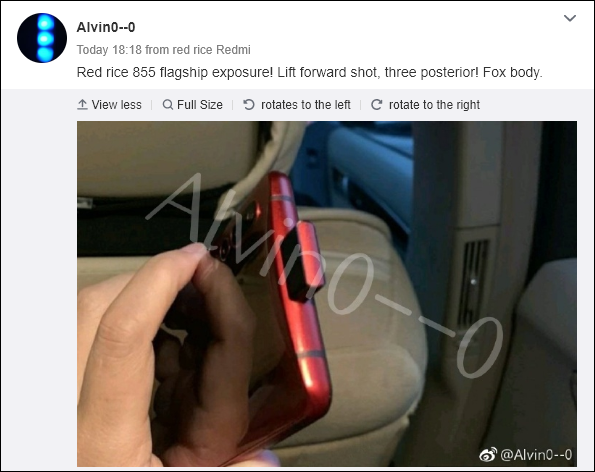
Xiaomi’s independent Redmi brand was recently tipped to have got a flagship model in the works. The device is rumoured to adopt the moniker Redmi Pro 2 and recently, the render of the model was leaked showing a pop-up camera design. The real-life picture of the supposed Redmi Pro 2 has now leaked on China’s Weibo.
The leakster only indicated that the phone is Xiaomi’s Snapdragon 855 flagship but no mention of Redmi Pro 2 was made. The device is also detailed to feature triple rear cameras and that is visible from the picture. The pop-up camera design will ensure the bezels around the display are minimal and the device will have a high screen-to-body ratio. The camera is at the middle while two antenna bands run adjacent at the left and right sides. While there is no evidence the model will be called Redmi Pro 2, the innovative pop-up design aptly fits the iteration considering that the Redmi Pro released in 2016 was Xiaomi’s first dual camera phone. Thus, it won’t be a bad idea if the first pop-up camera-packing phone is called Redmi Pro 2.
The Redmi brand is turning out to be a brand full of surprises. Just a few months in the market, we are already getting inundated with spectacular products under the brand. First, we saw the Redmi Note 7 with its rock-solid Gorilla glass that just won’t break. Then the Redmi Note 7 Pro joined the fray with a powerful Sony IMX586 48MP sensor and Snapdragon 675 chipset. The budget Redmi 7 that didn’t in any way look like a budget phone was also unveiled recently. Away from smartphones, Redmi also added several new products like a washing machine, Airdots earbuds etc. There is no word yet on when the pop-up camera-packing model will be launched but we expect that to happen sometime soon.
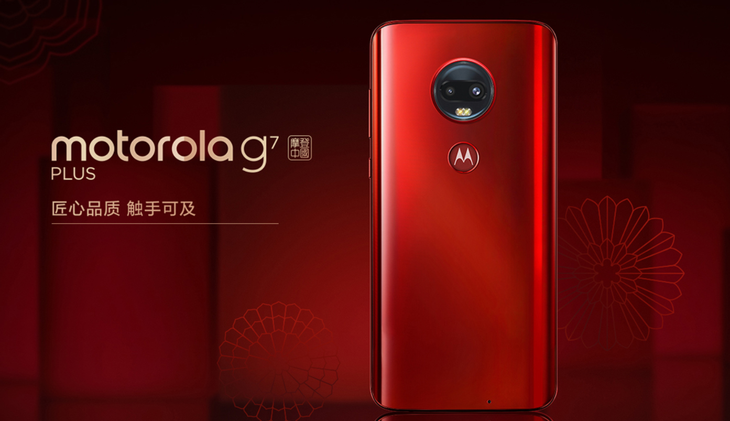
The Moto G7 Plus is a sleek smartphone with a beautiful 3D curved design and Corning Gorilla Glass protection. The mobile phone features a 6.24-inch display with a resolution of 1080 x 2270 pixels. The display has a cool waterdrop notch at the top holding the selfie camera. It is powered by a Qualcomm Snapdragon 636 processor which isn’t really the best midrange chipset around but guarantees smooth and fast running of the smartphone. The China version is available in 4GB and 6GB RAM variants but both come with 128GB storage option only.
On the camera end, the G7 Plus also packs a dual rear camera setup, 16MP + 5MP combo while for selfies, there is a 12MP sensor. In addition, the phone will have a 27-watt fast charging that will give you 12 hours of power with just 15 minutes of charge. Other features include a rear-mounted fingerprint sensor, dual-band VoLTE, dual SIM slots and NFC.
As for the pricing, the Moto G7 Plus 4+128GB version is priced at 2099 yuan ($312) while the 6GB+128GB version comes in at 2399 yuan ($357). Both variants are scheduled to go on sale at 10:00am on April 11.
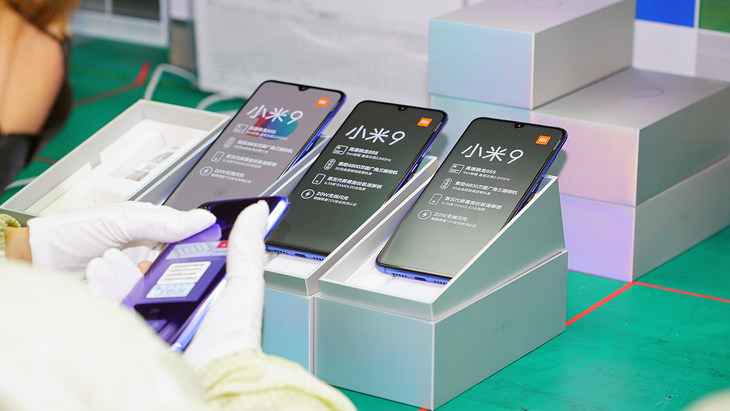
Xiaomi recently invited some media personnel to a tour of Foxconn’s Langfang factory which is one of the three factories where the flagship Mi 9 series is produced. The three factories are Foxconn’s Langfang factory, Yinghuada’s factory at Nanjing, and BYD’s Xi’an factory. As you must have known, the Mi 9 has been experiencing some shortage in stock, occasioned by surging demand and from the look of things, a cumbersome production process.
The Mi 9 production is not just difficult because of the material it uses, but because it has to undergo several tests to assure of its durability. Most of the Mi 9 units in circulation are produced at Foxconn’s Langfang factory so this tour is a clear demonstration of the process. According to PCpop, the tour took reports to the SMT production line where the motherboard for the phone is processed.
There, the components are soldered on to the PCB main board. This is an automated process that is carried out by robots. The phone’s chipset, resistors and capacitors are placed on the main board by the robot according to the specified coordinates, and then it goes through the reflow oven where the entire motherboard is processed. The workers are mainly there to monitor the process and add raw materials. This process is very fast and accurate. One of the production lines can produce 8000 mobile phone motherboards a day and there are 10 of such SMT production lines at Langfang Foxconn.
The tour also took the reporters to the assembly workshop where the motherboard, screen, camera, earpiece, battery, wireless charging coil and other components of the Mi 9 is assembled to the frame. The process is constantly monitored with each unit checked to ensure the assembled components are working. After that, the glass back panel is mounted. It is also precisely positioned by a precision robot, and the back cover is tightly fitted to the body. Then the model name is printed on the rear shell. After that, the production is completed.
After the complete production, the phone isn’t shipped out just yet but still has to undergo several rigorous stress tests. In the ageing test workshop, the assembled mobile phone will simulate the heavy use of the user, and test whether there are software and hardware issues on the mobile phone. After that, the mobile phone will be processed by p2i, which is to cover the surface of the mobile phone with the P2i nano-coating so that the surface of the mobile phone is hydrophobic, and the liquid can be prevented from entering the mobile phone, thereby achieving a ti-splash level. The entire p2i process lasts for 3 hours.
The last production line is where the Mi 9 is packaged. Before packaging, another test is carried out on some of the features such as the screen and camera before the packaging of the mobile phone. Then the network license is placed on the back of the fuselage, as well as a barcode on the back and a protective film on the screen. The phone is then placed inside the packaging box alongside other accessories before sending it to a temporary storage facility. According to the officer in charge of the factory, the sales of the Mi 9 is very hot so, the phone doesn’t even make it to the warehouse before it is shipped to the various sales channels.
After the factory tour, Qiao Tonghu, senior manager of mobile phone delivery management in the production management department of Xiaomi Group’s mobile phone department, and Xu Jieyun, general manager of Xiaomi Group’s public relations department, accepted questions from the media. Most of the questions centered on the production capacity of the Mi 9. The Xiaomi official in charge noted that the company first encountered problems in the early production stages in two aspects. First, the supply of camera modules was relatively small, which limits the overall production capacity. Then the aspect of worker’s proficiency but that is constantly improving.
Oppo will be launching its all-new Oppo Reno smartphone series in China on 10th April. Ahead of the phone’s official launch, the company has already started taking pre-orders, revealing that the phone will come in three colors — Black, Blue, and Green.
The listing also confirms the memory variants of the smartphone — 6 GB RAM + 128 GB internal storage, 6 GB RAM + 256 GB internal storage, and 8 GB RAM + 256 GB internal storage.
It’s known that the smartphone will be offered in two variants — one of them will be powered by the Qualcomm Snapdragon 855 octa-core processor while the other one will be powered by the Snapdragon 710 SoC.
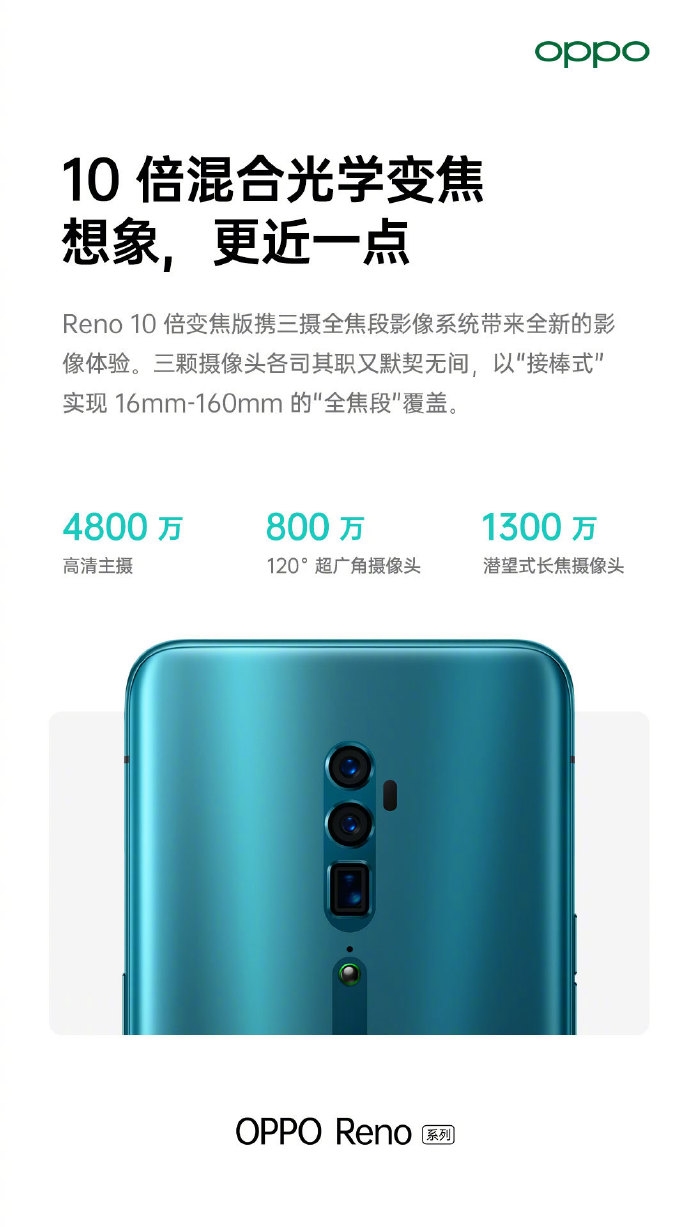
Now, the phone’s camera configuration has been revealed by the company. It will come with Sony’s 48-megapixel IMX586 sensor and will come with support for 10X optical zoom. There’ll also be a super wide-angle lens and periscope telephoto three-camera structure. The secondary camera sensor will be of 8-megapixel 120-degree super wide-angle while the tertiary camera will be of 13-megapixel periscope telephoto lens.
The company has also confirmed that the Oppo Reno 10X Zoom Edition smartphone will come with dual-frequency GPS which helps in reducing inaccuracies in GPS tracking caused due to interfaces like buildings and signal delays.
Oppo has also confirmed that the smartphone will come with an AMOLED display with 93.1 percent screen-to-body ratio and will be running Android 9 Pie operating system out-of-the-box with the company’s own ColorOS 6.0 on top.
We are not keeping count of the number of gadgets that Xiaomi has unveiled in the past few days but it seems the Chinese giant is intent on dropping up to twenty new products ahead of the Mi Fan Festival. Recall that a poster was spotted where the company was tipped as planning to release all the products the poster was teasing. Some of them are already in the kitty like the Mi 9 Roy Wang edition, the water purifier, digital clock with thermometer and hygrometer, the MIJIA walkie-talkie 2, MIJIA handheld vacuum cleaner and a few others. Xiaomi has also launched a Star Trang Telescope and it is priced at 599 yuan (89).
The Xiaomi Star Trang Telescope features custom-made aspherical eyepieces of 23mm (21.7x) and 10mm (50x), both models with a 60-degree viewing field of view. The telescope objective lens is a high-quality glass lens with a full-surface multi-layer coating which effectively improves the optical performance of the lens. The image reproduction is truly sharp.
The AZ theodolite eliminates the complicated operation of other brackets and is designed with intimate fixed-point scales. No matter whether it is a geek, a male, a young, or a primary school student, you can easily adjust the telescope to watch the near water and the distant mountains as well as a starry sky.
The Xiaomi Star Trang Telescope also comes with a stainless steel tripod which is sturdy and durable. There are also accessory discs which prevents the eyepieces and accessories from getting damaged. There is equally a carry backpack with custom-built pearl cotton lining for better protection of the telescope. The backpack also has double webbing handles for a more comfortable grip.
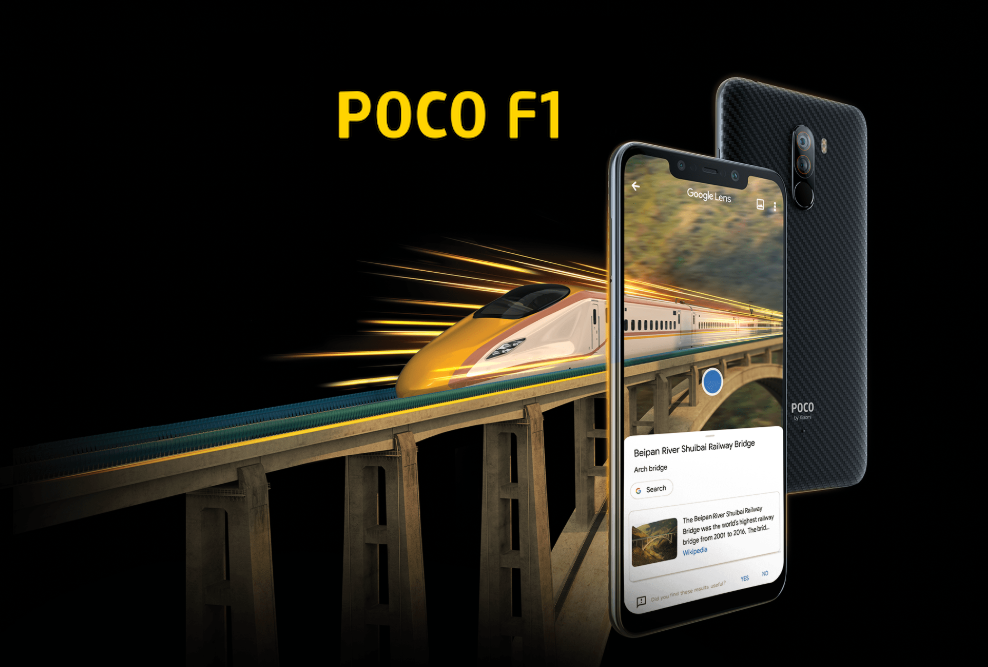
Through a tweet, Poco India General Manger C Manmohan has confirmed the arrival of the stable MIUI 10.3.4 update for Xiaomi Poco F1 users. Apart from bug fixes and performance improvements, the latest software update brings much awaited Widevine L1 support, 4K video recording at 60fps. Game Turbo and more.
Good News! We have started rolling out a new stable update for all our #POCOF1 fans. Key highlights of this update: – 4k recording at 60FPS -Game Turbo Mode -Widevine L1 support -Latest security patch (1/2) pic.twitter.com/czEFiIA6JO
The MIUI 10.3.4 update for Poco F1 users carries support for Widevine L1 that will enable users to stream HD videos over Netflix. One should be aware of the fact that it can stream videos of only up to 480 pixels resolution.
The second new feature that’s arrive for Poco F1 is Game Turbo that boosts the performance of the device while gaming. It includes an overlay pop-up that gives quick access to Wi-Fi on/off toggle, screenshot, screen recording and more without leaving the gaming screen. Also, another new related to gaming is the arrival of floating windows for incoming calls during games.
The camera of the Poco F1 now supports 4K video shooting at 60fps. Also, it tags along new modes for AI camera. The face unlock app can be now used to lock/unlock specific apps. The update is also packed with April month’s Android security patch. Some of the optimizations included in the MIUI 10.3.4 update include face unlock efficiency and redesigned starting page for Mi Cloud. The update is being rolled out in phases because of which it may take some time for all the Poco F1 users to receive it.
Xiaomi Poco F1 Specifications and Price
The Xiaomi Poco F1 has a full HD+ resolution IPS LCD display of 6.18 inches. The notch of the phone has an IR sensor for face recognition in dark and a 20-megapixel selfie camera. The 12-megapixel + 5-megpixel dual camera setup and a fingerprint reader are placed on the backside of the phone. The Snapdragon 845 mobile platform and 4,000mAh battery with Quick Charge 3.0 powers the smartphone. It has already received the latest Android 9 Pie OS update.
The 6 BG RAM + 64 GB storage, 6 GB RAM + 128 GB storage and 8 GB RAM + 256 GB storage editions of the Poco F1 are respectively priced at Rs. 19,999 (~$289), Rs. 20,999 (~$303) and Rs. 27,999 (~$405). The 128 GB and 256 GB Armoured Edition of the Poco F1 are respectively priced at Rs. 21,999 (~$318) and Rs. 28,999 (~$419).
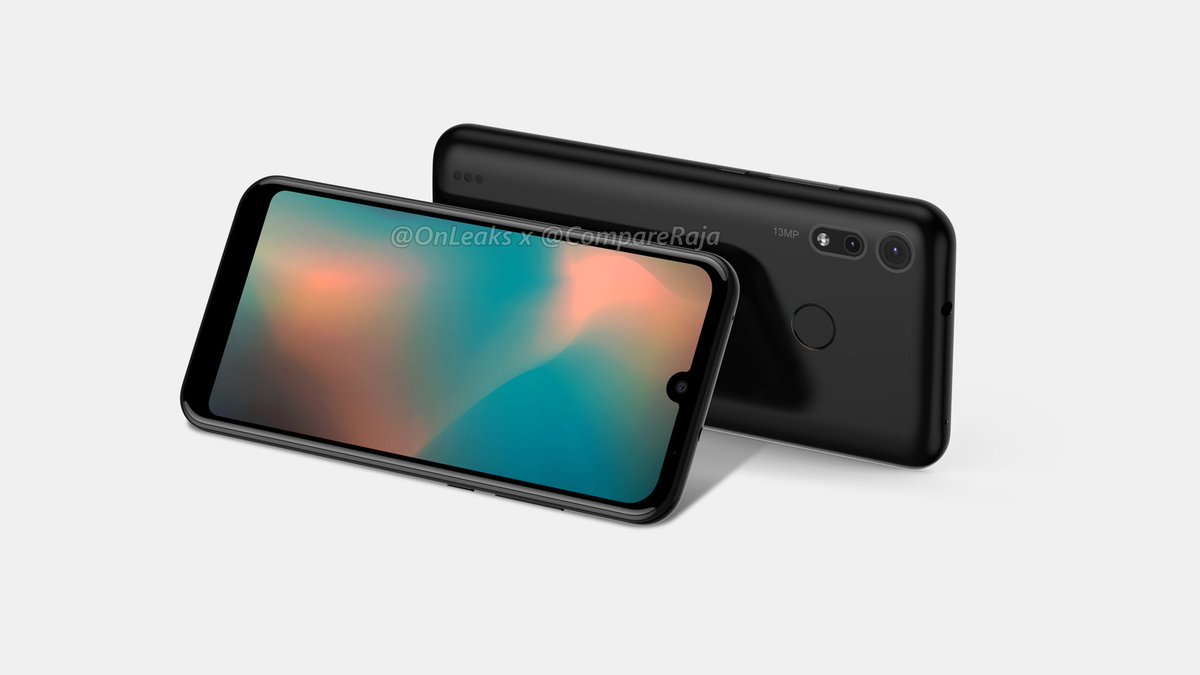
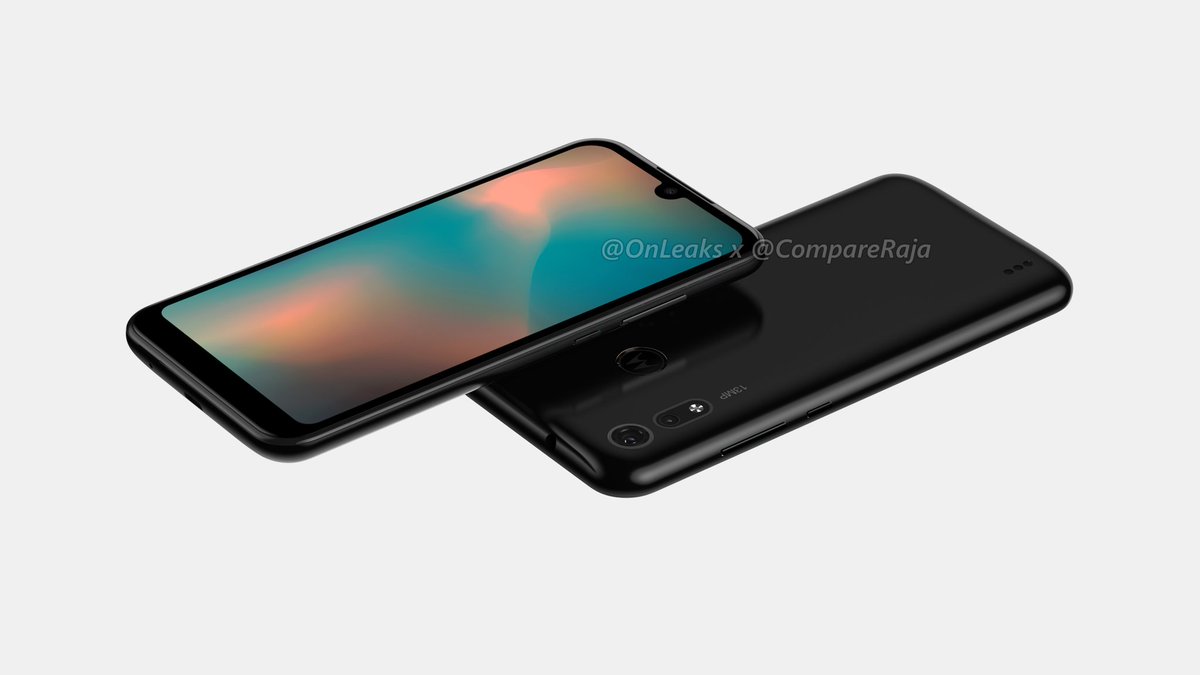
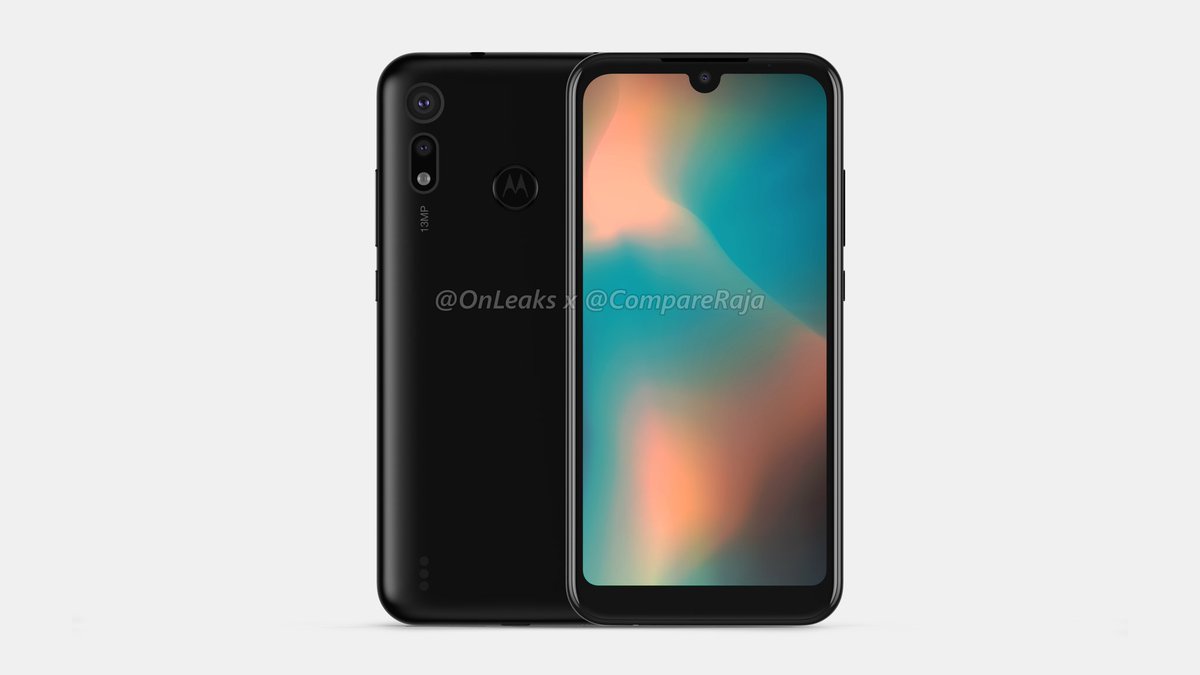
Earlier this week, popular tipster OnLeaks had shared the renders of the upcoming Motorola P40 Note smartphone. The handset that is expected to arrive as the first triple camera phone from the company will be arriving as the successor of Motorola P30 Note from last year. Last year, Lenovo-owned company had also launched the Motorola P30 Play phone. OnLeaks has collaborated with Indian publication Compare Raja to reveal the design of the upcoming Motorola P40 Play smartphone.
The Motorola P40 series will probably include three phones such as Motorola P40, P40 Note and P40 Play. Among these, the P40 Play will be arriving with the weakest specs. The render of the phone that have been leaked by OnLeaks reveals that its waterdrop notched display will be featuring slight thick bezels. Also, the chin of the device also appears quite thick.
The P40 Play smartphone measures 147.7 x 71.5 x 9.2mm and it houses a 5.6-inch display. There is no confirmation on the screen resolution of the phone. There is a possibility that this entry-level model in the P40 series will carry support for HD+ resolution.
The back panel of the phone seems to be made out of plastic. The top-left corner of the rear shell has a dual camera setup and an LED flash. The main camera sensor of the smartphone will be of 13-megapixel. Probably, the other lens could be a depth sensor. The Motorola batwing logo on the rear could be integrated with a fingerprint reader.
Motorola is expected to release the P40 series of smartphones in China. These phones will come with ZUK UI based Android 9 Pie OS. The same smartphones are expected to release outside of China with “One” branding and they are most likely to arrive as Android One devices running on the latest version of Android 9.
Apart from Motorola P40 series, the company is also preparing a flagship phone with four rear cameras. As of this writing, there is no information on the name of the device. However, it is expected to arrive with a massive display of 6.2-inch AMOLED screen, an in-display fingerprint reader and 48-megapixel main camera.
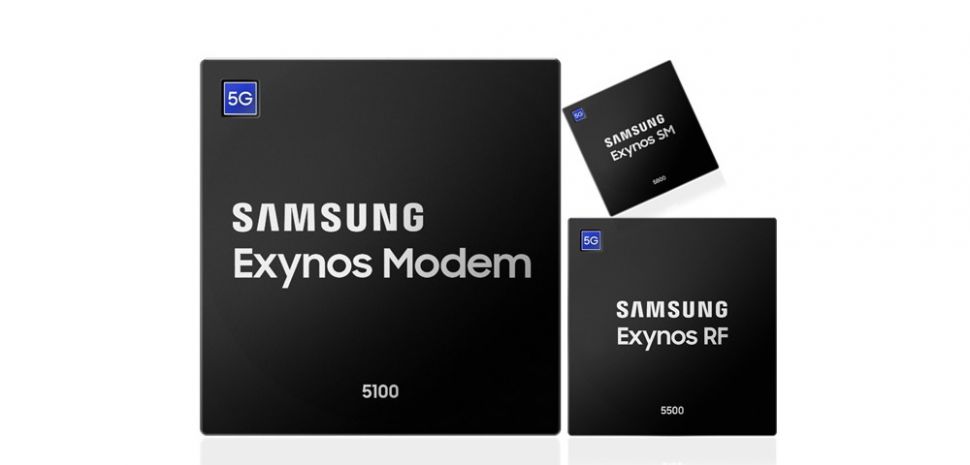
Samsung Electronics has announced that it has now started mass production of its 5G chips. The company’s new chip is the Exynos Modem 5100, which contains a 5G multi-mode chipset. This is the same chipset that is used to power the Galaxy S10 5G.
Along with that, the South Korean tech giant says that it has also started mass production of its single-chip radio frequency transceiver, the Exynos RF 550 and the supply modulator solution, the Exynos SM 5800. These technologies also power Samsung’s flagship 5G smartphone that went on sale this week.
The Samsung Exynos Modem 5100 was first unveiled in August last year and is claimed to be the world’s first 5G modem that is compatible with the 3GPP’s 5G New Radio (5G-NR) standard. It can reach a downlink speed of up to 2 Gbps for frequencies under 6 GHz, and a downlink speed of up to 6 Gbps for the mmWave spectrum.
These blazing speeds make this modem up to 5x times faster than 4G ones. Further, the 4G connectivity with the new Samsung Exynos 5100 has been improved as well, and now it can reach a download speed of up to 6 Gbps.
The Exynos RF 5500 has 14 receiver paths for download, 4×4 MIMO (Multiple-Input, Multiple-Output), and a higher-order 256 QAM (Quadrature Amplitude Modulation) scheme for data transfer in 5G networks; and the Eyxnos SM5800 is 30% more power efficient than previous offerings. All three chips support 5G-NR sub-6-gigahertz (GHz) spectrum and legacy radio access technologies.
As one of the only companies with an end-to-end 5G solution from chipsets, network core, radio solutions, and the end-user devices, Samsung seems to be uniquely positioned to deliver the next-generation smartphone and network.
Xiaomi has announced through its MIUI Forum that the company has adjusted the internet testing upgrade strategy for some models of the Redmi series. It revealed that Xiaomi will now stop the developer ROM update for the Redmi models that were launched before 2016.
This means that the users of those smartphones who are on the developer ROM will have to shift to the Stable ROM. The major difference in terms of update frequency for both the ROMs is that the developer version updates every week and the stable version receives an update every two months.
Since it’s been more than two years for devices launched before 2016, the company doesn’t want to spend much of its resources on providing frequent updates for those smartphones, which aren’t in demand and some of them have already been discontinued.
The smartphone models that have been affected include Redmi 3S/3X, Redmi Note 3 Special Edition, Redmi Note Pro, Redmi 4 series, Redmi Note 4, and Redmi 4A. Only these models are affected by the change in update frequency.
In its official announcement, the company said that it recommends the users on the developer ROM to switch to the Stable ROM in order to ensure the stability and usability of the affected smartphones.
Meanwhile, the China-based company has already started working on the next major release for its custom user interface — MIUI 11. As per the reports, the MIUI 11 will come with a revamped design, new icon sets, advanced low-power mode, and the company will also take care of the advertising-related issues in MIUI. While the ads won’t be gone completely, but the company says that it will be more tolerant.
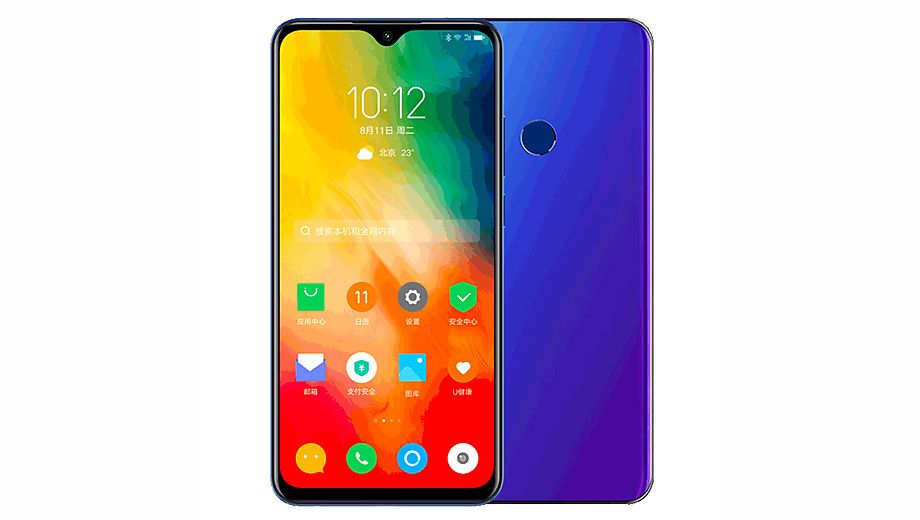
Lenovo has unveiled a new smartphone called the Lenovo K6 Enjoy in China. It is a budget-friendly phone that has arrived with waterdrop-styled display and dual rear cameras. The handset has arrived with a price tag of 1,398 Yuan in China.
Lenovo K6 Play Specifications
The Lenovo K6 Play (L38032 model number) measures 156.4 x 75 x 7.99 and it weighs 191 grams. The IPS LCD panel of 6.22 inches is available on the device. The notched screen offers HD+ resolution of 720 x 1520 pixels. As far as the appearance of the phone is concerned, the handset resembles with the Lenovo Z5s smartphone from last year.
The midrange Helio P22 processor powers the smartphone along with 4 GB of RAM. There are two storage editions of the phone such as 64 GB and 128 GB. There is an external microSD card slot on the device for additional storage. The ZUK UI flavored Android 9 Pie OS is loaded on the phone.
The Lenovo K6 Enjoy comes with dual-LED flash enabled triple camera module on its rear. It features an autofocus enabled 12-megapixel primary sensor, a 5-megapixel depth sensor and a telephoto lens of 8-megapixel. There is a selfie camera of 8-megapixel on the device.
The handset houses a 3,300mAh battery that carries support for 10W charging. The connectivity features available on the Lenovo K6 Play are dual 4G VoLTE, Wi-Fi 802.11ac, Bluetooth 5.0, USB-C, GPS and 3.5mm audio jack.
Lenovo K6 Enjoy Price and Release Date
The price tag of the 4 GB RAM + 64 GB edition of the Lenovo K6 Enjoy is 1,398 Yuan (~$208). The smartphone comes in Black and Mirage Blue colors. There is no word on the international availability of the phone.
In 2016, Lenovo had sold a smartphone called the Lenovo K6 Enjoy. It was one of the phones from the Lenovo K6 series. Last year, the Chinese manufacturer had sold K5 series of smartphones. There is a possibility that starting with K6 Enjoy the company will be launching more phones in the 2019 K6 series will be unveiled in this year. Hence, Lenovo fans may see phones like Lenovo K6, K6 Note, K6 Pro and K6 Play this year.
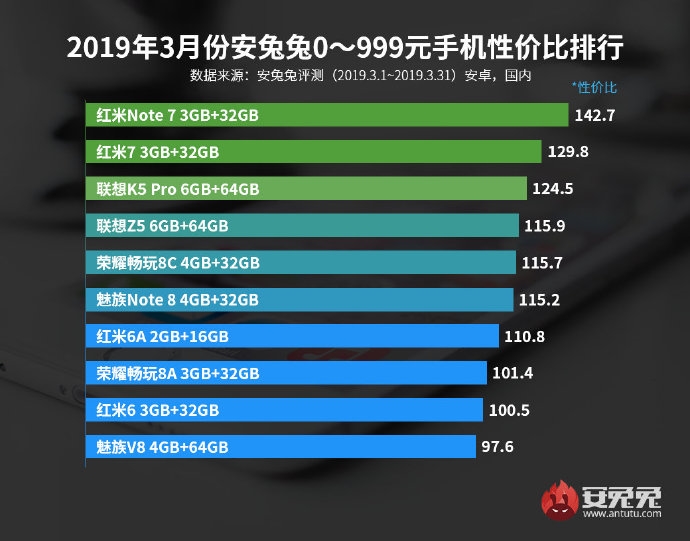
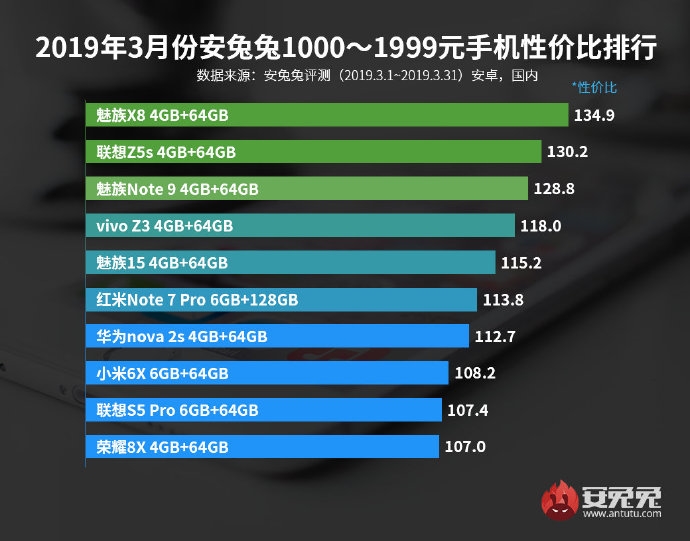
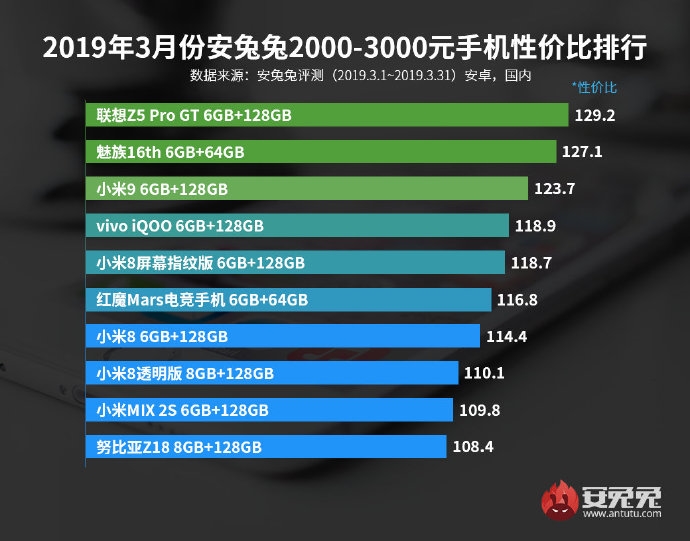
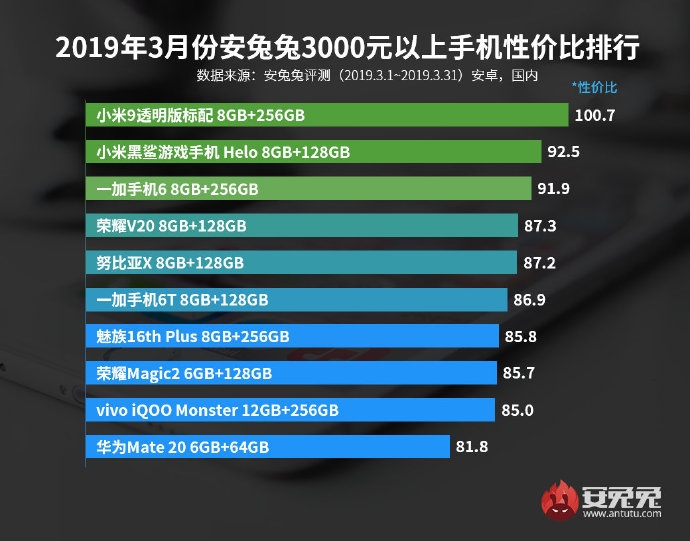
Antutu Benchmark recently released a list of top performing smartphones globally for the month of March 2019. Now, the company has released a list of top-performing smartphones for March, divided into four categories based on a cost-to-performance ratio.
The categories are defined based on the price range. There are four categories — smartphones priced between 0 to 999 Yuan; 1,000 to 1,999 Yuan; 2,000 to 2,999 Yuan and devices priced above 3,000 Yuan.
Now, coming to the first category of devices priced between 0 to 999 Yuan (approximately $0 to $149), the Redmi Note 7 Pro 3GB + 32GB model is leading, followed by Redmi 7 3GB + 32GB model and Lenovo K5 Note 6GB + 64GB model.
In the second category, where the smartphones are priced between 1,000 Yuan to 1,999 Yuan (approximately $149 to $298), the Meizu X8 4GB RAM + 64GB storage model is leading the list. The second and third spot are grabbed by Lenovo Z5s 4GB + 64GB model and Meizu Note 9 4GB + 64GB model respectively.
For smartphones priced between 2,000 Yuan to 2,999 Yuan, which is approximately between $298 and $446, the Lenovo Z5 Pro GT 6GB RAM + 128GB storage model is at the top position. It is followed by Meizu 16th 6GB + 64GB and Xiaomi Mi 9 6GB + 128GB models in the second and third position.
As for the fourth and final category, where the devices are priced above 3,000 Yuan (that’s around $447), the Xiaomi Mi 9 Transparent Edition having 8GB RAM and 256GB storage has got the top spot. The second position is also for Xiaomi and goes to its gaming smartphone Black Shark Helo with 8GB RAM and 128GB storage. The third spot is grabbed by OnePlus 6 which packs 8GB RAM and 256GB internal storage.
In the overall global markets, the Xiaomi Mi 9 is leading the pack with 371,423 points. The second place goes to Snapdragon 855 edition of Samsung Galaxy S10 that has scored 358,845. The Vivo iQOO Monster edition which is also fueled by the same SoC is placed third with a score of 356,004 points.
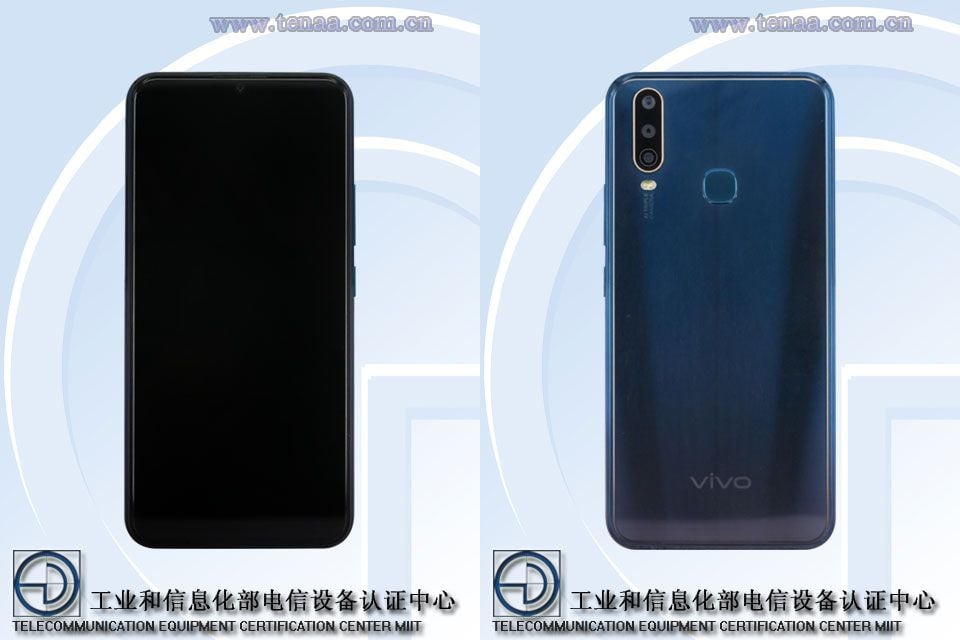
A Vivo smartphone labelled as Vivo 1901 had appeared on Geekbench benchmarking platform in the previous month. It appears that the smartphone is now inching towards its release since it has surfaced on TENAA with full specifications and images. The smartphone that has appeared as V1901A / V1901T reveals that it will be equipped with triple rear cameras and a huge battery ever seen on a Vivo phone.
Vivo V1901A/T Images
The Vivo V1901A/T images that it will be yet another phone from the company that will sport a waterdrop-style notched display. It is difficult to predict whether the phone features a glass or a plastic body with glossy finish. The blue colored rear is fitted with a vertically arranged triple camera module followed by an LED flash. A fingerprint reader is also available on the backside of the phone. The TENAA listing suggests that apart from blue, it will be also arriving in gold color option.
Vivo V1901A/T Specifications
The dimensions of the Vivo V1901A / V1901T are 159.43 x 76.77 x 8.92mm and it weighs 190.5 grams. The handset houses a 6.35-inch display that offers HD+ resolution of 720 x 1544 pixels.
The smartphone is fueled by a 2.3 GHz octa-core processor. The Geekbench listing of the phone had revealed that the phone will be driven by the MediaTek Helio P35 SoC. The SoC is assisted by 4 GB of RAM.
The Android 9 Pie OS will come loaded on the Vivo V1901A/T phone. It will be overlaid with the FunTouch OS UI. The smartphone will be available in storage choices like 64 GB and 128 GB. The handset will also carry support for external storage slot that will support up to 256 GB of microSD card.
Sitting inside the front notch of the smartphone is its 16-megapixel snapper. The triple camera module on its rear has a 13-megapixel main sensor, an 8-megapixel secondary sensor and a third sensor of 2-megapixel. The 4,880mAh battery size mentioned for the phone could be its minimum capacity. Its typical size could be around 5,000mAh. The smartphone will be equipped with support for rapid charging.
The specifications of the Vivo V1901A/T suggest that it is an upcoming budget-friendly smartphone from the company. It remains to be seen whether it will be arriving as a Y-series or the all new U-series smartphone.
We use cookies on our website to give you the most relevant experience by remembering your preferences and repeat visits. By clicking “Accept”, you consent to the use of ALL the cookies.
This website uses cookies to improve your experience while you navigate through the website. Out of these, the cookies that are categorized as necessary are stored on your browser as they are essential for the working of basic functionalities of the website. We also use third-party cookies that help us analyze and understand how you use this website. These cookies will be stored in your browser only with your consent. You also have the option to opt-out of these cookies. But opting out of some of these cookies may affect your browsing experience.
Necessary cookies are absolutely essential for the website to function properly. This category only includes cookies that ensures basic functionalities and security features of the website. These cookies do not store any personal information.
Any cookies that may not be particularly necessary for the website to function and is used specifically to collect user personal data via analytics, ads, other embedded contents are termed as non-necessary cookies. It is mandatory to procure user consent prior to running these cookies on your website.







 Here are the top online stores where music lovers can buy these amazing earbuds without emptying your pocket.
 Not only can you take advantage of this 28 percent discount, but also use coupon code ZFVQXUFD to save $6 more. In other words, you can reduce the retail price of the device to just $26.99 before placing your order.
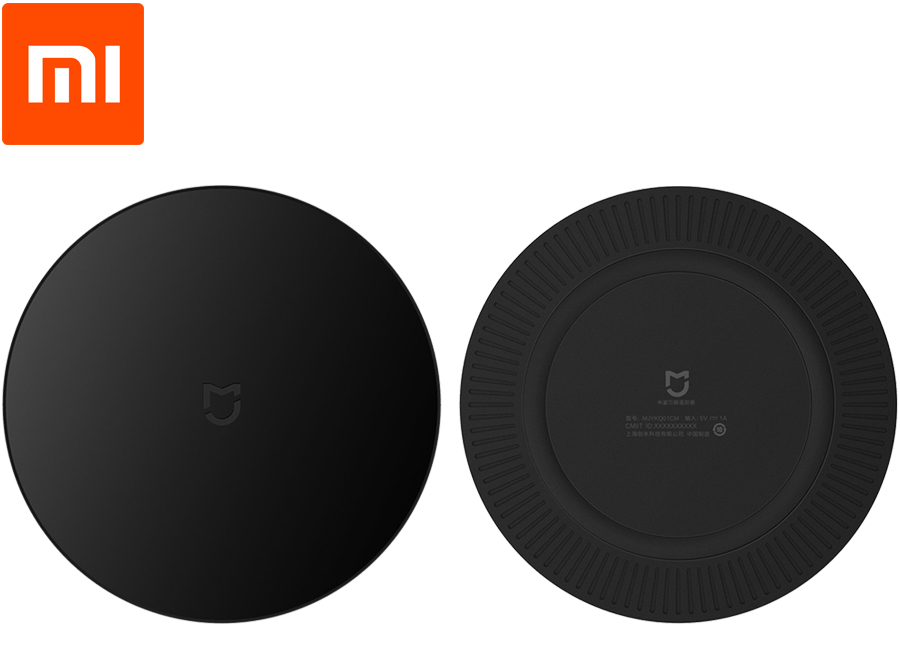 The Chinese electronics giant, known for making top-end smartphones also manufactures a slew of other electronic items including a remote control that enables you to control appliances without breaking a sweat. Here are leading online stores that offer this amazing device at reasonable prices.
 On the downside, there are only 297 pieces left for this promo, which is slated to end in just six days. You can visit
 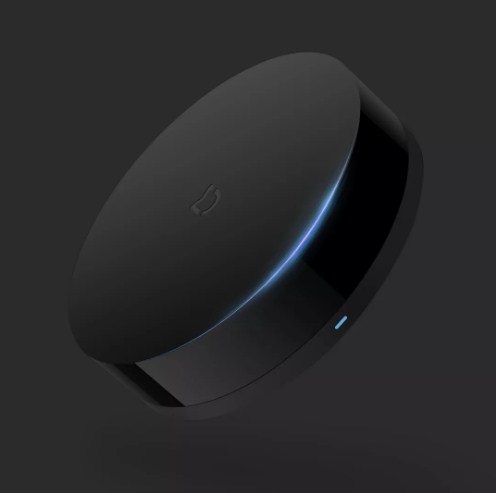 While the Xiaomi Mijia Universal Remote Controller usually retails for $39.96, you can now buy it for just $19.80 thanks to the aforesaid discount. In order to take advantage of the discount, all you need to do is to follow
 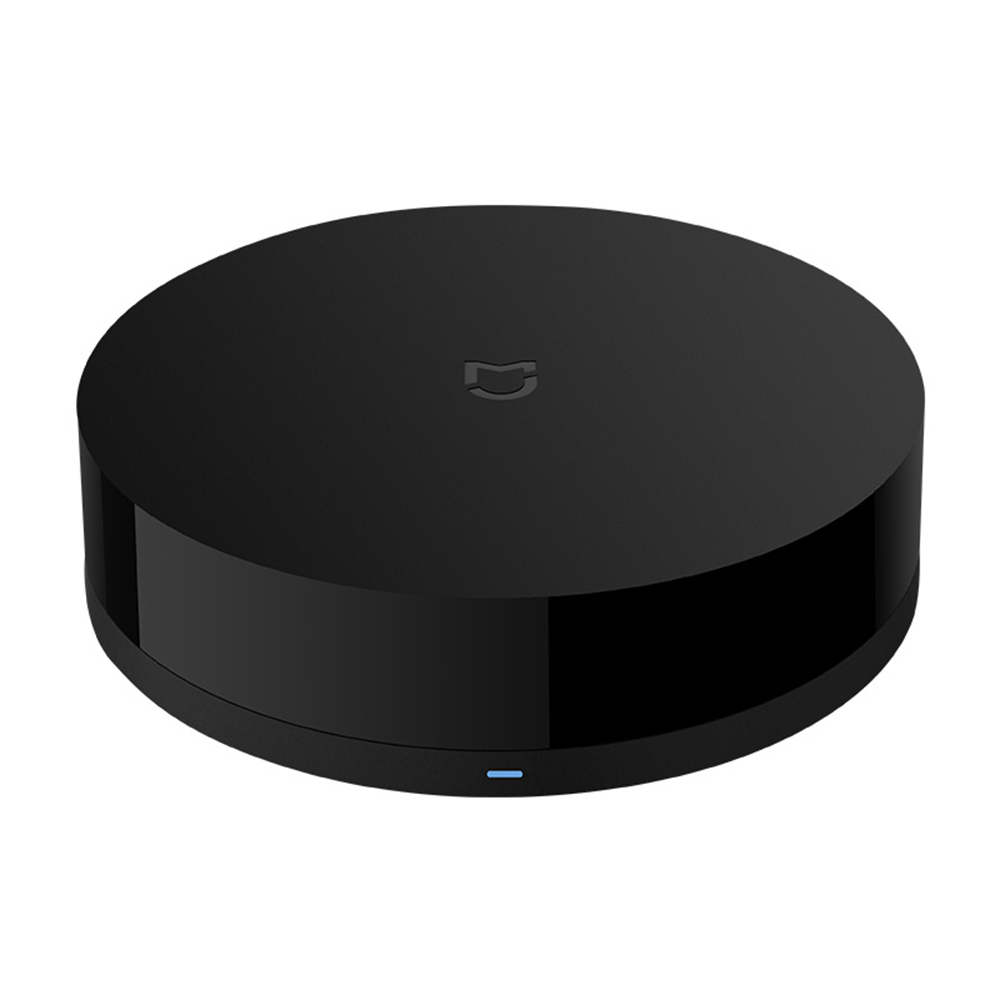 The Mijia Universal IR Infrared Remote Control usually retails for $44.99 but is currently up for grabs bearing a lowered price of $20.99 on GeekBuying. This is a 53 percent reduction in the device’s original selling price.
 The black-tinted Xiaomi Mi Universal Intelligent Smart Remote Controller has gone up for sale bearing a price tag of $17.90 on AliExpress. New users can avail $3 off simply by applying the New User Coupon before placing their orders.
 If you’ve been waiting for the Vivo Y95 price to drop, we got good news for you. Leading online stores Gearbest and Flipkart are now offering the well-received phablet at a considerably lowered price.
 While the aforesaid discount is valid for both red and black color versions of the Vivo Y95, there were 88 pieces of the red and only 74 pieces of the black color version left at the time of writing.
 Moreover, the Indian e-commerce company is doling out the aforesaid discount on two beautiful color versions including Nebula Purple and Starry Black. You can check out other offers such as no cost EMI starting from 937 INR/month with 25 percent down payment by visiting