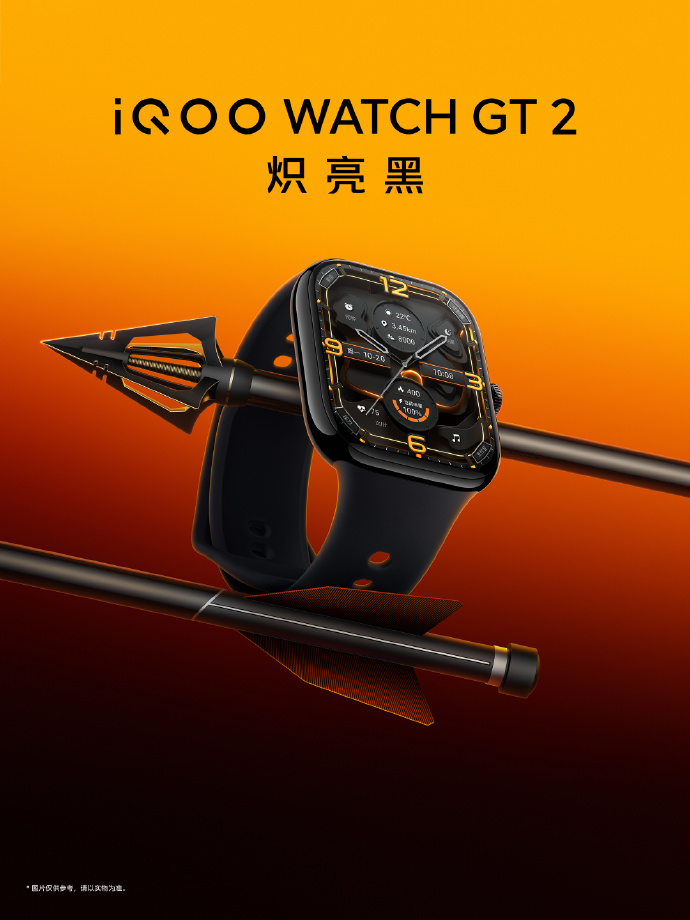
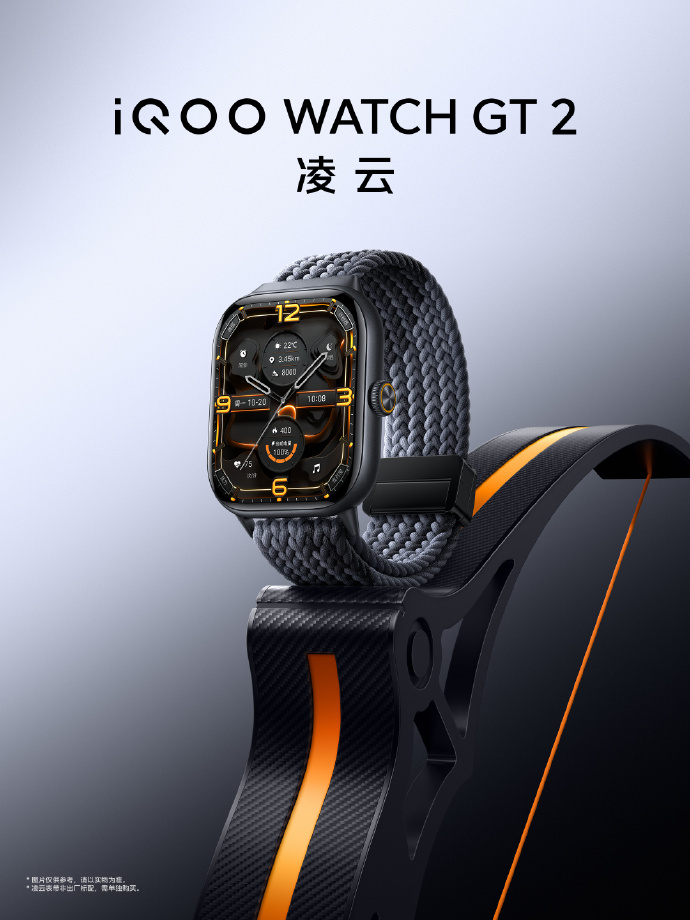
iQOO has officially confirmed that the Watch GT 2 will launch on October 20 at 19:00 in China. The smartwatch will go on sale immediately after the event. The company has also revealed the three color variants of the device: Blazing Black, Starry White, and Lingyun Edition.
iQOO Watch GT 2 Specifications (Teased)
The Watch GT 2 features a 2.07-inch panoramic display with an edge-to-edge curved design and a peak brightness of 2400 nits. According to the company, the screen will be clearly visible even under bright light.
The watch uses a curved rectangular case with what appears to be an aluminum alloy body. The crown is positioned on the right-middle side of the case, in line with traditional smartwatch designs.
The Lingyun Edition is expected to come with a braided nylon loop strap. The strap has a woven texture with a two-tone finish, offering a more premium and sporty appearance. The Blazing Black and Starry White variants will use standard silicone bands.
iQOO claims the smartwatch supports Esports Mode 2.0 and delivers up to 33 days of battery life in Bluetooth mode. While the company has not confirmed an eSIM variant yet, the device is expected to mirror the Vivo Watch GT 2, which launched earlier today.
The Vivo model includes the same 2.07-inch ultra-narrow high-brightness screen with a 1.8mm bezel, a high-gloss aluminum alloy frame, and all-day health tracking with HRV, SpO₂, and sleep monitoring. It also adds sports modes like tennis and strength training, eSIM calling, NFC, and iOS compatibility. Pricing starts at 499 yuan ($70) for the Bluetooth version and 699 yuan ($98) for the eSIM model.
The iQOO Watch GT 2 will launch alongside the iQOO 15, Pad 5e, and TWS 5. As for the iQOO 15, the company has confirmed it will feature a new 8K VC “Ice Dome” cooling system, the largest in its history, offering 47% better thermal efficiency and a 14% larger vapor chamber.
For more daily updates, please visit our News Section.
Vivo has officially launched its new X300 series in China, and it’s shaping up to be one of the most ambitious smartphone lineups of the year. The company is not only pushing the limits of smartphone imaging but also taking a bold step toward bridging the gap between Android and Apple ecosystems.
Both the X300 and X300 Pro are powered by MediaTek’s Dimensity 9500 chipset, paired with Vivo’s in-house V3+ imaging chip. The duo runs OriginOS 6 based on Android 16, with a focus on performance, imaging, and integration.
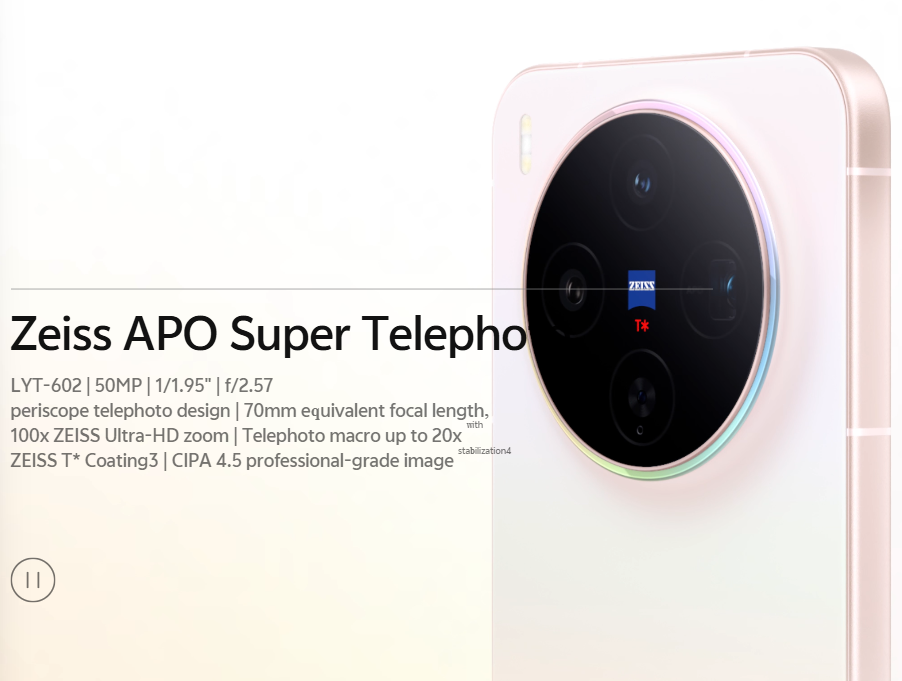
The Vivo X300 packs a 200MP Zeiss Super Main Camera (1/1.4-inch Samsung ISOCELL HPB) with T* coating, joined by a 50MP ultra-wide lens (1/2.76-inch ISOCELL JN1) and a 50MP Zeiss APO telephoto camera (1/1.95-inch Sony LYT-602) for 3x optical zoom.
On the front, the phone features a 50MP autofocus selfie camera tuned for Zeiss Natural Color. Thanks to the V3+ NPU, the phones also support 4K 60FPS portrait video, motion tracking, and what Vivo calls “Zero-Additive” portraits, along with Live Photo bursts.
Up front, there’s a 6.31-inch BOE Q10 Plus LTPO AMOLED display with 1.05mm equilateral bezels and TÜV-certified eye protection. The phones measure just 7.95mm thick and weigh 190g, yet manage to pack a 6,040mAh Blue Ocean battery. Other highlights include LPDDR5X RAM, UFS 4.0 storage (up to 1TB), USB 3.2, and improved thermal performance for heavy AI or gaming use.
Where things get really interesting is Vivo’s new “Cross-Device Ecosystem.” It lets users sync with iPhones for calls, SMS, notifications, and location sharing, while also connecting with iPads for calendar and file access, Macs for clipboard and screen projection, and even Apple Watches for health data syncing. It also supports AirPods battery and location tracking. The feature builds on the system introduced with the X Fold 5, though it currently requires China-registered Apple IDs.
Pricing and availability:
The Vivo X300 starts at ¥4,399 (~$605) for the 12GB + 256GB model, while the top-tier 16GB + 1TB variant costs ¥5,799 (~$800), and will go on sale on October 17 in China. Color options include Fortune Pink and Graphite Black, with a global launch expected in November 2025.
Vivo has officially launched its latest truly wireless earbuds alongside the flagship Vivo X300 series of smartphones and Vivo Pad 5e. The Vivo TWS 5 has just been unveiled in two variants with only minor differences and impressive specs at an accessible price range. So here’s everything you need to know.
Vivo TWS 5 Series: What do they offer?
The Vivo TWS 5 and Vivo TWS 5 Hi-Fi are practically the same earbuds, with the audio codecs being the only distinct aspect. You get LDAC, AAC, SBC and LC3 codecs on the standard model, while the Hi-Fi variant supports LDAC, LHDC, AAC, SBC and LC3. The rest of the features are identical on the two models, so both models house 11mm drivers with deepX 4.0 stereo sound and Hi-Res audio certification.
Vivo TWS 5
Thanks to the three mic setup, the Vivo TWS 5 series offers AI powered noise reduction for an improved call experience. Vivo states that the TWS 5 features ANC (Active Noise Cancellation) that can cancel ambient noise by up to 60 decibels and an average noise reduction depth of 28 decibels. These pairs via Bluetooth 5.4 with an operational range of 10 meters and 42ms low latency. The earbuds get a stem design and an IP54 rating for water and dust resistance.
On a single full charge, the Vivo TWS 5 series can last for up to 12 hours from the earbuds alone, with the charging case promising up to 48 hours of audio playback. It supports voice translation as well, supporting languages such as Chinese, English, Korean, French, and more. Other notable features include touch controls, 16Hz-48kHz frequency response, and multi-point connectivity. The standard model is priced at 399 Yuan (roughly 56 US Dollars) and the HiFi option costs 499 Yuan (roughly 70 US Dollars).
For more daily updates, please visit our News Section.
In the cutthroat flagship smartphone race, keeping things cool has become just as important as raw power. That’s exactly where iQOO is aiming to make a mark with its upcoming iQOO 15, a device that’s shaping up to be a true powerhouse for gamers. The company is teasing a new and more effective cooling system designed to help the iQOO 15 get the most out of the Snapdragon 8 Elite Gen 5 during sustained heavy workloads.
According to official posts on Weibo, iQOO’s highlight this year is the 8K (8000 mm²) VC Ice Dome cooling system — reportedly the largest vapor chamber ever used in an iQOO phone. For context, last year’s iQOO 13 boasts a “7K Ultra VC Cooling System”. The company says this new design brings a 47% improvement in heat dissipation compared to its predecessor, thanks to the larger VC heat sink and a double-layer high thermal conductivity graphite sheet.
iQOO product manager @戈蓝V noted that the VC heat sink of the iQOO 15 is more than three times the size of the iPhone 17 Pro Max’s.
But iQOO isn’t stopping at cooling. Every variant of the iQOO 15 will come with a factory-applied anti-reflective protective film, something the company claims is unique in the industry. It’s a premium addition aimed at improving screen visibility under bright light.
The display itself also sounds impressive. The iQOO 15 uses a 2K Samsung Everest panel built on M14 luminous material, the latest generation from Samsung that offers a 40% boost in luminous efficiency. Peak brightness figures are equally eye-catching: 1000 nits (manual), 2600 nits (full-screen), and a blinding 6000 nits (local peak) — great for HDR content or gaming outdoors.
Other features include IP-rated waterproofing, ultrasonic fingerprint recognition, dual symmetrical speakers, and a 091640 X-axis vibration motor for more precise haptic feedback.
The iQOO 15 is set to debut on October 20 at 19:00 in China with the brand’s new Q3 gaming chip, and if the numbers hold true, it could become one of the most technically advanced gaming phones this year.
Vivo has officially launched the Pad 5e tablet in China today. It sits as the more affordable option in the lineup below the Vivo Pad 5 and Pad 5 Pro. Despite its lower price, though, the Pad 5e packs enough hardware to handle most everyday tasks with ease.
Specs and Features
Interestingly, the Pad 5e is the only tablet in the Pad 5 lineup powered by a Snapdragon chip. It runs on Qualcomm’s Snapdragon 8s Gen 3 processor, paired with up to 16GB of LPDDR5X RAM and 512GB of UFS 4.1 storage. Powering the device is a 10,000mAh battery that supports 44W fast charging.
For gaming, Vivo has added a large 32,200mm² graphite cooling system to keep temperatures in check during intense sessions. There’s also a Game Live Assistant feature designed to optimize system performance for smoother gameplay and higher-definition live streaming.
The display measures 12.05 inches with a 2800×1968 resolution, 144Hz refresh rate, and a 7.1:5 aspect ratio. Vivo says it covers 1.07 billion colors and maintains a 1400:1 contrast ratio. The tablet is also fairly slim at 6.62mm (or 6.69mm for the Soft Light version) and weighs around 584g.
On the imaging front, the Pad 5e carries a modest 8MP rear camera and a 5MP front camera, supporting modes like portrait, night scene, document scanning, and 1080p video recording.
Audio playback supports a wide range of formats, and connectivity options include Wi-Fi (2.4G/5.1G/5.8G), Bluetooth 5.4, USB 3.2 Gen1, and Type-C headphones. It runs on OriginOS 5, a tablet-optimized version of Vivo’s custom Android skin.
Pricing and Availability
The Pad 5e comes in both a Standard Edition and a Soft Light Edition, the latter featuring the anti-glare display. Pricing is as follows:
Standard Edition:
8GB+128GB – 1,999 yuan
8GB+256GB – 2,299 yuan
12GB+256GB – 2,599 yuan
16GB+512GB – 2,999 yuan
Soft Light Edition:
8GB+128GB – 2,199 yuan
8GB+256GB – 2,499 yuan
Vivo Pad 5e will go on sale in China starting October 17th.
OnePlus has officially revealed some more key display specifications for the upcoming OnePlus 15, ahead of its launch in China. While some core features were shared in an earlier teaser, the latest announcement adds several new technical details, focusing on design, manufacturing, and chip-level enhancements.
Ultra-Narrow Bezels, New X3 OLED Material, and P3 Chip Revealed
The new display features a 1.15mm ultra-narrow symmetrical bezel on all four sides. OnePlus claims this design creates a more immersive viewing experience while maintaining consistent brightness and panel durability.
The company has co-developed a new X3 luminescent material with BOE and set up a dedicated high-end production line for this display. According to OnePlus, the panel delivers a 13% improvement in high brightness mode (HBM), an 11.8% increase in color accuracy, 10% lower power consumption, and 30% longer lifespan compared to the previous generation.
OnePlus has also confirmed the debut of Oppo’s self-developed Display P3 chip in the OnePlus 15. The chip supports a 1.3-microsecond pixel row charging time, which is twice as fast as the current industry average. This enhancement allows the display to respond faster and maintain brightness stability during high refresh rate usage. The panel is manufactured using Oppo’s Display Science Production Line, which consists of 121 processes and 39 display tuning algorithms to ensure flagship-level precision and consistency.
These new details follow an earlier announcement from OnePlus President Li Jie Louis. In that teaser, OnePlus confirmed that the OnePlus 15 will feature the third-generation Oriental Screen, a 165Hz OLED panel co-developed with BOE.
OnePlus also stated that the OnePlus 15 is the first Android device to support true hardware-level 1-nit minimum brightness, certified by TÜV Rheinland Smart Eye Protection 5.0 Gold. The display will also support a new Gaming Tri-Core hardware system designed to improve network stability and reduce latency during gaming.
OnePlus has not officially confirmed the display size, but earlier leaks indicate it could measure 6.78 inches. The launch date remains unannounced, though it is expected to be revealed soon.
For more daily updates, please visit our News Section.
As RedMagic is gearing up to launch its latest flagships, the Red Magic 11 Pro series, the brand’s latest teasers aren’t just hyping Snapdragon muscle and water-cooling wizardry—they’re flexing some surprisingly sharp camera chops.
Red Magic 11 Pro series-
A recent Weibo post reveals a triple rear setup that includes two 50MP cameras: likely primary and ultrawide. So far, the brand has shared a few main camera samples taken in different lighting conditions, and honestly, they look impressive.
The photos have gone through compression when they were uploaded to social media, so we cannot judge how detailed the shots originally were. But they do give us a clear picture of the phone’s ability to handle different colors and lighting conditions. Upon close inspection, the images appear free from visible grain or noise, which can likely be attributed to the image processing improvements the brand has made over the years.
RedMagic touts these image samples as proof that the 11 Pro+ “can also take blockbuster photos.” That said, it’s never surprising for a brand to share curated samples and fuel the hype. We will share our personal experience with the phone as soon as possible.
RedMagic has confirmed the 11 Pro’s launch on October 17 in China, marking its first foray into water-cooled smartphones. Powered by Qualcomm’s Snapdragon 8 Elite Gen 5—boasting 20% CPU and 23% GPU gains—the device targets esports enthusiasts with a redesigned ICE cooling system featuring liquid flow for sustained performance during marathon sessions. Early leaks hint at an 8,000mAh battery, ultrasonic fingerprint sensor, and under-display selfie cam for a notch-free 6.8-inch AMOLED display at 144Hz.
In the push to make gadgets faster and more efficient, silicon might finally have met its match. Researchers at Fudan University in Shanghai have developed a working prototype that merges atomically thin materials with traditional silicon chips — potentially setting the stage for a new era in electronics.
Led by Professor Chunsen Liu, the team managed to integrate a monolayer-thick 2D memory module directly onto a conventional silicon CMOS chip. The study, published in Nature, details how their so-called “Atom2Chip” process overcomes the fragility of 2D materials such as monolayer molybdenum disulfide (MoS₂).
To make the integration possible, the researchers created a full-stack on-chip process that bonds the 2D layer to silicon’s uneven surface without damaging it. A protective package shields the ultrathin layer, while a cross-platform interface allows smooth data transfer between the 2D circuits and standard CMOS components.
The result is a 1-Kb 2D NOR flash memory chip that isn’t just a lab demo — it’s fully operational. It runs at 5 MHz, achieves 20-nanosecond programming and erasing speeds, and operates with low energy consumption. In performance and density, it already surpasses comparable silicon-only memory, offering a glimpse of chips that could make future devices slimmer, faster, and more power-efficient.
As silicon manufacturing nears its physical limits, 2D materials like MoS₂ offer atomic-level precision for further miniaturization. Yet, efforts to merge them with silicon have long been hindered by material instability and process incompatibility. Fudan’s approach demonstrates a practical solution — even executing complex instruction-driven operations on a hybrid chip that bridges both technologies.
Although this prototype focuses on memory, the same architecture could be extended to logic gates and processors. That could eventually lead to ultra-thin wearables with long battery life or AI accelerators that stay cool under heavy workloads.
Mass production and cost scaling remain significant challenges, but the breakthrough marks a critical step toward the “angstrom era” of chip design. As global research teams race to keep Moore’s Law alive through new materials, Fudan University’s success shows that the next leap in computing might be built not just in nanometers — but in atoms.
Vivo has officially confirmed that it will be rolling out the OriginOS 6 update in India. The major software upgrade brings Android 16 OS and marks a departure from the brand’s previously global custom skin, FuntouchOS. So here’s what to expect.
Vivo OriginOS 6: India Release Timeline
In a recent teaser, the Chinese tech giant confirmed the 15th October 2025 launch date for the OriginOS 6. This makes the release in line with the wider global release, which is also set for the same date. To recall, Vivo and iQOO branded devices had previously shipped with FuntouchOS in the global market, while the OriginOS platform was exclusive to the brand’s home market of China. But now, Vivo appears to be streamlining the OS for its smartphones worldwide.
Vivo OriginOS 6
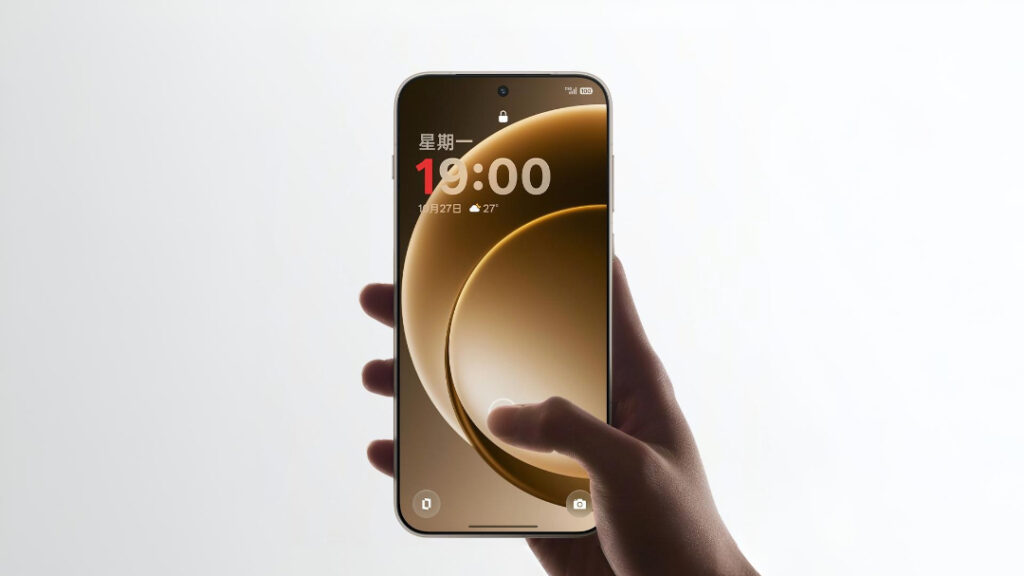
The OriginOS 6 was just unveiled in China last week, bringing the latest iteration of Android. Vivo’s new custom skin gets a notable revamp to its user interface, taking hints from Apple’s iOS 26 and its Liquid Glass. There are also plenty of changes to the software’s look, namely the app icons, lockscreen, widgets and its customizations, new lighting animations, and much more.
Apart from this, the brand also promises improved memory recycling, improved energy efficiency, better gaming performance, and better background optimizations as well. AI is another big focus with the OriginOS 6 update, with deeper integration and the introduction of Xiao V, which is the new in house AI assistant. You also get various AI tools like AI eraser in Live Photos and AI powered Files, Email, and Notes app that help make finding crucial items easier.
For more daily updates, please visit our News Section.
Rollme has announced the PowerMax smartwatch, a rugged wearable that features a massive 1100mAh battery and promises up to 100 days of standby time. The device is priced at $29.99. It is available in black and silver variants through the official Rollme store.
Rollme PowerMax Specifications
The PowerMax is designed for users who prioritize long battery life without compromising essential smartwatch functions. Rollme claims it can last up to 35 days on a single charge and over 100 days in standby mode. This endurance is made possible by its power-efficient chipset and optimized power management system.
The smartwatch sports a 1.7-inch IPS display with a 360×360 resolution. Rollme has used tempered glass to protect the screen against scratches. According to the company, the display remains visible even under bright sunlight, making it suitable for outdoor use.
Rollme has built the PowerMax with a zinc alloy body and MIL-STD-rated durability. The watch is rated 5ATM for water resistance, which allows it to be used while swimming or during workouts in wet conditions. The PowerMax also includes an LED flashlight, designed to assist users in low-light environments such as night riding or camping.
For connectivity, the watch features Bluetooth 5.2 and comes equipped with a waterproof speaker and microphone for voice calls. It allows users to make and receive Bluetooth calls directly from the watch. The device also includes a built-in compass with dual calibration modes, catering to those who often venture outdoors.
The PowerMax includes several health-tracking features, such as real-time heart rate monitoring, SpO2 tracking, blood pressure monitoring, and sleep quality analysis.
The watch also supports multiple sports modes, including strength training, mountaineering, surfing, and ball games. During workouts, the PowerMax can generate muscle heatmaps and suggest training routines based on user activity.
The PowerMax also comes with music control, weather updates, alarm reminders, and guided breathing exercises. It supports magnetic charging and works with devices running Android 5.1 or iOS 8.2 and later.
In related news, Rollme has recently introduced the HD300 Pro GPS smartwatch featuring offline maps, an AMOLED display, and a rugged design, along with the NeoView AI Smart Glasses equipped with an 8MP camera, ChatGPT integration, and real-time translation.
For more daily updates, please visit ourNews Section.
Battery life has always been a key battleground for smartphones, and Oppo’s upcoming Find X9 Pro seems ready to take that fight seriously. Ahead of its official debut on October 16, early tests suggest the device may have pulled off something impressive: lasting longer than Xiaomi’s 17 Pro Max — even though both carry the same 7,500mAh battery capacity.
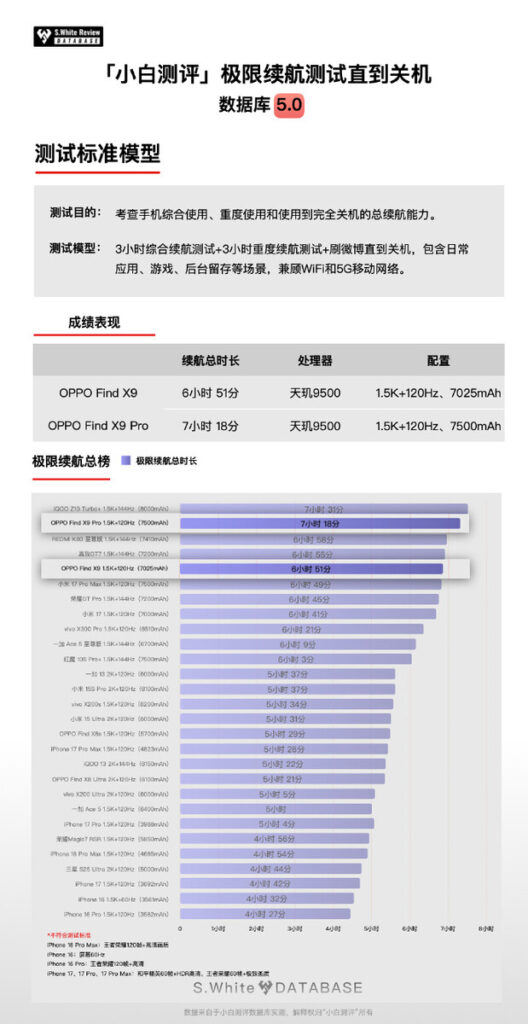
According to results shared by Novice Evaluation, the Find X9 Pro managed 7 hours and 18 minutes in a continuous usage test. That puts it just behind the iQOO Z10 Turbo+ (7 hours 31 minutes, with an 8,000mAh battery) but ahead of Xiaomi’s 17 Pro Max, which clocked 6 hours and 49 minutes. Even the regular Find X9, with its smaller 7,025mAh battery, edged slightly past Xiaomi at 6 hours and 51 minutes. For context, the iPhone 17 Pro Max trailed far behind at 5 hours and 26 minutes — a reminder that Android phones still dominate in raw endurance.
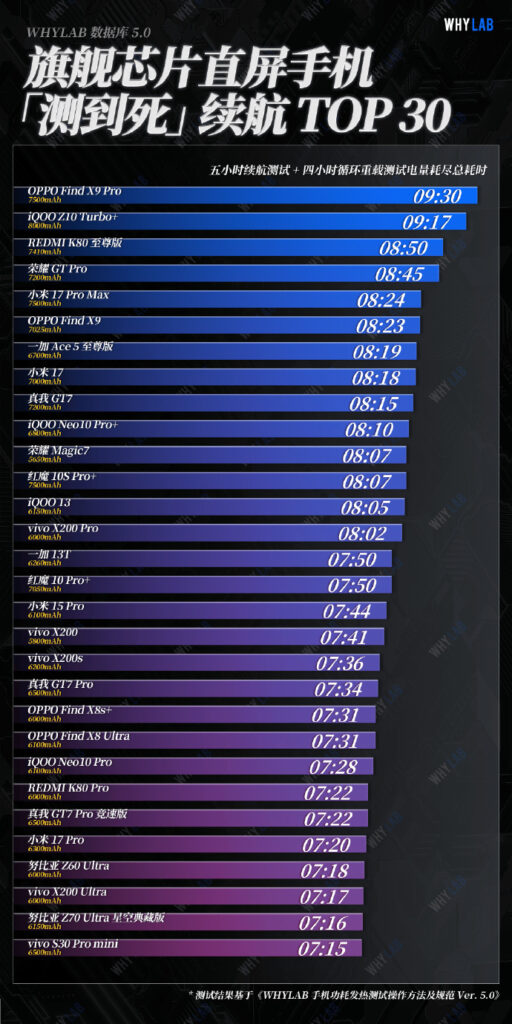
A separate round of testing from WhyLab showed similar results. The Find X9 Pro reportedly lasted 9 hours and 30 minutes, compared to the Xiaomi 17 Pro Max’s 8 hours and 24 minutes — a difference of over an hour. What’s interesting is that the Xiaomi uses Qualcomm’s latest Snapdragon 8 Elite Gen 5 chip, while Oppo’s flagship runs on MediaTek’s Dimensity 9500. It’s possible that Oppo’s software tuning, particularly with ColorOS 16’s power management, is playing a big role in the results.
Users on X also took notice. One post summed up the sentiment well: “Both have the same 7500mAh Battery & Xiaomi has 8e Gen 5 which is more efficient than 9500 and still performs worse. This is actually dependent on how the software is being Optimized.”
Of course, these are still pre-release results, and variations in testing conditions or upcoming HyperOS updates could shift the balance. But Oppo’s showing here is impressive nonetheless.
Honor’s upcoming Magic 8 series launch is right around the corner. But just ahead of the official release, the Magic 8 and Magic 8 Pro just had their battery specs revealed, and it seems that the smartphones might offer super long battery life.
Honor’s Next Flagships to Feature up to 7,200 mAh Batteries
The Chinese smartphone maker just confirmed in a fresh teaser that the Magic 8 Pro will be powered by a huge 7,200mAh battery pack. Meanwhile, the standard Magic 8 is expected to house a large 7,000mAh cell. Apart from the battery capacity, the recent teasers also revealed that the Magic 8 lineup will offer the industry’s widest OTA coverage. Honor claims that this upgrade uses AI for better coverage and even reduces power consumption by around 13 percent.
Honor Magic 8 Pro
Based on a recent leak, the Honor Magic 8 will measure just 7.9mm thin and weigh around 205 grams. It will feature 90W wired and 80W wireless charging. For photography, the rear has a 50MP (Main) + 200MP (Telephoto) + 50MP (Ultrawide) camera setup, while the front houses a 50MP selfie shooter. This model could sport a 6.58-inch flat OLED display offering 1.5K resolution.
On the other hand, the Honor Magic 8 Pro will reportedly measure 8.3mm thick and weigh around 219 grams. The rear has a 50MP (Main) + 200MP (Telephoto) + 50MP (Ultrawide) setup. On the front, you get a 6.71-inch OLED display with 1.5K resolution and a 50MP selfie camera. It also supports faster 120W wired fast charging and 80W wireless fast charging. Other notable features for both models include Android 16 OS based MagicOS 10 custom skin out of the box, Snapdragon 8 Elite Gen 5, and more.
For more daily updates, please visit our News Section.
The Android 16-based OriginOS 6 is a major upgrade, and a pretty significant one for Vivo and iQOO users outside China, as they will be shifting from Funtouch OS. This upgrade brings numerous visual upgrades, including a new “Light and Shadow Space” design language, a more customizable and fun lock screen, and smarter AI features. OriginOS 6 also focuses on cross-device integration and introduces Blue River Smooth Engine for improved performance and battery efficiency.
OriginOS 6 has a lot to look forward to, and hence, users are eagerly waiting for this major upgrade on their devices. If you’re among them, continue reading this article to find out all the essential information, including the release date, supported devices, and the major changes coming our way.
OriginOS 6 release date and rollout schedule
Vivo launched the OriginOS 6 on October 10 in China and has planned the global launch for September 15. The brand has revealed all the new features and upgrades to the Android 16-based custom skin. Most of them will also come to the global version of OriginOS 6.
As for the rollout timeline, Vivo has announced it for the Chinese market. For other regions, it should be revealed at the global launch, happening later this week. The brand has already begun accepting applications for the OriginOS 6 Preview Program, starting with Vivo X200 Pro and iQOO 13.
The stable OriginOS 6 rollout begins in November in China, starting with Vivo X Fold 5, Vivo X200 series, and iQOO 13. It will gradually expand to cover more devices, aiming to reach completion by May 2026. The global rollout is expected to begin in late November.
Here’s the OriginOS 6 rollout schedule for China:
November 2025
Vivo X Fold 5
Vivo X200 Ultra, X200 Pro (Satellite Edition), X200 Pro, X200 Pro mini, X200s, X200
iQOO 13
iQOO Neo 10 Pro+, Neo 10 Pro, Neo 10
December 2025
Vivo X Fold 3 Pro, Fold 3
Vivo X100 Ultra, X100s Pro, X100s, X100 Pro, X100
iQOO 12 Pro, 12
iQOO Neo 9s Pro+, Neo 9s Pro, Neo 9 Pro, Neo 9
iQOO Z10 Turbo+
January 2026
Vivo X Fold 2
Vivo X90 Pro+, X90 Pro, X90s, X90
Vivo S30 Pro mini, S30
iQOO 11 Pro, 11s, 11
iQOO Z10 Turbo Pro, Z10 Turbo
February 2026
Vivo X Flip
Vivo S20 Pro, S20
iQOO Neo 8 Pro, Neo 8
iQOO Z9 Turbo, Z9 Turbo Long Battery Life edition, Z9 Turbo, Z9
March 2026
Vivo X Fold+
Vivo S19 Pro, S19
Vivo Pad 5 Pro, Pad 5, Pad 5e
Vivo Pad 3 Pro, Pad 3
iQOO 10 Pro, 10
iQOO Pad 5 Pro, Pad 5, Pad 5e
iQOO Pad 2 Pro, Pad 2
April 2026
Vivo S18 Pro, S18, S18e
Vivo Y500
iQOO Neo 7 Racing Edition, Neo 7, Neo 7 SE
May 2026
Vivo 300 GT, Y300 Pro+, Y300, Y300c, Y300t, Y300+
If your device isn’t on the list, don’t worry. This timeline is applicable to China and doesn’t include devices sold outside the country. We’ll update the timeline once Vivo announces it for the global market.
While the Chinese rollout timeline above reveals the devices upgrading to OriginOS 6, it doesn’t include Vivo V-series, T-series, and many devices that aren’t sold in China. So, we’ve prepared a list for the global market based on the existing update policy.
Vivo X series
Vivo X Fold 5, Fold 3 Pro, Fold 3, Fold 2, Flip, Fold +
Vivo X200, X200 Pro, X200 Pro mini, X200 Pro (Satellite Edition), X200 Ultra, X200s, X200 FE
Vivo X100, X100 Pro, X100 Ultra, X100s, X100s Pro
Vivo X90, X90 Pro, X90 Pro+, X90s
Vivo V series
Vivo V60, V60e, V60 Lite, V60 Lite 4G
Vivo V50, V50e, V50 Lite, V50 Lite 4G
Vivo V40, V40e, V40 Lite, V40 Lite 4G, V40 SE, V40 Pro
Please note that this list is mostly based on the existing update policy and a little bit of guesswork. While it should be mostly accurate, please wait for an official list for the final confirmation.
OriginOS 6: Major upgrades and new features
The Android 16-based custom skin introduces UI improvements to the home screen, lock screen, and many apps. There’s a new “Light and Shadow Space” design language that simulates natural lighting and depth. The update also brings features like Elastic Motion, Frame Morphing, Gradual Blur, AI Lighting Effects to Xiao V, and Notification stacking for a cleaner and improved user interactions.
The lock screen is now more customizable than ever before, with the ability to move elements, such as the clock and font, anywhere on the screen. OriginOS 6 adds Mirror Screen Effects for dynamic changes when viewed from different angles. There are also new click styles and layout presets.
AI is also a major focus of OriginOS 6, offering deeper integration of AI-powered tools like AI phone assistant, AI summary, AI photo elimination, Circle to Search 2.0, and better contextual understanding of what’s on the smartphone’s screen. The image editing feature now allows users to enhance the resolution of pictures, remove objects or people (even from Live Photos), and convert pictures to PDFs.
There’s a new Shake to Share feature that lets you easily send files and photos to multiple people by shaking phones face-to-face, without using internet data. The Vivo Office Suite also gets an upgrade, allowing faster file sharing across smartphones, PCs, and web platforms. With OriginOS 6, Vivo phones offer better integration with the iPad and car.
OriginOS 6 integrates Blue River Smooth Engine to offer improved smoothness, dual rendering architecture, improved resource management, faster app launch, and seamless app switching.
Regularly visit our Android 16 section for the latest updates. Also, don’t forget to join our Telegram channel for instant updates about the latest happenings in tech.
Baseus has introduced the EnerGeek GX11 4G MiFi Power Bank, a new hybrid device that combines a high-capacity 20,000mAh battery with a 67W fast charger and integrated 4G hotspot connectivity. This is the first product globally to offer all three features in one compact unit.
Baseus EnerGeek GX11 Specifications
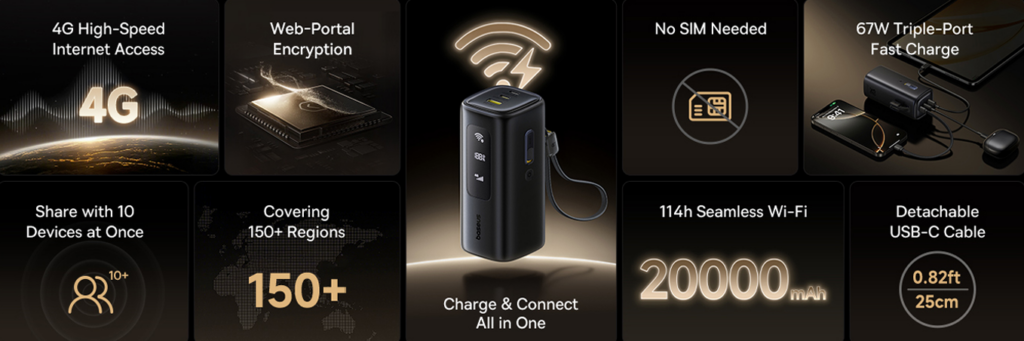
The EnerGeek GX11 targets frequent travelers, remote workers, and users who need consistent access to both power and internet on the go. It uses CloudSIM technology from uCloudlink to connect automatically to premium local networks in over 150 countries without requiring a physical SIM card. It supports 13 global frequency bands and works with major carriers such as AT&T, T-Mobile, and Verizon.
The device allows simultaneous hotspot connections for up to 10 devices and delivers download speeds of up to 150 Mbps and upload speeds of up to 50 Mbps. Baseus provides a 1GB monthly global data plan valid for 12 months with the purchase. Additional data can be purchased through the Baseus MiFi App, which provides flexible packages based on either data volume or duration.
The power bank supports USB-C PD and USB-A QC protocols and delivers a maximum output of 67W. It charges laptops, tablets, and smartphones through one, two, or three output ports. In single-port mode, each USB-C port delivers up to 67W.
In multi-port mode, it supports 45W + 22.5W or 18W + 18W + 12W output configurations. The large 20,000mAh capacity ensures multiple charges or long hours of hotspot use. According to Baseus, the device can deliver up to 114 hours of standalone Wi-Fi operation.
The EnerGeek GX11 features a detachable braided USB-C cable that wraps around the body and functions as a lanyard. This design eliminates the need to carry extra charging cables. The unit also includes a large heat dissipation structure and a Web Portal security system that protects both charging and internet sessions.
Pricing and Availability
Baseus has received both a CES Innovation Award 2025 and an IFA Innovation Award 2025 for the EnerGeek GX11. The device is now available in North America with an MSRP of $129.99.
Amazon US currently lists it at a discounted price of $116.99, with a promotional price of $99.99 using the code BOZCFCGS. Baseus plans to release the product in Europe soon.
Vivo is set to launch its X300 series — the X300 and X300 Pro — today (October 13). Ahead of the official unveiling, the company has revealed official hands-on images and camera samples of the phone, giving an idea of what to expect.
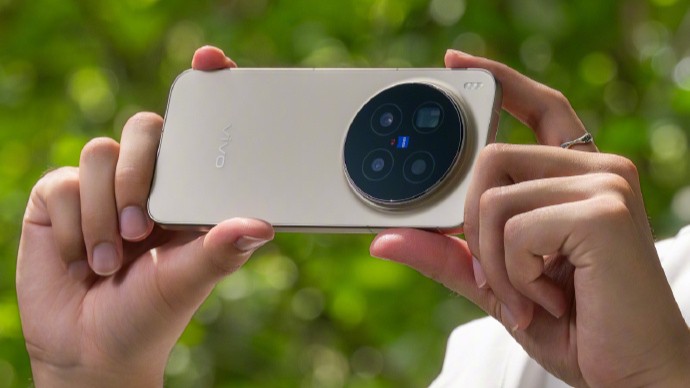
Starting with the hands-on shots, the overall design remains similar to the X200 Pro, featuring a circular camera island with Zeiss branding. The flash module is located outside the camera deco, just like last year. Inside the camera deco, there are three lenses, with the top-left one being the periscope telephoto.
The sides are flat with slightly rounded edges for a comfortable grip, but the back glass is completely flat this year, unlike the X200 Pro’s panel, which was slightly curved near the edges. The back panel also appears to have a matte finish. Overall, the X300 Pro has a more boxy design compared to its predecessor.
One of the highlights of the X300 Pro series is the 200MP ISOCELL HPB sensor (1/1.4″) powering the 85mm periscope telephoto. Now, let’s take a look at the image samples Vivo has shared in advance.
The main camera uses the Sony LYT-828 sensor, an upgrade over the LYT-818 used in the X200 Pro, although the sensor size remains the same at 1/1.28″.
On the inside, the phone boasts the Dimensity 9500 chipset and a 6,510mAh battery — an upgrade over the Dimensity 9400 and 6,000mAh unit of the predecessor — and is paired with 90W wired charging. Alongside the Dimensity 9500, the phone also includes two dedicated imaging chips: VS1 for pre-processing and V3 for post-processing. On the front, it’s rumored to pack a 1.5K 120Hz BOE Q10+ AMOLED panel with 1.1mm equilateral bezels.
The X300 series is set to hit the shelves on October 17, and we will share our hands-on impressions as soon as possible.
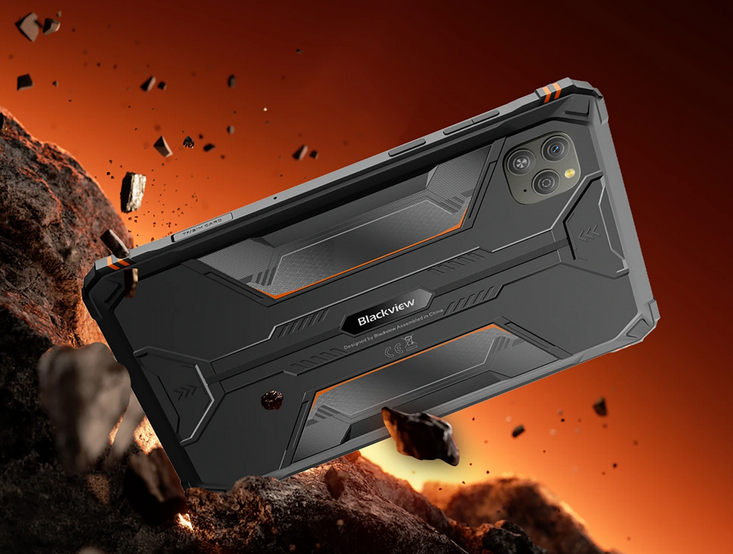
Finding the right rugged device becomes important when durability becomes a priority for your next gadget. While rugged tablets are great for their durability and large screen real estate, the pricing can vary, with some models being quite pricey. But now, Blackview has just launched the Active 5 as an affordable tablet with a tough build.
Blackview Active 5: Rugged Power Without the Heavy Price Tag
The company just announced the Blackview Active 5 as the latest rugged Android tablet. It arrives with a MIL-STD-810H military grade certification along with an IP68 and IP69K rating. In other words, the tablet is basically dustproof and can withstand water immersion up to 1.5 meters for up to 30 minutes and also survive high pressure high temperature water jets.
Blackview Active 5 Rugged Tablet
It sports a relatively compact 8.68-inch display that has a 90Hzz refresh rate and 1,340 x 800 pixels resolution. Under the hood, the Blackview Active 5 is equipped with the UNISOC T615 SoC, which is a chip that powers entry level gadgets. This chip is paired with 8GB of RAM and 128GB of internal storage. A sizeable 6,600mAh battery pack powers this model that supports 18W wired fast charging.
Other notable features include dual SIM support, 4G LTE connectivity, 510 gram weight, and Android 15 OS based DocOS P 4.2 out of the box. Blackview unveiled the Active 5 for an affordable price tag of just $247. A couple of months ago, the brand had also unveiled the Oscal Pilot 3, which was a rugged smartphone with a huge 7,500mAh battery pack and a night vision sensor.
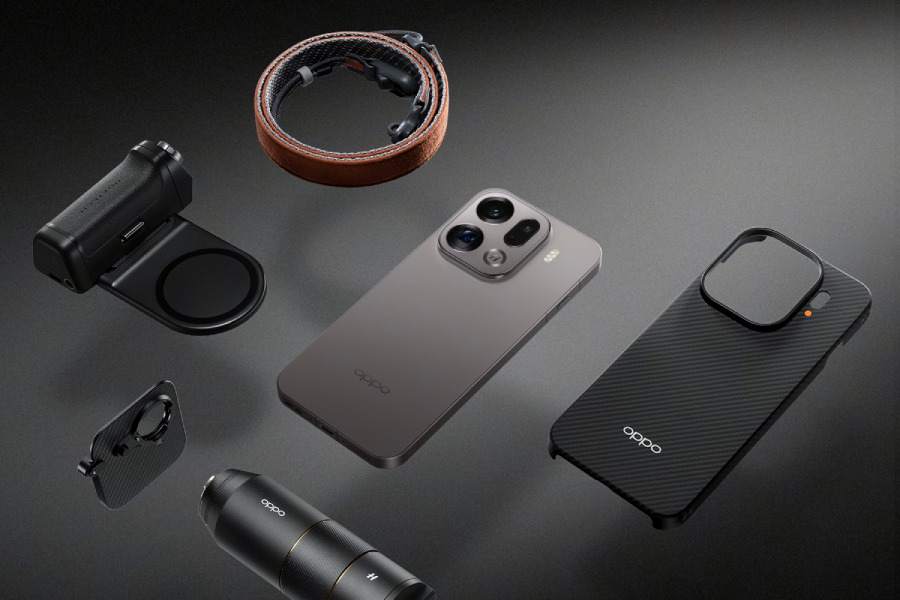
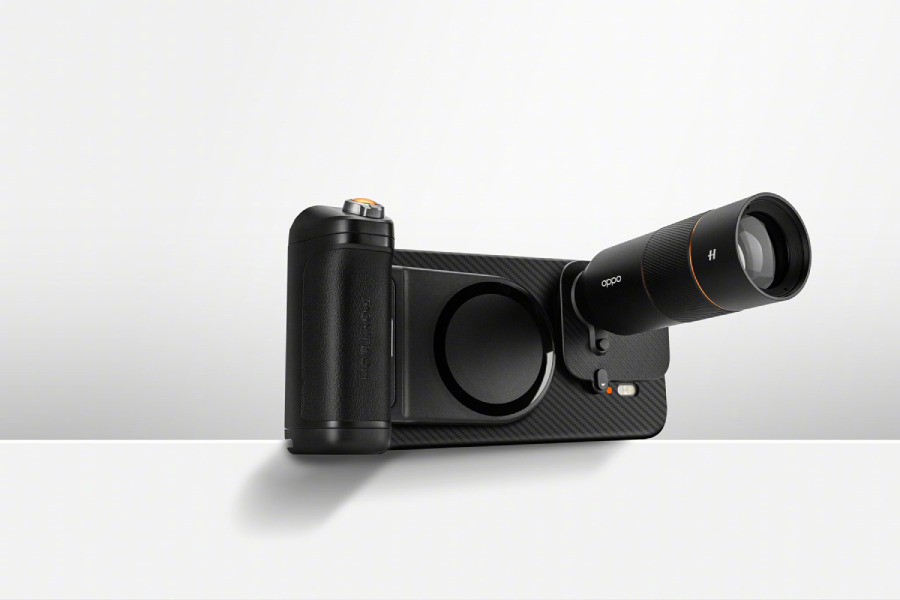
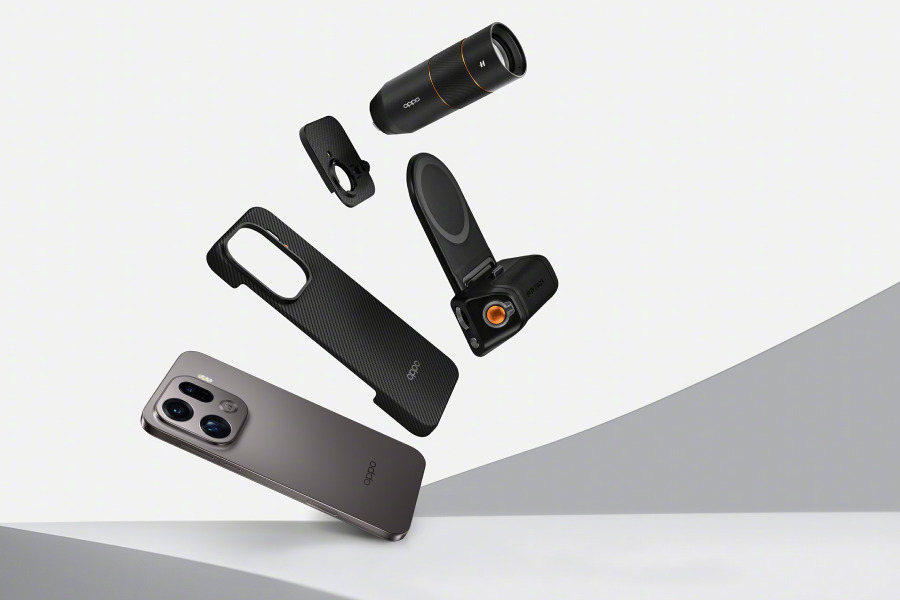
Oppo has officially unveiled its new Hasselblad Professional Imaging Kit, a modular camera attachment designed for the upcoming Find X9 Pro.
The kit includes a Hasselblad teleconverter, a magnetic handle, a magnetic protective case, and a professional shoulder strap. It will launch on October 16, alongside the Oppo Find X9 series.
Oppo also revealed today that the Find X9 Pro will feature a 200-megapixel Hasselblad-branded periscope lens with support for 4K 120fps Dolby Vision recording. Paired with the teleconverter, it could deliver a new level of zoom clarity and flexibility on the phone.
The magnetic handle features a tactile shutter button and an ergonomic grip, while the teleconverter allows users to experiment with varying zoom levels.
A separate attachment for Find X9
As for the standard Find X9, Oppo previously confirmed that it will also receive dedicated video accessories, though the company hasn’t revealed what they are yet.
As for the phones themselves, the Find X9 comes with a 6.59-inch 1.5K OLED display, Dimensity 9500 chip, and a 7025mAh battery with 80W wired and 50W wireless charging.
Oppo Find X9 series
Its camera setup includes a 50MP LYT808 main, 50MP ultra-wide, and LYT600 periscope, along with a 2MP multispectral sensor. On the front, a 32MP selfie camera sits in the punch-hole cutout.
The Find X9 Pro, meanwhile, upgrades to a 6.78-inch LTPO OLED display, a 7500mAh battery, and a camera trio led by a 200MP HP5 periscope sensor, a 50MP main, a 50MP ultra-wide, and a 2-megapixel multispectral sensor.
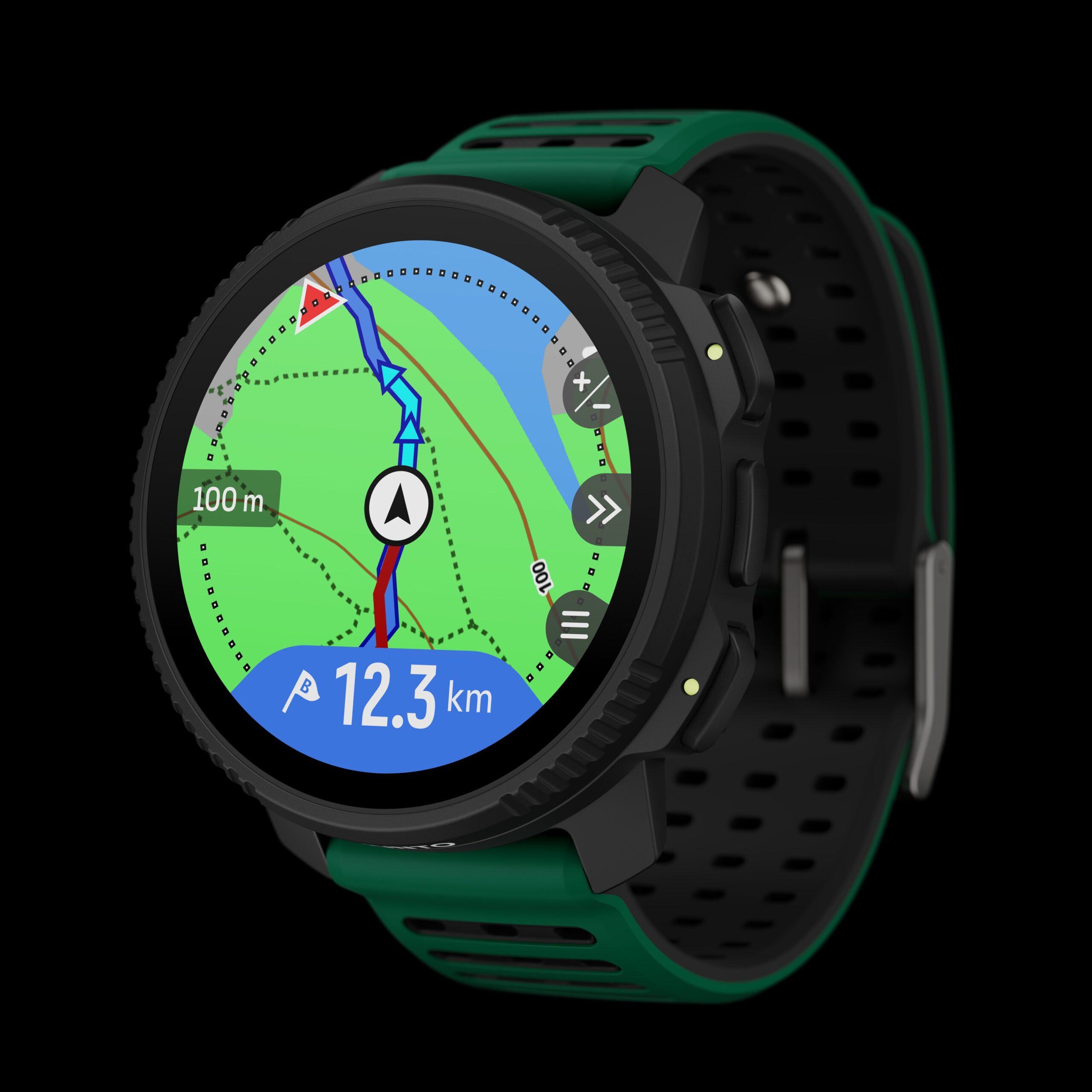
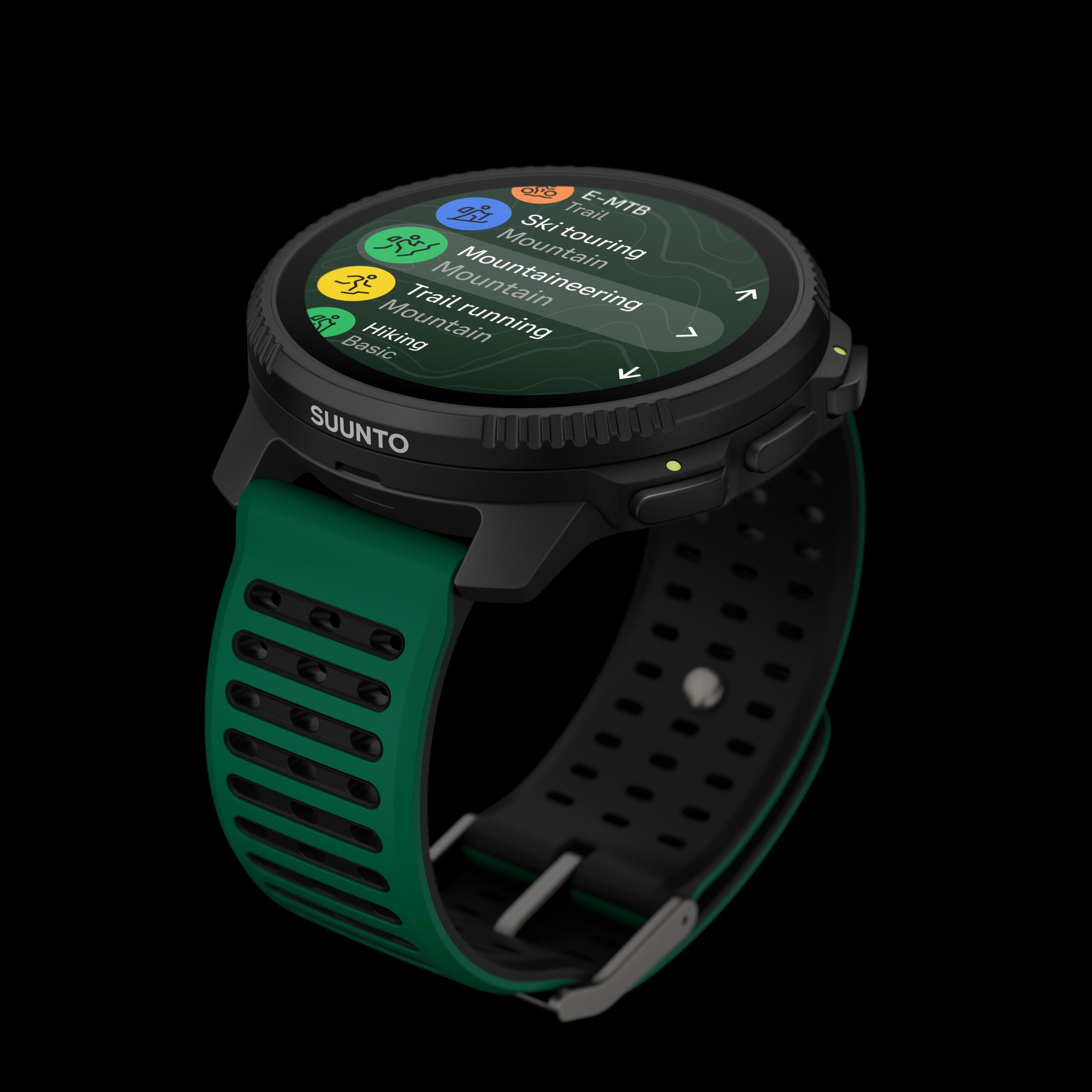
Suunto has introduced the Vertical 2, the latest model in its adventure watch lineup. It is built for extreme expeditions and daily outdoor use.
The new watch features a redesigned optical heart rate sensor for more accurate wrist-based tracking, a larger and brighter 1.5-inch AMOLED display with 466×466 resolution, and a faster processor for smoother operation. It also includes a built-in LED flashlight with adjustable brightness, a red-light mode for night vision, and SOS and alert functions for added safety.
The Vertical 2 keeps the strengths of the original series, including long battery life and reliable navigation. It offers up to 65 hours of GPS tracking in dual-band mode and up to 20 days of smartwatch use. Free detailed offline maps are available directly on the watch and in the Suunto app, showing contour lines, paths, and terrain features. The new Climb Guidance feature gives real-time elevation profiles, gradient data, and notifications for climbs and descents. Quick Start Navigation allows users to change routes on the go without stopping activity tracking.
The watch is built for durability and comes in stainless steel and titanium variants. Three side buttons make it easy to use in any weather, even with gloves on. It supports 115 sport modes, training analytics, weather alerts, altitude data, and sunrise and sunset times. Health tracking and seamless integration with the Suunto app and over 300 partner services extend its use beyond sports.
Pricing & availability
The Suunto Vertical 2 will be available starting October 15, 2025, on suunto.com, Amazon, and select U.S. retailers. The pricing is as follows:
TP-Link has officially launched two new Wi-Fi 7 BE7200 routers, the TL-7DR7270 and TL-7DR7290, in the Chinese market. Both models support the latest Wi-Fi 7 standards and deliver theoretical speeds of up to 7.14 Gbps. The TL-7DR7270 is priced at 399 yuan ($56), while the higher-end TL-7DR7290 retails at 599 yuan ($84).
TP-Link TL-7DR7270 & TL-7DR7290 Specifications
The TL-7DR7270 targets high-speed home and small office environments. It comes equipped with two 2.5G Ethernet ports and four Gigabit LAN ports. The router supports advanced Wi-Fi 7 technologies, including 4K QAM, MRU (Multi-Resource Unit), MLO (Multi-Link Operation), and Preamble Puncture.
TP-Link has integrated an AI-based Pixel Antenna design into both models. This system uses the company’s algorithm platform to simulate billions of antenna configurations, selecting the most efficient layout for better signal strength and wall penetration. The 7DR7270 includes five external and five internal FEMs (Front-End Modules), covering up to 150 square meters.
TP-Link TL-7DR7270
The higher-end TL-7DR7290 is designed for larger homes, gaming setups, and professional applications. It includes four 2.5G ports and four Gigabit ports, supporting features like link aggregation, dual WAN, and IPTV mode. The router uses ten external FEMs and supports device connections across up to 200 square meters. TP-Link has equipped it with 1GB of DDR4 RAM, enabling support for up to 512 devices per frequency band.
Both routers support TP-Link’s EasyMesh system, allowing users to extend network coverage through seamless mesh pairing. The devices also offer one-touch IoT pairing for accessories such as smart locks, cameras, and robotic vacuums.
TP-Link TL-7DR7290
Both models integrate four gaming accelerators: Thunder Gaming, Youbangbang, Qiyou, and NetEase UU, with a dedicated port that reduces latency by prioritizing traffic. They also support parental controls to manage children’s screen time, app access, and internet use.
TP-Link also targets commercial and remote work use cases. The routers support VPN protocols (IPSec, PPTP, L2TP), SD-WAN networking, and PPPoE server features.
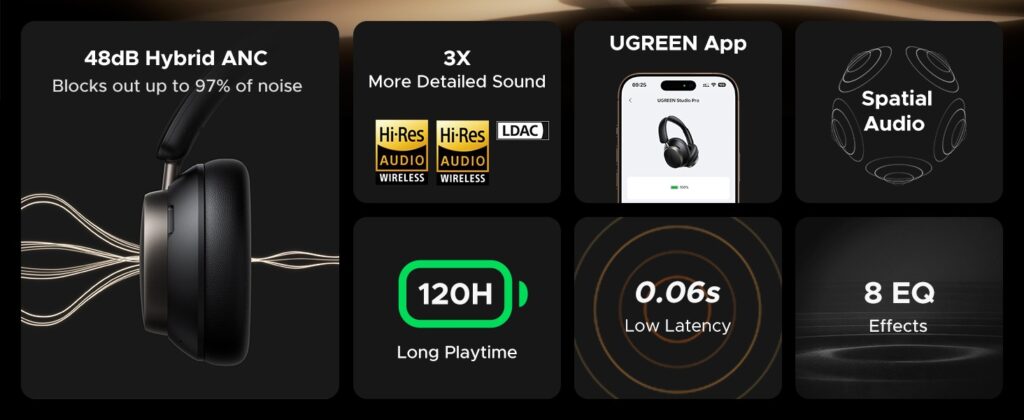
UGREEN has introduced its new Studio Pro headphones, featuring active noise cancellation, Hi-Res audio support, and an extended 120-hour battery life.
The Studio Pro uses adaptive hybrid ANC that cuts ambient noise by up to 48dB, blocking out about 97 percent of background sound. A built-in chip analyzes surrounding noise 375,000 times per second and automatically adjusts the cancellation level. There’s also a wind noise suppression mode that detects and reduces wind interference during outdoor use, making it suitable for travel, commutes, or calls on the move.
For sound, the headphones include a four-driver setup with a 40mm woofer and a 12mm tweeter on each side, delivering strong bass, balanced mids, and clear treble. They are Hi-Res certified and support the LDAC codec for high-resolution wireless playback at up to 96kHz/24-bit and 990Kbps. UGREEN says this results in up to three times more sound detail than standard codecs like AAC or SBC. Through the UGREEN app, users can adjust sound profiles using eight EQ presets, select different sound effects, and enable spatial audio for an immersive 3D experience.
Battery life is one of the main highlights. The Studio Pro delivers up to 120 hours of playback with ANC off or 80 hours with ANC on. A 10-minute charge adds around five hours of use. The headphones support both Bluetooth and 3.5mm wired connections and can connect to two devices at once, allowing quick switching between, for example, a phone and a laptop. The Studio Pro has a foldable, lightweight design with memory foam ear cushions and a soft protein leather cover for comfort during long listening sessions.
Pricing & availability
UGREEN’s Studio Pro headphones are now available on Amazon Germany for €59.99, with a 20 percent discount coupon reducing the price to €48 until October 19.
For more daily updates, please visit our News Section.
We use cookies on our website to give you the most relevant experience by remembering your preferences and repeat visits. By clicking “Accept”, you consent to the use of ALL the cookies.
This website uses cookies to improve your experience while you navigate through the website. Out of these, the cookies that are categorized as necessary are stored on your browser as they are essential for the working of basic functionalities of the website. We also use third-party cookies that help us analyze and understand how you use this website. These cookies will be stored in your browser only with your consent. You also have the option to opt-out of these cookies. But opting out of some of these cookies may affect your browsing experience.
Necessary cookies are absolutely essential for the website to function properly. This category only includes cookies that ensures basic functionalities and security features of the website. These cookies do not store any personal information.
Any cookies that may not be particularly necessary for the website to function and is used specifically to collect user personal data via analytics, ads, other embedded contents are termed as non-necessary cookies. It is mandatory to procure user consent prior to running these cookies on your website.