Advertisement

Xiaomi launches new standing air conditioner with 40% energy savings & HyperOS

Xiaomi has officially launched the Mijia Pro Energy-Saving Standing Air Conditioner (2HP) in China. The new model is now available for pre-order on Xiaomi Mall. It is priced at 4599 yuan (approximately $640) and is targeted at users seeking high-performance cooling with advanced energy-saving and smart home capabilities.

Xiaomi Mijia Pro Standing Air Conditioner

Xiaomi Mijia Pro Standing Air Conditioner Specifications

The Mijia Pro AC supports a powerful airflow output of up to 1560m³/h. It uses an expanded air outlet design that increases the surface area by 117%, enabling it to distribute air across a wide 115° angle. Xiaomi claims this setup allows the unit to cool rooms up to 30 square meters efficiently and evenly.

The air conditioner features a high-performance dual-cylinder compressor. Xiaomi says this compressor provides improved low-frequency stability and better performance during long periods of continuous use. According to internal tests, the compressor enhances low-frequency output stability by 30%.

Xiaomi has equipped the unit with its in-house Lingyun AI system. The company says this system intelligently adjusts cooling and heating cycles based on real-time conditions in the room. As a result, it achieves up to 40% energy savings and qualifies for China’s top-rated “Super Level 1” energy efficiency certification.

Xiaomi Mijia Pro Standing Air Conditioner

The Mijia Pro AC also supports OTA firmware updates. This ensures that the unit can receive future improvements related to intelligent features, performance, and energy management. It supports Xiaomi’s HyperOS Connect for full integration into the Xiaomi smart home ecosystem. The unit can be controlled remotely through the Mi Home app or by using voice commands via XiaoAI.

Xiaomi has included a self-cleaning mechanism that covers both the evaporator and condenser. This feature helps prevent internal mold buildup and keeps the air output cleaner over time. The system is designed to enhance long-term reliability and reduce maintenance effort.

The unit also includes an intuitive LED panel and operates with low noise to maintain ambient comfort. Xiaomi says the internal structure is optimized for durability, with every component designed from the ground up to deliver consistent performance.

In related news, Xiaomi has launched the Mijia Kettle 3 with a 1.7L capacity, 1800W fast heating, and four-level temperature control. The company has also introduced a new 400L refrigerator featuring a slim design, HyperOS integration, and low-noise operation.

For more daily updates, please visit our News Section.

Stay ahead in tech! Join our Telegram community and sign up for our daily newsletter of top stories! 💡

Yaber T1 Pro portable projector launched with built-in Netflix & TurboSonic audio

Yaber has launched the T1 Pro, a compact portable projector designed for casual home entertainment and on-the-go use. The projector aims to deliver a balance of image quality, immersive sound, and convenient features at an affordable price.

Yaber T1 Pro

Yaber T1 Pro Specifications

The T1 Pro supports native 1080p resolution and can project screen sizes ranging from 40 inches to 120 inches. It uses a 1.18:1 short-throw ratio, which means users can achieve a 100-inch projection from just 2.4 meters away. Yaber has included HDR10 support for better contrast and dark scene visibility. The projector also features auto focus, auto keystone correction, intelligent screen alignment, and obstacle avoidance to ensure accurate framing and minimal setup time.

Yaber has equipped the T1 Pro with a Linux-based operating system. The device comes preloaded with certified apps for Netflix, YouTube, and Prime Video, allowing users to stream directly without the need for external devices or sideloading workarounds.

Yaber T1 Pro

For audio, the T1 Pro includes a built-in 8W speaker housed in a 75cc acoustic chamber. Yaber’s TurboSonic technology enhances low-frequency performance using a vented duct design. This system improves bass delivery and reduces distortion, even at higher volume levels. The company says the audio system provides a spacious and clear soundstage suitable for movies, music, and karaoke.

The T1 Pro weighs 1.25 kg and features a cylindrical unibody design with dimensions of 10.6 x 11.6 x 22.8 cm. It includes a 180° rotating gimbal stand that allows ceiling or angled projection without extra mounts. Additionally, it features a military-grade nylon strap and silicone grips that provide slip resistance and ergonomic comfort for both indoor and outdoor handling.

The projector supports Wi-Fi 6, Bluetooth 5.4, and wireless screencasting from Android, iOS, and Windows devices. Yaber has added smart ambient lighting with warm, cool, and nightlight modes, and brightness control ranging from 20% to 100%. The T1 Pro also features a pop-up deployment mechanism that powers on the projector instantly.

Yaber T1 Pro

Pricing and Availability

The Yaber T1 Pro is now available in the United States for $159.99 and in European countries for €179.99 via Yaber’s official website. The company plans to expand availability through Amazon and select retail partners in the coming weeks.

In related news, Hisense has opened pre-orders for its M2 Pro projector featuring a 200-inch 4K display and Dolby Vision support. Meanwhile, Dangbei has introduced the MP1 Max 4K projector with 3100 ISO lumens brightness, built-in Google TV, and Dolby Audio.

For more daily updates, please visit our News Section.

Stay ahead in tech! Join our Telegram community and sign up for our daily newsletter of top stories! 💡

Tecno Spark Go 2 goes on sale with Rs 6,999 price tag

Tecno’s latest budget smartphone, the Spark Go 2, is now officially available for purchase in India. Aimed at users looking for essential features at an affordable price point, the Spark Go 2 packs some notable upgrades in the display, software, and audio departments. The device can now be purchased via Flipkart.

Tecno Spark Go 2 price in India

Tecno Spark Go 2 color options

Priced competitively at Rs 6,999, the Tecno Spark Go 2 is available in a single variant with 4GB of RAM and 64GB of storage. Buyers can choose from four color options—Ink Black, Titanium Grey, Veil White, and Turquoise Green. Apart from Flipkart, it can also be purchased through offline stores.

Tecno Spark Go 2 specifications and features

The Spark Go 2 sports a 6.67-inch LCD with HD+ resolution and a 120Hz refresh rate, ensuring smoother scrolling and animations compared to other phones in this segment. Under the hood, it is powered by the Unisoc T7250 processor, accompanied by 4GB of physical RAM, 4GB of virtual RAM, and 64GB of internal storage, which can be expanded further via a microSD card.

Running on HiOS 15 based on Android 15, Tecno promises a smooth experience for up to four years. The phone also includes Ella AI, the brand’s virtual assistant, with support for regional Indian languages.

Photography is handled by a 13-megapixel rear camera with dual-LED flash, while selfies are taken care of by an 8-megapixel front camera, also supported by dual-LED flash. It includes a side-mounted fingerprint sensor, dual stereo speakers with DTS tuning, and an infrared sensor for added convenience.

A 5,000mAh battery powers the device and supports 15W fast charging via USB-C. Connectivity options include dual 4G VoLTE, Bluetooth 5.2, Wi-Fi (2.4GHz), and IP64 certification for basic dust and water resistance.

Please Note: When you buy something using the links in our articles, we may earn a small commission at no cost to you.

The Tecno Spark Go 2 offers an impressive feature set at a budget price, making it a compelling option for students and first-time smartphone buyers.

For more daily updates, please visit our News Section.

Stay ahead in tech! Join our Telegram community and sign up for our daily newsletter of top stories.

TCL launches D2 Pro palm-recognition smart lock with offline AI security

TCL’s security division has unveiled its latest line of smart locks, expanding its biometric home security solutions with the new D2 series. The most advanced model, the D2 Pro Palm Vein Smart Lock, is now available globally alongside its two siblings, the D2 Plus and D2, via TCL’s official website and Amazon.

TCL D2 Pro smart lock – All the key features

TCL D2 Pro

The D2 Pro introduces a sci-fi-inspired feature—palm vein recognition—allowing users to unlock doors by simply holding their hand over a dedicated scanner. While the concept brings to mind superhero-style gestures, TCL claims the system is powered by AI that adapts over time, maintaining high accuracy even as palm patterns subtly change with age. The D2 Pro is priced at $169 and is designed with local data storage for added privacy, avoiding cloud-based data risks.

Unlike its D1 predecessor, the D2 Pro separates the biometric scanner from the touchscreen keypad, enhancing both aesthetics and usability. TCL also includes a 10,000mAh battery promising up to 10 months of use, with USB-C charging support. However, the absence of wireless charging is a slight drawback for such a futuristic device.

TCL D2 Pro key features

For users who prefer traditional or alternative access methods, the D2 series offers flexibility. The Pro model also supports unlocking via app, voice commands (Google Assistant/Alexa), NFC fobs, and good old-fashioned physical keys. Meanwhile, the D2 Plus ($119) swaps palm recognition for a fingerprint reader, and the standard D2 ($79) sticks with keypad and doorbell access.

For more daily updates, please visit our News Section.

Stay ahead in tech! Join our Telegram community and sign up for our daily newsletter of top stories.

Moto G96 5G launching on July 9 in India; 5 reasons to purchase it

After teasing the arrival of the Moto G96 for the past few days, Motorola has officially confirmed that the Moto G96 5G will launch in India on July 9. The Flipkart microsite for the phone has gone live, highlighting key features that set it apart. Here are five reasons why the Moto G96 5G may be worth considering.

Moto G96 launch date

5IP68 water and dust resistance

The Moto G96 5G will carry an IP68 rating, meaning it’s dust-tight and water-resistant, capable of surviving up to 1.5 metres of water submersion for 30 minutes.

For more daily updates, please visit our News Section.

Stay ahead in tech! Join our Telegram community and sign up for our daily newsletter of top stories.

Please Note: When you buy something using the links in our articles, we may earn a small commission at no cost to you.

Next

Redmi Turbo 5 Pro could be equipped with 8000mAh+ battery, hints at what’s coming for Poco F8

Last week, Poco unveiled the much-awaited Poco F7, packed with a massive 7,550mAh battery. Now, a new leak from well-known tipster Digital Chat Station suggests that the upcoming Poco F8 may feature an even larger 8,000mAh battery.

Redmi Turbo 5 Pro / Poco F8 battery size rumor

Redmi 8000mAh+ battery phone is in the works

That said, it’s worth noting that the Poco brand has not been active in the Chinese market recently, and DCS has not directly mentioned the Poco F8 in his post. Instead, the leak refers to an upcoming high-performance Redmi phone, expected to launch in 2026, which will sport a flat display of around 6.8 inches and a battery that exceeds 8,000mAh capacity.

The tipster could be referring to any one of the successors to the Redmi Turbo 4, Turbo 4 Pro, or the Redmi K80 Ultra. To recap, these models came with 6,550mAh, 7,550mAh, and 7,410mAh batteries, respectively. Based on this trend, the new leak implies that the Redmi Turbo 5 Pro, the K90 Ultra, or both could surpass the 8,000mAh mark.

Considering that the Poco F7 (Indian variant) is a rebranded version of the Redmi Turbo 4 Pro, it’s highly likely that the Poco F8 could be based on the upcoming Redmi Turbo 5 Pro. If that turns out to be the case, the F8 might also offer an 8,000mAh battery and a 6.8x-inch flat display, aligning with DCS’s leak.

As of now, it’s too early to speculate on 2026 launches. For 2025, DCS has hinted in another Weibo post that the Redmi Note 15 series may arrive around the middle of second half of the year, suggesting a September launch in China. The Xiaomi 16 series and the Redmi K90 lineup are also expected to launch soon after. Multiple reports suggest that the Xiaomi 16 series could debut by the end of September in China.

For more daily updates, please visit our News Section.

Stay ahead in tech! Join our Telegram community and sign up for our daily newsletter of top stories.

Vivo Y19s GT 5G Geekbench listing appears, may launch soon

Last year, Vivo unveiled the Vivo Y19s, a 4G LTE phone equipped with the Unisoc T612, chip in October. Earlier this year, it unveiled the Y19e with Unisoc T7225 chip onboard. In the past quarter, the brand unveiled the Vivo Y19 5G and Y19s Pro equipped with the Dimensity 6300 and Unisoc T612 chipsets, respectively. Now, a new report reveals that the brand is gearing up to unveil the Vivo Y19s GT 5G in Indonesia. Ahead of the expected launch, the handset has appeared in the Geekbench benchmarking platform.

Vivo Y19s GT 5G Geekbench listing

Vivo Y19s GT Geekbench listing

As per the report, a Vivo phone with the V2526 model number has appeared in Geekbench’s database. According to its listing in the Indonesian SDPPI certification platform, this phone will be called the Vivo Y19s GT 5G when it hits the Indonesian market.

The Geekbench listing reveals that the Vivo Y19s GT is powered by the Dimensity 6300 chip, 6GB of RAM, and Android 15. In the single-core and multi-core tests, the device scored 725 and 1201 points, respectively.

While the other specs of the phone are not known, it appears that the device could be based on some of the existing Vivo phones. The reason behind it is that its Google Play Supported Devices listing reveals that its V2446 device code is also shared by other Vivo phones, such as the Vivo Y19 5G, T4 Lite 5G, Y29s 5G, and Y29t 5G.

Vivo Y29t 5G
Vivo Y29t 5G

Therefore, the Vivo Y19s GT 5G may house a 6.74-inch LCD HD+ panel with support for a 90Hz refresh rate. Under the hood, the device will feature the D6300 SoC, 6GB of RAM, and a 5,500mAh or 6,000mAh battery with 15W charging. For photography, it may feature a 50-megapixel dual-camera unit on the back and a 5-megapixel front camera.

For more daily updates, please visit our News Section.

Stay ahead in tech! Join our Telegram community and sign up for our daily newsletter of top stories.

(via)

Samsung Galaxy M36 is here, but Galaxy M35 still feels like the smarter buy

Samsung may have already rolled out the Galaxy M36 5G, but the Galaxy M35 5G continues to hold its ground as a compelling budget pick in the brand’s mid-range arsenal.

Launched last year, the M35 offers just the right blend of dependable hardware, long software support, and massive battery life, something the new M36 doesn’t dramatically improve upon. For anyone looking for a budget Samsung phone under Rs. 20,000, the M35 is still a smart and practical choice.

Samsung-Galaxy-M35

1. Display That Still Feels Premium

The Galaxy M35 5G features a 6.6-inch FHD+ Super AMOLED panel with a 120Hz refresh rate, delivering vibrant colors and smooth scrolling. It gets bright too, up to 1000 nits of peak brightness, making it easy to use outdoors. Gorilla Glass Victus+ protection also gives it a durability edge in this segment.

While the newer M36 bumps the display size slightly to 6.7 inches and switches to an Infinity-U notch, it’s not a dramatic shift in experience. Both panels are AMOLED and 120Hz, so you’re essentially getting the same visual quality, only the design framing changes.

For those who prefer the cleaner Infinity-O punch-hole design over the older teardrop notch, the M35 actually looks more modern despite being older.

2. Performance That Holds Up

Powered by the Exynos 1380, the same chipset used in the newer M36, the M35 5G delivers solid performance for day-to-day tasks, multitasking, and even moderate gaming.

Samsung hasn’t upgraded the SoC for the M36, meaning performance is identical across both generations. Whether you go for the 6GB or 8GB RAM variant, the Exynos 1380 handles One UI 7 smoothly, with minimal stutter or lag.

You also get vapor chamber cooling on the M35, which helps with thermal efficiency during prolonged use.

3. Camera Setup You Can Trust

The M35’s triple rear camera setup is led by a 50MP primary sensor with OIS, flanked by an 8MP ultra-wide and a 2MP macro lens. It’s not revolutionary, but it’s consistent, and image quality is respectable in daylight with good dynamic range. The 13MP selfie camera inside the punch-hole notch is more than enough for social media-ready shots.

The Galaxy M36 introduces 10-bit HDR video recording for both front and rear cameras, which is a welcome addition, but unless you’re doing professional-level content creation, it won’t be a game-changer for most users. For general photography, the M35 still holds its own.

4. Battery Beast with Long-Term Support

The Galaxy M35 packs a massive 6000mAh battery, larger than the M36’s 5000mAh, and supports 25W fast charging. Samsung doesn’t ship a charger in the box, but that’s now standard practice across most brands.

Battery life on the M35 is exceptional. This phone can comfortably last two days with moderate use. In comparison, the M36 is slimmer at just 7.7mm and lighter, but that comes at the cost of battery capacity. If endurance is a priority, the M35 wins hands down.

Plus, Samsung has promised four generations of Android updates and five years of security patches for the M35. That’s not far behind the M36’s six-year commitment. For a phone that launched in 2024, it still has years of updates left, which gives it longevity rarely seen in this price segment.

5. Pricing That Undercuts the Successor

Here’s where the Galaxy M35 makes even more sense: pricing. The M35 5G currently starts at just Rs. 16,999 for the 6GB+128GB variant and Rs. 21,499 for the top 8GB+256GB model.

That’s significantly cheaper than the M36, whose base variant starts at Rs. 17,499 for the same configuration and Rs. 21,999 for the top-tier model with a smaller battery.

If you’re not chasing marginal upgrades like Android 15 out of the box or a few grams less in weight, the M35 gives you nearly the same experience at a lower cost.

For more daily updates, please visit our News Section.

Stay ahead in tech! Join our Telegram community and sign up for our daily newsletter of top stories! 💡

Google Pixel 10 Pro, Pixel 10 Pro XL full specifications leaked well before launch

A recent leak by AndroidHeadlines revealed the full specifications of the upcoming Pixel 10. Now, the same source has disclosed the complete specs for the Google Pixel 10 Pro and Pixel 10 Pro XL, well ahead of their expected debut. While both phones share much of the same hardware, key differences lie in their display sizes, base storage options, battery capacities, and wired charging speeds.

Google Pixel 10 Pro, Pixel 10 Pro XL specifications (rumored)

Google Pixel 10 Pro XL CAD render by AndroidHeadlines / OnLeaks
Google Pixel 10 Pro CAD render

According to the report, the Pixel 10 Pro will feature a 6.3-inch OLED LTPO display with a resolution of 2856 x 1280 pixels, a 128GB base storage variant, and a 4,870mAh battery supporting 29W wired charging. Meanwhile, the Pixel 10 Pro XL is said to offer a larger 6.8-inch display with 2992 x 1344 pixels reoslution, 256GB as the base variant, and a 5,200mAh battery with 39W wired charging.

Both phones will have LTPO OLED panels supporting a 1Hz to 120Hz adaptive refresh rate and peak brightness of up to 3000 nits. For selfies, the Pro models will be equipped with a 42-megapixel front-facing camera. On the rear, the triple-camera setup includes a 50-megapixel main sensor, a 48-megapixel ultra-wide lens, and a 48-megapixel periscope telephoto camera with 5x optical zoom.

Google Pixel 10 Pro XL CAD render
Google Pixel 10 Pro XL CAD render by AndroidHeadlines / OnLeaks

Under the hood, both models are expected to feature Google’s upcoming Tensor G5 chip and 16GB of RAM. Storage options will include 256GB, 512GB, and 1TB variants. Both phones are said to support 15W wireless charging based on the Qi2 standard.

Interestingly, the leak also claims that the Pixel 10 Pro’s battery is slightly smaller than the standard Pixel 10 due to the inclusion of a vapor chamber, which the base model lacks. The Pixel 10 series is expected to launch on Aug. 20 and go on sale from Aug. 28.

For more daily updates, please visit our News Section.

Stay ahead in tech! Join our Telegram community and sign up for our daily newsletter of top stories.

(source)

Honor Magic 8 series may include a 7-inch screen phone, Magic 8 Mini’s arrival could be delayed

Xiaomi is likely to be the first brand to launch smartphones powered by the Snapdragon 8 Elite 2 chipset this year. The Xiaomi 16, equipped with the new chip, is expected to debut by the end of September. Another brand set to introduce Snapdragon 8 Elite 2-powered flagship phones around the same time is Honor. The Honor Magic 8 series, which could launch in late September or early October, is also confirmed to feature the new flagship processor. According to recent leaks from Digital Chat Station (DCS), the Magic 8 lineup may include four models, which includes a compact flagship dubbed the Magic 8 Mini and a massive 6.9-inch phone.

Honor Magic 8 series may include four models

According to DCS, the Magic 8 lineup may include multiple models with varying screen sizes, such as 6.3-inch, 6.58-inch, and 6.7-inch. While there is no concrete evidence yet, it appears that all four models may feature the Snapdragon 8 Elite 2.

DCS claims that Honor is yet to finalize the 6.3-inch model. Dubbed Magic 8 Mini by the rumor mill, it will not launch alongside the Magic 8 and 8 Pro, claims the tipster.

The 6.58-inch model, which is believed to be the Honor Magic 8, is currently being tested with a mid-tier periscope camera. The current engineering prototype is said to be tested with OmniVision OV64B and Sony IMX882 periscope cameras.

The Honor Magic 8 Pro, which may feature a 6.7-inch display, is being tested with a 200-megapixel periscope camera with a large sensor. DCS has also claimed that the flagship series may include a 6.9-inch model, which could be called the Honor Magic 8 Max or Ultra. He didn’t divulge any information about it.

Additionally, in the mid-range segment, Honor is said to be working on a new device with an even larger screen—around 6.96 inches—bringing it very close to the 7-inch mark.

For more daily updates, please visit our News Section.

Stay ahead in tech! Join our Telegram community and sign up for our daily newsletter of top stories.

Five reasons the Xiaomi YU7 is more than just a Model Y rival

Xiaomi’s second electric vehicle, the YU7 SUV, is already attracting long queues at stores, online ordering frenzies, and a flood of early impressions from EV enthusiasts. 

While comparisons with Tesla’s Model Y are unavoidable, especially in the Chinese market, the YU7 carves out a space for itself through a unique blend of design, technology, and market positioning.

Xiaomi YU7

Here are five reasons why the Xiaomi YU7 isn’t just another car chasing Tesla.

1. It Has Better Specs Where It Matters

At the launch event, Xiaomi CEO Lei Jun directly compared the YU7 with Tesla’s Model Y. And on paper, Xiaomi’s car has the upper hand in some key areas.

The YU7 offers more range.

  • The Standard and Pro models come with a 96.3kWh battery, giving up to 835km and 770km of range (CLTC),
  • The Max model has a bigger 101.7kWh battery, with a 760km range.
    In comparison, the Model Y tops out at 719km.

The YU7 is also faster.

  • The Max version, with two motors producing 690 horsepower, goes from 0 to 100 km/h in 3.23 seconds.
  • That’s faster than any Model Y and even some sports SUVs like the Ferrari Purosangue.
  • The Standard and Pro versions do 0–100 km/h in 5.88s and 4.27s, which is still very good.

So if you’re looking at numbers alone, the YU7 beats Tesla in both range and speed.

2. It Charges Faster With 800V Technology

Most electric cars today still use 400V systems, like the Model Y. But the YU7 uses an 800V platform with silicon carbide technology, which charges faster and handles heat better.

Xiaomi says you can add 620km of range in just 15 minutes of charging under ideal conditions. In comparison, the Model Y takes about 27 minutes to go from 10% to 80%.

For people who travel long distances or worry about charging time, this makes a big difference. It means less time waiting and more time driving.

3. It’s also cheaper

The YU7 starts at ¥10,000 less than the Model Y. But it’s not just about being cheaper.

Even the base model has good enough features for daily use, which makes it a great deal. And if you want more, the Max version adds real upgrades:

  • A more powerful battery,
  • Better suspension (for smoother rides),
  • Much faster performance.

There are also thoughtful touches inside:

  • An electric front trunk,
  • Magnetic charging spots for your devices,
  • A clean, modern interior that feels premium.

These are the features that make the car more enjoyable to live with.

4. Smart Driving Features Come Built-In

Xiaomi is known for its technology, and the YU7 shows that clearly.

The car comes with:

  • Nvidia’s latest Thor chip,
  • Lidar, radar, 11 cameras, 4D mm-wave radar, and 12 sensors—all included as standard.

Unlike Xiaomi’s first car, the SU7, the YU7 includes Xiaomi’s in-house assisted driving system right from the start. The system will be upgraded with Xiaomi’s in-house XLA large model AI, which is expected to receive updates later this year.

Xiaomi is also serious about self-driving tech. It has already invested 5.79 billion yuan in this area and has over 1,800 people working on it.

5. Stylish Design

The YU7 looks sporty and modern, with a long hood, sloped roof, and coupe-style body. Because of its shape, it gives up a bit of trunk space compared to boxier SUVs.

  • The YU7 is longer and wider than the Model Y,
  • But it offers 1758L of cargo space, while the Model Y has 2022L.

Still, Xiaomi believes that buyers will choose good looks over a few liters of trunk space. The folding rear seats help make the most of the available space.

6. A New Challenge for Tesla in China

It’s too early to say if the YU7 will sell more than the Model Y, but it’s clear that Xiaomi is now one of Tesla’s biggest local competitors.

Sales of the Model Y in China are slowing down, while Xiaomi’s first car—the SU7 sedan—sold over 258,000 units in less than four months.

If the YU7 sees similar success, Xiaomi could quickly become a major player in the EV world. According to Xiaomi, the YU7 has over 200,000 orders placed within five minutes of launch, and deliveries are starting soon.

Xiaomi 16 Pro Mini with 6.3-inch display in works, lineup may feature iPhone 17-like horizontal camera module

Several reports have claimed that the Xiaomi 16 series of flagship phones will debut by September end this year. The Xiaomi 14 and 15 series consist of three models, such as standard, Pro, and Ultra. However, a new leak by tipster Digital Chat Station reveals that the 16 series will include as many as four models.

Xiaomi 16 series to comprise four models

Xiaomi 16 series to include four models

According to DCS, the Xiaomi 16 Pro series will be offered in two display sizes—6.3 inches and 6.8 inches. Both versions are said to sport a large, horizontal matrix-style camera module that occupies nearly one-third of the rear panel.

It should be noted that this will be the first time Xiaomi will introduce a compact-sized Pro variant in the number series. The standard Xiaomi 16 is also expected to feature a 6.3-inch screen, while the entire series could comprise four models: Xiaomi 16, Xiaomi 16 Pro, Xiaomi 16 Pro Mini (tentative name), and Xiaomi 16 Ultra.

Both Pro variants are tipped to include a periscope telephoto lens for an enhanced photography experience. The Ultra version, which is also being as the Xiaomi 16 Pro Max, may feature a Xiaomi Mi 11 Ultra-like secondary display on the back.

XIaomi 16 series camera module leak

The image shared by the tipster shows camera lens protectors featuring wide, horizontally aligned layouts, matching leaks about the Xiaomi 16 Pro’s new “big matrix” camera design. It includes multiple variants, hinting at two Pro sizes (6.3 and 6.8 inches) and suggesting the presence of a periscope telephoto lens cutout. The protectors visually support the leak’s claim that Xiaomi is adopting a bold new camera module style for its upcoming flagship lineup. While the design is new, it appears quite similar to the horizontal camera layout seen in recent leaks of the iPhone 17 series.

The entire Xiaomi 16 series is expected to be powered by the Snapdragon 8 Elite 2, which will debut in September this year. This new flagship platform features Qualcomm’s second-gen Oryon CPU architecture and is built on TSMC’s 3nm process. The GPU gets a 16MB independent cache, with estimated Geekbench 6 scores of over 4,000 (single core) and 11,000 (multi-core).

For more daily updates, please visit our News Section.

Stay ahead in tech! Join our Telegram community and sign up for our daily newsletter of top stories.

Good time’s over: two of the three US-bound Galaxy foldables to pack Exynos

Samsung is gearing up for its big Galaxy Unpacked event on July 9, 2025, and one detail already has fans talking — the chipset. The company is switching to Exynos chips for two of the three upcoming foldables, including models heading to the US.

According to a new leak (via Sammobile), both the Galaxy Z Flip7 and the more affordable Z Flip7 FE will be powered by Samsung’s in-house Exynos processors — even in the US. This marks a big shift in Samsung’s chip strategy — the Flip7 and Flip7 FE are not only the first foldables to use Exynos, but also among the very few Galaxy flagships in the US to feature Samsung’s own chips.

The flagship Flip7 is expected to run on the new 3nm Exynos 2500 chip, while the FE version could feature the Exynos 2400, the same chip rumored for the Galaxy S24 FE.

Meanwhile, the Galaxy Z Fold7 — Samsung’s most premium foldable — is confirmed to continue using the Snapdragon (Snapdragon 8 Elite), keeping its top-tier performance intact.

While SamMobile suggests that the Exynos 2500 might be a better fit for the Flip7 than the Snapdragon 8 Elite—given thermal concerns on the slim Galaxy S25 Edge—this theory runs into a snag: the Z Fold7 is actually thinner than the Flip7. That makes the speculation less convincing. It’s more likely that Samsung’s decision to use Exynos in the Flip7 is a cost-saving move, especially since the Flip doesn’t demand the same peak performance as the larger Fold. As for the Flip7 FE, the Exynos 2400 is still a highly capable chip and could help Samsung keep the price competitive.

Benchmark results for the Exynos 2500 suggest notable performance gains over the previous generation, but real-world thermal performance is still unknown. The Flip7 is also tipped to come with bigger screens — a 4-inch outer display and a 6.85-inch foldable panel — offering more space for apps and multitasking.

Samsung has already opened pre-reservations on its website, with up to $1,150 in trade-in savings and a $50 credit for early sign-ups.

If true, the use of Exynos in US-bound models could be a bold cost-saving strategy, especially with Samsung confident in the chips’ performance. Whether this gamble pays off — and how US customers react — will become clear as the phones hit the shelves.

Tech enthusiast? Get the latest news first! Follow our Telegram channel and subscribe to our free newsletter for your daily tech fix!

For more daily updates, please visit our News Section.

OnePlus 11 gets PC Control, Speaker Cleaner & More with OxygenOS 15.0.0.831

OnePlus has started rolling out the OxygenOS 15.0.0.831 update for the OnePlus 11 in India. The update is being released in stages and is currently live for a small group of users. The build number is CPH2447_15.0.0.831(EX01).

This update adds remote control support for Windows PCs. Users can now control their computer and access files directly from their phone. The update also improves the cellular network algorithm for more stable connections.

A new Drag & Drop feature has been added, letting users move images and text using gestures in third-party apps. This can be turned on or off by going to Settings > Accessibility & convenience > Drag & drop.

The Speaker Cleaner tool has also been added. It plays sound pulses to clean dust from the phone’s speakers. You can find it in Phone Manager > Tools > More > Accessibility & convenience > Speaker cleaner.

System improvements include faster search in Settings. You can now search app names directly or use fuzzy search with spaces. The floating bar and floating windows are more responsive. Animations for exiting Quick Settings and the Notification drawer are smoother. Apps can now open from quick functions even when the screen is locked.

Notification handling has been updated too. When multiple alerts are stacked, a summary will show how many are hidden and where they’re from. The search result order in Settings has also been improved. The update includes the June 2025 Android security patch to keep your device secure.

To report any issues, users in India can use the Bug Report section in the OnePlus Community app or dial *#800# for the feedback tool. A wider rollout will follow in the next few days.

For more daily updates, please visit our News Section.

Stay ahead in tech! Join our Telegram community and sign up for our daily newsletter of top stories!

(Source)
Vivo X Fold 5 India Launch Teased with Snapdragon 8 Gen 3 and 6000mAh Battery

Vivo has started teasing the India launch of the X Fold 5, just days after the phone was unveiled in China. This comes alongside the teaser for the Vivo X200 FE, which is also expected to launch in India soon.

vivo X Fold 5

The Vivo X Fold 5 runs on the Snapdragon 8 Gen 3 processor. It features a triple rear camera setup that includes a 50MP main sensor with Sony IMX921, f/1.57 aperture and OIS, a 50MP ultra-wide lens, and a 50MP 3x telephoto lens using the Sony IMX882 sensor. It also has two 20MP front cameras, one on the cover screen and one inside.

vivo X Fold 5

The phone has strong durability ratings. It is certified IPX8 and IPX9 for water resistance, IP5X for dust resistance, and can handle temperatures as low as minus 20 degrees Celsius. The hinge uses a carbon fiber support system and is tested for 600,000 folds.

Vivo X Fold 5

It includes a 6000mAh dual-cell battery with 80W wired charging and 40W wireless charging. A Shortcut Button is also included for quick access to apps and functions.

The phone is 9.2mm thick when folded and 4.3mm thick when open. It weighs 217 grams. Vivo has confirmed that the X Fold 5 will be available through Flipkart and Vivo’s official online store after launch. The exact launch date will be shared in the coming days.

For more daily updates, please visit our News Section.

Stay ahead in tech! Join our Telegram community and sign up for our daily newsletter of top stories.

(Source)
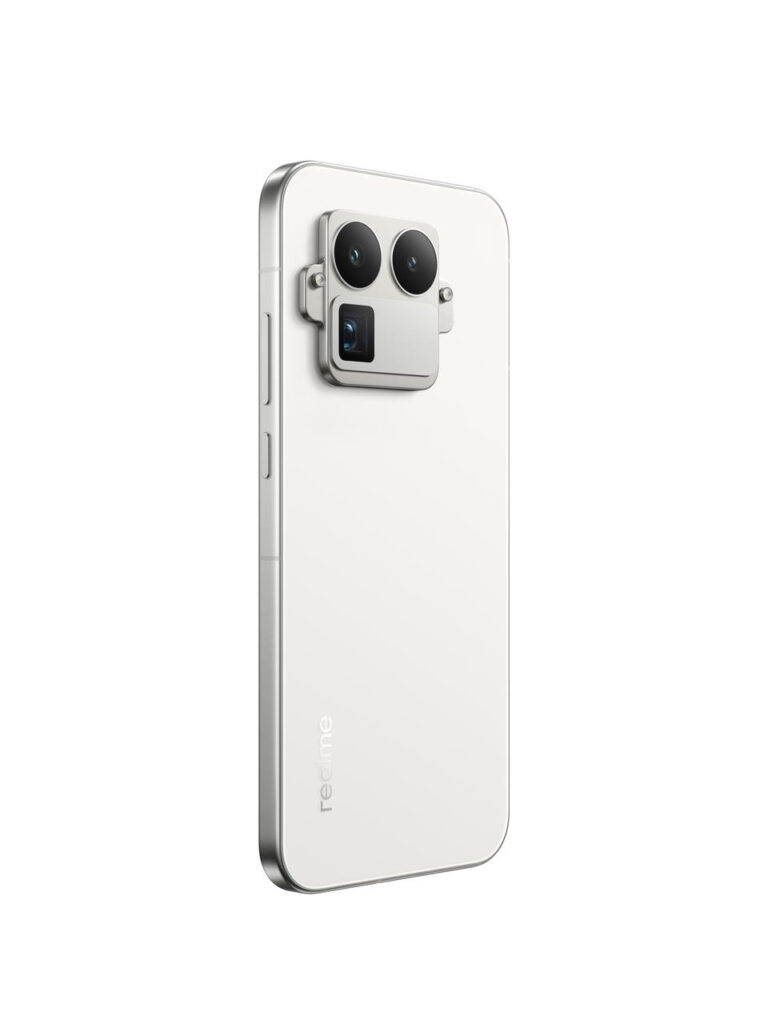
Xiaomi’s HyperOS 3 leak shows off Apple-inspired ‘Liquid Glass’ interface

Xiaomi is getting ready to shake up its software experience once again. A new leak reveals major changes coming in HyperOS 3 — or possibly HyperOS 26 — including a striking new visual design inspired by Apple’s “Liquid Glass” interface.

Xiaomi HyperOS 3.0 eligible devices

The leak comes from reliable tipster Digital Chat Station, who talked about this redesign on Weibo. HyperOS 3 is expected to debut in October 2025 alongside the Xiaomi 16 series, which reportedly combines smooth, frosted blur effects with glossy icons — drawing inspiration from Apple’s iOS 26, but with Xiaomi’s own spin.

Instead of iOS’s flashy lighting dynamics, Xiaomi appears to be focusing on subtle depth and readability. HyperOS 3 includes an overhauled Control Center, new icon styling, and better consistency across system apps.

Image: XiaomiTime

The Liquid Glass-inspired tweak aims to offer a more polished look to Android. The brand has been testing small tweaks through its launcher surveys, including a redesigned home screen with a transparent glass-like search bar. Minor but welcome changes like updated battery and Wi-Fi icons and smoother animations are also part of the update.

Fans eager to try Xiaomi’s Android 16-based skin early can explore some visual elements through tools like the MemeOS Enhancer app or track updates via HyperOSUpdates.com, as reported by XiaomiTime.

With this redesign, Xiaomi seems to be going for a more premium visual experience, while still keeping the customization options that its users love. The big question now: can this new look help HyperOS stand out in a crowded field, and maybe even outshine Samsung’s minor UI tweaks in One UI 8? We’ll be watching as development unfolds.

Don’t miss a thing! Join our Telegram community for instant updates and grab our free daily newsletter for the best tech stories!

For more daily updates, please visit our News Section.

(Source | Via)

Vivo X200 FE Confirmed for India Launch with 6,000mAh Battery and 90W Fast Charging

Vivo has confirmed that the Vivo X200 FE will launch soon in India. The phone will come in two color options: Luxe Grey and Amber Yellow. Unlike some other markets, the Blue and Pink variants will not be available in India. The Indian model will have the same specifications as the one recently launched in Malaysia.

Vivo X200 FE

Vivo X200 FE features

The X200 FE features a 6.31-inch 1.5K LTPO AMOLED display with a 120Hz refresh rate, 4320Hz high-frequency PWM dimming, and a peak brightness of up to 5000 nits. It is powered by the MediaTek Dimensity 9300+ processor and the Immortalis-G720 GPU. The phone includes 12GB of LPDDR5X RAM and 512GB of UFS 3.1 storage.

On the back, it has a triple camera setup: a 50MP Sony IMX921 main sensor with OIS, an 8MP ultra-wide lens with a 106-degree field of view, and a 50MP IMX882 periscope telephoto lens with 3x zoom. The front camera is a 50MP autofocus sensor. The phone uses ZEISS optics and includes Aura Light.

It runs on Android 15 with Funtouch OS 15. Connectivity features include dual nano SIM slots, support for 5G SA and NSA, dual 4G VoLTE, Wi-Fi 7 on 2.4GHz and 5GHz bands, Bluetooth 5.4, GPS with L1 and L5 bands, USB Type-C, and NFC.

Audio features include stereo speakers, USB-C audio output, and Hi-Res audio support. The phone packs a 6500mAh battery with 90W fast charging. It also has an in-display optical fingerprint sensor. The X200 FE has a metal frame and is IP68 and IP69 rated for dust and water resistance. It measures 150.83 x 71.76 x 7.99mm and weighs 186 grams.

Vivo has not yet announced the exact launch date for India.

For more daily updates, please visit our News Section.

Stay ahead in tech! Join our Telegram community and sign up for our daily newsletter of top stories.

OnePlus 11R Update Brings PC Remote Control and Speaker Cleaner Features

OnePlus started rolling out OxygenOS 15.0.0.830 for the OnePlus 11R in India. The update version is CPH2487_15.0.0.830(EX01) and comes out in batches to users.

What’s New

OnePlus-11R

The biggest change is remote control support for Windows PCs. You can now control your computer and access files using your OnePlus 11R phone.

The update also fixes cellular network connections with a better algorithm. OnePlus added a “Speaker cleaner” feature that uses audio pulses to remove dust from your phone’s speakers. You can find this in Phone Manager under “Tools – More – Accessibility & convenience.”

There’s a new Drag & Drop feature for images and text in third-party apps. Turn it on in Settings under “Accessibility & convenience – Drag & drop.”

System Changes

The phone now supports fuzzy search with spaces. You can search for app names directly in Settings to find app details faster. Floating windows work better now, and the animations when you close Quick Settings and notifications are smoother.

You can open apps from quick functions even when your screen is locked. When you have stacked notifications, the newest one shows how many others are hidden and where they came from.

Search results in Settings are now organized better. The update includes the June 2025 Android security patch.

How to Get It

The update rolls out slowly, starting with some users before reaching everyone in the coming days. If you’re in India and find bugs, report them through the OnePlus Community app or dial *#800# on your phone.

(Source)

Please Note: When you buy something using the links in our articles, we may earn a small commission at no cost to you.

Galaxy Z Fold7 is super slim, but it’s not as dust resistant as you might be expecting

Samsung’s foldable phones have made big strides in durability over the years, but the upcoming Galaxy Z Fold7 might not deliver the leap some fans were hoping for. A new leak suggests the device will stick with the same IP48 rating as its predecessor, instead of upgrading to the more robust IP68 that many expected.

Samsung Galaxy Z Fold 7 CAD renders by OnLeaks and AndroidHeadlines

Samsung was the first to bring water resistance to foldables, and the IP48 rating found on the Galaxy Z Fold6 was a welcome step forward. It protects against splashes and immersion in water, along with basic protection from solid objects like tools or small wires. However, it still leaves the device vulnerable to dust—an important consideration for phones with complex hinge mechanisms.

According to leaker @PandaFlashPro on X, the Galaxy Z Fold7 won’t improve on this rating. That’s a letdown for some, as earlier rumors hinted that Samsung might finally bring full dust resistance to the Z Fold series. The Z Fold7 is expected to be unveiled at Samsung’s next Galaxy Unpacked event on July 9, and this detail could be a sticking point for fans concerned about long-term durability.

Competitors may take advantage of that gap. Google, for example, is rumored to be targeting an IP68 rating for its next foldable, the Pixel 10 Pro Fold, due out later this year. If true, it would give Google a significant edge in ruggedness—especially for users who want peace of mind on dusty or sandy terrain.

Despite the durability setback, the Z Fold7 is still expected to bring meaningful upgrades. It’s almost confirmed to feature Qualcomm’s Snapdragon 8 Elite, up to 16GB of RAM, a slimmed-down 8.2mm folded profile, and a new 200MP camera. Samsung is also likely to highlight its titanium-aluminum build and updated Gorilla Armor 2 protection (on the cover display) to reinforce its commitment to sturdiness, even if full dust resistance is still out of reach.
Tech enthusiast? Get the latest news first! Follow our Telegram channel and subscribe to our free newsletter for your daily tech fix!

For more daily updates, please visit our News Section.

Xiaomi’s camera app gets major redesign and it’s coming to a lot of phones

Xiaomi is giving its long-criticized camera app a full-scale overhaul. For years, the app has been considered one of the weakest parts of Xiaomi’s otherwise solid mobile photography system. Despite strong sensors and advanced image processing, users often complained about a cluttered layout, inconsistent controls, and a fragmented user experience.

Xiaomi-15-Ultra

Bao, Xiaomi’s camera product manager, confirmed the revamp is based on extensive user feedback. The redesigned app addresses layout inconsistencies, confusing feature placement, and poor mode transitions. It introduces a cleaner interface, better visual alignment across modes, and reduced viewfinder clutter.

Xiaomi has also redesigned the Pro Mode. It now balances ease of use with manual control. Key tools like ISO, shutter speed, and EV adjustments are presented more intuitively. The update introduces real-time monitoring and multi-camera support for video shooters.

New features include a quick focal length toggle between 28mm and 35mm at 1x, improved EV control, and unified focal length indicators across all modes. Pro Mode now supports custom photographic styles, while the EV slider is easier to access without diving into settings.

Visually, Xiaomi has updated over 140 icons and reworked more than 600 UI elements. The app includes a new startup animation, refreshed shutter sounds, and an improved settings panel. The update also offers 40 new camera theme colors and redesigned watermark options.

Xiaomi redesigned camera app

The rollout will take place in three phases. The first batch, already underway, includes the Xiaomi 15 and 14 series, Mix Fold 4, Mix Flip, and the Redmi K80 and K70 series. The second wave, arriving by June 20, will cover the Xiaomi 13 Ultra, Civi 4 Pro, and mid-range devices like the Redmi Turbo 4. By July, the update will reach older models such as the Xiaomi 12S Ultra and Redmi Note 13 series.

Here’s the Full Rollout Plan:

The update is being released in three phases:

  • First Batch – Started on May 28:
  • Xiaomi: 15 Ultra, 15 Pro, 15, 14 Ultra, 14 Pro, 14 Pro Ti, 14
  • Mix Series: Mix Fold 4, Mix Flip
  • Redmi: K80 Pro (including Championship Edition), K80, K70 Pro, K70 Supreme Edition (including Championship Edition), K70, K70E

Second Batch – Gradual rollout by June 20:

  • Xiaomi: 13 Ultra, 13 Pro, 13
  • Mix Series: Mix Fold 3
  • Civi Series: Civi 4 Pro
  • Redmi: K60 Supreme Edition, K60 Pro, K60, Turbo 4 Pro, Turbo 4, Turbo 3, Note 14 5G, Note 14 Pro, Note 14 Pro+

Third Batch – Gradual rollout through July:

  • Xiaomi: 12S Ultra, 12S Pro, 12S
  • Redmi: K60E, Note 13 Pro, Note 13 Pro+, Note 13 5G, Note 13R Pro, Note 13R

For more daily updates, please visit our News Section.

Stay ahead in tech! Join our Telegram community and sign up for our daily newsletter of top stories! 💡

(Via)