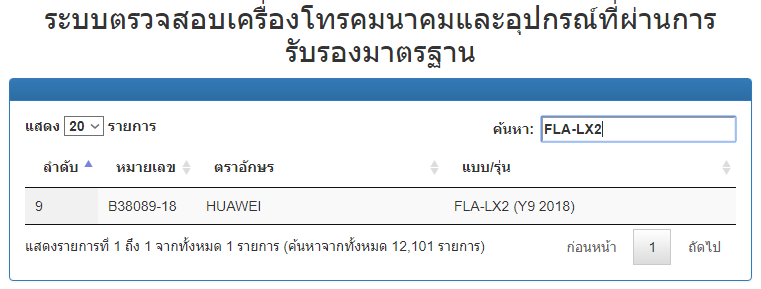
In the previous month, Huawei devices with model numbers FLA-AL00 and FLA-AL10 were spotted at TENAA. A handset with a model number FLA-LX2 has been recently certified by the Federal Communication Commission (FCC). The FCC listing has revealed several images of the phone. Also, the appearance of the FLA-LX2 smartphone at The National Broadcasting and Telecommunications Commission body in Thailand has confirmed that it will be debuting as Huawei Y9 (2018). According to a Thai publication, the handset will be unveiled in Thailand on March 15.
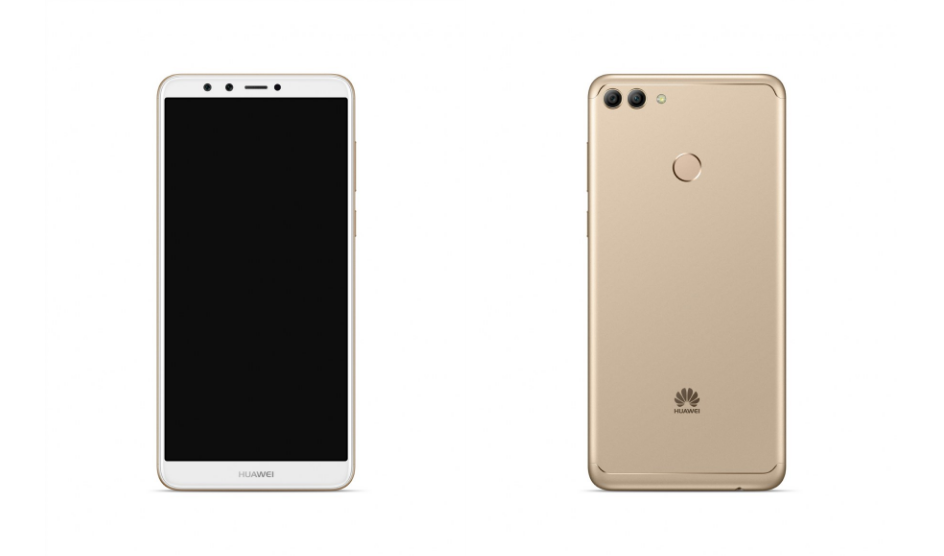
The images of the phone that have surfaced through the FCC listing show that it will be arriving with a full screen design. The handset seems to feature a dual selfie camera setup on the top bezel that also houses an earpiece and another sensor. The backside of the phone features a dual camera setup and a fingerprint reader. The top and bottom edges of the phone are flanked with antenna bands.
[envira-gallery id=”177438″]
The bottom side of the phone features a 3.5mm audio jack, a microUSB port and an external speaker. The right side of the phone features a volume rocker and a power key whereas the left edge features a SIM slot.
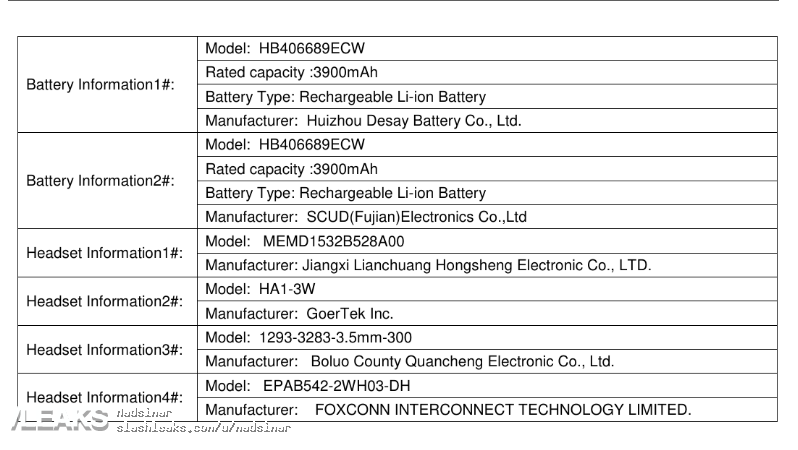
The FCC listing has not revealed much information on the specs of the phone. However, it has confirmed that the handset will be arriving a 3,900mAh battery. The following image is an evidence that shows that the FLA-LXA (Y9 2018) has been certified in Thailand.
The entire specs of the Huawei Y9 (2018) are known through TENAA listing from previous month. It will be arriving with a 5.93-inch display that supports Full HD+ resolution of 2160 x 1080 pixels. The screen will deliver an aspect ratio of 18:9.
The FLA-AL00 has 32 GB of storage and 3 GB of RAM whereas the FLA-AL10 includes 64 GB of storage and 4 GB of RAM. Both the models feature a microSD card slot. The Y9 (2018) will come loaded with Android 8.0 Oreo. For photography, the Y9 (2018) models feature 16-megapixel + 2-megapixel dual front-facing cameras and 13-megapixel + 2-megapixel dual rear cameras. Both variants are fueled by 3,900mAh battery.
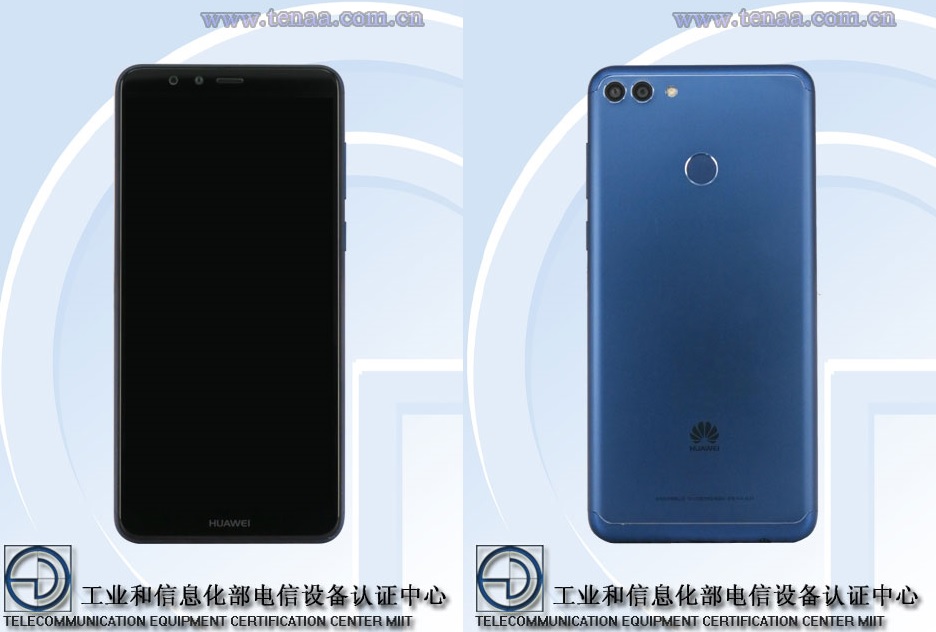
The images of Huawei Y9 (2018) that were revealed through its TENAA listing matches with the photos that have surfaced on FCC. It will be arriving in Gold, Blue and Black models in China. A Thai publication has claimed that it will be debuting on March 15, but it has not revealed any details on its pricing.
Gadget freaks that have restlessly been waiting to get their hands on an RC quadcopter without burning a hole in their pocket are in for a treat. You can now choose from a broad range of quadcopters that are available at a discounted price on GearBest.
First off, you can buy the standard version of DJI Mavic Pro Platinum foldable RC quadcopter by shelling out $1278.39. But if you’re not willing to spend that kind of money, GearBest is giving you an opportunity to reduce your subtotal.
In order to bring the device’s quoted price down, you can use coupon code ‘RCMGSCP’ at the time of checking out. This brings your subtotal down to just $$1049.99.
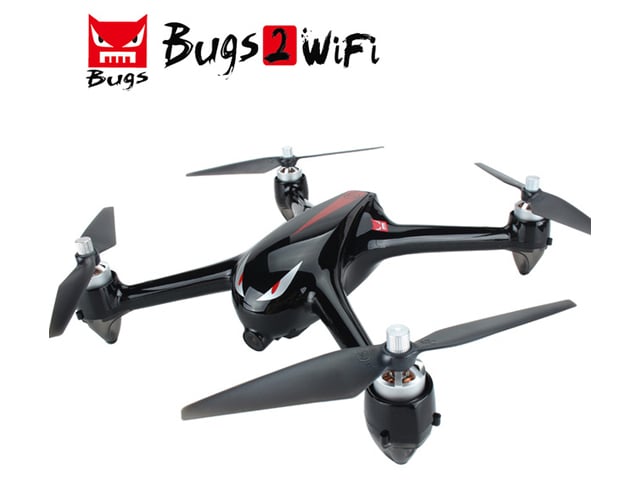
Alternatively, you can buy the MJX Bugs 2 B2W Brushless RC quadcopter for $234 on GearBest. Budget-conscious buyers can drag the subtotal down to just $158.99 by applying coupon code ‘Bugs928’ while checking out.
The GearBest promo has further been divided into multiple categories in a bid to expedite the search process. Here’s a brief glimpse of what each category has to offer.
Combo Deals
In this category, you can purchase quadcopters along with a slew of accessories at a discounted price. Let’s check out the details.
You can buy the Xiaomi Mi Drone 4K UHD WiFi FPV quadcopter, which carries a slashed price tag of $478, in combination with the FIMI X1BH 3-axis Brushless Gimbal Camera Handle, which is available for a discounted price of $65.79. While your subtotal without the discount is $748.12, you can get your hands on both the items for just $538.99 for a limited period of time. In other words, you save $209.13.
Cool Add-Ons
If your order for Toys & Hobbies exceeds $100, you’d eligible to get add-ons for $10.99. For example, you can buy the JJRC H67 Flying Santa Claus RC quadcopter, which sells for $19.99 on GearBest, in combination with 6 pieces of 3.7V 280mAh 45C LiPo battery 6-in-1 charger which is selling for a discounted price of $11.75Your final price will be only $31.74 but it’s worth noting that you’d end up paying $35.48 without the discount. You save $3.74.
Flash Sale
As part of its latest Flash Sale, GearBest has considerably reduced the original asking price of multiple items featured in this category. In addition to a slew of other discounted products featured in this category, you can buy the TIANQU XS809W foldable RC quadcopter, which bears a 15% discount. The TIANQU XS809W normally carries a price tag of $57.78 on GearBest, but you can now buy it for only $48.99. However, it’s worth noting that there were only 226 pieces left at the time of writing.
Best Sellers
This section features some of most sought-after quadcopters available on GearBest. Moreover, the site is giving massive discounts on these products’ original price as part of its latest promo.In line with this, GearBest is giving 12% discount on AOSENMA CG035 RC quadcopter, which usually sells for $231.99. With the discount, the device’s real price has lowered to only $204.99. There were 19 pieces left for the Flash Sale price.
Top Brands
You can find a myriad of quadcopters made by leading manufacturers such as DJI, Hubsan, JJRC, and MJX in this section. The MJX X708 Cyclone Brushed RC drone (without camera), which sells for $36.16 is now up for grabs for only $30.42 on GearBest.
This is a considerable 16% discount, which is valid for the white color version of the MJX X 708 drone. However, if you’re willing to shell out $41.08, you can buy the 0.3MP Wi-Fi camera version of the device. This camera-equipped version has an 18% discount as well.
Drone Accessories
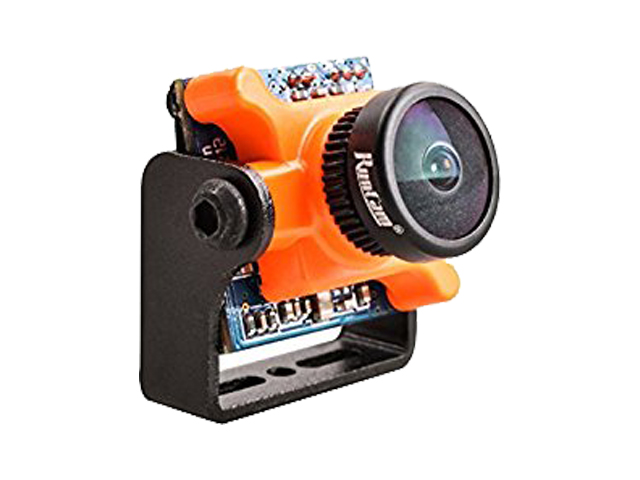
This category is crammed with all sorts of drone accessories that you can buy without spending a lot of money. For instance, you can buy RunCam Micro Sparrow 700TVL 2.1mm FPV camera for just $22.24.The device normally bears a quoted price of $29.99, but GearBest is giving 26% off on its selling price. This discount is valid for the color mix version of RunCam Micro Sparrow camera.
If you’re interested in checking out rest of the products and take advantage of the promo before it comes to an end, just head straight to this link.
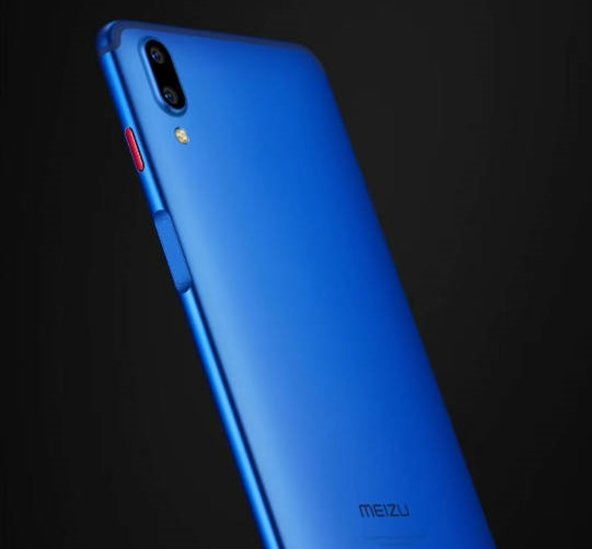
China-based smartphone manufacturer Meizu is gearing up to launch its new device — Meizu E3. The company recently announced that the phone will be launched on 21st March.
Now, ahead of the launch, Li Nan, Senior Vice President at Meizu, has uploaded a camera sample of the phone on Chinese microblogging platform Weibo. In the same post, he said that the Meizu E3 will come equipped with better CMOS than the one in Meizu M6 Note.
The camera sample image uploaded on Weibo showcases how good the camera quality is. The image is a portrait of a girl in a dark background with light falling on model’s face. This camera sample aims to showcase the dynamic range as well as color reproduction, sharpness and attention to details. Having seen this sample image, we are now looking forward to other sample images of this phone.
Along with the full-screen display, the smartphone industry is also focusing on improving the mobile camera experience for the users and its good to see Meizu jumping in on this. Recently, Samsung launched its flagship smartphones, which also focuses on improved camera performance.
According to the recently leaked specifications, the Meizu E3 could come with a dual camera setup at the back, consisting of a 12-megapixel camera sensor and a 20-megapixel sensor. On the front, the phone is expected to feature an 8-megapixel snapper.
The phone is said to sport a 5.99-inch Full HD+ display with screen resolution of 2160 x 1080 pixels. Under the hood, the device could be running the unannounced MediaTek Helio P70 octa-core processor clocked at 1.8GHz.
As per the reports, there will be two options to choose from in terms of RAM — 4GB and 6GB. Further, the phone will come with three internal storage models — 32GB, 64GB, and 128GB. The phone is expected to be powered by a 3,300mAh battery.
Recently, the phone was spotted online, revealing that it will be available in three color options — Blue, Black, and Gold. The pricing and availability details are not yet known, but it’s just a matter of a couple of weeks as the company is scheduled to launch the Meizu E3 on 21st March at National Convention Center in Beijing.
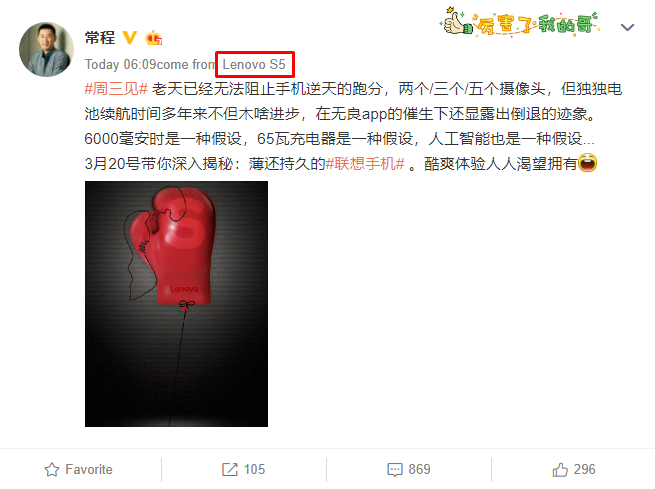
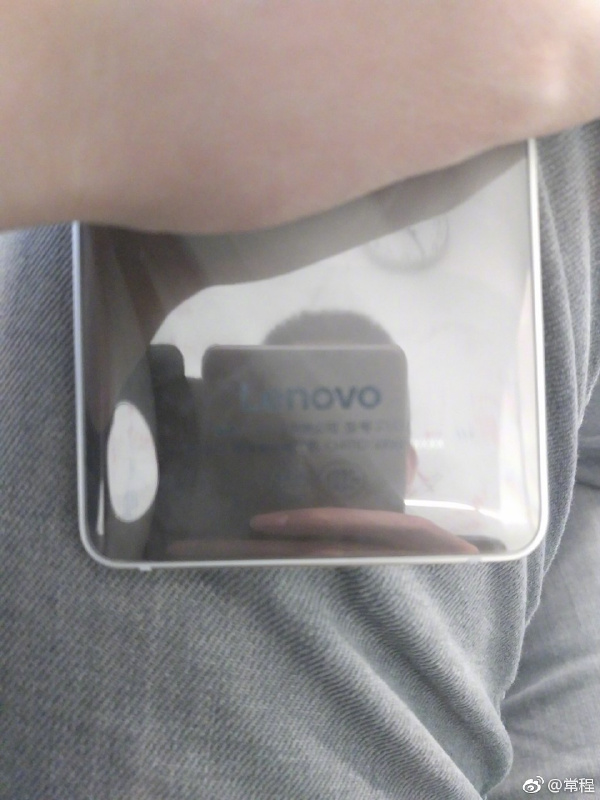
The recently appointed Lenovo Group VP Change Cheng who was previously serving as CEO of ZUK Mobile has revealed on his Weibo that the company will be introducing a new Lenovo phone with a large-sized battery on March 20.
The Weibo post by Cheng was published using the Lenovo S5 smartphone. He has been using this unannounced Lenovo phone for publishing Weibo posts since February end. The following teaser image suggests that the Lenovo S5 could be the phone that will be debuting on March 20.
The other teaser that was released recently by Cheng suggests that will be arriving with ZUK’s ZUI Android skin. It is also rumored to come with a hardware security chip. The above Weibo post states that the upcoming Lenovo phone will be a thin device with a huge-sized battery of 6,000mAh capacity.
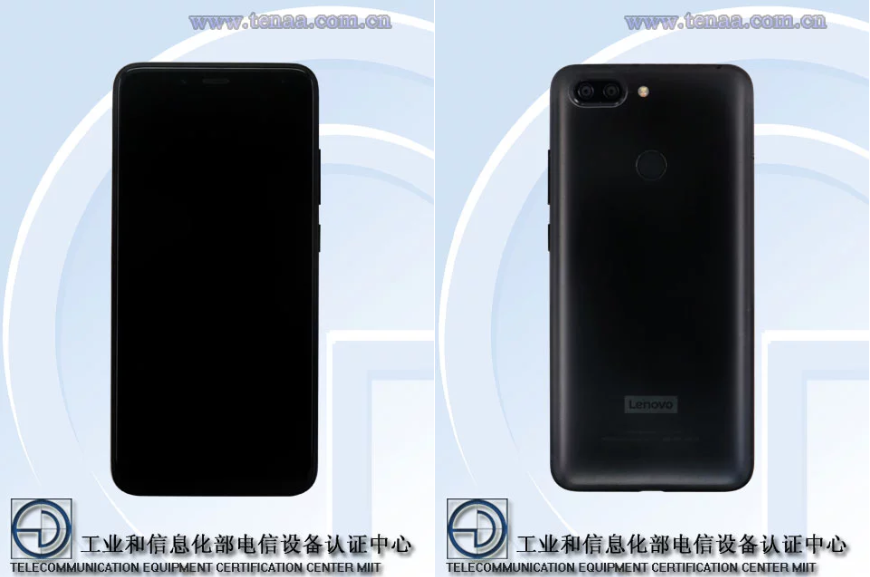
In the previous month, the Lenovo K520 smartphone spotted at TENAA. The handset features a 5.65-inch display that offers an aspect ratio of 18:9 and Full HD+ resolution of 2160 x 1080 pixels. It is fueled by 2 GHz octa-core processor. Its 32 GB and 64 GB storage models respectively feature 3 GB and 4 GB of RAM. It is running on Android 8.0 Oreo.
The Lenovo K520 has a dual camera setup on its rear side and one of its sensors is of 8-megapixel. The front panel houses an 8-megapixel selfie camera. A 3,000mAh battery powers the phone. Some rumors have claimed that it could be the upcoming Lenovo S5 phone. What’s interesting about this phone is that the rear view of the phone resembles with the image that was shared by Cheng. However, it does not feature a 6,000mAh battery.
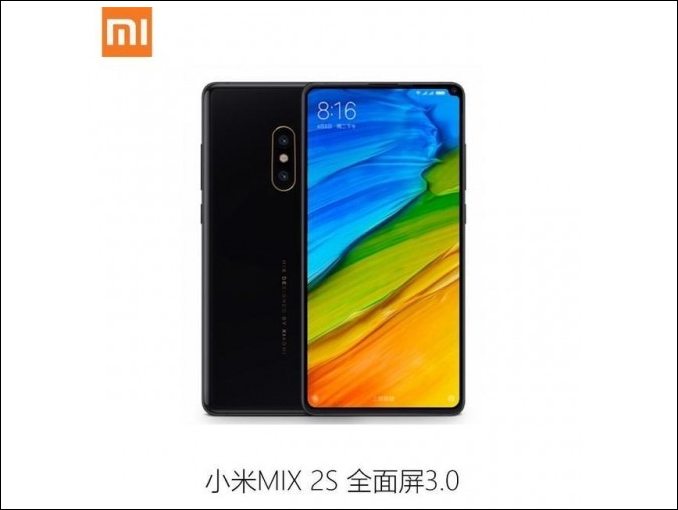
The specifications and features of the upcoming Xiaomi Mi MIX 2S flagship phone have already surfaced in the recent leaks. However, the mystery surrounding the design of the phone has remained unsolved as none of the leaked images/renders that have emerged so far have revealed its exact appearance. Today, Xiaomi has released yet another teaser of the Mi MIX 2S on its Weibo account. The teaser not only reveals the design of the phone, but also confirms where it will be holding its launch event.
Xiaomi will be announcing the Mi MIX 2S through an unveil event in Shanghai, China. The event will be held on March 27. The image shown below shows that the handset will be sporting slim bezels at its top, left and right sides. The bottom bezel is not visible in the image.
Since the top bezel is quite thin, its selfie camera could be placed on the bottom bezel like the predecessor phone. Moreover, the new firmware files of the Mi MIX 2S have also revealed that it is equipped with bottom positioned front camera. Hence, it can be assumed that the front design of the phone may not be different from the predecessor model. It is likely that the Mi MIX 2S may arrive with reduced bezels.
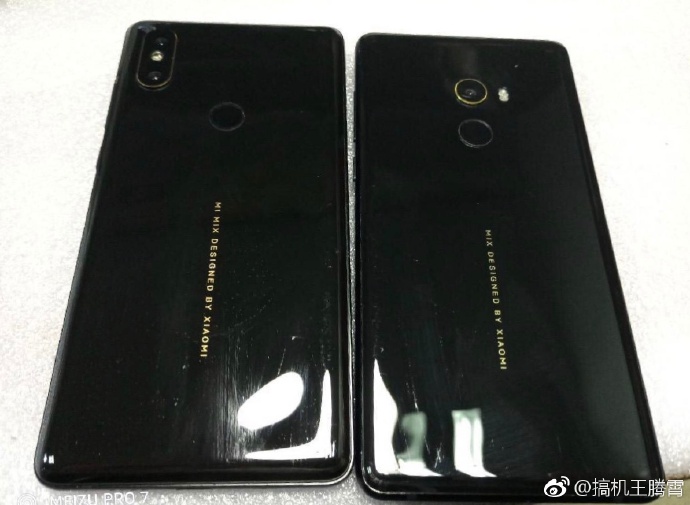
As far as the rear view of the phone is concerned, the recent firmware files of the phone have revealed that it is equipped with dual camera setup. A leaked photo that was spotted yesterday revealed that the Mi MIX 2S has a vertically stacked dual camera setup on the top-left corner of the rear panel. The dual camera system appears quite similar to the one found on iPhone X. A fingerprint scanner is placed on the backside of the phone.
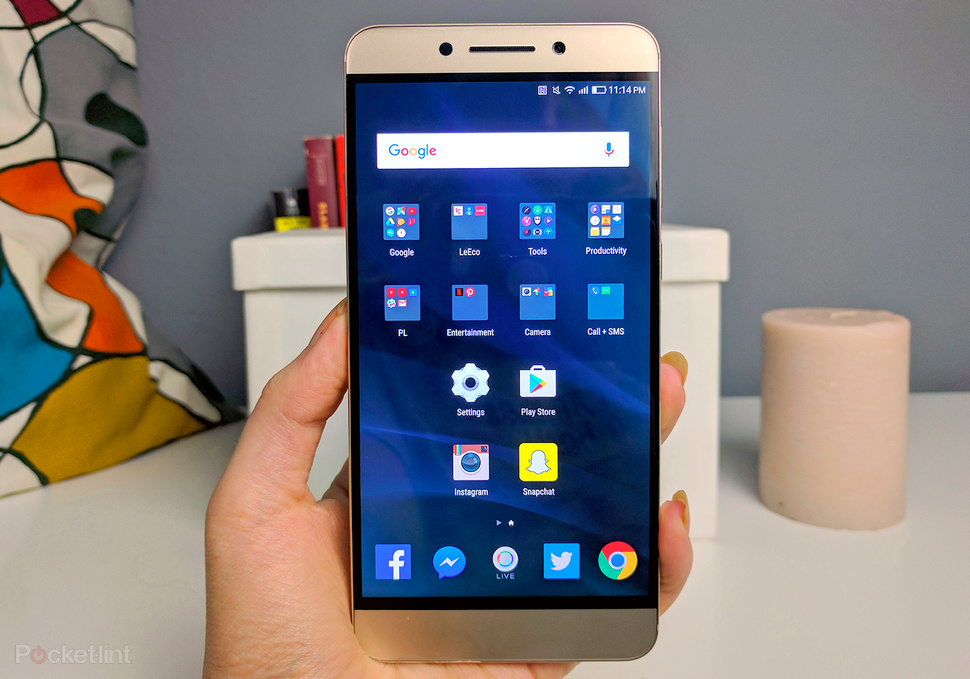
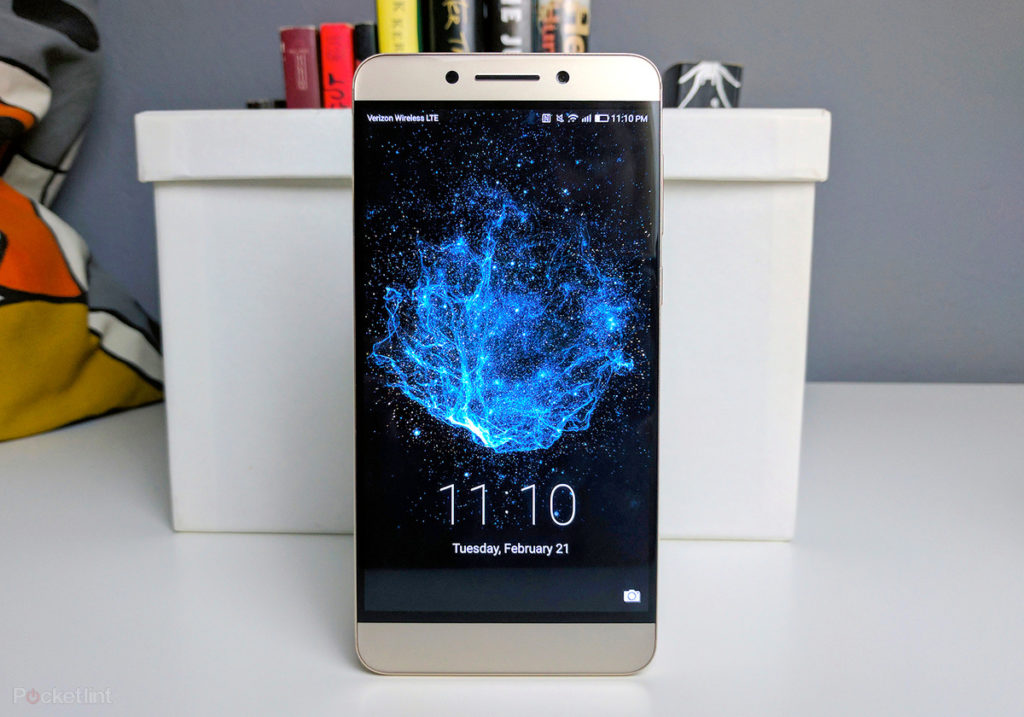
After hitting the store shelves back in September 2016, the LeEco Le Pro 3 garnered noteworthy popularity among smartphone lovers. The phone sports a big 5.50-inch touchscreen display with a screen resolution of 1080 X 1920 pixels at a PPI of 403 pixels per inch.
Despite grabbing the attention of gadget buffs, the Le Pro 3 smartphone failed to sweep budget-conscious buyers off their feet, thanks to the steep price tag it came with. But that’s about to change.
You can now buy the black-tinted Le Pro 3 smartphone by shelling out just $139.99 on LightInTheBox. This is a huge 58% drop in the device’s original selling price of $328.55.
Aside from reducing the original asking price of the black model of the phone, the international online retail company is giving 58% off on the pink and golden color versions of the phone, as well. While the golden version is up for grabs for $126.99, the pink version of the Le Pro 3 smartphone carries a discounted price tag of $114.99.
In terms of specs, the LeEco Le Pro 3 smartphone offers 4GB of RAM and 32GB of onboard storage. Under the hood, the phone packs a powerful 2.35GHz quad-core Qualcomm Snapdragon 821 processor.
On the photography front, the LeEco Le Pro 3 sports a 16-megapixel camera on the back and an 8-megapixel front snapper for selfie addicts. The handset runs on Android 6.0 Marshmallow operating system and draws its juices from a robust 4000mAh non-removable battery.
You can click here to check out the full specification and take advantage of the promo before it comes to an end.
Smooth-Q boasts the 5th Gen. Instune Algorithms, coupled with world’s advanced electronic stabilizing system. As a result, the Zhiyun branded 3-axis handheld gimbal stabilizer has shown an impressive 40% improvement as far as its torque output is concerned. Moreover, it can support a max. payload of 220g.
While there’s no dearth of power-packed camera phones for photography enthusiasts, the Zhiyun Smooth-Q 3 handheld gimbal stabilizer is a must-have smartphone accessory for taking better pictures using your smartphone. But if you’ve been refraining from buying the device due to the steep price tag it carries, we have good news for you. As part of its latest Flash Sale, TomTop is currently giving a noteworthy 50% discount on the Smooth-Q’s original $197.99 asking price. In other words, you can now buy the coveted camera phone accessory by shelling out just $99.00.
The discount is only valid for the black color version of the device. It is also worth noting that 282 pieces were left at the time of writing.
You can head straight to this link in order to check out the full specification of the Zhiyun Smooth-Q handheld gimbal stabilizer and take advantage of the promo which is slated to end in 13 days.
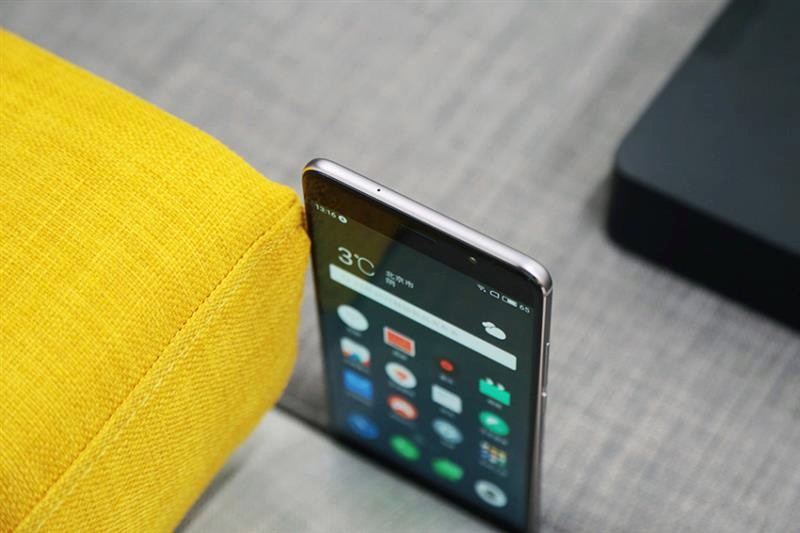
The Meizu Pro 6 Plus smartphone was launched in January 2017. As expected, the phone’s awe-inspiring specs and features propelled it straight to popularity among smartphone lovers.
You can now preorder the global version of the well-received Pro 6 Plus smartphone by shelling out $259.99 on Banggood. You can either choose the grey color version or go for the gold-tinted alternative of the smartphone.
Budget-conscious buyers who are not willing to spend that kind of money for a smartphone can use coupon code ‘2BGM6P’ to get a $50 discount on the Pro 6 Plus’ original selling price. The grand total drops down to only $209.99 after applying the aforesaid coupon code.
The global version of Meizu Pro 6 Plus smartphone sports a big 5.7 inches Super AMOLED 2K QHD On-cell screen with a resolution of 1440×2540 pixels with a pixel density of 515.3 PPI (pixel per inch). The dual-SIM smartphone runs on Android 6.0 Marshmallow with Flyme UI 6 on top.
The device offers 4GB of RAM, 64GB of internal storage and packs a powerful Samsung Exynos 8 Octa 8890 FinFET 64-bit processor, under the hood. It comes with Mali-T880 MP12 GPU (graphics processing unit).
On the back, the Pro 6 Plus sports a 12-megapixel camera with AF and dual-LED Flash and it features a 5-megapixel front shooter. Moreover, the phone is backed by a built-in 3,400 mAh Lithium-Polymer battery.
You can click here to check out the full specification and use the coupon code before it expires.
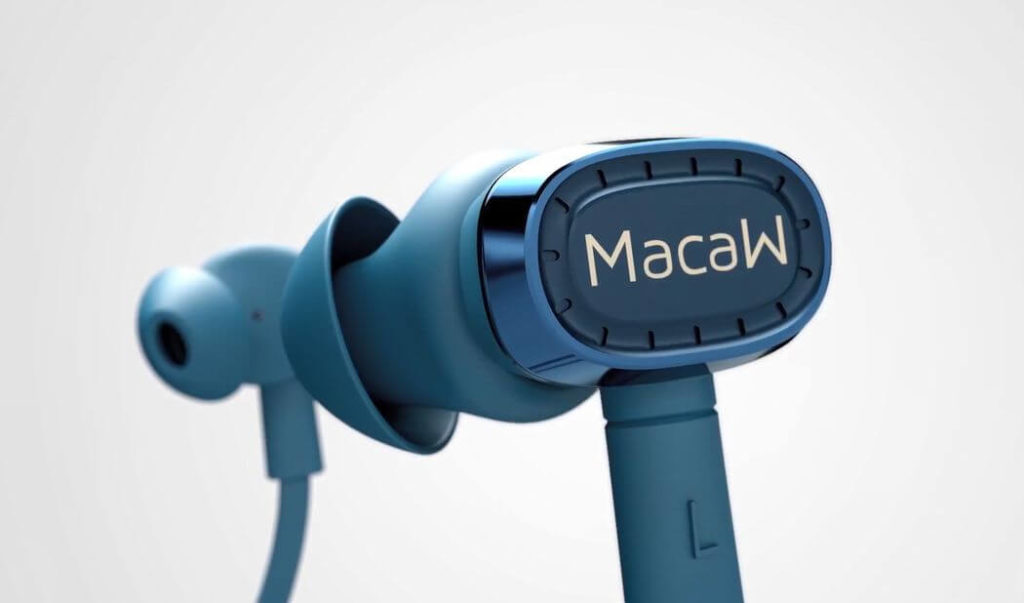
Music lovers, rejoice. If you’ve been waiting to get your hands on one of the best headphones available in the market without spending a fortune, we have good news for you. GearBest is giving 39% off on Macaw TX-80 Bluetooth headphones for a limited period of time.
Macaw TX-80 adopts CSR8645 chip and apt-X technology in a bid to offer a deeply engaging listening experience just like in the theater. Apart from bringing you the free wireless music experience, the MMCX connector supports connecting with a wired cable, just like Macaw GT350s.
The discount is valid for the black, blue, brown and red color versions of the TX-80 detachable neckband headphones. But there were only 24 pieces of the black, 42 pieces of the blue, 27 pieces of the brown and 28 pieces of the red color versions left at the time of writing.
On top of that, the promo is scheduled to wrap up in 7 days. The Macaw TX-80 is likely to retain its original selling price of $49.99 once the promo comes to an end.
Apart from giving the aforesaid discount, GearBest will be selling the first 5 units of the TX – 80 headphones for only $17.99 at 9:00 UTC daily. This promo is slated to end on March 11.
$39 – $2 COUPON: TX80-2
This category is crammed with numerous headphones and earphones that you can buy at a discounted price. For instance, there’s a 49% off on UIISII U1 In-ear wired earphones, which normally sells for $5.56 on GearBest. But with the discount, the UIISII U1 is currently available for just $2.84. Moreover, you can choose from a broad range of color option including black, black/red, green, pink and white.
$39 – $2 COUPON: TX80-3
You can find all sorts of earphones, earbuds and other items in the segment. You can get the Xiaomi Wireless Bluetooth 4.1 Music Sports Earbuds at a discounted price of just $25.99.GearBest is giving 24% discount on the device’s original $34.07 selling price as part of its Flash Sale promo, which is slated to end in 7 days. However, there were only 7 pieces left at the time of writing.
You can head straight to this link in order to check out rest of the products and also take advantage of the promo before it comes to an end.
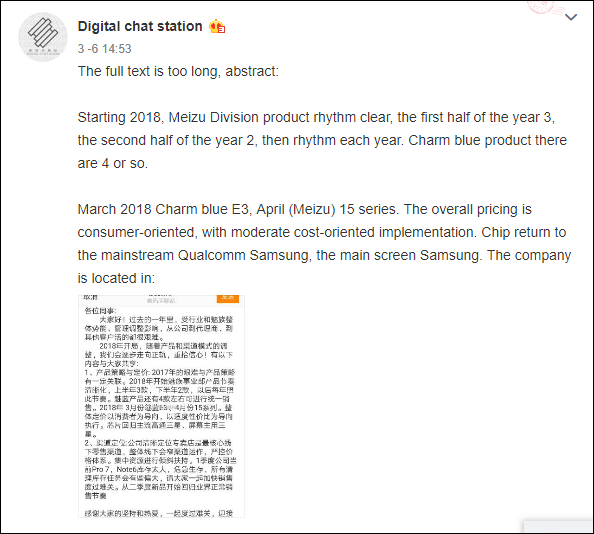
The year 2017 wasn’t a very good one for Meizu in terms of smartphone sales. Of course, the Chinese phone maker released way lesser number of smartphones than it did in 2016 which is a measure to cut operating cost. There were also reports of other cost-cutting measures such as laying off some of its staff. The company is expected to get back into the competition for market shares with the same conservative phone launch pattern adopted last year. As of now, we only know of the Meizu E2 which will go official this month and the Meizu 15 series which a recent rumour says would launch in April but an internal memo purported to be from Meizu has given us an idea of the company’s strategy going forward.
Apart from these two models, Meizu is expected to roll out a couple of more models and nothing more. That is if the leaked Meizu’s 2018 product roadmap is anything to go by. The document is in Chinese but the leak source was kind enough to give us a short summary. According to the detail, Meizu is expected to release three products in the first half of the year. While in the second half, the company will release two more models making it a total of five smartphones. Out of the lot, about four of them would be Blue Charm models meaning we should look forward to premium mid-range models. That is also suggestive that Meizu plans to focus more on the mid-range market than on the flagship segment.
It was further revealed that this trend will continue in subsequent years but you should rather take that with a pinch of salt. A turn in the company’s fortunes could see a reordering of its present market strategy. The leaked memo did not reveal the names of the models we should look forward to seeing this year except the Meizu E2 and Meizu 15 which are already confirmed as coming soon. In addition, the company also revealed that it has adopted a consumer-oriented product pricing with prices just a little above the cost of production. In terms of processors, Qualcomm and Samsung chipsets would be utilized while Samsung Displays will supply the display panels that would be used especially on the flagship models. We can’t verify the authenticity of this leaked memo, though. So don’t get your hopes too high.
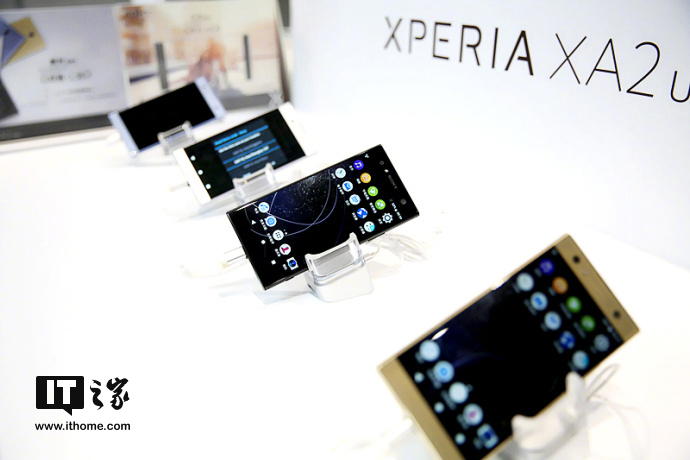
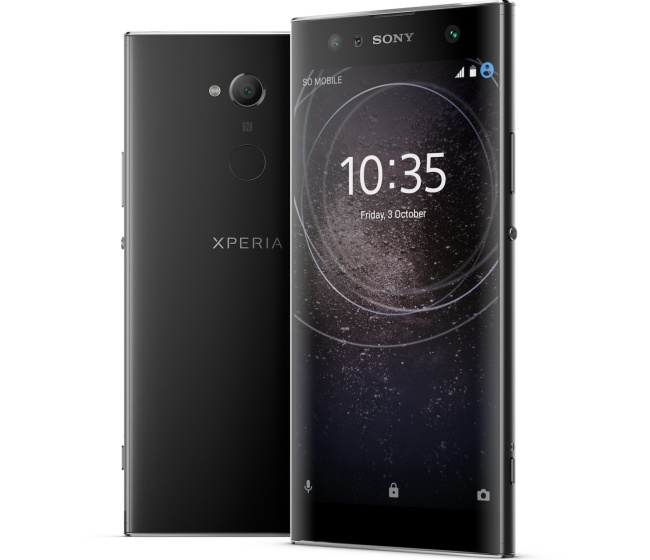
Sony on Tuesday took the wraps off the Xperia XA2 Ultra China edition at a ceremony held in Beijing. The Sony Xperia XA2 Ultra comes with a 2,999 Yuan (~$475) price tag. The new version is already available on Jingdong for preorders.
The Sony Xperia XA2 Ultra still features a Qualcomm Snapdragon 630 chipset just like the version launched at CES 2018. The chipset is paired with 4GB of RAM while there is 64GB of storage onboard. On the display screen size, the Xperia XA2 Ultra features a 6.0-inch display with the traditional 16:9 aspect ratio. The display has a full HD resolution of 1980 x 1080pixels.
Basically, the design is similar to that of its predecessor – the Xperia XA Ultra but there are a few changes like a rear-mounted fingerprint sensor and a repositioning of the rear camera. The rear camera module, which was at the top-left corner on last year’s Xperia XA Ultra, has now been moved to the centre position.
Furthermore, on the camera end, the Xperia XA Ultra features a 23-megapixel camera sensor with f/2.0 aperture, hybrid autofocus and support for 4K video recording and 120fps slow-motion shooting. On the front, the Xperia XA2 comes with an 8-megapixel ultra wide fixed-focus camera for taking selfies and video calling. The device also features a dual-camera setup on the front with an 8-megapixel camera sensor and a 16-megapixel camera sensor with less extreme FOV, 16:9 aspect ratio, autofocus, and optical image stabilisation (OIS). The device also runs Android 8.0 Oreo operating system out-of-the-box but that should be with a custom skin. In addition, there is a 3,580mAh battery under the hood with support for Qualcomm’s Quick Charge 3.0 fast charging technology.
When Microsoft announced the Surface Pro last May, it said it was going to release a version with LTE before December. It did release the LTE version but availability was limited to business users only.
Starting today, anyone can pre-order the LTE version of the Surface Pro from Microsoft or Best Buy. The key difference between this and the non-LTE model is the presence of a LTE modem (Qualcomm’s X16 modem). This allows users to connect to the internet by throwing in a nano-SIM slot or using the eSIM on board.
It actually comes with both options and there is a settings menu to let you witch between the nano SIM or eSIM if you happen to have a data plan on both.
The internals are still the same. You get a 7th-gen Core i5 7300U processor with 4GB of RAM and 128GB storage or 8GB RAM and 256GB of storage. Price is $1,149 and $1,449 respectively. The above prices doesn’t include the Surface Pen and Surface Keyboard as you have to purchase those separately.
One would think that the delay in availability would mean the device would come with an 8th-gen processor, but that didn’t happen. It is also not available in a Core i7 configuration.
If the Surface Pro with LTE is expensive for you, then you can wait for the Always Connected PCs with LTE and ARM processors (Snapdragon 835) to go on sale.
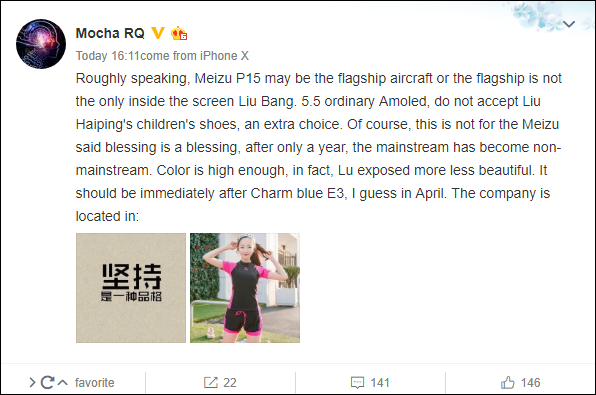
The display notch design utilised by Apple on the iPhone X is turning out to be yet another growing trend. The design was featured on the ASUS Zenfone 5 and Zenfone 5Z and the upcoming OPPO R15 will launch with that design. A new rumour has now emerged about the Meizu 15 and a notch design isn’t among one of the features of the Meizu 15 flagship.
The source of the rumour is a Chinese tipster known as Mocha RQ who hinted that the Meizu flagship should be expected in April after the launch of the Meizu E2. The E2 will go official this month. The Meizu 15 is also expected to pack a conventional full-screen design. The device will have a 5.5-inch AMOLED display and not on made from LCD panel.
The processor that would be utilized on the Meizu 15 is still shrouded in mystery. A MediaTek chipset is out of the question since MediaTek announced way back that it was temporarily halting further efforts in the production of high-end chipsets. The likely contenders include Samsung’s Exynos 9810, Exynos 8895 chipset as well as the Qualcomm Snapdragon 835 and 845 chipsets.
On Huawei’s official launch poster for the P20 series, it teases the series will come with three cameras by adding two additional “Os” to the tagline “SEE MOOORE WITH AI”. However, leaked images of the Huawei P20 and Huawei P20 Lite show both devices with just two rear cameras.
Leaked promotional images have been seen on Weibo and they show off a Huawei P20 with 3 rear cameras. This could be any of the three phones in the series but our guess is that it is the Huawei P20 Pro.
[envira-gallery id=”177331″]
Two of the cameras share the same housing in a similar design to that of the iPhone X while the third sits below the setup. There is also a dual LED flash beneath the third camera and the LEICA branding.
In the previous month, XDA Developers had revealed several key information of the Xiaomi Mi MIX 2S through its firmware files. Today, the publication has reveal some more interesting information about the Mi MIX 2S through its new firmware files.
The firmware files that were obtained in February was quite close to the final version. However, the Mi MIX 2S was mentioned with its “Polaris” codename throughout the firmware. The firmware that was recently obtained by the publication appears to be much closer to the software that will be arriving on the final device.
AI Dual Camera
Earlier this week, Xiaomi had teased the AI capabilities of Mi MIX 2S’ camera. Shown below is the watermark that will appear on photos that are snapped while using the Mi MIX 2S. As it can be seen, the watermark carries the text “AI Dual Camera.” This confirms that the Mi MIX 2S will be the first Mi MIX phone to feature dual rear cameras.
It has been previously revealed through the firmware files that the handset will be supporting scene recognition for following scenes flower, food, sky, sunrise/sunset, cat, dog, green plants, night, snow, sea, autumn, candlelight, car, grass, maple leaves, succulent, building, city, cloud, overcast, backlight and doc (document).
Appearance
Following renders of the Mi MIX 2S that have surfaced in the recent past have suggested that its selfie camera could be placed inside a notch (similar to iPhone X) or at the top-right corner. However, it has been revealed through the firmware files that the selfie camera of the Mi MIX 2S would be placed on the bottom bezel like the Mi MIX and Mi MIX 2 predecessor phones.
This indicates that none of the renders that have appeared in the past have revealed the true design of the phone. The placement of the selfie camera suggests that designed of the MI MIX 2S will be similar to its predecessor.
Wireless Charging
Leaked information had claimed that Xiaomi Mi 7 could be the company’s first phone to feature wireless charging. Through the new firmware of the Mi MIX 2S, a video has been obtained. It shows that MIUI let users know how to correctly place the device on the Qi wireless charging pad.
The device shown in the above video is a generic Xiaomi device. However, its design is quite similar to the Mi MIX 2 and also seems to belong to Mi MIX 2S.
ARCore Support
Google has ended Project Tango initiative at the beginning of this month. It was Google’s attempt towards bringing AR to smartphones. The project has been succeeded by ARCore, a software-based solution to bring AR to smartphones through ARKit. The search engine giant has recently confirmed that it would bring support for augmented reality through ARCore 1.0 to various devices like Google Pixel, Pixel XL, Pixel 2, Pixel 2 XL, Samsung Galaxy S8, Galaxy S8+, Galaxy Note 8, Galaxy S7, Galaxy S7 Edge, LG V30, LG V30+, ASUS ZenFone AR and OnePlus 5. It has also stated that it will be working companies like Huawei, Motorola, Xiaomi, HMD Global, ZTE, Sony Mobile and Vivo.
One of the references (shown above) in the firmware files of Mi MIX 2S reveals that it will be supporting Google ARCore at launch.
What do you think about these features of the Mi MIX 2S? Share us your views by posting your comments below.
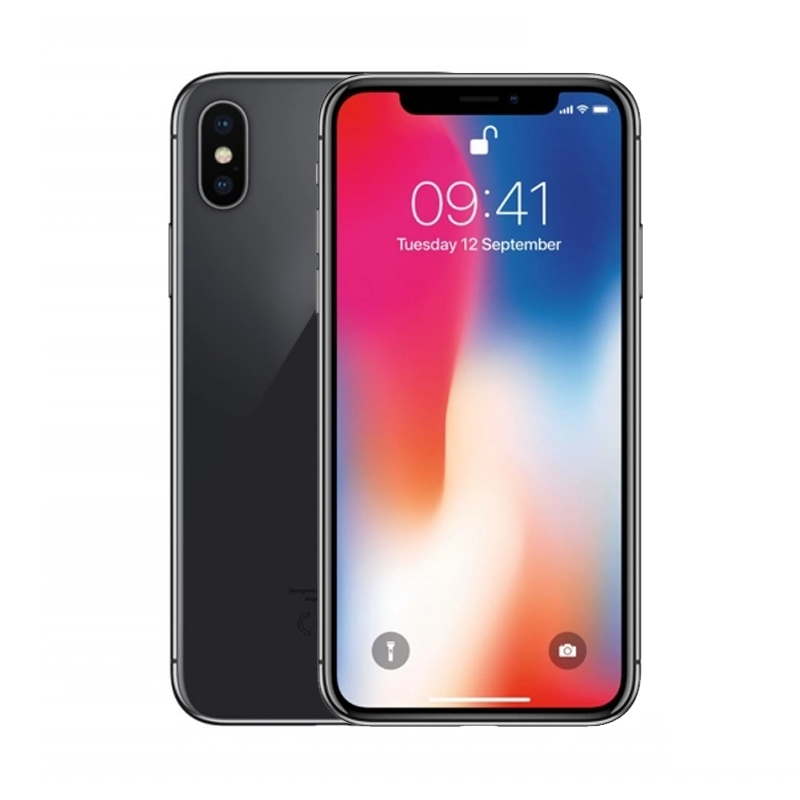
Oscar Wilde once said that imitation is the most sincere form of admiration. If you admire the wonderful and revolutionary design of the new iPhone X but you cannot get it because it costs too much, why not get a clone instead? They are aesthetically similar to the latest flagship by Apple, but their price is way more affordable. It is possible to find iPhone X clones at just 1/10 of the price of the real handset. But the clones market is very big, and not every clone is a good phone, so it is important to know which one to choose.
In this article, we will show you the best iPhone X clones from China.
Differences between iPhone X and Clones: Why should you choose a Clone?
Clones are the perfect choice if you love the design of iPhone X but at the same time, you have a low budget. But you must keep in mind that if you buy a clone, you will not get the same performance of the original Apple device. Even though sometimes the specs sheet may look similar to the one on the original iPX, if you dig deeper you will discover that its performance and features are way inferior to the iPhone X.
You may get 4 GB of RAM, but it won’t be optimized like the 3 GB RAM found on the iPX, and also the processor is much less powerful. You will never get the same camera performances and even though the display of iPhone X clones is aesthetically similar, their image quality is far from the one on the Apple device. In a few words, clones are just affordable alternatives for people who want to save money, but this does not mean that they cannot be good enough for your daily usage.
So when buying a iPhone X Clone from China, its always better to know what to expect from the device.
Oukitel U18
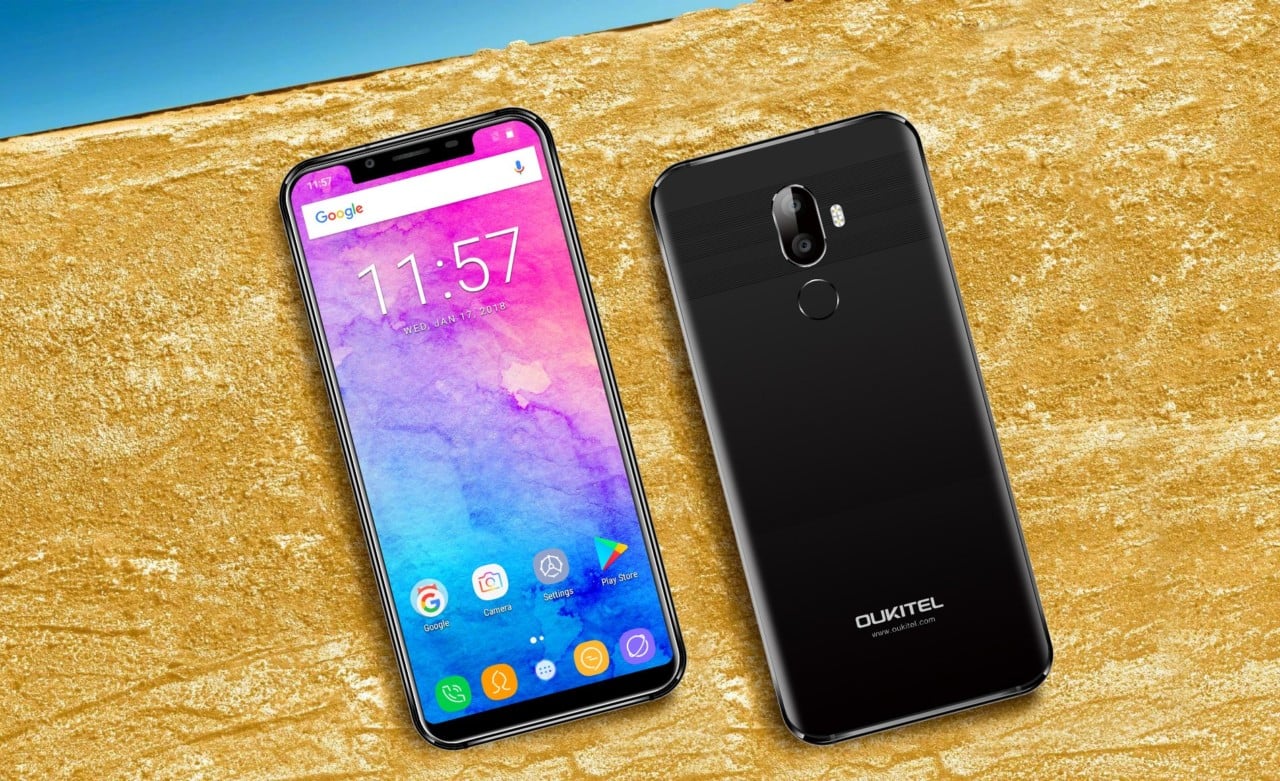
With its notch, Oukitel U18 is an iPhone X clone which has been launched at a very aggressive price, but it also offers a pretty good specs sheet. Its front panel is a part which reminds a lot of the most powerful Apple flagship, with borders on three sides which are even less noticeable than the ones of iPhone X, at least on first glance. Unfortunately, the bottom border is thicker but it’s not thick enough to contain a physical Home key. Indeed, the fingerprint reader has been placed on the back, which is important since there’s no 3D facial recognition.
The back side is different from the one of the iPhone X: it reminds of Huawei Mate 10 and 10 Pro with a vertical dual camera (16 + 13 MP) setup placed at the center. But on the other hand, the specs are decent if we consider that it is sold at less than $200. It has a 5.85-inch HD+ display, 4 GB of RAM, and 64 GB of internal storage, which is a pretty good configuration. The SoC is just a low-end chipset, but not the worst one: it is an octa-core MediaTek MT6750T. Another advantage is the very big battery with a 4000 mAh capacity, which is paired with efficient components to delivery good battery life.
Price: ~€140/$170
Bluboo X
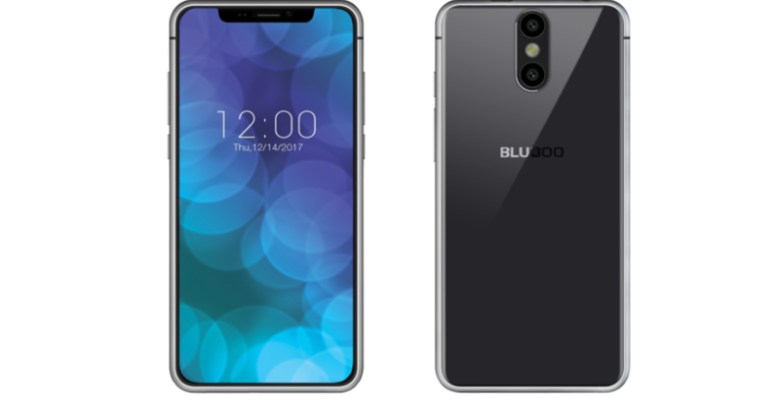
Bluboo has done a really good job at optimizing the bezels of its iPhone X clone: the Bluboo X. And at the same time it has launched a high-end phone unlike most of the iPhone X clones available in the market. That is why this handset can be suitable even for advanced users, and not only for iPX design lovers. The front panel is not exactly identical, but it is almost the same, while the rear side is quite different because the camera is placed on the center of the back cover, which is also slightly curved at the sides.
However, this does not make the phone less elegant. Bluboo X boasts a vibrant AMOLED display with a great Full HD+ resolution. It also comes with a facial recognition technology, even though it is much worse than Face ID as it does not rely on a depth sensor, instead it just uses the front camera. The specs which make it an outstanding clone are its 6 GB of RAM, its 64 GB of internal storage and its monster 5500mAh battery. The SoC included is the Helio P23 by MediaTek, a good alternative to Snapdragon mid-rangers.
Leagoo S9
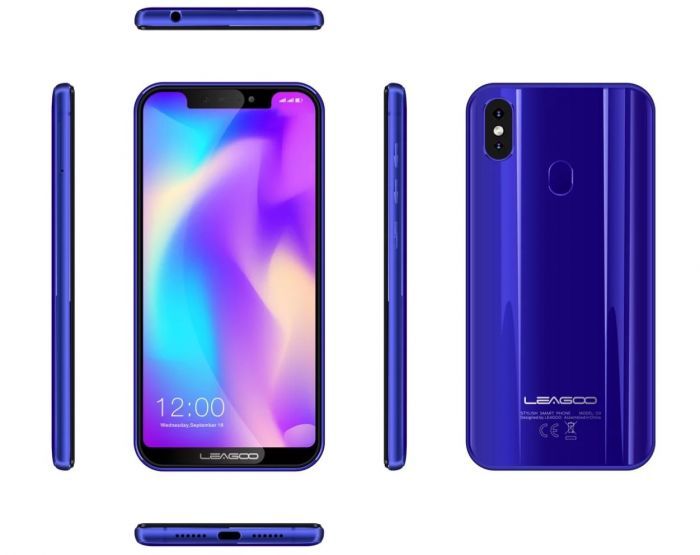
Leagoo S9 will launch after MWC 2018 and it will look like a cross-over between Apple iPhone X and some of the latest Honor devices. It showed up in some renders which highlighted very narrow bezels on three sides and a notch that’s seen on every iPhone X clone. Just like the Apple’s flagship, it has a metal frame and a glass back, but the back cover is not plain like the one on the iPhone X.
On the Leagoo S9, the glass back creates the typical light waves that we can see on the Honor 8 and Honor 9. This makes it more attractive, but less similar to iPX. The dual camera is placed in exactly the same place as the iPhone X, and there is an additional fingerprint reader because this handset will not support Face ID. As it is yet to be unveiled we do not know its official specs. According to rumors, it will come with the new Helio P40 SoC, 8 GB of RAM, 256 GB of internal storage, and a 5000 mAh battery. That’s pretty high-end but they are just rumours for now. If so, this phone would have the best specs sheet among all the iPhone X clones.
Price: ~€150/$185
Ulefone X
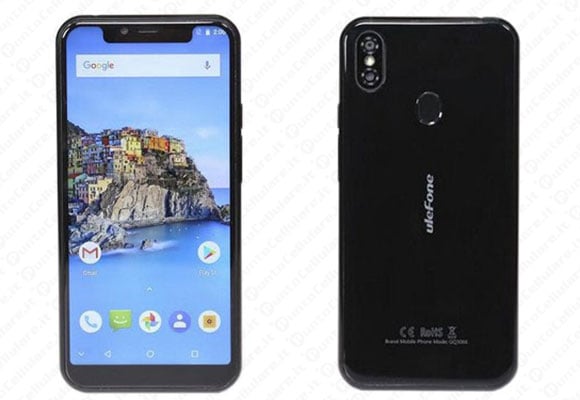
Even though Ulefone is famous enough to have a decent success with its own devices, it still decided to make an iPhone X clone. This iPhone X clone isn’t launched yet and it will hit the market sometime after MWC 2018. Not much is known about its specs yet, but we know that it will be launched with Android 8.1 Oreo out of the box, the very latest version of the operating system. This is important if we consider that usually clones either do not get updated or the software support does not last long as compared to other devices.
Given that the company has already published a video, we can also see its design. It has a notch (bigger than iPX, though) and thin bezels on three sides, but it also has a thick bezel on the lower part, unlike the iPhone X. But on the other hand, it should have good specs. For authentication, it features a fingerprint reader on the back side instead of Face ID, and it has a vertical dual camera with an LED flash between the two sensors.
Little Pepper S11
Little Pepper S11 is not really identical to iPhone X, but it is still one of the most good-looking iPhone X clones. Its design looks incredibly cool thanks to the very narrow and white bezels in contrast with a black insert which integrates a physical Home key with a fingerprint reader embedded. It looks like a full borderless display, but if you look at it closely you will notice that there is a black bezel on the lower part with the Home key. The back side is also very similar and it is made of glass, while the frame is made of aluminum. The rear is very close to the one on the iPX and it has a vertical dual camera setup with 13 MP resolutions. The phone supports facial recognition and it runs Yun OS, a fork of Android made by Alibaba. It comes with low-end specs: a 5.5-inch HD display and an entry-level MediaTek MT6737 SoC. But it has 3 GB of RAM and 32 GB of internal storage which you can usually find only on midrangers. Plus, its super cheap, so definitely worth checking out.
GooPhone X
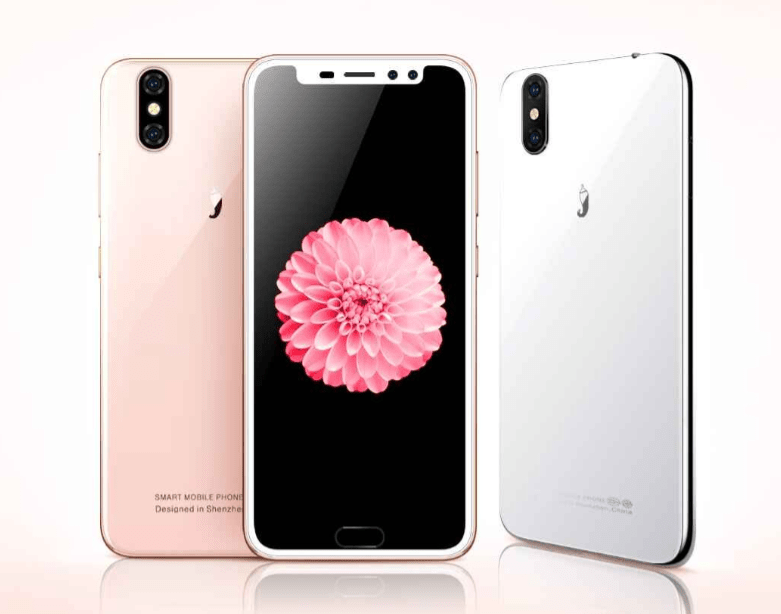
GooPhone X is one of the iPhone X clones which looks exactly like the iPX. It is very hard to distinguish it from the original one: the only noticeable difference is the absence of the Apple logo and the “iPhone” inscription. It is the perfect phone for design lovers who cannot afford the original iPhone X, and its price is also very affordable: it can actually be bought at less than €100. However, it is a very low-end phone, so it is not the best for you if you are looking for good performance.
It sports a 5.5-inch display with an HD resolution and it still runs Android 5.0. The old Android version kind of makes sense because its hardware composed of a MediaTek MTK6580 SoC and just 1 GB of RAM likely won’t run all the latest apps and features from the newer versions of the Android build.
Price: ~€225/$280
Boway Notch
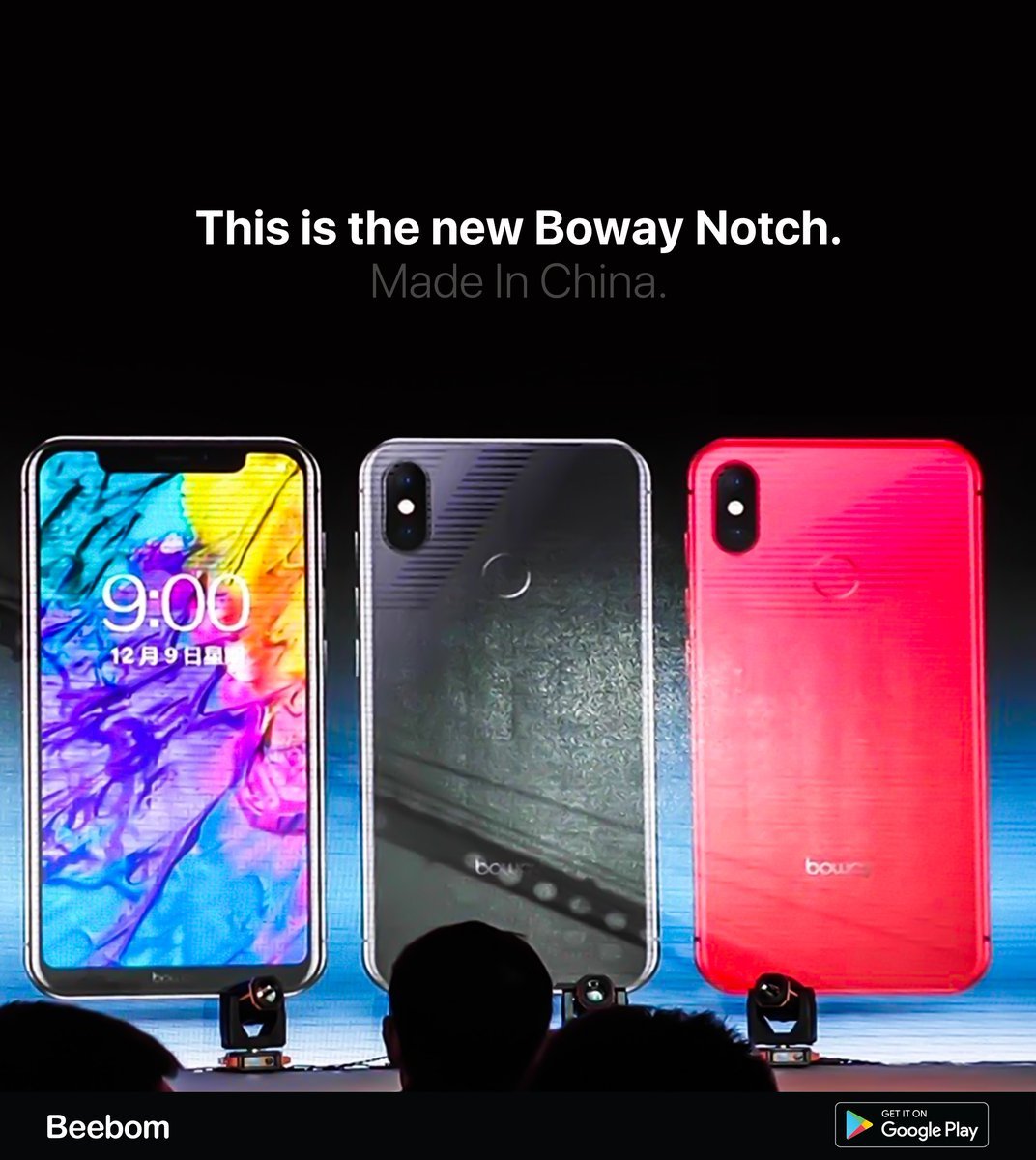
Even though it was unveiled more than two months ago, this handset is still shrouded in the mystery. It has been called after the distinctive element of Apple’s flagship: the notch. And it obviously has a notch, surrounded by very narrow bezels on three sides. Boway is a veteran Chinese company which produces printers and cutting machines, and Notch is its first smartphone to hit the shelves. From the design, composed of an elegant back, housing a fingerprint reader and a vertically-placed dual camera setup, we can guess that this is an affordable entry-level smartphone.
Blackview X
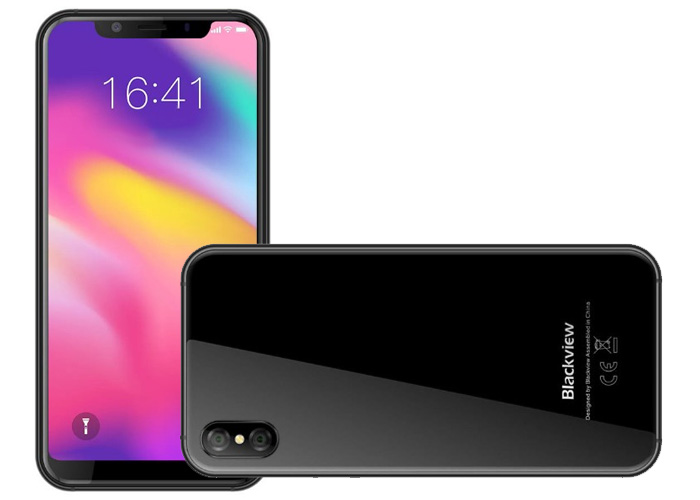
The only clear difference between the iPhone X design and the one of Blackview X (besides Apple logo) is the presence of a thicker bezel on the bottom part up front. Apart from that, the Blackview X is designed quite similar to the iPhone X and it is hard to distinguish the two handsets. This device is still not official yet, but it will be launched within the first half of 2018. The size of the display will be exactly the same as the iPX, but its resolution will be lower and the hardware side will be inferior too. the Blackview X will probably sport a midrange MediaTek SoC, so do not expect flagship-level performances. An advantage of this device over competition is the presence of Android 8.1 Oreo, which is actually the latest version available of the operating system. Clones usually do not get updates, but with such a recent version, Blackview X will not be outdated soon.
Hotwav Symbol S3
Here is another well-reproduced iPhone X clone with a glass back that is very close to the original one and a front with narrow bezels. There is one thick bezel at the bottom, but it is Black, so when the display is powered off or if you set a Black wallpaper when it is in use, the bottom bezel won’t stand out.
UMIDIGI Z2 and One
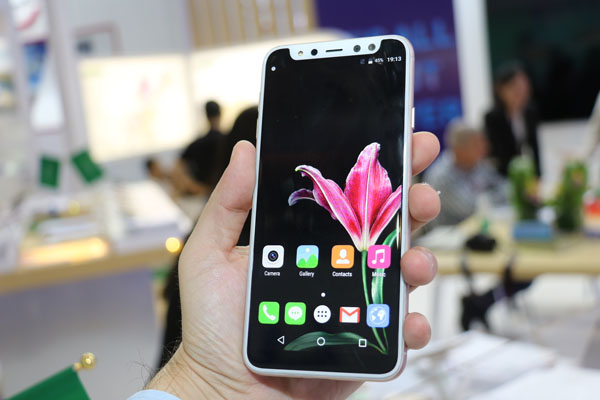
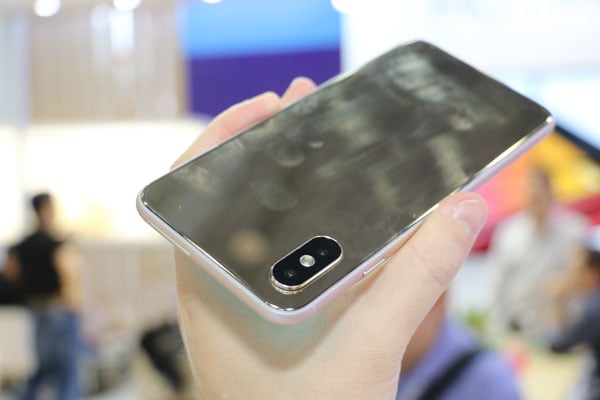
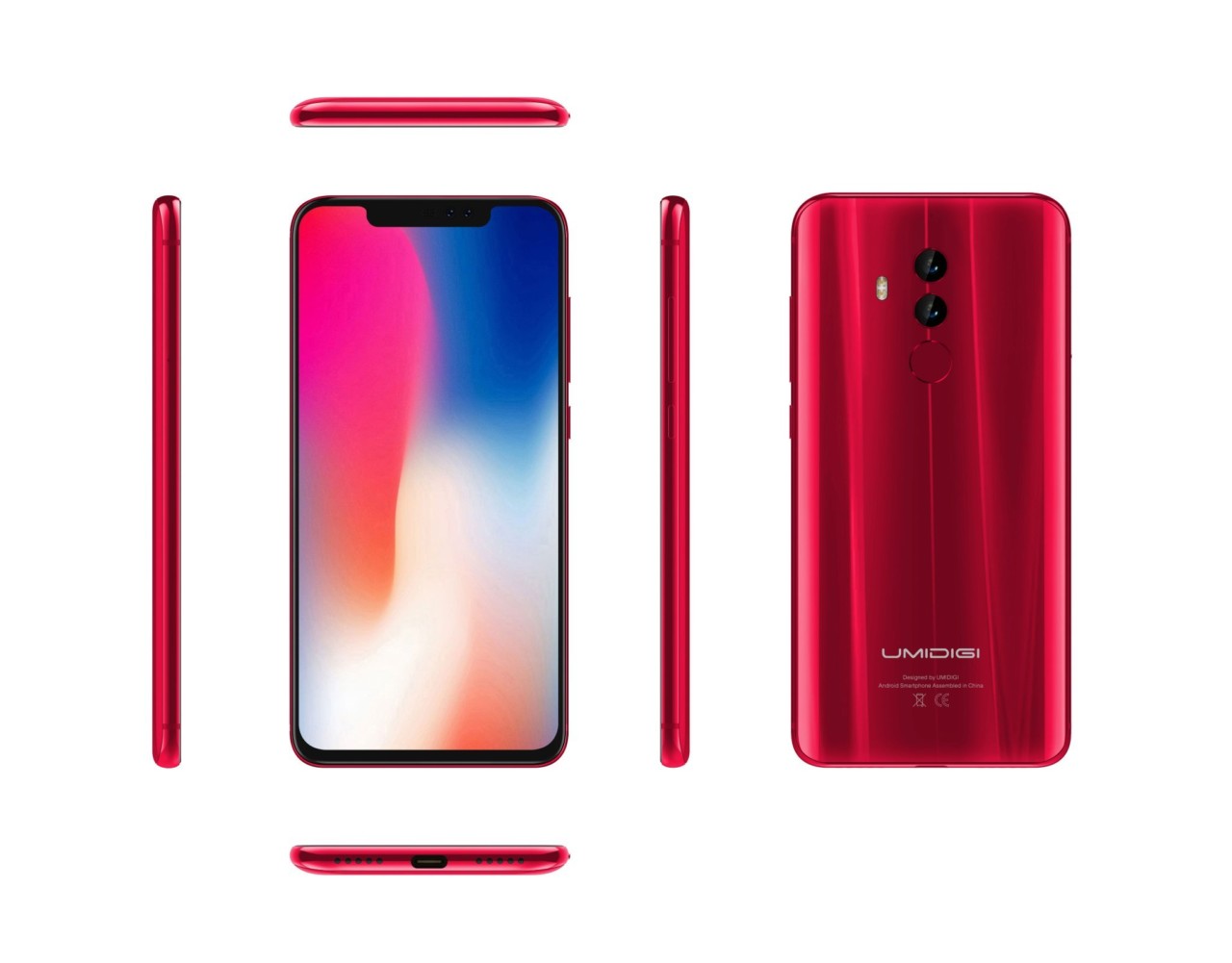
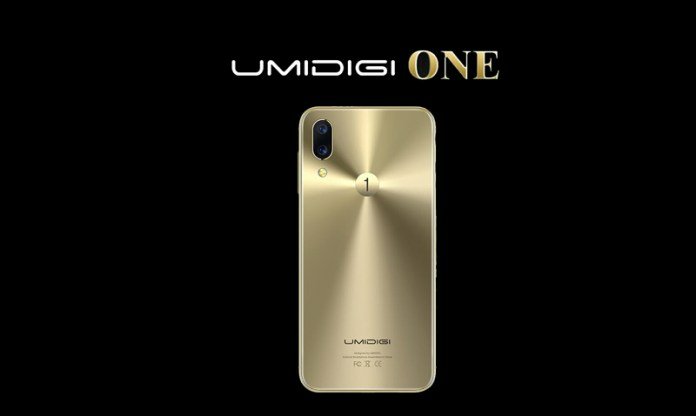
At last, prepare for the launch of the UMIDIGI Z2 and UMIDIGI One. The former will be the first high-end phone with a big 6.2-inch display and a notch. The display will have a Full HD+ resolution and almost nonexistent bezels on each side. This device is also tipped to come with an enormous 7000 mAh battery. Unfortunately, the rear will be different from the iPhone X. Not much is known about the UMIDIGI One yet. We just saw its rear side which is made of glass and has a vertical dual camera on the top left corner: in this case, there is a strong similarity with the original iPX, but not enough to make it indistinguishable from the original. The launch date of the handset is unknown as well.
Doogee V
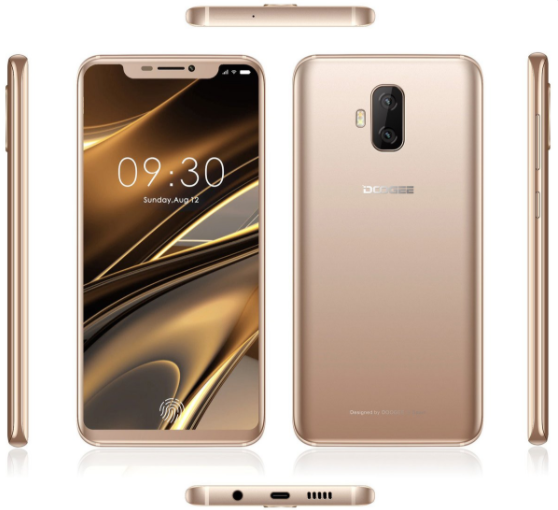
Doogee V is the second smartphone in the world to feature an under-display fingerprint scanner (the first is Vivo X20 Plus UD and there’s some time for Vivo Apex to reach the markets), which not even iPX supports. You just need to touch the display to unlock your phone, which may be more comfortable than Apple’s Face ID, at least sometimes. And in case you do not like this method of authentication, Doogee V also supports facial recognition, even if it is not as secure as the original Face ID. Doogee V has a notch and very thin bezels on the front panel, but the rear cover made of glass reminds more of Samsung flagship than iPhone X. So it is a cross-over between Samsung and Apple’s designs, and it is still incredibly cool for people who admire both the companies. This handset also features a big 4000 mAh battery, a Full HD+ resolution and a 16 + 8 MP dual camera.
Elephone A4 Pro
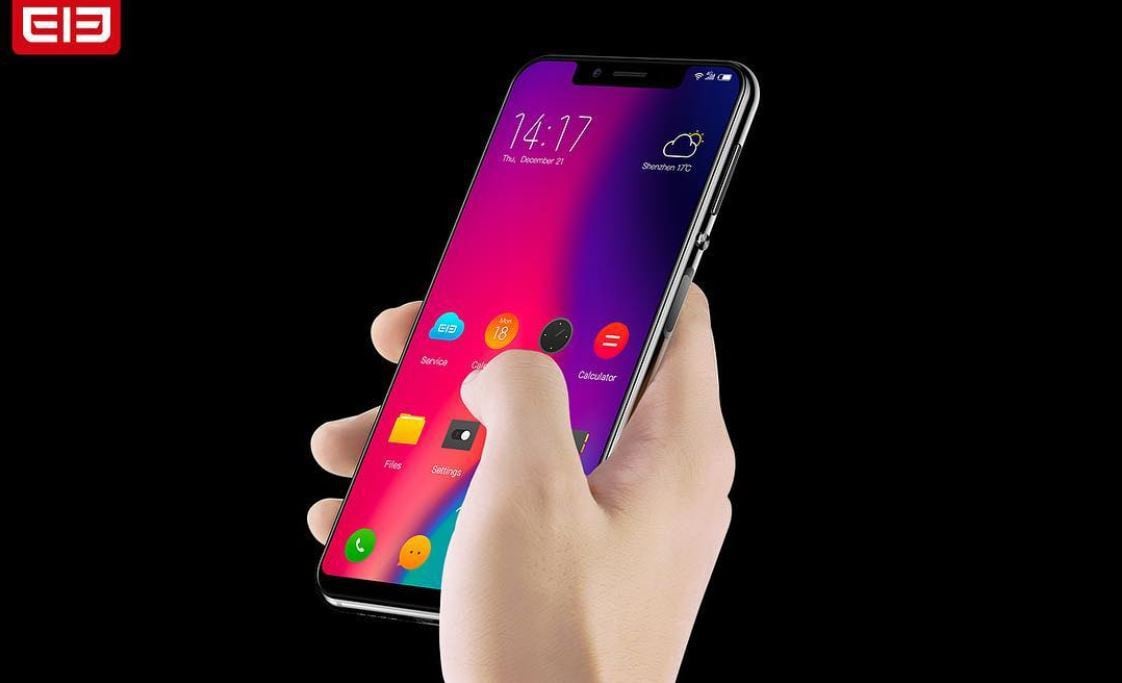
When it comes to clones, Elephone has always shown pretty good skills at imitating the design of top flagships. After releasing a beautiful clone of the Samsung Galaxy S7 and a clone of the Xiaomi Mi Mix, the Chinese local company has just announced the arrival of an iPhone X clone with extremely thin borders, rounded corners, and a gorgeous lucid frame. For now, we only got an image showing the front side and the frame of the handset, so we cannot tell you anything about the similarity of its rear side to the original iPhone X. We do not even know the complete specs sheet, so it is hard to guess how much it will cost. At the moment, we only know that the display has an 18:9 aspect ratio and the SoC is the octa-core Helio P23 by MediaTek. So, Elephone A4 Pro will be a midrange device like most of the other clones. According to Elephone, the A4 Pro will be the cheapest clone in the market, but, given that it sports a midrange processor, we doubt it. At most, it might be the cheapest clone to hit the European market. If so, we can expect an HD+ display and a not-so-big battery.
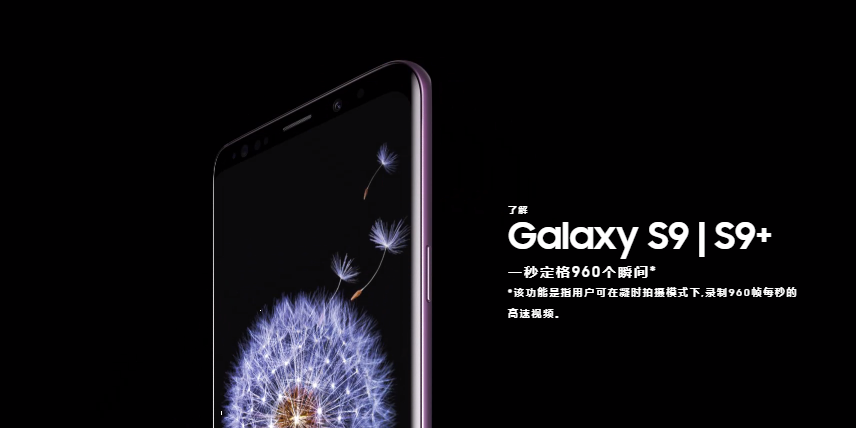
Following the launch of the Samsung Galaxy S9 and Galaxy S9+ in India earlier today, both phones have also been officially launched in China.
We are already familiar with the specs but we’ll run through them once again.
Specs
The Galaxy S9 has a 5.8” display while the S9+ comes with a 6.2” screen. Both have a resolution of 2960 x 1440 (WQHD+) but they are set to 2220 x 1080 (FHD+) out of the box.
The version of both phones launched in China is powered by Qualcomm’s Snapdragon 845 mobile platform. The Galaxy S9 comes with 4GB of RAM and 64GB/128GB of storage while the Galaxy S9+ has 6GB of RAM paired with 64GB/128GB/256GB of storage.
Apart from the difference in RAM and storage configuration, both phones also differ with respect to camera configuration. The smaller S9 comes with a single 12MP 1.4 µm sensor with a variable aperture of F1.5 and F2.4. The camera can shoot 720p slow-motion videos at 960fps, has OIS, Dual Pixel PDAF, and LED flash.
The Galaxy S9+ comes with a second 12MP rear camera with a f/2.4 1µm sensor with 2x optical zoom and PDAF. Both phones have 8MP f/1.7 front cameras.
The Galaxy S9 and S9+ run Android Oreo out of the box with Samsung’s own UI overlay and Bixby Assistant. They also have stereo speakers with Dolby Audio, NFC, audio jack, USB-C 3.1 port, and Bluetooth 5.0. A 3000mAh battery powers the Galaxy S9 while a 3500mAh battery is found inside the Galaxy S9+.
For China, Samsung has added a number of unique features such as Samsung Pay support for bus card payement in 6 cities including Beijing and Jilin. There is also an upgraded exclusive butler service, screen replacement, battery replacement, and a ¥600 (~$95) trade-in allowance.
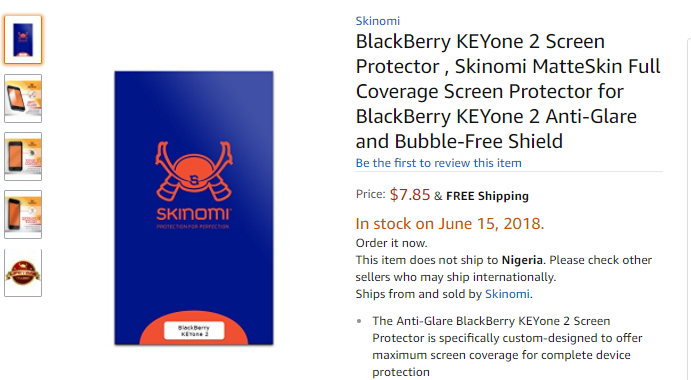
BlackBerry hasn’t announced a new phone this year but there are rumors a successor to the BlackBerry KEYOne is in the pipeline. That rumor may be true as accessories for the BlackBerry KEYOne 2 have surfaced on online stores.
The accessories include screen protectors and skins for the phone from a brand known as Skinomi. Unfortunately the packaging of the accessories doesn’t have an image of the phone nor dimensions, so we can’t tell what the device looks like.
The Original BlackBerry KEYone has a 4.5” 1080 x 1620 display with a physical keyboard below it. It is powered by the Snapdragon 625 processor, has up to 4GB of RAM and 64GB of storage, and packs a 3505mAh battery.
There is a possibility that the BlackBerry KEYone 2 (we hope the name gets changed) will keep the same design more or less, but come with upgraded internals.
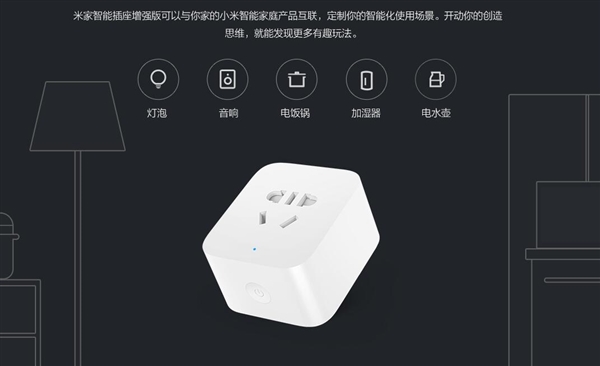
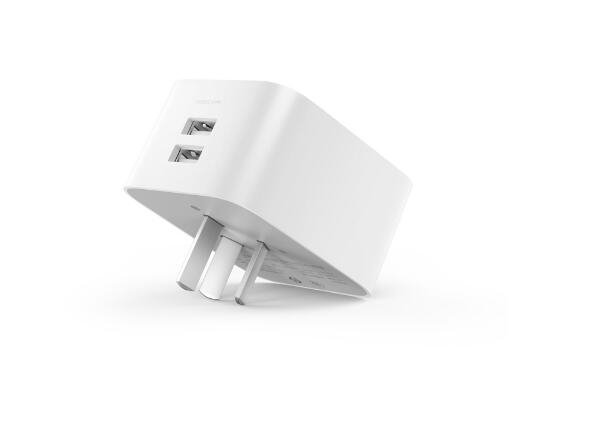
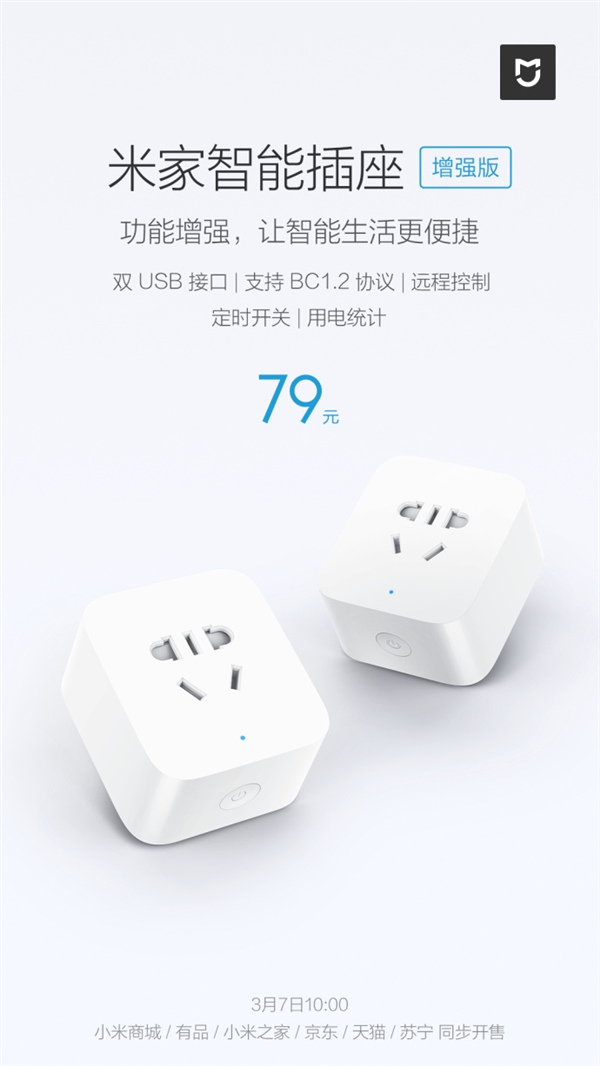
Xiaomi has added a new Mi Smart Socket to its growing list of smart products. The Mi Smart Socket Enhanced edition will go on sale from March 7 via Mi Mall with a price tag of 79 Yuan (~$12).
Xiaomi first launched a smart socket as far back as 2014. Thereafter, the company has launched a basic edition, a Zigbee version and others. The new enhanced version has as its biggest feature dual USB interface which can be used to charge devices that use the USB interface. Thus, the new version can accommodate more devices but still maintain the same compact design.
Apart from this new feature, the Mi Smart Socket allows you toenable or disablethe socket,puttimerusingyour phone via the MIJIA app. You can also control the device from anywhere you are as long as there is an internet connection. Thus, those who stay in low temperate regions can set the device to switch on with the heater connected so as to come home to a warm house. The socket has support forBC1.2 protocol, remote control, timer switch, power statistics and other functions. The body is manufactured using a high-temperature resistant material. There is also a built-in temperature sensor which alerts users if the socket becomes too hot as a result of heavy load. Apart from the alert, if the temperature becomes too high, the smart socket will automatically cut off the power to reduce the risk.
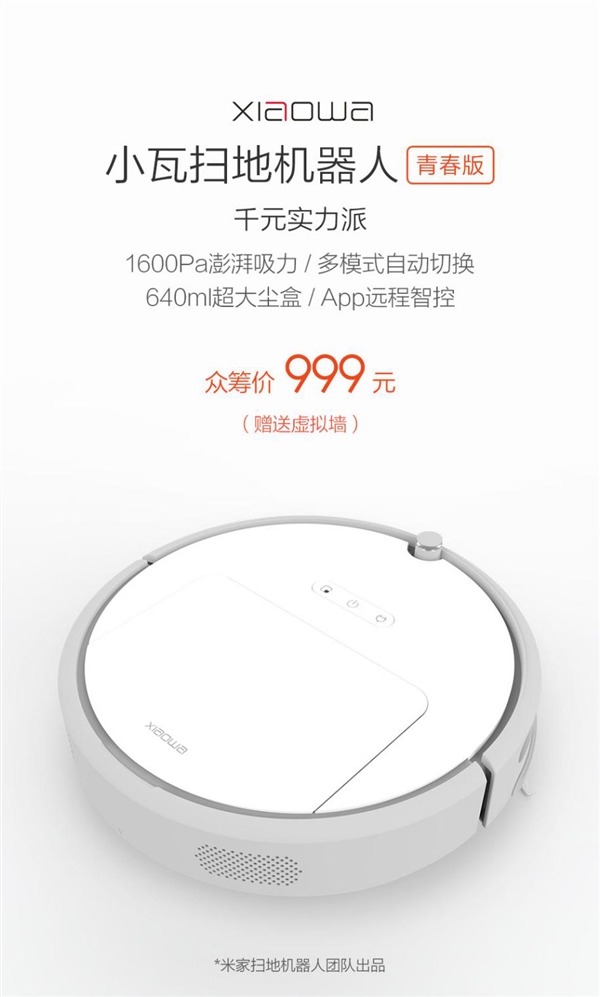
There are already two robot vacuum cleaners under Xiaomi’s MIJIA home appliances but both are a bit pricey. Its latest vacuum cleaner, the Xiaowa Robot Vacuum Cleaner, costs much less and has mostly the same features.
The Xiaowa Robot Vacuum Cleaner is also made by Roborock, the same company that made the first two cleaners. It shares a similar design and even has the same diameter as the 2nd gen model. However, it is a tad shorter.
Even though it is priced at ¥999 (~$158) compared to the ¥2499 (~$394) of the 2nd-gen vacuum cleaner, the Xiaowa Robot Vacuum Cleaner doesn’t sacrifice much in terms of features.
It has a 640ml capacity dust box that should suffice for cleaning a room once a day/once in a week. It has a single sweeping side brush and a main rotating brush underneath. Just like its siblings, it can also climb obstacles up to 2cm high, so you don’t have to worry about getting cables out of its way.
The Xiaowa Robot Vacuum Cleaner has 9 different cleaning modes that can be managed via the Mi Home app. It can clean along wall corners, around objects such as furniture legs, and also specific spots. Xiaomi says it has a suction pressure of 1600Pa.
The vacuum cleaner has a 2400mAh lithium-ion battery and uses a similar charging dock as the other two. If it runs out of battery while cleaning, it’ll return to its charging dock and resume cleaning when charged.
The Xiaowa Robot Vacuum Cleaner has already surpassed its crowdfunding goal by over 2500%. It is scheduled to start shipping 20th of April.
We use cookies on our website to give you the most relevant experience by remembering your preferences and repeat visits. By clicking “Accept”, you consent to the use of ALL the cookies.
This website uses cookies to improve your experience while you navigate through the website. Out of these, the cookies that are categorized as necessary are stored on your browser as they are essential for the working of basic functionalities of the website. We also use third-party cookies that help us analyze and understand how you use this website. These cookies will be stored in your browser only with your consent. You also have the option to opt-out of these cookies. But opting out of some of these cookies may affect your browsing experience.
Necessary cookies are absolutely essential for the website to function properly. This category only includes cookies that ensures basic functionalities and security features of the website. These cookies do not store any personal information.
Any cookies that may not be particularly necessary for the website to function and is used specifically to collect user personal data via analytics, ads, other embedded contents are termed as non-necessary cookies. It is mandatory to procure user consent prior to running these cookies on your website.


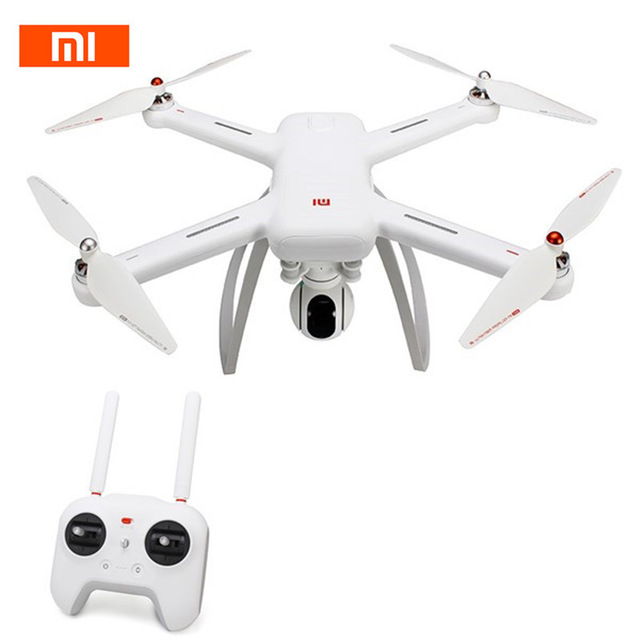 While your subtotal without the discount is $748.12, you can get your hands on both the items for just $538.99 for a limited period of time. In other words, you save $209.13.
 Your final price will be only $31.74 but it’s worth noting that you’d end up paying $35.48 without the discount. You save $3.74.
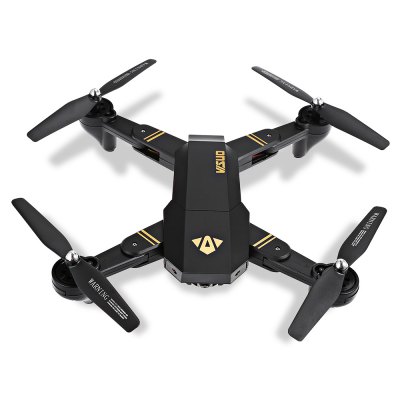 The TIANQU XS809W normally carries a price tag of $57.78 on GearBest, but you can now buy it for only $48.99. However, it’s worth noting that there were only 226 pieces left at the time of writing.
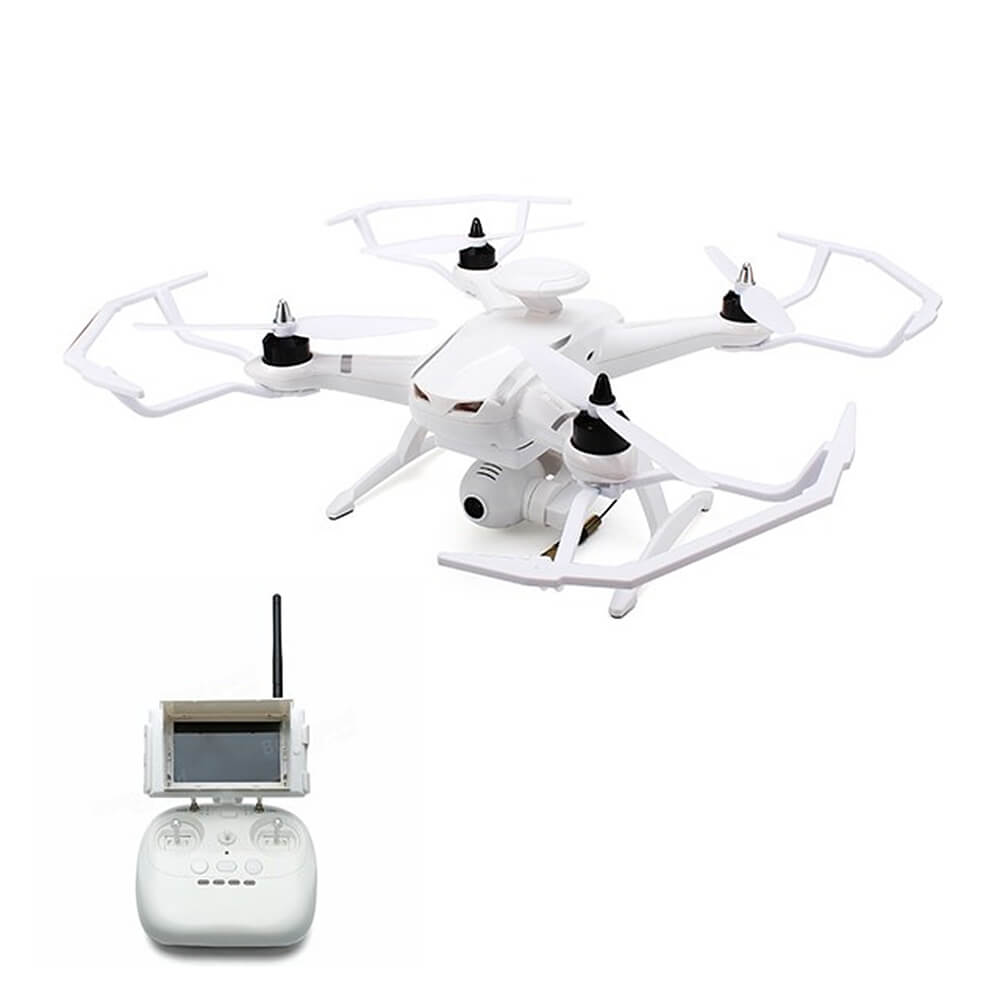 In line with this, GearBest is giving 12% discount on AOSENMA CG035 RC quadcopter, which usually sells for $231.99. With the discount, the device’s real price has lowered to only $204.99. There were 19 pieces left for the Flash Sale price.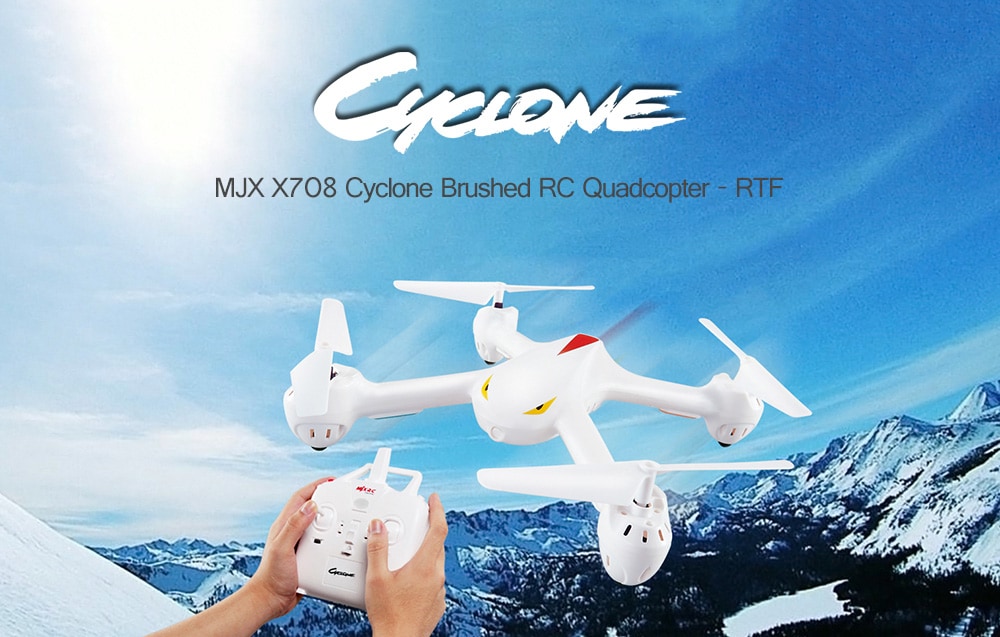
 The device normally bears a quoted price of $29.99, but GearBest is giving 26% off on its selling price. This discount is valid for the color mix version of RunCam Micro Sparrow camera.




 As part of its latest Flash Sale, TomTop is currently giving a noteworthy 50% discount on the Smooth-Q’s original $197.99 asking price. In other words, you can now buy the coveted camera phone accessory by shelling out just $99.00.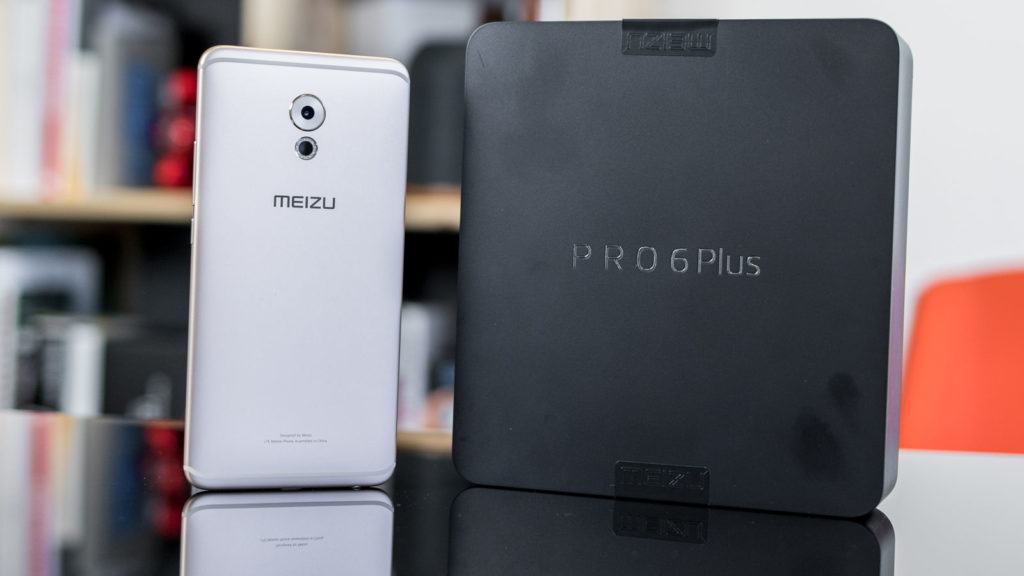
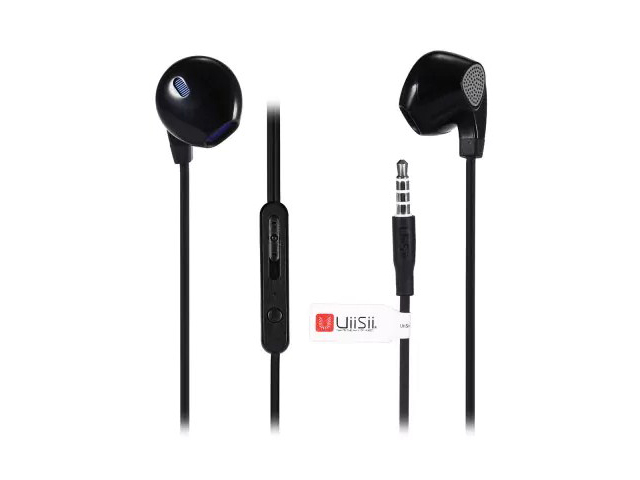 But with the discount, the UIISII U1 is currently available for just $2.84. Moreover, you can choose from a broad range of color option including black, black/red, green, pink and white.
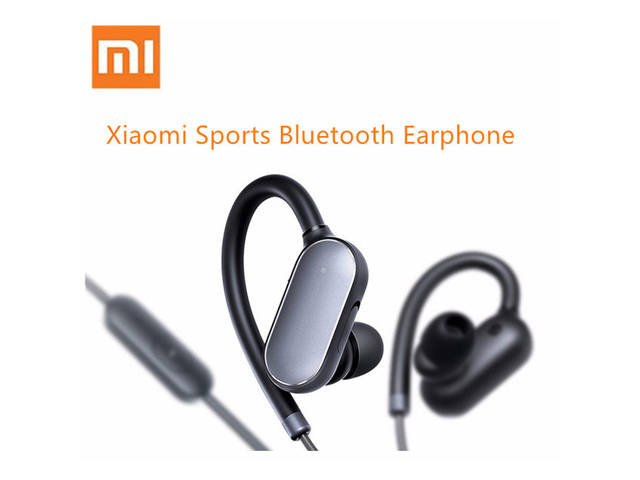 GearBest is giving 24% discount on the device’s original $34.07 selling price as part of its Flash Sale promo, which is slated to end in 7 days. However, there were only 7 pieces left at the time of writing.