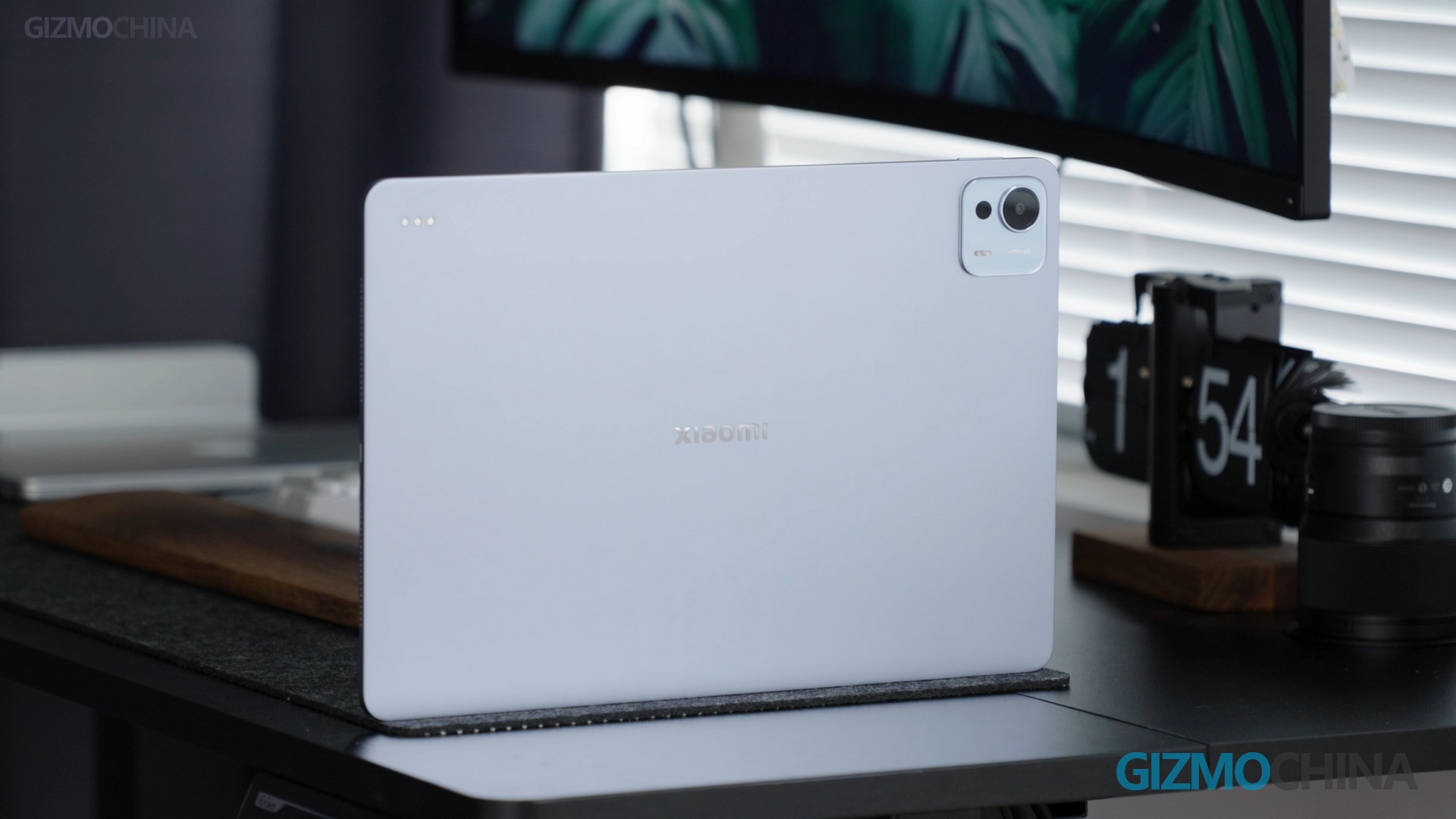
Xiaomi has been teasing the arrival of its upcoming flagship tablet, the Pad 7s Pro, in China. Earlier this week, the device appeared on Geekbench, confirming the presence of Xiaomi’s in-house Xring O1 chipset. Now, tipster Digital Chat Station has shared the complete specifications of the tablet via Weibo.
Xiaomi Pad 7S Pro specifications (rumored)
Xiaomi Pad 7S Pro
As per the leak, the Xiaomi Pad 7s Pro will arrive with a 12.5-inch LCD panel offering a 3.2K resolution and a 144Hz refresh rate. It will support a peak brightness of 1000 nits and full DC dimming for eye comfort. Xiaomi is said to be preparing a special variant with a soft light screen for enhanced reading comfort.
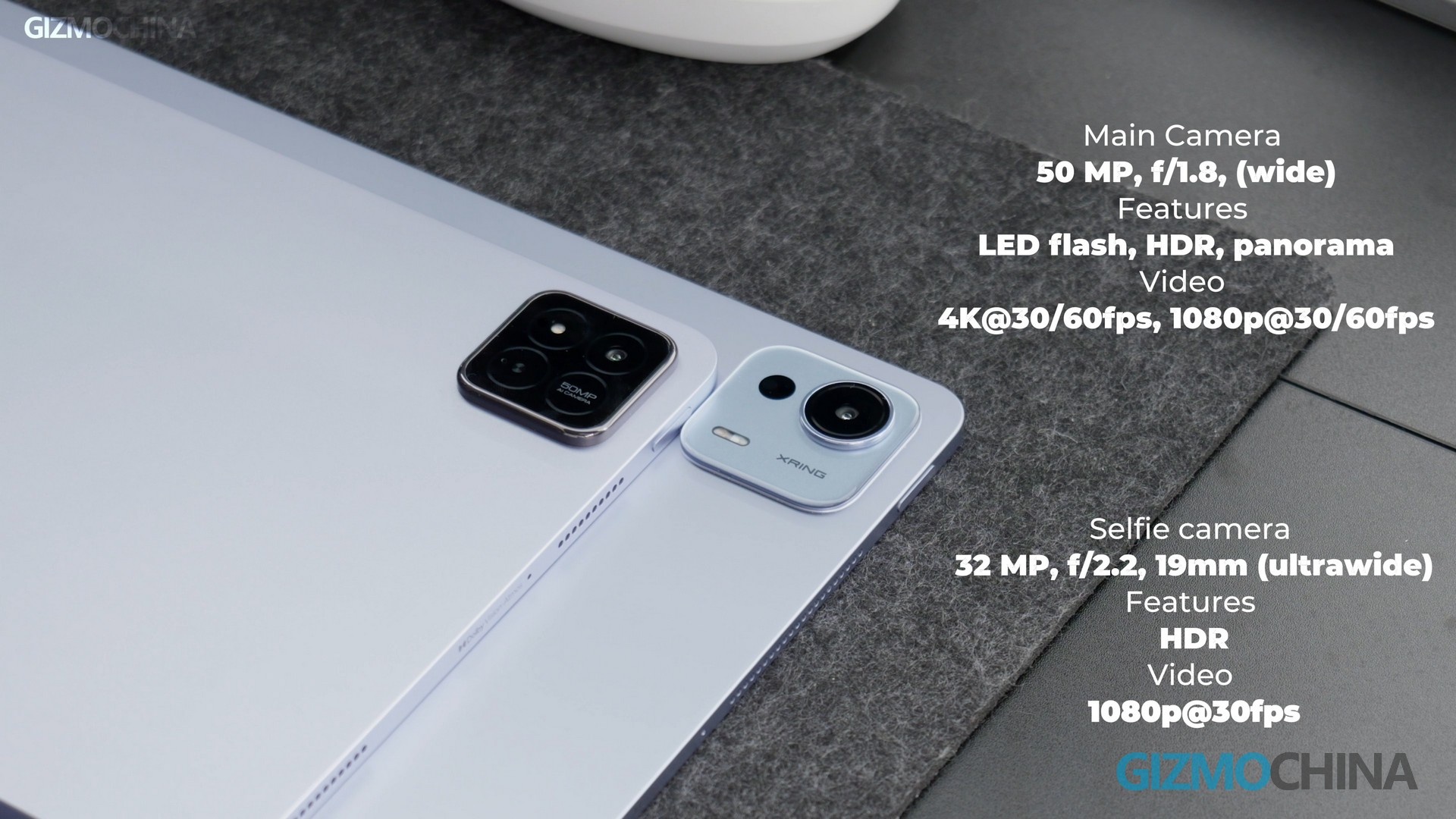
The Pad 7S Pro will be equipped with the feature Xiaomi’s in-house 3.4GHz Xring O1 processor. It will house a 10,610mAh battery with support for 120W fast charging, offering rapid top-ups despite its massive capacity. The camera setup includes a 32-megapixel front camera and a 50-megapixel sensor on the back.
Other highlights include a quad-microphone array, support for a magnetic floating keyboard, and compatibility with Xiaomi’s latest stylus, the Focus Touch Pen. The device will run on HyperOS 2.0-based Android 15. It will have a remarkably thin 5.8mm profile and weigh just 576 grams, making it highly portable despite its large size.
The Xiaomi Pad 7s Pro is likely to debut later this month in China, possibly alongside the Xiaomi Mix Flip 2, which is rumoured to be the company’s only foldable phone for 2025.
For more daily updates, please visit our News Section.
The new Xiaomi Pad 7 Ultra, like the Xiaomi 15S Pro, has the XRing O1 chip. At the time of release, many people may already have gained an understanding of the chip’s performance from leaked benchmark data. Some have even questioned the real efforts Xiaomi has put into it. After all, this chip uses standard CPU and GPU cores from the ARM portfolio. Additionally, the XRing O1 chip in the Pad 7 Ultra differs a bit from that in the smartphone; it has been downclocked. So, how exactly does it perform as an Ultra tablet?
Unboxing & Appearance
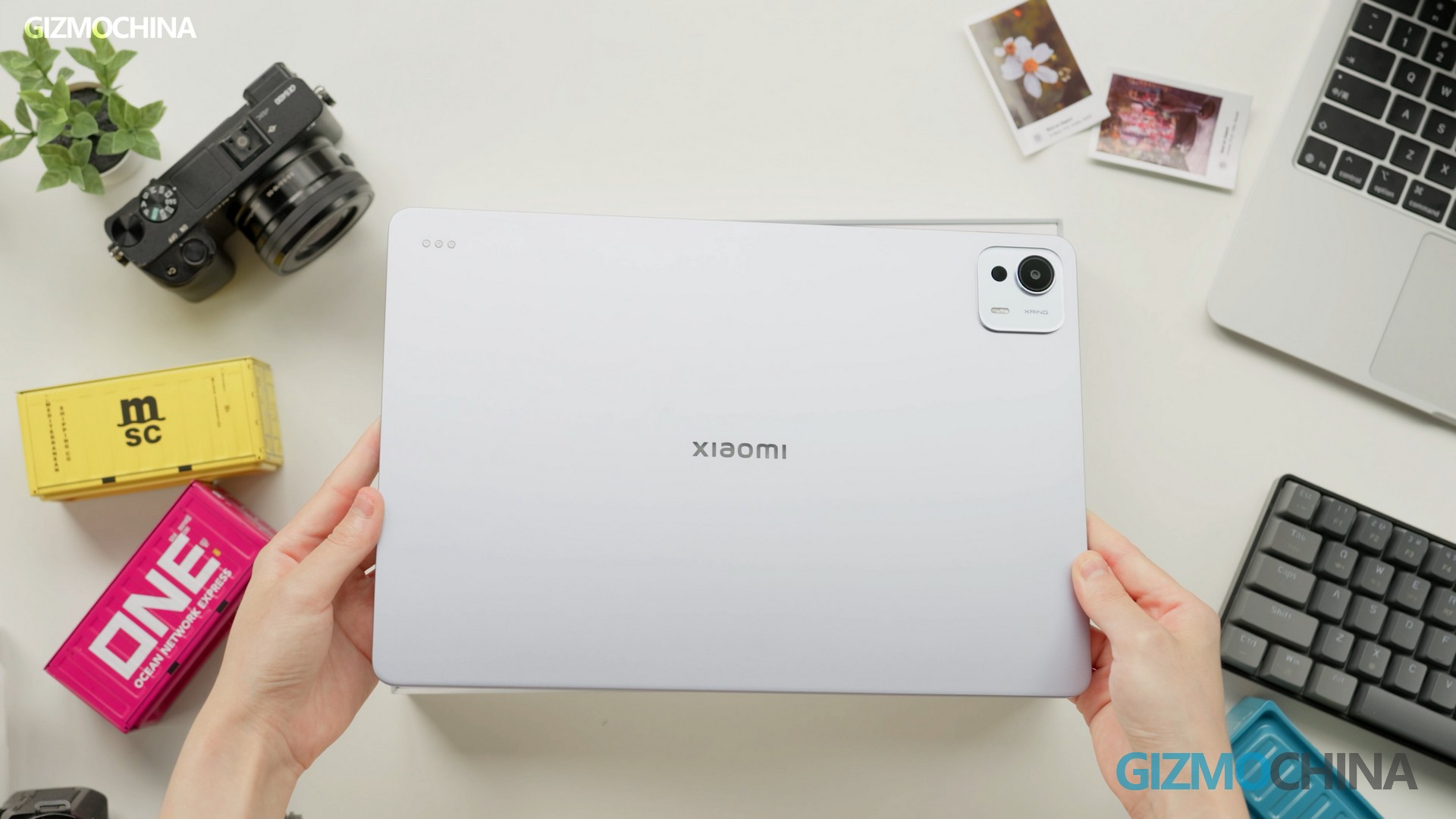
In the box, you first see the Xiaomi Pad 7 Ultra. In the top left corner is the white box with the user manual inside. Next, you’ll find the A to C cable and a 120W fast charger. We also purchased the keyboard, which costs 1499RMB (≈206USD). The Pad 7 Ultra’s design basically inherit most of the previous model of the line.
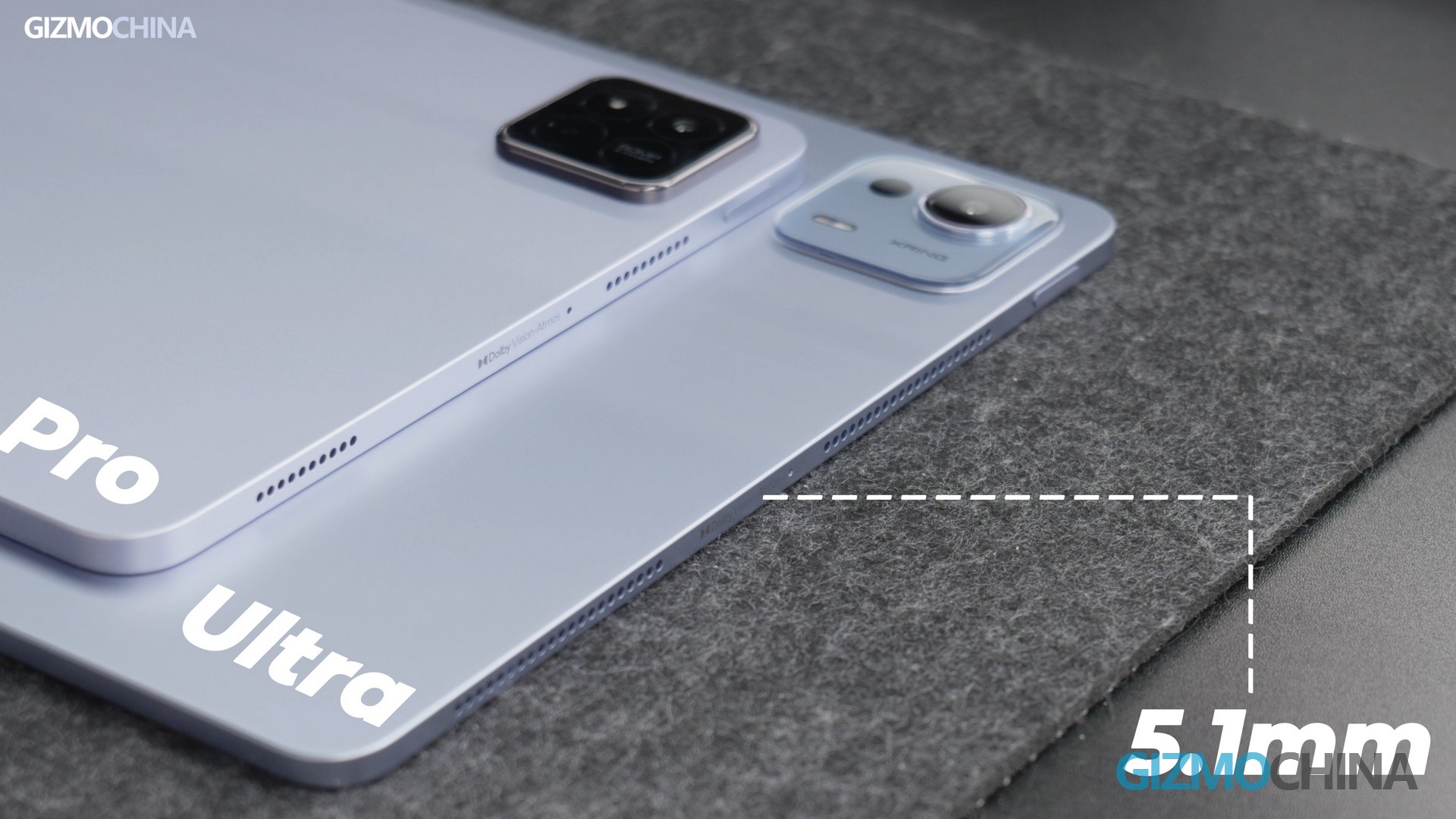
The color we have here is purple, the same as the Pro version. There is also a black color option available. The entire back and frame are made of metal, with a fine matte finish. The first impression is that it is very thin. Comparing it to the Pad 7 Pro, you can see that its thickness is only 5.1mm.
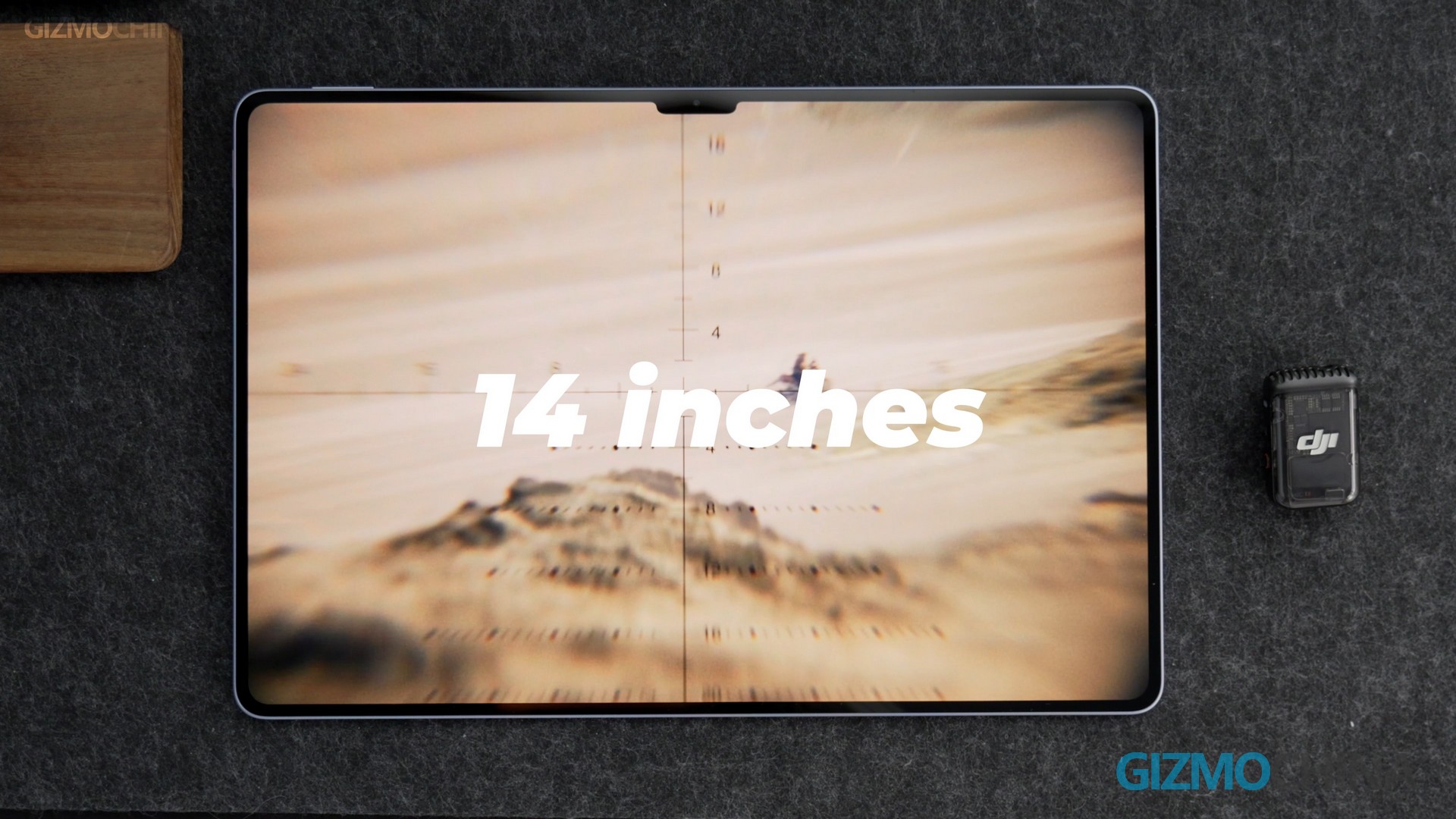
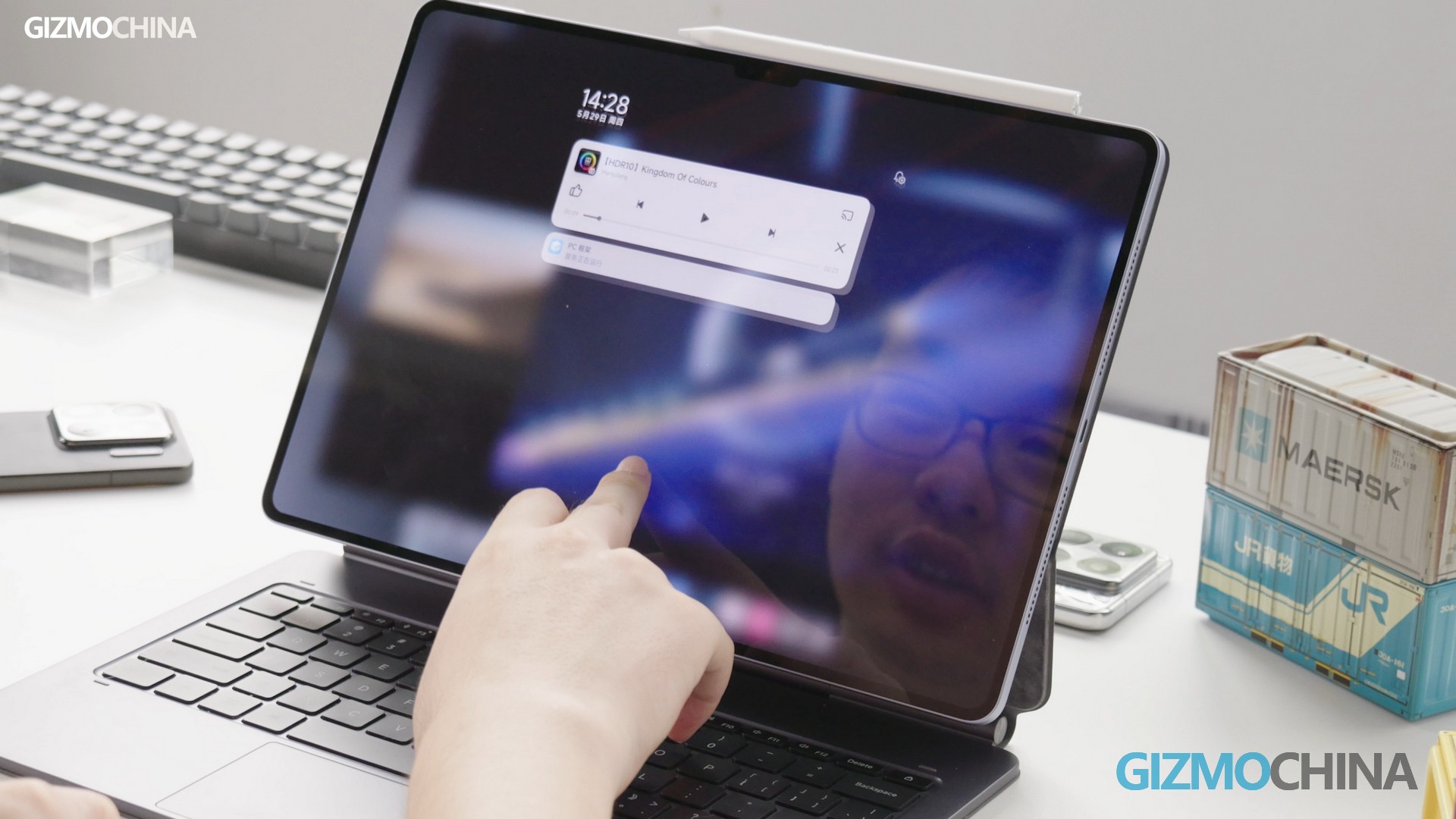
This time, Xiaomi has made several significant changes to its tablet. The first change is that Xiaomi has abandoned the LCD screen and gone with an OLED one. And you can choose either the regular screen, like the one I have here, or the anti-glare screen version. The second change is the screen size, which is now 14 inches.
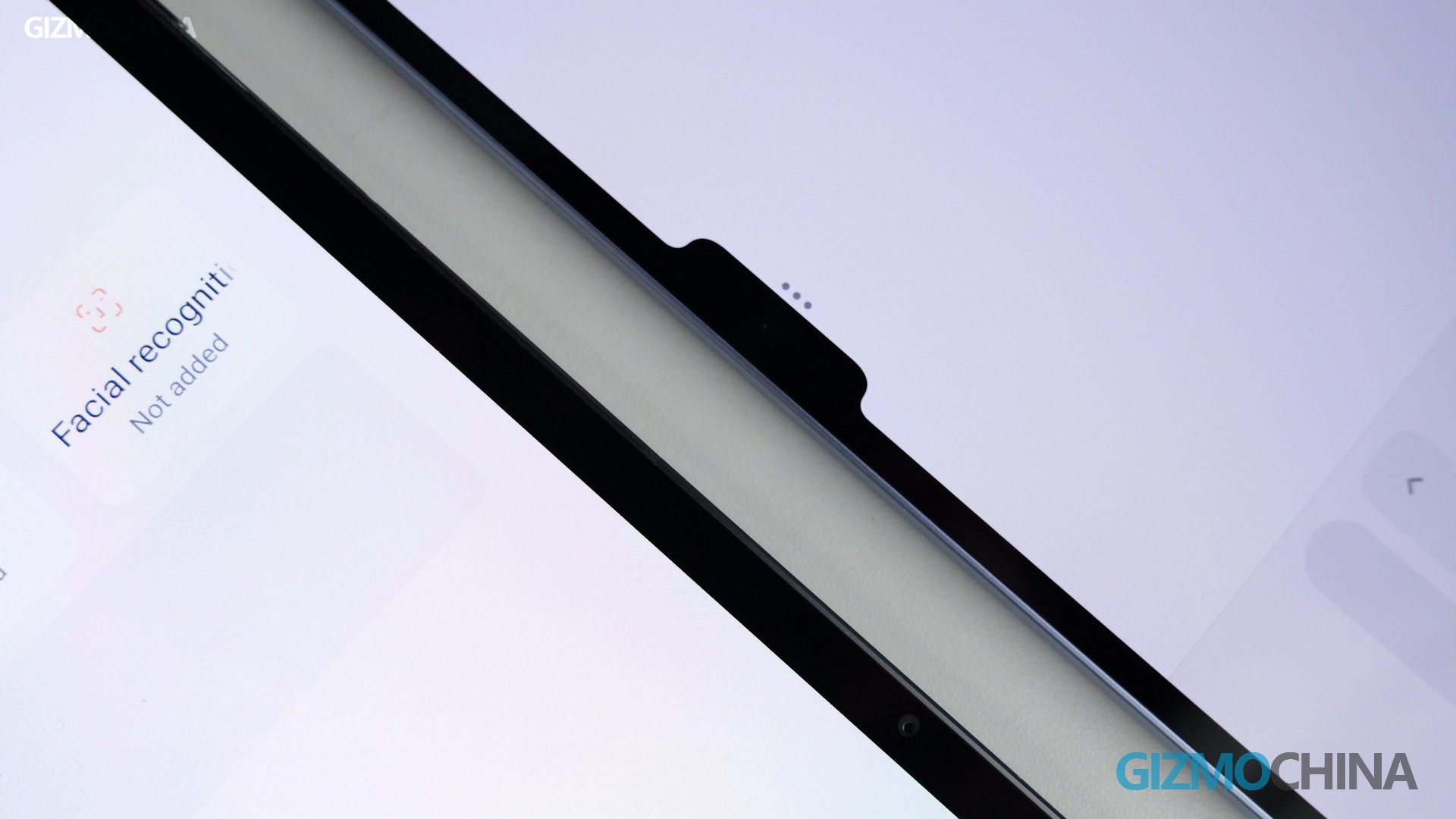
This site provides an experience similar to that of a laptop screen. However, it still keeps the same notch design as before. This design affects my reading experience. I think this might be the reason why the bezel has become narrower. So, the notch had to be there. If you were to choose, which one would you prefer?
Screen and Audio
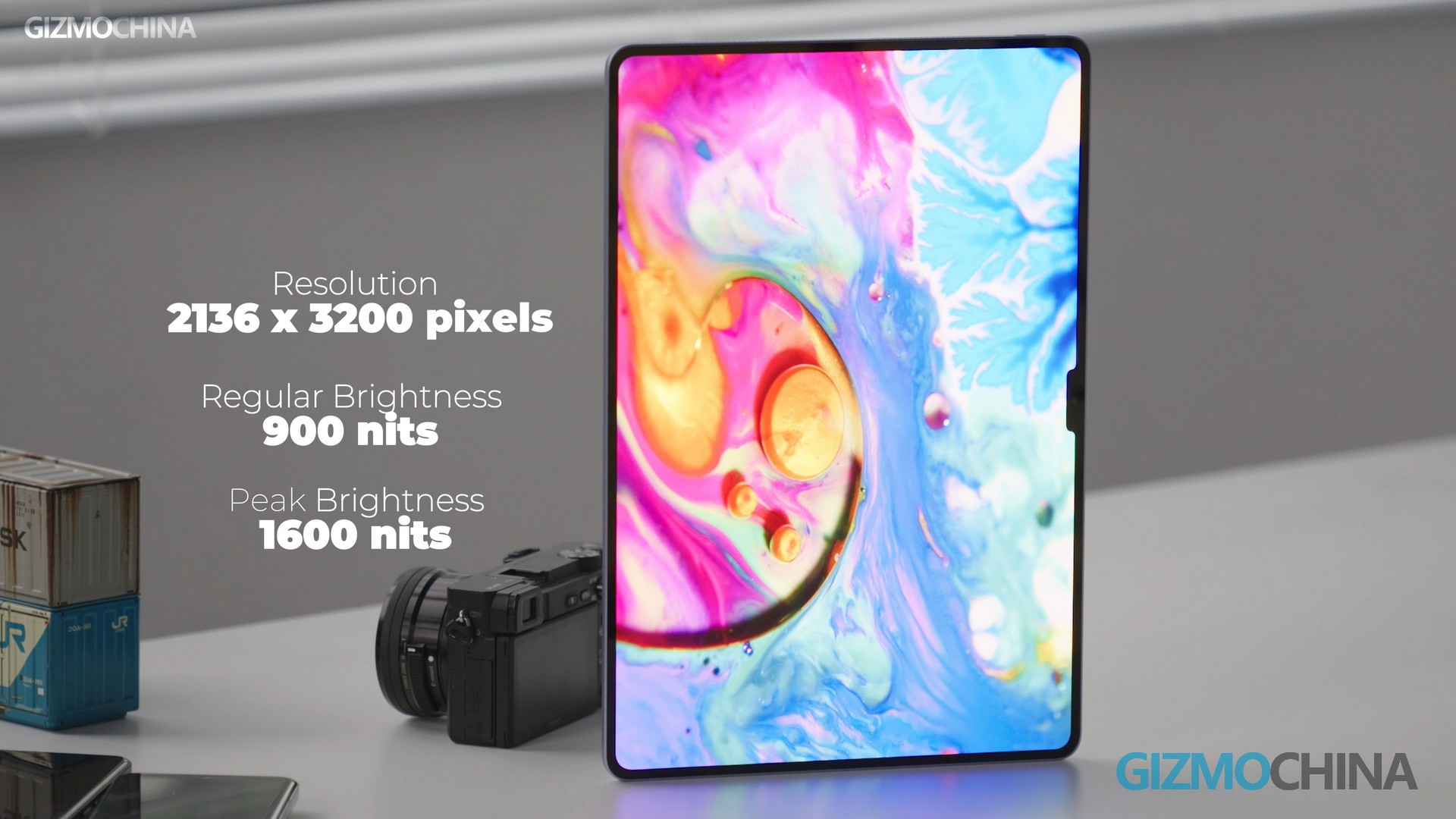
The Xiaomi Pad 7 Ultra features a very large screen, 14 inches with a 3:2 aspect ratio. This makes the Pad more suitable for reading and office work. The screen has a resolution of 3.2K, with a high brightness level. The regular brightness is 900 nits, and the peak brightness can reach 1600 nits.
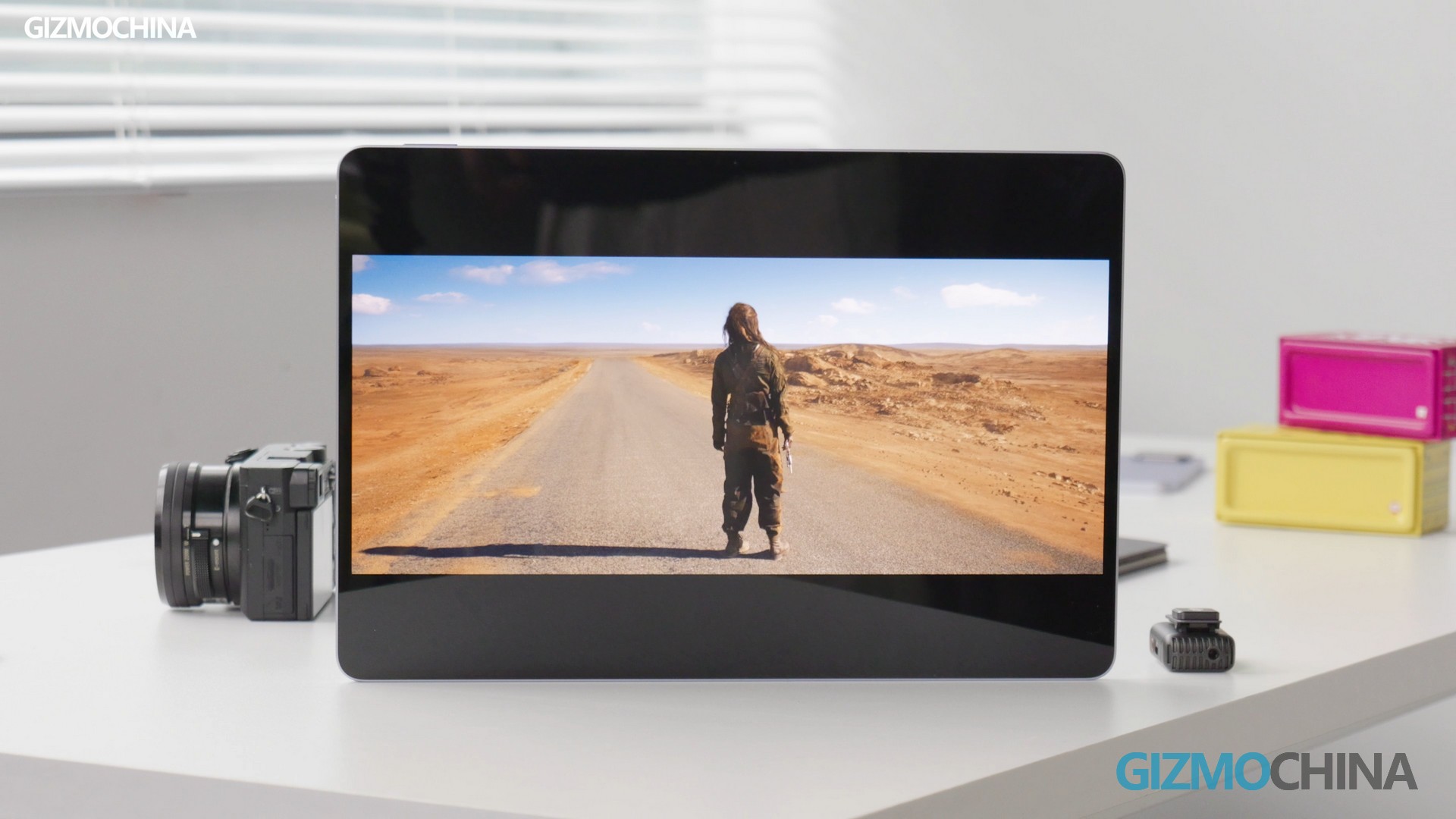
Even under strong light, the screen remains visible without any issues. The screen supports DC and PWM dimming and provides a 4800Hz high-frequency PWM dimming option. It also supports the P3 wide color gamut, which allows it to display rich colors with natural transitions, making the visuals very realistic. For a better understanding of the viewing and audio experience, you can check it out in the video.
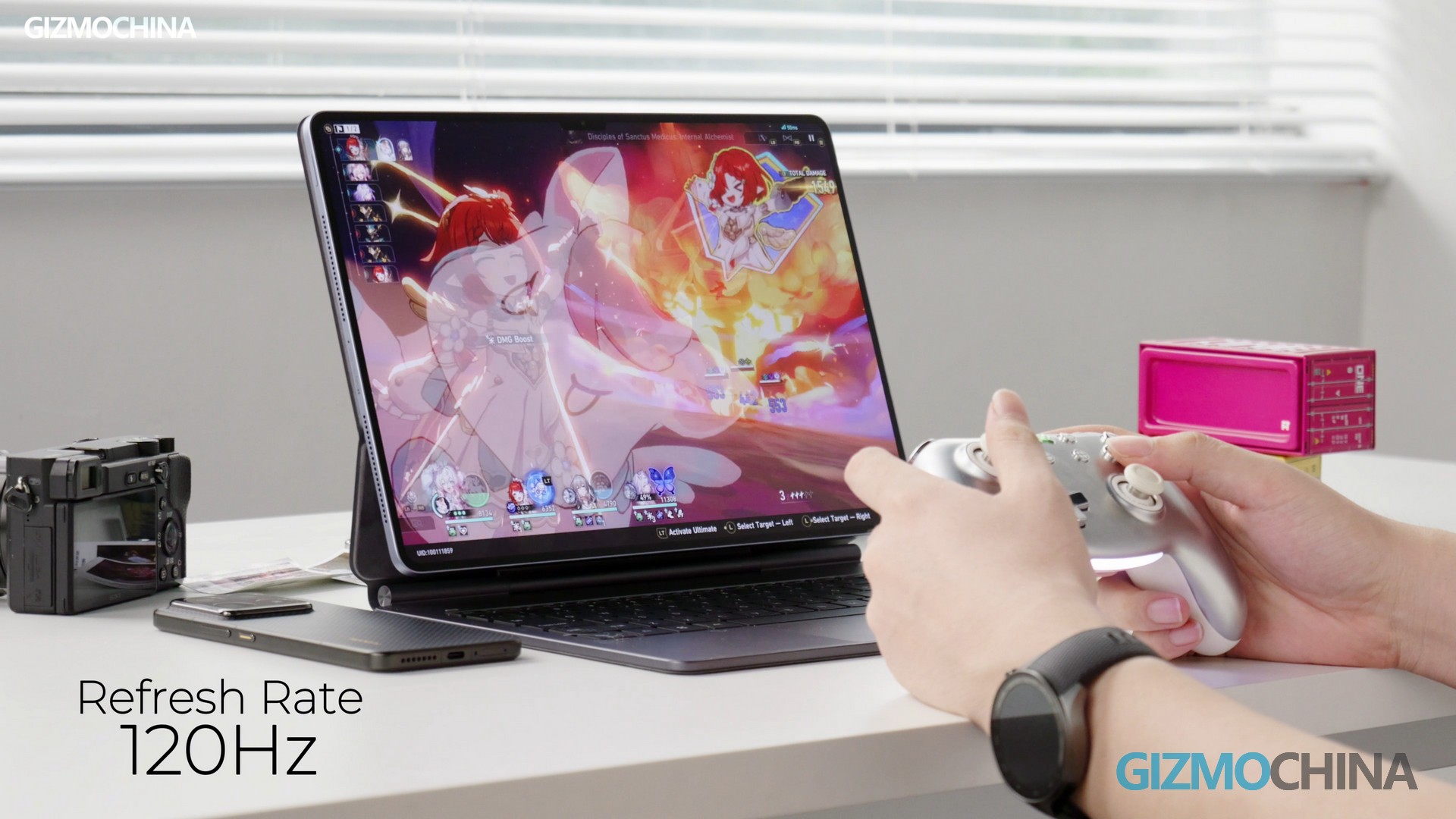
The screen supports a maximum adaptive refresh rate of 120Hz, which is smooth and comfortable for viewing, especially when scrolling through web pages or playing games. There is no sense of lag.
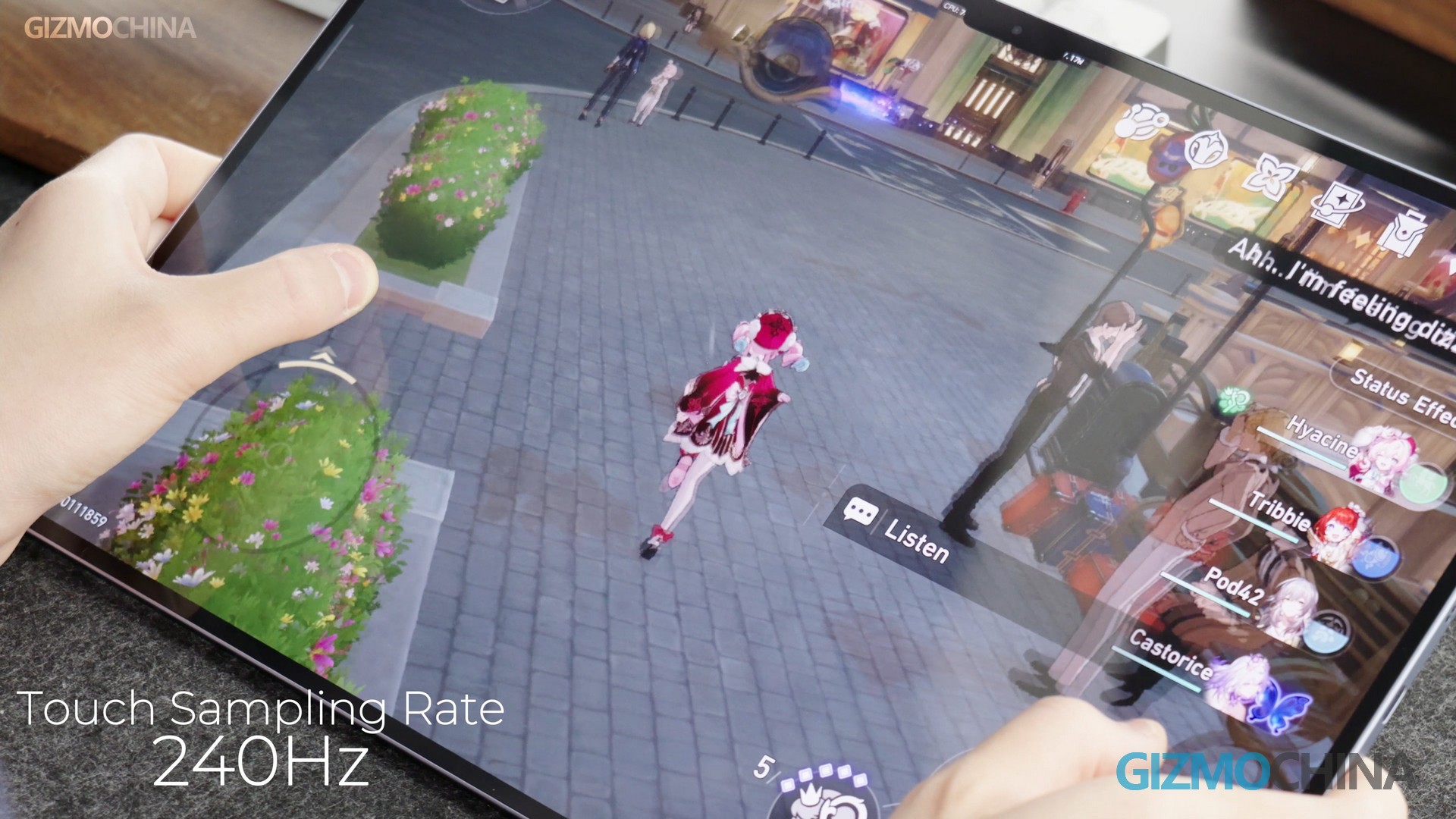
The touch sampling rate is up to 240Hz, with an instantaneous touch sampling rate of up to 1600Hz. And the stylus touch sampling rate is 240Hz. This means the screen responds very quickly to any touch, whether you’re playing games or writing, you can feel this fast response.
Additionally, the screen uses M9 low-power-emitting materials, which means it consumes less power when displaying content, so the battery life could be better. The screen cover is made of fifth-gen Gorilla Glass, which is very durable and resistant to drops, significantly enhancing the screen’s robustness. However, this Pad tends to reflect light under spot lights. If you hate this, better purchase the paper-matt screen version.
Moreover, in terms of multitasking, the App launch speed has increased by an average of 61%, the image loading speed has improved by 80%, and the multitasking fluidity has been enhanced by 49%. When we open multiple Apps at the same time, switching between them is also very smooth without any lag, making the work efficiency much higher.
Performance
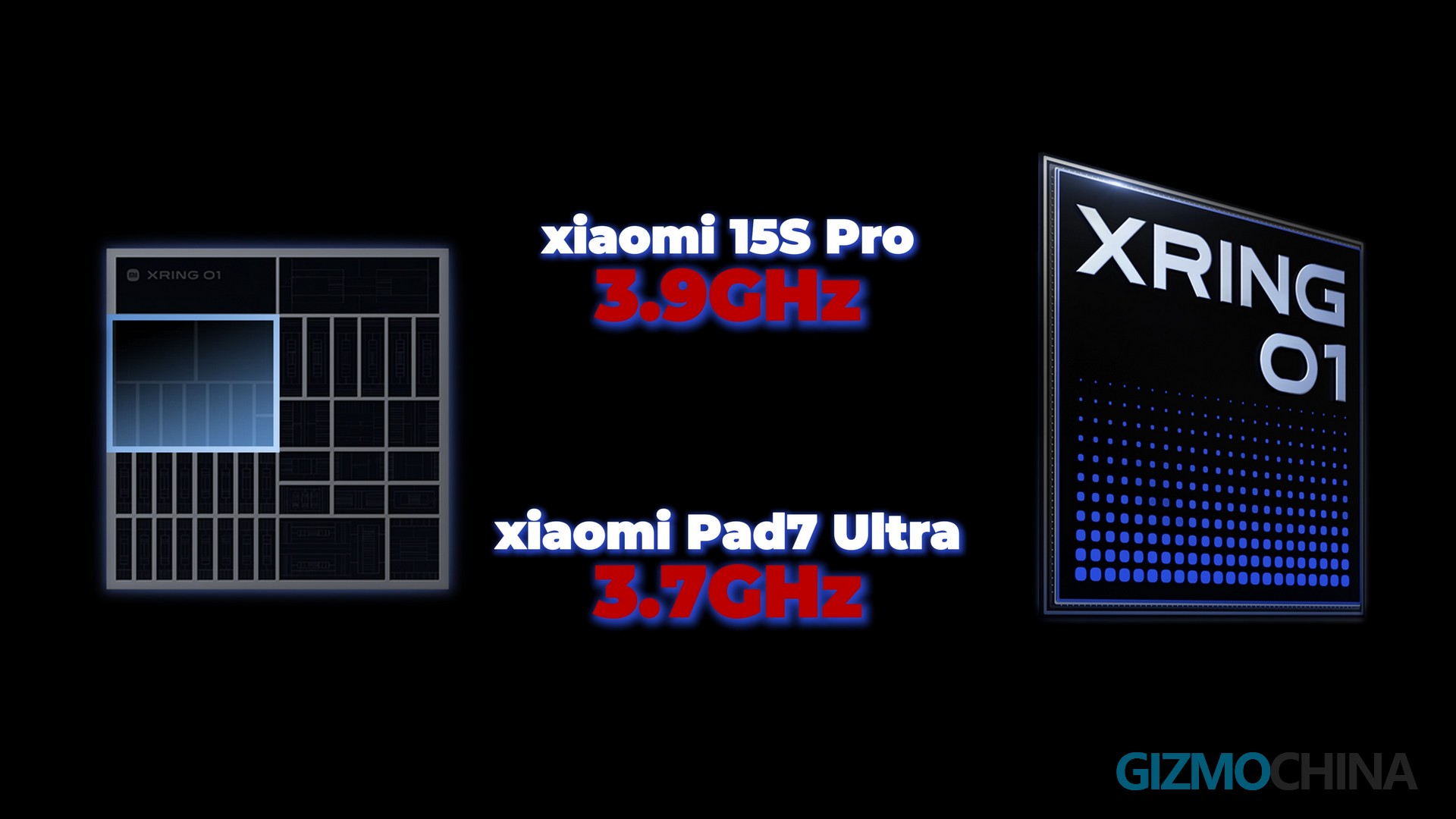
Speaking of the chip, the XRing O1 is indeed much better than the Snapdragon 8s Gen 3 (4 nm) in the previous Xiaomi Pad 7 Pro. This can also be verified from the game tests. However, in reality, the XRing O1 in the Xiaomi Pad 7 Ultra still lasted at a lower clocking than the one in the Xiaomi 15S Pro.
With other conditions unchanged, the max core of the CPU in the Xiaomi 15S Pro clocks up at 3.9GHz, while the max figure is 3.7GHz for the Pad7 Ultra. To put it simply, the CPU in the Xiaomi 15S Pro is tuned like a sports car with a higher top speed, while the one in the Xiaomi Pad 7 Ultra is like an SUV, with a balance between space and performance. Although it is not as fast, it focuses more on stability and endurance.
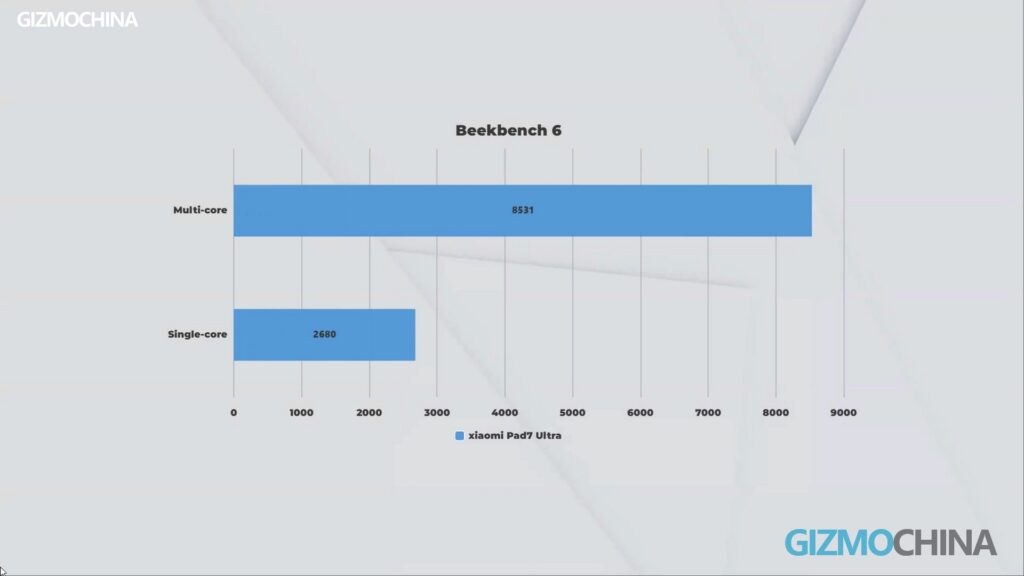
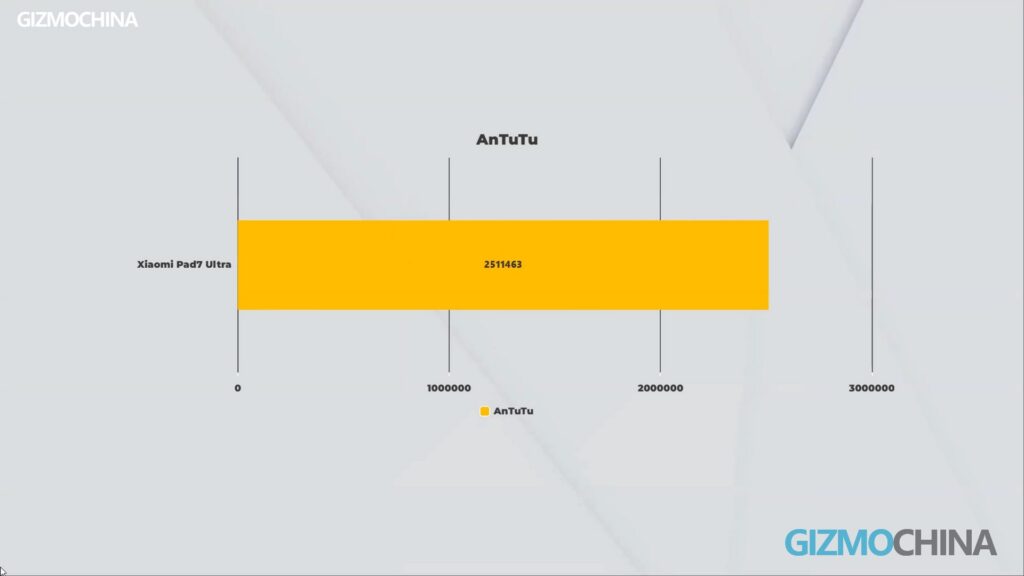
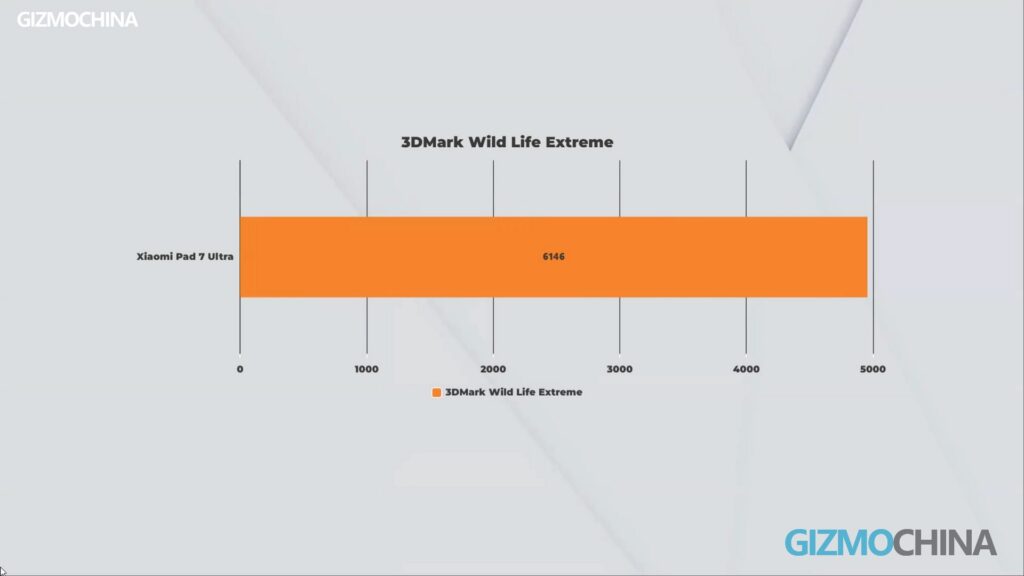
Even though the XRing O1 in the Xiaomi Pad 7 Ultra is a downclocked version, its performance is still excellent. Thanks to the larger space inside and better heat dissipation, it can run stably for a long time. For example, when watching videos or working in the office. It’s mainly powered by adapting non-large cores with a slightly lower main frequency, which is like equipping an SUV with an engine suitable for long-distance travel. Although it is not as fast, it is more economical and can run stably for a long time without easily “stalling”. To get a rough picture of the chipset running inside, you can take a look at its benchmark results in various tests.
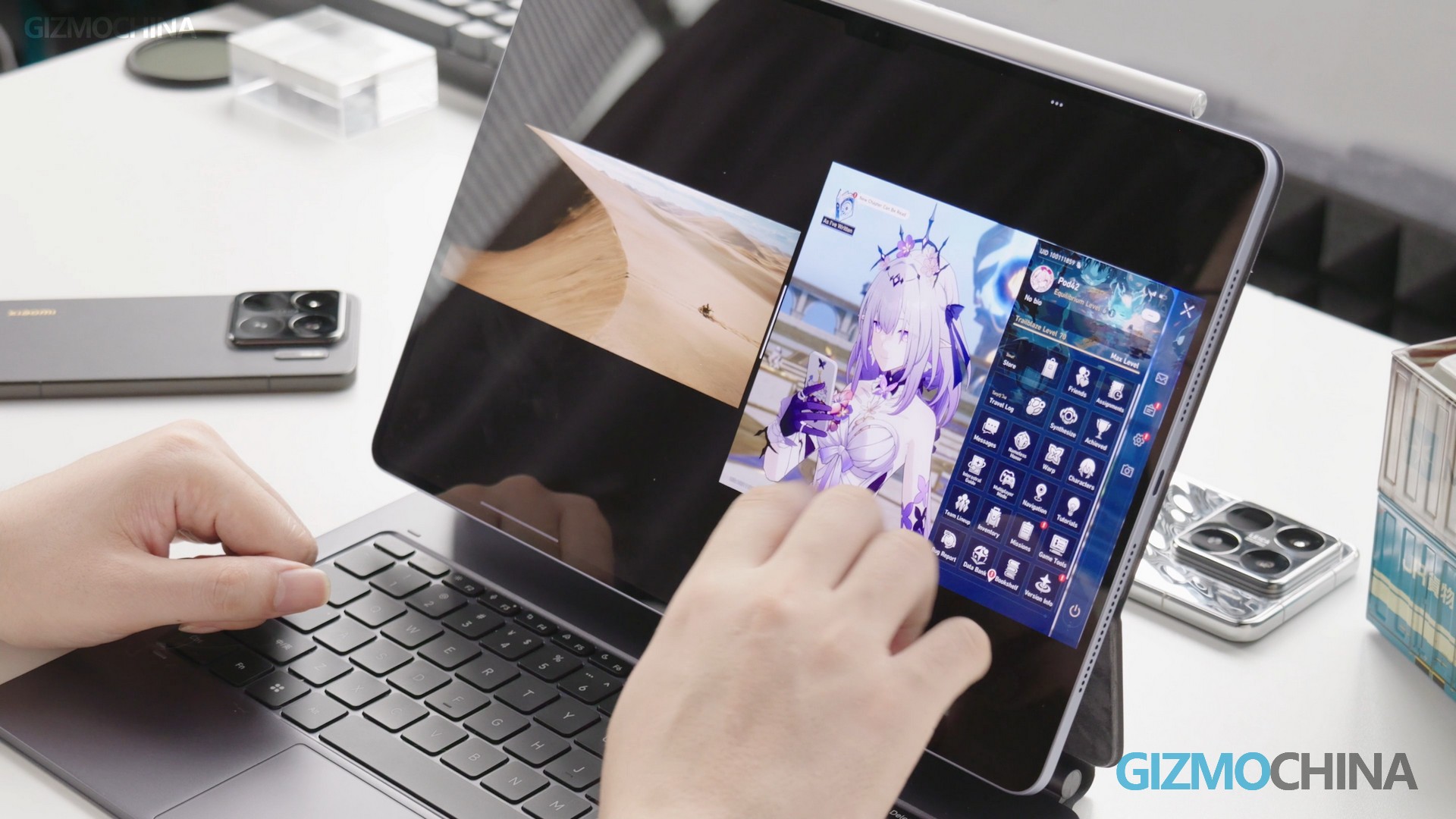
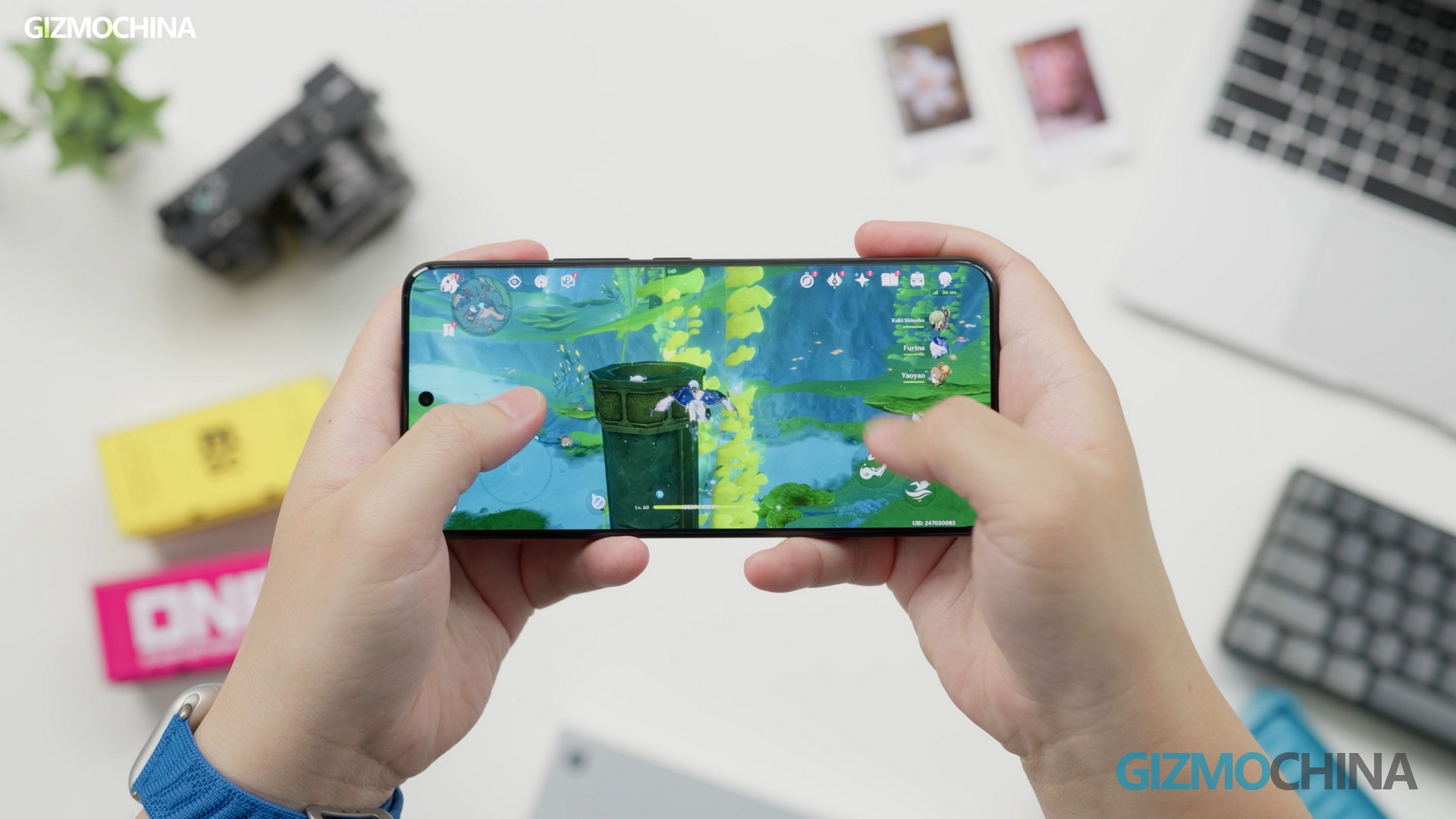
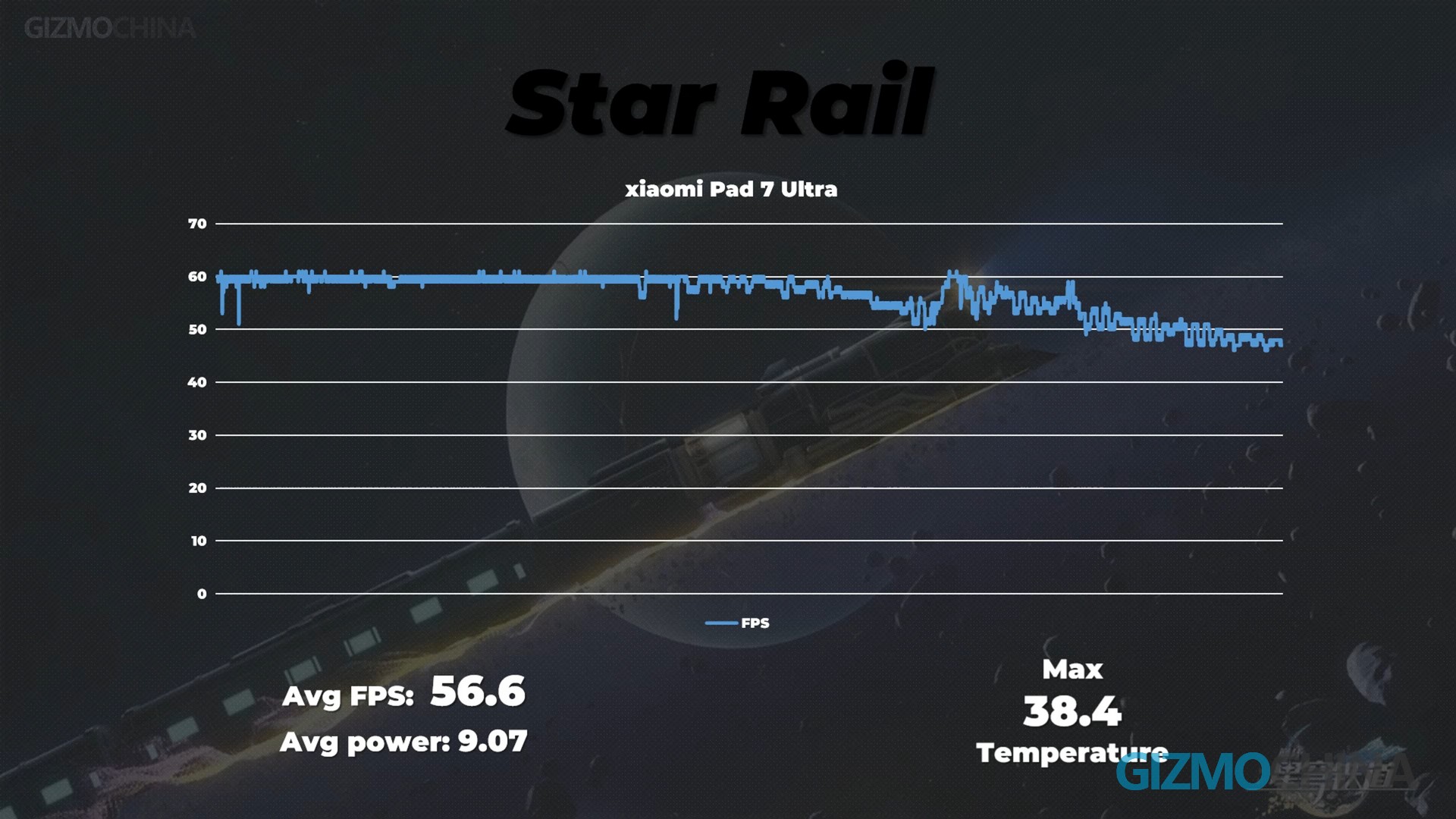
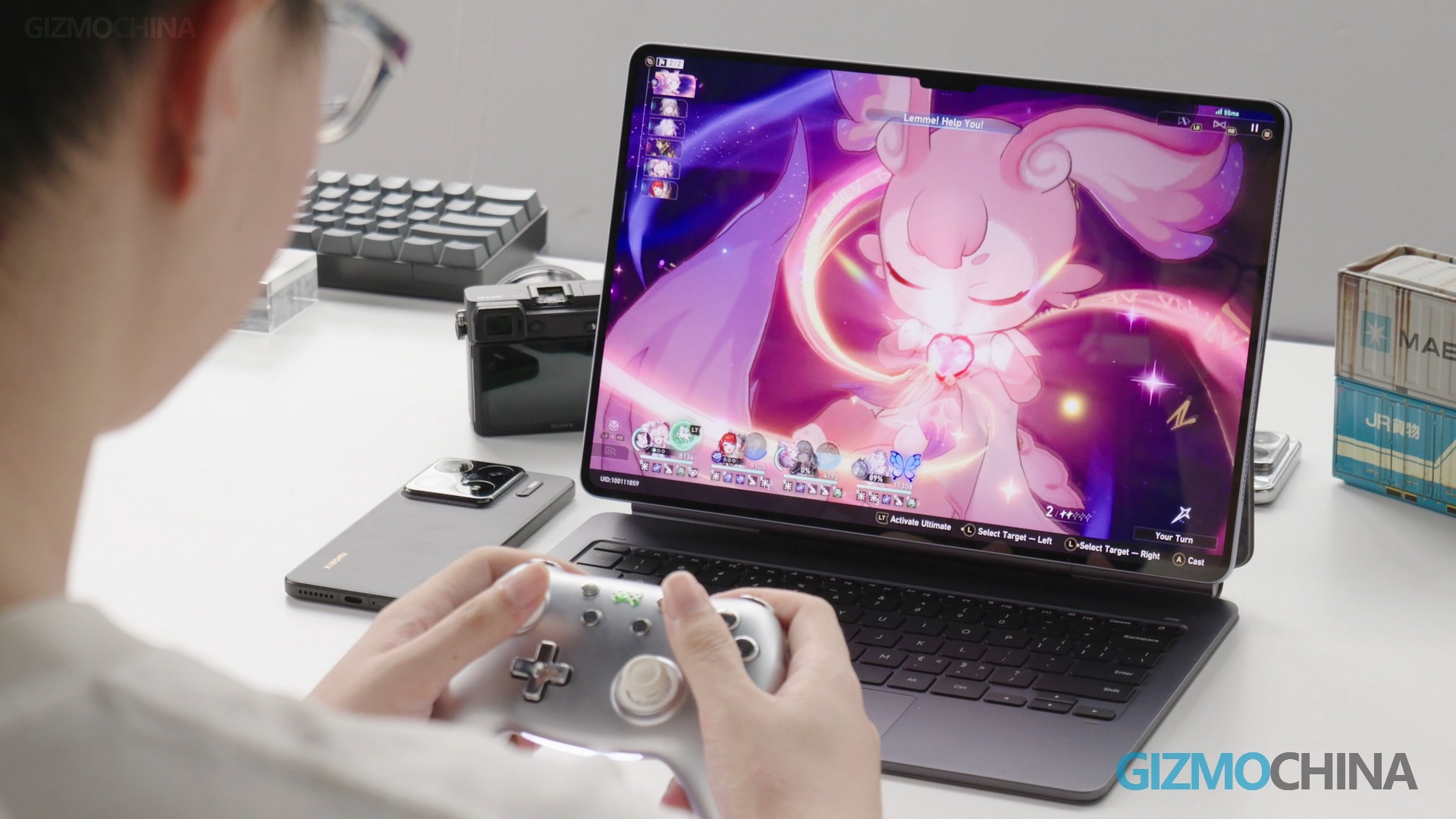
Now we have also chosen the very demanding game, Honkai: Star Rail, for a test. We found that the serious frame dropping that occurred in the Pad 7 Pro is not here in the Ultra. So, you don’t have to worry about the gaming experience at all.
System and Functionality
I once saw a comment online about Xiaomi’s system: “The biggest opponent of XRing is not Snapdragon or Kirin, but HyperOS.” I think this is indeed the case. Xiaomi’s hardware performance has always been good, but due to system optimization issues, it still seems to have some old problems. Although HyperOS 2.0 has improved in stability and security, there are still many old problems.
For example, the volume bar pop-up is misplaced for touching; the system (mostly animation) is laggy and flicky sometimes; the control center and notification center cannot be merged on the same page. However, the system’s compatibility for peripherals is quite good. It supports game controllers, and the gaming experience has also been improved.
Imaging and Functionality
Regarding the camera setup, the specs are the same as the Pad 7 Pro, with no changes.
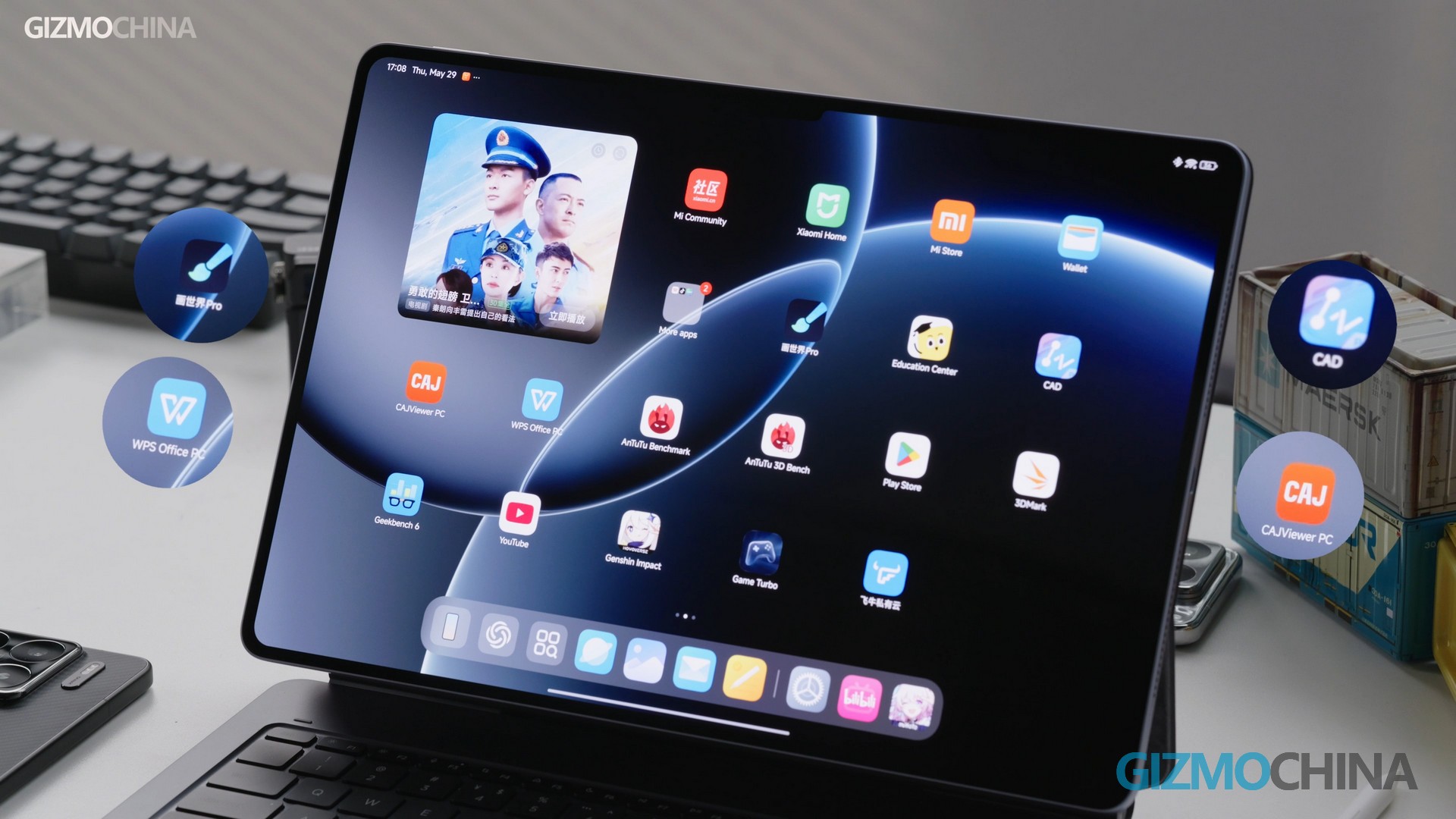
In addition, Xiaomi has also optimized some Apps. For example, Paint World Pro, WPS Office PC, CAD, and CAJViewer PC, etc. The optimization is relatively grown-up and can widely meet the needs of officing and creating. The file transfer function between mobile phones and computers has been optimized and can be operated through the pull-down toolbar.
Accessories
Let’s take a look at the accessories. The keyboard and case are connected to form a floating keyboard. The keyboard has been upgraded, with a good typing feel, pressure sensitivity, and response. However, the keyboard and pen need to be purchased separately.
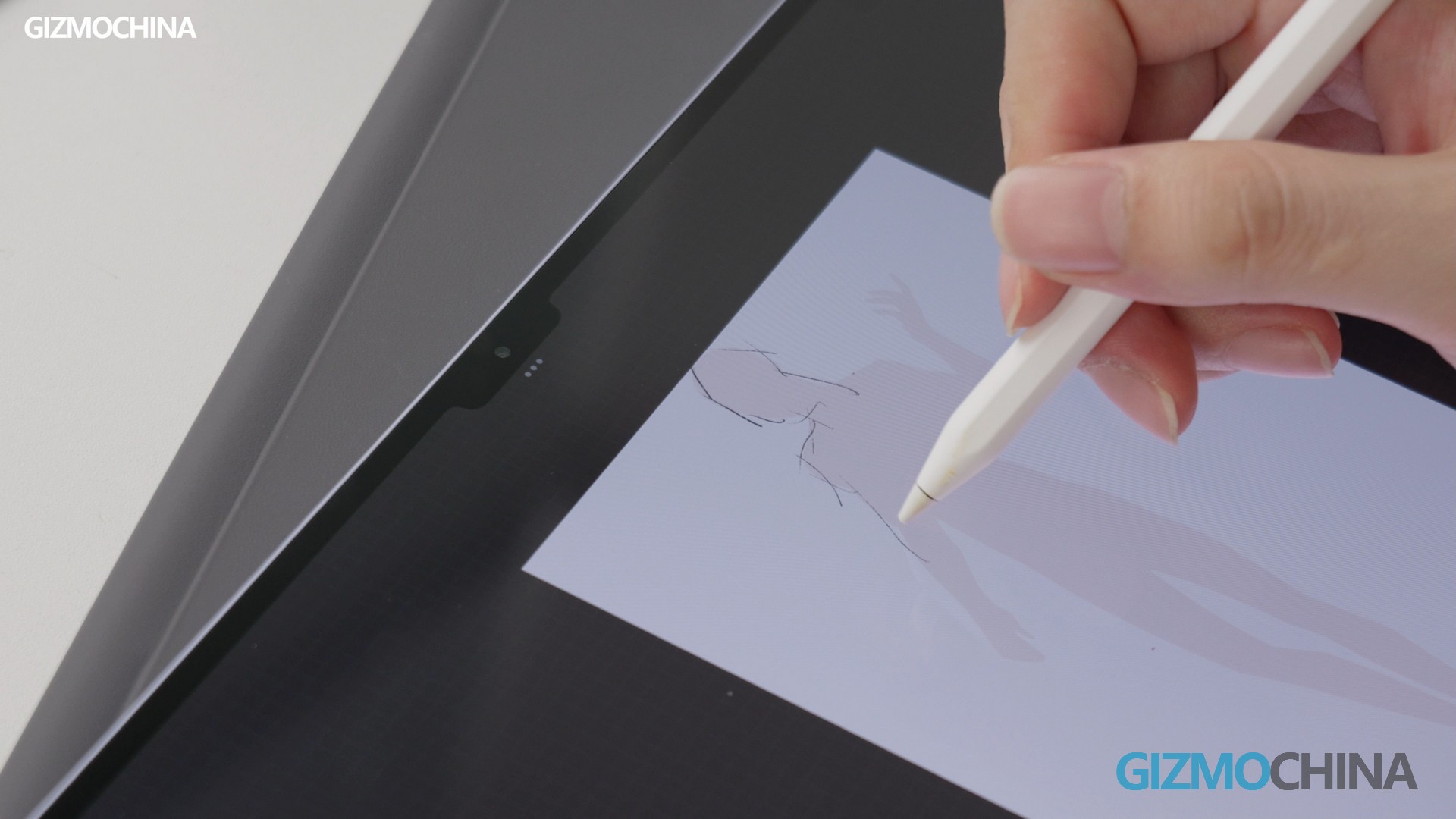
As for the pen, although there is no upgrade, there are two sets of free brushes for a limited time. The pressure sensitivity and touch feel of the pen are very good when in use. However, one thing to note is that there is still a delay with the pen.
Summary
In summary, the Xiaomi Pad 7 Ultra is a powerful tablet with a very good screen, suitable for many usage scenarios, such as watching movies, working in the office, and drawing. The high touch sampling rate and refresh rate enable a smooth operating experience, and the optimized system ensures efficient multitasking capabilities.
However, HyperOS 2.0 on the Pad 7 Ultra still inherits some problems that we complained about before, such as occasional laggy animation and Stuttering of the playback sound. So, for software experience, it needs further optimization. But for now, let’s just emphasize: if you demand high screen quality and performance, the Xiaomi Pad 7 Ultra is an excellent option.
OnePlus has officially announced the launch of its latest neckband-style earphones, the OnePlus Bullets Wireless Z3, in India. Positioned as a daily companion for music, calls, and fitness, this new audio product is aimed at users looking for a seamless blend of style, performance, and battery life. Here’s a look at the Wireless Z3’s key features, price, and availability.
OnePlus Bullets Wireless Z3 key features
OnePlus Bullets Wireless Z3
The OnePlus Bullets Wireless Z3 features large 12.4mm dynamic drivers enhanced with the BassWave algorithm for deeper bass without compromising clarity. Sound Master EQ offers four audio profiles—Balanced, Serenade, Bass, and Bold—allowing users to customize the output to their preference.
Engineered for an all-day experience, the Bullets Wireless Z3 supports ultra-fast charging, delivering up to 27 hours of playback with just 10 minutes of charging. On a full charge, it promises up to 36 hours of music playback and 21 hours of call time.
OnePlus Bullets Wireless Z3
With 3D Spatial Audio, the neckband enhances stereo sound to create a more immersive, surround-like experience. AI-powered noise cancellation and ENC tech ensure clear voice calls by separating background sounds in real-time.
Other highlights include Bluetooth 5.4, Google Fast Pair, magnetic earbuds, in-line controls, and IP55 dust and water resistance. The design, made with skin-friendly silicone, ensures comfortable wear during extended use.
The OnePlus Bullets Wireless Z3 is priced at Rs 1,699. It will be available in two colors—Samba Sunset (red) and Mambo Midnight (black). The sale starts at 12 PM on June 24, 2025, via OnePlus.in, Amazon, Flipkart, Myntra, Croma, Reliance Digital, Vijay Sales, Bajaj Electronics, OnePlus Experience Stores, and other major retail outlets.
For more daily updates, please visit our News Section.
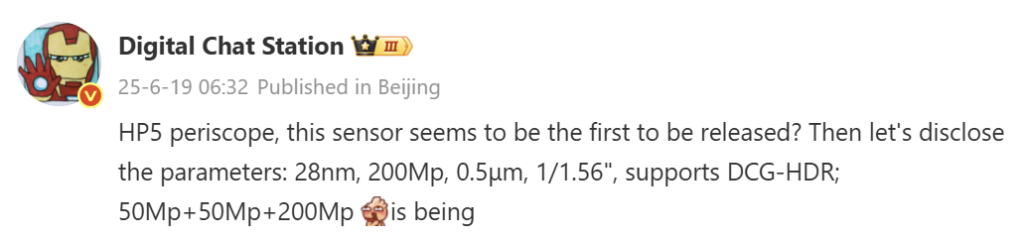
Oppo is expected to unveil the next-generation Oppo Find X9 series of smartphones as early as September this year. In a new leak, tipster Digital Chat Station has claimed that it will be the world’s first smartphone to feature the Samsung HP5 sensor for the Find X9 Pro’s periscope camera. Here’s a look at the details shared by him.
Oppo tipped to debut new 200-megapixel HP5 periscope sensor
According to the leak, the Samsung HP5 periscope sensor is built on a 28nm process, features a 200-megapixel resolution, 0.5μm pixel size, and a 1/1.56-inch sensor size. While it falls slightly below the HP9 sensor in terms of individual pixel and sensor size—HP9 measures 1/1.4-inch with 0.56μm pixels—the HP5 is still a highly capable sensor.
The Samsung HP5 supports DCG-HDR technology, which is expected to enhance dynamic range and low-light performance. The leak also mentions that the Find X9 Pro is being tested with a triple-camera setup featuring 50-megapixel (main) + 50-megapixel (ultra-wide) + 200-megapixel (periscope, Samsung HP5) sensors.
This leak again reiterates that the X9 Pro will not feature a dual periscope camera like its predecessor. The tipster claims that the image quality remains good at 10X zoom, but the telephoto may not match the performance of a dual periscope setup.
As per reports, the Oppo Find X9 Pro will feature a 6.78-inch flat OLED panel that supports a 1.5K resolution, a 120Hz refresh rate, and an ultrasonic in-screen fingerprint sensor. Under the hood, the device will feature the Dimensity 9500 chipset, which is said to comprise 1 x Travis + 3 x Alto + 4 x Gelas cores, and retains an 8-core design. It integrates the Immortalis-Drage GPU and adopts a new micro-architecture to enhance ray tracing performance while reducing power consumption.
Reports suggest that the entire Find X9 series will have a design change. Instead of the round camera module seen on the Find X8 series, one of the prototypes of the X9 lineup is said to be equipped with a matrix-style camera layout positioned in the top-left corner.
For more daily updates, please visit our News Section.
Back in June 2024, Oppo unveiled the Reno 11A smartphone in Japan. Today, it took the covers off the Reno 14 5G in Japan, and at the same time, it also unveiled the more affordable Reno 13A. Continue reading ahead to know everything about the new Reno A offering.
Oppo Reno 13A specifications and features
Oppo Reno 13A
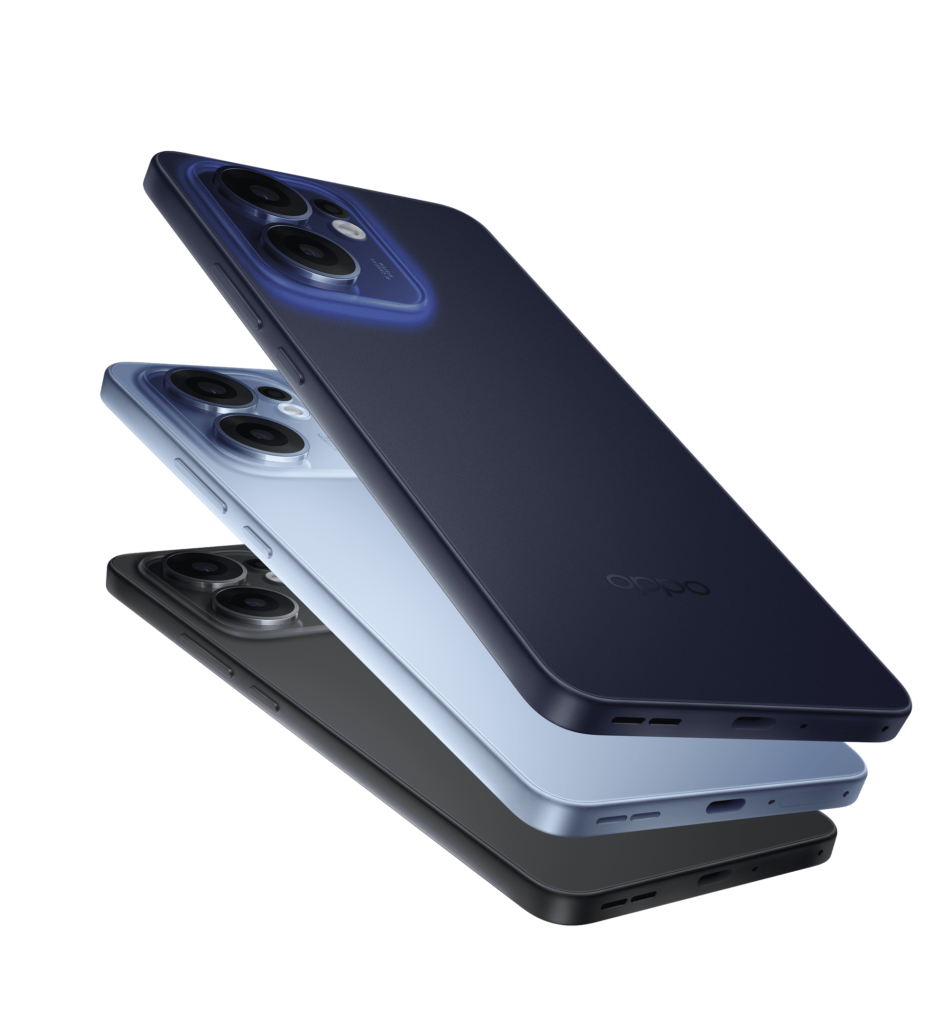
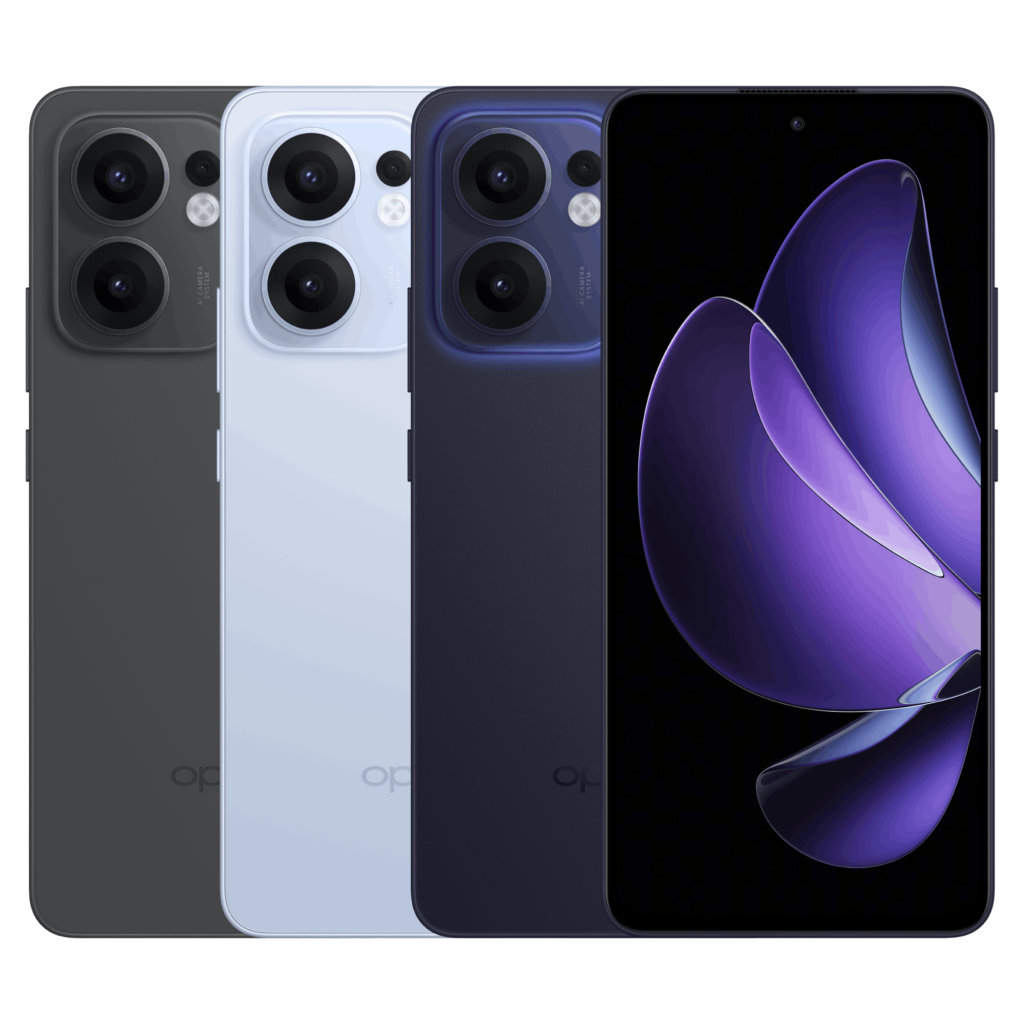
The Oppo Reno 13A features a 6.7-inch AMOLED display with a Full HD+ resolution, a 120Hz refresh rate, a peak brightness of 1200 nits, and is protected by AGC Dragontrail STAR2 glass. It has an in-screen fingerprint scanner for security. The front camera houses a 32-megapixel sensor, and the rear camera setup comprises a 50-megapixel main sensor with OIS, an 8-megapixel ultra-wide lens with a 112° field of view, and a 2-megapixel macro camera.
Powering the device is the Snapdragon 6 Gen 1 chipset, coupled with 8GB LPDDR4X RAM and 128GB of UFS 3.1 storage. The phone supports virtual RAM expansion up to 16GB and up to 1TB of external storage via microSD. It houses a 5,800mAh battery and supports 45W fast charging.
Oppo Reno 13A
Running on ColorOS 15 based on Android 15, the Reno 13A comes with other features like dual SIM + eSIM support, 5G, Wi-Fi 802.11ac, Bluetooth 5.1, NFC, USB-C, and dual speakers. The phone is rated IP68/69 for dust and water resistance and measures 7.8mm in thickness and weighs 192 grams. To sum up, this phone is a rebranded version of the Reno 13F, which has been available in other markets since Janauary this year.
Oppo Reno 13A pricing and availability
Priced at 48,000 Yen (~$330), the Oppo Reno 13A is now available for pre-orders in Japan and will go on sale on June 26. It will be available in three colours: Charcoal Gray, Ice Blue, and Luminous Navy. The SIM-free model will go on sale via mass retailers, e-commerce sites, UQ Mobile, Rakuten Mobile, Y! Mobile, and various MVNO providers.
For more daily updates, please visit our News Section.
Last month, Oppo unveiled the Reno 14 and Reno 14 Pro in China. The company recently confirmed that the series will debut in the Malaysian market on July 1. A broader global release is also expected around the same time. Meanwhile, the Reno 14 has already gone official in Japan, although the Reno 14 Pro is yet to launch there. The standard edition is scheduled to go on sale in Japan in July.
Oppo Reno 14 5G specifications and features
Oppo Reno 14 5G (global version)
The Oppo Reno 14 5G is equipped with a 6.6-inch AMOLED display offering a 1.5K resolution (2760 x 1256 pixels), a 120Hz refresh rate, and up to 1200 nits peak brightness. The screen is protected by Gorilla Glass 7i, ensuring improved durability. The device measures 158 x 75 x 7.4mm, weighs 187 grams, and is rated IP68/IP69 for water and dust resistance.
In the camera department, the Reno 14 5G features a 50-megapixel autofocus front camera capable of shooting up to 4K 60fps videos. On the rear, it has a triple camera setup comprising an OIS-assisted 50-megapixel Sony LYT 600 main sensor, an 8-megapixel ultra-wide lens, and a 50-megapixel telephoto sensor with 3.5x optical zoom and OIS.
Under the hood, the phone is powered by the MediaTek Dimensity 8350 chipset, paired with LPDDR5X RAM and UFS 3.1 storage. A 6,000mAh battery fuels the device, which supports 80W wired fast charging. There is no wireless charging support on this device.
The Reno 14 5G runs ColorOS 15 based on Android 15 out of the box. It also comes with a 4,700mm² vapor chamber cooling system for heat dissipation. The device offers other features, such as dual speakers, dual SIM, eSIM, Wi-Fi 6 (802.11ax), Bluetooth 5.4, NFC, and an in-display fingerprint sensor.
Oppo Reno 14 5G price and availability
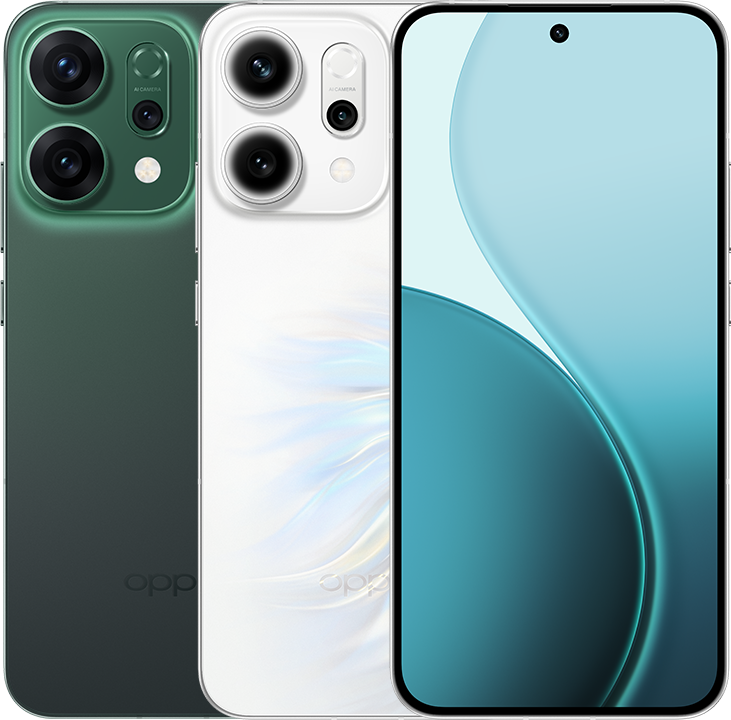
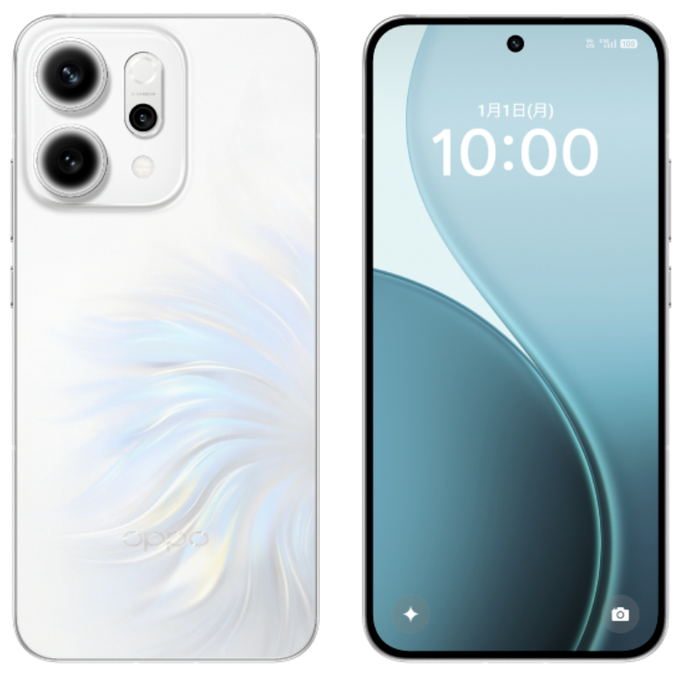
While pricing is yet to be announced, the Oppo Reno 14 5G will go on sale in Japan starting July 17. It will be offered in two color options: Luminous Green and Opal White
For more daily updates, please visit our News Section.
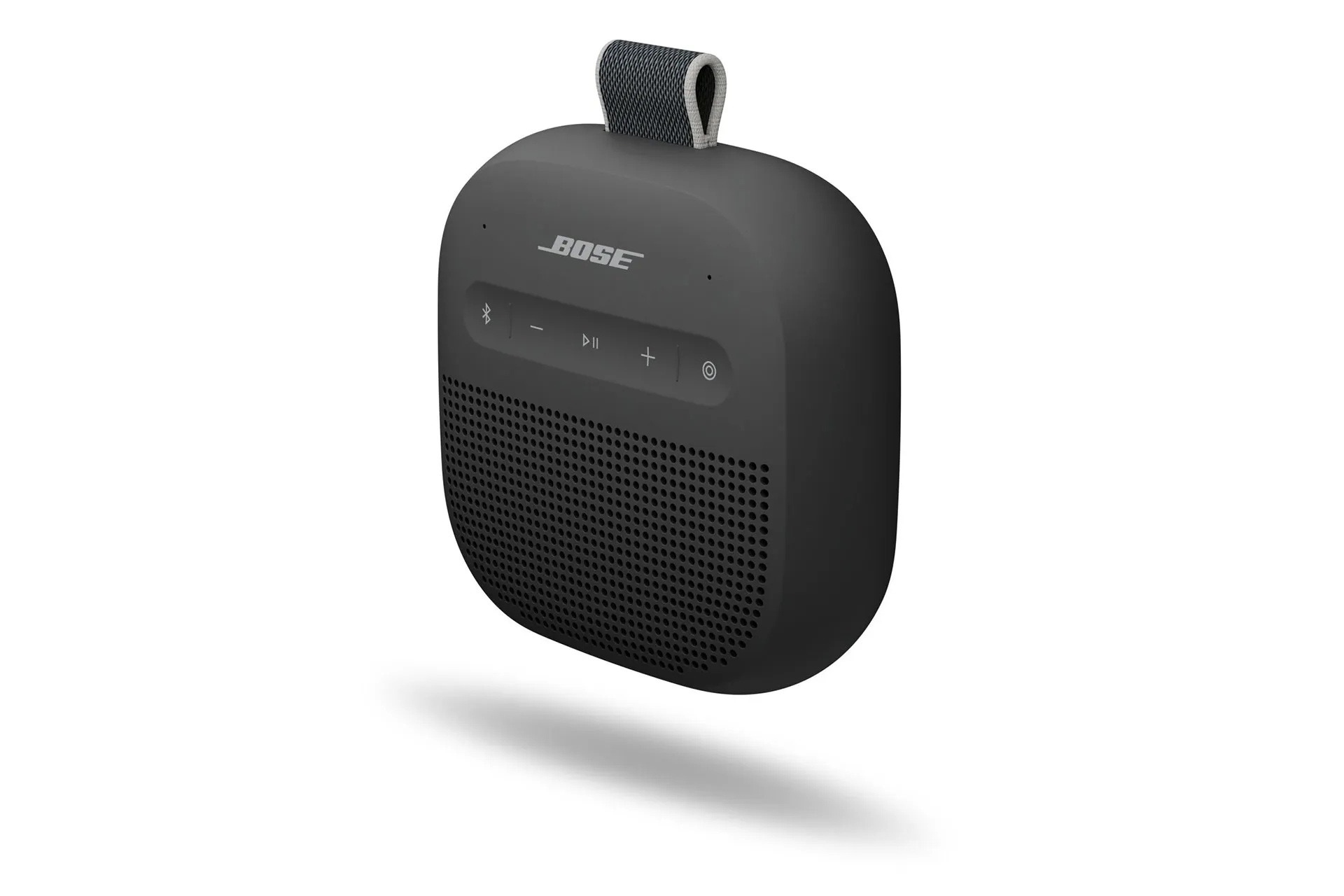
Bose has announced two new Bluetooth speakers: the SoundLink Plus Portable Speaker and the second-generation SoundLink Micro.
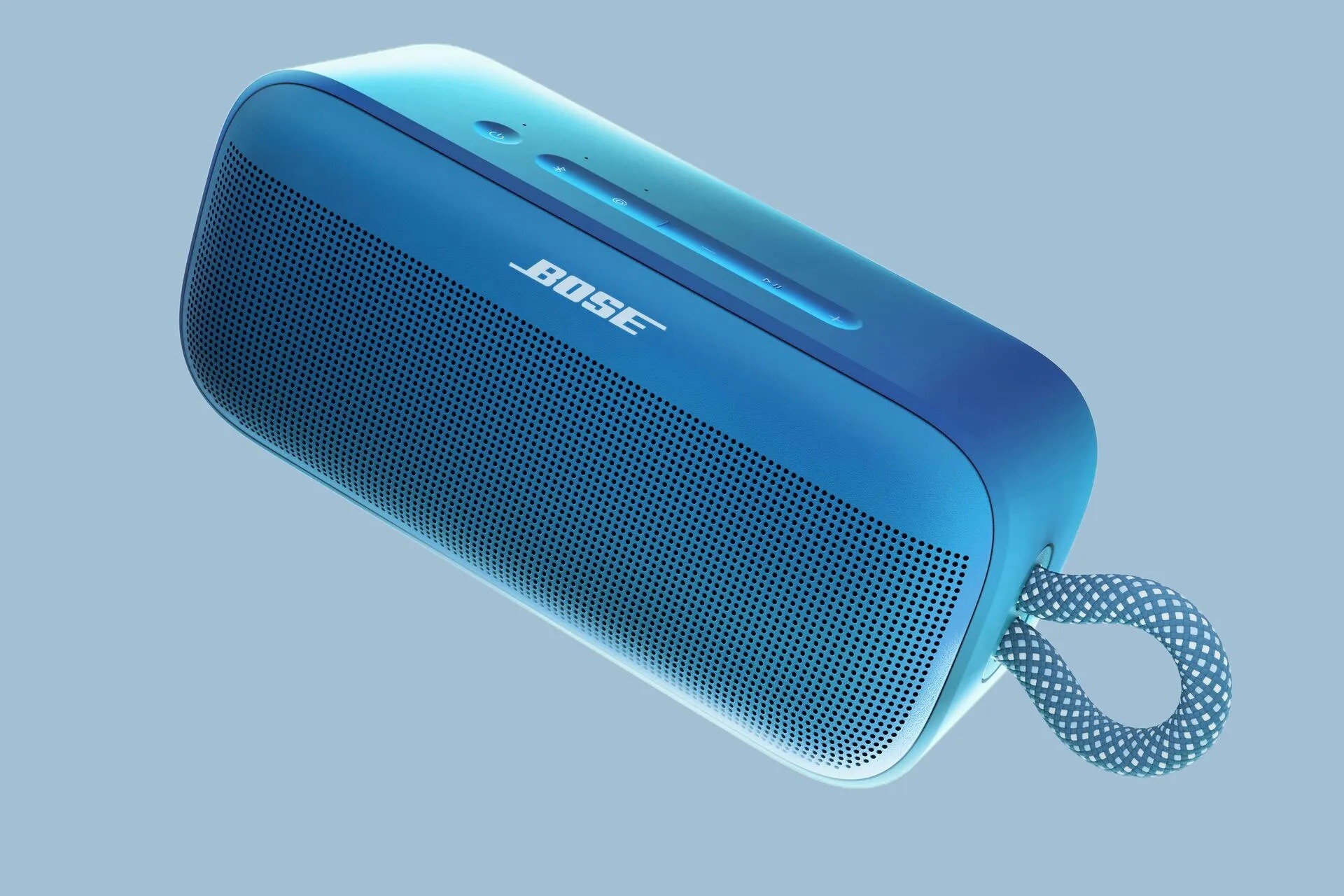
The SoundLink Plus features a new acoustic setup with one subwoofer, one tweeter, and four passive radiators. It weighs under four pounds and measures 9.1 inches wide, 3.9 inches high, and 3.4 inches deep. With an IP67 rating, the speaker is water-resistant, dustproof, rustproof, and shockproof. It floats in water and comes with a rugged nylon rope for carrying or clipping. Battery life is up to 20 hours, and it includes a USB-C port that can charge other devices.
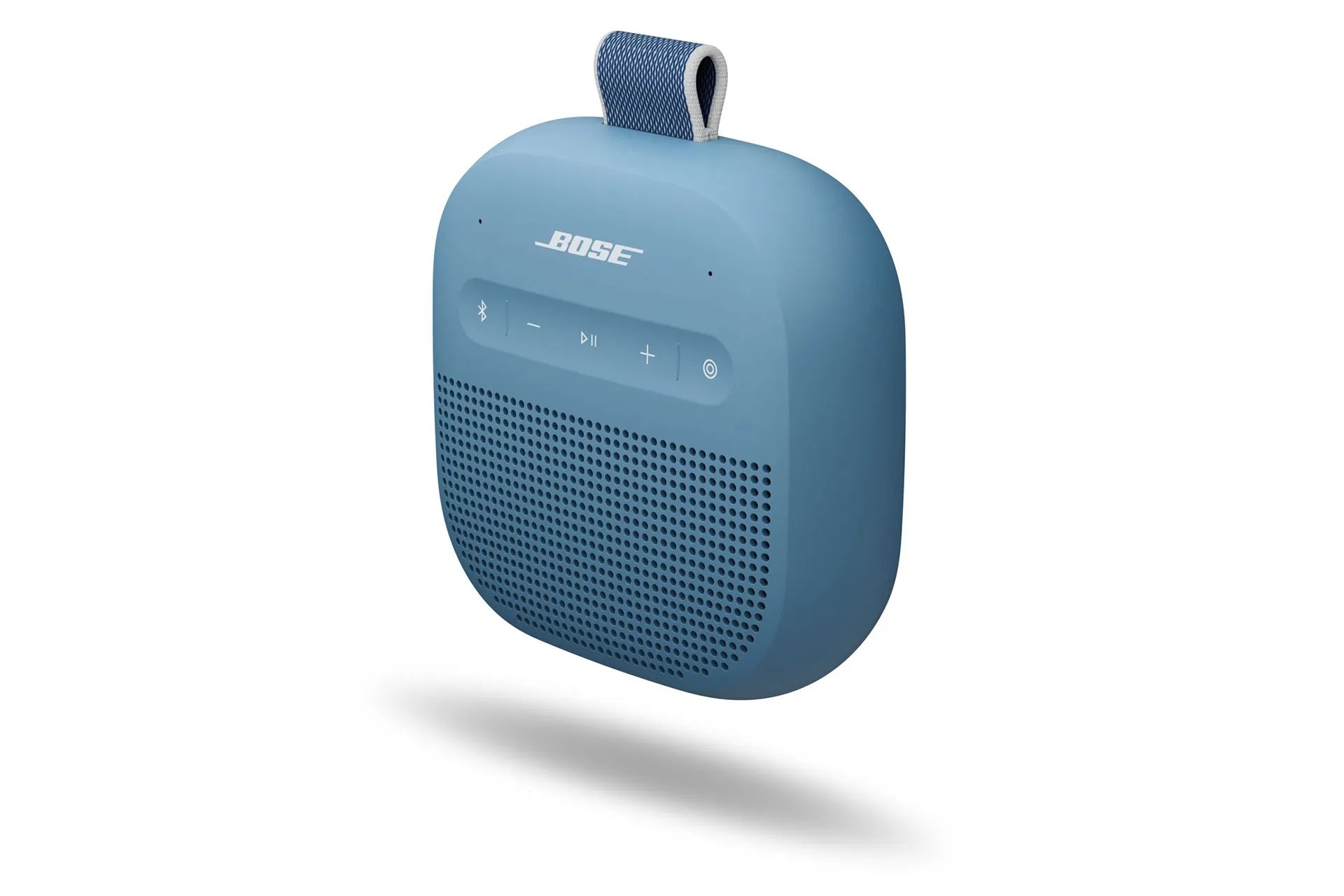
The SoundLink Micro (2nd Gen) measures 4.06 by 4.06 by 1.54 inches. It includes a single driver and two passive radiators to deliver strong sound in a compact size. The battery lasts up to 12 hours. It also features USB-C charging and a removable fabric strap for attaching the speaker to bags or gear. Like the Plus, it has an IP67 rating.
Both speakers support Bluetooth 5.4 with multipoint pairing for two devices and Google Fast Pair for Android phones. They support SBC, AAC, and aptX Adaptive codecs for better sound quality and lower latency on supported devices.
The Bose app provides access to firmware updates, EQ settings, shortcut button functions like Spotify Tap, and integration with Bose SimpleSync to connect with Bose soundbars and smart speakers.
Users can pair any two speakers from the current SoundLink lineup in Party Mode. Stereo Mode is also available if both speakers are the same model.
Pricing & availability
The SoundLink Plus is available for preorder now at $269 in Black, Blue Dusk, and limited-edition Citrus Yellow. It goes on sale June 26. The SoundLink Micro (2nd Gen) will be available later this summer for $129 in Black and Blue Dusk.
Honor recently confirmed that the Honor Magic V5 foldable phone will be unveiled on July 2 in China. At the 2025 MWC Shanghai event, CEO George Zhao revealed that the upcoming device will integrate advanced AI features and set new standards in foldable smartphone design. Here’s a look at the details shared by him.
Honor Magic V5 to be world’s thinnest, lightest foldable phone
Honor Magic V5 China launch date
According to George Zhao, the Honor Magic V5 will be the world’s lightest and thinnest foldable smartphone. Although he did not disclose precise dimensions, recent leaks indicate the Magic V5 may measure approximately 8mm when unfolded and weigh between 210 and 219 grams.
He added that the Magic V5 will be the most advanced AI-powered device in its category. The phone will support a full-stack personal knowledge system, multi-agent AI collaboration, PC-level productivity, and seamless connectivity across all Honor devices.
With a 6,100mAh battery inside, it will arrive as the largest battery seen on a foldable phone. The device is expected to support 80W wired charging and wireless charging. The phone also features a 200-megapixel primary camera, a side-mounted fingerprint sensor, and Beidou satellite messaging support. It is expected to come in Velvet Black, Warm White, Dawn Gold, and Silk Road Dunhuang colorways.
Apart from the Honor Magic V5, the company will announce a slew of products, including the MagicPad 3, on the said date in China. The flagship tablet is expected to arrive with a 13.3-inch LCD panel, a Snapdragon 8 Gen 3 chip, 66W charging, and a 5.79mm slim profile.
For more daily updates, please visit our News Section.
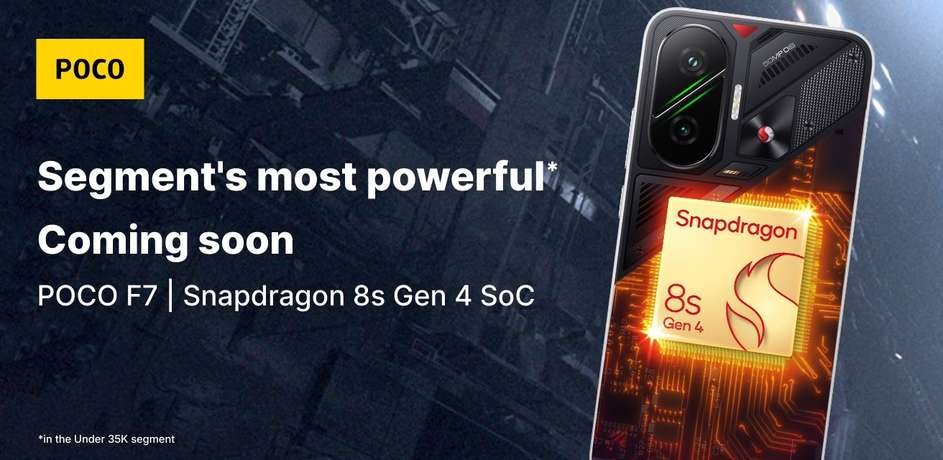
On June 24, Poco will unveil the much-anticipated Poco F7 smartphone in India. Its landing page on Flipkart has now been updated with new details. Additionally, a new poster released by the brand confirms the price range of the device.
Poco F7 pricing hint
Poco F7 price hint in India
As seen in the poster, the Poco F7 will be priced under Rs 35,000 (~$400). This pricing hint makes it quite evident that the Poco F7 will take on the iQOO Neo 10, which is also powered by the Snapdragon 8s Gen 4, like the F7.
The updated Flipkart microsite reveals that the Snapdragon 8s Gen 4 chip will be accompanied by 12GB of LPDDR5x RAM, up to 24GB of Turbo RAM (virtual RAM), and UFS 4.1 storage. For heat dissipation, the device will be equipped with a 6,000mm² heat dissipation unit.
Apart from this, the Poco F7 has already been confirmed to feature a 7,550mAh battery with 90W fast charging. It also supports 22.5W reverse charging, allowing users to use it as a power bank to charge other devices.
The Poco F7 is believed to be a rebranded version of the Redmi Turbo 4 Pro, which is exclusively available in China. The Indian edition gets the same 7,550mAh battery as the Turbo 4 Pro. However, the F7 hitting other markets is said to be backed by a 6,550mAh battery.
The Poco F7 and iQOO Neo 10 are not the only ones featuring the Snapdragon 8s Gen 4. The upcoming Nothing Phone 3, which is being touted as a premium flagship phone, will also feature the same chip. However, there is a possibility that it could be priced at around Rs 50,000 ($580) to Rs 60,000 ($690) in the country.
For more daily updates, please visit our News Section.
Apple’s much-rumoured foldable iPhone appears to be moving closer to reality. As per analyst Ming-Chi Kuo, Apple has reached an important milestone in development and is preparing for the first stages of production. Kuo has shared new insights on when Apple could start making the device, its design, and expected volumes.
Production could start in late Q3 2025
Fodlable iPhone mock render
According to Kuo, Apple’s supplier Foxconn is set to begin production of the foldable iPhone by late September or early October 2025. Apple is currently targeting a public launch in the fall of 2026, positioning the foldable device as part of its iPhone 18 lineup. Despite being just months away from production, several internal components, such as the hinge, are yet to be finalized—underscoring Apple’s efforts to ensure long-term durability.
One key part of the phone that has been locked in is the foldable display. Samsung Display will supply around 7 to 8 million panels, with the device offering a 5.5-inch screen when closed and a 7.8-inch screen when opened. The design will resemble the Galaxy Fold, with a book-style inward fold. Apple has reportedly engineered the hinge for minimal crease visibility and may include under-display cameras. Due to internal space limitations, the device might use Touch ID instead of Face ID. Thickness could be around 4.5mm when unfolded and 9–9.5mm when folded.
Limited rollout expected
Kuo expects the foldable iPhone to be priced between $2,000 and $2,500, placing it firmly in the ultra-premium category. Apple is believed to have ordered 15 to 20 million units, covering a projected 2- to 3-year lifecycle. This strategy suggests a limited, niche rollout rather than a mass-market push. Kuo also warns that Apple’s plans could still shift before the device enters mass production.
For more daily updates, please visit our News Section.
OnePlus has begun rolling out new OxygenOS updates for the OnePlus Nord 4 and OnePlus Nord CE4 Lite 5G in India. Both updates are being pushed in batches and include feature enhancements, UI improvements, and the June 2025 Android security patch.
OnePlus Nord 4
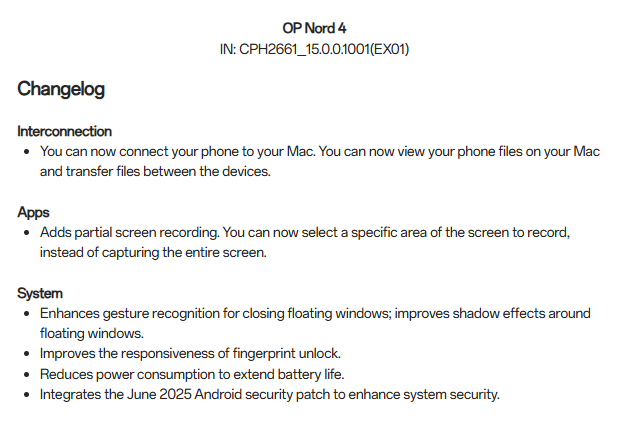
For OnePlus Nord 4 (Build: CPH2661_15.0.0.1001(EX01)), the update introduces Mac interconnection support, allowing users to view and transfer phone files directly on a Mac. It also adds partial screen recording, letting users capture a selected area of the screen. System enhancements include better gesture recognition and shadow effects for floating windows, improved fingerprint unlock responsiveness, and reduced power consumption for better battery life.
OnePlus Nord CE4 Lite 5G
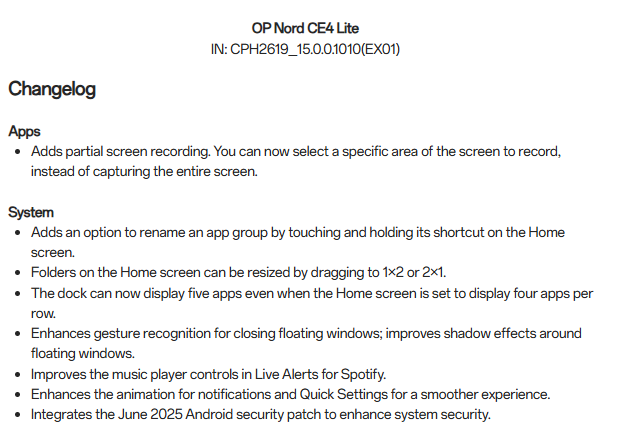
For OnePlus Nord CE4 Lite 5G (Build: CPH2619_15.0.0.1010(EX01)), the update adds the same partial screen recording feature. Users can now rename app groups by holding their shortcuts on the Home screen. Folder resizing is also available, with support for 1×2 or 2×1 layouts. The app dock now supports five apps even on a four-column layout. Additional changes include enhanced music player controls in Live Alerts for Spotify, smoother animations for notifications and Quick Settings, and improved floating window gestures.
OnePlus Nord CE4 Lite 5G OxygenOS 15.0.0.1010 UpdateOnePlus Nord 4 OxygenOS 15.0.0.1001 Update
Both updates integrate the latest June 2025 Android security patch. As with previous releases, the rollout is incremental, reaching a limited group of users initially, with a broader rollout to follow. Users in India can report issues directly via the OnePlus Community App under the “Bug Report” section or by dialing *#800#.
If you’re in the market for a foldable phone and you haven’t already pulled the trigger, now is not the time to settle. The Galaxy Z Fold 6 is good, but all signs suggest that the Galaxy Z Fold 7 will be something far more ambitious.
For the first time in years, Samsung looks like it’s preparing a foldable that goes beyond minor tweaks and spec bumps. This is the one worth waiting for.
Let’s start with the one thing every Fold owner complains about: bulk. According to Samsung and early marketing materials, Samsung’s upcoming Fold 7 is going to be its slimmest foldable yet, just 4.5mm when unfolded, and around 9mm folded.
That puts it in the same league as a regular smartphone, not two stacked together. Samsung has teased this explicitly in banners and teaser clips, and now a leaked FCC listing backs it up with new component configurations.
This radical redesign was likely made possible by engineering work done on the Galaxy S25 Edge, Samsung’s absurdly thin phone that debuted earlier this year. The Fold 7 is rumored to use a similar reworked motherboard and hinge design. The result is a thinner, lighter device without sacrificing power, battery life, or camera performance, at least on paper.
2. Major Camera Upgrade Incoming
Samsung’s foldables have always been a little behind their slab siblings when it comes to photography, but that could change this year. Leaks suggest that the Galaxy Z Fold 7 will pack a 200MP main camera sensor, possibly the same ISOCELL HP2 used in the Galaxy S25 Ultra. That’s a massive jump from the Fold 6’s 50MP shooter.
There’s also talk of upgraded ultrawide and telephoto cameras (12MP and 10MP respectively), and a new Pro-Visual Engine powered by Galaxy AI. Samsung is reportedly focusing heavily on logarithmic video capture and improved low-light processing, features aimed at creators and power users who expect more from their camera systems.
3. AI That’s More Than Just a Buzzword
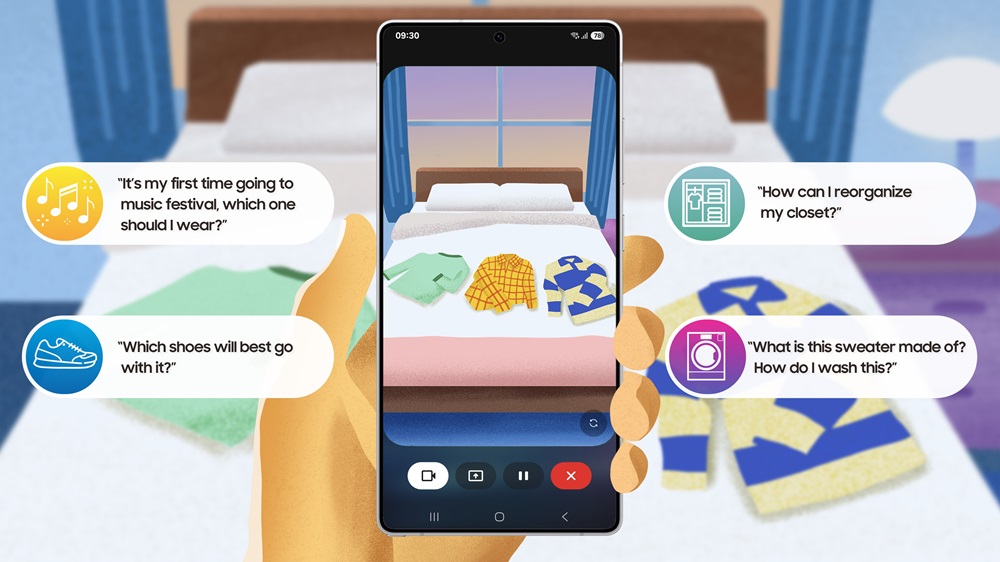
AI is everywhere in 2025, but Samsung isn’t treating it like window dressing. With the Fold 7, the company is expected to double down on its Galaxy AI push. Leaked info points to features like Gemini Live integration, a conversational assistant that understands context across apps, files, and even YouTube videos.
There’s also talk of a revamped Pro-Visual Engine, which would use AI for better nighttime photography, improved telephoto clarity, and even generative photo editing.
The Fold 7 will also be the first Samsung device to launch with One UI 8 based on Android 16, giving users early access to features like Now Brief and Sketch-to-Image generation.
Oh, and you might get six months of Google AI Pro for free, unlocking Veo 3 video generation and Flow, Google’s AI filmmaking tool.
4. New Displays, Familiar Form
Samsung isn’t abandoning the foldable blueprint. You’ll still get an inner 8-inch Dynamic AMOLED 2X display and a 6.5-inch outer screen, but the aspect ratio is reportedly wider, finally addressing a long-standing user gripe. Bezels are thinner, the hinge is tighter, and durability has been improved with better Ultra Thin Glass and dust-resistant hinge brushes.
Color options like Coral Red and Blue Shadow are expected to debut too, signaling Samsung’s intent to make the Fold 7 not just a tool, but a fashion statement, especially with K-pop stars like Enhypen hyping it up in pre-launch promos.
5. Powerful Performance
The Galaxy Z Fold 7 will be powered by the Snapdragon 8 Elite, Qualcomm’s latest top-tier processor built specifically for premium devices. This chip is expected to drive improvements in responsiveness, thermals, and AI processing. It also enables better on-device intelligence for camera features and generative editing tools, making it central to the Fold 7’s push toward AI-powered experiences.
In some regions, particularly South Korea, Samsung may ship a variant of the Fold 7 with its in-house Exynos 2500 chipset. Built on Samsung Foundry’s second-generation 3nm process, the Exynos 2500 also supports advanced AI workloads and energy-efficient performance. While both chipsets aim to deliver a flagship-grade experience, most global markets are expected to receive the Snapdragon 8 Elite.
6. Should You Wait?
Yes. If you’re considering a foldable in 2025, there’s no question: the Galaxy Z Fold 7 is the one to wait for. Unlike last year’s Fold 6, which felt like a placeholder, the Fold 7 appears to be a true leap forward. Thinner. Smarter. Sharper. If the leaks are accurate, this isn’t just Samsung catching up; it’s Samsung trying to reclaim foldable dominance.
With a likely reveal on July 9 in New York and pre-orders expected soon after, waiting a few more weeks might save you from spending a premium on last year’s compromises. And if you’re curious about the future of mobile computing, this might be Samsung’s most convincing pitch yet.
For more daily updates, please visit ourNews Section.
OnePlus has started rolling out the OxygenOS 15.0.2.302 update to OnePlus 13s (review) users in India, shortly after the device went on sale. The update brings several new features to the smartphone, including Gemini AI integration and remote control functionality for Windows PCs.
OnePlus 13s
OnePlus 13s OxygenOS 15.0.2.302 features
You can now use voice or text to tell Gemini to do things for you. It can set alarms, check trips, or create notes. This means you don’t need to open different apps for basic tasks.
There’s also a new “Save to Mind Space” feature. You can save anything on your screen to Mind Space as memories. The app will automatically summarize and store these memories for you.
The OnePlus 13s can now control your Windows PC remotely. You can access PC files from your phone, too. This works the same way as the recent OnePlus 12 update. The update includes the June 2025 Android security patch.
If you’re in India and face any issues, you can report bugs through the OnePlus Community App by navigating to your profile and selecting “Bug Report.” Alternatively, you can dial *#800# to report problems directly.
To check for the update manually, go to the Settings page, select “About Device,” and tap on the top blue ribbon to see if an update is available.
For more daily updates, please visit our News Section.
Samsung’s summer hardware event is nearly here, and with it comes another round of foldable phones. The Galaxy Z Fold 7 is expected to show up alongside the Z Flip 7 in mid-July, continuing Samsung’s now-annual attempt to convince people that a tablet-sized screen in your pocket is worth nearly $2,000.
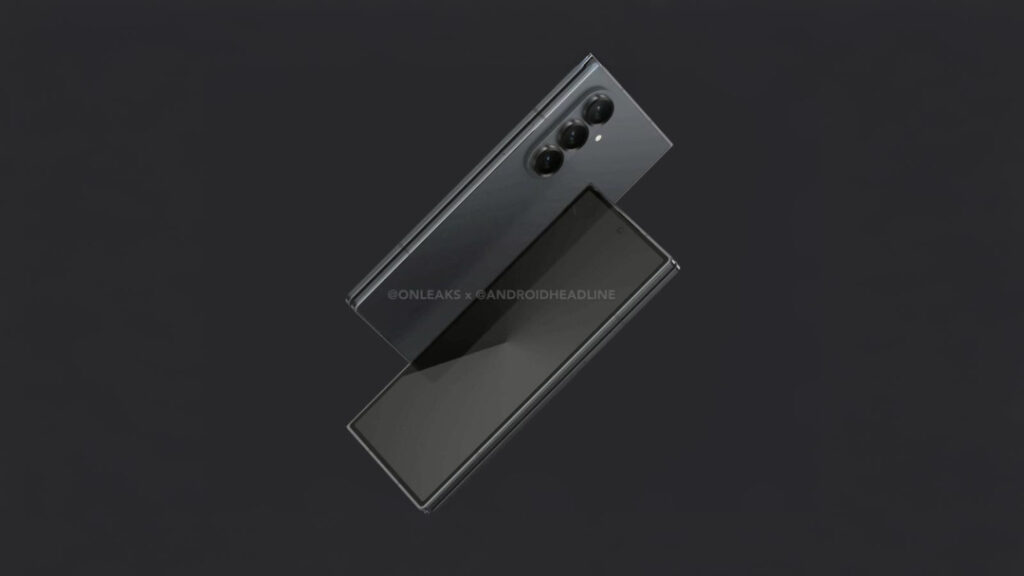
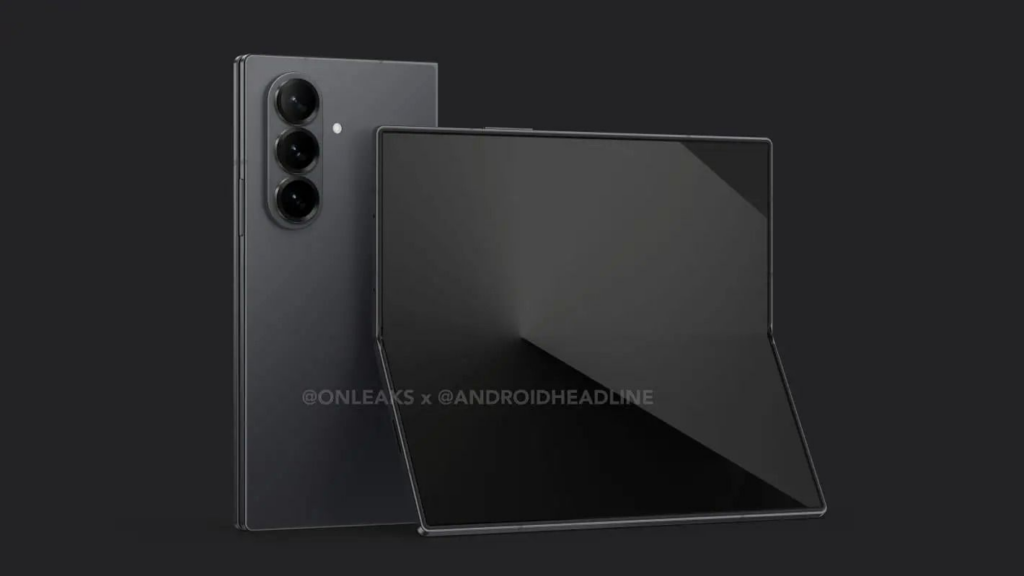
Samsung Galaxy Z Fold 7 CAD renders by OnLeaks and AndroidHeadlines
If the leaks hold, the Fold 7 will not be a radical redesign. But that doesn’t mean there’s nothing new. Samsung appears to be making incremental yet noticeable changes across the board, particularly in design and display technology. Here’s a breakdown of the most notable updates to watch for.
Samsung seems to be focusing heavily on reducing the thickness of the Fold 7. According to reports, the foldable will measure as little as 8.2mm when folded and around 4.1mm when unfolded.
For comparison, the Z Fold 6 measures 12.1mm when folded and 5.6mm when unfolded. The thinnest foldable on the market, the Oppo Find N5, comes in at 4.21mm when unfolded. If the leaked measurements are accurate, the Z Fold 7 would be an even slimmer device than the Find N5.
Aesthetically, the Fold 7 doesn’t stray far from Samsung’s established design language. However, the company does seem to be rounding off the sharp corners of the Fold 6 for a more comfortable in-hand feel. And given the overall thinner profile, the camera bump on the Fold 7 might end up being the largest we’ve seen on a Samsung foldable yet.
That’s a modest increase over last year’s 7.6-inch internal panel. However, resolution and refresh rates (120Hz) along with the Dynamic AMOLED 2X tech will remain the same.
What could be more noticeable is the crease, or rather, the effort to hide it. According to rumors, Samsung has reworked the hinge and display layering to minimize the center crease on the Fold 7.
A report even claims that the crease would be “nearly invisible,” but those kinds of claims tend to overpromise. A less visible crease would still be a step forward, especially when competing devices from Honor and OnePlus have made noticeable improvements in this area.
Likewise, brightness may also get a boost, with a peak rating of up to 2,900 nits. Samsung might also bring over its new “ProScaler” tech, which upscales lower-resolution content, to the Fold 7.
3. Snapdragon 8 Elite and One UI 8
No surprises here. The Galaxy Z Fold 7 is expected to run on Qualcomm’s latest high-end chip, the Snapdragon 8 Elite. This will be paired with up to 12GB of RAM and 256GB, 512GB, or 1TB of storage.
There’s no clear indication that Samsung might bump RAM to 16GB, which would make sense for a multitasking-focused foldable, but so far it looks like business as usual.
As for the software, Samsung might ship the foldable with One UI 8 based on Android 16. However, that could be a bit too soon, as Samsung has only just begun testing the new operating system for the Galaxy S25 series. If it doesn’t launch with One UI 8 out of the box, the Fold 7 will almost certainly be among the first devices to receive the update.
4. A 200MP Camera
Samsung foldables have rarely prioritized camera upgrades, but that could change this year. The Galaxy Z Fold 7 is rumored to use the same 200MP main sensor seen in the Galaxy Z Fold 6 Special Edition. Whereas its predecessor has a 50MP sensor.
There’s not much concrete information about the rest of the camera setup, which is expected to stay largely the same: a 12MP ultrawide, a 10MP 3x telephoto, and a 4MP under-display selfie camera inside. The outer selfie camera will reportedly remain at 10MP.
There’s some hope Samsung will finally address the under-display camera, which hasn’t changed much since the Z Fold 3. At best, it’s functional for video calls. At worst, it’s a compromise that still detracts from full-screen content. Here’s hoping Samsung has something better in store this year.
5. Qi2 Wireless Charging and the End of Built-in Stylus Support
There’s still no word on whether Samsung will increase the battery capacity in the Fold 7. The Fold 6 features a 4,400 mAh cell, and its successor may retain the same capacity, along with the same 25W wired and 15W wireless charging speeds.
The more interesting change here is support for Qi2 wireless charging. The Z Fold 7 might be Samsung’s first foldable to be “Qi2 Ready,” meaning it’ll support the new magnetic alignment features of the standard — but only if you use a case with magnets built in. It’s not native MagSafe-style charging, but it’s a step closer.
Another noteworthy omission is the S Pen digitizer layer. To make the phone thinner, Samsung may be dropping built-in stylus support for the first time since the Z Fold 3. There’s a rumor of a new standalone S Pen accessory with a larger body and a new tip, but it remains to be seen how functional (or convenient) it will be.
Samsung is gearing up for a big reveal at its July Unpacked event, and its next-generation foldables—the Galaxy Z Fold 7 and Flip 7—could include an AI-powered bonus that gives them an edge out of the box.
According to a teardown of Google’s latest app beta (version 16.23.69.sa.arm64), the upcoming foldables are expected to come with a complimentary subscription to Google AI Pro. The service, also known as Gemini Advanced, typically costs $19.99 per month and includes access to tools like Veo 3 Fast for video generation and Flow, an AI-powered filmmaking assistant. If Samsung follows the precedent set by the Galaxy S25 series, buyers could be looking at a six-month free trial.
AI is expected to take center stage at the July event in New York. Google’s “Gemini Live” feature, which allows more natural, real-time conversations with the AI, is also rumored to make an appearance. Meanwhile, Samsung’s own Galaxy AI is getting some upgrades, including an improved ProGen Visual Engine for sharper photos and videos, enhanced low-light performance, and smarter zoom. Samsung says the Z Fold7’s camera won’t just capture — it will understand.
On the hardware front, the Galaxy Z Fold 7 is rumored to feature a 200MP main camera, a 4,400mAh battery (unchanged), and a thinner 4.54mm profile when unfolded. The slimmest foldable to date—the Oppo Find N5—measures 4.2mm when unfolded, and it’s just thick enough to accommodate a USB-C port.
With the July event just weeks away, all eyes are on how Samsung plans to combine powerful AI tools with its cutting-edge foldable design.
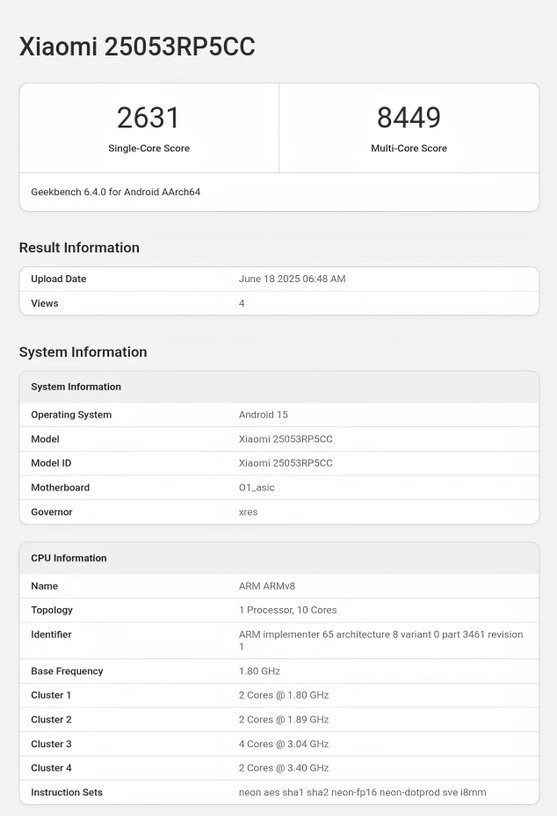
Xiaomi is gearing up to expand its tablet lineup, and a new Geekbench listing suggests the upcoming Pad 7S Pro could be a serious performer. The tablet, which surfaced under model number 25053RP5CC, is powered by Xiaomi’s in-house Xring O1 processor.
Xiaomi Pad 7S Pro
According to the Geekbench 6 listing, the Pad 7S Pro scored 2,631 in single-core and 8,449 in multi-core CPU tests. It’s actually a little over what we saw with the Xiaomi 15s Pro: 2413 and 8068 in single and multi-core tests, respectively.
The Xring O1 is built on TSMC’s 3nm process and features a 10-core setup: two cores at 1.80GHz, two at 1.89GHz, four at 3.04GHz, and two performance cores topping out at 3.40GHz. While its prime cores are clocked lower than those in the Pad 7 Ultra (3.7GHz) and Xiaomi 15S Pro (3.9GHz), the Pad 7S Pro still holds its own — and even surpasses Samsung’s Galaxy Tab S10 Ultra, which uses the Dimensity 9300+ (scoring 2,192 and 7,327, respectively). If anything, we are expecting improved stability at the cost of some short-term peak performance.
That said, it’s still just a benchmark that doesn’t measure sustained performance effectively, and we’ll need to test the device ourselves before commenting on the sustained performance. Nevertheless, the Xring O1 on the Pad 7S Pro is paired with 16GB of RAM, and the device runs on Android 15 with Xiaomi’s HyperOS 2, just like the Xiaomi 15S Pro.
The tablet will likely be announced in late June 2025. It’s expected to come in four color options — purple, black, Cambrian gray, and titanium — and will feature a 12.5-inch display, a slim 5.8mm profile, and a 576g body. The camera setup could include a 50MP main sensor, and a massive 12,160mAh battery is also on the cards.
OnePlus started rolling out OxygenOS 15.0.0.831 to OnePlus 12 users in India. The update comes with new gaming tools and lets you control your Windows PC from your phone.
What’s New for Gaming
The biggest addition is the Game Camera. This lets you take screenshots while playing and record Flashback clips to save your best gaming moments. No more missing epic plays because you couldn’t record in time.
Control Your PC from Your Phone
You can now control your Windows PC remotely using your OnePlus 12. The phone can access files on your computer too. This means you don’t need separate apps to connect to your PC anymore.
Speaker and Hardware Updates
There’s a new Speaker cleaner feature that cleans your phone’s speakers to keep them working properly. You can find it in Phone Manager > Tools > More > Accessibility & convenience > Speaker cleaner.
The update also improves cellular network connections with a better algorithm.
System Changes
Settings now supports fuzzy searches with spaces. You can also search for app names in Settings to quickly find app details or manage them.
The floating bar in floating windows works better now. Quick Settings and Notification drawer animations are smoother when you exit them.
You can open apps from quick functions even when your screen is locked. When you have stacked notifications, the latest one shows how many notifications you haven’t seen and where they came from.
There’s also a new drag-and-drop feature for images and text in third-party apps. Find it in Settings > Accessibility & convenience > Drag & drop.
Security and Rollout
The update includes the June 2025 Android security patch. OnePlus is rolling this out slowly – only a few users get it initially, with more people getting it over the next few days.
If you’re in India and run into problems, you can report bugs through the OnePlus Community App under “Bug Report” in your profile. You can also dial *#800# to report issues.
To check for the update manually:
Go to the settings page.
Select “About Device.”
Tap on the top blue ribbon to check for updates.
For more daily updates, please visit our News Section.
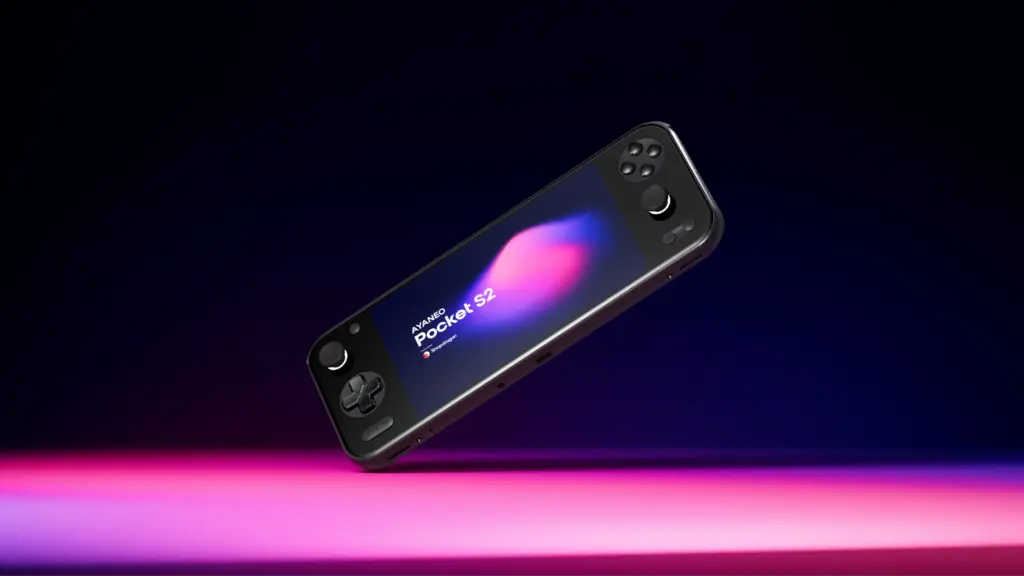
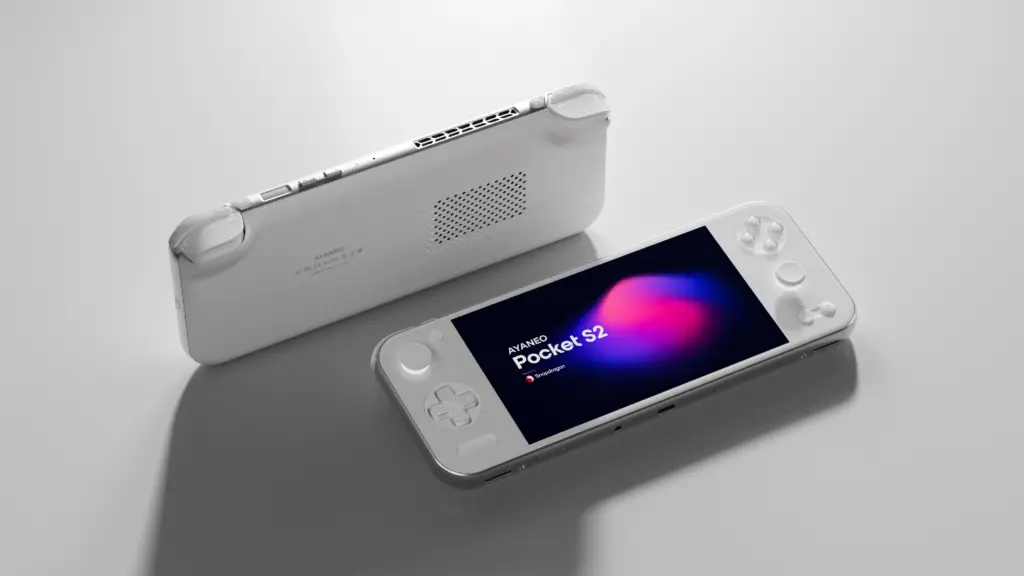
Ayaneo has officially unveiled the Pocket S2 series, a new line of Android 14 handheld gaming consoles powered by Qualcomm’s Snapdragon G3 Gen 3 platform. The series includes two models: Pocket S2 and Pocket S2 Pro, and marks the global debut of Snapdragon’s latest gaming-focused chipset.
Ayaneo Pocket S2 Series Specifications
Both devices feature a 6.3-inch 2K IPS display with a resolution of 2560×1440, 466PPI pixel density, and up to 600 nits of brightness. The screen supports 120% sRGB and 90% DCI-P3 color gamut, offering detailed visuals across mobile and retro games. Ayaneo uses its signature bezel-less design and CNC-machined curved aluminum mid-frame to achieve a slim profile measuring just 15.9mm thick.
The Pocket S2 series uses Qualcomm’s 4nm Snapdragon G3 Gen 3 gaming platform, featuring a 1+5+2 octa-core CPU with a 3.3GHz prime core and an Adreno A33 GPU clocked at 1.05GHz. Ayaneo claims the platform delivers a 30% improvement in CPU performance and a 28% boost in GPU performance compared to the previous generation. The device scores over 2 million points on AnTuTu, according to the company’s in-house testing.
To manage heat, Ayaneo has developed a custom cooling system that includes a large copper plate (6630mm²), a fin array (14295mm²), and a top-down fan. The system is designed to sustain a maximum TDP of 20W while maintaining comfort during extended gaming sessions.
The Pocket S2 comes with an 8000mAh battery and supports 40W fast charging. The Pocket S2 Pro increases the battery capacity to 10,000mAh and supports 60W PD fast charging. Both models weigh under 450g and support bypass charging to extend battery health during long play sessions.
The devices are the first Android handhelds to feature TMR electromagnetic joysticks. These offer high precision, no drift, and customizable RGB lighting. The Pocket S2 Pro includes a detachable D-pad module that allows players to switch between standard and eight-way directional pads for different game genres.
Ayaneo has included a wide range of software features under its AYASpace platform. These include advanced key remapping, performance mode switching, device spoofing to unlock enhanced graphics settings, and a retro game management system. The handhelds also support keyboard-mouse emulation and Qualcomm’s Turnip drivers for smoother emulated PC gaming.
Pricing and Availability
The Pocket S2 series is now up for pre-order in China and via Indiegogo for international buyers. Pricing starts at ¥2999 ($439) for the 8GB+128GB Pocket S2. The Pocket S2 Pro, with 16GB RAM and 1TB storage, costs ¥4999 ($699) and includes special editions like Retro Power and B.Duck. Shipping is expected to begin by the end of July.
In related news, Anbernic recently launched the RG35XX Pro retro gaming handheld featuring dual joysticks, with prices starting at $44.99.
For more daily updates, please visit ourNews Section.
The NFC Forum has announced NFC Release 15, which increases the communication range of NFC from 0.5 cm to 2 cm. This fourfold improvement makes connections faster, more stable, and easier to initiate without precise alignment. It’s designed to improve performance in everyday uses like payments, wearables, digital keys, and smart appliances.
The extended range means faster tap response and more reliable performance in various environments. It also improves user experience by increasing the success rate of contactless interactions and giving product designers more flexibility.
Release 15 supports new applications. Phones can now act as payment terminals. Wearables and smart home products can connect more easily. It also introduces support for wireless charging up to 1W for small devices.
The update includes features for Digital Product Passports (DPP), which will be required under upcoming circular economy regulations. These features are built on the NFC Data Exchange Format (NDEF) and allow products to connect easily to cloud services for tracking and compliance. Most smartphones already support NFC, and Release 15 is designed so brands can meet DPP requirements with simple software updates.
Security remains a key feature. NFC continues to use proximity and tap-based gestures to confirm user intent. Release 15 builds on existing encrypted connections to keep data secure during transactions and access control.
The release supports common NFC uses like mobile wallets, identity cards, door locks, transit tickets, and entry systems. It also improves how NFC works in wearables, appliances, and other connected devices.
Technical specifications for NFC Release 15 are available now for Associate, Principal, and Sponsor members of the NFC Forum. The public release is scheduled for Fall 2025, along with the opening of certification under the new standard.
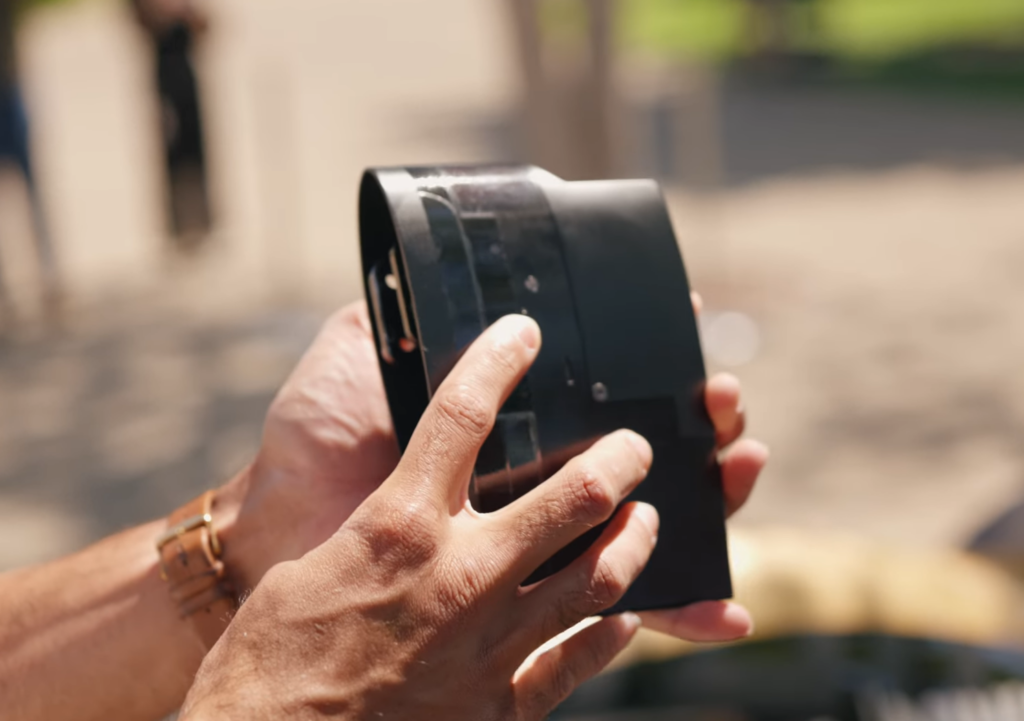
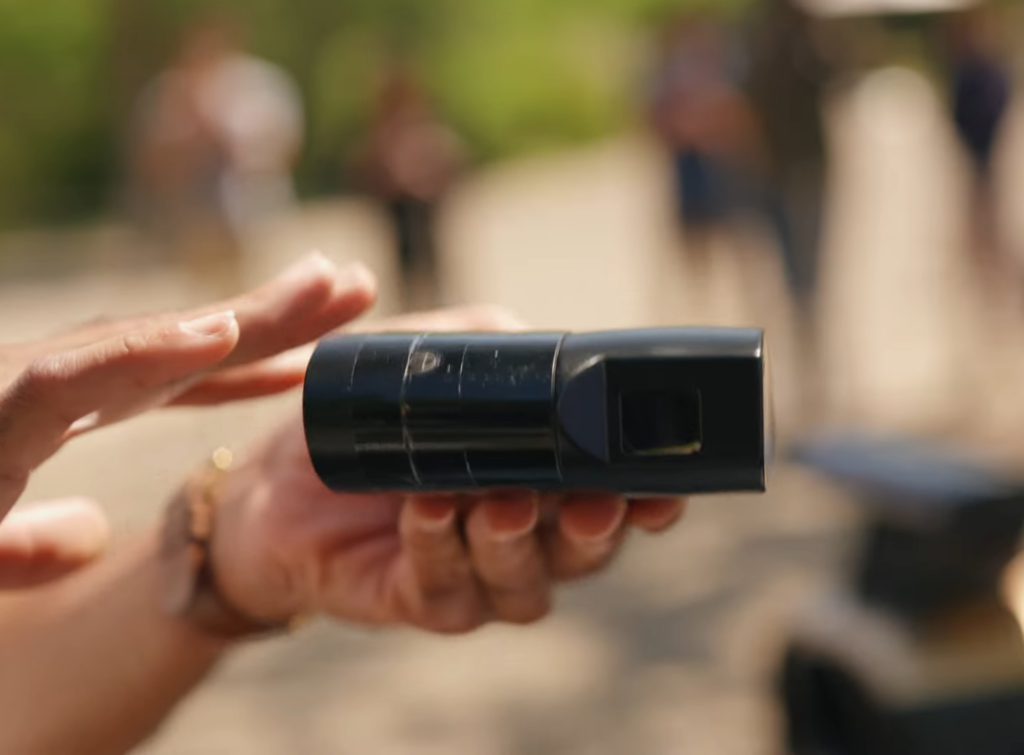
Capturing the thrill of Formula One from the driver’s seat isn’t easy — but for its upcoming F1 movie, Apple came up with a clever solution. To get authentic, high-speed POV footage, Apple’s engineering team built a custom camera using parts from the iPhone, small enough to mount directly on race cars.
The film, directed by Top Gun: Maverick’s Joseph Kosinski, needed cinema-quality shots from the cockpit — something existing F1 broadcast cameras simply couldn’t provide. Those cameras, designed for live TV, fall short on resolution and cinematic flexibility. Instead of trying to adapt their footage in post-production, Apple went back to the drawing board.
Apple developed a custom camera module that mimicked the shape and size of standard F1 broadcast units but was powered by iPhone hardware — reportedly the iPhone 15 Pro’s 48MP main sensor and A17 Pro chip. It also included an iPhone battery, a neutral density filter to manage exposure in broad daylight, and ran a custom version of iOS that recorded in Apple’s ProRes Log format — perfect for color grading and integrating with traditional film footage.
The rig had no wireless radios (a requirement in F1), but a custom iPad app connected via USB-C allowed on-set teams to control frame rate, shutter angle, white balance, and more in real time. It was tested in actual F1 races throughout 2023 and 2024, holding up under extreme vibration, heat, and shock — even exceeding F1’s durability standards.
This custom hardware setup did more than just help Apple make a movie. It also led to real product improvements: two professional video features introduced with the iPhone 15 Pro — Log encoding and ACES color workflow — came directly from this project. While traditional Arri cameras still handled most of the film’s visuals, the iPhone module provided immersive, first-person shots that full-size cinema gear simply couldn’t capture.
Apple has a track record of pushing iPhone filmmaking — from Tangerine to 28 Years Later — and this latest example shows just how far that ambition goes. As the F1 movie hits theaters, Apple’s innovation may well inspire a new generation of filmmakers to explore what’s possible — not just with an iPhone, but with bold ideas.
We use cookies on our website to give you the most relevant experience by remembering your preferences and repeat visits. By clicking “Accept”, you consent to the use of ALL the cookies.
This website uses cookies to improve your experience while you navigate through the website. Out of these, the cookies that are categorized as necessary are stored on your browser as they are essential for the working of basic functionalities of the website. We also use third-party cookies that help us analyze and understand how you use this website. These cookies will be stored in your browser only with your consent. You also have the option to opt-out of these cookies. But opting out of some of these cookies may affect your browsing experience.
Necessary cookies are absolutely essential for the website to function properly. This category only includes cookies that ensures basic functionalities and security features of the website. These cookies do not store any personal information.
Any cookies that may not be particularly necessary for the website to function and is used specifically to collect user personal data via analytics, ads, other embedded contents are termed as non-necessary cookies. It is mandatory to procure user consent prior to running these cookies on your website.