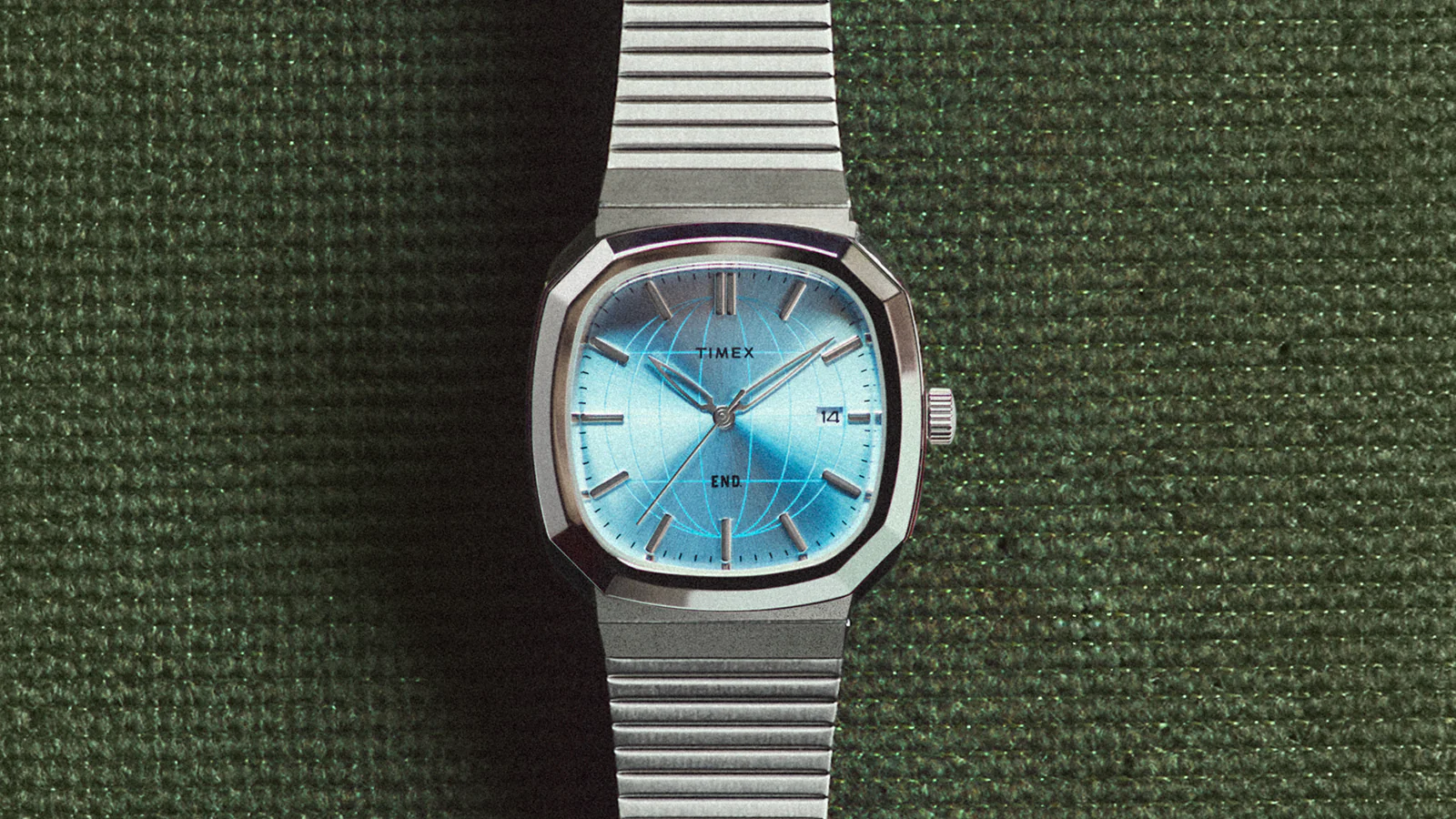
Garmin Descent Mk3i is now available in a new 51 mm version with a silver and black titanium build. Garmin has priced this model at €1,599.99/US$1,599.99, and it is listed as ready to ship within a few days.
The device sits between a dive computer and a smartwatch. It comes with a 1.4-inch AMOLED display covered by sapphire crystal and is rated at 20 ATM, which means it is designed for dives up to 200 meters. Battery life is rated at up to 66 hours in dive mode, while smartwatch mode can last up to 25 days. With the always-on display enabled, that drops to around 10 days.
One of the main features is SubWave sonar support. This allows divers to send preset messages underwater to others using compatible devices, with a range of up to 30 meters. When paired with the Descent T2 transceiver, the watch can also track tank pressure and depth for up to eight divers within 10 meters.
Garmin includes several dive modes, covering single and multi-gas setups, including Nitrox and Trimix. It also supports freediving, apnea, gauge mode, and closed-circuit rebreather diving. The built-in DiveView maps show depth contours and include more than 4,000 dive sites.
There is also a focus on safety and planning. The watch can estimate dive readiness based on sleep, stress, and activity levels. Tools like a dive compass, surface GPS tracking, a variometer, and real-time no-decompression limit data are included.
Outside the water, it works like a full smartwatch. It offers more than 80 sports apps, heart rate tracking, VO2 max, Pulse Ox, sleep tracking, and training suggestions. It also supports music storage, contactless payments, and notifications, with 32 GB of onboard storage.
Lenovo ThinkPad T14 Gen 7 is now official, quietly replacing last year’s Lenovo ThinkPad T14 Gen 6. Lenovo first showed the laptop at MWC 2026, but sales have only started in select regions.
For now, the new T14 is limited to Intel’s Panther Lake chips. AMD variants, expected to include up to Ryzen AI 7 Pro 450, are not available yet. The laptop is also missing from North America at launch, where Lenovo has listed it as “coming soon.”
Pricing is already live elsewhere. It starts at £1,560 in the UK, and between €1,719 and €1,829 across Europe, depending on the configuration.
The base model sticks to a standard setup. It comes with a Core Ultra 5 325 processor, 16 GB of LPCAMM2 RAM, and a 256 GB PCIe Gen 4 SSD. There is also a 60 Wh battery and a 14-inch IPS display with 1200p resolution.
Where things open up is in customization. Lenovo is offering eight Intel processor options at launch, including Core Ultra 5 332 vPro, 335 vPro, 338H vPro, Core Ultra 7 355, 365 vPro, 356H, and the top-end Core Ultra X7 358H. Memory can go up to 64 GB, while storage can be pushed to a 2 TB PCIe Gen 5 SSD.
There is also a display upgrade. Buyers can opt for a 2.8K OLED panel with up to 500 nits brightness and a 30 to 120 Hz variable refresh rate. Other add-ons include NFC, a fingerprint reader, an IR webcam, 4G WWAN support, and a larger 75 Wh battery. Lenovo also offers a 100 W USB Type-C adapter as an option.
Alongside the ExpertBook Ultra, Asus has also refreshed its ExpertBook P3 and P5 series in India. These are more affordable options for businesses that don’t necessarily need the Ultra’s premium build but still want capable hardware.
The P3 and P5 series cover both 14-inch and 16-inch form factors, with anti-glare displays across the lineup. Resolution goes up to WQXGA, and brightness reaches around 400 nits. Some P5 variants also include OLED panels if your work demands that.
As for performance, the P3 series uses Intel Core Ultra 5 and Ultra 7 H-series processors with Intel Arc graphics. The P5 series steps things up slightly with newer Core Ultra chips, including configurations with NPUs capable of delivering up to 50 TOPS on select Copilot+ models.
The memory options go up to 96GB of DDR5 RAM and up to 1TB PCIe SSD storage, with some models supporting expansion through dual M.2 slots and upgradeable RAM.
For video calls, you get a standard 1080p webcam, and some models have a higher-resolution 5-megapixel variant with IR support. All the variants have a privacy shutter as standard.
Rest of the specs
Both the ExpertBook P3 and P5 series have necessary connectivity options, with Wi-Fi 7, Bluetooth 5.4, Thunderbolt 4, USB Type-A and Type-C ports, HDMI 2.1, and even RJ45 Ethernet on certain models.
For battery, the P3 models support 65W charging, while P5 variants range from 63Wh to 70Wh batteries, with charging speeds between 65W and 90W depending on the model.
All models carry MIL-STD-810H certification and include spill-resistant keyboards. Security features include TPM, fingerprint sensors, BIOS protection, and IR-based Windows Hello support on select variants.
The P3 14-inch starts at 1.43kg, while the 16-inch version goes up to 1.77kg. The P5 models are slightly lighter in some configurations, starting around 1.29kg for the 14-inch variant.
Pricing and Availability
Pricing starts at Rs. 94,990 for the P3 series, while the P5 lineup begins at Rs. 2,14,990. The P3 is already available for purchase with launch discounts, while the P5 is expected to roll out soon.
For more daily updates, please visit our News Section.
Asus is expanding its business laptop lineup in India with the launch of the ExpertBook Ultra. It’s a premium Copilot+ PC featuring Intel’s latest Core Ultra chips with a light chassis that dips below the 1kg mark.
Asus ExpertBook Ultra Specifications
The ExpertBook Ultra is built around a 14-inch OLED panel, with an option for a tandem OLED display. The resolution goes up to WQXGA+ (2880 x 1800), and Asus is pushing HDR brightness up to 1400 nits. It also covers 100 percent of the DCI-P3 color space and uses Gorilla Glass Victus on top.
Internally, the ExpertBook Ultra runs on Intel’s Core Ultra Series 3 processors, including options like the Core Ultra X7 358H and Core Ultra 5 325. These chips come with a built-in NPU that lifts the Copilot+ AI tasks. The company claims up to 50 TOPS of AI performance through Intel AI Boost.
Memory and storage are fairly high-end. The laptop can be configured with up to 64GB of LPDDR5X RAM and up to 2TB of PCIe 5.0 SSD storage. It runs Windows 11, with Pro and Home variants depending on the configuration.
The laptop also has a 1080p IR webcam that can upscale to 5 megapixels using AI, along with a privacy shutter. Audio is handled by a six-speaker setup with Dolby Atmos support.
Rest of the specs
Connectivity includes Wi-Fi 7, Bluetooth 5.4, dual Thunderbolt 4 ports, USB Type-A, HDMI 2.1, and a headphone jack. There’s no real compromise here, which is still something not all thin laptops manage.
The chassis is where Asus is making a clearer statement. The ExpertBook Ultra weighs just under 1kg, starting at 0.99kg, and uses a magnesium-aluminium alloy with a nano-ceramic finish. It also carries MIL-STD-810H certification as durability assurance.
The device runs on a 70Wh battery paired with 90W charging. Its security features include Asus ExpertGuardian, along with TPM 2.0, a fingerprint sensor, and IR-based facial recognition.
Pricing and Availability
In India, the ExpertBook Ultra starts at Rs 2,39,990. It’s available in Morn Grey and Jet Fog finishes, and pre-orders are currently open through Flipkart. Asus is also bundling extended warranties and bank offers for a limited time.
For more daily updates, please visit our News Section.
boAt has launched the Aavante Prime X, its first truly wireless soundbar in the home audio category. The new soundbar features advanced audio technology, a fully wireless setup, and a sleek design to create an immersive home entertainment experience.
The boAt Aavante Prime X is priced at ₹37,999 ($405) for the first two days. After the promotional period, the price will increase to ₹39,999 ($426). The soundbar is available for purchase on boAt’s official website, Amazon, Flipkart, and offline retail stores.
boAt Aavante Prime X Specifications
The Aavante Prime X is a 7.1.4-channel soundbar with Dolby Atmos support, delivering 700W RMS output. It features up-firing drivers for three-dimensional spatial audio and a wireless subwoofer for powerful bass.
The system includes detachable rear satellite speakers that are wireless for flexible placement. They connect automatically to the soundbar and can be charged by docking into the soundbar or using a USB-C cable.
The soundbar supports Bluetooth v5.3, HDMI (eARC), Optical, AUX, and USB connectivity. These options allow users to easily connect the soundbar to TVs, gaming consoles, or other devices.
boAt designed the Aavante Prime X to suit modern living spaces with its minimalist design. The soundbar measures 920mm x 118mm x 78mm, while the wireless subwoofer and satellite speakers are compact and easy to position.
The Aavante Prime X features four EQ modes: Movie, Music, Sports, and News, for optimized sound based on content.
The soundbar provides up to 12 hours of playback when using Dolby Atmos through HDMI eARC and 7 hours for non-Dolby content. This allows for uninterrupted movie marathons or gaming sessions.
In related news, boAt has recently introduced the CineHead E1, an affordable smart projector running Android 13 with support for wireless casting. The company has also launched the CineHead M1 in India, offering Full HD resolution and 200 ANSI lumens brightness.
For more daily updates, please visit our News Section.
The all-new OnePlus Watch 4 has quietly appeared on OnePlus’ official website, revealing nearly all of its specifications ahead of an official launch announcement. Alongside the hardware details, the wearable has also surfaced with a major software upgrade that could make it one of the first smartwatches to ship with the latest Wear OS version.
OnePlus Watch 4 specifications and features
ONePlus Watch 4
The OnePlus Watch 4 comes with a titanium alloy case and measures 47.4 x 47.4 x 11mm. The watch weighs around 43g without the strap, making it slightly lighter than its predecessor. It is offered in Midnight Titanium and Evergreen Titanium color options. The wearable also carries IP68, IP69, and 5ATM ratings along with MIL-STD-810H certification for added durability.
The smartwatch features a 1.5-inch LTPO OLED display with a 466 x 466 pixels resolution and Sapphire Crystal protection. OnePlus claims the panel can reach up to 1,500 nits brightness in strong sunlight, while peak brightness can touch 3,000 nits during supported sports activities. Powering the device is Qualcomm’s Snapdragon W5 chip paired with a BES 2800 co-processor, along with 2GB RAM and 32GB storage.
OnePlus Watch 4 key features
The OnePlus Watch 4 packs a 646mAh battery that is claimed to deliver up to five days of usage in smart mode and as much as 16 days in power saver mode. Under heavy usage, the smartwatch is said to last around three days on a single charge. OnePlus also claims the wearable can be fully charged in about 75 minutes
The watch runs OxygenOS Watch 8 based on Wear OS 6, making it the first OnePlus smartwatch to arrive with the latest Google wearable platform. It also supports Gemini and Google Assistant integration. For health tracking, the device includes heart rate monitoring, blood oxygen tracking, wrist temperature monitoring, sleep analysis, fall detection, and over 100 sports modes.
OnePlus Watch 4 price and availability
OnePlus Watch 4
OnePlus has not yet confirmed the pricing or launch timeline for the OnePlus Watch 4. However, reports suggest the pricing could be higher than earlier models due to rising component costs globally. More details about availability in markets such as India and the US are expected soon.
For more daily updates, please visit our News Section.
Choosing between Redmi K90 Max and iQOO 15 comes down to priorities, raw battery endurance, and value versus flagship-level performance and camera versatility. Both target power users but in very different ways, making this comparison important for buyers deciding where to invest. If long-lasting usage and aggressive pricing matter more, one stands out, while the other focuses on delivering a more complete premium experience.
Redmi K90 Max focuses on durability and practicality with Dragon Crystal Glass, strong water resistance (IP66/IP68/IP69), and a functional dual-material back option. It feels rugged and purpose-built rather than flashy. iQOO 15, on the other hand, leans more premium with a cleaner finish, an optional glass back, and a unique color-changing panel that adds visual personality. Both use aluminum frames, but iQOO’s finish feels slightly more refined, while Redmi’s build feels tougher and more utility-driven.
Display Quality
Redmi K90 Max pushes a 165Hz AMOLED panel with Dolby Vision and extreme brightness, making it excellent for gaming and outdoor visibility. iQOO 15 counters with a sharper 2K LTPO AMOLED, richer color depth (1B colors), and better brightness scaling. The lower refresh rate is offset by smarter LTPO optimization.
Verdict
iQOO 15 wins for display sharpness and premium feel, while Redmi K90 Max stands out for durability and ultra-smooth visuals.
2. Specifications Including Battery
Performance
Redmi K90 Max uses the Dimensity 9500, which is highly efficient and tuned for sustained performance, especially in gaming scenarios. iQOO 15’s Snapdragon 8 Elite Gen 5 is clearly more powerful, delivering higher peak performance and better GPU output. In real-world usage, iQOO feels faster in heavy tasks, while Redmi remains consistently stable under load. That difference becomes noticeable during long gaming sessions or multitasking.
Battery and Charging
Redmi dominates with a massive 8550mAh battery, easily lasting well beyond a day. Charging is fast at 100W, with added reverse wired and wireless charging flexibility. iQOO 15 offers a smaller 7000mAh battery but compensates with 100W wired and 40W wireless charging, plus bypass charging for gamers. The endurance gap is noticeable, but iQOO offers more versatility.
Verdict
iQOO 15 wins on raw performance, but Redmi K90 Max clearly leads in battery life and long-term endurance.
3. Camera
Main and Secondary Lenses
Redmi K90 Max keeps things simple with a 50MP main sensor and an 8MP secondary lens. It performs well for everyday photography but lacks versatility. iQOO 15 offers a much more advanced triple 50MP setup, including a periscope telephoto with 3x optical zoom and a capable ultrawide. This gives it a clear edge in zoom, detail, and creative flexibility. The difference is noticeable when switching between focal lengths.
Selfie Camera
Redmi’s 20MP selfie camera is decent and consistent for casual use. iQOO steps ahead with a 32MP sensor and 4K video support, delivering sharper and more detailed selfies. It feels more aligned with premium expectations.
Verdict
iQOO 15 wins comfortably with a more versatile and flagship-level camera system, while Redmi K90 Max focuses on basic reliability.
4. Pricing
Redmi K90 Max is priced at around $415 (₹35,000), while iQOO 15 sits significantly higher at about $600 (₹73,000). The gap is substantial and clearly positions these devices in different value brackets. Redmi targets performance and battery-focused buyers on a tighter budget, while iQOO aims at premium flagship users.
Is the Price Justified?
Redmi K90 Max offers exceptional value with its massive battery, high refresh rate display, and strong performance. It feels like a power-user device at a mid-range price. iQOO 15 justifies its cost with a superior processor, better display resolution, advanced cameras, and longer software support. The higher price reflects a more complete flagship experience.
Verdict
Redmi K90 Max is the better value-for-money option, while iQOO 15 justifies its price with premium features.
Disclaimer: Prices are approximate and may vary based on country, region, and applicable taxes.
5. Conclusion
Redmi K90 Max stands out with its massive battery, 165Hz display, and robust durability features, making it ideal for heavy users and gamers who prioritize endurance. iQOO 15 differentiates itself with a powerful Snapdragon chipset, an advanced triple camera system, a 2K LTPO display, and longer software support. It feels more future-proof and well-rounded overall.
Specs Winner vs Real-World Value
iQOO 15 clearly wins on specs with a stronger chipset, better cameras, and a sharper display, but that doesn’t automatically make it the better choice for everyone. Redmi K90 Max costs almost half yet still delivers strong performance, a much larger battery, and solid everyday usability. The gap in real-world experience isn’t as big as the price difference suggests, which is why Redmi often feels like the smarter buy, while iQOO 15 makes more sense for those who want a complete flagship experience without budget concerns.
Verdict
Redmi K90 Max is the smarter choice for value, battery life, and sustained performance. iQOO 15 is better suited for users seeking flagship-level performance, camera versatility, and a more premium overall experience.
Disclaimer: This comparison is based on the specifications provided and is intended for general informational purposes. Actual performance, camera results, battery life, and overall experience may vary depending on real-world usage, software updates, and individual preferences.
Asus has introduced the ProArt PA40SU, a new USB4 external SSD enclosure designed for content creators. The PA40SU supports ultra-fast 40Gbps data transfer speeds and includes active cooling to maintain performance during extended workloads. This release adds to Asus’s ProArt lineup, known for its professional design and focus on creative users.
Asus ProArt PA40SU Specifications
The PA40SU uses USB4 technology via a USB-C connection to deliver high-speed transfers. It supports NVMe M.2 SSDs in 2230, 2242, 2260, and 2280 form factors, with storage capacities up to 4TB. Asus says the enclosure performs well for tasks like 4K video editing, transferring large media files, and managing backups.
Asus has integrated a four-level smart cooling fan and a thermal pad to keep the drive temperature stable. According to the company, the enclosure transferred 2960GB of data continuously over a 30-minute test period without experiencing throttling. The fan operates quietly, with noise levels as low as 18.2 dB(A) even during heavy data workloads.
The enclosure features a slim design with a thickness of just 13.5mm and weighs 127 grams. The Stealth Black finish gives it a professional look suitable for studio settings and on-location use. Asus has included a tool-free, push-to-open mechanism for installing or replacing SSDs quickly, making the enclosure user-friendly and convenient.
The device comes with a ProArt SSD Dashboard application that provides real-time monitoring of SSD health and performance, ensuring optimal operation during demanding projects.
The enclosure supports Windows 10, Windows 11, and macOS 14.4 or later, ensuring compatibility with most current systems. It works with USB4, as well as older USB 3.2 and USB 2.0 interfaces.
In related news, Asus has recently launched the ROG Open Wireless Earbuds, featuring new design elements, extended battery life, and updated specifications.
For more daily updates, please visit our News Section.
The stable One UI 8.5 update rollout could begin any moment, and if you’re unsure whether your Galaxy device will receive it, this is the right time to find out. We’ve put together a list of devices that are eligible for this feature-rich One UI upgrade.
One UI 8.5 update: List of supported Galaxy devices
It’s important to highlight that Samsung hasn’t published the eligible devices list yet. However, the One UI 8.5 update is almost certain to reach every Galaxy device that received the One UI 8.0 update or launched with it.
Yes, the list is too big for a minor One UI upgrade, given that past have typically been reserved for Galaxy Z and S series devices. However, this time, Samsung is preparing for a wider rollout.
Samsung hasn’t commented on when it will begin the stable rollout of One UI 8.5. However, based on the beta program’s progress so far, we can expect the stable rollout to begin later this month or early May 2026. Undoubtedly, the Galaxy S25 series will be the first recipients. The rollout will then gradually expand to the rest of the Galaxy S and Z series devices. Several budget models could also receive the update alongside premium models, but the rest will have to wait a bit longer.
We’ll keep sharing with you the latest One UI updates in the Samsung section on this website. You can visit that page regularly to get fresh details. Or, if you prefer news on the go, make sure to follow our Telegram channel.
Choosing between the OnePlus Nord 6 and Poco F7 isn’t as simple as it looks. Both pack flagship-level performance at mid-range prices, but take different approaches in design, battery, and overall experience. For buyers looking to get the most value without compromising on power, this comparison highlights which one actually makes more sense.
The OnePlus Nord 6 goes for a practical yet durable approach with its plastic frame and back, but adds strong protection with IP68/IP69K ratings. It feels more rugged and functional than premium. The Poco F7, on the other hand, clearly leans into a flagship-like feel with its aluminum frame and glass back, giving it a more refined and premium in-hand experience. Both are well-built, but Poco’s materials create a more polished impression, while OnePlus prioritizes durability over aesthetics.
Display Quality
The Nord 6 pushes ahead with a 165Hz AMOLED panel, making it noticeably smoother for gaming and scrolling. Brightness levels are also slightly higher, especially outdoors. Poco F7 counters with Dolby Vision and better color depth, delivering richer visuals for streaming and HDR content. The difference comes down to smoothness versus cinematic quality, and both approaches feel intentional.
Verdict
Poco F7 feels more premium in build, while Nord 6 offers a smoother and brighter display. Choice depends on whether fluidity or visual richness matters more.
2. Specifications Including Battery
Performance
Both devices run on the same Snapdragon 8s Gen 4 chipset, so raw performance is nearly identical. Gaming, multitasking, and heavy workloads feel equally fast and stable. However, OnePlus benefits from OxygenOS optimization, which tends to feel cleaner and more consistent over time. Poco’s HyperOS is feature-rich but can feel slightly heavier in comparison. The difference isn’t huge, but it’s noticeable in daily usage smoothness.
Battery and Charging
This is where things get interesting. The Nord 6 offers a significantly larger battery, especially in India, making it ideal for heavy users or gamers. Poco F7 charges faster with 90W, reaching high percentages quickly, which suits users who prefer quick top-ups. OnePlus focuses on endurance, while Poco prioritizes speed. Both approaches are practical depending on usage habits.
Verdict
Performance is equal, but Nord 6 wins on battery life, while Poco F7 leads in charging speed. Endurance vs speed defines this segment.
3. Camera
Main and Secondary Lenses
Both phones feature a 50MP main sensor with OIS, but the Poco F7 has a slightly wider aperture, helping in low-light scenarios. In real-world usage, Poco images tend to look slightly brighter and more contrasty, while OnePlus delivers more balanced and natural tones. Ultrawide cameras are similar on paper, but neither stands out significantly, making them more of a utility feature than a highlight.
Selfie Camera
The Nord 6 clearly takes the lead with a 32MP front camera capable of 4K video, making it a better choice for content creators and video calls. Poco’s 20MP selfie camera is decent but feels more basic, especially with limited video capabilities. This is one area where the difference is easy to notice.
Verdict
Poco F7 has a slight edge in main camera brightness, but Nord 6 wins overall thanks to a stronger selfie camera and more balanced tuning.
4. Pricing
The OnePlus Nord 6 is priced around $460 (₹39,000), while the Poco F7 comes in at about $350 (₹32,000). That’s a noticeable gap, especially considering both share the same chipset and core performance. Poco clearly positions itself as the value-focused option, while OnePlus leans slightly premium.
Value for Money
The Nord 6 justifies its price with a bigger battery, smoother display, and better selfie camera. It feels like a more complete and long-term device. However, Poco F7 offers almost the same performance and a more premium build at a significantly lower price, making it extremely hard to ignore. For most buyers, Poco delivers more for less, while OnePlus focuses on refinement.
Verdict
Poco F7 is the better value pick, while Nord 6 justifies its price with specific upgrades rather than overall superiority.
5. Conclusion
The Nord 6 stands out with its massive battery, 165Hz display, and stronger selfie capabilities, making it ideal for heavy users and content creators. Poco F7 counters with a premium design, Dolby Vision display, faster charging, and aggressive pricing. Both devices feel well-positioned but target slightly different priorities.
Verdict
Poco F7 is the smarter buy for most users due to its pricing and premium feel. However, Nord 6 becomes the better choice for those who prioritize battery life, smoother visuals, and a stronger front camera. The decision ultimately depends on whether value or specific feature upgrades matter more.
Dyson has launched the Supersonic Travel Hair Dryer in global markets, with a price tag of $299.99. In China, the device is available for ¥1,899. The new model aims to address the challenges of styling hair while traveling by combining a compact design with powerful performance.
Dyson Supersonic Travel Hair Dryer Specs
The Supersonic Travel Hair Dryer is 32% smaller and 25% lighter than Dyson’s standard Supersonic model. It weighs just 0.7 pounds, making it easy to pack in a suitcase or handbag. Despite its smaller size, Dyson claims the travel version delivers the same performance as its full-sized counterpart.
Dyson included its signature Air Multiplier technology in the new model, along with a 110,000 RPM digital motor. This setup creates a strong yet controlled airflow, which allows fast and effective hair drying. According to Dyson, 94% of users believe it is more powerful than hotel hair dryers.
The travel hair dryer features intelligent heat control, which monitors the air temperature over 100 times per second. This prevents extreme heat damage and protects hair, keeping it healthier and shinier. Dyson says this feature results in hair that is 138% shinier compared to when conventional dryers are used. The dryer offers three heat settings and two speed options, catering to different styling needs.
Dyson designed the travel model to work anywhere in the world. With a universal voltage of 100-240V, it adapts to different power systems without compromising performance. It also offers to attach accessories from their existing Dyson Supersonic model.
The device measures 8.7 inches in length and 2.6 inches in height, ensuring it fits within luggage restrictions. Dyson equipped the dryer with a 6.5-foot cable for flexibility during use, whether at home or on the go.
Oppo Find X9 Ultra and the Apple iPhone 17 Pro Max highlight two very different approaches to flagship smartphones. One focuses on pushing hardware limits with bigger batteries, higher megapixels, and faster charging, while the other emphasizes refinement, ecosystem strength, and consistent real-world performance. This comparison matters for buyers deciding between raw specs and polished experience, especially in the ultra-premium segment where expectations are high, and compromises are minimal.
The Oppo Find X9 Ultra leans into a premium yet slightly experimental design with options like eco leather, giving it a more tactile and distinctive feel compared to typical glass builds. It also brings extreme durability certifications (IP66/IP68/IP69), which subtly makes it feel more rugged and future-proof. The Apple iPhone 17 Pro Max, on the other hand, sticks to a refined, minimalist approach with Ceramic Shield 2 and a polished finish. It feels more uniform and familiar, appealing to users who prefer consistency over flair.
Display Quality
Oppo pushes hardware boundaries with a sharper 1440p LTPO AMOLED panel and a smoother 144Hz refresh rate, making scrolling and gaming feel more fluid. Meanwhile, Apple’s display is brighter at peak levels and benefits from superior tuning, resulting in more natural colors and better outdoor visibility. The difference is subtle, but Apple’s calibration often feels more “finished.”
Verdict
Oppo impresses with raw display specs and durability, but Apple delivers a more balanced, polished visual experience overall.
2. Specifications Including Battery
Performance
The Find X9 Ultra, powered by Snapdragon 8 Elite Gen 5, is built for peak Android performance with aggressive clock speeds and strong GPU output. It feels slightly more flexible for multitasking and heavy workloads. The iPhone 17 Pro Max’s A19 Pro chip, however, focuses on efficiency and optimization, delivering smoother real-world performance, especially in apps and gaming ecosystems. Apple’s silicon tends to feel more consistent over time.
Battery and Charging
Oppo clearly dominates in battery hardware with a massive 7050mAh capacity and ultra-fast 100W wired plus 50W wireless charging. It is designed for users who want minimal downtime. Apple’s battery is smaller but optimized well, easily lasting a full day, though charging speeds feel conservative in comparison.
Verdict
Oppo wins on battery and charging innovation, while Apple edges ahead in long-term performance consistency and optimization.
3. Camera
Main and Secondary Lenses
Oppo takes a bold approach with dual 200MP sensors and advanced periscope zoom options, making it extremely versatile for long-range and high-detail photography. The Hasselblad tuning adds a cinematic touch, especially in color science. Apple, however, prioritizes reliability with its triple 48MP setup and LiDAR, producing consistently accurate photos and industry-leading video capabilities. Apple’s video tools, including ProRes and Log, clearly cater to creators.
Selfie Camera
Oppo offers a higher-resolution 50MP front camera, delivering sharper selfies and more detail. Apple’s 18MP sensor, paired with 3D depth technology, focuses more on natural tones, stable video, and secure facial recognition. It feels less about specs and more about dependable output.
Verdict
Oppo excels in zoom and raw imaging versatility, but Apple remains unmatched in video quality and overall camera consistency.
4. Pricing
The Oppo Find X9 Ultra is priced around $1100 (₹1,03,000), while the iPhone 17 Pro Max comes in higher at about $1200 (₹1,50,000). The price gap is significant, especially in markets like India, where Apple commands a clear premium.
Oppo offers more aggressive hardware for the price, including a bigger battery, faster charging, and higher camera megapixels. It feels like a spec-heavy flagship aimed at delivering maximum value. Apple, however, justifies its pricing through ecosystem integration, software longevity, and resale value. The premium is not just about hardware, it’s about the overall experience.
Verdict
Oppo delivers better value on paper, but Apple’s higher price feels justified for users invested in its ecosystem and long-term reliability.
Disclaimer: Prices are approximate and may vary based on country, region, and applicable taxes.
5. Conclusion
The Find X9 Ultra stands out with extreme battery capacity, ultra-fast charging, and a highly experimental camera system that pushes boundaries. It feels like a flagship built to impress with numbers and innovation. The iPhone 17 Pro Max, meanwhile, focuses on refinement, offering unmatched video tools, seamless ecosystem integration, and consistent performance across years of use. Features like satellite connectivity and Apple’s ecosystem add practical long-term advantages.
Specs vs Real-World Experience
Oppo Find X9 Ultra wins on specs with a bigger battery, faster charging, and higher camera numbers, but the iPhone 17 Pro Max delivers a more consistent and refined experience. With better optimization, more reliable camera output, and longer software support, the iPhone feels stronger in everyday use and over time.
Verdict
If only one has to be chosen, iPhone 17 Pro Max is the better overall pick thanks to its more consistent performance, superior video capabilities, longer software support, and a refined ecosystem that holds up better over time.
Oppo Find X9 Ultra impresses with a bigger battery, faster charging, and bold camera hardware, but the iPhone delivers a more balanced and reliable flagship experience that feels stronger in everyday use and long-term value.
Disclaimer: This comparison is based on the specifications provided and is intended for general informational purposes. Actual performance, camera results, battery life, and overall experience may vary depending on real-world usage, software updates, and individual preferences.
CHUWI AuBox X is a new ultra-compact mini PC designed for the AI-powered computing era. With a tiny 0.67L palm-sized body, it focuses on delivering strong performance without taking up desk space. It comes pre-installed with Windows 11 Pro and is built for creative professionals, home offices, and modern work setups. Despite its size, it aims to handle demanding tasks like content creation, multitasking, and AI workflows efficiently.
AI Performance and Capabilities
One of the biggest highlights of the AuBox X is its AI power. It delivers up to 115 TOPS on the Ultra 7 model and 97 TOPS on the Ultra 5. This performance comes from a combination of CPU, GPU, and a dedicated NPU. The system is designed to run AI tasks locally, meaning no cloud dependency. This results in faster speeds, lower latency, and better privacy. Tasks like photo enhancement, real-time background removal, and AI-assisted workflows run smoothly on-device.
Dedicated AI Hardware and Software
The mini PC includes an integrated Intel AI Boost NPU, offering up to 47 TOPS on the Ultra 7. This enables efficient AI processing and supports advanced features like live captions, smart search improvements, and creative tools. It also supports an open-source AI assistant, which can run on Windows or through WSL. This setup allows continuous AI operations with low power usage, making it ideal for long sessions.
OpenClaw AI Assistant and Automation
CHUWI AuBox X also supports OpenClaw, an open-source AI assistant designed for automation and continuous workflows. It can run directly on Windows or through WSL (Windows Subsystem for Linux), giving users flexibility depending on their setup. Since it runs locally, OpenClaw delivers near zero-latency responses while keeping all data private. It can handle tasks like automation, AI assistance, and background processing 24/7 with low power usage. This makes the system especially useful for developers, creators, and users who want full control over their AI tools without relying on cloud services.
Performance and Graphics
Powered by Intel’s Lunar Lake processors, the AuBox X comes in two variants: Ultra 5 and Ultra 7. Both feature 8 cores and boost speeds up to 4.8GHz with configurable power usage. The integrated Intel Arc graphics deliver impressive results for a mini PC. The higher model offers performance close to entry-level dedicated GPUs, making it capable of handling photo editing, light video work, and even some 3D tasks. Despite this, the system remains quiet, with noise levels under 45dB.
Connectivity and Expansion
The AuBox X offers strong connectivity options, including USB4 with eGPU support, HDMI 2.1, and multiple USB-A ports. It supports up to three displays and can output up to 8K resolution. Networking includes 2.5Gb Ethernet, Wi-Fi 6E, and Bluetooth 5.3. Storage and memory are also fast, with LPDDR5X RAM and dual SSD slots supporting high-speed PCIe drives.
Performance Variants
The Ultra 5 model is ideal for everyday tasks, office work, and media consumption. It offers balanced performance at a more affordable price. The Ultra 7 model is better suited for creative professionals who need more power for video editing, AI tasks, and heavier workloads.
Pricing and Availability
Pre-orders begin in mid-April, with pricing starting at $699 for the Ultra 5 and $829 for the Ultra 7. An early-bird discount of $70 is also available for a limited time, making it a competitive option in the compact PC market.
CHUWI AuBox X stands out by combining a compact design with serious AI capabilities. It offers a strong balance of performance, efficiency, and modern features, making it a smart choice for users looking to upgrade to an AI-ready desktop without sacrificing space.
OnePlus has already begun developing its next major software upgrade, OxygenOS 17, which will be based on Android 17. The update will be rolled out to over a dozen eligible devices later this year (check the full list here), but for a few of them, this will be the last major upgrade.
Review the list below to find out if Android 17-based OxygenOS 17 will be the last major upgrade for your OnePlus device.
OnePlus devices getting OxygenOS 17 as their last major upgrade
1. OnePlus Open
Launched OS: Android 13
Software support: up to 4 major OS upgrades
Last OS update: Android 17
The OnePlus Open was released in late 2023 with Android 13-based OxygenOS 13 out of the box, with a promise to receive four major Android upgrades. So far, OnePlus has released three OS updates for the device, and it’s also eligible for Android 17, but unfortunately, that would be the last major update.
2. OnePlus 12R
Launched OS: Android 14
Software support: up to 3 major OS upgrades
Last OS update: Android 17
The OnePlus 12R launched in January 2024 with Android 14 pre-installed. The company promises three major upgrades for the device, and as a result, it will receive Android 17 as its final OS update.
3. OnePlus 11
Launched OS: Android 13
Software support: up to 4 major OS upgrades
Last OS update: Android 17
The OnePlus 11 guarantees four major OS upgrades. Since it was launched with Android 13, the upcoming Android 17 upgrade would be the final one.
4. OnePlus Pad 2
Launched OS: Android 14
Software support: up to 3 major OS upgrades
Last OS update: Android 17
The OnePlus Pad 2 also joins the list as it was launched with Android 14 and guarantees only three major OS upgrades, which end with Android 17.
These four OnePlus devices will receive their last major OS upgrade, Android 17, later this year or early next year. After that, they would become ineligible for major upgrades, although the devices will continue to receive security updates for a while.
The Android 17 update for OnePlus devices will come with the OxygenOS 17 custom skin on top, bringing additional features and enhancements on top of Android 17’s core features and changes. While we don’t know much about OxygenOS 17, Google has already released four Android 17 betas, offering us an early look at the upcoming changes and upgrades. Check out this post to read about them.
We’ll keep an eye on the latest developments around OxygenOS 17 and post them in the OnePlus section. You can visit the page from time to time to get fresh updates. Or, you can join our Telegram channel to get real-time updates.
Honor has officially introduced the Honor 600 series in Malaysia, bringing a mix of flagship-level features and aggressive pre-order offers. The lineup includes the Honor 600 and Honor 600 Pro, both focusing on camera performance, battery life, and AI-driven features.
Honor 600, 600 Pro specifications and features
Honor 600 and Honor 600 Pro
The Honor 600 series centers around a 200-megapixel main camera with a large 1/1.4-inch sensor. The Pro variant adds a 50-megapixel telephoto lens with up to 120x zoom and enhanced image stabilization, while the standard model supports up to 30x zoom. Both devices are designed to handle low-light photography with improved color balance and exposure control.
Honor 600 key specsHonor 600 key specs
On the performance side, the Honor 600 Pro runs on the Snapdragon 8 Elite processor, delivering strong gains in both CPU and GPU performance. The Honor 600 is powered by the Snapdragon 7 Gen 4 chipset, offering balanced performance for daily tasks and gaming.
The 600 series come preloaded with MagicOS 10-based Android 16. The series also introduces AI Image to Video 2.0, allowing users to turn still images into short videos with customizable prompts and templates.
Honor 600 Pro key specsHonor 600 Pro key specs
Both models feature a 6.57-inch OLED display with a 120Hz refresh rate and peak brightness reaching up to 8000 nits. Powering the devices is a 7000mAh battery with 80W fast charging and reverse charging support, while the Pro model also includes 50W wireless charging. Durability is another highlight with IP68 and IP69 ratings, along with reinforced build quality.
Honor 600, 600 Pro price and availability
The Honor 600 Pro is priced at RM3,099 (~$785) for the 12GB + 256GB variant and RM3,299 (~$835) for the 512GB version. The Honor 600 is available at RM2,599 (~$660) for the 12GB + 512GB model. The series comes in Orange, Golden White, and Black color options.
Pre-orders are open until April 29, with added benefits including instant rebates, bundled accessories, and extended warranty coverage. Sales will begin from April 30 through Honor stores and partner retailers.
For more daily updates, please visit our News Section.
Xiaomi, Vivo, Oppo, Lenovo, Honor, and other smartphone brands under the Gold Standard Alliance in China are trying to fix one of Android’s long-standing issues: inconsistent performance.
The alliance has announced a new effort to reduce lag, overheating, and random app crashes across Android devices.
The group says it will soon announce a new unified memory management standard for developers that aligns with changes coming in Android 17. The goal is for apps to use memory more responsibly, regardless of which Android phone they run on.
Right now, that consistency doesn’t really exist. As apps get more complex, they demand more memory, while differences between Android skins and hardware make optimization harder.
The alliance says this leads to higher development costs, longer testing cycles, and ultimately a worse experience. Things like apps getting killed in the background, phones heating up, or performance slowing down over time.
Google has already started tightening things on its end. With Android 17, the system will set clearer memory limits based on a device’s total RAM and target extreme cases like memory leaks. The alliance is essentially building on top of that with what it calls a “fair memory mechanism.”
The initiative has three parts to it
There are three parts to it. First is a unified standard that defines how much memory apps should use.
Second is a smarter notification system where apps are warned when memory is running low, so they can free up resources before the system steps in. Third is a set of contextual rules that decides when and how those notifications should appear.
Developers have until June 30, 2026, to adapt their apps. The alliance says each member company will provide documentation and technical support to make the transition easier.
Established in 2021, Gold Standard Alliance is a non-profit initiative formed by companies, including Lenovo, alongside the major Chinese smartphone makers. It also runs a certification program that highlights apps meeting standards for performance, stability, and efficiency across participating app stores.
For more daily updates, please visit our News Section.
Motorola has introduced the Motorola Edge 70 Pro in India, expanding its premium mid-range lineup with a focus on performance, display quality, and battery life. The device brings a combination of powerful hardware and a refined design, aiming to appeal to users looking for a balanced smartphone experience.
Motorola Edge 70 Pro specifications and features
Motorola Edge 70 Pro
The Motorola Edge 70 Pro features a 6.8-inch 1.5K pOLED display with a 144Hz refresh rate and peak brightness reaching up to 5200 nits. The panel supports HDR10+, 10-bit color depth, and Pantone validation for accurate colors.
Powering the Edge 70 Pro is the Dimensity 8500 Extreme chipset paired with up to 12GB LPDDR5X RAM and 256GB UFS 4.1 storage, running on Android 16. It will be treated with three years of OS upgrades and five years of security patches. Under the hood, it packs a 6500mAh battery with support for 90W fast charging.
For photography, the phone includes a 50-megapixel main camera with OIS and a 50-megapixel ultra-wide sensor with macro support. On the front, it houses a 50-megapixel camera capable of 4K video recording. The device also integrates several AI-based imaging tools and editing features.
The Edge 70 Pro comes with stereo speakers tuned with Dolby Atmos and offers IP68 and IP69 ratings along with military-grade durability. Connectivity options include 5G, Wi-Fi 6E, Bluetooth 5.4, and NFC. The phone is available in multiple Pantone-inspired finishes, including Lily White, Tea, and Titan.
Motorola Edge 70 Pro price and availability
The Motorola Edge 70 Pro is priced at Rs 38,999 (~$415) for the 8GB + 256GB variant, while the 12GB + 256GB model costs Rs 41,999 (~$450). It will go on sale from April 29 via Flipkart, Motorola’s official website, and offline stores. Launch offers include a Rs 2,000 discount with select bank cards or an equivalent exchange benefit.
Motorola is also expected to introduce another variant, the Edge 70 Pro+, in India soon. While there is no official confirmation yet, it is likely to debut in the coming weeks.
For more daily updates, please visit our News Section.
Google has now acknowledged a battery drain issue affecting Pixel phones after the March 2026 update, and it’s been frustrating quite a few users.
Reports started showing up not long after the update rolled out. People noticed their phones losing charge much faster than usual, sometimes even when the device was just sitting idle. For many, what used to be an easy full-day battery is now barely getting through half a day.
Most of the complaints have been popping up on forums like Reddit, where users describe overnight battery drops or phones struggling with fairly normal usage. Some have tried the usual fixes, turning on battery saver, adjusting settings, even installing the April patch, but for a lot of people, nothing really seems to help.
A fix is underway
Google has since listed the issue on its Issue Tracker and marked it as a P1 priority, which usually means it’s being treated as urgent.
From what’s been shared so far, one possible cause is that affected devices aren’t properly entering Deep Doze mode after the update. That’s the system that’s supposed to limit background activity when the phone isn’t in use. If it doesn’t kick in as it should, the phone just keeps doing more than it needs to in the background, and the battery takes the hit.
To get a sense of how widespread this might be, Android Authority ran a reader poll. Around 75.9% of respondents said they noticed increased battery drain after a recent update, while about 15% said nothing really changed. It’s not a perfect measure, but combined with all the reports online, it does suggest this isn’t just a small batch of affected users.
The issue doesn’t seem limited to one model either. Reports mention everything from older Pixel 7 units to newer Pixel 10 devices.
For now, Google says it’s investigating, but there’s no confirmed fix or timeline yet. Most likely, any proper solution will arrive through a future update.
In the meantime, some users are trying temporary workarounds like switching network modes or limiting background activity. Results are mixed, though.
Vivo has just confirmed that the launch date for the highly anticipated Vivo X300 Ultra and Vivo X300 FE in India is May 6. Following weeks of speculation, the official landing pages for both flagship devices are now live on Vivo India’s website. These pages have finally confirmed the key specifications for both models, signalling a major push into the premium photography segment.
Vivo X300 Ultra: The Professional Imaging Titan
Vivo X300 Ultra India launch date
Vivo X300 Ultra – Victory GreenVivo X300 Ultra – Eclipse Black
The X300 Ultra is set to redefine mobile photography in India and will be available in two striking finishes, Victory Green and Eclipse Black.
A standout feature confirmed on the landing page is the support for professional-grade optics through two dedicated accessories. Users can choose the ZEISS Telephoto Extender Gen 2 Ultra, a 400mm equivalent lens that offers 4.7x magnification for extreme long-range capture, or the more portable 200mm equivalent ZEISS Telephoto Extender Gen 2, which has been refined to a lightweight 153g.
400mm ZEISS Telephoto Extender Gen 2 Ultra and 200mm ZEISS Telephoto Extender Gen 2
Beyond the optics, Vivo is doubling down on longevity for its top-tier flagship. The X300 Ultra is confirmed to receive 5 years of Android OS upgrades and 7 years of security updates, ensuring the device remains current well into the decade.
Under the hood, it retains the powerhouse specs from its Chinese debut, featuring the Snapdragon 8 Elite Gen 5 processor and a massive 5800 mm² ultra-large VC cooling area. The device is fueled by a 6,600mAh battery that supports 100W wired and 40W wireless charging. Readers can read the rest of its specs here, as it was recently unveiled in China.
Vivo X300 FE: The Compact Flagship
Vivo X300 FE
The Vivo X300 FE arrives as a versatile alternative, blending high-end specs with a sleek form factor. Indian consumers can choose from Urban Olive, Lilac Purple, and Noir Black. Notably, the Urban Olive variant is currently exclusive to the Indian market, providing a unique aesthetic for local buyers.
The FE also gets its own dedicated photography gear in the form of the 200mm equivalent ZEISS Telephoto Extender Gen 2 (same as the X300 Ultra). Weighing just 153g, this compact accessory offers 2.35x magnification and is designed to work seamlessly across photo, video, and stage modes.
Vivo X300 FE color options
The landing page also confirms a few specs, such as the Snapdragon 8 Gen 5 paired with a 6,500mAh battery that supports 80W wired and 40W wireless charging. The other specs are already known, as the phone was recently unveiled globally.
For more daily updates, please visit our News Section.
Framework is expanding its modular laptop lineup with the new Framework Laptop 13 Pro. This is a more performance-focused version of its 13-inch system, still built around repairability and upgrades, but now with a clearer focus on Linux users.
The company is offering the laptop with a pre-installed Ubuntu option, alongside the usual bring-your-own OS approach. CEO Nirav Patel describes it as a “MacBook Pro for Linux users,” which is thanks to the combination of hardware polish and first-party Linux support.
Framework Laptop 13 Pro Specifications
At the center of the device is Intel’s third-generation Core Ultra “Panther Lake” lineup. Buyers can choose between the Ultra 5 325, Ultra X7 358H, and Ultra X9 388H, with AMD Ryzen AI 300 options also available. The higher-end Intel chips pair with Intel Arc B390 graphics and up to 50 TOPS of NPU performance, while power profiles range from a 15W efficiency mode to a 60W boost under load.
One of the more notable changes is the shift to LPCAMM2 memory. It’s a modular LPDDR5X format that runs at up to 7467MT/s, but unlike typical soldered memory, it can be replaced or upgraded. Framework says this allows up to 64GB of RAM while still keeping the efficiency benefits of LPDDR5X, including claimed battery life beyond 20 hours.
Storage is handled through a PCIe Gen5 M.2 2280 slot, with support for up to 2TB Gen5 SSDs or larger Gen4 drives. Like previous models, the laptop sticks to a flexible expansion card system, letting users swap ports like USB-C, HDMI, or Ethernet as needed.
The display is a 13.5-inch 2880×1920 LTPS touchscreen with a 3:2 aspect ratio and a variable 30–120Hz refresh rate. It covers 100 percent of the sRGB color space and reaches up to 700 nits brightness, with a matte finish to reduce glare.
The Framework Laptop 13 Pro now uses a CNC-machined aluminum chassis for a more premium build. The keyboard has 1.5mm of travel, along with a haptic touchpad that uses piezoelectric feedback. The system includes a 74Wh battery rated for 1,000 cycles, Wi-Fi 7 support, and a 1080p webcam with a hardware privacy switch.
Despite the changes, compatibility remains a key part of the story. Framework says the new Laptop 13 Pro keeps parts compatibility with earlier Framework Laptop 13 models, meaning existing users can upgrade components without replacing the entire system.
The DIY Edition, which requires users to assemble parts themselves, takes around 10 to 20 minutes and starts at $1,199 for a barebones configuration. As before, memory, storage, ports, and even the operating system can be customized or brought in separately.
We use cookies on our website to give you the most relevant experience by remembering your preferences and repeat visits. By clicking “Accept”, you consent to the use of ALL the cookies.
This website uses cookies to improve your experience while you navigate through the website. Out of these, the cookies that are categorized as necessary are stored on your browser as they are essential for the working of basic functionalities of the website. We also use third-party cookies that help us analyze and understand how you use this website. These cookies will be stored in your browser only with your consent. You also have the option to opt-out of these cookies. But opting out of some of these cookies may affect your browsing experience.
Necessary cookies are absolutely essential for the website to function properly. This category only includes cookies that ensures basic functionalities and security features of the website. These cookies do not store any personal information.
Any cookies that may not be particularly necessary for the website to function and is used specifically to collect user personal data via analytics, ads, other embedded contents are termed as non-necessary cookies. It is mandatory to procure user consent prior to running these cookies on your website.