Advertisement

Best TWS Earbuds in 2026

Wireless earbuds have become the default choice for listening to music, taking calls, and watching videos on the go. Among the different types of wireless earbuds, TWS models have become quite popular, thanks to their compact design and sheer convenience. There are no wires to get in the way, and the charging case makes them easy to carry around wherever you go.

If you are also looking for a new pair of TWS earbuds, there are plenty of options to choose from. You get budget earbuds with decent ANC as well as premium options that offer top-notch sound quality and more advanced features. We have curated eight of the best TWS earbuds you can buy across different price segments to suit your music needs.

How to choose the best TWS earbuds in 2026

The first thing to consider while buying a pair of TWS earbuds is the sound quality. Look at the driver size and tuning, but don’t assume a larger driver automatically means better sound. Bass-heavy earbuds can be more enjoyable for certain types of music and movies, while a more balanced tuning is better if you listen to podcasts, vocals, and different genres.

ANC is another important factor if you regularly commute or work in noisy environments. A good ANC system can take the edge off traffic, office chatter, and aircraft noise, making it easier to focus on your audio. Battery life, microphone quality, comfort, and water resistance are also worth considering, particularly if you plan to use your earbuds for calls or workouts.

8 best TWS earbuds in 2026

Realme Buds T31012.4mm drivers, 46dB ANC, spatial audio, 40 hours playbackRs 2,399
OnePlus Nord Buds 412mm drivers, 54dB ANC, 6-mics, 54 hours playback Rs 3,299
Oppo Enco Air 5 Pro12mm drivers, 55dB ANC, dual-device connectivity, 54 hours playbackRs 4,999
OnePlus Buds 411mm+6mm drivers, 55dB ANC, dual-device connectivity, 45 hours playbackRs 6,099
Apple AirPods 4High‑excursion Apple drivers, spatial audio, H2 chip, 30 hours playbackRs 11,499
Samsung Galaxy Buds 4 Pro11mm drivers, ANC, 360 Audio, 40 hours playbackRs 20,499
Apple AirPods Pro 3Custom Apple drivers, spatial audio, H2 chip, built-in heart rate sensorRs 23,900
Bose QuietComfort Ultra Earbuds Gen 2Custom drivers, ANC, immersive audio, 6 hours continuous playback Rs 32,900

Realme Buds T310

Realme Buds T310

Realme is a go-to choice for budget TWS earbuds, and the latest Realme Buds T310 is a good pair to consider under Rs 3,000. They offer 46dB hybrid ANC, a 12.4mm dynamic driver, 360-degree spatial audio, dual-device connectivity and up to 40 hours of total playback. They also have an IP55 rating and a low-latency mode, which means you can get a rough use and don’t worry about any noticeable audio lag.

OnePlus Nord Buds 4

OnePlus Nord Buds 4

The OnePlus Nord Buds 4 is a step ahead of the Realme Buds T310, and they offer a better ANC support and longer battery life. They use 12mm titanium-coated drivers and offer up to 52dB of active noise cancellation, along with six microphones for calls and up to 54 hours of total playback with ANC switched off. You also get the latest Bluetooth 6.1 support, which means there won’t be any connectivity errors.

Oppo Enco Air 5 Pro

Oppo Enco Air 5 Pro

The OPPO Enco Air 5 Pro succeeds the Enco Air 3 Pro, and they get the much-needed improvements. You get up to 54 hours of playback, 55dB ANC, a 12mm titanium-coated driver and triple-mic AI-assisted calling. The earbuds also support dual-device connectivity across Android, iOS and Windows. As for the sound, this time around, Oppo has opted for a bass-heavy audio, however, you get to tune the sound with custom EQ.

OnePlus Buds 4

OnePlus Buds 4

The OnePlus Buds 4 step things up with a dual-driver setup comprising an 11mm driver and a 6mm driver, along with dual DACs and support for LHDC 5.0. They also offer 55dB adaptive ANC and dual-device connectivity, while battery life reaches up to 45 hours with ANC off. It also has support for 47ms low-latency, which means there won’t be any noticeable audio lag.

Apple AirPods 4

Apple AirPods 4

The AirPods 4 make the most sense if you already live inside Apple’s ecosystem. The H2 chip, Voice Isolation, Personalised Spatial Audio, and tight integration with Apple devices make them convenient for iPhone users. The sound quality is pretty good too, and you get ANC and transparency mode with the ANC version. They are also IP54-rated for dust, sweat and water resistance.

Samsung Galaxy Buds 4 Pro

Samsung Galaxy Buds 4 Pro

The Galaxy Buds 4 Pro are meant to deliver incredible sound and come with a ton of features including, enhanced 11mm drivers, adaptive ANC, 360 Audio, adaptive EQ, six microphones, and Bluetooth 6.1. They are also IP57-rated, giving them better protection against dust and water than many competing premium earbuds. Battery life reaches up to 30 hours with ANC off, although that drops to 26 hours with ANC enabled.

Apple AirPods Pro 3

Apple AirPods Pro 3

The AirPods Pro 3 is one of the most complete earbuds on this list. They offer great sound, strong ANC, and fantastic call quality. The earbuds also feature built-in heart rate sensing, which is quite unique. If you want premium earbuds that handle music, calls, fitness and everyday use, the AirPods Pro 3 are a solid choice. For iPhone users, the AirPods Pro 3 are a no brainer.

Bose QuietComfort Earbuds Gen 2

Bose QuietComfort Earbuds Gen 2

If you have the budget for AirPods Pro 3 and can stretch it a bit further, you can grab the Bose QuietComfort Earbuds Gen 2. They sound phenomenal, and come with support for Bose’s immersive audio experience, Snapdragon Sound, and aptX Adaptive. However, unlike other earbuds on this list, these are a bit bulkier, but that’s due to the amount of tech packed inside. You get impressive ANC, up to six hours of battery life without the case, and IPX4 rating for water resistance.

What’s the best budget earbuds in 2026?

The Realme Buds T310 are the best budget option in this list, as they feature 12.4mm drivers, 46dB ANC, spatial audio, and 40 hours of battery life at an affordable price.

What’s the best earbuds overall in 2026?

The OnePlus Buds 4 are the best overall choice for most Android users because they balance sound quality, ANC, battery life and connectivity without moving into flagship pricing.

What’s the best premium earbuds in 2026?

The Bose QuietComfort Ultra Earbuds Gen 2 are the best premium earbuds as they prioritise sound and noise cancellation over other features. You can also consider the Apple AirPods Pro 3 as they offer great sound and a fantastic call quality.

Which earbuds have the best battery life?

The OnePlus Nord Buds 4 and Oppo Enco Air 5 Pro are the best earbuds for battery life, as they both offer up to 54 hours of playback with their cases and ANC turned off.

So, which of these earbuds is your pick? Let us know in the comments below.

Vivo X500 E roundup: expected price, specifications, and launch

Vivo V80 (rebranded as Vivo X500 E)
Vivo V80

Vivo is preparing to launch Vivo X500 E as a more affordable option to the otherwise premium X500 lineup. The brand has not announced a launch date or teased anything about the device yet. However, the X500 E has already passed through multiple regulatory checks, thereby hinting at a potential launch soon.

Ahead of the launch, the Vivo X500 E has been through multiple leaks, revealing key capabilities of the device. Plus, the certification websites have revealed some important details about the device. So, we’ve curated this roundup to include everything we know about the Vivo X500 E.

Vivo X500 E specifications (expected)

The Vivo X500 E was recently spotted in Google Play Console listings with a model number ‘V2648’. It revealed that the device is powered by a Qualcomm SM7750 chipset, which refers to the Snapdragon 7 Gen 4 SoC. Plus, the listing shows the device has an 8GB RAM (there’ll be more variants at the launch) and a display resolution of 1260 x 2750.

These specs match with that of Vivo V80, which debuted earlier this month. And so rumors are that the upcoming Vivo X500 E could be a rebranded version of the Vivo V80 — but there could actually be multiple versions of the X500 E.

The X500 E recently appeared on the Bluetooth SIG certification website, but with a different model number ‘V2656’. Rumors say the X500 E may carry a 7,500mAh battery, which doesn’t quite exactly match Vivo V80’s 7,200mAh. It’s possible that Vivo may launch the X500 E in multiple battery versions based on regions.

Recent Amazon listings of third-party cases for the device have put more weight to the rebranding rumor. The cases were spotted on Amazon Italy and claim to be compatible with both the Vivo X500 E and Vivo V80. The camera cutouts in those listings also match with Vivo V80.

While it’s too early to make a judgment, recent findings point to a much stronger rebranding case. If that’s true, the X500 E will come with a 6.59″ AMOLED screen with 144Hz refresh rate and 5000nits peak brightness. It could have a triple rear camera setup, featuring a 50MP main camera, a 50MP periscope telephoto camera, and an 8MP ultrawide camera, along with a 50MP selfie shooter.

The Vivo X500 E is expected to feature 90W wired charging support. It will likely boot Android 17 out of the box with OriginOS 7 skin and should receive OS updates up to four generations.

Vivo X500 E: Expected launch and price details

Vivo has not announced a launch date for the Vivo X500 E. And the fact that the brand hasn’t even teased about it yet suggests we are still a few months away from the launch, at least not in 2026. We’ll post when an official launch is announced.

The Vivo X500 E is expected to carry the same (or similar) set of specifications as the Vivo V80, and so the pricing should also be similar. Based on that, we expect the X500 E to have a starting price of around INR 63,000 for the base model with 8GB RAM and 128GB storage and could go up to INR 80,000 for the 512GB storage.

For daily updates, please visit our News Section.

Stay ahead in tech! Join our Telegram community and sign up for our daily newsletter of top stories.

Casio launches four minimalist G-Shock GAC2500 watches in the US with magnetic minute hand

Casio is bringing a new set of analog watches to the US market with the release of the G-Shock GAC2500 series. Scheduled to launch on November 6th for $145, the lineup consists of four models that recently debuted in Japan. The series uses the familiar octagonal case shape seen on many of the company’s recent releases, but it relies entirely on a traditional analog layout rather than a digital or hybrid display.

Casio G-Shock GAC2500 watches

Design Details

The GAC2500 features a straightforward dial designed for everyday timekeeping. It includes standard hour and minute hands, a small subdial for tracking seconds, and a three-cell date window. Casio has matched the date window’s color to the dial, giving the watch a clean, uniform appearance without unnecessary visual clutter.

The watch will be available in four colors: black (GAC-2500-1A), dark green (GAC-2500-3A), white (GAC-2500-7A), and yellow (GAC-2500-9A). Both the case and the band are manufactured from bio-based resin.

The watch features a magnetic holding mechanism designed to absorb shocks and vibrations. Unlike traditional watches, the minute hand is held in place by magnetic force rather than being rigidly attached to the central shaft.

Check price →
Where to buy
Casio G-Shock GAC2500
Latest price on Amazon

Casio says that the minute hand may temporarily shift or shake when exposed to strong impacts or heavy vibrations. However, the magnetic system automatically realigns the hand to its correct position within a few minutes.

To help manage battery life, the watch includes a sleep function for the second hand. You can manually stop the small seconds subdial from moving, which helps extend the life of the standard CR1025 battery to an estimated two years.

In terms of physical specs, the GAC2500 measures 46.7 x 44.5 x 12.7 mm and weighs just 47 grams. The watch offers Casio’s signature durability features, including shock resistance and 200 meters of water resistance.

It also comes with an amber LED light for visibility in low-light conditions, a 30-minute stopwatch, and a hand-shift function that temporarily moves the main hands aside when they obstruct the date window or subdial.

In related news, Casio has recently launched three lightweight GMA-S160 watches in the US with a minimalist design, alongside three affordable MDV106C dive watches featuring 200-meter water resistance.

For more daily updates, please visit our News Section.

Stay ahead in tech! Join our Telegram community and sign up for our daily newsletter of top stories!

(Casio 1,2,3,4)

ColorOS 17 update rolls out early for these OnePlus and Oppo phones

ColorOS 17 update rollout

Earlier this month, OnePlus and Oppo announced their ColorOS 17 rollout schedule, with the initial devices planned to receive the update on October 29th. However, users have already started to receive the Android 17-based major upgrade with tons of upgrades and new features.

OnePlus 15 gets stable ColorOS 17 update ahead of the schedule

OnePlus has officially confirmed the ColorOS 17 release for the OnePlus 15 via a post on the community forum. The rollout is currently limited to India, which comes with the firmware version CPH2745_17.0.0.102(EX01). For the beta users, the update package is a smaller one — about 540MB, while other users will receive a massive package with over 3.5GB in download size.

OnePlus 15 ColorOS 17 update

If you have a OnePlus 15, navigate to Settings > System & Updates > Software update to manually check for updates if you have yet to receive an update notification.

If you don’t see an update there, try the Release Candidate Program by going to Settings > System & Updates > Software update > Beta Program and tapping the “update now”.

Oppo Find X9 series is also early to the ColorOS 17 party

Alongside the OnePlus 15, Oppo Find X9 series and a couple of other Oppo phones have started to receive the ColorOS 17 update ahead of the scheduled rollout later this month.

Through multiple posts on the official community forum, Oppo has confirmed the ColorOS 17 rollout for these devices:

Initially, the update will be available in limited regions, and will gradually expand to other regions. As for the Oppo Find N6, the ColorOS 17 update is currently available in Thailand, and for the remaining devices, the update is rolling out in India, Indonesia, and Malaysia.

Oppo is sending updates to both beta and non-beta users. Those who have already installed ColorOS 17 beta should receive a smaller update with a download size just around 500MB, while other users will receive a hefty update, about 3.5GB.

Now, Realme is left to push the ColorOS 17 rollout, which could happen anytime now. We’ll continue to track rollouts and update you on this website.

You can visit the News section or join our Telegram channel for the latest updates.

Several iPhone Duo screen broke along the hinge within hours of first sale

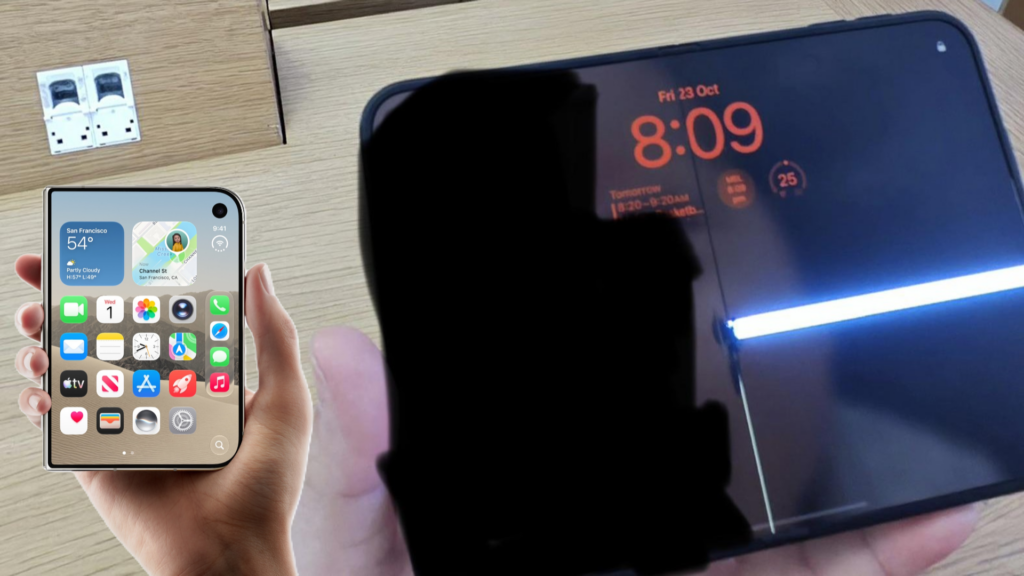
Apple’s first foldable phone only went on sale yesterday (October 23), and a handful of owners are already reporting problems with the inner display.

iPhone Duo showing a bright vertical line of dead pixels along the central hinge area.

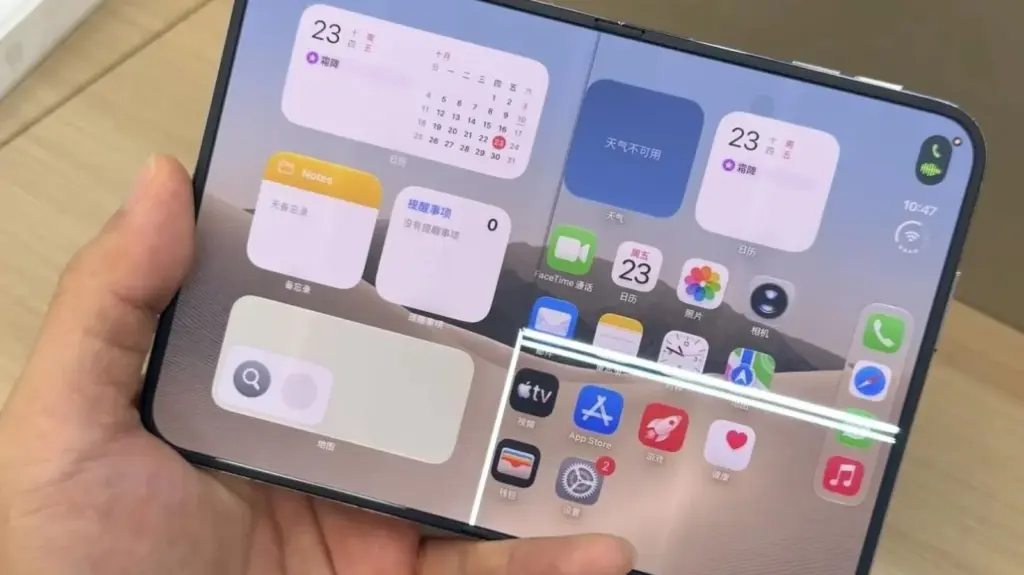
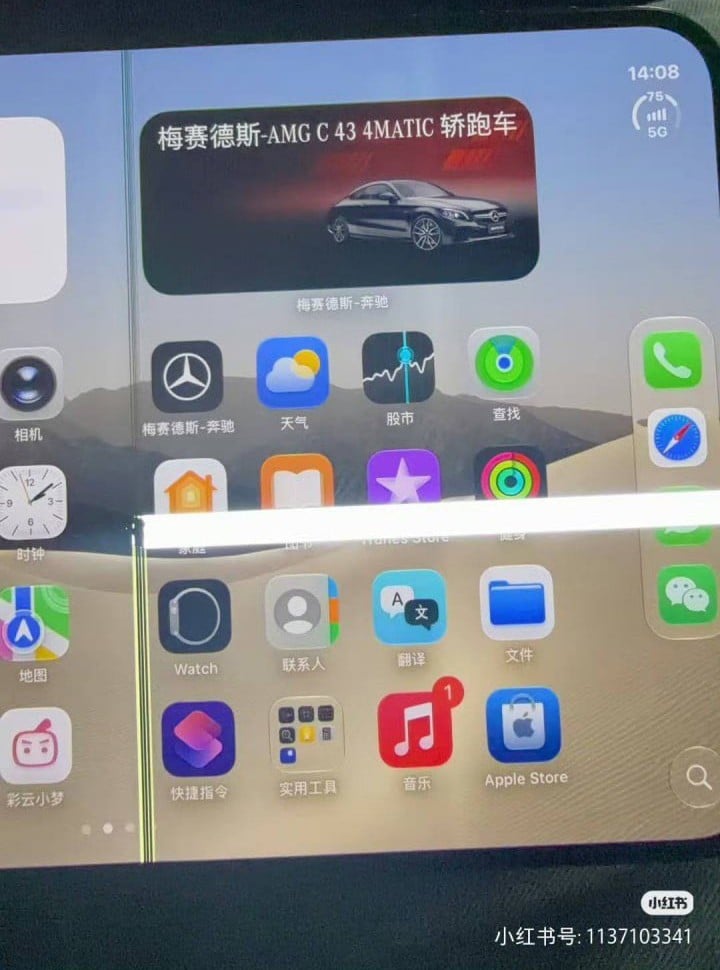
Photos and posts started showing up on Reddit and X within hours of launch. Almost every case looks the same: a crack or a bright line of dead/bright pixels running right along the fold, near the hinge.

One of the more detailed accounts comes from an owner in Australia. He said he’d only had the phone for about six hours and had opened it fewer than 20 times. While showing it to a friend, he felt something under the screen near the internal hinge, heard a clear crack as he kept opening it, and the display split along the fold. There were no marks on the screen or the outside of the hinge that suggested anything had been caught or damaged. An Apple Store swapped the phone out for him on the spot.

iPhone Duo screen showing a vertical crack and a bright horizontal line across display.

Similar photos have also appeared from China (where the Duo launched a bit earlier). Some of those look like they might be from demo units that get handled a lot, so it’s harder to know exactly what happened. A few early reviewers who deliberately folded their units hundreds of times haven’t reported the same issue, but that sample is still small.

It’s still way too early to say how common this is. And honestly, some early hiccups like this are almost expected with a first-generation foldable. The important part is whether affected owners get their devices fixed or replaced free of cost. Apple hasn’t said anything publicly yet as of writing. They’d probably be collecting the affected units for analysis, which could lead to manufacturing tweaks in later generations.

If the phone fails under normal use, it should be covered by the standard one-year warranty. Anyone who got theirs on launch day also has the usual two-week return window. Outside of that, though, an out-of-warranty inner display replacement is listed at $999, so anyone without AppleCare+ could eventually face a steep bill if the issue appears later.

Don’t miss a thing! Join our Telegram community for instant updates and grab our free daily newsletter for the best tech stories!

For more daily updates, please visit our News Section.

(Sources: Reddit | Ice Universe on X)

OnePlus Ace 7 and Ace 7 Pro Roundup: Everything you need to know before launch

OnePlus will launch the Ace 7 and Ace 7 Pro in China on October 29 at 7 PM local time (4:30 PM in India). The company confirmed the launch date this week, and reservations for both phones have been open on its Chinese online store since October 16.

Now that buyers can reserve the phones ahead of launch, OnePlus has been revealing more details about what they will offer. The new phones follow the OnePlus Ace 6 with a 165Hz display, a 7,800mAh battery, a 50MP + 8MP rear camera setup, and a 16MP selfie camera. The Ace 7 series is tipped to bring a faster 185Hz display, a battery capacity of around 9,000mAh, and a 200MP main camera. Its biggest addition is an active cooling fan, which would be a first for a OnePlus phone.

Here’s what OnePlus has confirmed so far and what recent leaks suggest about each model.

Two OnePlus Ace 7 smartphones in gradient colors floating against a white background.

1. What OnePlus has confirmed

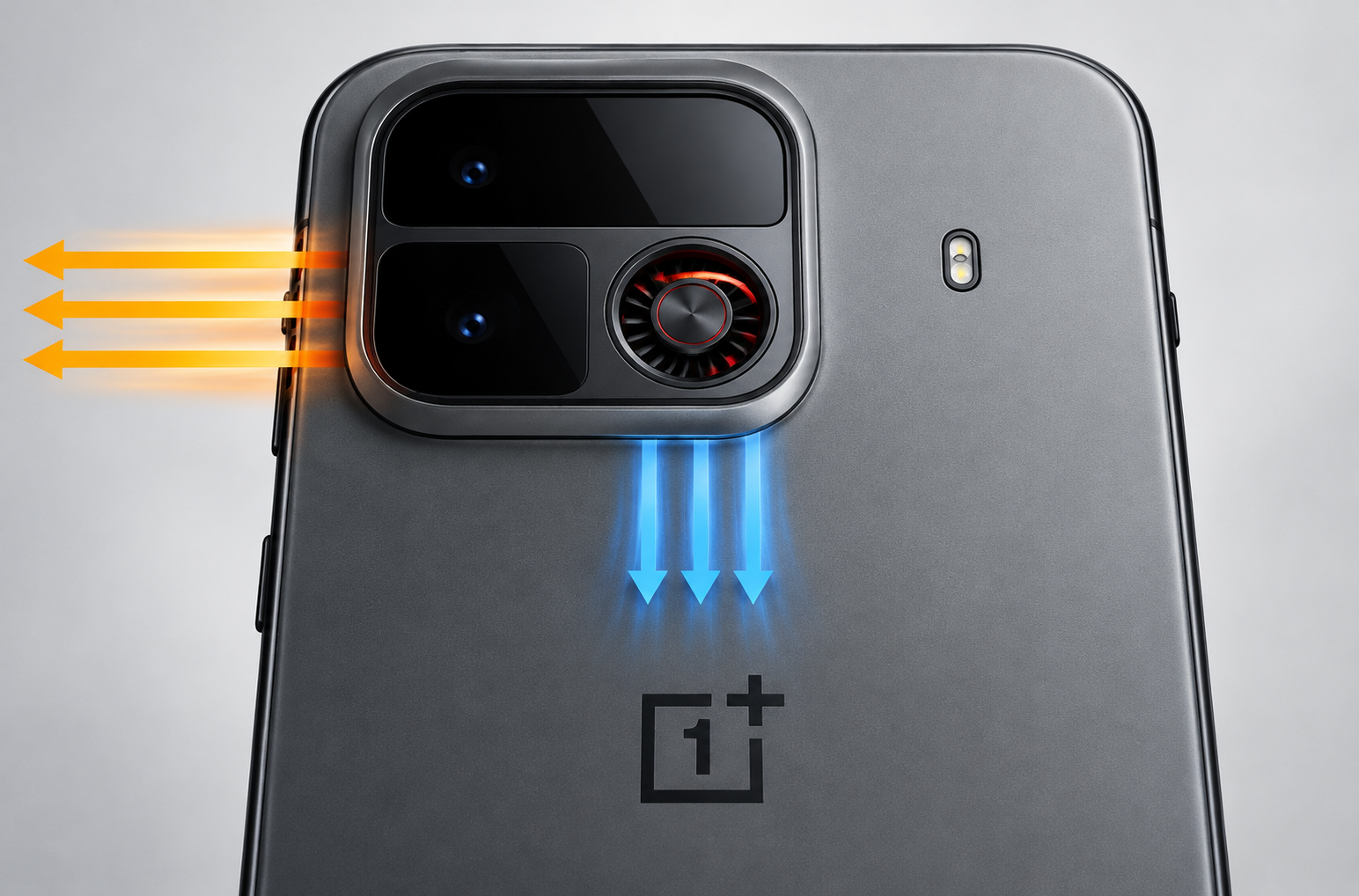
OnePlus has confirmed two different processors for the lineup. The Ace 7 will use the Snapdragon 8 Elite Gen 5 V, while the Ace 7 Pro gets the standard Snapdragon 8 Elite Gen 5. Both phones will also include the company’s Wind-Chaser gaming engine and a built-in fan with a dual-airflow cooling system.

OnePlus China president Li Jie explained the cooling setup in a Weibo post. The system uses separate airflow paths to cool the chipset and the rear panel. The air intake is away from the spots where your fingers rest in landscape mode, so you won’t block it while gaming, and the exhaust pushes hot air upward instead of into your palms.

OnePlus calls it an industry-first “Dual-Path Glacier Air Cooling System” and says temperatures stay up to 10 degrees Celsius lower during long gaming sessions.

2. OnePlus Ace 7 Pro

The Ace 7 Pro is the more powerful model, carrying the model number PMS110 and device code OP64F1L1. It runs the full Snapdragon 8 Elite Gen 5 (SM8850), the same chip you get in the OnePlus 15, and Geekbench listings show it with 16GB of RAM and Android 17, and you can expect ColorOS 17 on top.

The phone is tipped to feature a 6.78-inch flat LTPS OLED display with a 1.5K resolution and a 185Hz refresh rate. The device is even tipped to support a 240Hz refresh rate, although 185Hz is said to be the guaranteed minimum.

As for the camera setup, the Ace 7 Pro is expected to feature a 200MP main camera with optical image stabilization, alongside a 50MP periscope telephoto camera with 3.5x optical zoom. The telephoto camera is reportedly equipped with Samsung’s ISOCELL JN5 sensor. The front is expected to have a 16MP selfie camera.

Powering the phone could be a 9,000mAh cell, with reports pointing to either 100W or 120W wired charging. The built-in cooling fan will reportedly work with an AI temperature sensor to manage heat.

3. OnePlus Ace 7

The standard Ace 7 carries the model number PYF110 and device code OP68BBL1. It uses the Snapdragon 8 Elite Gen 5 V, a lower-tier version of the Pro model’s processor.

The display is expected to match the Pro model, with a 6.78-inch flat OLED panel offering 1.5K resolution and a 185Hz refresh rate. The standard model is also tipped to feature a 200MP main camera and a 16MP selfie camera, but it is not expected to include the Pro’s periscope telephoto lens.

Some reports mention a 200MP + 50MP rear camera combination for the series, although the identity of the second 50MP sensor on the standard Ace 7 remains unclear.

Like the Pro model, the Ace 7 is expected to pack a battery of around 9,000mAh and support either 100W or 120W wired charging, depending on which report proves accurate. One leak also mentions water resistance but does not provide an official rating.

There was initially some uncertainty about whether the standard model would get the built-in fan. However, OnePlus’ teasers for the series indicate both phones will feature the cooling system.

4. How the cooling fan works

OnePlus Ace 7 render

A leaked schematic shared by Digital Chat Station provides a closer look at the cooling system. It shows two separate airflow paths, one for the processor and another for the rear panel.

The design directs hot air out through the sides, away from the user’s hands, while cooler air moves downward through the system. The setup is also said to include an AI temperature sensor, patented technology, and measures to reduce fan noise and prevent dust from entering.

If the system performs as OnePlus claims, it could help the phones sustain higher performance during longer gaming sessions. Actual temperatures and noise levels will need to be assessed after the devices launch.

5. Design

Three OnePlus Ace 7 smartphones displayed in different color options against abstract backgrounds.

Both the Ace 7 and Ace 7 Pro share a similar design. The standard Ace 7 comes in Tempered, Midnight Black, and Glossy White. Meanwhile, the higher-end Ace 7 Pro gets Windbreaker, Midnight Black, and Lightning White.

The Tempered version of the Ace 7 has a silver finish that transitions into a warm copper-orange shade near the bottom. The Windbreaker version of the Ace 7 Pro has a light blue color with a frosted, brushed texture. Both feature large Ace lettering and the OnePlus logo on the rear panel.

Three OnePlus Ace 7 Pro smartphones shown in blue, black, and white color options.

The camera module sits in the upper-left corner. It consists of a raised metal square with rounded edges, housing a tall pill-shaped cutout, a smaller circular lens, and a ring-shaped element. The flash sits just outside the module.

6. Price and availability

OnePlus has not revealed pricing for the Ace 7 or Ace 7 Pro. The Ace series typically remains exclusive to China, and OnePlus withdrew from the US and European markets this year, so a wider Western release is unlikely.

For India, the Ace 7 Pro could launch as the OnePlus 16R at around Rs 75,000. This remains unconfirmed, though.

For daily updates, please visit our News Section.

Stay ahead in tech! Join our Telegram community and sign up for our daily newsletter of top stories.

Honor 700 series to bring 200MP camera, built-in rear screen, and 9000mAh battery

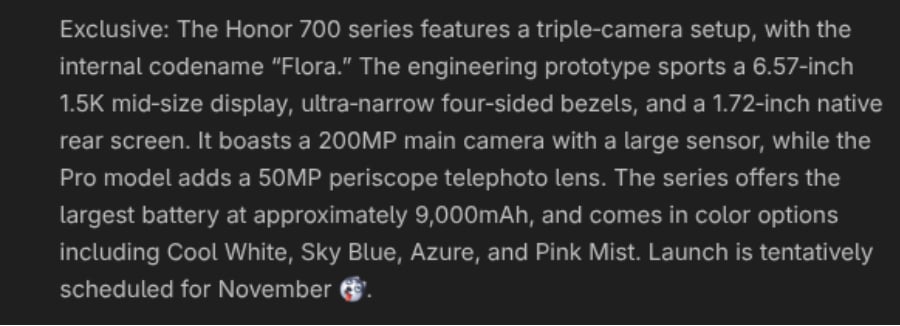
Following an earlier leak about a 1.72-inch rear screen, prolific tipster Digital Chat Station has shared more details on the Honor 700 series. According to the tipster, the series carries the internal codename “Flora,” and the latest information comes from an engineering prototype. Honor tentatively plans to launch the phones in November, though the schedule could still change.

Honor 700 series specifications

The prototype has a 6.57-inch 1.5K display, which DCS describes as mid-size. Honor keeps the bezels ultra-narrow on all four sides, so the phone should feel compact for the screen you get.

The bigger change is on the back. DCS repeats that the phones have a 1.72-inch native rear screen, matching his earlier comments. Because the screen is built in, you no longer need the snap-on magnetic mini display that came with the Honor 600 series.

Honor 700 Pro series color and camera leak

The camera setup reportedly includes three rear cameras, led by a 200MP main sensor. DCS doesn’t name the sensor, so its size and other details remain unknown. Meanwhile, the Honor 700 Pro is also said to feature a 50MP periscope telephoto camera for better zoom. 

The battery is said to come in at around 9,000mAh, roughly 400mAh more than the 8,600mAh battery in the Chinese Honor 600 Super.

Honor is also said to be testing four colors for the 700 series: Cool White, Sky Blue, Azure and Pink Mist. However, the final color options may still differ when the phones launch.

The November launch is still tentative, and Honor hasn’t confirmed a date, a lineup, or any specs. Since these details come from an engineering prototype, some of them may change before the phones go on sale. We’ll update you as more leaks and official teasers appear.

For more daily updates, please visit our News Section.

Stay ahead in tech! Join our Telegram community and sign up for our daily newsletter of top stories!

(Source)

Casio launches three lightweight GMA-S160 watches in the US with a minimalist design

Casio has brought its GMA-S160 watch series to the US market. After an initial launch in Japan last month, the three new analog-digital models, available in black, navy, and white, are now on sale stateside for $145.

Casio GMA-S160 watches

Casio GMA-S160 Specifications

The main draw of the GMA-S160 is its reduced footprint. Casio is marketing this under its women’s line, focusing on a slimmer, more compact case than its existing GMA-P2100 models. The watch measures 40.7 x 35.7 x 10.8 mm and weighs just 31 grams. It is built for people who want the standard durability of a Casio watch but have smaller wrists or simply prefer a less bulky profile for daily wear.

Design-wise, Casio kept things relatively simple. The bezel and band have a matte finish, which is paired with a metallic dial and matching metal accents on the buckle and band loop. The overall look is minimal, avoiding the busy, text-heavy bezels found on many of the company’s other rugged watches.

Casio GMA-S160 watches

Casio is also continuing its recent trend of using alternative materials. The main resin components in both the bezel and the band are made from bio-based resin.

Check price →
Where to buy
Casio GMA-S160
Latest price on Amazon

Despite the smaller size, the internal specs are standard for this tier of Casio watches. The GMA-S160 maintains the company’s usual shock-resistant construction and 200-meter water resistance. The face features a traditional two-hand analog display alongside a small digital LCD screen that shows the hour, minute, second, date, and day of the week.

The watch also features a hand-shift function for better digital display visibility, dual time, a one-second stopwatch, an auto-calendar until 2099, and dual LED lighting for both analog and digital displays. It runs on a CR1025 battery, which Casio claims can last up to three years.

In related news, Casio has recently launched three affordable MDV106C dive watches in the US with 200m water resistance and introduced its rugged Mudmaster GWG-B1000-1A3 to the American market.

For more daily updates, please visit our News Section.

Stay ahead in tech! Join our Telegram community and sign up for our daily newsletter of top stories!

(Casio 1,2,3)

Baseus EnerGeek GH21 160W GaN charger launched with three USB-C ports, 1.8-inch display, 12,500 RPM cooling fan

Baseus has opened pre-orders for a compact high-power GaN charger that tries to solve two common complaints with multi-device fast charging: heat buildup and dropping output over time.

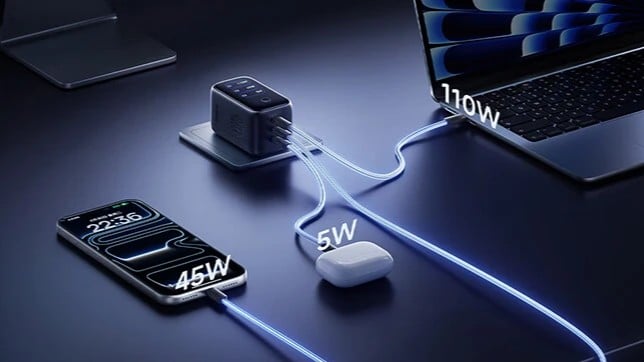
Baseus EnerGeek GH21 charger powering a laptop, smartphone, and earbuds with indicated wattage.

The Baseus EnerGeek GH21 is a 160W all-protocol GaN display charger. It’s fairly small at 45 × 47 × 77.4 mm and weighs about 230 g without the box. Input supports the usual 100-240V range. Each of its three USB-C ports can push up to 140W on its own, and when you use two or three ports together the total maxes out at 160W.

The standout feature is the active cooling system. Baseus went with an e-sports-style air-cooling design that uses a surround airflow path, which they claim improves heat dissipation by 35%. Inside is a DC centrifugal high-speed turbofan with a magnetic levitation motor that spins up to 12,500 RPM and moves 0.96 CFM of air, 128% more than traditional designs. There’s also a sleep mode so you can manually turn the fan off for quieter nighttime use.

Internal view of the Baseus EnerGeek GH21 charger showing its cooling fan and AI chip.

Combined with a large 2,584 mm² graphene thermal area and AI adaptive temperature control, the charger is said to drop temperature by 18°C within the first 10 minutes of full-power use and settle around 66°C, about 15°C cooler than most passive high-power chargers. Baseus claims it can hold full power for up to 72 hours without thermal throttling.

Power is managed by PowerTune 3.0, which checks the ports every three seconds and shifts power around so charging doesn’t get interrupted when you plug or unplug devices. The C3 port specifically supports Xiaomi’s 120W Hyper Charge protocol, so a Xiaomi 17 Pro can reach 80% in about 30 minutes.

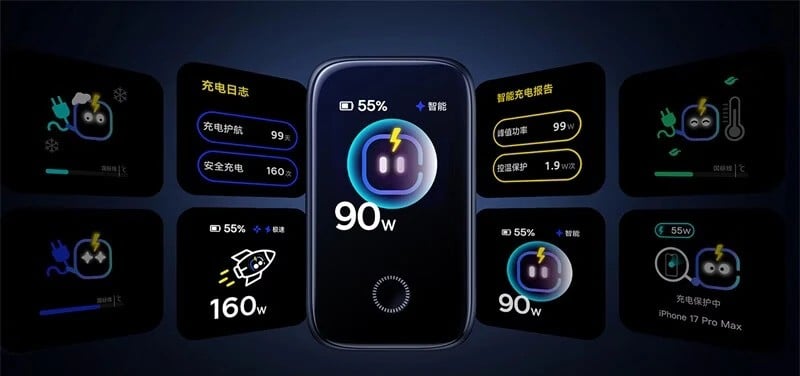
Baseus EnerGeek GH21 charger display showing various charging statistics and status icons on screen.

On the front is a 1.8-inch full-color TFT screen running BaseusView 2.0 that shows real-time power, estimated time left, temperature, and other stats. It also generates a quick summary after charging finishes, supports double-tap to flip the screen, and even has a few playful screensaver options.

Pre-orders are already live in China for 399 yuan, which translates to around $60.

Check price →
Available now
Baseus 140W GaN chargers
Prices on Amazon

Don’t miss a thing! Join our Telegram community for instant updates and grab our free daily newsletter for the best tech stories!

For more daily updates, please visit our News Section.

Ugreen launches new M.2 SSD enclosures with built-in USB-C cables, up to 8TB support & 20Gbps speeds

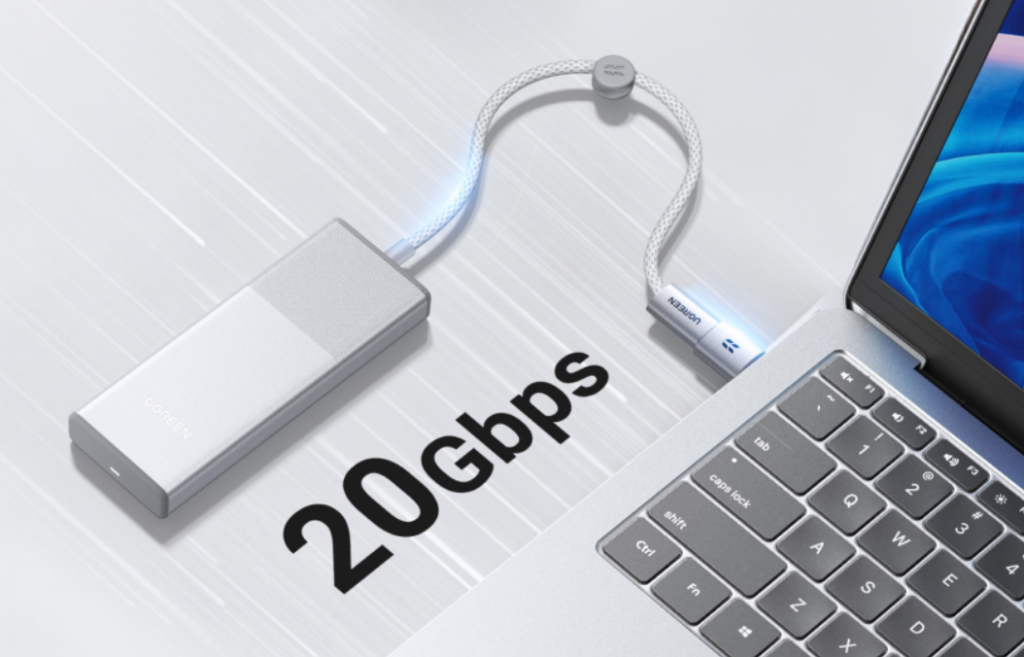
Ugreen has released two new M.2 NVMe SSD enclosures. There is a 10Gbps version available for $27.99 ($24.99 for Amazon Prime members) and a faster 20Gbps version priced at $39.99 ($34.99 with Prime).

Ugreen M.2 NVMe SSD Enclosure

Ugreen M.2 NVMe SSD Enclosure Specifications

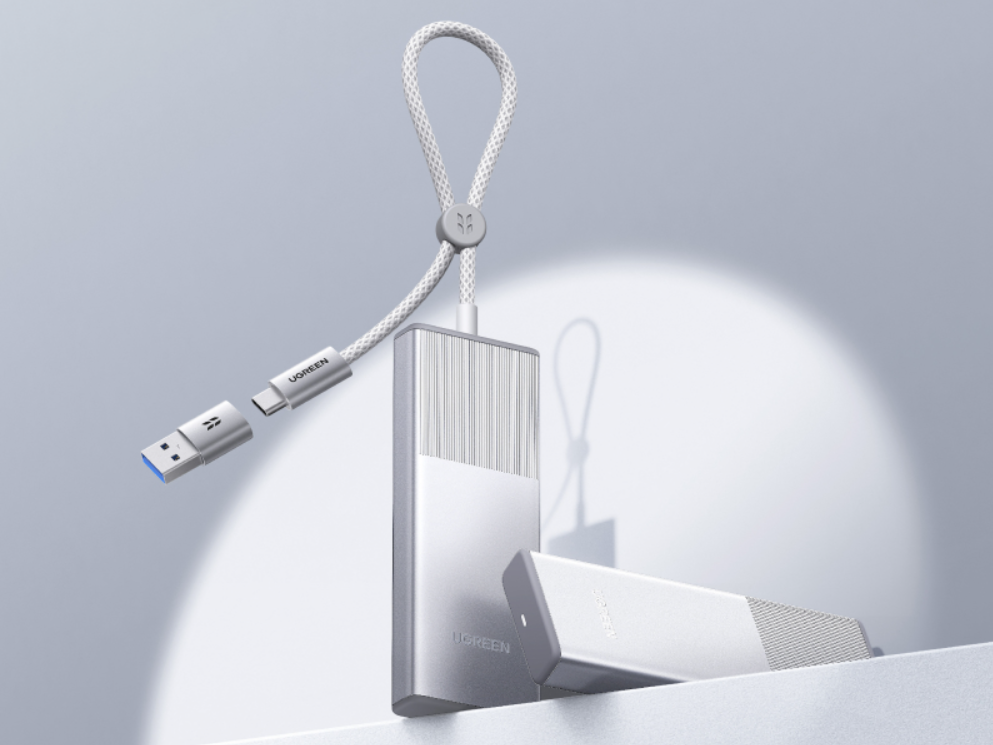
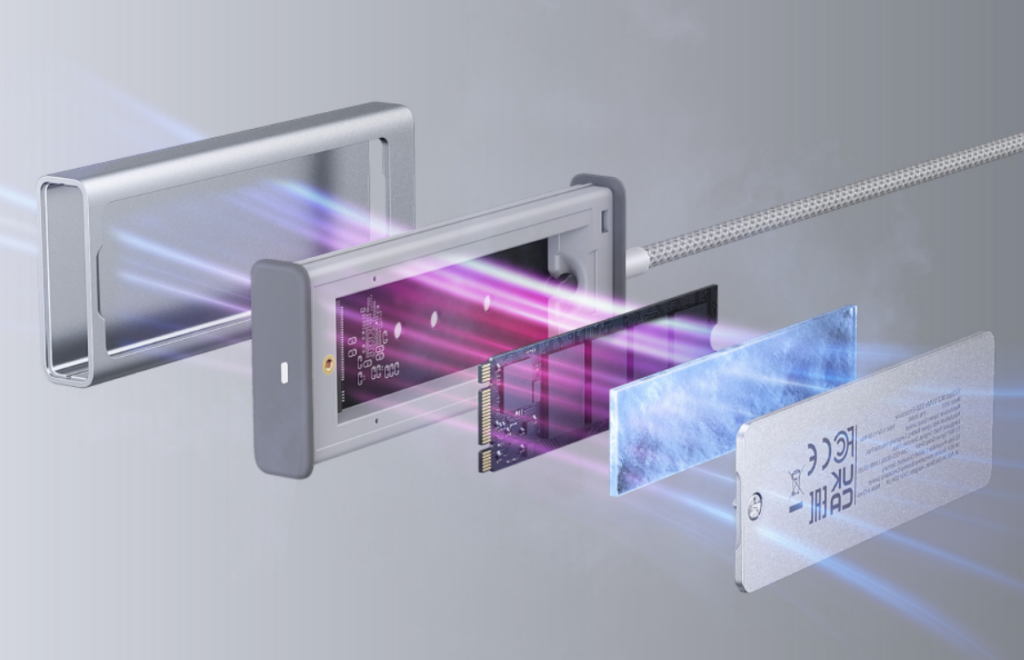
Instead of relying on a separate, detachable cable that you might easily misplace, these enclosures come with a 7.9-inch USB-C cable permanently attached to the device. When you aren’t using the drive, the cable simply tucks into the side of the case for storage, and there are cable clips to keep things tidy.

The outer shell is made of aluminum, which helps keep the internal drive cool during file transfers. Ugreen also includes a thermal pad in the box to assist with heat dissipation. If you are using an older computer that doesn’t have a USB-C port, the package comes with a USB-C to USB-A adapter. There is also a basic LED light on the outside to let you know when the drive is active.

Ugreen M.2 NVMe SSD Enclosure

Inside the enclosure, you can install M.2 NVMe PCIe SSDs with storage capacities up to 8TB. It is compatible with the standard 2230, 2242, 2260, and 2280 drive sizes, and it works with both M-Key and B+M Key configurations. You secure the drive with an included screw to keep it from moving around while you are carrying it.

The enclosure is plug-and-play, meaning you don’t need to install any drivers to use it on Windows, macOS, or Linux computers. It supports standard storage features like TRIM and SMART, which help maintain the drive’s long-term health and performance. If the drive is plugged in but left idle, it will automatically go to sleep after 15 minutes to save power.

Ugreen M.2 NVMe SSD Enclosure

The transfer speeds you actually get will depend on the model you buy and the ports on your computer. The $27.99 model uses a USB 3.2 Gen 2 interface for speeds up to 10Gbps. The $39.99 model uses USB 3.2 Gen 2×2 to reach up to 20Gbps. However, there is a catch with the faster version: your computer needs a specific USB 3.2 Gen 2×2 port to hit that 20Gbps mark.

Check price →
Where to buy
Ugreen M.2 NVMe SSD Enclosure (10Gbps / 20Gbps)
Latest price on Amazon

Thunderbolt 3 and 4 ports, like the ones found on all MacBooks and many modern Windows laptops, do not support the Gen 2×2 standard. If you plug the 20Gbps enclosure into a Thunderbolt port, it will just run at 10Gbps. Because of this, Mac users and people with Thunderbolt-only laptops are probably better off saving a few dollars and buying the 10Gbps model.

For more daily updates, please visit our News Section.

Stay ahead in tech! Join our Telegram community and sign up for our daily newsletter of top stories!

(Amazon, Via)

Galaxy S26 Plus gets a surprise discount

Looking for a flagship upgrade without paying full price? Amazon and Samsung’s US store currently have a solid discount on the Galaxy S26 Plus that’s worth a look if you’re after premium features for less.

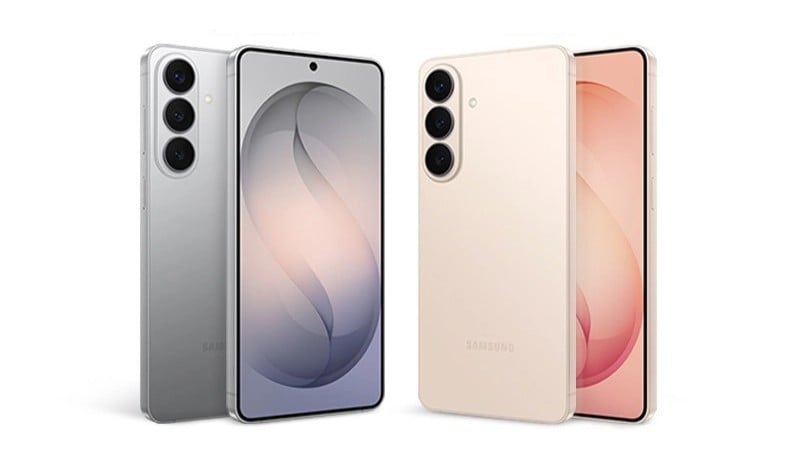
Two Samsung Galaxy S26 Plus smartphones shown in silver and cream color options.

The Galaxy S26 Plus comes with a 6.7-inch QHD+ Dynamic AMOLED 2X display running at 120Hz, the Snapdragon 8 Elite Gen 5 for Galaxy processor, 12GB of RAM, and a 4,900mAh battery with 45W wired charging.

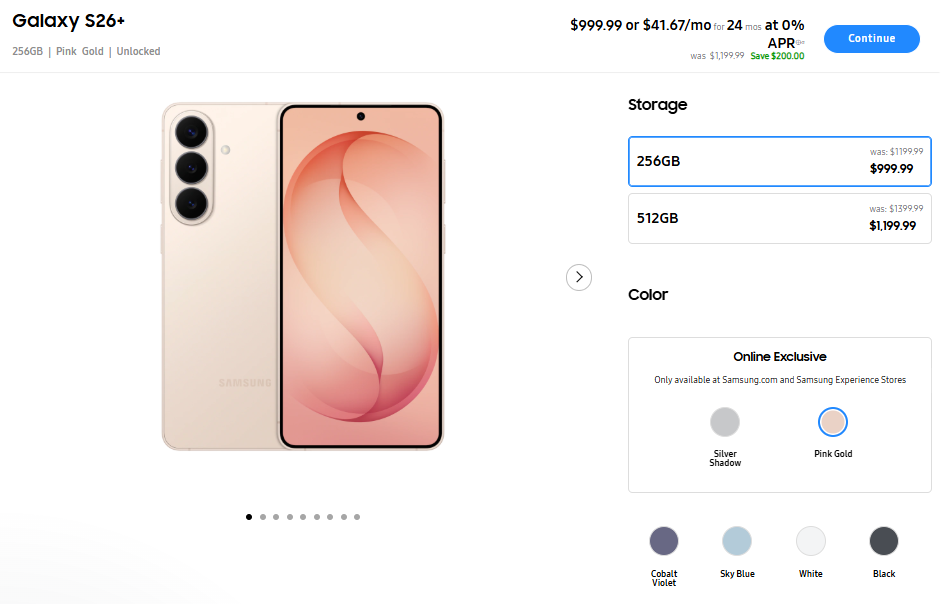
You also get the full suite of Galaxy AI tools for photo editing, creative generation, and everyday help, plus a triple-camera setup headed by a 50MP 1/1.56-inch main sensor. It originally launched at $1,099.99 for the 256GB model and later saw its list price climb to $1,199.99 as component costs rose across the industry.

Samsung Galaxy S26 Plus product page showing discounted pricing and color options.

Right now on Amazon, the 256GB Black version is going for $999.99. That’s a $200 discount, about 17% off the recent $1,199.99 list price. If you want more color options, the Cobalt Violet, Sky Blue, White, and even the online-exclusive Silver Shadow and Pink Gold are also listed at the same $999.99 price on Samsung’s US store.

Check price →
Where to buy
Samsung Galaxy S26 Plus 256GB
Latest price on Amazon

This makes the S26 Plus a more approachable way into Samsung’s latest flagship experience. You get a big, bright screen that’s great for media and productivity, solid all-day battery life, and several years of software support without jumping up to the Ultra’s higher price and extra features. Reviews have generally praised its balanced feel (around 190g) and strong performance for everyday use and gaming.

Prices can change fast, and popular configurations often sell out. If the 256GB model is what you’re after, it’s worth checking the listing directly since both the discount and stock can disappear without much warning.

If you’ve been eyeing a new Samsung phone and the 256GB Galaxy S26 Plus fits what you need, this temporary drop brings the price into more reasonable territory while still delivering 2026 flagship hardware and AI features. Just double-check the latest details before you buy.

Don’t miss a thing! Join our Telegram community for instant updates and grab our free daily newsletter for the best tech stories!

For more daily updates, please visit our News Section.

(Sources: Amazon | Samsung)

Lenovo launches affordable Legion 27Q-20 with 2K 320Hz display and 1ms response time

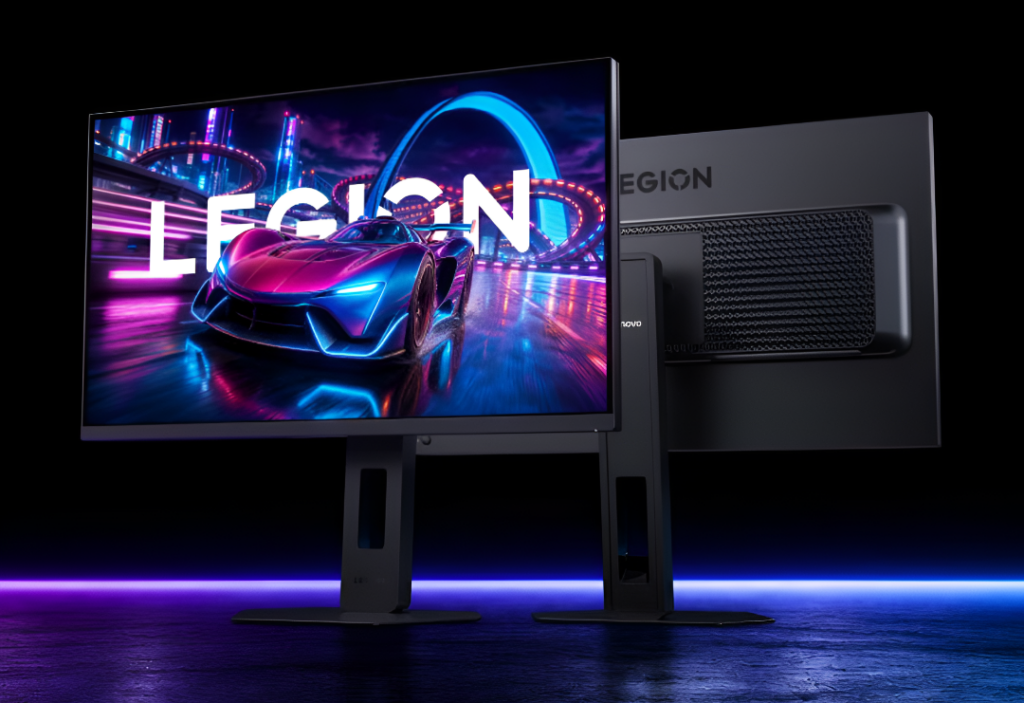
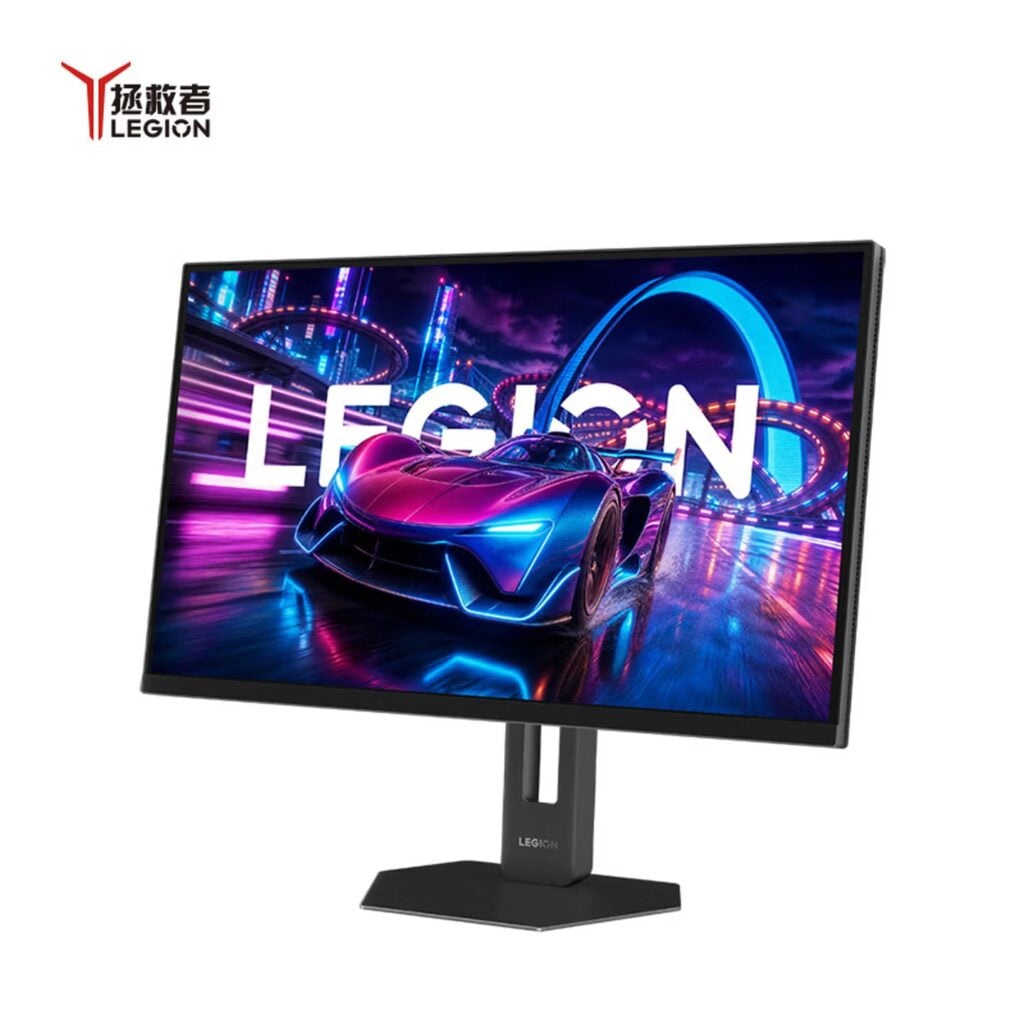
Lenovo has launched its latest gaming monitor, the Legion 27Q-20, in China. It is priced at 1,149 yuan ($172) and features a 27-inch display with 2K (1440p) resolution and a native 320Hz refresh rate. The monitor is designed for gamers who want high refresh rates and sharp visuals without compromising on resolution.

Lenovo Legion 27Q-20 gaming monitor

Lenovo Legion 27Q-20 Specifications

The monitor features a native 320Hz refresh rate alongside a 1ms gray-to-gray (GTG) response time, ensuring smooth gameplay with minimal motion blur. It also supports AMD FreeSync Premium, Nvidia G-Sync Compatible, and VESA AdaptiveSync technologies to reduce screen tearing and stuttering during fast-paced gaming sessions.

On the color and image quality side, the panel covers 99% of the sRGB color gamut and 95% of the DCI-P3 space. The monitor comes factory-calibrated with a Delta E value of less than 2, which means color reproduction should be accurate enough for general use and light photo or video editing.

Shop now →
Where to buy
Lenovo Legion gaming monitors
Browse the range on Amazon

It also carries VESA DisplayHDR 400 certification. This is the baseline tier for HDR, so while it will process an HDR signal and offer a slight bump in peak brightness, it won’t provide the deep contrast found on higher-end Mini LED or OLED displays.

The physical design is typical for gaming hardware, featuring an angular aesthetic, a hexagonal base, and rear ventilation grilles. The included stand is functional, offering 135mm of height adjustment, along with tilt (-5° to +22°), swivel (-30° to +30°), and full pivot rotation (-90° to +90°).

It also supports standard VESA mounting if you prefer to use a third-party monitor arm. For inputs, the Legion 27Q-20 comes equipped with two HDMI 2.1 FRL ports and one DisplayPort 1.4 (HBR3) port.

In related news, Xiaomi has recently launched the REDMI G27Q 2026 gaming monitor in China, featuring a 27-inch 2K display, a 240Hz refresh rate, and a 1ms response time. Meanwhile, AOC has introduced a new 320Hz QD-OLED gaming monitor with a five-layer tandem panel and factory HDR calibration.

For more daily updates, please visit our News Section.

Stay ahead in tech! Join our Telegram community and sign up for our daily newsletter of top stories!

(JD)

Samsung confirms Galaxy phones and tablets getting Android 17-based One UI 9

Samsung has officially named the Galaxy phones and tablets lined up for its Android 17-based One UI 9 update. It gives owners of older flagships and mid-range models a clear idea of what lies ahead. It also hints at how long the wider rollout could take across different markets.

Samsung One UI 9 eligible devices

Samsung Android 17 One UI 9

The confirmed roster comes from Samsung Japan, which says the update will reach devices in that country through October and November 2026. One UI 9 first arrived with the Galaxy S26 series in September and has since landed on several older flagships. While the timeline applies to Japan, the device list itself should hold true for most regions.

Here are the Galaxy smartphones on Samsung’s list:

  • Galaxy S26, S26+ and S26 Ultra
  • Galaxy S25 and S25 Ultra
  • Galaxy S24 and S24 Ultra
  • Galaxy S24 FE
  • Galaxy S23 and S23 Ultra
  • Galaxy Z Fold 7 and Z Flip 7
  • Galaxy Z Fold 6 and Z Flip 6
  • Galaxy Z Fold 5 and Z Flip 5
  • Galaxy A57, A55, A54, A36 and A25

The tablets confirmed for One UI 9 include:

  • Galaxy Tab S11 and S11 Ultra
  • Galaxy Tab S10, S10+ and S10 Ultra
  • Galaxy Tab S10 FE and S10 FE+
  • Galaxy Tab S10 Lite
  • Galaxy Tab S9, S9+ and S9 Ultra
  • Galaxy Tab S9 FE and S9 FE+
  • Galaxy Tab S6 Lite (2024)
  • Galaxy Tab A11, Tab A11+ and Tab A11 5G
  • Galaxy Tab Active 5 Pro

The list is not complete, though. Plus variants of the S25 and S24 are missing, as are many Galaxy A phones and regional models, so more names should surface as the rollout continues. Budget devices and units sold outside Japan are expected to get One UI 9 between December 2026 and January 2027.

Is your Galaxy device on the list, and which One UI 9 change are you most excited to try? Let us know in the comments.

For daily updates, please visit our News Section.

Stay ahead in tech! Join our Telegram community and sign up for our daily newsletter of top stories!

(source)

Xiaomi Mijia Water Purifier 3 1200G announced with 50 ton purification capacity, 13-stage filtration system

Xiaomi has started taking pre-orders for the Mijia Water Purifier 3 1200G. Official sales are set to begin on October 30, with the starting price set at 1,499 yuan, which roughly translates to $225. It’s aimed at families who want reliable, high-volume purified water without any chemical additives in the filter media.

The Xiaomi Mijia Water Purifier 3 1200G unit stands next to its matching metal faucet.

The unit sticks to pure physical filtration and leaves scale inhibitors out of the filter materials. It also has a self-purification function that flushes stagnant water out of the pipes, so the first glass you pour after the unit has been sitting unused still tastes fresh. The system carries mother-and-baby-grade purification certification, produces BPA-free water, and is rated for a total purified-water capacity of up to 50 tons.

Filtration comes from a 13-stage system with 0.0001-micron accuracy. It catches contaminants at every stage, from the initial filtration through rinsing to the final output, and is claimed to remove 145 types of pollutants commonly found in tap water, including impurities, residual chlorine, heavy metals, bacteria, and viruses.

Infographic showing features and performance metrics of the Xiaomi Mijia Water Purifier 3.

To deal with bacterial growth that can happen when a purifier sits unused, a post-filter works with long-lasting antibacterial material built into the outlet pipe. Xiaomi says this setup delivers an antibacterial rate of over 99% against E. coli and Staphylococcus aureus, helping prevent secondary contamination at the point of use.

Shop now →
Where to buy
Xiaomi water purifiers
Browse the range on Amazon

Flow rate is clearly a big focus. The purifier supports high throughput rated around 1400G for direct drinking water, with an initial flow rate of up to 3.74 L/min. A 150 mL cup fills in roughly 2.4 seconds, which makes it practical for larger households or anyone who uses a lot of water.

On the practical side, there’s a high-definition display that shows water mode, volume settings, and TDS values. The unit has an IPX8 waterproof rating so it can handle typical kitchen moisture and splashes. It also connects to the Mi Home app, where you can check water quality and usage data, keep an eye on remaining filter life, adjust the flow if needed, and order replacement filters with one click.

Don’t miss a thing! Join our Telegram community for instant updates and grab our free daily newsletter for the best tech stories!

For more daily updates, please visit our News Section.

Foldable iPad could be Apple’s version of Huawei MateBook Fold, suggests new leak

Chinese tipster @Kang recently claimed that Apple is testing a “foldable giant tablet,” and the overall design might take some cues from Huawei’s MateBook Fold. The report lines up with earlier predictions from analyst Ming-Chi Kuo that Apple is aiming for a foldable iPad around 2028.

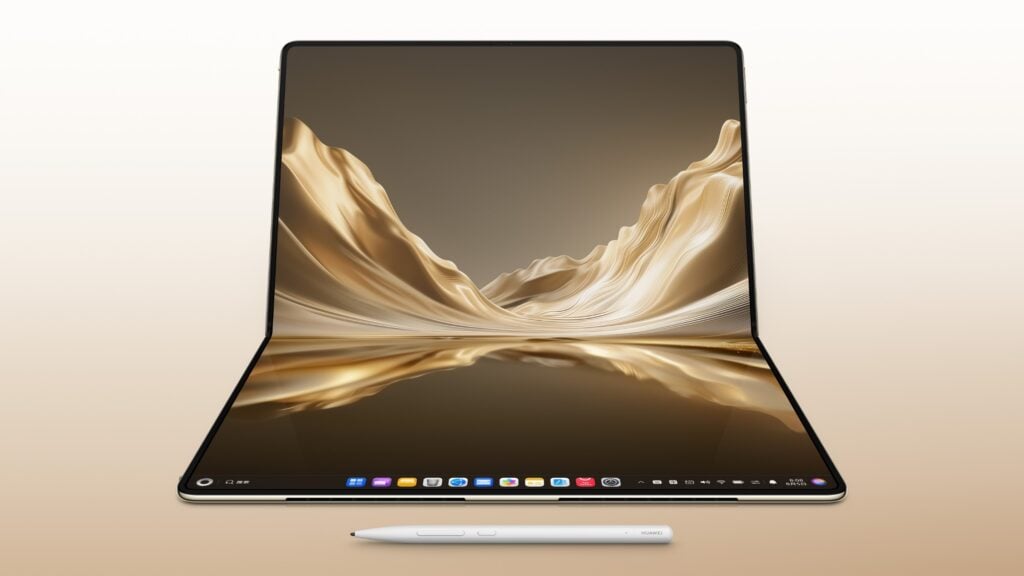
The Huawei MateBook Fold tablet is shown unfolded with a stylus resting in front.

When unfolded, the device is expected to offer an 18- to 20-inch display area while still staying relatively portable when folded.

Kuo has said before that this foldable iPad would use an ultra-thin glass (UTG) cover. Corning’s Gorilla Glass is expected to supply the glass materials exclusively, while General Interface Solutions (GIS) would handle the critical backend work, including cutting, edge treatment, quality checks, and packaging. These same suppliers are already linked to Apple’s broader foldable efforts, including the upcoming foldable iPhone.

Social media post from a blogger discussing a potential foldable mega-tablet device.

For some context, Huawei’s latest MateBook Fold (powered by the Kirin X90 Plus) launched in August 2026 with a starting price of 24,999 yuan. It has an 18-inch dual-layer OLED foldable screen that measures just 7.3 mm thick on one side when fully opened. It comes in Sky White, Phantom Black, and Streamer Gold, has a built-in stand, and supports a stylus. When folded, it takes on a more compact notebook-like shape.

Earlier reports from Bloomberg’s Mark Gurman described a similar idea of a large foldable that could essentially work like two iPad Pros side by side, with a big focus on keeping the crease as invisible as possible. If the device does arrive in 2028, first-year shipments have been projected at a fairly modest 0.5-1 million units, reflecting both the technical challenges and the likely high price tag of a large-format foldable.

Whether Apple ends up borrowing design ideas from Huawei’s already-shipping product or goes its own way is something we’ll only know closer to any actual launch.

Don’t miss a thing! Join our Telegram community for instant updates and grab our free daily newsletter for the best tech stories!

For more daily updates, please visit our News Section.

(Source)

HMD 2660 Flip Senior Edition brings Mary AI companion to a basic flip phone

HMD has launched the HMD 2660 Flip Senior Edition in the UK. It’s a version of the HMD 2660 Flip with a built-in AI companion called Mary. 

The Senior Edition builds on the HMD 2660 Flip, which launched at MWC Barcelona in March 2025 and later made our best feature phones of 2025 list. The design goes back further, to the Nokia 2660 Flip from 2022, which also used a Unisoc T107 chip and a 2.8-inch QVGA display.

What you get

The hardware is fairly basic, as you expect from a keypad phone. You get a 2.8-inch QVGA main display and a 1.77-inch QQVGA screen on the outside. A Unisoc T107 processor runs the phone with 64MB of RAM and 128MB of storage, and the software is S30+. The rear camera is 0.3MP.

HMD 2660 Flip Senior Edition Launch Specs Price

It runs on a 1,450mAh removable battery which charges over USB-C. HMD claims a talk time of up to 8.1 hours. It measures 198.9 x 55 x 19mm and weighs 136.4g.

You also get Bluetooth 5.0, a 3.5mm headphone jack, FM radio that works with or without wired headphones, an MP3 player, dual mics, a single speaker, and a Nano SIM slot. The phone has an IP54 rating for dust and splash resistance.

How Mary works on HMD 2660 Flip Senior Edition

Check price →
Where to buy
HMD 2660 Flip Senior Edition
Latest price on Amazon

HMD built Mary with inTouch, a company that makes AI call services for older adults. You reach Mary from the phone’s main menu by pressing the call button, so there’s no app to install and no number to dial. After the first activation, she’s available around the clock.

HMD 2660 Flip screen showing an inTouch prompt to call the Mary AI companion.

Mary is tuned for older users. She uses simple language, speaks at a slower pace, and waits through long pauses. She also remembers details from earlier conversations. HMD says you can talk to her about history, nature or stories, play memory games, or just chat. 

The only time the senior may need assistance is while setting up the service by scanning the QR code in the box or visiting the activation page.

Price and the subscription

HMD 2660 Flip Senior Edition retails in the UK for £79.99, and the price includes the first five hours of conversation with Mary. After that, you need to pay £16.90 per month to keep using her. The subscription doesn’t renew automatically, so you’re only charged if you choose to continue. HMD says inTouch emails the registered address when the free time is running low.
If you skip the subscription, the phone keeps working as a regular flip phone without Mary. Your operator’s own charges may apply on top of the monthly fee. The HMD 2660 Flip Senior Edition is available now through HMD’s UK storefront.

Don’t miss a thing! Join our Telegram community for instant updates and grab our free daily newsletter for the best tech stories!

For more daily updates, please visit our News Section.

OnePlus Ace 7/Pro color options confirmed ahead of October 29 launch

OnePlus is getting ready to add to its Ace series with the Ace 7 and Ace 7 Pro. Both will officially debut in China on October 29. Pre-orders are already open, and the company has now shown the full colour options.

Three OnePlus Ace 7 smartphones displayed in different color options against abstract backgrounds.

The standard Ace 7 comes in Tempered, Midnight Black, and Glossy White (also called Radiant White). The higher-end Ace 7 Pro gets Windbreaker, Midnight Black, and Lightning White (also listed as Radiant White in some materials).

Three OnePlus Ace 7 Pro smartphones shown in blue, black, and white color options.

Design-wise, both phones lean into a more premium, flagship look. There’s a hidden “Storm Island” air intake that uses an aerodynamic layout to help with airflow. You’ll also find a customizable “Interstellar Light Effect” breathing light that can amp up the gaming vibe and double as a visual alert for calls and notifications. The phones pair a solid metal frame with a new AG silk glass finish on the back for a smoother feel and better grip.

The Ace 7 Pro is the more interesting one on paper. It’s powered by Qualcomm’s Snapdragon 8 Elite Gen 5. The big talking point, though, is what OnePlus is calling the industry’s first dual-path air cooling system.

This active setup sends air along two separate paths, one aimed at the chipset to keep high frame rates stable, and another directed at the rear panel so the back of the phone stays cooler during long sessions. Official tests and tipster reports suggest the fan can drop temperatures by around 10°C while helping maintain performance in demanding games.

The positioning of the intakes and exhausts is also designed so they don’t get in the way when you’re holding the phone in landscape for gaming. Full specs are still under wraps until the October 29 event. Overall, the series keeps OnePlus’s usual focus on sustained performance for mobile gamers, and the dual-path cooling looks like a clear step beyond the usual vapor-chamber solution.

Don’t miss a thing! Join our Telegram community for instant updates and grab our free daily newsletter for the best tech stories!

For more daily updates, please visit our News Section.

Sources: OnePlus on Weibo (1), (2)

Honor Magic 9 series beats every other new Android flagship in sales so far

Honor Magic 9 series has passed every other Android flagship released this year in cumulative sales, according to Honor Global Chief Marketing Officer Guan Haitao. He said the figure covers sales through week 42 and counts every Android flagship launched in 2026, regardless of release date.

Guan added that the series’ daily sales are still closing in on the second-ranked product across Honor’s whole lineup. He says this is a first in the company’s history.

Social media posts from Guan Haitao and Digital Chat Station discussing Honor Magic 9 sales.

Tipster Digital Chat Station backs the claim with activation data. As of week 42, the three Honor Magic 9 models had reached 390,000 combined activations, the highest among new Android flagships this year.

Honor put the phones on sale right after the September 28 launch in China. During the National Day holiday, the Honor Magic 9 series ranked first in Android phone sales, and several versions sold out. Honor credits two things for the demand: the ARRI-tuned cameras and a price that undercuts many rivals.

The series has three phones: the Honor Magic 9, the Honor Magic 9 Super Edition, and the Honor Magic 9 Pro Max. Prices start at 4,499 yuan (~ $675), and you can get them for 3,999 yuan( ~$600) after national subsidies.

What the Honor Magic 9 Pro Max offers

The Honor Magic 9 Pro Max is the model Honor leans on most for its imaging claims. You get a dual 200MP camera system developed with ARRI, CIPA 8.0-rated image stabilization, and Honor’s self-developed Yuguang H1 imaging chip.

Honor Magic 9 Pro Max Design

Honor says it rebuilt the video pipeline on this phone. It adds the ARRI LogC3 curve, which the company describes as the closest to the look of film. The phone lets you import all 87 ARRI Look profiles, so you can shoot in a Hollywood-style color grade without editing afterward. Honor also calls it the most powerful flagship in the company’s history.

If you’re outside China, the phones are on their way. Honor’s UK and French websites are listing the series for a January 2027 launch in Europe. The company hasn’t given a specific date or European pricing yet, but UK customers can already register their interest on the website.

Don’t miss a thing! Join our Telegram community for instant updates and grab our free daily newsletter for the best tech stories!

For more daily updates, please visit our News Section.

Honor Win RT vs POCO F8 Pro: One Has a 10,000mAh Battery, But Which Is Better?

Honor Win RT and POCO F8 Pro take different approaches to delivering flagship-level performance. Both feature Qualcomm’s Snapdragon 8 Elite chipset, making raw processing power less of a deciding factor. Instead, the choice comes down to how each phone balances everyday usability, gaming potential, photography, battery endurance, and pricing. 

One prioritizes sustained performance and exceptional battery capacity, while the other offers a more versatile camera system and a refined multimedia experience. Here is how they compare across the features that matter most.

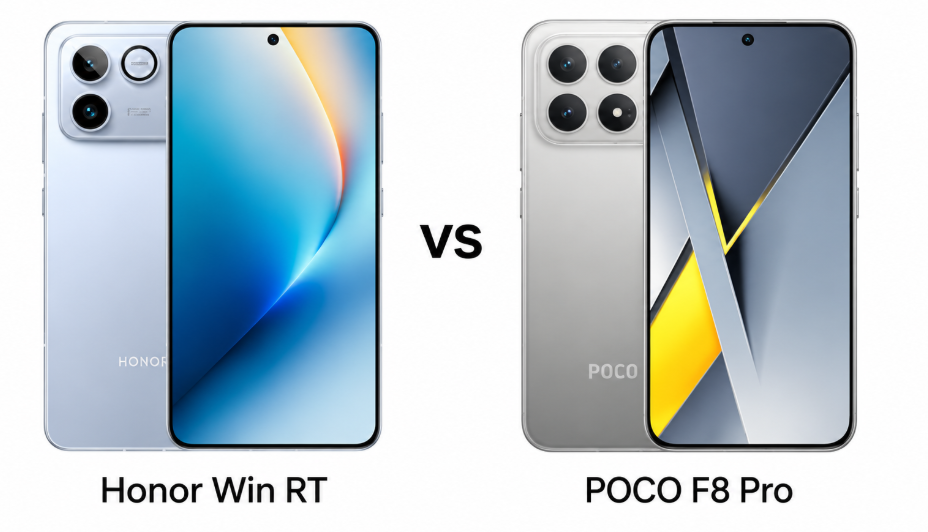
Side by side comparison of the Honor Win RT and POCO F8 Pro smartphones.

Major Features:

CategoryHonor Win RTPOCO F8 ProWinner & Reason
Display6.83-inch AMOLED, 185Hz, 6000 nits peak6.59-inch AMOLED, 120Hz, 3500 nits peakHonor — Higher refresh rate and peak brightness
Display ProtectionScratch/drop-resistant glassCorning Gorilla Glass 7iPOCO — Specified Gorilla Glass protection
Water ResistanceIP68/IP69KIP68Honor — Higher-rated ingress protection
ProcessorSnapdragon 8 EliteSnapdragon 8 EliteTie — Same flagship chipset
GPUAdreno 830Adreno 830Tie — Same graphics hardware
RAMUp to 16GB12GBHonor — Higher maximum RAM
StorageUp to 1TB, UFS 4.1Up to 512GB, UFS 4.1Honor — Higher storage capacity
CoolingBuilt-in cooling fanNo built-in cooling fan specifiedHonor — Active cooling for extended workloads
Rear Camera50MP main with OIS, 12MP autofocus ultrawide50MP main with OIS, 50MP telephoto, 8MP ultrawidePOCO — More versatile triple-camera system
Optical ZoomNo dedicated telephoto camera2.5x optical zoomPOCO — Dedicated telephoto lens
Selfie Camera50MP, 4K video at 60fps20MP, 1080p video at 60fpsHonor — Higher resolution and 4K recording
Rear VideoUp to 8K not specified; 4K at 60fpsUp to 8K at 30fps, 4K at 60fpsPOCO — Supports 8K recording
SpeakersStereo speakersBose-tuned stereo speakers, Dolby AtmosPOCO — Enhanced audio features
Battery10,000mAh silicon-carbon6210mAhHonor — Much larger battery capacity
Wired Charging100W100WTie — Same rated charging power
Reverse Charging27W wired22.5W wiredHonor — Higher reverse charging power
SoftwareAndroid 16, MagicOS 10Android 16, HyperOS 3Tie — Both run Android 16
ConnectivityWi-Fi 7, Bluetooth 6.0Wi-Fi 7, Bluetooth 5.4Honor — Newer Bluetooth version
SIM SupportDual Nano-SIMDual Nano-SIM and eSIM supportPOCO — eSIM flexibility
BuildBuilt-in cooling fanGlass back, aluminum frame, Gorilla Glass 7iPOCO — More conventional premium construction
Price/ValuePriced around $380 / ₹35,000Priced around $600 / ₹52,000Honor — Lower price with extensive performance features
Overall WinnerGaming, battery life, and valueOptical zoom, multimedia, and conventional designHonor — Stronger overall value and endurance
Disclaimer: Specs are based on available data. Actual performance may vary. Verify details from official sources before buying.

1. Design and Display

Build and Feel

The Honor Win RT features a practical design with a built-in cooling fan, setting it apart from conventional performance smartphones. Its IP68/IP69K protection also provides greater resistance to dust and water, including high-pressure water jets. The POCO F8 Pro takes a more traditional premium approach, combining Gorilla Glass 7i protection with an aluminum frame and glass back. Its IP68 rating offers dependable protection against dust and immersion. The POCO feels better suited to users who prioritize conventional flagship styling, while Honor’s cooling hardware serves a more specialized purpose.

Display Quality

Honor equips the Win RT with a 6.83-inch AMOLED display featuring a 185Hz refresh rate, 5920Hz PWM dimming, and a peak brightness of 6000 nits. It also supports HDR Vivid and Ultra HDR images. The POCO F8 Pro counters with a 6.59-inch AMOLED panel offering a 120Hz refresh rate, Dolby Vision, HDR10+, and 3500 nits of peak brightness. Honor delivers a smoother scrolling experience and higher advertised brightness, while POCO offers strong HDR support for streaming. For fast-paced gaming, Honor has the more ambitious display specification.

Verdict

The Honor Win RT wins for its 185Hz AMOLED panel, advanced dimming, and tougher water-resistance rating. The POCO F8 Pro remains an attractive choice for conventional flagship styling.

2. Specifications Including Battery

Performance

Both smartphones use the Snapdragon 8 Elite chipset and Adreno 830 GPU, giving them a comparable foundation for demanding games, multitasking, and resource-intensive applications. Their shared UFS 4.1 storage standard should also help maintain responsive app loading and file access. However, the Honor Win RT offers configurations with up to 16GB of RAM and 1TB of storage, while the POCO F8 Pro tops out at 12GB of RAM and 512GB of storage. Honor’s built-in cooling fan could help manage heat during extended gaming sessions, making it the more compelling option for sustained workloads. Both run Android 16, with MagicOS 10 on Honor and HyperOS 3 on POCO.

Battery and Charging

The Honor Win RT features a substantial 10,000mAh silicon-carbon battery, supported by 100W wired charging and 27W reverse wired charging. Its capacity gives it a considerable advantage for users who spend long hours gaming, streaming, or travelling away from power outlets. The POCO F8 Pro carries a 6210mAh battery with 100W wired charging, reaching a claimed full charge in 37 minutes. It also supports 22.5W reverse wired charging. Both offer fast top-ups, but Honor’s much larger battery is the more meaningful advantage for endurance-focused users.

Verdict

The Honor Win RT wins this section with its larger battery, active cooling, and higher memory ceiling. The POCO F8 Pro delivers comparable core processing performance in a more conventional package.

3. Camera

Main and Secondary Lenses

The Honor Win RT features a 50MP main camera with optical image stabilization and a 12MP ultrawide camera with autofocus. This combination should handle everyday photography and group shots effectively, while autofocus on the ultrawide lens adds flexibility for close-up compositions. The POCO F8 Pro offers a more versatile triple-camera arrangement, combining a 50MP stabilized main sensor with a 50MP telephoto camera offering 2.5x optical zoom and an 8MP ultrawide lens. Its dedicated telephoto camera makes portraits and distant subjects easier to frame without relying entirely on digital cropping. The POCO is the stronger choice for users who want more photographic flexibility, while Honor’s ultrawide autofocus remains a useful advantage.

Selfie Camera

Honor equips the Win RT with a 50MP front camera capable of recording 4K video at up to 60fps. That gives selfie enthusiasts, vloggers, and frequent video callers greater recording flexibility. The POCO F8 Pro uses a 20MP front camera with 1080p video recording at up to 60fps. It should be sufficient for routine video calls and social media, but its lower resolution and lack of 4K recording put it behind Honor on paper. For creators who frequently record themselves, Honor offers the more capable front-facing camera setup. Actual image quality will still depend on processing, exposure, and lighting conditions.

Verdict

The POCO F8 Pro wins overall camera versatility with its dedicated optical telephoto lens. However, the Honor Win RT is better equipped for high-resolution selfies and 4K front-camera video.

4. Pricing

The Honor Win RT is priced around $380 / ₹35,000, positioning it as an aggressively priced performance smartphone. The POCO F8 Pro is priced around $600 / ₹52,000, placing it in a more expensive segment despite using the same chipset. That difference is substantial for buyers comparing processing power alone. Honor also offers more generous maximum RAM and storage configurations, a larger battery, and a built-in cooling fan. POCO directs more of its appeal toward camera versatility, premium construction, and multimedia features. Buyers should also verify local availability, variant pricing, and warranty coverage before making a purchase, as regional prices can differ.

Is the price justified?

The POCO F8 Pro’s higher price is easier to justify for buyers who value optical zoom, Dolby Vision, and Bose-tuned stereo speakers. However, Honor provides a stronger performance-oriented package for considerably less money, with a larger battery and active cooling that could prove more useful during demanding gaming sessions.

Verdict

The Honor Win RT offers better overall value, delivering flagship processing power alongside substantially stronger battery capacity and gaming-oriented hardware at a lower price.

Disclaimer:
Prices are approximate and may vary based on country, region, launch timing, and applicable taxes. Always check whether the listed price is for a China unit or a global/international variant when purchasing.

5. Conclusion

The Honor Win RT distinguishes itself with a built-in cooling fan, a 185Hz AMOLED display, a 10,000mAh battery, and 50MP selfie photography with 4K recording. These features make it particularly appealing to users who prioritize gaming, extended usage, and content creation. Its IP68/IP69K protection adds another practical advantage. The POCO F8 Pro counters with a dedicated 50MP telephoto camera, Dolby Vision support, Bose-tuned stereo speakers, and a more conventional glass-and-metal design. Its optical zoom gives it a meaningful advantage for portraits and distant subjects. 

Both phones share the same flagship chipset, so the deciding factors are their supporting features rather than a clear difference in processing capability. Honor emphasizes endurance and sustained performance, while POCO delivers a more balanced camera and entertainment experience.

Verdict

The Honor Win RT is the overall winner for its combination of lower pricing, a much larger battery, active cooling, and a faster display. The POCO F8 Pro is the better alternative for photography enthusiasts who specifically want optical zoom and premium multimedia features.


FAQs:

1. Which phone is better for gaming, Honor Win RT or POCO F8 Pro?

The Honor Win RT is better for extended gaming, thanks to its built-in cooling fan and 185Hz display.

2. Which phone takes better photos, Honor Win RT or POCO F8 Pro?

The POCO F8 Pro offers greater camera versatility with its dedicated 2.5x optical telephoto lens.

3. Which phone has better battery life?

The Honor Win RT should last longer between charges, thanks to its 10,000mAh battery.

4. Is the POCO F8 Pro worth the extra money?

It can be worth the premium for buyers who prioritize optical zoom, Dolby Vision, and Bose-tuned audio.

5. Which phone offers better value for money?

The Honor Win RT offers better value for performance-focused users, combining flagship processing power with gaming-oriented features at a lower price.

Disclaimer: Prices, specifications, and availability may vary by region and retailer. Recommendations in this article are based on editorial opinion, feature-based value, and market positioning at the time of writing. Readers are advised to do their own research before making a purchase.

Read More:

Honor Win RT vs RedMagic 11 Pro: Snapdragon 8 Elite vs Elite Gen 5

Gaming phones are no longer just about raw performance. Battery endurance, display responsiveness, cooling efficiency, and camera quality increasingly determine which device makes the better everyday companion. The Honor Win RT and RedMagic 11 Pro approach this challenge differently, with both targeting demanding users but offering distinct advantages. The choice comes down to whether a more affordable gaming-focused flagship or a premium device with stronger gaming hardware and additional connectivity features deserves your money.

Side by side comparison of the Honor Win RT and RedMagic 11 Pro smartphones.

Major Features:

CategoryHonor Win RTRedMagic 11 ProWinner
Design and BuildGlass-front design, built-in cooling fanGlass front and back, aluminum frame, built-in cooling fanRedMagic – Premium materials and dedicated gaming controls
Water and Dust ResistanceIP68/IP69KIPX8Honor – Better dust and water protection
Display Size6.83-inch AMOLED6.85-inch AMOLEDRedMagic – Slightly larger screen
Refresh Rate185Hz144HzHonor – Higher refresh rate
Resolution1272 × 2800 pixels1216 × 2688 pixelsHonor – Higher resolution
Peak Brightness6000 nits1800 nitsHonor – Higher claimed peak brightness
Display ProtectionScratch/drop-resistant glassCorning Gorilla GlassTie – Both offer protective glass
ProcessorSnapdragon 8 EliteSnapdragon 8 Elite Gen 5RedMagic – Newer, more powerful chipset
GPUAdreno 830Adreno 840RedMagic – Newer graphics hardware
Operating SystemAndroid 16, MagicOS 10Android 16, Redmagic OS 11Tie – Both run Android 16
RAMUp to 16GBUp to 24GBRedMagic – Higher maximum RAM
StorageUp to 1TB, UFS 4.1Up to 1TB, UFS 4.1 ProRedMagic – Enhanced storage specification
Rear Camera50MP main with OIS, 12MP ultrawide with AF50MP main with OIS, 50MP ultrawide, auxiliary lensRedMagic – Higher-resolution ultrawide camera
Rear Video RecordingUp to 4K at 60fpsUp to 8K at 30fpsRedMagic – Supports 8K video recording
Selfie Camera50MP, 4K at 60fps16MP under-display, 1080p at 60fpsHonor – Higher resolution and 4K recording
Battery10,000mAh7,500mAhHonor – Larger battery capacity
Wired Charging100W80WHonor – Faster wired charging
Wireless ChargingNot specified80WRedMagic – Supports wireless charging
Reverse Charging27W wiredNot specifiedHonor – Dedicated reverse wired charging
CoolingBuilt-in cooling fanBuilt-in cooling fanTie – Both feature active cooling
Gaming ControlsStandard touchscreen controls520Hz pressure-sensitive zonesRedMagic – Dedicated gaming controls
AudioStereo speakers, no 3.5mm jackStereo speakers, 3.5mm jack, 32-bit/384kHz Hi-Res audioRedMagic – More versatile audio connectivity
ConnectivityWi-Fi 7, Bluetooth 6.0, USB-C 2.0Wi-Fi 7, Bluetooth 5.4, USB-C 3.2 Gen 2 with DisplayPortRedMagic – Faster USB and video output support
Additional FeaturesNFC, infrared port, ultrasonic fingerprint sensorNFC, infrared port, ultrasonic fingerprint sensorTie – Similar core features
Price/ValuePriced around $380 / ₹35,000Priced around $700 / ₹91,000Honor – More affordable with a larger battery and faster-refreshing display
Overall WinnerExcellent battery life and valueSuperior gaming performance and specialized featuresHonor – Better overall value for most buyers
Disclaimer: Specs are based on available data. Actual performance may vary. Verify details from official sources before buying.

1. Design and Display

Build and Feel

The Honor Win RT combines a built-in cooling fan with IP68/IP69K protection, making it an interesting option for gamers who want powerful hardware without sacrificing resistance to dust and water. Its dual-SIM support and understated flagship approach also suit everyday use. However, its USB Type-C 2.0 connection feels dated for a phone targeting demanding users.

The RedMagic 11 Pro takes a more explicitly gaming-oriented approach, pairing an aviation-aluminum middle frame with a glass exterior, pressure-sensitive shoulder zones, and a built-in cooling fan. Its IPX8 water resistance offers protection against immersion, although it lacks Honor’s stated dust-resistance rating. The pressure-sensitive controls are particularly useful for competitive mobile games, delivering a more controller-like experience.

Display Quality

The Honor Win RT features a 6.83-inch AMOLED display with a 185Hz refresh rate, HDR Vivid, and a claimed peak brightness of 6,000 nits. Its exceptionally high refresh rate and advanced dimming technology make it attractive for fast-paced gaming, while the high brightness rating promises improved outdoor visibility.

The RedMagic 11 Pro counters with a 6.85-inch AMOLED panel running at 144Hz, alongside 2,592Hz PWM dimming. Although its refresh rate is lower, the uninterrupted under-display selfie camera creates a cleaner viewing experience. Both displays are impressive, but Honor’s higher refresh rate and brightness claims give it the more compelling specifications on paper.

Verdict

The Honor Win RT wins on display specifications and environmental protection. However, the RedMagic 11 Pro offers more gaming-focused physical controls and a cleaner, uninterrupted screen.

2. Specifications Including Battery

Performance

The Honor Win RT runs on the Snapdragon 8 Elite, supported by up to 16GB RAM and UFS 4.1 storage. This combination offers substantial processing power for demanding games, multitasking, and everyday applications. Its integrated cooling fan should also help sustain performance during extended sessions, making it a capable gaming device rather than simply a powerful conventional smartphone.

The RedMagic 11 Pro advances to the Snapdragon 8 Elite Gen 5, paired with the Adreno 840 GPU and configurations reaching 24GB RAM. Its UFS 4.1 Pro storage, dedicated gaming controls, and active cooling system strengthen its appeal to competitive players. The newer processor gives it the more promising performance ceiling, particularly for graphics-intensive titles and demanding workloads. For serious gamers, the RedMagic is the more future-facing choice.

Battery and Charging

The Honor Win RT packs a substantial 10,000mAh silicon-carbon battery, supported by 100W wired charging and 27W reverse wired charging. Its enormous capacity makes extended gaming sessions and long days away from a charger particularly appealing. Reverse charging also provides a convenient way to power accessories or another compatible device.

RedMagic 11 Pro packs a 7,500mAh silicon-carbon battery with 80W wired and 80W wireless charging. While its battery capacity is lower than the Honor Win RT’s 10,000mAh unit, wireless charging adds flexibility for users who prefer a cable-free setup. The Honor Win RT is better suited to those who prioritize longer battery life, while the RedMagic 11 Pro appeals to users who value wireless charging convenience alongside high-end gaming performance.

Verdict

The RedMagic 11 Pro wins on processing power, while the Honor Win RT takes battery endurance. Choose RedMagic for demanding gaming or Honor for longer sessions between charges.

3. Camera

Main and Secondary Lenses

The Honor Win RT combines a 50MP main camera with optical image stabilization and a 12MP autofocus ultrawide camera. This setup offers a practical combination for everyday photography, from standard shots to landscapes and group photos. Its main camera also supports 4K video recording at up to 60fps, making it suitable for casual content creation.

The RedMagic 11 Pro features a 50MP stabilized main camera, a 50MP ultrawide camera, and an auxiliary lens. Its higher-resolution ultrawide sensor provides greater potential for capturing detailed wide-angle scenes, while 8K video recording adds flexibility for users who enjoy experimenting with footage. However, more megapixels do not automatically guarantee better images, and actual processing remains important. The RedMagic has the more ambitious camera hardware, although neither phone is primarily designed around photography.

Selfie Camera

Honor equips the Win RT with a 50MP front-facing camera capable of recording 4K video at up to 60fps. This is a notable advantage for video calls, social media creators, and users who frequently record themselves. Its conventional camera placement also avoids the compromises commonly associated with under-display selfie technology.

The RedMagic 11 Pro uses a 16MP under-display selfie camera with 1080p video recording. Its main advantage is aesthetic: games and videos occupy the screen without a visible camera cutout. However, the lower-resolution sensor and restricted video capabilities make it less appealing for selfies and front-camera content. Honor is the more practical choice for users who regularly create video content, while RedMagic prioritizes uninterrupted gaming immersion.

Verdict

The Honor Win RT wins the camera category with its higher-resolution selfie camera, stronger front-video recording, and practical photography setup. RedMagic’s higher-resolution ultrawide and 8K video remain useful alternatives.

4. Pricing

The Honor Win RT is priced around $380 (₹35,000), positioning it as a relatively affordable option for users seeking flagship-level gaming performance. Its Snapdragon 8 Elite processor, high-refresh-rate AMOLED screen, built-in cooling fan, and massive battery make the asking price particularly competitive. It also offers a versatile camera setup and substantial environmental protection, broadening its appeal beyond gaming enthusiasts.

The RedMagic 11 Pro is priced around $700 (₹91,000), placing it firmly in the premium gaming-phone category. Its newer Snapdragon chipset, enhanced gaming controls, higher-end storage configuration, and wireless charging help justify the higher positioning. However, the substantial price difference means buyers should consider whether its additional performance and gaming-specific features matter enough to warrant the extra expenditure. For budget-conscious gamers, Honor immediately stands out as the more accessible proposition.

Verdict

The Honor Win RT wins on value for money. The RedMagic 11 Pro justifies its premium mainly for serious gamers who want its newer processor and specialized gaming features.

Disclaimer:
Prices are approximate and may vary based on country, region, launch timing, and applicable taxes. Always check whether the listed price is for a China unit or a global/international variant when purchasing.

5. Conclusion

The Honor Win RT distinguishes itself with a 10,000mAh battery, a 185Hz AMOLED display, 100W wired charging, and IP68/IP69K protection. Its 50MP selfie camera with 4K recording also makes it more versatile for everyday content creation. These strengths create a compelling package for users who want gaming performance without paying flagship gaming-phone prices.

The RedMagic 11 Pro counters with the Snapdragon 8 Elite Gen 5, up to 24GB RAM, pressure-sensitive gaming controls, an under-display selfie camera, and 80W wireless charging. Its combination of active cooling and dedicated controls makes it better suited to competitive players who spend hours gaming. USB Type-C 3.2 Gen 2 with DisplayPort support also provides greater connectivity flexibility than Honor’s USB 2.0 port. Ultimately, RedMagic offers the more specialized gaming experience, while Honor provides the more balanced overall package.

Verdict

Overall winner: Honor Win RT. Its exceptional battery capacity, faster-refreshing display, stronger environmental protection, capable cameras, and much lower price make it the smarter purchase for most users. The RedMagic 11 Pro is the better choice for enthusiasts who prioritize maximum gaming performance, dedicated controls, and premium connectivity over affordability.


1. Which phone is better for gaming, Honor Win RT or RedMagic 11 Pro?

The RedMagic 11 Pro is better for demanding gaming, thanks to its newer processor, Adreno 840 GPU, and dedicated pressure-sensitive gaming controls.

2. Which phone takes better photos?

The RedMagic 11 Pro offers a 50MP ultrawide camera and 8K video, while the Honor Win RT has a stronger selfie camera.

3. Which phone has better battery life?

The Honor Win RT should last longer between charges with its 10,000mAh battery compared with the RedMagic 11 Pro’s 7,500mAh capacity.

4. Is the RedMagic 11 Pro worth the extra money?

It is worth considering for competitive gamers who need maximum performance, dedicated gaming controls, wireless charging, and advanced connectivity.

5. Which phone offers better value for money?

The Honor Win RT offers better value for most buyers, combining powerful hardware, a high-refresh-rate display, and a massive battery at a lower price.

Disclaimer: Prices, specifications, and availability may vary by region and retailer. Recommendations in this article are based on editorial opinion, feature-based value, and market positioning at the time of writing. Readers are advised to do their own research before making a purchase.

Read More: