Sony has announced a new mobile camera sensor designed to improve smartphone photography and video recording. The latest addition to its LYTIA lineup focuses on image quality across challenging lighting conditions. It also introduces improvements aimed at making high-resolution video capture more practical.
Sony LYTIA 720 specifications and features
The Sony LYTIA 720 is a stacked CMOS image sensor with approximately 50 effective megapixels and a 1/1.56-inch optical format. It uses 1.0μm pixels and a Quad Bayer color filter. Designed primarily for smartphone main cameras, the sensor inherits imaging technologies from Sony’s higher-end LYTIA products.
Low-light photography is a key focus of the new sensor. Its Ultra High Conversion Gain (UHCG) circuitry improves charge-to-voltage conversion efficiency, helping suppress image noise in dark environments. Sony claims the LYTIA 720 reduces random noise by approximately 50% compared with the LYTIA 700, its previous sensor of the same size. This should help cameras capture brighter images without a corresponding increase in visible grain.
The sensor also supports a dynamic range of up to 100dB through Hybrid Frame-HDR technology. This approach combines Dual Conversion Gain-HDR data with short-exposure frames to preserve details in shadows and bright areas. For video recording, the LYTIA 720 supports 4K at 60fps with HDR and all-pixel autofocus, while its optimized conversion circuitry helps reduce power consumption. It can also record 4K video at up to 120fps without HDR and capture 50-megapixel images at 30fps.
Sony LYTIA 720 availability
Sony has not announced which smartphones will feature the LYT-720 or when the first commercial devices will arrive. According to Sony’s official announcement, mass-production shipments are scheduled to begin in early November 2026.
The upcoming sensor follows other recent developments in Sony’s mobile imaging portfolio, including the LYTIA L910 and LYTIA 610.
A projector can give you a much bigger screen than most TVs without taking up a huge amount of space in your living room. It also makes movie nights feel a little more like going to the cinema. But can you actually use one as your main TV in 2026?
The answer is yes, but there are a few things you must be prepared for. You see, newer laser projectors get plenty bright, support 4K gaming at 120Hz, and come with Google TV or another built-in smart platform. The catch is that a projector still works differently from a TV, and it has different needs to set it up right.
Daylight can wash out the picture, getting the placement right takes some planning, and a good model can cost as much as a large television. You might also need to spend extra on a screen or soundbar, as projectors aren’t known for having the best audio.
So if you’re thinking about making the switch, here’s what you should know and which new projectors are worth a look.
What you give up when you replace your TV
No guessing here: the biggest problem of any projector is daylight. A TV produces its own light, so it can keep the picture visible even when sunlight comes through the windows. A projector sends light onto a wall or screen, and some of it gets lost when the room is bright. Even the more powerful models look better with the curtains drawn.
You can get around some of this with an ultra-short-throw projector and an ambient light rejecting screen. These screens help preserve contrast in a brighter room, but they also add to the cost. If you plan to watch TV during the day, it’s worth factoring in the price of a screen before buying a projector.
Sound is another thing to consider. Some projectors have surprisingly good built-in speakers, especially the larger models, but they don’t all sound as full as a TV paired with a decent soundbar.
There’s also the question of live TV. Most smart projectors don’t have a built-in TV tuner, so if you rely on cable or an antenna, you’ll probably need a separate set-top box. Streaming apps are usually much easier to deal with.
There are plenty of specifications to look through, but you don’t need to understand every one of them to find a good projector. Start with brightness, how far the projector needs to sit from the wall, and what you plan to watch. And that’s probably enough.
To talk about brightness, look for ANSI or ISO lumen values, as they use standardized measurements. There are other brightness ratings too, but they aren’t always directly comparable.
As a rough guide, something rated at around 3,000 lumens or more gives you more flexibility in a partly lit living room. Models rated at just 300 or 400 lumens are better suited to dark rooms.
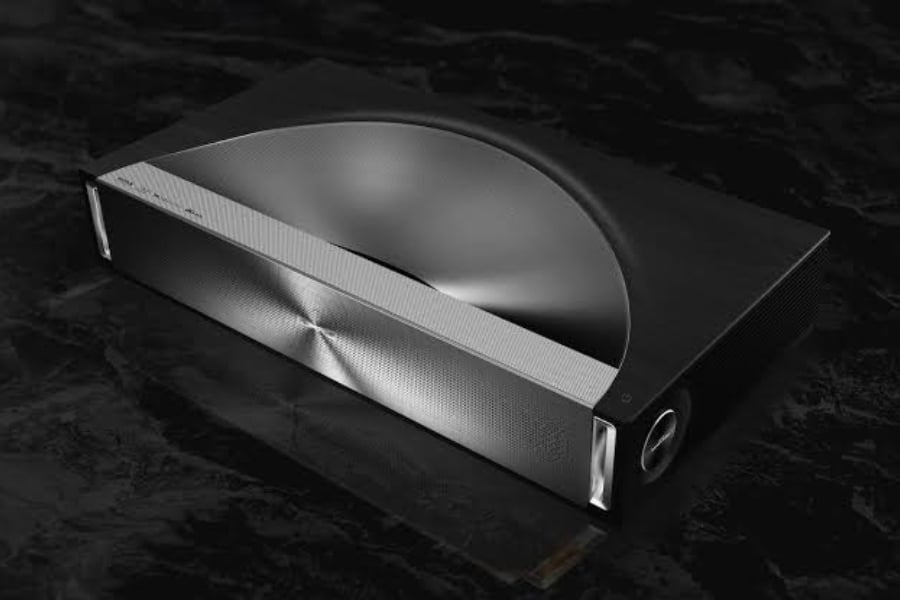
Next, think about where you’ll put the projector. A traditional long-throw model should always sit several feet away from the wall, usually on a shelf, table, or ceiling mount. An ultra-short-throw (UST) projector can sit closer to the wall and send the image upward. If you want something that feels more like a TV, UST models are usually the easiest place to start.
And if you’re a gamer, you should check the refresh rate and input lag. A 4K projector with 120Hz support can make games feel smoother, while features such as variable refresh rate (VRR) help reduce screen tearing. Finally, check the smart platform. Google TV, Samsung Tizen, and Roku don’t all have the same apps, so make sure yours supports the services you use.
2. Best long-throw projector
XGIMI announced three new models in its Horizon 30 lineup this month: the Horizon 30 Pro, Horizon 30 Max, and Horizon 30 Ultra Max. All three use RGB triple-laser light sources, support 4K at 120Hz, and run Google TV.
The main difference is brightness. The Horizon 30 Pro is rated at 4,800 ISO lumens, the Max reaches 5,300 ISO lumens, and the Ultra Max goes up to 6,000 ISO lumens. Their rated native contrast ratios also increase across the range, from 8,000:1 on the Pro to 9,000:1 on the Max and 10,000:1 on the Ultra Max.
XGIMI says the new models deliver up to 15% more brightness, seven times the native contrast, and double the refresh rate compared with the Horizon 20 series, according to Android Authority. Those are manufacturer claims, so real-world performance will still depend on the room and screen.
There’s plenty here for gaming, too. The projectors support VRR, ALLM, and AMD FreeSync, while XGIMI claims input lag as low as 1.9ms at 4K and 120Hz. Optical zoom and lens shift should also make it easier to get the picture into the right position without moving the projector every time.
The Ultra Max is the brightest option, but it also costs the most. US prices are $2,499 for the Pro, $2,999 for the Max, and $3,499 for the Ultra Max. Preorders run through October 31, with regular sales scheduled to begin on November 1.
These are still long-throw projectors, so you’ll need enough room to place one at the right distance from the wall. XGIMI is including a floor stand or ceiling mount, two pairs of 3D glasses, and a discount on its Ascend screen with preorders. You can find the full specifications in our earlier coverage of the Horizon 30 series.
There’s also a cheaper option if you happen to be in China. The XGIMI RS30 Pro High Brightness Edition costs 7,299 yuan, or around $1,092. It offers 4,500 CVIA lumens and 4K at 120Hz, but it’s currently a China-only model.
3. Best ultra-short-throw projector for movies
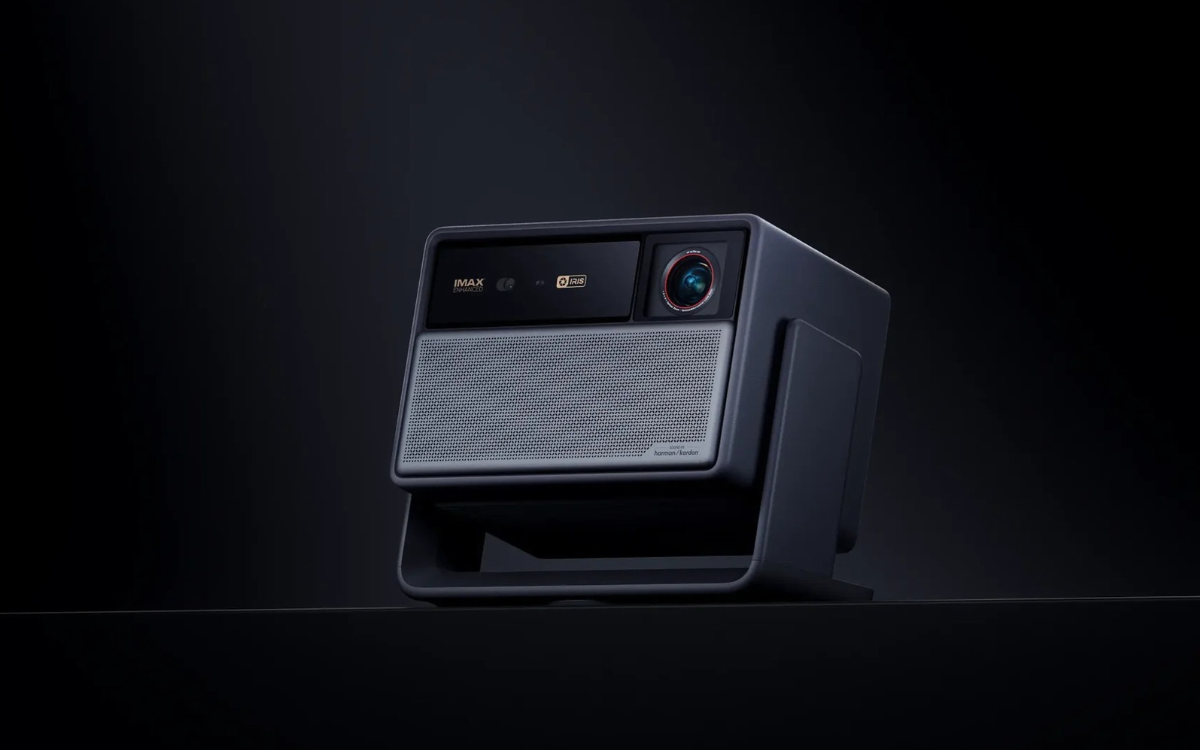
If you don’t want a projector sitting behind your sofa, the Hisense PX4 Pro is worth a look. It went on sale in the US in September for $3,999.99 and is available through Hisense, Amazon, and Best Buy.
The PX4 Pro uses an RGB triple-laser light source rated at 3,500 ANSI lumens. It can project an image between 80 and 200 inches, and supports Dolby Vision and IMAX Enhanced. Hisense has also included speakers tuned by Devialet with Dolby Atmos support, so you may not need to buy a separate sound system right away.
Gaming is another part of the package. Hisense says the PX4 Pro is the first ultra-short-throw laser projector to receive AMD FreeSync Premium certification. It also has two HDMI 2.1 ports with VRR and ALLM, making it possible to connect a console and a streaming device.
As with other UST models, the PX4 Pro sits close to the wall instead of taking up space behind the viewer. That’s convenient if you’re replacing a TV in a smaller living room, although you’ll still need to make room for the projector itself.
Its 3,500-lumen rating is lower than the brightest Horizon 30 models, so don’t expect it to solve every daylight problem. A good screen and some control over the room’s lighting will still help.
If you have a larger room and prefer a traditional long-throw setup, Hisense also sells the XR10. It reaches 6,000 ANSI lumens and can project an image up to 300 inches, making it a better fit for people with plenty of space.
4. Best ultra-short-throw projector for 4K gaming
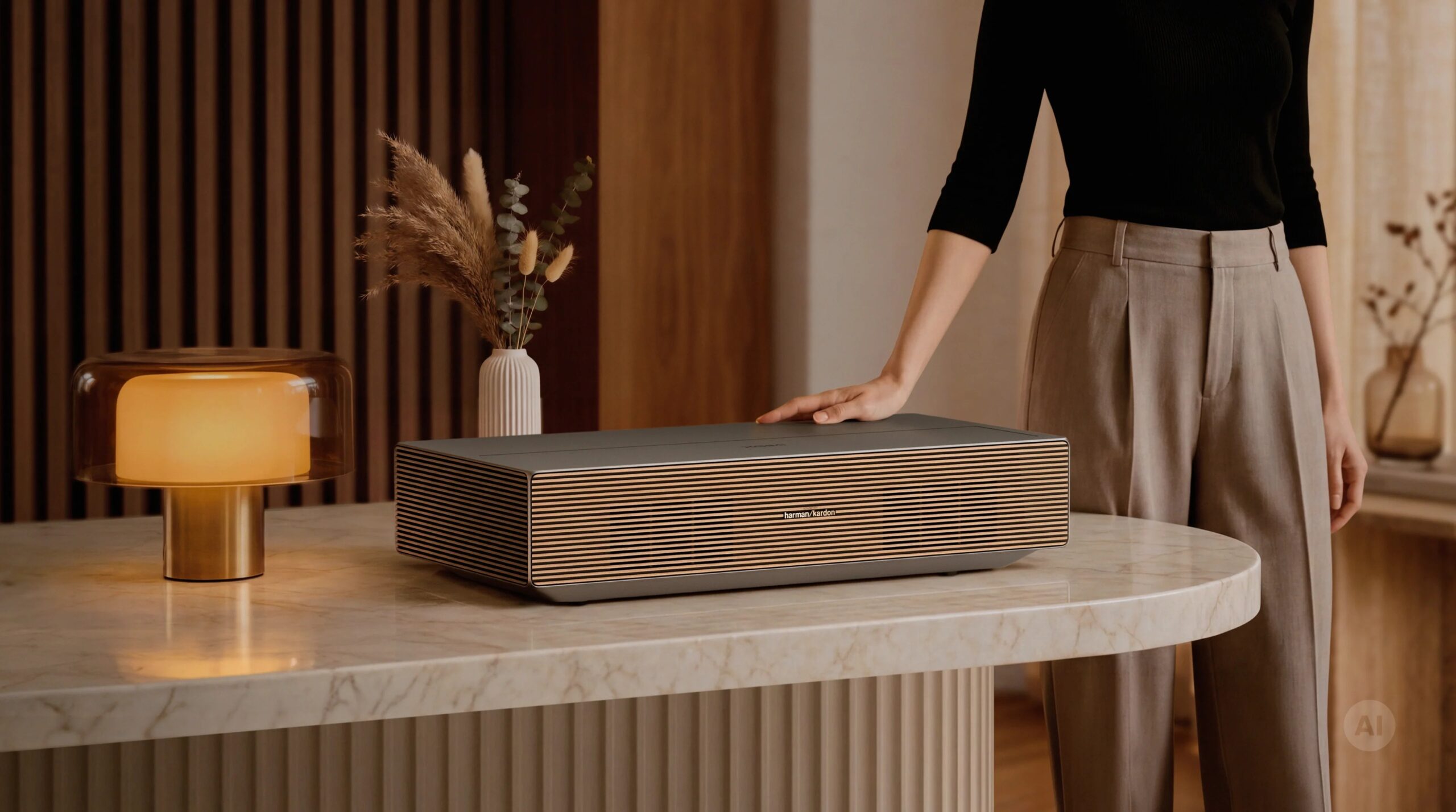
The XGIMI Aura 3 Max and Aura 3 Pro are another pair of UST projectors worth considering, especially if gaming is high on your list. XGIMI describes them as the first ultra-short-throw projectors to support 4K at 120Hz.
The Aura 3 Max is rated at 5,700 ISO lumens, while the Aura 3 Pro reaches 4,100 ISO lumens. Both can produce a 120-inch picture from around eight inches away from the wall, with a maximum image size of 200 inches.
They also come with Google TV, Dolby Vision, HDR10+, and IMAX Enhanced support. Audio comes from an 80W Harman Kardon system with Dolby Atmos, and XGIMI includes two pairs of 3D glasses.
The big question is the price. The Aura 3 Max and Pro are being offered through Kickstarter for $2,399 and $2,199, respectively. A $50 deposit gets you an additional $200 discount on either model. XGIMI lists retail prices of $4,999 for the Max and $3,999 for the Pro, according to Notebookcheck.
Those early prices look considerably better, but there’s a catch: these are crowdfunding offers, and a confirmed shipping date hasn’t been announced. You’ll need to be comfortable paying upfront and waiting for delivery. If you’d rather buy something already available, the Hisense PX4 Pro is a more straightforward option.
5. Best budget pick
You don’t need to spend thousands of dollars to try a projector, although cheaper models come with some obvious trade-offs. The Acer HD1500 is one example. Acer announced it at €149 for the EMEA market, with a Q3 2026 release planned under the AOpen QP30t name.
It uses an LCD panel with native 1080p resolution and an LED light source. Brightness is rated at just 350 ANSI lumens, so this is one for a dark room rather than a living room where the curtains stay open. Netflix and YouTube are built in, which saves you from having to connect a separate streaming stick.
The 1.29:1 throw ratio lets it project a 70-inch image from two meters away. Acer has also included a swivel stand, allowing the projector to rotate 360 degrees and tilt 180 degrees. That should make it easier to point the image at a wall or even the ceiling.
At this price, the HD1500 makes more sense as a second screen for a bedroom or occasional movie nights. Its brightness and 1080p resolution aren’t ideal if you want to replace the main TV in your living room, but it could be a cheap way to see whether projector life suits you.
6. Best portable pick
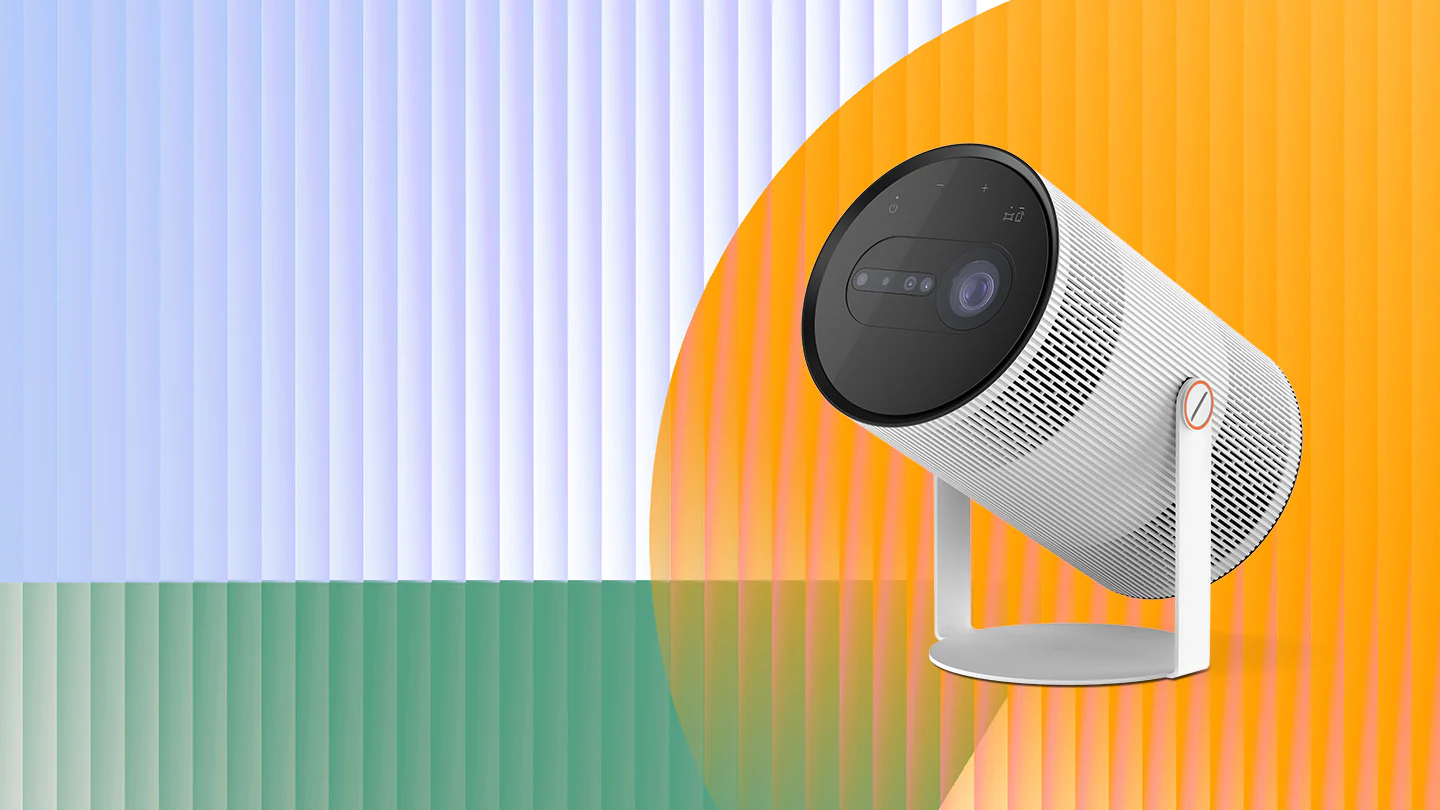
The Samsung Freestyle+ launched in the US in July at $1,199.99. It’s a portable DLP projector with Full HD resolution, up to 430 ANSI lumens, and a maximum image size of 100 inches. It runs Tizen with Samsung’s TV apps and Gaming Hub, supports AirPlay 2, and has a built-in 360-degree speaker, so it works fine without any extra gear.
The small size makes it convenient to move between rooms or take on a trip. You don’t need to build a permanent setup around it, either. But at nearly $1,200, it’s difficult to recommend as a full TV replacement when brighter 4K projectors are available.
The Freestyle+ makes more sense if you want something portable for a bedroom, occasional movie nights, or travel. If you want a similar kind of flexibility but would rather try another brand, the XGIMI Z6X Pro 2026 is another portable option, with a tri-color laser light source and a built-in gimbal.
7. So, should you replace your TV with a projector?
You can, if you have a room you can darken, a wall or screen big enough, and a budget of about $2,500 or more for a 4K model you’ll be happy with every day. If you mostly watch in the evening, play games, or watch movies, a projector like the Horizon 30 Pro or the PX4 Pro gives you a much bigger picture than a TV at the same price.
We’d still recommend choosing a TV if your living room gets a lot of daylight, if you watch live TV through a tuner, or if you’d rather not think about screens and placement. A TV is still easier to set up and easier to live with. For plenty of people, a projector works best as a second screen for movie nights, not a full replacement.
OnePlus 16 and iPhone 17 approach the premium smartphone experience from different directions. OnePlus focuses on powerful hardware, extensive camera versatility and exceptional battery capacity, while Apple prioritizes a polished software experience, reliable photography and long-term ecosystem integration. With both phones priced around $900, the decision comes down to whether you value cutting-edge specifications and endurance or Apple’s refined everyday experience.
Major Features:
Category
OnePlus 16
iPhone 17
Winner & Reason
Build
Crystal Shield Glass, aluminum frame, glass or glass-fiber-reinforced plastic back
Ceramic Shield 2, aluminum frame, glass back
Apple – Ceramic Shield 2 protection
Water Resistance
IP68/IP69K
IP68
OnePlus – Higher ingress protection
Display
6.78-inch LTPO AMOLED, 185Hz
6.3-inch LTPO Super Retina XDR OLED, 120Hz
OnePlus – Larger screen and higher refresh rate
Display Protection
Crystal Shield Glass
Ceramic Shield 2, anti-reflective coating
Apple – Anti-reflective coating
Processor
Snapdragon 8 Elite Extreme Gen 6 (2nm)
Apple A19 (3nm)
Qualcomm – Powerful flagship platform with advanced graphics
Operating System
Android 17, OxygenOS 17
iOS 26, upgradable to iOS 27.2
Apple – Tight hardware-software integration
RAM
12GB/16GB
8GB
OnePlus – Higher memory capacity
Storage
256GB/512GB/1TB, UFS 4.1
256GB/512GB, NVMe
OnePlus – More storage options
Rear Camera
200MP main, 50MP 3x telephoto, 50MP ultrawide
48MP main, 48MP ultrawide
OnePlus – Dedicated optical zoom camera
Optical Zoom
3x optical zoom
No dedicated telephoto camera
OnePlus – Greater zoom versatility
Video Recording
Up to 8K at 30fps, 4K at 120fps, Dolby Vision
Up to 4K at 60fps, Dolby Vision HDR
OnePlus – Higher resolution and frame-rate options
Selfie Camera
50MP ultrawide with autofocus
18MP multi-aspect with autofocus
OnePlus – Higher resolution and ultrawide framing
Battery
9,000mAh silicon-carbon
3,692mAh Li-Ion
OnePlus – Significantly greater capacity
Wired Charging
100W
50% in 20 minutes advertised
OnePlus – Higher rated charging power
Wireless Charging
50W
25W MagSafe/Qi2
OnePlus – Faster wireless charging
Reverse Charging
Wireless and 5W wired
4.5W wired
OnePlus – Supports wireless reverse charging
Connectivity
Wi-Fi 7, Bluetooth 6.0, USB-C 3.2, infrared port
Wi-Fi 7, Bluetooth 6.0, USB-C 2.0, UWB
OnePlus – Faster USB data interface and infrared
Security
Ultrasonic in-display fingerprint sensor
Face ID
Tie – Different biometric approaches
Satellite Features
Not specified
Emergency SOS, Messages and Find My via satellite
Apple – Satellite communication features
Price/Value
Priced around $900 / ₹86,000
Priced around $900 / ₹83,000
OnePlus – More hardware features at a similar price
Disclaimer: Specs are based on available data. Actual performance may vary. Verify details from official sources before buying.
Camera performance: Megapixel counts, lens configurations and supported recording resolutions describe hardware capabilities, not final image quality. Low-light performance, dynamic range, colour accuracy, autofocus, stabilization and processing can change the results. The iPhone 17 may have an advantage in video consistency and computational photography, while the OnePlus 16 offers greater optical zoom versatility.
Display: The OnePlus 16’s 185Hz refresh rate offers smoother motion on supported content, but the iPhone 17’s anti-reflective coating and peak brightness may improve visibility in certain environments.
Battery: The OnePlus 16’s larger battery and faster charging ratings suggest an endurance and charging advantage, but actual battery life depends on display settings, network conditions, workload and software efficiency.
Value: The OnePlus 16 offers more hardware features, whereas the iPhone 17 may appeal more to buyers who prioritize software integration, video capture and Apple’s ecosystem. Actual value depends on individual needs and available retail pricing.
The OnePlus 16 combines Crystal Shield Glass with an aluminum frame, offering a premium finish alongside IP68/IP69K protection against dust and water. Its choice of glass or glass-fiber-reinforced plastic back also gives buyers different material options. The iPhone 17 pairs Ceramic Shield 2 with an aluminum frame and glass back, creating a clean, understated design. Its IP68 rating supports immersion in deeper water under specified conditions, although OnePlus offers stronger protection against high-pressure water jets. Both phones deliver durable construction, but Apple’s simpler material configuration feels more consistent across its lineup. OnePlus is the more rugged choice on paper, particularly for users who frequently encounter demanding environments.
Display Quality
The OnePlus 16 features a 6.78-inch LTPO AMOLED display with a 185Hz refresh rate, Dolby Vision, HDR10+ and HDR Vivid support. Its exceptionally high refresh rate promises smoother scrolling and more responsive gaming. The iPhone 17 counters with a 6.3-inch LTPO Super Retina XDR OLED panel, a 120Hz refresh rate, Dolby Vision and an anti-reflective coating. Apple also features higher peak brightness, which benefits outdoor viewing. Both screens offer sharp visuals, but OnePlus prioritizes fluidity and immersion, while the iPhone delivers a more compact viewing experience.
Verdict
OnePlus wins for display size and refresh rate, while Apple offers excellent brightness and anti-reflective treatment. The OnePlus 16 suits gamers and media enthusiasts better.
2. Specifications Including Battery
Performance
The OnePlus 16 is powered by Qualcomm’s Snapdragon 8 Elite Extreme Gen 6 chipset, paired with up to 16GB of RAM and UFS 4.1 storage. Its flagship processor, powerful Adreno 850 GPU and generous memory configurations position it for demanding games, multitasking and intensive applications. The iPhone 17 uses Apple’s A19 chip with a five-core GPU and 8GB of RAM. Its hardware and iOS optimization deliver responsive everyday performance, efficient app handling and strong gaming capabilities. OnePlus offers greater memory flexibility and a more expansive multitasking configuration, while Apple benefits from tight hardware-software integration. Both should handle demanding workloads comfortably, although their real-world sustained performance depends on thermal management and software optimization.
Battery and Charging
The OnePlus 16 packs a substantial 9,000mAh silicon-carbon battery, giving it a considerable capacity advantage over the iPhone 17’s 3,692mAh battery. It supports 100W wired charging, 50W wireless charging, reverse wireless charging and bypass charging, making it particularly versatile for heavy users. Apple’s charging system supports 25W MagSafe/Qi2 wireless charging and wired charging reaches 50% in 20 minutes under suitable conditions. The iPhone also supports reverse wired charging at up to 4.5W. OnePlus is the more compelling option for extended gaming, travel and intensive daily use, while Apple’s smaller battery benefits from efficient software and hardware integration.
The OnePlus 16 wins through its larger battery, faster charging and greater flexibility. The iPhone 17 remains capable, but heavy users will appreciate OnePlus’s endurance advantage.
3. Camera
Main and Secondary Lenses
The OnePlus 16 features a 200MP primary camera with optical image stabilization, a 50MP telephoto camera with 3x optical zoom and a 50MP ultrawide camera. This combination offers greater flexibility for portraits, distant subjects and expansive landscapes. Its video capabilities extend to 8K recording at 30fps and 4K at up to 120fps, alongside Dolby Vision support. The iPhone 17 uses a 48MP main camera with sensor-shift stabilization and a 48MP ultrawide camera, but lacks a dedicated telephoto lens. It supports 4K Dolby Vision recording at up to 60fps. OnePlus offers more hardware versatility, particularly for zoom photography, while Apple’s streamlined camera system remains attractive for consistent point-and-shoot photography and video creation. Actual image quality will depend on processing, lighting and camera tuning rather than megapixel counts alone.
Selfie Camera
The OnePlus 16 includes a 50MP autofocus ultrawide selfie camera capable of recording 4K video at 60fps. Its wider perspective is useful for group selfies, travel photography and video calls where framing flexibility matters. The iPhone 17 features an 18MP multi-aspect front camera with autofocus and a dedicated depth sensor for Face ID. It supports 4K video at up to 60fps, Dolby Vision HDR and spatial audio recording. Apple’s front camera emphasizes flexible framing, secure facial recognition and polished video capture, while OnePlus offers higher resolution and ultrawide framing. Both are well equipped for creators, although Apple’s integrated video features may appeal more to users who regularly record social content.
Verdict
OnePlus wins on camera versatility, dedicated optical zoom and front-camera resolution. The iPhone 17 remains a strong choice for dependable photography, polished video and Face ID integration.
4. Pricing
The OnePlus 16 is priced around $900 (₹86,000), while the iPhone 17 is priced around $900 (₹83,000). This places both devices in a similar premium category, although the iPhone has a slight price advantage in the stated estimates. OnePlus counters with a more extensive hardware package, including a dedicated telephoto camera, a higher-refresh-rate display, a larger battery, and faster charging. The iPhone 17 delivers Apple’s A19 processor, a refined iOS experience, and a strong camera system without requiring buyers to spend more on a Pro model. Regional pricing, storage configurations and retail offers can affect the final cost, so the exact purchase price deserves attention before choosing either device.
Is the price justified?
At these prices, the OnePlus 16 offers more hardware for buyers who prioritize battery life, charging speed, gaming and camera flexibility. The iPhone 17 justifies its cost through its software integration, compact design, Face ID and Apple ecosystem. Neither is an obvious bargain, but OnePlus delivers a broader set of headline specifications for similar money. Apple makes more sense for users already invested in its ecosystem.
Verdict
The OnePlus 16 offers better hardware value at comparable prices, while the iPhone 17 remains worthwhile for buyers who prioritize iOS and Apple’s connected ecosystem.
The OnePlus 16 stands out with its 185Hz AMOLED display, 9,000mAh silicon-carbon battery, 100W wired charging and triple-camera setup featuring a 3x optical telephoto lens. Its IP68/IP69K protection and extensive connectivity options further strengthen its appeal as a feature-packed flagship.
The iPhone 17 counters with Apple’s A19 processor, Ceramic Shield 2, an anti-reflective display coating, Face ID and satellite-based Emergency SOS, Messages and Find My features. Its multi-aspect selfie camera and Dolby Vision video recording also make it a capable device for content creation.
The two phones cater to different priorities: OnePlus emphasizes hardware flexibility and endurance, while Apple focuses on a cohesive user experience. For buyers who want maximum capability without moving to a more expensive Pro-tier iPhone, the OnePlus 16 makes a particularly strong case.
Verdict
iPhone 17 offers a compelling balance of performance, camera quality, display technology and software optimization, while the OnePlus 16 pushes hardware capabilities further with a 185Hz display, a 9,000mAh battery, 100W charging and a dedicated telephoto camera. The iPhone is a strong all-rounder, but OnePlus delivers greater hardware versatility. The better choice ultimately depends on whether refined everyday performance or advanced hardware features take priority.
1. Which phone is better to buy, OnePlus 16 or iPhone 17?
The OnePlus 16 suits buyers seeking advanced hardware, while the iPhone 17 offers a refined, well-integrated smartphone experience.
2. Which phone takes better photos, OnePlus 16 or iPhone 17?
The OnePlus 16 offers greater zoom versatility, while the iPhone 17 is a strong choice for consistent photography and video.
3. Is the OnePlus 16 faster than the iPhone 17?
Both deliver flagship-level performance, but real-world speed depends on the workload, software optimization and sustained performance.
4. Which phone has better battery life, OnePlus 16 or iPhone 17?
The OnePlus 16 has a substantial battery capacity advantage and faster charging, making it better equipped for intensive use.
5. Which phone offers better value for money?
The OnePlus 16 offers more hardware features, while the iPhone 17 may provide better value for buyers prioritizing Apple’s ecosystem and software experience.
Disclaimer: Prices, specifications, and availability may vary by region and retailer. Recommendations in this article are based on editorial opinion, feature-based value, and market positioning at the time of writing. Readers are advised to do their own research before making a purchase.
Nothing’s CMF Buds 2 are $29 on Amazon right now. They usually sell for $49, so you save a good $20. Amazon is the seller, and all three colours get the same price: Dark Grey, Light Green and Light Orange.
At $29 you’re paying budget-earbud money for noise cancelling that holds up on a bus or in an open office. Most earbuds at this price either skip ANC or make it an afterthought.
Our editor, Joel, also uses these earbuds personally and notes that at this price, they are of excellent value.
48dB hybrid ANC with an adaptive mode that adjusts to the noise around you
11 mm driver with Dirac tuning and an Ultra Bass setting
Battery: up to 13.5 hours per charge and 55 hours with the case. Ten minutes of charging gives you 7.5 hours.
Six mics for calls, plus wind noise reduction
IP55 dust and water resistance, so sweat and rain are fine
Bluetooth 5.4, in-ear detection and spatial audio
Nothing X app for EQ, ANC levels, and a low-lag mode for games
Should you buy them?
If you want ANC earbuds and don’t want to spend much, yes. The battery life is the standout. Most people will charge the case once a week, maybe less.
They aren’t the cheapest they’ve ever been. They dropped to about $24.50 for Prime Day. But that sale is long over, and $29 is the next best price we’ve seen. With the holidays coming, they’re also an easy gift.
What you give up: theres no wireless charging and no LDAC. If those matter to you you’ll need to spend more.
Timex has partnered with WM Brown founder Matt Hranek to launch the new WM Brown x Timex Rectangle watch in the US. It is priced at $349 and comes as a two-strap gift set that combines classic watchmaking design with traditional menswear styling. The watch is now available through the official Timex US website.
The hardware design heavily references classic tank-style watches. The stainless steel case measures 27mm across and 10mm thick, a relatively compact footprint that aligns with vintage rectangular watch dimensions.
Timex applied a mix of finishes to the silver-tone case, using vertical brushing on the top surfaces and horizontal brushing along the sides. These brushed sections are separated by a polished, diamond-cut edge to give the case more visual definition, while the lugs are angled downward to help the watch sit flush against the wrist.
On the dial, the watch features a two-tone silver colorway with full Arabic numerals. It uses a standard two-hand layout for the hours and minutes, moving the seconds to a smaller subdial positioned at the bottom. The center of the dial includes a faint sundial pattern, with the WM Brown and Timex logos printed just below the center axis.
Inside the case, the watch relies on a standard battery-powered quartz analog movement powered by an SR621SW battery. The dial is covered by a standard mineral crystal, and the case is rated for 50 meters of water resistance, meaning it can handle rain or light swimming, but it is not built for diving.
To round out the package, Timex ships the watch with two 20mm band options in the box. The first is a stainless steel bracelet fitted with a butterfly deployant clasp. The second is a brown genuine leather strap with a standard steel buckle.
Both options come with quick-release spring bars, allowing owners to swap between the metal and leather bands by hand without needing a dedicated spring bar tool.
Timex has expanded its catalog of collaborative timepieces with the release of the Looney Tunes Tweety Bird x Timex Weekender. The watch is currently available in the US through the official Timex website and retails for $169.
The watch features a vibrant blue dial with a large Tweety Bird illustration at the center, giving it a distinct look compared to the standard Weekender. Timex has replaced the traditional hour and minute hands with Tweety Bird’s arms, which move to indicate the time.
The dial also includes black Arabic numerals around its outer edge for better readability. It retains Timex’s signature Indiglo backlight feature, which illuminates the entire dial with a simple press of the crown, allowing you to check the time in the dark.
The physical dimensions and materials are standard for the Weekender line. The polished silver-tone case is made of low-lead brass. It measures 38mm wide, 9mm thick, and has a lug-to-lug distance of 45.5mm. It weighs just over 45 grams. Inside the case, the watch uses a basic battery-powered quartz analog movement that runs on a standard SR626SW battery.
For durability, the dial is covered by a standard mineral crystal. The watch has a water resistance rating of 50 meters. You can wear it while washing your hands or doing some light swimming, but Timex explicitly says it should not be used for snorkeling or diving.
The watch comes with a 20mm blue fabric slip-thru strap. Because it is a single-piece strap that threads behind the watch case, you can pull it out and swap it for a different band without needing a spring bar tool. Timex says the included strap will fit wrist sizes between 5.9 and 8.1 inches.
Xiaomi has officially started selling the Mijia High-Speed Hair Dryer Mini in China, following its initial unveiling earlier this year. The compact hair dryer carries a retail price of 299 yuan ($45), with a special introductory price of 199.7 yuan ($30). The new model features a smaller and lighter design compared to the company’s existing hair dryers, making it a convenient option for everyday use and travel.
The device weighs 270 grams, not including the power cord. Compared to the older Mijia H501, this new model is 30% smaller and 20% lighter. The exterior design includes a magnetic air inlet cover at the base of the handle.
This cover uses a double-layer microporous mesh to prevent loose hair from getting pulled into the intake. Xiaomi also included an integrated cable tie on the power cord to keep it organized when stored. It is available in three colors: pink, purple, and off-white.
Inside, the hair dryer uses a miniature brushless motor. Xiaomi reduced the motor’s diameter by 1.8mm compared to previous models, but it still operates at 110,000 RPM. This produces an airflow speed of 62 meters per second. According to the manufacturer’s estimates, this is enough to dry short hair in one minute, medium hair in three minutes, and long hair in about five minutes.
For temperature management, the hair dryer features an NTC system that monitors air temperature 200 times per second to maintain consistent heat and prevent hair damage. It offers two airflow speeds, four temperature modes (cool, warm, hot, and alternating hot and cold), and a memory function that restores previous settings. It also includes a dedicated child mode with gentler, cooler airflow, which requires manual activation each time.
The hair dryer includes a dual-ion plasma system. It releases positive and negative ions to neutralize static electricity. Xiaomi claims this reduces frizz and improves hair strength, while also stating that the system can help clear scalp impurities and mites based on their internal testing conditions.
In related news, Xiaomi has recently launched a new smart rice cooker with a titanium pot, variable pressure, and 14-minute quick cooking, alongside a smart water purifier that recognizes your cup and heats water in just 3 seconds.
For more daily updates, please visit our News Section.
Apple’s first foldable phone has already run into some early trouble, with reports of inner-display damage popping up just days after launch. As people started pointing fingers at the hinge, one of the key suppliers has come out with a pretty firm response, rejecting any blame and even floating the idea of legal action.
South Korean component maker FineMTEC (also called Fine M-Tec) put out an official statement titled “Official Position Regarding Customer’s New Product Quality Issue.” In it, the company said the recent quality problems reported with certain foldable phones weren’t caused by defects in the parts it supplied. FineMTEC makes the internal backplates and hinge-related metal plates that help support foldable OLED displays, and market reports have linked it to the iPhone Duo. Interestingly, the company never actually named Apple or the iPhone Duo in the statement.
FineMTEC stressed that figuring out whether a specific part is responsible for a problem in a finished product needs proper technical checks. Foldable phones use a complicated mix of components and precise mechanical design, so it’s not fair to single out one piece without a full investigation. The company also said its parts meet the customer’s technical specs and quality standards through strict control processes.
In a sharper part of the statement, FineMTEC said it’s considering civil and criminal legal action against anyone who writes or deliberately spreads false information that hurts its reputation and credit.
Meanwhile, Apple has admitted that a small number of iPhone Duo units are having issues with the inner display and is telling affected customers to contact AppleCare for free replacements. Users in several countries have reported cracks along the central crease or bright lines showing up after only a limited number of folds.
Xiaomi is adding a new appliance to its smart home lineup with the Mijia Smart Variable Pressure Rice Cooker 3L. The device is currently available for preorder in China on JD.com for 1,499 yuan (~$224) and is scheduled to go on sale on October 30.
Mijia Pressure Rice Cooker 3L Specifications
The cooker features a dark gray exterior with a tempered glass top panel. For the interface, Xiaomi opted for a full-color touchscreen with large fonts, a design choice intended to make the device easier to navigate for elderly users. It has a 3-liter capacity, which yields about two to ten bowls of rice, and includes a removable 304 stainless steel inner lid and a steam tray for easier cleaning.
Inside, the rice cooker features a 3mm-thick titanium composite pot with a fluorine-free surface and plasma-sprayed titanium technology. It meets China’s Level 2 nonstick standard without using traditional Teflon coatings.
The rice cooker features a three-stage variable pressure system with four pressure modes ranging from 1.0x to 2.0x. It uses 1.2x pressure for cooking white rice and 2.0x high pressure for tougher mixed grains, eliminating the need for pre-soaking.
Heating is handled by a 1175W induction heating (IH) system with a 13,000mm-long surrounding coil. This setup delivers heat from the bottom and sides, while a temperature-control ring at the top helps reduce condensation. The cooker also uses a continuous boiling function that sustains a boil for up to 39 minutes.
On the software side, the rice cooker offers over 3,000 cooking programs for different rice varieties and nine customizable texture settings based on stickiness and firmness. It also features a 14-minute quick-cooking mode for small portions, although automatic pressure release adds to the total cooking time.
Because it is a Mijia device, the rice cooker supports Xiaomi HyperConnect, Xiao AI voice commands, and Mijia app integration for remote control and access to over 200 cloud recipes. It also features automatic lid locking, Hall sensors, and 16 safety protections. Xiaomi offers a three-year warranty on the main unit and one year on the inner pot.
In related news, Xiaomi has recently launched a new smart water purifier with automatic cup recognition and instant heating in just 3 seconds.
For more daily updates, please visit our News Section.
Apple isn’t done with its cheapest laptop just yet. Reports suggest a second-generation MacBook Neo is lined up for the first half of 2027.
MacBook Neo
According to Bloomberg’s Mark Gurman, the MacBook Neo 2 is expected sometime in the first six months of next year. The original Neo launched in March 2026, so a spring or early-summer follow-up would keep the roughly yearly update cycle going, even with the ongoing RAM and storage supply issues.
the big changes look to be a switch to the A19 Pro processor and a base memory bump from 8 GB to 12 GB. New colors are also expected on top of the current Silver, Blush, Citrus, and Indigo options. A touchscreen for this model still seems unlikely. Pricing will probably climb from the original’s $599 starting point (which later settled at $699), but the Neo 2 should still sit as one of the better value options in Apple’s Mac lineup.
Around the same time, Apple is also expected to refresh the MacBook Air with the M6 chip. A full OLED upgrade for the Air is still further away.
These more affordable updates are coming while Apple gets ready for bigger moves higher up the range. The first touchscreen OLED MacBook Pro models are set to be shown on October 28, and they’re expected to bring some design changes beyond the current MacBook Pro look.
For anyone looking for a more affordable Mac that still delivers solid performance, battery life, and price, the Neo 2 could offer some worthwhile improvements. Supply-chain pressures could still shift the exact timing or final specs, but the first-half 2027 window is the clearest guidance we have right now.
Xiaomi has introduced the Mijia Desktop Water Purifier 3 on its Youpin platform in China, priced at 1,499 yuan ($224). The new countertop water purifier features a reverse osmosis (RO) filtration system, instant heating technology, a built-in RISC-V chip, and smart features such as NFC-based cup recognition and app connectivity.
The purifier uses a dual-filter, nine-stage purification system built around a DuPont RO membrane. According to Xiaomi, the system has a filtration precision of 0.0001 micrometers to filter out heavy metals, bacteria, viruses, pesticide residues, and microplastics. The internal water pathways are free of silicone and BPA, and the device carries a maternal and infant-grade certification.
Instead of leaving the water stripped of minerals, the purifier uses a slow-release system to add six minerals, including calcium, magnesium, zinc, and strontium. It also features a RISC-V chip that monitors water quality and usage to optimize RO filter replacement, with a lifespan of up to three years.
The main unit houses a 6-liter water tank divided into a 4.2-liter raw water section and a 1.8-liter wastewater compartment. This physical separation prevents rejected water from mixing back into the clean supply. It also includes a removable 2-liter purified water pitcher on the side that can be detached and kept in the fridge or moved to another room.
For heating, the purifier relies on a 2100W thick-film heating element that dispenses hot water in about three seconds. It has a maximum warm-water dispensing rate of 786mL per minute. You can adjust the water temperature from 40°C to 99°C in 1°C increments via the Mijia app, or use the five preset temperatures on the device’s touchscreen.
The purifier features an NFC dispensing system with three stickers for non-metallic cups, allowing it to automatically dispense water at preset temperatures and volumes. It operates at around 45dB(A) during filtration and includes dual-color lighting to indicate water temperature.
It also supports 2.4GHz Wi-Fi and Xiaomi HyperConnect. The compact countertop design measures 255 x 360 x 398mm and requires no installation.
In related news, Xiaomi has recently launched a 3kg Shoe Washer with eight wash programs. The company has also introduced the premium Mijia Metal Suitcase featuring a rivet-free design and silent wheels.
For more daily updates, please visit our News Section.
Years after Microsoft gave up on its dual-screen experiment, a determined developer has given the Surface Duo 2 a pretty surprising second life by getting Apple’s operating system running on it. The result is a once-Android device that now looks and feels a lot like the Apple’s newly released foldable, without Apple having anything to do with it.
Developer SmuOS shared photos and details of the modified Surface Duo 2 with Windows Central. Even with a cracked display, the phone is running iOS 26.5.2. Because the developer used the official iPhone 17 Pro Max restore image, the system just identifies itself as that model.
Most of the interface scales reasonably well across the two screens and ends up looking similar to what you’d see on the new iPhone Duo or even an iPad. In Settings, for example, a sidebar sits on the left while the expanded options fill the rest of the space.
It’s not perfect, of course. The physical hinge bezel that splits the two displays is still a problem. In the Phone app, the 2, 5, and 8 buttons on the dialer get completely covered by that central gap. The same thing happens with notifications or text that lands right in the middle of the screen in other apps. Touch input works fine, but the whole thing is currently stuck at a modest 37fps.
SmuOS isn’t done yet. The plan is to get the Surface Pen working like an Apple Pencil, especially timely now that Apple has added Pencil support to its own iPhone Duo. There’s also interest in porting a newer iOS 27 build made for the iPhone Duo onto the Surface Duo 2 hardware.
What makes this interesting is that it’s not just simple emulation. The project involves booting Apple’s open-source XNU kernel with a custom UEFI loader on Snapdragon dual-screen hardware that Microsoft walked away from years ago. It’s still experimental and far from polished, but it shows how creative the modding community can be.
It also gives the original Duo line a pretty ironic new chapter at a time when Apple’s own product is already dealing with early hardware and software issues, including reports of screens breaking along the hinge within hours of use.
The upcoming OnePlus Ace 7 series is packing some seriously high refresh rates, with a clear focus on faster touch response and more stable networking. It’s pretty clear they’re aiming the Ace 7 series at people who take mobile gaming seriously.
The company confirmed the series will come with a self-developed “e-sports triple chip” setup. That includes the touch response chip T3, the e-sports network chip G3, and the super display chip P4. The T3 supports a 520Hz multi-finger touch sampling rate and works with official game-coordinated zone touch for more precise control.
The G3 network chip is said to cut cellular game stuttering by 46%, reduce cellular game latency by 17%, and improve Wi-Fi network grabbing ability by 37%. On the display side, the P4 chip enables continuous 185Hz output, which should help keep motion looking cleaner during high-frame-rate gameplay.
Design-wise, the phones take a few cues from flagships. There’s a “hidden” air intake that uses aerodynamic principles for better airflow, plus a customizable “Interstellar Light Effect” breathing light for gaming vibes and notifications. They also get a metal frame and a new AG silk glass finish.
The Ace 7 Pro uses the Snapdragon 8 Elite Gen 5 and introduces an industry-first dual-path airflow system. The idea is to keep frame rates stable while keeping temperatures under control. The whole lineup shares the same Oriental screen as the OnePlus 16, with a global 165Hz refresh rate that jumps to 185Hz in supported games. Camera-wise, there’s a 200MP main sensor, and the Pro model adds a 3.5x periscope telephoto.
Power comes from a big 9000mAh “glacier” battery paired with 100W super flash charging. OnePlus claims this setup can handle up to 7 hours of continuous 185fps gaming or 24 hours of video playback. The Ace 7 series is set to be unveiled on October 29.
Samsung is spreading One UI 9 a bit further across its mid-range lineup in India, and a few popular models are now getting the stable update.
If you own a Galaxy M56, A35, F17, or M17, it’s worth checking your phone. The M56 is getting firmware M566BXXU7DZJ1, a 2.2 GB download that brings Android 17 along with the October 2026 security patch. The A35 (for those who skipped the beta) is receiving A356EXXUBEZJ2, a larger 2.7 GB package that also includes the same October patch. Meanwhile, the M17 and F17 are both rolling out builds ending in DZJ5 (around 2.4 GB each) with the security update included.
One UI 9 itself is Samsung’s latest software layer. Expect the usual mix of interface tweaks, smoother system performance, and the latest security fixes. Exactly which new features you get will depend on the phone’s hardware, so the mid-rangers won’t unlock every option available on the flagships.
As always with Samsung, the rollout is staged. Not every unit will see the update on the same day. If it hasn’t shown up yet, just wait a day or two and check again.
To look for it: open Settings → Software update → Download and install. Make sure you have enough battery, free storage, and a solid Wi-Fi connection before starting.
Samsung is still keeping its more affordable Galaxy phones reasonably up to date. Owners of these models get a fresher software experience and better protection without having to buy a new device.
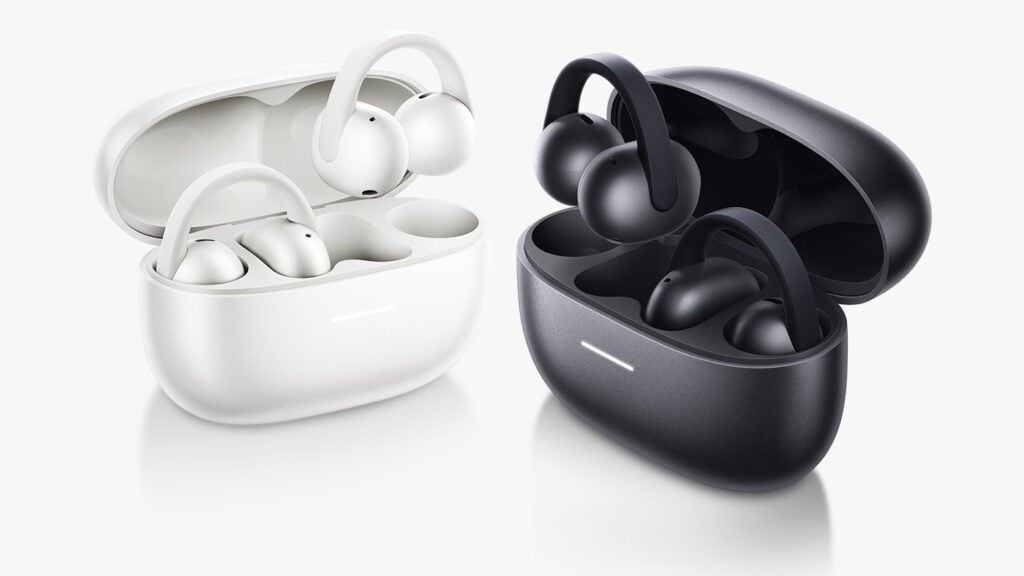
Redmi held a major event in China today to unveil the Redmi K100. The same event also saw the debut of the Redmi Clip Neo, the brand’s first-ever clip-on earbuds, which pair an open-ear design with 12mm drivers and up to 32 hours of total playback for 399 yuan. Read on to find out everything about it.
Redmi Clip Neo specifications and features
Redmi Clip Neo
As the earlier teasers revealed, the Redmi Clip Neo comes in Pearl White and Zero Black. Each earbud weighs 5.3g and uses a track-shaped C-bridge, a teardrop acoustic sphere and a 3.4mm clamping gap, refined using data from over 1,000 ear shapes. Its 0.6mm memory titanium wire survived 25,000 bending tests and is wrapped in liquid silicone. The buds fit either ear, auto-pause when removed, and rest in a vertical case with Cloud-Gap Light Effect 2.0.
Redmi Clip Neo
Inside are 12mm dual-magnetic drivers with dual N52 magnets, which Xiaomi says deliver 20% more magnetic flux, 25% higher amplitude and 40% more loudness than single-magnetic units. A DLC diaphragm coating and a bass compensation algorithm round things out, along with four EQ presets, a 10-band custom EQ and dual mics with AI noise reduction.
Battery life is rated at up to 7 hours per charge and 32 hours with the case, which charges over USB-C. You also get Bluetooth 5.4 (SBC/AAC), dual-device connection, Xiaomi pop-up pairing, hearing monitoring and location tracking. A physical button handles playback, calls and the voice assistant, with Xiao AI and iOS support, and HyperOS users can control smart home gear or check vehicle info.
Redmi Clip Neo price and availability
Redmi Clip Neo
The Redmi Clip Neo is now available to buy in China for 399 yuan (~$56), with some regions offering a national subsidy that brings it down to about 339 yuan (~$48).
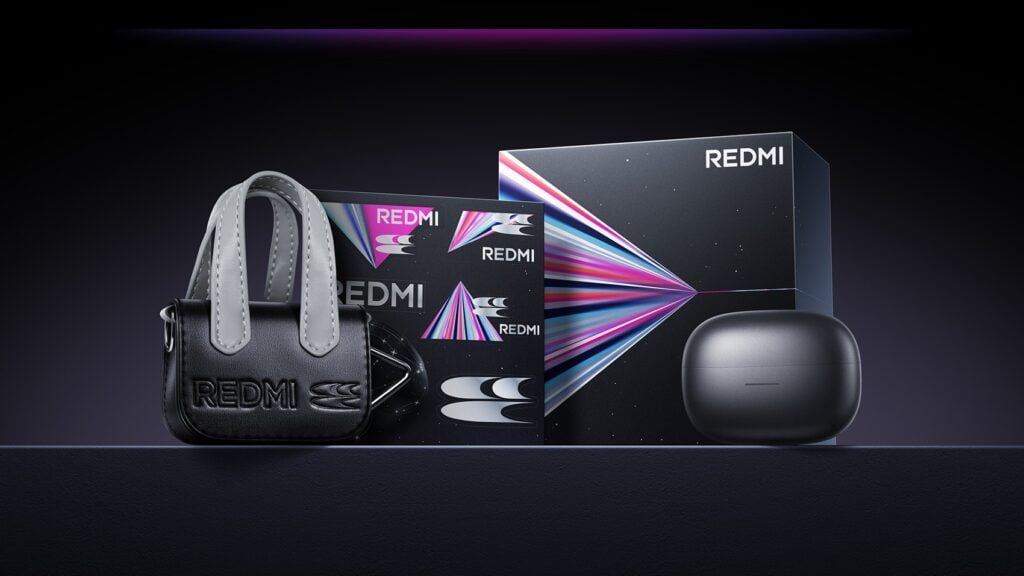
As shown in the above image, there is also a limited Redmi × CryingCenter co-branded edition created with the sports streetwear brand CryingCenter: a gift box that bundles the Clip Neo in Zero Black with a branded carrying pouch, a sticker set and custom packaging, sold separately for 449 yuan (~$63). It joins Xiaomi’s own clip-on earbuds from May as another open-ear option in the family.
Apple just dropped a quiet but solid refresh for its most accessible 14-inch MacBook Pro. They kept the familiar formula while slipping in a meaningful performance bump right when a lot of people are eyeing an upgrade.
The big change is the new M6 chip. Apple’s first 2 nm silicon for this machine packs a 12-core CPU (two super cores, four performance cores, and six efficiency cores) and a 12-core GPU. Compared with the previous M5 model, you’re looking at roughly 20-30% better performance depending on the task, with graphics and on-device AI workloads seeing the bigger gains.
Memory starts at 16 GB (configurable up to 32 GB) with bandwidth climbing to 170 GB/s, and storage options run from 1 TB to 4 TB. Pair that with the same 72.4 Wh battery and you get up to 24 hours of video streaming or 16 hours of web browsing.
Everything else stays pretty much the same, which is a little expected. The 14.2-inch Liquid Retina XDR Mini-LED panel is unchanged: 3024 x 1964 resolution, 120 Hz ProMotion, and that strong 1,600-nit peak HDR brightness.
Ports are identical: three Thunderbolt 4 (USB-C), HDMI, MagSafe 3, SDXC card slot, and a headphone jack. You also get Wi-Fi 7, Bluetooth 6, the six-speaker system, and a 12MP Center Stage camera. The chassis is still 1.55 cm thick and weighs 1.55 kg, available in Space Black or Silver. A nano-texture display option is there if you want less glare, though it costs extra.
Pricing holds the line at $1,999 for the base 16 GB / 1 TB configuration, the same starting point as the outgoing model. Bumping to 24 GB of memory adds $200, 32 GB adds $400, and the nano-texture finish is another $150. Pre-orders open tomorrow, October 28, with the first units shipping November 6.
The Lenovo ThinkBook 14 Gen 9 with Qualcomm’s Snapdragon X2 Plus processor is finally seeing the light of day, roughly seven weeks after unveiling the laptop at IFA 2026. The new model is available in the US, UK, and parts of Europe, with different configurations and prices depending on the market.
In the US, Lenovo is offering the laptop in a single 16/512GB option with Windows 11 Pro and a non-touch display for $1,289.
Buyers in the UK and Eurozone have more options, including Windows 11 Home, a 1TB SSD, and a touchscreen. Prices start at £1,224 in the UK, while European buyers can expect to pay between €1,403 and €1,588, depending on the configuration. Lenovo has yet to announce availability in Oceania, East Asia, or Southeast Asia.
As an ARM-on-Windows PC, you can expect a great battery life here. Its 50Wh battery is rated to last almost 27 hours when playing local 1080p video at 150 nits of brightness. Lenovo says this is more than 40% longer than the Intel-based ThinkBook 14 G9 IPL with its 48Wh battery and around 10% longer than the same model with a 64Wh battery.
The battery is also user-replaceable and charges via a 65W USB-C charger to 80% in one hour.
Lenovo ThinkBook 14 Gen 9 specifications
The ThinkBook 14 Gen 9 uses Qualcomm’s Snapdragon X2 Plus X2P-42-100, the six-core version of the two processors Qualcomm announced at CES 2026. The chip has a maximum power rating of 25W and includes an 80 TOPS neural processing unit (NPU) for AI workloads.
Earlier this year, Qualcomm’s reference-design laptop powered by the 10-core Snapdragon X2 Plus fell behind Apple’s M4 in most CPU and GPU benchmarks. However, those results don’t directly indicate how the six-core processor will perform in Lenovo’s laptop.
Memory is limited to 16GB of soldered RAM, meaning users cannot upgrade it after purchase. For storage, there is a vacant M.2 2280 slot for an additional drive.
The laptop features a 14-inch IPS display with a 1920 x 1200 resolution, a 60Hz refresh rate, and up to 400 nits of brightness. Its 45% NTSC colour coverage is relatively limited, making the panel better suited to everyday tasks such as document editing, browsing and video calls than colour-sensitive work.
Lenovo has included a range of ports for connecting peripherals and external displays. The left side houses a 10Gbps USB-A port, an SD card reader and a headphone jack. On the right, there are two 10Gbps USB-C ports, a 5Gbps USB-A port, and an HDMI 2.1 output with support for 4K resolution at 60Hz.
Wireless connectivity includes Wi-Fi 7 and Bluetooth 5.4. The laptop also has a fingerprint reader integrated into the power button, an infrared camera with a privacy shutter, and a dedicated Copilot key for accessing Microsoft’s AI assistant.
The ThinkBook 14 Gen 9 weighs 1.39 kg and measures around 17.4mm thick. It comes in Luna Grey, meets MIL-STD-810H durability standards, and features a hinge that opens up to 180 degrees.
For more daily updates, please visit our News Section.
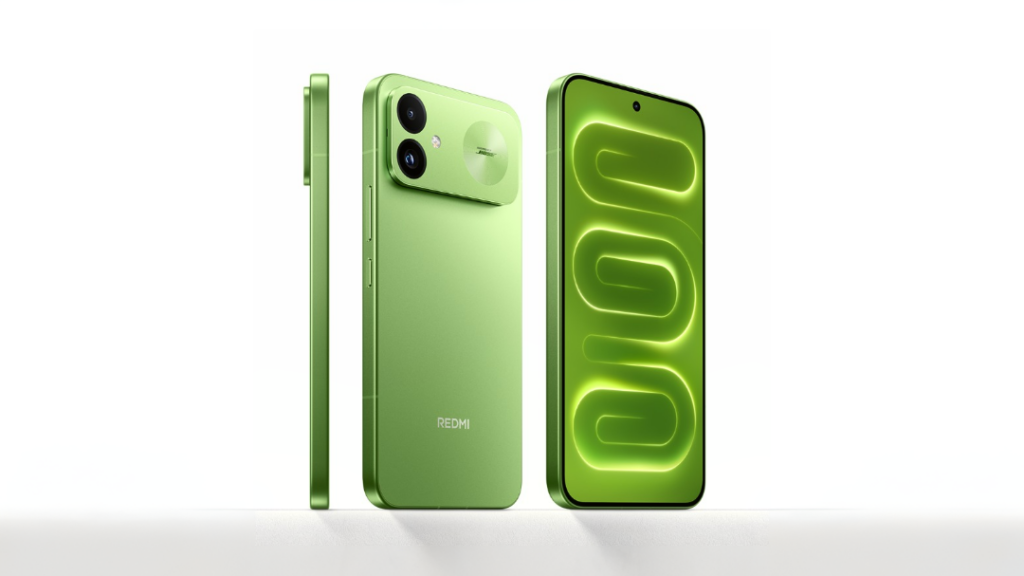
Xiaomi has officially announced the Redmi K100 in China, positioning it as a hardware-heavy device focused on sustained performance, gaming, and battery endurance.
The Redmi K100 features a 6.83-inch flat OLED display with a 2772 x 1280 resolution, 165Hz refresh rate, 480Hz touch reporting rate, and up to 3,500Hz instantaneous touch sampling rate. It supports HDR10+, Dolby Vision, 12-bit colors, DCI-P3 coverage, and 3,500 nits peak brightness.
Xiaomi also includes full-brightness DC dimming and circularly polarized light technology for eye protection. The phone sports a rounded metal frame and flat camera housing.
Under the hood, it is powered by the 3nm Snapdragon 8 Elite chipset paired with up to 16GB LPDDR5X Ultra RAM and 512GB UFS 4.1 storage. It also features Xiaomi’s dedicated D2 gaming graphics chip for super-resolution and frame interpolation.
The phone supports native 165fps gaming in over 40 titles and frame interpolation in more than 100 games, depending on compatibility and updates. For cooling, it uses a 3D circulating cold pump system with over 12,000 mm² of high-conductivity graphite to maintain performance during extended gaming sessions.
For photography, the Redmi K100 features a 50MP main camera with a Light Hunter 800 sensor, f/1.68 aperture, and OIS, alongside an 8MP ultrawide lens and a 20MP front camera with 1080p video recording.
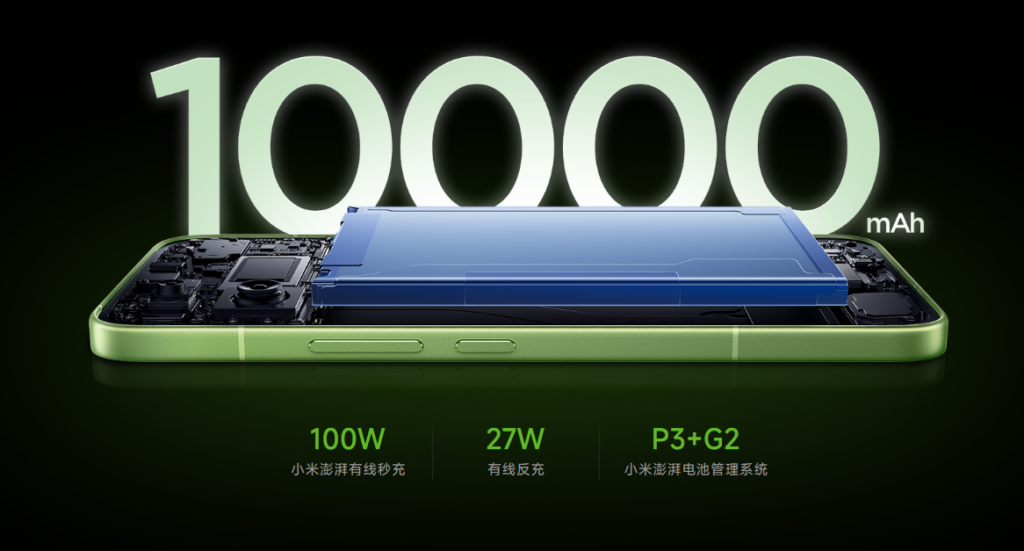
The phone packs a 10,000mAh silicon-carbon battery, which Xiaomi claims delivers up to 2.43 days of usage. It supports 100W wired fast charging, 27W wired reverse charging, and bypass charging to reduce heat and battery wear during gaming.
The device ships with Xiaomi HyperOS 4 and Super XiaoAI 2.0, offering faster app launches, improved memory management, and smoother multitasking. It also features an ultrasonic in-display fingerprint sensor, Dolby Atmos stereo speakers, Wi-Fi 7, Bluetooth 5.4, NFC, an IR blaster, and IP66, IP68, IP69, and IP69K dust and water resistance.
The Redmi K100 measures 162.91 x 77.93 x 8.65mm and weighs 234.5 grams. It comes in three colors: Black, Snow Rock White, and Firefly Green.
Pricing and Availability
The phone is priced at 3,499 yuan ($524) for the 12GB + 256GB variant, 4,099 yuan ($614) for the 12GB + 512GB model, and 4,499 yuan ($674) for the 16GB + 512GB version. Pre-orders are now open, with sales starting in China on October 31st.
For more daily updates, please visit our News Section.
Xiaomi just dropped its latest REDMI Book 2027 series. Updated processors, a cleaner design, and some pretty bold battery claims are the main highlights.
Both laptops use an all-metal aluminum alloy chassis on the A, C, and D sides and come in a few color options. The 14-inch model is nicely portable at about 1.28 kg and 13.95 mm thick. The 16-inch one tips the scales at roughly 1.56 kg and 14.35 mm.
Under the hood, you’re getting Intel’s Wildcat Lake processors built on the 18A process. The options are the Core 5 320 (6 cores/6 threads, up to 4.6 GHz) and Core 7 350 (also 6 cores/6 threads, up to 4.8 GHz), both with Intel Graphics. They pair with fast LPDDR5X-7467 memory and a dual-fan cooling setup with 10 mm heat pipes that Xiaomi says can hold a steady 30W.
The REDMI Book 16 is the one that really stands out on the display front. It has a 16-inch 16:10 panel at 2560×1600 with a 120Hz refresh rate, 400 nits brightness, full sRGB coverage, DC dimming, and TÜV Rheinland low blue light and flicker-free certifications. Battery life is the other big talking point: a 72Wh pack (rated 68.3Wh) that Xiaomi claims can deliver up to 19.5 hours of simulated office use and more than a full day of local video playback.
Ports include: two full-function USB-C 3.2 Gen2, HDMI 2.1, two USB-A ports, and a 3.5 mm headphone jack. On the software side, you get Super Xiao Ai 2.0 for AI productivity features and the usual deep Xiaomi ecosystem integration for cross-device stuff.
Price and availability
There are 14-inch and 16-inch models, each available in two configurations. The REDMI Book 14 2027 starts at 6,799 yuan (around $1019) for the Core 5 320 with 16GB RAM and 512GB storage. Step up to the Core 7 350 with 16GB + 1TB and you’re looking at 7,999 yuan (around $1199). The 16-inch version starts a bit higher at 6,999 yuan (around $1049) and goes up to 8,199 yuan (around $1229) for the top config.
The laptops go on sale in China on November 3, and early buyers get a free 20,000mAh power bank thrown in.
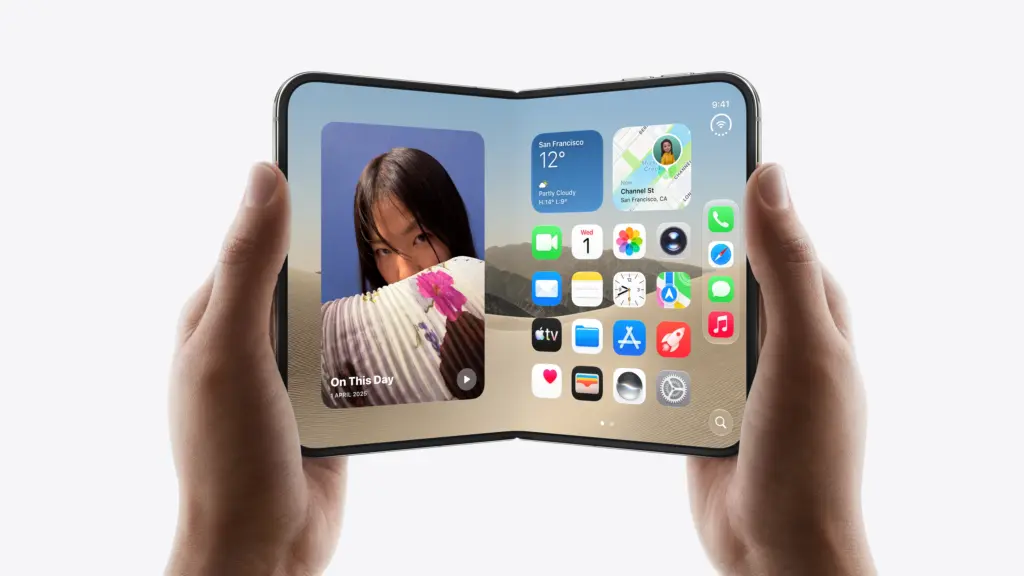
The iPhone Duo is witnessing overwhelming demand all over the world despite a premium $1999 starting price. The first batch sold out within minutes, and the shipments for the second batch will reportedly begin late January 2026, as per some reports citing industry sources.
Amidst all the excitement, there are a growing number of iPhone Duo owners reporting critical issues with the inner screen and foldable mechanism. Apple said it was aware of “an issue impacting the inner display on a small number” of the phones and urged affected users to reach out to the company for a replacement.
If you are willing to get your hands on a foldable phone, there are actually some really good options out there — but only if you’re open to go outside the Apple ecosystem. The Galaxy Z Fold 8 is arguably the best foldable phone right now, featuring matured hardware and great software experience. And there are more from Google, Vivo, and Oppo that we’ll discuss in this post.
5 Excellent foldable phones you can buy right now
1. Samsung Galaxy Z Fold 8
Galaxy Z Fold 8
Samsung has been dominating the foldable smartphone segment. The latest one, Galaxy Z Fold 8, is the 8th generation of Galaxy foldables with robust hardware and a much refined software experience to deliver a mature folding experience.
The Galaxy Z Fold 8 is a passport-style foldable phone like the iPhone Duo. It has a 7.6-inch LTPO AMOLED inner screen with a 120Hz refresh rate and a peak brightness of 3000nits, while the cover screen measures 5.5 inches. Samsung has applied tough protection on both sides — Gorilla Glass Victus Ceramic 3 on the front and Gorilla Glass Victus 2 on the back.
The Galaxy foldable is powered by a flagship Snapdragon 8 Elite Gen 5 chipset, which is fast enough for all your tasks, and efficient too. The chip delivers strong gaming performance as well, and the software is well optimized to deliver an excellent experience.
The rear camera module features two 50MP sensors — one is for regular shots and another one for ultrawide shots. The main (inner) screen and the cover screen have a 10MP sensor each. The Fold 8 is backed by a 4,800mAh battery and supports 45W wired and 20W wireless charging.
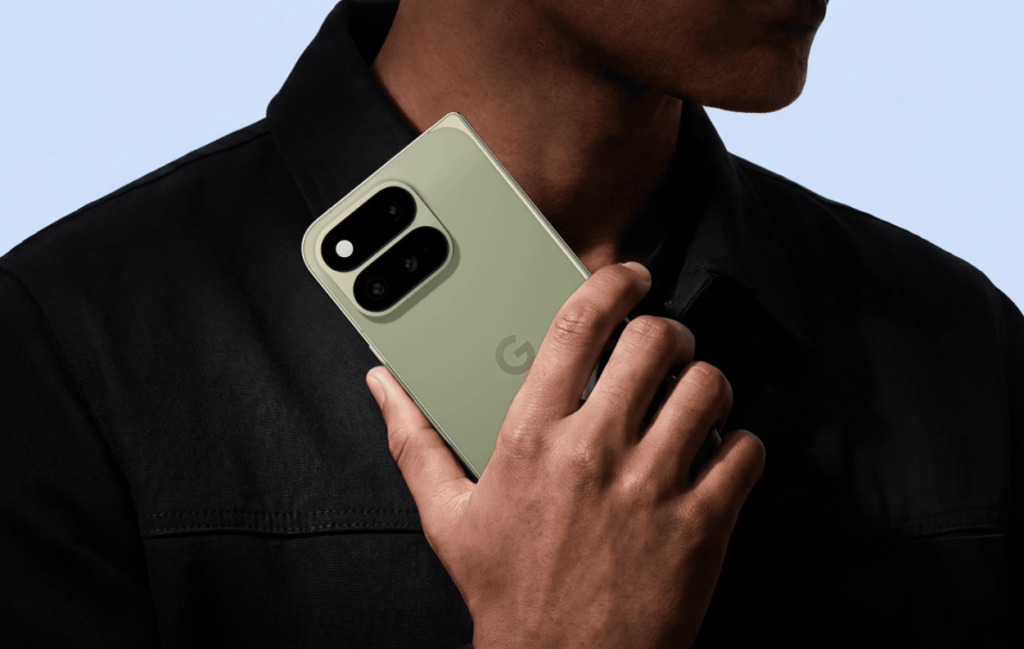
Unlike the iPhone Duo and Galaxy Z Fold 8, the Pixel 11 Pro Fold has a traditional slab-phone aspect ratio. When folded, its 6.5-inch outer screen looks and feels very much like a regular flagship smartphone. When opened up, the inner display opens up into a large 8-inch canvas. Both are OLED panels that can reach a peak brightness of 3600nits and support 120Hz refresh rate.
The front side is protected using a ceramic glass and the rear side has Gorilla Glass Victus 2. The smartphone is IP68 rated, ensuring strong protection against water and dust, but it’s better to avoid them, especially on foldables. The phone has a triple camera setup on the back, which includes a 48MP primary camera, a 10.8MP telephoto lens with 5x optical zoom, and a 10.5MP ultrawide unit. The inner and cover screens have a 10MP sensor each.
The Pixel 11 Pro Fold is powered by the in-house Tensor G6 chipset, which isn’t quite powerful as the Apple A20 inside the iPhone Duo and the Snapdragon 8 Elite Gen 5 inside the Galaxy Z Fold 8, but it gets the job done very smoothly. For high-end gaming, you may want to look at other devices with more powerful GPUs. Furthermore, the device has a 4,800mAh battery and supports 30W wired and 25W wireless charging.
3. Vivo X Fold 6
The Vivo X Fold 6 is one of the most well-rounded book-style foldable phones on the market right now. It eliminates major compromises that are typically associated with foldable phones — regarding battery capacity and camera capabilities.
The Vivo foldable phone packs a massive 6,900mAh battery (only China gets 7,000mAh) — one of the biggest in a foldable phone. It supports 80W wired and 40W wireless charging as well as reverse wired and reverse wireless charging capabilities.
The camera setup is one of the major highlights of the Vivo X Fold 5. The rear module has a massive 200MP primary sensor, paired with a 50MP 3x periscope telephoto lens and a 50MP ultrawide unit. The selfie cameras on the inner display and the cover display have a 20MP sensor, although you can use the rear setup to take far better shots.
The bigger screen measures 8.02-inch, which offers plenty of space for multitasking, and the cover display measures 6.51-inch. Both are LTPO AMOLED panels and support 120Hz smooth refresh rate. The device boasts Dimensity 9500 Super processor and features robust connectivity specs, such as Wi-Fi 7, Bluetooth 6.0 and USB-C 3.2 Gen 2.
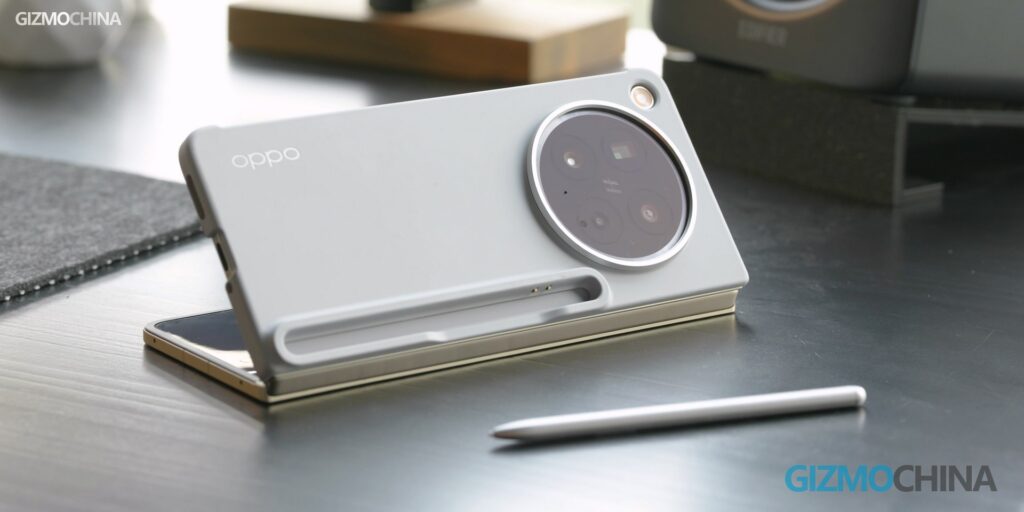
The Find N6 is another excellent book-style foldable phone with excellent camera capabilities. The rear setup features a powerful 200MP main sensor, joined by a 50MP periscope lens with 3x optical zoom and a 50MP ultrawide camera. The selfie cameras on the inner screen and the cover screen have a 20MP resolution.
The Oppo foldable phone is powered by a flagship Snapdragon 8 Elite Gen 5 chipset — the same chip powers the Galaxy Z Fold 8. The cover screen measures 6.62-inch and the inner screen unfolds to a massive 8.12-inch canvas. Both are LTPO OLED panels and support 120Hz refresh rate. The cover screen is actually brighter: it can go up to 3600nits (vs. 2500nits on the inner screen).
The Find N6 is backed by a 6000mAh battery and supports 80W wired and 50W wireless charging. It also supports reverse wired and reverse wireless charging capabilities. The fingerprint sensor is integrated to the side button, just like other foldables on this page.
We use cookies on our website to give you the most relevant experience by remembering your preferences and repeat visits. By clicking “Accept”, you consent to the use of ALL the cookies.
This website uses cookies to improve your experience while you navigate through the website. Out of these, the cookies that are categorized as necessary are stored on your browser as they are essential for the working of basic functionalities of the website. We also use third-party cookies that help us analyze and understand how you use this website. These cookies will be stored in your browser only with your consent. You also have the option to opt-out of these cookies. But opting out of some of these cookies may affect your browsing experience.
Necessary cookies are absolutely essential for the website to function properly. This category only includes cookies that ensures basic functionalities and security features of the website. These cookies do not store any personal information.
Any cookies that may not be particularly necessary for the website to function and is used specifically to collect user personal data via analytics, ads, other embedded contents are termed as non-necessary cookies. It is mandatory to procure user consent prior to running these cookies on your website.