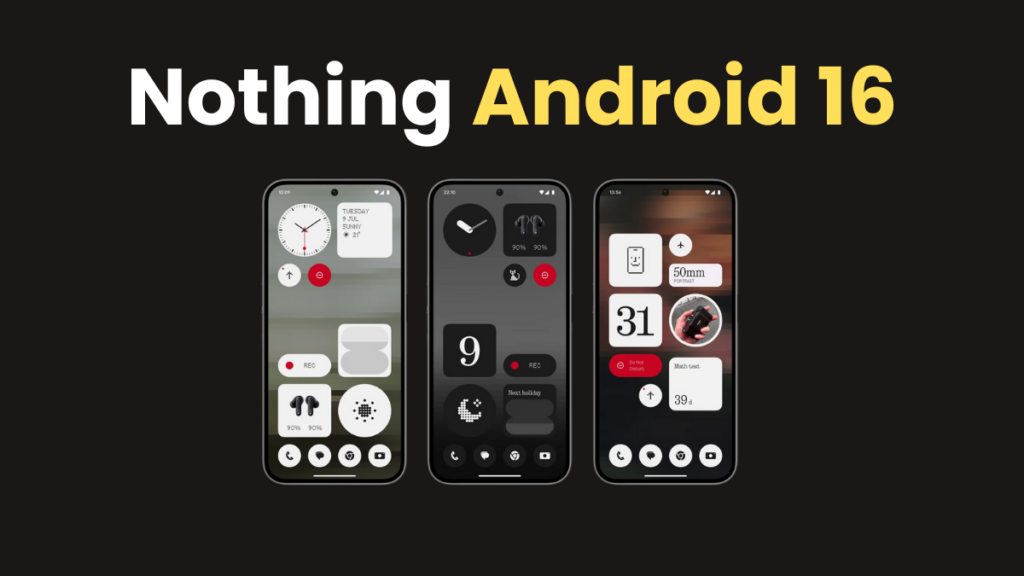
Google released Android 16 in early June, months earlier than its usual timeline. However, other brands are taking longer to roll it out to their devices, and that also includes Nothing. The brand has been quick with past OS releases, but this early arrival of Android 16 perhaps didn’t give it enough time to finish developing its custom skin, Nothing OS 4.0. The good news is that Nothing has already announced when the update will start rolling out, and we also have a strong idea of which devices are eligible and what new features to expect. Here’s everything you need to know about Nothing OS 4.0.
When will Nothing release Nothing OS 4.0?
Nothing has announced that it will release the Android 16-based Nothing OS 4.0 later this autumn, which means anything between September and November. It’s safe to say Nothing Phone (3) will be the first to receive Nothing OS 4.0. Sadly, it didn’t come with Nothing OS 4.0 right from the factory, even though Android 16 arrived a month earlier.
After the Phone (3), the update will gradually expand to the remaining models, and if history is anything to go by, the rollout shouldn’t take long to complete.
Before the stable release in Q3, Nothing will likely release Nothing OS 4.0 beta builds to ensure the software is free from critical bugs. This will also give users early access to the software before the wider rollout.
Nothing OS 4.0 (Android 16) eligible devices
The brand has confirmed that the original Nothing Phone (1) won’t get the Android 16 update. All other phones are eligible for the upgrade. Here’s the complete list:
Nothing Phone (3)
Nothing Phone (3a)
Nothing Phone (3a) Pro
Nothing Phone (2)
Nothing Phone (2a)
Nothing Phone (2a) Plus
CMF Phone 1
CMF Phone 2 Pro
Nothing promises three major Android updates to its smartphones, while its first flagship phone, Nothing Phone (3), promises five. This means the original Nothing phone has already reached the end of the road, as it was launched with Android 12.
What to expect from Nothing OS 4.0 and Android 16?
This major upgrade for Nothing phones will likely bring a progress-centric notification feature that will show instant updates from ride-share and food delivery apps directly on your lock screen and notification panel, reducing the need to open those apps. This is similar to iPhone’s Live Activities, Samsung’s Now Bar, and Oppo’s Live Alerts.
Android 16 makes notifications less cluttered by grouping multiple alerts from the same app and less overwhelming by reducing volume for rapid alerts from the same app. The former is already available for Nothing phones, but the latter isn’t. We might see that as well in Nothing OS 4.0.
The next upgrade may also include Android Protection, an array of security features that’s designed to protect users from online attacks, harmful apps, unsafe websites, scam calls, and more harmful activities.
The Nothing OS 4.0 will likely include more interactive widgets, mini-games, and glanceable notifications for Glyph Matrix (available on Nothing Phone 3) that’ll make it more useful and playful. However, we aren’t sure if Nothing will bring new changes to the Glyph Interface on older devices.
Nothing OS 4.0 will likely bring new features and enhancements across the UI. We’ll know more about them soon. Stick with us and don’t forget to regularly visit our Android 16 section for the latest updates.
Lenovo is gearing up to launch a powerful new Android tablet that targets gaming fans. The Xiaonxin Pro GT has already been confirmed to launch soon. Now, a series of teasers have just confirmed its high end performance, design, display and more. So let’s check it out.
Lenovo Xiaoxin Pro GT Teased
Lenovo Xiaoxin Pro GT
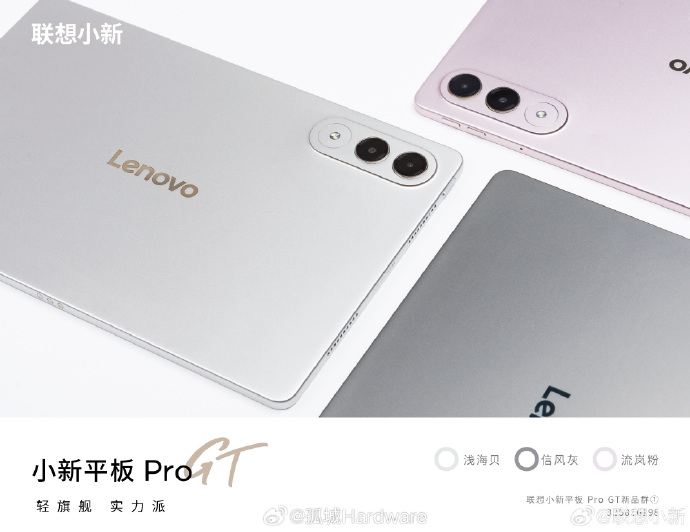
The Chinese tech giant shared a bunch of teasers on Weibo ahead of its official debut. Lenovo is working on the Xiaoxin Pro GT as an AI powered gaming tablet, separate from its Legion lineup, which typically includes all its gaming products. The upcoming gaming tablet sports a tall 12.1-inch LCD panel with a 3.2K resolution that is likely paired with 120Hz or 144Hz refresh rate.
Under the hood, it is equipped with the Snapdragon 8 Gen 3. While this isn’t as powerful as the Snapdragon 8 Elite on the Legion Y700 (Review), the chip is still quite capable for mobile gaming. The teasers also offer us a look at the front and back of the Xiaoxin Pro GT, which showcases the tall screen and its dual rear camera setup. It will come with stylus support, but it’s unclear whether this ships with the tablet or is sold separately.
All of this is housed in an ultra slim 5.99mm chassis, which weighs just 458 grams. Based on the teaser images, Lenovo could be building the Xiaoxin Pro GT with an all metal body. The brand has yet to announce the launch date for this gaming tablet, but earlier rumors had hinted at a July release. So stick around for more.
For more daily updates, please visit our News Section.
Lumio, a relatively new player in India’s consumer tech space, used the recent Amazon Prime Day 2025 to make its presence felt. The company, which launched just two months ago, says it saw a massive spike in demand for its Vision Series TVs and Arc 7 projector during the sale period.
According to the company, Lumio’s Vision line of Google TV-powered smart TVs saw 12x sales growth during the Prime Day event compared to its usual business volume. That’s not surprising during promotional periods, as the TVs were enjoying a discount of up to Rs 9000.
Lumio Vision 7
What’s notable, though, is the fact that Lumio reportedly had the highest Average Selling Price (ASP) among Indian brands and was second only overall, competing against more established global players.
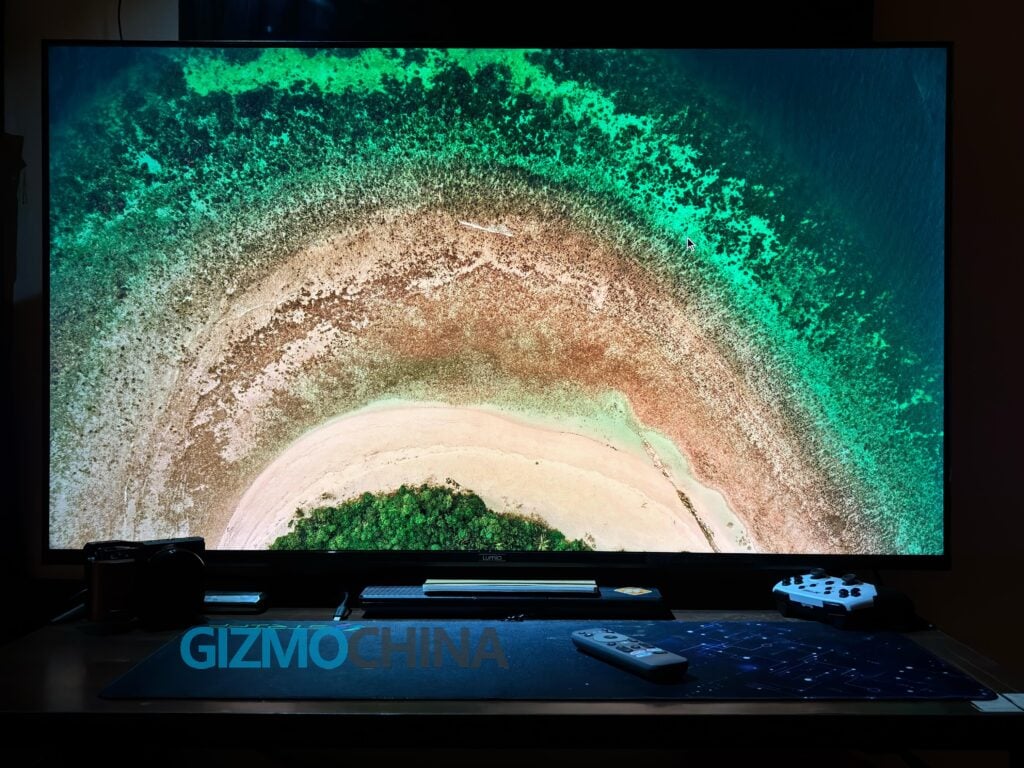
In particular, the Vision 7 QLED 43-inch TV (Review) with what Lumio calls its “Flagship Boss Processor” helped the company grab the number two spot in that category. It was available for Rs 23,999 down from its regular price of Rs 29,999.
Lumio Arc 7 is another hit
Lumio’s Arc 7 projector, also launched during Prime Day, sold out during the event. The projector runs Google TV and comes with Netflix certification.
The company claims it’s now the number one Google TV projector brand in India and the second-ranked brand in the INR 20,000+ projector segment.
The Arc 7 features Full HD 1080p output and uses an ArcLight Engine, designed to be dust-free and low maintenance. The idea is to target midrange buyers who want plug-and-play simplicity without compromising on resolution or platform support.
For a brand that only entered the market eight weeks ago, Lumio’s early numbers are certainly impressive. We hope the brand continues to address the market that not many brands are focusing on.
LG Display has started mass production of its new fourth-generation OLED panels using Primary RGB Tandem technology. These panels reach 1500 nits peak brightness and support a 280Hz refresh rate on a 27-inch screen.
LG Electronics is the first to use this panel in a monitor. The new UltraGear OLED 27GX700A features a 2560×1440 resolution, 99.5% DCI-P3 color gamut, and a 0.03ms GtG response time. It is certified with VESA DisplayHDR True Black 500 and VESA ClearMR 13000, ensuring high contrast and motion clarity.
The display includes -99% ultra-low reflection mirror technology, which reduces screen glare. Power efficiency is improved by around 20% compared to third-generation OLED panels. The monitor is also designed to be safer for the eyes.
It is UL certified for full-scene eye protection. It includes flicker-free performance, reduced glare, and low blue light output. The monitor meets Eyesafe CPF60 standards and holds UL Platinum certification for blue light safety.
ViewSonic has launched the VX3418C-2K, a 34-inch ultrawide gaming monitor built for immersive gameplay and fast performance. It features a 1500R curved VA panel with a UWQHD resolution of 3440 x 1440 and a 21:9 aspect ratio.
The monitor supports a 180Hz refresh rate and 1ms MPRT response time. It also includes AMD FreeSync Premium to reduce screen tearing and stuttering during fast-paced gaming. The display supports HDR10 and offers a static contrast ratio of 4,000:1, dynamic contrast ratio of 80 million to 1, and brightness of 250 nits. Color support includes 16.7 million colors, 104 percent sRGB coverage, and 72 percent NTSC. Viewing angles are 178 degrees horizontal and vertical.
The VX3418C-2K includes two HDMI 2.0 ports and two DisplayPort 1.4 inputs. It is compatible with both PC and Mac, supports up to 3440 x 1440 resolution, and works with Windows 11 and macOS. The monitor also features built-in 5-watt stereo speakers, a 3.5mm audio out jack, and an internal power supply.
Power consumption is 47 watts under typical use, with eco modes using 33 watts and 40 watts. Maximum power usage is 51 watts. Standby power is 0.5 watts. The backlight life is rated at 30,000 hours. Pixel size is 0.232 mm by 0.232 mm, and the screen has an anti-glare surface with 3H hard coating.
Other features include ViewSonic’s Eye ProTech with blue light filter and flicker-free technology to reduce eye strain. The monitor supports HDR10 for better contrast and detail and comes with ViewMode presets for gaming, editing, and video watching.
Please Note: When you buy something using the links in our articles, we may earn a small commission at no cost to you.
The stand supports tilt, swivel, pivot, and height adjustment. The monitor is also fully compatible with PS5 and Xbox Series X/S consoles and supports 120Hz output from both. The VX3418C-2K is currently listed in some European markets for €289.
For more daily updates, please visit our News Section.
iQOO will unveil the iQOO Z10R on July 24 in India. In recent days, the brand has confirmed the front and rear camera details of the device. Now, the updated landing page of the phone available on Amazon India has confirmed most of the Z10R’s other specifications.
According to iQOO, with 12GB of virtual RAM onboard, the device can run as many as 44 active apps in the background. The device will pack 256GB of built-in storage and a large 5700mAh battery. While the brand has not confirmed the fast charging capabilities of the device, it is confirmed to support bypass charging.
The iQOO Z10R will also feature a cooling graphite sheet for heat dissipation, an in-screen fingerprint sensor, dual speakers, and FunTouch OS 15-based Android 15. As far as durability is concerned, the Z10R will have an IP68/69-rated dust and water-resistant chassis with military-grade shock resistance.
It was confirmed earlier this week that the iQOO Z10R will feature a 32-megapixel selfie camera and a 50-megapixel Sony IMX882 camera with OIS support on the back. Both cameras are confirmed to support 4K video recording.
iQOO Z10R price
The iQOO Z10R will arrive with a sub-Rs 20,000 price tag. It will be available in two shades: Aquamarine and Moonstone.
For more daily updates, please visit our News Section.
Thomson has introduced the Masterclass Series Mini LED Smart Google TV 2025 Edition in India, available in 65-inch and 75-inch variants. Both models feature a frameless metallic design and IPS LCD panels with a quantum dot layer and mini LED backlight.
The TVs offer 4K resolution (3840 × 2160), 540 local dimming zones, up to 1500 nits peak brightness, and a 100,000:1 contrast ratio. Display features include Ultra Wide Color Gamut, HDR10, HLG, Dolby Vision, support for 1.1 billion colors, and a flicker-free screen with low blue light output.
Sound is handled by a 108W six-speaker setup with top-firing subwoofers. Audio formats include Dolby Atmos, Dolby Digital Plus, and Blaupunkt’s Magic Sound.
The TVs run on Google TV, powered by a MediaTek AiPQ processor with Mali-G52 GPU, 2GB RAM, and 16GB internal storage. Features include voice search, personalized content suggestions, and access to over 10,000 apps, including Netflix, Prime Video, YouTube, and JioCinema.
Built-in Chromecast and Apple AirPlay support make media casting easy. Google Assistant is available for hands-free control. For gaming, the TVs include 120Hz MEMC, Auto Low Latency Mode (ALLM), and Variable Refresh Rate (VRR).
Connectivity options include dual-band Wi-Fi, Bluetooth 5.0, three HDMI ports with ARC and CEC support, and two USB ports.
Pricing & availbility
The Thomson Masterclass Series Mini LED Smart Google TVs are available exclusively on Flipkart. The 65-inch model is priced at Rs. 61,999 during the launch offer and will retail at Rs. 64,999 later. The 75-inch version is priced at Rs. 95,999. Both come with a 1-year warranty.
For more daily updates, please visit our News Section.
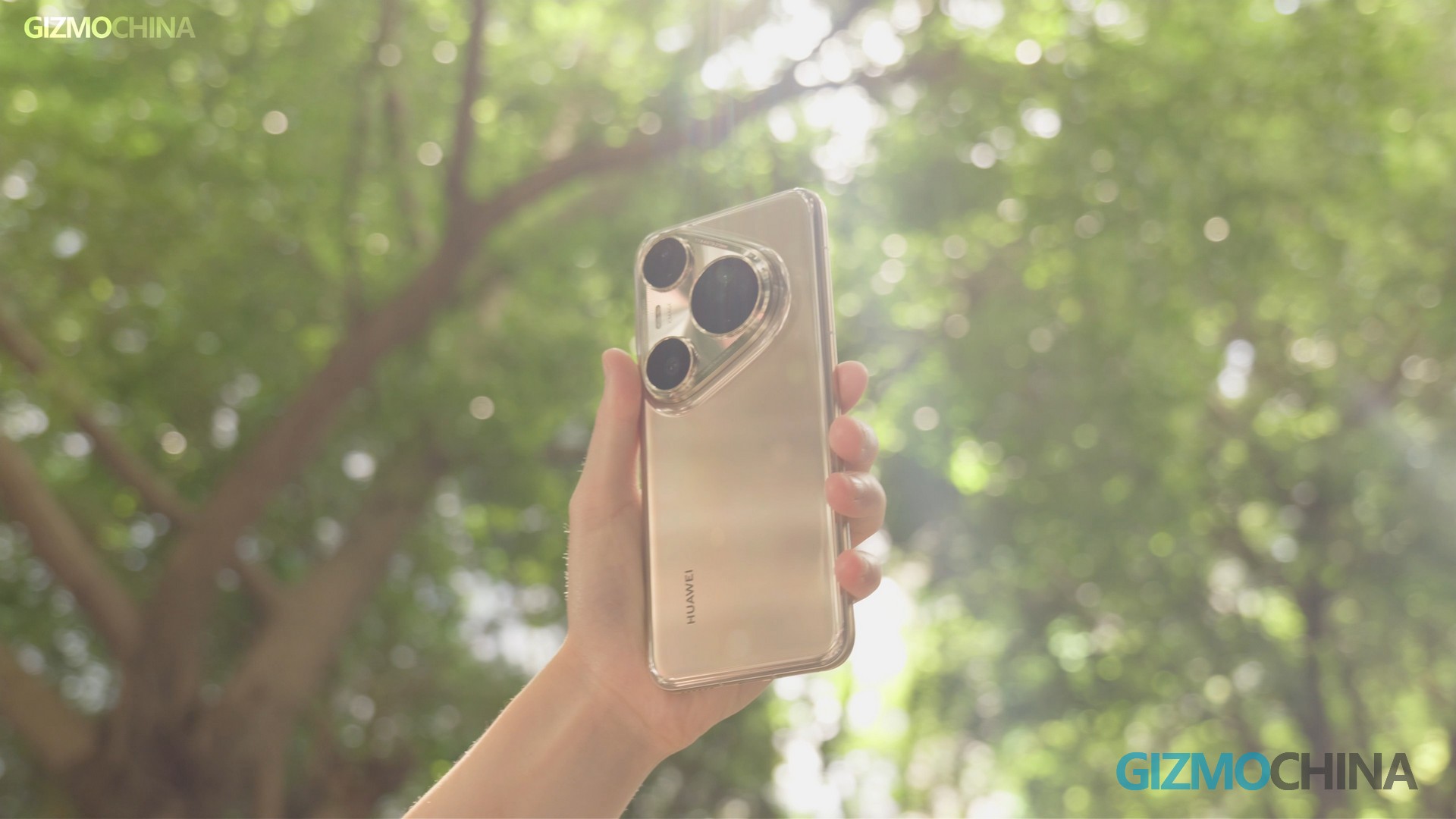
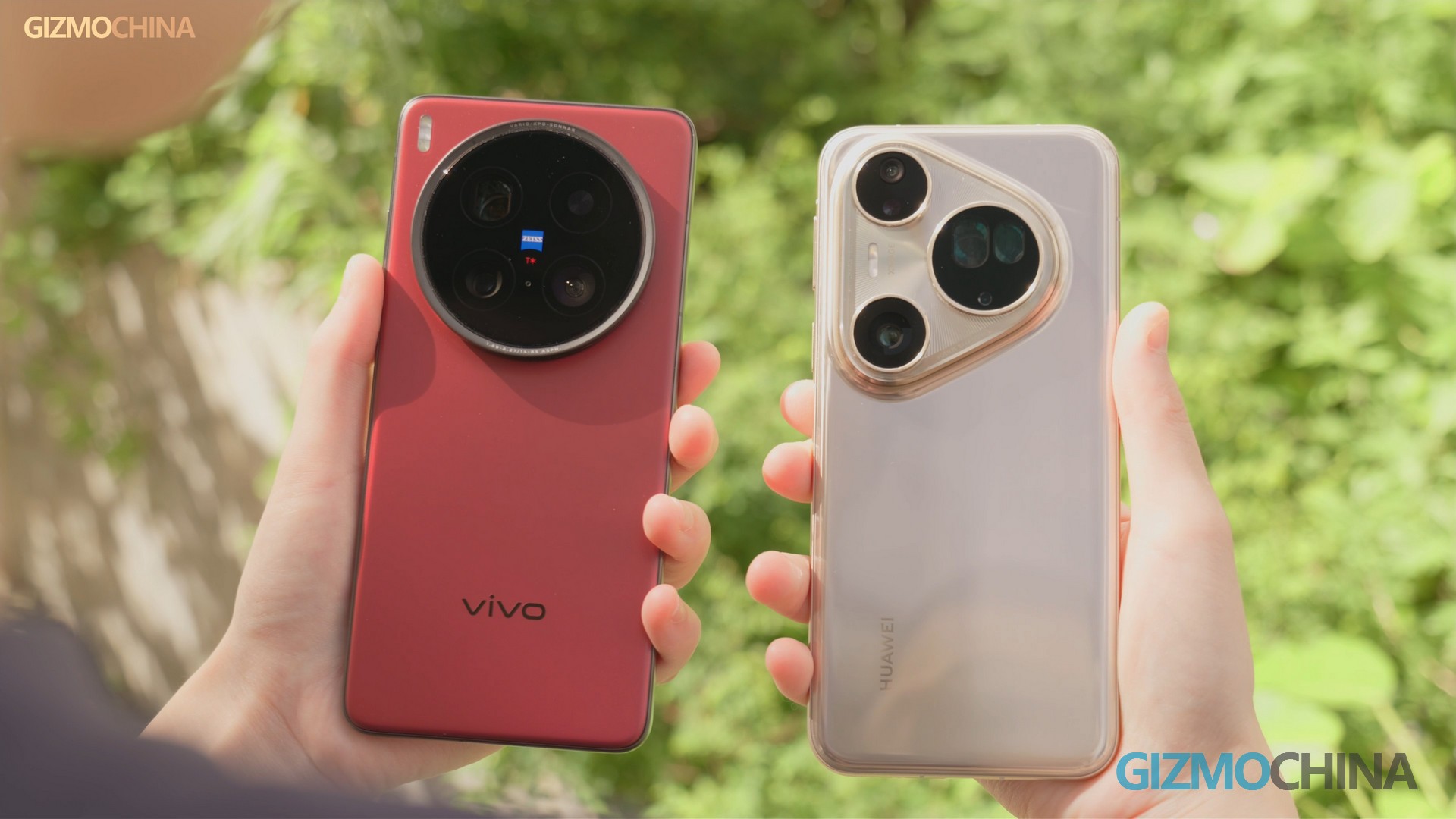
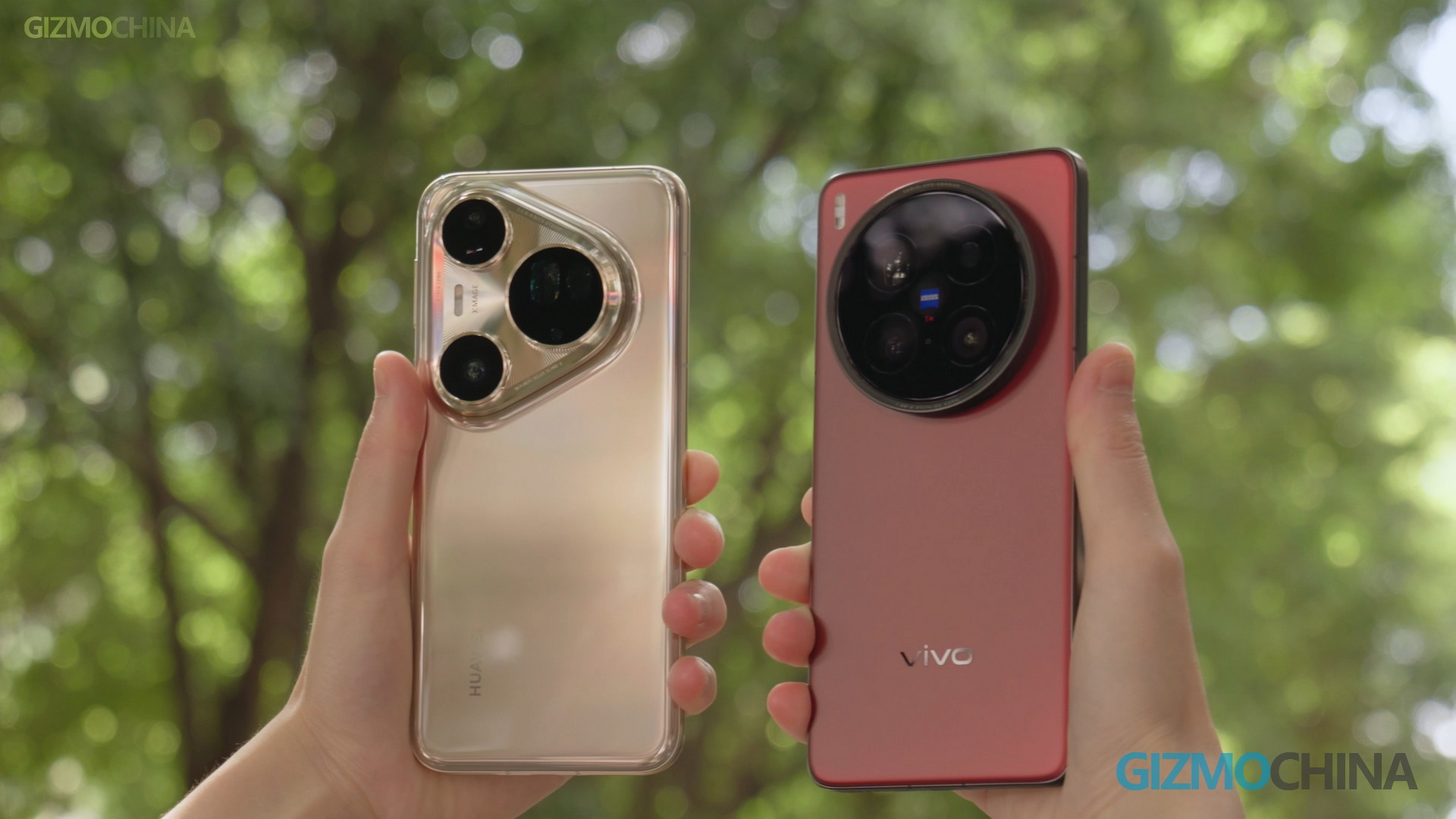
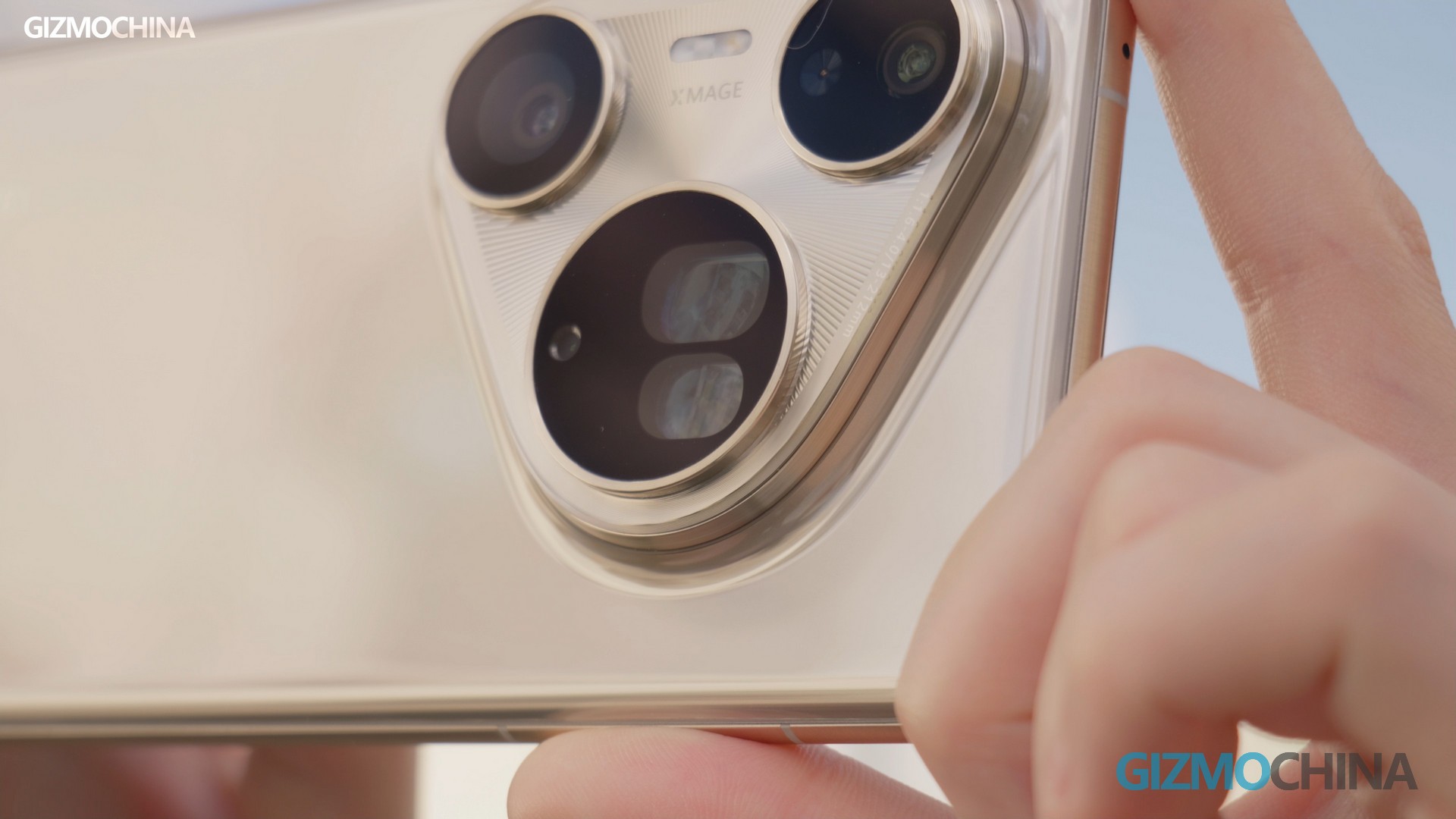
This is the footage captured by a regular telephoto lens, which is a single lens connected to a single sensor, a setup used by iPhone, Samsung, and vivo. Except for Huawei! It uses the same sensor across two lenses. Now, if we compare the vivo X200 Ultra with it, which one will win in imaging performance?
Focal Length Coverage and Specifications
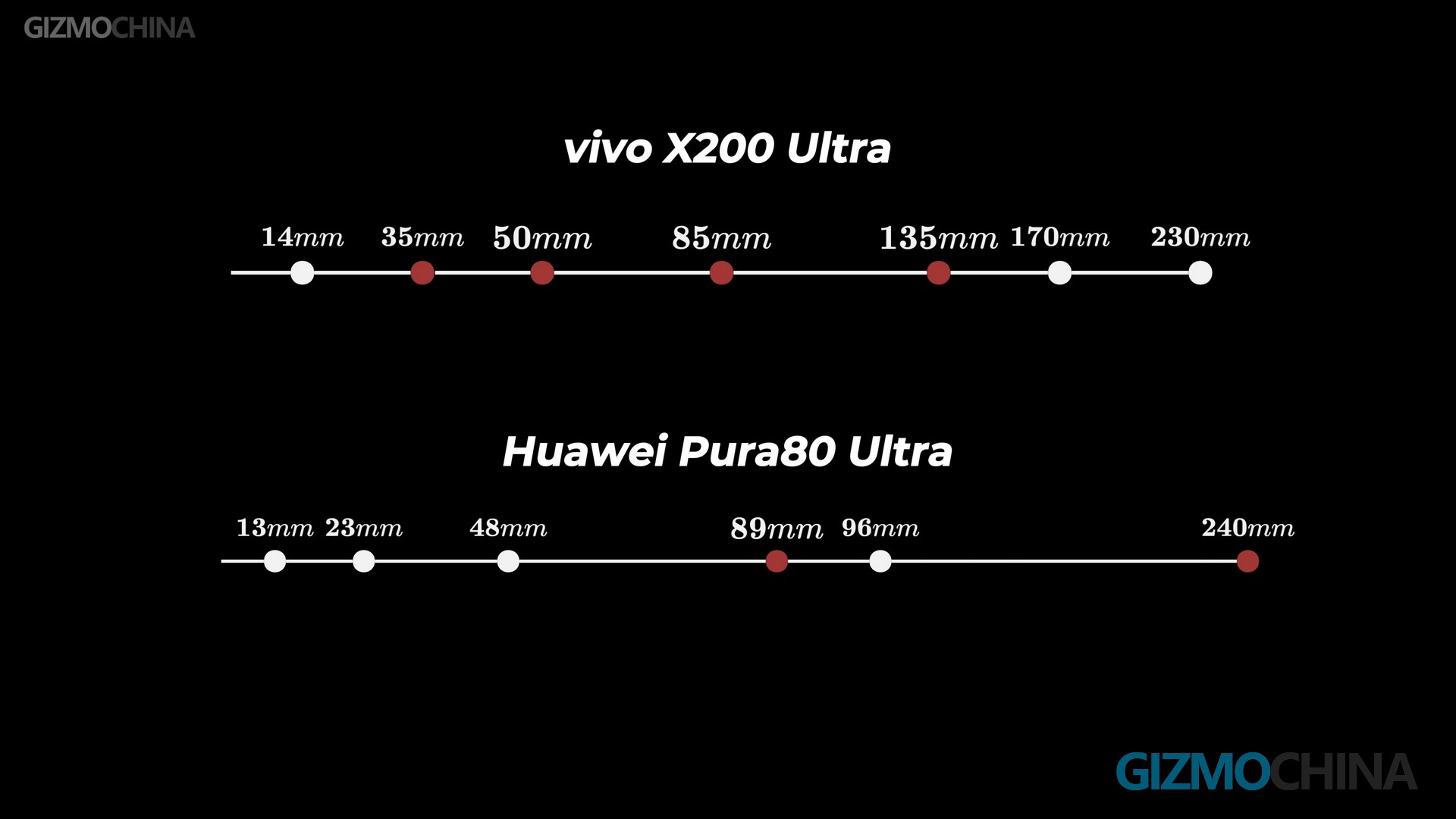
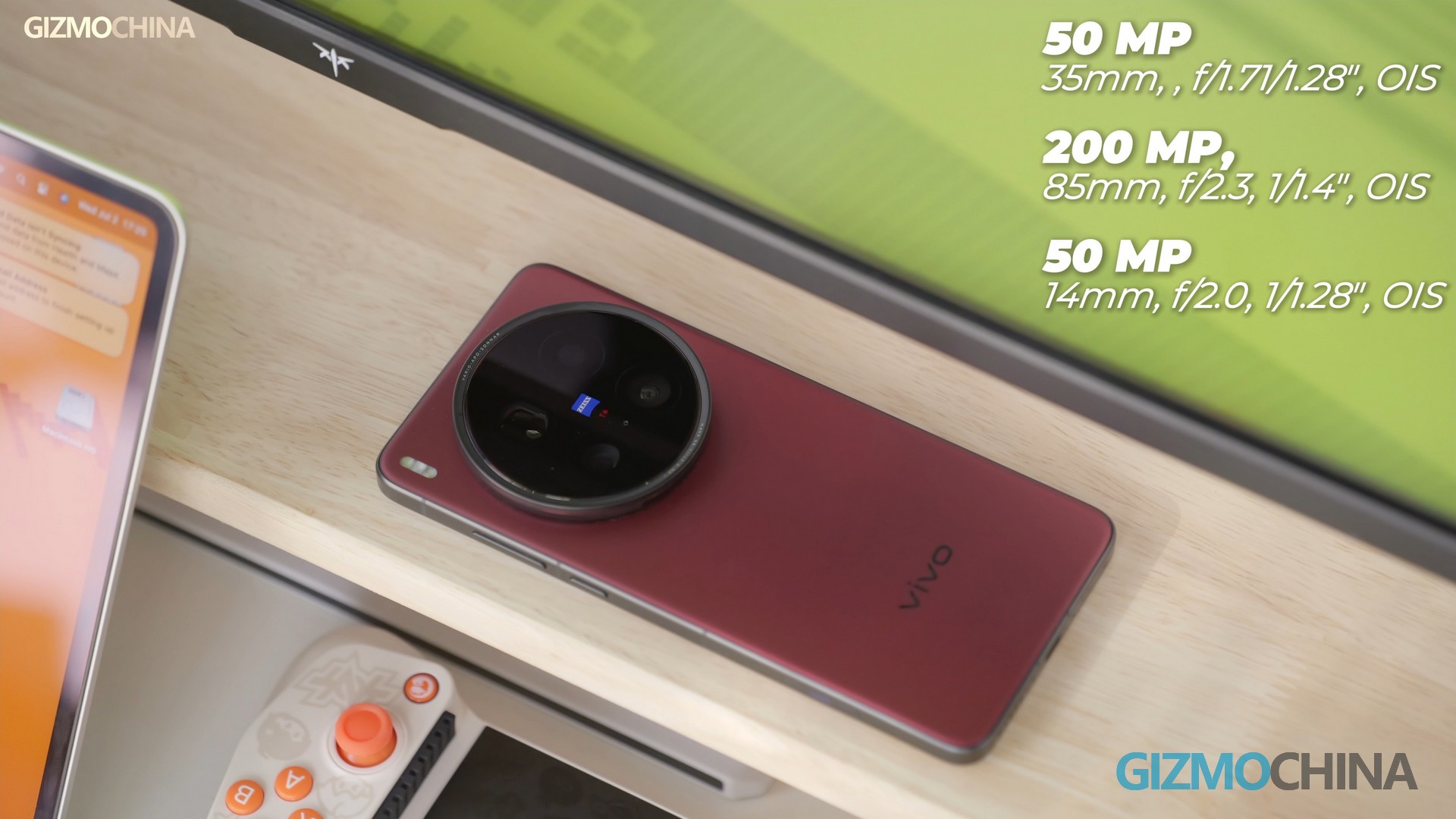
When it comes to telephoto imaging, vivo has already set a high bar. It’s three Zeiss lenses cover three golden focal lengths: the 35mm main lens mimics the human eye’s perspective, while the 85mm lens caters to creative shooting. And let’s not forget the 135mm for portraits.
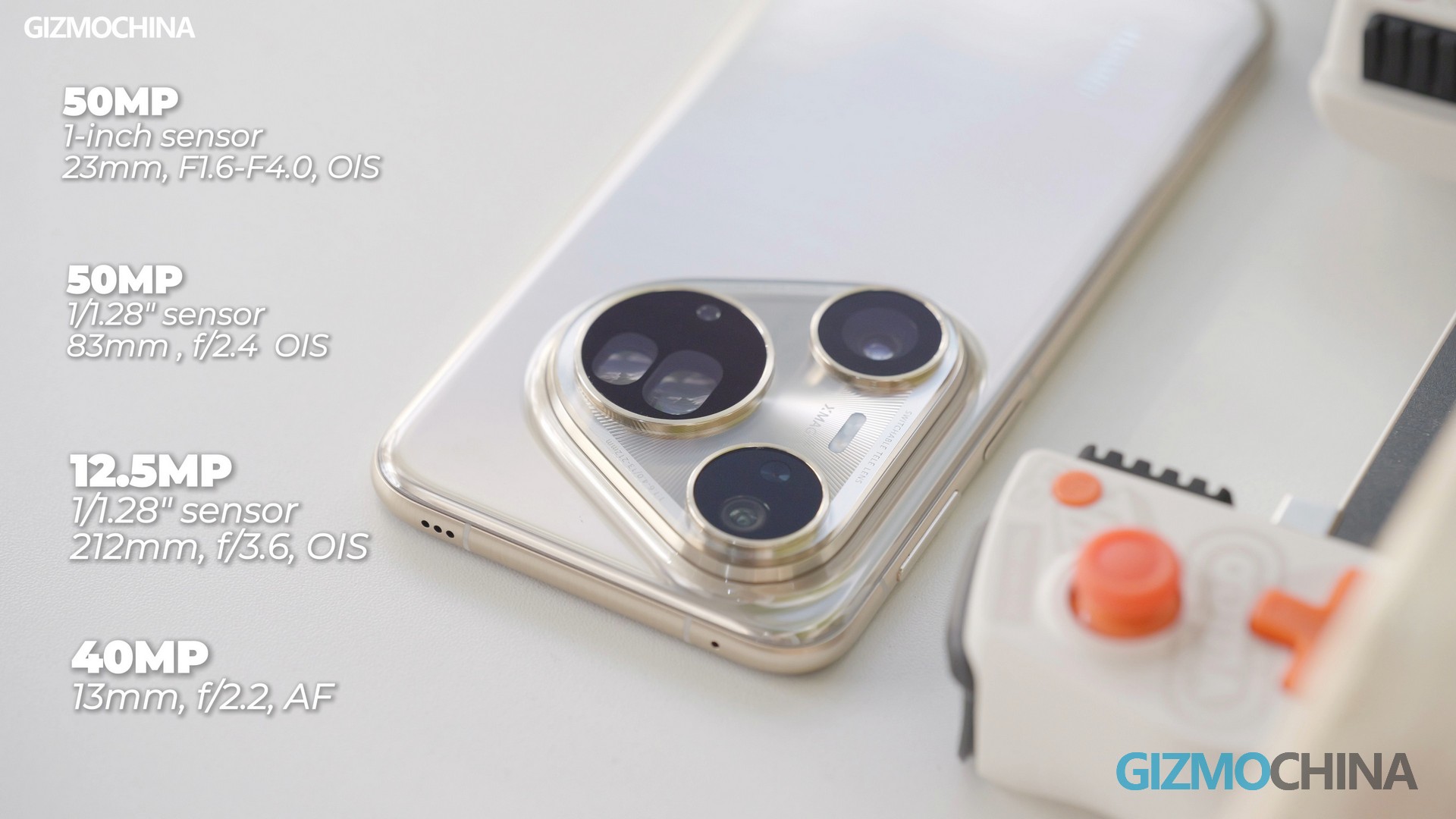
Interestingly, Huawei offers a similar focal length, but with a game-changing twist: one sensor shared by two telephoto lenses. This innovative design enables seamless switching between two focal lengths, delivering 3.7x and 9.4x optical zoom without compromising image quality.
When it comes to sensors, the two phones are very different. Let’s break down the specs:
Huawei Pura 80 Ultra features a 1-inch 50MP sensor for its main camera, packing both a higher pixel count and a larger sensor size.
vivo X200 Ultra equips its main and ultra-wide lenses with Sony’s LYT-818 sensor, while the telephoto uses a Samsung HP9 sensor, for native 85mm optical shooting. Surprisingly, it holds its own in both pixel density and sensor dimensions.
Mid-Telephoto Performance
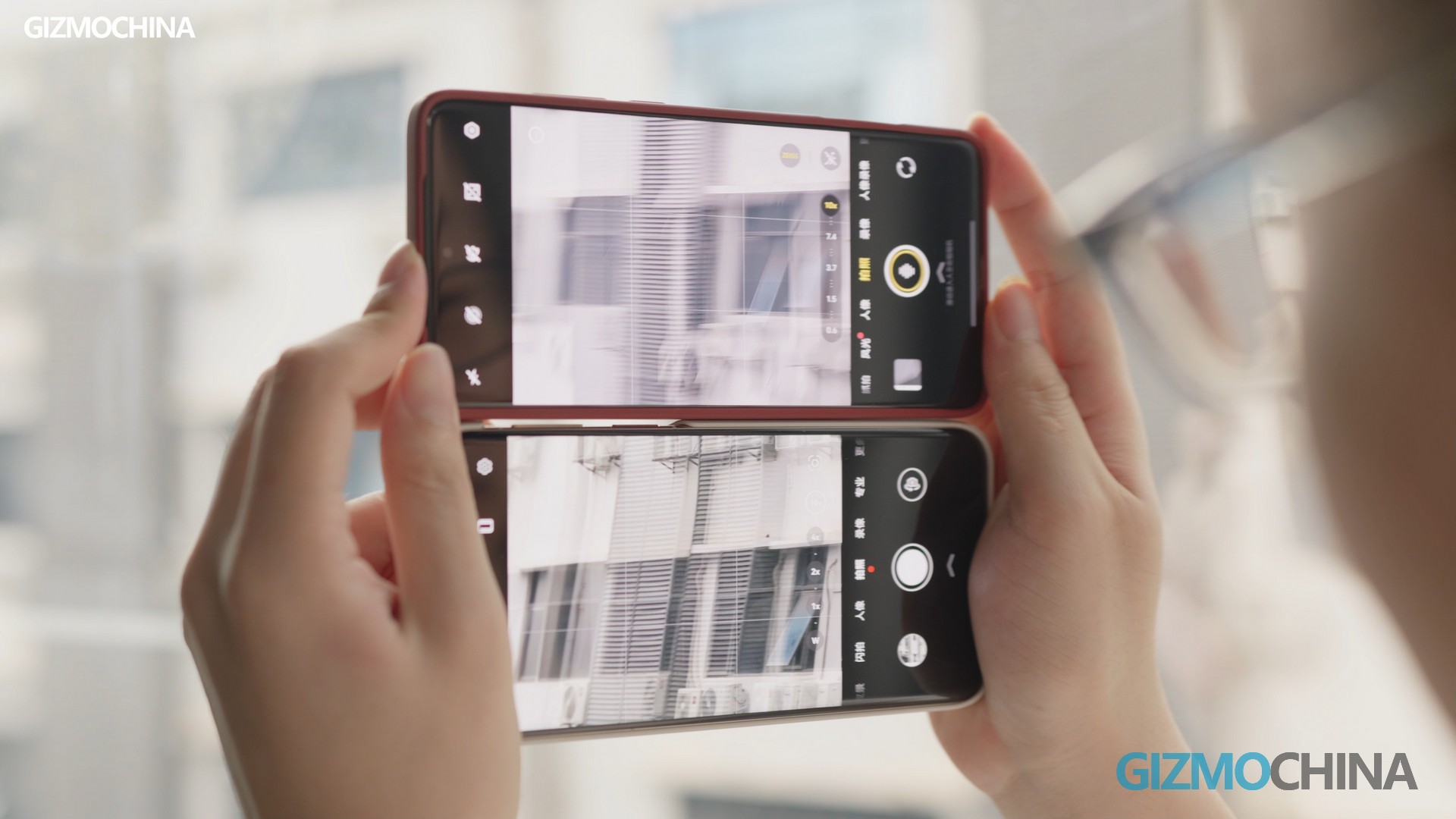
For this imaging review, we focused primarily on telephoto capabilities. The Pura 80 Ultra switches from the main camera to a telephoto, equivalent of 89mm at 3.7x zoom, while the X200 Ultra offers a 3.7x equivalent of 85mm; this gives the X200 Ultra a slightly wider field of view. During shooting, we controlled the framing to maintain consistency.
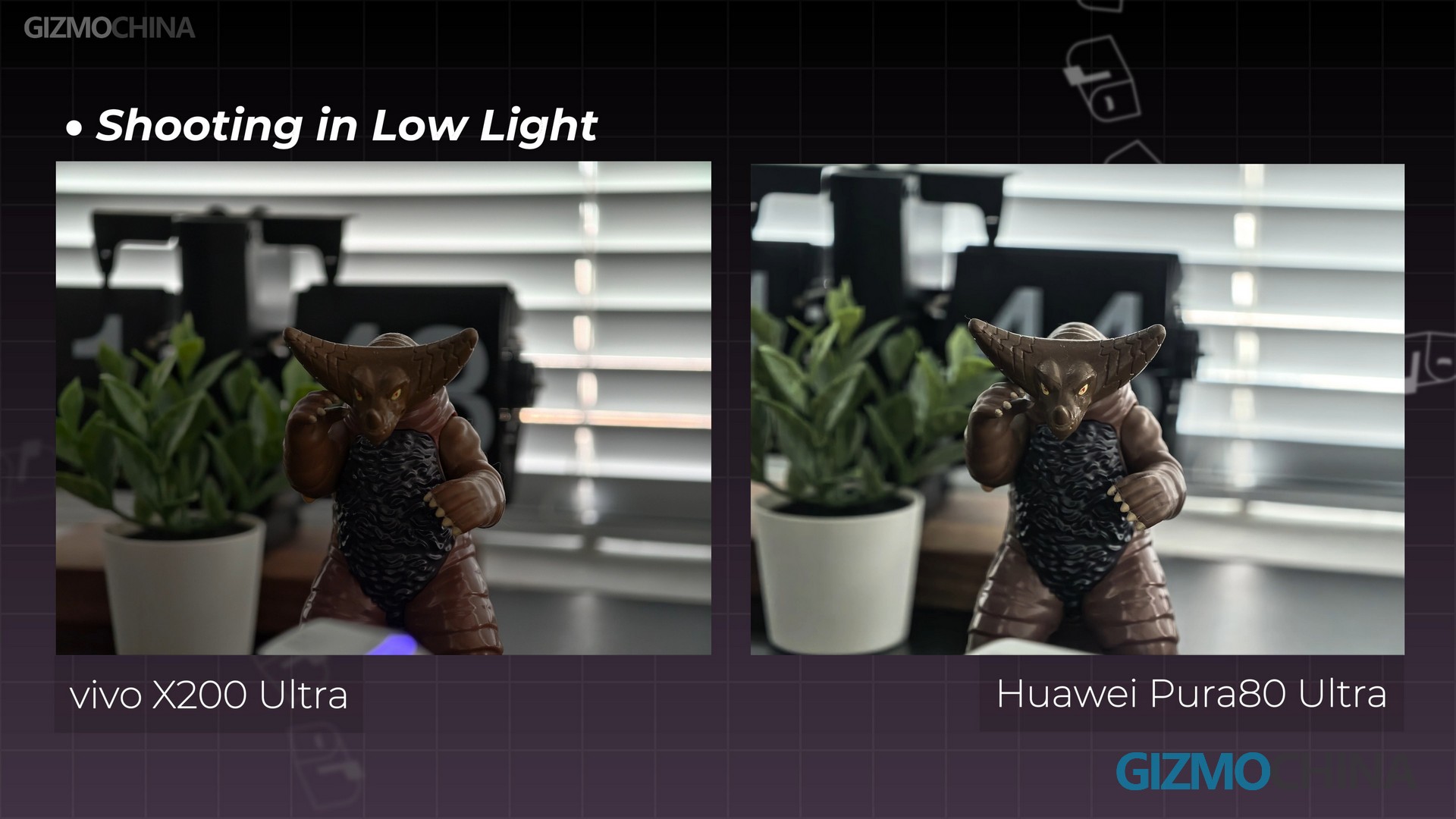
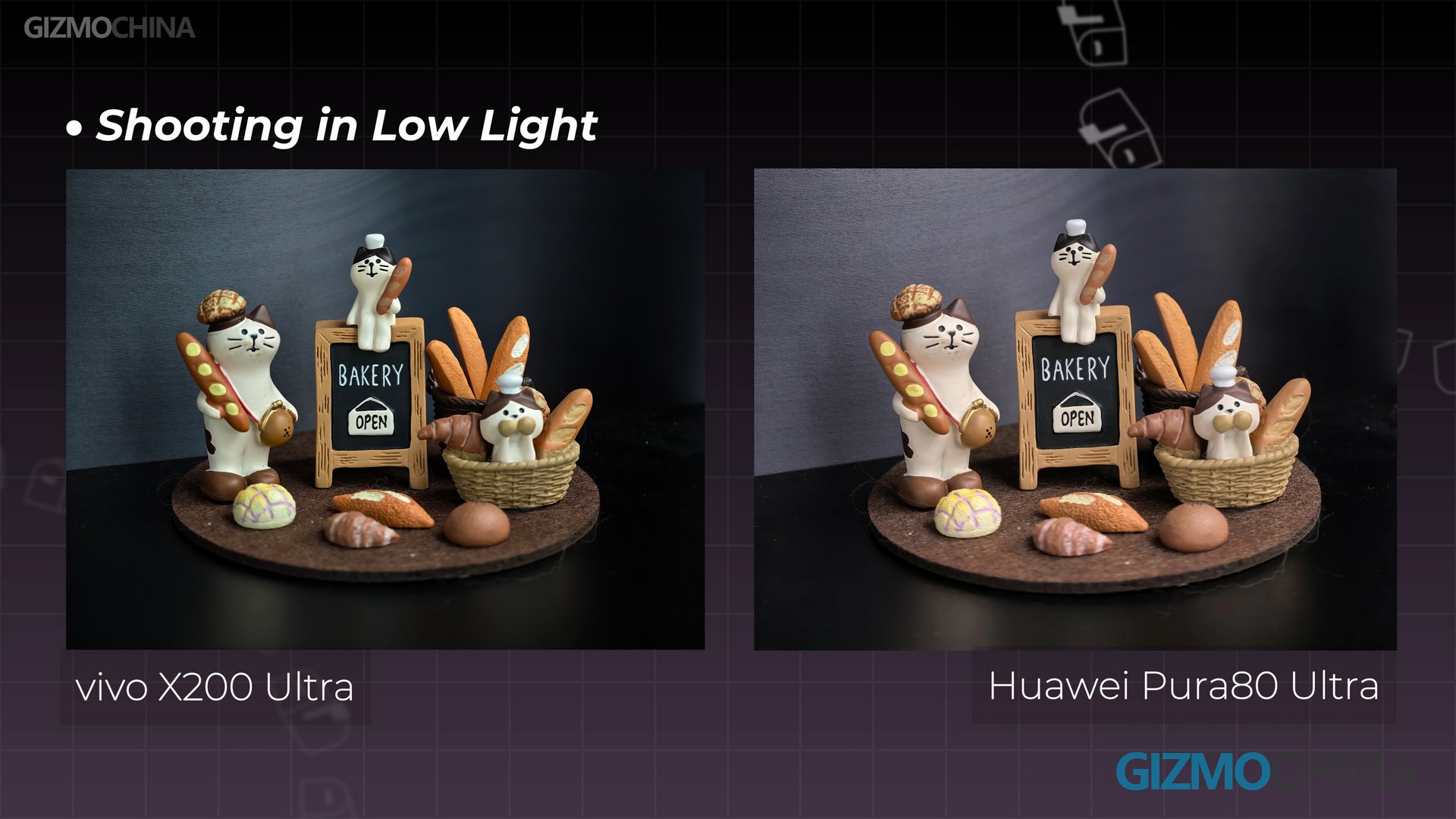
In the first set of native 3.7x low-light shots, the two phones show different styles. The Pura 80 Ultra impresses with buttery-smooth light transitions, preventing blown-out highlights, and retaining shadow detail. It even softens the textures, capturing the scene’s natural lighting. On the other hand, the vivo X200 Ultra sharpens highlights while intensifying shadow contrast, leveraging lighting to sculpt a dramatic, dimensional effect. This makes the subject stand out, though at the cost of some shadow information. Remarkably, despite these differences, both devices deliver almost the same image sharpness and clarity.
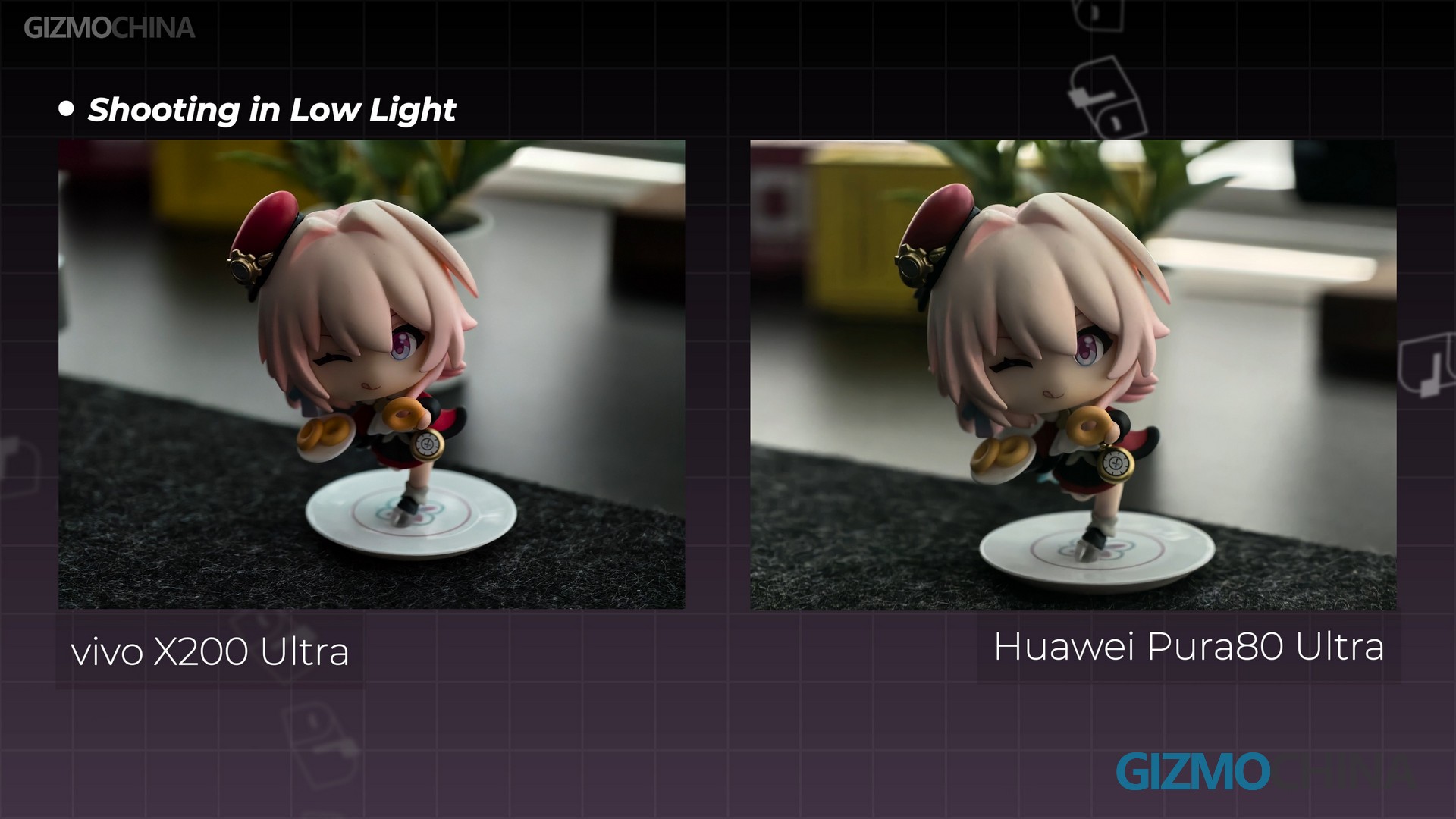
In another set of shots, both phones deliver solid sharpness, revealing clear details like hair strands, fabric textures, hats, and markings on the watch. This shows their telephoto lenses excel at capturing fine details in low light. However, the vivo X200 Ultra slightly under-represents shadow and background details. As for which handles details better, that’s a call for you to make.
Color Performance in Complex Scenes
In terms of color reproduction, the Pura 80 Ultra excels in accuracy. It renders the pink hair, red hat, and purple eyes of the figurine close to their real-life hues, with natural color transitions, and no obvious color casts. The vivo X200 Ultra, however, maintains its signature style, with the tones being very vivid. For example, the pink hair shows heightened saturation, creating a more vibrant visual impact but deviating slightly from the authentic color. Huawei’s Ultra Chroma camera notably stands out, ensuring precise color fidelity even in complex lighting scenarios. To validate this, we also compared portrait and pet close-up shots.
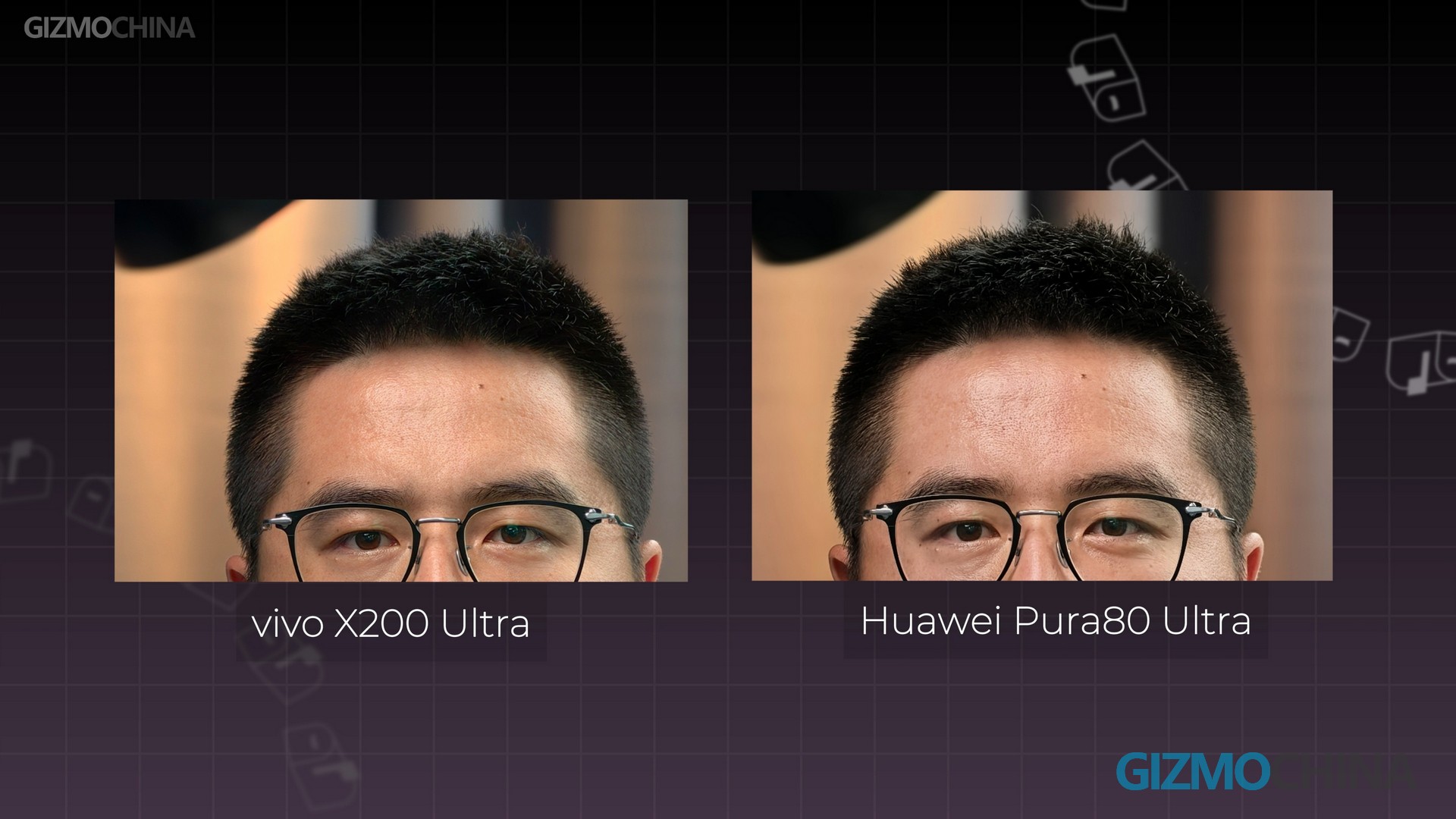
Let’s focus on the white T-shirt and skin tones. Even with good lighting, vivo doesn’t oversaturate colors anymore—but there’s still a big color shift. The white balance looks greenish. Meanwhile, the Pura 80 Ultra nails natural skin tones way better than vivo here.
The color issues we talked about earlier? They’re still here. See, vivo doesn’t have a color temperature sensor, so the white balance is all over the place. It tries to fix it, but keeps messing up the correction. Huawei, though, their colors are way closer to what we see. Now, here’s the thing, Pura 80 Ultra is better in color accuracy, but when it comes to fine details—especially hair and fur—vivo handles that better.
Detail Handling
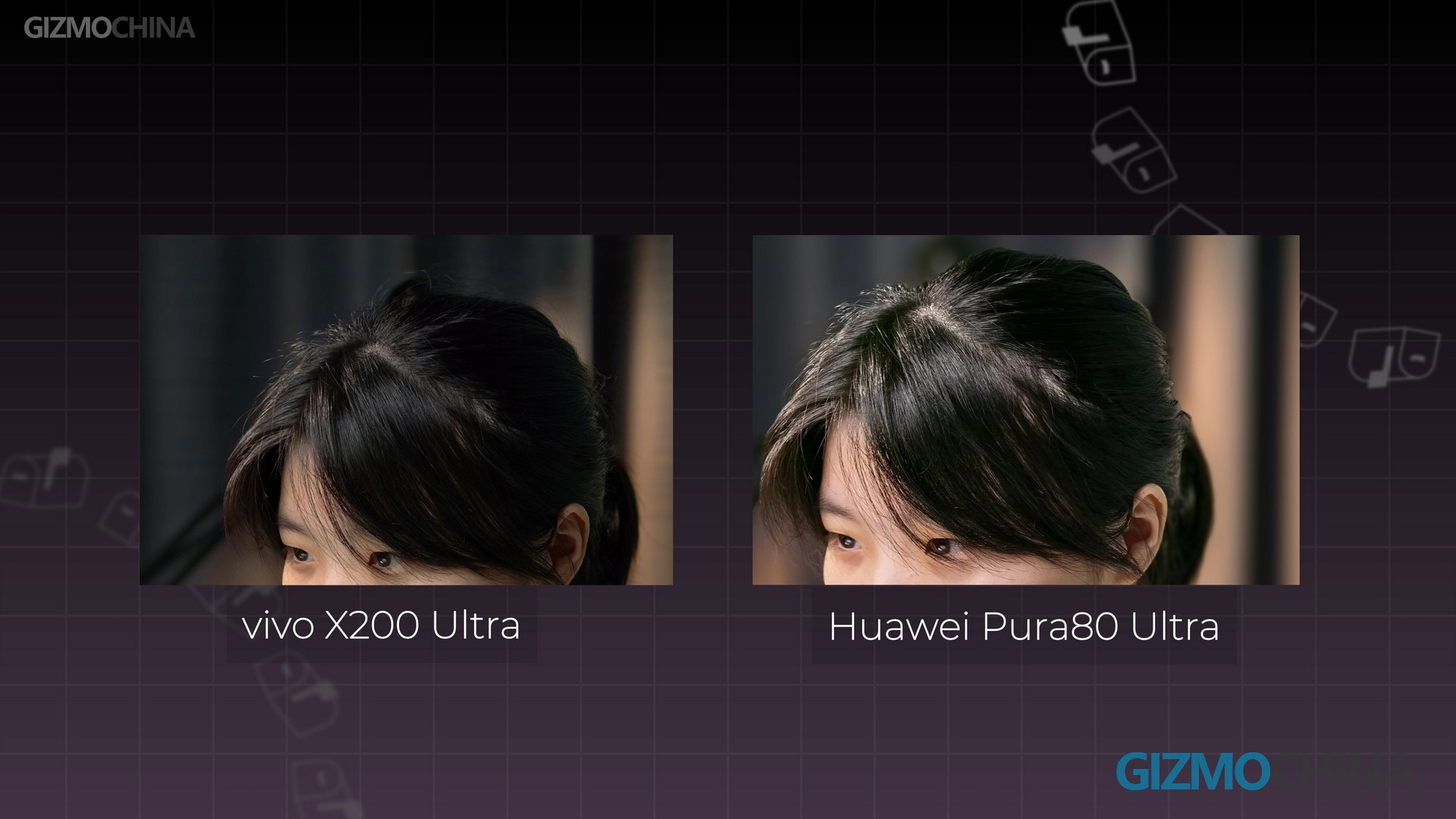
Let’s talk about detail loss. The Pura 80 Ultra shows blurry hair edges—you can’t make out fine strands. It relies more on hardware advantages. Not like the vivo X200 Ultra, which nails those tiny hair textures and keeps that natural, fluffy look. That’s probably because vivo is more optimized for complex scenes, so hair just comes out better.
Second issue: unnatural transitions. Where hair meets skin or the background, Huawei’s performance is a bit off, like places around the forehead and sideburns, the edges are harsh, which kills the softness in portraits. Vivo, though, has smoother transitions; hair blends into the background way more naturally.
Now, about algorithms. Vivo had some glitches early on, but system updates fixed that pretty well. Huawei still lags here, to be honest. But both have different styles. So, which one do you like more?
Telephoto Beyond 200mm (10x Zoom)
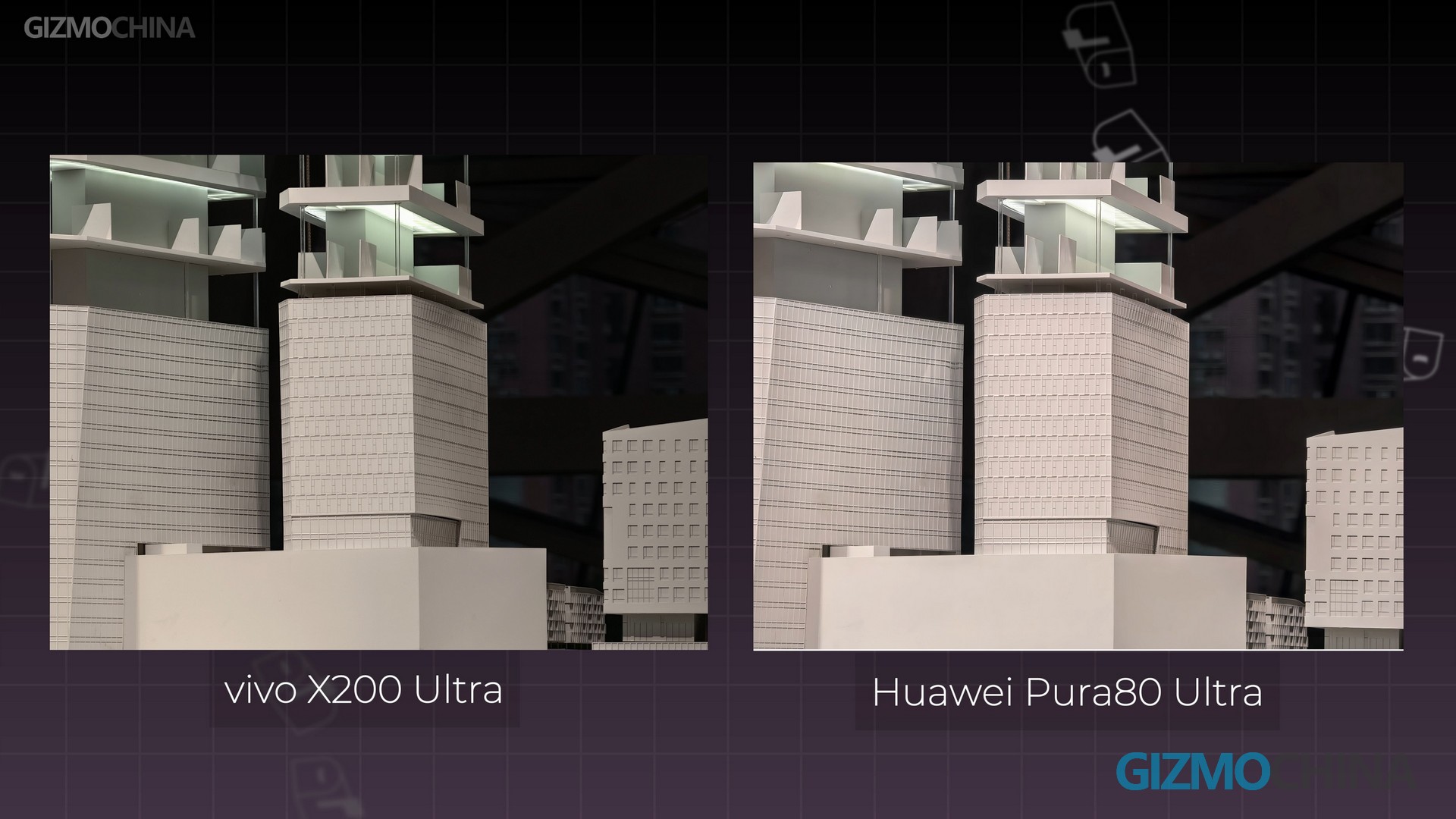
Now let’s look at 10x zoom, the focal length that separates these two phones’ performance. Starting with the first set, beyond the color differences we saw earlier, the X200 Ultra’s main issue here is over-reliance on algorithms. Take this close-up of a jar—it has tons of details and textures. On the X200 Ultra shot, so many details are masked or blurred by the algorithm, which is a real shame.
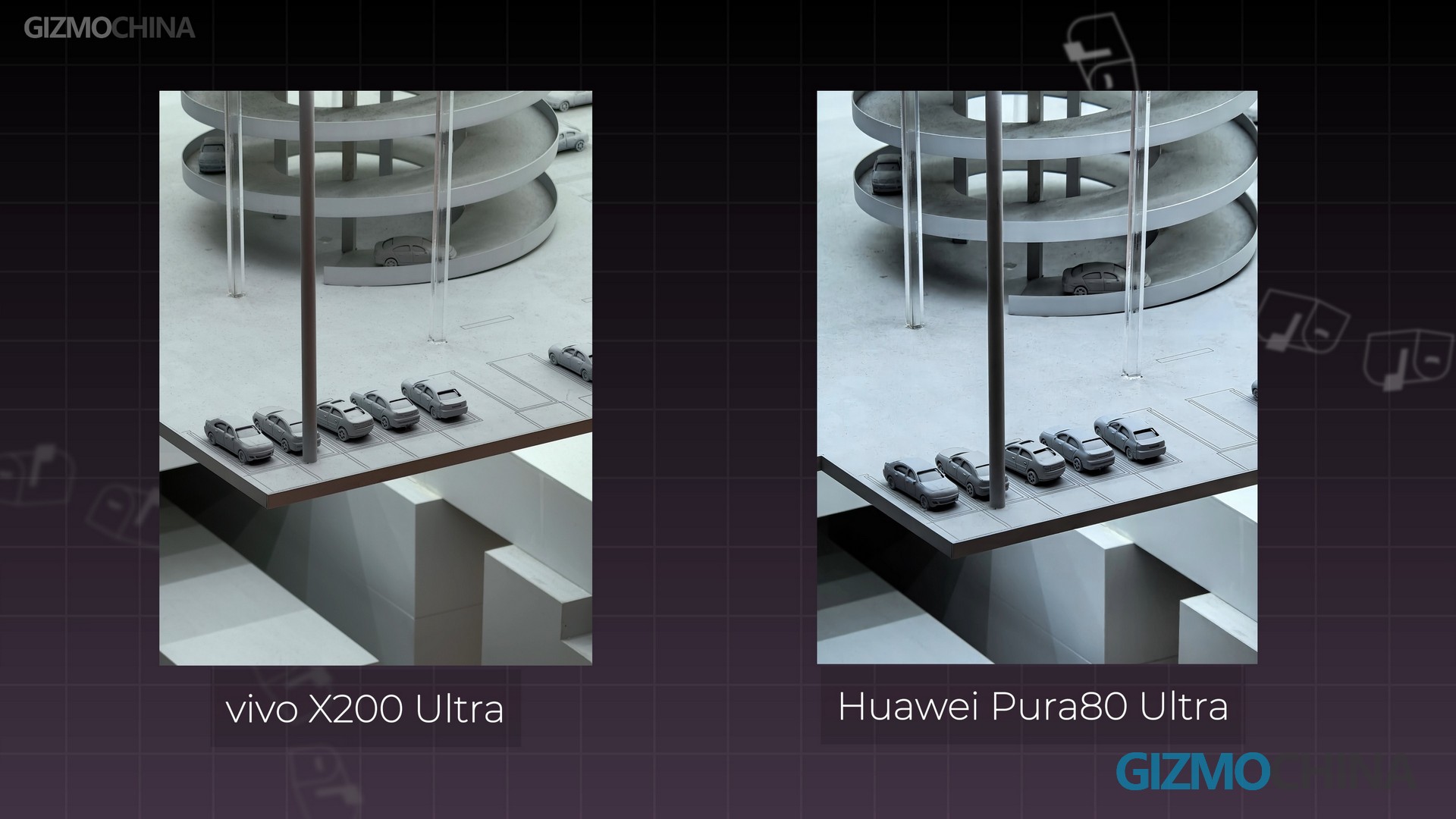
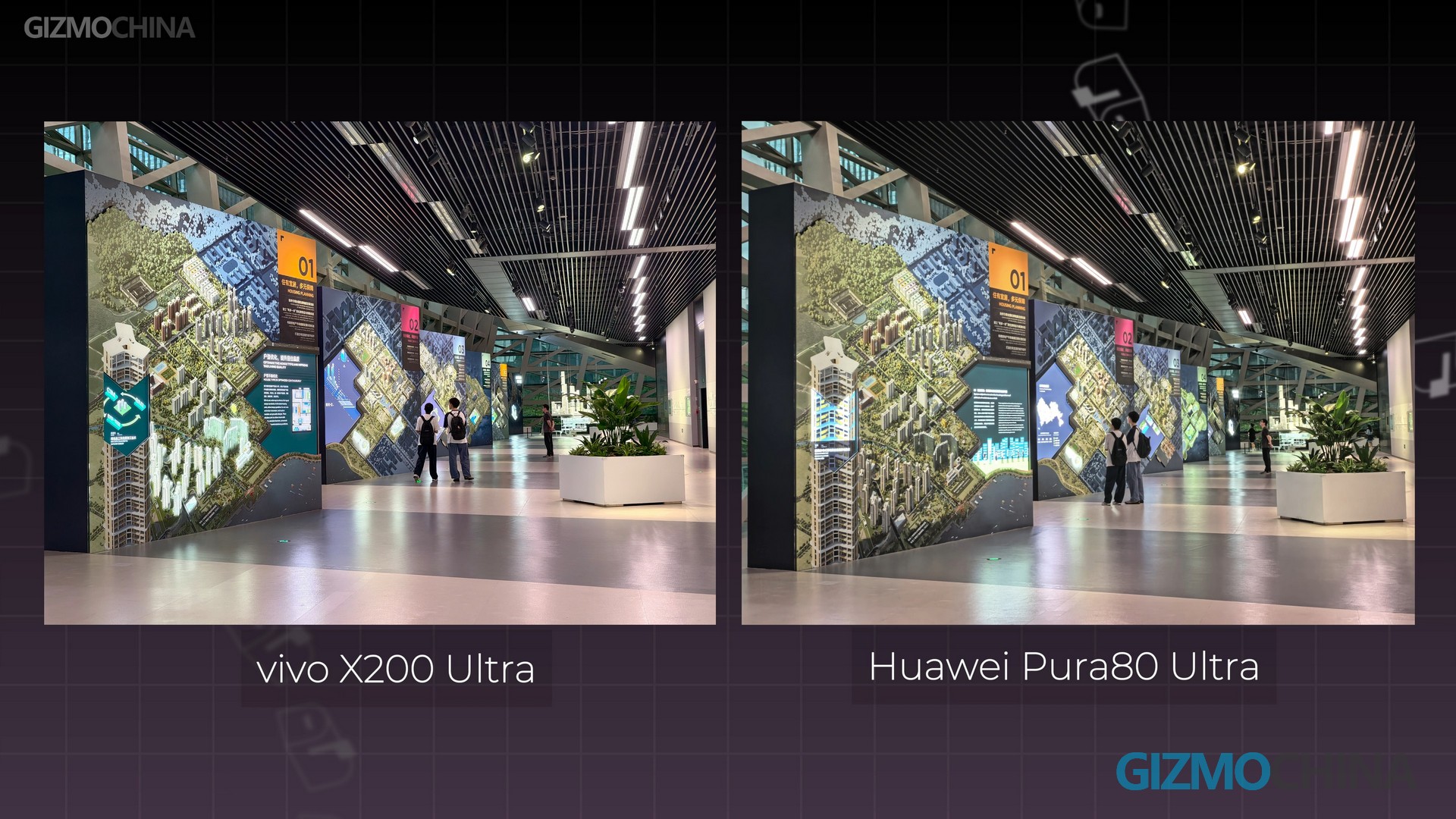
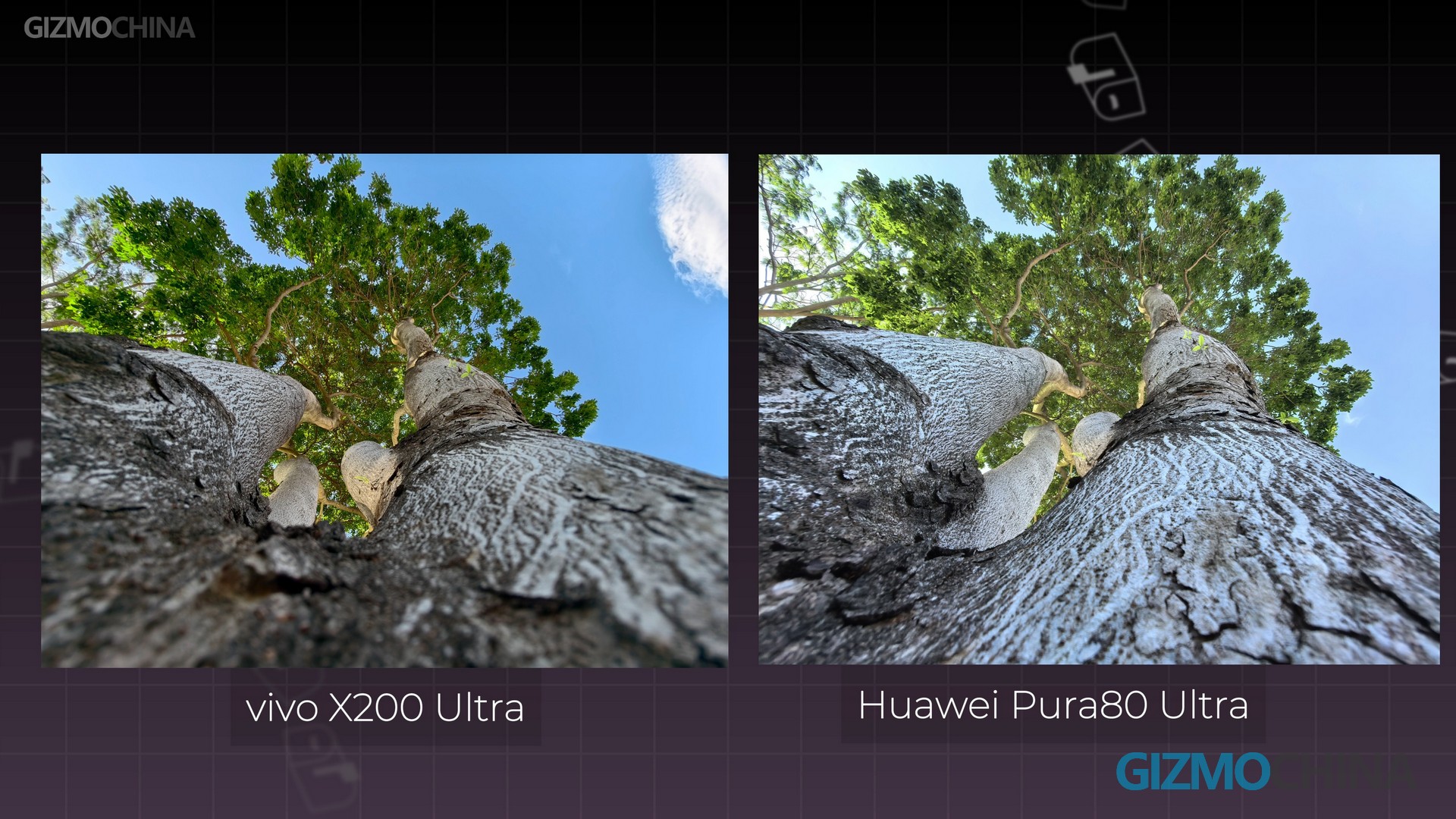
Huawei, though, because of its larger sensor, doesn’t need heavy noise reduction or AI work, so it keeps way more brightness and detail. That bigger sensor gives it a clear edge here. This set also perfectly backs up my earlier point. The Pura 80 Ultra keeps way more shadow details—take the buildings at the back, for example. It outperforms in both detail and dynamic range.
In this scene, the color problem is still here. Huawei leans toward authentic colors, while vivo enhances everything, making the image more pleasing to the eye.
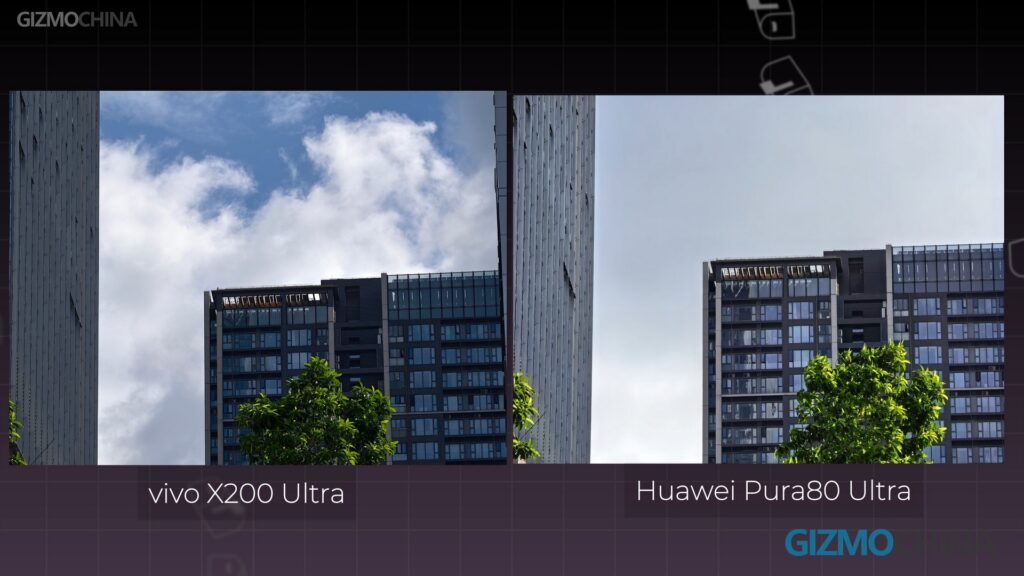
When shooting outdoor scenes, this set of photos shows that the Pura 80 Ultra excels in the details of the sky, plants, and architecture. Vivo boosts contrast to enhance visual appeal, but that highlights slightly weaker resolution and detail retention.
Now let’s compare the main and ultra-wide lenses. Which phone do you think will take the crown here?
ltra-wide focal lengths, delivering nearly identical performance, ideal for natural landscapes and architecture photography.
Video Stabilization
In terms of videos, I think vivo performs extremely well. It has one more LOG mode than Huawei. Regarding the video stabilization, you can get the answer by comparing the video.
User Experience and Selection
During shooting, we also noticed an issue: if we move fast, the Pura 80 Ultra will show a jelly effect, indicating that the CMOS reading speed is relatively slow. Although vivo also has this problem, it is not particularly obvious. The imaging performance between the two phones is not significant. From my experience, vivo tends to focus more on algorithms, while Huawei relies more on the hardware. In terms of details and night performance, Huawei is more outstanding.
However, I should also mention that the lens durability of the Pura 80 Ultra may be a major challenge. Although it can bring a great imaging experience, if you accidentally break it, the cost of repairing the lens will be expensive. In addition, during use, the vivo’s lens has a shaking sensation, and Huawei’s dual telephoto lenses have an obvious mechanical effect when switching.
Summary
Overall, the imaging styles of these two phones differ significantly. The Pura 80 Ultra pursues ultimate telephoto image quality, with its images leaning more toward natural color reproduction. vivo, on the other hand, balances portrait photography and video creation. Therefore, if you want to choose one between them, consider your own needs first.
Realme will launch the Buds T200 in India on July 24 alongside the Realme 15 series smartphones. These new true wireless earbuds initially debuted in China at the end of May and focus on sound quality, battery life, and useful features.
The Buds T200 come with 12.4mm dynamic bass drivers and support the LDAC codec and Hi-Res Audio. They cover a wide frequency range from 20Hz to 40KHz, aiming to deliver clear and detailed sound.
They include app-based customization, smart touch controls, 3D spatial audio, and pop-up pairing with realme phones. You can also pair them with two devices at once and switch easily between them.
Each earbud has dual microphones and supports up to 32dB of active noise cancellation. Game Mode offers 45ms low latency, which should help reduce lag during mobile gaming. The Buds T200 use Bluetooth 5.4 for fast and stable connections.
Battery life is a major highlight. You get up to 50 hours of total playback without ANC, and up to 35 hours with ANC turned on. A quick 10-minute charge gives you 5 hours of listening time. The earbuds are IP55-rated for dust and water resistance, making them suitable for workouts and outdoor use.
The Buds T200 will be available in four colors: Mystic Grey, Snowy White, Dreamy Purple, and Neon Green. They will go on sale after launch on realme.com, Flipkart, and offline stores.
For more daily updates, please visit our News Section.
Vivo is expected to launch the X300 Pro in October 2025, continuing its flagship lineup with a focus on performance, battery life, and camera technology. Tipster DCS (Digital Chat Station), as well as ACE_10ace, have recently shared some key details, as well as renders of the upcoming Vivo flagship.
Starting with the renders, ACE_10ace has shared a couple of alleged Vivo X300 Pro renders, revealing that not much will be changing in terms of design. The phone will feature a circular, centered camera island, holding what appears to be three lenses and a sensor. Vivo will also use the ZEISS T* lens coating to improve clarity and reduce image distortion.
The phone is reportedly powered by MediaTek’s upcoming Dimensity 9500 chipset and features a flat 6.8-inch display with a 1.5K resolution of 1,260 x 2,800 pixels. The Dimensity 9500 uses ARM’s new Cortex-X930 core, clocked at 3.23GHz, and a new Immortalis-Drage GPU. The chip is built for better power efficiency and improved graphics.
One of the biggest hardware changes is the battery. The X300 Pro will have a 7,000mAh battery, which is 1,000mAh more than the X200 Pro and 1,600mAh more than the X100 Pro. Charging speeds are not confirmed, but Vivo may upgrade the current 90W wired and 30W wireless charging to match the larger battery.
The camera setup is where Vivo is making the biggest push. As per tipster DCS, the X300 Pro will come with three cameras on the back: a 50MP main camera, a 50MP ultra-wide lens, and a 200MP periscope telephoto camera. The main sensor is Sony’s new LYT-828, a 1/1.28-inch 50MP sensor with 1.22μm pixels. It supports Hybrid Frame-HDR, which combines Dual Conversion Gain and Variable Shutter for a dynamic range over 100dB. This is higher than even Sony’s 1-inch LYT900 sensor.
The LYT-828 also includes Ultra High Conversion Gain for better dynamic range and Quad Phase Detection for faster and more accurate autofocus. The 200MP periscope camera uses a 1/1.4-inch sensor and supports telephoto macro shots.
For more daily updates, please visit our News Section.
After years of speculation, leaks, and patent breadcrumbs, Apple’s long-awaited entry into the foldable smartphone space finally feels within reach. While the company has remained characteristically silent, a growing body of reports from analysts, insiders, and the supply chain paints a surprisingly detailed picture of what could be Apple’s most radical iPhone yet: a foldable model set to debut in 2026. Here’s everything we know so far.
Apple has been tinkering with foldable tech behind closed doors for over a decade. Its first flexible-display patents date back to 2014. But unlike rivals who raced to be first, Apple has taken a more cautious approach, watching, learning, and waiting. The company is expected to debut its first foldable iPhone in the second half of 2026, and recent reports suggest the device has officially entered its New Product Introduction (NPI) phase at Foxconn. Mass production could begin as early as late Q3 2025.
According to Bloomberg’s Mark Gurman and supply chain analyst Ming-Chi Kuo, Apple’s foldable will use a book-style design similar to Samsung’s Galaxy Z Fold series rather than a clamshell format. Unfolded, the phone will reportedly feature a 7.8-inch OLED display with a 4:3 aspect ratio, turning the device into something much closer to an iPad mini in your pocket.
2. No Crease, No Compromise?
Perhaps the boldest claim comes from multiple sources hinting at a “crease-free” foldable display, something no other brand has fully achieved. This will reportedly be made possible through Apple’s use of a metal support plate integrated beneath the display, designed to evenly distribute stress during folding and prevent visible creasing. That’s critical in a market where creases have become an unfortunate design concession.
Interestingly, Apple won’t be designing the display tech in-house. Instead, it’s partnering with Samsung Display, which is said to be setting up an exclusive production line for Apple at its A3 factory in South Korea. Samsung’s display arm will supply all 7-inch foldable OLED panels for the first-gen iPhone Fold, leveraging years of foldable R&D.
3. Hardware: Thin, Titanium, and Touch ID
The foldable iPhone is expected to be a hardware marvel. It could measure just 4.5mm thick when unfolded, and between 9mm and 9.5mm when closed, thinner than many first-gen rivals. The chassis is rumored to be made from titanium, while the hinge may use liquid metal components for added strength and durability.
In terms of biometrics, Apple may ditch Face ID altogether on this model. Instead, Touch ID will likely return, integrated into the power button to save internal space, a move that echoes recent iPads. The camera setup will include dual rear lenses, with some reports suggesting 48MP sensors, and a single front-facing camera that may sit under the inner display.
4. New Display Partnership with a Familiar Twist
It’s rare for Apple to give up control over any core component, but it appears Samsung Display’s crease-free folding solution was too good to pass up. Apple reportedly prioritized yield stability over customization this time. According to Kuo, this also benefits Samsung’s hinge supplier, Fine M-Tec, which is expected to supply over 80% of the metal support plates.
Fine M-Tec is said to be using laser drilling to create microscopic stress-relief patterns in the hinge structure, further reducing the risk of screen damage. These plates alone could cost between $30–$35 per unit, reflecting the engineering complexity required to pull this off.
5. Pricing and Availability
According to analysts at UBS, the foldable iPhone could launch with a price tag between $1,800 and $2,000 in the U.S. That would make it the most expensive iPhone ever made, surpassing the iPhone 16 Pro Max and entering direct competition with Samsung’s Galaxy Z Fold 7 and Vivo’s X Fold 5.
Apple reportedly aims to ship between 10 million and 15 million units in the first year, though the actual number of devices sold could be lower due to production losses and repair stock requirements.
6. The Bigger Picture
Apple’s entry into foldables comes as the market itself grapples with stagnation. While companies like Samsung, Huawei, and Motorola have pushed the envelope, foldables still represent a tiny fraction of global smartphone sales. Many users remain unconvinced, often citing durability, price, and practicality as barriers.
But this is Apple. When it enters a space, it tends to define it. A polished, crease-free, titanium-clad foldable iPhone might just be the catalyst needed to lift foldables out of the niche and into the mainstream. If all the pieces fall into place, 2026 could be the year that folding phones finally feel like they’ve arrived.
For more daily updates, please visit ourNews Section.
Samsung’s Galaxy S25 Ultra is a global best-seller that has left its rivals in the dust. Despite missing out on some bleeding-edge specs seen in Chinese flagships, the S25 Ultra’s sales numbers tell a clear story: Samsung’s brand power still reigns supreme in the premium market.
Galaxy S25 Ultra with S Pen
By May 2025, Samsung had shipped 8.39 million units of the Galaxy S25 Ultra worldwide — a figure that dwarfs the combined sales of the Oppo Find X8 Ultra (210,000 units), Vivo X200 Ultra (219,000 units), and Xiaomi 15 Ultra (586,000 units), according to @UniverseIce on X. That puts Samsung’s Ultra at over eight times the combined sales of its closest Chinese rivals, underscoring the South Korean giant’s grip on the high-end segment globally..
vivo X200 Ultra
At over $1,200, the S25 Ultra skips headline features like 1-inch camera sensors, 6,000mAh+ battery capacity, and even the high-density silicon-carbon battery tech that has become standard among Chinese flagships in 2025.
Fund X8 UltraXiaomi 15 Ultra
So why is it selling this well? Availability plays a huge role. Chinese flagships like the Find X8 Ultra, Vivo X200 Ultra are exclusive to China while the Xiaomi 15 Ultra is only available in select markets in Europe outside its home country. Importing them to places like the US or Canada usually means network issues, higher prices, and little to no warranty — making them a tough sell.
Samsung, on the other hand, leverages decades of global marketing, strong carrier partnerships, and reliable after-sales support. Add exclusive features like the S Pen and Circle to Search — reportedly used by over half of S25 Ultra owners — and it’s easy to see why the Samsung’s Ultra continues to dominate.
Honor has started rolling out the MagicOS 9.0.0.182 update for its Magic 7 series smartphones in China. The OTA package is approximately 1.57GB in size and brings a mix of camera upgrades, AI tools, system enhancements, and expanded cross-device compatibility.
What’s new in this update?
The camera app now features a film simulation mode that replicates analog film aesthetics, offering six preset styles via the rear portrait mode. It also adds new watermark options like “White Full Frame,” “Black Full Frame,” and “Film Border,” which can be updated online through the camera settings
The gallery gains a Smart Cutout feature that uses AI to isolate subjects in photos, allowing them to be repositioned against alternate backgrounds. This tool is accessible through Magic Retouch under AI Edit.
The update has also introduced an AI Writing Assistant under the Honor AI & YOYO settings to enhance productivity. This tool supports text summarization, rewriting, translation, and length adjustments. To use it, users must update the Honor AI Basic Services.
Honor has improved the system experience by enabling users to set dynamic photos from the gallery as lockscreen wallpapers. It has introduced a new keyboard lift feature that simplifies switching between voice input and text typing. Additionally, the update places a standalone AI Translate app icon directly on the home screen for easier access.
Honor Share now supports cross-brand file transfers with Oppo, Vivo, Xiaomi, and other devices, as long as both ends have file sharing enabled. The system also supports importing notes and contacts from iPhones and iPads, thanks to Honor’s participation in the Cross-Platform Transfer Alliance.
Honor CarLink adds support for QQ Music and video platforms, including Bilibili, iQIYI, Youku, and Honor Video. The update also addresses audio stutter and silent playback issues. The MagicOS 9.0.0.182 update includes the July 2025 Android security patch.
In related news, Honor recently launched the Pad GT 2 Pro, featuring a 165Hz 3K OLED display and Snapdragon 8 Gen 3 chip. The company also introduced the Earbuds A Pro with 49dB ANC and up to 42 hours of battery life, priced at just $20.
For more daily updates, please visit ourNews Section.
Huawei’s second-generation triple-folding phone appears to be nearing its public debut. Ahead of the launch, the phone has started surfacing on certification sites, and it has just appeared on one of them.
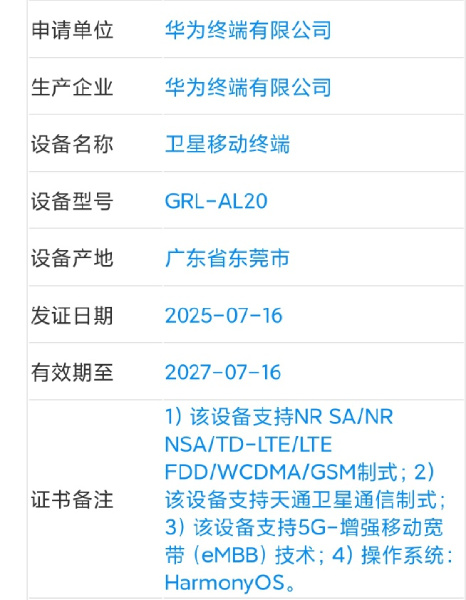
A new Huawei phone with the model number GRL-AL20 has been spotted on China’s MIIT certification database. It likely belongs to the Mate XT 2, or whatever Huawei ends up naming its second triple-foldable, as the original Mate XT carries the model number GRL-AL10.
Huawei’s second triple-folding will have 5G
Regardless, the listing confirms support for 5G connectivity and satellite communication features. The device may offer Tiantong satellite calling functionality, similar to what we saw in the Mate X5 and Mate XT lines.
Huawei previously used a specialized antenna layout that enabled satellite features only when the phone was fully unfolded. It remains to be seen whether this second-generation model will allow users to initiate satellite communication in a partially folded or closed state.
According to early reports, the Mate XT 2 is expected to retain the 10.2-inch triple-fold display from the previous generation. Underneath, it could pack Huawei’s in-house “Tian Gong” hinge for a slimmer yet durable construction.
Performance-wise, the device may be powered by the rumored Kirin 9020 chipset. It’s said to use a 1+3+4 CPU layout, with a 2.5GHz prime Taishan core, three 2.15GHz mid cores, and four 1.6GHz efficiency cores. On the graphics front, there’s reportedly a Maleoon 920 GPU, clocked at 840MHz.
Huawei might also introduce eSIM functionality with the Mate XT 2, eliminating the need for a physical card entirely.
The foldable is expected to launch sometime around September, just as Apple gears up to announce the iPhone 17 series and Samsung reportedly prepares its own entry into the tri-fold segment.
For more daily updates, please visit our News Section.
Samsung’s Galaxy Z Fold7 may look sleeker than last year’s model, but under the hood, it sticks to familiar specs — a 4,400mAh battery and 25W charging, just like the Galaxy Z Fold6. So, how does it actually perform when plugged in? A recent charging test puts both foldables head-to-head, and the results offer some interesting insights.
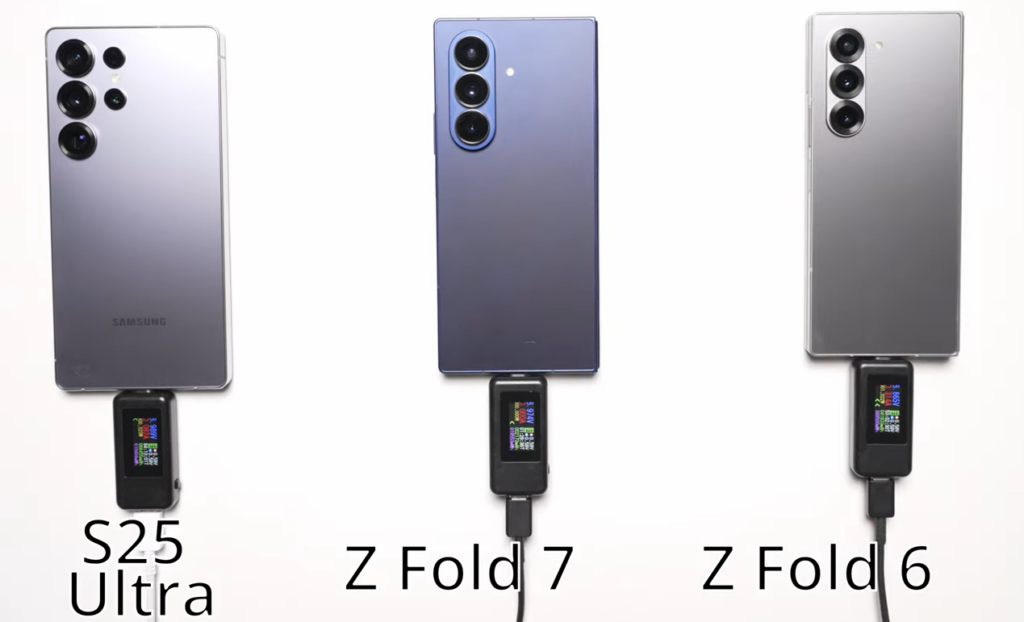
Tech YouTuber Ben from Lover of Tech put the Z Fold7, Z Fold6, and Galaxy S25 Ultra through a side-by-side charging test, using official Samsung chargers — 25W for the Folds and 45W for the Ultra. To keep things fair, all devices had batteries rated at 100% health. The test, shared on July 17, shows the Z Fold7 consistently edging ahead of its predecessor, though by small margins.
At the 15- and 30-minute marks, both Fold models were neck and neck — 29% and 54% respectively. But after 45 minutes, the Z Fold7 pulled slightly ahead at 74%, compared to the Fold6’s 70%, and maintained that lead through the end. The Fold7 reached 100% in 1 hour 26 minutes, finishing just four minutes faster than the Fold6.
But more notably, the Z Fold7 also ran cooler during charging, averaging around 2°C lower than the Fold6. This cooler performance likely comes down to Samsung’s improved heat management — possibly aided by the Fold7’s slimmer design and updated thermal system. While this lower temperature might seem like a minor upgrade, it can have a meaningful impact on long-term battery health.
As for the Galaxy S25 Ultra, with its larger 5,000mAh battery, took 1 hour 17 minutes to fully charge.
While Samsung hasn’t changed the charging hardware, subtle software tweaks — possibly tied to One UI 8 — seem to have given the Z Fold7 a slight edge over the Fold6 in both speed and temperature.
Are these few minutes’ difference and cooler operation enough to justify its $1,999 price tag? That’s up to buyers. But it’s clear Samsung’s latest foldable brings more to the table than just a design refresh.
Following Samsung’s Galaxy Z Fold 7 launch, the Pixel 10 Pro Fold from Google is gearing up to be the next contender in the ultra premium foldable segment. It will be announced alongside the flagship Pixel 10 series and is expected to bring various upgrades and refinements over its predecessor. So here’s a detailed breakdown of everything we know so far.
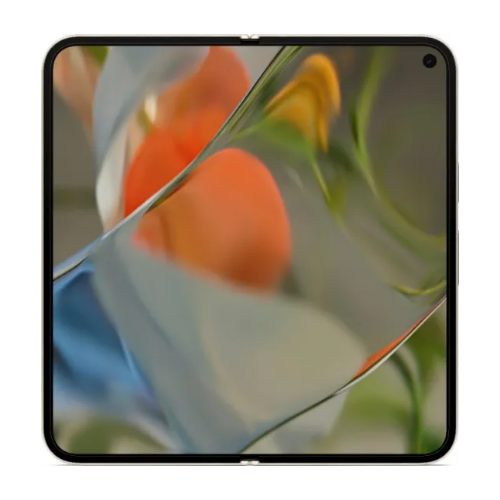
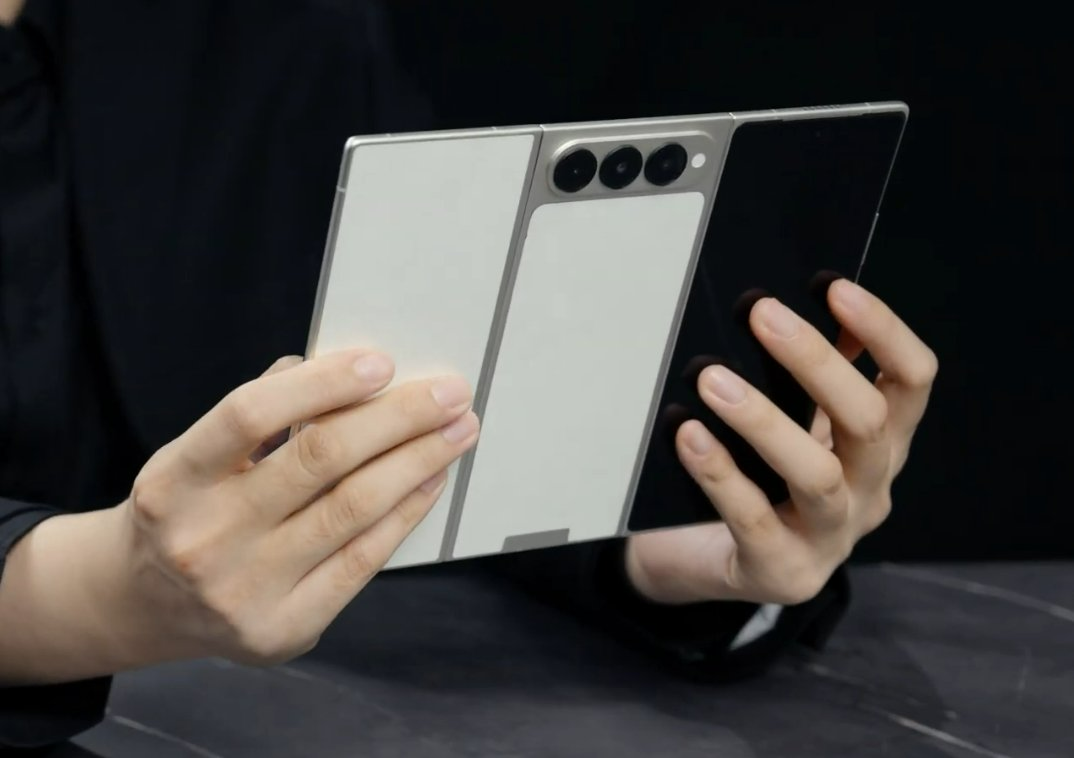
In terms of design, Google isn’t bringing a major facelift, so its body appears similar to the Pixel 9 Pro Fold. Although, one of the earlier reports did suggest that the brand would make its next-gen foldable slimmer and more durable this year. The hinge mechanism is reportedly getting thinner, with perhaps the biggest upgrade being an IP68 rating. This is a big deal for foldable since the Pixel 10 Pro Fold would be the first of its kind to offer the high Ingress protection. In comparison, the Galaxy Z Fold 7 offers an IP48 rating.
The cover screen is getting slightly larger, measuring 6.4 inches, while the primary panel retains its 8-inch size. While finer details for these displays are still at large, the peak brightness is getting a bump from 2700 nits to 3000 nits. But both screens likely offer a 120Hz refresh rate and HDR support.
2. Performance
Similar to the rest of the Pixel 10 lineup, the Search Engine giant’s premium foldable is also getting the latest Tensor G5 SoC. This is a 3nm chipset that is based on TSMC’s advanced N3E process, which marks a shift away from Samsung Foundry. Overall, this chip is faster and more power efficient than the Tensor G4, while also offering improved AI performance that allows for on-device machine learning.
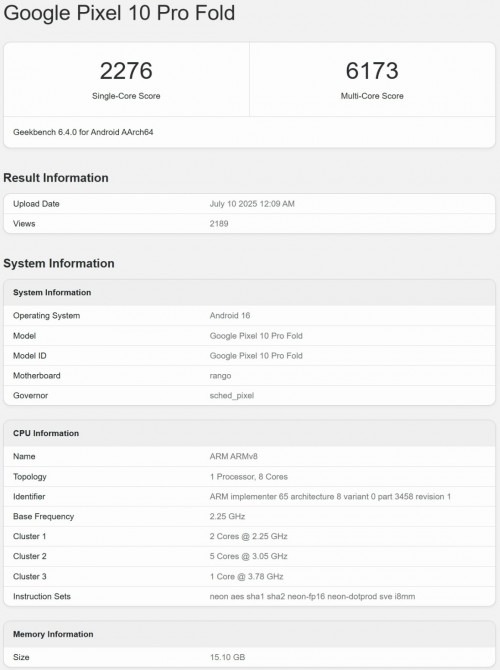
A GeekBench listing also showed this chip alongside 16GB of RAM and Android 16. Even the battery size is getting bigger with the Pixel 10 Pro Fold rumored to house a 5,015mAh cell. To recall, the Pixel 9 Pro Fold housed a 4,650mAh battery pack.
3. Camera
For photography, Google’s flagship foldable may offer a 50MP (main) + 12mp (telephoto, 5x optical zoom) + 12MP (ultra wide) on the rear, while the front could be a 10MP shooter on both screens. Notably, this is the same large Samsung GN8 sensor on the primary camera, while the ultra wide and telephoto are identical to the base Pixel 10.
4. Pricing, Color, & Launch Date
The Pixel 10 Pro Fold will debut alongside the rest of the Pixel 10 next month, possibly on August 20. It may arrive in two color options, namely Moonstone and Jade. There are rumors of three storage configurations that could include 256GB, 512GB, and 1TB variants. The 256GB version may cost €1,899, while the 512GB and 1TB options carry €2,029 and €2,289 price tags, respectively.
For more daily updates, please visit our News Section.
Samsung‘s long-rumored tri-folding smartphone seems closer to launch, but it likely won’t bear the “Galaxy G Fold” name some had expected. Instead, a recent trademark filing suggests it may stick with Samsung’s familiar Galaxy Z branding.
First teased at the January 2025 Galaxy Unpacked event, the tri-fold device is confirmed to hit the market by December this year. While Samsung unveiled the Galaxy Z Fold7 and Z Flip7 earlier this month, the tri-fold phone was noticeably absent. However, a trademark for “Galaxy Z TriFold”, filed in South Korea and spotted by GalaxyClub, has sparked fresh speculation about its branding.
Internally codenamed Q7M, the device is said to feature a 10-inch inner display when fully unfolded and a 6.49-inch cover screen — powered by Qualcomm’s Snapdragon 8 Elite chipset. Its launch is expected to be limited initially to South Korea and China.
That said, the name itself remains up for debate. Both GalaxyClub and SamMobile have pointed out that “Galaxy Z TriFold” doesn’t quite have the ring of a flagship device name — raising the possibility that it could refer to a series rather than a specific model. Earlier reports had hinted at “Galaxy G Fold”, a nod to the “Flex G” prototype Samsung showcased at MWC 2025. Yet with the new filing leaning toward the Z series, Samsung may simply be covering its bases by securing multiple trademarks — a common strategy for tech giants.
If Samsung sticks to its plan, the tri-fold will debut later this year, entering a market that currently only sees competition from Huawei’s Mate XT. Whether it will redefine foldables or serve a niche audience remains to be seen.
Huawei launched the world’s first tri-foldable phone – the Huawei Mate XT, featuring a folded thickness of 12.8mm and 3.6mm when unfolded. While Huawei is expected to unveil the Mate XT 2 in China this September, Samsung is also reportedly developing its first tri-foldable, possibly called the Galaxy Z TriFold. In a surprise move, Tecno has announced its own tri-foldable concept called the Tecno Phantom Ultimate G Fold. The device follows up on the Phantom Ultimate 2, a concept phone first showcased at IFA 2024. Read on for the full details of Tecno’s ambitious foldable innovation.
Tecno Phantom Ultimate G Fold: Everything you need to know
Tecno Phantom Ultimate G FoldTecno Phantom Ultimate G Fold
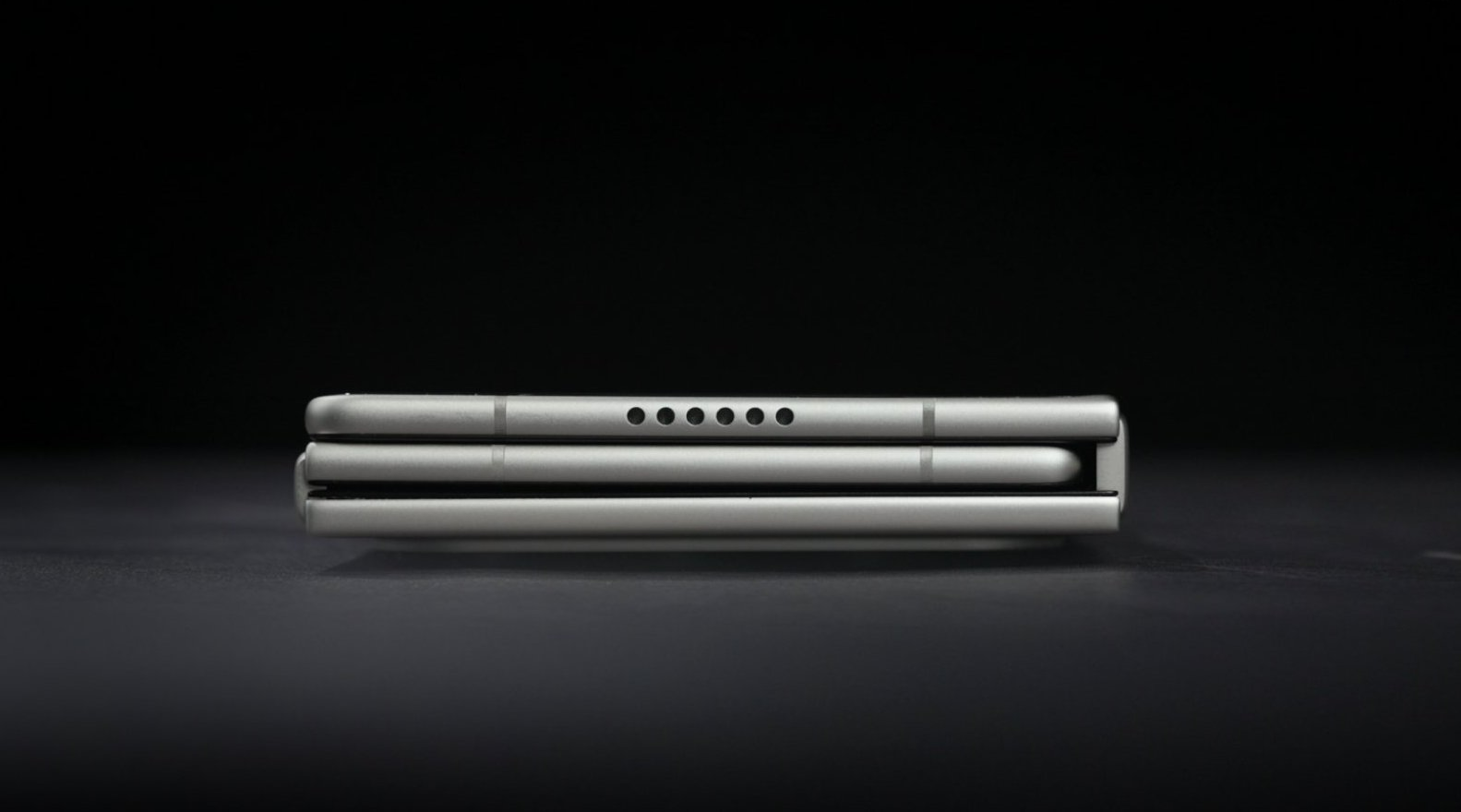
The Phantom Ultimate G Fold introduces a unique inward-folding tri-fold design that hides its large display when not in use. Unlike outward-folding counterparts, this layout protects the screen from scratches and impact damage. It features a 9.94-inch display that folds inward in two sections, supported by a dual-hinge setup comprising of a waterdrop hinge for the right side and a larger hinge that folds over the top.
This enables gapless folding and a secure, compact closure. A cover display supports regular smartphone use without needing to unfold the entire device. The hinge system also allows multi-angle hovering, turning the phone into a compact workstation.
Tecno Phantom Ultimate G FoldTecno Phantom Ultimate G Fold
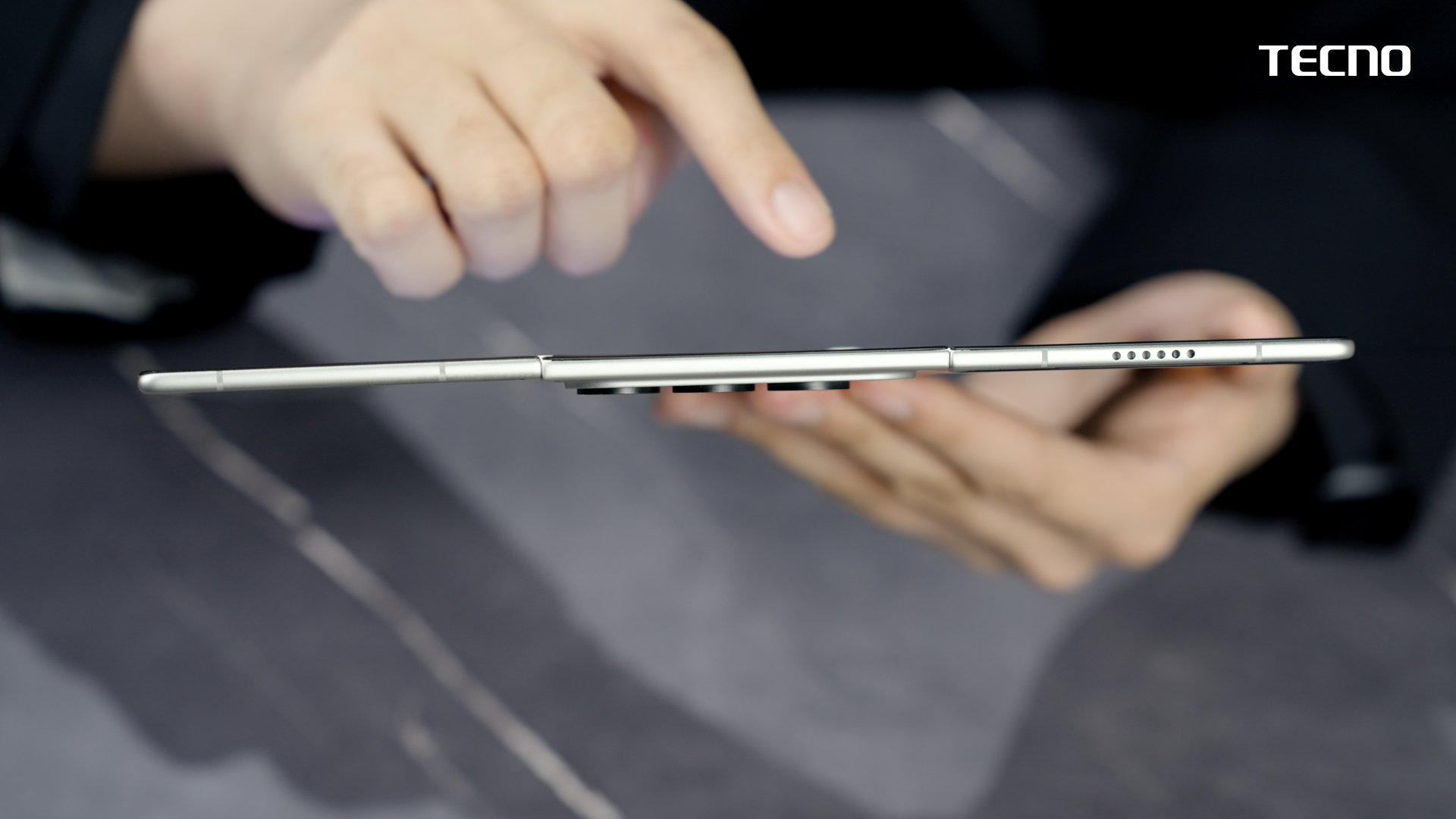
Tecno claims the Phantom Ultimate G Fold is the thinnest tri-fold smartphone to date, measuring 11.49mm when folded and just 3.49mm when unfolded. These dimensions outperform existing tri-folds, thanks to innovations in materials and engineering. The hinge uses 2000MPa ultra-high-strength steel, while the back panel is crafted from 0.3mm titan fibre. Despite its compact size, the concept includes a high-end chipset, a triple-camera setup, and a battery exceeding 5,000mAh.
A concept phone is an experimental prototype designed to highlight futuristic technologies or design innovations that are not yet found in regular smartphones. These devices are primarily developed to showcase what’s possible down the line, and they are usually not meant for commercial sale, meaning most of them won’t be available for public purchase. However, Tecno has confirmed that the Phantom Ultimate G Fold will be showcased at the MWC 2026.
For more daily updates, please visit our News Section.
Samsung’s Galaxy S26 Ultra could offer a subtle yet meaningful upgrade when it arrives in January 2026 — a slightly larger screen packed into the same footprint. A new leak points to design tweaks and display improvements that could sharpen Samsung’s edge in the flagship race.
Samsung Galaxy S26 Ultra mockup (modified image of S25 Ultra)
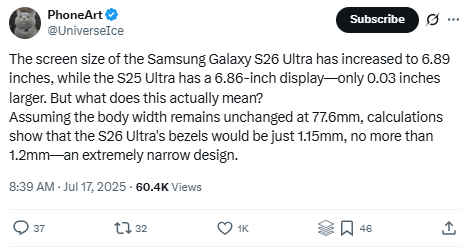
On July 17, 2025, tipster @UniverseIce shared on X that the Galaxy S26 Ultra will feature a 6.89-inch AMOLED display — just a touch bigger than the S25 Ultra’s 6.86-inch panel. Samsung is reportedly squeezing this increase out by slimming the bezels to just 1.15mm, down from 1.2mm on the current model, all without making the phone any wider than its 77.6mm frame. The result is a display that feels even more immersive.
The screen itself will reportedly use Samsung’s Color Filter on Encapsulation (CoE) OLED tech — the same approach found on the Galaxy Z Fold7. By ditching the polarizer and opting for a color filter and black pixel definition layer, the panel can be brighter, thinner, and more power-efficient. That could help stretch battery life further, even without a battery size bump.
Samsung seems to be sticking with its recent strategy of chasing a sleek profile over headline-grabbing battery or camera specs — a move seen with the slim 7.6mm Galaxy S25 Edge and Z Fold7. While Chinese brands push ahead with massive 1-inch camera sensors and 6000mAh+ silicon-carbon batteries, Samsung is expected to keep most of the internal specifications unchanged.
According to a recent leak, Samsung is testing a new 200MP 1/1.1-inch Sony sensor, speculated to debut with the Galaxy S27 Ultra. The S26 Ultra, meanwhile, is expected to focus on iterative improvements to lenses and image processing. For now, it appears the next Ultra will retain the S25 Ultra’s design. Concept renders — and possibly even real-world prototype shots — are likely to surface as the launch approaches, so stay tuned.
The hype behind the Pixel 10 series is building as we get closer to the launch of Google‘s latest flagship smartphones. These devices are expected to hit the market sometime next month, so here’s a detailed breakdown of what you can expect from each model from the lineup that includes the base Pixel 10, Pixel 10 Pro, and Pixel 10 Pro XL.
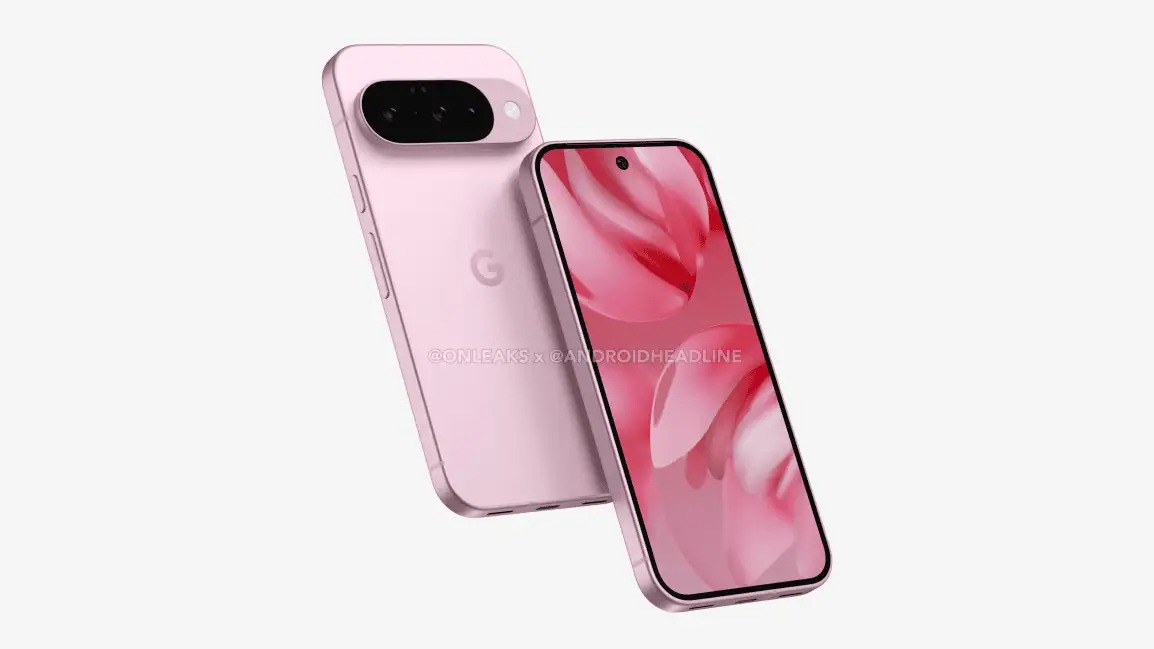
Google isn’t planning a major redesign with its upcoming Pixel 10 lineup. Many liked the flat iPhone-like design, which returning along with the visor camera module. While the Pixel 10 Pro and Pixel 10 Pro XL are expected to receive an vapor chamber for cooling, rumors have hinted that Google could skip the vapor chamber for thermal management on the base model once again.
The standard Pixel 10 might arrive in multiple color options, namely Obsidian, Frost, Lemongrass, Indigo, Lemongrass, and Indigo. Meanwhile, the Pixel 10 Pro series is rumored to come in Obsidian, Porcelain, Moonstone, and Jade. So now let’s have a look at the display:
Pixel 10: The base model sports a 6.3-inch FHD+ OLED screen with a 120Hz refresh rate, 3000 nits of peak brightness, and Corning Gorilla Glass Victus 2 for protection.
Pixel 10 Pro & 10 Pro XL: Google is still offering a compact flagship with a 6.3-inch LTPO OLED display with a 1.5K resolution, Corning Gorilla Glass Victus 2, a 120Hz refresh rate, and up to 3000 nits of peak brightness. Meanwhile, the Pro XL variant gets a taller 6.8-inch panel with specs.
2. Performance
Google Pixel 10 Pro
Google is set to equip the entire Pixel 10 lineup with its latest Tensor G5 chipset. It is expected to bring various upgrades in performance, power efficiency, and even AI workloads. This chip also marks a big shift for Google as it changes its chip making partner from Samsung to TSMC, using TSMC’s N3E advanced 3nm process node. The custom TPU in this processor might allow allow for on-device machine learning as well.
3. Battery & Charging
Google Pixel 10
Reports have hinted that the battery size is getting an upgrade across the new series. The base Pixel 10 may house a 4,970mAh battery pack, which could support 29W wired fast charging and 15W wireless Qi2 wireless charging. Meanwhile, the Pixel 10 Pro has identical charging specs but a slightly smaller 4,870mAh cell. Lastly, the Pixel 10 Pro XL packs the largest 5,200mAh battery with 39W wired fast charging and the same wireless charging speeds.
4. Camera
Base Pixel 10 Cameras
In a surprising turn of events, the base Pixel is getting both an upgrade and a downgrade at the same time this year. Its main camera is losing the same main sensor as the more expensive Pro series, exchanging it with the Pixel 9a’s 1/2.0-inch 48MP shooter. Even the ultra wide angle lens is expected to get downgraded to a 13MP shooter (down from 48MP). But the base model finally gains a 10.8MP telephoto shooter (5x optical zoom).
On the other hand, the Pixel 10 Pro and Pixel 10 Pro XL are set to retain the same rear cameras setup as their predecessors, which consists of a 50MP (main), a 48MP (ultra wide), and a 48MP (periscope telephoto) with 5x optical zoom. While this may appear identical to the Pixel 9 Pros, it includes a new Samsung GN8 main camera. For selfies and video calls, the front has a 42MP shooter with autofocus on the Pro models and a 10.5MP camera on the base Pixel 10.
5. Pricing & Launch Date
The premium new Pixel phones are likely being announced next month on August 20th, with first sales kicking off around the 28th. A recent pricing leak even hinted that the price will remain the same over the Pixel 9 models, at least in Europe:
Pixel 10
128GB – €899
256GB – €999
Pixel 10 Pro
128GB – €1,099
Up to 1TB – €1,589
Pixel 10 Pro XL
256GB – €1,299
512GB – €1,429
1TB – €1,689
For more daily updates, please visit our News Section.
We use cookies on our website to give you the most relevant experience by remembering your preferences and repeat visits. By clicking “Accept”, you consent to the use of ALL the cookies.
This website uses cookies to improve your experience while you navigate through the website. Out of these, the cookies that are categorized as necessary are stored on your browser as they are essential for the working of basic functionalities of the website. We also use third-party cookies that help us analyze and understand how you use this website. These cookies will be stored in your browser only with your consent. You also have the option to opt-out of these cookies. But opting out of some of these cookies may affect your browsing experience.
Necessary cookies are absolutely essential for the website to function properly. This category only includes cookies that ensures basic functionalities and security features of the website. These cookies do not store any personal information.
Any cookies that may not be particularly necessary for the website to function and is used specifically to collect user personal data via analytics, ads, other embedded contents are termed as non-necessary cookies. It is mandatory to procure user consent prior to running these cookies on your website.