Advertisement

HMD Vibe 2 Max leaks with 108MP camera, Unisoc T9100 chip and 6,000mAh battery

HMD could soon expand its Vibe 2 lineup with a new model called the Vibe 2 Max. Tipster @smashx_60 has shared renders and a full list of specifications on X. And as the name suggests, the phone is likely to sit above the HMD Vibe 2 Pro 5G, which arrived in India at the end of September.

The phone is said to built arond a 6.78-inch FHD+ IPS LCD with a 120Hz refresh rate and peak brightness of 1,500 nits. The screen size and refresh rate match the Vibe 2 Pro 5G.

HMD Vibe 2 Max differs from Vibe 2 Pro in few areas

The Vibe 2 Max could also get a different chipset. According to the leak, it uses a Unisoc T9100 processor clocked at 2.7GHz, paired with 8GB of RAM and 256GB of storage. The Vibe 2 Pro 5G, by comparison, runs on the MediaTek Dimensity 6300 and comes with up to 8GB of RAM and 128GB of storage. The Max would therefore double the available storage. 

The cameras could be another major difference between the two models. The leak hints at a camera setup consisting of a 108MP main camera and an 8MP secondary sensor on the back, along with a 50MP front camera. 

HMD Vibe 2 Max Design Render

The phone is also said to support 4K video recording at 30fps. The Vibe 2 Pro 5G has a 64MP Sony IMX682 main camera, a 2MP macro camera and a 13MP selfie shooter, with video recording capped at 1080p at 30fps.

Both phones appear to share the same battery and charging specifications. The Vibe 2 Max is listed with a 6,000mAh battery and 33W wired charging, along with Android 16. Other reported features include IP64 dust and water resistance, Wi-Fi 6, 5G connectivity, NFC, Bluetooth 5.2, dual speakers and a side-mounted fingerprint scanner.

The shared renders show the HMD Vibe 2 Max in black, red and green. All three versions have a rectangular camera module in the upper-left corner, with two lenses and an LED flash.

HMD hasn’t announced the Vibe 2 Max yet, and the leak doesn’t reveal its price, launch date or intended markets.

For daily updates, please visit our News Section.

Stay ahead in tech! Join our Telegram community and sign up for our daily newsletter of top stories!

(Source)

iQOO Neo 12 launches on October 28 with a 2K 185Hz display and 9,000mAh battery

iQOO is preparing to unveil its next Neo-series smartphone in China later this month. The upcoming model focuses on gaming performance, display technology, and battery endurance. The company has also revealed a new color option ahead of the launch.

iQOO Neo 12 design

iQOO Neo 12 launch date

The iQOO Neo 12 will launch in China on October 28 at 7 PM local time, with sales scheduled to begin immediately after the announcement. One of its new finishes, called Zhengfeng, features a dynamic texture that produces a flowing light effect as the viewing angle changes. The company has also collaborated with the China Academy of Art on a new colorway. Its rear camera module adopts a square design, while a metal frame completes the exterior.

iQOO Neo 12 specifications: What to expect

The iQOO Neo 12 will feature the Snapdragon 8 Elite Gen 5 chipset alongside iQOO’s dedicated Q3 gaming chip and an updated Monster Super Core Engine. An active cooling fan forms part of its Ice Dome cooling system, helping manage temperatures during demanding gaming sessions.

The phone will debut a 2K display with a 185Hz refresh rate, using pTSF light-emitting technology. Its panel is rated for up to 2,200 nits of full-screen peak brightness and incorporates XDR dynamic range enhancement, circular polarisation display technology and a 1-nit sleep screen. The device also uses the same touch chip as the iQOO 16, with instant touch sampling rates of up to 5,000Hz and multi-touch sampling rates of up to 500Hz.

Shop now →
Where to buy
iQOO Neo series phones
Browse the range on Amazon

A 9,000mAh Blue Ocean battery will power the device, using a single-cell design and fifth-generation silicon-anode technology. Its energy density is rated at 916Wh/L, and it supports 100W wired charging.

For gaming, iQOO claims the phone can run supported titles at 2K resolution and 185 frames per second with simultaneous super-resolution and frame interpolation. It is also expected to support more than 50 native 185fps games, alongside full-scene ray tracing and Q-Flex controls.

For daily updates, please visit our News Section.

Stay ahead in tech! Join our Telegram community and sign up for our daily newsletter of top stories.

Redmi K100’s marvellous Firefly Green revealed ahead of October 27 launch

Redmi will launch its next K-series smartphone, the Redmi K100, in China on Oct. 27. The upcoming device is expected to bring notable upgrades aimed at gamers and users who prioritise battery life. The company has also unveiled the phone’s new color option ahead of its official debut.

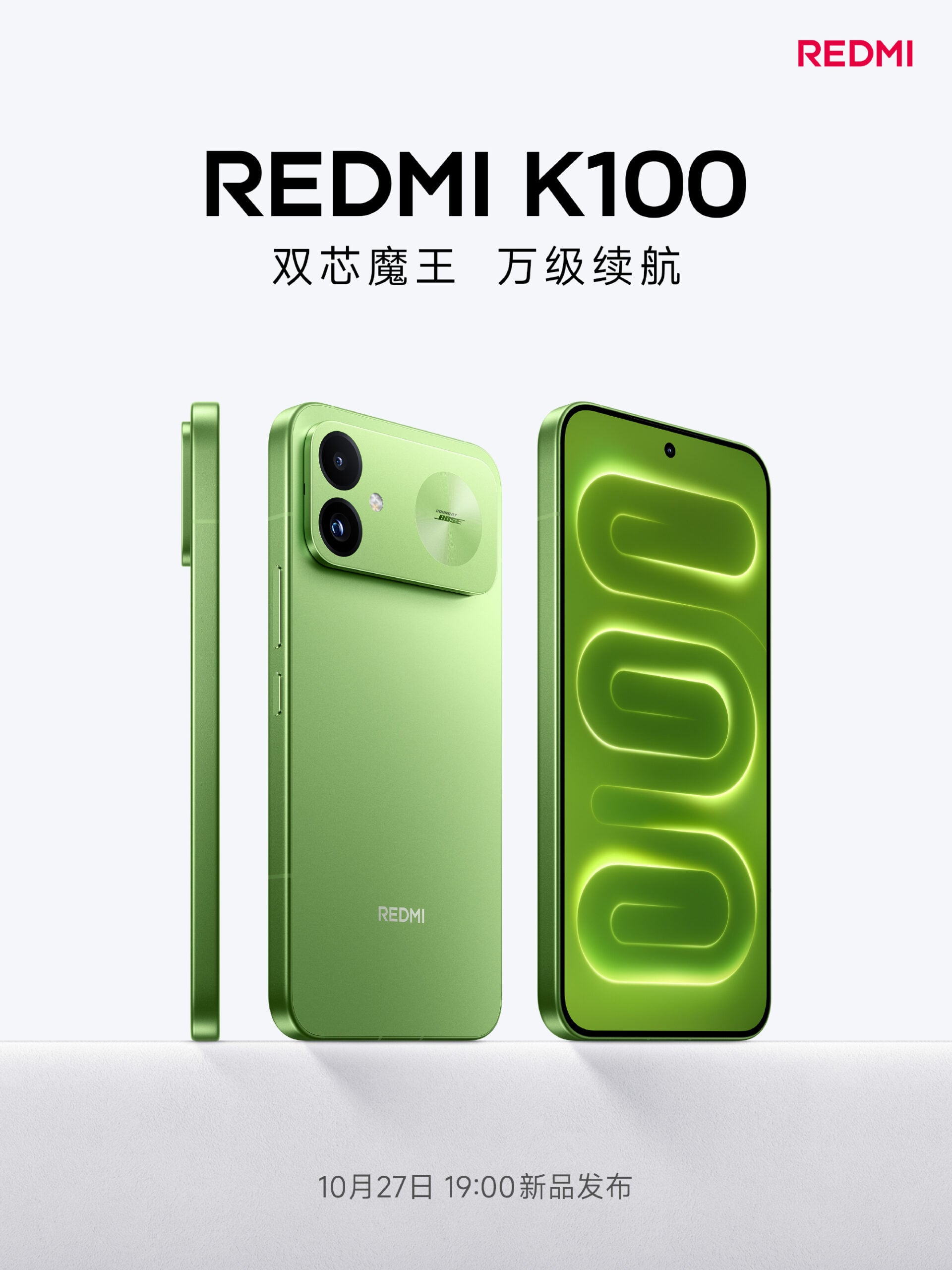
Redmi K100 design

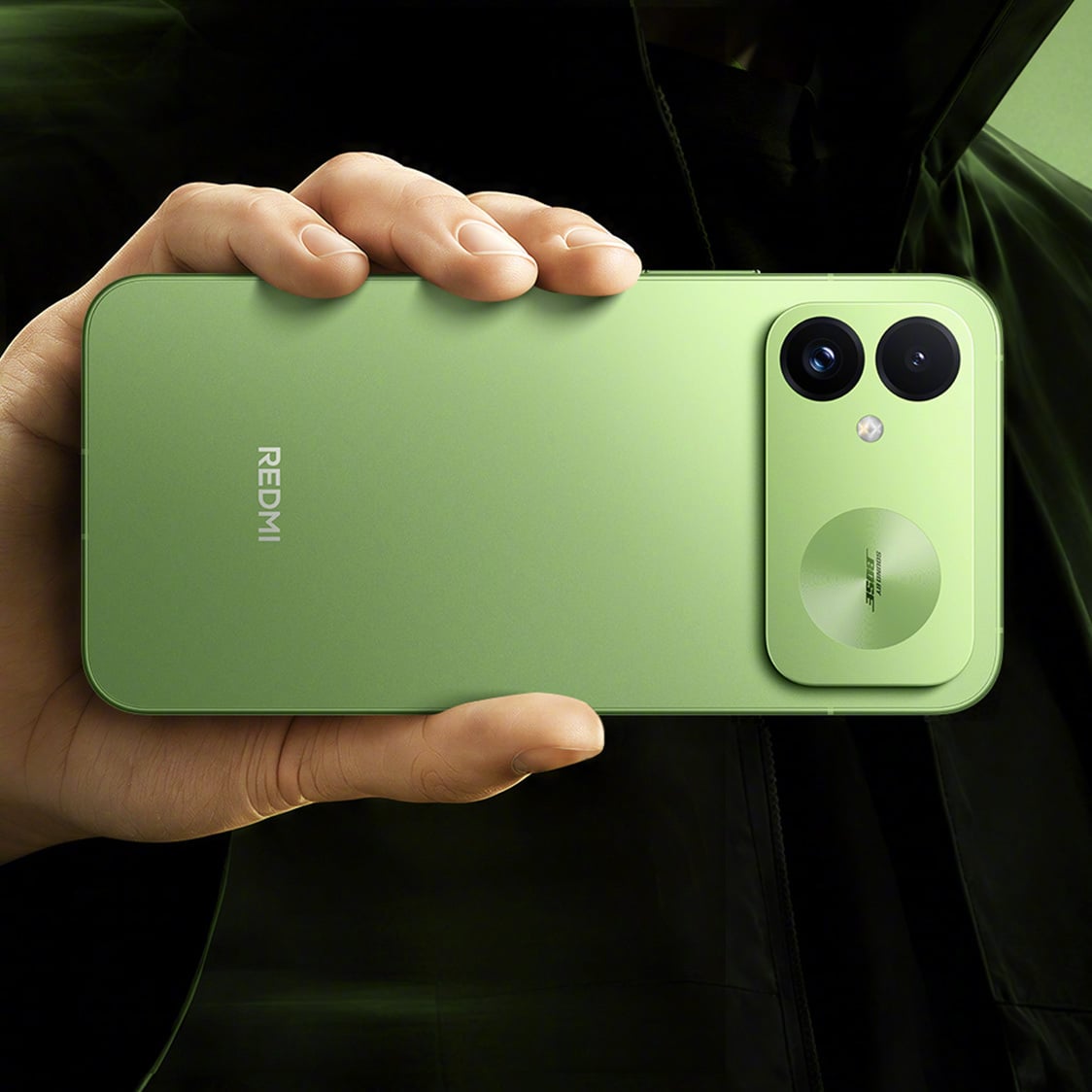
Redmi has unveiled the K100 in a new Firefly Green colour option, featuring a light green finish and a flat display with a centred punch-hole cutout. The rear panel houses a wide, horizontally arranged camera module, while a metal frame adds to the phone’s construction. A Bose tuning logo appears alongside the camera module, highlighting the device’s audio focus.

Redmi K100 specifications: What to expect

Redmi K100 chip

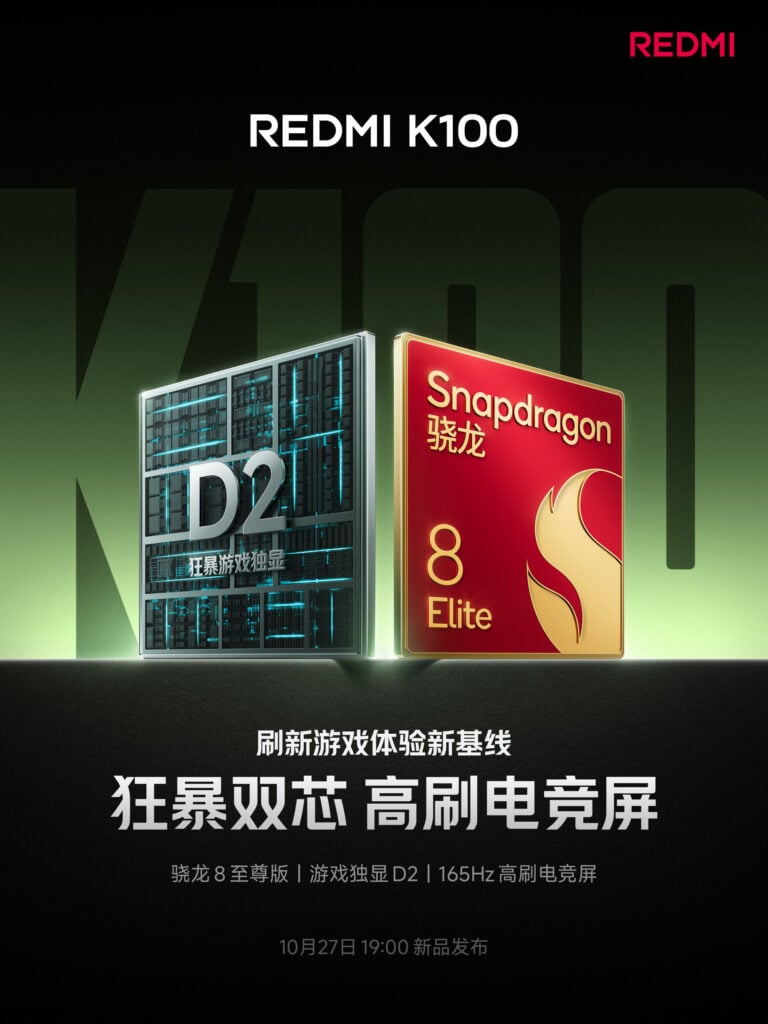
Redmi has confirmed that the K100 will use Qualcomm’s Snapdragon 8 Elite chipset alongside a dedicated D2 display chip. The combination, marketed as a dual-chip setup, is designed to support hardware-level image upscaling and frame interpolation in compatible games.

The phone is expected to feature a 6.9-inch AMOLED display with a 1.5K resolution and a refresh rate of up to 185Hz. Its Super Pixel technology is said to deliver clarity comparable to a 2K screen while maintaining the power consumption associated with a 1K display.

The device is also tipped to pack a 10,000mAh silicon-carbon battery with 100W wired charging, making it the largest battery yet reported for a Redmi K-series phone. A 50W wireless charging option has also been rumoured.

Other reported specifications include a 200-megapixel primary camera, a periscope telephoto camera, stereo speakers, an ultrasonic fingerprint sensor and IP68-rated protection. These details remain unconfirmed unless explicitly announced by Redmi.

The Redmi K100 Pro and K100 Pro Max were rebadged as the Poco F9 Pro and Poco F9 Ultra for global markets. However, there is currently no clarity on whether the standard K100 will also launch internationally under a Poco name. Which feature are you most excited about?

For daily updates, please visit our News Section.

Stay ahead in tech! Join our Telegram community and sign up for our daily newsletter of top stories.

Honor Win 2, Win RT 2, Win Turbo 2 key specs leak ahead of launch

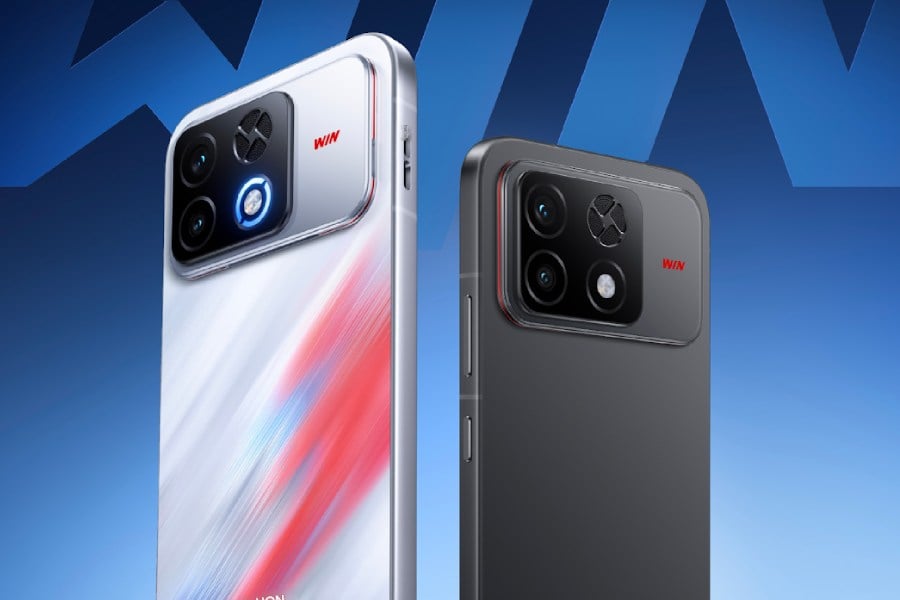
Honor has already confirmed that the Win 2 series will launch in China on October 21, and all three phones—the Win 2, Win RT 2, and Win Turbo 2—are already available for pre-order. Now, tipster Experience More has shared the key specifications of the phones, and they all feature a battery above 10,000mAh. 

Honor Win 2

The Honor Win 2 is the premium model of all, with a Snapdragon 8 Elite Extreme Gen 6 chip, LPDDR5X Ultra RAM, and UFS 4.1 storage. It also gets a dual-fan cooling system, with the tipster claiming an AnTuTu score of more than 5.7 million points.

The phone features a 6.89-inch flat LTPS OLED display with 2K resolution and a 185Hz refresh rate. Its bezels measure just 0.93mm on all four sides. The device gets its juice from a 10,100mAh battery that supports 100W wired and 50W wireless charging.

Honor Win 2 Design and Price Out

On the back, the Win 2 has a 200MP main camera with a 1/1.4-inch sensor and optical image stabilization (OIS). Other listed features include a metal frame, dual 1216 symmetrical speakers, IP68, IP69, and IP69K ratings, and an 0809 X-axis motor. It also has a dedicated Win key for gaming, an ultrasonic fingerprint sensor, and a USB 3.2 Gen 1 port.

The phone supports the n79 band and comes in five memory configurations: 12GB+256GB, 16GB+256GB, 12GB+512GB, 16GB+512GB, and 16GB+1TB.

Honor Win RT 2

The Honor Win RT 2 uses last year’s yet capable Snapdragon 8 Elite Gen 5, and retains LPDDR5X Ultra RAM, UFS 4.1 storage, and the same 6.89-inch 2K LTPS OLED display with a 185Hz refresh rate.

Its battery is larger, though, at 12,070mAh capacity, while charging tops out at 90W. The main camera uses a 200MP 1/1.56-inch sensor with OIS, while the phone also has a metal frame and a single-fan cooling system.

Honor Win RT 2

The Win RT 2 shares several features with the top model, including dual 1216 symmetrical speakers, IP68, IP69, and IP69K protection, a 0809 X-axis motor, and an ultrasonic fingerprint sensor. However, it steps down to USB 2.0.

Honor will reportedly sell the phone in four configurations: 12GB+256GB, 16GB+256GB, 12GB+512GB, and 16GB+512GB.

Honor Win Turbo 2

The Honor Win Turbo 2 is the entry-level model in the series and does away with active fan cooling. According to Experience More, it could use the Snapdragon 8s Gen 4, although the tipster has marked the processor as unconfirmed.

The front is built around the same 6.89-inch flat LTPS OLED panel, 2K resolution, and a 185Hz refresh rate. The phone also shares the Win RT 2’s 12,070mAh battery and 90W charging support.

Honor Win Turbo 2

As for the camera, we’re likely to get a 50MP main sensor with OIS. The phone will have a metal frame, dual 1216 symmetrical speakers, IP68, IP69, and IP69K ratings, and a 0809 X-axis motor. Other differences include a short-throw optical fingerprint sensor and a USB 2.0 port.

Memory options reportedly start at 8GB+256GB, with additional configurations of 12GB+256GB, 16GB+256GB, 12GB+512GB, and 16GB+512GB.

What we know so far

Honor has yet to confirm these specifications or announce prices for the new phones. The original Honor Win and Win RT launched in China in December 2025, both featuring 10,000mAh batteries. The lineup has remained exclusive to China so far, and there is no official word on whether the new models will reach other markets.

For daily updates, please visit our News Section.

Stay ahead in tech! Join our Telegram community and sign up for our daily newsletter of top stories!

(Source)
Vivo Vision Discovery Edition MR Headset Hands-On: A Promising Mixed Reality Experience

Vivo is expanding beyond smartphones with the Vision Discovery Edition, its first mixed reality (MR) headset. Showcased in India alongside the Vivo X Fold 6 at the Vivo NEXT event on October 6, the headset offers a glimpse into the company’s ambitions in spatial computing, entertainment, and gaming.

I got to try the Vivo Vision Discovery Edition at the event, exploring its interface, controls, virtual environments, and gaming features. Although my session was brief, the experience was positive. However, the headset is currently not available for purchase in India, with no confirmed retail price or consumer sales date.

6Battery and Charging

Vivo Vision Discovery Edition MR headset

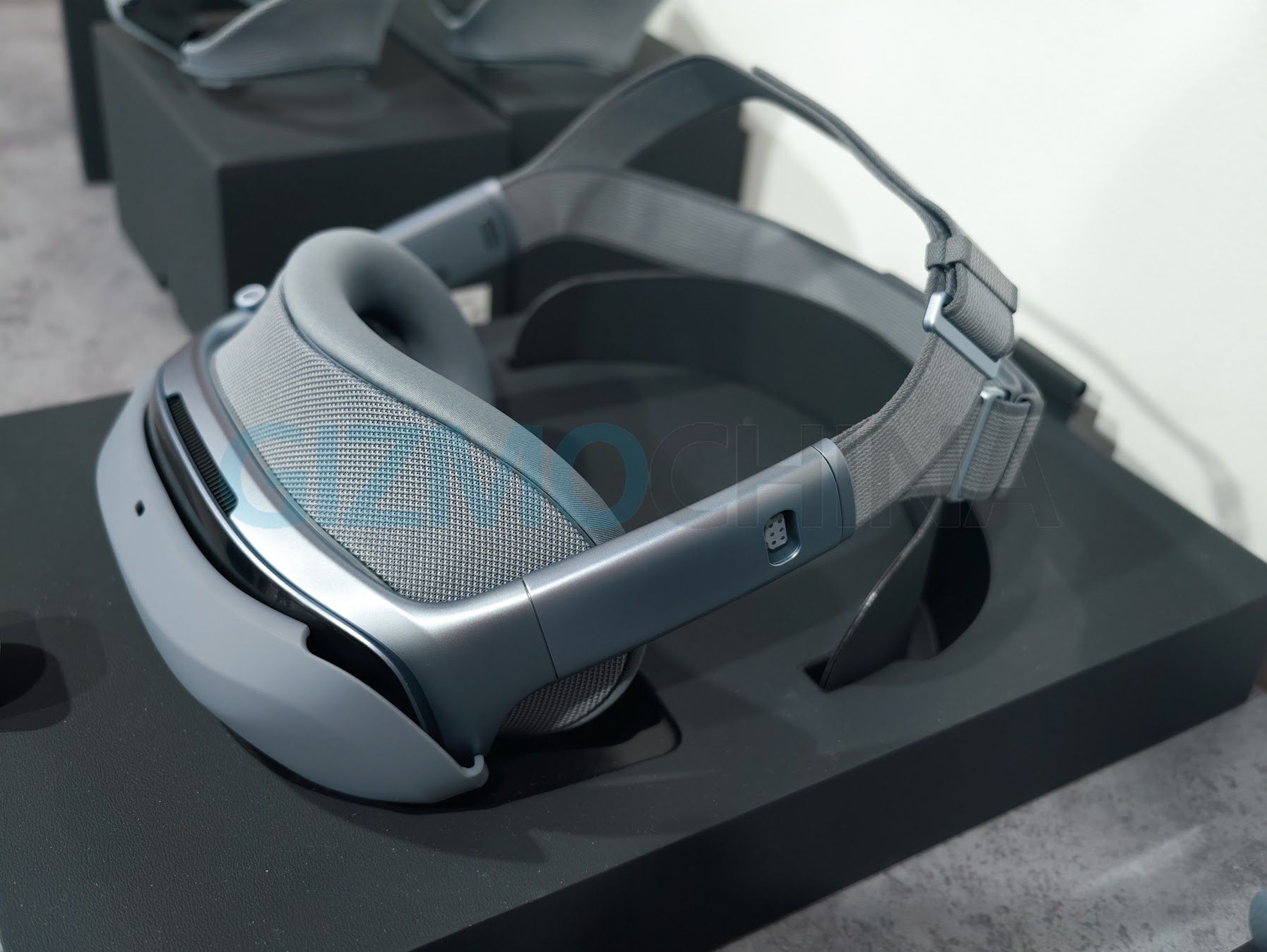
The headset uses a separate, wired battery pack, keeping the main unit lighter. The pack connects to the headset through a cable, although I could not establish its capacity, charging speed, or real-world endurance during my brief session.

Vivo also highlights its battery technology, but I would reserve judgement on battery life until a longer test is possible. Endurance will be important for extended gaming and entertainment sessions.

OnePlus Ace 7 Pro hits 185 FPS in Delta Force gaming test

The reliable industry tipster Digital Chat Station has shared gaming performance numbers for the OnePlus Ace 7 Pro, showing the phone running Delta Force at close to 185fps throughout a full-scale battle. The tipster posted screenshots from PerfDog, a performance monitoring tool, showing a nearly flat frame-rate curve during the test.

Per previous reports, the OnePlus Ace 7 series would feature a 185Hz display. The latest test suggests the Ace 7 Pro can use that refresh rate in a demanding game. With graphics set to high-definition quality and the game running in its native 185fps mode, the phone averaged 185.02fps. Its 1% low is 183.1fps.

OnePlus Ace 7 Pro Gaming

The tipster also tested another phone with a 2nm flagship chip, without naming it. It managed an average of 163.3fps, with a 1% low of 81.5fps. A drop that large would show up as visible stutter in a match. The OnePlus Ace 7 Pro leads on both numbers, and the gap in the 1% low is far wider.

According to earlier leaks, the OnePlus Ace 7 Pro reportedly uses the Snapdragon 8 Elite Gen 5 and an active cooling fan with a dual-airflow design.

OnePlus Ace 7 cooling helps in gaming performance 

The cooling system reportedly uses two separate air ducts, with one covering the processor area and the other targeting the back cover. The setup better manages the chip’s temperature and heat on the phone’s exterior, helping the processor maintain its performance during extended gaming sessions. Digital Chat Station also claims the Ace 7 Pro’s body remained cooler than the comparison phone during the test.

The test covers just one game, so performance may vary with other titles, game updates, and settings. 

Meanwhile, OnePlus has already opened reservations for the Ace 7 series in China, and the phones are now available for pre-order through e-commerce platforms. The official launch is expected toward the end of October.

For daily updates, please visit our News Section.

Stay ahead in tech! Join our Telegram community and sign up for our daily newsletter of top stories.

(Source)
Samsung Galaxy Z Fold 8: 7 Ways to Make the Most of Its Wider Foldable Design

Samsung’s wider foldable design opens up new ways to use the Galaxy Z Fold 8 beyond simply unfolding it into a larger screen. From watching videos at a comfortable angle to running three apps simultaneously, the device offers several practical ways to take advantage of its unconventional form factor. Here are seven ways I enjoyed using it.

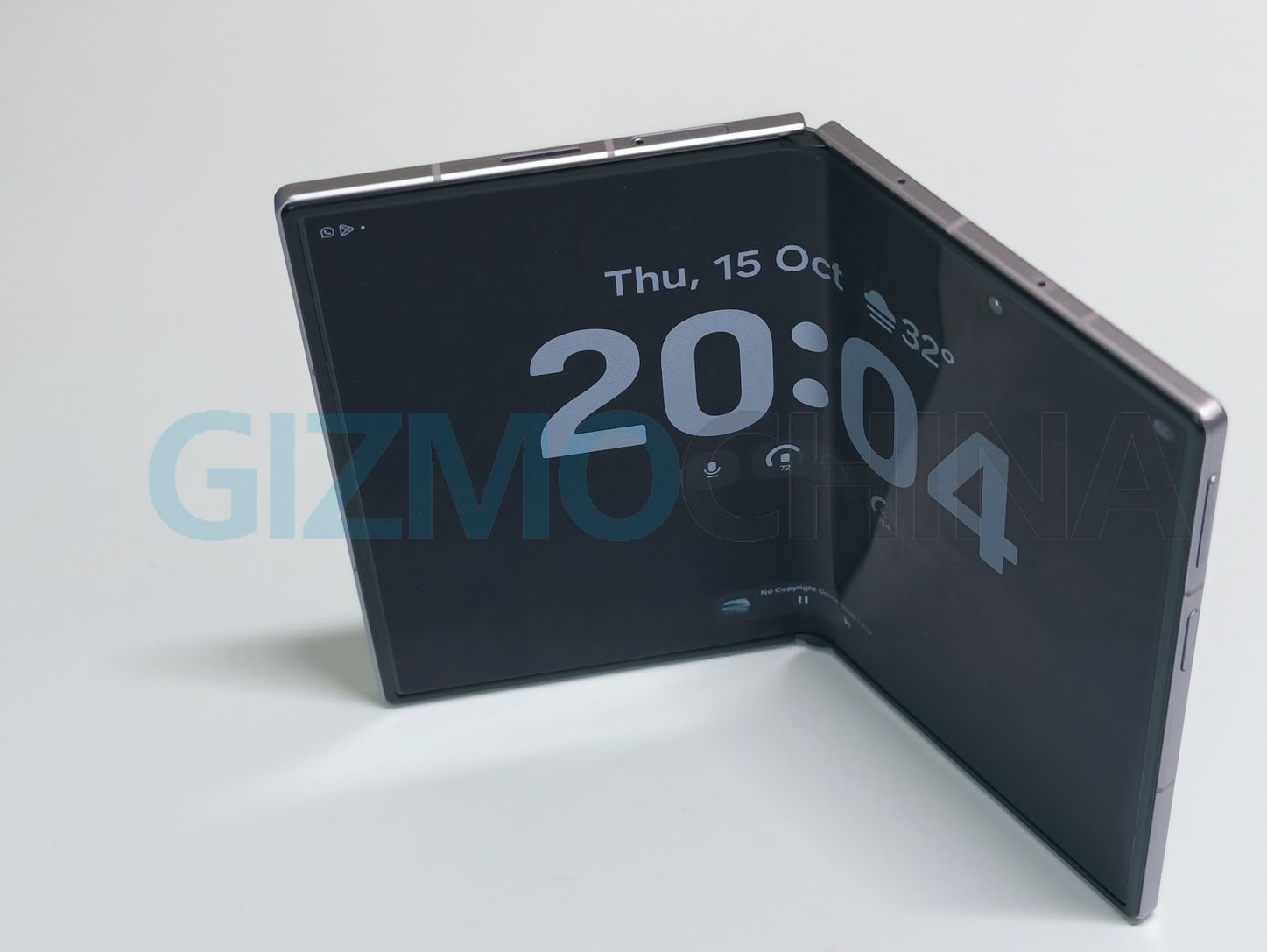
6Keep the phone partially open with the Always-On Display

Samsung Galaxy Z Fold 8

Another option is to leave the Fold 8 partially open on a desk, with the Always-On Display showing the time and other glanceable information.

This arrangement gives the device a small desk-clock-like role without requiring a separate accessory. You can check the time at a glance and potentially see other supported information without fully opening the phone or picking it up.

It is a simple use case, but one that takes advantage of the foldable design in a way that a conventional smartphone cannot replicate as naturally.

Vivo S70 tipped to launch in November with an attachable telephoto extender

Vivo usually launches two generations of S-series phones in China each year. In May, the brand unveiled the Vivo S60 series, and it appears that the S70 lineup may not be far away. A new leak from tipster Smart Pikachu has revealed the launch timeframe and initial details about the S70.

Vivo S70’s fisrt details emerge

Social media post from Smart Pikachu discussing the upcoming Vivo S70 camera phone launch.

According to the tipster, a wave of mid-range camera phones will start launching next month in China. The post tags the Vivo S70, which suggests the phone could debut in China in November. The tipster also claims that only one brand in this batch will offer a large-sensor periscope camera with teleconverter support. The other phones expected to launch in November in China include the Honor 700 series and Oppo Reno 17 lineup.

That brand is likely Vivo, so the S70 could get a bigger telephoto sensor than the S60’s 50-megapixel periscope. An attachable teleconverter would give buyers extra zoom without spending on a flagship. So far, Vivo has offered this accessory only with its premium X-series phones.

For reference, the Vivo S60 has a 6.59-inch AMOLED panel at 2750 x 1260 resolution, with a 144Hz refresh rate and up to 5,000 nits of peak brightness. It runs on the Snapdragon 8s Gen 3 with up to 16GB of RAM and 512GB of storage, and ships with OriginOS 6 based on Android 16.

Light green Vivo S60 smartphone shown from the front and back angles.

Around the back, the S60 has a 50-megapixel main camera with OIS, a 50-megapixel periscope telephoto lens with 3x optical zoom and an 8-megapixel ultrawide camera. A 50-megapixel camera on the front handles selfies. Inside is a 7,200mAh silicon-carbon battery with 90W wired charging, and the phone is rated IP68 and IP69.

For daily updates, please visit our News Section.

Stay ahead in tech! Join our Telegram community and sign up for our daily newsletter of top stories.

Xiaomi Mijia Dust Mite Remover 3 launches with 16 kPa suction, 65 °C hot-air drying, smarter dust handling

Xiaomi has quietly opened full-payment pre-orders in China for the Mijia Mite Remover 3. On paper it looks like a modest upgrade, but the changes should make a real difference for anyone trying to keep mattresses, sofas, and bedding clean.

The white Xiaomi Mijia Dust Mite Remover 3 sits on a beige fabric surface.

The big change is the motor. It now pulls 16 kPa of suction, up from 12 kPa on the Mijia Mite Remover 2. That extra power should help it dig deeper into fabric for dust mites, dander, and other debris.

Xiaomi Mijia Dust Mite Remover 3 showing its powerful 16 kPa suction cleaning a mattress.

Xiaomi also upgraded the dust collection to a dual-cup system. One cup grabs the bulk of the dirt and helps stop the air ducts and cyclone from clogging, while the second uses spiral airflow to separate finer particles. The idea is better dirt-and-air separation so suction stays stronger for longer.

Filtration got a refresh too. It’s now a full six-stage setup that should reduce the chance of the air path getting blocked and cut down on dust blowing back into the room. The cleaning head delivers 15,000 high-frequency beats per minute and uses a three-zone resonance beater. The vibration-style design is meant to loosen mites and debris while being less likely to tangle with hair, which is a common annoyance with these kinds of cleaners.

Infographic highlighting key features and technical specifications of the Xiaomi Mijia Dust Mite Remover 3.

On the hygiene side, it still has the LED ultraviolet sterilization, and now adds a 65 °C hot-air drying function, 15 °C hotter than before. Xiaomi says the higher heat helps disrupt the mites’ environment and slow their growth, while also leaving the surface drier after cleaning. Stronger suction, dual cups, multi-stage filtration, rapid beating, and hotter drying together make for a more complete approach to dealing with the allergens that love beds and upholstery.

Price and availability

Right now the Mijia Mite Remover 3 is only available through pre-order in China. It’s priced at 249 yuan, which translates to around $37.

It sits below the earlier Mite Remover 3 Pro, which is cordless, lighter, and pricier, so the regular 3 is the more affordable pick if you mainly want solid mechanical performance.

Don’t miss a thing! Join our Telegram community for instant updates and grab our free daily newsletter for the best tech stories!

For more daily updates, please visit our News Section.

(Source: Xiaomi Youpin)
This could be first look at iQOO Neo 12’s rear design

The iQOO Neo 12 is set to launch in China this month, and the company has already revealed its main specifications and front design. However, iQOO has not yet shared the launch date or shown the back of the phone, and both could be announced as early as tomorrow. Ahead of that, a real-life photo of the device has started circulating on Weibo, showing its rear design for the first time.

iQOO Neo 12 rear design leaks in live image

iQOO Neo 12 live shot

In the photo, the iQOO Neo 12 comes in a pale blue color with a metal frame and rounded edges. A large, rounded-square camera bump in the top left corner holds two vertically stacked lenses.

Next to them is a section with “Monster Inside” branding and a round mesh grille, which seems to be the opening for the phone’s built-in cooling fan. The flash sits on the back panel, just outside the camera bump. The right side of the frame also has a row of slots that look like exhaust vents.

iQOO has confirmed that the Neo 12 features the Snapdragon 8 Elite Gen 5 chip, along with its own Q3 gaming chip. The flat display has 2K resolution and a 185Hz refresh rate. The panel comes from Visionox and uses its fourth-generation pTSF light-emitting technology to save power

On Geekbench, the Neo 12 appeared with 16GB of RAM and Android 17, which should come with OriginOS 7 on top. iQOO has not shared the price yet. The phone packs a 9,000mAh battery, and its 3C certification listing shows support for 100W charging.

For daily updates, please visit our News Section.

Stay ahead in tech! Join our Telegram community and sign up for our daily newsletter of top stories.

Nubia V90 Pro leak reveals a Burgundy iPhone 18 Pro lookalike with 108MP camera

Fresh promotional renders of a new Nubia mid-ranger have leaked online, and they show a phone that mostly sticks to the same formula as its predecessor while quietly improving a few everyday things.

The Nubia V90 Pro smartphone rests on a blue surface next to sunglasses.

Well-known leaker @evanblass posted a set of images on X of the upcoming Nubia V90 Pro. The design looks very familiar if you’ve seen the V80 Design. The body is said to measure 7.7 mm. From the renders, it seems like it’ll come in three colors: burgundy, black/dark gray, and light blue.

The display is tipped to be 6.75 inches with a punch-hole for the front camera. Peak brightness is listed at 1,000 nits, and it supports wet-hand touch, which is actually pretty useful if you ever try to use your phone with damp fingers. The thin profile should help it feel light and comfortable in hand.

Burgundy and light blue Nubia V90 Pro smartphones showing rear camera modules and specifications.

Camera-wise, the big rear module is clearly labeled “108MP.” So we’re looking at a 108MP main sensor. The island has three openings plus an LED flash and the Neo Vision logo, though it’s still unclear if that means three full sensors or something more basic. Storage gets a solid upgrade: the V90 Pro is expected to offer a 512 GB version, which is double the max capacity of the V80 Pro.

According to the renders, the bottom edge still has a 3.5 mm headphone jack, which is getting rarer these days. The side frame keeps Nubia’s signature red power button, and there’s an extra button sitting below the SIM tray.

As usual with these pre-release leaks, take everything with a grain of salt until Nubia officially announces it. Still, the mix of familiar design, higher storage, and a retained headphone jack makes the V90 Pro look like a practical follow-up.

Don’t miss a thing! Join our Telegram community for instant updates and grab our free daily newsletter for the best tech stories!

For more daily updates, please visit our News Section.

(Source: Evan Blass)

Xiaomi launches Mijia Washing Machine 6kg that handles 26 T-shirts at once, costs less than $100

Xiaomi has quietly dropped an affordable top-load washing machine. It’s the Mijia Washing Machine with Giant Washing Pulsator 6kg (model XQB60MJ101), and it’s currently on pre-sale in the home country. Put down a 50 yuan deposit and the full price is just 587 yuan, roughly $88. Not bad for a proper 6kg machine.

The white Xiaomi Mijia 6kg washing machine stands against a solid orange wall.

According to Xiaomi, that 6kg capacity can handle up to 26 T-shirts in one go. The whole unit only takes up about 0.25 square meters of floor space, with dimensions around 496 × 507 × 814 mm. It’s a clean, minimalist white design that should fit most small homes or apartments without looking out of place. There’s also a child lock on the control panel so kids can’t mess with it while it’s running.

Xiaomi Mijia washing machine filter and self-cleaning drum features shown in a diagram.

You get 10 different wash modes and 10 water level options. The standout is a 19 min quick wash, which is genuinely useful when you just need a small load done fast. You can also set a delay anywhere from 2 to 24 hours, which is handy if you want to run it during cheaper electricity hours or while you’re out.

On the practical side, it has a double-layer mesh filter that catches lint pretty well, so you end up with less residue on your clothes. There’s a drum self-clean mode that uses high-speed water to flush out built-up dirt, plus a drum air-dry function that helps keep the inside dry and reduce the chance of that musty smell building up.

Shop now →
Where to buy
Xiaomi washing machine
Browse the range on Amazon

Basic specs: 220V, 50Hz, IPX4 waterproof rating, and it works with water pressure between 0.05 and 0.8 MPa. China’s energy label rates it Level 1, using 0.065 kWh of electricity and 78 liters of water on a standard cycle, with a cleaning ratio of 0.90.

This isn’t one of Xiaomi’s fancy smart washers, no app control or anything like that. It’s just a straightforward, no-nonsense machine that does the basics well. For renters, people in small apartments, or anyone who wants a solid secondary washer without spending much, the combination of decent capacity, quick cycles, self-cleaning features, and that sub-600-yuan price makes it a pretty sensible option. For now it’s only available on Xiaomi’s Chinese store, with no word yet on an international release.

Don’t miss a thing! Join our Telegram community for instant updates and grab our free daily newsletter for the best tech stories!

For more daily updates, please visit our News Section.

(Source: Xiaomi Mall)

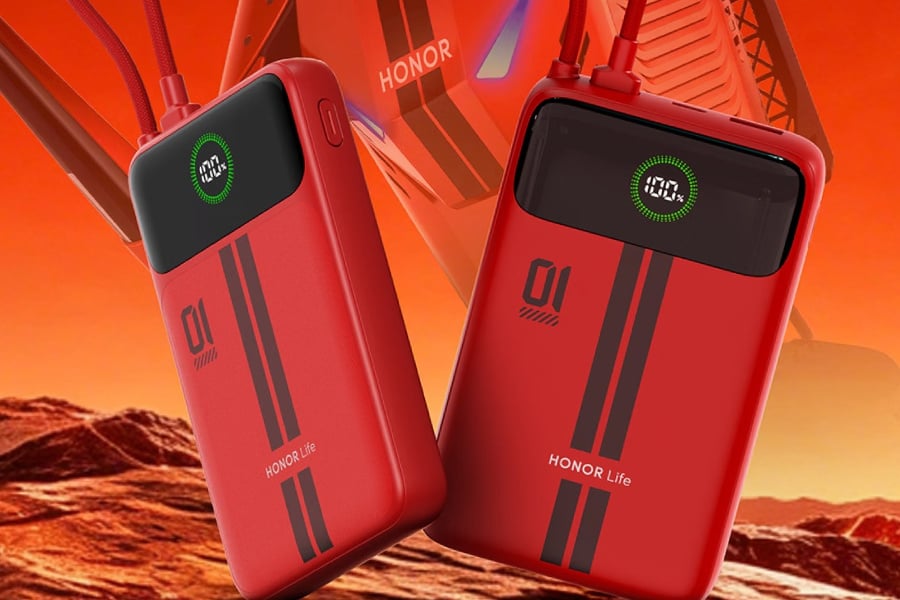
Honor launches new 10,000mAh and 20,000mAh power banks in striking red finish

Honor has launched two new Honor Life power banks in China, with 10,000mAh and 20,000mAh capacities. Both are available through JD.com, priced at 148 yuan (about $21) and 198 yuan (about $28), respectively.

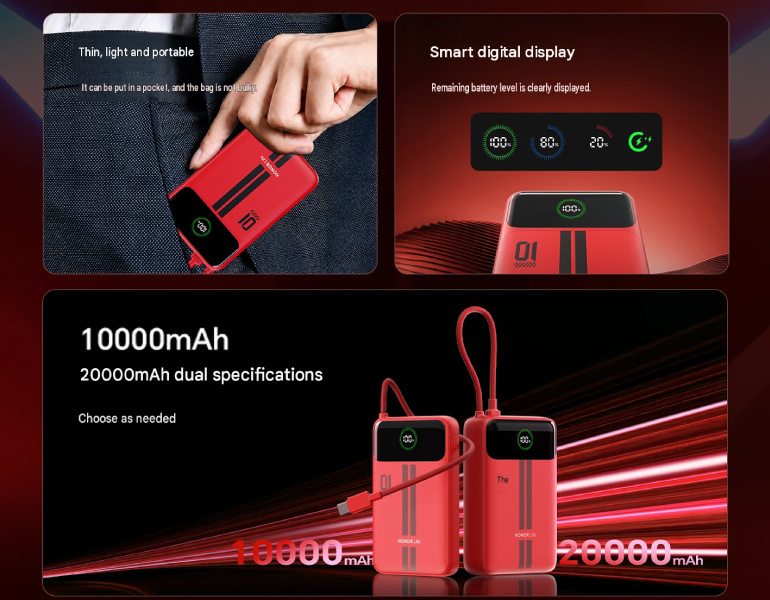
The main difference between the two is capacity and size. The 10,000mAh model measures 16.68mm thick. Meanwhile, the 20,000mAh version doubles the capacity but comes in a larger body. Both have a red finish with black stripes and Honor Life branding.

Honor Life Power Bank 10000mAh and 20000mAh launch specs price

A digital display on the front shows the remaining battery as a percentage, making it easier to check how much charge is left. Honor’s promotional images also show a charging icon alongside the battery reading.

Charging and safety features

Both models come with a braided USB-C cable attached to the power bank, so there’s no need to carry a separate cable for everyday charging. The cable supports bidirectional fast charging, meaning it can charge connected devices and be used to recharge the power bank itself. Honor also says both models can charge multiple devices simultaneously.

Honor Life Power Banks Features

For temperature management, the power banks use an NTC smart temperature control chip to monitor heat during charging. They also have 3C certification, which Honor says makes them suitable for air travel.

Shop now →
Where to buy
Honor power banks
Browse the range on Amazon

Honor has previously had power banks, including the Honor JOWAY 66W SuperCharge Power Bank. It was available in 12,000mAh and 20,000mAh versions.

Honor Life power bank pricing and availability

Both power banks are listed on Honor’s self-operated store on JD.com in China. The 10,000mAh model costs 148 yuan (about $21), while the 20,000mAh version is priced at 198 yuan (about $28).

For now, Honor has only announced the models for the Chinese market. The company has not shared any details about a possible launch in other regions.

For daily updates, please visit our News Section.

Stay ahead in tech! Join our Telegram community and sign up for our daily newsletter of top stories.

Samsung One UI 10 could get its biggest overhaul yet with radical changes, could be called Galaxy OS

Samsung is reportedly preparing a major overhaul of its smartphone software for 2027. The upcoming update could deliver a substantially different experience for Galaxy users. It may also change how Samsung integrates artificial intelligence across its devices.

Samsung One UI 10 could bring a radical redesign‘

One UI 10
One UI 10

Tipster Ice Universe has claimed that One UI 10 will introduce changes described as unprecedented. The update is expected to run on Android 18 and could arrive around mid-2027, potentially debuting alongside the Galaxy Z Fold 9 and Galaxy Z Flip 9. Samsung has not officially confirmed the software or its release timeline.

The redesign could change how users interact with applications by bringing related information together in a contextual interface. For instance, calendar events, location details, and conversations could become accessible through more connected workflows instead of requiring users to switch between multiple apps. The reported goal is to reduce unnecessary taps, simplify everyday tasks, and deliver smoother navigation.

Artificial intelligence could play a central role in this transformation. Samsung is reportedly working towards deeper AI integration, alongside improved continuity between Galaxy smartphones, tablets, and wearables. However, the precise features and the extent of these changes remain unknown.

Another rumor suggests Samsung could rename One UI to Galaxy OS as part of the overhaul. The potential rebrand remains unconfirmed, and it is unclear whether Samsung intends to introduce an entirely new identity or retain the One UI name.

There are also claims that some advanced AI tools and third-party integrations could eventually require a subscription, while essential everyday features remain free. Such a model could allow Samsung to monetise computationally intensive AI services, although no pricing plans or subscription details have been announced.

If these reports prove accurate, One UI 10 could represent a significant departure from Samsung’s usual annual software refinements. The company may release developer previews before the public rollout.

For daily updates, please visit our News Section.

Stay ahead in tech! Join our Telegram community and sign up for our daily newsletter of top stories.

Samsung Galaxy F70 launches with 120Hz AMOLED, 50MP OIS camera, Exynos 1330

Samsung has unveiled the Galaxy F70 5G in India, adding another model to its Galaxy F70 series. The new smartphone joins the existing Galaxy F70e and Galaxy F70 Pro models. Here is a closer look at its specifications, features, pricing, and availability.

Samsung Galaxy F70 5G specifications and features

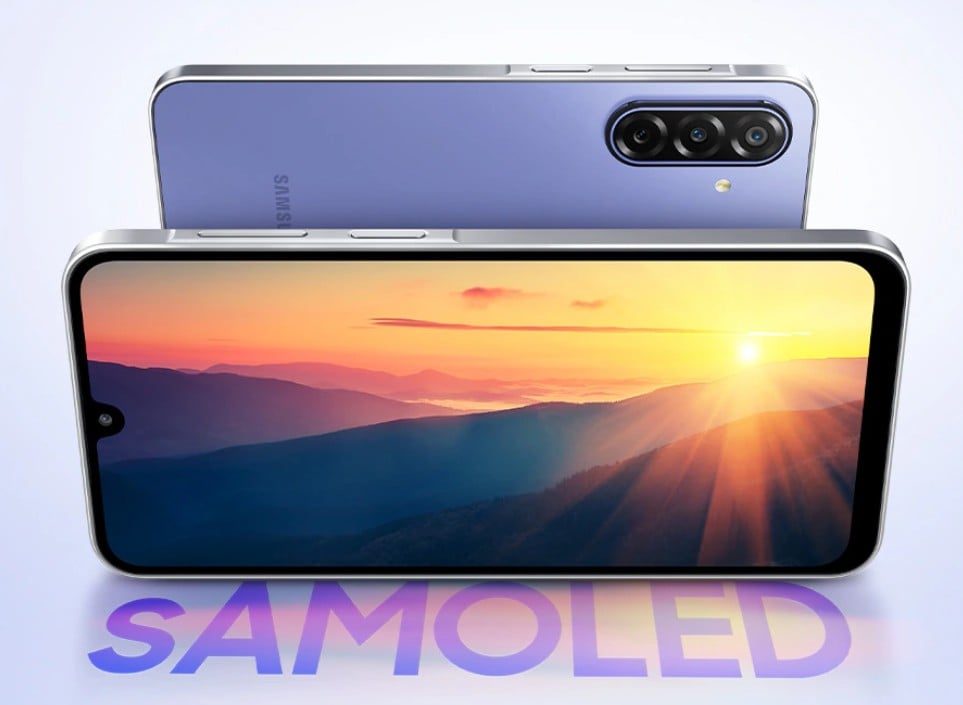
Galaxy F70

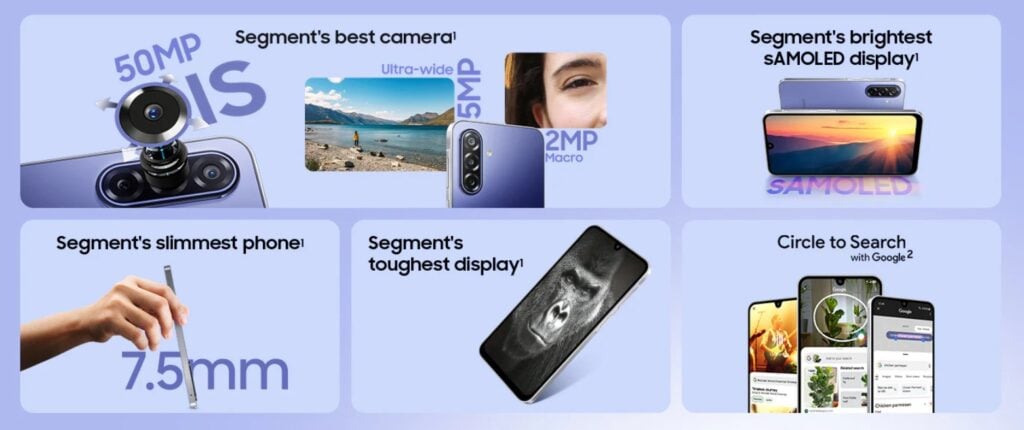
The Galaxy F70 5G features a flat 6.7-inch sAMOLED display with Full HD+ resolution and a 120Hz refresh rate. It has a side-facing fingerprint sensor for security.

Under the hood, the Galaxy F70 5G is powered by the Exynos 1330. It has up to 6GB of LPDDR4x RAM and 128GB of internal storage, and there’s a microSD card slot for additional storage.

Galaxy F70 key features

For photography, the handset features a 50-megapixel primary camera with optical image stabilization (OIS), marketed as the No Shake Cam. On the front, it features a 13-megapixel selfie camera.

Check price →
Where to buy
Samsung Galaxy F70 5G
Latest price on Amazon

A 5,000mAh battery powers the smartphone, with support for 25W wired charging. The handset runs on Samsung’s Exynos 1330 chipset and supports 5G connectivity. Buyers should note that the compatible 25W charging adapter is sold separately.

In terms of durability, the features a Gorilla Glaas Victus protection for the display and an IP54-rated dust and resistance. Samsung highlights its slim 7.5mm profile and calls it the segment’s slimmest phone.

Samsung Galaxy F70 5G price and availability

Galaxy F70
Galaxy F70

The Galaxy F70 5G is listed in Bold Black and Vivid Violet colour options. Its 4GB+128GB and 6GB+128GB variants are priced at Rs 19,999 (~$210) and Rs 22,999 (~$245). The handset is scheduled to go on sale through the Samsung India website and Flipkart starting Oct. 20

For daily updates, please visit our News Section.

Stay ahead in tech! Join our Telegram community and sign up for our daily newsletter of top stories.

Poco X8s moniker finally confirmed via new certification, launch imminent

The Poco X8s could be another addition to the brand’s upcoming smartphone lineup. Its appearance across multiple certification platforms has fuelled speculation about its eventual debut. Now, a new development from Thailand adds another important clue about the device.

Poco X8s name confirmed by Thailand’s NBTC

Poco X8s NBTC listing

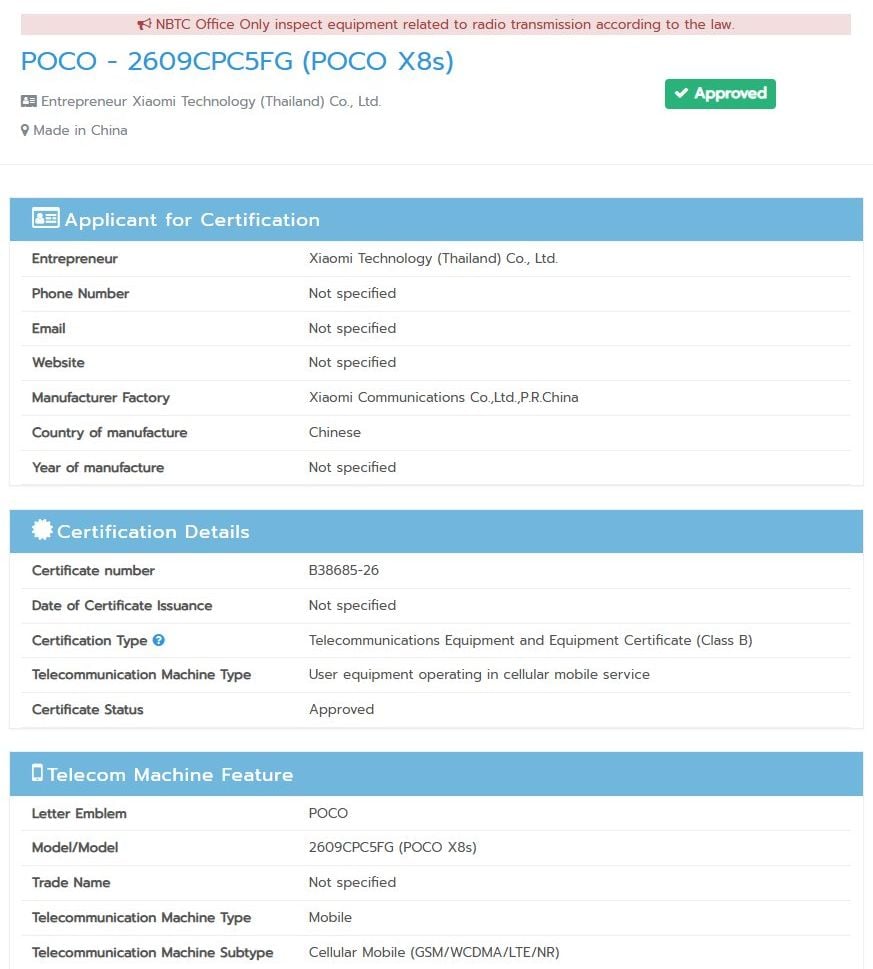
Thailand’s NBTC has approved a Poco smartphone bearing the model number 2609CPC5FG, officially identifying it as the Poco X8s. As usual, the NBTC listing has no information about the technical specs of the phone.

The NBTC approval follows earlier appearances on certification platforms, including Europe’s EEC, IECEE, and Singapore’s IMDA.  According to an earlier report by XimiTime, the Poco X8s could launch in several international markets, including the European Economic Area, Turkey, and Russia, but may skip India. The Chinese version is reportedly associated with the model number M583CF.

A Geekbench listing previously attributed to the device reportedly revealed a Snapdragon 7 Gen 4 chipset, 12GB of RAM, and Android 16. If these details prove accurate, the phone could target the upper mid-range segment with a recent Qualcomm processor and generous memory capacity.

The same report also points to a 50-megapixel primary rear camera. However, details about the display, battery capacity, charging speeds, additional cameras, and pricing remain unknown. The NBTC certification confirms the device’s identity but does not independently verify these rumoured specifications.

With several certifications now reportedly in place, the Poco X8s could be moving closer to its debut.

For daily updates, please visit our News Section.

Stay ahead in tech! Join our Telegram community and sign up for our daily newsletter of top stories.

Redmi Pad 3 4G bags multiple certifications, key specs emerge as launch nears

Xiaomi recently launched the new Xiaomi Pad 9 series tablets in China, and some of these models are expected to release globally. Before that, it appears the company’s sub-brand Redmi may launch the Redmi Pad 3 (4G) as a successor to the Redmi Pad 2 (4G), which launched in June 2025. The Pad 3 has bagged a couple of new certifications, indicating that its launch is around the corner.

Redmi Pad 3 (4G) key specs emerge

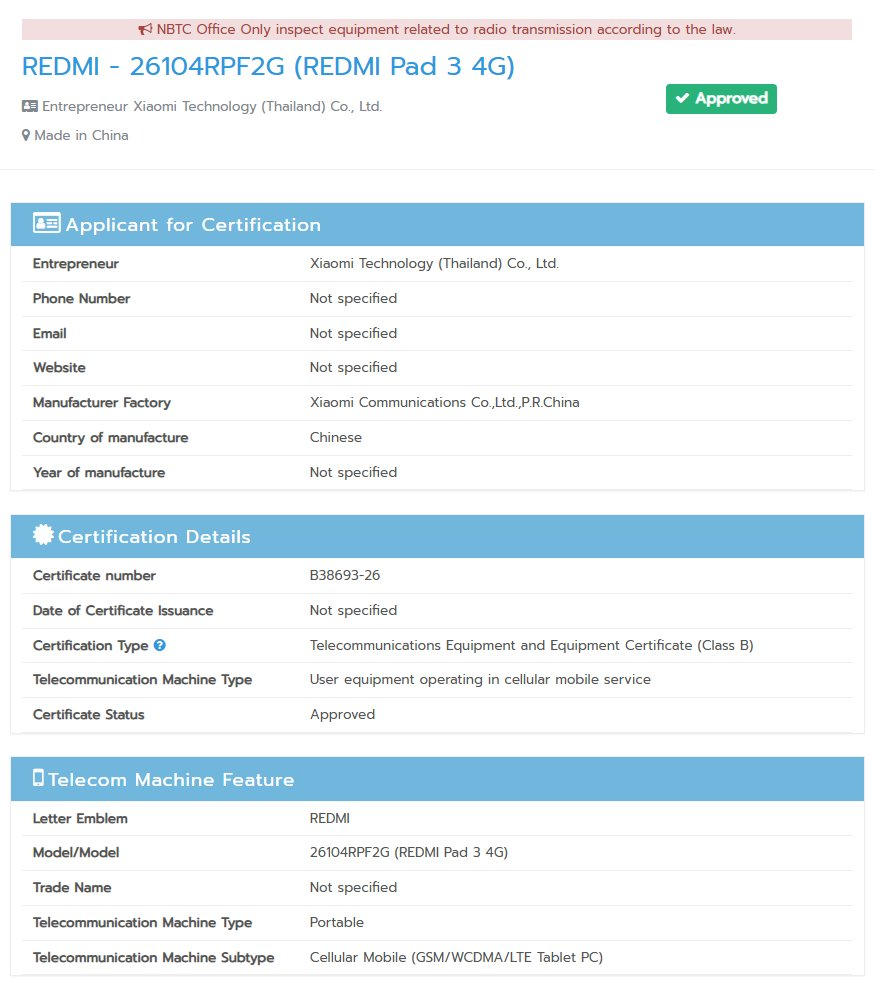
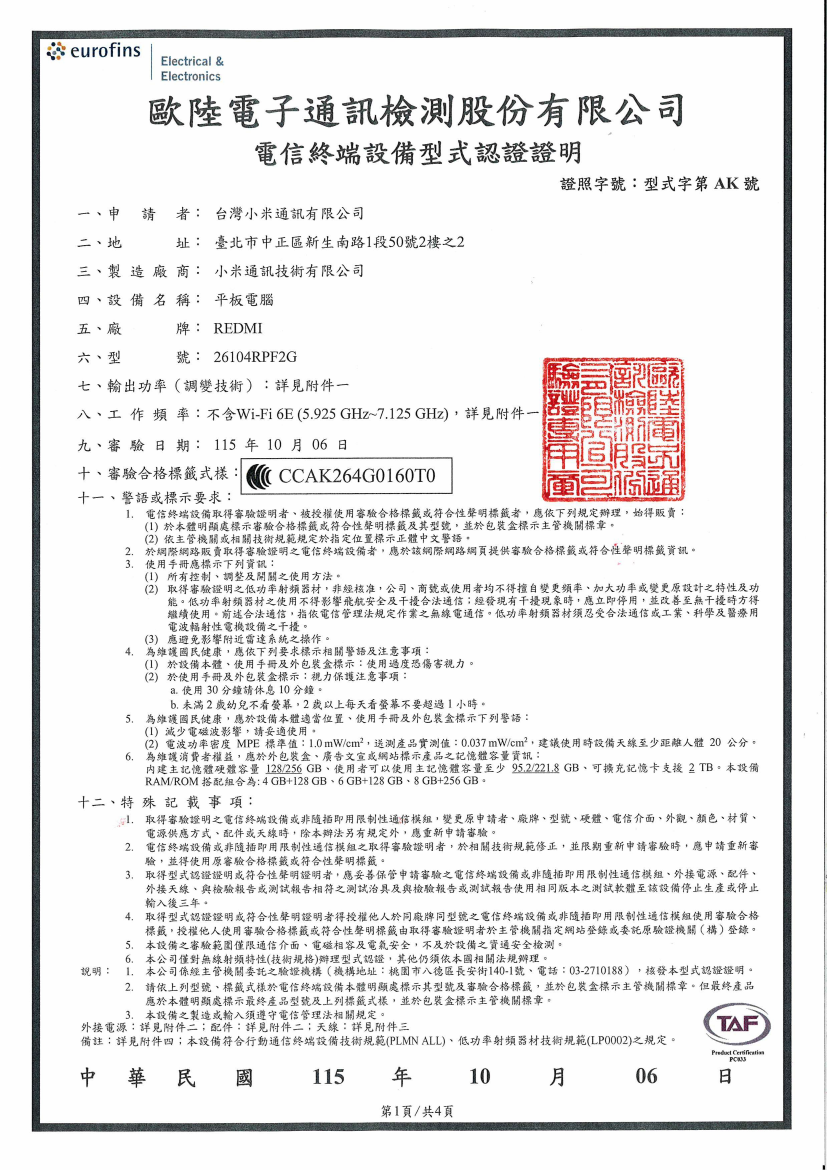
As per an AndroidTreasure report, Redmi Pad 3 4G with model number 26104RPF2G have been approved by the NCC (Taiwan) and NBTC (Thailand) authorities in the recent past. While the NBTC listing confirms its moniker, it does not reveal anything significant. On the other hand, the NCC listing reveals three memory configurations, 4GB+128GB, 6GB+128GB and 8GB+256GB, along with microSD card support of up to 2TB.

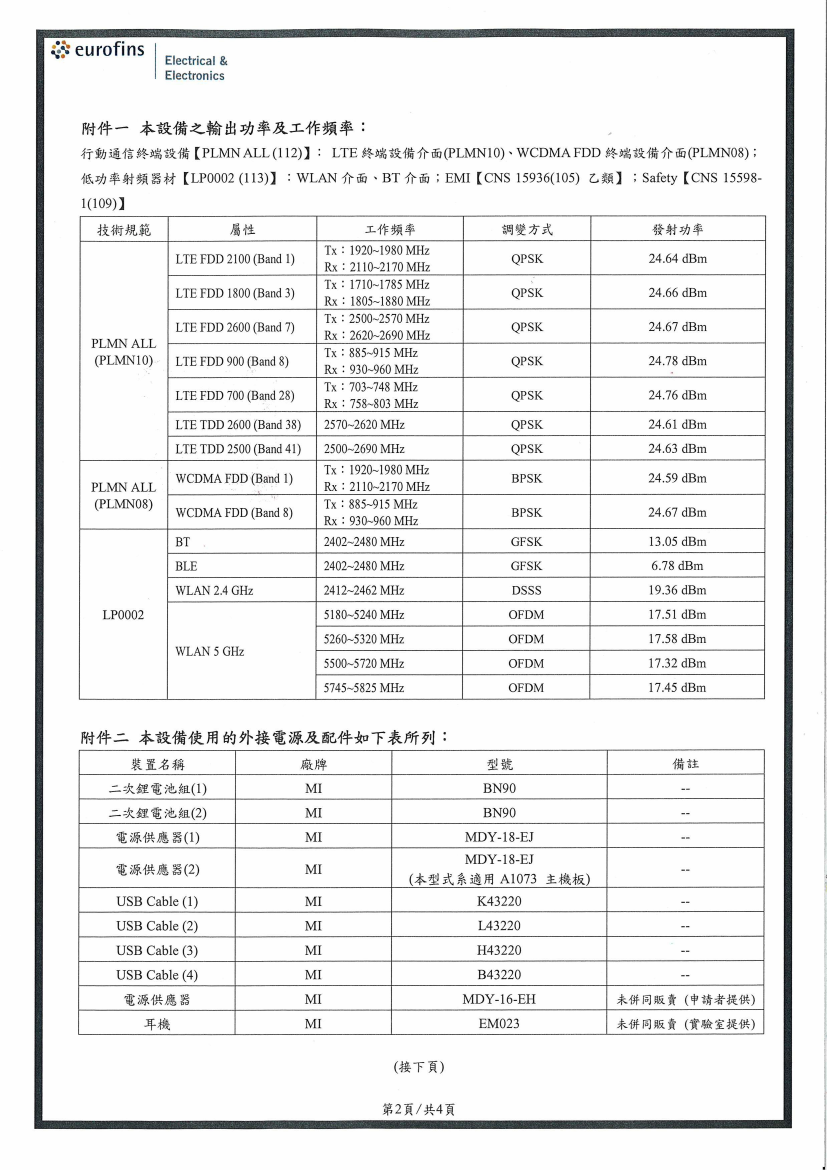
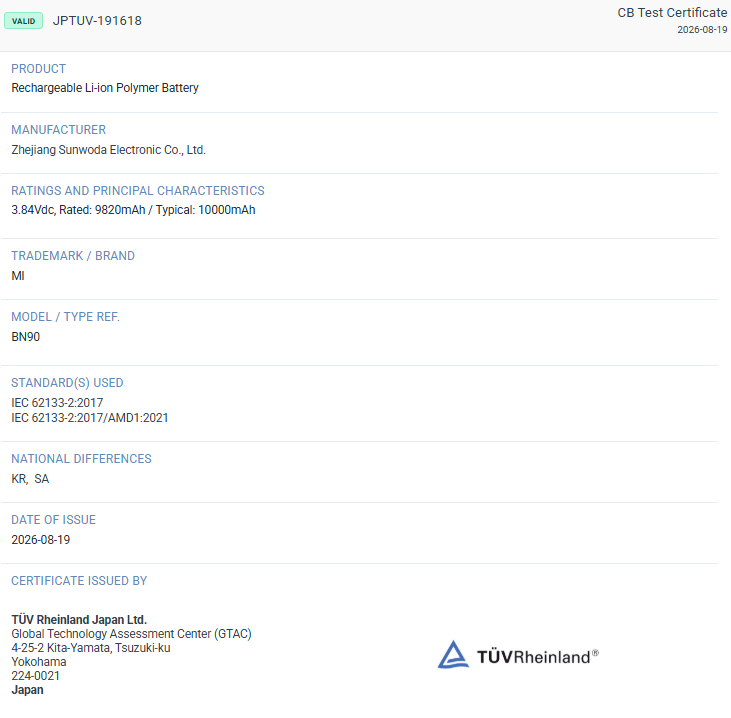
Its BN90 battery has a rated capacity of 9,820mAh on the TÜV Rheinland database, which means a typical capacity of 10,000mAh, up from 9,000mAh on the Redmi Pad 2. The listing also includes the 15W MDY-18-EJ charger in the box and mentions a separate 33W MDY-16-EH adapter, so faster charging could be possible with a compatible charger.

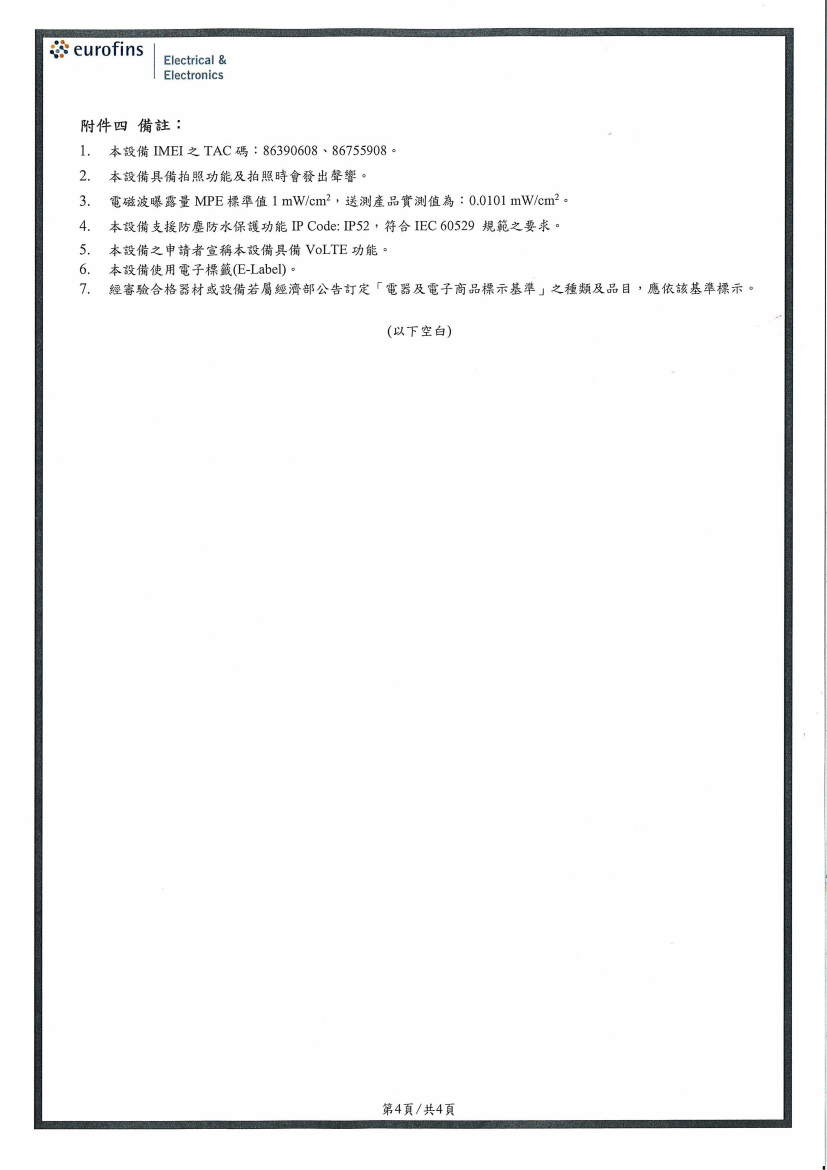
The tablet sticks to 4G with VoLTE and also supports Bluetooth and dual-band Wi-Fi (2.4GHz and 5GHz), but not Wi-Fi 6E. It carries an IP52 rating for dust and splash resistance.

To recall, last year’s Redmi Pad 2 (4G) has an 11-inch 2.5K LCD with a 90Hz refresh rate and runs on the MediaTek Helio G100-Ultra chipset. It has an 8-megapixel rear camera, a 5-megapixel front camera, a 9,000mAh battery with 18W charging and four speakers with Dolby Atmos.

tdra-redmi-pad-3

In related news, the UAE’s TDRA has also approved a Redmi Pad 3 tablet with the model number 2610FRP38G, which could be a 5G version.

For daily updates, please visit our News Section.

Stay ahead in tech! Join our Telegram community and sign up for our daily newsletter of top stories.

This wide-screen Huawei Pura X View lookalike runs Android out of the box

We have been reporting on rumors that Honor could be the first to launch a wide, non-foldable smartphone. We can’t confirm that claim, though, as Coolpad has already shown off its own model. Joining the fray now is DOOGEE, which announced the Note60 W with a wide profile and a design remarkably similar to the Huawei Pura X View.

The company announced the debut on its official WeChat account. The Note60 W has a 6.38-inch display with a 90Hz refresh rate and a wide aspect ratio that breaks from the tall screens most phones use. The body is about 8.4mm thick and holds a 6,500mAh battery. You also get Android 17 pre-installed.

Doogee Note60 W Announced
DOOGEE Note60 W

DOOGEE’s official posters are where the Huawei comparisons start. Look at the back, and you’ll see the same camera module shape and lens layout as the Pura X View, along with a similar stripe design and a brand logo in the identical spot. Even the wallpaper looks alike.

The front does have a few differences. The Note60 W has a wider chin below the screen, and it lacks the white navigation bar that comes with Huawei’s HarmonyOS software.

What the Huawei Pura X View is

Huawei launched the Pura X View as the world’s first wide-screen candybar phone. It features a 6.39-inch OLED with a 16:9.5 aspect ratio and runs HarmonyOS 7. The body is 6.68mm thick, packing a 7,000mAh battery inside. Huawei first tried the wide format on the foldable Pura X in 2025 before bringing it to a regular slab phone.

Hands holding the red Huawei Pura X View smartphone showing front and back views.
Huawei Pura X View

The shape has found buyers in China. Huawei’s phone sold more than 180,000 units on its first day. A market share report later put sales at roughly 449,800 units by the last week of September, with shortages and reseller markups of 500 to 1,000 yuan.

DOOGEE hasn’t confirmed the chipset, RAM, storage, camera hardware, panel type, price, or release date for the Note60 W. Until it does, it remains unclear whether the phone shares anything with the Pura X View beyond its screen shape and overall aesthetic.

For daily updates, please visit our News Section.

Stay ahead in tech! Join our Telegram community and sign up for our daily newsletter of top stories!

Samsung Galaxy SmartTag 3 isn’t launching in India until 2027

It’s been a couple of weeks since Samsung announced the Galaxy SmartTag 3. However, the tracker still hasn’t hit the Indian market, and it’s now confirmed it won’t launch there until 2027. 

Daill Kim, Samsung India’s Head of Tablet, Note PC and Wearable, said in a LinkedIn post that the tracker will go on sale in the country in January 2027. He did not share an exact date.

Samsung announced the Galaxy SmartTag 3 as the successor to the Galaxy SmartTag 2. And for now, you can only buy it in South Korea.

What you get with the Galaxy SmartTag 3

The Galaxy SmartTag 3 is 35% smaller in volume and 33% lighter than the Galaxy SmartTag 2. It has a rounded shape, an aluminum button, and an IP67 rating for dust and water resistance. You can get it in black or white, and Samsung sells a Silicone Case and a Loop Case separately for attaching it to your items.

Check price →
Where to buy
Samsung Galaxy SmartTag 3
Latest price on Amazon

The biggest change is compatibility. Earlier Samsung trackers only worked with Galaxy phones. The Galaxy SmartTag 3 also connects to iOS devices through the SmartThings Find network, so a household with both iPhones and Android phones can track the same items, check location history, and use local search.

Samsung Galaxy SmartTag 3

For finding things nearby, the tracker uses Bluetooth 6.0 Channel Sounding. Your phone shows the distance and direction to the tag from up to 60 meters away, about three times the range of the SmartTag 2. Once you’re closer, it switches to ultra-wideband (UWB) for more precise tracking. If the tag is out of your phone’s Bluetooth range, it relies on the Galaxy Find Network, where other opted-in Samsung devices nearby relay its location back to you.

You can also set up a few alerts so you don’t have to keep opening the app. Place Notifications tell you when the tag enters or leaves an area such as your home or office. There are also movement detection alerts, Left Behind alerts when your phone disconnects from the tag, and a location history log.

The button on the tag can control SmartThings smart home devices. If you lose the tag, anyone who finds it can tap it with their phone, and the NFC chip shows them your registered contact details.

The Galaxy SmartTag 3 costs $29.99 for one or $99.99 for a four-pack. It launched in South Korea on October 7, and Samsung is planning a US release in November. 

For more daily updates, please visit our News Section.

Stay ahead in tech! Join our Telegram community and sign up for our daily newsletter of top stories!

Hasselblad vs Zeiss vs Leica vs ARRI: What Each Phone Camera Partnership Actually Does

Hasselblad, Zeiss, Leica, and ARRI are familiar names for most of us in the photography and filmmaking scene, but you might not be aware that you can get their camera on a smartphone. Not that they make them, but they have partnered with smartphone makers to bring their camera expertise on different levels to a handheld. 

Oppo uses Hasselblad’s imaging expertise for its Find X series, Vivo works with Zeiss on optics and camera accessories, Xiaomi has brought Leica deeper into phone development, and Honor is now using ARRI’s cinema technology to improve video recording.

At first glance, you might think these brands are simply helping phone makers improve their cameras. But not every partnership is the same—one focuses on tuning photo colors, while another focuses on developing camera hardware itself. 

So if you’re thinking of buying a flagship Android phone in 2026, beyond the usual Samsung or Google, it’s always better that you understand what each camera partnership means. 

1. Hasselblad and Oppo

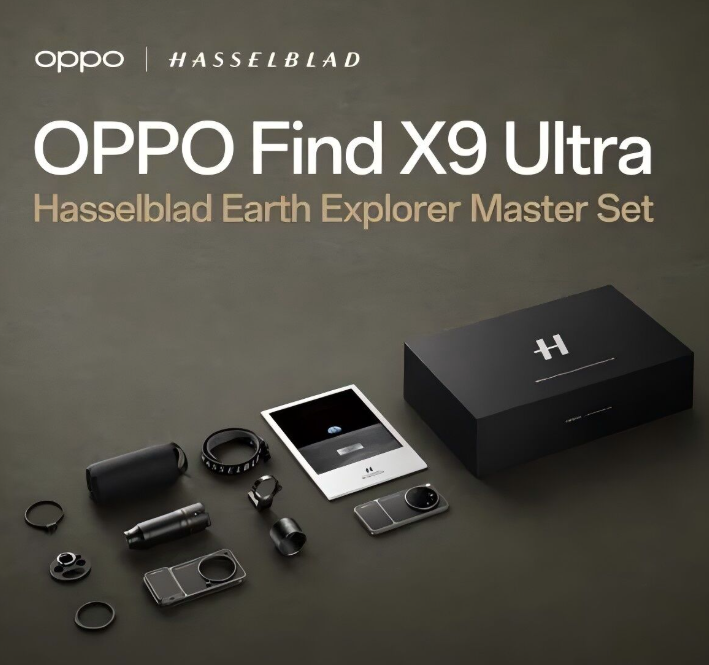
OPPO Find X9 Ultra Hasselblad Earth Explorer
Oppo Find X9 Ultra Hasselblad Earth Explorer Master Set

Hasselblad’s first major smartphone partnership began with the OnePlus 9 series, which launched in March 2021. OnePlus announced the agreement as a three-year camera co-development effort. Before that, Hasselblad’s only phone-related project was the 2016 Hasselblad True Zoom Moto Mod for Motorola’s Moto Z series, an accessory that added 10x optical zoom.

On the OnePlus 9 Pro, much of Hasselblad’s work went into color reproduction and software. Natural Color Calibration involved lab testing and tuning hundreds of real-world scenes through computational photography. The partnership also brought a redesigned Pro Mode inspired by Hasselblad’s Phocus software, along with support for 12-bit RAW photography in Pro Mode, including on the main camera.

Oppo joined the arrangement in 2022, announcing its own three-year partnership with Hasselblad. The company said the move brought the existing OnePlus collaboration to the corporate level, covering both smartphone brands. The Oppo Find X5 series was the first result, with natural color calibration again playing a central role.

The OnePlus partnership eventually came to an end. The OnePlus 13 was the last flagship to carry Hasselblad branding, while the OnePlus 15 switched to the company’s own DetailMax Engine. Oppo, meanwhile, extended its agreement with Hasselblad in July 2025 at an event in Gothenburg, Sweden, announcing plans to develop a new mobile imaging system together.

That brings us to the Oppo Find X10 series, which launched in China in September. The Oppo Find X10 has two 200MP cameras that Oppo says were co-developed with Hasselblad, alongside an 8,000mAh battery. The Find X10 Pro Max has 200MP sensors on its main, ultra-wide and telephoto cameras, a combination Oppo calls a first for smartphones. The entry-level Find X10 E also includes a Hasselblad imaging system.

Oppo says all three rear cameras on the Pro Max can record 4K at 120fps and 8K at 30fps, while the standard Find X10 supports the same recording options on its two 200MP cameras.

Both the Find X10 and Find X10 Pro Max support a Hasselblad Teleconverter Kit, and the Pro Max has a matte orange accent ring around its camera module. Oppo’s global launch for the series is scheduled for October 21 in Mallorca, Spain.

2. Zeiss: From Nokia and Sony to Vivo

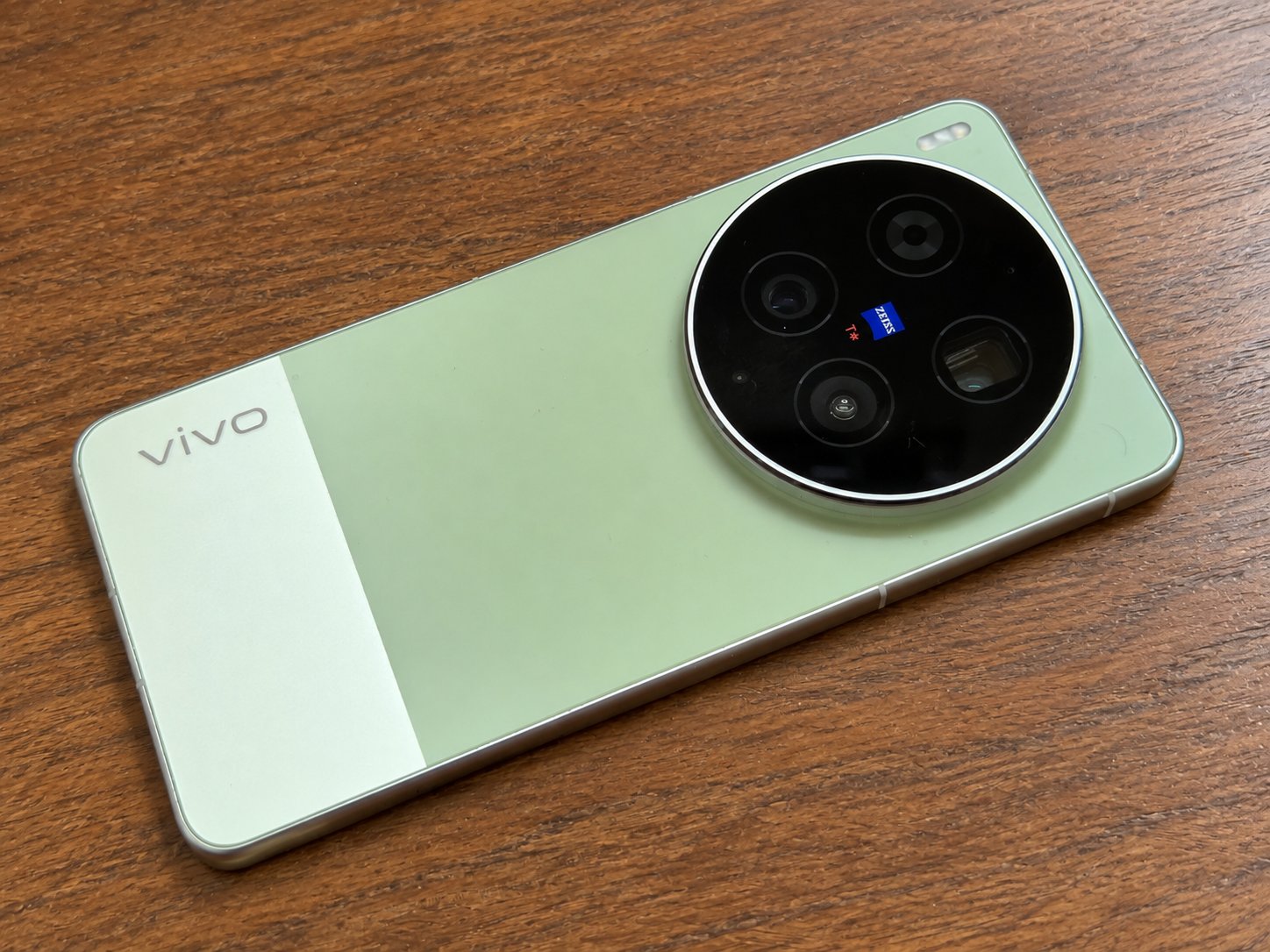
Vivo X300 Ultra
Vivo X300 Ultra

Zeiss has one of the longest histories in mobile photography among these four brands. Its optics appeared on Nokia phones during the company’s feature-phone era in the mid-2000s, and the branding later returned on Nokia smartphones made by HMD Global.

The Nokia-Zeiss relationship ended by mutual agreement in 2021. The Nokia XR20, released in August that year, was the last Nokia phone to carry Zeiss branding, with the end of the partnership formally confirmed in July 2022.

Zeiss had already established another smartphone partnership with Sony. The Xperia 1 II, released in 2020, marked the beginning of their collaboration, which continues today. Zeiss contributes optical expertise and its T* anti-reflective coating, which is intended to reduce reflections and improve contrast while preserving image quality.

Vivo announced its global partnership with Zeiss in December 2020. The companies agreed to co-develop imaging systems for Vivo’s premium phones, establish the Vivo ZEISS Imaging Lab as a joint research and development program, and work together on optical components.

The Vivo X60 series was the first product of the collaboration. Its camera features included Zeiss T* coating and a Biotar portrait filter inspired by the distinctive background blur of classic Zeiss lenses.

The Vivo X300 Ultra continued that work with a 200MP main camera at a 35mm equivalent focal length, a 200MP periscope telephoto at 85mm and a 50MP ultra-wide at 14mm. Announced on March 30, 2026, the phone went on sale in China on April 3 before launching globally on April 15. It supports 4K video recording at up to 120fps.

Check price →
Where to buy
Xiaomi 17 Ultra
Latest price on Amazon

Vivo also sells Zeiss telephoto extenders that attach directly to the phone, with 200mm and 400mm equivalent options. The 400mm version uses a 15-element optical design.

The partnership continues with Vivo’s newer X500 lineup. The Vivo X500 Pro and X500 Pro Max launched in China on September 21, followed by the global announcement of the X500, X500 Pro, and X500 Pro Max on October 6. The X500 Pro Max includes a 200MP Zeiss APO telephoto camera and supports the 400mm Zeiss Telephoto Extender Gen 2 Ultra.

3. Leica: From Huawei to Xiaomi

Xiaomi 17 Ultra
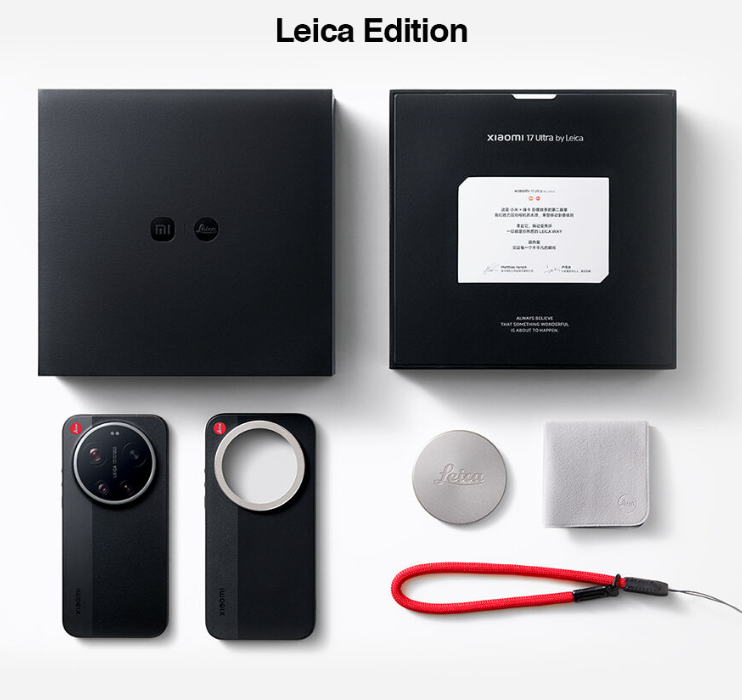
Xiaomi 17 Ultra Leica Edition

Leica entered the smartphone market in a major way in 2016 through its partnership with Huawei. The Huawei P9 arrived with a dual-camera system featuring a dedicated monochrome sensor. Leica worked on the optics, image processing, and color modes too.

The two companies continued working together on Huawei flagships such as the P20 Pro and P30 Pro. The partnership, however, ended in March 2022, making that year’s Huawei P50 series as the last phones with Leica branding.

Surprisingly, though, Xiaomi announced a collaboration with Leica not so long after. The two companies announced a long-term imaging partnership in May, and Xiaomi’s CEO said the deal would cover everything from optical design to the look and feel of the final images.

The Xiaomi 12S series was the first device under the partnership. It introduced two Leica color profiles: Authentic, which aims for a more natural look, and Vibrant, which produces punchier colors. Xiaomi has kept both options on later phones.

The relationship has since moved beyond tuning cameras and image processing. Xiaomi now describes the partnership as a strategic co-creation model, with Leica involved earlier in the phone’s development.

The Xiaomi 17 Ultra gives a good look at the hardware behind the partnership. Its main camera uses a 50MP Light Fusion 1050L sensor with a 1-inch format, LOFIC technology for improved dynamic range, and a 23mm equivalent focal length. The lens has an f/1.67 aperture.

The remaining cameras include a 200MP periscope telephoto with continuous optical zoom between 75mm and 100mm equivalent. Its aperture shifts from f/2.39 to f/2.96, and the lens carries Leica APO certification. The 50MP ultra-wide camera has a 115-degree field of view and can take macro shots from as close as 5cm.

There’s also a Leica Edition 17 Ultra with a few extras of its own. It has a red Leica dot and a knurled frame that give it a camera-like appearance, while a built-in Master Zoom Ring lets users adjust focal length, white balance, and exposure. You also get a Leica Moment mode that recreates the color rendering of the Leica M9.

Xiaomi brought the 17 Ultra to international markets, including Europe and Australia, in early 2026. The phone is not available in the US.

Xiaomi’s newest Leica phones are the Xiaomi 18 Pro and 18 Pro Max, which launched in China in September. Both use a 200MP Leica main camera, a 200MP periscope telephoto with 3.2x optical zoom and a 50MP ultra-wide. Xiaomi has confirmed a global release later in 2026 but hasn’t announced a date yet.

4. ARRI and Honor 

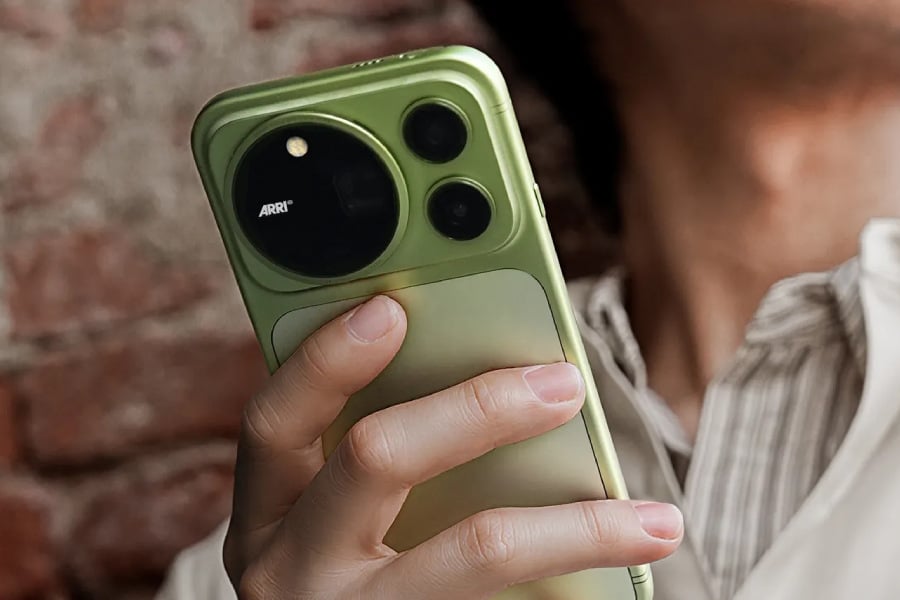
Honor Magic 9 Pro Max Design

Unlike the other three brands, ARRI had no earlier smartphone partnership before Honor. The company is best known for cinema cameras, and its collaboration with Honor marks its entry into mobile imaging.

Called the Cinematic Imaging Partnership, the agreement produced its first commercial device in the Honor Robot Phone, announced in August 2026. ARRI said the phone incorporates selected parts of its image science, including LogC3, the ARRI Wide Gamut 3 color space and ARRI Looks.

Adapting these technologies for a smartphone required a separate implementation to account for smaller sensors, compact optics, and real-time image processing.

The Honor Magic9 Pro Max brings the same technology to a conventional flagship. It launched in China in September.

Its rear camera system consists of a 200MP main camera with a 1/1.28-inch sensor and f/1.57 aperture, a 200MP telephoto camera with a 1/1.4-inch sensor and f/2.6 aperture, and a 50MP ultra-wide camera.

ARRI’s contribution is most visible in Cinema Mode, which records up to 4K at 60fps using ARRI LogC3, 10-bit color, and ARRI Wide Gamut 3. Users get 14 preset ARRI Looks and access to a library of 87 additional grades. Honor has also borrowed design cues from ARRIFLEX cinema cameras for the rear camera layout.

For now, the Magic9 Pro Max is available in China. Honor says releases in Europe, the Middle East and Africa, and Southeast Asia are coming soon, but it hasn’t provided dates or announced US availability.

5. How the four camera partnerships compare

Hasselblad and Leica started with a lot of software and color-tuning work before moving into hardware development. Zeiss has stayed closer to optics, coatings, and external lenses. Meanwhile, ARRI is currently focused on cinema-style video processing.

PartnerPrevious phone partnersCurrent partnersMain contribution
HasselbladOnePlus (2021–2025), Motorola (2016 Moto Mod)OppoColor calibration, co-developed camera systems, teleconverter kit
ZeissNokia/HMD (until 2021)Vivo, SonyOptics, T* coating, telephoto extenders
LeicaHuawei (2016–2022)XiaomiCo-created optics, APO telephoto, color profiles and camera controls
ARRINoneHonorLogC3 recording, ARRI Looks and cinema color science

6. What the partnerships mean when buying a phone

A camera brand’s name tells you who contributed to the system, but it doesn’t automatically tell you how good the results will be. The type of contribution matters more than the logo.

For buyers interested in external camera accessories, Vivo’s Zeiss telephoto extenders and Oppo’s Hasselblad Teleconverter Kit are the most tangible examples. If video editing is a priority, Honor’s ARRI LogC3 workflow is more directly relevant, although the Magic9 Pro Max is currently limited to China.

For still photography, the Xiaomi 17 Ultra and Oppo Find X10 series use different camera hardware and image processing techniques. Comparing their photos, especially in challenging lighting, will reveal more about their strengths than their brand partnerships alone.

Ultimately, these collaborations go beyond putting a familiar name on a phone. Each brings something different to mobile imaging, from more accurate color reproduction and improved optics to longer zoom ranges and video tools suited to professional filmmaking.

For daily updates, please visit our News Section.

Stay ahead in tech! Join our Telegram community and sign up for our daily newsletter of top stories.