The mid-range smartphone segment offers a compelling blend of affordability and features. These devices often provide excellent value, delivering impressive performance, capable cameras, and long-lasting batteries without the premium price tag of flagship models. Here are some of the best mid-range smartphones currently available:
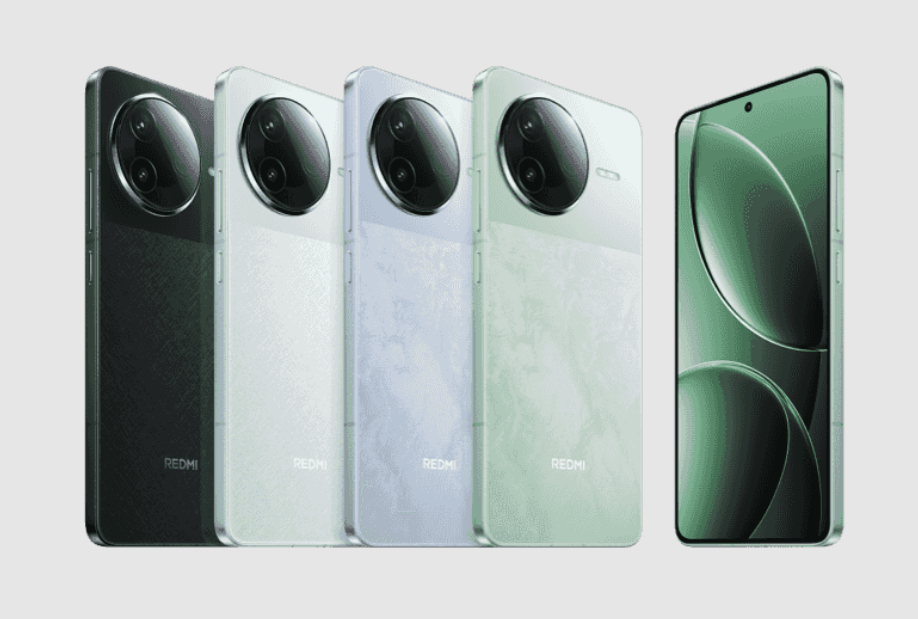
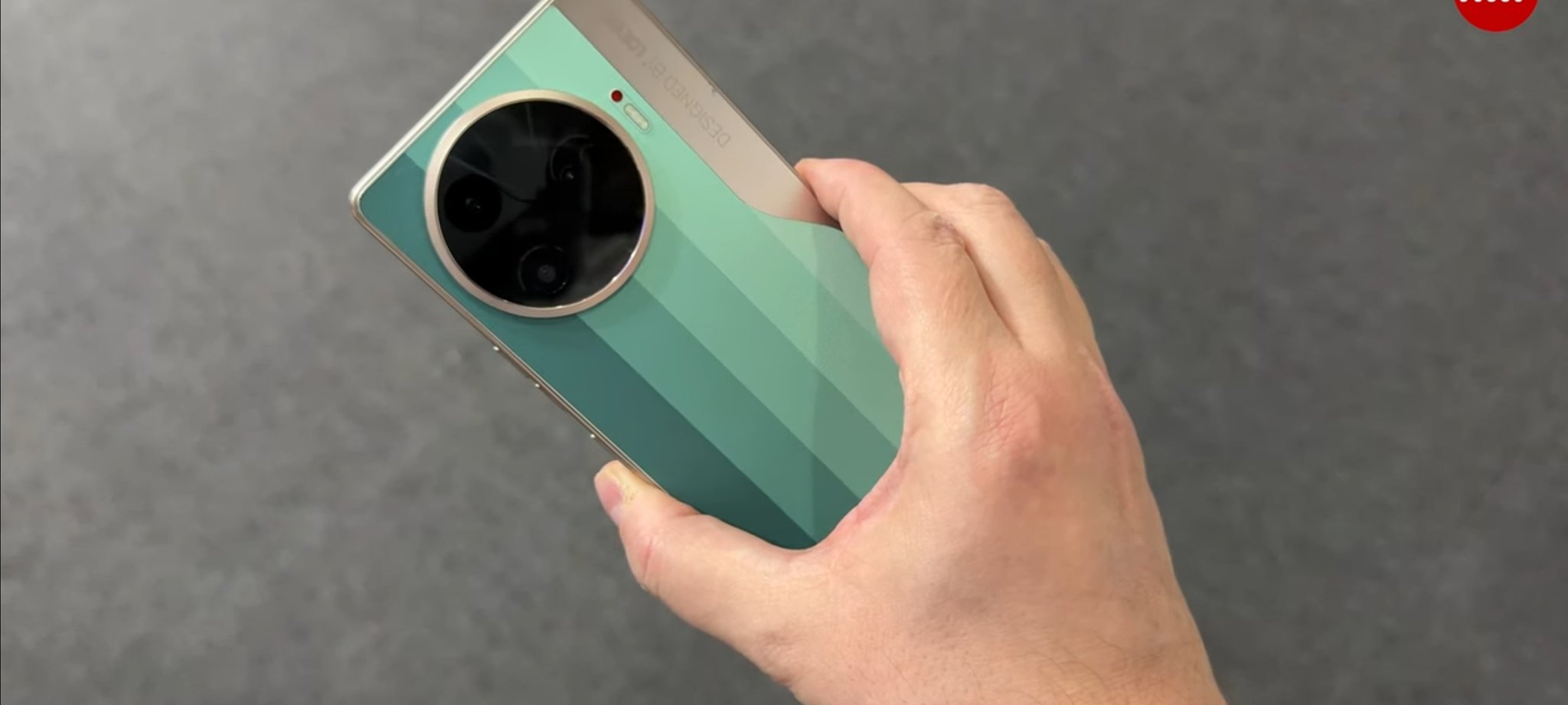
The Redmi K80 offers exceptional value with its powerful Snapdragon 8-series processor, a vibrant 6.67-inch AMOLED display with a 120Hz refresh rate, a HyperOS UI experience, and a dual camera system featuring a 50MP main sensor with OIS. While the Redmi K80 is expected to remain exclusive to the Chinese market, it is speculated to get rebranded as the Poco F7 Pro for the global market next year.
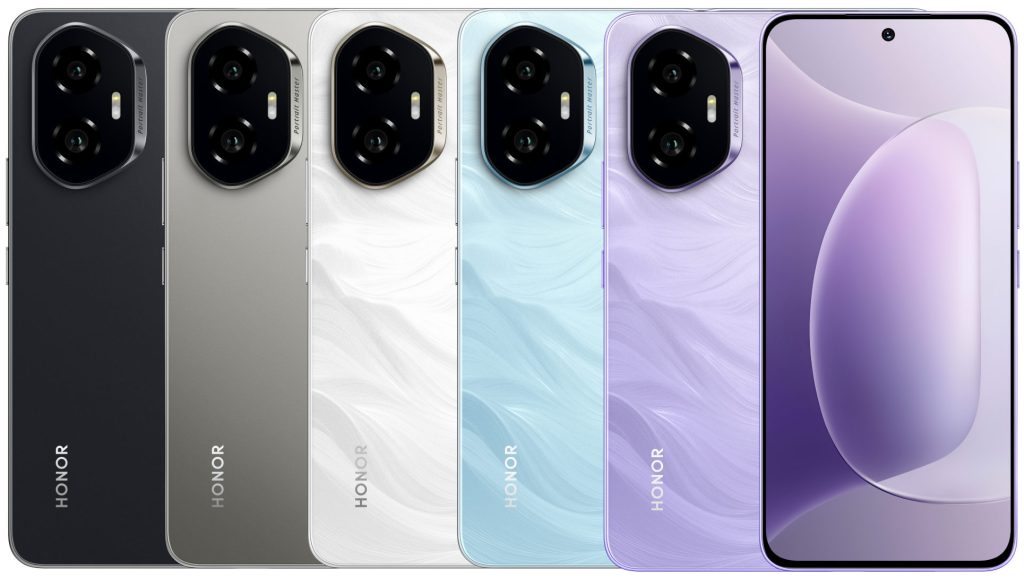
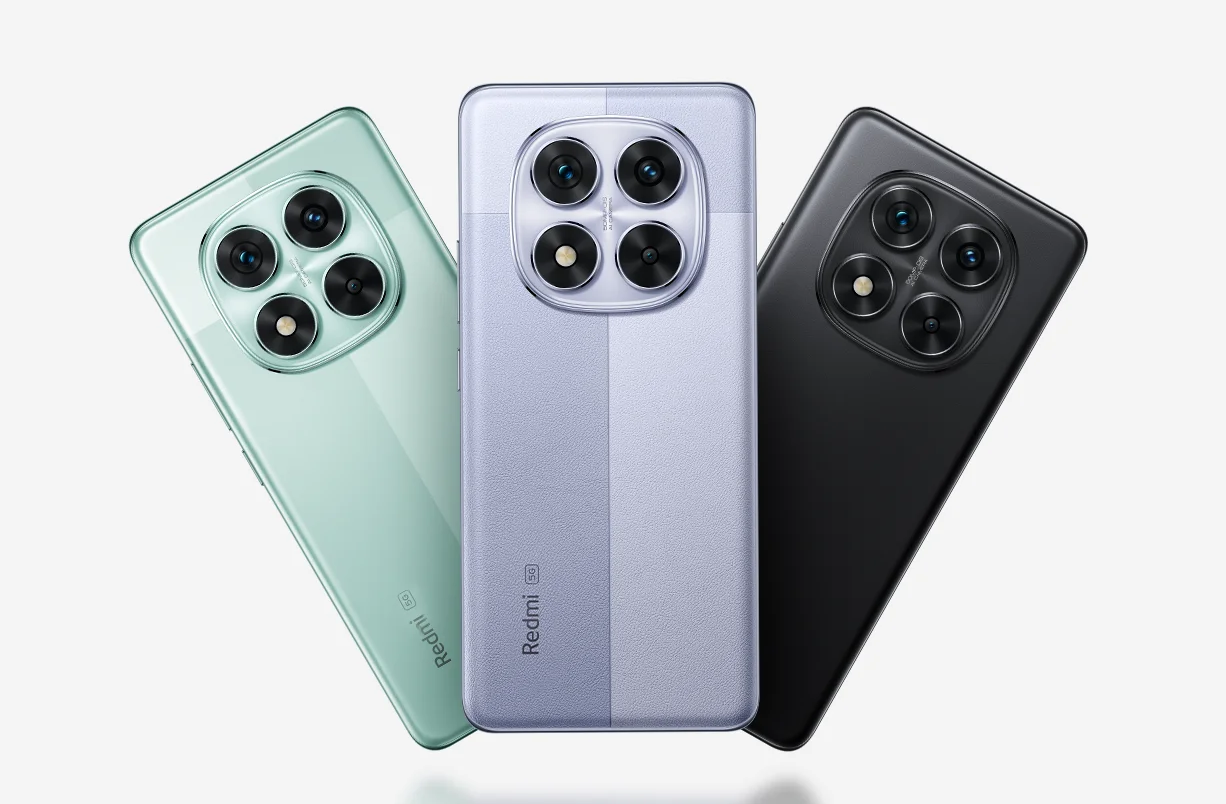
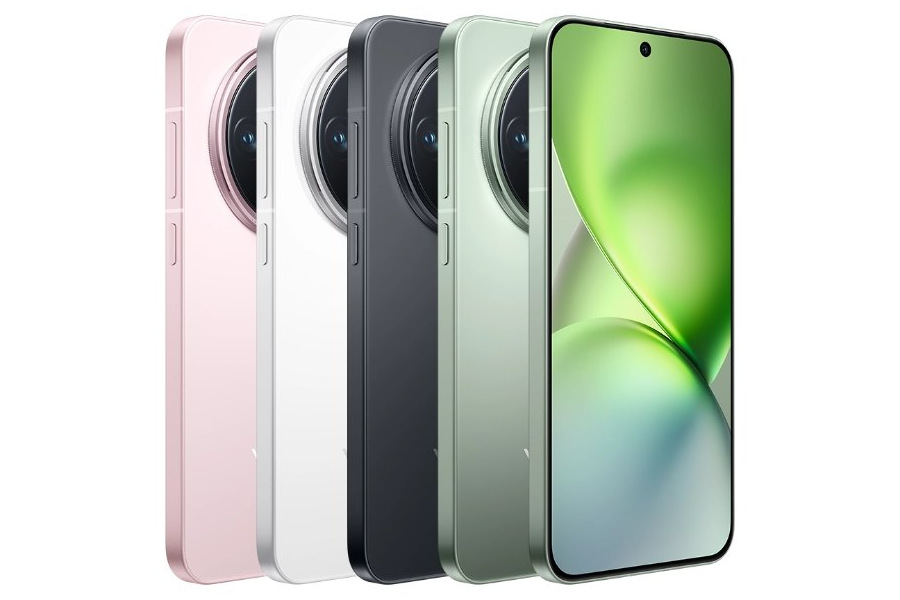
The Honor 300 stands out with its stylish design with a dual camera system headlined by a 50MP main sensor. It also packs a smooth 6.7-inch AMOLED display with a 120Hz refresh rate and a capable Snapdragon 7-series chip and a large battery.
Camera: 50MP main camera, 12MP ultra-wide lens | 50MP selfie camera
Battery: 5,300 mAh with 100W fast charging
IP rating: IP65
3. Huawei Nova 13
Huawei Nova 13
The Huawei Nova 13 offers a compelling combination of style, performance, and affordability. It features a sleek design, a vibrant 6.7-inch OLED display with a 120Hz refresh rate, an in-house Kirin chipset, and a 50MP dual-camera system. There’s no clarity on whether the Nova 13 series will be released in markets outside of China.
Camera: 50MP main camera, 8MP ultra-wide lens | 60MP selfie camera
Battery: 4500 mAh with 66W fast charging
IP rating: Only splash resistance
4. Google Pixel 8a
Google Pixel 8a
The Google Pixel 8a is an excellent choice for those who prioritize camera quality and software experience. It features Google’s renowned camera system, led by a 12.2MP main sensor. While it offers a stock Android experience, it is promised to receive seven years of OS upgrades, security updates, and PIxel Drop features.
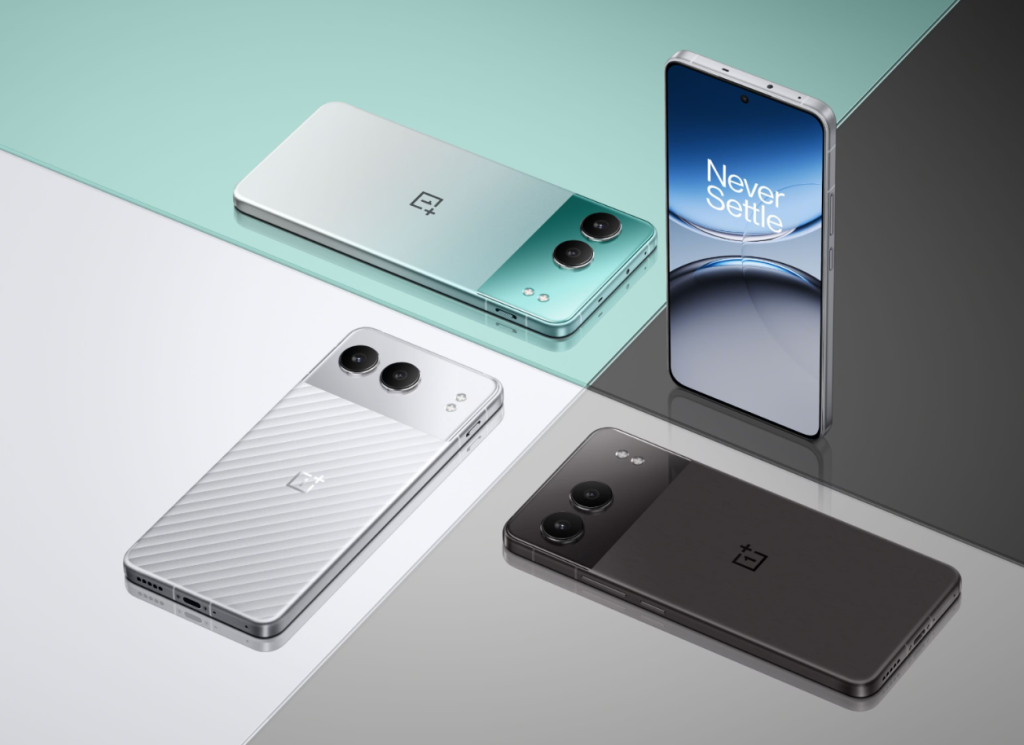
OnePlus has started rolling out the OxygenOS 15.0.0.401 update for Nord 4 users, beginning in India. The update introduces AI-powered features, system optimizations, and new tools to enhance usability and performance. Here’s a breakdown of the key changes.
AI Features for Better Usability
The update includes several new AI tools to streamline communication and writing. The AI Reply feature suggests chat responses based on context, with support for different language styles. The AI Check tool helps with grammar, spelling, punctuation, and typos, improving writing accuracy.
Another addition, AI Rewrite, allows users to modify text by extending, shortening, or editing it to suit different styles, making writing tasks easier and more flexible.
New Apps and Features
Nord 4 users gain access to new apps and features. The Clone Phone app now supports migrating live photos from iOS devices, making it simpler for new users to transition. The Voice Translate app offers live translation, text translation, and multilingual support, useful for everyday and travel purposes.
The update also lets the Photos app recognize boarding passes and add them directly to Google Wallet for quick access.
System and User Interface Updates
System updates include Live Alerts enhancements, which now show flashlight status and charging information. Floating windows can be easily switched to full-screen mode for improved multitasking.
UI updates include smoother animations for app interactions, swiping, and page transitions, along with new settings for animation fluency. Battery life, system stability, and wireless connectivity have also been improved.
Camera and Security Enhancements
The camera’s performance has been optimized for better photography. Additionally, the update includes the December 2024 Android security patch, ensuring improved device protection. Interested readers can also check out the official update changelog attached below.
OxygenOS 15.0.0.401 Official Changelog
Integrated AI features
Introduces the AI Reply feature to recommend replies based on the chat context with support for diverse language styles, making the responses more natural.
Introduces the AI check feature to check grammar, spelling, typos, punctuation, and more, for effortless and accurate writing.
Introduces the AI rewrite feature to extend, shorten, expand, and edit your text and modify the style for more efficient and inspired writing.
Apps
Now you can migrate live photos from iOS devices with Clone Phone.
Adds the Voice Translate app that supports live translation, text translation, and multilingual translation.
Boarding passes can now be recognized in Photos and added to Google Wallet.
Communication
Improves the stability and expands the compatibility of wireless connections.
System
Now you can see the status of the flashlight on Live Alerts.
Now you can see the charging information on Live Alerts.
Now you can drag a floating window to change it to full screen.
Fixes a display issue with existing icons on the status bar when a Live Alerts capsule is displayed.
Improves the layout of Spotify on Live Alerts and adds smart recommendations.
Improves the animations when opening or exiting apps, swiping, flipping pages, and more, as well as adds animation settings for fluency.
Improves system stability for some scenarios.
Fixes a lag issue that might occur in some scenarios.
Extends battery life in some scenarios.
Integrates the December 2024 Android security patch to enhance system security.
Fixes an issue that might affect the Gaussian blur effect of the background when using live wallpapers in Theme Store and then swiping up to Recent tasks.
Fixes an issue where AI Voice does not disappear after ending voice calls in some app clones.
Fixes a display issue with some icons on the Home screen.
Camera
Improves Camera performance for a better photography experience.
Rollout Status
The update is being released in batches in India, with wider availability expected soon. Nord 4 users can look forward to practical new features and overall system enhancements with this rollout.
The Samsung Galaxy S25 series is set to make its global debut next month. While we have already covered various rumors regarding its specifications, the latest report claims that a pretty useful software feature will finally be making its way to the brand’s next gen flagships.
Samsung Galaxy S25 could bring support for car crash detection
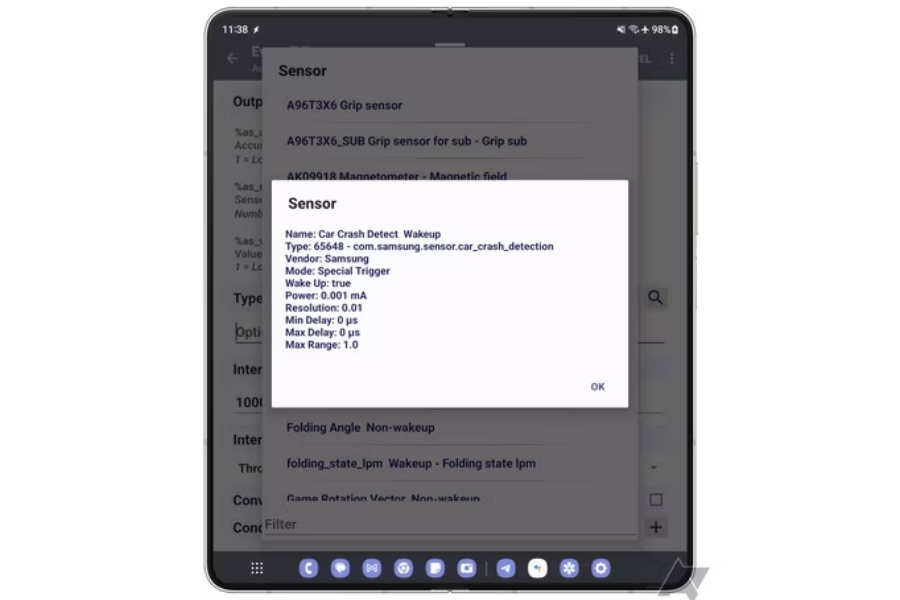
According to an AndroidAuthority report, leaked files have revealed that Samsung is working on a car crash detection feature, which is similar to what Apple iPhones and Google Pixels offer. Back in January 2024, we covered a report regarding the Galaxy S24 and Z Fold 5 bringing this potentially life-saving feature. But it appears that this might finally roll out on the Galaxy S25 series.
The initial leak of the car crash detection feature
The leaked files confirms the presence of a new sensor in the Galaxy S25 Ultra model. Although Samsung has yet to activate this feature. So while the sensor code exists, there is still no concrete information about this feature being live or accessible even in Samsung smartphones that are already in the market. Looking at the leaked files, we can see that the function works via a “composite” sensor, which takes data from multiple physical sensors to help detect a car crash.
Samsung seemingly brought this feature to last year’s Galaxy S24 series and Galaxy Galaxy Z Fol 5, but there is no user interface or active function related to this feature. A car crash detection technology would also be clearly advertised by the brand and it is not available in the One UI 7 iteration either. But all of this hints that the feature could launch soon. It may debut with the Galaxy S25 series, or arrive in a major update later on.
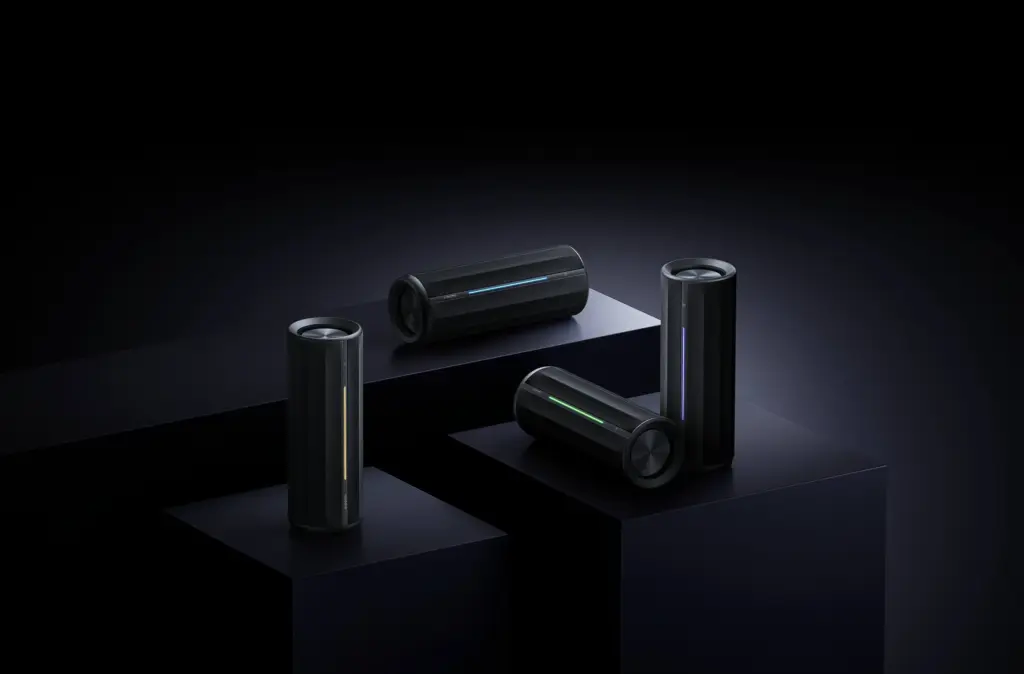
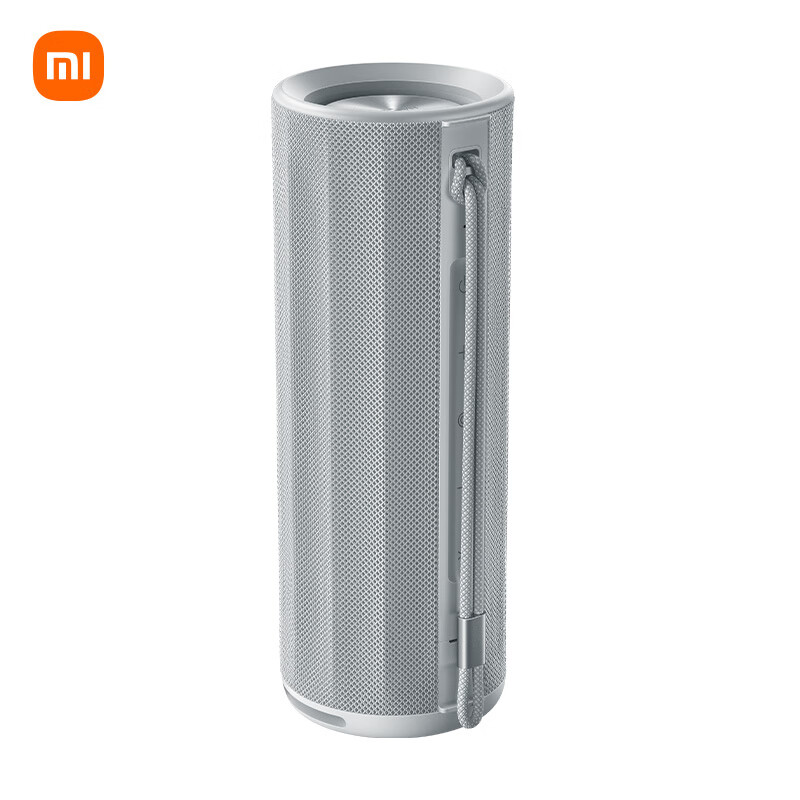
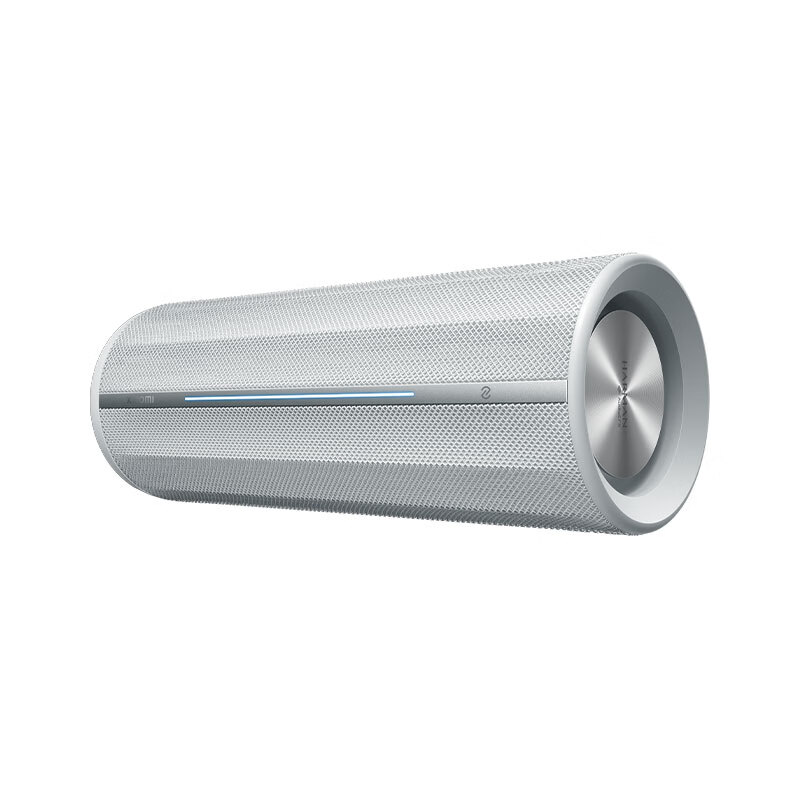
Xiaomi has expanded the availability of its Bluetooth Speaker to Germany and Italy. After its initial listing on Xiaomi’s global website in July, the speaker was launched in the UK and France and is now accessible in additional European markets. It is priced at £49.99 or €79.99.
Specifications
The Xiaomi Bluetooth Speaker features a 5-unit acoustic system, delivering 360° omnidirectional audio with a peak output of 93dB. Its low-frequency passive units enhance bass, making it suitable for both indoor and outdoor use.
The device includes a 4800mAh battery, offering up to 17 hours of playback on a single charge. It supports 22.5W fast charging via USB Type-C for quick recharges.
The speaker is tuned with Harman AudioEFX and Xiaomi’s Nightingale Algorithm for balanced and clear sound. Users can further adjust the audio profile using Xiaomi Audio ID.
It supports dual-device pairing and can connect two speakers for stereo sound or up to eight speakers for larger setups. Bluetooth 5.3 ensures a stable connection, and the LHDC 5.0 protocol provides high-quality audio transmission.
The speaker has an IP67 rating for water and dust resistance, making it suitable for outdoor activities. Its scratch-resistant fabric body and rubberized base add to its durability. A hydrophobic coating protects it during light rain, ensuring reliable performance in various conditions.
The Xiaomi Bluetooth Speaker includes a 12-LED RGB strip with four preset lighting modes. These can be customized through the Mi Home app, offering a visual element to complement audio playback.
With HyperOS Connect, the speaker integrates seamlessly with other Xiaomi devices, making it a practical option for users within the Xiaomi ecosystem.
In other news, Xiaomi has also introduced the Smart Projector L1 Pro, offering 400 ISO lumens brightness, 1080p resolution, and 4K playback support. It offers flexible screen sizes (40–120 inches), a sealed optical engine for lasting quality, and easy setup with autofocus, keystone correction, and obstacle avoidance.
OPPO has announced that it will soon release the Reno 13 5G smartphone, Pad 3 Matte Display Edition tablet, and Enco Air 4 earbuds in Malaysia. The confirmation came through the brand’s Malaysian X handle, hinting at the upcoming launch with the message “Three new arrivals, coming your way.”
Reno 13 5G: Key Features
The Reno 13 5G is powered by the MediaTek Dimensity 8350 chipset and runs Android 15 with the ColorOS 15 interface. It comes with up to 16GB of RAM and offers storage options ranging from 256GB to 1TB. The smartphone has a 6.59-inch AMOLED display with a resolution of 1256 x 2760 pixels, a 120Hz refresh rate, and a peak brightness of 1200 nits.
The device includes a dual rear camera system featuring a 50MP wide lens and an 8MP ultrawide lens, alongside a 50MP front camera for selfies. It has a 5600mAh battery that supports 80W wired fast charging and reverse wired charging.
Enco Air 4: Details
The Enco Air 4 earbuds are equipped with 12.4mm dynamic drivers, dual microphones, and up to 32dB active noise cancellation. They support AAC and SBC audio codecs as well as spatial sound effects. The earbuds, combined with their charging case, provide up to 43 hours of playback time, with 10 minutes of charging offering up to 4 hours of use.
Pad 3 Matte Display Edition: Specifications
The Oppo Pad 3 tablet uses the Dimensity 8350 chipset, paired with ColorOS 15 on the software front. It offers up to 12GB of RAM and up to 512GB of storage. The device has an 11.61-inch IPS LCD display with a resolution of 2000 x 2800 pixels and a 144Hz refresh rate.
The tablet features 8MP cameras on both the front and back, making it suitable for general photography and video calls. It includes a 9520mAh battery that supports 67W fast charging.
Vlogging has become a popular way to share stories, and smartphones have made it easier than ever to start. We already covered our list of the Best Camera Smartphones of 2024. So now, here’s a list of the Best Affordable Vlogging Smartphones of this year.
1. Infinix Zero 40 5G: Best Affordable Vlogging Phone
Infinix Zero 40 5G
A couple of months ago, the Infinix Zero 40 5G was announced as a new vlogging phone. At this budget, there aren’t plenty of options for vlogging isn’t, but the Zero 40 5G is a model dedicated to this and is easily our pick for the best affordable vlogging phone. Thanks to its 108MP primary camera, users get access to 4K recording even at 60fps. This makes it great for vloggers and content creators. This sensor is paired with a 50MP ultra wide angle lens.
The front doesn’t disappoint either with a 50MP camera for selfies and video calls. But impressively, Infinix has brought support for 4K videos and 60fps as well. Content creators often have to invest quite a bit to get the best video quality. But Infinix has managed to bring a great package without breaking the bank. All of this is packaged in a sleek 7.9mm body. Other notable features include an AMOLED screen, Dimensity 8200 Ultimate, and a 5000mAh battery with 45W wired fast charging and 20W wireless fast charging.
Please Note: When you buy something using the links in our articles, we may earn a small commission at no cost to you.
2. Tecno Camon 30 Pro
Tecno Camon 30 Pro 5G
Among the standout picks for the best affordable vlogging phone, we have the Tecno Camon 30 Pro 5G. The company launched this model with three cameras on the back, which include a 50MP main, 50MP ultra wide, and a 2MP macro shooter. Just like the Infinix Zero 40 5G, the Camon 30 Pro 5G supports 4K recording at up to 60fps. So it is another great choice you can pick without burning a hole in your wallet.
On the front, there is a 50MP camera for selfies and video calls. So you wouldn’t have to worry about the pricing. Another positive of the phone is its lightweight and slim design. Vlogging has you carry the device around, so the Tecno Camon 30 Pro weighing just 188 grams and measuring 7.7mm thick is another positive. Other notable features include a 6.78-inch 144Hz AMOLED display with FHD+ resolution, Dimensity 8200 Ultimate, and a 5000mAh battery pack with 70W wired fast charging support.
Please Note: When you buy something using the links in our articles, we may earn a small commission at no cost to you.
3. Redmi Note 14 Pro
Redmi Note 14 Pro
Xiaomi has a great contender in this list from its popular budget subsidiary Redmi. The Redmi Note 14 Pro was recently unveiled globally and it arrives with some impressive specs as well. It is packed with a 50MP main camera along with an 8MP ultra wide angle lens, and a 2MP macro shooter. Meanwhile, the front houses a 20MP selfie camera. While you only get 4K recording at 30fps, its 1080p recording can hit 120fps from the rear cameras.
Xiaomi built an affordable mid range phone, which is basically an all rounder. It has a massive 5,500mAh battery pack which means that it can last for longer during vlogging, and even comes with an IP68/IP69K rating. This means that it can survive submersion up to 1.5 meters of water and can survive high temperatures or high pressure water jets. So you won’t have to worry much about the Redmi Note 14 Pro when you’re vlogging outside.
4. Samsung Galaxy A55
Samsung Galaxy A55
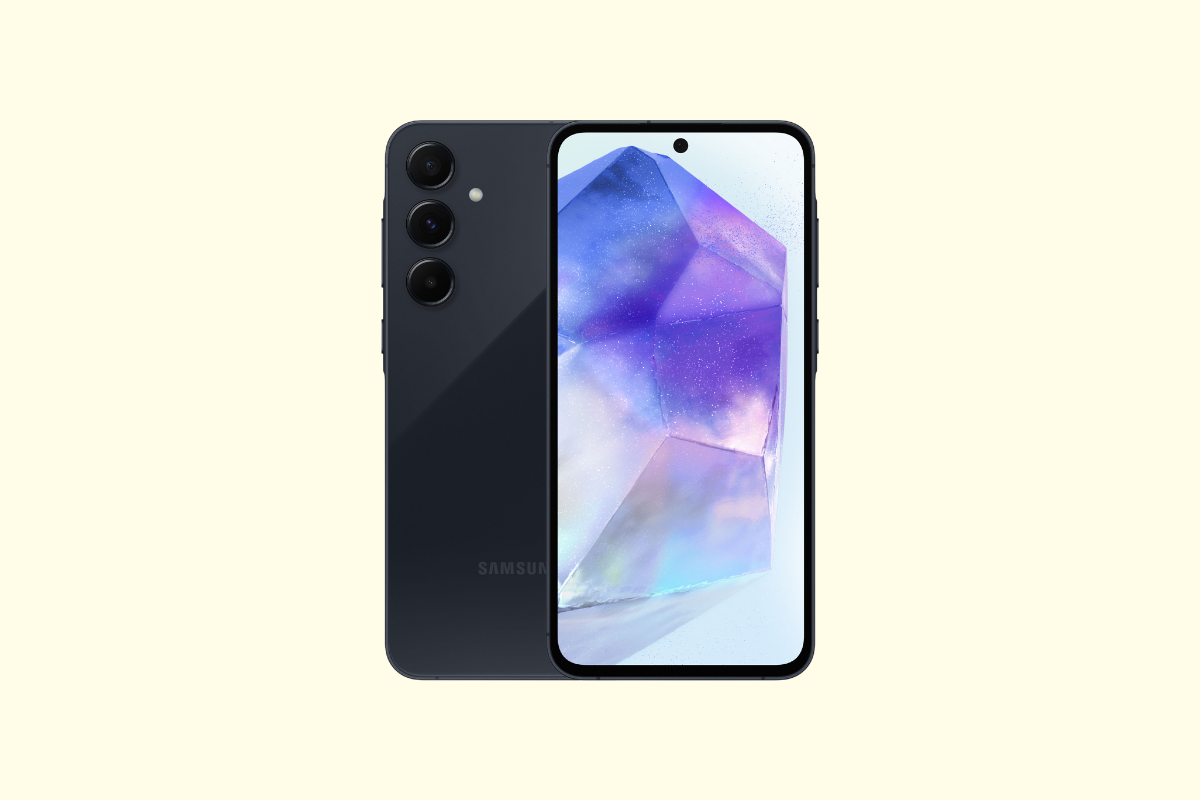
Samsung’s Galaxy A55 is a mid range phone that launched earlier this year and can also double as a decent vlogging phone. You get 4K recording support from the front and back at 30 fps. On the back, there is a 50MP primary camera, along with a 12MP ultra-wide angle lens and a 5MP macro shooter. For selfies and video calls, there is a 32MP shooter on the front. The higher resolution is important for video captures
This device offers a premium build quality apart from its versatile camera system. The back panel has Gorilla Glass, which is surrounded by an aluminum frame. You even get an IP67 rating for water and dust resistance. A big 5,000mAh battery pack powers the Galaxy A55, which supports 25W wired fast charging. This is a sizeable capacity, which matches the more expensive Galaxy S24 Ultra.
While many smartphone manufacturers are pushing towards larger screens, there’s still a demand for compact flagship devices that offer powerful performance in a more pocketable form factor. These phones are perfect for users who prioritize one-handed usability without sacrificing top-tier features. Here are some of the best compact flagships available:
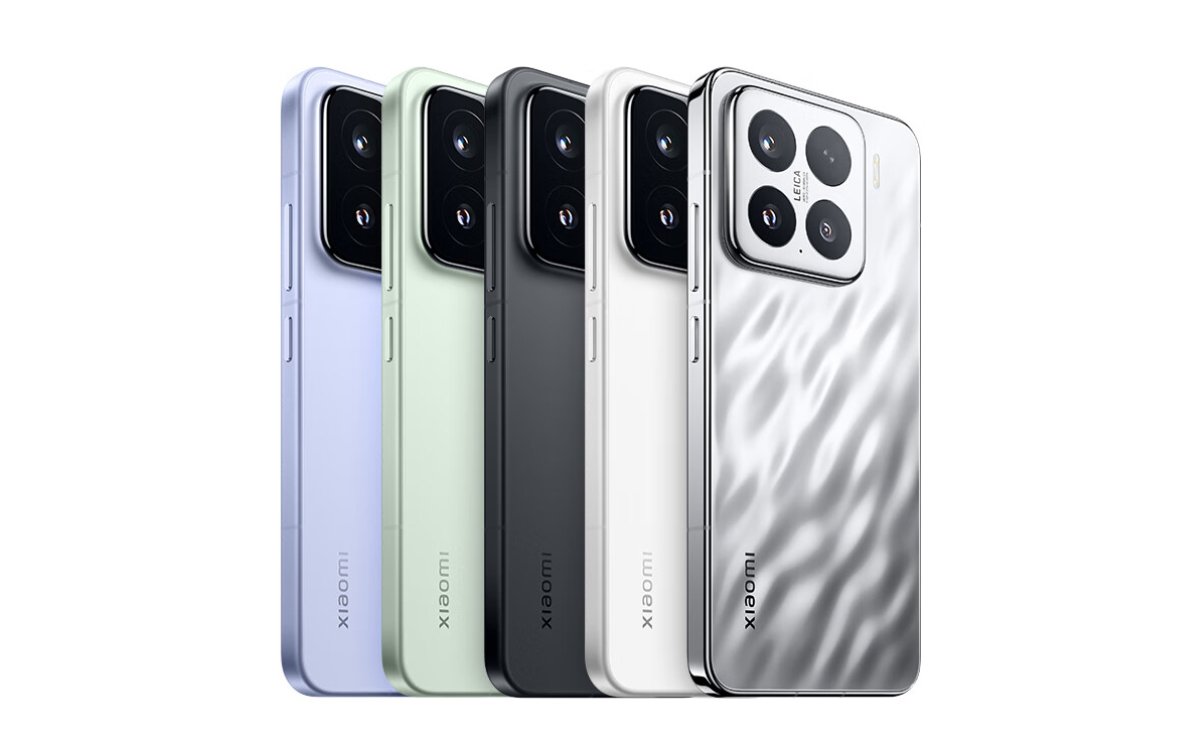
The Xiaomi 15 packs flagship-level specs into a compact 6.36-inch form factor. It features a powerful Snapdragon 8 Elite processor, a big battery, a stunning AMOLED display with a 120Hz refresh rate, and a versatile triple camera system with a 50MP main sensor. The phone runs on the latest HyperOS 2.0-based Android 15.
Battery: 5,400 mAh with 90W wired charging and 50W wireless charging
IP rating: IP68
2. Vivo X200 Pro Mini
Vivo X200 Pro Mini
The Vivo X200 Pro Mini lives up to its name, offering a compact OLED display while retaining flagship-level features. It packs the latest Dimensity chip and triple 50MP camera setup on the back. Despite having a smaller design, it packs a huge battery with fast wired and wireless charging support. It loaded with OriginOS 5-based Android 15. While it packs enticing specs, the phone is exclusively available in the Chinese market.
Battery: 5700 mAh with 90W wired charging and 30W wireless charging
IP rating: IP69
3. Apple iPhone 16
Apple iPhone 16
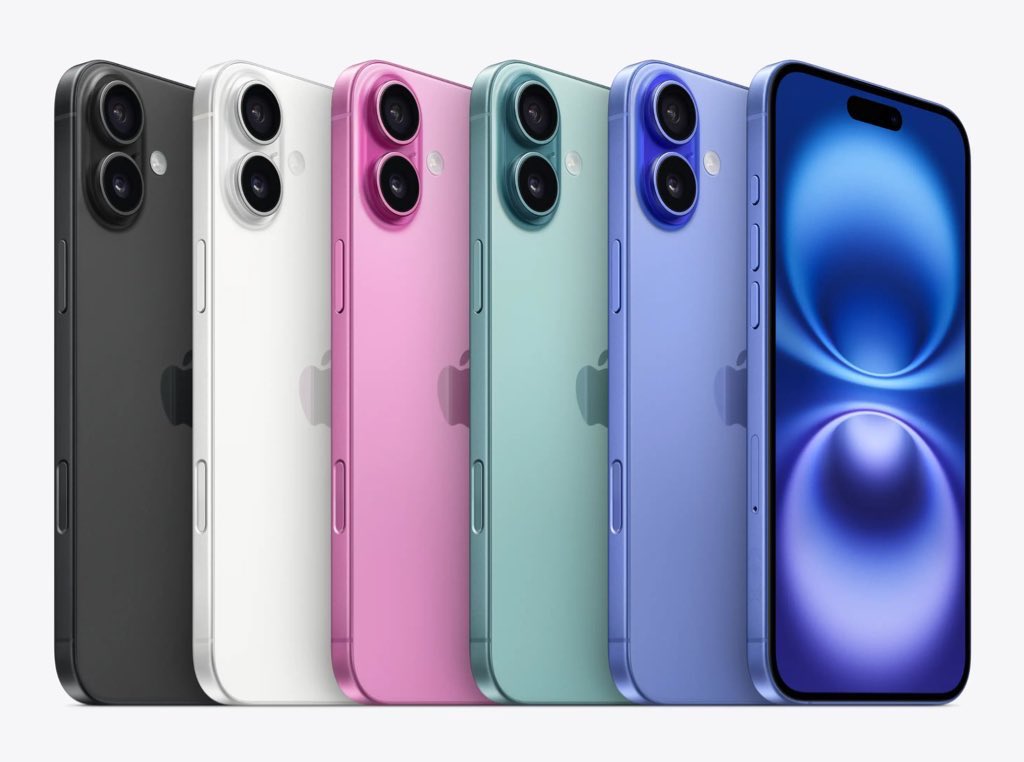
The Apple iPhone 16 continues Apple’s tradition of offering a compact flagship option. Its 6.1-inch Super Retina XDR display delivers stunning visuals, while the powerful A18 Bionic chip ensures smooth performance. The dual camera system, featuring a 48MP main sensor and a 12MP ultrawide lens, is coupled with a new “Camera Control” button, offering quick access to camera functions and settings with a simple click, press, or swipe.
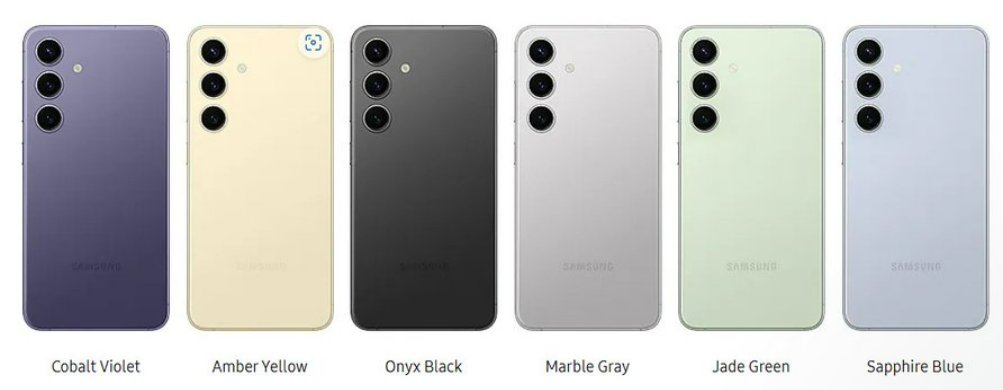
The Samsung Galaxy S24 offers a compact 6.1-inch Dynamic AMOLED display with a 120Hz refresh rate, making it ideal for one-handed use. It’s powered by the Snapdragon 8 Gen 3 for Galaxy processor and features a versatile 50MP triple camera system and a decent battery. The device comes with a promise of seven years of OS upgrades.
Back in October 2024, Huawei unveiled the Watch GT 5 in the Indian market as its latest premium smartwatch. Now, the company is bringing the Huawei Watch GT 5 Pro model to the region as the new flagship smartwatch as well. So here’s everything you need to know.
Huawei Watch GT 5 Pro Specs
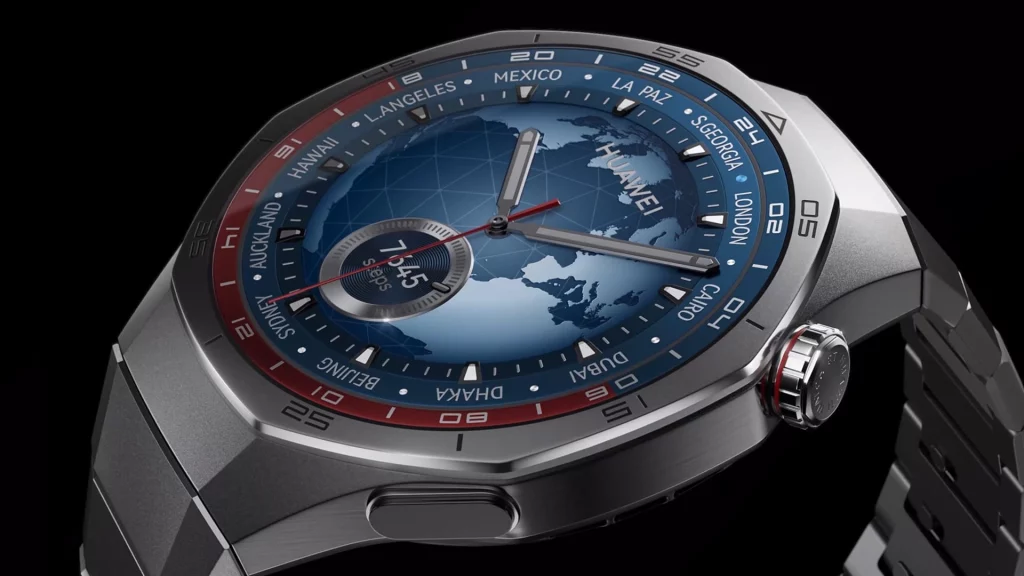
The Chinese tech giant’s Watch GT 5 Pro was just announced in a single size variant, namely the 46mm model. It sports a 1.43-inch circular AMOLED screen that supports Always On display and offers 466 x 466 resolution. This panel can also display over 11 new watch face themes. The high end smartwatch arrives in two variants which includes a Sports edition with a black silicone strap and a Titanium variant that features a titanium and ceramic finish with a metal strap.
Huawei Watch GT 5 Pro
The Huawei Watch GT 5 Pro offers Sunflower Position System, Activity Ring 2.0, more than 100 sports modes, and even a dedicated Gold Course modes for professionals. This mode supports more than 15,000 golf courses along with enhanced trail run mode and free diving mode. Just like the base model, the Watch GT Pro comes with Huawei TruSense as well that brings 60 indicators of the user’s health and fitness on the go.
You get support for ECG analysis, Bluetooth calling, new Celia keyboard for quick replies and a watch screenshot feature as well. On a single full charge, the Huawei Watch GT 5 Pro can last for up to 14 days. This smartwatch has a starting price tag of 29,999 INR for the sports edition, while the classic titanium variant costs 39,999 INR. The wearable gadget si currently on sale via Flipkart and Amazon.
Xiaomi has been offering telephoto cameras on its numbered series flagship phones for the past couple of years. However, for the Xiaomi 15 series, it switched to a periscope telephoto camera in the 15 Pro model, while the standard 15 came equipped with a telephoto camera. A new rumor suggests that the Xiaomi 16 and 16 Pro will both feature a periscope telephoto camera.
Xiaomi 16 series to feature periscope telephoto camera
According to a reliable leak by Digital Chat Station, an upcoming flagship phone equipped with the SM8850 chip is expected to feature a periscope telephoto camera across its entire series. The SM8850 chip refers to the Snapdragon 8 Elite 2, which is expected to launch in October 2025. The flagship series that the tipster seems to be talking about appears to be the Xiaomi 16 series, which is expected to debut as the first Snapdragon 8 Elite 2 chip phones.
A recent leak by the same source revealed that the Snapdragon 8 Elite 2 will be built with TSMC’s N3P manufacturing process. This tech is expected to bring improvements in performance and efficiency. Additionally, the new chip is said to offer significantly better GPU performance than its predecessor, the Snapdragon 8 Elite.
The tipster further said that the Xiaomi 16 series is yet to enter the PVT (Product Validation Testing) stage. He speculates that the 16 lineup will enter the PVT stage in the second quarter of 2025.
At present, it is too early to talk about the Xiaomi 16 series as the Xiaomi 15 series is yet to be released globally. It is speculated that the Xiaomi 15 and 15 Pro are scheduled to hit the global market by Q1 2025. Concrete details of the Xiaomi 16 series are expected to surface around Q2 2025 when it enters the PVT stage.
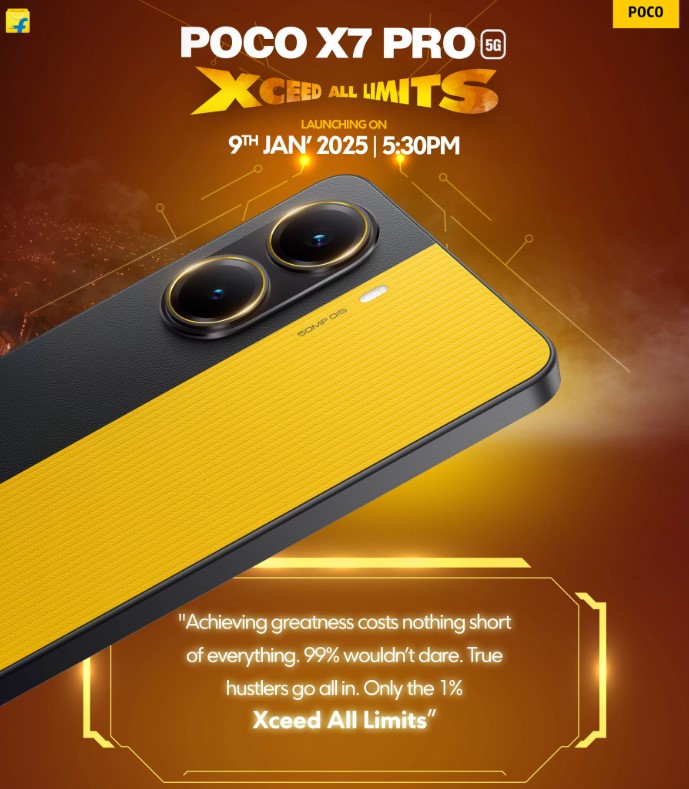
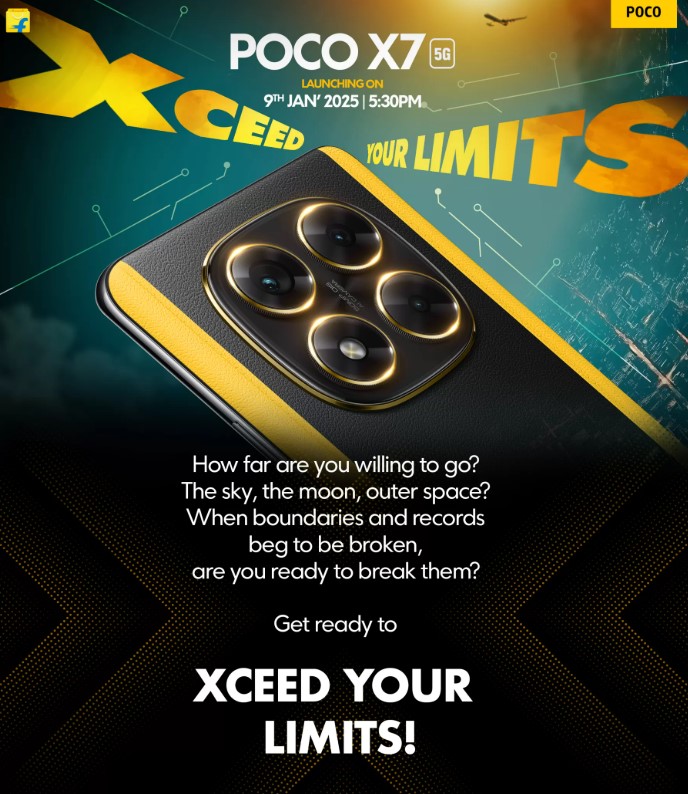
Poco has confirmed that it will unveil the Poco X7 series of mid-range phones for the global market, including India, on Jan. 9. The brand has released a couple of teasers to confirm the rear designs of the Poco X7 and X7 Pro. The Poco X7 Neo, an entry-level model, is also part of the lineup. However, it remains unclear if the X7 Neo will make its debut alongside the X7 and X7 Pro.
Poco X7, X7 Pro design revealed
Shown above are the official images of the Poco X7 and X7 Pro. Both phones feature yellow-black dual-tone back panels with distinct designs. A closer observation reveals that both phones are equipped with an OIS-assisted 50-megapixel primary camera. While the X7 seems to have a triple camera system, the X7 Pro features a dual-camera setup.
Poco is yet to confirm any technical details of the X7 duo. However, rumors afloat suggest that the X7 would be similar to the Redmi Note 14 Pro, while the X7 Pro will be based on the Redmi Turbo 4, which will debut on Jan. 2 in China.
This implies that the Dimensity 7300-Ultra and Dimensity 8400-Ultra chipsets, respectively, will power the Poco X7 and Poco X7 Pro. To recall, the Poco X6 featured the Snapdragon 7s Gen 2, whereas the Poco X6 Pro came equipped with the Dimensity 8300-Ultra.
The Flipkart pages for the Poco X7 and X7 Pro are now live in India, indicating that these phones will be available through the retailer platform, like other Poco phones. Based on the pricing of the predecessor models, it can be said that the X7 could be priced at around Rs 22,000 (~$260), whereas the X7 Pro may cost around Rs 27,000 (~$315).
Rugged smartphones are essential for users who need durability, functionality, and performance in extreme conditions. Whether you’re an outdoor enthusiast, a construction worker, or someone who works in other rough environments, rugged smartphones are built to endure. So here’s a detailed look at the best rugged smartphones of 2024.
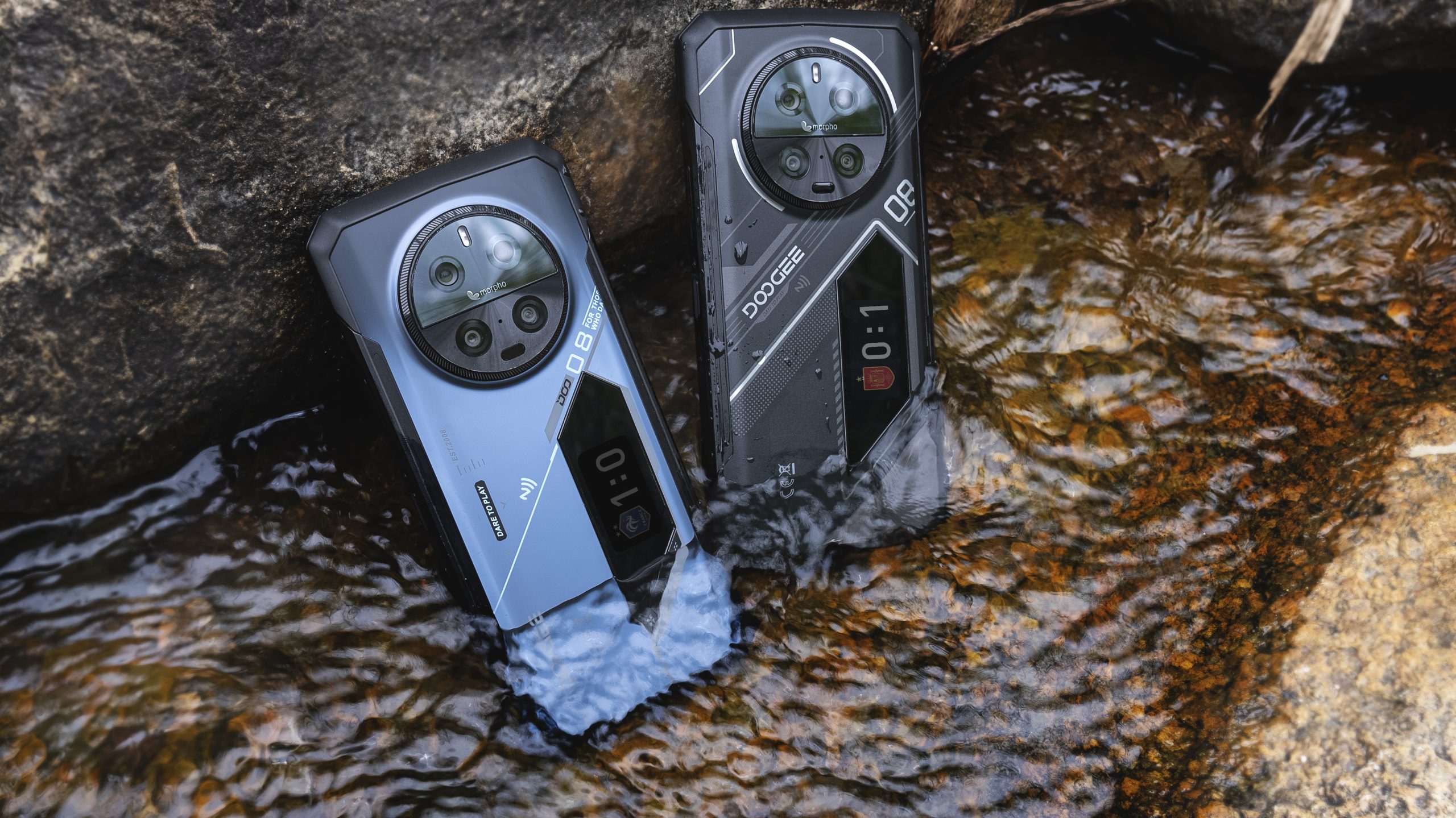
DOOGEE is renowned for making outdoor smart consumer electronics and DOOGEE V40 Pro is no exception. It isn’t simply just a tough phone, but also comes with certain unique features that make it our pick as the best rugged smartphone of 2024. The smartphone arrives with an IP68 rating, which means that it is dust tight and can withstand 1 meter of water imersion. Alongside this, you also get an IP69K rating, so it can withstand high pressure and high temperature water jets and dust as well.
The DOOGEE V40 Pro is certified with MIL-STD-810H miltary standard, which means that it has been teased in low pressure altitudes, shock, high temperature, sand and dust, humidity, and solar. Rugged phones are usually bare bones, but the V40 Pro packs some impressive hardware. The front sports a 6.78-inch 2.4K screen with a 120Hz refresh rate. Meanwhile, the rear features a 1.47-inch secondary screen that displays crucial information as well. Under the hood, it is equipped with the Dimensity 7300 SoC, which is paried with 16GB of RAM and 512GB of internal storage.
A massive 8,680mAh battery pack powers thie device, which supports 33W wired fast charging. So the phone dying out quickly won’t be an issue/ Rugged phones aren’t known for their cameras, but DOOGEE made great improvements in this regard as well. The rear features a 200MP main AI camera along with a 20MP Night Vision camera, an 8MP ultra wide angle lens, and an 8MP Long Focus Camera. All of this is packed in a refreshing new E-Sports inspired gaming design. This makes it look better than most rugged phones as well.
2. Ulefone Armor x31 Pro
Ulefone Armor x31 Pro
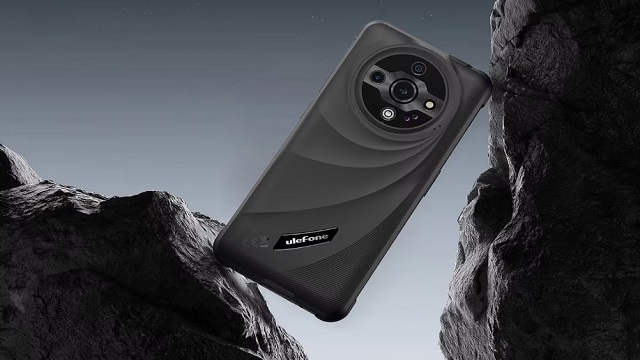
Our pick for the best rugged smartphone runner up is the Ulefone Armor X31 Pro. While it’s design isn’t as unique as the DOOGEE V40 Pro, the Armor X31 Pro doesn’t disappoint in terms of durability. It also offers IP68/IP69K rating along with the MIL-STD-810H certification. So this model is just as durable as our top pick. Under the hood, the Ulefone Armor X31 Pro is equipped with the Dimensity 6300, which is a budget mid-range decent processor.
On the front, it sportsa 6.56-inch IPS LCD panel with an HD+ resolution, a 120Hz refresh rate, and 800 nits of peak brightness. The back features a 64MP primary camera, 25MP Night Vision camera, and a 2MP macro shooter. Thanks to the IP68 rating, the Ulefone Armor X31 Pro supports underwater photography. So you can take photos and record videos underwater. A large 6,050mAh battery pack powers this model, which supports 18W wired fast charging. Taking all of these specs into consideration, it is a great rugged phone that you can check out right now.
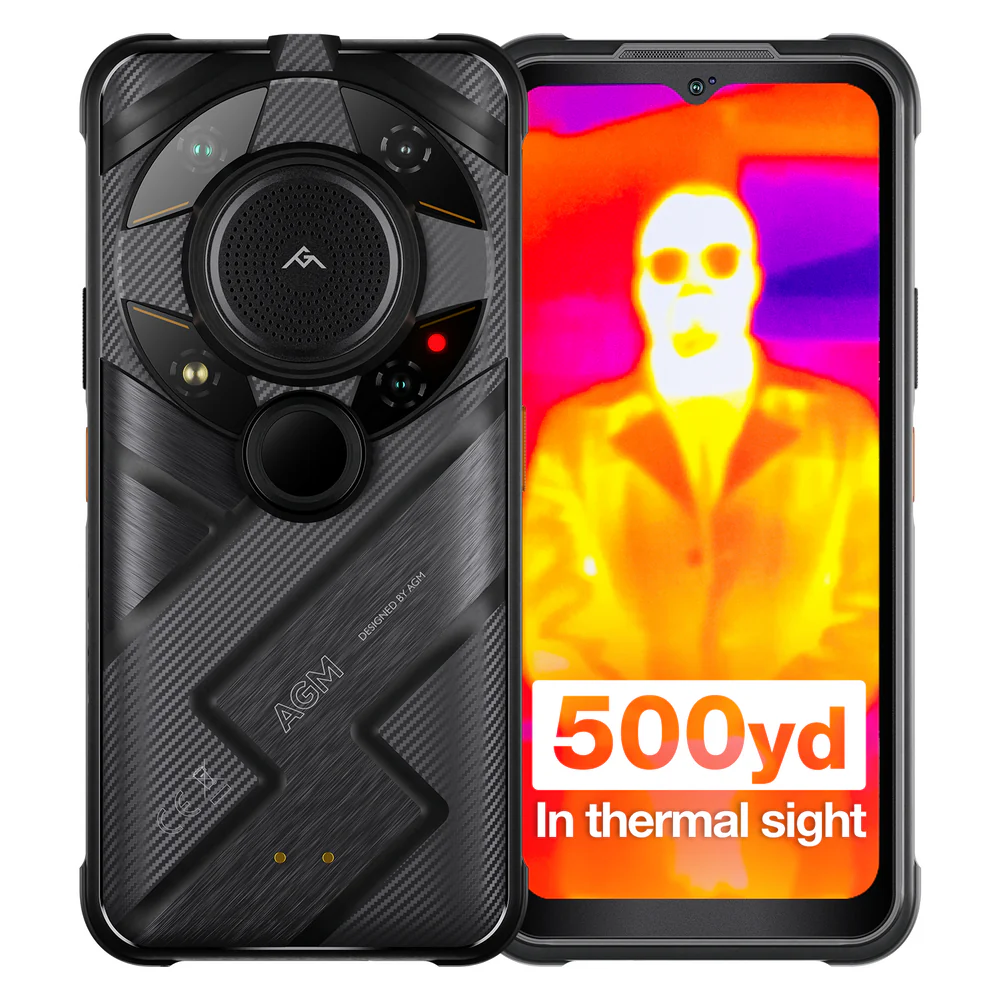
3. AMG G2 Guardian
AMG G2 Guardian
The AMG G2 Guardian is the second runner up for the best rugged smartphone of this year. Just like the other two models, this phone also offers IP68 and IP69K rating for protection. However, it has a newer MIL-STD-810G certification, which means that it can survive a height of 1.5 meters. On the front, it sportsa 6.58-inch display with a 120Hz refresh rate and FHD+ resolution. It is equipped with the Qualcomm QCM6490 SoC, which is a 6nm based processor.
An area where the AMG G2 Guardian stands out is with the camera system. The main sensor is a 108MP camera and 2MP macro shooter, along with a 20MP infrared night vision that has a thermal sight range of 500 meters. This thermal sensor can help in construction, search and rescure, gas detection, and many such crucial tasks. Battery life doesn’t disappoint either with a sizeable 7,000mAh battery pack. Another one of its standout features is the 109dB loud speakers that sticks out from the back.
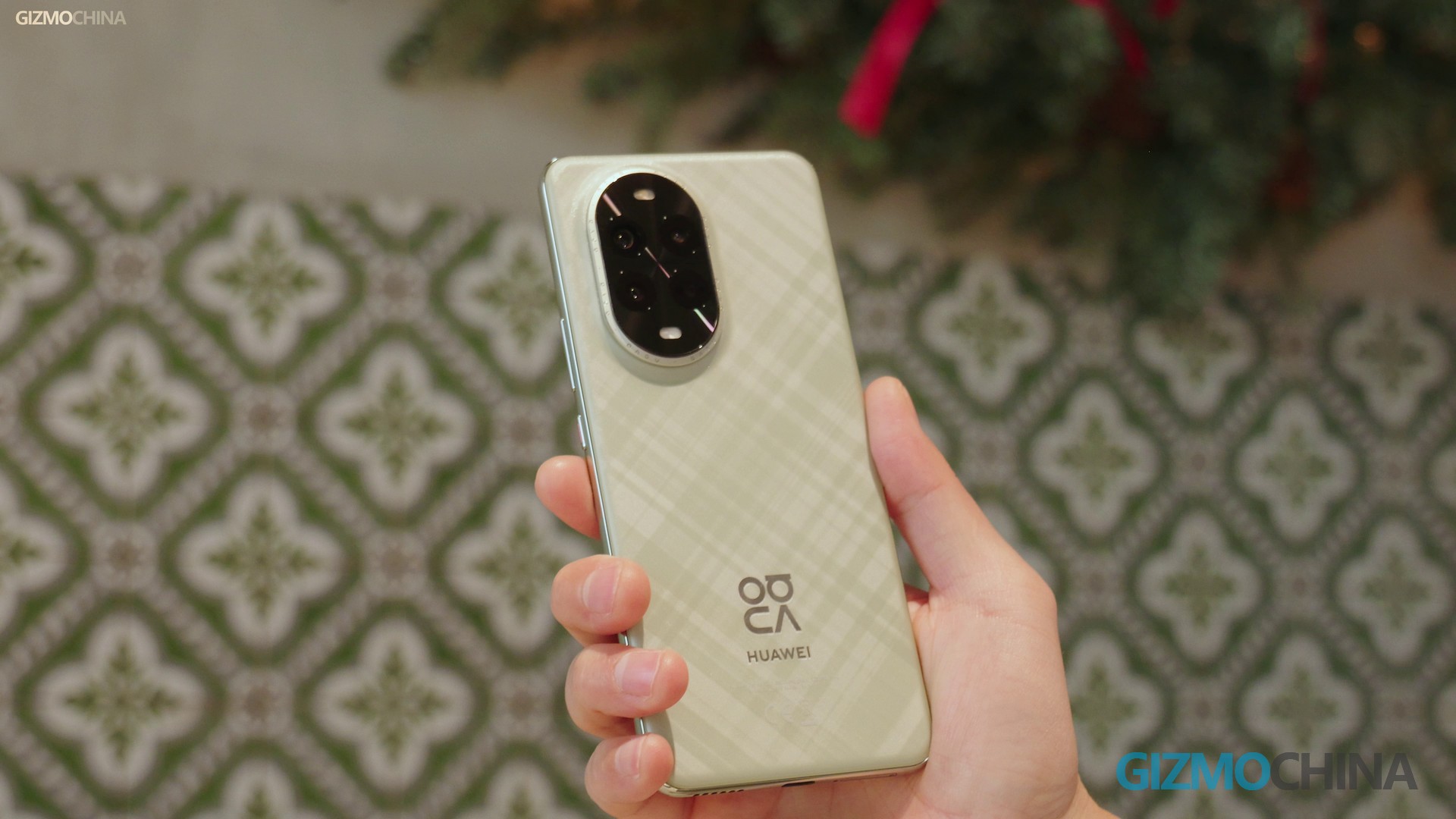
The story is about a phone we’ve been waiting for a couple of months… Well, the girls in the studio have, to be precise. It is the HUAWEI nova 13 Pro. the team trusted their instincts, so we got this phone firsthand. And the nova 13 Pro does impress us a lot.
If you’re tired of smartphones as cold, technical tools and just want a model expressing your sense with dazzling design, the Nova 13 Pro is probably the most stylish of all the special options.
Furthermore, unlike those top-notch flagships, it wasn’t born to be a tech show-off. It exists more about to fill a personalized niche in the market. So it’s great to hear that it’s released for global users.
So, we’ll share my experience and inspiration driven by the Huawei nova 13 Pro. And of course, why it’s so impressive at first glance.
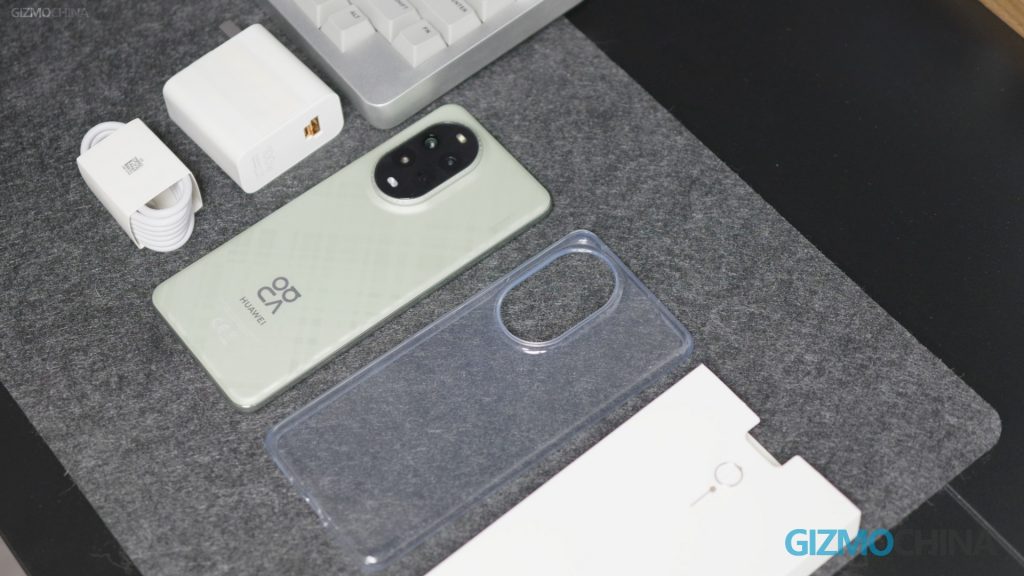
When I open the box, there’s the nova 13 Pro at the top, followed by a small card removal pin, a clear case, a 100w charging head, and a T-C cable. However, there is one point I have to mention and that is the case.
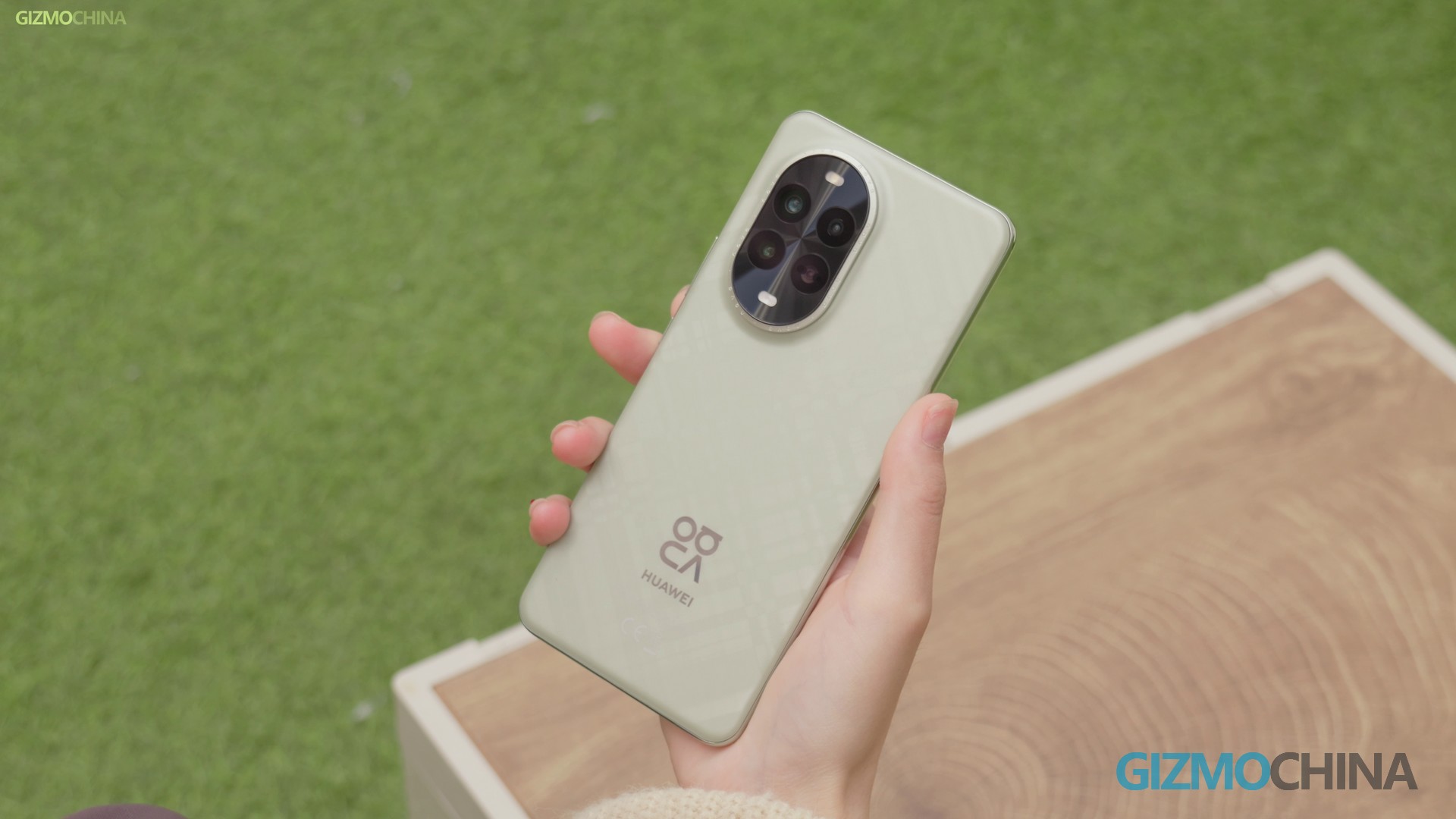
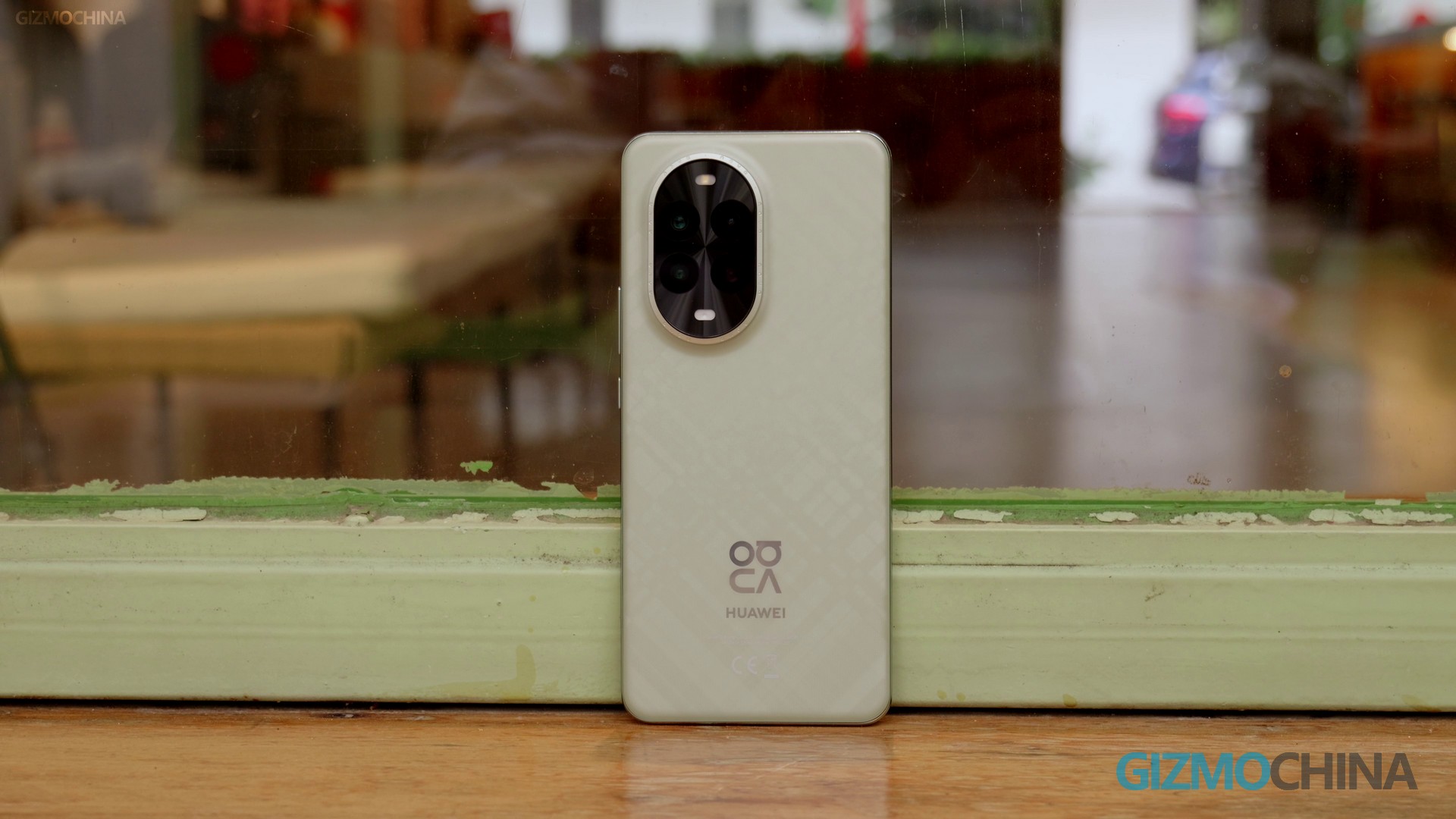
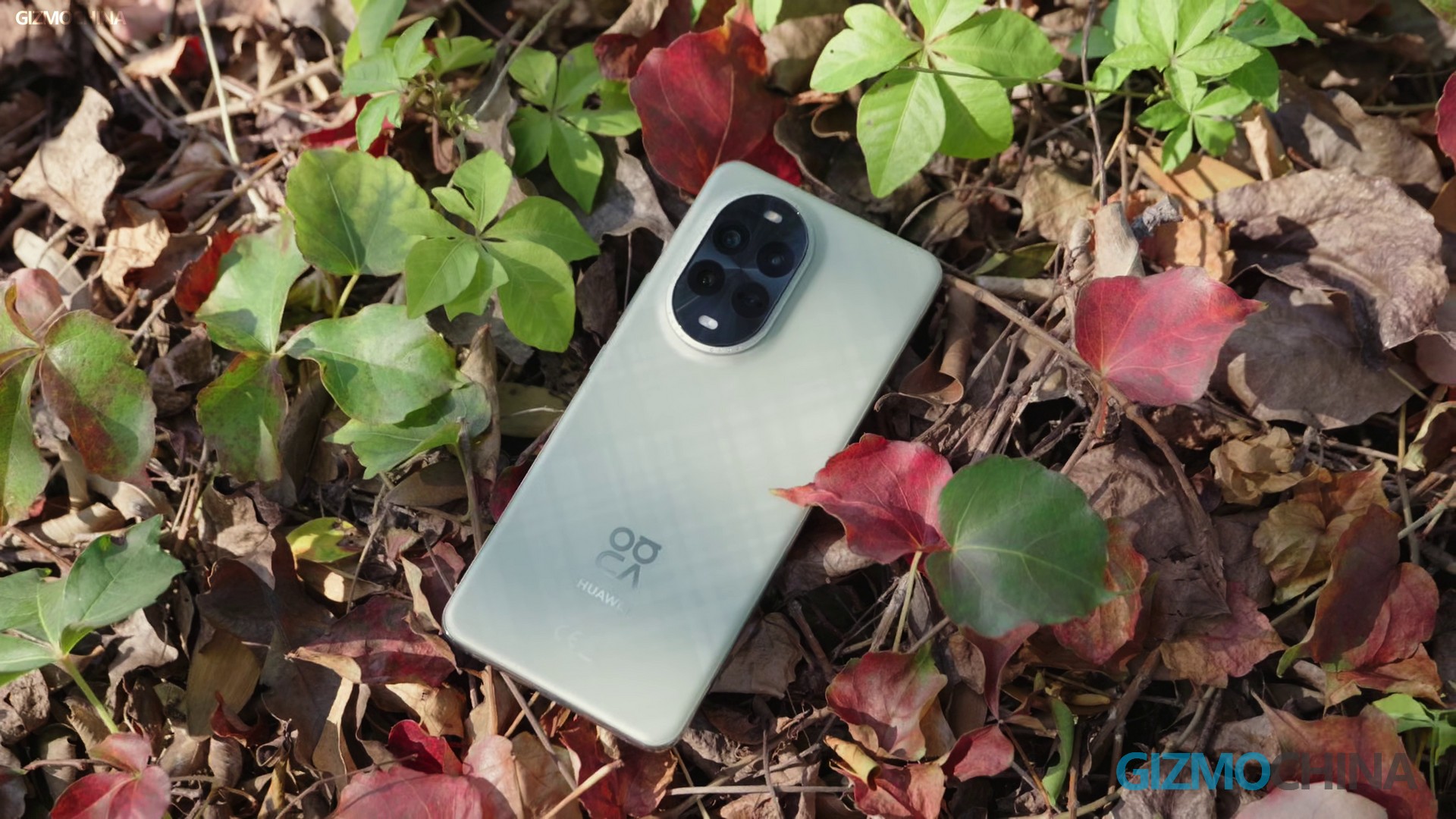
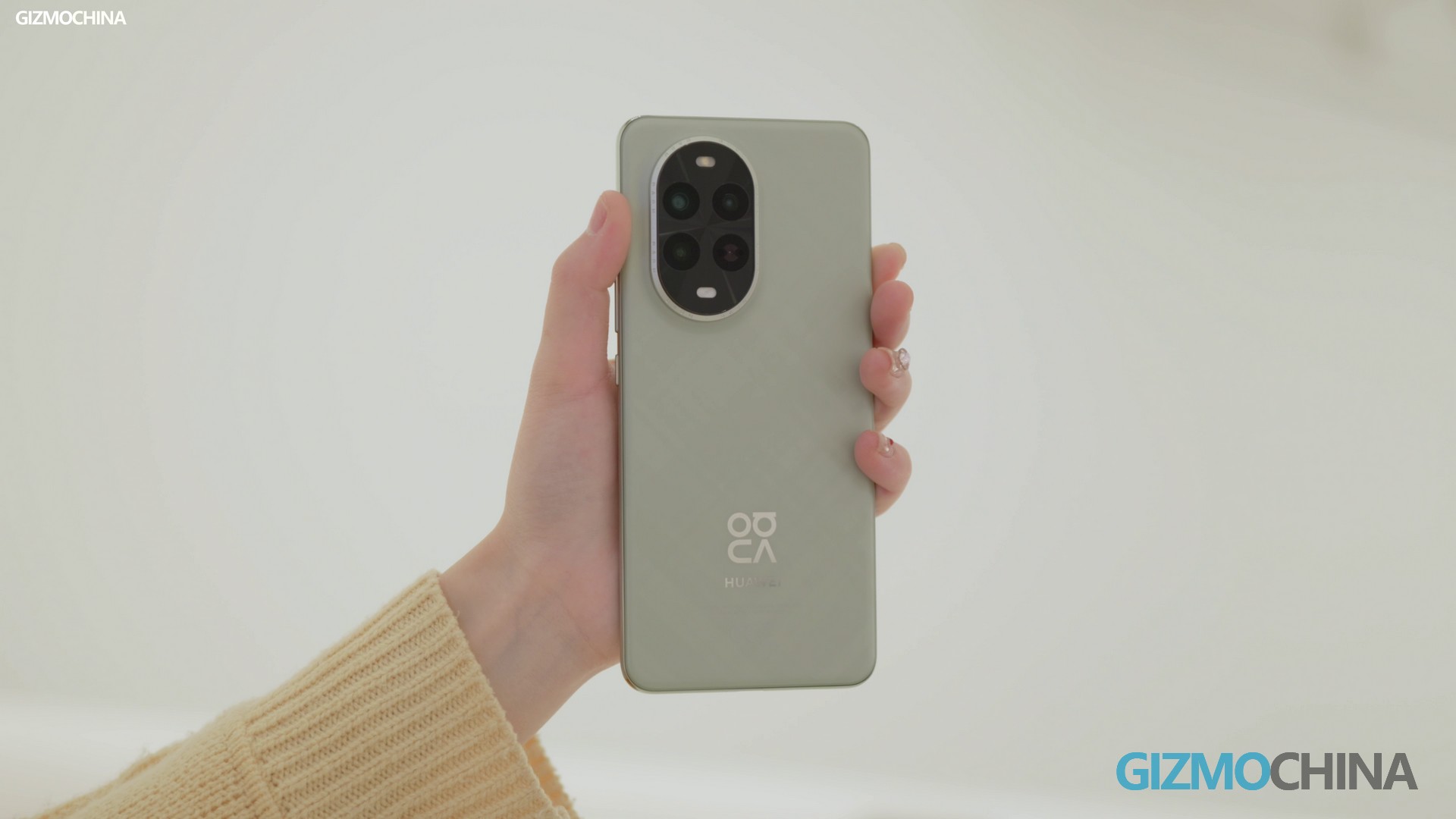
The phone’s back cover is so elegantly designed that I refused to put the case on. It’s funny that the case is even much easier to collect fingerprints than the phone. Thanks to the unique plaid texture with the matt finish, the phone offers decent grip and touch in hands. So, no way to make me put the case on.
Appearance
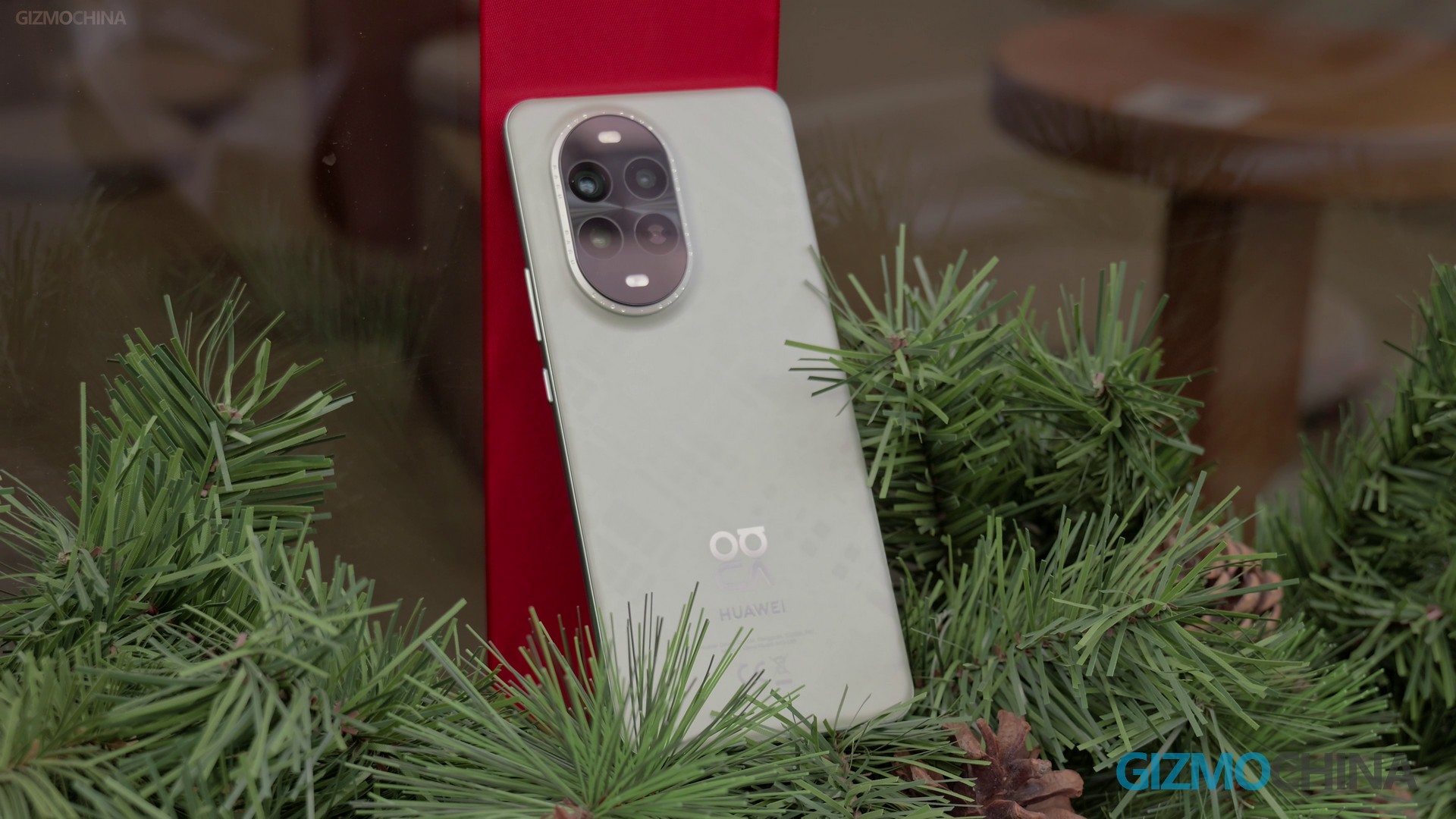
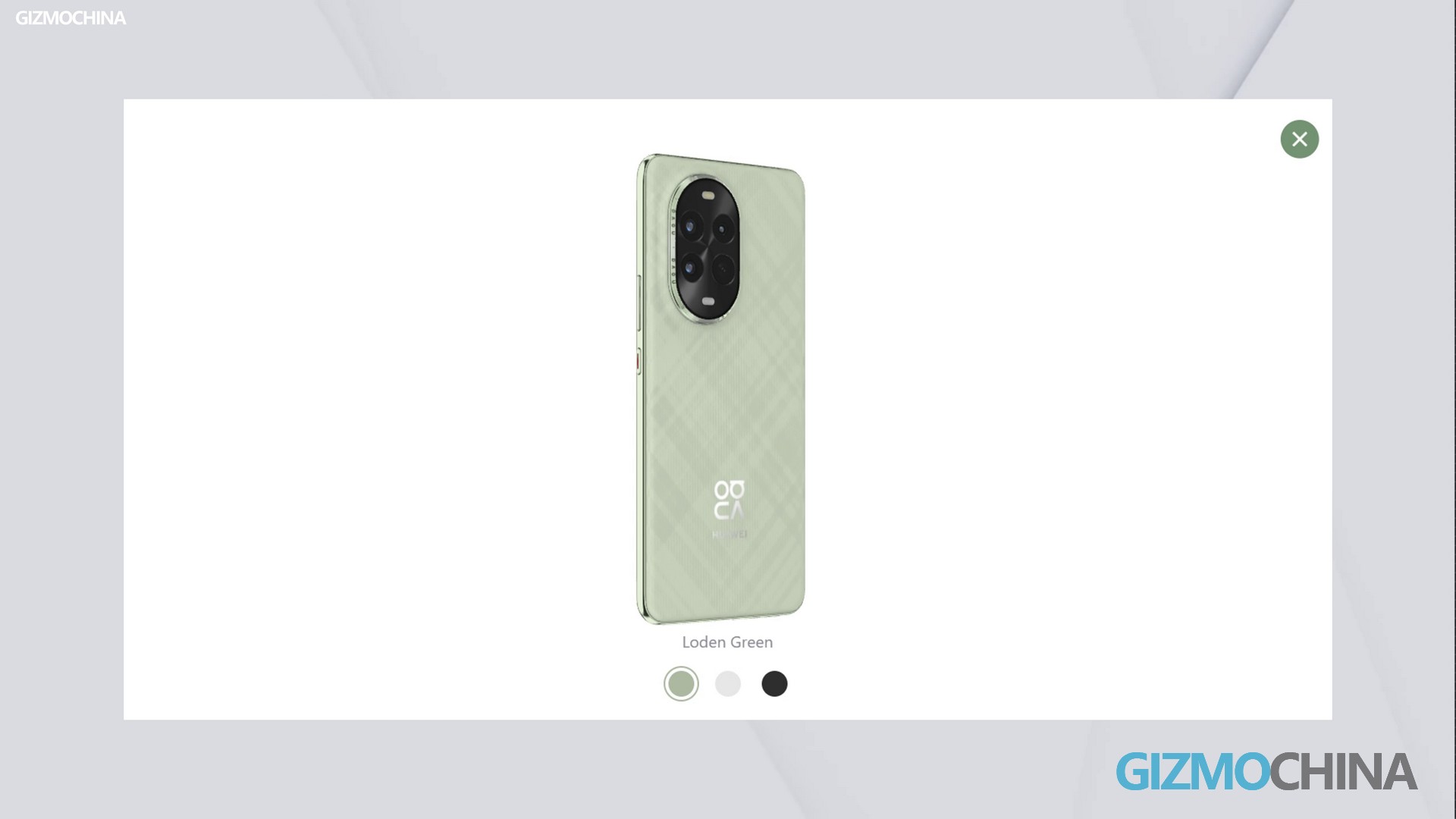
Well, to cut to the chase, back to the phone. This time The nova 13 Pro offers four high-value colorways in terms of exterior colors – Loden Green, White, and Black. The naming of these colors seems to call to our imagination.
Well, I do look for its mapping in the natural world. Especially the Green variant in my hand does inspire me of something like the country life in my childhood: memories of low-saturated greenery with sharp edges, and lively fabric texture for family afternoon picnics….
Of course, the above is just to give you an idea of how much I like the green design. We chose the green version for no other reason than I was struck by it at first glance.
To be more detailed, these colorways feature low-saturation colors, especially the Loden Green. It is visually comfortable and not fancy at all. The back cover of the fuselage is made of all-glass material using the AG Etching Process. It feels silky smooth, and surprisingly, does not easily collect fingerprints.
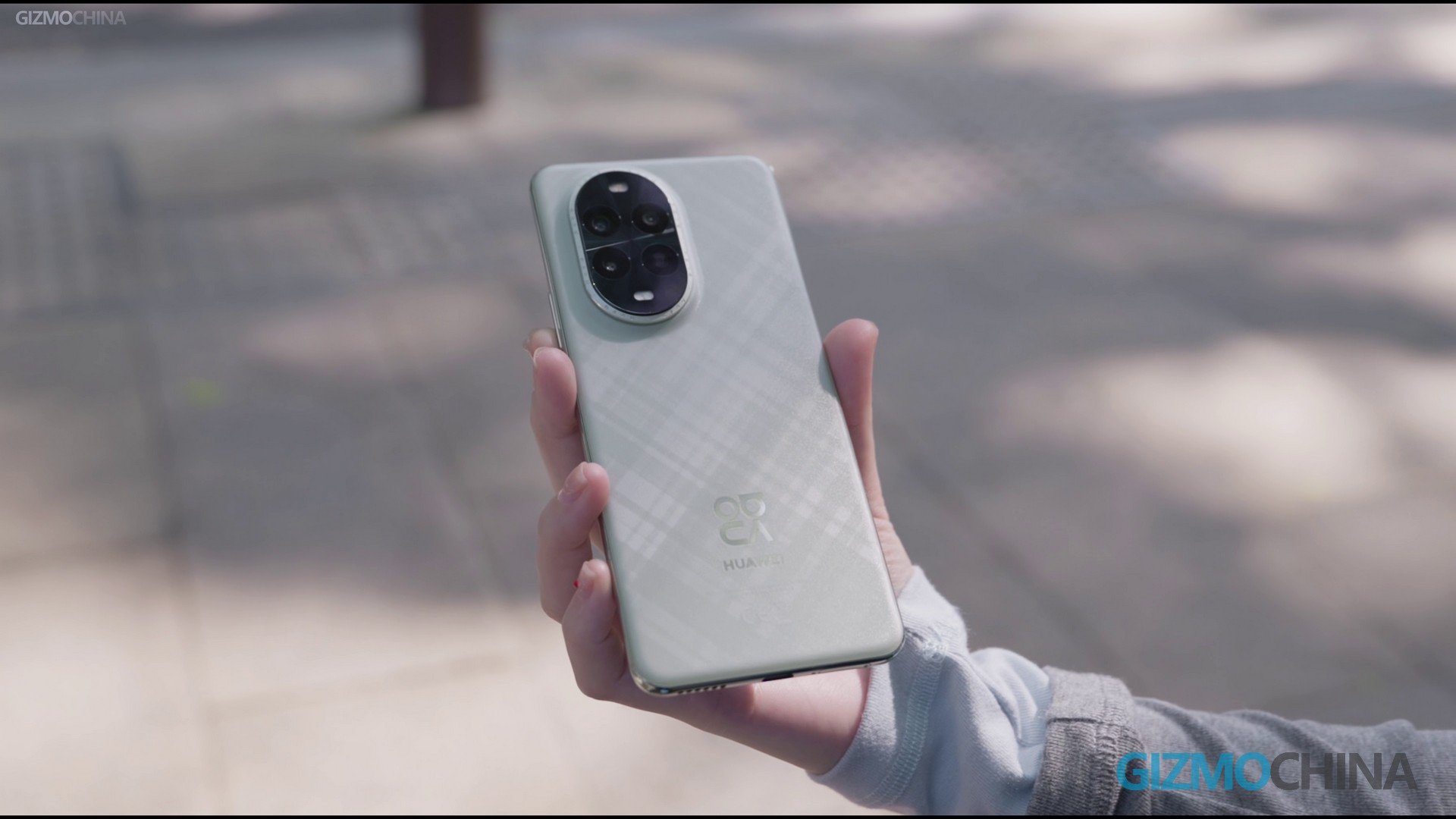
It’s likely the first time we saw a plaid texture applied on a smartphone. The dynamic texture looks so living—the pattern’s light and shadow shift in various lighting angles.
Screen
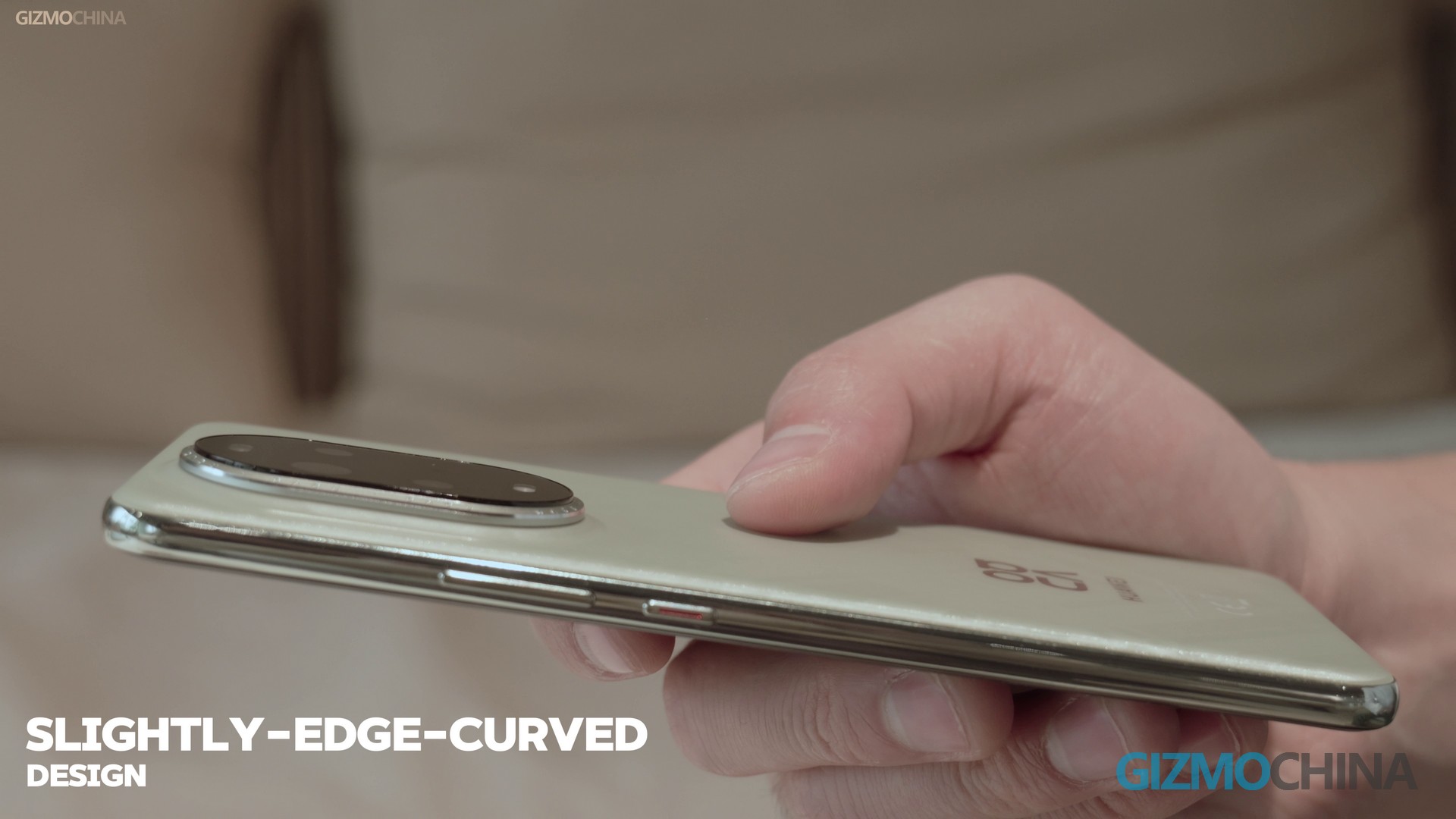
The nova 13 Pro utilizes a slightly-edge-curved design on the front face. Visually the four equal corners of the display offer absolute balance. It is a design that balances the rounded feel of a curved screen with the precise control of a flat display. It allows our palms to fit the phone better when holding it in one hand.
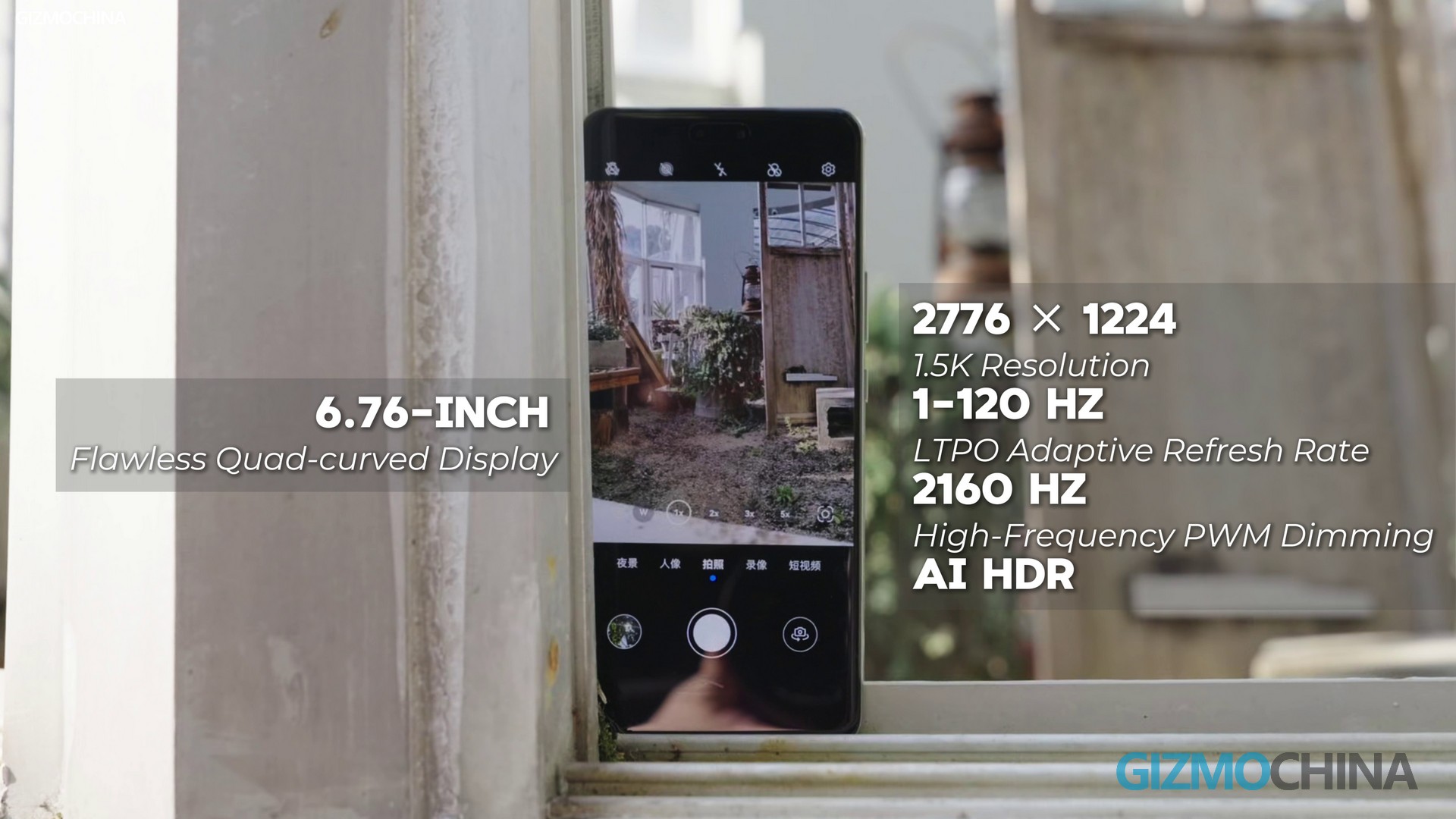
The screen measures 6.76 inches with a resolution of 1224 x 2776 pixels and supports a 120Hz refresh rate and 300Hz touch sampling rate, just like the other phones in 2024. Especially when we experience the latest EMUI, the display adds a bonus to the smooth software experience.
Lens and Camera
The rear camera module features a newly upgraded design of the Star Orbit Ring, made with a crafted metal piece. The metal color of the ring manages to be unified with the back cover but still stands out with the CNC metal cutting.
And it’s one of the rare sub-flagships this year where the camera module size gets controlled. So here the whole design looks pretty natural with a less dominant camera island in visual. Huawei has always been innovative when it comes to design sense.
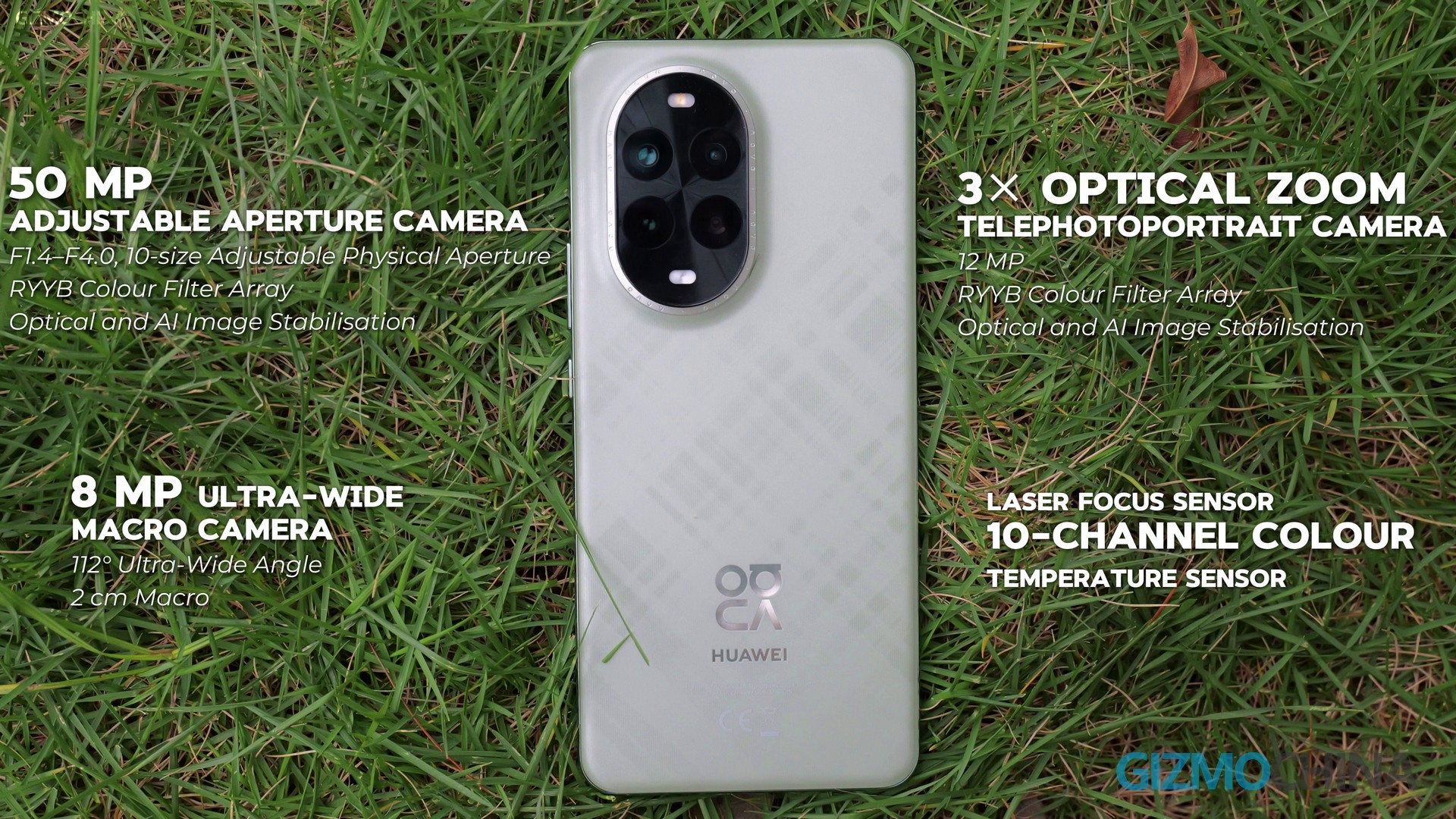
With the metal engraving and the nova logos’ star-array arrangement, the ring’s metallic texture looks even more exquisite. The looks alone are already inspiring enough. However, the second reason I choose to recommend it is its powerful camera performance. The lenses are paired with a 50MP lens with variable apertures, a 3x telephoto portrait lens with OIS, an 8MP ultra-wide-angle macro lens, a laser focus sensor, and a ten-channel color temperature sensor.
Now let’s check out how the cameras’ samples convinced us.
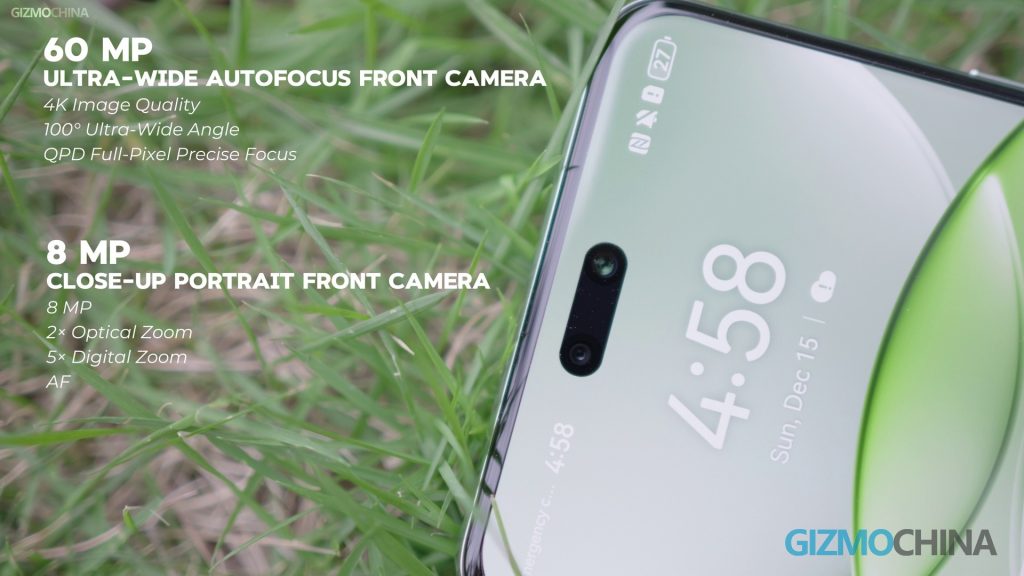
The front 60MP portrait lens is excellent for capturing skin tones and details accurately. And the fast and accurate focus performs well in a variety of scenarios. And even another ultra-wide selfie lens easily has great skin detail and expressions with the AI-based boost feature.
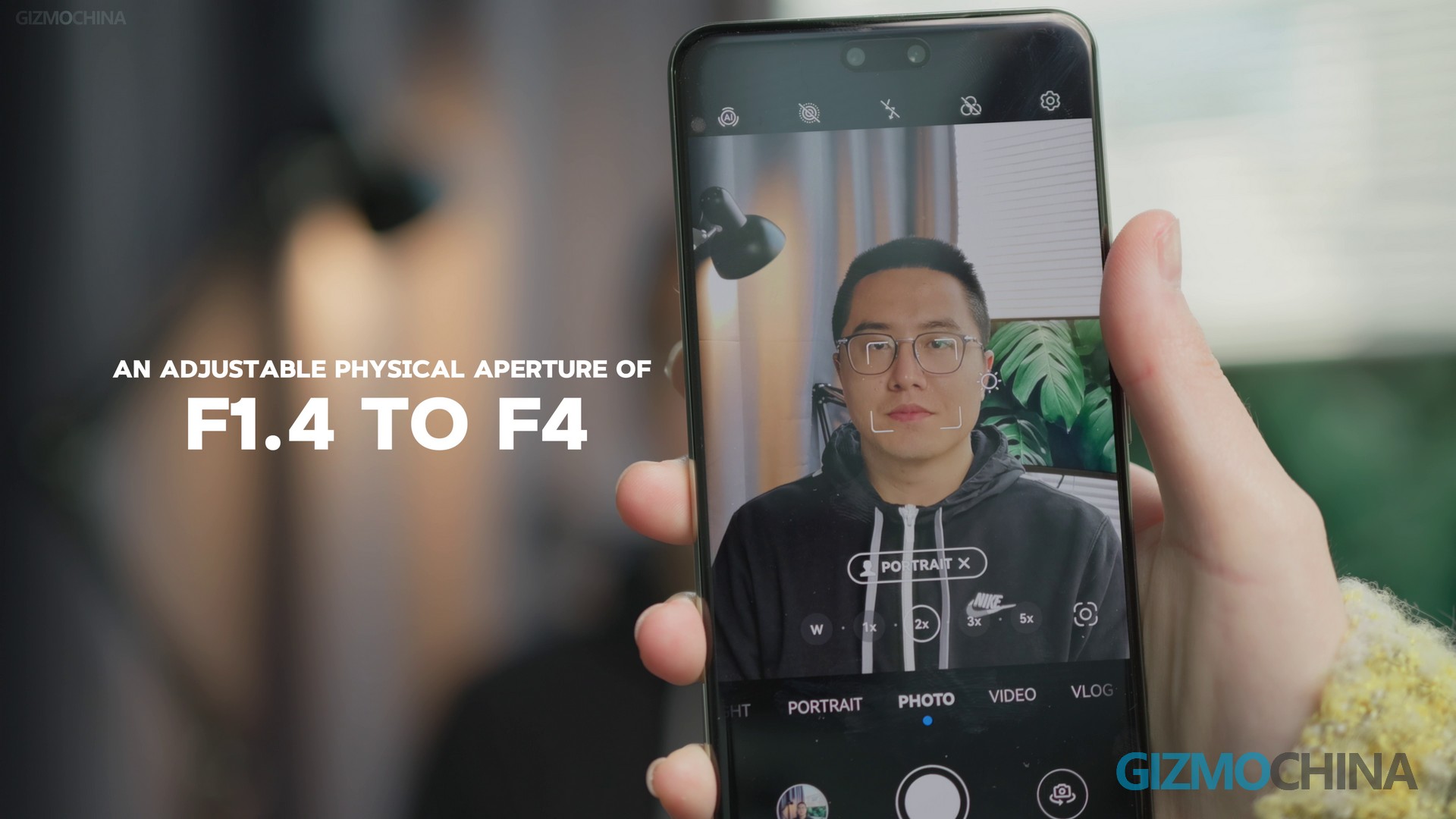
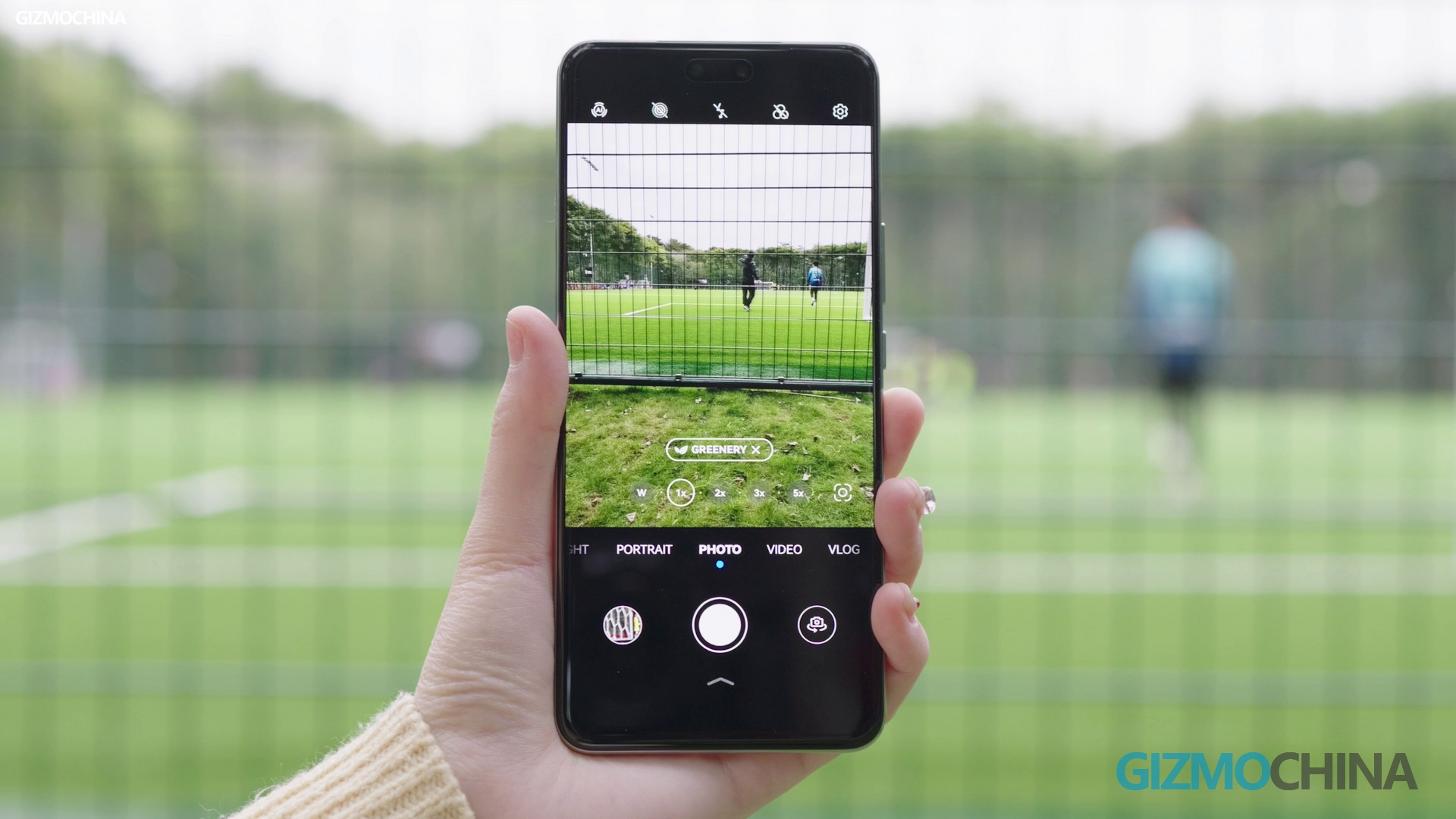
The rear 50MP main camera and 8MP ultra-wide-angle lens combination get ideal results in different shooting scenarios and present stunning colors and contrast, even in poor lighting conditions. The main camera supports an adjustable physical aperture of F1.4 to F4.
In auto mode, it would smoothly work without manual operation to deliver an adaptive exposure. Furthermore, you can also manually set up the right aperture gear in Aperture mode.
The 3x telephoto lens is also designed for taking portraits. This lens provides an amazingly natural bokeh effect when shooting stills or portraits, easily highlighting the portraits more artistic.
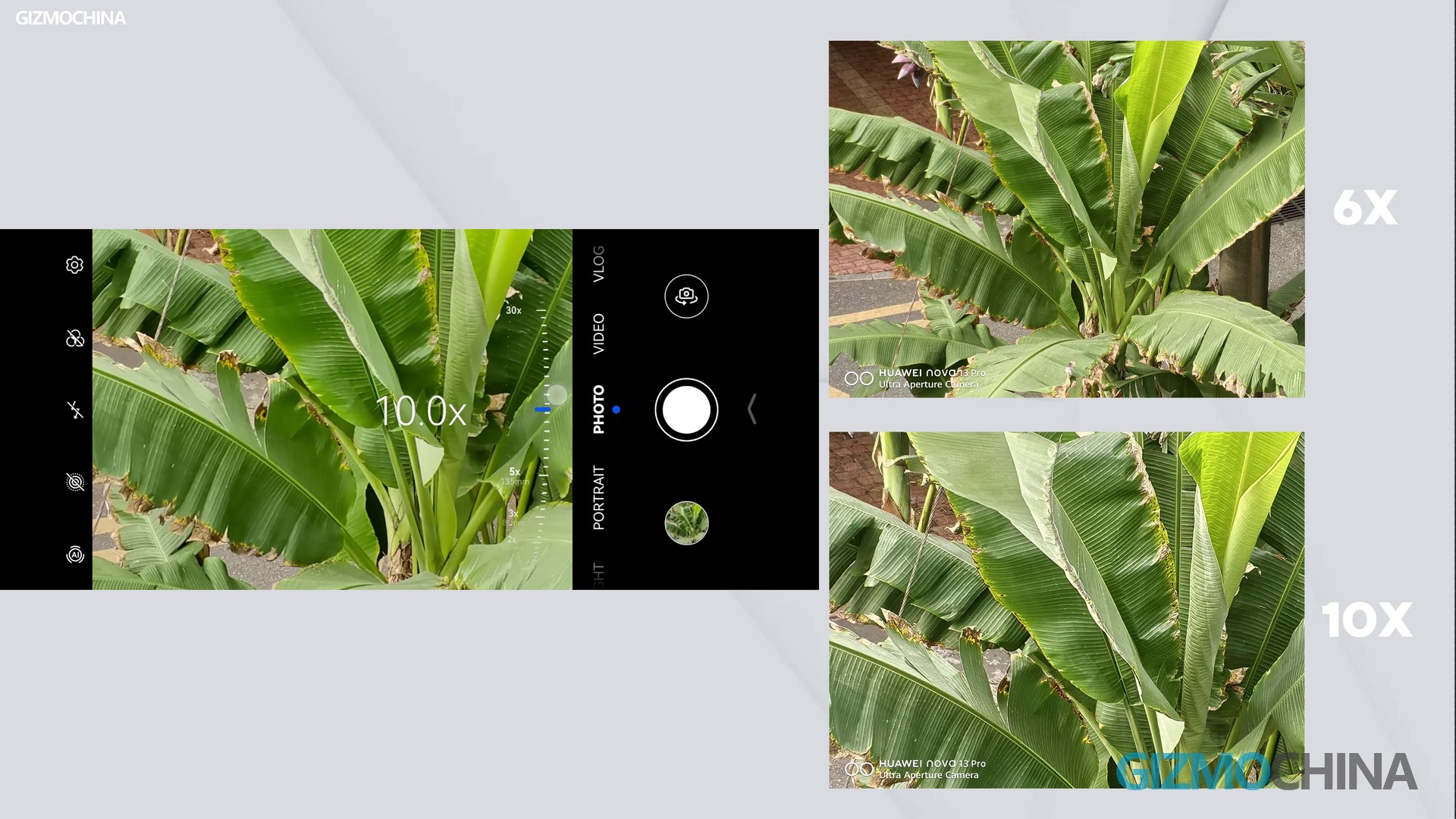
The 6x or even 10x shooting based on the 3X lens also works well, as there must be some AI optimization for the digital zooming. But even just with 3X zoom, it still delivers great composition and produces clean and pure portrait shots. And the details of the characters are pretty decent.
As for the ultra-wide lens, considering the 8MP resolution, the best scenes would be Macro shooting. But compared to the telephoto macro, it still has a gap.
Huawei nova 13 Pro’s front-facing 60MP portrait follow focus dual camera not only supports 0.7x-5x portrait full zoom shooting but also has excellent autofocus capabilities, which makes it easy to capture every moment, whether it’s a selfie or a group photo.
For photography enthusiasts, such a configuration is undoubtedly very attractive, as it allows you to take high-quality photos in any situation. We can take a look at the results of portraits taken with different focal lengths.
This multi-focal length feature can make taking photos more interesting and varied, as it allows you to find the most suitable focal length for different scenarios.
When it comes to night scenarios, the Huawei nova 13 Pro still gives us surprises. The 3X telephoto lens supports OIS stabilization and AIS electronic stabilization, which drastically reduces the impact of hand-shaking on image quality.
The OIS improves stability at slightly long exposure, and shooting experience as well. The advantages of the RYYB array and large aperture are pretty obvious.
The image detail is still excellent with decent contrast, and there is no obvious noise or blurring traces in the dark areas.
Huawei nova 13 Pro in the night shooting, the overall color reproduction is spot on, not biased. The colors were able to be correctly shown in the neon lights also without overexposure, and clearly showing the dark details as well.
AI features
Huawei nova 13 series can turn on the AI camera for besides when taking photos. It is efficient and interesting to use AI imaging features.
The AI Erase feature automatically eliminates background clutter and fills in the missing parts of the picture for a natural smooth effect.
I love this feature because it allows me to easily fix unwanted elements after taking a photo to make it look perfect.
The Best expression can do the job of selecting expressions from multiple group photos, making everyone in the group photogenic, and presenting a clear and realistic photo.
Even if someone’s eyes are closed, a quick AI motification can restore the shot to perfection.
Longevity
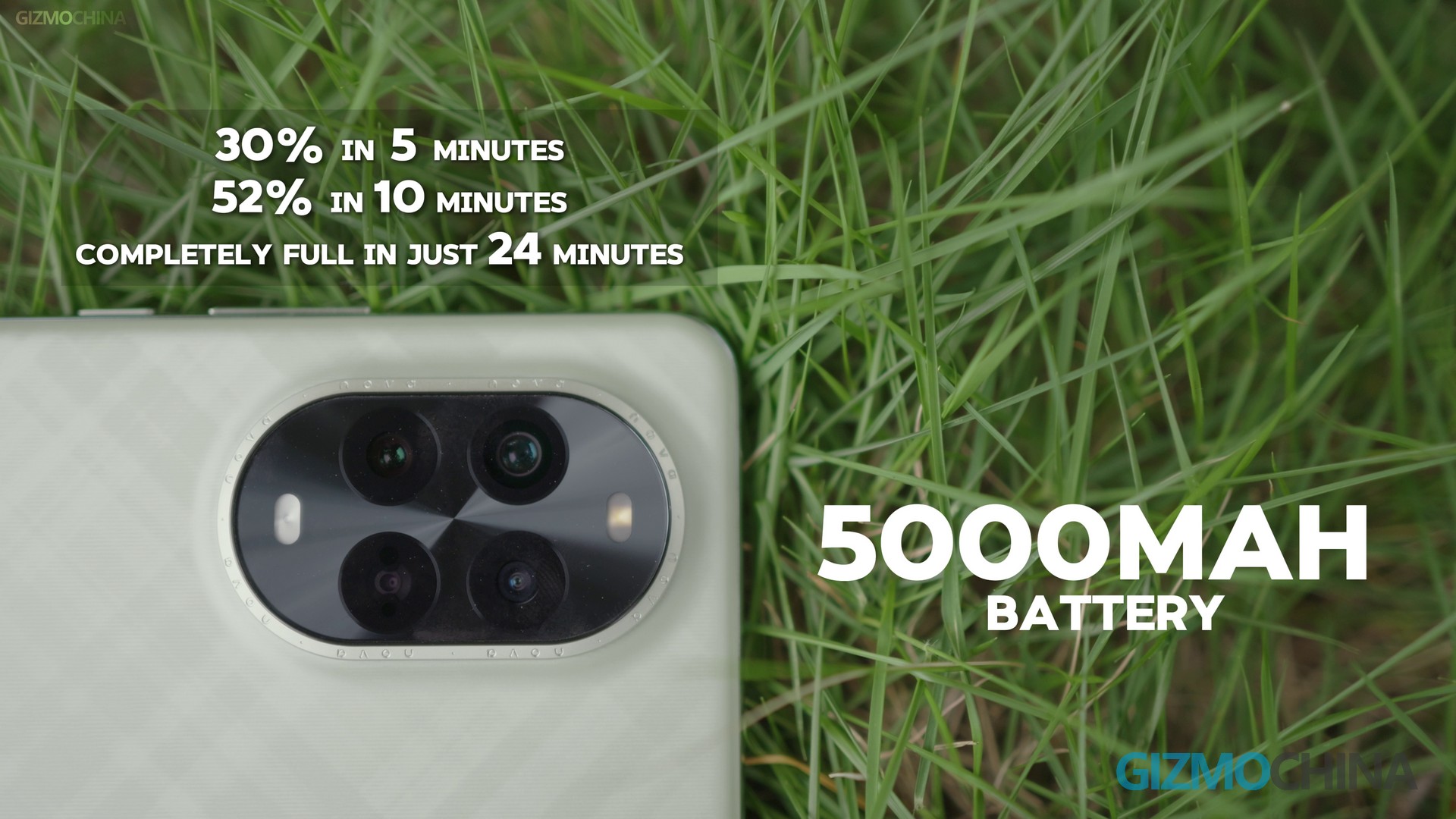
In addition, the Huawei nova 13 Pro has a large built-in 5000mAh battery, which is combined with 100W fast charging technology to restore power under intense use quickly.
In actual charging, it can be charged to 30% in 5 minutes, 52% in 10 minutes, and full in just 24 minutes, which is the same as the official data. This charging speed gives us a quick charge in any spare time.
Verdict
To summarize, the Huawei nova 13 Pro stands out easily with its stylish design, camera performance, practical software, and reliable battery life. Especially, its exquisite appearance design and powerful photography capacity make it a strong competitor at its price.
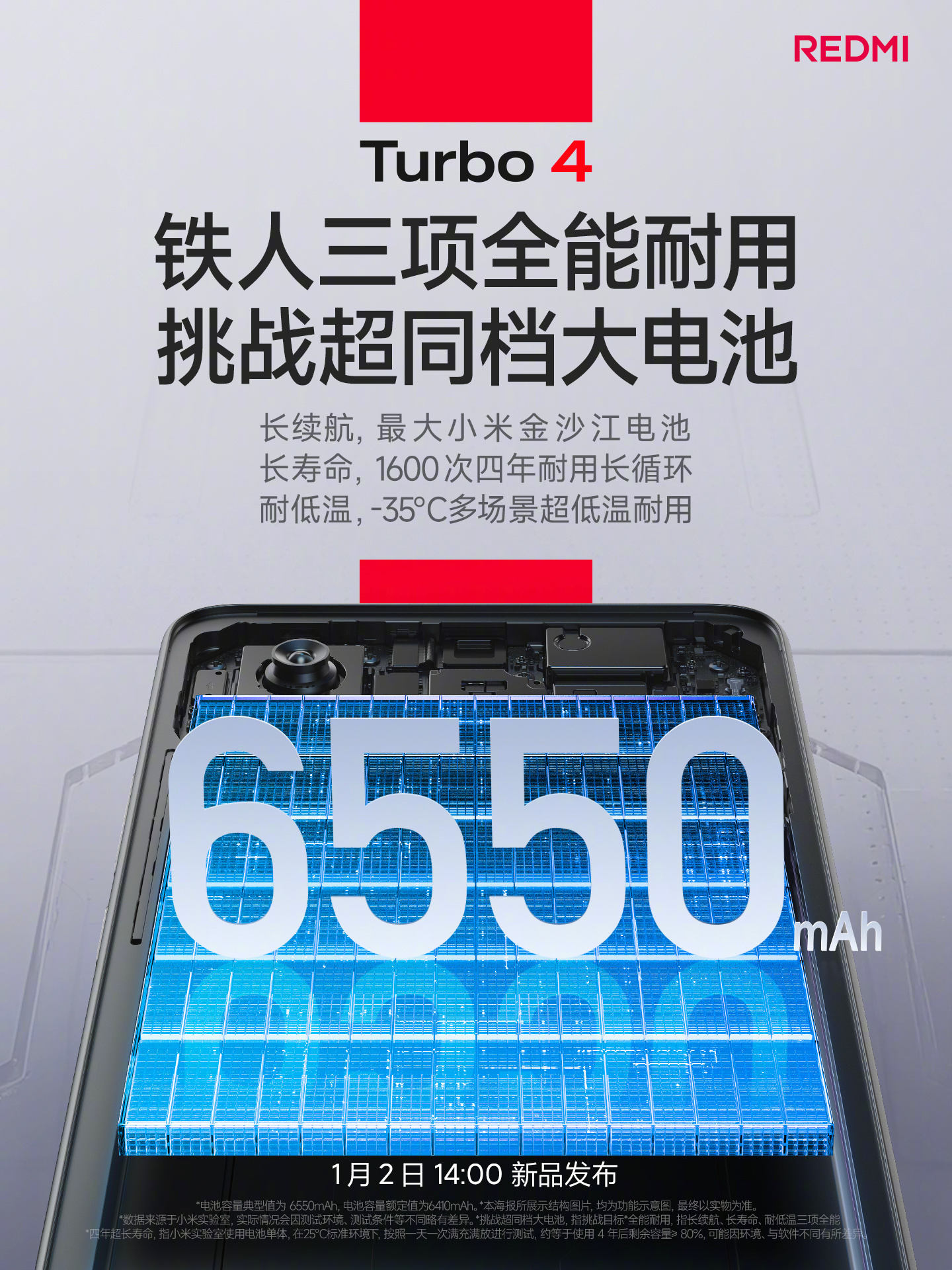
Recently, Redmi confirmed that it will unveil the Redmi Turbo 4 on Jan. 2, 2025, in China. Now that the brand has confirmed the launch date and its design, it is focusing on revealing its key specifications. Today, the brand released the following posters to confirm new details about the Redmi Turbo 4.
Redmi Turbo 4 battery size, IP rating revealed
The Redmi Turbo 4 packs a 6,550mAh battery, which supports up to 1600 charging cycles for four years. It is equipped with a dual-boost cold-resistant chip and can be used even in ultra-low temperatures of -35°C. Additionally, the brand has confirmed that those who purchase the Turbo 4 in the first sales period will benefit from a five-year battery warranty service for free.
The Redmi Note 14 Pro+, launched a few months back in China, also came with a five-year battery warranty. If the battery health is less than 80% or there is a performance failure within five years, users can enjoy a free battery replacement service, that provides great protection for users.
The other posters confirm that the Redmi Turbo 4 will also offer up to an IP69 rating for robust dust and water resistance. The brand has already confirmed that the phone will come equipped with the Dimensity 8400-Ultra chipset, priced at around 2,000 Yuan (~$275).
Other reports have claimed that the Redmi Turbo 4 will have a 6.67-inch OLED panel with a 1.5K resolution and a 120Hz refresh rate. It is expected to feature a 20-megapixel front camera and an OIS-enabled 50-megapixel + 8-megapixel dual-camera system. The phone is expected to ship with up to 16 GB of LPDDR5x RAM and up to 512 GB of UFS 4.0 storage. It will be available in white, black, and blue shades.
In today’s market, a 4K Smart TV is more than just a screen; it is an entertainment hub that combines stunning visuals with advanced features. Whether you are upgrading from an older model or buying your first 4K television, there are numerous factors to consider to ensure you get the best value for your money. From picture quality and smart features to connectivity and sound performance, understanding the technical aspects will help you make an informed decision.
At the core of any 4K TV is its display technology. The term “4K” refers to a resolution of 3840 x 2160 pixels, offering four times the detail of HD. This higher pixel count results in sharper and more detailed images, making it ideal for larger screen sizes. However, resolution alone is not enough to guarantee excellent picture quality. You should also consider the type of display technology, such as LED, QLED, OLED, or Mini LED.
OLED TVs are renowned for their ability to produce deep blacks and exceptional contrast. This is because each pixel emits its own light and can be turned off individually, allowing for perfect black levels and infinite contrast ratios. OLED technology also offers superior color accuracy and wide viewing angles, making it ideal for cinematic experiences in dark rooms. However, OLED TVs are generally more expensive and can be prone to image retention or burn-in if static images are displayed for extended periods.
QLED TVs, which stand for Quantum Dot Light Emitting Diode, utilize quantum dots to enhance brightness and color volume. This technology allows QLED TVs to deliver vibrant, saturated colors and higher peak brightness levels, making them an excellent choice for brightly lit environments. QLED models are often more affordable than OLEDs while still offering impressive picture quality, though they may lack the perfect blacks of OLED displays.
Mini LED is a newer technology that takes LED backlighting to the next level. By using thousands of tiny LEDs as a backlight, Mini LED TVs can achieve more precise control over brightness and contrast. This results in deeper blacks and improved detail in both dark and bright scenes. While Mini LED TVs are not quite on par with OLEDs in terms of perfect black levels, they offer a compelling middle ground, combining excellent picture quality with higher brightness and reduced risk of burn-in. They are also typically more affordable than OLED models.
Traditional LED TVs, while more budget-friendly, rely on larger backlighting zones, which can lead to less precise contrast and color reproduction. While they are a practical choice for casual viewing, they lack the advanced capabilities of QLED, OLED, or Mini LED displays.
When choosing a 4K TV, it’s essential to match the display technology to your viewing habits and environment. For example, if you often watch movies in a dark room, OLED may be the best choice. On the other hand, if you need a TV for a brightly lit living room or prefer a more affordable option, QLED or Mini LED could be more suitable. Each technology has its strengths, and understanding these differences will help you find the perfect TV for your needs.
Here’s a detailed summary of the TV panel comparison to help you decide which display technology suits your needs best.
Feature
Mini-LED
OLED
QLED
Brightness
High
Moderate
High
Black Levels
Excellent (not perfect)
Perfect
Good
Contrast
Very Good
Infinite
Good
Viewing Angles
Decent
Excellent
Decent
Burn-In Risk
None
Moderate
None
Cost
Moderate
High
Moderate
Best For
Balance of performance
Cinema-like experience
Bright, vibrant viewing
2. HDR Support
High Dynamic Range (HDR) enhances the range of colors and contrast in a TV’s picture. HDR formats such as HDR10, HDR10+, Dolby Vision, and HLG are becoming standard in most 4K TVs. Dolby Vision is widely regarded as the superior format because it uses dynamic metadata to adjust the brightness and color levels for each scene, providing a more immersive viewing experience. When shopping for a 4K TV, ensure it supports at least one HDR format, preferably Dolby Vision or HDR10+.
3. Refresh Rate
If you’re a gamer or plan to watch a lot of fast-paced content, such as sports, a TV’s refresh rate is crucial. A higher refresh rate, such as 120Hz, ensures smoother motion and reduces motion blur.
Many modern 4K TVs also include gaming-specific features, such as Variable Refresh Rate (VRR), Auto Low Latency Mode (ALLM), and support for HDMI 2.1. These features minimize input lag and screen tearing, providing a seamless gaming experience.
4. Smart Features
The “smart” in a smart TV signifies its capability to connect to the internet and run apps, transforming it into more than just a device for watching broadcast content. A user-friendly operating system is crucial for ensuring a seamless and enjoyable experience. Popular platforms such as Android TV, WebOS, and Tizen cater to various preferences, each offering a unique interface and features.
These platforms provide access to a wide array of streaming services, including Netflix, Disney+, Amazon Prime Video, Hulu, and more, allowing you to enjoy your favorite content with ease. Many modern smart TVs also support voice assistants like Alexa, Google Assistant, or even Apple’s Siri, enabling hands-free control. With these assistants, you can search for shows, adjust settings, or even manage other smart home devices using simple voice commands.
Additionally, some smart TVs come with unique features like personalized content recommendations, multi-user profiles, or the ability to cast content directly from your smartphone or tablet. Advanced models might even integrate smart home hubs, allowing you to control compatible devices like lights, thermostats, or security cameras directly from your TV screen. When choosing a smart TV, consider how well its operating system and smart features align with your preferences and existing smart home ecosystem.
5. Connectivity Options
Ensure the TV has a sufficient number of HDMI ports to connect all your devices, such as gaming consoles, Blu-ray players, and sound systems. HDMI 2.1 ports are particularly important if you own or plan to purchase next-generation gaming consoles like the PlayStation 5 or Xbox Series X. Additionally, look for features like eARC (Enhanced Audio Return Channel) for higher-quality audio pass-through and multiple USB ports for external storage devices.
6. Audio Quality
While many 4K TVs offer outstanding visuals, their built-in speakers often leave much to be desired in terms of audio quality. The slim designs of modern TVs, while visually appealing, limit the space available for robust speaker systems, often resulting in flat or underwhelming sound performance. Some high-end models do include advanced audio technologies like Dolby Atmos or DTS:X, which create a more immersive and dynamic sound experience by simulating a three-dimensional audio effect. However, these features are more the exception than the rule and are typically found in premium models.
For a truly cinematic audio experience, it is highly recommended to pair your TV with a quality soundbar or a home theater system. A soundbar is a compact and convenient solution that significantly enhances audio clarity and depth, often supporting advanced audio formats. For those seeking an even more immersive experience, a surround sound system with multiple speakers and a subwoofer can replicate the audio quality of a movie theater right in your living room. Investing in external audio equipment not only elevates your viewing experience but also ensures that the sound quality matches the stunning visuals of your 4K TV.
7. Energy Efficiency & Build Quality
Finally, pay attention to energy efficiency ratings, especially if you plan to use the TV frequently. Energy-efficient models can significantly reduce electricity consumption, saving you money in the long run and minimizing environmental impact.
Build quality is another crucial consideration. A TV with a sturdy design not only enhances its durability but also contributes to its overall aesthetic appeal. Well-constructed models are less likely to suffer from wear and tear over time, ensuring a longer lifespan. Additionally, many modern TVs feature bezel-less or ultra-thin bezel designs, which create a sleek, modern look and maximize the screen-to-body ratio.
This design element is particularly appealing if you want an immersive viewing experience or if the TV serves as a centerpiece in your living room. Combining robust build quality with a bezel-less design ensures your TV looks as good as it performs, blending seamlessly into your home décor.
8. Brand Reputation
Research brands and read customer reviews to gauge reliability and performance. Brands like Samsung, TCL, Hisense, LG, Sony, Xiaomi, and Panasonic have established reputations for quality, but emerging brands may also offer competitive models worth considering.
So yeah! Buying a 4K smart TV involves more than just picking the largest screen you can afford. By considering factors such as display technology, HDR support, refresh rates, smart features, connectivity options, and audio performance, you can find a TV that meets your needs and offers an exceptional viewing experience. Take your time to compare models, read reviews, and choose wisely to make your investment worthwhile.
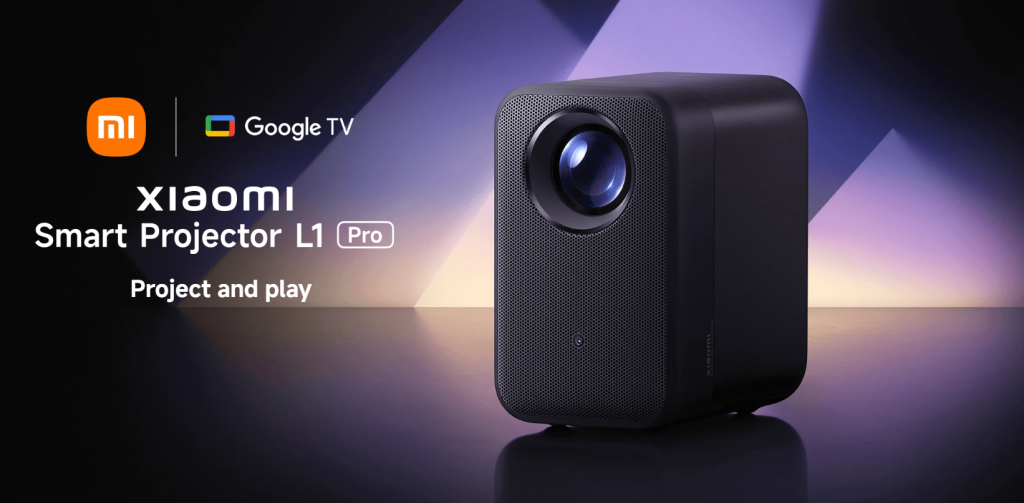
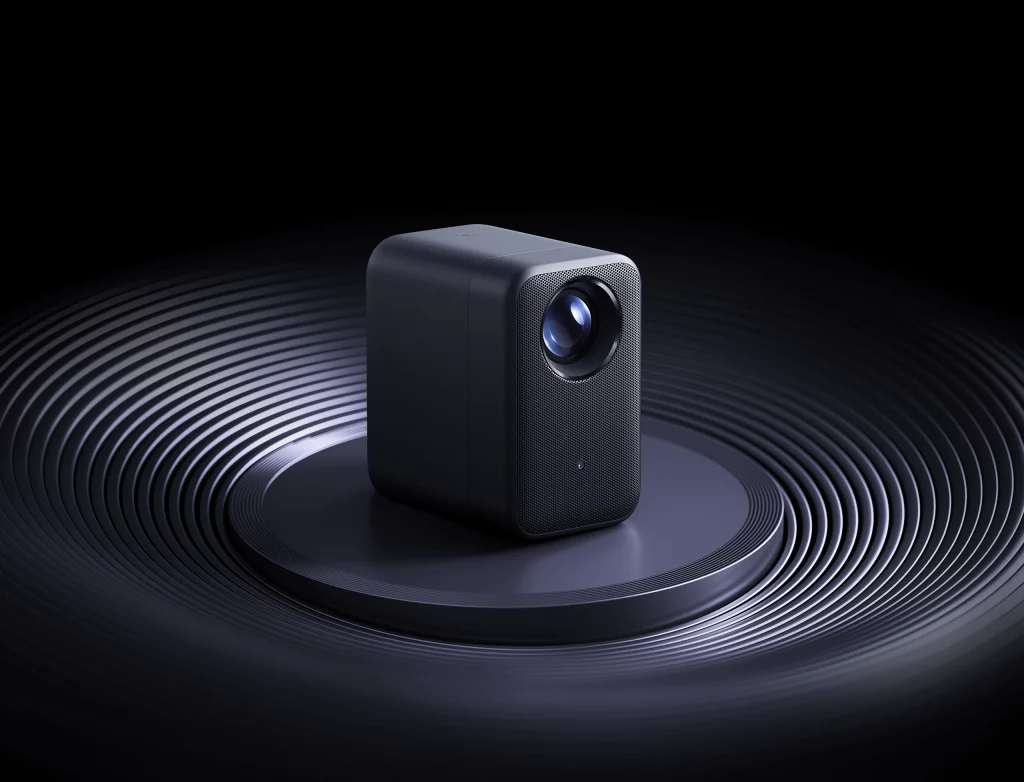
Xiaomi has introduced the Smart Projector L1 Pro, a compact home entertainment device designed to deliver a high-quality viewing experience. This new model has arrived a month after Xiaomi took the curtains off the Smart Projector L1.
The Smart Projector L1 Pro offers improved brightness and clarity compared to its predecessor. With 400 ISO lumens—twice as bright as the earlier L1 model—it produces vivid visuals, even in moderately lit rooms. Its 1080p resolution and 4K playback support ensure sharp and detailed images, appealing to both movie enthusiasts and casual viewers. The 1.21:1 throw ratio enables flexible screen sizes ranging from 40 to 120 inches, making it adaptable to various spaces.
A fully sealed optical engine minimizes dust buildup, helping maintain image quality over time. Setup is straightforward, with features such as autofocus, keystone correction, and obstacle avoidance ensuring an easy start.
Powered by the MT9630 processor, the L1 Pro includes 2GB of RAM and 16GB of storage, running on the Android-based Google TV platform. This system provides access to a wide range of streaming apps and services, all through a user-friendly interface. Google Assistant adds voice control for searching content, adjusting settings, or managing connected devices.
The projector supports wireless connectivity with Bluetooth 5.0 and dual-band Wi-Fi, making it easy to cast content from smartphones or tablets. A Bluetooth remote enhances navigation. The L1 Pro features a compact, minimalist design that fits well in most living spaces. Its dual-loop cooling system keeps operation quiet and prevents overheating, promoting long-term reliability.
The audio setup includes dual 5W speakers with Dolby Audio certification, providing a clear sound that complements the visuals, and reduces the need for external speakers.
The pricing and release date for Xiaomi’s Smart Projector L1 Pro has not been announced yet.
MediaTek is gearing up to compete with Qualcomm in the high-performance chipset market with the Dimensity 9500. Following a recent leak about the Qualcomm Snapdragon 8 Elite 2, new details have emerged about MediaTek’s plans for next-generation smartphones.
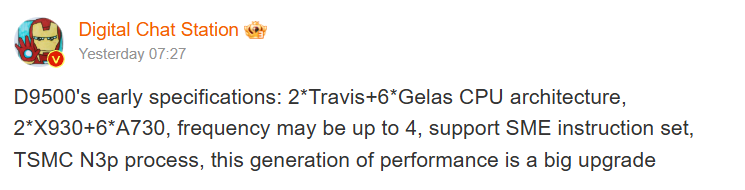
As per details shared by Digital Chat Station, the Dimensity 9500 features a 2+6 CPU configuration, replacing the all-big-core architecture of its predecessors. It includes two Cortex-X930 “Travis” cores and six Cortex-A730 “Gelas” cores. This design mirrors Qualcomm’s Snapdragon 8 Elite, focusing on a balance between performance and efficiency.
The chip’s prime cores are expected to reach a clock speed of 4GHz, a 10% increase over the Dimensity 9400’s 3.62GHz. As for the GPU, the Dimensity 9500, built on TSMC’s N3P 3nm process, will emphasize better power efficiency and thermal management. It will include ARM’s Scalable Matrix Extension (SME) to boost multi-threaded performance, making it ideal for AI and gaming applications.
The Dimensity 9500 is expected to launch in mid-2025, well ahead of its Qualcomm rival, with the Snapdragon 8 Elite 2 reportedly set for release in October 2024. Whether the improved performance of the Dimensity 9500 will come at a higher price remains uncertain. The Dimensity 9400 is approximately 19% cheaper than the Snapdragon 8 Elite processor. With reports suggesting the 8 Elite 2 could be even pricier than its predecessor, MediaTek has an opportunity to attract new customers if it can keep the Dimensity 9500’s pricing competitive.
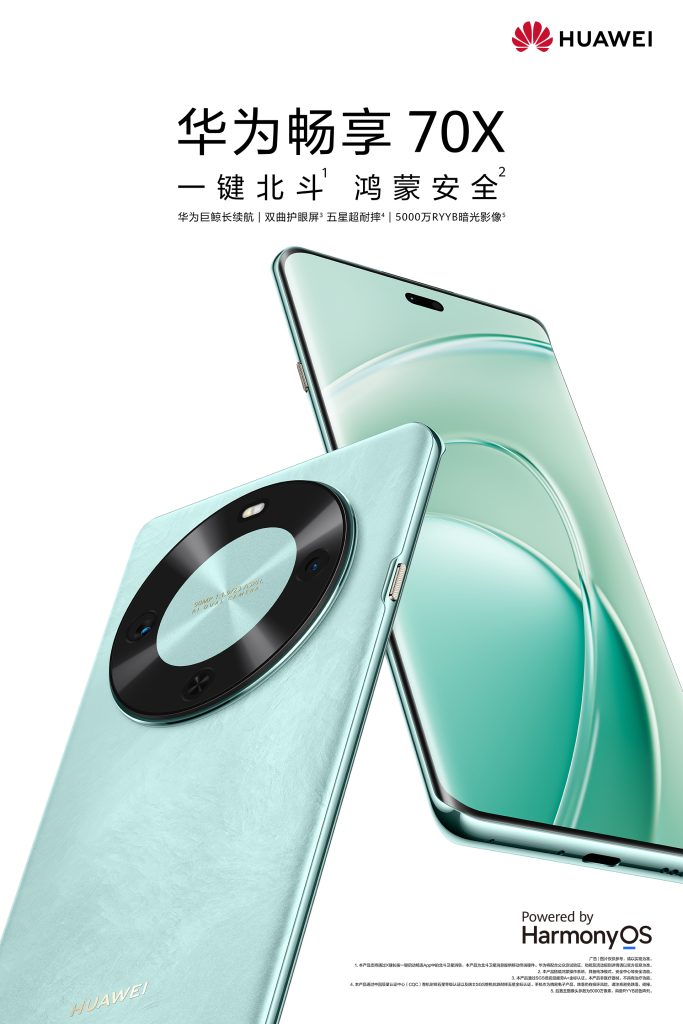
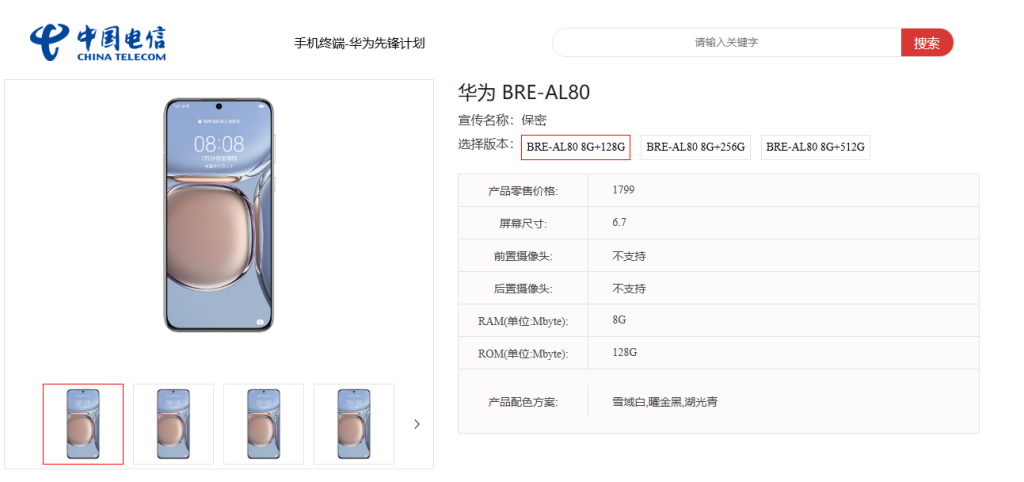
Huawei is preparing to launch its latest smartphone, the Enjoy 70X, on January 3, 2025. This 4G model builds on the Enjoy 70 series and has been featured in both promotional posters and listings on the China Telecom website, revealing key specifications and pricing.
Design and Features
The Huawei Enjoy 70X features a curved-edge display with a centrally aligned punch-hole selfie camera, contrary to earlier reports of a pill-shaped cutout. Its rear includes a circular camera module housing two sensors and a dual-tone LED flash. The device supports Beidou one-click navigation, boasts HarmonyOS 4.3, and includes features like an eye protection screen, long battery life, and five-star drop resistance.
The 50MP RYYB dark light camera is a standout feature, designed for improved low-light photography. The device is expected to be powered by the Kirin 8000A 5G processor, although the 4G branding suggests regional variations in connectivity.
The Enjoy 70X will feature a 6.7-inch display with a resolution of 1920×1200 pixels and support for 16.7 million colors.
Pricing & availability
The Huawei Enjoy 70X has three storage options:
8GB/128GB priced at CNY 1799 ($246)
8GB/256GB at CNY 1999 ($274)
8GB/512GB at CNY 2299 ($315)
Four color options will be available: Lake Green, Spruce Blue, Snow White, and Golden Black. Initially slated for December 30, 2024, the launch has been rescheduled to January 3, 2025.
In other news, details about the camera system of Huawei’s upcoming photography flagship, the Pura 80 Ultra, have emerged. According to reports, the device will feature a 50 MP main camera with a 1-inch sensor and variable aperture, a 50 MP ultrawide camera, and a “super-large” periscope zoom lens with a 1/1.3-inch sensor.
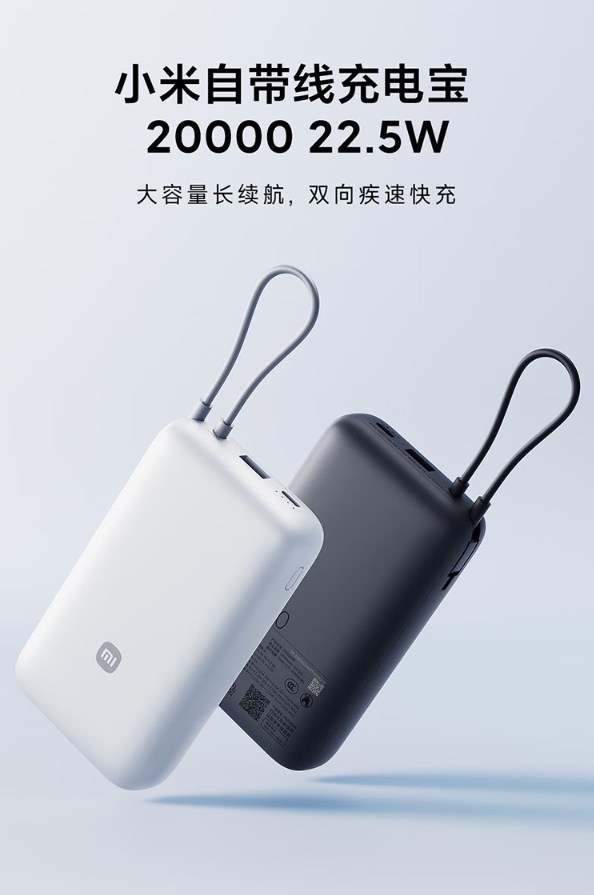
Xiaomi has launched its latest 20,000mAh 22.5W power bank with a built-in cable in the Chinese market. It is priced at 129 yuan ($18) and will be available for its first sale on January 2 at 10:00 AM on JD.com. Let’s check out its key specs.
Xiaomi 20000mAh Power Bank Specifications
The Xiaomi power bank features a massive 20,000mAh battery capacity powered by two 10,000mAh lithium-ion cells. These cells deliver an effective rated capacity of 12,000mAh (5V/3A) and an energy rating of 74Wh, meeting international aviation standards, ensuring it’s safe to carry on flights.
This power bank equips a built-in USB-C cable for dual-way fast charging, simplifying portability by eliminating the need for additional cables. It is compatible with a wide range of devices, including Android phones with USB-C ports and all iPhone models starting from the iPhone 15 series.
It sports a maximum fast-charging output of 22.5W, ensuring swift power delivery to your devices. For instance, it can charge a Xiaomi 15 Pro up to 31% in 30 minutes and an iPhone 16 Pro up to 56% in the same time frame. This performance is backed by Xiaomi’s intelligent charging technology, supporting fast charging in both input and output modes.
The power bank comes with three output interfaces: a built-in USB-C cable, a USB-C port, and a USB-A port, allowing simultaneous charging for up to three devices. The power bank also automatically recognizes and adjusts the current required by connected devices, ensuring compatibility with smartphones, tablets, Bluetooth headphones, and fitness bands.
Designed for safety, it sports multiple protection mechanisms, including temperature control, short-circuit protection, overcharge/over-discharge prevention, and overcurrent safeguards, ensuring reliability during use.
It features a minimalistic, elegant design, available in two matte-finish color options. Its compact dimensions (128mm x 73mm x 32mm) and lightweight build make it easy to carry and store. The power bank comes in light grey and dark grey color options.
Earlier today, Xiaomi launched the 10000mAh Magnetic Power Bank, featuring 33W fast charging, 7.5W wireless charging, and a built-in cable. The company also introduced the Smart Camera Video Call Edition, equipped with a 3.5″ screen, a 4MP camera, and one-touch call functionality.
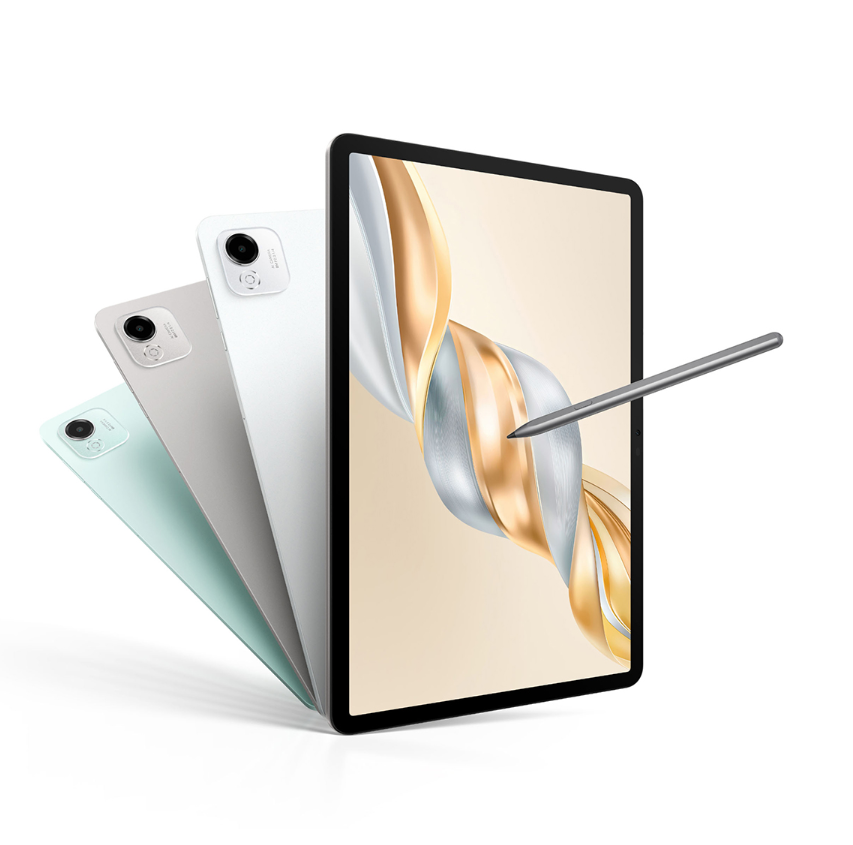
Honor has launched the Honor Tablet X9 Pro WiFi variant in China, featuring high-end specifications and an affordable price range. It offers many improvements over the Honor Pad X9, which debuted back in 2023.
Specifications and Features
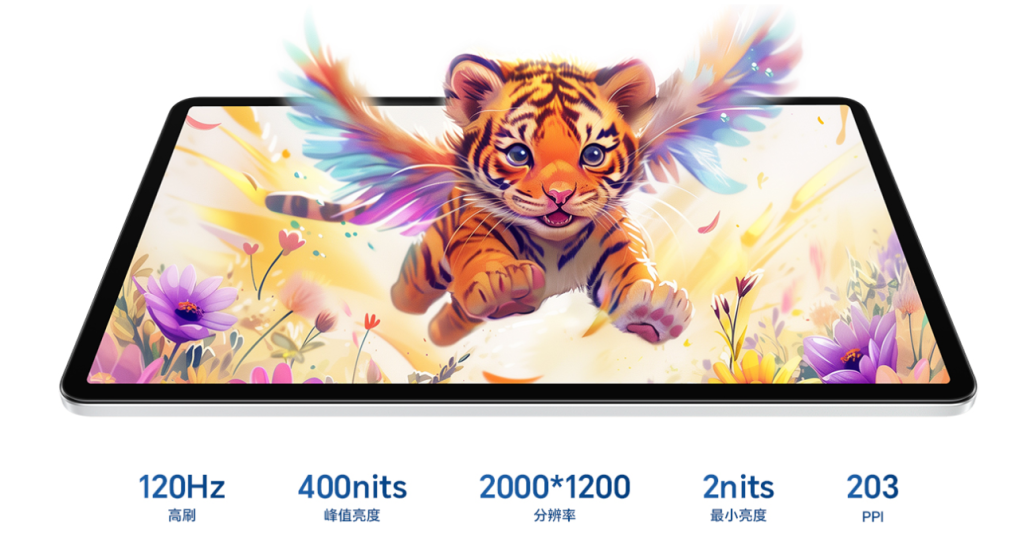
The Honor Tablet X9 Pro is equipped with an 11.5-inch LCD display that supports 1.07 billion colors, a resolution of 2000 × 1200 pixels, 400 nits peak brightness, and a smooth 120Hz refresh rate. It offers an 86% screen-to-body ratio, ensuring an immersive viewing experience. The tablet is powered by the Snapdragon 685 chipset, paired with Adreno 610 GPU, and runs MagicOS 9.0 based on Android 15.
The device includes an 8MP rear camera and a 5MP front camera for video calls and basic photography. A large 8300mAh battery powers the tablet, supporting 35W fast charging via USB Type-C. Audio and connectivity features include four speakers, a microphone, WiFi 5, and Bluetooth 5.1.
Honor has integrated several advanced features, including TUV Rheinland certifications for blue light and flicker-free viewing, AI face-changing detection, AI audio notes, multi-screen collaboration, and parental remote control. The tablet also comes with auxiliary learning tools and self-developed vocal algorithms for an enhanced user experience.
The Honor Tablet X9 Pro weighs 457g and measures 267.3×167.4×6.77mm. It is available in three colors: Azure, Jade Dragon Snow, and Cangshan Gray.
Pricing & availability
Storage options include 6/128GB priced at 1099 CNY, 8/128GB at 1199 CNY (first sale price), and 8/256GB at 1499 CNY. Pre-orders are live on the Honor China website, with official sales beginning January 10, 2025.
Every year the video games industry sees a massive new lineup of games release across various platforms. We have our award winners, sequels to major franchises, and much more. But here’s a list of three unique titles that might have flown under the radar in 2024.
The first on our list is Fear the Spotlight which was developed by Cozy Game Pals. It is a title that is available on the PC, PS4/PS5, Xbox, and Nintendo Switch, bringing the PlayStation 1 era aesthetics. The game is a low-poly horror game where two teen girls attempt to communicate with the dead in their school library, which causes things to take the turn for the worse.
While a school is already scary at night, the darkness has you creep around in the place of education. Fear of the Spotlight is a very clear call back to the classic survival horror games of the 90s, bringing elements of stealth and puzzle solving.
2. Phoenix Springs
Phoenix Springs
Phoenix Springs dropped a couple of months ago with a very unique art style in a relatively unpopular genre of video games. This game is a point and click game, which has some very interesting mechanics. It plays like a stylized detective noir mystery game where the goal of the protagonist is to find her brother.
This game released on PC via Steam and has the player collect concepts and conversations rather than physical objects. These ideas are then used in the game’s world to help progress the story. It is totally worth checking out for its weird new wave animation, but the mechanics add a refreshing depth to the genre.
3. Slitterhead
Slitterhead
The last entry on our list is an action adventure game called Slitterhead. The presentation seems quite similar to Silent Hill with a third person perspective. But fans of that series will be happy to know that the creator of the original Silent Hill Keiichiro Toyama is behind this game as well.
But despite its old school horror inspiration, the graphics and mechanics are more modern. Your character can possess a human bodies and interesting weapons to combat gory monsters “Slitterheads”. The game is based on the former Kowloon Walled City and has inspiration from popular mangas/animes like Gantz, Parasyte, and Tokyo Ghoul.
We use cookies on our website to give you the most relevant experience by remembering your preferences and repeat visits. By clicking “Accept”, you consent to the use of ALL the cookies.
This website uses cookies to improve your experience while you navigate through the website. Out of these, the cookies that are categorized as necessary are stored on your browser as they are essential for the working of basic functionalities of the website. We also use third-party cookies that help us analyze and understand how you use this website. These cookies will be stored in your browser only with your consent. You also have the option to opt-out of these cookies. But opting out of some of these cookies may affect your browsing experience.
Necessary cookies are absolutely essential for the website to function properly. This category only includes cookies that ensures basic functionalities and security features of the website. These cookies do not store any personal information.
Any cookies that may not be particularly necessary for the website to function and is used specifically to collect user personal data via analytics, ads, other embedded contents are termed as non-necessary cookies. It is mandatory to procure user consent prior to running these cookies on your website.