Huawei recently announced that it will host a launch event on Sept. 10, during which it expects to unveil multiple products. Among them is the groundbreaking Huawei Mate XT, hailed as Huawei’s most innovative and disruptive product to date, featuring a unique triple-fold design. Today, the company rolled out the Mate XT’s first commercial to tease its arrival.
Popular Chinese actress Yang Mi can be seen endorsing the Huawei Mate XT in a promotional video. She highlighted its dimensions, thickness, and innovative folding mechanism, which allows for multiple usage modes. Yang Mi expressed her excitement, stating, “Triple-fold, it’s simply amazing.”
Huawei Mate XT: What to expect?
According to reports, the Huawei Mate XT’s screen size can reach around 10 inches when fully unfolded, making it comparable to a tablet. Powered by Huawei’s proprietary HarmonyOS, the device supports advanced multitasking features such as three-screen split interaction. It also offers a tablet-like writing experience when paired with a stylus, significantly enhancing productivity.
The triple-fold design allows the Mate XT to be used in various modes: fully unfolded for a large-screen experience, completely folded as a regular smartphone, or partially folded to create a square-shaped display similar to current mainstream foldable phones.
Huawei CEO Richard Yu has described this device as the company’s most innovative and groundbreaking product, a culmination of five years of research and development. “This is a product that others might have imagined but couldn’t bring to life. We’ve turned science fiction into reality. Stay tuned for Huawei’s masterpiece!”
The Mate XT’s triple-fold screen, produced by BOE, represents a first in the industry. The folding mechanism is particularly unique, involving a pull-out screen that then folds back, creating an exceptionally thin and premium-feeling device. When fully unfolded, the thickness of the device is expected to be less than 5mm, setting a new benchmark in foldable screen technology. The previously seen leaked images of the device revealed that it has a round camera module on the back.
Vivo recently launched the T3 Pro 5G smartphone in India. The smartphone has a sub-25k price tag, and offers a lot for the asking price, like a large AMOLED display, a powerful processor, and a massive battery. The device is Now available for purchase across multiple platforms, including Flipkart, the Vivo India e-store, and partner retail stores.
Vivo T3 Pro 5G price & launch offers
The Vivo T3 Pro smartphone is priced at Rs. 24,999 for the 8GB RAM with 128GB storage variant and Rs. 26,999 for the 8GB RAM with 256GB storage variant.
The T3 Pro 5G comes with launch offers, providing customers with a flat Rs. 3,000 discount for HDFC and ICICI Bank users or an exchange bonus of the same value. Additionally, Vivo offers up to six months of no-cost EMI.
Vivo T3 Pro specs:
The Vivo T3 Pro 5G features a 6.77-inch Full HD AMOLED display with a 20:9 aspect ratio, HDR10+ support, and a peak brightness of up to 4500 nits. The screen also boasts a 120Hz refresh rate.
The Vivo by the Qualcomm Snapdragon 7 Gen 3 Mobile Platform, paired with an Adreno 720 GPU, the T3 Pro 5G promises robust performance. It runs on Android 14 with Vivo’s FuntouchOS 14 and offers dual SIM support. It has a 5500mAh battery, which supports 80W fast charging. The device offers support for 5G SA/NSA, dual 4G VoLTE, Wi-Fi 6, Bluetooth 5.4, and GPS.
The camera setup includes a 50MP main camera with a Sony IMX 882 sensor and OIS, an 8MP ultra-wide camera, and a 16MP front camera. Other features include an in-display fingerprint sensor, stereo speakers, and IP64 dust and splash resistance. It is available in multiple finishes, including Titanium Matte, Onyx Green, Luxe Marble, and Flamboyant Orange Leather, with a weight ranging from 180g to 190g depending on the model.
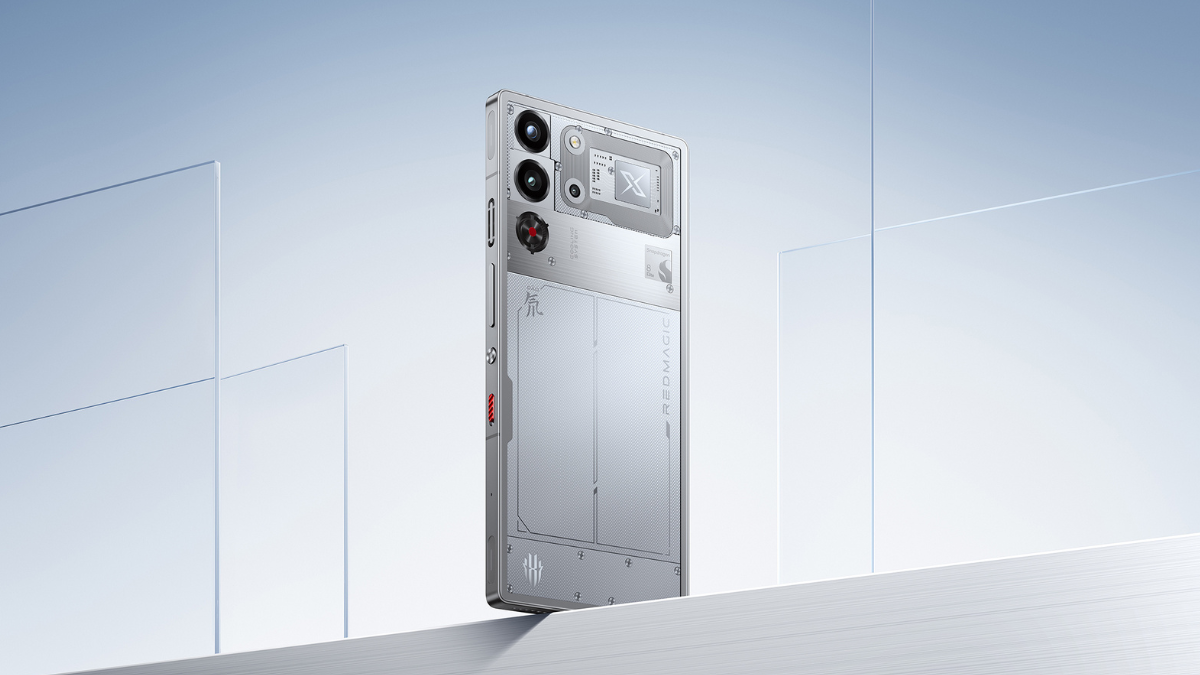
Red Magic will announce two gaming-focused tablets tomorrow. As per reports, the two models will have a 10.9-inch and a 12.4-inch display, respectively. Ahead of the launch, the brand has released the following images to showcase the design of the Red Magic Gaming Pad. It is likely that both tablets may sport the same design and mainly differ in some specifications, such as screen size, chipset, and battery capacity.
Red Magic Gaming Pad design revealed
Red Magic Gaming Pad Red Magic Gaming Pad Red Magic Gaming Pad Red Magic Gaming Pad
Red Magic has confirmed that the Red Magic Gaming Pad will come in two colors: Deuterium Transparent Silver Wing and Deuterium Transparent Dark Night. The tablet’s rear side prominently displays a camera module located in the upper-left corner. It houses a 50-megapixel primary camera, an LED flash, and RGB lighting.
Below it, there’s a vertical transparent strip imprinted with texts such as “Snapdragon 8 Gen 3 Leading Version,” “Cooling System,” and “Red Magic” branding, with a circuit board design in the background. The bottom edge of the tablet features a pair of speakers, a microphone, and a USB-C port.
The right edge of the tablet houses a power button, an unknown recessed button, and a pair of microphones. The left spine appears to have connectors for attaching a keyboard. Finally, the tablet’s back panel features the brand’s logo in the centre.
Red Magic Gaming Pad specifications (rumored)
Red Magic Gaming Pad Red Magic Gaming Pad
According to reports, the Red Magic Gaming Pad will have a 10.9-inch LCD panel offering a 2.8K resolution and a 144Hz refresh rate. It will be powered by the Snapdragon 8 Gen 3 Leading Version, LPDDR5x RAM, UFS 4.0 storage, and a 10,100mAh battery with 120W fast charging.
The device will have a 20-megapixel front camera and a 50-megapixel rear camera. It is also said to have other features, such as a metal body, a built-in cooling fan, a 3D heat pipe, and a 3D internal air duct.
The Red Magic Gaming Pad’s other variant featuring a 12.4-inch LCD panel is expected to feature the Snapdragon 8 Gen 2 chipset. In addition, it may pack a larger battery.
Ever suddenly come across an advertisement for something you were just talking about? Well, we could never be sure if our phones were listening to us until one of Facebook’s advertising partners confirmed the existence of ‘Active Listening.’
According to a report from 404 Media, “Active Listening” is a software that uses an artificial intelligence model to “capture real-time intent data by listening to our conversations”. Leaked documents cite a pitch deck from Cox Media Group (CMG), which is a TV and radio giant that is one of Facebook’s alleged marketing partners. “Advertisers can pair this voice data with behavioral data to target in-market consumers,” the deck continues.
Aside from Facebook, Google and Amazon also adopt the same practices and are clients of CMG’s Active Listening service. Upon being reached out by 404 Media for a comment on the partnership, Google reportedly removed CMG from its “Partners Program.”
Companies deny using ‘Active Listening’ technology
A Meta spokesperson also informed that CMG was a general partner, not a partner in the program advertised in the deck. “Meta does not use your phone’s microphone for ads and we’ve been public about this for years,” he noted. “We are reaching out to CMG to get them to clarify that their program is not based on Meta data.”
An Amazon spokesperson also noted that they have never worked with CMG for ads and have no plans to do it in the future.
This isn’t the first time though where 404 Media has reported on CMG’s shady voice targeting service. In December last year, 404 Media not only put a marketing company on blast for boasting about such creepy tech on its podcast but also talked about the Active Listening functionality.
“We know what you’re thinking. Is this even legal?” noted a blog post from CMG from November last year. “It is legal for phones and devices to listen to you. When a new app download or update prompts consumers with a multi-page term of use agreement somewhere in the fine print, Active Listening is often included.”
CMG revealed that it can identify users who are “ready-to-buy” and create targeted ad lists based on their interests.
Tipster Digital Chat Station recently suggested that the Vivo X200 series will be announced in the third week of October in China. The series is expected to include three models: the Vivo X200, X200+, and X200 Pro, featuring displays of approximately 6.3 inches, 6.4 to 6.5 inches, and 6.7 inches, respectively. In a new leak, DCS has shared a render that showcases the front design of an upcoming smartphone without specifying its name. Given its 6.3-inch screen, the image seems to provide a clear look of the X200’s front design.
Alleged Vivo X200’s front design
Alleged Vivo X200 render by DCS
According to the tipster, the above render, created based on a real phone, features a 6.3-inch screen. The display has rounded corners and symmetrical bezels on all four sides. It has a selfie camera cutout, and the right edge of the device has a volume rocker and a power key.
Vivo X200 specifications (rumored)
According to reports, the Vivo X200 will feature a 6.3-inch OLED LTPO panel that offers a 1.5K resolution and a 120Hz refresh rate. For security, it will have an optical-type in-display fingerprint sensor.
Like the Vivo X200+ and X200 Pro, the X200 is also expected to feature the Dimensity 9400 chipset. It may pack a 5,600mAh battery with 90W fast charging support. The device is also expected to support wireless charging.
There’s no information about the Vivo X200’s front camera. Reports suggest that the Vivo X200’s rear camera setup features a 50-megapixel main camera that supports OIS. An ultra-wide snapper and a 70mm periscope telephoto camera with 3x optical zoom will accompany the primary camera.
The entire X200 series is expected to run on Android 15 with the latest version of OriginOS on top. Finally, it is expected to sport a slim profile of 8.x mm.
The new Redmi A3 Pro appeared out of nowhere on HyperOS Code. The smartphone was spotted with model number 2409BRN2CG. We don’t know when this new smartphone will be unveiled. It’s known that the Redmi A3 Pro will not only be introduced in China. The Redmi A3 Pro will be exclusive to the global market. This smartphone promises to deliver a pure Android experience with faster performance than previous Redmi A series models.
Redmi A3 Pro will be completely different from the previous Redmi A series
The Redmi A3 Pro marks an important development in the Redmi A series. Previous Redmi A series phones used entry-level MediaTek processors. However, the Redmi A3 Pro will feature a more powerful mid-to-lower-end chipset. This upgrade is expected to deliver a smoother and more efficient user experience, making the new device a strong contender in the budget smartphone market.
The Redmi A3 Pro will have the codename “pond” and the model number “2409BRN2CG”. The device is also expected to feature a 13MP main camera. The smartphone is basically exactly the same as the Redmi 14C and should be more affordable compared to the 14C model. This data is taken from HyperOS source code, so it is reliable.
The Redmi A3 Pro is expected to be very affordable and priced at around $14 dollars, similar to the Redmi 14C at around $130. We will be back with more information about the new smartphone!

A Pixel 9 Pro XL user reported issues with auto-brightness, stating that he often has to manually increase the brightness to match his comfort level. He mentioned that he upgraded from the Pixel 7 Pro, where he never encountered this problem.”
Reddit user matteventu shared a possible reason behind the issue. He speculates that restoring an existing backup from the user’s previous device (Pixel 7 Pro) could have resulted in its adaptive brightness model migrating to the Pixel 9 Pro XL. Since the display panels between the two devices have different brightness levels and curves, it could be causing the inaccurate prediction of brightness levels in auto mode.
In terms of hardware, the Pixel 9 Pro XL’s display panel reaches 2000 nits in HBM, while the Pixel 7 Pro gets only up to 1000 nits for the same.
Here’s how you can reset the adaptive brightness:
If you are also facing a similar issue, you can try the steps noted below.
You will need to go to Settings > Apps > See all apps
Inside ‘See all apps’ you can search for “Device Health Services” and tap on it.
Go to Storage and cache
Tap on Clear storage and you will find the ‘Reset adaptive brightness’ option, which resets the adaptive brightness.
However, Aamir Siddiqui from AndroidAuthority notes that it may not completely reset the model the phone has fine-tuned over a period of time, and users will have to adjust the brightness manually for some time to let the adaptive brightness model adapt to the user preferences. In certain scenarios where the lighting condition changes frequently, users can also turn off the brightness to avoid frustration.
We are not sure how widespread this issue is and whether it has caught Google’s attention.
AnTuTu has released the list of the top 10 mid-range smartphones for August based on their average performance on the AnTuTu Benchmark. The list has remained quite stagnant in the last few months with the same OnePlus Ace V3, the Realme GT Neo 6 SE, and the Redmi K70E laying claim to the first, second, and third spots on the list.
OnePlus Ace V3 (China exclusive)
Interestingly enough, recent flagship killers like the OnePlus Ace 3 Pro, iQOO Neo 9S Pro+, and Redmi K70 Ultra Edition are surprisingly outperforming most of the flagship smartphones featured in our list of top-performing devices for August 2024.
AnTuTu Benchmark Top 10 mid-range Smartphones August 2024
We expect the list to remain largely unchanged for the month of September as well, however, Redmi’s upcoming Note 14 Pro could make an entry on the list, featuring a Snapdragon 7s Gen 3 processor. The launch of the Redmi K80 series is also on the horizon, and it could feature the successor of the Redmi K70E.
2 mysterious smartphones from Nothing have been revealed. The Gizmochina team spotted the brand’s new smartphones. With an interesting discovery, we have preliminary information about Nothing’s upcoming smartphones in the near future. The device manufacturer is preparing to announce 2 different smartphones. We don’t know when these smartphones will be introduced, but both devices are expected to have similar features.
2 new smartphones from Nothing: A059 and A059P
Nothing is developing 2 smartphones with model numbers A059 and A059P. We’re not sure if these will be sold under the CMF brand or under the Nothing brand name. So we don’t know what features Nothing’s new models will have. But the model numbers give us some clues. While A059 represents the normal model of the series, A059P represents the Plus model of the series. In other words, 2 smartphones, normal and Plus, will be available in the near future. At the end of A059P, the letter P stands for Plus.
Nothing A059Nothing A059P
Of course, we have no information about when these smartphones will be introduced. But we can say that the recently added new smartphone in our database will not be introduced soon. Our most promising explanation for you is that the devices are likely to be introduced at least 3-4 months later. But keep in mind that this is a prediction and may vary according to the brand’s plans.
We have no idea about the technical specifications of these smartphones. We expect the Plus model to have improved hardware compared to the regular model. Apart from these, we are reaching the end of the article. In the near future, different people will learn about Nothing’s new mysterious smartphones and we will update our article accordingly.
Xiaomi has introduced the Mijia Graphene Skirting Board Heater 2 Foldable Version in the Chinese market, now available for purchase on JD.com. This heater supports 0-180° folding, comes with an upgraded sleep mode, and is priced at 899 Yuan ($126), with a special first sale price of 799 Yuan ($112). Let’s check out its key specs.
This heater features a foldable design, allowing it to be placed freely and adjusted to various angles, making it adaptable for different room settings, such as study rooms, bedrooms, and bathrooms. The heater can fold between 0° and 180°, and when fully folded, it is only about 75cm in length, making it compact and easy to store.
The heater comes with graphene rapid heating technology, known for its strong thermal conductivity, which provides quick and even warmth, significantly increasing indoor temperatures within 15 minutes.
It boasts a 2200W high-power heating system with 152 heat-dissipating fins, ensuring efficient heating across larger spaces. Its far-infrared resonance technology further enhances warmth, mimicking sunlight to provide a penetrating, skin-warming effect.
The heater is equipped with thyristor stepless frequency conversion, allowing for smooth and noise-free power adjustments, coupled with smart constant temperature control. This feature helps maintain an optimal temperature while conserving energy, making it a comfortable and efficient heating option.
Additionally, the upgraded sleep mode divides the night into four temperature segments for personalized comfort, with adjustable screen brightness to minimize disruption.
In terms of safety it offers a child lock, overheat protection, flame-retardant materials, and tip-over protection, ensuring peace of mind during use. The heater also features IPX4 splash resistance, making it safe for use in humid environments, such as bathrooms, though it should not be placed directly under a showerhead or near a bathtub.
The Mijia Graphene Skirting Board Heater supports smart control via the Mijia App, HyperOS Connect, and Xiao Ai voice commands. This allows users to warm their homes remotely or with simple voice commands. The heater is also useful for drying clothes in rainy weather, offering an additional benefit beyond space heating.
HP has launched Victus Special Edition laptops in India. They are said to be designed for students for demanding tasks like gaming, academic projects, and more. The company says that they have collaborated with Nvidia for this. The laptops pack premium specifications including high refresh-rate display, NVIDIA GeForce GPUs, and more. They ensure powerful performance without breaking the bank. Read on to know what the HP Victus Special Edition offers out of the box.
HP Victus Special Edition specifications and features
The HP Victus Special Edition features a 15.6-inch display bearing an FHD+ resolution and 7ms response time. It comes with a 144Hz refresh rate for smooth visuals and immersive gaming experience. The laptop has a full-sized backlit keyboard along with a dedicated number pad.
Under the hood, the HP Victus Special Edition is equipped with up to 12th-generation Intel Core processors. There is an NVIDIA GeForce RTX 3050A GPU with 4GB dedicated VRAM. It supports Ray Tracing and DLSS for realistic graphics. The laptop packs up to 16GB RAM and comes in different storage variants. It also packs HP Omen’s Tempest Cooling solution and an IR thermopile for heat management. The Victus Special Edition is backed by a 70Wh battery cell.
The HP Victus Special Edition starts at Rs 65,999 and is offered in Atmospheric Blue color. The brand is offering free access to HP Gaming Garage which is an online professional certification program in esports management and game development. The laptop can be purchased from the brand’s online and offline stores and multi-brand retailers. Those who purchase the Victus Special Edition will be eligible for HyperX Cloud Stinger 2 headset worth Rs 6,097 for Rs 499.
Samsung is gearing up to unveil a bunch of new products soon. One of these highly anticipated products includes the Galaxy S24 FE, which is an upcoming budget flagship smartphone. This device might be the affordable premium experience that people are waiting for, however, I suspect it might fall short in some regards. So here are the Top 3 reasons why the Galaxy S24 FE may disappoint.
Samsung isn’t known for offering big batteries on its flagship phones except for the Ultra. While the industry standard for most high-end devices is a 5,000mAh battery pack, the Galaxy S24 and Galaxy S24+ only offered a 4,000mAh and 4,900mAh cell respectively. While the latter is still quite decent, the Galaxy S24 FE might fall somewhere between these two. Last month, a leak claimed that the 2024 Fan Edition model would be powered by a 4565mAh battery. This is ever so slightly bigger than its predecessor but it’s still quite underwhelming.
It gets worse considering the charging rates. In the current market, even budget phones can offer faster charging rates than the Galaxy S24 FE. Based on the TUV Rheinland database, the Galaxy S24 FE supports just 25W wired fast charging. Only the higher-end Galaxy S24+ and Galaxy S24 Ultra support 45W wired fast charging. But even these pale in comparison to flagship phones from other brands. Samsung’s budget flagship could also offer 9W wireless charging support, which is slower than the 15W wireless charging feature on the Galaxy S23 FE and even the Galaxy S21 FE.
2. Camera: Same as last time?
The previous gen Galaxy S23 FE was well received in the market and didn’t have any glaring issues or standout features in particular. It was a solid package and made certain improvements over the S21 FE, mainly the design. However some felt that the camera didn’t feel as capable as Samsung’s true flagship models. While the exact image sensors of the Galaxy S24 FE are still unknown, this is the same overall package as the Galaxy S23 FE. So there’s a chance we might not see any improvement in the photography side.
To recall, the Galaxy S24 FE is rumored to feature a 50-megapixel primary camera along with a 12-megapixel ultra wide angle lens and an 8-megapixel telephoto shooter with 3x optical zoom. For selfies and video calls, the front houses a 10-megapixel sensor.
3. Underpowered Exynos 2400
Samsung typically launched its Galaxy S lineup in two variants, namely Snapdragon and Exynos. So depending on the region, you’ll get a Galaxy S24 with either a Snapdragon 8 Gen 3 SoC or Exynos 2400. The former has always been faster than the brand’s proprietary chipset but with the Galaxy S24 FE, we might getting only an Exynos option.
Rumors have also hinted that the chip under the hood is an underclocked version dubbed the Exynos 2400e. This might be the company’s way to cut costs on cooling or some other reason. So it probably won’t be as powerful as some of the other new affordable flagship phones out there.
Qualcomm‘s upcoming Snapdragon 8 Gen 4 processor might be packing a bigger punch than initially anticipated. A new leak suggests the chip could reach clock speeds exceeding the previously confirmed 4.09 GHz via Geekbench listing.
This leak comes from the typically reliable tipster Digital Chat Station, who claims the Snapdragon 8 Gen 4’s prime core could reach speeds as high as 4.37 GHz.
This revised clock speed, if true, will position the Snapdragon 8 Gen 4 more competitively against Apple’s A18 Pro which reportedly has a max clock speed of 4.45GHz.
On the flip side, the tipster suggests that the MediaTek Dimensity 9400 will have a much lower peak clock speed of 3.66 GHz. However, clock speed is a headline-grabbing metric and it’s not the sole indicator of performance.
In fact, several reports indicate that the Dimensity 9400 could outperform the Snapdragon 8 Gen 4, thanks to ARM’s new Cortex-X925 core.
Digital Chat Station even claimed that the 9400 surpasses both Apple and Qualcomm in IPC performance, with the Cortex-X5 core outpacing Qualcomm’s Nuvia CPU cores and Apple’s A17 Pro.
Qualcomm is also expected to bring its own set of unique features with the Snapdragon 8 Gen 4. For instance, it may come with a DLSS Frame Gen-like feature for its Adreno 760 GPU, which could greatly enhance gaming by intelligently upscaling images.
The true performance of these chips will hinge on more than just clock speed. Architecture, power efficiency, and software optimization will all play a role in determining its real-world capabilities.
We’ll have to wait for official benchmarks and device launches to see how the latest SoCs from Qualcomm and MediaTek stack up against each other. But for now, this leak suggests the battle for mobile supremacy is far from over, and Qualcomm might have a surprise or two in store.
Apple launched the iPad Mini 6 back in September 2021. Previously the tablet was expected to be announced around this time last year, however, it didn’t come true. Now it seems that that Apple may finally launch the product towards the end of this year.
The news comes from Bloomberg’s Mark Gurman, who speculates that a new one is coming. He revealed that many Apple stores are running low on stock of the current iPad mini in several configurations and the device is also considered “constrained” internally within Apple. According to him, it shouldn’t be surprising to see a successor to the iPad Mini 6 soon, which will be enhanced with AI. Apple has already added several AI features to iOS and iPadOS.
Multiple sources indicate that Apple will launch this new product at a press conference in September or October this year.
What we know so far about the iPad Mini 7
The iPad mini 7 will continue the classic design and appearance of its predecessor. The display size and the weight of the device may also remain the same. To recall, the iPad Mini 6 weighs 293 g (Wi-Fi) / 297 g (Wi-Fi + Cellular) packs a 19.3 Wh battery and is only 6.3 mm thick.
The scrolling experience with the predecessor wasn’t really good and has a jelly effect. According to a report, the iPad Mini 7 will use a new display controller to fix the problem. It will significantly improve the screen’s responsiveness, ensuring that all content remains consistent and smooth when scrolling, giving users a more comfortable visual experience. Notably the device still packs an IPS LCD panel, same as the predecessor.
Another area of improvement could be the memory and storage with RAM increasing from 4GB to 8GB. In terms of storage, 128GB may become the new standard, which should help improve the multitasking experience.
In terms of performance, the sixth-generation iPad mini is equipped with an A15 chip, and analysts have pointed out that the “main selling point” of the iPad mini 7 will be its chip.
Samsung is working on its upcoming 2-in-1 laptop, the Galaxy Book 5 Pro 360. The laptop was recently spotted on the Bluetooth SIG certification, indicating an imminent launch. Now, tech outlet WindowsReport has obtained the renders from all angles, along with key specs of the device.
Samsung Galaxy Book 5 Pro 360 Specifications (Leaked):
As per the leak, the laptop largely retains the design of the Galaxy Book 4 Pro, with minimal changes. It continues to offer a 16-inch WQXGA+ AMOLED touchscreen display (2,880×1,800 resolution) that supports the S Pen stylus, providing an excellent visual experience. Since it’s a 2-in-1 laptop it can be used as a regular laptop or even fold it to have it function as a tablet.
The Galaxy Book 5 Pro 360 will feature the Intel Lunar Lake Core Ultra 5 226V processor. It is designed to meet the Windows 11 AI+ PC standard and includes a dedicated Copilot key, setting it apart from its predecessor. The laptop is powered by 16GB of LPDDR5X memory and offers 512 GB of NVMe SSD storage, ensuring smooth performance for various tasks.
The laptop has upgraded wireless connectivity with support for Wi-Fi 7 and Bluetooth 5.4, improving on its predecessor’s Wi-Fi 6E and Bluetooth 5.3. It also offers versatile connectivity options, including an HDMI 2.1 port for 8K@60Hz and 5K@120Hz output, two Thunderbolt 4 ports, a USB 3.2 port, a microSD card reader, and a 3.5 mm headphone jack.
The battery capacity remains unchanged at 76 Wh, supported by a 65 W USB-C charging adapter. Samsung has also included sensors like a gyroscope, accelerometer, and ambient light sensor to enhance the user experience. The laptop’s dimensions are 13.99×9.93×0.5 inches, and it weighs 1.69 kg, making it a portable yet powerful device.
Remember the sunshine-yellow HMD Hyper leak from last month? Well, prolific leaker @smashx_60 on X.com is back with a fresh batch of renders showing the upcoming midrange in its full-color palette, alongside some spec clarifications.
The phone’s design largely mirrors the recently launched HMD Skyline with a blend of curves and sharp edges. But the new leak throws out three additional color options for consideration.
Alongside the previously leaked yellow, we can now see the HMD Hyper in teal, red, and more subdued gray variants. The renders suggest a metal frame sandwiching a glass back.
On the front, the phone will house a generous 6.55-inch OLED panel with FHD+ resolution and a smooth 120Hz refresh rate. The selfie camera is tipped to be a 50MP sensor with autofocus and FHD video recording support.
Under the hood, the smartphone is expected to be powered by Qualcomm’s Snapdragon 6 Gen 1 processor. It will be paired with 8GB of RAM and the storage option is expected to be 256GB, thankfully expandable via a microSD card slot.
The back’s triple-camera system is said to feature a 50MP main sensor with Optical Image Stabilization (OIS), alongside a 13MP telephoto lens and an 8MP ultrawide sensor.
Rounding out the leaked specs, the HMD Hyper is expected to pack a decent-sized 4,700mAh battery with support for 33W fast charging. It’ll also boast basic water resistance with an IP54 rating, stereo speakers for multimedia, Bluetooth 5.2 for wireless connectivity, Wi-Fi 5 for internet access, and NFC for contactless payments.
HMD hasn’t confirmed the existence of Hyper yet, but @smashx_60 is a reliable source for HMD and Nokia news, so we can reasonably trust this leak. We’ll now need to wait for an official announcement to learn about the price and release date.
Xiaomi is expected to launch new smartphones in the Xiaomi 15 series shortly after the Snapdragon 8 Gen 4 chip debuts in October. An Ultra model will join the lineup in 2025.
Although the Xiaomi 15 Ultra launch is still some time away, leaks continue to reveal details about the phone. Now, a new leak from Smartprix, in collaboration with leaker Kartikey, has revealed the camera specs for the Xiaomi 15 series.
The core camera system is set to receive a modest upgrade with a revamped Sony LYT-900 sensor for the main module. It is expected to offer improved low-light performance.
The most significant upgrade, however, will be in the telephoto department. According to the leak, Xiaomi will introduce a 200MP telephoto camera with a 10x optical zoom on the 15 Ultra. And this will replace the 50MP periscope telephoto with 5x optical zoom on in its predecessor.
Additionally, the smartphone is rumored to feature an upgraded 50MP selfie camera, compared to the 32MP snapper on the Xiaomi 14 Ultra.
As for other specifications of the phone, previous reports suggest the Xiaomi 15 Ultra will feature a display with a micro-curvature design on all four sides. The screen will have a 2K resolution and feature an ultrasonic in-screen fingerprint sensor for biometrics.
Under the hood, the Xiaomi 15 Ultra is likely to feature a Snapdragon 8 Gen 4 processor along with up to 24 GB of RAM. Software-wise, it is expected to run on HyperOS 2.0-based Android 15.
The device may come with a 6,200mAh battery to keep it running. And while the phone’s design remains under wraps, reports suggest it may be available in three different materials: plain leather, fiberglass, and ceramic.
Motorola Edge 50 Pro was launched in India in April as a premium midrange smartphone. The device boasts a robust set of specifications such as a large OLED screen, 50MP triple cameras, Snapdragon 7 Gen 3 chip, and 125W fast charging support.
The Edge 50 Pro with 8GB RAM is currently available for Rs. 31,000, whereas the 12GB RAM variant is priced at around Rs. 37,000. For nearly the same price, you can get better phones with more powerful chips and better specs.
Here, I have curated a list of 7 best alternatives to the Motorola Edge 50 Pro. Check them out before you upgrade to a new phone to make a better purchase decision. Before that, let’s quickly recall the Edge 50 Pro via the spec sheet below.
5G/4G/3G/2G Wi-Fi 7 NFC Bluetooth 5.3 USB Type-C 2.0
OnePlus 11 (review) is a solid alternative to the Motorola Edge 50 Pro. It’s powered by the Snapdragon 8 Gen 2 chip, which has better performance and efficiency compared to the Snapdragon 7 Gen 3-powered Edge 50 Pro. So, you’ll have smoother gaming performance and better overall performance.
The OnePlus 11 boasts a large circular camera module on the back. It has a 50MP primary camera with OIS, a 32MP telephoto lens with 2x optical zoom, and a 48MP ultrawide camera with a 115-degree field of view. The camera setup was made in collaboration with Hasselblad for better colour tuning and optimisation. It also has a 16MP selfie snapper.
The OnePlus phone can record up to 8K videos, while the Edge 50 Pro only supports up to 4K. However, the story is completely opposite for the selfie camera. The Motorola phone can record up to 4K selfie videos, but the OnePlus 11 supports 1080p videos.
Both smartphones have the same screen size, although there are many differences. For instance, the Edge 50 Pro supports a higher refresh rate and peak brightness, but the OnePlus 11 has more pixels to make the content look better. The Edge 50 Pro, however, has a higher data transfer rate via a USB cable and supports a newer generation Bluetooth standard, but the OnePlus 11 brings Wi-Fi 7 support, which is lacking on the other phone.
The OnePlus 11 has a larger battery — 5,000mAh (vs. 4,500mAh on the Edge 50 Pro) — but recharging it takes a little more time.
The OnePlus 11 is a good choice over the Motorola Edge 50 Pro for performance, camera, and battery.
5G/4G/3G/2G Wi-Fi 802.11 a/b/g/n/ac/6 Bluetooth 5.4 NFC supported USB Type-C 2.0
If you prioritise performance over anything else, the Poco F6 (review) is a great option, and it’s also available at a much lower price than the Edge 50 Pro. It rocks the Snapdragon 8s Gen 3, which is far better than the Snapdragon 7 Gen 3 inside the Edge 50 Pro. In addition to a faster chip, the Poco phone has faster RAM and storage as well.
The Poco F6 also has a better display than the other phone. It’s a 6.67-inch AMOLED panel with 68 times more colours and a higher peak brightness. The device has a more rigid Gorilla Glass Victus protection.
The Poco phone boasts a dual camera setup on the back. It comprises a 50MP primary sensor with OIS and an 8MP ultrawide lens. The smartphone can record up to 4K videos using its rear cameras, whereas the 20MP selfie shooter can record up to 1080p videos.
The Edge 50 Pro has the advantage on the connectivity front, as it supports Wi-Fi 6E and has a faster USB data transfer rate. However, the Poco F6 packs a larger battery and supports 90W fast charging.
5G/4G/3G/2G Bluetooth 5.4 Wi-Fi 6, NFC USB Type-C 2.0
Xiaomi 14 Civi (review) is a little pricier than the Motorola Edge 50 Pro, but it’s an excellent value-for-money smartphone that ticks most boxes. It has a 6.55-inch screen with a higher peak brightness and more resolution. The device supports Dolby Vision and can produce 68 times more colours than the Edge 50 Pro. On top of everything, there’s a strong Corning Gorilla Glass Victus 2 strong protection.
The Xiaomi smartphone is fueled by the Snapdragon 8s Gen 3, the same chip that powers the Poco F6. It’s a much more powerful and efficient chip than the Snapdragon 7 Gen 3, packed inside the Edge 50 Pro. Also, the Xiaomi 14 Civi has faster RAM and storage, which add to the overall performance.
Not only does the Xiaomi 14 Civi have better display and performance, but it also has stunning cameras compared to the Edge 50 Pro. There’s a big circular cutout on the back that includes a 50MP primary camera with OIS, a 50MP telephoto camera with 3x optical zoom, and a 12MP ultrawide camera with a 120-degree field of view. It has dual selfie cameras—one is a 32MP wide sensor, and another 32MP is there for ultrawide shots.
Like the Edge 50 Ultra, the Xiaomi 14 Civi can record up to 4K videos with its front as well as rear cameras, but the quality is better with the Xiaomi phone. The Xiaomi phone also takes better photos than the other phone.
The Xiaomi 14 Civi also packs a larger battery, but the charging speed is limited to 67W (vs. 125W on the Edge 50 Pro). Except for the charging speed, the Xiaomi 14 Civi is better than the Edge 50 Pro in all aspects.
5G/4G/3G/2G Bluetooth 5.4 Wi-Fi 6, NFC USB Type-C 2.0
Realme GT 6 is another solid alternative to the Motorola Edge 50 Pro. It has a larger screen with more pixels and a much higher peak brightness. Notably, it’s an LTPO panel, so the display supports a variable refresh rate.
The Realme device is powered by a more powerful Snapdragon 8s Gen 3 chip for smoother performance. It also has faster RAM and storage.
In terms of optics, the Realme GT 6 has a triple camera setup on the back. It comprises a 50MP primary camera with OIS, a 50MP telephoto camera, and an 8MP ultrawide lens. For selfies and video calls, there’s a 32MP camera. Like the Edge 50 Pro, the device can record up to 4K videos with its rear and front cameras.
Thanks to its larger battery capacity, the Realme GT 6 has a better battery backup than the Edge 50 Pro and supports 120W fast charging over a USB-C cable.
5G/4G/3G/2G Bluetooth 5.4 Wi-Fi 5, NFC USB Type-C 2.0
The Vivo V40 boasts a slightly larger AMOLED screen with a 120Hz refresh rate and 4500 nits of peak brightness for better outdoor visibility. It’s protected using a Schott Xensation Alpha, whereas the Edge 50 Pro has the widely-known Corning Gorilla Glass protection.
Both smartphones are powered using the same Snapdragon 7 Gen 3 chip, although there may be minor performance differences because of different software optimisations.
The Vivo V40 features a dual camera setup on the back, consisting of a 50MP primary sensor with OIS and a 50MP ultrawide sensor with a 119-degree field of view. The front camera also has a 50MP resolution. The device can record up to 4K videos using the front and rear cameras, just like the Edge 50 Pro.
The Edge 50 Pro has an edge in connectivity because of faster USB-C transfer and Wi-Fi 6E support. However, the Vivo phone packs a higher battery capacity than the other device. So, you’ll get more screen time on a full charge. It supports 80W fast charging via a USB-C cable.
5G/4G/3G/2G Bluetooth 5.4 Wi-Fi 7 support USB Type-C 2.0
In many aspects, the iQOO Neo 9 Pro (review) is also better than the Motorola Edge 50 Pro. First, it has a bigger screen with a higher peak brightness of 3000 nits and more pixels per inch for better visibility.
The iQOO smartphone is powered by the Snapdragon 8 Gen 3, which offers better performance and efficiency than the Snapdragon 7 Gen 3 packed inside the Edge 50 Pro.
The cameras may not be as good as the Edge 50 Pro’s, as the iQOO 9 Pro lacks a telephoto camera. It only has two sensors on the back — one is a 50MP primary camera and the other is an 8MP ultrawide camera. On the front, it has a 16MP selfie shooter.
The iQOO 9 Pro can record up to 8K videos using the rear cameras, while the Edge 50 Pro is limited to 4K. However, the Edge 50 Pro can also record 4K videos using its front camera, while the iQOO phone can only do 1080p.
The iQOO smartphone packs a slightly higher battery capacity of 5,160mAh (vs. 4,500mAh on the Edge 50 Pro). The maximum charging speed it supports is 120W, a little less than 125W on the Edge 50 Pro, but is more than enough for most people.
Please Note: When you buy something using the links in our articles, we may earn a small commission at no cost to you.
So, these were the six best alternatives to the Motorola Edge 50 Pro you can consider. Would you still choose the Edge 50 Pro or pick any of these alternatives? Share your thoughts in the comment section below.
Samsung is set to announce its new generation of flagship tablets soon. The Galaxy Tab S10 series has already been spotted in multiple certifications, and now, the Galaxy Tab S10+ has surfaced on two other platforms. So here’s what we know so far.
Samsung Galaxy Tab S10+ visits TDRA and UL Demko
Tab S10 Plus
The South Korean tech giant’s Galaxy Tab S10+ just surfaced on UAE’s TDRA and UL Demco. For those unaware, the Tab S10+ is an upcoming premium tablet and directly succeeds the Galaxy Tab S9 lineup. The TDRA listed the SM-X820 for the WiFi only variant and the SM-X826B model number for the 5G version. There is also a third model, which is the SM-X826N. This is likely the model that would ship in the South Korean market.
The Galaxy Tab S10+ even surfaced on the UL Demko certification, which confirmed support for 45W wired fast charging. Its charging speed is in line with our previous report of the high-end tablets featuring the same charging tech as the brand’s flagship Galaxy S24 Ultra smartphone. Even the official Samsung UK support page for the Galaxy Tab S10+ recently went live. The new lineup was spotted on the FCC database last week.
Back in August, the Galaxy Tab S10 Ultra and the S10+ surfaced in a leak that revealed its promo images, offering us a look at its design. The Galaxy Tab S10+ can be seen in a Silver color option with two cameras at the back. Samsung is making a big change with the new premium tablets, skipping the base Galaxy Tab S10 entirely. Based on what we know so far, Samsung is moving to MediaTek chipset for these new tablets. The lineup is expected to be equipped with the Dimensity 9300+ SoC. While it is still unclear, the Galaxy Tab S10 Ultra may pack the Snapdragon 8 Gen 3.
OBE, a Chinese projector company, has launched its latest model, the X30 Ultra in the Chinese market. The projector is currently available for pre-sale at 6,599 Yuan ($926), with an introductory offer of 5,999 Yuan ($842), including a discount for early buyers. It comes equipped with several advanced features. Let’s delve into its key specs.
OBE X30 Ultra Specifications:
The X30 Ultra 4K projector features a self-developed Apollo-V Optical Engine and comes with a patented Light Ultra Super Laser that boosts light efficiency by 21%, enhancing image quality while reducing power consumption.
It features a dual-layer, four-stage multi-lens system for sharp, clear 200-inch screen projection, combined with 4K Ultra HD resolution and 2800 CVIA/lm brightness for vivid visuals, suitable for all-day viewing without curtains or dimmed lights.
The projector includes the self-developed O-ColorLM color model for TV-grade colors and features AI Image Quality Enhancement and XSUPER Resolution, allowing it to upgrade old movies to near-4K quality with vivid colors, making it versatile for both modern and classic media.
Performance-wise, the X30 Ultra 4K is powered by the HiSilicon V811 flagship chip, similar to those found in high-end smart TVs, offering 8K video decoding, 4GB RAM, and 64GB of storage.
It also supports HDMI 2.1 and a 120Hz refresh rate, ensuring smooth playback and superior image quality. The projector’s audio capabilities are equally impressive, featuring WANOS China Panoramic Sound, dual 10W speakers, and a 600CC sound cavity, delivering an immersive, cinema-grade audio experience.
The design of the X30 Ultra 4K is both functional and aesthetically pleasing. It features a slim, full-metal body with a 360° dynamic gimbal, allowing for flexible projection angles. Additionally, the projector offers advanced features like a “Magic Wall” function, allowing for screen saver customization, and a projection assistant that enables smartphone remote control.
It also features a full-metal floor stand and intelligent features like automatic keystone correction, screen alignment, and obstacle avoidance to enhance usability.
We use cookies on our website to give you the most relevant experience by remembering your preferences and repeat visits. By clicking “Accept”, you consent to the use of ALL the cookies.
This website uses cookies to improve your experience while you navigate through the website. Out of these, the cookies that are categorized as necessary are stored on your browser as they are essential for the working of basic functionalities of the website. We also use third-party cookies that help us analyze and understand how you use this website. These cookies will be stored in your browser only with your consent. You also have the option to opt-out of these cookies. But opting out of some of these cookies may affect your browsing experience.
Necessary cookies are absolutely essential for the website to function properly. This category only includes cookies that ensures basic functionalities and security features of the website. These cookies do not store any personal information.
Any cookies that may not be particularly necessary for the website to function and is used specifically to collect user personal data via analytics, ads, other embedded contents are termed as non-necessary cookies. It is mandatory to procure user consent prior to running these cookies on your website.