Xiaomi is expected to launch new smartphones in the Xiaomi 15 series shortly after the Snapdragon 8 Gen 4 chip debuts in October. An Ultra model will join the lineup in 2025.
Although the Xiaomi 15 Ultra launch is still some time away, leaks continue to reveal details about the phone. Now, a new leak from Smartprix, in collaboration with leaker Kartikey, has revealed the camera specs for the Xiaomi 15 series.
The core camera system is set to receive a modest upgrade with a revamped Sony LYT-900 sensor for the main module. It is expected to offer improved low-light performance.
The most significant upgrade, however, will be in the telephoto department. According to the leak, Xiaomi will introduce a 200MP telephoto camera with a 10x optical zoom on the 15 Ultra. And this will replace the 50MP periscope telephoto with 5x optical zoom on in its predecessor.
Additionally, the smartphone is rumored to feature an upgraded 50MP selfie camera, compared to the 32MP snapper on the Xiaomi 14 Ultra.
As for other specifications of the phone, previous reports suggest the Xiaomi 15 Ultra will feature a display with a micro-curvature design on all four sides. The screen will have a 2K resolution and feature an ultrasonic in-screen fingerprint sensor for biometrics.
Under the hood, the Xiaomi 15 Ultra is likely to feature a Snapdragon 8 Gen 4 processor along with up to 24 GB of RAM. Software-wise, it is expected to run on HyperOS 2.0-based Android 15.
The device may come with a 6,200mAh battery to keep it running. And while the phone’s design remains under wraps, reports suggest it may be available in three different materials: plain leather, fiberglass, and ceramic.
Motorola Edge 50 Pro was launched in India in April as a premium midrange smartphone. The device boasts a robust set of specifications such as a large OLED screen, 50MP triple cameras, Snapdragon 7 Gen 3 chip, and 125W fast charging support.
The Edge 50 Pro with 8GB RAM is currently available for Rs. 31,000, whereas the 12GB RAM variant is priced at around Rs. 37,000. For nearly the same price, you can get better phones with more powerful chips and better specs.
Here, I have curated a list of 7 best alternatives to the Motorola Edge 50 Pro. Check them out before you upgrade to a new phone to make a better purchase decision. Before that, let’s quickly recall the Edge 50 Pro via the spec sheet below.
5G/4G/3G/2G Wi-Fi 7 NFC Bluetooth 5.3 USB Type-C 2.0
OnePlus 11 (review) is a solid alternative to the Motorola Edge 50 Pro. It’s powered by the Snapdragon 8 Gen 2 chip, which has better performance and efficiency compared to the Snapdragon 7 Gen 3-powered Edge 50 Pro. So, you’ll have smoother gaming performance and better overall performance.
The OnePlus 11 boasts a large circular camera module on the back. It has a 50MP primary camera with OIS, a 32MP telephoto lens with 2x optical zoom, and a 48MP ultrawide camera with a 115-degree field of view. The camera setup was made in collaboration with Hasselblad for better colour tuning and optimisation. It also has a 16MP selfie snapper.
The OnePlus phone can record up to 8K videos, while the Edge 50 Pro only supports up to 4K. However, the story is completely opposite for the selfie camera. The Motorola phone can record up to 4K selfie videos, but the OnePlus 11 supports 1080p videos.
Both smartphones have the same screen size, although there are many differences. For instance, the Edge 50 Pro supports a higher refresh rate and peak brightness, but the OnePlus 11 has more pixels to make the content look better. The Edge 50 Pro, however, has a higher data transfer rate via a USB cable and supports a newer generation Bluetooth standard, but the OnePlus 11 brings Wi-Fi 7 support, which is lacking on the other phone.
The OnePlus 11 has a larger battery — 5,000mAh (vs. 4,500mAh on the Edge 50 Pro) — but recharging it takes a little more time.
The OnePlus 11 is a good choice over the Motorola Edge 50 Pro for performance, camera, and battery.
5G/4G/3G/2G Wi-Fi 802.11 a/b/g/n/ac/6 Bluetooth 5.4 NFC supported USB Type-C 2.0
If you prioritise performance over anything else, the Poco F6 (review) is a great option, and it’s also available at a much lower price than the Edge 50 Pro. It rocks the Snapdragon 8s Gen 3, which is far better than the Snapdragon 7 Gen 3 inside the Edge 50 Pro. In addition to a faster chip, the Poco phone has faster RAM and storage as well.
The Poco F6 also has a better display than the other phone. It’s a 6.67-inch AMOLED panel with 68 times more colours and a higher peak brightness. The device has a more rigid Gorilla Glass Victus protection.
The Poco phone boasts a dual camera setup on the back. It comprises a 50MP primary sensor with OIS and an 8MP ultrawide lens. The smartphone can record up to 4K videos using its rear cameras, whereas the 20MP selfie shooter can record up to 1080p videos.
The Edge 50 Pro has the advantage on the connectivity front, as it supports Wi-Fi 6E and has a faster USB data transfer rate. However, the Poco F6 packs a larger battery and supports 90W fast charging.
5G/4G/3G/2G Bluetooth 5.4 Wi-Fi 6, NFC USB Type-C 2.0
Xiaomi 14 Civi (review) is a little pricier than the Motorola Edge 50 Pro, but it’s an excellent value-for-money smartphone that ticks most boxes. It has a 6.55-inch screen with a higher peak brightness and more resolution. The device supports Dolby Vision and can produce 68 times more colours than the Edge 50 Pro. On top of everything, there’s a strong Corning Gorilla Glass Victus 2 strong protection.
The Xiaomi smartphone is fueled by the Snapdragon 8s Gen 3, the same chip that powers the Poco F6. It’s a much more powerful and efficient chip than the Snapdragon 7 Gen 3, packed inside the Edge 50 Pro. Also, the Xiaomi 14 Civi has faster RAM and storage, which add to the overall performance.
Not only does the Xiaomi 14 Civi have better display and performance, but it also has stunning cameras compared to the Edge 50 Pro. There’s a big circular cutout on the back that includes a 50MP primary camera with OIS, a 50MP telephoto camera with 3x optical zoom, and a 12MP ultrawide camera with a 120-degree field of view. It has dual selfie cameras—one is a 32MP wide sensor, and another 32MP is there for ultrawide shots.
Like the Edge 50 Ultra, the Xiaomi 14 Civi can record up to 4K videos with its front as well as rear cameras, but the quality is better with the Xiaomi phone. The Xiaomi phone also takes better photos than the other phone.
The Xiaomi 14 Civi also packs a larger battery, but the charging speed is limited to 67W (vs. 125W on the Edge 50 Pro). Except for the charging speed, the Xiaomi 14 Civi is better than the Edge 50 Pro in all aspects.
5G/4G/3G/2G Bluetooth 5.4 Wi-Fi 6, NFC USB Type-C 2.0
Realme GT 6 is another solid alternative to the Motorola Edge 50 Pro. It has a larger screen with more pixels and a much higher peak brightness. Notably, it’s an LTPO panel, so the display supports a variable refresh rate.
The Realme device is powered by a more powerful Snapdragon 8s Gen 3 chip for smoother performance. It also has faster RAM and storage.
In terms of optics, the Realme GT 6 has a triple camera setup on the back. It comprises a 50MP primary camera with OIS, a 50MP telephoto camera, and an 8MP ultrawide lens. For selfies and video calls, there’s a 32MP camera. Like the Edge 50 Pro, the device can record up to 4K videos with its rear and front cameras.
Thanks to its larger battery capacity, the Realme GT 6 has a better battery backup than the Edge 50 Pro and supports 120W fast charging over a USB-C cable.
5G/4G/3G/2G Bluetooth 5.4 Wi-Fi 5, NFC USB Type-C 2.0
The Vivo V40 boasts a slightly larger AMOLED screen with a 120Hz refresh rate and 4500 nits of peak brightness for better outdoor visibility. It’s protected using a Schott Xensation Alpha, whereas the Edge 50 Pro has the widely-known Corning Gorilla Glass protection.
Both smartphones are powered using the same Snapdragon 7 Gen 3 chip, although there may be minor performance differences because of different software optimisations.
The Vivo V40 features a dual camera setup on the back, consisting of a 50MP primary sensor with OIS and a 50MP ultrawide sensor with a 119-degree field of view. The front camera also has a 50MP resolution. The device can record up to 4K videos using the front and rear cameras, just like the Edge 50 Pro.
The Edge 50 Pro has an edge in connectivity because of faster USB-C transfer and Wi-Fi 6E support. However, the Vivo phone packs a higher battery capacity than the other device. So, you’ll get more screen time on a full charge. It supports 80W fast charging via a USB-C cable.
5G/4G/3G/2G Bluetooth 5.4 Wi-Fi 7 support USB Type-C 2.0
In many aspects, the iQOO Neo 9 Pro (review) is also better than the Motorola Edge 50 Pro. First, it has a bigger screen with a higher peak brightness of 3000 nits and more pixels per inch for better visibility.
The iQOO smartphone is powered by the Snapdragon 8 Gen 3, which offers better performance and efficiency than the Snapdragon 7 Gen 3 packed inside the Edge 50 Pro.
The cameras may not be as good as the Edge 50 Pro’s, as the iQOO 9 Pro lacks a telephoto camera. It only has two sensors on the back — one is a 50MP primary camera and the other is an 8MP ultrawide camera. On the front, it has a 16MP selfie shooter.
The iQOO 9 Pro can record up to 8K videos using the rear cameras, while the Edge 50 Pro is limited to 4K. However, the Edge 50 Pro can also record 4K videos using its front camera, while the iQOO phone can only do 1080p.
The iQOO smartphone packs a slightly higher battery capacity of 5,160mAh (vs. 4,500mAh on the Edge 50 Pro). The maximum charging speed it supports is 120W, a little less than 125W on the Edge 50 Pro, but is more than enough for most people.
Please Note: When you buy something using the links in our articles, we may earn a small commission at no cost to you.
So, these were the six best alternatives to the Motorola Edge 50 Pro you can consider. Would you still choose the Edge 50 Pro or pick any of these alternatives? Share your thoughts in the comment section below.
Samsung is set to announce its new generation of flagship tablets soon. The Galaxy Tab S10 series has already been spotted in multiple certifications, and now, the Galaxy Tab S10+ has surfaced on two other platforms. So here’s what we know so far.
Samsung Galaxy Tab S10+ visits TDRA and UL Demko
Tab S10 Plus
The South Korean tech giant’s Galaxy Tab S10+ just surfaced on UAE’s TDRA and UL Demco. For those unaware, the Tab S10+ is an upcoming premium tablet and directly succeeds the Galaxy Tab S9 lineup. The TDRA listed the SM-X820 for the WiFi only variant and the SM-X826B model number for the 5G version. There is also a third model, which is the SM-X826N. This is likely the model that would ship in the South Korean market.
The Galaxy Tab S10+ even surfaced on the UL Demko certification, which confirmed support for 45W wired fast charging. Its charging speed is in line with our previous report of the high-end tablets featuring the same charging tech as the brand’s flagship Galaxy S24 Ultra smartphone. Even the official Samsung UK support page for the Galaxy Tab S10+ recently went live. The new lineup was spotted on the FCC database last week.
Back in August, the Galaxy Tab S10 Ultra and the S10+ surfaced in a leak that revealed its promo images, offering us a look at its design. The Galaxy Tab S10+ can be seen in a Silver color option with two cameras at the back. Samsung is making a big change with the new premium tablets, skipping the base Galaxy Tab S10 entirely. Based on what we know so far, Samsung is moving to MediaTek chipset for these new tablets. The lineup is expected to be equipped with the Dimensity 9300+ SoC. While it is still unclear, the Galaxy Tab S10 Ultra may pack the Snapdragon 8 Gen 3.
OBE, a Chinese projector company, has launched its latest model, the X30 Ultra in the Chinese market. The projector is currently available for pre-sale at 6,599 Yuan ($926), with an introductory offer of 5,999 Yuan ($842), including a discount for early buyers. It comes equipped with several advanced features. Let’s delve into its key specs.
OBE X30 Ultra Specifications:
The X30 Ultra 4K projector features a self-developed Apollo-V Optical Engine and comes with a patented Light Ultra Super Laser that boosts light efficiency by 21%, enhancing image quality while reducing power consumption.
It features a dual-layer, four-stage multi-lens system for sharp, clear 200-inch screen projection, combined with 4K Ultra HD resolution and 2800 CVIA/lm brightness for vivid visuals, suitable for all-day viewing without curtains or dimmed lights.
The projector includes the self-developed O-ColorLM color model for TV-grade colors and features AI Image Quality Enhancement and XSUPER Resolution, allowing it to upgrade old movies to near-4K quality with vivid colors, making it versatile for both modern and classic media.
Performance-wise, the X30 Ultra 4K is powered by the HiSilicon V811 flagship chip, similar to those found in high-end smart TVs, offering 8K video decoding, 4GB RAM, and 64GB of storage.
It also supports HDMI 2.1 and a 120Hz refresh rate, ensuring smooth playback and superior image quality. The projector’s audio capabilities are equally impressive, featuring WANOS China Panoramic Sound, dual 10W speakers, and a 600CC sound cavity, delivering an immersive, cinema-grade audio experience.
The design of the X30 Ultra 4K is both functional and aesthetically pleasing. It features a slim, full-metal body with a 360° dynamic gimbal, allowing for flexible projection angles. Additionally, the projector offers advanced features like a “Magic Wall” function, allowing for screen saver customization, and a projection assistant that enables smartphone remote control.
It also features a full-metal floor stand and intelligent features like automatic keystone correction, screen alignment, and obstacle avoidance to enhance usability.
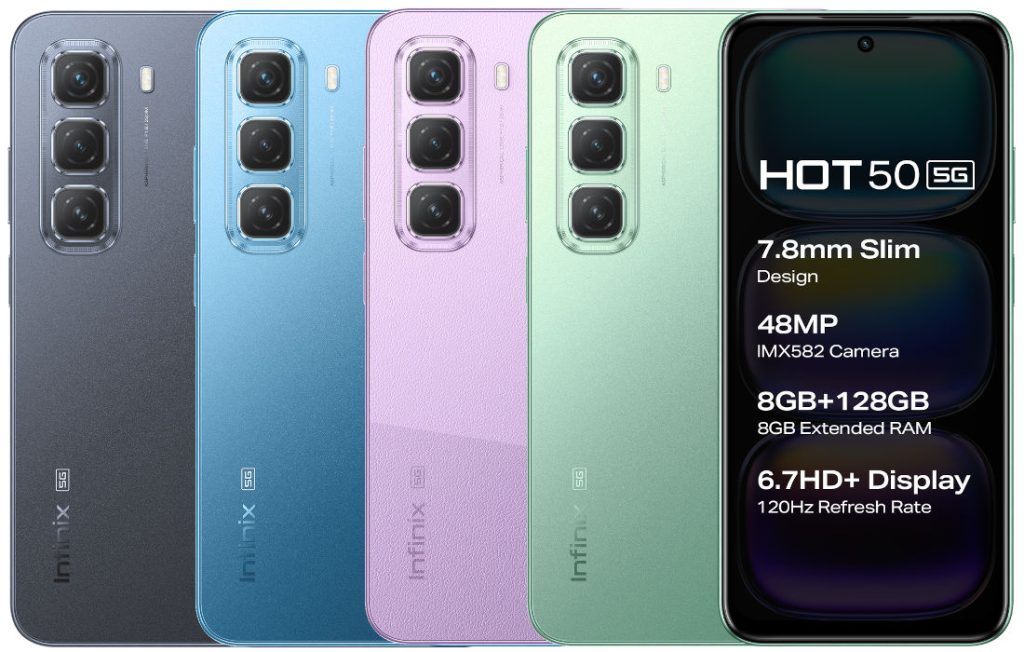
Infinix is gearing up to launch its latest budget-friendly smartphone, the Infinix Hot 50 5G, in India on September 5th. Ahead of the launch, the brand has revealed the phone’s design, price range, and some of the key specifications. Here’s everything the brand has revealed so far.
Infinix Hot 50 5G Features and Price
The Infinix Hot 50 5G will be available in three colors: Blue, Green, and Dark Grey. The phone boasts a sleek and modern design with flat edges and a narrow vertical camera stack on the back.
The brand also claims it is the slimmest 5G smartphone in its category, measuring just 7.8mm thick. Additionally, the device offers IP54 dust and water resistance for protection against everyday elements.
The Infinix Hot 50 5G is set to be available in India exclusively on Flipkart at a price point under Rs 9,999. Assuming that’s the price of the base variant, it will be a compelling option for those seeking a budget-friendly 5G smartphone.
Expected Specifications
While the company is tight-lipped on other details of the phone, a tipster on X (formerly Twitter) has revealed a few other specifications of the phone.
Under the hood, the smartphone is expected to be powered by a MediaTek Dimensity 6300 processor. This will be paired with either 4GB or 8GB of RAM, and 128GB of UFS 2.2 storage.
It is also said to be rated TUV SUD A-Level 60-month fluency assurance, which certifies that the phone can operate smoothly for up to 5 years.
In terms of optics, the Infinix Hot 50 5G will feature a dual-camera setup on the back, consisting of a 48MP primary sensor and an additional AI camera. The device will also offer a variety of camera modes to enhance your photography experience.
Xiaomi has launched a new power bank on its Youpin crowdfunding platform, the Xiaomi Powerbank 25000 212W. But don’t let the name fool you – its actual rated capacity is a more modest 14,000mAh. Still, for those needing a hefty power bank with some serious charging chops, this new offering might be worth a look.
Xiaomi Powerbank 25000 212W Specifications
The most striking aspect of Powerbank 25000 is undoubtedly its design. It has a transparent front that allows a peek into its internal workings, showcasing the charging ICs. The remaining three sides maintain an opaque black finish, with the edges sporting a rounded design for improved grip.
Performance-wise, the Powerbank 25000 212W boasts three USB ports (two USB-C and one USB-A) capable of a combined maximum output of 212W. This allows for simultaneous charging of three devices at high speeds – 65W+27W+120W at max. Dual-port charging also reaches impressive levels at 65W+120W.
The power bank’s single USB-C port (C1) is the star of the show which supports single-port Power Delivery 3.1 (PD 3.1) charging at a maximum of 140W, enough for MacBook Pro.
Xiaomi phones can take advantage of up to 120W charging. The company claims the power bank can fully charge a Xiaomi 14 Pro in just 20 minutes, although this likely utilizes a proprietary charging protocol rather than standard PD.
The remaining USB-C port (C2) offers a maximum output of 45W, while the USB-A port reaches 120W. The power bank also supports various fast-charging protocols like QC 3.0, Samsung AFC, Huawei FCP, and Apple 2.4A.
Safety is a key concern with high-wattage power banks, and Xiaomi claims the Powerbank 25000 212W features nine layers of security protection. Additionally, its 90.8Wh capacity falls within airline carry-on restrictions.
Price and Availability
The Xiaomi Powerbank 25000 212W is listed on the crowdfunding platform Youpin for 499 yuan (approximately USD 70). The crowdfunding campaign is set to begin tomorrow. There is no information yet on the global availability of the Xiaomi Powerbank 25000 212W.
Samsung‘s flagship foldable phones are getting a racing makeover with brand-new protective cases from CG Mobile. The company has just released new BMW Racing inspired cases for the Galaxy Z Fold 6 and the Galaxy Z Flip 6. So here’s everything you need to know.
Samsung Galaxy Z Fold 6, Z Flip 6 Race ahead with BMW
CG Mobile’s latest cases were launched with durability and racing aesthetics in mind. These BMW cases are made using genuine leather, carbon fiber, metal, and ABS. So it blends protection with a unique style for the Galaxy Z Fold 6 and Galaxy Z Flip 6. You get BMW’s debossed wordmark, line, and metal brand logo. It even features the iconic Red, White, and Blue.
Despite all of these materials, the cases are still slim and fit perfectly on your Galaxy Z models. The protective covers are also textured to ensure a proper grip. CG Mobile offers raised edges on the case, which makes it more resistant to drops, scratches, and impacts. So there is added protection for the screen and camera module on the Galaxy Z Fold 6 and Galaxy Z Flip 6. Covers for both models snap on and are easy to use.
Pricing and Availability
CG Mobiles cases have just been announced in multiple variants. This includes a Hot Stamp & Metal Logo, Tricolor Strips & Metal Logo, Big Metal Logo, and KL Stamp NFT Metal Pins. The cases are available in Blank and Brown color options as well.
The Tricolo Strips & Metal Logo for the Galaxy Z Fold 6 costs 3,499 INR in India, while the Hot Stamp & Metal Logo has a 3,999 INR price tag. The Big Metal Logo, KL Stamp NFT Metal Pins, and Carbon Fiber are priced at 2,699 INR, 3,499 INR, and 3,999 INR respectively. Meanwhile, the Tricolor Strips & Metal Logo for the Galaxy Z Flip 6 sells for 3,499 INR. All of these are currently listed on Amazon India and Tekkitake.com.
As we enter the month of September, benchmarking platform AnTuTu has shared a list of top-performing smartphones over the previous month. To no one’s surprise, the list is topped by the recently launched Red Magic 9S Pro+, which features an overclocked Snapdragon 8 Gen 3 processor, also called the Snapdragon 8 Gen 3 “Leading Version”.
The second place goes to the OnePlus Ace 3 Pro (review), which is an interesting addition since it is more of a flagship killer powered by the Snapdragon 8 Gen 3 chip, rather than a full-fledged flagship smartphone. Even the third-place iQOO Neo 9S Pro+ only costs around $412 (CNY 2,999), while scoring over 2.1 million points on average on AnTuTu, which makes it an attractive device for buyers looking for the most performance without breaking the bank. You can find the complete list of top-performing devices below.
AnTuTu Benchmark Top Performing Smartphones August 2024
MediaTek’s Dimensity 9300+ powered devices that were usually seen in the top three if not the first place have been significantly outperformed by their Qualcomm counterparts. The iQOO Neo 9S Pro and the Redmi K70 Ultra Edition powered by the Dimensity 9300+ are both relatively affordable smartphones for the performance they offer.
That said, MediaTek is planning to launch its next-generation Dimensity 9400 in mid-October, with flagship smartphones like the Vivo X200 series or Oppo Find X8 series expected to be the early adopters. As for the performance gains, the Dimensity 9400 is rumored to improve by 30% in single-core performance compared to the Dimensity 9300 and offer “PC-level” ray tracing capabilities.
Google has received widespread praise for its industry-leading software support for Pixel phones. The newly announced Pixel 9 series promises an impressive seven years of guaranteed OS and security updates—a commitment unmatched by any other major manufacturer, except Samsung.
However, this generous policy doesn’t apply equally across Google’s hardware lineup. For Pixel Watch owners, the software support situation is far less favorable.
Both the original Pixel Watch and its successor, the Pixel Watch 2, received only three years of software updates. Unfortunately, this trend continues with the recently launched Pixel Watch 3.
Google has committed to providing software updates for the Pixel Watch 3 until October 2027. While the company hasn’t ruled out the possibility of updates beyond that date, there’s no guarantee they will continue.
Note that, unlike smartphones, where Google explicitly mentions Android and security patch updates, the company bundles WearOS updates under “Guaranteed software updates.” It includes “Google Pixel Watch security updates and may include feature drops and other software updates.”
The reason for the shorter update timeline for smartwatches might be that Google expects users to upgrade their watches more often than smartphones.
Alternatively, a more skeptical view is that this decision could be cost-driven. Since smartwatches are generally less expensive than phones, the level of support might be influenced by financial considerations.
Whatever the reason is, users interested in the Pixel Watch lineup as a whole should be aware of this significant difference in software support compared to Pixel phones. Sure, the Pixel Watch 3 offers the latest Wear OS and a strong feature set, but its longevity in receiving software updates falls far short of its smartphone counterparts.
After parting ways with Nokia’s branding, HMD made its smartphone debut in India with the Crest series and I finally got the chance to review the base model of the new lineup, the HMD Crest 5G. The sub-15K INR category is a segment for budget phones and the Crest is one of the latest contenders.
At this price point, value is king, and the HMD Crest 5G aims to deliver it all. Despite the tough competition, HMD has managed to include some standout features and a pretty nifty gimmick. So is it actually worth your money? Let’s find out.
1. HMD Crest 5G Review: Solid start with Robust Body & OLED Display
HMD wanted to make a strong first impression in this price range, which is reflected in the Crest’s design and display. While the design is subjective, this affordable phone does not feel cheap. HMD Crest might not stand out visually, nevertheless it makes up for it with build quality. This is thanks to the flat glass panel on the back which isn’t common in this range.
I received the sober Midnight Blue color option but the glittery effect adds some much-needed visual texture. It weighs 205 grams and measures just 8.4mm in thickness. Water splashes pose no threat to the HMD Crest since it has an IP52 rating.
On the front, the Crest sports a 6.67-inch OLED display that is protected by Dragon Trail glass. Bezels appear uniform at first glance till you see its chin. It offers FHD+ resolution, a 90Hz refresh rate, and a 20:9 aspect ratio.
The screen is one of the phone’s strong points with sharp visuals and good colors, which is expected on an OLED. For those who frequently watch shows on streaming platforms, the HMD Crest supports Widevine L1 and HDR, ensuring a great viewing experience.
The OLED display certainly gives this phone an edge over the competition. However, it has one notable drawback. It lacks the option to switch between natural and vivid tones. This is a basic feature that many users would expect. The only tinkering allowed is with the white balance, which is somewhat disappointing.
2. The Big DIY Repair Gimmick
The feature that sets the Crest series apart from the crowd is DIY self-repairs. Even during the announcement, the ease of repair was a highlight. The company offers repair kits, genuine spare parts, and free guides, all available on their official website.
The repair tool kit is sold separately for 999 INR, although HMD included one in the review box. The guides provided on the website were useful, and the initial steps were straightforward. However, the process may still seem daunting to beginners, who might prefer having a professional handle the repairs.
Even I struggled a bit while putting it back together since the fingerprint reader’s cable refused to sit in its right place. Making smartphones easier to repair and providing access to parts for self-repair is already a couple of steps ahead of what most brands offer. While repairability is a valuable feature, it typically isn’t a major consideration for most buyers when choosing a phone.
3. Performance: Was Unisoc the right decision?
(L to R) GeekBench, CPU Throttle, & AnTuTu
Addressing the elephant in the room, the UNISOC processor. The chip from UNISOC is often seen in entry level phones, but surprisingly, it wasn’t a dealbreaker here. UNISOC introduced affordable yet capable 5G processors in 2023, and our report found these chips to be quite underrated.
Based on synthetic benchmarks, the UNISOC T760 in the HMD Crest performs comparably to the Snapdragon 6 Gen 1 and the Dimensity 7025. However, both Snapdragon and Dimensity processors remain strong alternatives in this category. So considering a switch to Qualcomm or MediaTek chips could be a strategic move in the future.
Performance throttling wasn’t an issue and the phone handled every day use and multitasking without any stutters. The 90Hz display made things feel pretty snappy as well. While the HMD Crest did get a bit warm during gaming, it didn’t get unconfortable or impact the overall experience. Playing BGMI,the phone maintained a stable 40FPS on the Ultra framerate setting. Since the HMD Crest isn’t designed as a gaming phone, it’s best suited for casual gaming.
4. Battery & Software
The Crest houses a large 5,000mAh battery pack that is fairly standard for this segment along with support for 33W wired fast charging. Combined with the stock Android 14 OS, the phone easily lasted through most of my day on a single charge. Charging took around an hour so there was no prolonged downtime either. I averaged just under 6 hours of screen-on time with moderate use. Decent all things considered, but not class-leading.
Aside for HMD’s “My Device” and Google’s preloaded apps, the phone is free from bloatware. However, the clean UI of stock Android can be a double-edged sword. While the experience is streamlined and straightforward, it lacks the customizability and additional features often found in the custom versions of Android offered by established companies like Samsung. So while the experience is clean, the software lacks unique flair that other manufacturers might provide.
A smartphone isn’t all about hardware and also blends software to establish brand identity. For a budget phone, this approach seems like a calculated choice by the company. Hopefully, HMD has more planned for us in this area. Additionally, the phone is promised only one major OS update and two years of security patches.
In bright or well-lit conditions, the camera captures sharp images with plenty of detail. The HDR settings effectively enhance contrast in daylight scenes, providing a generally good experience. However, there were occasional issues with overexposure from the rear camera, even after adjusting the focus and exposure levels. Future software updates could address these issues to further improve photo quality.
Indoor Close Up
In comparison to other budget phones like the Moto G64, the Crest falls short in one area. While the G64 features an ultra-wide-angle lens as a secondary camera, the Crest includes only a 2MP depth sensor. This depth sensor primarily aids in portrait shots and lacks a distinct function beyond complementing the main camera.
Overexposed selfies
On the front, the phone features a 50MP sensor designed to ‘level up’ your selfie game. The front camera delivers decent performance with good detail and color in favorable lighting conditions. However, the shots often come out warmer than intended and occasionally suffer from blown-out highlights. With future software updates, HMD could address these issues to enhance the overall selfie experience.
Night Mode Shots
Another area where this phone falters is in low light scenes from the front and back cameras. Night mode (including Night Selfie mode) raises exposure to brighten up shots, however, you trade it with flat colors, visible noise, and loss of details. There are times it works as intended, though, it’s a hit or miss for me. Videos are a hurdle as well. HMD Crest can shoot at 1080p@30fps from the selfie and rear camera. The videos captured are passable but stabilization is sorely lacking, leading to shaky recordings.

6. Verdict: Worth Buying on a Sale
HMD Crest has an official price tag of 14,999 INR but the discounts offered by the company bring it down to just under 13,000. Right now, it is listed on Amazon India for as low as 11,999 INR. So if you’re on a tight budget, the HMD Crest 5G offers a compelling value proposition in the budget smartphone segment.
Its vibrant OLED display, durable build, and focus on repairability set it apart from competitors like the Redmi 13 5G. Overall, the phone is a competitive choice for those seeking a reliable and affordable smartphone. The only phone I’d choose over this is the CMF Phone 1, but it is slightly more expensive with a 15,999 INR price tag.
Two new Xiaomi phones, identified as 24129PN74C and 2410DPN6CC, recently passed domestic radio approval in China. It is speculated that these belong to the Xiaomi 15 series, which is expected to debut in October in China.
Alleged Xiaomi 15 series radio certified
Xiaomi 15 (24129PN74C) radio certifiedXiaomi 15 Pro satellite variant (2410DPN6CC) radio certified
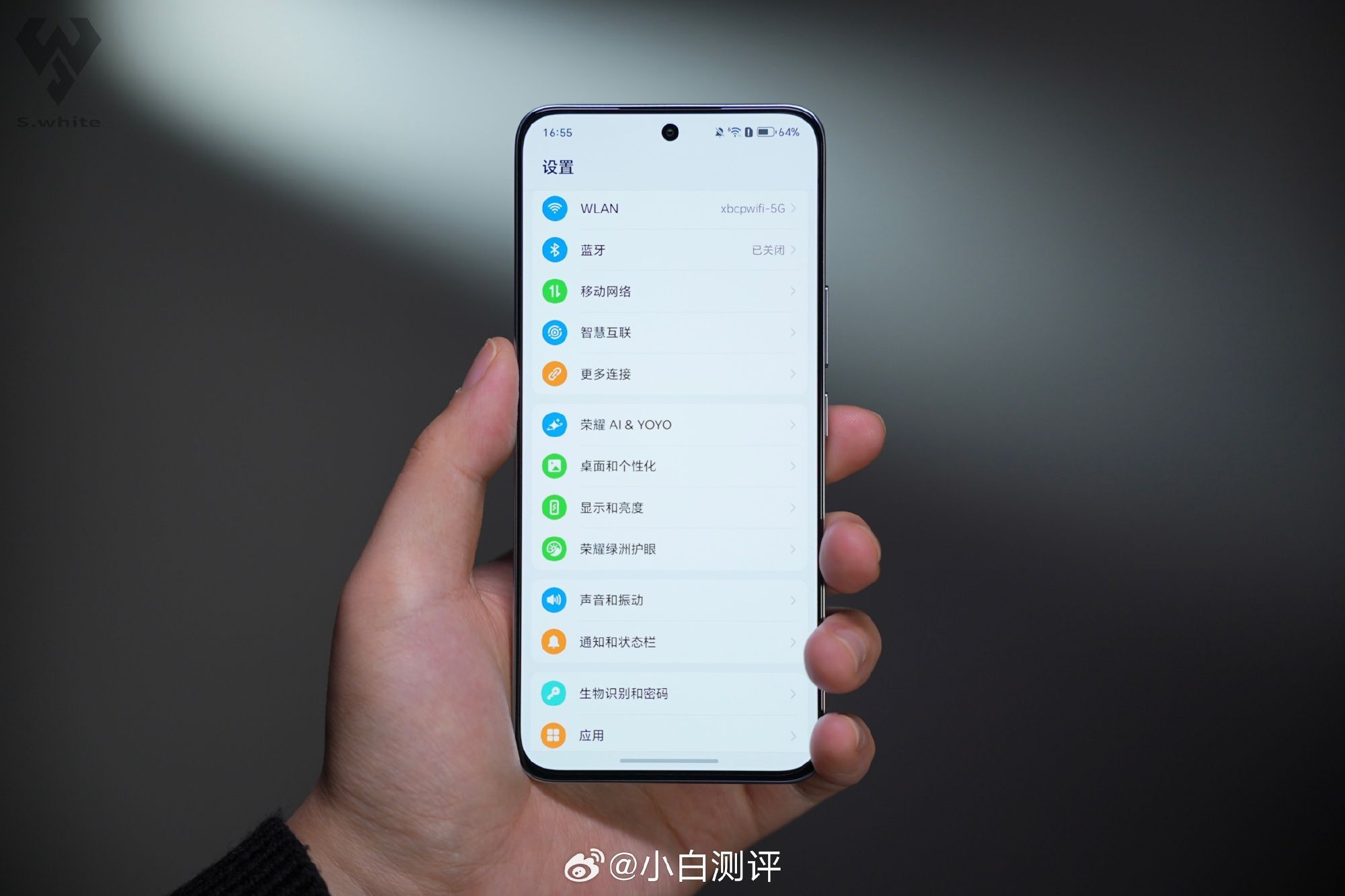
According to reports, the Xiaomi 15 series includes three models: Xiaomi 15, 15 Pro, and 15 Ultra. The IMEI database listing shows that the Ultra variant has the following model numbers: 25010PN30C for China, 25010PN30G for the global version, and 25010PN30I for the Indian version. However, the Ultra model is expected to debut in the first quarter of 2025.
According to the IMEI listings, the standard Xiaomi 15 is identified by three model numbers: 24129PN74G for the global variant, 24129PN74I for India, and 24129PN74C for China. The Xiaomi 15 Pro is listed with the model number 24101PNB7C, and there is also a satellite version under the model number 2410DPN6CC.
As can be seen in the above images, the Chinese editions of the Xiaomi 15 and 15 Pro satellite variants have received radio certification, indicating that these devices will be launching soon in China. Qualcomm is expected to unveil the Snapdragon 8 Gen 4 chip at the Snapdragon Summit 2024 between Oct. 21 and Oct. 23. Following the Qualcomm announcement, Xiaomi is expected to hold a launch event in China to announce the Xiaomi 15 and 15 Pro as the world’s first Snapdragon 8 Gen 4-powered smartphones. Speculations are rife that Pro model will remain exclusive to China, while the standard and Ultra models will be released in markets outside of China.
Reports suggest that the Xiaomi 15 series is likely to offer both straight and curved screen designs, with potential key features including a 1.5K small straight screen for the standard model and a 2K equal-depth quad-curved screen for the Pro model. The series may also feature a square camera island in the upper left corner and a right-angle metal middle frame with chamfered edges.
In addition to the Xiaomi 15 series, several other flagship phones are expected to be launched in the coming months, including the Vivo X200 series, Oppo Find X8 series, OnePlus 13, iQOO 13, Realme GT 7 Pro, and Redmi K80 series, with releases anticipated between October and November. The Honor Magic 7 series and Huawei’s new phones are also tentatively scheduled for a November release.
In today’s roundup, we talk about the upcoming Huawei triple foldable, the Galaxy S25’s chip strategy, and more.
Today’s Tech Highlights:
Huawei’s Triple-Folding Phone: Look forward to Huawei’s bold move into triple-folding technology, set to be unveiled just a day after Apple’s event.
Apple’s Cooling Solution for iPhone 17: Here’s Apple’s potential plans to enhance iPhone performance with advanced cooling systems in the upcoming iPhone 17 lineup.
Samsung’s Galaxy S25 Chip Strategy: We talk about the latest rumors about Samsung’s potential exclusive use of Snapdragon chips in the Galaxy S25 series, and the implications of this decision.
Xiaomi Pad 7 Series Preview: Get a comprehensive look at what we know so far about Xiaomi’s upcoming premium tablet lineup, including its first OLED tablet offering.
Plus, don’t miss our roundup of other exciting stories, including a preview of upcoming smartphones in September, OnePlus Nord Buds 3 launch details, Redmi Note 14 series rumors, and Galaxy S24 FE charging specifications!
Huawei has scheduled a product launch event for September 10, just one day after Apple’s event. The company revealed the news on Weibo, but the event’s official poster offers little information about the devices to be unveiled. Read More
According to TF International Securities analyst Ming-chi Kuo, Apple will add a graphite sheet to the entire iPhone 17 lineup and an additional VC cooling system to the iPhone 17 Pro Max to improve heat dissipation. With the cooling system, the iPhone 17 lineup is expected to offer significant improvement in performance as compared to its predecessors.Read More
We are nearing the launch of Samsung’s next-gen Galaxy S25 series. The brand typically releases its flagship phones in two variants, which are the Exynos and Snapdragon variants. But it seems that there are some bittersweet updates regarding the upcoming Galaxy S25 lineup.Read More
Xiaomi is anticipated to launch its new premium tablet lineup, likely named the Xiaomi Pad 7 series, in early Q4 2024. Rumors suggest there will be at least three different models, with two featuring flagship-level hardware. Additionally, the brand is expected to introduce its first OLED tablet this year. Here’s a summary of what we know so far about the Xiaomi Pad 7 series.Read More
Chinese smartphone brands are anticipated to unveil their new flagship phones in the last quarter of this year. Consequently, these upcoming models are likely to surface in the databases of Chinese certification platforms, such as radio certification, 3C, and TENAA, before their official launch. Recently, new devices from iQOO and Realme have received radio certification in China. There is a possibility that these models could be the upcoming iQOO 13 and Realme GT 7 Pro.
iQOO 13 radio certified (rumored)
iQOO 13 radio certified
A new Vivo smartphone with the model number V2408A has received radio certification in China. According to DCS, this device will break cover as the iQOO 13 in the Chinese market. Several reports suggest that, in contrast to previous generations, the iQOO 13 will not come with a Pro model.
According to reports, the iQOO 13 will feature a BOE-supplied flat OLED panel with support for 2K resolution, a 144Hz refresh rate, and an ultrasonic in-screen fingerprint sensor. The Snapdragon 8 Gen 4-powered phone is expected to pack a 6,000mAh battery with 100W charging. The back panel of the device will have three 50-megapixel cameras. It is also expected to feature an IP68-rated body fitted with a metal middle frame.
Realme GT 7 Pro radio certified (rumored)
Realme RMX5010 radio certified
Several upcoming Realme phones, including the RMX5010, were recently spotted in the IMEI database. It is speculated that this phone, which has now received radio certification in China, could be the forthcoming Realme GT 7 Pro.
As far as launch is concerned, the iQOO 13 may debut in November in China, whereas the GT 7 Pro may go official in October or November. Reports also state that the GT 7 Pro will debut in the global market by the end of this year. This could make it the first Snapdragon 8 Gen 4 phone to launch outside of China.
Vivo is expected to announce the Vivo X200 series of smartphones in October’s third week. Reports have claimed that the lineup may include three models, such as the X200, X200+, and X200 Pro. Today, reliable source Digital Chat Station released a Weibo post to share the key specifications of an upcoming flagship phone for the Chinese market. The details he shared suggest that he could be talking about the X200 Pro.
Vivo X200 Pro specifications (rumored)
Based on the above Weibo post, it can be said that the alleged Vivo X200 Pro will feature a 1.5K 8T LTPO iso-depth micro quad-curved screen with ultra-narrow bezels coupled with an ultrasonic in-screen fingerprint sensor. According to previous reports, the device may come with a 6.7-inch OLED panel.
The X200 Pro’s rear camera system will include a 50-megapixel 22nm Sony primary camera with a large aperture. It will be accompanied by a 50-megapixel ultra-wide lens, and a 200-megapixel periscope telephoto camera for advanced zoom and telephoto macro shooting capabilities.
The Dimensity 94000-powered phone will pack a silicon battery of around 6,000mAh capacity. It will also offer other features, such as an IP68/69 dust and water resistance and an X-axis motor for improved haptic feedback. The “GYDDY” text in the leak stands for the Chinese word “该有的都有,” which translates to “Everything that should be there is there.” This indicates that the X200 Pro will have all the features and specs one would expect in a premium flagship phone.
OnePlus has announced the launch date for its upcoming budget-friendly earbuds, the OnePlus Nord Buds 3. These earbuds will be released in India on September 17th at 12 PM. The company has set up a microsite on its official website with more details.
While specific features of the Nord Buds 3 haven’t been revealed yet, they are expected to share similarities with the previous model, the Nord Buds 3 Pro. The earbuds will likely come with an oval-shaped charging case and be available in two color options. A teaser image suggests that the design will be similar to the Nord Buds 3 Pro, featuring a clean and modern look.
In terms of performance, the Nord Buds 3 are expected to offer good sound quality with dynamic drivers. They may also include Active Noise Cancellation (ANC) to reduce background noise. The earbuds are likely to support Google Fast Pairing for quick connections and Bluetooth 5.4 for stable wireless connectivity.
As for the battery life, we can expect the Nord Buds 3 almost the same performance as the Nord Buds 3 Pro, which can last up to 12 hours on a single charge (with ANC turned off) and up to 44 hours with the charging case. As for the pricing, the Nord Buds 3 Pro costs Rs 3,299 / EUR 79 / $79, so we can expect the basic model to cost well below the Rs 3,000 mark.
In other news, Xiaomi has launched three new Redmi Buds 6 series TWS earphones in the global market. The Redmi Buds 6 Lite, Buds 6 Play, and Buds 6 Active offer different designs, features, and battery life. The Buds 6 Lite has a stem design, 12.4mm drivers, and 40dB ANC. The Buds 6 Play has an in-ear design, 10mm drivers, and AI noise reduction. The Buds 6 Active has a stem design, 14.2mm drivers, Spatial Audio, and AI noise cancellation. All three support Bluetooth 5.4, and Google Fast Pair, and come in various colors.
Xiaomi is anticipated to launch its new premium tablet lineup, likely named the Xiaomi Pad 7 series, in early Q4 2024. Rumors suggest there will be at least three different models, with two featuring flagship-level hardware. Additionally, the brand is expected to introduce its first OLED tablet this year. Here’s a summary of what we know so far about the Xiaomi Pad 7 series.
Earlier this year, Xiaomi launched the Pad 6s Pro (review), which featured a large 12.4-inch premium LCD display, alongside a Snapdragon 8 Gen 2 SoC. It is rumored that the Xiaomi Pad 7 base model will be reusing some of its hardware, including the Snapdragon 8 Gen 2 SoC, and the 144Hz 3048 x 2032 pixels display. It is currently unknown if the tablet will retain its 12.4-inch display since leaks have suggested that the entire upcoming lineup could measure between 11 and 12 inches.
2. Two flagship models
As per a recent leak, the Pad 7 series could feature two flagship models powered by the Snapdragon 8 Gen 3 Leading Version chip. While the naming scheme has not been disclosed yet, one of these models will likely be the Pad 7 Pro. Compared to the Pad 6 Pro which features a Snapdragon 8+ Gen 1 chip, the upcoming tablet will offer a substantial boost in performance in graphics-intensive tasks like gaming. It is more than likely that Xiaomi launch the second Snapdragon 8 Gen 3 tablet later down the line as the Xiaomi Pad 7S Pro.
3. Xiaomi OLED tablet incoming
The latest bits of leaked information claim that Xiaomi will finally be entering the OLED tablet market, to compete against the likes of Honor, Huawei, and Samsung. That being said, Xiaomi likely plans to test the waters first, which could be the reason that it has decided to launch its first OLED tablet with a sub-flagship level chip. This could mean that the upcoming tablet could be powered by either the Snapdragon 8 Gen 2 chip or the Snapdragon 8s Gen 3. The OLED tablet is also expected to offer an 11-inch display with a 144Hz refresh rate.
4. Other features
So far, it looks like the entire lineup will come with support for 120W fast charging, and likely a large 10,000mAh battery. These tablets will have up to 24GB of LPDDR5X RAM, paired with USD 4.0 storage and Xiaomi’s Android 15-based HyperOS 2. We can expect the software support to span at least 3 years based on past trends.
Design-wide, the Pad 7 series is expected to look quite similar to the Pad 6 series, featuring a premium metallic body with a frosted glass back finish. For audio, the tablets will have a stereo speaker setup, with a minimum of six speakers. We can also expect the tablets to come with a 50 MP primary camera sensor, paired with an auxiliary camera. On the front, they could feature a high-resolution camera sensor for video calls and selfies like its predecessor.
It is likely that the brand sticks to a side-mounted fingerprint sensor for security. It is unclear if Xiaomi will offer 5G/cellular connectivity on these tablets. That said, WiFi 7 will likely be supported, and a USB Type C 3.2 port is also expected to be present for fast data transfers.
Several reports have claimed that Huawei will unveil the world’s first tri-foldable phone this month in China. In recent weeks, some leaked photos of the device have also appeared on Chinese social media platforms. However, none of the reports could confirm the name of the device. The Huawei Mate XT will be the official name of its first tri-foldable phone. This announcement, made by Yu Richard, Huawei CEO for Consumer Business Group and Chairman of the Intelligent Automotive Solutions BU, is generating considerable excitement in the tech community.
Huawei Mate XT: What’s known so far
Huawei Mate XT
According to Yu Richard, the Mate XT is Huawei’s most innovative and disruptive product yet—a realization of science fiction made possible through five years of persistence and investment. He has highlighted that this device represents the pinnacle of Huawei’s technological achievements, featuring a design and functionality that competitors have yet to match.
While the specific design and configuration details of the Mate XT are still under wraps, leaks suggest that the phone will feature a tri-fold screen with an inward folding, outward folding, and dual-hinge design. This innovative setup is expected to offer a screen size of approximately 10 inches when fully unfolded, with a centrally placed hole-punch camera on the far left. When used with a stylus, it can provide a tablet-like experience and greatly improve office efficiency.
The Mate XT, despite its complex design, is expected to offer excellent thickness control, measuring around 5mm when unfolded and approximately 15mm when folded, making it surprisingly sleek and manageable. The rear camera setup is expected to feature a circular, cantered module, like the design of the Mate 50 series, with a Paris studs encircling the camera.
The Huawei Mate XT is expected to be powered by the Kirin 9 series platform, offering top-tier performance and advanced features. According to reports, it will debut in September in China, but its availability is unknown.
Huawei will hold the Huawei Meet the Extraordinary Brand Ceremony and Hongmeng Intelligent Driving New Product Launch Conference on Sept. 10 at 14:30, where the brand is expected to showcase the Mate XT and other new products, including the Huawei Nova 13 series, new smartwatches, Zhijie R7, and Wenjie M9 five-seater version.
September’s here, folks, and you know what that means – a battle royale of new phone releases. The flagship season is already in full swing in fact, with Apple announcing the launch of the iPhone 16 series and Huawei confirming a new tri-folding phone.
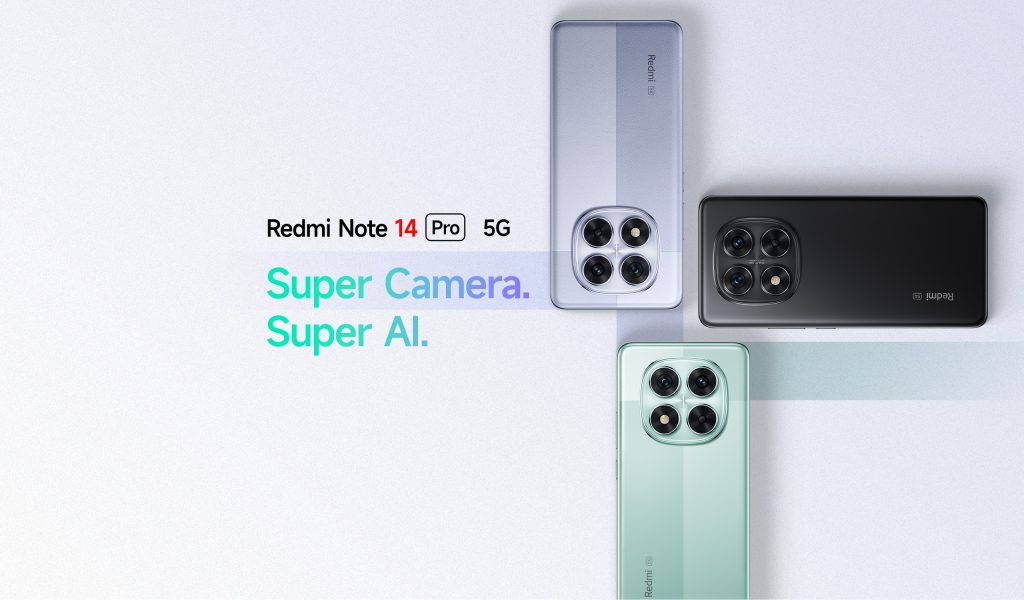
But for those of us who value affordability without sacrificing all the bells and whistles, the mid-range market is where it’s at. And one of the most anticipated mid-range smartphone releases this year is the upcoming Redmi Note 14 series.
We haven’t heard an official peep yet, but considering Xiaomi’s usual cadence—the Note 13 series launched last September—an announcement for the Note 14 series seems imminent this month.
Thanks to reliable leaks and certifications, we have a decent idea of what these phones might offer. Let’s break down everything we’ve gathered so far about the Redmi Note 14 series.
First things first, Xiaomi is expected to launch at least three smartphones in the Redmi Note 14 series initially. The lineup will include the base Redmi Note 14 5G, the Redmi Note 14 Pro 5G, and the high-end Redmi Note 14 Pro+ 5G.
The most convincing evidence of their existence comes from certification bodies. And fortunately, all three phones have appeared in the IMEI and China’s Radio Certification. While these listings don’t spill the beans on specs, they confirm that these phones are indeed in the works.
The standard Redmi Note 14 and its Pro variant have also appeared on the 3C certification platform, revealing details about their charging.
The standard Note 14 is expected to support 45W wired charging, a noticeable upgrade from the 33W of its predecessor. Meanwhile, the Pro model will move from a 67W charger to a more impressive 90W option—ideal for those who need quick top-ups and can’t tolerate low battery life.
With that covered, let’s dive into the rumored details for each of these smartphones individually.
2. Redmi Note 14
Redmi Note 13 5G renders
As you might know, the Redmi Note 14 will be the most affordable handset in the line. It is said to feature a 1.5K AMOLED display, a step up from the upgrade from the FHD panel on its predecessor.
For photography, the Note 14 5G might come with a 50MP main rear camera. While it’s lower in resolution than the 108MP shooter on the Note 13 5G, the 50MP camera could use a better sensor for capturing high-quality photos, especially in good lighting conditions.
Under the hood, the Note 14 5G is rumored to be powered by the MediaTek Dimensity 6100+ chipset. It’s a mid-range processor manufactured on TSMC’s 6nm process node and should deliver performance just enough for everyday tasks.
3. Redmi Note 14 Pro
Moving on to the Redmi Note 14 Pro, its CAD render has been revealed in a leak recently. The render reveals that the phone will bring a new design from its predecessor.
The Note 13 Pro has its cameras positioned on the side without a dedicated module. However, the Note 14 Pro will have its cameras moved to the center and within a distinctive squircle module. The display will stay the same, though, with a 1.5K resolution and AMOLED panel.
For performance, the smartphone is expected to be powered by the new Snapdragon 7s Gen 3 processor. Its camera specs, however, might vary on the global and Chinese models, if a previous report is to be believed.
The global Note 14 Pro is said to come with a triple-camera setup with a telephoto module. But the Chinese counterpart may swap it for a less useful macro lens.
4. Redmi Note 14 Pro Plus
Redmi Note 13 Pro Plus
The Redmi Note 14 Pro, unsurprisingly, will be the most expensive device in the line. It will feature the same 1.5K AMOLED display as its more affordable siblings but is expected to have a curved panel for improved grip and aesthetics.
The back design of the phone will likely remain the same as the Note 14 Pro, though. A report further reveals that the Note 14 Pro+ will feature a plastic frame and an optical in-screen fingerprint sensor for security.
Under the hood, the 14 Pro Plus is expected to be powered by a Dimensity 7350 chipset. It’s a new chip from MediaTek, made on a 4nm manufacturing processor, and includes processing cores with a top speed of 3 GHz.
For the camera, a report from July suggests the following setup: a 50MP main camera, an 8MP ultrawide camera, and a 2MP macro camera on the back. The report also mentions that the decision to include a telephoto camera on the Note 14 Pro+ has reportedly been canceled by Xiaomi for some reason.
However, it’s a newer report that suggests the Note 14 Pro will have a telephoto camera in the global market. If that’s the case, it would be highly unlikely that Xiaomi will omit a telephoto camera for the even more expensive Pro Plus model.
All these details are based on leaks, so it’s best to take them with caution until official announcements are made.
UAE’s TDRA (Telecommunications Regulatory Authority) and the UL Demko certification platform have recently confirmed that the Galaxy Tab S10+ will come in both Wi-Fi and 5G versions. In related news, the Galaxy S24 FE has also been spotted on TDRA and TUV Rheinland certification platform.
TUV certification reveals that the Galaxy S24 FE will support 25W charging, the same as its predecessor. It’s also reported that the phone will support 9W wireless charging. Interestingly, the Galaxy S23 FE supports a relatively faster 15W wireless charging.
TUV certification also reveals that the phone will come in a total of seven models – SM-S721B/DS, SM-S721B, SM-S721N, SM-S721Q, SM-S721U, SM-S721W, SM-S7210. These model numbers are expected to represent the device in different markets, of which SM-S721B is the global version, and SM-S721U is for the US market.
According to the TDRA certification listing, the Galaxy S24 FE is “SM-S721B/DS”, where “DS” indicates that the device supports dual-SIM dual standby. The global variant (SM-S721B/DS) has also been approved by the Federal Communications Commission (FCC), which confirms that the phone will support Wi-Fi 6E (2.4GHz and 5GHz bands), NFC, Bluetooth 5.3, 5G connectivity, LTE, and GSM. The phone is said to measure 162mm and 77.3mm in height and width respectively.
We already know that the Galaxy S24 FE will be powered by a slightly downclocked version of the Exynos 2400 chip, which powers the Galaxy S24 and Galaxy S24+. The phone is expected to be released between September to early October. In terms of appearance, the phone could be very similar to its predecessor, at least when it comes to the back design. Live images of the phone have already been revealed, which show a very similar camera module design, similar flat sides, and an identical placement of the flash module as compared to the predecessor.
The month of September 2024 is set to bring a wave of exciting smartphone launches, with several major brands unveiling their latest innovations.
Apple is expected to lead the charge with the highly anticipated iPhone 16 series, promising new features and improvements. Motorola will follow with the Razr 50, a more affordable sibling to the Razr 50 Ultra, offering the iconic foldable experience.
Meanwhile, Huawei is set to introduce its groundbreaking ‘Tri-Fold Foldable’, pushing the boundaries of smartphone design. Additionally, the Redmi Note 14 series is expected to make its debut, catering to the mid-range segment with strong specifications and competitive pricing.
Let’s dive into the details of these upcoming releases and what they might bring to the table.
Motorola has confirmed the launch of the Razr 50 smartphone in India on September 9th, following the earlier release of the Razr 50 Ultra in China and globally.
This new model features the segment’s largest 3.6-inch external display with Corning Gorilla Glass Victus protection and IPX8 water resistance. The hinge is certified for 4 lakh folds.
The Razr 50 features a 6.9-inch FHD+ internal foldable pOLED screen with a 120Hz refresh rate and a 3.6-inch FHD+ outer pOLED screen that reaches up to 1700 nits peak brightness and 90Hz refresh rate. It includes added features like Google’s Gemini access, desk mode, and a vegan leather finish.
Powered by the MediaTek Dimensity 7300X SoC, the device has a 4200mAh battery with 30W wired and 15W wireless fast charging. The dual-display setup supports HDR10+, 10-bit color, LTPO technology, and a peak brightness of up to 3000 nits on the main display.
The phone includes a rear camera system with a 50MP main camera featuring OIS and a 13MP ultra-wide/macro camera. The front camera is a 32MP sensor capable of 4K UHD video capture. For audio, it comes with dual stereo speakers, Dolby Atmos, Spatial Sound, and three microphones.
The device will be available on Amazon.in, motorola.com, and offline stores.
2. Realme Narzo 70 Turbo
Realme has confirmed the launch of its Narzo 70 Turbo smartphone in India on September 9th at 12:00 PM IST. The device will be powered by the MediaTek Dimensity 7300 Energy 5G chipset, which the company claims is the fastest in its segment with an AnTuTu score of 750,000.
The Narzo 70 Turbo features a performance-focused design, including a Motorsport-inspired back with a yellow vertical stripe housing the camera module. The front has a flat display with minimal bezels and a centered punch hole for the front camera.
Expected to come in four memory variants (6/128GB, 8/128GB, 8/256GB, and 12/256GB), the phone is rumored to have a 50MP main camera with EIS and an 8MP front camera, available in purple, yellow, and green color options.
The iPhone 16 is rumored to feature a 6.1-inch XDR OLED display, while the iPhone 16 Plus may sport a 6.7-inch screen, both with a 60Hz refresh rate and Dynamic Island. They are expected to be powered by the A18 chipset, with storage options ranging from 128GB to 512GB. The cameras might include a 48MP primary sensor and a 12MP ultra-wide-angle lens, and battery capacities are speculated to be 3561mAh for the iPhone 16 and 4006mAh for the Plus model.
The iPhone 16 Pro is anticipated to have a 6.3-inch XDR OLED display, while the Pro Max could boast a larger 6.9-inch screen. Both models are likely to be powered by the A18 Pro chipset, with storage options up to 1TB. Camera setups might include a 48MP primary sensor, a 48MP ultra-wide-angle lens, and a 5x telephoto lens. The battery capacities are expected to be 3355mAh for the Pro and 4676mAh for the Pro Max.
Both the Pro and non-Pro models will run on iOS 18 and pricing is expected to start at $799 for the iPhone 16 and $899 for the iPhone 16 Plus. The iPhone 16 Pro might begin at $1,099, while the Pro Max could start at $1,199.
4. Huawei Tri-Fold Foldable
Huawei has announced a product launch event for September 10th sparking anticipation about what might be unveiled. While the official event poster offers few details, speculation is rife that Huawei will introduce its first tri-fold phone. Richard Yu, CEO of Huawei’s Consumer Business Division hinted at a groundbreaking product, describing it as “the company’s most leading, innovative, and disruptive.”
Yu has been spotted with a tri-fold phone in public, and the event poster subtly features a silhouette of a tri-folding device, adding to the excitement. Leaked images suggest the phone will have a circular camera module, a slim profile when folded, and a 10-inch screen when fully unfolded. The design is expected to include inward and outward folding capabilities with a dual-hinge mechanism. The device is likely powered by the Kirin 9 series platform.
The live stream for the event is scheduled for September 10th at 14:30 (CST), and it will be available on Huawei’s official Weibo handle. All eyes are on Huawei as the company is set to reveal a product that could potentially redefine the foldable smartphone market.
5. Tecno Phantom V Fold 2, Phantom V Flip 2
Tecno Phantom V Flip 2
Tecno is expected to launch upcoming foldable devices, the Phantom V Fold 2 5G and V Flip 2 5G globally in September. The devices were available for pre-order in Ghana from August 19 to 24, though the official launch date remains unannounced.
A recent leak revealed that the Phantom V Flip 2, a clamshell foldable, will be priced at GHS 9,800 ($626) for the 8GB RAM + 256GB variant, while the Phantom V Fold 2, a book-style foldable, will cost GHS 16,550 ($1058) for the 12GB RAM + 512GB version.
Tecno Phantom V Fold 2
Though official specs are still under wraps, the Phantom V Fold 2 is expected to feature a 5,610mAh dual-cell battery with 70W fast charging, powered by the Dimensity 9000 Plus chipset.
The V Flip 2 is rumored to run on the Dimensity 8050. Tecno is positioning these foldables as more affordable alternatives to premium options like Samsung’s Galaxy Z Fold 6, which starts at $1800, and Motorola’s cheapest 2024 clamshell foldable, priced at $700.
6. Vivo T3 Ultra
Vivo T3 Pro 5G
Vivo is reportedly set to expand its T3 lineup with the introduction of the Vivo T3 Ultra in India. According to reports, the T3 Ultra will be powered by the Dimensity 9200 Plus chipset, making it more powerful than the Vivo T3 Pro, which uses the Snapdragon 7 Gen 3. The Ultra variant is expected to be priced around Rs 30,000 ($358), slightly higher than the Pro model’s starting price of Rs 24,999 ($298).
The T3 Ultra is rumored to feature an IP68-rated body, a curved-edge AMOLED display with 1.5K resolution, and 4500 nits of peak brightness. It will also sport an OIS-enabled Sony IMX921 primary camera. The device, with model number V2426, has appeared on Geekbench, confirming the D9200+ chip, 12 GB of RAM, and Android 14.
Interestingly, these specs are similar to those of the Vivo V40 Pro, though the T3 Ultra may lack the Zeiss optics found in the V40 Pro. While the report suggests an early September launch, it seems more likely that Vivo will tease the device for a week before its official debut.
7. Realme P2 Pro
Realme 13 Pro series 5G
Realme is gearing up to launch the P2 Pro in India, following the recent release of the P1 and P1 Pro. The P2 Pro has been spotted on the Bureau of Indian Standards (BIS) website, suggesting an imminent launch. While the listing doesn’t reveal any specs, a report hints at four storage variants: 8GB RAM with 128GB or 256GB storage, 12GB RAM with 256GB storage, and a top-tier model with 12GB RAM and 512GB storage. The phone is expected to come in Chameleon Green and Eagle Grey color options.
Pricing details are not yet confirmed, but it is expected to be priced in the sub-Rs 20,000 range, positioning it as a competitor to devices like the POCO X6 and iQOO Z9. The P2 Pro might share similarities with the recently released Realme 13 Pro, which features a 6.7-inch AMOLED FHD+ 120Hz screen, Snapdragon 7s Gen 2 chipset, and a 5,200mAh battery with 45W fast charging. However, these details are based on leaks and reports, so they should be approached with caution until Realme makes an official announcement.
8. Redmi Note 14 Series
Redmi Note 13 Series
The Redmi Note 14 5G is expected to launch in China in September 2024, with an India release likely in January 2025. Leaks have revealed several details, including its appearance on the radio certification platform in China and the US FCC site. The phone will reportedly run on HyperOS 1.0, feature Wi-Fi, Bluetooth, and 5G support, and offer 33W charging, similar to the Redmi Note 13 5G.
The Redmi Note 14 5G is rumored to sport a 1.5K AMOLED display with a 120Hz refresh rate and a 50MP main rear camera, slightly lower in resolution compared to the Note 13 5G’s 108MP camera. It is expected to be powered by the MediaTek Dimensity 6100+ chipset, a lower midrange processor.
The series might include other models like the Redmi Note 14 Pro, which could feature a Snapdragon 7s Gen 3 chipset and 90W charging, and the Redmi Note 14 Pro Plus, rumored to have a Dimensity 7350 chipset and a 1.5K curved OLED display. These details are based on leaks, so they should be taken with caution until official announcements are made.
9. Xiaomi 14T Series
Xiaomi 13T Series
Xiaomi is preparing to launch the Xiaomi 14T series, including the 14T and 14T Pro, in September 2024. The Xiaomi 14T will feature a 6.67-inch 1.5K display, Dimensity 8300-Ultra processor, 12GB RAM, 256GB storage, and a Leica triple camera setup.
The Xiaomi 14T Pro will have the same display but with a more powerful Dimensity 9300+ processor, 512GB storage, and 50W wireless charging. Both models will have IP68 waterproofing and a 5,000mAh battery. Pricing is expected to be €649 for the 14T and €899 for the 14T Pro.
We use cookies on our website to give you the most relevant experience by remembering your preferences and repeat visits. By clicking “Accept”, you consent to the use of ALL the cookies.
This website uses cookies to improve your experience while you navigate through the website. Out of these, the cookies that are categorized as necessary are stored on your browser as they are essential for the working of basic functionalities of the website. We also use third-party cookies that help us analyze and understand how you use this website. These cookies will be stored in your browser only with your consent. You also have the option to opt-out of these cookies. But opting out of some of these cookies may affect your browsing experience.
Necessary cookies are absolutely essential for the website to function properly. This category only includes cookies that ensures basic functionalities and security features of the website. These cookies do not store any personal information.
Any cookies that may not be particularly necessary for the website to function and is used specifically to collect user personal data via analytics, ads, other embedded contents are termed as non-necessary cookies. It is mandatory to procure user consent prior to running these cookies on your website.