Advertisement

Realme C63 5G launched in India: 120Hz display & Big battery for just Rs 9999

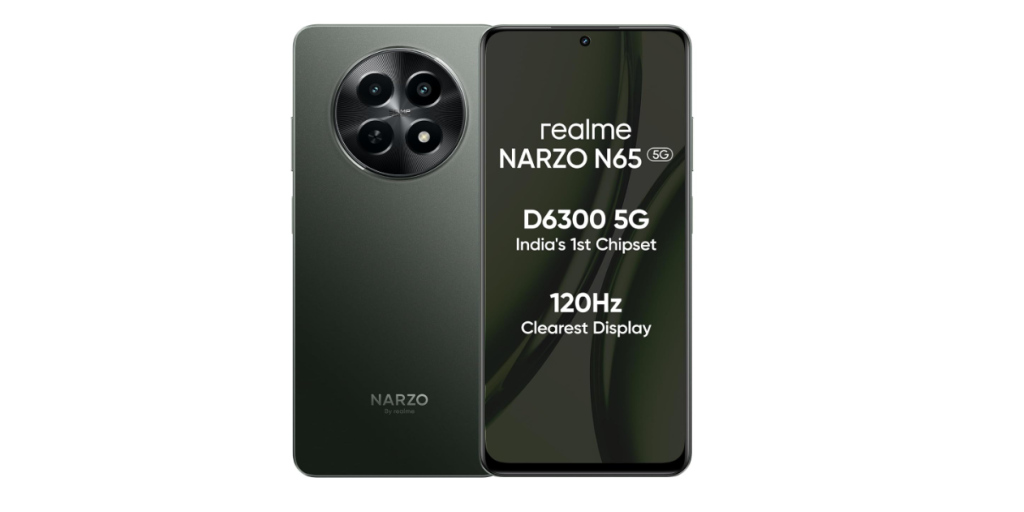
Realme has just announced a new budget smartphone in India. This device is dubbed the Realme C63 5G and it arrives with some impressive specs and features despite its affordable pricing. It packs a tall display with a high refresh rate for a smooth user experience and a sizeable battery for better endurance.

Realme C63 Specs

The Chinese brand’s latest smartphone sports a tall 6.67-inch LCD panel that offers an HD+ resolution, up to 120Hz dynamic refresh rate (50Hz/60Hz/90Hz), 240Hz touch sampling rate, and 625 nits of peak brightness. Under the hood, it is equipped with the MediaTek Dimensity 6300 SoC, which is paired with up to 8GB of RAM and 128GB of internal storage. Users can expand the storage by up to 2TB via a microSD card slot. Keep in mind this is different from the Realme C63, which was a cheaper 4G model.

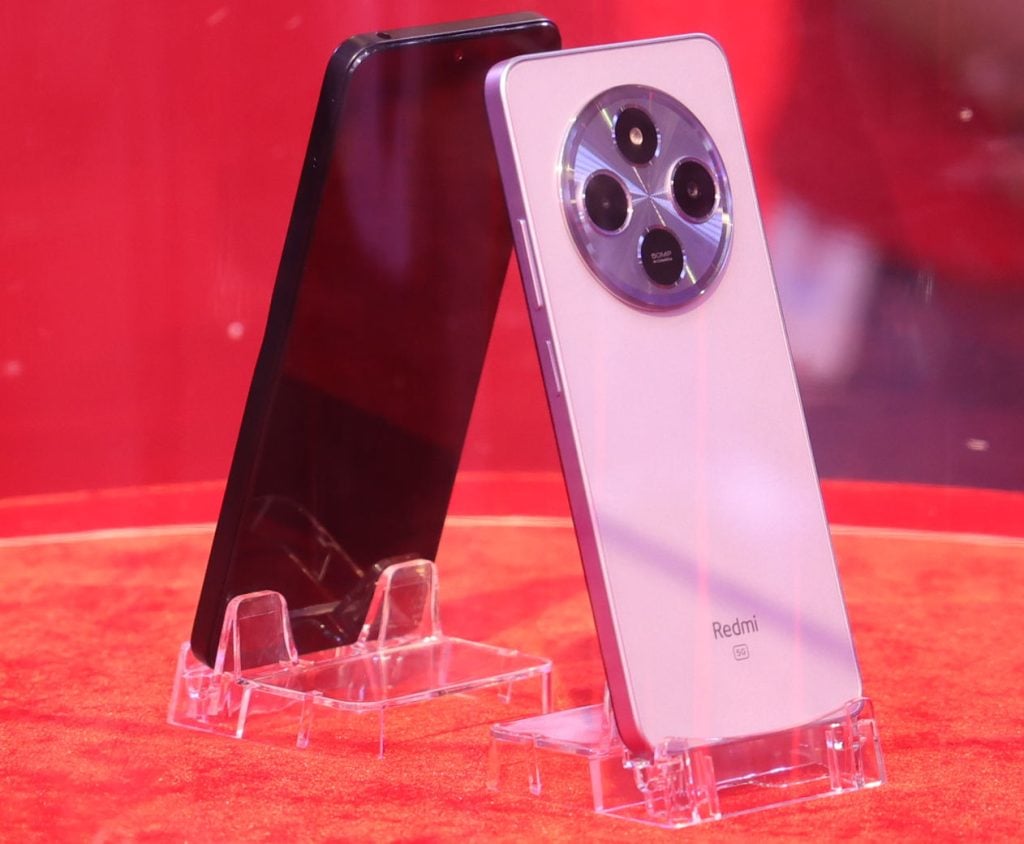
Realme C63 5G
Realme C63 5G

For photography, the rear features a 32-megapixel camera on the back along with an LED flash, while the front houses an 8-megapixel selfie shooter. A large 5,000mAh cell powers the Realme C63 5G, although, it only supports standard 10W charging. Other notable features include a side mounted fingerprint scanner, a 3.5mm audio jack, an IP54 rating for water and dust resistance, Hybrid Dual SIM, Bluetooth 5.3, Android 14 OS based Realme UI 5 custom skin out of the box, and 5G networking.

Pricing and Availability

The company unveiled the Realme C63 is two color options, namely Starry Gold and Forest Green. This model arrives in three storage configurations, which include the 4GB + 128GB, 6GB + 128GB, and 8GB + 128GB variants. Realme C63 5G has a starting price tag of 10,999 INR for the 4GB option, while the 6GB and 8GB options cost 11,999 INR and 12,999 INR respectively. First sale of the smartphone is set to kick off on 20th August 2024 and Realme is offering a flat 1,000 INR discount via bank offers. It will be on Realme.com and Flipkart.

Lenovo launches two new ThinkPlus GaN chargers with up to 140W output

Lenovo has expanded its ThinkPlus charging lineup with two new models aimed at the Chinese market. Part of the “Light and Shadow” series, these chargers are designed to power multiple devices simultaneously.

The first model boasts a four-port configuration, equipped with two USB-C and two USB-A ports. Capable of delivering a maximum output of 100W, Lenovo claims it can fully charge a ThinkBook 14 G6 laptop in under an hour and fifteen minutes. 

While primarily designed for laptops, the charger’s compatibility with various charging protocols enables it to power a range of devices, including smartphones, gaming handhelds, and other accessories.

The second charger offers a three-port setup with two USB-C and one USB-A port. This model packs a more potent punch with a maximum output of 140W. Lenovo asserts that it can charge an Apple MacBook Pro 14 in approximately 74 minutes. Similar to its 100W counterpart, this charger supports multiple charging standards, allowing it to accommodate a diverse range of devices.

Both chargers leverage GaN technology, contributing to their compact size and portability. The inclusion of folding prongs further enhances their travel-friendliness. Additionally, Lenovo has incorporated multiple safety features to protect devices during charging.

The four-port 100W charger is priced at CNY 249, while the three-port 140W model carries a price tag of CNY 369. While these chargers are currently exclusive to the Chinese market, their availability in other regions remains uncertain. For consumers seeking comparable options, the UGREEN Nexode 140W power adapter could be a potential alternative.

Lenovo has not provided a specific timeline for the potential global release of these ThinkPlus chargers.

Redmi Book 16 2024 with i5-12450H available for 3028 yuan (~$422) on JD.com

Xiaomi released the Redmi Book 14/16 2024 laptops back in November last year in its home country. Later on, the company also released a slightly cut-down version of the machine with a low-resolution display, a smaller battery, and a 12th-gen (as opposed to the 13th-gen i5 of the original version) i5 chip. While the original version (16GB RAM + 512GB) launched with a price tag of 4399 Yuan (~$621), the same configuration of the later one (with i5-12450H) was priced at 3,399 yuan (~$475) at launch.

The 12th gen i5 model gets a price cut

Now JD.com is offering the 12th-generation model of the Redmi Book 16 2024 with a price tag of 3,036 yuan (~$422). In addition to that, members can reportedly enjoy an extra 7.59 yuan discount, with support for 2 times compensation for overpriced purchases:

This display offers a resolution of 1920 x 1200 pixels (16:10) and supports a refresh rate of 60Hz. It reaches up to 300 nits in peak brightness can cover 100% of the sRGB color gamut and supports DC dimming as well as Dolby Vision.

Speaking of performance, the 12th generation Intel Core i5-12450H processor boasts 8 cores and 12 threads and offers a maximum turbo frequency of 4.4GHz for the performance core. This laptop comes with 47W TDP. The i5 chip is paired with 16GB LPDDR5 5200MT/s dual-channel high-frequency memory and 1TB PCle 4.0 high-speed SSD. This machine also supports storage expansion with an additional M.2 slot.

Unlike the 13th Gen model, it packs a smaller 56Wh battery and weighs 1.63kg (as opposed to 1.68kg). However, it comes with the same thickness of 15.9mm and a 100W GaN power adapter. Notably, this laptop equips Xiaomi’s HyperOS connect functionality, which enables the company’s ecosystem features.

The laptop comes with the following ports:

  • HDMI 2.1
  • 2 X USB-1 3.2 Gen 1
  • USB-C 3.2 Gen 2
  • USB-2.0
  • 3.5mm headphone jack

(Via)

Vivo V40 Pro vs Honor 200 Pro: A Head-to-Head Comparison

The mid-range smartphone market in India has recently seen a surge of new entries. Among the latest arrivals are the Vivo V40 Pro and the Honor 200 Pro. Both smartphones come with impressive specifications, featuring powerful processors, stunning displays, and advanced camera systems. 

Vivo V40 Pro vs Honor 200 Pro

Positioned in the sub-Rs 60,000 price range, these devices offer strong value for money. In this comparison, we will explore the details of the Vivo V40 Pro and the Honor 200 Pro to see which one comes out on top.

1. Design and Build

The Vivo V40 Pro and Honor 200 Pro both feature a sleek design with premium materials but they differ slightly in weight and build quality. The Vivo V40 Pro has a glass sandwich design and is slightly thinner at 7.6mm. Whereas, the Honor 200 Pro comes with a plastic back and measures 8.2mm in thickness. 

With its plastic build though, the Honor 200 Pro is marginally lighter at 192g versus 199g. Both devices offer water and dust resistance, but the Vivo V40 Pro offers a more robust IP68/IP69 rating offering protection in deeper water and harsher conditions compared to Honor’s IP65/IP55 rating.

Please Note: When you buy something using the links in our articles, we may earn a small commission at no cost to you.

2. Display

Honor 200 Pro

Both devices feature 6.78-inch displays, but Vivo’s AMOLED panel offers slightly better specs, with HDR10+ support and a higher peak brightness of 4500 nits. 

The Honor 200 Pro’s OLED screen peaks at 4000 nits, which, while lower, is still robust. The difference in resolution is minimal, with Vivo offering 1260 x 2800 pixels compared to Honor’s 1224 x 2700 pixels. 

Both displays offer a 120Hz refresh rate, ensuring smooth visuals, but Vivo’s higher brightness and HDR10+ support give it a slight edge for content consumption.

3. Performance and Software

Under the hood, the Vivo V40 Pro is powered by the Mediatek Dimensity 9200+ chipset, while the Honor 200 Pro features the Qualcomm Snapdragon 8s Gen 3. The Snapdragon chipset has a marginally higher base clock speed, but both processors are built on a 4nm process, ensuring efficiency and power. 

The V40 Pro runs on Android 14 with Funtouch OS 14, whereas the Honor 200 Pro uses MagicOS 8 on top of Android 14. Performance differences may be minor, but the software experience could vary, with Funtouch OS and MagicOS offering different features and customization options.

4. Camera System

Both smartphones come with triple-camera setups, but their configurations differ. Vivo offers three 50 MP sensors, covering wide, telephoto, and ultrawide shots, while Honor opts for a 50 MP wide, 50 MP telephoto with a slightly higher 2.5x optical zoom, and a 12 MP ultrawide. 

Honor’s use of a 1/1.3” sensor on its main camera suggests better light capture, though Vivo’s consistent 50 MP across all lenses may provide more balanced imaging. For selfies, Vivo continues with a single 50 MP camera, whereas Honor adds a secondary 2 MP depth sensor for better portrait shots.

5. Battery and Charging

Battery capacity is close, with Vivo packing a 5500 mAh battery and Honor opting for 5200 mAh. Honor leads in charging speed with its 100W wired and 66W wireless options, significantly faster than Vivo’s 80W wired charging. Honor also supports reverse wireless charging, a feature missing on the Vivo, which might appeal to users looking for more versatile power options.

6. Connectivity and Other Features

Both phones are well-equipped in connectivity, featuring Wi-Fi 6/7 (Vivo) and Wi-Fi 6 (Honor), along with Bluetooth 5.3. The Honor 200 Pro includes an infrared port, which might appeal to users who want to control home devices. Both devices have an under-display fingerprint sensor, but the Honor adds ultrasound proximity sensing, a feature that might offer more precise input detection.

7. Price

The Vivo V40 Pro is more affordable than the Honor 200 Pro 5G as it has a base 8/256GB configuration. This variant is priced at Rs 34,999, while the mid-tier option, featuring 8GB of RAM and 256GB of storage, is priced at Rs 36,999. The top-tier variant with 12GB of RAM and 512GB of storage comes in at Rs 41,999.

On the other hand, the Honor 200 Pro offers a more streamlined pricing structure. The base model with 8GB of RAM and 256GB of storage is priced at Rs 34,999, matching the Vivo V40 Pro’s entry-level price. The higher-end variant, featuring 12GB of RAM and 512GB of storage, is available for Rs 39,999, making it more affordable than the top model of the Vivo V40 Pro.

8. Conclusion

The choice between the Vivo V40 Pro and the Honor 200 Pro hinges on specific preferences. The Vivo V40 Pro excels in design, display brightness, and battery capacity, making it suitable for those who prioritize aesthetics and endurance. 

On the other hand, the Honor 200 Pro offers a more balanced package with slightly better performance, faster charging, and value for money, making it a compelling choice for users looking for a well-rounded device.

Here’s a quick recap of the Vivo V40 Pro and Honor 200 Pro’s specifications:

FeatureVivo V40 ProHonor 200 Pro
Dimensions164.4 x 75.1 x 7.6 mm163.3 x 75.2 x 8.2 mm
Weight192 g199 g
BuildGlass front, glass backPlastic front, glass back
Water ResistanceIP68/IP69 (up to 1.5m for 30 min)IP65 (Int’l), IP55 (China)
Display TypeAMOLED, 1B colors, HDR10+, 120Hz, 4500 nitsOLED, 1B colors, 120Hz, HDR, 4000 nits
Display Size6.78 inches6.78 inches
Resolution1260 x 2800 pixels, ~453 ppi1224 x 2700 pixels, ~437 ppi
OSAndroid 14, Funtouch 14Android 14, MagicOS 8
ChipsetMediatek Dimensity 9200+ (4 nm)Qualcomm Snapdragon 8s Gen 3 (4 nm)
Memory8/12GB RAM, 256/512GB storage8/12GB RAM, 256/512GB storage
Main CameraTriple: 50 MP (wide), 50 MP (telephoto), 50 MP (ultrawide)Triple: 50 MP (wide), 50 MP (telephoto), 12 MP (ultrawide)
Selfie Camera50 MP (wide)Dual: 50 MP (wide), 2 MP (depth)
BatteryLi-Ion 5500 mAh, 80W wired chargingSi/C 5200 mAh, 100W wired, 66W wireless
USBUSB Type-C 2.0, OTGUSB Type-C 2.0, OTG
MiscReverse wired charging, Colors: Ganges Blue, Titanium Gray, Moonlight WhiteReverse wireless charging, Colors: Moonlight White, Black, Ocean Cyan, Pink

OnePlus Ace 5 may feature a ceramic build

A recent report revealed that OnePlus’ forthcoming Ace 5 series will debut by the end of this year. The lineup is expected to include at least two models, the OnePlus Ace 5 and Ace 5 Pro. Reliable tipster Digital Chat Station recently leaked details about the chipset, battery, and fast charging capabilities of the standard model. A new leak, courtesy of tipster Wisdom Pikachu, has seemingly revealed information about the device’s build.

OnePlus Ace 5 build

To recall, the OnePlus Ace 3 was announced in black, blue, and rose gold color options at the beginning of this year in China. All three color variants featured a glass back. It seems that the tipster Wisdom Pikachu could be talking about the OnePlus Ace 5 in the above Weibo post. It reveals that it may arrive in a ceramic build. He also said that the phone will pack a battery of around 6,000mAh capacity. It has already been revealed in a recent report, that the Ace 5 will have a 6,000mAh dual-cell battery that supports 100W fast charging. Like its predecessor, it will lack support for wireless charging.

Under the hood, the OnePlus Ace 5 will have the Snapdragon 8 Gen 3 chipset.  For photography, the device will be equipped with a 50-megapixel triple camera unit. It is expected to run on OxygenOS 15-based Android 15.

The Ace 5 is said to have a 6.78-inch curved-edge OLED panel with a micro-curvature design. The 8T LTPO panel will offer a 1.5K resolution and a 120Hz refresh rate. Additionally, the device is also said to be equipped with an alert slider.

The OnePlus Ace 5 is expected to compete with the Redmi K80, which is also expected to feature the Snapdragon 8 Gen 3 chipset. The K80 series is expected to launch in November this year in China.

Maingear MG-1 AMD Advantage Gaming PC launched with Ryzen 7 9700X CPU & Radeon RX 7800 XT GPU

Maingear has introduced its new gaming PC, the MG-1 AMD Advantage, featuring high-performance hardware. Developed in collaboration with Shroud, this system includes AMD’s Zen 5 processor and Radeon RX 7800 XT graphics. It also incorporates PCIe 5.0 and DDR5 technology, with a 2TB NVMe SSD and 32GB of RAM for faster performance. The setup includes liquid cooling, a quality motherboard, and a reliable power supply.

Maingear MG-1 AMD Advantage

Maingear MG-1 AMD Advantage Specs

Maingear MG-1 AMD Advantage
  • Graphics: AMD Radeon RX 7800 XT (16GB GDDR6)
  • Processor: AMD Ryzen 7 9700X (8 Cores / 16 Threads)
  • Cooling: Maingear Epic 360mm AiO Liquid Cooler
  • Memory: 32GB T-Force Delta RGB DDR5 6000MHz (2x16GB)
  • Storage: 2TB T-Force A440 M.2 NVMe SSD
  • Motherboard: MSI MPG X670E Carbon WiFi
  • Power Supply: 850W MSI Power Supply
  • Operating System: Windows 11 Home
  • Additional: RGB Lighting, Case Lighting & Fans
  • Warranty: 1-Year with Lifetime Support

Pricing & availability

The MG-1 is available with a Ryzen 7 9700X for $2,499, with a Ryzen 5 9600X model forthcoming.

In other news, MSI has launched three new PC builds featuring AMD’s Ryzen 9000 series processors. The entry-level build includes a Ryzen 5 9600X paired with an AMD Radeon RX 6750 XT 10GB GPU, the mid-range build features a Ryzen 7 9700X CPU, Lexar 32GB DDR5 memory, and Limin’s 360 water cooling, and lastly, the high-end build is equipped with a Ryzen 9 9950X CPU and an MSI RTX 4080 Super GPU.

iQOO Z9s Pro chipset confirmed, iQOO Z9s’ design revealed as launch draws near

iQOO is all set to announce the iQOO Z9s series of smartphones on Aug. 21 in India. The lineup has two models, namely, the iQOO Z9s and the iQOO Z9s Pro. While several reports have already revealed a lot of details about these smartphones, the company has been gradually confirming their details. The landing pages for the Z9s and Z9s Pro, which are available on iQOO India’s website, have revealed the key details about both smartphones.

iQOO Z9s Pro

The iQOO Z9s Pro’s landing page reveals that it has a curved-edge AMOLED screen that offers a 120Hz refresh rate and 400 nits of local peak brightness. The brand also confirmed that the device will be available in two shades, such as Luxe Marble and Flamboyant Orange.

The Snapdragon 7 Gen 3 chipset powers the Z9s Pro. Other reports have revealed that the rear-facing dual-camera setup of the device has a 50-megapixel Sony IMX882 primary camera with OIS support and an 8-megapixel ultra-wide lens.

There is a possibility that the Z9s Pro could be a rebranded or tweaked version of the iQOO Z9 (China variant), which debuted in April of this year.  It has a 6.78-inch display, an IP64-rated chassis, a Snapdragon 7 Gen 3 chip, LPDDR4x RAM, UFS 2.2 storage, and a 6,000mAh battery with 80W fast charging support.

iQOO Z9s

iQOO Z9s 5G
iQOO Z9s

Shown above is the official image of the green variant of the iQOO Z9s. Unfortunately, the brand has not shared anything else about the device. As per reports, the device will also be available in a grey edition.

The iQOO Z9s reportedly features the same 50-megapixel Sony IMX882 main camera and the Dimensity 7300 chipset. There is a possibility the device may not feature an ultra-wide lens. The rest of its details are yet to be revealed.

Redmi Turbo 4 / Poco F7 preliminary details on display, battery, build emerge

Redmi is working on the Redmi Note 14 series and the Redmi K80 series of smartphones for the Chinese market. While the Note 14 lineup is expected to launch either by the end of this month or in September, the K80 series may break cover in November. A recent development revealed that the brand is also working on the Redmi Turbo 4 for the home market. A few preliminary details about the screen resolution and the build of the device have emerged well before its launch, which is expected to happen next year.

Redmi Turbo 4 display, battery, build details tipped

It was recently reported that the Redmi Turbo 4 bearing the model number 2412DRT0AC was spotted in the IMEI database. It is speculated that the same phone could be heading to the global market, including India, with the Poco F7 branding. The global edition of the device has the 2412DPC0AG model number, whereas the Indian variant has the 2412DPC0AI model number.

While the “2412” numbers hint at a December launch, it is likely that the Turbo 4 could be launching in Q2 2025. The Poco F7 is expected in other markets a few weeks after the launch of the Turbo 4.

Reliable tipster Experience More revealed that the Redmi Turbo 4’s display will continue to feature a flat display that offers a 1.5K resolution. In addition, the device will be equipped with a plastic frame. Being a rebranded model, the Poco F7 is also expected to carry the same specs. Hence, it appears that the Redmi Turbo 4 / Poco F7 will not offer any significant changes in departments like display and build as compared to their predecessors.

There is no information about the chipset that powers the Redmi Turbo 4 / Poco F7. It remains to be seen whether these devices feature the Snapdragon 8s Gen 4, as the previous generation has the Snapdragon 8s Gen 3 onboard.

The leaker also mentioned that the Redmi Turbo 4 will have a super large battery. However, he did not mention the exact battery size. The Turbo 3 has a 5,000mAh battery with 90W fast charging support. It is likely that the Turbo 4 / F7 may pack at least 5,500mAh battery.

GC Daily: Why are OnePlus and Oppo absent from the 2024 foldable phone race?

In today’s roundup, we talk about the lack of foldables from OnePlus and OPPO in 2024, Galaxy S24 FE leaks, big discounts on the Pixel 7 series and Samsung Buds 2 Pro, along with other interesting news from Huawei and Xiaomi.

Today’s Highlights:

  1. Foldable Phone Market Shift: Dive into the intriguing absence of OnePlus and Oppo from the 2024 foldable phone race. We’ll analyze the potential reasons behind this strategic move and its implications for the competitive landscape.
  2. Samsung Galaxy S24 FE Leak: Get an exclusive look at the leaked specifications of Samsung’s upcoming Fan Edition smartphone.
  3. Huawei Mate 70 Rumors: Explore the latest tips about Huawei’s forthcoming Mate 70 series. We’ll discuss the potential adoption of ultrasonic fingerprint technology and larger batteries, and what this could mean for Huawei’s market position.
  4. Samsung Galaxy Buds 2 Pro Deal: Uncover the details of an all-time low price for Samsung’s premium earbuds during the Amazon Great Freedom Sale.

Plus, don’t miss our roundup of other exciting stories, including significant price cuts for Google Pixel phones in India, Meizu’s return with the M20, Xiaomi’s global expansion of the Smart Band 9, and a major ColorOS update for the OnePlus 12 in China!


Why Are OnePlus and Oppo Sitting Out the Foldable Phone Race in 2024?

The foldable phone market has really heated up in 2024. Samsung and Motorola have released new versions of their foldables, refining hinge designs and addressing durability concerns.

Meanwhile, Chinese brands like Vivo, Honor, and Xiaomi are pushing the boundaries by creating slimmer, more portable foldables without sacrificing flagship features. However, two major players, OnePlus and Oppo, are notably absent from the foldable frenzy this year.

Read More


Samsung Galaxy S24 FE leak reveals display, camera, processor and battery details

After appearing on the support page, the Samsung Galaxy S24 FE has now been leaked extensively, revealing its official design and specs.

The phone’s design doesn’t introduce much that’s new; it closely resembles other Galaxy S24 series phones. However, Samsung is equipping this generation of the FE smartphone with a larger display compared to its predecessor.

Read More


Huawei Mate 70 specifications tipped: could adopt ultrasonic fingerprint scanner and larger batteries

Huawei‘s Executive Director, Yu Chengdong (also known as Richard Yu) revealed at the last Huawei Developer Conference that the Mate 70 series will be released in Q4 2024. In the latest news, a Weibo tipster has revealed the specifications of the Mate 70 series.

Read More


Samsung Galaxy Buds 2 Pro available at all-time lowest price

In the Amazon Great Freedom Sale, the Galaxy Buds 2 Pro is available at an all-time lowest price of Rs. 8100 (effectively). The Samsung Galaxy Buds 2 Pro was launched back in 2022, along with the Galaxy Z Fold 4 and Z Filp 4 smartphones. The primary highlight of the Galaxy Buds 2 Pro is its ANC mode and ambient mode, which you can switch between easily.

Read More


🔥More Top Stories You Might Have Missed

Vivo V40e Geekbench listing spotted, launch imminent

Earlier this year, Vivo announced the Vivo V30e 5G as the starting model in the Vivo V30 series. Now that the brand has already unveiled a couple of the V40 series of smartphones, it appears that the brand is now gearing up to unveil the Vivo V40e 5G. The said device was recently spotted with model number V2403 in Bluetooth SIG’s database. The same phone has also surfaced in Geekbench’s database, revealing its chipset, RAM, and storage.

Vivo V40e Geekbench listing

The Vivo V40e’s Geekbench listing reveals that it is powered by a MediaTek’s 2.5GHz octa-core chipset. It mentions that the device has the k6878v1_64 motherboard and a Mali G615 MC2 GPU (via source code).

These details are enough to claim that the Vivo V40e has the Dimensity 7300 chip onboard. To recall, the V30e came equipped with the Snapdragon 6 Gen 1 chipset. The D7300 also powers the likes of the Oppo Reno 12 series, the Nothing CMF Phone 1, and the Motorola Razr 2024.

The Geekbench listing also lists Android 14 and 8 GB of RAM as features of the Vivo V40e. In the single-core and multi-core tests, the device scored 1028 and 2938 points, respectively. Apart from the details that have emerged through the V40e’s Geekbench appearance, nothing else is known about its other specifications.

In India, the Vivo V30e debuted with a price tag of Rs 27,999. Therefore, it appears that the V40e could also arrive with a sub-Rs 30,000 price tag.

In related news, a device dubbed the Vivo V40e 5G was spotted with model number V2418 in the IMEI database. At present, there is no new information on what specs the V2418 handset will offer.

Vivo X200 Pro tipped to feature new 22nm Sony 50MP camera, 200MP periscope telephoto lens

Several reports have claimed that Vivo may announce the Vivo X200 series of smartphones in October of this year in China. Newer leaks suggest that apart from the Vivo X200 and X200 Pro, there could be another model, tentatively dubbed the Vivo X200 Mini. Reliable tipster Digital Chat Station revealed today the camera specifications of an upcoming phone that runs on the Dimensity 9400. It seems that he could be talking about the Vivo X200 Pro. Here is a look at the details that surfaced in the latest leak.

Vivo X200 Pro camera specifications (rumored)

Vivo X200 Pro camera specs by DCS

The above Weibo post by DCS suggests that the Vivo X200 Pro will see significant enhancements in its camera system. The primary camera will feature Sony’s new 50-megapixel sensor, utilising 22nm process technology.

To recall, the Sony IMX989, which was made available on the Vivo X100 Pro, was produced on a 40nm node. Although the new CMOS sensor has a slightly smaller size at 1/1.28-inch, the larger f/1.57 aperture will allow more light to enter, enhancing the overall image quality.

The Vivo X200 Pro’s rear camera setup is also said to have a 200-megapixel periscope telephoto lens, similar to the one used in the Vivo X100 Ultra. This lens will feature a large 1/1.4-inch sensor with an f/2.67 aperture.

While it is not mentioned in the leak, it seems that the camera setup will also have a 50-megapixel ultra-wide lens. Additionally, the phone will reportedly incorporate self-developed imaging chips, enhancing both software and hardware to deliver superior photography performance.

According to other reports, the Vivo X200 Pro will house a 6.7-inch OLED panel with a micro-curvature design and ultra-thin bezels. It is expected to offer a 1.5K resolution, a 120Hz refresh rate, and an ultrasonic in-screen fingerprint scanner. It is also tipped to pack a massive 6,000mAh battery.

SanDisk 8 TB SD card announced as world’s first alongside a 16TB external SSD

Western Digital has announced what it calls the world’s first 8TB SD card and a 16TB external SSD. The announcement of the new accessories was made during the 2024 Future of Memory and Storage Conference. The new offerings are the brand’s most ambitious storage devices and expand the possibilities in the memory/ storage segment.

Sandisk

The new Western Digital products will catch the fancy of many consumers with their massive capacity. Western Digital is a global leader in the expandable storage market and it continues to set the standards with new models. The newly announced devices are the SanDisk 8TB SDUC UHS-I SD card and 16TB SanDisk Desk Drive external SSD.

The SanDisk 8TB SD card features the Secure Digital Ultra Capacity (SDUC) standard and will support up to 100MBps speeds. It is best suited for consumer devices and Western Digital also announced the SanDisk 4TB MicroSD. Western Digital currently has the SanDisk 1TB Extreme PRO SDXC UHS-I which retails at $139 on Amazon. There are no pricing and release details yet for the new storage devices. They are however expected to come with premium pricing. The models will be highly useful for professional photographers and videographers who require a large storage capacity.

Performance and reliability are some of the grey areas yet to be independently verified for the upcoming Western Digital SD cards and external SSD. Suppose the 8TB SD card can deliver the same performance and reliability as specified, it will be an impressive buy. Users could gain up to an 8-fold increase in speed while also enjoying massive storage. More optics about the models will be released subsequently by Western Digital.

(via)

New leak points to the imminent launch of DJI Neo pocket drone and cheaper FPV googles

The DJI Neo pocket drone has been the subject of growing speculation. New evidence about the drone has now been revealed. It seems the DJI Neo will be DJI’s next release and it will be compatible with the DJI Googles 3. DJI will also launch a cheaper pair of FPV googles compatible with the drone.

DJI Neo pocket drone

The new details that emerged online point to an imminent launch of the DJI Neo compact drone. The DJI Neo weighs 135g and will compete against the HoverAIR X1 currently priced at $349. There are no official DJI teasers yet on the Neo but it is claimed that the model could be introduced by the end of August. A recent leak revealed retail packaging for the DJI Neo in addition to a few images of the drone. There is an alleged official DJI Neo image already online as well.

The leaked DJI Neo render highlights the scale of the drone’s propeller guards and its gimbal hardware setup. The DJI Neo has also shown up in DJI Beta software together with the Avata 2, Mini 4 Pro, and DJI Air 3. A tipster has also claimed to have received confirmation that the DJI Neo could deliver up to 16 minutes of flight time. The tipster, Jasper Ellens did however not substantiate his claims with credible evidence.

DJI Neo pocket drone

The DJI Neo was also claimed to be compatible with both the existing DJI motion controllers and the brand’s first-person view (FPV) Googles 3. Another tipster says DJI is preparing to unveil a new pair of FPV googles with LCD panels. There are no specific details yet as per the pricing of the DJI Neo and the upcoming FPV googles.

(via)

Mechrevo launches Jiaolong 15 Pro gaming Laptop with Ryzen 7 7435H, RTX 4060 in China

Mechrevo has launched a new gaming laptop called Jiaolong 15 Pro in the Chinese market. The laptop is now available for purchase on JD.com, starting at a price of 5499 Yuan ($767).

Mechrevo Jiaolong 15 Pro

Mechrevo Jiaolong 15 Pro Specifications:

The laptop features a 16.0-inch display with a 16:10 aspect ratio, providing a resolution of 1920×1200 and a 165Hz refresh rate. The screen also supports a 100% sRGB color gamut, ensuring vibrant and accurate color reproduction, which is ideal for both gaming and content creation.

The laptop is powered by an AMD Ryzen 7 7435H processor (mistakenly listed as 7453H on the official page) with 8 cores, 16 threads, and a maximum clock boost of 4.5GHz, delivering stable performance up to 75W. It runs on Windows 11.

The graphics are handled by a 140W NVIDIA GeForce RTX 4060, which utilizes the NVIDIA Ada Lovelace architecture, supports DLSS 3 technology for enhanced frame rates, and features 8GB of GDDR6 VRAM.

Mechrevo-Jiaolong-15-Pro

To manage the heat generated during intensive tasks, the Jiaolong 15 Pro is equipped with an advanced cooling system that includes dual fans, four air outlets, and five copper heat pipes. This cooling architecture is designed to ensure maximum efficiency and prevent overheating during extended gaming sessions.

The Jiaolong 15 Pro comes with 16GB DDR5 4800MHz RAM and a 512GB PCIe NVMe SSD, with options for up to 32GB of RAM and 1TB of storage in higher configurations to meet different user needs.

The laptop features a 5052 aluminum alloy chassis and weighs around 2.1kg, making it relatively portable for a gaming laptop. It also offers robust connectivity options, including Type-C 3.2 Gen2, RJ45 Ethernet, Mini-DP, HDMI 2.1, an SD card slot, and multiple USB ports.

Pricing

The Jiaolong 15 Pro comes in four variants.

  • 16GB RAM + 512GB storage: 5499 Yuan ($767)
  • 16GB RAM + 1TB storage: 5699 Yuan ($795)
  • 24GB RAM + 1TB storage: 5899 Yuan ($823)
  • 32GB RAM + 1TB storage: 6099 Yuan ($851)

(Via)

Anker Prime Charger with a combined 250W output, and six ports launched

The Anker Prime 250W 6-port Gallium Nitride (GaN) charger has been launched. The new Anker GaN charger is now available in selected markets such as the US and the UK. The model is unveiled as part of Anker’s extensive Prime product lineup.

Anker Prime Charger

The Anker Prime Charger (250W, 6 Ports, GaNPrime) has four USB-C ports and two USB-A. The first USB-C port can deliver a power output of 140W. The top USB-C port can charge a MacBook Pro 16 by up to 50% in 25 minutes. It can also fully charge the MacBook Pro 16 in 1.5 hours. The other USB-C ports offer up to 100W power while the USB-A ports deliver up to 22.5W power.

The new Anker Prime GaN charger has a 2.26-inch LCD that shows the charging status and speed. The LCD can also display the time and date. There is a control dial on the side of the charger that allows the user to customize the charging speeds between four modes. The four charging speed modes include AI Power, Low Current, Port Priority, and Dual-Laptop. The AI Power mode offers intelligent adjustments based on the detected power requirements. The Low Current mode is used for overnight charging while the Port Priority mode ensures 100W output for the USB-C1 port. The Dual-Laptop mode delivers 70W power via two USB-C outputs.

Pricing & Availability

The Anker app is the companion app for the new Anker Prime 250W GaN charger. The desktop accessory is originally priced at $169.99 or equivalently £169.99 in the UK and €159.99 in the EU. Anker is offering an introductory discount that cuts off up to $30 from its original price. The discount is equivalent to about 15% off its value but there is no indication of how long the offer will last. The GaN charger will be available in the US, the UK, and the EU starting from August 25.

Anbernic reveals the RG40XX V retro gaming handheld

Anbernic is preparing to launch the RG40XX V retro gaming handheld. The RG40XX V comes with a 4-inch display and it is a departure from the slew of horizontal devices released by the brand in recent times. The vertical handheld retro gaming device has a design similar to the AYANEO Pocket DMG.

Anbernic

The Anbernic RG40XX V will be coming on the heels of the earlier launch of a new version of the K101 Plus. The model seems to be an expansion of the RG40XX H currently available on Amazon. It is a vertical version of the RG40XX H. It has an IPS display with a resolution of 640 x 480 pixels. It comes with an unspecified chipset claimed to be powerful enough to emulate retro games such as Dreamcast, Nintendo 64, and PlayStation 1 games. The chipset could be the Allwinner H700 common with Anbernic’s popular gaming handhelds.

The RG40XX V retains a 3,200mAh battery that is also featured in the RG40XX H. Anbernic omitted one joystick on the RG404XX V, making it draw design comparisons with the AYANEO Pocket DMG. It features a pair of shoulder buttons as well as a MicroSD card reader. Anbernic will be offering the RG40XX V retro gaming handheld in white, and black translucent colorways. All the color options come with RGB backlighting which enhances the overall gaming experience.

There are no pricing and release date information available at this time. It is however speculated that the RG40XX V will be released later this month. To put in perspective as per its projected pricing, the Anbernic RG40XX H currently retails for $94.99.

Lenovo launches 27″ curved monitor: 2K 180Hz + 1500R curvature

Lenovo launched a 27-inch curved monitor “R27qc-30” in the home country today. It comes with a 2K resolution panel and supports up to 180Hz high refresh rate, which makes it suitable for gaming.

A curved monitor with adjustable stand and high refresh rate

As you can see from the image this is a curved panel and it has a curvature of 1500R. According to the company, the curvature is in line with the viewing angle of the human eye. In addition to that, it is a VA wide viewing angle panel, which brings an immersive and distortion-free picture experience. It comes with a dimension of 258.8 mm x 385.0 mm x 610.4 mm and offers an aspect ratio of 16:9.

The panel offers a resolution of 2560×1440. Over HDMI the monitor offers a refresh rate of 144Hz for the max resolution while it goes up to 180Hz when connected to DisplayPort. The company offers both the DP and HDMI cables in the box. The monitor offers a response time of 0.5ms, offers a static contrast ratio of 1000:1, and covers 99% of the sRGB color gamut. The panel is also certified by TÜV Rheinland for low blue light emissions.

The stand supports a tilt of -5° to 22°, a swivel of -30° to 30°, a pivot of -90° to 90°, and a height adjustment of 120mm. The product weighs 6.1 kg (13.4 lbs) with the stand assembly included and 4.2 kg (9.3 lbs) without that (for wall mount or VESA mount considerations). It supports VESA 100x100mm wall mounting.

According to the company, this gaming monitor typically consumes less than 26W, with a maximum power consumption of less than 65W.

Speaking of ports, this monitor comes with two HDMI ports, 1 DisplayPort, and a 3.5mm audio port.

Pricing and availability:

The Lenovo R27qc-30 curved monitor is now on sale on JD.com with an initial price of 1,399 yuan, which is currently equivalent to $195.

(Source)

Lenovo Legion Y700 2023 tablet receives ZUI 16.0.336 update; supports Xiaoxin wireless keyboard Air

Lenovo launched the Legion Y700 2023 gaming tablet with 8.8″ 144Hz display, and 16GB RAM in July last year in China. The company introduced a rebadged version of the device in the global markets in March this year, dubbed as the Lenovo Legion Tab.

Lenovo

Now the company has released the ZUI 16.0.336 update for the Lenovo Legion Y700 2023, which is based on Android 14. It adds support for the Xiaoxin Wireless Keyboard Air.

The update offers a couple of new features and system optimizations for an improved user experience. Here are the changes or improvements:

Additions:

Enhanced visual experience with brand-new color design
Optimized Gaussian blur effect

New video call assistant: during a video call, the video call assistant can help users quickly enable/disable the portrait effect and change sound settings

Support Lenovo Xiaoxin Wireless Keyboard Air: Support fast keyboard pairing and multiple shortcut keys

System optimization:

Optimize the user experience of game freezes and screen recording freezes in some game scenes

Optimize the animation effect in the AI scanning function

Ability to use handwriting function when the keyboard is connected

Security patch updates

The company suggests some precautions before installing the update such as creating a backup of important files to avoid any chance of data loss and not switching the computer mode during the upgrade process to avoid abnormal displays during the system update.

For those unfamiliar, this device comes with an 8.8-inch display bearing a 2.5K resolution, a 144Hz refresh rate, and 500 nits peak brightness. The inside of the tablet is equipped with a Snapdragon 8+ Gen 1 processor. It packs 12GB soldered RAM that is not upgradeable. There is 256GB onboard storage expandable via microSD card slot.

Being a gaming-focused device, it also features a heat dissipation system onboard. On the back of the tablet, there is a 13MP main sensor paired with a 2MP macro lens, while the front equips an 8MP selfie camera.

(Via)

OnePlus 12 gets a major ColorOS update in China

OnePlus is rolling out a major ColorOS update, version PJD110_14.0.0.840, in China. This update, sized at approximately 1.31GB, introduces new features and optimizations designed to improve user experience and system performance.

OnePlus 12

What’s new in this update?

This update comes with two key features: NFC Do Not Disturb mode, which allows users to prevent interruptions with a single click, and a control switch for displaying audio playback information directly in the status bar, enhancing user convenience and control.

The update also brings improvements to the screenshot functionality. The long screenshot feature has been optimized to prevent interruptions caused by notifications, Fluid Cloud, and other elements, ensuring a more seamless and immersive screenshot experience. Additionally, the WeChat QR code scanning speed has been enhanced for quicker and more efficient recognition, which is particularly useful for users who frequently use this feature.

NFC smart card selection has also been enhanced, improving the accuracy of access card and transportation card selection. This update also includes the Android security patch for August 2024.

In terms of security enhancements, the update adds support for selecting “Not allowed when screen is on” for device motion and direction permissions, providing users with more precise control over app transitions.

Furthermore, several bug fixes have been included, addressing issues such as occasional stuttering during gaming and problems with the private gallery where photos could not be removed.

Earlier in the year, OnePlus had introduced several AI-powered features through a previous ColorOS update. These features included an AI Summarizer for generating phone call summaries, an AIGC Remover for photo editing, and an Article Summarizer for quick overviews of articles.

OnePlus 12, launched in December last year, features a 6.82-inch Quad HD+ curved AMOLED display with 4500 nits peak brightness and Gorilla Glass Victus 2 protection. It is powered by the Snapdragon 8 Gen 3, comes with up to 24GB of RAM, and offers up to 1TB of UFS 4.0 storage. The device has a triple camera setup with a 50MP main sensor, 48MP ultra-wide, and 64MP periscope telephoto, along with Hasselblad integration. It also includes a 32MP front camera, an in-display fingerprint sensor, an IP65 rating, and a 5400mAh battery with 100W SuperVOOC and 50W wireless charging.

(Via)

Xiaomi HyperOS 2.0: What to Expect?

Xiaomi HyperOS 2.0 update

Android 15 release is around the corner, and brands are already preparing for it. Xiaomi is one of them and is reportedly working on a new version of its custom skin — HyperOS 2.0. It is expected to be based on Android 15 and is said to bring plenty of upgrades, UI changes, and new features.

Thanks to past leaks, we already have information about what HyperOS 2.0 will offer and the changes it’ll bring. In addition to that, you’ll also learn about the potential release date and eligible devices in this post.

What’s New in HyperOS 2.0?

HyperOS was released last year, and it was quite clear that the company’s focus is on giving a minimalistic experience and a deeply connected ecosystem to manage all your Xiaomi devices. Naturally, you can expect improvements in these areas. But there’ll be a lot to look forward to in HyperOS 2.0.

According to a recent leak, Xiaomi might be adding a new feature to HyperOS 2.0 that will allow users to scan for hidden cameras. It is said to use WLAN signals to detect cameras nearby. No such feature is currently offered by any smartphone brand. If this feature actually comes to HyperOS, it’ll be a big boost to user privacy.

HyperOS 2.0 camera detection

Another leak revealed that Xiaomi will offer increased virtual RAM (Memory Extension) up to 16GB, while it will be 6GB by default. More virtual RAM means more space for active apps, hence better multitasking.

HyperOS 2.0 Memory Expansion

It’s unlikely that all Xiaomi devices will get up to 16GB Memory Extension because of storage and hardware limitations. Hence, I assume that’ll only come to high-end and select mid-range phones.

Xiaomi is also reportedly working on a redesigned Settings homepage. Leaked screenshots (see below) reveal that HyperOS 2.0 could offer a card-like experience instead of the thin line-separated segments Xiaomi has been using for years.

HyperOS 2.0 Settings

The new Settings homepage in leaked images looks modern. It will not just provide better aesthetics but also ensure smoother navigation and fluency.

Xiaomi is also said to be working on bringing a ripple effect to the upcoming version of HyperOS. It shows up when a user presses any volume keys, adding to a better user experience. This visual effect was introduced in the iOS 18 beta and could make its way to Xiaomi phones with the HyperOS 2.0 update.

A small but helpful feature that might come to HyperOS 2.0 is the ability to turn off the lock screen editor. You might already know that the lock screen editor comes up when you tap and hold the empty location on the lock screen. If this happens to you accidentally multiple times every day, it can be annoying. Hence, it’s a good move to let users decide if they want to keep it or not. 

HyperOS 2.0 Lock Screen Editing

These are leaked features that might come to HyperOS 2.0. I’m sure Xiaomi has more in store, which will be unveiled at the HyperOS 2.0 release. Besides those HyperOS-exclusive features, there will be new features and enhancements from Android 15, such as satellite messaging, theft detection lock, app archiving, app pairs, and more. You can read about the best Android 15 features in this article.

HyperOS 2.0: When Is It Coming?

Xiaomi hasn’t yet revealed a release date or timeline for HyperOS 2.0. However, a recent leak suggests it will be released around October, the same month HyperOS 1.0 was released in the previous year.

Thankfully, not everyone has to wait until the official release to get a taste of Android 15, as the beta program is already out for several devices, including Xiaomi 14, Xiaomi 13T Pro, and Xiaomi Pad 6S Pro 12.4. If you have any of these Xiaomi devices, you can participate in the Android 15 beta program and test new features ahead of the public release.
Android 15 is currently going through the platform stability phase. It’s the final phase of development, in which Google removes bugs and adds final touches to the new OS before the stable release.
The stable version of Android 15 is expected to be released in October; the same month, we might see Xiaomi releasing HyperOS 2.0.

All exciting upgrades are just a few weeks away, but is your Xiaomi device eligible for that? Check out the next section for more details.

Xiaomi Android 15 Eligible Devices

(Xiaomi)

  • Xiaomi 14
  • Xiaomi 14 Pro
  • Xiaomi 14 Ultra
  • Xiaomi 13
  • Xiaomi 13 Lite
  • Xiaomi 13 Pro
  • Xiaomi 13 Ultra
  • Xiaomi 13T
  • Xiaomi 13T Pro
  • Xiaomi 12
  • Xiaomi 12 Lite
  • Xiaomi 12 Pro
  • Xiaomi 12T
  • Xiaomi 12T Pro
  • Xiaomi 12S
  • Xiaomi 12S Pro
  • Xiaomi 12S Ultra
  • Xiaomi Civi 4 Pro
  • Xiaomi Civi 3
  • Xiaomi Civi 2
  • Xiaomi Civi 1S
  • Xiaomi Mix Fold 3
  • Xiaomi Mix Fold 2
  • Xiaomi Pad 6
  • Xiaomi Pad 6 Pro
  • Xiaomi Pad 6 Max 14
  • Xiaomi Pad 6S Pro 12.4
  • Xiaomi Pad 5 Pro 12.4

(Redmi)

  • Redmi Note 13 4G
  • Redmi Note 13 5G
  • Redmi Note 13 Pro 4G
  • Redmi Note 13 Pro 5G
  • Redmi Note 13 Pro+ 5G
  • Redmi Note 13R
  • Redmi Note 13R Pro
  • Redmi Note 12 4G
  • Redmi Note 12 Turbo
  • Redmi Note 12 Pro 4G
  • Redmi Note 12 Pro Speed
  • Redmi Note 12R
  • Redmi Note 12R Pro
  • Redmi Note 12T Pro
  • Redmi Note 12S
  • Redmi K70
  • Redmi K70E
  • Redmi K70 Pro
  • Redmi K60
  • Redmi K60 Pro
  • Redmi K60 Ultra
  • Redmi 13R
  • Redmi 13C
  • Redmi 13C 5G
  • Redmi 12
  • Redmi 12 5G
  • Redmi Pad Pro
  • Redmi Pad Pro 5G
  • Redmi Pad SE
  • Redmi Turbo 3
  • Redmi A3
  • Redmi A3x

(Poco)

  • Poco F6
  • Poco F6 Pro
  • Poco F5
  • Poco F5 Pro
  • Poco X6
  • Poco X6 Neo
  • Poco X6 Pro
  • Poco M6
  • Poco M6 Pro
  • Poco M6 Pro 5G
  • Poco Pad
  • Poco C65
  • Poco C61
  • Poco C51

Xiaomi hasn’t published a list of devices that will get the Android 15 update. The above list is based on the current software update policy and past track records. If your device isn’t mentioned there, wait for the official list to come out. You can keep an eye on our Android 15 section for the latest information.
What are your expectations with the upcoming version of HyperOS? Share your thoughts in the comments below.

Also Read:
1. How to Easily Download HyperOS Updates?
2. Android 15 Will Be the Final OS Update for These Xiaomi Devices
3. Here’s When Android 15 Is Coming to Your Phone?