Advertisement

AYANEO announces release dates for Pocket DMG and Pocket Micro retro gaming handhelds

Gaming handheld maker AYANEO has confirmed the global release dates for the Pocket DMG and Pocket Micro retro gaming handhelds. The two handhelds will be unveiled simultaneously on July 31.

AYANEO

The two upcoming AYANEO retro gaming handhelds resemble classic Nintendo systems like the GameBoy and GameBoy Micro. They however have the complement of modern features like an OLED display and chipsets powerful enough to emulate games from most of the popular game consoles.

AYANEO still has a few unreleased gaming handhelds whose launch dates are still unknown. Models such as the Pocket EVO, AM01S mini-PC, and AG01 eGPU are believed to be in line for the subsequent AYANEO product launch. The route of release and specs of the AYANEO upcoming products are still uo

The AYANEO Pocket DMG and AYANEO Pocket Micro come with different chipsets and will target different user experiences. The Pocket DMG is equipped with the Qualcomm Snapdragon G3x Gen 2, which is also featured in the Pocket S. The Snapdragon G3x Gen 2 is currently among the most powerful SoCs deployed in Android gaming handhelds, The AYANEO Pocket Micro is powered by the MediaTek Helio G99 chipset. This restricts the Pocket Micro to games from GameCube, PlayStation 2 or PlayStation Portable.

Both the AYANEO Pocket S and Pocket Micro are preparing to launch globally via the Indiegogo crowdfunding platform. The brand has however not released any pricing information for the two models.

Google is Redesigning Chrome’s Downloads using AI-powered Google Safe Browsing Tech

Google is bolstering Chrome‘s security features with a redesigned download experience. The browser will now differentiate between “suspicious files” and “dangerous documents” using AI-powered Google Safe Browsing technology. This categorization, indicated by distinct icons, colors, and text, aims to empower users to make informed decisions about downloaded files.

Chrome users with enhanced protection mode enabled can automatically scan downloads

To further strengthen protection, Chrome users with Enhanced Protection mode enabled will benefit from automatic deep scanning of downloaded files, eliminating the need for manual security checks. This proactive approach aims to prevent malicious downloads.

Google Chrome

By improving clarity and consistency in download warnings, Google hopes to reduce the likelihood of users bypassing security measures and increase overall online safety.

(Via)

TikTok Testing New Shazam-like Sound Search Feature

TikTok is expanding its functionality with a new “Sound Search” feature currently in testing. Users will soon be able to identify songs by humming, singing, or playing a snippet of the audio.

Users can even hum or sing to identify the song

The feature goes beyond simple song recognition, potentially allowing users to discover related short video content based on the identified sound. While the feature is currently limited to a small group of users, its wider rollout is anticipated in the future.

Tiktok

It’s worth noting that this new feature is exclusive to the international version of TikTok, as the Chinese version lacks similar functionality at this time.

TikTok’s Sound Search feature is another step by the company towards enhancing user experience and expanding the platform’s capabilities, making TikTok a popular alternative to other social media apps out right now.

(Via)

You can now access your Android phone files via Windows File Explorer

Microsoft is advancing its integration of Windows and Android devices with a new feature in testing for Windows Insiders. It allows users to directly access their Android phone’s storage through the familiar File Explorer interface on Windows 11, offering a more seamless way to manage files.

Previously, integrating Android devices with Windows was primarily done through the “Your Phone” app, which had limited file management capabilities. This new feature promises a more streamlined experience, similar to managing local storage or external drives.

The feature is included in the latest Windows Insider builds, available across all channels—Dev, Beta, Release Preview, and the cutting-edge Canary channel. However, there are specific requirements for using this feature.

First, your Android phone must be run on Android 11 or later. Additionally, you need to be enrolled in the beta program for the “Link to Windows” app on your phone, with version 1.24071 or higher installed.

On the Windows side, your PC must be running Windows 11 and be part of the Windows Insider Program, enrolled in any of the four Insider channels.

If you meet these criteria, you can set up this feature through the Windows Settings menu. Go to “Bluetooth & devices > Mobile Devices,” and select the “Manage devices” option. From there, grant your PC access to your phone, which will unlock the “Access in File Explorer” toggle. If the toggle isn’t available, it means the feature hasn’t been rolled out to your device yet.

While this feature shows promise for improving Windows-Android integration, it remains to be seen whether it will be included in a stable release for all Windows 11 users. The Insider program often tests experimental features, which may be modified or discontinued before a wider release.

Overall, it’s another step from Microsoft to make a more unified experience for users who use Windows and Android. The final decision on whether this feature will be fully integrated into Windows 11 will depend on user feedback and testing outcomes during the Insider phase.

(Source)

Ola Electric CEO teases upcoming electric motorcycle

Ola Electric is readying the release of a new electric motorcycle from its stables. Ola’s CEO Bhavish Aggarwal has shown a teaser image of an upcoming Ola Electric e-motorcycle. This will be the brand’s first electric motorbike, as the company has a remarkable collection of e-scooters. The teaser image revealed the battery pack, electric motor, front sprocket, and final drive chain of the model. It is rumored that the new Ola Electric electric motorcycle official announcement could be made on August 15.

Ola Electric

Barely a year ago, Ola Electric showcased four concept electric motorcycle models with futuristic designs. The social media post by Ola’s CEO is believed to be a pre-production model of one of the four bikes showcased by the company. The e-motorcycle, as per the teaser image, has a steel tubular frame that houses a compact battery pack. The electric motor sits below the battery pack while the drive chain has a feasible front sprocket. The image also reveals several control modules strategically located on the bike.

The teaser image also reveals a portion of the seat highlighting the presence of forward-set footpegs which confirms that the model is an e-motorcycle. The seat height is almost the same as the height of the battery pack, suggesting accessible saddle height for riders. The name and full specs of the teased Ola electric motorcycle are still under wraps. It is unlikely that the model will become a production model within this year. The August 15 announcement of Ola Electric’s upcoming product offerings could provide the needed optics for the e-motorcycle.

(via)

Npad Ultra Android 14 tablet with WideVine L1, Snapdragon chipset, and dual SIM launched

The Npad Ultra Android tablet has been unveiled by N-One. The Npad Ultra runs on Android 14 out of the box and is a high-resolution tablet powered by a Qualcomm Snapdragon processor. The Npad Ultra also comes with WideVine L1 certification and a dual SIM setup.

Npad Ultra Android 14 tablet

N-One has a portfolio of affordable devices and the new Npad Ultra will follow the same trajectory. Thanks to its Android 14 OS, the Npad Ultra utilizes the latest operating system. It is however projected that the model may not be available for major OS updates due to its cheaper price tag. The Npad Ultra is equipped with the Qualcomm Snapdragon 685 SoC with a RAM capacity of 8GB. The RAM can be significantly expanded using a type of swap file while the memory capacity is 128GB. As with the RAM, memory expansion is also possible with the Npad Ultra.

The N-One Npad Ultra Android 14 tablet has a 2,000 x 1,200 pixels resolution on its 12-inch screen across. The WideVine L1 certification means that the Npad Ultra can stream video content from Amazon Prime Video or Netflix at 1080p resolution. The tablet is equipped with four built-in speakers to achieve a decent sound output. The main camera of the tablet is a 13MP sensor while the front camera is rated 5MP. The Npad Ultra tablet has a 9,200mAh battery that can be recharged at 18W. The Npad Ultra Android 14 tablet supports dual LTE and WiFi network connectivity.

Npad Ultra Android 14 tablet

The Npad Ultra is available for pre-order from Geekbuying for $243 in Europe. The earliest delivery of the tablet is about three weeks but the global availability details are lacking for the tablet at this time.

MagicX XU HD Gaming Handheld revealed as a potential competitor of the Anbernic RG35XX


The MagicX XU HD gaming handheld has been revealed. The upcoming compact gaming handheld is touted as a strong competitor of the Anbernic RG34 and three color variants have already been shown for the model. The MagicX XU HD is allegedly coming with a highly affordable price tag.

MagicX XU HD Gaming Handheld

MagicX could be close to the release of its next retro gaming handheld, the XU HD. Previously, the company developed the MagicX XU Mini M as a competitor of the Anbernic RG28XX and Miyoo Mini A300 although it is yet to be released. A tipster @forthenextlive claims that MagicX is actively developing the XU HD and the images bear a strong semblance to the Anbernic RG35XX 2024.

The XU HD is equipped with a 3.2-inch 4:3 display with a resolution of 1024 x 768 pixels. If the resolution of the model is true, then it is more dense than the RG35XX with a 3.5-inch screen and 640 x 480 pixels resolution.

The upcoming retro gaming handheld omits joysticks but has a d-pad, ABXY buttons, start/select buttons, and two pairs of shoulder buttons. It is also rumored that the gaming handheld omits support for Bluetooth or WiFi connectivity in a minimalist cost design.

MagicX XU HD Gaming Handheld

The MagicX XU HD will run on the MagicX OS based on Linux and also features an A9 architecture Chinese chip. The MagicX XU HD is capable of emulating popular retro games from Nintendo DS, Nintendo 54, and PlayStation 1. There are no details yet on the release date for the model but it is speculated that it will be priced around $40.

HKC launches a new 27-inch 1080p 280Hz gaming monitor with Fast IPS panel

HKC unveiled a new gaming monitor in the Chinese market, the G27H3, featuring a 27-inch display. The monitor is listed on JD.com with a pre-sale date set for July 29th, priced at 1199 Yuan (approximately $165). Let’s check out its key specs.

HKC G27H3 Monitor

HKC G27H3 Monitor Specifications:

The monitor features a 1920×1080 resolution Fast IPS panel with a staggering 280Hz refresh rate, achieved through overclocking. This monitor also boasts a brightness of 400 nits, a swift 1ms response time, and a static contrast ratio of 1000:1. Additionally, it supports 8-bit color depth.

For color accuracy, the G27H3 supports professional eSports color calibration with a 95% DCI-P3 coverage ratio and a 125% sRGB volume ratio, ensuring true-to-life color reproduction.

It also features various custom game modes, including game crosshair and dark field brightening, to enhance the gaming experience by improving aiming accuracy and optimizing dark area details.

The monitor comes with HDR400 certification, which enhances picture contrast and color layers, offering a more immersive and realistic visual experience. The monitor also supports dynamic blur reduction technology developed by HKC, which significantly improves the clarity of moving images and reduces ghosting.

Furthermore, the monitor includes hardware low blue light technology, reducing harmful blue light waves and minimizing visual fatigue without compromising color accuracy.

In terms of connectivity, it includes two HDMI 2.0 ports, one DP1.4 port, and a 3.5mm audio jack, making it easy to connect to various devices. The monitor also supports FreeSync technology, which eliminates screen tearing, stuttering, and delays caused by refresh rate limitations for a smoother gaming experience.

HKC G27H3 comes with a hexagonal compact base that is ideal for small spaces. The stand allows for height adjustments, tilting, and pivoting, enhancing user comfort and flexibility. It also supports VESA 75x75mm wall mounting.

Vivo X100 Pro Global model gets new update with July 2024 security patch & bug fixes

Vivo has released a significant update for its X100 Pro smartphone. The update, which is 0.94GB in size, includes the July 2024 security patch and several important fixes. This global rollout is identified by firmware version PD2324CF_EX_A_14.0.19.2.W30. The update was first shared by a user named Anir Chakraborty on X.

Vivo X100 Pro

Update Highlights

  1. System Security: The update includes the July 2024 Google security patch to enhance system security.
  2. Network Stability: Improvements have been made to network adaptability and stability for a more reliable connection.
  3. Multimedia Fixes: An issue causing occasional disruptions in audio output has been fixed.
  4. Sound and Vibration: A bug that prevented “Silent mode” from turning off after recording in Ring mode has been resolved.

In other news, both Vivo and Oppo are developing flagship phones featuring the Dimensity 9400 chip, expected to debut in October. Tipster Smart Pikachu suggests the Vivo X200 Pro and Oppo Find X8 Pro will be the top Dimensity 9400-powered photography phones in 2025. Vivo will likely not release the X200s and X200s Pro in 2025. Both the X200 and Find X8 models will feature a periscope telephoto camera, glass backs, and up to 16 GB RAM and 512 GB storage. The X200 Pro may have a 200MP periscope telephoto camera and a 2K 120Hz OLED display, while the X8 Pro might include a quad-camera setup with dual periscope telephoto cameras.

(via)

Vivo Y18i debuts silently with just 4GB of RAM and Unisoc T612

Following the launch of the Y18 and Y18e earlier this year, Vivo has quietly introduced another Y-series phone, the Y18i, to the Indian market. It’s a budget smartphone that focuses on delivering the essentials. Let’s go through the specifications, features, and the price of Vivo Y18i in India. 

Vivo Y18i Specifications

The phone’s specifications are a predictable mix for its price point. It has an LCD screen measuring 6.56 inches that offers a basic HD+ resolution with a slightly above-average 528 nits peak brightness. A welcome feature is the 90Hz refresh rate which should offer smoother scrolling compared to standard 60Hz displays.

Vivo Y18i Specs Launch Price

Under the hood, the Y18i relies on the Unisoc T612 processor, a familiar choice in budget phones. It is paired with just 4GB of RAM and 64GB of storage configuration. Thankfully, there’s a microSD card slot for those needing additional space. The smartphone boots on the Android 14 operating system with Vivo’s FuntouchOS 14 on top. 

On the camera front, the Y18i keeps things simple with a dual rear setup featuring a 13MP main sensor and a secondary camera.  For selfies, a 5MP camera sits within a notch on the display.

Vivo Y18i India Launch

Moving on, fueling the Y18i is a 5000mAh battery. The phone’s build is relatively thin and light, measuring 163.63 x 75.58 x 8.39mm and weighing 185g. 

The phone includes essential connectivity options such as Bluetooth 5.1, Wi-Fi, a microSD card slot, and a USB 2.0 port. It also has an IP54 rating, offering some protection against dust and water.

Price and Availability

The sole 4GB RAM and 64GB storage option of the Vivo Y18i is priced at Rs 7,999 in India. It comes in two color options: Gem Green and Space Black. The availability is expected to expand from offline stores to online retailers soon.

This flagship smartphone has zero commercial pre-installed apps

After its debut last year, Nio has officially launched the Nio Phone 2, the second generation of its flagship smartphone. The new model continues the company’s tradition of seamless integration with its electric vehicles, alongside some impressive hardware specifications.

NIO Phone 2 Specs Launch Price

Nio Phone 2 Specifications

The Nio Phone 2 features a large 6.82-inch QHD+ display with a peak brightness of 2600 nits. The screen is a custom-made, four-curved panel from Samsung which supports a variable refresh rate from 1Hz to 120Hz and 1440Hz high-frequency dimming for smoother visuals.

Powered by the latest Qualcomm Snapdragon 8 Gen 3 chip, the Nio Phone 2 also includes the “Gun Yu Cooling System” to manage heat during demanding tasks. Nio claims the phone maintains a surface temperature of 40°C while running “Honor of Kings” at 119 frames per second, and 47.6°C while playing “Honkai Impact 3” at 59.5 frames per second.

The camera system includes a 48MP LYT-T808 (IMX888) main sensor, a 48MP LYT-600 (IMX882) ultra-wide lens, and a 50MP IMX890 periscope telephoto lens. Fueling the device is a 5020mAh battery and supports 80W wired charging and 50W wireless charging.

One of the most interesting features of the Nio Phone 2 is its software. It runs a customized version of Android that Nio claims has “0 system ads and 0 commercial pre-installed apps.”

Additionally, the Nio Phone 2 introduces “NOMI GPT,” a suite of AI features built around Nio’s self-developed multimodal perception, cognitive center, emotion engine, and multi-expert Agent. This includes a large model encyclopedia, AI-powered chat experiences, and car-related functions like Q&A and scene generation.

The most intriguing new software feature, however, is the “NIO Link Car Broadcast” function. It allows users to directly access their car’s camera system for live streaming, or even showcase their driving perspective during WeChat video calls –  though the latter requires operation from the passenger seat.

Price and Availability

The Nio Phone 2 is available in three configurations: the base model with 12GB of RAM and 512GB of storage is priced at 6499 yuan (approximately USD 896), the mid-tier option with 12GB of RAM and 1TB of storage costs 6899 yuan (USD 951), and the top-tier “EP Edition” with 16GB of RAM and 1TB of storage is priced at 7499 yuan (USD 1034).

Nio is also offering a 500 yuan voucher towards the purchase of the new model for first-generation Nio Phone users. Pre-orders are now open, with official sales starting in China on August 10th.

Lenovo Legion R9000P 2024 gaming laptop with Ryzen 9 7945HX goes on sale in China starting at $1282

Lenovo recently launched the Legion R9000P 2024 gaming laptop in the Chinese market, now available for its first sale on JD.com. The grey version is priced at 9,299 yuan ($1282), while the white version is available for 9,699 yuan ($1338).

Lenovo Legion R9000P 2024

Lenovo Legion R9000P 2024 Specifications:

The laptop is equipped with an AMD Ryzen 9 7945HX processor with 16 cores and 32 threads, capable of boosting up to 5.4GHz. For graphics, it comes with an NVIDIA RTX 4060 graphics card. It includes 16GB of DDR5 memory and a 1TB PCIe 4.0 SSD.

The Legion R9000P comes with a 16-inch 2.5K display with 2560×1600 resolution, a rapid 240Hz refresh rate, and covers 100% of the DCI-P3 color gamut. It also features a peak brightness of 500 nits and a 3ms response time, ensuring minimal input lag for competitive gaming. Additionally, the display comes with HDR400 along with G-SYNC, and AMD FreeSync Premium support.

Lenovo has equipped the R9000P with its innovative Frost Blade Pro Cooling System 5.0, designed to handle the intense thermal demands of these high-performance components. The system features a full coverage multi-zone heat transfer system and a 3D blade exhaust fan, ensuring optimal cooling even during the most demanding gaming sessions.

The gaming laptop also excels in connectivity, featuring Wi-Fi 6E, USB-A, HDMI 2.1, an RJ-45 network port, a 3.5mm headset, and a versatile Type-C port that supports up to 140W proprietary charging. Additionally, the Legion R9000P comes equipped with a spacious 80Wh battery, providing ample power for extended gaming sessions.

Lenovo has incorporated several enhancements to elevate the gaming experience, including the Legion ZONE software for customizable controls, a TrueStrike keyboard for precise input, and Nahimic sound effects for immersive audio.

The laptop also includes a camera with an electronic control switch for privacy and comes pre-installed with Windows 11.

POCO Buds X1 launching on August 1 in India

After the recent launch of the POCO F6 Deadpool & Wolverine Limited Edition smartphone in India, the brand is planning to launch the POCO M6 Plus 5G on August 1, 2024. Alongside the new smartphone, the brand also plans to launch the POCO Buds X1.

POCO Buds X1

While details on the earbuds remain scarce, teaser images hint at a white in-ear design. The company promises a “pure, uninterrupted audio experience” with the Buds X1, suggesting a focus on sound quality. The Buds X1 will be the second pair of TWS earbuds by POCO to come to the Indian market. The brand launched the POCO Pods earbuds around the same time last year in India.

Like the Buds X1, the POCO Pods (review) also feature an in-ear design. It uses 12mm audio drivers and Bluetooth 5.3 for connectivity. It supports SBC codec for good audio quality and offers Google Fast Pair for quick and easy pairing. It has no active noise cancellation, however, environmental noise cancellation is available to reduce background noise during calls.

The POCO Pods have an IPX4 rating, making them splash-resistant and suitable for outdoor activities. The earbuds’ 34mAh battery provides up to 5 hours of playback on a single charge, and the charging case’s 440mAh battery offers up to 30 hours of backup power. The fast charging feature provides 90 minutes of music playback with a 10-minute charge. We can expect the POCO Buds X1 to improve upon these features.

(Source)

Oppo Pad 3 is just a rebranded OnePlus Pad Pro: DCS

Oppo is anticipated to launch a new tablet soon, the Oppo Pad 3, which is said to closely resemble the OnePlus Pad Pro, the flagship tablet from its sibling brand OnePlus.

According to a leak by Digital Chat Station, the Oppo Pad 3 will not only share the same design but also have identical specifications as its OnePlus counterpart.

Oppo Pad 3 specs leak DCS

However, it’s rumored to come in gold and blue variants, expanding the color palette from the existing grey and green options of the OnePlus Pad Pro.

OnePlus Pad Pro

Oppo Pad 3 Specifications (Rumored):

Talking about specs, the upcoming tablet is expected to feature the same 12.1-inch 3K LCD display boasting a 7:5 aspect ratio, 144Hz refresh rate, and a peak brightness of 900 nits. The display will also expected to support the second-generation Oppo Stylus pen.

The tablet will be powered by the flagship Snapdragon 8 Gen 3 chipset and will boast an all-metal body. In terms of storage, the tablet is likely to mirror the OnePlus Pad Pro’s configurations of 8GB, 12GB, and 16GB RAM (LPDDR5X) paired with up to 512GB (UFS 4.0) of storage.

The tablet is expected to run on Android 14 and comes equipped with a 13MP rear camera with LED flash and an 8MP front-facing camera.

Additionally, it is expected to come with quad speakers, Wi-Fi 6, Bluetooth 5.3, USB Type-C, a side-mounted fingerprint sensor, and a 9510mAh battery with 67W SuperVOOC fast charging.

Earlier, Digital Chat Station mentioned that the tablet will feature an NFC coil and support cross-terminal file management. Additionally, it will offer communication sharing 2.0, allowing users to share 5G connectivity, answer dual-sim calls, receive SMS, and more. These features are reportedly deeply integrated into ColorOS.

Currently, there is no official confirmation from Oppo regarding the Oppo Pad 3. However, its recent appearance on the 3C certification platform suggests that the tablet is likely to hit the market soon.

Huawei’s liquid-cooled EV supercharger proves resilient in desert trials

Huawei recently shared the results of extreme temperature testing for its liquid-cooled supercharging technology in China’s Turpan region, known for its intense heat. The tests took place in the scorching Kumtag Desert and Huoyan Mountain, where ambient temperatures reached 49.6°C (121.28°F) and surface temperatures soared above 80°C (176°F).

Despite these harsh conditions, Huawei’s supercharging technology performed remarkably well. The system kept noise levels to 44.1 dB in standby mode and 59.5 dB while charging, even at ambient temperatures of 47.1°C (116.78°F). This suggests the technology is quiet enough to avoid being disruptive in real-world scenarios.

The key to the system’s performance is its advanced liquid cooling technology, which effectively dissipates heat generated during charging, preventing overheating and potential malfunction. Huawei also highlights its “precise temperature control algorithms,” which are crucial for maintaining system stability and charging efficiency.

Huawei conducted additional tests on 414 vehicles, delivering a total of 13,391 kWh of energy. These tests had a nearly perfect success rate, with almost every vehicle fully charged in a single attempt.

As the electric vehicle market grows rapidly, fast and efficient charging solutions like Huawei’s are essential for wider adoption. The EV charging infrastructure is expected to see significant investment, with over $12 billion projected for the US market alone by 2030. Huawei’s technology could play a key role in this development.

However, it’s important to remember that this technology is still in its early stages. Details about real-world deployment, specific charging speeds, and compatibility with various electric vehicle models are yet to be clarified. 

While these tests offer a promising outlook for the future of EV charging, more information is needed before making a final judgment on Huawei’s supercharging solution.

Another Chinese phone maker is entering EV market later this year

While Apple may have opted out of the electric vehicle (EV) race, China’s tech scene continues to see a growing trend of smartphone giants entering the automotive market. 

Following Huawei‘s integration of its services into cars like the HIMA model and Xiaomi’s recent foray into car production, Meizu, now under the wing of Geely, is set to unveil its first car later this year.

The announcement came from Meizu COO Liao Qinghong at the ChinaJoy 2024 exhibition. Qinghong emphasized that the car would have a different functional performance from that of traditional car manufacturers.

The upcoming Meizu DreamCar MX will be manufactured by Geely and will reportedly be based on the SEA (Sustainable Experience Architecture) platform. Early images show a sedan design similar in size to the Lynk & Co Z10.

One of Meizu’s key differentiators is a strong focus on user involvement. In January, the company launched the DreamCar MX community – an interactive platform allowing fans to participate in design discussions and personalization options. This includes co-creating color schemes, Flyme Auto themes, and potentially influencing other aspects of the car.

However, the success of Meizu’s automotive venture is uncertain. Both Meizu and Xiaomi lack established experience in car manufacturing compared to traditional automakers. 

The Chinese EV market is highly competitive, with established players like BYD and Tesla holding significant market shares. Meizu’s success will depend on how well it can differentiate the DreamCar MX through its user-centric approach and leverage Geely’s production capabilities.

Only time will tell if Meizu can carve out a niche in the crowded EV landscape. As the launch date approaches, we can expect to see more information about the Meizu DreamCar MX.

Nothing Phone (2a) Plus Spec Sheet Leaks Ahead of Launch

Nothing is gearing up to launch the Phone (2a) Plus smartphone globally on July 31st. As confirmed officially, it will pack the MediaTek Dimensity 7350 SoC and will be paired with up to 12GB of RAM. Now a new leak has shed light on the remaining specifications of Nothing’s upcoming mid-range phone.

Disappointingly for those expecting a larger screen in the Plus variant, it is said to feature the same 6.7-inch AMOLED display as the standard Phone (2a). The color options are also familiar, with grey and black finishes, though the leak suggests a slightly different finish compared to its predecessor.

The “Plus” in the moniker seems to come in the form of a few key upgrades. The first is the processor, with the Phone (2a) Plus using the Dimensity 7350, an upgrade from the Dimensity 7200 Pro found in the Phone (2a). 

Nothing Phone (2a) Plus specs leak
Nothing Phone (2a)

Another notable upgrade is the selfie camera, which has been upgraded from a 32MP sensor in the standard model to a 50MP sensor in the Plus version. Additionally, the Phone (2a) Plus is expected to offer faster charging, improving from 45W in the standard model to 50W.

However, based on the current leak, these changes are the only differentiating factors between the two models. With a nearly identical design, display, and rear camera setup, buyers may need to consider the value proposition and their specific priorities when deciding between the Phone (2a) Plus and the Phone (2a).

The leak also mentions the expected storage options, with the Phone (2a) Plus likely to be available in two configurations: one with 8GB of RAM and 256GB of storage, and another with 12GB of RAM and the same 256GB of storage. Pricing details are still under wraps. 

With the launch date fast approaching, it won’t be long before we have official confirmation of these specifications.

(Source)

Lenovo’s new tablet launches with paper-like display and 144Hz refresh rate

As scheduled, Lenovo has officially launched the new Xiaoxin Pad Pro 12.7 tablet in China. It’s available in two variants: the standard model and the “Comfort Edition” and while both of them have similar specifications, the Comfort Edition is designed for a more reading-friendly experience. Let’s explore their specs, features, and prices.

Lenovo Xiaoxin Pad Pro 12.7 Launch Specs Price

Lenovo Xiaoxin Pad Pro 12.7 Specifications

Both the models have a 12.7-inch 2.9K display with a smooth 144Hz refresh rate, P3 color gamut, and Dolby Vision support. But the Comfort Edition focuses on providing a reading experience akin to paper. It uses “comfortable soft light” technology on its 12.7-inch screen to offer texture similar to paper and a 70% increase in touch smoothness. Lenovo claims this model also enhances “paper-like realism” by 63%, appealing to users who spend significant time reading ebooks or documents.

Another notable difference between the two versions is in memory configuration. Both offer 8GB RAM with either 128GB or 256GB of storage, but the standard edition also has a higher-tier 12GB RAM option for the 256GB model. 
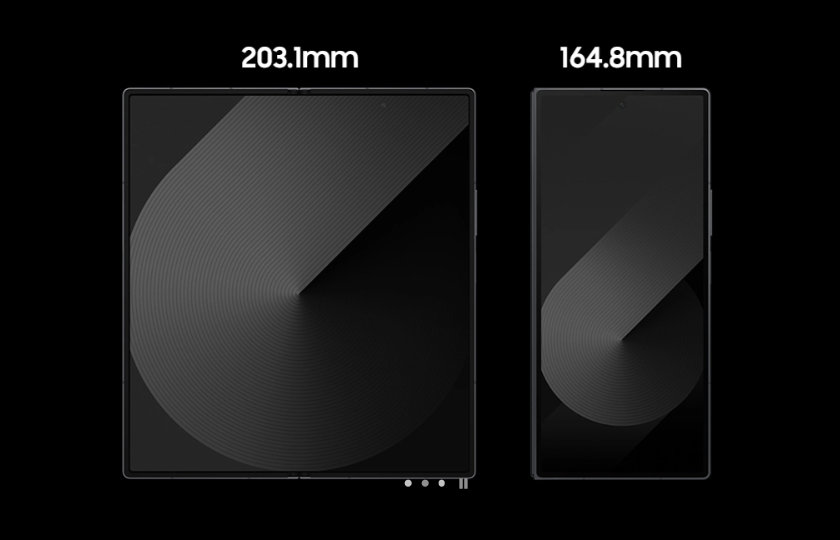
Apart from these distinctions, both versions share similar features. The Dimensity 8300 processor delivers solid performance, while a 10,200mAh battery and 45W fast charging ensure long usage and quick recharges. The tablets also have a quad-speaker setup tuned by JBL for an immersive audio experience.

Lenovo includes stylus support with low latency (9.6ms for the Comfort Edition) and comprehensive annotation features. The software is managed by Lenovo Xiaotian Beta, which seems to be tailored for the Chinese market.

Price and Availability

Pricing for the standard Xiaoxin Pad Pro 12.7 starts at 2,099 Yuan for the base model, 2,199 Yuan for the 8GB/256GB variant, and 2,499 Yuan for the 12GB/256GB model. 

The Comfort Edition is priced at 2,399 Yuan for the 8GB/128GB variant and 2,599 Yuan for the 8GB/256GB variant. The tablets will go on first sale from July 27 to August 2.

Samsung Galaxy A06 Leaked Renders Reveal Key Island Design, Dual Cameras

Samsung is expected to launch a new Galaxy A-series smartphone soon. The Galaxy A06 has bagged multiple certifications in recent times including FCC, SIRIM, BIS, WiFi-Alliance, and more. Now the device has surfaced in leaked renders shared by Onleaks. It reveals the upcoming offering’s design. The smartphone will arrive as the successor to last year’s Galaxy A05. Read on to know what the leaked renders reveal about the Galaxy A06.

Samsung Galaxy A06 leaked renders

The Samsung Galaxy A06 is seen with a flat frame. It also has the brand’s Key Island design on the right side which has been mainstream on this year’s Galaxy A-series phones. It houses volume rocker buttons and a power key that doubles up as a fingerprint scanner. The back panel has two camera sensors stacked vertically and an LED flash unit. 

On the front, the Samsung Galaxy A06 will feature an Infinity-U display which means that the notch will look like alphabet U. There is a thick bezel on the bottom chin of the device. The USB-C port, 3.5mm headphone jack, and a speaker grille are located at the bottom panel.  The smartphone is seen in the Black colour option. 

As per the report, the Samsung Galaxy A06 is said to measure 167.3 x 77.9 x 8.0 mm in terms of dimensions. The smartphone is tipped to have a large 6.7-inch display with a likely HD+ resolution. 

The FCC certification revealed that the Galaxy A06 will be backed by a 5,000mAh battery unit. Meanwhile, the Geekbench database mentions that the device will be powered by a MediaTek Helio G85 processor. It will pack 6GB RAM onboard but we can expect more options at launch. 

We can expect the Galaxy A06 to launch soon considering the certifications it has bagged recently. 

Source

Colorful Launches Stylish “Jiachen Zhilong” DDR5 Memory Series to Complement Dragon Year PCs

Colorful has unveiled its new iGame “Jiachen Zhilong” DDR5 RAM, designed to complement its previously launched Dragon Year limited edition motherboards. This high-performance memory caters to PC builders seeking both aesthetics and performance.

The RAM kit is currently available on JD.com for 1,399 Yuan

The inaugural release features a 48GB (2x 24GB) DDR5-6800 (CL34) memory kit. The highlight lies in its striking “dragon scale” heat spreader with “Dragon” RGB lighting effects, creating a visually captivating addition to your PC. This kit is currently available on JD.com for 1,399 yuan.

The “Jiachen Zhilong” series draws inspiration from traditional Chinese colors, incorporating “Zheng Li” red and “Jin Xiang” gold. The design boasts “Xiang Yun” auspicious cloud patterns and “Yu Feng” flying phoenix motifs on the front, alongside the prominent “Jiachen Zhilong” (Auspicious Dragon Year) emblem on the back. The overall look is further accentuated by gold edging and layered light guides that symbolize “rising step by step”.

This memory series utilizes top-tier SK Hynix memory particles, delivering clock speeds of up to 6800MT/s. It also supports XMP 3.0 for effortless one-click overclocking, PMIC intelligent temperature control for optimal thermal management, and ON-Die ECC for automatic error correction, ensuring data integrity and stability.

VWhile JD.com currently only offers the 48GB version, the product page hints at the future availability of a 32GB variant. This lower-capacity option is expected to maintain the CL34 timings but might feature a slightly higher operating voltage of 1.4V.

Colorful’s “Jiachen Zhilong” DDR5 memory series caters to users seeking a unique blend of aesthetics and performance, perfectly complementing the company’s Dragon Year limited edition motherboards. With its combination of striking design, premium materials, and robust performance capabilities, this memory series is a compelling choice for enthusiasts building high-end PCs.

(Via)