Motorola is offering splendid deals on its fleet of Razr Flip smartphones featuring some phenomenal specifications. There is around a 50% discount on the Motorola Razr 2023 smartphone, meanwhile, the Motorola Razr+ 2023 and Razr+ 2024 are around 45% off and 20% off, respectively. It is a limited-time deal, and the users can head to Amazon US to grab the limited-time deals. However, a similar deal is live on Motorola Canada.
Motorola Razr Deals in the US
It’s Thanksgiving, and Motorola is here with some extraordinary deals on its fleet of Motorola Razr smartphones. Motorola Razr 2023 is retailing for the reduced price of $349, while the Razr 2024 is up for grabs at $499. In actuality, the flip smartphones have never been this low in the recent past. The users can grab the Flip smartphone for a mere $349 in the US.
If you want to improve on the specifications, then there are also deals on the Motorola Razr+ 2023 and Motorola Razr+ 2024 smartphones, which are retailing for the price of $549 and $799, respectively, on Amazon US.
Motorola Razr Deals in Canada
The discounts on Razr smartphones are prevalent in Canada too via its official Motorola Canada Store. Interested buyers can get the Motorola Razr+ 2024 for $1099 CAD, while the Motorola Razr+ 2023 is on sale for $749.
Motorola Razr Smartphones Features:
The Motorola Razr 2023 features a 6.9-inch P-OLED primary display with a resolution of 876 x 2142 pixels, providing vibrant colors and excellent contrast. It is powered by the Snapdragon 7 Gen 1 processor, delivering smooth performance for daily tasks and light gaming. With a dual-camera setup, including a 64MP primary camera and a 32MP ultrawide sensor, the Razr 2023 captures impressive photos. Its 4,200mAh battery supports 64W fast charging, ensuring you’re powered up quickly.
The Motorola Razr 2024 takes it a step further with a 6.9-inch FHD+ P-OLED display and a faster MediaTek Dimensity 7300X, making it a solid choice for more demanding users. The Razr 2024 also includes a 32MP front-facing camera for stunning selfies and video calls. The 4,200mAh battery supports both 30W wired and 15W wireless charging, providing more flexibility for users on the go.
Lastly, the Motorola Razr+ 2024 offers a cutting-edge experience with its enhanced 6.9-inch AMOLED main display, 120Hz refresh rate, and Snapdragon 8s Gen 3 processor. Designed for power users, it includes 12GB of RAM, allowing for seamless multitasking. With an upgraded camera setup featuring a 50MP primary and a 12MP telephoto lens, as well as a 4,500mAh battery with 33W fast charging, the Razr+ 2024 is the ultimate premium option among the Razr lineup.
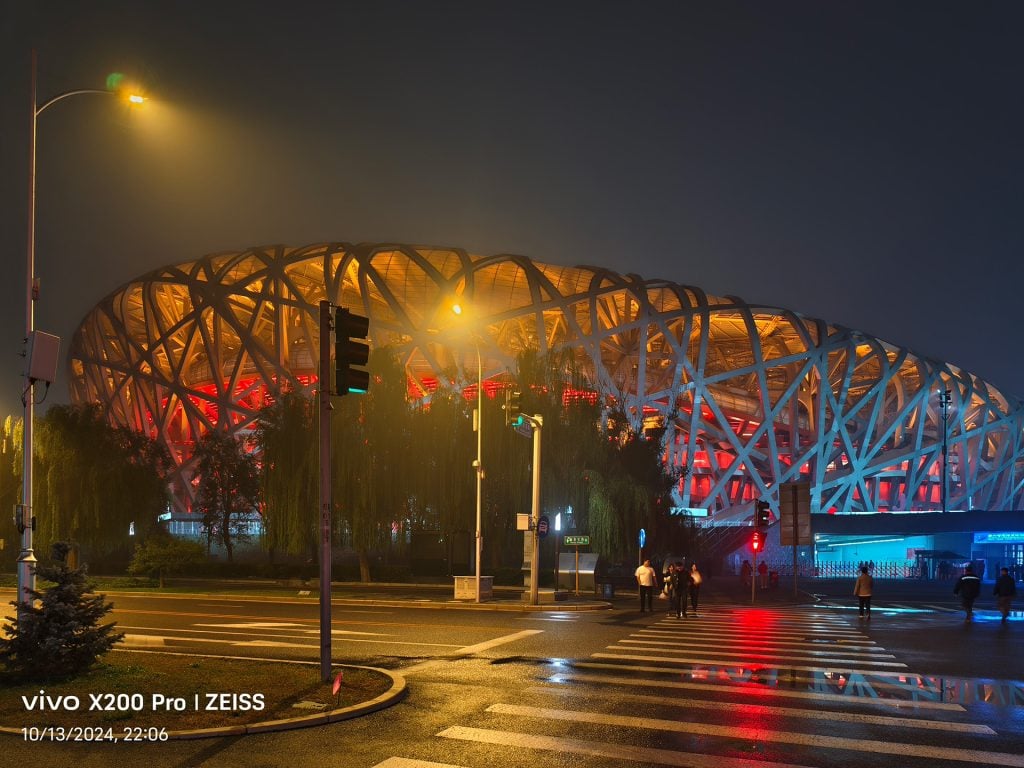
Vivo just announced their flagship Vivo X200 series in China today at the famous Water Cube, a.k.a. the National Aquatics Centre, in Beijing. We got the device a couple of days in advance, so our team had some time to play around and test it before an in-depth review.
In case you were wondering how the phone feels in real life, here’s a quick first impression of the Vivo X200 Pro.
The Vivo X200 Pro is Sleek but Chunky
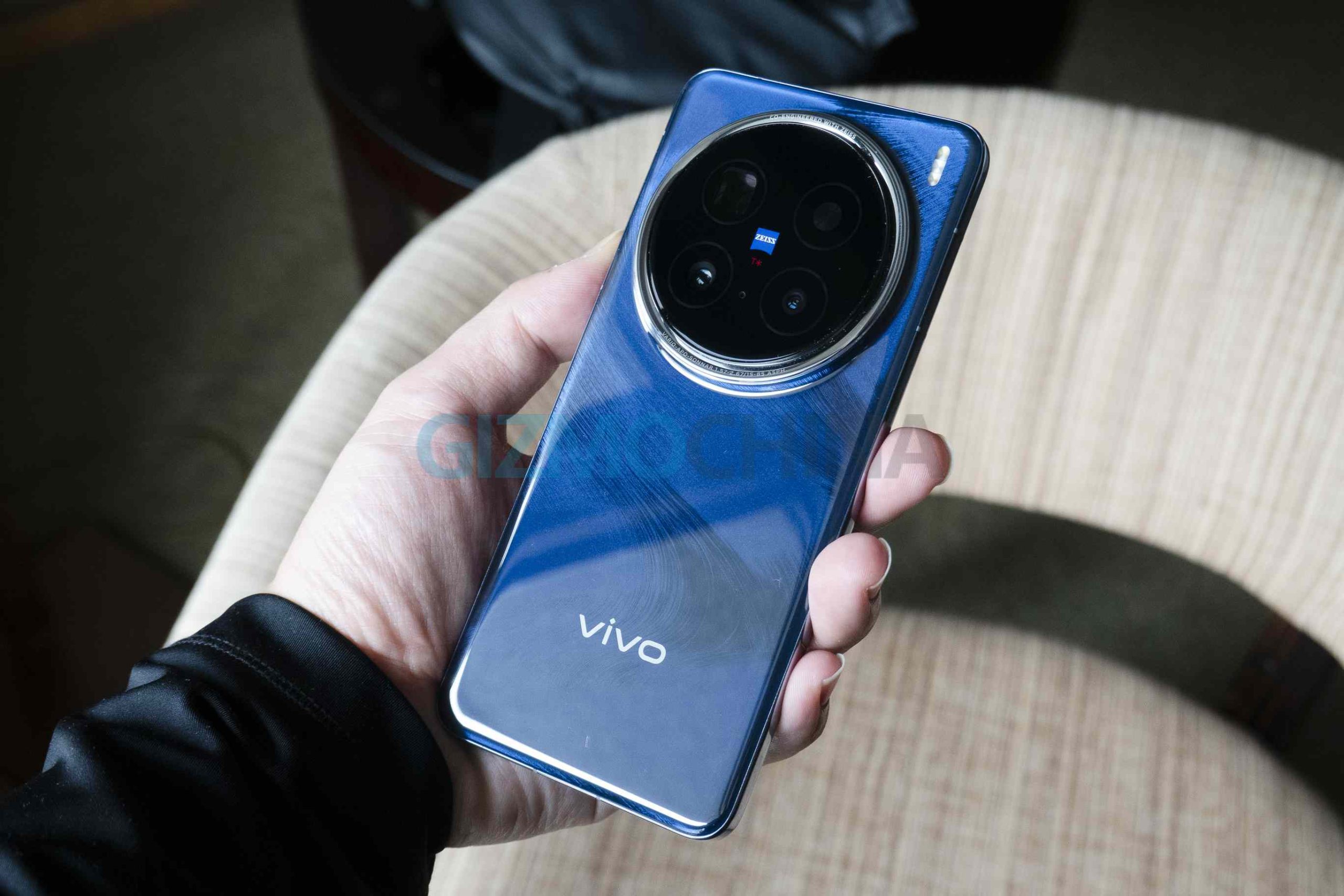
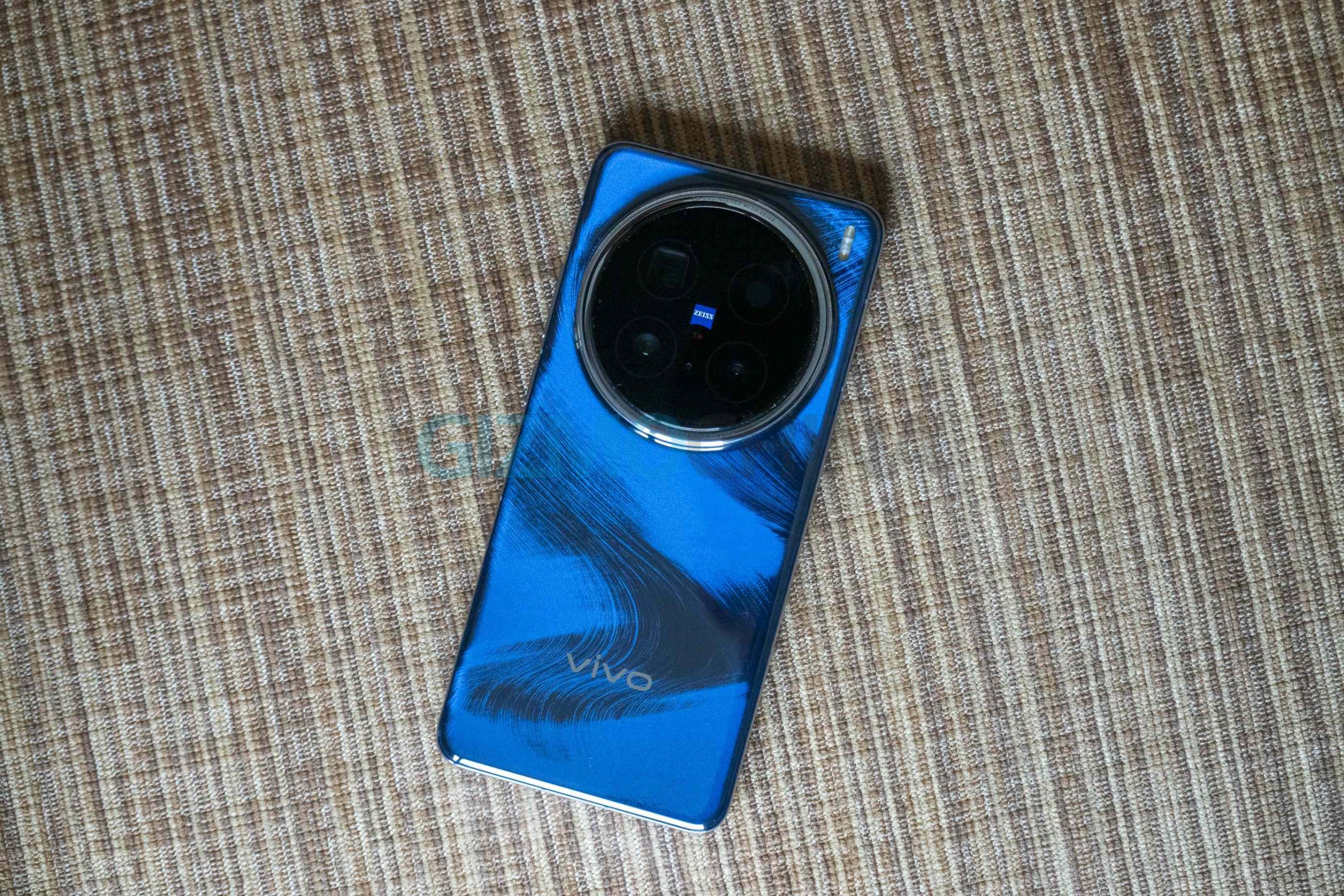
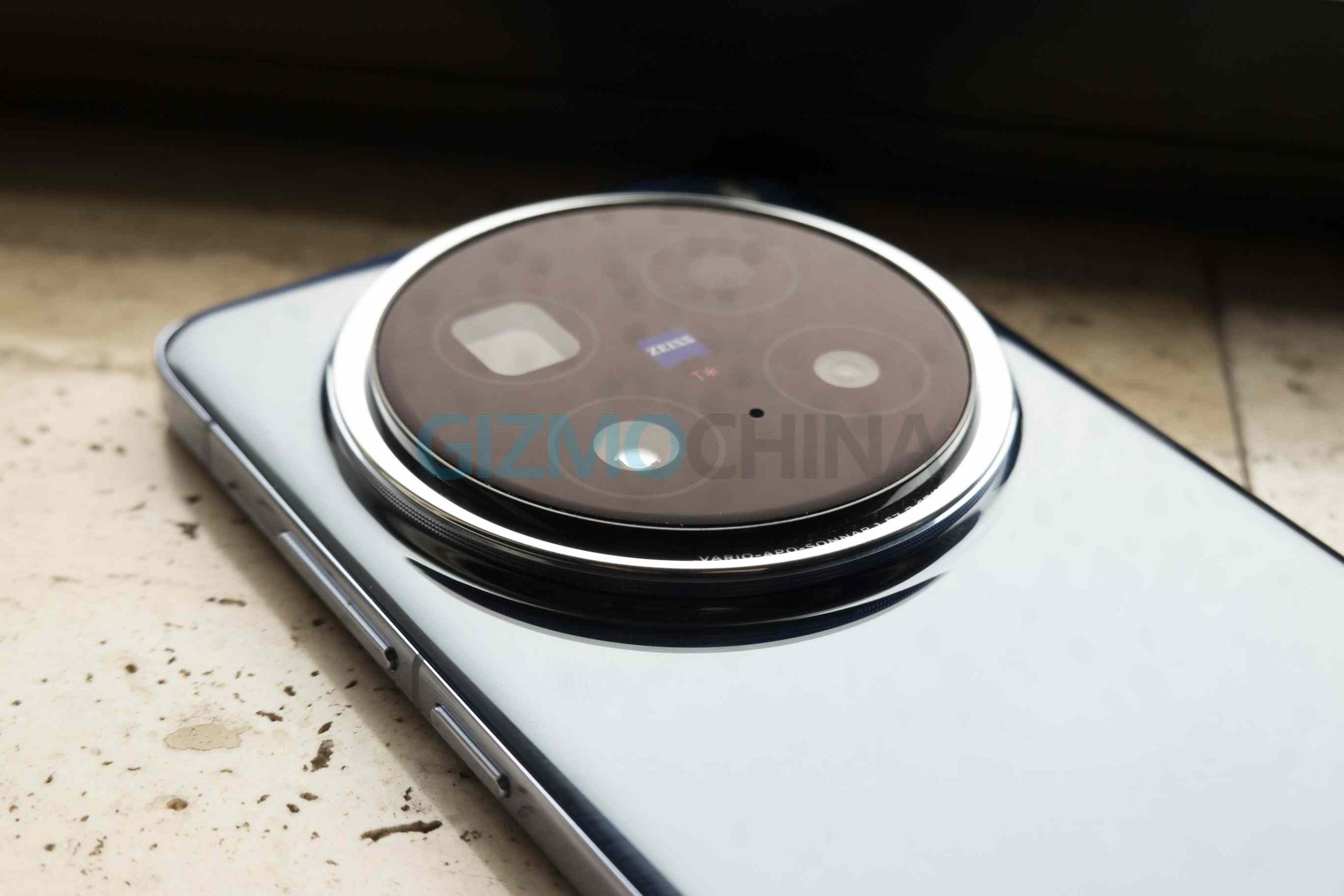
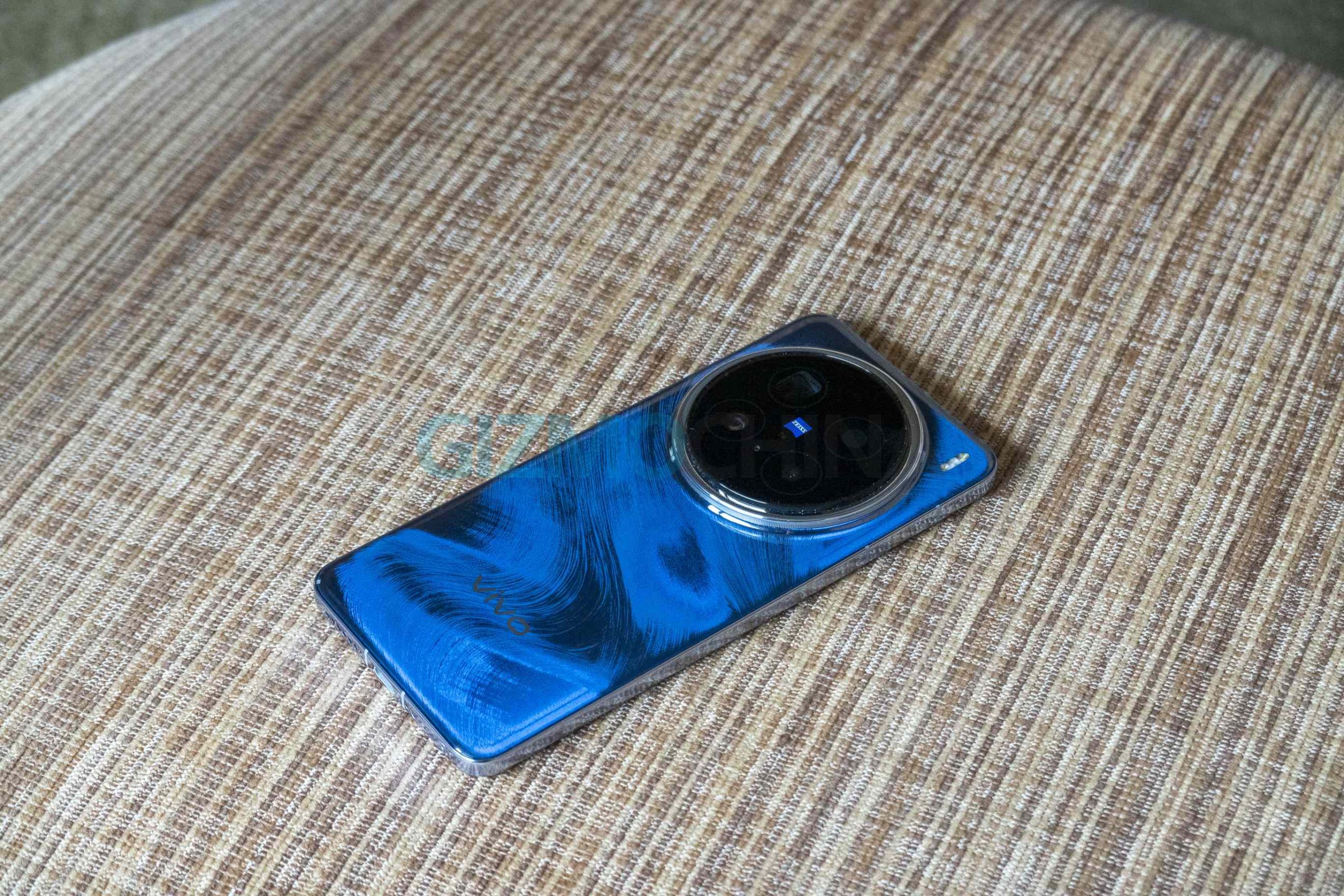
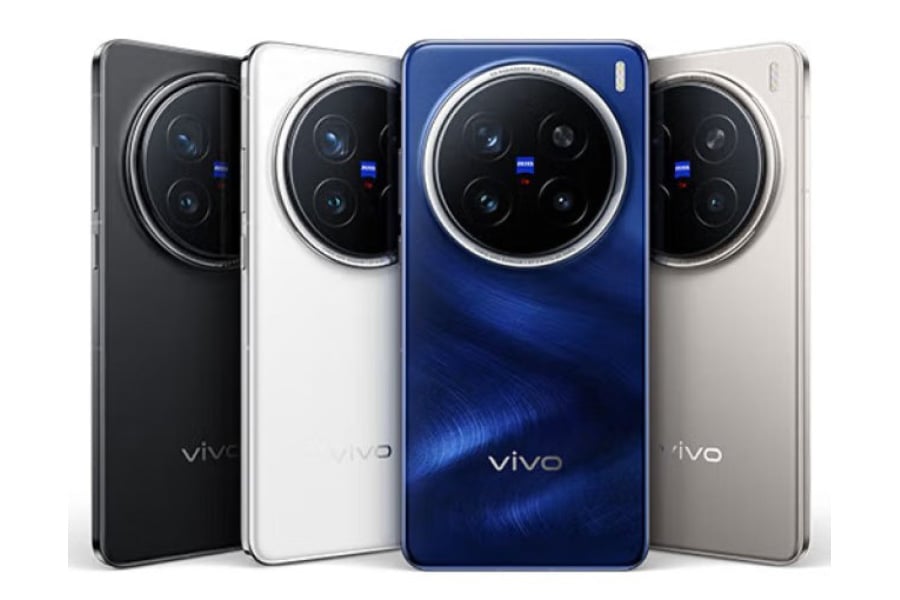
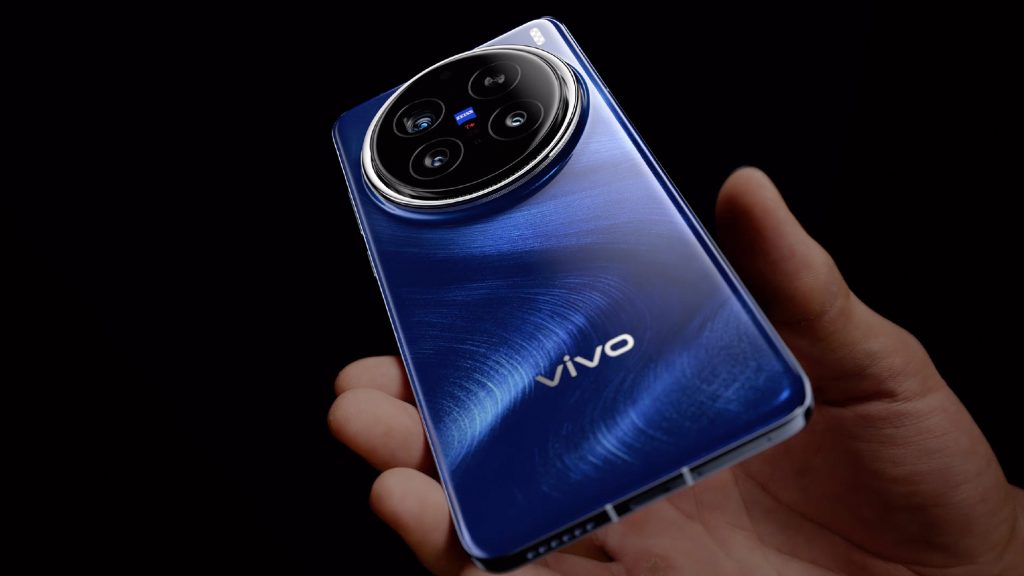
The X200 Pro feels premium right out of the box. With its flat edges and metal frame, it gives us some serious flagship vibes. We’ve got the Blue Sapphire model, which mimics the ocean waves under light. I’m not sure if everyone would love this, but it definitely stands out.
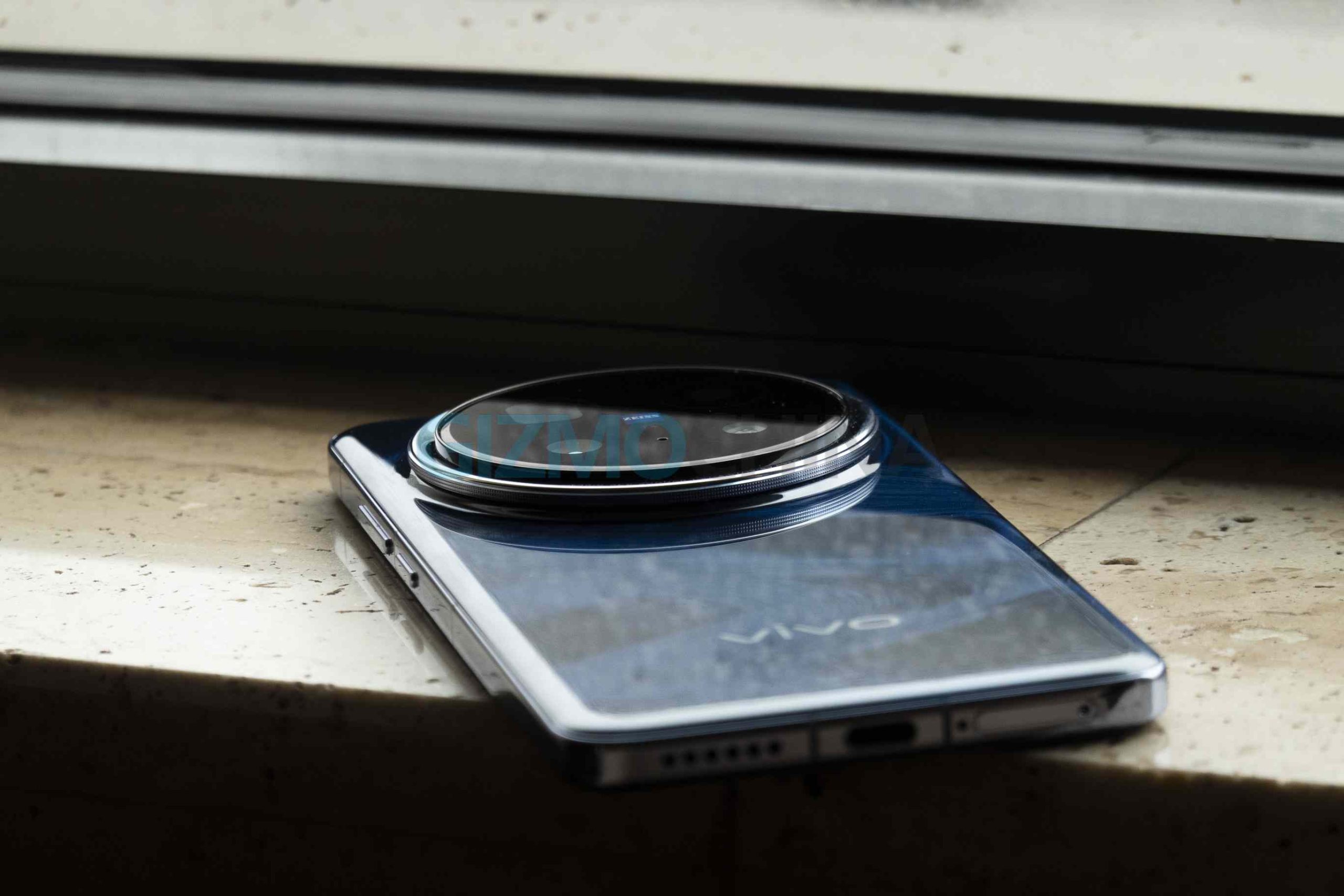
The almost-flat display is a refreshing change from the curved screens we’ve been seeing everywhere. It’s got a nice heft to it, striking a balance between solid and comfortable—that is, until you get to the camera bump.
So let’s address the elephant in the room: that camera island is huge if we still take it as a Pro model. It’s big enough to be called an “ultra,” dominating the back of the phone, especially when we learned that the camera also inherited quite a lot from the X100 Ultra. While it houses a triple-lens setup, there’s an extra ‘lens-like’ circle up top that’s more for show than function. It balances out the look, but don’t be fooled — it’s not a fourth camera.
Vivo X200 Pro hands-on gallery
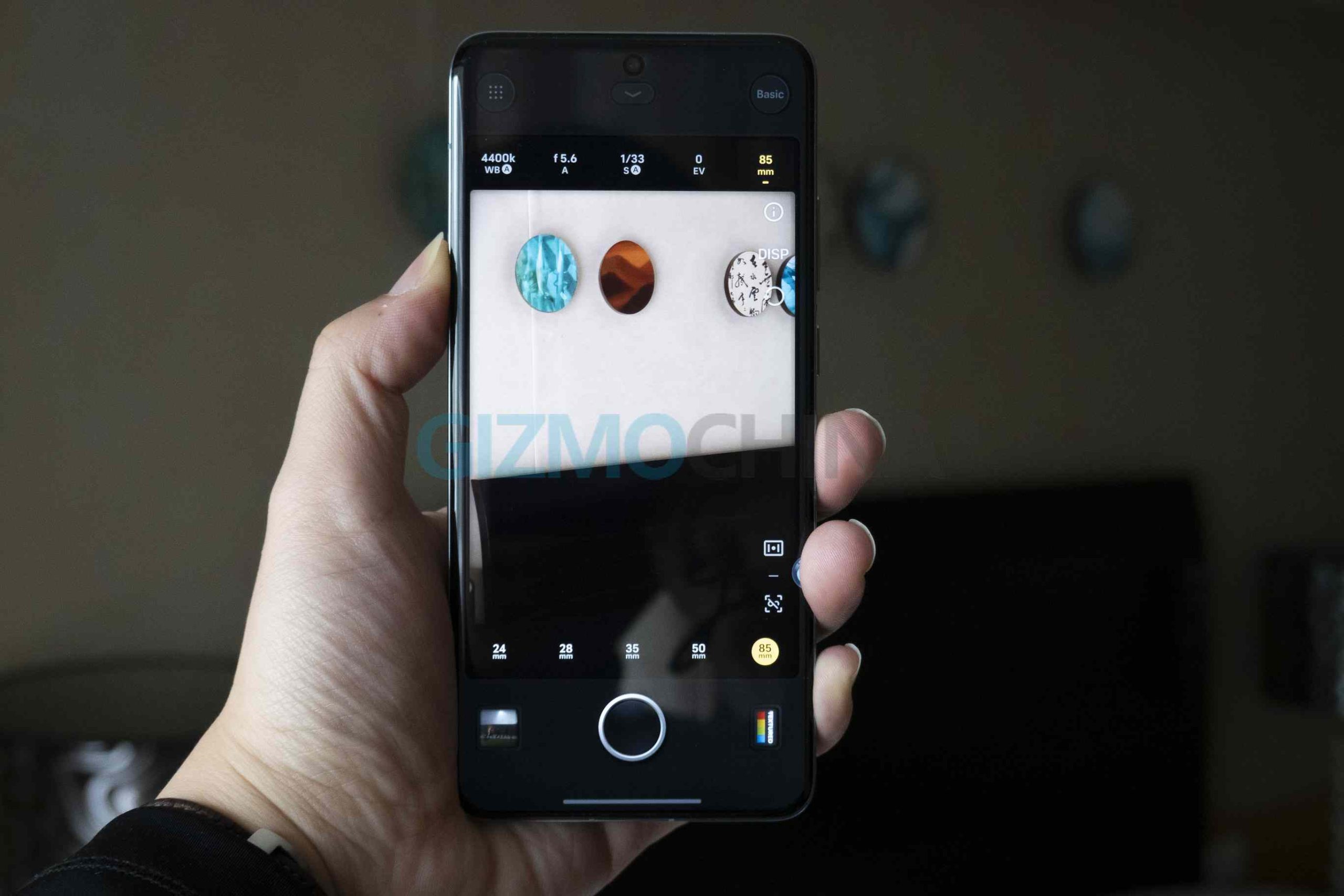
Camera App goes all in on AI
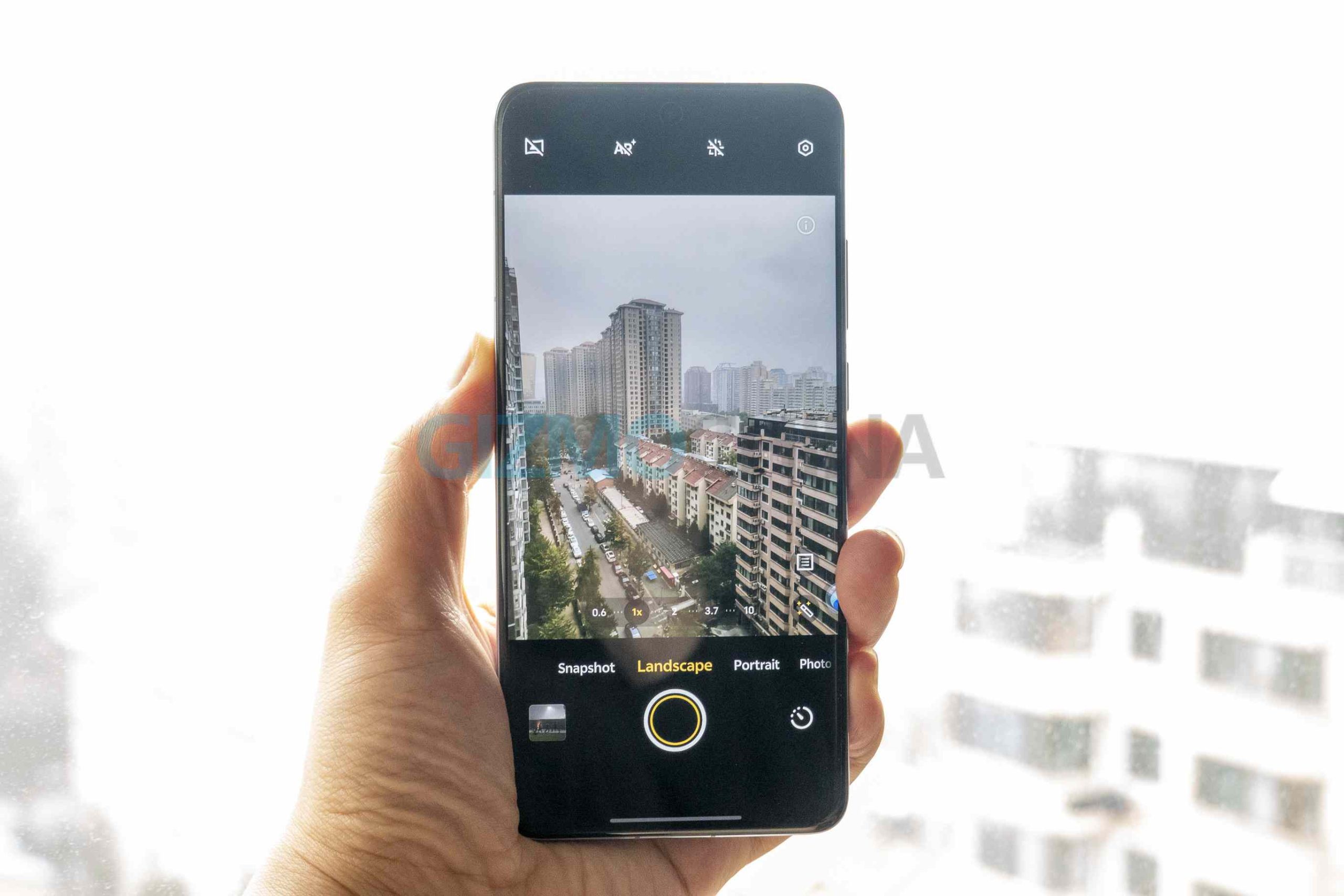
The camera app on the X200 Pro has gotten a serious glow-up. Vivo has added a bunch of AI features that make shooting a breeze. But note that almost all the fantastic custom features were developed for domestic users with various Chinese applications. For overseas markets, the brand has to work with Google’s Gemini. But there’s no doubt that OriginOS 5 intrigues me significantly more.
What if add some AI features to portrait mode? The X200 series gives you the answer. There’re four-season styles plus a Chinese style for auto post-modification. It makes the camera look fun, but only if you wait a minute or two.
Auto mode & AI visual ON in Portrait mode
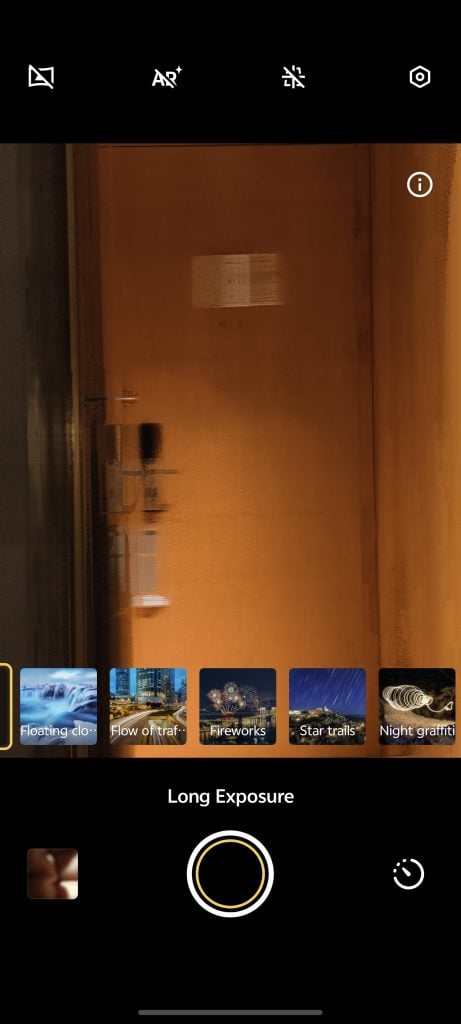
The portrait mode is smarter than ever, and the landscape mode? It’s like they took the best bits of all the modes related to non-figure photography such as super night mode, pano mode, and star trails mode, and mashed them together. The software manager’s logic I guess is that they want to differentiate the custom modes into two categories, one for portrait and one for landscape. They’re like two folders, with the benefit of being easy to tell apart. The downside is that you have to ‘open’ them first (switch to them) – a step that may already be difficult for average users. One of my favorite features among the upgrades is the Zeiss Perspective Correction. When you look up a bit to shoot certain scenes, especially like architecture, you’ll always be annoyed by the perspective. On the X200 series, it would automatically crop and generate a horizontal perspective for users in real-time. It can instantly enhance the look and composition of your photos.
Further, video capabilities have taken a giant leap forward, especially in dark environments. We’re talking 4K at 120fps and even 8K at 30fps, which are all working well for dark scenarios. And for all you vloggers out there, there’s a new portrait video mode that’s bound to up your game. Initial quality of the videos was quite impressive but we want to test out the camera in detail for our final verdict. More importantly, it has a lot of fun that we couldn’t experience all in a moment.
The main camera is shifted to a brand-new sensor, SONY LTY818, sized at 1/1.28″. It’s claimed to have even better video-shooting capabilities. The 3.7x (85mm focus length & F/2.67) telephoto lens comes with the same setup as the vivo X100 Ultra’s – the impressive Zeiss 200MP APO telephoto lens.
3.7x3.7x3.7x telephoto lens for Macro
Under the Hood: Dimensity 9400 Powerhouse
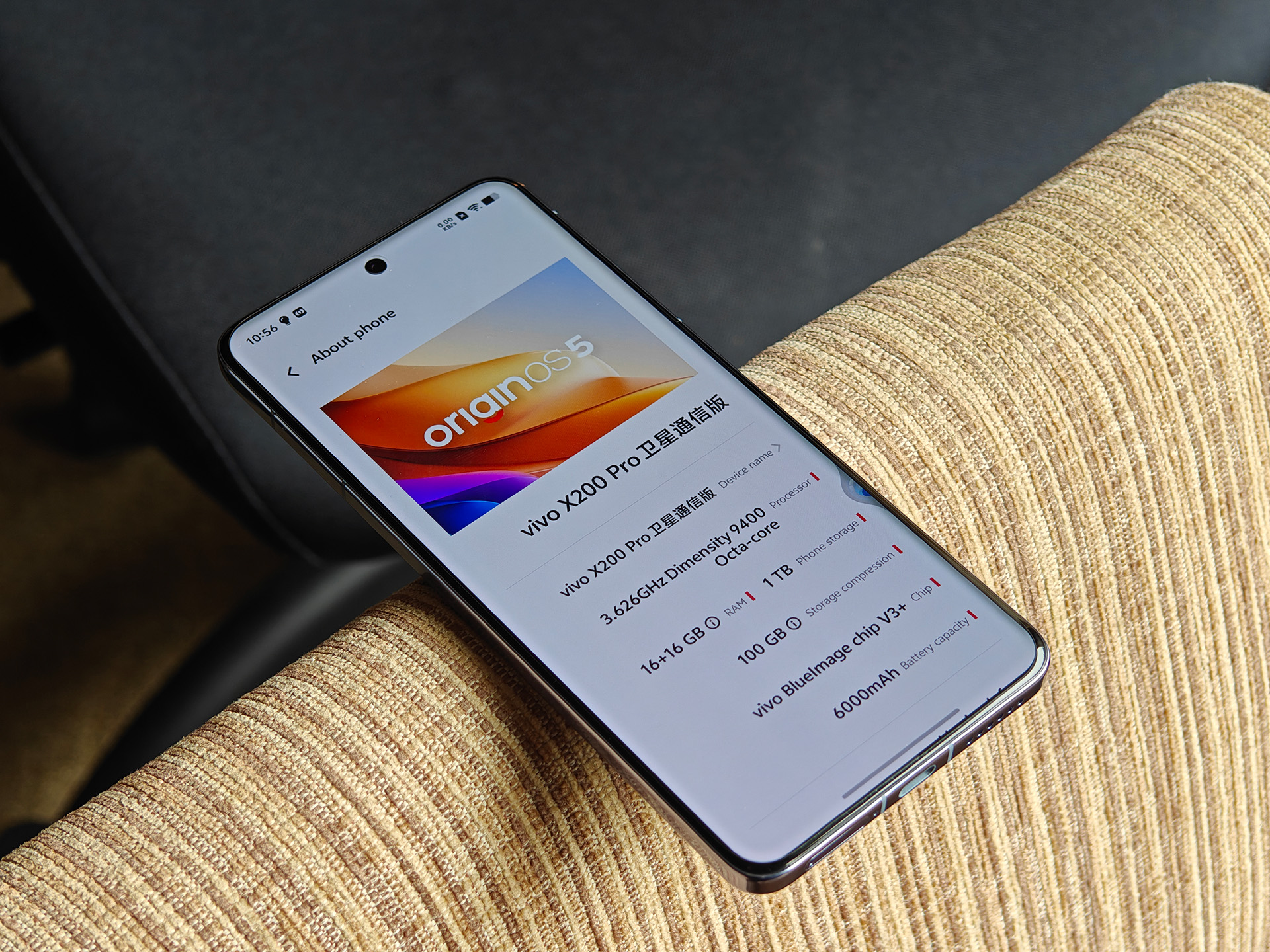
Powering all this goodness is the latest MTK Dimensity 9400 chip. We’re still running some benchmarks (Antutu Benchmark: the first mobile chipset exceeds 3,000,000), so stay tuned for the nitty-gritty performance details. But so far, the phone has been very smooth, we can expect the chip to deliver.
One of the coolest features we’ve played with on the phone is the BlueLM AI large model. You can actually download the local algorithm package for offline use, such as Image Stylization and Document Summarization, which is pretty neat. We’ve been having a fun time with image generation, text recognition, and instant translation. Another new software feature that caught my interest is ‘Circle to Search’. Just circle any objects or items on the display to search for their information. It can be triggered in any app while just holding two fingers on the screen for a few seconds. The results? Surprisingly accurate most of the time.
If you missed our X200 launch article, let me remind you that there’s a Pro Mini model as well. It has a very unique placement (compact in size), which is a refreshing change from all the Ultras and the Pro Maxes we’ve been seeing. We also have a detailed article explaining the entire Vivo X200 series, which will be out very soon.
In addition, Vivo and MediaTek have jointly developed and globally premiered the kilometer-level network-less communication technology, which realizes point-to-point and long-distance communication through Bluetooth connection in a network-less and signal-less environment. Supports SOS text broadcasting, one-to-one voice/text intercom, map location display, etc. Within a certain distance, you can form a local network of communication with other Vivo users by turning your phone into a walkie-talkie.
To sum up, the Vivo X200 Pro is shaping up to be a serious contender in the high-end smartphone market. With its focus on photography, powerful chip, and AI capabilities, it’s clear Vivo is gunning for the top spot. Sure, that camera bump is huge and might not be everyone’s cup of tea, but if you’re all about that photo and video life, this is definitely a phone to check out.
As for the battery, I would draw my conclusion first here – it feels like the premium phone with the longest battery life I’ve ever used. More details will be revealed in our in-depth review.
Please stay tuned for our full review, where we’ll dive deeper into the benchmarks, battery life, and how it holds up in day-to-day use.
In the meantime, what feature of the X200 Pro are you most excited about?
Alongside the Pro models, Vivo unveiled the X200 as a more affordable option within its new series. While it lacks some of the bells and whistles of the Pro models, it still packs a punch with a powerful processor, a capable camera system, and a surprisingly long-lasting battery.
Vivo X200 Specifications
The X200 boasts the same MediaTek Dimensity 9400 processor that powers its Pro siblings. It is paired with up to 16GB of RAM, while the storage options range from 256GB to 1TB.
On the front, the X200 features a 6.67-inch quad-curved LTPS display with Zeiss Natural Color calibration. It’s a 10-bit panel with HDR10+ support, a high-frequency PWM dimming rating, and a peak brightness of 4500 nits.
Vivo also claims that the display has an extended lifespan and lower power consumption compared to other OLED panels. Unlike the Pro models, the X200 uses an optical fingerprint reader under the display.
The X200’s camera system might not boast the headline-grabbing 200MP sensor of the Pro models, but it still offers a compelling package. The main sensor is a 50MP Sony IMX921 with a large 1/1.56″ size and a Zeiss f/1.57 lens with T* coating.
It’s accompanied by a 70mm telephoto lens featuring a 50MP IMX882 sensor and a capable 50MP ultrawide camera. While not quite on par with the Pro cameras, this setup should be more than enough for most users.
Vivo has equipped the X200 with a hefty 5,800mAh BlueVolt battery. It’s a notable upgrade from last year’s model. However, it replaces the previous 120W fast charging with a more moderate 90W wired charging.
While the X200 may not have the premium build of the Pro models, it still emphasizes durability. Despite being smaller than the X100, it holds a larger battery and surpasses the typical IP68 rating with an IP69 certification, making it resistant to even hot water jets.
The X200 runs on OriginOS 5, the latest version of Vivo’s custom Android skin. You can find a detailed breakdown of the new UI’s key features in a separate article here.
Price and Availability
The X200 comes in various colors, including Sapphire Blue with its unique light-shifting properties. It goes on pre-order starting today and will be available in China from October 19th.
Pricing starts at CNY 4,300 for the base 12GB/256GB model, CNY 4,700 for the 12GB/512GB version, CNY 5,000 for the 16GB/512GB variant, and CNY 5,500 for the top-tier model with 16GB of RAM and 1TB of storage.
Vivo has just launched its latest flagship smartphones, the X200 Pro and X200 Pro mini, right on schedule. The X200 Pro offers the familiar full-sized flagship experience, while the X200 Pro mini brings all the same features in a more compact design, including an impressive 200MP telephoto lens and a large battery. Let’s dive into the details.
Vivo X200 Pro mini / X200 Pro specifications
The X200 Pro is the biggest model in the series featuring a large, curved display with minimal bezels on all sides. The screen measures 6.78 inches and is an LTPO panel with a high refresh rate of 120Hz, excellent brightness of 4,500 nits, and Dolby Vision support for a premium viewing experience.
The X200 Pro mini opts for a tad bit smaller and flat 6.31-inch display but has other specs similar to the Pro model. That includes an LTPO 120Hz refresh rate and 4500 nits of brightness.
Both phones come in a variety of colors, with the X200 Pro offering a unique “Sapphire Blue” that supposedly mimics ocean waves under light.
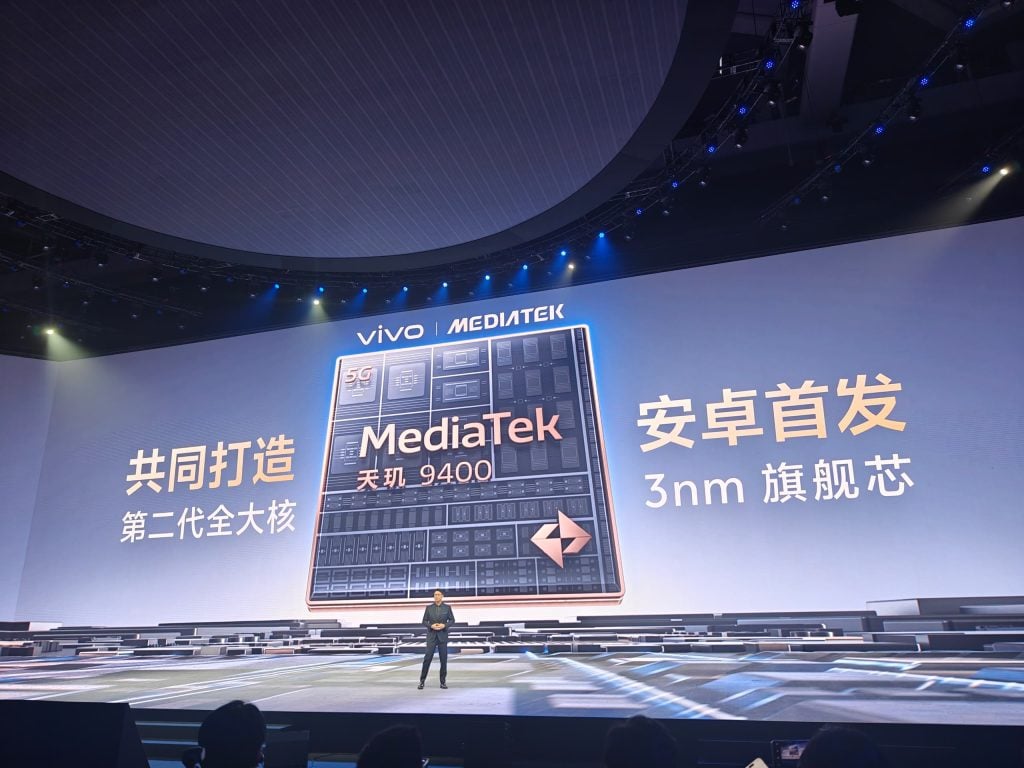
Under the hood, both phones pack the new MediaTek Dimensity 9400 processor, co-developed with Vivo.
The SoC utilizes MediaTek’s latest 3nm process and boasts a powerful Cortex-X925 super core for demanding tasks. It has a 12-core GPU to handle graphically demanding tasks.
Vivo has also managed to squeeze in large batteries for both phones thanks to their third-generation Silico Anode technology. The X200 Pro boasts a massive 6,000mAh battery, while the X200 Pro mini offers a still-respectable 5,700mAh unit. Both phones support fast wired charging at 90W and wireless charging at 30W.
The camera system on the X200 Pro series features a triple rear setup with Zeiss optics and Vivo’s V3+ imaging chip, the same one found in the X100 Ultra. The main sensor is a Sony LYT-818, a 1/1.28-inch imager with a custom f/1.57 lens. While technically a step down from the 1-inch sensor in the X100 Pro series, Vivo claims this new sensor can rival larger sensors in photo capture and surpass them in video recording.
The real upgrade comes with the inclusion of the impressive 200MP Zeiss APO telephoto camera, borrowed from the X100 Ultra. This offers an 85mm (3.7x) zoom with a bright f/2.67 lens. Rounding out the camera system are a 50MP ultrawide sensor and a 32MP selfie camera with autofocus.
Price and Availability
The Vivo X200 Pro comes in four storage configurations: 12GB/256GB, 16GB/512GB, 16GB/1TB, and a special 16GB/1TB Satellite Edition. Prices start at CNY 5,299 (roughly USD $750) for the base model, while the remaining three models retail for CNY 5,999, CNY 6,499, and CNY 6,799, respectively.
The X200 Pro mini comes in three storage options: 12GB/256GB, 16GB/512GB, and 16GB/1TB, with prices of CNY 4,699, CNY 5,299, and CNY 5,799, respectively.
There’s no word on global availability yet, but we expect Vivo to launch these smartphones in international markets soon.
Xiaomi has launched its budget-friendly earbuds called the Redmi Buds 6 Lite in the Chinese market following its recent global debut. The earbuds are priced at 139 yuan ($20) and it is now available for pre-order on JD.com. Let’s check out its key specs.
Redmi Buds 6 Lite Specifications:
The Redmi Buds 6 Lite features a comfortable in-ear design and is available in three sleek colors: blue, white, and black. The earbuds feature 12.4mm titanium-coated dynamic drivers, delivering high-resolution sound with strong bass and clear highs.
It comes with four preset EQ sound profiles and customizable EQ settings, allowing for a tailored audio experience suited to various music genres. It also supports the AAC codec, enhancing audio quality on compatible devices.
The earbuds offer 42dB active noise cancellation (ANC), a significant upgrade from previous models. It comes with Xiaomi’s self-developed dual-microphone AI wind noise reduction, capable of resisting wind speeds up to 6m/s, making it an ideal choice for outdoor activities like jogging or biking. The ANC tech in these buds can suppress noises up to 2.5kHz, making these earbuds ideal for use in busy city settings or during commutes.
When it comes to battery performance, the Redmi Buds 6 Lite impresses with up to 7 hours of playback on a single charge and up to 36 hours total with the charging case (Type-C).
It also supports quick charging, providing 2 hours of listening from a 10-minute charge. While the global variant promises a slightly extended 38-hour battery life, the difference remains minimal for most users.
The earbuds support “audio sharing” with select Xiaomi and Redmi devices, allowing two pairs of earbuds to connect to a single device. This feature is compatible with flagship phones such as the Xiaomi 14, Xiaomi 13, and Redmi K70 series.
Furthermore, the earbuds support the Xiaomi Earbuds App, where users can personalize their listening experience by adjusting the settings, checking battery status, and configuring custom EQ profiles. The app also includes firmware updates to keep the earbuds performing optimally.
In related news, the first real-life image of the Xiaomi 15 Pro has surfaced. The phone is expected to feature a 6.78-inch display, Snapdragon 8 Elite chipset, 16GB RAM, 1TB storage, and a 50MP triple-camera setup, with a 6,000mAh battery supporting 90W wired and 80W wireless charging.
Elista, a brand known for its popularity among consumers in tier 2 and tier 3 cities in India, has launched its largest Google TV yet, an 85-inch model (GTV-85UILD), just in time for Diwali. Now, let’s dive into the specs of this impressive TV.
Elista 85-inch Google TV Specifications:
The 85-inch Google TV boasts a 4K HDR display with HDR 10 support, ensuring exceptional color accuracy and contrast for stunning, lifelike visuals. This makes it an ideal choice for larger homes and commercial spaces looking to enhance their entertainment experience with a high-quality display. The model features a sleek, bezel-less design, maximizing the screen-to-body ratio and creating a more immersive viewing environment.
Running on the Google TV platform, this model offers a user-friendly interface with personalized content recommendations. It supports a unified watch list across streaming services like Netflix, Prime Video, and YouTube, and includes built-in Chromecast for easy device mirroring, enhancing its versatility for both work and entertainment.
The TV includes Hey Google voice control for hands-free content search and smart home control. It offers robust connectivity with dual-band Wi-Fi, Bluetooth, and screen mirroring, providing a seamless and connected viewing experience. In terms of ports, it includes 3 HDMI ports, 2 USB ports, 1 AV port, RF input, and an Ethernet (RJ45) port.
Coming to the audio, the TV features Dolby Audio, which delivers an immersive audio experience with clear dialogue and dynamic soundscapes, complementing its stunning visuals.
Pricing and Availability
The new 85-inch model expands Elista’s Google TV lineup, which includes sizes from 32-inch to 65-inch. The 85-inch model is priced at Rs. 1,60,900 and is now available at leading electronics stores in India and online on platforms like Flipkart and Amazon. It also comes with financing options from Bajaj Finance.
Earlier this year, Elista introduced dishwashers specifically designed for Indian kitchens and also entered the Indian AC market with three new models.
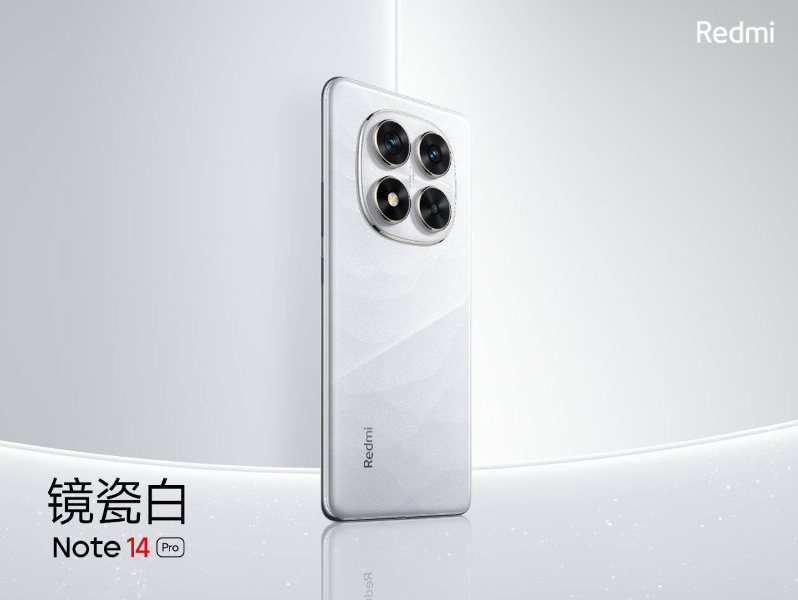
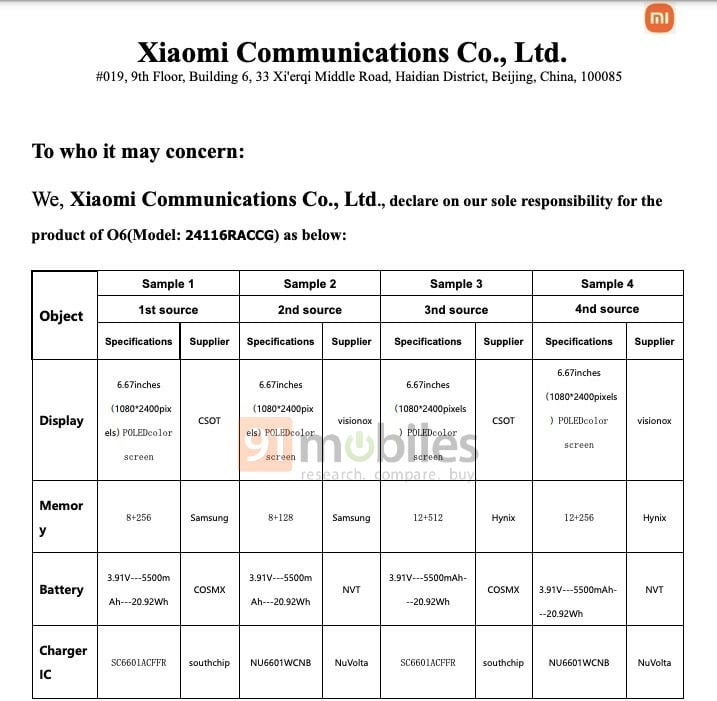
Redmi launched the Note 14 Pro/Pro+ 5G devices towards the end of last month. However, the company is also working on the 4G versions of the devices, which will likely use different chipsets and come with a more affordable price tag. In the latest news, the 4G version of the Redmi Note 14 Pro has surfaced on the FCC listing with the model number 24116RACCG, revealing some details about the device.
The 4G version packs an FHD+ display and a 5500 mAh battery
Firstly, the phone will offer a 6.67″ POLED display that has FHD+ (1080 x 2400) resolution. For context, the 5G version offers a 6.67″ AMOLED display that has a slightly higher 1.5K (1220 x 2712) resolution.
The listing also confirms that the phone will come in four different storage and memory configurations – 8GB+128GB, 8GB+256GB, 12GB+256GB, and 12GB+512GB.
On the inside, the phone will pack a 5500mAh battery, the same as the 5G variant. Given the phone packs a slightly less capable chipset (that also consumes less power) the phone may even surpass its 5G counterpart in battery life, especially considering the lower resolution of the display. The FCC listing also suggests that we are nearing the launch date of the device. The phone has already made its appearance on the IMEI database.
The predecessor, the Redmi Note 13 Pro 4G, was launched in January this year with a 5000 mAh battery, support for 67W wired charging, and a 200 MP main camera.
That said, Redmi has switched to a more reasonable 50MP main sensor this year with the 5G version and will likely do the same with the 4G version as well.
According to a previous report, the phone could come with a MediaTek SoC, though the exact chipset has not been disclosed yet. For reference, the Redmi Note 13 Pro 4G is equipped with the MediaTek Helio G99 Ultra chipset, while this year’s Note 14 Pro 5G is powered by the MediaTek Dimensity 7300 Ultra.
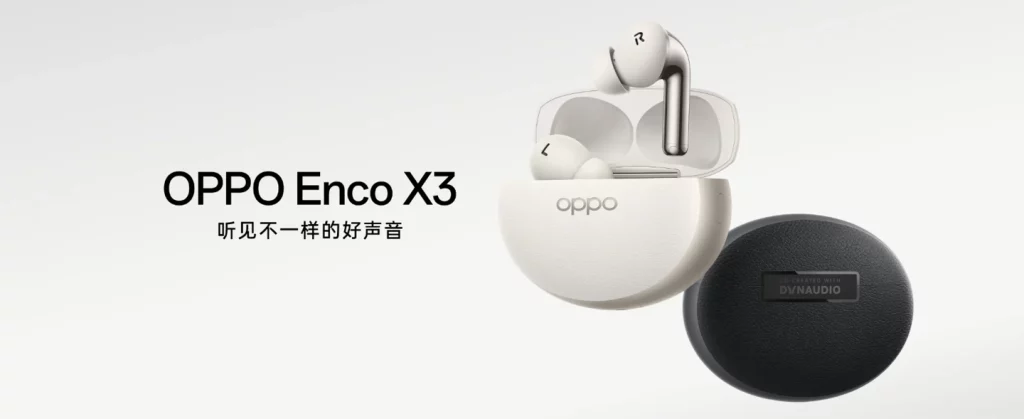
The Oppo Enco X3 TWS earphone is expected to launch with the Find X8 series on October 24 in China. Now the earphone has made its appearance on the company’s official website, which is going to succeed the Enco X2 launched in 2022. The official images also confirms two color options for the product – Beige and Black.
According to the listing, the Enco X3 TWS earphones will come in two different versions: wired charging and wireless charging.
The earbuds have a different design than the predecessor but retains the ‘L’ and ‘R’ marking for easier identification. The charging case appears to have a leather finish on the front and the back with OPPO logo printed on the front and a matte finish on the sides. Other than that, the overall design of the case is similar to its predecessor. A physical button is provided on the side, which offers the pairing functionality.
Enco X3Enco X2
Audio and processing:
In terms of audio quality, the Enco X3 is rumored to feature dual drivers—an 11mm bass driver and a 6mm tweeter—for an enhanced listening experience. The earphones are also equipped with a custom dual DAC (digital-to-analog converter), along with 3 microphones and a VPU bone sensor for improved voice pickup.
A transmission rate of up to 1 Mbps, paired with support for 192kHz / 24bit lossless wireless transmission, is also expected. A previous report claims support for LHDC 5.0 and Bluetooth 5.4 for lossless yet reliable audio transmission.
As for the processing, the TWS uses the BES2700 chipset, which is also used by the recently released Huawei FreeBuds Pro 2. It is built for ultra-low power Bluetooth wearable devices that focuses on noise cancellation and AI-powered voice features.
With the chipset, the Enco X3 achieves 50dB adaptive active noise reduction, up from 45dB of its predecessor.
However, the battery remains very similar to its predecessor – 58mAh for the earbuds (up from 57mAh) and 566mAh for the charging case (same as its predecessor). It is paired with 10W wired and wireless charging, which is also same as the predecessor. Nonetheless, an improvement in battery life is expected with the new chipset.
Oppo Enco X3 could come with IP55 dust and water resistant rating, which is enough to protect the internals from sweat and rain.
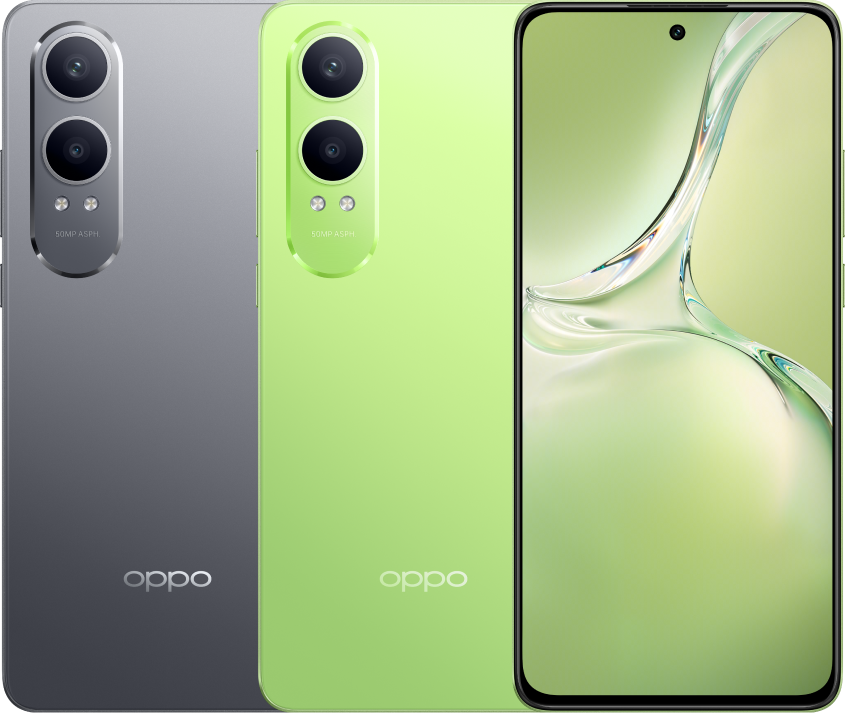
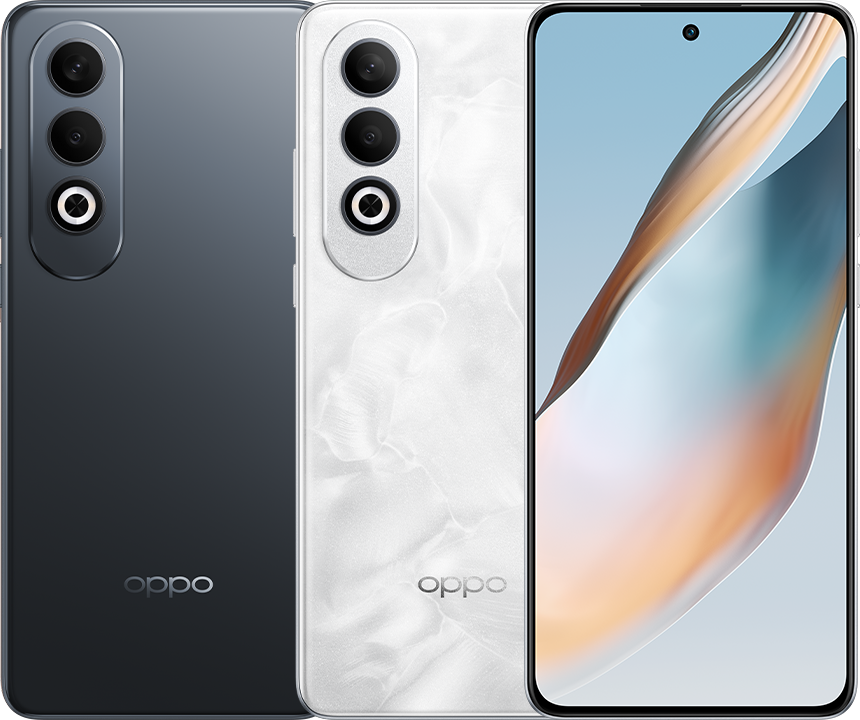
Oppo recently unveiled the Oppo K12 Plus in China. The device slightly differs from the Oppo K12, which debuted in the first half of this year in the home market. Apart from the K12 and K12 Plus, the series has an entry-level model called the Oppo K12x. For those unaware, Oppo also offers a K12x with the Dimensity 6300 chip in India and select other markets. However, the K12x available in China has the Snapdragon 695 chip onboard.
Currently, the K12x, K12, and K12 Plus are priced at 1,099 Yuan (~$155), 1,899 Yuan (~$270), and 1,999 Yuan (~$280), respectively, in China. The K12x and K12 have already been rebranded as OnePlus Nord CE models in the global market. Therefore, it remains to be seen whether the K12 Plus will also make its debut as a OnePlus phone globally. Here is what the K12 series offers to the Chinese market.
The Oppo K12x offers a 6.67-inch OLED FHD+ 120Hz display. The Snapdragon 695 chip, up to 12 GB of LPDDR4x RAM, and up to 512 GB of UFS 2.2 storage power it. The phone features a 50-megapixel main camera paired with a 2-megapixel depth sensor. With a 5,500 mAh battery and 80W fast charging, the K12x provides decent battery life and quick recharging capabilities.
Oppo K12
The Oppo K12 comes with a 6.7-inch AMOLED FHD+ display with a 120Hz refresh rate, The device is equipped with the Snapdragon 7 Gen 3 chip, up to 12 GB of LPDDR5 RAM, and up to 512 GB of UFS 3.1 storage. Its camera setup includes an OIS-enabled 50-megapixel Sony LYT-600 main camera and an 8-megapixel Sony IM355 ultra-wide sensor. The K12 also features a 5,500 mAh battery with 100W fast charging, ensuring quick power topping up.
Oppo K12 Plus
The Oppo K12 Plus packs the same specs as the K12. However, it packs a bigger 6,400mAh silicon battery with support for 100W charging. It also has new features, such as no-network communication, an IR blaster, and NFC.
[beehiiv_newsletter]
2. Key Differences
Oppo K12
The key differences among the three models lie in their price, processor, camera capabilities, and charging speeds. The K12x is the most budget-friendly option, featuring a less powerful processor and a basic camera setup. The K12 offers a significant upgrade with a higher-resolution main camera and faster charging capabilities. The K12 Plus, while priced similarly to the K12, serves as a slight upgrade by providing a larger battery, which is its primary distinguishing factor.
3. What’s the K12 series all about?
Oppo K12 Plus
The Oppo K12 series offers affordable smartphones with impressive battery sizes and rapid charging capabilities. This series includes models that boast large batteries ranging from 5,500mAh to 6,400mAh with support for rapid charging, making them ideal for users needing extended usage without frequent recharges. Additionally, the series features high-quality screens, decent camera setups, and robust performance, providing a well-rounded experience for budget-conscious consumers.
4. Oppo K12 series rebranded as OnePlus phones globally
OnePlus Nord CE 4 5G
OnePlus Nord CE 4 Lite 5G
The Oppo K12x has been rebranded as the OnePlus Nord CE 4 Lite in markets outside of China. On the other hand, the Oppo K12 is available as the Nord CE 4 globally.
OnePlus’ Nord CE series models, usually include two models, a standard and a Lite model. As far as the Nord CE 4 series is concerned, the brand has already launched the standard Nord CE 4 and Nord CE 4 Lite. Hence, there is no clarity on whether the K12 Plus will be rebranded as a Nord CE 4 series phone in the global market.
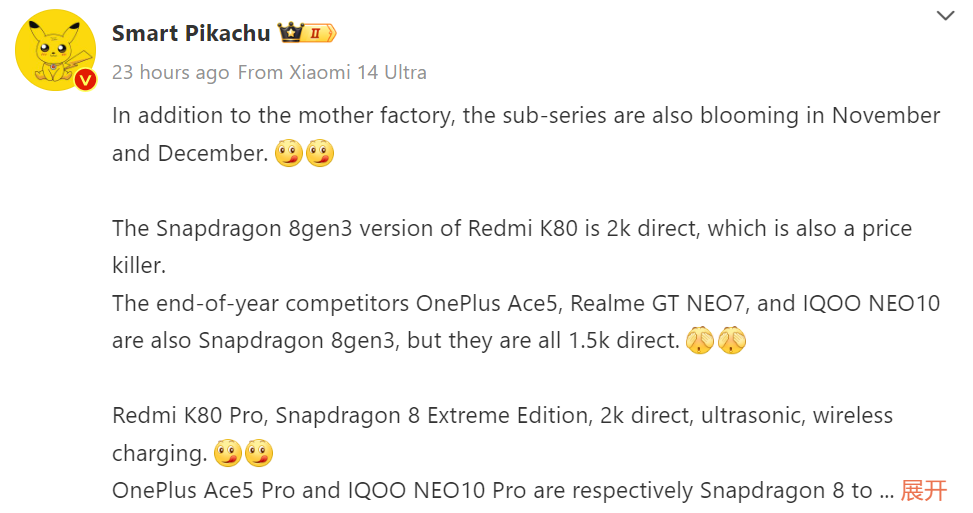
In this month, Vivo and Oppo will launch the Dimensity 9400-powered Vivo X200 series and the Oppo Find X8 lineup. By the end of the month, other brands will unveil the Snapdragon 8 Elite-powered flagships, such as the Xiaomi 15 series, OnePlus 13, Honor Magic 7 series, and iQOO 13. A new leak by tipster Smart Pikachu suggests that sub-flagship phones from Redmi, OnePlus, iQOO, and Realme will launch in China in November and December of this year. Here’s a look at the details shared by the tipster.
Launch timeframe for upcoming sub-flagship phones tipped
According to the tipster, the Redmi K80 with the Snapdragon 8 Gen 3 chip features a 2K flat OLED display and is expected to be a price killer. Competitors such as the OnePlus Ace 5, Realme GT Neo 7, and iQOO Neo 10 are also equipped with the Snapdragon 8 Gen 3 and feature OLED panels that offer a resolution of 1.5K.
The Redmi K80 Pro, powered by the Snapdragon 8 Elite, will feature a 2K flat OLED screen, an ultrasonic in-screen fingerprint sensor, and wireless charging. The OnePlus Ace 5 Pro and iQOO Neo 10 Pro will come with the Snapdragon 8 Elite and Dimensity 9400, respectively. The displays on these phones will support a 1.5K resolution, and they are also said to pack larger batteries.
Other reports have revealed that the Realme GT Neo 7 will have an overclocked version of the Snapdragon 8 Gen 3. Reports also suggest that it supports 100W charging. The Neo 10 series is expected to pack 6,000mAh+ silicon batteries with support for over 100W charging.
The OnePlus Ace 5 series may feature 6,500mAh silicon batteries and support 100W charging. According to reports, the Redmi K80 Pro will come with a 6,000mAh battery that supports 100W charging and wireless charging. Last year, the Redmi K70 and K70 Pro packed the same 5,000mAh battery. Therefore, it is uncertain if the Redmi K80 will have a 6,000mAh battery similar to its Pro version. Since these are sub-flagship phones, they are inclined to deliver better performance for gaming and are unlikely to feature top-notch specs like their flagship counterparts launching in October.
Today’s the day, Vivo will finally take the wraps off of its X200 series smartphone. The line includes three models, a vanilla Vivo X200, a compact X200 Pro mini, and a top-of-the-line X200 Pro model.
Over the past couple of weeks, we’ve learned quite a bit about these smartphones through leaks, certifications, and official channels, though not every detail has surfaced.
Vivo X200
For the full reveal, we’ll have to wait for the launch event. If you’re also interested in watching the event live and wondering how to tune in, we’ve got you covered.
Here in this article, we will guide you on when and where you can watch the Vivo X200 series launch event.
Vivo X200 series launch: Watch the event live
For those following the launch from China, the launch event will be live-streamed on the company’s official website and on Vivo’s Billibilli channel.
On the other hand, global users can watch the event live on YouTube. The live stream will start at 4:30 PM IST, 7:20 AM EDT and 11:00 AM GMT.
Alongside the smartphone, Vivo will introduce two new power banks. One supports 45W fast charging, while the other is rated at 22.5W. However, Both models feature a built-in cable with two extra ports, allowing you to charge up to three devices at once—ideal for keeping your phone, tablet, and earbuds powered up on the go.
Vivo X200 series: What to expect
The Vivo X200 phones will be the first to feature the MediaTek Dimensity 9400 chipset and will also be the first to ship with Android 15. As expected, they will continue to use Zeiss optics, like their predecessors.
All three models will have a flat frame and a circular camera module. The Pro models will feature a new 50MP Sony LYT-818 main camera, while the mini version will be thinner than the iPhone 16 Pro yet pack a larger 5,700mAh battery.
Pricing for the X200 series is expected to start at CNY 3,999 and go up to CNY 6,199.
The Xiaomi 15 series includes three flagship models, namely the Xiaomi 15, 15 Pro, and 15 Ultra. All three phones are expected to feature the Snapdragon 8 Elite chipset. While the standard and Pro models are expected to debut later this month, the Ultra model is expected to break cover in Q1 2025. While the Xiaomi 15 and Xiaomi 15 Pro are camera-focused flagships, the Ultra model is expected to offer an even better photography experience. Reports have claimed that it will be equipped with a 200-megapixel periscope telephoto camera. A new leak that has emerged on Weibo has shed more information about this camera.
Xiaomi 15 Ultra’s 200MP camera detailed
Reports have claimed that the Xiaomi 15 Ultra will be equipped with the Samsung ISOCELL HP9 200-megapixel periscope telephoto camera. The same periscope zoom camera is available on the Vivo X100 Ultra, which debuted earlier this year in China.
As can be seen in the above screenshot, while the tipster has leaked the camera details of an upcoming phone, he has not specified its name. However, in all likelihood, he could be talking about the Xiaomi 15 Ultra. The leak reveals that the 200-megapixel periscope telephoto camera will offer a 100mm focal length, an f/2.6 aperture, and 4.3x optical zoom. The leaker did not share any information about the other specs.
A recent report claimed that the Xiaomi 15 Ultra will feature the one-inch 50-megapixel LYT-900 primary camera with OIS support, a 50-megapixel Sony IMX858 ultra-wide lens, and a 50-megapixel Sony IMX858 telephoto camera. While the 15 Ultra will feature a new periscope telephoto camera, the rest of the cameras are identical to those of the Xiaomi 14 Ultra.
In addition to leaking the periscope camera details, DCS has also hinted at the launch timeframe for the Xiaomi 15 Ultra. According to his information, the device is scheduled to launch after the Lunar New Year, suggesting a release in February or at least within the first quarter of 2025.
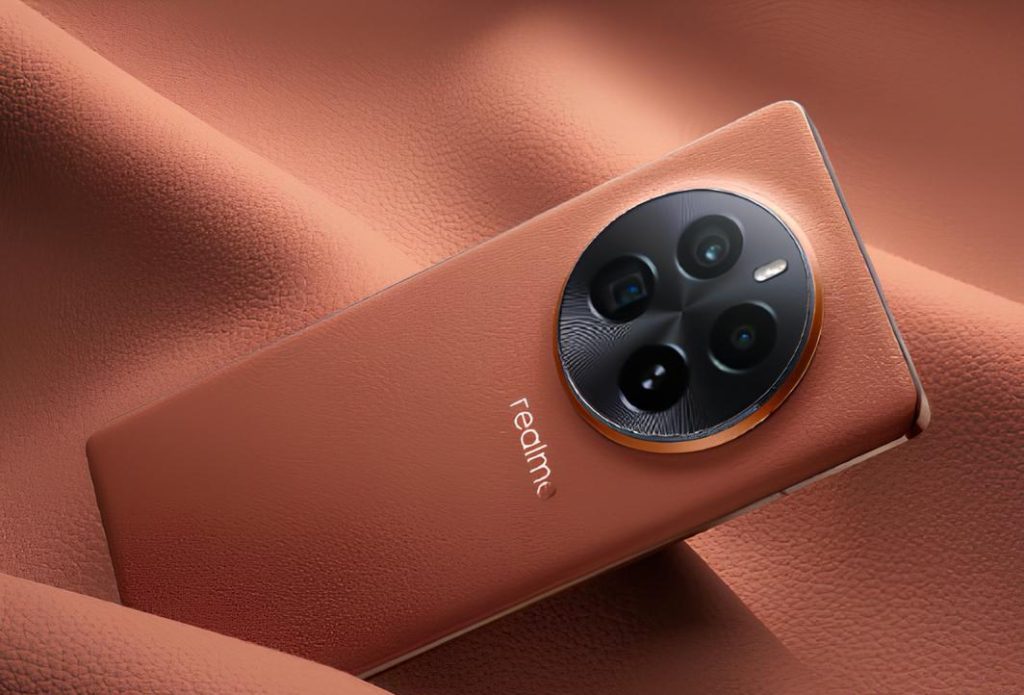
Tipster Digital Chat Station previously claimed that the global variant of the Realme GT 7 Pro uses a customized Samsung display, which is reportedly more expensive than the BOE display used in the Chinese variant. Now, the tipster reveals that this customized display offers a peak brightness (HBM) of 2000 nits globally, an increase from the 1600 nits seen on the Realme GT5 Pro.
Brighter than OnePlus 13 in direct sunlight
In comparison, the upcoming OnePlus 13‘s BOE X2 display is also rumored to offer the same 1600 nits of global peak brightness. For those unfamiliar, global peak brightness (or HBM) represents the brightness level the phone achieves in direct sunlight, which is the most important number to look for when it comes to visibility.
Speaking of the manual peak brightness, it reportedly remains the same as the GT 5 Pro (1000 nits). Unfortunately, the tipster didn’t reveal the local peak brightness (or simply peak brightness), which is only triggered in a small portion of the display when watching HDR content.
The phone also uses the yet-to-be-unveiled Snapdragon 8 Gen 4 (or Snapdragon 8 Elite) chipset, which has already surfaced on Geekbench with top-notch performance. However, many people are concerned about the power efficiency and heating of the new chip as it boasts a totally different core architecture and reaches a clock speed as high as 4.32GHz.
Performance
A previous report claims the CPU reached over 98°C in normal usage. Most of the 2024 flagships (including those with Dimensity 9400) also pack massive batteries as compared to their predecessor. It could be due to the Cortex-X925 prime core.
That said, we will need to see how manufacturers tune the performance and thermal management.
Coming back to the Realme GT 7 Pro, it’s also rumored to pack a capacity exceeding 6,000mAh, the largest battery on a realme phone ever. According to DCS, it will be a 6-cell battery, which suggests rapid charging as all of them will be charged simultaneously. According to the 3C listing of the phone, it will come with a 120W charger in the box.
Following the current trend, realme has also adopted the silicon-carbon anode battery tech, which is expected to keep the phone relatively slick and lightweight despite the increased capacity.
The Realme GT 5 Pro was launched exclusively in the Chinese market on December 7 last year.
Several reports have claimed that Oppo is working on a new tablet called the Oppo Pad 3 Pro. Today, the brand officially confirmed the arrival of the tablet by making it available for pre-orders. The device will go official alongside the Find X8 series of smartphones on Oct. 24 in China.
Oppo Pad 3 Pro pre-orders begin in China
Oppo Pad 3 Pro launch date
The pre-orders of the Oppo Pad 3 Pro have started on platforms like Oppo Store in China and JD.com. These listings show that the tablet will be available in multiple options, such as 8GB+256GB, 12GB+256GB, 16GB+512GB, and 16GB+1TB. It will be sold in colors like Night Blue and Dawn Gold.
Oppo Pad 3 Pro – Night Blue
Rumors circulated at the beginning of this year that the company would launch the Oppo Pad 3 in China. However, the launch did not happen. Instead, the same device was rebranded as the OnePlus Pad 2 in the global market in July.
The brand is now preparing to launch the Oppo Pad 3 Pro in China. While the company hasn’t confirmed anything about the tablet, speculations suggests that it will feature the Snapdragon 8 Gen 3 Leading Version chipset. It will run on ColorOS 15 and come with support for Oppo Pencil 2 Pro stylus.
Oppo Pad 3 Pro – Dawn Gold
The official images show that the Oppo Pad 3 Pro shares the same design as the OnePlus Pad 2. Therefore, it is likely that the upcoming Oppo tablet may inherit some specifications of the OnePlus Pad 2.
To recall, the OnePlus Pad 2 came with a 12.1-inch IPS LCD panel that offers 2120 x 3000 pixels of resolution and a 144Hz refresh rate. Under the hood, it has the Snapdragon 8 Gen 3 chip, 8 GB/12 GB of LPDDR5 RAM, 128 GB/256 GB of UFS 3.1 storage, and a 9,510 mAh battery with 67W fast charging support. It is equipped with other features, such as six speakers, an 8-megapixel front camera, and a 13-megapixel rear camera.
Qualcomm is gearing up to unveil its next-generation flagship mobile processor at the upcoming Snapdragon Summit on October 21st. While the official name of the SoC remains under wraps (rumors suggest Snapdragon 8 Gen 4 or Snapdragon 8 Elite), the OnePlus 13 will be among the first devices to sport the new chip.
Now a recent Weibo post by OnePlus employee Cai Zuxuan suggests that OnePlus will reportedly pack a custom version of the upcoming Snapdragon chip with significant improvement in energy efficiency.
OnePlus 13 may launch with a custom Snapdragon 8 Elite
Citing internal data, Cai claims this custom SoC surpasses Apple’s A18 Pro in power efficiency. If true, this could mark Qualcomm’s return to the top spot in smartphone chip efficiency rankings. The Weibo post also mentions the “public version” of the chip is less efficient than the custom one.
This isn’t the first hint of a two-tiered approach for the rumored Snapdragon 8 Elite. Back in August, a leaked datasheet revealed two models of the SoC – SM8750 and SM8750P.
The “P” variant is believed to be a performance-focused model, similar to past “Galaxy” editions of Qualcomm’s flagship SoCs. For example, the Snapdragon 8 Gen 3 for Galaxy phones offered a slight overclock compared to the standard version, which later made its way into Nubia smartphones with the Leading Edition name.
The wait for official details won’t be long. Qualcomm’s Snapdragon Summit kicks off on October 21st, where we’ll learn more about the upcoming chip, its variants, and how this 3nm powerhouse from Qualcomm stacks up against the competition, in terms of power efficiency as well as performance.
OnePlus 13 Specifications (Expected)
According to leaks, the OnePlus 13 is expected to come with a slightly curved 2K LTPO display, a triple 50MP rear camera system, and 50W magnetic wireless charging.
The smartphone is also expected to pack a dual-cell 5840mAh battery, along with support for 100W SUPERVOOC fast charging and magnetic wireless charging.
Meanwhile, competitors are also gearing up to launch their latest flagships with the upcoming Snapdragon 8 Elite processor. Honor has confirmed the Magic 7 series launch, while Xiaomi 15 and iQOO 13 are expected to debut in October as well.
OnePlus will hold a screen launch conference for the OnePlus 13 in collaboration with China-based BOE on Oct. 15. The event will introduce a new display that will debut on the OP13. Today, the brand released a poster to reveal what to expect from the OP13’s screen. Additionally, a tech blogger Cai Zuxuan, who is said to be a OnePlus employee, claimed that the inclusion of the advanced screen and the new chip will result in a price hike.
OnePlus 13 features DisplayMate A++ grade screen
OnePlus 13 features DisplayMate A++ certified screen
According to the brand, the OnePlus 13’s second-generation 2K Oriental Screen, aka BOE X2 display, has achieved the world’s first DisplayMate A++ certification and set an impressive 21 display records.
According to reports, the OnePlus 13 will feature a 6.82-inch BOE X2 8T LTPO panel with a micro-quad-curved design and ultra-thin equal-sized bezels. The screen will offer a resolution of 3168 x 1440 pixels and a 120Hz refresh rate. It will be OnePlus’ first phone to feature an ultrasonic in-screen fingerprint scanner. The Oppo Find X8 Ultra, which is expected to debut in January 2025, will feature the same screen. OnePlus/Oppo is expected to reveal more details about the OnePlus 13 and its screen through tomorrow’s event in China.
The other major highlight of the OnePlus 13 is that it will be one of the first phones to feature Qualcomm’s next-generation Snapdragon 8 Elite chipset. As mentioned above, the inclusion of these components suggests that it will be costlier than the OnePlus 12, which cost 4,299 Yuan for the 12GB+256GB base variant.
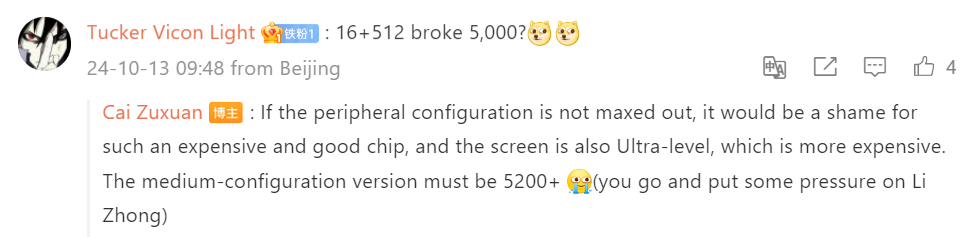
When a netizen asked tech blogger Cai Zuxuan about the price of the OnePlus 13, specifically if the 16GB+512GB version would cost more than 5,000 yuan, the blogger replied that since the OP13 has a top-notch chip and an ultra-level screen, the mid-configuration version (16GB+512GB) will definitely be priced over 5,200 Yuan ($735). The same variant of the OnePlus 12 was priced at 4,799 Yuan ($680) at launch. Therefore, it appears that the OnePlus 13 may cost around 500 Yuan (~$70) more than its predecessor.
In terms of other configurations, leaks suggest that the OnePlus 13 will have up to 24 GB of LPDDR5x RAM, up to 1 TB of UFS 4.0 storage, a 6,000mAh battery with 100W wired and 50W magnetic wireless charging. The phone will have three rear cameras: a 50-megapixel LYT-808 main camera, a 50-megapixel Samsung JN5 camera, and a LYT600 3x periscope telephoto lens. For peripheral features, the phone will use single-point ultrasonic fingerprint unlocking, an IR blaster, and support IP68/69 dust and water resistance, and both the black and white versions will have frosted glass technology.
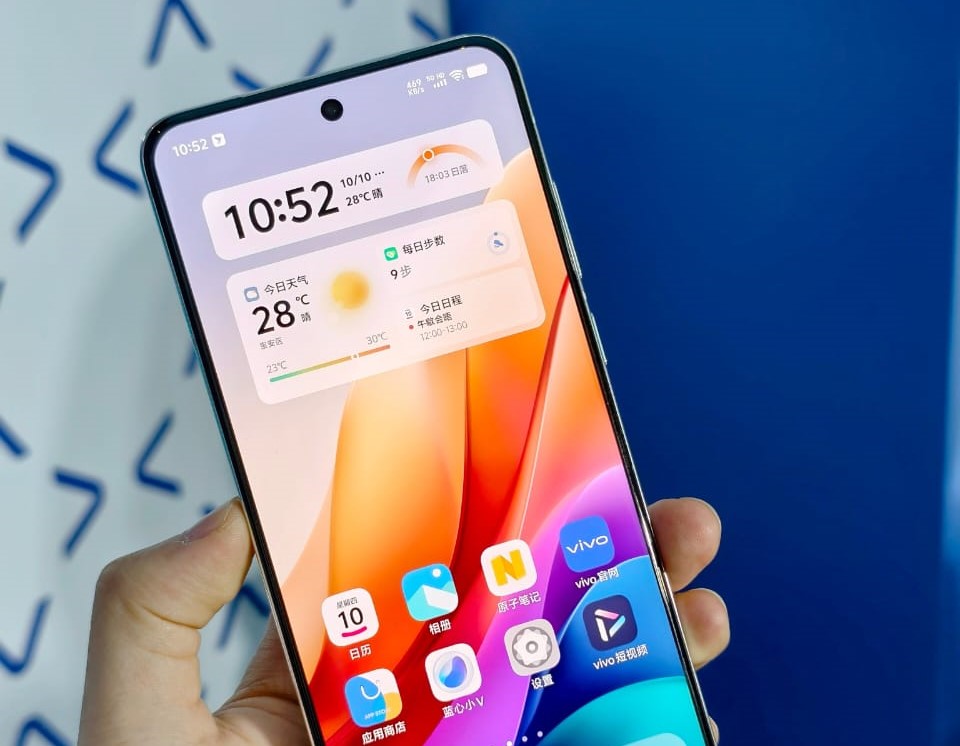
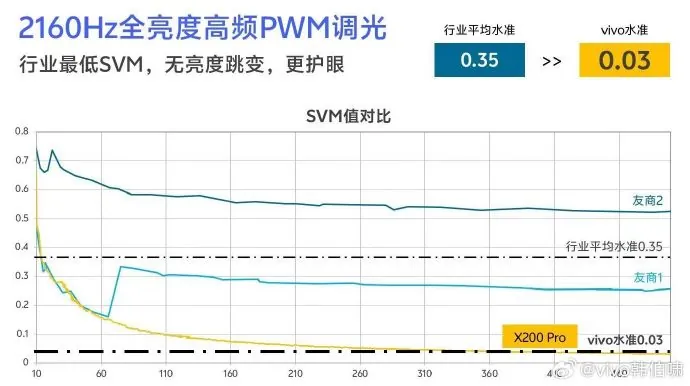
Vivo has already revealed various aspects of their X200 series flagship devices, which are scheduled to launch today in China. Now Han Boxiao, the product manager at Vivo, has shared more information about the display panels of the devices. Confirming previous leaks, the official says that the X200 series equips the ‘Master Zeiss color screen’ for the first time for improved color accuracy and supports 2160Hz high-frequency PWM dimming to reduce eye fatigue.
More accurate colors paired with increased eye comfort
According to the official, the devices are reportedly capable of uniformly mapping the color gamut in different situations whether it’s a UI element or a photo. They can also adapt the color temperature based on the ambient light, just like the upcoming Oppo Find X8 series.
As for eye protection, the X200 series devices stay at a fixed 2160Hz PWM independent of the brightness level, which should be easier for the eyes, especially in low-brightness conditions. Han Boxiao further explains that many of their competitors use a two-stage dimming strategy, which means the display only reaches the higher PWM frequency in low brightness.
As a result, the displays often have to switch between PWM levels in fluctuating lighting conditions, which isn’t perfect for a good viewing experience. In comparison, the vivo X200 series reportedly offers a more seamless visual experience in such conditions.
In addition to all of these, the display panels and the associated components are also more power efficient this time, which should contribute to a longer battery life.
The full brightness 2160Hz PWM dimming also reportedly has no impact on the advantages and characteristics of the LTPO panel and only requires a slightly higher power consumption.
The display panel also equips low blue light solutions for increased eye comfort during low light conditions. The “Night Eye Protection 2.0” software-based solution can also adjust the visual effect based on the contents shown on the display.
Aside from the eye protection solutions, the vivo X200 series also offers smoother visuals with Android 15-based OriginOS 5, thanks to its improved animations. All devices in the series are powered by the newly unveiled Dimensity 9400 chipset, which brings support for on-device LLMs, along with significant improvements in CPU and GPU performance.
We’ve been hearing rumors about which company will be the first to launch a smartphone powered by the Snapdragon 8 Elite processor. For a while, Xiaomi seemed to be the frontrunner, but recent leaks suggest OnePlus might also be in the race. In an official confirmation, though, Honor has announced the launch date for its Magic 7 series smartphones.
Honor Magic 7 series launch confirmed
Honor’s confirmation arrived through a Weibo post today. The company detailed plans for two separate events this month.
The first, scheduled for October 23rd, will unveil MagicOS 9.0, the firm’s upcoming operating system based on Android 15. The teaser poster accompanying the announcement hints at an AI-centric focus for MagicOS 9.0, with the tagline “witness the magic of AI.”
The bigger news, however, is the confirmation of the Magic 7 series launch on October 30th. It is the first official confirmation of a launch date for a smartphone powered by the Snapdragon 8 Elite chip. But it’s important to note that this doesn’t necessarily guarantee Honor will be the first to release a phone with this silicon.
Qualcomm’s official unveiling of the Snapdragon 8 Elite is set for October 21st. Additionally, a recent report suggests a flurry of flagship launches featuring the chip will commence on October 28th. This leaves the door open for Xiaomi and other brands, to potentially claim the title of the first Snapdragon 8 Elite phone.
Honor Magic 7 series specifications (expected)
The Magic 7 series is likely to include two models — a standard and a Pro version. Based on the leaks so far, the two phones might have several similarities.
Expect the same SoC, both the Magic 7 and Magic 7 Pro will have a triple camera setup on the rear. The main sensor is expected to be a 50MP Omnivixion OV50H, accompanied by a 50-megapixel periscope telephoto camera, possibly the Sony IMX882, and a third sensor that could be either 50 megapixels or 200 megapixels (Samsung HP3).
Both models are expected to offer OLED displays. The Pro version is likely to have a higher resolution 2K display, while the standard model will have a 1.5K resolution. A previous report suggests that the Magic 7 Pro will also have satellite connectivity support.
Apart from this, the phones are likely to share features like IP68/69 water resistance, ultrasonic fingerprint, and 2D face recognition, as well as Honor’s enhanced eye protection 3.0.
At this year’s IFA Berlin event, Honor also confirmed that the Magic 7 series will debut with AI Agent, a personal on-device AI assistant designed to learn from user habits and device environments and can intelligently automate tasks across various apps and services.
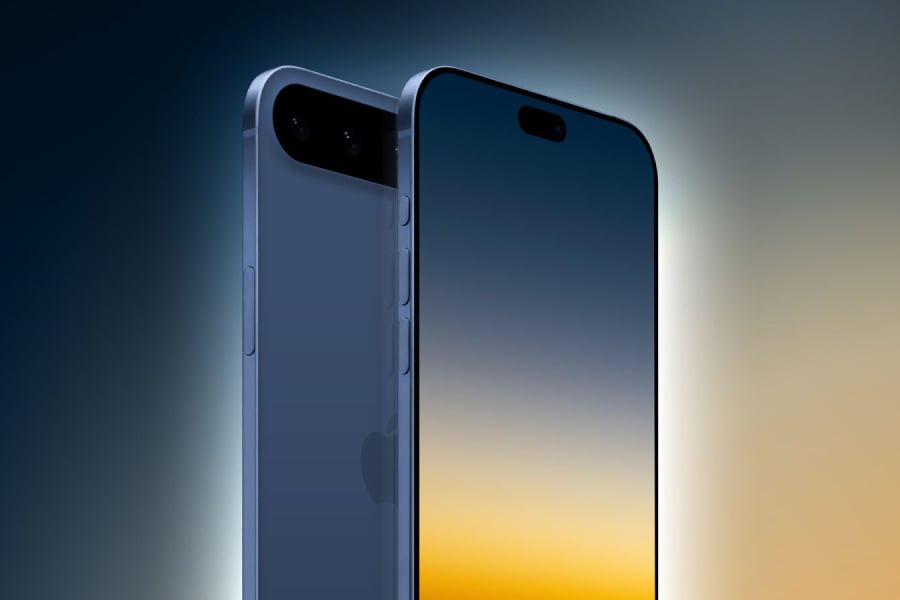
Rumors of a groundbreaking new iPhone model, the iPhone 17 Air, are swirling up. This isn’t just a minor refresh; it’s potentially a complete reimagining of the iPhone, pushing the boundaries of design and display technology. But can it live up to the hype? Drawing on information from reliable sources, here’s a look at the key features and upgrades expected in this upcoming model.
Apple has a knack for disrupting its own product lines, and the iPhone 17 Air could be the next big disruption. Reports suggest this model will be dramatically thinner than any previous iPhone, possibly even eclipsing the slim profile of the very first iPhone. How will Apple achieve this feat of engineering? The answer lies in a new display technology called TDDI (Touch and Display Driver Integration).
According to recent reportts, Apple is planning to integrate TDDI technology into the iPhone 17 Air’s display. This technology combines the touch sensor and display driver into a single layer, significantly reducing the overall thickness of the display assembly. Not only that, but TDDI could also lead to improved image quality, enhanced touch responsiveness, and reduced power consumption.
2. A Smaller, More Immersive Display
Contrary to earlier rumors of a 6.6-inch display, the latest leaks suggest the iPhone 17 Air might actually sport a slightly smaller 6.4-inch OLED screen. While this might seem like a step back, it could be a deliberate choice to further enhance the phone’s slim profile and ergonomics. Expect ProMotion technology for a silky smooth 120Hz refresh rate, and potentially even brighter colors and deeper blacks thanks to the TDDI technology.
It is also being said that the iPhone 17 series’ display will feature a super-hard anti-reflective layer, which is more scratch-resistant than Apple’s Ceramic Shield.
3. Performance Upgrades
Apple’s next-generation A19 chip, possibly N3P or N3X, will power the iPhone 17 Air. Expectedly, the device will feature increased RAM, potentially up to 8 GB, enhancing its capacity to manage demanding applications and enhancing overall performance. Rumor has it that storage options will start at 128 GB, with higher-end models offering up to 1 TB.
4. Camera Conundrum: Single Lens or a New Innovation?
While the thin design is stealing the spotlight, there’s still much speculation surrounding the iPhone 17 Air’s camera system. Some rumors point to a single-lens rear camera, prioritizing a sleek aesthetic over a complex multi-lens setup. However, this seems unlikely given Apple’s emphasis on camera technology. It’s more plausible that Apple will introduce a new, more compact camera module that maintains its high-quality imaging capabilities while minimizing bulk.
The entire iPhone 17 lineup, including the Air model, is expected to feature a 24-megapixel front-facing camera.
5. Price and Positioning: A Premium Offering
The iPhone 17 Air is expected to replace the “Plus” model in the lineup, but don’t expect a budget-friendly price tag. Analysts anticipate positioning it as a premium device, potentially surpassing the Pro Max in price. If Apple truly delivers on its promise of groundbreaking design and display technology, this would justify its positioning.
6. Final Thoughts
It’s important to emphasize that these are still rumors and speculation. Apple is renowned for its secrecy, and plans can change dramatically before the official launch. However, if even half of these rumors prove true, the iPhone 17 Air could be a revolutionary device that redefines the smartphone landscape. We’ll have to wait for Apple’s official announcement, likely in the fall of 2025, to get the full picture.
Apple‘s budget-friendly iPhone SE line isn’t due for a refresh anytime soon. With the iPhone SE 3 expected to stick around for at least the rest of the year, leaks about its successor, the iPhone SE 4, are still a trickle compared to the usual rumor firehose.
However, a recent image shared by leaker Sonny Dickson (likely taken from Chinese social media) reveals what a third-party case manufacturer might be expecting from the upcoming phone. While it doesn’t show the actual iPhone SE 4, the case design reveals a few interesting details.
iPhone SE 4 case reveals design details
Firstly, the case confirms the flat-edged design language that Apple has adopted across its entire iPhone lineup since the iPhone 12.
More interestingly, the case features a cut-out for a mute switch, seemingly dispelling earlier rumors that the iPhone SE 4 will have an Action Button seen on the iPhone 15 Pro and the iPhone 16 lineup. The button allows for customizable shortcuts depending on the context.
While it wouldn’t have been surprising for the SE to adopt this feature, it looks like the budget phone will stick with the familiar mute switch for now.
The camera is notably larger than on previous iPhone SE models, suggesting that the iPhone SE 4 might finally move from a single-lens setup to a dual-camera system.
The design matches the dummy case units we saw in April, but it doesn’t fully align with Apple’s current style. The camera cut-out is positioned horizontally, similar to the iPhone 7 Plus.
While it could be possible that this case design is based on inaccurate information, the leaks so far suggest a shift toward this rumored camera setup.
Ultimately, this leaked case offers some hints about the iPhone SE 4’s design, but it’s important to take it with a grain of salt. With Apple likely keeping the wraps on the phone for a while longer, we’ll have to wait for more reliable leaks or, better yet, an official announcement to get the full picture.
We use cookies on our website to give you the most relevant experience by remembering your preferences and repeat visits. By clicking “Accept”, you consent to the use of ALL the cookies.
This website uses cookies to improve your experience while you navigate through the website. Out of these, the cookies that are categorized as necessary are stored on your browser as they are essential for the working of basic functionalities of the website. We also use third-party cookies that help us analyze and understand how you use this website. These cookies will be stored in your browser only with your consent. You also have the option to opt-out of these cookies. But opting out of some of these cookies may affect your browsing experience.
Necessary cookies are absolutely essential for the website to function properly. This category only includes cookies that ensures basic functionalities and security features of the website. These cookies do not store any personal information.
Any cookies that may not be particularly necessary for the website to function and is used specifically to collect user personal data via analytics, ads, other embedded contents are termed as non-necessary cookies. It is mandatory to procure user consent prior to running these cookies on your website.