The Anker Soundcore A30i earbuds with active noise cancellation (ANC) are now available. The new Anker ANC earbuds come with an affordable price tag and are now available on Amazon globally.
Features
The Anker A30i earbuds are capable of blocking sound up to 46dB. The noise cancellation on the device is automatically adjusted for the noise detected. The Anker A30i has 6mm composite diaphragms that help to provide clarity and balance to the audio output. The earbuds have four built-in microphones that allow the user to make phone calls easily.
The Soundcore app can be used to control the earbuds and customize their operation. The Soundcore app also offers access to 3D surround sound effects and transparency mode. There are three noise canceling modes on the earbuds as well as five intensity levels.
The A30i earbuds are lightweight at just 3.7g each. They are ergonomically designed to allow for comfortable use even for extended periods. The charging case of the earbuds is shaped like lipstick and has a compact build. There are three ear tip sizes from S to L while Anker is offering four color variants of the earbuds. The color options are black, white, blue, and pink.
The Anker A30i is compatible with Bluetooth 5.4 connectivity and the buds can be paired singly. The earbuds offer up to 7 hours of playback on a single charge when in normal mode. The corresponding playtime while ANC is active is about 5 hours. The charging case delivers an additional 17 and 13 hours when in normal mode and ANC respectively.
Pricing & Availability
The Anker A30i noise canceling earbuds are priced at $49.99 and its equivalent in several markets including the US, Canada, the UK, and Australia. The Anker A30i will also berth in Europe subsequently.
Poco, the Xiaomi sub-brand has unveiled its first-ever tablet – the Poco Pad. While not boasting entirely unique features, the Poco Pad positions itself as a mid-range option for both entertainment and work. So let’s get into its specs and features here.
Poco Pad Specifications
The centerpiece of the Poco Pad is its 12.1-inch 120Hz LCD display with a 2.5K resolution and support for 68 billion colors. For a comfortable viewing experience, the display offers a peak brightness of 600 nits and DC dimming for flicker-free visuals at lower brightness levels.
The aspect ratio is 16:10, which caters to both entertainment consumption and productivity tasks. Entertainment features include quad speakers with Dolby Atmos and Dolby Vision support for enhanced video streaming.
Design-wise, the Poco Pad boasts a sleek metal unibody design, measuring just 7.52mm thin and weighing 571g. It comes in two color options: Gray and Blue.
Battery life is another highlight of the tablet, with Poco claiming the 10,000mAh battery can last up to 16 hours of continuous video playback. It supports 33W fast charging and Poco claims that a 15-minute charge can provide enough juice for 26 hours of music playback.
On the processing side, the Poco Pad is equipped with the Snapdragon 7s Gen 2 SoC, paired with 8GB of RAM. Storage comes in at 256GB, expandable via a microSD card slot that supports cards up to a massive 1.5TB.
The software is Xiaomi’s HyperOS, which offers some integration features with compatible HyperOS phones. Users can cast their phone screen to the tablet, drag and drop content between devices, and share a clipboard. You can also tether a phone just via a single tap.
Poco is also offering several accessories to improve the tablet’s functionality. There is a Poco Pad Cover for basic protection, while you can use the Poco Pad Keyboard to increase productivity. For note-taking and sketching, users can opt for the Poco Smart Pen.
Price and Availability
The Poco Pad is available for purchase starting today at an introductory price of $300 for the sole 8GB/256GB configuration. After the launch promotion ends, the regular price will be $330. The Poco Pad Keyboard is priced at $80, the Poco Smart Pen at $60, and the basic cover at $20.
Samsung is rumored to offer a major redesign to the Galaxy Buds’ “kidney bean” shape with the upcoming Galaxy Buds 3 series. According to reports from a Korean publication, a stem will be added to the design, that will make it longer and look something like the bean is sprouting.
While the description above is still kind of vague and there isn’t any image of a prototype available, the addition of a stem suggests a similarity in design to Apple‘s AirPods.
Possible advantages of the longer design:
Samsung has been offering the same design since the beginning and call quality with it is considered to be inferior due to the mic not pointing directly towards the source of sound. Adding a stem like the AirPods could make it easier for Samsung to improve the aspect.
Additionally, the speculated design could also offer more room for internal components. The extra space can either be used to pack a larger battery for a higher single-session battery life or to add additional equipments that are necessary for AI-related features.
The company added its interpretation feature to the Galaxy Buds earlier this year with an update. Samsung could be planning to add more AI-related features to its earphones that may require additional hardware resources.
For those unaware, the Galaxy Buds 2 already houses several sensors including gyro that enable head movement tracking and notify users when they keep their head down for more than 10 minutes. It can help prevent neck and back pain. However, there aren’t any health tracking features as of now, where the company is actually focusing on the aspect and working on a dedicated device, the Galaxy Ring, just for the purpose. It won’t be shocking if Samsung adds some similar functionality to its upcoming audio product, which will surely benefit from an increased internal volume.
However, the Galaxy Buds 2 and Buds 2 Pro earbuds already weigh 5.0g and 5.5g respectively, which is relatively heavier than many, and adding more hardware resources may make it even heavier. Nonetheless, Samsung will likely reveal whatever they’re doing with the Buds 3 series in the upcoming Galaxy Unpacked event scheduled for July 10.
Lenovo has announced the availability of its Xiaoxin Pad 2024 and Xiaoxin Pad Studio tablets in China. Both tablets are on sale today, with the Xiaoxin Pad 2024 starting at 1199 yuan ($166) and the Xiaoxin Pad Studio starting at 1299 yuan ($179).
Xiaoxin Pad 2024 Specifications:
The Xiaoxin Pad 2024, originally launched last year, now has an updated version with 8GB of RAM and 256GB of internal storage. This tablet features an 11-inch FHD+ display with a 90Hz refresh rate and a peak brightness of 400 nits, which supports stylus input. It also has a metallic chassis with a dual-tone back panel that includes an 8MP rear camera. For audio, the tablet is equipped with quad speakers and has an 8MP front-facing camera for selfies and video calls.
Under the hood, the Xiaoxin Pad 2024 is powered by a Snapdragon 685 processor, which supports up to 1TB of additional storage via a microSD card slot. The device is equipped with a 7,040mAh battery that supports 20W fast charging. It runs on Lenovo’s ZUI 15, which offers features tailored for multitasking and productivity.
Xiaoxin Pad Studio Specifications:
On the other hand, the newly launchedXiaoxin Pad Studio is designed for users seeking a more immersive multimedia experience. It features an 11.5-inch LCD screen with a 90Hz refresh rate and a resolution of 2000 x 1200 pixels. The display also supports stylus input, making it suitable for note-taking and drawing.
The Xiaoxin Pad Studio is powered by a MediaTek Helio G99 processor, coupled with 8GB of RAM and up to 256GB of internal storage. The tablet boasts a robust audio system developed in collaboration with JBL. This includes eight speakers—four tweeters and four mid-bass crossover units—certified with Hi-Res Audio and Dolby Atmos, delivering up to 26 watts of power.
The tablet’s design includes a metal frame body with a large-angle stepless hovering capability, allowing adjustable opening angles. It is light and portable, weighing approximately 650g.
It has an 8600mAh battery that supports 45W fast charging, ensuring prolonged use without frequent recharges. The tablet runs on ZUI 16 and offers dual-band Wi-Fi, Bluetooth 5.2, USB 2.0, and a 3.5mm audio interface for connectivity.
The Realme GT 6T finally launched in the Indian market, with impressive specs and features. However, there is another smartphone that is available in this price range, which is the Motorola Edge 50 Pro. But on paper, the Realme device seems better. Here’s why.
Realme’s latest GT 6T sports a tall 6.78-inch LTPO AMOLED display that offers variable 120Hz refresh rate, Corning Gorilla Glass Victus 2, HDR, and Full HD+ resolution. Motorola features a similar 6.7-inch curved pOLED display but with a higher 144Hz refresh rate, HDR10+, and Full HD+ resolution.
However, the latter lacks LTPO technology, which helps in conserving battery. But the greatest edge that the Realme GT 6T has is its peak brightness of 6000 nits compared to the Edge 50 Pro’s 2000 nits. This makes Realme GT 6T have the highest brightness smartphone display on the market.
2. Refreshed Processor
Under the hood, the Realme GT 6T is the first smartphone in India to launch with the Snapdragon 7+ Gen 3 SoC. This is a slightly upgraded version of the Snapdragon 7 Gen 3, which powers the Edge 50 Pro. The Motorola device also offers up to 12GB of RAM and 256GB of internal storage, while the Chinese brand tops out at 12GB + 512GB storage configuration.
3. Bigger Battery & Faster Charging?
Motorola unveiled the Edge 50 Pro is two charging variants. The base 8GB + 256GB option only offers 68W wired fast charging, while the 12GB + 256GB option supports 120W wired fast charging. But for this price, the Realme GT 6T offers 125W wired fast charging on every variant. The battery on the GT 6T is 1,000mAh larger than the Edge 50 Pro. The former is powered by a 5,500mAh cell, while the latter houses a 4,500mAh battery.
4. Built for Gaming
Realme has placed an emphasis on a smooth gaming experience on its latest GT model. The Motorola Edge 50 Pro isn’t in any way bad for mobile gamers, however, the GT 6T comes with certain features that offer it an advantage. It comes with Geek Power Tuning mode that helps change the CPU and GPU frequency and GT Mode 5.0, which brings AI frame stabilization, atomic-level resource scheduling, and GPU heterogeneous rendering for maintaining a stable high frame rate. For cooling, the device even offers a 9-layer ice-cooling vapor chamber covering a total area of 10,014mm².
5. Pricing
Realme launched the GT 6T for a starting price tag of 30,999 INR for the base 8GB + 128GB. While the storage is half of the Motorola Edge 50 Pro, the charging rate is twice as fast. The 12GB + 512GB option of both devices carry an identical 35,999 INR price tag. Currently, there is also a 4,000 INR discount on the Realme GT 6T, which makes it a lot more affordable. This deal can be availed by ICICI Bank, HDFC, and SBI card holders.
Budget-conscious audiophiles, Honor has unveiled its new Honor Earbuds A, boasting impressive features at a wallet-friendly price. The Honor Earbuds A have been certified by the China Electronic Audio Industry Association’s “Golden Ear” program, ensuring they meet a high standard for sound quality. This is achieved through a combination of factors:
Built-in polymer titanium-plated diaphragm for crisp audio
Large 10mm dynamic unit for powerful bass
HiFi 5 DSP high-performance computing for clear and detailed sound
Four customizable sound effects (treble, bass, vocal, and original sound) to tailor your listening experience
The budget-friendly earbuds last for 9 hours on a single charge
These earbuds prioritize comfort with their lightweight design, weighing only 3.8 grams per ear. The semi-in-ear design ensures a secure and comfortable fit for extended listening sessions. Battery life is impressive too. The earbuds themselves offer 9 hours of playback on a single charge, and the charging case extends that to a total of 40 hours. Plus, a quick 10-minute charge provides enough juice for 3 hours of music playback.
The Honor Earbuds A integrate seamlessly with your mobile device thanks to Bluetooth 5.3 connectivity. They also offer intuitive touch controls for answering calls, managing music playback, and switching songs. For those who tend to misplace their earbuds, a handy “ringing search” function comes in clutch. By activating this feature through the companion app, you can make the earbuds emit a sound to help you locate them. The earbuds boast IP54 dust and water resistance, making them suitable for workouts or light rain. Built-in call noise reduction ensures clear communication during calls.
The Honor Earbuds A are available for pre-order now, priced at just 129 yuan (approximately $19 USD). With its combination of impressive sound quality, comfortable design, long battery life, and smart features, the Honor Earbuds A offer a compelling option for budget-minded listeners.
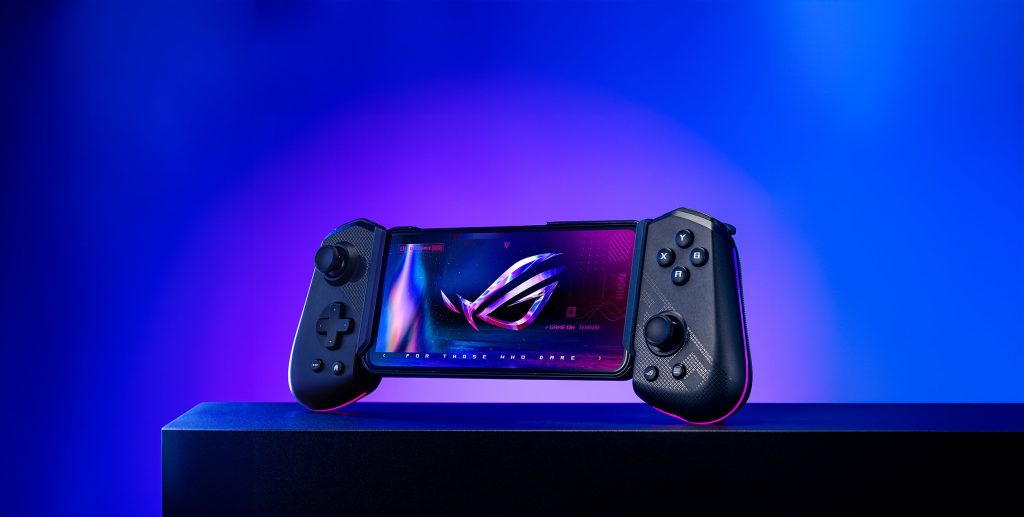
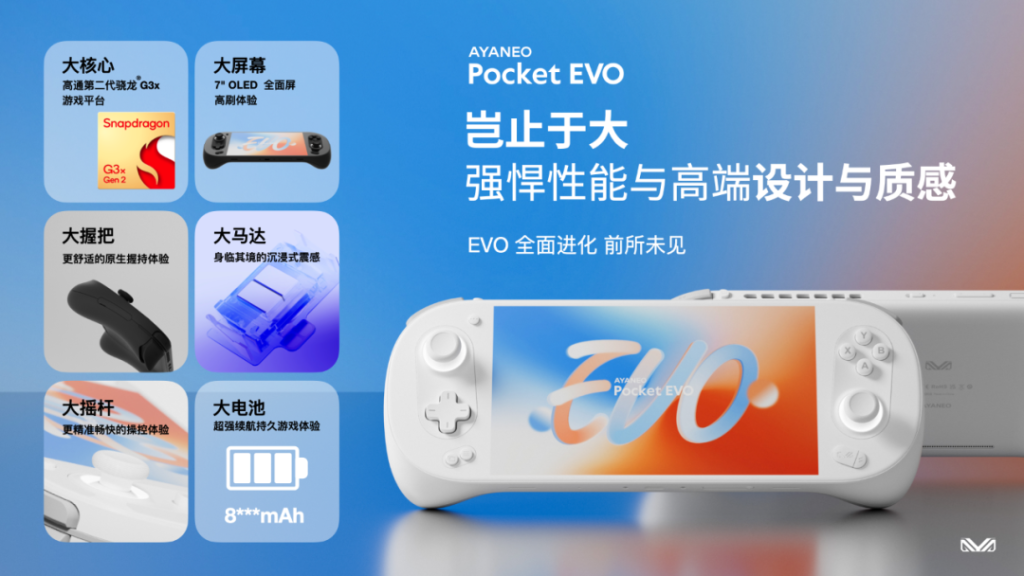
Once again, more leaked specifications for the upcoming ASUS ROG Ally X handheld console hint at a big upgrade for the handheld gaming console. Videocardz published all the details on their blog today, and more information has come to light. Check out our previous coverage of the ASUS ROG Ally X Handheld here.
The handheld is 70 grams heavier than its predecessor.
The biggest improvements come in battery life and memory. The Ally X boasts a massive 80 Wh battery, doubling the capacity of its predecessor and promising extended gaming sessions. Gamers will also enjoy a bump in memory, with the Ally X sporting 24GB of speedy LPDDR5X-7500 memory compared to the previous model’s 16GB. This translates to not only more storage but also smoother performance.
Under the hood, the Ally X retains the powerful AMD Ryzen Z1 Extreme APU with 8 Zen4 cores and 12 RDNA3 compute units. The familiar 7-inch Full HD display with a 120Hz refresh rate and 500 nits of brightness remains unchanged. However, there’s a trade-off for the increased battery life. The Ally X weighs in at 678 grams, 70 grams heavier than its predecessor, and is slightly thicker. This likely accommodates the larger battery and potentially improved cooling, with ASUS claiming a 10% increase in airflow despite a smaller, redesigned fan.
Connectivity options see a shift, with the ROG XG Mobile port for external GPUs replaced by a USB4 Type-C port supporting DisplayPort 1.4 and Power Delivery 3.0. The black chassis gets an ergonomic refresh for a more comfortable gaming experience.
While ASUS isn’t going to launch the Ally X until June 2, the leaked specs showcase a promising handheld console with significant enhancements in battery life, memory, and cooling. Will you be interested to get your hands on one?
Photography enthusiasts looking for a premium compact camera can set their sights on the new Leica D-Lux 8. Announced today by Leica Camera AG, the D-Lux 8 arrives 21 years after the first iteration and is set for a July 2nd release at Leica stores and authorized retailers worldwide. The price tag is US$1,595 (approximately 11,564 yuan).
The D-Lux 8 also has a new internal system and new controls.
While the D-Lux 8 retains the familiar design and basic specs of its predecessor, the D-Lux 7, it boasts a new internal system and revamped controls for a more intuitive user experience. This includes a new button layout and a simplified interface inspired by the Leica Q system.
At its core, the D-Lux 8 features a 4/3-inch 21-megapixel CMOS sensor (with 17 million effective pixels) and a versatile Leica DC Vario-Summilux 10.9-34 f/1.7-2.8 ASPH lens (equivalent to a 24-75mm focal length on a 35mm camera). The camera also offers DNG format shooting for photographers who prefer more control over their raw images.
For seamless connectivity, the D-Lux 8 integrates with the Leica FOTOS app, allowing for easy image transfer and remote control. The camera also comes equipped with a flash unit, expanding creative lighting possibilities. Leica is offering a range of colorful accessories to personalize the D-Lux 8, catering to photographers who love a touch of individual style.
Samsung is currently working on a 2nm process node for its foundry business. The company reportedly aims to be the first to launch 2nm chips surpassing TSMC. It has also reportedly received the first 2nm chip manufacturing order from a Japanese company named Preferred Networks (PFN).
Samsung’s 2nm project “Tethys” could be related to the Exynos 2600
Now the news is that the South Korean company has released a 2nm AP (application processor) development project called ‘Tethys’ and the outcome will be released under the brand Exynos. Samsung seems to be serious about competing with Qualcomm and MediaTek. For now, Samsung is reportedly keeping their foldable lineup Qualcomm exclusive to meet power efficiency requirements.
The 2nm fabrication project “Tethys” is expected to become ready for mass production in 2025 and it could be related to the Exynos 2600 expected to be used inside the Galaxy S26 series. The company has also previously announced that it will mass-produce 2nm chips in 2025.
The Galaxy S23 series from last year was powered exclusively with the Snapdragon 8 Gen 2 chip. This year Samsung has returned to its dual platform strategy with the Exynos 2400 and Snapdragon 8 Gen 3 chip powering the Galaxy S23 and S23 Plus in different regions. However, Samsung kept the Galaxy S24 Ultra model Exynos Exclusive, probably due to the same reason why it has decided to power its 6th generation foldable exclusively with the latest Snapdragon flagship.
Rumors hint that the next-generation Exynos 2500 chip has achieved efficiency improvements and Samsung will use it to power the S26 series. However, the regions that will get the Exynos-powered flagships aren’t clear yet. Nonetheless, it’s understandable that Samsung will want to use Exynos chips as much as possible especially if it manages to reduce or omit the overall performance gap.
Notably, TSMC is also working on 2nm chips, and its mass production is also expected to begin in 2025.
Nothing’s flagship number series phones launch in July. The Phone (1) and Phone (2) were announced in the same month of 2022 and 2023 respectively. The London-based company is expected to follow the same tradition with the Phone (3). It will be the brand’s next major product announcement. While information about the Nothing Phone (3) is yet to surface on the web, Carl Pei shared an image on X that gives away a key detail.
Nothing Phone (3) could get an action button
Pei shared an image of the redesigned quick settings and notification panel on the Nothing OS. It is expected to be included on the Nothing OS 3 later this year. Coming back to the main context, the redesign is shown on a mockup of the device. At first glance, things don’t appear any different and it looks just like the Phone (2) and Phone (1).
However, eagle-eyed folks can notice that the mockup device has a new additional button on the right frame just below the power key. It is small and leads many of us to believe that it could be an action button, an alert slider, or a dedicated camera shutter button. The action button is found on the iPhone 15 Pro models whereas the alert slider is prominent on OnePlus phones. Upon a closer look, one can also notice that the power and volume rocker keys are also positioned higher on the device.
The speculations about the new physical button hint that it could be present on the upcoming Nothing Phone (3). The device in the mockup is seen with a metal frame, a centre-aligned punch-hole cutout, and minimal screen bezels. The Phone (3) is rumored to be powered by a Snapdragon 8s Gen 3 processor. The image shared by Pei surely does build the hype for smartphones. We expect more leaks to surface in the coming weeks.
Vivo has confirmed May 30 as the launch date for its S19 Series premium-midrange smartphones. The series will consist of two devices: the Vivo S19 and the S19 Pro. Earlier today, the brand also revealed the design of these devices. Now, the Vivo S19 Pro has appeared on Geekbench revealing its performance.
Vivo S19 and Vivo S19 Pro
The Vivo S19 Pro with model number “V2362A” has been spotted on Geekbench with an octa-core processor that has a base clock speed of 2.00 GHz and a peak clock speed of 3.35GHz. This is most likely the Dimensity 9200+ SoC which launched in May 2023. The processor is paired up with 16GB RAM and an Android 14-based operating system.
The phone has scored 2129 points in single-core and 5675 points on multi-core test of Geekbench 6. The listing does not reveal any further details, however, leaks have given us a fair idea of what to expect.
Vivo S19 Pro expected specs:
The Vivo S19 Pro is expected to feature a curved-edge 6.78-inch OLED display with a 120Hz refresh rate. The Dimsnsity 9200+ chipset will be paired up with 12GB/16GB RAM and 256GB/512GB storage. For optics, the device will have a 50-megapixel Sony IMX921 primary sensor with optical image stabilization (OIS), an 8-megapixel ultrawide lens, and a 50-megapixel IMX816 sensor with 2x telephoto and 50x digital zoom capabilities. On the front, it will likely have a 50-megapixel Samsung JN1 sensor with autofocus.
Vivo S19 Pro
The phone is expected to feature a 5,500mAh battery supporting 80W fast charging. Some of the other key highlights could include soft halo lighting, IP69-level water resistance, and eSIM support.
Alongside the launch of the Reno 12 smartphones and Enco Air 4 Pro, OPPO also announced the Enco R3 TWS earphones. They arrive as the successor to the last year’s Enco R2. The latest offering packs incremental upgrades. The Enco R3 looks identical to the Apple AirPods. It is an affordable offering with all the essential audio features. Read on to know what it offers out of the box,
OPPO Enco R3 specifications and features
The OPPO Enco R3 has the same design as Apple’s AirPods with a stem and earbuds. They are IPX4-rated dust and water-resistant. The earphones come with touch controls for performing various actions. They come with support for Xiaobu’s assistant.
On the audio front, the OPPO Enco R3 is equipped with a 13.4mm titanium-plated dynamic driver. The TWS earphones offer Spatial sound effects for an immersive experience. There is a single microphone with AI noise cancellation for crystal clear quality on calls. The Enco R3 features unique sound tuning dubbed ‘Purple Galaxy’ for enhanced vocals. There is low latency gaming mode. The audio device also comes with a customized pop-up window for Reno 12 series users.
The OPPO Enco R3 is powered by a 480mAh battery with 35 hours of life. Each earbud is backed by a 32mAh cell that is said to offer 5.5 hours of usage on a single charge.
The OPPO Enco R3 is offered in a White color option. It is priced at CNY 299 (~$42) and can be purchased starting May 31.
OnePlus is one of the smartphone brands in the Android Partner Program and it recently released an Android 15 beta preview update for its current flagship, the OnePlus 12.
We are expecting OnePlus to introduce a variety of new features in the new Oxygen OS 15, and we might already have details on one of them. OnePlus is seemingly adding a privacy-focused feature called “Privacy Watermark” in Oxygen OS 15.
OnePlus enthusiast 1NormalUsername discovered references to this feature in code snippets of the Settings app. It will reportedly be available through the OnePlus Photos app.
<string name="privacy_watermark">Privacy watermarks</string>
<string name="privacy_pic_watermark_info">"Add privacy watermarks to your photos so you can share them without worrying about potential misuse. For example, with just a tap, you can add a watermark that indicates the photo is intended for real-name registration or official document application. You can also customize one.
How to add a watermark: Open the Photos app, select a photo you want to watermark, tap \"Edit\", and choose \"Watermark - privacy watermark\"."</string>
According to code descriptions, Privacy Watermark allows users to add watermarks to their photos before sharing them. However, it’s still unclear how this watermark will prevent misuse of documents or photos.
OnePlus 12
You will be able to add a watermark to your photos by going to the Photos app > Edit > Watermark. OnePlus already offers watermark options on this menu. From there, you currently can add the famous Hasselblad Watermark or a more generic watermark. But you might be greeted with a new Privacy Watermark option soon.
Additionally, we might see an upgrade to the Pixelate feature for OnePlus phones, as suggested by another code string.
<string name="one_click_coding_of_picture">Automatically detects and pixelates private information in images.</string>
Currently, OnePlus phones offer a mode to pixelate any part of an image with Oxygen OS 14. However, with Oxygen OS 15, there will be a new AutoPixelate 2.0 feature that, as the name suggests, will automatically pixelate your private information.
Since OnePlus Oxygen OS shares the same codebase as Color OS, these features might also appear in Oppo and Realme phones running Android 15.
POCO has unveiled the F6 series smartphones in the global markets. It includes the POCO F6 and POCO F6 Pro. Notably, the Indian market gets only the standard model. The F6 and F6 Pro are rebranded variants of the Redmi Turbo 3 and Redmi K70 Pro that are available in China. This isn’t surprising because POCO phones are rebadged versions of Redmi devices.
POCO F6 series specifications and features
The POCO F6 and F6 Pro sport a 6.67-inch OLED display integrated with a fingerprint scanner and a 120Hz refresh rate. The former has a 1.5K resolution and a 2,400 nits peak brightness whereas the latter bears a 2K resolution with 4,000 nits peak brightness. The screen is shielded by Gorilla Glass Victus. Both phones have a flat frame. The standard model has two protruding camera rings while the pro model features a rectangular island.
In the imaging department, the POCO F6 has a dual rear camera setup of a 50MP Sony LYT-600 OIS-enabled main sensor with an 8MP ultra-wide-angle lens. Meanwhile, the K70 Pro features triple rear cameras comprising of a 50MP OIS main lens, a 2MP macro unit, and a 12MP ultra-wide-angle sensor. Up front, the standard and pro models have 20MP and 16MP selfie snappers. Both phones come with AI features like object eraser and more.
Under the hood, the POCO F6 is powered by a Snapdragon 8s Gen 3 processor. On the other hand, the F6 Pro is equipped with a Snapdragon 8 Gen 2. The former packs up to 12GB RAM and 512GB storage whereas the Pro model maxes out at up to 16GB and 1TB RAM and storage respectively. There is a heat dissipation system onboard. The POCO F6 duo are backed by a 5,000mAh battery unit. The standard variant supports 90W charging whereas the pro model maxes out at 120W. Software-wise, the POCO F6 series ships with HyperOS-based Android 14 out of the box.
In India, the POCO F6 starts at Rs 29,999 for the 8GB + 256GB variant whereas the 12GB + 256 costs Rs 31,999. There is also a 12GB + 512GB option that is priced at Rs 33,999. It will be available for purchase starting May 29 from Flipkart in the country. The smartphone is offered in Titanium Glow, Classic Black, and Everland Green colors.
In the global markets, the POCO F6 costs $379 and $429 for the same configurations. The 12GB + 256GB and 12GB + 512GB variants of the F6 Pro are priced at $499 and $549 respectively. The highest 16GB + 1TB option carries a price tag of $629.
OPPO unveiled the Reno 12 series smartphones and the Enco Air 4 Pro TWS earphones earlier today in China. At the event, the brand also announced a new color option for the OPPO Pad Air 2. The tablet launched last November and it was offered in Space Grey and Streamer Silver color options. The new color variant packs the same design as specifications as the other two options. Read on to know everything below.
OPPO Pad Air 2 gets a new color option
The OPPO Pad Air 2 now comes in an Aurora Purple color. It has a subtle Purple shade with a dual-tone finish back panel. There is a circular camera located at the centre on the rear. The newly announced color variant is currently up for pre-booking with sales commencing on May 31.
The OPPO Pad Air 2 Aurora Purple carries the same price tag as the other two color options i.e. CNY 1,299 for the base 6GB + 128GB, CNY 1,499 for the 8GB + 128GB, and CNY 1,699 for the 8GB + 256GB RAM and storage configurations. However, there is a pre-sale offer that makes the Aurora Purple variant available for CNY 100 less on all variants.
The OPPO Pad Air 2 features an 11.35-inch display bearing a 2.4K resolution, a 90Hz refresh rate, and 400 nits peak brightness. There are quad stereo speakers with Dolby Atmos support. The tablet has an 8MP front and 8MP rear cameras. Internally, it is powered by a MediaTek Helio G99 SoC paired with up to 8GB RAM and 256GB storage. The device runs on Android 13 with ColorOS 13.2 out of the box. The OPPO Pad Air 2 is backed by a 8,000mAh battery with support for 33W fast charging.
Android 15 is going to be a major update, and a lot exciting, as it promises a host of interesting features and necessary enhancements. But here’s the catch – many Galaxy devices will not make the cut for this highly anticipated upgrade.
If you’re waiting for the Android 15 upgrade on your Samsung Galaxy, go through the list of ineligible devices for the Android 15-based One UI 7 update to know if you need to upgrade to a newer model to explore the latest features.
Samsung One UI 7 (Android 15) Ineligible Devices List
(Galaxy S series)
Galaxy S20 Ultra
Galaxy S20+
Galaxy S20 FE
Older S-series phones
(Galaxy Z series)
Galaxy Z Fold 2
Galaxy Z Flip 2
Older Z-series phones
(Galaxy Tab series)
Galaxy Tab A8 10.5 (2021)
Galaxy Tab A7 Lite
Galaxy Tab S7 FE
Older Tablets launched before 2021
(Galaxy A series)
Galaxy A72
Galaxy A52
Galaxy A52 5G
Galaxy A52s 5G
Galaxy A32
Galaxy A32 5G
Galaxy A22
Galaxy A22 5G
Galaxy A13 5G
Galaxy A12
Galaxy A12 Nacho
Galaxy A03
Galaxy A03s
Galaxy A03 Core
Galaxy A02
Galaxy A01 Core
Older A-series phones launched before 2021
(Galaxy M series)
Galaxy M04
Galaxy M13
Galaxy M13 5G
Galaxy M53 5G
Galaxy M33 5G
Galaxy M23 5G
Older M-series phones launched before 2022
(Galaxy F series)
Galaxy F04
Galaxy F13
Galaxy F23 5G
Older F-series phones launched before 2022
This is not the final list by any means. We have prepared it by taking into account the software update policy for all Galaxy devices. However, it must be noted that the brand sometimes offers extra Android updates or extends software support to select devices.
The Galaxy S-series models after the S20 series get four years of OS updates, while the latest Galaxy S24 series raises the bar to a whooping 7 OS updates. Moving to the Galaxy Z series, all of them launched after the Fold 2/Flip 2 are eligible for four OS upgrades.
Samsung also provides four years of Android updates to Galaxy Tab S8 series models and all S-series tablets launched after the Galaxy Tab S8. Other Galaxy tablets are eligible for two or three OS updates.
Select Galaxy A and Galaxy F series models are also covered under Samsung’s four-generation OS update promise, while most of them only get two Android updates.
Samsung One UI 7 (Android 15): What’s New and When It’s Coming?
If your Galaxy device is eligible for the One UI 7 upgrade, I know you’re curiously waiting for it to explore the new features and other changes. The wait seems long as Android 15 is still in the beta phase.
Google is expected to release Android 15 sometime in October, and if Samsung follows last year’s timeline, it will kick off the One UI 7 rollout in November. However, if you have a newer Galaxy flagship smartphone, you may be able to get an early look at Android 15 by joining the beta program.
Here are the features you can expect to see in Android 15:
Satellite Connectivity Support
Android 15 adds support for satellite connectivity. This means you’ll be able to send texts to your friends even if you don’t have cell towers nearby, as long as you have access to the open sky. The new OS supports satellite connectivity for SMS apps and preinstalled RCS apps. In other words, this feature on Android 15 will not be limited to emergency uses only.
Find My Phone Network
Find My Phone is getting a pretty significant update in the new OS. All Android 15 phones can ping each other via Bluetooth and contribute to the network to help someone find their lost device. The nearby Android device part of Find My network can pick up Bluetooth signals from the broadcasting device and upload the encrypted location details to Google’s servers, which can be decrypted by the broadcasting device owner.
Battery Health
Android 15 could bring the “Battery Health” feature, which users have been requesting for a very long time. This feature tells the remaining battery capacity – an important metric that can help users replace the battery at the right time.
Although Google hasn’t confirmed Battery Health as an upcoming feature in Android 15, we might see it in one of the upcoming beta releases.
App Archiving
The app archiving feature lets you uninstall apps while keeping the user data around. So, the next time you reinstall the app, you can continue where you left off.
Google already has the app archiving feature through the Google Play Store. This means you can archive and restore apps only through the Play Store. But Android 15 removes this restriction by allowing any apps to be archived, including those installed outside the Play Store.
Partial Screen Sharing
Partial screen sharing is a useful and privacy-focused addition to Android 15 that allows users to share and record a single app rather than the entire screen. So, you don’t have to worry even if you mistakenly open a secret app while sharing your screen.
Notification Cooldown
Android 15 introduces the “Notification Cooldown” feature to stop people from getting overwhelmed by too many notifications from the same app. This feature lowers the volume of successive notifications from the same app.
Sensitive Notifications
Android 15 brings the sensitive notifications feature to prevent malicious third-party apps from reading your OTPs.
Which Samsung Galaxy device do you have? And what are your expectations from One UI 7? Share your thoughts in the comment section below. Also, don’t forget to check out our One UI 7 section for the latest news on the new OS.
As expected, Oppo has officially launched the Enco Air 4 Pro true wireless earbuds, offering a compelling package of features at a competitive price point. Let’s check out its key specs.
Oppo Enco Air 4 Pro Specificaitons:
The TWS earbuds boast a maximum noise cancellation depth of 49dB, making them ideal for blocking out distractions during commutes, workouts, or travel. The earbuds boast a three-microphone noise cancellation system that effectively reduces ambient noise across a wide frequency range of up to 4000Hz. Additionally, the earbuds feature an intelligent wind noise resistance algorithm that minimizes wind interference during calls, even at speeds up to 20km/h.
Coming to the sound quality, the earbuds feature 12.4mm titanium-plated diaphragm drivers and Hi-Res Audio Wireless certification that promises to deliver rich, detailed audio. It also supports LHDC 5.0 audio codec which enhances the listening experience by transmitting audio data at a higher bitrate compared to standard codecs like SBC and AAC.
For music lovers seeking customization, the Enco Air 4 Pro offers various Enco Master sound tuning options, allowing users to tailor the audio profile to their preferences.
Battery life is often a concern with wireless earbuds. The Enco Air 4 Pro boasts a lengthy 44-hour total playtime with the charging case. With ANC turned off, you can squeeze out 12 hours from a single charge, and the fast charging functionality provides 4 hours of playback from just a 10-minute charge.
The Enco Air 4 Pro adopts the latest Bluetooth 5.4 protocol, ensuring a stable and reliable connection. The earbuds also feature a low latency of 47ms, minimizing audio lag during gaming or video playback.
Additionally, the earbuds support automatic connection upon opening the charging case and allow for effortless switching between multiple devices with compatible Oppo or OnePlus phones running ColorOS 13.1 or later.
The Enco Air 4 Pro comes in two color options: Dawn White and Night Shadow Grey. The earbuds boast a sleek design with a delicate matte texture and boast an IP55 dust and water resistance rating, making them suitable for workouts or light rain.
Pricing and Availability
The Oppo Enco Air 4 Pro is currently available for pre-order in China at a special introductory price of 269 Yuan (approximately $38). The earbuds are also expected to launch in global markets soon as indicated by their recent certification listings in Singapore and Malaysia.
Back in 2019, Samsung released the Galaxy A80 with an innovative swivel camera design. While the brand continues to launch A-branded phones, such as the Galaxy A0x-series, Galaxy A1x-series, Galaxy A2x-series, Galaxy A3x-series, Galaxy A5x-series, and Galaxy A7x-series smartphones, in different markets, it hasn’t launched an A8x-series phone since the Galaxy A80. A fresh development suggests that the brand could be working on the Galaxy A83.
Alleged Samsung Galaxy A83 receives BIS certification
TheTechOutlook has spotted a new Samsung phone in the database of India’s Bureau of Indian Standards. While there is no confirmation about the moniker of the device, it appears that it could be called the Galaxy A83 when it arrives in the market. Unfortunately, the listing has no information about the specifications of the device.
Galaxy A80
Recent Samsung A-series phones seem like scaled-down versions of their Galaxy S-series flagship models. Given that the Galaxy A80 featured a distinctive design, the upcoming A83 might also introduce something unique in terms of design. However, since the device’s name remains unconfirmed, this is purely speculative at this stage.
In related news, Samsung will take off covers from the Galaxy F55 5G smartphone on May 27 in India. In terms of specifications, it is almost identical to the Galaxy M55, which is available via Amazon in India.
Being an F-series phone, the F55 will be sold via Flipkart. Some of its key specifications include a 6.7-inch FHD+ 120Hz AMOLED display, a Snapdragon 7 Gen 1 chip, LPDDR4x RAM, UFS 2.2 storage, a 5,000mAh battery with 45W fast charging, a 50-megapixel front camera, and a 50-megapixel (main, with OIS) + 8-megapixel (ultra-wide) + 2-megapixel (macro) triple camera unit. Unlike the plastic back available on the M55, the F55 will come equipped with a stitched-leather back panel. The F55 is available with the Galaxy C55 moniker in the Chinese market.


Vivo is gearing up to expand its V series with the new V40 smartphones. The base model in the lineup, the Vivo V40, has now been spotted on the Global Certification Forum (GCF) website with the model number V2348.
While the GCF listing itself offers no details on the specifications of the upcoming phone, it does strongly suggest an imminent launch. The phone was previously also spotted with the same model number in the IMEI database.
Earlier this month, we exclusively reported that Vivo is also cooking Vivo V40 Pro and V40e alongside the base models. Those devices have model numbers V2347 and V2403, respectively.
That means you can expect at least three new smartphones in the Vivo V40 series, in addition to the Vivo V40 SE, which launched in March. The Vivo V40 Pro has also appeared on the UK carrier’s EE website. It doesn’t reveal any specifications about the phone, except the fact that it will have NFC support.
As per a recent report by 91mobiles, the launch timeframe for the V40 lineup in markets like India is expected to be between August and September 2024.
Vivo S19
There are also rumors about a possible V40 Lite variant, which has been listed on the Bluetooth SIG certification website.
The Vivo V40 series is expected to be a rebrand of the Vivo S19 series for the global. The company has just confirmed that the S19 series will launch on May 30 in China.
Typically, there’s a two-month delay between the China-exclusive S-series and the global V-series launch. So the rumored August launch for the Vivo V40 series seems likely.
After weeks of teasers and leaks, Oppo has finally unveiled the highly anticipated Reno 12 series. The lineup consists of the Reno 12 and Reno 12 Pro, which have been announced in the brand’s home market of China. So here are all the details like its specs, pricing, and more.
Talking about the base model first, it sports a tall 6.7-inch curved OLED display with a 1.5K resolution, a 120Hz refresh rate, 240Hz touch sampling rate, up to 1200 nits of peak brightness, and 2160Hz PWM dimming with Corning Gorilla Glass Victus 2 protection. Under the hood, the Reno 12 is equipped with the MediaTek Dimensity 8250 Star Speed Edition SoC, which is paired with up to 16GB of RAM and 512GB of internal storage. A large 5,000mAh battery pack powers this device, which supports 80W wired fast charging.
For optics, you get a triple camera setup on the rear that consists of a 50-megapixel primary camera with OIS (Sony LYT-600), an 8-megapixel ultra wide angle lens, and a 50-megapixel telephoto shooter with a 2x optical zoom. For selfies and video calls, you get a 50-megapixel shooter on the front. Other notable features include an IR blaster, an in-display fingerprint scanner, an IP65 water and dust resistance, stereo speakers, Bluetooth 5.4, Wi-Fi 6, and Android 14 OS based ColorOS 14 custom skin out of the box.
2. Oppo Reno 12 Pro
Reno 12 Pro
The higher end Pro model sports a 6.7-inch curved OLED display as well. You also get FHD+ resolution, a 120Hz refresh rate, 240Hz touch sampling rate, 2160Hz PWM dimming, and a higher peak brightness of 1600 nits. Under the hood, the Reno 12 Pro is packed with the Dimensity 9200+ Star Speed Edition that is coupled with up to 16GB of RAM and 512GB of internal storage. A massive 5,000mAh battery pack powers the Reno 12 Pro, which supports 80W wired fast charging as well.
The rear features a triple camera setup with a 50-megapixel Sony IMX890 sensor with OIS, an 8-megapixel ultra wide angle lens, and a 50-megapixel telephoto shooter with 2x optical zoom. The 50-megapixel sensor makes a return for the selfie shooter. Other notable features include Bluetooth 5.4, IP65 water and dust resistance, stereo speakers, Wi-Fi 6, infrared sensor, in-display fingerprint scanner, and Android 14 OS based ColorOS 14 custom skin out of the box.
3. Pricing and Availability
Both the Reno 12 and Reno 12 Pro arrive in multiple color options. The base variant comes in a Silver, Black, and Peach, while the Pro model comes in a Black, Purple, and Gold. These are also offered in various storage configurations, so here’s a short list:
Reno 12 (12GB +256GB) – 2,699 yuan (~$372)
Reno 12 (12GB+512GB) – 2,999 yuan (~$413)
Reno 12 (16GB+256GB) – 2,999 yuan (~$413)
Reno 12 (16GB+512GB) – 3,199 yuan (~$441)
Reno 12 Pro (12GB +256GB) – 3,399 yuan (~$469)
Reno 12 Pro (12GB +512GB) – 3,699 yuan (~$520)
Reno 12 Pro (16GB +512GB) – 3,999 yuan (~$562)
These devices are currently listed for pre-orders, with first sale kicking off in China on 31st May 2024.
We use cookies on our website to give you the most relevant experience by remembering your preferences and repeat visits. By clicking “Accept”, you consent to the use of ALL the cookies.
This website uses cookies to improve your experience while you navigate through the website. Out of these, the cookies that are categorized as necessary are stored on your browser as they are essential for the working of basic functionalities of the website. We also use third-party cookies that help us analyze and understand how you use this website. These cookies will be stored in your browser only with your consent. You also have the option to opt-out of these cookies. But opting out of some of these cookies may affect your browsing experience.
Necessary cookies are absolutely essential for the website to function properly. This category only includes cookies that ensures basic functionalities and security features of the website. These cookies do not store any personal information.
Any cookies that may not be particularly necessary for the website to function and is used specifically to collect user personal data via analytics, ads, other embedded contents are termed as non-necessary cookies. It is mandatory to procure user consent prior to running these cookies on your website.