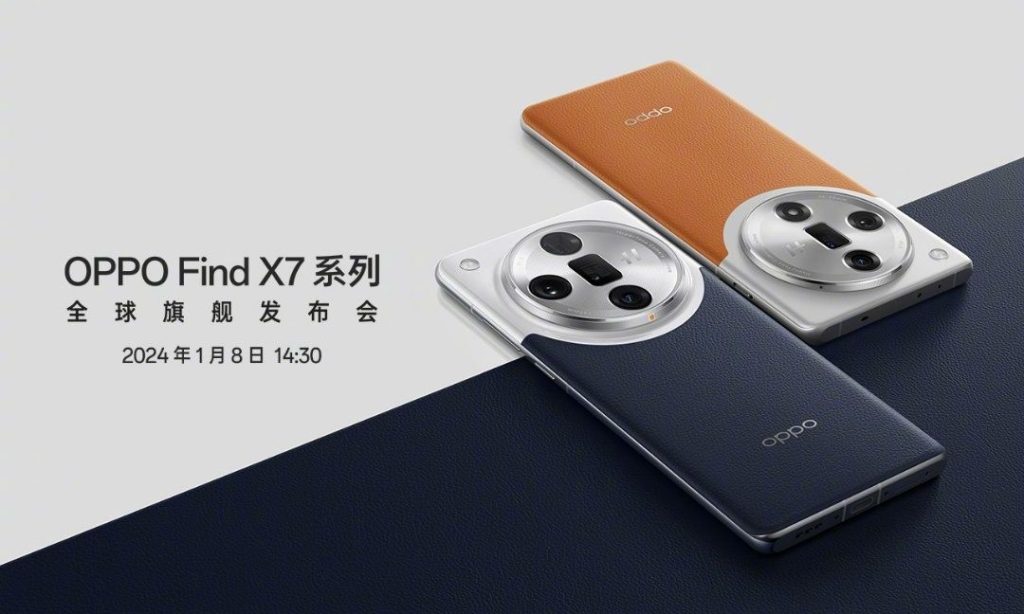
Oppo has officially confirmed that it will unveil the Find X7 series of smartphones at 2:30 pm (local time) on Jan. 8, 2024, in China. In addition, the Find X7 and Find X7 Ultra smartphones are now listed on Oppo China’s online store for reservations. The official listings have confirmed the configurations and color options of both smartphones well ahead of the official announcement.
Oppo Find X7 series launch date
Oppo Find X7
Reports have revealed that the Find X7 will come equipped with the Dimensity 9300 chipset. The official listing reveals that it will come in four configurations, such as 12 GB RAM + 256 GB storage, 16 GB RAM + 256 GB storage, 16 GB RAM + 512 GB storage, and 16 GB RAM + 1 TB storage.
The Find X7 will be available in four shades, such as Starry Sky Black, Sea and Sky, Desert Moon Silver, and Smokey Purple.
Oppo Find X7 Ultra
The Find X7 Ultra is expected to come equipped with the Snapdragon 8 Gen 3 SoC. It will be available in three variants, such as 12 GB RAM + 256 GB storage, 16 GB RAM + 256 GB storage, and 16 GB RAM + 512 GB storage.
Find X7 Ultra: Pine Shadow InkFind X7 Ultra: Sea and SkyFind X7 Ultra: Desert Moon Silver.
When it comes to color options, the Find X7 Ultra will come in choices such as Pine Shadow Ink, Sea and Sky, and Desert Moon Silver.
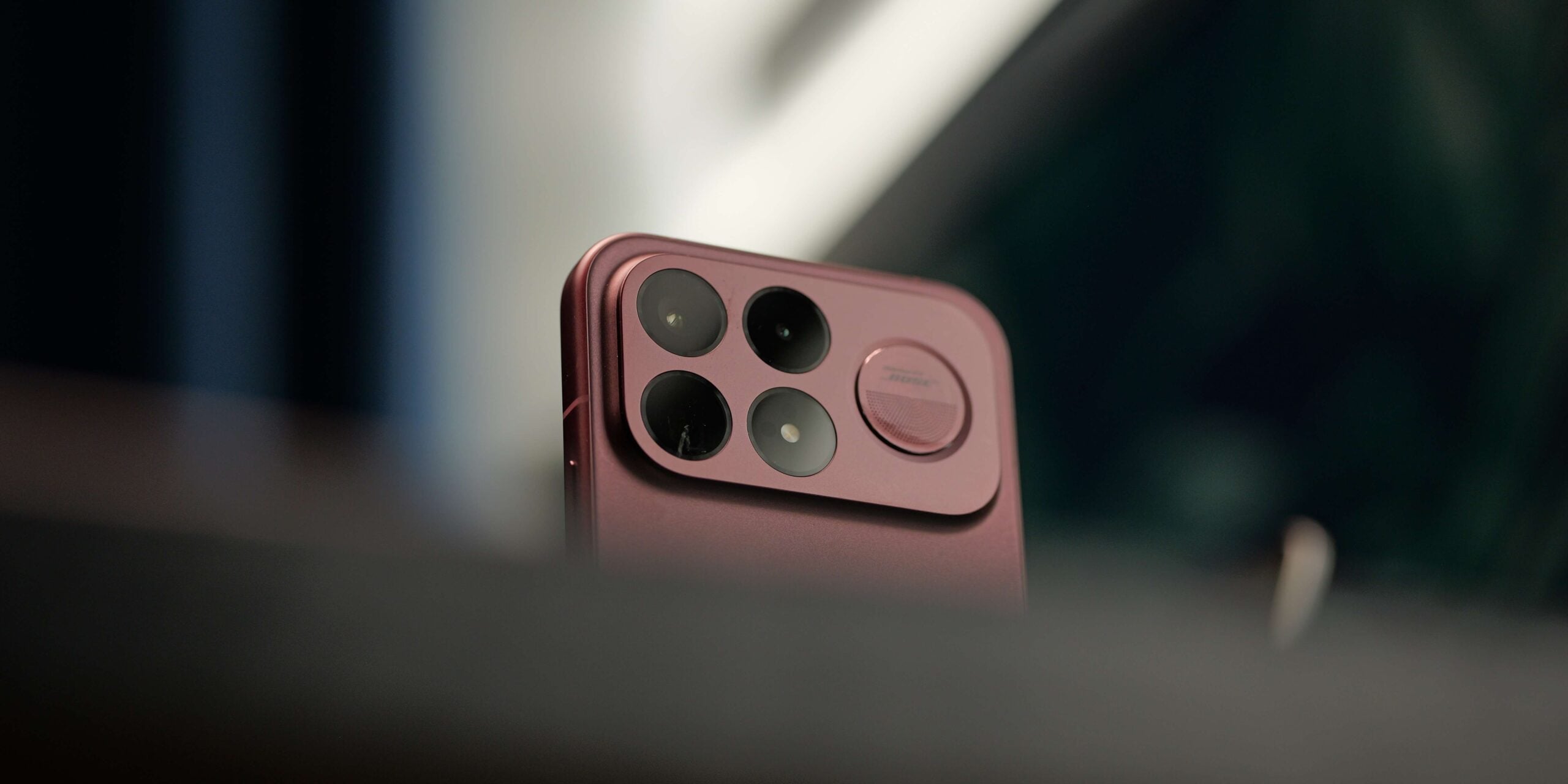
The Find X7 and Find X7 Ultra have a similar design, with the front featuring a punch-hole display with curved edges and a dual-tone back panel with a massive camera module. The Find X7 has a triple-camera unit, whereas the Find X7 Ultra has a quad-camera system. The Ultra variant will be the world’s first smartphone to feature dual periscope telephoto cameras. In addition, it will also be the first-ever phone to feature the one-inch Sony LYT-900 50-megapixel camera sensor as the primary snapper.
It is said that there will be a third device called the Oppo Find X7 Ultra Satellite Communication Version, which will come with support for two-way satellite communication. The rest of its specs will be identical to the Find X7 Ultra.
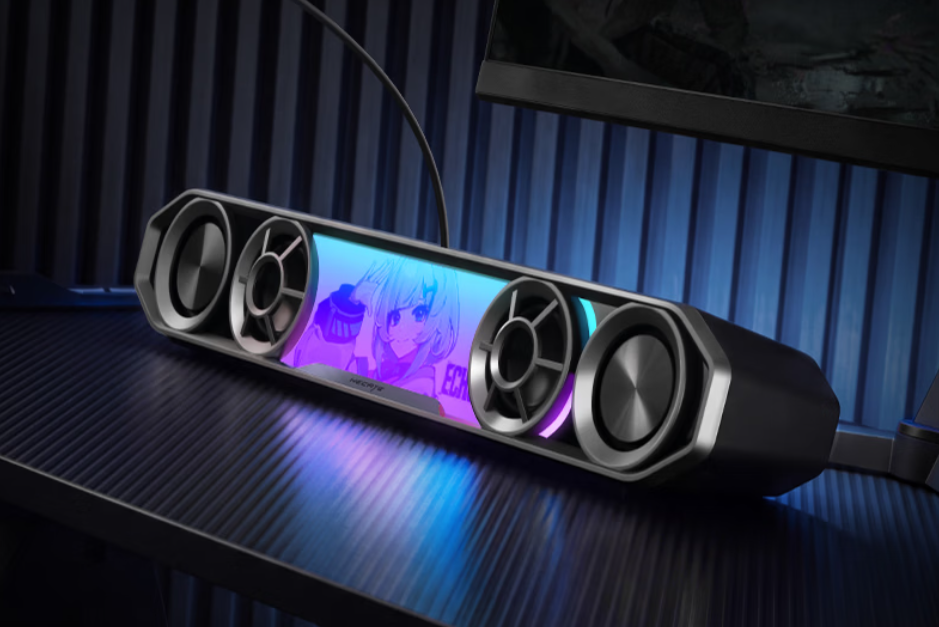
Edifier has expanded its gaming audio lineup with the new Hecate G2000 Bar desktop soundbar. The company has listed the soundbar on JD.com in China, with sales set to begin on October 16. It carries a regular price of 387 yuan ($58), while the introductory price is set at 349 yuan ($52).
Edifier G2000 Bar Specifications
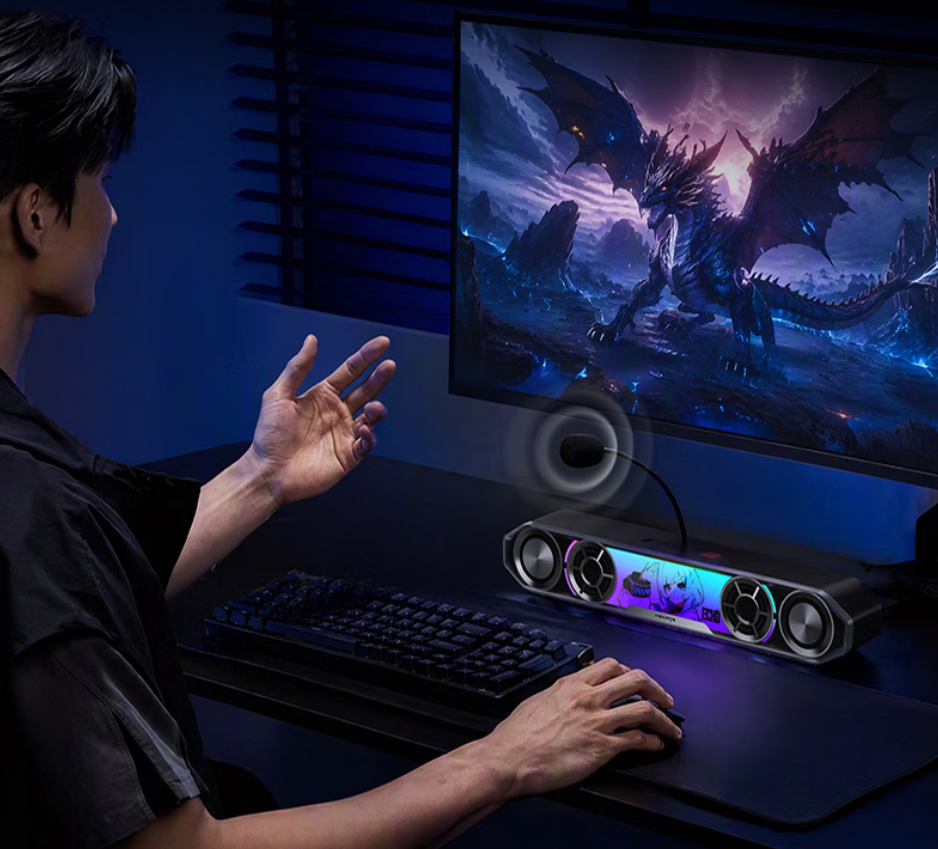
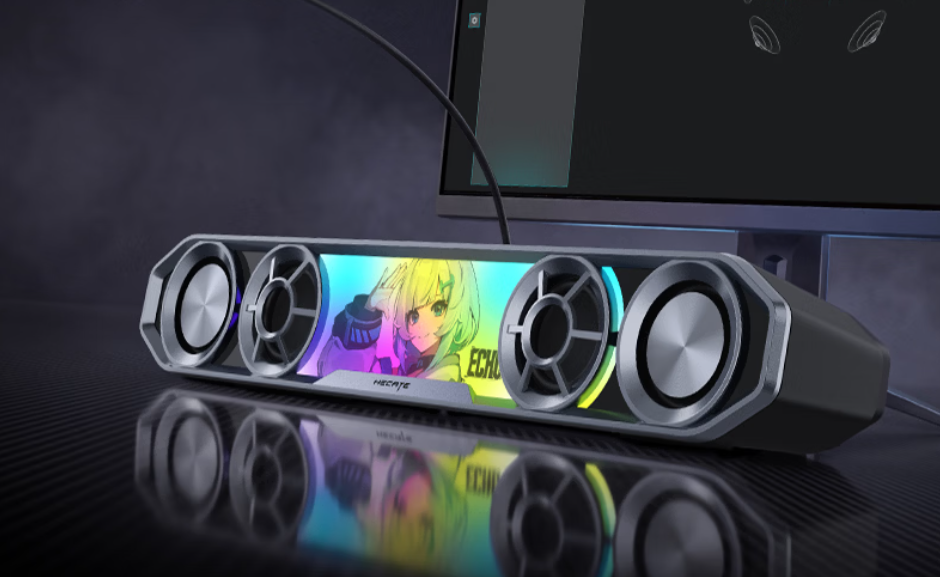
The G2000 Bar features a compact soundbar design that fits neatly beneath a monitor. It comes with a built-in 5-degree upward tilt to direct sound toward the listener while reducing reflections from the desk surface. The soundbar is available in black and white color options and sports an angular, mecha-inspired design.
It also includes five interchangeable themed stickers for customizing the front panel. Additionally, the soundbar features 12 RGB lighting effects, which can be customized through the Edifier Connect mobile app or Hecate PC software.
Internally, the soundbar uses a four-driver acoustic configuration. This consists of two 56mm full-range drivers equipped with lightweight copper-clad aluminum wire (CCAW) voice coils, paired with two 60mm passive radiators to handle lower frequencies. The system has a rated output of 3W per channel (6W total) and a peak output of 12W. Its frequency response ranges from 67Hz to 20kHz.
On the software side, the G2000 Bar supports THX 7.1.4 spatial audio, which processes the output to simulate a surround sound environment. Edifier includes six specific gaming audio presets tailored for genres like first-person shooters, RPGs, and racing games.
The speaker also comes with a detachable microphone that features AEC 2.0 acoustic echo cancellation technology and a dedicated DSP chip. It also supports AI-powered noise reduction to minimize background noise and prevent audio feedback from the soundbar. This allows users to communicate with teammates during gaming sessions without wearing a headset.
For connectivity, the device supports USB sound card input and Bluetooth 6.0, allowing it to connect to PCs, laptops, mobile devices, and consoles. It is powered by an independent 9V DC power adapter to maintain consistent audio output, and the top metallic panel features physical controls for volume adjustment, microphone muting, and mode switching.
In related news, Portronics has recently launched AuraTrio modular Bluetooth speaker with two detachable satellites and Auracast support, while Edifier has launched M230 II retro speaker with 26W RMS output, Bluetooth 6.0, and 30-hour battery life.
For more daily updates, please visit our News Section.
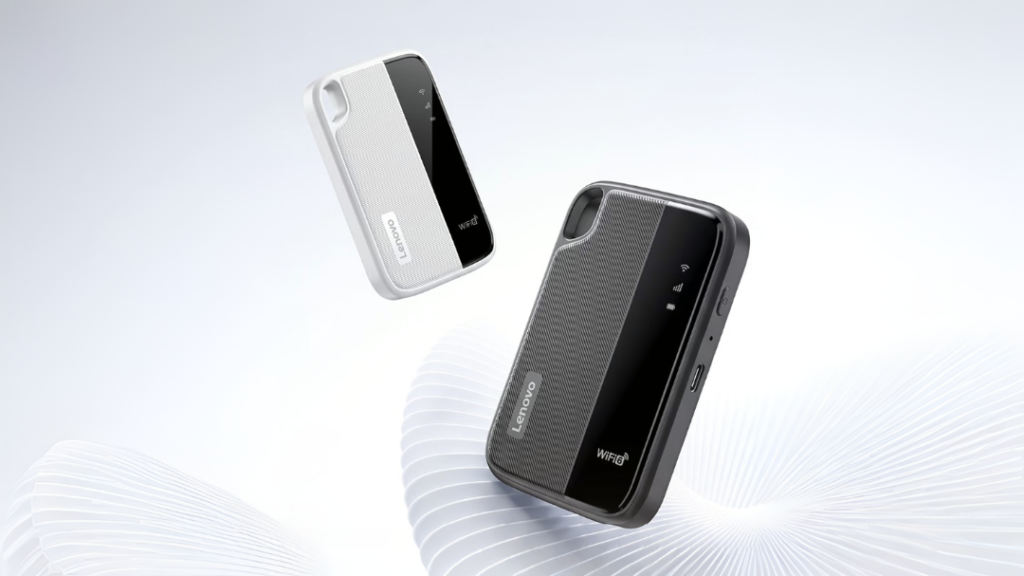
Lenovo has launched a new affordable portable Wi-Fi hotspot in China. The device, called the Lenovo Portable Wi-Fi 6+ (model L016), is now listed on JD.com for just 59 yuan ($9).
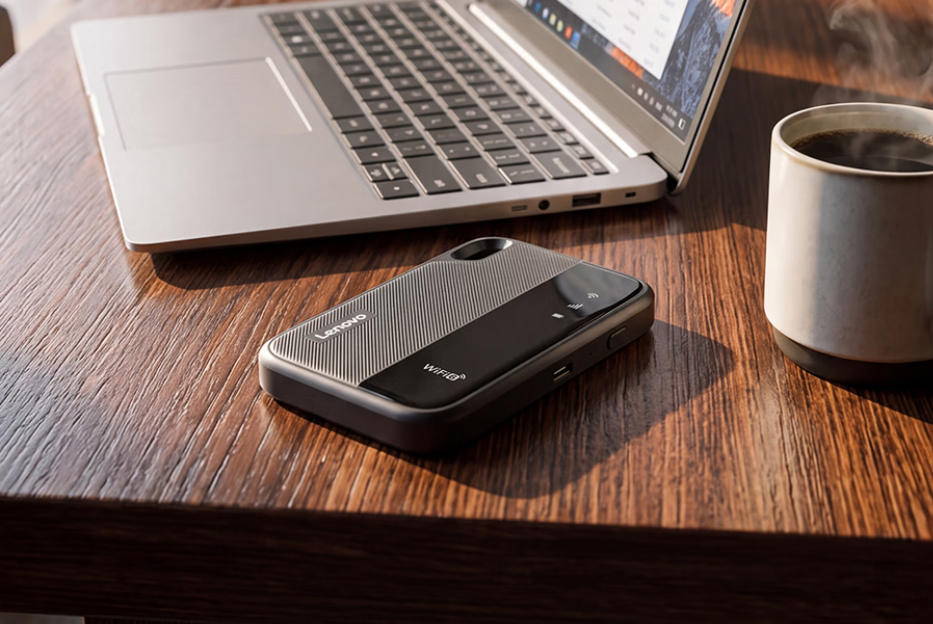
The hardware is designed for basic portability. It measures 105.1 x 70.1 x 14.1mm and weighs 90 grams. Lenovo offers the device in standard black and white finishes. The plastic casing includes a lanyard hole for attaching it to a bag or wrist, alongside a USB-C port on the side for power.
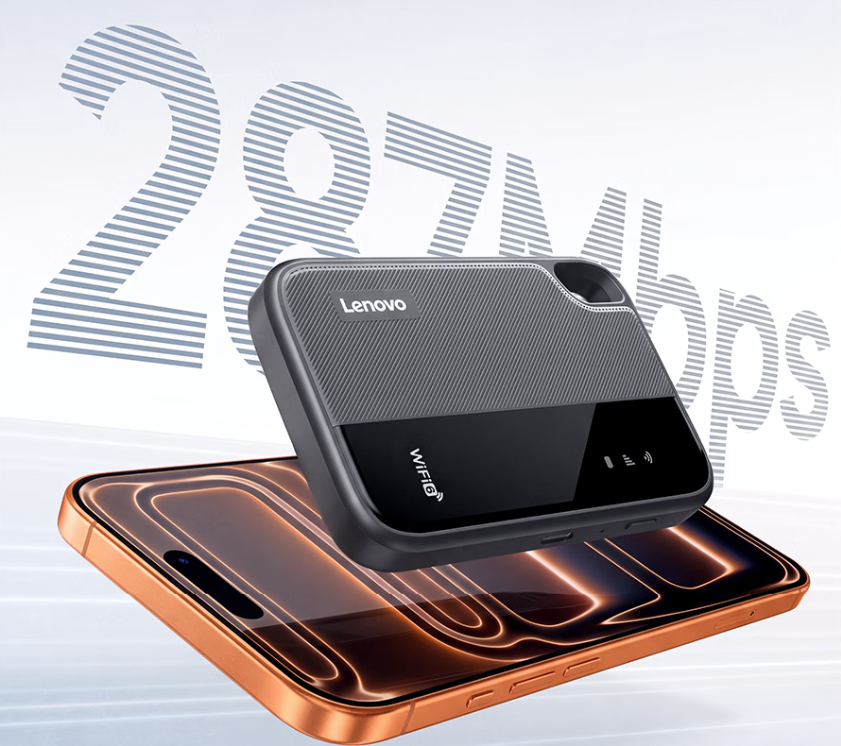
Internally, the hotspot uses an ASR communication chipset and supports Wi-Fi 6 connectivity. Lenovo lists the theoretical maximum transmission speed at 287Mbps.
As with all cellular hotspots, actual speeds will depend entirely on local network conditions, environmental factors, and the hardware you are connecting to it. The L016 can support up to 10 simultaneous connections, making it capable of handling a standard mix of phones, tablets, and laptops without requiring a fixed broadband line.
In terms of battery life, the device packs a 3,000mAh battery that Lenovo claims can deliver up to 12 hours of standby time. It also features an intelligent power management chip that monitors temperature and usage conditions to optimize power consumption and improve battery efficiency.
Where to buyLenovo Wi-Fi hotspotsBrowse the range on AmazonShop now →
The hotspot features a USB-C charging port and supports charging while in use, allowing users to stay connected even when the device is plugged into a wall charger or power bank. Lenovo also claims the battery meets safety requirements for carrying on airplanes and high-speed trains.
The device also comes with 1,500GB of complimentary trial data. However, its connectivity is limited to supported regions within mainland China, and it cannot be used overseas.
In related news, Lenovo has recently launched the ThinkBook 14x with a 990g aluminum body and Intel Lunar Lake processors, alongside the Lecoo N27 Pro AIO featuring a 2.5K 100Hz display, Intel Core i5-13420H processor, and 16GB RAM.
For more daily updates, please visit our News Section.
September ended with several flagship launches across Android and iOS, while the first week of October has been relatively quiet. The break may not last long, as the rest of the month looks just as busy as September.
Tipster Panda Is Bald has shared a list of phones and tablets expected to launch in October, including devices from iQOO, OnePlus, Honor, Xiaomi, and RedMagic. Some already have confirmed launch dates or official teasers, while others remain rumors.
Confirmed launch dates
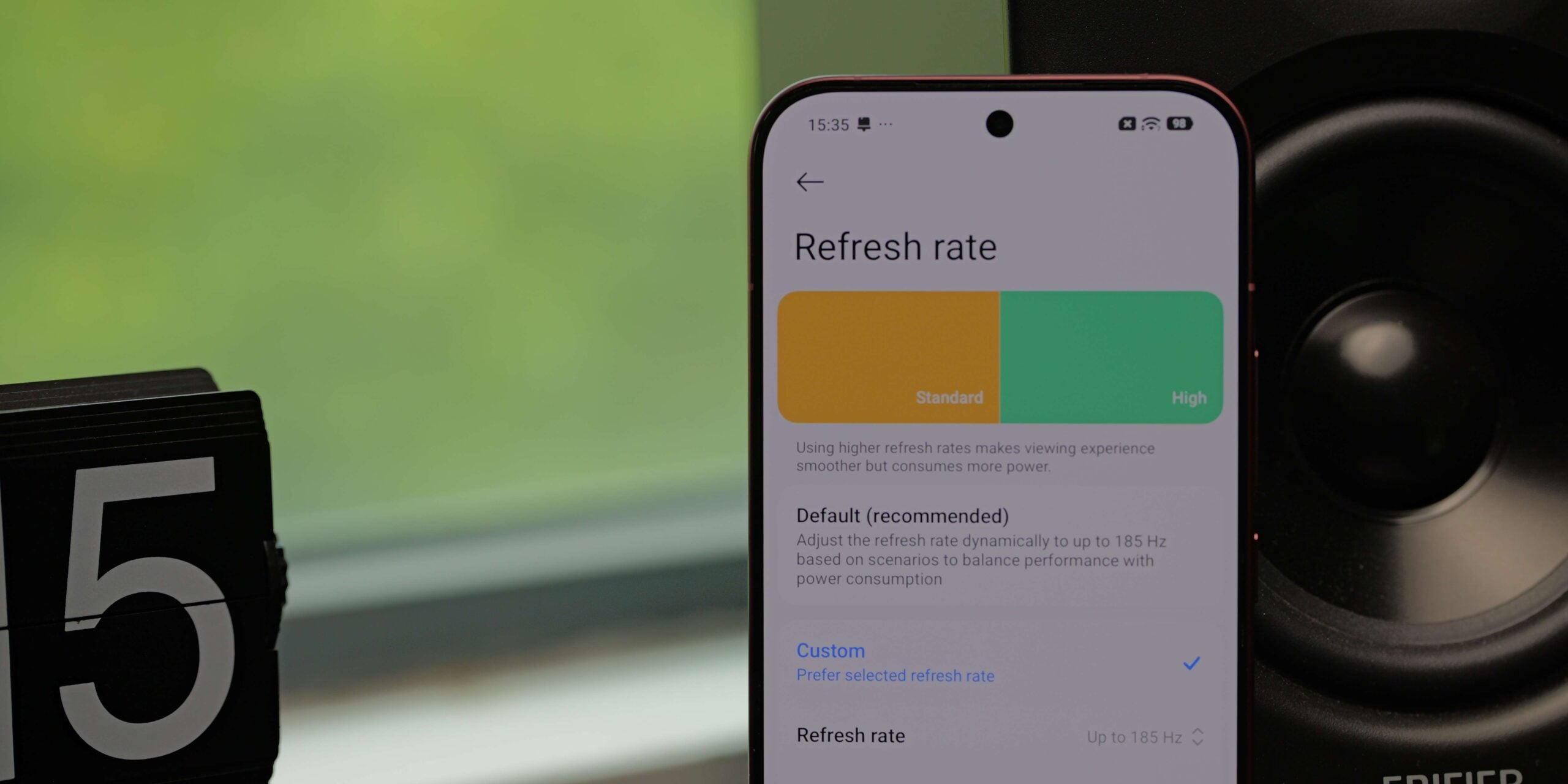
The OnePlus 16 is set to launch in China on October 12, just two days from now. OnePlus has been teasing the phone ahead of the launch, with a recent post revealing several key specifications. These include a Snapdragon 8 Elite Gen 6-series chip, a 200MP main camera, a display with a refresh rate of up to 185Hz, and a 9,000mAh battery.
OnePlus hasn’t confirmed the phone’s availability outside China. The company has reportedly pulled back from new phone launches in the US and Europe, while an India launch remains unconfirmed.
OnePlus 16
The RedMagic 12 Pro+ will follow on October 15. RedMagic has confirmed a Snapdragon 8 Elite Extreme Gen 6 chip, a thinner and lighter body, bezels measuring under 1mm, and an under-display front camera. The company hasn’t announced its global launch plans yet.
Honor has teased the Honor Win Tablet, confirming a Snapdragon 8 Elite Gen 5 chip and an OLED display. Its latest teaser hints at a refresh rate above 200Hz, while tipster Digital Chat Station claims the tablet has an 8.4-inch panel with a 240Hz refresh rate. Honor hasn’t announced a launch date, but the tablet is expected to arrive alongside the Honor Win 2 series.
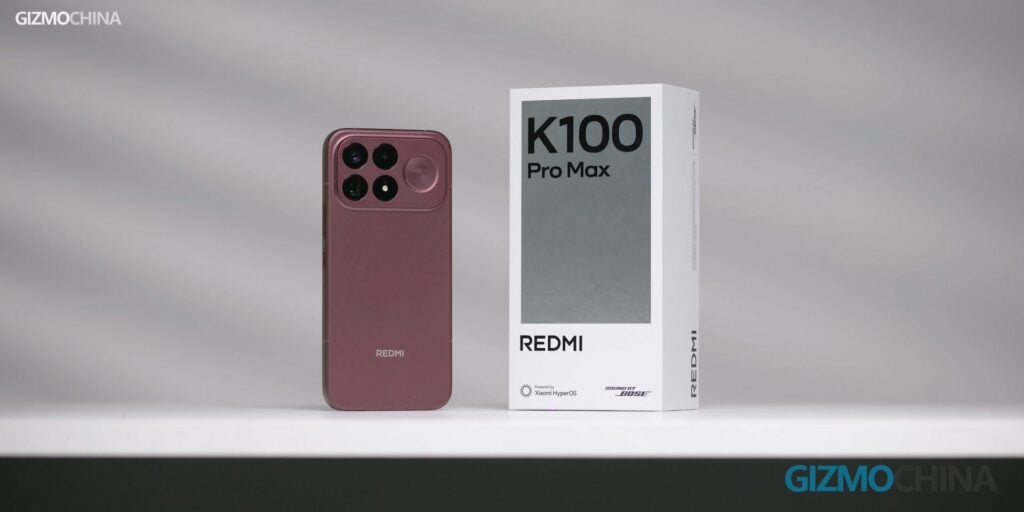
Xiaomi could also introduce the standard Redmi K100 this month. The company already launched the Redmi K100 Pro and K100 Pro Max on August 11. Xiaomi President Lu Weibing has confirmed that the standard K100 is coming later and hasn’t been cancelled. However, the October launch window comes from tipsters, and there’s no official date yet.
Redmi K100 Pro Max
iQOO has started teasing the iQOO Neo 12, confirming several of its key specifications. The phone has a 2K display with a 185Hz refresh rate, using Visionox’s fourth-generation pTSF material. It also packs a Snapdragon 8 Elite Gen 5 chip, an iQOO Q3 gaming chip, and a 9,000mAh battery. A built-in fan and the new Ice Dome cooling system handle heat during demanding tasks.
The iQOO Pad Pro has also been officially teased. The compact gaming tablet features an 8.8-inch display and weighs 298 grams. Like the Neo 12, it uses the Snapdragon 8 Elite Gen 5 and Q3 gaming chip combination. It also has an active cooling fan, while its 3C certification listing points to 66W charging.
Other rumored launches
The Honor Win 2 and Win 2 RT have cleared 3C certification in China, with listings indicating 100W and 90W wired charging, respectively. An October launch is rumored, but Honor hasn’t confirmed the timing. Earlier reports have pointed to a Snapdragon 8 Elite Gen 6 chip, a battery with a capacity exceeding 10,000mAh, and a possible third model in the lineup.
The OnePlus Ace 7 series is another possible October launch. According to leaks, the lineup could include a standard Ace 7 and a higher-end model, both expected to use a Snapdragon 8 Elite Gen 5-class chip and a battery of around 9,000mAh. The phones are rumored to arrive around the same time as the OnePlus 16, with the Ace 7 potentially launching in India as the OnePlus 16R.
Finally, the Honor X10 Mini appears on the list, but there’s little to support its inclusion so far. No official teaser, certification, or detailed leak has surfaced under that name, making it the least substantiated entry among the rumored October launches.
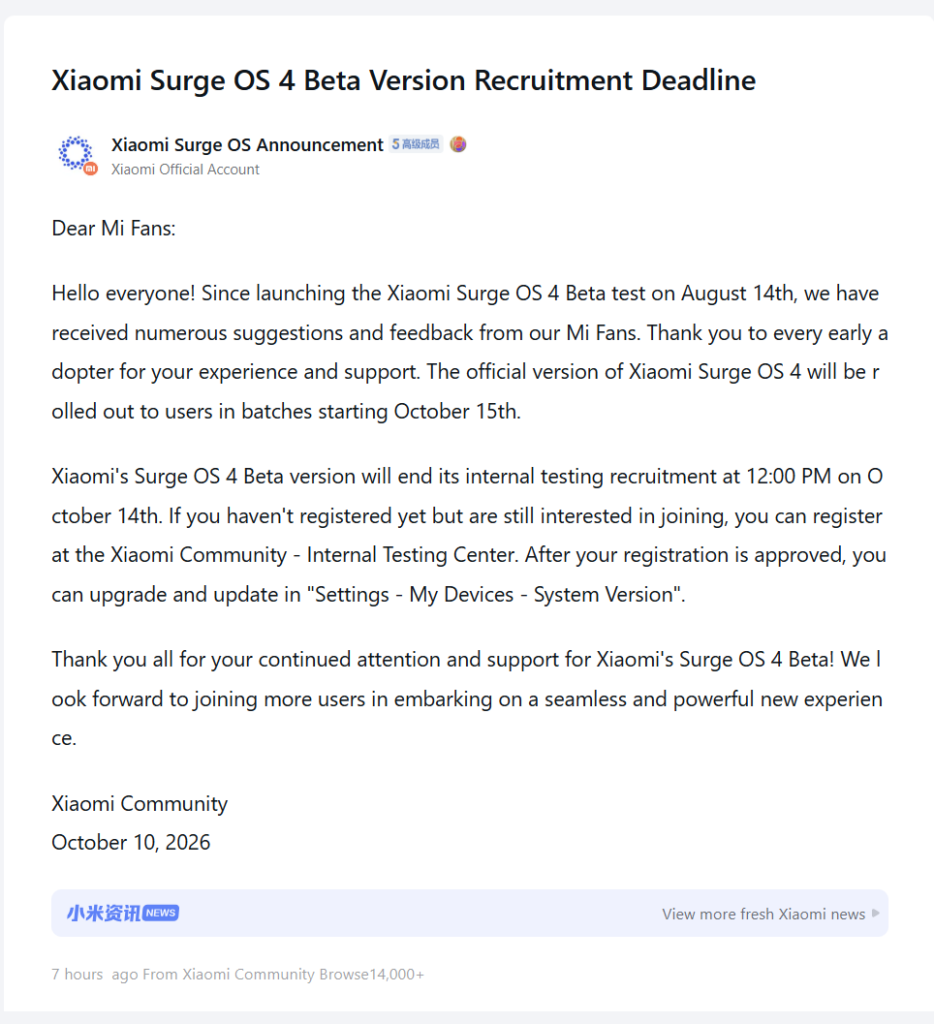
Xiaomi has published a post on the community website confirming that the stable rollout begins next week in China. It says the internal testing recruitment will end on October 14th, and the very next day, stable builds will start rolling out in batches.
Starting October 15, the first phase of HyperOS 4 rollout will hit devices in China, targeting flagship lineups like the Xiaomi 17, Redmi K90, and Xiaomi Pad 8 series.
First phase of HyperOS 4 rollout includes these devices:
According to the official timeline published recently, these devices should receive the HyperOS 4 update before month’s end, as the second batch rollout is scheduled to begin later this month.
Xiaomi has already published the complete rollout schedule for China. For global users, the company is running the beta program for several devices. However, there’s no official announcement on when the stable rollout will take place.
Given Xiaomi’s typical launch cadence, a global schedule should drop soon. The actual rollout is likely to begin in late October.
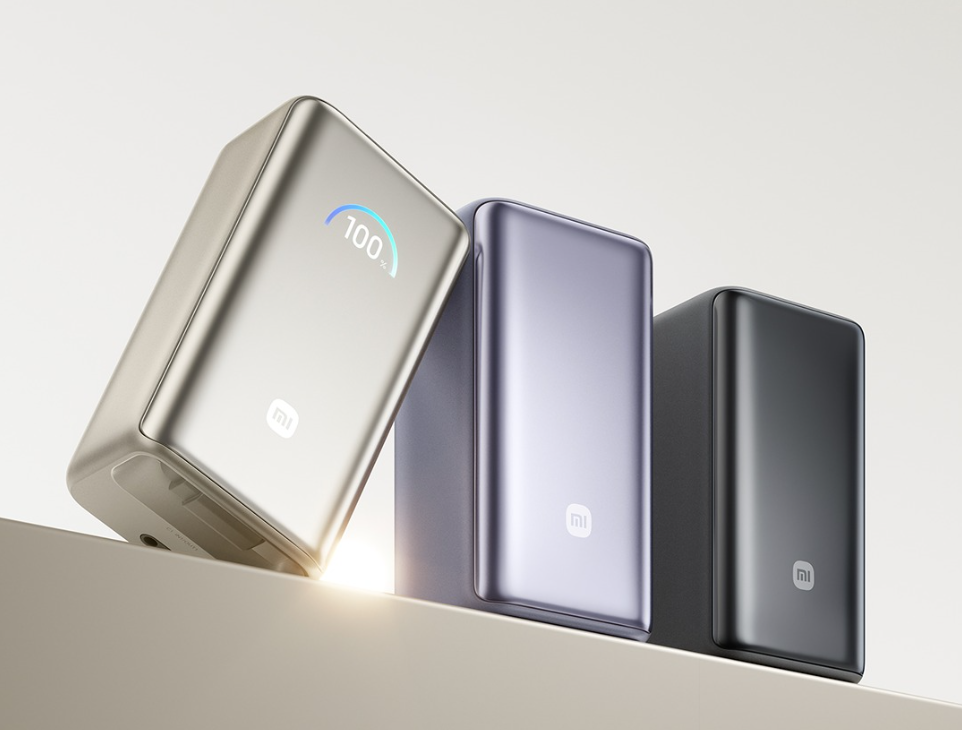
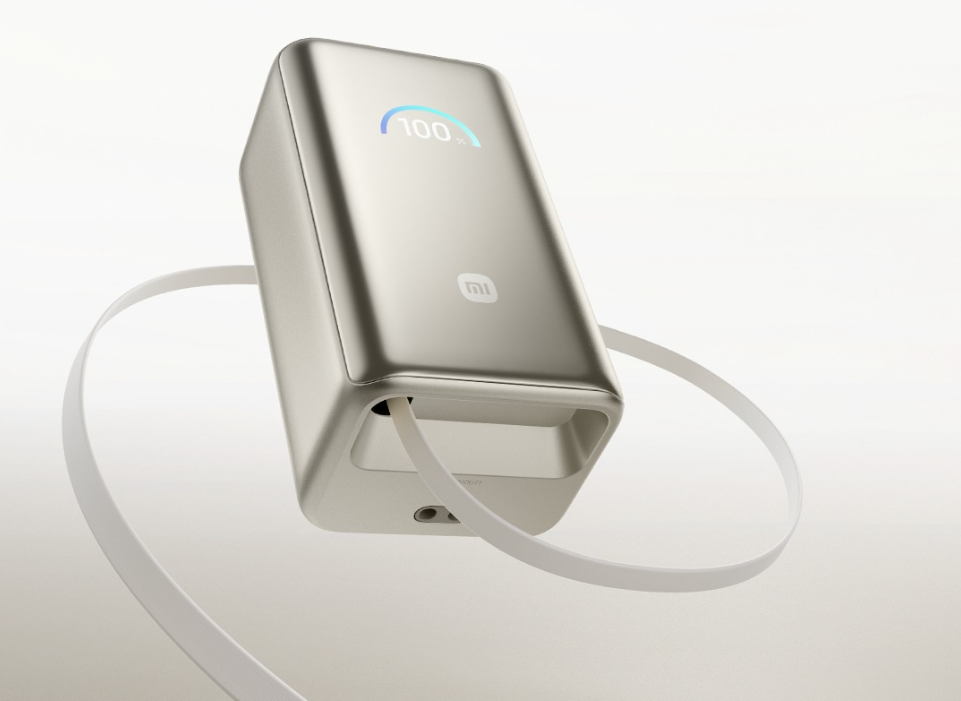
Xiaomi has listed a new 10,000mAh power bank on its Youpin platform in China. It is priced at 299 yuan (about $45) and features a built-in retractable USB-C cable, eliminating the need to carry a separate charging cable.
Xiaomi NPB1055R Power Bank Specifications
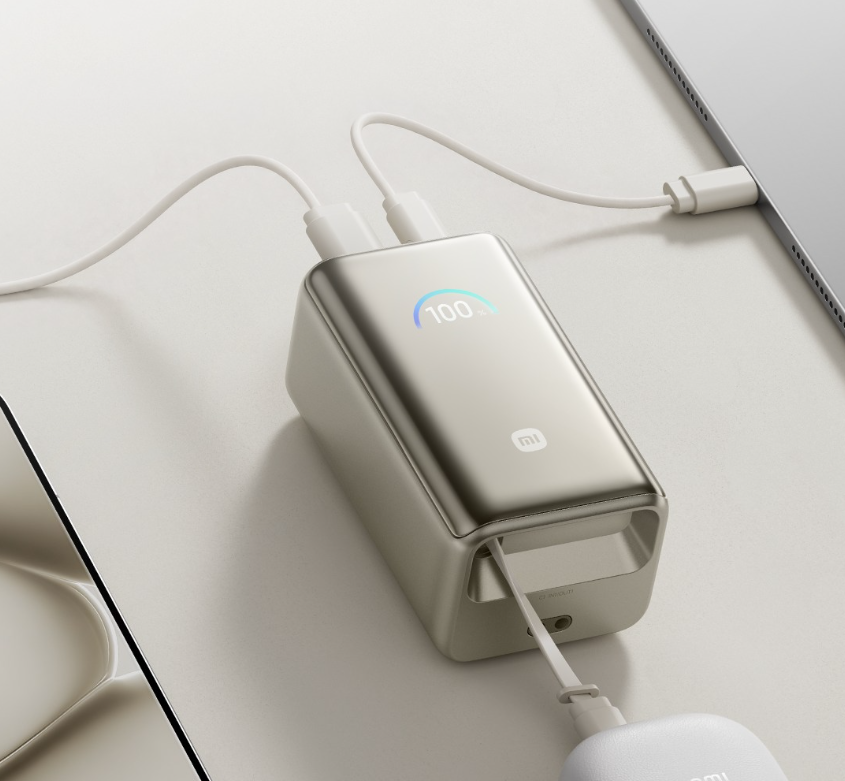
The power bank carries the model number NPB1055R and features a rounded design. It measures 90 x 50 x 41mm and weighs 260 grams. It comes with a built-in 70cm retractable USB-C cable at the top. The cable can be pulled out to the desired length and retracted with another pull, making it easy to store when not in use.
Inside, it houses a 10,000mAh lithium-ion battery with a 38.32Wh capacity. You get three charging outputs in total: the built-in USB-C cable, a second USB-C port on the bottom, and a standard USB-A port. Both USB-C options support up to 55W fast charging and work with common protocols like PPS and AVS.
The USB-A port tops out at 22.5W. You can plug in three devices at once, but as is typical with power banks in this class, the total combined output drops to 15W when multiple ports are in use. When it’s time to recharge the battery pack itself, either USB-C connection can take up to a 45W input.
According to Xiaomi, the power bank can charge the Xiaomi 17 Pro to 67% and the iPhone 17 Pro to 64% in just 30 minutes using its 55W output. Its 10,000mAh battery can deliver approximately one full charge to the Xiaomi 17 Pro or 1.3 charges to the iPhone 17 Pro. For tablets, it can charge the 11-inch iPad Air M3 to 33% in 30 minutes.
There is also a color digital display hidden under the front panel. It shows the exact remaining battery percentage, current charging wattage, operating temperature, and overall battery health, including cycle counts.
On the safety side, the device complies with China’s GB 47372-2026 standards. Xiaomi says the battery cells have passed physical tests for nail penetration, 14kN of compression force, and exposure to 135°C heat for an hour. It also includes standard protections against overvoltage, short circuits, and overheating.
The power bank is available in Deep Titanium, Titanium Gold, and Iris Purple colorways. Xiaomi hasn’t announced any plans for an international release yet.
In related news, Xiaomi launches Smart Door Lock 5C (Cat Eye Edition) with a 160° ultra-wide camera, 3.5-inch screen, and 11 unlocking methods, alongside a new desktop lamp with backlight and 1,650lx illumination.
For more daily updates, please visit our News Section.
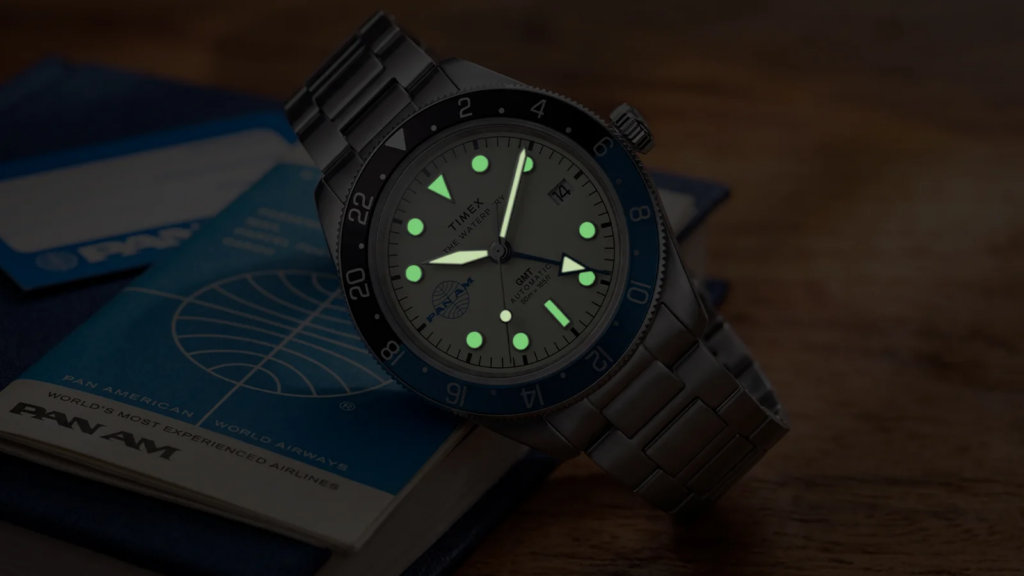
Timex has launched the Pan Am x Timex Waterbury Automatic GMT in the US. It is priced at $669 and is now available for purchase through the company’s official website. The mechanical watch features dual-time functionality and incorporates branding inspired by the former American airline Pan Am.
The watch features a 41.5mm brushed stainless steel case with a 48mm lug-to-lug distance and a height of 13.5mm. It weighs 160.21 grams. The dial is silver-white, equipped with luminous hands and markers for visibility in low light, and includes a standard date window at the three o’clock position.
Timex has equipped the watch with a double-domed K1 mineral glass crystal featuring an anti-reflective coating. While K1 mineral glass offers better scratch resistance than standard mineral glass, at this price, we normally see sapphire glass, which provides significantly better protection against scratches.
Inside, the watch runs on a Seiko NH34 automatic movement. This is a widely used Japanese caliber in the entry-level GMT market. It operates with 24 jewels, offers an approximate 41-hour power reserve, and supports hacking seconds, which stops the second hand while setting the time for better precision. Timex lists the movement’s accuracy at -35 to +45 seconds per day. The mechanics are visible through an exhibition caseback.
Where to buyTimex Pan Am Waterbury Automatic GMTLatest price on AmazonCheck price →
The watch features a dedicated white-and-blue triangular GMT hand and a two-tone blue-and-black rotating bezel, allowing users to track a second time zone.
The 20mm stainless steel bracelet includes quick-release spring bars and a butterfly deployant clasp. Timex also included self-adjustable links, allowing users to resize the bracelet without needing specialized tools.
The watch offers 50 meters of water resistance, making it suitable for everyday exposure to water, including rain and light swimming, but not for diving or high-pressure water activities.
ColorOS 17 is set for a global launch next week. Ahead of that, Oppo has announced the ColorOS 17 Open Beta programme for some of its devices. Since the same software will also be rolled out to OnePlus and Realme devices, the beta programme also includes devices from these two brands.
Oppo launches ColorOS 17 Open Beta for eight phones
Oppo has launched the ColorOS 17 Open Beta program for eight of its high-end smartphones from the Find X9 series, Find X8 series, and the Reno 15 series.
Oppo Find X9 Ultra
Oppo Find X9 Pro
Oppo Find X9
Oppo Find X9s
Oppo Find X8 Pro
Oppo Find X8
Oppo Reno 15 Pro
Oppo Reno 15 Pro Mini
ColorOS 17 Open Beta for the aforementioned devices is available in India, Indonesia, and Malaysia, except for Oppo Reno 15 Pro and Reno 15 Pro Mini, which are getting the beta in India and Malaysia.
Open beta builds are generally close to stable builds, and usually do not have critical issues. However, you may still encounter some issues.
If you’re willing to test ColorOS 17 Open Beta, go to Settings > About device > Tap the top of the page > Click the top right button > Beta Program. Then fill in the required details and tap Apply Now. Make sure your device is updated to the latest available software version.
Once your application gets approved, you will be able to upgrade to ColorOS 17 beta via an OTA update. Keep in mind that the applications are open until October 12, and while Oppo hasn’t mentioned if there are limited seats, it’s best to be early.
OnePlus launches ColorOS 17 Open Beta for five phones
OnePlus has also announced the ColorOS 17 Open Beta launch for select high-end phones through a series of posts on the community forum. For now, only Indian users can apply for the Open Beta program and get early access.
OnePlus 15
OnePlus 15R
OnePlus 13
OnePlus 13R
OnePlus 13s
OnePlus warns that some of the features may not be fully available or functional in this beta version and will be introduced in subsequent updates. You may also encounter some issues.
Before applying for the ColorOS 17 Open Beta program, ensure that you’ve already updated the device to the latest available build. Then, go to Settings > About device > tap the three dots icon in the top-right corner > Beta program. Follow on-screen instructions to submit your application.
The applications are already live and will be available until October 12. Once your application gets approved, go to Settings > About device and tap Download now to get the update.
Realme launches ColorOS 17 Open Beta for four phones
Realme users can now participate in the ColorOS 17 Open Beta program and get an early taste of the latest software. The applications are live for the last two generations of the GT flagship series, which includes:
Realme GT 8 Pro / GT 8 Pro Dream Edition
Realme GT 7 Pro
Realme GT 7T
Realme GT 7 / GT 7 Dream Edition
Currently, only Indian users can sign up for the Open Beta and get early access. The applications will be live until October 12.
Before you sign up, ensure that your phone has no pending updates. Then, go to Settings > About Device > tap Up to date > tap icon at top right corner > select Beta Program and follow on-screen instructions to submit your application.
Once approved, you’ll receive ColorOS 17 beta via an OTA update. You can go to Settings > About Device and tap Download now to get the update.
If your Oppo, OnePlus, or Realme phone isn’t getting ColorOS 17 Open Beta, the wait will be a little longer before you get to experience the latest features. The ColorOS 17 global launch is scheduled for October 13. That’s when we should know more about the rollout timeline.
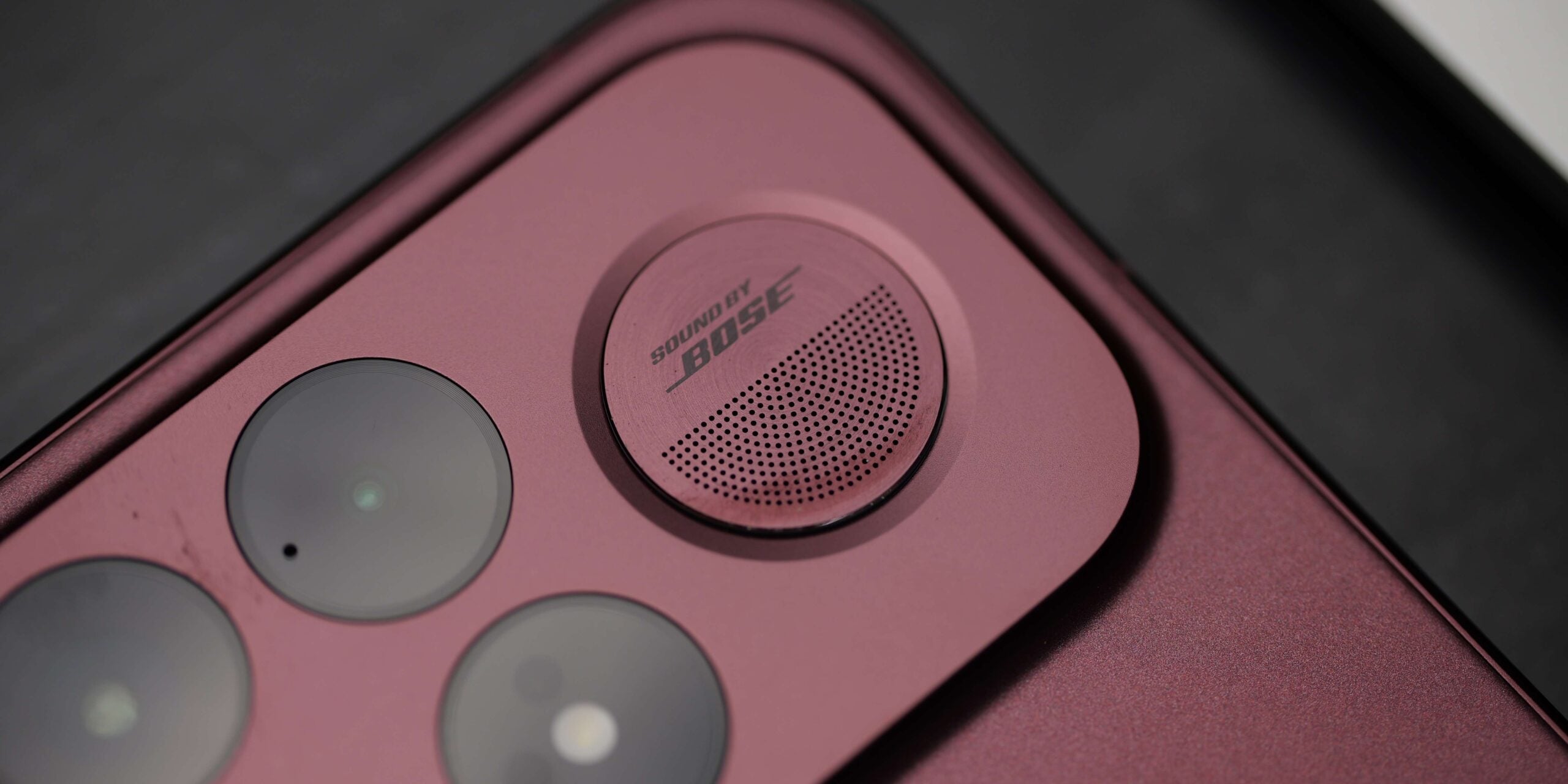
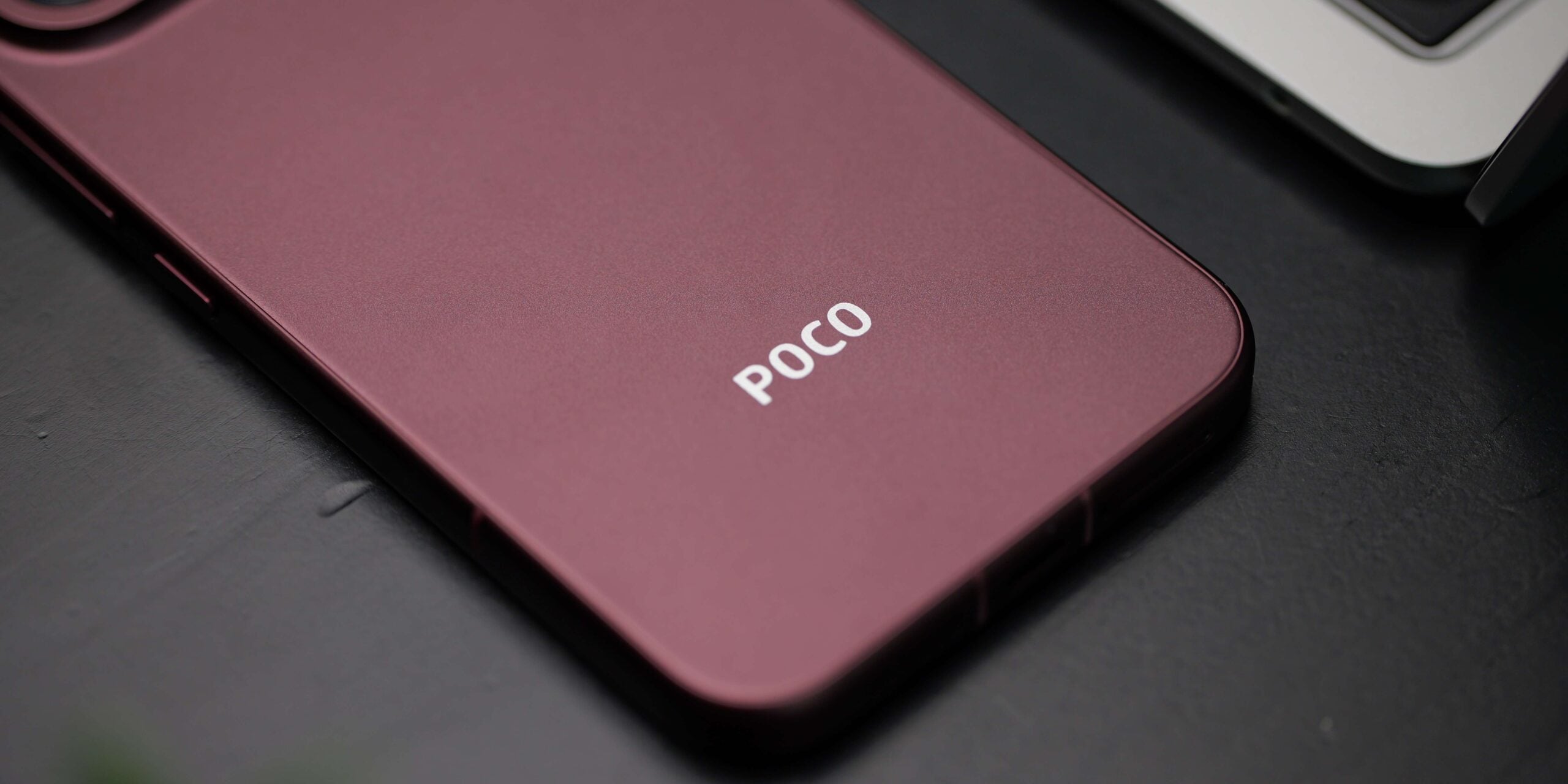
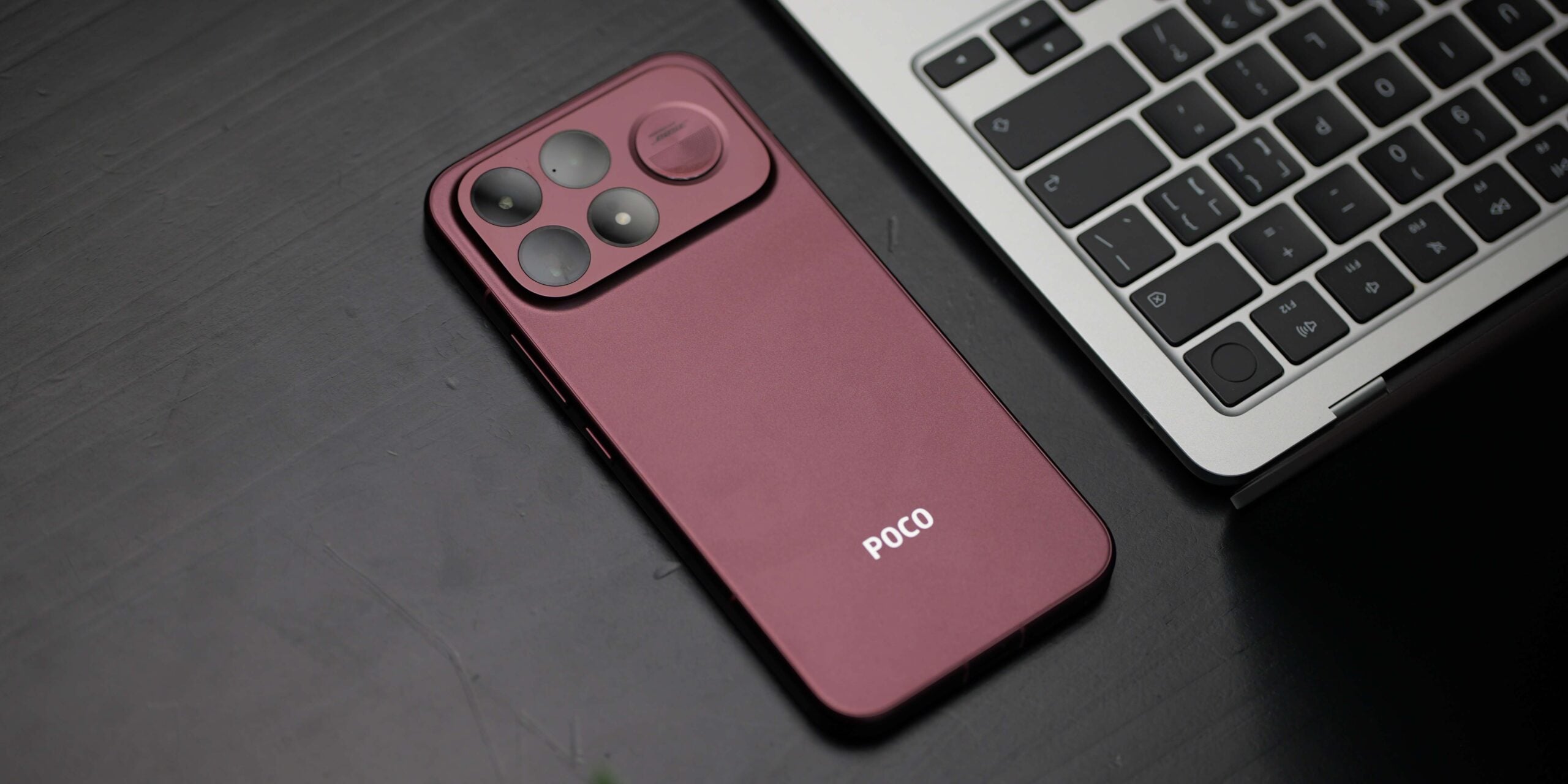
Among the POCO F series, the POCO F9 Ultra is likely the model with the most “powerful” specs and the most well-rounded performance. It’s even pushing the boundaries of what a “flagship killer” phone can be. Snapdragon 8 Elite Gen 5, a 6.9-inch 185Hz AMOLED display, an 8050mAh battery, a 200MP main camera, a 5x periscope telephoto camera, and even a Bose-tuned 2.1-channel speaker system. On paper, this looks almost like a performance enthusiast’s wish list turned into a smartphone. But the POCO F9 Ultra isn’t necessarily an upgrade in every possible way. Compare it directly with the POCO F8 Ultra, and things become much more interesting. Some upgrades are substantial, but are there any details beneath the surface that are worth noting?
So rather than asking how impressive the POCO F9 Ultra specs are, there’s a much more important question: Do those bigger numbers actually make it a better phone?
Snapdragon 8 Elite Gen 5: Flagship Performance With a Catch
Performance is probably the least controversial part of the POCO F9 Ultra. It’s powered by Qualcomm’s Snapdragon 8 Elite Gen 5, so everyday performance isn’t really the question here. What matters more is sustained gaming performance, power consumption, and thermal management. POCO also pairs the chipset with its VisionBoost D8 chip, which handles features including AI Super Resolution and intelligent frame interpolation. And that’s where the headline 185FPS gaming claim comes from.
But there’s an important distinction to make. 185FPS doesn’t mean the Snapdragon GPU is natively rendering every supported game at 185 frames per second. Instead, frame interpolation generates additional frames between the frames rendered by the game. Combined with the phone’s 185Hz display, this can produce much smoother perceived motion without requiring the GPU to natively render 185 complete frames every second. That’s still useful, especially in fast-paced games. But image artifacts, latency, game compatibility, and sustained performance matter much more than the 185FPS number itself.
The POCO F9 Ultra clearly has the hardware for serious gaming. The more interesting question is how well it can maintain that performance after 20 or 30 minutes under load.
185Hz AMOLED Display: Fast Is Only Half the Story
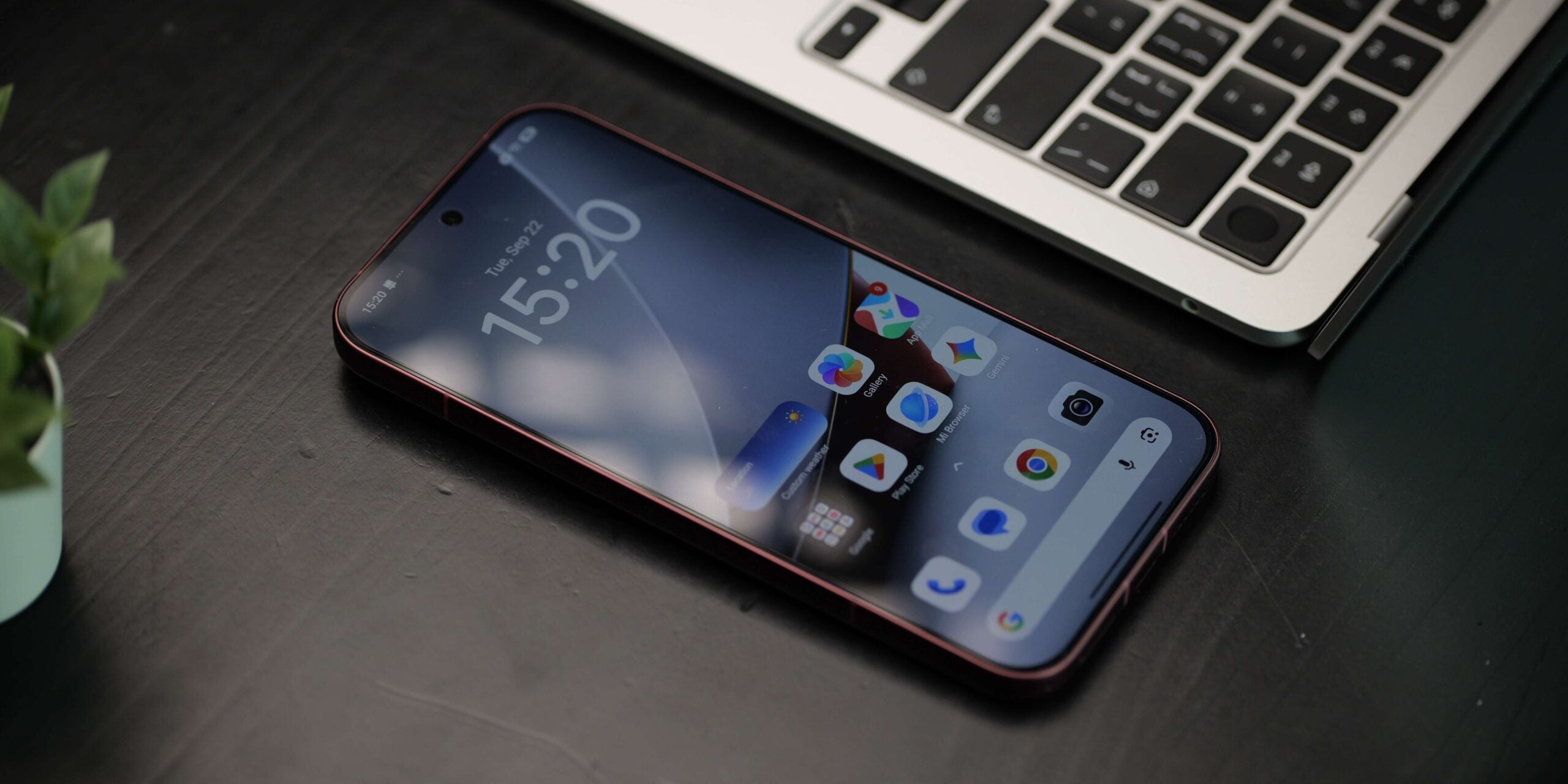
The display is another area where POCO has pushed the numbers extremely hard. You get a large 6.9-inch HyperRGB AMOLED panel with a refresh rate of up to 185Hz, new M11 display technology, and a claimed peak brightness of 4,500 nits.
185Hz on a smartphone is excessive in the best possible way. But just like 185FPS gaming, it needs some context. Not every app or game will actually run at 185Hz. It’s the maximum refresh rate supported by the panel, while real-world refresh behavior depends on software and individual applications.
The same applies to that 4,500-nit brightness figure.
Peak brightness is achieved under specific conditions and shouldn’t be confused with sustained full-screen brightness during normal use. I’m actually more interested in image quality. The POCO F8 Ultra’s display already generated some debate, particularly when it came to video playback compared with displays used by competing flagship phones. So with the F9 Ultra, the important question isn’t simply whether the display is brighter or faster. It’s whether the new panel can combine high brightness and refresh rate with excellent color reproduction, shadow detail, and overall video quality.
At this level, “bright” and “fast” should already be expected. The actual image quality is what separates a good flagship display from a great one.
The 8050mAh Battery Might Be the Most Important Upgrade
Forget 185Hz for a moment. Forget 200MP. One of the most meaningful upgrades on the POCO F9 Ultra is much simpler: an enormous 8050mAh battery.
And this doesn’t require much explanation. A 6.9-inch display, flagship processor, high refresh rate, and gaming features such as frame interpolation can all consume a lot of power. Giving the phone a huge battery means you can actually use those features without constantly worrying about the battery percentage. There is, of course, a trade-off. A battery this large takes up physical space and adds weight. The F9 Ultra was never going to feel like a compact, lightweight flagship. Some people would rather have a lighter phone, even if that means sacrificing some battery capacity.
That’s a perfectly reasonable preference. But for this particular type of phone, I think POCO made the right choice. If you’re already building a massive 6.9-inch performance flagship, going all-in on battery life makes more sense than shaving off a few grams at the expense of endurance. The real question isn’t whether 8050mAh is too much. It’s whether you actually want a large phone built around this philosophy. If you do, the battery is one of the F9 Ultra’s strongest selling points.
Bose 2.1 Speakers: More Than Just a Marketing Gimmick?
The audio system is one of the most unusual features on the POCO F9 Ultra. Most flagship smartphones use conventional stereo speakers. The F9 Ultra goes further, combining its main speakers with a dedicated bass driver to create a 2.1-channel speaker system, with tuning by Bose. That’s genuinely unusual for a smartphone. The POCO F9 Ultra is closely related to the Redmi K100 Pro Max, so the K100 Pro Max gives us a useful reference for what this speaker hardware can actually do.
And the dedicated bass driver isn’t there just so POCO can print “2.1-channel audio” on the specification sheet. Bass is one of the hardest things for smartphone speakers to reproduce. There simply isn’t much internal volume available, which is why many phones can get extremely loud while still sounding relatively thin. A dedicated bass driver helps fill in some of that missing low-frequency energy. That becomes particularly noticeable with drums, explosions, game sound effects, and other content where a conventional smartphone speaker can lack weight.
But let’s keep the word “subwoofer” in perspective. This is still a tiny speaker inside a smartphone. It isn’t going to produce the deep bass extension or physical impact of an actual subwoofer. The point is to improve an area where smartphone speakers are inherently limited, not somehow break the laws of physics. And I think that’s much more interesting than simply making a phone louder. Whether it’s unquestionably better than the POCO F8 Ultra is another question. Speaker size, acoustic chamber design, frequency response, and tuning all matter. Adding another driver doesn’t automatically improve everything.
Still, the 2.1-channel design appears to be much more than a spec-sheet gimmick. If you frequently watch YouTube, play games, or listen to music through your phone’s built-in speakers, this could actually be one of the most underrated features of the POCO F9 Ultra.
200MP Main Camera: Bigger Number, Smaller Sensor
Now we get to one of the most controversial upgrades. The POCO F9 Ultra moves to a 200MP main camera. That’s a huge jump from 50MP on paper, and POCO naturally makes its first 200MP main camera one of the headline features of the phone. But megapixels don’t tell the whole story. The POCO F8 Ultra used a main sensor of roughly 1/1.31-inch, while the F9 Ultra moves to a smaller sensor of around 1/1.56-inch. So despite jumping from 50MP to 200MP, the physical sensor itself has actually become smaller. And that makes this upgrade much more complicated.
A 200MP sensor has obvious advantages in good lighting. It can capture enormous amounts of detail and provide significantly more flexibility for cropping. But increasing the number of pixels doesn’t magically increase the physical area available to capture light. In low light, indoors, or when photographing moving subjects, sensor area still matters. That’s why I wouldn’t simply call the POCO F9 Ultra camera a downgrade. But I also wouldn’t assume that 200MP automatically makes it better than the F8 Ultra.
POCO has essentially changed its approach. The F8 Ultra prioritized a larger sensor. The F9 Ultra puts more emphasis on resolution. Which approach produces better photos will ultimately depend on the scene, processing, optics, and final image quality.
The POCO F9 Ultra’s Biggest Problem Is the F8 Ultra
And this is where the F9 Ultra becomes complicated. Its biggest problem isn’t that it’s bad. It’s that the POCO F8 Ultra was already very good. If you’re upgrading from an older mid-range phone or performance-focused device, the F9 Ultra can be a substantial improvement. You get more performance, a huge high-refresh-rate display, an enormous battery, a periscope telephoto camera, and an unusual 2.1-channel speaker system. Put all of those things together and you have an extremely aggressive entertainment-focused flagship.
But if you already own a POCO F8 Ultra, the calculation changes. Performance is better, but the F8 Ultra was already fast. The display now goes all the way to 185Hz, but the real-world difference isn’t necessarily as dramatic as the numbers suggest. The battery is significantly larger. That’s one of the upgrades I think most users will actually notice. The new 2.1-channel speaker system is also genuinely interesting. But at the same time, the main camera sensor has become smaller. This isn’t a straightforward case of a new generation replacing the old one by improving everything.
This is a shift in priorities. The POCO F9 Ultra places greater emphasis on performance, battery life, a large display, and the entertainment experience. If those features aren’t important to you, the F8 Ultra is still a good choice—it really depends on your budget.
Historically, POCO’s formula has been easy to understand. Make compromises in a few areas, go extremely aggressive on performance, and keep the price significantly below conventional flagship phones. That made a lot of shortcomings easy to accept. The F9 Ultra changes that equation. Its hardware is becoming increasingly flagship-like. But so is its price. And once a POCO enters this territory, it isn’t competing only against the previous POCO anymore. Phones from OnePlus, OPPO, vivo, and other established flagship lines enter the conversation.
At that point, 200MP, 185Hz, and an 8050mAh battery still look impressive. But buyers also start asking different questions. How good is the camera compared with other flagships or even premium phones? How refined is the software? Is the phone too heavy? How useful is the ultrawide camera? And how long will the phone receive meaningful software support? This is the challenge facing the POCO F9 Ultra.
Even so, we remain very optimistic about this generation of the F series, especially the F9 Ultra, which has the potential to evolve from a challenger into a major player.
POCO F9 Ultra vs F8 Ultra: Should You Upgrade?
If you’re coming from an older phone and your priorities are straightforward — flagship performance, a big display, long battery life, gaming, video consumption, and excellent built-in speakers — the POCO F9 Ultra makes a lot of sense. Snapdragon 8 Elite Gen 5, a 185Hz AMOLED display, an 8050mAh battery, 5x periscope zoom, and 2.1-channel audio make for an extremely unusual combination. But if you already own a POCO F8 Ultra, I wouldn’t rush to upgrade just because you see “200MP” and “185Hz.” The larger battery is probably the most immediately useful improvement. If you are about shifting from other brands, the F9 Ultra is quite promising as a new option. It has no obvious drawback in mobile photography, high-demand entertainment, or battery life.
The new speaker system is genuinely interesting. Everything else is more complicated. Some things improve. Others simply change direction. And that’s ultimately how I see the POCO F9 Ultra. It isn’t a bad upgrade. In fact, the hardware is exceptionally ambitious. But POCO has reached an interesting point in its evolution. In the past, the question was: How much flagship hardware can POCO give us for significantly less money? With the POCO F9 Ultra, the question is starting to change: What does the F9 Ultra offer beyond bigger numbers? Perhaps being balanced or well-rounded is also a form of strength.
New DJI drones are becoming harder to find in the US, and alternatives aren’t much easier to come by. The FCC added DJI and Autel to its Covered List in December 2025, blocking new models from getting the authorization needed to enter the US market. The restrictions also extend to new foreign-made drones more broadly, although previously authorized models may still be available. We explained what this means for owners and buyers in our DJI drone ban guide.
Buyers outside the US have more options, including newer DJI models that continue to launch in other markets. Some are also looking at alternatives for their price, features, or to avoid relying on a single brand. This list covers both groups, with drones that remain available in the US and newer models sold in other regions. These include the Potensic Atom 3, which launched in June, and the HoverAir Aqua, which went on sale in late May. Antigravity also announced a cellular module for the A1 at IFA in September.
Availability and regulatory status vary by market, so check local listings before buying. For US buyers in particular, a drone being available elsewhere doesn’t necessarily mean it’s eligible for sale in the US.
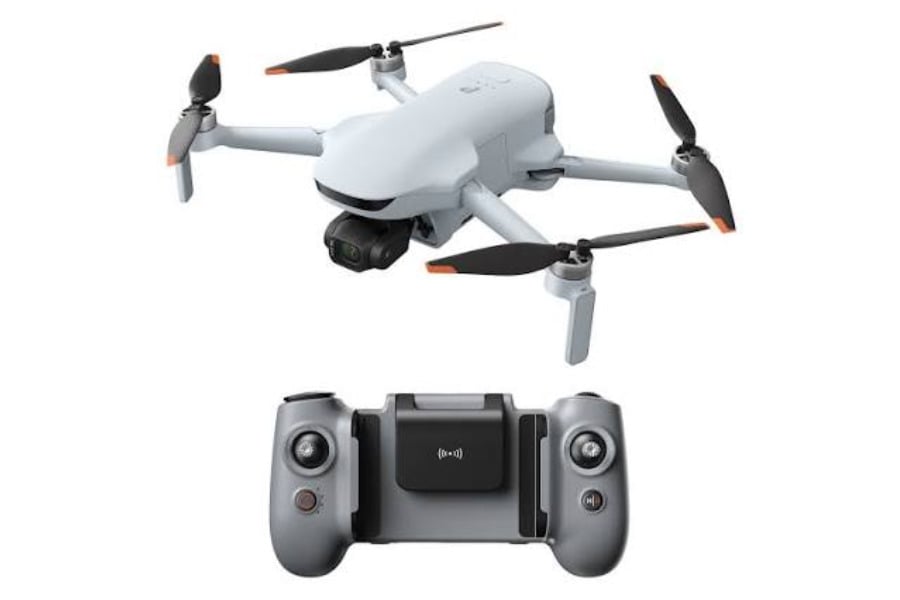
Potensic launched the Atom 3 in June as the successor to the Atom 2 with a larger camera sensor and improved video capabilities. It uses a 1/1.3-inch sensor, up from the 1/2-inch sensor in the Atom 2, and records 4K video at 60fps with HDR. It can also take 50MP stills, while a medium-telephoto mode crops into the image for tighter shots. Potensic rates its battery life at up to 40 minutes.
The Fly More bundle includes the RC PTD 2 controller, which has a built-in 5.5-inch screen. That means you can fly without attaching your phone to the remote. The drone weighs under 249g, keeping it below the registration threshold in many countries, and Potensic quotes a transmission range of up to 16 km. In practice, most users won’t need to fly anywhere near that far.
The DJI Mini 5 Pro, by comparison, has a larger 1-inch sensor. Still, the Atom 3 is a strong all-round option if you want a compact camera drone without buying DJI.
Its biggest drawback is the lack of obstacle-avoidance sensors, which can make flying more difficult for beginners. Beginner Mode helps by limiting your first flights to a 30-metre radius and height. US availability is also worth checking, as reports about its status vary.
2. Best budget pick
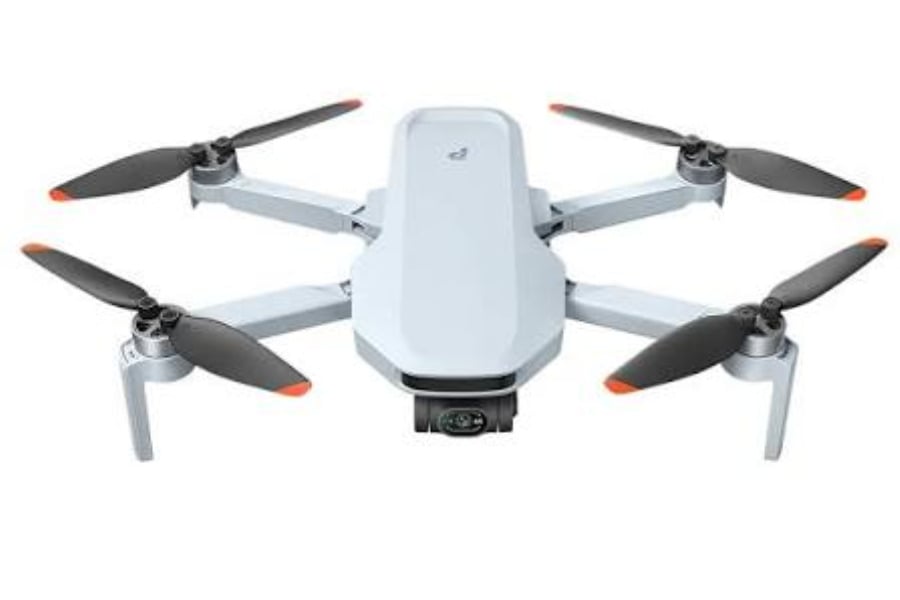
If not the Atom 3, the Potensic Atom 2 is still on sale and costs less than the successor. It uses a 1/2-inch Sony sensor and supports 4K HDR video, 48MP photos, three-axis gimbal stabilisation and AI subject tracking. Like its successor, it weighs under 249g, but its transmission range tops out at 10 km, and its battery lasts up to 32 minutes.
The Fly More bundle includes three batteries, giving you up to 96 minutes of combined flight time. Drone U lists the Atom 2 at around $330 in the US.
The Atom 2 makes sense if you want stabilised 4K footage without spending more on the newer model’s larger sensor. It also lacks collision-avoidance sensors, so flying in open areas is the safer choice.
3. Best for 360-degree footage
The Antigravity A1 is a bit different from conventional camera drones. The brand was incubated by Insta360, and the A1 records 8K 360-degree video using two lenses mounted on the top and bottom of the drone.
Instead of framing every shot while flying, you wear Vision goggles and use a Grip motion controller to direct the drone. After landing, you can choose the framing in the Antigravity app or desktop software. Retractable landing gear also helps keep the drone’s legs out of its 360-degree footage.
The standard bundle costs $1,599 and includes the goggles, controller, carry case, and spare propellers. The drone weighs 249g with its standard battery, while the high-capacity battery increases that to 291g, putting it in the EU’s C1 class.
At IFA in September, Antigravity announced a Cellular Module with an eSIM that attaches to the drone and goggles. Availability was scheduled for the end of September, and the best thing is that all A1 models remain compliant following the FCC’s Covered List update.
The A1 is worth considering if 360-degree video is your main priority. At $1,599, it costs considerably more than the other consumer drones here, and its goggles-based setup makes it less suitable for anyone who simply wants a conventional camera drone.
4. Best for hands-free filming
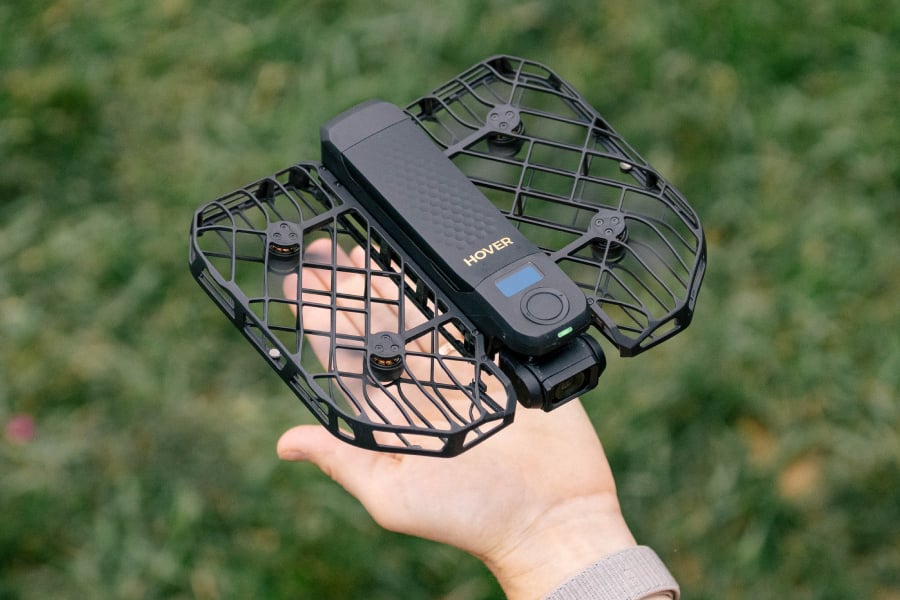
The HoverAir X1 Pro Max is built for people who want to film themselves without manually controlling a drone. You launch it from your palm, select a mode such as follow or orbit, and let it record while you ski, cycle, or run.
It uses a 1/1.3-inch sensor to record 8K video at 30fps or 4K video at up to 120fps. The drone folds into a pocket-sized body weighing 192g, while a vision sensor and rear proximity sensors help it brake when an obstacle is detected. Footage is stored on 64GB of onboard memory.
HoverAir’s original X1 reached Amazon in 2023, as we covered in our report on its retail launch. The company has since added the X1 Pro, X1 Pro Max and waterproof Aqua to its lineup.
Its main limitation is battery life as the run time is up to 16 minutes per battery. You also control it mainly through the app rather than traditional flight sticks, so it’s better suited to hands-free filming than general-purpose flying.
5. Best for filming on water
Unlike conventional drones, HoverAir Aqua has an IP67 rating, can float on water and can take off directly from the surface with a single button press. It also has a self-righting mode that turns it upright again if a wave flips it over.
Its camera uses a 1/1.28-inch sensor and records 4K video at up to 100fps. HoverAir says the drone weighs under 250g, can handle Level 7 winds, and reaches speeds of up to 55 km/h. It also includes dedicated modes for activities such as stand-up paddleboarding, kayaking and riding foil boards.
Flight time is around 23 minutes, and the drone doesn’t fold. That makes it less convenient to carry than the smaller HoverAir X1 Pro Max, but its ability to operate on water is the main reason to consider it.
The Aqua is also expensive, listing at £1,129 in the UK. However, this is a niche option for people who regularly film on or around water. If that’s not something you need, the X1 Pro Max is likely to be a more practical purchase.
6. Best for still photography
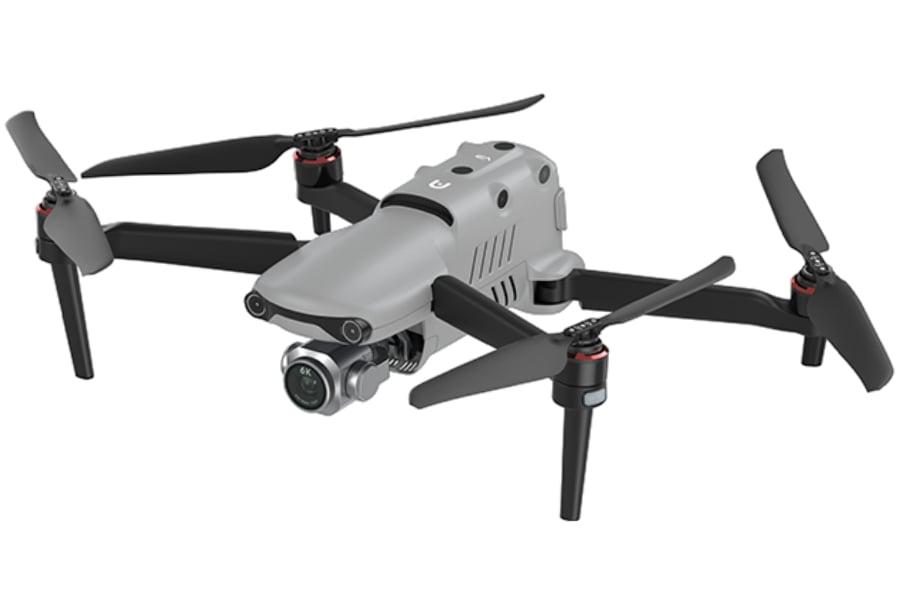
The Autel EVO II Pro V3 is an option for photographers who want a 1-inch Sony sensor without buying a DJI drone. It records 6K HDR video, supports 12-bit DNG photos, and offers up to 40 minutes of flight time. It also has 360-degree obstacle sensing and a quoted transmission range of 15 km.
Where to buyPotensic Atom 3Latest price on AmazonCheck price →
The EVO II Pro V3 is considerably larger than the sub-249g models on this list. It weighs well over 249g, meaning registration rules apply in many places, and you’ll need more room in your bag to carry it.
Autel is also on the FCC’s Covered List alongside DJI, so it cannot launch new models in the US under the current restrictions. The EVO II line dates back to 2020, although the EVO II Pro V3 is already available for purchase in the country.
It’s worth considering if image quality matters more to you than portability. The trade-offs are its size and an older product line.
7. Best for government and enterprise in the US: Skydio X10
For government agencies and public-safety teams that need NDAA-compliant hardware, the Skydio X10 is a more suitable option than the consumer drones above. It’s built for autonomous inspection and assembled in the US.
The Parrot Anafi USA is another option, with US assembly and government approval. Both are worth considering for organisations that need drones for professional or government work rather than casual photography.
OnePlus is all set to announce the OnePlus 16 in China on October 12. The phone is expected to be a major upgrade over the OnePlus 15, with improvements to its display, cameras, processor, and battery. In recent days, the brand has confirmed several specifications, and its latest poster reveals more details ahead of Monday’s launch.
OnePlus 16’s new details confirmed
OnePlus 16’s key specs revealed
The latest promotional image highlights several features of the OnePlus 16. The phone will support 100W wired charging and 50W wireless charging, offering flexible charging options. It will also carry IP66, IP68, IP69, and IP69K ratings for protection against dust and water.
For navigation, the device supports tri-frequency GPS and quad-frequency BeiDou satellite positioning. Its USB Type-C port supports USB 3.2 Gen 1, while connectivity features include support for the n79 high-frequency band. The phone will also feature stereo dual speakers tuned by Master, a 3D ultrasonic fingerprint sensor, and a new high-performance X-axis linear motor for improved haptic feedback. Oppo’s Crystal Shield Glass will provide additional protection.
Recent reports have revealed the OnePlus 16 will feature a display with a system-wide refresh rate of 165Hz, which can reach 185Hz in supported games. Developed with BOE, the fourth-generation Oriental Screen uses X4 luminescent material and is designed to deliver smoother visuals with improved power efficiency.
The company has also confirmed a 9,000mAh Glacier Battery, paired with Oppo’s battery power management chip. OnePlus says the technology is designed to improve energy efficiency and help preserve battery health over time.
For performance, the phone will use Qualcomm’s Snapdragon 8 Elite Extreme Gen 6 chipset. Its camera system will include a 200-megapixel primary sensor, a 50-megapixel ultra-wide camera, and a 50-megapixel periscope telephoto camera. On the front, it will have a 50-megapixel selfie camera, and it will come preloaded with ColorOS 17-based Android 17.
The phone will be available in four configurations, such as 12GB+256GB, 12GB+512GB, 16GB+512GB, and 16GB+1TB. It will be sold in shades like Tomorrow’s Star (gray), Martian Masterpiece (orange), and Dark Forest (black). The brand has also confirmed a “Mortal” animation gift box based on the animated series A Record of a Mortal’s Journey to Immortality. Readers can read more about the gift box contents here.
Vivo has just launched the Vivo X500, X500 Pro, and X500 Pro Max in China. These phones are expected to hit the global market by the end of the month. There have been reports that the global X500 lineup will include a few more devices, which may launch a bit later. These include the Vivo X500 FE and X500E. In the latest development, the X500E has bagged an important certification, indicating that it is inching closer to launch.
Vivo X500E Bluetooth SIG certified
Vivo X500e Bluetooth SIG listing
As can be seen above, the Vivo X500E, with model number V2656, has been approved by the Bluetooth SIG authority. Devices that receive Bluetooth certification are often expected to go official within around a month. As usual, the listing has not revealed anything about its specifications.
Recent reports have revealed that the Vivo X500E will arrive with a 6.59-inch OLED panel that offers 1.5K resolution. Under the hood, it will feature a Snapdragon 8-series chip and possibly a 7,500mAh battery.
Like the X500, the X500E may feature a camera module positioned in the top-left corner. While the X500 has a circular setup, the X500E will reportedly have a square camera module housing a 50-megapixel 1/1.28-inch main sensor, an ultra-wide sensor, and a Sony IMX8-series periscope telephoto camera.
The X500E is unlikely to launch alongside the X500 trio, which is scheduled to launch globally on October 27. However, there is a possibility that its launch could be scheduled for next month or before the end of the year.
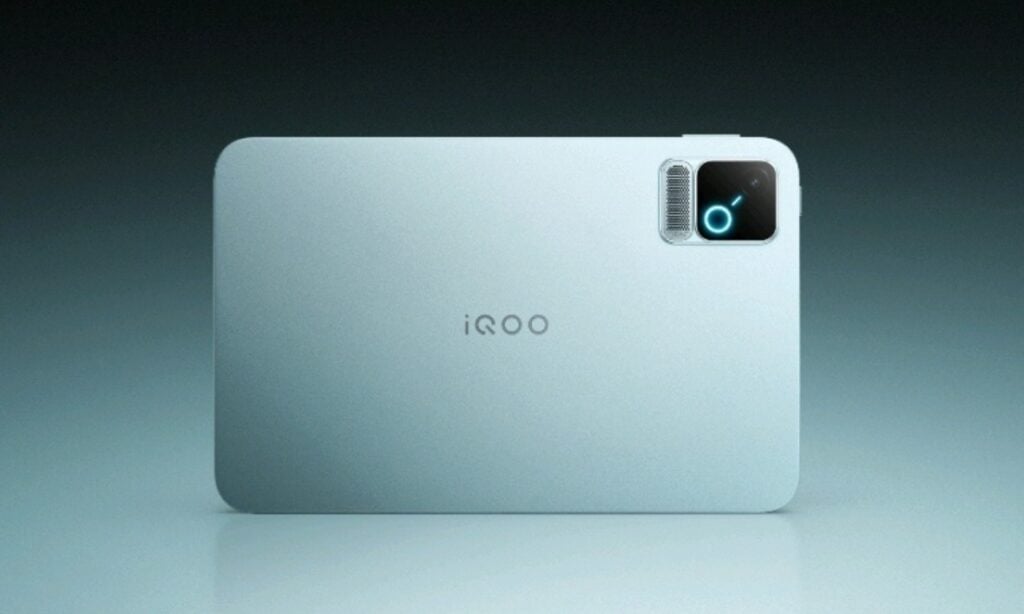
Last month, iQOO unveiled the Pad Ultra, a compact tablet equipped with the Snapdragon 8 Elite Extreme Gen 6 chipset. Now, the brand is preparing another performance-focused compact tablet dubbed the iQOO Pad Pro. Before the official announcement, the company has begun highlighting its design, cooling system and performance-focused hardware ahead of its launch.
iQOO Pad Pro’s key specifications confirmed
IQOO Pad Pro
The iQOO Pad Pro features an 8.8-inch display and weighs just 298 grams, according to the company’s latest promotional material on Weibo. Its compact dimensions are intended to make the tablet easier to hold during extended gaming sessions, while its lightweight construction should improve portability. The company describes the device as a dedicated gaming machine designed around the idea that powerful hardware does not necessarily require a large body.
Qualcomm’s Snapdragon 8 Elite Gen 5 processor will work alongside iQOO’s proprietary Q3 gaming chip. The combination is designed to support demanding games, improve graphics processing and deliver smoother frame rates. iQOO also highlights precise touch controls and optimised audio as important parts of the experience, suggesting that the tablet is being developed primarily for competitive gaming rather than general-purpose entertainment.
A major highlight is the inclusion of a large active cooling fan alongside a passive cooling system. iQOO says the combination is designed to control temperatures during intensive gaming sessions, helping the processor maintain performance over longer periods. The cooling hardware, compact form factor and dedicated gaming chip are central to the tablet’s positioning. The 3C certification of the device has revealed that it will have support for 66W fast charging.
The iQOO Pad Pro 8.8-inch is now available for reservations in China and is expected to launch alongside the iQOO Neo 12 later this month. The latter has been officially confirmed to feature a 2K display with a 185Hz refresh rate, Qualcomm’s Snapdragon 8 Elite Gen 5 processor, a dedicated Q3 gaming chip, a 9,000mAh battery and an integrated active cooling fan. For heat dissipation, it will also feature iQOO’s new Ice Dome cooling system.
iQOO has started revealing details about its next performance-focused smartphone, the iQOO Neo 12. The company is positioning the upcoming device as a dual-chip performance flagship aimed at demanding users. Its latest teasers highlight upgrades to the display, cooling system and battery.
iQOO Neo 12 key specifications
iQOO Neo 12 teaser
According to iQOO’s official Weibo teasers, the iQOO Neo 12 will feature a 2K display with a 185Hz refresh rate. The panel uses Visionox’s fourth-generation pTSF light-emitting technology, which is designed to improve efficiency alongside visual performance. This combination could deliver smoother gameplay and sharper visuals without the usual power demands associated with high-resolution, high-refresh-rate screens.
The phone will use the Snapdragon 8 Elite Gen 5 processor alongside iQOO’s proprietary Q3 gaming chip. This dual-chip arrangement is intended to improve gaming performance and support features such as enhanced graphics processing and smoother frame rates. The recently seen Geekbench listing of the device has revealed that it may ship with 16GB of RAM and Android 17, which will possibly have the OriginOS 7 skin on top.
A built-in cooling fan is another major addition. iQOO has introduced a new Ice Dome active cooling system with a redesigned airflow channel, which should help dissipate heat during demanding games and extended workloads. The teaser images show a circular ventilation grille on the rear, integrated into the phone’s distinctive design.
Battery capacity is listed at 9,000mAh in the promotional material, suggesting endurance will be a major selling point. However, charging speed and other battery-related details require further confirmation. The 3C certification of the device has revealed that it may support 100W fast charging.
Camera specifications, memory configurations and availability outside China also remain undisclosed. It is scheduled to launch this month in China, but the exact date is yet to be confirmed.
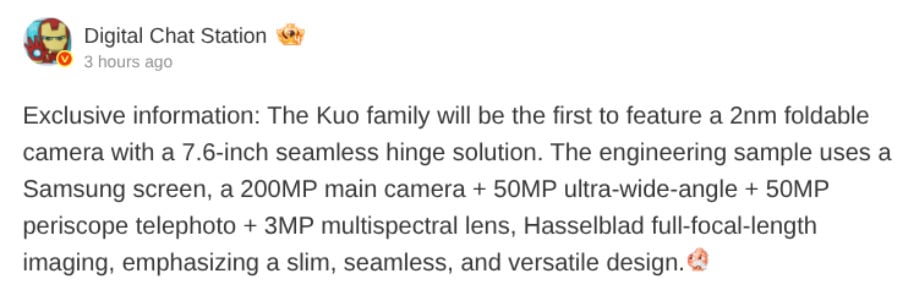
Prolific industry insider Digital Chat Station has shared fresh details about the Oppo Find N7, revealing its camera setup, inner display, and chipset. The new leak adds to earlier reports that suggest a wide design with a Q1 2027 launch and a 6,500mAh battery.
According to the tipster, the Find N7 will have four rear cameras: a 200MP main camera, a 50MP ultra-wide camera, a 50MP periscope telephoto camera, and a 3MP multispectral lens. Oppo calls the latter the Danxia Color Restoration Lens, and Hasselblad camera tuning is also reportedly part of the package.
The camera setup has some similarities to the current model. The Oppo Find N6 has a 200MP main camera along with Hasselblad support. The latest leak doesn’t reveal whether the Find N7 will use new sensors or retain some of the existing hardware, so it’s too early to tell how much the cameras have changed.
Moreover, the engineering sample is said to have a 7.6-inch inner display supplied by Samsung. The tipster also mentions a seamless hinge and a slim, lightweight body, although no measurements are available yet.
Oppo has already worked on reducing the visible crease in its foldables, introducing its crease-free display technology with the Find N6. The Find N7 is expected to build on that while adopting a wider form factor.
Another claim in the post is that the Find N7 will be the first foldable to combine a 2nm chipset with a 7.6-inch display and seamless hinge design. The tipster hasn’t named the processor, but earlier reports pointed to the Snapdragon 8 Elite Gen 6. The chipset’s 2nm manufacturing process fits the description.
What we still don’t know
The latest leak doesn’t mention the Find N7’s price, launch date, or battery capacity. Per previous reports, the device could launch in Q1 2027 with a 6,500mAh battery, but Oppo hasn’t confirmed either detail.
For now, all these specifications should be treated as unconfirmed. The phone is still at the engineering sample stage, meaning its hardware and design could change before launch.
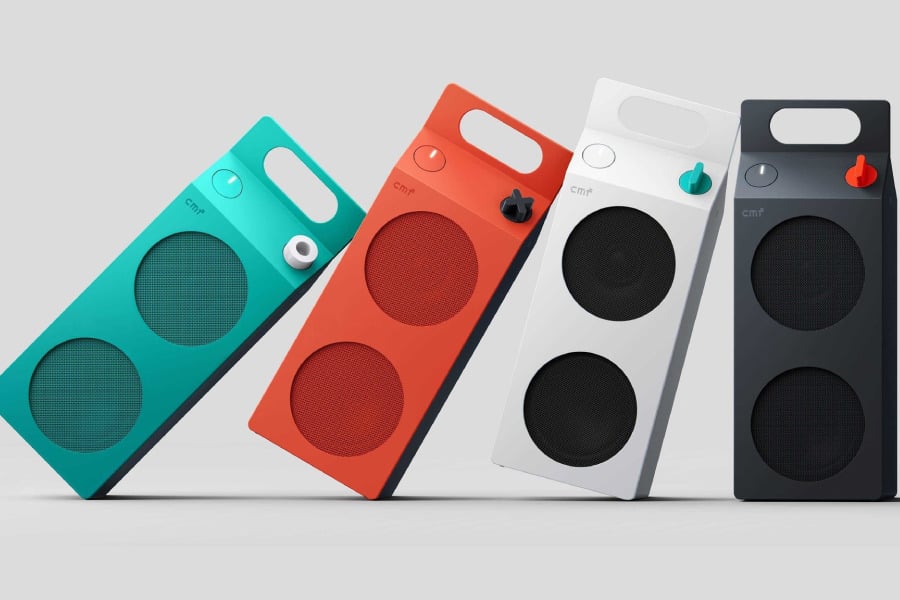
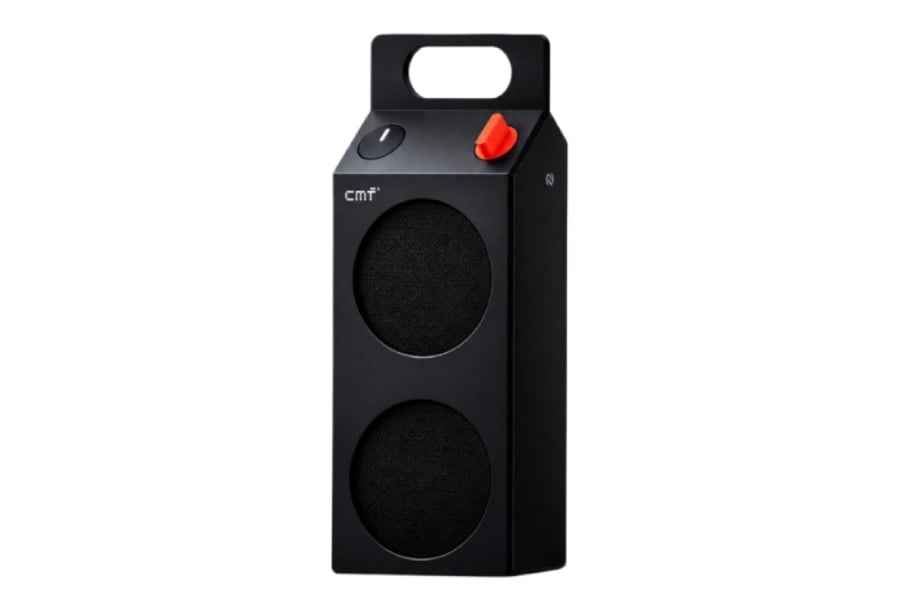
CMF has confirmed that the CMF Speaker S and CMF Speaker M will launch on Monday, October 12. The brand has shared very little about the two speakers so far, but a Sri Lankan retailer may have revealed most of them early. Both product pages are now live on the retailer’s website, showing the speakers’ designs and key specifications.
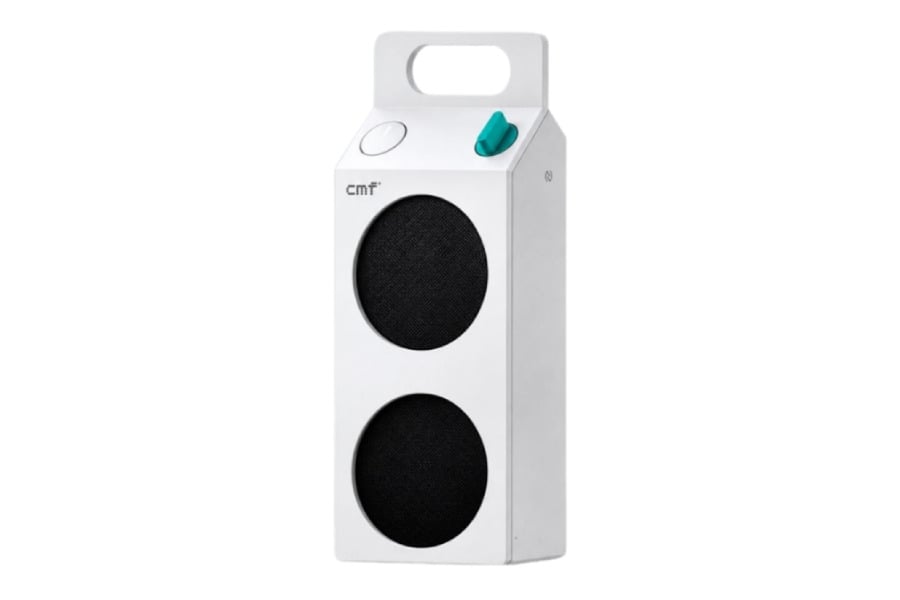
Both speakers copy the shape of a milk carton, with a gabled top and a carry handle built into it. The images show a matte black body, a CMF logo on the front, a small round button on top, and an orange knob beside the handle.
CMF Speaker S
The smaller CMF Speaker S has a single large round grille on the front. The CMF Speaker M is taller and has two grilles stacked on top of each other.
The retail listing confirms the CMF Speaker S comes in matte Carbon Black shade, while the CMF Speaker M is shown in Carbon Black and White. However, these may not be the only colors at launch. An X account shows the Speaker M in additional Blue and Orange shades too.
The knob at the top looks like a relative of the rotating dial CMF has on its phones. The teaser also suggests the knob may be swappable, the way CMF Phone covers are, but none of the listings confirm that.
You get Bluetooth 5.4, a 2,500mAh battery rated for up to 18 hours of playback, and a USB-C port for charging. The listing puts the weight at 580g. For audio, CMF uses a 40mm full-range driver together with a 50mm passive bass radiator, and the retailer quotes 12W RMS output with 360-degree sound. The CMF Speaker S also carries an IP54 rating, which covers splashes.
The CMF Speaker M is a 12W portable Bluetooth speaker with dual drivers and a bass boost. You get Bluetooth 5.4, 18 hours of battery life, IP54 splash resistance, and USB-C charging. The handle lets you carry it with one hand or hang it from a bag or hook. The orange volume knob works without an app, and the listing also mentions a low battery indicator. It doesn’t give the battery capacity or the weight.
Price and availability
Life Mobile lists both speakers as available for pre-order and delivery in three to five working days. The CMF Speaker S starts at LKR 26,500 (~ $80)and the CMF Speaker M at LKR 39,500 (~ $120). CMF will share the official details on Monday, and we’ll cover both speakers once they go official.
Compact phones like the iPhone mini series and Asus Zenfone 10 haven’t really worked out commercially, even though what they offered was flagship-level hardware. The Vivo X500 Pro is now closer to what passes for a compact phone, but it’s still a far cry from the smaller devices some buyers want.
Huawei, however, seems interested in giving the category another shot. According to tipster Digital Chat Station (DCS), the company is working on a smartphone with a 6.17-inch, 1.5K display. It won’t be as small as what the iPhone mini used to be, but it would still be smaller than most phones available today. The leak doesn’t name the device, and DCS notes that the details remain unconfirmed.
What the leak says
There isn’t much to go on yet. DCS says the information comes from early splash screen data, and Huawei’s product line for this phone is still unclear. Nothing in the leak points to a Nova, Pura, Mate, or an entirely new series.
DCS did give a rough timeline in the comments. If development goes well, he expects the phone to show up next year.
The screen size is the main detail. At 6.17 inches, this panel is much smaller than what Huawei uses on its recent flagships.
Why Huawei could be the one to try
Huawei has spent the last couple of years trying unusual form factors. The Pura X is a wide foldable that opens to a 6.3-inch, 16:10 screen, and you can read more about it in our Pura X coverage. It later followed up with the Pura X Max, a wider foldable with an inner screen of around 7.6 to 7.69 inches.
A 6.17-inch flat phone is a different product, but it points the same way. Huawei seems willing to build phones that don’t simply get bigger every year.
You shouldn’t read too much into this yet. The leak says nothing about the chipset, battery, cameras, or price, and those details decide whether a small phone works as a main device. We’ll update you more on this as more details come out.
OnePlus confirmed last month that the OnePlus 16 will launch in China on October 12. The company has now announced a co-branded gift box for the phone, built around the animated series A Record of a Mortal’s Journey to Immortality.
What’s in the gift box
The OnePlus 16 Mortal Animation co-branded gift box has five items, and all of them draw on the sword imagery from the series:
A rotatable metal sword array stand that holds your phone magnetically
A metal SIM card ejector tool styled as the “Green Bamboo Bee Cloud Sword”
A “Green Bamboo Bee Cloud Sword” magnetic protective case
A transparent postcard
A sliding fridge magnet
OnePlus 16 specs shared so far
The gift box is a side story to the phone itself. Here is what OnePlus has said about the OnePlus 16 so far.
For performance, OnePlus is using the Snapdragon 8 Elite Extreme Gen 6 chip along with a new-generation Fengchi Gaming Kernel, which the company tuned for sustained gaming performance.
You get a fourth-generation Oriental display that OnePlus developed with BOE. It runs at up to 185Hz in supported games, and OnePlus says it holds 165Hz across the whole system for daily use.
The battery is a 9,000mAh Glacier Battery with 100W wired and 50W wireless charging.
On the camera side, you get a 200MP main camera with a 1/1.4-inch sensor, backed by OnePlus’ next-generation LUMO light-condensing imaging system. The telephoto lens moves to a Sony IMX882 sensor with 3x optical zoom, and OnePlus has already confirmed the camera hardware.
The phone also adds tri-frequency GPS and quad-frequency BeiDou for the first time.
OnePlus has already shown the OnePlus 16’s design, colors, and memory options. Pricing is still missing, and OnePlus has only confirmed the launch in China so far.
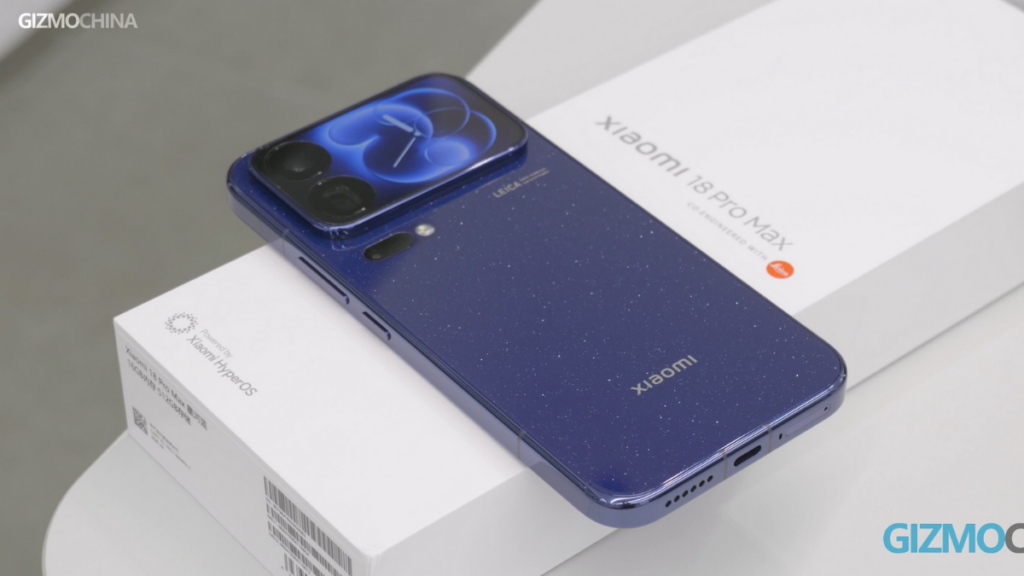
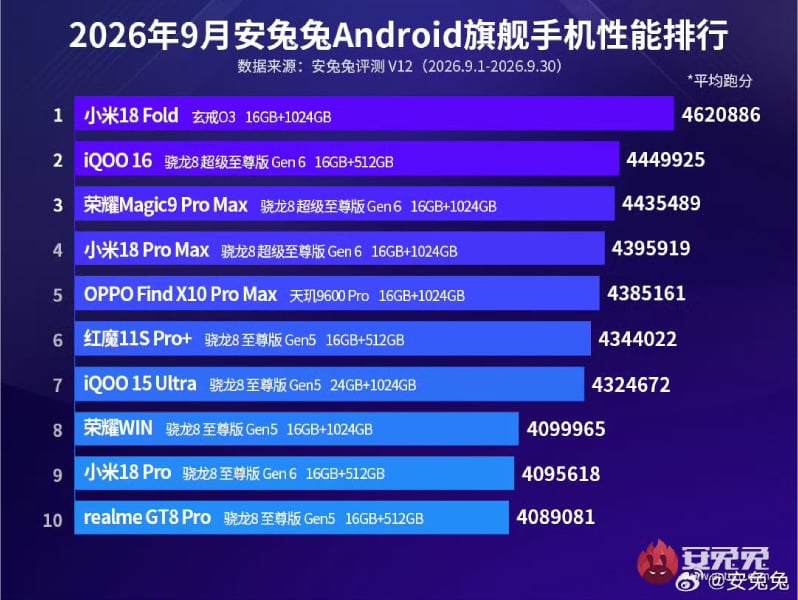
AnTuTu has published its September 2026 Android flagship performance ranking, and to everyone’s surprise, the Xiaomi 18 Fold took first place with an average score of 4,620,886 points. It finishes ahead of every phone running Qualcomm’s new Snapdragon 8 Elite Extreme Gen 6 chip, as well as the one Dimensity 9600 Pro phone on the list.
The scores are averages collected between September 1 and September 30 using AnTuTu V12. The Xiaomi 18 Fold in the ranking is the 16GB RAM, 1TB storage model, and it runs Xiaomi’s XRING O3 chip.
The September top 10
The iQOO 16 comes second with 4,449,925 points. It uses the Snapdragon 8 Elite Extreme Gen 6 with 16GB of RAM and 512GB of storage, and it trails the Xiaomi 18 Fold by 170,961 points (about 3.7%).
The Honor Magic9 Pro Max follows in third with 4,435,489 points, and the Xiaomi 18 Pro Max takes fourth with 4,395,919 points. Both use the same Extreme Gen 6 chip with 16GB of RAM and 1TB of storage. The Oppo Find X10 Pro Max is fifth at 4,385,161 points, and it is the only MediaTek phone in the top 10 with its Dimensity 9600 Pro.
Sixth place goes to the RedMagic 11S Pro+ at 4,344,022 points, which topped AnTuTu’s August flagship chart. The iQOO 15 Ultra is seventh with 4,324,672 points and the 24GB RAM and 1TB storage configuration. Both phones still run the Snapdragon 8 Elite Gen 5.
The chart drops off after that. The Honor WIN scores 4,099,965 points in eighth, the Xiaomi 18 Pro scores 4,095,618 points in ninth, and the Realme GT8 Pro closes out the list at 4,089,081 points.
The Xiaomi 18 Pro is the one phone here that uses the standard Snapdragon 8 Elite Gen 6 rather than the Extreme version. It scores about 300,000 points (roughly 7%) below the Xiaomi 18 Pro Max, which gives you a rough idea of what the Extreme variant adds in this benchmark.
What the Xiaomi 18 Fold offers
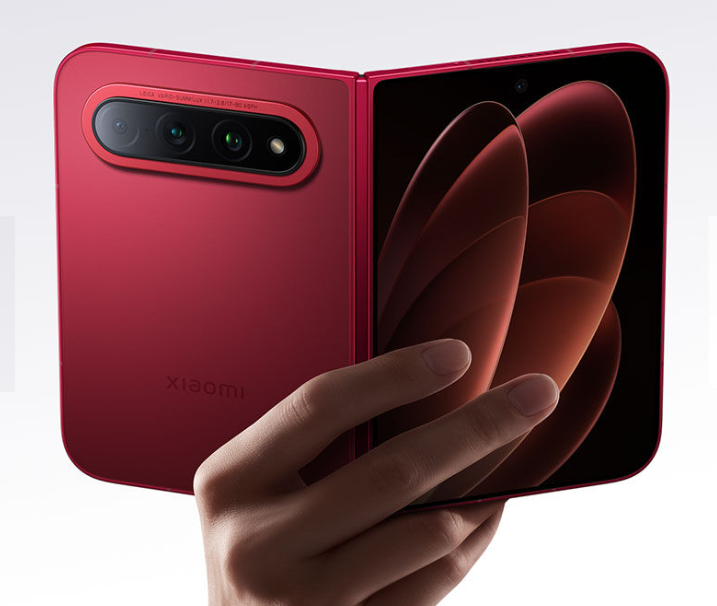
Xiaomi launched the Xiaomi 18 Fold on September 7 as the first phone to use the XRING O3. It is a mid-fold design with a 5.38-inch outer screen, a 7.58-inch inner screen, and a Leica triple rear camera.
The starting price is 10,999 yuan, which converts to roughly $1,639. The price covers the 12GB RAM and 256GB storage model, though. The 16GB and 1TB version that AnTuTu tested costs 14,999 yuan, or about $2,235, so you pay a lot more for the score you see on this chart.
Xiaomi 18 Fold
The result also lands below the number Xiaomi quoted for the chip itself. The company claimed 5.22 million AnTuTu points for the XRING O3 when it announced the processor, while the Xiaomi 18 Fold averages 4.62 million across a full month of real-world runs.
Sales of the Xiaomi 18 Fold started in China on September 10, and Xiaomi appears to have no plans to sell it outside China for now. If you were hoping to buy one internationally, you will probably need to import it.
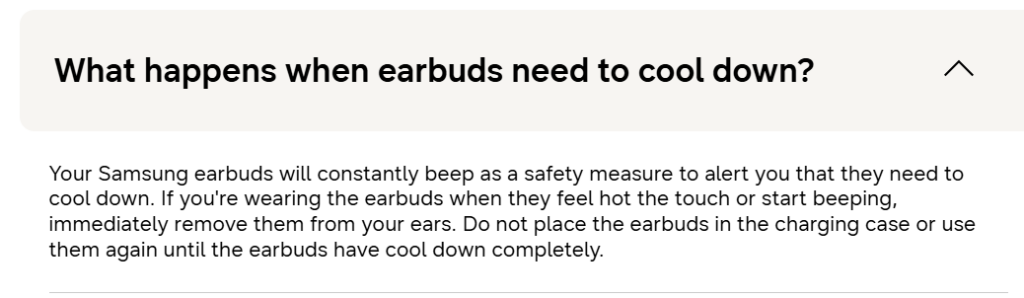
Samsung might be about to flip its long-standing advice on what to do when your Galaxy Buds get too hot, and it’s probably worth more attention than it first sounds. There was a widely reported case involving a Galaxy Buds FE that allegedly exploded while being worn, with the user claiming it caused permanent hearing loss. So changing the official advice on what to do when they heat up isn’t just a small software detail.
For years, Samsung’s official guidance has been: if the earbuds start overheating, take them out of your ears and let them cool down in an open space. Support pages specifically warn against putting hot buds back into the charging case, because the enclosed space can trap heat around the batteries and make things worse. While they’re overheating, the buds usually keep beeping as a warning and stay powered on.
But new code spotted in Galaxy Buds app version 9.0.10.1724 suggests a different approach. One of the messages says: “Your earbuds will be turned off for your safety. Put both earbuds in the case and wait. You can use your earbuds again when they cool down.”
That points to two possible changes. First, the buds may automatically shut themselves off when they get too hot instead of just beeping. Second, Samsung would actually tell users to put them back in the case while they cool down.
Some analysts think newer Galaxy Buds models might have better battery management that can cut off charging current during thermal events. If that’s the case, putting them in the case could become the safer option because it wouldn’t keep feeding power to overheated batteries.
Samsung hasn’t confirmed anything or updated its support pages yet. Until they do, the old advice is still the safest bet. If your Galaxy Buds feel unusually hot or start beeping, take them out right away and let them cool completely in an open area before using them again or putting them back in the case.
Samsung has posted strong smartphone sales numbers in the last few quarters, even beating Apple in the Q2 2026 to regain the top position, per data from Counterpoint research. That should mean strong profits, right? Well, not in this case, as it turns out the South Korean giant is reportedly making no profits from its smartphone business.
Even worse is that the current scenario is reportedly forcing Samsung to cut smartphone production by as much as 30%, and what’s to blame here: soaring prices of RAM and storage. The entire smartphone industry is feeling the pain because of the increasingly rising cost of components, and finding it difficult to maintain profitability.
According to a Money Today report, citing industry sources, the South Korean giant has asked its suppliers to reduce smartphone production by as much as 20–30% in Q4 of this year. According to the latest estimates, Samsung has had to pay around $145 per 12GB LPDDR5X RAM chip this year, which is nearly a 175% increase for that specific component compared to a year ago.
Prior to the cut in production, Samsung was planning to manufacture around 270 million smartphones this year, but now that figure could drop to somewhere around 200 million.
Samsung launched the Galaxy S26 series and Galaxy Z8 foldables with a higher price tag. Even after that, it increased the price of its latest flagships by up to $100. Older flagships and mid-range phones didn’t remain protected either. They have also faced sharp price rises in the recent past. Despite such price hikes, Samsung’s mobile division is struggling to make any profit.
Where to buySamsung Galaxy phonesBrowse the range on AmazonShop now →
Unfortunately, the struggle won’t end pretty soon, as DRAM prices for the third quarter are expected to rise another 20 percent and reach $180. This sharp rise in the component cost may be actually hurting the brand more to make more devices.
Samsung’s memory chip business is making record profits
Samsung’s mobile division reported the first-ever quarterly loss in its history in Q2 2026. The Device eXperience (DX) division reported a loss of around $544 million, with the mobile division alone accounting for about $476 million of that. Current market conditions suggest the mobile division will report even bigger losses in Q3 and Q4.
On the bright side, Samsung is generating record profits from its memory chip business. The DS Division, which is responsible for memory chips and semiconductors, delivered its biggest quarterly operating profit of KRW 53.7 trillion in Q1 2026.
In Q2 2026, the operating profit from the DS division rose sharply to a staggering KRW 89.2 trillion, surpassing NVIDIA to become the most profitable technology company in that quarter. For the third quarter, Samsung’s DS division is estimated to have exceeded an operating profit of over KRW 100 trillion.
We will keep you updated as new details emerge through our News section. Check back regularly for updates, or subscribe to our Telegram channel to get real-time alerts.
We use cookies on our website to give you the most relevant experience by remembering your preferences and repeat visits. By clicking “Accept”, you consent to the use of ALL the cookies.
This website uses cookies to improve your experience while you navigate through the website. Out of these, the cookies that are categorized as necessary are stored on your browser as they are essential for the working of basic functionalities of the website. We also use third-party cookies that help us analyze and understand how you use this website. These cookies will be stored in your browser only with your consent. You also have the option to opt-out of these cookies. But opting out of some of these cookies may affect your browsing experience.
Necessary cookies are absolutely essential for the website to function properly. This category only includes cookies that ensures basic functionalities and security features of the website. These cookies do not store any personal information.
Any cookies that may not be particularly necessary for the website to function and is used specifically to collect user personal data via analytics, ads, other embedded contents are termed as non-necessary cookies. It is mandatory to procure user consent prior to running these cookies on your website.