The Apple Watch Series 8 has just received a massive discount in the Indian market. The company first unveiled the smartwatch back in 2022, and now, this model has received a major discount worth over 20,000 INR. So here is everything you need to know.
Apple Watch Series 8 Goes on Sale for Rs 24,999
At the moment, the Cupertino based giant’s Apple Watch Series 8 41mm variant is listed for just 24,999 INR (roughly 302 US Dollars). It is worth noting that the model was first launched in India for a 45,900 INR price tag. In other words, buyers are getting a discount worth 20,901 INR or about a 45 percent discount. This deal is currently available on Flipkart, which is a popular e-retailer in the region.
This is not all, the company is also offering an additional discount worth up to 1,500 INR to Axis, Citi, and ICICI Credit Card transactions. Keep in mind that only the Midnight Black color option is listed with this discounted price tag. At this price range, the Apple Watch Series 8 is a great deal. While it lacks some features of the newer Apple Watch Series 9, the Watch Series 8 is almost identical to the Watch Series 9.
For those unaware, the Watch Series 9 was released in India in September 2023. Since the Apple Watch Series 9 is available on Flipkart for 32,999 INR, the Watch Series 8 is a sweet option if you don’t want to spend another 8,000 INR.
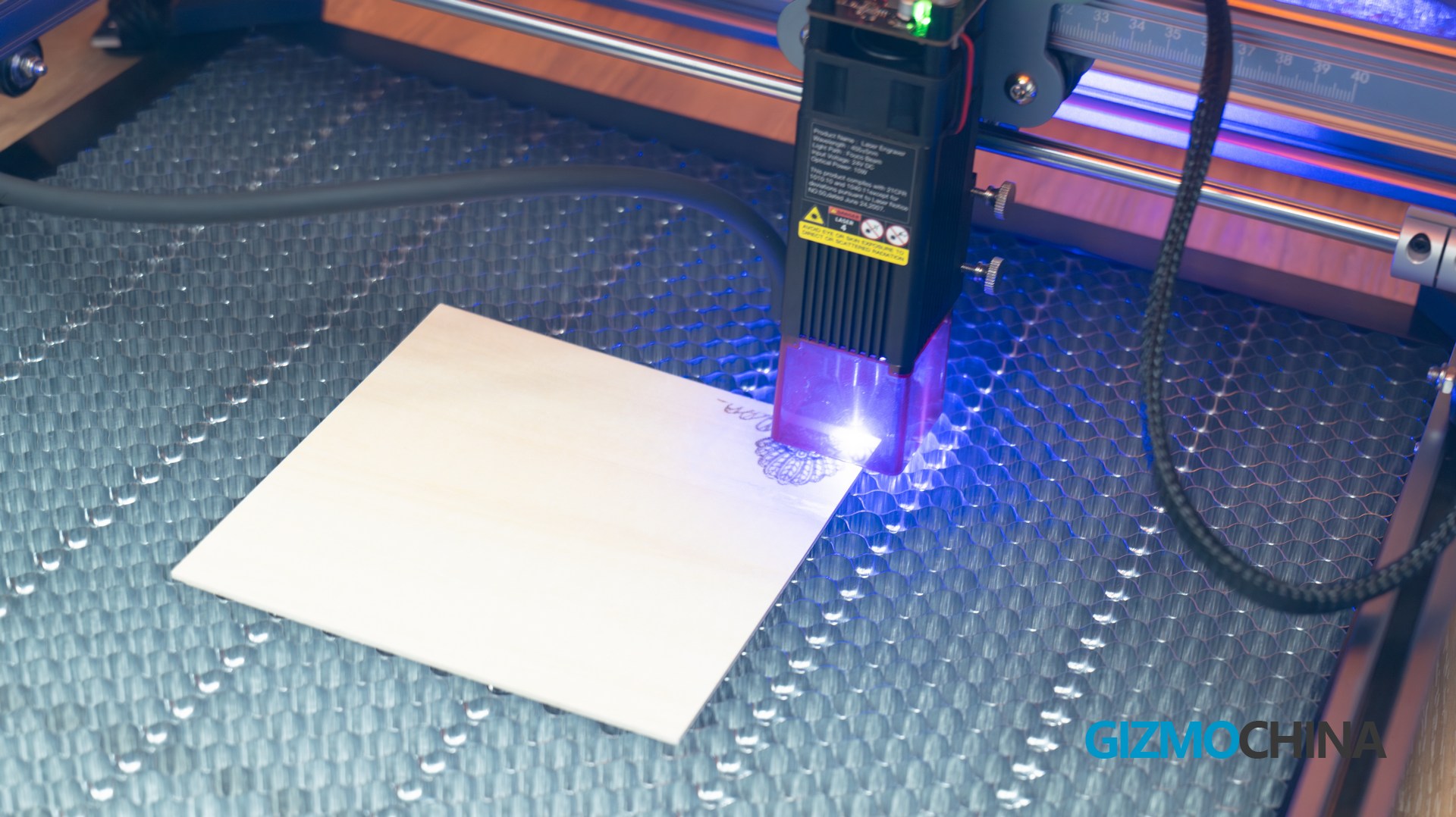
We are always searching for tech products, some of them really are the combination of high level of tech and affordability. This time we have the Creality Falcon 10W Pro Laser Engraver in our studio. This kind of tech product is not quite familiar to us, although we know how it works, but when it comes to mastering the craft, there is still a long way to go. So let’s get into this hobby, and see if we can provide some help for you along the way.
WHERE TO BUY
Buy Creality Falcon 10W Pro Laser Engraver on Creality Official Shop | Coupon code: FN10WPRO
Packaging and Assembly
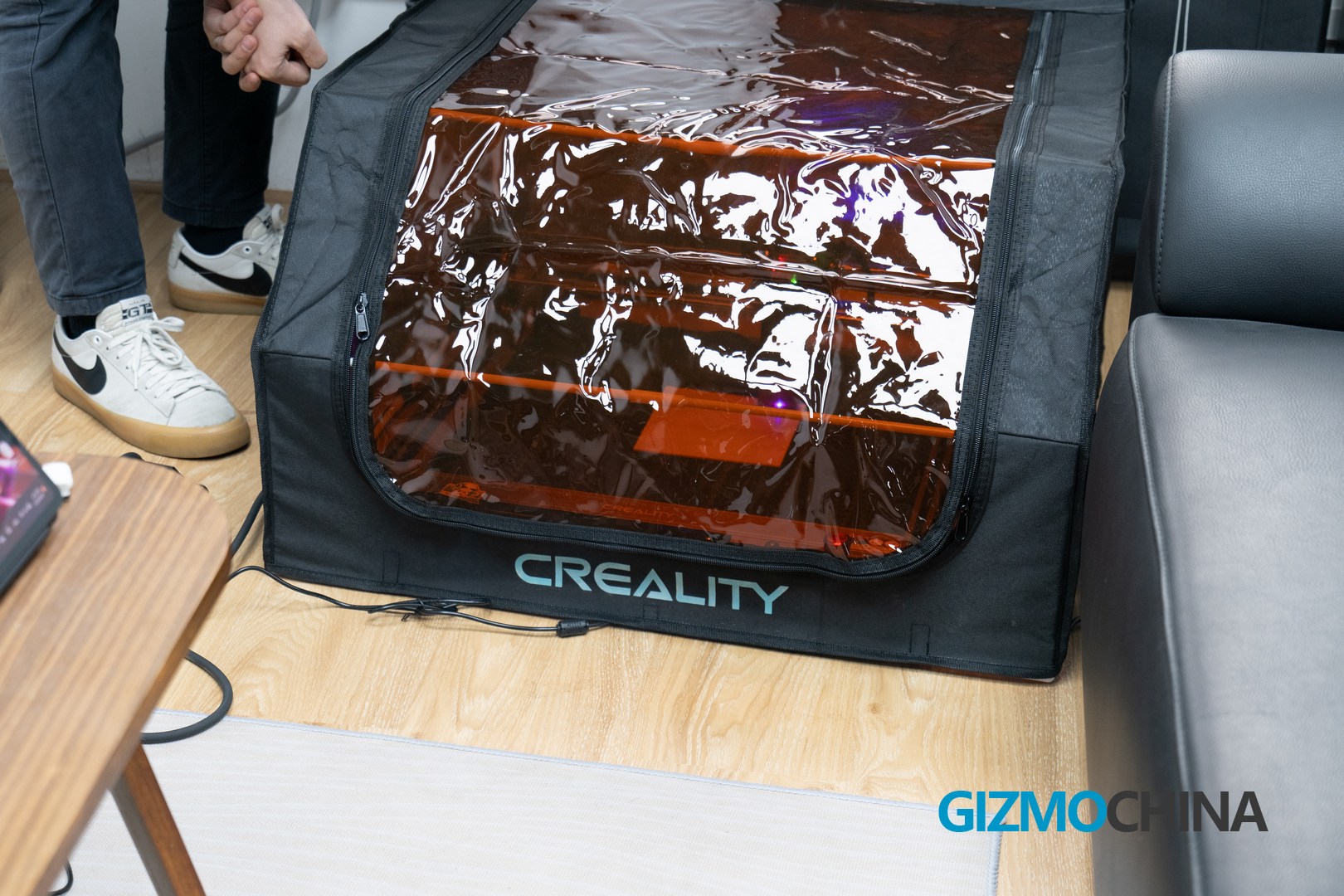
Before we talk about packaging, we need to talk about what you should get when you are first into this hobby. Basically, when you want to get a laser engraver, besides the main unit, it is really recommended to have the enclosure and the honeycomb plate. There are several reasons:
If you live in an apartment or a building like us, it’s not that convenient to evacuate the smoke generated from the machine. So the enclosure with a vent fan built in is an essential.
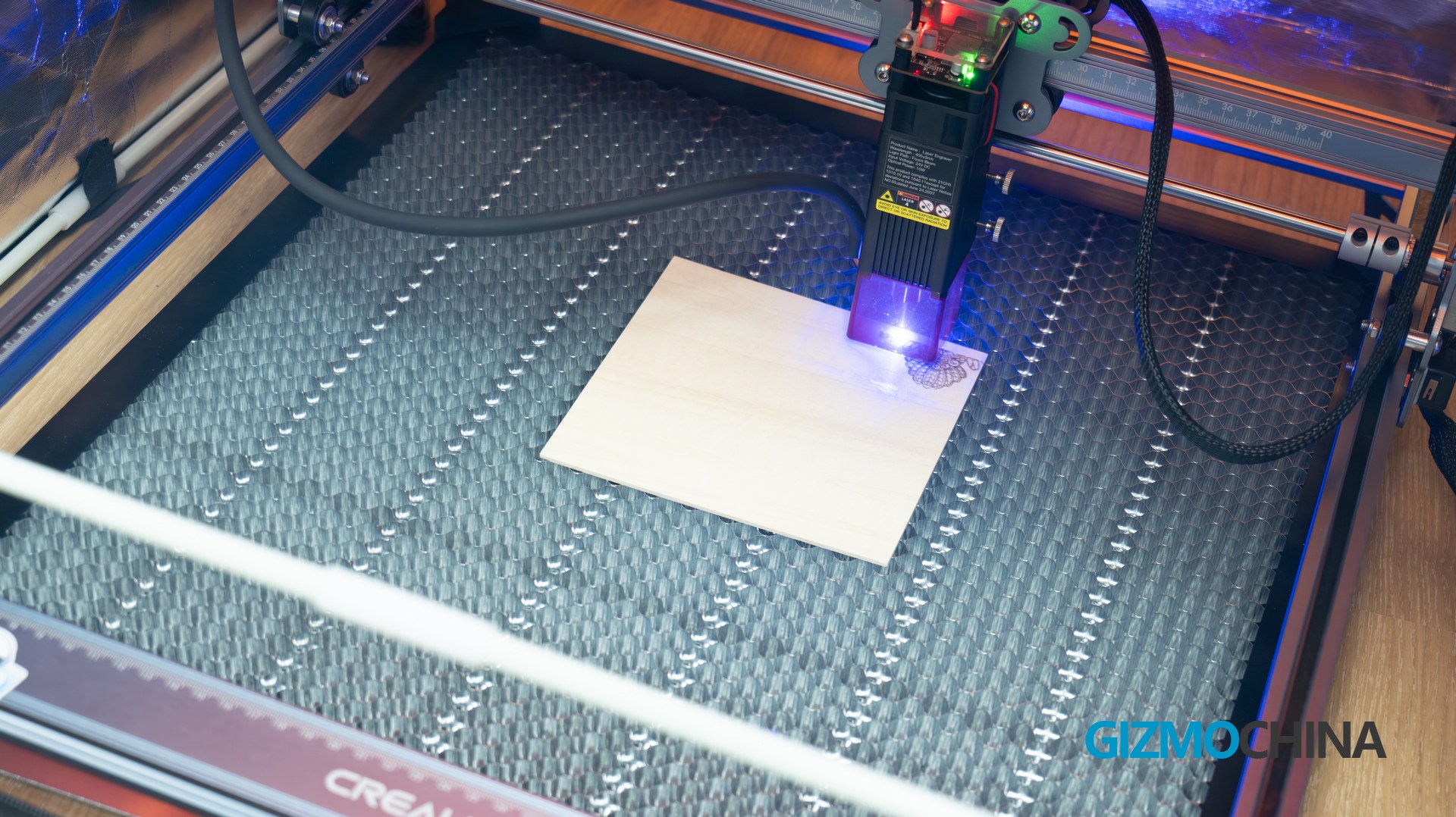
Wherever the laser goes, it will burn things, and there is higher chance that it will leave a stain, or even cause fire if the laser stays in one spot for too long. So a honeycomb plate is also an essential, and there should be a metal plate underneath to go with it. Therefore the material used for engraving won’t be burnt, and your floor won’t get damaged.
What’s in the box:
X-Y Gantry
Laser computer control assembly
10W laser module
Air-assist device
Assembly screws and hardware
Measurement plate
Gantry legs
Power supply and Power cord
Linden plywood sample x 2
Wrenches
T-nuts with grub screws
8GB TF card and USB card reader
Safety goggles
Cloth
Manual
So moving onto the packaging stuff. As you can see, those three units we mentioned are packed separately. The assembly of the enclosure and honeycomb plates are pretty easy, following up on the instruction manual will enable you to finish it in 10mins.
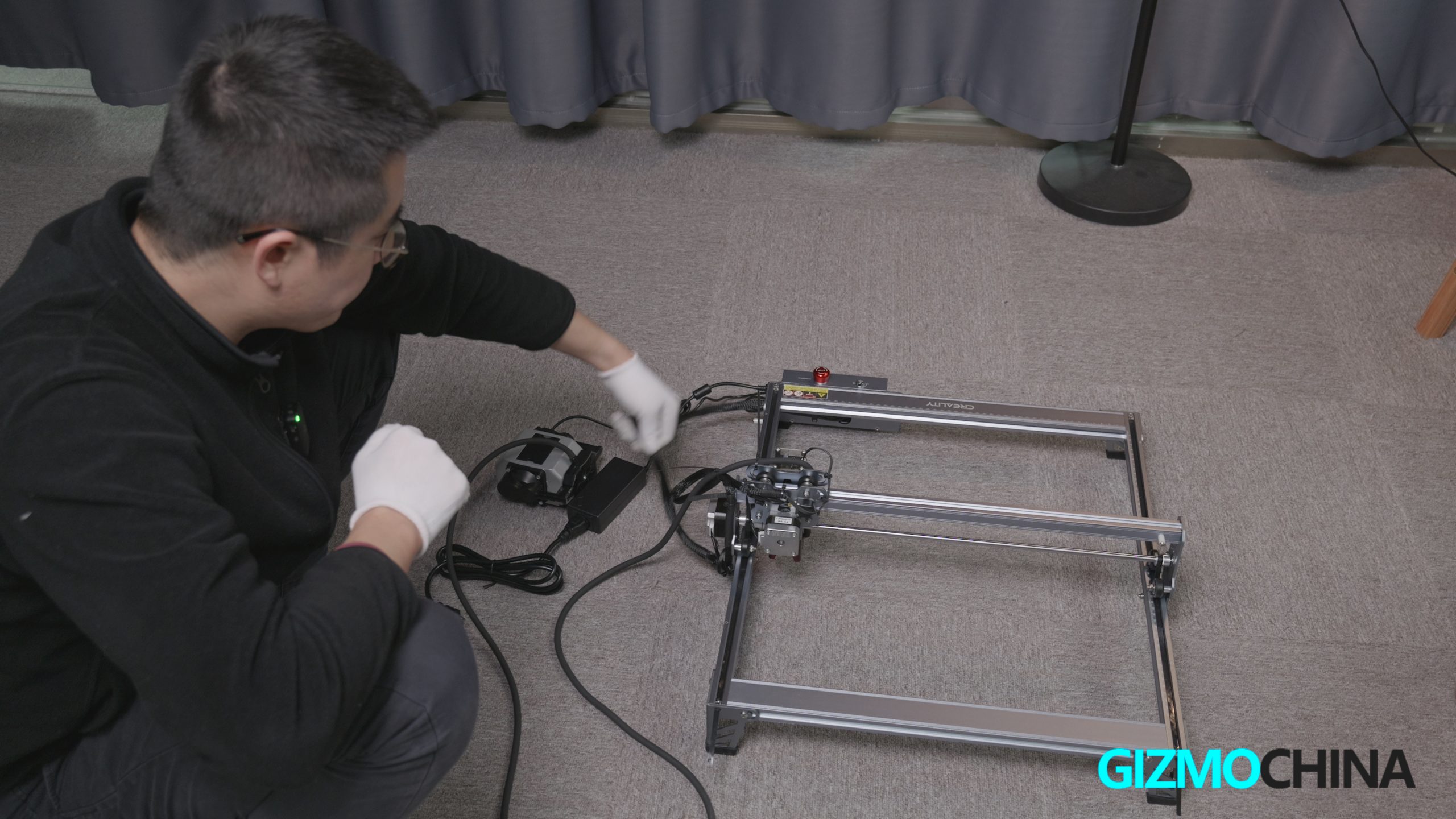
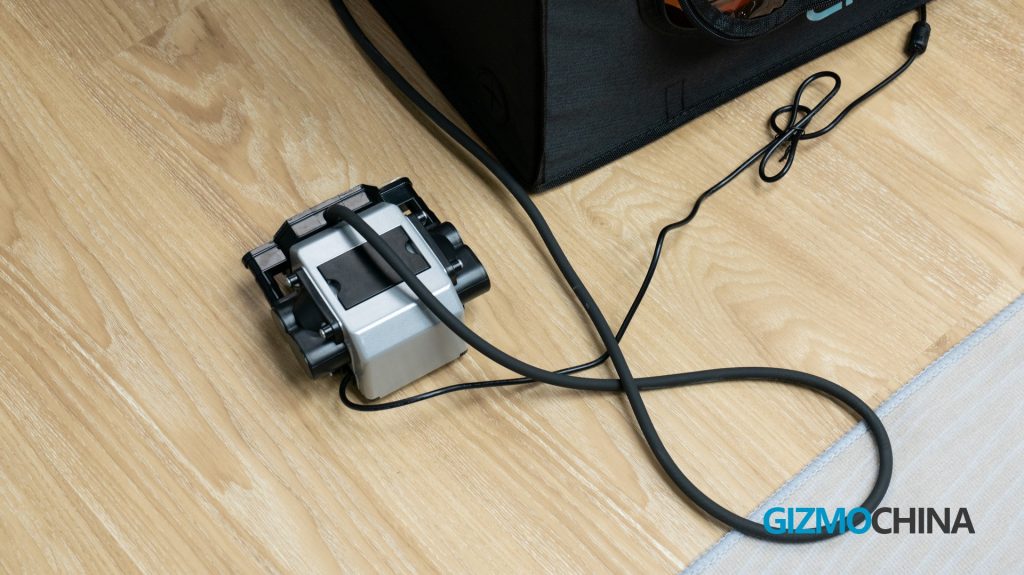
Well for the main unit, it is a 30mins of work, which is also quite simple. Most of the work is in the X and Y axis, first we need to get the positions of the parameters correctly, as they must be facing inside, so later when you place the engraving material on the honeycomb plate, you have a rough idea of the X and Y positions. When the circle is completed, it’s time to put the racket with the laser onto it, the laser unit comes in as a complete form, so it saves a lot of work for everyone including some new comers like us, very thoughtful. Lastly, we need to put the air-assist device/pump, this parts are new to the Falcon series, and this is highly anticipated by previous customers, the benefit it brings to the unit is huge, which we will talk about later on.
Some tips we found when assembling the unit:
Watch the tutorial video carefully or slow it down a bit, to better learn about how to get the belts correctly. It can be overwhelming for people who don’t know how the belt mechanism works, so it may take more time.
We found that it’s better to tie the hose of the air-assist device at the end of the X-axis, which is the opposite side of the power cable, and it should be the right length. The benefit of doing so is to not let the hose touch the honeycomb plate, therefore won’t be hurt by the laser.
After we get the whole unit up and running, we can see the specs here:
As we are new to this hobby, we rely on the tutorials a lot. Luckily, Creality has prepared some instruction videos in the TF card, along with some sample Gcode files to start with.
Before we start the test, it’s a must to mention three major highlights or improvements this unit has:
The cover around the laser. This cover is tinted, so it significantly reduces the laser flash into our eyes.
The cover is magnetic, so it snaps on easy and secured, very thoughtful design.
There is a air-assist device built in, so the debris won’t stay on the surface of the material, therefore there won’t be any burnt stain left.
First we tested it in the simplest way, which is putting the TF card in and let it do its job. Well it performs ok, but it does not have that pleasure of creating your own things. So we went to the software to make our own.
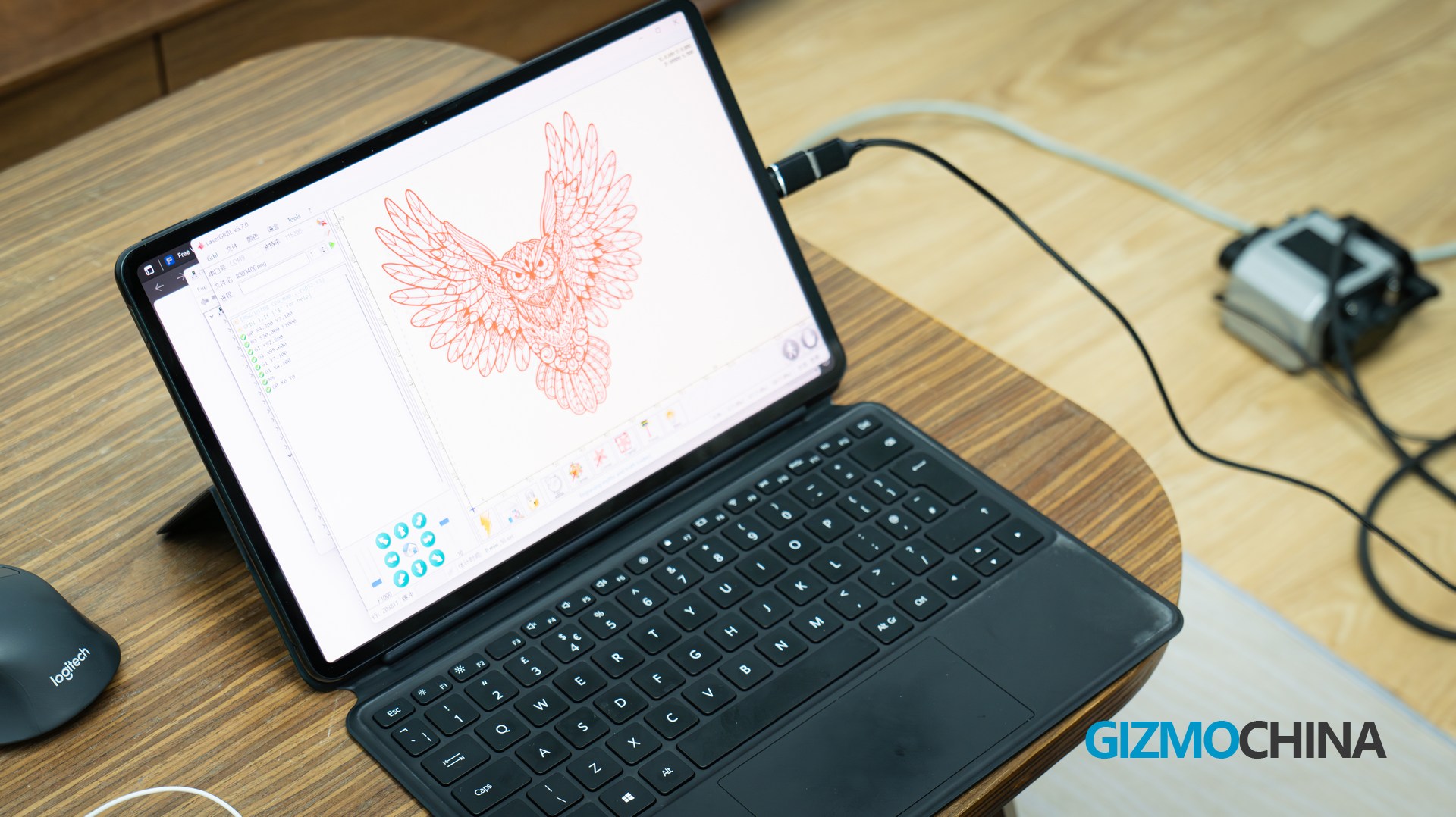
We downloaded the LaserGRBL and started exploring. First we downloaded some free assets online, like this owl. It’s slightly complicated but the lines are not quite smashed together, so it is a middle level difficult. We followed the instruction video to do it, and it did not go well as we expected. So this is the time that we would like to bring out the first suggestion to Creality, which is that we hope there is more detailed instruction videos or materials for beginners, so everybody can enjoy the fun of creating.
By the third day we got the machine, we managed to learn how to do the basic engraving, it’s obviously not perfect, as the image is not aligned in the center, and we haven’t tried cutting materials, so we need to spend more time on it.
Verdict
So to sum up our experience with this Creality Falcon 10W Pro Laser Engraver, it is a great machine to start with in this hobby. There are a lot of features you can have with it, such as the Bidirectional Limit Switch, Active Stop Function, Security Lock Design, Emergency Stop Button, Laser Protective Cover. And we learned that the laser unit can be upgraded to a 20W one, which is available right now, and also the price on this one is quite good compared to some other laser engravers on this market. So if you are looking for your first laser engraver, this is the best option so far.
The OnePlus Ace 3V is set to be unveiled in the Chinese market soon. It has recently surfaced in various rumors and reports, and now, the latest leak reveals the front design of the smartphone thanks to live images of the device. So let’s have a look.
OnePlus Ace 3V Front Design
The Chinese smartphone brand’s Ace 3V is expected to be one of the first devices to feature Qualcomm Snapdragon 7+ Gen 3 SoC. Qualcomm is gearing up to release this chipset on March 18, so the OnePlus Ace 3V will likely launch around the end of this month. But ahead of any official announcement, OnePlus China’s President Li Jie has shared live images of the Ace 3V. This image has offered us a look at the front design of the upcoming device.
The OnePlus Ace 3V display houses a center aligned punch hole cutout for the selfie shooter and is surrounded by thin bezels on all four sides. So we can expect to see a high screen to body ratio as well. We can even see the Alert Slider being housed on the left side, while the volume rockers and the power button are likely on the right side. Just last week, a live shot of the device surfaced online, which showcased the rear design.
Similarly, the Ace 3V was just spotted on the GeekBench database carrying the Snapdragon 7+ Gen 3 SoC along with 16GB of RAM. It also ran on the Android 14 operating system. Based on what we know so far, this model may sport an OLED display with a 1.5K resolution and a 120Hz refresh rate. The OnePlus Ace 3V has a 16-megapixel selfie shooter on the front, while the rear packs a 50-megapixel primary camera that offers OIS (Optical Image Stabilization). Other notable features include 5,500mAh battery pack with 100W wired fast charging, in-display fingerprint scanner, and an IR blaster.
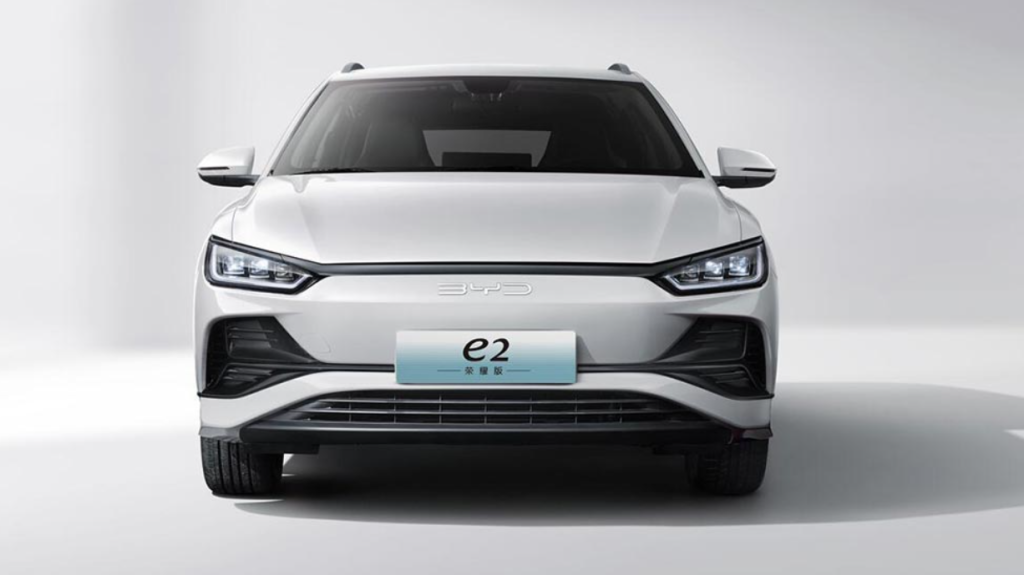
BYD, the world’s foremost electric vehicle (EV) manufacturer, has introduced its latest model, the e2 Glory Edition in the Chinese market. Priced at $12500 (89,800 yuan), this updated version marks a substantial 12.65% reduction compared to its predecessor, signaling BYD’s strategic response to the growing demand for budget-friendly EV options in China.
The e2 Glory Edition is positioned as a family-oriented pure electric vehicle, boasting a range of 405 kilometers. Equipped with a blade battery pack and a single motor offering 70 kW peak power, it aims to provide consumers with a compelling combination of style, efficiency, and comfort at an affordable price.
This move aligns with BYD’s overarching strategy to solidify its dominance in the EV market and accelerate the transition from traditional petrol vehicles to electric alternatives. By offering competitive pricing on models like the e2 Glory Edition, BYD seeks to appeal to a broader demographic, particularly middle-income consumers who are increasingly price-conscious in the face of economic uncertainty.
The decision to slash prices on the e2 Glory Edition mirrors a broader trend in the Chinese EV market, with BYD spearheading a discount war among industry rivals. Competitors such as Xpeng, Zeekr, and SAIC-GM-Wuling have also responded by reducing prices for their respective EV offerings, underscoring the fierce competition in the sector.
Moreover, BYD’s strategic direction involves updating its lineup of affordable models, including the Qin Plus and Chaser 05, with lower-priced editions. This comprehensive product update underscores BYD’s commitment to replacing traditional gasoline vehicles with new energy alternatives on a larger scale, to capture a greater market share and accelerate EV adoption nationwide.
BYD’s initiative to offer more accessible EV options underscores its determination to maintain competitiveness and drive industry-wide changes in China’s automotive landscape.
Realme is apparently working on a new Realme 12 series model. The company recently unveiled the Realme 12 and Realme 12+ in the Indian market. And now, the latest certification sightings have revealed that a Realme 12x model will be arriving soon as well. So here are all the details.
Realme 12x surfaces on EEC, and Camera FV-5
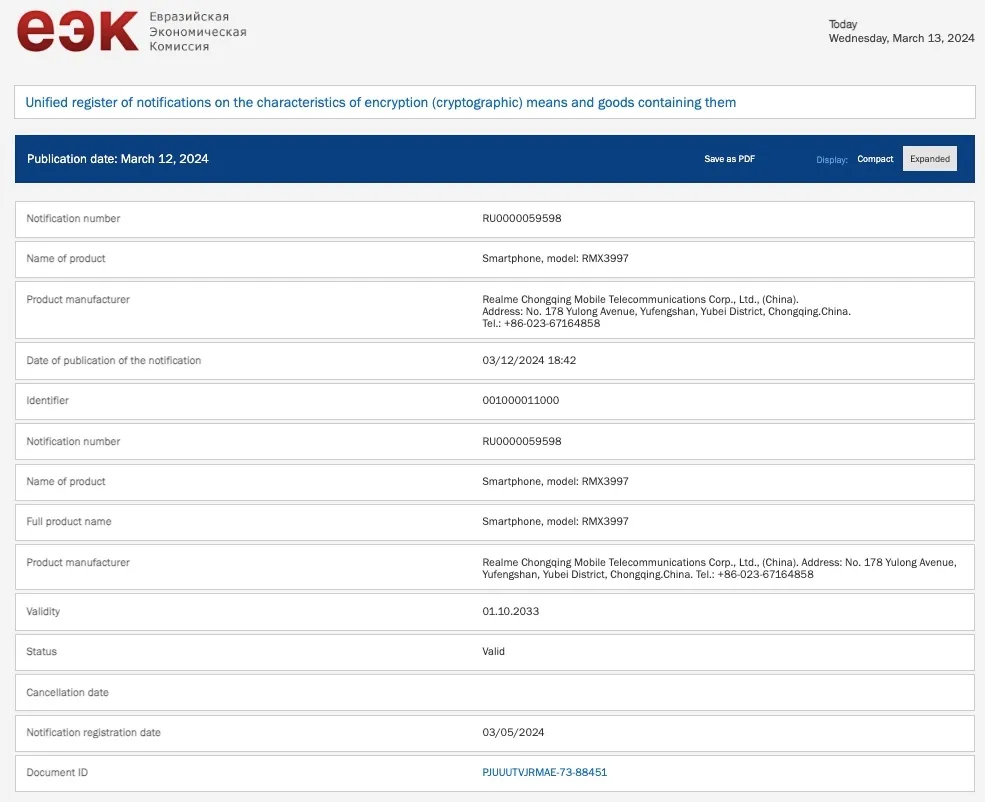
To recall, this smartphone model was previously spotted on multiple certifications like Bluetooth SIG, TUV, and India’s BIS. This hinted that the device could be announced soon, and also revealed its RMX3997 model number. The Bluetooth SIG listing confirmed support for the Bluetooth 5.3 standards while the TUV Rheinland certification will be powered by a 4,890mAh battery pack that offers 15W wired fast charging.
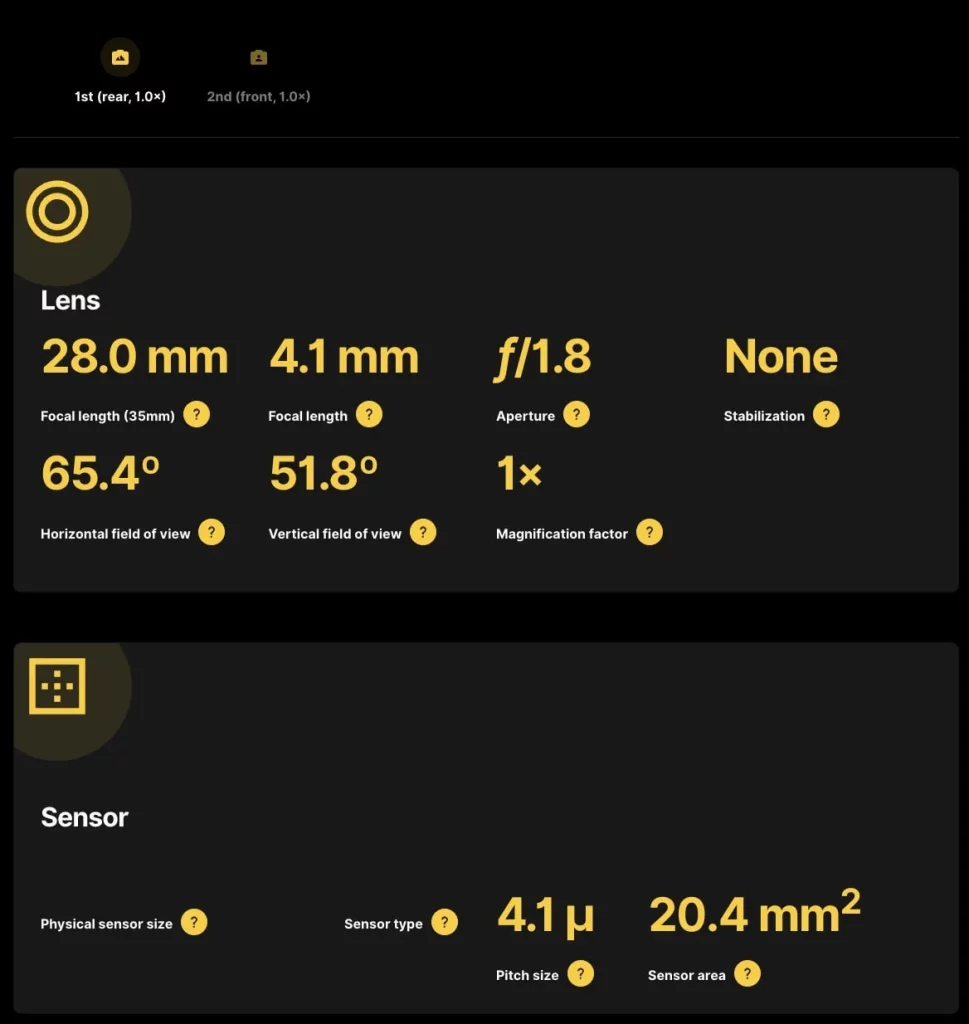
As the name suggests, the Realme 12x is the successor to the Realme 11x. The EEC certification confirms the RMX3997 model number but does not reveal any other finer details regarding the upcoming smartphone. On the other hand, the Camera FV-5 database revealed that the Realme 12x 5G will feature a rear camera with a 28mm focal length and an f/1.8 aperture.
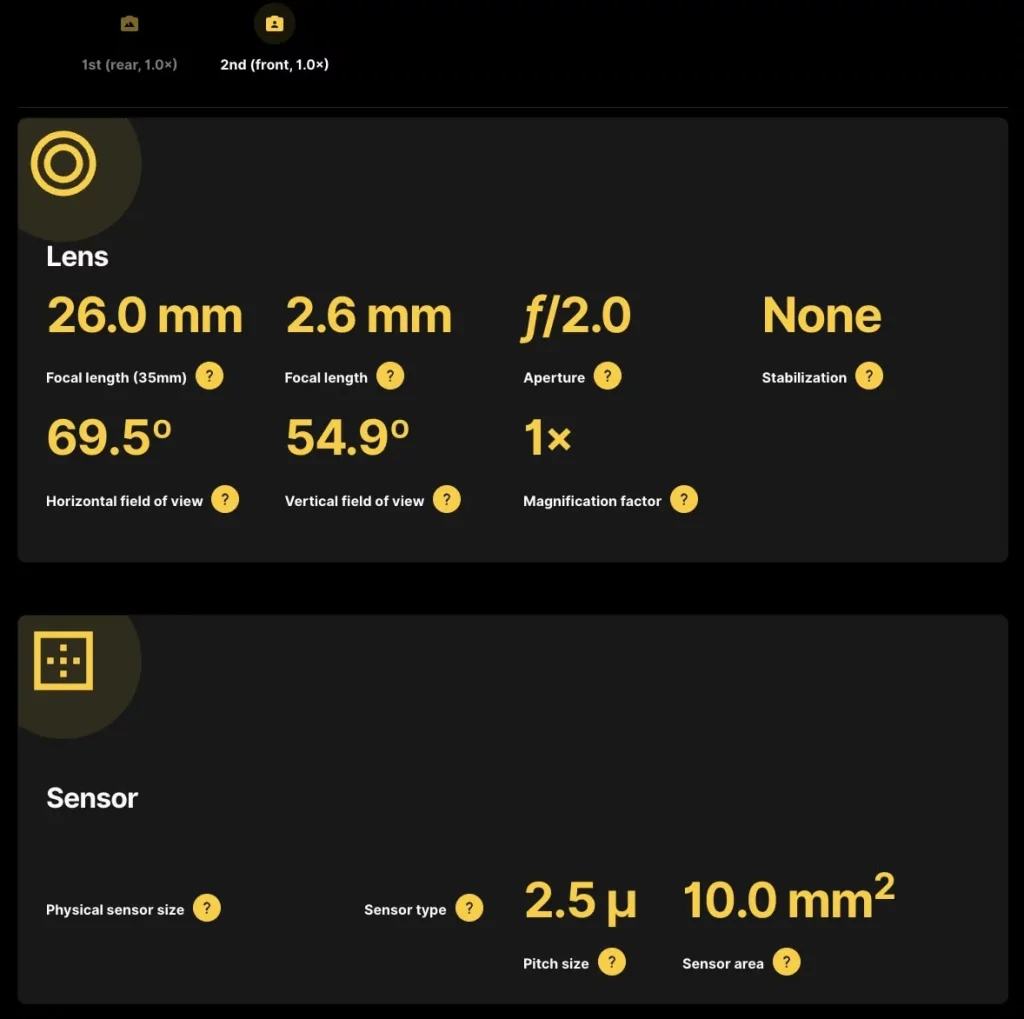
This primary shooter is expected to be a 50-megapixel sensor. Meanwhile, the selfie camera was listed with a 26mm focal length with an f/2.0 aperture. Unfortunately, finer details like specs and features are still unknown, so stick around for more updates regarding this device.
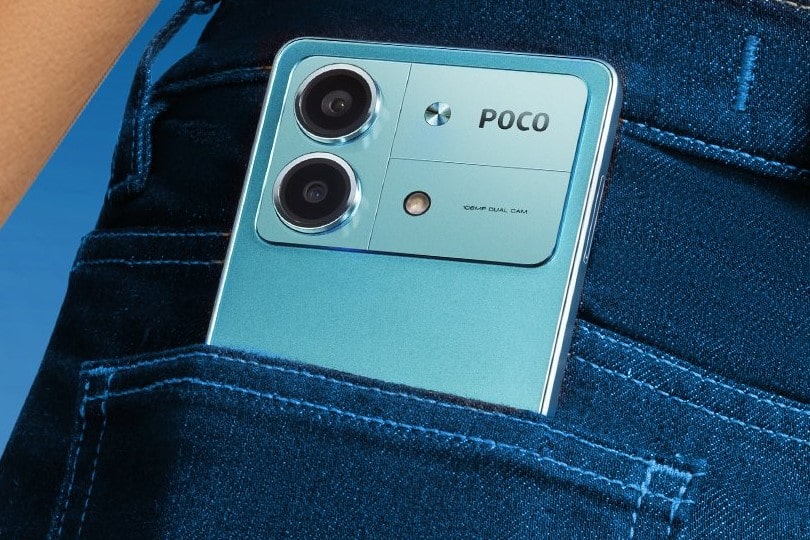
The Poco X6 Neo features a flat frame design. Its rear cameras are placed vertically on a large rectangular island.
The device is IP54-rated for splash resistance. It measures 7.69mm in thickness and weighs 175g.
The smartphone flaunts a 6.67-inch centered punch-hole AMOLED display with minimal bezels and Corning Gorilla Glass 5 protection. The panel has a resolution of 2400 x 1080 pixels (FHD+) and 394 PPI. It supports up to a 120Hz refresh rate, 1920Hz PWM dimming, 2160Hz instant touch sampling rate, and 1000 nits peak brightness level.
The handset is powered by a MediaTek Dimensity 6080 SoC. The chipset is paired with LPDDR4x RAM and UFS 2.2 storage. As for software, the phone boots Android 13-based MIUI 14 and is guaranteed to receive 2 Android updates and 4 years of security patches.
As far as cameras are concerned, there’s a 108MP primary sensor on the rear with 3x in-sensor zoom support. It is paired with a 2MP depth sensor. On the front, there’s a 16MP shooter.
For biometrics, the device uses a side-mounted fingerprint sensor. It also comes with a 3.5mm headphone jack and an IR blaster but lacks a MicroSD card slot and only has a single bottom-firing speaker.
On the connectivity front, the smartphone offers support for dual SIM, 5G, WiFi 5, Bluetooth 5.3, GNSS, and USB Type-C. Last but not least, it is backed by a 5,000mAh battery and supports 33W wired charging.
Poco X6 Neo Price in India
The Poco X6 Neo is offered in the following two memory configurations in India.
8GB + 128GB – ₹15,999 (~$195)
12GB + 256GB – ₹17,999 (~$215)
The product can be availed in either Astral Black, Horizon Blue, or Martian Orange color options from Flipkart.
Early access sale starts today (March 13) at 7 PM IST. Buyers can avail a ₹1,000 discount on transactions via credit cards issued by ICICI Bank.
Vivo is gearing up to launch the Vivo T3 in India soon. But ahead of its official release, the company has shared a fresh teaser that hinted at some of its key specs. A Flipkart microsite recently went live, which teased the upcoming smartphone’s chipset and camera details. So let’s have a look.
Vivo T3 Teaser
To recall, the Vivo T3 will be exclusively available in the Indian market via Flipkart. The design of the device was previously teased as well. Now, the Chinese smartphone brand has revealed that the Vivo T3 5G will be equipped with a MediaTek Dimensity processor. While the exact name of the sensor wasn’t revealed, it is expected to be the Dimensity 7200 SoC. This is the same chipset that powers the iQOO Z9 5G.
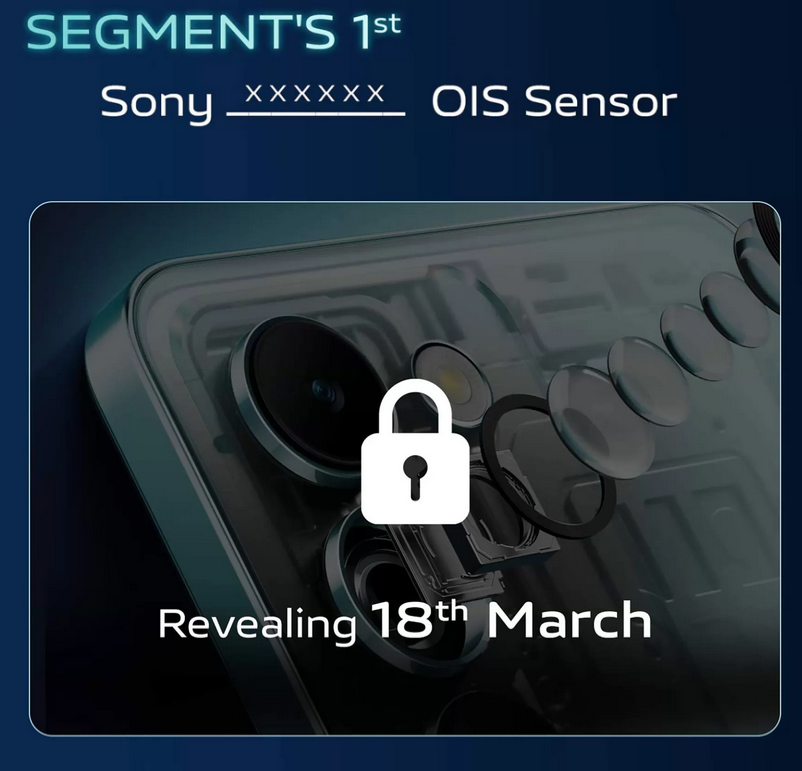
Apart from this, Vivo also teased the camera of the new smartphone as well. Again, finer details regarding the camera of the Vivo T3 were not revealed. Although, it was confirmed to be the first smartphone in the segment to feature a Sony camera that offers OIS (Optical Image Stabilization). Based on earlier reports, this camera is expected to be the Sony IMX882 primary sensor, which will be paired with two other sensors and LED flash.
Vivo will launch the T3 5G in Crystal Flake and Cosmic Blue color options. The handset is rumored to sport a 6.67-inch AMOLED display that offers a 120Hz refresh rate, Full HD+ resolution, and 1800 nits of peak brightness. This is all the information we have at the moment so stay tuned for more updates.
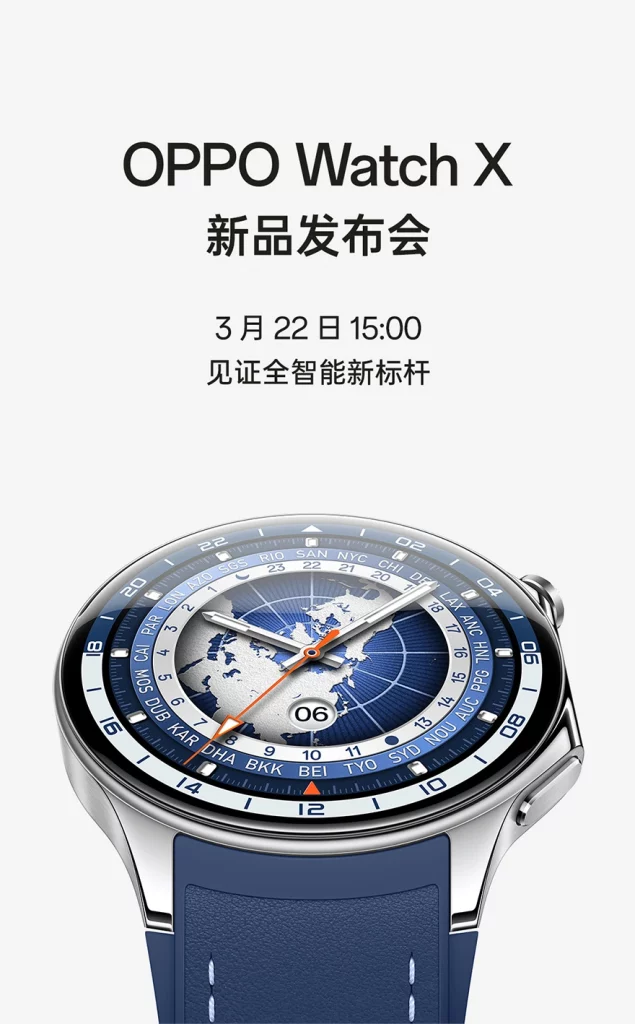
A notable difference between the Chinese and Global versions of the watch is the use of software. While the Oppo Watch X comes with Google’s Wear OS 4 in the global market, the company will offer the product with its ColorOS Watch based on AOSP in China, which might help them to reduce the product pricing. Apart from that, the hardware specifications should remain the same.
Appearance and specification
The global version of the product is available in two different color options – Platinum Black and Mars Brown and the strap is made of “fluororubber” and stainless steel buckle.
In the front, you will look at a 1.43″ 466×466 resolution circular AMOLED display that offers a decent 326PPI pixel density. Oppo notes that the Oppo Watch X can reach up to 1000 nits in high brightness mode (typically triggered by direct sunlight or bright ambient lighting) and 600 nits of default maximum brightness. The watch comes with a 500 mAh battery and weighs around 80 grams including the strap. The Chinese version reportedly supports eSIM.
For computing needs, Oppo Watch X comes equipped with a dual chipset architecture same as the OnePlus Watch 2, where the Snapdragon W5 chip runs the heavy tasks and a ultra low-power co-processor microcontroller unit (BES2700BP) leads the system during less demanding tasks. Notably, this device is rated for 12 days of battery life. Google enabled the dual-chipset architecture as part of Wear OS 4 with OnePlus Watch 2 and we aren’t sure at this point if Oppo has managed to implement the same for the Chinese version with the AOSP-based ColorOS Watch operating system.
Pricing (rumored)
The pricing for the Chinese market isn’t official yet. Nonetheless, some previous leaks claim that the Oppo Watch X will cost around ¥1,000 (~$140) in China. This is a lot more affordable price tag as compared to the global market. For reference, the Oppo Watch X with Wear OS costs NT$10,990 (~$366) in Taiwan.
Several brands are gearing up to launch new phones featuring the upcoming Snapdragon 8s Gen 3 (tentative name) chip. Reports have suggested that it may rival the upcoming Realme GT Neo 6, which may come equipped with the said chipset. A new leak, courtesy of tipster Digital Chat Station, reveals that the forthcoming iQOO Z9 Turbo will also feature the Snapdragon 8s Gen 3.
iQOO Z9 Turbo: What to expect?
DCS did not reveal any other information about the iQOO Z9 Turbo. However, in his previous Weibo posts, he shared leaked specifications of an upcoming iQOO phone equipped with the Snapdragon 8s Gen 3. Previous leaks suggested that this device may arrive as an iQOO Neo 9 series phone, but it now appears that this device will break cover as a Z9-series phone.
As per previous leaks, the said device may feature a flat OLED panel of 6.78 inches. The screen may support a 1.5K resolution, a 144Hz refresh rate, and 2160Hz PWM dimming. For security, it will have an in-screen fingerprint scanner. The device is expected to run on OriginOS 4-based Android 14.
The topmost variant of the iQOO Z9 Turbo is expected to feature 16 GB of LPDDR5x RAM and 1 TB of FUS 4.0 storage. The battery size of the device is not known yet, but it is expected to arrive with support for 120W fast charging. The Z9 Turbo may feature a plastic frame and come equipped with a 50-megapixel dual-camera system.
Rumors are rife that the iQOO Z9 and iQOO Z9x will launch in April in China. While the Indian edition of the Z9 has the Dimensity 7200, its Chinese edition may feature the Snapdragon 7 Gen 3. The Z9x is expected to feature the Snapdragon 6 Gen 1 SoC. It remains to be seen whether the Z9 Turbo debuts alongside the Z9 and Z9x.
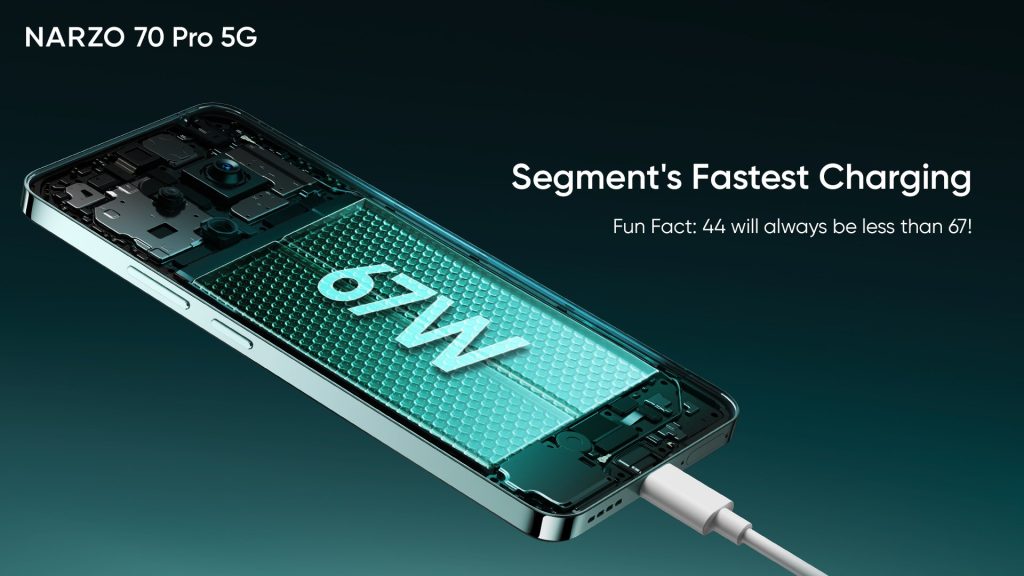
Realme Narzo 70 Pro 5G is set to launch on March 19. With a couple of days remaining for the official announcement, the company is gradually revealing more details about the device. In the poster below, it is confirmed that the device has fast charging capabilities.
Realme Narzo 70 Pro 5G fast charging capabilities
Realme Narzo 70 Pro 5G supports 67W fast charging
The Narzo 70 Pro 5G will come with support for 67W fast charging, confirms Realme. While the brand has not revealed the battery size, it is likely to come packed with a 5,000mAh battery, which has now become a standard for mid-range phones.
One of the major attractions of the Narzo 70 Pro 5G is that it will have 65 percent fewer preloaded apps than before. Furthermore, for hands-free usage, the device will have support for numerous air gestures. The brand is yet to officially confirm the chipset that will power the Narzo 70 Pro.
The Narzo 70 Pro 5G has a 120Hz OLED panel with support for rainwater touch. There is no information about the front camera, but its rear camera setup will comprise the Sony IMX890 50-megapixel primary camera with OIS support. In terms of design, the Narzo 70 Pro flaunts a dual-tone glass panel on the back with an attractive arc design.
Realme recently confirmed that it will conduct the early bird sale of the Narzo 70 Pro 5G at 6pm (local time) on the launch date. Those who purchase the phone in this sale will get the all-new green variant of the Buds T300 TWS earbuds for free. In addition, buyers will also benefit from other offers, such as a Rs 2,000 discount via bank cards and no-cost EMI. As far as pricing is concerned, the device is likely to be priced at under Rs 25,000 (~$300) in India.
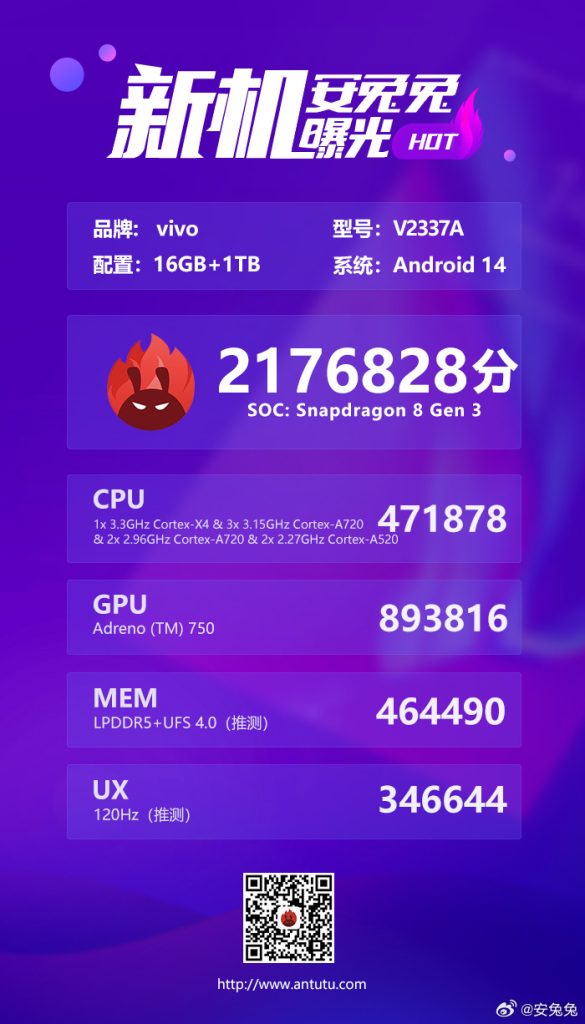
A new Vivo phone bearing the V2337A model number has emerged in the database of the AnTuTu benchmarking platform. As per reports, it is nothing but the upcoming Vivo X Fold 3 Pro foldable phone. Here is a look at the details that have emerged through the AnTuTu listing of the device.
Vivo X Fold 3 Pro AnTuTu listing
Vivo X Fold 3 Pro AnTuTu listing
As can be seen in the above poster, the Vivo X Fold 3 Pro has achieved an impressive AnTuTu score of 2,176,828 points. This comprises 471,878 points in the CPU test, 893,816 points in the GPU test, 464,490 points in the memory test, and 346,644 points in the UX test score.
In terms of specifications, the listing reveals that the Vivo X Fold 3 is equipped with the latest Qualcomm Snapdragon 8 Gen 3 mobile platform, LPDDR5 RAM, and UFS 4.0 storage. The X Fold 3 Pro variant that has appeared on AnTuTu has 16 GB of RAM and 1 TB of storage, which appears to be its topmost configuration. In addition, the device will ship with Android 14, which will mostly have a layer of OriginOS 4 on top.
Vivo X Fold 3 Pro launch date (tentative)
DCS’ Vivo X Fold 3 Pro launch date leak
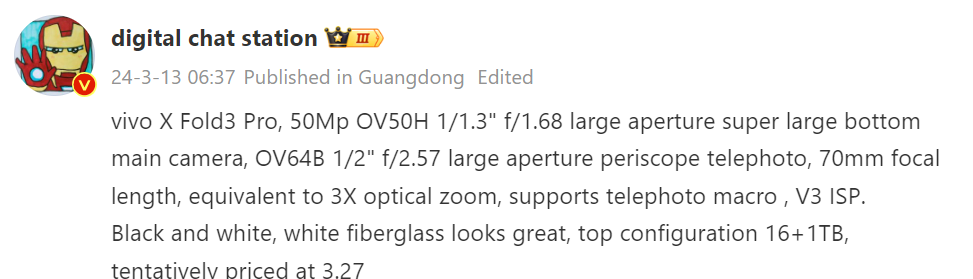
A recent leak claimed that the Vivo X Fold 3 series would be announced in the last week of March. Now, a new Weibo post by tipster Digital Chat Station reveals that it is tentatively scheduled to break cover on March 26.
The tipster reiterated that the X Fold 3 Pro will have an OV50H OmniVision 50-megapixel lens with an f/1.68 aperture as the primary snapper. It will be accompanied by an OV64B 64-megapixel periscope telephoto camera with support for 3x optical zoom, 70mm focal length, and telephoto macro shots. The X Fold 3 Pro is said to be equipped with the Vivo V3 ISP for a better photography experience. DCS claimed that the device would be available in black and white shades. He further said that the white variant looks great as it features fibreglass.
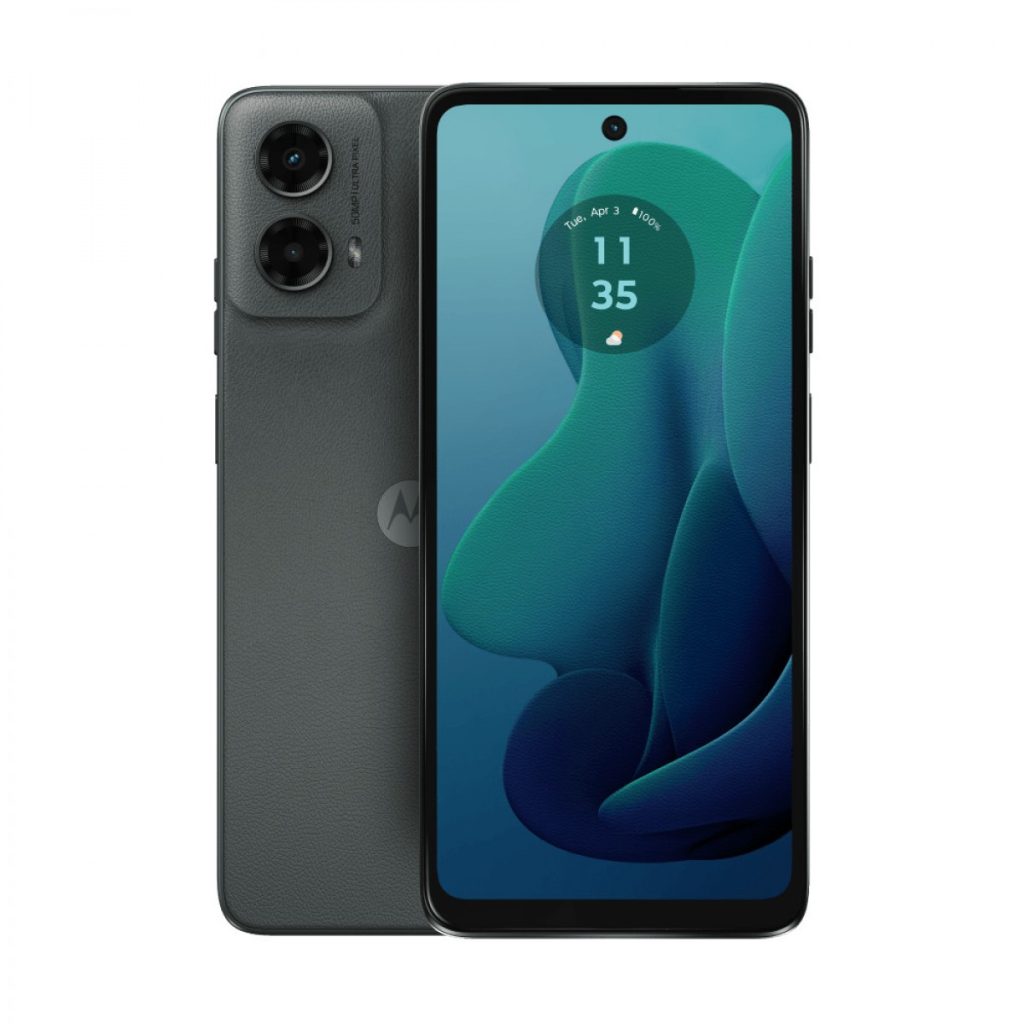
Apart from launching the Moto G Power 5G (2024), Motorola has also announced the Moto G (2024) in the US and Canada. With a price tag of $199, the G (2024) is the most affordable 5G-enabled entry-level phone from the brand. Continue reading ahead to learn everything about the specifications, features, and price of the device.
Moto G (2024) specifications and features
Moto G (2024)
The Moto G (2024) has a 6.6-inch LCD punch-hole screen that produces an HD+ resolution of 1612 x 720 pixels, a 269 ppi pixel density, a 21.5:9 aspect ratio, and a 120Hz refresh rate. For security, the device is equipped with a side-facing fingerprint scanner. The phone measures 164.39 x 74.96 x 8.23mm and weighs 194 grams. It has a water-repellent body fitted with a vegan leather back.
The Moto G (2024) features the Snapdragon 4 Gen 1 chipset, 4 GB of RAM, and 4 GB of virtual RAM. The device offers 128 GB of UFS 2.2 storage and packs a 5,000mAh battery with 18W fast charging. It runs on Android 14, which has a layer of Motorola’s My UX on top.
The Moto G (2024) has a 50-megapixel main camera and a 2-megapixel macro snapper on the back. It has an 8-megapixel front-facing camera. The device is equipped with other features, such as dual SIM, eSIM, 5G, Wi-Fi 802.11ac, Bluetooth 5.1, GPS, NFC, a USB-C port, a 3.5mm audio port, and dual speakers.
Starting March 21, the Moto G (2024) will be available through T-Mobile and Metro. It will also be available through other carriers and MVNOs in the country. The unlocked version of the device is available through Motorola US’ website as well as Amazon US and Best Buy US starting May 2. On the same date, the device will also be released in Canada.
Moto G Power 5G (2024) has been launched as the successor to last year’s G Power (2023) for the US and Canadian markets. Some of the key features of the device include a 120Hz display, a Dimensity 7-series chipset, 50-megapixel cameras, and 30W fast charging. Here is a look at the specifications, features, and price of the device.
Moto G Power 5G (2024) specifications and features
Moto G Power 5G (2024) in Midnight Blue
The Moto G Power 5G (2024) has a 6.7-inch LCD panel with a punch-hole design. The screen offers an FHD+ resolution, a 120Hz refresh rate, a 391 ppi pixel density, and an 85 percent screen-to-body ratio. The device measures 167.22 x 76.44 x 8.5mm and weighs 201 grams. It offers a water-repellent construction along with a vegan leather back.
The back panel of the Moto G Power 5G (2024) has a 50-megapixel primary camera with OIS support and an 8-megapixel ultra-wide lens with a 118-degree FOV. For selfies, the device is equipped with a 16-megapixel front-facing camera.
Moto G Power 5G (2024) in Pale Lilac
The Dimensity 7020 chip powers the smartphone. It ships with 8 GB of RAM. 128 GB of storage, and a microSD card slot for additional storage. The device boots to My UX-based Android 14. It offers other features, such as dual SIM with eSIM support, 5G, Wi-Fi 802.11ac, Bluetooth 5.3, NFC, a USB-C port, a side-facing fingerprint scanner, a 3.5mm audio jack, and dual speakers.
Moto G Power 5G (2024) price in the US
In the US, the Moto G Power 5G (2024) is available for purchase via Motorola.com, Amazon (US), and Best Buy (US) starting March 29. The device has arrived with a price tag of $299. It comes in two shades, such as Midnight Blue and Pale Lilac.
The United States Patent and Trademark Office (USPTO) recently issued another patent to Apple for a special handheld device. The company plans to take its smart home capabilities to a whole other level it seems, since you can literally use the “palm of your hand” to control various devices around your home. Let’s have a look at this one.
The handheld device could also be used as an AR/VR accessory it seems.
The patent describes a handheld device equipped with a variety of functionalities designed to interact with smart home devices and potentially serve as an accessory for augmented reality (AR) or virtual reality (VR) applications. Key features outlined in the patent include cellular network connectivity and a voice control assistant to facilitate user interaction. The device would also house a compact touch-sensitive display for both visual output and touch input. Integrated microphones would capture voice commands, and speakers would provide audio output. The patent further details location tracking capabilities for the device itself, with the possibility of extending this functionality to nearby devices.
There could be so many applications for this device. It could operate as a voice-controlled smart speaker, responding to user commands to manage smart home devices or access information. The patent suggests the ability to run various applications, such as weather apps, music streaming services, or even payment platforms. The device could also be used as a universal remote control for smart home devices like speakers, lights, appliances, and more. Interestingly, the patent also hints at the possibility of using the device as an AR/VR anchor or visual marker, potentially as an input device or providing output for other AR/VR equipment. Who knows?
The concept of a multifunctional handheld device that seamlessly connects various smart home gadgets is definitely interesting if not anything else. It will be interesting to follow the development of this concept and observe if it translates into a commercially available product, and how it might integrate with Apple’s existing smart home offerings. Another Apple patent surfaced recently too, and that seems quite exciting for future iMacs. For more information, stay tuned to Gizmochina News!
There’s some good news for Apple Watch users in the US who miss the blood oxygen monitoring function. As per recent developments, there is a chance for its return, though the timeline is quite uncertain – and possibly very long.
Apple is trying to appeal the ban, which may result in a sooner reinstatement
Remember when Apple was sued by Masimo for infringing the pulse oximetry technology used to measure blood oxygen levels? This decision affected the Apple Watch Series 9 and Apple Watch Ultra 2. Documents from the U.S. Customs and Border Protection (CBP) indicate Apple can potentially resume selling Apple Watches with the blood oxygen feature by August 2028 at the latest. This coincides with the expiration of the patent Apple was found to have infringed upon.
However, this isn’t the only factor at play. Apple is actively appealing the ban imposed by the U.S. International Trade Commission (ITC). If their appeal is successful, the blood oxygen functionality could return sooner than August 2028.
The whole situation is further complicated by the lack of a settlement between Apple and Masimo, the patent holder. As of now, a licensing agreement seems unlikely. Reports state that Masimo’s CEO remains open to discussion but hasn’t engaged with Apple yet.
That’s not all. Masimo is raising concerns that Apple might enable the blood oxygen function on jailbroken iPhones through software updates. They’re advocating for stricter restrictions, ideally at the hardware level, to prevent this possibility. This fiasco might end up costing Apple billions of dollars since Apple Watches are some of its most popular products next to the iPhones and Macs. We’ll find out soon if Apple can bring blood-oxygen-measuring Apple Watches back to the market, but for now, all we can do is wait. Stay tuned for future coverage on the same!
Generative AI can be used for a lot of things, but it’s hard to say exactly where the upper limits are. As of now, it seems to be vehicles. Recent news state that Japanese car companies are embracing generative AI to streamline the development process for new models. Utilizing the capability of generative AI to create new variations based on existing data, companies are expecting to significantly improve efficiency and potentially cut the planning and design time by 50%.
Honda is also leveraging Generative AI through its joint venture with Sony
Toyota is leading the charge by utilizing image-generating AI at its US research arm. This AI analyzes car design drawings and calculates air resistance, allowing for adjustments that optimize both design and functionality. Honda is also on board, using generative AI through its joint venture with Sony to develop advanced driver-assistance systems (ADAS) for their upcoming AFEELA car.
An image of a concept car generated with DALL-E
Subaru and Mazda are taking a slightly comprehensive approach, focusing on training their workforce in AI principles. Subaru has launched a program to equip over 4,000 engineers with the skills needed to utilize generative AI, while Mazda is making AI training mandatory for all indirect employees in design and experimental departments by 2025. Mazda’s ultimate goal is to double overall production efficiency by 2030. That’s a big goal, but a realistic timeframe and rapidly developing AI technology can propel the company to its forecasted numbers. We can just wait and see what happens.
As car companies race to develop electric vehicles and autonomous driving features, one thing is clear – generative AI will be undoubtedly a powerful tool to speed up innovation and potentially reshape transportation. It will be interesting to see if AI also plays a role in churning out special car designs or functionalities that we haven’t even imagined yet. Imagine being able to say, “My car was designed by Artificial Intelligence.” It could be a flex, or not. That’s up to you!
ASUS, usually in the news for its laptops, gaming smartphones or displays, has recently unveiled a powerful new medical computer designed specifically for the healthcare environment, and it’s the MDS-M700. This new machine seems to have its priorities somewhere else – precision, performance, and patient safety. The MDS-M700 boasts support for 4K UHD image processing, delivering sharper and more detailed visualizations of human tissues, blood vessels, and body structures. This translates to clearer diagnoses and more informed treatment plans.
The computer operates at a mere 45dB to minimize distractions
Hospitals can be noisy places, but the MDS-M700 operates at a whisper-quiet 45dB, creating a less distracting environment for medical professionals during critical procedures. This feature might not make a huge difference at a standard-consumer level, but it’s a whole different story with medical usage. Designed for sterile environments, the MDS-M700 features a compact design with a integrated cover, making it easy to clean and maintain in operating rooms and other sterile settings. Additionally, its alcohol resistance is a pretty useful feature, considering sterility is absolutely paramount in hospitals.
The MDS-M700 adheres to rigorous medical safety industry standards, including CE, FCC, and IEC 60601-1-2 certification. This last standard ensures the computer functions flawlessly within electromagnetic environments, for instance, in the presence of MRI and other scanning machines, thus minimizing the risk of interference with other equipment or potential harm to patients.
Under the hood, the MDS-M700 packs a punch. It features a 13th generation Intel Core processor and offers the option of an Nvidia RTX A5000/A4000 graphics card. It also comes equipped with three Ethernet interfaces for versatile data transfer. Additionally, it supports optional 4K UHD capture cards.
The ASUS MDS-M700 medical computer is slated for release in April 2024 and will be showcased at the upcoming HIMSS24 global medical conference. We don’t see a lot of these companies putting out niche products, especially catered towards the medical field, so this is surely a refreshing piece of news.
It seems like scientists are getting creative as they try to understand the human brain! A team in China has developed a special chip inspired by how they study objects far, far away in space. This chip is designed to help them unlock the mysteries of the brain in real-time.
The new chip can analyze a lot of brain data really fast, and works on it right away
Here’s the problem: scientists can now take pictures of a whole zebrafish brain at once, but figuring out what all that information means takes way too long. It’s like having a giant puzzle without a picture on the box.
Image Credits: Dall-E
The Chinese researchers noticed something interesting. When astronomers study quick bursts of radio waves from space, they also need to analyze a lot of data fast. So, the scientists took a page out of the astronomer’s playbook and designed a chip with special processing power. This chip can handle a massive amount of brain data (like hundreds of movies playing at once) and start making sense of it right away.
Their research, published in a science journal, shows the chip actually works. It can track the activity of up to 100,000 brain cells in a tiny zebrafish. The scientists even used the chip to control the swimming of paralyzed zebrafish, which is reminiscent of the Neuralink chip – but it wouldn’t be wrong to compare the two of them.
Hopefully, this tiny chip turns out to be a big leap forward for brain research. It could help scientists understand how our brains work in real time, leading to new data – or even better, new medical treatments.
Baseus is launching the Eli Sport 1 Open-Ear TWS Earbuds, featuring an open-ear design that doesn’t go inside your ears, allowing for a more comfortable fit and awareness of your surroundings. These earbuds feature a 16.2mm driver for high-quality sound and deep bass.
They’re designed with titanium memory wire ear hooks, covered in silicone for a secure, snug fit. Additionally, they come with a lanyard to secure them during active use. The earbuds offer 7.5 hours of playback, with a charging case that extends total battery life to 30 hours. And a quick 10-minute charge provides 2 hours of use.
These earbuds are also equipped with dual-channel low-latency technology, Bluetooth 5.3, a HiFi-grade LC3 codec, and a wind noise reduction algorithm. They’re IPX4 water-resistant, making them sweat-resistant.
The Baseus Eli Sport Earbuds are available in black and silver with lime-green hooks priced at $79.99. A 30% off discount is available at launch.
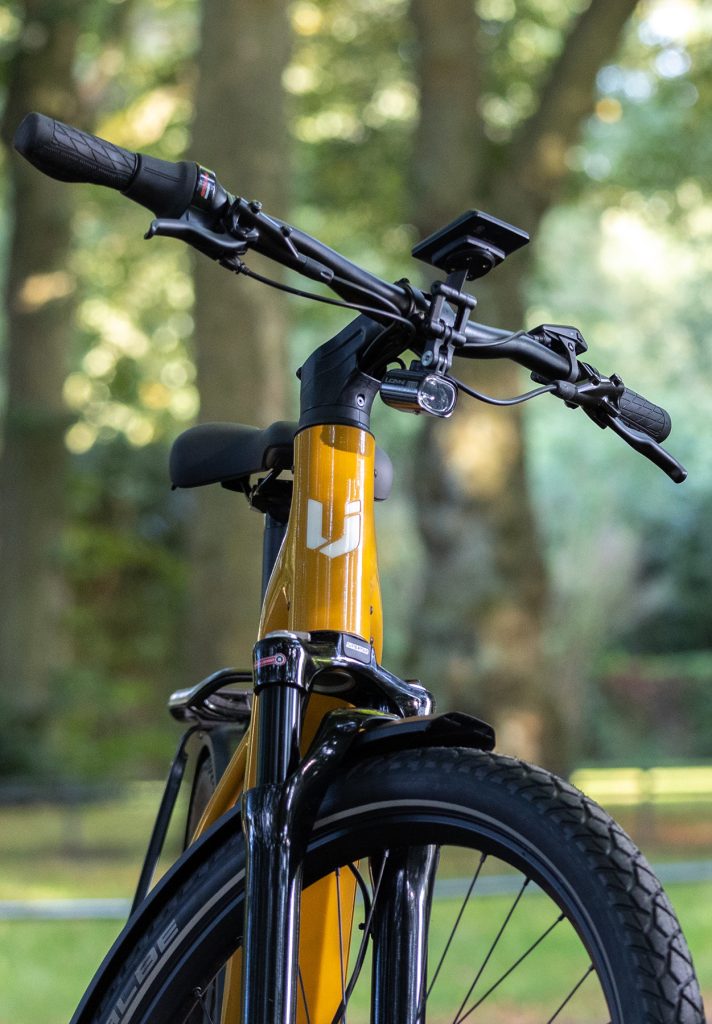
Rising e-bike company Urban Jungle has unveiled the Ginza 1.0 trekking e-bike. The Ginza 1.0 is equipped with a mid-mounted Bosch Performance Line motor with a 625Wh Bosch Power Tube battery. The Ginza 1.0 was showcased earlier this year at Velofollies together with the company’s Barrio 1.0, 2.0, and 3.0 e-bikes. Urban Jungle is a fast-rising e-bike brand based in Belgium.
Features
The Ginza 1.0 features the SR Suntour XCR32 suspension fork for a more comfortable riding experience. The bicycle also features Schwalbe All Grounder 60-584 tires suitable for a wide range of surfaces including trails. There are five speed levels in the bike and a Gates belt, Shimano MT400 brakes, and Shimano Nexus geared hub are present in the bike.
There are front and rear lights on the Ginza 1.0 for enhanced nighttime visibility, as well as Buchel Hero Air Alloy mudguards. The bike also has a Racktime Boostit 2.0 Purion 200 display on the e-bike which shows ride and battery information. Urban Jungle has not provided the weight of the Ginza 1.0 but the bike will debut first in Urban Jungle’s home market of Belgium later this month. The Ginza 1.0 is also expected to be subsequently available in a sprinkling of other EU countries like France, Germany, and the Netherlands. The price of the Ginza 1.0 e-bike is still under wraps at this time.
It remains to be seen the reception that awaits the Urban Jungle Ginza 1.0 in the European market. Urban Jungle has not stated the top speed and range of the Ginza 1.0 but it is expected to be on the average side. It is unlikely that the e-bike will be launched in markets outside Europe.
We use cookies on our website to give you the most relevant experience by remembering your preferences and repeat visits. By clicking “Accept”, you consent to the use of ALL the cookies.
This website uses cookies to improve your experience while you navigate through the website. Out of these, the cookies that are categorized as necessary are stored on your browser as they are essential for the working of basic functionalities of the website. We also use third-party cookies that help us analyze and understand how you use this website. These cookies will be stored in your browser only with your consent. You also have the option to opt-out of these cookies. But opting out of some of these cookies may affect your browsing experience.
Necessary cookies are absolutely essential for the website to function properly. This category only includes cookies that ensures basic functionalities and security features of the website. These cookies do not store any personal information.
Any cookies that may not be particularly necessary for the website to function and is used specifically to collect user personal data via analytics, ads, other embedded contents are termed as non-necessary cookies. It is mandatory to procure user consent prior to running these cookies on your website.